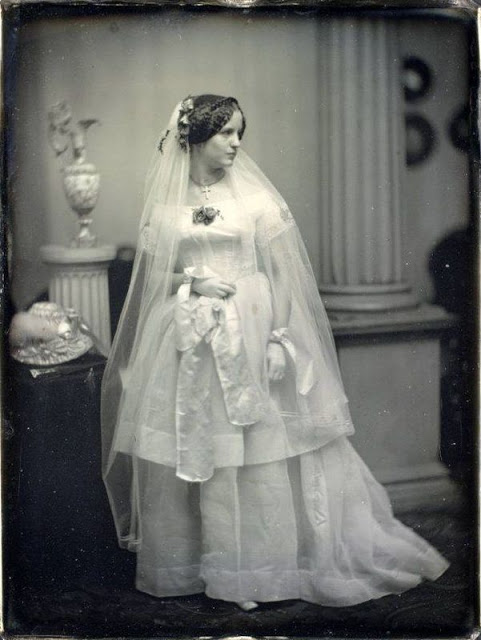
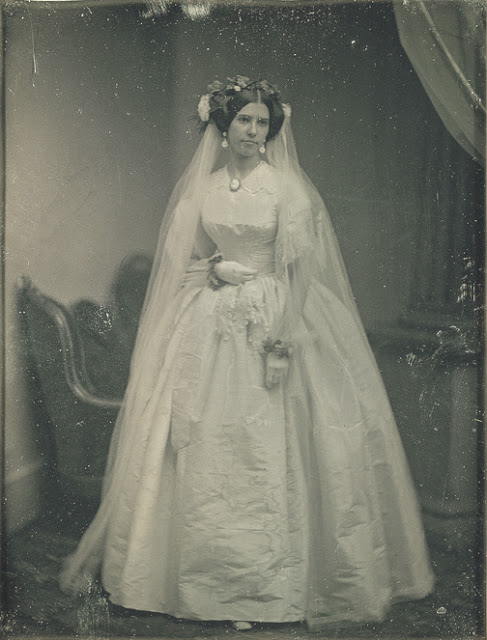
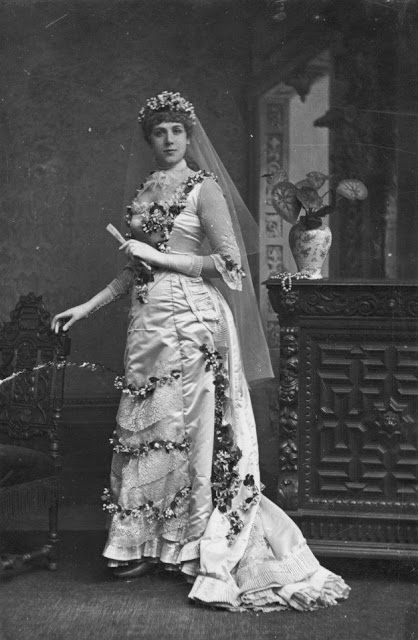
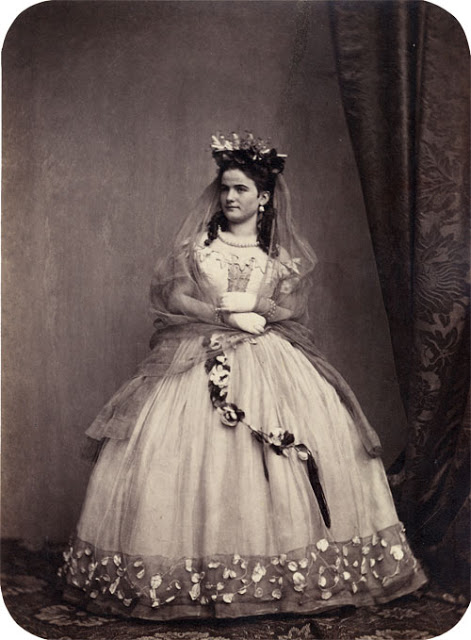
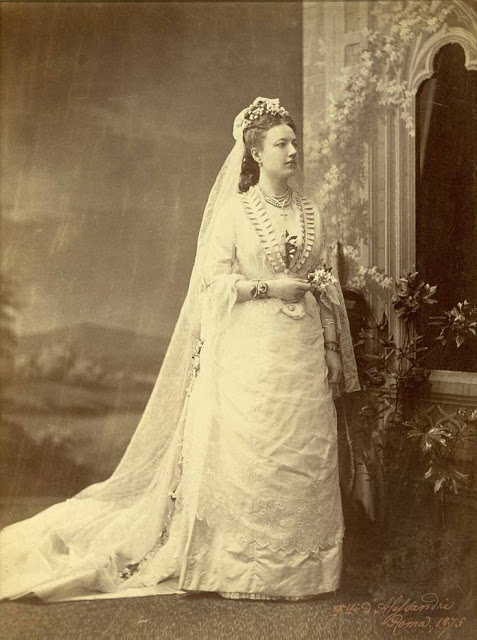
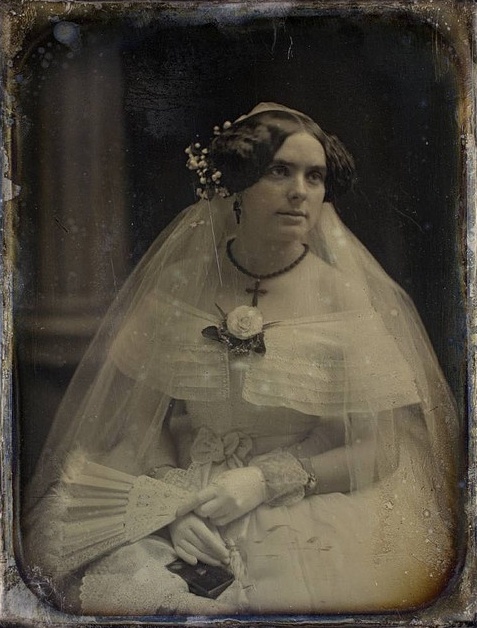
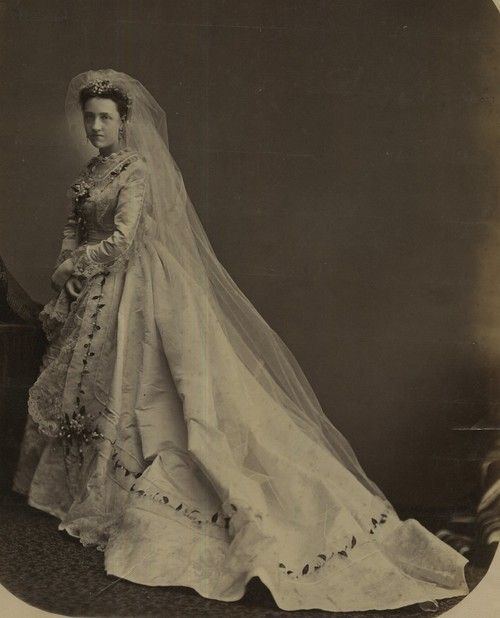
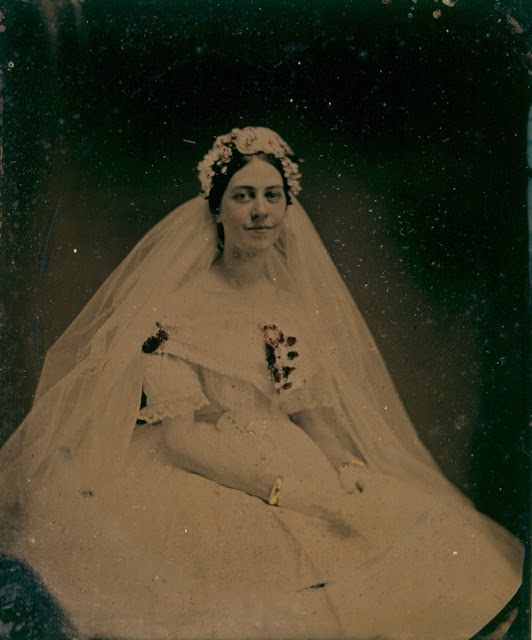
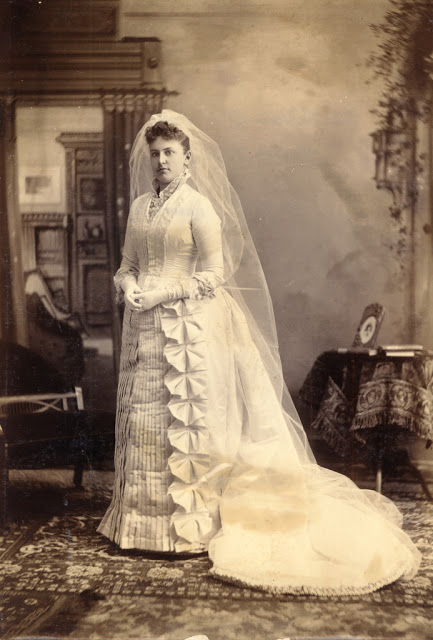
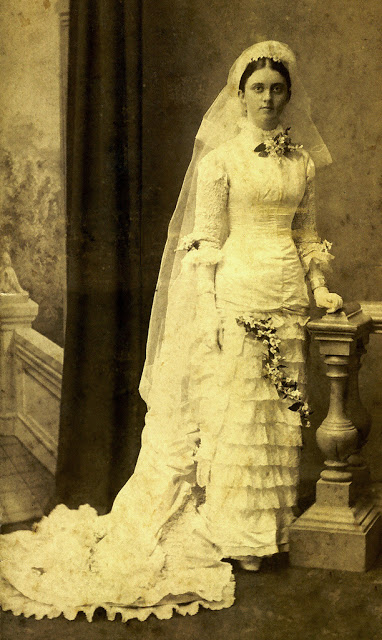
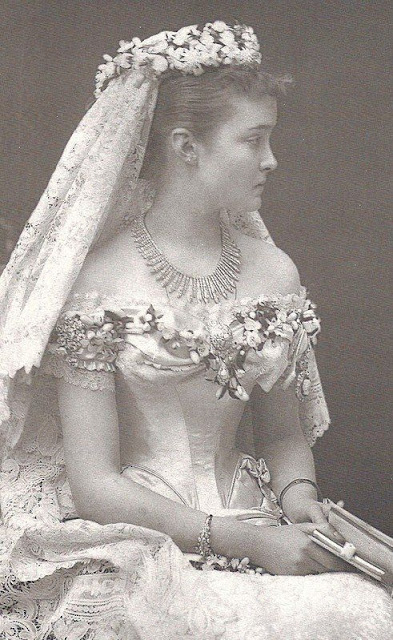
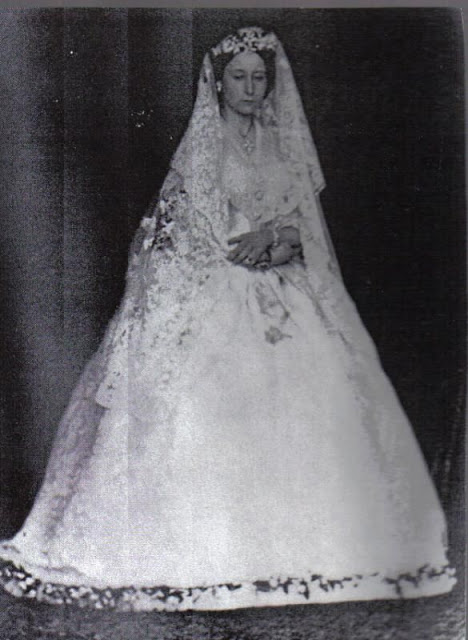
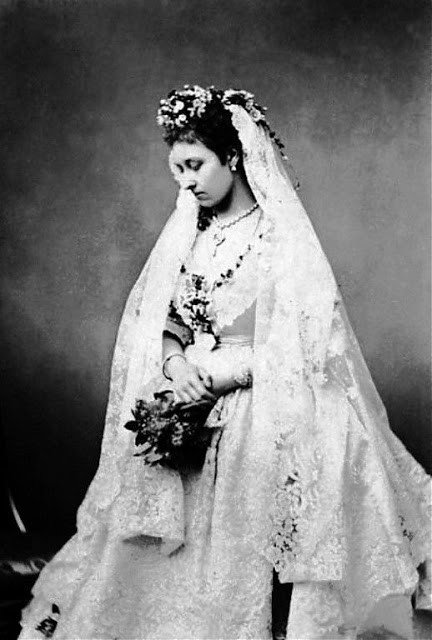
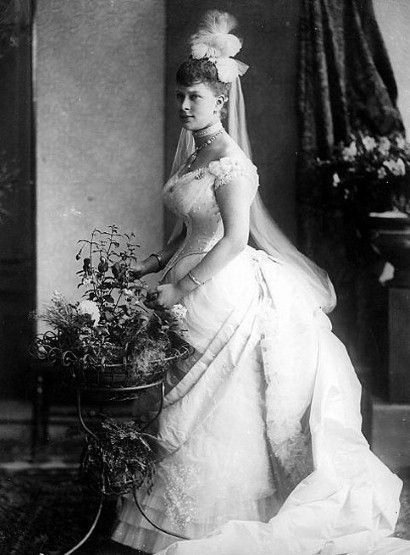
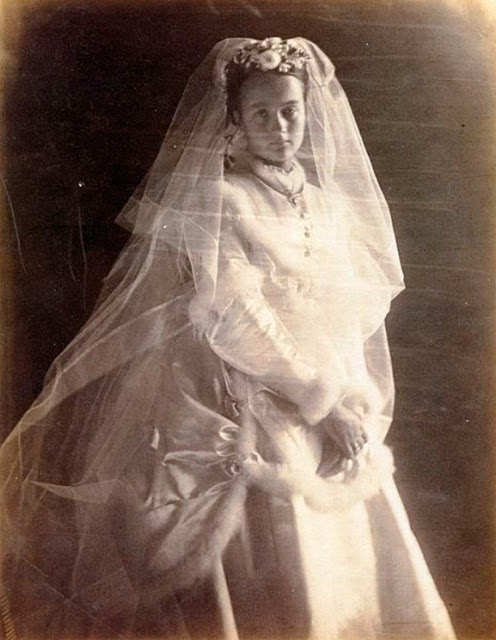
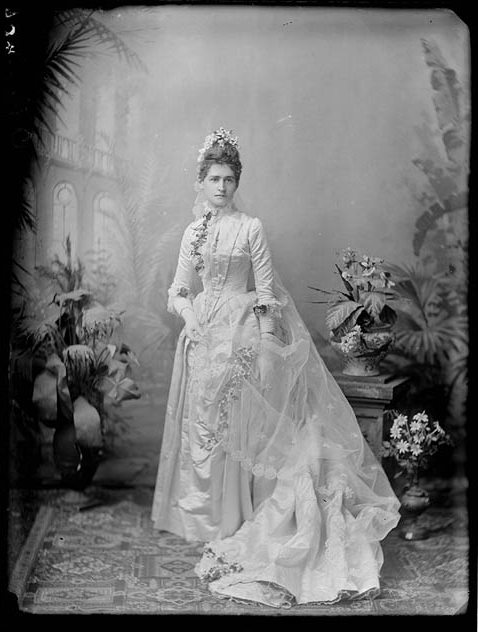
For the mid-Victorian bride (1870s) there was an emergence of middle class wealth, and with it a display of their new riches. Wedding gowns fashioned by Worth in Paris were the ultimate status symbol. And if one couldn’t afford an original, one copied them. Full court trains were now part of the wedding ensemble, as were long veils, a bustle, elegant details and two bodices–a modest one for the wedding and a low one for special occasions.
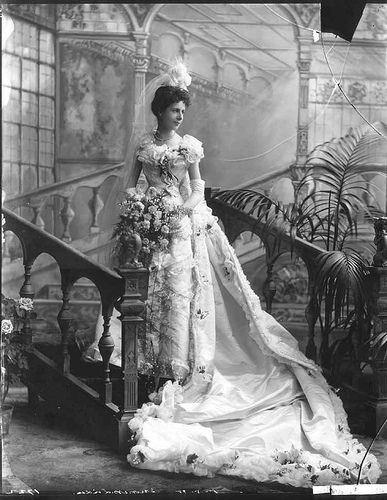
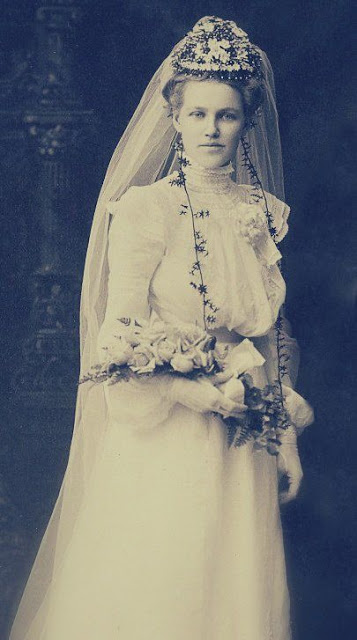
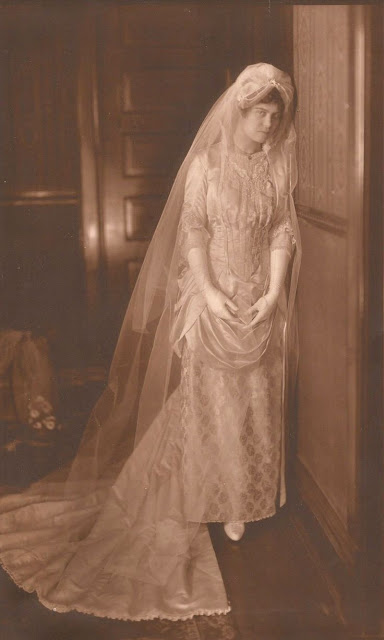
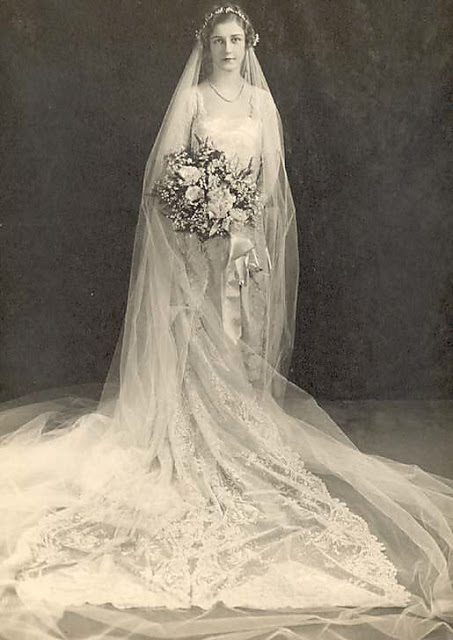
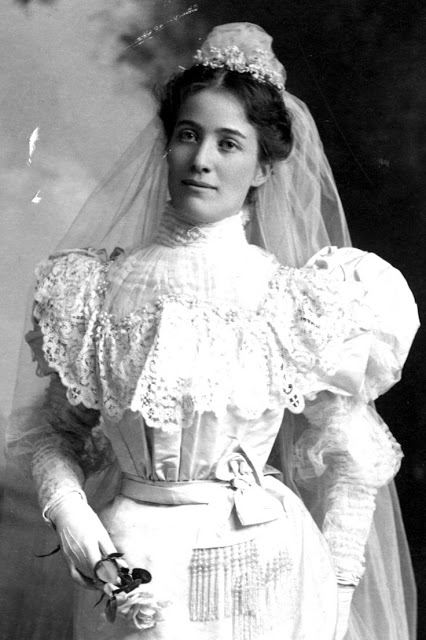
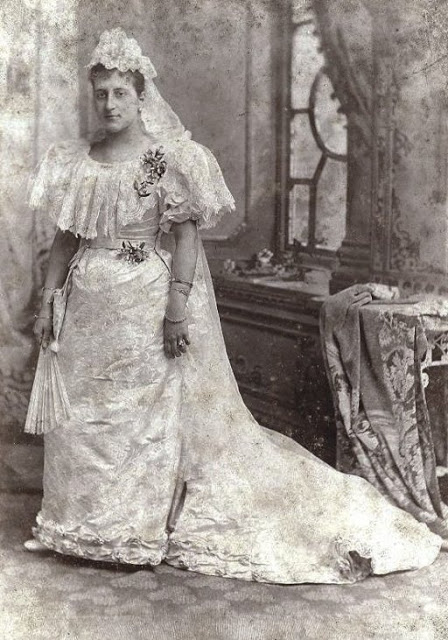
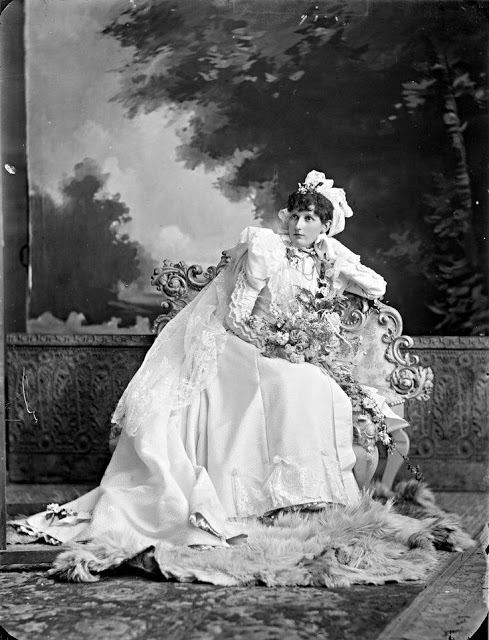
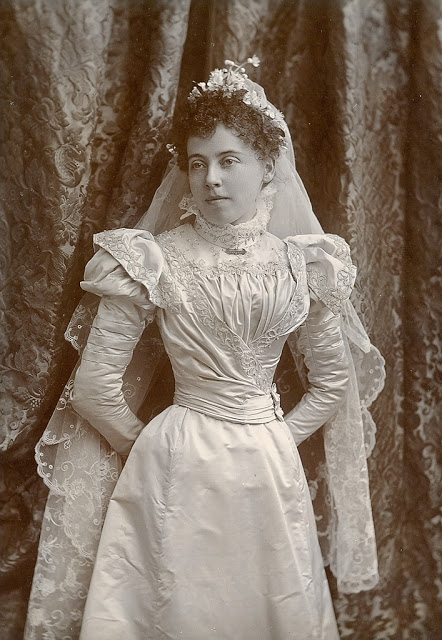
The late Victorians (1890s) saw the bustle disappear, a demi-train and large sleeves now in fashion. If the bride married in church, the dress must have a train, with a veil of the same length. The veil could be lace or silk tulle. From the mid-Victorian era to the 1890s, the veil covered the bride’s face and was not lifted until after church. The veil was not used as a shawl after the wedding any more, however. White kid gloves were long enough to tuck under the sleeves, and had a slit in one finger to slip the ring on without removing the glove. Slippers were of white kid, satin or brocade and the heels rose to one inch.
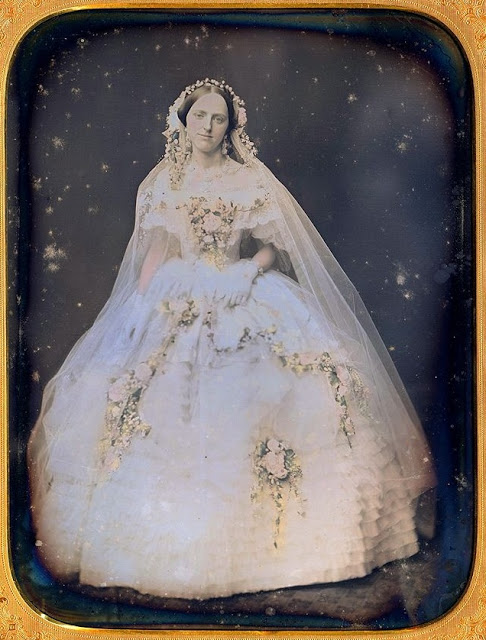
For the widow who remarried in the early and mid-Victorian eras, she did not wear white, had no bridesmaids, no veil and no orange blossoms, (a sign of purity.) She usually wore a pearl or lavender satin gown trimmed with ostrich feathers. In the later decades, she was allowed attendants as well as pages, but no veil or orange blossoms. She could wear a shade or two away from white, preferring rose, salmon, ivory or violet.

Discover more from Yesterday Today
Subscribe to get the latest posts sent to your email.
