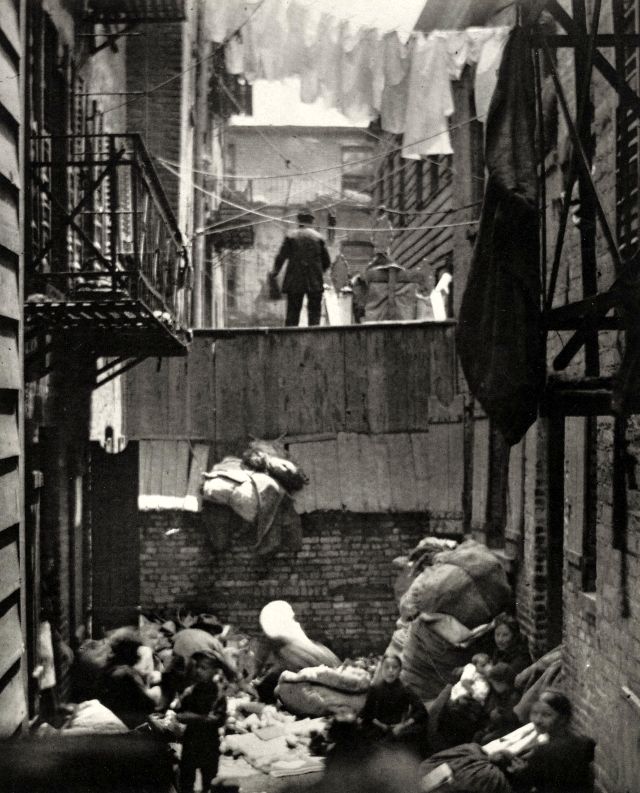
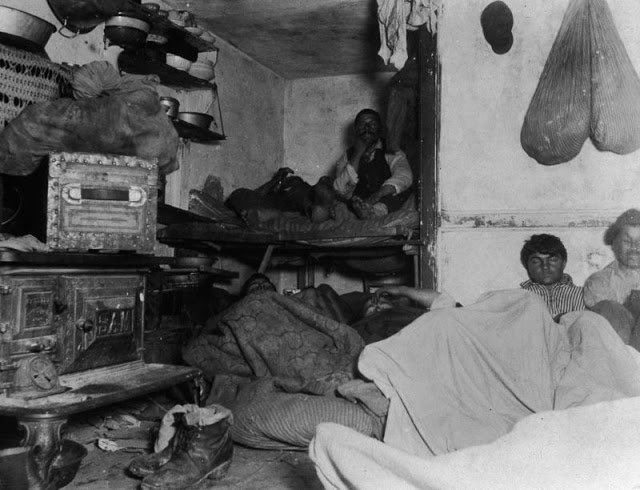
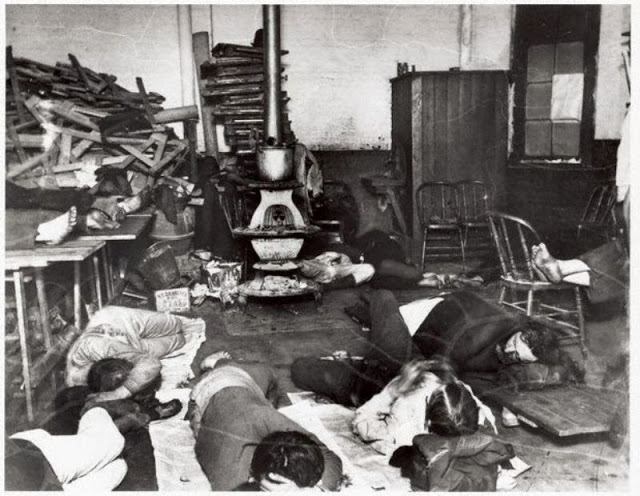
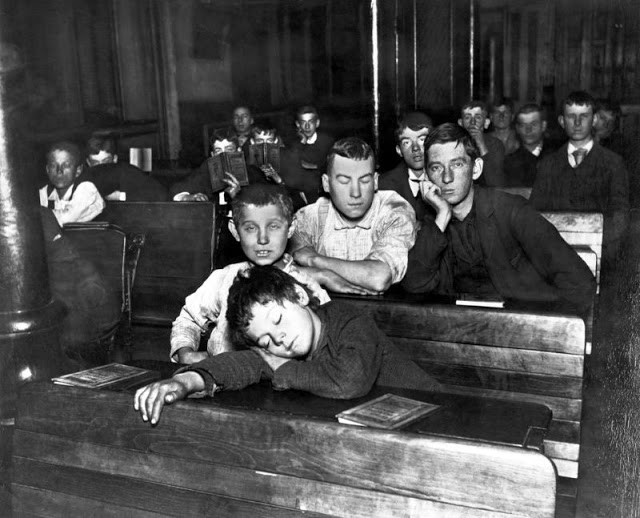
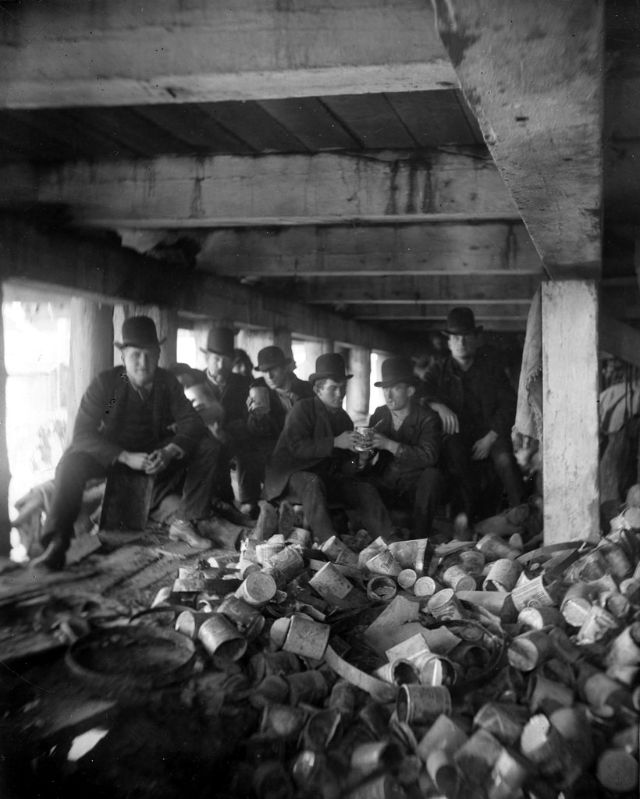
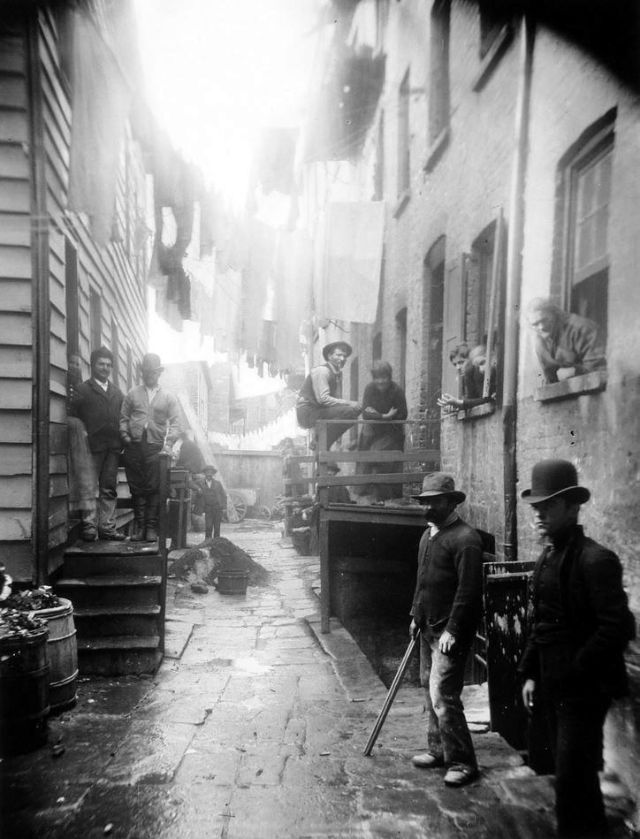
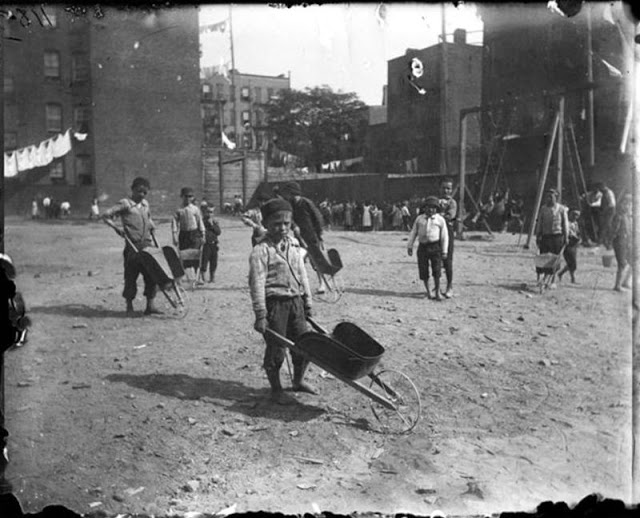
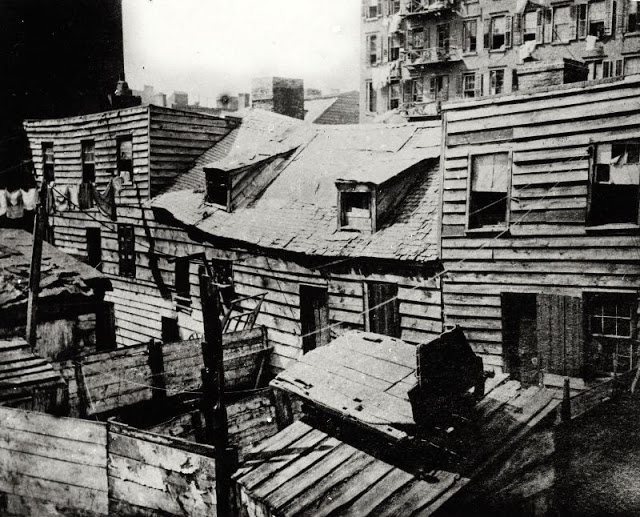
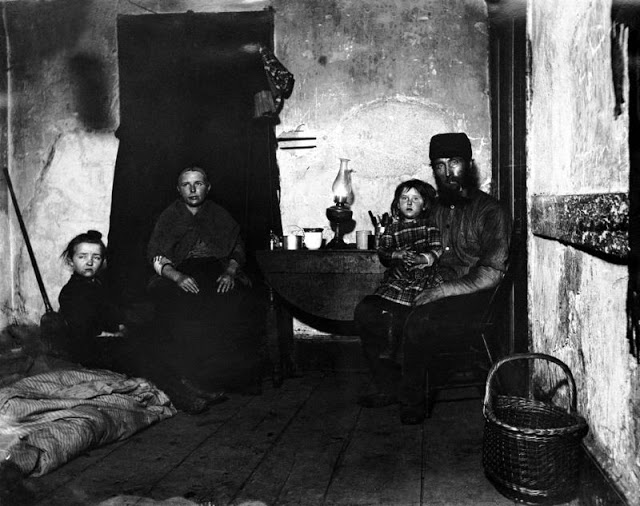
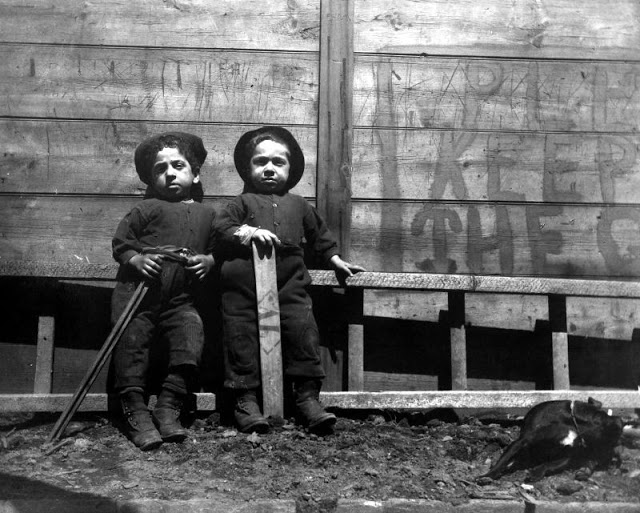
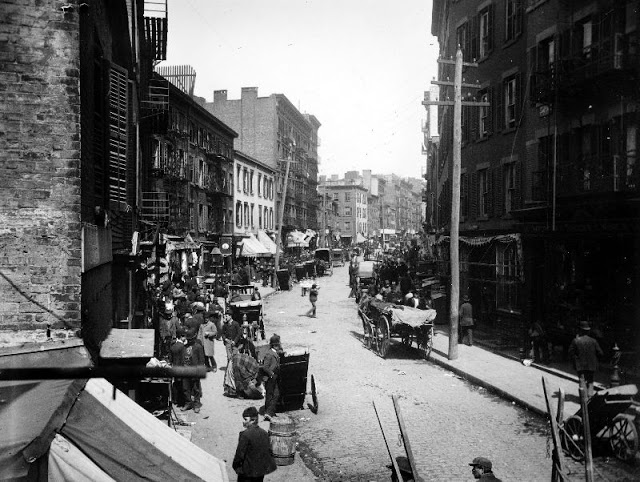
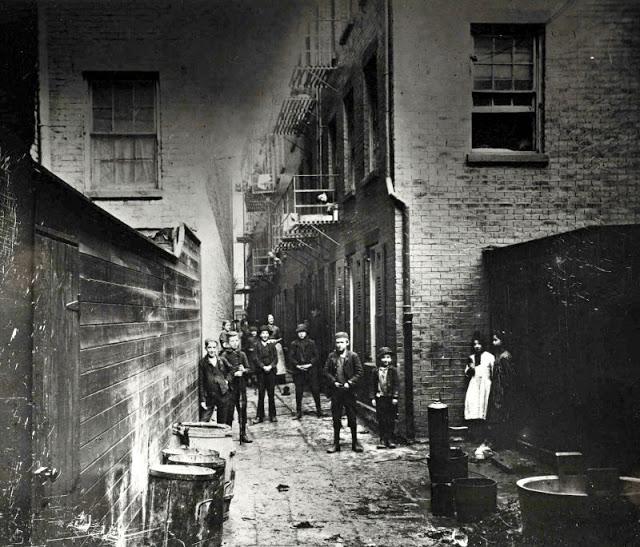
A danish emigrant, settled in New York in 1870, Jacob Riis (1849-1914) becomes a reporter for the New York Tribune in 1888 and covers the police investigations of the Lower East Side. His pictures of the squalid lives of New York’s immigrants made him the most famous photographer of his day – and were credited with bringing reforms which offered some hope to the booming city’s poorest residents.
Riis documented the overflowing tenements of New York’s Lower East Side more than 100 years ago, shining a spotlight on how the wave of immigrants from Europe were living in a city which at the same time was the world’s economic powerhouse.
Although he records the sensational stories of the miserable slums of New York, he difficultly interests his readers. When he pioneers the use of flash photography to highlight the darkest parts of the city and reveal gloomy existences, he has finally found a powerful tool, not only to attract the attention but also to lead a social reform.
Revealing how dramatic the lives of the city’s immigrants are and mostly depicts wretched children, Riis shocks most New Yorkers and produces an immediate success that inspires Theodore Roosevelt to reform the city’s housing policies.
Take a look at these heartbreaking pictures of New York’s slums in the late 19th century that prompted social reform and earned immigrant photographer praise as the city’s ‘most useful citizen’.
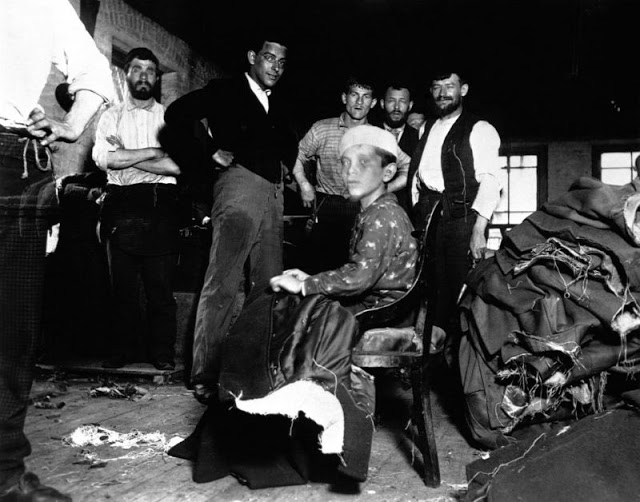
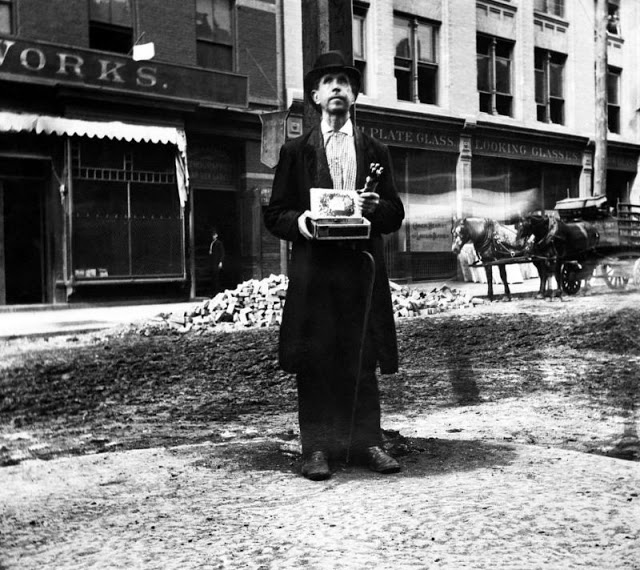
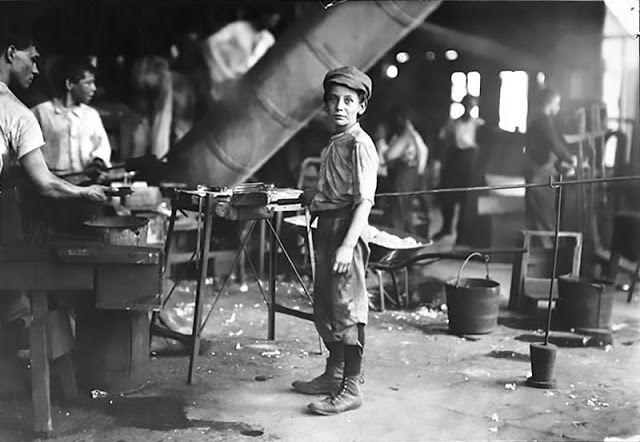
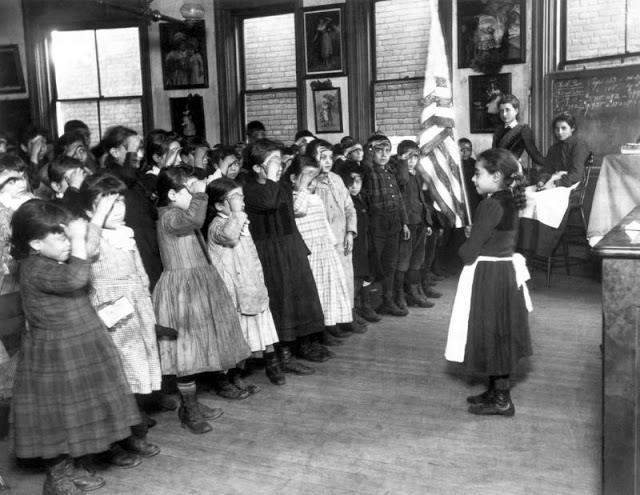
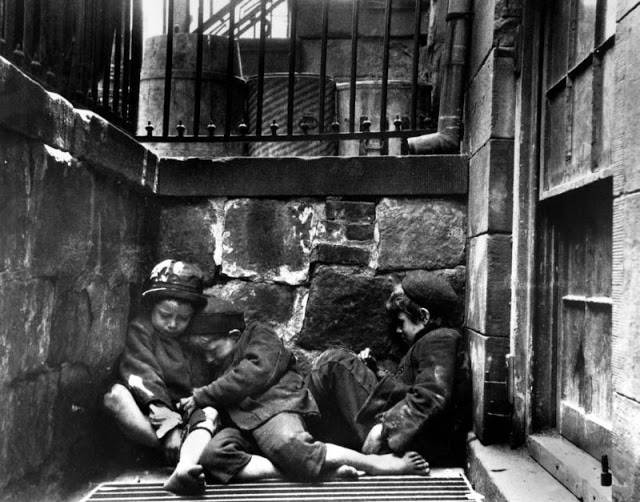
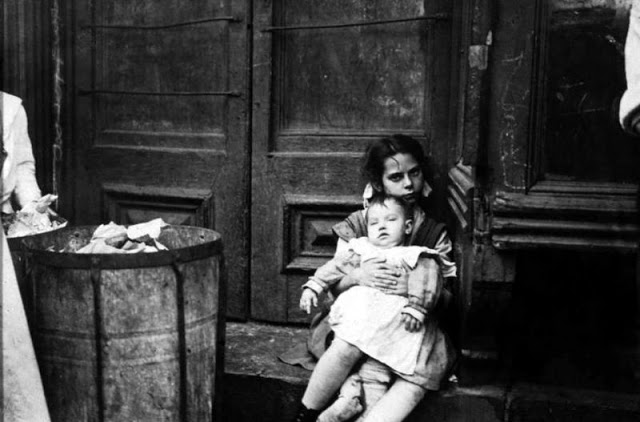
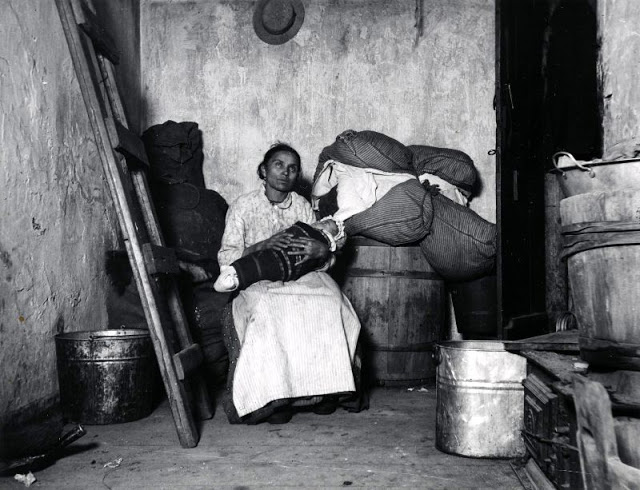
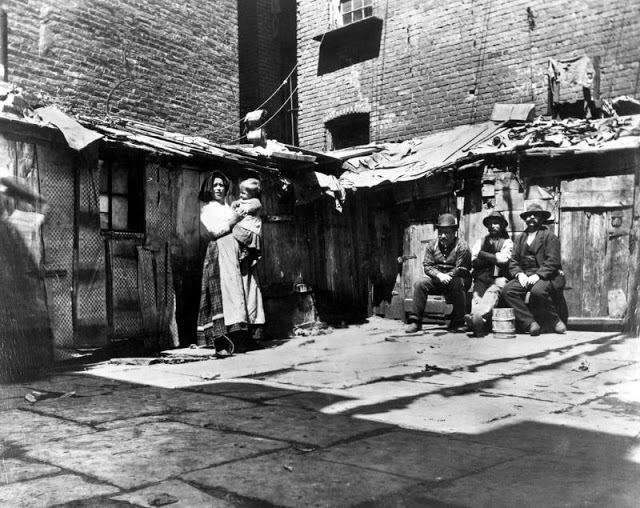
Poor family in one room tenement apartment, New York, circa 1880sManhattan’s Lower East Side, circa 1880sAn elderly woman sits in her dilapidated home and sews. She sleeps, cooks, and lives, all in one tiny room, New York, 1885Shelter for immigrants in a Bayard Street tenement, where a group of men share one room, Lower East Side, 1885A peddler sits on his bedroll, atop two barrels, in the filthy cellar he lives in, New York, 1886Men sleep on the floor of a New York City homeless shelter. In 1886, the fee for sleeping indoors was five cents a night, 1886Schoolroom in the Lower East Side, New York: View of benches, 1886The Short-Tail Gang, Corlears Hook, under the Pier at the foot of Jackson Street, 1887Bandit’s Roost, Mulberry Street, 1888Children’s Playground in Poverty Gap. Young boys play at a city playground, New York, 1888Dens of Death, 1888In Poverty Gap, West 28 Street: An English Coal-Herver’s Home, 1888Keep off the Grass, 1888Mulberry Bend, 1888Mullen’s Alley, February 12, 1888A twelve year old boy works as a thread puller in a New York clothing factory sweatshop, 1889Prayer Time, Five Points House of Industry, 1889A blind man stands alone on a street corner, offering pencils for sale in New York City, 1890A boy in a glass factory, 1890A group of women and children make a Manhattan police station their temporary home, 1890A Jewish immigrant cobbler living in a dirty cellar prepares to eat a meal on the Sabbath, New York, 1890Bohemian cigar makers at their tenements where people had to work as well as sleep, 1890Children saluting the flag in school, 1890Children sleeping on Mulberry Street, 1890Girl sitting on doorstep with baby on her lap, New York, 1890Homeless newsboys sleep huddled in a corner outside the Mulberry Street Church, 1890In the Home of an Italian Rag-Picker, Jersey Street. An Italian mother sits in an area just off of Jersey Street and holds her baby, New York, 1890Interior of a pantmaker’s workshop (sweatshop) on New York City’s Lower East Side, Ludlow Street, 1890Slum District, New York, 1890Three homeless boys sleep on a stairway in a Lower East Side alley, 1890sPortrait of a junk man’s living quarters in the cellar of a New York City tenement house, 1891Shoemaker working in house with $12 a month rent, 1895-1896
Discover more from Yesterday Today
Subscribe to get the latest posts sent to your email.