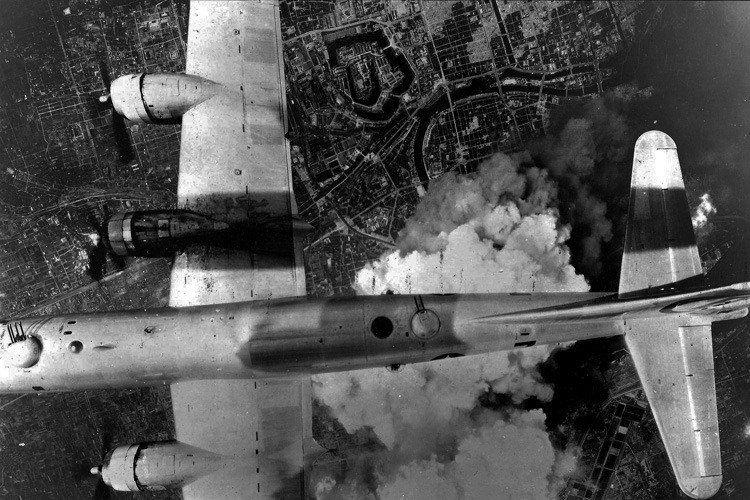
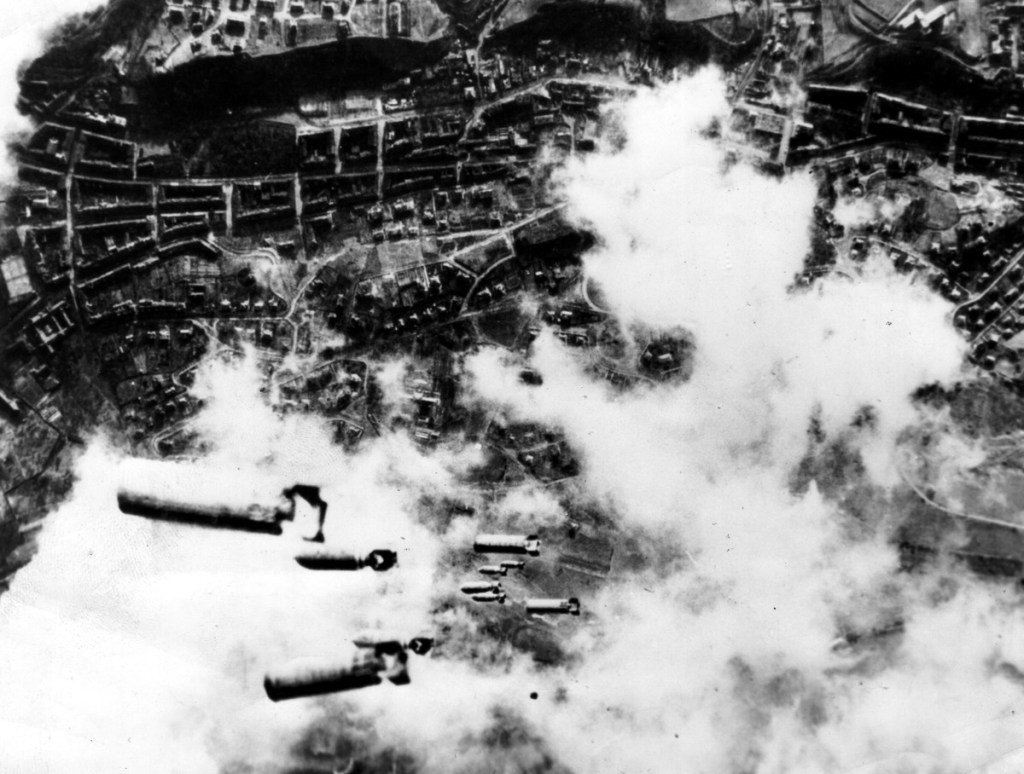
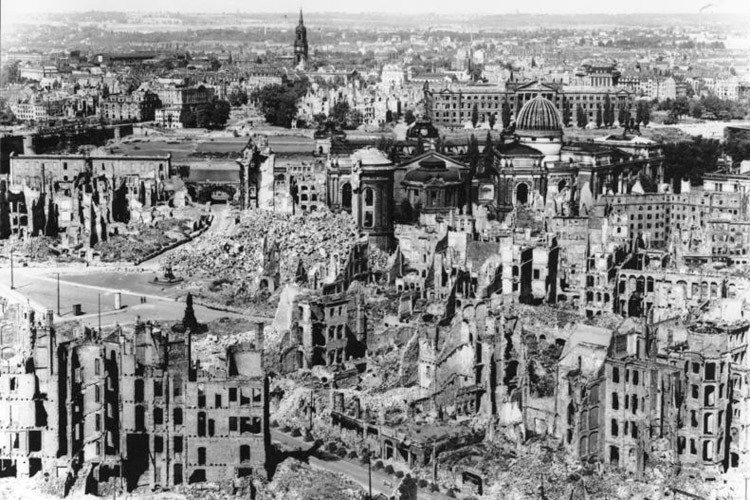
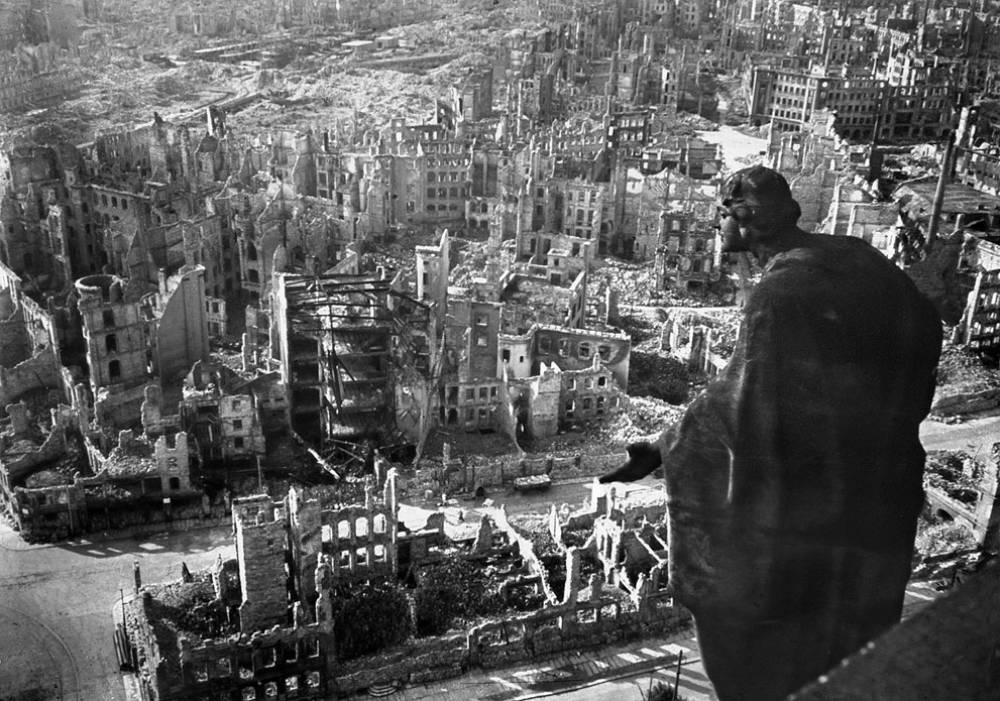
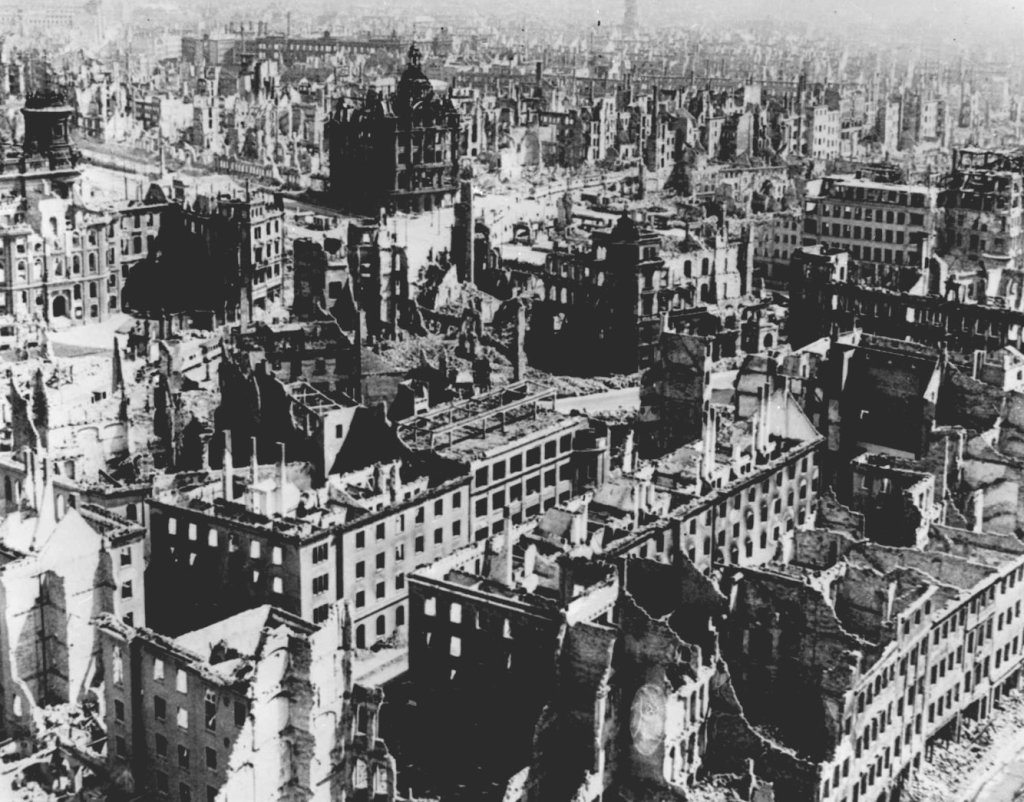
The bombing of Dresden was a British-American aerial bombing attack on the city of Dresden, the capital of the German state of Saxony, during World War II. In four raids between 13 and 15 February 1945, 722 heavy bombers of the British Royal Air Force (RAF) and 527 of the United States Army Air Forces (USAAF) dropped more than 3,900 tons of high-explosive bombs and incendiary devices on the city. The bombing and the resulting firestorm destroyed more than 1,600 acres (6.5 km2) of the city centre. An estimated 22,700 to 25,000 people were killed. Three more USAAF air raids followed, two occurring on 2 March aimed at the city’s railway marshalling yard and one smaller raid on 17 April aimed at industrial areas.
Immediate German propaganda claims, following the attacks and postwar discussions of whether the attacks were justified, have led to the bombing becoming one of the moral causes célèbres of the war. A 1953 United States Air Force report defended the operation as the justified bombing of a strategic target, which they noted was a major rail transport and communication centre, housing 110 factories and 50,000 workers in support of the German war effort. Several researchers claim that not all of the communications infrastructure, such as the bridges, were targeted, nor were the extensive industrial areas which were located outside the city centre. Critics of the bombing have asserted that Dresden was a cultural landmark while downplaying its strategic significance, and claim that the attacks were indiscriminate area bombing and not proportionate to the military gains. Some have claimed that the raid constituted a war crime. Some, mostly in the German far-right, refer to the bombing as a mass murder. To much controversy, some on the German far-right have taken to calling it “Dresden’s Holocaust of bombs” as an attempt to equate it to actual genocide of Jews committed by Germany; this is even though the bombing of Dresden had a mere 0.4% of the casualties of the real Holocaust.
In the decades since the war, large variations in the claimed death toll have fuelled the controversy, though the numbers themselves are no longer a major point of contention among historians. In March 1945, the German government ordered its press to publish a falsified casualty figure of 200,000 for the Dresden raids, and death tolls as high as 500,000 have been claimed. The city authorities at the time estimated up to 25,000 victims, a figure that subsequent investigations supported, including a 2010 study commissioned by the city council. One of the main authors responsible for inflated figures being disseminated in the West was Holocaust denier David Irving, who subsequently announced that he had discovered that the documentation he had worked from had been forged, and the real figures supported the 25,000 number. (Wikipedia)
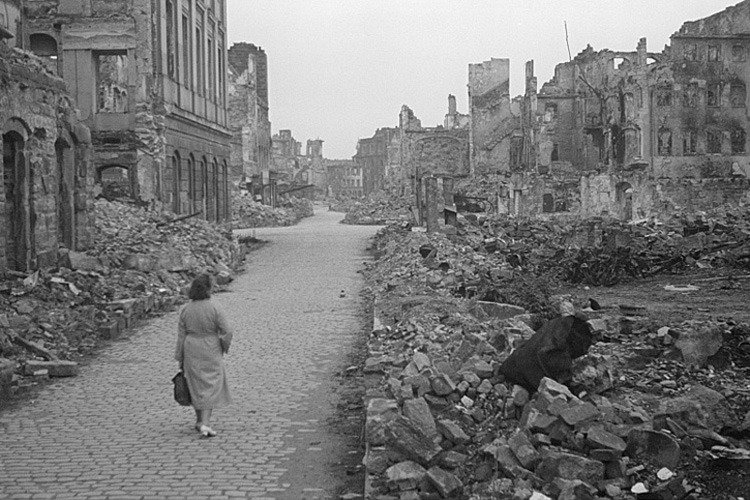
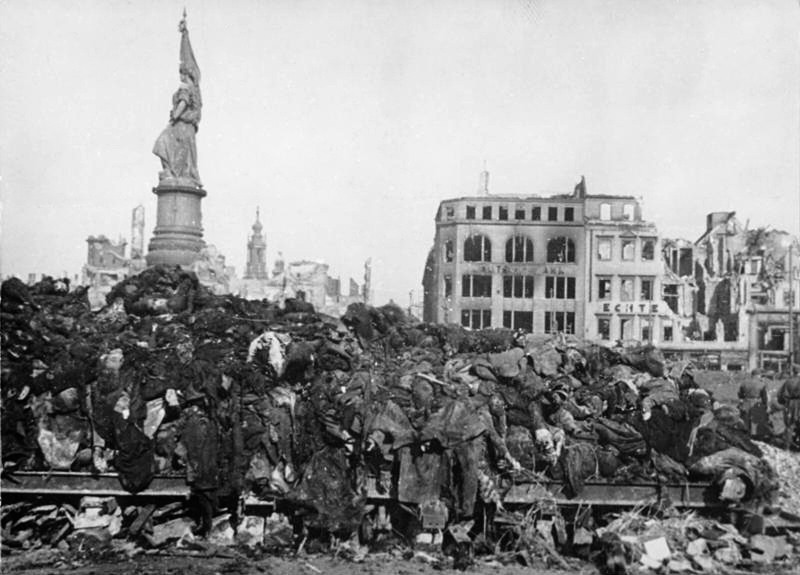
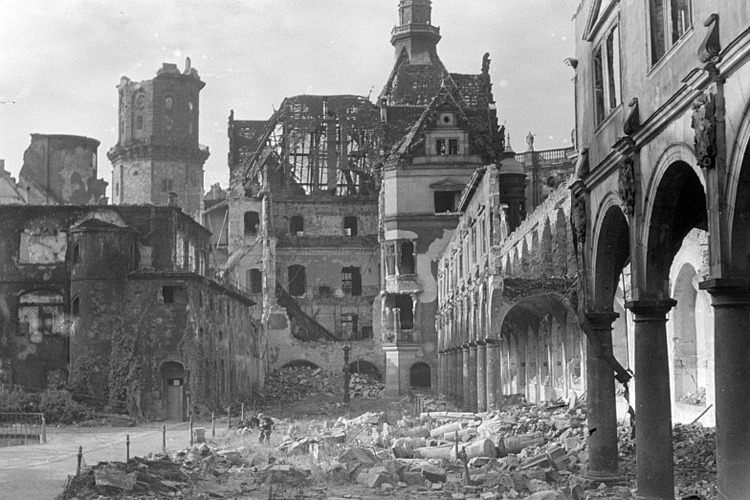
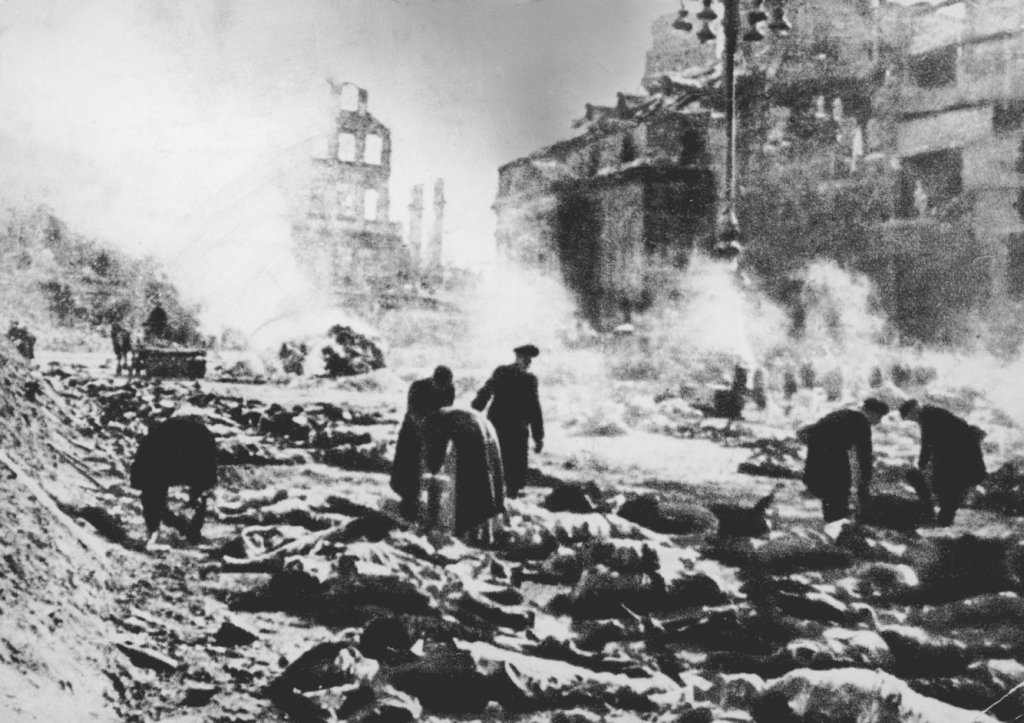
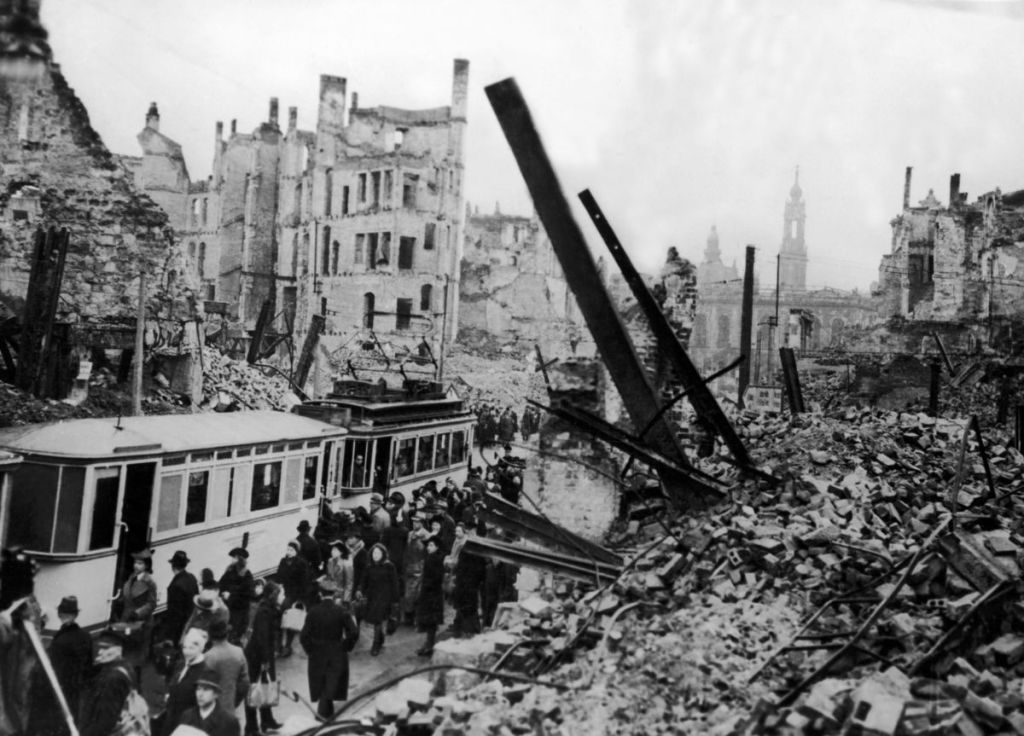
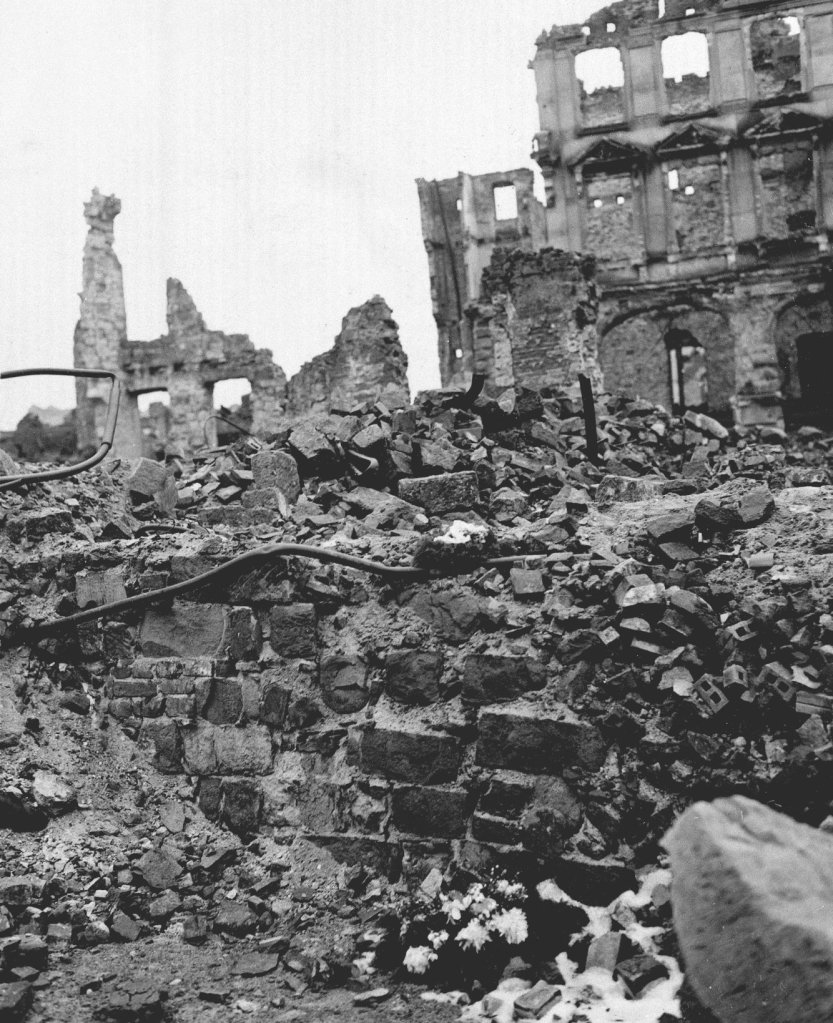
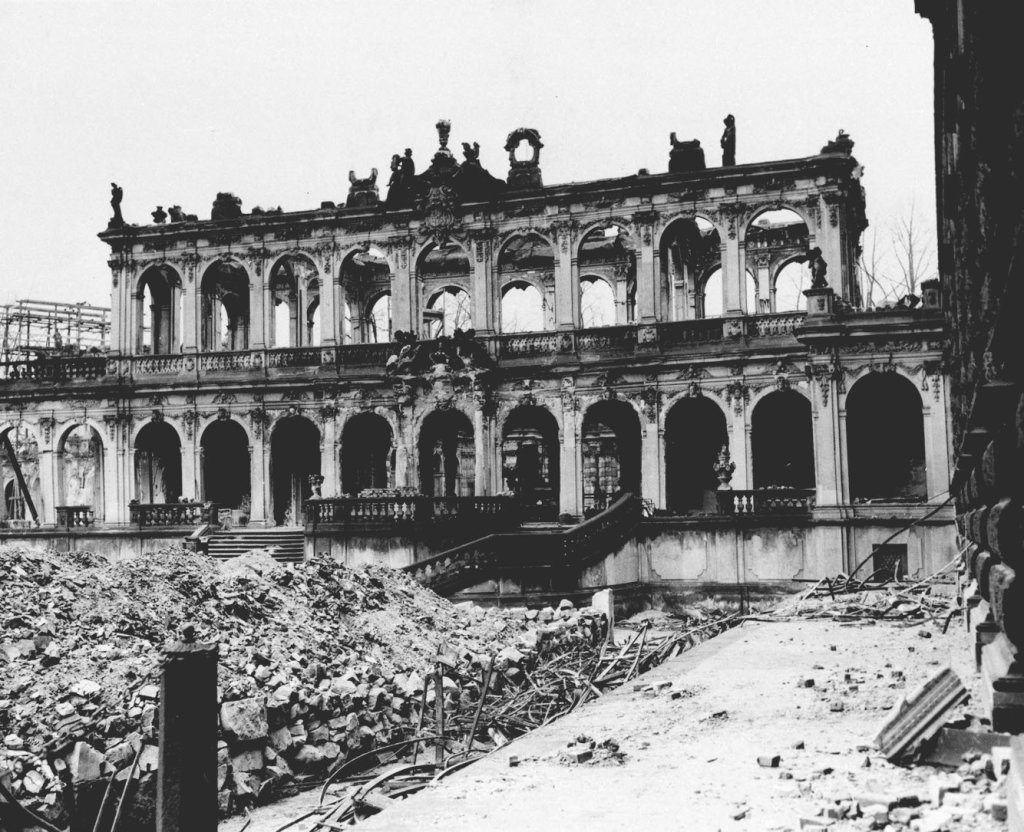
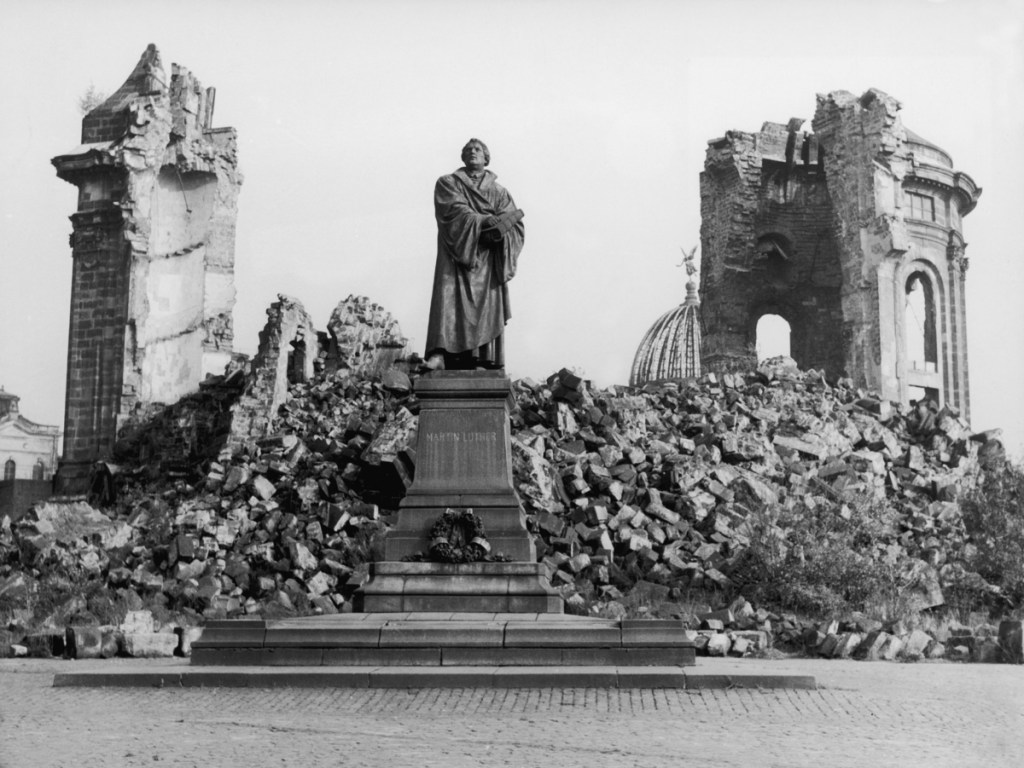
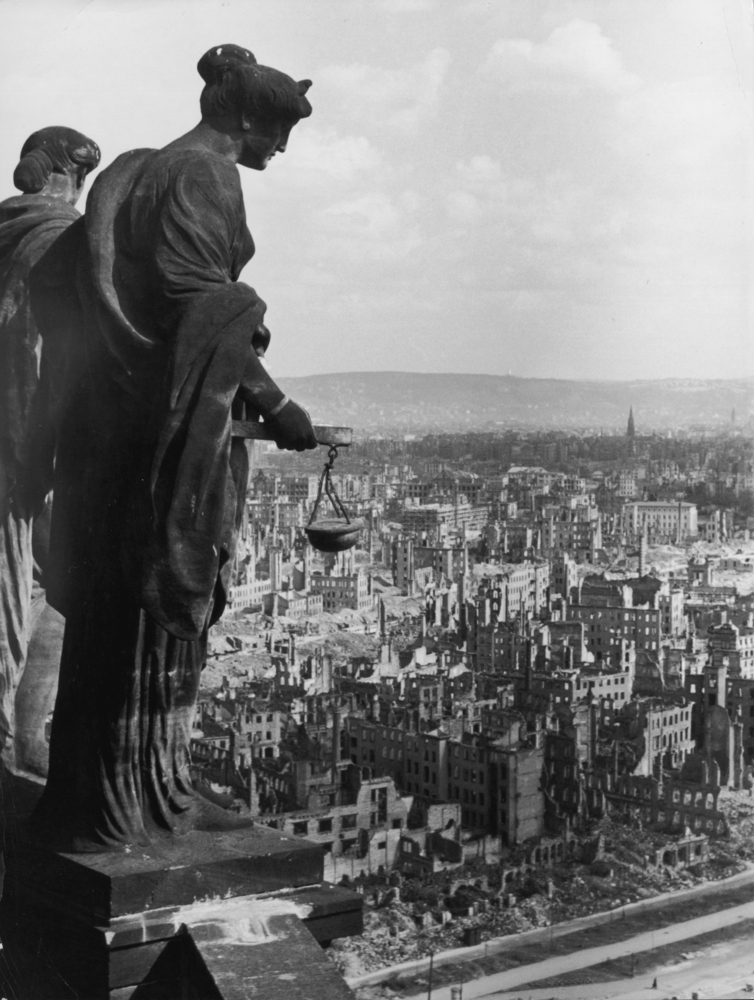
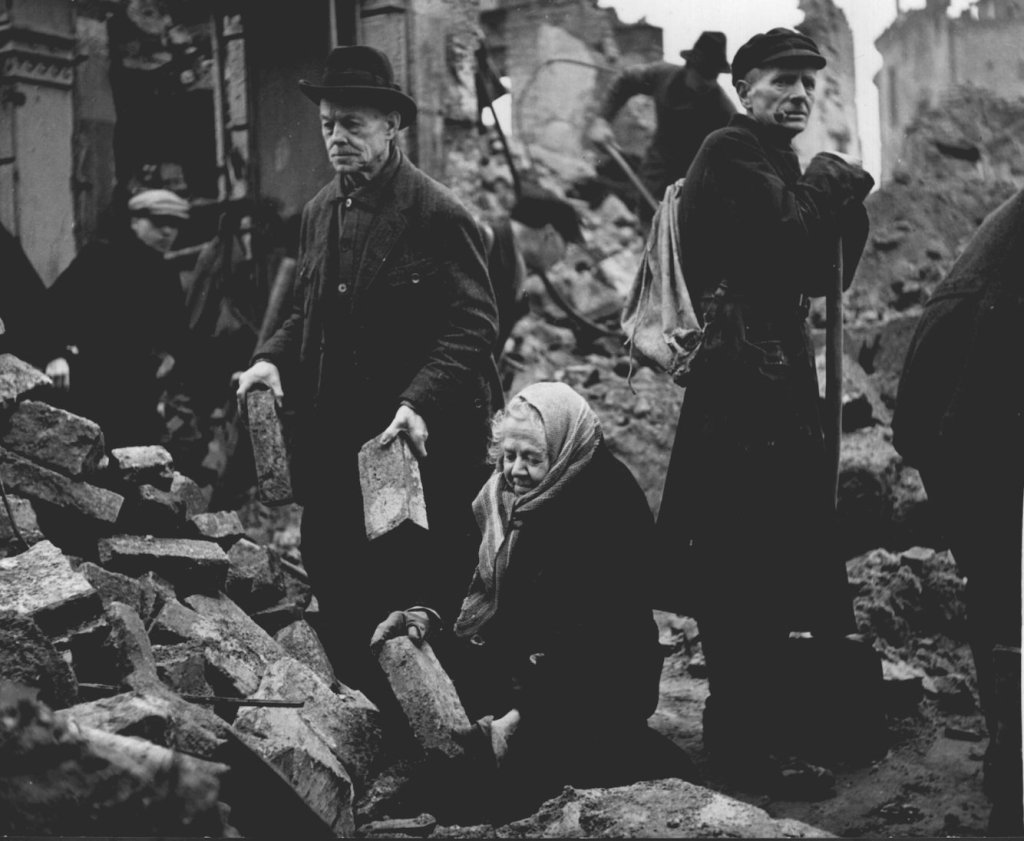
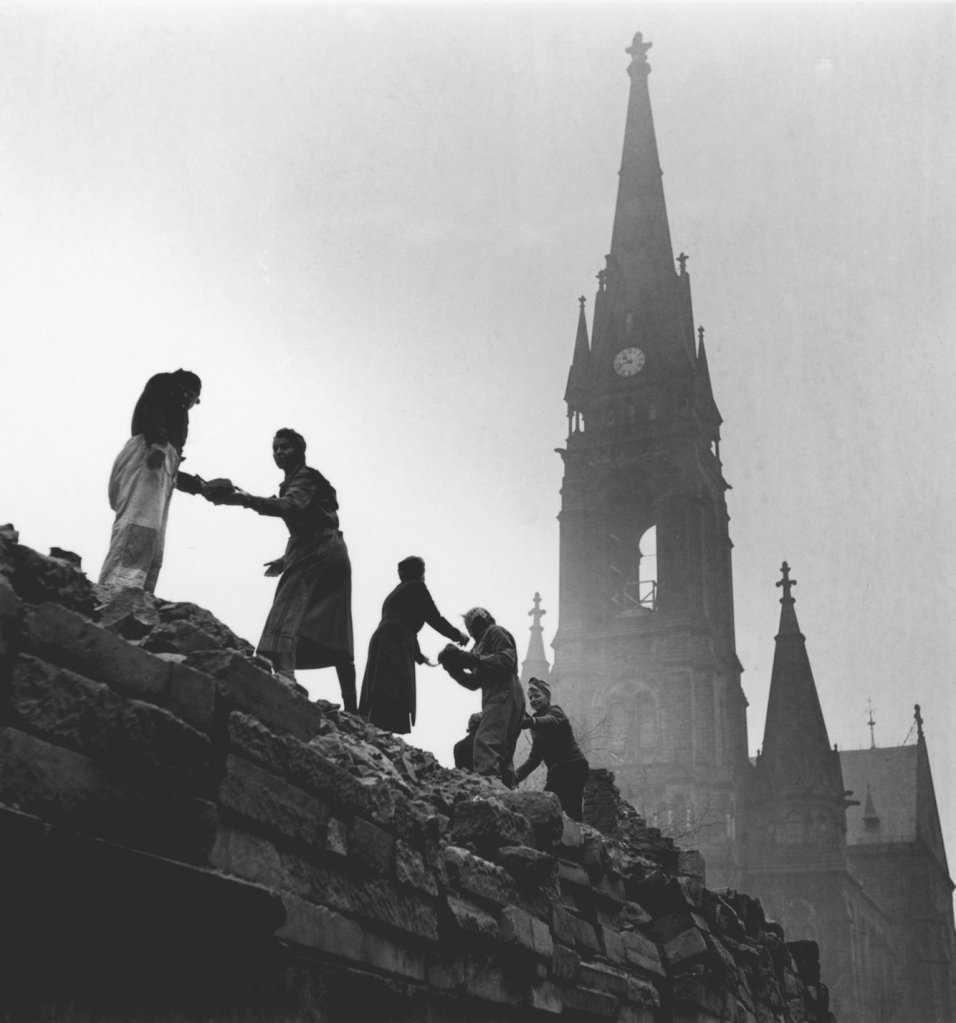
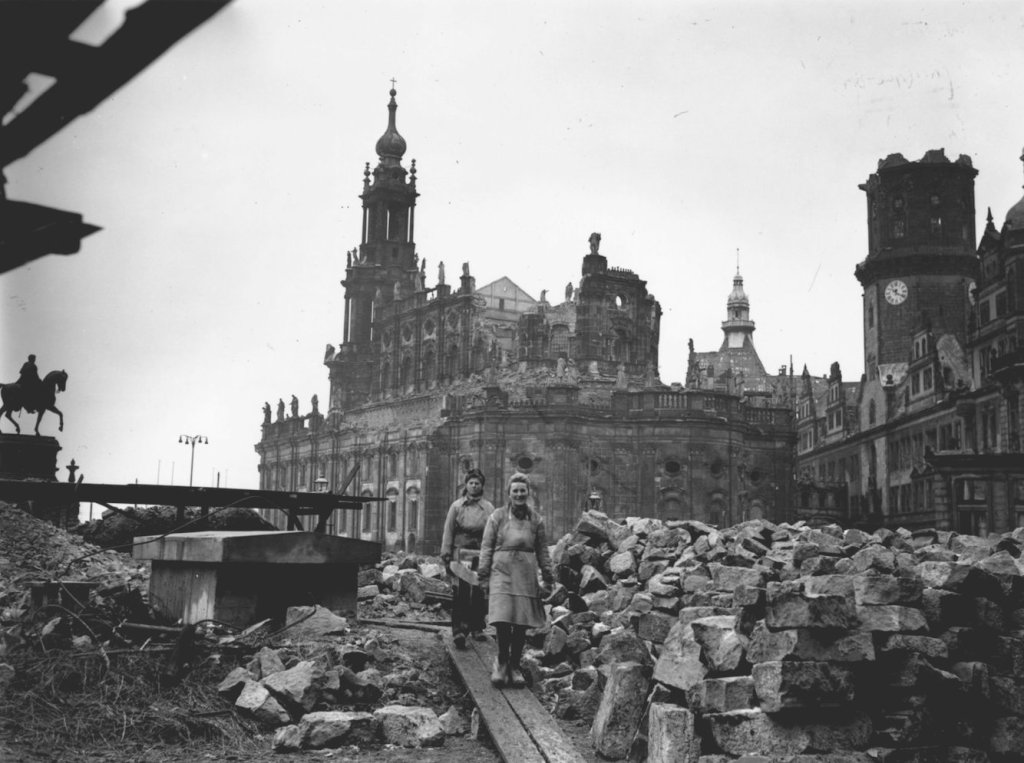
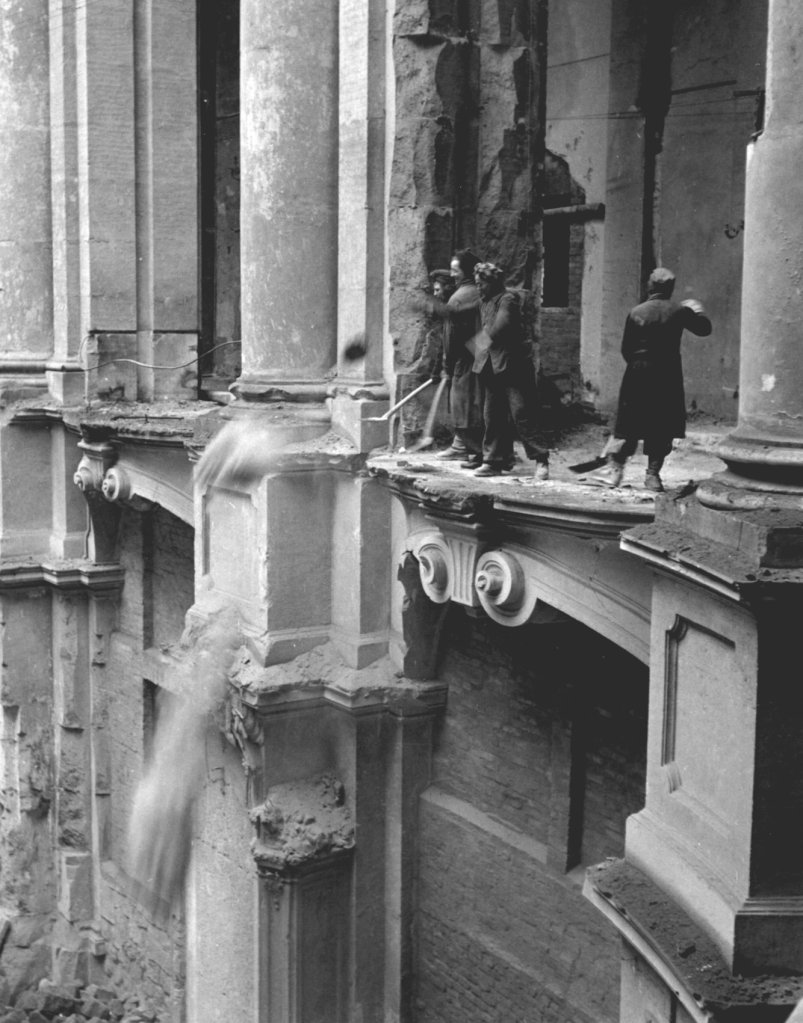
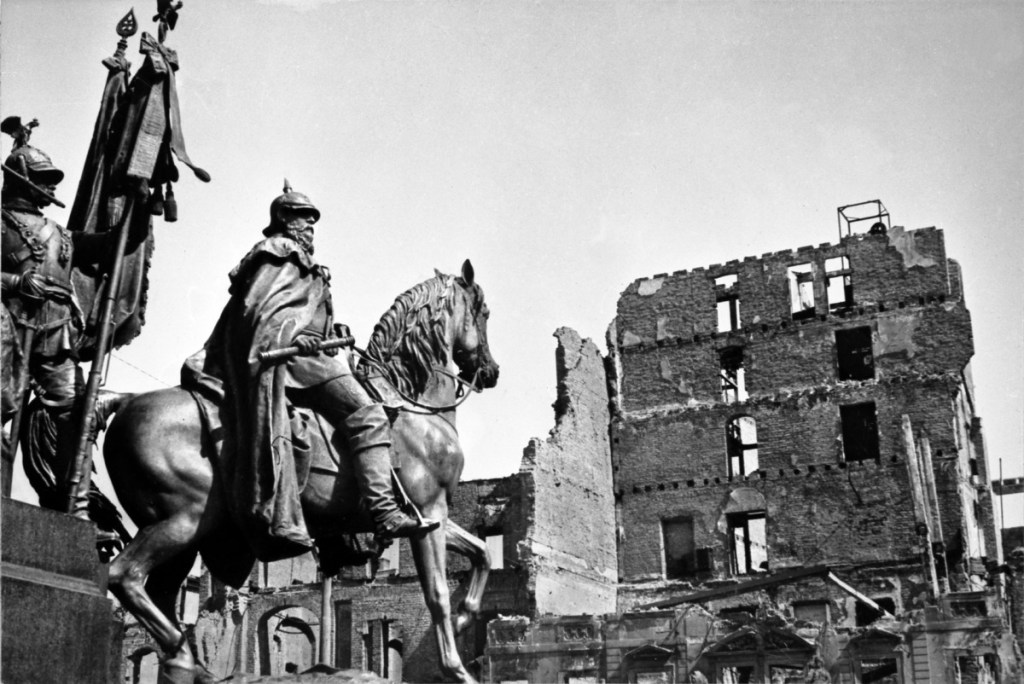
More than 3,900 tons of high-explosive bombs and incendiary devices were dropped on Dresden.B-17 Flying Fortresses bomb German communication lines at Chemnitz, near Dresden, on February 6, 1945.Smoke rises from fires still burning in Dresden, February 1945.Heavy incendiary bombs, together with high exposives fall toward the city of Dresden (Germany), seen burning below as bombers of the 8th US Air Force attack the Saxony capital (February 14, 1945).More than 75,000 homes were destroyed, along with pieces of historical architecture.A woman walks through the unfathomable destruction.A casualty found inside a bomb shelter.Bodies of dead civilians piled in the streets of Dresden in high stacks.A woman’s body as found in an air-raid shelter.The remains of the Stallhof, a courthouse of the big Royal Palace complex.Bodies in the street after the allied fire-bombing of Dresden, Germany, February 1945.The city of Dresden, basically razed to the ground by Anglo-American bombings, in February 1945.Dresden after Allied air raids on February 13 and 14, 1945. The city was left in ruins over an area of 15 square kilometers; 85% of its houses and unique monuments of the city’s Baroque architecture were destroyed.The Ruins Of The Church Notre-Dame In DresdenTaken after the city suffered devastating bombings in World War II, facades have never looked as ghostly.The ruins of Dresden after the Allied bombing raid.Dresden seen after Allied air raids on February 13 and 14, 1945.Two wreaths mark where persons were last seen and are believed to lie buried beneath the pile of rubble that was once a house in Dresden, Germany, in 1945. Two mass raids by Allied bombers struck Dresden on February 13 and 14, 1945, killing 35,000 people.The inner courtyard at the Zwinger art galleries in central Dresden lies in ruins slightly more than a year after the Allied firebombing that caused widespread death and destruction in the German cultural center, March 12, 1946.The Statue Of German Theologian And Reformer Martin Luther In The Ruins Of Dresden, In February Of 1945.View taken in January 1952 from Dresden’s Muenzgasse street showing people working on the removal of debris in front of the ruins of the Frauenkirche (Church of Our Lady). The church was reduced to rubble during World War II allied bombingsFebruary 1945: High-angle view of the bombed remains of Dresden after Allied bombings, seen from the top of a tall building, possibly a courthouse, where a statue of a woman surveys the city while holding scalesDresden, 1945.Dresden volunteers continue to help clear the bomb damage debris, March 1946.A group of volunteers working to rebuild Dresden. Two elderly Germans, Gustav and Alma Piltz, are assisting in the clearing of rubble.Women form a human chain to carry bricks used in the reconstruction of Dresden in March 1946 after allied bombing destroyed the city in February 1945. The steeple of the wrecked Roman Catholic cathedral can be seen in the background.Women workers remove debris from the shell of the Hof Kirche, the Catholic cathedral in Dresden, Germany, February 1946.Women in Dresden clear debris from the floor of the Zwinger art gallery during post-war rebuilding of the bomb-damaged city, March 1946.Dresden, 1945.
Discover more from Yesterday Today
Subscribe to get the latest posts sent to your email.