
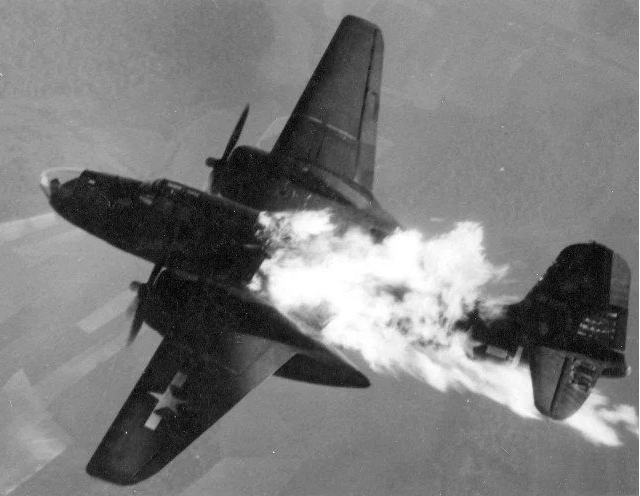
It burst into flames and crashed a mile west of the target; two chutes were seen to come out of the plane.
Its crew was 1st Lt Robert E. Stockwell, pilot, 2d Lt Albert Jedinak, bombardier-navigator, S/Sgt Hollis A. Foster and S/Sgt Egon W. Rust, gunners.
Lt Stockwell had been with the Group almost from the beginning of its existence.
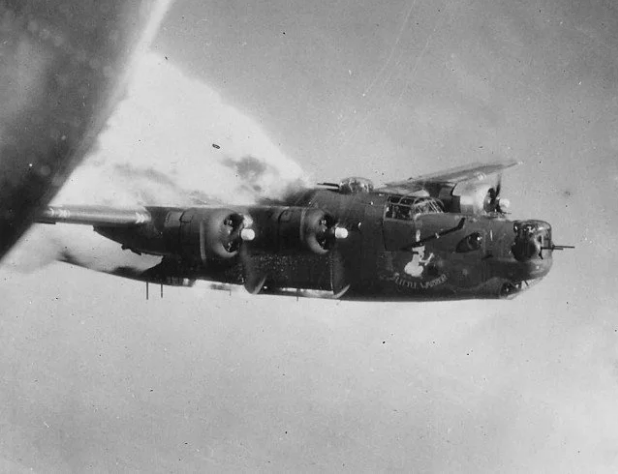
One crewman managed to bail out safely but was killed by civilians on the ground.
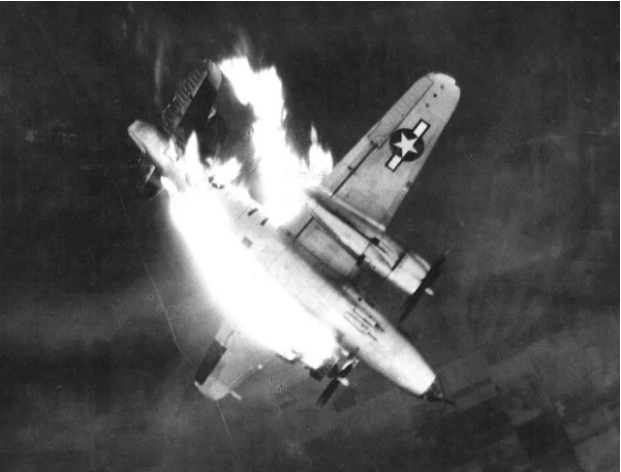
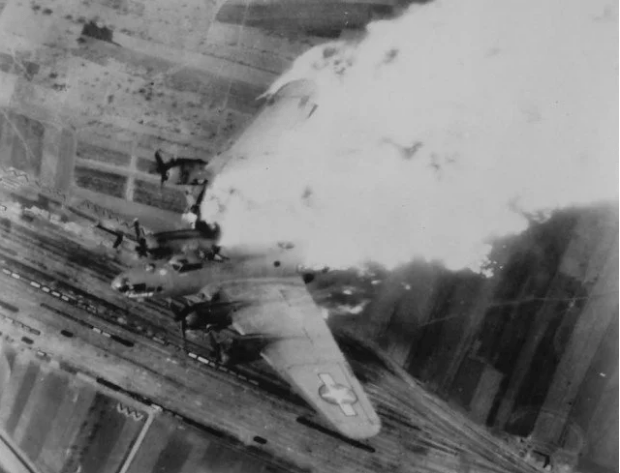
It is enveloped in flames and hurtling earthward after enemy flak scored a direct hit on the left engine while aircraft was attacking front line enemy communications center at Erkelenz, Germany
There were no survivors.
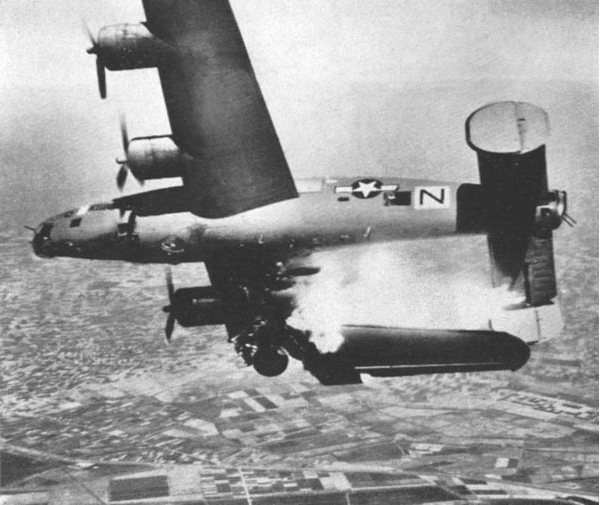
It was shot down by Flak during an attack on ground troops near Lugo, Emilia-Romagna, Italy, on 10 April 1945.
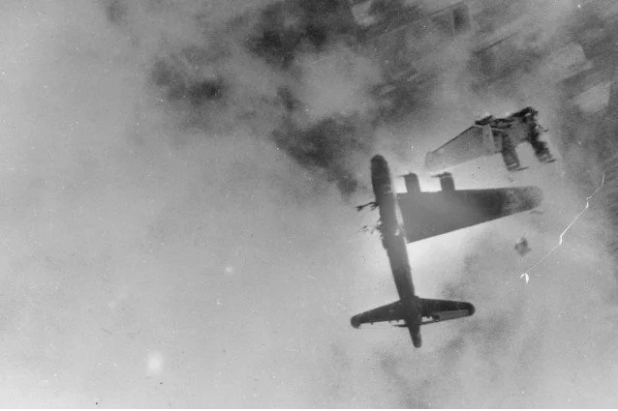
Only the pilot, Lieutenant Robert E. Fuller, and one crew member survived.

They were on a mission to bomb the fighter bases in Germany where the ME-262 was stationed.
The formation was attacked by approximately 50 Luftwaffe Jet and Rocket aircraft.
A total of eight B-24 Liberators were lost, including the one on the picture; 44-50838.
The crew:
Pilot: Robert L. Mains
Co-Pilot: John E. LaRiviere
Navigator: Allan L. Lake
Observer-Top Turret: George S. Alexander
Engineer-Flight Deck: Frank S Merkovich
Radio Operator: Charles E Cupp Jr
Left Waist Gunner: Harry J. Allen
Nose Gunner Gunner: Charles H. Daman
Right Waist Gunner: Anthony C Villari
Tail Gunner: Stuart D. Van Deventer
Only Charles E. Culp Jr. survived the crash, he was able to jump out of the open bomb bay doors.

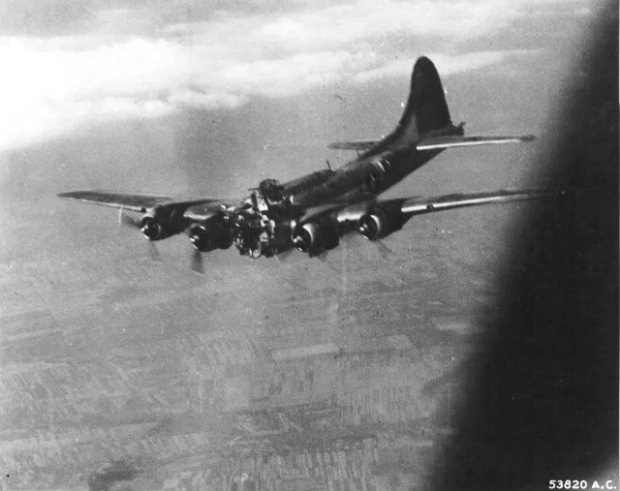
Two crewmembers were killed instantly, but the pilot held her level long enough for the crew to get out and they were taken prisoner of war.
The aircraft crashed near Dunavecse, Hungary

There were no survivors.

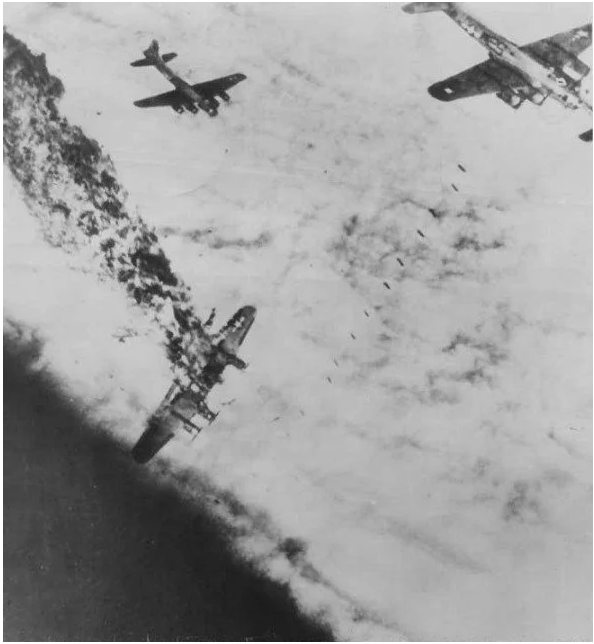
A 1,000 lb bomb from above tore off the left stabilizer and sent the plane into an uncontrollable spin.
All 11 crew members were killed.
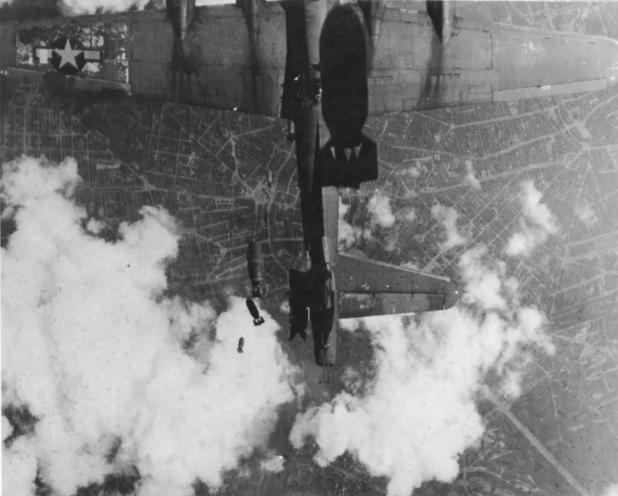


Eight members of the crew became prisoner of war, the other two were killed.
Note that the two right engines are feathered

Twelve A-20s from the 387th Bombardment Squadron, 312th Bombardment Group, attacked the Japanese barge depot and seaplane station at Kokas. 43-9432 (tail code “V”) was part of the last flight over the target.
This section was led by Captain Jack W. Klein (taking the photos), followed by 2nd Lt. Melvin H. Kapson (the other aircraft visible) and 1st Lt. James L. Knarr.
Approaching from the inland side, they dropped 115 kg bombs which can be seen exploding in the background.
Knarr’s aircraft was hit by anti-aircraft fire and crashed into the bay, exploding when it the sea.
He and his gunner, SSgt Charles G. Reichley, were killed.
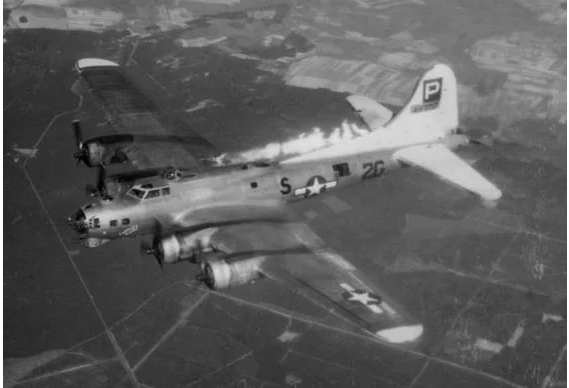
Fire in No. 3 engine, flames swept back to the tail.
They peeled off the formation shortly afterward and dropped behind.
The Crew bailed out at RP, 7 miles West of Elbe River, later right wing came off and the plane crashed into the ground.

The bomber lost its entire starboard tailplane to bombs dropped by another Halifax above it.
LW127 was one of 942 aircraft of Bomber Command dispatched to bomb German-held positions, in support of the Second Army attack in the Normandy battle area (Operation GOODWOOD), on the morning of 18 July 1944.
The crew managed to abandon the aircraft before it crashed in the target area.

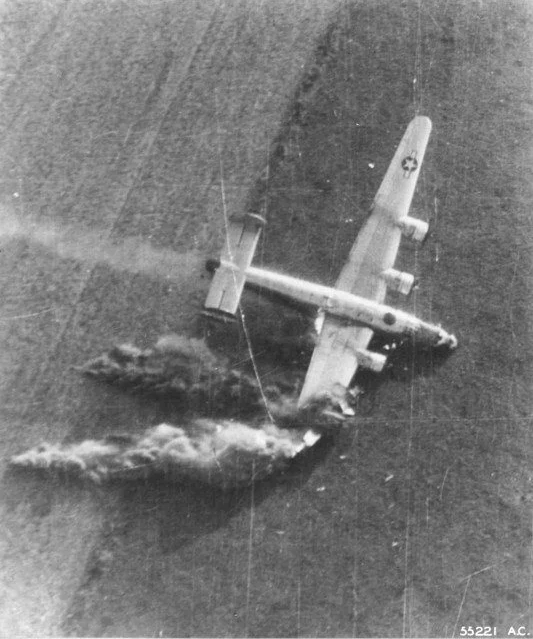
The pilot tried to land it in a field but there isn’t enough space and the bomber crashes into the trees and explodes.
Only a gunner, Frank Di Palma, survived when he is thrown clear of the wreck being severely wounded.
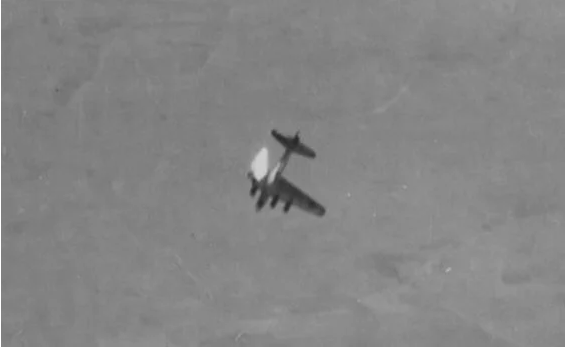

With the right engine sheared off and still turning and the wing ablaze, the plane crashed into the city a few minutes after this photograph was taken.
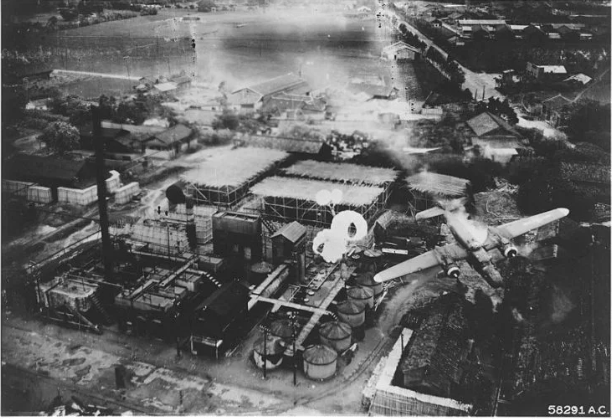
Just as it released its string of para-frags B-25 NO. 192 was hit by flak from a camouflaged battery and trails smoke and a gaping hole is visible on the pilot’s s side.
The aircraft visible is the North American B-25J-10-NC Mitchell (s/n 43-36192) “Jaunty Jo”.
Crew : 2/Lt Robert J. Knauf Pilot, 2/Lt Martin H. Mulner Jr. Co-Pilot, 1/Lt Lloyd E. Bodell Navigator, Cpl Harold O. Montville Eng/Gunner, Sgt Tennyson C. Harrell Radio/Gunner.
They were all killed in the crash.
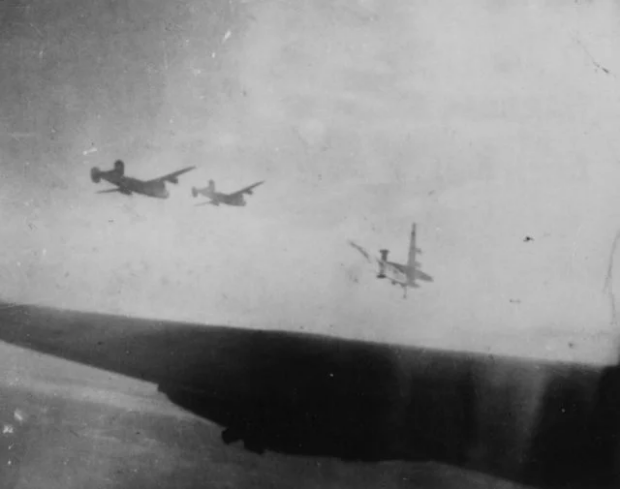
The wing broke off immediately and the bomber spun down carrying seven officers and five enlisted men to their deaths.
The pilot, Capt. Dean B. Strain, was one of the last original Group pilots still flying missions.
Cameras being readied for the strike photos followed the spinning aircraft down to the hard ground of Harburg.
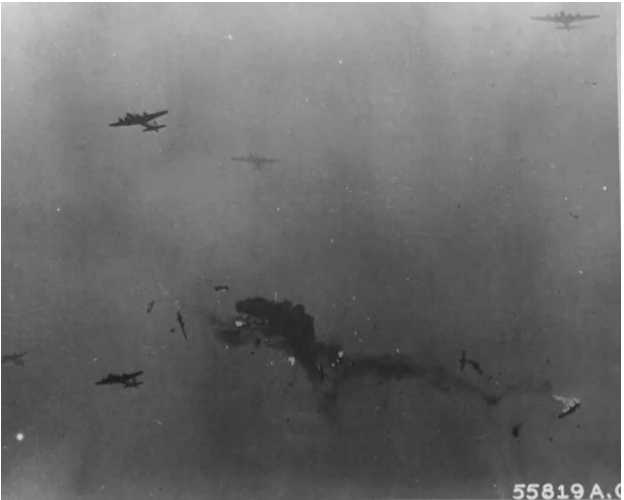
The collision occurred in conditions of poor visibility when returning aircraft bombing of Hanover.
The crews of both aircraft (18 airmen) died.

It had taken off from Angaur Airfield, flying on a bombing mission against anti-aircraft installations on Koror, Palau Islands.
Whilst over Koror, the B-24 was hit by anti-aircraft fire, the fuselage fell in a flat spiral until it crashed.
10 crew members were on board. 9 were killed in the crash except for the Navigator, 2nd Lt Wallace F. Kaufman. He was captured by the Japanese and executed.
There was a myth surrounding this footage that it was an American bomb striking the wing of the plane.
However, a cleaned up version of the film has been analyzed and it shows that the wing is struck from the below. So it was not friendly fire.
Discover more from Yesterday Today
Subscribe to get the latest posts sent to your email.
