Subscribe to get access
Read more of this content when you subscribe today.
Abolitionist Button is an early photography daguerreotype and gold photographic print created from between the 1840s to the 1850s. It lives at the Metropolitan Museum of Art in New York. The image is in the public domain, and tagged jewelry and political work.
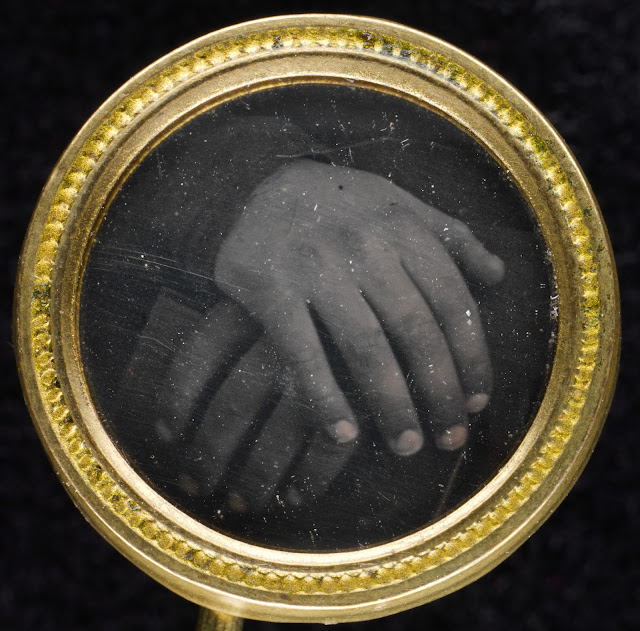
This miniature daguerreotype shows two hands resting on a book. The photograph is set into a two-piece gold-washed brass frame with a loop on the reverse for sewing to a garment. The case design with its simple, raised ornamental border is typical of the gilt-metal buttons mass-produced from 1830 to 1850 in several New England factories such as the Scovill Manufacturing Company in Waterbury, Connecticut, which also manufactured daguerreotype plates. The button was discovered in the early 1980s in a flea market in Massachusetts.

Subscribe to continue reading
Become a paid subscriber to get access to the rest of this post and other exclusive content.
