
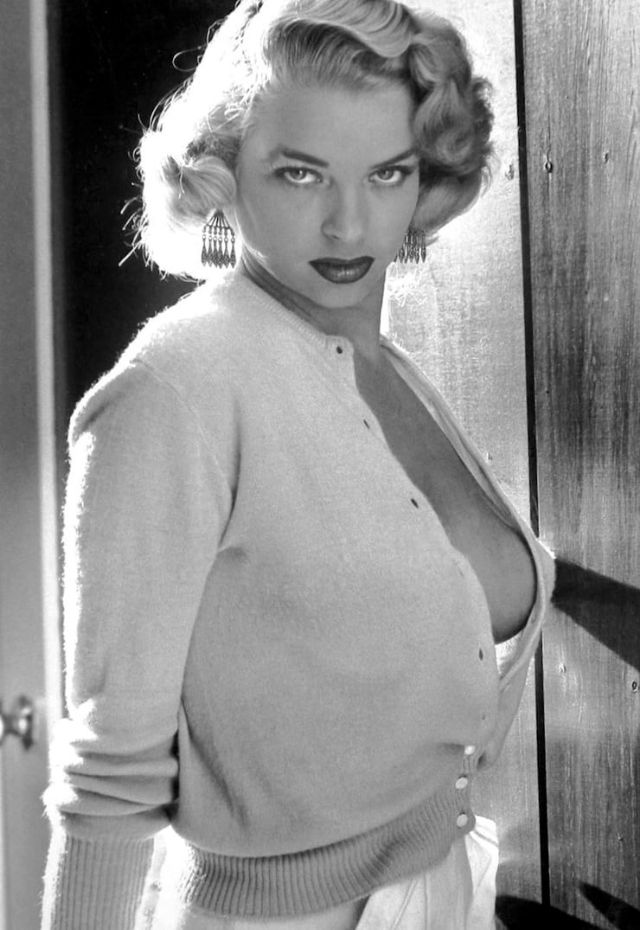
The 1950s and 1960s were an era of seismic shifts in American culture, particularly in the film and publishing industries. It was a time when the glamour of Hollywood’s golden age began to give way to a more provocative and often controversial aesthetic. At the center of this transition was Eve Meyer, a model and actress whose career was inextricably linked to her marriage and collaboration with the controversial filmmaker Russ Meyer. Her life was a study in contrasts: a woman of striking beauty and business acumen who became a muse for one of cinema’s most polarizing figures, only to have her life end in a devastating and tragic manner.
Born Evelyn Eugene Kessler on December 13, 1928, in Atlanta, Georgia, Eve’s early life gave little indication of the path her future would take. She possessed a natural grace and a striking physique that caught the attention of photographers, leading her to a successful career as a pin-up model. The 1950s were the golden age of the pin-up, and Meyer, with her voluptuous figure and magnetic presence, was a natural fit. She appeared in numerous magazines, her image gracing the pages of publications like Playboy and countless others, where she quickly became a fan favorite. This early success established her as a prominent figure in the modeling world and set the stage for her fateful meeting with Russ Meyer.
Russ Meyer, a former combat cameraman and a burgeoning filmmaker, was captivated by Eve’s unique blend of classic beauty and undeniable sensuality. Their professional relationship began when he photographed her for various magazines. This collaboration soon blossomed into a personal one, and the two were married in 1952. Their union was a creative and personal partnership that would define both of their careers. For over a decade, Eve was not just Russ’s wife; she was his muse, his star, and his essential collaborator.
The 1950s and early 1960s were a period of intense creative output for the couple. Russ Meyer was developing his signature style, a blend of melodrama, comedy, and overt sexuality that would later earn him the title of “King of the Nudies.” Eve was a central figure in this cinematic revolution. She starred in several of his early films, most notably the 1959 cult classic, The Immoral Mr. Teas. Though her on-screen presence was often brief, her image was foundational to the film’s success. She was also a key behind-the-scenes collaborator, working as a producer, costume designer, and all-around creative partner. Her business acumen and keen eye for detail were instrumental in the success of Russ Meyer’s low-budget, independent productions. She helped manage the finances, scout locations, and generally kept the operation running smoothly. Their dynamic was one of a creative powerhouse couple, with Russ providing the vision and Eve ensuring its successful execution.
However, the collaboration was not without its tensions. The world of Russ Meyer’s films was often chaotic and demanding, and Eve was under constant pressure to maintain her image and perform her various roles. Her life was a whirlwind of modeling shoots, film productions, and the management of their shared business ventures. This relentless pace, coupled with the unconventional nature of their work, began to take a toll. As Russ Meyer’s vision evolved, he began to cast other actresses, often favoring younger, more overtly sexualized figures. This shift created a rift in their professional and personal relationship.
By the mid-1960s, their marriage was strained. The very dynamic that had fueled their success began to unravel. They divorced in 1964, marking a significant turning point in both of their lives. For Eve, the end of the marriage meant a move away from the intense spotlight of the Russ Meyer machine. She continued to work in the industry, but her career took a different turn. She focused more on producing and behind-the-camera work, using the skills she had honed during her marriage. She was credited as a producer on several of Russ Meyer’s later films, including the iconic Faster, Pussycat! Kill! Kill! (1965), a testament to their enduring, albeit complex, professional connection.
The late 1960s and 1970s saw Eve Meyer transition from a front-and-center figure to a savvy businesswoman and producer. She was a woman who had navigated the tumultuous waters of the independent film world and emerged with a clear understanding of its mechanics. She was admired by many for her intelligence, resilience, and business savvy. She maintained a connection with the people she had worked with, and her legacy as a creative partner in one of cinema’s most unique oeuvres was secure.
The tragic end to Eve Meyer’s life came on March 26, 1977, in a horrific and senseless disaster. She was on a vacation in the Canary Islands, enjoying a break from her busy life in Hollywood. She was staying at a hotel in the resort town of Las Palmas on the island of Gran Canaria. Her vacation coincided with a period of significant travel disruptions caused by a bombing at the Gran Canaria Airport. This act of terrorism forced many inbound flights to be diverted to Los Rodeos Airport on the nearby island of Tenerife.
On that fateful day, Eve Meyer was a passenger on KLM Flight 4805, which was on the tarmac at Los Rodeos. Due to a series of miscommunications, human errors, and a dense fog that had descended upon the airport, two Boeing 747 jumbo jets, KLM Flight 4805 and Pan Am Flight 1736, collided on the runway. The impact caused a massive explosion and fire, resulting in the deadliest accident in aviation history. All 248 passengers and crew on board the KLM flight perished, including Eve Meyer. The Pan Am flight also suffered heavy casualties, with 335 of its 396 occupants losing their lives.
Eve Meyer’s death sent shockwaves through the film community. Her life, which had been so intertwined with the bold and often larger-than-life world of Russ Meyer’s films, came to a sudden and tragic end in an event that was entirely unrelated to her career. Her story serves as a poignant reminder of the fragility of life, contrasting the glamorous, carefully curated images of her public persona with the random and brutal reality of her death. Eve Meyer was more than just a pin-up model or a B-movie actress; she was a creative force, a determined businesswoman, and a woman whose life, while marked by professional success and personal turmoil, ended far too soon in one of the 20th century’s most catastrophic accidents.
Subscribe to get access
Read more of this content when you subscribe today.


Subscribe to continue reading
Become a paid subscriber to get access to the rest of this post and other exclusive content.
