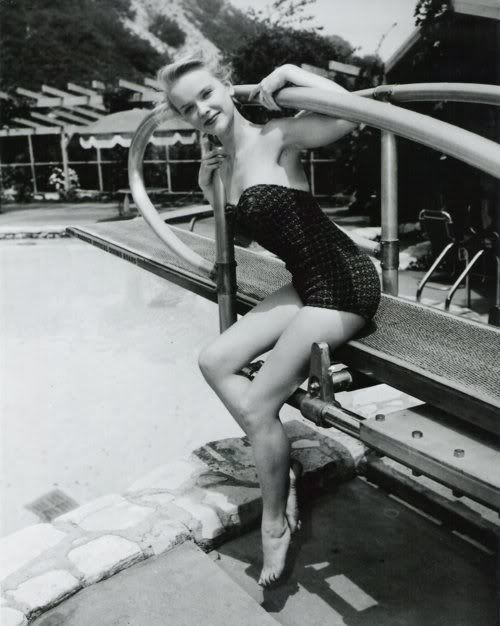
A Photographic Essay

The 1950s were a transformative decade for American cinema, marked by the rise of television, the golden age of science fiction, and a shifting cultural landscape that began to challenge traditional gender roles. Amid this dynamic era, Anne Francis emerged as a captivating figure—an actress whose beauty was undeniable, but whose talent and ambition pushed her beyond the confines of the typical Hollywood starlet. From ingénue roles to groundbreaking performances, Francis carved out a unique space in the entertainment industry, becoming one of the decade’s most memorable faces.
Early Life and Entry into Show Business
Born Anne Lloyd Francis on September 16, 1930, in Ossining, New York, she entered the world of entertainment at an astonishingly young age. By age five, she was working as a model to help support her family during the Great Depression. Her early exposure to the spotlight led to radio appearances and eventually a Broadway debut at age eleven in Lady in the Dark, where she played the child version of Gertrude Lawrence.
This early immersion in performance laid the foundation for a career that would span over six decades. In the post-World War II years, Francis signed with Metro-Goldwyn-Mayer (MGM), appearing in minor roles that showcased her photogenic charm but did little to highlight her acting depth.
Breaking Through the Starlet Mold
The 1950s began with Francis seeking more substantial roles. Her breakthrough came with the gritty drama So Young So Bad (1950), where she played a troubled juvenile delinquent. This performance caught the attention of 20th Century Fox’s Darryl F. Zanuck, who signed her to a contract. Though she continued to be cast in ingénue roles in films like Elopement (1951), Lydia Bailey (1952), and Dreamboat (1952), Francis was determined to transcend the limitations of typecasting.
Subscribe to get access
Read more of this content when you subscribe today.
Her persistence paid off mid-decade when she landed roles in more serious and critically acclaimed films. In Bad Day at Black Rock (1955), she played Liz Wirth, a character caught in a web of small-town secrets and racial tension. That same year, she starred in Blackboard Jungle (1955), a film that tackled juvenile delinquency and urban education, themes that resonated with postwar anxieties.
Forbidden Planet and Sci-Fi Stardom
Francis’s most iconic role of the 1950s came in 1956 with Forbidden Planet, a landmark science fiction film that remains a cult classic. Cast as Altaira Morbius, the daughter of a reclusive scientist on a distant planet, Francis brought a blend of innocence, intelligence, and sensuality to the role. Her performance helped redefine the portrayal of women in science fiction, moving beyond the damsel-in-distress trope to a character who was curious, capable, and emotionally complex.
Forbidden Planet was groundbreaking not only for its visual effects and narrative scope but also for its depiction of gender dynamics. Francis’s Altaira was both a romantic interest and a symbol of human vulnerability in the face of technological advancement. The film’s success cemented her status as a leading lady and gave her a lasting legacy in the genre.
Beauty and Branding
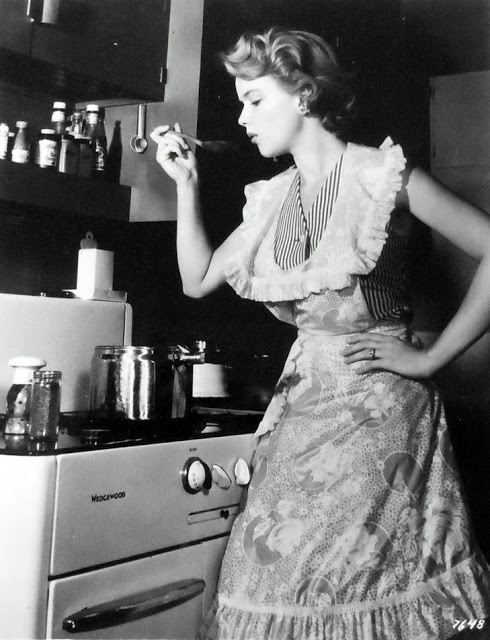
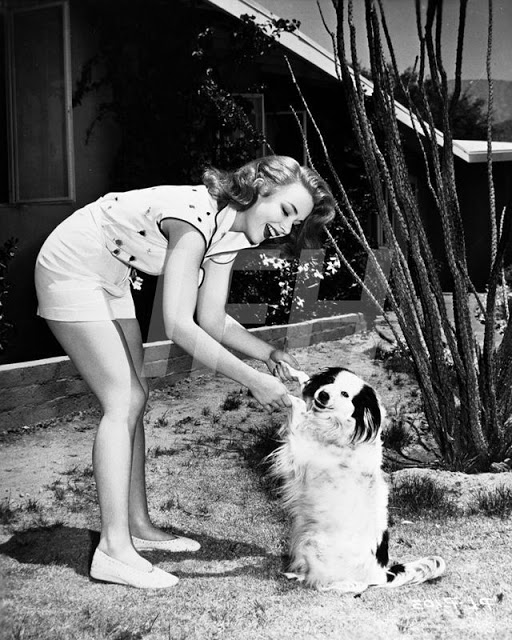
Anne Francis was undeniably a beauty icon of the 1950s. With her flowing blonde hair, mesmerizing blue eyes, and trademark mole near her lower lip, she became a favorite of photographers and fans alike. Her physical appeal was often emphasized in her roles, sometimes to the detriment of her acting range. Yet Francis managed to use her image strategically, blending glamour with grit in a way that made her stand out from contemporaries like Marilyn Monroe and Jayne Mansfield.
Time magazine later described her as a hybrid of the era’s two dominant female archetypes: the bombshell blondes and the smart, slim vixens like Audrey Hepburn and Grace Kelly. This duality made her both relatable and aspirational, a woman who could command attention in a cocktail dress or a space suit.
Transition to Television
Toward the end of the 1950s, Francis began to shift her focus toward television, a medium that offered more diverse roles and creative freedom. She appeared in several episodes of The Twilight Zone, showcasing her versatility and ability to convey complex emotions in short-form storytelling. This move would pay off in the 1960s when she starred in Honey West, one of the first television series to feature a female detective as the lead character.
Legacy and Cultural Impact
Anne Francis’s career in the 1950s was marked by a constant push against the boundaries of Hollywood’s expectations. While she was often cast for her looks, she consistently sought roles that allowed her to explore deeper themes and challenge stereotypes. Her work in Forbidden Planet alone secured her a place in cinematic history, but her broader body of work reveals a performer committed to growth and authenticity.
She was also a trailblazer for women in entertainment, paving the way for more nuanced female characters in both film and television. Her ability to balance glamour with substance made her a role model for aspiring actresses and a beloved figure among fans.
Conclusion
Anne Francis in the 1950s was more than just a pretty face—she was a woman navigating the complexities of fame, gender, and artistic ambition in a rapidly changing industry. From her early modeling days to her breakout roles in film and television, Francis exemplified resilience and reinvention. Her legacy is not only preserved in the stunning photographs and memorable performances of the era but also in the doors she helped open for future generations of women in Hollywood.

Subscribe to continue reading
Become a paid subscriber to get access to the rest of this post and other exclusive content.
