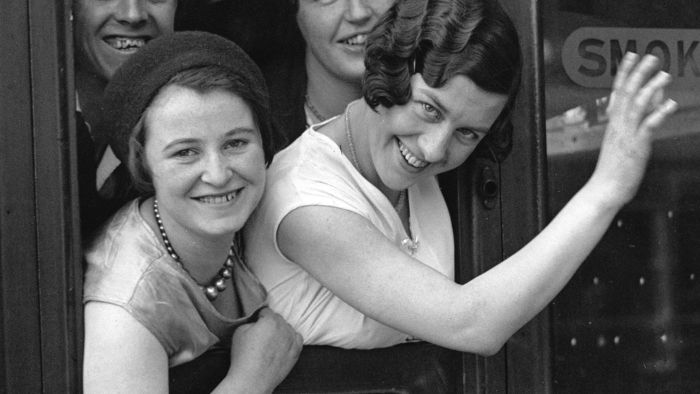
Step back into a decade defined by resilience and refinement, where elegance was not just a style but a way of life. These rare photographs of women from the 1930s give us a glimpse of a world caught between tradition and modernity—moments of quiet grace, bold fashion, and unspoken strength which are preserved in silver tones. Each image whispers of forgotten stories, inviting us to rediscover the beauty, poise, and spirit of a generation that shaped the course of history.
During the 1930s, women’s lives were marked by hardship, resilience, and slow but significant social change. The Great Depression changed their roles at home and in the workforce, requiring them to adapt in ways that would lay the groundwork for future transformations.
The 1930s were a turbulent time for women. During the previous decade, many women had celebrated the hard-won right to vote. Still, the optimism of that decade was very quickly snatched from their grip by the terrible effects of the Great Depression. The economic collapse that occurred marked women’s lives increasingly by scarcity, improvisation, and the new requirement to contribute financially to their households. Families were forced to rely on women’s wages more than ever before in history.
At home, women had become the managers of survival. With family incomes drastically reduced—median annual earnings in 1935–1936 were around $1,160, translating to only $20–25 a week—women were forced to make every dollar count. They began working outside the home to purchase essential household goods. Women would continue with their traditional tasks like sewing clothes, preserving food, and practicing small economies, likes buying day-old bread or cooking multiple dishes at once in order to save fuel. Eleanor Roosevelt eloquently wrote about this spirit in her 1933 book It’s Up to the Women, in which she urged women to face the current crisis with courage and determination. For so many, the daily rhythm of cooking, cleaning, and mending became even more prominent because their family’s survival depended on their ingenuity.
In the workforce, women faced both necessity and hostility. Those women who were married increasingly sought jobs to support their families. They did this despite being often criticized for “taking jobs” from unemployed men. Single women, meanwhile, were a vital part of the workforce, mostly working as teachers, secretaries, or nurses. It should be noted that women faced a large amount of discrimination: women subsequently were paid less than men, and Black women in particular were often given the lowest-paying jobs, most often in domestic service. Employers frequently assumed men were more valuable, so women had to be better educated to compete with men who had far less education.
Despite all the pitfalls that they faced, women’s contributions were significant. They were instrumental in keeping their families afloat, and their inclusion in the workplace strongly sparked debates about gender roles and fairness. The Depression of the 1930s highlighted the paradox of a woman’s place in society: they were required and expected to remain homemakers, yet the survival of their family often dictated that, for the unit to survive, the household became very dependent on their wages. This dichotomy laid bare the fragility of traditional gender norms and signalled the expanded roles women would take on during World War II.
From a cultural perspective, women were still expected to uphold society’s ideals of femininity and domesticity. Photographs from this era often show women dressed neatly, even when their lives were filled with household labour. The traditional female role was that women would greet their husbands with a clean home and a hot meal, reinforcing the notion that their first duty was to maintain and sustain family stability. Yet beneath these images lay the reality of exhaustion, sacrifice, and quiet strength.
The onset of the 1930s saw the start of a newly reinvigorated and organized women’s activism. While the large-scale feminist movements of earlier decades had diminished after suffrage, women’s enduring fortitude during the Depression would lay a strong foundation for future change. Because they could endure great hardship, manage households under impossible conditions, and work while facing workplace discrimination, they laid the foundation for the more dynamic women’s movements of the mid-20th century.
In sum, women in the 1930s lived lives of contradiction: celebrated as homemakers yet indispensable as workers, confined by stereotypes yet quietly reshaping society.Their resilience during the Great Depression not only sustained families but also redefined gender roles, proving that women’s labour—whether in the kitchen or the office—was central to survival and progress.
Subscribe to get access
Read more of this content when you subscribe today.



Subscribe to continue reading
Subscribe to get access to the rest of this post and other subscriber-only content.
