Subscribe to get access
Read more of this content when you subscribe today.
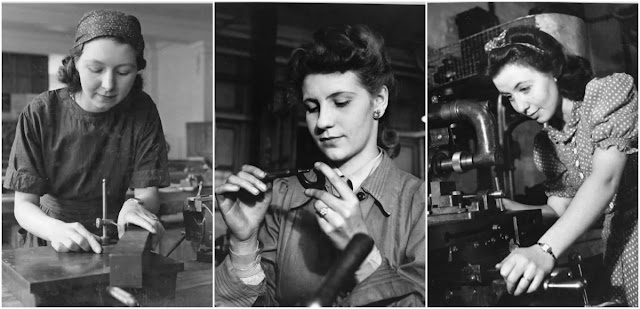
These women were all training in various London polytechnics to work in munitions factories during the early 1940s.
Women have always worked outside the home but never before in the numbers or with the same impact as they did in World War II. Prior to the war, most of the women that did work were from the lower working classes and many of these were minorities. There were a variety of attitudes towards women in the work force. Some thought they should only have jobs that men didn’t want while others felt women should give up their jobs so unemployed men could have a job. Still others held the view that women from the middle class or above should never lower themselves to go to work.
Around 950,000 British women worked in munitions factories during World War II, making weapons like shells and bullets. Munitions work was often well-paid but involved long hours, sometimes up to seven days a week. Workers were also at serious risk from accidents with dangerous machinery or when working with highly explosive material.
Some munitions workers handled toxic chemicals every day. Those who handled sulphur were nicknamed ‘Canary Girls’, because their skin and hair turned yellow from contact with the chemical.

A machine shop trainee at the Ministry of Labour training centre at Chelsea Polytechnic at work on a milling machine.

Subscribe to continue reading
Become a paid subscriber to get access to the rest of this post and other exclusive content.
