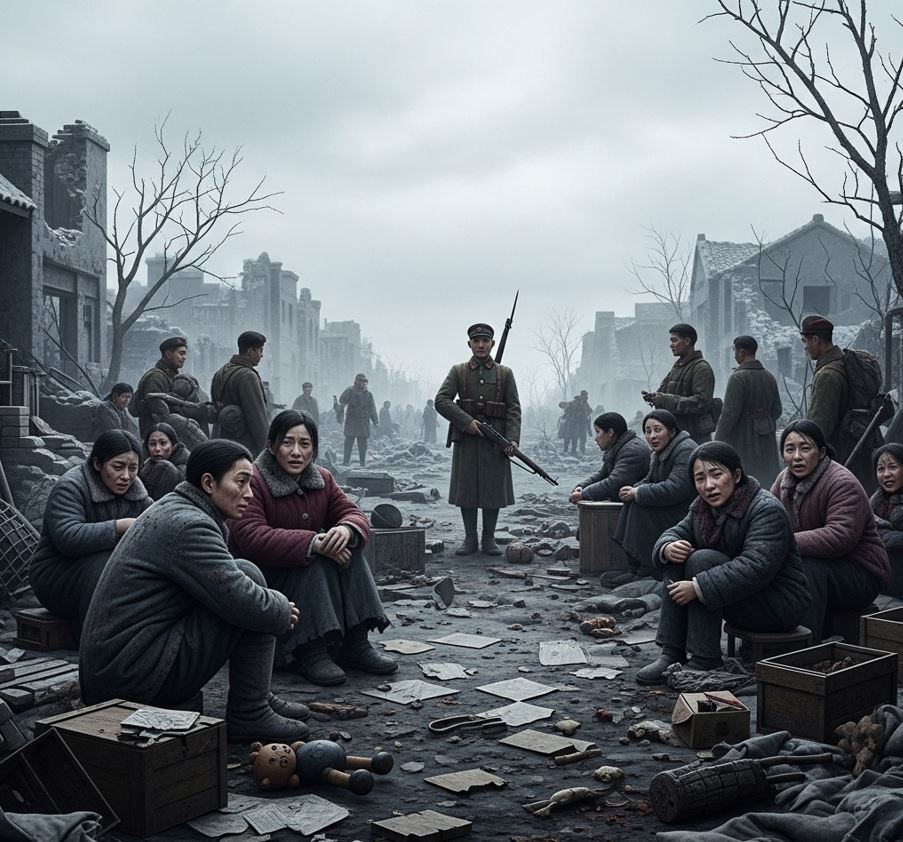
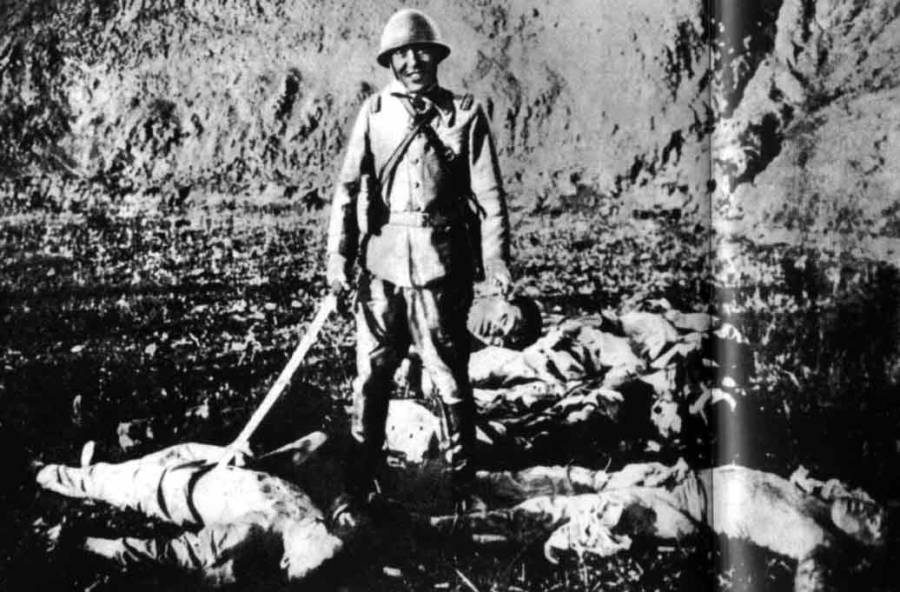
Image: A Japanese soldier poses with the severed head of one of his victims. The Rape of Nanking, December 1937.
Subscribe to get access
Read more of this content when you subscribe today.
The name Nanking, now the sprawling capital of Jiangsu province in eastern China, is forever etched with the indelible stain of one of the 20th century’s most horrific atrocities. In the winter of 1937, following the fall of the city to the Imperial Japanese Army, an unimaginable barbarity unfolded, a period of systematic rape, mass murder, and unspeakable cruelty that has come to be known as the Rape of Nanking, or the Nanking Massacre. For six terrifying weeks, the city became a living hell, its civilian population subjected to the unrestrained savagery of invading forces, leaving a legacy of trauma and a contentious historical debate that continues to this day.
The seeds of this catastrophe were sown in the escalating tensions between China and Japan throughout the early 20th century. Japan, driven by expansionist ambitions and a desire for resources, had steadily encroached upon Chinese territory, culminating in the full-scale invasion that began in July 1937. The Nationalist government of China, under Chiang Kai-shek, mounted a valiant but ultimately outmatched defense. Shanghai fell in November, and the Japanese army, buoyed by their victories and fueled by a potent mix of ultranationalism and dehumanization of the enemy, advanced relentlessly towards the Nationalist capital, Nanking.
The defense of Nanjing was poorly organized and ultimately futile. Chiang Kai-shek ordered the withdrawal of most of his seasoned troops, leaving behind a significantly smaller and less experienced garrison tasked with holding a sprawling city against a battle-hardened and numerically superior enemy. As the Japanese forces closed in, panic gripped the city. Civilians, desperately seeking refuge, clogged the streets, while many Chinese soldiers, abandoning their posts, discarded their uniforms and attempted to blend in with the terrified populace.

Subscribe to continue reading
Become a paid subscriber to get access to the rest of this post and other exclusive content.
