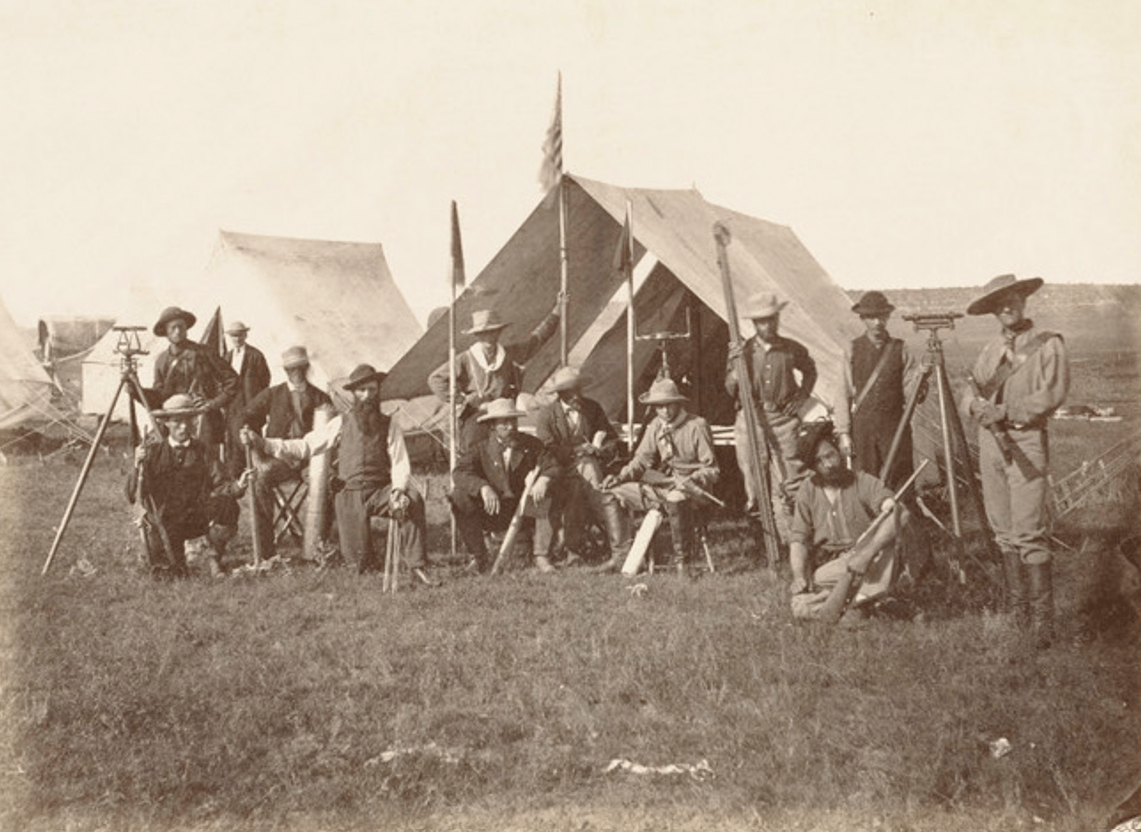
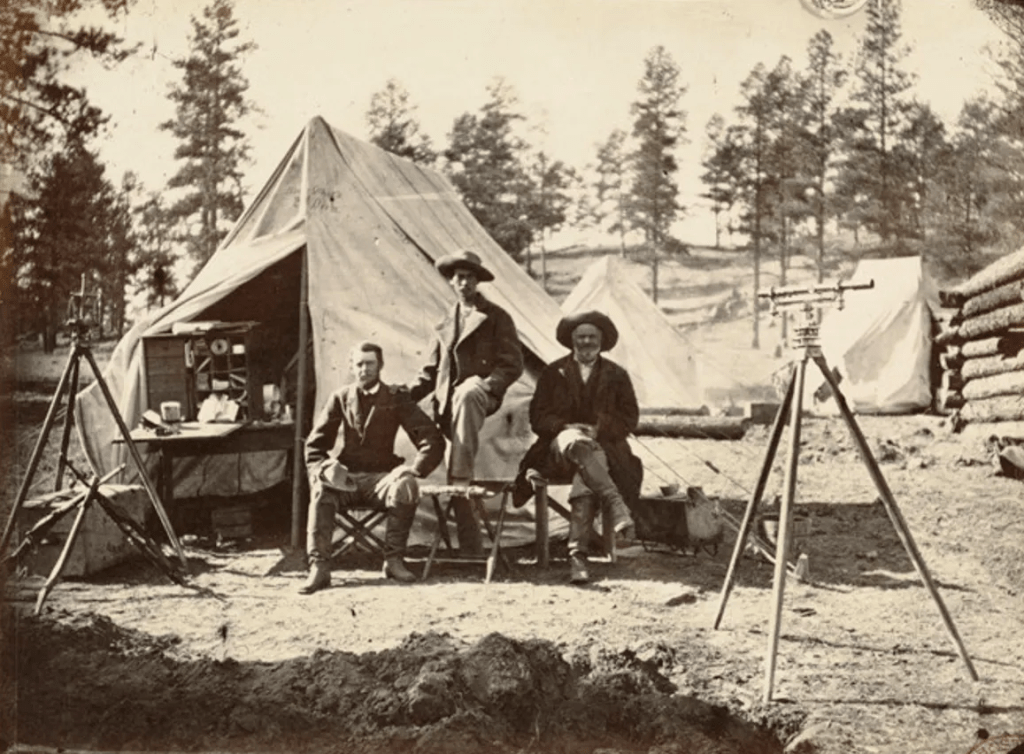
Image: Engineer camp at the Zuni Pass, in the Sierra Madre, N.M., 975 miles west of Missouri River.
The Kansas Pacific Railway and the Struggle to Become a Transcontinental Line
In the decade after the American Civil War, few ambitions loomed larger in the imagination of railroad promoters than the dream of a second transcontinental line. The Kansas Pacific Railway (KP), originally chartered as the Union Pacific Railway, Eastern Division, emerged as one of the most aggressive contenders in this race. Its leaders believed that the Great Plains could support not just one but several continental routes, and they were determined that their line—running westward from Kansas City—would be the next to reach the Pacific. The 1860s became a period of intense expansion, political maneuvering, and financial risk-taking as the KP sought to transform itself from a regional carrier into a national artery.1

Image: Crossing of the Grasshopper, in Kansas, 50 miles west of Missouri River. 1867.
Your support is greatly appreciated!!!
Subscribe to get access
Read more of this content when you subscribe today.
The KP’s ambitions were firmly rooted in both geography and timing. Kansas City, unlike Omaha, Nebraska, was located at the confluence of a number of river crossings and quickly became a postwar commercial hub in the American West. The Kansas Pacific’s financial backers were quick to argue that a southern transcontinental route would avoid the harsh winters and steep grades of the central Rockies, offering a much better all-season corridor. Their proposed line would run southwest across Kansas, enter Colorado near Kit Carson, and then push through the high plains toward Denver and beyond. From there, the KP hoped to connect with a western extension—either its own or a partner line—that would carry traffic across the Rockies to California. In theory, this would create a second national trunk line, competing directly with the Union Pacific–Central Pacific route completed in 1869.2

Subscribe to continue reading
Subscribe to get access to the rest of this post and other subscriber-only content.
