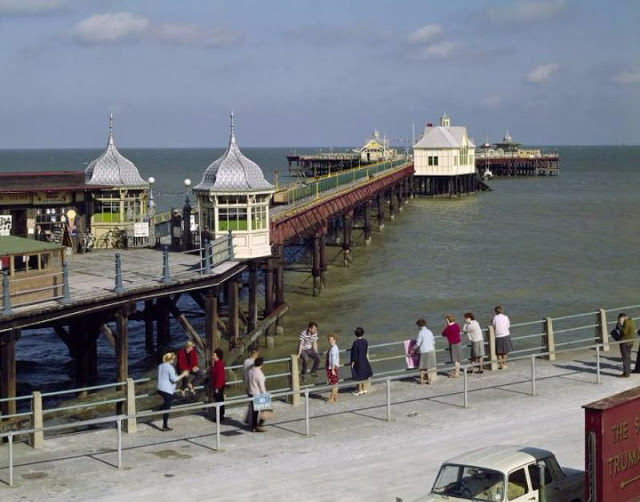
37 Amazing Photos of Life in Canada during the Late 1940s & 1950s

Canada is a country in North America. Its ten provinces and three territories extend from the Atlantic to the Pacific and northward into the Arctic Ocean, covering 9.98 million square kilometres (3.85 million square miles), making it the world’s second-largest country by total area. Its southern and western border with the United States, stretching 8,891 kilometres (5,525 mi), is the world’s longest bi-national land border. Canada’s capital is Ottawa, and its three largest metropolitan areas are Toronto, Montreal, and Vancouver.

Indigenous peoples have continuously inhabited what is now Canada for thousands of years. Beginning in the 16th century, British and French expeditions explored and later settled along the Atlantic coast. As a consequence of various armed conflicts, France ceded nearly all of its colonies in North America in 1763. In 1867, with the union of three British North American colonies through Confederation, Canada was formed as a federal dominion of four provinces. This began an accretion of provinces and territories and a process of increasing autonomy from the United Kingdom. This widening autonomy was highlighted by the Statute of Westminster 1931 and culminated in the Canada Act 1982, which severed the vestiges of legal dependence on the Parliament of the United Kingdom.

Canada is a parliamentary democracy and a constitutional monarchy in the Westminster tradition. The country’s head of government is the prime minister—who holds office by virtue of their ability to command the confidence of the elected House of Commons—and is appointed by the governor general, representing the monarch, who serves as head of state. The country is a Commonwealth realm and is officially bilingual at the federal level. It ranks among the highest in international measurements of government transparency, civil liberties, quality of life, economic freedom, and education. It is one of the world’s most ethnically diverse and multicultural nations, the product of large-scale immigration from many other countries. Canada’s long and complex relationship with the United States has had a significant impact on its economy and culture.

A highly developed country, Canada has the 26th highest nominal per-capita income globally and the sixteenth-highest ranking in the Human Development Index. Its advanced economy is the ninth-largest in the world, relying chiefly upon its abundant natural resources and well-developed international trade networks. Canada is part of several major international and intergovernmental institutions or groupings including the United Nations, NATO, the G7, the Group of Ten, the G20, the Organisation for Economic Co-operation and Development (OECD), the World Trade Organization (WTO), the Commonwealth of Nations, the Arctic Council, the Organisation internationale de la Francophonie, the Asia-Pacific Economic Cooperation forum, and the Organization of American States. (Wikipedia)
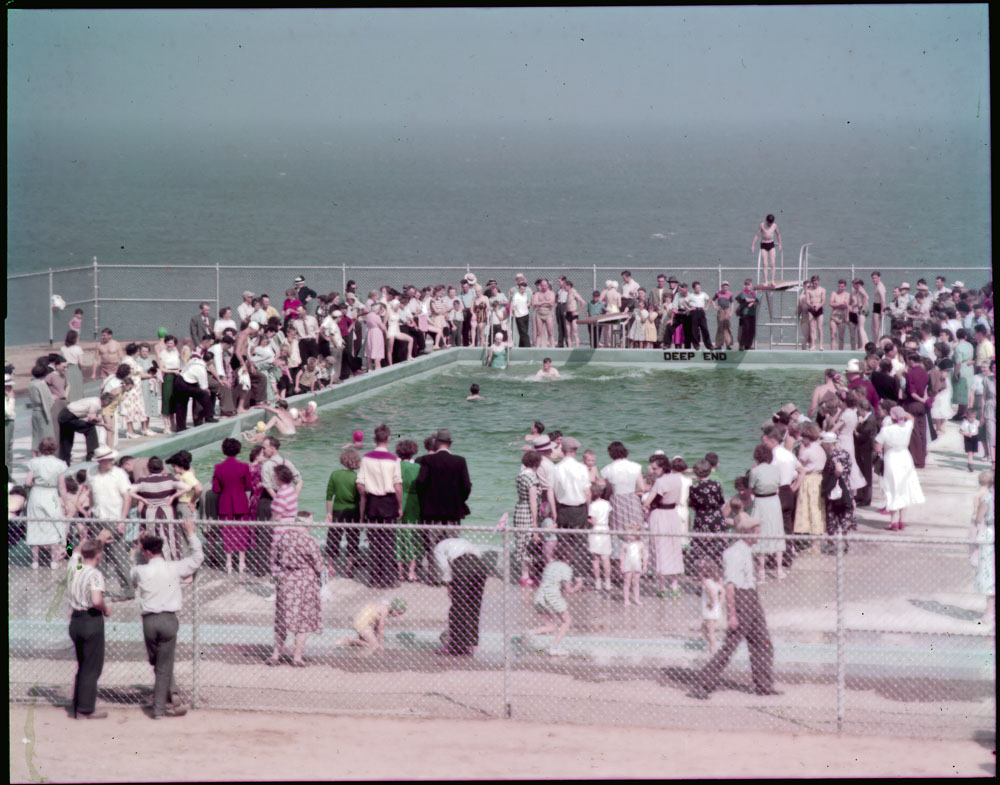
Cave and Basin swimming pool, Banff National Park, Alberta, October 1948
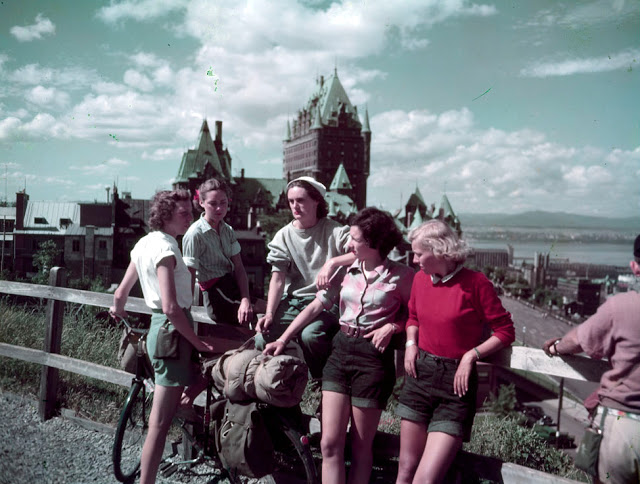
Five hostel workers, Quebec City, August 1948
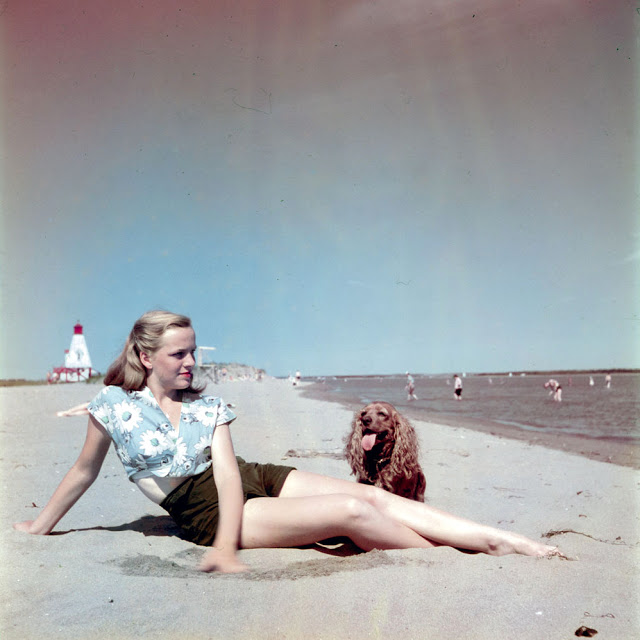
Pointe-du-Chêne, New Brunswick, October 1948
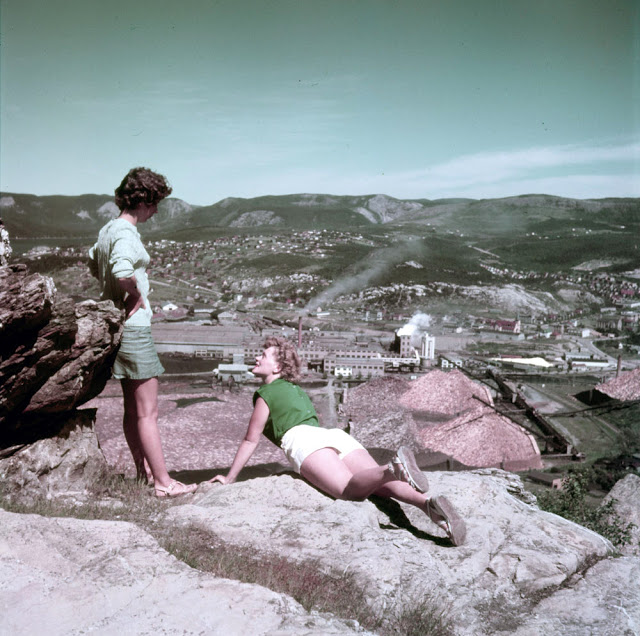
Corner Brook, Newfoundland, July 1949
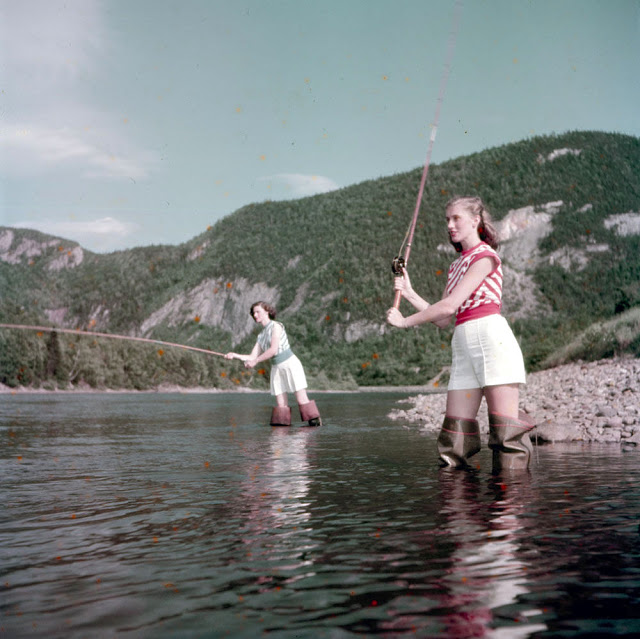
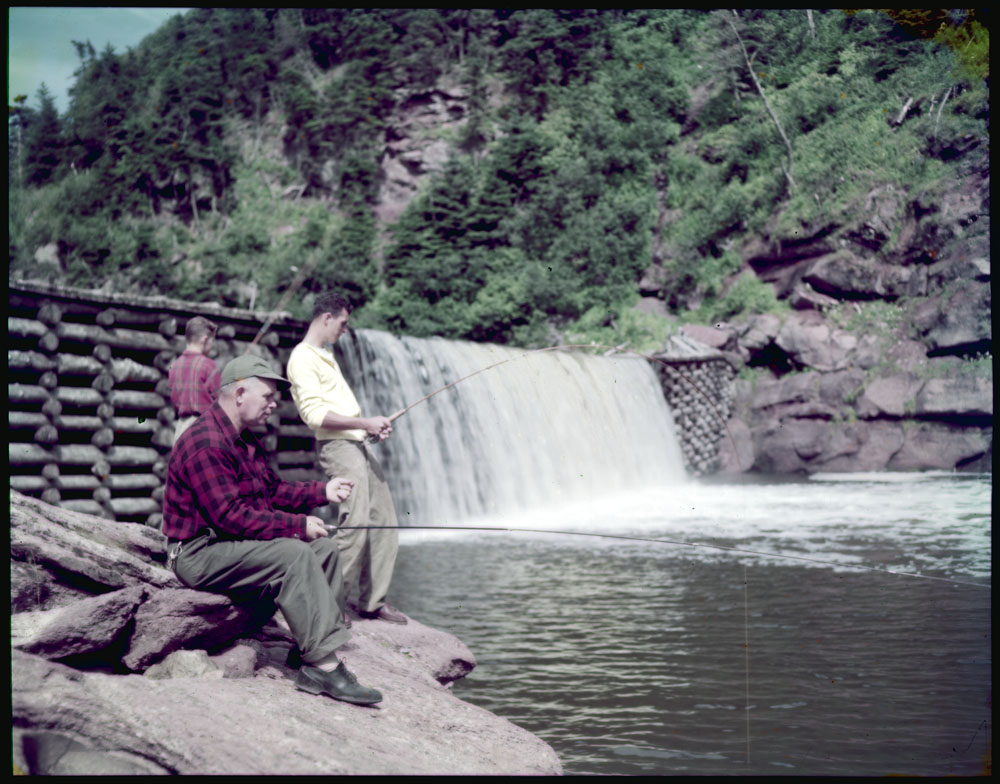
Fly fish for salmon in the Humber River, Corner Brook, Newfoundland, July 1949
Sarnia, Ontario, Yacht Club, 1949
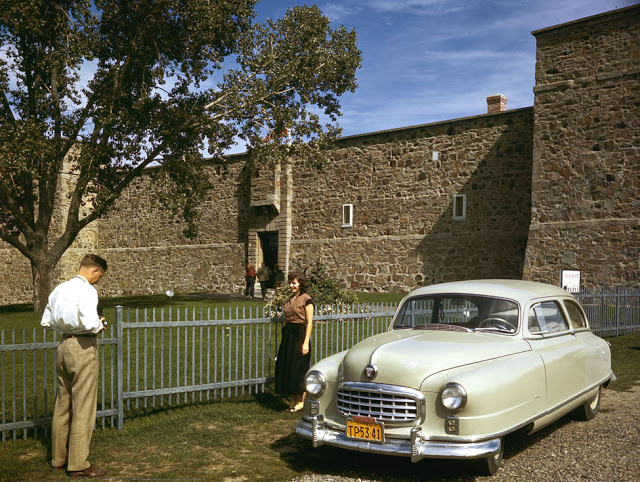
Young couple photographing with a new bathtub Nash, Fort Chambly, Quebec, 1949
Anglers, Bennett Lake, Fundy National Park, New Brunswick, July 1950
Paddle boarding, Lake Waskesiu, Saskatchewan, July 1950.
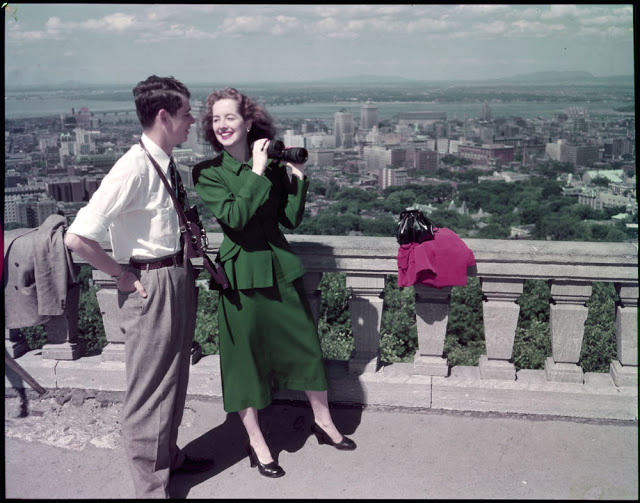
Tourists view the city of Montreal from the lookout on Mount Royal, Quebec, June 1950
Grand Bend, Ontario, July 1951
Horseshoe Falls from lookout platform, Niagara Falls, Ontario, July 1951
A man and a woman on bicycles consult a road map on the bank of the Ottawa River, Rockcliffe Park, Ontario, June 1952
Two men and two women play ping-pong at Britannia Yacht Club, Ottawa, Ontario, June 1952
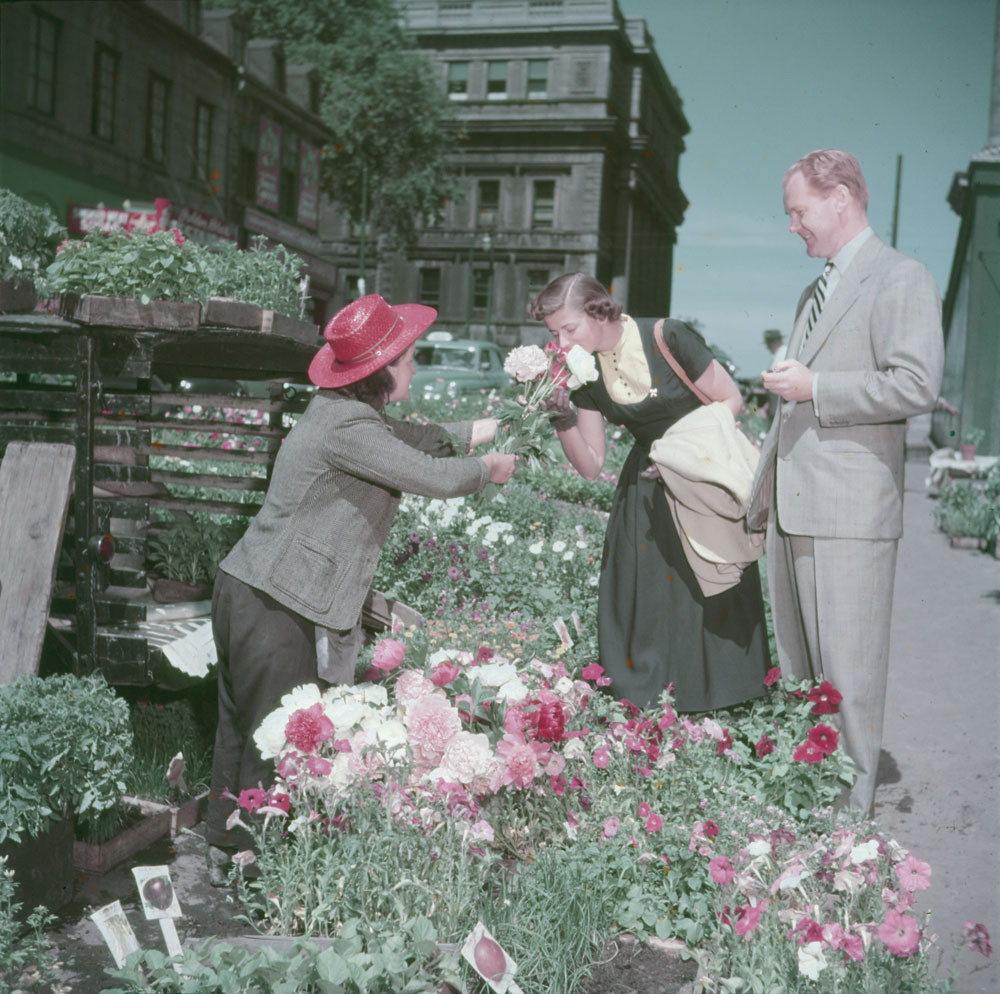
A woman smelling some flowers offered by a vendor at the Bonsecours market in Montreal, 1950
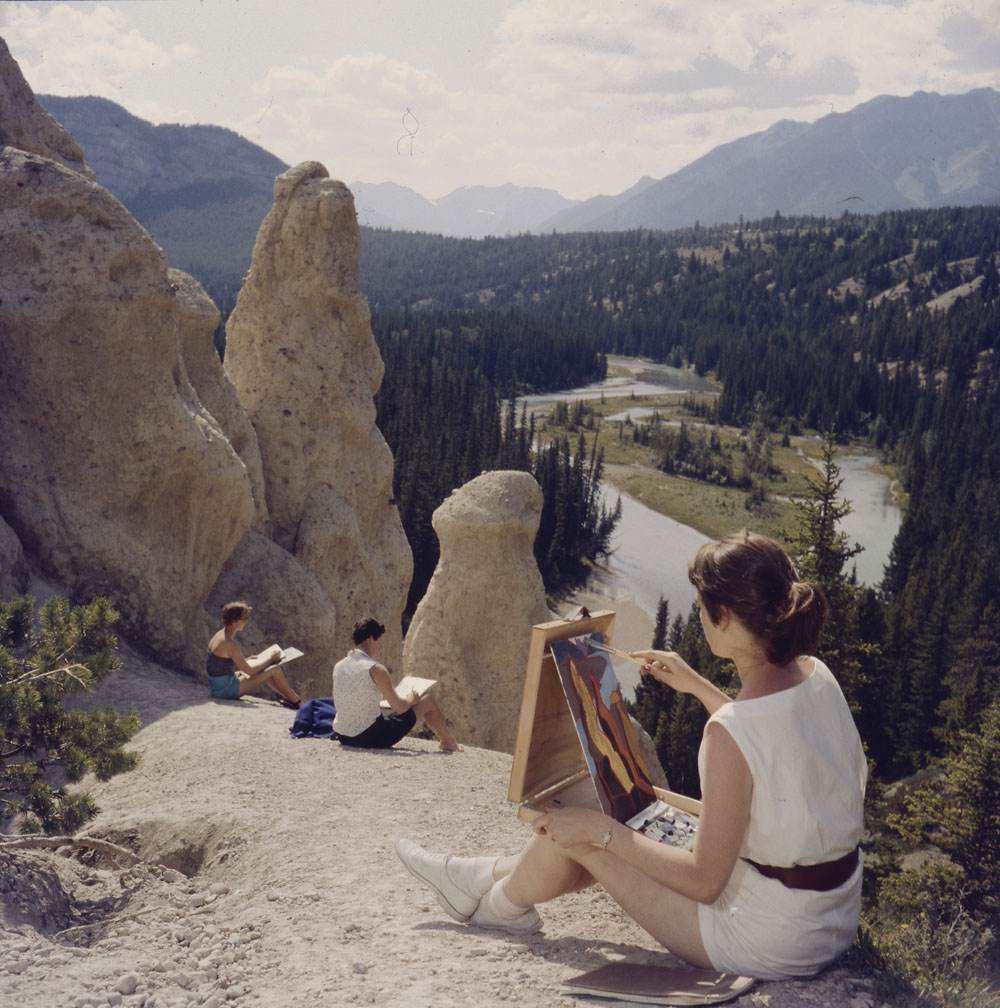
Students painting some of the remarkable scenery in Banff National Park, Alberta. 1957
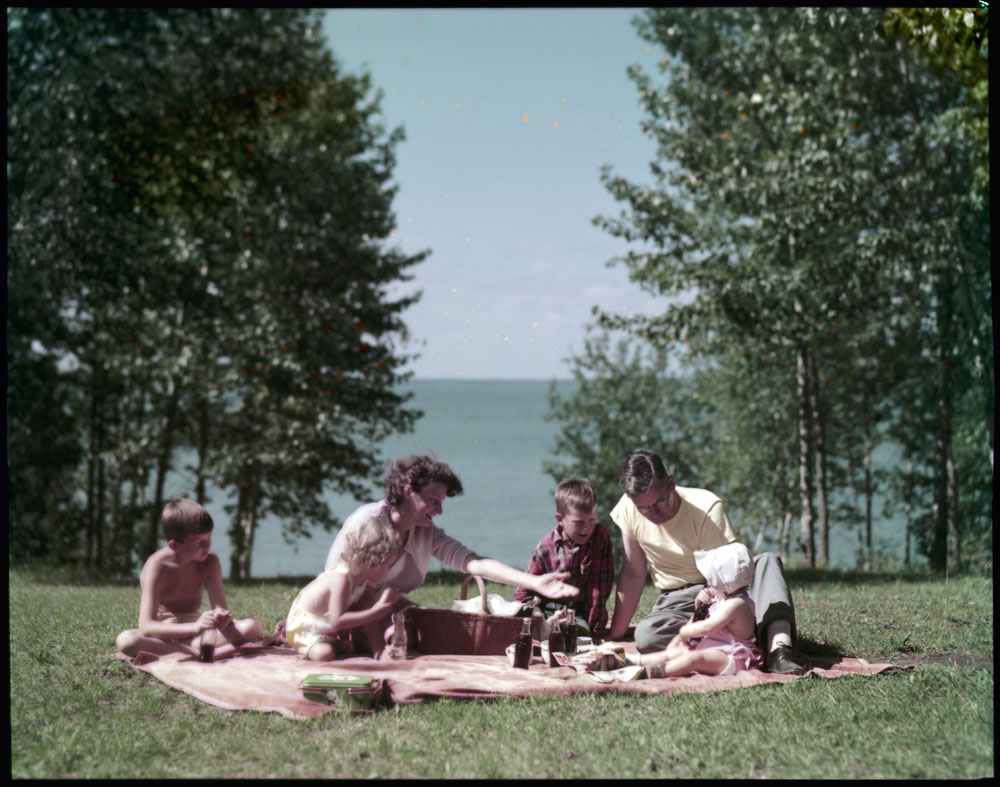
A family picnic at Lake Waskesiu, Prince Albert National Park, Saskatchewan, 1950
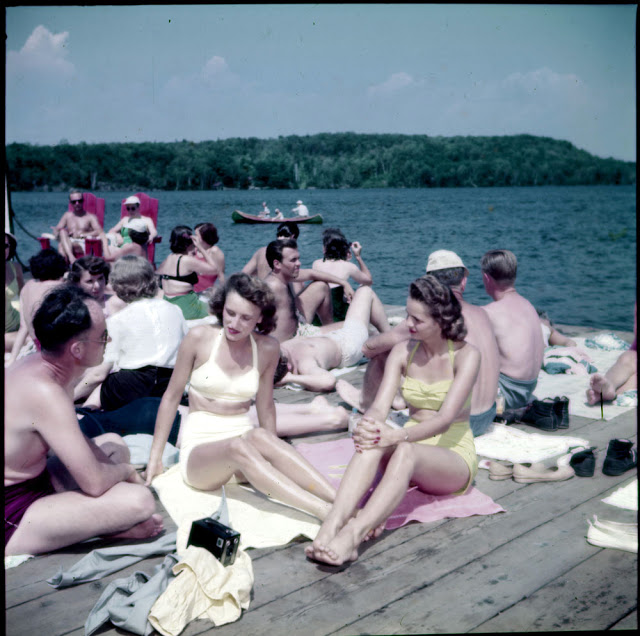
Sunbathing at Wigwassan Lodge, Lake Rosseau, Muskoka, Ontario, July 1951
Britannia Yacht Club, Ottawa, June 1952
Clear Lake, Manitoba, 1952
Fishing at Point Wolfe River, Fundy National Park, New Brunswick, 1950
The swimming pool at Fundy National Park, New Brunswick, 1950
Picnicking on the shore of the St. Lawrence River, Mallorytown Landing, Thousand Islands national park, 1950
Fishing in Cameron Creek, Waterton Lakes National Park, Alberta, 1949
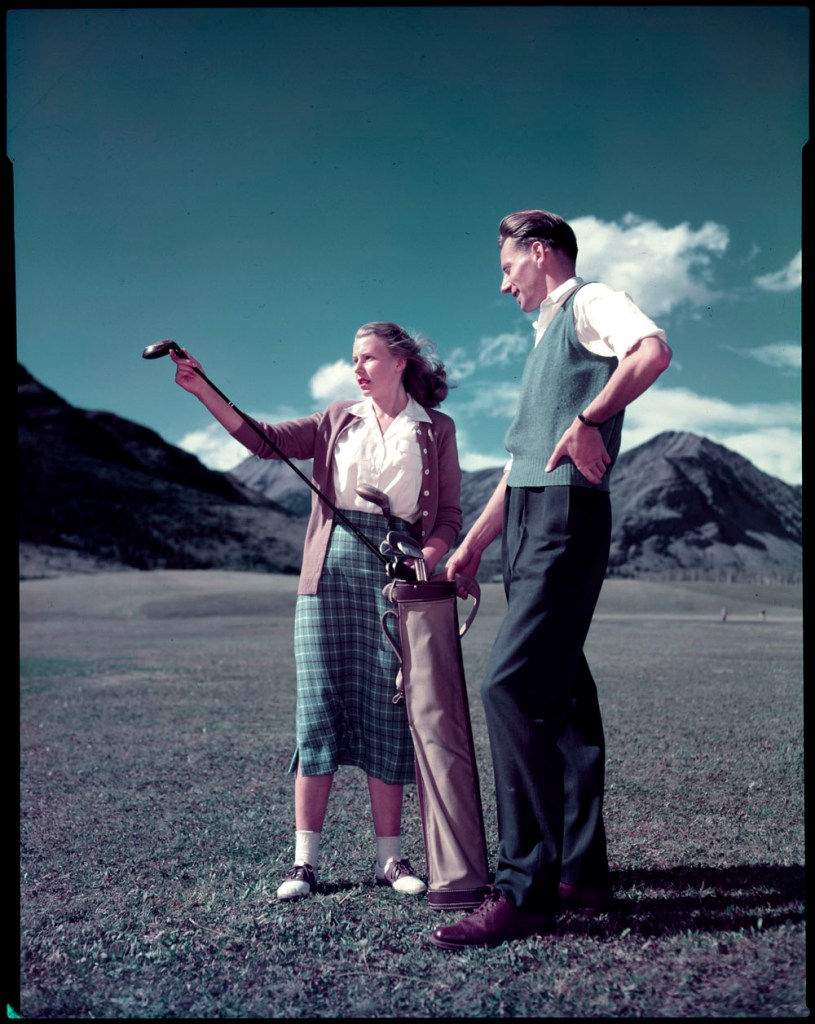
Golfer chooses a club on the golf course at Waterton Lakes National Park, Alberta, 1948
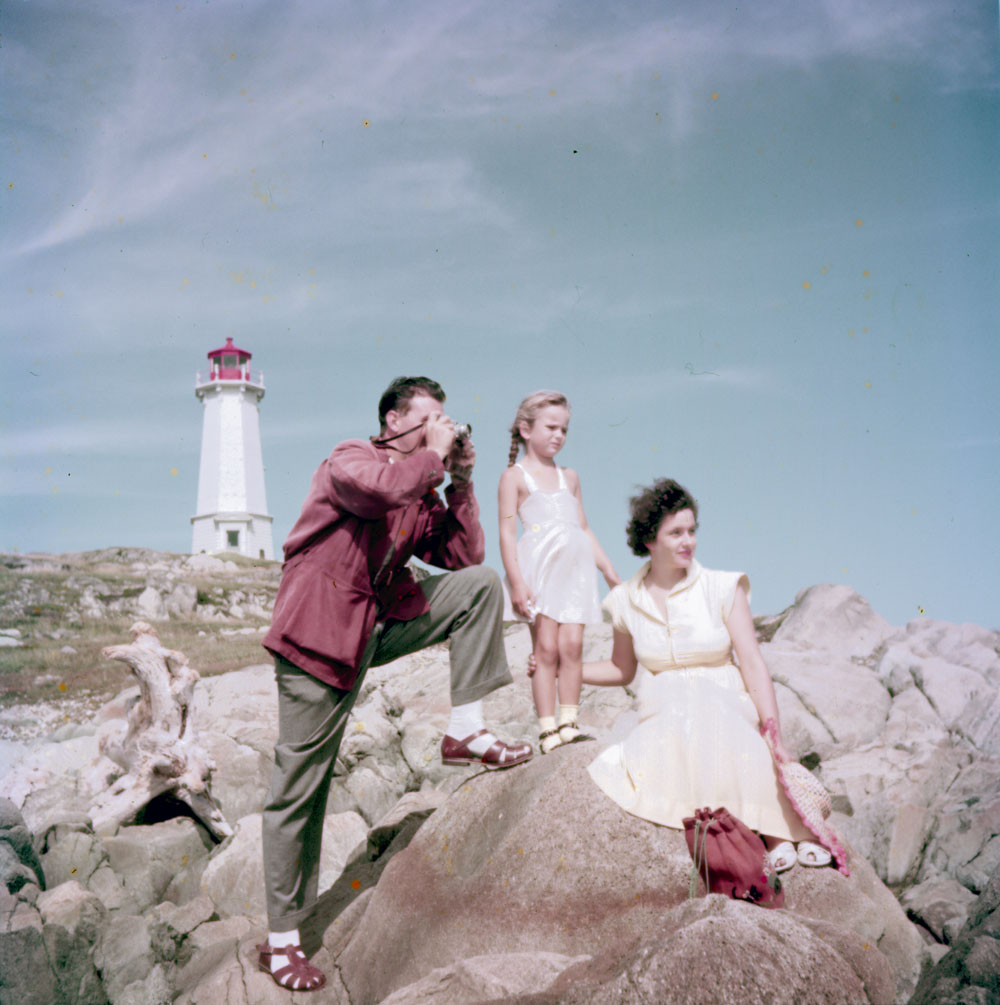
Man, woman and little girl on the rocks below the lighthouse at Fortress of Louisbourg National Historic Site, Nova Scotia, 1952
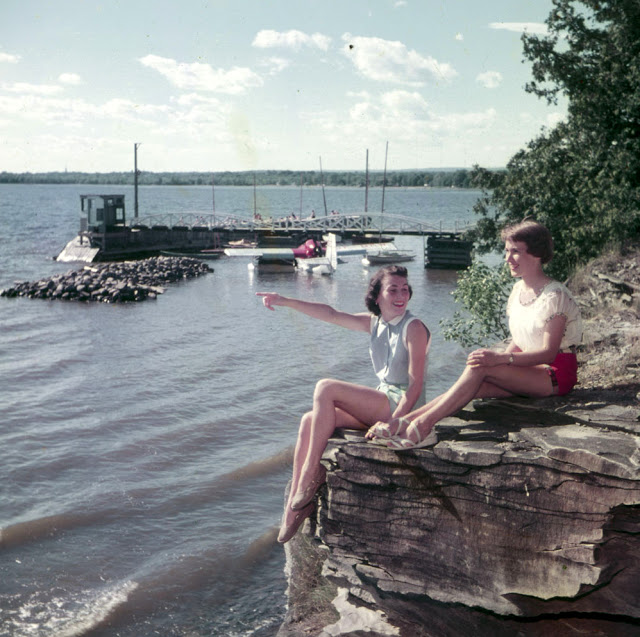
Meech Lake, Quebec, July 1952
Vacationing in British Columbia, July 1953
Picnic in Portage-la-Prairie, Manitoba, August 5, 1954
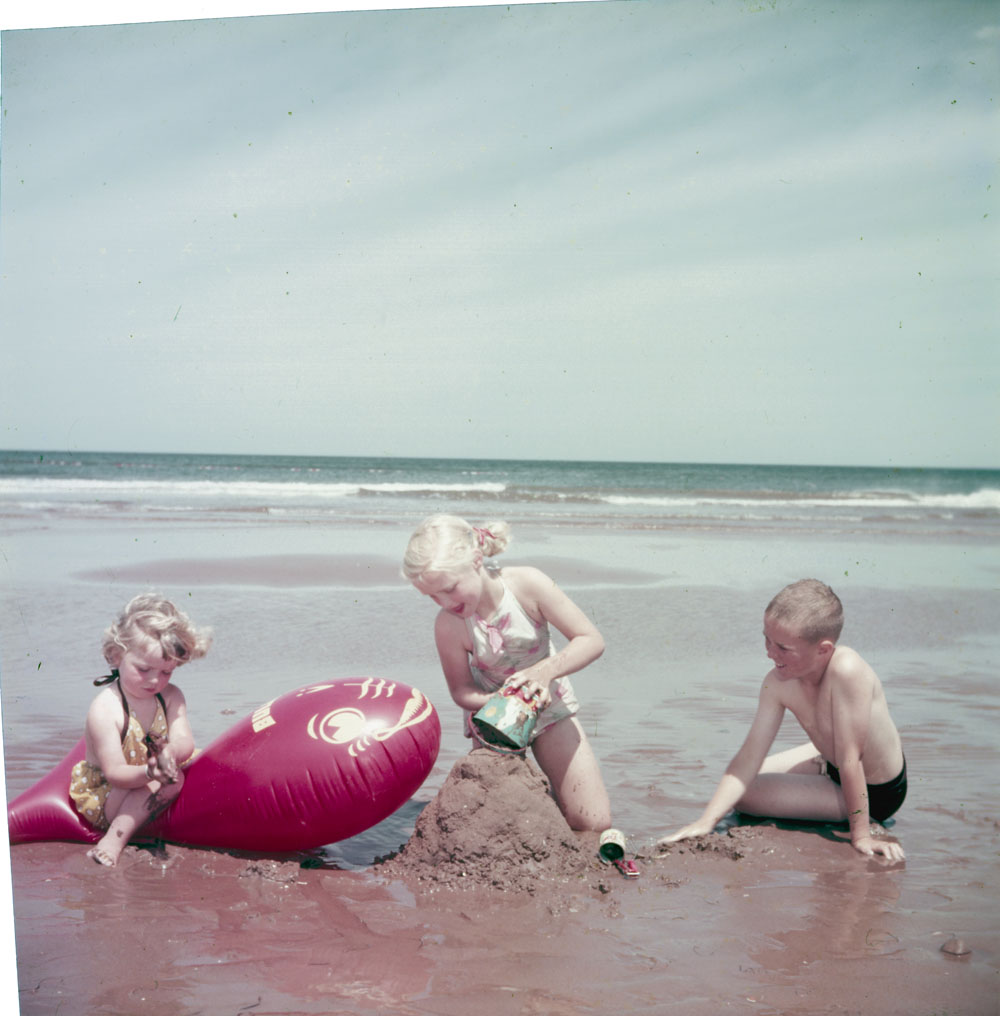
Children playing at Brackley Beach, Prince Edward Island, 1953
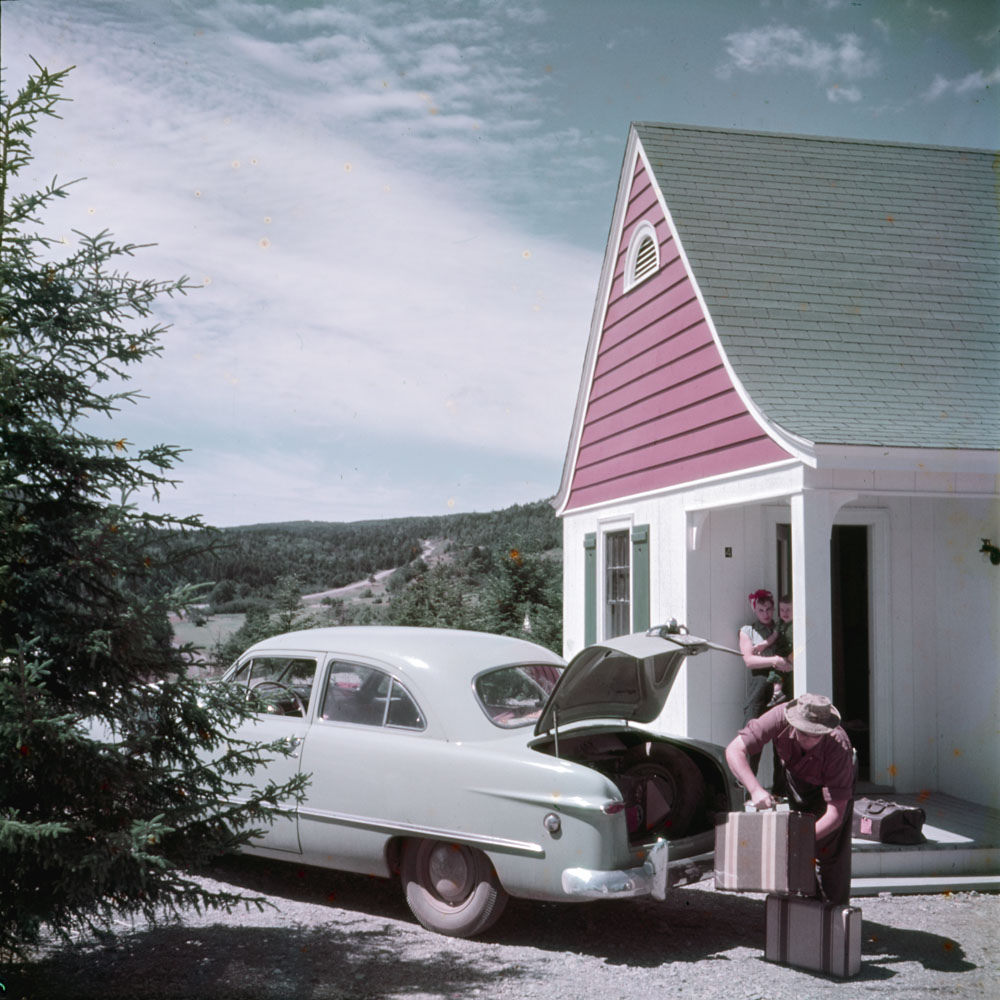
A man unpacks the trunk of his car for a stay in one of the chalets in Fundy National Park, New Brunswick, 1950
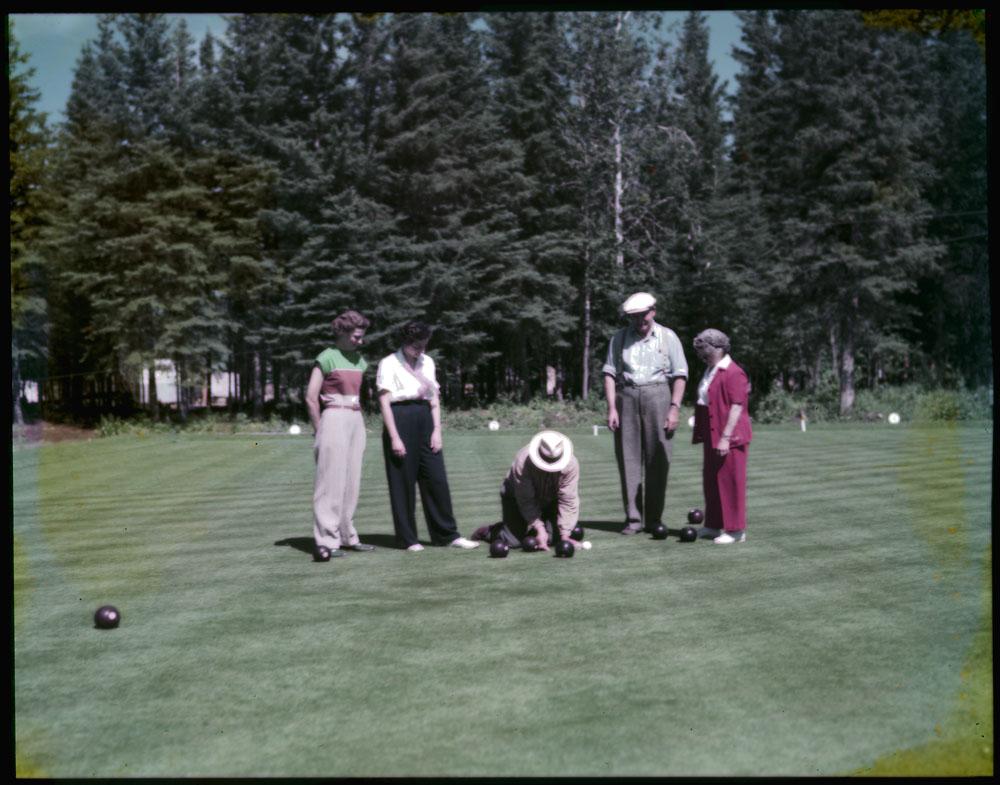
Bowling on the public greens at Waskesiu, Saskatchewan, 1950
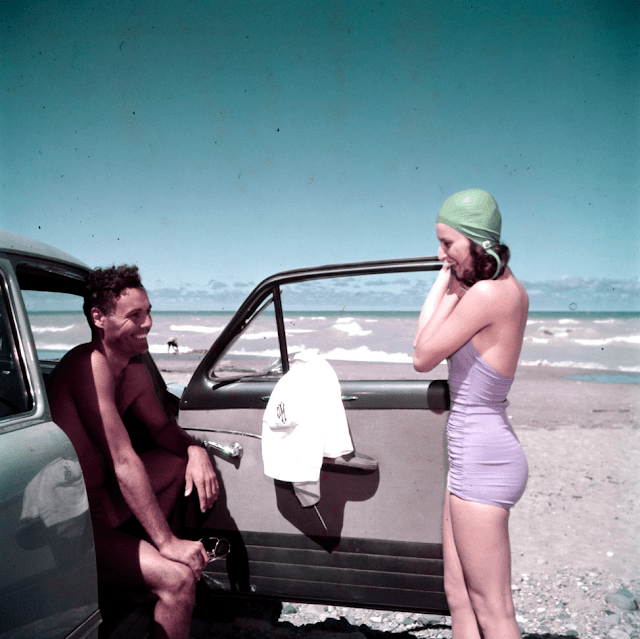
Early summer swimming in the St. Lawrence River near Brockville, Ontario, 1949
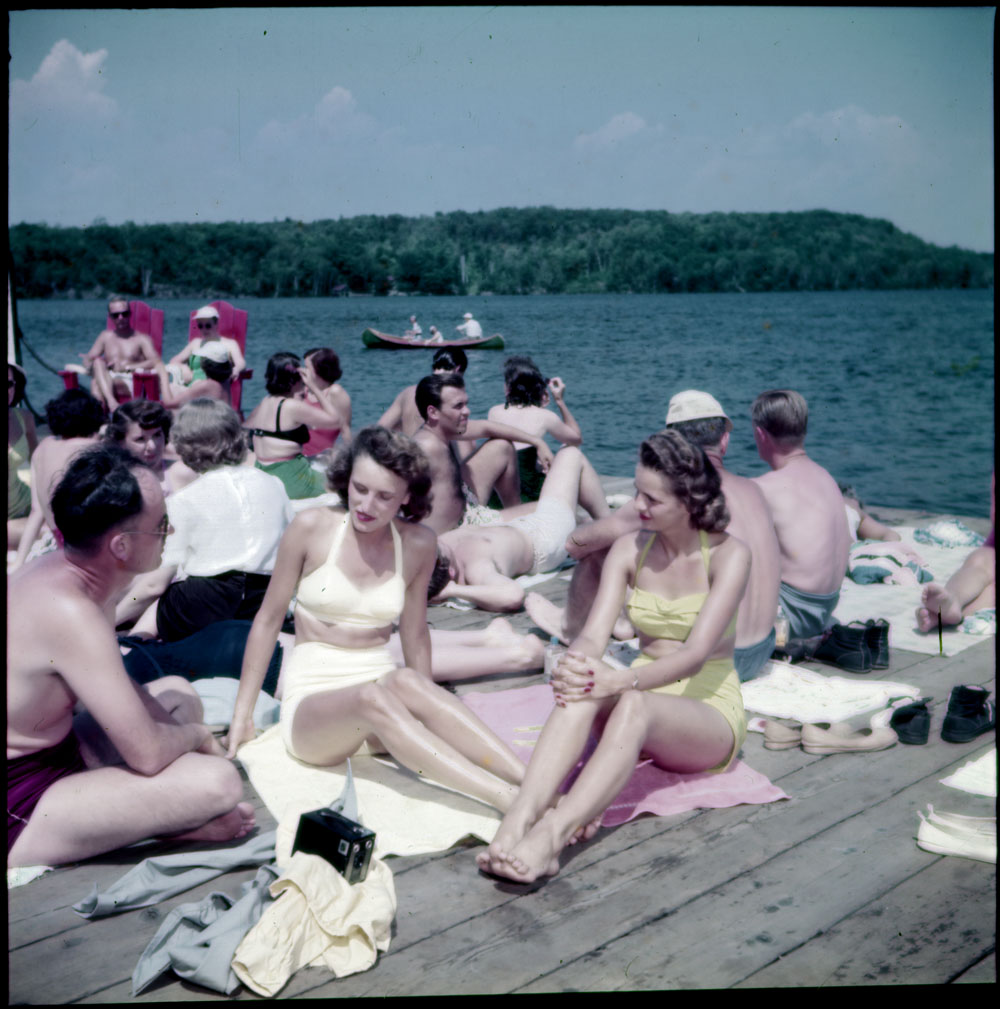
Guests sunbathe on the pier at Wigwassan Lodge, Lake Rosseau, Muskoka, Ontario, July 1951
Makeshift bath, Portage-la-Prairie, Manitoba, August 5, 1954
Stanley Park archers, Vancouver, 1954
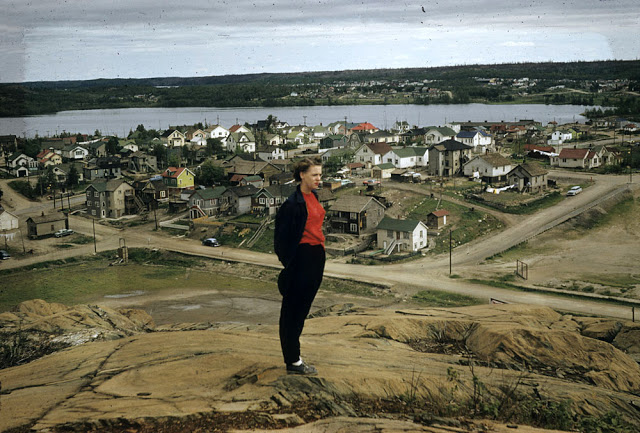
Flin Flon, Manitoba, 1956

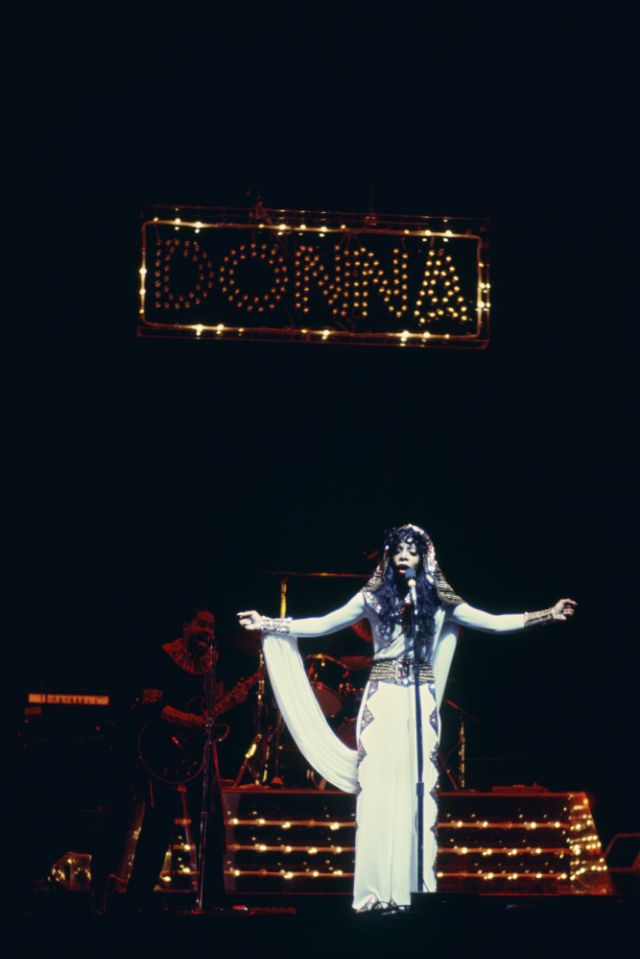
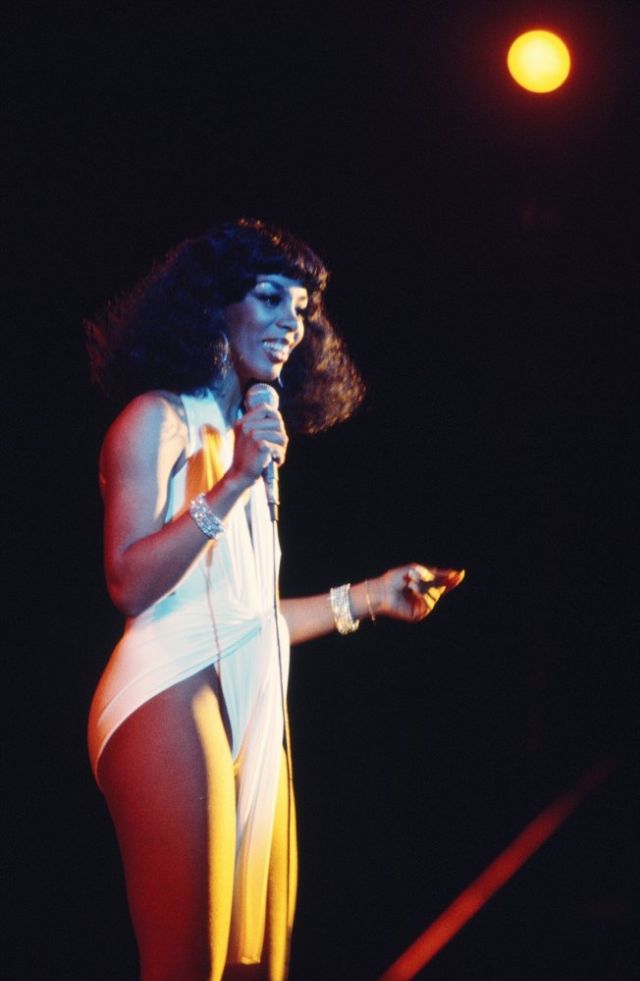
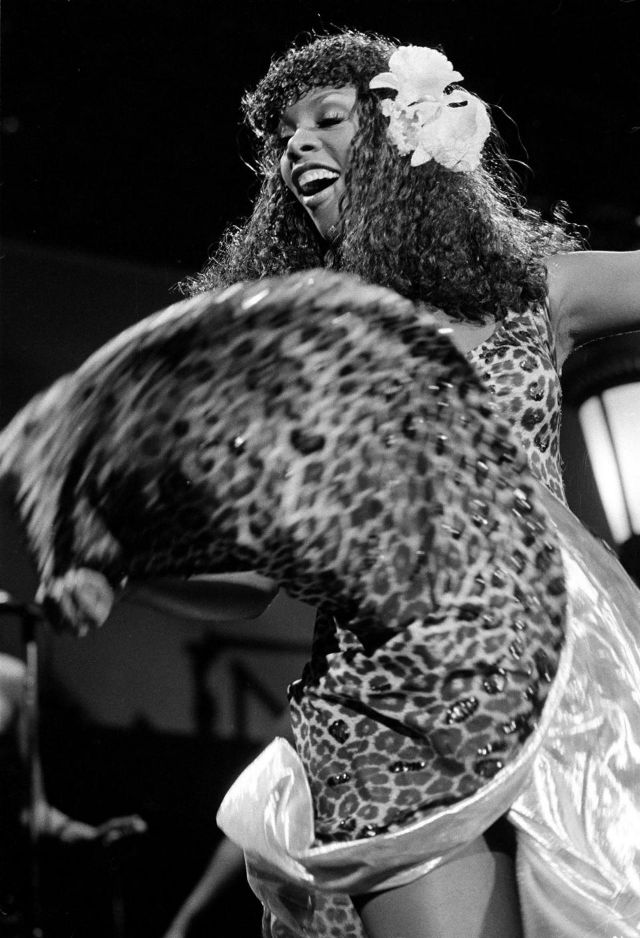
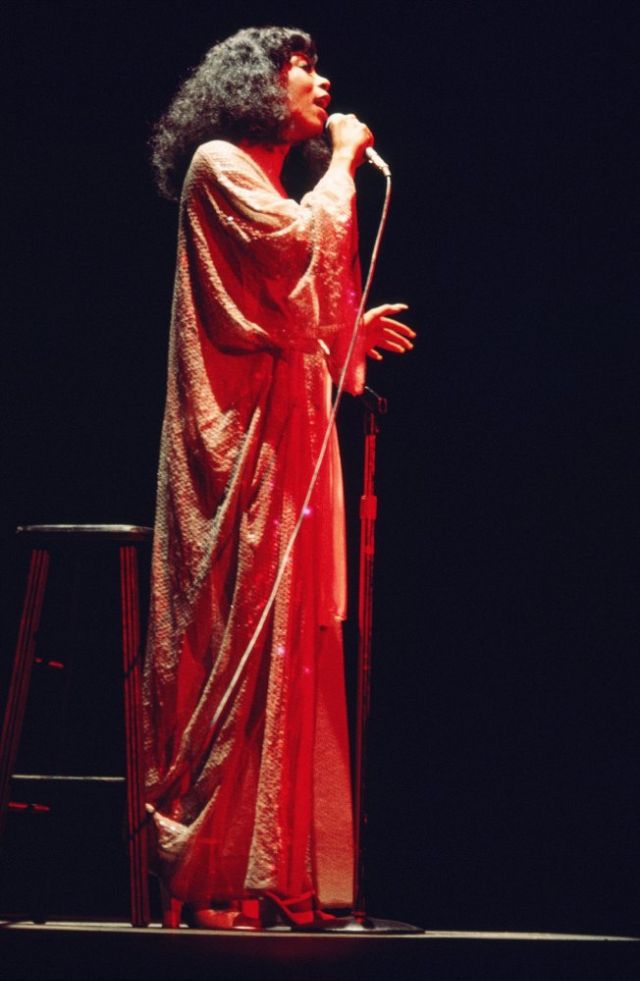
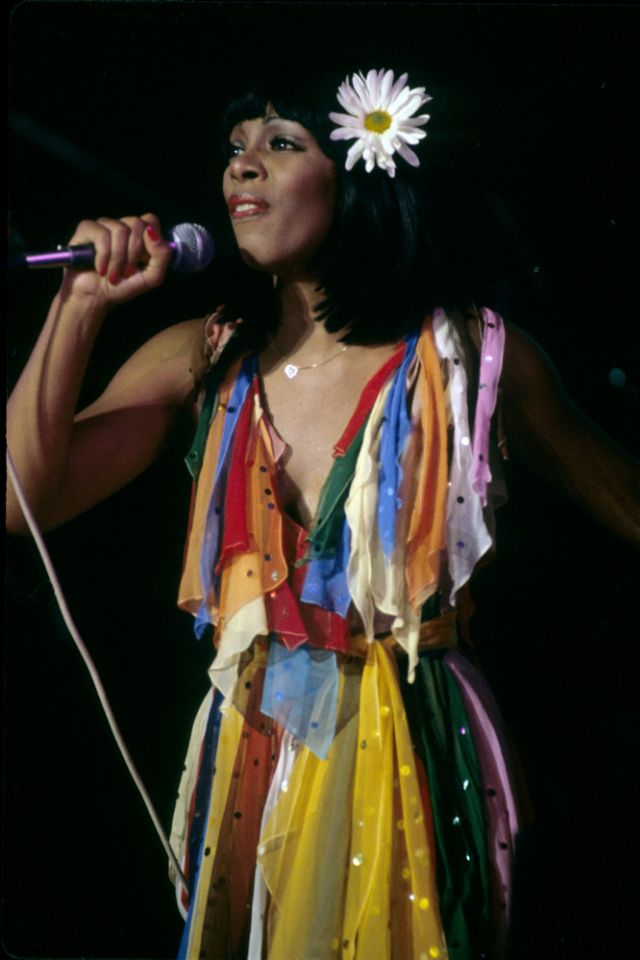
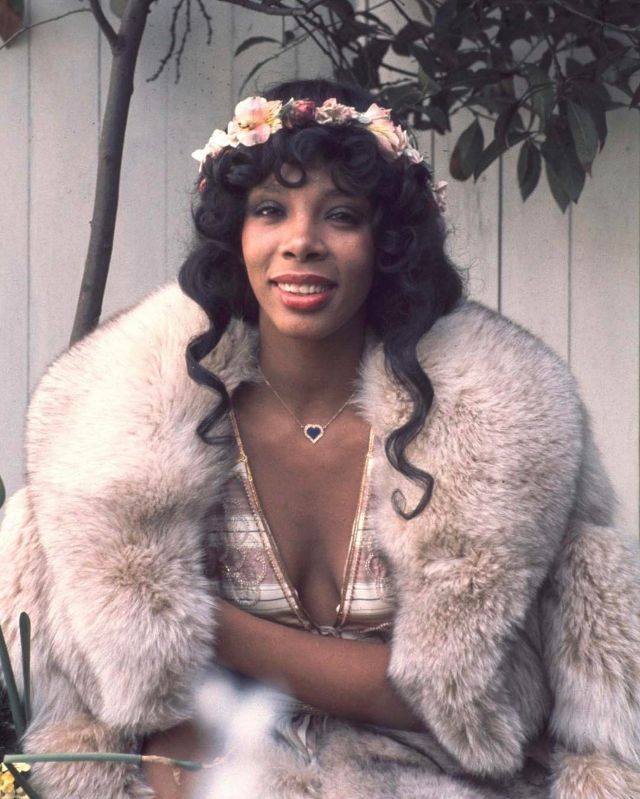
20 Vintage Photos of Disco Queen Donna Summer during the 1970s

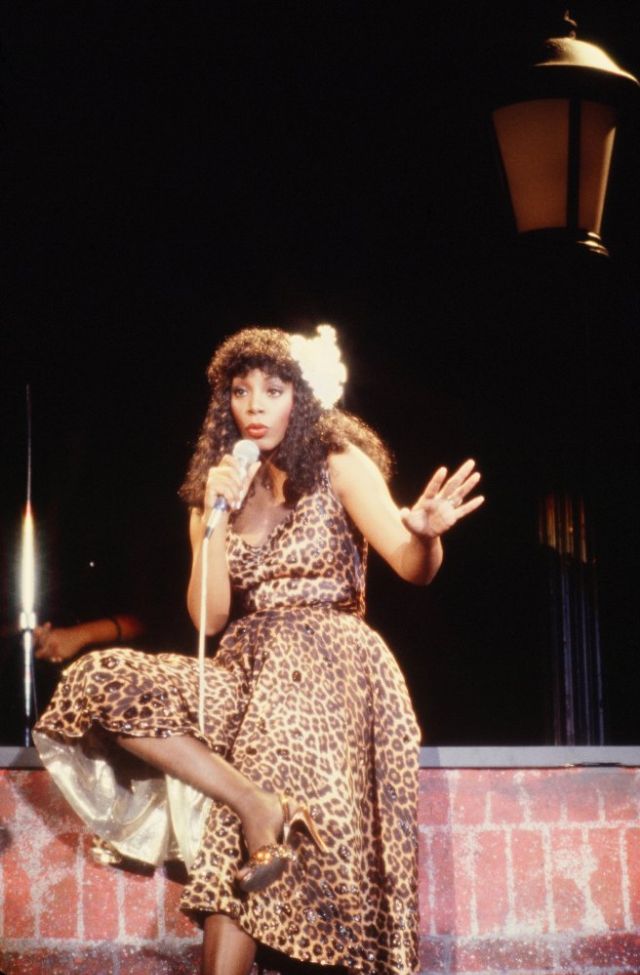
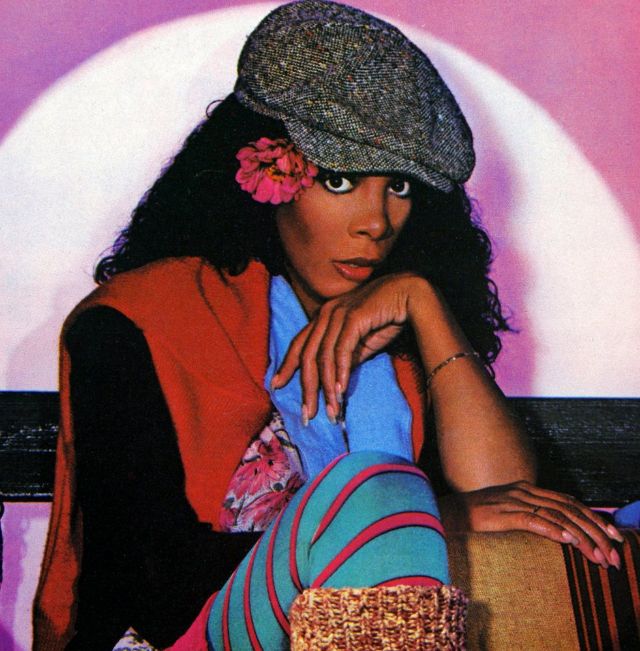
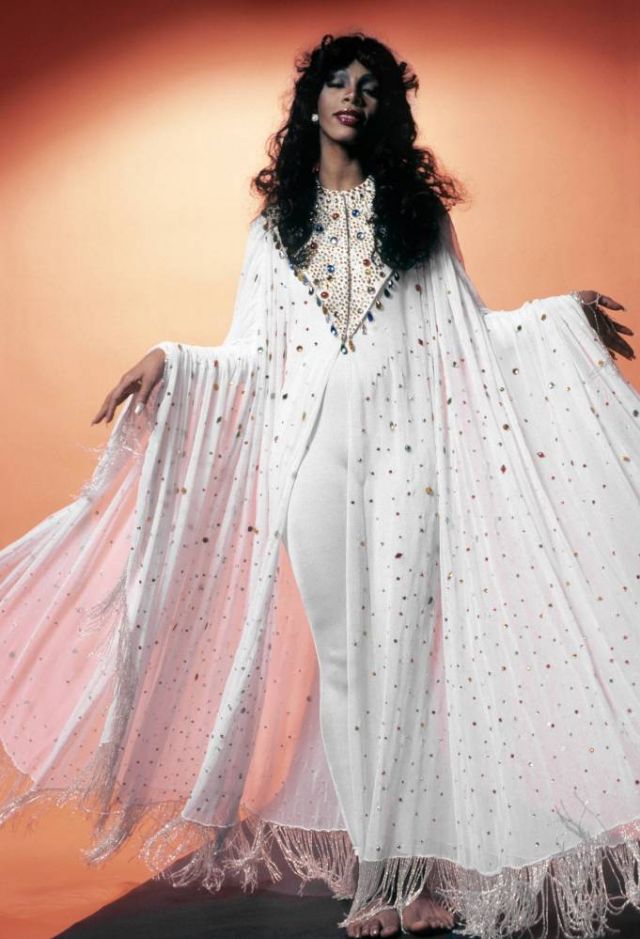
LaDonna Adrian Gaines (December 31, 1948 – May 17, 2012), known professionally as Donna Summer, was an American singer, songwriter, and actress. She gained prominence during the disco era of the 1970s and became known as the “Queen of Disco”, while her music gained a global following.

Influenced by the counterculture of the 1960s, Summer became the lead singer of a psychedelic rock band named Crow and moved to New York City. In 1968 she joined a German adaptation of the musical Hair in Munich, where she spent several years living, acting, and singing. There, she met music producers Giorgio Moroder and Pete Bellotte, and they went on to record influential disco hits together such as “Love to Love You Baby” and “I Feel Love”, marking Summer’s breakthrough into international music markets. Summer returned to the United States in 1976, and more hits such as “Last Dance”, her version of “MacArthur Park”, “Heaven Knows”, “Hot Stuff”, “Bad Girls”, “Dim All the Lights”, “No More Tears (Enough Is Enough)” with Barbra Streisand, and “On the Radio” followed.

Summer earned a total of 42 hit singles on the US Billboard Hot 100 in her lifetime, with 14 of those reaching the top ten. She claimed a top-40 hit every year between 1975 and 1984, and from her first top-ten hit in 1976, to the end of 1982, she had 12 top-ten hits (10 were top-five hits), more than any other act during that time period. She returned to the Hot 100’s top five in 1983, and claimed her final top-ten hit in 1989 with “This Time I Know It’s for Real”. She was the first artist to have three consecutive double albums reach the top of the US Billboard 200 chart and charted four number-one singles in the US within a 12-month period. She also charted two number-one singles on the R&B Singles chart in the US and a number-one single in the United Kingdom. Her most recent Hot 100 hit came in 1999 with “I Will Go with You (Con te partirò)”. While her fortunes on the Hot 100 waned in subsequent decades, Summer remained a force on the Billboard Dance Club Songs chart throughout her entire career.

Summer died on May 17, 2012, from lung cancer, at her home in Naples, Florida. She sold over 100 million records worldwide, making her one of the best-selling music artists of all time. She won five Grammy Awards. In her obituary in The Times, she was described as the “undisputed queen of the Seventies disco boom” who reached the status of “one of the world’s leading female singers.” Moroder described Summer’s work on the song “I Feel Love” as “really the start of electronic dance” music. In 2013, Summer was inducted into the Rock and Roll Hall of Fame. In December 2016, Billboard ranked her sixth on its list of the “Greatest of All Time Top Dance Club Artists”. (Wikipedia)
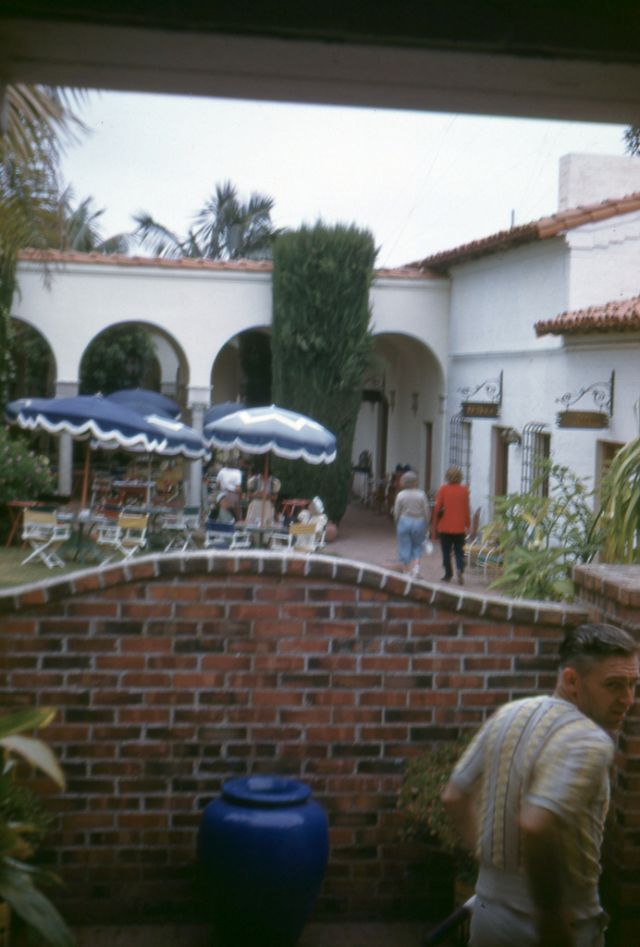
18 Lovely Photos of Britain’s Seaside during the 1960s and 1970s

Born in 1916 in Somerset, England, John Hinde is considered to be one of the pioneers of color photography. Following his training at the Reimann School of Photography Hinde went on to setup a studio in London working as a documentary, war and advertising photographer.

In 1943 Hinde was made a Fellow in the Royal Photographic Society and commissioned to take pictures for books such as Citizen in War (1945), Exmoor Village (1947) and British Circus Life (1948). While working on the latter Hinde decided to quit his photographic career and join the circus as a PR manager. This was followed by a failed attempt to start his own traveling company in Ireland until finally in 1956 he returned to photography and founded his eponymous postcard business.

At the time black and white images dominated the postcard market, however as a trained color photographer Hinde was determined to create bright and vibrant cards of English and Irish landscape.

From the late 1960s to the early 1970s, Hinde worked on his most widely known production: the Butlin Holiday Camps postcards. Billy Butlin had founded the camps as a place for working-class people to go for vacation, complete with high excitement and low cost. Butlin hired Hinde to produce postcards that reflected the spirited and enjoyable environment found at his camps. By this time, Hinde worked more as an art director than an actual photographer, so he hired two German photographers, Elmar Ludwig and Edmund Nägele, and one British photographer, David Noble. They travelled to the different camps and set up the necessary lights and photography equipment, often taking a whole day to make them just right.

Often considered kitsch and at a time when only black and white photography was taken seriously, Hinde’s pictures never received critical acclaim. In the late ’70s color photography finally began to receive acknowledgement from museums. Around the same time Martin Parr began to renew interest in Hinde’s work, hailing it for its documentary value and exceptional technical accomplishment.

Here, below is a collection of 18 vivid color photographs of Britain’s seaside in its heyday. Many of them depict popular seaside destinations in Britain and Ireland during the Sixties and Seventies, before the arrival of low-cost flying hastened their decline.

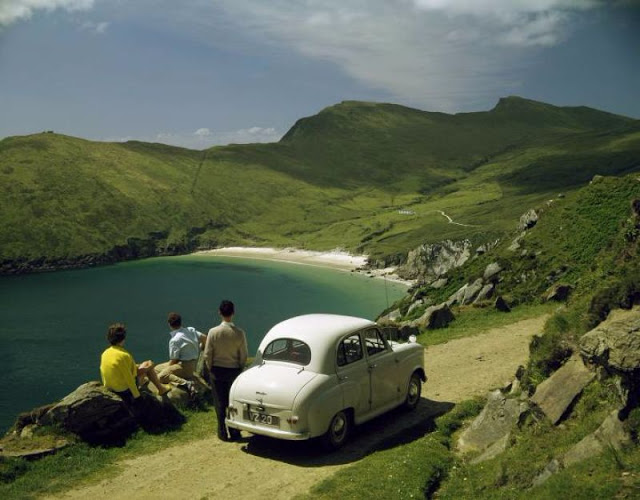
John Hinde, On the road to Keem Strand, Achill Island, Co, Ireland
Joan Willis, Deep Sea Fishing off the Irish Coast
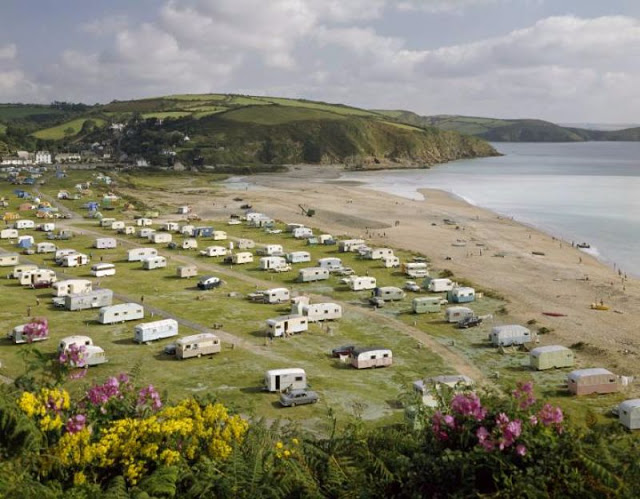
Elmar Ludwig, Pentewan Sands, Cornwall
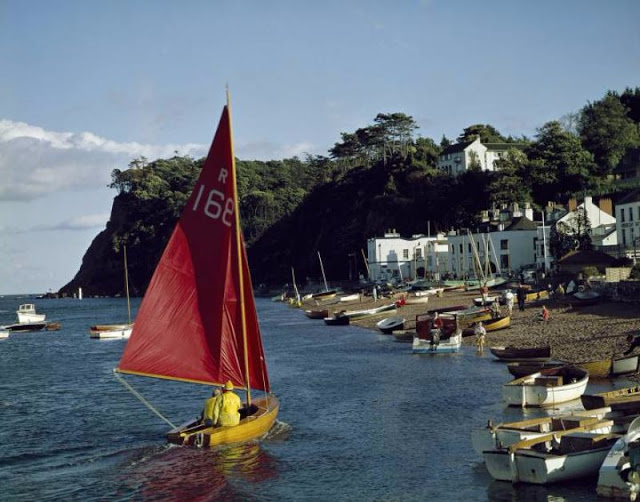
Edmund Nagele, Sailing at Shaldon, Devon
Elmar Ludwig, The Bathing Pool, Ramsgate
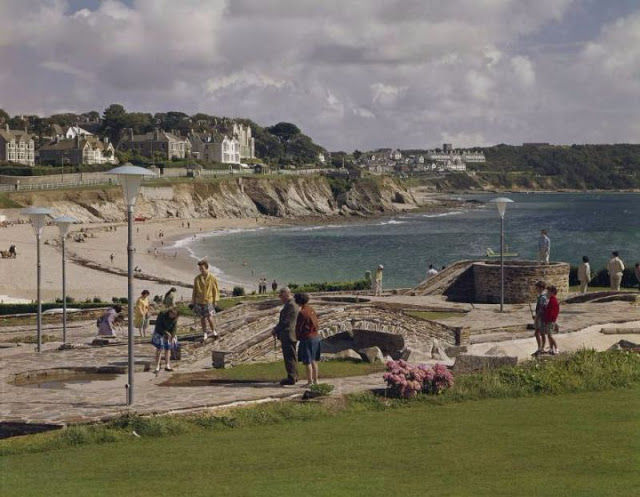
Elmar Ludwig, Gyllyngvase Beach and Crazy Golf Course, Falmouth, Cornwall
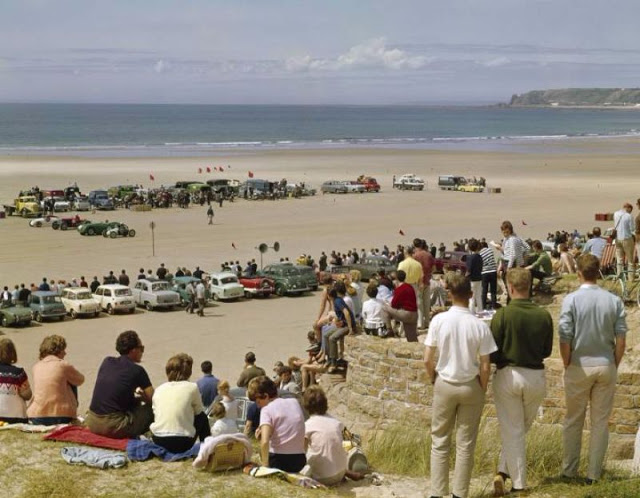
Elmar Ludwig, Motor Racing at St. Ouen’s Bay, Jersey, C.I.
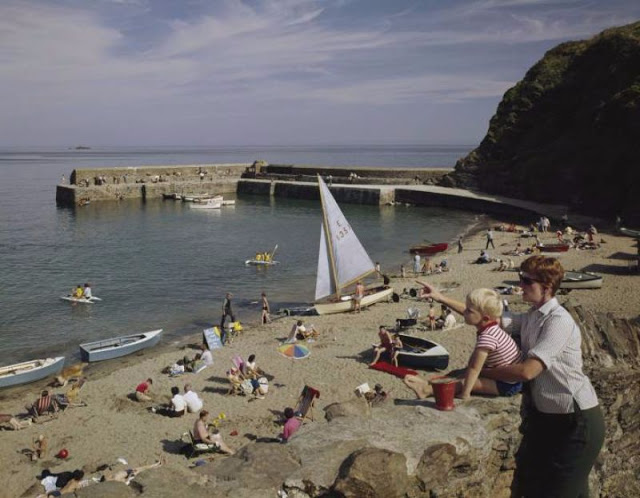
Elmar Ludwig, The Beach and Harbour, Gorran Haven, near Mevagissey, Cornwall
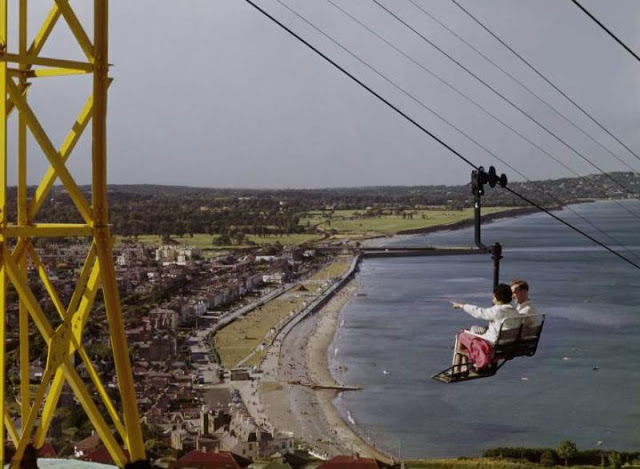
John Hinde, Aerial Chair Lift to Eagle’s Nest, Bray, Co. Wicklow, Ireland
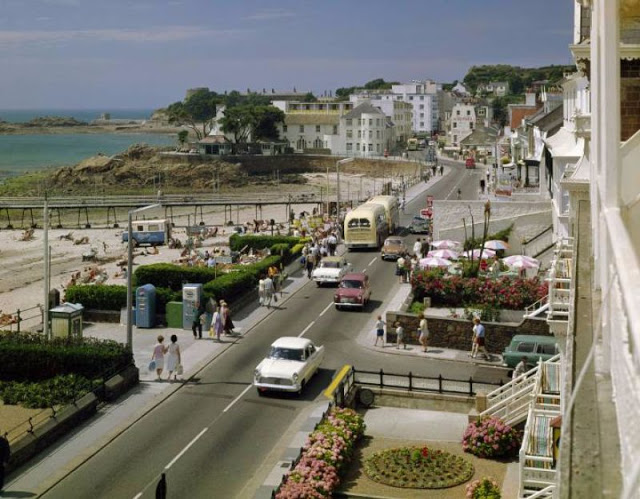
Elmar Ludwig, The Promenade, Havre-des-Pas, Jersey, C.I.
Elmar Ludwig, Crooklets Beach, Bude, Cornwall
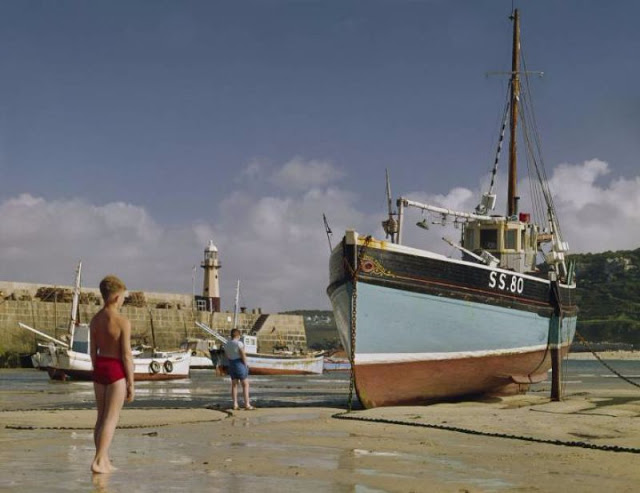
John Hinde, The Harbour, St. Ives, Cornwall
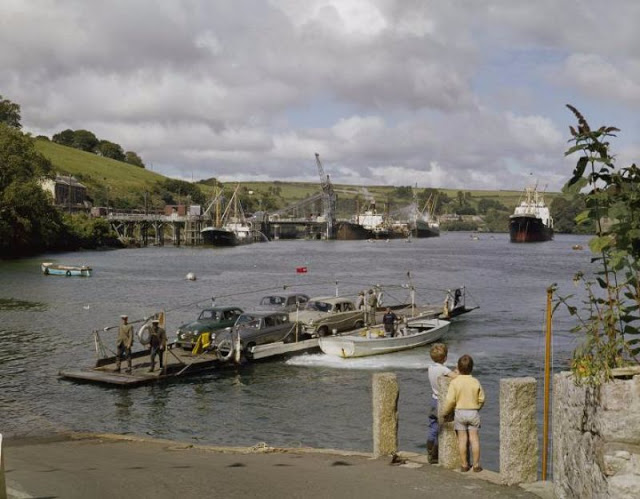
Elmar Ludwig, Bodinick Ferry, Fowey, Cornwall
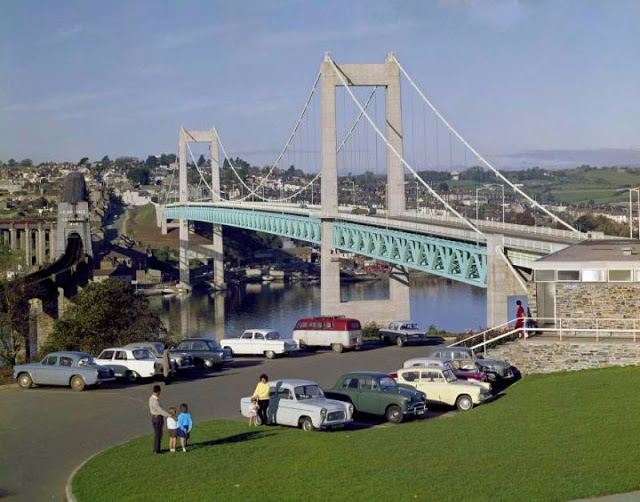
Elmar Ludwig, Tamar Bridge, Plymouth, Devon
Elmar Ludwig, The Inner Harbour, Ramsgate
Edmund Nagele, The Boating Lake, Cromer, Norfolk
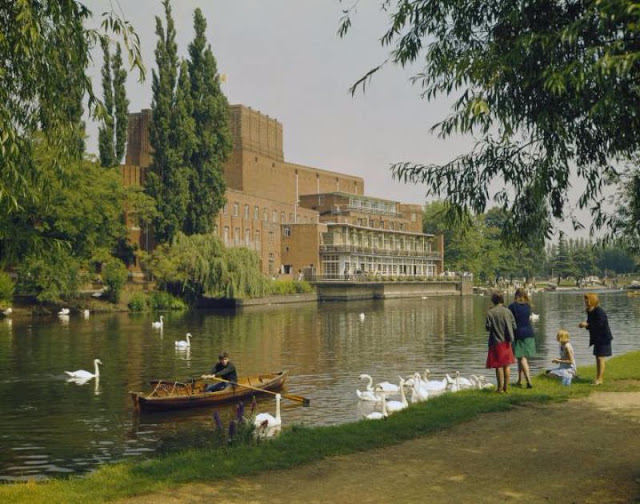
Joan Willis, The Royal Shakespeare Theatre, Stratford-upon-Avon
Elmar Ludwig, The Pier, Margate

Building America’s Arsenal of Democracy: Alfred Palmer’s Portraits Of War

Alfred T. Palmer’s (1906–1993) color photographs for the US Farm Security Administration / Office of War Information speak with a loud, bold, clear and consistent voice. They say: ‘Heroes.’ They might also add, “To infinity and beyond”, given that so many of the men in uniform are gazing upwards to the rosy-fingered dawn, just as we gaze up at the strong chins and keen eyes. The women are focused on the job in hand. Immaculate in complexion and attire, these “capable” women are vivid and bright, immortalised in solid blocks of color. Contrasted against the darkened backdrop, they epitomise dependability.

In 1939 when Hitler attacked Poland the United States ranked twentieth as a world military power. In June of 1940 President Roosevelt and Congress passed a bill for the building of a major two ocean navy. At that time Roosevelt formed the National Defense Advisory Commission of the Office of Emergency Management (OEM) and Palmer was chosen to head the photography department. To rally and inform citizens about the use of their tax dollars and resources, Palmer was sent out to photograph Americans building what Roosevelt termed the Arsenal of Democracy…

In 1941, after the bombing of Pearl Harbor, Palmer became official photographer for the newly formed Office of War Information (OWI).

Crane operator at TVA’s Douglas Dam, Tennessee
This woman in a glass house is putting finishing touches on the bombardier nose section of a B-17F navy bomber, Long Beach, Calif.
Workers are trained to do precise and vital engine installation detail in Douglas Aircraft Company plants, Long Beach, Calif.
Women at work on bomber, Douglas Aircraft Company, Long Beach, Calif.
Workers become skilled shop technicians after careful training in the school at the Douglas Aircraft Company plant, Long Beach, Calif.
workers install fixtures and assemblies to a tail fuselage section of a B-17 bomber at the Douglas Aircraft Company plant, Long Beach, Calif.
Large electric phosphate smelting furnace used in the making of elemental phosphorus in a TVA chemical plant in the Muscle Shoals area, Alabama
Marine lieutenant by the power towing plane for the gliders at Page Field, Parris Island, S.C.
Two workers are shown capping and inspecting tubing which goes into the manufacture of the Vengeance (A-31) dive bomber made at Vultee’s Nashville division, Tennessee.
Operating a hand drill at Vultee-Nashville, a worker is working on a Vengeance dive bomber, Tennessee
Operating a hand drill at Vultee-Nashville, woman is working on a Vengeance dive bomber, Tennessee
Working on a Vengeance dive bomber, Vultee [Aircraft Inc.], Nashville, Tennessee
A nose wheel and landing gear assembly for a B-25 bomber under construction in a western aircraft plant, North American Aviation, Inc., Calif
Part of the cowling for one of the motors for a B-25 bomber is assembled in the engine department of North American [Aviation, Inc.]’s Inglewood, Calif., plant
Metal parts are placed on masonite by this woman employee before they slide under the multi-ton hydropress, North American Aviation, Inc., Inglewood, Calif.
Sheet metal parts are numbered with this pneumatic numbering machine in North American’s sheet metal department, N[orth] A[merican] Aviation, Inc., Inglewood, Calif.
Two employees of North American Aviation, Incorporated, assembling a section of a wing for a P-51 fighter plane
An employee of North American Aviation, working over the landing gear mechanism of a P-51 fighter plane, Inglewood, Calif. The mechanism resembles a small cannon
Riveting team working on the cockpit shell of a B-25 [i.e. C-47] bomber at the plant of North American Aviation, Inc., Inglewood [i.e. Douglas Aircraft Company, Long Beach], Calif.
Welder making boilers for a ship, Combustion Engineering Co., Chattanooga, Tenn.
A combat crew receives final instructions just before taking off in a mighty YB-17 bomber from a bombardment squadron base at the field, Langley Field, Va.
Hitler would like this man to go home and forget about the war. A good American non-com at the side machine gun of a huge YB-17 bomber is a man who knows his business and works hard at it
Tightening a nut on a guide vane operating seromotor in TVA’s hydroelectric plant, Watts Bar Dam, Tennessee.
Truck driver at TVA’s Douglas Dam, Tennessee
Carpenter at work on Douglas Dam, Tennessee (TVA)
Tank driver, Ft. Knox, Ky.
Mechanic, motor maintenance section, Ft. Knox, Ky.
M-4 tank crews of the United States, Ft. Knox, Ky.
Good man, good gun- a private of the armored forces does some practice shooting with a 30-calibre Browning machine gun, Fort Knox, Ky. The gun is mounted on a pedestal for anti-aircraft work
Crewman of an M-3 tank, Ft. Knox, Ky.
Tank commander, Ft. Knox, Ky.
Halftrack infantryman with Garand rifle, Ft. Knox, Ky.
Man of the Fort Story, Va. coastal defense
Man of the Fort Story, Va., coastal defense
16-inch coastal artillery
Electronics technician, Goodyear Aircraft Corp., Akron, Ohio
Manufacture of self-sealing gas tanks, Goodyear Tire and Rubber Co., Akron, Ohio

68 Wonderful Photos of Life in Cairo, Egypt During the Early 1940s

Cairo is the capital and largest city of Egypt. The Cairo metropolitan area, with a population of 21.3 million, is the largest metropolitan area in the Middle East, the largest metropolitan area in the Arab world, the second largest in Africa, and the world’s sixth largest. Cairo is associated with ancient Egypt, as the Giza pyramid complex and the ancient city of Memphis are located in its geographical area. Located near the Nile Delta, Cairo was founded in 969 AD during the Fatimid dynasty, but the land composing the present-day city was the site of Ancient National Capitals whose remnants remain visible in parts of Old Cairo. Cairo has long been a centre of the region’s political and cultural life, and is titled “the city of a thousand minarets” for its preponderance of Islamic architecture. Cairo’s historic center was awarded World Heritage Site-status in 1979. Cairo is considered a World City with a “Beta +” classification according to GaWC.

Today, the Egyptian capital has the oldest and largest film and music industries in the Middle East and the Arab world, as well as the world’s second-oldest institution of higher learning, Al-Azhar University. Many international media, businesses, and organizations have regional headquarters in the city; the Arab League has had its headquarters in Cairo for most of its existence.

With a population of over 9 million spread over 453 km2 (175 sq mi), Cairo is by far the largest city in Egypt. An additional 9.5 million inhabitants live in close proximity to the city. Cairo, like many other megacities, suffers from high levels of pollution and traffic. The Cairo Metro is one of only two metro systems in Africa (the other being in Algiers, Algeria), and ranks amongst the fifteen busiest in the world, with over 1 billion annual passenger rides. The economy of Cairo was ranked first in the Middle East in 2005, and 43rd globally on Foreign Policy’s 2010 Global Cities Index. (Wikipedia)
66 Incredible Photos of Celebrities Before They Were Famous

Nirvana’s first photo shoot as a band. 1988.
Eminem on his 18th birthday. 1990.
Peter Dinklage in high school.
Robin Williams in high school.
A 17-year-old Prince at the beginning of his career. 1975.
An 18-year-old Alan Rickman in 1964.
The Red Hot Chili Peppers performing in 1986.
Susan Sarandon in 1963.
A teenage George Clooney.
Tom Hanks as a high school senior in 1974
Betty White at home in 1954.
Ryan Seacrest as a teenager.
A high school yearbook photo of Amy Poehler.
Hillary Rodham (later Clinton) at Wellesley College. 1969.
High school yearbook photo of Madonna.
Bill gates at 22, arrested for driving without a license and failing to stop at a stop sign. 1977.
A ninth grade Bill Nye in the science lab.
Meryl Streep as a cheerleader during her junior year of high school. 1966.
A teenage Bill Clinton shakes President John F. Kennedy’s hand in 1963.
Drew Carey while serving in the United States Marine Corps. 1978.
A 15-year-old Dwayne Johnson in 1987.
Samuel L. Jackson as a high school senior. 1965.
Stephen Colbert in 1984.
A 19-year-old Jimi Hendrix during his time in the 101st Airborne Division of the U.S. Army. 1961.
Robert Downey Jr. in high school.
A young Bob Marley (middle) with the Wailers in 1964.
Neil deGrasse Tyson once described his high school self as “a nerd who could kick your butt.”
A high school yearbook photo of Zooey Deschanel.
Steven Spielberg on his sofa in 1975.
Michael Jordan in his college dorm room in 1983.
A 28-year-old Barack Obama in 1990.
Mark Zuckerberg in his college dorm room at Harvard.
Bernie Sanders, 1963.
Diane Keaton in high school.
Jimmy Fallon in high school.
Michael and Janet Jackson.
Larry David in 1981.
High school yearbook photo of Jason Alexander.
Richard Nixon at age 17 in 1930.
Gwen Stefani with No Doubt in 1987.
Matt Dillon in 1980.
A young Mick Jagger.
A young Chris Pratt.
Drew Barrymore in 1982, as seen in E.T..
Tina Fey and her brother pose for a photo with Elvis Costello in 1986.
Ben Stiller with his dad, Jerry Stiller, in 1978.
Winona Ryder in 1986.
A young Liza Minnelli with her mother, Judy Garland, in 1950.
A young Natalie Portman attending a movie premiere in 1995.
Sean Penn with Nicolas Cage in the mid-1980s.
Billy Crystal in 1980.
Jane Fonda when she was arrested on false drug smuggling charges in 1970.
Simon Cowell in 1987.
Michael Stipe of R.E.M. at the Hollywood Palace in 1984.
Lady Gaga before she became famous.
Lin Manuel Miranda as a child.
Ronald Reagan as a toddler in 1914.
Barbara Streisand in 1962.
Keith Richards in 1965, just before the Rolling Stones took off in the U.S.
Kiefer Sutherland with his father, Donald Sutherland, circa 1970.
Glenn Beck in high school.
Scott Baio and Brooke Shields. 1980.
Jodie Foster, with Rod Serling, on the television show Ironside in 1972.
High school yearbook photo of Oprah Winfrey.
Louis C.K. in high school.
Jack Nicholson’s high school yearbook photo. 1955.

41 Beautiful Vintage Photos of Elizabeth Taylor in Bathing Suits during the 1940s and 1950s

Dame Elizabeth Rosemond Taylor DBE (February 27, 1932 – March 23, 2011) was a British-American actress. She began her career as a child actress in the early 1940s and was one of the most popular stars of classical Hollywood cinema in the 1950s. She then became the highest paid movie star in the 1960s, remaining a well-known public figure for the rest of her life. In 1999, the American Film Institute named her the seventh-greatest female screen legend of Classic Hollywood cinema.

Born in London to socially prominent American parents, Taylor moved with her family to Los Angeles in 1939. She made her acting debut with a minor role in the Universal Pictures film There’s One Born Every Minute (1942), but the studio ended her contract after a year. She was then signed by Metro-Goldwyn-Mayer and became a popular teen star after appearing in National Velvet (1944). She transitioned to mature roles in the 1950s, when she starred in the comedy Father of the Bride (1950) and received critical acclaim for her performance in the drama A Place in the Sun (1951).

Despite being one of MGM’s most bankable stars, Taylor wished to end her career in the early 1950s. She resented the studio’s control and disliked many of the films to which she was assigned. She began receiving more enjoyable roles in the mid-1950s, beginning with the epic drama Giant (1956), and starred in several critically and commercially successful films in the following years. These included two film adaptations of plays by Tennessee Williams: Cat on a Hot Tin Roof (1958), and Suddenly, Last Summer (1959); Taylor won a Golden Globe for Best Actress for the latter. Although she disliked her role as a call girl in BUtterfield 8 (1960), her last film for MGM, she won the Academy Award for Best Actress for her performance.

During the production of the film Cleopatra in 1961, Taylor and co-star Richard Burton began an extramarital affair, which caused a scandal. Despite public disapproval, they continued their relationship and were married in 1964. Dubbed “Liz and Dick” by the media, they starred in 11 films together, including The V.I.P.s (1963), The Sandpiper (1965), The Taming of the Shrew (1967), and Who’s Afraid of Virginia Woolf? (1966). Taylor received the best reviews of her career for Woolf, winning her second Academy Award and several other awards for her performance. She and Burton divorced in 1974 but reconciled soon after, remarrying in 1975. The second marriage ended in divorce in 1976.

Taylor’s acting career began to decline in the late 1960s, although she continued starring in films until the mid-1970s, after which she focused on supporting the career of her sixth husband, United States Senator John Warner (R-Virginia). In the 1980s, she acted in her first substantial stage roles and in several television films and series. She became the second celebrity to launch a perfume brand, after Sophia Loren. Taylor was one of the first celebrities to take part in HIV/AIDS activism. She co-founded the American Foundation for AIDS Research in 1985 and the Elizabeth Taylor AIDS Foundation in 1991. From the early 1990s until her death, she dedicated her time to philanthropy, for which she received several accolades, including the Presidential Citizens Medal.

Throughout her career, Taylor’s personal life was the subject of constant media attention. She was married eight times to seven men, converted to Judaism, endured several serious illnesses, and led a jet set lifestyle, including assembling one of the most expensive private collections of jewelry in the world. After many years of ill health, Taylor died from congestive heart failure in 2011, at the age of 79. (Wikipedia)
32 Vintage Photos Showing the Inside of American Restaurants and Cafeterias in the 1940s

During the war (1941-1945) the creation of 17 million new jobs finally pulls the economy out of the Depression. Millions of married women enter the labor force. The demand for restaurant meals escalates, increasing from a pre-war level of 20 million meals served per day to over 60 million. The combination of increased restaurant patronage with labor shortages, government-ordered price freezes, and rationing of basic foods puts restaurants in a squeeze. With gasoline rationing, many roadside cafes and hamburger stands close.
For a time after the war, rationing continues and wholesale prices stay high but patronage falls off as women leave jobs and return to the kitchen. Trained restaurant personnel are in short supply. Restaurants take advantage of food service methods and materials developed for the armed services. The frozen food industry supplies restaurants with fish, French fries, and baked goods. Boil-in bags of pre-cooked entrees become available. Fast food assembly lines and serving techniques used by the military are transferred to commercial establishments.

Here’s a collection of 32 amazing vintage photographs that give us a glimpse inside American restaurants from the 1940s.

FSA/8c32000/8c32900\8c32974a.tif

33 Vintage Photos of Paul Newman and Robert Redford in the 1969 Film ‘Butch Cassidy and the Sundance Kid’

Butch Cassidy and the Sundance Kid is an American Western film directed by George Roy Hill and written by William Goldman. It was the top-grossing film of its year and top 10 for its decade, though initially received lukewarm reviews from critics. The film was nominated for total seven Oscar categories and won four for Best Cinematography, Best Original Score for a Motion Picture (not a Musical), Best Music, Song and Best Original Screenplay at the 42nd Academy Awards.

The story is loosely based on two Wild West criminal outlaws Robert LeRoy Parker, known as Butch Cassidy (Paul Newman), and his partner Harry Alonzo Longabaugh, the “Sundance Kid” (Robert Redford). Butch was the brains and leader of the Hole-in-the-Wall Gang, while his closest companion Sundance preferred action and skill. After their second robbery on the same train, Butch and Sundance began to get pursued by a special posse. With their persistent track, Butch convinced Sundance and Etta (Katharine Ross), the latter’s lover, that they should escape to Bolivia, which was a paradise for robber according to Butch’s visions.

The role of Sundance was first offered to Jack Lemmon, who turned down because of schedule conflict, plus he also didn’t like riding horses. Other actors under consideration for Sundance were Steve McQueen and Warren Beatty, with the latter declining as he found the film too similar to Bonnie and Clyde (1967). As stated by Goldman, McQueen and Newman both read the scripts at approximately the same time and agreed to do the film. However, McQueen later withdrew due to billing disagreements. The role eventually went to Redford, thus creating one of the most iconic pairs to hit the big screen.

Here, we look at the duo and their charming chemistry in the film through 33 photos…

Yesterday Today

Bringing You the Wonder of Yesterday - Today

Skip to content ↓