Subscribe to get access
Read more of this content when you subscribe today.
Jane Fonda’s visit to North Vietnam in July 1972 remains one of the most controversial moments in American history. The trip, intended as a peaceful protest against the Vietnam War, led to intense backlash, earning her the nickname “Hanoi Jane”. This event altered the public’s perception of her Hollywood image in a negative way for decades, which would have a trickle-down effect on her career, activism, and personal life. In this essay, we explore her motivations, the immediate response from the American public and government, the global reaction, and the long-term consequences of her actions.
Reasons for Jane Fonda’s Visit
By the early 1970s, Jane Fonda had become a prominent anti-war activist, aligning herself with groups like Vietnam Veterans Against the War (VVAW). She firmly believed that the U.S. government was misleading the public regarding the war and wanted to expose the extreme suffering of the Vietnamese people.
Fonda ultimately decided to travel to North Vietnam because her profoundly negative views towards the Vietnam War compelled her to speak out as she could. Her activism had been growing for several years, influenced by leftist intellectuals in France and her interactions with American soldiers disillusioned by the conflict. Fonda thought that the U.S. government was misleading the public about the war’s realities and was causing immense suffering to the Vietnamese people. It was her aim that her trip would be a witness to the firsthand impact of the U.S. bombing campaigns. She also sought to amplify the voices of the downtrodden Vietnamese people. She brought with her a package of letters from American prisoners of war (POWS) to their families, intending to facilitate communication and demonstrate their well-being, countering claims of mistreatment.
At age 34, she made a two-week trip to Hanoi in July 1972. By that point in the war, over 60,000 American soldiers were dead, and over one million Vietnamese had become casualties in the conflict. These statistics created an urgency for Fonda to act as strongly as she could.
During the two-week trip, Fonda would visit hospitals, schools, and war museums, while witnessing the devastation caused by multiple devastating American bombing campaigns. She also took part in Radio Hanoi broadcasts, urging American pilots to cease bombing North Vietnam, calling their missions nothing short of “genocidal”.
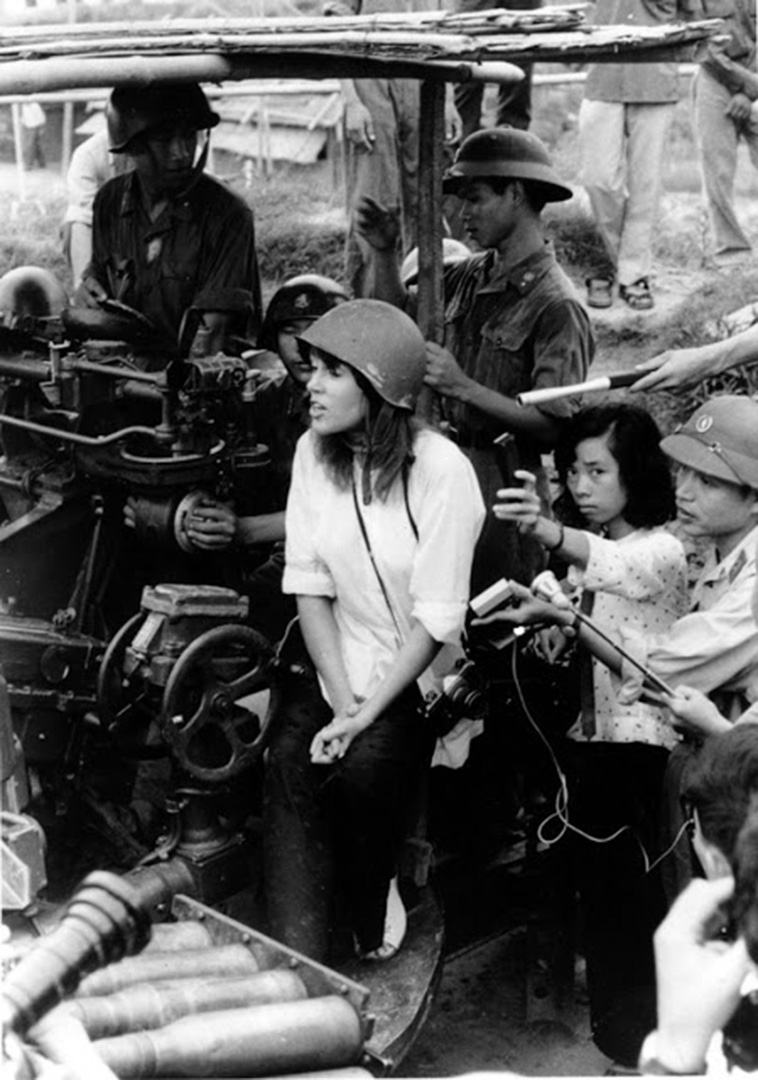
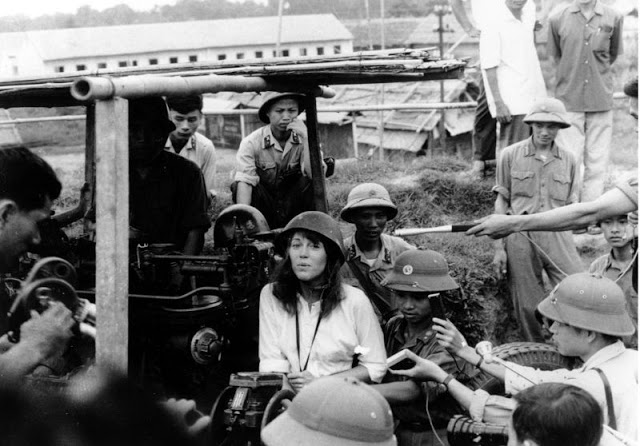
However, the most infamous moment of the excursion occurred when Fonda was photographed sitting on a North Vietnamese anti-aircraft gun. This weapon was purported to have been used to shoot down American planes. This image would do the most damage to her image and haunt her for the remainder of her life.
Immediate Response from the American Public and Government
The United States reacted swiftly and with furious intent. Many Americans felt that Fonda’s actions were extremely treasonous, going so far as to accuse her of betraying U.S. troops and of aiding the Vietnamese.
Veterans groups would condemn her, with some calling for her prosecution in the courts. Despite an immense feeling of betrayal, the American government failed to take legal action, but federal officials strongly denounced her trip. The government also never formally charged her with treason or violating the Logan Act, which disallows American citizens from negotiating with foreign governments. Fonda’s actions were seen as severely undermining the American war effort and benefiting the North Vietnamese, who would make full use of the propaganda gift that Jane Fonda had handed them.
The media fueled the outrage, amplifying the narrative that she had sided with the enemy. The image of her sitting on a North Vietnamese anti-aircraft gun, a weapon used to shoot down American planes, became a potent symbol of this perceived treachery. She earned the infamous nickname “Hanoi Jane.” The calls grew very loud for her to be prosecuted as a traitor, and these sentiments reverberated nationwide.
Another effect this debacle had on the actress’s life was that many lawmakers strongly considered banning her films nationwide.
Global Reaction
Outside the U.S., reactions were mixed. North Vietnam had welcomed her as a symbol of American dissent. Anti-war activists worldwide also praised her courage. Allied nations were undoubtedly divided—some viewed her as a hero, while others considered her reckless.
Her trip highlighted the deep divisions within the American nation in 1972 about the Vietnam War, a fact that reinforced the growing polarization between pro-war and anti-war factions.
Long-Term Effects on Jane Fonda’s Life (1972–2025)
The fallout generated by her trip would last for decades, shaping her career, activism, and personal life in many different ways.
Her Hollywood career suffered tremendously initially, with some studios and audiences refusing to hire her or boycotting her films. Despite this, she remained stoically defiant, insisting that her intentions were peaceful and aimed at ending the war. Professionally, she faced a significant backlash due to her actions. While she continued to work, the “Hanoi Jane” controversy caused her acting career to suffer tremendously for decades. Many Americans boycotted her films, and the issue would resurface repeatedly throughout her life, often during awards ceremonies or career retrospectives. Despite the years-long backlash, she eventually regained her Hollywood success, but the controversy never faded. Some veterans refused to forgive her, and protests followed her public appearances.
In 2011, Fonda reminisced on her website that the photo op with the anti-aircraft gun, which had earned her the nickname “Hanoi Jane” and angered millions of Americans, came about after Vietnamese soldiers serenaded her with a Communist folk song. “I heard these words: ‘All men are created equal; they are given certain rights; among these are life, liberty and happiness,'” she would relate in the article. Then someone led her to a weapon, stating that it had taken part in shooting down large numbers of American planes, and multiple flashbulbs went off. “It is possible it was a setup. I will never know.”
Fonda also told the TV investigative news program 60 Minutes in 2005 that during her trip to North Vietnam, where she met with peasants, artists and intellectuals, it was, she felt, worthwhile — but she conceded that the taking of the photograph was a huge mistake. “The image of Jane Fonda, Barbarella, Henry Fonda’s daughter, sitting on an enemy aircraft gun was a betrayal,” she said, “the largest lapse of judgment I can imagine.”
Personally, the whole experience took an immense toll on her. Fonda has repeatedly expressed her regret for the pain that she caused to the large numbers of American soldiers and their families, particularly regarding the photograph of the anti-aircraft gun, which she described as a thoughtless and deplorable act. She has made numerous attempts to reconcile with veterans, often meeting privately to listen to their experiences and offer apologies. She has also made multiple attempts to reconcile with veterans through funding Vietnam War memorials and meeting with former soldiers.
This effort to seek understanding and forgiveness has been a recurring theme in her life.
Even in 2025, more than five decades later, the “Hanoi Jane” label persists in the minds of many. While a younger generation may have a less visceral reaction, for those who lived through the Vietnam War era, the controversy remains a potent symbol of a deeply divisive time. Fonda’s activism on other issues, such as women’s rights and climate change, has often been viewed through the lens of this past event.
Despite the decades-long controversy, Jane Fonda has never stopped speaking out on issues she believed in, proving that her activism and resilience defined her legacy.
Conclusion
Jane Fonda’s 1972 trip to North Vietnam was a defining moment in her life and American history. While her intentions were rooted in anti-war activism, the optics of her actions led to decades of backlash. The incident shaped her career, activism, and public perception, making her one of the most polarizing figures in modern American history.

Subscribe to continue reading
Subscribe to get access to the rest of this post and other subscriber-only content.
