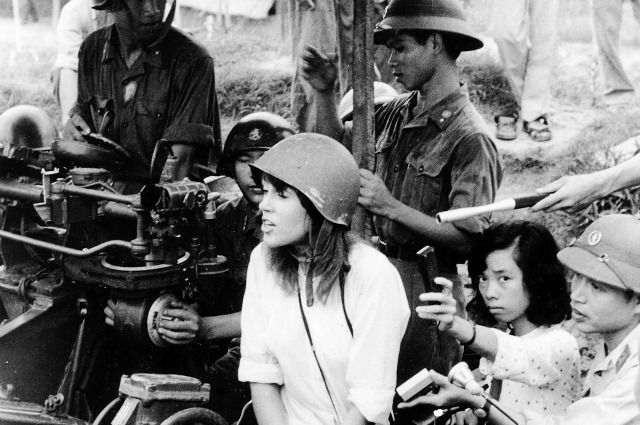
Image: Jane Fonda seated at a North Vietnamese anti‑aircraft gun, surrounded by soldiers and observers during her 1972 visit to Hanoi.
Introduction: Why These 1972 Photographs Still Matter
The now-infamous 1972 photographs of Jane Fonda’s trip to North Vietnam remain among the most iconic and reviled images of the Vietnam War era. These photographs—especially the infamous shot of Fonda seated on a North Vietnamese anti‑aircraft gun—became cultural flashpoints that shaped future American debates about patriotism, dissent, and the political responsibilities of public figures. Though these images were reduced to a single moment, the images presented here emerged from a much more complex historical landscape, one defined by escalating antiwar activism, government mistrust, and Cold War propaganda.
The Political Climate of 1972
By mid‑1972, public confidence in the war had eroded after years of casualties, the My Lai revelations, and the release of the Pentagon Papers.¹ Fonda, already an outspoken critic of U.S. policy, travelled to Hanoi to document the human cost of the conflict. She visited bombed civilian areas, met with Vietnamese citizens, and recorded radio broadcasts urging an end to the war.² Yet it was the photographs—not her speeches—that would define the trip in American memory.
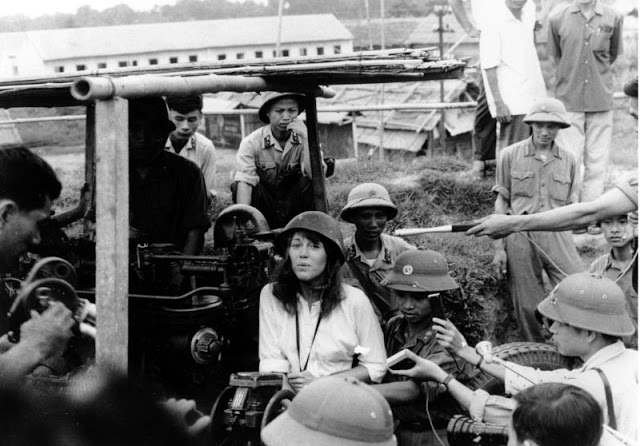
Image: Fonda positioned at the controls of an anti‑aircraft gun while North Vietnamese personnel look on, documenting the staged demonstration.
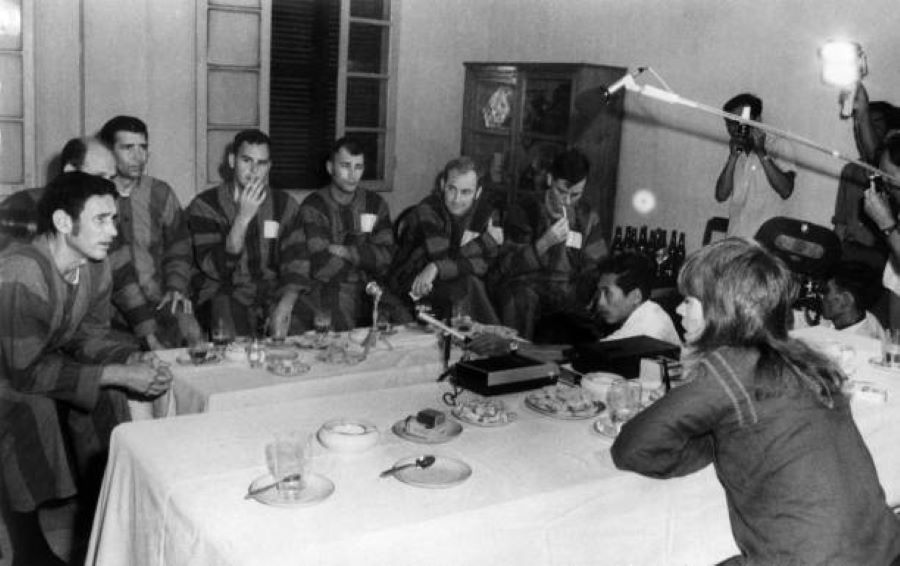
Image: US actress and peace activist Jane Fonda (R) meets American prisoners of war on July 20, 1972, in Hanoi. Fonda’s trip to North Vietnam was part of her protest campaign against the US involvement in the Vietnam War.
The Photograph That Sparked a Firestorm
The most controversial image, taken on July 1, 1972, shows Fonda laughing while seated on a North Vietnamese anti‑aircraft gun, representative of the ones used to shoot down American pilots.³ While there is no doubt that her hosts carefully staged these images, they produced immediate outrage in the United States. Veterans interpreted the image as a personal betrayal, and political commentators quickly labelled her “Hanoi Jane,” a moniker that would follow her for decades.⁴ Fonda later apologized for the photograph, calling it a “thoughtless and careless” moment, though she maintained her opposition to the war.⁵
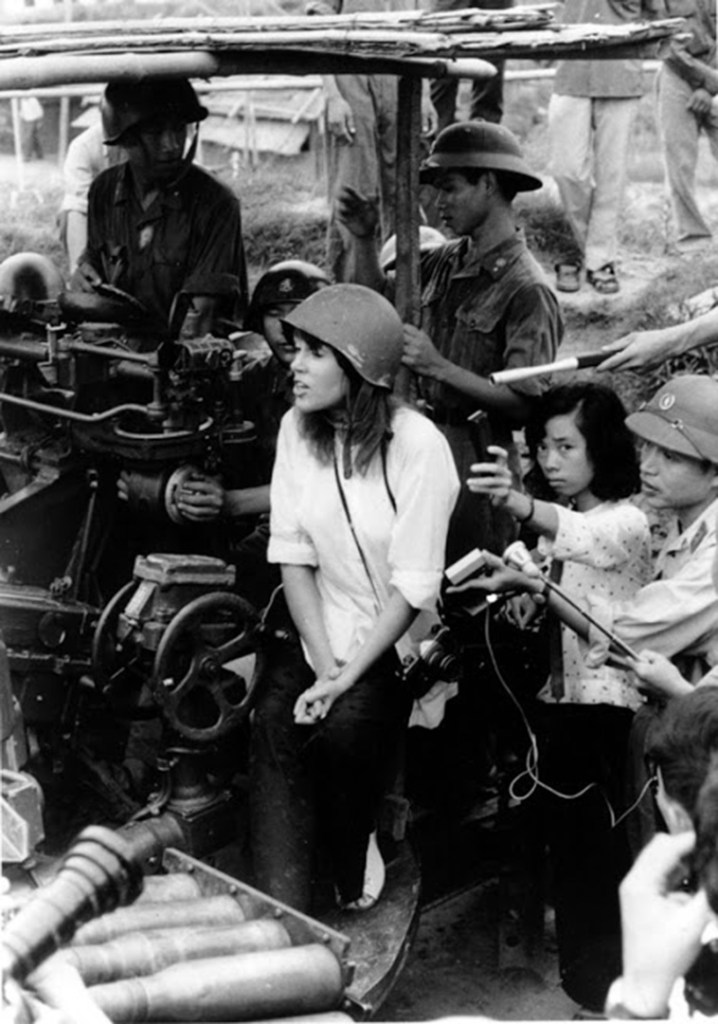
Image: Journalists and soldiers gather around Fonda as she sits on an anti‑aircraft gun, capturing one of the most controversial moments of her trip.
Make a one-time donation
Make a monthly donation
Make a yearly donation
Choose an amount
Or enter a custom amount
Your contribution is appreciated.
Your contribution is appreciated.
Your contribution is appreciated.
How Images Shape Political Memory
Viewing these images today allows us to have a clear view of how wartime imagery can be weaponized. Historians maintain that these photographs have political meaning not only through their content but also through the subsequent narratives that were created.⁶ In Fonda’s case, the photos instantly became symbols of her treason for some and principled dissent for others, reflecting the broader polarization of American society during the final years of the war.
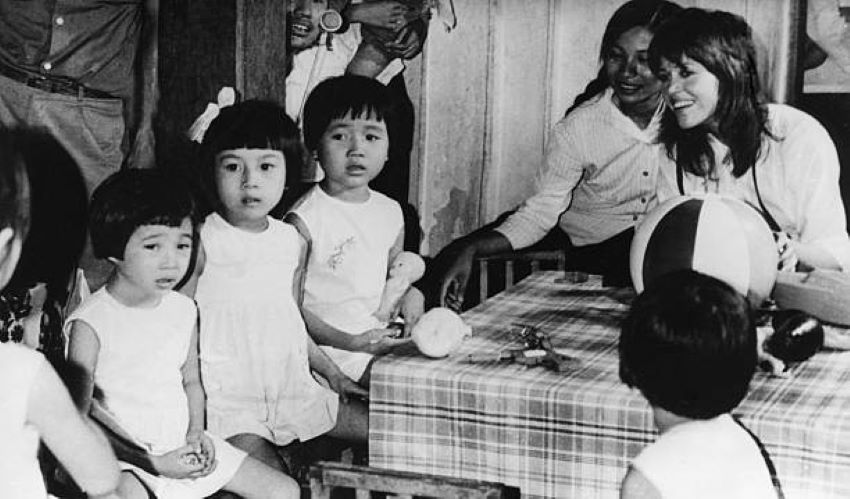
Image: Jane Fonda visits a nursery school (Kindergarten)in Hanoi, North Vietnam during her controversial visit in July 1972.
Activism, Propaganda, and the Blurred Lines Between Them
North Vietnam tightly controlled foreign visitors, and Fonda’s itinerary—like those of other Western activists—was designed to produce images favourable to the communist cause.⁷ Yet her presence also reflected a genuine and widespread American antiwar movement.⁸ The photographs endure because they capture a nation at war with itself, reminding us that dissent in wartime is never merely symbolic; it is deeply personal, often painful, and always politically charged.
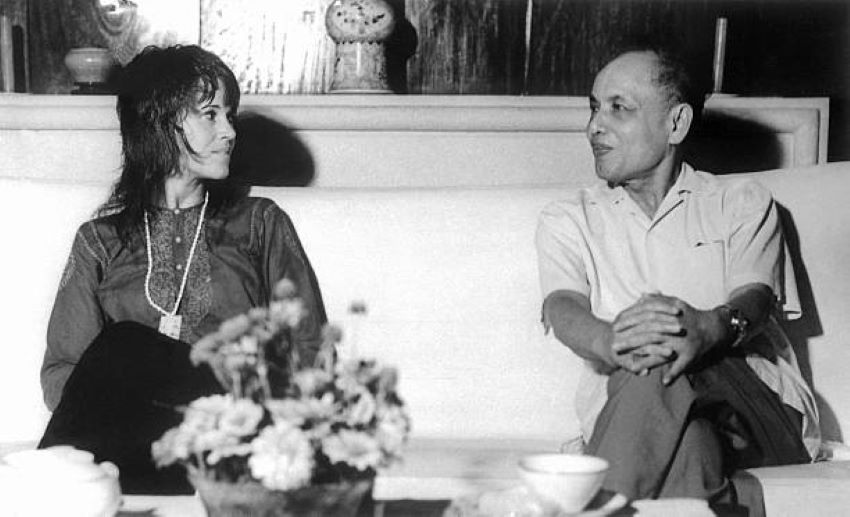
Image: US Actress Jane Fonda (R) meets with Vice Prime Minister of the North Vietnam government Nguyen Duy Trinh in Hanoi, July 21, 1972.
Footnotes
- Neil Sheehan, The Pentagon Papers (New York: Bantam, 1971).
- Mary Hershberger, Jane Fonda’s War: A Political Biography of an Antiwar Icon (New York: The New Press, 2005), 112–118.
- Ibid., 134.
- Jerry Lembcke, Hanoi Jane: War, Sex, and Fantasies of Betrayal (Amherst: University of Massachusetts Press, 2010), 3–7.
- Jane Fonda, My Life So Far (New York: Random House, 2005), 257.
- Susan Sontag, Regarding the Pain of Others (New York: Farrar, Straus and Giroux, 2003), 6–12.
- Hershberger, Jane Fonda’s War, 129–140.
- Melvin Small, Antiwarriors: The Vietnam War and the Battle for America’s Hearts and Minds (Wilmington, DE: SR Books, 2002), 45–78.
Bibliography
Fonda, Jane. My Life So Far. New York: Random House, 2005.
Hershberger, Mary. Jane Fonda’s War: A Political Biography of an Antiwar Icon. New York: The New Press, 2005. Lembcke, Jerry.
Hanoi Jane: War, Sex, and Fantasies of Betrayal. Amherst: University of Massachusetts Press, 2010. Sheehan, Neil.
The Pentagon Papers. New York: Bantam, 1971.
Small, Melvin. Antiwarriors: The Vietnam War and the Battle for America’s Hearts and Minds. Wilmington, DE: SR Books, 2002.
Sontag, Susan. Regarding the Pain of Others. New York: Farrar, Straus and Giroux, 2003.
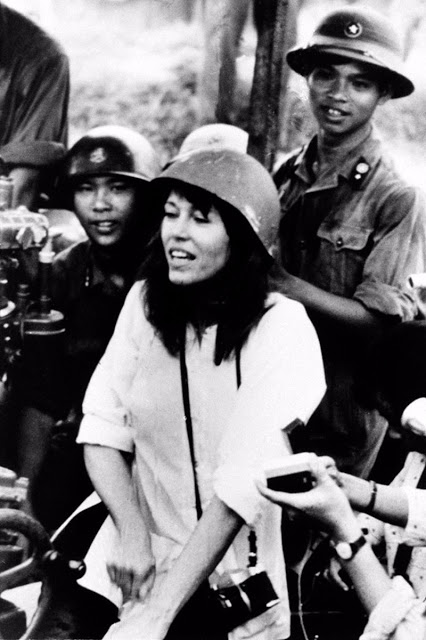
Fonda interacting with North Vietnamese soldiers beside an anti‑aircraft gun emplacement during her guided tour.
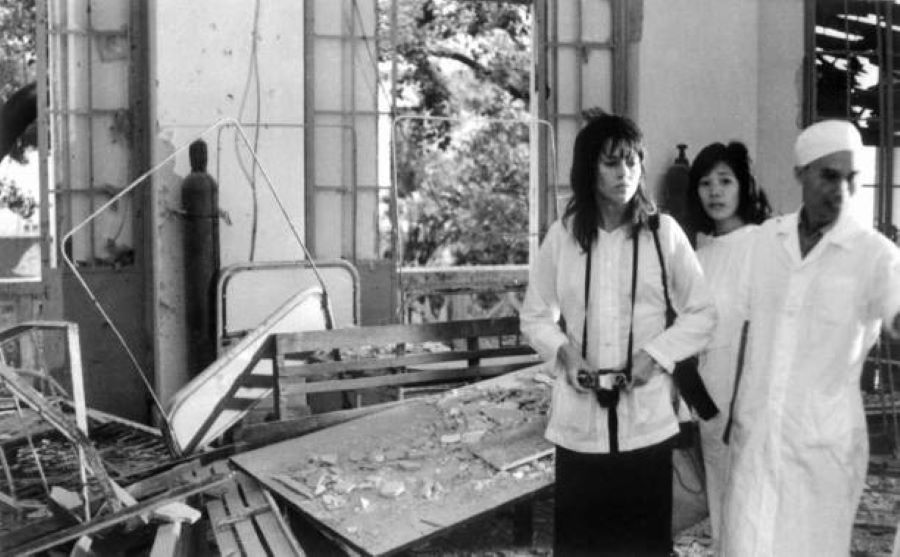
Image: American actress Jane Fonda during her visit to Hanoi, North Vietnam on July 25, 1972.
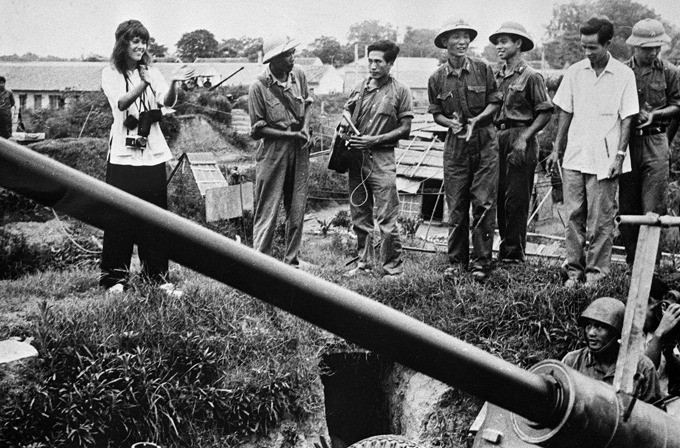
Image: A photographer records Fonda’s visit to a North Vietnamese gun position, where soldiers stand on raised ground near the artillery.
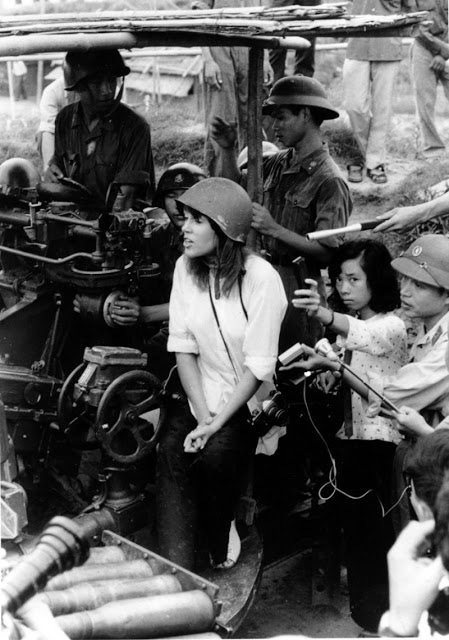
Image: Fonda standing beside an anti‑aircraft gun while soldiers and civilians—including a man holding a microphone—observe the scene.
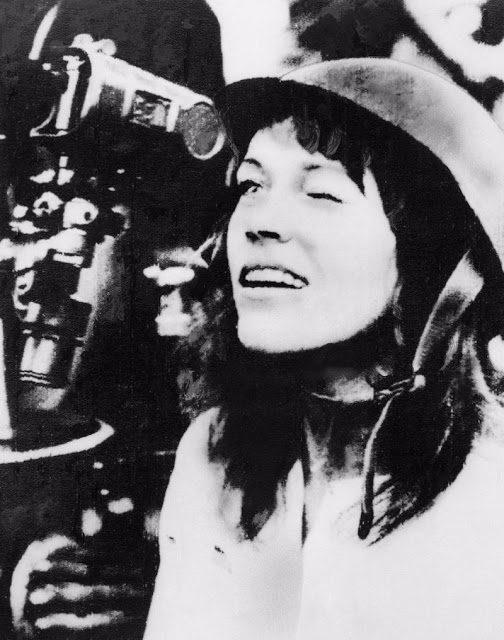
Image: Fonda wearing a helmet and looking upward beside a large film camera, highlighting the media presence during her Hanoi visit.
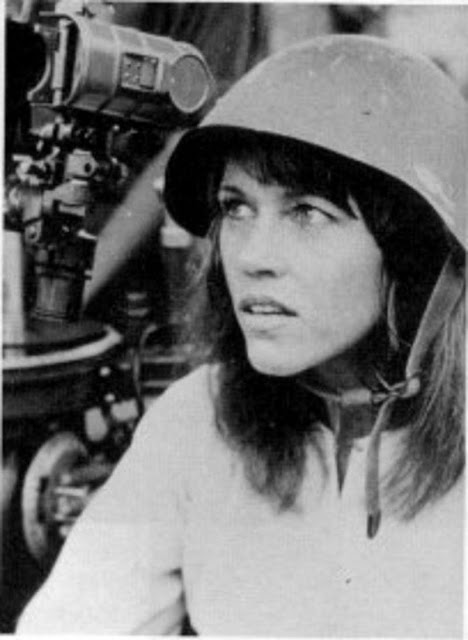
Image: Fonda examining or interacting with a large camera or optical device while wearing a military‑style helmet.
Subscribe to our Page and receive notifications of new posts automatically so you do not miss a thing – it is free!!!
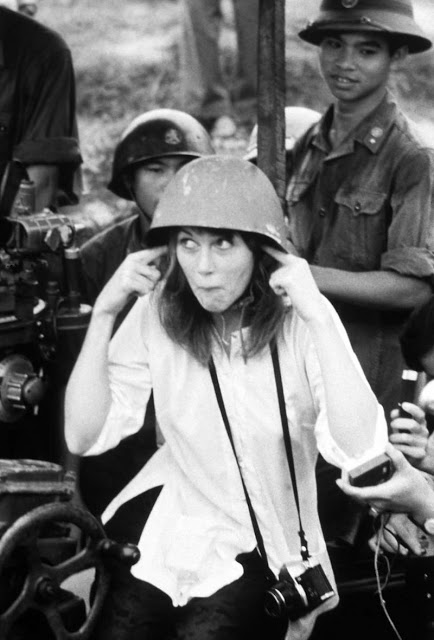
Image: Fonda adjusting her helmet while seated near military equipment, surrounded by North Vietnamese soldiers observing her actions.
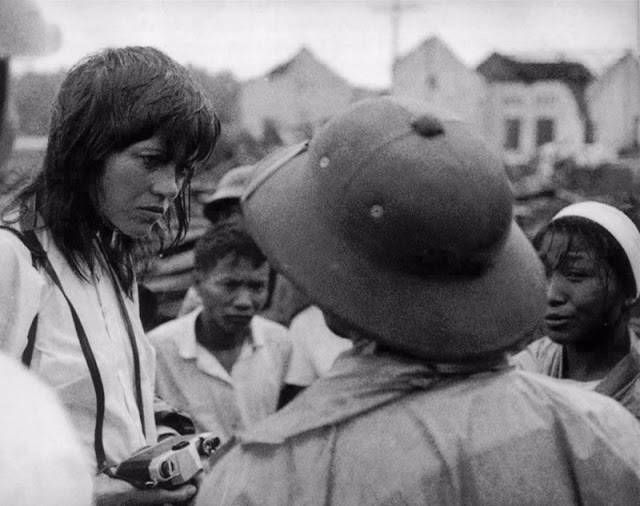
Image: Fonda is seen speaking with a local resident in a rural village setting, holding a camera as others gather around to hear the conversation.
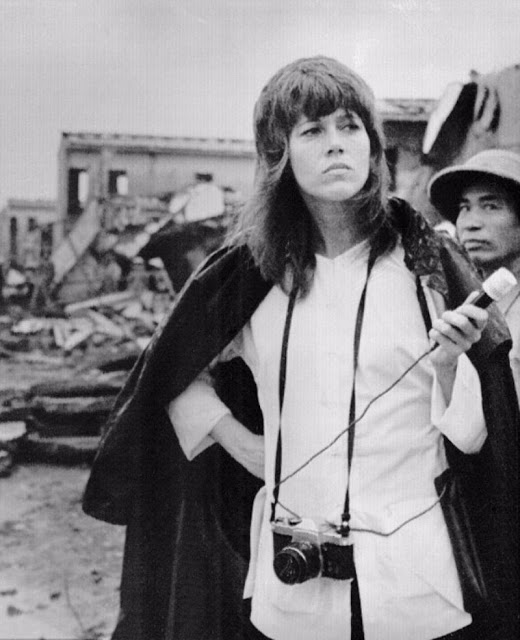
Image: Fonda standing amid the ruins of bomb‑damaged buildings, holding a microphone while documenting the destruction.
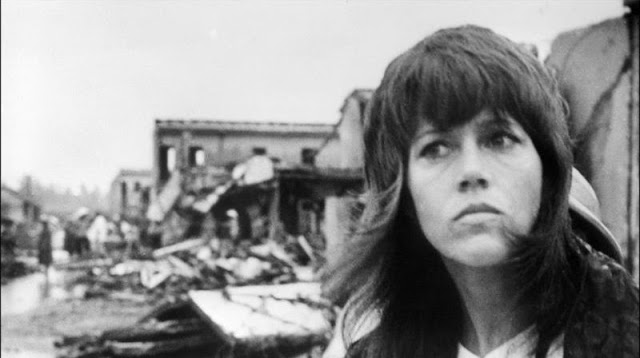
Image: Fonda in front of heavily damaged structures, observing the aftermath of a bombing in a civilian area of Hanoi.
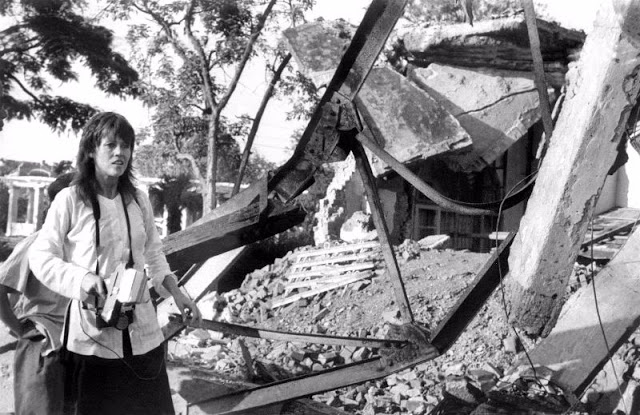
Image: Fonda standing near collapsed concrete beams and rubble, photographing the destruction left by U.S. airstrikes.
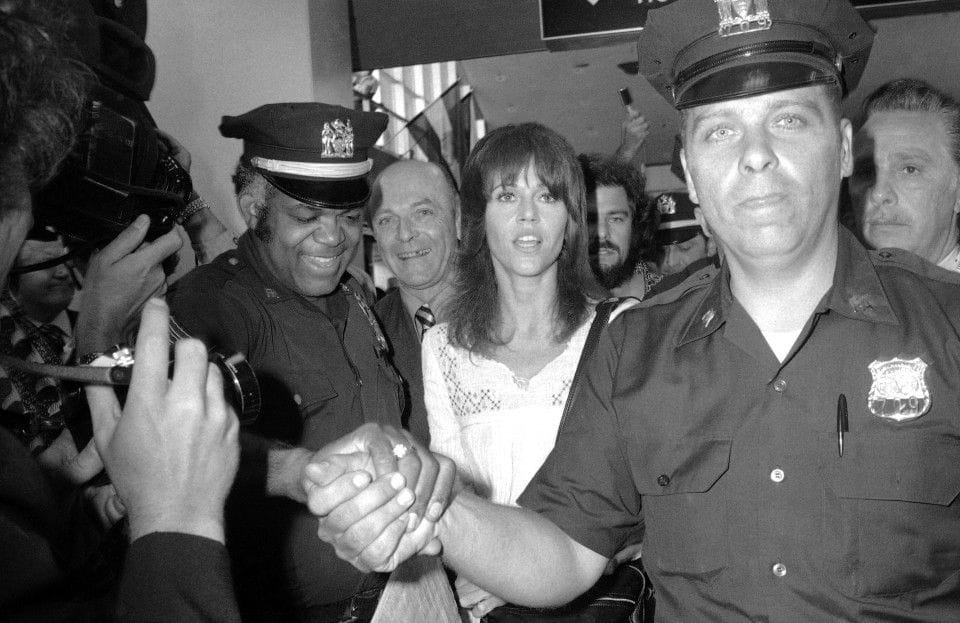
Image: Fonda surrounded by police officers and civilians in a crowded public setting, likely during a stateside event following her return.
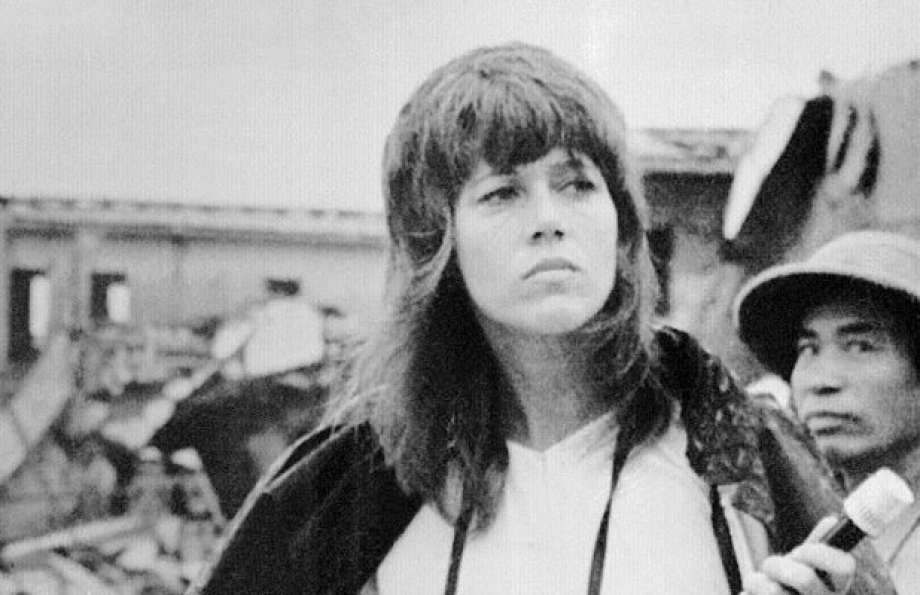
Image: Fonda standing in a bomb‑damaged area with a camera around her neck, accompanied by a helmeted individual observing the ruins.
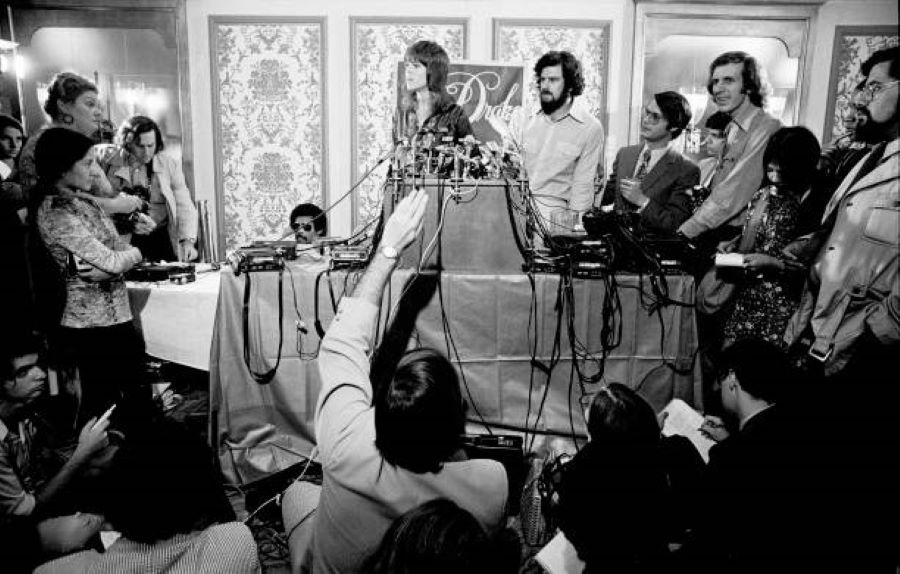
Image: Actress Jane Fonda back from North Vietnam on July 31, 1972, in New York City.
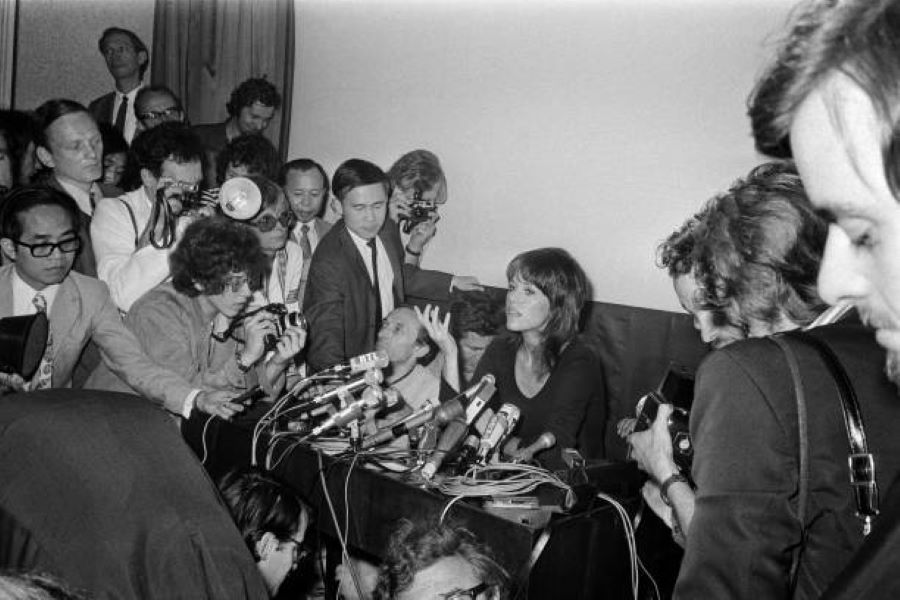
Image: Fonda is seen during a press conference after arriving back in the United States from North Vietnam. The presser took place on July 31, 1972, in New York City.
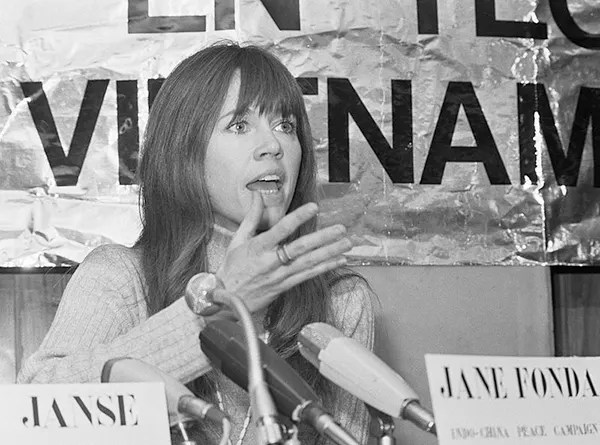
Image: Jane Fonda at an anti-Vietnam War conference in The Hague in January 1975.
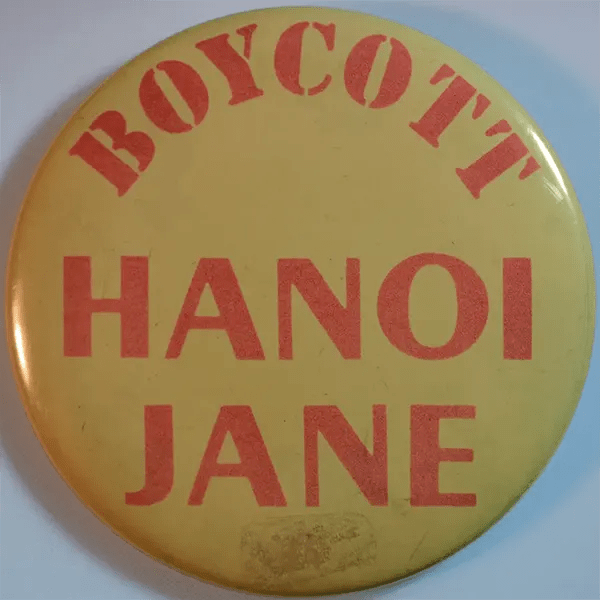
Image: A pin widely used in the 1970s.
Subscribe to our Page and receive notifications of new posts automatically so you do not miss a thing – it is free!!!
#HanoiJane
Please consider supporting our efforts to regularly bring you engaging and insightful historical articles, photographs and videos. Your support would be tremendously appreciated. You can make a one-time donation at
https://www.buymeacoffee.com/YesterdayToday
If you buy something through our site, we might earn a commission, but this will not affect the price you pay for the item.
Thank You For Supporting Us.
Michael
Yesterday Today
Subscribe to get access
Read more of this content when you subscribe today.
Discover more from Yesterday Today
Subscribe to get the latest posts sent to your email.
