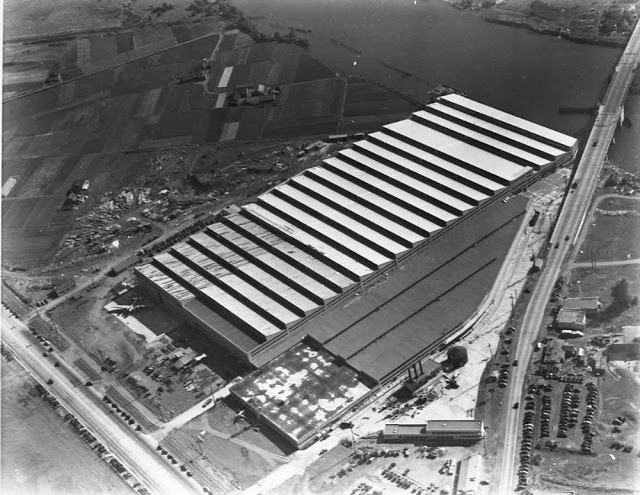
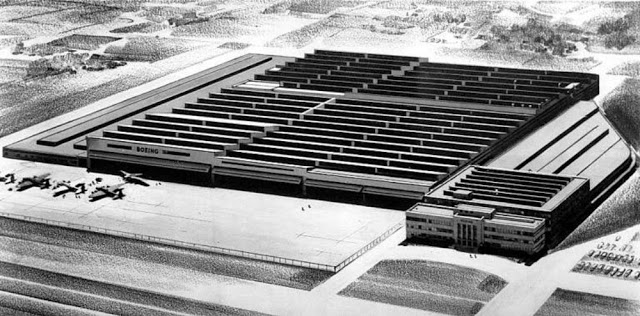
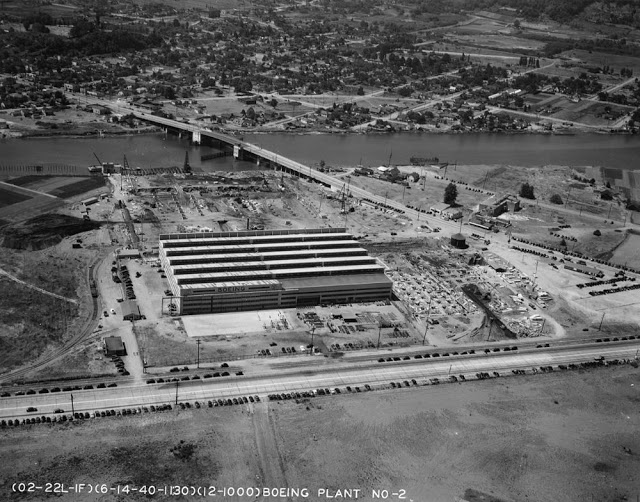
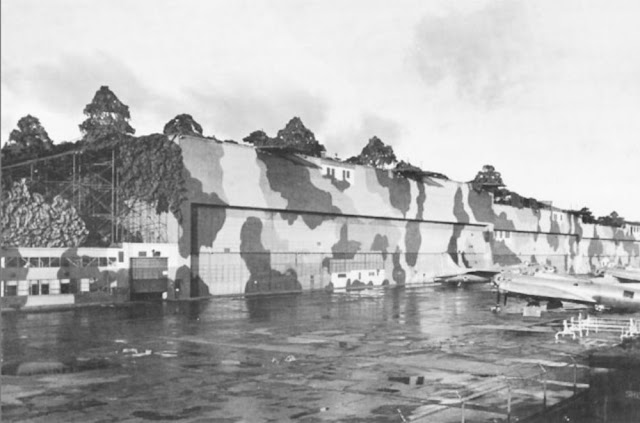
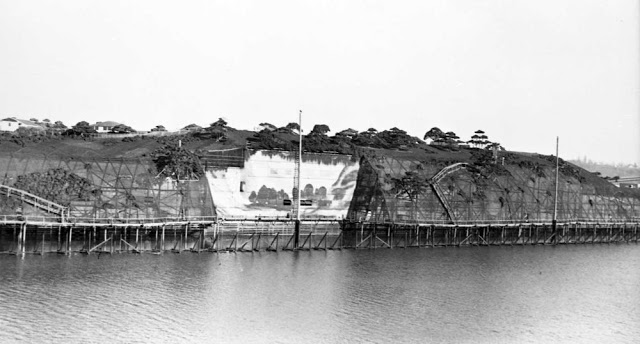
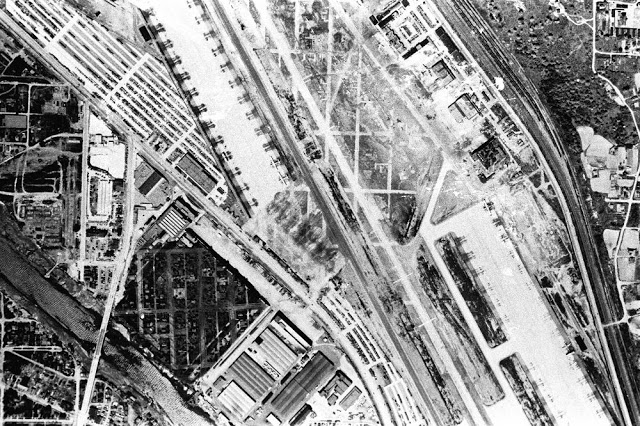
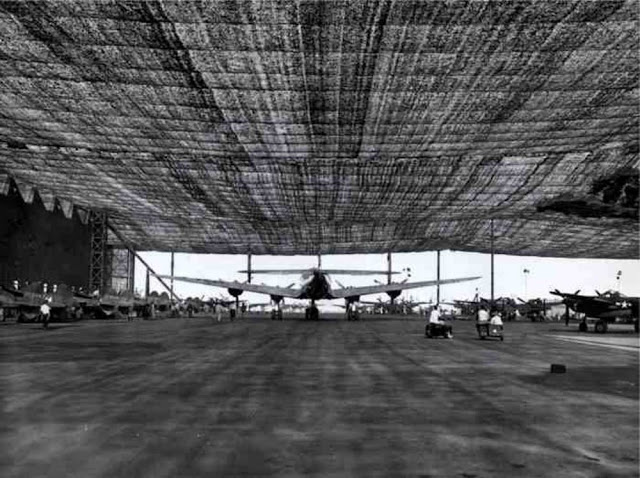
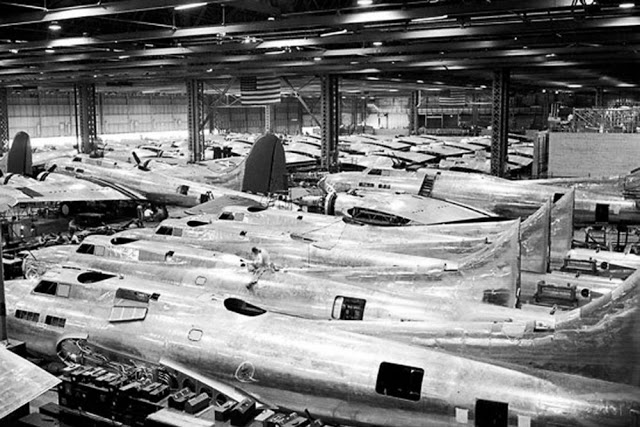
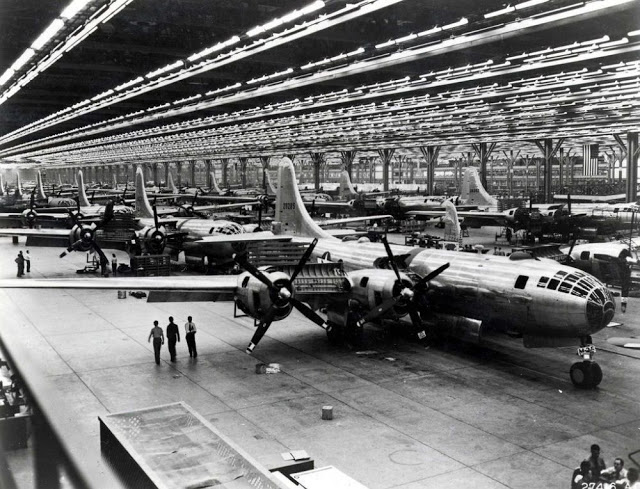
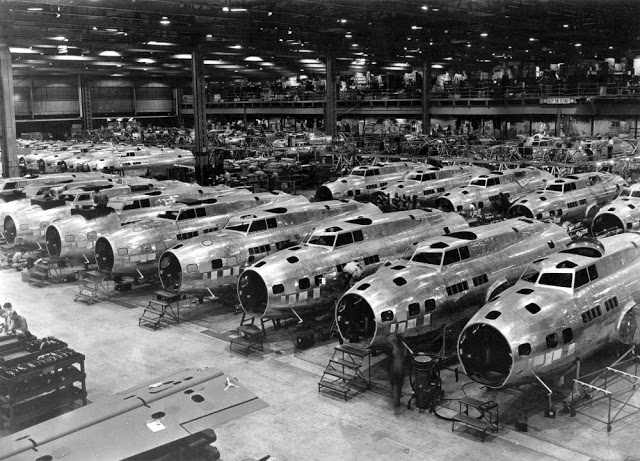
During World War II, a strange, house-filled neighborhood could be seen in the middle of an industrial area from the air. A close-up look would reveal that it was camouflage for Boeing’s Plant No. 2, where thousands of B-17 bombers were produced.
Following the attack on Pearl Harbor, Japanese submarines were spotted off the San Francisco Bay and near Santa Barbara in 1942. The West Coast was the next presumed target for the Japanese so the U.S. decided to hide its major wartime factories.
John Stewart Detlie, a Hollywood set designer, helped “hide” Boeing’s Seattle plant using his Hollywood design techniques with this camouflage. The fake housing development covered nearly 26 acres with netting. Built almost entirely from plywood and cardboard – with trees made from chicken wire and painted burlap – the town looked convincing enough from the air to hide the factory from any bombers flying by. Factory workers took a series of secret tunnels through fake cafes and shops to get to the factory each morning.
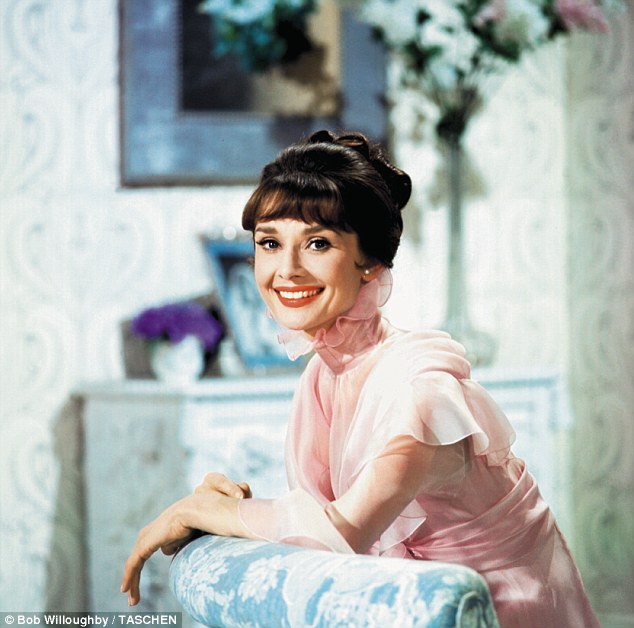
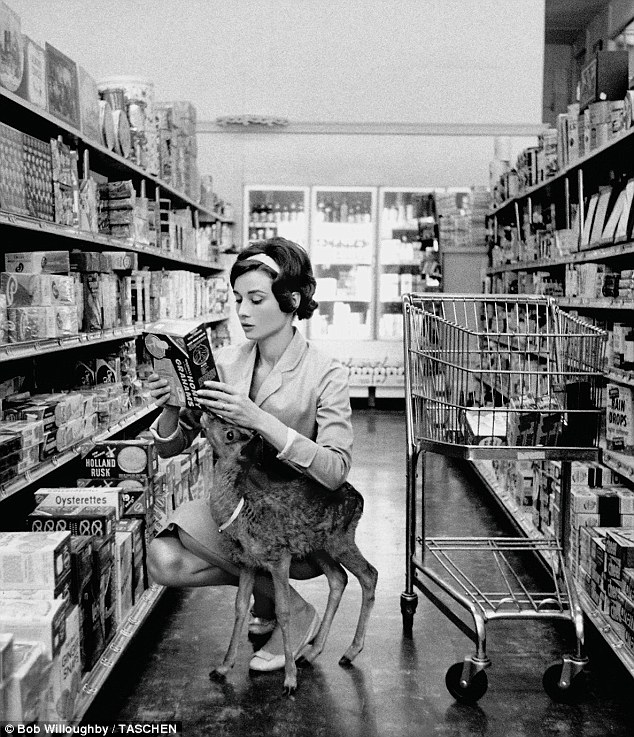
In his distinguished career as a Hollywood photographer, Bob Willoughby captured Marilyn Monroe, Elizabeth Taylor and Jane Fonda, but remains unequivocal about his favorite subject: Audrey Hepburn.
Willoughby was called in to shoot the new starlet one morning shortly after she arrived in Hollywood in 1953. It was a humdrum commission for the portraitist often credited with having perfected the photojournalistic movie still, but when he met the Belgian-born beauty, Willoughby was enraptured. “She took my hand like… well a princess, and dazzled me with that smile that God designed to melt mortal men’s hearts,” he recalled.
Audrey Hepburn (born Audrey Kathleen Ruston; 4 May 1929 – 20 January 1993) was a British actress and humanitarian. Recognised as both a film and fashion icon, she was ranked by the American Film Institute as the third-greatest female screen legend from the Classical Hollywood cinema and was inducted into the International Best Dressed List Hall of Fame.
Born in Ixelles, Brussels to an aristocratic family, Hepburn spent parts of her childhood in Belgium, England, and the Netherlands. She studied ballet with Sonia Gaskell in Amsterdam beginning in 1945, and with Marie Rambert in London from 1948. She began performing as a chorus girl in West End musical theatre productions and then had minor appearances in several films. She rose to stardom in the romantic comedy Roman Holiday (1953) alongside Gregory Peck, for which she was the first actress to win an Oscar, a Golden Globe Award, and a BAFTA Award for a single performance. That year, she also won a Tony Award for Best Lead Actress in a Play for her performance in Ondine.
She went on to star in a number of successful films such as Sabrina (1954), in which Humphrey Bogart and William Holden compete for her affection; Funny Face (1957), a musical where she sang her own parts; the drama The Nun’s Story (1959); the romantic comedy Breakfast at Tiffany’s (1961); the thriller-romance Charade (1963), opposite Cary Grant; and the musical My Fair Lady (1964). In 1967 she starred in the thriller Wait Until Dark, receiving Academy Award, Golden Globe, and BAFTA nominations. After that, she only occasionally appeared in films, one being Robin and Marian (1976) with Sean Connery. Her last recorded performances were in the 1990 documentary television series Gardens of the World with Audrey Hepburn for which she won a Primetime Emmy Award for Outstanding Individual Achievement – Informational Programming.
Hepburn won three BAFTA Awards for Best British Actress in a Leading Role. In recognition of her film career, she received BAFTA’s Lifetime Achievement Award, the Golden Globe Cecil B. DeMille Award, the Screen Actors Guild Life Achievement Award, and the Special Tony Award. She remains one of only sixteen people who have won Academy, Emmy, Grammy, and Tony Awards. Later in life, Hepburn devoted much of her time to UNICEF, to which she had contributed since 1954. Between 1988 and 1992, she worked in some of the poorest communities of Africa, South America, and Asia. In December 1992, she received the Presidential Medal of Freedom in recognition of her work as a UNICEF Goodwill Ambassador. A month later, she died of appendiceal cancer at her home in Switzerland at the age of 63. (Wikipedia)
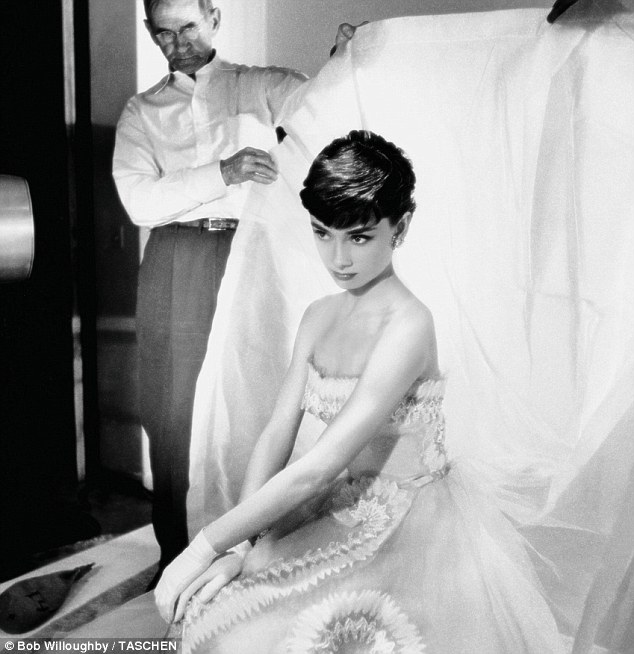
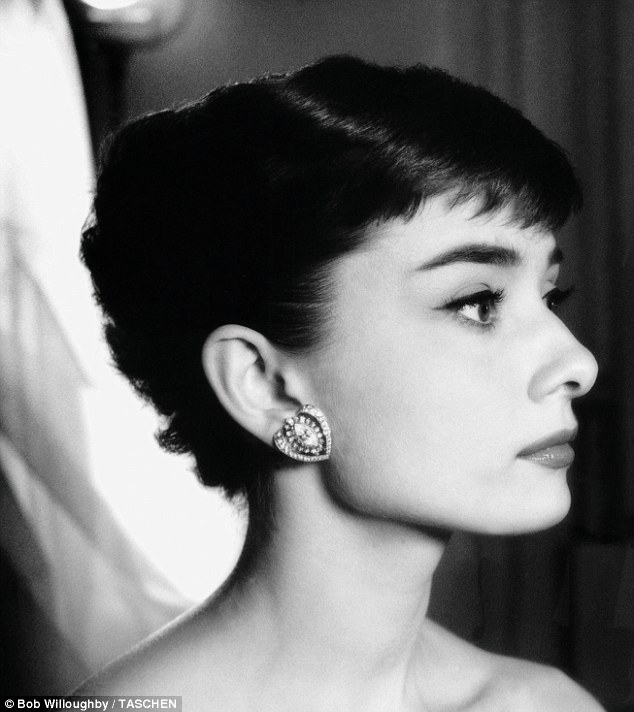
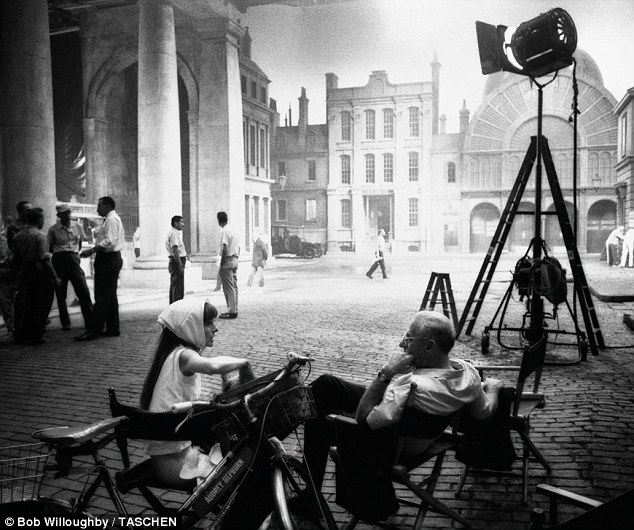
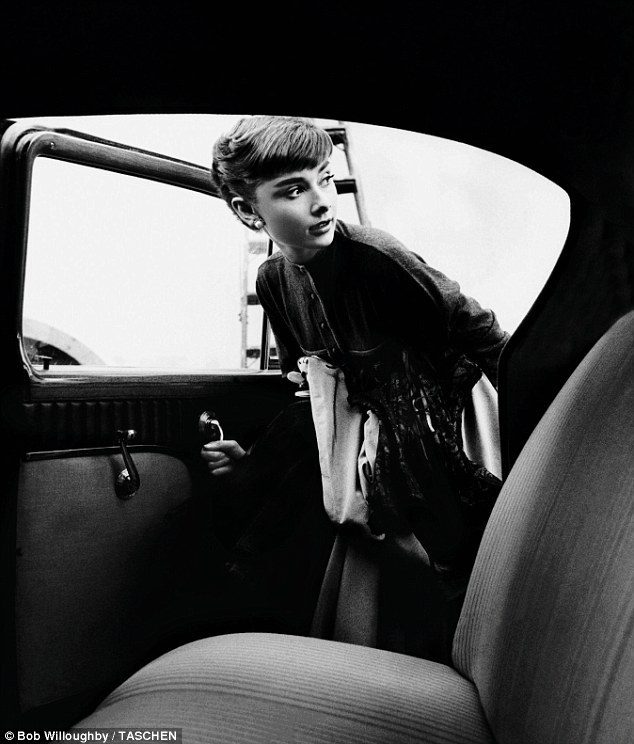
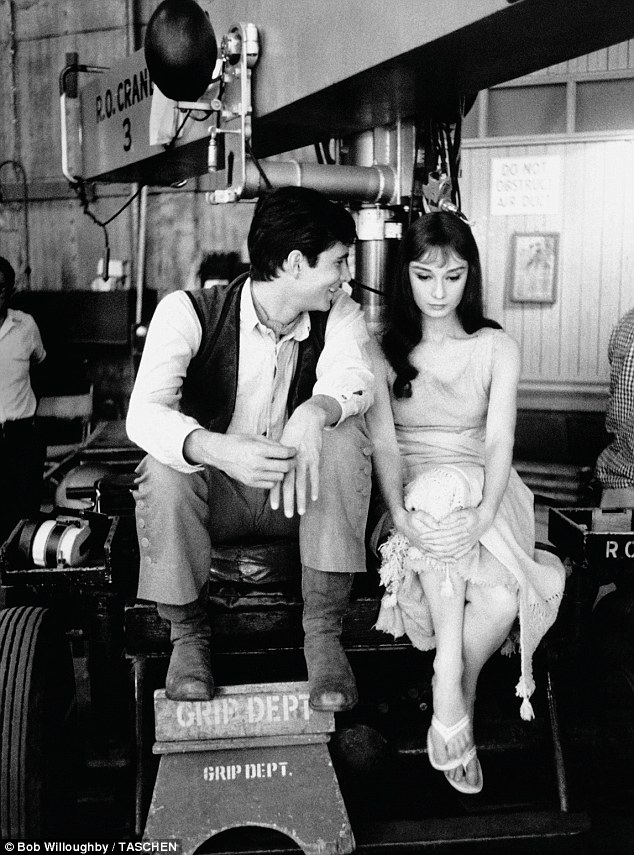
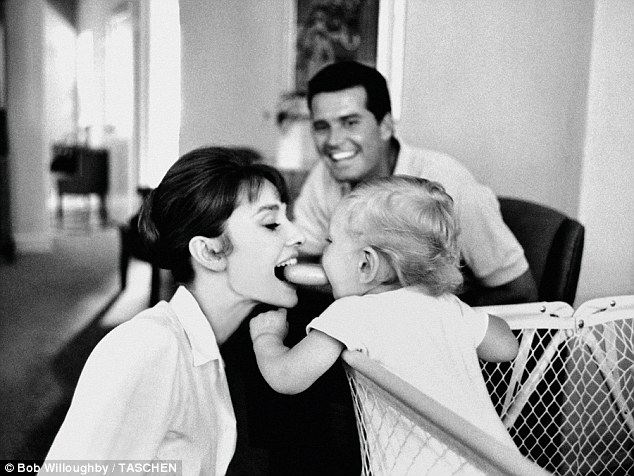
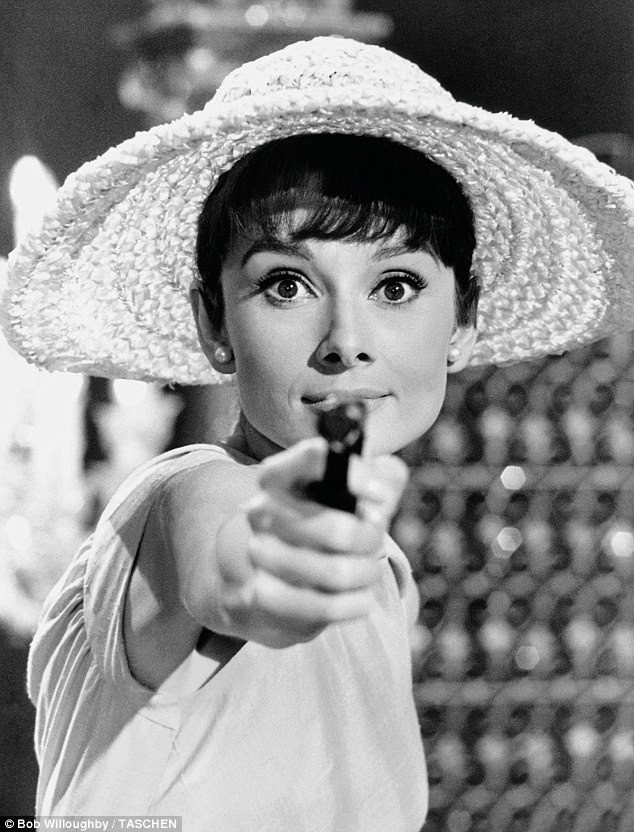
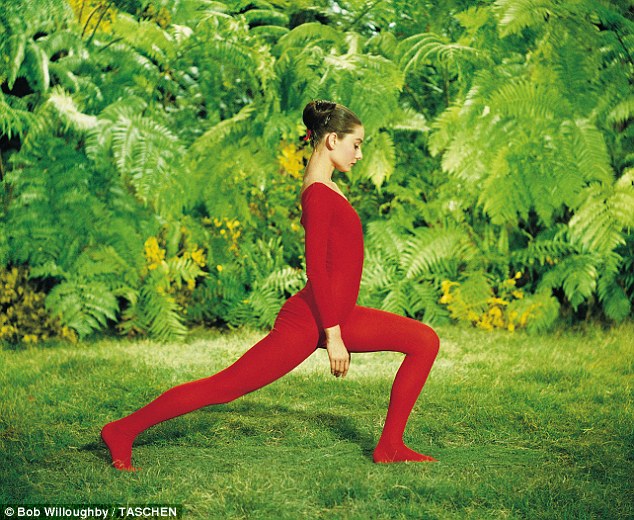
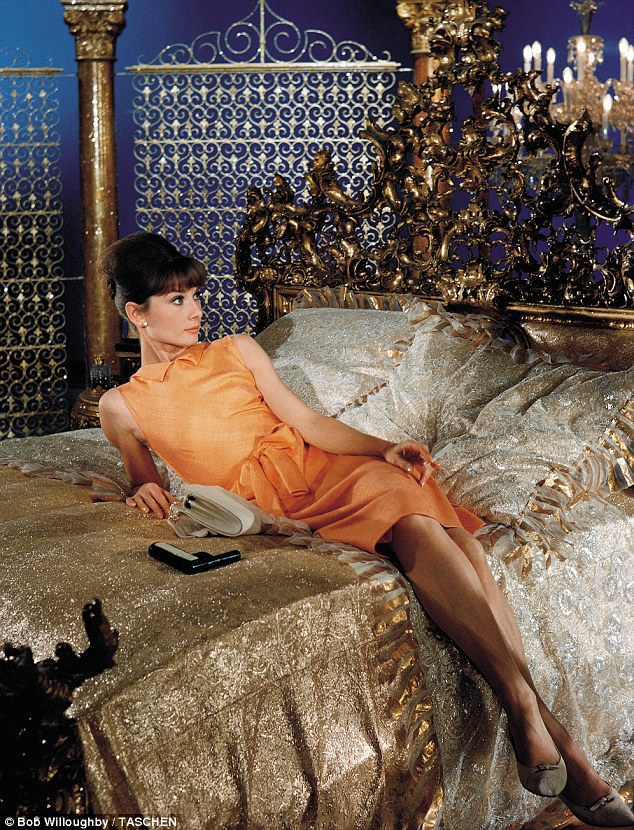
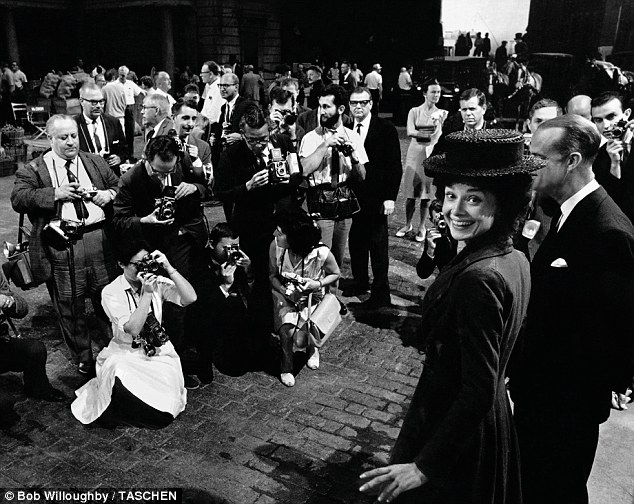
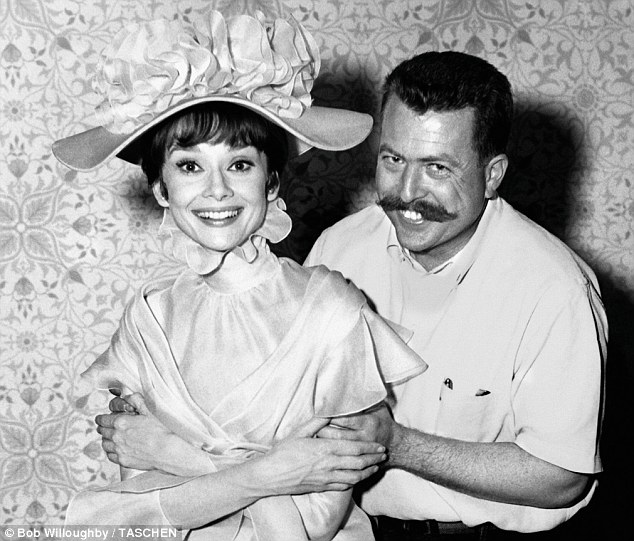
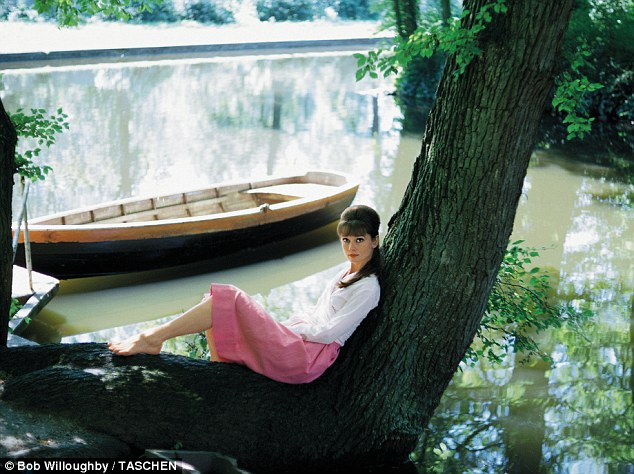
Here’s a collection of 16 captivating photographs of Audrey Hepburn taken by Bob Willoughby from between 1953-1966.
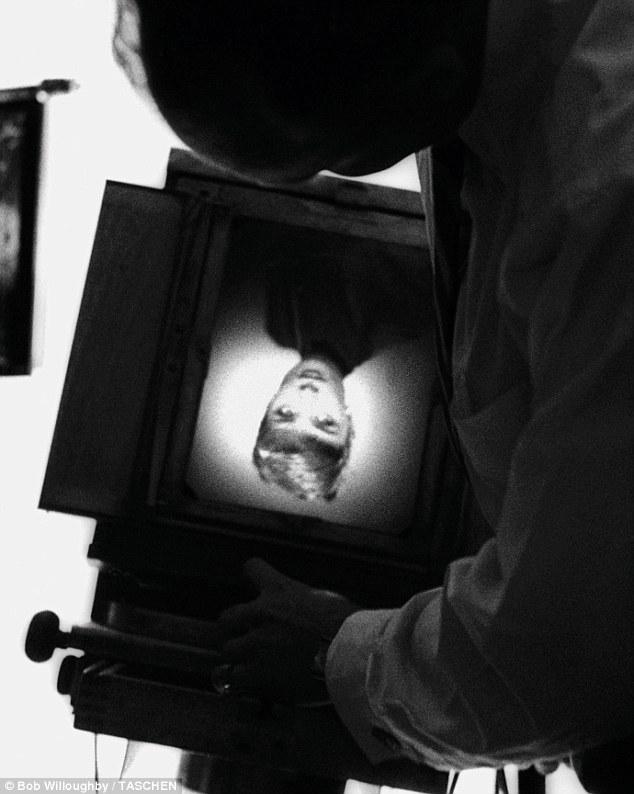
Audrey Hepburn at a photo shoot with photographer Bob Willoughby, 1953Audrey Hepburn pictured in a still from one of her most famous films, My Fair LadyAudrey Hepburn at a photo shoot with photographer Bob Willoughby, 1953The star wears striking earrings during a photo session at Paramount Studios in 1953She chats with director George Kukor on the set of My Fair Lady while Assam, her Yorkshire terrier, sits in the basket of the bike she used to cycle around the studio groundsAudrey Hepburn climbs into the Paramount Studios car waiting to return her to the hotel after a photo session with photographer Bud FrakerIn one particularly striking photo, Hepburn is seen looking downcast with her Green Mansions co-star Anthony Perkins, who is seemingly attempting to cheer her upSean, Audrey’s son by Mel Ferrer, plays with his mother while actor James Garner beamsHepburn pictured flaunting her famous doe eyes in a still from Paris When It SizzlesHepburn wore a striking red leotard to do some exercising and stretching in the gardenHepburn wears a dress designed for her by Givenchy while reclining on a bed in Paris When It SizzlesHepburn grins as she greets the international press, who were invited to attend the first day of shooting of My Fair LadyHepburn pictured with Bob Willoughby, who passed away in 2009Audrey Hepburn at the villa the Ferrers rented while shooting Paris When It SizzlesHepburn takes her pet fawn Pippa or ‘Ip’ shopping in Gelson’s supermarket, in Beverly HillsWilloughby is pictured examining a still of Audrey Hepburn
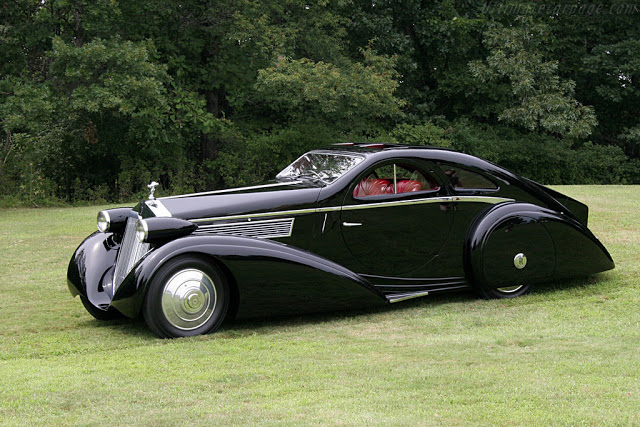
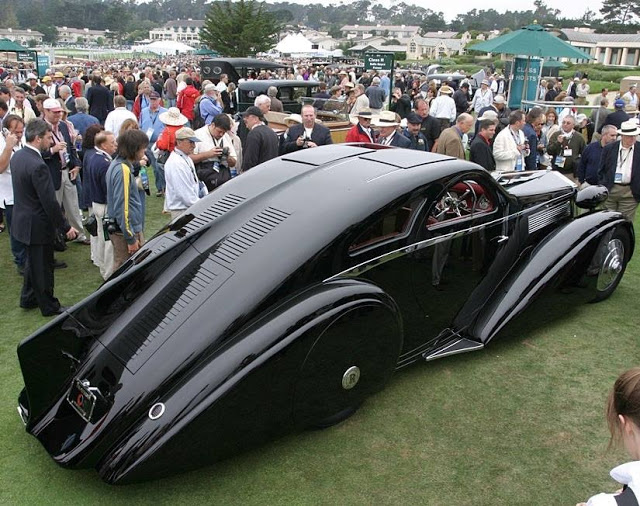
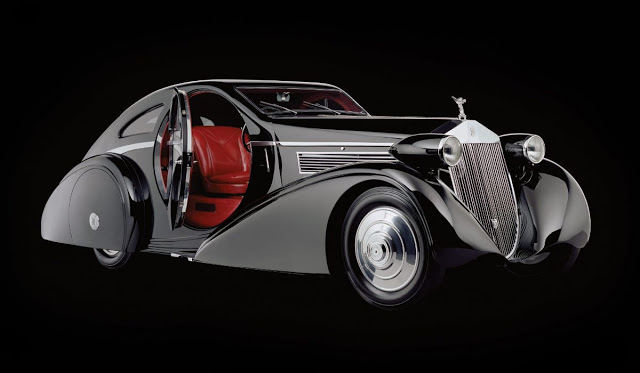
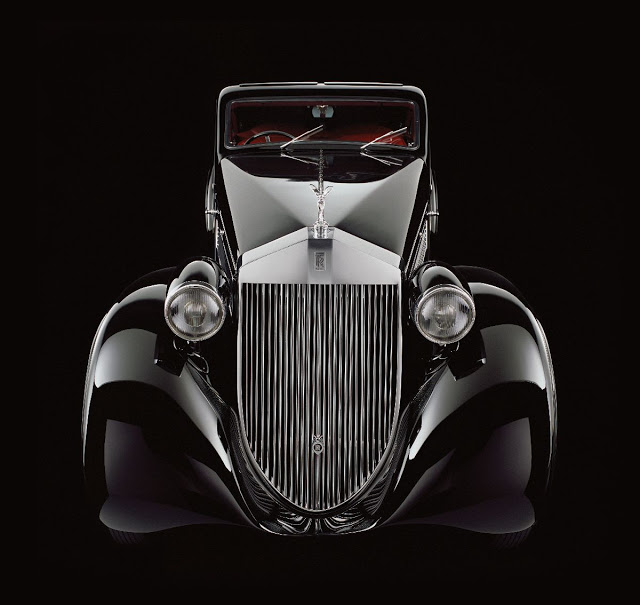
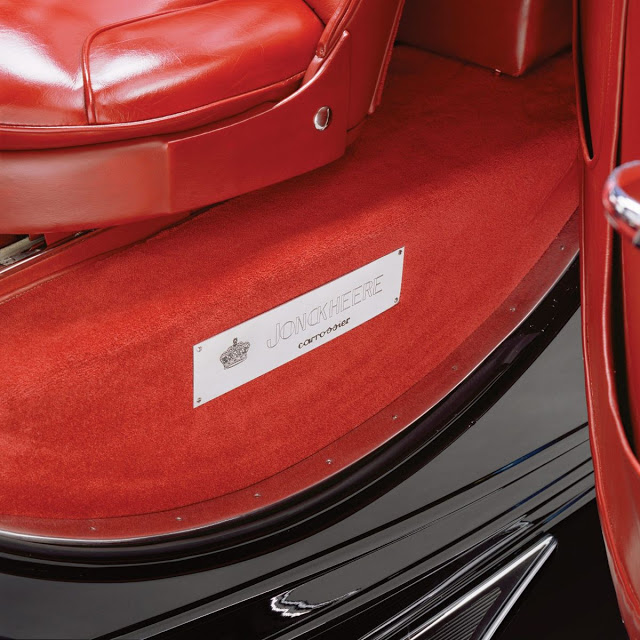
The motor car may have been invented by German engineers, but it took two Brits to refine the concept; Charles Rolls and Henry Royce. With the Silver Ghost, introduced in 1907, Rolls Royce had set new standards in build quality and reliability. The British manufacturer has never been known for their innovations, yet has excelled in perfecting well proven principles.
For over 15 years, the ’40/50′ Silver Ghost was the only model on offer, at a time where many of the competitors offered multiple of models and types. In 1922 it was joined by the Twenty, which was aimed at a slightly wider market. From 1921 onwards, the North American customers were served more directly by a new factory in Springfield, Massachusetts. The ‘Springfield’ Silver Ghosts were intended to be identical to the British built cars, but after a few cars were built, changes were carried through to comply with the North American’s needs.
Competition from rivals like Hispano Suiza and Isotta Fraschini had grown considerably. In 1922 work was started on a larger, more powerful model to replace the Silver Ghost, which had served the British company so well for nearly two decades. Delayed several years because of other pre-occupations, the new Rolls-Royce was introduced to the public in May of 1925. First known as the ’40/50 New Phantom’, this model is now commonly referred to as Phantom I.
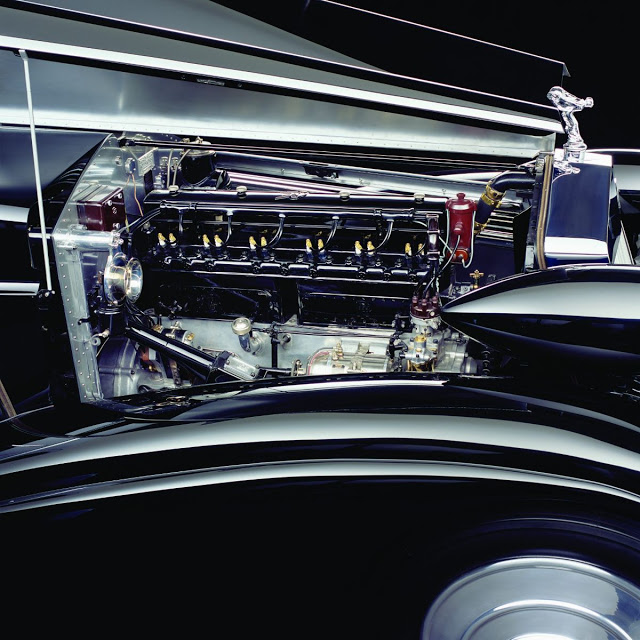
Much of the development concentrated on the new straight six. In many ways this was a larger version of the ‘Twenty’ six cylinder engine introduced in 1922. Cast into two banks of three cylinders, the new engine was only slightly larger than the Ghost’s but performance was considerably improved by adaption of overhead valves. The first Phantoms featured cast-iron heads, which were later replaced by twin-plug, aluminium examples to cure ‘pinging’ problems when run on poor quality fuel. In good Rolls-Royce tradition all that was said about the power was that it was ‘sufficient’ but it is believed the Phantom ‘six’ developed around 100 bhp.
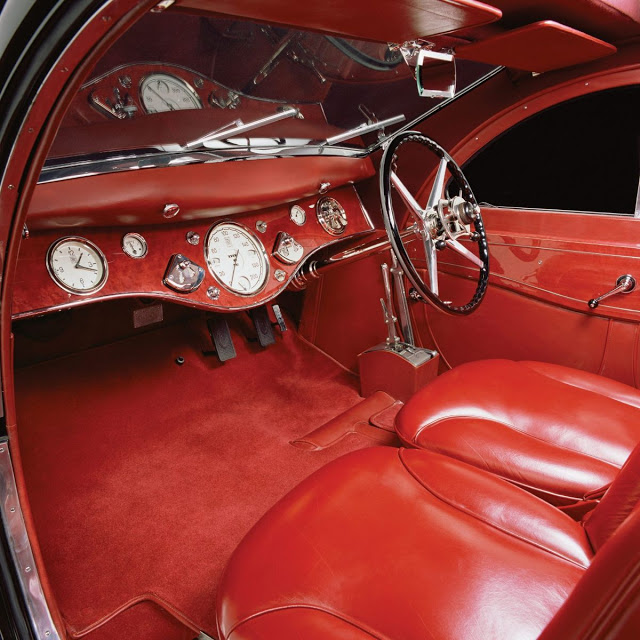
The new engine was mounted in what was effectively a Silver Ghost chassis of the latest specification. Since 1923, this included such luxuries as brakes on all four wheels. The Phantom was available in two wheelbases to accommodate the widest variety of coachwork. As with the Silver Ghost, the Phantom was produced on both sides of the Atlantic. The ‘Springfield Phantom’ not only had the steering wheel mounted on the other side but to accommodate this change, the intake and exhaust ports on the engine were also reversed.
As was the norm with the luxury cars of the day, the ‘New Phantom’ was offered by Rolls-Royce as a rolling chassis for specialist companies to body. In England most customers opted for more formal coachwork but the more extravagant Americans had developed a taste for the lavish. The likes of Brewster offered their bodies with exotic names like ‘Huntingdon’, ‘Pall Mall’ and ‘Playboy’. At the British factory several more rakish experimental (EX) models were also built to explore the options of a higher performance version of the Phantom to take on Bentley.
Although well received by media and customers alike, the Phantom I would serve Rolls-Royce for a relatively short time. In 1929 the Phantom II was announced, which was the company’s first all new car since the Silver Ghost. Production of the Springfield Phantom continued into 1931 when the American branch was shut down altogether. Effectively an interim model, the original Phantom has long been overlooked but in recent years the interest in and passion for the ‘New Phantom’ is steadily increasing.
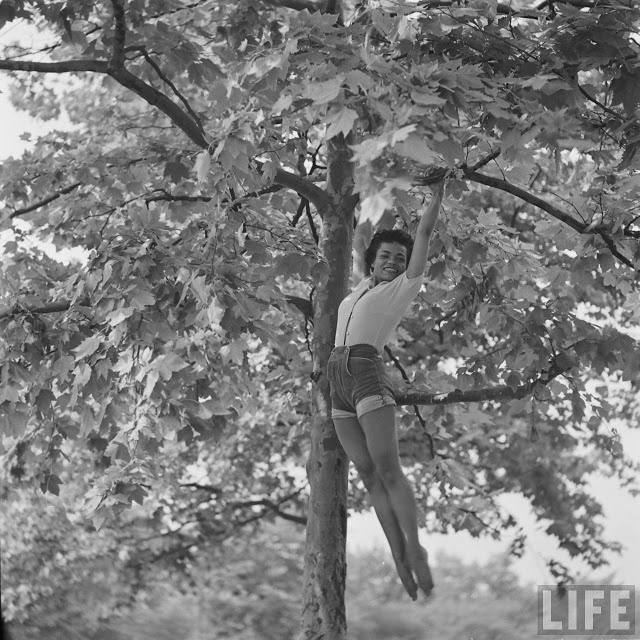
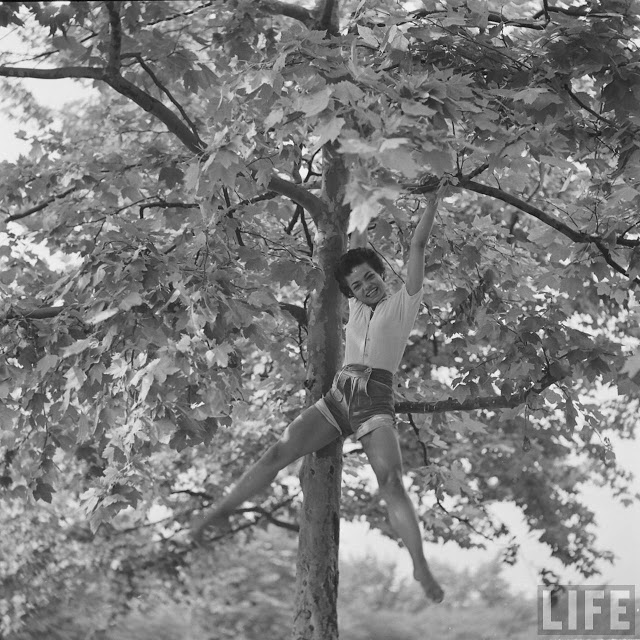
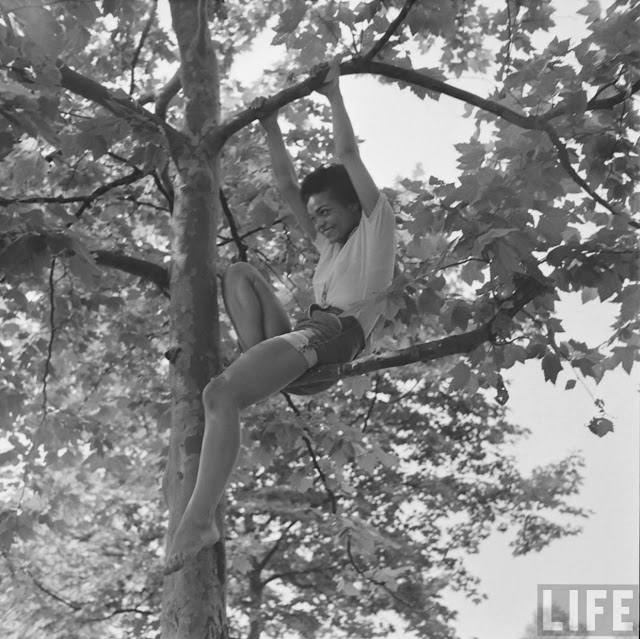
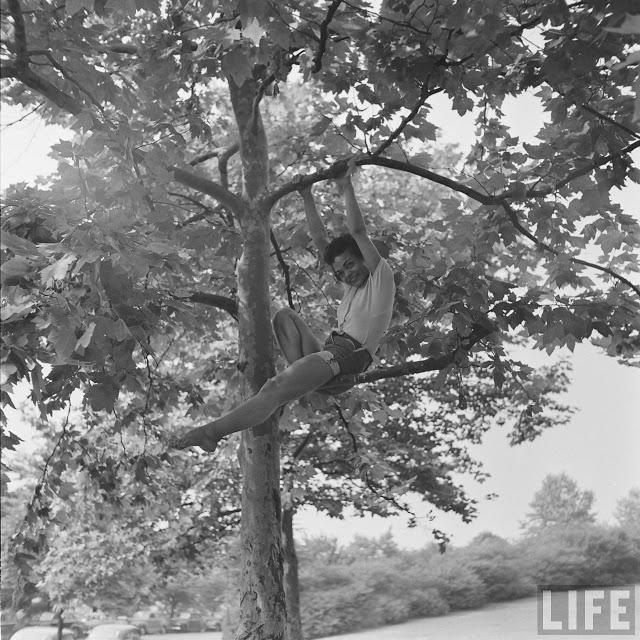
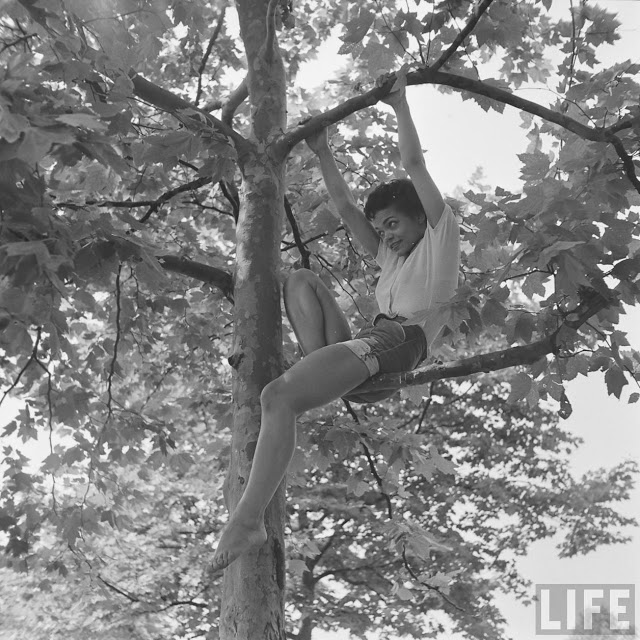
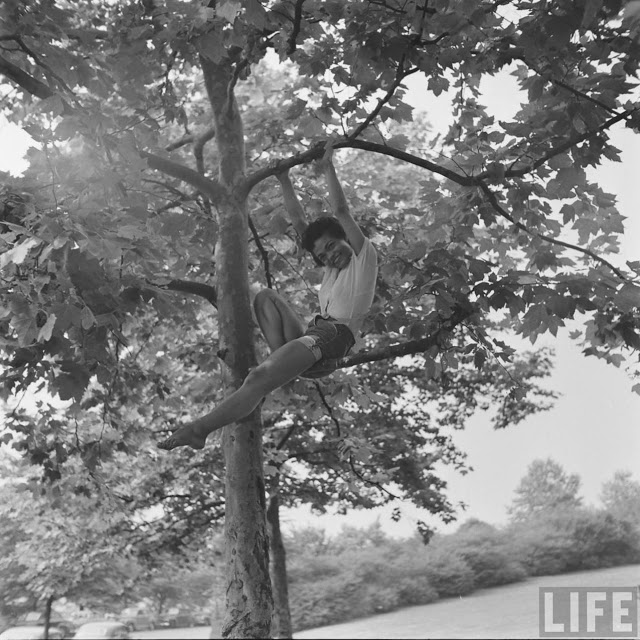
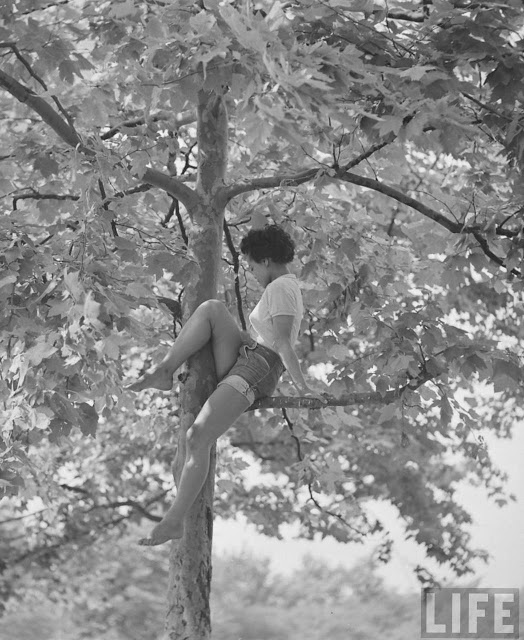
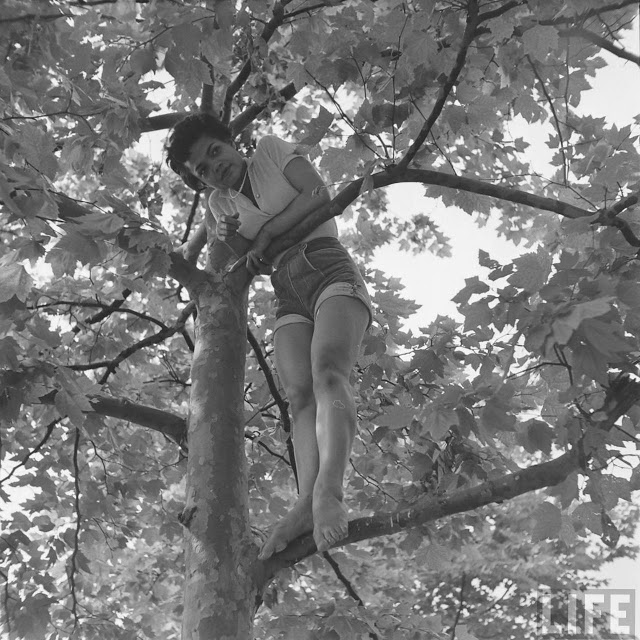
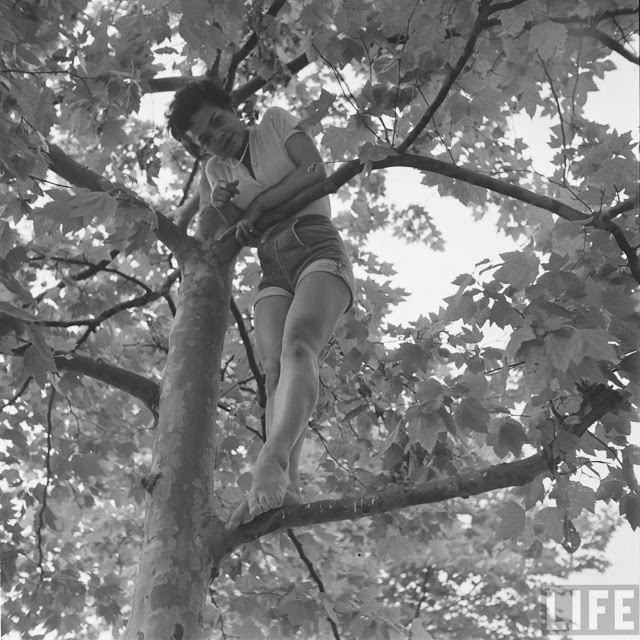
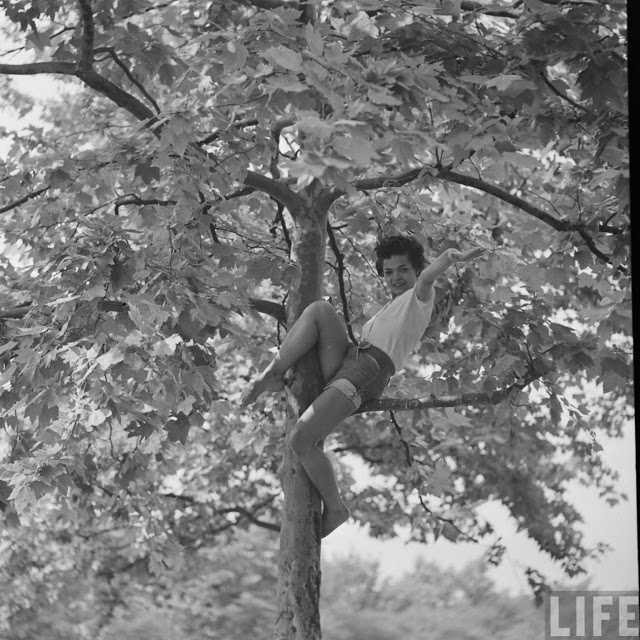
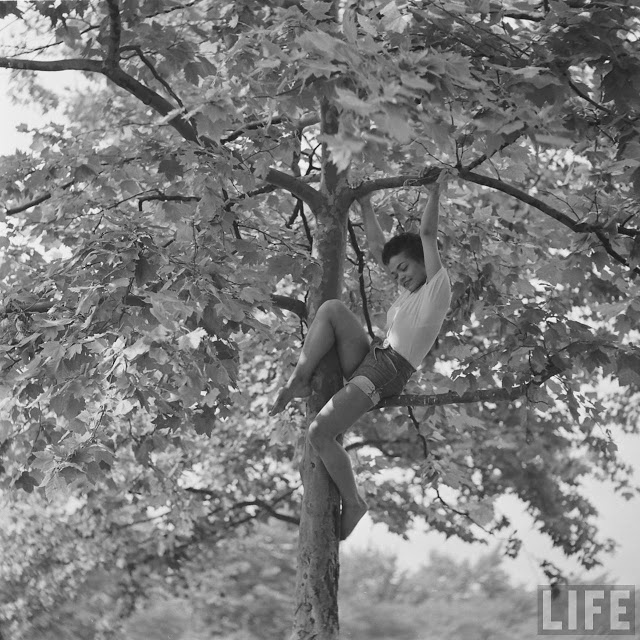
Gordon Parks, who was the first black photographer on staff at both Vogue and LIFE magazines, is best known for the photo essays he shot for the latter, where, wielding the camera that he referred to as his “choice of weapon,” he created searing portraits of black life in the years before and during the Civil Rights movement.
Parks is a master of angles, conjuring emotion through geometry, whether it’s Eartha Kitt, or the anonymous woman in “Untitled, Chicago, Illinois” (1950). These photographs were taken by Gordon Parks for LIFE magazine in 1952.
Eartha Kitt (born Eartha Mae Keith; January 17, 1927 – December 25, 2008) was an American singer, actress, comedian, dancer, and activist known for her highly distinctive singing style and her 1953 recordings of “C’est si bon” and the Christmas novelty song “Santa Baby”. Orson Welles once called her the “most exciting woman in the world”.
Kitt began her career in 1942 and appeared in the 1945 original Broadway theatre production of the musical Carib Song. In the early 1950s, she had six US Top 30 entries, including “Uska Dara” and “I Want to Be Evil”. Her other recordings include the UK Top 10 song “Under the Bridges of Paris” (1954), “Just an Old Fashioned Girl” (1956) and “Where Is My Man” (1983). She starred as Catwoman in the third and final season of the television series Batman in 1967.
In 1968, her career in the U.S. deteriorated after she made anti-Vietnam War statements at a White House luncheon. Ten years later, Kitt made a successful return to Broadway in the 1978 original production of the musical Timbuktu!, for which she received the first of her two Tony Award nominations. Her second was for the 2000 original production of the musical The Wild Party. Kitt wrote three autobiographies.
Kitt found a new generation of fans through her roles in the Disney films The Emperor’s New Groove (2000), in which she voiced the villainous Yzma, and Holes (2003). She reprised the role as Yzma in the direct-to-video sequel Kronk’s New Groove (2005), as well as the animated series The Emperor’s New School (2006–2008). Her work on the latter earned her two Daytime Emmy Awards. She posthumously won a third Emmy in 2010 for her guest performance on Wonder Pets!. (Wikipedia)
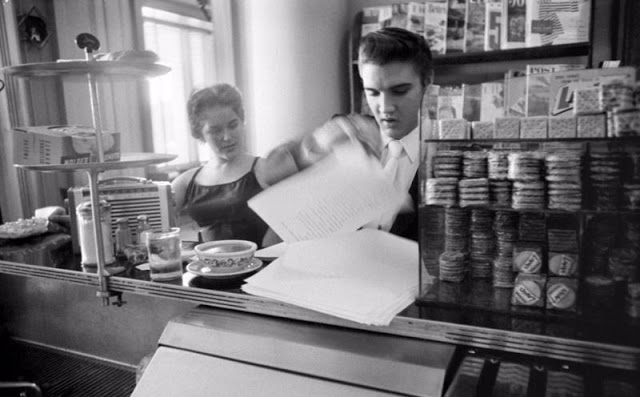
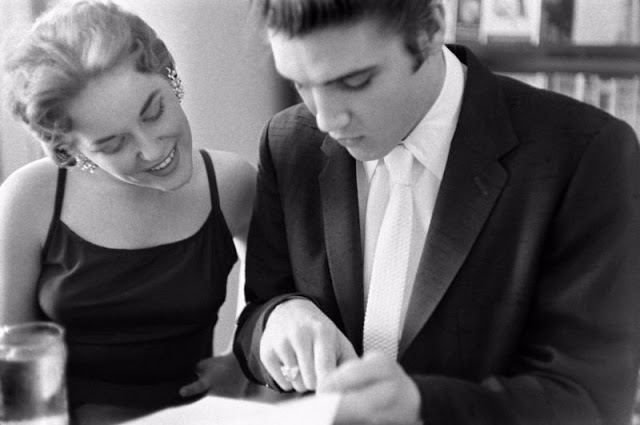
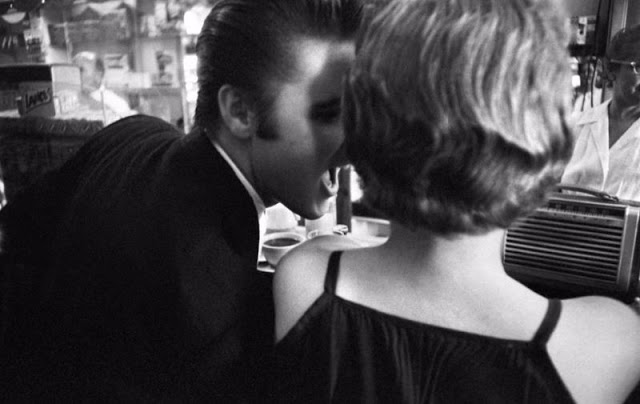
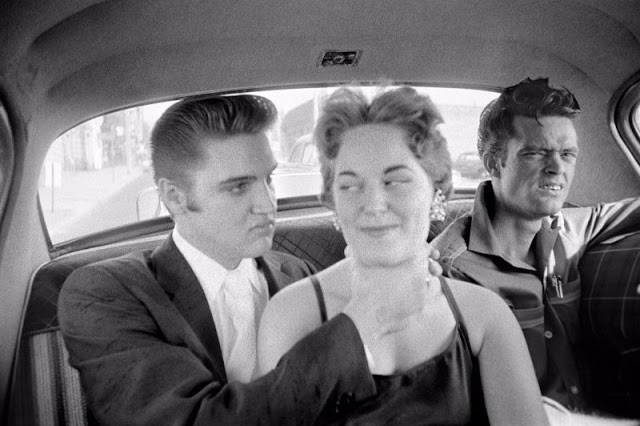
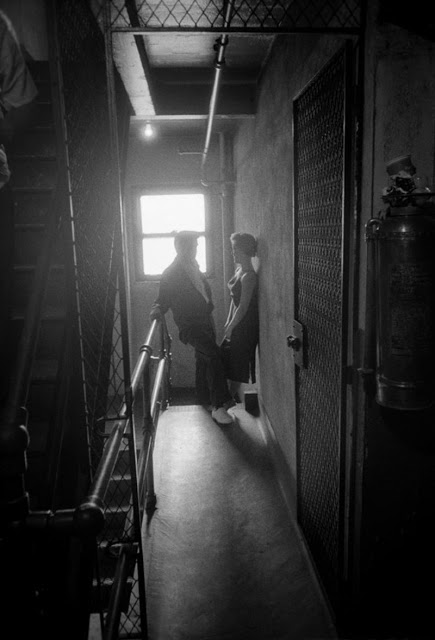
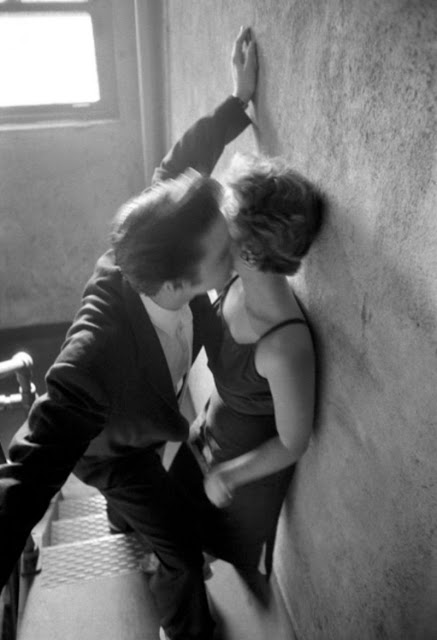
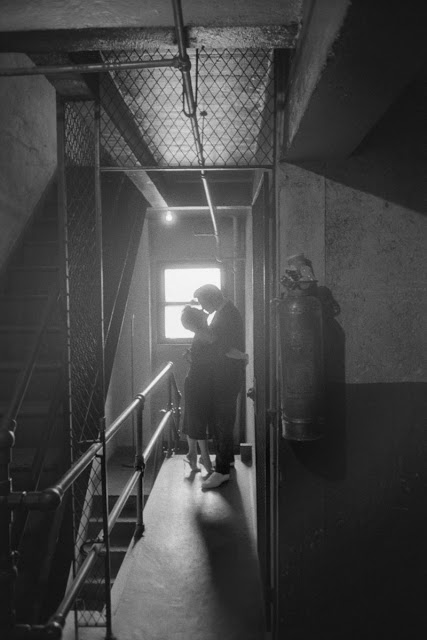
It was the smooch seen around the world. Sixty-six years ago this summer, Elvis Presley and a young woman were captured on film kissing in a Richmond hallway.
For decades, Barbara Gray, the woman in the picture, went unidentified, but now she is reflecting on kissing The King.
Barbara’s brush with Elvis Presley began with a dare.
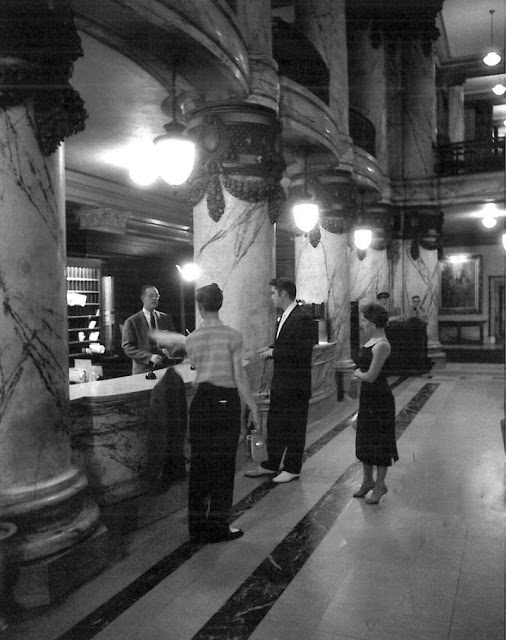
In June of 1956, Barbara’s friends convince her to call Elvis in his hotel room at the Francis Marion Hotel in Charleston. Elvis had just performed in South Carolina before 4,000 screaming fans.
“I didn’t really know him or know what he was about,” said Barbara. “The operator answered and I said ‘Elvis Presley’s room please.'”
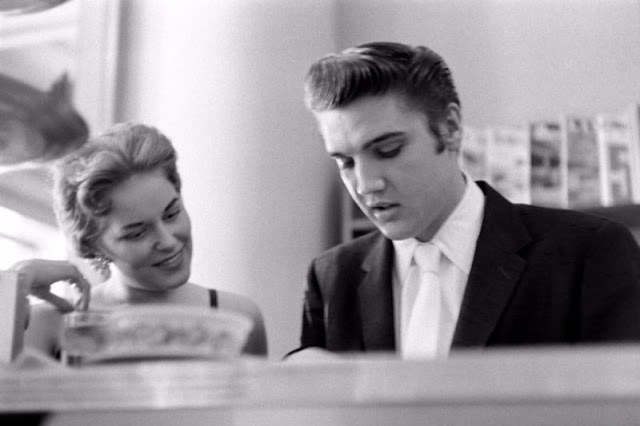
Barbara said the 21-year-old singer chatted with her for at least an hour. A curious Elvis invited Barbara to his next concert in Virginia. Two days later the pair would meet at the diner in the Hotel Jefferson.
Barbara and Elvis flirted over lunch hours before his two concerts at The Mosque.
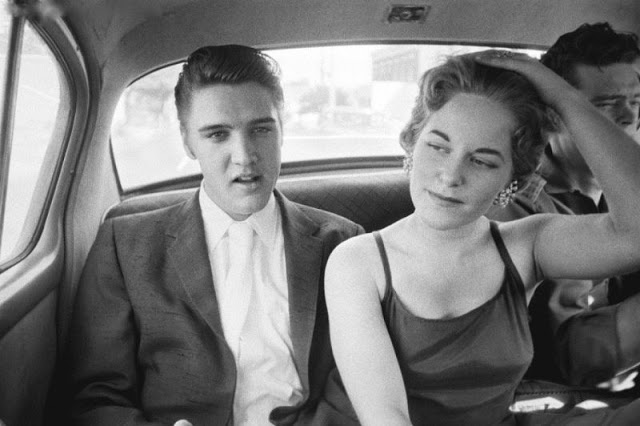
In a cab ride to the auditorium Barbara says, “He played with me the whole way and it is only three blocks!” At the Mosque Theatre Barbara said Elvis took her out to the hallway just a few feet from the stage where thousands of his fans were waiting. Barbara said the King moved in to canoodle.
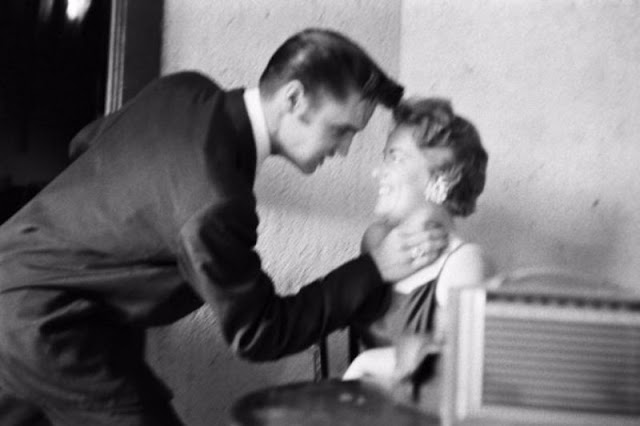
“I said no I’m not. He said, ‘Yes you are,'” said Barbara. “And he was just quick enough to just lean forward and stick his tongue out and that is how quick it happened.”
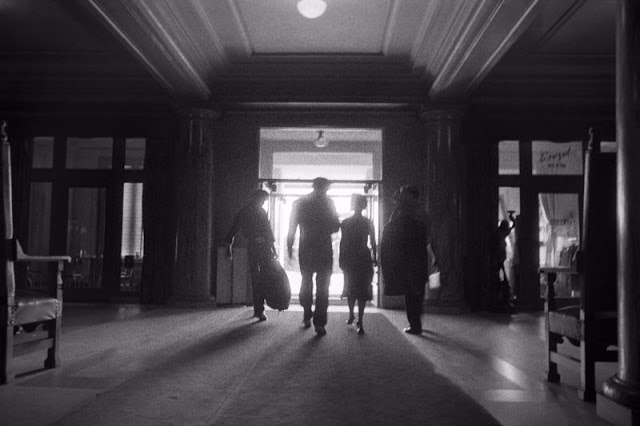
The seminal moment was captured in a dimly lit hallway at Richmond’s Mosque Theatre where not much has changed in the hallway. A series of legendary images show young lovers locked in an embrace.
“Oh yeah. I just laughed at it. I thought it was silly,” said Barbara.
In the photo called “The Kiss” Elvis touches tongues with the shapely 20 year-old known then as Bobbi Owens. Critics call it one of the most iconic and erotic photographs in American history.
“Right of the bat he started to embrace me and hug me and said kiss me and I said ‘no’,” said Barbara. “At least he got a kiss of some kind.”
Days after the photos were taken on June 30th, 1956 Elvis would rocket to fame after appearing on national television. Barbara would fade into obscurity.
“We were both drawn to each other because he wasn’t going to let me go,” said Barbara.
The storied snapshots were the work of free-lance photographer Al Wertheimer hired by RCA to capture Elvis’ every move.
“I didn’t even notice him and neither did Elvis,” said Barbara.
In a 2011 interview, the late-photographer described how he nearly missed The Kiss.
“I come down this staircase and find these two people down this narrow hallway and its Elvis and the girl. And I say to myself, ‘Hmmm. I have got to get closer,'” he said.
Since Elvis’ death in 1977 the grainy kiss frozen in black and white has tantalized legions of fans.
“Everybody wanted to know who that (girl) was. And nobody knew who that was,” said Barbara.
Barbara knew. She wanted to kiss and tell, but said photographer Al Wertheimer rebuffed her claims.
“He said no. That couldn’t be me,” she said.
Over the years, countless women claimed to be the secret woman in Barbara’s high heels that unforgettable day.
“People always thought it was a tall girl. Nobody realized that I was 4’11”,” said Barbara.
Harry Kollatz, Jr. senior writer for Richmond Magazine wrote about Elvis’ 1956 visit to the River City and even tried discovering who the mystery girl was in the photo.
“It remained a mystery and Wertheimer liked it that way,” said Kollatz. “It is a guy and girl in a stairwell and he happens to be Elvis Presley.”
Kollatz finds it ironic that one of the most famous performances in Richmond unfolded off stage.
“In terms of popular cultural history it is a landmark photograph,” he said. “There was only one Elvis and only one moment and we got it. That is something we can be proud of.”
Kollatz said the image is dripping with mystique.
“When people see that photograph I don’t think they’re thinking about her. They’re thinking about, ‘What if that is me,'” he explained.
Throughout the decades Barbara could not escape the smooch.
“Well, I just think it is funny. It is very popular all over the world,” she said. “It’s on everything. It is not just lunch boxes. It’s on jewelry, watches, clocks.”
Barbara never sought fame and fortune. The happily-married real estate manager just yearned for recognition as the mystery woman in the photo with Elvis. In 2011, Barbara’s veil of anonymity was lifted in a Vanity Fair article.
“He was a wonderful boy,” said Barbara.
Eventually Al Wertheimer and Barbara became friends. The photographer even shared some images.
“I don’t feel 60. I don’t feel 80. I still feel young,” Barbara says.
Barbara reflected on her intimate moment with Elvis with a tinge of regret.
“I wish he didn’t let me go,” said Barbara. Barbara says Elvis in her mind will forever be 21.
“I’m so sorry he is gone but I’m happy where he went to. He is in heaven,” she said.
It all started sixty-six years ago, when the 20-year-old accepted a dare.
“It was a very comfortable day. You know? It was like I knew him all my life,” said Barbara.
All of these years later Barbara Gray relishes the day she was the King’s Queen.
“I thought, my God, why didn’t I go with him,” said Barbara. “It was wonderful and I’m sure every girl in the world wanted to be me.”
Barbara Gray who was born in Charleston does have roots in Richmond. Her mother’s family was from the Lakeside area of Henrico County. She said she enjoys meeting fellow Elvis fans and signing autographs of the famous photo of her kissing Elvis Presley.
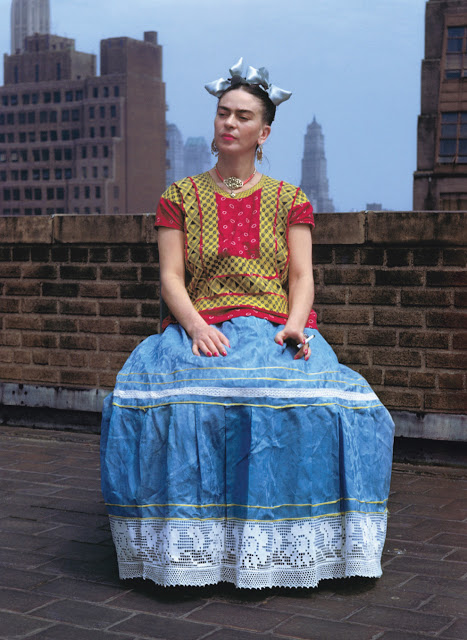
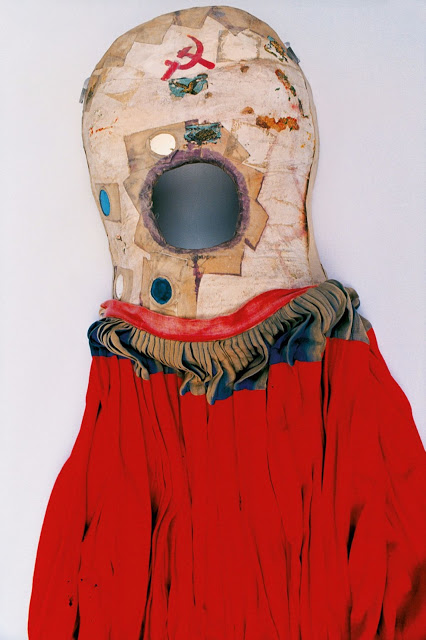
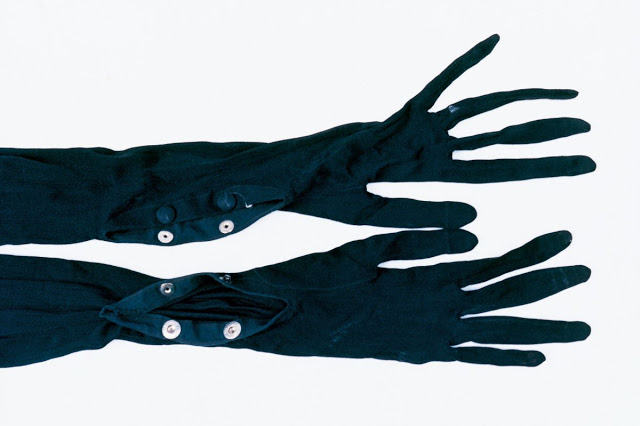
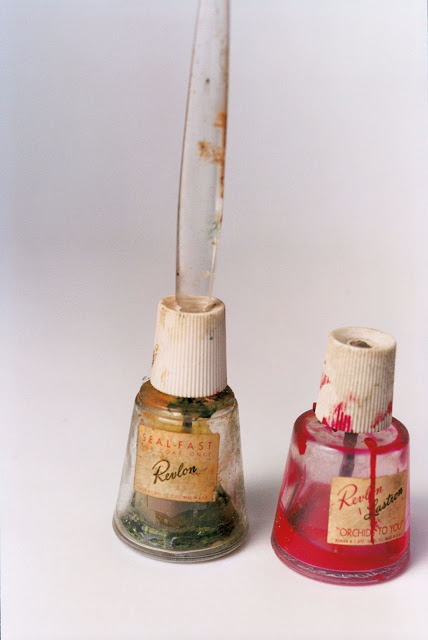
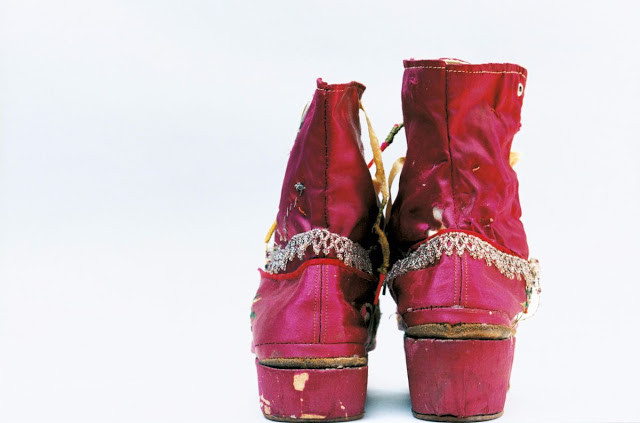
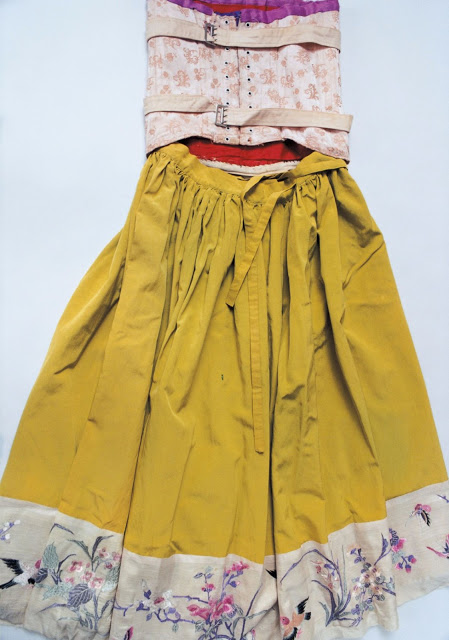
Frida Kahlo’s clothes are like Frida herself: colorful, powerful, filled with passion. Seeing them immediately evokes the richness of her paintings, while poignantly offering an insight into her life.
When Mexican artist Frida Kahlo passed away in 1954, her husband, fellow artist Diego Rivera, anguished by her death, sealed her clothes in the bathroom of their Mexico City home and ordered to keep them hidden away until 15 years after his death.
Rivera died only a few years after Kahlo, in 1957, and their house was converted to a museum in her honor. The room with Kahlo’s belongings, however, wasn’t unlocked until 2004 when the museum decided to catalog its content. It invited renowned Japanese photographer Ishiuchi Miyako to photograph the collection of more than 300 unseen relics.
Ms. Miyako used only a 35mm Nikon camera and natural light for the project. The result is an unprecdented archival record of Kahlo’s most private things.
Magdalena Carmen Frida Kahlo y Calderón (6 July 1907 – 13 July 1954) was a Mexican painter known for her many portraits, self-portraits, and works inspired by the nature and artifacts of Mexico. Inspired by the country’s popular culture, she employed a naïve folk art style to explore questions of identity, postcolonialism, gender, class, and race in Mexican society. Her paintings often had strong autobiographical elements and mixed realism with fantasy. In addition to belonging to the post-revolutionary Mexicayotl movement, which sought to define a Mexican identity, Kahlo has been described as a surrealist or magical realist. She is known for painting about her experience of chronic pain.
Born to a German father and a mestiza mother, Kahlo spent most of her childhood and adult life at La Casa Azul, her family home in Coyoacán – now publicly accessible as the Frida Kahlo Museum. Although she was disabled by polio as a child, Kahlo had been a promising student headed for medical school until being injured in a bus accident at the age of 18, which caused her lifelong pain and medical problems. During her recovery, she returned to her childhood interest in art with the idea of becoming an artist.
Kahlo’s interests in politics and art led her to join the Mexican Communist Party in 1927, through which she met fellow Mexican artist Diego Rivera. The couple married in 1929 and spent the late 1920s and early 1930s travelling in Mexico and the United States together. During this time, she developed her artistic style, drawing her main inspiration from Mexican folk culture, and painted mostly small self-portraits that mixed elements from pre-Columbian and Catholic beliefs. Her paintings raised the interest of Surrealist artist André Breton, who arranged for Kahlo’s first solo exhibition at the Julien Levy Gallery in New York in 1938; the exhibition was a success and was followed by another in Paris in 1939. While the French exhibition was less successful, the Louvre purchased a painting from Kahlo, The Frame, making her the first Mexican artist to be featured in their collection. Throughout the 1940s, Kahlo participated in exhibitions in Mexico and the United States and worked as an art teacher. She taught at the Escuela Nacional de Pintura, Escultura y Grabado (“La Esmeralda”) and was a founding member of the Seminario de Cultura Mexicana. Kahlo’s always-fragile health began to decline in the same decade. She had her first solo exhibition in Mexico in 1953, shortly before her death in 1954 at the age of 47.
Kahlo’s work as an artist remained relatively unknown until the late 1970s, when her work was rediscovered by art historians and political activists. By the early 1990s, not only had she become a recognized figure in art history, but she was also regarded as an icon for Chicanos, the feminism movement, and the LGBTQ+ movement. Kahlo’s work has been celebrated internationally as emblematic of Mexican national and indigenous traditions and by feminists for what is seen as its uncompromising depiction of the female experience and form. (Wikipedia)
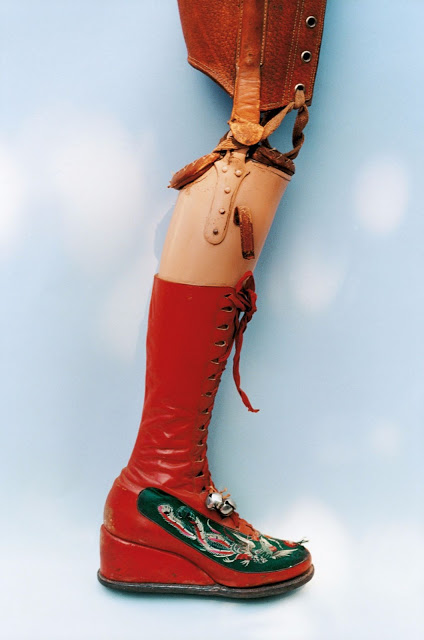
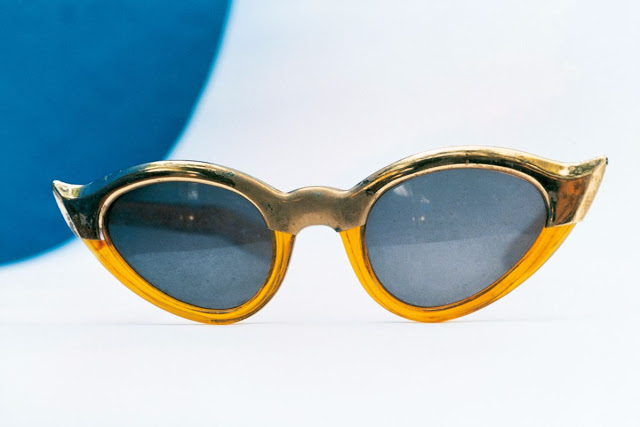
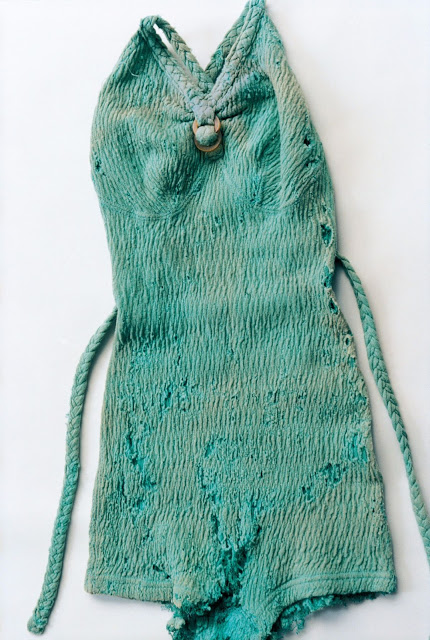
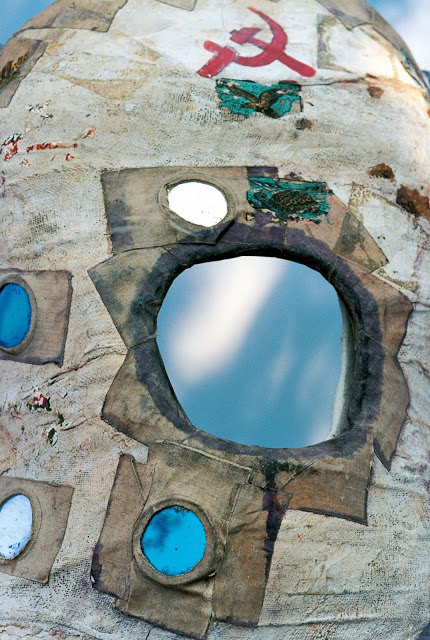
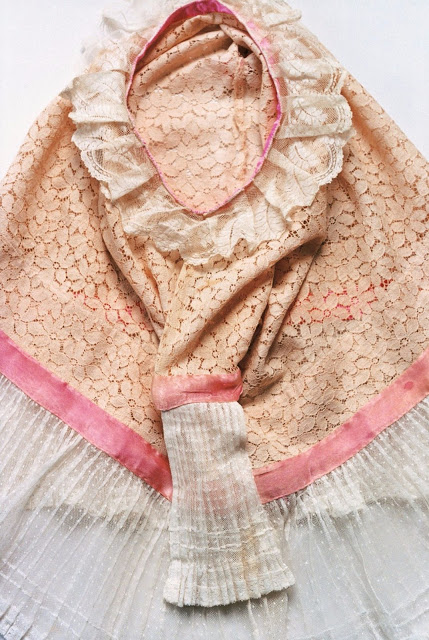
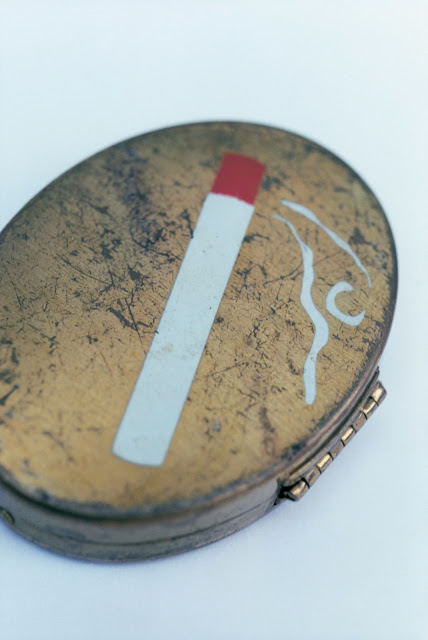
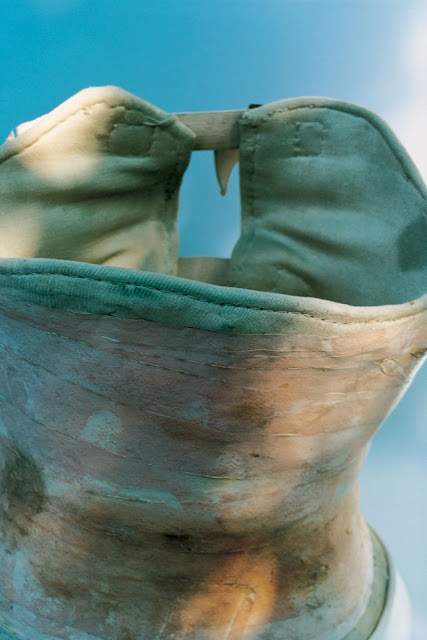
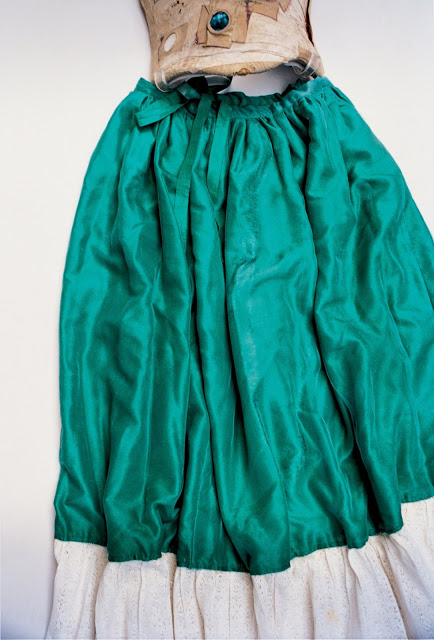
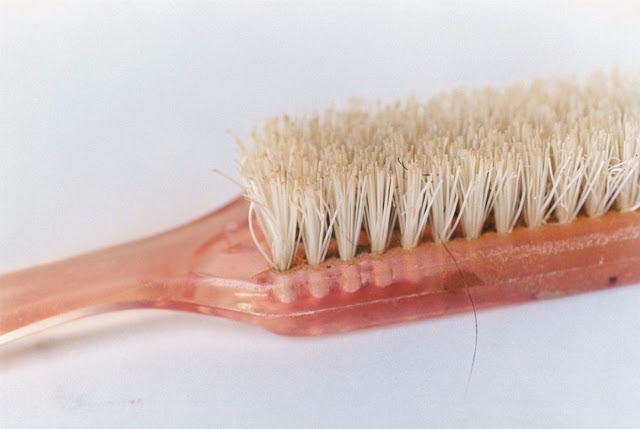
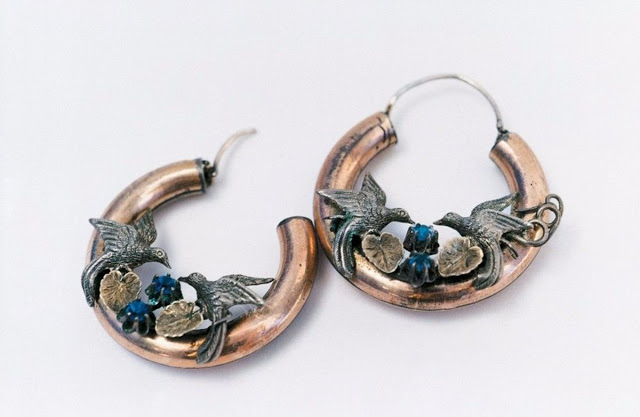
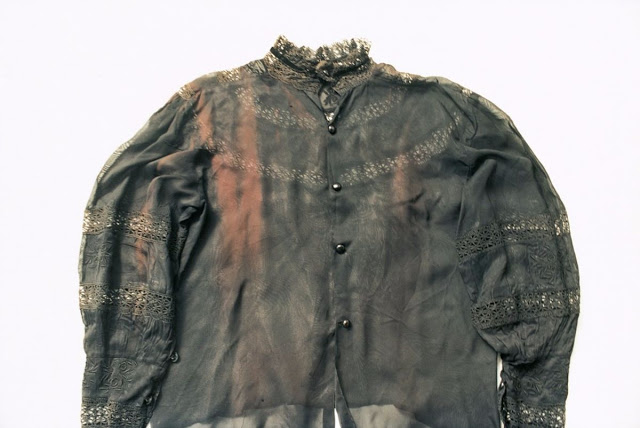
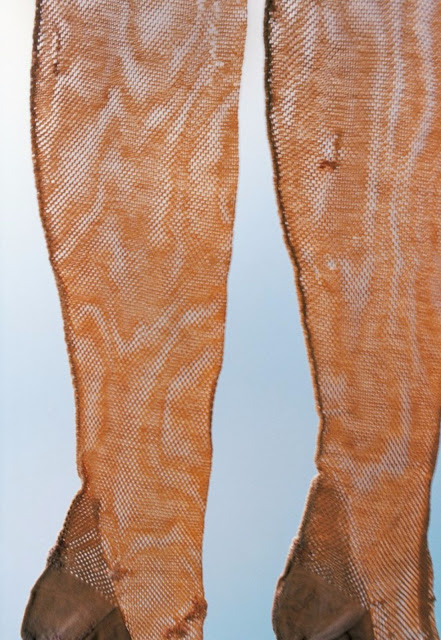
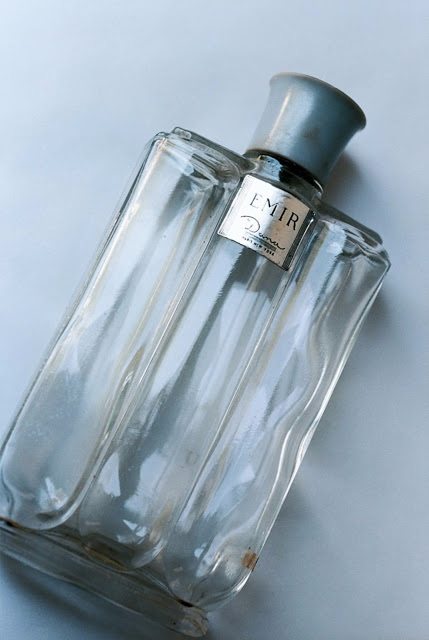
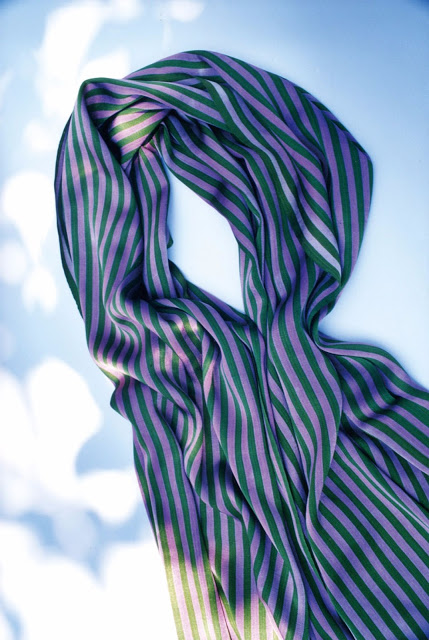
After her bus accident, Kahlo was in a full body cast for three months, and she remained in pain for the rest of her life. She painted her casts and corsets, turning them from medical equipment into artworks.Kahlo’s right leg was thinner than her left after childhood polio – and it was later fractured in 11 places when she had a horrific bus accident in her 20s. As a result, she wore long, traditional Tehuana dresses that concealed her lower body.Kahlo’s leg was amputated in 1953. She designed this prosthetic leg with embroidered red lace-up boots and a bell attached.Classic cats-eye glasses worn by Kahlo.Kahlo’s knit swimsuit in mint green.Kahlo’s gloves.Kahlo’s nail polish.Kahlo’s fringed boots, the right one with a stacked heel.Kahlo’s friends noted that the more pain she felt, and the more incapacitated she became, the more elaborate her outfits were.Close-up of mirrored hole in Frida’s cast corset.Tehuana lacy headdress.The artist’s portable ashtray.One of the corsets worn by Kahlo.A skirt of green silk and lace attached to a body corset.A comb still covered with strands of the artist’s hair.Kahlo’s hoop earrings.An old black T-shirt of the artist.Kahlo’s stockings.A half-used bottle of perfume.
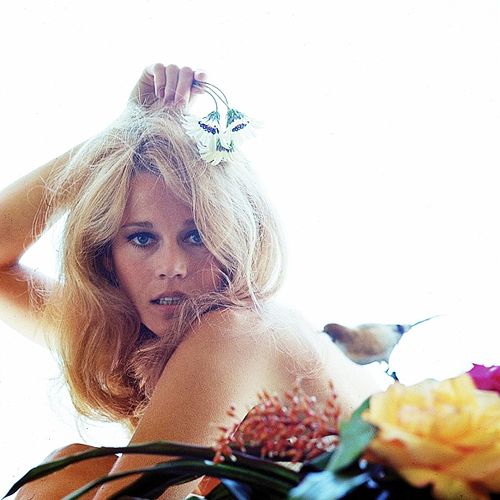
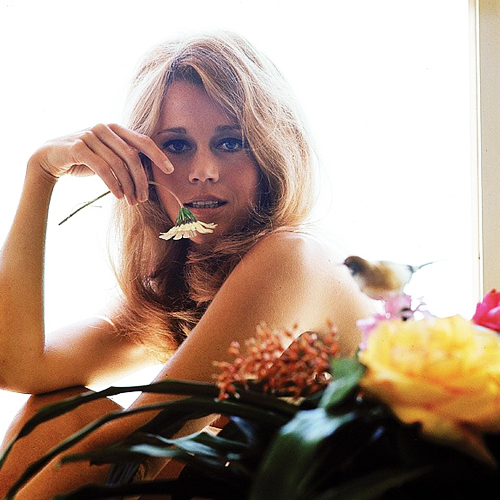
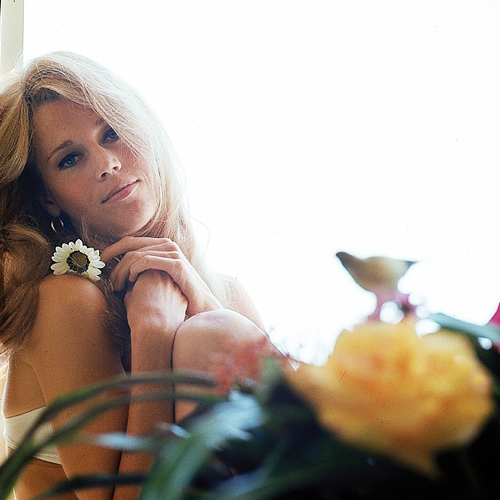
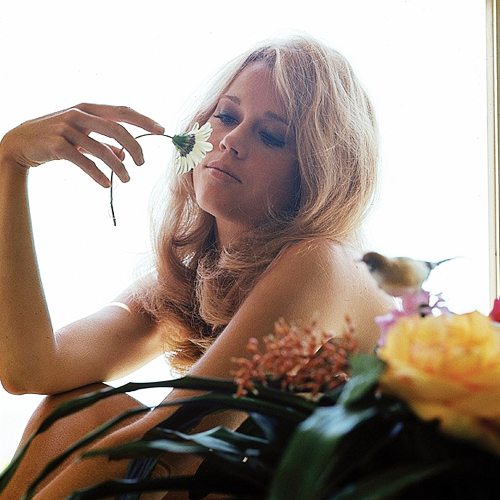
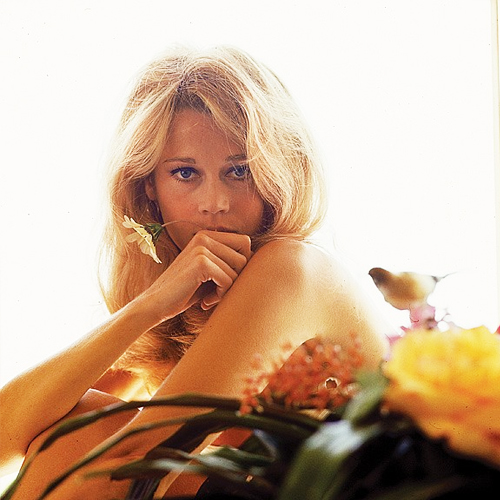
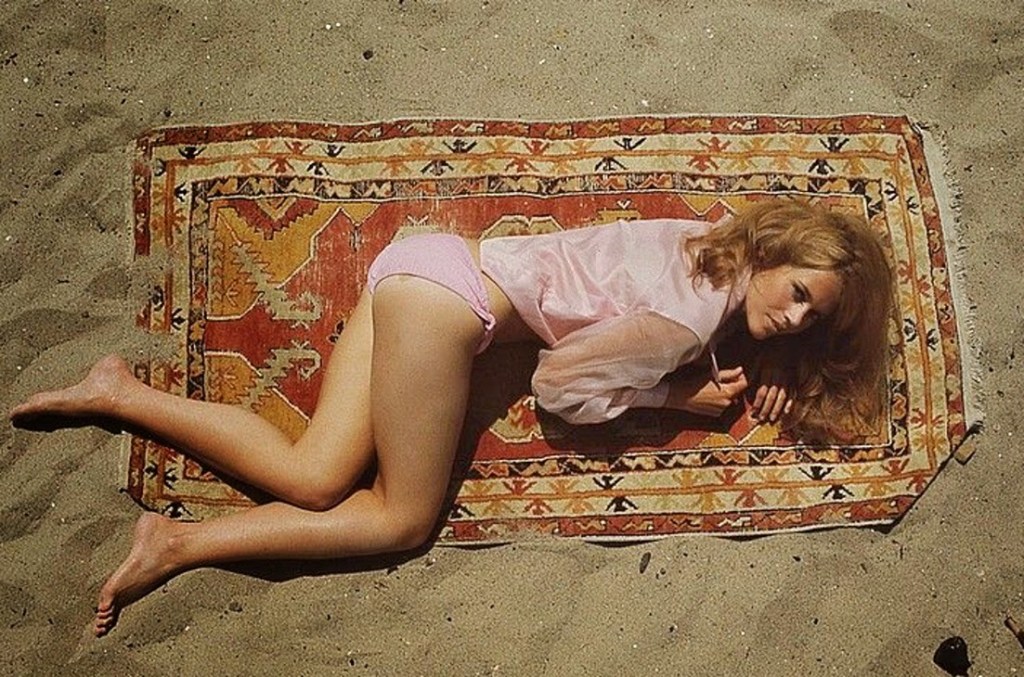
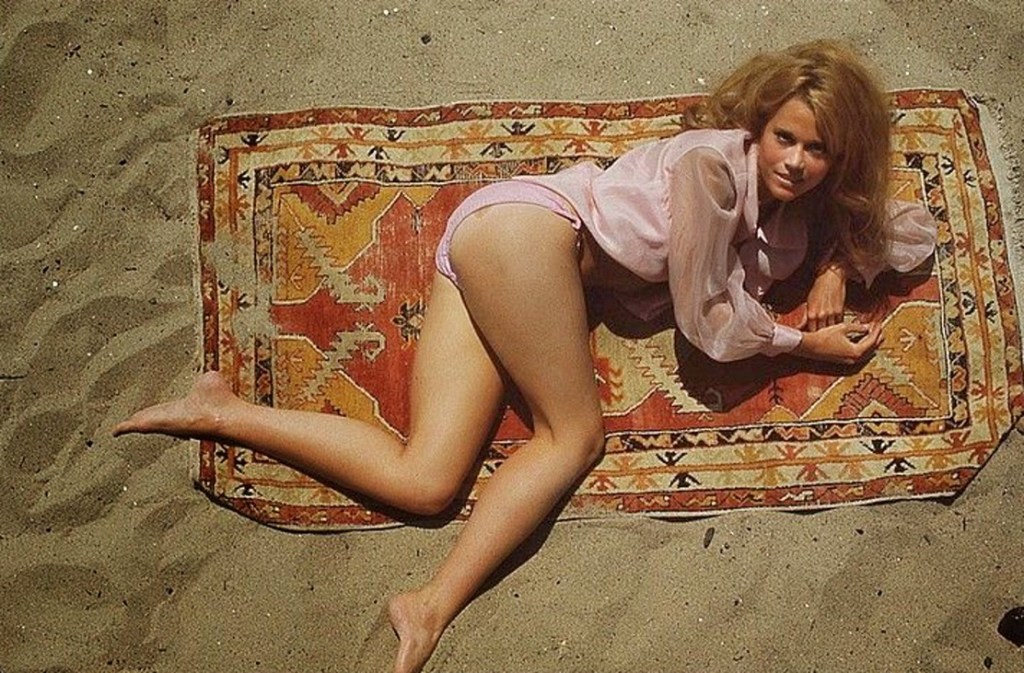
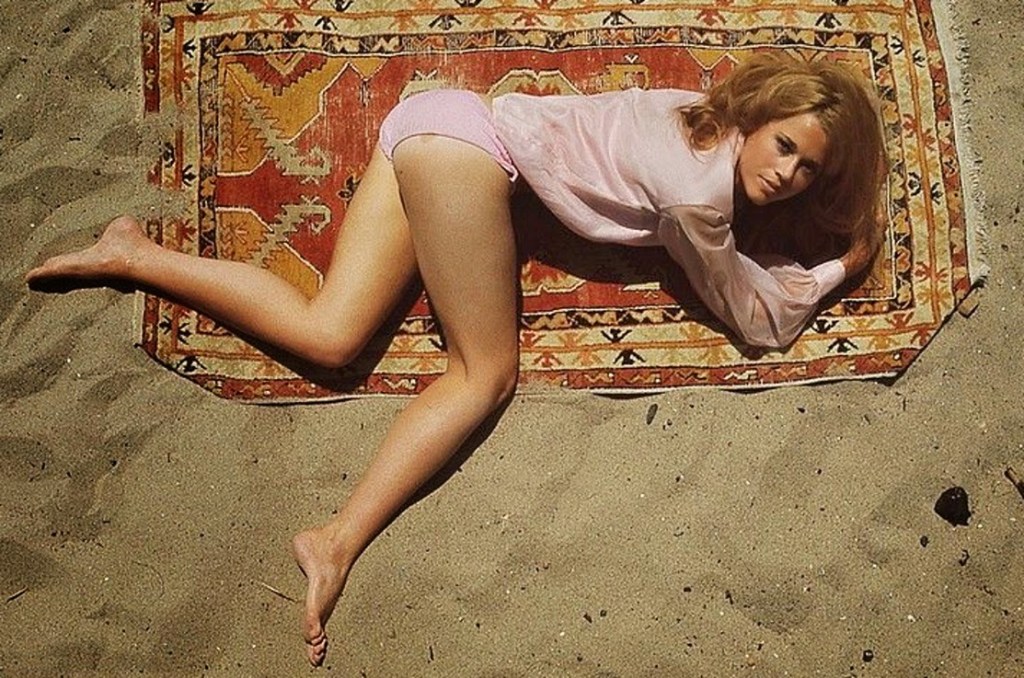
Jane Fonda at her beachfront home in Malibu. Photos by Milton Greene for Marie Claire, 1965.
Jane Seymour Fonda (born December 21, 1937) is an American actress, activist, and former fashion model. She is the recipient of various accolades including two Academy Awards, two British Academy Film Awards, seven Golden Globe Awards, a Primetime Emmy Award, the AFI Life Achievement Award, the Golden Lion Honorary Award, the Honorary Palme d’Or, and the Cecil B. DeMille Award.
Born to socialite Frances Ford Seymour and actor Henry Fonda, Fonda made her acting debut with the 1960 Broadway play There Was a Little Girl, for which she received a nomination for the Tony Award for Best Featured Actress in a Play, and made her screen debut later the same year with the romantic comedy Tall Story. She rose to prominence during the 1960s with the comedies Period of Adjustment (1962), Sunday in New York (1963), Cat Ballou (1965), Barefoot in the Park (1967), and Barbarella (1968). Her first husband was Barbarella director Roger Vadim. A seven-time Academy Award nominee, she received her first nomination for They Shoot Horses, Don’t They? (1969), and went on to win the Academy Award for Best Actress twice in the 1970s, for Klute (1971) and Coming Home (1978). Her other nominations were for Julia (1977), The China Syndrome (1979), On Golden Pond (1981), and The Morning After (1986). Consecutive hits Fun with Dick and Jane (1977), California Suite (1978), The Electric Horseman (1979), and 9 to 5 (1980) sustained Fonda’s box-office drawing power, and she won a Primetime Emmy Award for her performance in the TV film The Dollmaker (1984).
In 1982, she released her first exercise video, Jane Fonda’s Workout, which became the highest-selling VHS of the 20th century. It would be the first of 22 such videos over the next 13 years, which would collectively sell over 17 million copies. Divorced from her second husband Tom Hayden, she married billionaire media mogul Ted Turner in 1991 and retired from acting, following a row of commercially unsuccessful films concluded by Stanley & Iris (1990). Fonda divorced Turner in 2001 and returned to the screen with the hit Monster-in-Law (2005). Although Georgia Rule (2007) was her only other movie during the 2000s, in the early 2010s she fully re-launched her career. Subsequent films have included The Butler (2013), This Is Where I Leave You (2014), Youth (2015), Our Souls at Night (2017), and Book Club (2018). In 2009, she returned to Broadway after a 49-year absence from the stage, in the play 33 Variations which earned her a nomination for the Tony Award for Best Actress in a Play, while her major recurring role in the HBO drama series The Newsroom (2012–14) earned her two Primetime Emmy Award nominations. She also released another five exercise videos between 2009 and 2012. Fonda currently stars as Grace Hanson in the Netflix comedy series Grace and Frankie, which debuted in 2015 and has earned her nominations for a Primetime Emmy Award and three Screen Actors Guild Awards.
Fonda was a visible political activist in the counterculture era during the Vietnam War. She was photographed sitting on a North Vietnamese anti-aircraft gun on a 1972 visit to Hanoi, during which she gained the nickname “Hanoi Jane”. During this time, she was effectively blacklisted in Hollywood. She has also protested the Iraq War and violence against women, and describes herself as a feminist and environmental activist. In 2005, along with Robin Morgan and Gloria Steinem, she co-founded the Women’s Media Center, an organization that works to amplify the voices of women in the media through advocacy, media and leadership training, and the creation of original content. Fonda serves on the board of the organization. (Wikipedia)
Think it’s hard making it month to month in the barracks on just an E-1 pay? Well, the recruits who won America’s earlier wars had to make ends meet with much, much less to draw on. See how much troops made in each conflict, both in their own currency and adjusted for inflation:
Revolutionary War
American soldiers in combat at the Battle of Long Island, 1776.
Privates in 1776 earned $6 a month plus a bounty at the end of their service. That pay would equate to $157.58 today, a pretty cheap deal for the poor Continental Congress. Unfortunately for soldiers, Congress couldn’t always make ends meet and so troops often went without their meager pay.
War of 1812
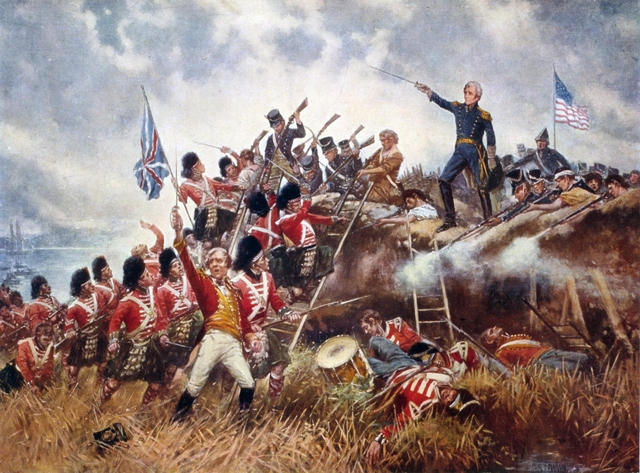
The Battle of New Orleans, the last major fight of the War of 1812.
Pay started at $5 a month for privates but was raised to $8 at the end of 1812. This was in addition to bounties ranging from $31 and 160 acres of land to $124 and 320 acres of land.
That $8 translates to $136.28 in 2016. The bounties ranged from $528.10 to $2,112.40 for terms of five years to the duration of the war.
Mexican-American War
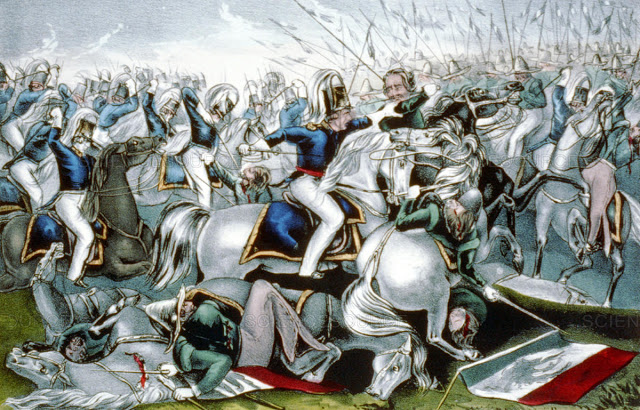
Mexican-American War, Battle of Buena Vista, 1847.
Young infantrymen in their first year of service during the Mexican-American War pocketed $7 per month, according to this Army history. That’s $210.10 in 2016 dollars.
Civil War
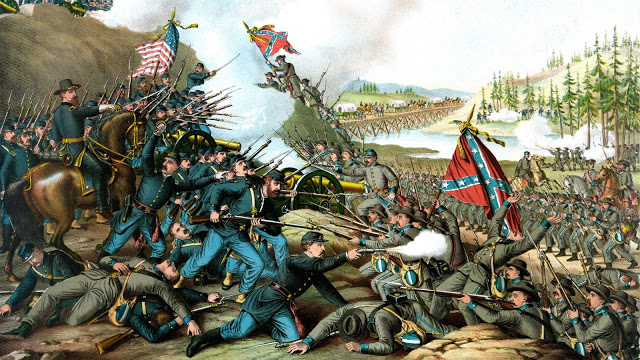
Union and Confederate troops clash at the Battle of Franklin in Tennessee, 1864.
Union privates in 1863 brought home $13 a month which translates to $237.51 in modern dollars. Confederate privates had it a little worse at $11 a month. The Confederate situation got worse as the war went on since the Confederate States of America established their own currency and it saw rapid inflation as the war situation got worse and worse.
Spanish-American War
An undated photo shows soldiers manning a battle signal corps station during the Spanish-American War. (Photo: Naval History and Heritage Command)
While Army private pay in the Spanish-American War was still $13 like it had been in the Civil War, a period of deflation had strengthened the purchasing power of that monthly salary. In 2016 dollars, it would be worth $356.26.
World War I
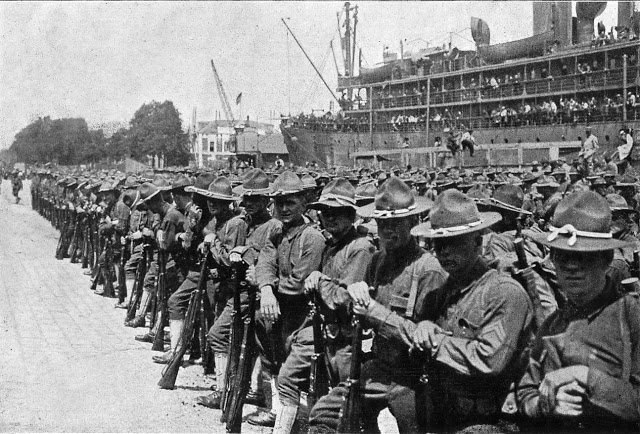
American soldiers wait on the docks to board a troop ship during World War I.
A private, private second class, or bugler in his first year of service in 1917 was entitled to $30 a month. In exchange for this salary, which would equate to $558.12 today, privates could expect to face the guns of the Germans and other Axis powers.
World War I was the first war where, in addition to their pay, soldiers could receive discounted life insurance as a benefit. The United States Government Life Insurance program was approved by Congress in 1917 and provided an alternative to commercial insurance which either did not pay out in deaths caused by war or charged extremely high premiums for the coverage.
World War II
US troops marching into Germany during World War II.
In 1944, privates serving in World War II made $50 a month, or $676.51 in 2016 dollars. It seems like toppling three Fascist dictators would pay better than that, but what do we know.
Korean War
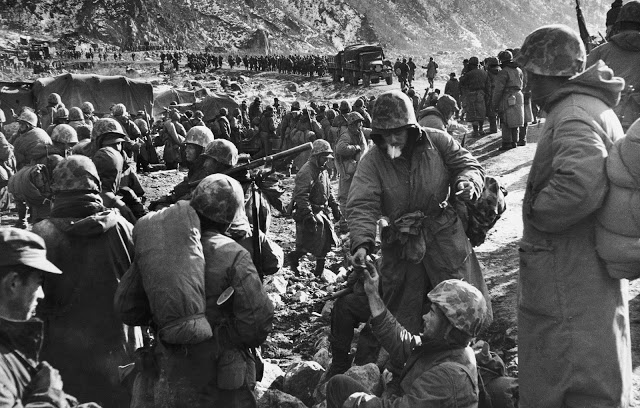
Marines rest after making it through the canyon road known as Nightmare Alley during the retreat from the Chosin Reservoir, December 1950.
The minimum payment for an E-1 in 1952 was $78 a month which would equate to $700.92 in 2016. Most soldiers actually deploying to Korea would have over four months in the Army and so would’ve received a pay bump to at least $83.20, about $747.64 today.
This was in addition to a foreign duty pay of $8 a month along with a small payment for rations when they weren’t provided.
Vietnam War
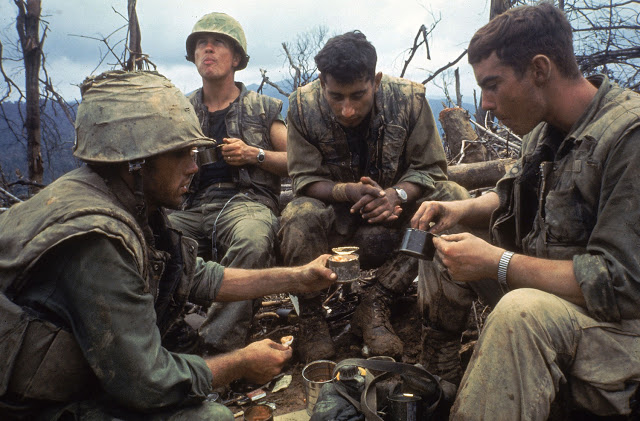
American Marines eat rations during a lull in the fighting near the DMZ during the Vietnam War, October 1966.
E-1 wages were not increased between 1952 and 1958, so Korean War and Vietnam War troops made the same amount of money at the lower ranks — except inflation over the years drove the real value of the wages down. New soldiers pocketing $78 would have a salary that equates to 642.71 now, while those with over four months of service who pocketed $83.20 were receiving the equivalent of $685.56 in today’s dollars.
Persian Gulf War
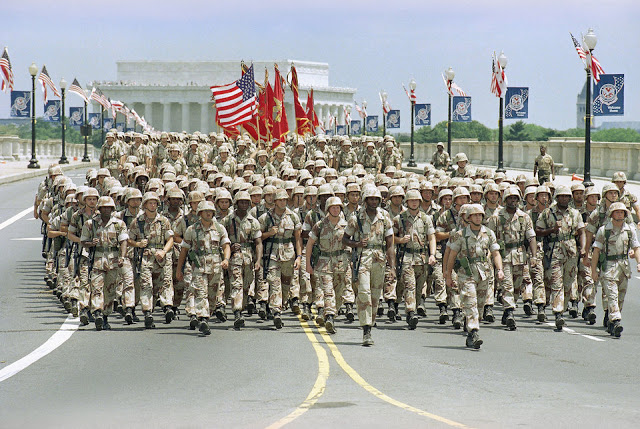
US troops march on the Memorial Bridge across the Potomac River toward the Pentagon during National Victory Celebration Parade in Washington, June 8, 1991.
Grunts who went into Iraq to topple Saddam Hussein were paid the princely sum of $753.90 a month in basic pay, unless they somehow managed to make it to Iraq with less than four months of service. Then they received $697.20.
These amounts would translate in 2016 dollars to $1318.12 and $1,218.98 respectively.
War in Afghanistan and the Iraq War
US Army Pfc. Jacob Paxson and Pfc. Antonio Espiricueta, both from Company B (“Death Dealers”), 2nd Battalion, 6th Infantry Regiment, attached to Task Force 1st Battalion, 35th Armored Regiment, 2nd Brigade Combat Team, 1st Armored Division, on a foot patrol in Tameem, Ramadi, Iraq.
Troops bringing the American flag back to Iraq in 2003 or deploying to Afghanistan in the same time period received just a little more than their Persian Gulf War predecessors, with $1064.70 for soldiers with less than four months of service and $1,150.80 for the seasoned veterans with four months or more under their belts.
In 2016 dollars, those salaries equate to $1377.93 and $1,489.36, a modest increase from the Persian Gulf War.
(This original article was written by Logan Nye and published on WeAreTheMighty.com)
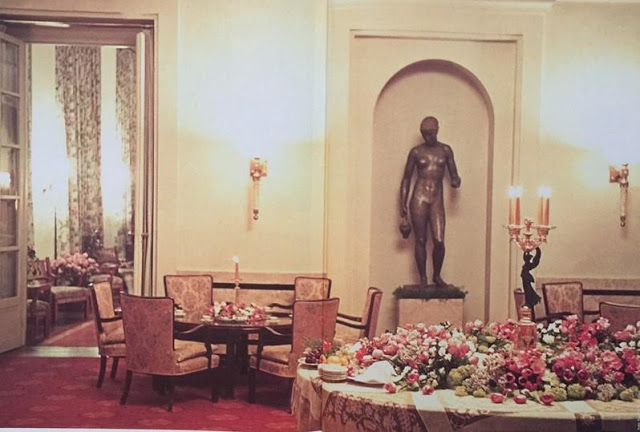
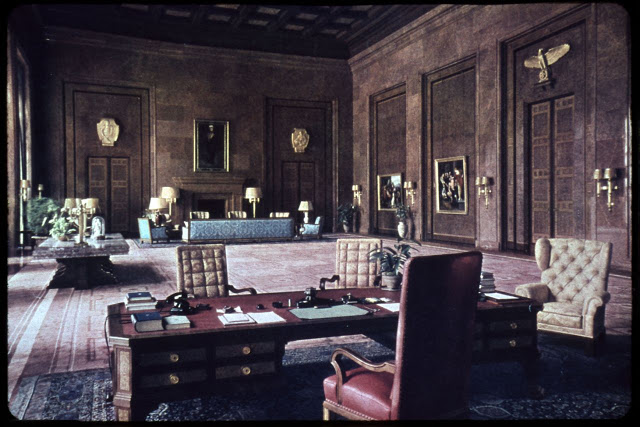
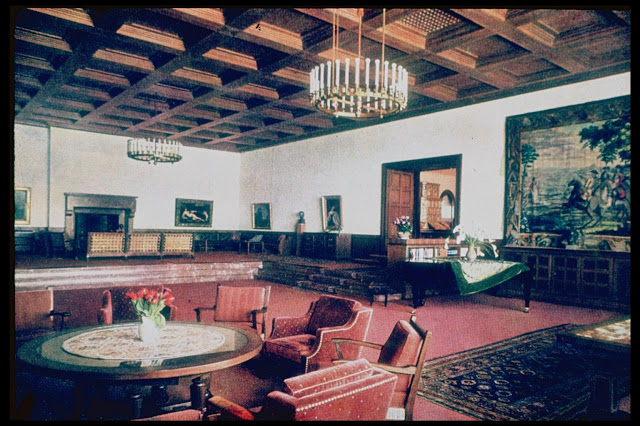
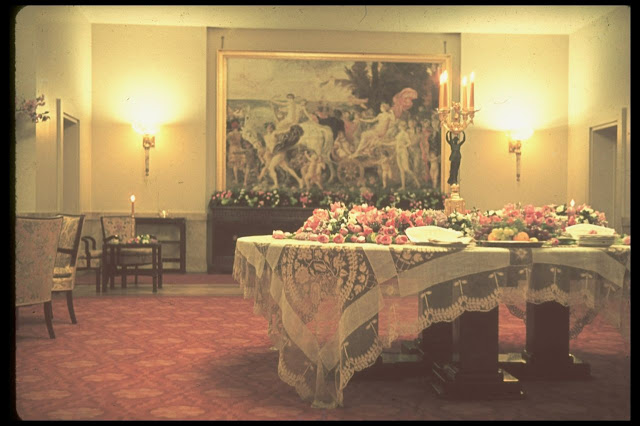
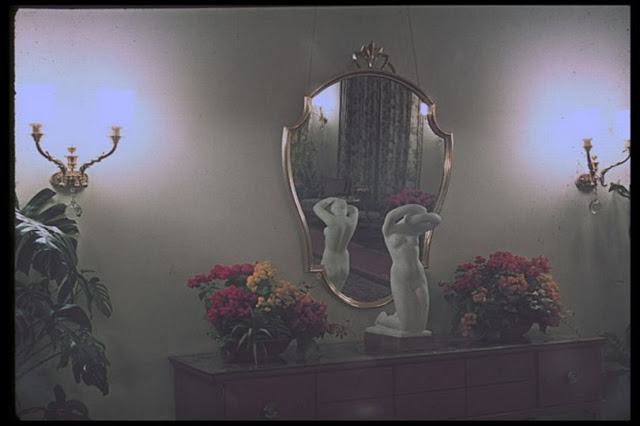
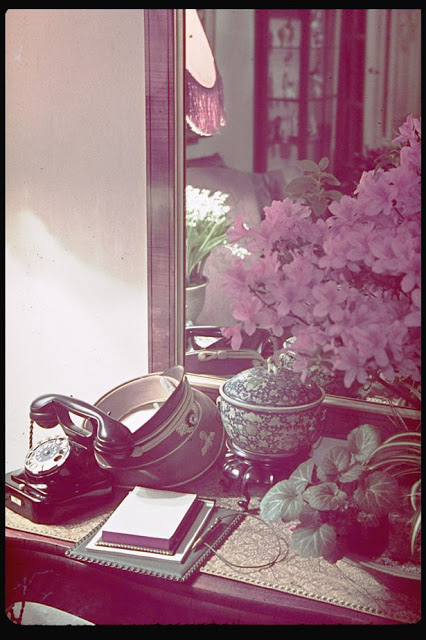
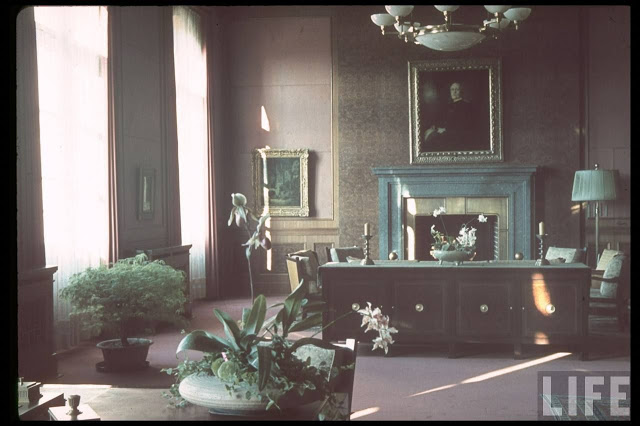
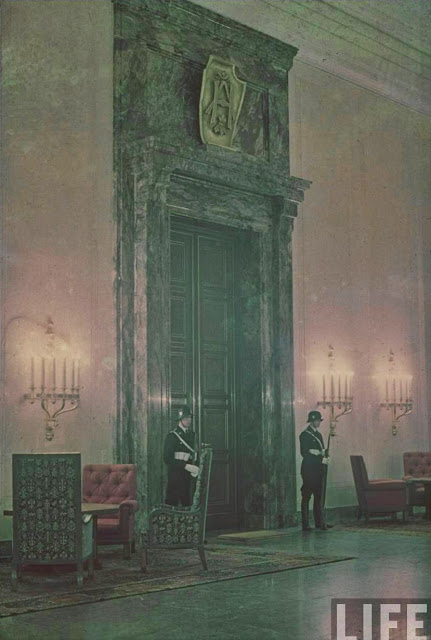
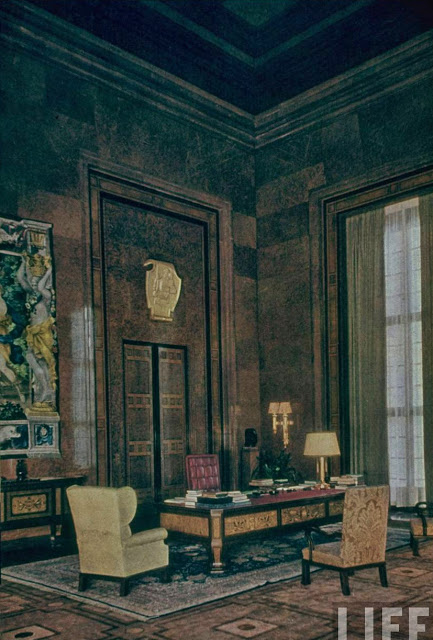
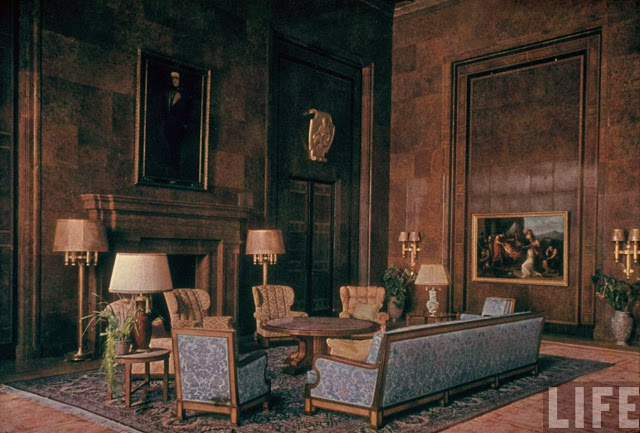
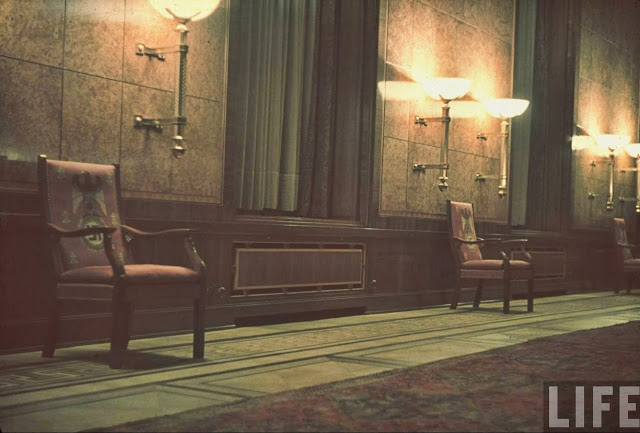
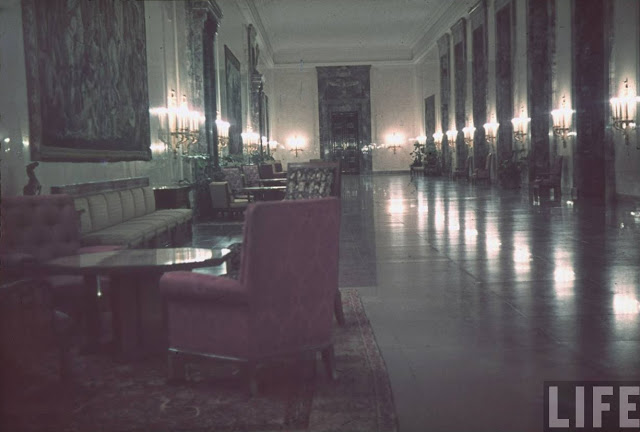
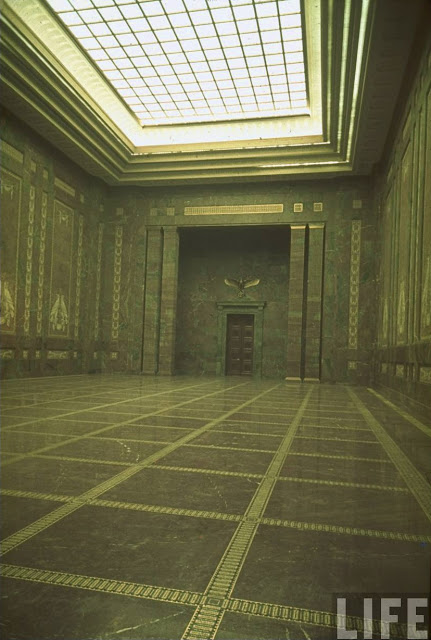
Incredibly rare and undoubtedly risky photos to take of the Fuhrer’s personal office within the Reich Chancellery. Very few have been allowed into the Fuhrer’s official seat of power, and very few photographs were taken within, let alone anybody given permission to bring a camera with them inside.
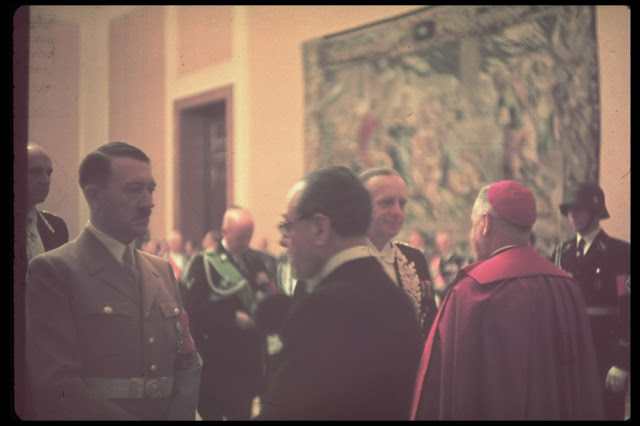
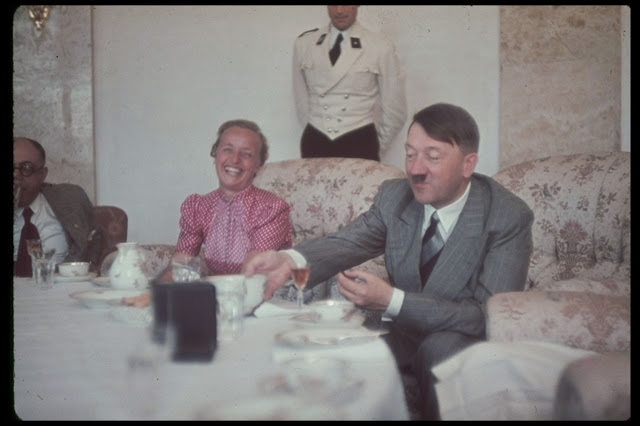
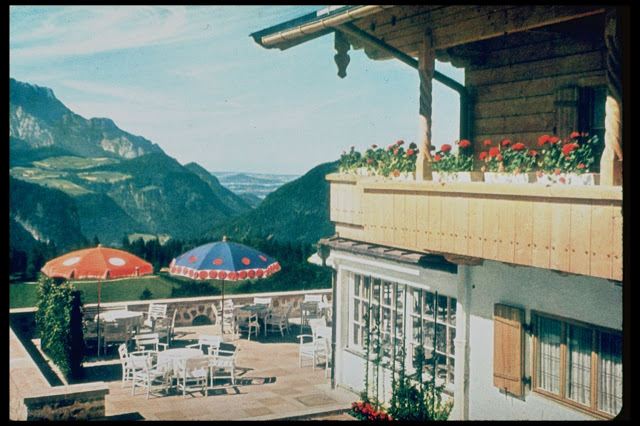
This is where dictator Adolf Hitler relaxed away from masterminding his war efforts. These rarely seen photos reveal the Fuhrer’s lavish taste for fine furnishings, paintings and sculptures.
The photographs were taken by Hugo Jaeger who served as one of Hitler’s personal photographers between 1936 and 1945. Granted unprecedented access to Hitler’s private moments his through the key hole snaps provide a rare insight into how the dictator lived.
Adolph Hitler (20 April 1889 – 30 April 1945) was an Austrian-born German politician who was the dictator of Germany from 1933 until his death in 1945. He rose to power as the leader of the Nazi Party, becoming the chancellor in 1933 and then assuming the title of Führer und Reichskanzler in 1934. During his dictatorship, he initiated World War II in Europe by invading Poland on 1 September 1939. He was closely involved in military operations throughout the war and was central to the perpetration of the Holocaust, the genocide of about six million Jews and millions of other victims.
Hitler was born in Austria-Hungary and was raised near Linz. He lived in Vienna later in the first decade of the 1900s and moved to Germany in 1913. He was decorated during his service in the German Army in World War I. In 1919, he joined the German Workers’ Party (DAP), the precursor of the Nazi Party, and was appointed leader of the Nazi Party in 1921. In 1923, he attempted to seize governmental power in a failed coup in Munich and was imprisoned with a sentence of five years. In jail, he dictated the first volume of his autobiography and political manifesto Mein Kampf (“My Struggle”). After his early release in 1924, Hitler gained popular support by attacking the Treaty of Versailles and promoting pan-Germanism, anti-Semitism and anti-communism with charismatic oratory and Nazi propaganda. He frequently denounced international capitalism and communism as part of a Jewish conspiracy.
By November 1932, the Nazi Party held the most seats in the German Reichstag, but did not have a majority. As a result, no party was able to form a majority parliamentary coalition in support of a candidate for chancellor. Former chancellor Franz von Papen and other conservative leaders persuaded President Paul von Hindenburg to appoint Hitler as chancellor on 30 January 1933. Shortly after, the Reichstag passed the Enabling Act of 1933 which began the process of transforming the Weimar Republic into Nazi Germany, a one-party dictatorship based on the totalitarian and autocratic ideology of Nazism. Hitler aimed to eliminate Jews from Germany and establish a New Order to counter what he saw as the injustice of the post-World War I international order dominated by Britain and France. His first six years in power resulted in rapid economic recovery from the Great Depression, the abrogation of restrictions imposed on Germany after World War I, and the annexation of territories inhabited by millions of ethnic Germans, which gave him significant popular support.
Hitler sought Lebensraum (lit. ‘living space’) for the German people in Eastern Europe, and his aggressive foreign policy is considered the primary cause of World War II in Europe. He directed large-scale rearmament and, on 1 September 1939, invaded Poland, resulting in Britain and France declaring war on Germany. In June 1941, Hitler ordered an invasion of the Soviet Union. By the end of 1941, German forces and the European Axis powers occupied most of Europe and North Africa. These gains were gradually reversed after 1941, and in 1945 the Allied armies defeated the German army. On 29 April 1945, he married his longtime lover, Eva Braun, in the Führerbunker in Berlin. Less than two days later, the couple committed suicide to avoid capture by the Soviet Red Army. Their corpses were burned.
Under Hitler’s leadership and racially motivated ideology, the Nazi regime was responsible for the genocide of about six million Jews and millions of other victims whom he and his followers deemed Untermenschen (subhumans) or socially undesirable. Hitler and the Nazi regime were also responsible for the killing of an estimated 19.3 million civilians and prisoners of war. In addition, 28.7 million soldiers and civilians died as a result of military action in the European theatre. The number of civilians killed during World War II was unprecedented in warfare, and the casualties constitute the deadliest conflict in history.
Hitler’s actions as Führer of Germany are almost universally regarded as gravely immoral. Prominent historian and biographer Ian Kershaw describes Hitler as “the embodiment of modern political evil”, and that “never in history has such ruination—physical and moral—been associated with the name of one man”. (Wikipedia)