“The Forgotten Holocaust”: 27 Tragic Photos From The Rape Of Nanking

Left: A Chinese woman is tied to a pole and forcibly kissed by a Japanese soldier. Right: Elsewhere, a man is left blindfolded and tied up. Both images were taken during the Rape of Nanking.

Subscribe to get access

Read more of this content when you subscribe today.

“The Forgotten Holocaust”: 27 Tragic Photos From The Rape Of Nanking

These tragic photos and stories that capture the horrors of the Nanking Massacre (a.k.a. the Rape of Nanking) committed by Japanese soldiers against Chinese civilians in 1937-1938.

We know all about the horrors that have happened on our side of the world. But, all too often, when an atrocity has happened on the other side, we don’t hear much about it.

Alongside all the catastrophes that plagued Europe during World War II, the atrocities committed in Southeast Asia were every bit as disturbing — even if most of us in the West hardly ever learn about them in school.

And few of the atrocities committed in Asia during World War II were as terrible as the Nanking Massacre, also known as the Rape of Nanking.

While Europe was struggling to hold off the Nazi war machine, China was fending off the Japanese invasion that first launched in late 1937. They fought hard, in the end losing as many as 20 million lives (the second most of any country involved in the war) to keep the Japanese Empire from conquering much of East Asia and the Pacific.

And as many as 17 million Chinese casualties weren’t soldiers. They were civilians, unarmed and defenseless, and many of them were put through unimaginable hell before they were killed.

Some of the worst of it occurred over the six weeks after the Japanese stormed into the Chinese capital of Nanking (now known as Nanjing) in December 1937.

The Brutal March To Nanking
The rape and murder that would soon envelop Nanking started before the Japanese Army ever reached the city walls. The Japanese Army was moving through China at the outset of their invasion, massacring and looting with strict orders to “kill all captives.”

The Japanese didn’t stop there, though. Among the invading army, nothing was forbidden and they believed that gave them strength. One Japanese journalist, traveling with the 10th Army, wrote in his notes that he believed the army was moving forward with such strength because of the “tacit consent among the officers and men that they could loot and rape as they wish.”

The Nanking Massacre Begins

When the Japanese Army reached Nanking, their brutality continued. The burned down the city’s walls, the people’s homes, the surrounding forests, and even whole villages situated in their path.

They looted nearly every building they could find, stealing from the poor and the rich alike. They then slaughtered scores of people they happened upon. Some victims of the Nanking Massacre were thrown into mass, unmarked graves; others were just left to rot in the sun.

To the invading army, the Rape of Nanking was sometimes even a game. Japanese magazines bragged about a contest between two soldiers, Toshiaki Muaki and Tsuyoshi Noda, who had challenged one another in a race to see who could slaughter 100 people with their swords first.

Worse yet, the people these two men cut open weren’t enemy combatants killed on the battlefield while fighting for their lives. By the men’s own admission, the victims were unarmed, defenseless people. Noda admitted, after the war ended: “We’d line them up and cut them down, from one end of the line to the other.”

What’s more, this admission wasn’t an apology. Just seconds before, Noda had scoffed at his victims for letting him kill them, saying, “The Chinese soldiers were so stupid.” He also added, “Afterward, I was often asked whether it was a big deal, and I said it was no big deal.”

The Rape Of Nanking

In the mere six weeks during which the Japanese perpetrated the Nanking Massacre starting on Dec. 13, 1937, an estimated 20,000-80,000 Chinese women were brutally raped and sexually assaulted by the invading soldiers. They sometimes went door-to-door, dragging out women and even small children and violently gang-raping them. Then, once they’d finished with their victims, they often murdered them.

Such killing wasn’t just as an act of senseless barbarity, either – these men were following orders. “So that we will not have any problems on our hands,” one commander told his men, referring to any women they’ve raped, “either pay them money or kill them in some obscure place after you have finished.”

The invaders, though, didn’t even stop at simply murder. They made these women suffer in the worst ways possible. Pregnant mothers were cut open and rape victims were sodomized with bamboo sticks and bayonets until they died in agony.

“Never I have heard or read such brutality,” one missionary in Nanking, James M. McCallum, wrote in his diary. “Rape! Rape! Rape! We estimate at least 1,000 cases a night and many by day.”

“On December 16, seven girls (ages ranged from 16 to 21) were taken away from the Military College,” read a report from the International Committee (a group of foreigners who established the Nanking Safety Zone to provide haven for Nanking Massacre victims). “Five returned. Each girl was raped six or seven times daily.”

“One old woman 62 years old went home near Hansimen and Japanese soldiers came at night and wanted to rape her,” read another report from the committee. “She said she was too old. So the soldiers rammed a stick up her. But she survived to come back.”

Meanwhile, one writer for The New York Times who was on the scene wrote, “I drove down to the waterfront in my car. And to get to the gate I had to just climb over masses of bodies accumulated there… The car just had to drive over these dead bodies.” Once he reached the waterfront, he witnessed the massacre of 200 men within just ten minutes.

The extent to which Japanese officials were aware of such atrocities during the Nanking Massacre has long been a matter of intense debate. For one, Japanese General Iwane Matsui, commander of the forces in China, claimed that he was unaware of mass crimes but nevertheless felt morally responsible.

Ultimately, he was convicted and executed for his part in the massacre after the war, since which time the Rape of Nanking has proved to be a most contentious issue.

The Legacy Of The Massacre
By the time the worst of the Rape of Nanking had ended, an estimated 300,000 people were dead – mostly within a matter of weeks. When Japanese soldiers and officials were tried and executed for war crimes just after World War II, the court found that at least 200,000 had perished during the Rape of Nanking.

However, death toll estimates vary widely with some ranging as low as 40,000. Moreover, intense controversy surrounds these estimates, reflecting just how divisive the “forgotten Holocaust,” in the words of author Iris Chang, remains to this day.

The Japanese government, for example, didn’t officially apologize for its World War II-era atrocities until 1995 – and even that relatively recent apologetic stance hasn’t been unanimous and universal.

Subscribe to continue reading

Become a paid subscriber to get access to the rest of this post and other exclusive content.

12 Historical Colorized Pictures Showing Native Americans at the White House for Citizenship Ceremony During the 1920s

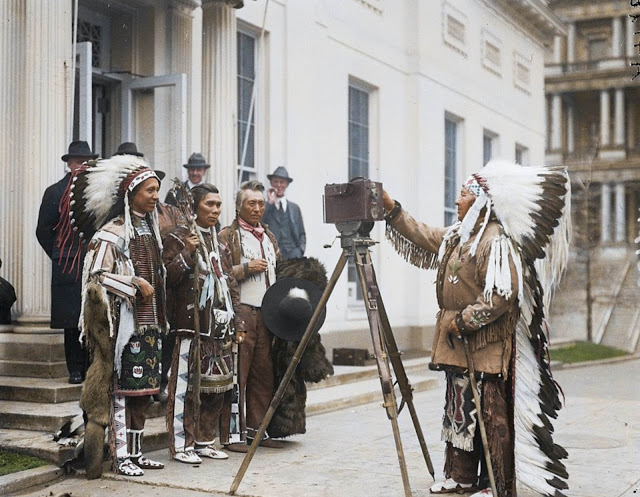
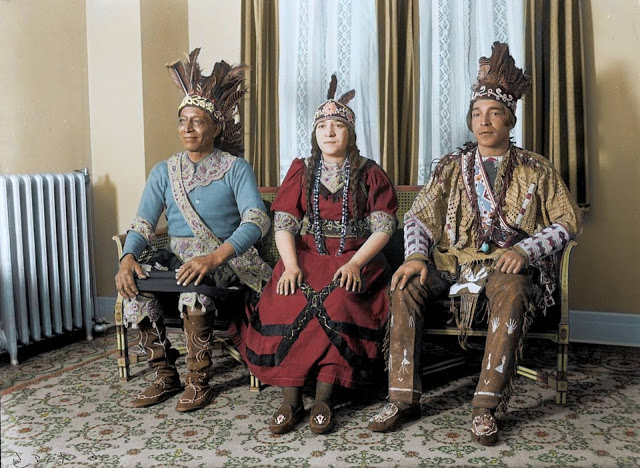
These incredible photographs were colorized by British colorization specialist Royston Leonard. The remarkable pictures show the group during the 1920s, with some of the leaders meeting with then American president, Calvin Coolidge, at the White House.

In 1924, the Indian Citizenship Act was proposed by Representative Homer P. Snyder and signed by President Calvin Coolidge, meaning the indigenous peoples including the Native American tribe, also known as Native Indians, were granted full U.S. citizenship.

Despite being granted full citizenship in 1924, not all Native Americans were granted the right to vote until 1957 due to discriminatory state laws which used a variety of excuses to prevent members of tribes from fully exercising their rights

The Indian Citizenship Act of 1924, also known as the Snyder Act, was proposed by Representative Homer P. Snyder (R) of New York and granted full U.S. citizenship to the indigenous peoples of the United States, called “Indians” in this Act.

While the Fourteenth Amendment to the United States Constitution defined as citizens any person born in the U.S., the amendment had been interpreted to restrict the citizenship rights of most Native people. The act was signed into law by President Calvin Coolidge on June 2, 1924. It was enacted partially in recognition of the thousands of Indians who served in the armed forces during World War I.

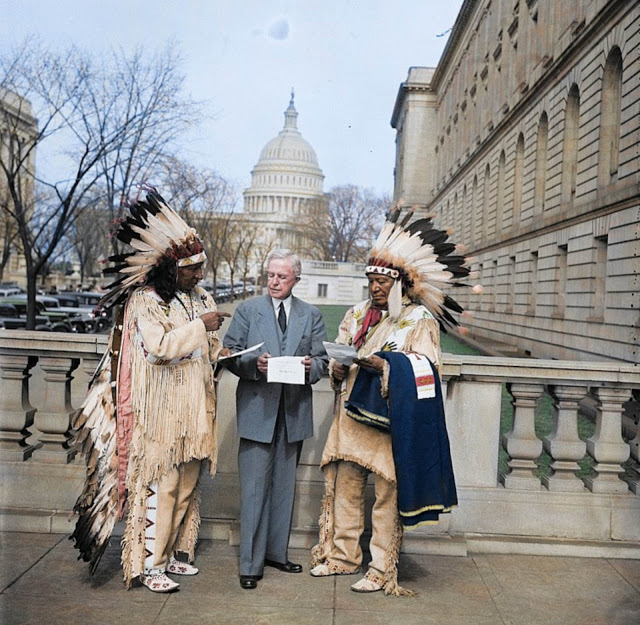
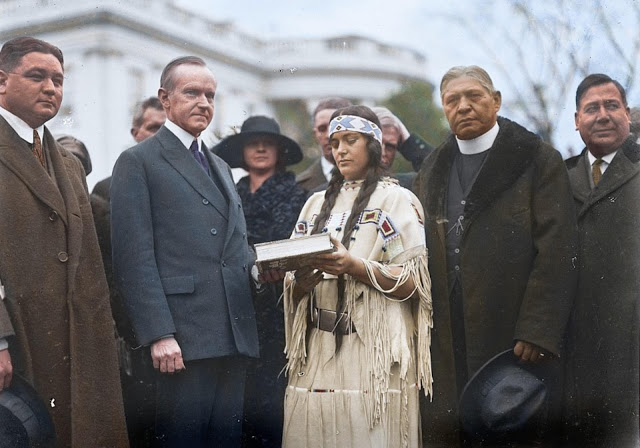
1927 – President Calvin Coolidge poses for a picture with a group of Native Americans outside the White House, three years after the 1924 Indian Citizenship Act. STUNNING images of the indigenous Native Americans have been brought back to life through vivid colourisation. The remarkable pictures show the group during the 1920s, with some of the leaders meeting with then American president, Calvin Coolidge, at the White House. Other fascinating images show the native tribe mixing with the public, the group, draped in their traditional attire, standing on top of the Lincoln Memorial holding the American flag high, and two Native American elders meeting with politicians at the Capitol Hill in 1936, the same year the Aborigines Act Amendment Act was legislated.
Native Americans, pictured here at the White House in traditional dress, were only granted full US citizenship in 1924 by the then President Calvin Coolidge, who was later granted honorary tribal membership by Sioux Chief Henry Standing Bear.
A group of Native American men wearing their traditional attire while raising the Stars and Stripes at the Lincoln Memorial in 1936, 12 years after President Calvin Coolidge granted them US citizenship.
President Coolidge with Native American tribes, 1924.
Native Americans at the White House, circa. 1929.
Two Native American elders, dressed in traditional garb discussing policy with a member of President Coolidge’s staff.
1936 – Native American girl. STUNNING images of the indigenous Native Americans have been brought back to life through vivid colourisation. The remarkable pictures show the group during the 1920s, with some of the leaders meeting with then American president, Calvin Coolidge, at the White House. Other fascinating images show the native tribe mixing with the public, the group, draped in their traditional attire, standing on top of the Lincoln Memorial holding the American flag high, and two Native American elders meeting with politicians at the Capitol Hill in 1936, the same year the Aborigines Act Amendment Act was legislated.
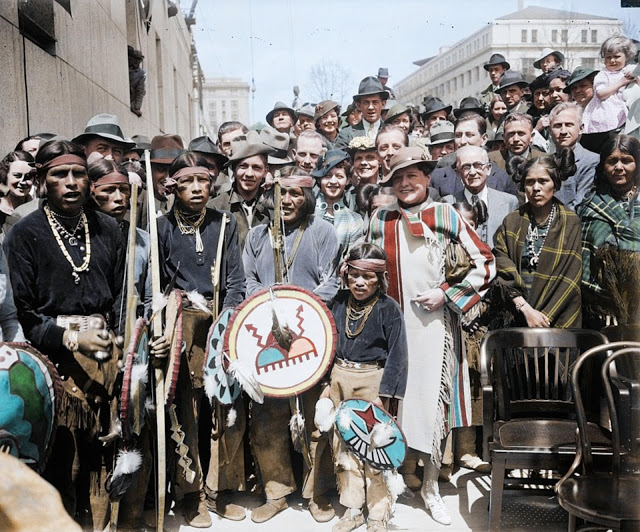
This remarkable photograph shows Native American men, women, and children in Washington D.C., to speak to President Coolidge. In 1924, Coolidge signed the Indian Citizenship Act, granting citizenship to indigenous people. Well-deserved: they had been in the country for generations before the “Americans” who automatically receive citizenship at birth.
These Native American women traveled to Washington DC in 1924 to celebrate the newly-signed Indian Citizenship Act.
This Native American elder was photographed around 1925.
This Native American woman, center is meeting US President Calvin Coolidge in 1923 in advance of the Indian Citizenship Act.
Native Americans posing for group portrait in 1915.

Photos colorized by Royston Leonard

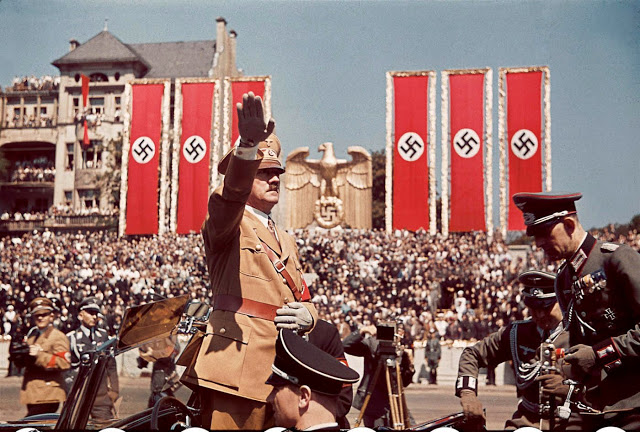
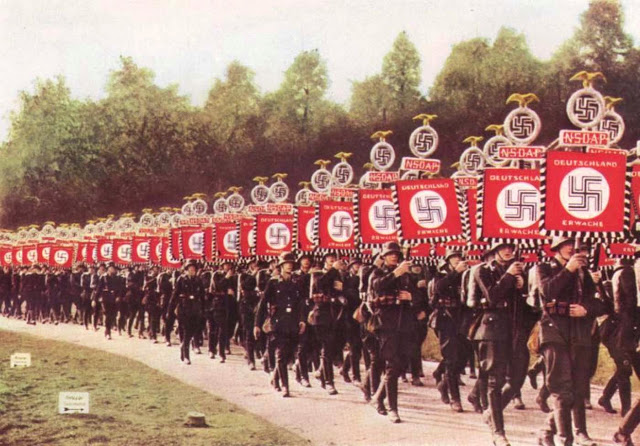
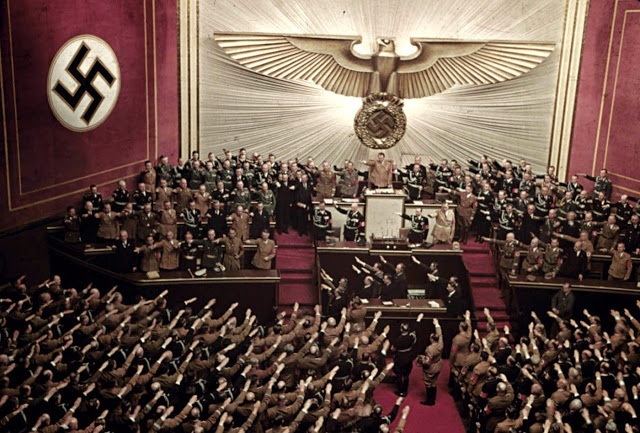
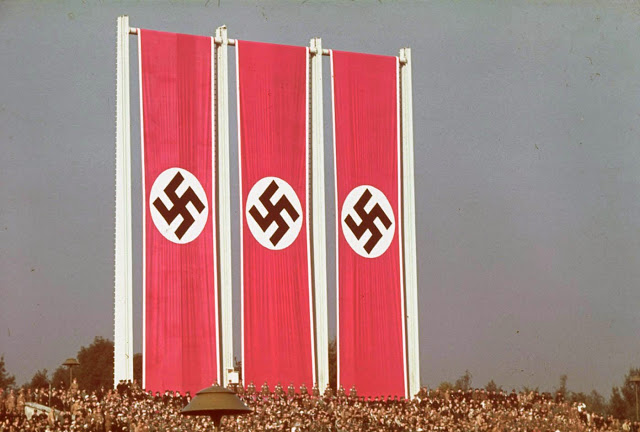
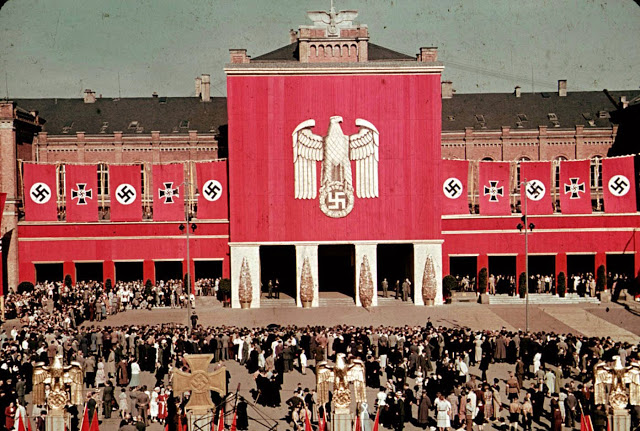
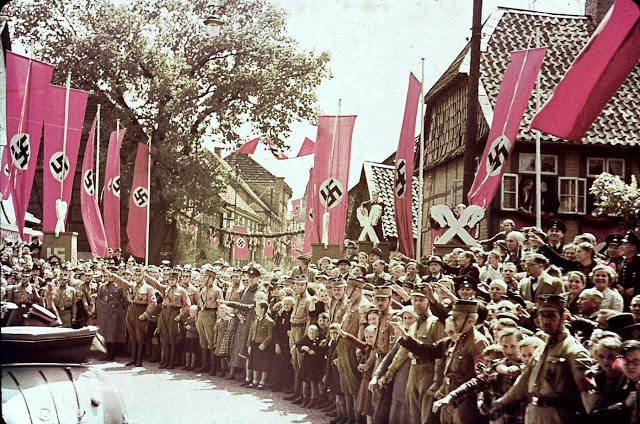
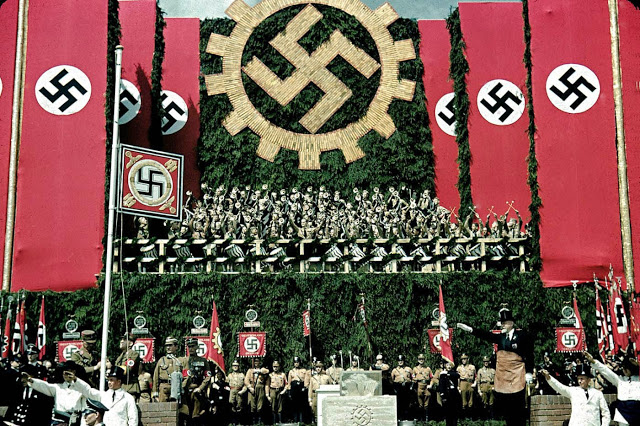
20 Rare Color Photographs of Nazi Germany During the 1930s

Those photos are as fascinating as they are chilling. It’s crazy to see all of those images put into color… but also pretty scary, too.

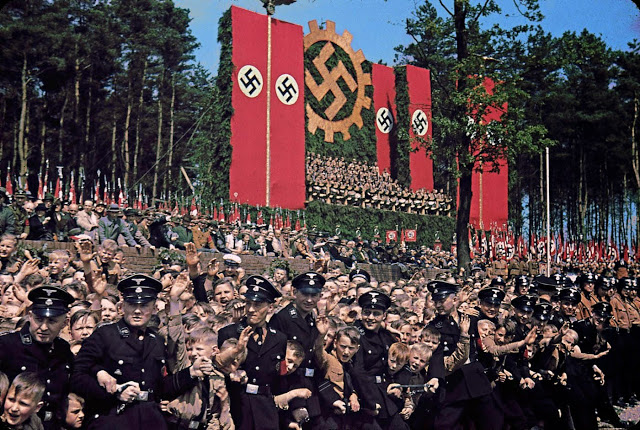
Nazi Party was not just a political organization, it was a psychological propaganda machine. The Nazis had an incredible sense of aesthetics and fully understood the power of iconography and branding. Enter inside the Nazi world through these amazing color photos and be thrilled. The symbols and colors of Nazism were all carefully orchestrated to have maximum psychological effect. There was nothing accidental about the structure of the crooked cross or the usage of dramatic colors such as red, white and black. Long, draping banners and standards with Roman eagles and gilded leaves all were designed to evoke images of strength, power, and a connection to history.

Nazi symbols are alluring. They look good. They are sharp, carefully tailored to catch the eye and made to inspire passions. The armbands worn on black uniforms are a striking statement of virility and supreme confidence. On the SS uniforms, the addition of the skull and crossed bones, the totenkopf, was a deliberate move to instill fear and terror in the hearts of anyone who faced the uniform. The men wearing it felt empowered by the menacing appearance of the uniform.

The ceremonial was considered as art. There was nothing accidental or incidental about Nazi pageantry. Everything was carefully staged and orchestrated. Nighttime processions lit by fire and bonfires upon which books were burned were all choreographed for effect. They reveled in tales of heroism and glorified war. Images from the Nuremburg rallies still impress us today with the absolute precision and dramatic scale of the stage set by the Hitler regime on the Zeppelin fields.

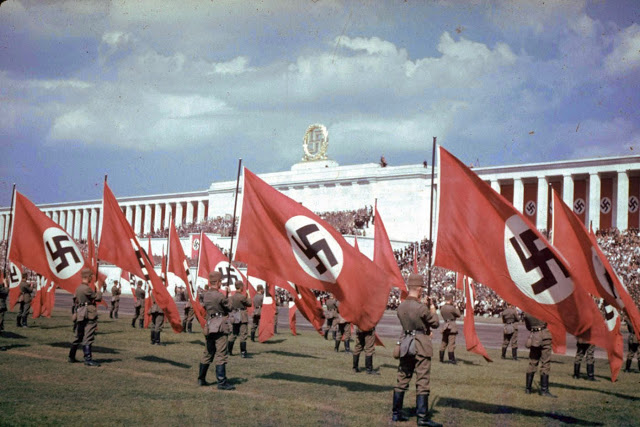
The black-white-red color scheme is based upon the colors of the flag of the German Empire, the black-white-red colors were commonly associated with anti-Weimar Republic German nationalists after the fall of the German Empire. In Mein Kampf Adolf Hitler defined the symbolism of the swastika flag: the red represents the social idea of the Nazi movement, the white disk represents the national idea, and the black swastika, used in Aryan cultures for millennia, represents “the mission of the struggle for the victory of the Aryan man, and, by the same token, the victory of creative work”. Hitler knew that the colors red, white and black combined create a psychological sense of intimidation and power, which is why a lot of propaganda like these banners use the same color combination.

The photos were taken by Hugo Jager, a former personal photographer of Adolf Hitler. He traveled with Hitler in the years leading up to power and throughout World War II. He was one of the few photographers who were using color photography techniques at the time. As the war was drawing to a close in 1945, Jaeger hid the photographs in a leather suitcase. He then encountered American soldiers prompting fears of potential arrest and prosecution for carrying around so many images of such a wanted man. When the soldiers opened the case however, their attention was distracted by a bottle of cognac they found there, which they opened and shared with Jaeger. Jaeger buried the photographs inside 12 glass jars outside Munich. The photographer returned to the burial place over several years to ensure they were safe. He dug up all of the photographs ten years later in 1955, storing them in a bank vault. In 1965, Jaeger sold them to LIFE magazine.

The ceremonial was considered as art.
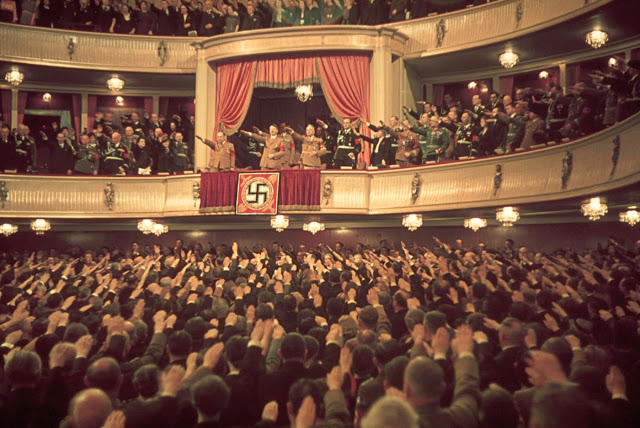
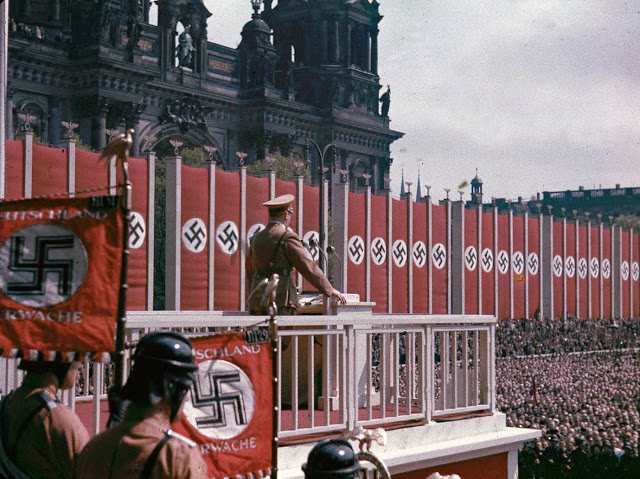
Adolf Hitler makes keynote address at Reichstag session, Kroll Opera House, Berlin, 1939.
Adolf Hitler and Joseph Goebbels (in box) at Charlottenburg Theatre, Berlin, 1939.
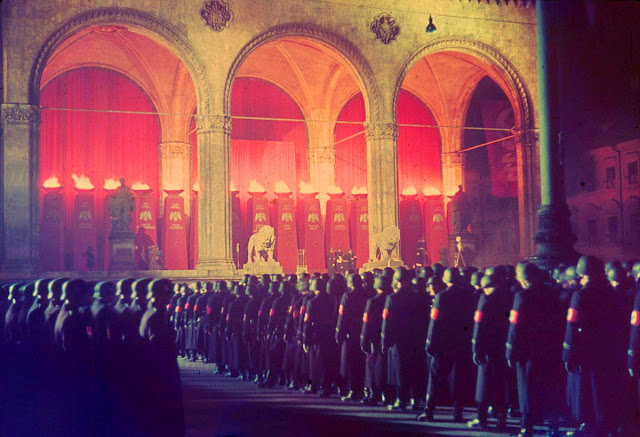
Annual midnight swearing-in of SS troops at Feldherrnhalle, Munich, 1938.
Reichserntedankfest, 1934.
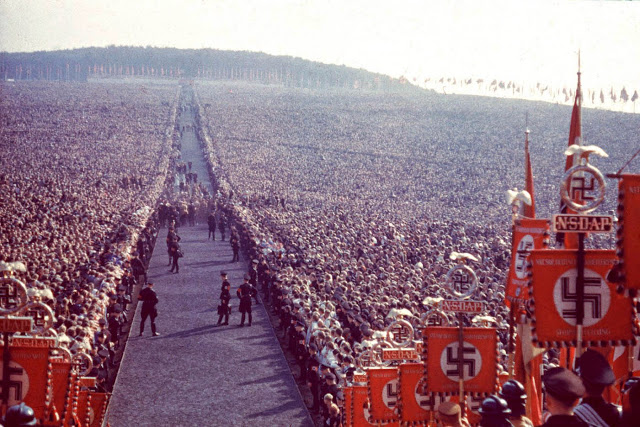
1937 Reich Party Congress, Nuremberg, Germany.
Adolf Hitler salutes troops of the Condor Legion who fought alongside Spanish Nationalists in the Spanish Civil War, during a rally upon their return to Germany, 1939.
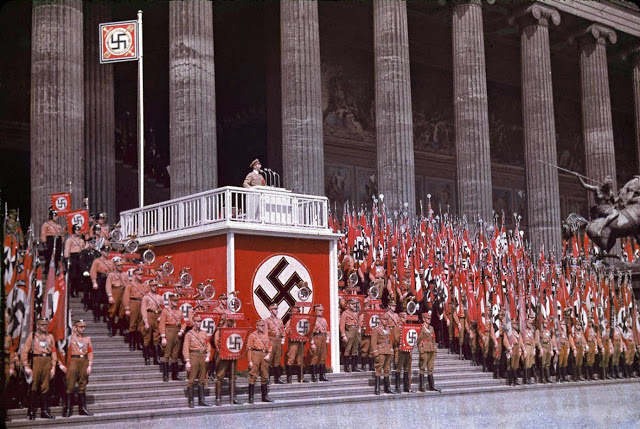
Adolf Hitler speaking at the Lustgarten, Berlin, 1938.
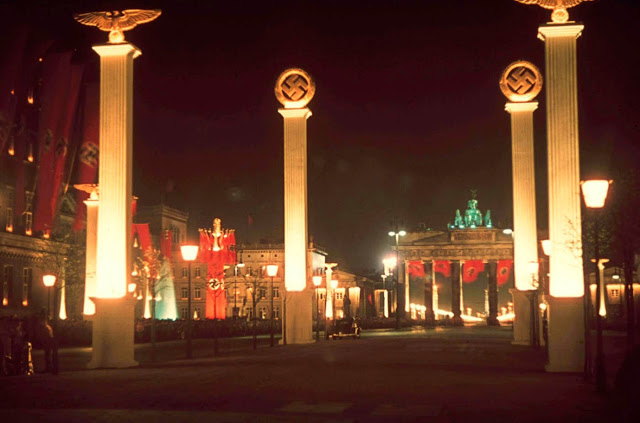
Berlin illuminated at midnight in honor of Hitler’s 50th birthday, April 1939.
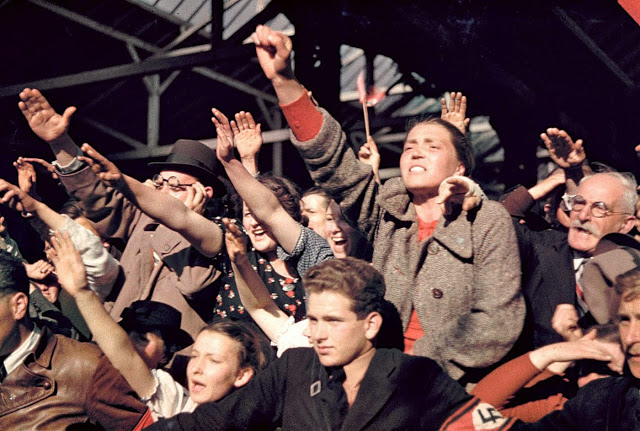
Crowds cheering Adolf Hitler’s campaign to unite Austria and Germany, 1938.
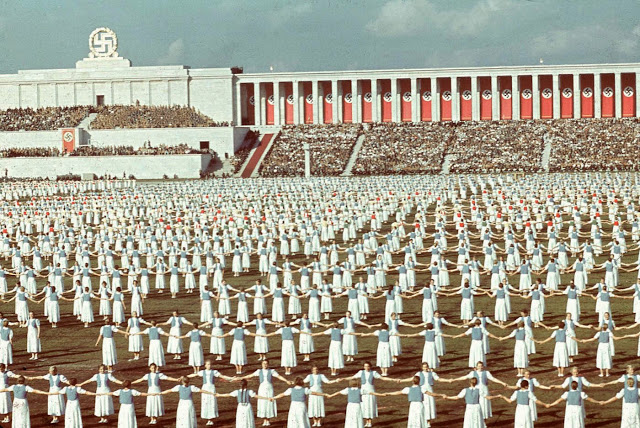
League of German Girls dancing during the 1938 Reich Party Congress, Nuremberg, Germany.
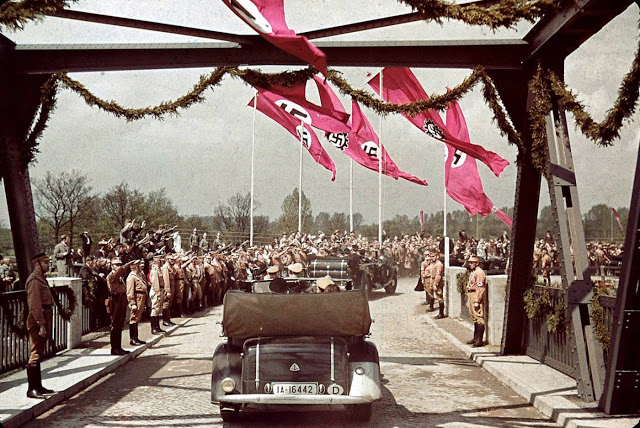
Nazi officials on their way to Fallersleben Volkswagen Works cornerstone ceremony, 1938.
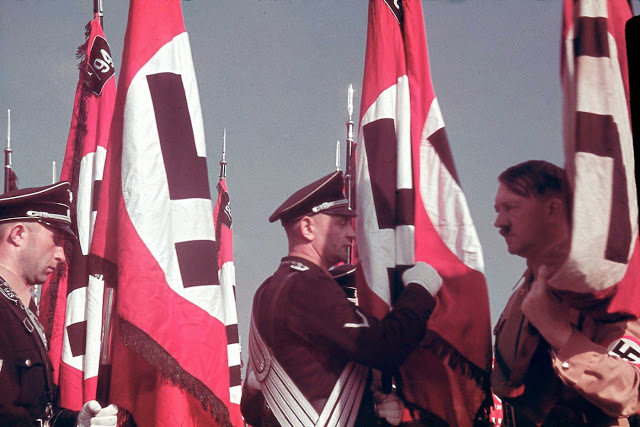
Adolf Hitler at the swearing-in of SS standard bearers at the Reich Party Congress, Nuremberg, 1938.
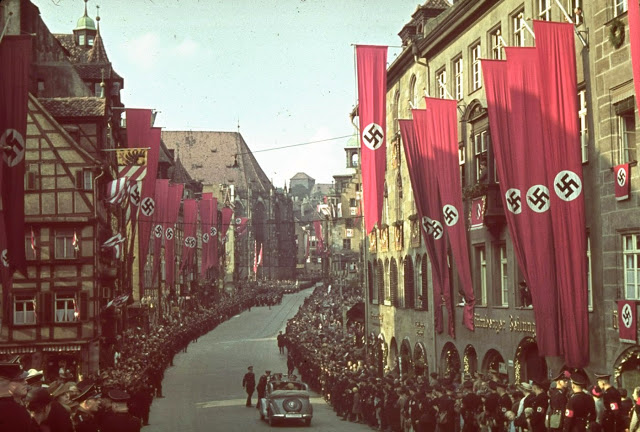
Nuremberg, Germany, 1938.
Reich Minister of Propaganda Joseph Goebbels speaking at the Lustgarten in Berlin, 1938.
Reich Party Congress, Nuremberg, Germany, 1938.
Reich Veterans Day, 1939.
Scene along roadway to the Fallersleben Volkswagen Works cornerstone ceremony, Germany, 1938.
Volkswagen Works cornerstone ceremony, near Wolfsburg, 1938.
Another image from Volkswagen Works cornerstone ceremony, near Wolfsburg, 1938.

Photos: Hugo Jager/LIFE Magazine

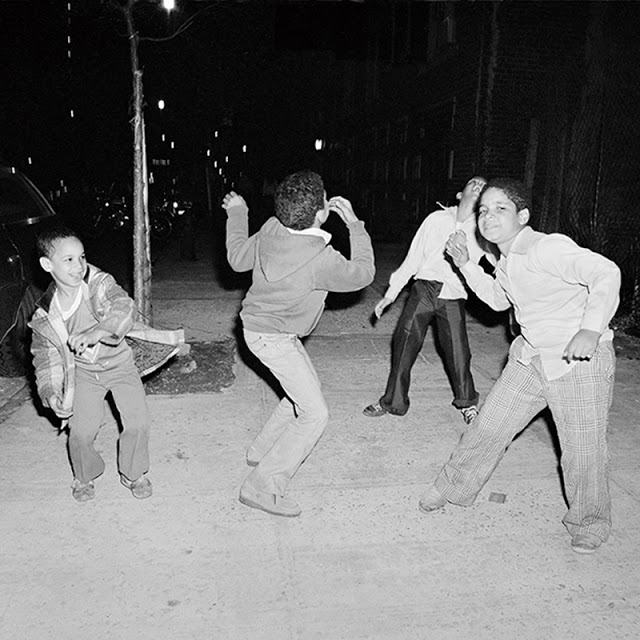
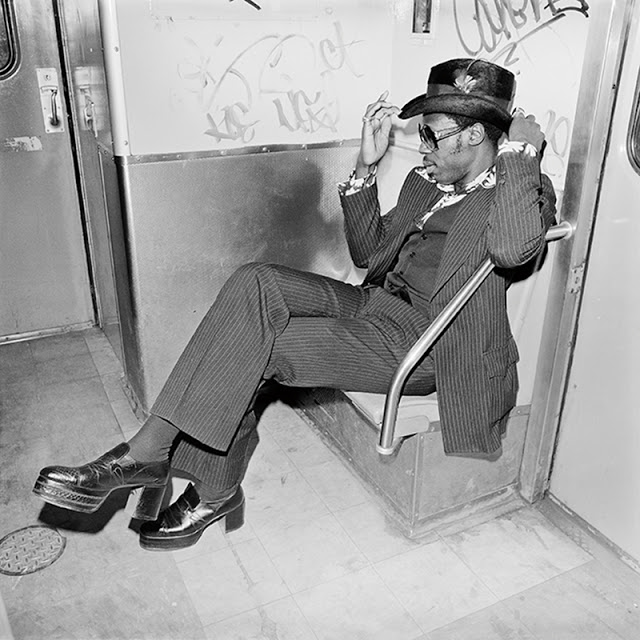
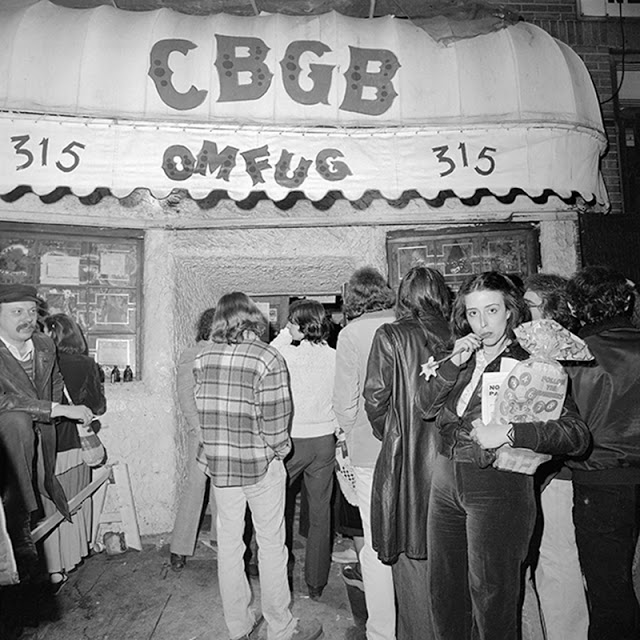
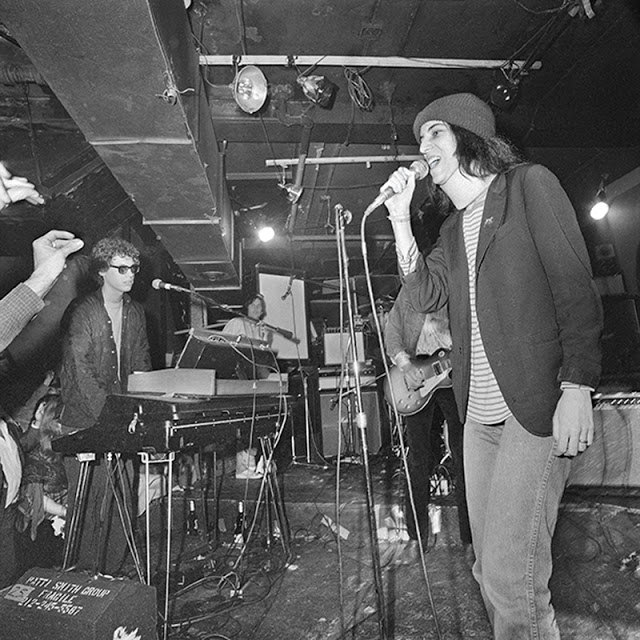
35 Amazing Vintage Photographs of New York During the 1970s

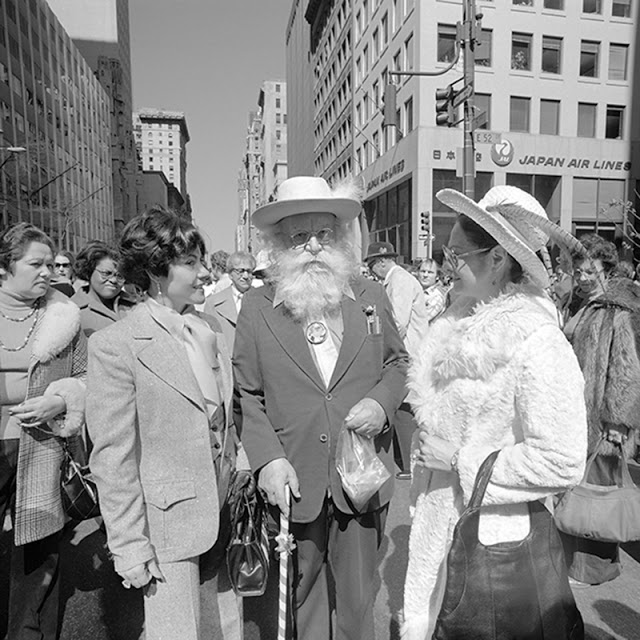
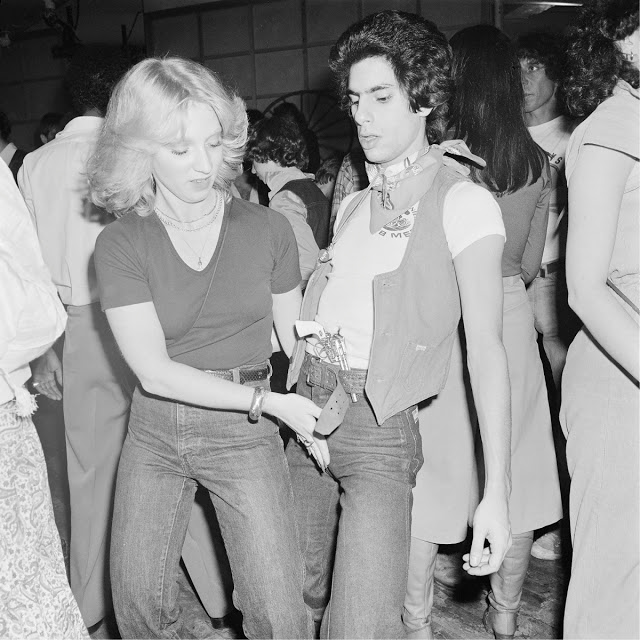
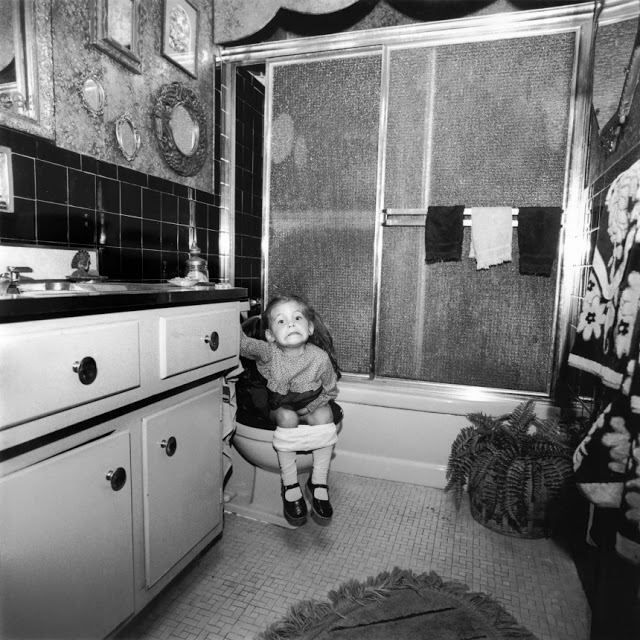
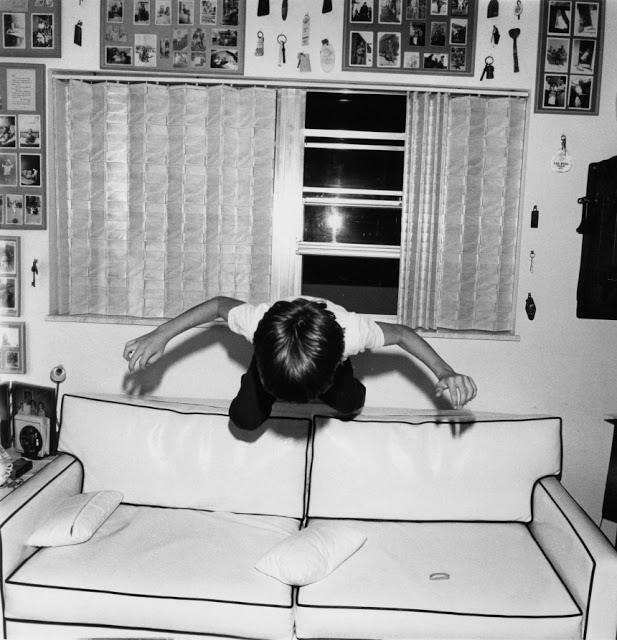
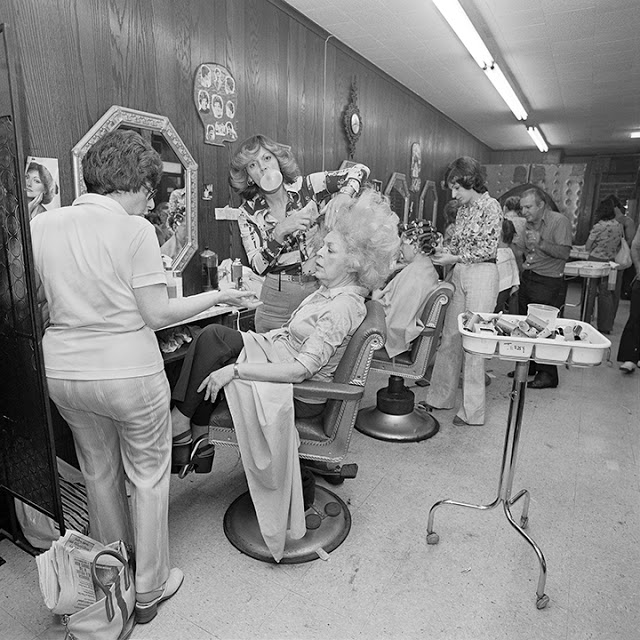
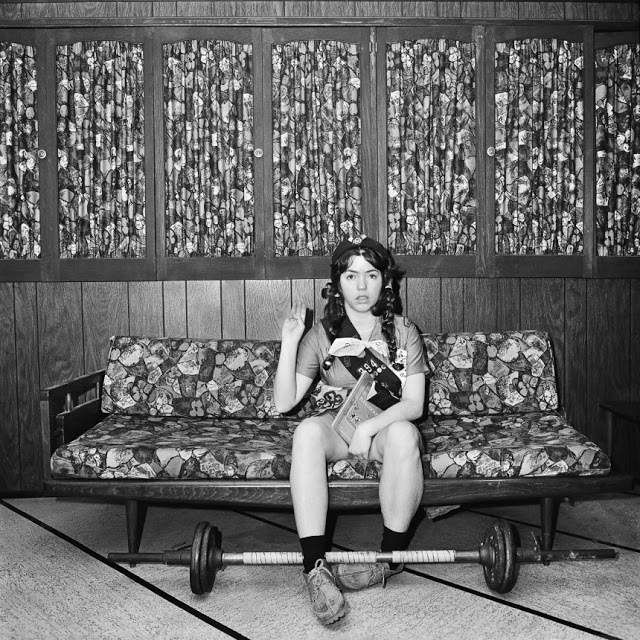
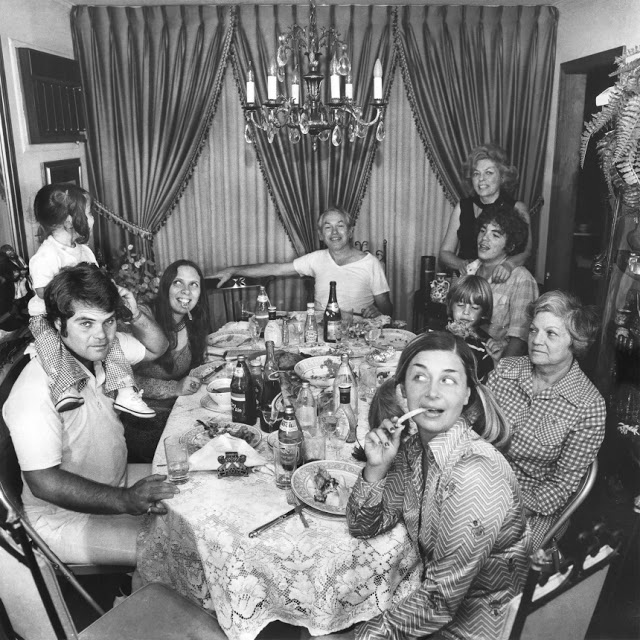
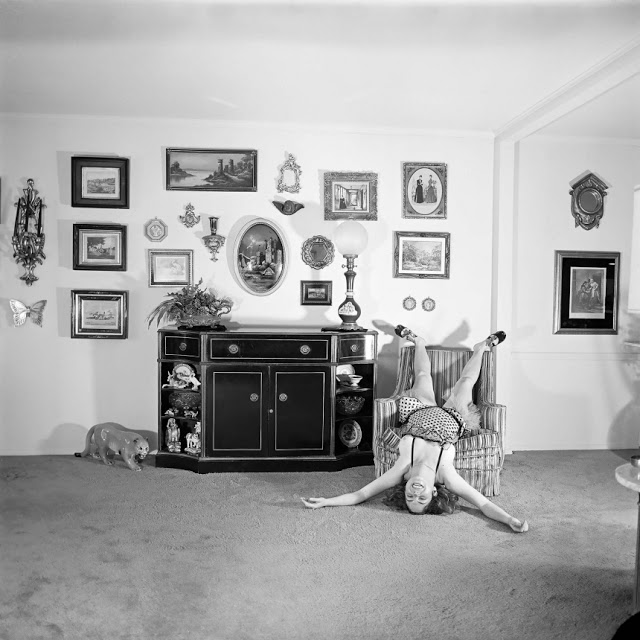
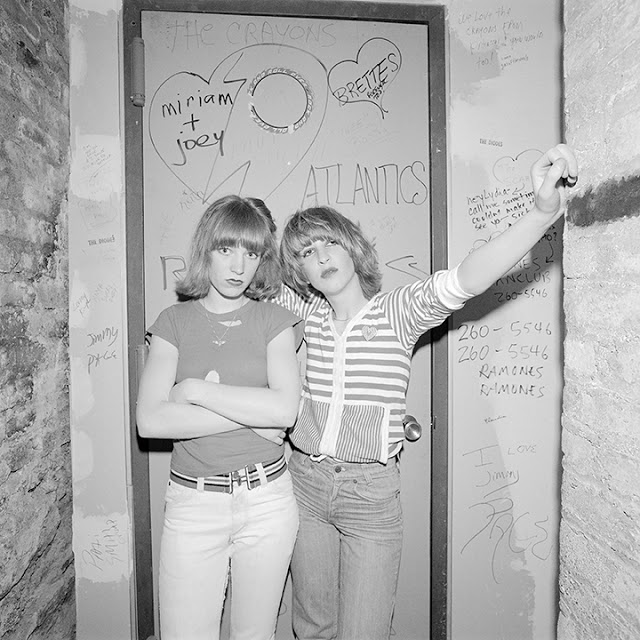
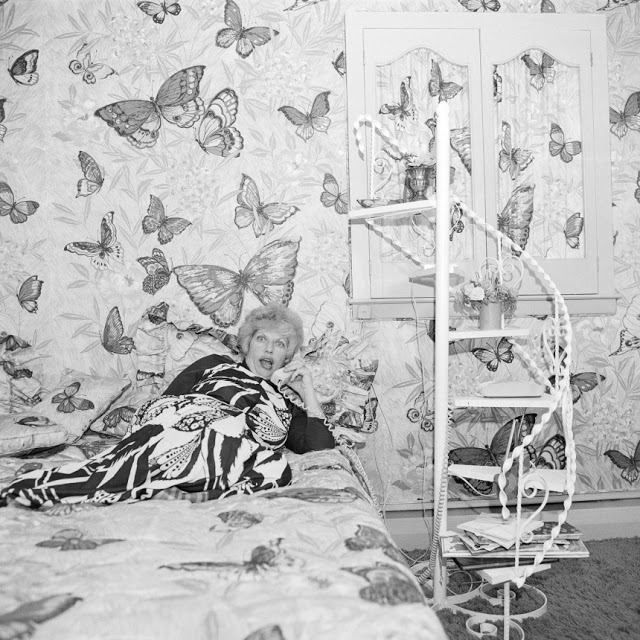
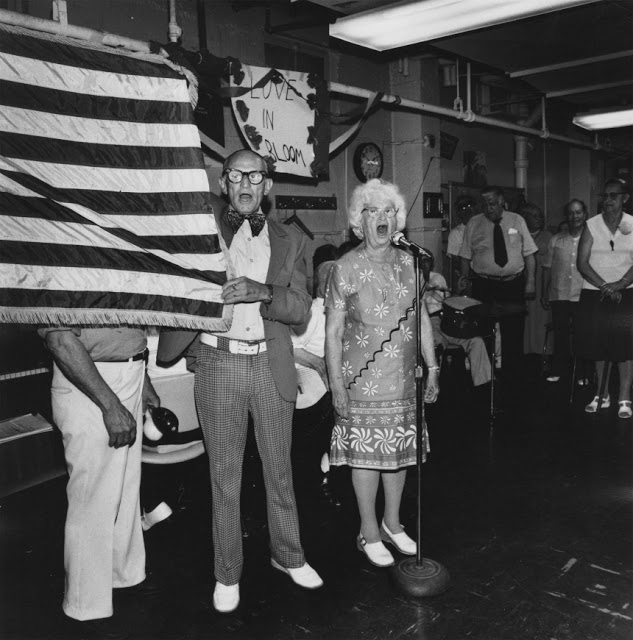
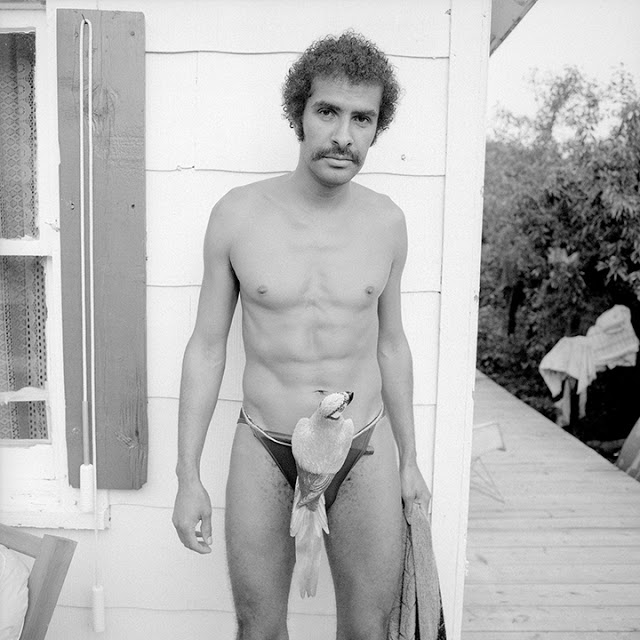
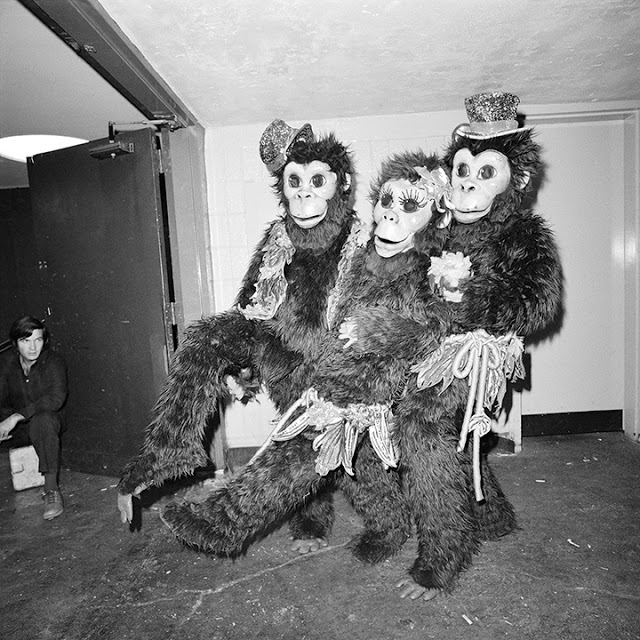
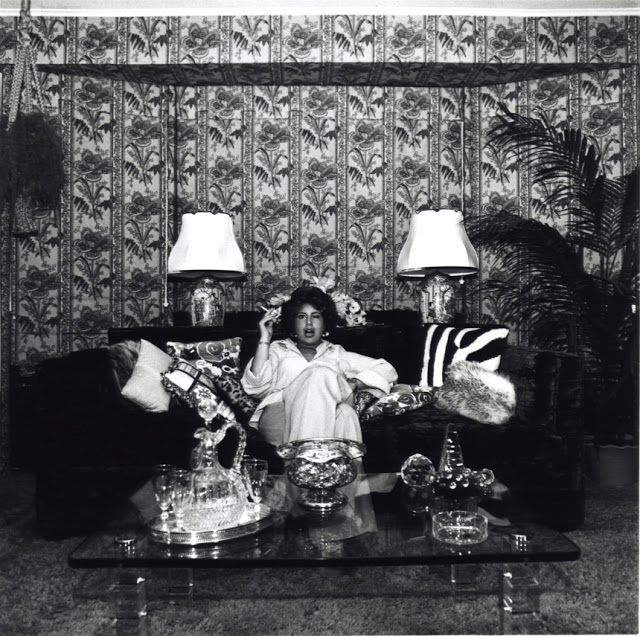
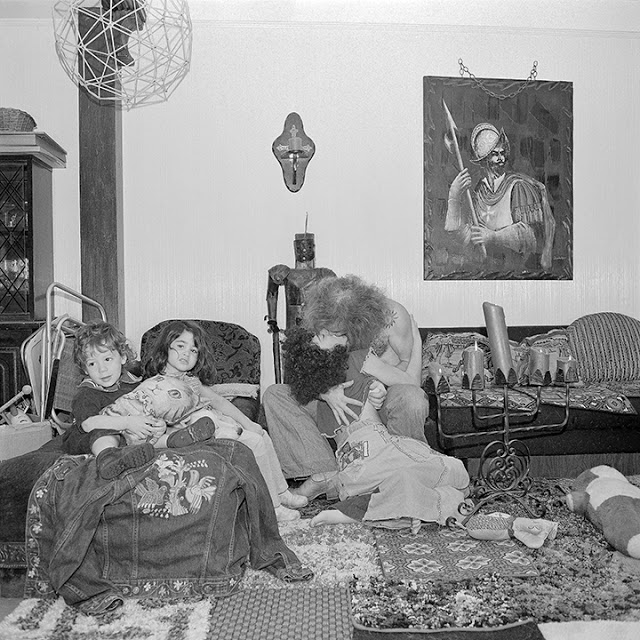
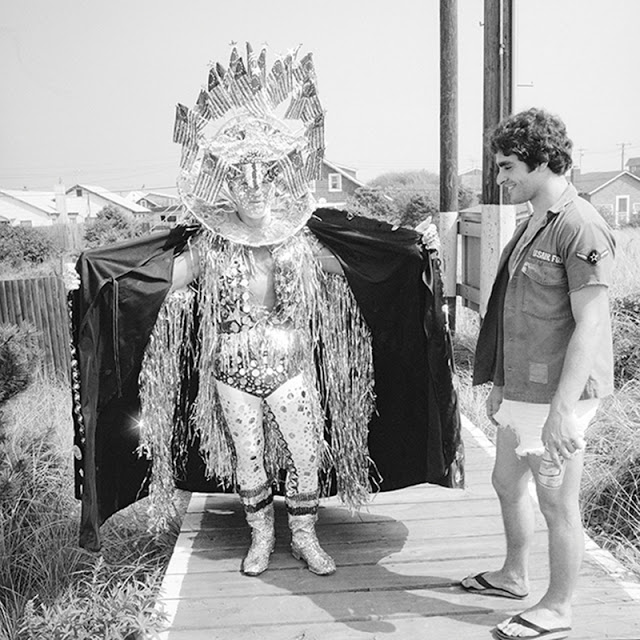
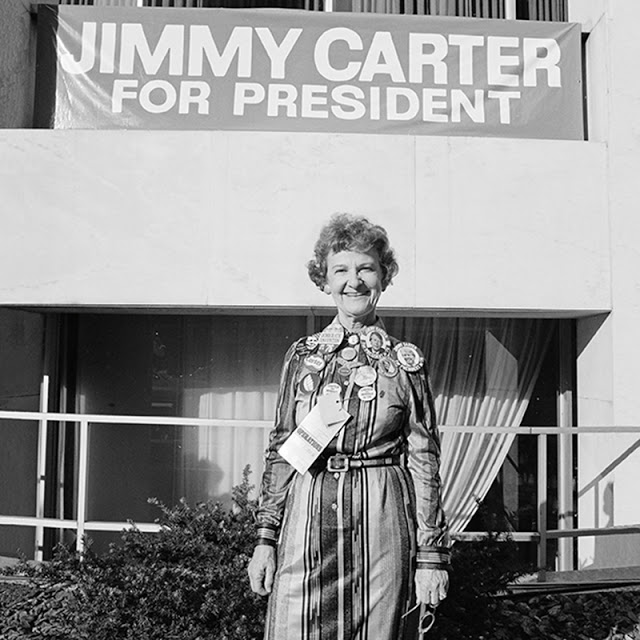
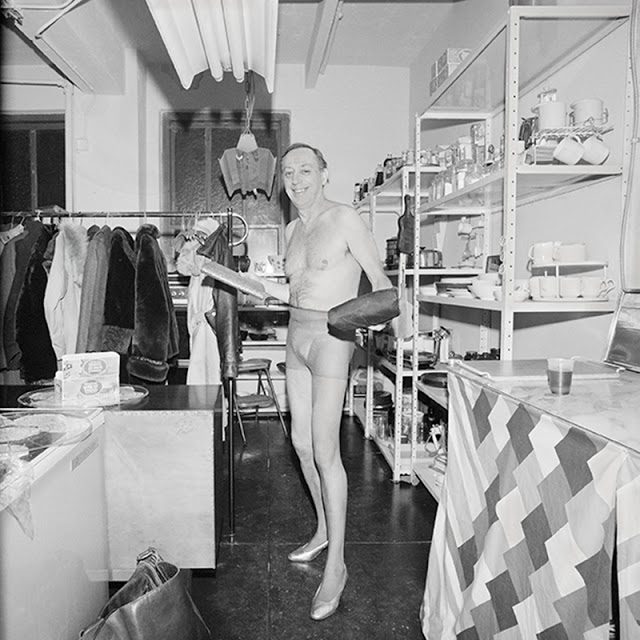
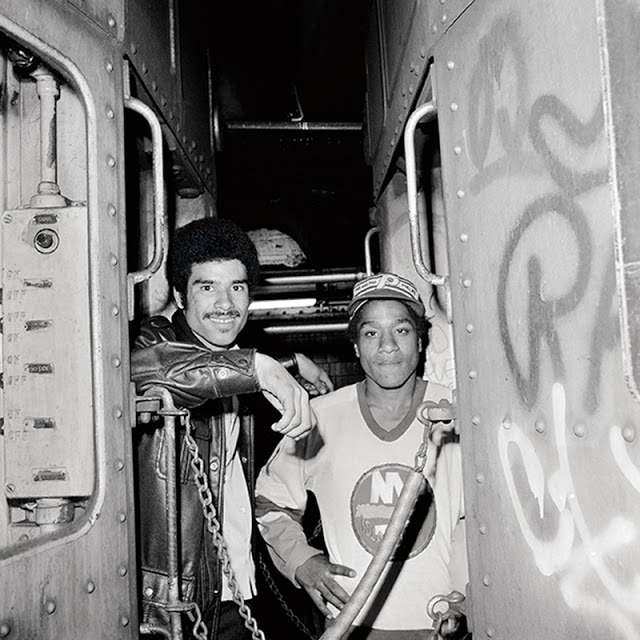
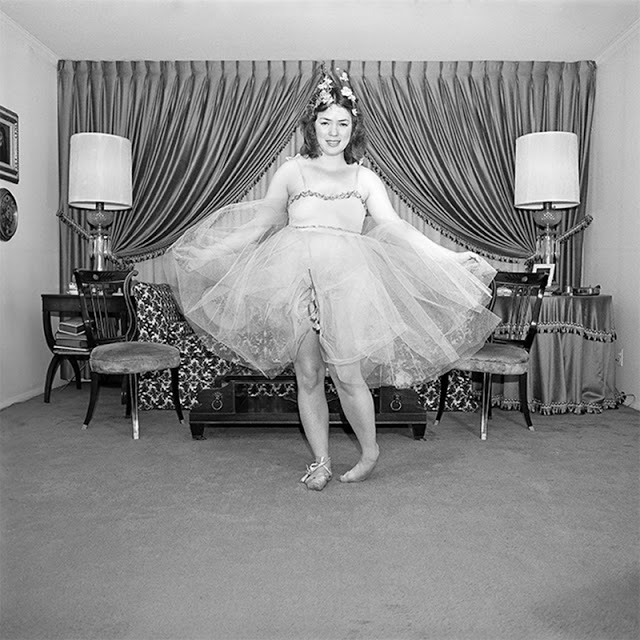
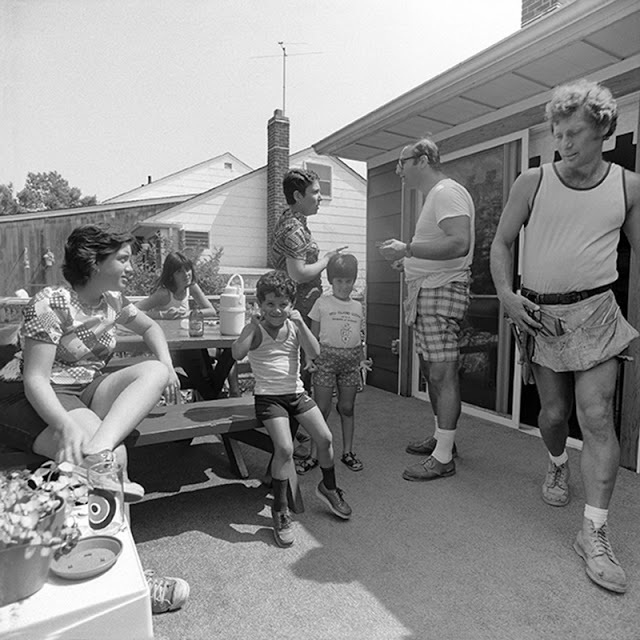
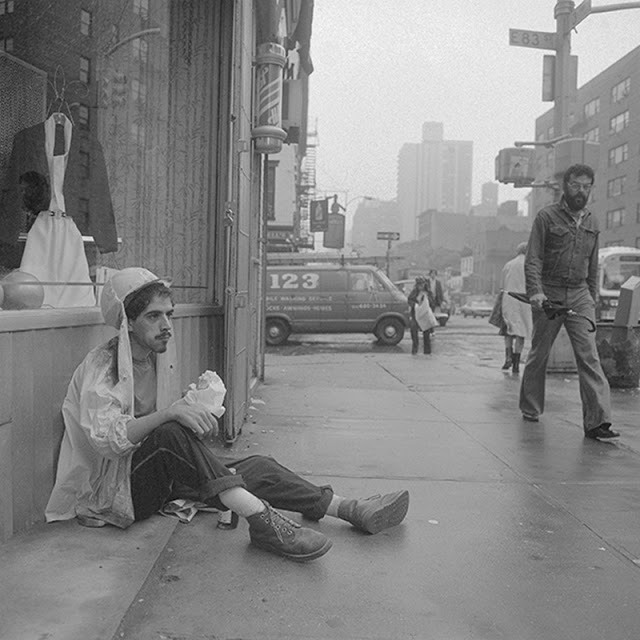
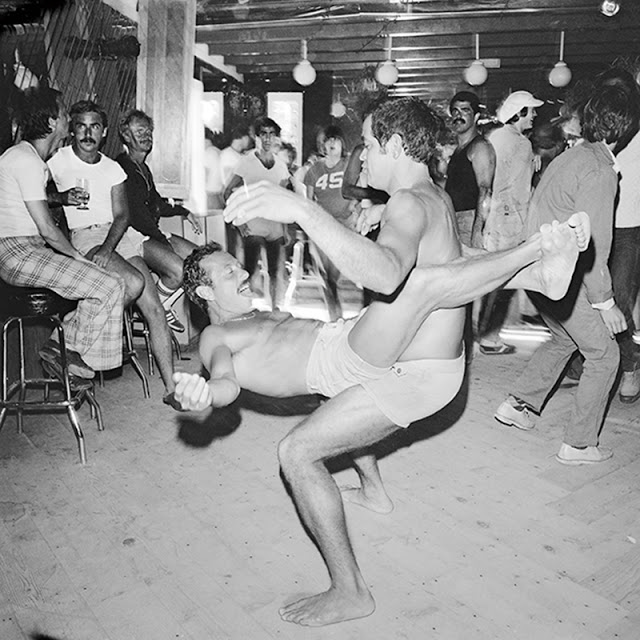
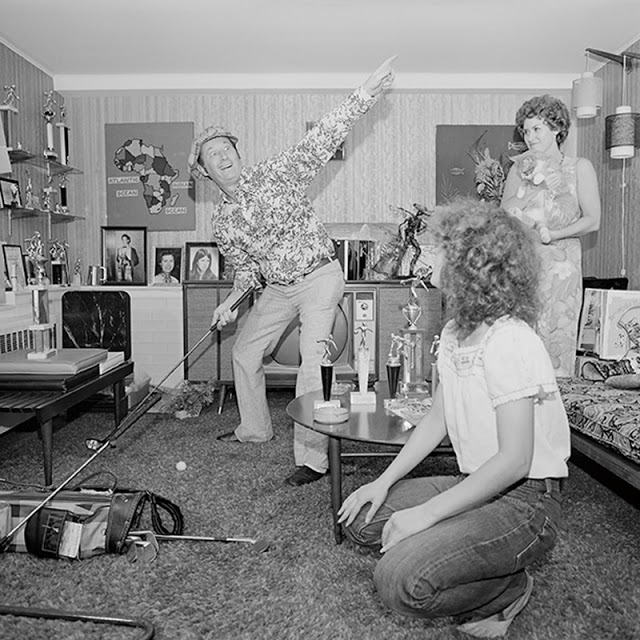
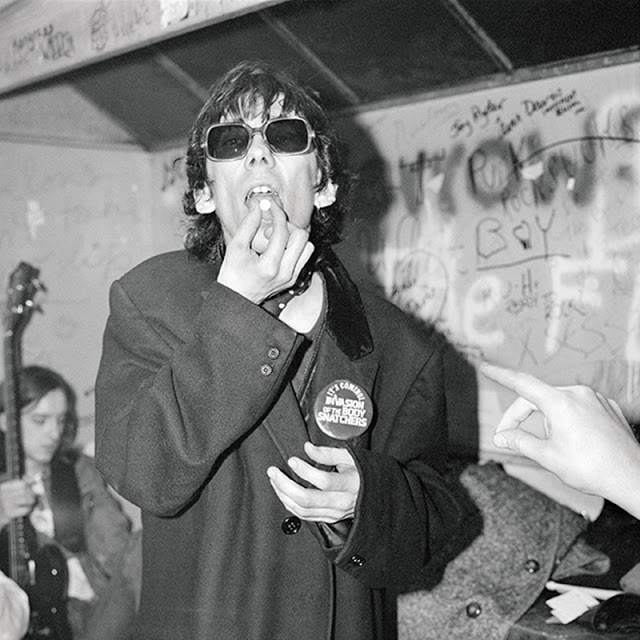
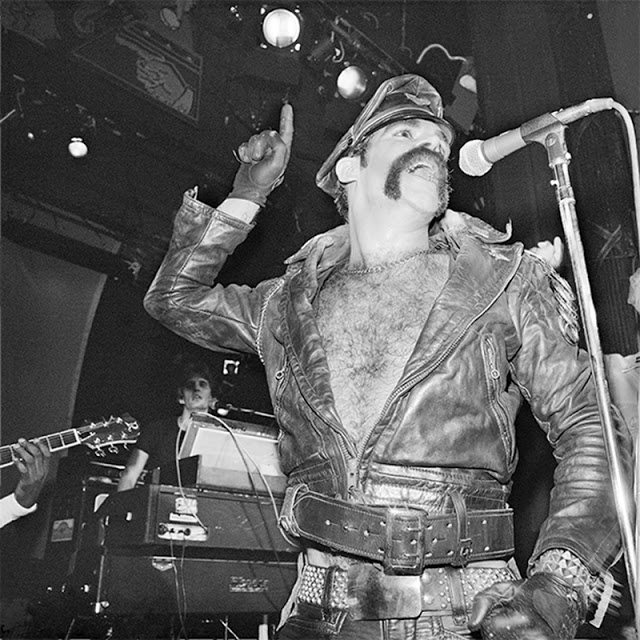
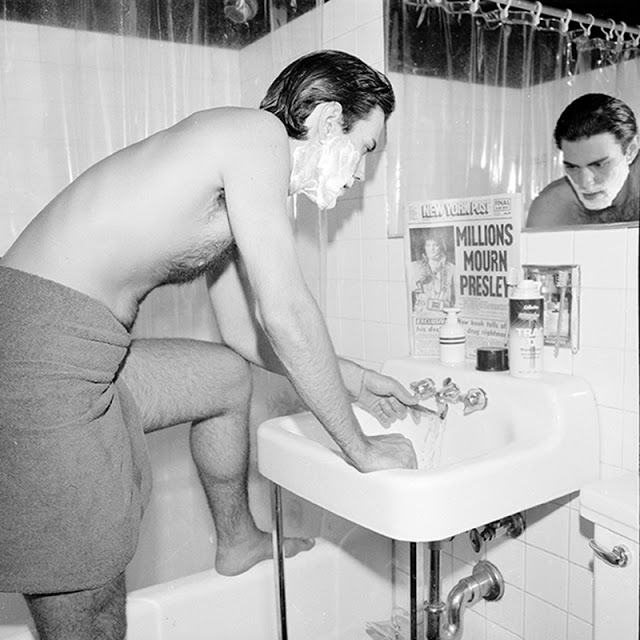
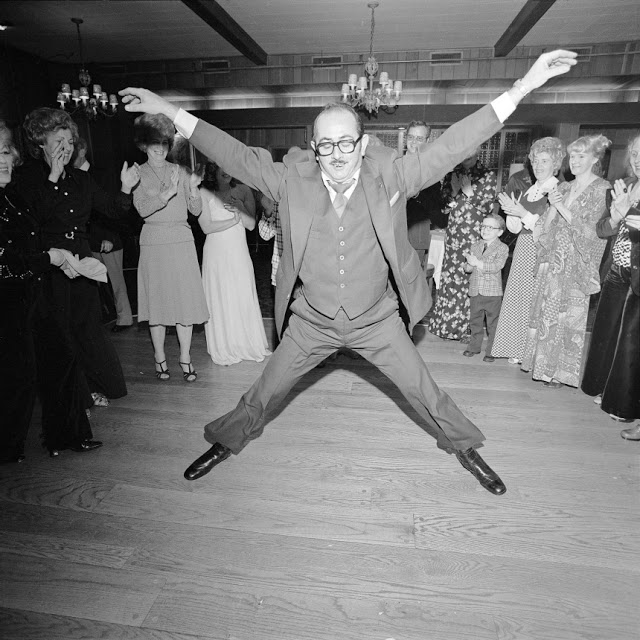
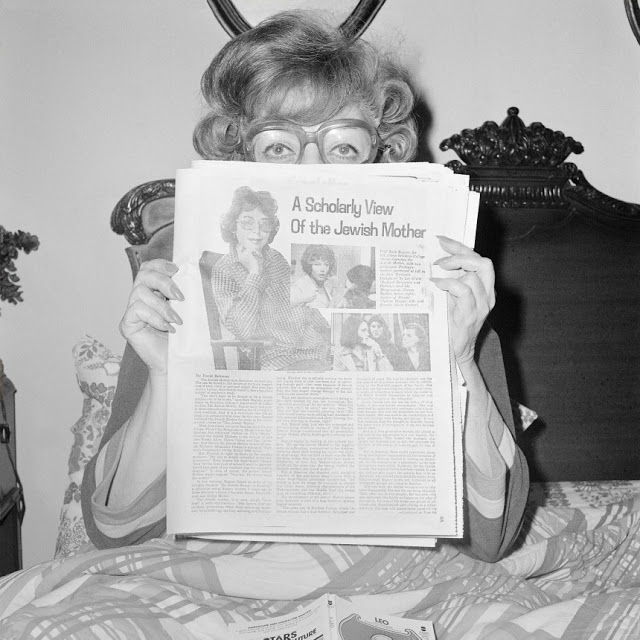
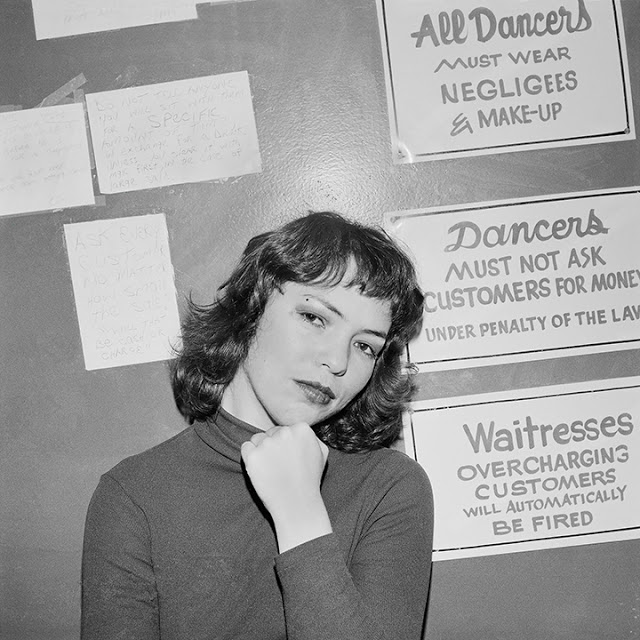
Meryl Meisler is a photographer based in New York. Inspired by Diane Arbus and Jacques Henri Lartigue, she began photographing herself, family, and friends while enrolled in a photography class taught by Cavalliere Ketchum at The University of Wisconsin, Madison.

In 1975, Meryl returned to New York City and studied with Lisette Model, continuing to photograph her hometown and the city around her. Carrying her medium format camera everywhere with great delight – Meryl photographed the world she knew on Long Island– donning childhood uniforms and costumes for self-portraits, comedic insider views of family and friends homes, the hilarity of her parents’ Mystery Club circle. “Not in mine eyes alone is Paradise,” declares Dante in Paradiso. Many viewed ‘70s NYC as hell, purgatory at best. With an open mind and heart, Meryl found paradise photographing the streets and nightlife of The City, many so wild she never dared to show them until now.

Paradise & Purgatory: SASSY ’70s Suburbia & The City juxtaposes intimate images of home life on Long Island alongside NYC street and night life – the likes of which have never been seen. Quirky, nostalgic and a bit naughty, it’s a genuine cultural capsule of a decade that captivates today’s generation. The photos and stories illustrate Meryl’s coming of age: The South Bronx, suburbia, The Mystery Club, dance lessons, Girl Scouts, the Rockettes, the circus, school, mitzvahs, proms, weddings, gay Fire Island, the Hamptons, feminists, happy hookers, CBGB, Punks, Disco, After Hours and Go-Go Bars, Jewish and LGBT Pride, street life, home theatrics, holidays, friendship, family and love. She had to photograph it to make sense of it all, to hold onto the time, to release and now finally share it. The ’70s were sassy, but also sweet, and so was Meryl.

(Photos © Meryl Meisler)

From Meryl Meisler’s book “Purgatory & Paradise SASSY ’70s Suburbia & The City”, and is available for purchase here: https://www.strandbooks.com/search-results?page=1&Meryl%20Meisler&searchVal=Meryl%20Meisler&type=product

http://www.merylmeisler.com

14 Historical Nebraska Mug Shots from the Late 19th and Early 20th Centuries

Photography revolutionized crime investigations. Beginning in the mid 1800s, police photographed the faces of known criminals. Called “mug shots” (after the British slang word “mug” meaning “face”) these images replaced drawings and descriptions on wanted posters. Scientists even studied mug shots to see if physical traits could predict criminal behavior.

The Nebraska State Penitentiary used photography beginning in 1867 to record the likeness of the state’s most infamous residents. The Omaha police photographed suspects when arrested. Whether the people depicted were guilty or innocent, behind every photograph is a human story. This glimpse back at some of the thousands of photographs in the Nebraska State Penitentiary and Omaha Police Court Collections at the Nebraska State Historical Society and their accompanying tales offer insights into how earlier Nebraskans ran afoul of the law, and how some attitudes about crime and punishment may have changed.

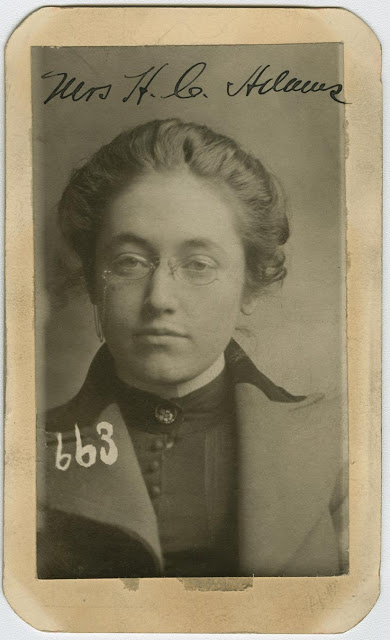
Mrs. H. C. Adams – Blackmail

Looks can often be deceiving. Mrs. H.C. Adams looks every bit the typical Victorian lady. Her elegant hairstyle and wire-rimmed glasses hide a dark secret. Mrs. Adams was arrested in Omaha on April 12, 1900 for blackmail. She listed her residence as Palisade, Nebraska, and her occupation as prostitute. The police record describes her as 5 feet, 1 inch tall with a medium build and a sallow complexion.

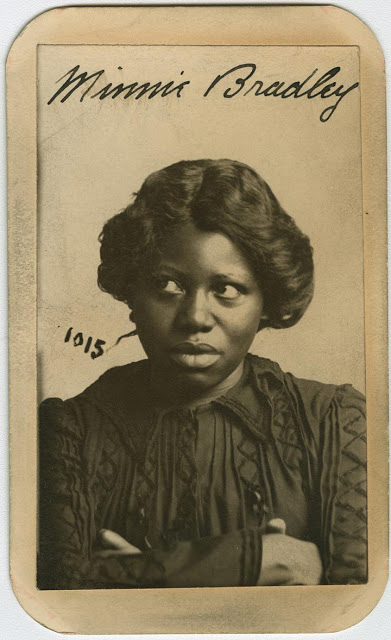
Minnie Bradley – Larceny from a person

Minnie Bradley refuses to look at the camera in her Omaha Police Court mug shot. Minnie, 27, and 5 foot 2 inches tall was arrested in Omaha on December 13, 1902 for larceny from a person. She listed her residence on north 11th Street in Omaha and her occupation as prostitute. The description also noted that Minnie wore a wig.

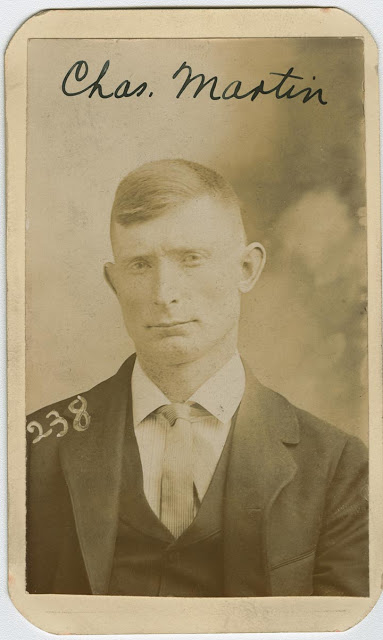
Charles Martin – Safe blowing and burglary

Three burglars blew up a safe in a bank vault in Sheridan, Missouri, on the night of February 15, 1898. They got away with about $2,400. The bank’s insurance company hired the famed Pinkerton Detective Agency and sent Assistant Superintendent F.H. Tollotson to hunt down the burglars. Tollotson tracked one of the wanted men through Missouri to Council Bluffs and eventually to a room at the Sheridan Hotel in Omaha. With the aid of the Omaha police, Tollotson apprehended a gun-welding fugitive after a brief struggle. The alleged bank robber gave his name as Charles Martin, but had several letters addressed to Charles Davis. Martin was unknown to Omaha police, but some detectives speculated to newspaper reporters he could be the notorious safe blower and bank robber Sam Welsh. At the time of his arrest, Martin had a gold watch and $565 in cash believed to be his share of the spoils of the Missouri bank robbery. Martin was taken to the police court where he was measured, photographed, and locked up while he awaited his transfer to Missouri.

Albert Johnson – Grand larceny

In March 1885, Albert Johnson arrived at the Nebraska State Prison sporting an impressive handlebar mustache. Johnson was sentenced to 1 year and 6 months for grand larceny. Because of prison policy to reduce lice, authorities shaved Johnson’s head and facial hair.

pictur #5 Detailed descriptions and mug shots were important to police and prison authorities. Criminals easily changed names and created numerous identities. Typically, three mug shots taken of each prisoner. One before their heads were shaved and a full-faced and profile image after their hair was removed. Women only had a full-face and profile image. Their hair was not cut.

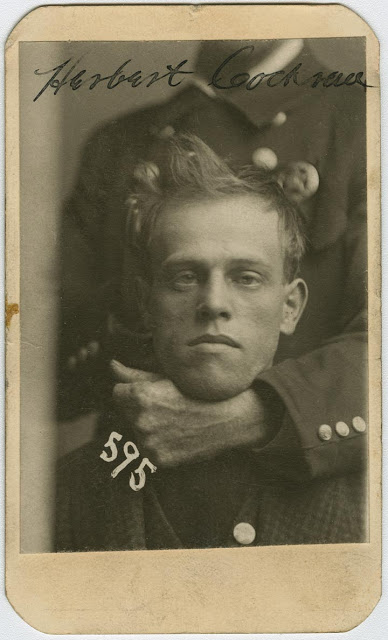
Herbert Cockran – Burglary

An unidentified member of the Omaha police force holds Herbert Cockran in a headlock during his mug shot. Cockran was arrested on November 24, 1899, for burglary. A tailor from Fairmont, Nebraska, Cockran had a slightly stooped build with a fair complexion and his eyebrows met at the root of his nose, according to the police description.

James Collins – Burglary

James Collins was arrested in Omaha in May 12, 1897 for burglary. In his mug shot, Collin’s head has been bandaged. According to the police record, Collins escaped and was rearrested. The 23 year-old Omaha tailor was sent to the Nebraska State Prison on March 19, 1898, to serve a five-year sentence.

George Leonard – Burglary

George Leonard appears quite harmless with his boyish looks and freckles. The Omaha bookkeeper was arrested for burglary on December 23, 1901. His large silk bowtie sits slightly askew against his stiffly collared shirt.

F. P. Robinson – Fraud

F.P. Robinson attempted to pay for a glass of beer in a lower Douglas Street saloon in Omaha with a Mexican dollar on November 21, 1901. The beer cost only a nickel and Robinson received 95 cents of American money in change. At the time, the foreign dollar looked very similar to the American currency, but was only worth about 45 cents. This clever money scam left Robinson 50 cents and a glass of lager ahead of the game, until he was arrested.

Nora Courier – Horse stealing

Meet Nora Courier, better known as “Red Nora.” On March 31, 1901, Omaha police arrested Nora for stealing a horse. According to police court records, she was 22 years old and stood 5 feet, 3 inches tall. She had slate blue eyes and a scar on the center of her forehead.

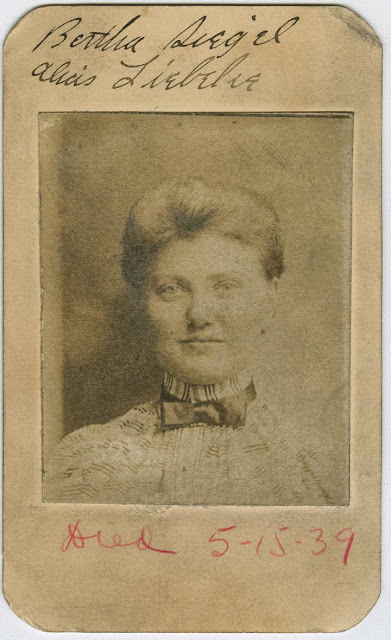
Bertha Liebbeke – Grand larceny

Bertha Liebbeke earned the reputation of being one of the Midwest’s most notorious pickpockets. She would search out a well-dressed man, ideally with a diamond-studded lapel pin. Bertha would then “accidently” stumble into the helpless victim, pretending to faint into his arms. While he attempted to help her, Bertha would relieve the gentleman of his valuables or wallet. This trick earned her the nickname “Fainting Bertha.”

Authorities from Illinois, Kansas, Iowa, Missouri, and Nebraska knew Bertha and her tricks. Her aliases included Bertha Liebke, Jennie Jennings, Bertha Nixon, J. Armstrong, Carrie Jones, Bessie Milles and Menni Swilson, and Bertha Siegel, the name on her Omaha Police Court mug shot.

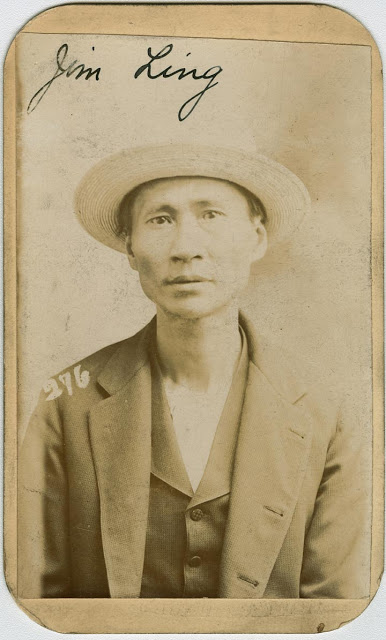
Jim Ling – Keeping an opium joint

Omaha police arrested Jim Ling for operating an opium joint on June 3, 1898. The back of his mug shot lists his occupation as thief. Ling was described as 5 feet, 6 inches tall and weighing 104 pounds with black hair and hazel eyes.

James White Water – Manslaughter

James Whitewater killed two men. While in prison from 1872-1889, he embraced Christianity. In 1889, the Nebraska legislature passed an act allowing the governor to pardon 2 inmates who had “been in jail more than 10 years or whose conduct while incarcerated merited such mercy.” When released, Whitewater walked through the prison gates and “rolled in the grass from joy.”

Thomas Whitney – Obtaining money under false pretenses

Thomas Whitney, known to his clients as the Professor, advertised extensively in Omaha newspapers as a clairvoyant, palmist, and astrologer. Whitney claimed he had no equal in giving advice on love, law, deeds, wills, mining, divorce, changes, investments, patents, and all other business of a financial nature. Readings cost only $1 for gentlemen and $.50 for ladies. One of his customers proved to be unsatisfied with the readings and the Professor was arrested for obtaining money under false pretenses in December 1915. According the description on his mug shot, Whitney had tattoos on both of his arms. The Omaha police released Whitney after he agreed to return the money.

Goldie Williams – Vagrancy

Goldie Williams defiantly crossed her arms for her Omaha Police Court Mug Shot. Arrested on January 29, 1898, Williams, also known as Meg Murphy, stood only 5 feet tall and weighed 110 pounds according to police records. She listed her home as Chicago and her occupation as a prostitute. According to her arrest descriptions, her left index finger was broken and she had a cut below her right wrist. Williams sports an elaborate hat with satin ribbons and feathers. She also wears large hoop earrings.

French Man Found a Box of 35mm Film Rolls in the Trash That Shows Life Inside Nazi POW Camp for Polish Officers

It was a winter night in 1999 and Olivier Rempfer, then 19, was walking back to his town of Cagnes-sur-Mer in southeastern France after an evening spent with friends in the neighboring town of Saint-Laurent-du-Var, when a wooden box on top of a trash container caught his eye. Curious, he opened the box and saw a number of cylindrical objects wrapped in paper.

Rempfer waited until he was back home to unwrap the objects. When he did, they turned out to be rolls of black and white 35mm film. Holding the filmstrips up to the light, he saw uniforms, barracks, guard towers — and men in costume onstage. Assuming the pictures must have been taking during the filming of a war movie, and the men in them to be actors, Rempfer set the box aside and forgot about it.

Years later his father, Alain Rempfer, came across the box. The elder Rempfer, a photographer, was also unsure what the film negatives showed — until 2003, when he bought a film scanner and eventually found the time to take a closer look at the images, around 300 of them. “I quickly realized that these were real, historical photos, taken during the war in a prisoner-of-war camp,” said Rempfer. “The brand name ‘Voigtländer’ was written on the edge of the film. That name wasn’t familiar to me from movies, but I knew Voigtländer was a German camera manufacturer.”

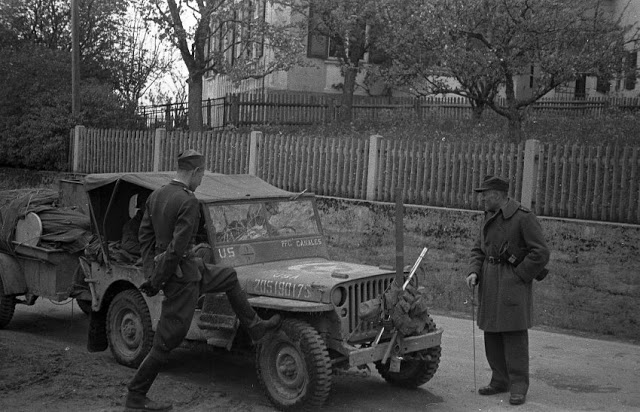
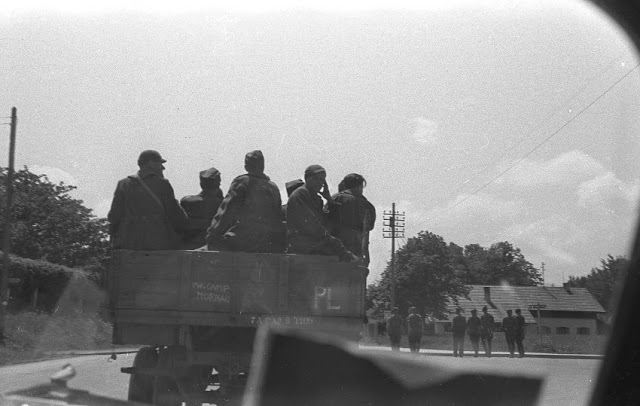
Rempfer looked for some clue as to where the pictures might have been taken. One showed a truck with several men seated on its bed. On the back of the truck, Rempfer made out the words “PW CAMP MURNAU” in white letters, then the letters “PL.” A little research showed that from 1939 to 1945, the German town of Murnau was the site of a prisoner-of-war camp for Polish officers.

Father and son studied the photographs closely and with fascination. “All these young men looked right at us through the camera, during the time they lived in the camp,” Alain Rempfer said. “And we don’t know their names or what their daily life was like there, we don’t know anything about their hopes, their feelings.” It was a strange experience as if someone had turned off the sound and left him watching a silent film.

The father and son decided a website would be the best way to show the pictures to the world. They hoped the images would reach anyone who might be interested in them, but especially family members of the former prisoners of war who might be looking for information, or might recognize someone in the photographs.

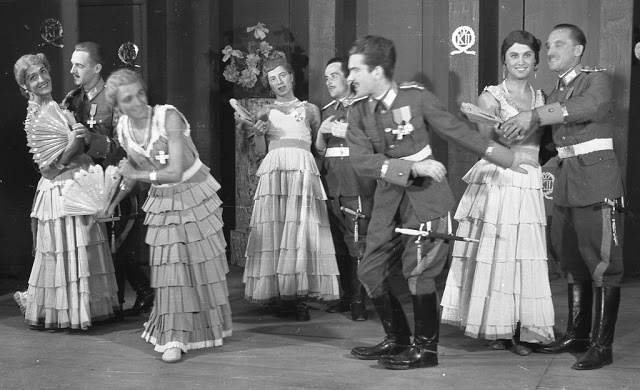
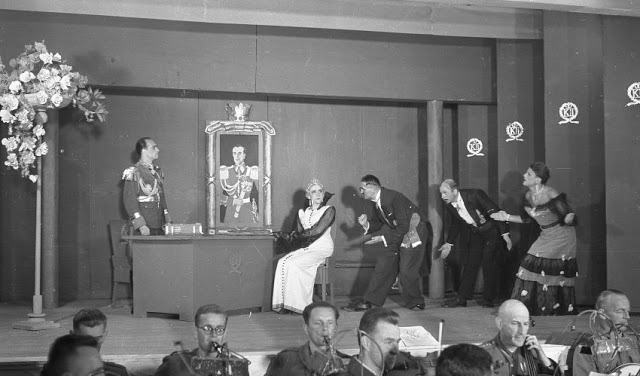
The Polish officers imprisoned in Murnau were allowed to put on plays and operettas as entertainment. Since there were no female inmates at the camp, men took on the women’s roles in drag, apparently having much fun with it.
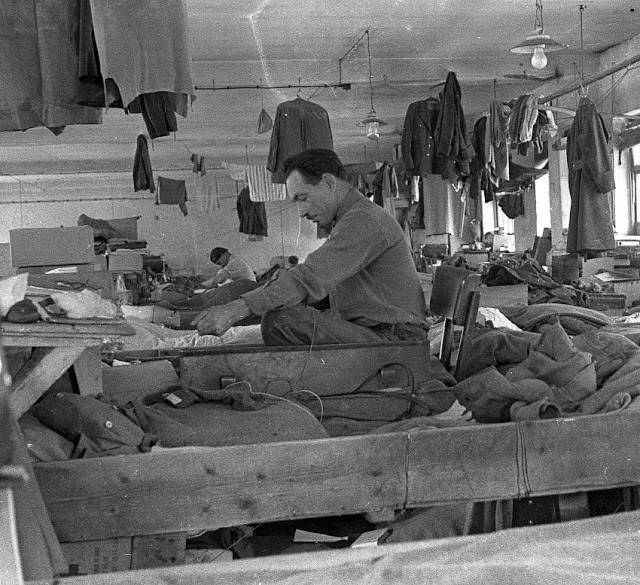
The eyewitness Tom Wodzinsky, who got in touch with the Rempfers after the publication of the pictures, said this photo likely shows the accommodations for junior officers and regular soldiers in blocks E, F, G, H and K in the camp.
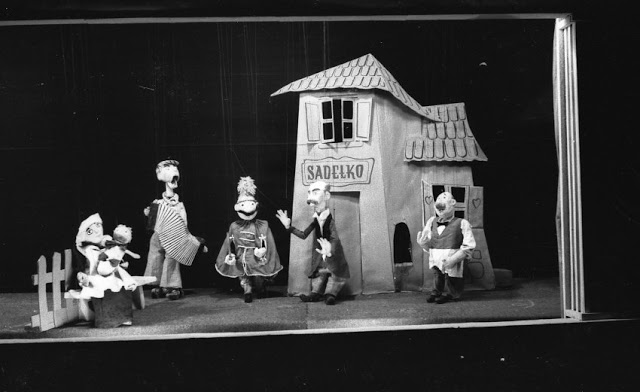
A scene from a marionette theater.
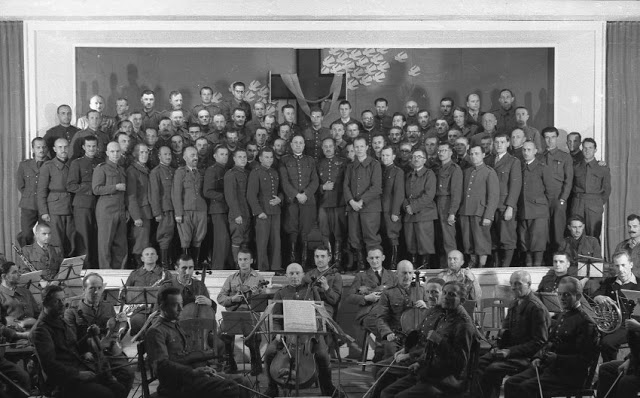
An orchestra was also part of the officers’ camp Oflag VII-A in Murnau. The officers’ audiences were composed of German soldiers at the camp, who occasionally brought their families with them to the shows.
A group of officers poses on the stage of the camp theater, with the orchestra in the foreground.
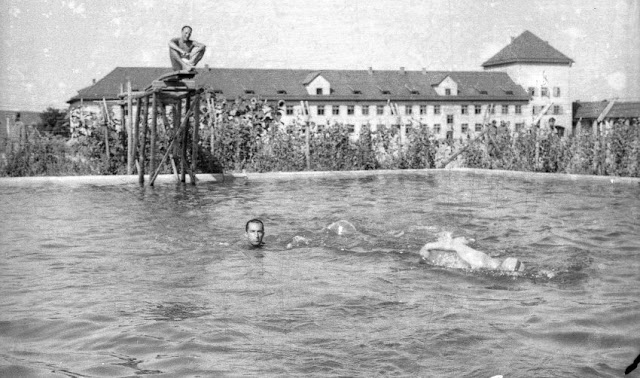
Some photos, like this one of a swimming pool, almost give the impression that Oflag VII-A was a wellness retreat center, not a prisoner-of-war camp. But the photo does not reveal whether the camp’s prisoners were allowed to swim, or if it was permitted only for the guards.
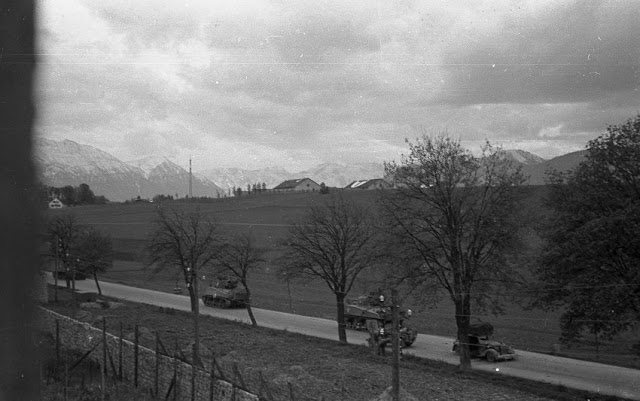
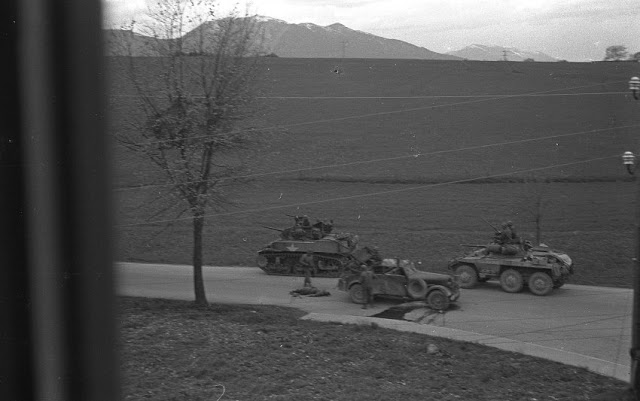
In the afternoon of April 29, 1945, American soldiers approached Murnau from the north as a vehicle with SS officers drives past.
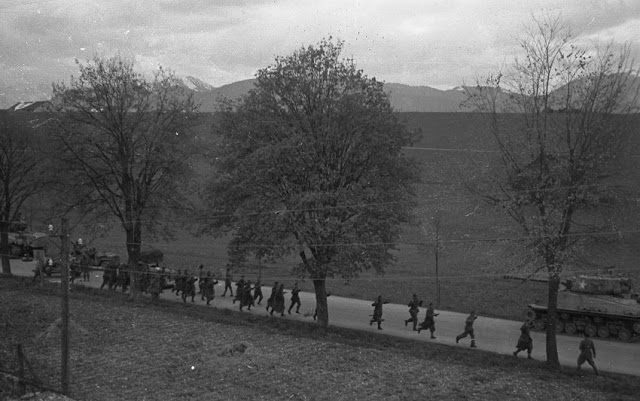
The two opposing sides met in front of the camp and engaged in a firefight. Most of the German soldiers turned around and fled.
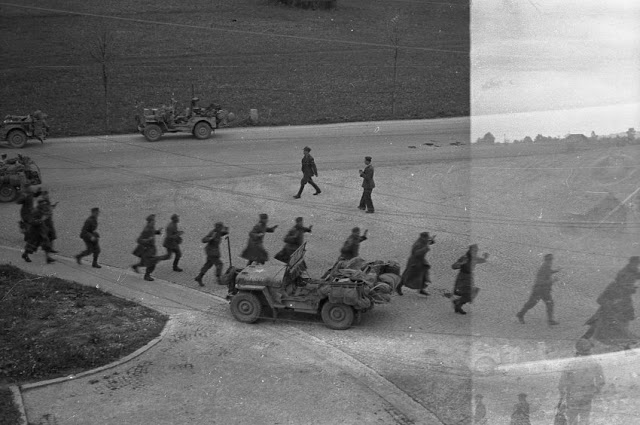
German soldiers retreated back in the direction of Murnau and the camp. Eyewitnesses say some prisoners climbed the fences and shot at the Americans.
The entire scene was captured by the unknown photographer from the window of a building in the camp.
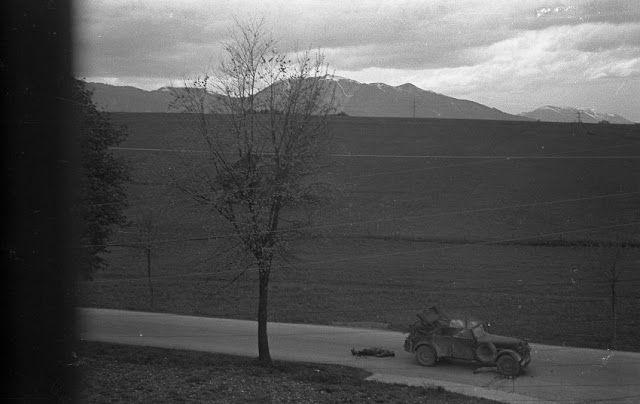
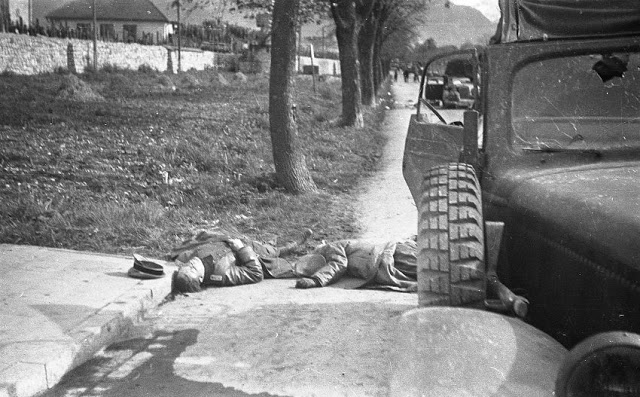
The photographer also snapped a shot of two dead SS men, identified by eyewitness Tom Wodzinsky as Colonel Teichmann and Captain Widmann.
Somewhat later, the photographer apparently left his position in the camp to get a closer look at the two dead German officers. The bodies by this point had been moved from the center to the side of the street.
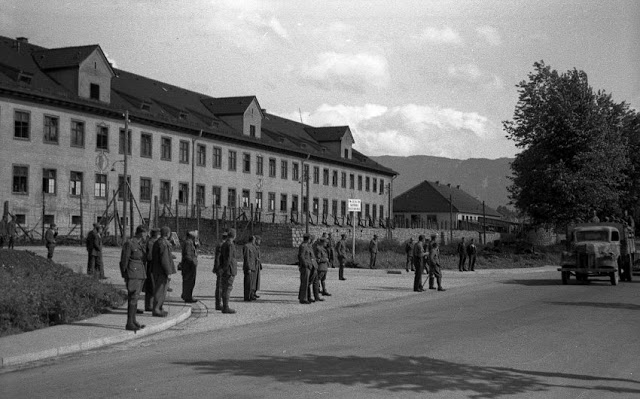
The entrance to Oflag VII-A in Murnau, taken on the day the camp was liberated by American forces on April 29, 1945. To the left of the vehicle is where the two Germans were shot and killed.
The identity of the photographer, who apparently was allowed to freely take pictures of the camp both before and after its liberation, remains a mystery.
This officer appears to wink at the camera after the camp’s liberation by American troops in 1945. His uniform suggests he was a member of the Polish military exiled to Great Britain. After Poland’s fall to Nazi Germany in 1939, the wartime government recognized by the Allies maintained its seat abroad, from 1940 onwards in London.
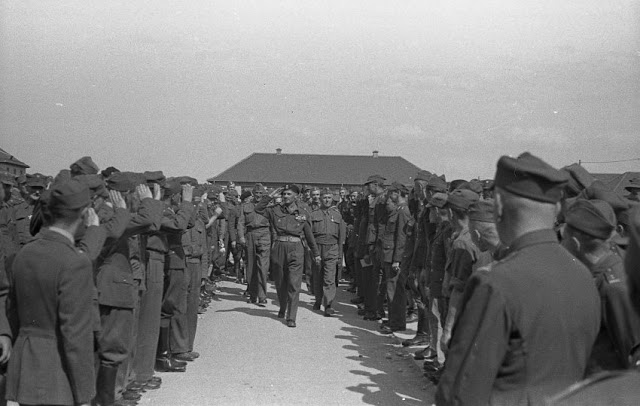
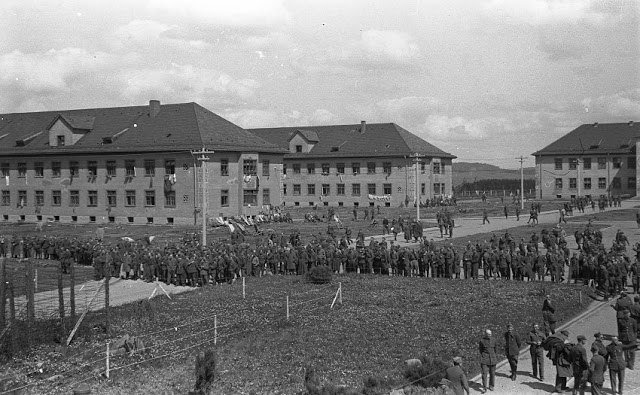
On April 29, 1945, the approximately 5,000 prisoners at the Murnau POW camp were liberated by American forces.
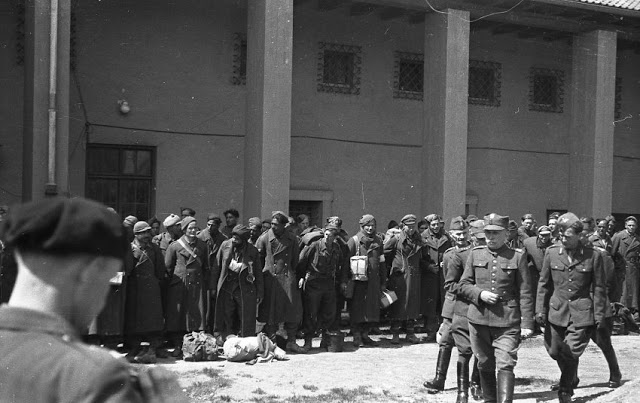
The men in the background here have their hands raised. They are possibly the German camp guards who surrendered and turned in their weapons, seen in the left foreground of the picture.
Here it appears the camp inmates are preparing for their depature from Murnau.
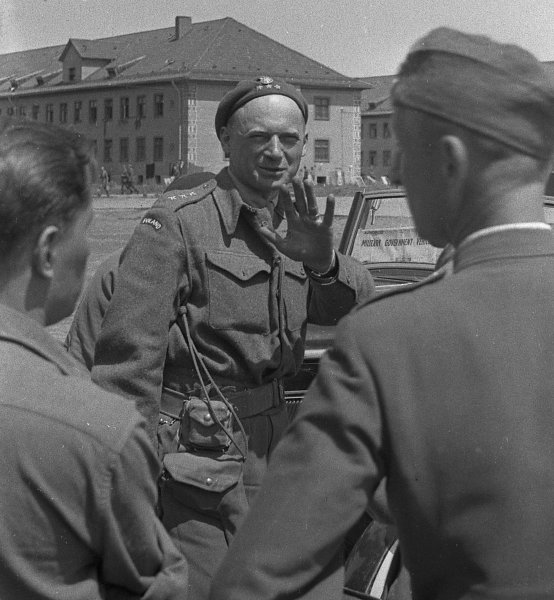
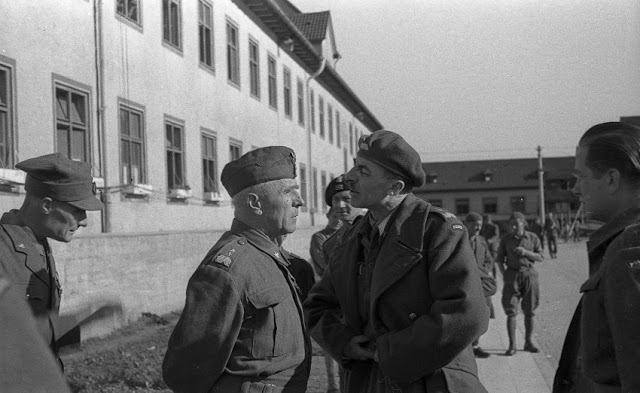
Two Polish officers at the camp converse. The photo begs the question of who the photographer was, since he was allowed to come so close to the men.
A relaxed atmosphere pervaded in the camp after its liberation by American forces in 1945. In front of the barracks on the left, some former inmates sit on lounge chairs in the sun.
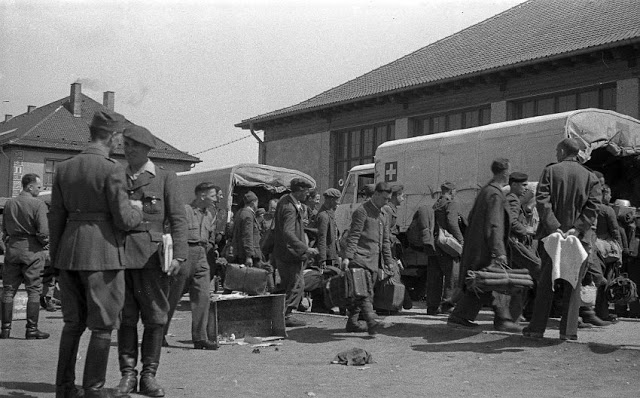
This photo was taken after the camp’s liberation. The men are apparently waiting for the truck that would take them away.
A caravan belonging to the Red Cross visits the camp after its liberation in order to bring them back home with their belongings.
Soldiers sit on a truck with the inscription “PW Camp Murnau.” It was this photo that gave Olivier Rempfer and his father, Aliain, the first clue as to where the photos where taken.
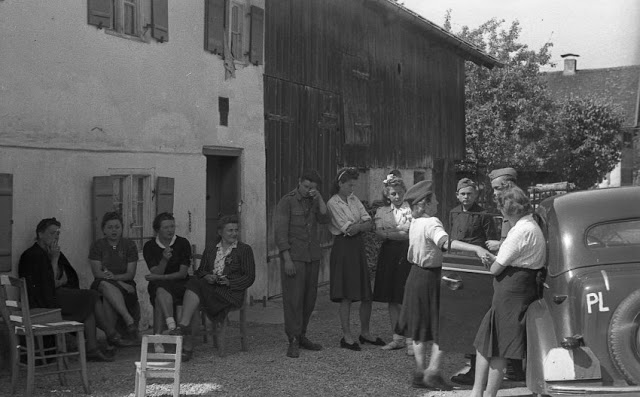
A few uniformed men stand relaxed by a car and converse with some women. Other women in civilian clothes sit by and smoke. Who are these people and what led the photographer to capture them in film?
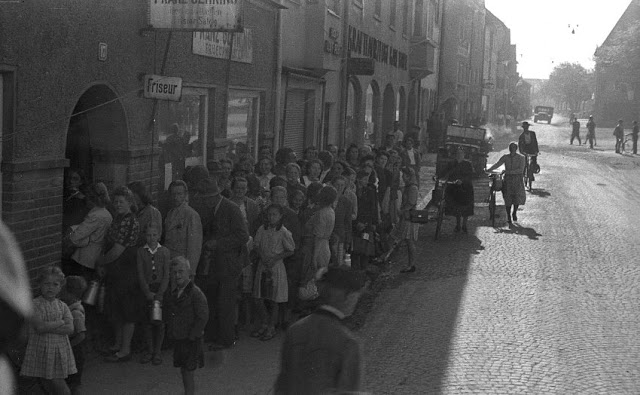
Among the photos of the POW camp are also some pictures from Munich, like this one showing Germans standing in line for milk.
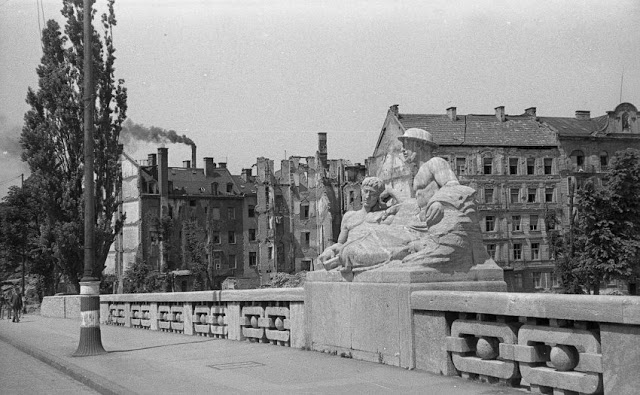
This photo shows Munich’s Reichenbach Bridge in front of the ruins of destroyed homes.
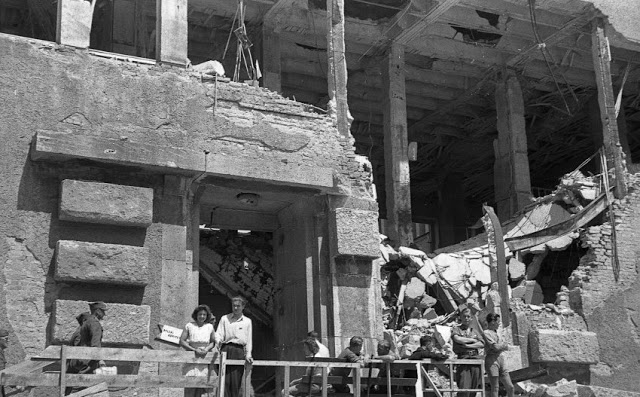
Another picture from Munich shows a young couple posing before a bombed-out building.

18 Fascinating Photos of Life in the Netherlands From the 1930s to the 1950s

The Netherlands, informally Holland, is a country located in Western Europe with overseas territories in the Caribbean. It is the largest of four constituent countries of the Kingdom of the Netherlands. In Europe, the Netherlands consists of twelve provinces, bordering Germany to the east, Belgium to the south, and the North Sea to the northwest, with maritime borders in the North Sea with those countries and the United Kingdom. In the Caribbean, it consists of the three constituent countries Aruba, Curaçao and Sint Maarten, together forming the Kingdom of the Netherlands. Further special municipalities: the islands of Bonaire, Sint Eustatius and Saba. The country’s official language is Dutch, with West Frisian as a secondary official language in the province of Friesland, and English and Papiamento as secondary official languages in the Caribbean Netherlands. Dutch Low Saxon and Limburgish are recognised regional languages (spoken in the east and southeast respectively), while Dutch Sign Language, Sinte Romani, and Yiddish are recognised non-territorial languages.

The four largest cities in the Netherlands are Amsterdam, Rotterdam, The Hague and Utrecht. Amsterdam is the country’s most populous city and nominal capital, while The Hague holds the seat of the States General, Cabinet and Supreme Court. The Port of Rotterdam is the busiest seaport in Europe. Amsterdam Airport Schiphol is the busiest airport in the Netherlands, and the third busiest in Europe. The country is a founding member of the European Union, Eurozone, G10, NATO, OECD, and WTO, as well as a part of the Schengen Area and the trilateral Benelux Union. It hosts several intergovernmental organisations and international courts, many of which are centred in The Hague, which is consequently dubbed ‘the world’s legal capital’.

Netherlands literally means “lower countries” in reference to its low elevation and flat topography, with only about 50% of its land exceeding 1 m (3.3 ft) above sea level, and nearly 26% falling below sea level. Most of the areas below sea level, known as polders, are the result of land reclamation that began in the 14th century. Colloquially or informally the Netherlands is occasionally referred to by the pars pro toto Holland. In the Republican period, which began in 1588, the Netherlands entered a unique era of political, economic, and cultural greatness, ranked among the most powerful and influential in Europe and the world; this period is known as the Dutch Golden Age. During this time, its trading companies, the Dutch East India Company and the Dutch West India Company, established colonies and trading posts all over the world.

With a population of 17.6 million people, all living within a total area of roughly 41,800 km2 (16,100 sq mi)—of which the land area is 33,500 km2 (12,900 sq mi)—the Netherlands is the 16th most densely populated country in the world and the second-most densely populated country in the European Union, with a density of 526 people per square kilometre (1,360 people/sq mi). Nevertheless, it is the world’s second-largest exporter of food and agricultural products by value, owing to its fertile soil, mild climate, intensive agriculture, and inventiveness.

The Netherlands has been a parliamentary constitutional monarchy with a unitary structure since 1848. The country has a tradition of pillarisation and a long record of social tolerance, having legalised abortion, prostitution and human euthanasia, along with maintaining a liberal drug policy. The Netherlands abolished the death penalty in Civil Law in 1870, though it was not completely removed until a new constitution was approved in 1983. The Netherlands allowed women’s suffrage in 1919, before becoming the world’s first country to legalise same-sex marriage in 2001. Its mixed-market advanced economy had the eleventh-highest per capita income globally. The Netherlands ranks among the highest in international indices of press freedom, economic freedom, human development and quality of life, as well as happiness. In 2020, it ranked eighth on the human development index and fifth on the 2021 World Happiness Index. (Wikipedia)

Puppet player carrying his Punch-and-Judy show / puppet show theatre across the Dam square in Amsterdam, the Netherlands. 1935.
Man and woman towing a cargo-boat through a ship-canal. The Netherlands, 1931.
Faeces-collector collecting toilet-waste in buckets. Amsterdam, the Netherlands, 1953.
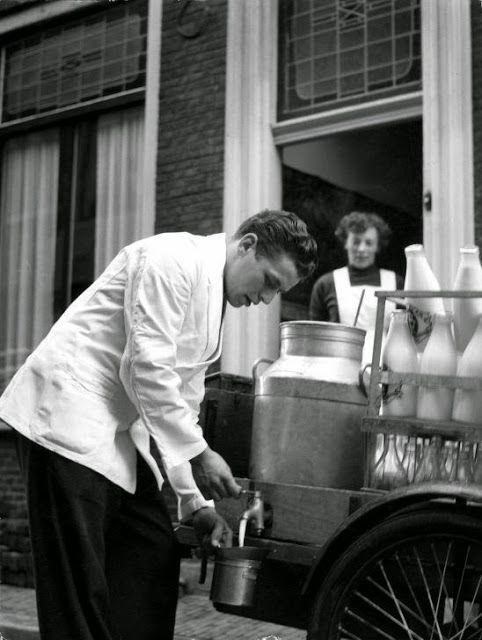
Milkman going from door to door in the streets. The Netherlands, 1956.
Type-setter composing a printing text with led letters.
Miners returning from work. Limburg (Dutch province), the Netherlands, 1946.
Housewife cleaning doormat with carpet-beater. The Netherlands, 1955.
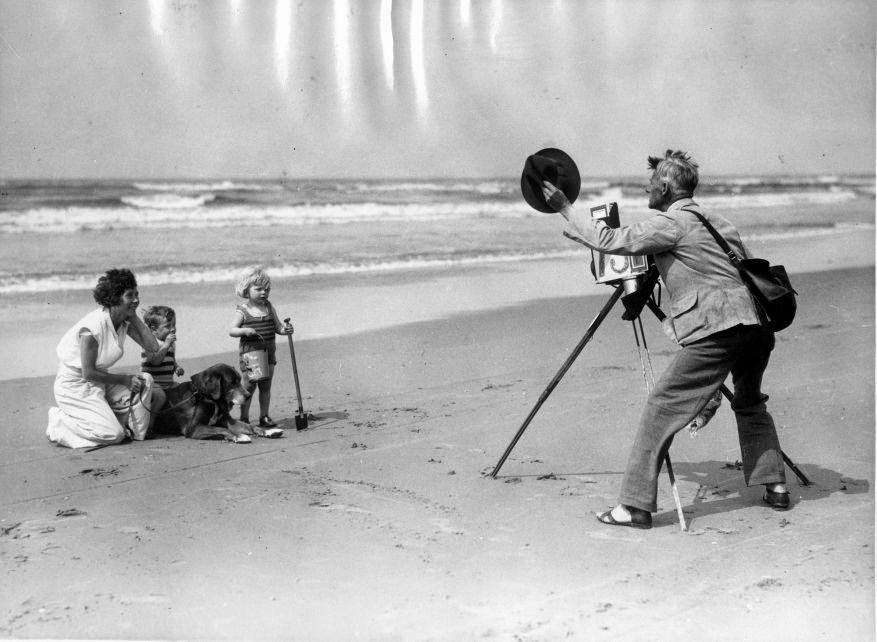
Beach photographer taking pictures of mother, children and a dog. The Netherlands, about 1930.
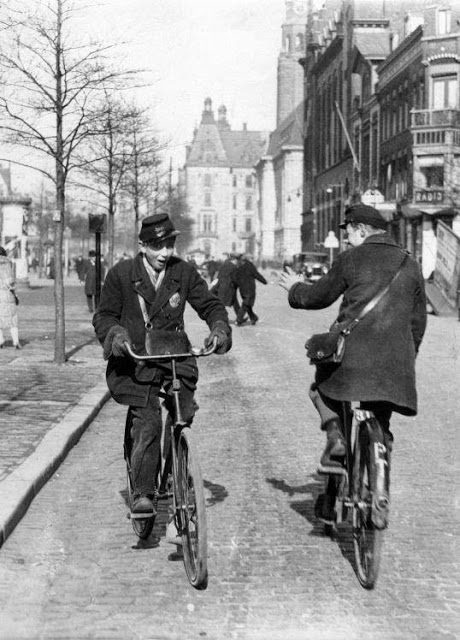
Telegram deliverers on bicycle greeting each other in the street. The Netherlands, Place unknown, early 1930s.
Town-crier announcing the latest news on the island of Terschelling, the Netherlands, 1938.
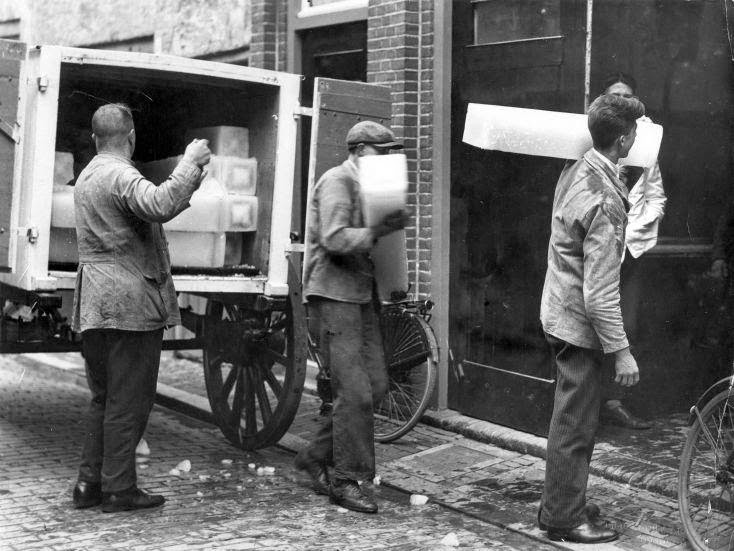
Men delivering ice in the old days when there were no refrigerators. The Netherlands, 1930s .
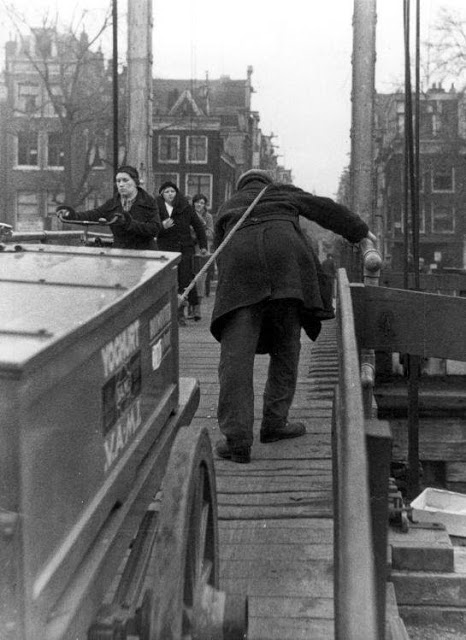
Human draught-horse. Man dragging carts over a steep bridge, for a small fee. Amsterdam, The Netherlands, 1934.
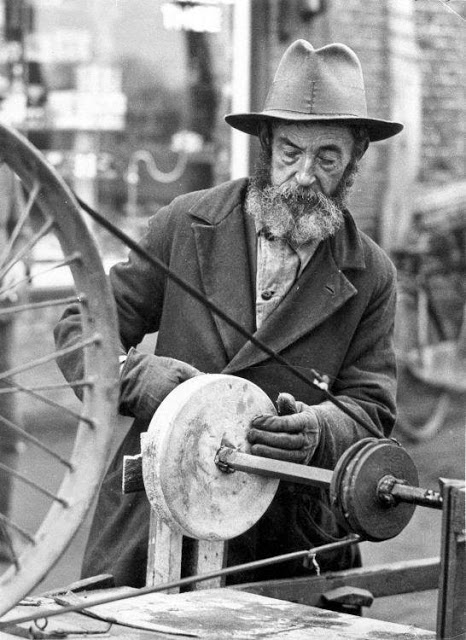
Scissors-grinder. 1931.
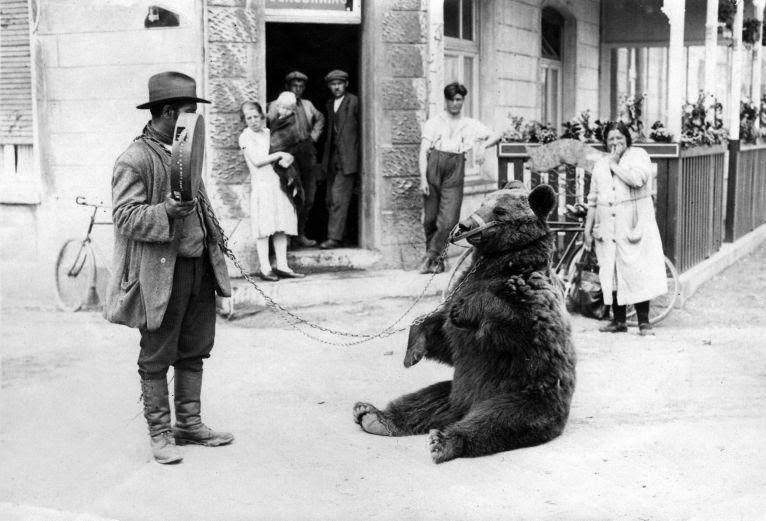
Animal trainer with chained performing bear in the street. About 1930.
Caller-up waking up inhabitants by tapping a stick at the bedroom window. Leeuwarden, the Netherlands, 1947.
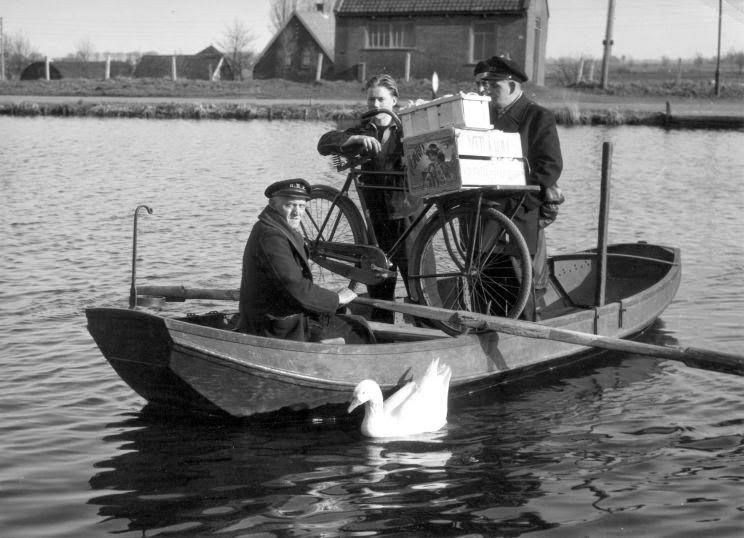
Ferryman in a rowing boat in a canal near Lisse, The Netherlands, 1952.
School dentist examining a school girl in the class room. The Netherlands, 1935.
Recording a radio play. The Netherlands, 1949.

This Is What Life Was Like in New York City Before the Invention of Indoor Plumbing and Indoor Toilets

If you’ve ever bemoaned the fact that you share a bathroom with several family members or housemates, you’re not alone. Most New Yorkers live in apartments and most units have just a single bathroom. A hundred and fifty years ago, however, the situation was much worse. At the time, New Yorkers had just a few choices when it came to taking care of their lavatory needs and by modern standards, none of the options were appealing—visit an outhouse or use a chamber pot. Nevertheless, indoor toilets proved slow to gain popularity when they were first introduced in the second half of the nineteenth century. Initially, many residents feared the newfangled invention would bring poisonous gases into their homes, leading to illness and even death.

1902 – 1914

Outhouses and Chamber Pots

Until the late nineteenth century, most New Yorkers relied solely on outhouses located in backyards and alleys. While some residents had their own private outhouses, anyone living in a tenement would have shared facilities with their neighbors. The outhouse/resident ratio varied, but most tenements had just three to four outhouses, and as reported in Jacob Riis’s “How the Other Half Lives,” in the nineteenth century, it was not uncommon to find over 100 people living in a single tenement building. This meant that people often shared a single outhouse with anywhere from 25 to 30 of their neighbors, making long line-ups and limited privacy common problems. As one might expect, most tenement outhouses were also teeming with rats and other vermin and were a major source of disease.

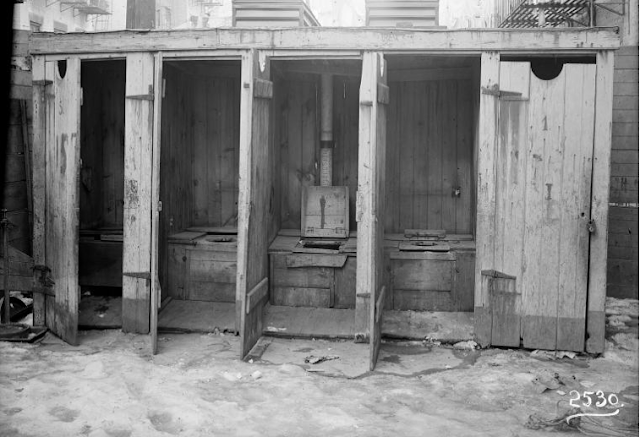
“Row of outhouses” 1902 – 1914.

If bathroom breaks were undesirable in the daytime hours, at night, especially in the dead of winter when running down several flights of stairs to street level posed additional dangers, most city residents turned to their chamber pots. Chamber pots, usually earthenware vessels, were typically stored under beds. Since most tenements had little or no ventilation, however, the stench from the chamber pots could quickly become unbearable. To help control the stench, chamber pots had to be emptied into backyard outhouses on a regular basis. Unsurprisingly, carrying pots full of human waste through the dark and narrow halls of a tenement was also no one’s favorite chore.

The Business of Removing the City’s “Night Soil”

Outside the city, outhouses were usually temporary structures built over a hole in the ground. As the holes filled up, the outhouses were simply moved to a new location and the holes covered over with fresh soil. In urban areas, limited space meant that most outhouses were permanent structures. This also meant that removing human waste was a thriving business in the nineteenth-century New York.

At the time, human waste was euphemistically known as “night soil.” This is presumably because the so-called night soil cart men, who worked for companies that had been lucky enough to win a coveted city contract for waste removal, made their living largely after dark. Their unenviable job involved shoveling waste from the city’s outhouses into carts (sometimes other garbage and animal carcasses would also be collected) and then disposing of the contents.

A night soil man.

So where did the city’s night soil go?

Although at least some of New York’s night soil ended up being dumped in empty lots on the Upper West Side (some of this human excrement was reportedly even used as fertilizer during the construction of Central Park), most of the city’s night soil was dumped into the city’s surrounding waterways. At best, the night soil was placed on steamboats and dumped far out in the harbor (this form of dumping was legal at the time). At worst, the night soil was simply dumped off the side of piers located on the East River and Hudson.

On March 30, 1878, a report in the New York Times described a scene that took place on the East River at the foot of 95th Street. In this case, two police officers reported seeing a man on deck of a boat just off shore “who, with a crank, was unloading the boat and allowing the contents to run through the side into the river.” The officers, who later testified to the Board of Police, explained, “they saw the boat rise in the water gradually as the contents flowed into the river, and the stench during the operation was intolerable.” Unfortunately, such incidents were by no means uncommon at the time, since dumping night soil into local waterways was far less expensive than using steamboats to cart the waste out into the harbor.

The Arrival of Indoor Toilets and Fear of Sewer Gases

By the time indoor toilets arrived in New York City, they were far from new. The first patent for a flushing lavatory was issued in 1775 to Scottish inventor Alexander Cumming. In the coming decades, Cumming’s invention would continue to be perfected, but still, indoor toilets did not become the norm in most cities until the late nineteenth century and did not reach many rural areas until decades later. In New York, two obstacles slowed the arrival of indoor toilets.

“Demarest’s Patent Water Closet Apparatus.” 1888

First, there was the problem of creating a sewage system in an already developed urban area. Today, New York is home to over 6,000 miles of mains and pipes with some of the pipes dating back to the mid-nineteenth century. Laying sewage pipes under an already existing urban area, however, proved to be a difficult, costly and at times politically contentious endeavor. For this reason, Brooklyn, which developed later, had a distinct advantage and outpaced Manhattan on the sewage front.
The other obstacle was an at-the-time broadly accepted theory about sewer gases. Given the health concerns and unpleasant smells associated with outhouses, one might assume that city residents would have rapidly embraced indoor toilets. In fact, indoor toilets were met with mixed reviews in the mid to late nineteenth century and many residents initially viewed this advance in sanitation as a potentially deadly conduit of disease. Notably, the fear of dangerous gases rising up from the city’s sewers and resulting in serious illness and even death was driven both by urban legend and by the medical professions’ alleged findings. While sewer gases are a nuisance (modern plumbing usually prevents the gases from seeping into homes), in the nineteenth century, many physicians and the general public believed that if inhaled, the gases could lead to severe illness and even death, because there was a strong conviction that the gases carried disease.

In the pointedly titled 1881 publication, “Sewer-Gases and Its Dangers,” George Preston Brown warns, “Wherever there are sewers, it is certain there will be sewer-gas. If confined to the sewer, it can do no harm…it is only when it finds its way into houses…that it becomes the enemy of the human race.” Among other ailments, Brown reports that sewer gases carry into people’s homes diseases ranging from typhoid, typhus, and scarlet fever to cholera, dysentery and croup. In an 1882 address to the Academy of Medicine, Dr. Frank H. Hamilton sought to send a similar warning to his audience, but unlike Brown, who appeared to believe that proper plumbing could solve the problem, Dr. Hamilton advised that closets, drains, and pipes be put in an annex outside one’s living quarters: “Not a few of our lately constructed and most elegant mansions have not an inch of plumbing in those portions of their buildings which are usually occupied by their families.”

Legislating Indoor Toilets

It was not until the turn of the 20th century that most people in the medical profession agreed that sewer gases were not a source of disease and that on the contrary, continuing to deny city residents access to indoor toilets was contributing to the spread of deadly diseases. With this realization, the push to install indoor toilets and running water across New York City intensified. The Tenement Act of 1901 clearly states, “In every tenement house here after erected there shall be a separate water-closet in a separate compartment within each apartment.” Although new tenement construction had to comply and nearly all buildings erected after 1910 were built with indoor toilets, many existing tenement owners were slow to come into line with the new regulations. Indeed, in 1937, an estimated 165,000 families living in tenements were still without access to private indoor toilets.

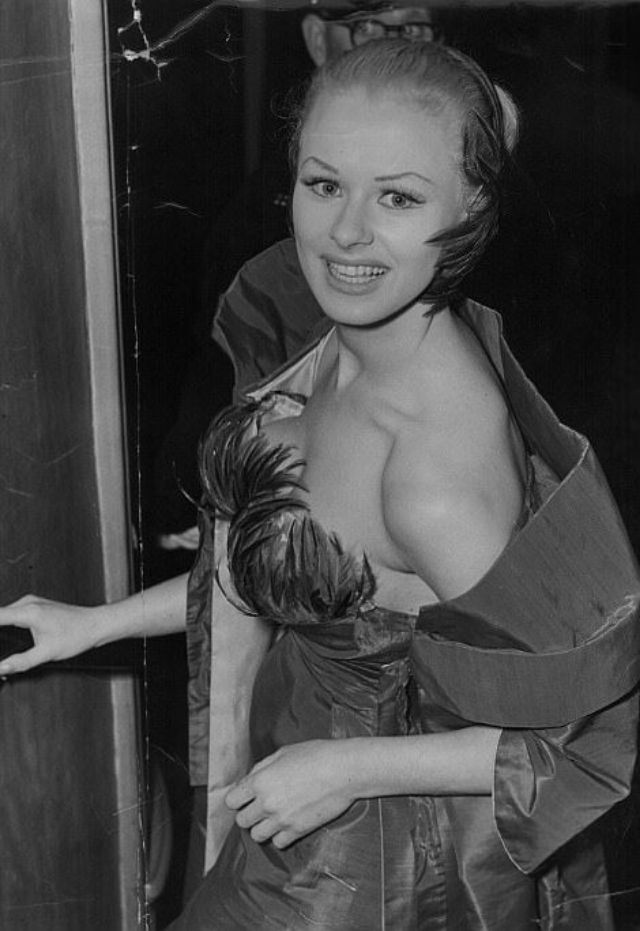
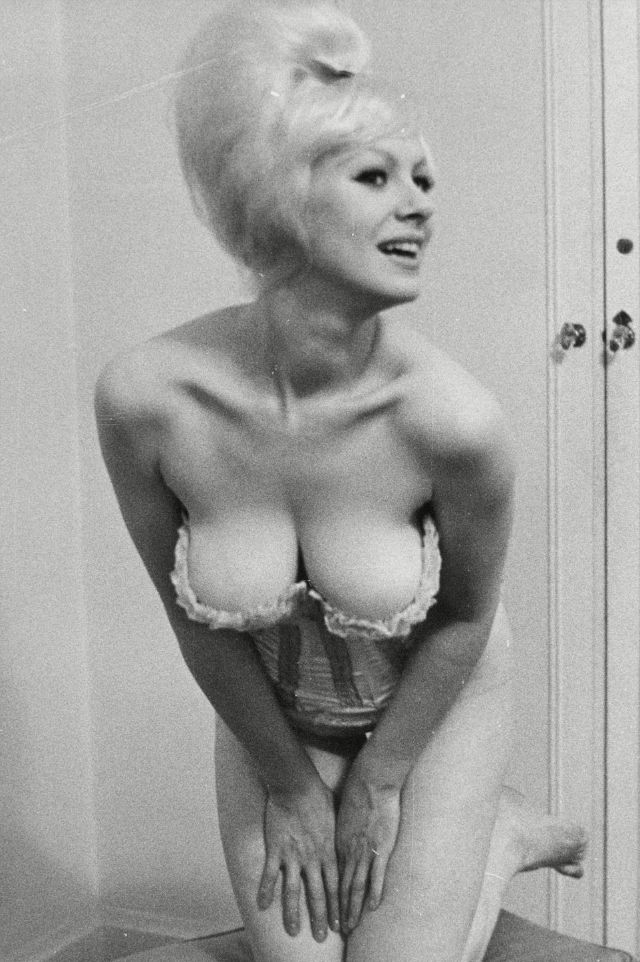
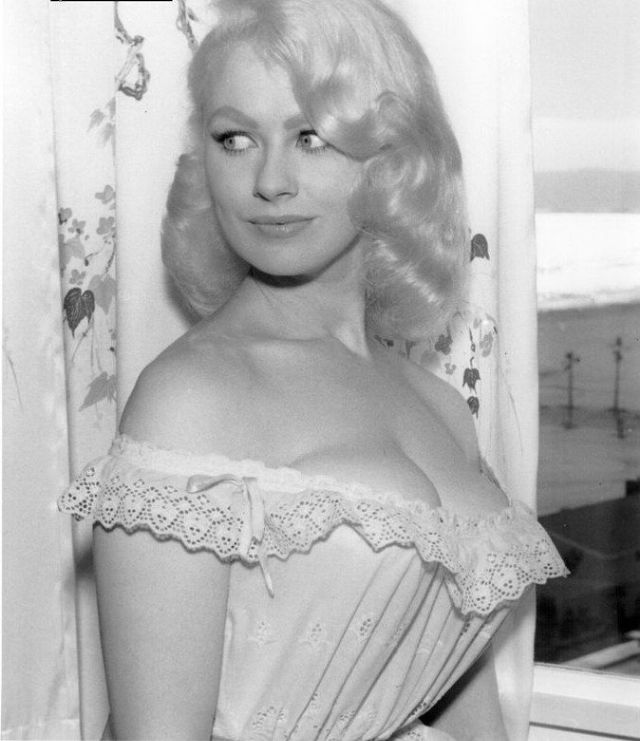
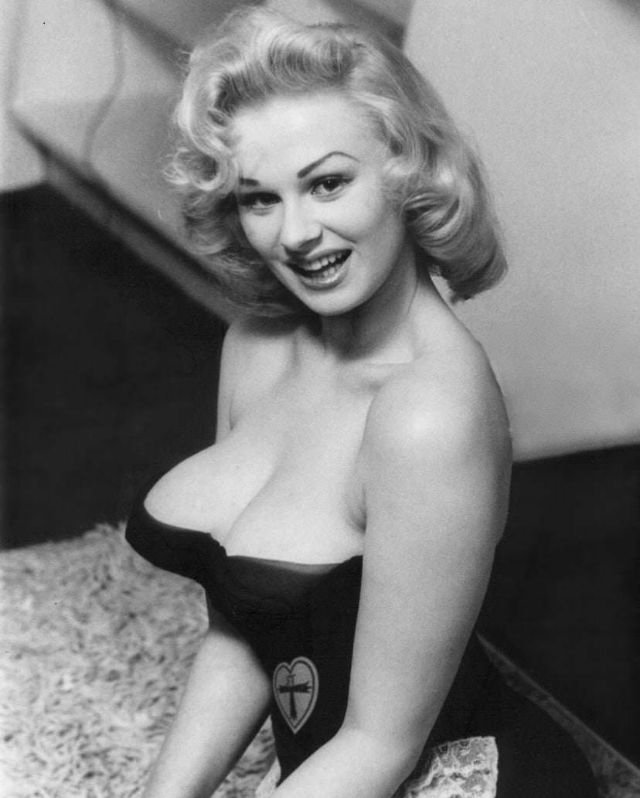
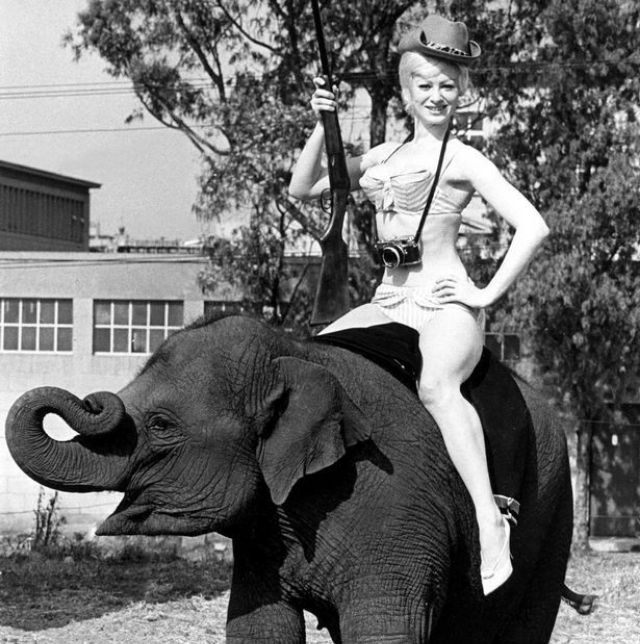
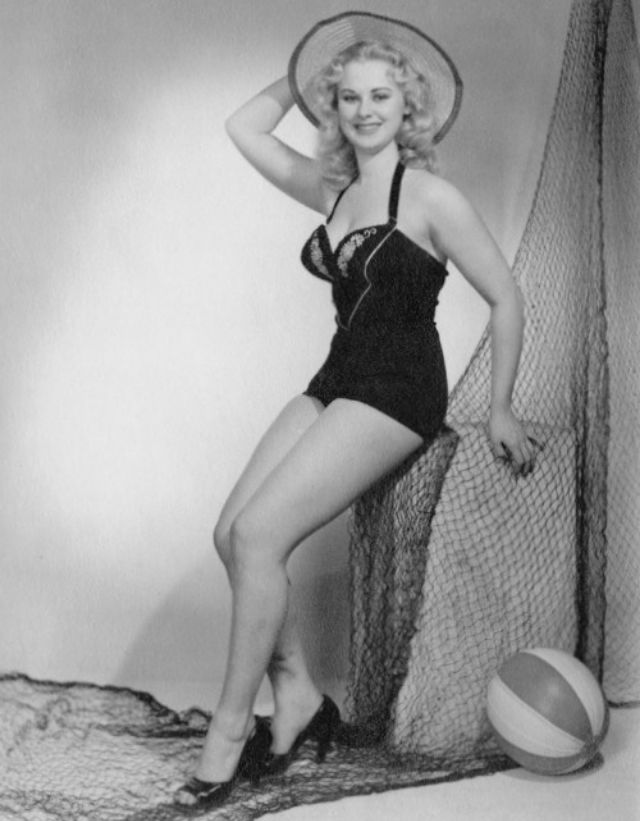
Sabrina, Britain’s Answer to Marilyn Monroe: 23 Black and White Portraits of Norma Ann Sykes in the 1950s and 1960s

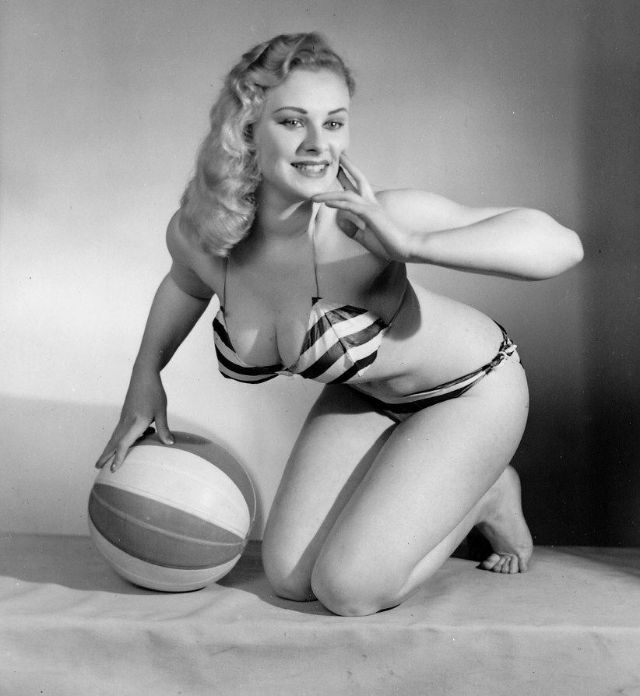
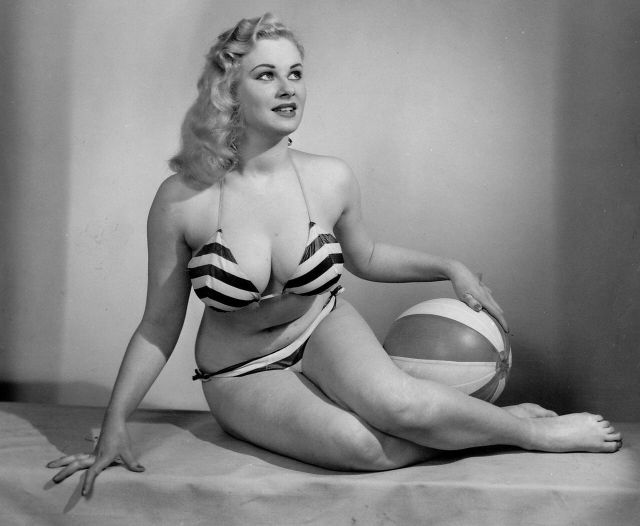
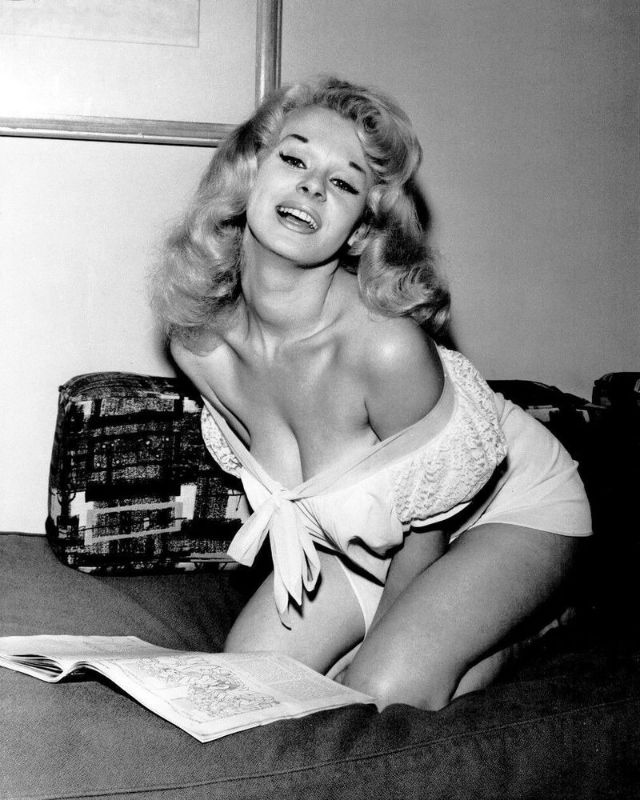
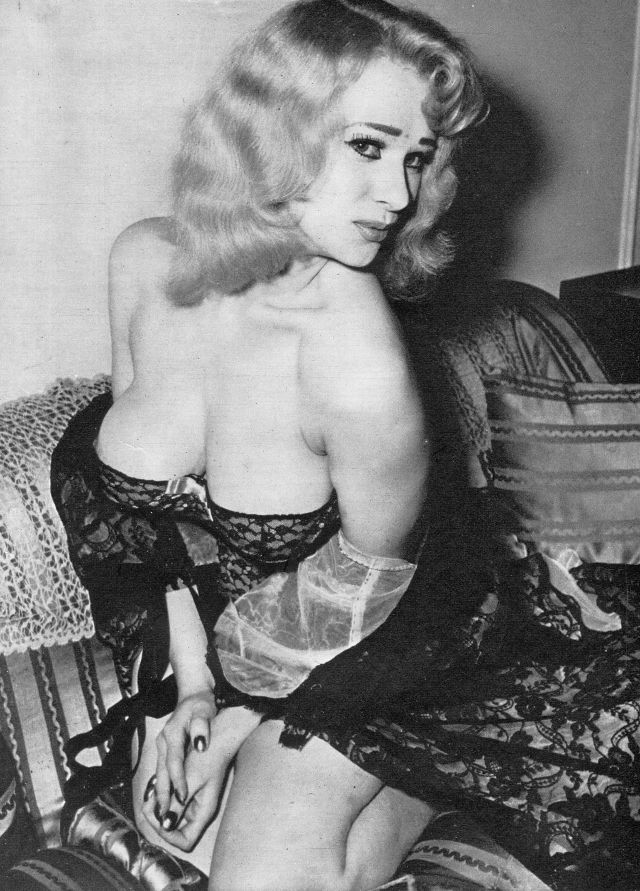
Norma Ann Sykes (1936–2016) was a 1950s English glamour model who progressed to a minor film career. She was best known for her hourglass figure of 42.5-inch (108 cm) breasts coupled with a tiny 19-inch (48 cm) waist and 36-inch (91 cm) hips.

When 19-year-old Norma Ann Sykes shimmied on to the BBC’s stage in 1955 as Arthur Askey’s sidekick on the hit TV show Before Your Very Eyes she and her pneumatic 41-inch bust were catapulted to stardom overnight.
Before long she was receiving 1,000 fan letters a week and was dubbed Britain’s answer to Marilyn Monroe – but minus the performing talent. She hung out with Elvis Presley, Frank Sinatra and Dick Van Dyke and once insured her breasts for £100,000.
Producers on Askey’s show renamed her Sabrina after the 1954 film of the same name starring Humphrey Bogart and Audrey Hepburn and Askey later recalled that she had “a lovely face and figure but could not act, sing, dance or even walk properly”.

But the fact that she did little more than simper and giggle at Askey’s smutty jokes didn’t matter to the audiences who gawped at the first woman to show her cleavage on UK television in ever tighter, more low-cut evening gowns.

“I’m using my bust as a jumping-off place to bigger and better things,” she once said in an early interview.

Below is a collection of 25 sexy black and white portrait photos of Sabrina from between the mid-1950s to the 1960s.

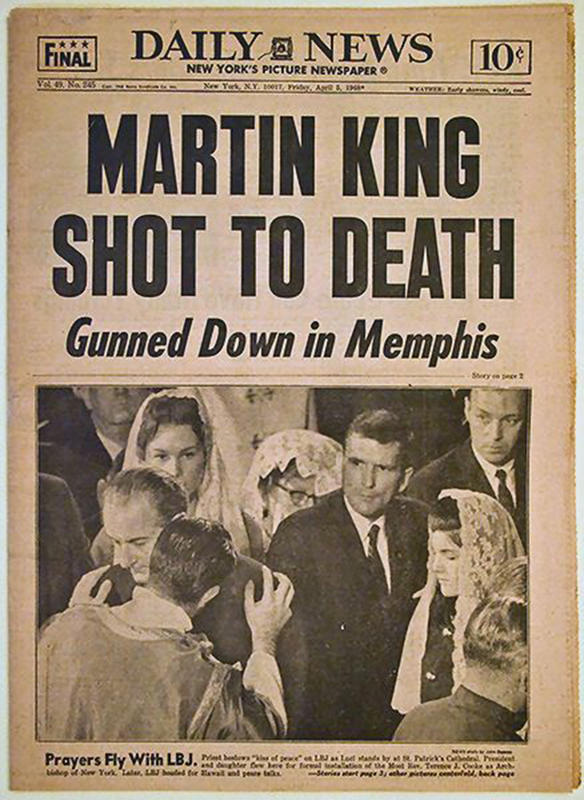
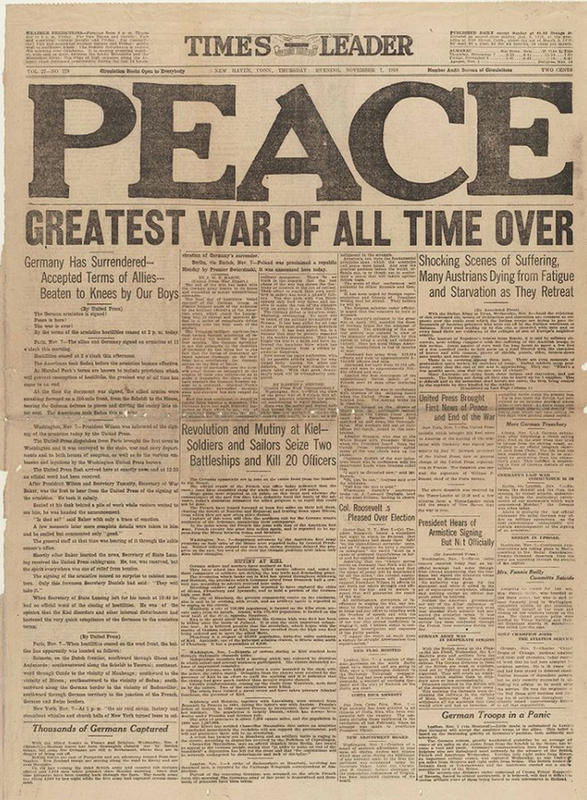
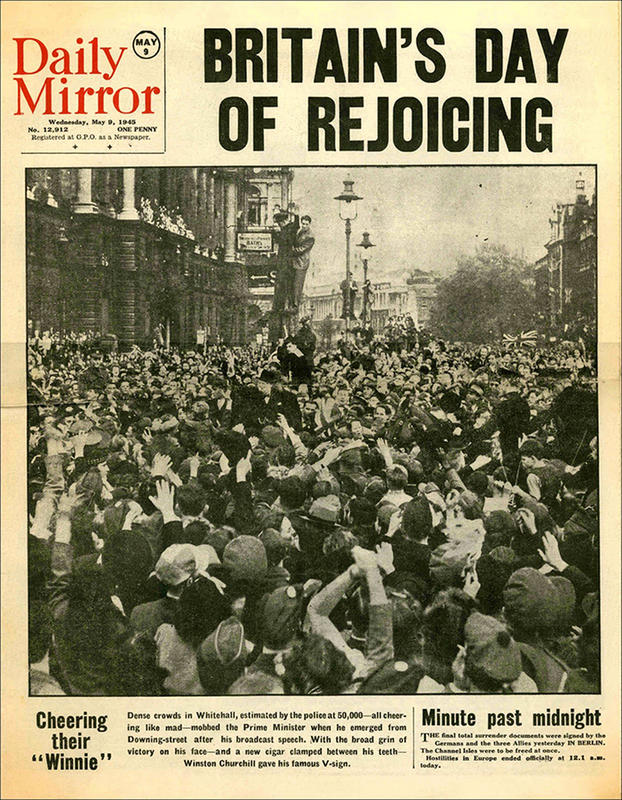
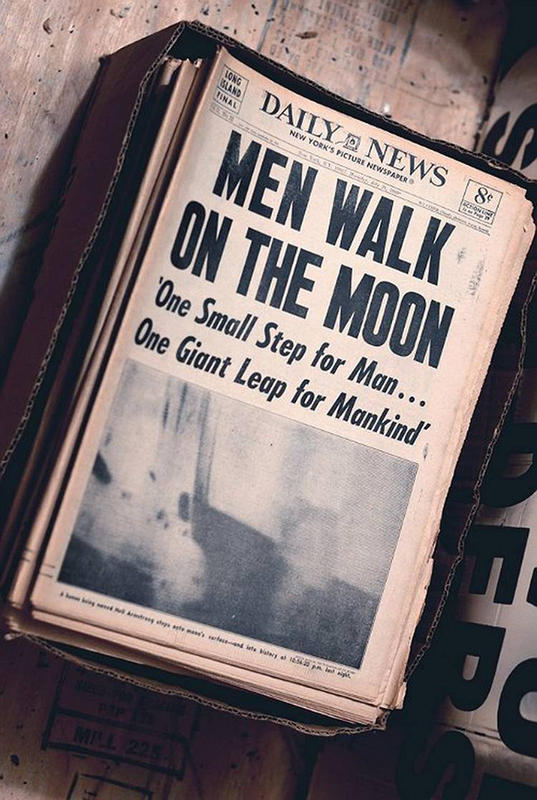
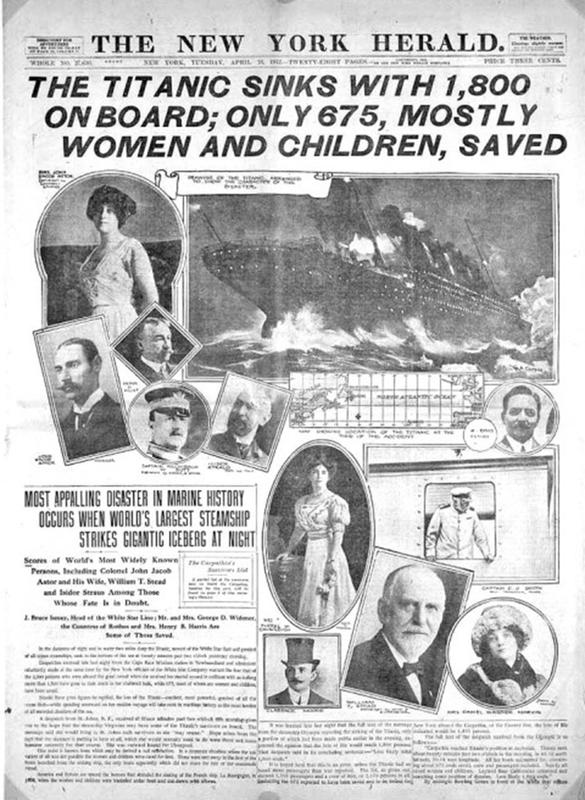
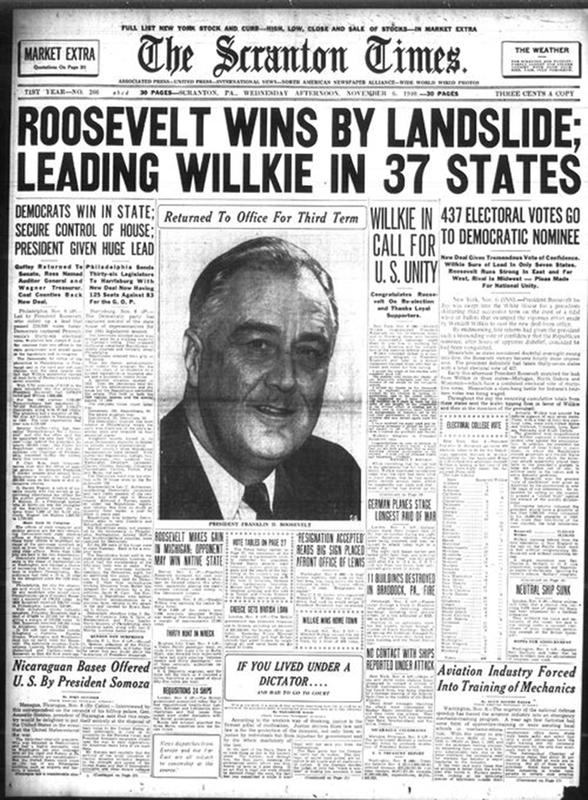
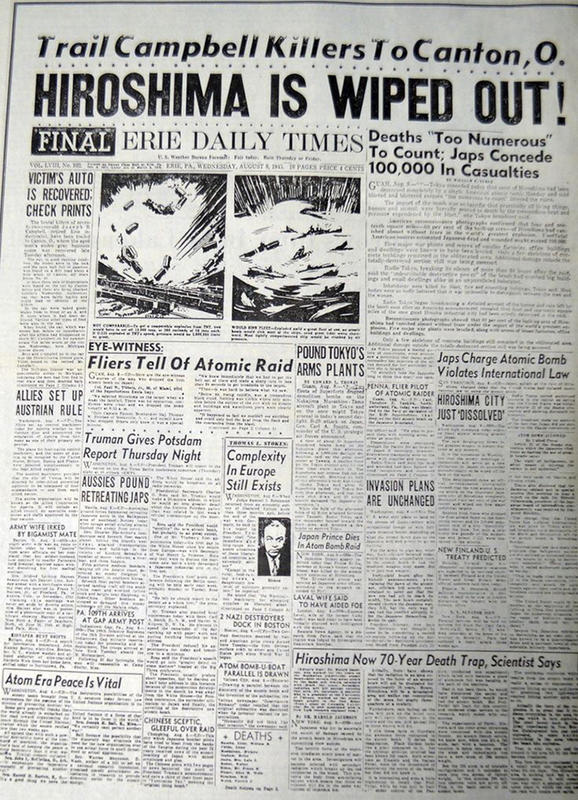
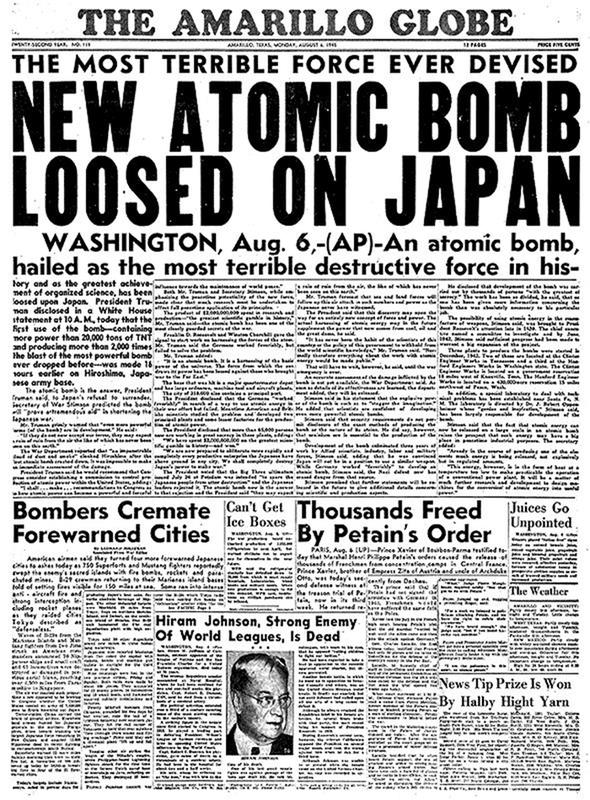
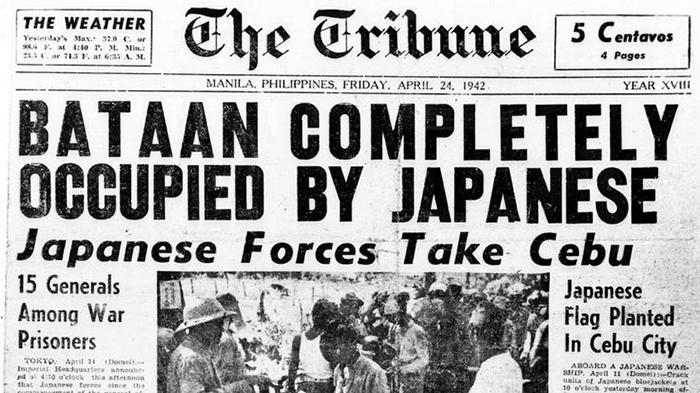
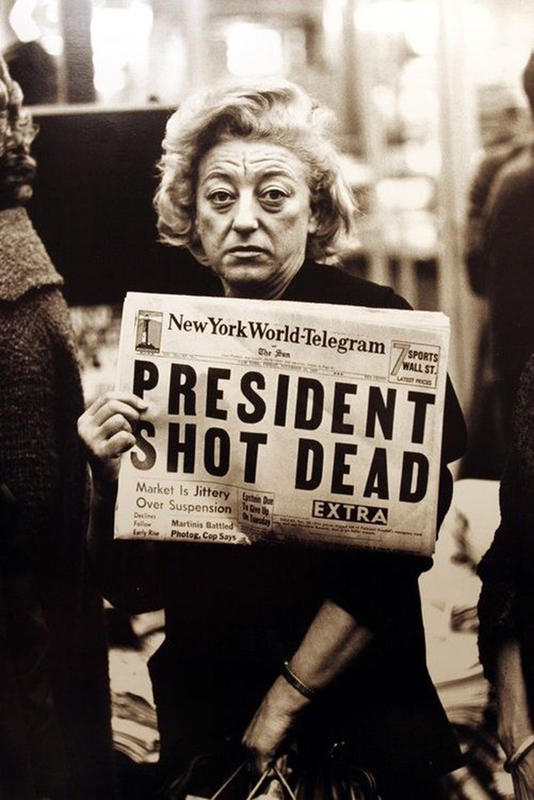
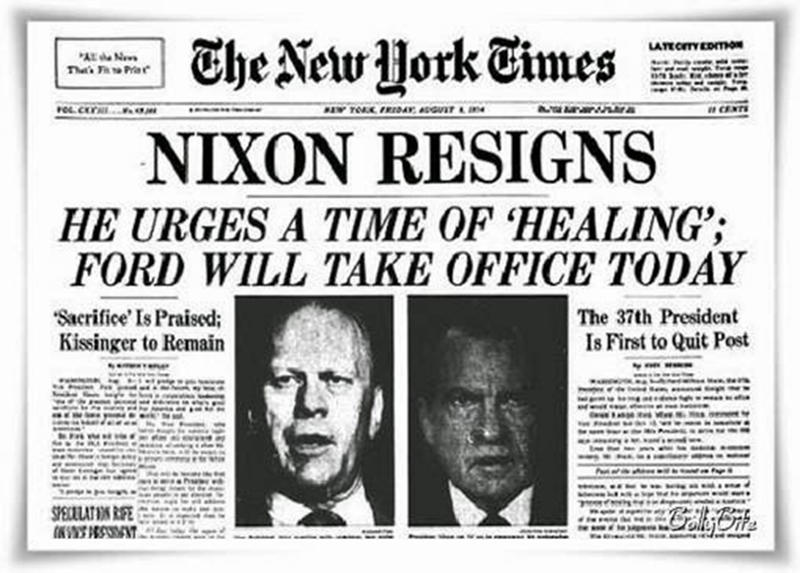
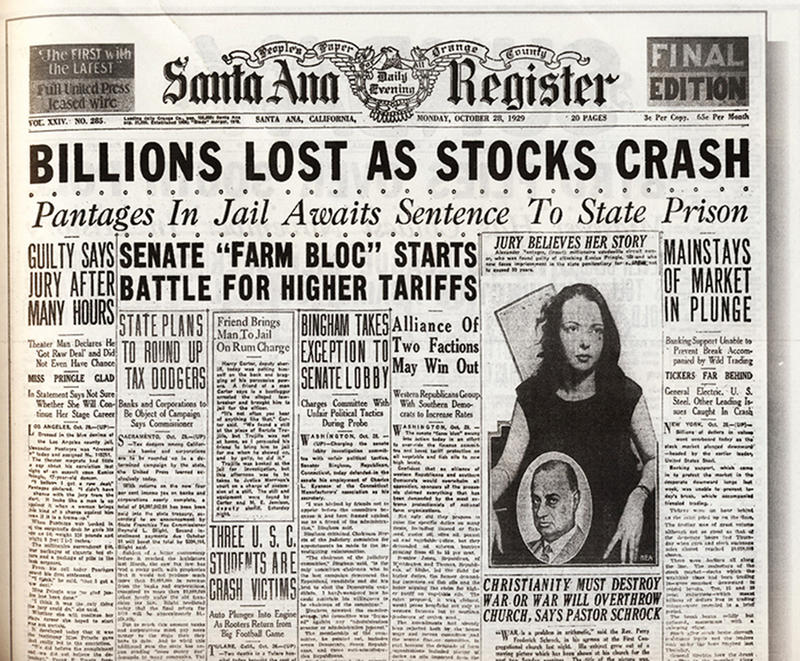
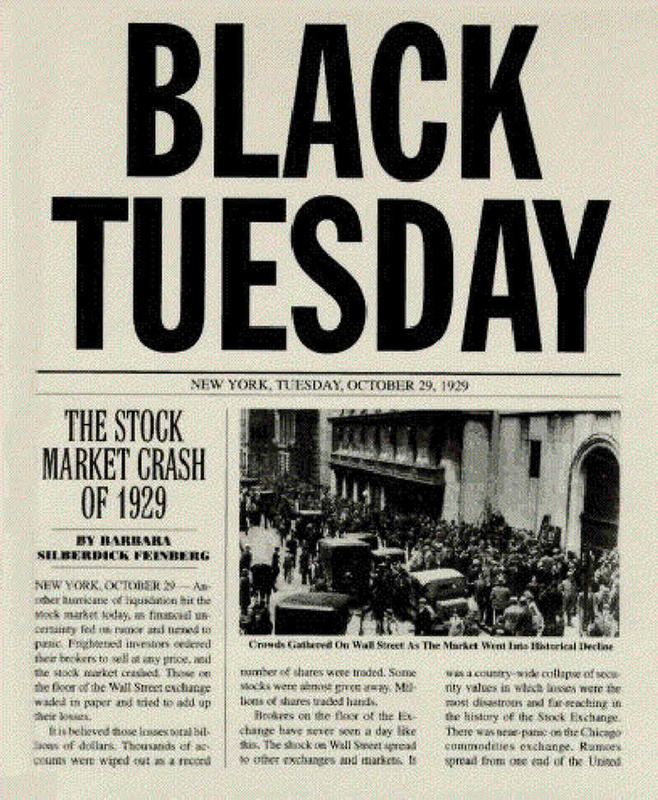
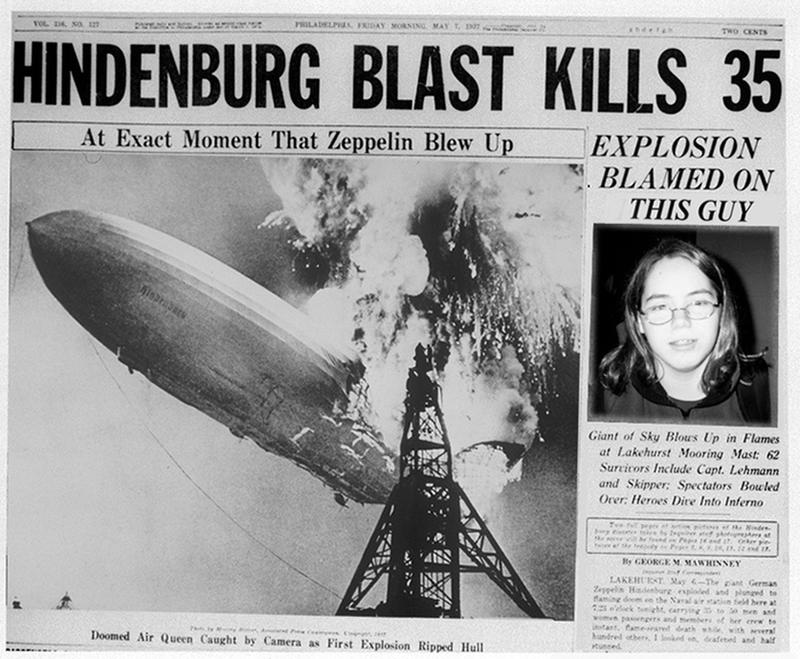
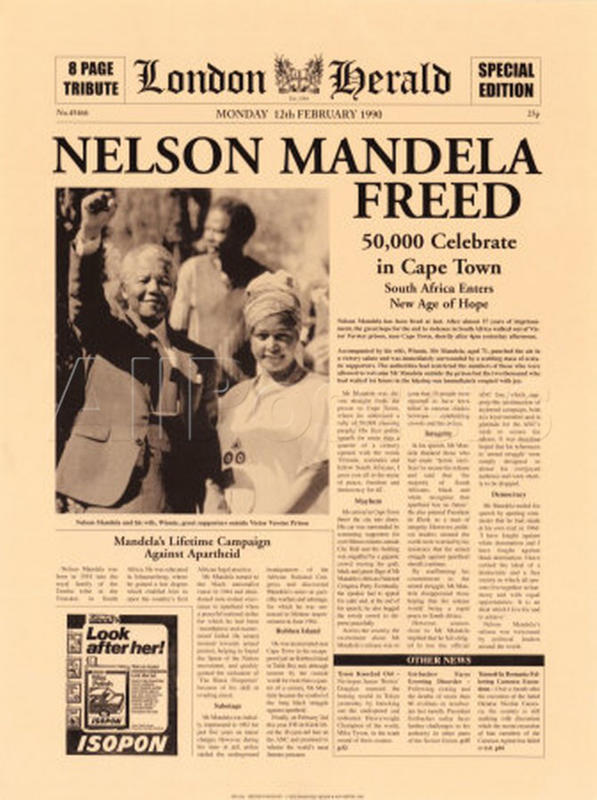
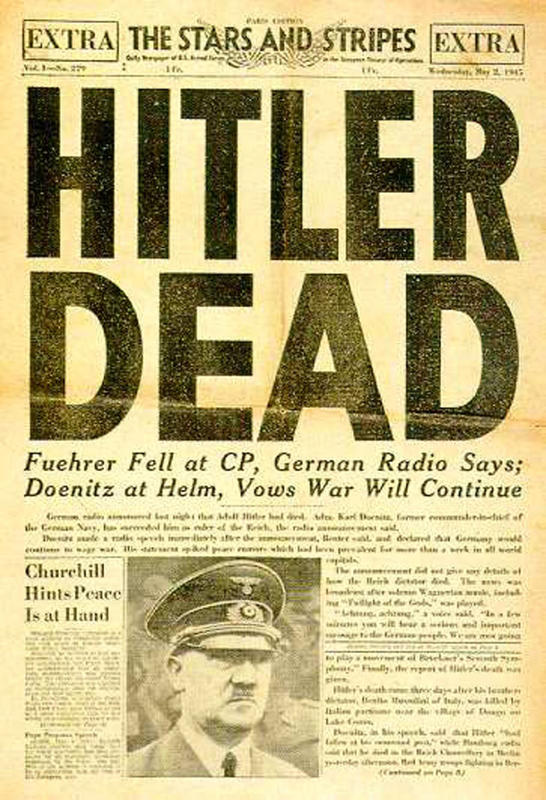
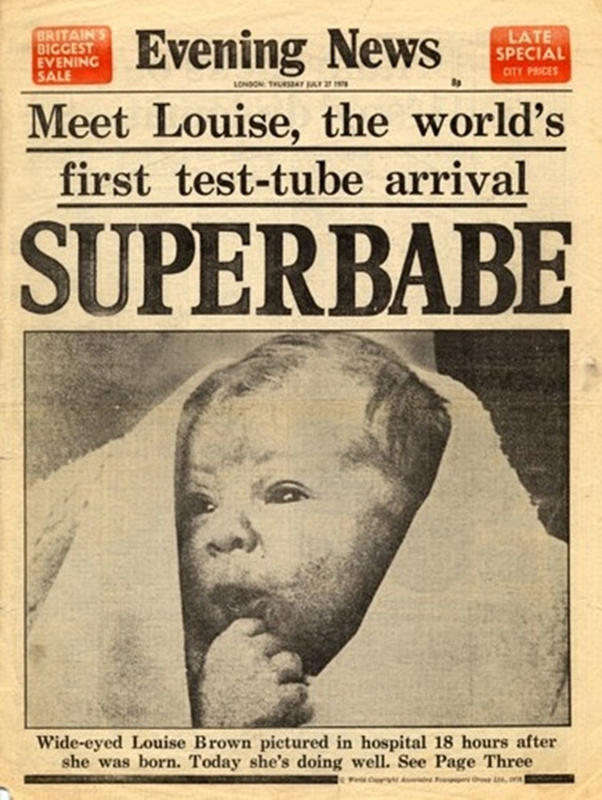
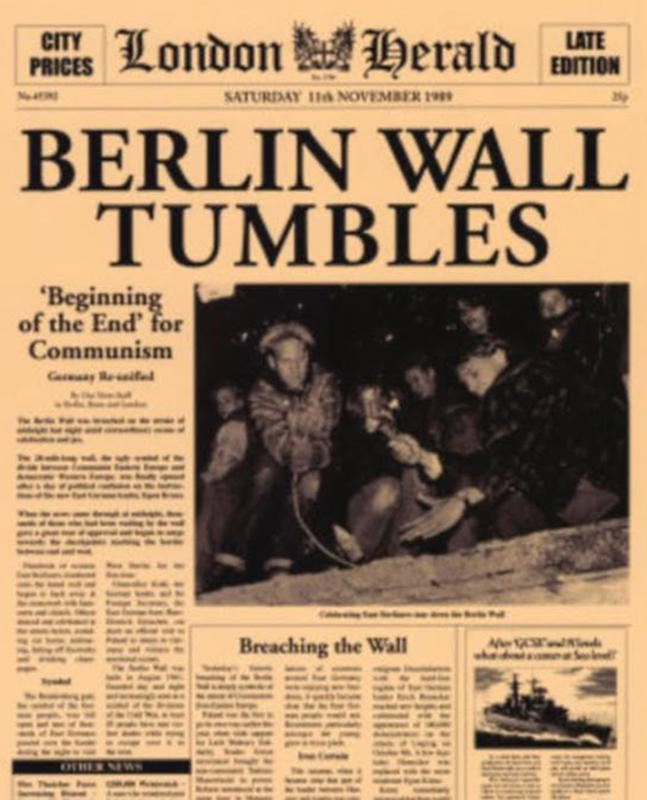
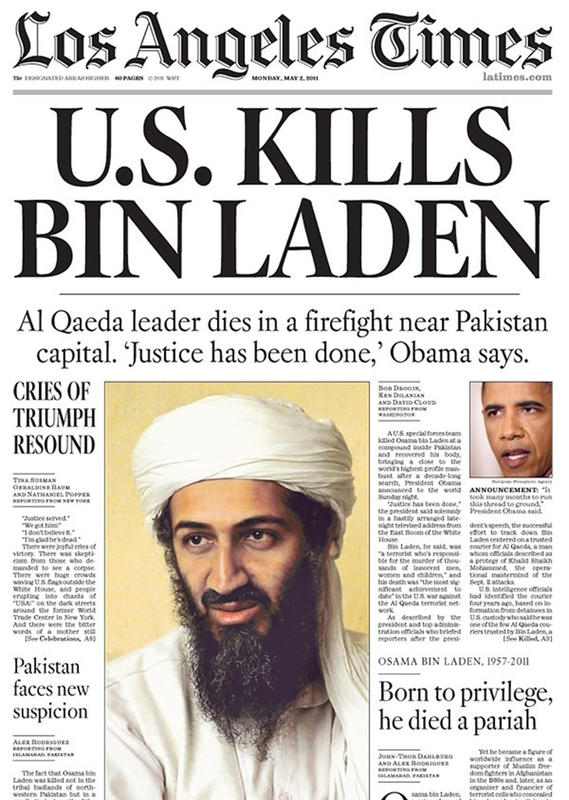
25 Newspaper Headlines From the Past That Shaped History

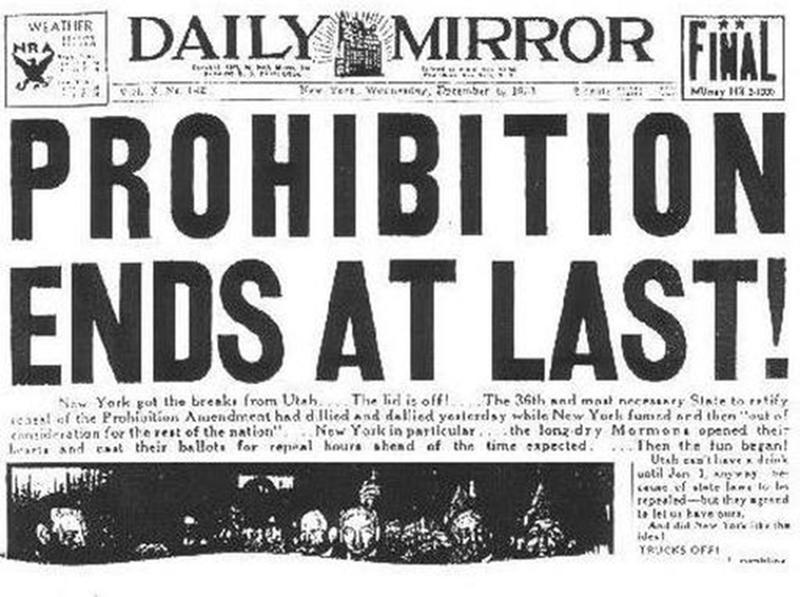
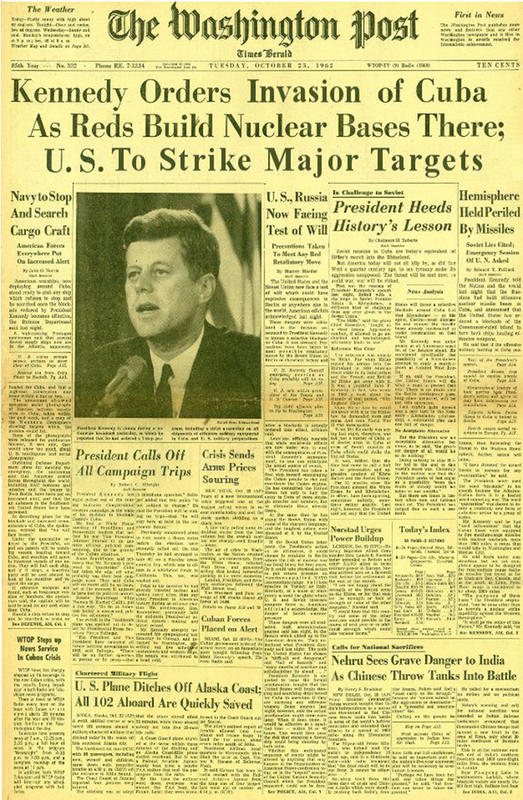
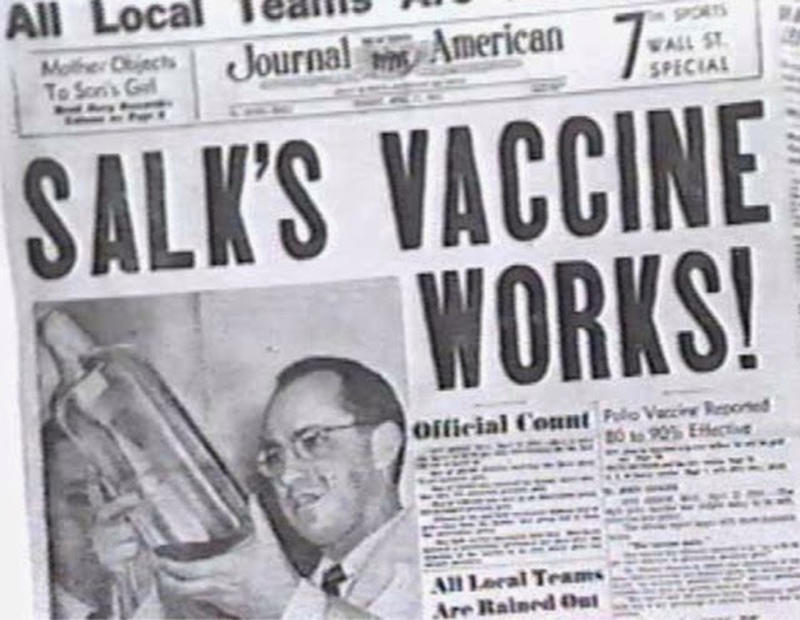
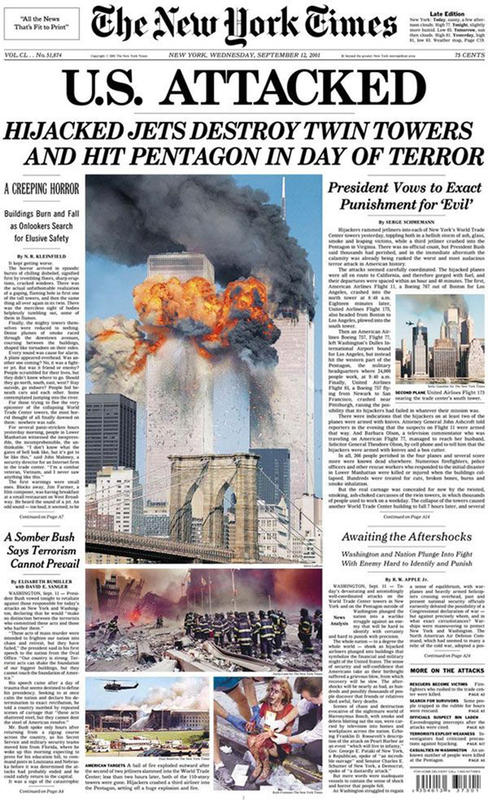
This collection of newspaper headlines chronicles some of the most memorable events of the past, informing and shocking millions of readers in just a few words. Ultimately, these iconic events helped shaped the history of the world.

Yesterday Today

Bringing You the Wonder of Yesterday - Today

Skip to content ↓