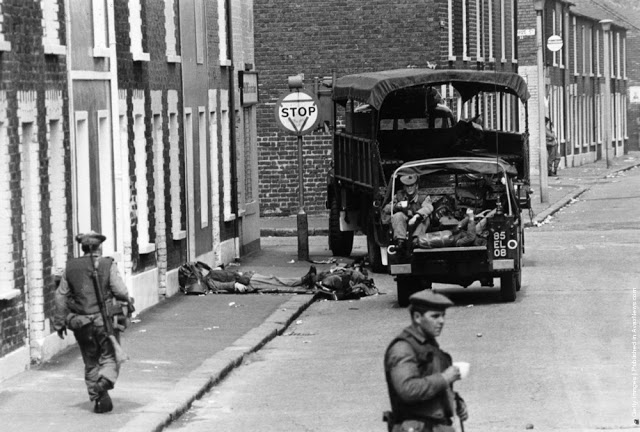
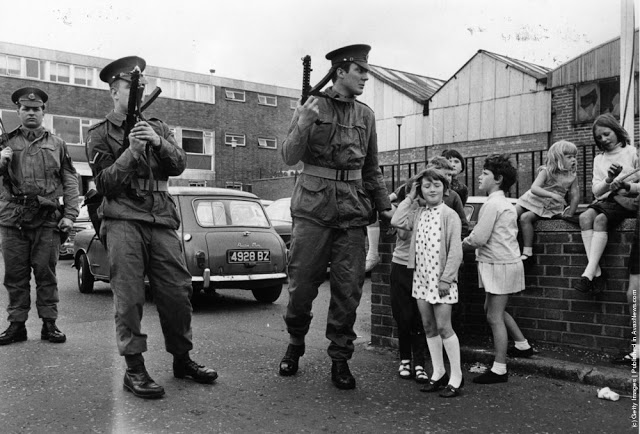
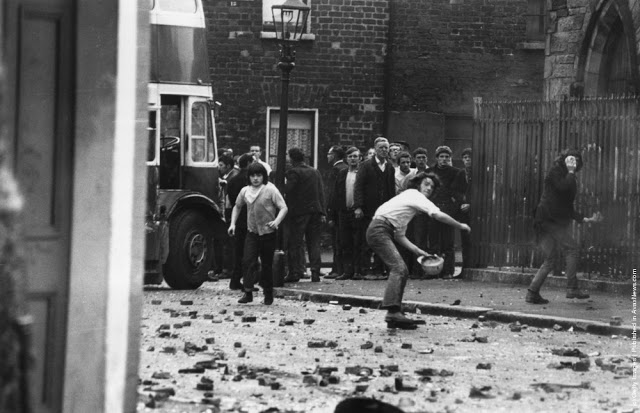
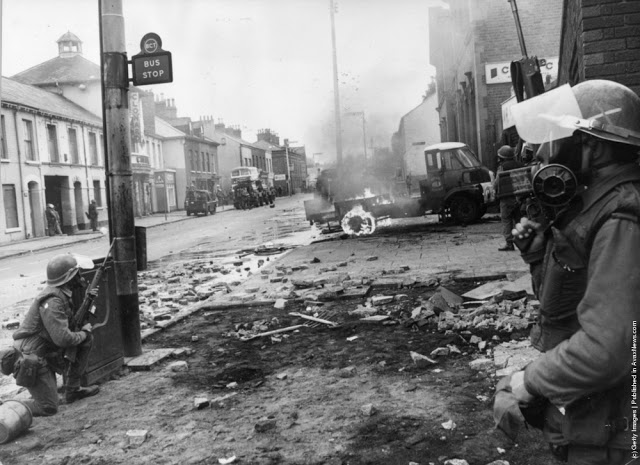
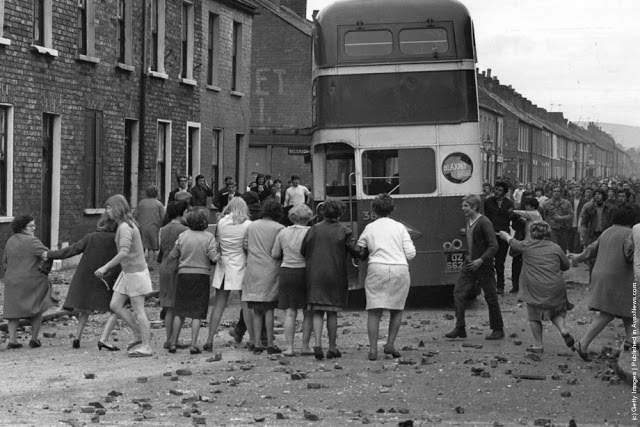
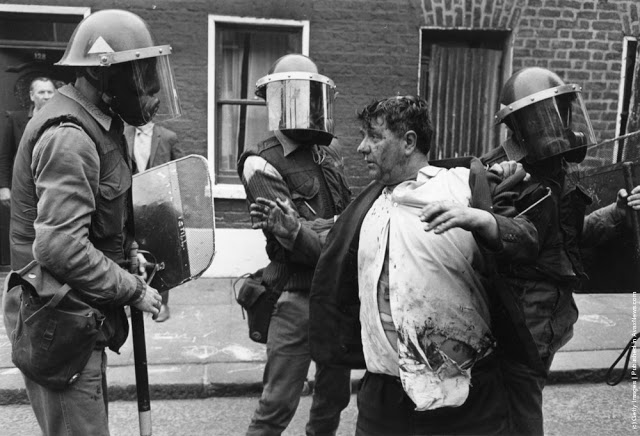
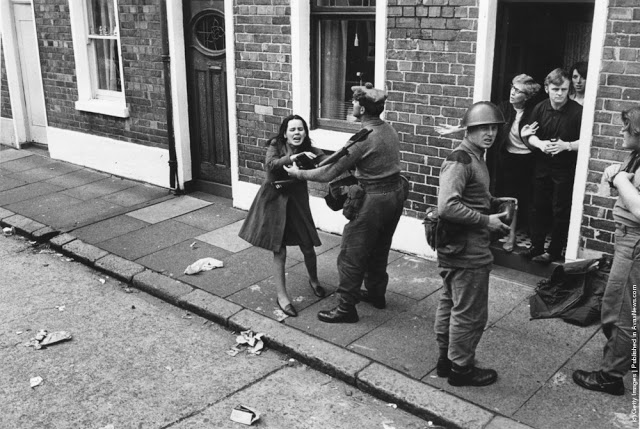
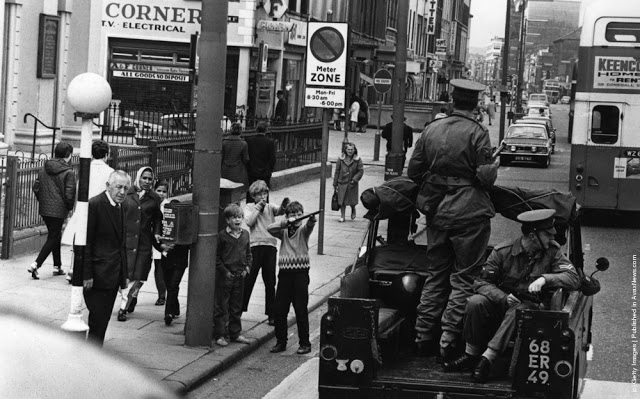
The Troubles (Irish: Na Trioblóidí) were an ethno-nationalist conflict in Northern Ireland that lasted about 30 years from the late 1960s to 1998. Also known internationally as the Northern Ireland conflict, it is sometimes described as an “irregular war” or “low-level war”. The conflict began in the late 1960s and is usually deemed to have ended with the Good Friday Agreement of 1998. Although the Troubles mostly took place in Northern Ireland, at times violence spilled over into parts of the Republic of Ireland, England and mainland Europe.
The conflict was primarily political and nationalistic, fuelled by historical events. It also had an ethnic or sectarian dimension but despite use of the terms ‘Protestant’ and ‘Catholic’ to refer to the two sides, it was not a religious conflict. A key issue was the status of Northern Ireland. Unionists and loyalists, who for historical reasons were mostly Ulster Protestants, wanted Northern Ireland to remain within the United Kingdom. Irish nationalists and republicans, who were mostly Irish Catholics, wanted Northern Ireland to leave the United Kingdom and join a united Ireland.
The conflict began during a campaign by the Northern Ireland Civil Rights Association to end discrimination against the Catholic/nationalist minority by the Protestant/unionist government and local authorities. The government attempted to suppress the protests. The police, the Royal Ulster Constabulary (RUC), were overwhelmingly Protestant and accused of sectarianism and police brutality. The campaign was also violently opposed by loyalists, who said it was a republican front. Increasing tensions led to the August 1969 riots and the deployment of British troops, in what became the British Army’s longest operation. “Peace walls” were built in some areas to keep the two communities apart. Some Catholics initially welcomed the British Army as a more neutral force than the RUC, but soon came to see it as hostile and biased, particularly after Bloody Sunday in 1972.
The main participants in the Troubles were republican paramilitaries such as the Provisional Irish Republican Army (IRA) and the Irish National Liberation Army (INLA); loyalist paramilitaries such as the Ulster Volunteer Force (UVF) and Ulster Defence Association (UDA); British state security forces such as the British Army and RUC; and political activists. The security forces of the Republic of Ireland played a smaller role. Republicans carried out a guerrilla campaign against British forces as well as a bombing campaign against infrastructural, commercial and political targets. Loyalists attacked republicans/nationalists and the wider Catholic community in what they described as retaliation. At times, there were bouts of sectarian tit-for-tat violence, as well as feuds within and between paramilitary groups. The British security forces undertook policing and counter-insurgency, primarily against republicans. There were incidents of collusion between British state forces and loyalist paramilitaries. The Troubles also involved numerous riots, mass protests and acts of civil disobedience, and led to increased segregation and the creation of temporary no-go areas.
More than 3,500 people were killed in the conflict, of whom 52% were civilians, 32% were members of the British security forces and 16% were members of paramilitary groups. Republican paramilitaries were responsible for some 60% of the deaths, loyalists 30% and security forces 10%. The Northern Ireland peace process led to paramilitary ceasefires and talks between the main political parties, which resulted in the Good Friday Agreement of 1998. This Agreement restored self-government to Northern Ireland on the basis of “power-sharing” and it included acceptance of the principle of consent, commitment to civil and political rights, parity of esteem, police reform, paramilitary disarmament and early release of paramilitary prisoners. There has been sporadic violence since the Agreement, including punishment attacks and a campaign by dissident republicans. (Wikipedia)
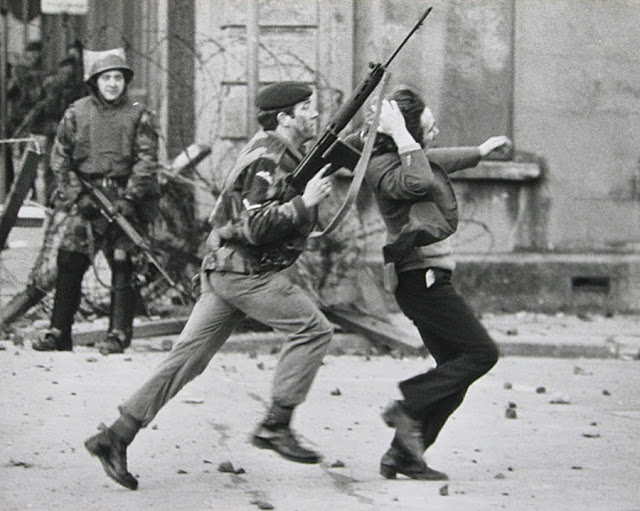
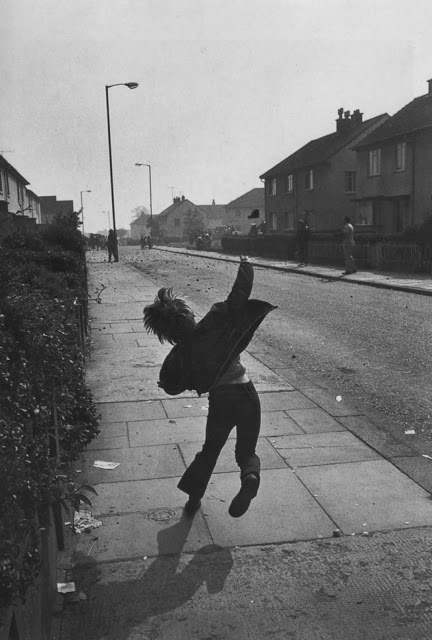
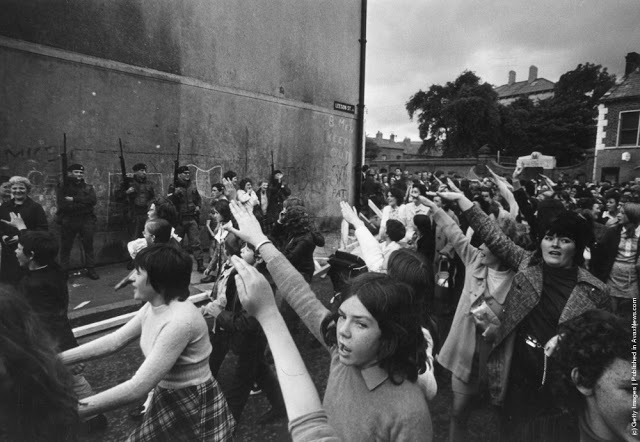
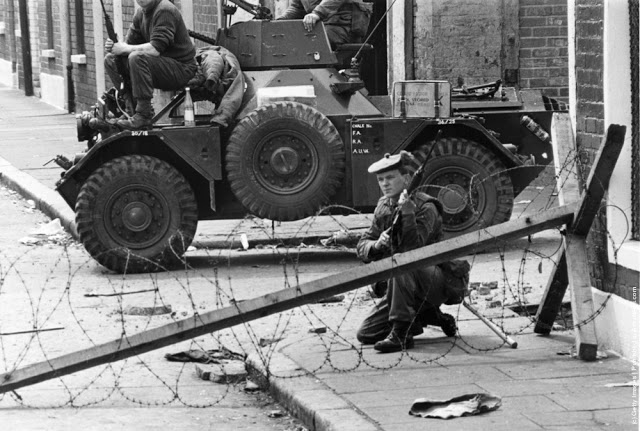
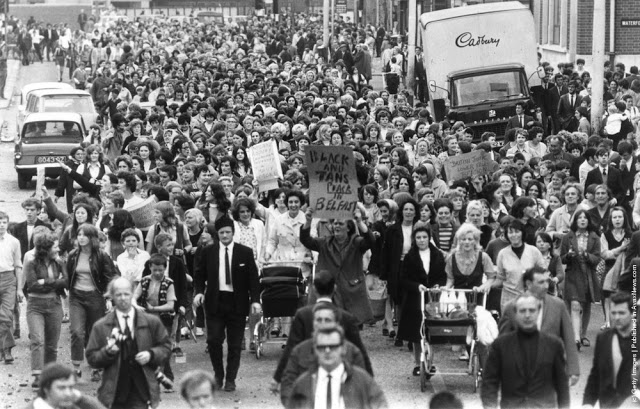
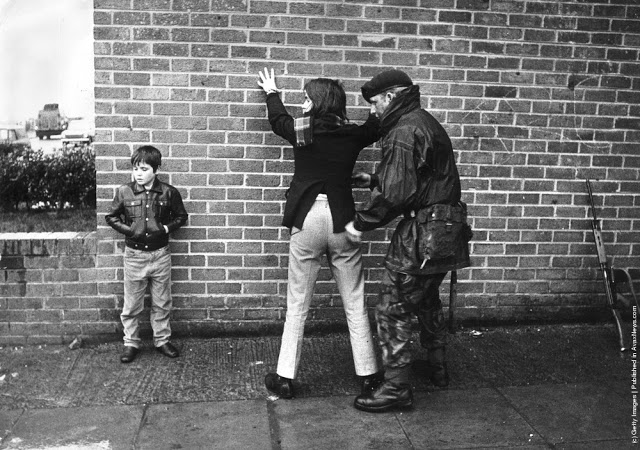
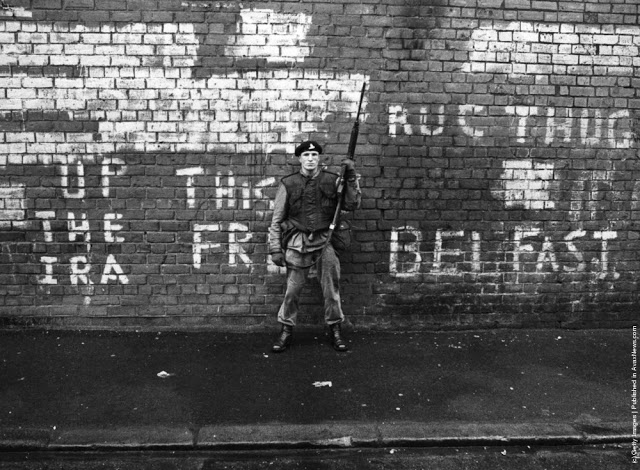
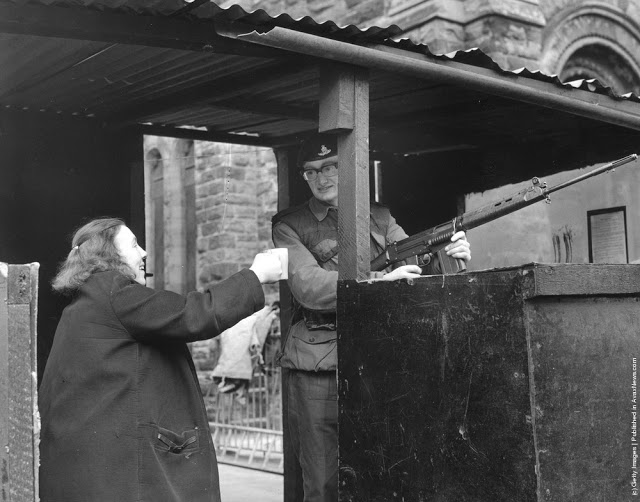
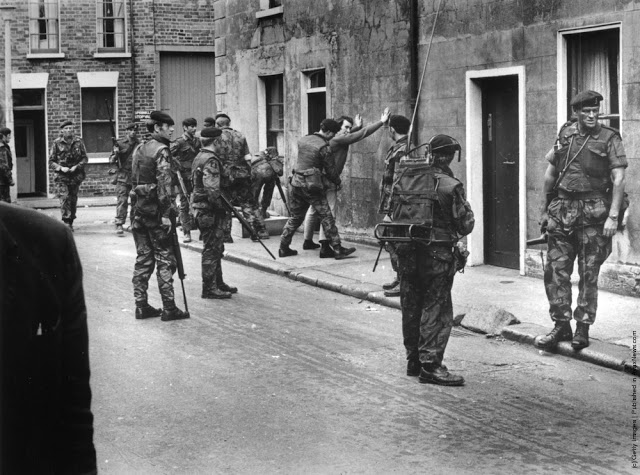
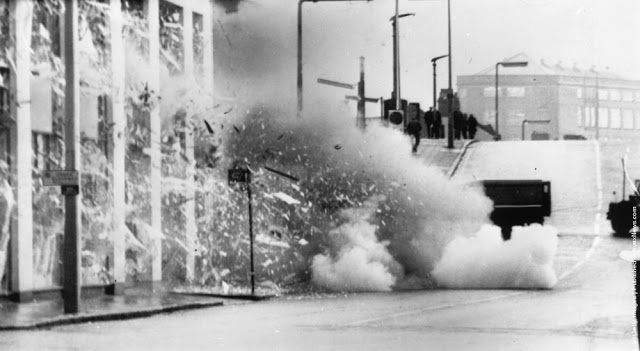
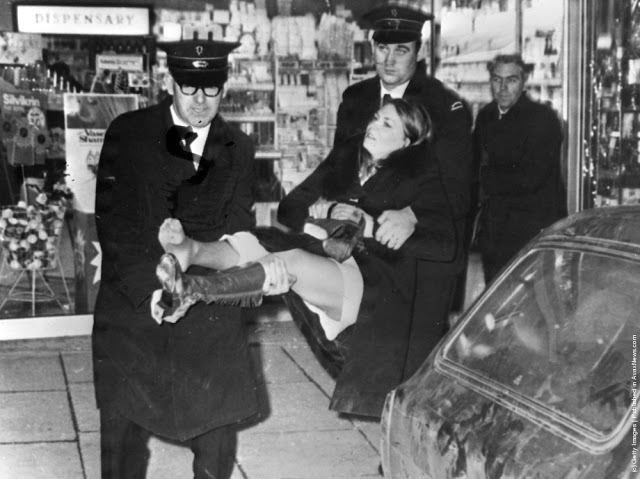
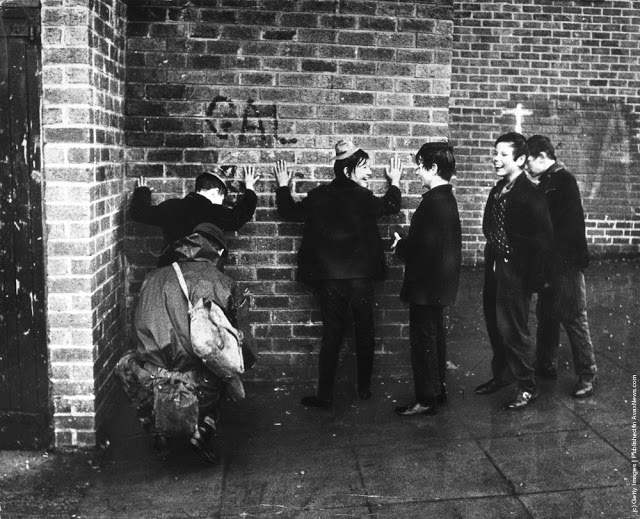
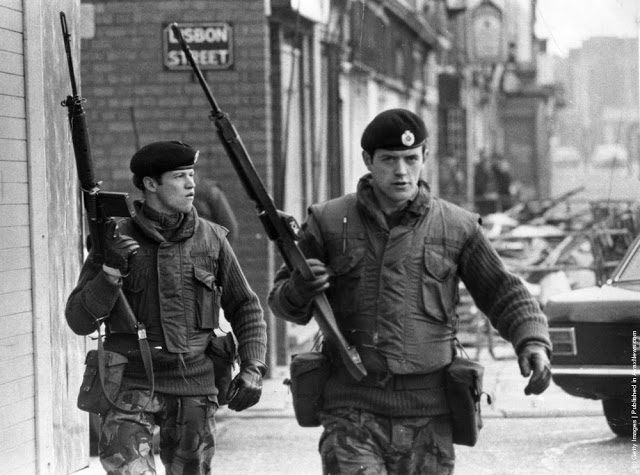
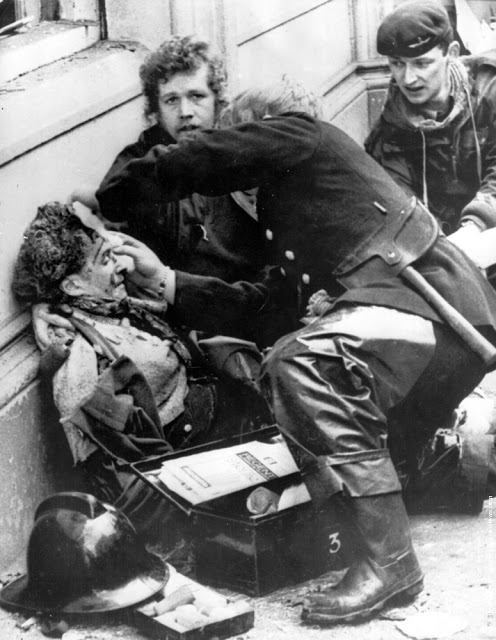
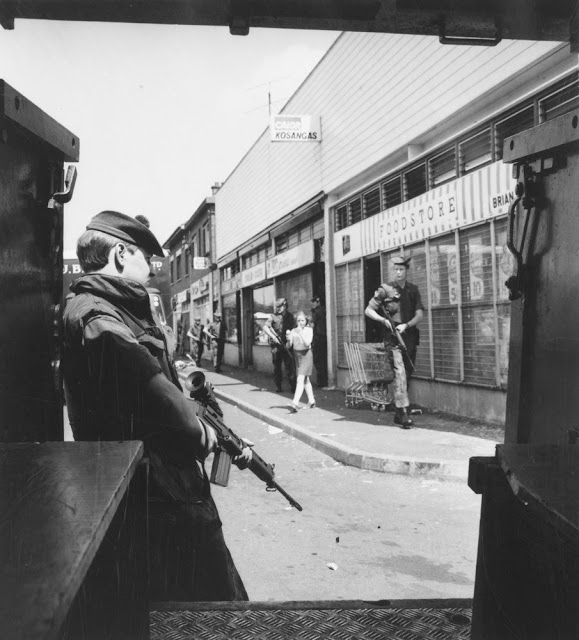
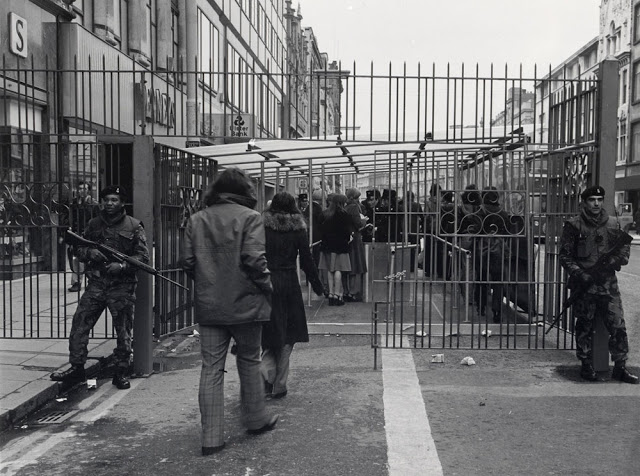
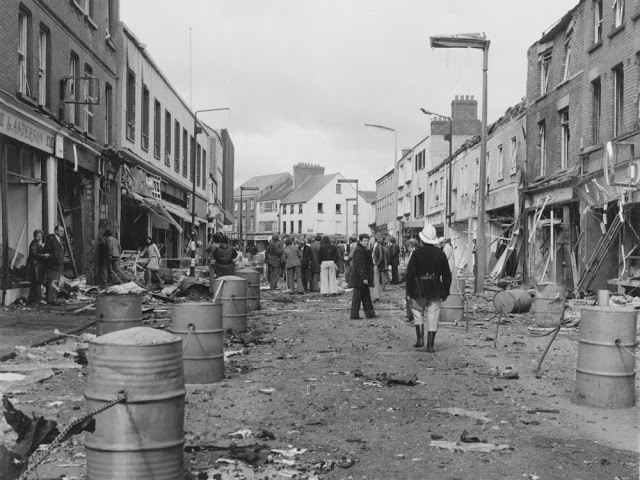
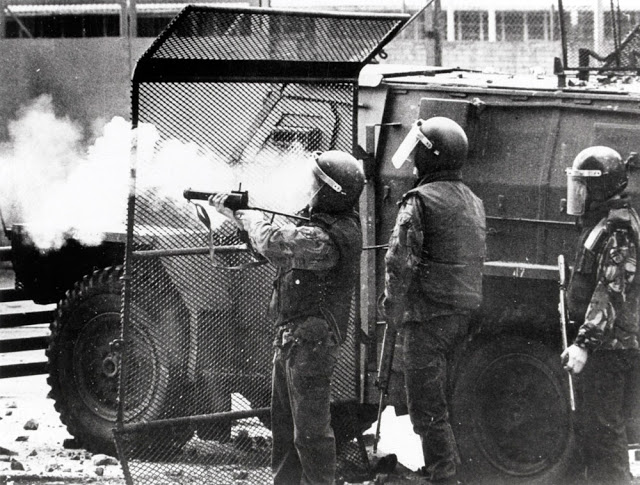
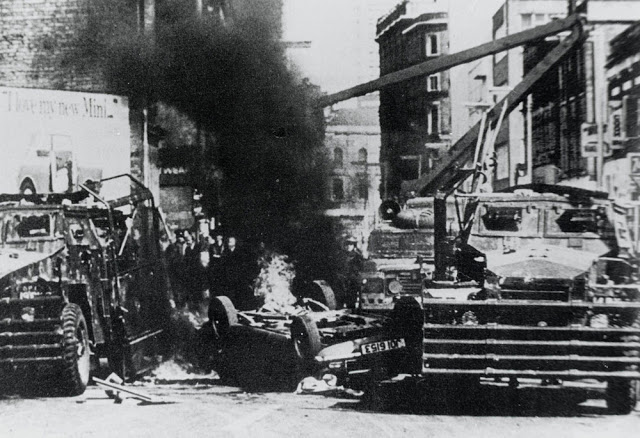
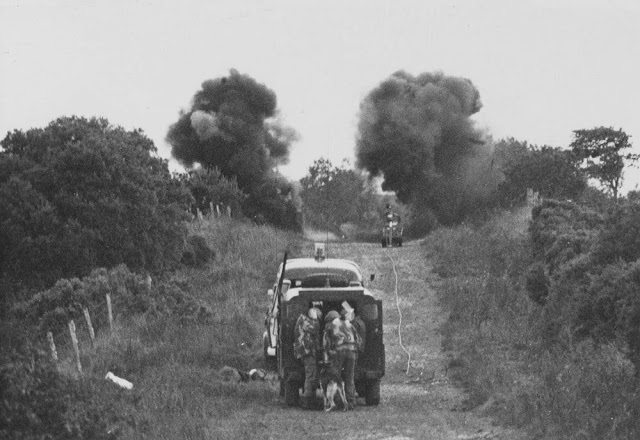
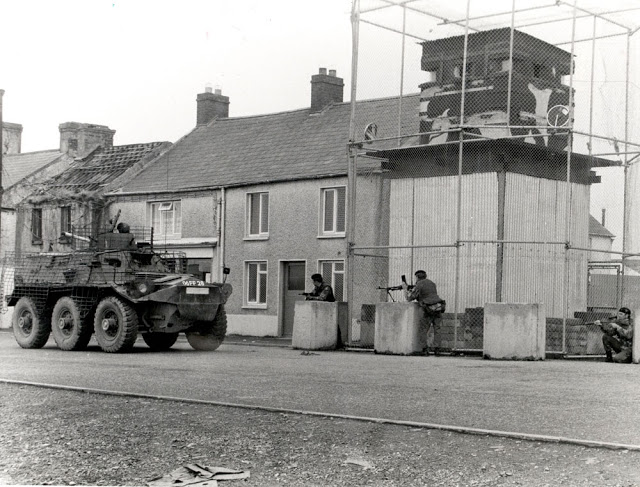
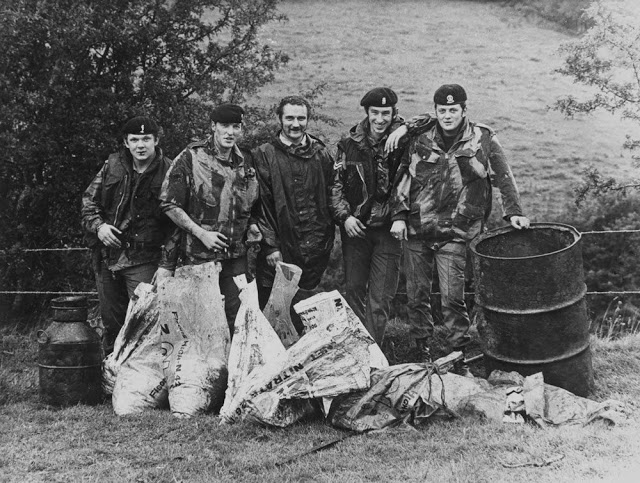
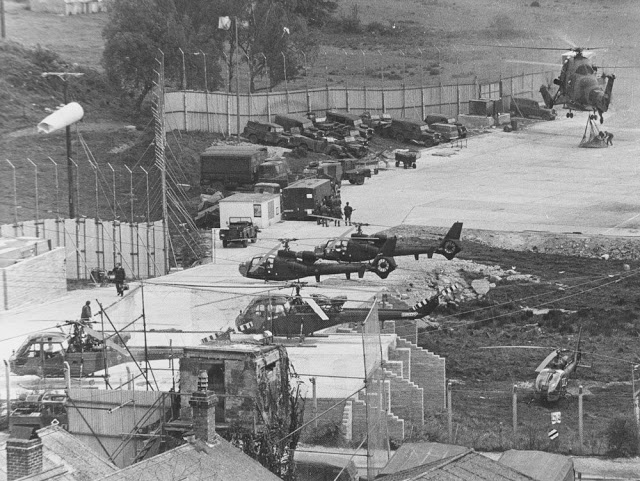
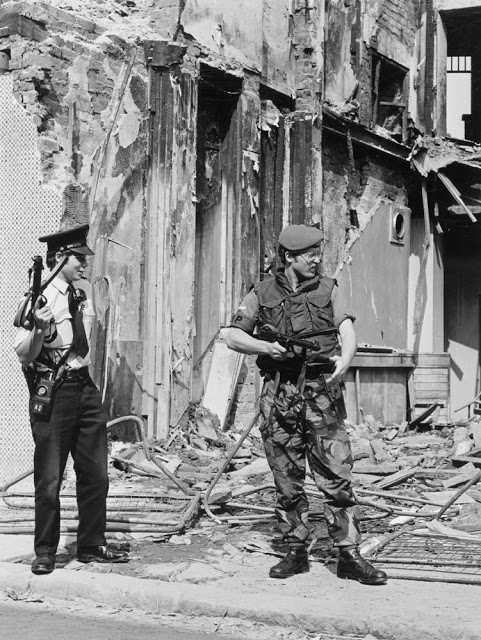
A British soldier arrests a demonstrator in Derry on Bloody Sunday 1972.Boy throwing stones at British soldiers in Northern Ireland, 1971. (Photo by Gilles Peress)A crowd of demonstrators passing British soldiers in Leeson St. in the Falls Road area of Belfast, July 1970.Armed British soldiers impose a curfew on the Falls Road in Belfast, July 1970.British soldiers impose a curfew on the Falls Road in Belfast, July 1970.Armed British soldiers impose a curfew on the Falls Road in Belfast, July 1970.Armed British troops take up defensive positions on the Falls Road, 4th July 1970. 5 Catholics were killed, 60 injured and many homes devastated when the British Army imposed a curfew in the Falls Road.A commandeered bus is driven backwards through a picket of women who want the violence to end during riots on the Falls Road, Belfast, 3rd July 1970.Armed British soldiers restrain a young civilian in the streets of Belfast, 3rd July 1970.Children mocking an Army patrol in Belfast, July 1970.Civil rights marchers in Belfast demonstrating against British policy in Northern Ireland, 10th July 1970.A British soldier searching a Belfast teenager, 1971.An armed British soldier on patrol in Belfast, 24th March 1971.A woman offers a cup of tea to a soldier manning a check point in a Belfast street, 20th April 1971.British troops searching a civilian in Belfast, 12th August 1971.A car explodes after troops carried out a controlled explosion of a suspected bomb in Belfast, 17th November 1971.A young woman injured during a shooting incident in Belfast is carried out of a chemists shop by ambulance men, 28th November 1971.Schoolboys giggling while a soldier searches them in a street in the Ardoyne area of Belfast, 7th December 1971.Armed British soldiers on patrol in Lisbon Street, Belfast, during the Official IRAs unconditional ceasefire, 1972.Firemen tend to a wounded victim of an Irish Republican Army car bomb explosion in Donegal Street, Belfast. The blast killed 6 people and injured 146, 1972.Members of the Gordon Highlanders on patrol, 1973.British soldiers man a checkpoint, Belfast, 1973.The aftermath of a terrorist bombing, 1972.A soldier fires off a baton round, Northern Ireland, 1972.A British Army Humber Pig passes through a burning barricade, 1972.On patrol in Little Patrick Street, Belfast, 1973.Members of 321 Explosive Ordnance Disposal Company, Royal Army Ordnance Corps, detonate a device near the Irish border, 1975.Soldiers from 1st Battalion The Worcestershire and Sherwood Foresters Regiment, man a watchtower in Crossmaglen, South Armagh, 1977.Members of 321 Explosive Ordnance Disposal Company, Royal Army Ordnance Corps, with a defused 660lbs ammonium nitrate bomb, Omagh, 1974.A British Army base in South Armagh, 1977.An RUC officer and Royal Military Policeman stand guard by a bombed building, 1979.
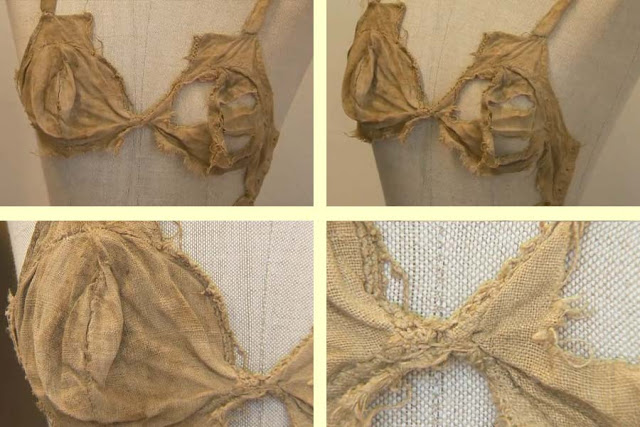
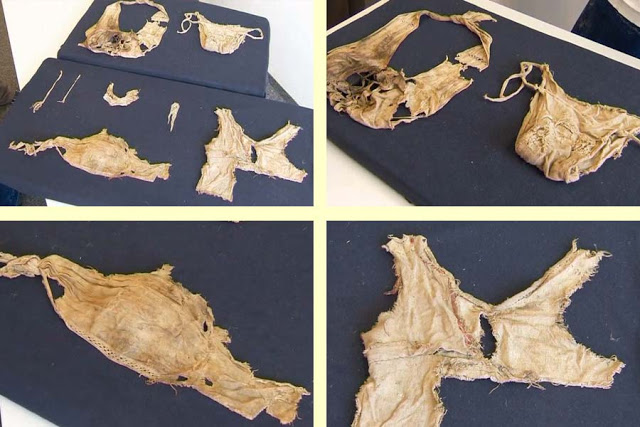
The bra and panty set were discovered hidden in a vault at Lengberg Castle in East Tyrol, Austria in 2012 and is thought to date back to the 15th century, a much earlier time period for these types of garments than previously believed.
“We didn’t believe it ourselves,” Beatrix Nutz, the archaeologist responsible for the discovery, told The Associated Press. “From what we knew, there was no such thing as bra-like garments in the 15th century.”
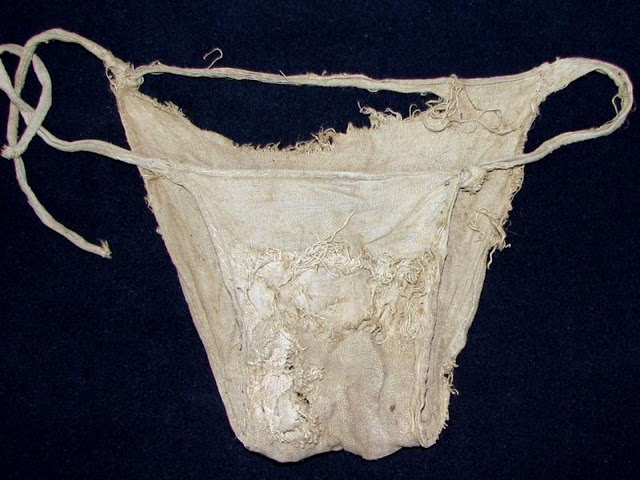
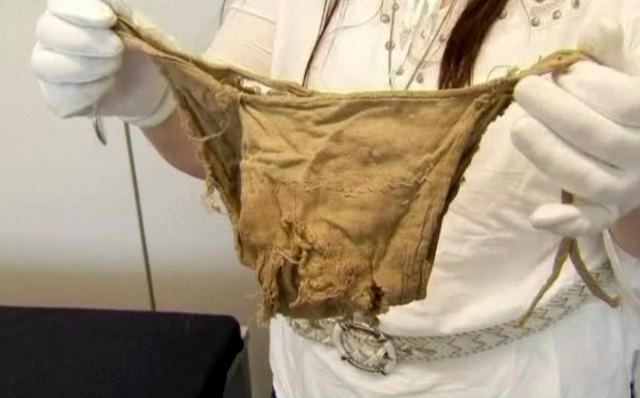
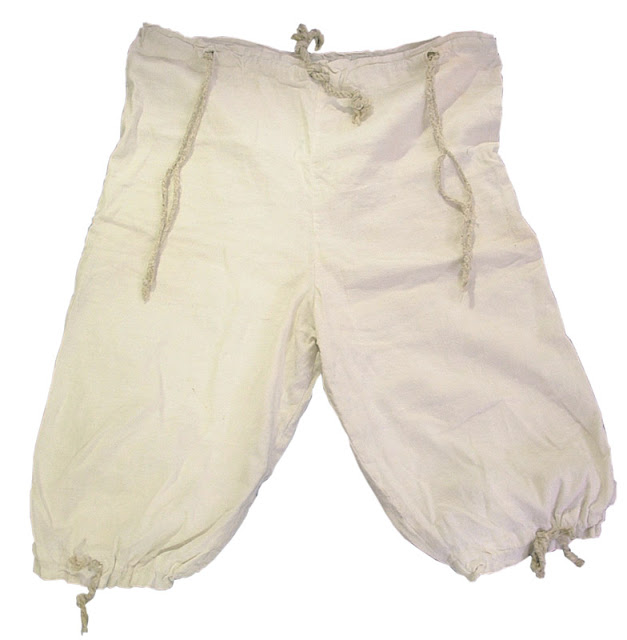
Four linen bras were found, one that looks like a modern bra, one that is similar but has fabric for the rib cage to be laced up, and two that look like shirts with bags. Other garments were also found, including panty-like underwear, but it is unclear if these were worn by men or women.
This bra was discovered hidden in a vault at Lengberg Castle in East Tyrol and is thought to date back to the 15th century.Lingerie from late Middle Age that was found during renovation works at Lemberg Castle in Austria.A pair of knickers found in Lengberg Castle.
So now, for the first time, we have proof that women in the Middle Ages were wearing bras. And not only that, but they were sexy ones decorated with lace.
Before this discovery, it was thought that the bras that appeared in the 1800s were predated only by corsets (the modern bra was patented in 1914 by Mary Phelps Jacob, a socialite in New York). But now we have actual evidence that ladies wore the undergarments even before they began cinching up their waistlines with whale bone.
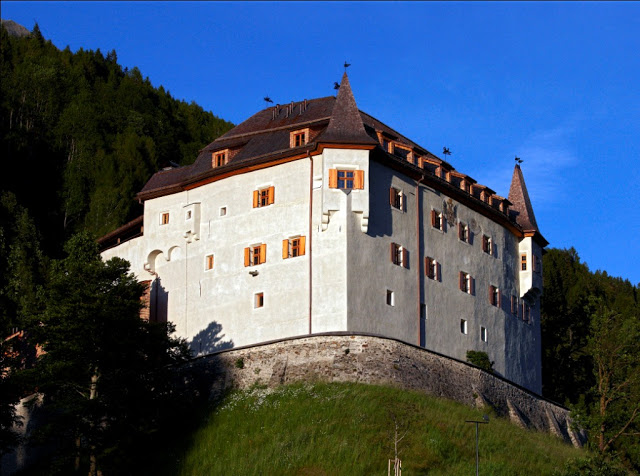
Lengberg Castle in East Tyrol, Austria, where the amazing haul was unearthed during restoration work.
Lengberg Castle is a medieval castle in Nikolsdorf, East Tyrol, Austria, about 13 kilometres (8.1 mi) east of Lienz. The castle was built by the earls of Lechsgemünde beginning in the late 12th century, and came under the control of the Archbishop of Salzburg in the 13th century.
During the 15th century, a second storey was added to the structure by Austrian noble Virgil von Graben from the Meinhardiner family. In 1485, the castle’s chapel was completely rebuilt, and was consecrated by the Bishop of Caorle, Pietro Carlo, in October of that year. Both the addition of the second storey and the chapel construction were recorded by Paolo Santonino, an Italian humanist known for his travel diaries. The area was ceded to the Kingdom of Bavaria during the Napoleonic Wars and was returned to Austrian control after the Congress of Vienna.
Lengberg Castle passed into private ownership beginning in 1821. It was used as a hospital during an 1831 cholera epidemic. Purchased by a Dutch businessman in the early 20th century, it was extensively renovated to return it to an inhabitable state.
A reconstruction project in 2008 uncovered a hidden vault on the second floor – likely built during the addition of the upper level – containing debris from the 15th century. Professor Harald Stadler of the University of Innsbruck led an archaeological investigation of the material in the vault. Discoveries include shirts, shoes, and undergarments. The London Museum’s fashion curator Hilary Davidson has described the discovery as ““kind of a missing link’ in the history of women’s underwear,” because fashion historians have long believed that functional bras were invented only about 100 years ago.
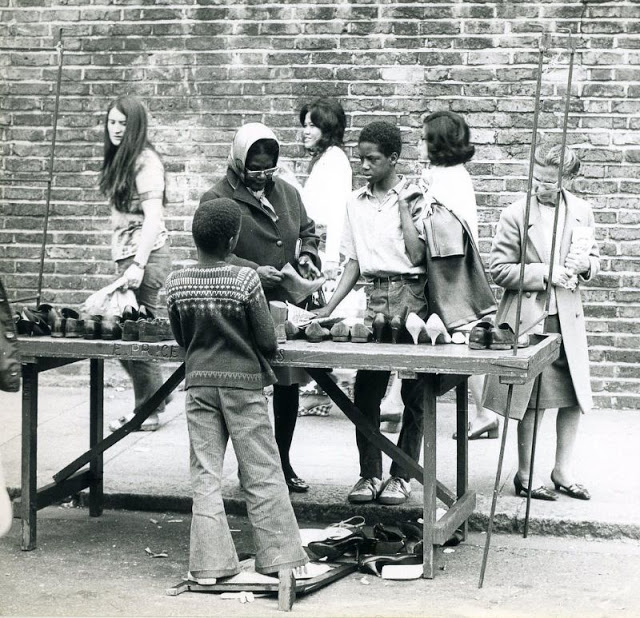
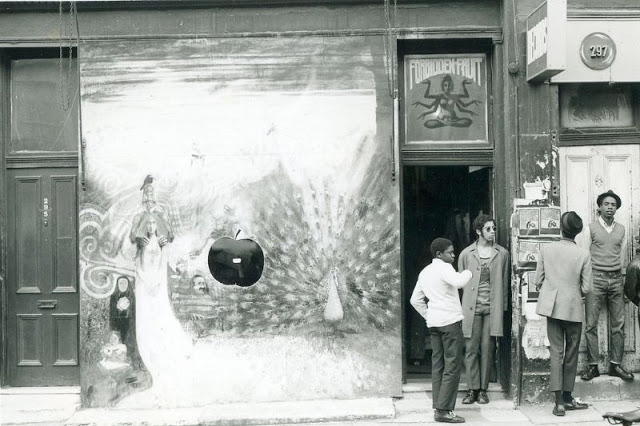
Notting Hill is a district in West London, located north of Kensington within the Royal Borough of Kensington & Chelsea (with eastern sections of Westbourne Grove merging into the City of Westminster). It is a vibrant, trendy area. Casual cafes line bohemian Portobello Road, famed for its busy market selling antiques and vintage fashion. Filmgoers relax in posh armchairs at the Electric Cinema. High-end restaurants, brunch spots and upscale boutiques cluster around Westbourne Grove.
Notting Hill is also known for being a cosmopolitan neighbourhood, hosting the annual Notting Hill Carnival and Portobello Road Market where huge crowds whose parades and calypso music reflect the area’s Caribbean roots.
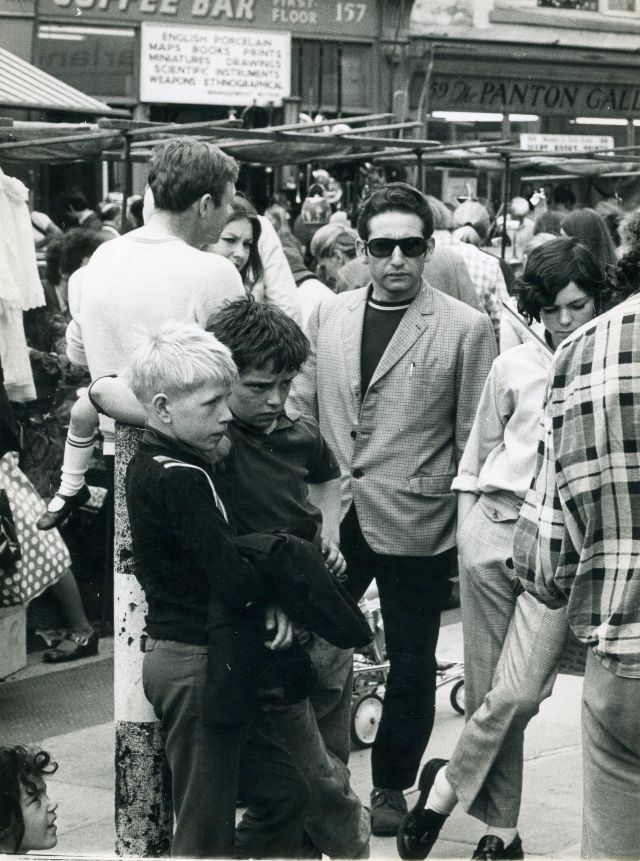
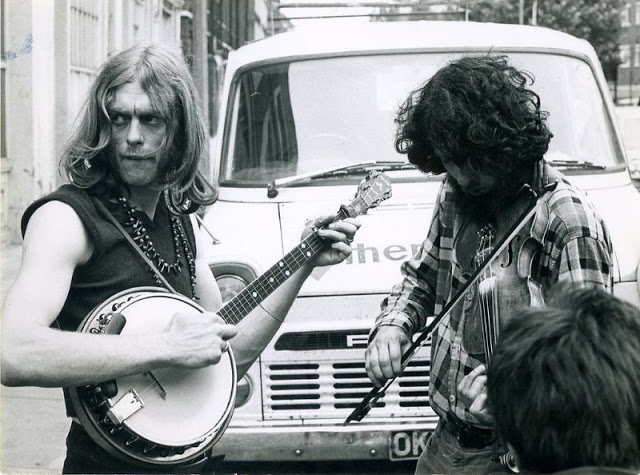
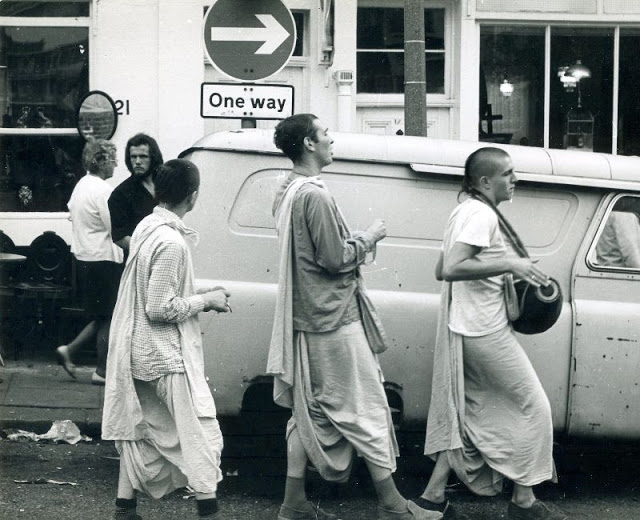
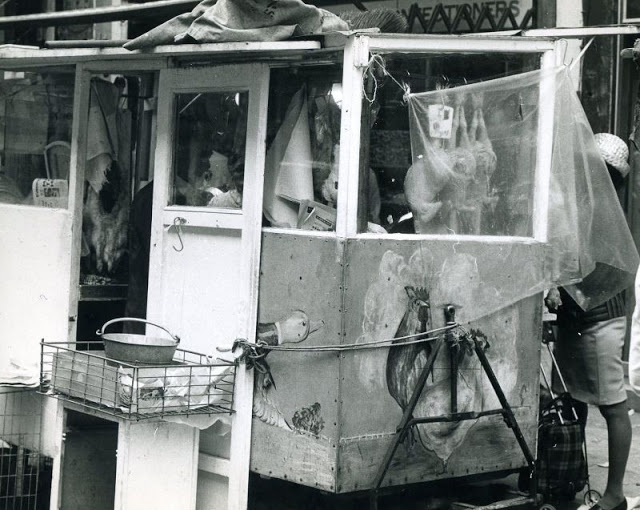
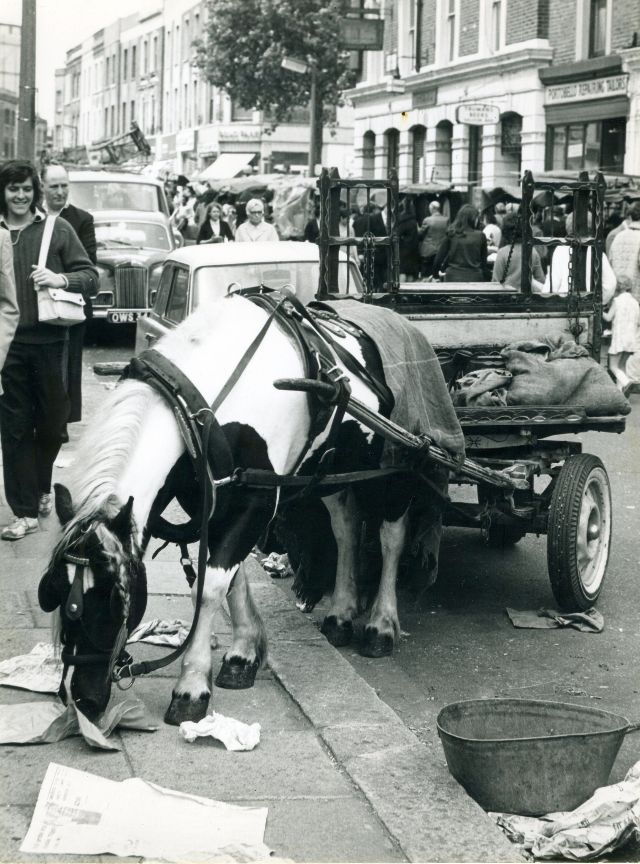
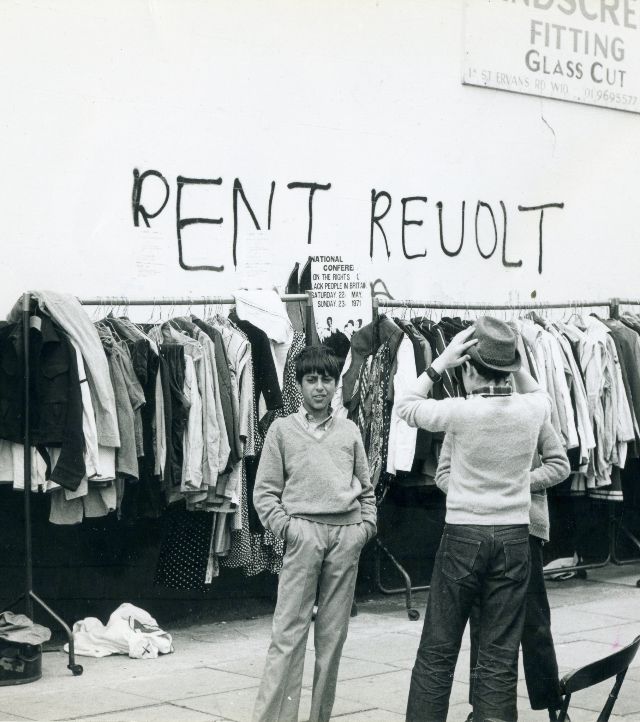
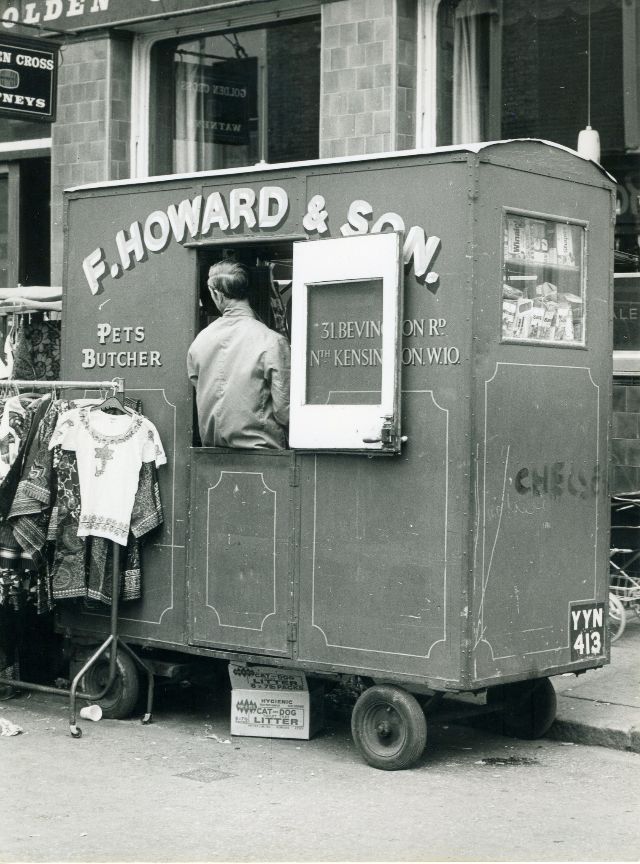
These amazing photographs are of everyday life of Notting Hill, London in 1971.
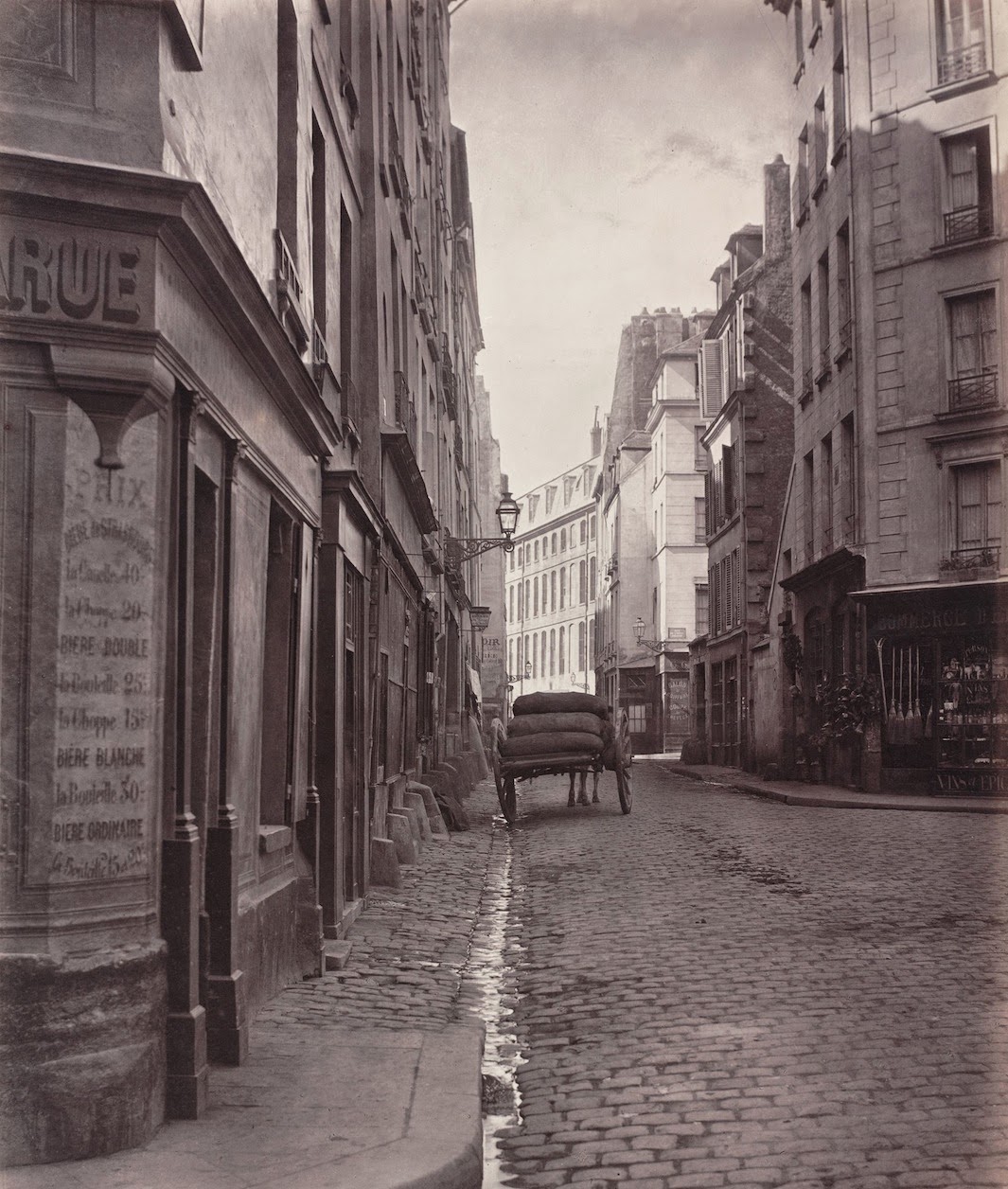
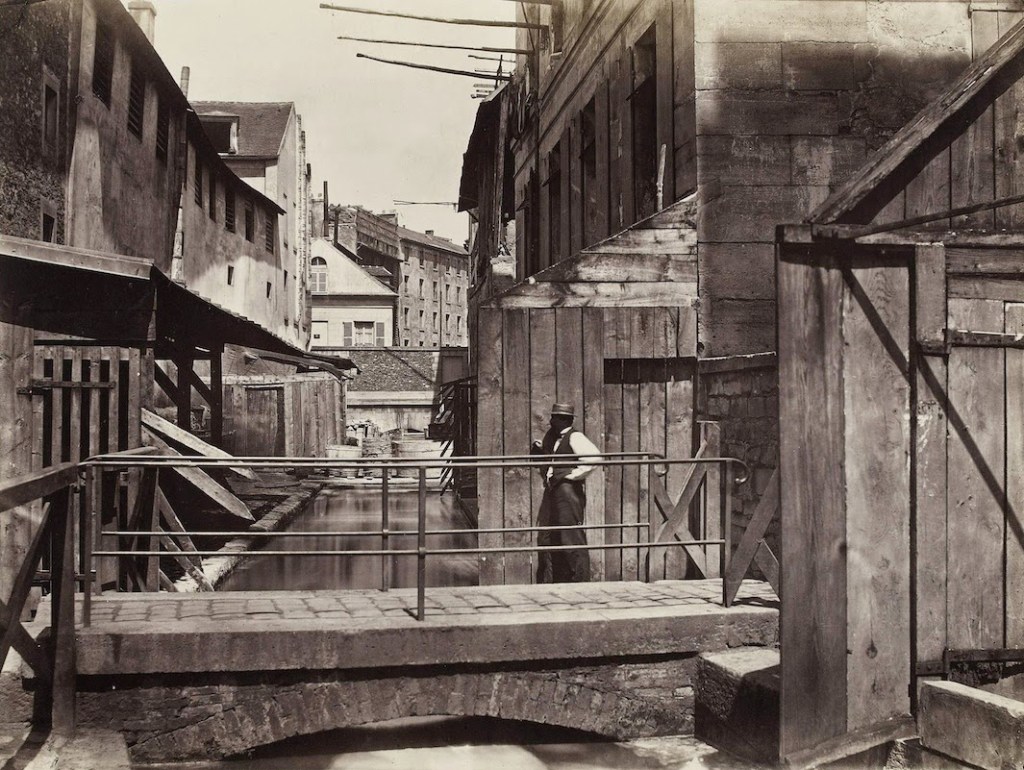
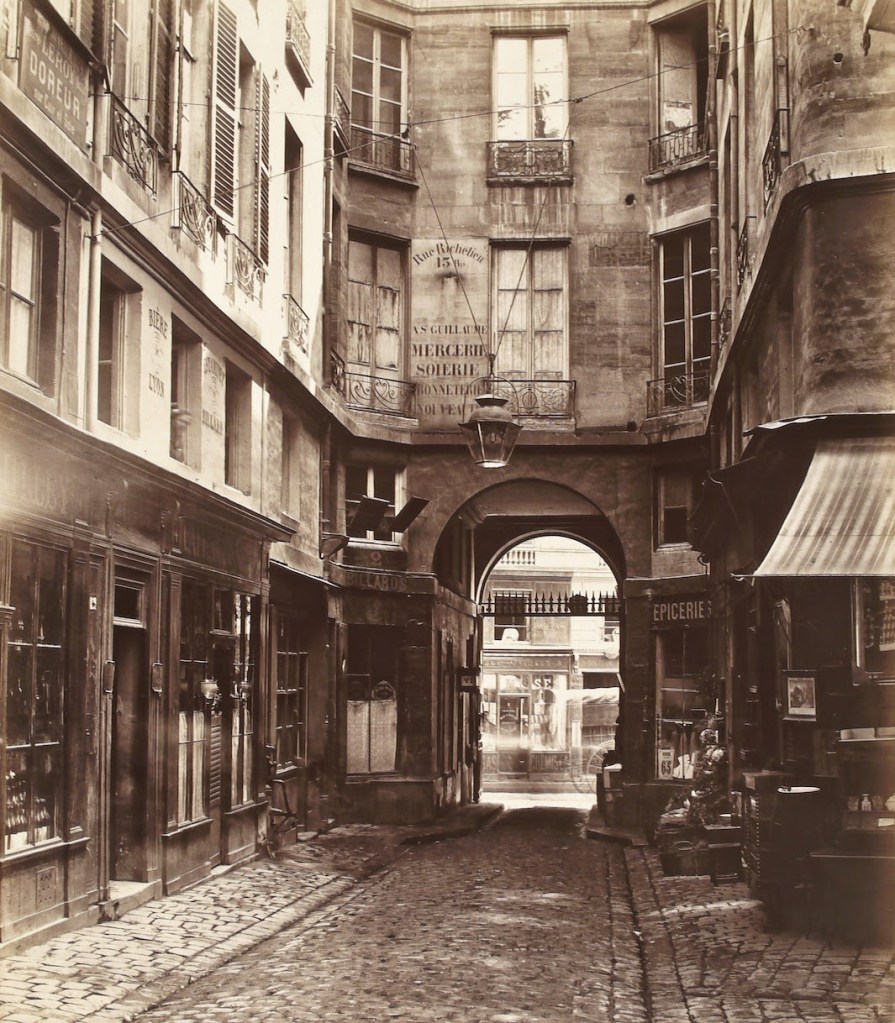
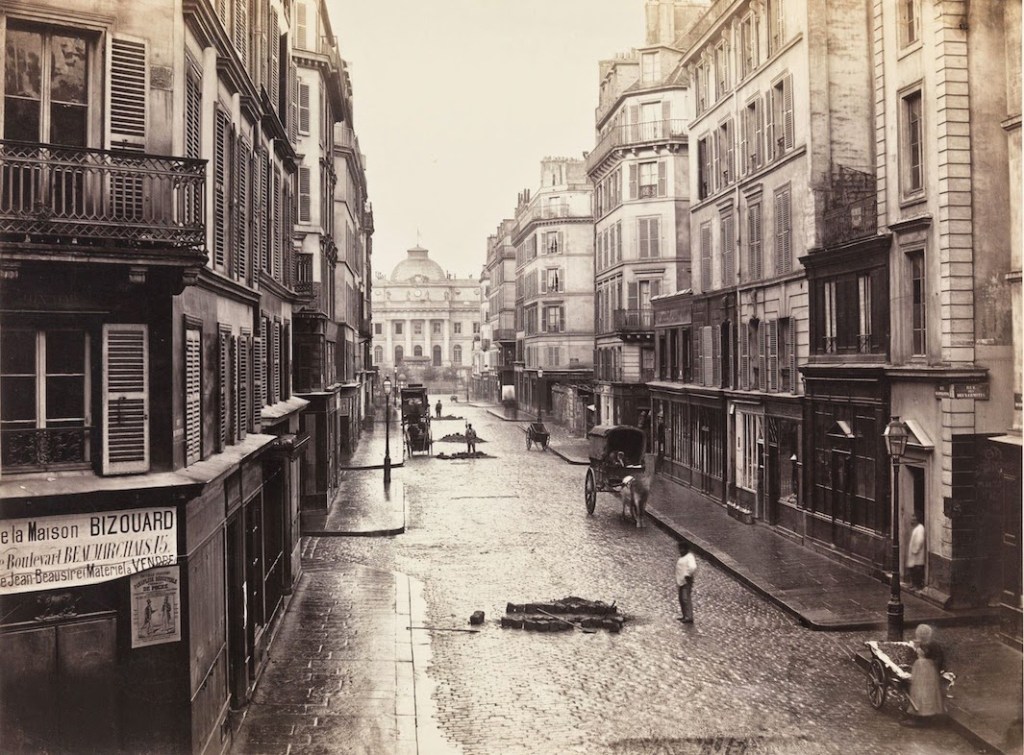
Beginning in the mid-1850s, Paris experienced a grand transformation. At the orders of Napoleon III, old, narrow streets made way for wide boulevards, thousands of gas lamps lit the streets at night, and a host of other public projects thoroughly modernized the city. Charles Marville, a photographer employed by the city, was charged with documenting those changes.
The oldest traces of human occupation in Paris, discovered in 2008 near the Rue Henri-Farman in the 15th arrondissement, are human bones and evidence of an encampment of hunter-gatherers dating from about 8000 BC, during the Mesolithic period. Between 250 and 225 BC, the Parisii, a sub-tribe of the Celtic Senones, settled on the banks of the Seine, built bridges and a fort, minted coins, and began to trade with other river settlements in Europe.
In 52 BC, a Roman army led by Titus Labienus defeated the Parisii and established a Gallo-Roman garrison town called Lutetia. The town was Christianised in the 3rd century AD, and after the collapse of the Roman Empire, it was occupied by Clovis I, the King of the Franks, who made it his capital in 508.
During the Middle Ages, Paris was the largest city in Europe, an important religious and commercial centre, and the birthplace of the Gothic style of architecture. The University of Paris on the Left Bank, organised in the mid-13th century, was one of the first in Europe. It suffered from the Bubonic Plague in the 14th century and the Hundred Years’ War in the 15th century, with recurrence of the plague. Between 1418 and 1436, the city was occupied by the Burgundians and English soldiers. In the 16th century, Paris became the book-publishing capital of Europe, though it was shaken by the French Wars of Religion between Catholics and Protestants. In the 18th century, Paris was the centre of the intellectual ferment known as the Enlightenment, and the main stage of the French Revolution from 1789, which is remembered every year on the 14th of July with a military parade.
In the 19th century, Napoleon embellished the city with monuments to military glory. It became the European capital of fashion and the scene of two more revolutions (in 1830 and 1848). Under Napoleon III and his Prefect of the Seine, Georges-Eugène Haussmann, the centre of Paris was rebuilt between 1852 and 1870 with wide new avenues, squares and new parks, and the city was expanded to its present limits in 1860. In the latter part of the century, millions of tourists came to see the Paris International Expositions and the new Eiffel Tower.
In the 20th century, Paris suffered bombardment in World War I and German occupation from 1940 until 1944 in World War II. Between the two wars, Paris was the capital of modern art and a magnet for intellectuals, writers and artists from around the world. The population reached its historic high of 2.1 million in 1921, but declined for the rest of the century. New museums (The Centre Pompidou, Musée Marmottan Monet and Musée d’Orsay) were opened, and the Louvre given its glass pyramid.
In the 21st century, Paris added new museums and a new concert hall, but in 2005 it also experienced violent unrest in the housing projects in the surrounding banlieues (suburbs), inhabited largely by first and second generation immigrants from France’s former colonies in the Maghreb and Sub-Saharan Africa. In 2015, the city and the nation were shocked by two deadly terrorist attacks carried out by Islamic extremists. The population of the city declined steadily from 1921 until 2004, due to a decrease in family size and an exodus of the middle class to the suburbs; but it is increasing slowly once again, as young people and immigrants move into the city. (Wikipedia)
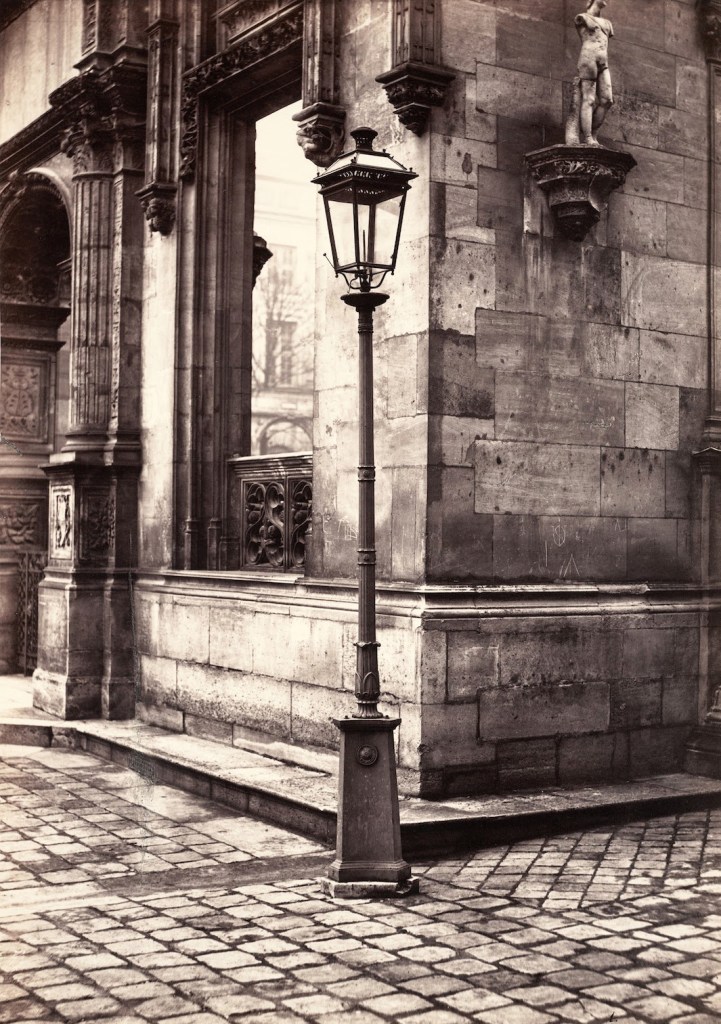
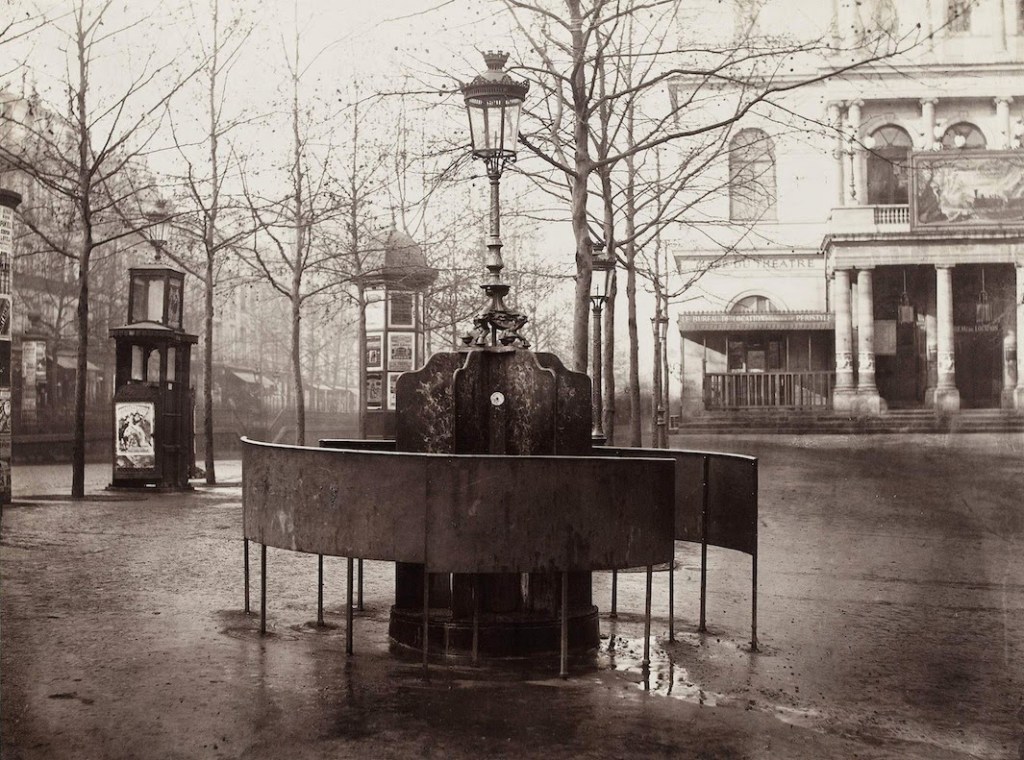
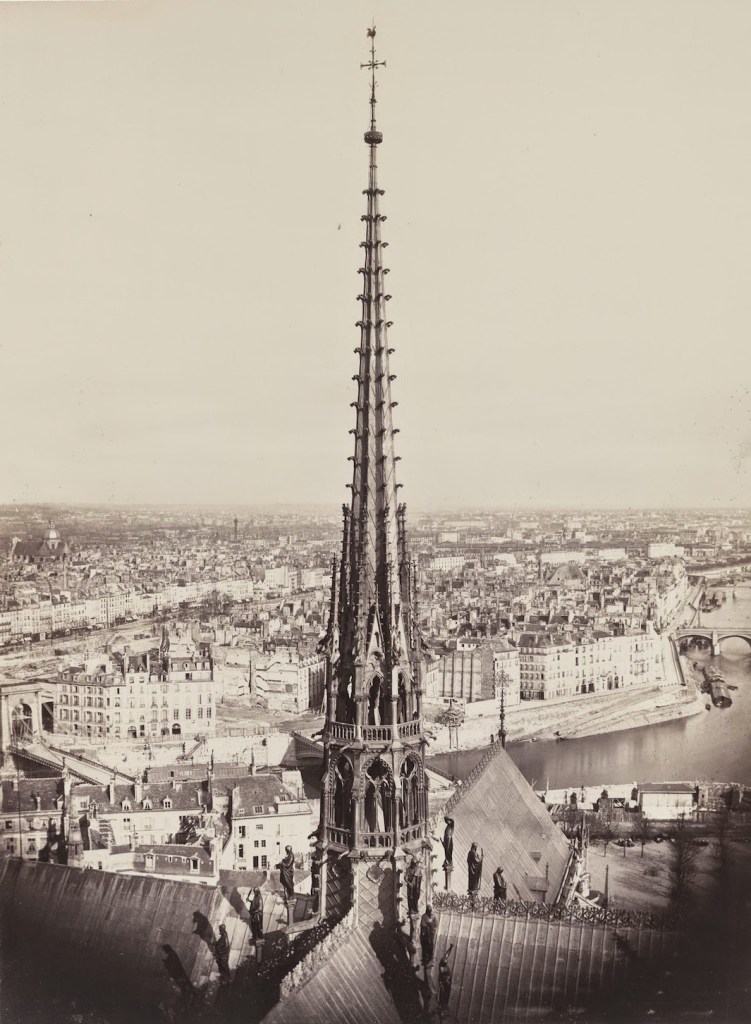
Banks of the Bièvre River at the Bottom of the Rue des Gobelins (Fifth Arrondissement), 1862Passage Saint-Guillaume Toward the Rue Richilieu (First Arrondissement), 1863–65Cour Saint-Guillaume (Ninth Arrondissement), 1866–67Rue de Constantine (Fourth Arrondissement), 1866Top of the Rue Champlain, View to the Right (Twentieth Arrondissement), 1877–78Impasse de la Bouteille, Fom the Rue Montorgeuil (Second Arrondissement), 1865–68Rue de la Bûcherie From the Cul de Sac Saint-Ambroise (Fifth Arrondissement), 1866–68Lamppost, Entrance to the E´cole des Beaux-Arts, 1870Urinal, Jennings System, Plateau de l’Ambigu, 1876Spire of Notre Dame, Viollet-le-Duc, Architect, 1859–60
The Wounded Knee Massacre was one of the most notorious episodes of violence by the United States government against Native Americans.
American soldiers dump the Sioux dead into a mass grave after Wounded Knee.
While most peoples know about the horrors of the Wounded Knee Massacre in South Dakota, few know the backstory to the incident, which involves a Paiute prophet named Wovoka.
In 1889, Wovoka went into a deep trance. When he emerged, he told his tribesmen that he had foreseen the way to paradise. He claimed that if the Native Americans returned to their traditional ways and performed a sacred dance, the buffalo would come back to the plains, the whites would be driven out, and the dead would return to help in the fight. It was this last prophecy that gave the religious movement its name – the Ghost Dance.
The Plains Indians who had once roamed free across the American west had seen their centuries-old way of life disappear within a generation. Confined to small reservations on the lands that had once been theirs and dependent on American bureaucrats to meet even their most basic needs, some Native Americans turned to this new religion in a last hope that their old way of life could be restored.
The movement spread like wildfire amongst the Sioux, where it would set off the final chapter in the great war between whites and natives that had begun when the first European settlers arrived two centuries earlier.
Before the Wounded Knee Massacre, tensions were already high between the Sioux and the Americans by the time the Ghost Dance craze became popular. The government agents who worked on the reservations had no idea of the meaning behind it and became nervous that is was some kind of war dance. One bureaucrat finally became so frightened that he sent a telegram to the government requesting military backup, frantically claiming, “Indians are dancing in the snow and are wild and crazy… we need protection and we need it now.”
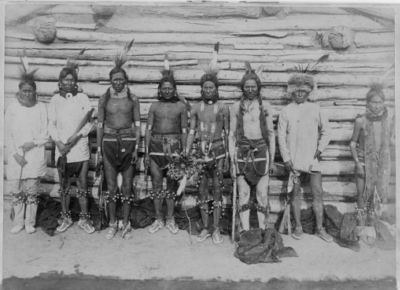
Sioux ceremonial dancers in the late 19th century.
Subscribe to continue reading
Become a paid subscriber to get access to the rest of this post and other exclusive content.
World War II or the Second World War, often abbreviated as WWII or WW2, was a global war that lasted from 1939 to 1945. It involved the vast majority of the world’s countries—including all of the great powers—forming two opposing military alliances: the Allies and the Axis powers. In a total war directly involving more than 100 million personnel from more than 30 countries, the major participants threw their entire economic, industrial, and scientific capabilities behind the war effort, blurring the distinction between civilian and military resources. Aircraft played a major role in the conflict, enabling the strategic bombing of population centres and the only two uses of nuclear weapons in war. World War II was by far the deadliest conflict in human history; it resulted in 70 to 85 million fatalities, a majority being civilians. Tens of millions of people died due to genocides (including the Holocaust), starvation, massacres, and disease. In the wake of the Axis defeat, Germany and Japan were occupied, and war crimes tribunals were conducted against German and Japanese leaders.
World War II is generally considered to have begun on 1 September 1939, when Nazi Germany, under Adolf Hitler, invaded Poland. The United Kingdom and France subsequently declared war on Germany on 3 September. Under the Molotov–Ribbentrop Pact of August 1939, Germany and the Soviet Union had partitioned Poland and marked out their “spheres of influence” across Finland, Estonia, Latvia, Lithuania and Romania. From late 1939 to early 1941, in a series of campaigns and treaties, Germany conquered or controlled much of continental Europe, and formed the Axis alliance with Italy and Japan (along with other countries later on). Following the onset of campaigns in North Africa and East Africa, and the fall of France in mid-1940, the war continued primarily between the European Axis powers and the British Empire, with war in the Balkans, the aerial Battle of Britain, the Blitz of the UK, and the Battle of the Atlantic. On 22 June 1941, Germany led the European Axis powers in an invasion of the Soviet Union, opening the Eastern Front, the largest land theatre of war in history.
Japan, which aimed to dominate Asia and the Pacific, was at war with the Republic of China by 1937. In December 1941, Japan attacked American and British territories with near-simultaneous offensives against Southeast Asia and the Central Pacific, including an attack on the US fleet at Pearl Harbor which resulted in the United States declaring war against Japan. Therefore the European Axis powers declared war on the United States in solidarity. Japan soon captured much of the western Pacific, but its advances were halted in 1942 after losing the critical Battle of Midway; later, Germany and Italy were defeated in North Africa and at Stalingrad in the Soviet Union. Key setbacks in 1943—including a series of German defeats on the Eastern Front, the Allied invasions of Sicily and the Italian mainland, and Allied offensives in the Pacific—cost the Axis powers their initiative and forced it into strategic retreat on all fronts. In 1944, the Western Allies invaded German-occupied France, while the Soviet Union regained its territorial losses and turned towards Germany and its allies. During 1944 and 1945, Japan suffered reversals in mainland Asia, while the Allies crippled the Japanese Navy and captured key western Pacific islands.
The war in Europe concluded with the liberation of German-occupied territories, and the invasion of Germany by the Western Allies and the Soviet Union, culminating in the fall of Berlin to Soviet troops, Hitler’s suicide and the German unconditional surrender on 8 May 1945. Following the Potsdam Declaration by the Allies on 26 July 1945 and the refusal of Japan to surrender on its terms, the United States dropped the first atomic bombs on the Japanese cities of Hiroshima, on 6 August, and Nagasaki, on 9 August. Faced with an imminent invasion of the Japanese archipelago, the possibility of additional atomic bombings, and the Soviet entry into the war against Japan and its invasion of Manchuria, Japan announced its intention to surrender on 15 August, then signed the surrender document on 2 September 1945, cementing total victory in Asia for the Allies.
World War II changed the political alignment and social structure of the globe. The United Nations (UN) was established to foster international co-operation and prevent future conflicts, great powers—China, France, the Soviet Union, the United Kingdom, and the United States—became the permanent members of its Security Council. The Soviet Union and the United States emerged as rival superpowers, setting the stage for the nearly half-century-long Cold War. In the wake of European devastation, the influence of its great powers waned, triggering the decolonisation of Africa and Asia. Most countries whose industries had been damaged moved towards economic recovery and expansion. Political and economic integration, especially in Europe, began as an effort to forestall future hostilities, end pre-war enmities and forge a sense of common identity. (Wikipedia)
Here’s a photo series from the Imperial War Museum showing a daily life of a wartime housewife – Mrs Olive Day – in London. The photographs show some of the grim realities of living in wartime Britain in 1941.
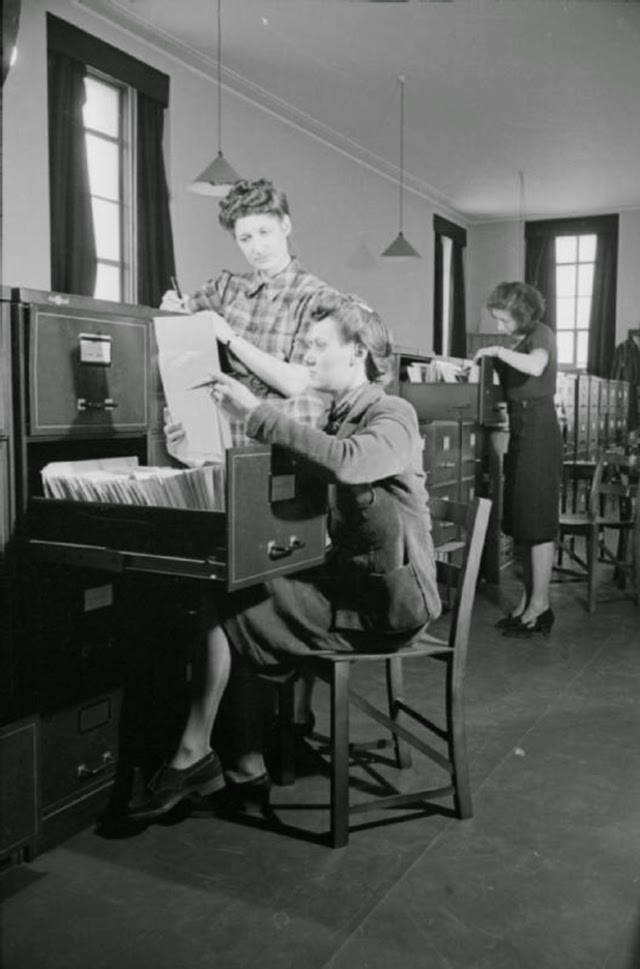
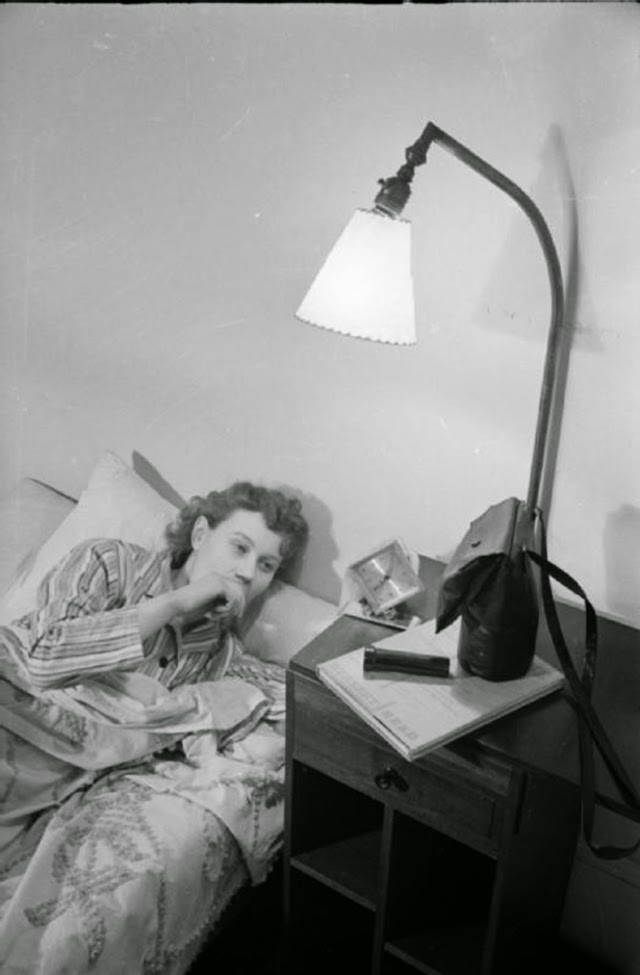
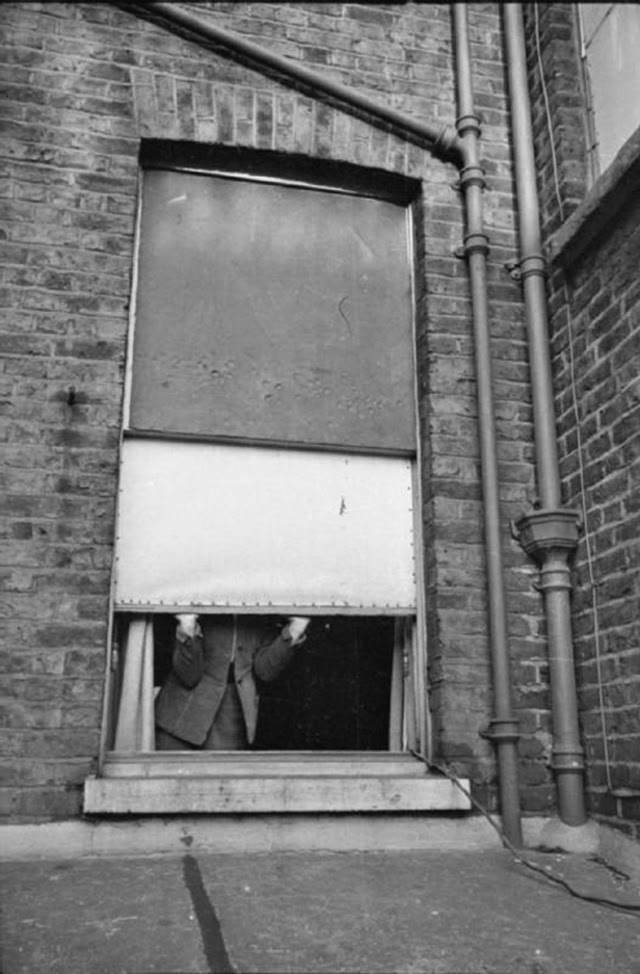
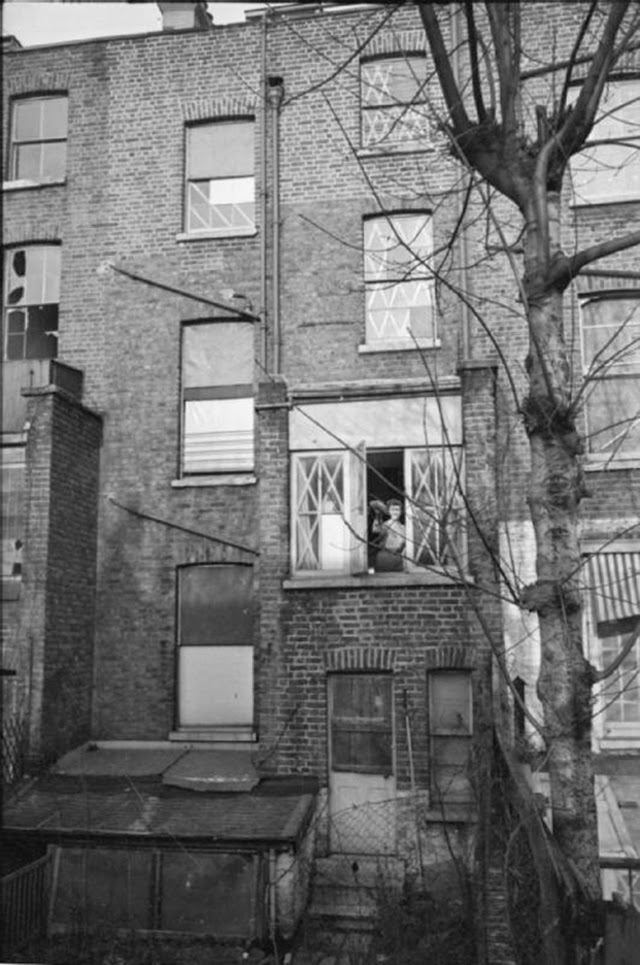
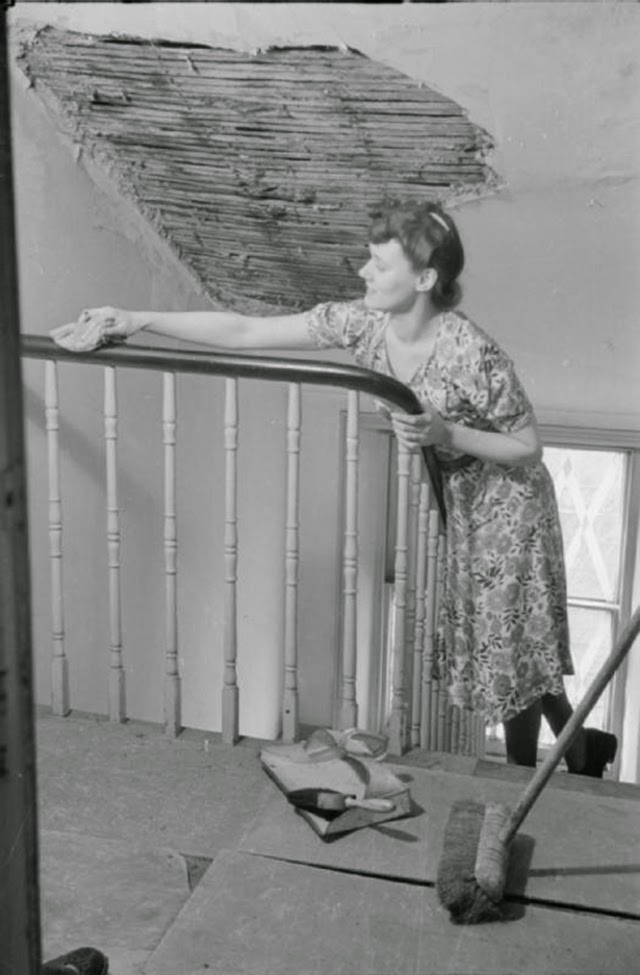
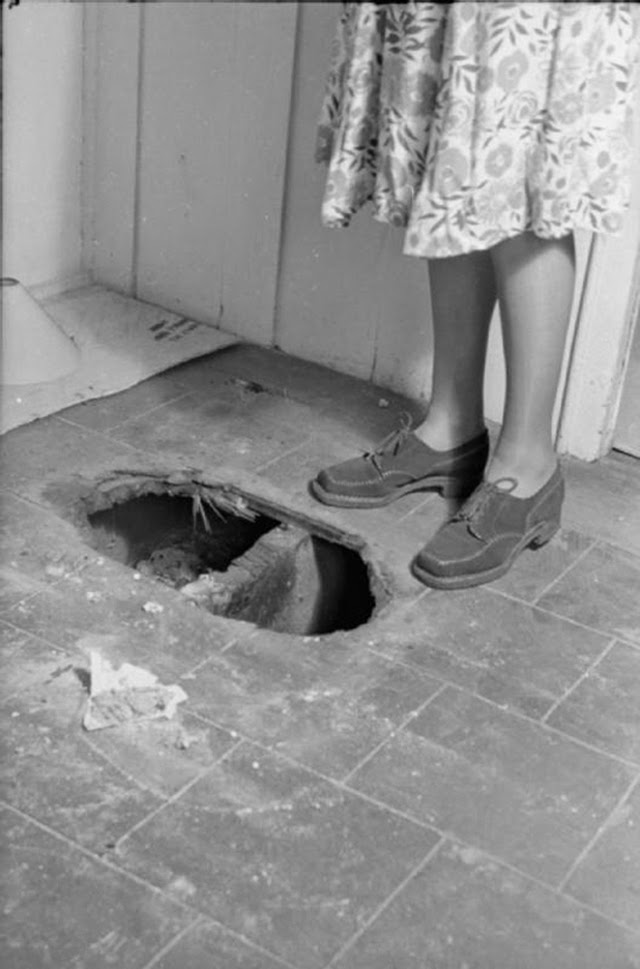
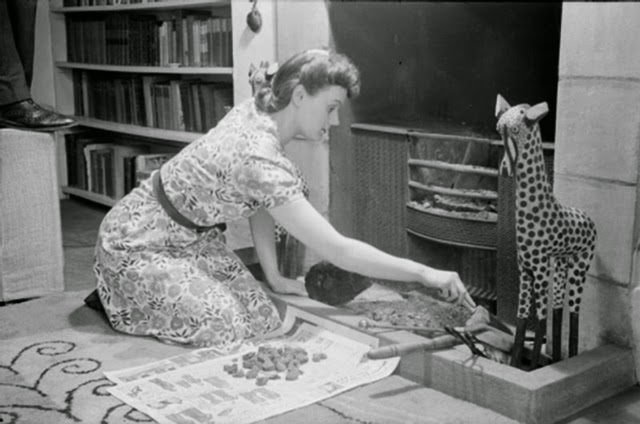
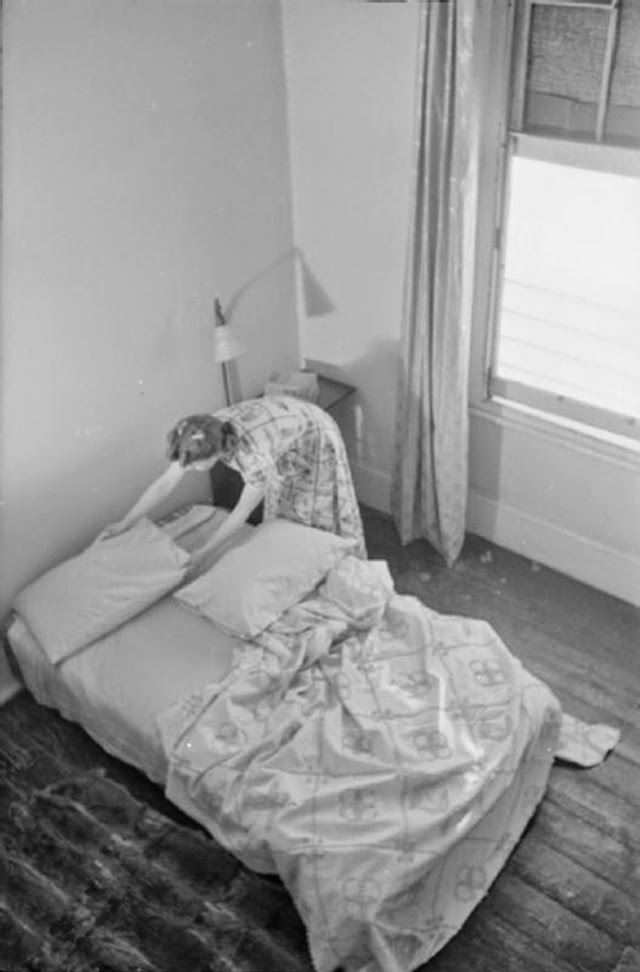
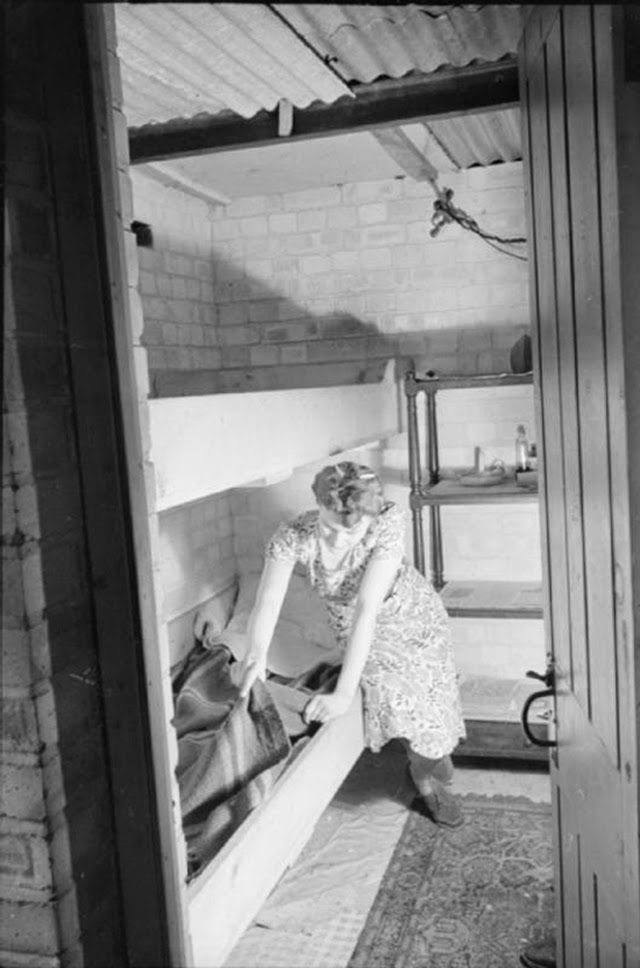
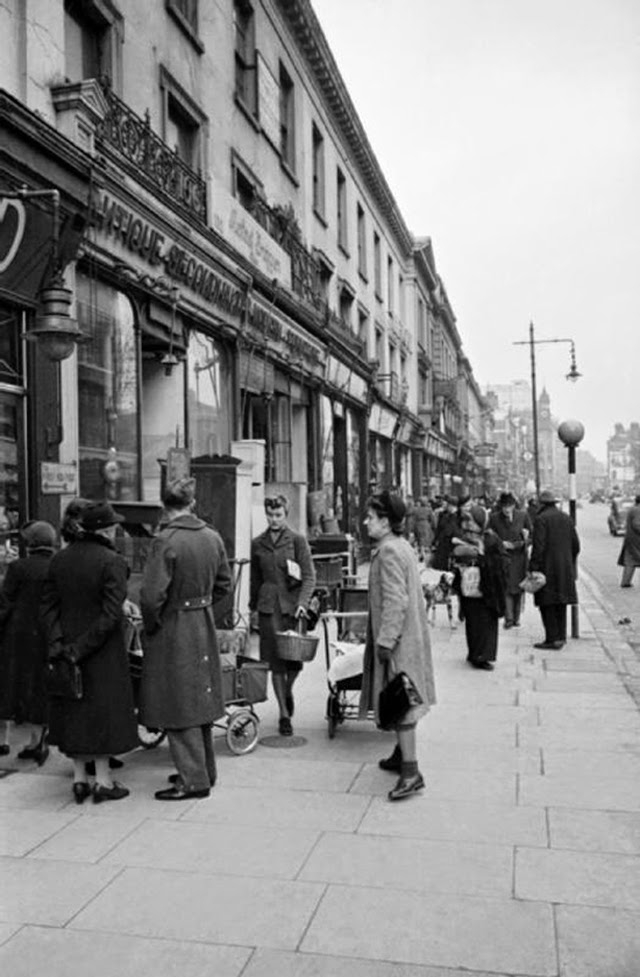
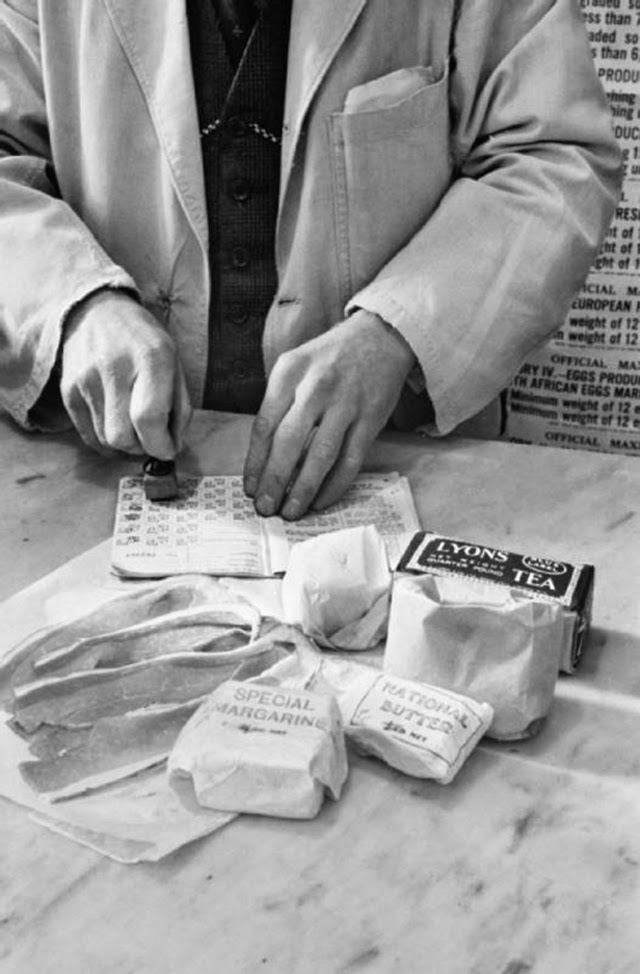
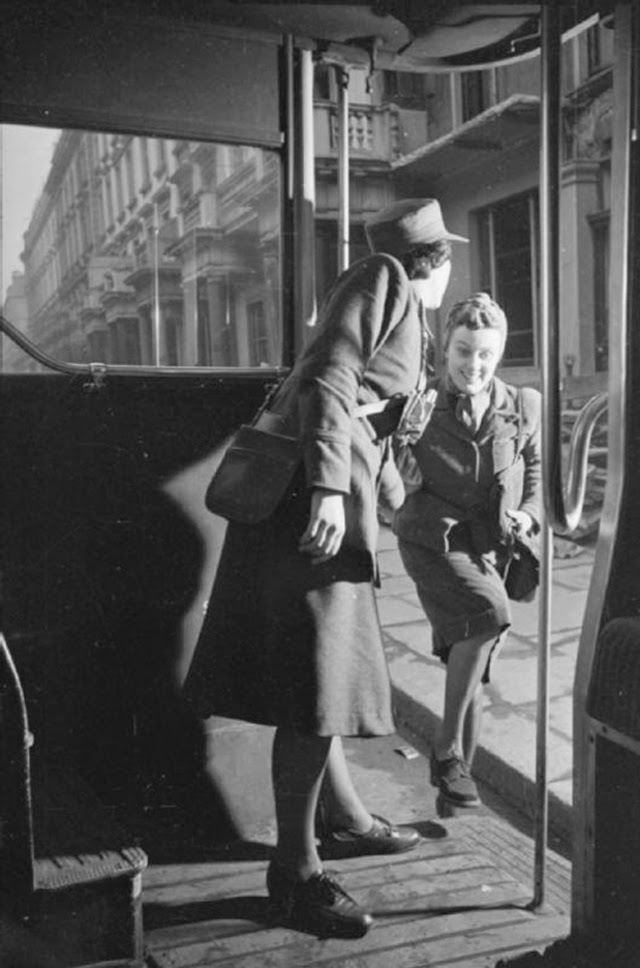
Mrs Day wakes up at 7am at her home in Drayton Gardens, South Kensington. On the bedside cabinet, her gas mask, torch and a book are ready, in case a quick dash to the air raid shelter is required in the night.Mrs Day opens the curtains of her bedroom in the basement of her South Kensington home. Unfortunately, as the glass has recently been knocked out of the windows by a nearby air raid, Mrs Day cannot see outside, as oiled linen has been stretched across the windw frame in place of the missing glass. Her cat ‘Little One’ watches her from the bed.Mrs Day opens her window to let some air, and light, into her South Kensington home. The window panes have been replaced by oiled linen stretched over the frame, as the glass was knocked out by a nearby bomb a short while ago.Mrs Day collects the milk and newspapers from the top of the steps leading down to the basement of her South Kensington home. The buckets that can be seen on the street at the top of the steps contain sand and water and are provided in case of fire bombs.Mrs Day enjoys tea, toast and the morning papers at the breakfast table in the centre of her South Kensington sitting room. Behind her, evidence of air raids can be seen in that two panes of glass are missing from the window and have been replaced with boards and the other panes have criss-crosses of tape on them to prevent the glass from shattering, should the area suffer another air raid.Mrs Day shakes her duster out of one of the back windows of her South Kensington home. Every visible window of her house, and of the houses alongside, bears witness to the air raids that have occured in the last few weeks. There is not one window that remains unaffected in someway and all are either fully or partly boarded, have had the broken glass replaced by oiled linen, or have existing glass criss-crossed with tape.Mrs Day spends half an hour or so on the housework before she leaves for work. Here we see her polishing the bannisters. Above her head, we can see a large patch of missing plaster on the ceiling, caused by a nearby air raid.Mrs Day rolls away a rug that was on the staircase of her South Kensington home. All carpets have been removed and asbestos laid in their place, in an attempt to combat fire bombs. Behind her, part of the window has been boarded up, with the rest of the panes have criss-crosses of tape across the glass.This photograph shows how large sheets of asbestos have been laid on the landing at the top of Mrs Day’s home to try to prevent fires from incendiary bombs from spreading to other parts of the house.Mrs Day points to a hole in the ceiling where a fire bomb recently came through into her South Kensington home. Scorch marks can be seen on the ceiling next to the hole.Mrs Day stands alongside a hole in the floor which was made by a fire bomb before the fire was brought under control. This area of the house does not have asbestos sheeting on the floor.The top floor of Mrs Day’s South Kensington home is no longer in use. Here we see an empty room with a bowl on the floor to catch any drips of rain water that may come in through the bomb-damaged ceiling.Mrs Day clears the grate in the sitting room of her South Kensington home. She is careful to sort the cinders from the ash, so that the cinders can be re-used in the grate and so that the ash can be added to the garden as a fertiliser.Mrs Day makes her bed in the basement of her South Kensington home before leaving for work. The top floor of her house is no longer in use.Mrs Day makes up a bunk in the air raid shelter in the cellar of her South Kensington home. The bunks are kept ready in case any night raids force her to spend the night in the shelter. The bunk will hopefully mean that she spends the night in some comfort!Mrs Day separates cardboard and tin from her household rubbish, ready for salvage, outside the basement of her home in South Kensington, London.After lunch, Mrs Day sets out to do her weekly shop on the King’s Road in Chelsea. She walks past several women with prams and a member of the RAF as they queue to the left of a large furniture store. The shop has furniture displayed on the street and the sign on its frontage says ‘Antique, Second-Hand and Modern Furniture’. Just above the heads of this group of people is a small sign directing people to a First Aid Post. In the background, other people go about their daily business and buses and cars are just visible in the distance. This photograph was almost certainly taken from a point on the King’s Road parallel to Walpole Road and is looking towards Sloane Square: the clocktower and spire just visible in the distance is on a building next door to Peter Jones department store.Mrs Day stops to look in the window of a shop to see what is available to her this week. The photograph is taken from inside the shop, and Mrs Day can be seen next to the shopkeeper. A group of other shoppers can also be seen. This photograph was probably taken on the King’s Road in Chelsea.A shopkeeper stamps Mrs Day’s ration book during her shopping trip on the Kings Road in Chelsea. In the foreground can be seen the tea, sugar, ‘national butter’, margarine, cooking fats and bacon she is allowed for one week.Mrs Day, helped by the female conductor, jumps on the bus that will take her to work. In the background, it is clear that quite a bit of air raid damage has been sustained. This photograph was probably taken on Fulham Road. The tower visible in the background is part of St Stephen’s Hospital (now the Chelsea and Westminster Hospital), which was built in 1878 as the Fulham Workhouse and St George’s Infirmary.Mrs Day is helped by a female conductor onto the bus that will take her to work. This photograph was probably taken on Fulham Road.Mrs Day and colleagues work at one of many filing cabinets in the office. According to the original Ministry of Information caption, Mrs Day works as a ‘girl clerk in a war-time organisation’ and that filing takes up most of her time. The caption goes on to say that she works Monday to Friday between 10am and 6pm, but that as this photograph was taken on a Saturday, she would be finished by 2pm. It also states that ‘if there is a rush of work, she will work Sunday as well’.Mrs Day puts her dinner into the oven after a busy day. The Ministry of Food encouraged people to cook their entire meal in the oven as a way to save fuel.Mrs Day puts her dinner into the oven after a busy day. The Ministry of Food encouraged people to cook their entire meal in the oven as a way to save fuel.Mrs Day sets the table in preparation for the evening meal in the sitting room of her South Kensington home. She is expecting her naval husband Lt Kenneth Day to arrive home on leave, so the table is set for two and a vase of flowers has been added.While her evening meal is cooking, Mrs Day settles down on her bed with the evening paper and a spot of sewing. She is working on a balaclava and is accompanied by her cat ‘Little One’.Mrs Day runs to greet her husband Lieutenant Kenneth Day at the door of her South Kensington home as he arrives home on leave.
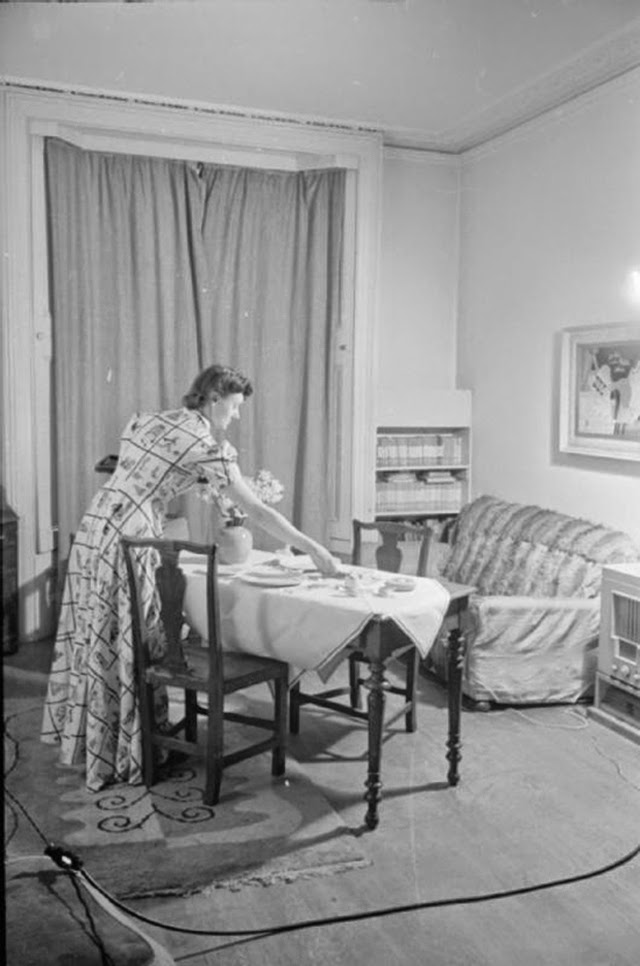
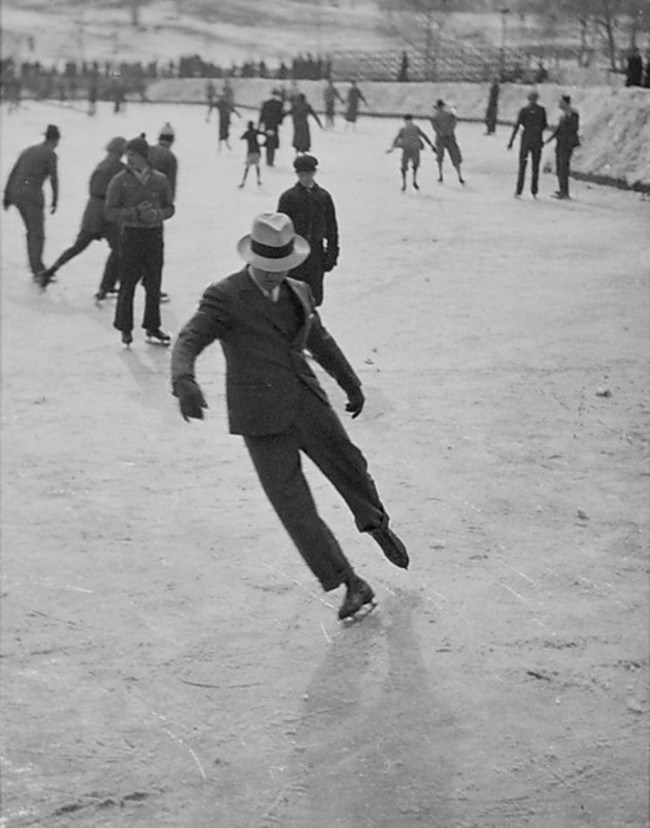
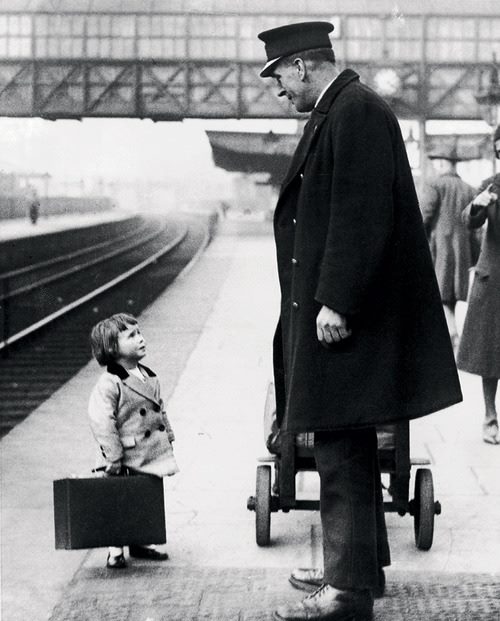
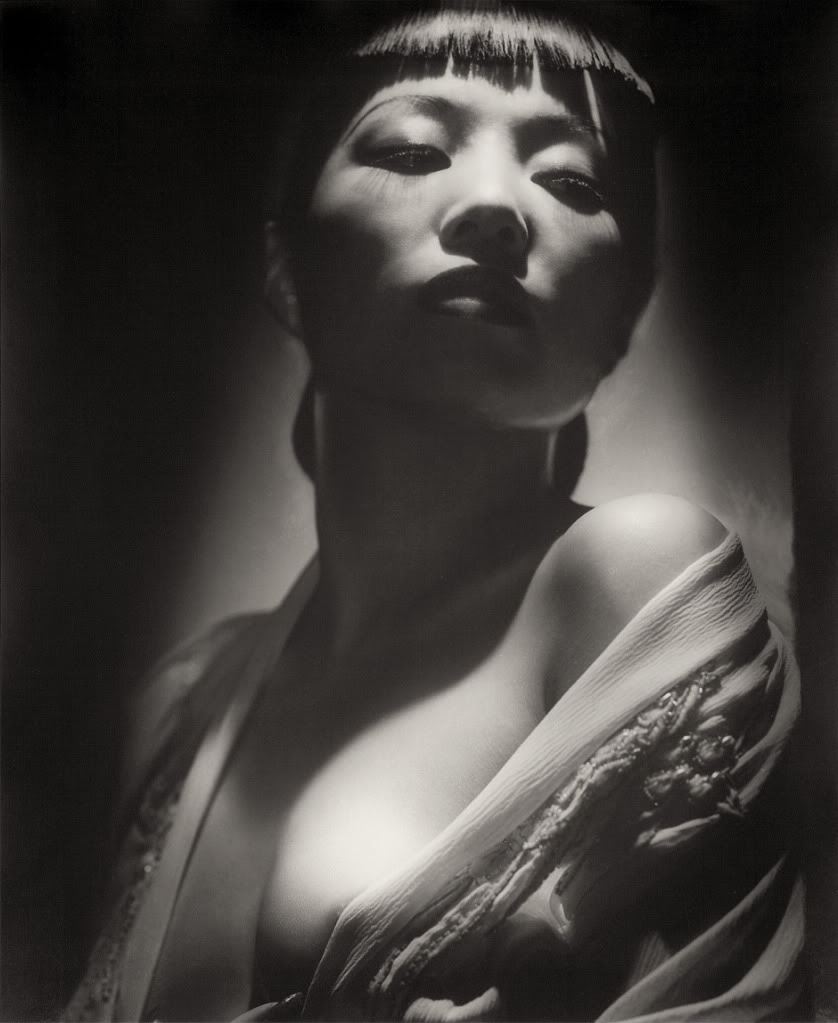
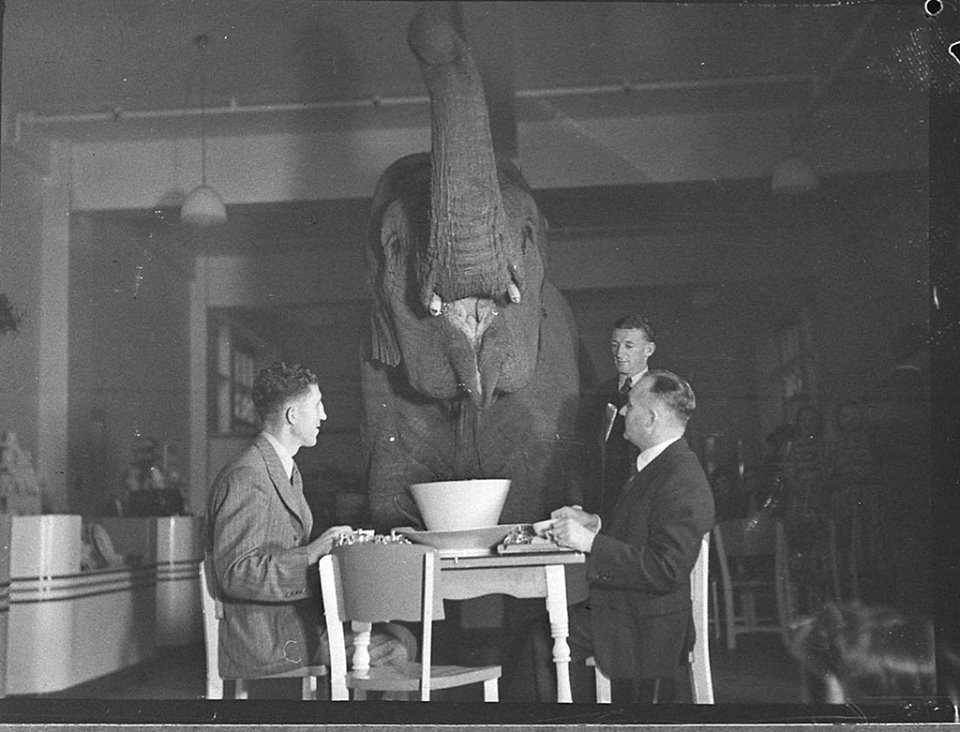
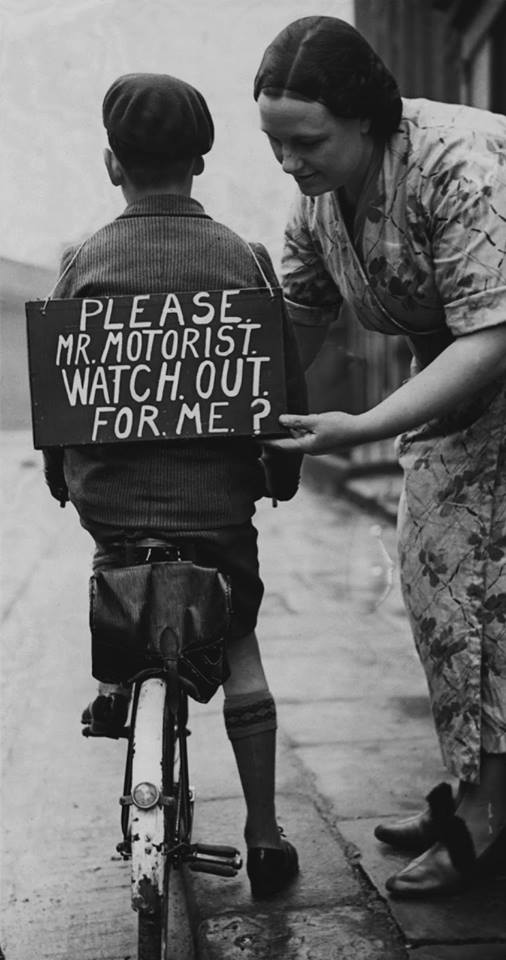
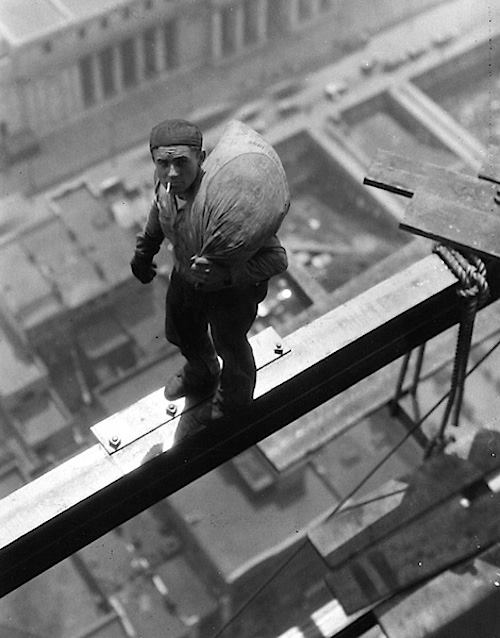
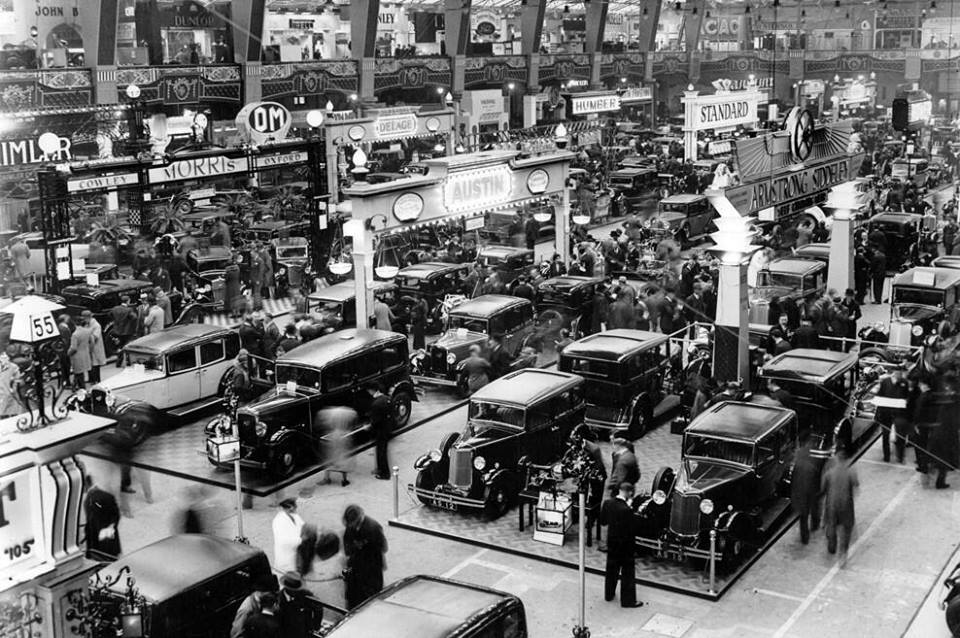
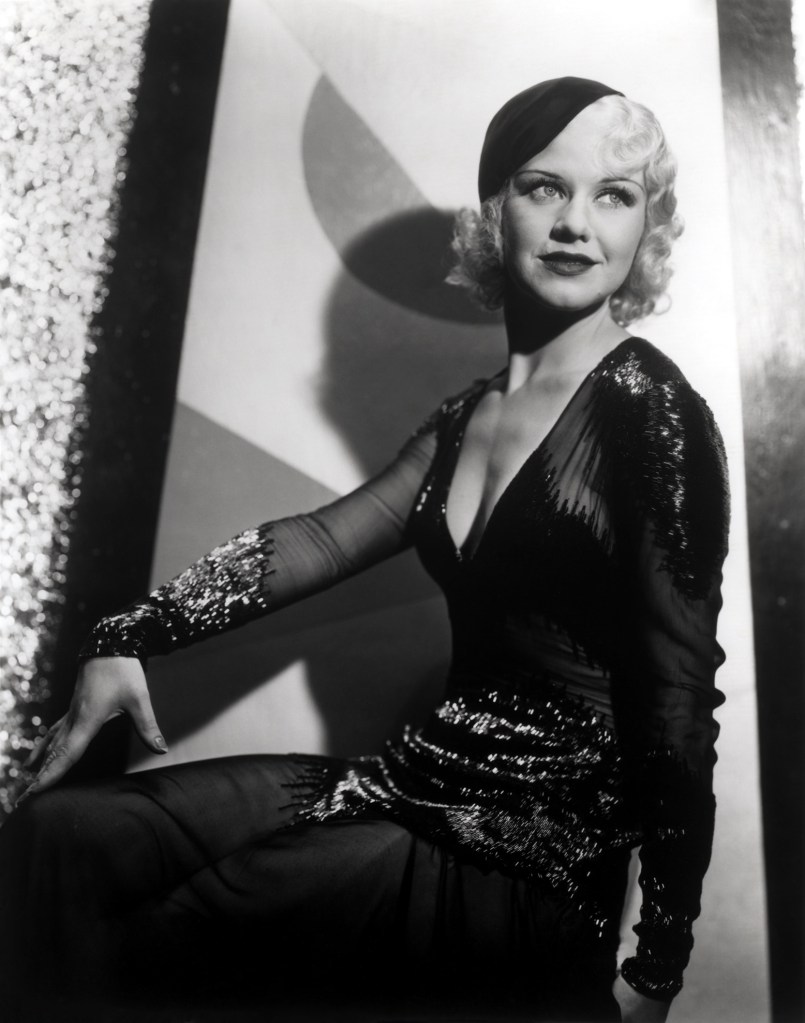
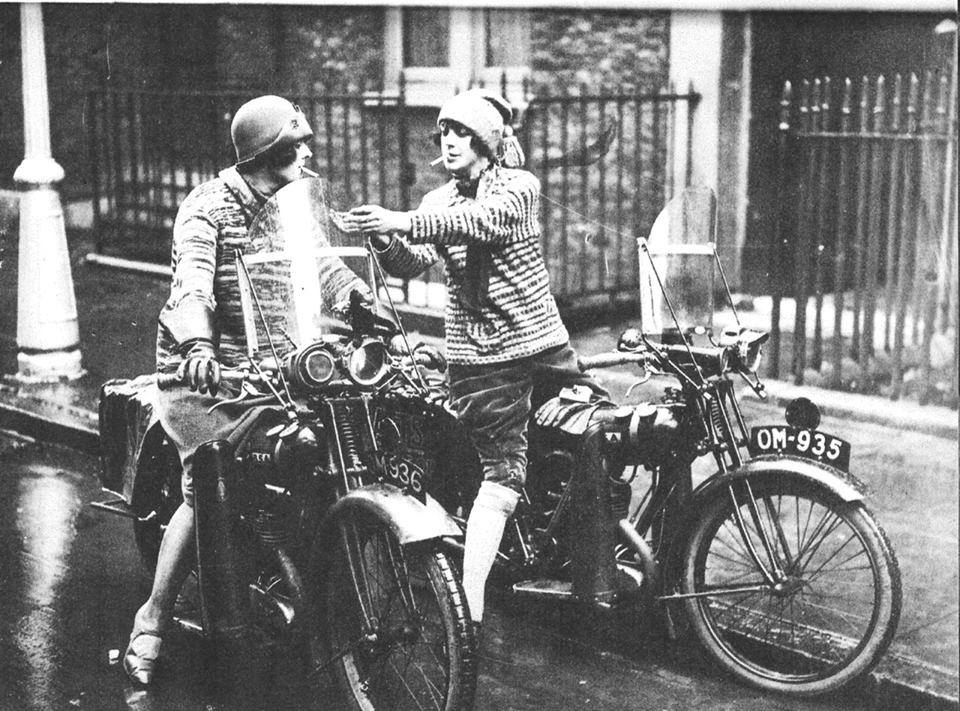
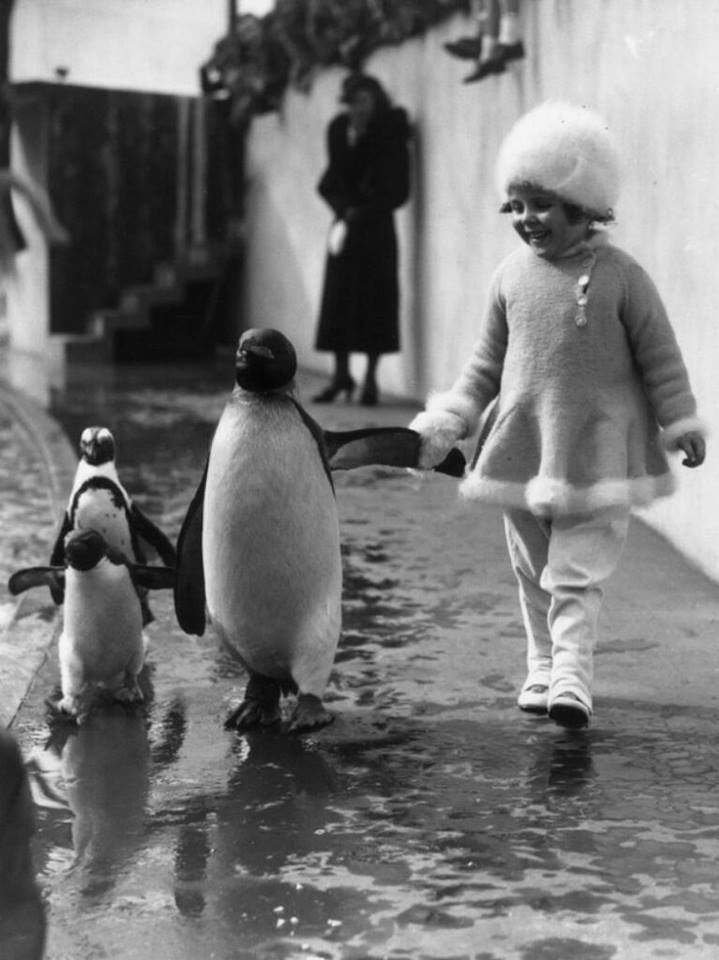
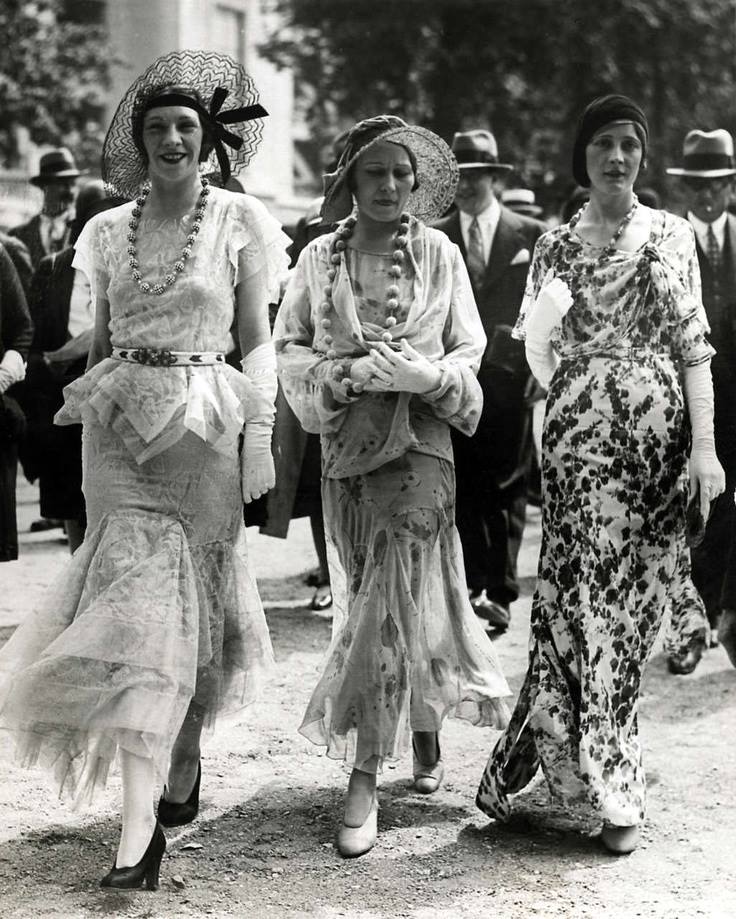
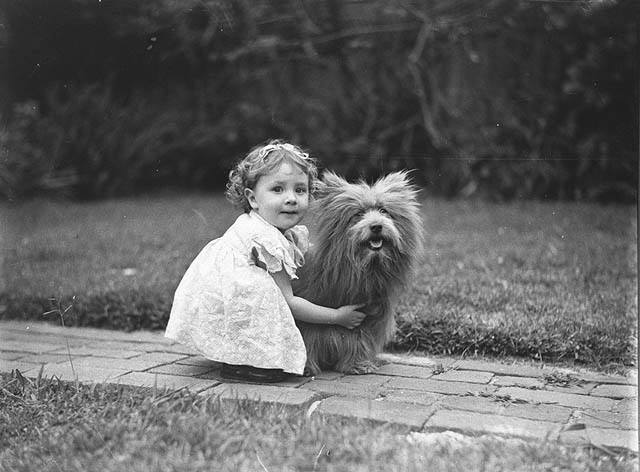
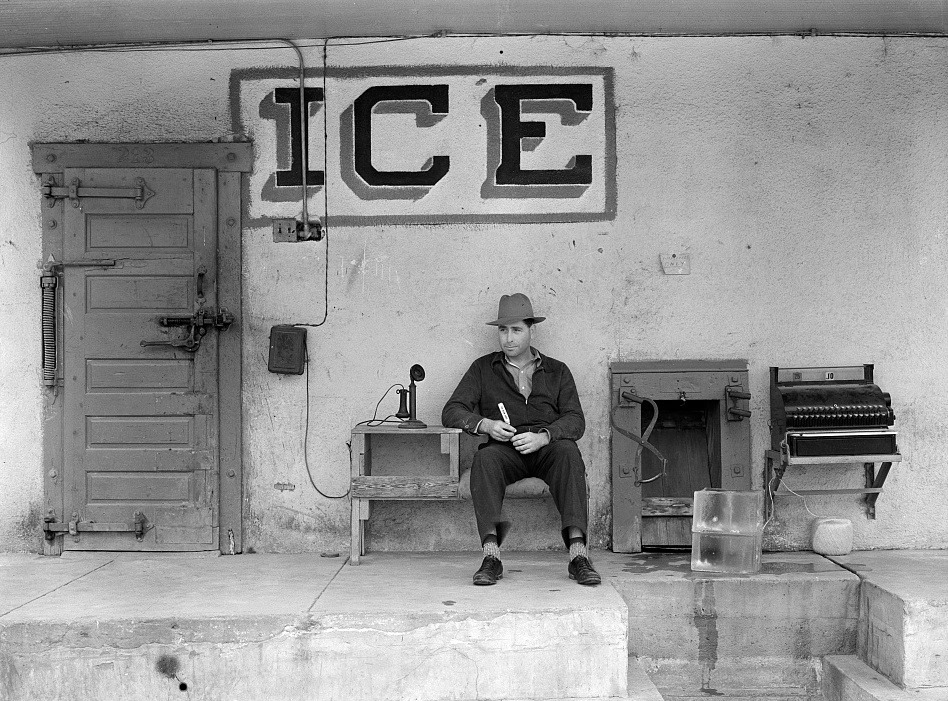
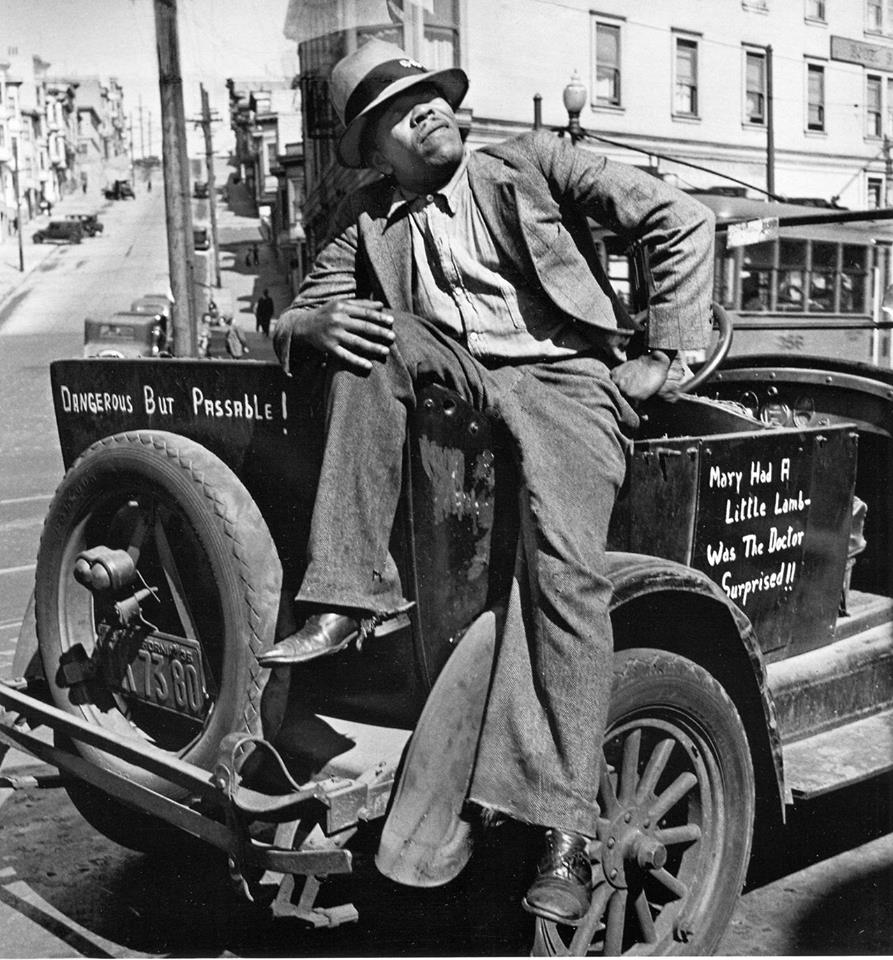
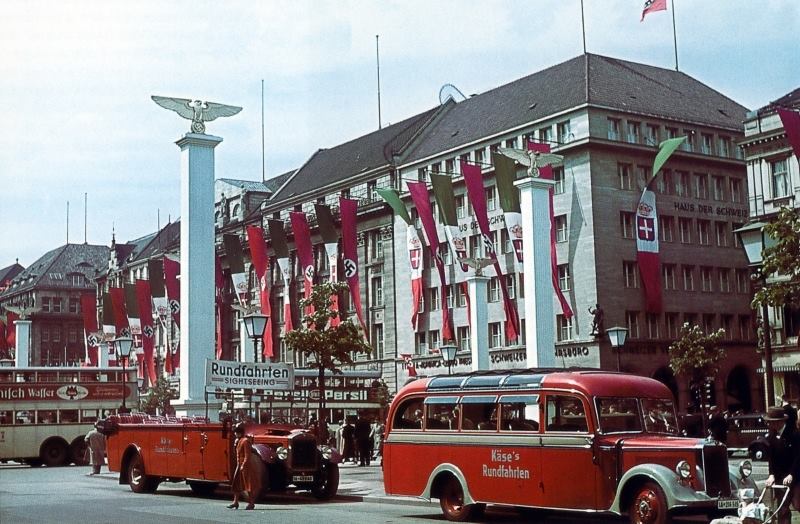
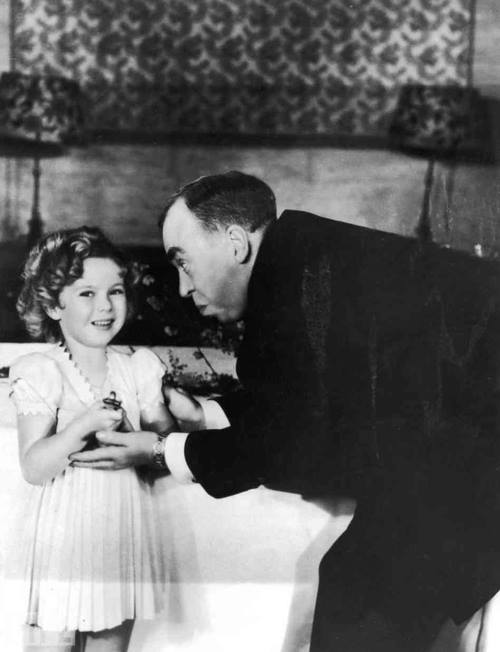
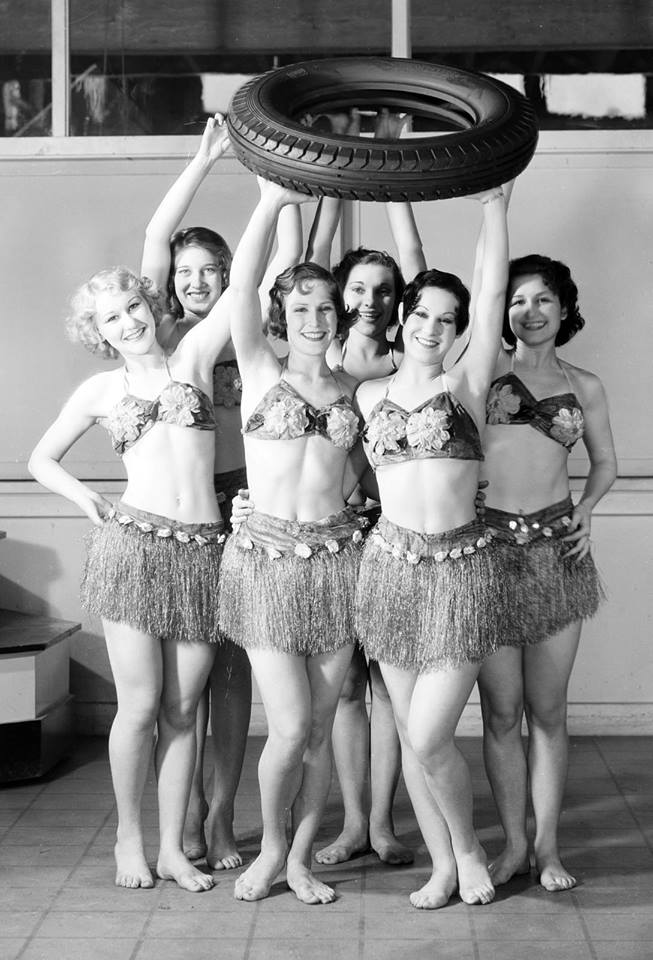
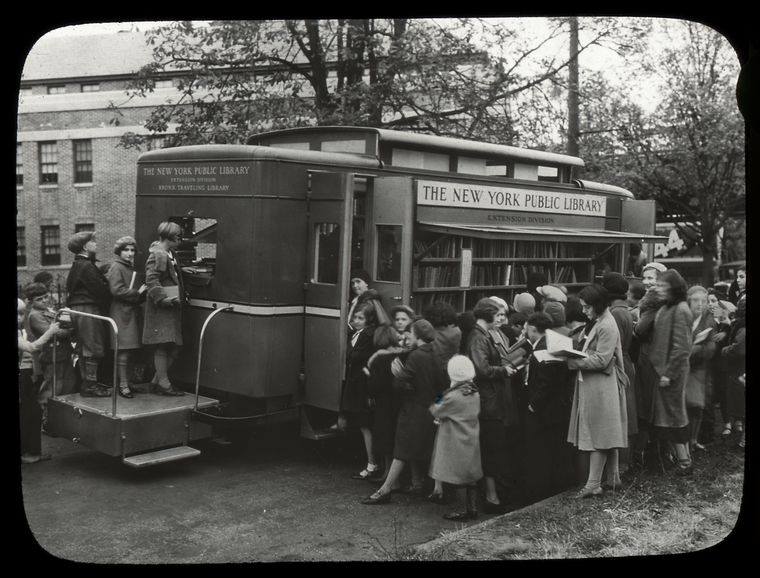
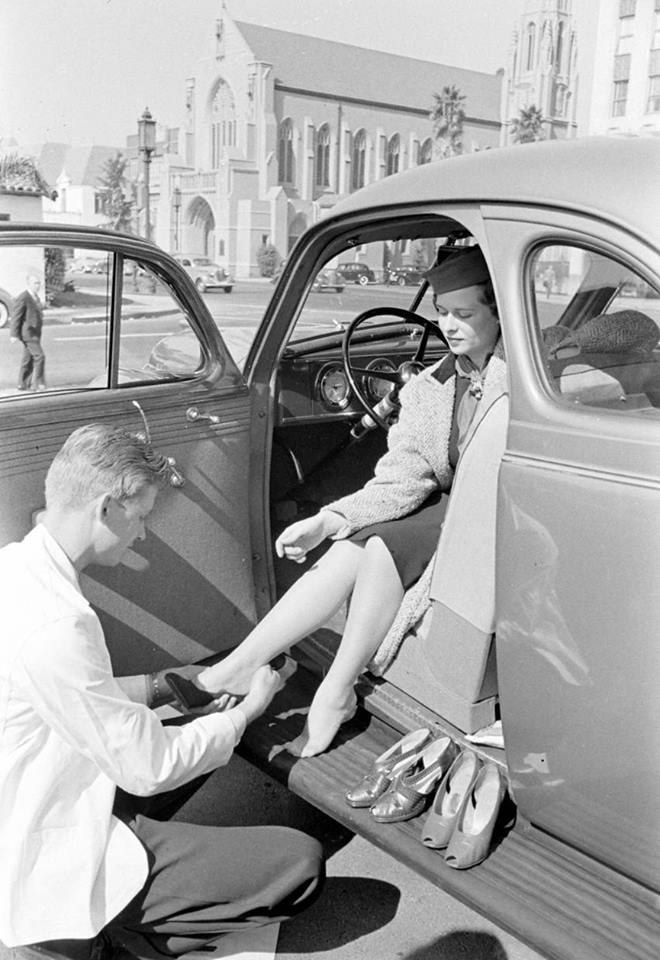
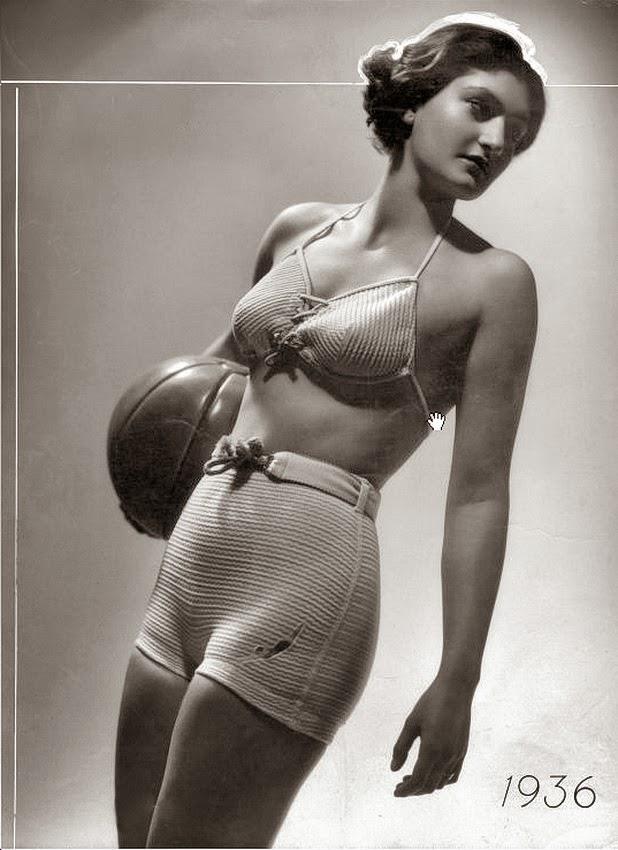
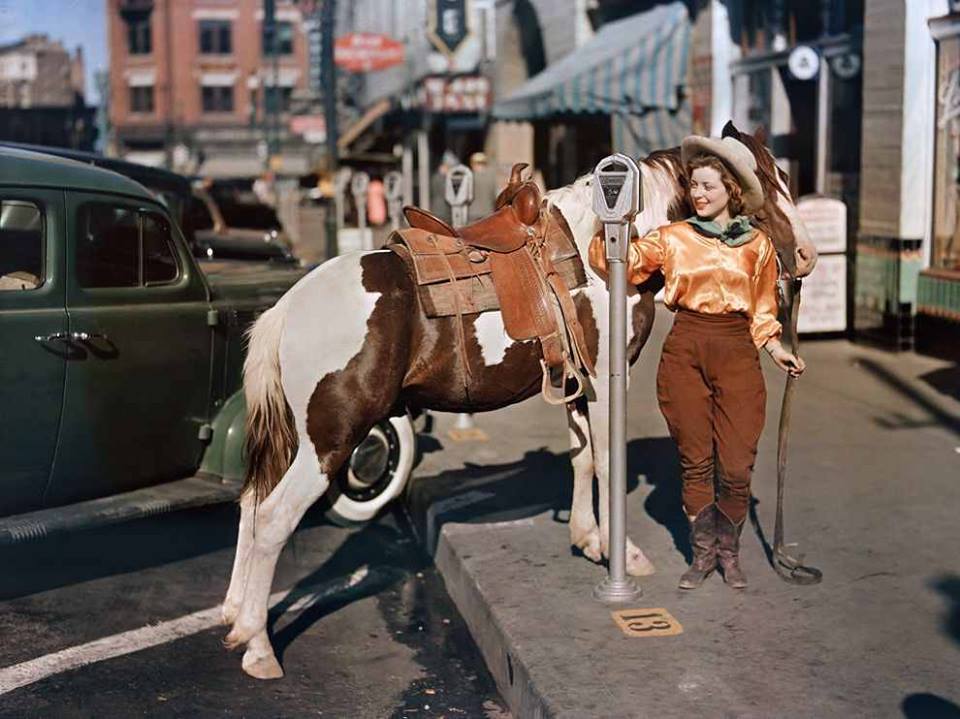
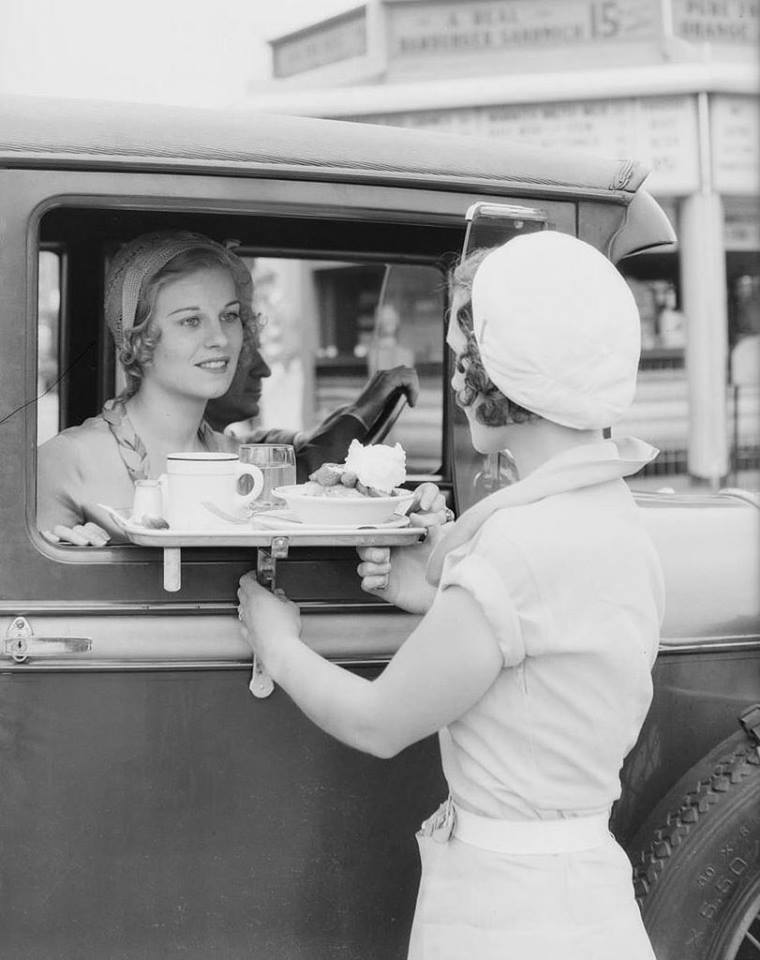
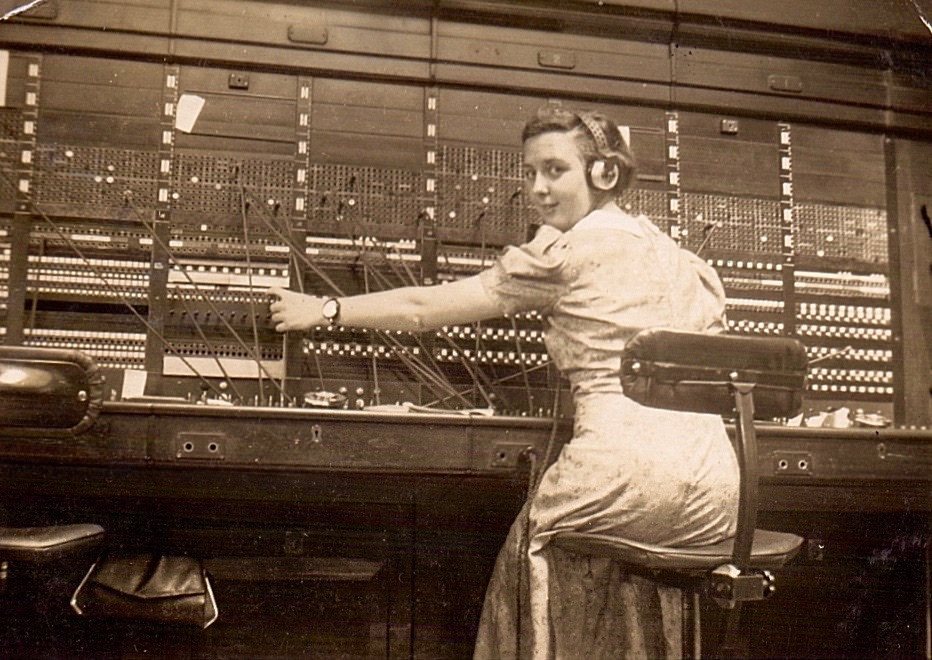
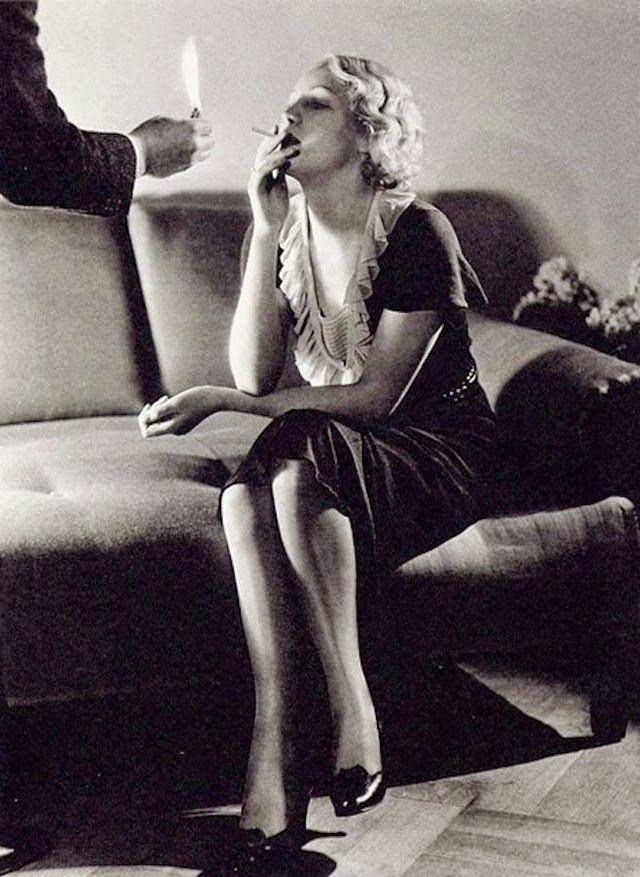
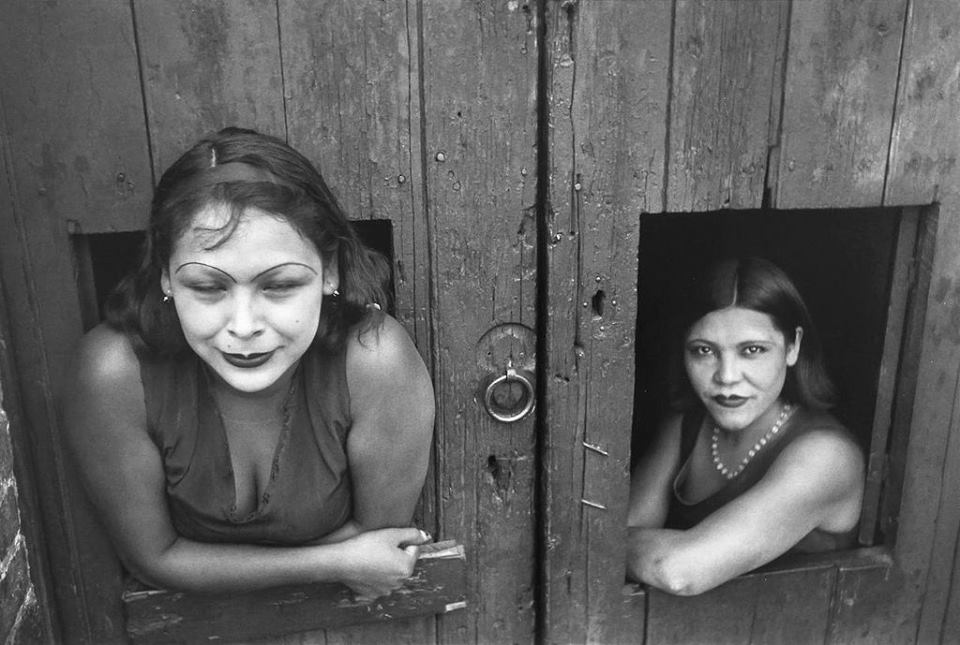
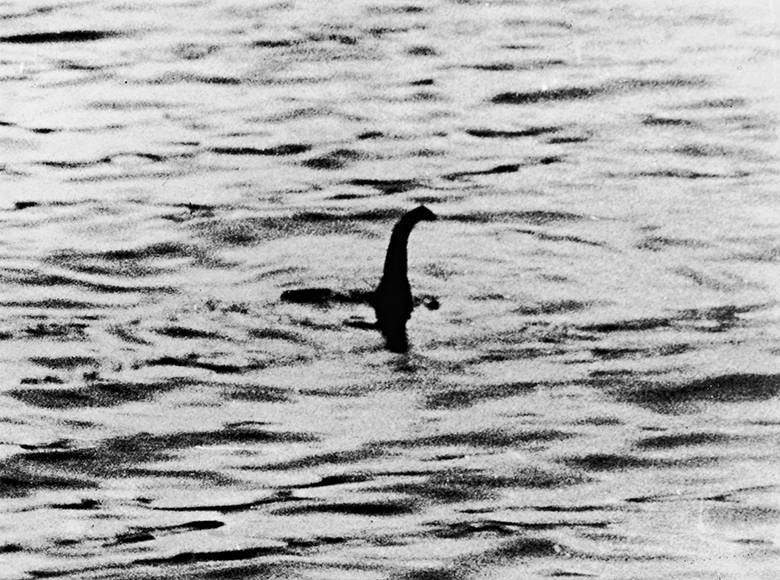
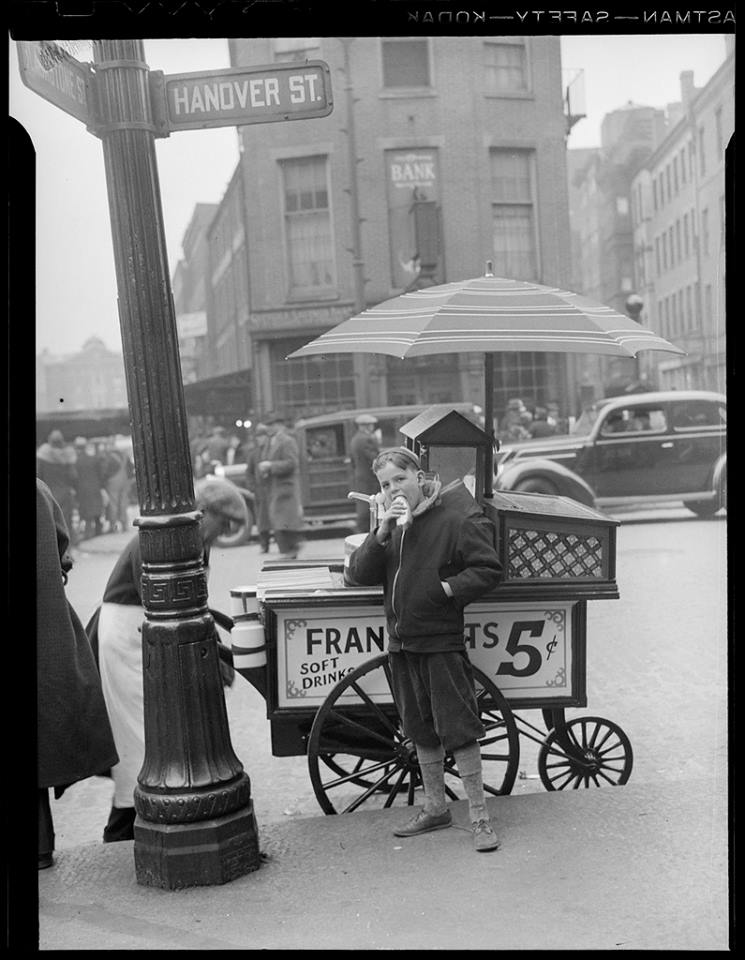
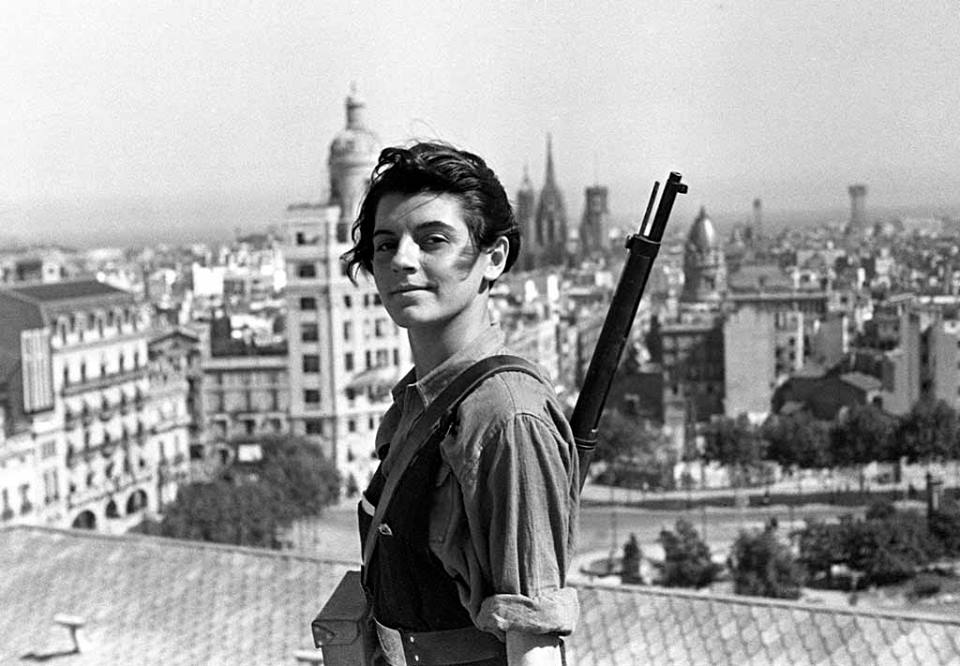
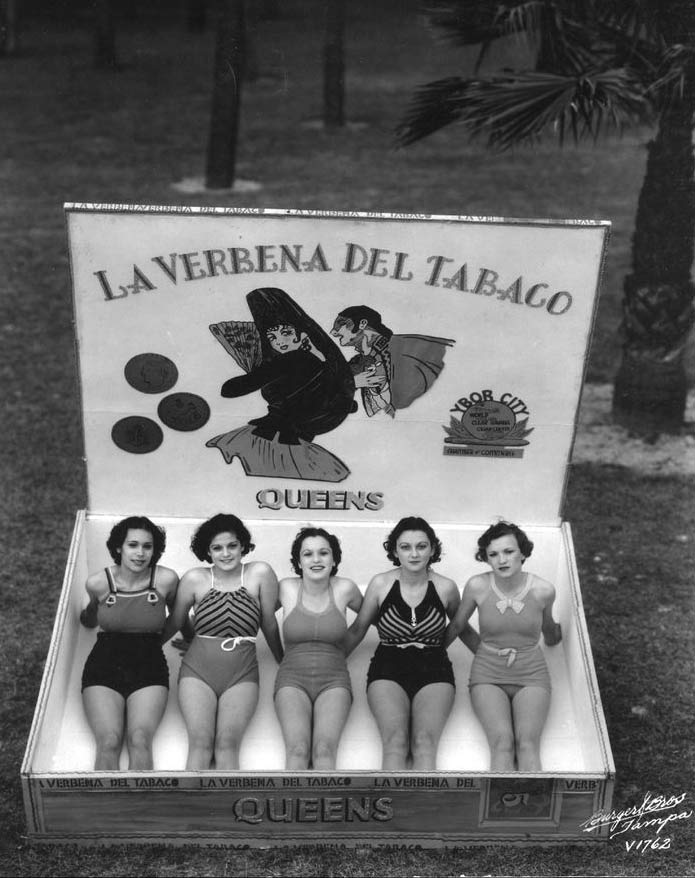
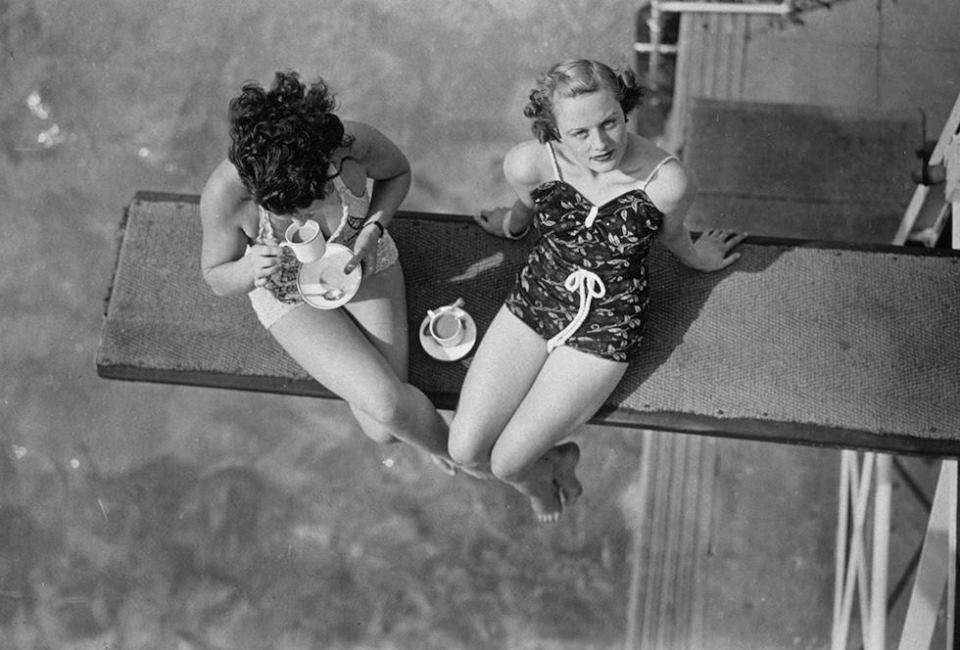
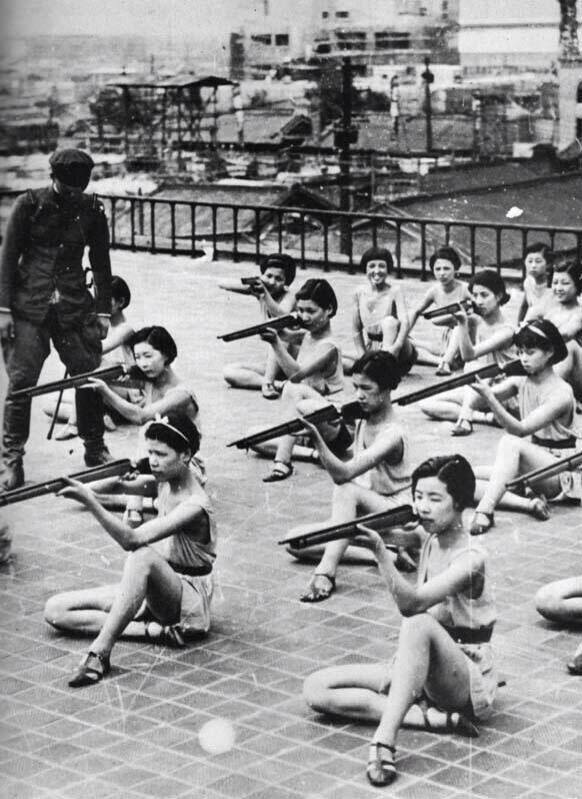
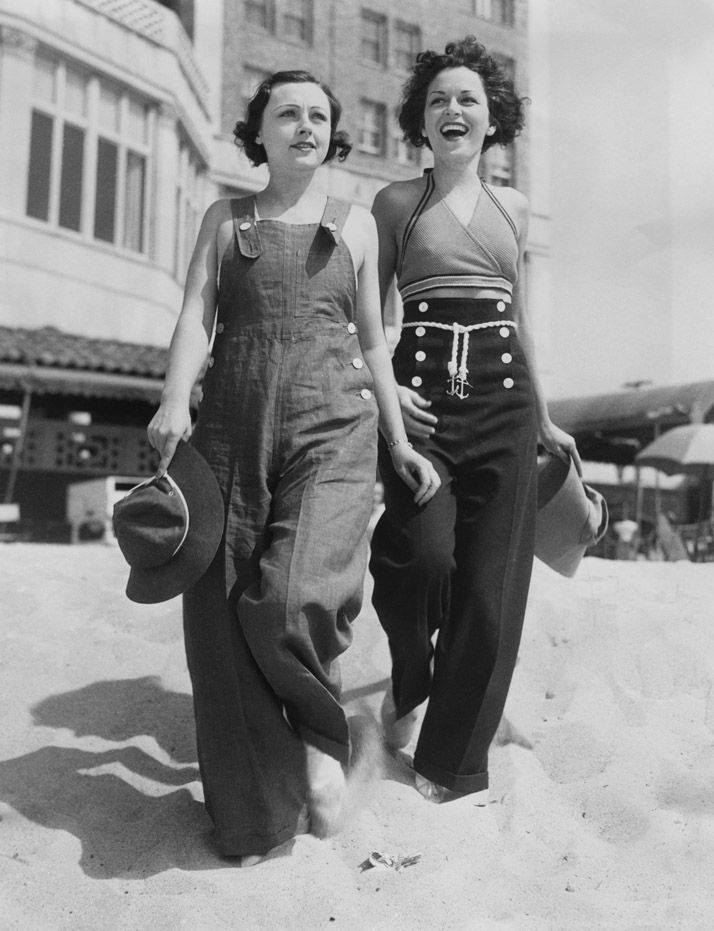
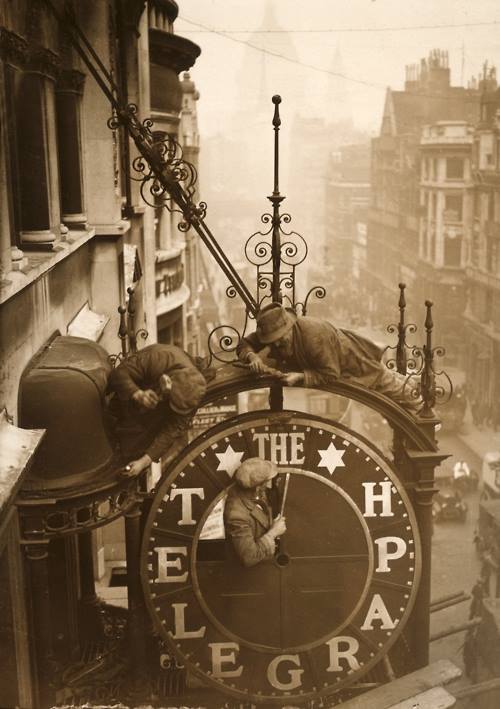
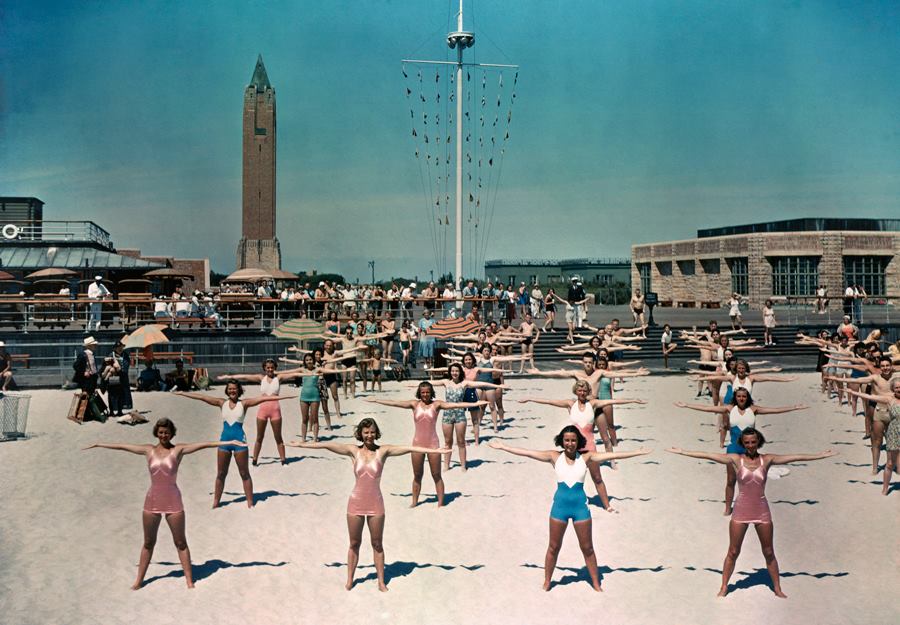
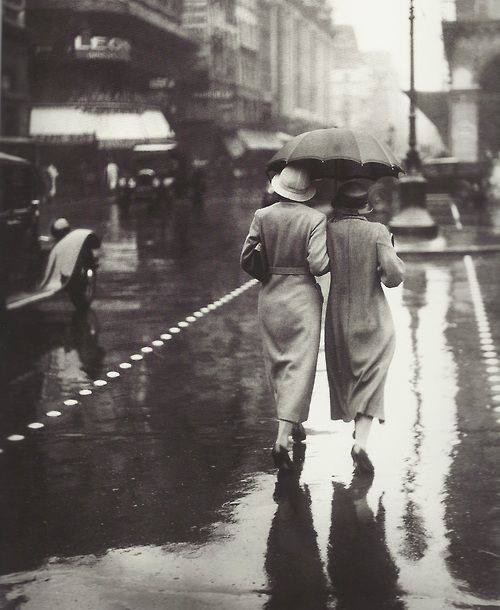
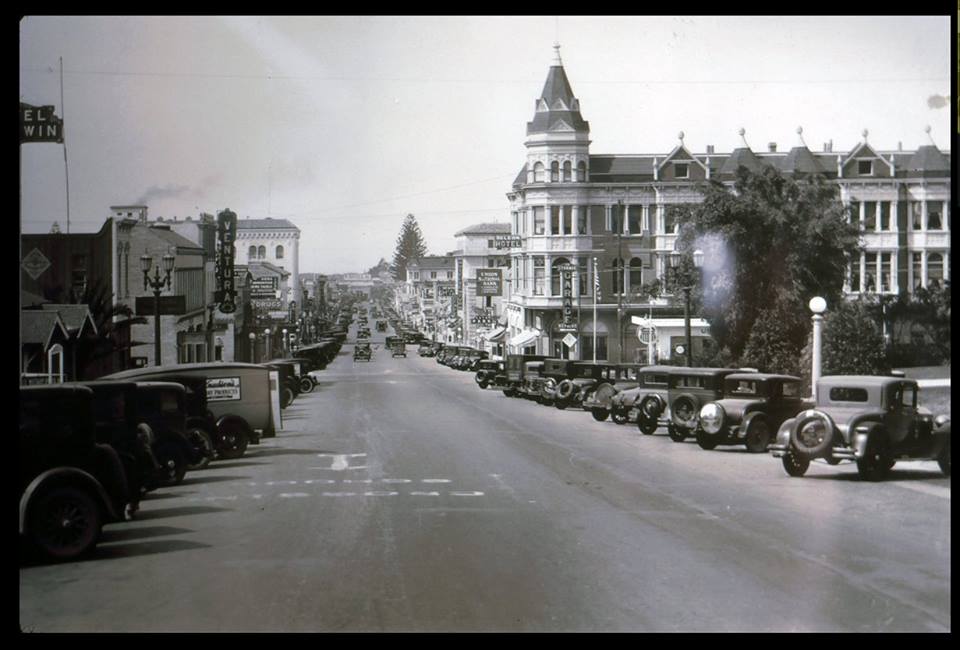
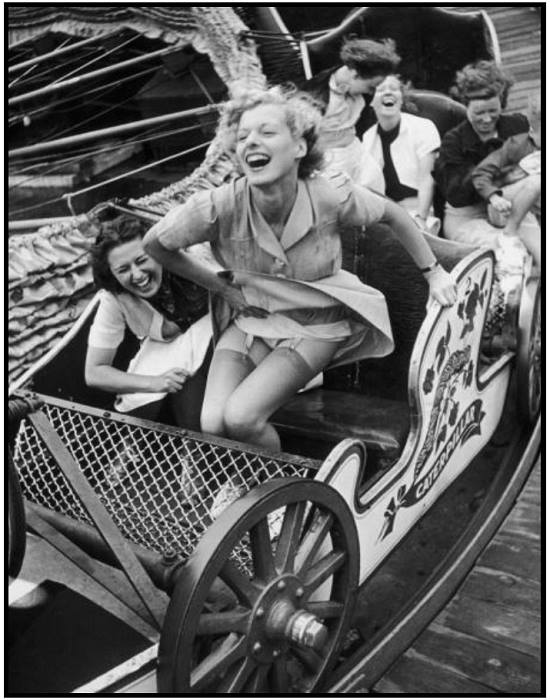
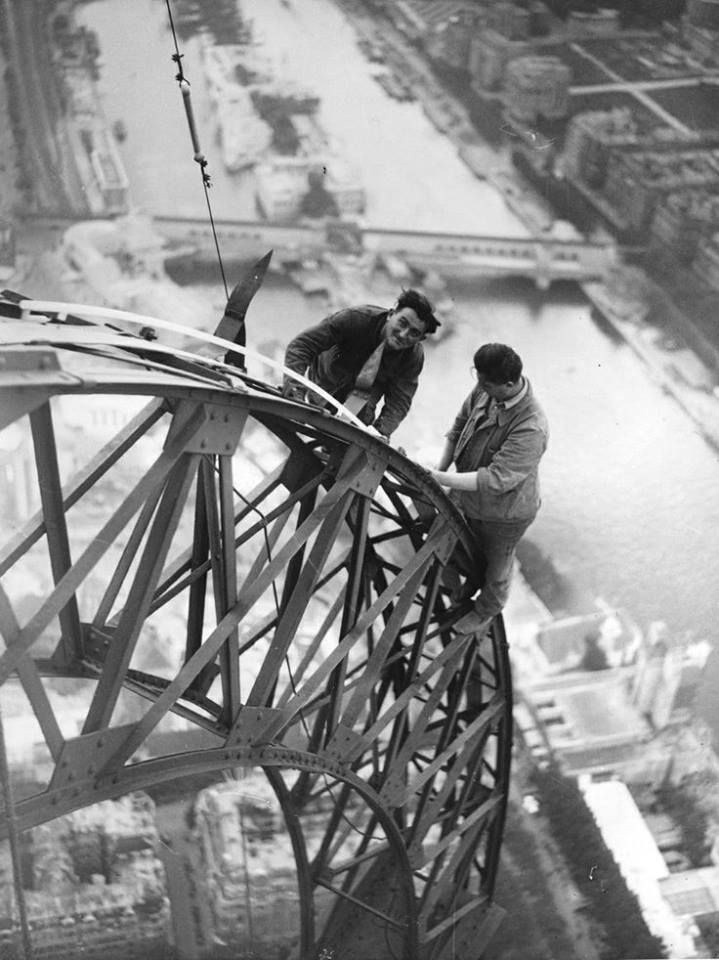
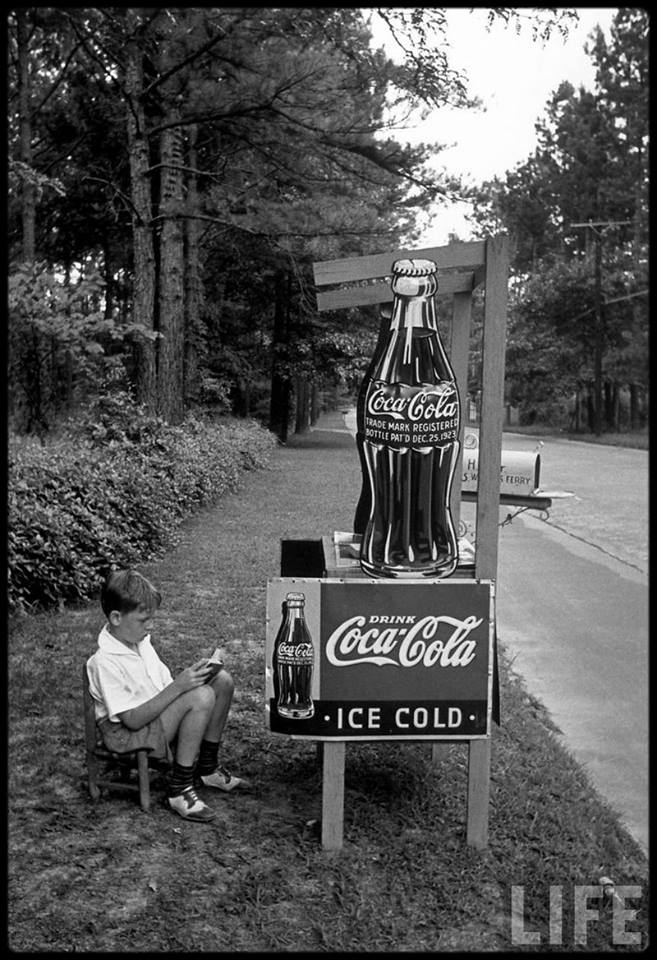
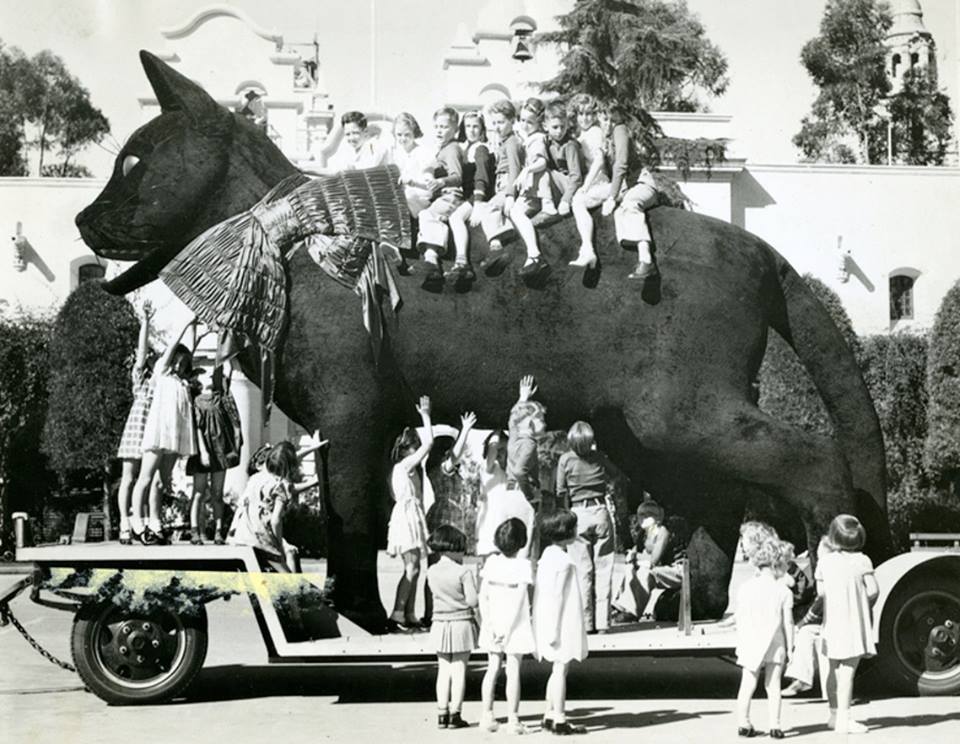
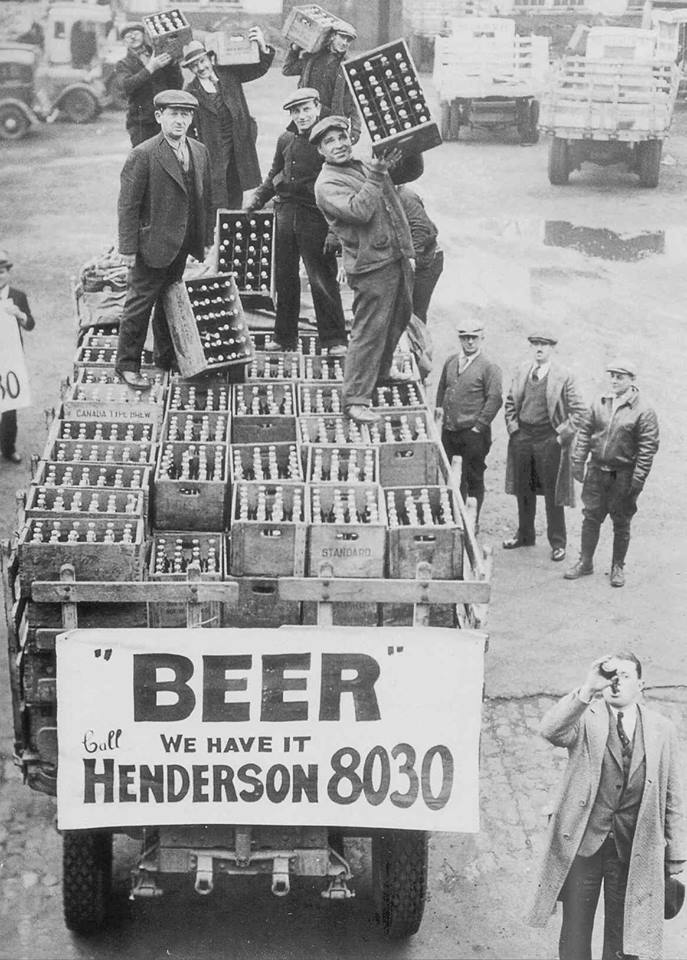
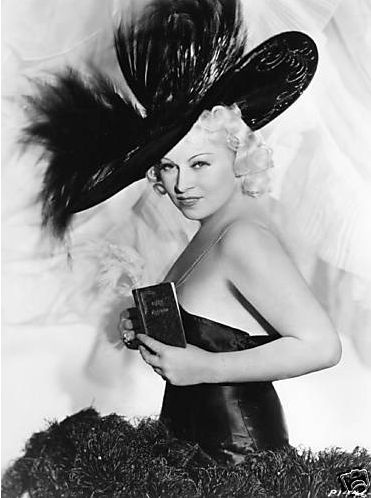
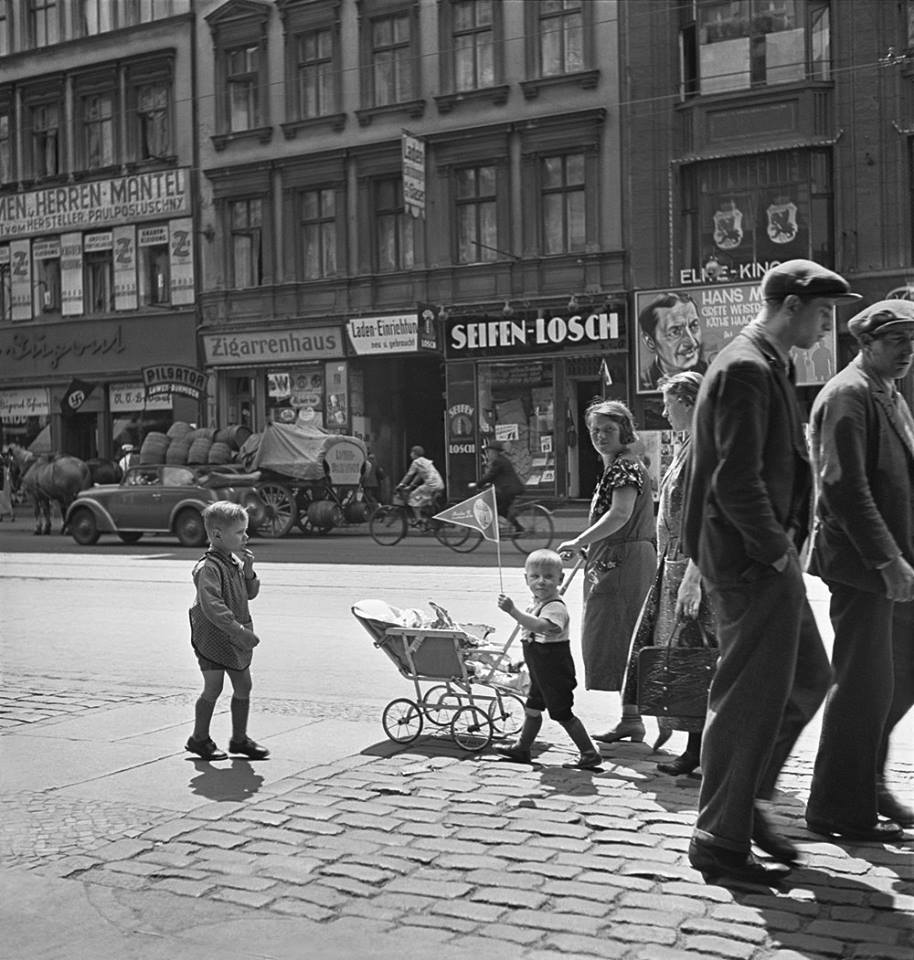
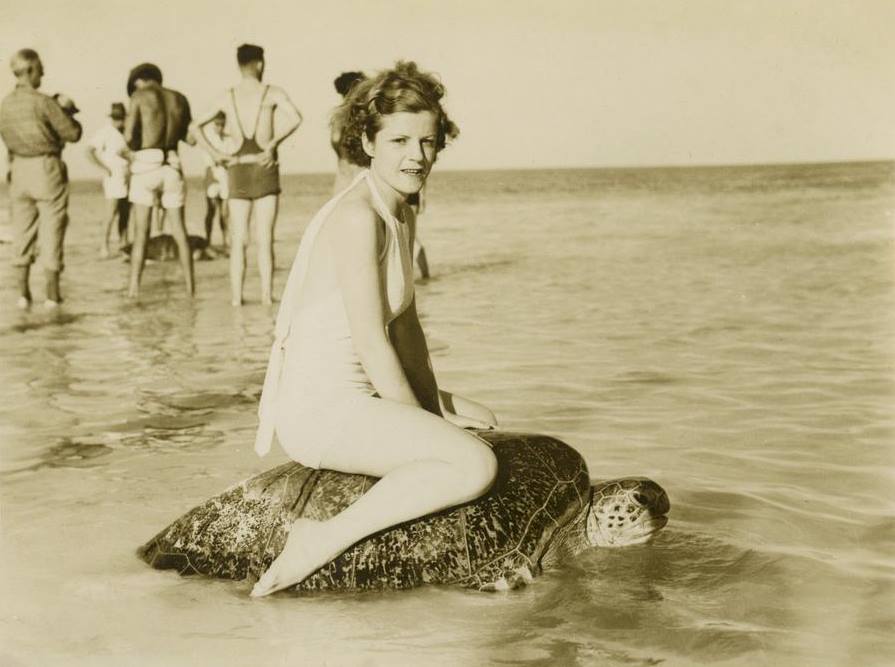
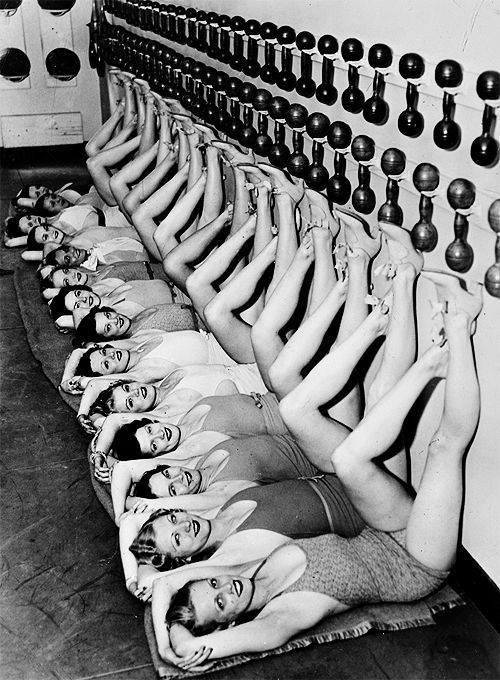
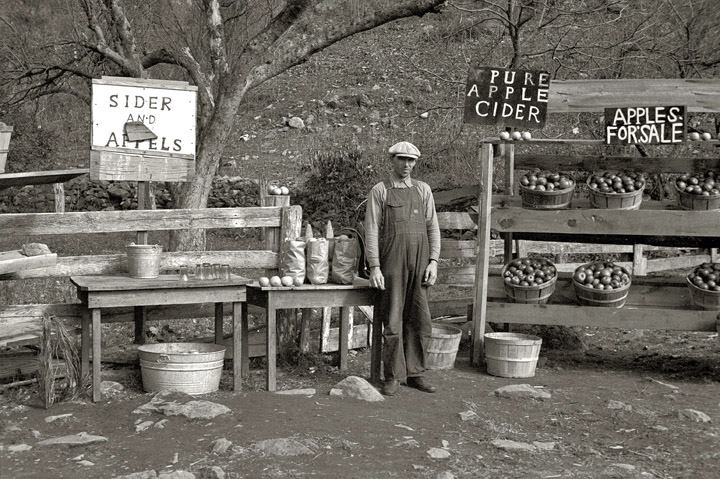
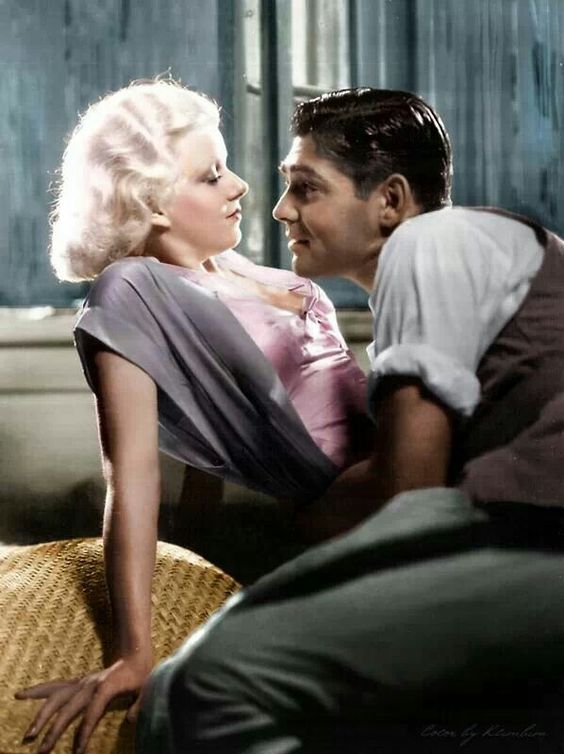
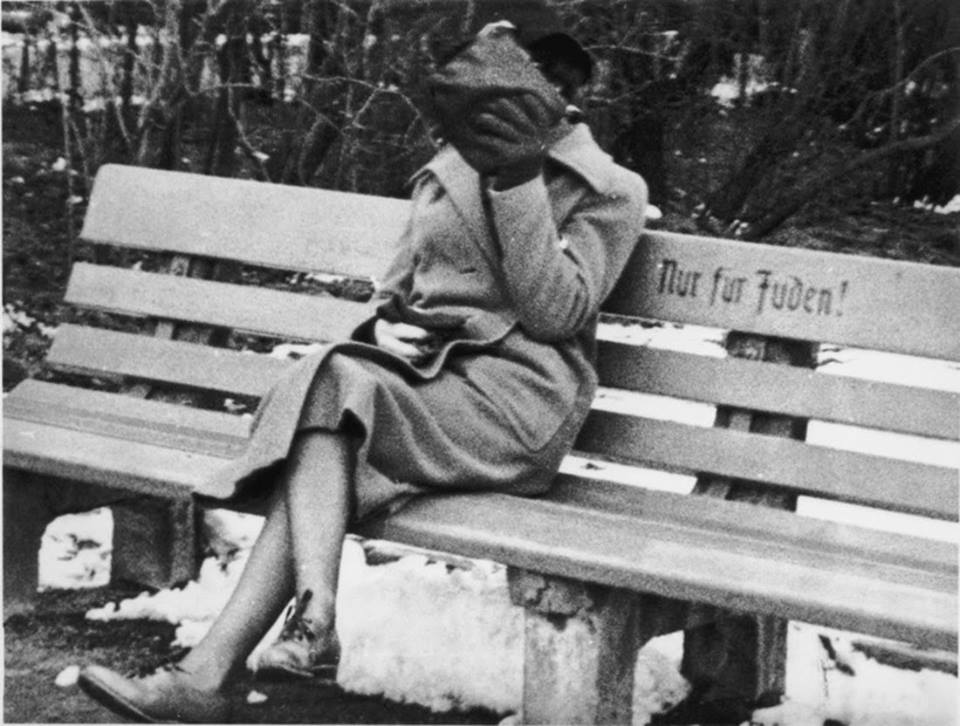
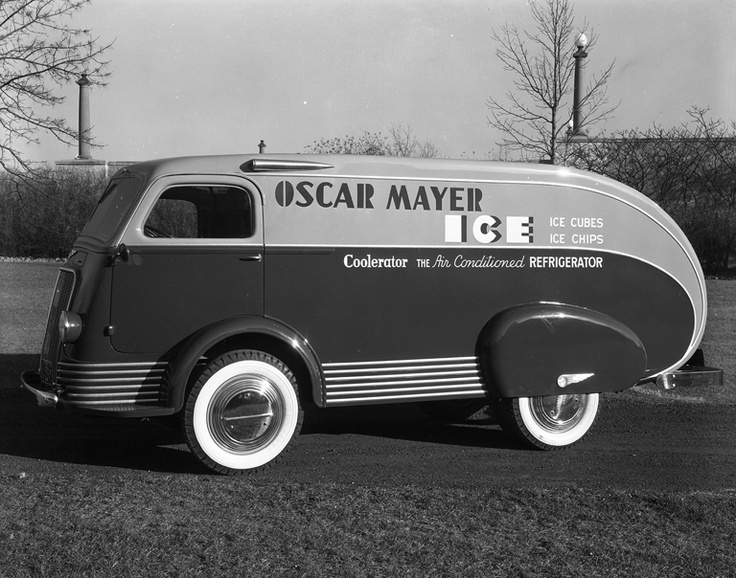
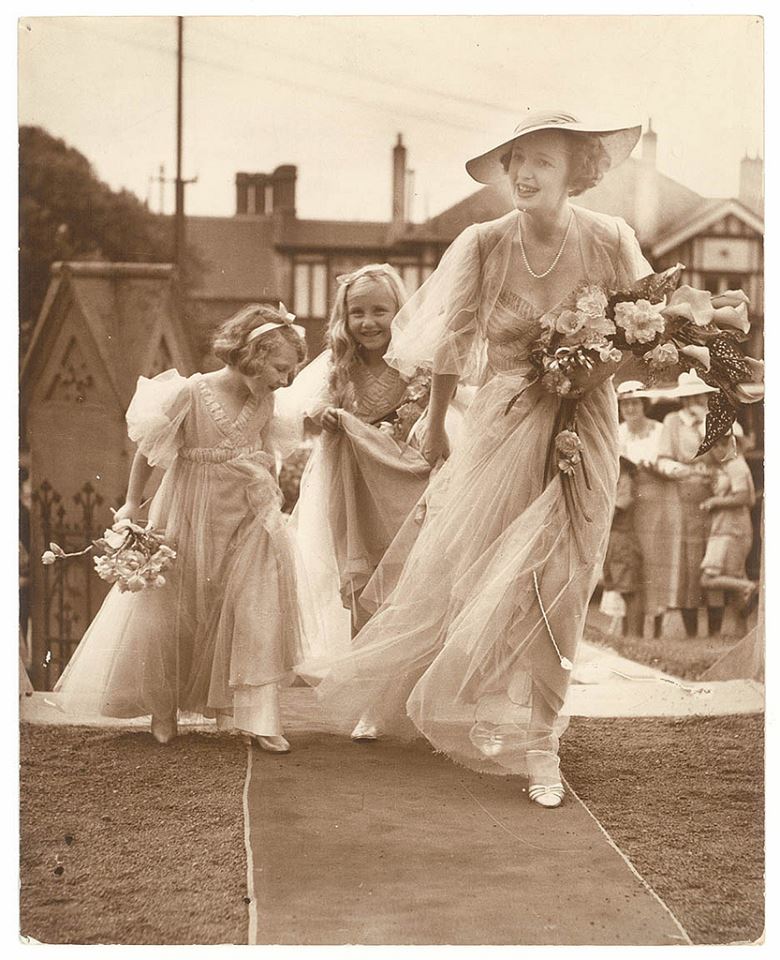
A young passenger asks a station attendant for directions. Bristol Railway Station, England, 1936Actress Anna May Wong, 1938Elephant’s tea party, Robur Tea Room, 1939.“Please Mr Motorist, watch out for me”, 1937Worker on beam of building at 40 Wall Street, 1930.Car show in London, 1932.Ginger Rogers, 1937A Smoke and a Ride. Birmingham, England. 1930s.A little girl holds a penguin’s flipper as they walk together around the London Zoo, 1937.Fashion in Paris, 1930s.Study of a small girl with a prize Scottish terrier dog, 1935Ice for sale. Harlingen, Texas, 1939.‘Dangerous But Passable,’ San Francisco, 1935.Berlin decorated for the visit of Mussolini in September 1937.Screenwriter Irvin S Cobb, host of the 7th Academy Awards in 1935, gives a special, tiny Oscar to Shirley Temple for her ‘outstanding contribution’ to the industry in 1934, a year when the 6-year-old star made 12 movies.Publicity shot for the Frank Dillon Tire Co., 1933.New York Public Library Book Wagon, New York City, 1930sDrive-in shoe repairing, 1938.First Bikini, 1936A cowgirl puts a nickel in an El Paso parking meter to hitch her pony, October 1939.Carpenter’s Sandwiches, Sunset and Vine, Los Angeles, 1932.A telephone operator at Haywards Heath telephone exchange, 1937.The 1930s smoking style, 1934.Prostitutes, Mexico City, 1934.The famous 1934 photograph of the Loch Ness monster.Hotdog stand in North End, corner of Hanover and Blackstone Street, Boston, 1937.Marina Ginesta, a 17-year-old communist militant, overlooking Barcelona from Hotel Colón during the Spanish Civil War, 1936.Miss Cigar Queen contestants, Los Angeles, 1937.Tea on the diving board at Finchley swimming pool, London, 1938.Japanese school girls receiving shooting training, 1930s.Young women at the beach, 1930s.Workmen dismantling the clock outside the Daily Telegraph for the building’s remodel, London, 1930.Free calisthenics lessons are given daily for beach visitors in Long Island, New York, 1939.Women walking in the rain, Paris, 1934Downtown Ventura, California, 1930.Two young women enjoying themselves on a rollercoaster at Southend Fair, England, 1938.Electricians working on the Eiffel Tower, Paris, 1937.Little boy selling Coca-Cola, Atlanta, 1936.Huge Black Cat, San Diego, 1935.Man enjoying the End of Prohibition. Cleveland, Ohio, December 1933A figure-skating man in New York City, 1937Mae West with her diary, 1930sBerlin, 1930sYoung woman riding on the back of a turtle at Mon Repos Beach, 1930.Actresses exercising, 1933.Cider and apple stand on Lee Highway, Virginia, 1935.Jean Harlow and Clark Gable in “Red Dust”, 1932A Jewish woman who is concealing her face sits on a park bench marked “Only for Jews”, Austria, 1938.1939 “Oscar Mayer Ice” Streamline Delivery TruckBridesmaid and two flowergirls enter the church, St. Marks, Darling Point, Sydney, 1935.
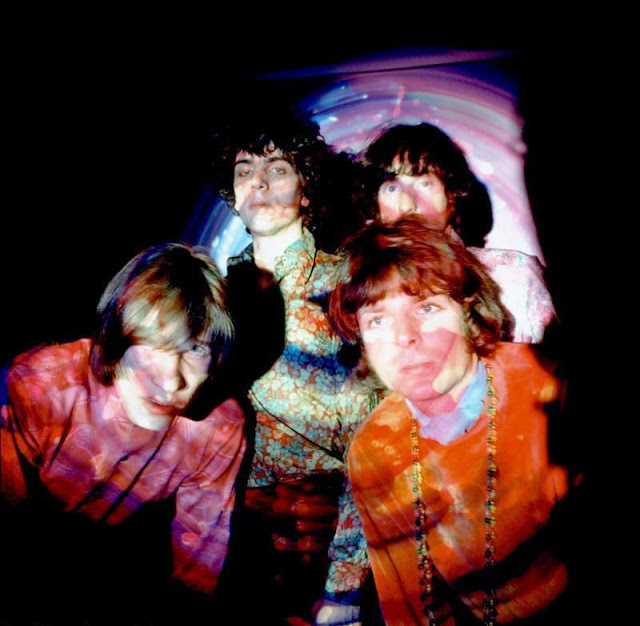
Pink Floyd is one of the world’s most iconic and influential bands. Their progressive and psychedelic music encompassing philosophical lyrics, sonic experimentation and elaborate live shows has captured the hearts of fans for over five decades.
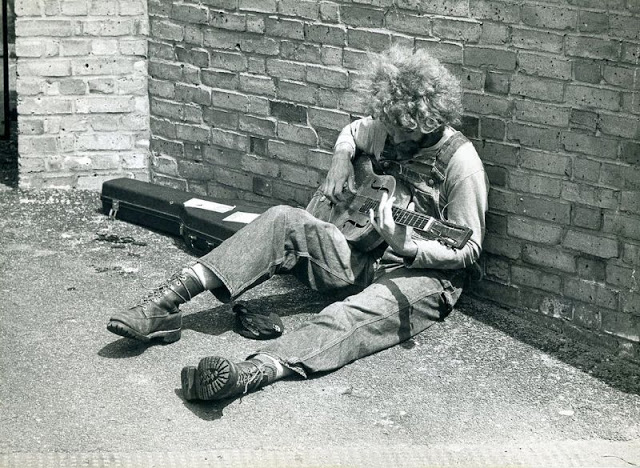
Andrew Whittuck started shooting in the mid-sixties where he soon took some of the earliest shots of Pink Floyd. Andrew recalled: “I had a friend who knew the Pink Floyd managers and they were keen for any publicity, since the Floyd had only been formed 18 months before. They all came to my studio/bedroom in my parents’ house in Hampstead with all their instruments and most importantly for me, with their lighting guy.”
“The only illumination I used was the lighting they used in their gigs, a 35mm Kodak projector with glass slides with a mixture of oil/water and colored ink, heated by a hair dyer close up, so that the ever changing bubbles of color floated over them.”
Andrew then continued his a career as a freelance photographer establishing his own business and working extensively on food photography, plus some portrait work for the likes of Melvin Bragg. He became qualified as a photography teacher and taught at many colleges throughout the U.K whilst also documenting performance art events. Andrew now runs a series of landscape photography courses and holidays.
The Playboy Club was initially a chain of nightclubs and resorts owned and operated by Playboy Enterprises. The first Playboy Club opened in Chicago in 1960. Each club generally featured a Living Room, a Playmate Bar, a Dining Room, and a Club Room. Members and their guests were served food and drinks by Playboy Bunnies, some of whom were featured in Playboy magazine. The clubs offered name entertainers and comedians in the Club Rooms, and local musicians and the occasional close-up magician in the Living Rooms. Starting with the London and Jamaica club locations, the Playboy Club became international in scope.
In 1991, the club chain became defunct. Thereafter, on October 6, 2006, a Playboy Club was opened in Las Vegas at the Palms Casino Resort, and in 2010 clubs were opened as well in Macau and Cancun. In time, the Las Vegas club closed on June 4, 2012, the Macao club closed in 2013, and the Cancun club closed in 2014. In May 2014 the Commerce Casino in Los Angeles opened a Playboy-themed lounge consisting of gaming tables and Playboy Bunny cocktail waitresses. In September 2018 a Playboy Club was opened in Midtown Manhattan but permanently closed in November 2019 after just over one year in operation.
The Playboy Club in New York opened on Dec. 8, 1963. By the end of the decade, feminism was growing and the club (one of 22 around the country) was deemed degrading to women.
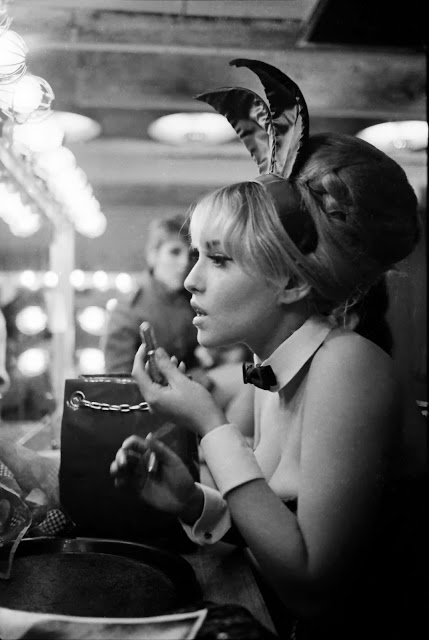
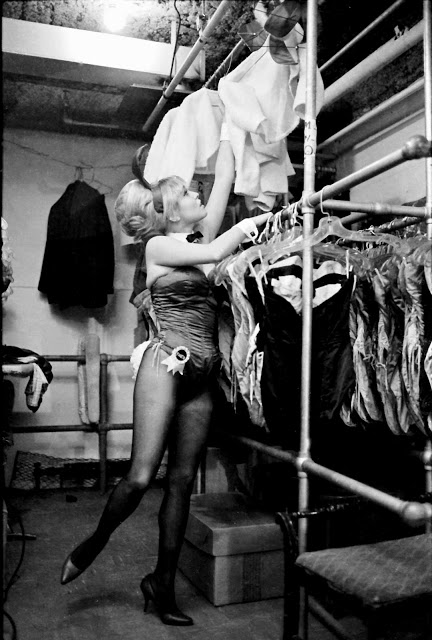
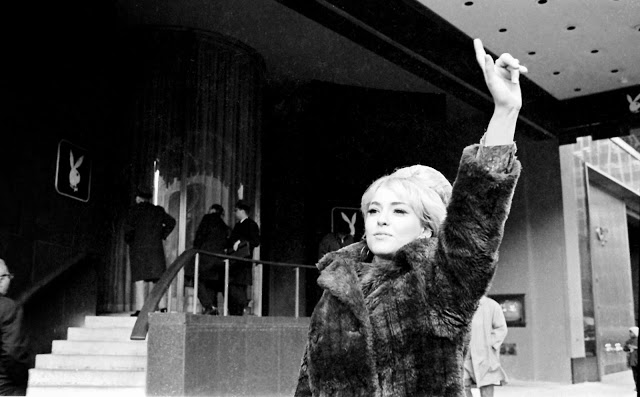
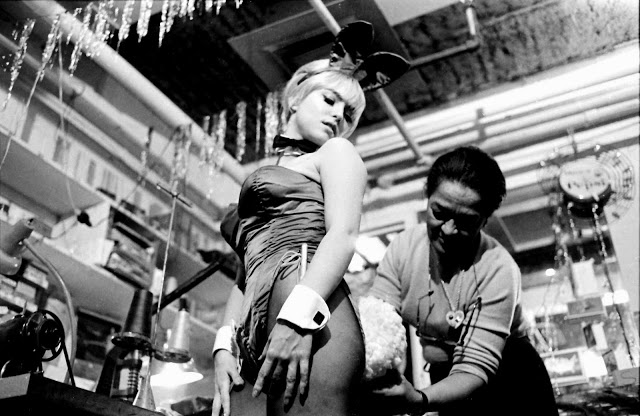
Below is a series of candid photographs that captured a day in a life of a Playboy Bunny in 1968.
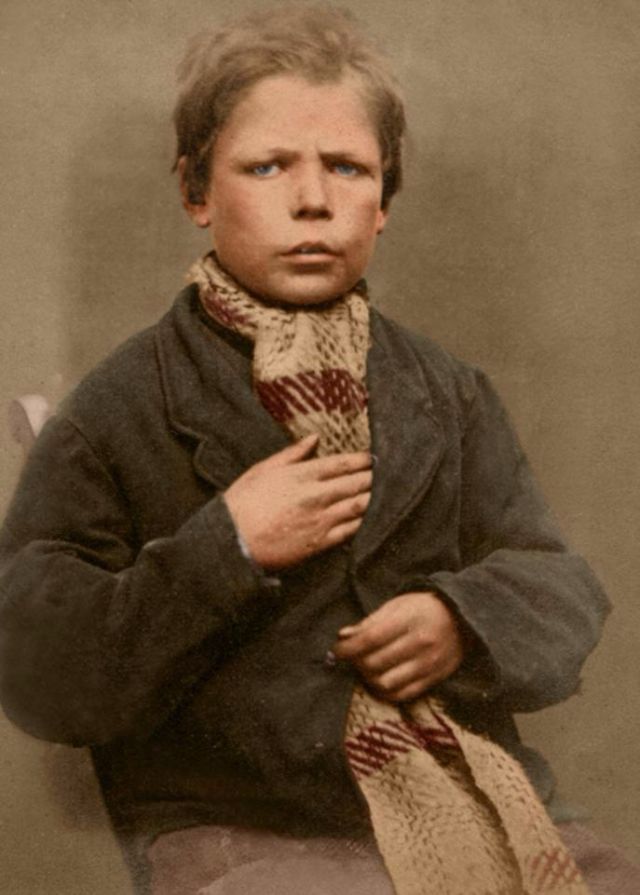
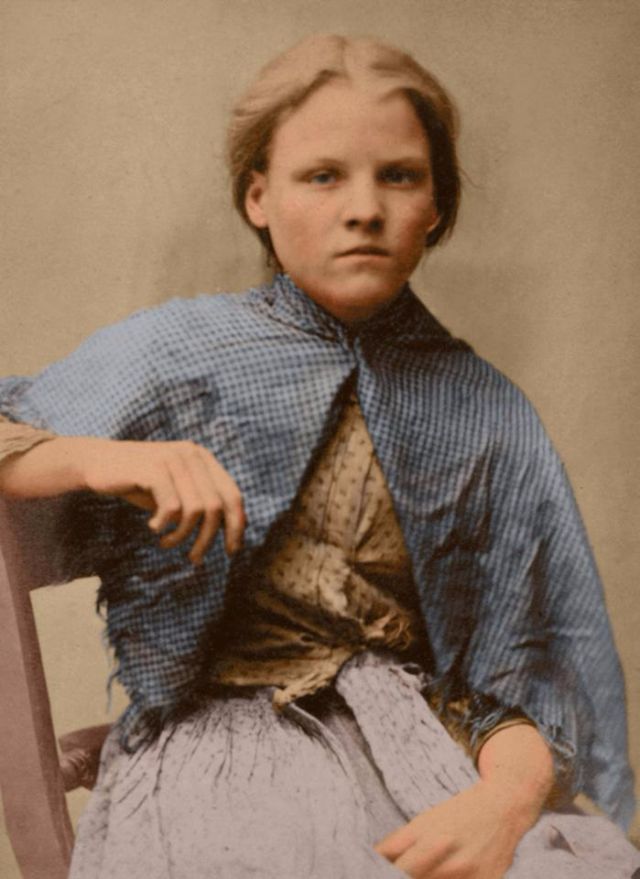
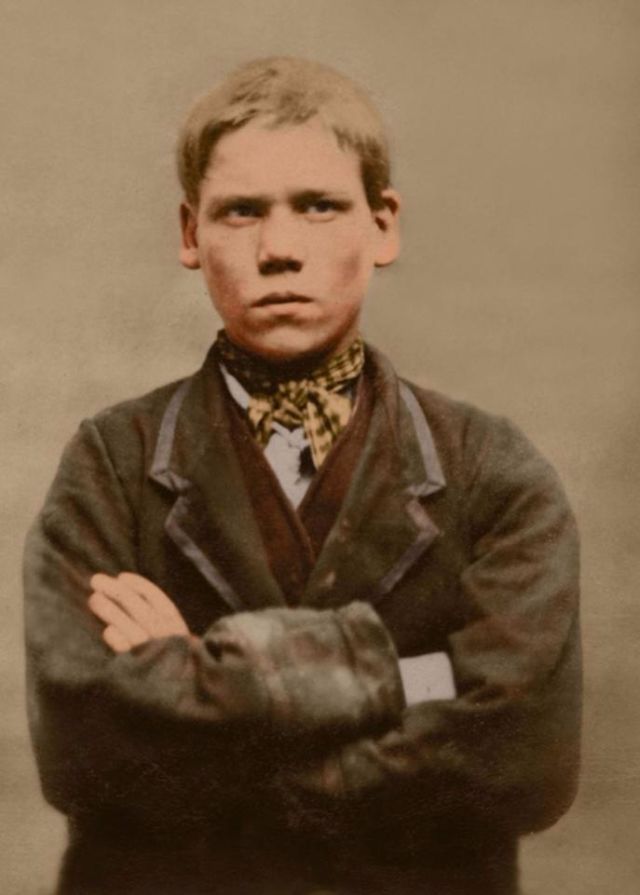
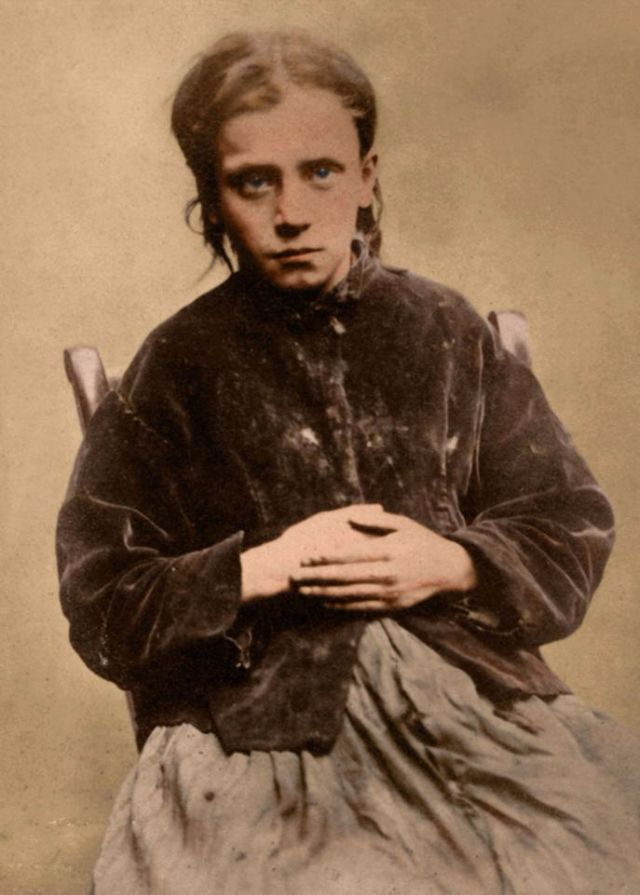
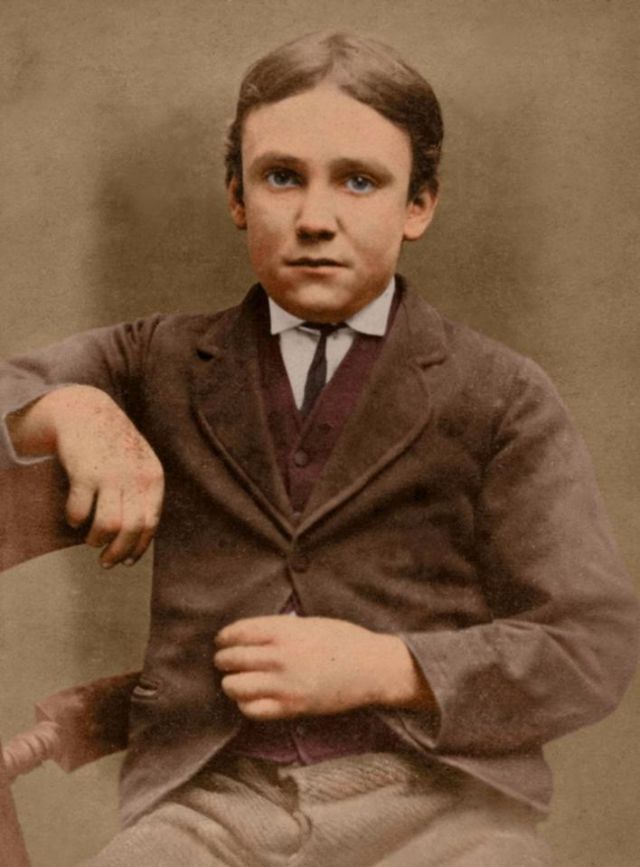
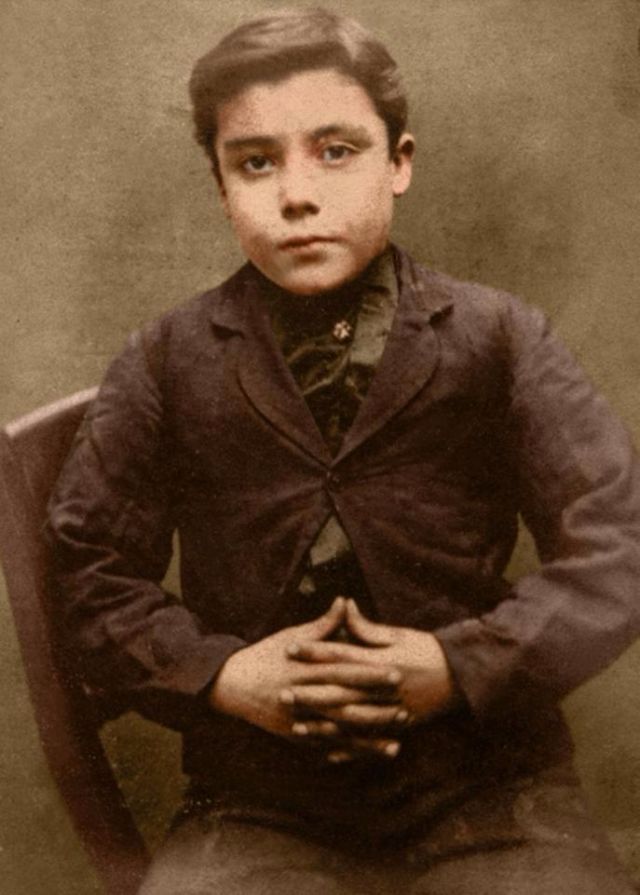
For petty crimes such as stealing daily necessities such as food and clothing, they have faced hard labor and jail. And these haunting photographs show the stern and haggard faces of Victorian criminal children who were sentenced to tough punishments in the 1870s, with many looking remarkably older than their actual ages.
The children in the shots were all from poor backgrounds. The incredible pictures show a range of children who were sentenced to a range of punishments from ten days of hard labor to two months in prison. Other eye-opening images reveal the stern and haggard appearances of the convicted children – with many looking significantly older than their actual ages.
The photographs were colorized by expert Tom Marshall and provided by the Tyne and Wear Archives and Museums.
“I colorize photos to bring faces, like that of these convicted children, to life and hopefully allow people to imagine their circumstances and how they must have felt at the time.” Marshall said. “This period shows the real people behind ‘official’ histories – people that are from the lowest levels of society, those really struggling to survive. The pictures were found when Newcastle jail in Carliol Square was demolished.”
Stephen Monaghan,, 14, was convicted of stealing money on 25 July 1873 and was sentenced to 10 days hard labor and three years in Market Weighton Reformatory.Robert Charlton, 16, a laborer from Newcastle, was sent to prison for four months for stealing two pairs of boots.Rosana Watson, 13, was also part of the girl gang that stole the iron and she also got hard labor.Aged 15, John Reed was handed 14 days hard labor and five years reformation for stealing money in 1873.James Donneley, aged 16, had been in and out of prison for stealing clothes.Aged 13, James Scullion was sentenced to 14 days hard labor at Newcastle City Gaol for stealing clothes.Ellen Woodman was handed out the same punishment for stealing an iron.Mary Hinningan was 13 when she stole an iron and got seven days of hard labor.Aged just 12, Jane Farrell stole two boots and was sentenced to do 10 hard days labor at Newcastle City Gaol.Henry Miller was a convicted thief after he was caught stealing clothing aged 14. He got 14 days of hard labor for his crime.Michael Clement Fisher who went to jail aged just 13 for breaking into a house.When Mary Catherine Docherty was 14 when she got seven days of hard labor for stealing an iron.Henry Leonard Stephenson aged 12, who went to prison for two months after breaking into a house.