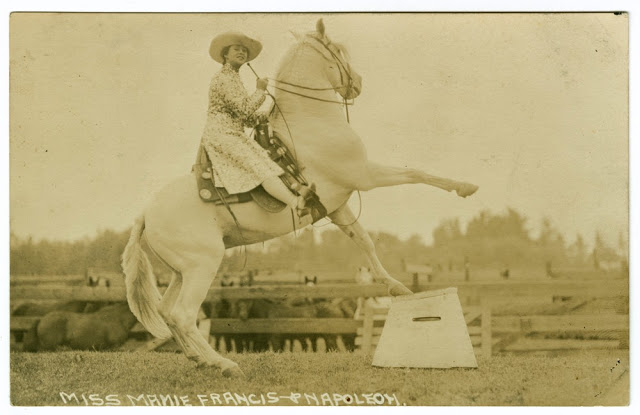
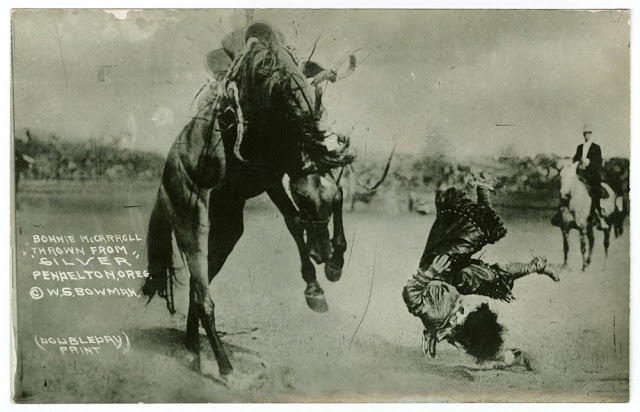
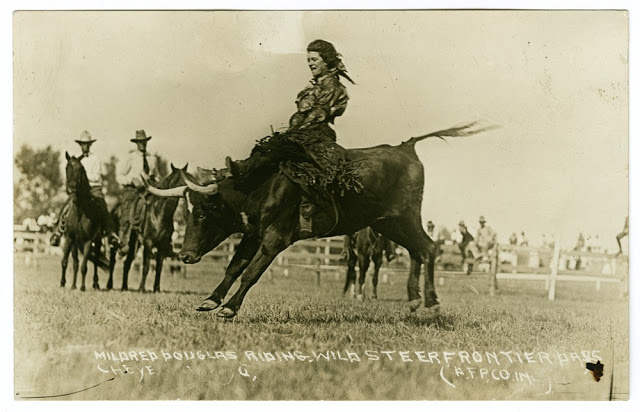
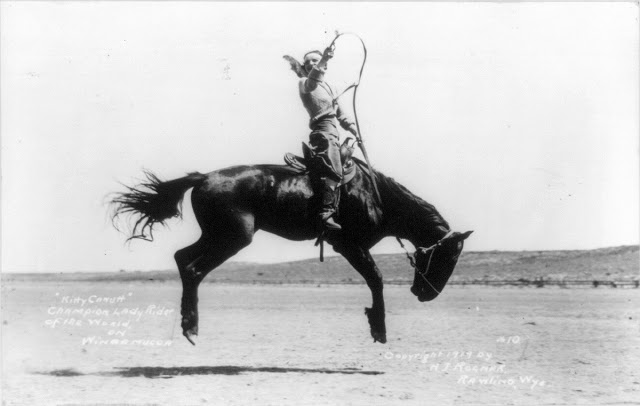
The word cowgirl originally emerged in the early 19th century. However, unlike the term cowboy, which defined a man as one who tended cows, herded cattle or worked in rodeos, the term cowgirl embodied an emboldened, pioneering spirit.
That is perhaps, because in those days it was virtually unheard of for a woman to perform the tasks of a cowboy. However, that didn’t stop some women in history from trying their hand at ‘man’s work.’
Some of the earliest examples of cowgirls in history are also the most recognized among American culture. Names like Annie Oakley and Belle Starr were legendary long before their stories made the big screen.
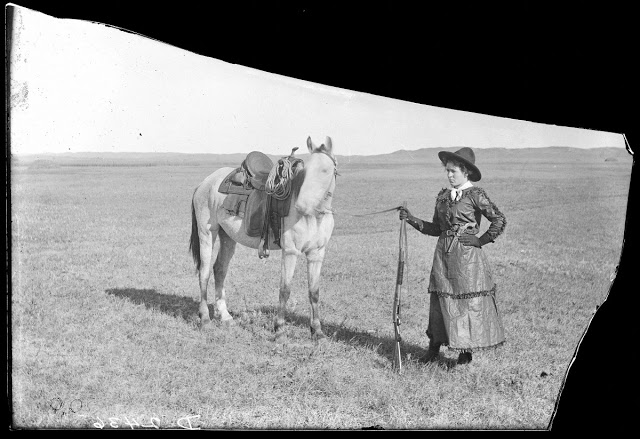
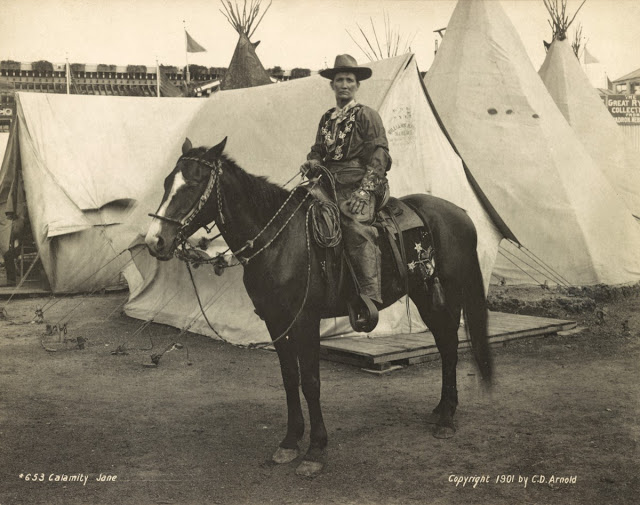
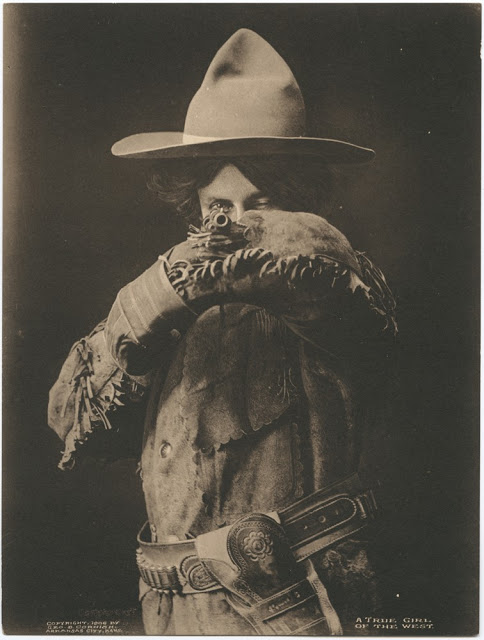
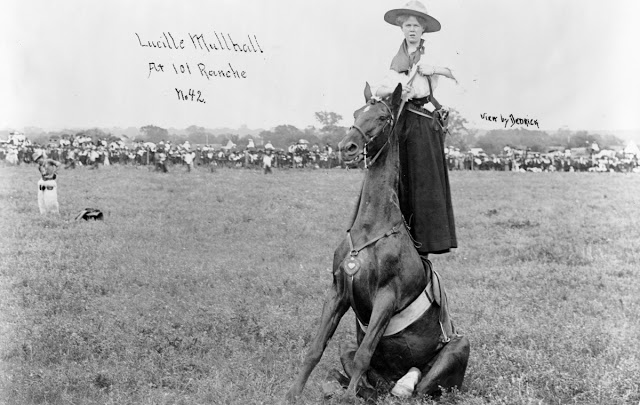
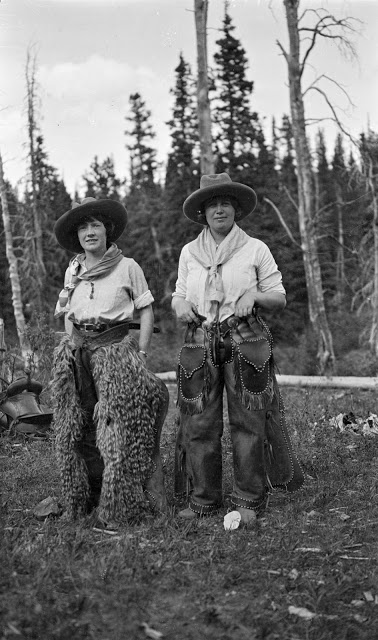
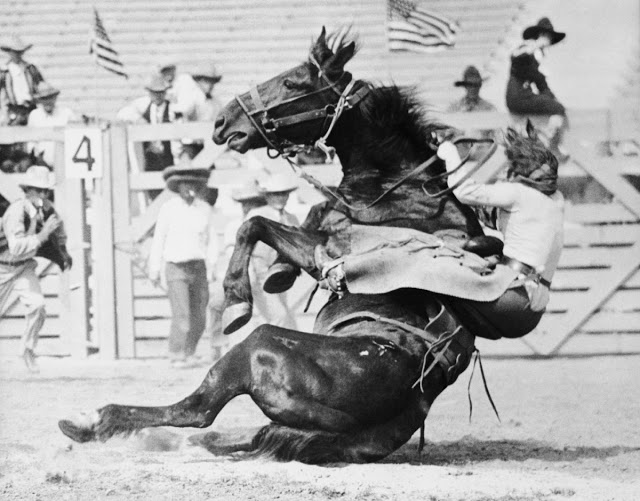
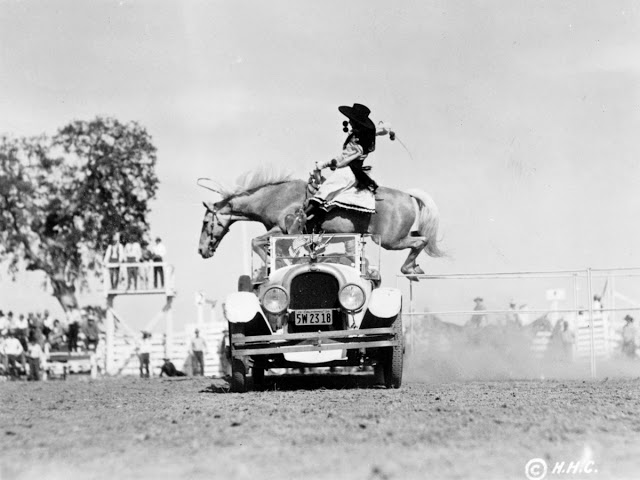
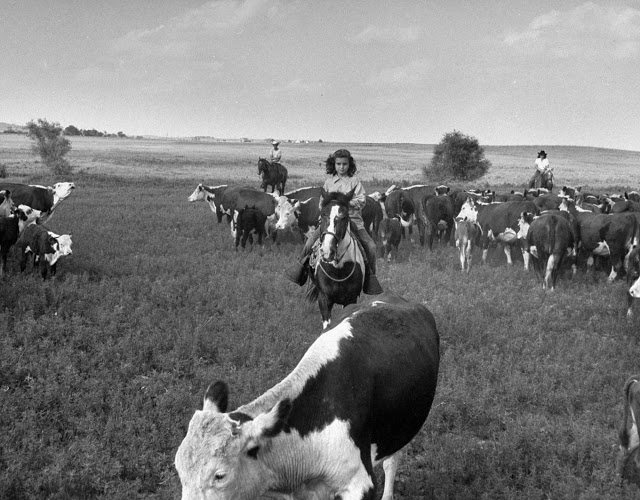
Harriet, Elizabeth, Lucie, and Ruth Chrisman at their sod house in Custer County, Nebraska, 1886.Sadie Austin in Cherry County, Nebraska, in 1900.Calamity Jane at the Pan-American Exposition in Buffalo, New York, circa 1901.‘A True Girl of the West’, Del Rio, Texas, 1906.Lucille Mullhall at 101 Ranch, Oklahoma, in 1909.Miss Mamie Francis & Napoleon, c.1910s.Bonnie McCarroll thrown from Silver, Pendleton, Oregon, September 1915.Mildred Douglas riding wild steer, Cheyenne, Wyoming, c.1917.Kitty Canutt, “champion lady rider of the world on Winnemucca,” on a bucking bronco, in 1919.“Ladies in Chaps”, c.1920.Fox Hastings, a cowgirl and trick rider, being thrown by Undertow, one of the meanest horses at the first annual Los Angeles Rodeo, circa 1920s.A woman and her horse hurdle a convertible at a California rodeo, circa 1934.Cowgirl Kathleen Hudson, a member of the Junior Riding and Roping Club of Tulsa Mounted Troops, rounding up Herefords on the Oklahoma range in 1948.
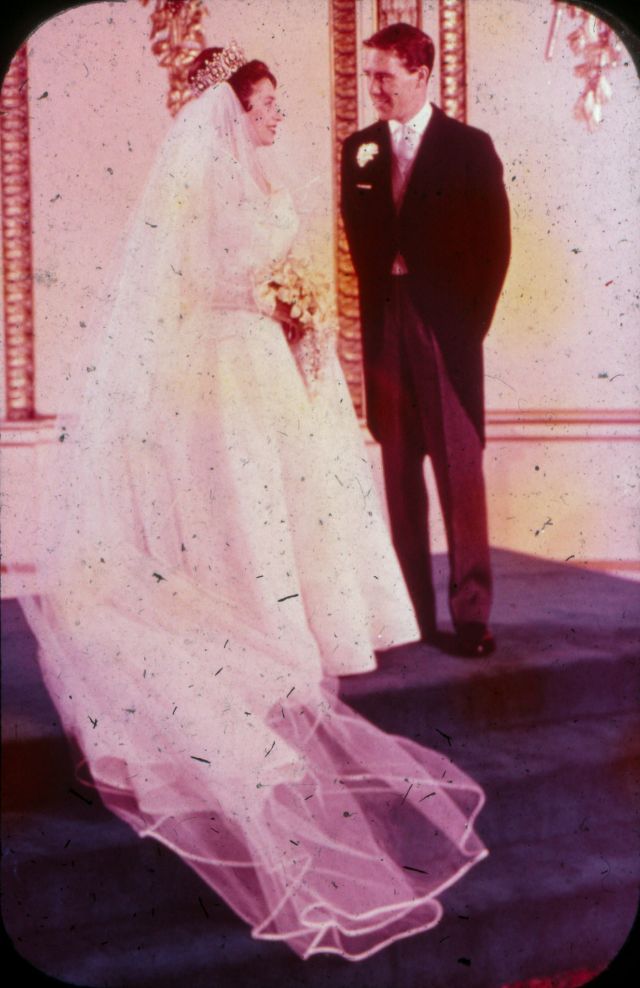
Born Margaret Rose in 1930 at Glamis Castle in Scotland, Princess Margaret, Countess of Snowdon was the younger daughter of King George VI and Queen Elizabeth The Queen Mother and the only sibling of Queen Elizabeth II.
After the war, Margaret fell in love with Group Captain Peter Townsend. In 1952, Margaret’s father died, her sister became Queen, and Townsend divorced his first wife. Early the following year, he proposed to Margaret. Many in the government believed he would be an unsuitable husband for the Queen’s 22-year-old sister, and the Church of England refused to countenance marriage to a divorced man.
Margaret eventually abandoned her plans with him and in 1960, she accepted the proposal of the photographer Antony Armstrong-Jones, who was created Earl of Snowdon by the Queen. The couple had two children. They divorced in 1978.
Margaret was often viewed as a controversial member of the British royal family. Her divorce earned her negative publicity, and she was romantically associated with several men. Her health gradually deteriorated in the final two decades of her life.
A heavy smoker for most of her adult life, she had a lung operation in 1985, a bout of pneumonia in 1993, and at least three strokes between 1998 and 2001. She died at King Edward VII’s Hospital in 2002.
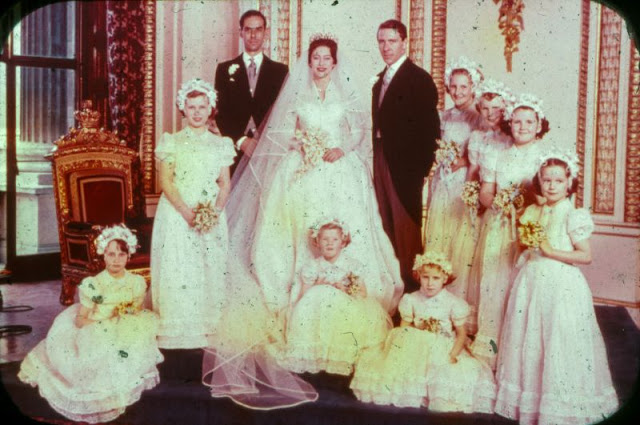
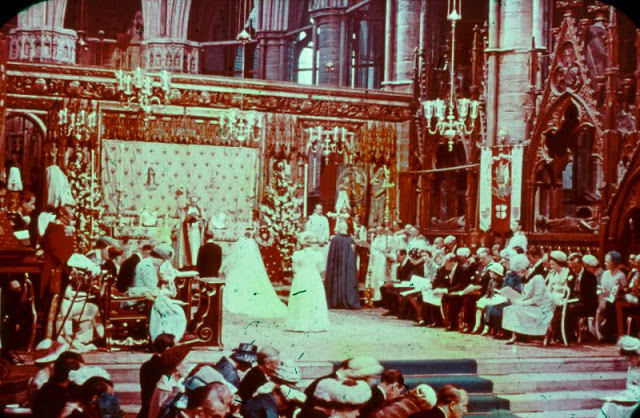
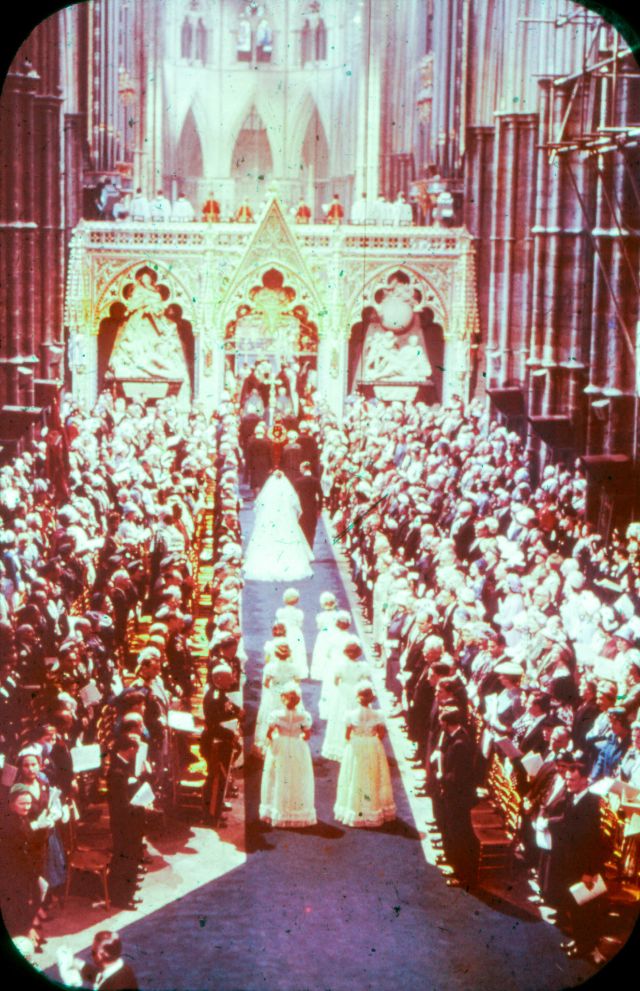
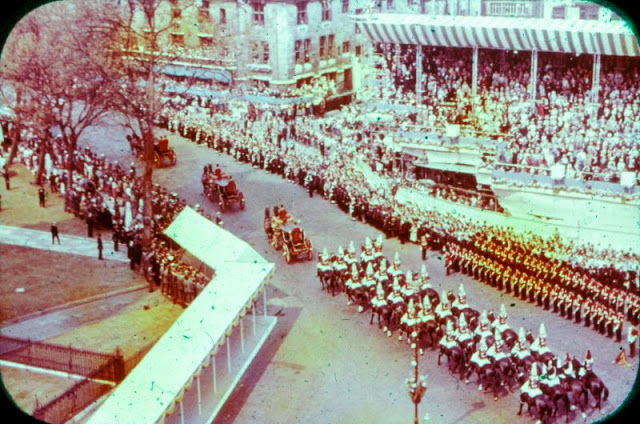
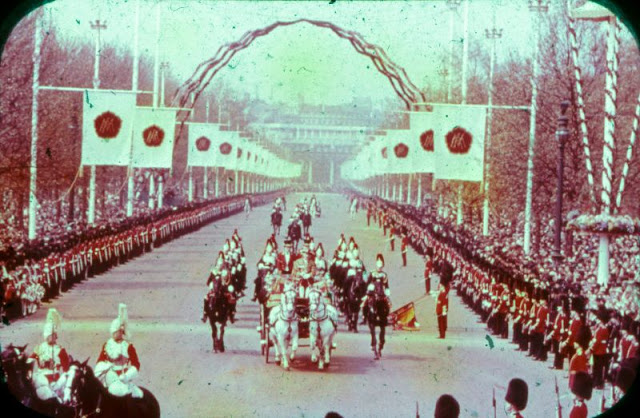
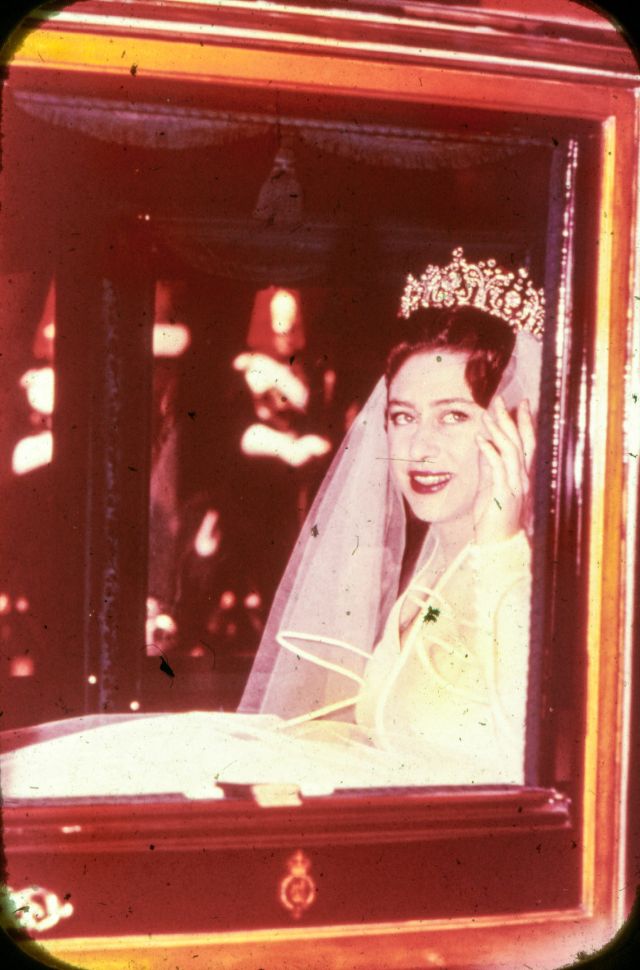
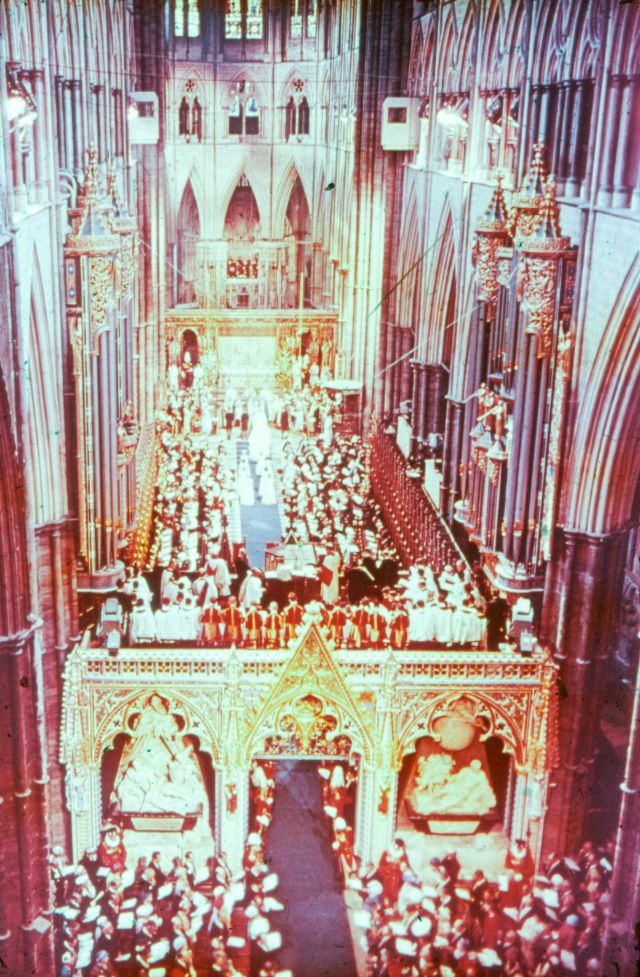
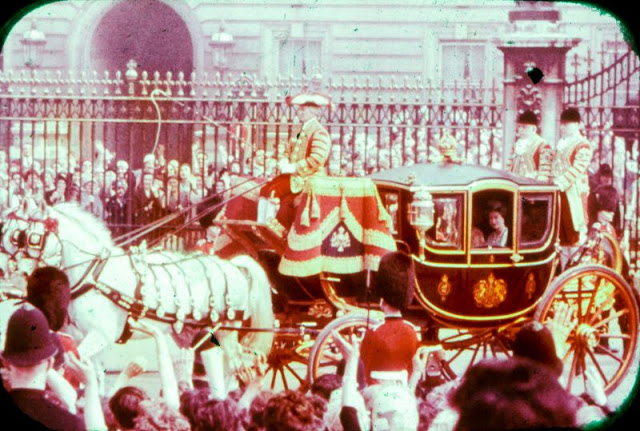
A found photo set from Colin John Ford that shows the wedding of Princess Margret in London in 1960.
The Vietnam War (Vietnamese: Chi?n tranh Vi?t Nam), also known as the Second Indochina War, was a conflict in Vietnam, Laos, and Cambodia from 1 November 1955 to the fall of Saigon on 30 April 1975. It was the second of the Indochina Wars and was officially fought between North Vietnam and South Vietnam. North Vietnam was supported by the Soviet Union, China, and other communist allies; South Vietnam was supported by the United States and other anti-communist allies. The war is widely considered to be a Cold War-era proxy war. It lasted almost 20 years, with direct U.S. involvement ending in 1973. The conflict also spilled over into neighboring states, exacerbating the Laotian Civil War and the Cambodian Civil War, which ended with all three countries becoming communist states by 1975.
The conflict emerged from the First Indochina War between the French colonial government and a left-wing revolutionary movement, the Viet Minh. After the French military withdrawal from Indochina in 1954, the U.S. assumed financial and military support for the South Vietnamese state. The Vi?t C?ng (VC), a South Vietnamese common front under the direction of North Vietnam, initiated a guerrilla war in the south. North Vietnam had also invaded Laos in 1958 in support of insurgents, establishing the Ho Chi Minh Trail to supply and reinforce the Vi?t C?ng. By 1963, the North Vietnamese had sent 40,000 soldiers to fight in the south. U.S. involvement escalated under President John F. Kennedy through the MAAG program, from just under a thousand military advisors in 1959 to 23,000 in 1964.
In the Gulf of Tonkin incident in August 1964, a U.S. destroyer clashed with North Vietnamese fast attack craft. In response, the U.S. Congress passed the Gulf of Tonkin Resolution and gave President Lyndon B. Johnson broad authority to increase U.S. military presence in Vietnam. Johnson ordered the deployment of combat units for the first time and increased troop levels to 184,000. The People’s Army of Vietnam (PAVN) (also known as the North Vietnamese Army or NVA) engaged in more conventional warfare with U.S. and South Vietnamese forces (Army of the Republic of Vietnam (ARVN)). Despite little progress, the U.S. continued a significant build-up of forces. U.S. and South Vietnam forces relied on air superiority and overwhelming firepower to conduct search and destroy operations, involving ground forces, artillery, and airstrikes. The U.S. also conducted a large-scale strategic bombing campaign against North Vietnam.
The communist Tet Offensive throughout 1968 caused U.S. domestic support for the war to fade. The VC sustained heavy losses during the Offensive and subsequent U.S.-ARVN operations. The CIA’s Phoenix Program further degraded the VC’s membership and capabilities. By the end of the year, the VC insurgents held almost no territory in South Vietnam, and their recruitment dropped by over 80%, signifying a drastic reduction in guerrilla operations, necessitating increased use of PAVN regular soldiers from the north. In 1969, North Vietnam declared a Provisional Revolutionary Government (the PRG) in the south to give the reduced VC a more international stature, but from then on, they were sidelined as PAVN forces began more conventional combined arms warfare. By 1970, over 70% of communist troops in the south were northerners, and southern-dominated VC units no longer existed. Operations crossed national borders: North Vietnam used Laos as a supply route early on, while Cambodia was also used starting in 1967; the U.S. bombed the Laotian route starting in 1964, and the Cambodian route in 1969. The deposing of the monarch Norodom Sihanouk by the Cambodian National Assembly resulted in a PAVN invasion of the country at the request of the Khmer Rouge, escalating the Cambodian Civil War and resulting in a U.S.-ARVN counter-invasion.
In 1969, following the election of U.S. President Richard Nixon, a policy of “Vietnamization” began, which saw the conflict fought by an expanded ARVN, with U.S. forces sidelined and increasingly demoralized by domestic opposition and reduced recruitment. U.S. ground forces had largely withdrawn by early 1972 and support was limited to air support, artillery support, advisers, and materiel shipments. The ARVN, with U.S. support, stopped the first and largest mechanized PAVN offensive during the Easter Offensive of 1972. The offensive failed to subdue South Vietnam, but the ARVN itself failed to recapture all lost territory, leaving its military situation difficult. The Paris Peace Accords of January 1973 saw all U.S. forces withdrawn; the Case–Church Amendment, passed by the U.S. Congress on 15 August 1973, officially ended direct U.S. military involvement. The Peace Accords were broken almost immediately, and fighting continued for two more years. Phnom Penh fell to the Khmer Rouge on 17 April 1975, while the 1975 Spring Offensive saw the Fall of Saigon by the PAVN on 30 April; this marked the end of the war, and North and South Vietnam were reunified the following year.
The scale of fighting was enormous. By 1970, the ARVN was the world’s fourth largest army, and the PAVN was not far behind with approximately one million regular soldiers. The war exacted an enormous human cost: estimates of the number of Vietnamese soldiers and civilians killed range from 966,000 to 3 million. Some 275,000–310,000 Cambodians, 20,000–62,000 Laotians, and 58,220 U.S. service members also died in the conflict, and a further 1,626 remain missing in action.
The Sino-Soviet split re-emerged following the lull during the Vietnam War. Conflict between North Vietnam and its Cambodian allies in the Royal Government of the National Union of Kampuchea, and the newly formed Democratic Kampuchea began almost immediately in a series of border raids by the Khmer Rouge, eventually escalating into the Cambodian–Vietnamese War. Chinese forces directly invaded Vietnam in the Sino-Vietnamese War, with subsequent border conflicts lasting until 1991. The unified Vietnam fought insurgencies in all three countries. The end of the war and resumption of the Third Indochina War would precipitate the Vietnamese boat people and the larger Indochina refugee crisis, which saw millions of refugees leave Indochina (mainly southern Vietnam), an estimated 250,000 of whom perished at sea. Within the U.S, the war gave rise to what was referred to as Vietnam Syndrome, a public aversion to American overseas military involvements, which together with the Watergate scandal contributed to the crisis of confidence that affected America throughout the 1970s. (Wikipedia)
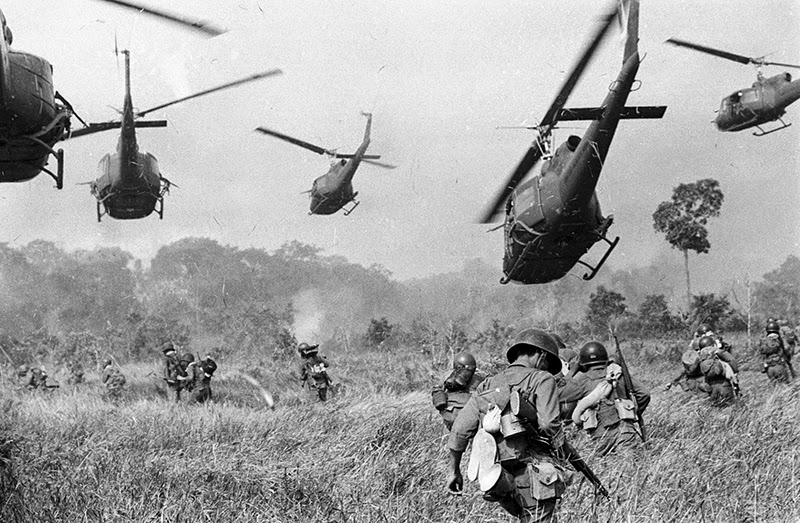
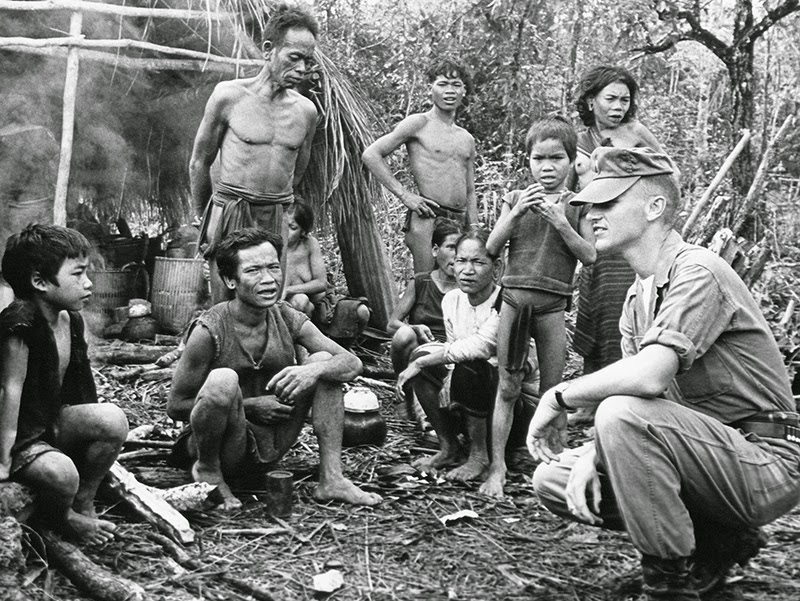
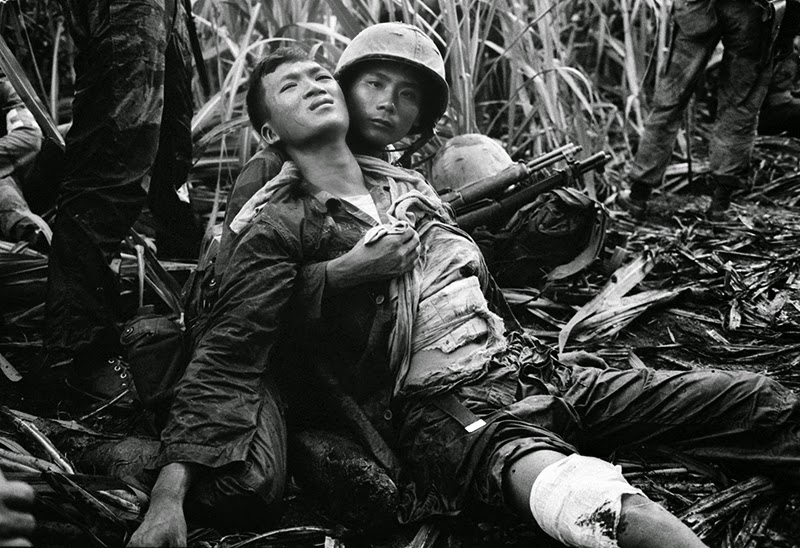
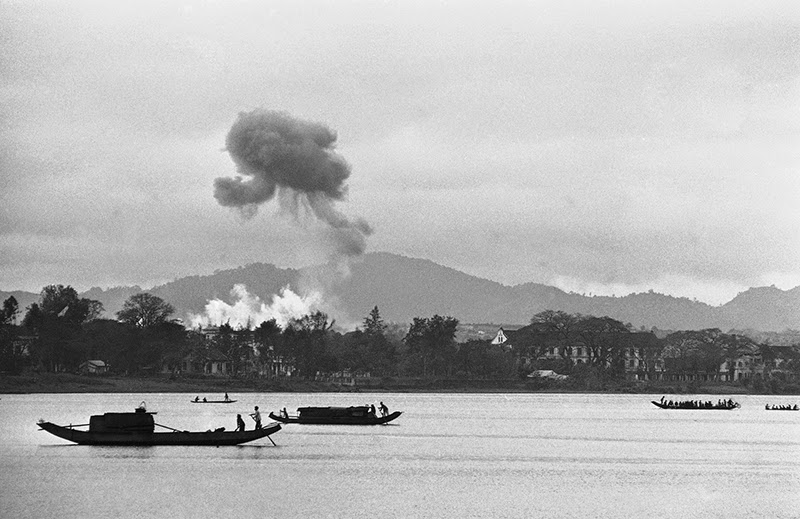
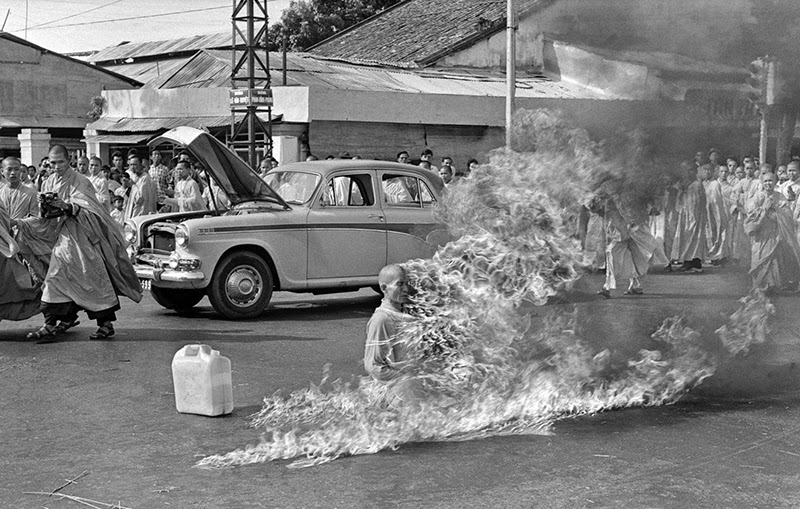
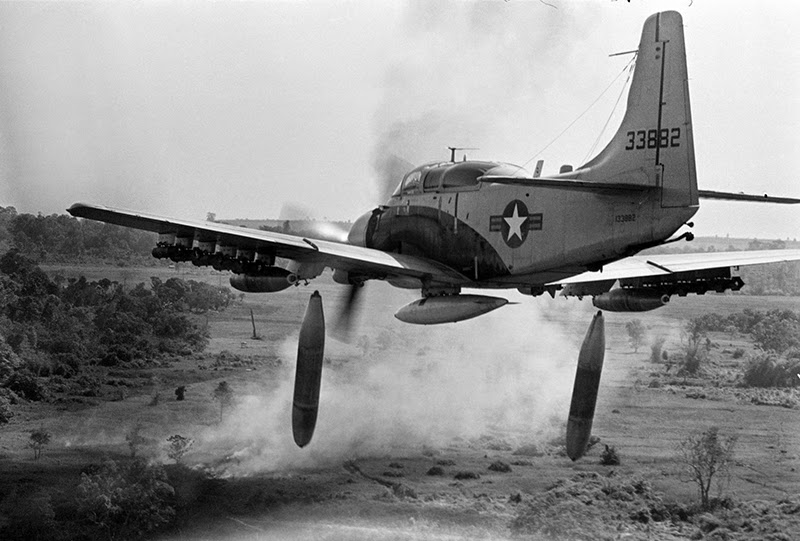
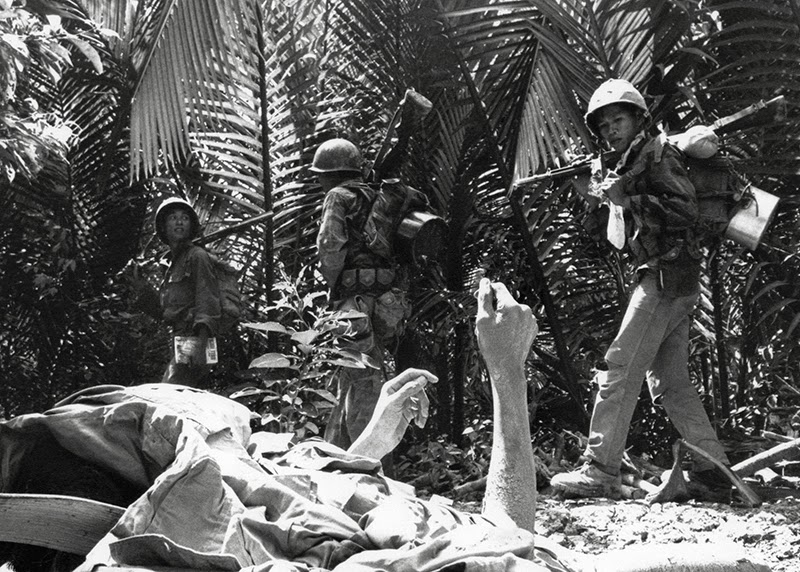
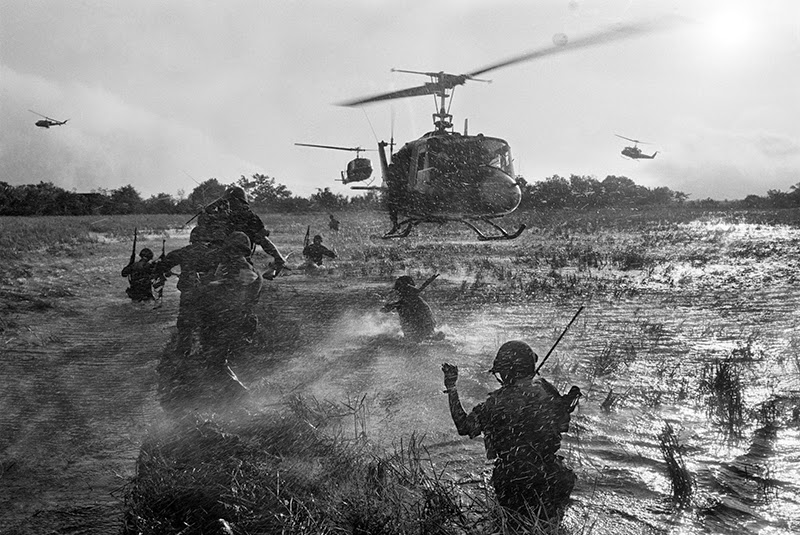
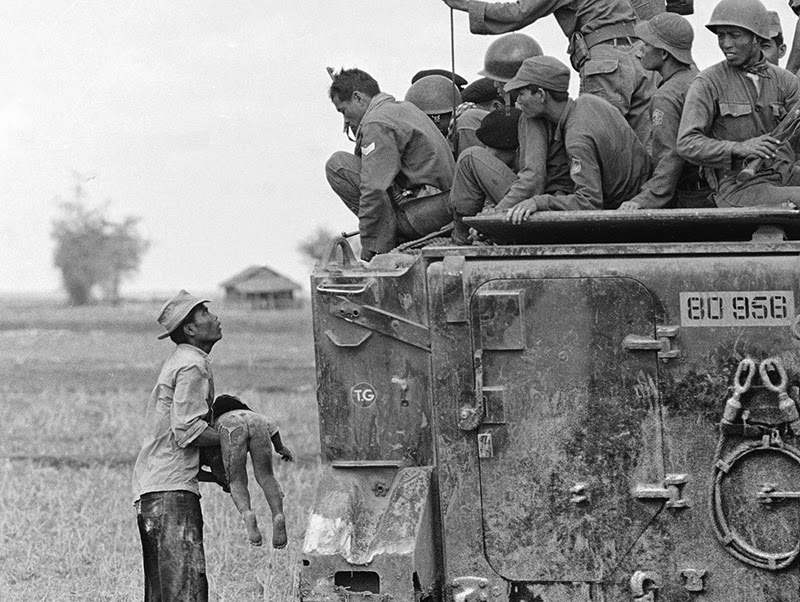
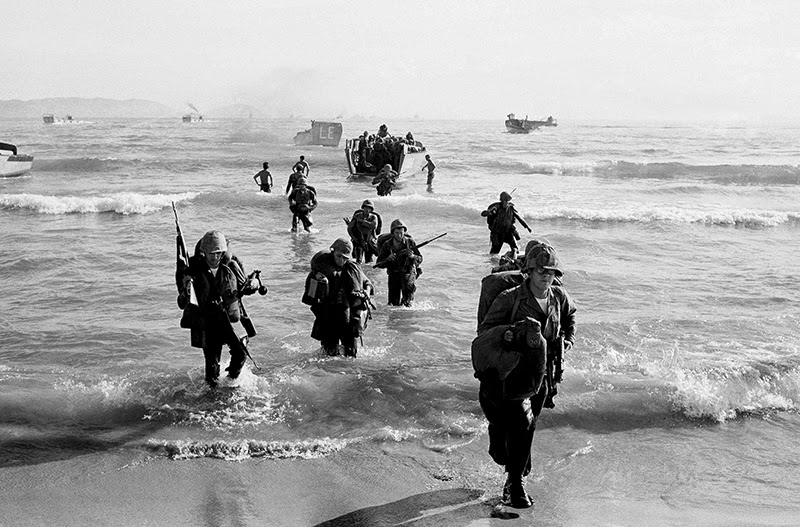
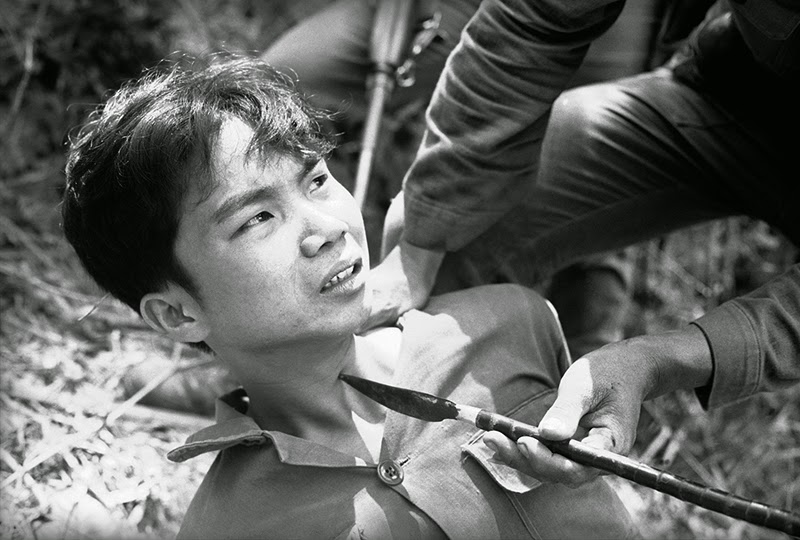
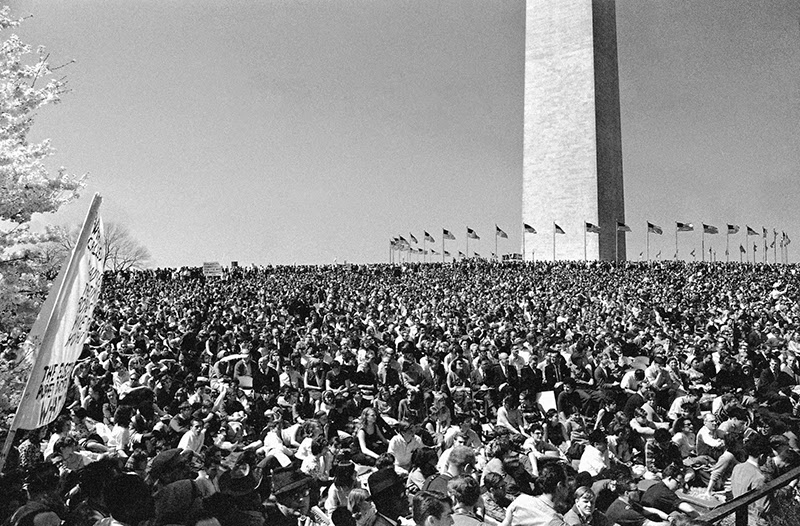
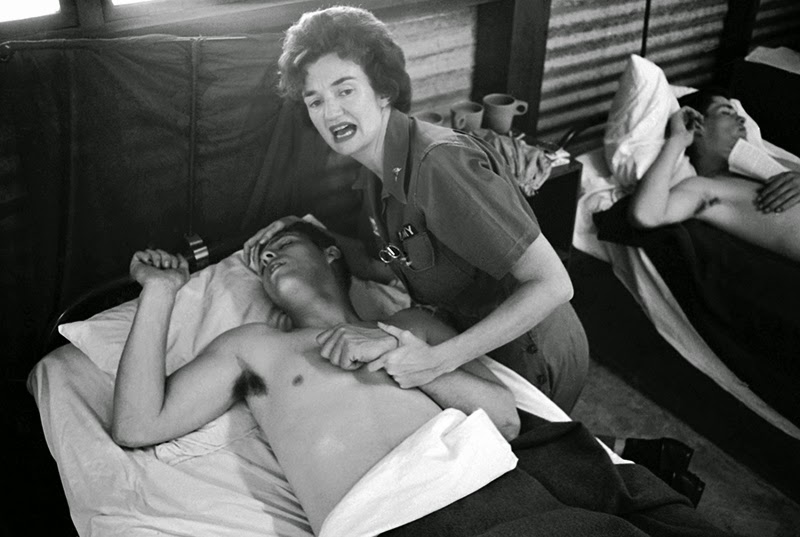
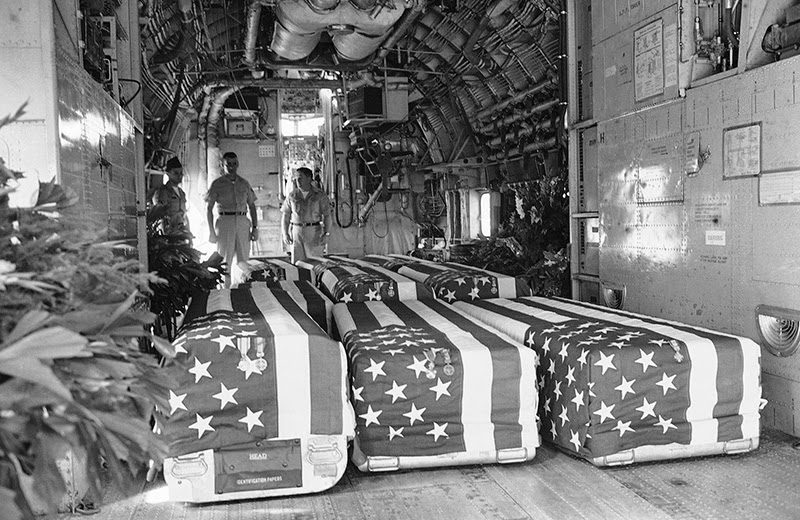
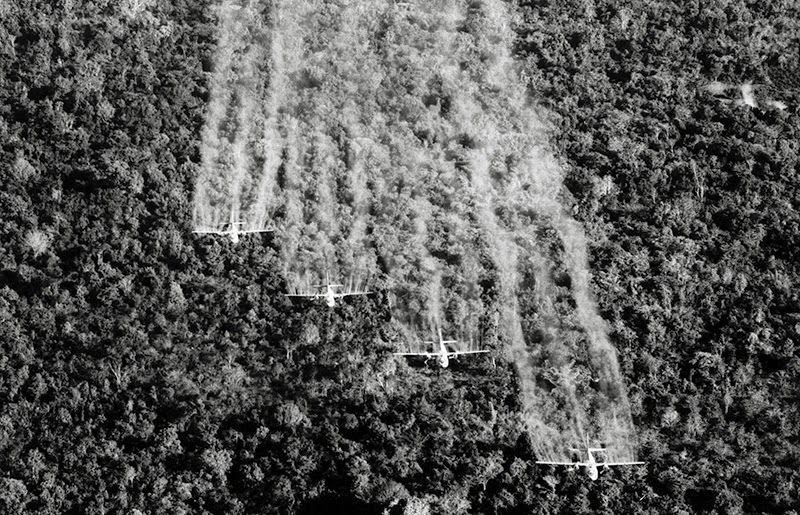
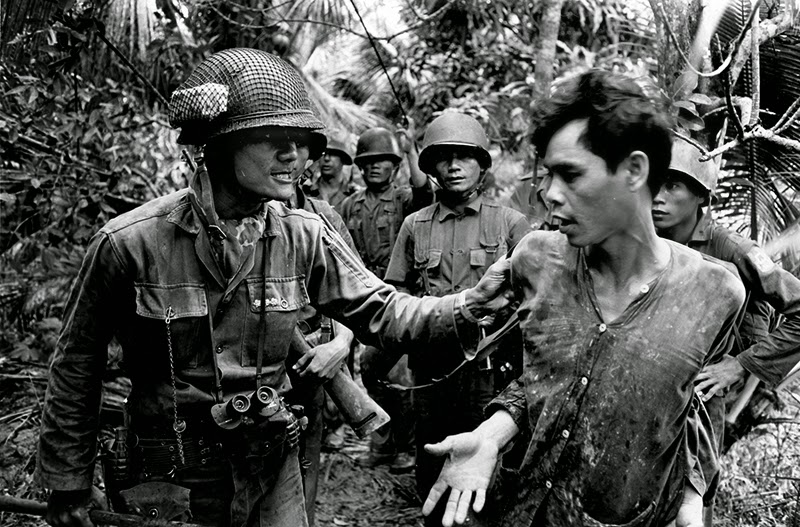
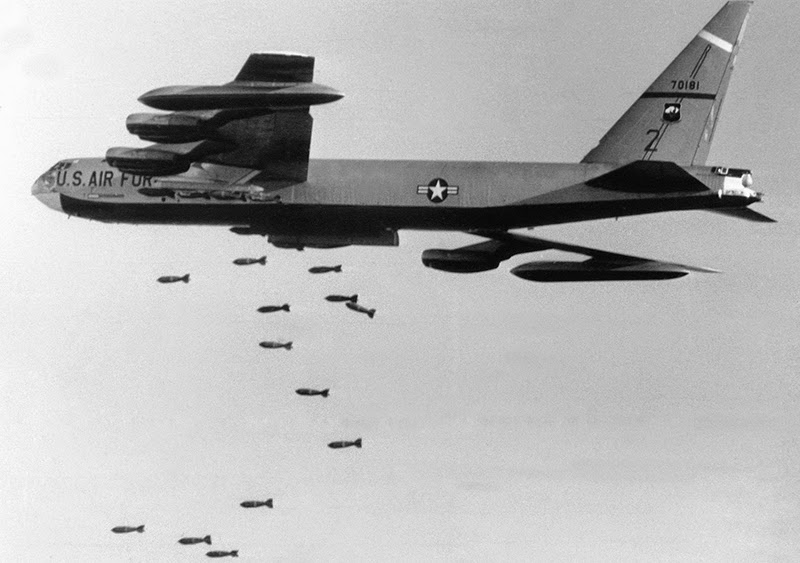
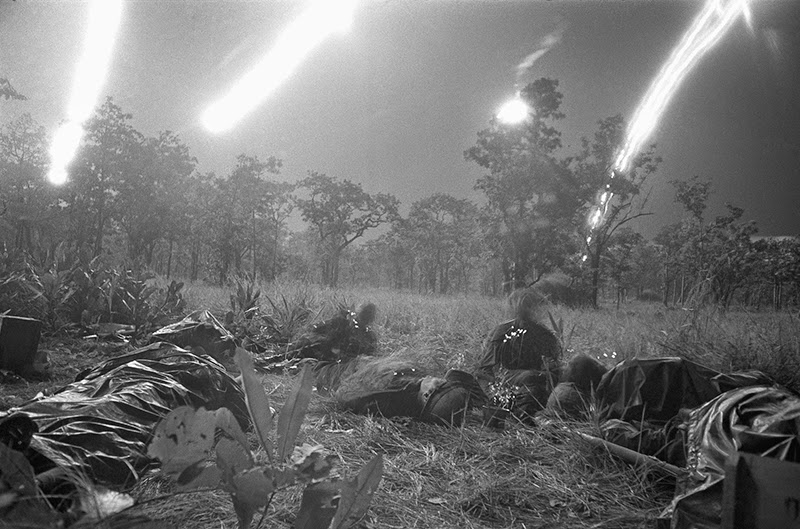
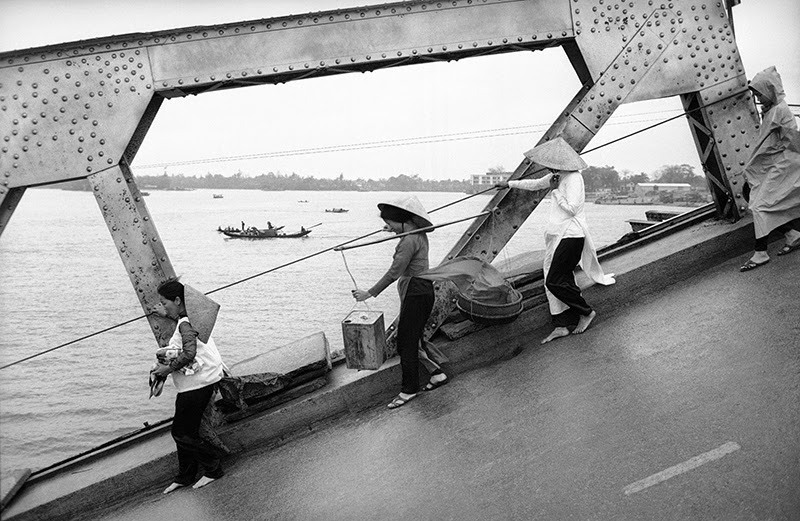
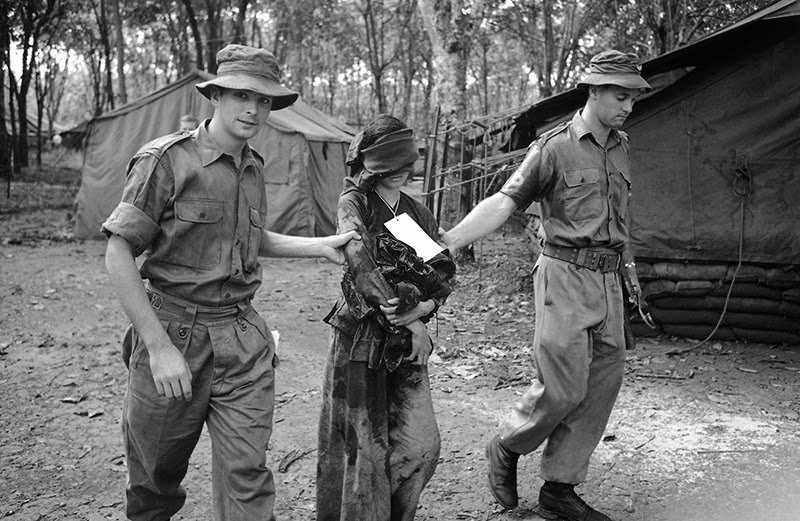
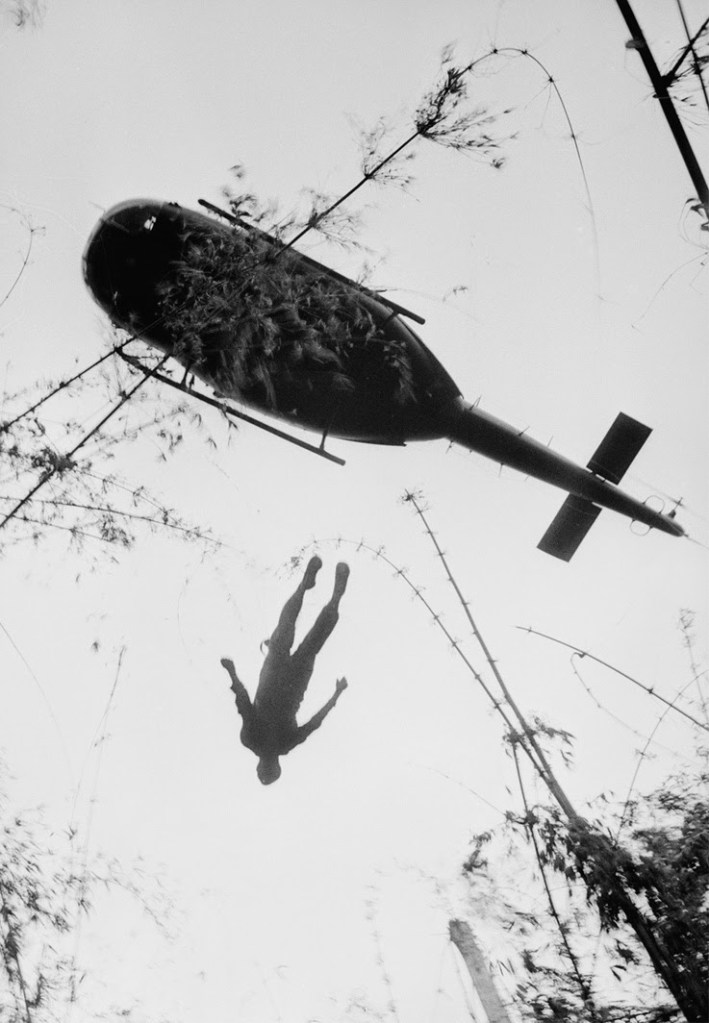
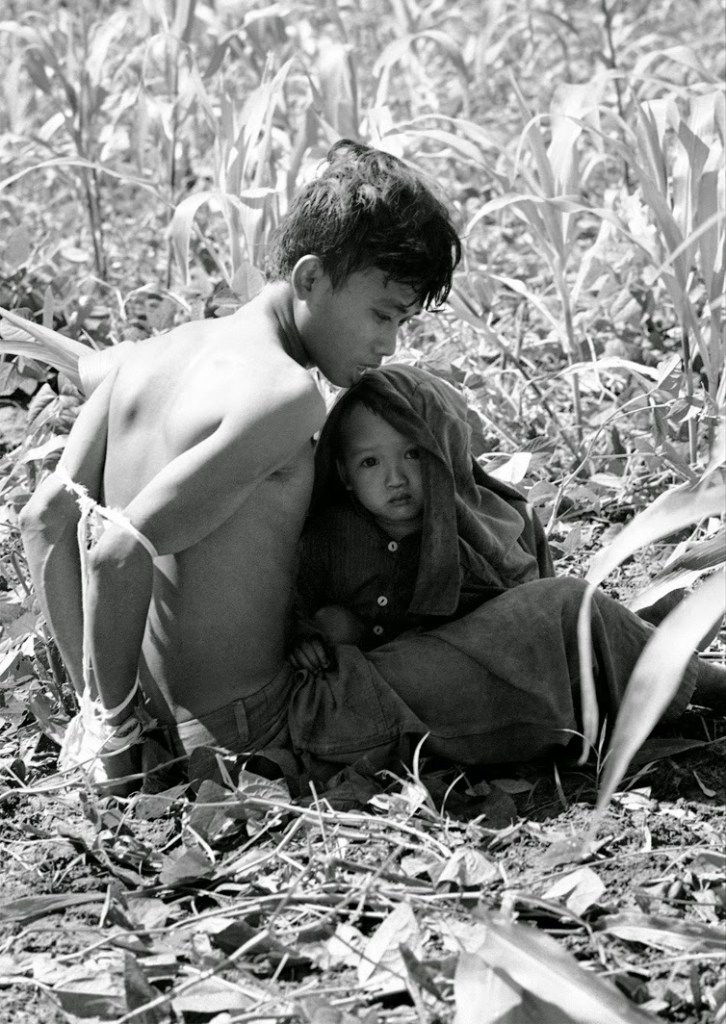
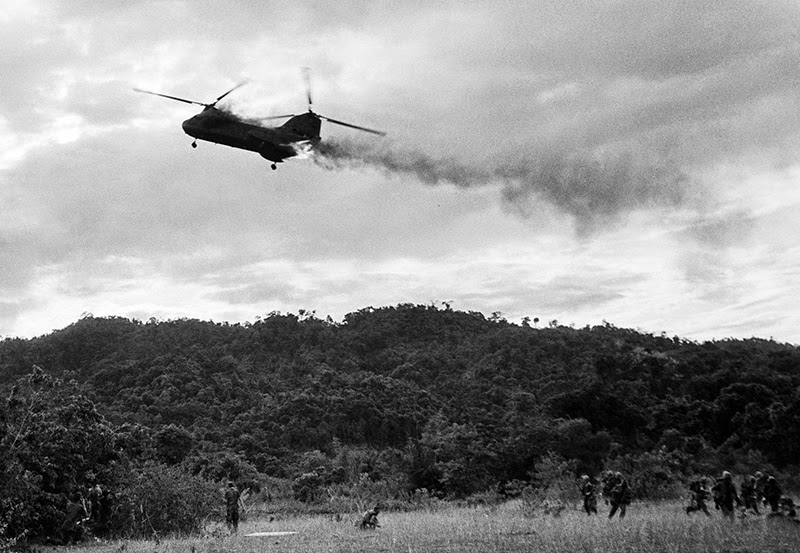
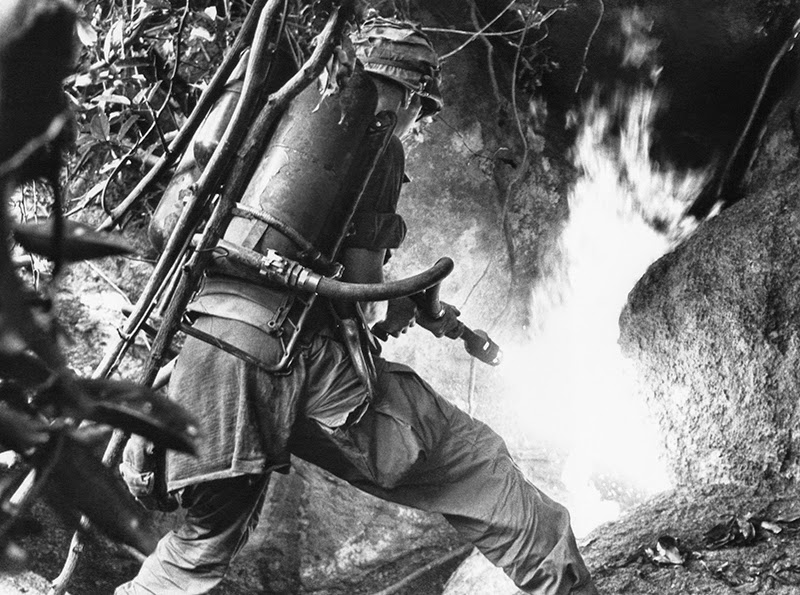
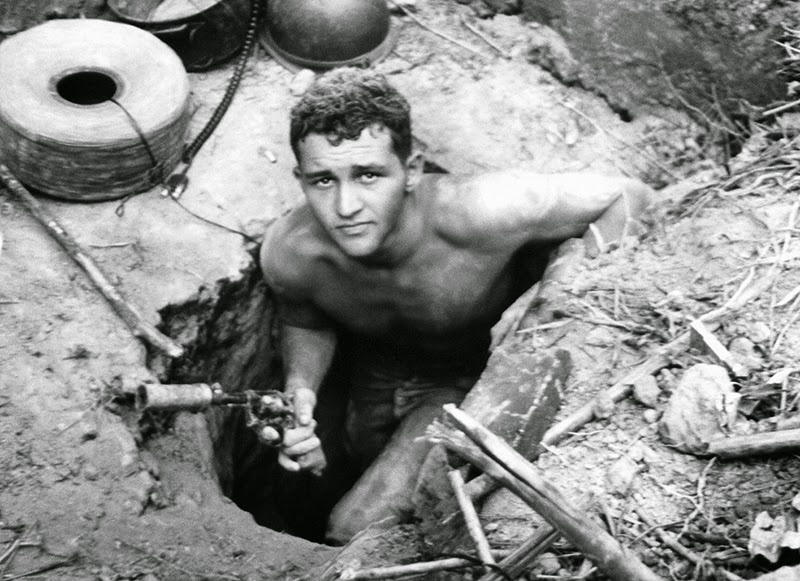
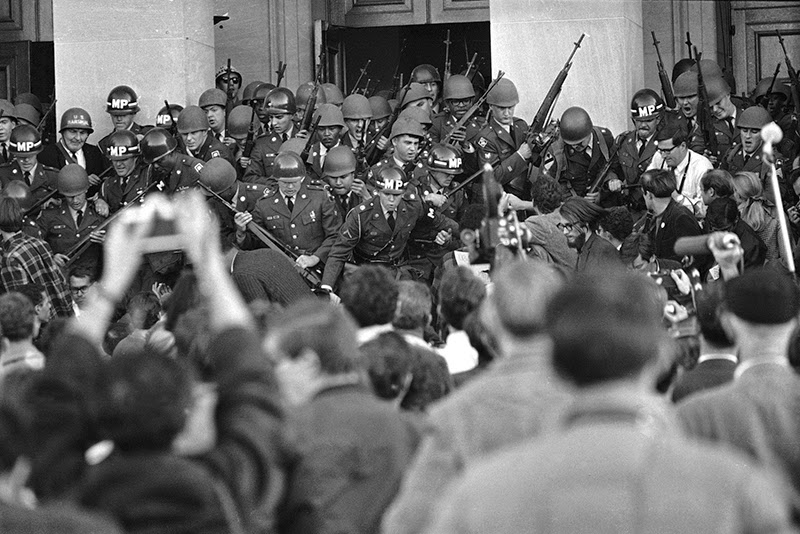
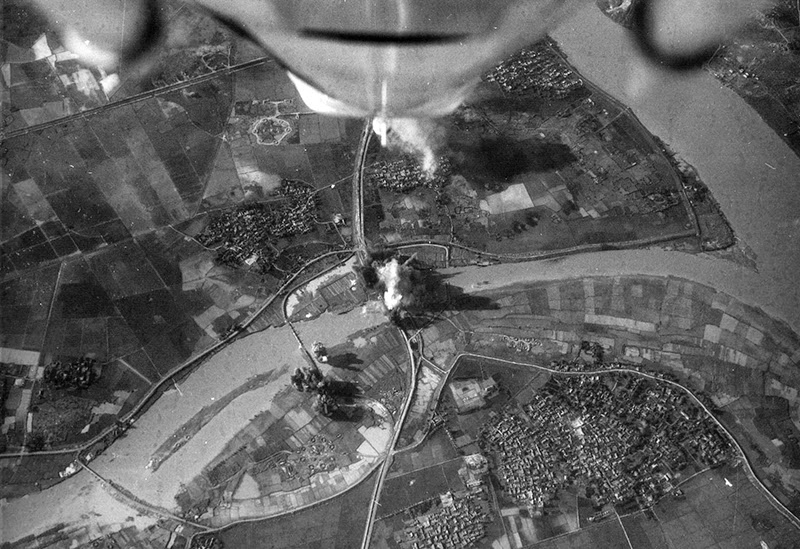
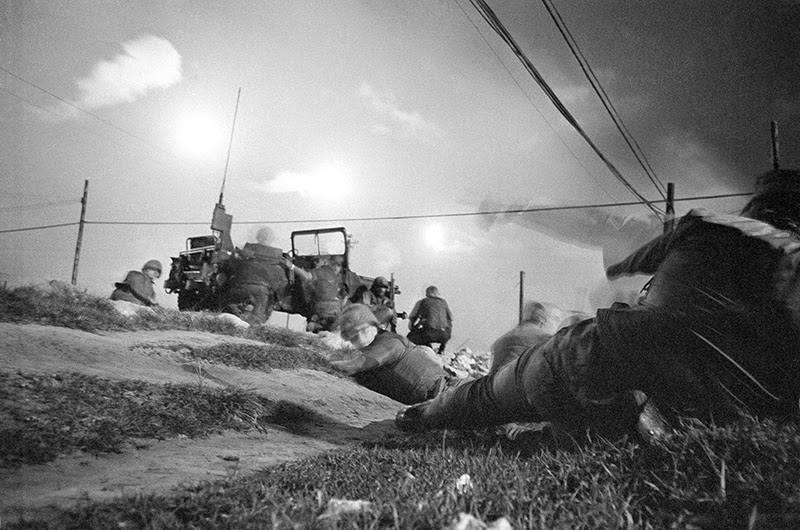
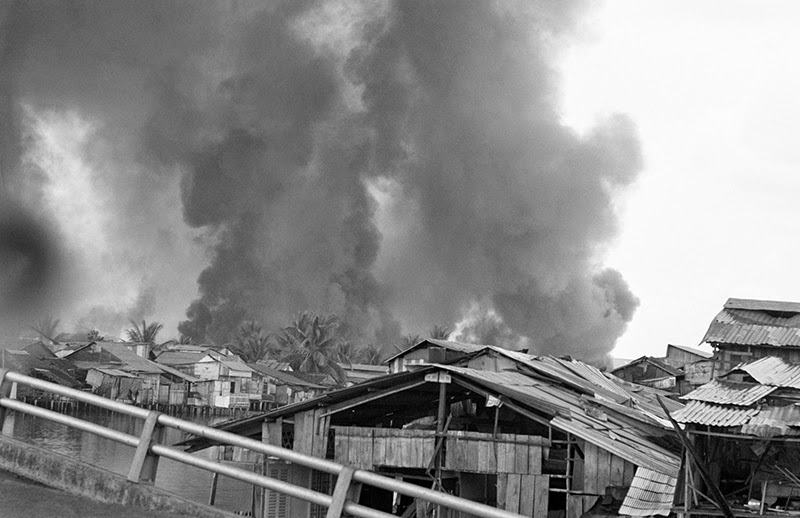
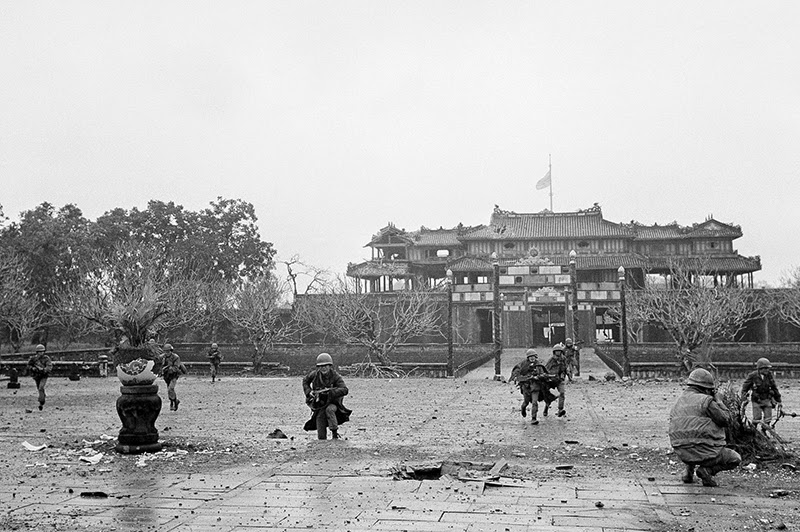
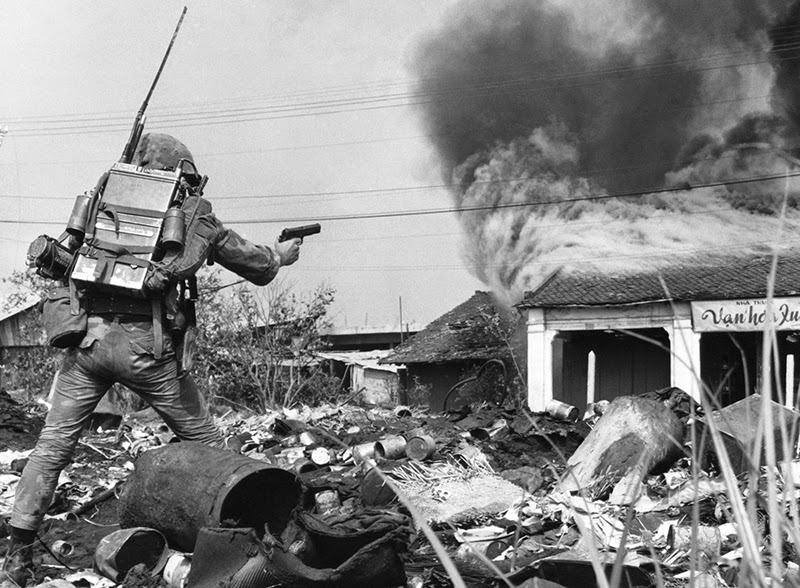
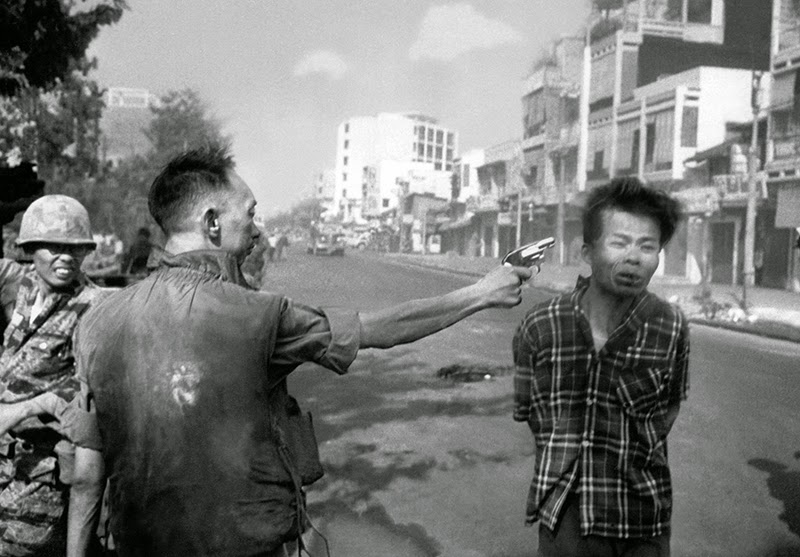
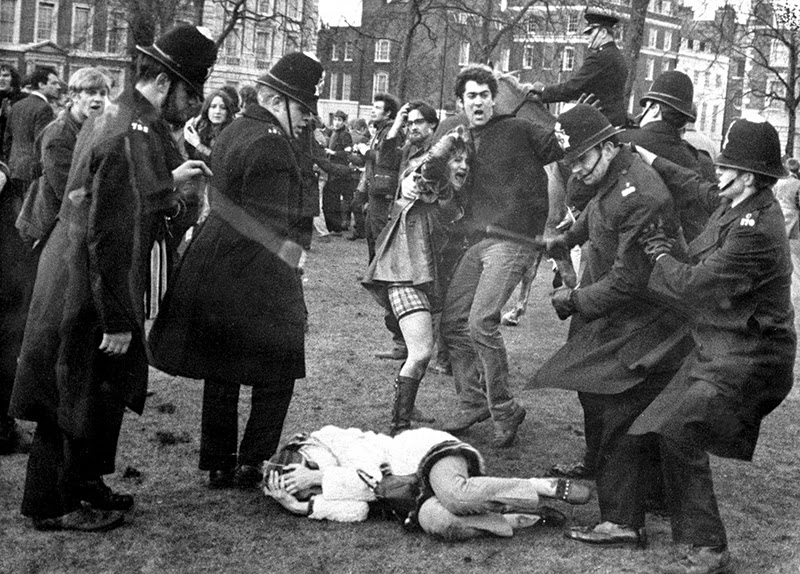
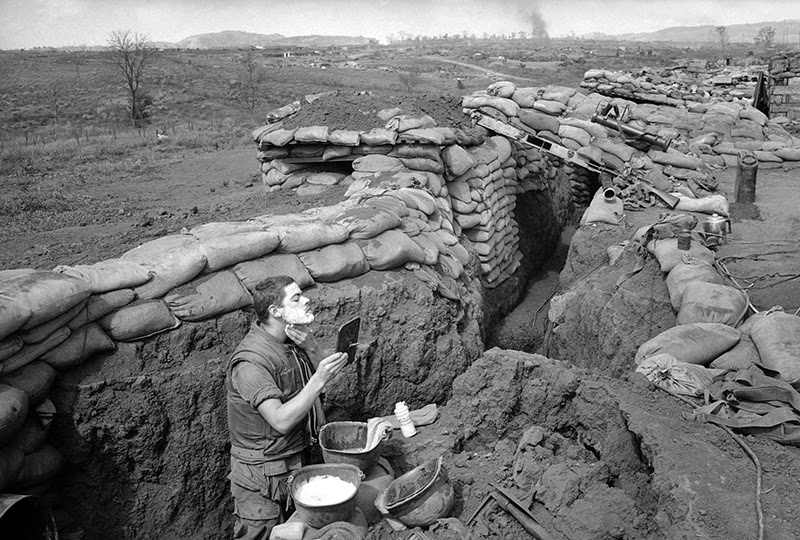
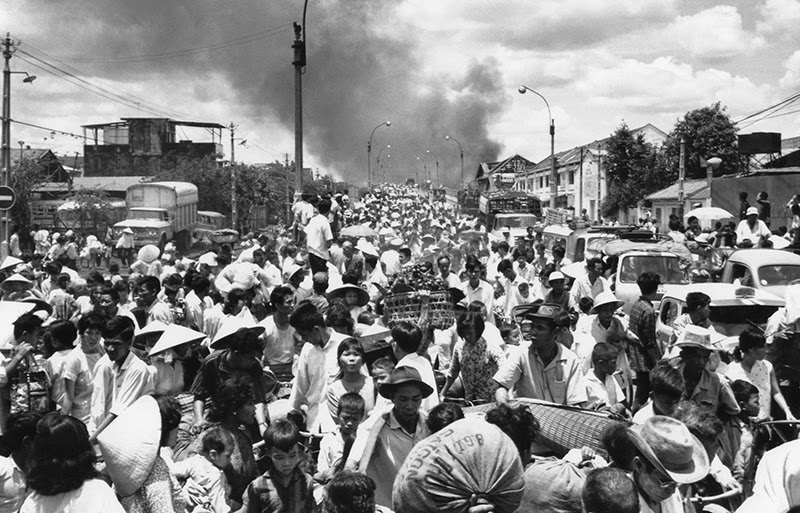
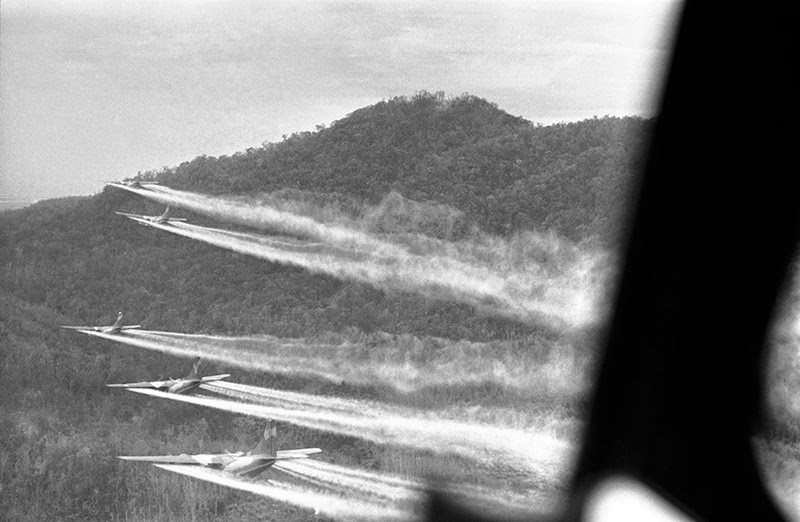
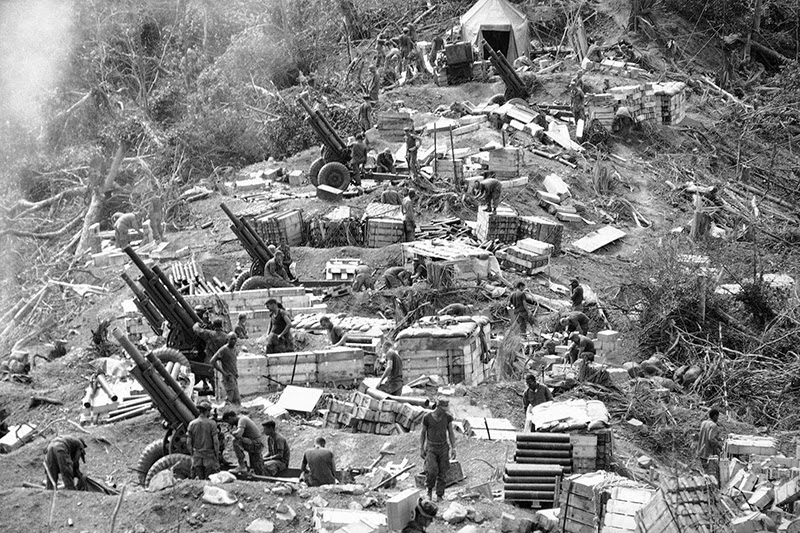
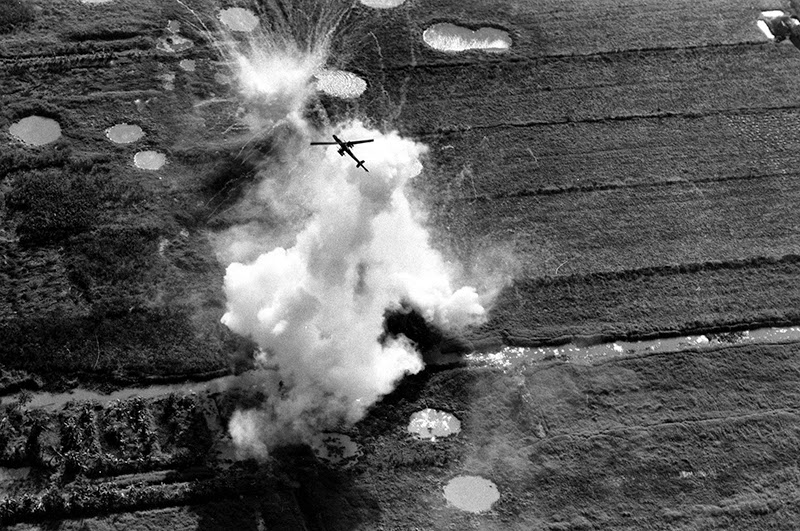
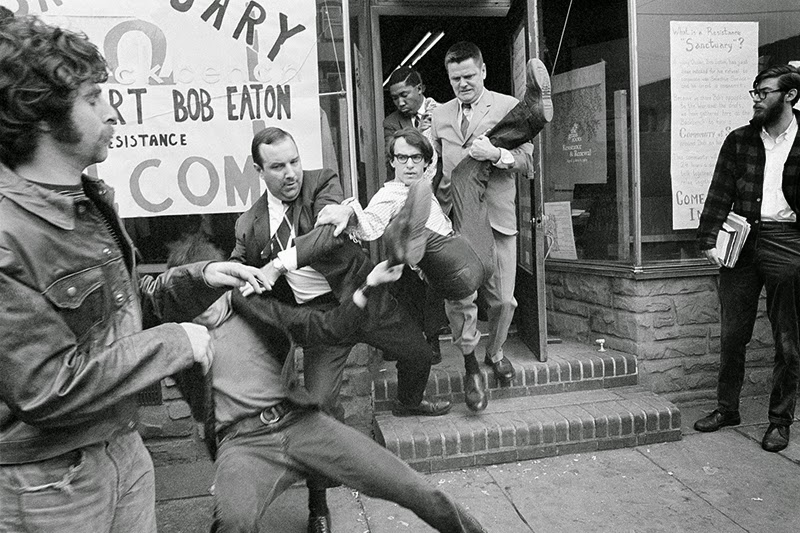
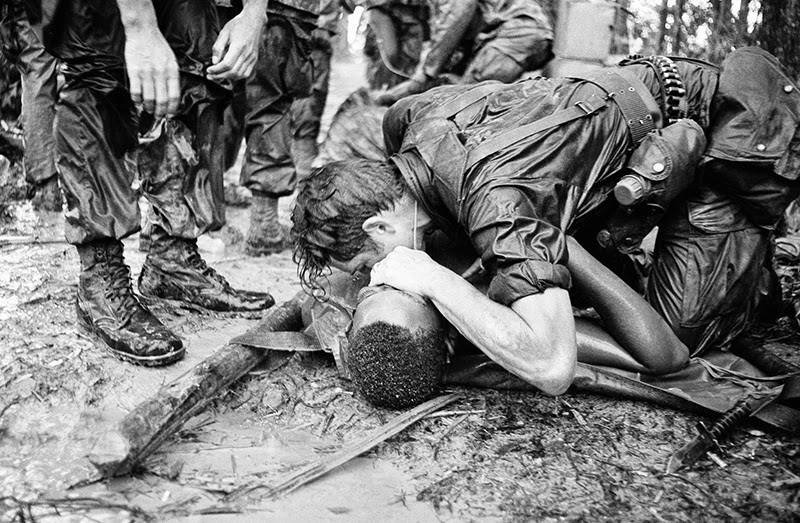
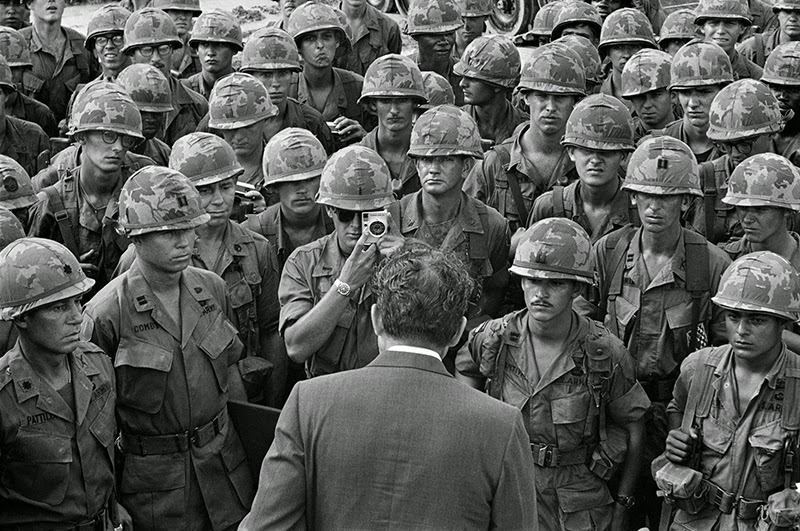
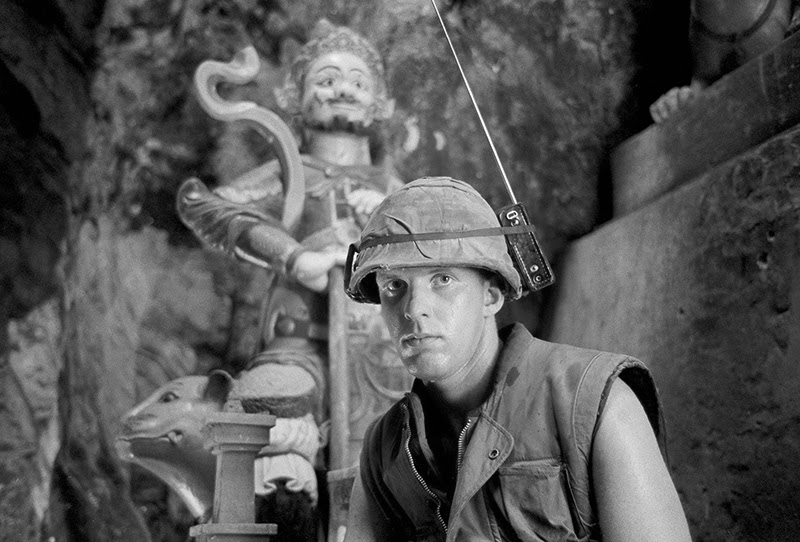
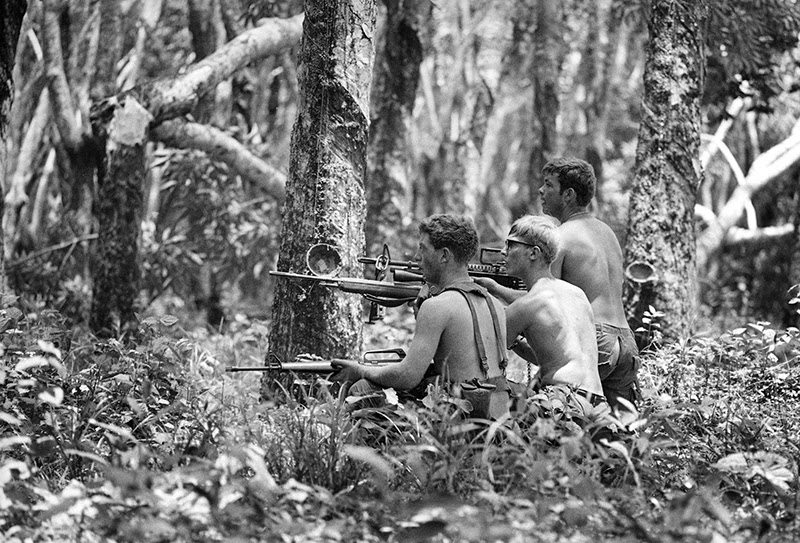
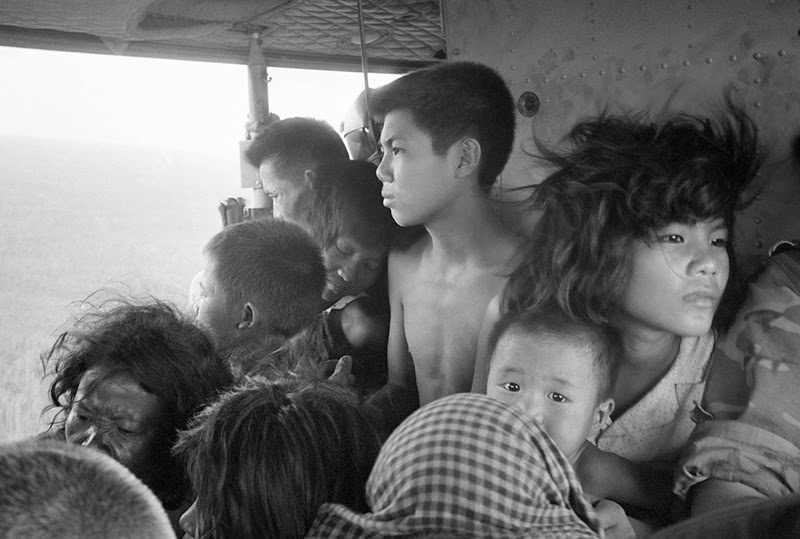
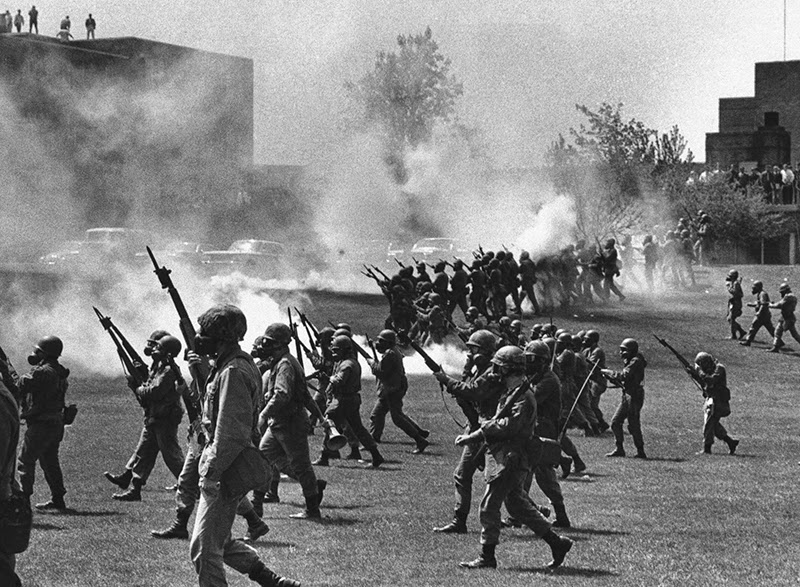
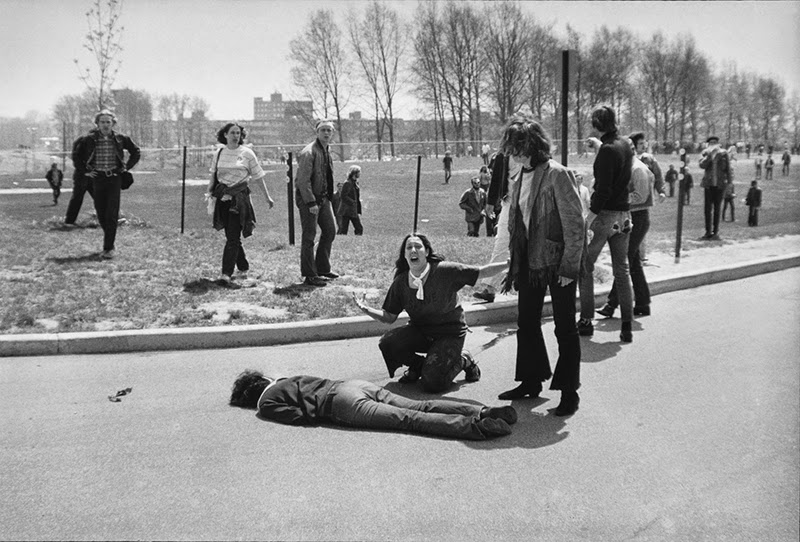
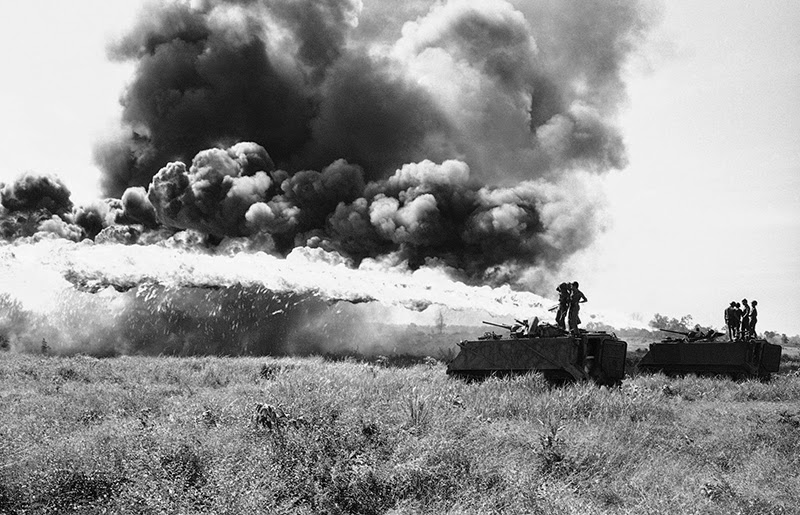
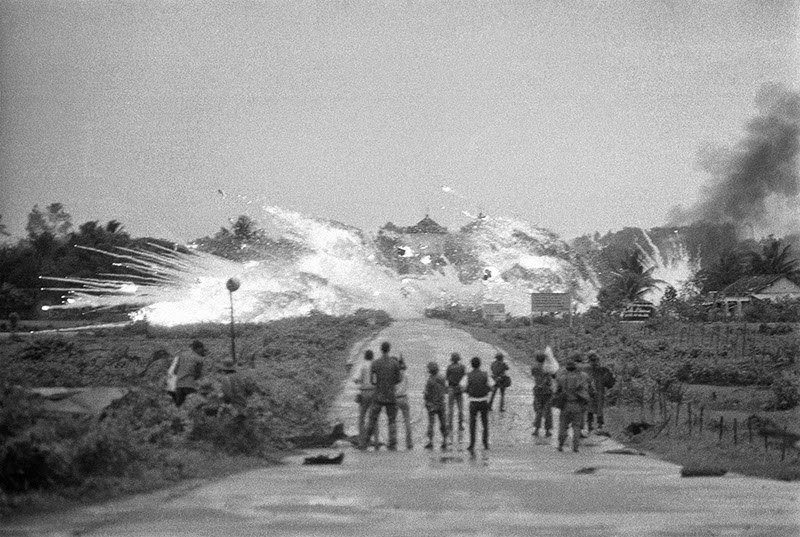
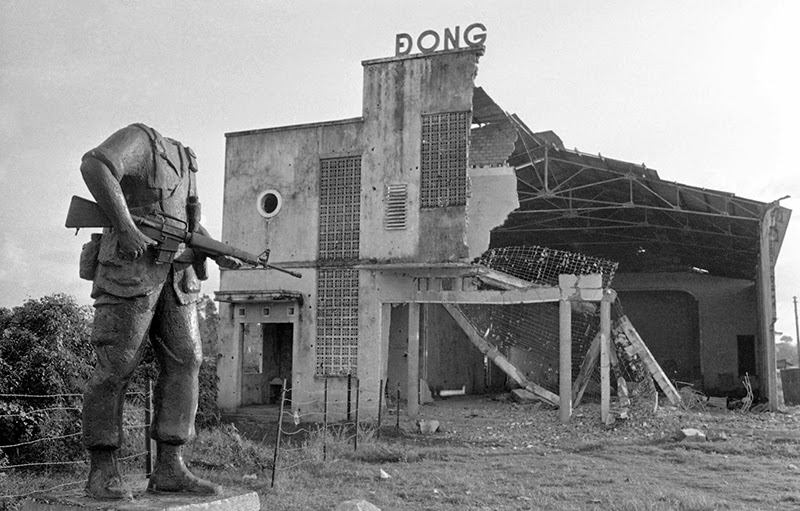
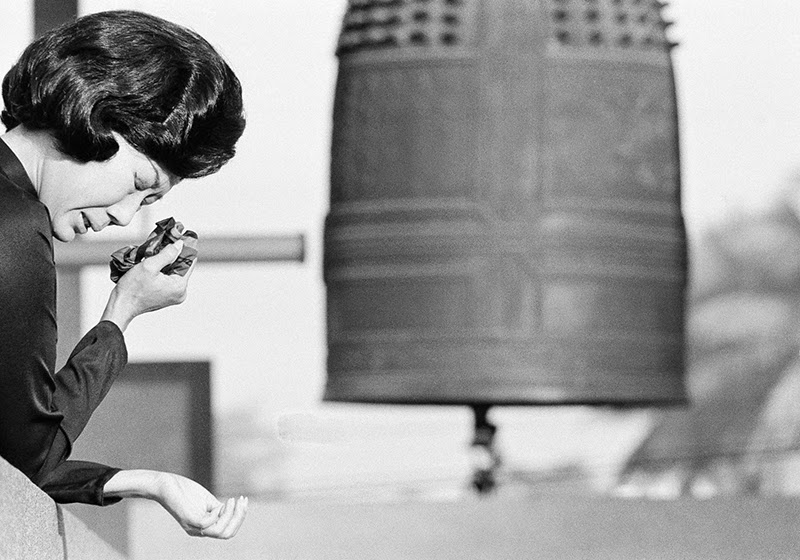
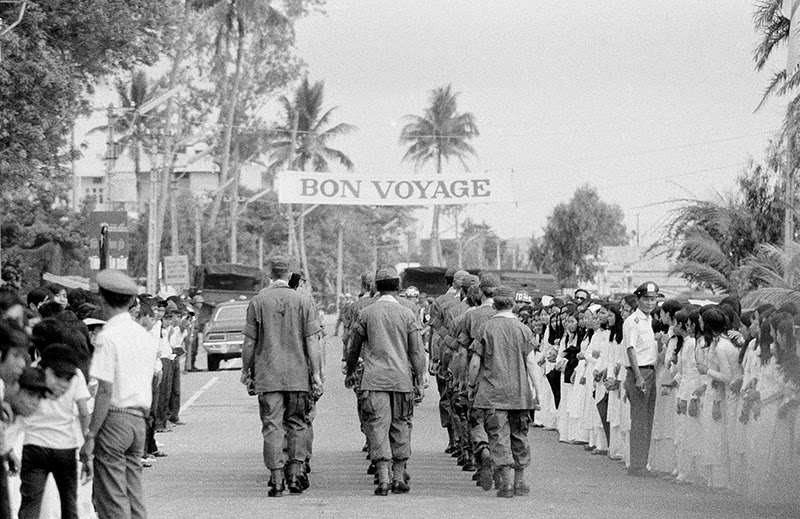
Hovering U.S. Army helicopters pour machine gun fire into a tree line to cover the advance of South Vietnamese ground troops in an attack on a Viet Cong camp 18 miles north of Tay Ninh, near the Cambodian border, in March of 1965.An American officer serving with the South Vietnam forces poses with group of Montagnards in front of one of their provisionary huts in a military camp in central Vietnam on November 17, 1962.A South Vietnamese Marine, severely wounded in a Viet Cong ambush, is comforted by a comrade in a sugar-cane field at Duc Hoa, about 12 miles from Saigon, on August 5, 1963.Napalm air strikes raise clouds into gray monsoon skies as houseboats glide down the Perfume River toward Hue in Vietnam on February 28, 1963, where a battle for control of the old Imperial City ended with a Communist defeat. Firebombs were directed against a village on the outskirts of Hue.Thich Quang Duc, a Buddhist monk, burns himself to death on a Saigon street on June 11, 1963, to protest alleged persecution of Buddhists by the South Vietnamese government. President Ngo Dình Diem, part of the Catholic minority, had adopted policies that discriminated against Buddhists and gave high favor to Catholics. (Malcolm Browne/AP)Flying low over the jungle, an A-1 Skyraider drops 500-pound bombs on a Viet Cong position below as smoke rises from a previous pass at the target, on December 26, 1964. (Horst Faas/AP)Partially covered, a dying Viet Cong guerrilla raises his hands as South Vietnamese Marines search palm groves near Long Binh in the Mekong Delta, on February 27, 1964. The guerrilla died in a foxhole following a battle between a battalion of South Vietnamese Marines and a unit of Viet Cong. (Horst Faas/AP)As U.S. “Eagle Flight” helicopters hover overhead, South Vietnamese troops wade through a rice paddy in Long An province during operations against Viet Cong guerrillas in the Mekong Delta, in December of 1964. The “Eagle Flight” choppers were loaded with Vietnamese airborne troops who were dropped in to support ground forces at the first sign of enemy contact. (Horst Faas/AP)A father holds the body of his child as South Vietnamese Army Rangers look down from their armored vehicle on March 19, 1964. The child was killed as government forces pursued guerrillas into a village near the Cambodian border. (Horst Faas/AP)Marines wade ashore with heavy equipment at first light at Red Beach near Da Nang in Saigon on April 10, 1965. (AP)With the persuasion of a Viet Cong-made spear pressed against his throat, a captured Viet Cong guerrilla decided to talk to interrogators, telling them of a cache of Chinese grenades on March 28, 1965. He was captured with 13 other guerrillas and 17 suspects when two Vietnamese battalions overran a Viet Cong camp about 15 miles southwest of Da Nang air force base. (Eddie Adams/AP)Thousands attend a rally on the grounds of the Washington Monument in Washington on April 17, 1965, to hear Ernest Gruening, a Democratic senator from Alaska, and other speakers discuss U.S. policy in Vietnam. The rally followed picketing of the White House by students demanding an end to Vietnam fighting. (Charles Tasnadi/AP)A nurse attempts to comfort a wounded U.S. Army soldier in a ward of the 8th army hospital at Nha Trang in South Vietnam on February 7, 1965. The soldier was one of more than 100 who were wounded during Viet Cong attacks on two U.S. military compounds at Pleiku, 240 miles north of Saigon. Seven Americans were killed in the attacks.Flag-draped coffins of eight American Servicemen killed in attacks on U.S. military installations in South Vietnam, on February 7, are placed in transport plane at Saigon, February 9, 1965, for return flight to the United States. Funeral services were held at the Saigon Airport with U.S. Ambassador Maxwell D. Taylor and Vietnamese officials attending.Four “Ranch Hand” C-123 aircraft spray liquid defoliant on a suspected Viet Cong position in South Vietnam in September of 1965. The four specially equipped planes covered a 1,000-foot-wide swath in each pass over the dense vegetation.A Vietnamese battalion commander, Captain Thach Quyen, left, interrogates a captured Viet Cong suspect on Tan Dinh Island, Mekong Delta, in 1965. (Huynh Thanh My/AP)A strategic air command B-52 bomber with externally mounted, 750-pound bombs heads toward its target about 56 miles northwest of Saigon near Tay Ninh on November 2, 1965.Flares from planes light a field covered with the dead and wounded of the ambushed battalion of the U.S. 1st Cavalry Division in the Ia Drang Valley, Vietnam, on November 18, 1965, during a fierce battle that had been raging for days. Units of the division were battling to hold their lines against what was estimated to be a regiment of North Vietnamese soldiers. Bodies of the slain soldiers were carried to this clearing with their gear to await evacuation by helicopter. (Rick Merron/AP)Pedestrians cross the destroyed Hue Bridge in Hue, Vietnam. (Eddie Adams/AP)Wounded and shocked civilian survivors of Dong Xoai crawl out of a fort bunker on June 6, 1965, where they survived murderous ground fighting and air bombardments of the previous two days. (Horst Faas/ AP)A Vietnamese girl, 23 years old, was captured by an Australian patrol 30 feet below ground at the end of a maze of tunnels some 10 miles west of the headquarters of the Australian task force (40 miles southeast of Saigon). The woman was crouched over a World War II radio set. About seven male Viet Cong took off when the Australians appeared—but the woman remained and appeared to be trying to conceal the radio set. She was taken back to the Australian headquarters where she told under sharp interrogation (which included a “waterprobe”; see her wet clothes after the interrogation) that she worked as a Viet Cong nurse in the village of Hoa Long and had been in the tunnel for 10 days. The Australians did not believe her because she seemed to lack any medical knowledge. They thought that she may have possibly been the leader of the political cell in Long Hoa. She was being led away after interrogation, clothes soaked from the “waterprobe” on October 29, 1966.Women and children crouch in a muddy canal as they take cover from intense Viet Cong fire at Bao Trai, about 20 miles west of Saigon, on January 1, 1966. Paratroopers, background, of the U.S. 173rd Airborne Brigade escorted the South Vietnamese civilians through a series of firefights during the U.S. assault on a Viet Cong stronghold. (Horst Faas/ AP)A Marine, top, wounded slightly when his face was creased by an enemy bullet, pours water into the mouth of a fellow Marine suffering from heat during Operation Hastings along the demilitarized zone between North and South Vietnam on July 21, 1966.The body of an American paratrooper killed in action in the jungle near the Cambodian border is raised up to an evacuation helicopter in War Zone C, Vietnam, in 1966. (Richard Merron, Henri Huet/ AP)A Vietnamese child clings to his bound father who was rounded up as a suspected Viet Cong guerrilla during “Operation Eagle Claw” in the Bong Son area, 280 miles northeast of Saigon on February 17, 1966. The father was taken to an interrogation camp with other suspects rounded up by the U.S. 1st air cavalry division. (Richard Merron, Henri Huet/ AP)A U.S. Marine CH-46 Sea Knight helicopter comes down in flames after being hit by enemy ground fire during Operation Hastings, just south of the demilitarized zone between North and South Vietnam, on July 15, 1966. The helicopter crashed and exploded on a hill, killing one crewman and 12 Marines. Three crewmen escaped with serious burns. (Horst Faas/ AP)A trooper of the U.S. 1st cavalry division aims a flamethrower at the mouth of cave in An Lao Valley in South Vietnam, on April 14, 1967, after the Viet Cong group hiding in it were warned to emerge.Sergeant Ronald Payne, 21, of Atlanta, Georgia, emerges from a Viet Cong tunnel holding his silencer-equipped revolver with which he fired at guerrillas fleeing ahead of him underground. Payne and others of the 196th light infantry brigade probed the massive tunnel in Hobo Woods, South Vietnam, on January 21, 1967, and found detailed maps and plans of the enemy. The infantrymen who explored the complex are known as “Tunnel Rats.” They were called out of the tunnels on January 21, and nauseating gas was pumped in.Military police, reinforced by Army troops, throw back anti-war demonstrators as they tried to storm a mall entrance doorway at the Pentagon in Washington, D.C., on October 21, 1967.U.S. Navy Douglas A-4E Skyhawks from Attack Squadrons VA-163 Saints and VA-164 Ghost Riders attack the Phuong Dinh railroad bypass bridge, 10 kilometers north of Thanh Hoe, North Vietnam, on September 10, 1967. Note the attacking Skyhawk in the lower right and one directly left of the explosions on the bridge.U.S. air policemen take cover and leave their jeep as they come under sniper fire near Da Nang Airbase in Vietnam on January 30, 1968, after it was hit by a rocket barrage. Flares light up the Da Nang area to make it easier to spot infiltrating guerrillas.Battle of Saigon, First Offensive, on February 10, 1968. (Eddie Adams/AP)U.S. Marines and Vietnamese troops move through the grounds of the Imperial Palace in the old citadel area of Hue, Vietnam, on February 26, 1968, after seizing it from Communist hands. The heavy damage was the result of the artillery, air, and mortar pounding the area received for 25 days while the Viet Cong/NVA held the area. (Eddie Adams/ AP)South Vietnamese combat police advance toward a burning building in northeastern Saigon on February 19, 1968, as they battle Viet Cong forces who had occupied several city blocks in the area.The South Vietnamese General Nguyen Ngoc Loan, chief of the national police, fires his pistol into the head of suspected Viet Cong officer Nguyen Van Lem (also known as Bay Lop) on a Saigon street on February 1, 1968, early in the Tet Offensive. Lem was suspected of commanding a death squad which had targeted South Vietnamese police officers that day. The fame of this photo led to a life of infamy for Nguyen Ngoc Loan, who quietly moved to the United States in 1975, opening a pizza shop in Virginia. (Eddie Adams/ AP)Police struggle with anti-Vietnam War demonstrators outside the Embassy of the United States in Grosvenor Square, London, on March 17, 1968.Marine Lance Corporal Roland Ball of Tacoma, Washington, wearing his flak vest, starts the day off with a shave in a trench at the Khe Sanh Base in Vietnam on March 5, 1968, which was surrounded by North Vietnamese regulars. Ball uses a helmet as a sink and a rear-view mirror taken from a military vehicle. (Eddie Adams/ AP)As fellow troopers aid wounded comrades, the first sergeant of A Company, 101st Airborne Division, guides a medevac helicopter through the jungle foliage to pick up casualties suffered during a five-day patrol near Hue, in April of 1968. (Art Greenspon/ AP)Smoke rises from the southwestern part of Saigon on May 7, 1968, as residents stream across the bridge leaving into the capital to escape heavy fighting between the Viet Cong and South Vietnamese soldiers.Flying 100 feet above the jungle hills west of Hue, five bulky C-123 “providers” cut loose a spray of chemical defoliant on August 14, 1968. The planes are flown by U.S. air force crews who have nicknamed themselves the “ranch hands.” The aircraft are specially equipped with huge 1,000-gallon tanks holding 11,000 pounds of herbicide. U.S. planes dropped millions gallons of chemical defoliant on Vietnam over the course of the war. (Robert Ohman/ AP)Marines prepare their 105-mm Howitzers for action at the end of a day in which this dense jungle area west of Hue was chopped down and molded into a fire-support base for a sweep of the area on February 18, 1969. (Dang Van Phuoc/ AP)A Cobra helicopter gunship pulls out of a rocket and strafing attack on a Viet Cong position near Cao Lanh in the Mekong Delta on January 22, 1969. Large craters caused by air and artillery strikes brought in on the area can be seen near the white explosion. (McInerney/ AP)FBI agents carry Vietnam War draft resister Robert Whittington Eaton, 25, from a dwelling in Philadelphia on April 17, 1969, where Eaton had chained himself to 13 young men and women. The agent leading the way pushed one of the group who tried to block path to the sidewalk. At least six young persons were taken away with Easton. (Warren M. Winterbottom/ AP)A trooper of the 101st Airborne Division attempts to save the life of a buddy at Dong Ap Bia Mountain, near South Vietnam’s A Shau Valley on May 19, 1969. The man was seriously wounded in the last of repeated attempts by U.S. forces to capture enemy positions there. (Van Es/ AP)A GI gets a closeup photo as President Nixon meets with troops of the 1st Infantry Division at Di An, 12 miles northeast of Saigon, on his eighth visit to South Vietnam and his first as president, on July 30, 1969. (Bob Daugherty/ AP)Marine Lance Corporal David L. Cruz tunes into the latest news on the Apollo moon shot on a helmet-mounted transistor radio while standing guard at Da Nang’s Marble Mountain, on July 17, 1969. In background is a tall Buddhist figure found in many limestone caves of the mountain. (Ghislain Bellorget/ AP)Three shirtless U.S. soldiers advance through the Mimot rubber plantation in the Fishhook region of Cambodia, on May 4, 1970, taking aim at a fleeing suspect. The rubber plantation, one of the largest in Indochina, had been in operation until just a few days earlier. (Henri Huet/ AP)Vietnamese and Cambodian refugees crowd a U.S. helicopter which evacuated them from immediate combat zone of the U.S.-Vietnamese incursion into Cambodia on May 5, 1970. They were taken to a refugee reception center at the Katum Special Forces camp in South Vietnam, six miles from the Cambodian border. (Ryan/ AP)The Ohio National Guard moves in on rioting students at Kent State University in Kent, Ohio, on May 4, 1970. Four persons were killed and eleven wounded when National Guardsmen opened fire.Fourteen-year-old Mary Ann Vecchio screams over the body of 20-year-old Kent State student Jeffrey Miller after he was shot by the Ohio National Guard during a protest against the U.S. invasion of Cambodia during the Vietnam War on May 4, 1970. (John Paul Filo/ Library of Congress)South Vietnamese troopers test fire flame throwers mounted atop APCs prior to moving out on operation west of Krek, Cambodia, on November 28, 1971. (Jacques Tonnaire/ AP)Bombs with a mixture of napalm and white phosphorus jelly dropped by Vietnamese AF Skyraider bombers explode across Route 1, amid homes and in front of the Cao Dai Temple in the outskirts of Trang Bang, on June 8, 1972. In the foreground are Vietnamese soldiers and news and cameramen from various international news organizations who watch the scene. (Nick Ut/ AP)A beheaded statue of an American soldier stands next to a bombed-out theater near the district town of Cu Chi, northwest of Saigon, on December 13, 1972. The statue was placed by troops of the U.S. 25th Infantry Division before they were withdrawn from Vietnam two years earlier. Its head was lost in the explosion that destroyed the theater in background. (Harvey/ AP)A South Vietnamese widow cries as a bell at a Saigon Buddhist pagoda tolls the ceasefire at 8 a.m., on Sunday, January 28, 1973, Saigon time. The United States had begun drastically reducing forces in the country, and, following the Paris Peace Accords of 1973, the last remaining American troops withdrew in March of 1973. (Neal Ulevich/ AP)A bon voyage banner stretches overhead in Da Nang, South Vietnam, as soldiers march down a street following a farewell ceremony for some of the last U.S. troops in the country’s northern military region, on March 26, 1973.
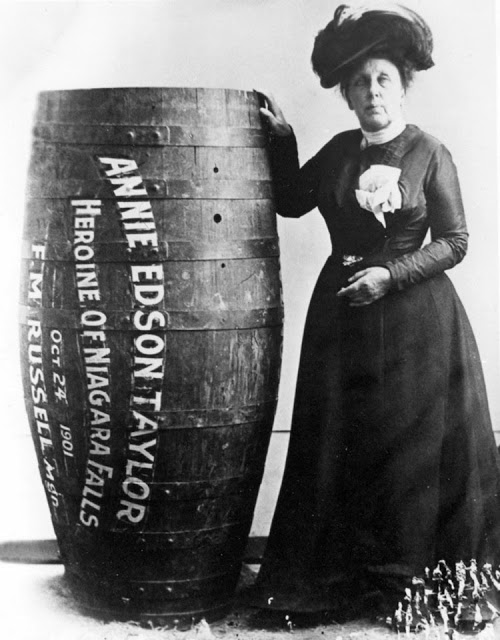
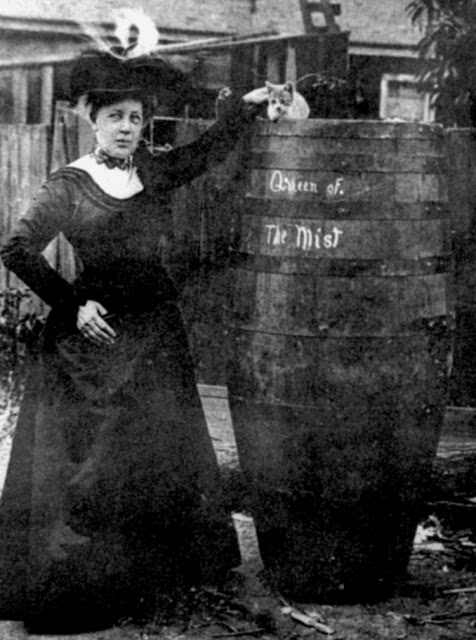
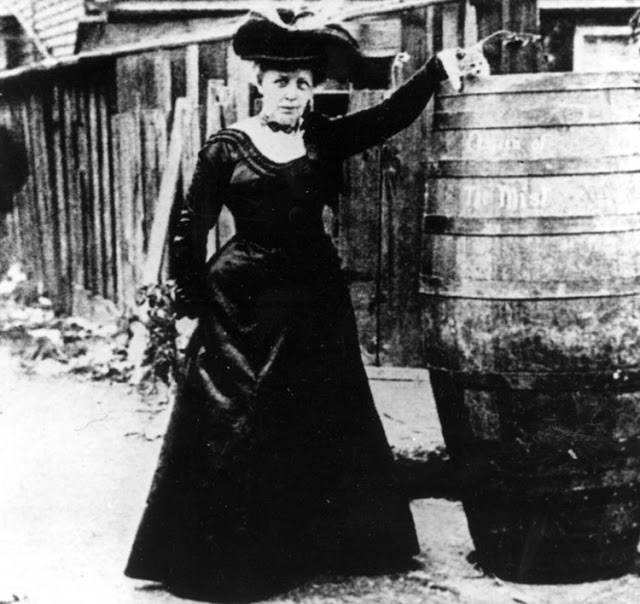
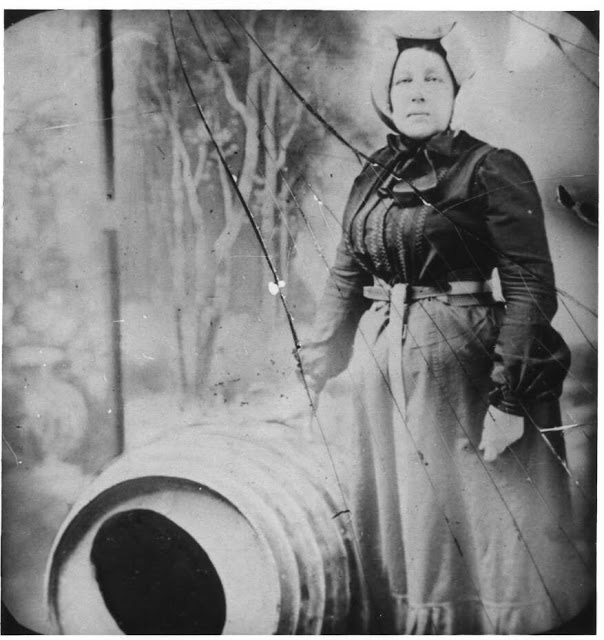
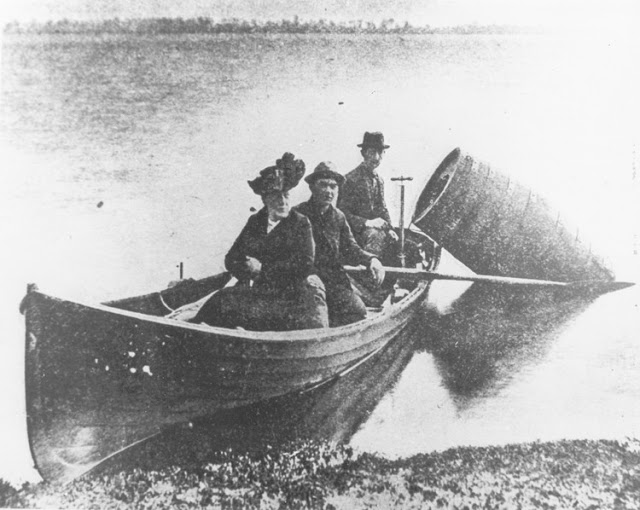
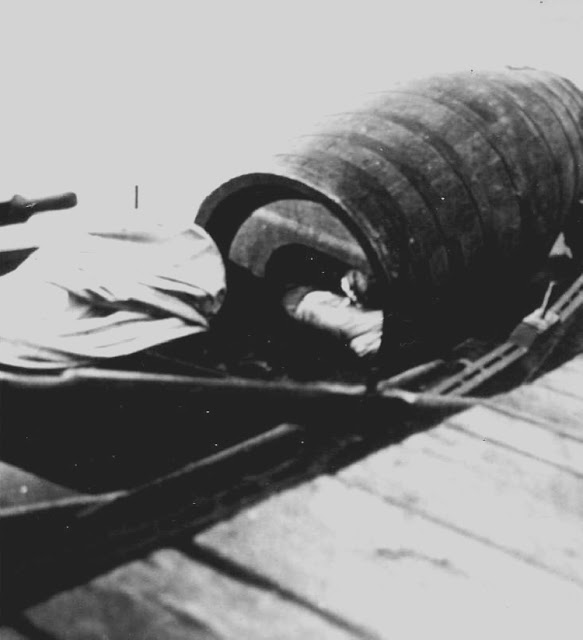
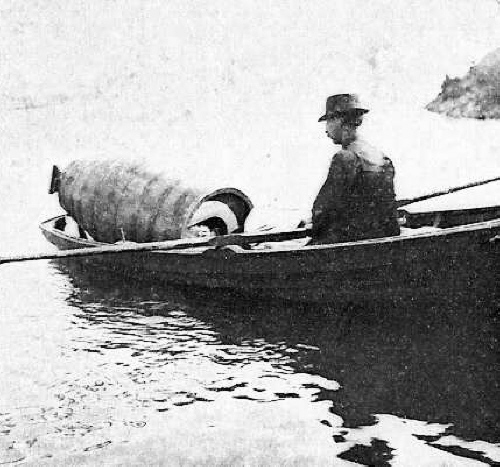
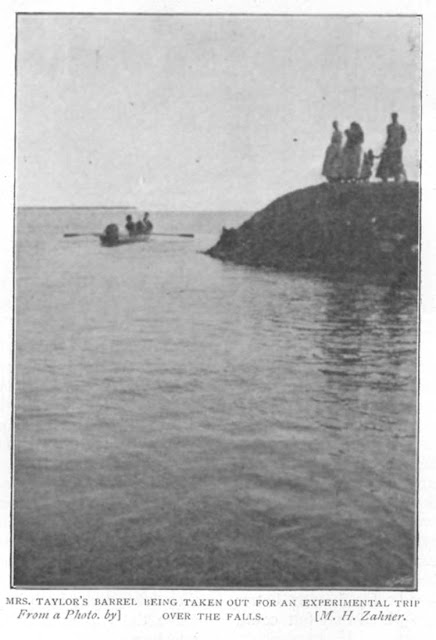
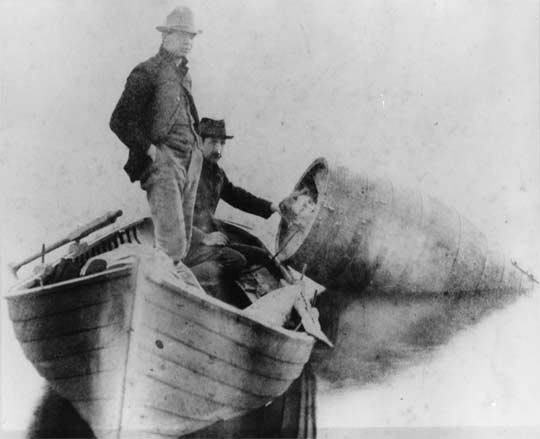
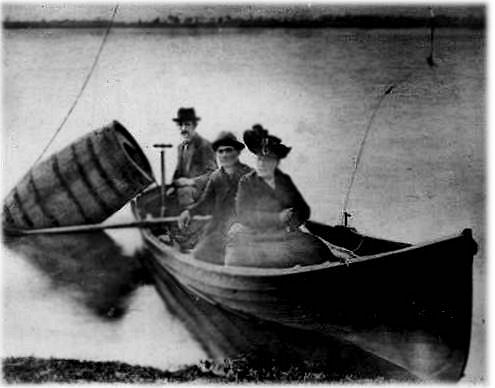
Annie Edson Taylor (1838-1921) was an American adventurer who, on her 63rd birthday, October 24, 1901, became the first person to survive a trip over Niagara Falls in a barrel.
Desiring to secure her later years financially, and avoid the poorhouse, she decided she would be the first person to ride over Niagara Falls in a barrel. Taylor used a custom-made barrel for her trip, constructed of oak and iron and padded with a mattress.
Several delays occurred in the launching of the barrel, particularly because no one wanted to be part of a potential suicide. After the journey, Annie Taylor told the press: “If it was with my dying breath, I would caution anyone against attempting the feat… I would sooner walk up to the mouth of a cannon, knowing it was going to blow me to pieces than make another trip over the Falls.”
She briefly earned money speaking about her experience but was never able to build much wealth. She wrote a memoir and returned to Niagara Falls to sell it. Her manager, Frank M. Russell, ran away with her barrel, and most of her savings were used towards private detectives hired to find it. It was eventually located in Chicago, only to permanently disappear some time later.
She spent her final years posing for photographs with tourists at her souvenir stand, attempting to earn money from the New York Stock Exchange, briefly talking about taking a second plunge over the cataracts in 1906, attempting to write a novel, re-constructing her 1901 plunge on film (which was never seen), working as a clairvoyant, and providing magnetic therapeutic treatments to local residents.
Taylor died on April 29, 1921, aged 82, at the Niagara County Infirmary in Lockport, New York, and was interred next to English-born daredevil Carlisle D. Graham (1850–1909) in the “Stunter’s Rest” section of Oakwood Cemetery in Niagara Falls, New York. Her funeral was held on the 5th of May, 1921. She attributed her bad health and near blindness to her trip over the falls.
Very few people in recorded history have the distinction of being on the receiving end of a meteorite. In fact, there’s only one person with proof: Anne Hodges, an Alabama woman struck by a football-sized rock from outer space.. and lived to tell the tale. You’d think only someone awfully fortunate could survive an ordeal like that, but after the meteorite hit its mark, Ann Hodges became anything but lucky. You might even say she was cursed.
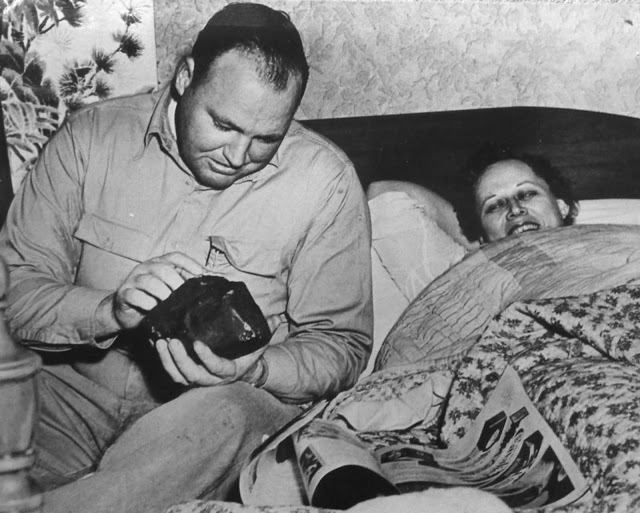
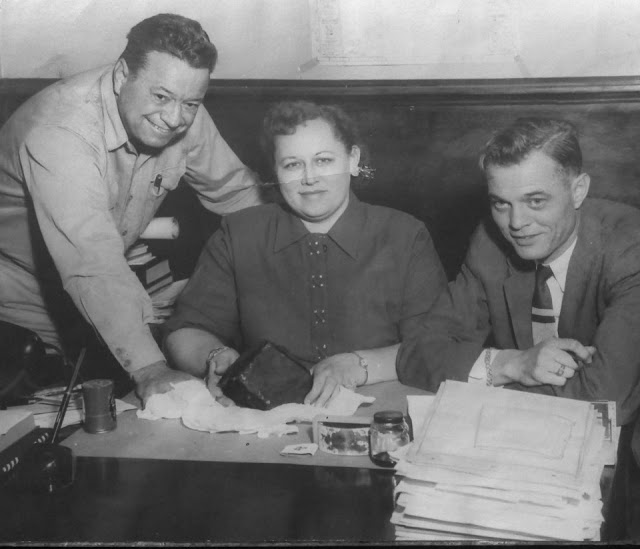
Hewlett Hodges, Ann Hodges’ husband at the time she was hit by the meteorite, “studying” the infamous rock.
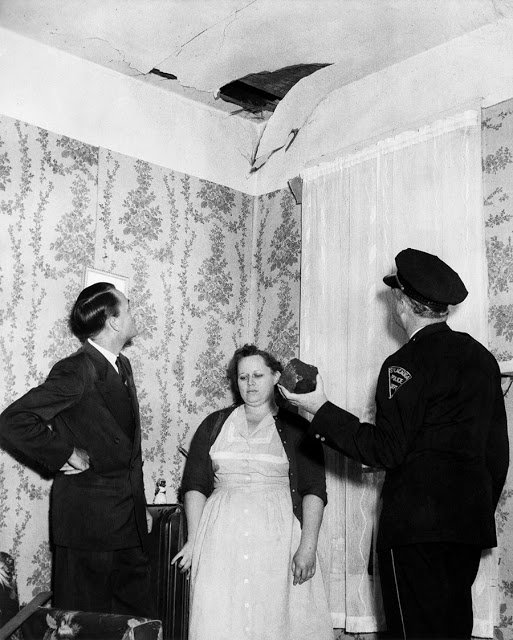
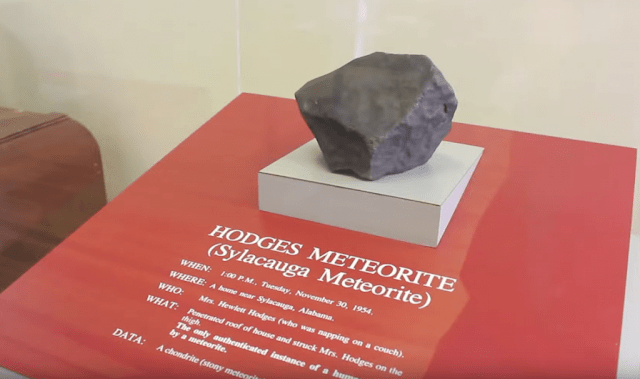
In late November of 1954, Ann Hodges was in the middle of an afternoon nap in her home in Sylacauga, Alabama, when a large rock came crashing through her ceiling, bounced off her radio, and struck her in the side, leaving a massive bruise. It had come from outer space, and the 8.5 pound meteorite was still warm to the touch.
Before the meteorite slammed into Ann’s living room, people in tiny Sylacauga and across eastern Alabama had reported seeing “a bright reddish light like a Roman candle trailing smoke.” Others saw “a fireball, like a gigantic welding arc,” accompanied by tremendous explosions and a brown cloud.
Moody Jacobs shows a giant bruise on the side and hip of his patient, Ann Hodges, in 1954, after she was struck by a meteorite. (Photograph by Jay Leviton, Time & Life Pictures/Getty Images)
A government geologist working in a nearby quarry was called to the scene and determined the object was a meteorite, but not everyone in town was so sure, according to the museum publication. Many thought a plane had crashed—others suspected the Soviets.
So many people flocked to Hodges’ house that when her husband, Eugene Hodges, a utility worker, returned home from work, he had to push gawkers off the porch to get inside.
Ann was so overwhelmed by the crowd that she was transferred to a hospital. With Cold War paranoia running high, the Sylacauga police chief confiscated the black rock and turned it over to the Air Force.
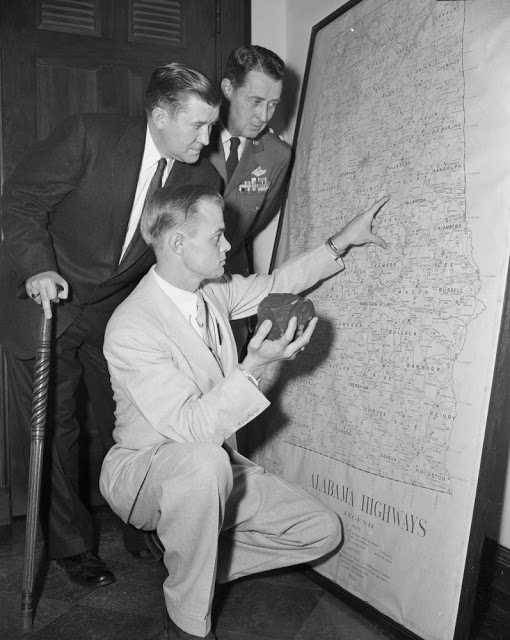
Hodges standing under the spot where the meteorite crashed through her ceiling.The Air Force on December 9th formally returned to Mrs. Hewlett Hodges the ten-pound meteorite which crashed into her Sylacuaga, Alabama, home on November 30th and hit her. Huel M. Love, Talladaga, Alabama, her attorney, holds the meteorite as he points to the town of Sylacauga on a map. Major General Joe W. Kelly (right) handed it over to Love in the office of Rep. Kenneth A Roberts (D-Ala.) (leaning on cane.)
After the Air Force confirmed it was a meteorite, the question then was what to do with it. The public demanded the space rock be returned to Ann, and she agreed.
“I feel like the meteorite is mine,” she said, according to the museum. “I think God intended it for me. After all, it hit me!”
But there was a hitch. Ann and Eugene were renters, and their landlady, a recently widowed woman named Birdie Guy, wanted the meteorite for herself.
The Hodges (via the University of Alabama Museum of Natural History)
Guy obtained a lawyer and sued, claiming the rock was hers since it had fallen on her property. The law was actually on her side, but public opinion wasn’t.
Guy settled out of court, giving up her claim to the meteorite in exchange for $500. Eugene was convinced the couple could make big money off the rock and turned down a modest offer from the Smithsonian.
But no one bit, and so the Hodges donated the meteorite to the natural history museum in 1956, where it’s still on display.
The Hodges Meteorite on display at the University of Alabama’s Natural History Museum.
Ann later suffered a nervous breakdown, and in 1964 she and Eugene separated. She died in 1972 at 52 of kidney failure at a Sylacaugan nursing home.
Eugene suspects the meteorite and frenzy that followed had taken its toll on Ann. He said “she never did recover,” according to the museum.
Ann “wasn’t a person who sought out the limelight,” added museum director Randy Mecredy. “The Hodges were just simple country people, and I really think that all the attention was her downfall.”
The United States declared war on the German Empire on April 6, 1917, nearly three years after World War I started. A ceasefire and Armistice was declared on November 11, 1918. Before entering the war, the U.S. had remained neutral, though it had been an important supplier to the United Kingdom, France, and the other powers of the Allies of World War I.
The U.S. made its major contributions in terms of supplies, raw material, and money, starting in 1917. American soldiers under General of the Armies John Pershing, Commander-in-Chief of the American Expeditionary Force (AEF), arrived at the rate of 10,000 men a day on the Western Front in the summer of 1918. During the war, the U.S. mobilized over 4 million military personnel and suffered the loss of 65,000 men. The war saw a dramatic expansion of the United States government in an effort to harness the war effort and a significant increase in the size of the U.S. Armed Forces.
After a relatively slow start in mobilizing the economy and labor force, by spring 1918, the nation was poised to play a role in the conflict. Under the leadership of President Woodrow Wilson, the war represented the climax of the Progressive Era as it sought to bring reform and democracy to the world. There was substantial public opposition to U.S. entry into the war. (Wikipedia)
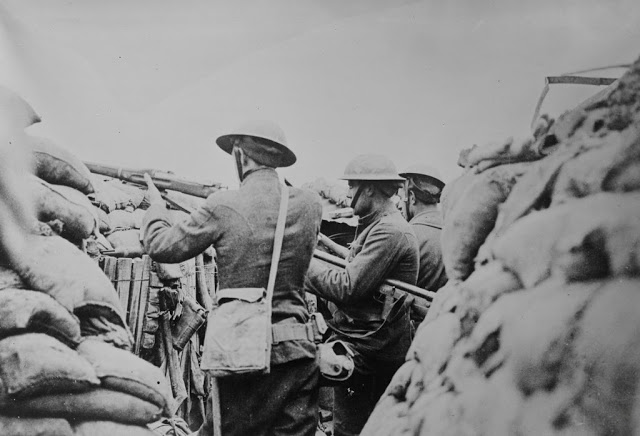
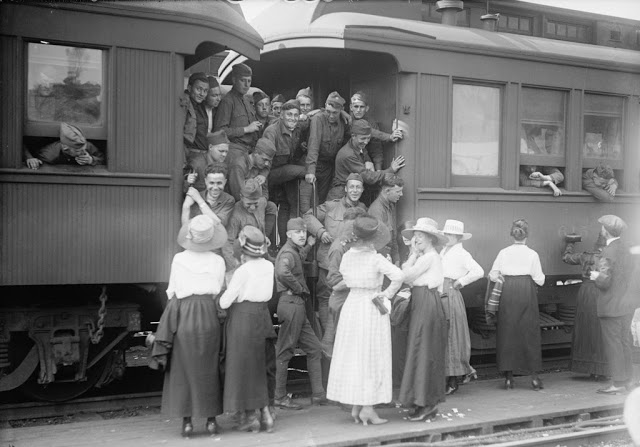
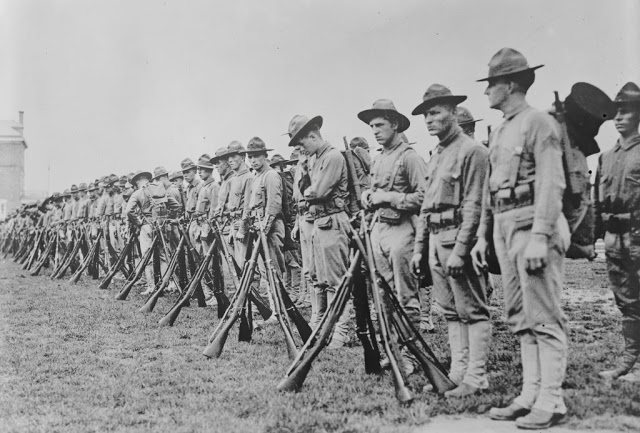
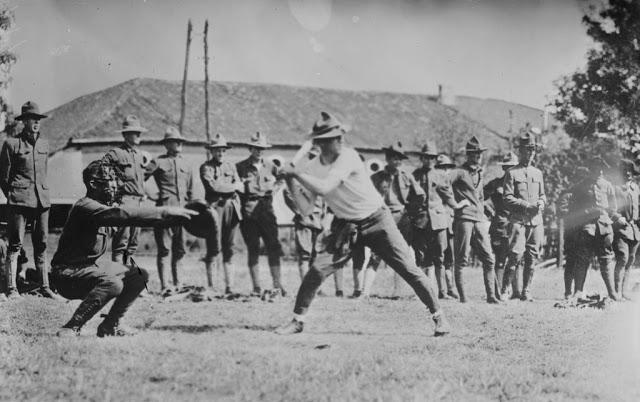
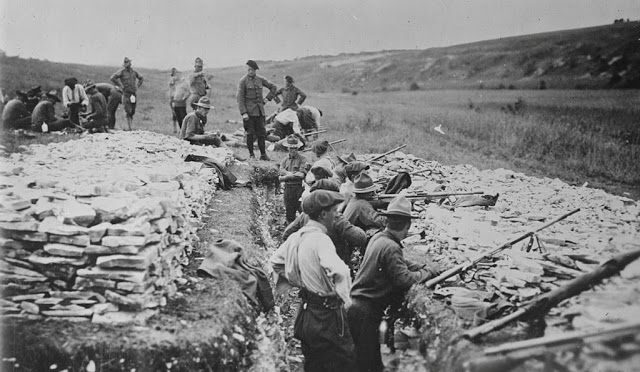
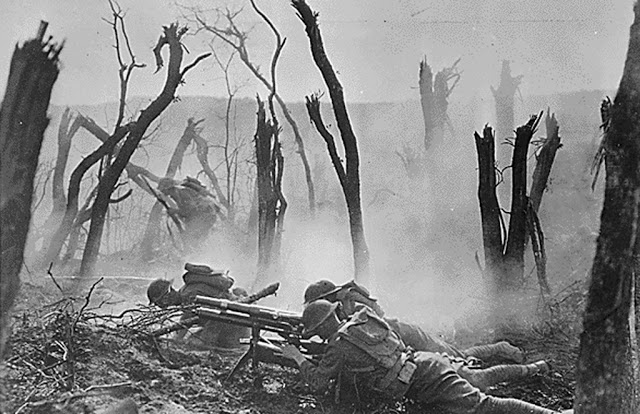
These stark images released nearly a century after the end of the war show U.S troops keeping watch in the trenches, injured on the battlefield and arriving back home after the fighting was over.
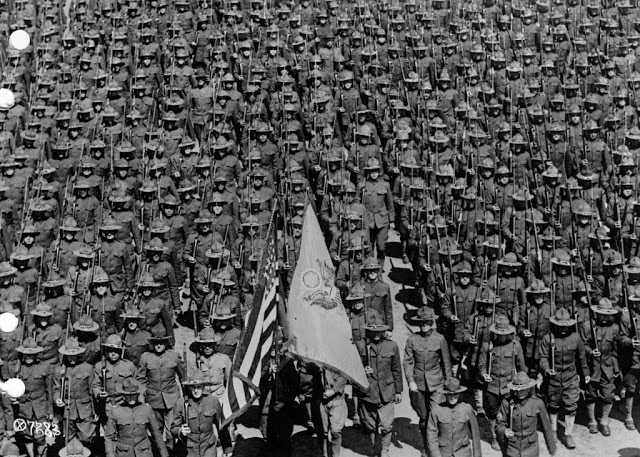
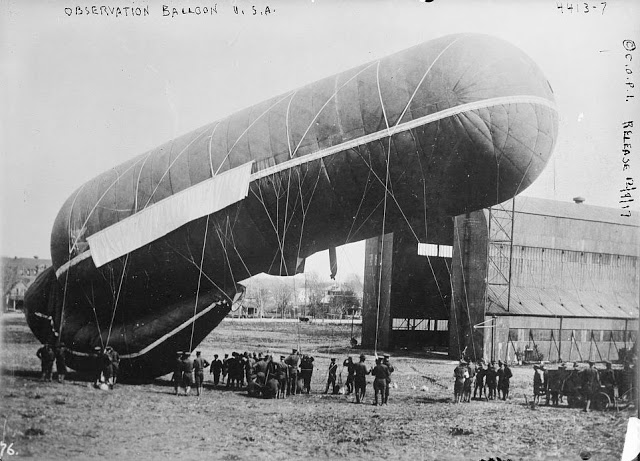
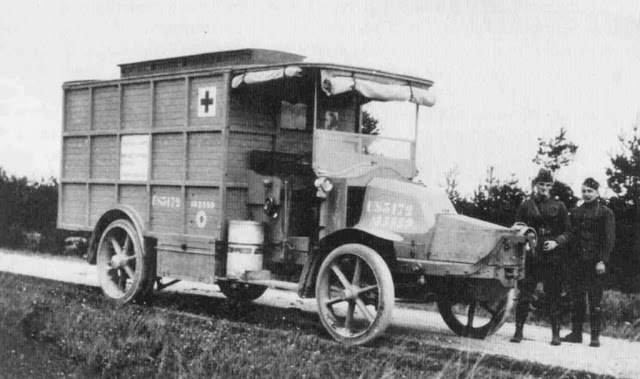
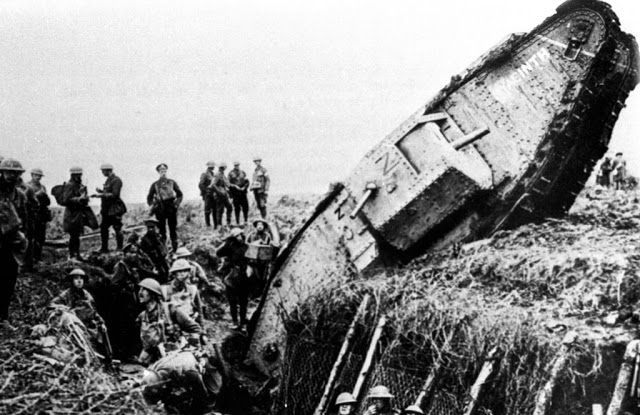
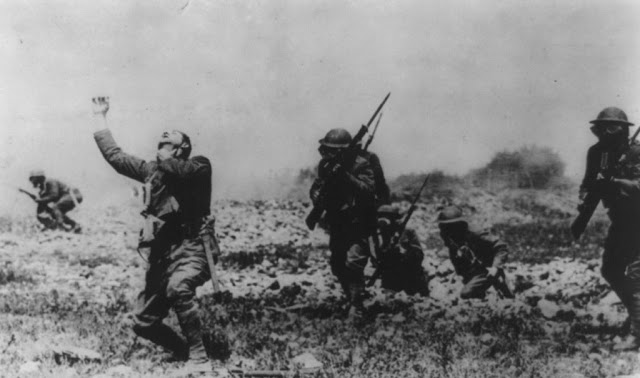
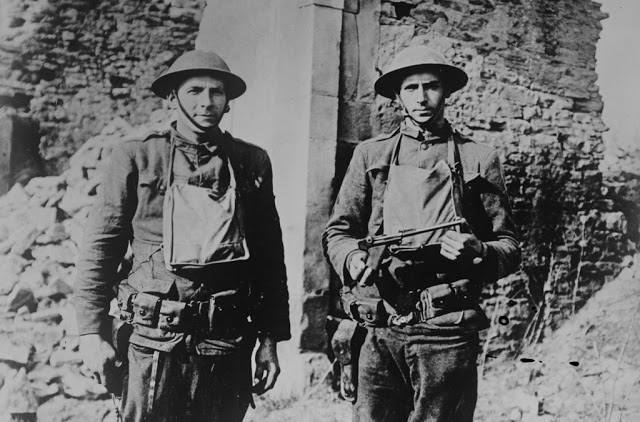
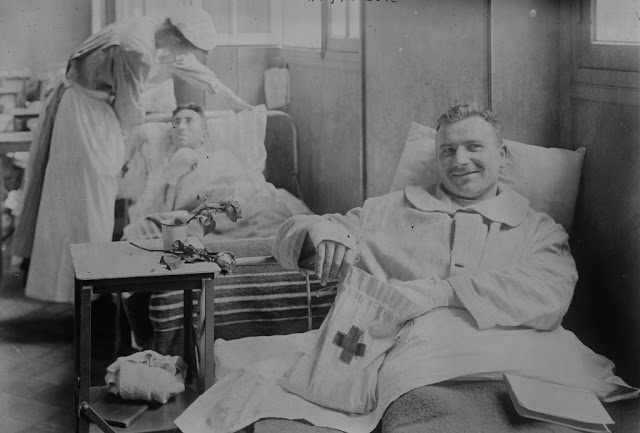
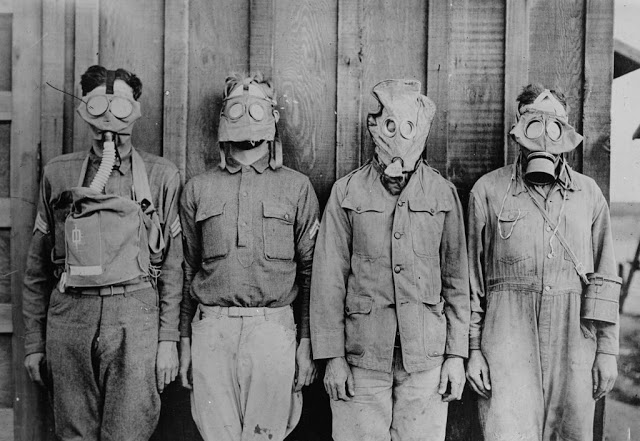
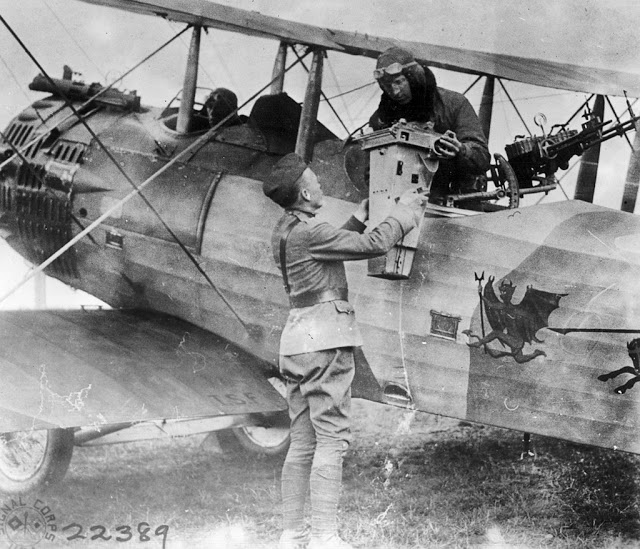
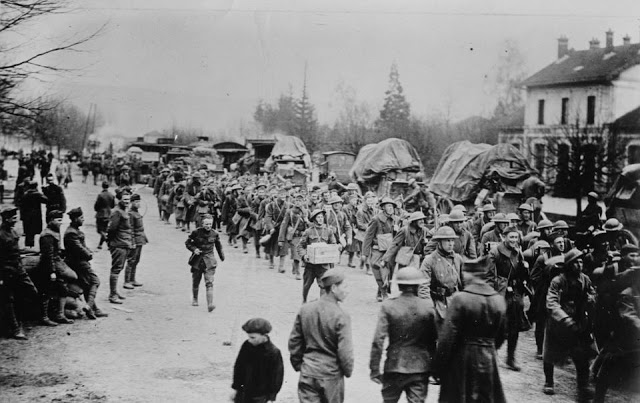
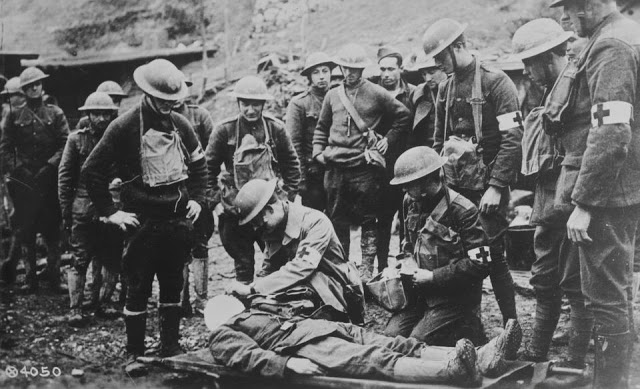
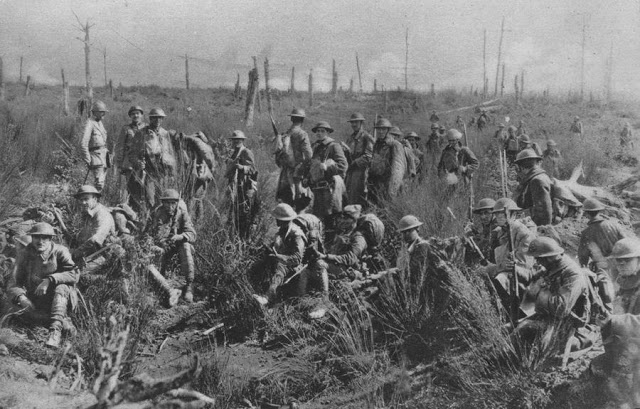
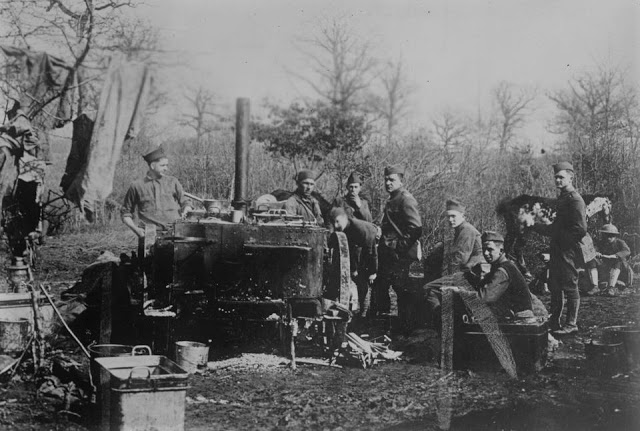
US soldiers of the 82nd division stand in formation at Camp Gordon in Georgia in 1917 – the year they joined the war effort in Europe.US soldiers keep watch in a trench in France. in this undated photo captured after America joined the war effort.US soldiers are seen returning to emotional scenes in Washington DC after serving in the First World War that took place between 1914 and 1918.US Marines form a line France during World War 1.US soldiers are captured playing baseball as they take a break from life in the trenches.US troops are seen taking grenade gun training in France during the First World War.An American World War I observation balloon is seen on Dec. 9, 1917.A Renault truck outfitted with mobile X-ray equipment to help doctors in the field is seen in this World War I photo.Tanks were developed to barrel over trenches filled with soldiers. Here, a British Mark IV tank didn’t quite make it during the British-German Battle of Cambrai in France, Nov. 20, 1917.American soldiers can be seen in the midst of a gas attack in this chilling photo from the First World War.An American gun crew from Regimental Headquarters Company, 23rd Infantry, fires a 37mm gun during an advance against German entrenched positions in an undated photo taken during World War I.US soldiers Corporal Howard Thompson and James H White were part of a group that killed and captured several Germans in no man’s land – the area between the opposing trench lines.Wounded soldiers lie in an American field hospital in Auteuil, Paris, France, 1918. during World War I.American, British, French and German gas masks are seen in an undated photo taken during World War I.An officer receives a camera and its film to be processed in the field, 1917-1918. in an undated photo from World War I.American troops are seen marching down a road in an unspecified location in France after joining the war effort.An American Expeditionary Force doctor tends to an injured US soldier immediately behind the first trench line in France.US soldiers of the American Expeditionary Force are gathered together during a pause in the fighting, 1918. in this snap from the conflict.A US Marine leads training on a French shooting range during the conflict that raged in Europe in the early 20th century.American troops of the Machine Gune Battalion, Company G, Second Brigade, gather around an outdoor kitchen in Hermitage, France.
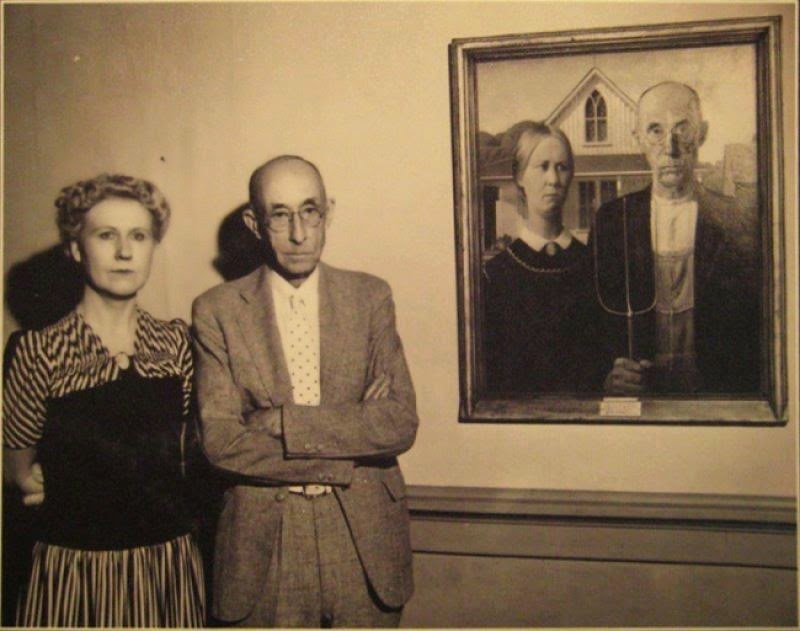
On show with the late Grant Wood’s American Gothic, one of the most famed U.S. paintings of its generation, went the models who posed for it, Nan Wood Graham, the painter’s sister, wife of an oil-station operator, and Dr. B. H. McKeeby, a dentist. Occasion was the first showing of the picture in Cedar Rapids, Iowa, where Wood painted it twelve years ago.
American Gothic is a painting by Grant Wood in the collection of the Art Institute of Chicago. Wood’s inspiration came from what is now known as the American Gothic House, and a decision to paint the house along with “the kind of people I fancied should live in that house.”
The painting shows a farmer standing beside his spinster daughter. The figures were modeled by the artist’s sister and their dentist. The woman is dressed in a colonial print apron evoking 19th-century Americana, and the couple are in the traditional roles of men and women, the man’s pitchfork symbolizing hard labor, and the flowers over the woman’s right shoulder suggesting domesticity.
These pictures will definitely make you appreciate where you came from and also make you appreciate where you are now. Life was quite a bit different back in the 1910s. People had way more pressing things to worry about other than being able to connect to wifi!
Talk about perspective. We really do live an exceedingly comfortable life compared to those who lived 100 years ago. Check it out.
The average life expectancy for men was 47 years.
14% of the homes had a bathtub.
Subscribe to continue reading
Become a paid subscriber to get access to the rest of this post and other exclusive content.
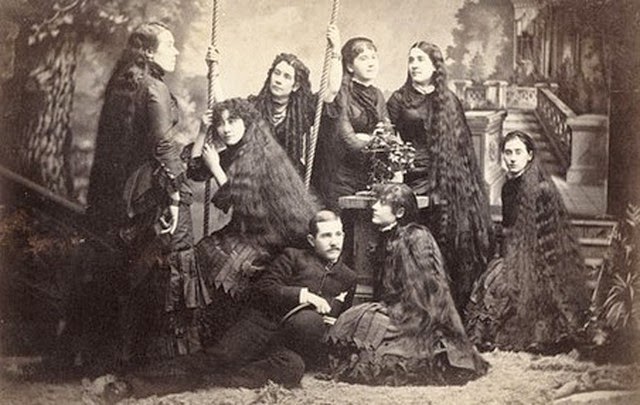
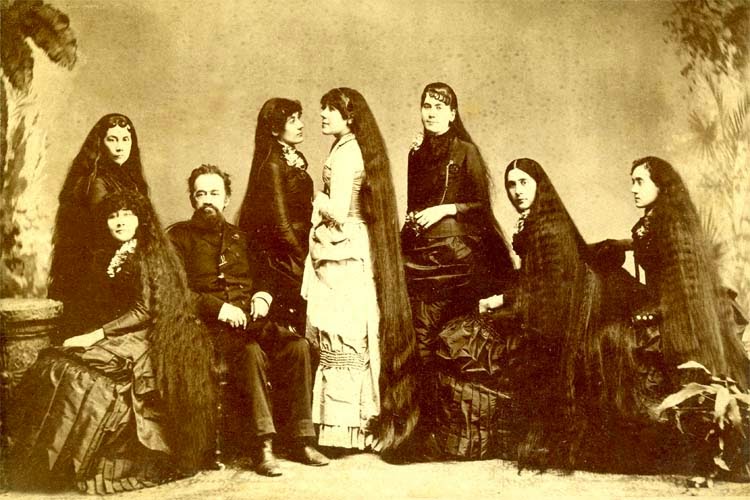
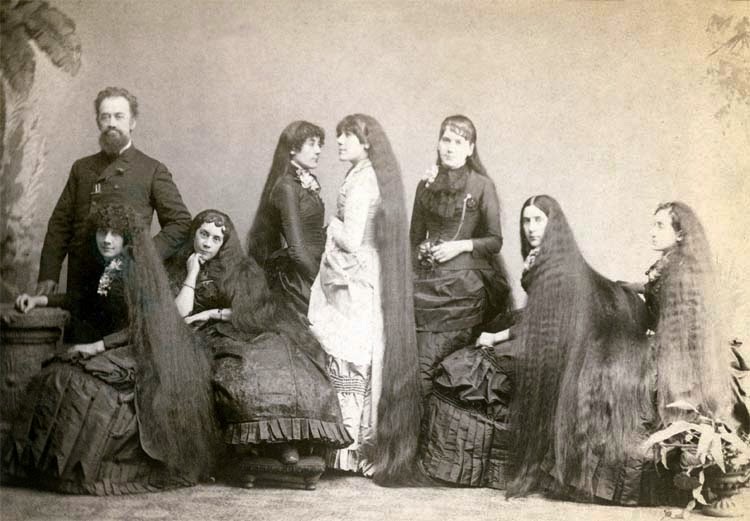
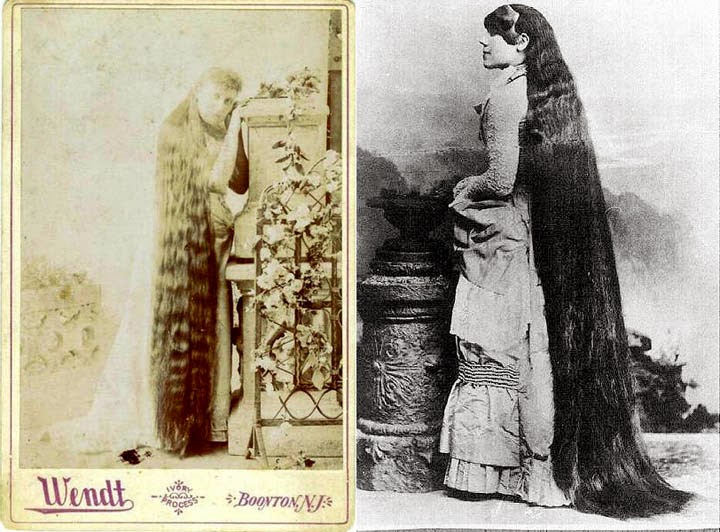
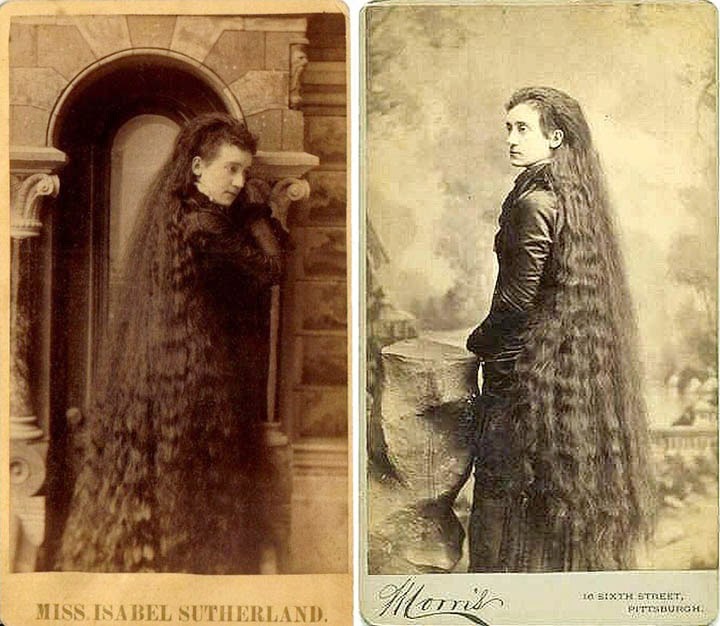
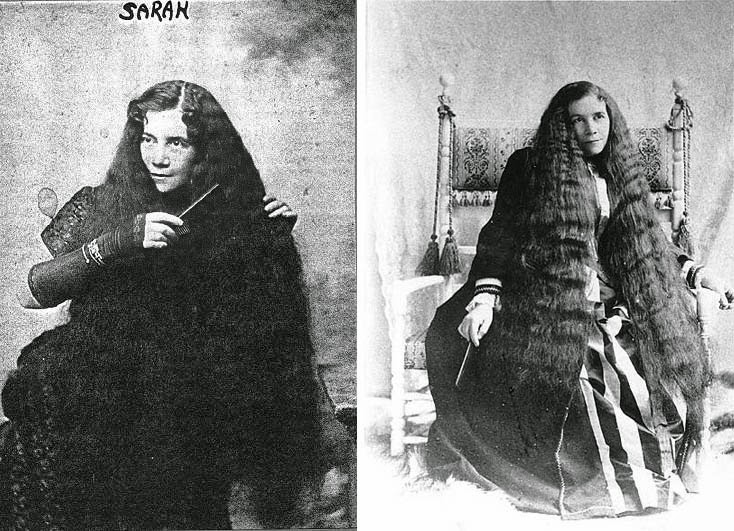
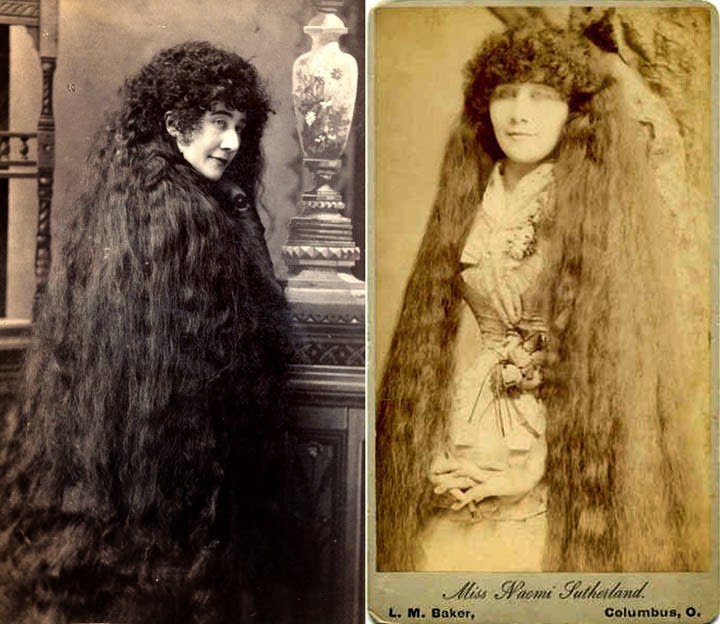
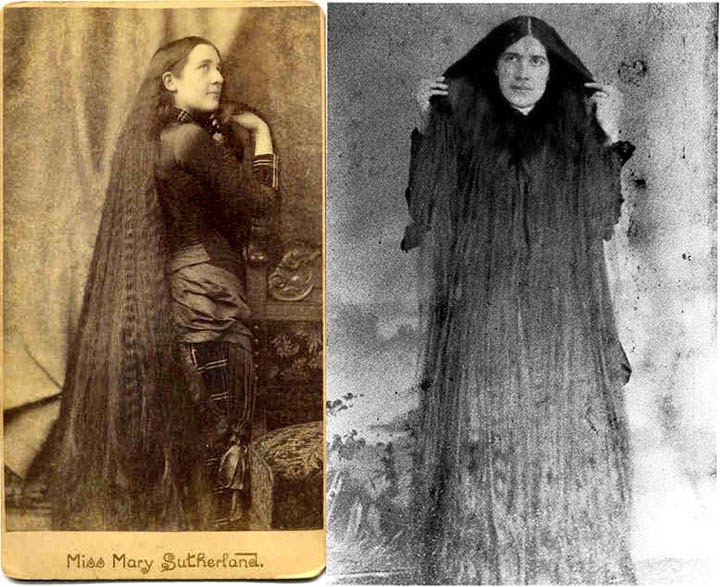
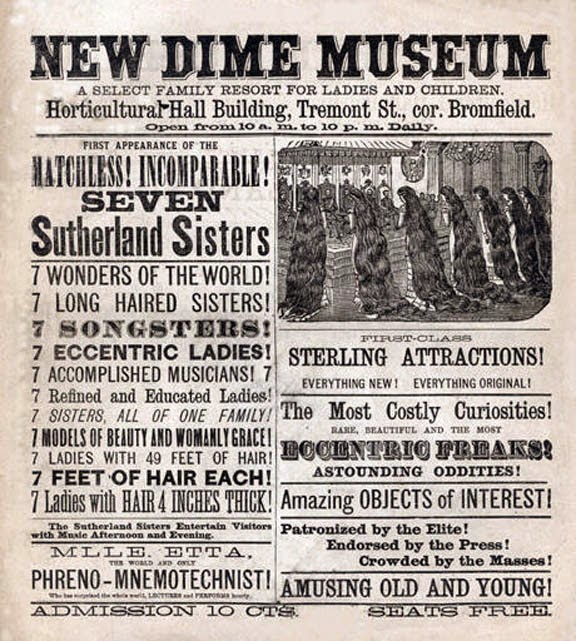
Sarah, Victoria, Isabella, Grace, Naomi, Dora and Mary: the seven Sutherland sisters were born in quick succession between 1846 and 1865. They were raised in a small log cabin in Niagara County, New York State. Education was a luxury, shoes were worn only on Sundays, the girls’ dresses were sewn from burlap and their mother concocted a homemade dressing for their hair, the smell of which made them unpopular at school. It might have been Mrs Sutherland’s potion, or maybe it came naturally, but by the time they were teenagers, the sisters had transformed into dark-haired Lady Godivas, with 37 feet of hair among them.
They were America’s first celebrity models. In the 1880s, fashion’s era of bustles and puffs, they became one of the sexiest, most popular performing attractions in The Greatest Show on Earth, claiming a World Record for the longest haired family. P.T. Barnum called them “the seven most pleasing wonders of the world” as they attracted great throngs along the glittering midway. They came from the poverty of Cambria, New York, a rural farm community, and rode their dynamic singing talent and exotic looks to wealth and international fame, becoming global trendsetters, and even marrying into royalty. Their magical quality for personal and public reinvention made them divine.
With fans fascinated by their hair, which reached a collective length of over 37 feet, Fletcher Sutherland went on to create a patent medicine, “The Seven Sutherland Sisters Hair Grower”, which was mostly witch hazel and bay rum, along with traces of hydrochloric acid, salt, and magnesium. The tonic quickly became a best seller, and the line of Sutherland Sisters hair products expanded to include a scalp cleanser, brushes and combs, and “Hair Colorators.” In addition to wholesaling their products to retail stores, they also made public appearances at retail outlets, and maintained several outlets of their own — “parlors” where customers could consult with a salesperson and make purchases — including one in New York City. When Naomi died in 1893, the Sutherlands auditioned for a replacement, and hired Anna Louise Roberts to join their act. Roberts made headlines in 1927 when she was over 60 and her husband and she became destitute as the result of a house fire.
The Sutherlands resided in a mansion they built in Warrens Corners, New York, which burned down in 1938. Even though hairstyles changed over time, and the short hair of the Flappers became fashionable in the 1920s, the Seven Sutherland Sisters hair care products were successful for years after their singing act ended; print ads for them appeared in newspapers until the mid-1920s.
Published accounts indicate that the sisters did not save or invest wisely, and some of them later became destitute. When the last living sister, Grace, died in 1946 at age 92, she was buried in an unmarked grave.
The children of Fletcher and Mary Sutherland included:
Sarah (1845-1919) Victoria (1849-1902) Isabella (1852-1914) Grace (1854-1946) Naomi (1858-1893) Dora (1860-1926) Mary (1862-1939)
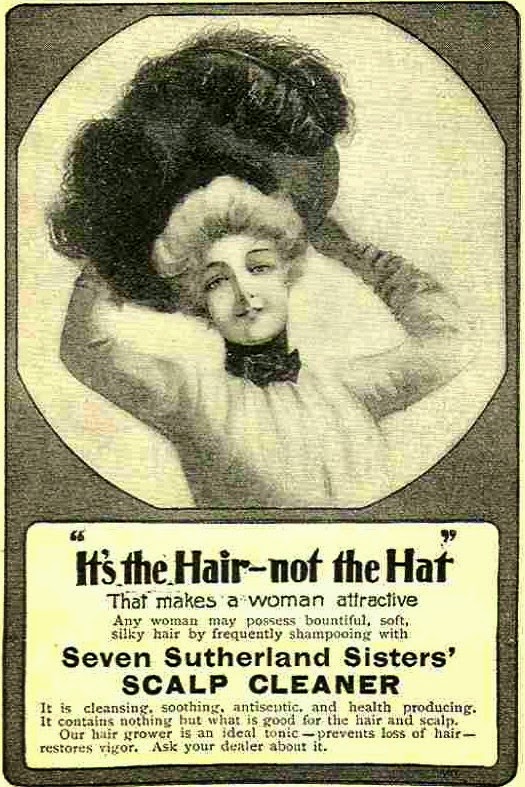
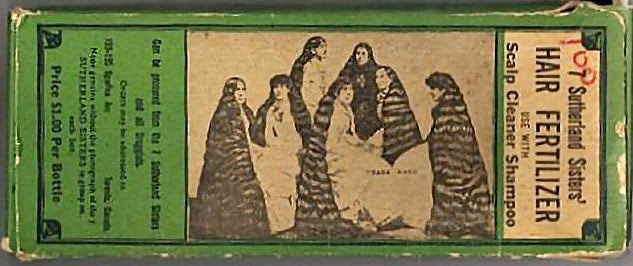
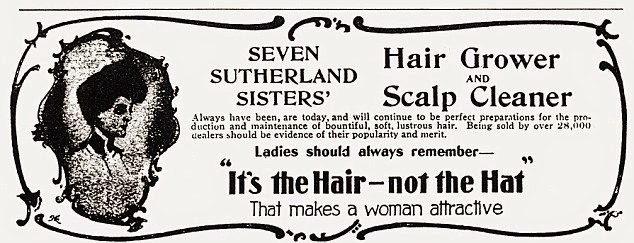
The seven Sutherland Sisters, Sarah, Victoria, Isabella, Grace, Naomi, Mary and Dora photographed with their father Reverend Fletcher in 1894.The sisters from behind.Victoria Sutherland (1849 – 1902)Isabella Sutherland (1852 – 1914)Sarah Sutherland (1845 – 1919)Grace Sutherland (1854 – 1946)Naomi Sutherland (1858 – 1893)Dora “Kitty” Sutherland (1858 – 1926)Mary Sutherland (1862 – 1939)An advertisement featuring the reverend sold the Seven Sutherland Sisters Hair Grower as a miracle cure for balding.The Sutherland Sisters appealed to Edwardians with their “It’s the Hair—not the Hat” motto.A Sutherland ad from the 1910s attempted to adopt their product to the new bobbed hairstyles of the time.The box for a bottle of the Seven Sutherland Sisters Hair Fertilizer.A 1984 advert for a bottle of Hair Grower.
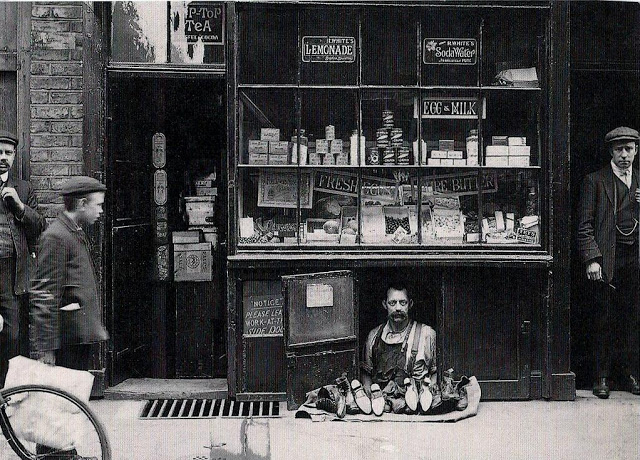
London’s best known shops are often the giant department stores which draw in the tourist crowds, but this photo from 1910 shows one of the smallest shops in London.
The smallest shop in London, occupied by a cobbler, at 4 Bateman Street, Soho. The shop is six feet long, five feet high and two feet deep, the rent three pounds a week, it has been occupied for over twenty years.