
Subscribe to continue reading
Become a paid subscriber to get access to the rest of this post and other exclusive content.
Bringing You the Wonder of Yesterday – Today
Become a paid subscriber to get access to the rest of this post and other exclusive content.
Become a paid subscriber to get access to the rest of this post and other exclusive content.
Become a paid subscriber to get access to the rest of this post and other exclusive content.
Become a paid subscriber to get access to the rest of this post and other exclusive content.
Become a paid subscriber to get access to the rest of this post and other exclusive content.
Become a paid subscriber to get access to the rest of this post and other exclusive content.
Become a paid subscriber to get access to the rest of this post and other exclusive content.
Become a paid subscriber to get access to the rest of this post and other exclusive content.
Wooden railroads, called wagonways, were built in the United States starting from the 1720s. Railroads played a large role in the development of the United States from the industrial revolution in the Northeast (1810–1850) to the settlement of the West (1850–1890).
The American railroad mania began with the founding of the first passenger and freight line in the nation of the Baltimore and Ohio Railroad in 1827 and the “Laying of the First Stone” ceremonies and beginning of its long construction heading westward over the obstacles of the Appalachian Mountains eastern chain the following year of 1828, and flourished with continuous railway building projects for the next 45 years until the financial Panic of 1873 followed by a major economic depression bankrupted many companies and temporarily stymied and ended growth.
The railroad system was largely built by 1910, but then trucks arrived to eat away the freight traffic, and automobiles (and later airplanes) to devour the passenger traffic. After 1940, the use of diesel electric locomotives made for much more efficient operations that needed fewer workers on the road and in repair shops.
Here below is a set of incredible photos that shows railroad disasters in Indiana from the early 20th century.
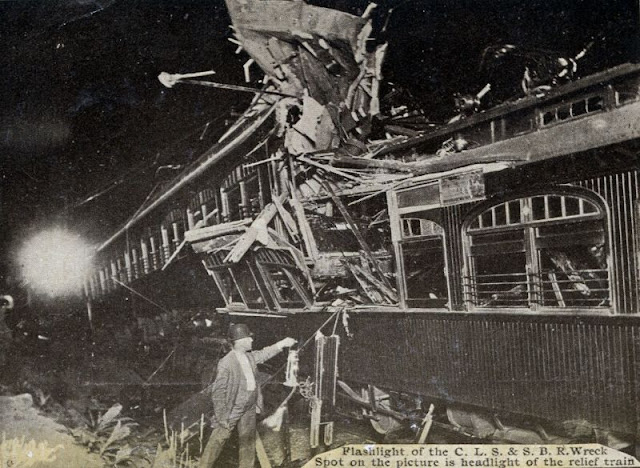
Chicago, Lake Shore & South Bend Railway wreck, Porter, Indiana, June 19, 1909. Spot on the picture is headlight of the relief train.
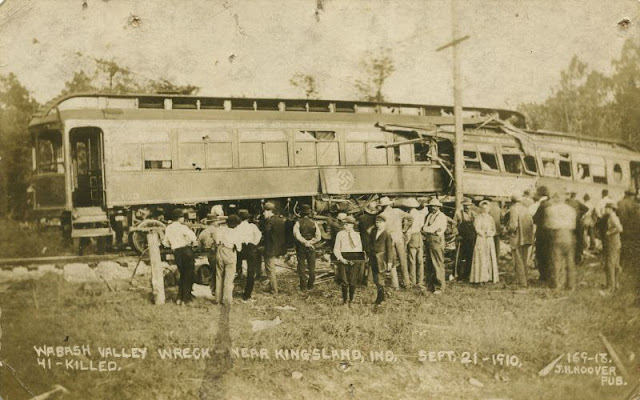
Wabash Valley wreck, 41 killed, Kingsland, Indiana, September 21, 1910.
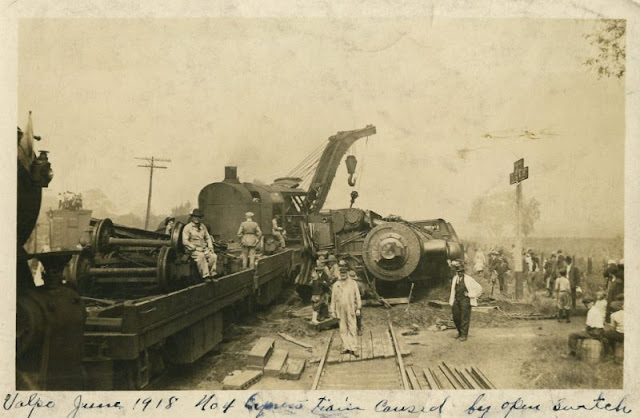
A switch left open inadvertently caused the eastbound No. 4 Express train’s engine, tender, and two cars to derail on the Grand Trunk Railway track immediately west of the Washington Street crossing in Valparaiso, Indiana, May 30, 1918.
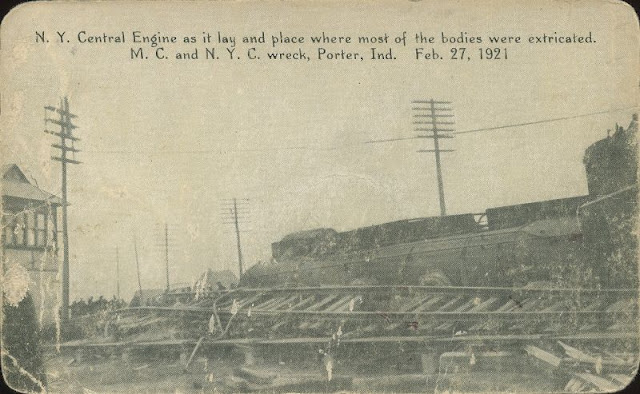
N. Y. Central Engine as it lay and place where most of the bodies were extricated. M. C. and N. Y. C. wreck, Porter, Indiana, February 27, 1921.
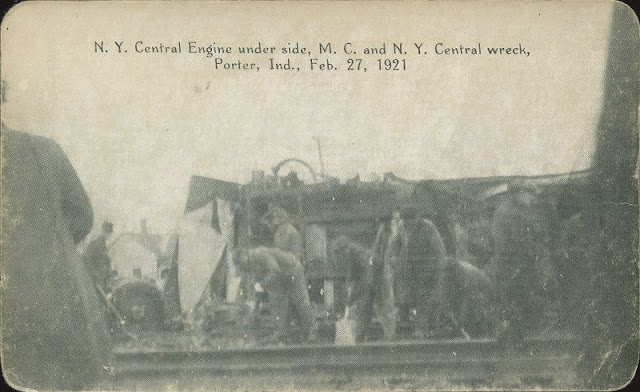
N. Y. Central Engine under side, M. C. and N. Y. Central wreck, Porter, Indiana, February 27, 1921.
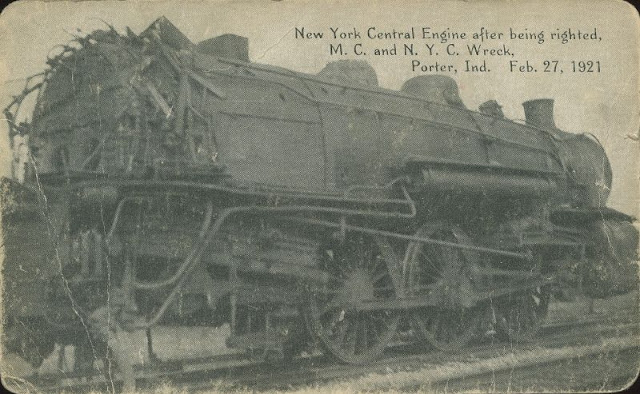
New York Central Engine after being righted, M. C. and N. Y. C. wreck, Porter, Indiana, February 27, 1921.
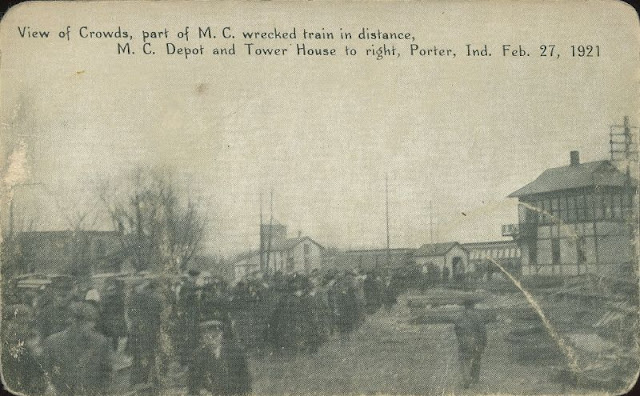
View of crowds, part of M. C. wrecked train in distance, M. C. Depot and Tower House to right, Porter, Indiana, February 27, 1921.
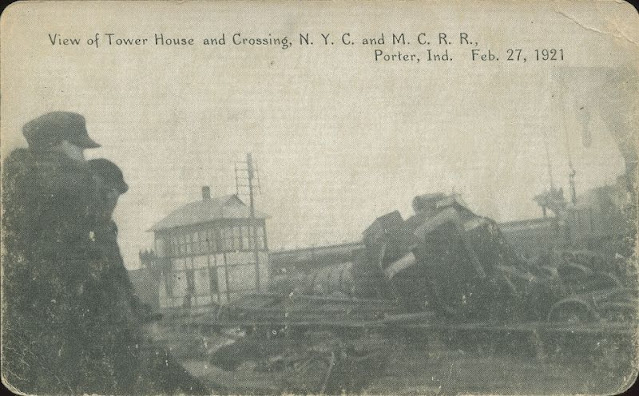
View of Tower House and Crossing, N. Y. C. and M. C. R. R., Porter, Indiana, February 27, 1921.
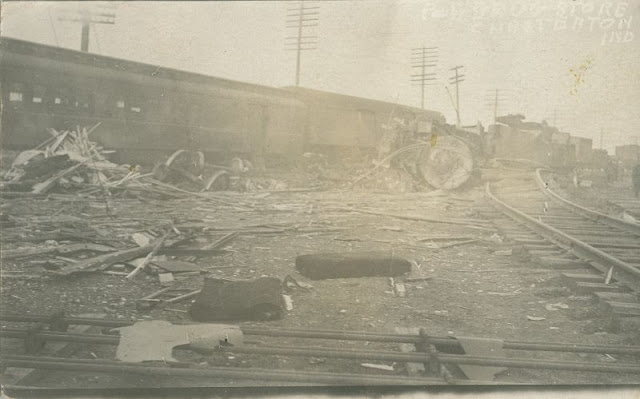
Westbound New York Central passenger train No. 151 plowed through the third coach of eastbound Michigan Central train No. 20, at an interlocked crossing of these lines at Porter, Indiana, February 27, 1921.
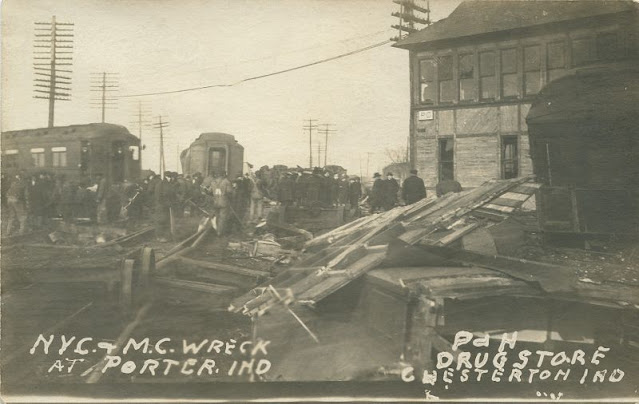
Westbound New York Central passenger train No. 151 plowed through the third coach of eastbound Michigan Central train No. 20, at an interlocked crossing of these lines at Porter, Indiana, February 27, 1921.
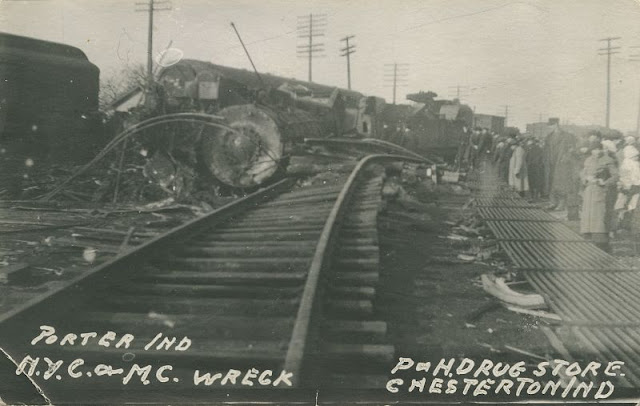
Westbound New York Central passenger train No. 151 plowed through the third coach of eastbound Michigan Central train No. 20, at an interlocked crossing of these lines at Porter, Indiana, February 27, 1921.
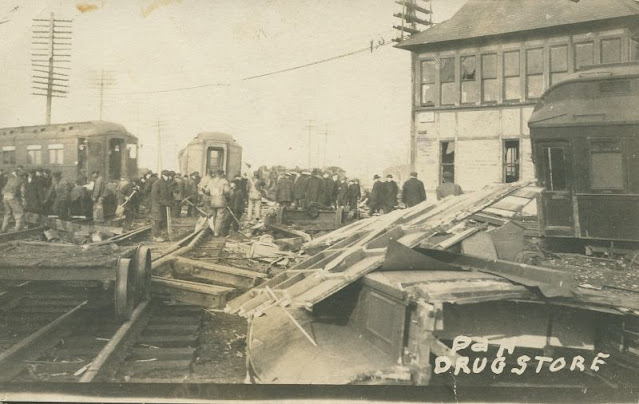
Westbound New York Central passenger train No. 151 plowed through the third coach of eastbound Michigan Central train No. 20, at an interlocked crossing of these lines at Porter, Indiana, February 27, 1921.
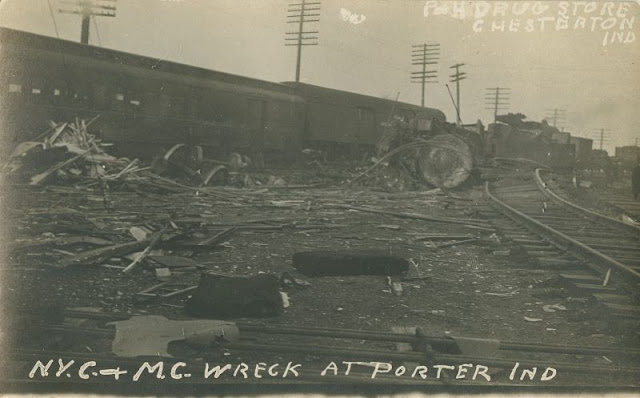
Westbound New York Central passenger train No. 151 plowed through the third coach of eastbound Michigan Central train No. 20, at an interlocked crossing of these lines at Porter, Indiana, February 27, 1921.
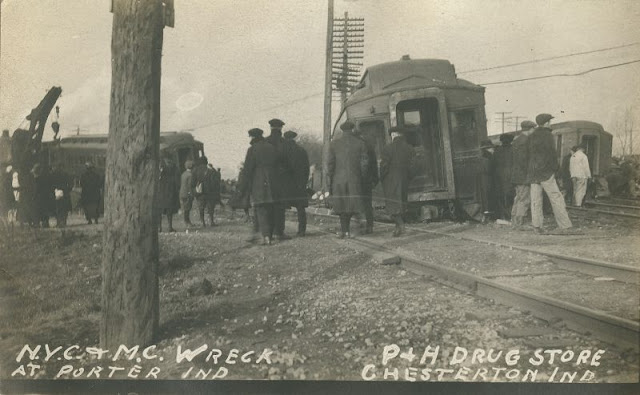
Westbound New York Central passenger train No. 151 plowed through the third coach of eastbound Michigan Central train No. 20, at an interlocked crossing of these lines at Porter, Indiana, February 27, 1921.
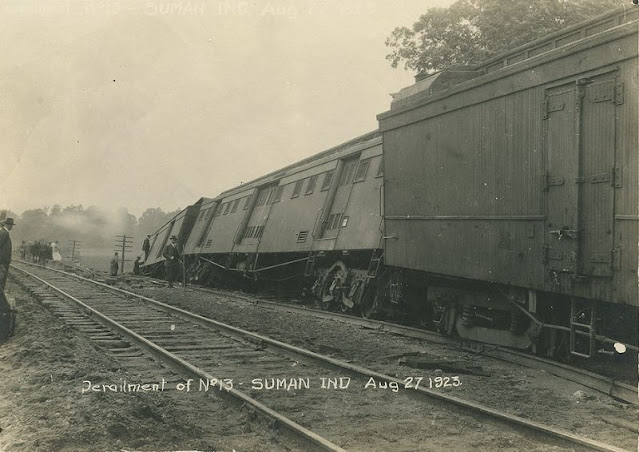
Derailment of Train No. 13, Baltimore & Ohio Railroad, Suman, Indiana, August 27, 1923.
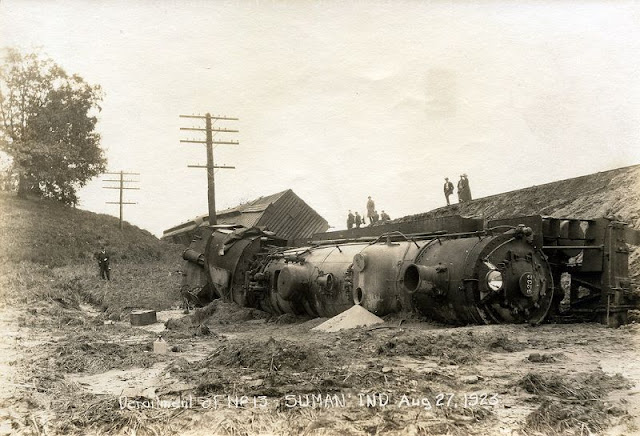
Derailment of Train No. 13, Baltimore & Ohio Railroad, Suman, Indiana, August 27, 1923.
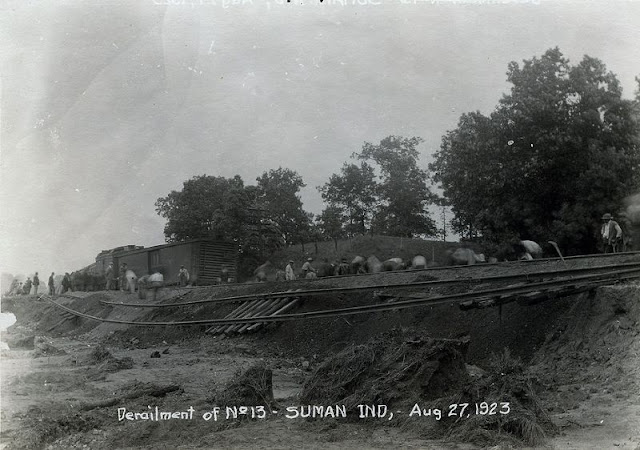
Derailment of Train No. 13, Baltimore & Ohio Railroad, Suman, Indiana, August 27, 1923.
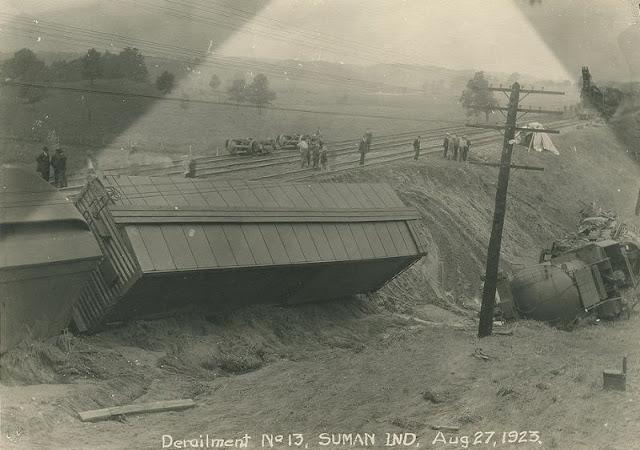
Derailment of Train No. 13, Baltimore & Ohio Railroad, Suman, Indiana, August 27, 1923.
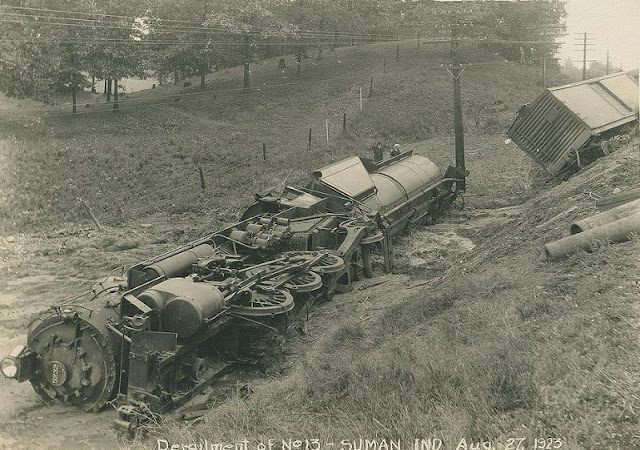
Derailment of Train No. 13, Baltimore & Ohio Railroad, Suman, Indiana, August 27, 1923.
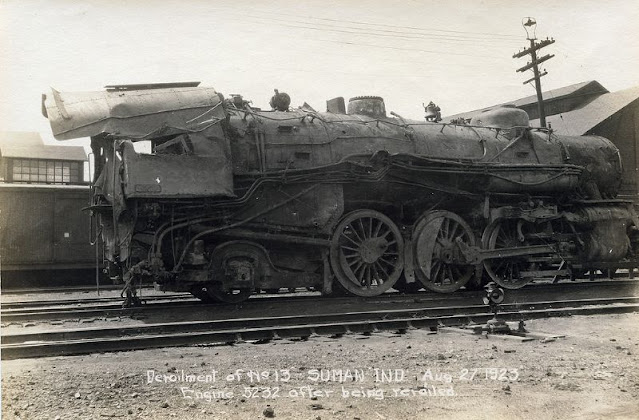
Derailment of Train No. 13, Baltimore & Ohio Railroad. Engine 5232 after being rerailed, Suman, Indiana, August 27, 1923.
Subscribe to Yesterday Today’s Blog to receive regular updates regarding new content:
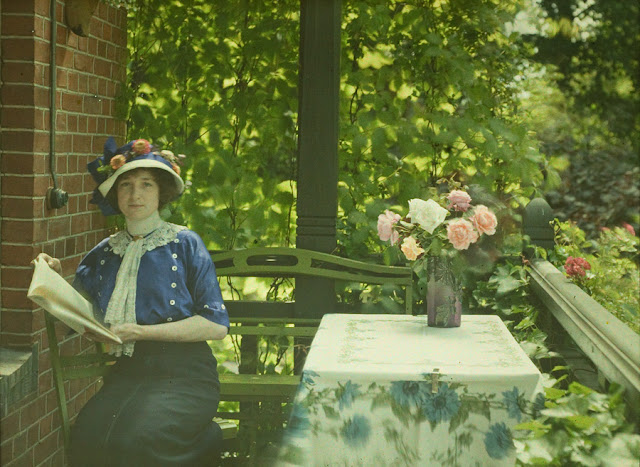
Portrait of Jeanne Nokin, ca. 1913.
Georges Gilon (1873–1928) was a wool-trader at Verviers in Belgium. He was married to Maria Nokin who bore him 4 children.
Besides his passion for photography Gilon was also a gifted wood-worker. His photographic topics were mainly landscapes, old regional farmhouses, festivities and townscapes of his hometown Verviers. The vast body of his work consists of black and white photographs, although he worked also with the autochrome process. He excelled in rendering colors in fine pastel shades which turned his autochromes into timeless works of art.
See e.g. the three townscapes in which the viewer is captivated by the dreamlike atmosphere. Landscape with windmill is also a fine example of the compositional skills of Georges Gilon. The green foreground gives the eye a resting point, the footpath leads us to the red pastel rooftops and the upstanding sail of the windmill. A small collection of his autochromes can be seen on below.
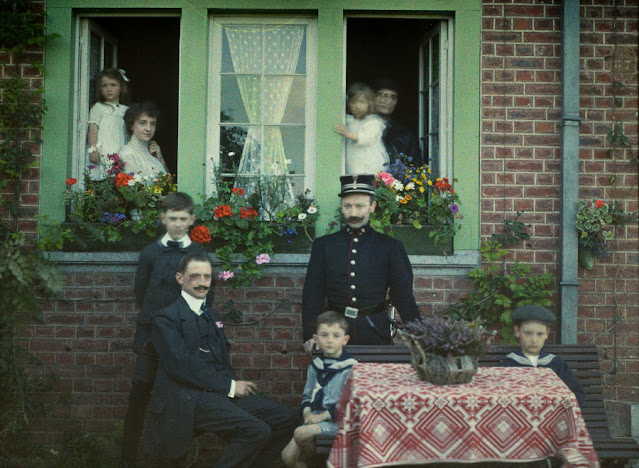
Family portrait at Roannay, Belgium, ca. 1913.
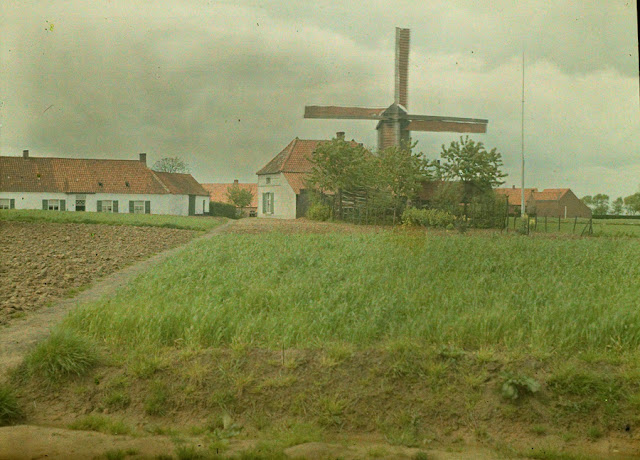
Landscape with windmill. Ronse, Belgium, ca. 1913.

Schelde river, houses. Oudenaarde, Belgium, ca. 1913.
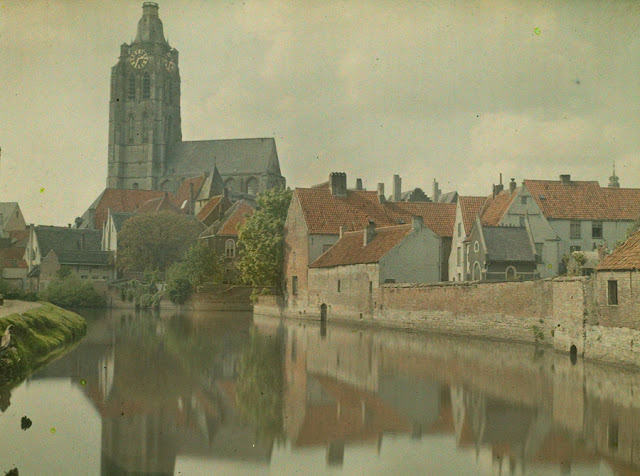
Saint-Walburgachurch. Oudenaarde, Belgium, ca. 1913.
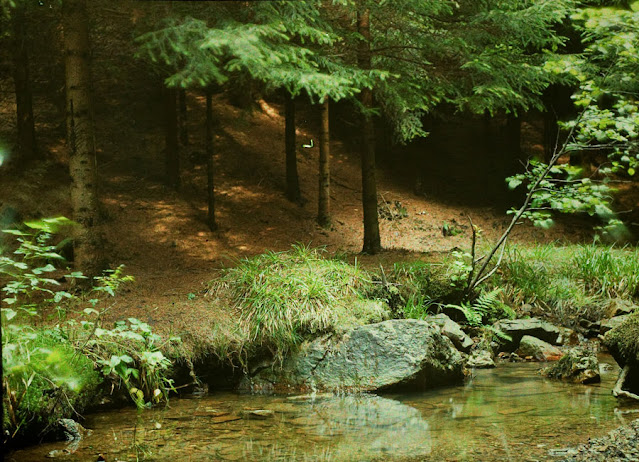
Pool at Roannay, Belgium, ca. 1913.
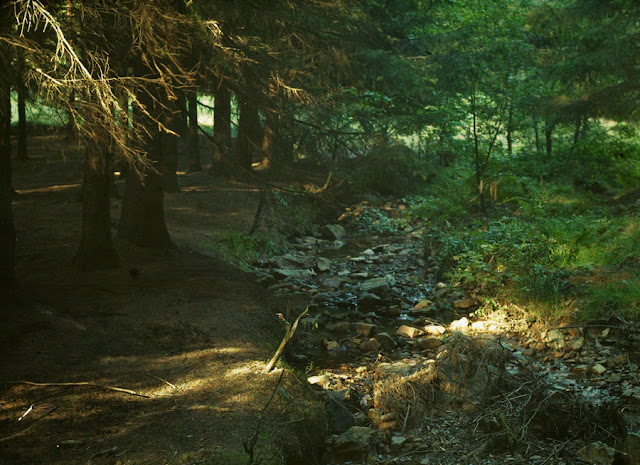
Light and shadows at Roannay, Belgium, ca. 1913.
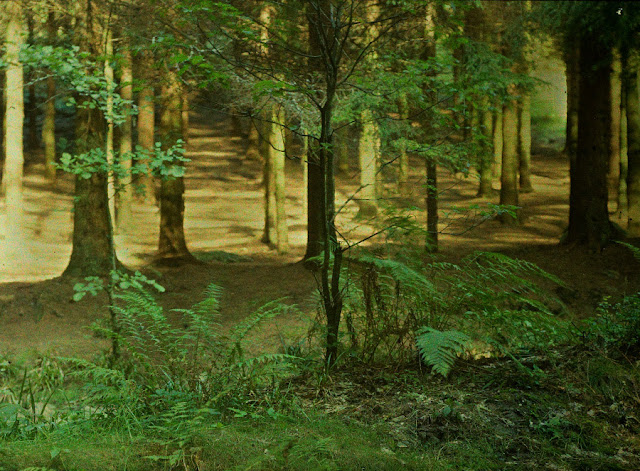
Forest and ferns, ca. 1913.
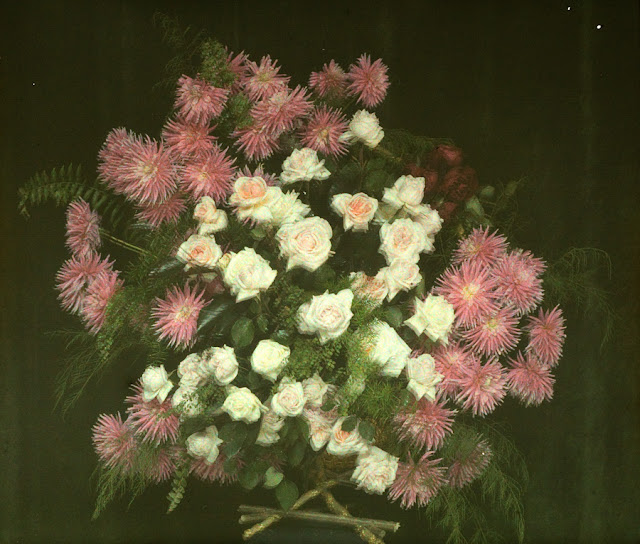
Bouquet with roses and chrysanths, ca. 1913.
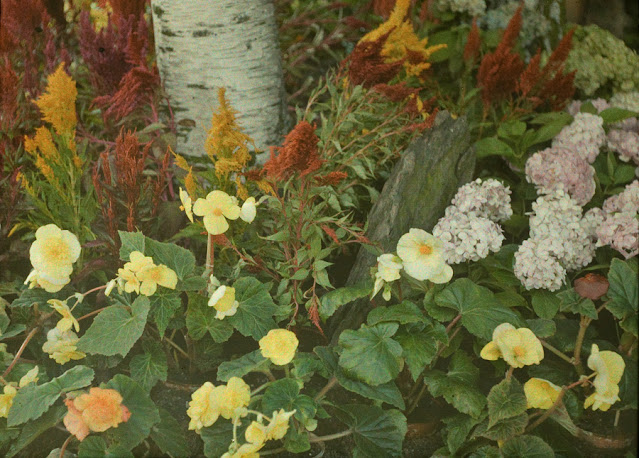
Yellow begonias, ca. 1913.
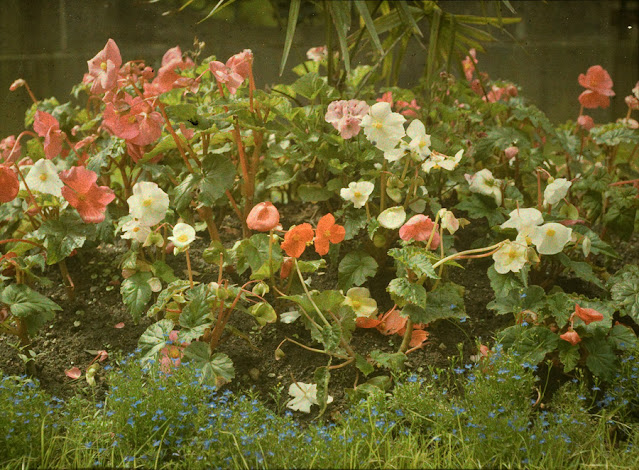
Red and white begonias, ca. 1913.
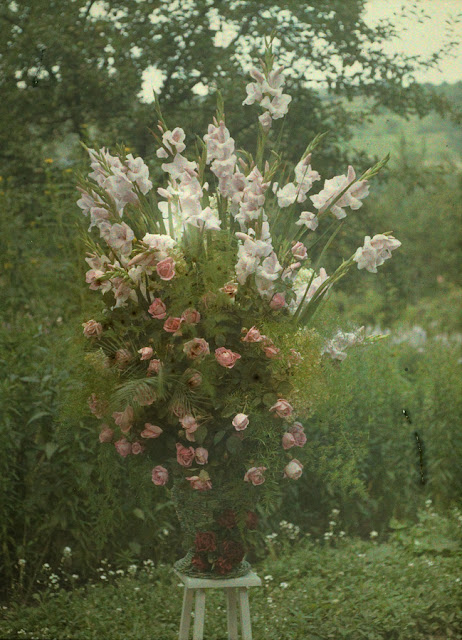
Bouquet with roses and gladioli, ca. 1913.
Subscribe to Yesterday Today’s Blog to receive regular updates regarding new content:
