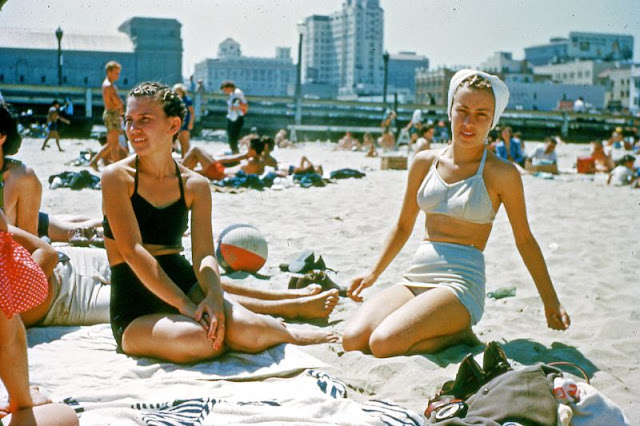
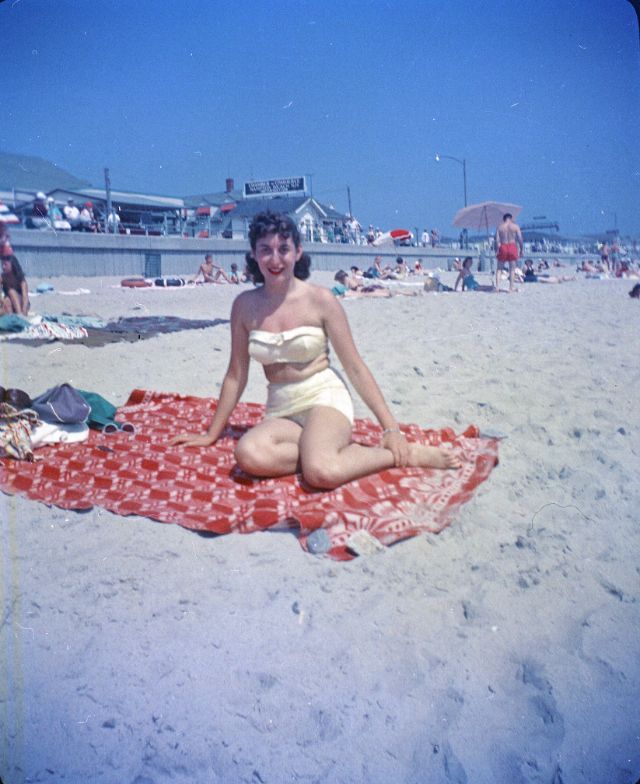
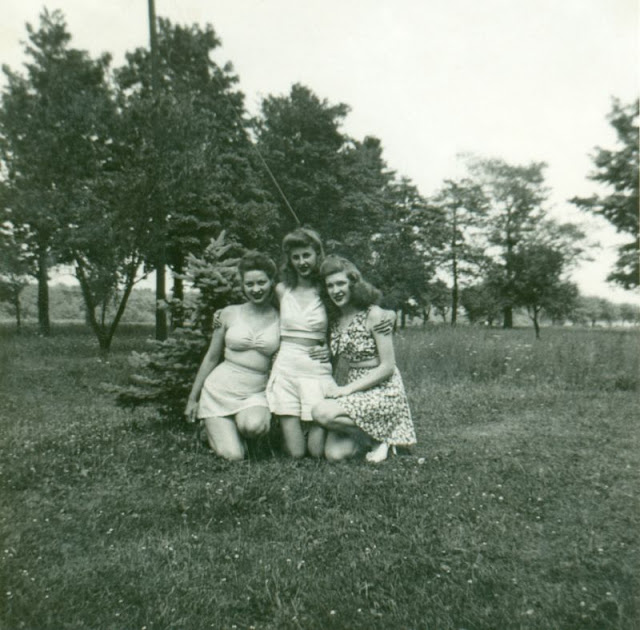
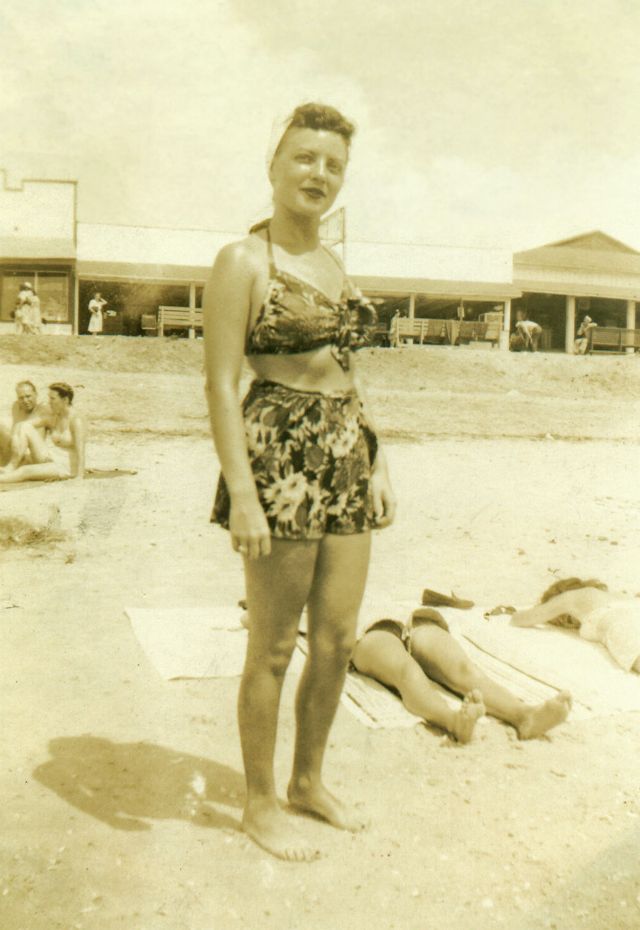
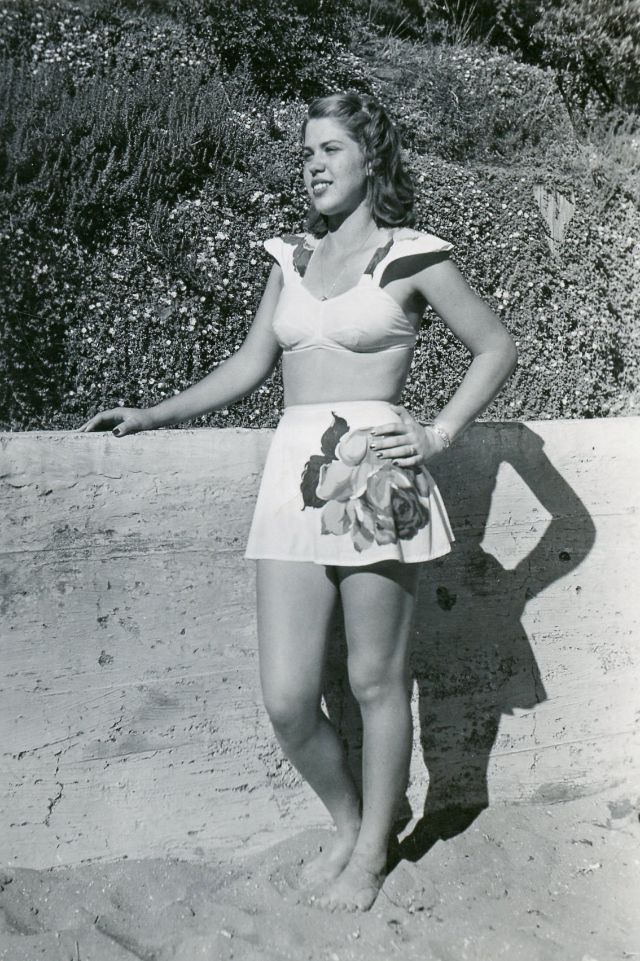
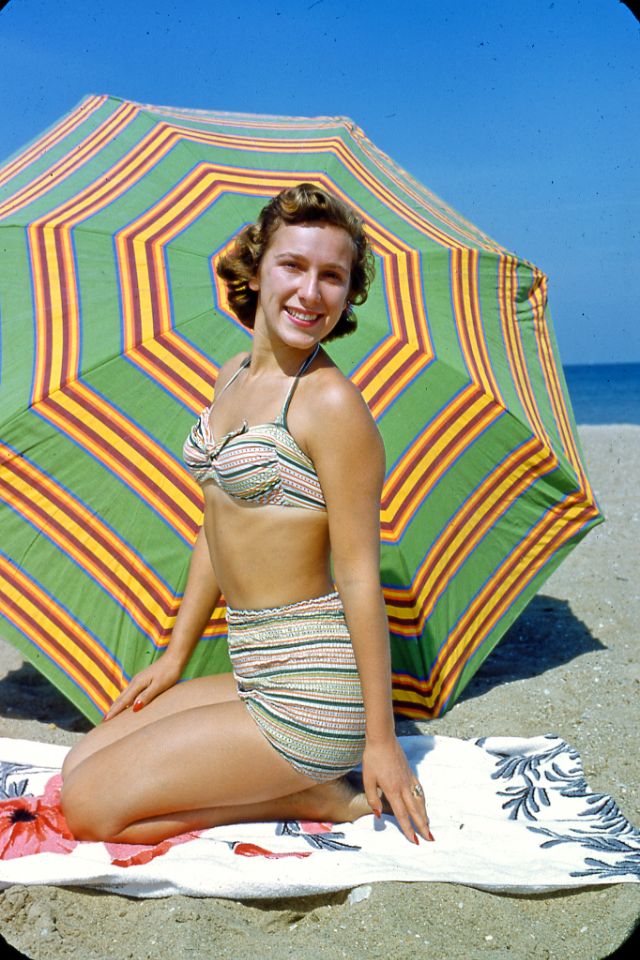
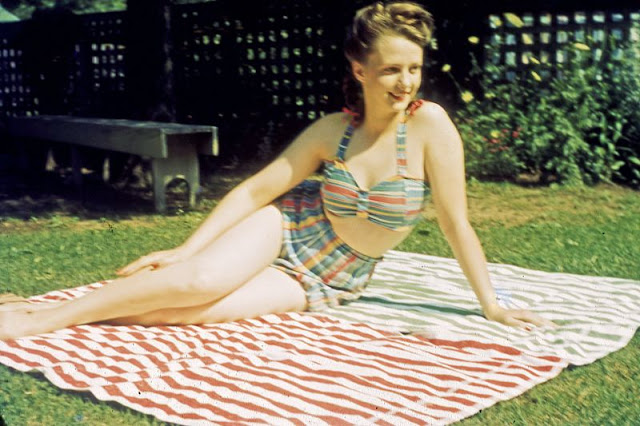
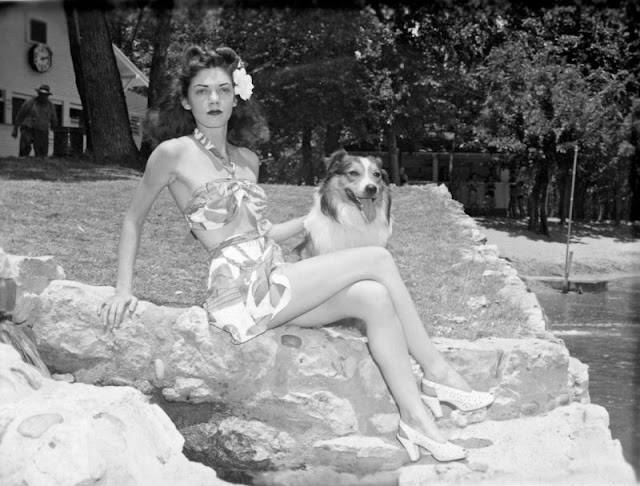
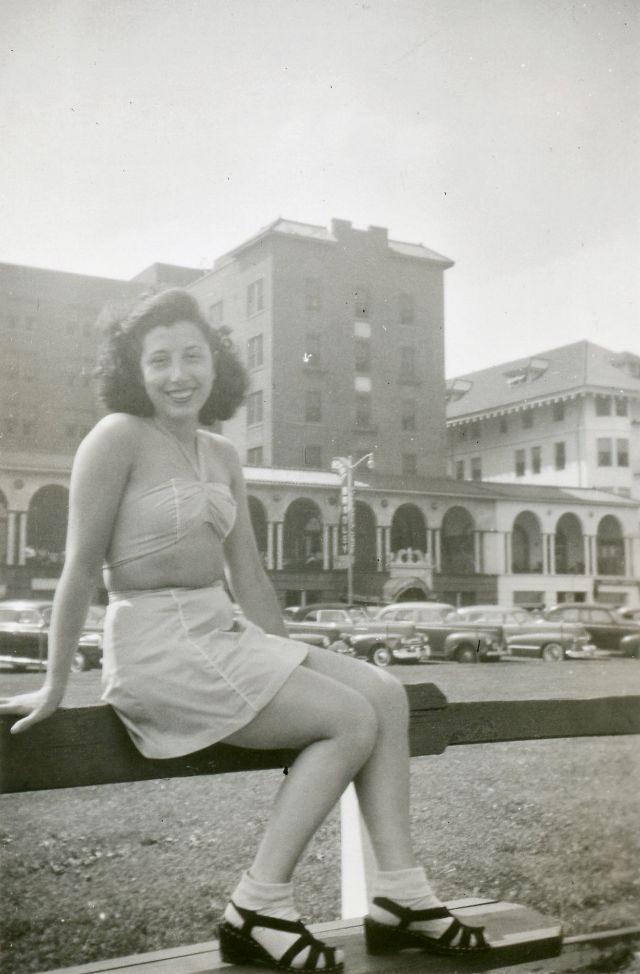
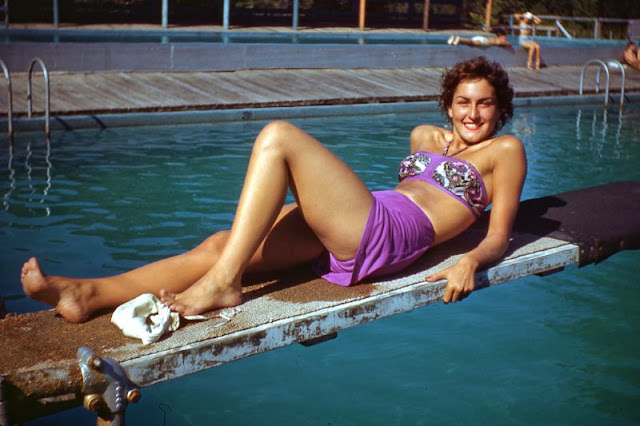
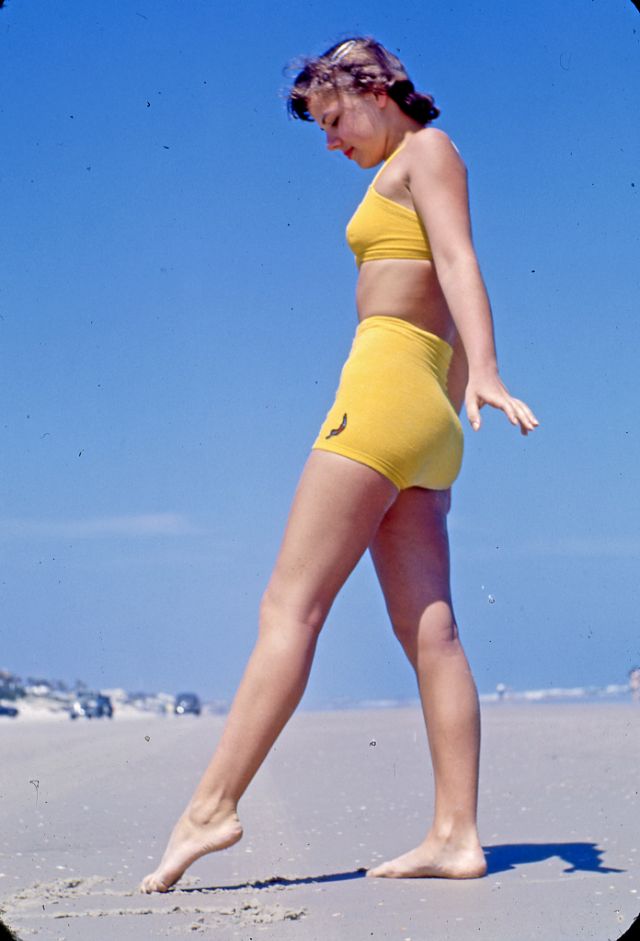
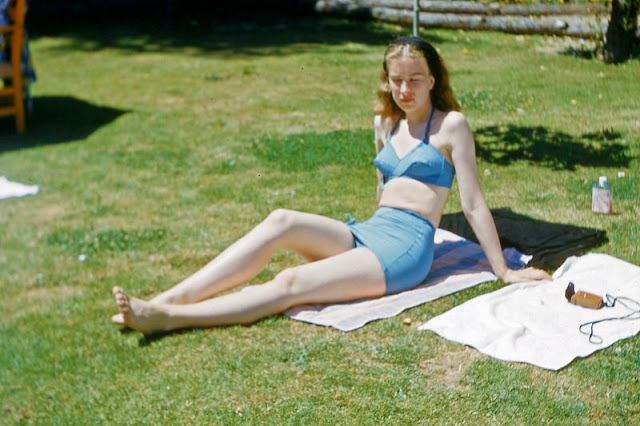
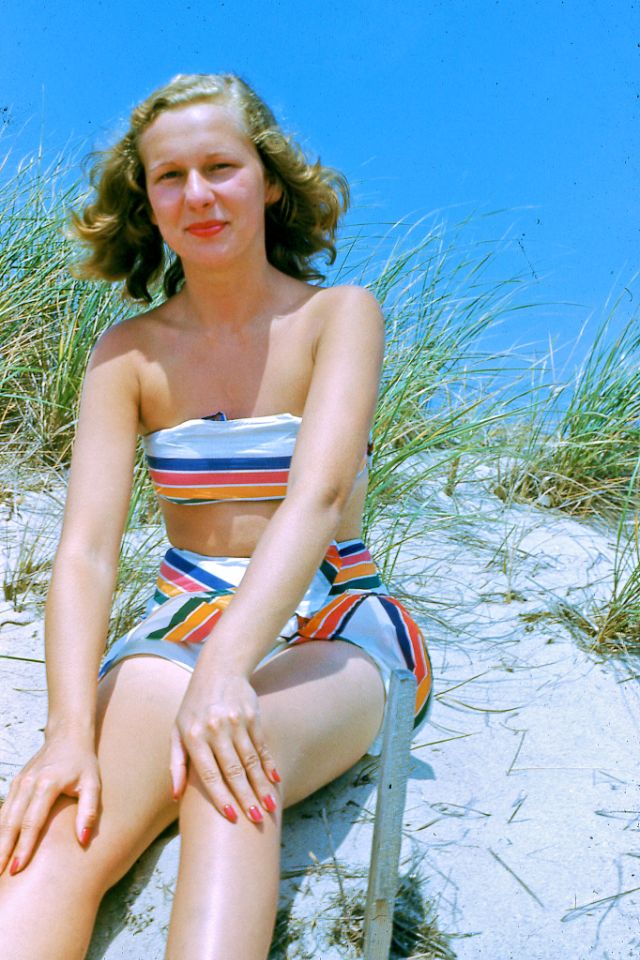
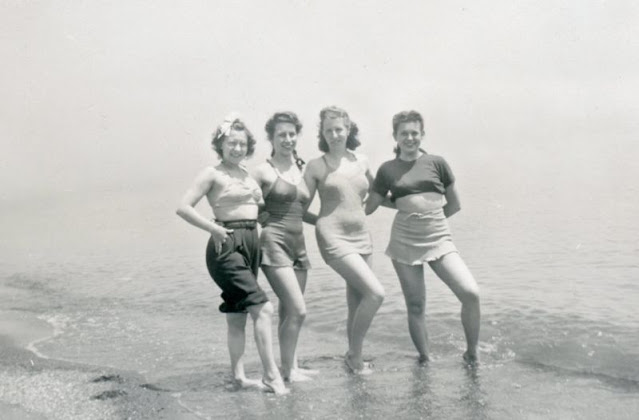
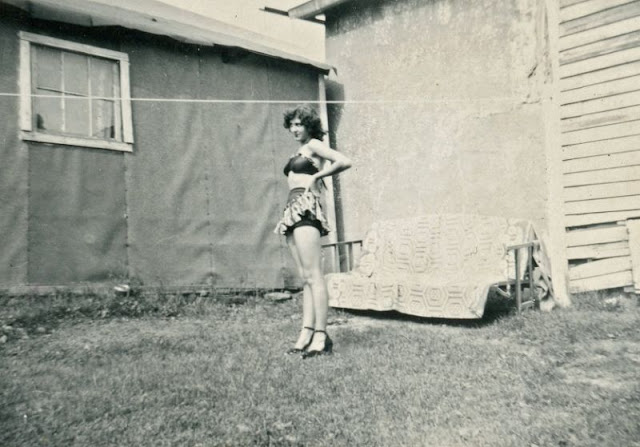
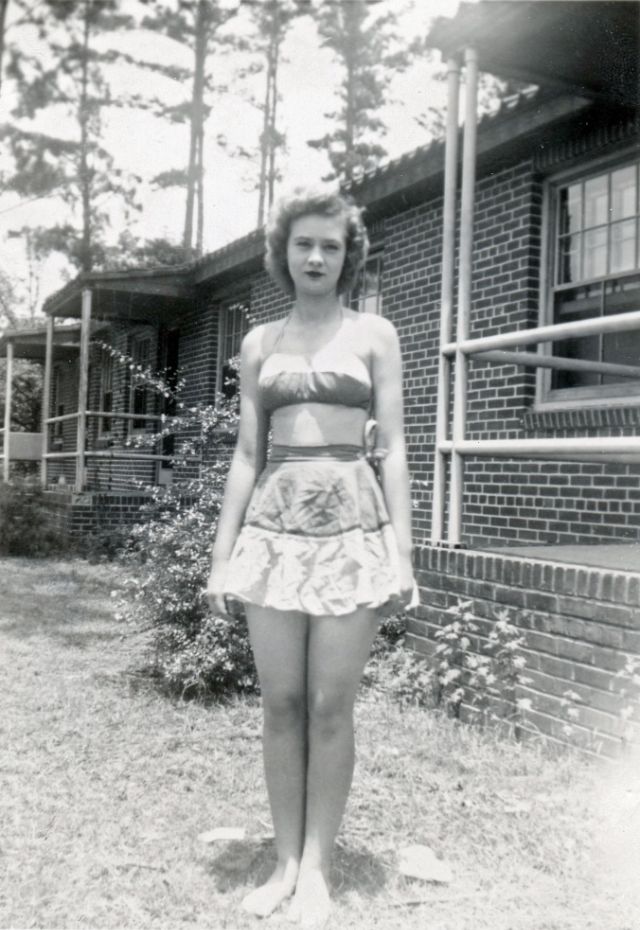
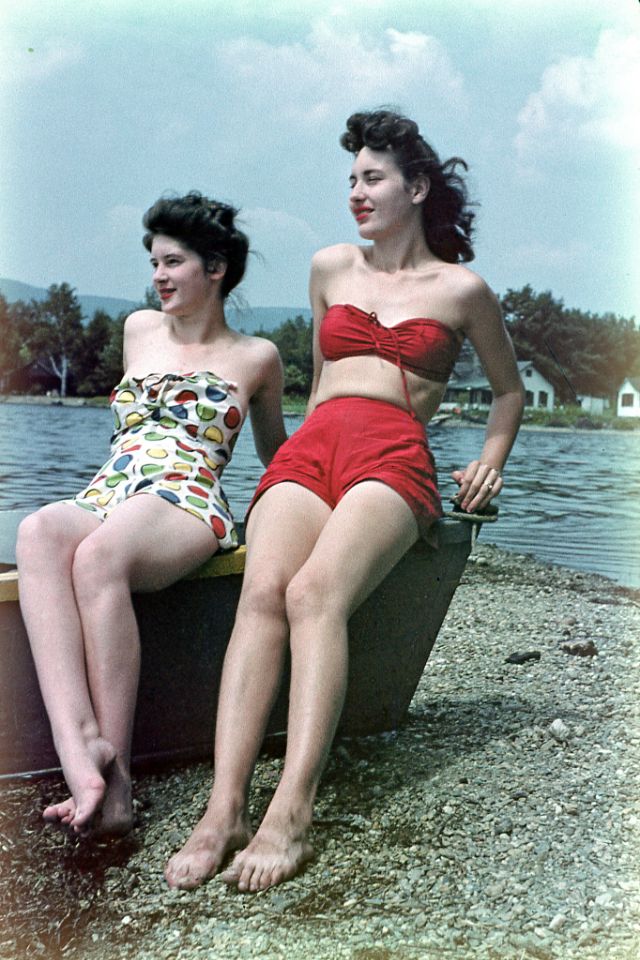
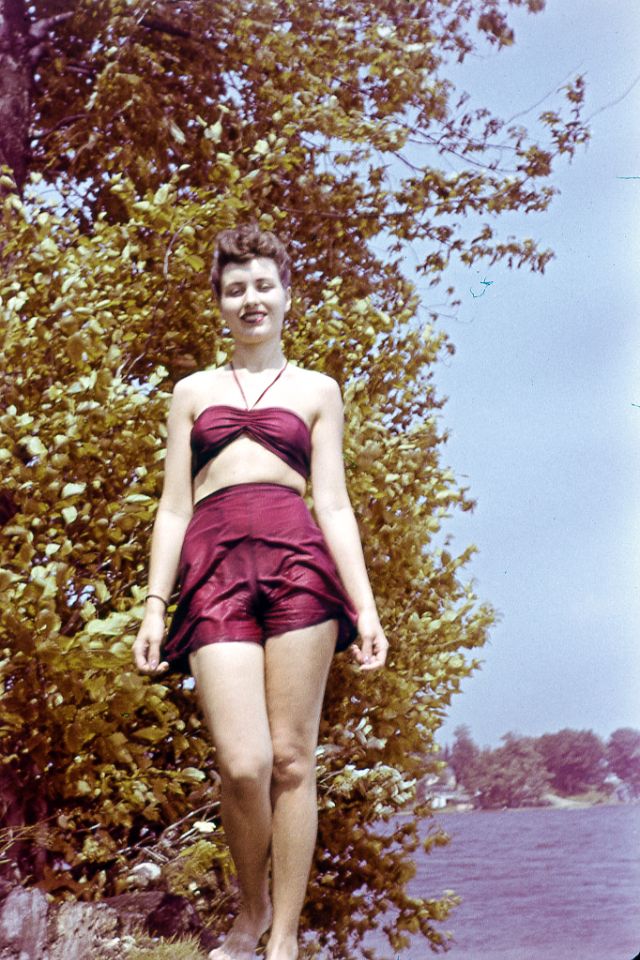
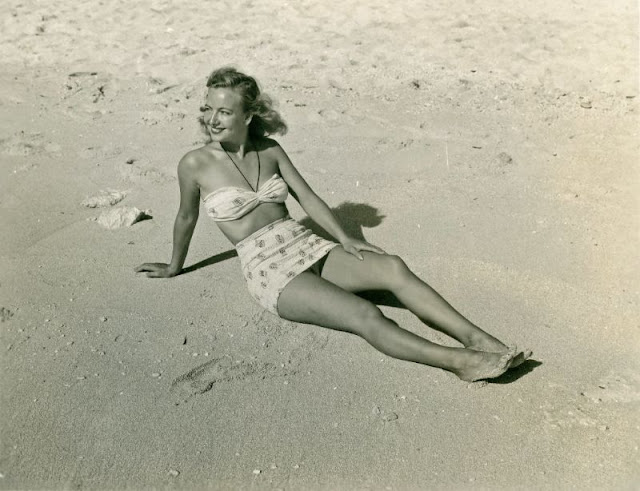
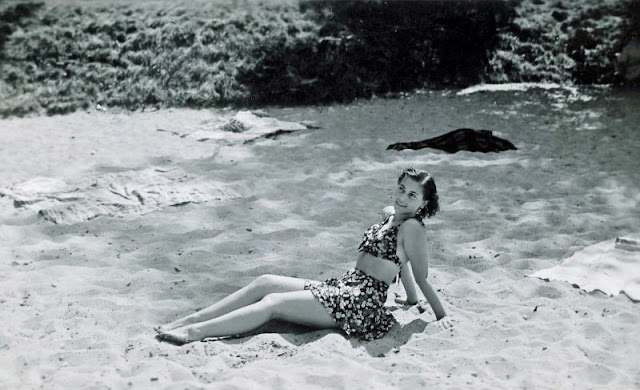
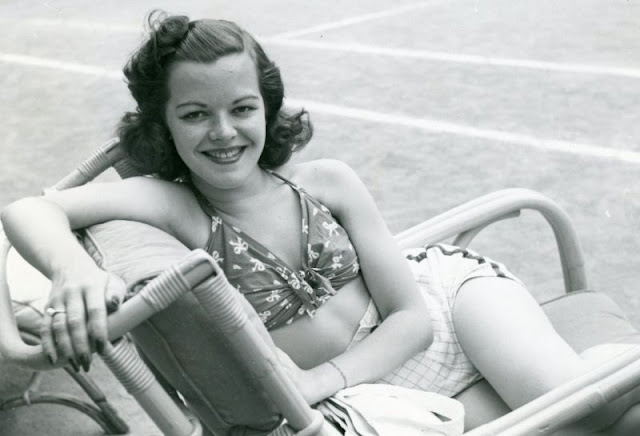
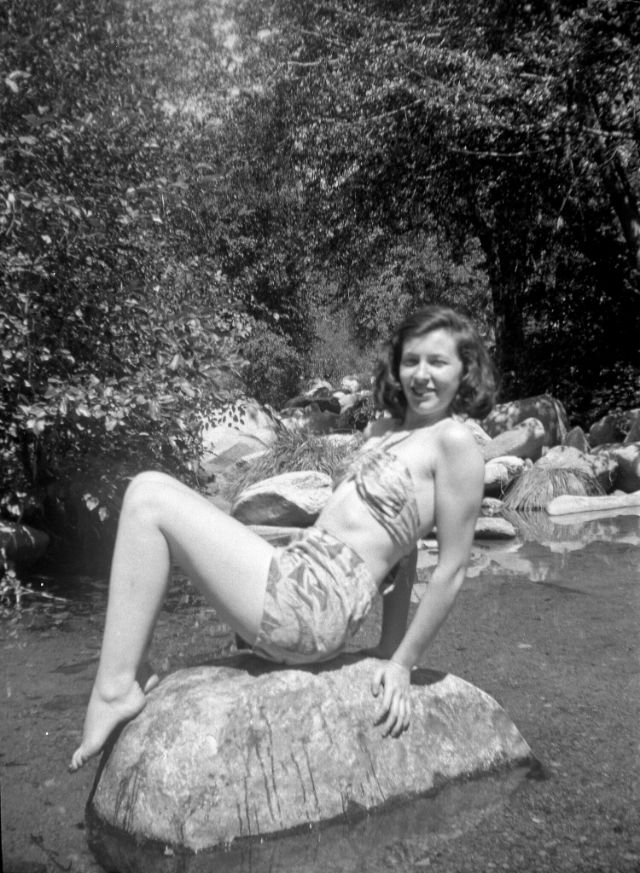
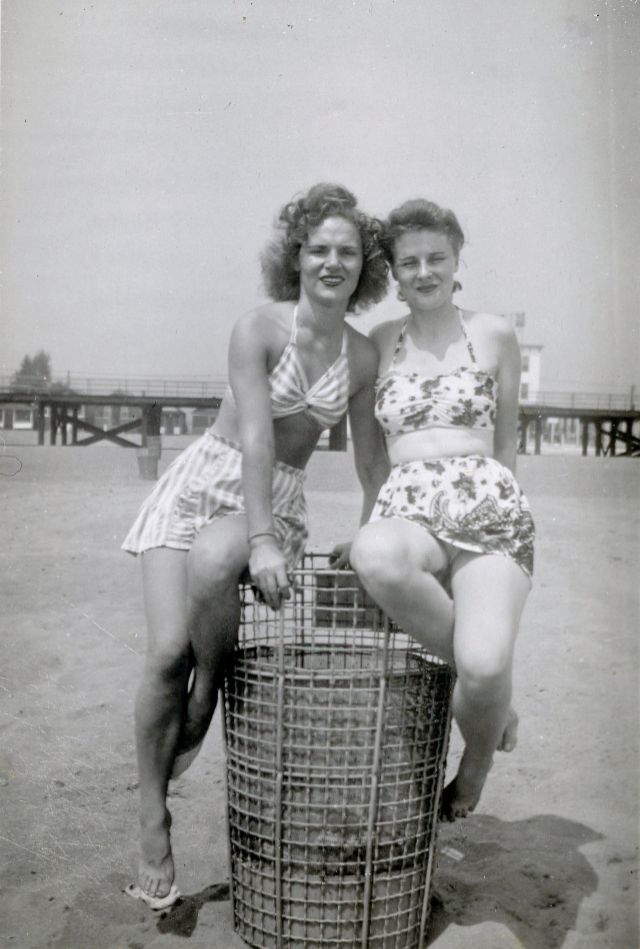
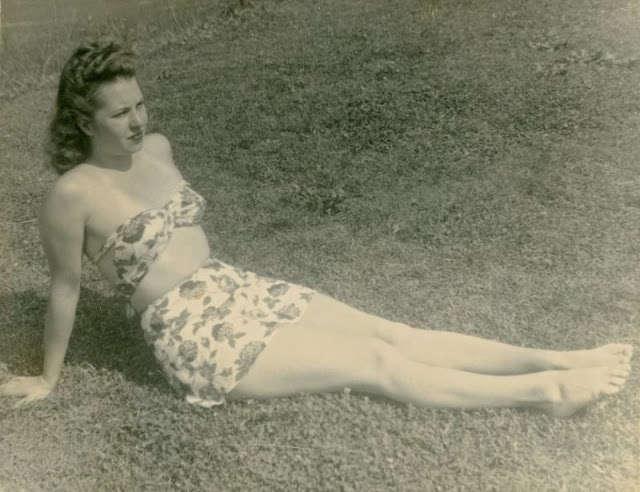
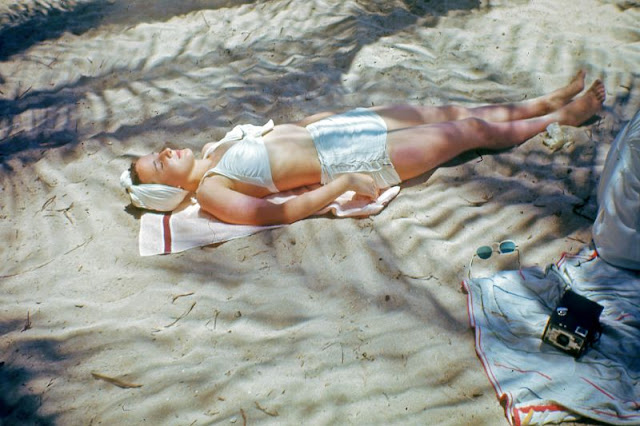
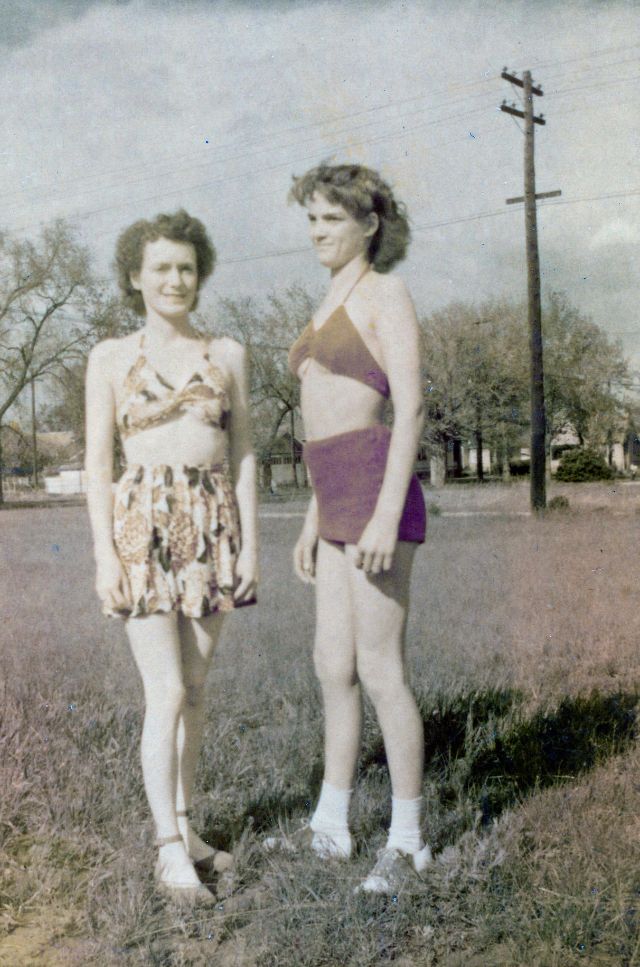
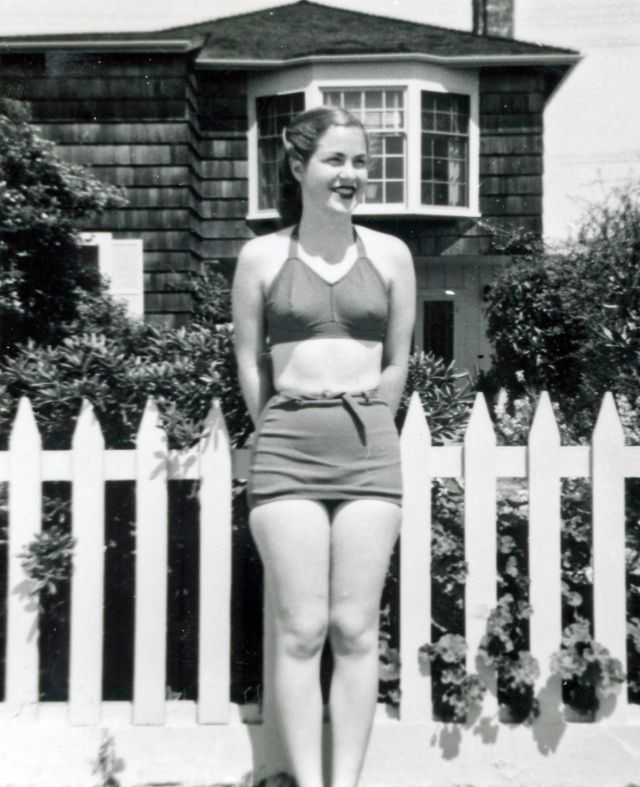
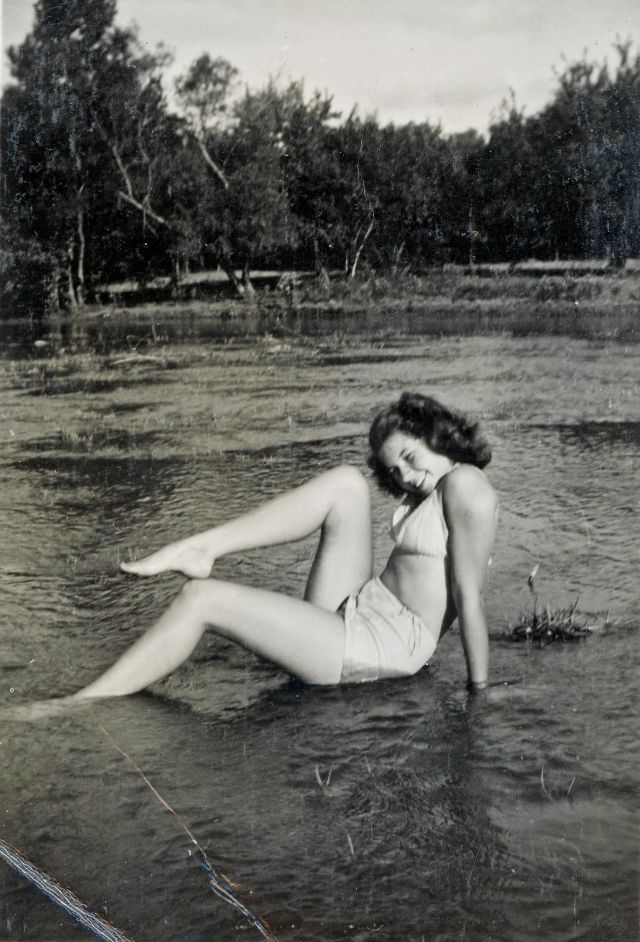
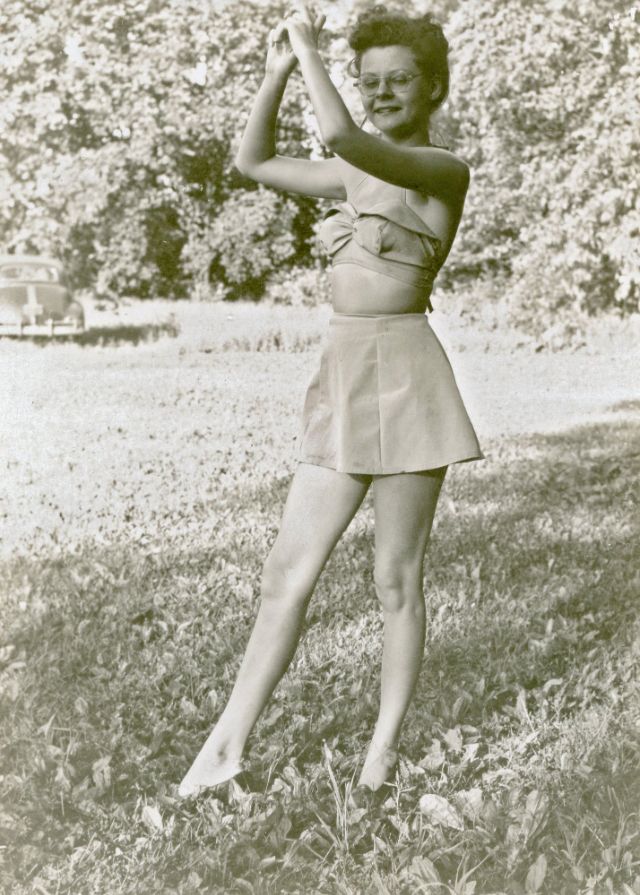
1940s bathing suits, like many other clothing items, were also losing their modesty. The 1940s was the era when the midriff was born, and it was shown in swimsuits as well as playsuits. 1940s swimsuits were tight, unlike the suits of previous eras.
One-piece swimsuits were still popular, but the new two-piece suit had plenty of fans, too. Suits were made from rayon, jersey, and rayon-jersey blends with knit cotton linings. Many suits had accent panels of a velvet-like rayon velour. Some also featured ruching on the front or side panels that were both pretty and figure flattering.
1940s swimwear featured stretchy control panels in the stomach made from a new type of material called lastex, and bra cups in the bust to keep the figure looking good in the revealing bathing suits. Any color could be found on a swimsuit, but patriotic colors were popular as well as floral patterns and polka dots. Suits fastened with small buttons or metal zippers in the back.
These vintage photos capture women in bathing suits in the 1940s.
Subscribe to Yesterday Today’s Blog to receive regular updates regarding new content:
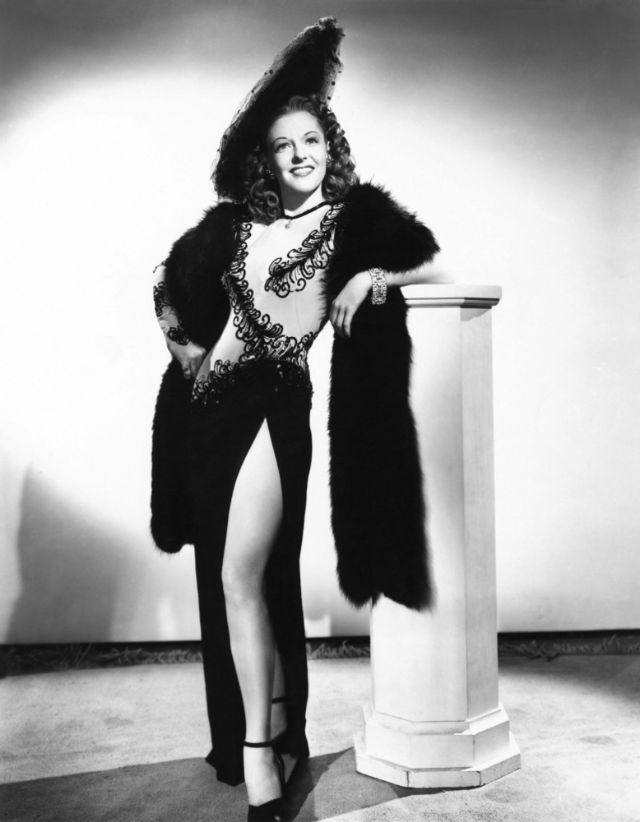
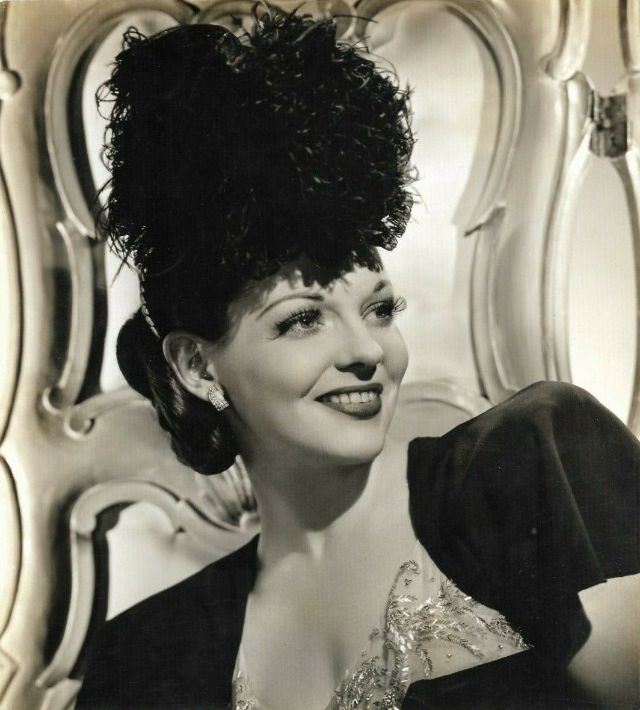
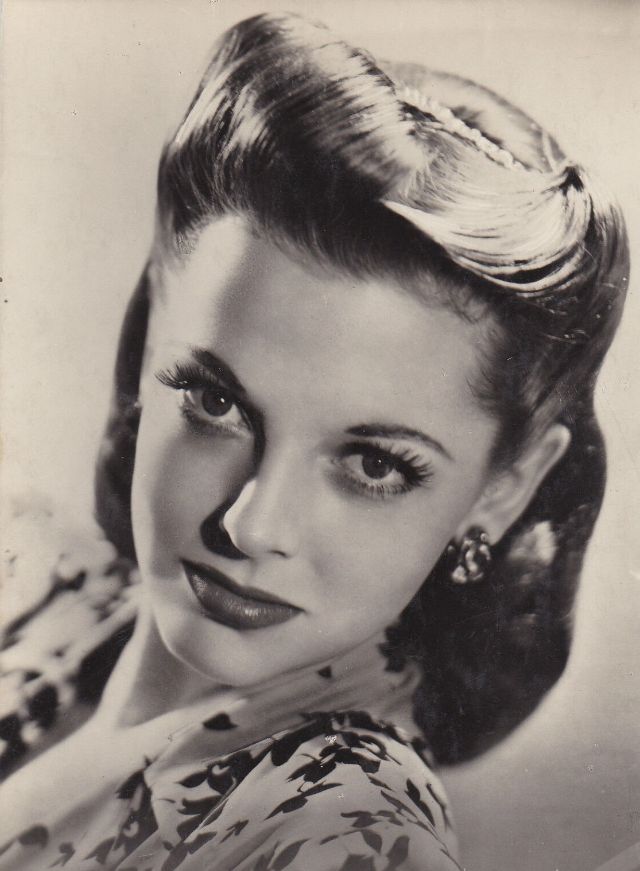
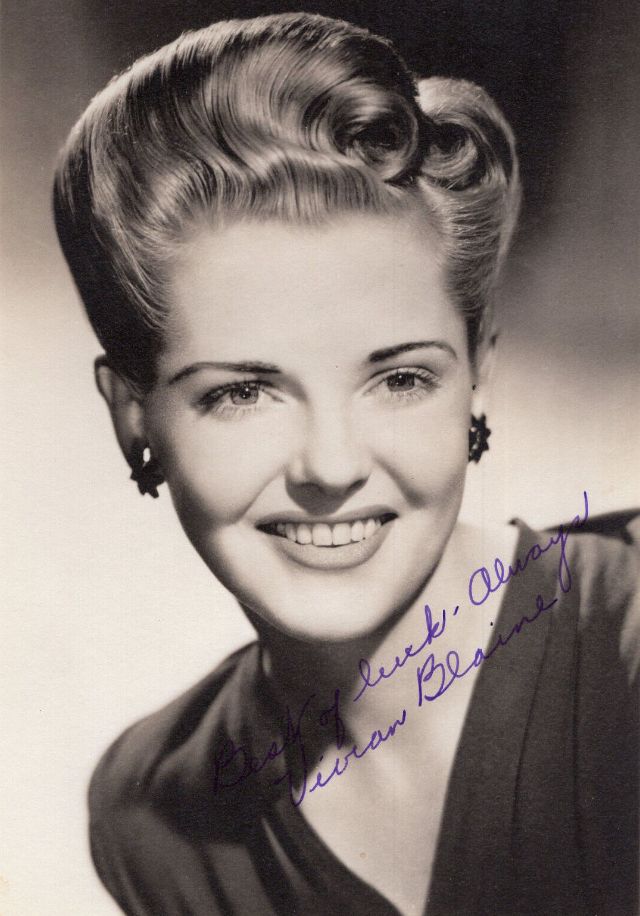
Born 1921 in Newark, New Jersey, American actress and singer Vivian Blaine was a touring singer with dance bands starting in 1937. At one point in the 1940s, she was the top-billed act at New York’s Copacabana nightclub.
Blaine was best known for originating the role of Miss Adelaide in the musical theater production of Guys and Dolls in 1950, as well as appearing in the subsequent film version, in which she co-starred with Marlon Brando, Jean Simmons and Frank Sinatra.
Blaine’s first marriage, to Manny Franks, lasted from 1945 to 1956. She then married Milton Rackmil, president of Universal Studios and Decca Records, in 1959, and recorded several albums prior to their 1961 divorce. In 1973, she married Stuart Clark.
In 1983, Blaine became the first celebrity to make public service announcements for AIDS-related causes. She made numerous appearances in support of the then-fledgling AIDS Project Los Angeles (APLA) and in 1983 recorded her cabaret act for AEI Records, which donated its royalties to the new group; this included the last recordings of her songs from Guys and Dolls. Her prior albums for Mercury Records have all subsequently been reissued on CD.
According to Blaine, she was a registered Democrat and a lifelong practicing Roman Catholic. She died of congestive heart failure in 1995, aged 74.
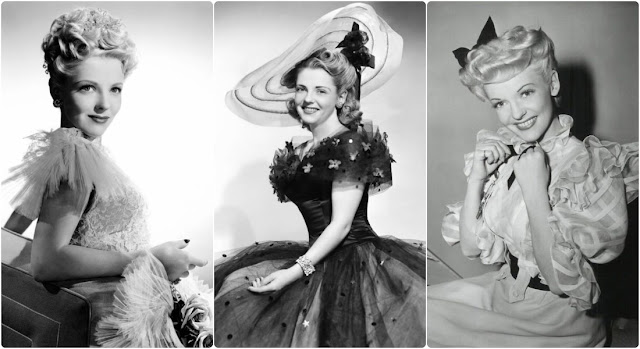
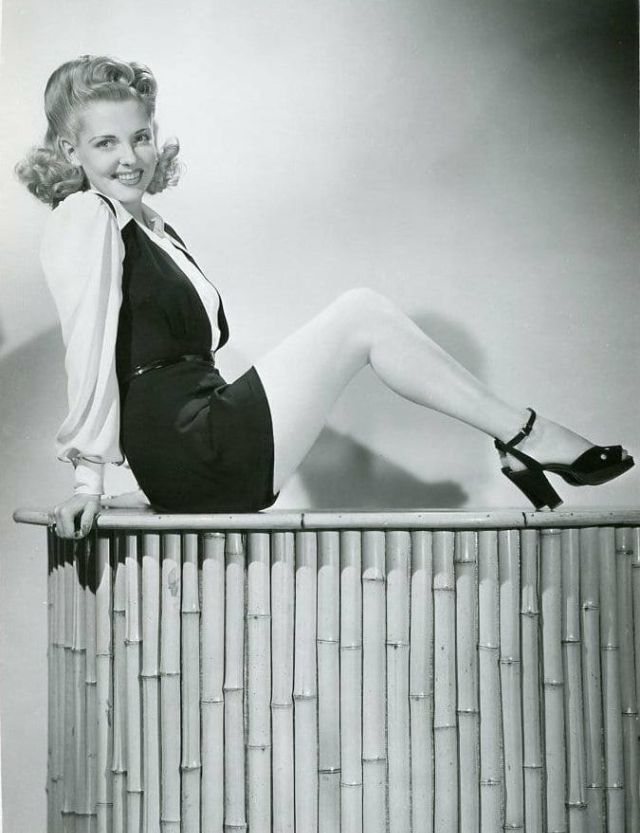
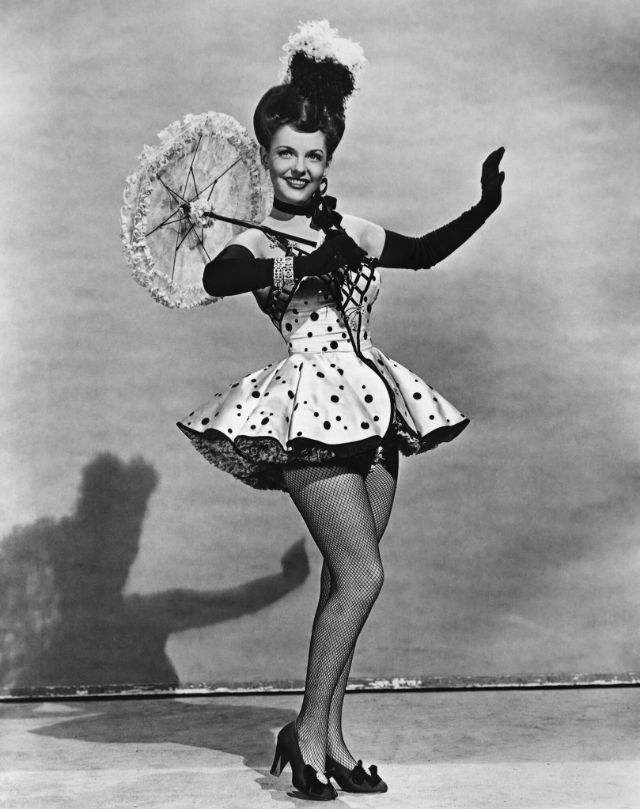
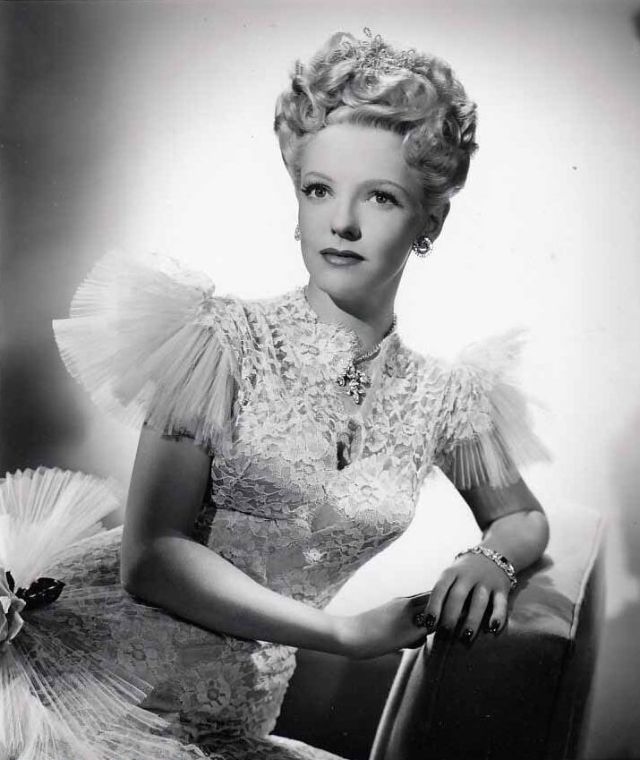
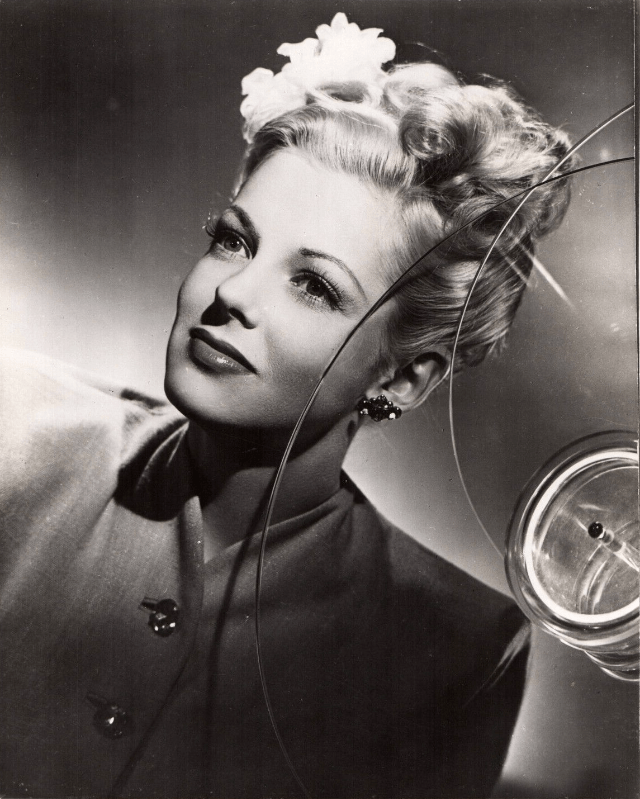
Take a look at these gorgeous photos to see the beauty of young Vivian Blaine in the 1940s.
Subscribe to Yesterday Today’s Blog to receive regular updates regarding new content:
The journey through university is not all roses and pleasures, which is why there are many other social activities that could help students relax, get to know each other and enjoy life beyond the four walls of the classroom. One of the most popular ways is through partying.
It’s Christmas time in 1970 and the students from Queen’s University in Belfast were living it up on Harp lager and tins of Guinness. The party was held on Wolseley Street, which would be called the University Quarter these days.
Subscribe to continue reading
Become a paid subscriber to get access to the rest of this post and other exclusive content.
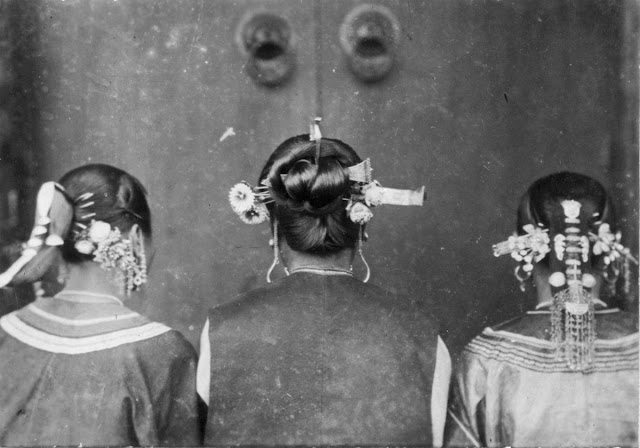
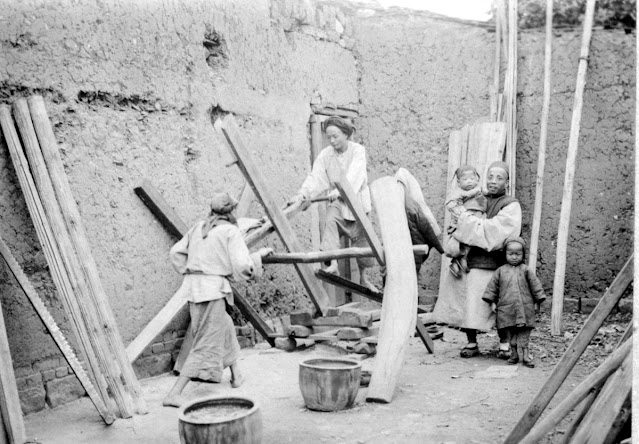
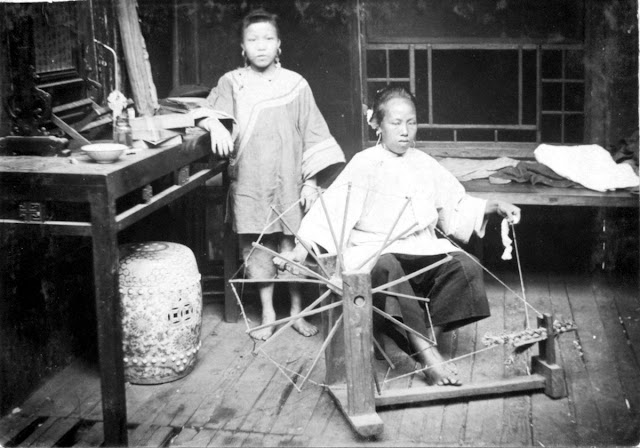
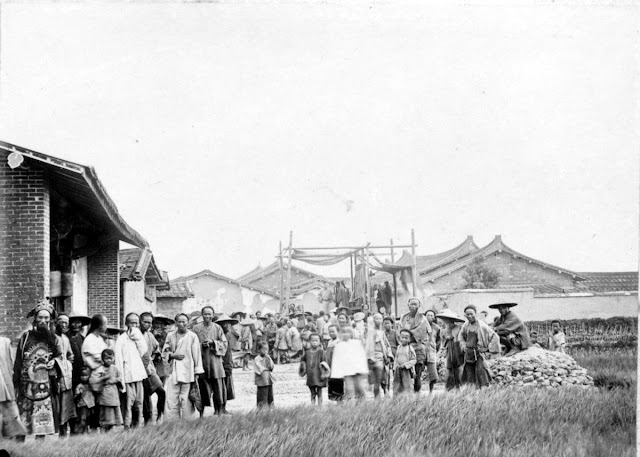
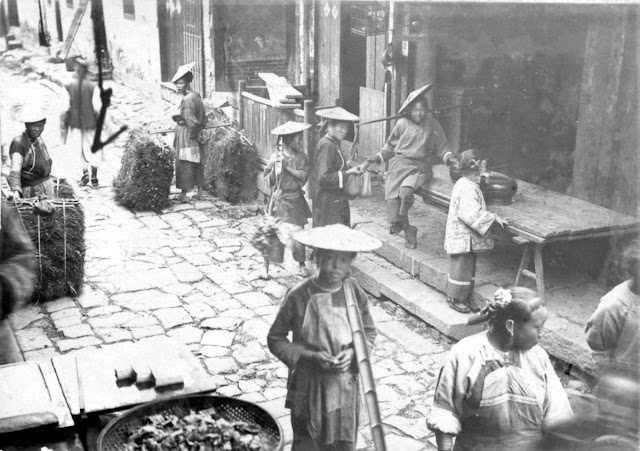
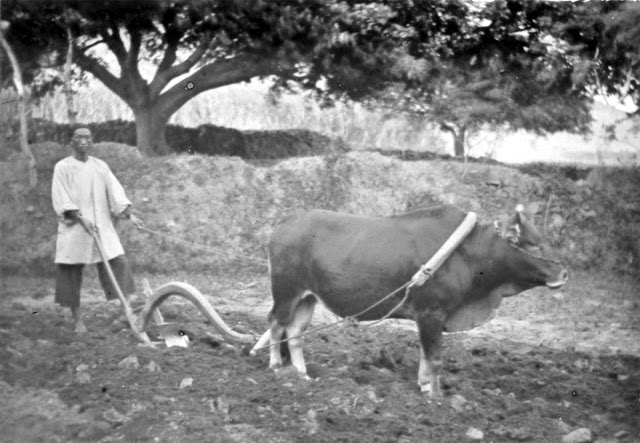
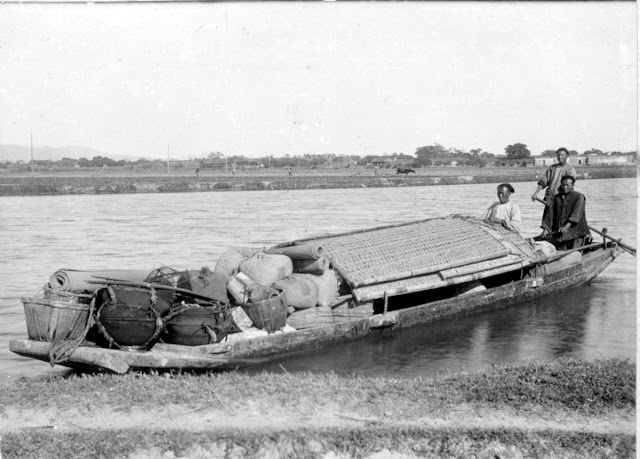
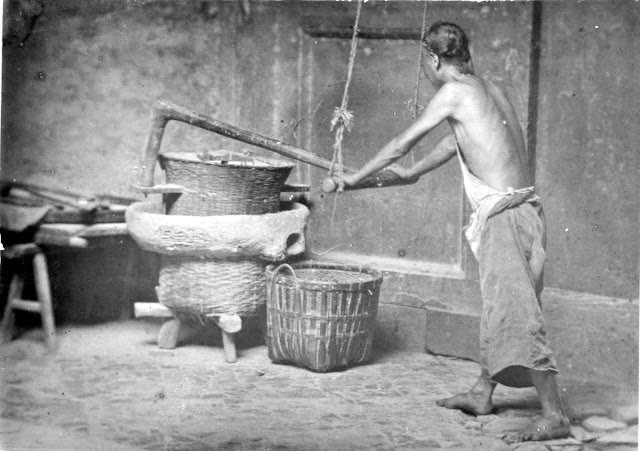
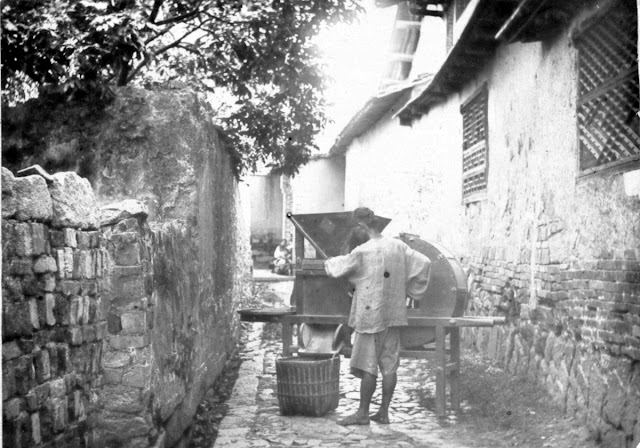
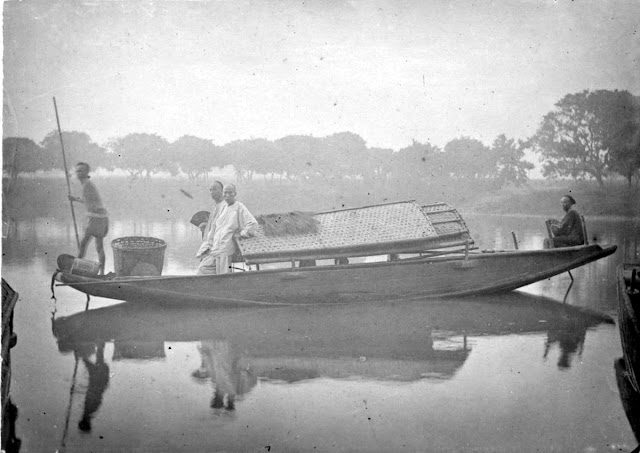
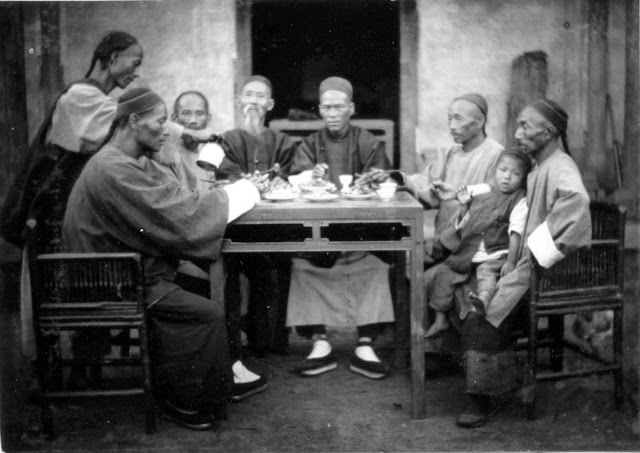
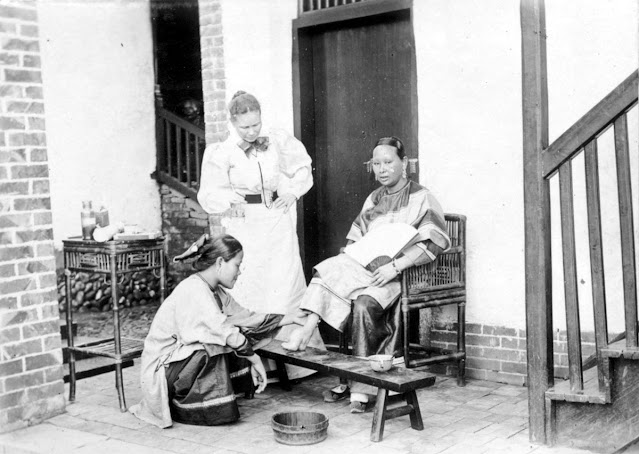
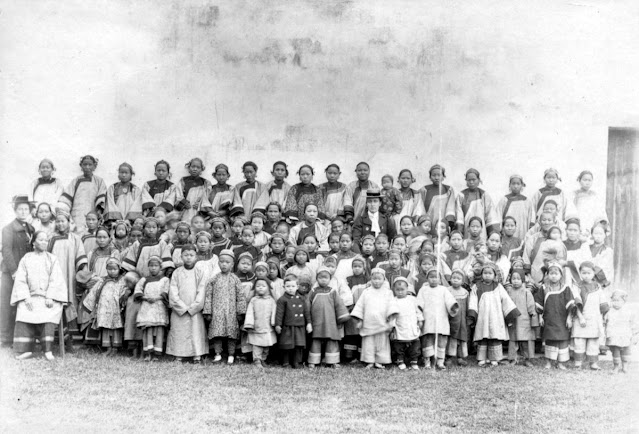
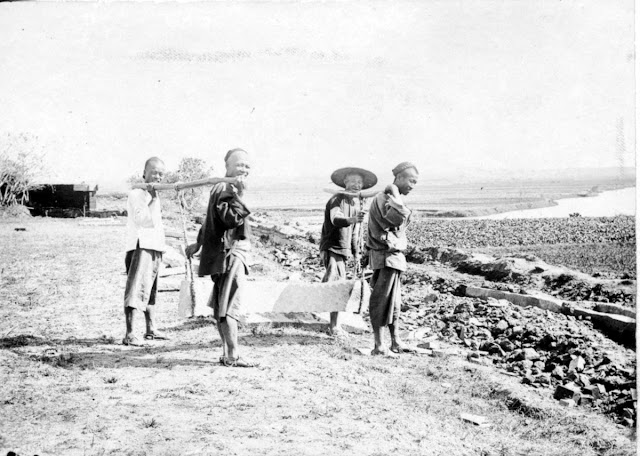
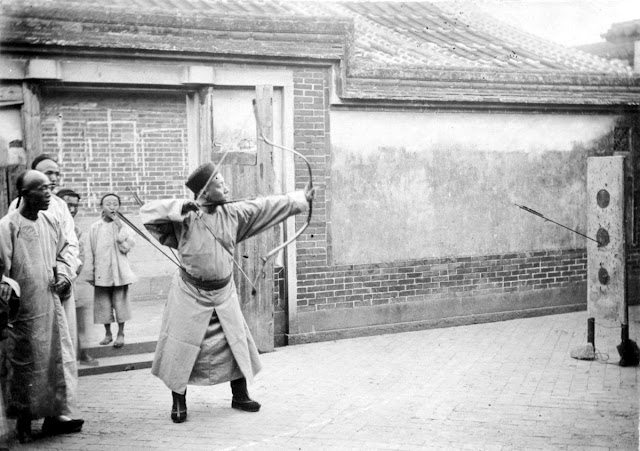
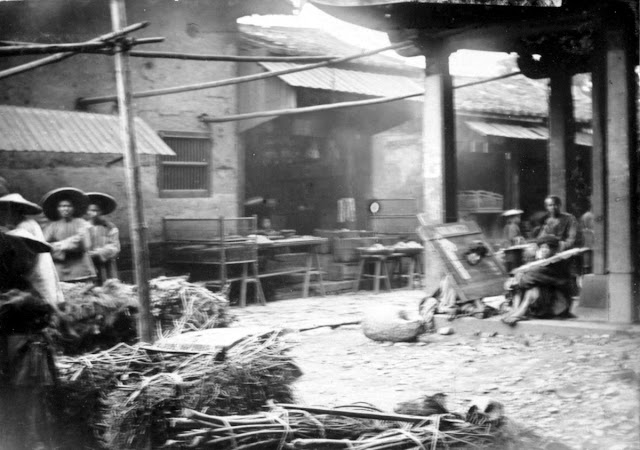
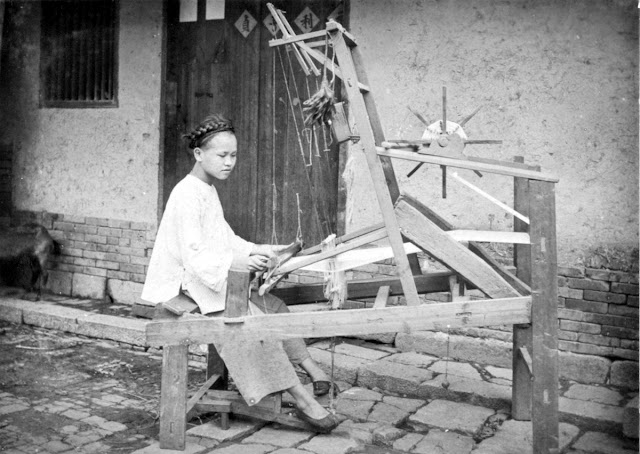
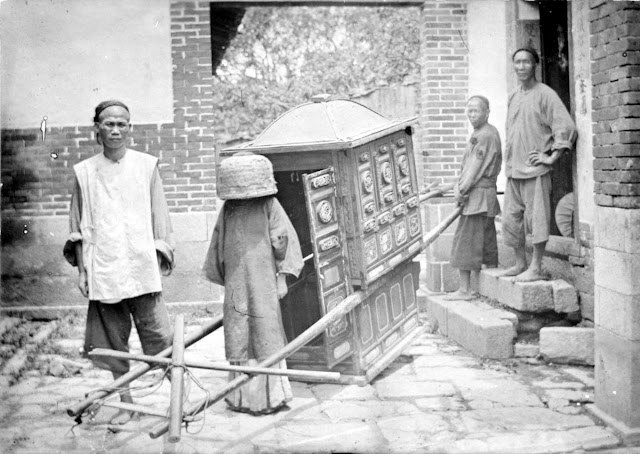
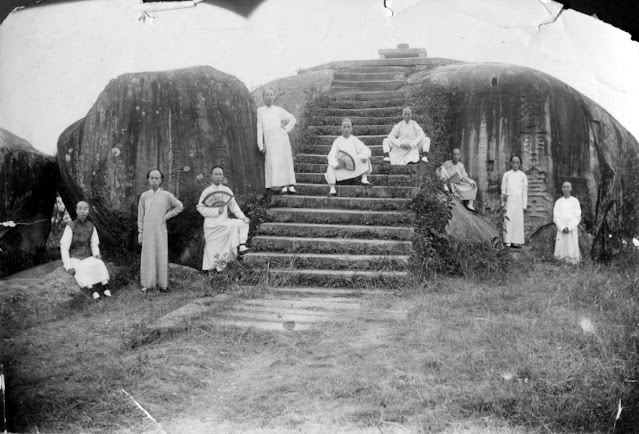
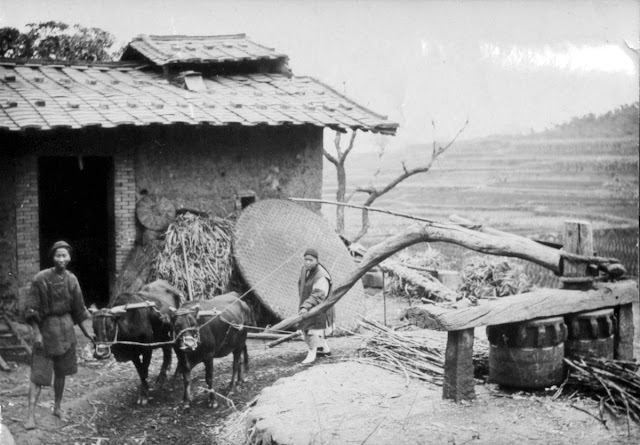
William Charles White was an Anglican Bishop educated at Wycliffe College in Toronto and ordained as an Anglican Minister in 1896. He worked as a missionary in China from 1909-1934, and became the first Anglican bishop of Henan Province in 1910.
During his time in China, he developed a great interest in Chinese culture and literature and became a collector for the Royal Ontario Museum. Bishop White was also Professor of Chinese Studies at the University of Toronto until 1948.
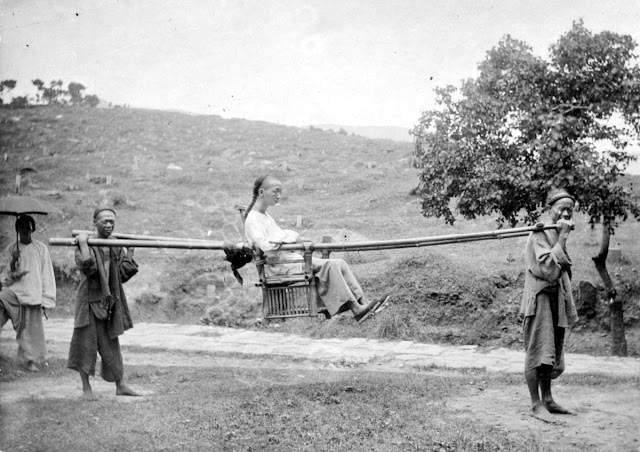
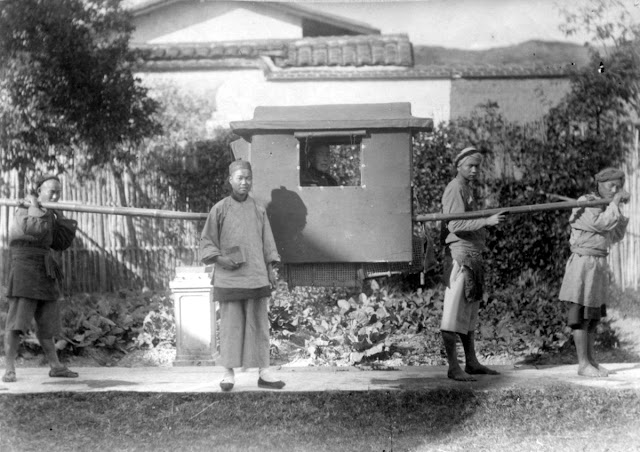
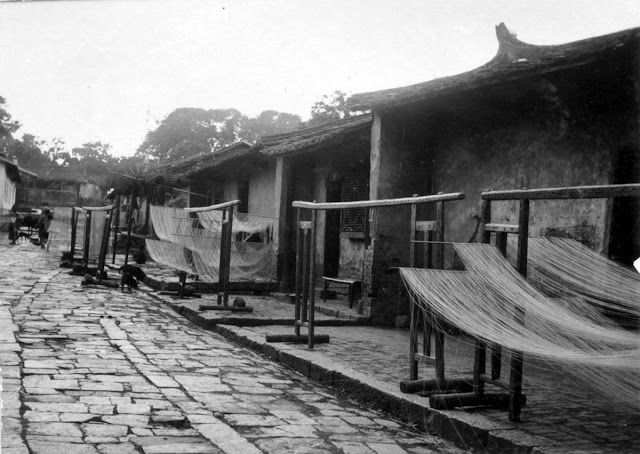
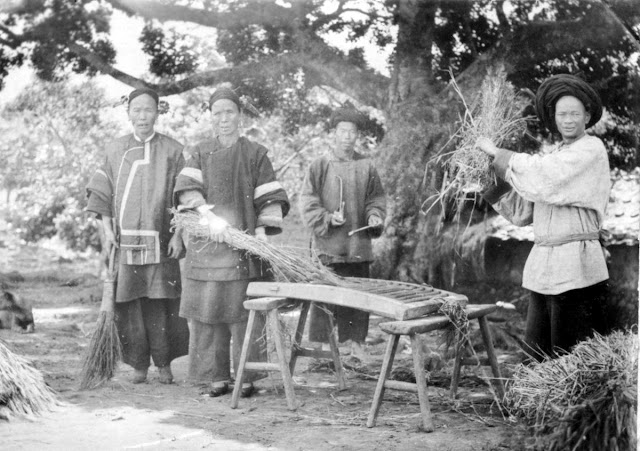
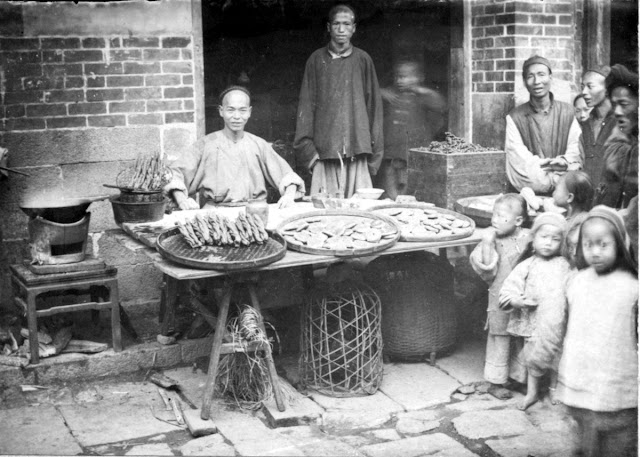
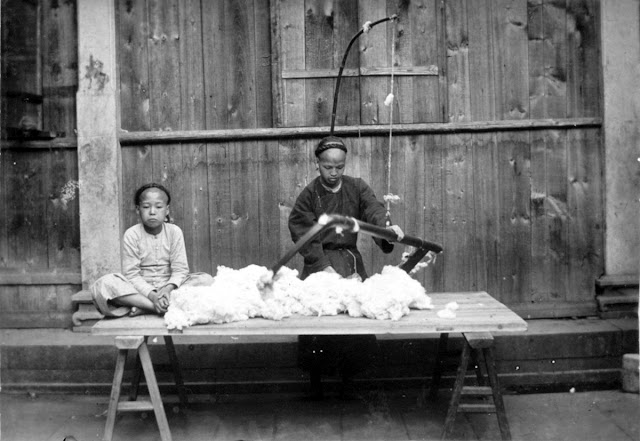
The photographs in these sets depict life in China and missionary work from the late 1800s to the early 1900s, especially in Hangzhou (Zhejiang Province) and Fuzhou (Fujian Province). Of special interest are photographs of Chinese craftspeople at work, and photographs of the graves of victims of the Kucheng Massacre at the mission cemetery of Fuzhou.
Subscribe to Yesterday Today’s Blog to receive regular updates regarding new content:
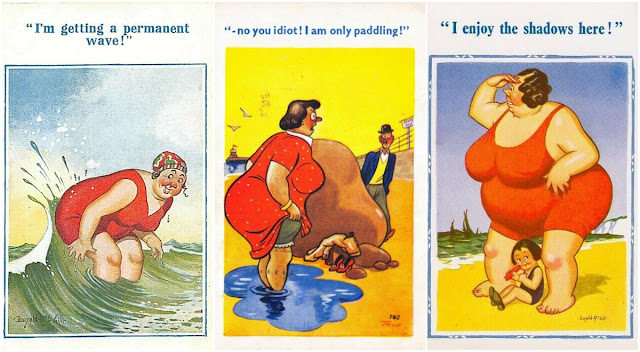
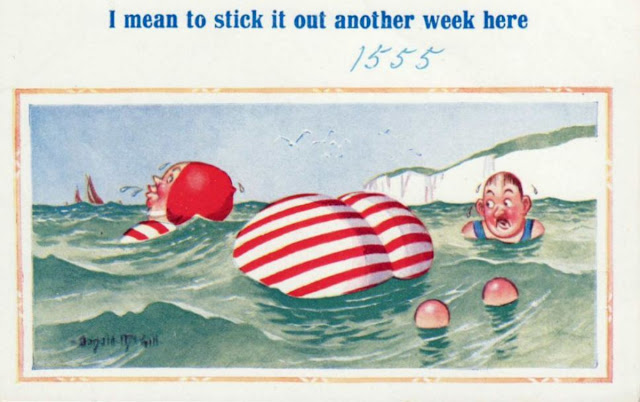
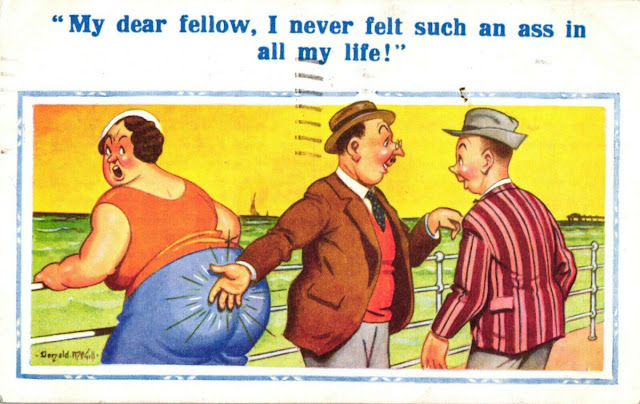
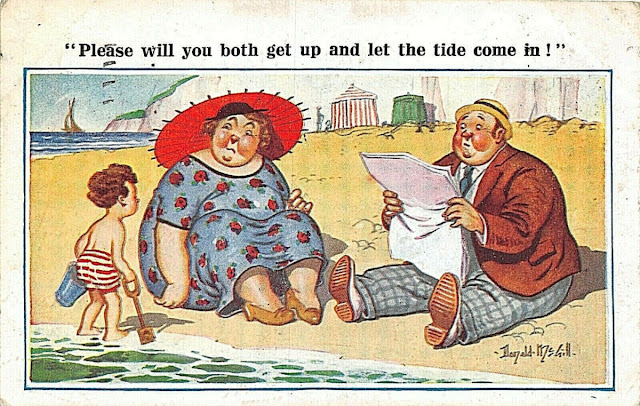
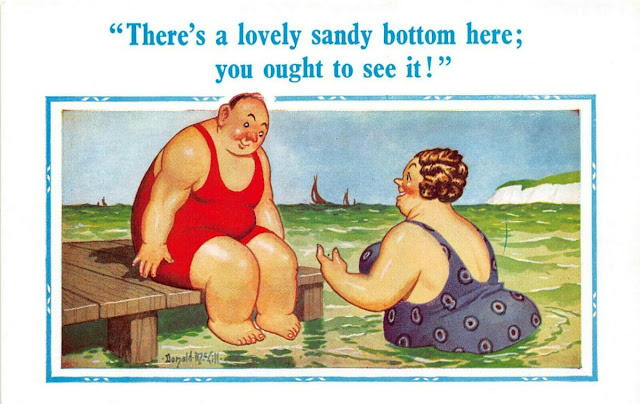
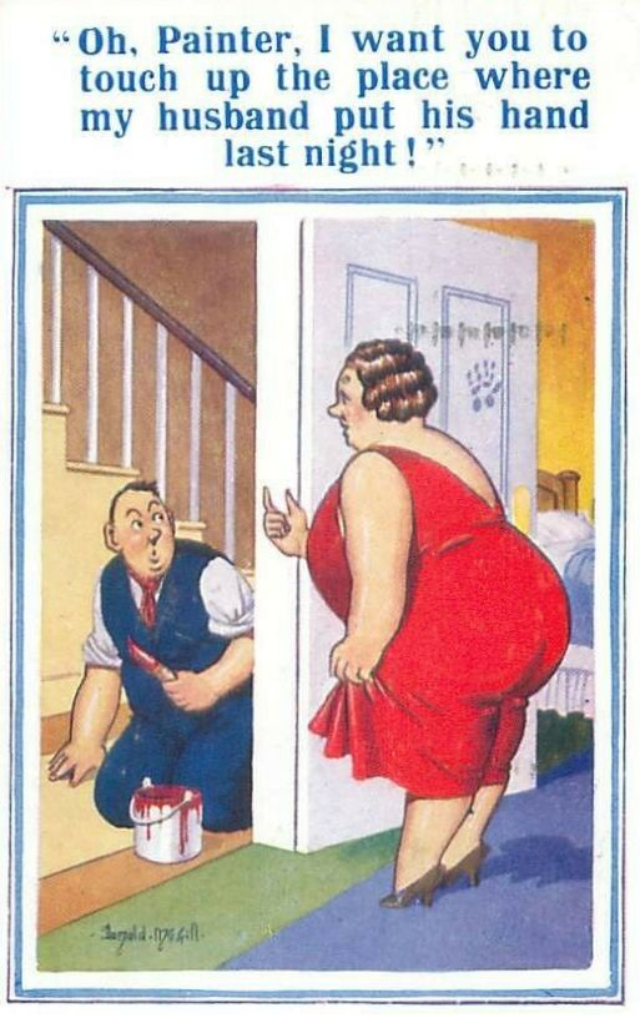
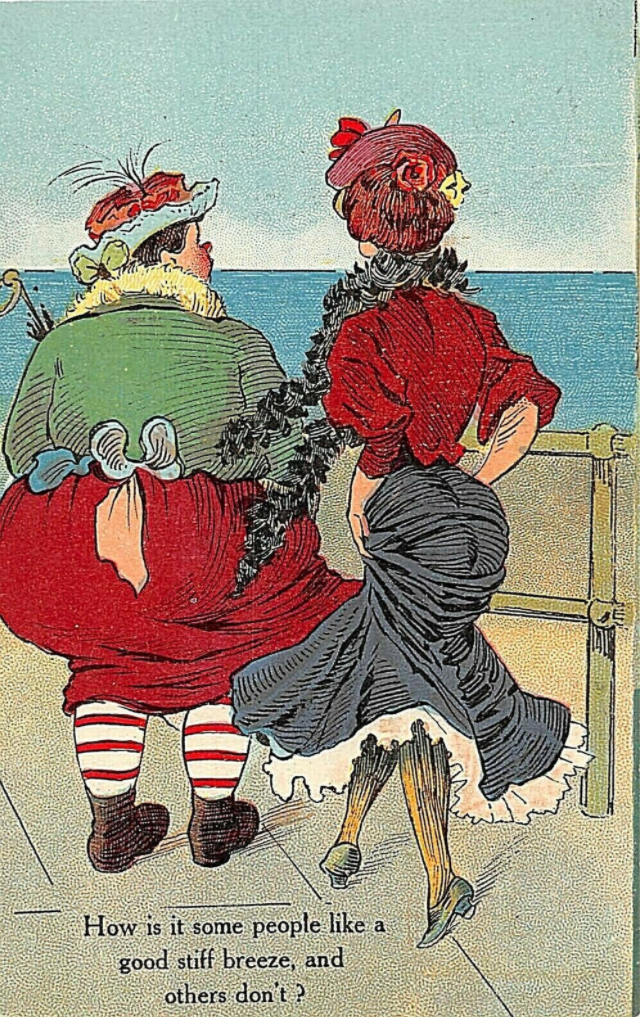
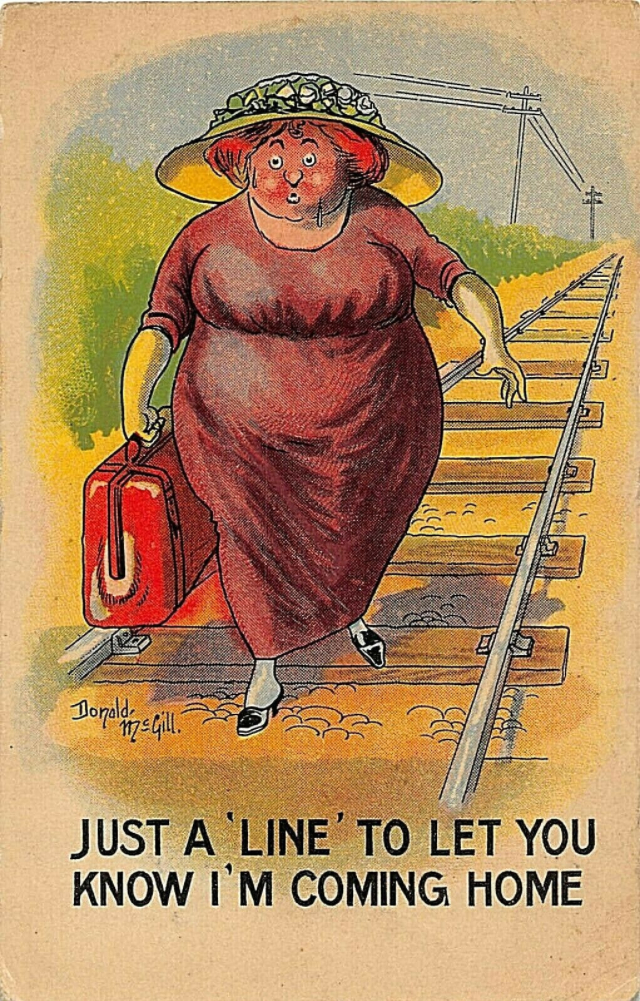
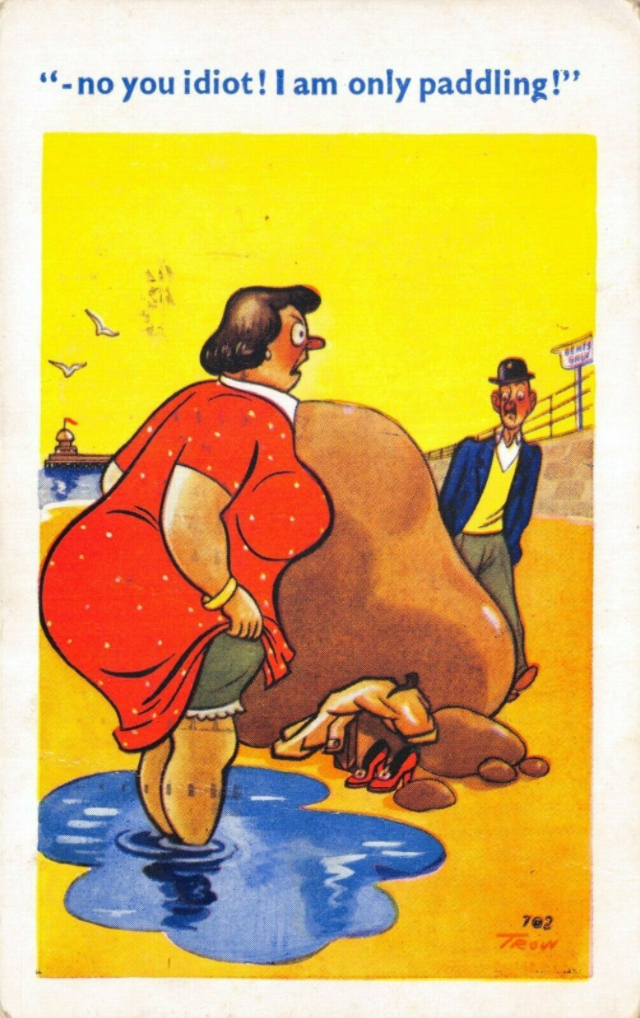
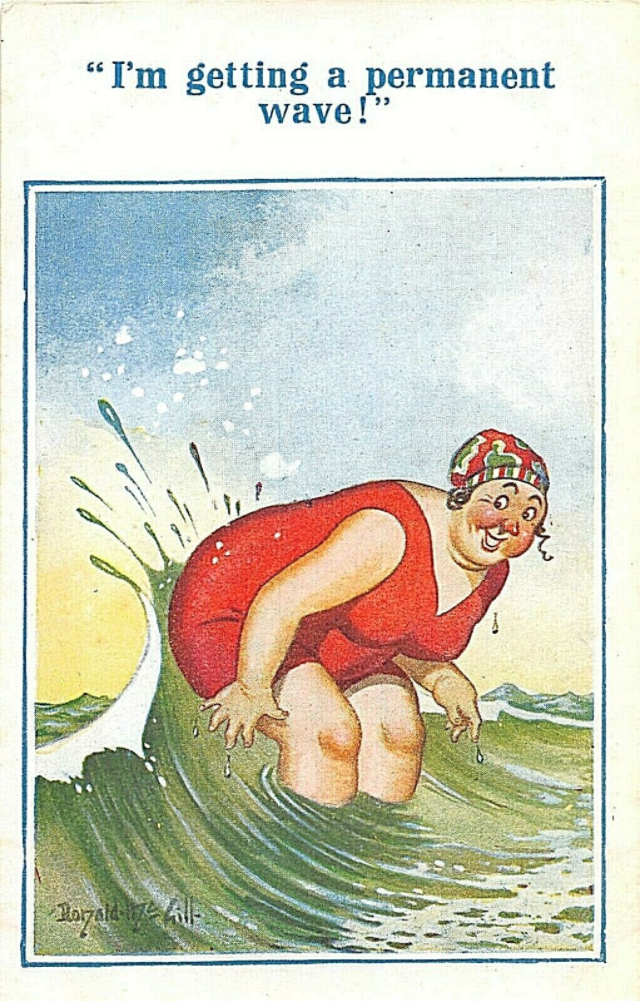
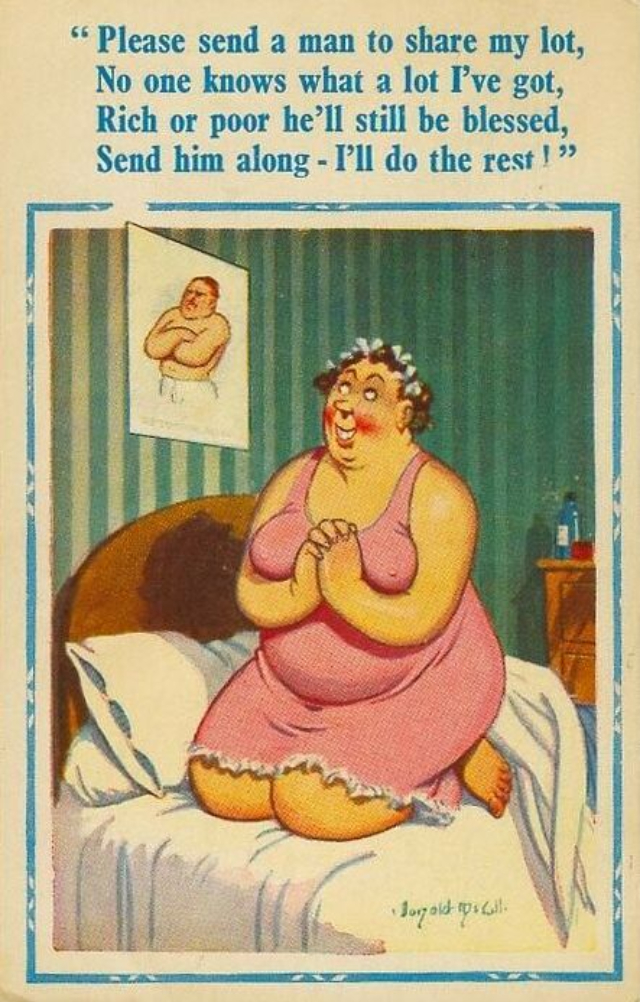
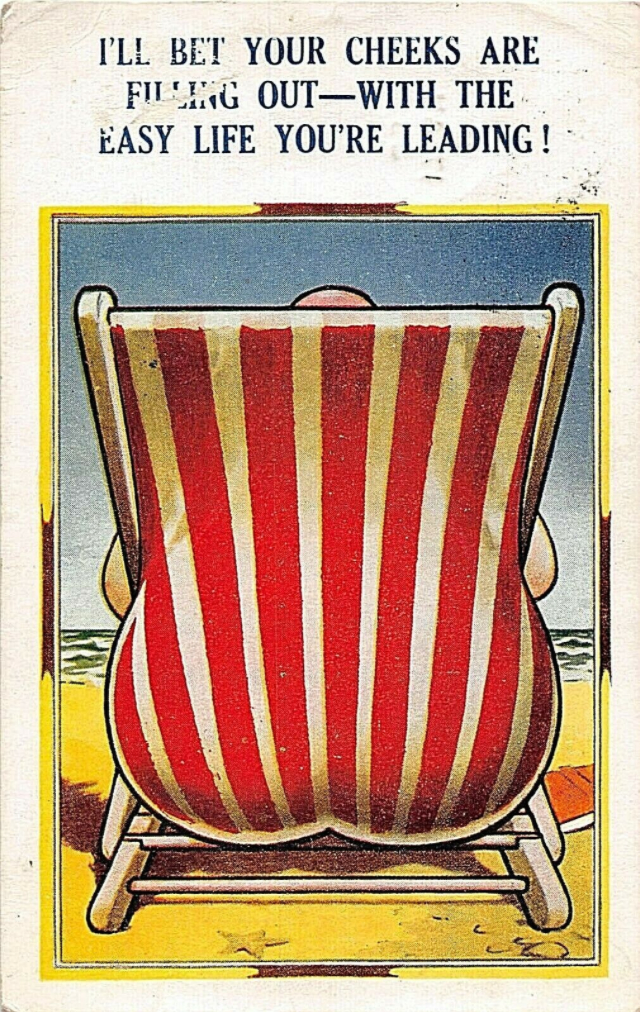
Donald McGill (January 28, 1875 – October 13, 1962) was an English graphic artist whose name has become synonymous with the genre of saucy postcards, particularly associated with the seaside (though they were sold throughout the UK). The cards mostly feature an array of attractive young women, fat old ladies, drunken middle-aged men, honeymoon couples and vicars. He has been called “the king of the saucy postcard,” and his work is collected and appreciated for his artistic skill, its power of social observation and earthy sense of humor. Even at the height of his fame he only earned three guineas a design, but today his original artwork can fetch thousands of pounds.
McGill spent virtually the whole of his career creating the distinctive color-washed drawings which were then reproduced as postcards. He ranked his output according to their vulgarity as mild, medium and strong, with strong being much the best sellers. His family, however, was steadfastly respectable. He said of his two daughters, “They ran like stags whenever they passed a comic postcard shop.”
During the First World War he produced anti-German propaganda in the form of humorous postcards. They reflected on the war from the opinion, as he saw it, of the men serving, and the realities facing their families at home. Cards dealing with the so-called “home front” covered issues such as rationing, home service, war profiteers, spy scares and interned aliens. Recruitment and “slackers” were other topics covered.
In 1941, author George Orwell wrote an essay on McGill’s work entitled “The Art of Donald McGill”. Orwell concluded that in spite of the vulgarity and the low artistic merits of the cards, he would be sorry to see them go.
Approaching 80, McGill fell foul of several local censorship committees, which culminated in a major trial in Lincoln on July 15, 1954 for breaking the Obscene Publications Act 1857. He was found guilty and fined £50 with £25 costs. The wider result was a devastating blow to the saucy postcard industry; many postcards were destroyed as a result, and retailers cancelled orders. Several of the smaller companies were made bankrupt, as they had traded on very small margins.
In the late 1950s, the level of censorship eased off and the market recovered. In 1957, McGill gave evidence before a House of Commons select committee set up to amend the 1857 Act.
McGill produced an estimated 12,000 designs, of which 200 million copies are estimated to have been printed. He died in 1962 with all his designs for the 1963 season already prepared. He was buried in Streatham Park Cemetery in an unmarked grave. Despite their wide circulation, McGill earned no royalties from his designs; in his will, his estate was valued at just £735.
Subscribe to Yesterday Today’s Blog to receive regular updates regarding new content:
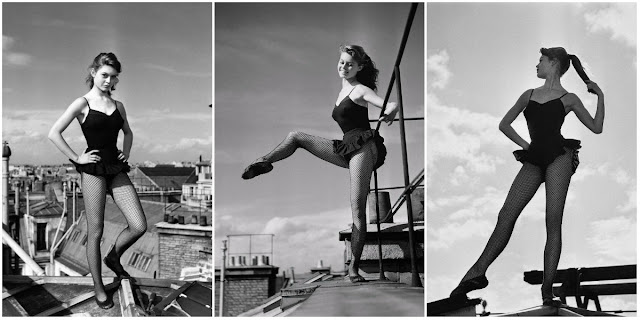
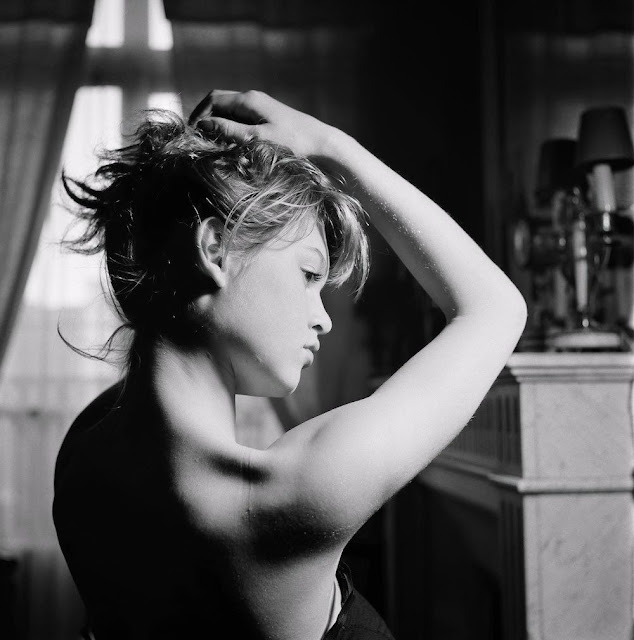
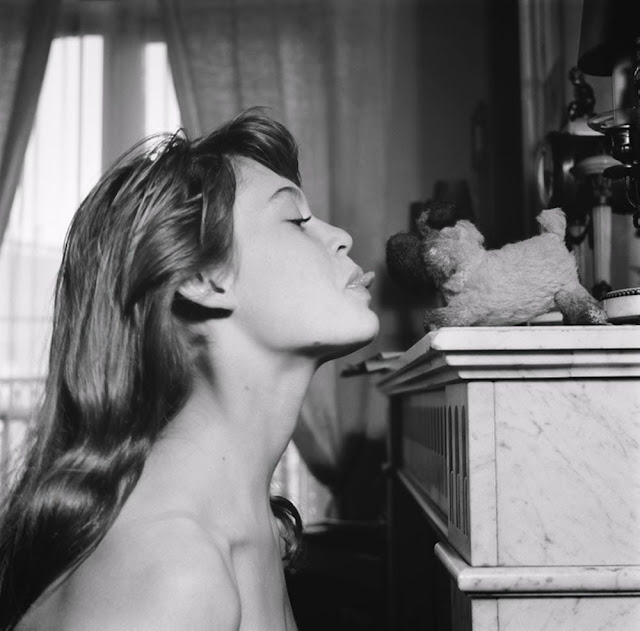
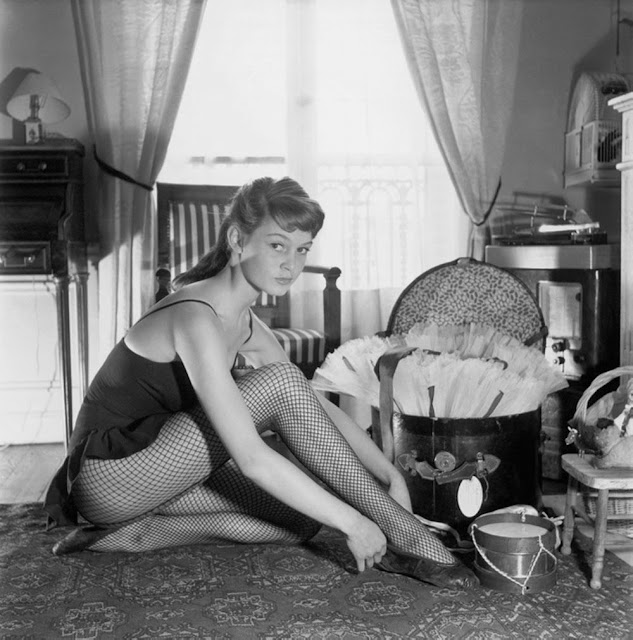
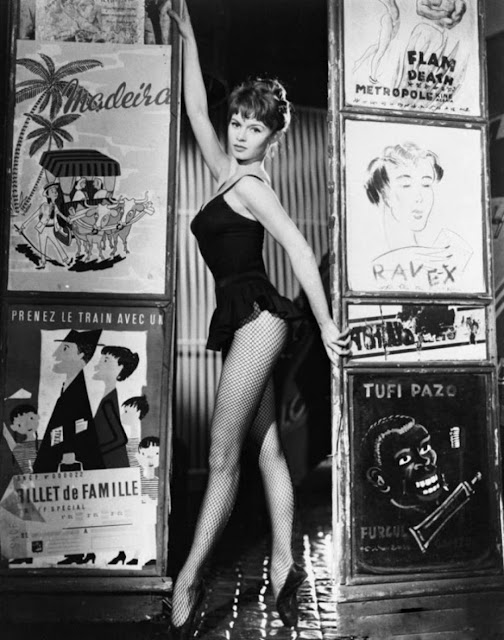
Brigitte Bardot was 18 years old when these pictures were taken in 1952 by photographer Walter Carone. She had excelled in dance as a child and won a place at the Conservatoire de Paris, where she was trained in classical French ballet.
Her modeling career began in 1947. By 1952 she had already graced the cover of ELLE magazine. That year was pivotal for Bardot. It saw her cinema acting debut as well as her wedding to director Roger Vadim, whom she met while babysitting. She would later divorce Vadim and marry again three times.
Subscribe to Yesterday Today’s Blog to receive regular updates regarding new content:
Life was good during the late 1960s and early 1970s. Railroad provided employment, church’s influenced a lot of people, heavy duty industry was still in the city, keeping people busy and employed kept a lot of people out of trouble.
On Diversey Parkway and Halsted Street, there used to be all kinds of small family-owned businesses. There were bakeries, butcher shops, greasy-spoon diners, liquor stores, old-fashioned barber shops, and tiny drugstores that had only two or three aisles.
Nowadays, all those businesses are gone, and have been replaced with trendy restaurants, upscale boutiques, expensive wine shops, stores that sell fancy furniture and stores that sell fancy glassware. Also, there’s a spa in almost every block. Those businesses cater to the yuppies who now live there.
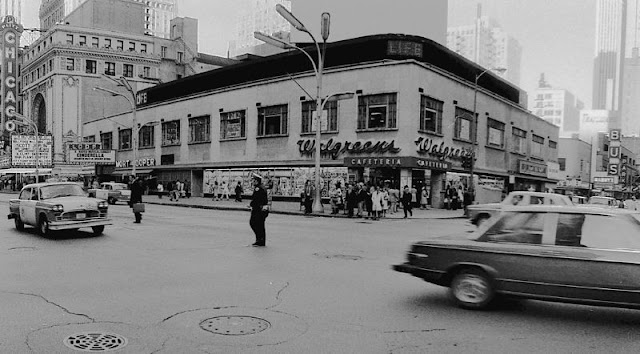
These amazing black and white photos show what Chicago looked like in the early 1970s.
Subscribe to continue reading
Become a paid subscriber to get access to the rest of this post and other exclusive content.
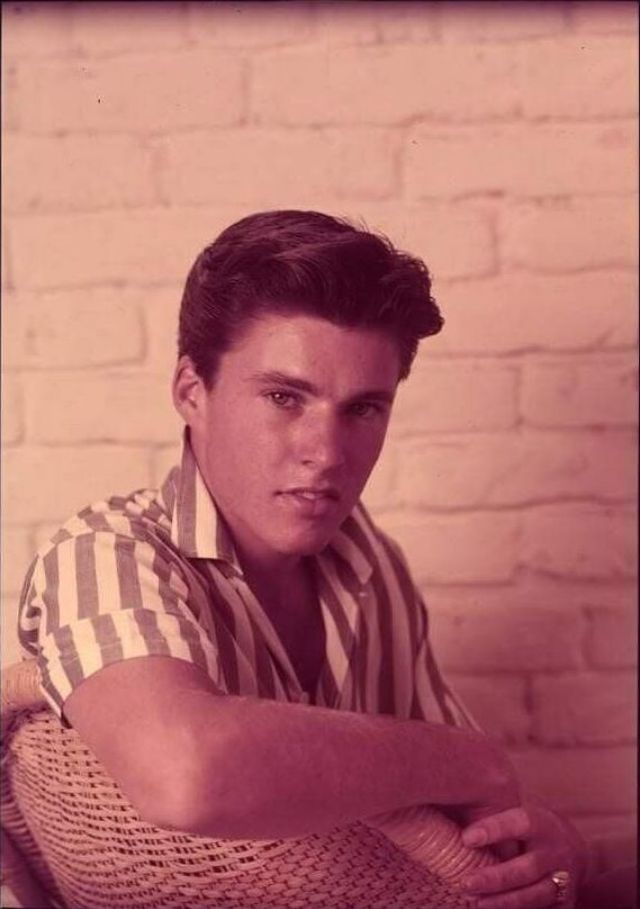
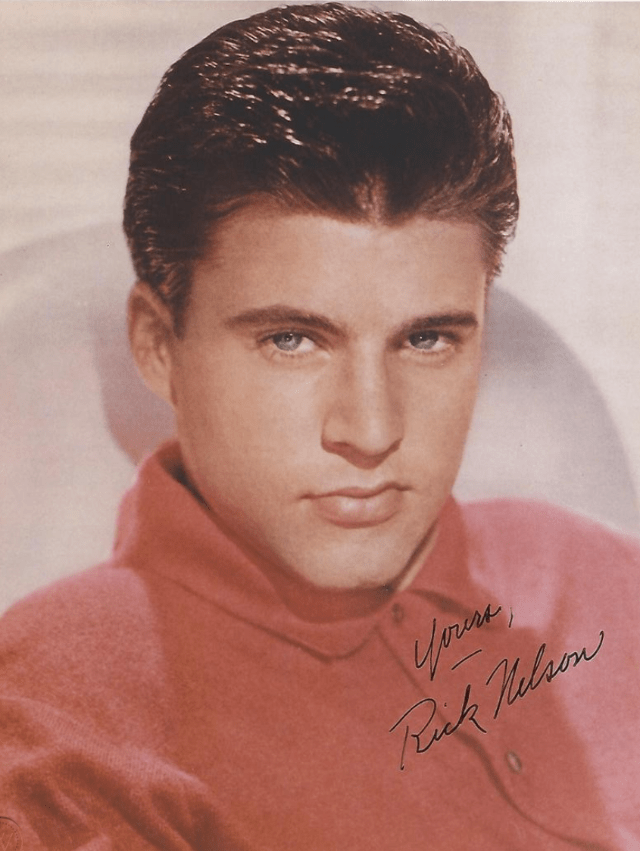
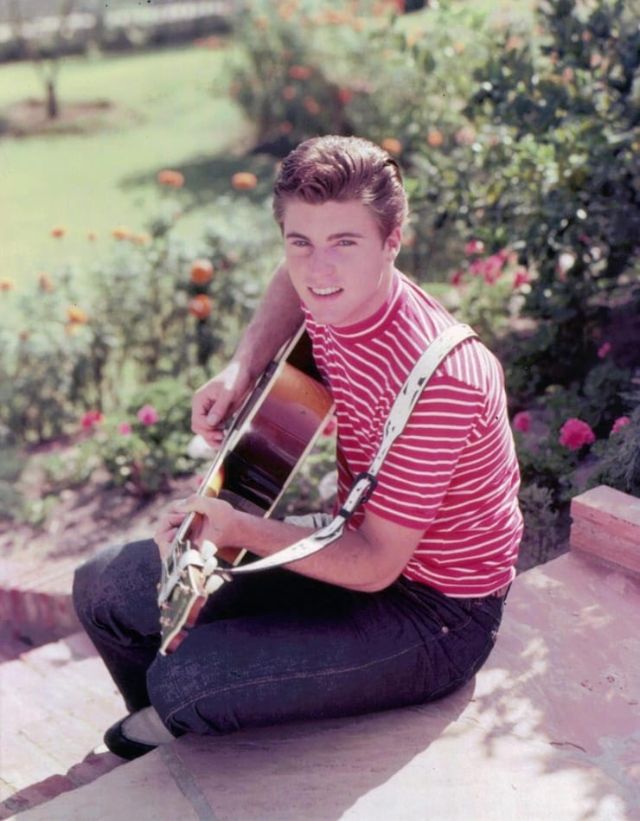
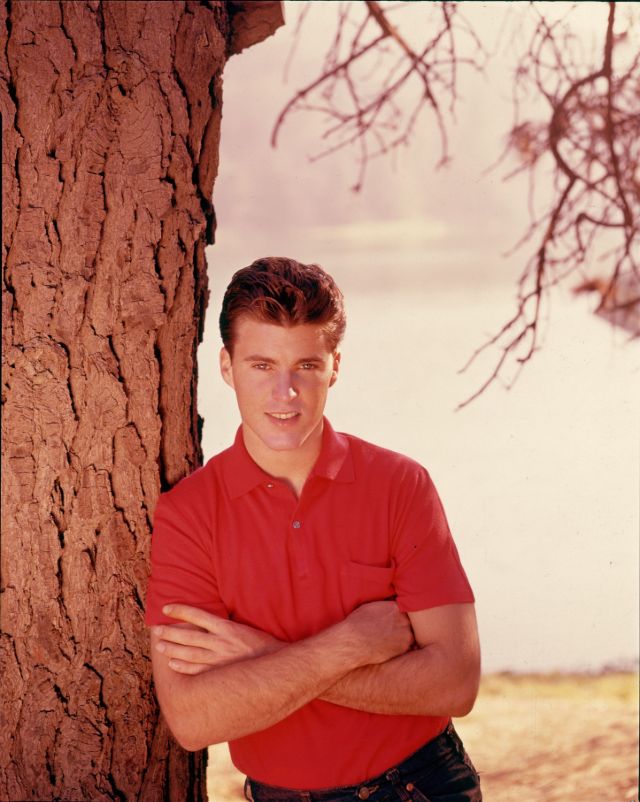
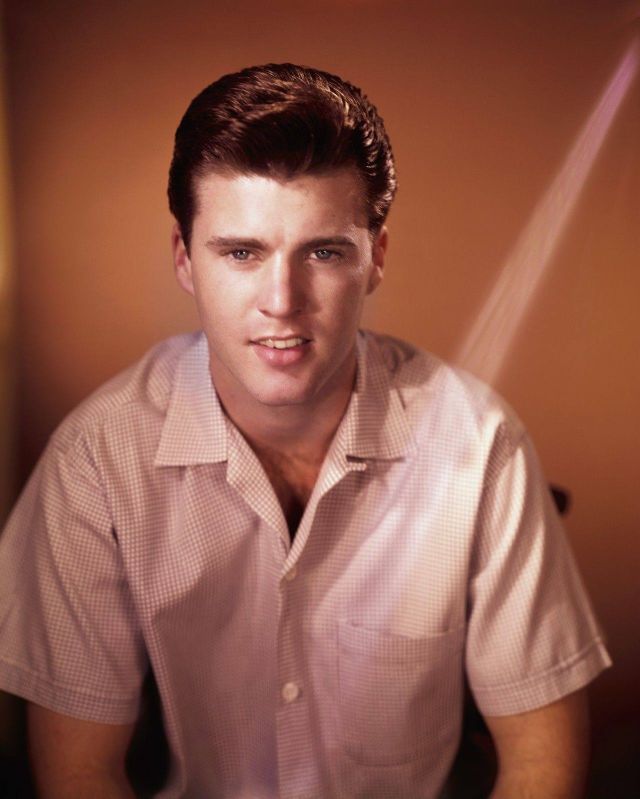
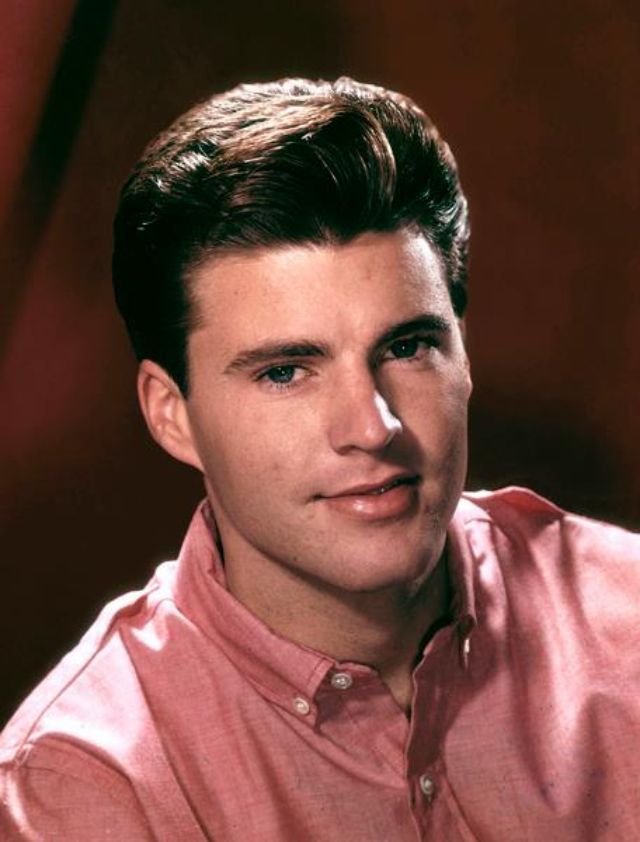
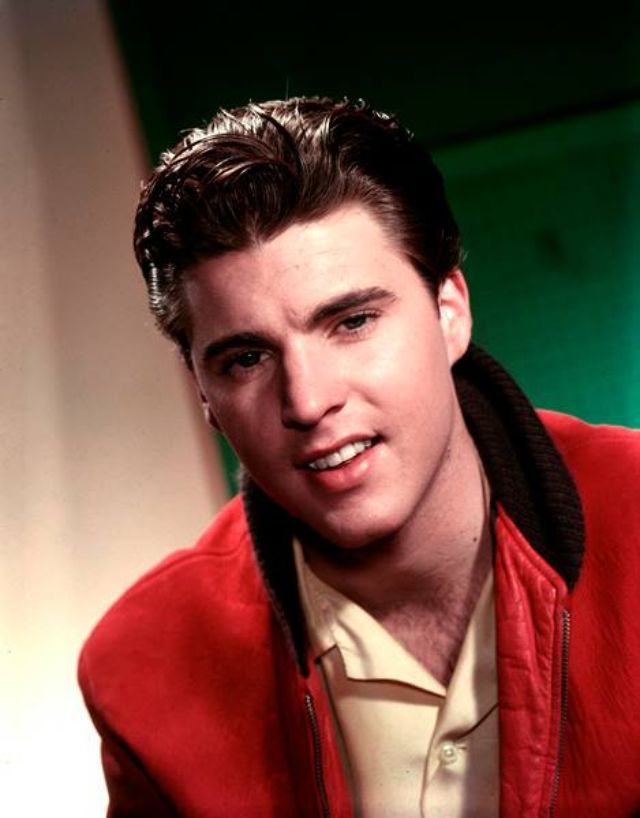
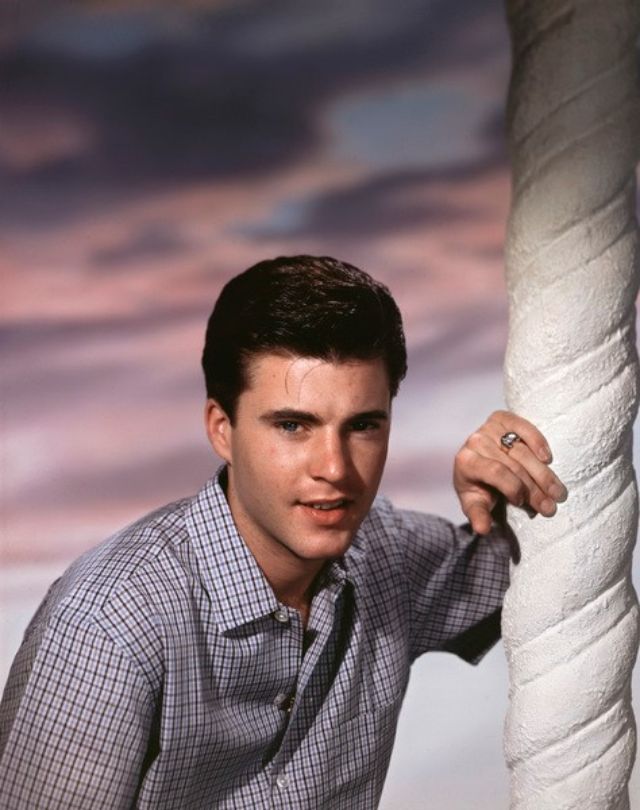
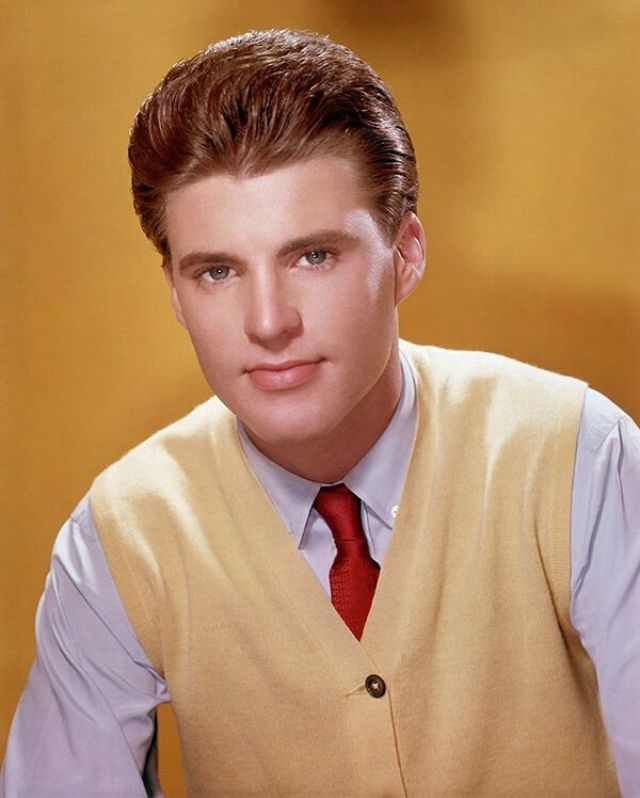
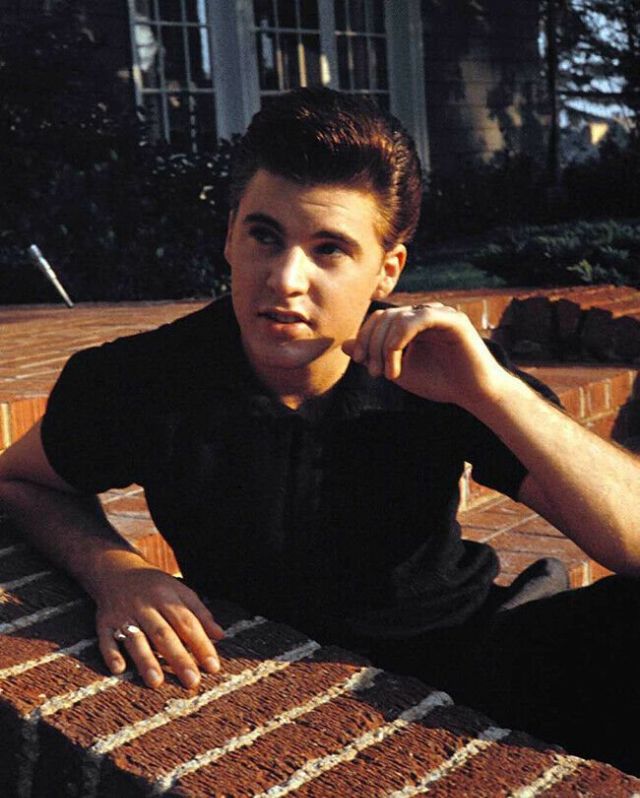
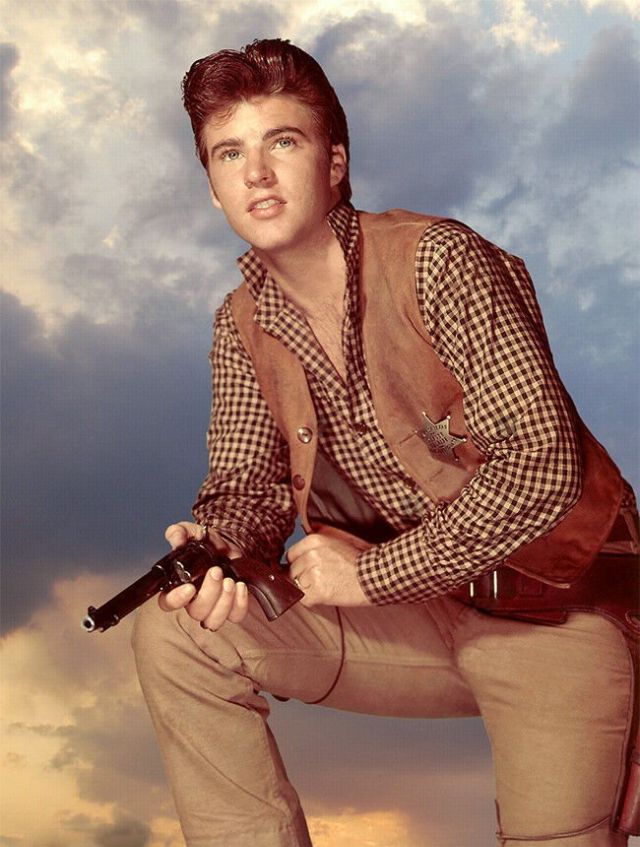
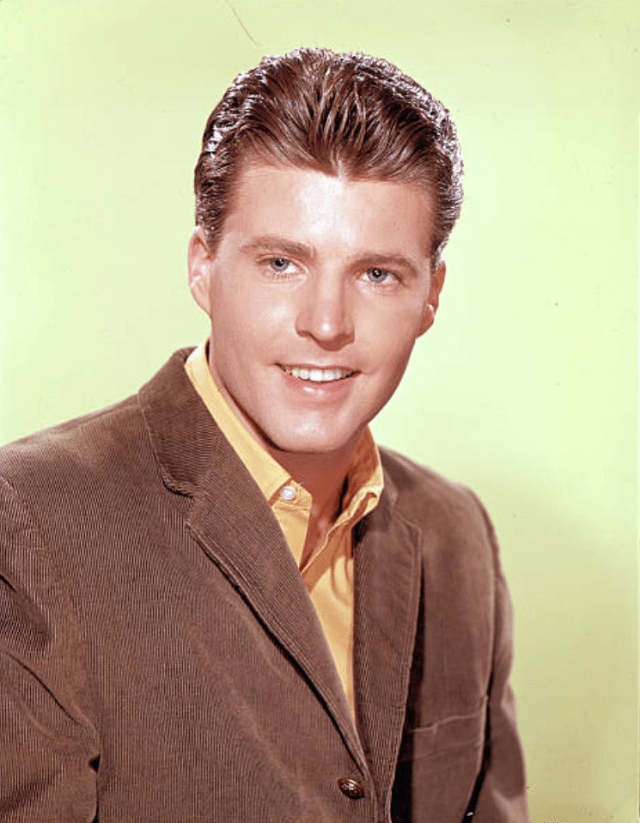
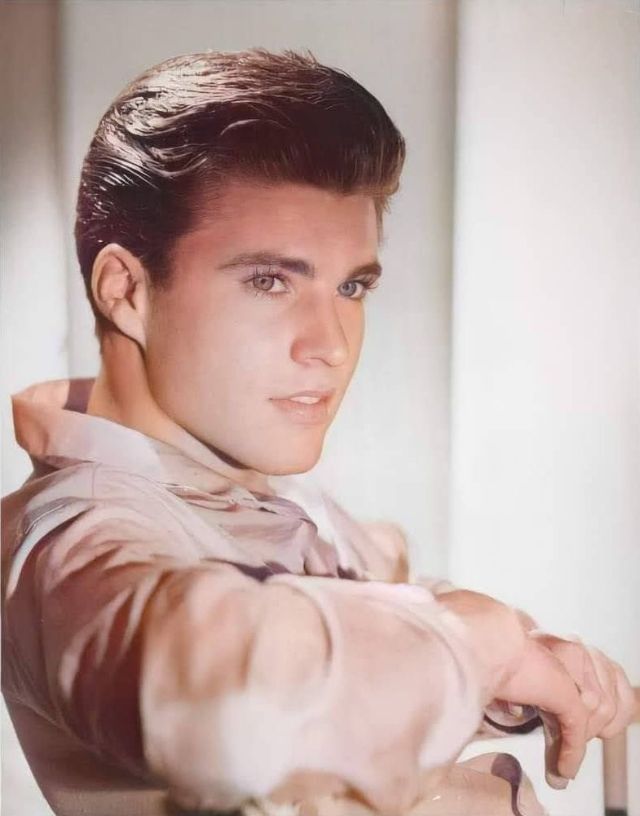
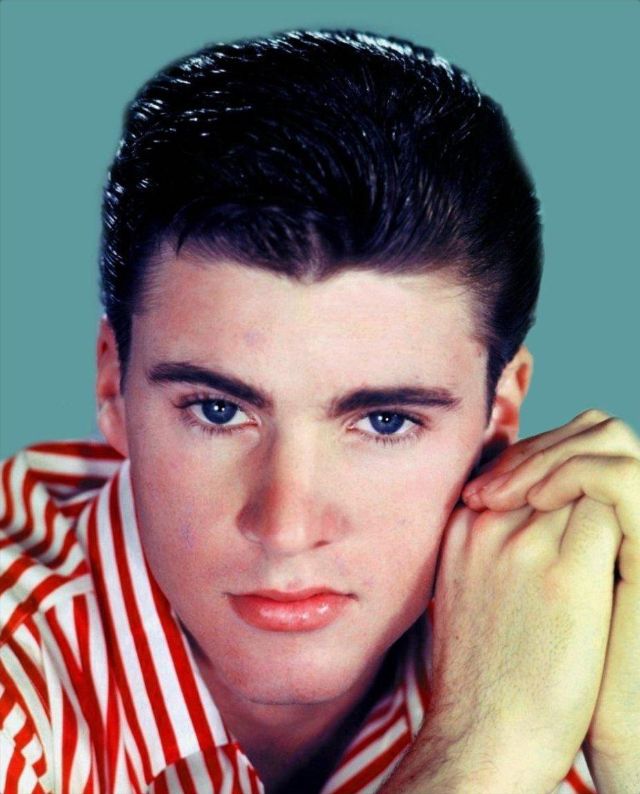
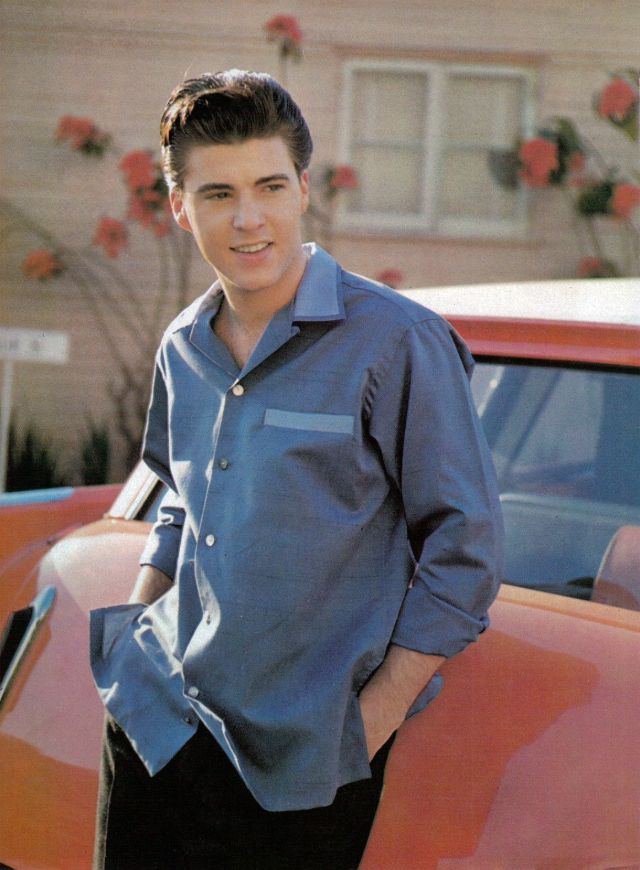
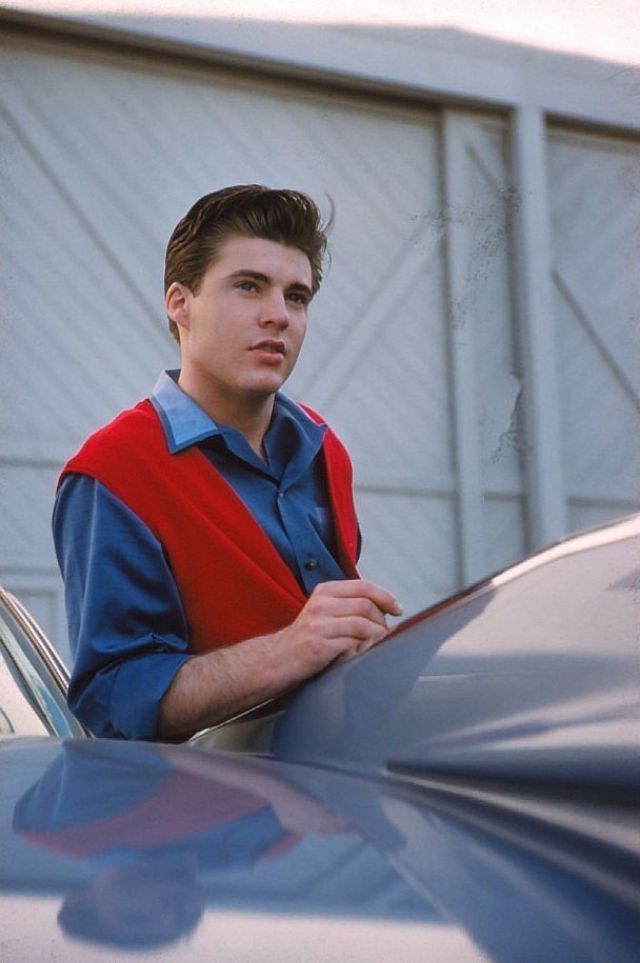
Born 1940 in Teaneck, New Jersey, American singer, musician, and actor Ricky Nelson began his entertainment career in 1949, playing himself in the radio sitcom series, The Adventures of Ozzie and Harriet. In 1952, he appeared in his first feature film, Here Come the Nelsons. In 1957, he recorded his first single, debuted as a singer on the television version of the sitcom, and released the No. 1 album titled Ricky. In 1958, Nelson released his first #1 single, “Poor Little Fool”, and in 1959 received a Golden Globe nomination for “Most Promising Male Newcomer” after starring in Rio Bravo.
The expression “teen idol” was first coined to describe Nelson, and his fame as both a recording artist and television star also led to a motion picture role co-starring alongside John Wayne, Dean Martin and Angie Dickinson in Howard Hawks’ western feature film Rio Bravo (1959).
Nelson placed 53 songs on the Billboard Hot 100, and its predecessors, between 1957 and 1973, including “Poor Little Fool” in 1958, which was the first number one song on Billboard magazine’s then-newly created Hot 100 chart. He recorded 19 additional top ten hits and was inducted into the Rock and Roll Hall of Fame on January 21, 1987.
Nelson died in a plane crash on New Year’s Eve 1985, flying from Guntersville, Alabama, to Dallas, Texas, for a concert. The plane he was on, a Douglas DC-3, had a history of mechanical problems. All seven passengers, including Blair, died. Only the two pilots survived.
In 1994, a Golden Palm Star on the Palm Springs, California, Walk of Stars was dedicated to him. In 1996, Nelson was ranked No. 49 on TV Guide’s 50 Greatest TV Stars of All Time. In 2004, Rolling Stone ranked Nelson #91 on their list of the 100 Greatest Artists of All Time.
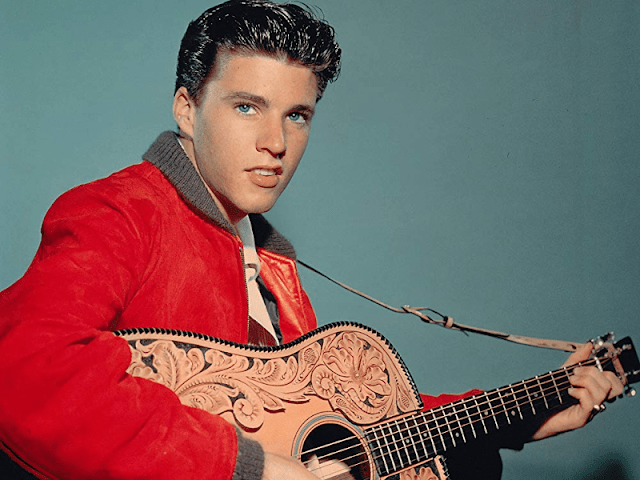
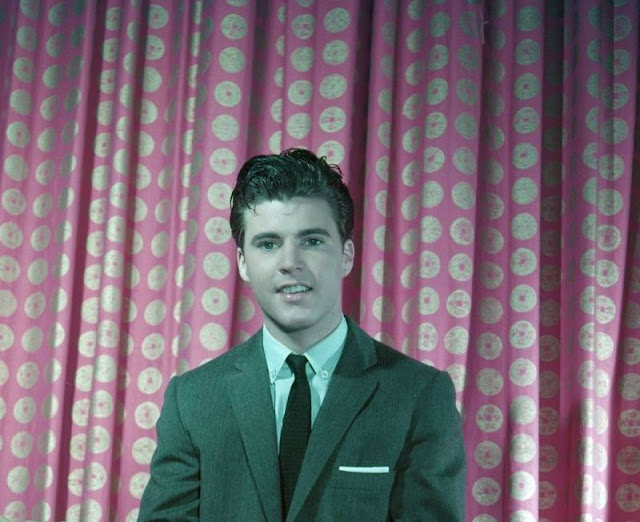
Take a look at these vintage photos to see portraits of a young and handsome Ricky Nelson in the late 1950s and early 1960s.
Subscribe to Yesterday Today’s Blog to receive regular updates regarding new content:
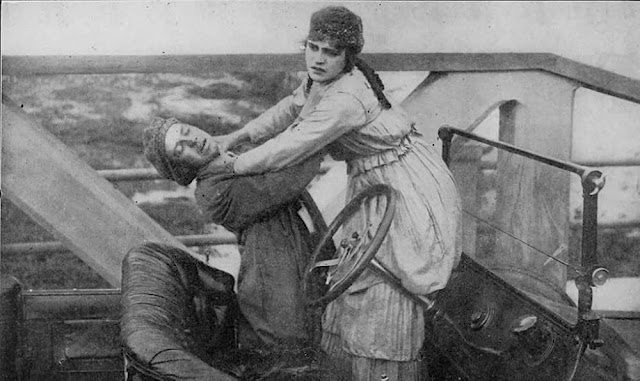
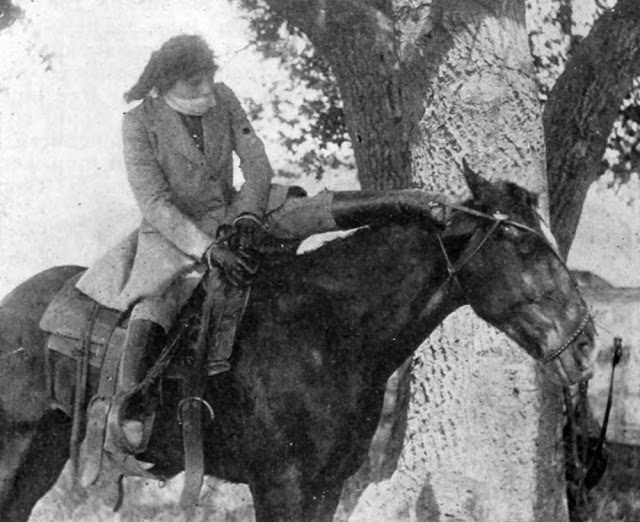
Helen Gibson was born Rose August Wenger in Cleveland, Ohio, one of five girls to Swiss-German parents, Fred and Annie Wenger. Her father had wanted a son, and encouraged her to be a tomboy. Helen saw her first Wild West show in Cleveland in the summer of 1909 and answered a Miller Brothers 101 Ranch ad for girl riders in Billboard magazine. They taught her to ride, and she performed in her first 101 Ranch Real Wild West Show in St. Louis in April 1910.
She was quoted as saying: “(I) was already practicing picking up a handkerchief from the ground at full gallop. When veteran riders told me I could get kicked in the head, I paid no heed. Such things might happen to others, but could never happen to me, I believed. We barnstormed all over the US and the season ended all too soon. I was sorry when I had to go home, and could hardly wait to open in Boston in the spring of 1911.”
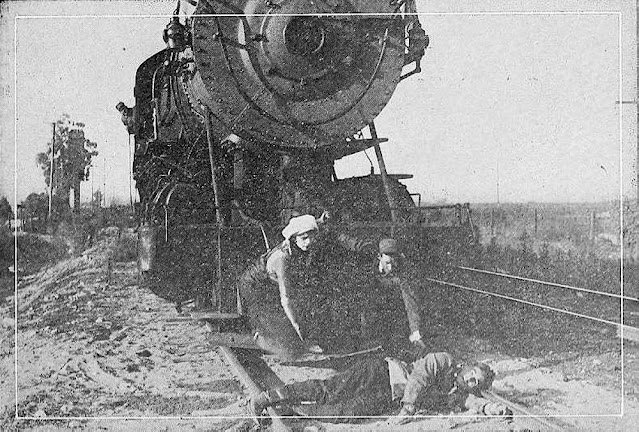
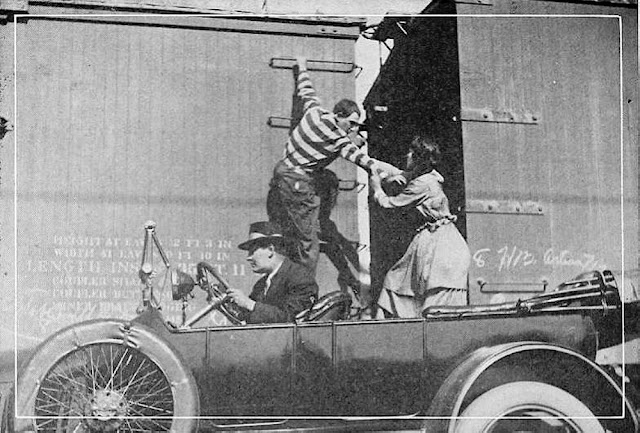
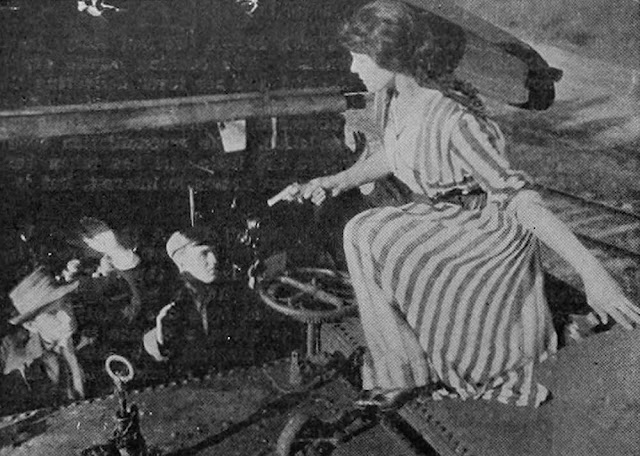
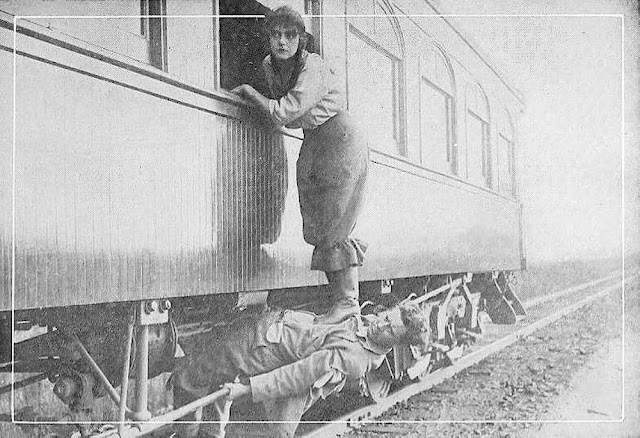
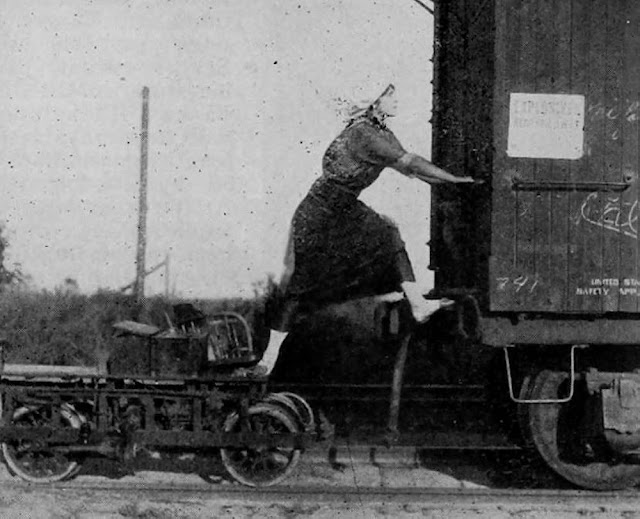
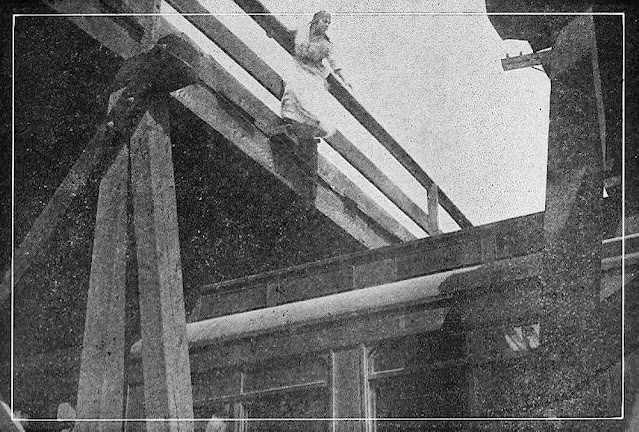
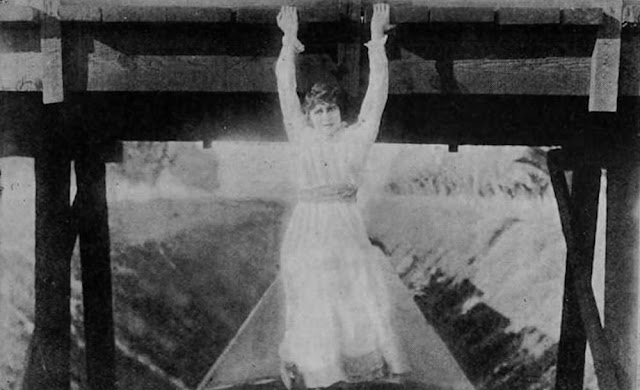
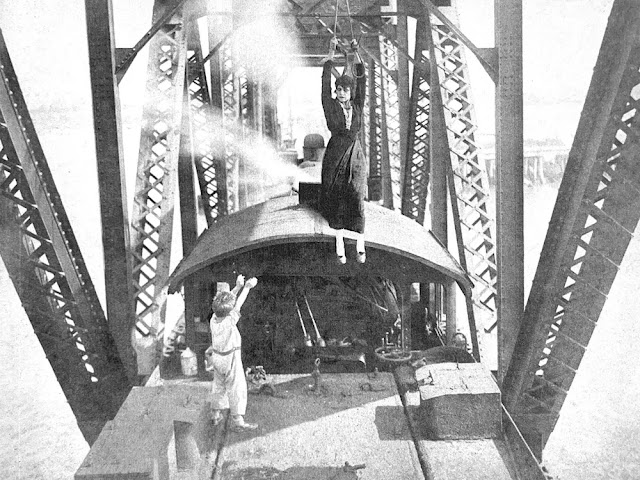
She met cowboy extra Edmund (Hoot) Gibson in 1913 and they married and began working together. At one rodeo in Salt Lake City, they won all the prizes (relay race, standing woman race, trick riding, and pony express race). Both worked for Kalem Studios in Glendale, where The Hazards of Helen film series was made. This is where she performed what is said to be her most dangerous stunt, jumping from the roof of a train station onto a moving train. She landed perfectly, but due to the speed of the train, she rolled to the end of the car, grabbing an air vent and dangling over the edge.
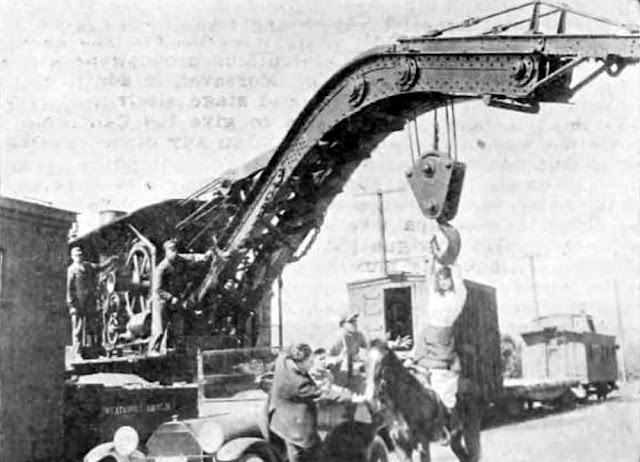
Another stunt was standing atop a detached team of running horses, catching a rope dangling from a bridge to swing down from the horses and onto a train as it came under the bridge. Another one was chasing a runaway train on a racing motorcycle, riding through a shattering wooden gate up to a station platform and right through the open doors of a boxcar on a siding, and flying through the air to land on the flat car of a passing train.
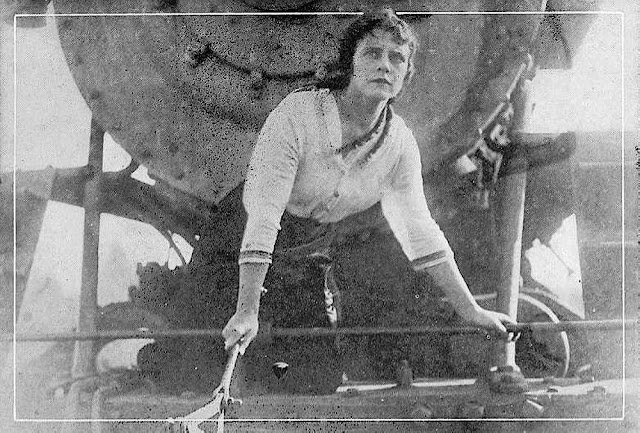
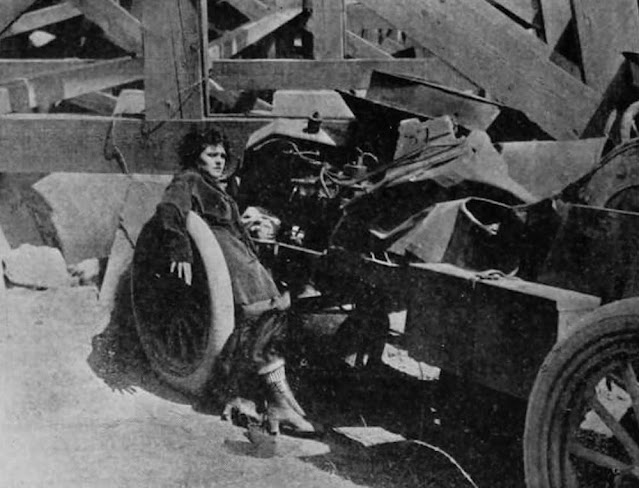
After replacing the original lead actress until the series ended in 1917, she became known thereafter as Helen Gibson. An early action star, she was billed as “The Most Daring Actress in Pictures” and “The Railroad Girl” (since so many of her films seem to have involved trains).
Kalem folded that year. Universal put her under contract, where she appeared in two John Ford films, Rustlers and Gun Law. Then she signed with Capital Film Company, but they went out of business in under a year. A string of bad luck followed.
Hoot came back from World War I in 1918, but he couldn’t deal with his wife being more successful than he was, and they divorced in 1920, the year she founded Helen Gibson Productions. Her first film was No Man’s Woman, a Western about a kind-hearted saloon hostess who rescues a rancher’s child. Unfortunately, she ended up bankrupt before she could finish it. A year later, another studio released it as Nine Points of the Law.
Gibson starred in The Wolverine for the Spencer Production Company where they loved her performance and hired her for a second film, but before they began shooting, she ended up hospitalized with a burst appendix in 1921. After recovering, she took a job on a Western for an independent film company that folded without paying the cast or crew — ending up back in the hospital after being injured on horseback while filming.
She still appeared at rodeos and theaters to promote these films but no great opportunities in the film industry came her way, and her popularity began to fade. In 1924, she got a trick riding job with Ringling Bros. and Barnum & Bailey’s Wild West Show.
In 1927, Gibson returned to Hollywood and supported herself by doubling for stars like Ethel Barrymore and Marie Dressler and working as a stunt double and in bit parts. She married Clifton Johnson, a studio electrician, in 1935 and worked as an extra when he left for World War II in 1940. She also became treasurer of the stunt girls’ fraternal organization and appeared as a featured guest at benefit rodeos and horse shows.
In 1951’s Hollywood Story, she played a retired silent film actress. She continued to do character parts and work as an extra until 1961. That year, at the age of 69, her last role was as an uncredited townswoman in John Ford’s The Man Who Shot Liberty Valance. She retired in 1962 and moved to Oregon with Clifton.
Helen Gibson died of heart failure following a stroke in 1977 aged 85. She is recognized as Hollywood’s first professional stuntwoman.
Subscribe to Yesterday Today’s Blog to receive regular updates regarding new content:
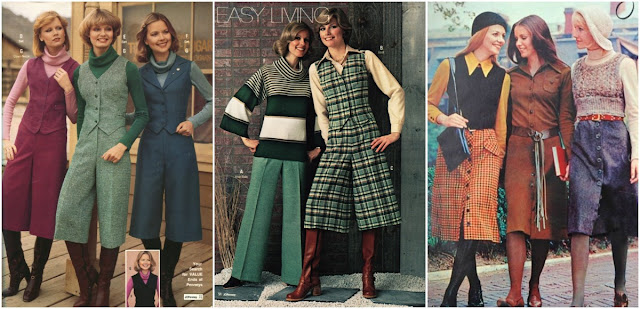
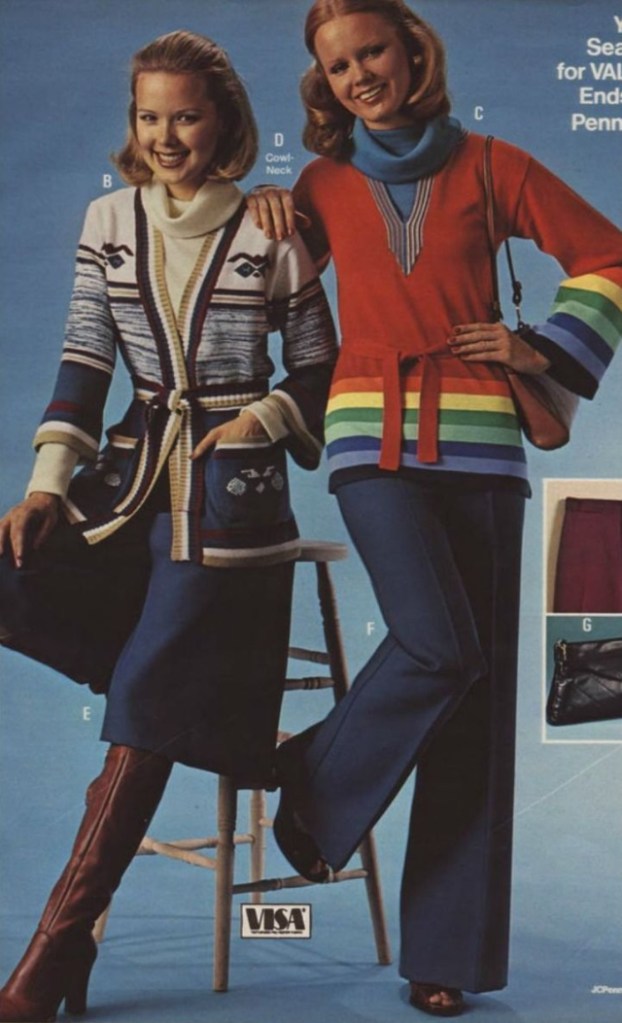
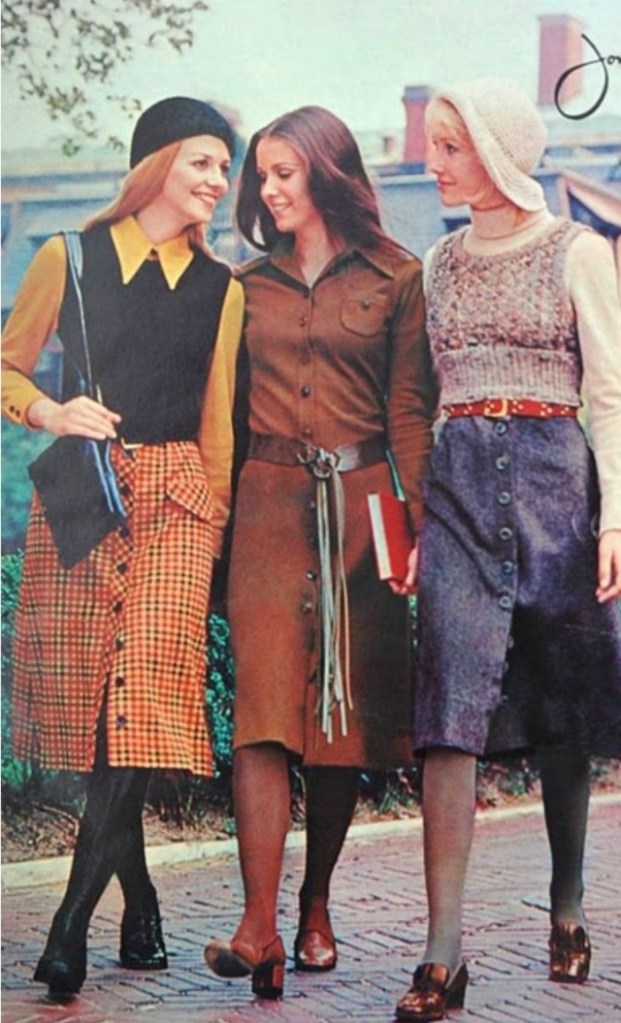
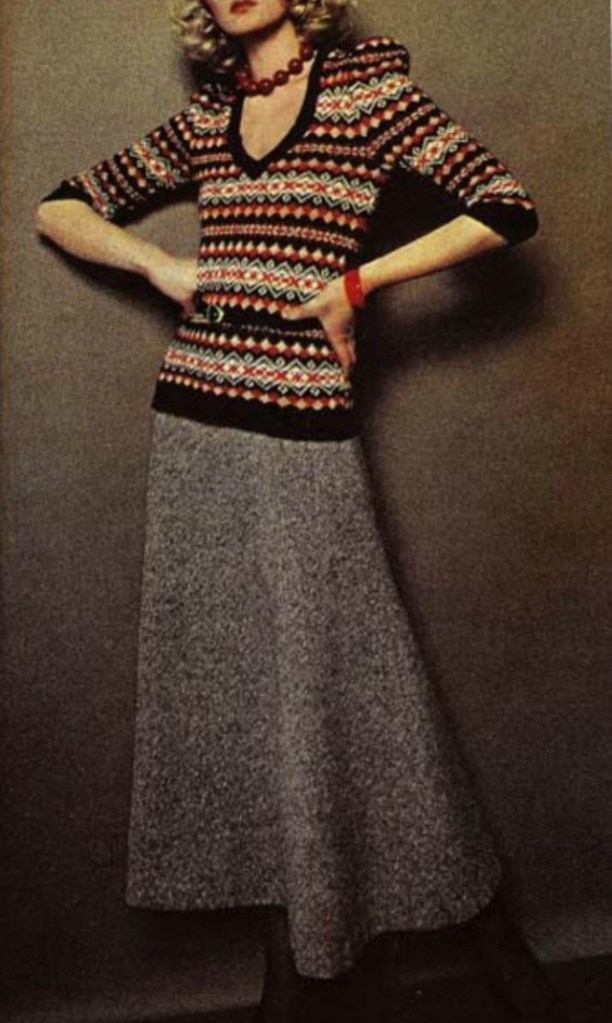
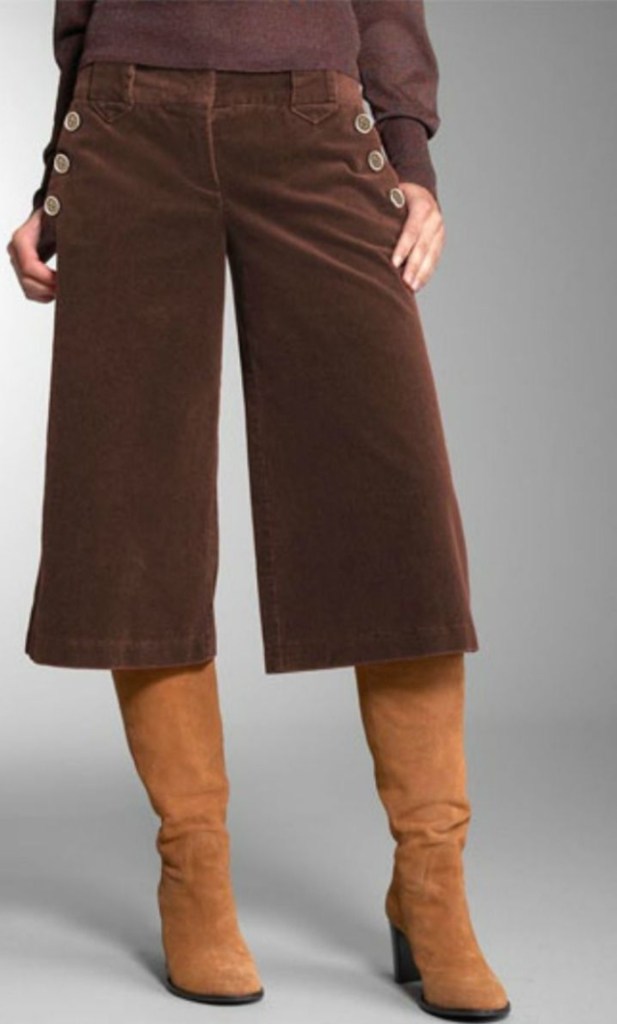
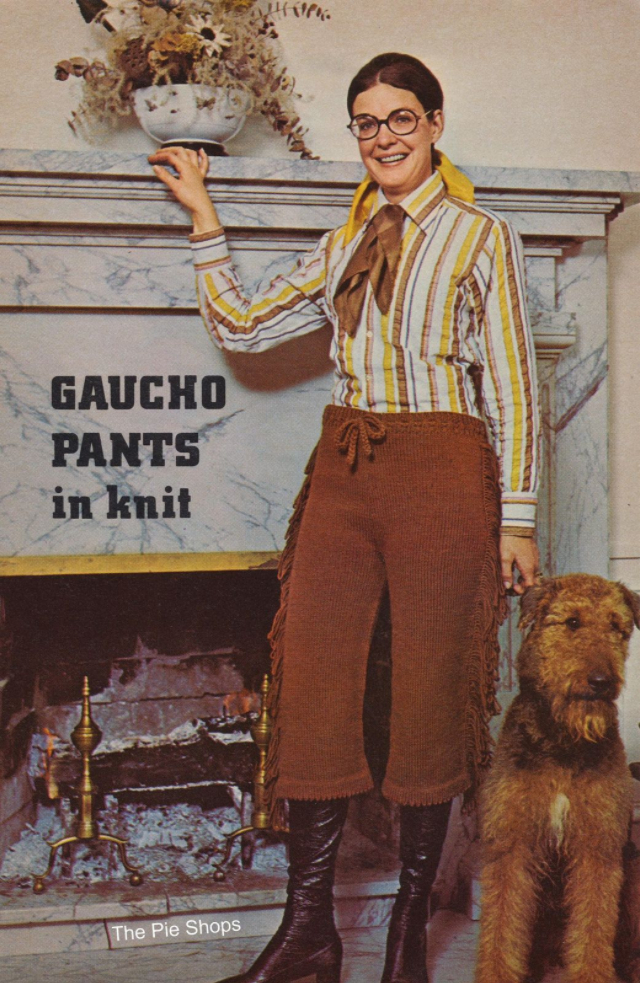
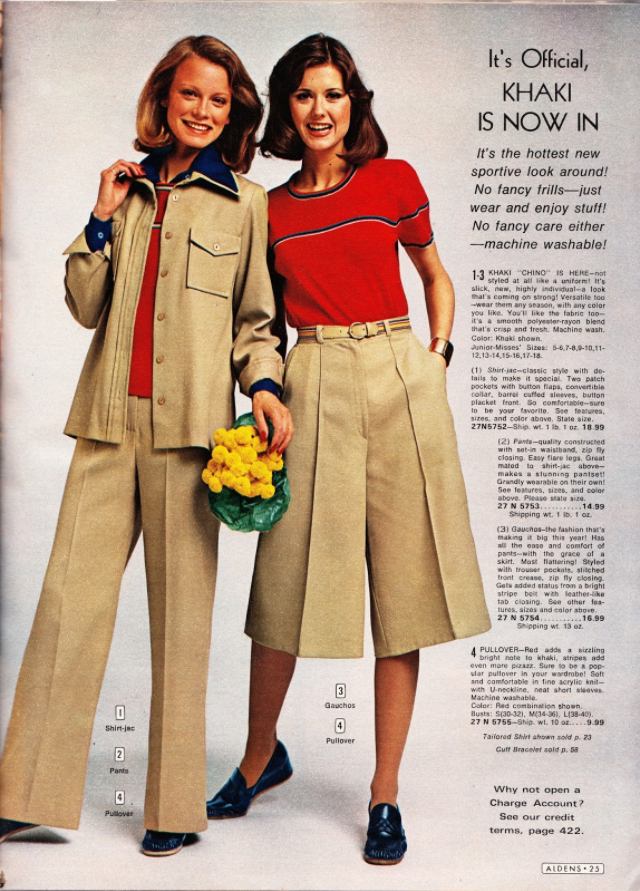
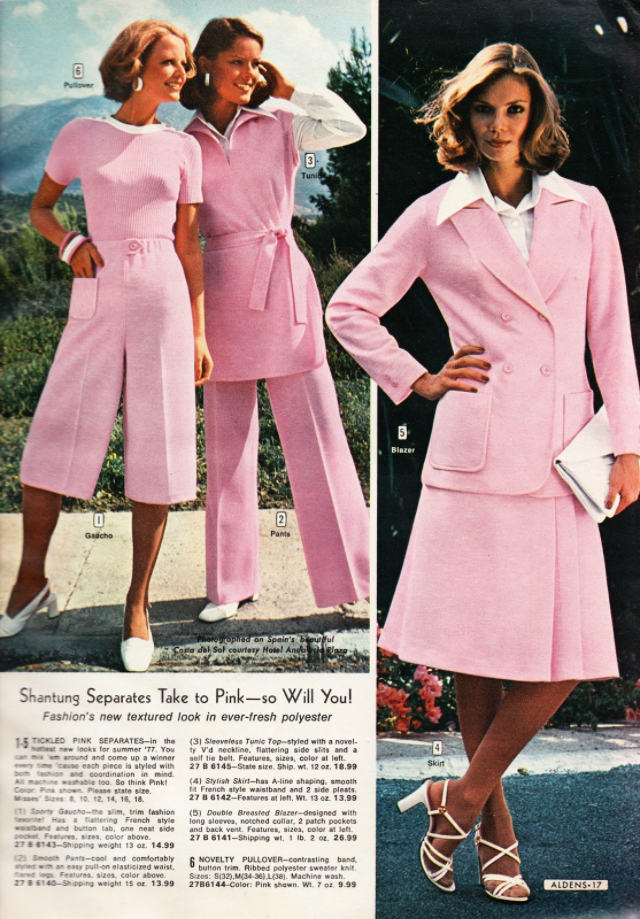
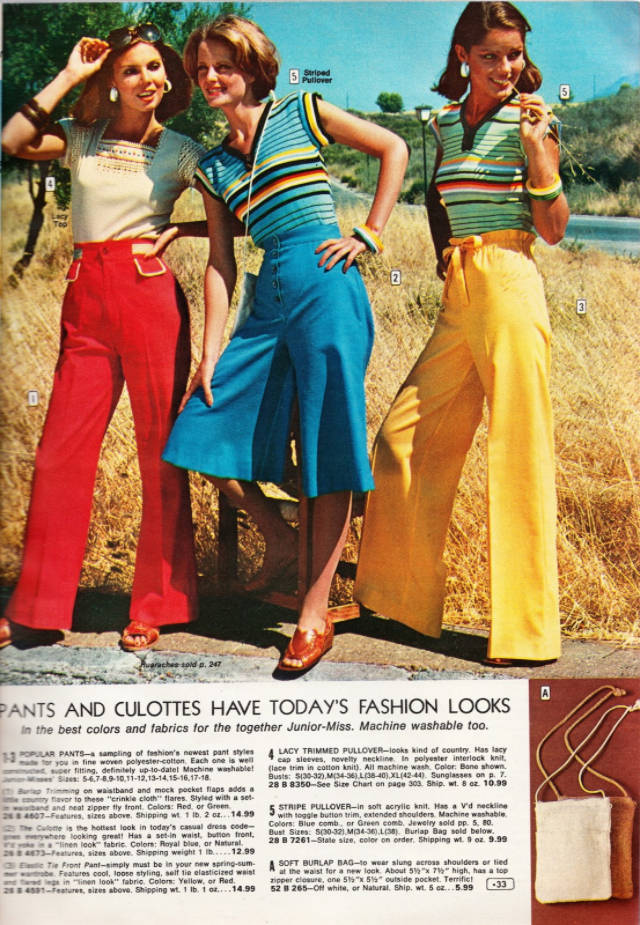
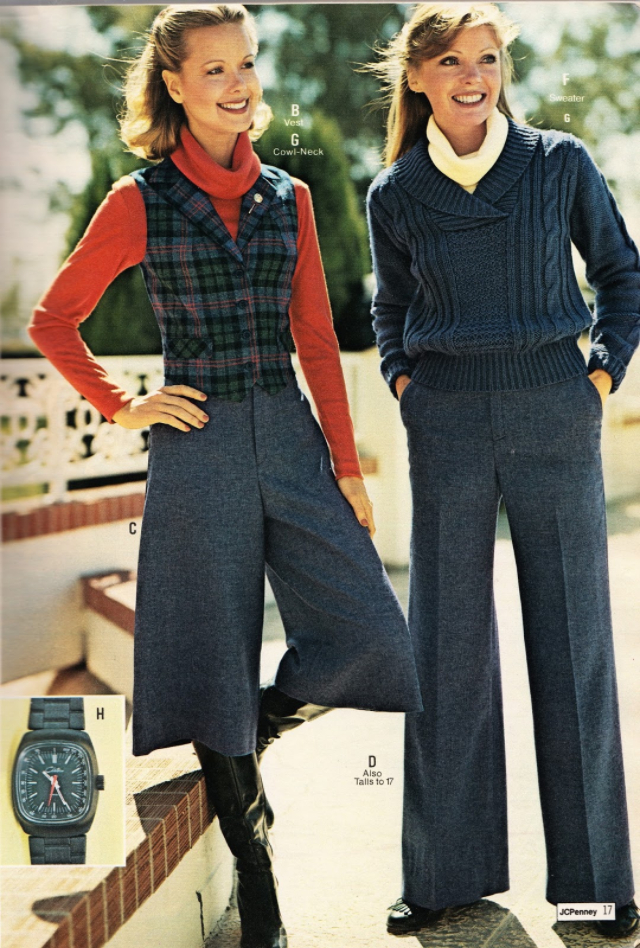
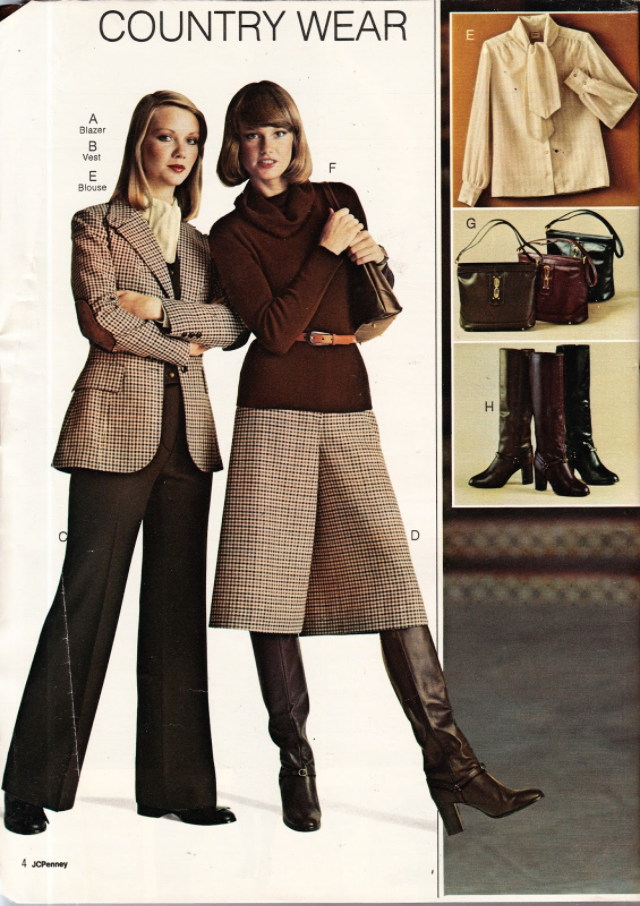
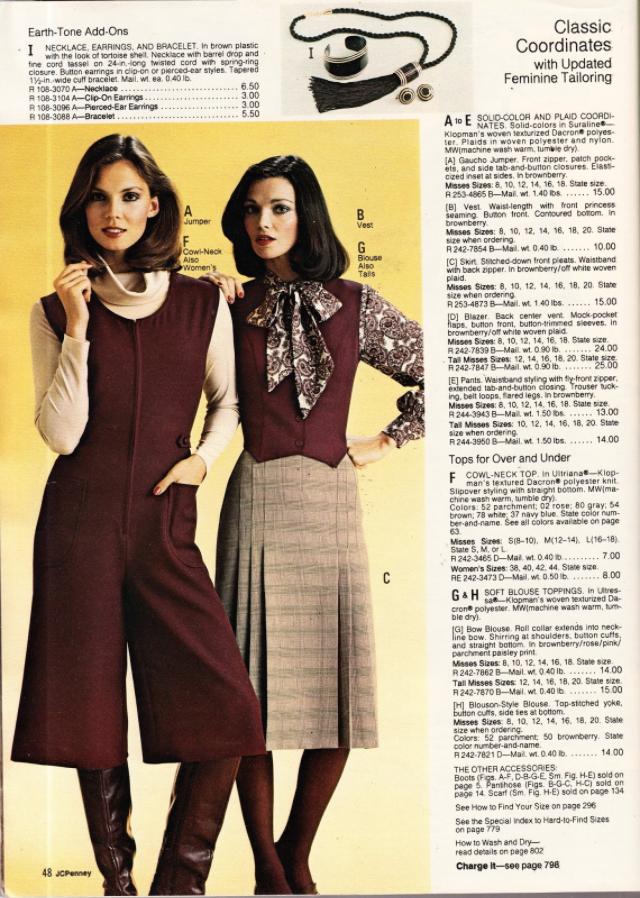
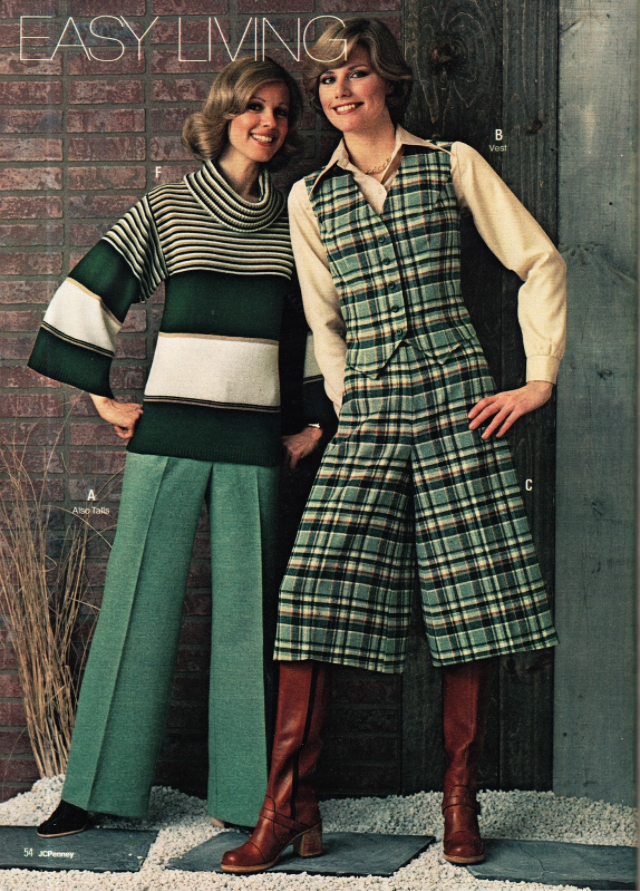
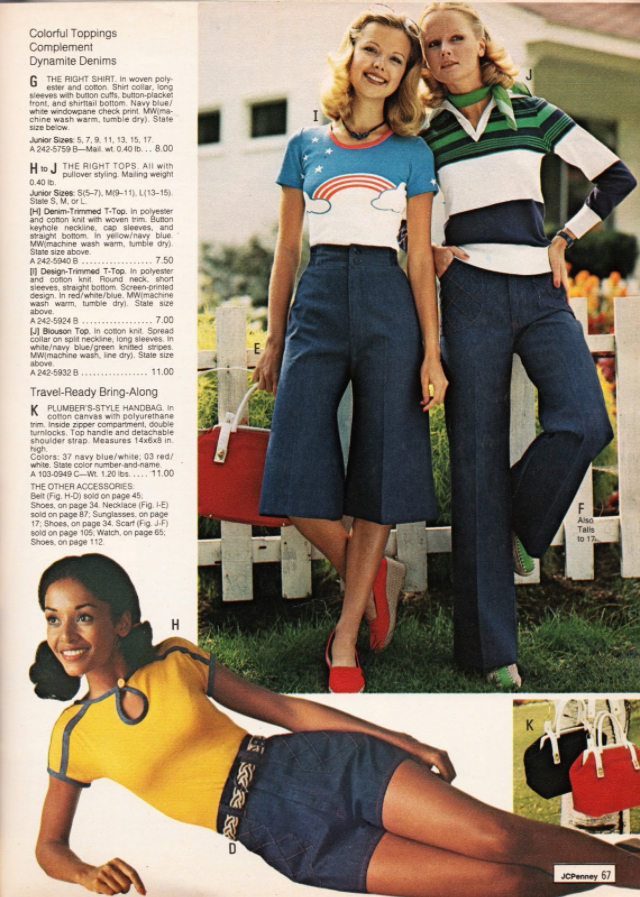
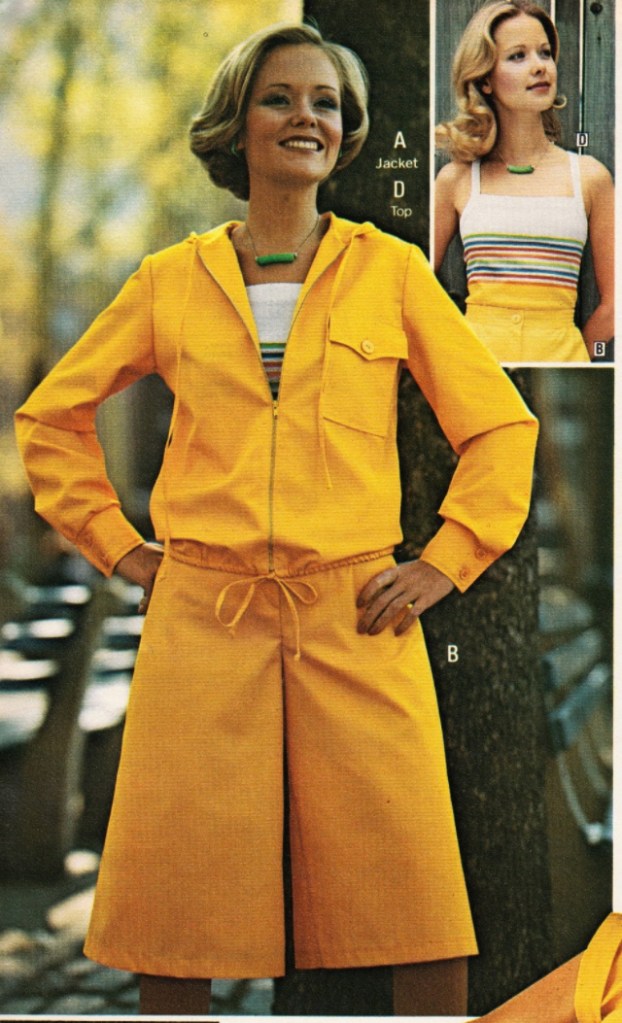
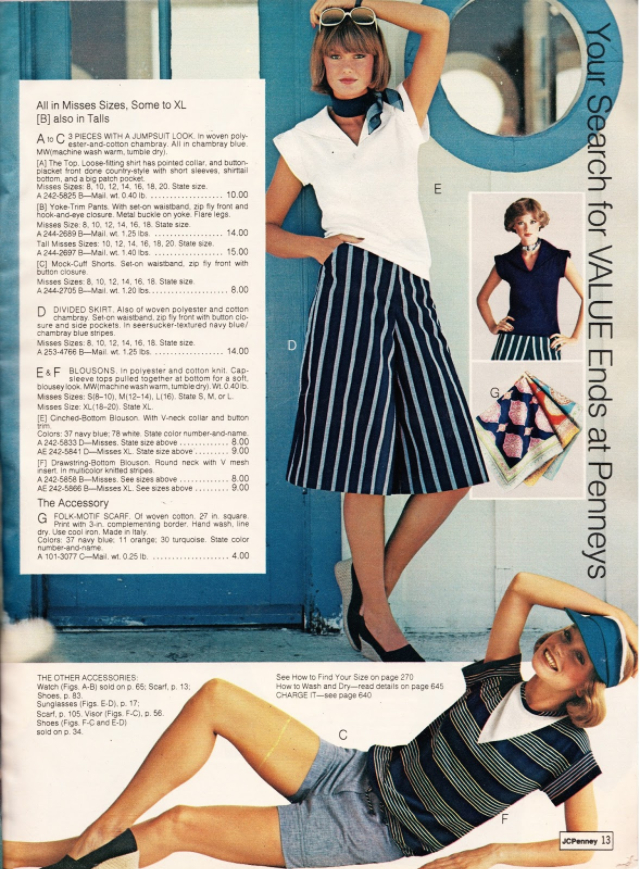
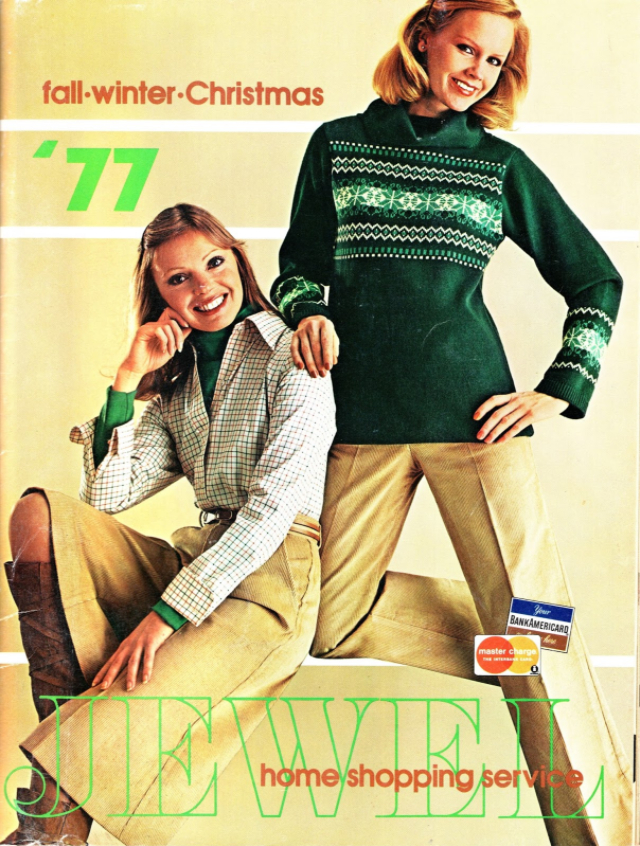
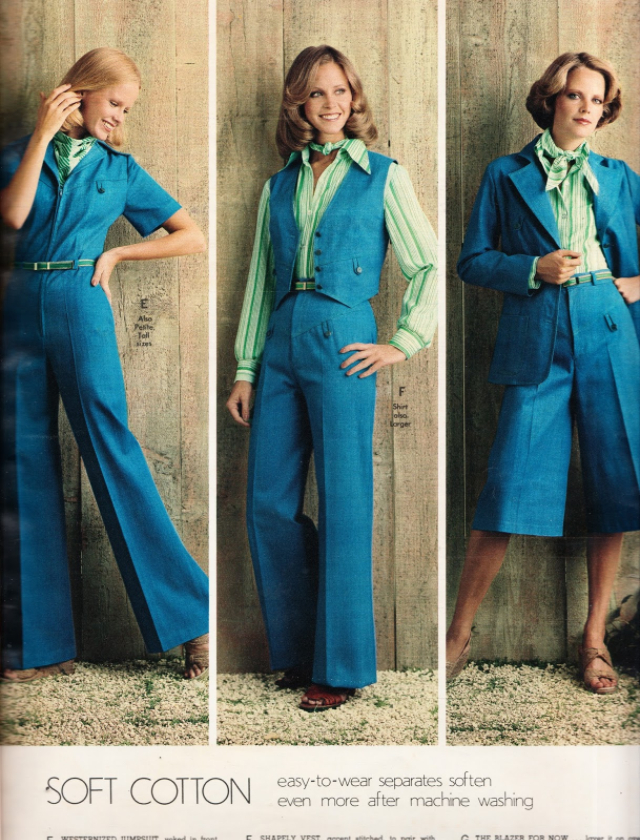
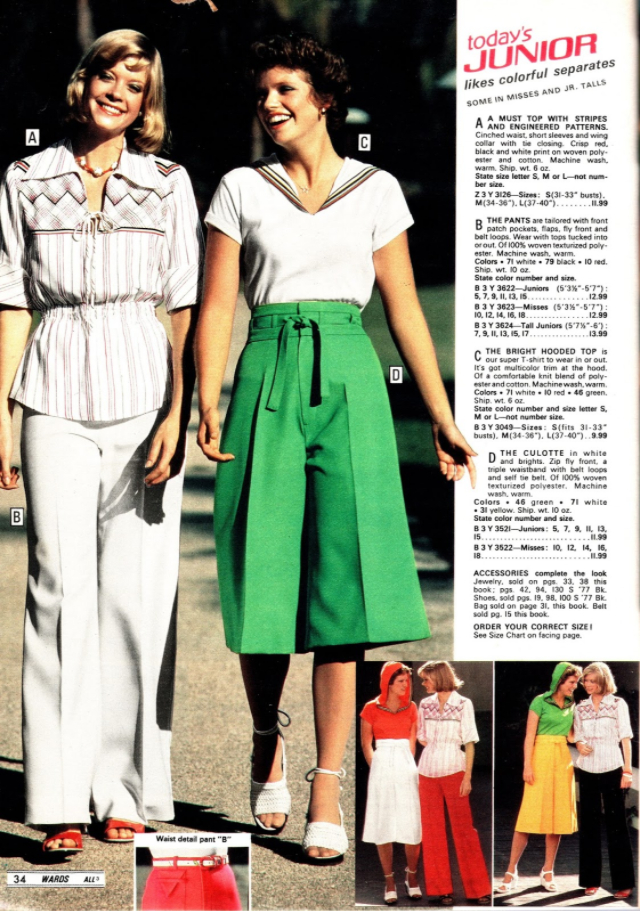
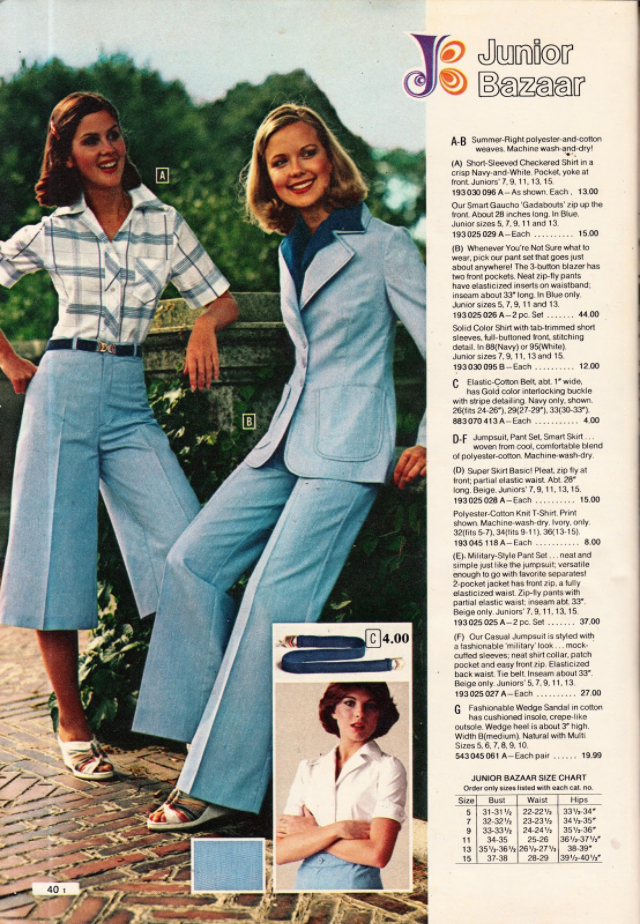
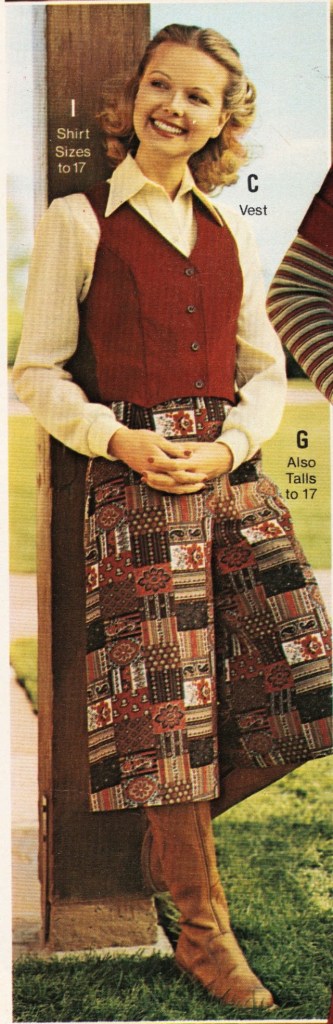
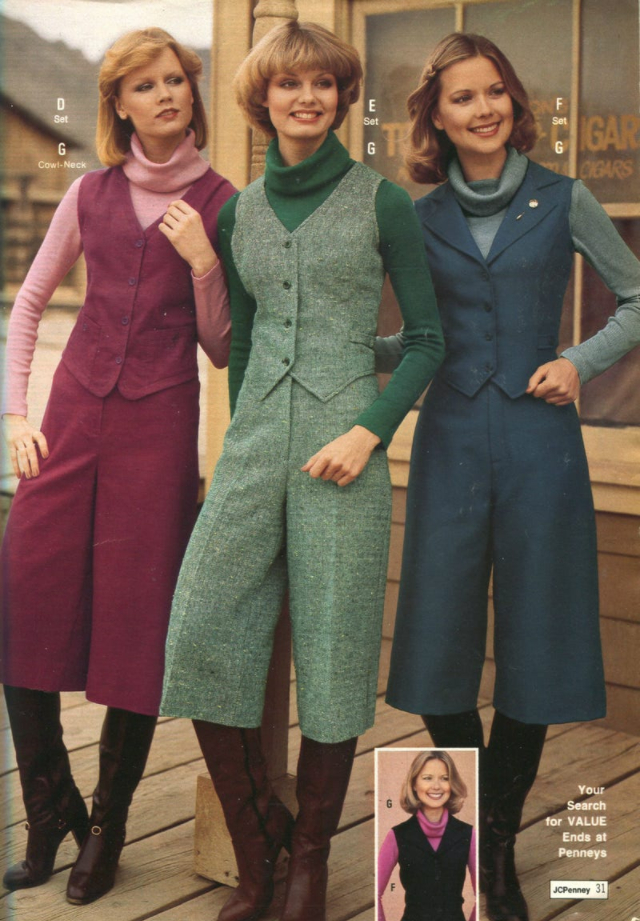
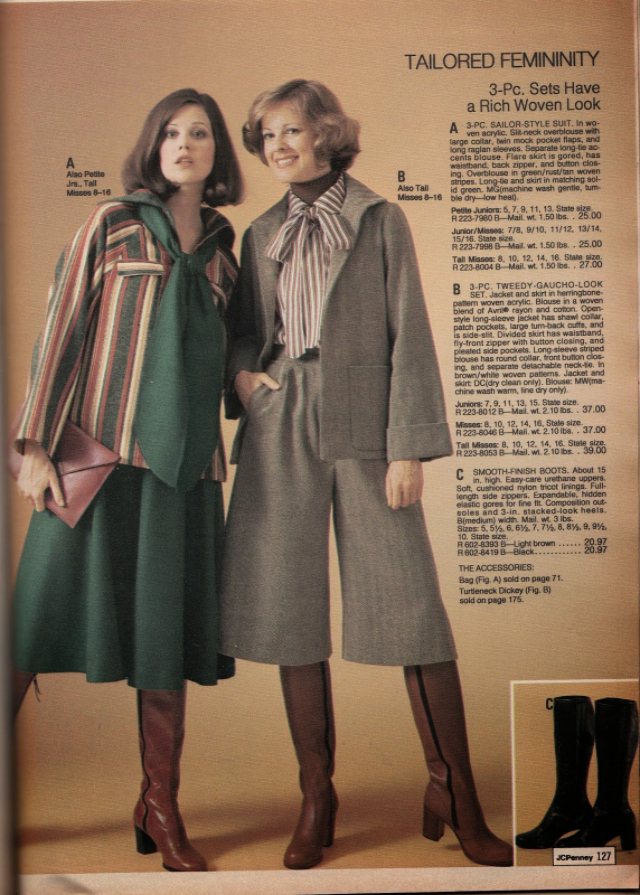
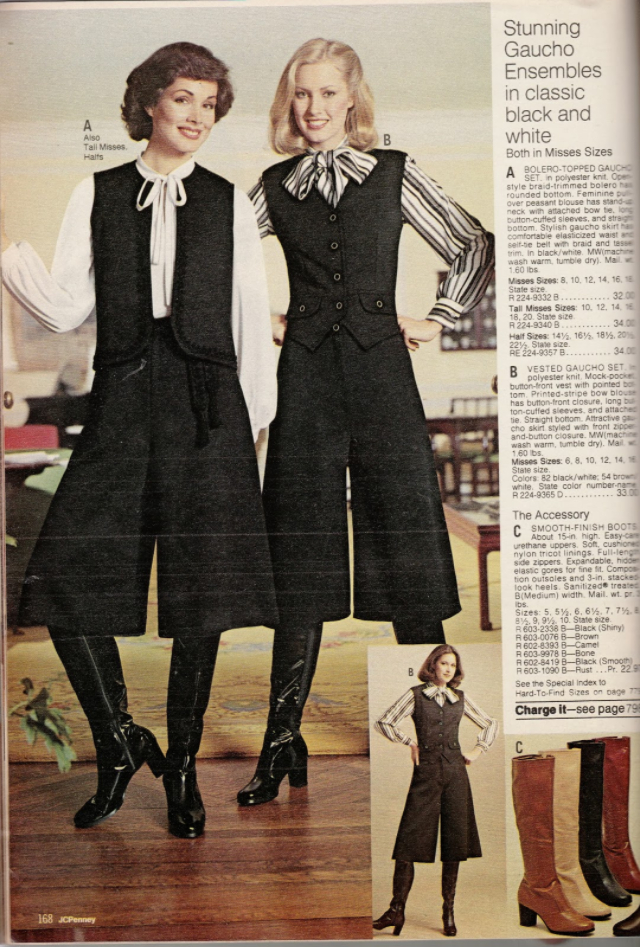
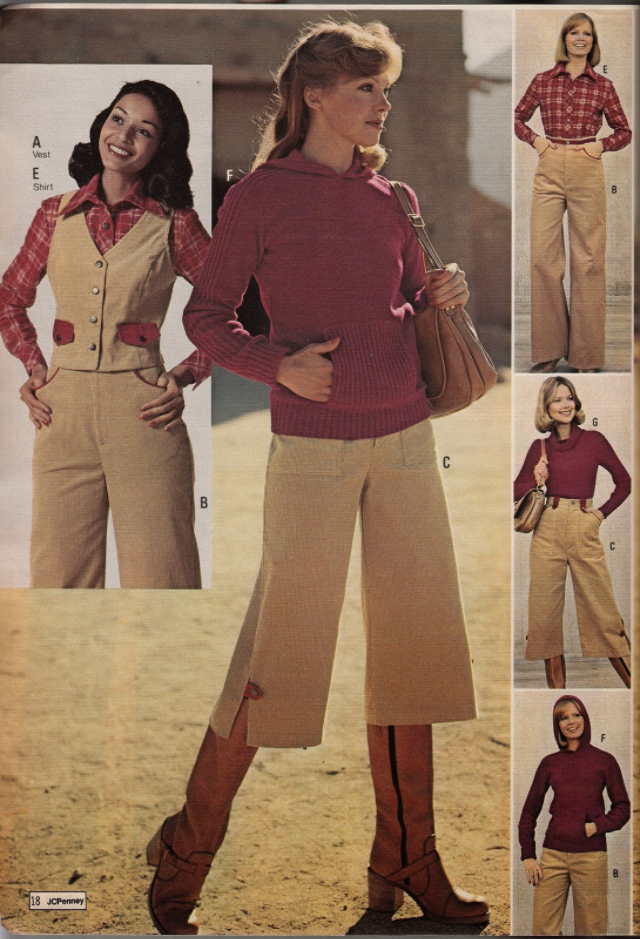
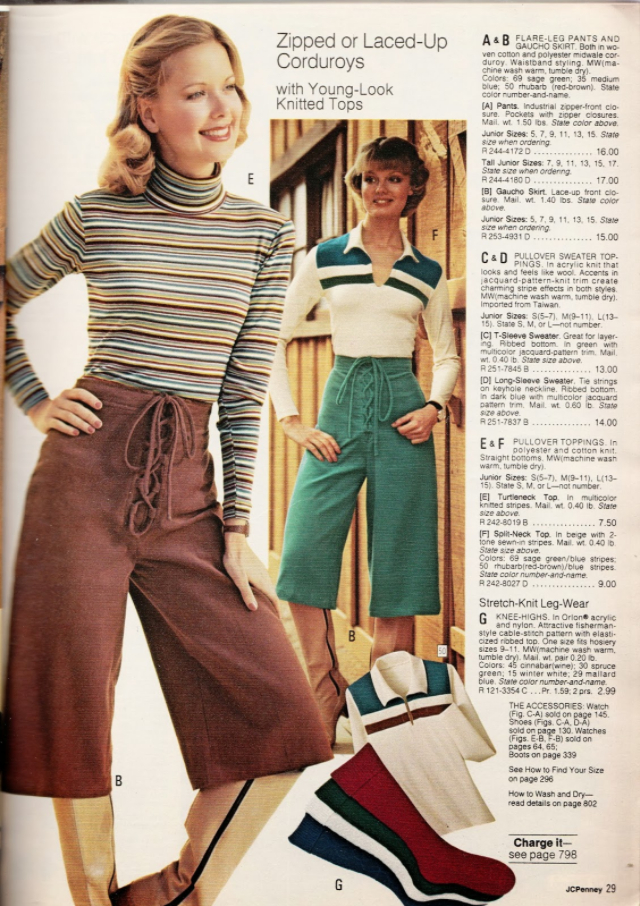
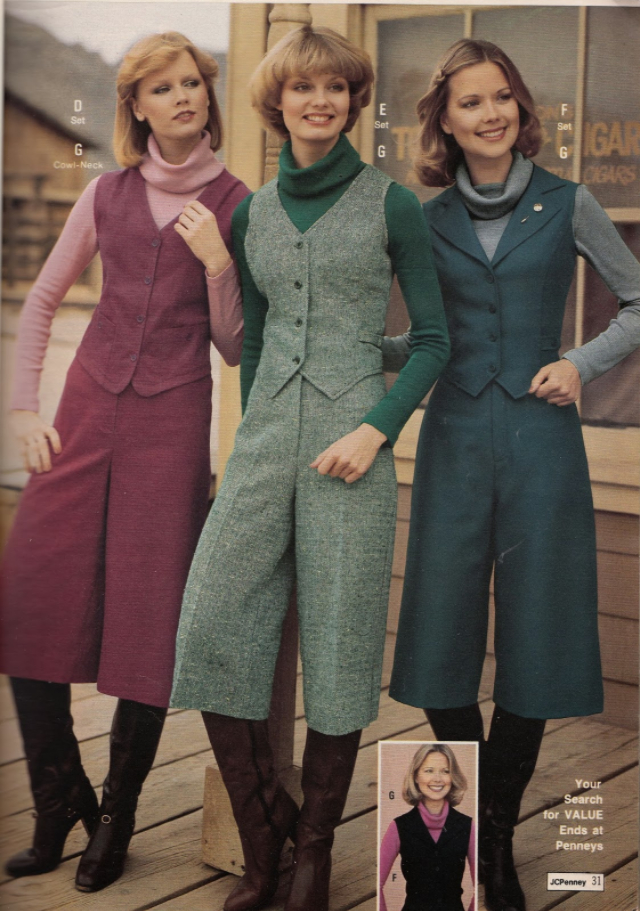
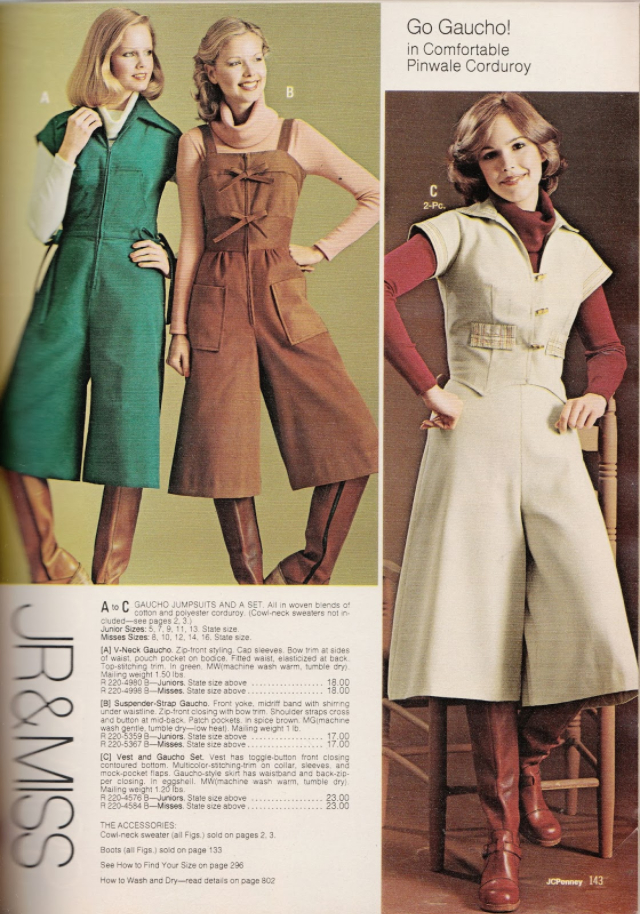
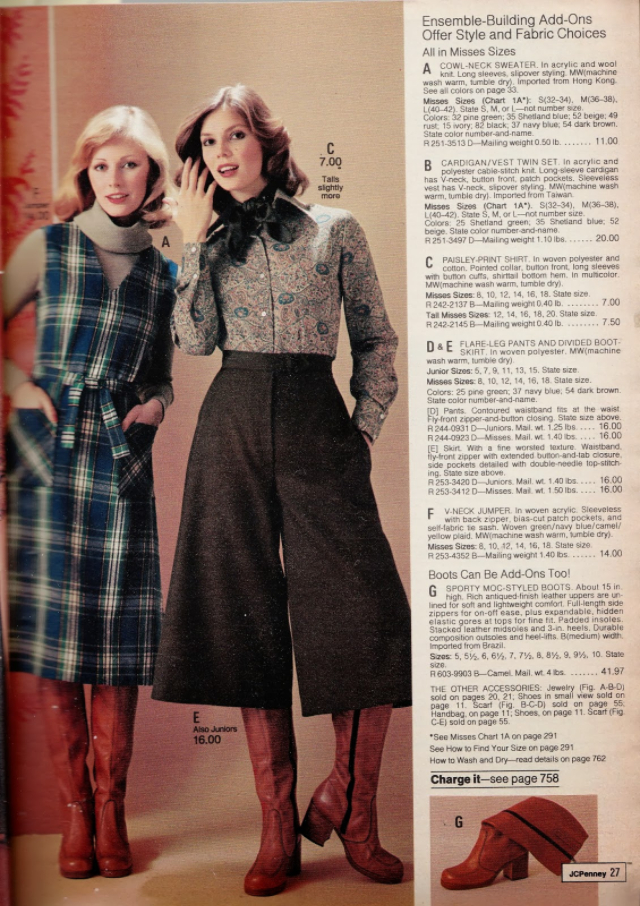
Gaucho pants are wide-legged trousers for women with a cuff that ends around mid calf. Taking their name from pants once worn by South American cowboys, they were in style for a brief period in the early to mid-1970s. They were similar to the culotte short or skort, but gauchos were longer and meant to serve as a more formal, workplace-friendly alternative to skirts and slacks.
French designer Yves Saint Laurent was the first to popularize a more masculine look for women’s wear. His trouser suits and le smoking tuxedo jacket quickly caught on with fashion-conscious women after 1968. Over the next few years sales of trousers skyrocketed over dresses and skirts. The boom was helped by the women’s liberation movement, with its acceptance of unconventional roles for women. Bans against wearing pants to formal events and in the workplace declined considerably, making room for gaucho pants. The pants were borrowed from the costume of the pampas cowboy in Argentina and Uruguay. These cowboys, called gauchos, achieved mythic status for their riding skills and fierce independence in the 18th and 19th centuries. Though somewhat unusual in cut, gaucho pants reflected the growing interest in ethnic looks and world cultures in the late 1960s and 1970s. Fashion writers praised them as one of the new, modern alternatives to skirts.
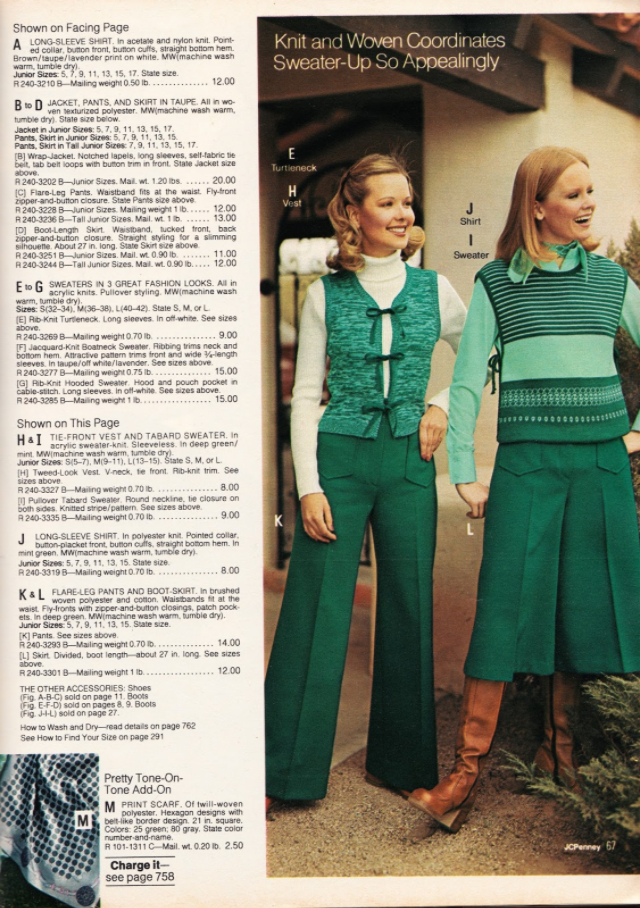
Gauchos first made an impact in the fall of 1970. American designer Anne Klein offered gray flannel gauchos that appeared in an August 30, 1970, issue of the New York Times Magazine’s twice-yearly fashion supplement. They soon caught on with the mass-market apparel sellers. Often they were shown with boots, another new trend in women’s wear of the era. Within a few years, however, gauchos had declined in popularity. The mid-calf length broke the line of the leg, and they seemed to give the wearer a wider silhouette, or shape, than desired. Unflattering to most, they eventually became synonymous with some of the decade’s more ill-advised fashion fads.
Subscribe to Yesterday Today’s Blog to receive regular updates regarding new content: