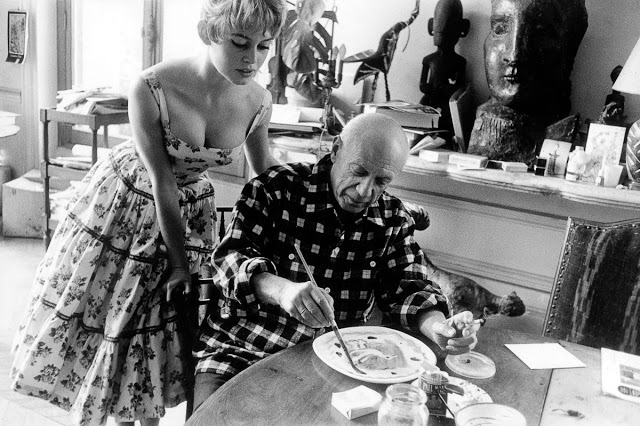
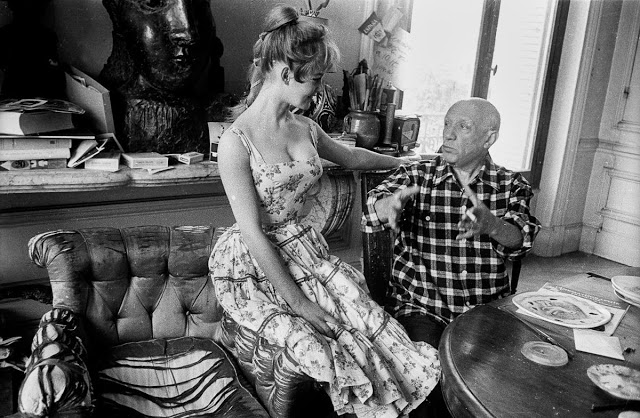
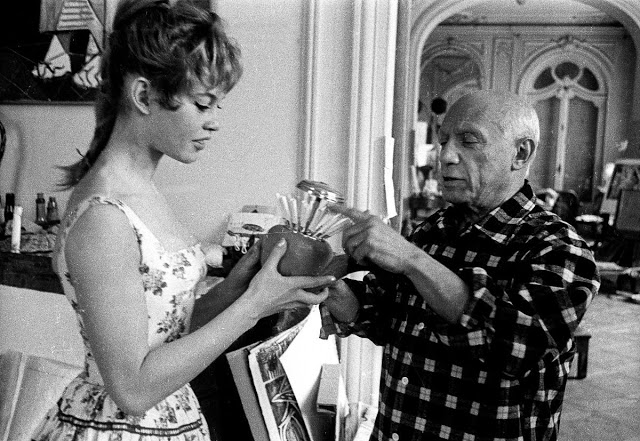
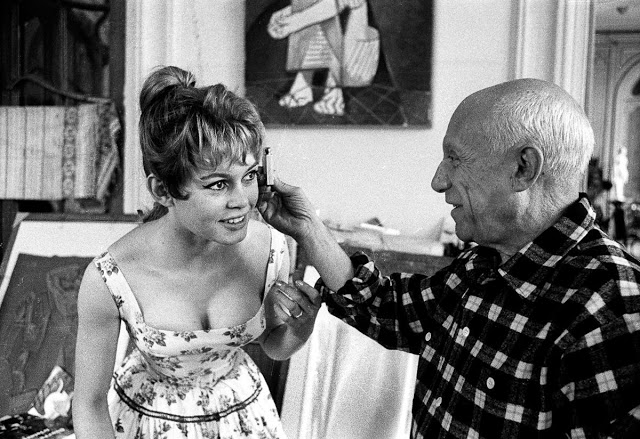
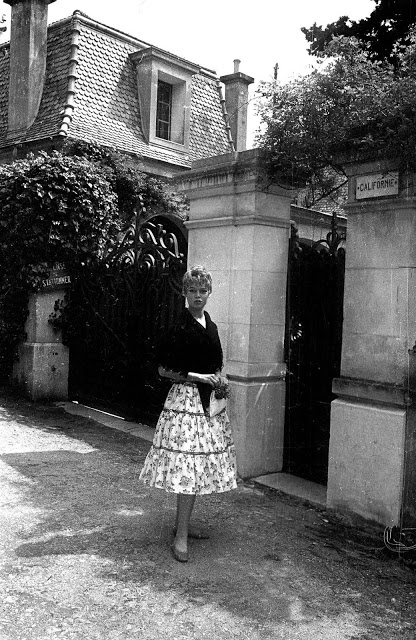
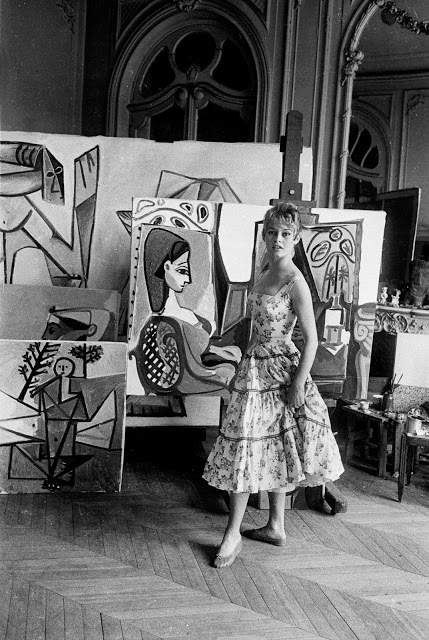
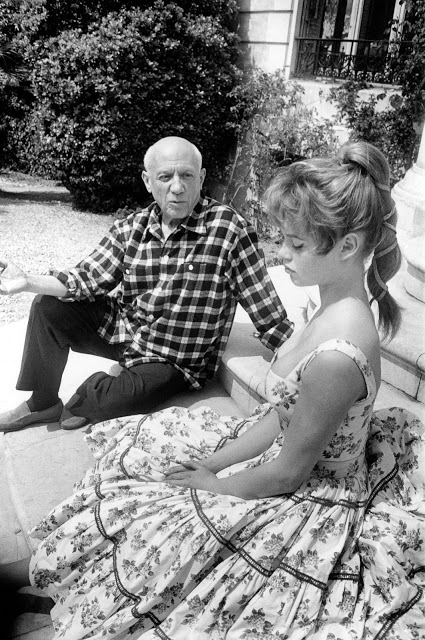
In 1956, in Cannes, France, there was a special meeting of two completely different stars – the movie actress, Brigitte Bardot, and the famous artist, Pablo Picasso. The latter had several workshops and a house, Villa La Californie, in this city. LIFE magazine sent photographer Jerome Brierre to capture the meeting.
At that time, he was 74 years old, and she was only 21. The ‘Cubist’ pioneer had a long and successful career as an artist behind him, while Bardot starred in 17 films and was considered a sex symbol.
The actress came to France for the 9th Cannes Film Festival, where a 78-minute documentary film, The Mystery of Picasso by Henri-Georges Clouzot, was presented. Apparently, a young beauty also wanted to figure out some of the secrets of the painter-innovator. Of course, no one knows the exact reason why she decided to visit him, but it seems the actress dreamed of her portrait to be done by Picasso.
Picasso never painted Bardot, but Lydia Corbett, one of Picasso’s frequent models at the time, claimed Bardot saw her at Cannes and adopted her blonde-haired, ponytailed look as her own. It is assumed that he preferred modest, even timid women. Confident in her own irresistibility, the screen star could not inspire him in any way. And she did not inspire him. So, their meeting had no continuation.
At least, there was a dozen of stunning pictures taken during a few hours she was staying at his house.
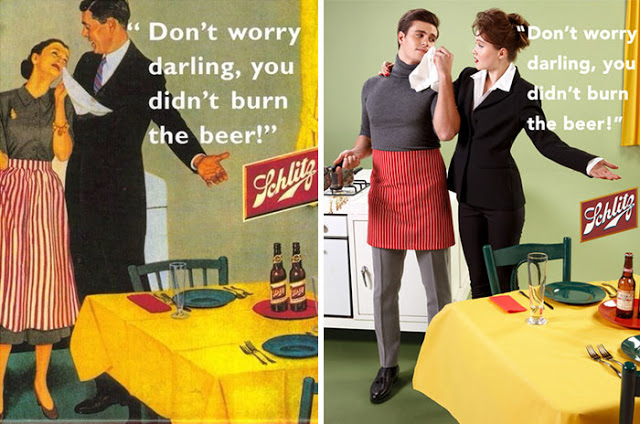
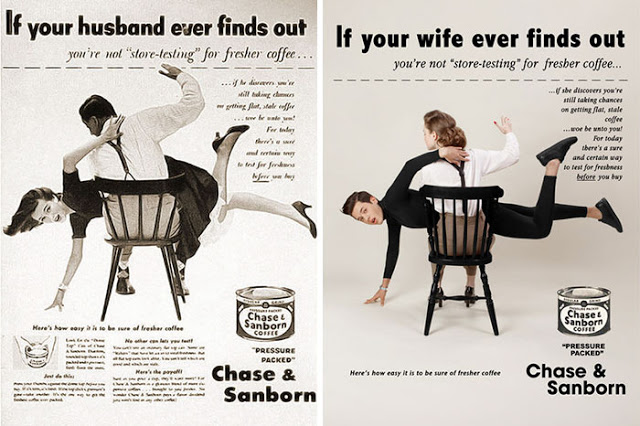
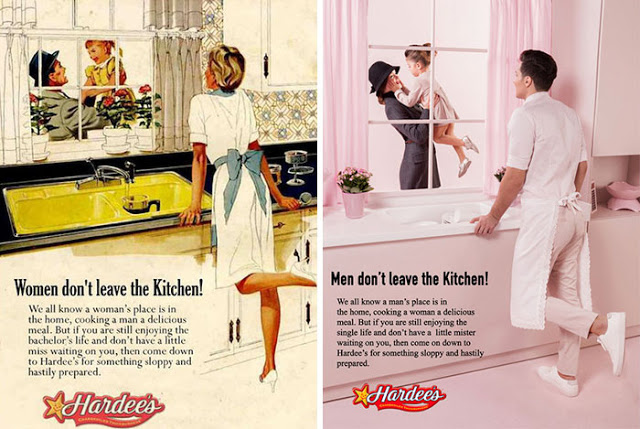
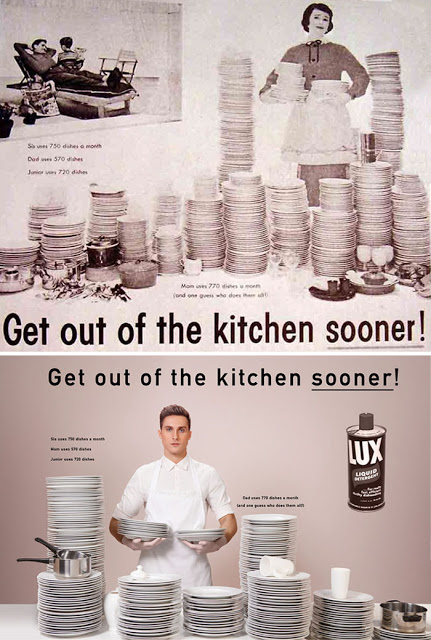
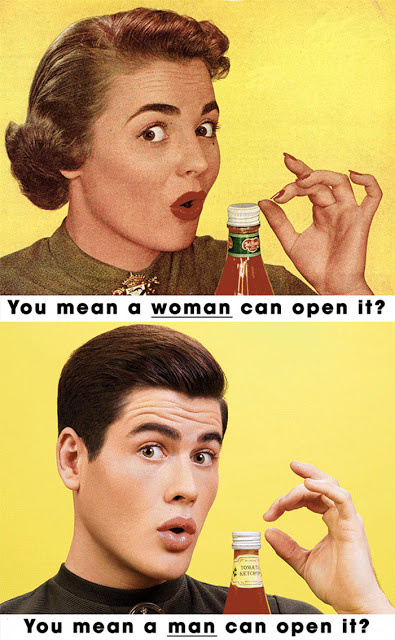
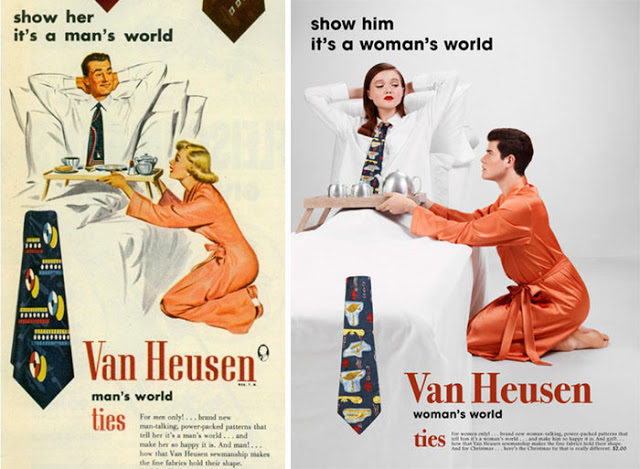
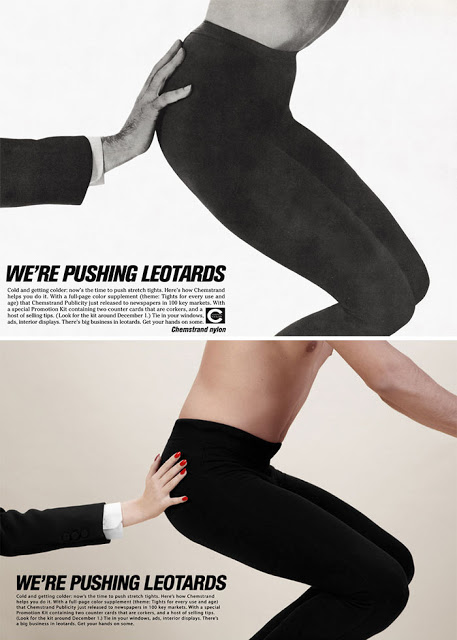
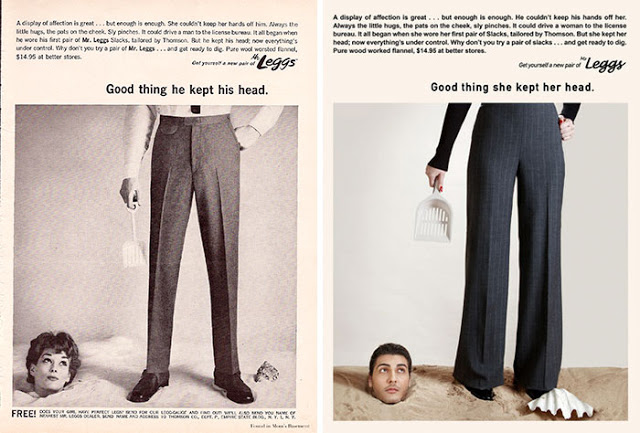
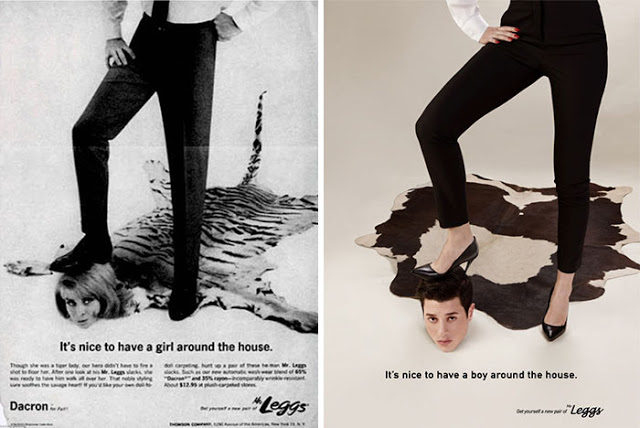
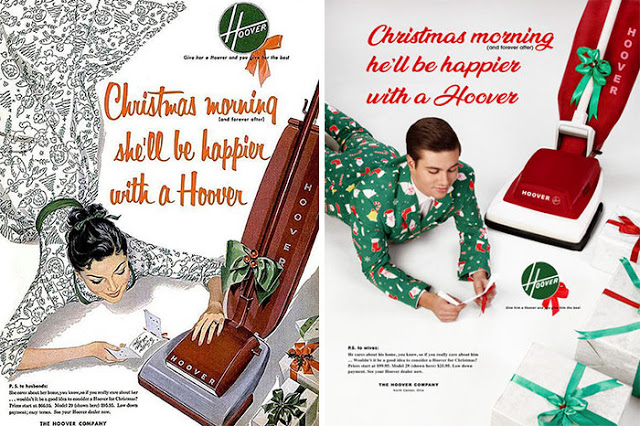
Eli Rezkallah, a photographer and video editor from Beirut, Lebanon, recently created a photo series called In a Parallel Universe. The series takes sexist vintage ads from the mid-20th century and switches the gender roles.
Rezkallah says it all started with a conversation between his relatives.
“Last Thanksgiving, I overheard my uncles talk about how women are better off cooking, taking care of the kitchen, and fulfilling ‘their womanly duties,’” Rezkallah wrote on his site. “Although I know that not all men like my uncles think that way, I was surprised to learn that some still do, so I went on to imagine a parallel universe, where roles are inverted and men are given a taste of their own sexist poison.”
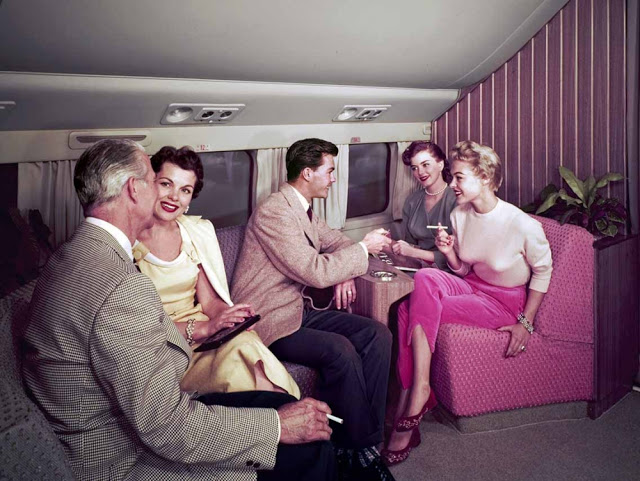
What did we ever do to pass the time on aircraft before laptops, iPads, Ipods and seat back videos with 1000 choices of entertainment?
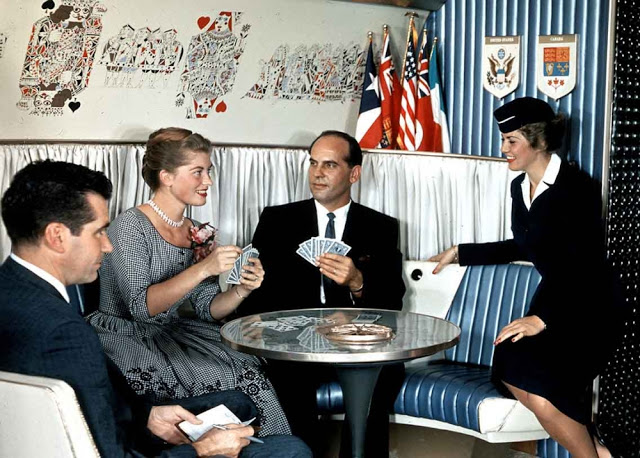
In the 1950s and 60s inflight entertainment as we know it today was in its infancy and rudimentary. Although the first film was shown on an aircraft in 1921 it wasn’t until the 1960s that inflight entertainment became mainstream and popular.
So let’s take a peek back through these interesting vintage photographs to reveal what travelers did to amuse themselves on those long flights in the 1950s and ’60s.
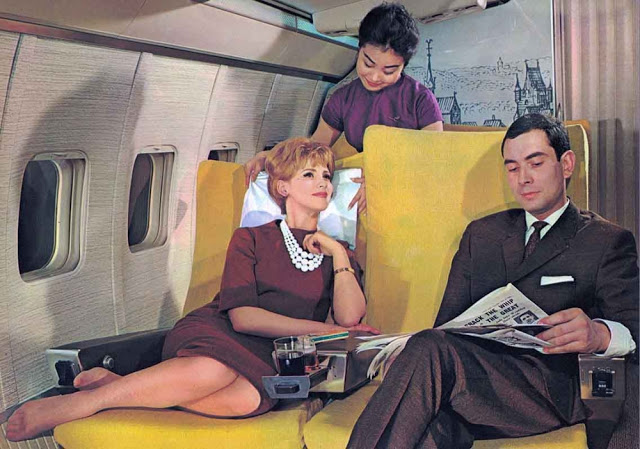
1.The most popular pastime was of course reading – a good thriller, a romance or just catching up with the news in a newspaper, because don’t forget there was no internet, FB or twitter via WiFi.
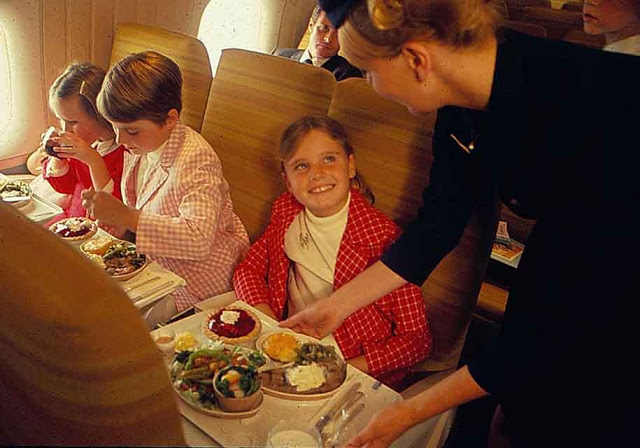
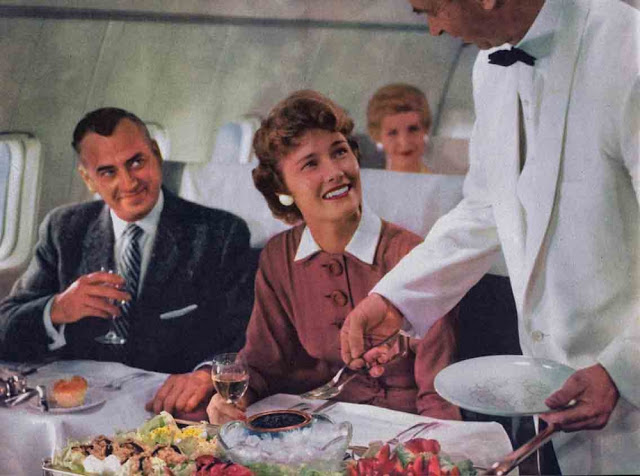
2. When you weren’t reading, meal time was a grand affair even in economy.
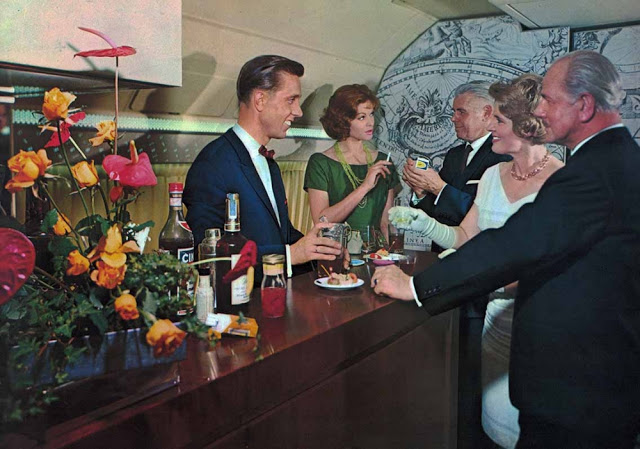
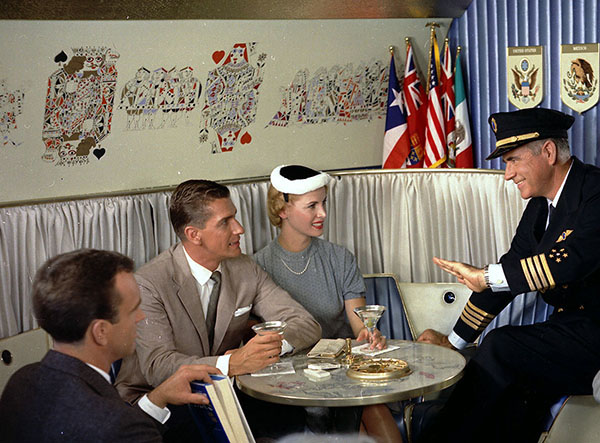
3. For those in First Class the meal was preceded by drinks at the bar.
4. Canapes may also be on offer to the “pearl set”.
5. Dinner was a multi course affair served more often by stewards in white coat and back tie no less – and at your table.
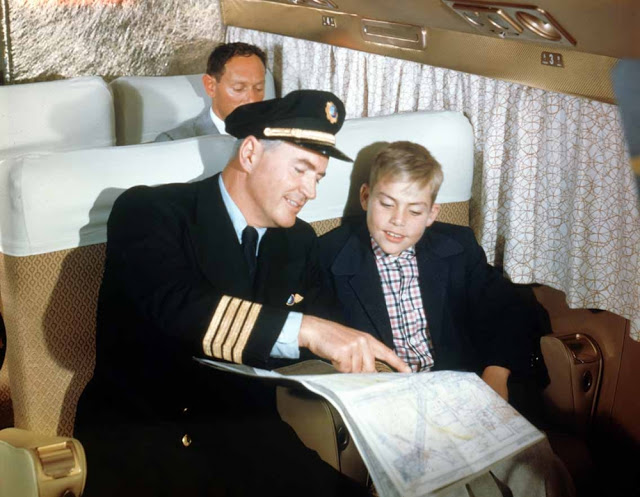
6. After dinner or lunch you might retire again to the lounge and meet the captain who would do the rounds. It was great PR to calm nervous flyers for passengers to chat with a multi striped veteran who had experience etched in his rugged good looks.
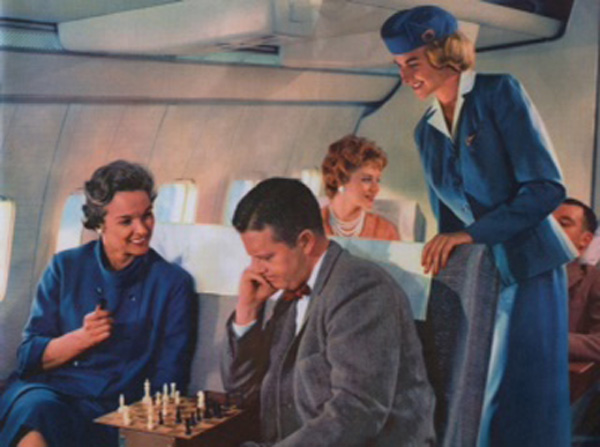
7. Chess was always – and still is – a great way to pass the time and a good game could take hours but would only seem like minutes.
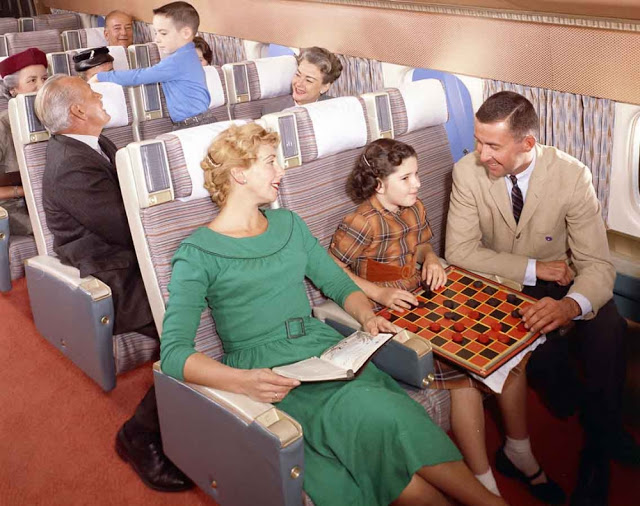
For those who wanted a simpler challenge maybe a game of drafts with mum and dad in economy.
9. Playing cards was also popular and airlines would issue them with logos, or pictures of planes or destinations that they flew.
10. Flight crew were always on the lookout for junior flyers and would explain the route the aircraft was taking. Millions of young flyers signed up for the various Junior Flyers clubs which came with log books of your travels and pilots would oblige and fill in the details of the flight.
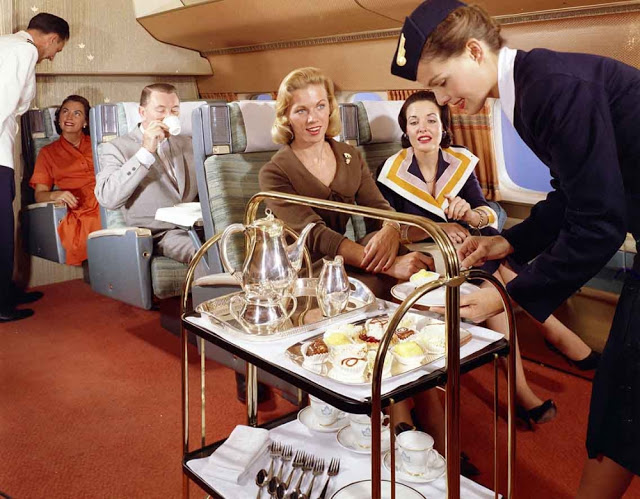
Afternoon tea was a grand affair with full silver service with a collection of sweets and pastries that would tempt even the most resilient weight watcher.
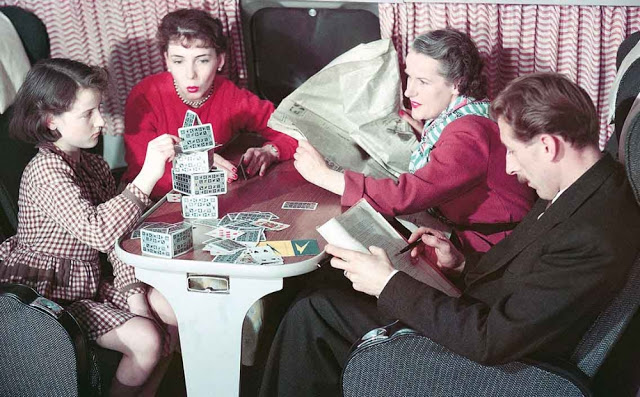
12. When you weren’t playing cards you could use them to build a house. This was a popular PR shot to illustrate how smooth jet travel was compared to the piston-engine aircraft they replaced.
Banned today, smoking was very popular – particularly after dinner.
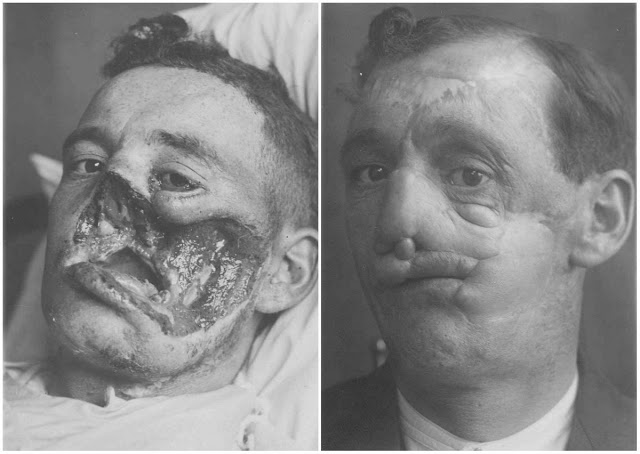
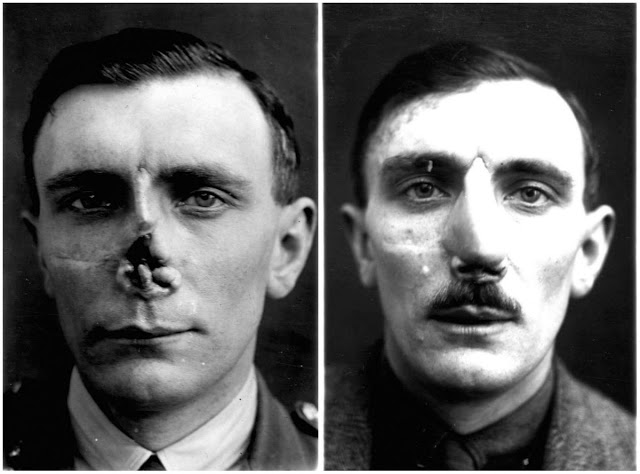
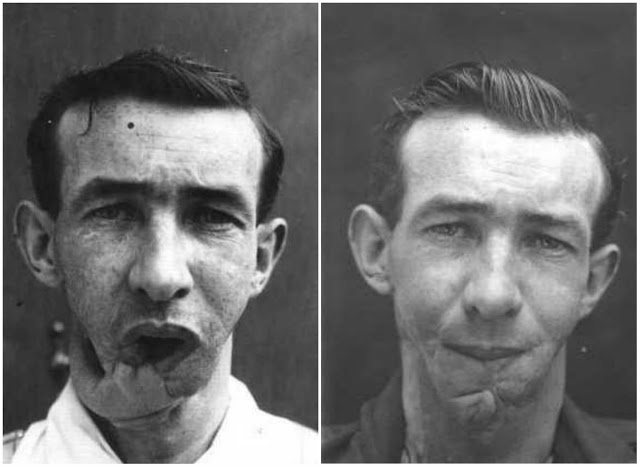
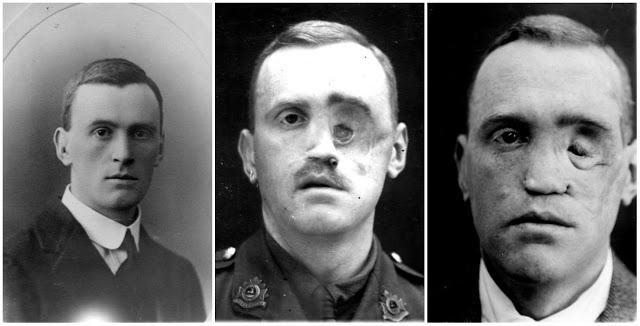
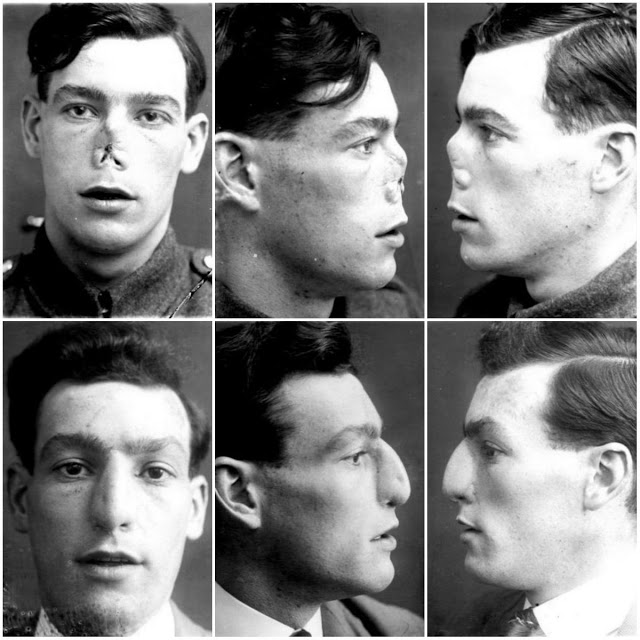
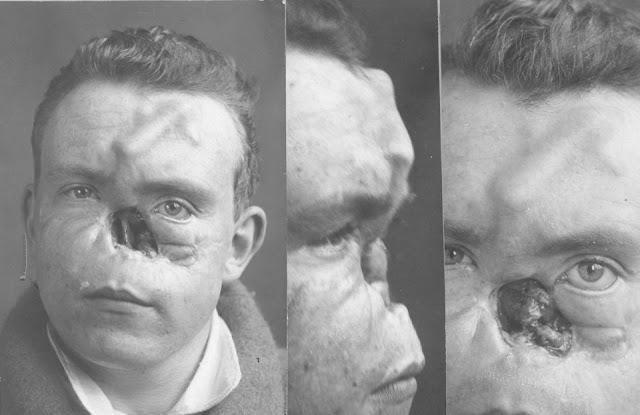
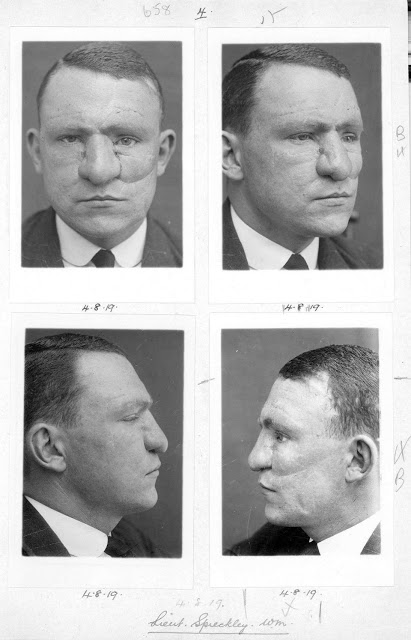
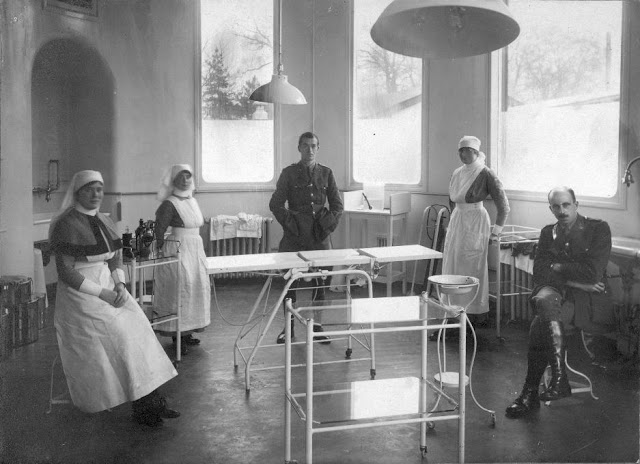
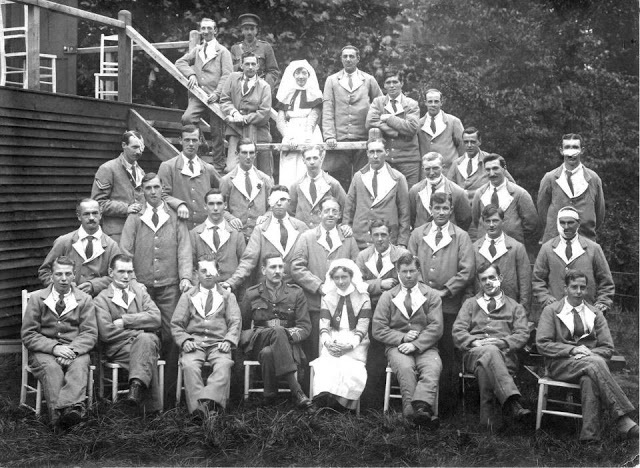
These incredible before and after photographs show how British and French soldiers had to have their faces completely rebuilt having been maimed during World War One.
The photos are part of a book, Faces from the Front, looking at the early development of plastic surgery. It highlights the work of young surgeon Harold Gillies, who repaired the faces of those who were injured and shipped back home between 1914 and 1918.
Mr Gillies spent years restoring the dignity of men who had been prepared to sacrifice their lives. His incredible skill saw him use a rib to reconstruct a jaw. He also spent six years and 19 operations restoring a cheek, upper lip and nose of another soldier.
Impressive before and after images of Private Harold Page, of the Norfolk Regiment, who lost an eye in the Battle of the Somme.Private William Thomas of the 1st Cheshire Regiment on the first day of his admission (left) and his final appearance (right).Captain J.G.H Budd shown in May 1919 who had reconstructive surgery on his nose.Private Arthur Mears is captured during treatment (left) and afterwards (right) following the repair of his jaw using his rib.Lieutenant T.H. Elderton, of the 3rd Batallion, Bedford Regiment, before the war (left); on admission to Sidcup on February 10 1918 (center) and after being worked on by Harold Gillies (right).Joseph Pickard of the 5th Northumberland Fusiliers in July 1919, and after surgery in May 1921.Lieutenant William Spreckley before treatment, he was missing his nose.Lieutenant William Spreckley after surgery. Gillies, implanted a shaped piece of cartilage to give him a cartilage graft to create a nasal bridge.The interior of the plastics theatre, at the Queen’s hospital with Gillies seated on the right.
Janis Joplin joined up with Big Brother and the Holding Company in 1966, at the height of San Francisco’s Haight-Ashbury scene. Success came quickly, and soon the band was headlining now-legendary venues like Filmore West, Winterland, and Avalon Ballroom.
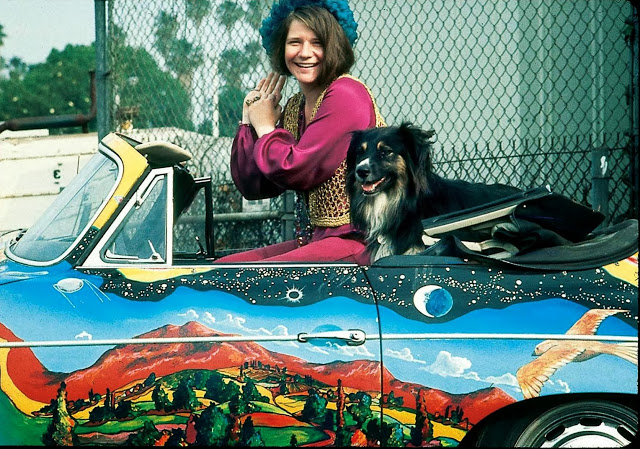
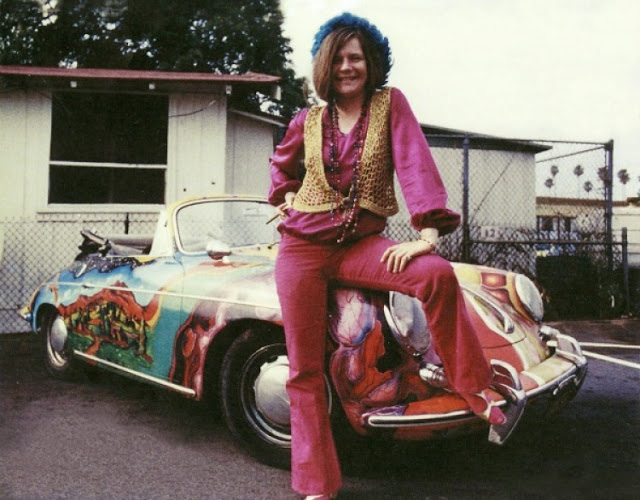
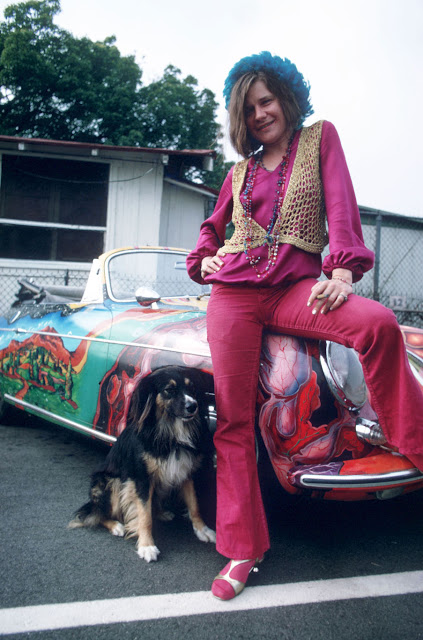
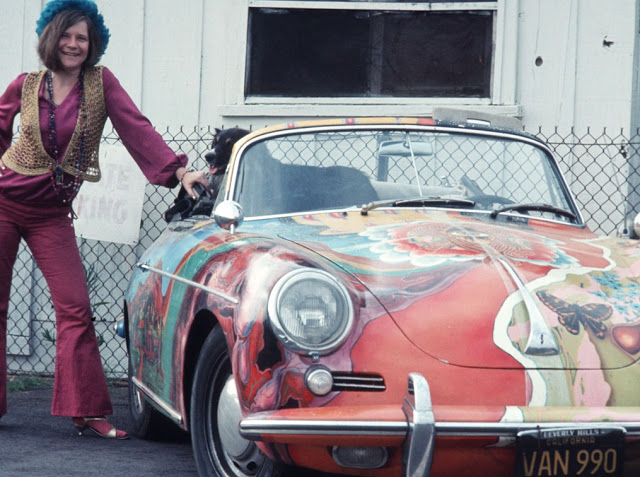
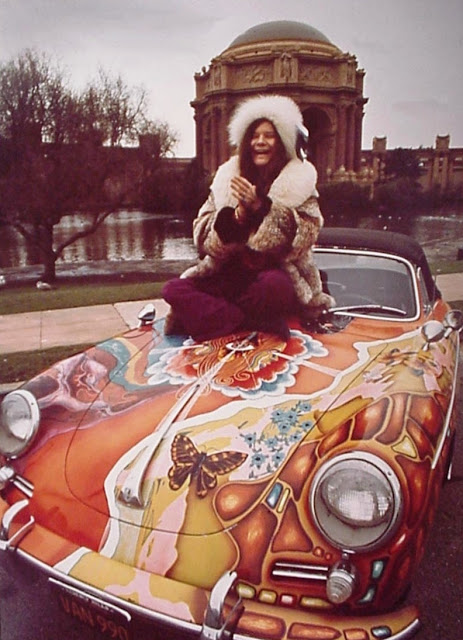
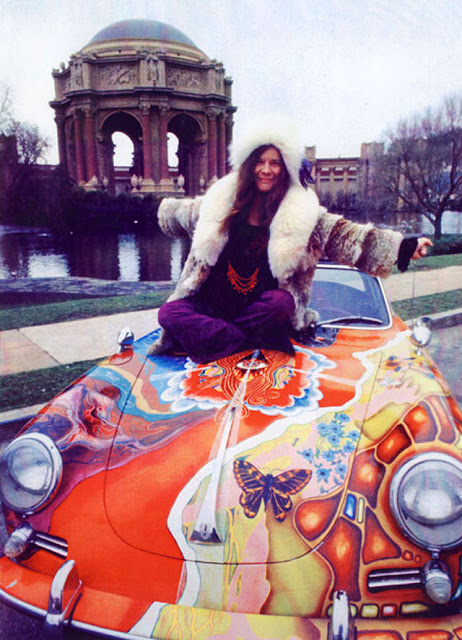
By 1968, Janis had the means for some rock star transportation, and paid a Beverly Hills car dealer about $3500 for a ’65 Porsche 356c Cabriolet. The plain-jane white paint job did not suit her, however, and she promptly asked friend (and Big Brother roadie) Dave Richards for something more dramatic.
Richards succeeded in creating nothing less than a four-wheeled icon of the psychedelic era. It is painted in vivid colors, and covered with day-glo flowers, cartoon buterflies, representations of astrology, nature, and even a portrait of Janis’ band.
Obviously, this is one Porsche that was hard to miss, and it quickly became associated with the star. If you saw the 356, you knew Janis was not far away. Fans would leave notes under the wipers everywhere it was parked. Once, the car was stolen and rattle-canned gray… but Joplin recovered it and found a body shop to restore the custom paint job.
Several replicas of Janis’ beloved 356 have been built over the years. The original (itself restored several times) sits in the Rock and Roll Hall of Fame and Museum in Cleveland. Visitors there may well find themselves lost in the splashes of color… and transported to a time when an awkward girl from Port Arthur, Texas held the country transfixed with a song. Oh Lord, won’t you buy me a Mercedes-Benz? My friends all drive Porsches, I must make amends. Worked hard all my lifetime, no help from my friends, So Lord, won’t you buy me a Mercedes-Benz? In 1969, it was stolen. The thief, realizing the car would be too recognizable, spray-painted it gray. The car was later recovered and the mural restored. After Janis’ death, the car was used as a courtesy car by her manager Albert Grossman. The car fell in disrepair and was taken back by the Joplin family and restored. The car has been on loan to the Rock and Roll Hall of Fame since 1995 by Janis’ heirs.
In order to make some money after arriving in New York, the young Lee Miller made stock photos for the famous American photographer Edward Steichen. Steichen sold some to Kotex, which put one into the first menstrual hygiene ad ever to show a real person; it ran from July 1928 into 1929. America, and Miller, were horrified. No decent woman would associate herself publicly with menstruation!
But by December 1928 Miller was enjoying her fame, and left with a girl friend to Paris, where she met the Surrealist painter and photographer Man Ray; they became lovers, and Ray made some great pictures of Miller.
Her association with photography probably began with the nude photographs her father made of her when she was a teenager. Much later Miller became a great World War II photographer in Germany.
Lee Miller photographed by Edward Steichen in 1928. Believe it or not, this photograph was taken for a Kotex advertisement, which caused a bit of a scandal.
But probably the first famous person to appear in menstrual hygiene ads, in distinction to someone who only later became famous, was the Olympic gymnast Cathy Rigby in the 1970s, who appeared in many Stayfree ads. She also appeared nude doing a split on a balance beam in Sports Illustrated, so she was willing to take chances! She still makes ads today, although not for menstrual hygiene.
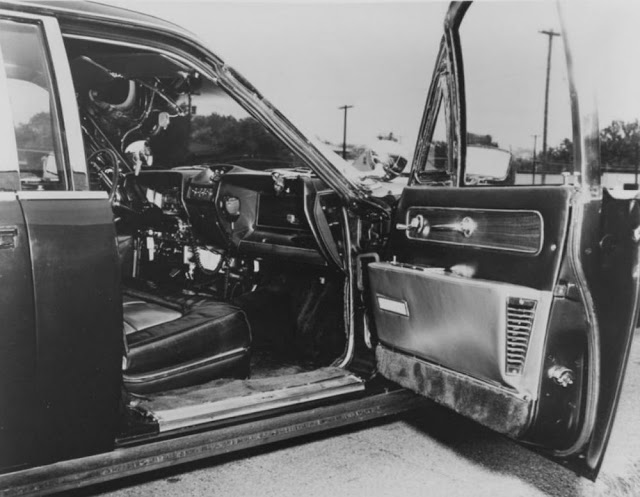
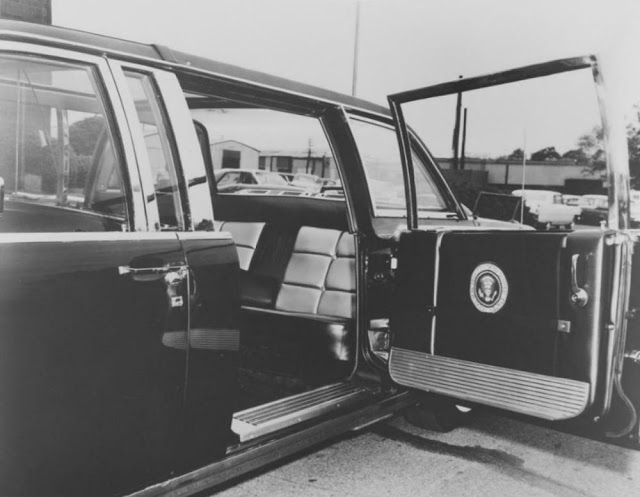
No other vehicle is as seared into the memory of a nation as the Lincoln limousine President John F. Kennedy rode in during his assassination on November 22, 1963, in Dallas.
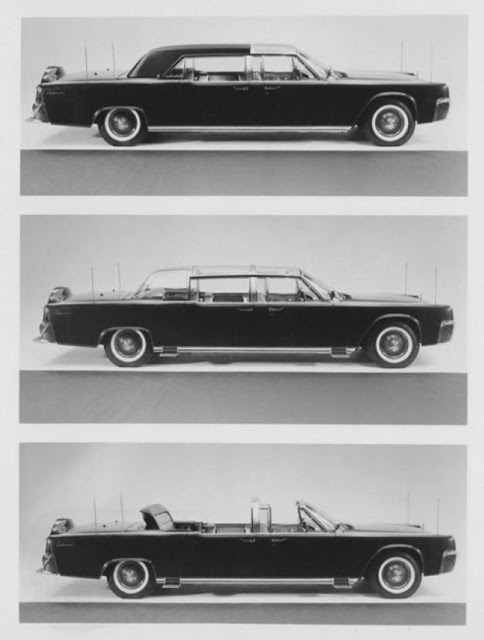
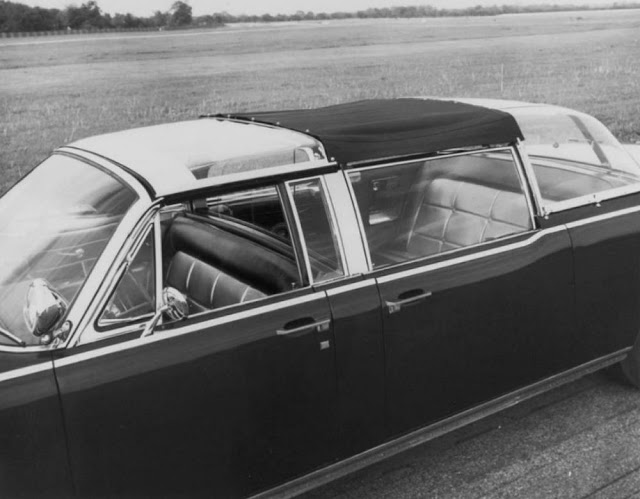
In 1961, a short time into Kennedy’s presidency, the White House leased a specially-modified Lincoln Convertible built by the Ford Motor Company. The vehicle — codenamed the SS-100-X by the US Secret Service — came with added extras such as telephones, a retractable roof, flashing lights, standing platforms for security agents and — questionably, in hindsight — a hydraulic lift that raised the president’s seat so that he could be more easily seen.
It was by far the most expensive and sophisticated car built for a president but, impressive as it was, the SS-100-X did not have the armor plating and bulletproof glass that would soon become standard for presidential limousines.
The Kennedy limousine is one of the most famous vehicles in history, with countless documentaries, films and books devoted to what happened to its most famous passenger in 1963. Photos and vision of the limousine on that day have been examined, dissected, discussed and disputed for decades, but many people do not know what happened to the vehicle in the years that followed. “A lot of people assume it was destroyed, or locked away in some warehouse never to be seen again,” said Matt Anderson, transport curator at the Henry Ford Museum. After the assassination, and still covered in blood, the SS-100-X was flown from Dallas back to Washington DC, where it was stored in the White House garage and searched for evidence by the FBI.
Lyndon B Johnson was sworn in as president and one of the biggest criminal investigations in history began.
It would have been well down his list of priorities given the recent events, but the new president found himself without an official limousine — certainly without one that met appropriate security standards given the events in Dallas. “It was a simple matter of expediency — the president needed a parade car, and it was much faster to rebuild the existing car than to build something from scratch,” explained Anderson. So, the decision was made to refit the SS-100-X. This was considered the quickest and most cost-effective solution, earning it the nickname The Quick Fix.
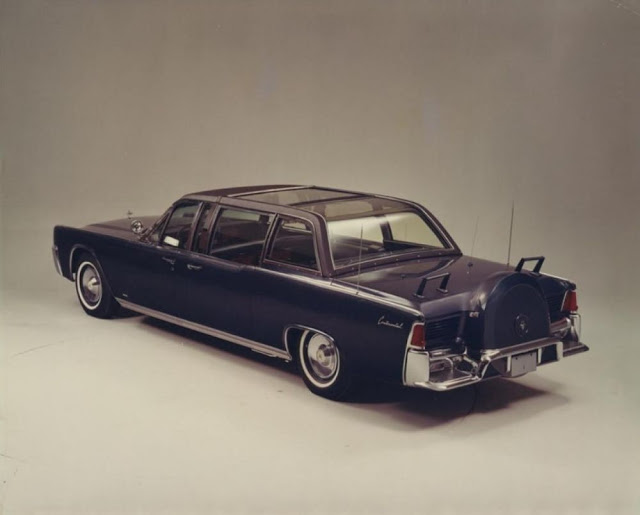
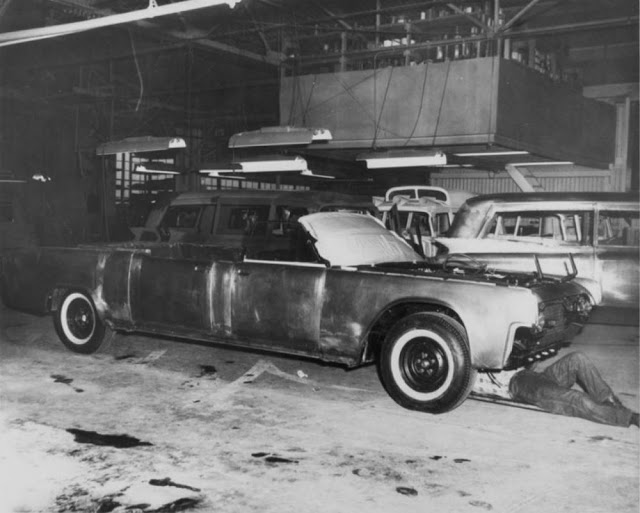
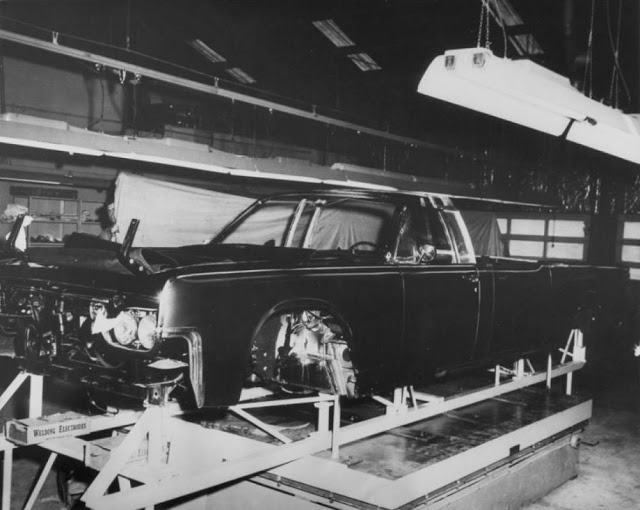
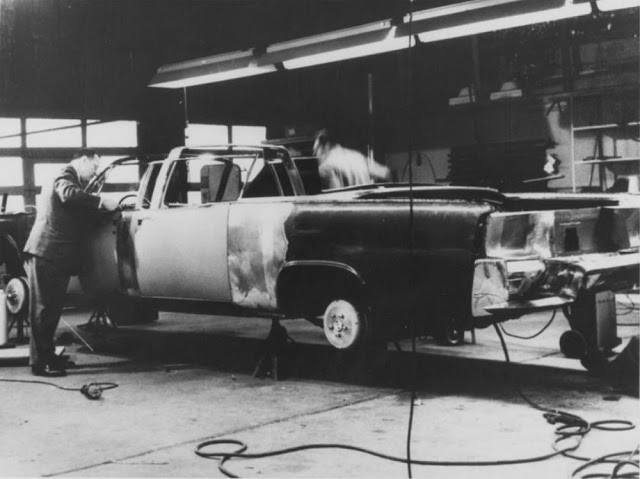
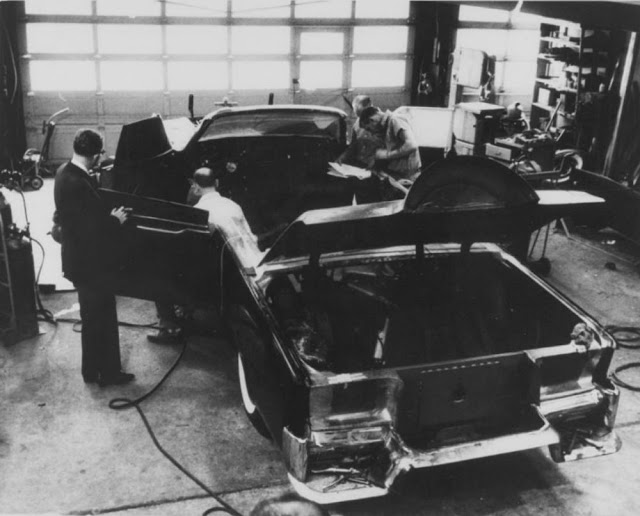
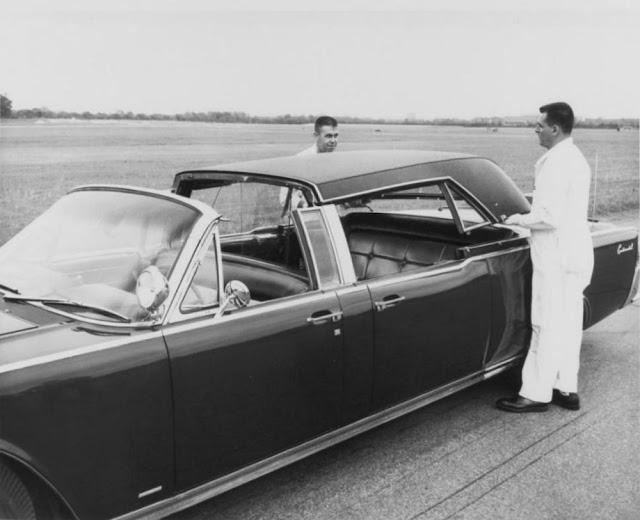
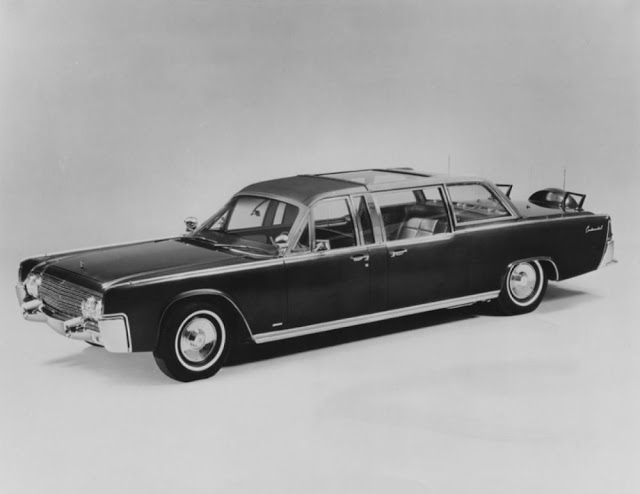
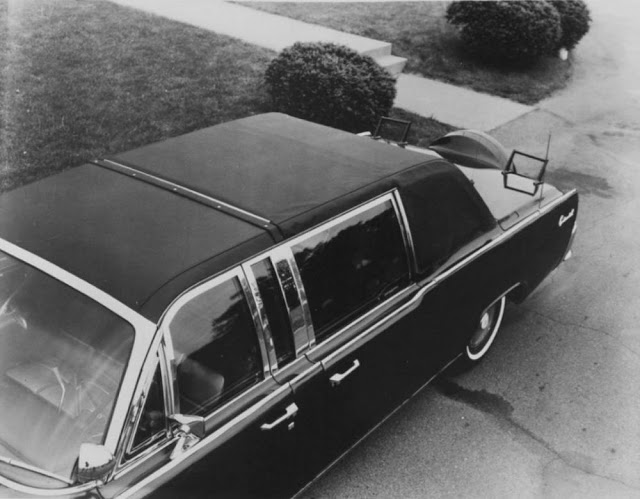
The vehicle was sent to the Hess & Eisenhardt company, which specialized in making armored vehicles, and was stripped back to its bare bones before being modified. Titanium plating was added to the body, along with a bulletproof roof and windows, and flat-proof tyres. It was also fitted with an air-filtration system to protect against chemical attack.
However, Lyndon B. Johnson must have had at least some qualms about the vehicle because he had it painted black, not wanting anyone to recognize his presidential limo as being “that” presidential limo. “Johnson took one look and ordered that the car be repainted in black,” Anderson said. “He thought the blue was too associated with President Kennedy and the assassination.” After a repaint, the limousine was returned to the White House in May, 1964, six months after JFK’s assassination. President Johnson was said to have been extremely uncomfortable about riding in the infamous limousine, for obvious reasons, but used it as his official car until 1968.
The SS-100-X clocked up tens of thousands of kilometers on the road in the service of the White House, and even more air miles on many overseas trips.
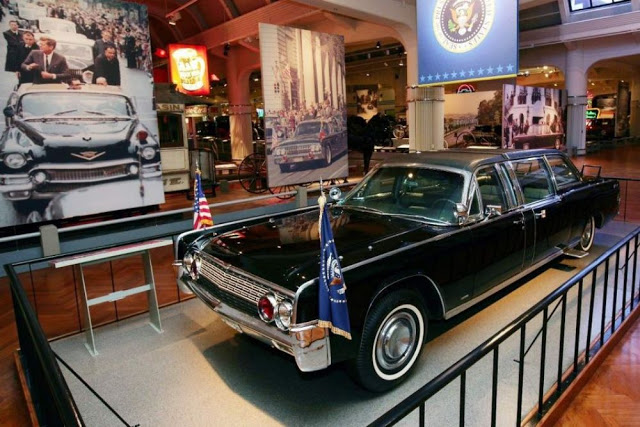
But, even when Johnson commissioned a new limousine, which came into service in 1968, that was not the end of road for the iconic car. The vehicle stayed in service at the White House until the late 1970s and — although no longer the main presidential limousine — was occasionally used by presidents Richard Nixon, Gerald Ford and Jimmy Carter. “People are surprised to learn that it was rebuilt and used for another 14 years following the Kennedy assassination,” Anderson said. After the White House stopped leasing the SS-100-X in 1978, it was returned to the Ford Motor Company and now sits in the Henry Ford Museum in Dearborn, Michigan.
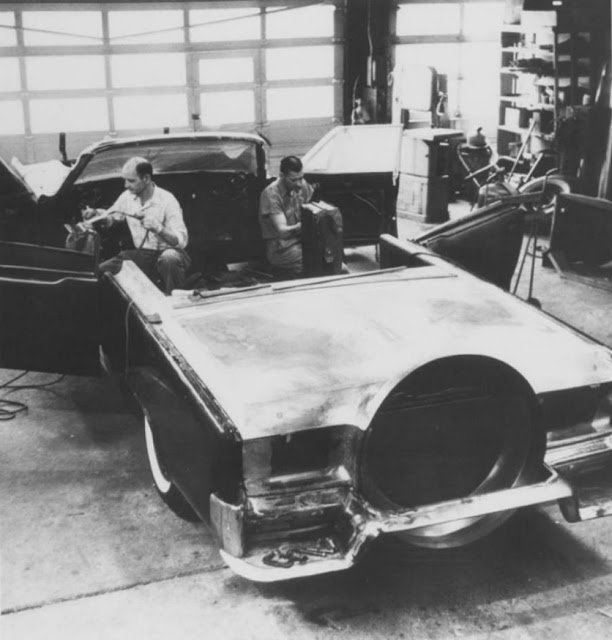
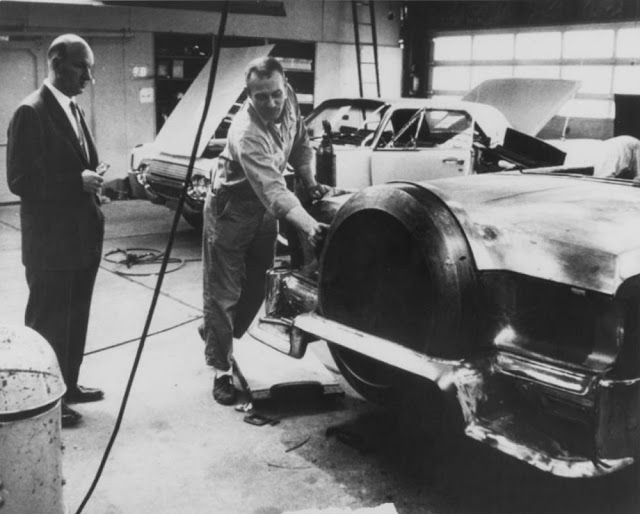
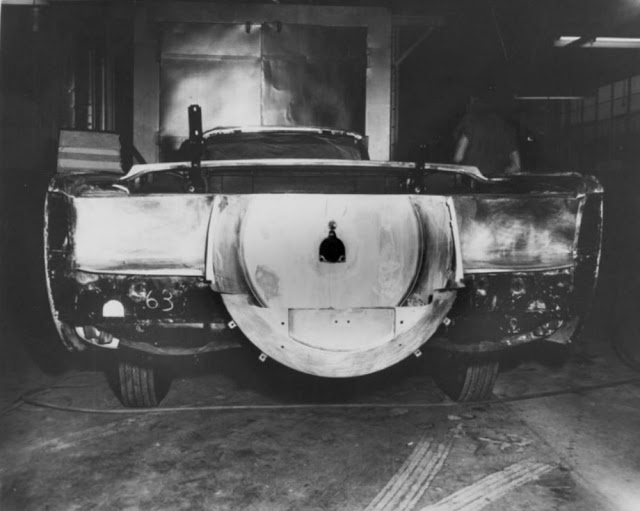
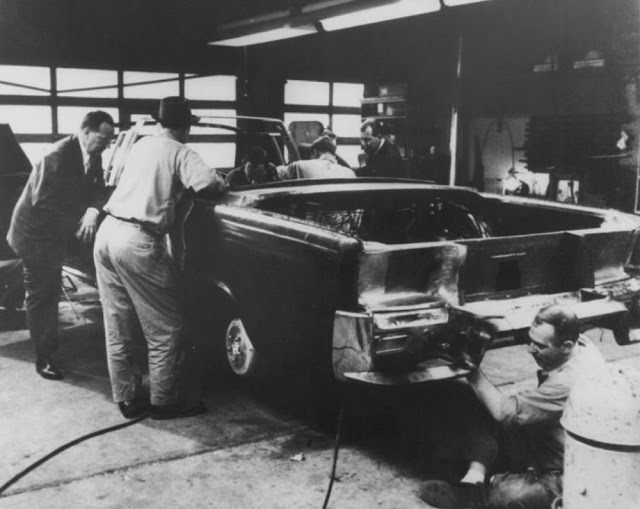
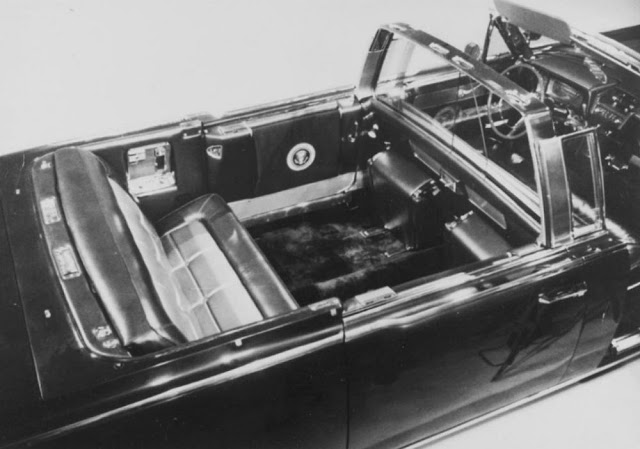
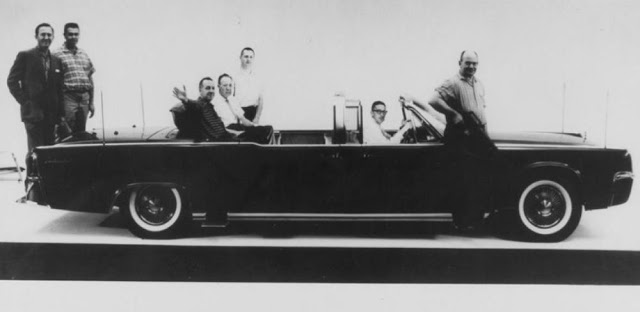
A worker from the Hess & Eisenhardt Company works on the extension of the limousine. Far from the stretch models used today, this Lincoln Continetal measured just 21 feet.Customization of the John F. Kennedy presidential limousine was performed by the Hess & Eisenhardt Company of Cincinnati, Ohio. The car was stretched by 3.5 feet, steps were added for Secret Service agents, and a siren and lights were added to the limo.Transformation of the limo took about six months. It was delivered to the White House in June 1961, six months into Kennedy’s term.Another part of the JFK limo’s customization effort included a hydraulic rear seat that raised the president up nearly a foot for better visibility.Ford Motor Company collaborated on the car’s customization and retained ownership of the car after the transformation was complete. The automaker leased the car back to the Secret Service for just $500 per year.The Lincoln Continental was stripped down to its bare bones for the customization process.Two of the many features added to the Continental, steps on the rear bumper for Secret Service agents, turned out to be incredibly useful. An agent climbed onto the back of the car, grabbing onto the trunk, to protect the First Lady after the president was shot in Dallas.The 1961 customization project was the only time this car was worked on during Kennedy’s term. In 1963, the car’s grille was swapped out for one from the 1962 Continental while “sombrero”-style wheel covers were added to the limo.Inside, the Presidential Seal is visible on the door, as well as the two jumper seats that were added to the rear cabin. At the time of the assassination, Governor Connally was riding in one of these seats and was critically injured in the gunfire.As originally built, the 1961 Lincoln Continental Presidential Limousine had three different roof options. A removable steel section provided privacy, clear plastic sections provided weather protection, and a completely open top gave the president maximum visibility. The plastic panels fit neatly into the trunk and were available whenever needed. None of the removable tops was armored.In its original configuration, the limousine boasted adjustable custom roof options. Whether the president needed privacy, weather protection, or maximum visibility, the limo could be changed and removable panels fit into the trunk. None of the tops were armored.Workers swap out the rear section of the limousine’s roof for an enclosed section.This canvas sunshade with transparent top sections were just one combination for the limousine. It’s tough to imagine the president riding around with such limited protection today.The shop crew of the Hess & Eisenhardt Company poses with the completed limousine before it was shipped to the White House for then President John F. Kennedy to use.After President Kennedy’s assassination on November 22, 1963, the limousine was impounded for evidence. The White House approved a plan by December of 1963 to renovate the car for continued service, after which it was returned to the Hess & Eisenhardt Company for work.Known as the “Quick Fix,” the renovations were completed by May 1, 1964 and extensive testing took place. Estimates place the overall cost to have been around $500,000, with it shared by Ford, some Ford Suppliers, and the government.Seen here in the shop, the presidential limousine not only underwent a structural overhaul, but also received a new engine that delivered about 17 percent more power.Replacing the innovative removable rooftops, the “Quick Fix” added a permanent, non-removable top to the limousine. This allowed the car to use transparent armor to protect the president.The rebuild of the Kennedy limousine after the assassination took less than five months, adding bullet-resistant windows to the presidential ride.The rear passenger compartment also got some upgrades, including extensive armoring and reupholstery to fix damage from the assassination.Today, the limousine is housed at the Henry Ford Museum in Dearborn, Michigan.
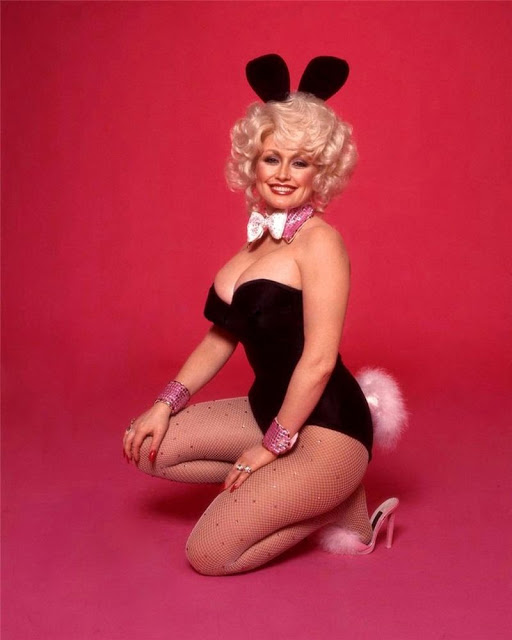
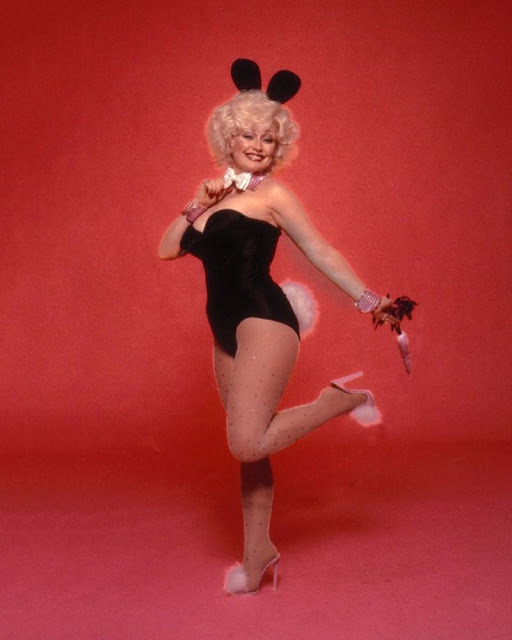
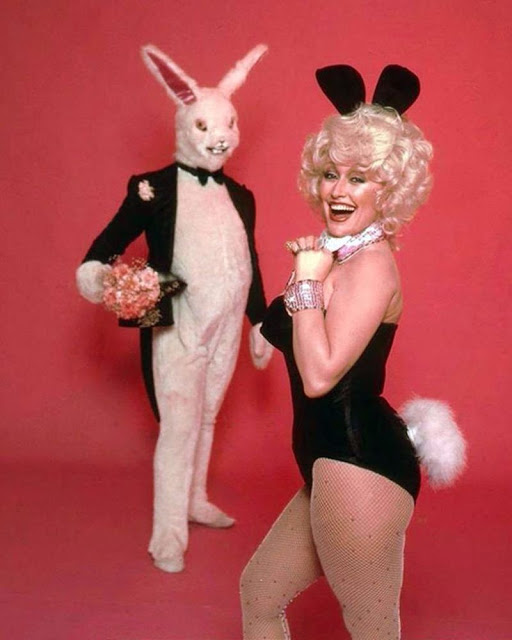
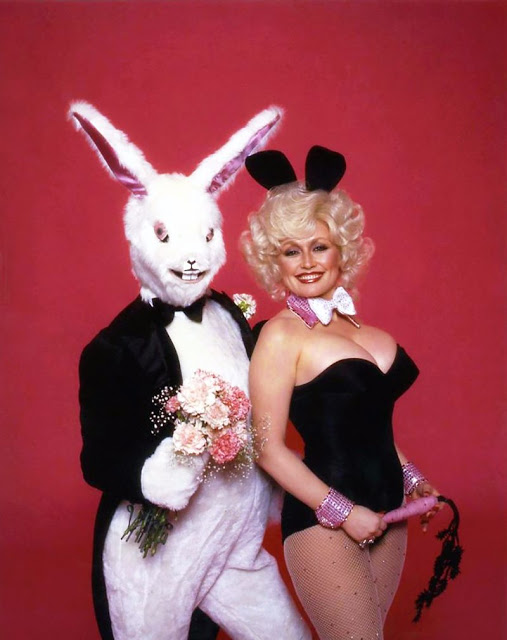
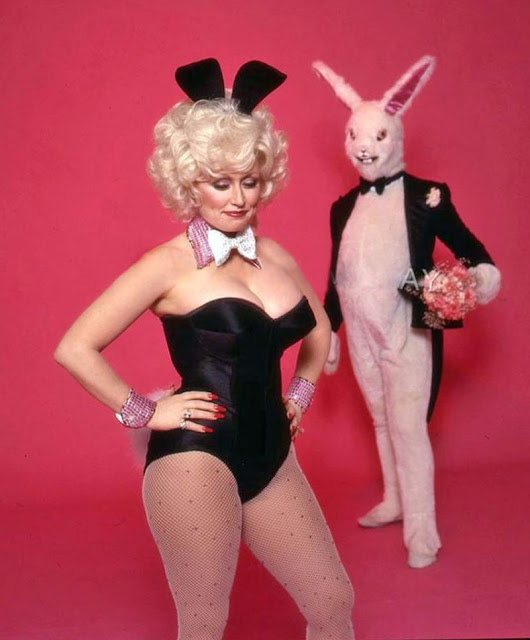
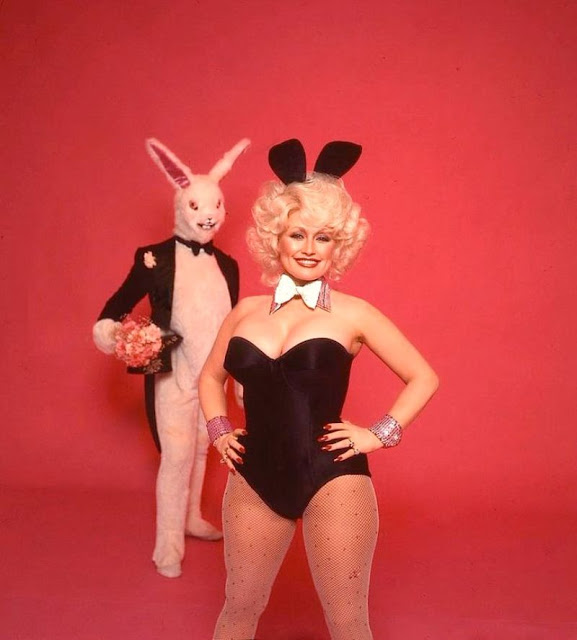
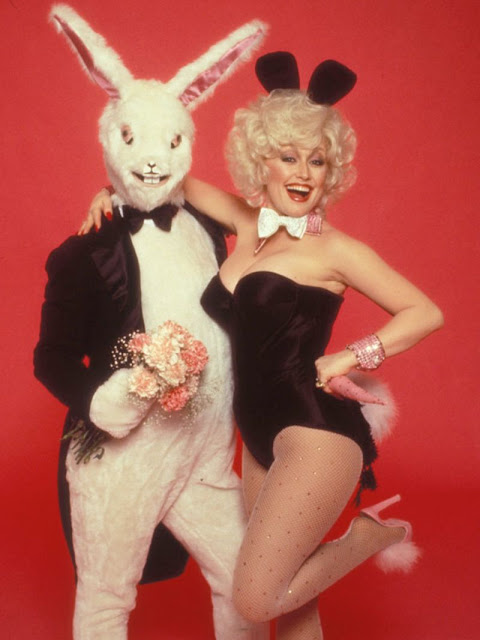
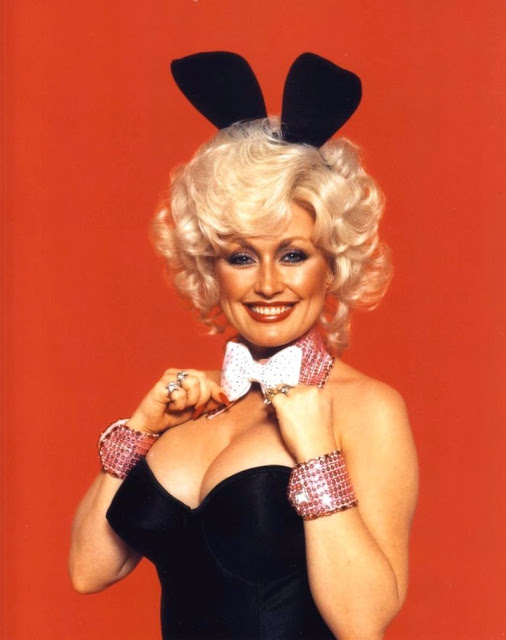
Readers are disappointed when they open the magazine to see the wholesome singer in a Playboy bunny outfit, but with no nudity. Perhaps as a desperate distraction, in some of the shots she’s accompanied by a guy in a rabbit suit looking like some kind of deranged Easter bunny.
Dolly Parton became the first country singer to pose for the magazine although within very specific parameters that did not include nudity.
“I was on the cover of Playboy!” Parton shared in an interview with Chicago’s US 99 radio station. “I wasn’t naked; all you saw was me in my bunny suit, with my boobs sticking out a little. I wouldn’t do a layout. I’m not that brave, nor do I look that good!”
When asked why she resisted posing nude by the radio host, Parton explained that at the time posing for the magazine was just a fun thing to do but she wasn’t about to “do the whole dirty deal.”
“I have been asked, back in the day, but that was so totally not me. I would never do that,” Parton explained. “But that was a good article they ran in there, and it was just a fun thing to do. That was just another way I was trying to market myself, at that time, to kinda get in the mainstream and take it right to the edge, but not do the whole dirty deal.”
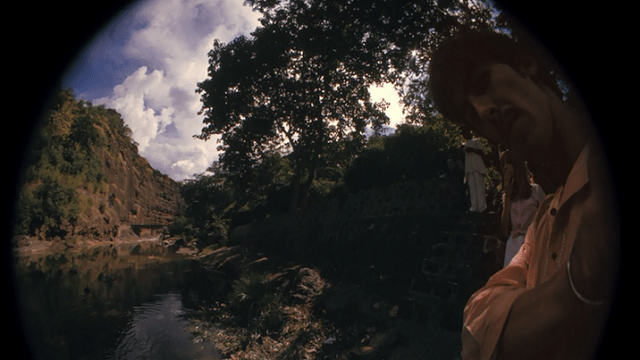
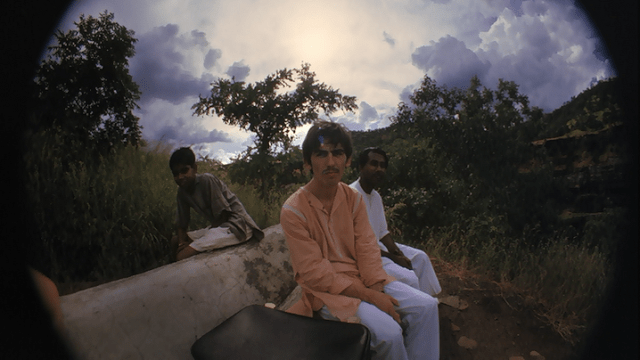
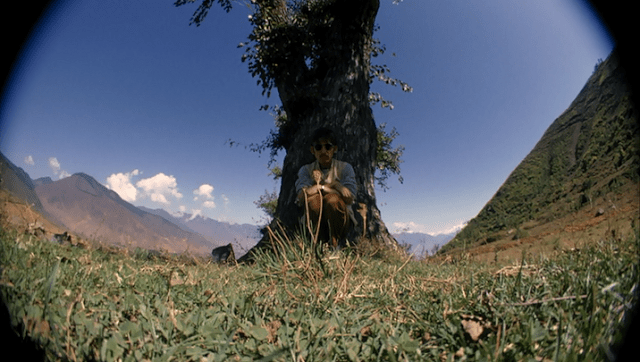
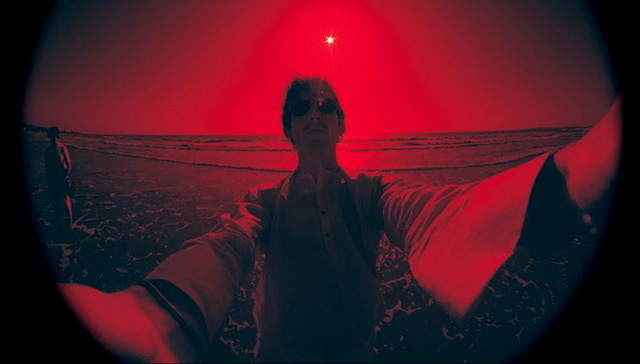
George Harrison and his wife Pattie flew from London to Bombay (Mumbai), India in September 1966. The purpose of the visit was for George to take sitar lessons with Ravi Shankar, and for the couple to study yoga. The Harrisons stayed at the Taj Mahal hotel in Bombay, under the names Mr and Mrs Sam Wells.
George always seemed to have a camera with him. He took a lot of 8 mm footage too. Below are some of awesome self-portrais of George Harrison with a fisheye lens in India in 1966.
George Harrison MBE (25 February 1943 – 29 November 2001) was an English musician, singer-songwriter, and music and film producer who achieved international fame as the lead guitarist of the Beatles. Sometimes called “the quiet Beatle”, Harrison embraced Indian culture and helped broaden the scope of popular music through his incorporation of Indian instrumentation and Hindu-aligned spirituality in the Beatles’ work. Although the majority of the band’s songs were written by John Lennon and Paul McCartney, most Beatles albums from 1965 onwards contained at least two Harrison compositions. His songs for the group include “Taxman”, “Within You Without You”, “While My Guitar Gently Weeps”, “Here Comes the Sun” and “Something”.
Harrison’s earliest musical influences included George Formby and Django Reinhardt; Carl Perkins, Chet Atkins and Chuck Berry were subsequent influences. By 1965, he had begun to lead the Beatles into folk rock through his interest in Bob Dylan and the Byrds, and towards Indian classical music through his use of Indian instruments, such as sitar, on numerous Beatles songs, starting with “Norwegian Wood (This Bird Has Flown)”. Having initiated the band’s embracing of Transcendental Meditation in 1967, he subsequently developed an association with the Hare Krishna movement. After the band’s break-up in 1970, Harrison released the triple album All Things Must Pass, a critically acclaimed work that produced his most successful hit single, “My Sweet Lord”, and introduced his signature sound as a solo artist, the slide guitar. He also organised the 1971 Concert for Bangladesh with Indian musician Ravi Shankar, a precursor to later benefit concerts such as Live Aid. In his role as a music and film producer, Harrison produced acts signed to the Beatles’ Apple record label before founding Dark Horse Records in 1974 and co-founding HandMade Films in 1978.
Harrison released several best-selling singles and albums as a solo performer. In 1988, he co-founded the platinum-selling supergroup the Traveling Wilburys. A prolific recording artist, he was featured as a guest guitarist on tracks by Badfinger, Ronnie Wood and Billy Preston, and collaborated on songs and music with Dylan, Eric Clapton, Ringo Starr and Tom Petty, among others. Rolling Stone magazine ranked him number 11 in their list of the “100 Greatest Guitarists of All Time”. He is a two-time Rock and Roll Hall of Fame inductee – as a member of the Beatles in 1988, and posthumously for his solo career in 2004.
Harrison’s first marriage, to model Pattie Boyd in 1966, ended in divorce in 1977. The following year he married Olivia Arias, with whom he had a son, Dhani. Harrison died from lung cancer in 2001 at the age of 58, two years after surviving a knife attack by an intruder at his Friar Park home. His remains were cremated, and the ashes were scattered according to Hindu tradition in a private ceremony in the Ganges and Yamuna rivers in India. He left an estate of almost £100 million. (Wikipedia)
Lori Mattox was born in Los Angeles in 1958, and when she was around 13 made her entry into the rock n roll scene with Sable Starr. They were regulars at the Rainbow Bar & Grill, Rodney’s English Disco, the Continental Hyatt House (the notorious “Riot House”), and the Whisky A Go Go.
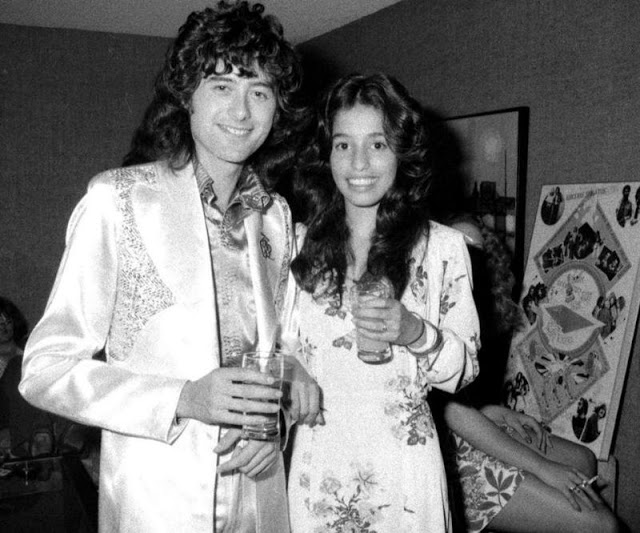
She became a teen model and was included in several editorials in Creem and in Star magazine, the local bible of the scene. Her petite frame, large brown eyes and masses of chestnut curls drew her many admirers, and it has been reported that she lost her virginity to David and Angie Bowie at thirteen. Around the same time a photo of her was shown to Jimmy Page, who quickly became infatuated with her. He was still dating Miss Pamela of the GTO’s (later Pamela Des Barres) but when he was in LA in 1972 on the Zeppelin tour he went after Lori.
Lori avoided his advances several times, later stating that she was frightened of him; finally Led Zeppelin’s tour manager “kidnapped” her and brought her to the Hyatt and to Jimmy’s room. Interviewed in Hammer of the Gods, a biography of Led Zeppelin, Lori said that the room “was dimly lit by candles… and Jimmy was just sitting there in a corner, wearing this hat slouched over his eyes and holding a cane. It was really mysterious and weird… He looked just like a gangster. It was magnificent.” They started an affair that night, which was kept secret since she was only 14 and he was still dating Pamela. His relationship with Pamela ended dramatically when he took her to a party for the band but left with Lori.
By all accounts, Jimmy and Lori were very in love and for the next year and a half she traveled often with the band. When she was 16 he left her for Bebe Buell, the Playmate who had recently been living with Todd Rundgren. Bebe was Jimmy’s date for the Swan Song soiree, which Lori found incredibly upsetting since she was still in love with him. Out of her mind on Quaaludes, she stumbled around the party, bloodying her nose and soaking her white gown in blood. When Bebe and Jimmy were leaving the party, she cornered them, screaming at Jimmy, “Why are you doing this to me?” but he ignored her and went to the Rainbow Room where he had a huge fight with Bebe over his cruelty to Lori.
The next day Lori went to the Hyatt where she found Jimmy and Bebe in bed together. She fled but came back later and knocked on the door. When Bebe opened the door with the chain on it, Lori reached through, grabbing Bebe’s hair and trying to drag her out. Jimmy watched his former and current girlfriends fight it out from the safety of his room, laughing hysterically. Lori drifted out of the groupie scene and briefly got back together with Jimmy in the early 80s; she supposedly never got over the pain of their first breakup but has gone on to a stable career as a buyer in LA and has a son.
Just like Sable, Lori’s style was an amalgamation of trash and full-on glamour. Often wearing hot pants with halter tops made from long, thin scarves that barely covered her pre-pubescent breasts, Lori was just as likely to wear a vintage 40s satin gown with a mink stole. Even in her trashiest outfits, her huge smile lights up the snapshots and she never appears as cheap as Sable sometimes did. More openly romantic than her good friend, it isn’t hard to see how she was so deeply affected by the events of her teenage years.
After drifting out of the groupie scene, Lori held a series of jobs. She currently works as a buyer and manager at a fashion boutique in Los Angeles. Lori occasionally gives interviews where she talks about her groupie days (especially her relationship with Jimmy Page).