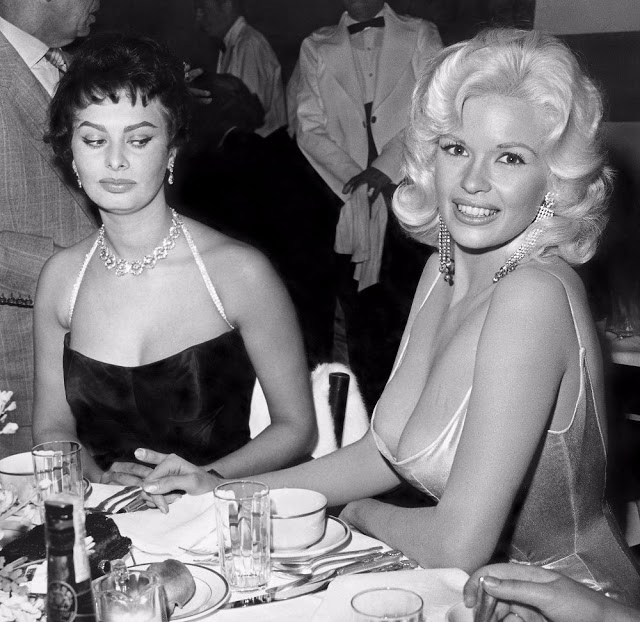
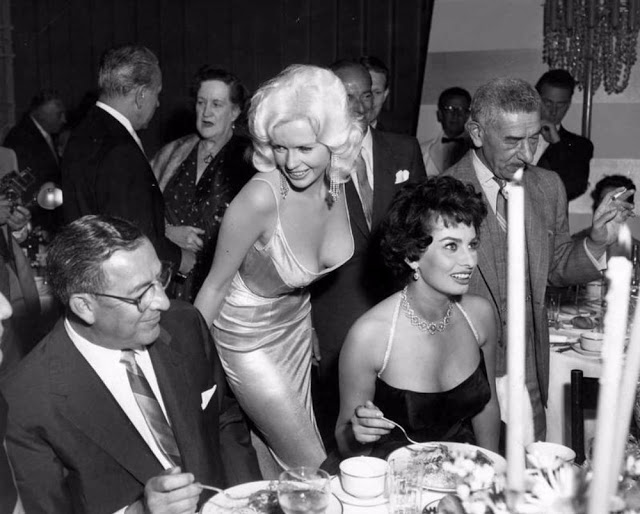
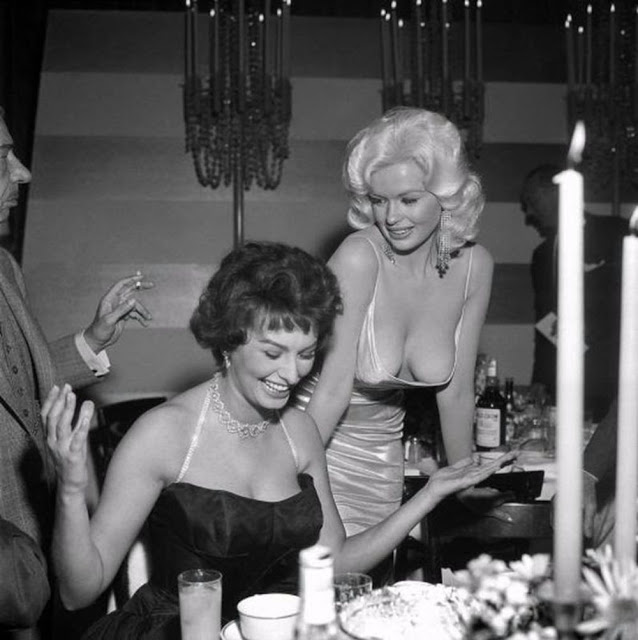
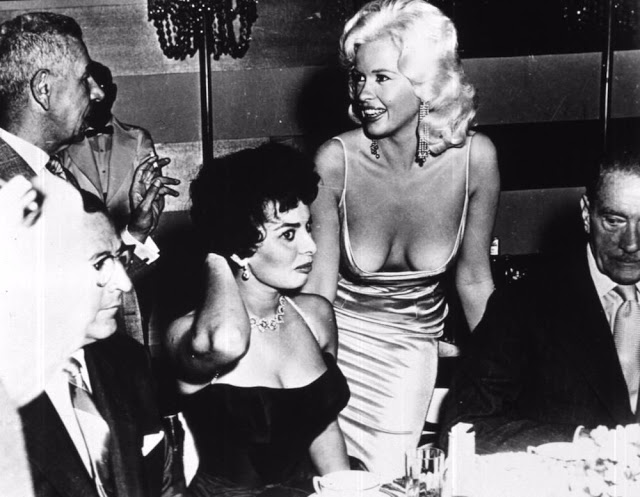
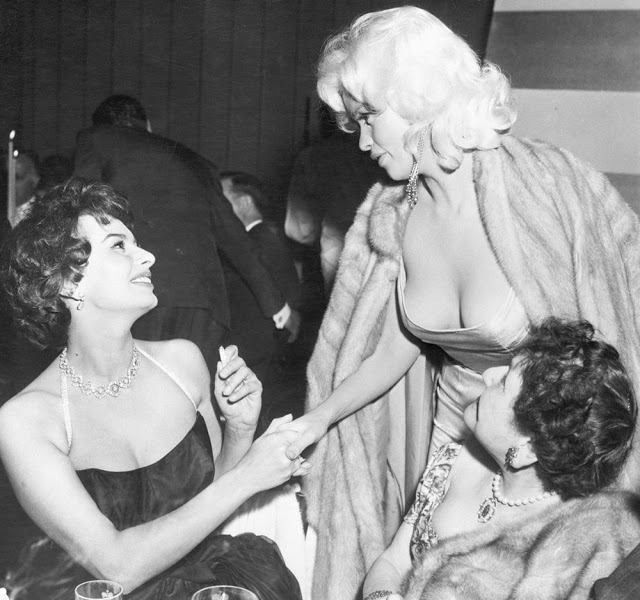
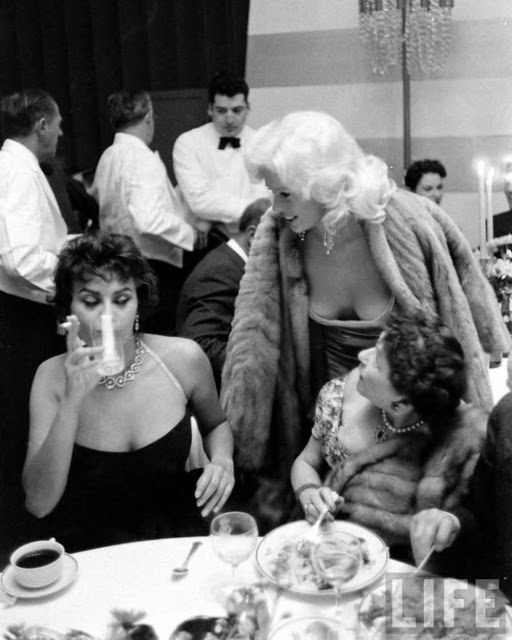
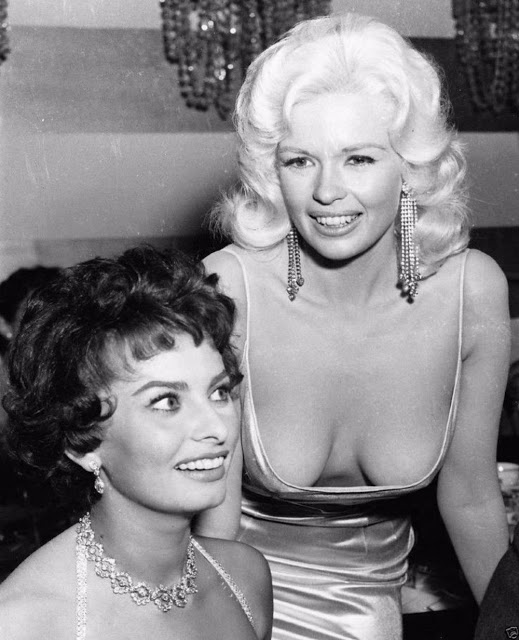
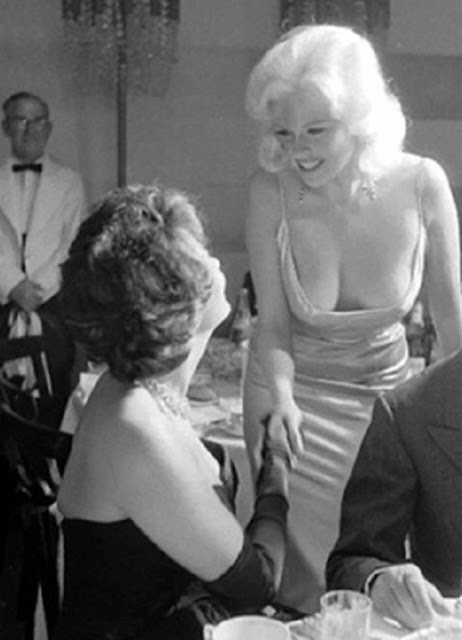
A photo taken 60 years ago of Hollywood’s two most alluring sex symbols is still getting a lot of attention. The most famous side-eye or even stink eye photo in history belongs to Sophia Loren’s reaction to Jayne Mansfield and her famous large assets! Here’s a little history of the iconic photo that appeared in newspapers and magazines with the word ‘censored’ hiding Jayne’s exposed breast.
According to People Magazine, in 1957, Sophia Loren had just signed a deal with Paramount and had come to California, and Paramount threw a big welcome party for her in Beverly Hills and Jayne Mansfield was on the guest list.
Mansfield sat down at Loren’s table which included actor Clifton Webb and of course, had every eye in the room watching her. She barely dressed for this event and her famous ample breasts were the focus of a notorious publicity stunt intended to take the media attention away from newcomer Loren. Loren couldn’t help but stare at her exposed nipple, as she was fearful that they would come down crashing down on her plate!
“She came right for my table,” Sophia Loren recalled in an interview with Entertainment Weekly in 2014. “She knew everyone was watching. She sat down. And now, she was barely … Listen. Look at the picture. Where are my eyes? I’m staring at her nipples because I am afraid they are about to come onto my plate.”
“In my face you can see the fear. I’m so frightened that everything in her dress is going to blow—BOOM!—and spill all over the table,” she added.
While the two women can be seen laughing and smiling together in other photos from the night, Loren made it clear that the infamous photo (above) best represents the situation. “There may be other photos, but this is the picture. This is the one that shows how it was. This is the only picture,” she explained.
All these years later, Loren said she’s still asked to autograph the photo. “Many, many times I am given this photo to autograph it,” she said. “And I never do. I don’t want to have anything to do with that. And also out of respect for Jayne Mansfield because she’s not with us anymore.” (Mansfield died in 1967).
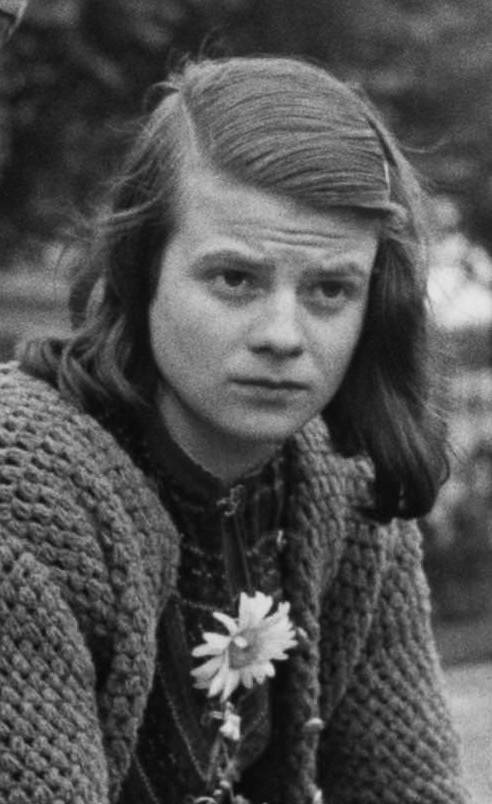
White Rose members Hans Scholl (left) and his sister, Sophie Scholl. Circa 1940.
Sophie Scholl was just 21 years old when she was executed along with her brother, 24-year-old Hans Scholl, on Feb. 22, 1943.
The Scholl siblings had been arrested three days earlier and undergone nearly constant interrogation by the Gestapo before their trial. Nazi judge Roland Freisler, infamous for handing out death sentences in some 90 percent of his cases, made short work of the proceedings before sentencing both Hans Scholl and Sophie Scholl to death.
What had they done to warrant such a punishment at such a young age? They had dared to found the White Rose movement that opposed the Nazis.
Hans and Sophie Scholl initially followed the expected paths for German children growing up in the 1930s: They joined the Hitler Youth and enthusiastically participated in the obligatory activities.
However, the Scholl siblings were atypical in that their father was a virulent anti-Nazi despite being mayor of their town. Although Robert Scholl never forbade his children from participating in Nazi activities, he encouraged them to think for themselves, telling a young Sophie, “What I want most of all is that you live in uprightness and freedom of spirit, no matter how difficult that proves to be.”
Sophie Scholl
Both siblings eventually became disillusioned with the Nazi party. Having witnessed the ugliness of the war firsthand thanks to his time in the medical corps, Hans Scholl then gathered a few like-minded fellow students at the University of Munich in 1942 in order to express their anti-Nazi beliefs.
The group initially just painted slogans such as “Hitler mass murder” or “freedom” on public buildings. But these seemingly small acts were tremendously risky because the Nazis closely watched for internal dissent.
Judge Roland Freisler, who tried the Sophie Scholl case.
Sophie Scholl soon joined Hans Scholl at the University of Munich to study and soon became a member of the resistance organization, which dubbed itself “The White Rose.”
The members of the White Rose committed themselves to exposing the ugly truth behind Nazi propaganda. They wrote and printed anti-Nazi leaflets that they then stealthily distributed all over the campus and city.
“Isn’t it true that every honest German is ashamed of his government these days?,” read the group’s first pamphlet. “Why do you allow these men who are in power to rob you step by step, openly and in secret, of one domain of your rights after another,” read the third.
The White Rose was even able to recruit one of their professors to write one of the leaflets, which urged the country to rise up, claiming “the German name will be forever defamed if German youth does not finally arise, avenge, and atone, if he does not shatter his tormentor and raise up a new intellectual Europe.”
While the White Rose’s resistance activities did not involve sabotage or subterfuge, they knew they were risking their lives for the simple act of daring to express an opinion. Soon, Hans Scholl and Sophie Scholl did indeed pay with their lives.
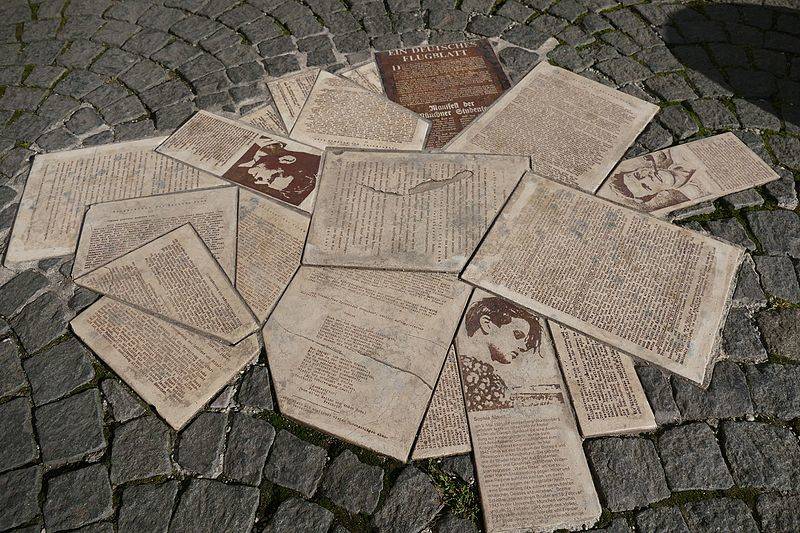
Memorial to the White Rose at Munich University.
The Scholl siblings’ participation in the White Rose movement came to an end in early 1943 after a school janitor spotted Sophie dropping leaflets at the university. Despite days of interrogation, the Scholls refused to give up any of their friends, with Hans even insisting he had printed all the leaflets on his own.
In a rare moment of sympathy, the Gestapo offered Sophie a reduced sentence if she would deny her own role in creating the pamphlets, but she turned them down, refusing to betray her brother and insisting she be given the same punishment as him.
That punishment would be death by beheading. On Feb. 22, after being allowed to bid their parents goodbye, Hans Scholl and Sophie Scholl were led to the guillotine. The White Rose movement had displayed public opposition to the Nazis and the regime made a brutal example of them.
“How can we expect righteousness to prevail when there is hardly anyone willing to give himself up individually to a righteous cause?,” Sophie Scholl said as her final words just before she was killed. “Such a fine, sunny day, and I have to go, but what does my death matter, if through us, thousands of people are awakened and stirred to action?”
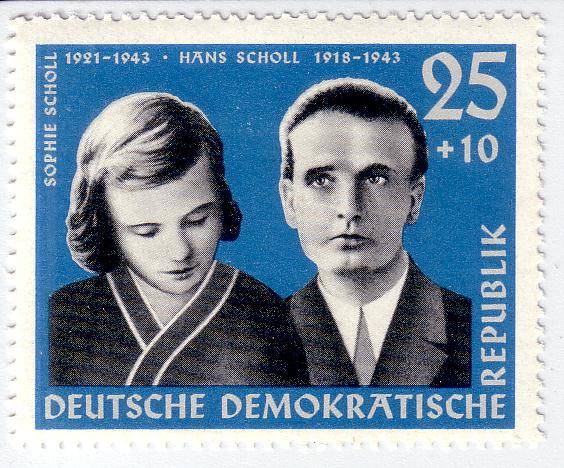
Today, Sophie Scholl and Hans Scholl are important symbols in Germany, as evidenced by this commemorative stamp.
Just a few days after the execution, their final pamphlet was being circulated with an additional line printed at the top: “despite everything their spirit lives on.”
Their message certainly lived on. Word of the pamphlets made its way back to Britain, and the Royal Air Force began reproducing them and dropping the White Rose’s work all over Germany. Even in death, Hans Scholl and Sophie Scholl could not be silenced.
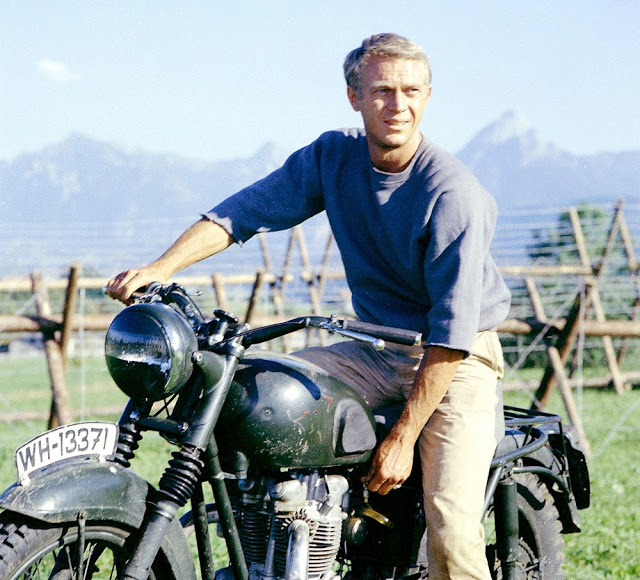
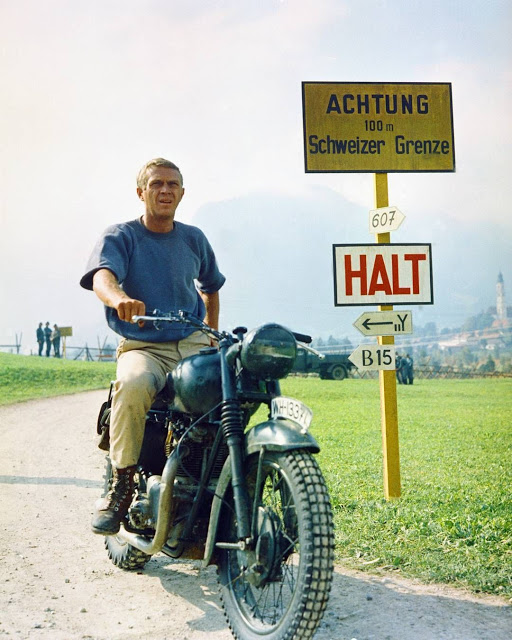
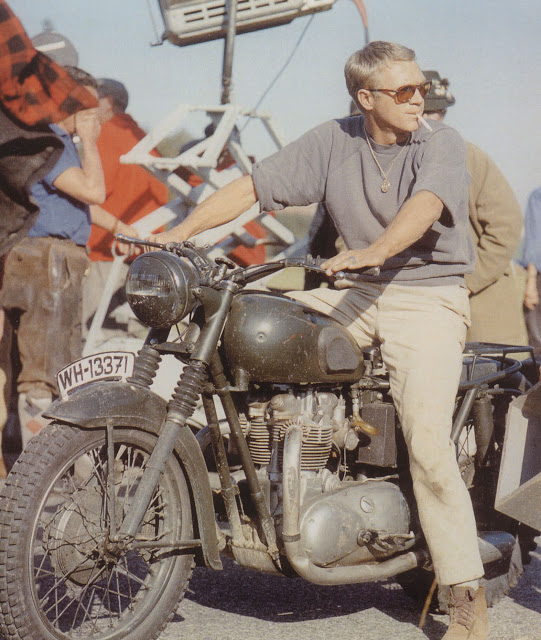
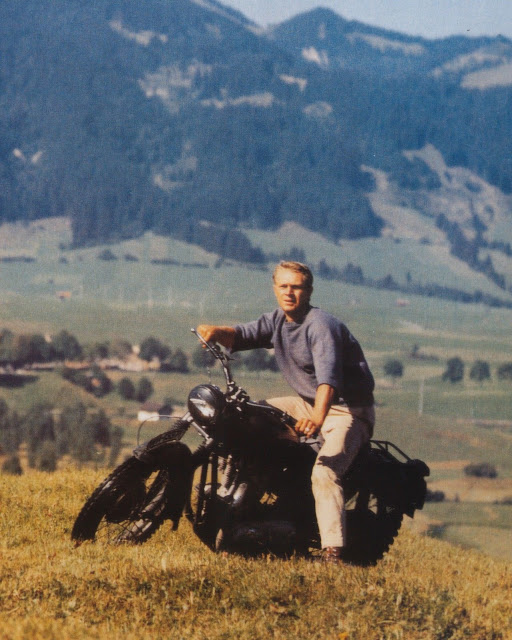
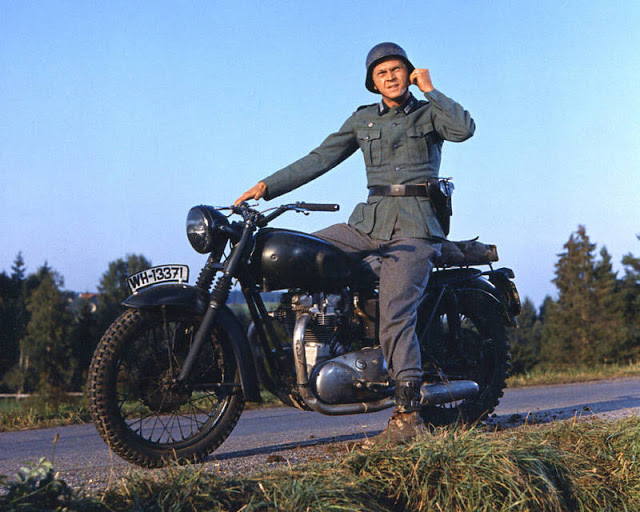
The Great Escape is a 1963 American World War II epic film that depicts an escape by British Commonwealth prisoners of war from a German POW camp. The film is based on Paul Brickhill’s 1950 book of the same name, a non-fiction first-hand account of the mass escape from Stalag Luft III in Sagan (now Zagan, Poland), in the province of Lower Silesia, Nazi Germany. A heavily fictionalized version of the escape is depicted in the film.
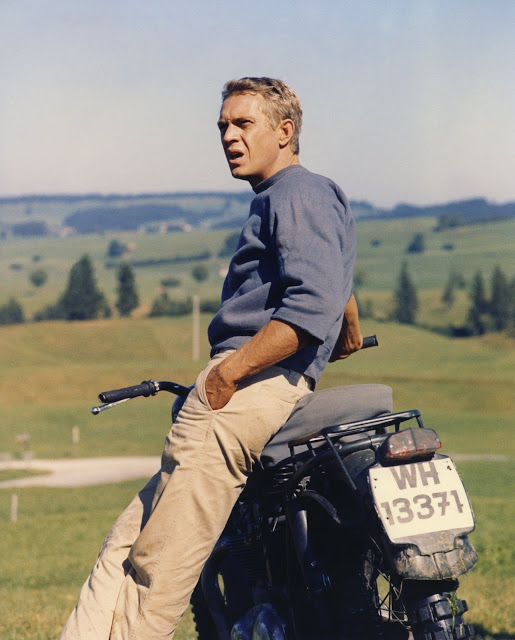
The film was produced and directed by John Sturges. Steve McQueen stars in one of his most popular roles as American pilot Virgil Hilts aka ‘The Cooler King,’ named after the amount of time he spends in the ‘cooler’ after repeated escape attempts and run ins with the camp commandant.
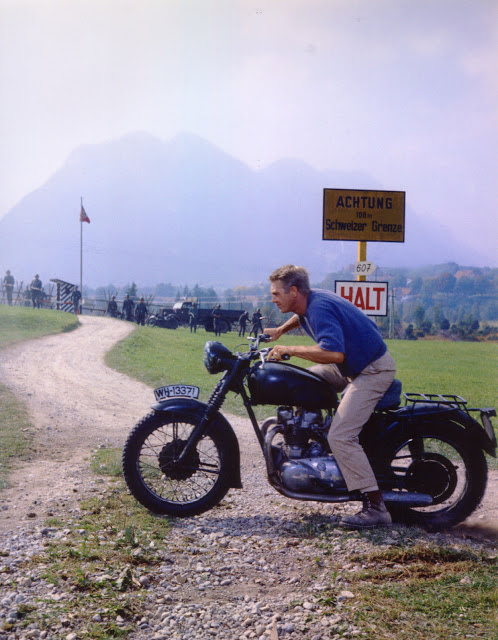
The famous Virgil Hilts motorcycle chase which is an integral part of the film’s appeal was McQueen’s idea. Initially the Hilts escape attempt was supposed to be by train, but McQueen approached Sturges with the suggestion, “John, I’ve got an idea that will put more juice into this…”
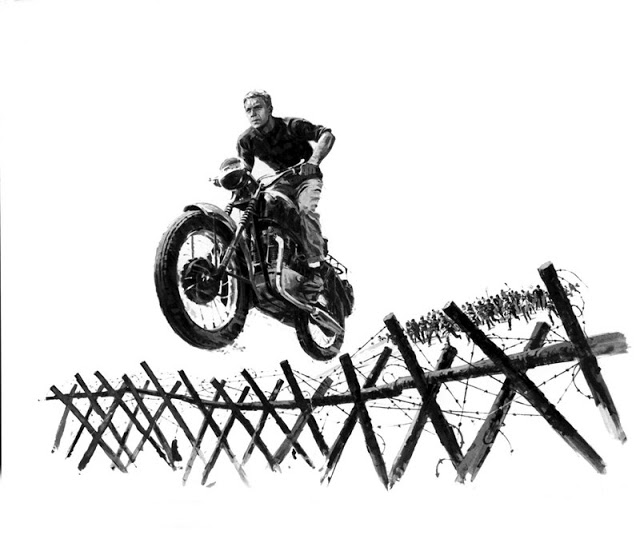
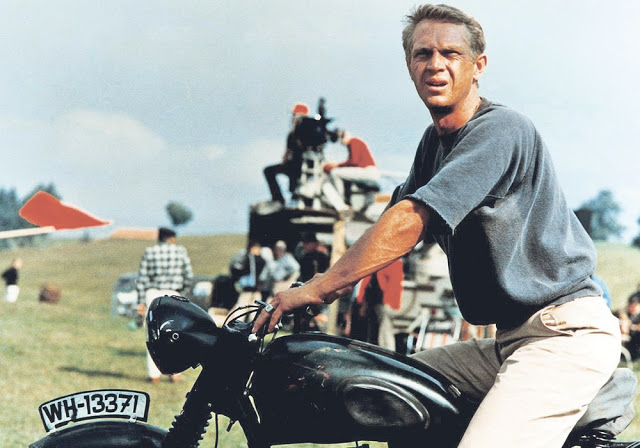
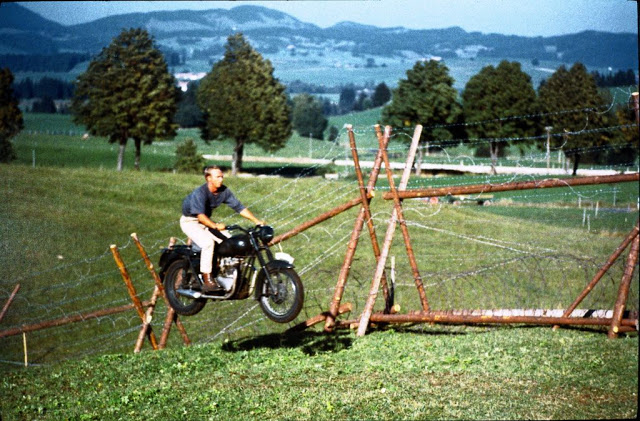
Steve McQueen performed all of his own motorcycle stunts in The Great Escape with the exception of his characters final jump over a 6ft (1.8m) barbed wire fence. The final jump was performed by his stunt double, Bud Etkins.
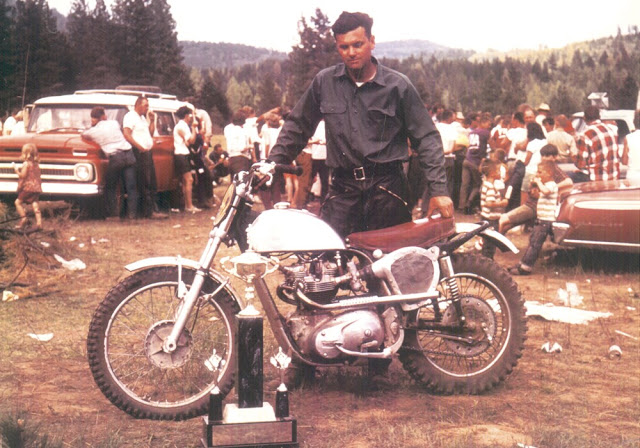
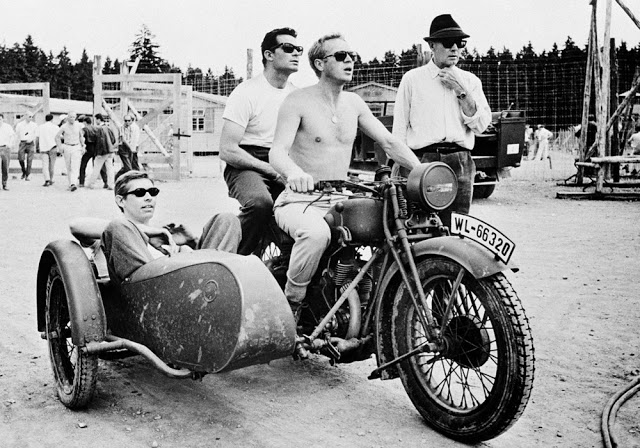
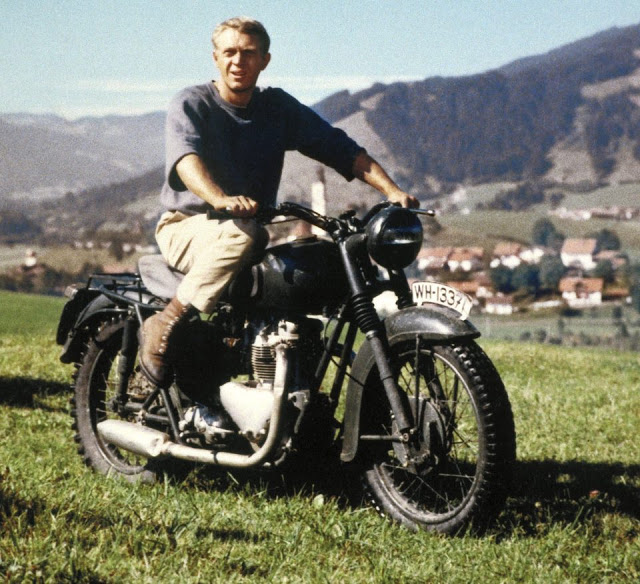
The bike used by McQueen in the film was a modified TT Special 650 Triumph which was painted olive drab and made to look like a german wartime BMW. As McQueen explained in a 1963 interview, “We had four bikes for this film. I was running a TT Special 650 Triumph. We painted it olive drab and put on a luggage rack and an old seat to make it look like a wartime BMW. We couldn’t use a real BMW, not at the speeds we were running, since those old babies were rigid-frame jobs, and couldn’t take the punishment.”
As for the chase sequences, the three racers – Tim Gibbes (the Australian moto-cross champion), Bud Etkins, and Steve McQueen – took turns chasing one another as German soldiers. The special effects manager worked out the final scene, where Steve has to get through the fence to escape to Switzerland. Bud, Tim, and Steve were left to figure out how to do the jump.
“Tim and I went out early one Sunday with the 650 Triumph we were using that was supposed to be a side-valve Wehrmacht BMW,” Bud recalled. “We laid out the fence a couple of feet high. Then we dug a ramp out with shovels, about nine or ten feet long, and I hit the ramp in third gear at about 50mph and cleared the fence. We dug it out a little more and raised the fence to eight feet and I cleared that too. Then I hit the ramp at 60mph in fourth and jumped 12 feet high and 65 feet down. Then I said to Sturgis: ‘Okay, let’sdo it!’”
“When I took off, I throttled right back and it was silent,” Bud said. “You know, everything was just silent- the whole crew and everything was just silent. And then when I landed they cheered like crazy. They did just onetake and afterwards the assistant director came to me and said, ‘Well, that’s a $1,000.00 jump if I ever saw one.’ I knew nothing about negotiating fees so I said ‘okay’ and that was that. Two days’ work, one jump, and we were finished.”
Not only did McQueen perform his own stunts during filming, but he also performed stunts for the films stuntmen themselves.
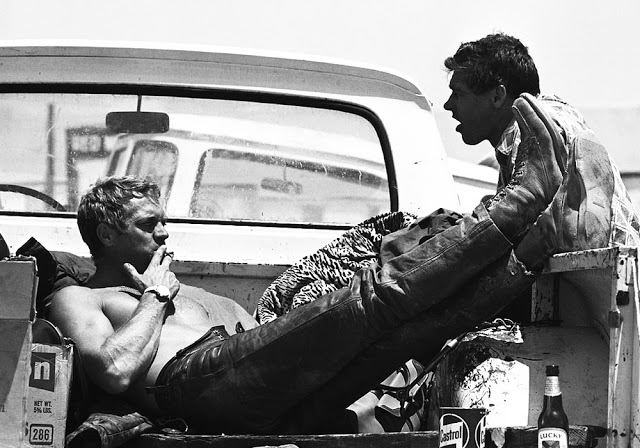
Before moving to California to pursue a career as an actor, McQueen got his start in the 1950s as a professional motorcycle racer in Long Island, NY. Due to his skill on a bike, during filming he kept outrunning the less skilled stuntmen who were supposed to be chasing him. As a result, McQueen did his own riding as Virgil and then dressed as a German soldier and shot separate chase scenes. Thusly, all of the motorcycle scenes in The Great Escape effectively show McQueen chasing himself.
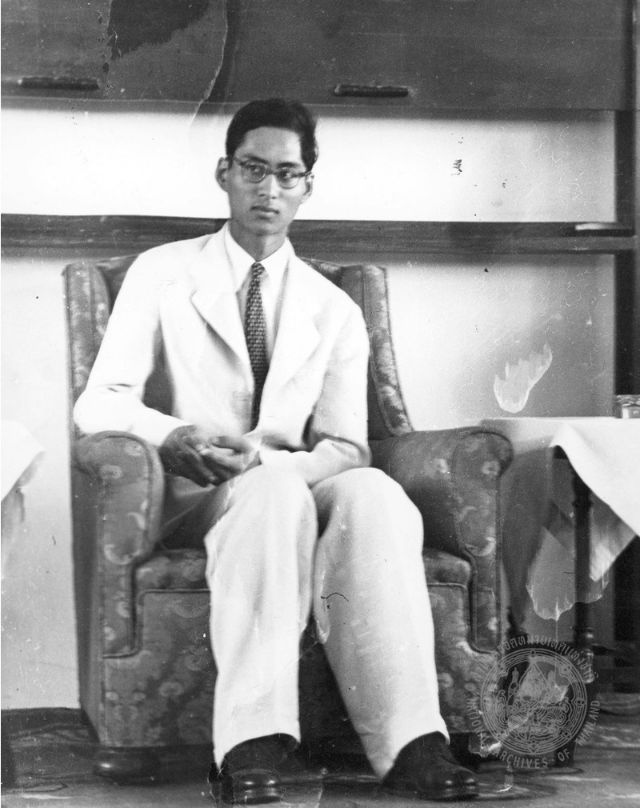
Ananda Mahidol, Thailand’s king Rama VIII, died on the 3rd of June, 1946. He was only twenty at the time.
A child when he was elected successor to the throne in 1935, he continued to be educated in Switzerland, not visiting Thailand as king until 1938 when he was thirteen.
Portrait photograph of King Ananda Mahidol, 1939.Portrait photograph of King Ananda Mahidol of Siam, now Thailand, in 1946.King Ananda Mahidol of Thailand. 23 April 1946.
The Japanese invaded Thailand the same day in 1941 they bombed America’s Pearl Harbor. The young king was not in the country at the time and did not return home until the end of 1945.
Only six months later a single gunshot was heard, and Ananda Mahidol was found dead.
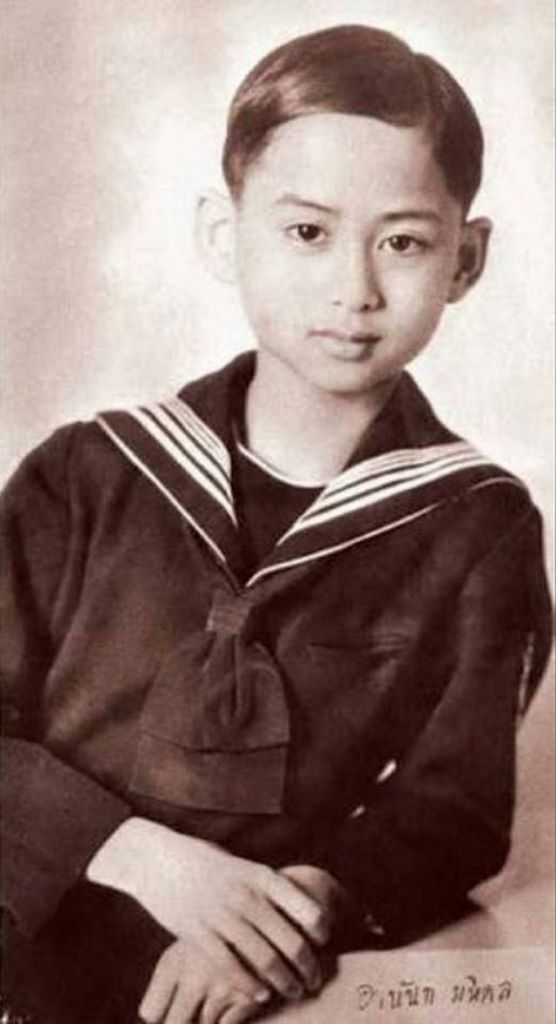
Portrait of Ananda Mahidol, ca. 1940.Ananda Mahidol as a boy.
Keith Simpson, pathologist to the British Home Office and founding chairman of the Department of Forensic Medicine at Guy’s Hospital in London, performed a forensic analysis of the king’s death and recounted the following sequence of events on the morning of 9 June 1946:
06:00: Ananda was awakened by his mother.
07:30: His page, But Patthamasarin, came on duty and began preparing a breakfast table on a balcony adjoining the king’s dressing room.
08:30: But saw the king standing in his dressing room. He brought the king his customary glass of orange juice a few minutes later. However, by then the king had gone back to bed and refused the juice.
08:45: The king’s other page, Chit Singhaseni, appeared, saying he had been called to measure the King’s medals and decorations on behalf of a jeweller who was making a case for them.
09:00: Prince Bhumibol Adulyadej visited King Ananda. He said afterwards that he had found the king dozing in his bed.
09:20: A single shot rang out from the king’s bedroom. Chit ran in and then ran out along the corridor to the apartment of the king’s mother, crying “The King’s shot himself!” The king’s mother followed Chit into the king’s bedroom and found the king lying face up in bed, bloodied from a wound to the head.
More than one theory has been put forward as to how this happened.
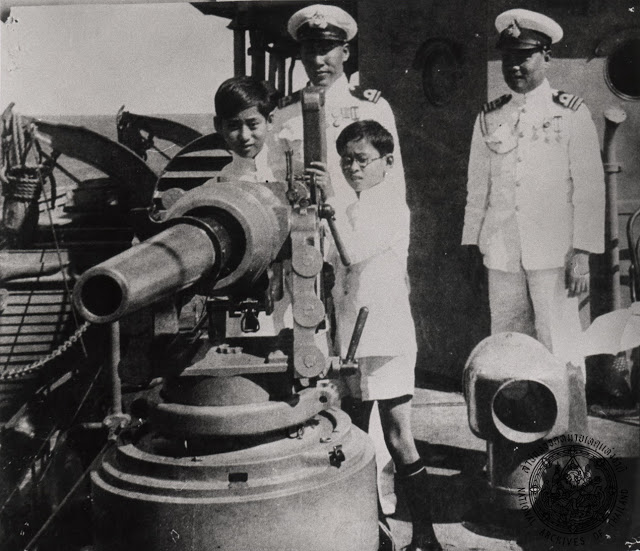
King Bhumipol Adulyadej (Rama IX) (L) and his brother, King Ananda (Rama VIII) (R).King Ananda and Prince Bhumibol interesting of the artillery of HTMS Maeklong. 13 January 1939.
He was the older brother of Bhumibol Adulyadej, who inherited the title and achieved cult status in Thailand; during his long reign both locals and foreigners were imprisoned for insulting him in any way. Even “liking” a Facebook post was enough for some people to be arrested.
The circumstances around Rama VIII’s death are still debated.
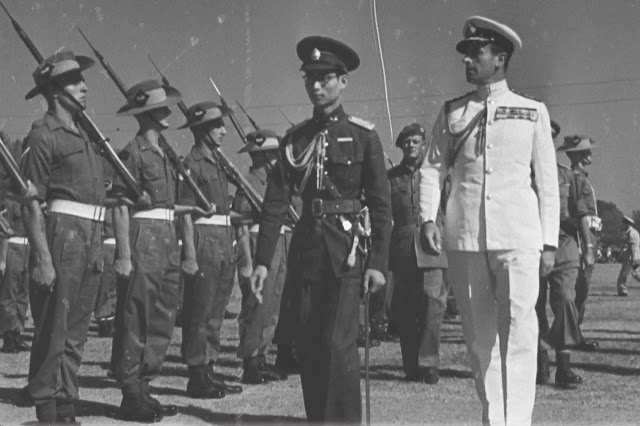
King Ananda Mahidol and Louis Mountbatten in 19 January 1946.Thirteen year old King Ananda of Siam (left), and his brother Prince Bhumibol Adulyadej (right), inspect a model train presented to him at Saranrom Park in Bangkok in 1938.King Rama VIII (Ananda Mahidol) and HRH Prince Bhumibol Adulyadej (later King Rama IX) with their grandmother, Queen Savang Vadhana, in 1938.
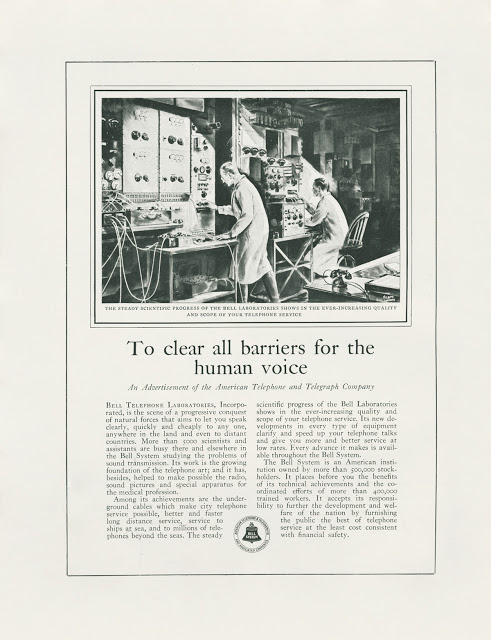
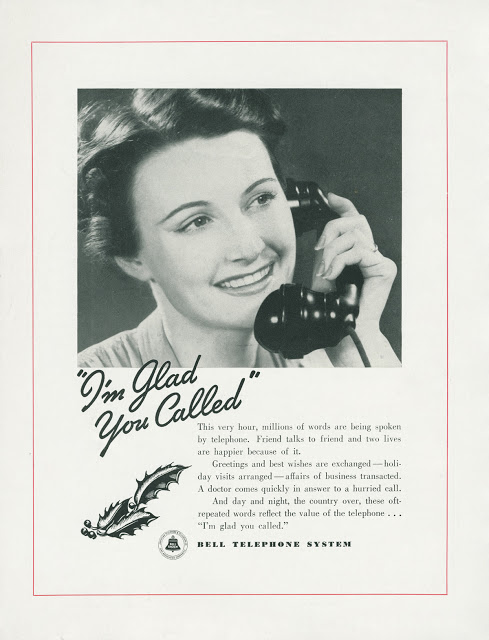
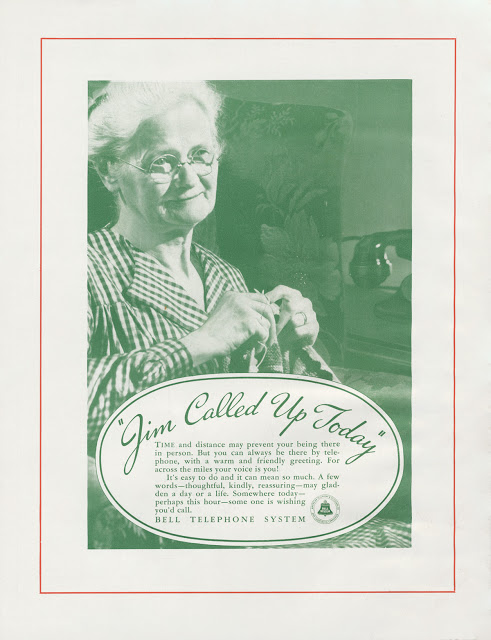
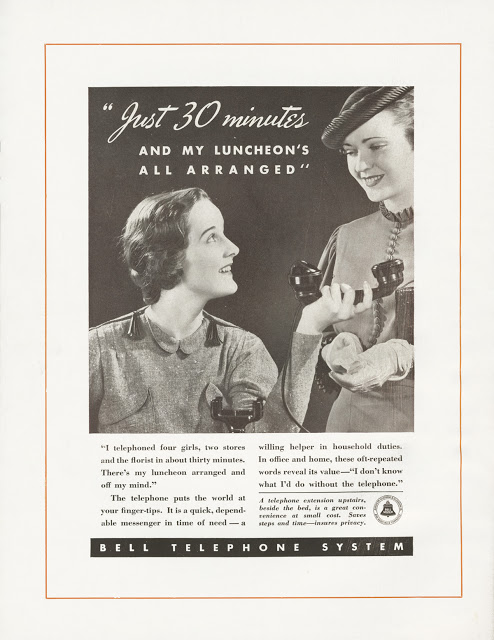
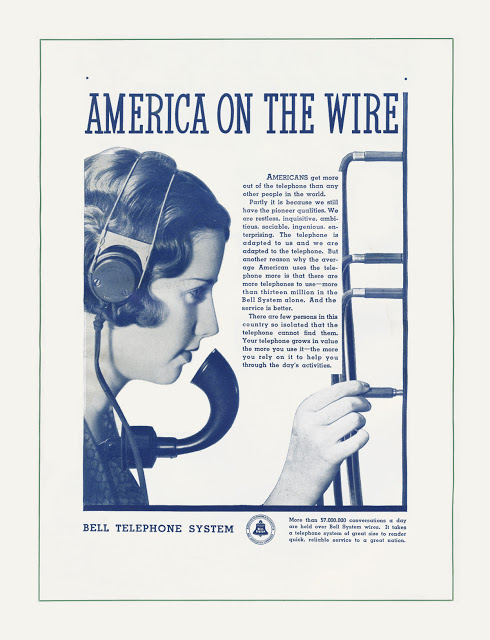
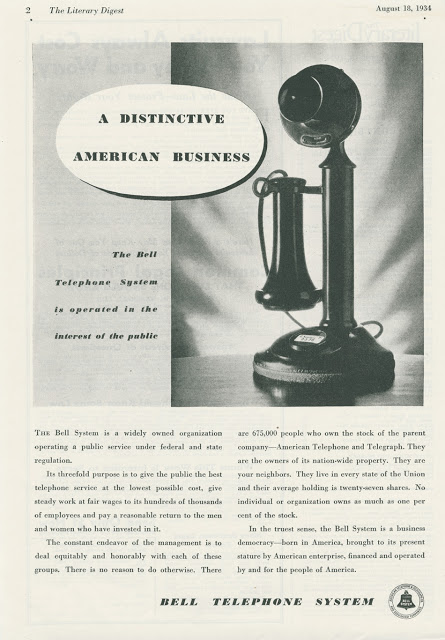
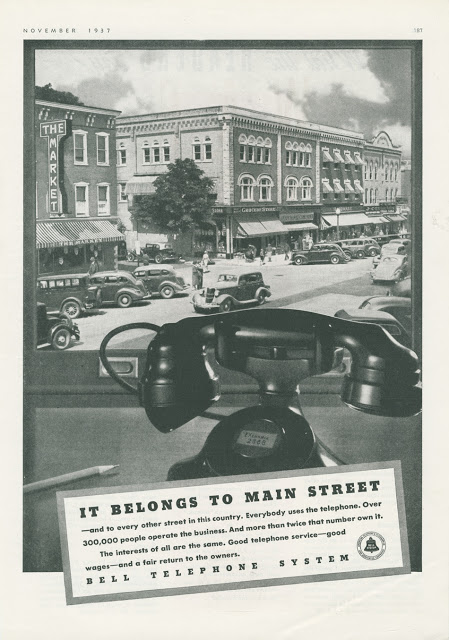
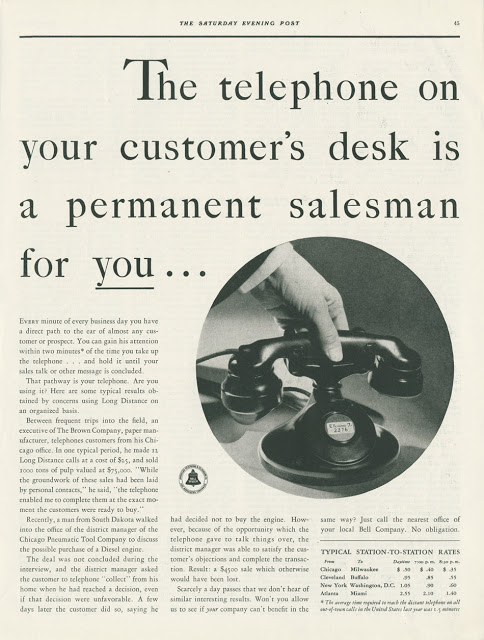
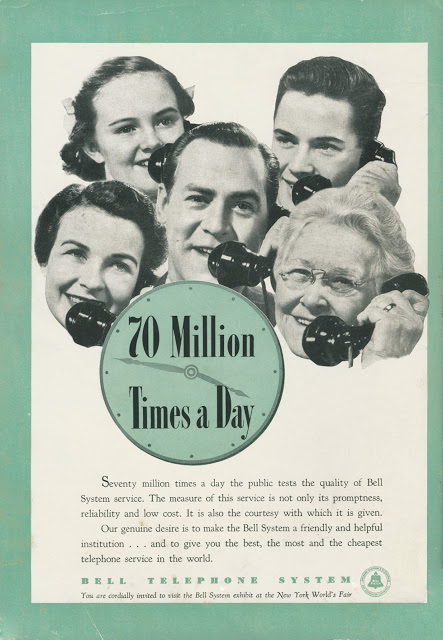
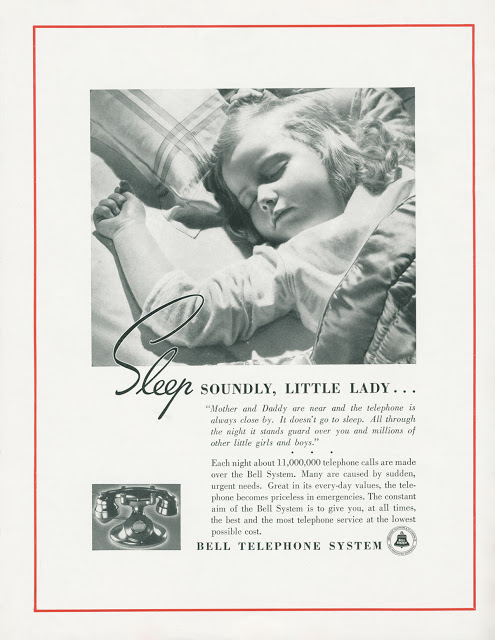
Although the greatest number of ads will be for the Bell System or Western Electric, the independents will have a presence as well. Considering that they were part of the Bell System, an organization that wouldn’t seem to require any self-promotion, Western Electric advertised particularly heavily in the periodicals of the day.
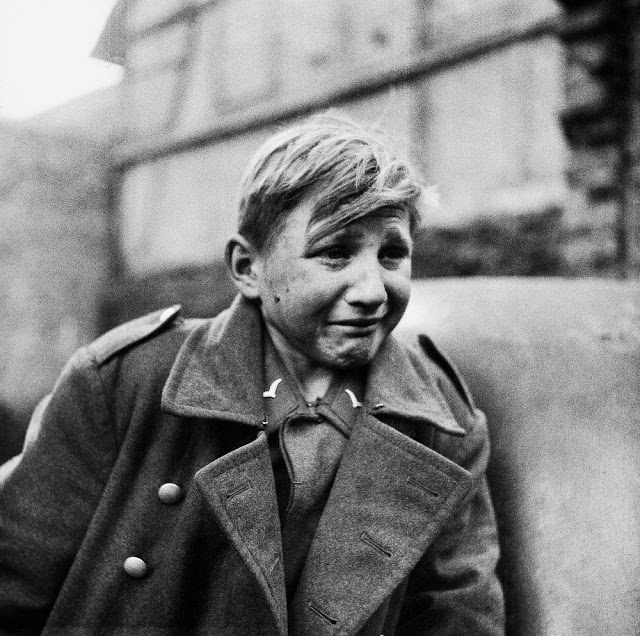
A sixteen-year old German anti aircraft soldier of the Hitler Youth, Hans-Georg Henke, taken prisoner in the state of Hessen, Germany. He was a member of the Luftwaffe anti-air squad who burst into tears as his world crumbled around him. His father died in 1938 but when his mother died in 1944 leaving the family destitute, Hans-Georg had to find work in order to support the family. At 15 years of age he joined the Luftwaffe.
Subscribe to continue reading
Become a paid subscriber to get access to the rest of this post and other exclusive content.
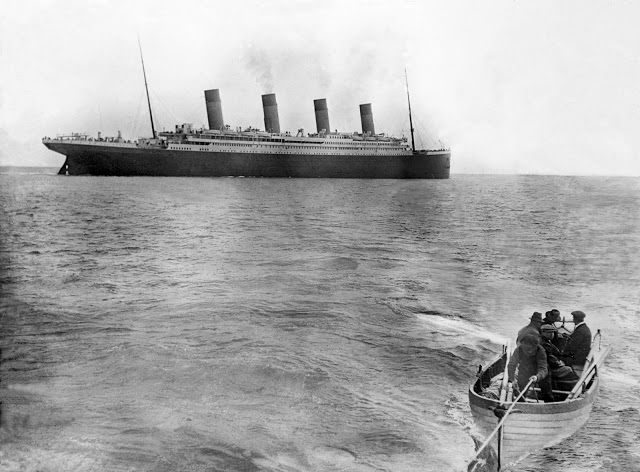
This photograph is the last known picture of the RMS Titanic on the surface of the ocean. It was taken April 12, 1912 by a Jesuit priest who had sailed from England to Ireland on the first leg of Titanic’s last voyage.
This image captures the majestic ship as it leaves Queenstown (later called Cobh) headed westwards towards New York. Three days after the photo was taken, 1,514 people would perish after the Titanic collided with an iceberg and sank to the bottom of the Atlantic Ocean.
The Titanic was considered practically “unsinkable” because it was designed to stay afloat in the event the hull was pierced and internal flooding occurred. The design was based on the division of the hull into 15 transverse watertight bulkheads with each one incorporating watertight doors. The doors could be closed automatically in the event of an accident. However, the compartments formed by the watertight bulkheads were not independently watertight. This was a major design flaw. If water filled a compartment higher than the top of a watertight bulkhead, then the adjoining compartments would flood. The design team assumed that this situation was impossible since all bulkheads rose to a level above the waterline.
It was strongly believed that when the Titanic hit the iceberg, a 350 foot gash was torn in the starboard side of the forward hull. The huge gash in the bow allowed water to infiltrate the ship and cause six of the sixteen watertight compartments to flood. The Titanic was designed to stay afloat if 3 or possibly 4 compartments flooded. As the sea rose above the watertight bulkheads, adjoining compartments filled with water (a simple way to conceptualize how Titanic flooded is to think of what happens when you fill an ice cube tray with water). The added water weight pulled Titanic’s bow deeper into the ocean until the great ship gave up its fight and finally sank.
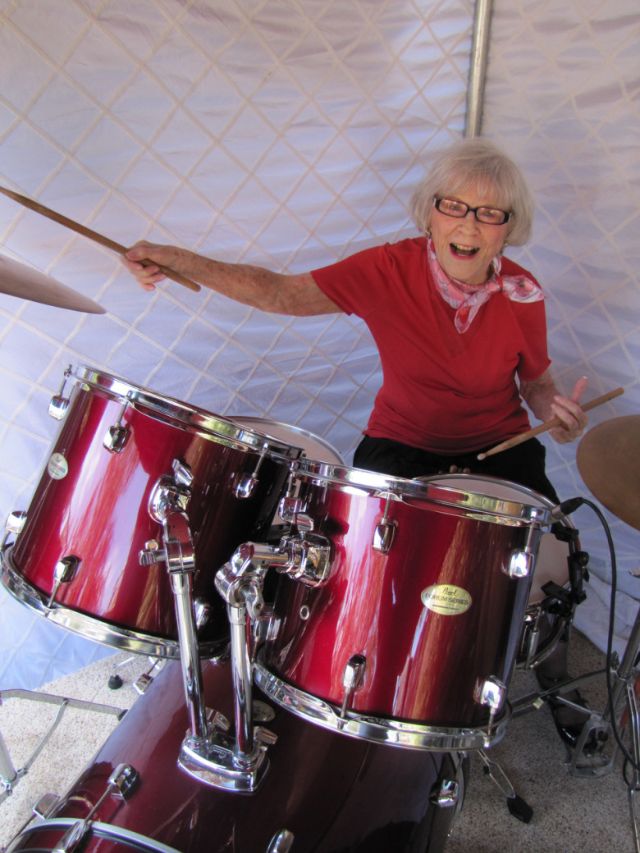
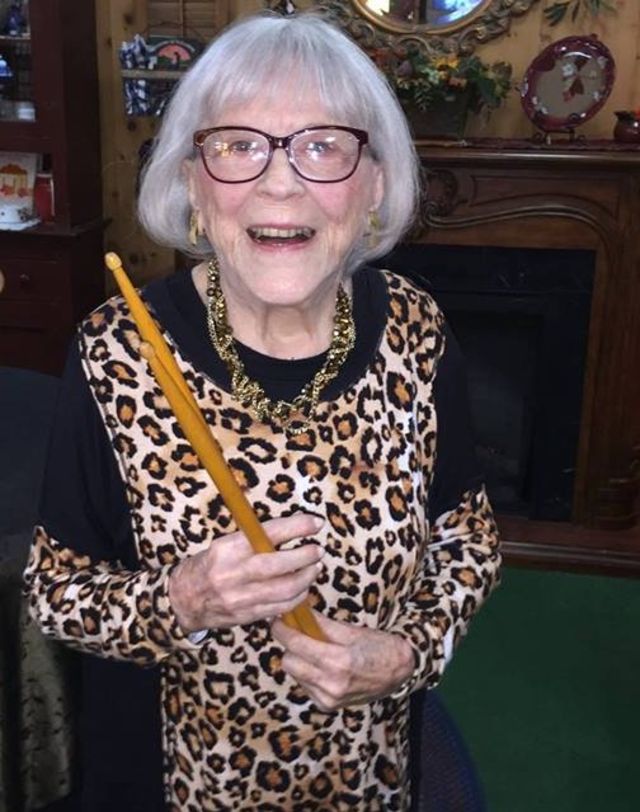
Early in her music career, Viola Smith became known as “America’s fastest girl drummer.” She spent decades challenging the barriers facing female musicians — and the centenarian she still plays today. She is the drummer for a band in her home community.
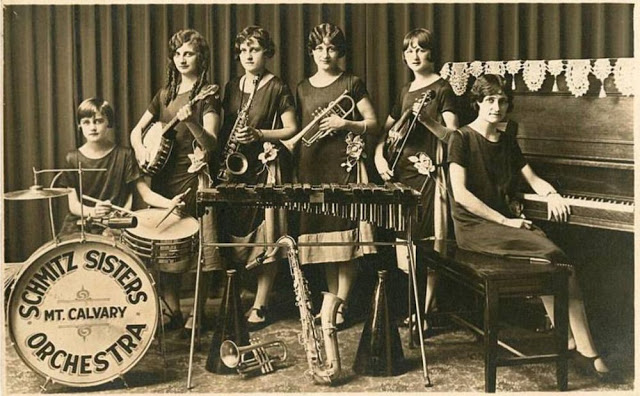
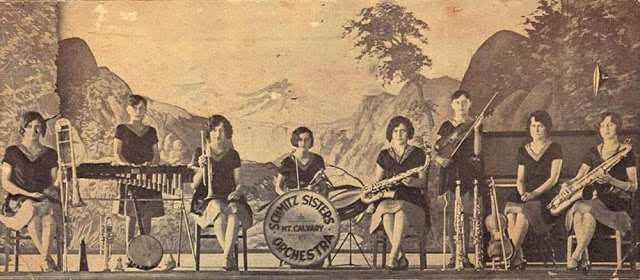
Smith was born on November 29, 1912 in Mount Calvary, Wisconsin, the eighth of ten children. Smith’s love of music began at a young age. Her parents ran a dance hall in Mount Calvary, Wisconsin and she and her nine siblings all played instruments. By the age of 12, her father had arranged for her and her other underage sisters to have permission to travel and tour as part of his band, the Schmitz Sisters Family Orchestra. Later renamed the Smith Sisters, their band became a favorite touring group and even shared a bill with the Andrews Sisters.
How did she come to start on drums? “I was the sixth girl,” she explained in an interview in 2012. “My dad dictated the choice of instruments in the family.”
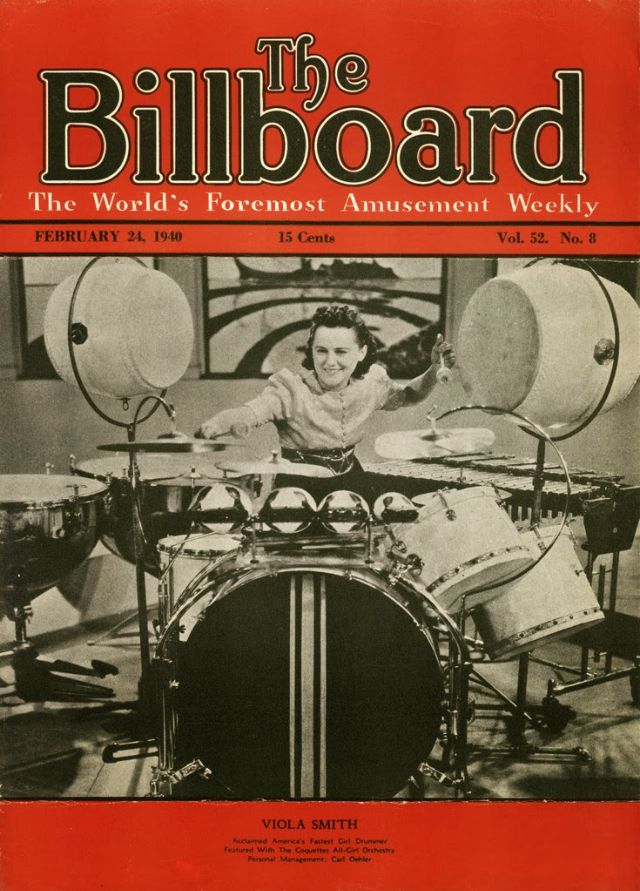
In the late 1930s, Smith and her sister Mildred formed their own all-girl band, the Coquettes. Smith became known for the novelty of being a “girl drummer” and was featured on the cover of Billboard magazine in 1940. But Smith became dissatisfied with how women musicians were treated. “Before World War II there was great prejudice,” she said. “The men felt like: ‘Girl musicians, what are they doing on the road? It’s a male job.’”
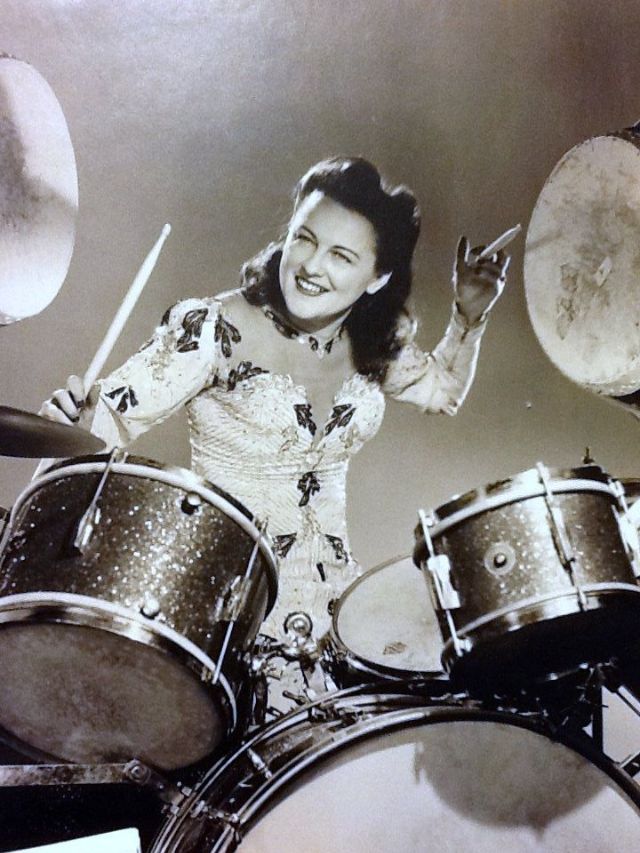
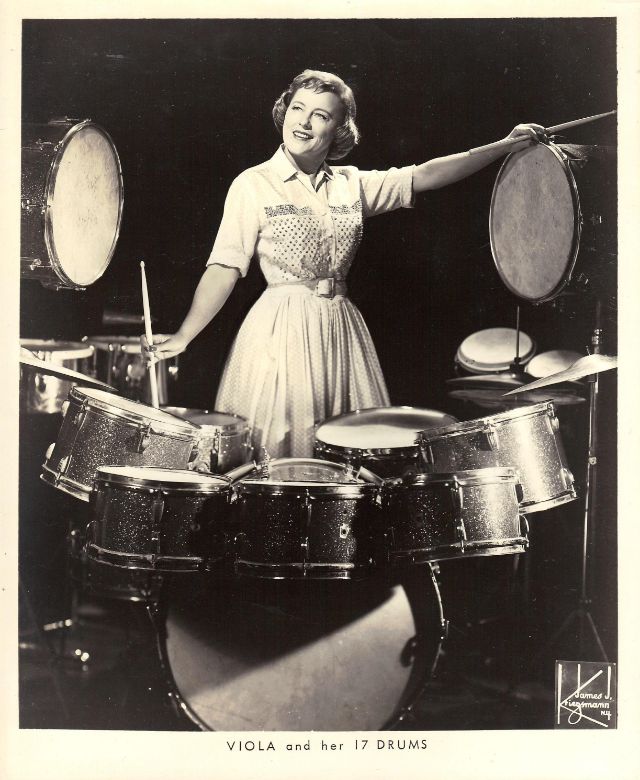
Viola Smith was featured on the cover of Billboard magazine in 1940.Viola Smith on her drums in 1939.Viola Smith and her 17 drums in 1941.
During the midst of WWII in 1942, she published an article in Down Beat magazine titled “Give Girl Musicians A Break!” Smith says, “I was asked to write the article on behalf of the many capable girl musicians who were out of work.” In it, she wrote, “In these times of national emergency, many of the star instrumentalists of the big name bands are being drafted. Instead of replacing them with what may be mediocre talent, why not let some of the great girl musicians of the country take their place?” The article generated furious discussion about the prejudice against female musicians.
Since the 1940s, Smith has had a long and active career as a performer and teacher. Drumming every week from 1942 though 1954 on General Electric’s national syndicated radio program with Phil Spitalny’s all woman Hour of Charm Orchestra, Viola remained in demand long after the war ended. Movie appearances, drumming at President Truman’s inauguration celebration, The Ed Sullivan Show, playing on Broadway for the original run of Cabaret – she did it all!
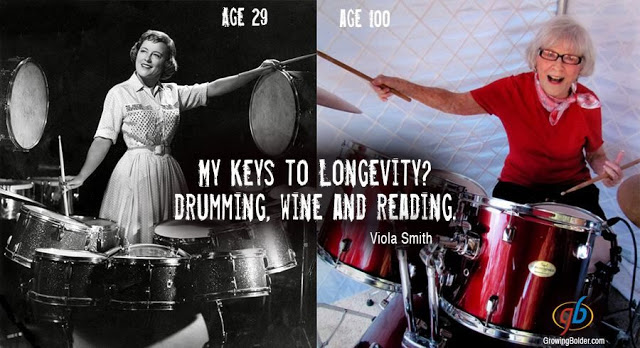
Several years ago she retired from teaching drums. Explaining her longevity, she said: “I definitely think that the exercise involved in drumming contributes to longevity. Spending two summers in Europe in 1942 and ‘44 started the wine habit: two glasses with dinner. Also hearing about a wine drinking community in Southern France where the longevity far exceeds that of the country as a whole. Thirdly, reading all of Adele Davis’ books over several decades ago, on a recipe for a long life.”
Viola Smith on the drums at age 100.Viola Smith turned 106 in November, 2018.
Smith never married. She had been engaged to be married, but the man was drafted into World War II, and the engagement was cancelled. At the time of Smith’s 107th birthday in November 2019, it was reported that she occasionally still drummed with bands in Costa Mesa, California, as one of the oldest living mainstream musicians.
Smith died on October 21, 2020, at her home in Costa Mesa, California, at the age of 107. She had been suffering from Alzheimer’s disease in the time leading up to her death.
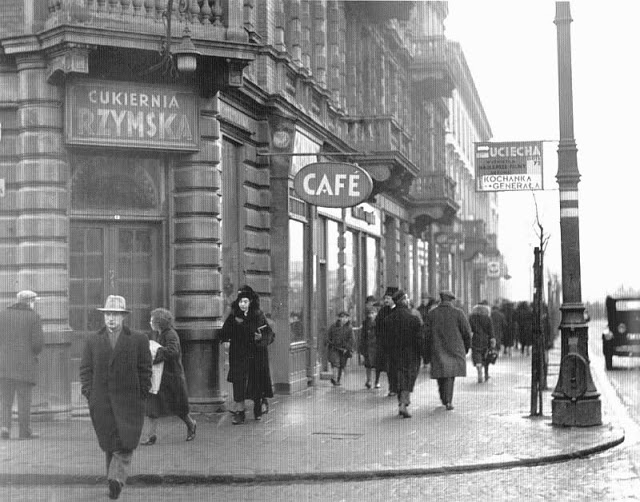
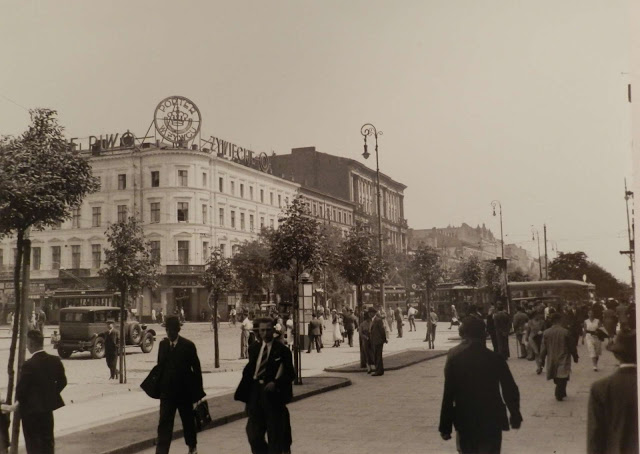
Warsaw, officially the Capital City of Warsaw, is the capital and largest city of Poland. The metropolis stands on the River Vistula in east-central Poland and its population is officially estimated at 1.8 million residents within a greater metropolitan area of 3.1 million residents, which makes Warsaw the 7th most-populous capital city in the European Union. The city area measures 517 km2 (200 sq mi) and comprises 18 boroughs, while the metropolitan area covers 6,100 km2 (2,355 sq mi). Warsaw is an alpha- global city, a major cultural, political and economic hub, and the country’s seat of government. Its historical Old Town was designated a UNESCO World Heritage Site.
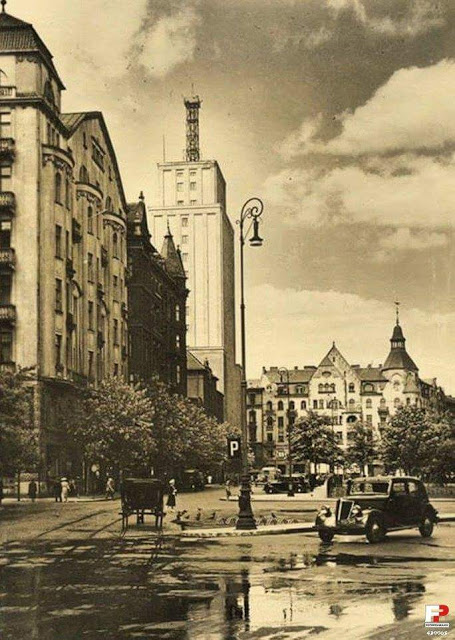
Warsaw traces its origins to a small fishing town in Masovia. The city rose to prominence in the late 16th century, when Sigismund III decided to move the Polish capital and his royal court from Kraków. Warsaw served as the de facto capital of the Polish–Lithuanian Commonwealth until 1795, and subsequently as the seat of Napoleon’s Duchy of Warsaw. The 19th century and its Industrial Revolution brought a demographic boom which made it one of the largest and most densely-populated cities in Europe. Known then for its elegant architecture and boulevards, Warsaw was bombed and besieged at the start of World War II in 1939. Much of the historic city was destroyed and its diverse population decimated by the Ghetto Uprising in 1943, the general Warsaw Uprising in 1944 and systematic razing.
Warsaw is served by two international airports, the busiest being Warsaw Chopin and the smaller Warsaw Modlin intended for low-cost carriers. Major public transport services operating in the city include the Warsaw Metro, buses, urban-light railway and an extensive tram network. In 2012, the Economist Intelligence Unit ranked Warsaw as the 32nd most liveable city in the world. In 2017, the city came 4th in the “Business-friendly”, 8th in “Human capital and life style” and topped the quality of life rankings in the region. The city is a significant centre of research and development, business process outsourcing, and information technology outsourcing. The Warsaw Stock Exchange is the largest and most important in Central and Eastern Europe. Frontex, the European Union agency for external border security as well as ODIHR, one of the principal institutions of the Organization for Security and Cooperation in Europe have their headquarters in Warsaw. Jointly with Frankfurt and Paris, Warsaw features one of the highest number of skyscrapers in the European Union.
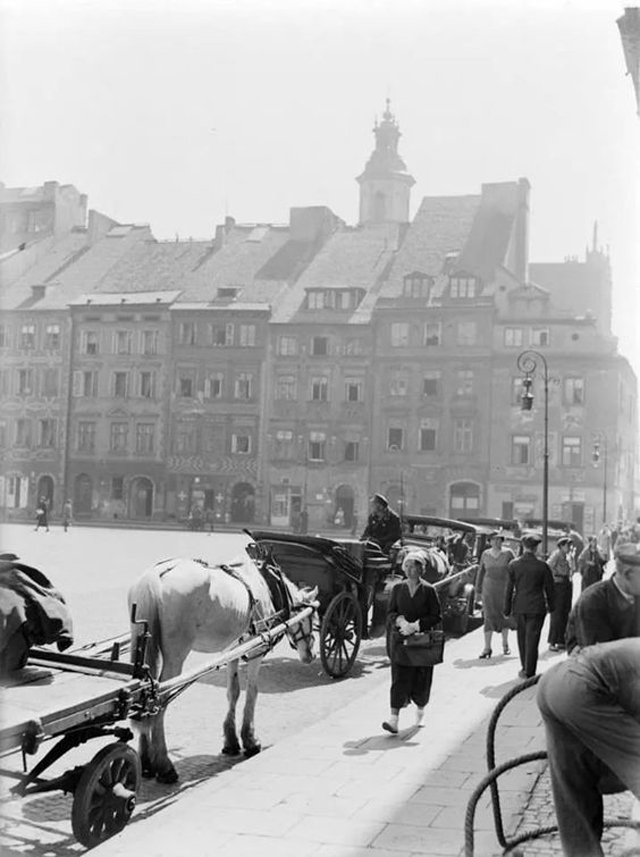
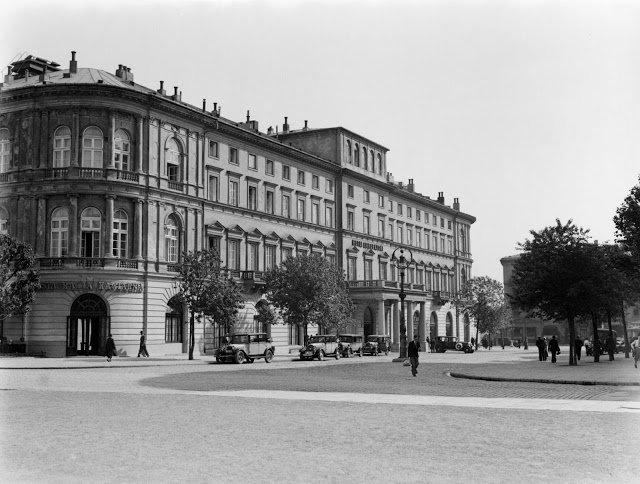
The city hosts the Polish Academy of Sciences, National Philharmonic Orchestra, University of Warsaw, the Warsaw University of Technology, the National Museum, Zachęta Art Gallery and the Warsaw Grand Theatre, the largest of its kind in the world. The reconstructed Old Town, which represents examples of nearly every European architectural style and historical period, was listed as a World Heritage Site by UNESCO in 1980. Other main architectural attractions include the Royal Castle and the iconic King Sigismund’s Column, the Wilanów Palace, the Palace on the Isle, St. John’s Cathedral, Main Market Square, as well as numerous churches and mansions along the Royal Route. Warsaw possesses thriving arts and club scenes, gourmet restaurants and large urban green spaces, with around a quarter of the city’s area occupied by parks. (Wikipedia)
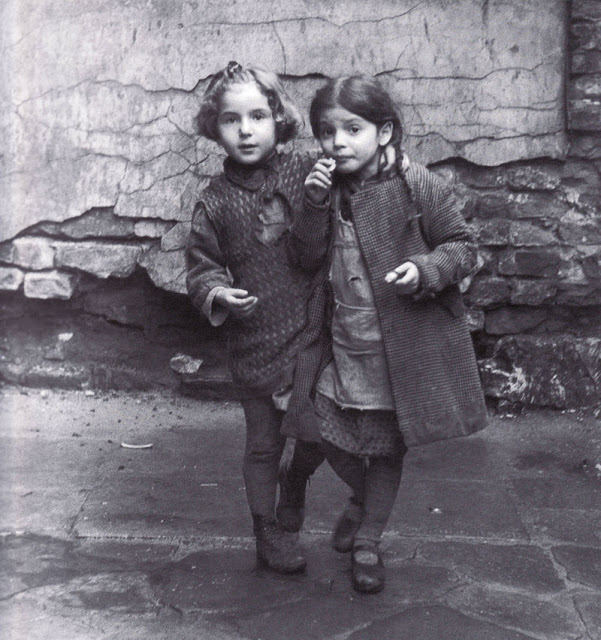
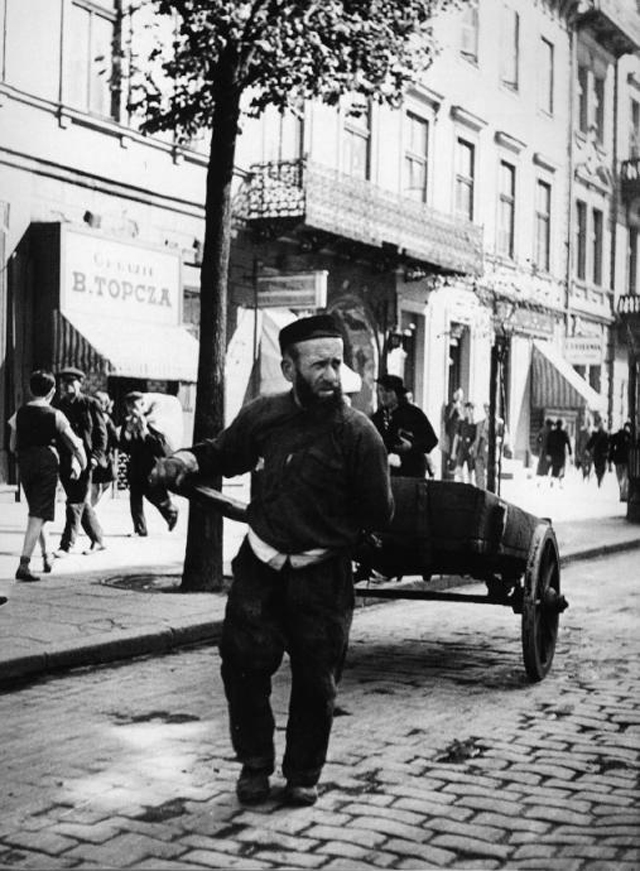
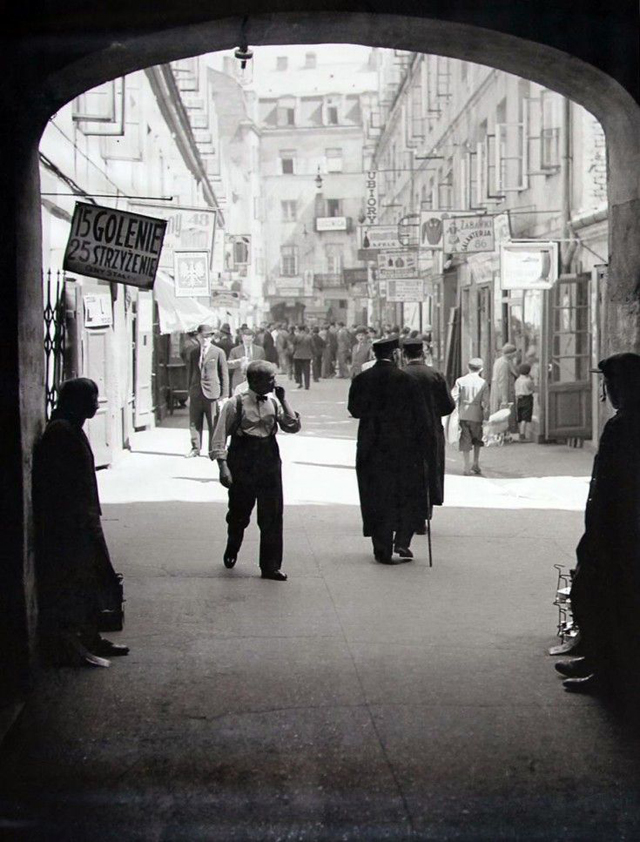
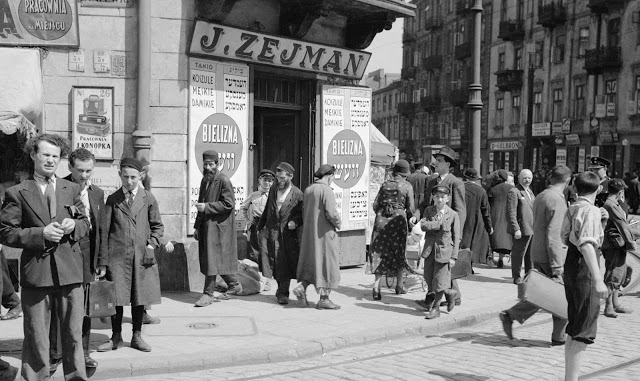
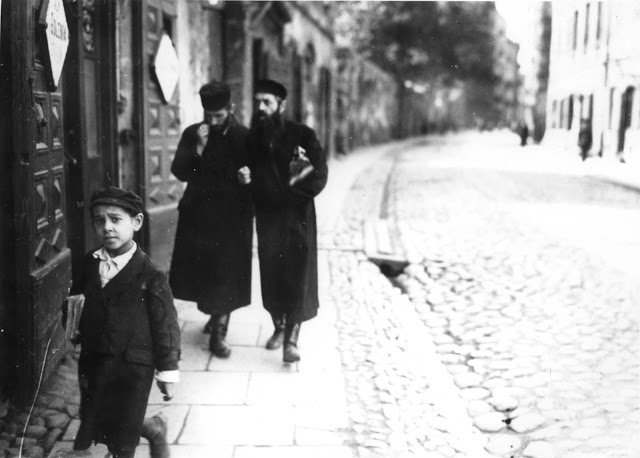
Before World War II, the city was a major center of Jewish life and culture in Poland. Warsaw’s prewar Jewish population of more than 350,000 constituted about 30 percent of the city’s total population. The Warsaw Jewish community was the largest in both Poland and Europe, and was the second largest in the world, second only to New York City.
Following the German invasion of Poland on September 1, 1939, Warsaw suffered heavy air attacks and artillery bombardment. German troops entered Warsaw on September 29, shortly after its surrender.
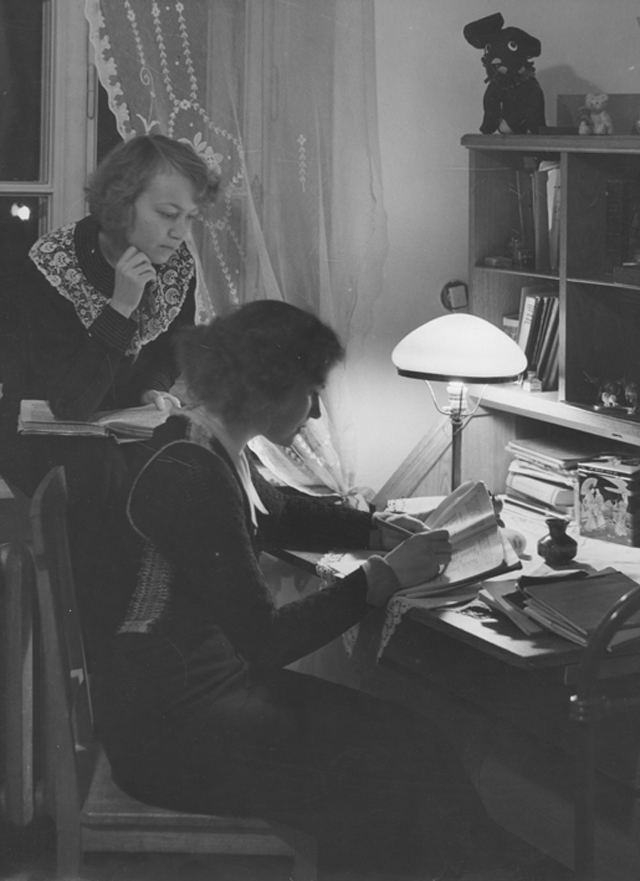
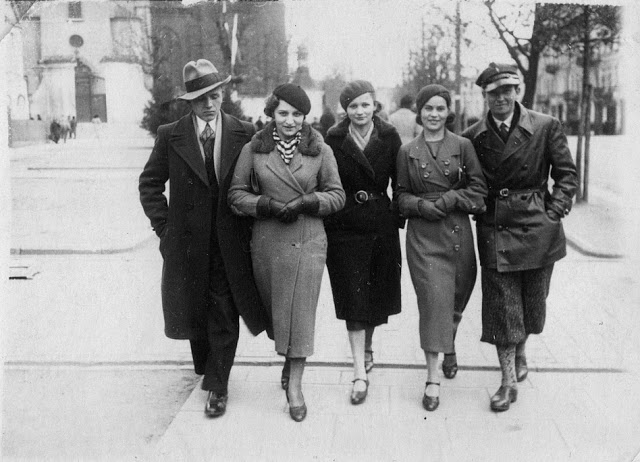
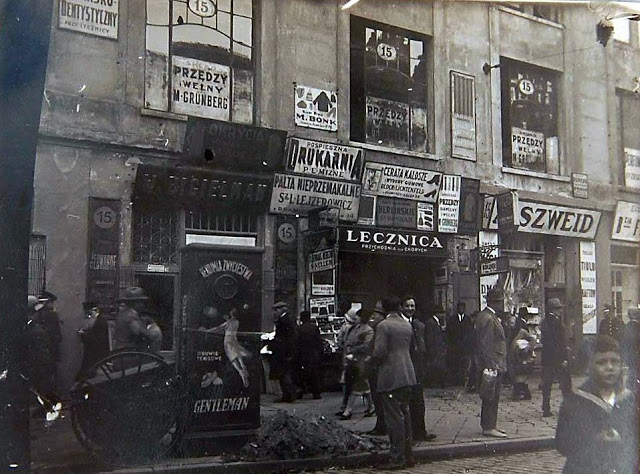
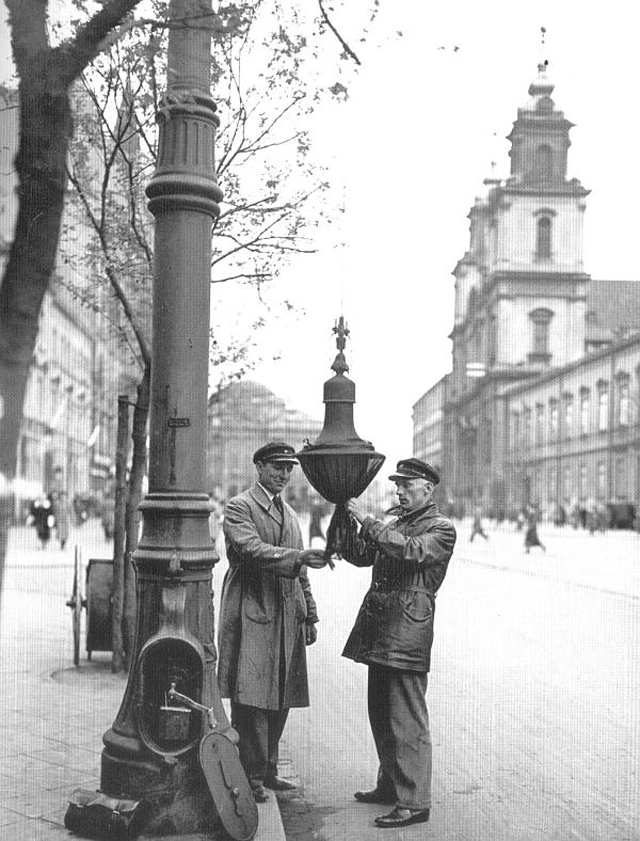
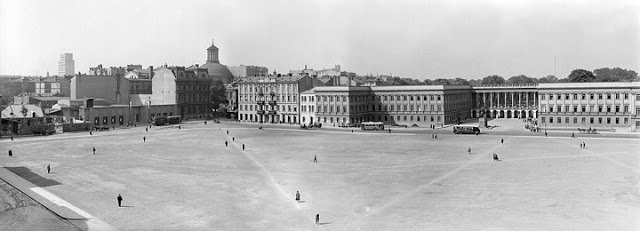
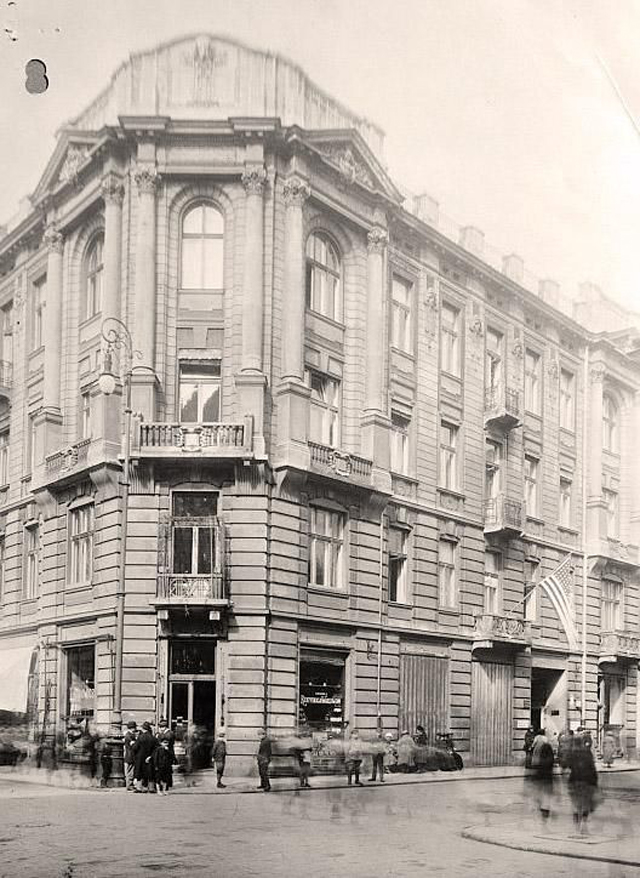
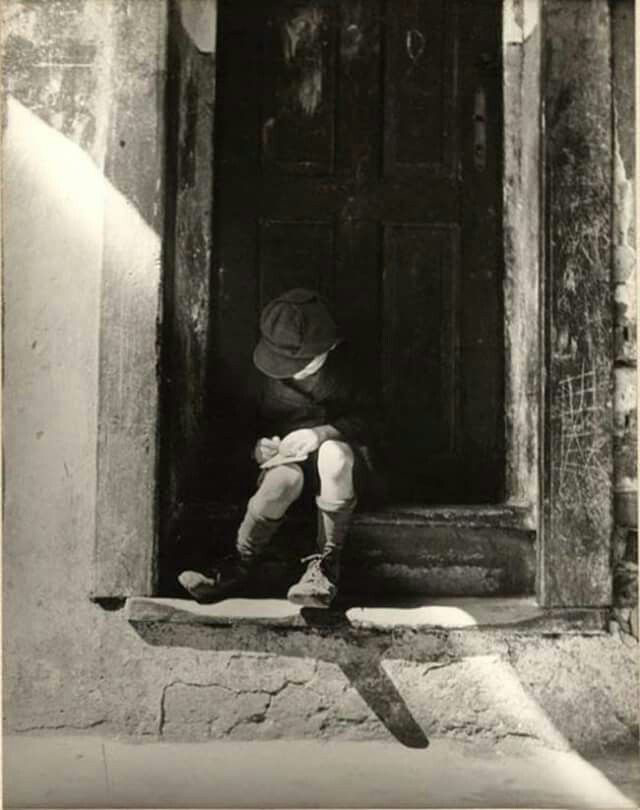
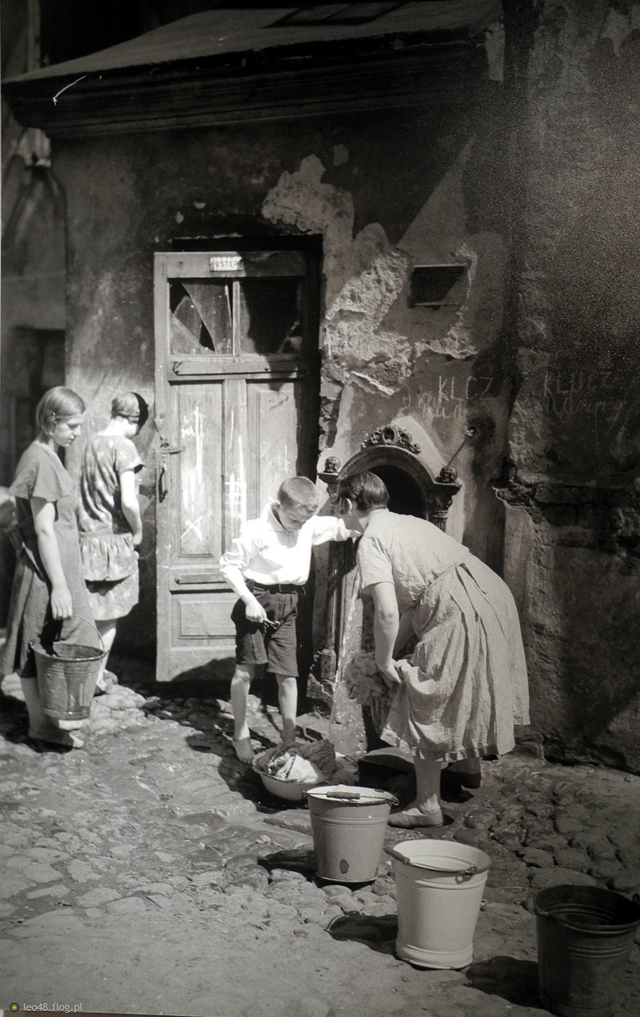
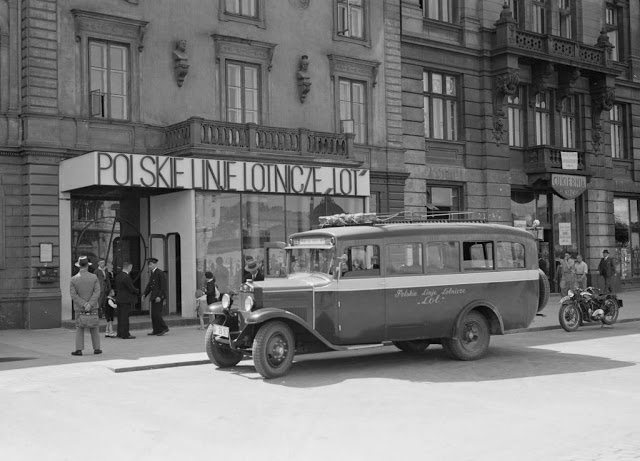
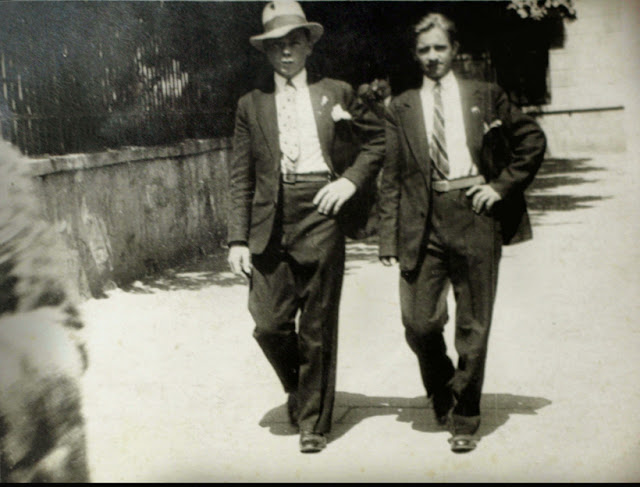
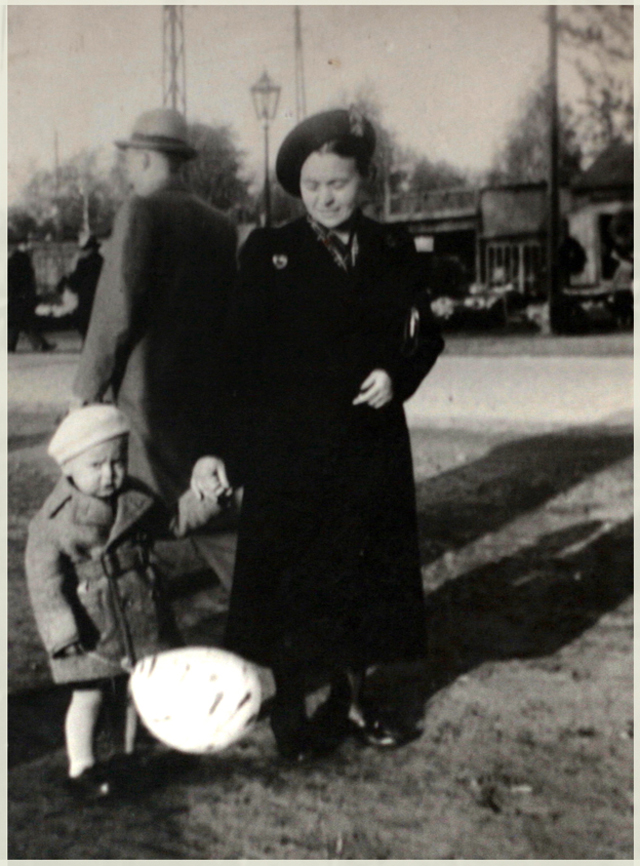
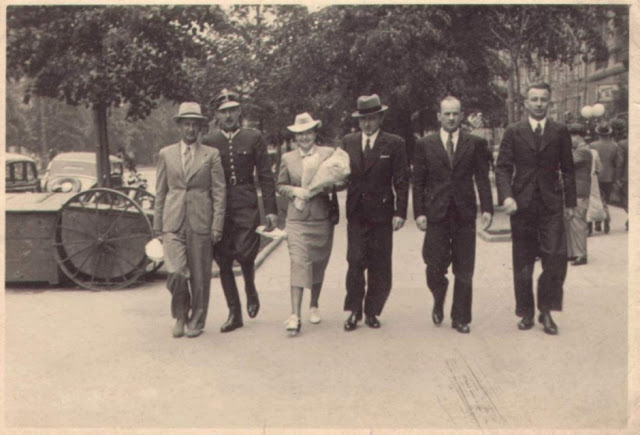
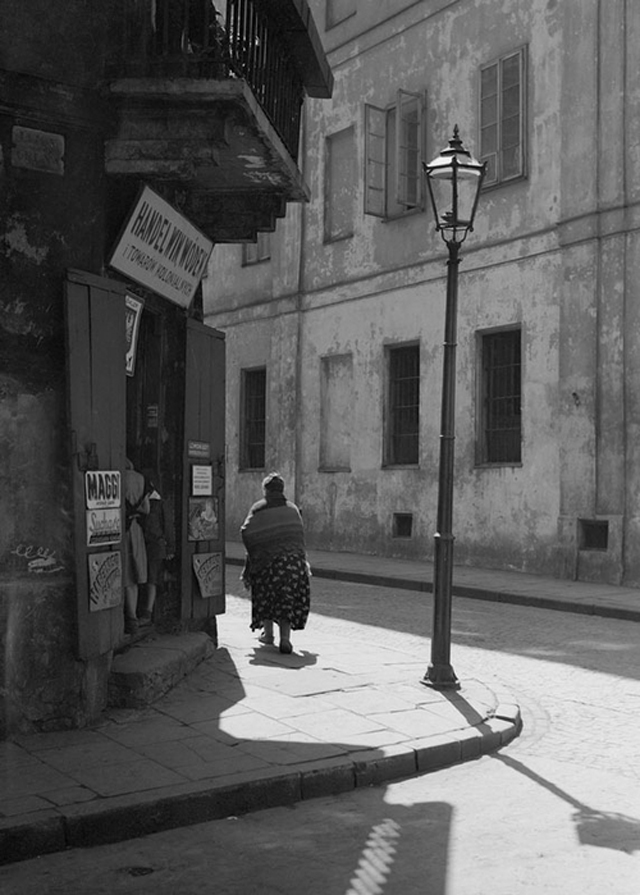
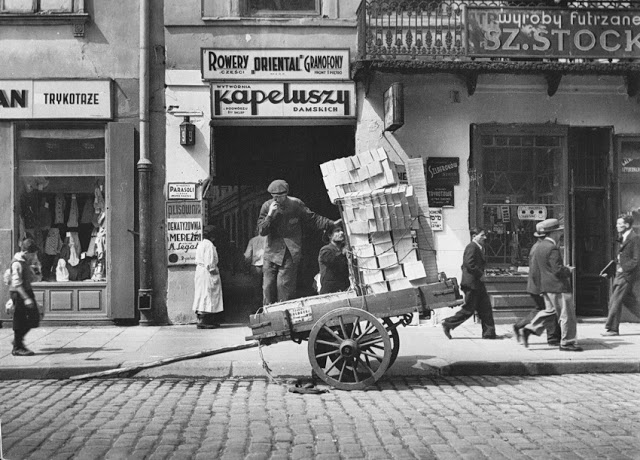
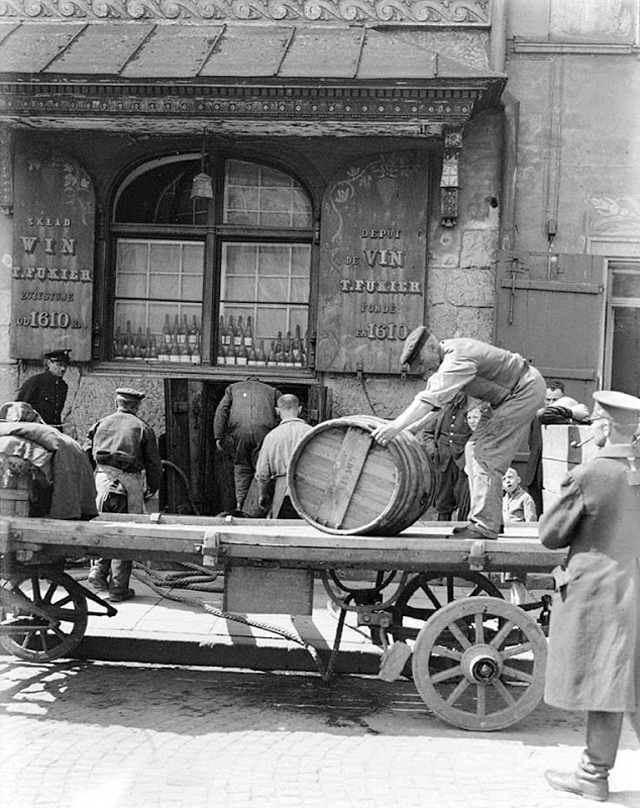
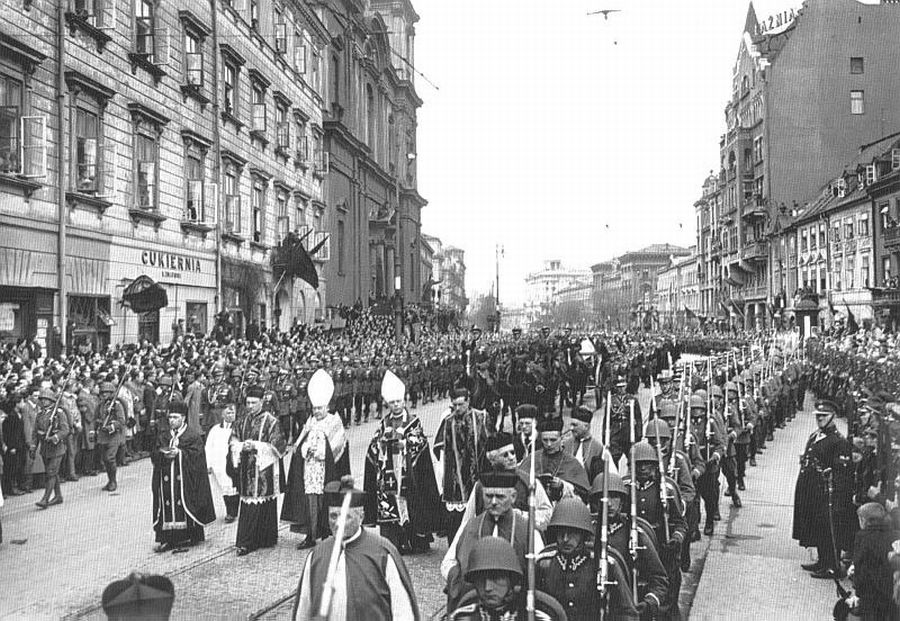
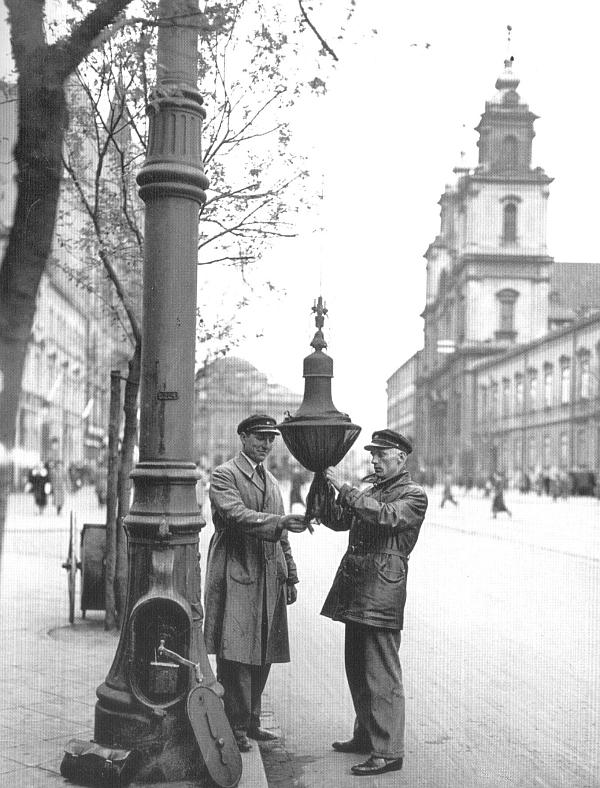
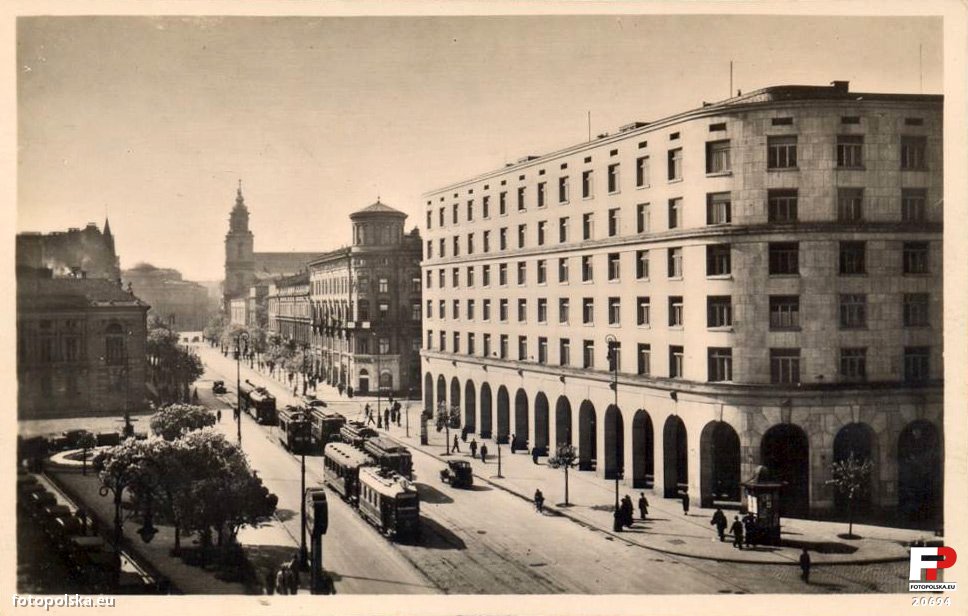
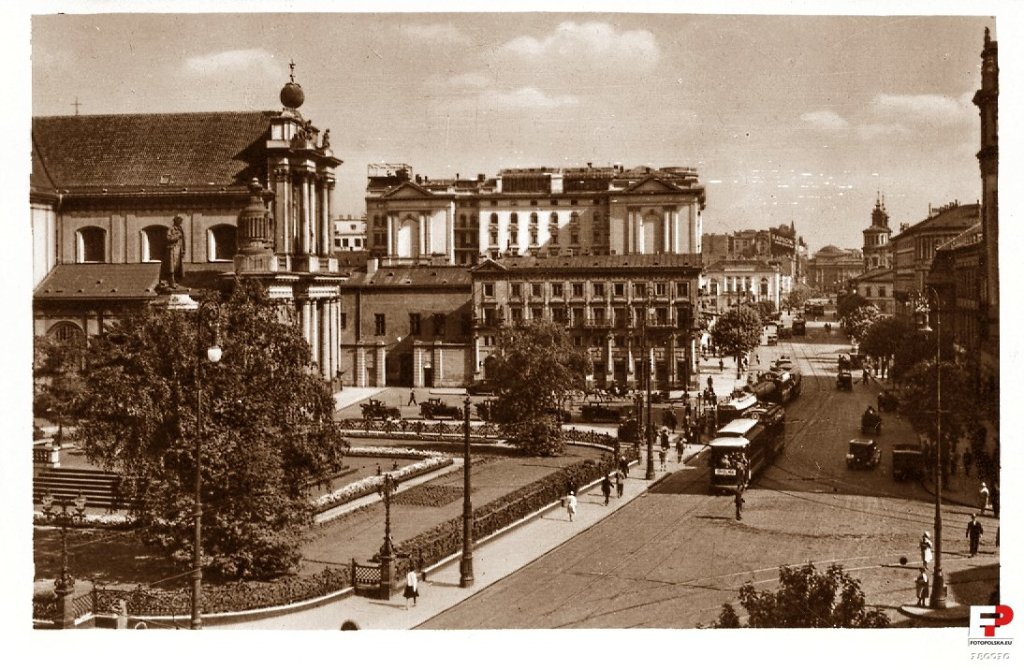
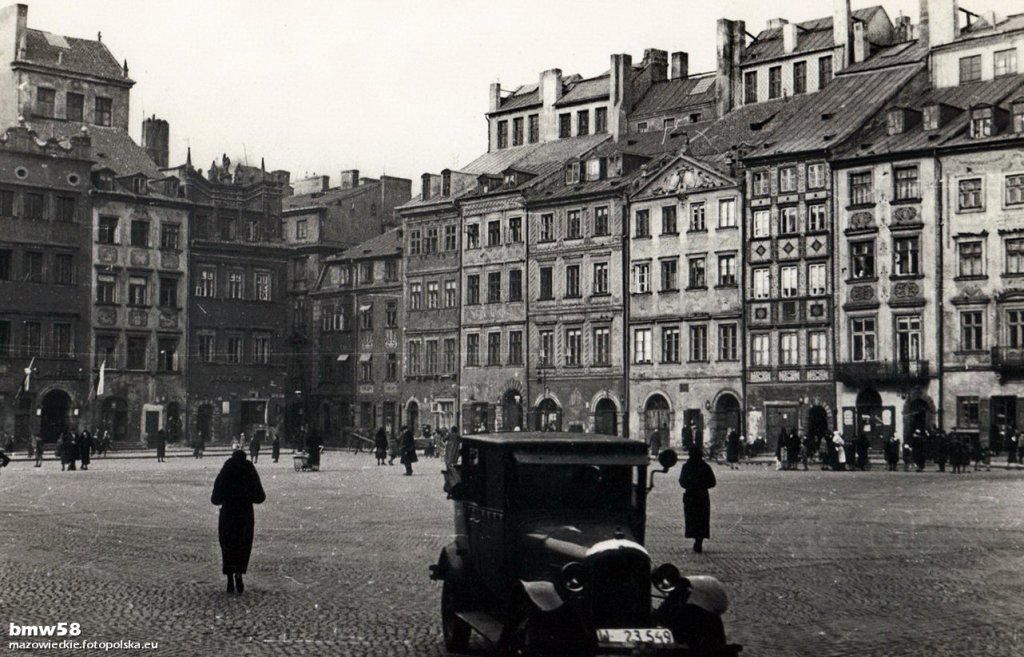
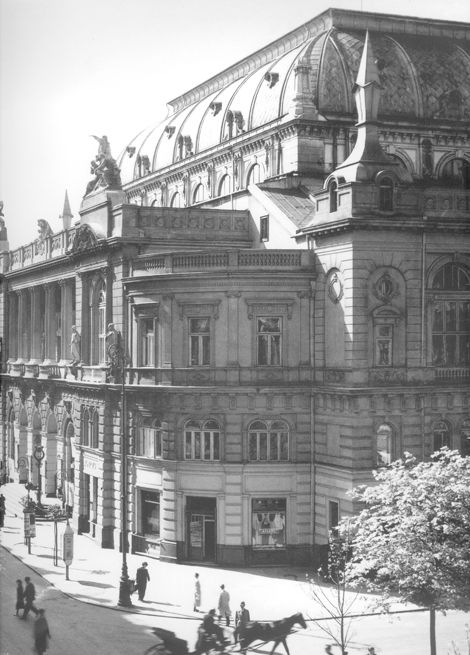
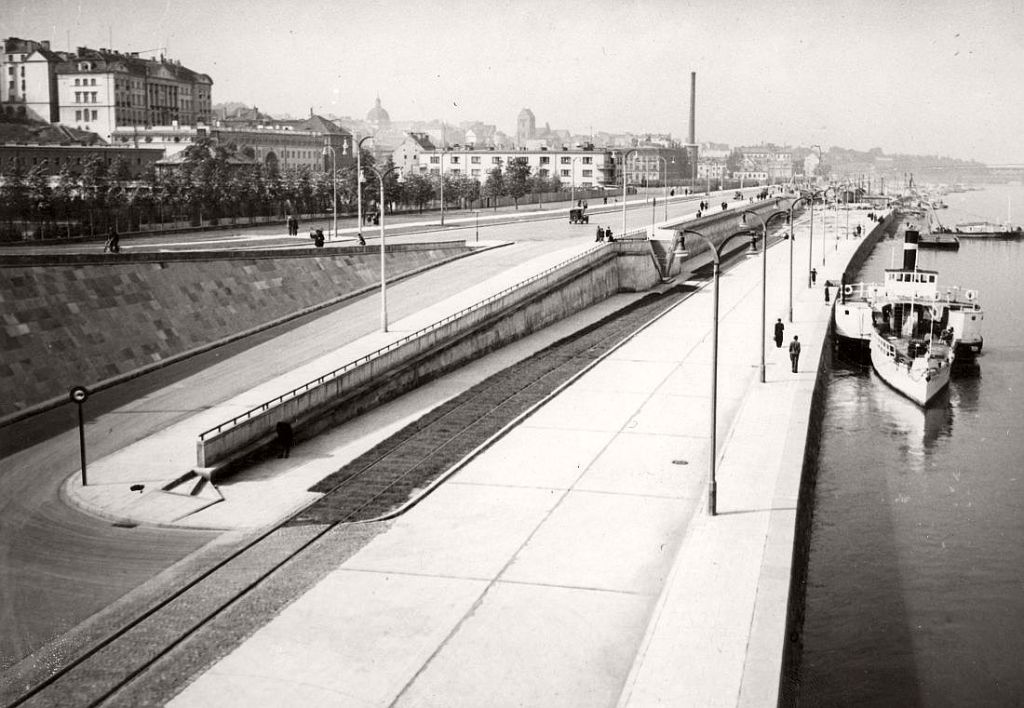
Take a look at the capital of Poland in the 1930s to see everyday life of Warsaw before World War II.