Julius and Ethel Rosenberg were American citizens who spied on behalf of the Soviet Union and were tried, convicted, and executed by the federal government of the United States. They provided top-secret information about radar, sonar, and jet propulsion engines and were accused of transmitting valuable nuclear weapon designs; at that time the United States was the only country in the world with nuclear weapons.
Other convicted co-conspirators were sentenced to prison, including Ethel’s brother, David Greenglass (who had made a plea agreement), Harry Gold, and Morton Sobell. Klaus Fuchs, a German scientist working in Los Alamos, was convicted in the United Kingdom.
For decades, the Rosenbergs’ sons Michael and Robert Meeropol, and many other defenders maintained that Julius and Ethel were innocent of spying on their country and were victims of Cold War paranoia.
After the fall of the Soviet Union, much information concerning them was declassified, including a trove of decoded Soviet cables, code-named VENONA, which detailed Julius’s role as a courier and recruiter for the Soviets and Ethel’s role as an accessory.
Their sons’ current position is that Julius was legally guilty of the conspiracy charge, though not of atomic spying, while Ethel was only generally aware of his activities. The children say that their father did not deserve the death penalty and that their mother was wrongly convicted. They continue to campaign for Ethel to be posthumously and legally exonerated.
In 2014, five historians who had published works based on the Rosenberg case wrote that newly available Soviet documents show that Ethel Rosenberg hid money and espionage paraphernalia for Julius, served as an intermediary for communications with his Soviet intelligence contacts, relayed her personal evaluation of individuals whom Julius considered recruiting, and was present at meetings with his sources. They support the assertion that Ethel persuaded her sister-in-law Ruth Greenglass to travel to New Mexico to recruit her brother David Greenglass as a spy.
The Rosenbergs were executed on June 19th, 1953. They were the only spies executed during the Cold War.
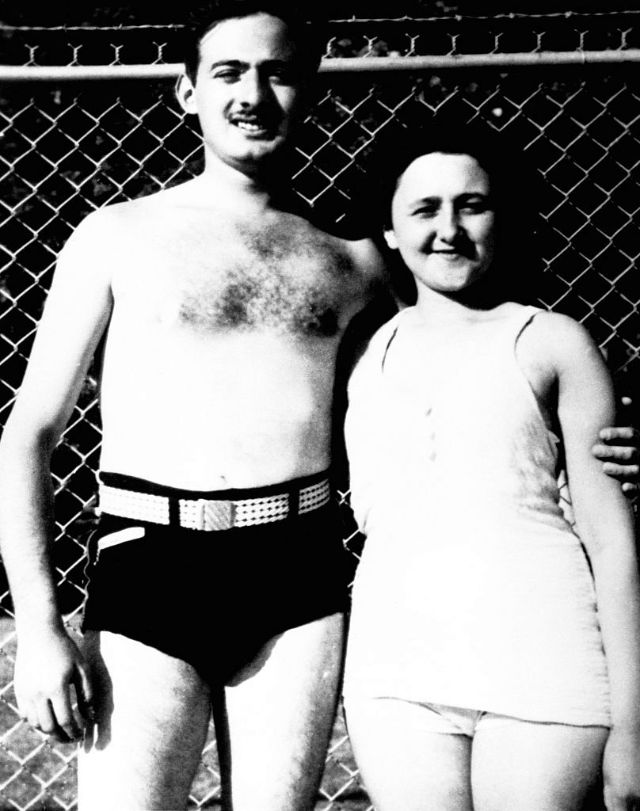
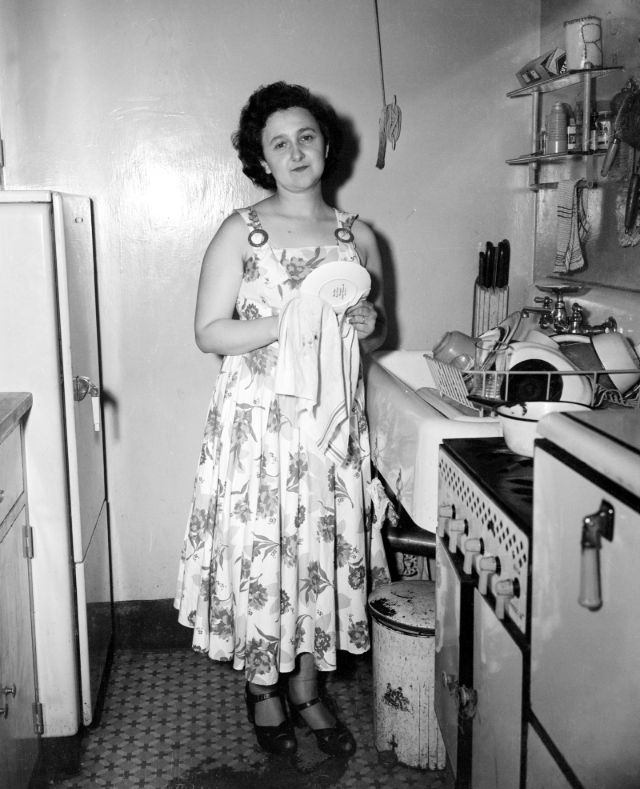
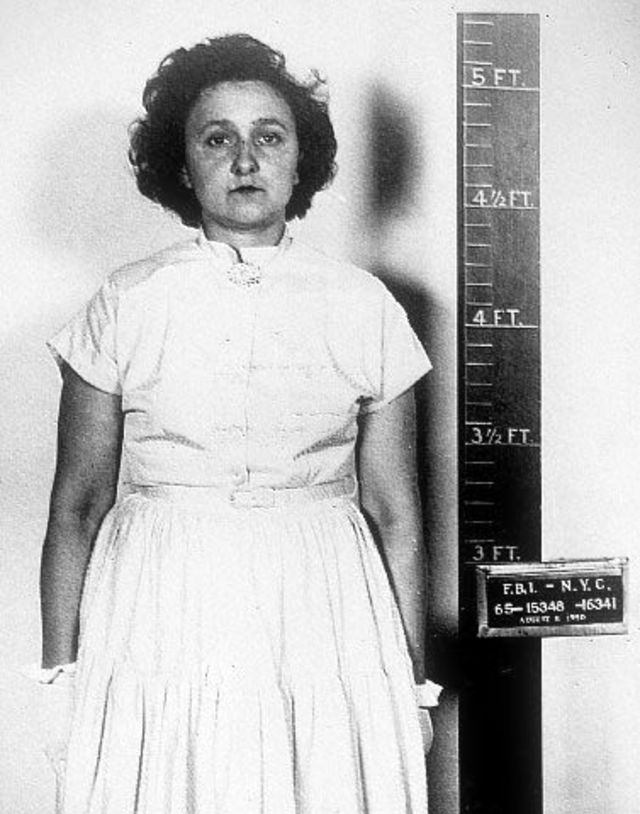
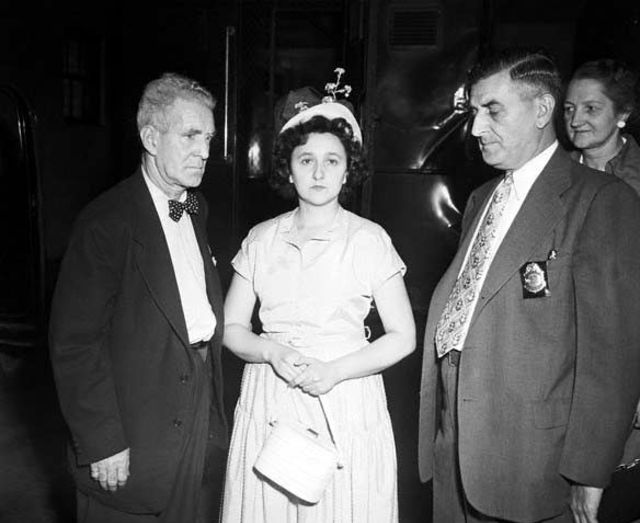
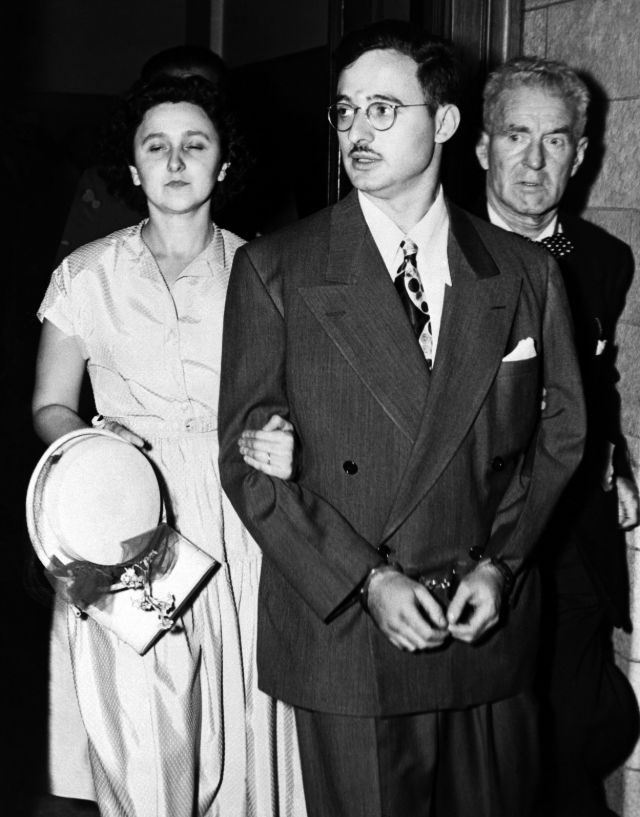
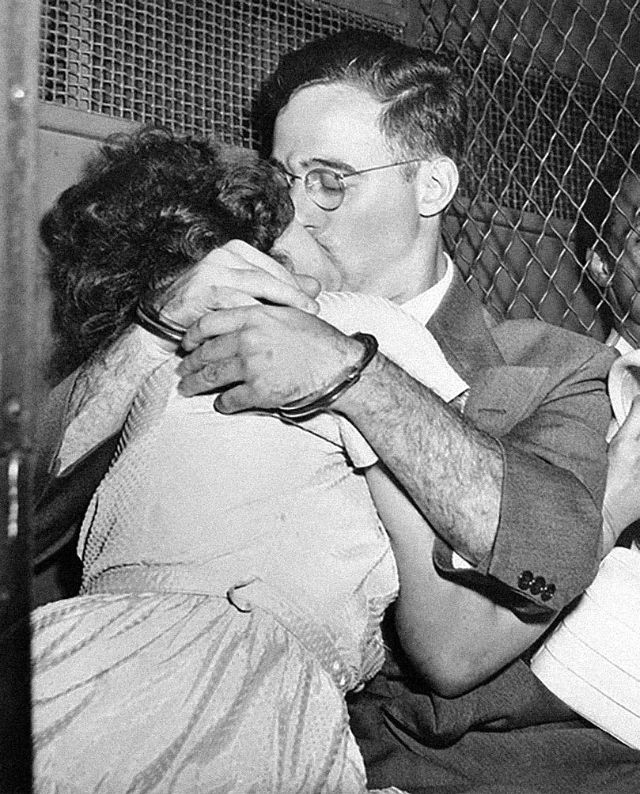
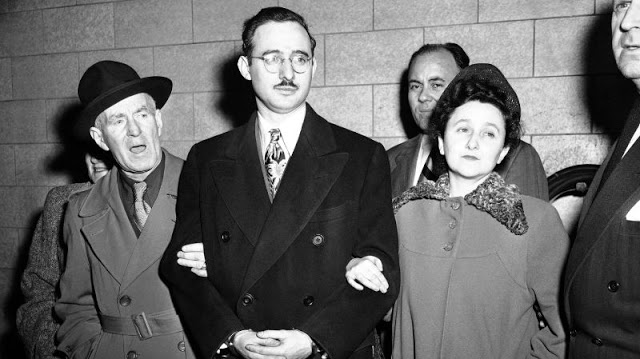
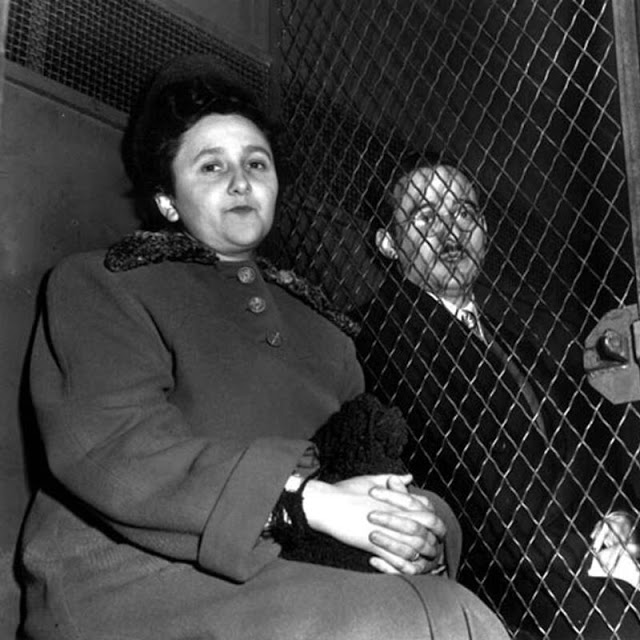
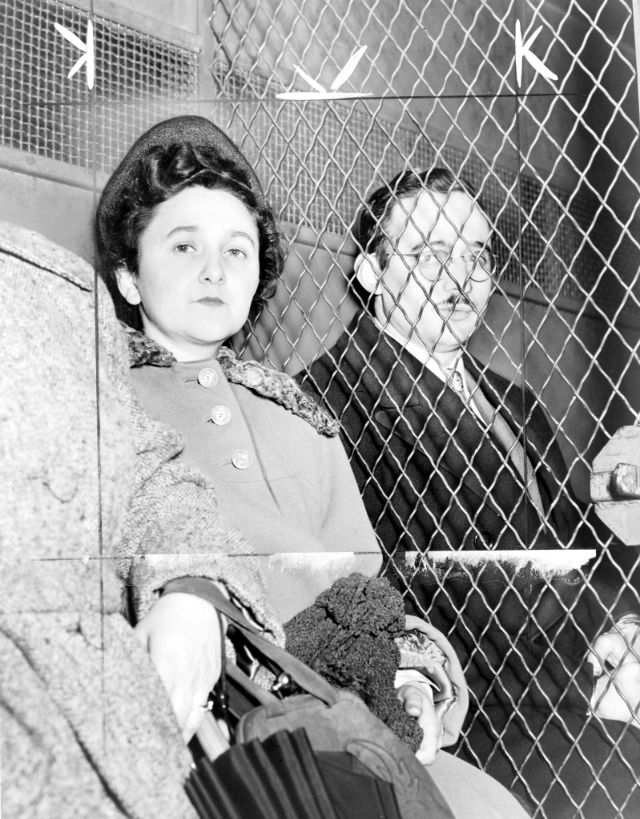
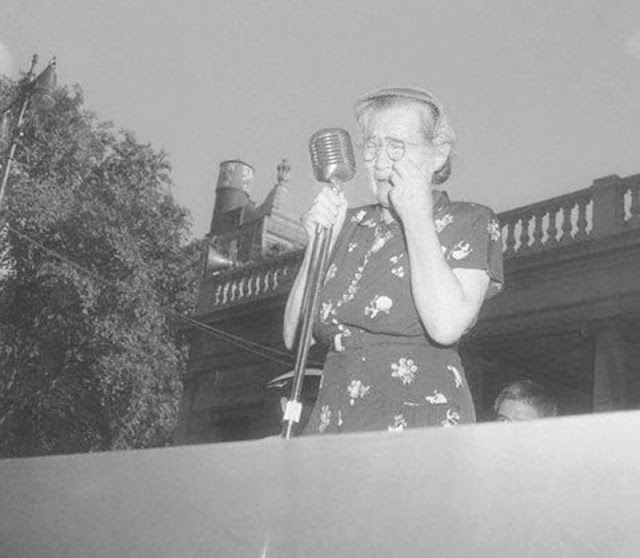
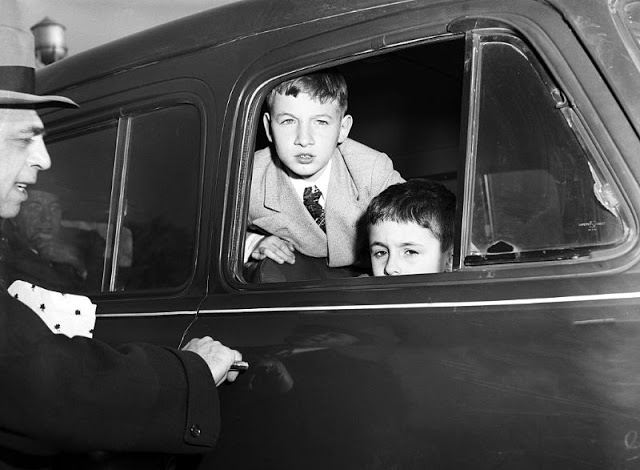
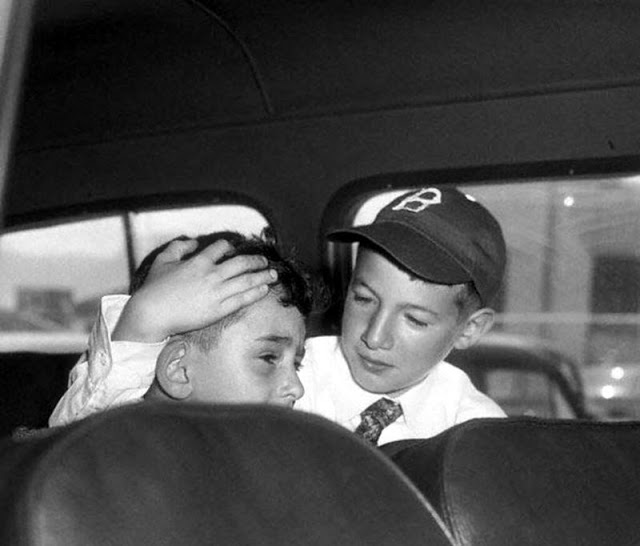
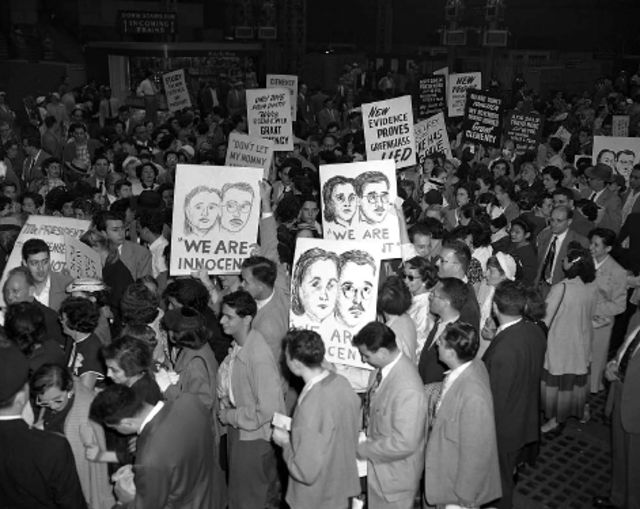
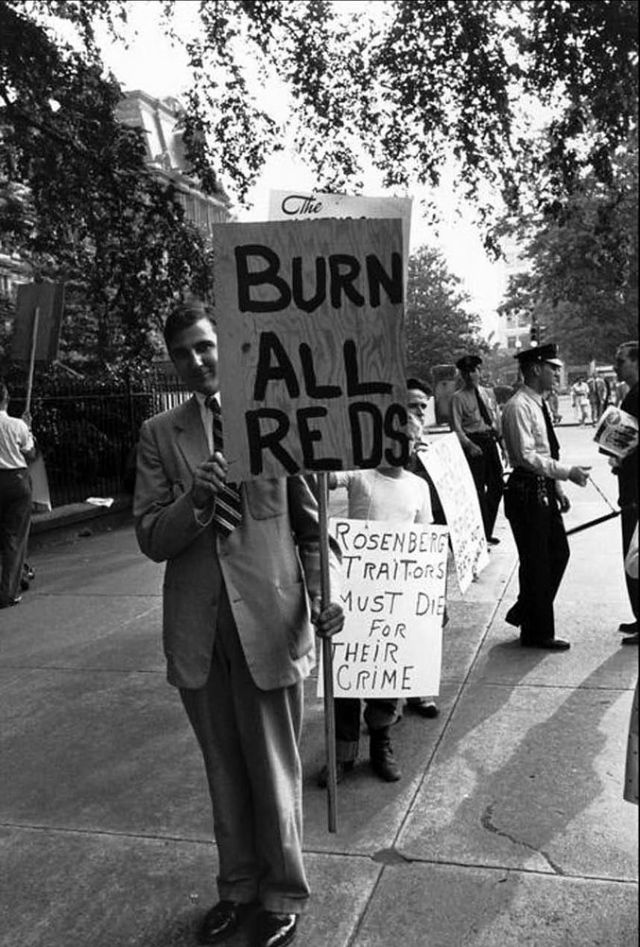
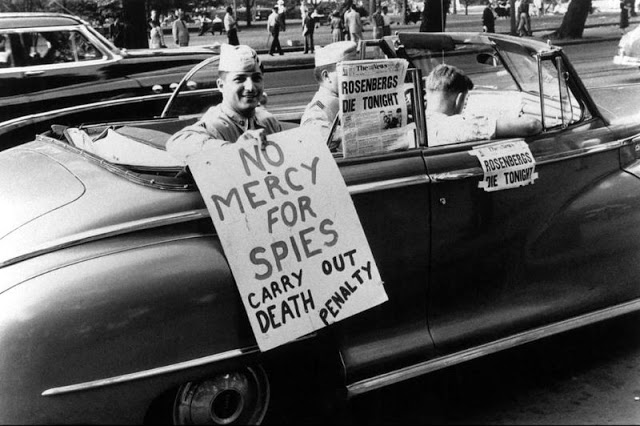
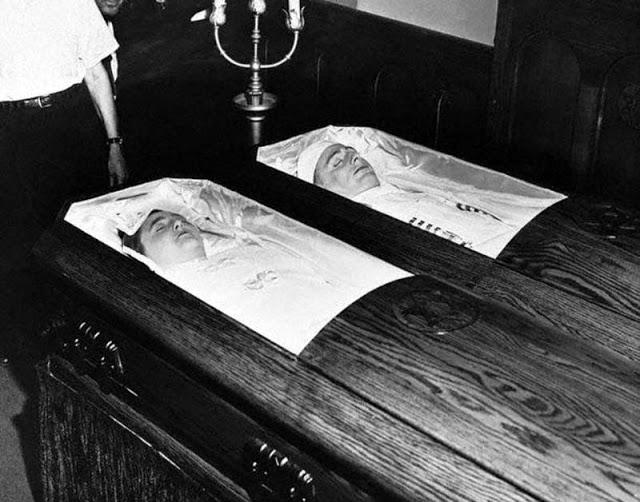
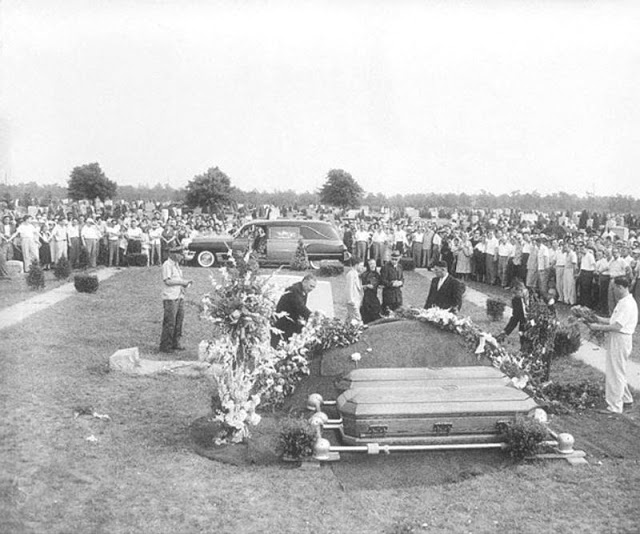
Julius and Ethel Rosenberg dressed in swimming attire, circa late 1940sMrs Ethel talks to reporters in her Knickerbocker Village home after her husband Julius was arrested by the FBI on a charge of conspiracy to commit espionage, New York, 18 Jul 1950.Mrs. Ethel Rosenberg, 34, dries dishes in her knickerbocker village home, New York, 18 Jul 1950.Ethel Rosenberg after her arrest on charges of espionage, New York, August 11, 1950.U.S. Deputy Marshals Harry McCabe (left) and James A. Shannon escort Mrs. Ethel Rosenberg, 35, as she appears in Federal Court, to be arraigned on an indictment charging her and her 33 year old husband Julius, were members of the atomic spy ring for Soviet Russia, New York, August 23, 1950.Julius and Ethel Rosenberg leave Federal Court after being indicted on charges of espionage in the Klaus Fuchs atomic spy ring, New York, 23 Aug 1950.Julius and Ethel kissed passionately in prison car outside Federal Court, New York, August 23, 1950.Julius Rosenberg and his wife, Ethel, arrive at Federal Court for the opening of their trial on charges of conspiracy to commit espionage by passing secret atomic information to Russia. With the couple is Harry McCabe (left), U.S. Deputy Marshal, New York, 6 March 1951.Ethel and Julius Rosenberg sitting in police van after being convicted of espionage, New York, April, 1951.Ethel and Julius Rosenberg sitting in police van after being convicted of espionage, New York, April, 1951.Mrs. Sophie Rosenberg addressed a rally at Union Square today and made an impassioned appeal to President Eisenhower to save the lives of her son, Julius, and his wife, Ethel, convicted atom spies who are scheduled to die in the chair at Sing Sing next Thursday night. Asserting their innocence, she told the sympathetic gathering “They never stole any atom secrets,” and made a public plea to the President and world opinion to save her children, Manhattan, New York, 11 June 1953.Michael (10) and Robert Rosenberg (6), the two sons of executed spies Julius and Ethel Rosenberg, look out from a car, June 16, 1953.Michael Rosenberg pats his younger brother Robert and tries his best to comfort him, as the youngsters ride away from Sing Sing prison after visiting their parents for the last time before they were executed, Ossining, New York, June 16, 1953. The Rosenbergs are scheduled to be executed on June 18th.Demonstrators gather at Pennsylvania Station in New York, June 18th, to prepare for a trip to Washington, where they will parade with placards in a protest against the death sentence for convicted atom spies Julius and Ethel Rosenberg. The day before, Supreme Court Justice William O. Douglas granted a stay of execution for the couple doomed to die in the electric chair on June 18th.Protests in Washington demanded the execution of Julius Rosenberg and his wife, Ethel, on charges of espionage for the Soviet Union, June 19th, 1953.Protests in Washington demanded the execution of Julius Rosenberg and his wife, Ethel, on charges of espionage for the Soviet Union, June 19th, 1953.The bodies of Julius and Ethel Rosenberg lie in repose at the L. J. Morris Funeral Home Chapel in Brooklyn, New York, June 20th, 1953.Rosenbergs laid to rest. The coffins of executed atom spies Julius and Ethel Rosenberg lie (foreground) ready to be interred at the Wellwood Cemetery near Farmingdale, L.I., June 21, with a crowd in attendance and flowers arranged near the grave site. In center, middleground, Mrs. Sophie Rosenberg, mother of Julius, is escorted in tears by Emanuel Bloch (dark coat, gray hat), principal defense attorney for the late Rosenbergs. On Mrs. Rosenberg’s other side is a physician. The children, Michael 10, and Robert 6, were not there.
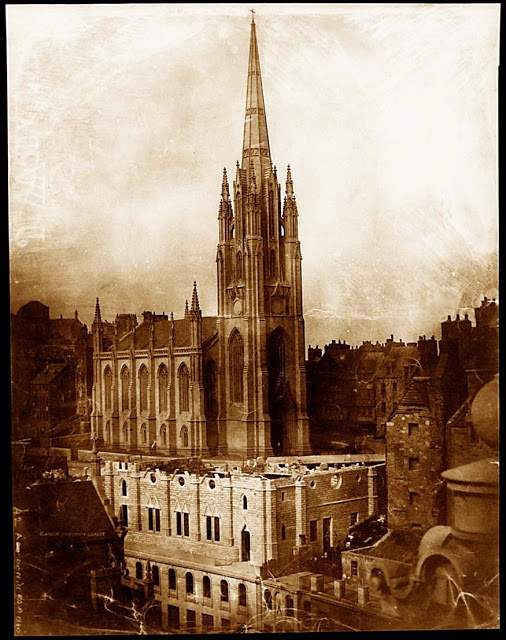
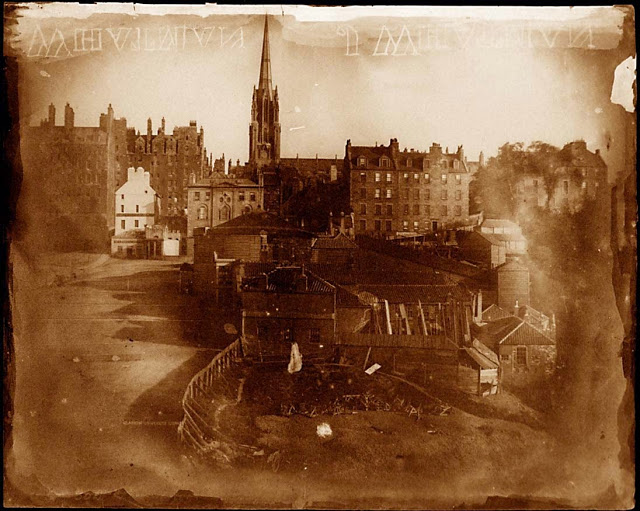
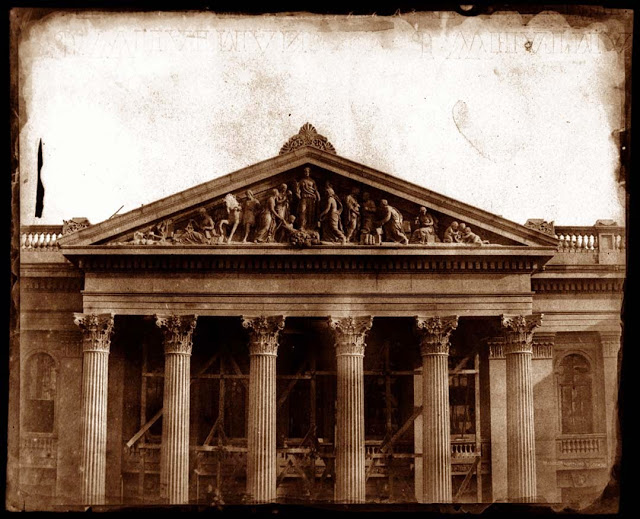
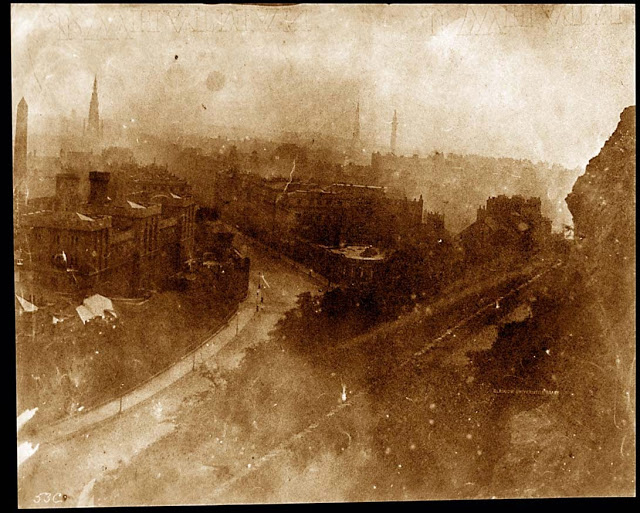
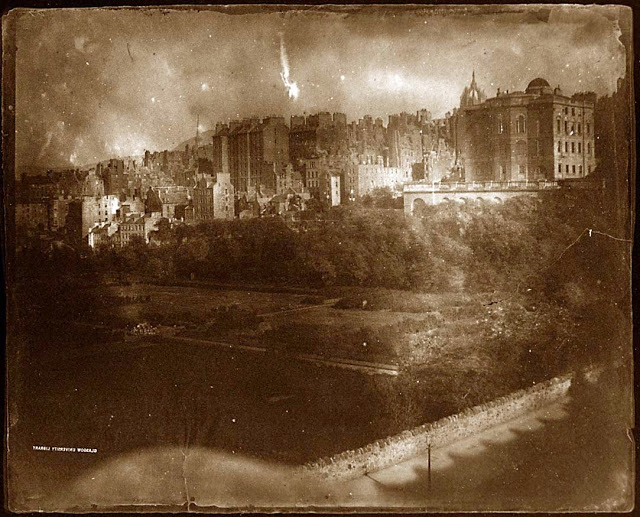
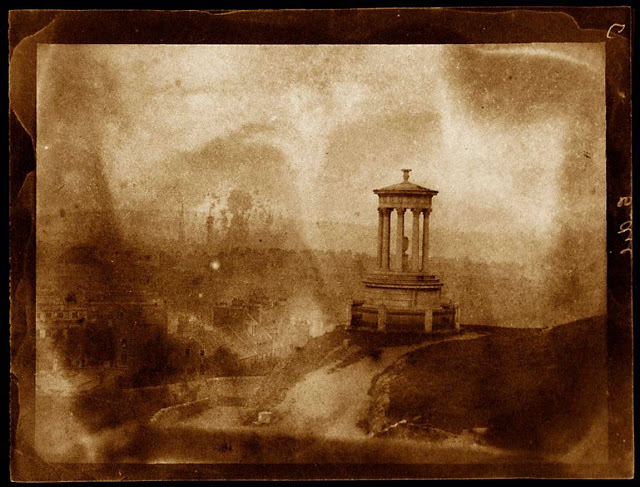
In 1840s Edinburgh, painter David Octavius Hill and engineer Robert Adamson formed the city’s first photography studio, which created thousands of images until Adamson’s sudden death. They are best known for their wonderful portraits, but over the course of their sadly short partnership they also created quite a few city views.
At a time when most photographers worked with daguerreotypes, Hill and Adamson used the negative-positive process, creating negatives on paper (calotypes) which could then be printed on salted paper. The Special Collections at the University of Glasgow holds large numbers of their original negatives, and their online collection provides digitally reversed positive images.
The photographs are wonderful not only as some of the earliest views of a beautiful city, but for the aesthetic of the early paper negative. Even with skill level like Hill and Adamson’s, the process was still highly unpredictable. The photographs are imperfect–which is ultimately a testament to the incredible fact of their existence.
View of the Mound, 1843.A view of the Old Town.Edinburgh Castle and the Grassmarket.View from Calton Hill, after October 1844.The National Commerical Bank, George Street.The Edinburgh Tolbooth, with St. Columba’s Free Church under construction in the foreground, 1844-45.View of the New Town from Calton Hill, after October 1844.The Old Town, 1843.View from Calton Hill.
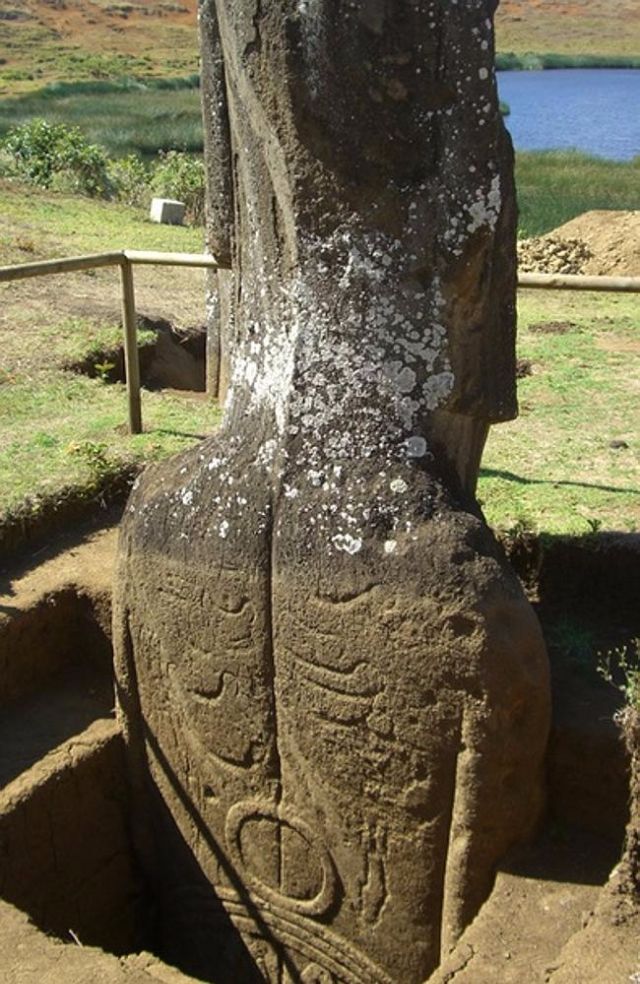
Practically everyone has seen the iconic images of the Easter Island heads. What you may not have known is that those Easter Island heads actually have hidden buried bodies. Archaeologists have uncovered the bodies associated with the heads and found interesting discoveries that further our knowledge of the Easter Island civilization and how they created the monoliths.
The Easter Island heads are known as Moai by the Rapa Nui people who carved the figures in the tropical South Pacific directly west of Chile. The Moai monoliths, carved from stone found on the island, are between 1,100 and 1,500 CE. A bit of an aside, but CE refers to the “Common Era” and sometimes replaces the use of AD in historical and archaeological communities.
The reason the bodies have been hidden underground for so long is that the statues were build on the side of a volcano, which helpfully erupted all over the statues and buried them up to their necks.
Archaeologists have studied the statues on the island for about a century, and have actually known about the hidden bodies since the earliest excavations in 1914. The first photographs of the hidden torsos emerged in 2012, two years after Jo Anne Van Tilburg, director of the Easter Island Statue Project, began excavating the monoliths with the help of local Rapa Nui people. These amazing pictures below show moment archaeologists discovered Easter Island statues were covered in tattoos:
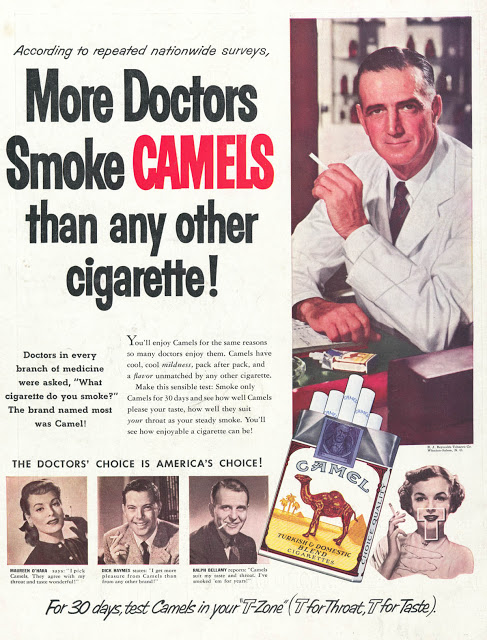
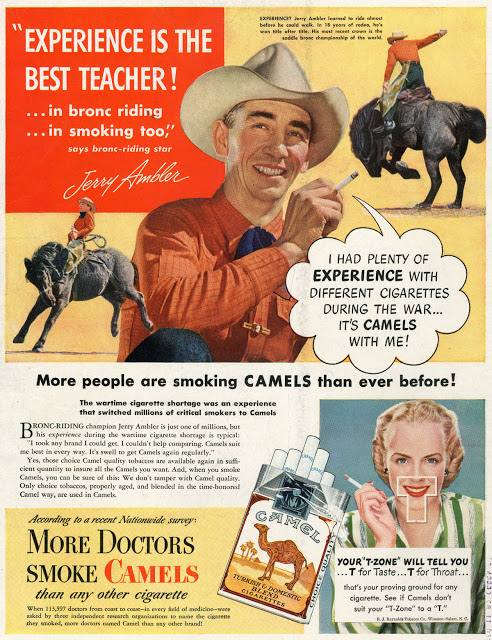
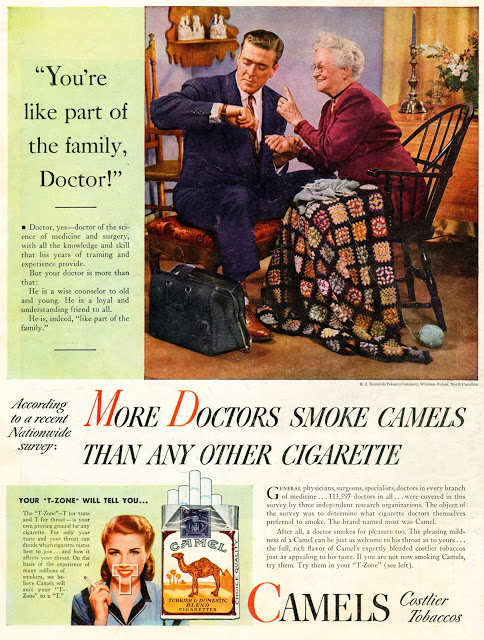
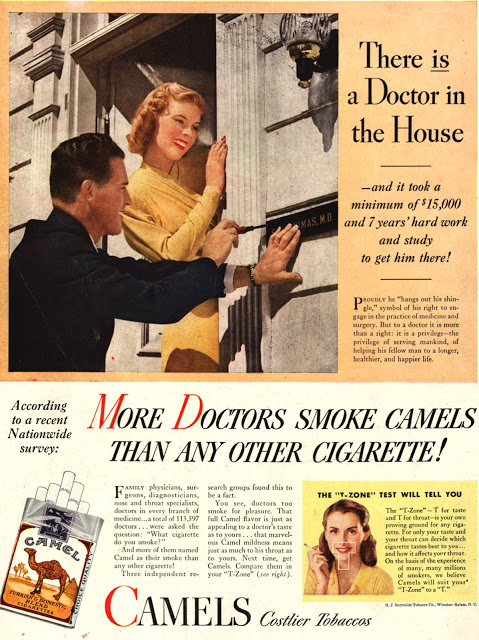
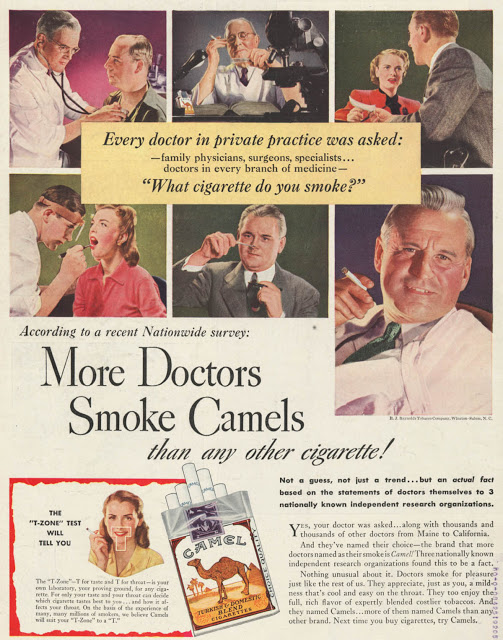
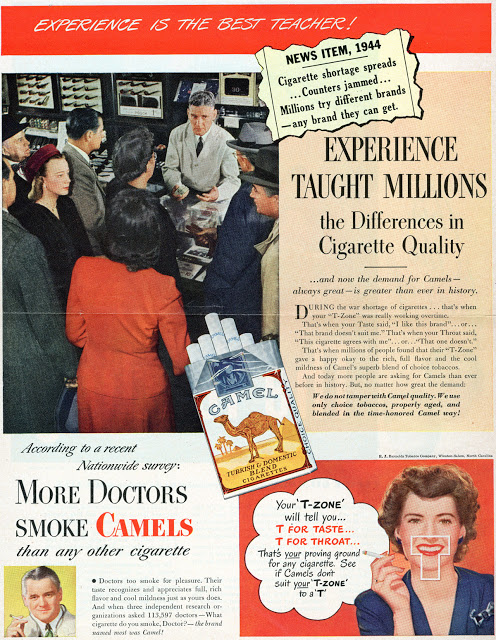
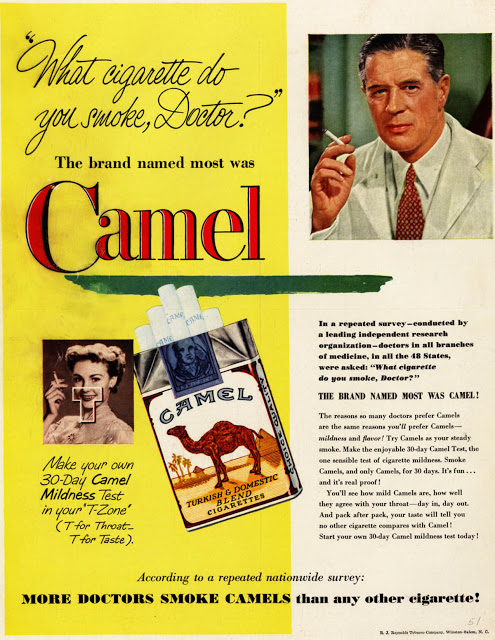
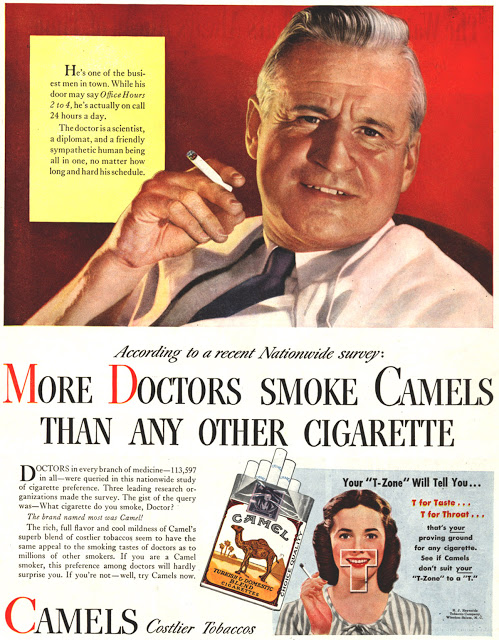
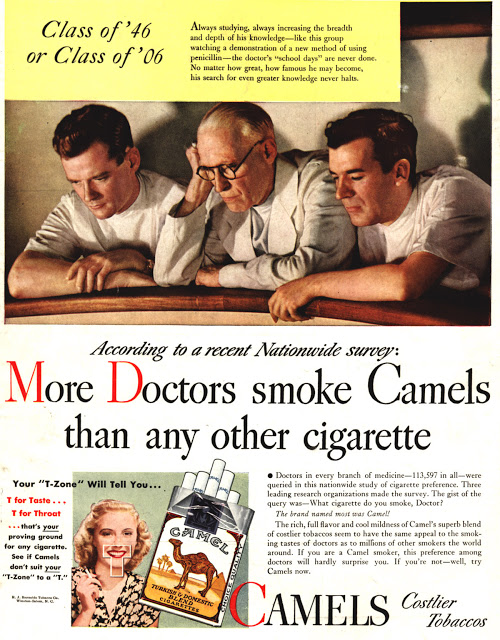
One common technique used by the tobacco industry to reassure a worried public was to incorporate images of physicians in their ads. The none-too-subtle message was that if the doctor, with all of his expertise, chose to smoke a particular brand, then it must be safe. Unlike with celebrity and athlete endorsers, the doctors depicted were never specific individuals, because physicians who engaged in advertising would risk losing their license. (It was contrary to accepted medical ethics at the time for doctors to advertise.) Instead, the images always presented an idealized physician wise, noble, and caring who enthusiastically partook of the smoking habit. All of the doctors in these ads came out of central casting from among actors dressed up to look like doctors. Little protest was heard from the medical community or organized medicine, perhaps because the images showed the profession in a highly favorable light. This genre of ads regularly appeared in medical journals such as the Journal of the American Medical Association, an organization which for decades collaborated closely with the industry. The big push to document health hazards also did not arrive until later.
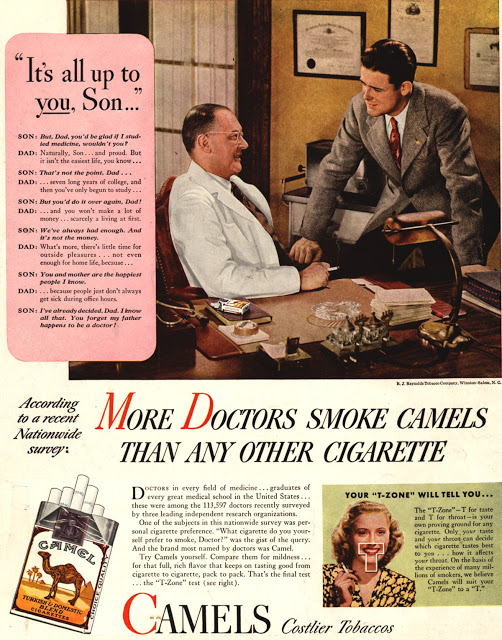
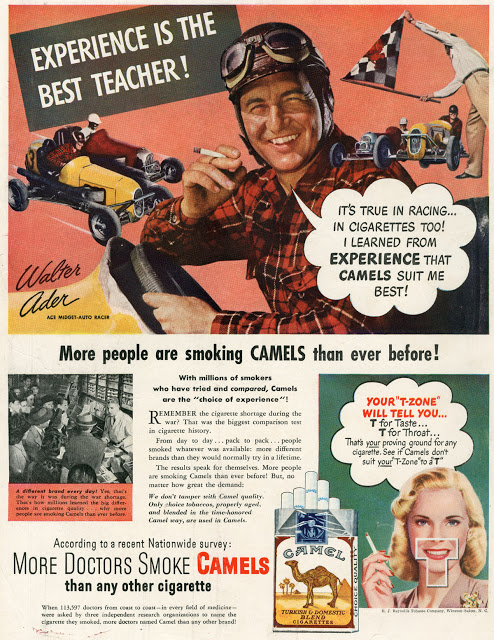
The ads in this particular theme are all from a single R. J. Reynolds campaign which ran from 1940 to 1949 and claimed that More Doctors smoke Camels. In the majority of these advertisements, the More Doctors campaign slogan was included alongside other popular Camel campaigns such as T-Zone ( T for Throat, T for Taste ), More people are smoking Camels than ever before, and Experience is the Best Teacher. In this way, Camel was able to maintain consistency across its advertisements.
Within the More Doctors campaign, a story can be told through a series of advertisements. The story documents a young boy s journey following in his father s footsteps into the field of medicine. In the first ad of this series, an obstetrician tells his little boy, Now Daddy has to go to another birthday party, son as he leaves his son s party to deliver a baby. Next, a doctor tells his grown-up boy, It s all up to you, son, as the young man decides whether or not to follow a career in medicine. Then, the young medical student, class of 46, is joined by his father, class of 06 during a lecture. Later, the young man is an interne, not quite on his own yet. Finally, he is seen opening up his very own private practice in the company of his adoring wife. This storyline, though not explicit, works to further portray the doctor as a family man and a determined, committed, self-sacrificing individual.
In an attempt to substantiate the More Doctors claim, R.J. Reynolds paid for surveys to be conducted during medical conventions using two survey methods: Doctors were gifted free packs of Camel cigarettes at tobacco company booths and them upon exiting the exhibit hall, were then immediately asked to indicate their favorite brand or were asked which cigarette they carried in their pocket.
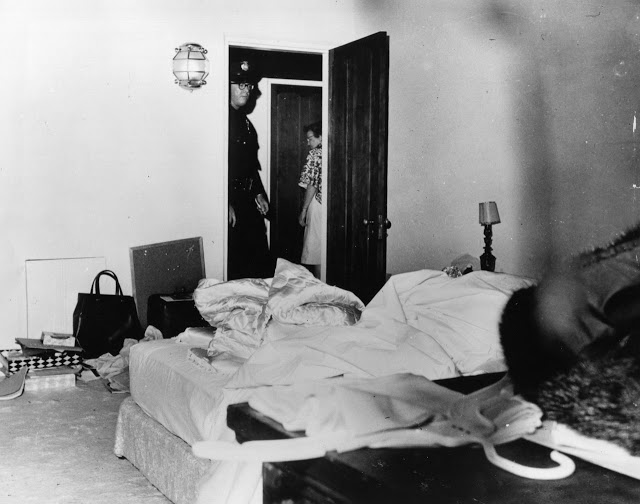
On August 5, 1962, the mysterious death of one of the most popular Hollywood stars, Marilyn Monroe, shook the world.
At approximately 3:00 a.m., Marilyn’s housekeeper, Eunice Murray, noticed Monroe’s bedroom light was on and the door was locked. She immediately called Monroe’s psychiatrist, Dr. Ralph Greenson, on whose advice she looked in through a window and saw Marilyn lying facedown on her bed, covered by a sheet and clutching a telephone receiver.
After Dr. Greenson arrived, he entered the room by breaking a window and found Marilyn Monroe dead. At 4:25 a.m., the Los Angeles Police Department got called into the scene.
After a brief investigation, the LAPD concluded that Marilyn Monroe’s death was “caused by a self-administered overdose of sedative drugs and that the mode of death is probable suicide.”
Despite the coroner’s verdict, people are still offering numerous conspiracy theories about what really happened to Marilyn Monroe.
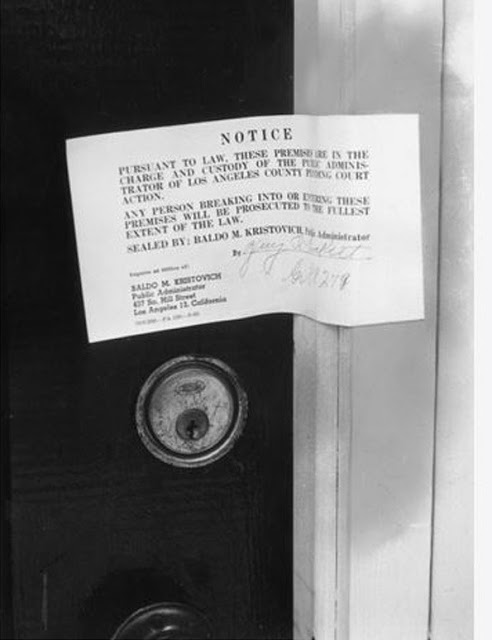
The bedroom in which Marilyn Monroe was found dead of a barbituate overdose on August 6, 1962.The bedroom in which Marilyn Monroe was found dead on August 6, 1962.Police entering Marilyn Monroe’s bedroom.Marilyn Monroe’s deathbed.The lifeless body of Marilyn Monroe.Police photo showing the pill bottles at Monroe’s bedside.The corpse of actress Marilyn Monroe is removed to the morgue on a stretcher by two police officers.The body of Marilyn Monroe was released by the coroner this afternoon 8/6, and taken back to the mortuary in preparation for burial. Marilyn’s body was at the county morgue for an autopsey and subsequant toxicological test.The body of actress Marilyn Monroe arrives at the mortuary August 5th. The actress was found dead in her home earlier in the day from an overdose of barbiturates.The police warning notice posted on American actor Marilyn Monroe’s front door after her death, Los Angeles, California.Marilyn Monroe’s housekeeper, Eunice Murray and handyman Norman Jeffries, leaving the house after her death.American baseball player Joe DiMaggio wipes a tear from his eye after bursting into tears at the funeral of Marilyn Monroe in Westwood Memorial Park, Hollywood. He was the second of Monroe’s three husbands.
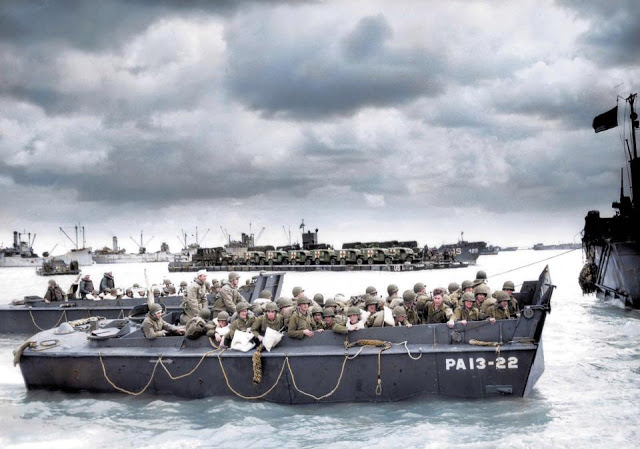
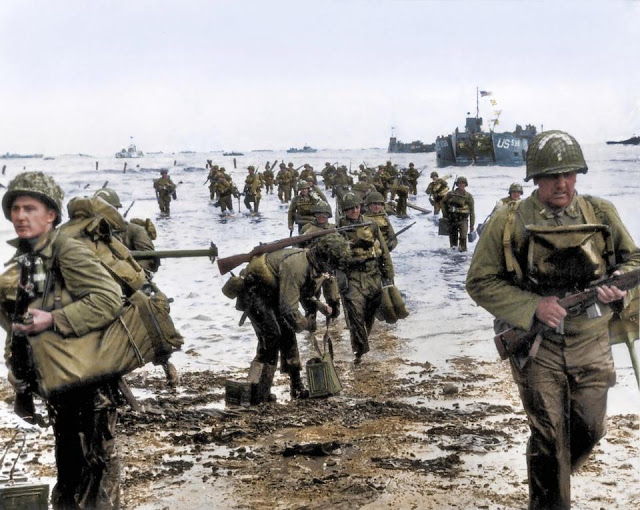
Some 156,000 Allied troops landed on five Normandy beaches during the operation on June 6, 1944, which would ultimately lead to the defeat of Nazi Germany and the end of the Second World War. It was the largest seaborne invasion in history and saw 4,400 allied troops lose their lives.
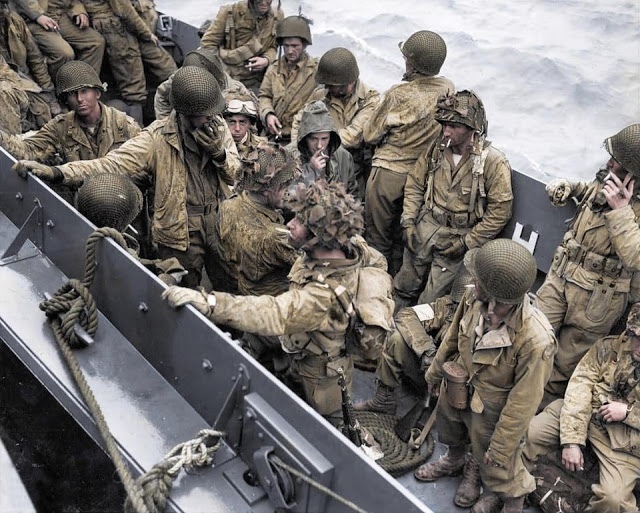
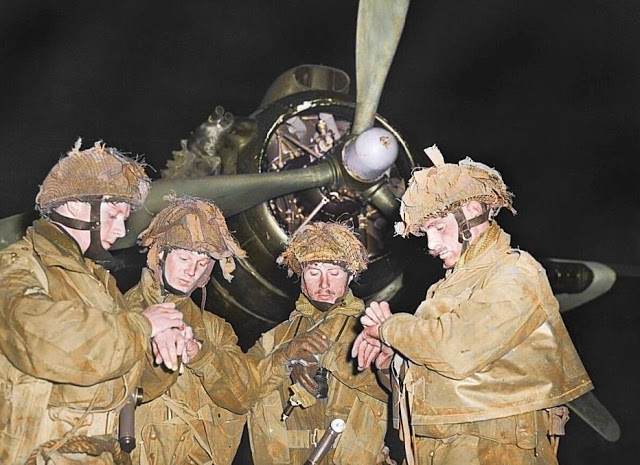
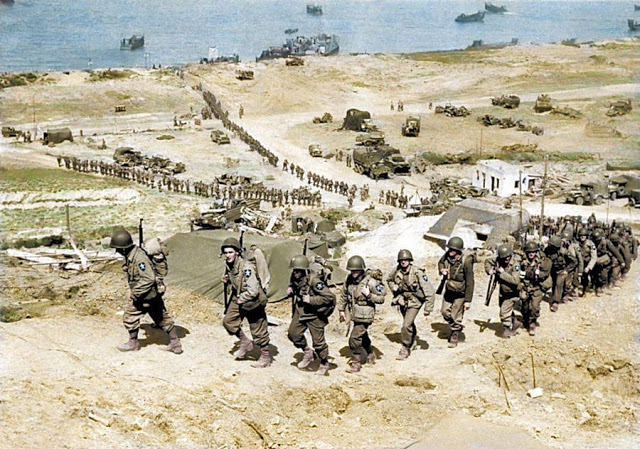
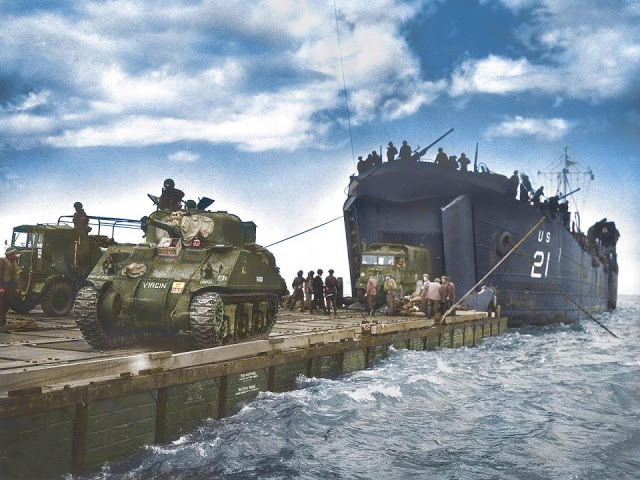
Striking shots show men storming French beaches under ominous grey skies for the invasion, glider pilots on landing craft, and British Airborne Pathfinders at Harwell checking their watches on the night of June 5, 1944, hours before the battle commenced.
The original black and white photographs were painstakingly colorized by electrician Royston Leonard, with each snap taking between four and five hours to complete.
“As time goes by I find I am doing more World War Two pictures and giving them a bit of colour helps the younger generation to connect and not just see them as something that happened long ago,” he said. “In the images I see a world that has gone mad and men and women pulled from their lives to sort out the mess. World War Two shows people at their best and at their worst. We must look and learn and not let it happen again.”
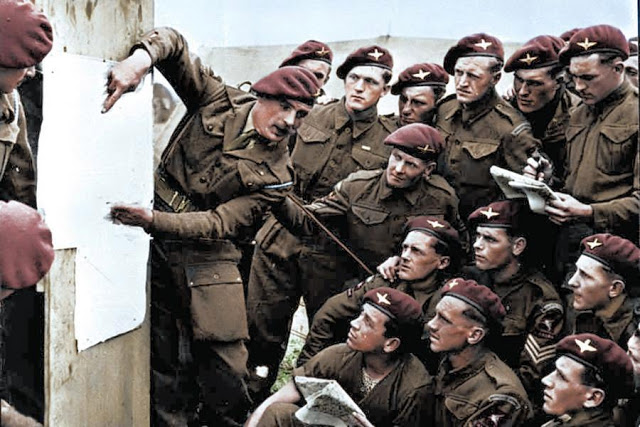
The astonishing scale of the invasion can be seen in this image taken of the American forces arriving on Utah Beach.U.S. troops from the USS Joseph T. Dickman wait to disembark from their landing craft as they approach Utah Beach on June 6 1944.A craft from the USS Samuel Chase lands troops of the US Army First Division on Omaha Beach.Glider pilots take the opportunity for a quick cigarette as they are crowded onto a landing craft.Royal Marines descend from landing craft with their heavy backpacks, weapons and equipment on Juno beach.American troops arrive on a Normandy beach in a lengthy procession from their landing crafts.British troops show their true grit as they help injured comrades onto Sword Beach.US Army Fourth Infantry Division troops take a breather after making their way onto Utah Red Beach.British Airborne Pathfinders check their watches on the night before the invasion.Reinforcements arrive by sea to bolster U.S. troop numbers on the Normandy front.The USS LST-21, manned by the U.S. coastguard unloads British Army tanks and trucks onto a Rhino barge in the opening hours of their invasion of Gold Beach.Troops load U.S. LSTs with artillery equipment, vehicles and troops in Brixham, England before they head for Normandy.Nazi General Erwin Rommel inspects defences ahead of D-Day. On the actual day of the invasion he was away from the front celebrating his wife’s birthday.German troops camouflage a Panzer VI Tiger tank with undergrowth in the Normandy village of Villers-Bocage.Members of the 22nd Independent Parachute Company, 6th Airborne Division attend a briefing ahead of the D-Day invasion.Troops establish a radio communications post after landing.
Detroit is the largest and most populous city in the U.S. state of Michigan, the largest U.S. city on the United States–Canada border, and the county seat of Wayne County. The municipality of Detroit had a population of 639,111 at the 2020 census, making it the 27th-most populous city in the United States. The metropolitan area, known as Metro Detroit, is home to 4.3 million people, making it the second-largest in the Midwest after the Chicago metropolitan area, and 14th-largest in the United States. Regarded as a major cultural center, Detroit is known for its contributions to music and as a repository for art, architecture and design, along with its historical automotive background.
Detroit is a major port on the Detroit River, one of the four major straits that connect the Great Lakes system to the Saint Lawrence Seaway. The City of Detroit anchors the second-largest regional economy in the Midwest, behind Chicago and ahead of Minneapolis–Saint Paul, and the 14th-largest in the United States. Detroit is best known as the center of the U.S. automobile industry, and the “Big Three” auto manufacturers General Motors, Ford, and Stellantis North America are all headquartered in Metro Detroit. As of 2007, the Detroit metropolitan area is the number one exporting region among 310 defined metropolitan areas in the United States. The Detroit Metropolitan Airport is among the most important hubs in the United States. Detroit and its neighboring Canadian city Windsor are connected through a highway tunnel, railway tunnel, and the Ambassador Bridge, which is the second-busiest international crossing in North America, after San Diego–Tijuana.
In 1701, Antoine de la Mothe Cadillac founded Fort Pontchartrain du Détroit, the future city of Detroit. During the late nineteenth and early twentieth century, it became an important industrial hub at the center of the Great Lakes region. The city’s population became the fourth-largest in the nation in 1920, after only New York City, Chicago and Philadelphia, with the expansion of the auto industry in the early 20th century. As Detroit’s industrialization took off, the Detroit River became the busiest commercial hub in the world. The strait carried over 65 million tons of shipping commerce through Detroit to locations all over the world each year; the freight throughput was more than three times that of New York and about four times that of London. By the 1940s, the city’s population remained the fourth-largest in the country. However, due to industrial restructuring, the loss of jobs in the auto industry, and rapid suburbanization, among other reasons, Detroit entered a state of urban decay and lost considerable population from the late 20th century to the present. Since reaching a peak of 1.85 million at the 1950 census, Detroit’s population has declined by more than 65 percent. In 2013, Detroit became the largest U.S. city to file for bankruptcy, which it successfully exited in December 2014, when the city government regained control of Detroit’s finances.
Detroit’s diverse culture has had both local and international influence, particularly in music, with the city giving rise to the genres of Motown and techno, and playing an important role in the development of jazz, hip-hop, rock, and punk. The rapid growth of Detroit in its boom years resulted in a globally unique stock of architectural monuments and historic places. Since the 2000s conservation efforts have managed to save many architectural pieces and achieved several large-scale revitalizations, including the restoration of several historic theatres and entertainment venues, high-rise renovations, new sports stadiums, and a riverfront revitalization project. More recently, the population of Downtown Detroit, Midtown Detroit, and various other neighborhoods have increased. An increasingly popular tourist destination, Detroit receives 19 million visitors per year. In 2015, Detroit was named a “City of Design” by UNESCO, the first U.S. city to receive that designation. (Wikipedia)
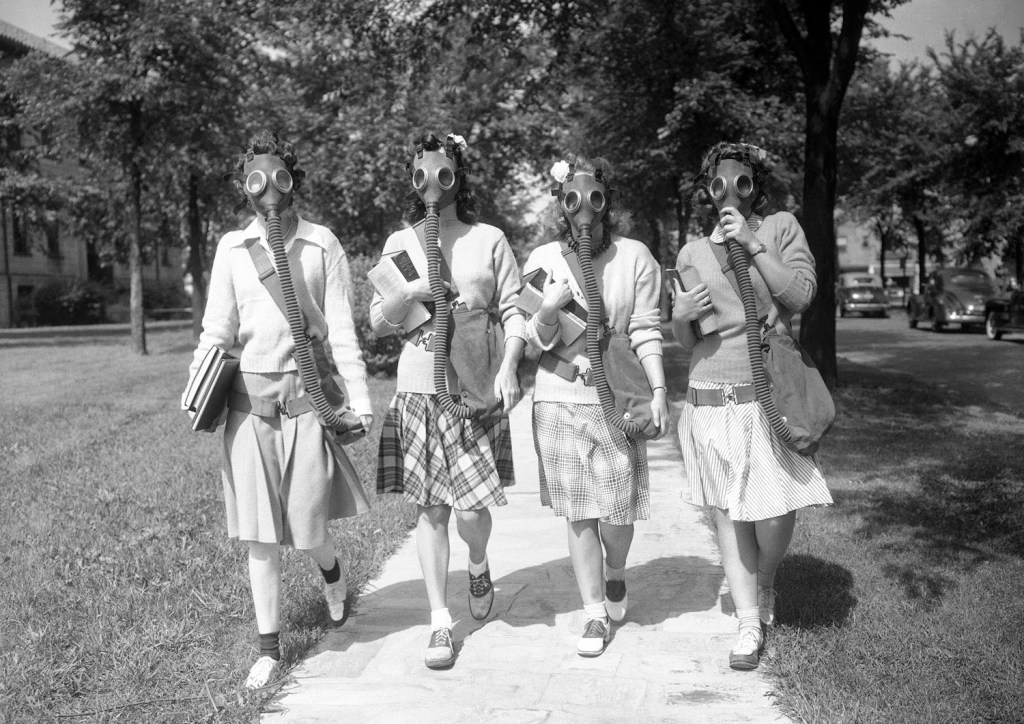
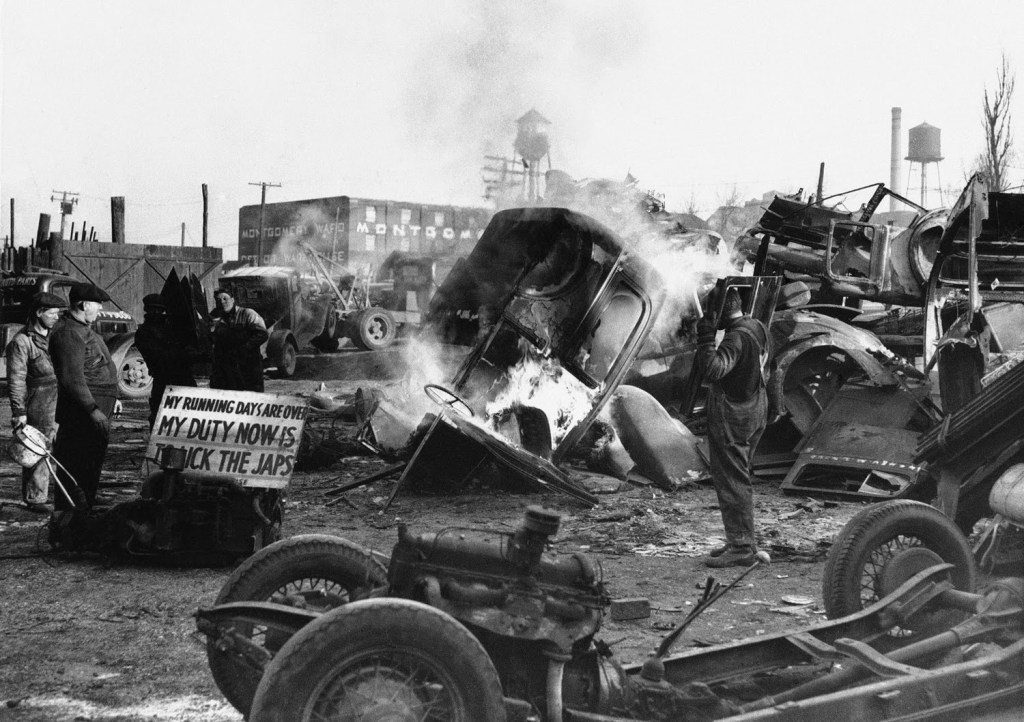
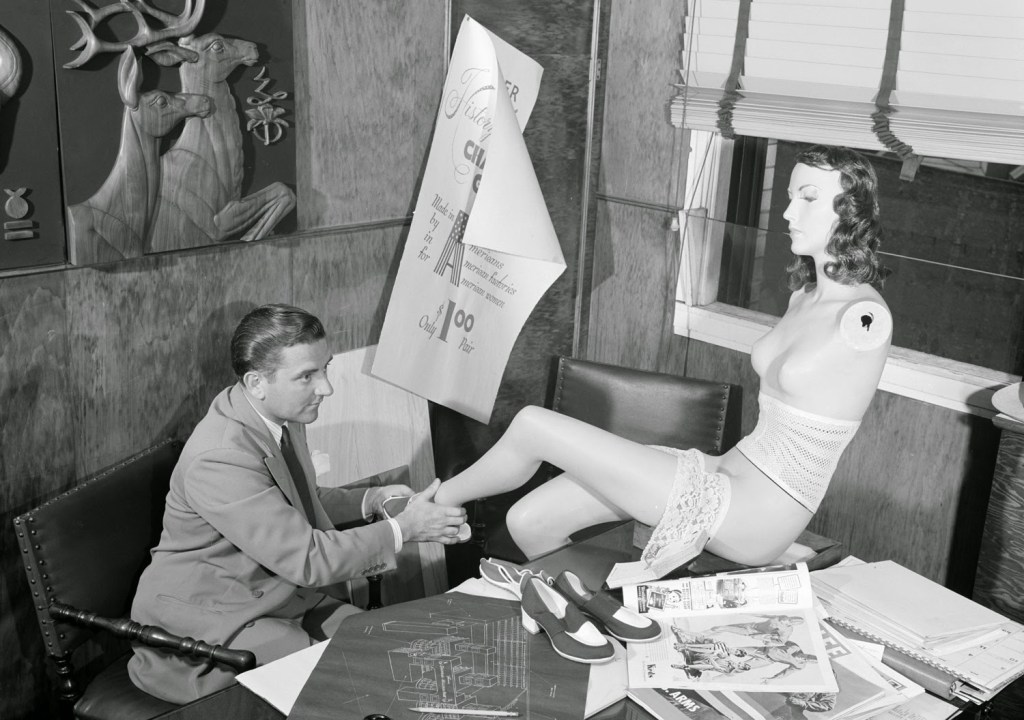
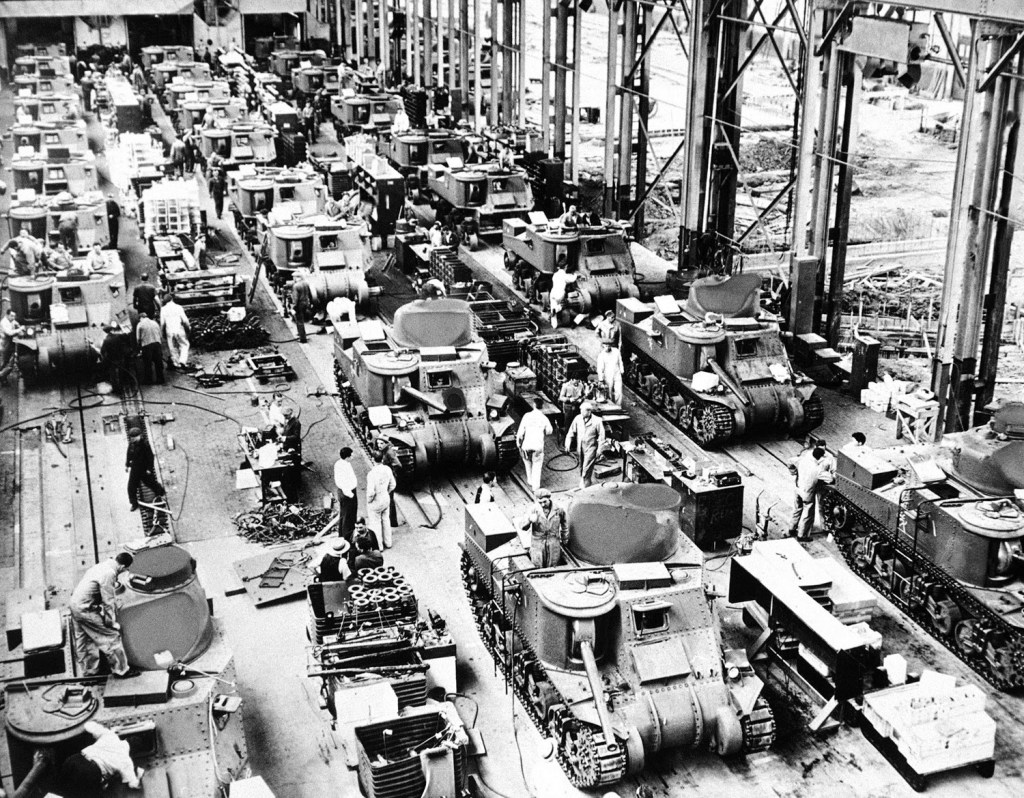
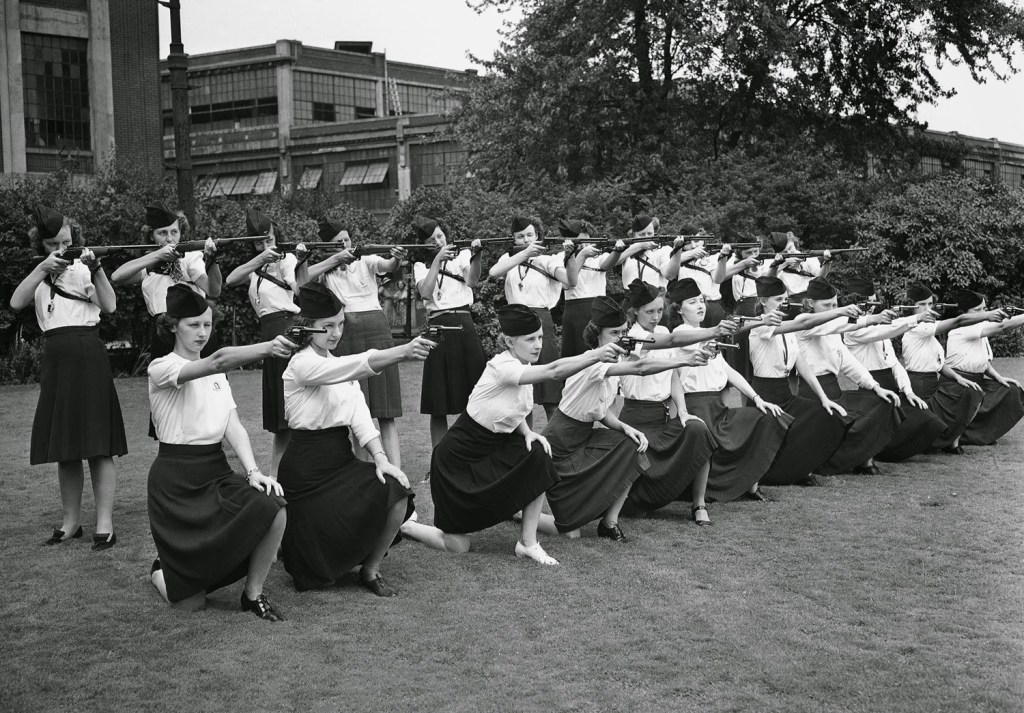
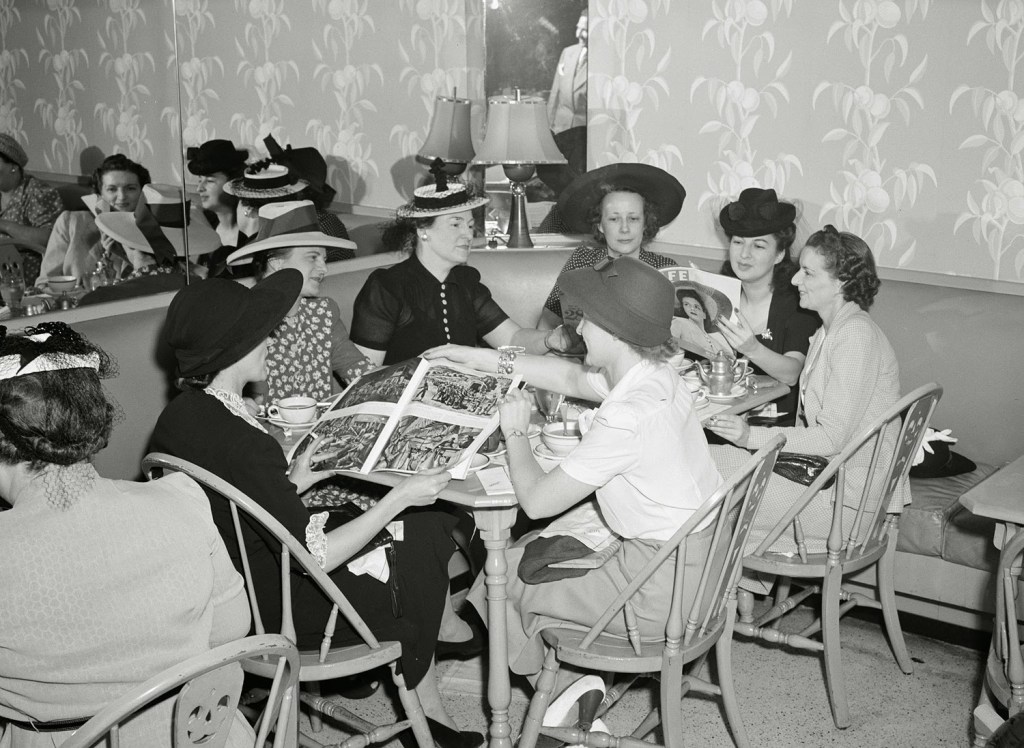
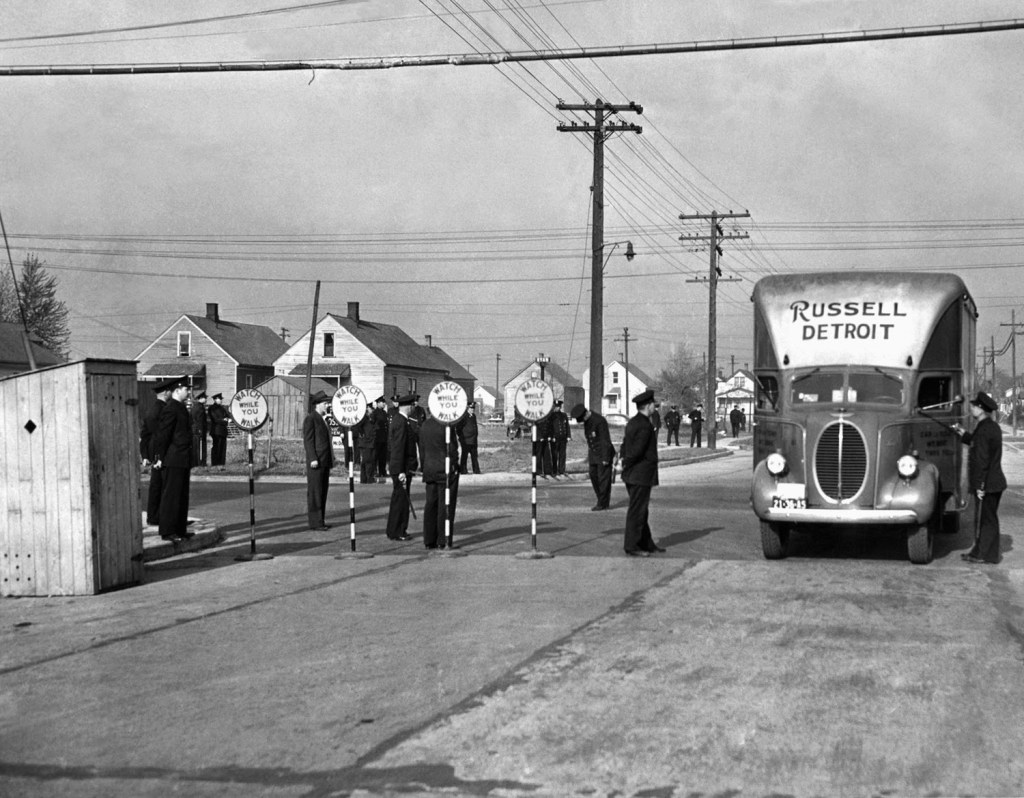
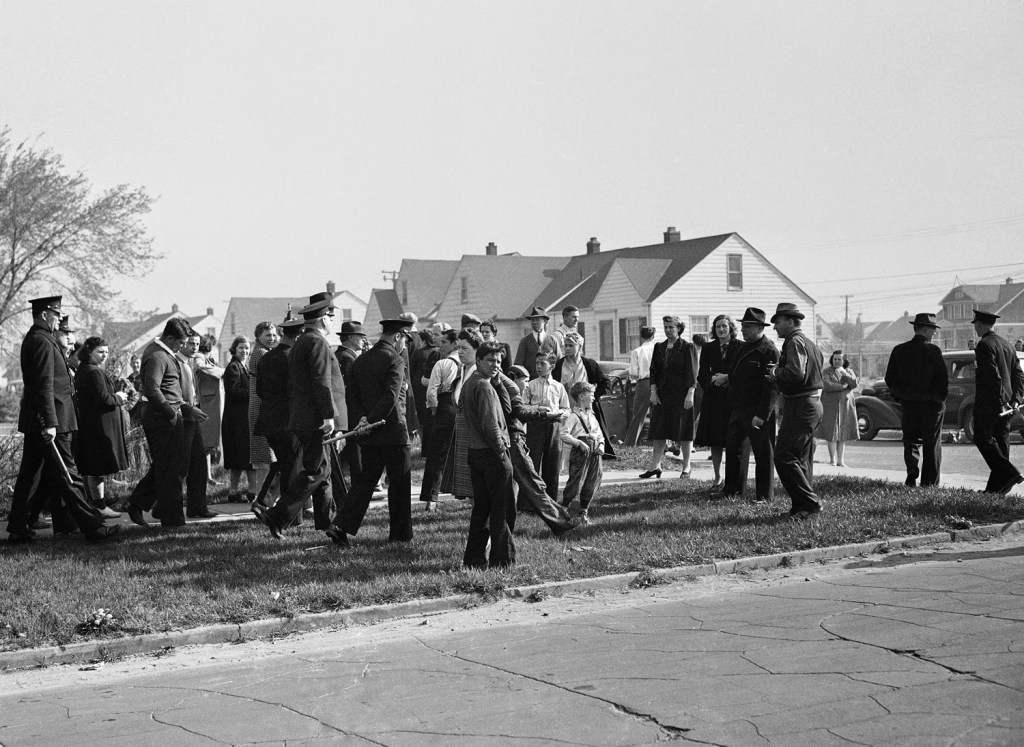
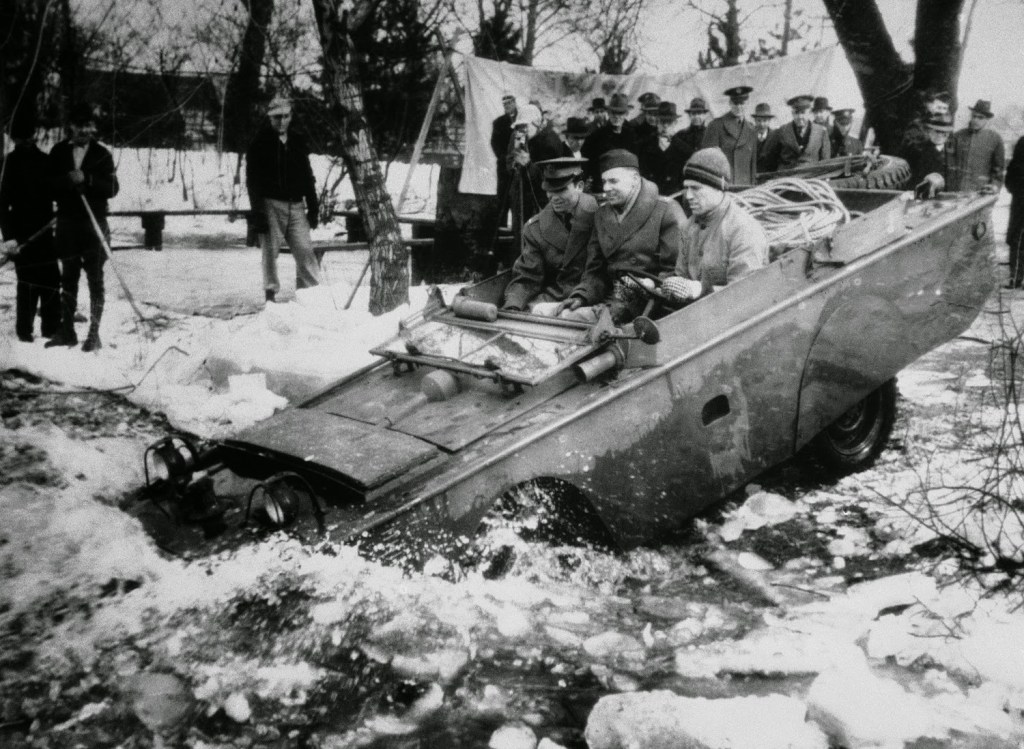
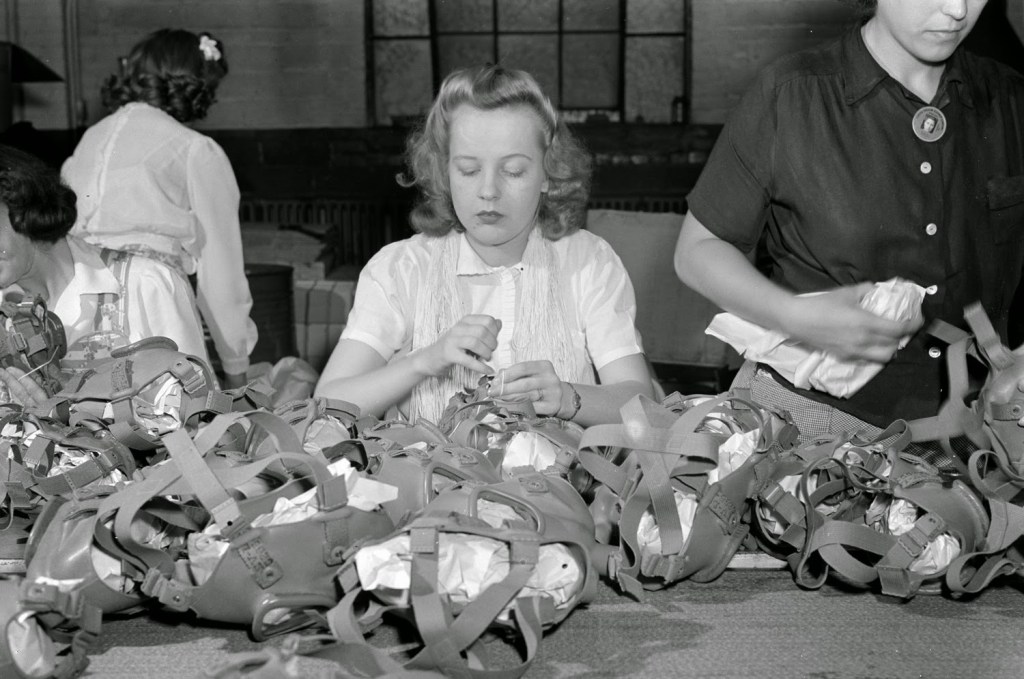
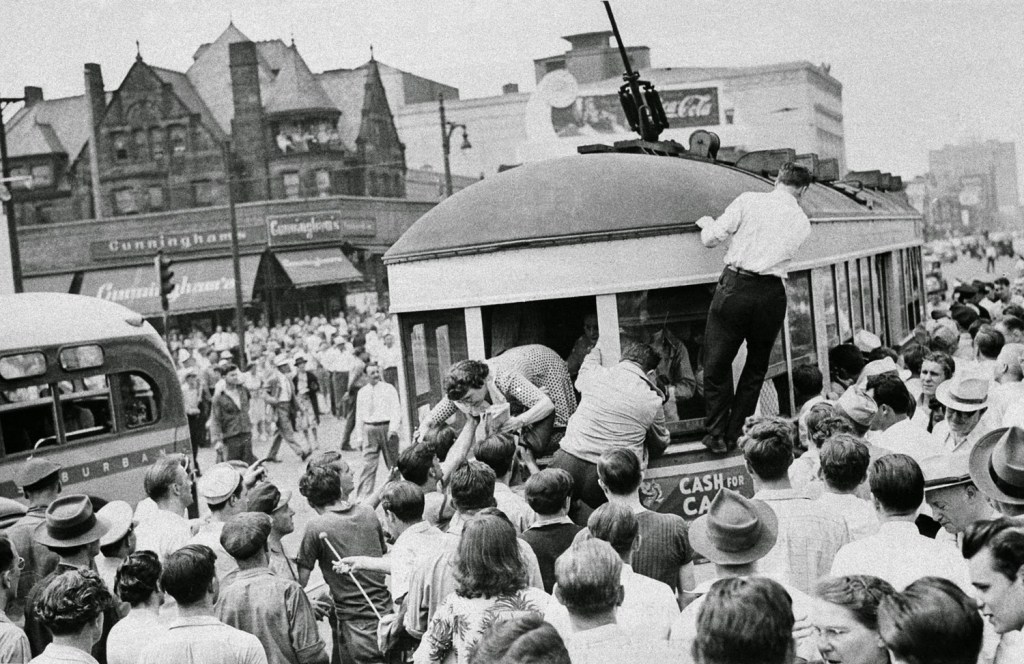
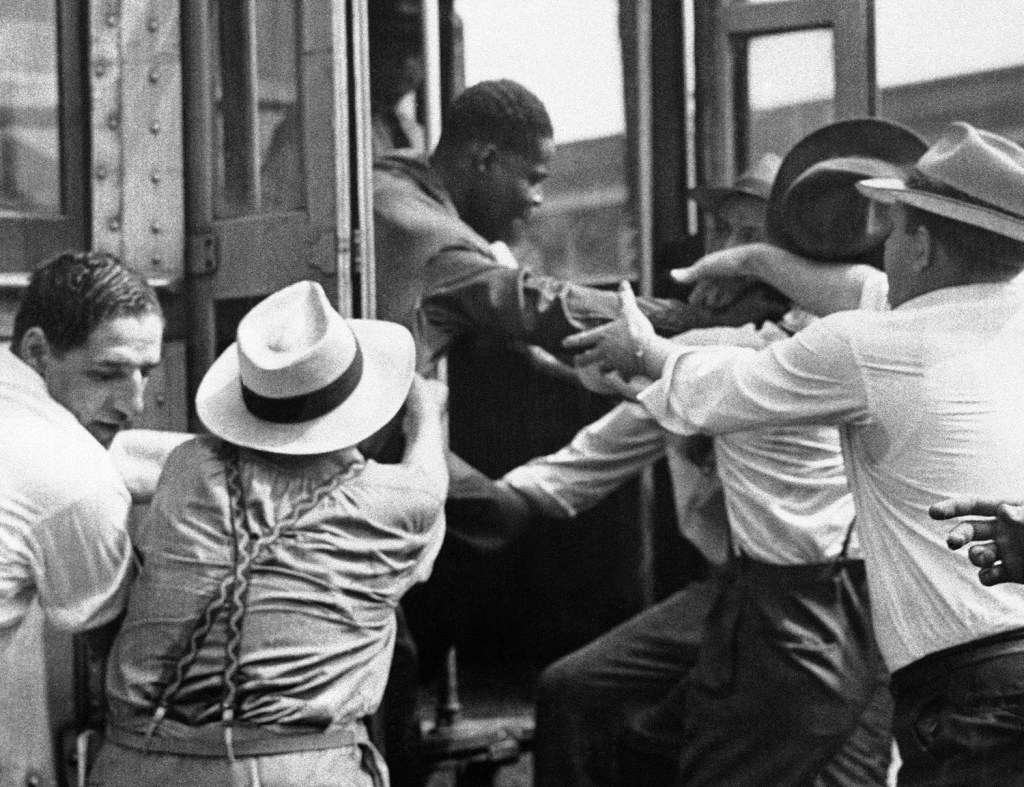
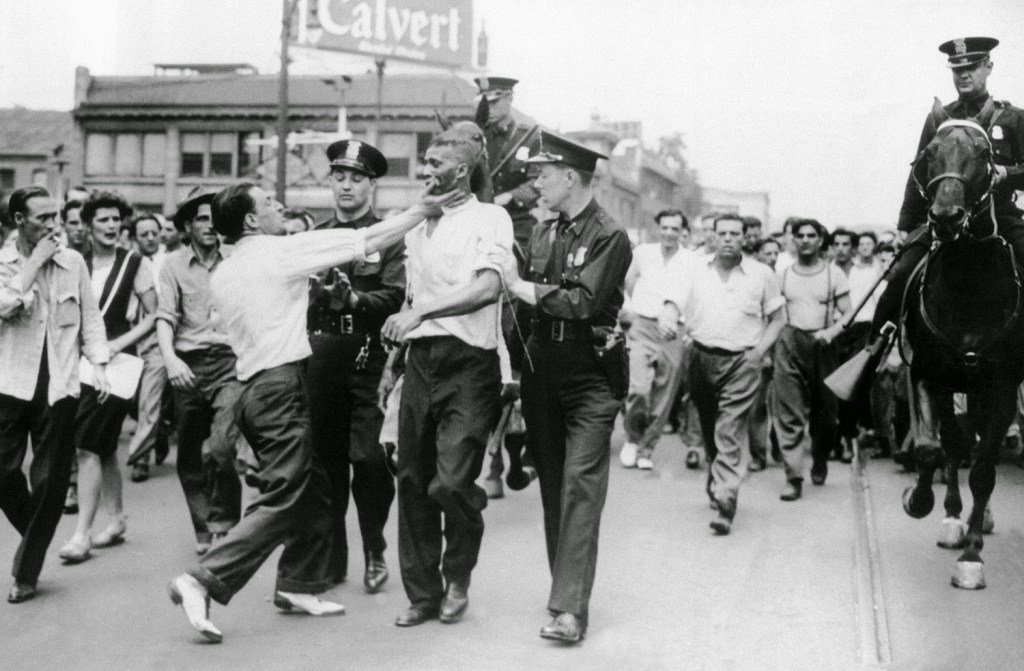
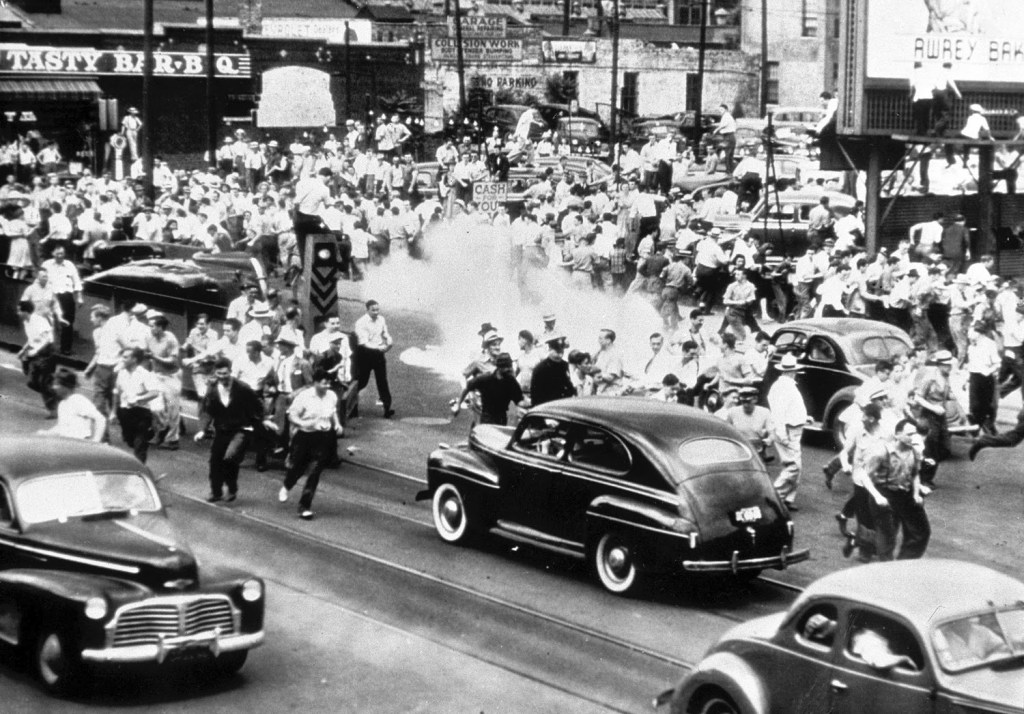
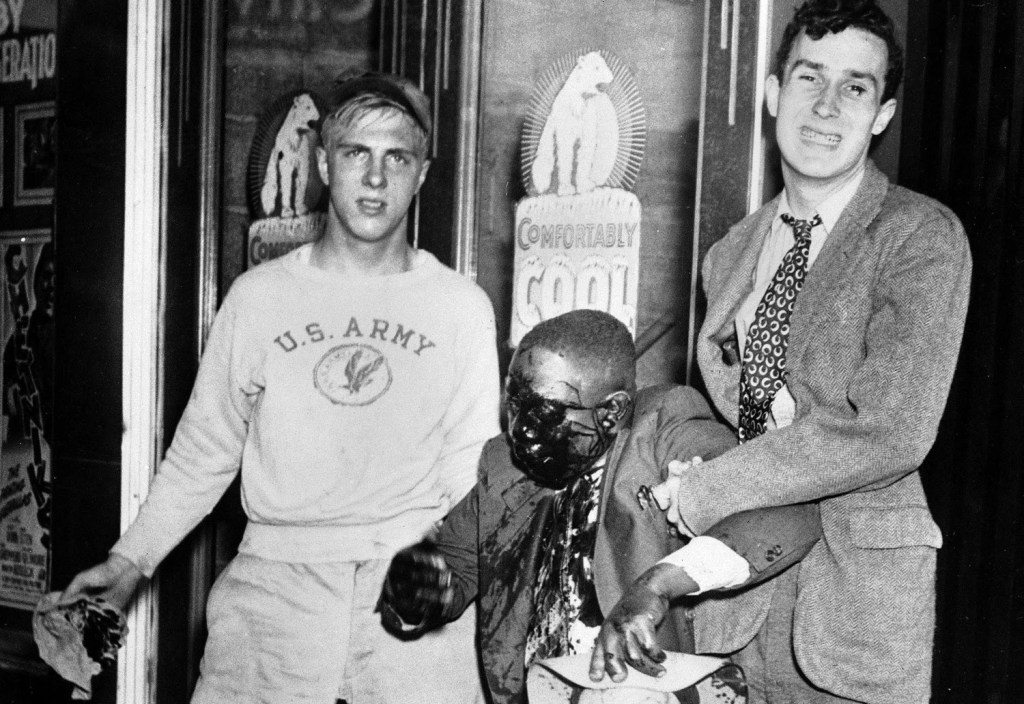
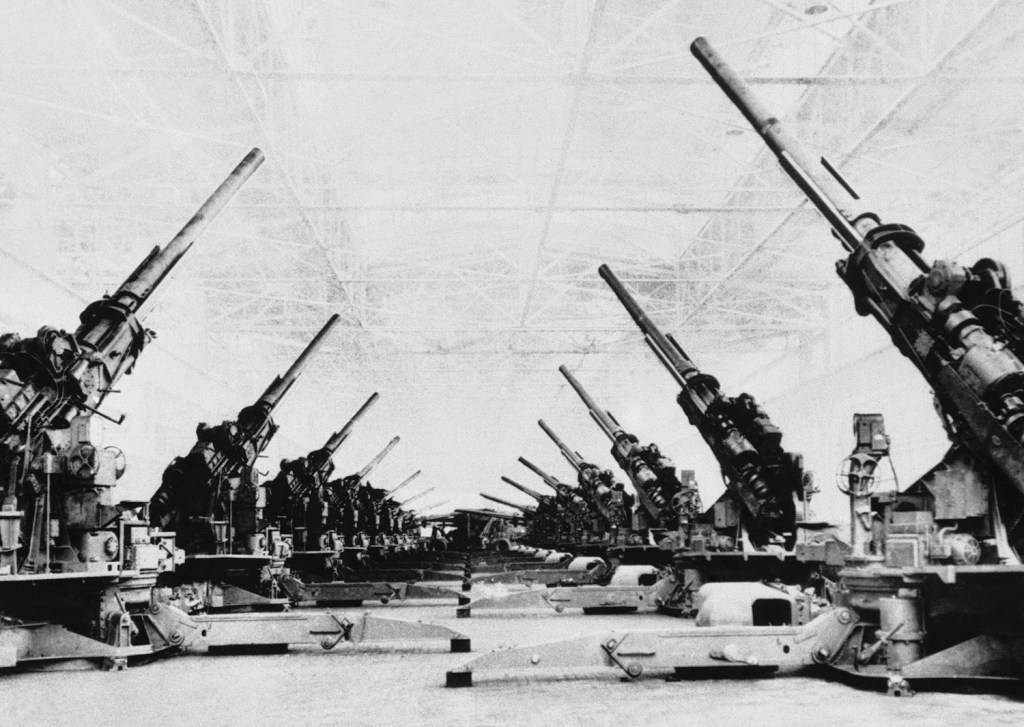
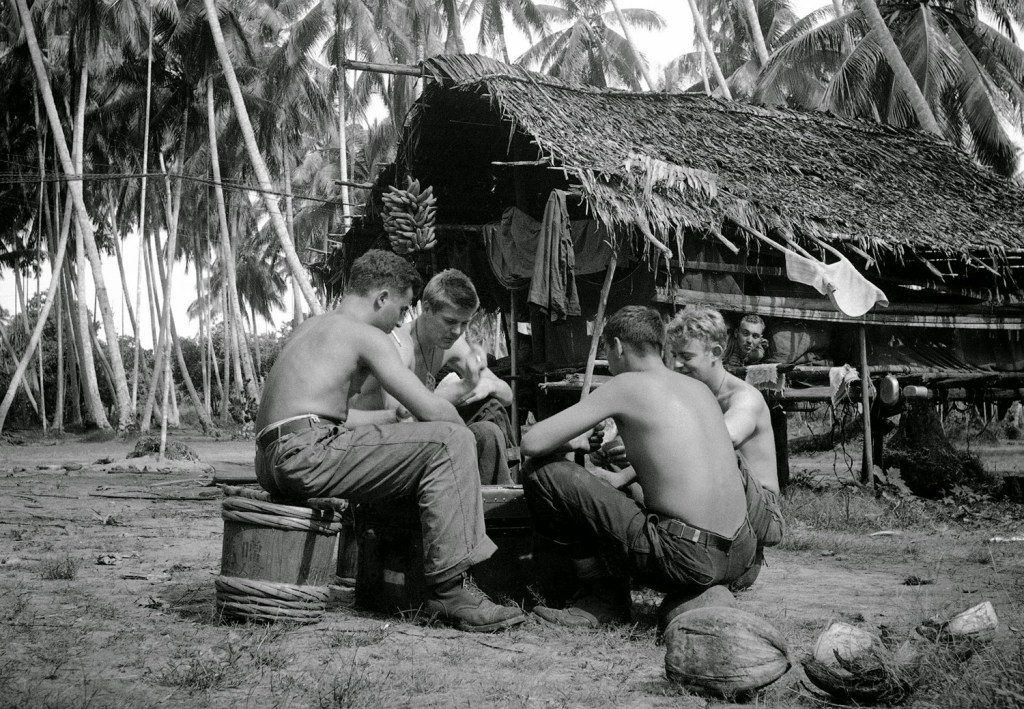
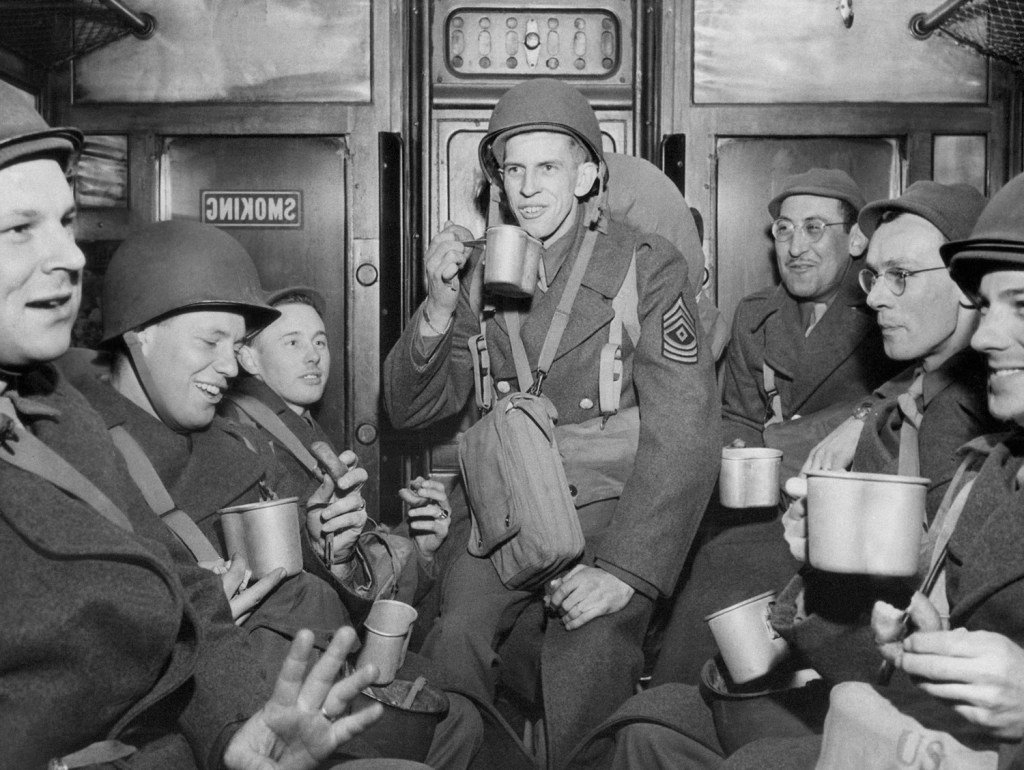
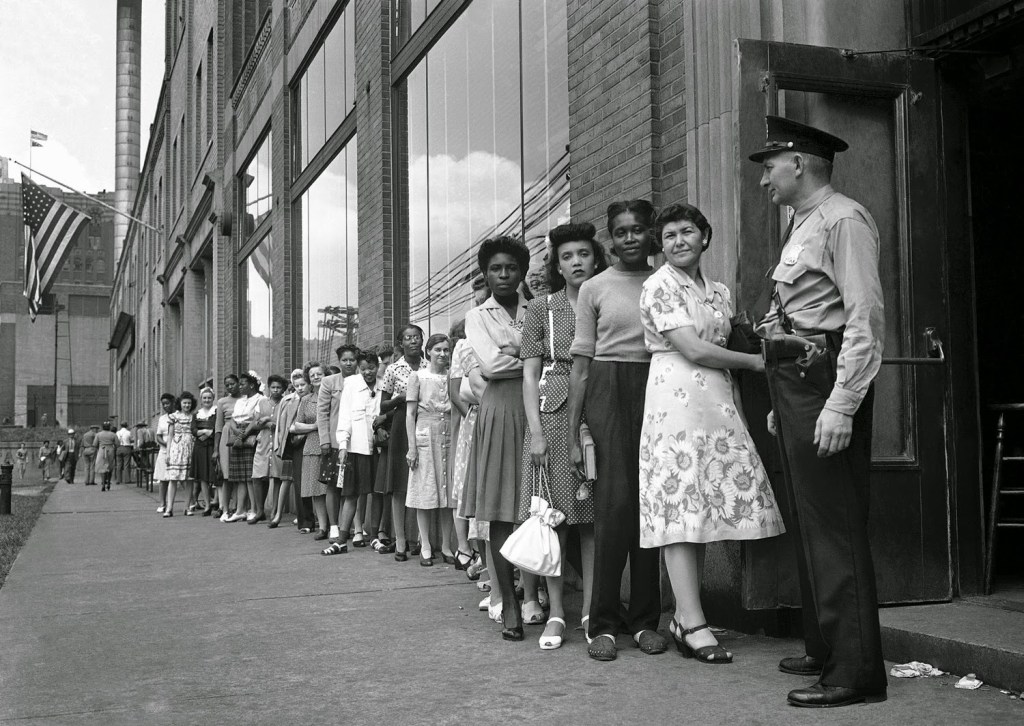
Kids at a ball game at Briggs Stadium, Detroit, August, 1942.This strange watercraft, an experimental “torpedo boat,” performs test runs in the Detroit River, near Detroit, Michigan, on December 28, 1940.Looking ahead to the possibility that gas masks may some day be a necessary part of their ensemble, these University of Detroit students were trying out masks in a practice drill on the campus on June 23, 1942.The sign at the left, “My running days are over. My duty now is to lick the Japs,” explains what is happening to these onetime automobiles in Detroit, Michigan on January 23, 1942.In Detroit’s Crowley-Milner department store, the head of the art department works with a new mannequin in July of 1941.In this July 4, 1942 file photo, 28-ton tanks, called “General Grants” by U.S. forces in the Middle East who used them in the battle for Egypt, are turned out in mass production by the Chrysler Corporation’s tank arsenal in Detroit.Female guards, placed on duty at the Naval Ordnance Plant, operated by the Hudson Motor Car Company in Detroit, Michigan, learn how to sight guns on August 7, 1942.Detroit, Michigan. Shoppers at lunch at the Crowley-Milner department store in July of 1941.Guarded by more than 1,500 state troops, city and state police, moving vans carried the household goods of black families into Sojourners Truth, a federal housing project located in a white section of Detroit, on April 29, 1942.Detroit police disperse white picketers who objected to occupancy by blacks of Sojourner Truth Federal housing project, erected in a predominately white neighborhood, on April 29. 1942.Stones flew despite a police riot squad’s efforts to maintain order in Detroit, on February 28, 1942 between prospective Black tenants of a million-dollar defense housing project and white picketers who halted their moving vans. Several were hurt in the picket line skirmishes.One of the newly-built quarter-ton four-wheel amphibian jeeps, produced for U.S. fighting forces, leaves solid ground for a test-run in an ice-clogged stream in the Detroit area on March 23, 1943.Gas mask production. Lacing head harnesses of gas masks after they have passed through all the stages of assembly and made ready for packaging, is the job of this young woman who works in the Eureka Vacuum factory which has been converted to war production.A woman passenger climbs out of the rear window of a tram in Detroit, Michigan, on June 21, 1943, after a mob halted the car in an effort to remove the black passengers on board during race riots.An African American man is dragged from a street car near the downtown section of Detroit on June 21, 1943, and continued to battle in the streets. Military rule in the city was established in an effort to halt the fighting.Police attempt to break up an incident as race rioting flared in the downtown area of Detroit on June 21, 1943. Troops were called in at the request of Michigan Governor Harry F. Kelly when police were unable to stop the fighting.Police use tear gas to disperse a crowd gathered on the main street of Detroit, Michigan, in an effort to halt race rioting on June 21, 1943.Two youths help a black man to his feet after he was badly beaten in street fighting which marked race riots in Detroit, Michigan, on June 21, 1943.Huge anti-aircraft guns, the U.S. Army’s new powerful Stratosphere guns, are lined up in the final assembly area of the Grand Rapids stamping division of Fisher Body in Detroit on June 1, 1944, prior to shipping.U.S. soldiers from every state shipped off to war. Here, after taking part in the fighting, soldiers (two from Detroit) relax by playing cards in a palm grove behind the lines at Buna, New Guinea on January 13, 1943.This group of soldiers who debarked from a transport drink from mugs of coffee and munch doughnuts on a troop train en route to their station in England, March 15, 1944.People work in the NAACP branch office in Detroit, Michigan, in the 1940s.Motorists line a street waiting to buy gasoline at 17 cents per gallon at this station in Detroit on September 24, 1945.Jockey Freddie “The Fleet” Wirth, a 21-year-old from Louisville, Kentucky, demonstrates how he picked up some extra money in Detroit, when he bet fellow riders he could clear the hood of an automobile, October 29, 1949.Men and women, formerly employed in defense work, crowd Detroit branch of War Manpower Commission to file claims for unemployment benefits and also register for new jobs on August 17, 1945.
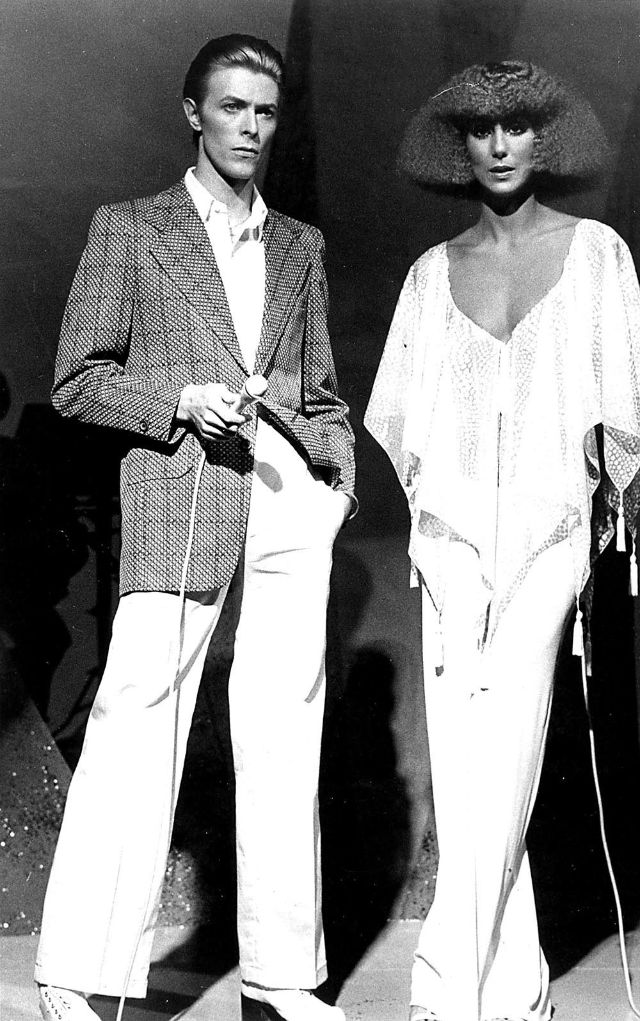
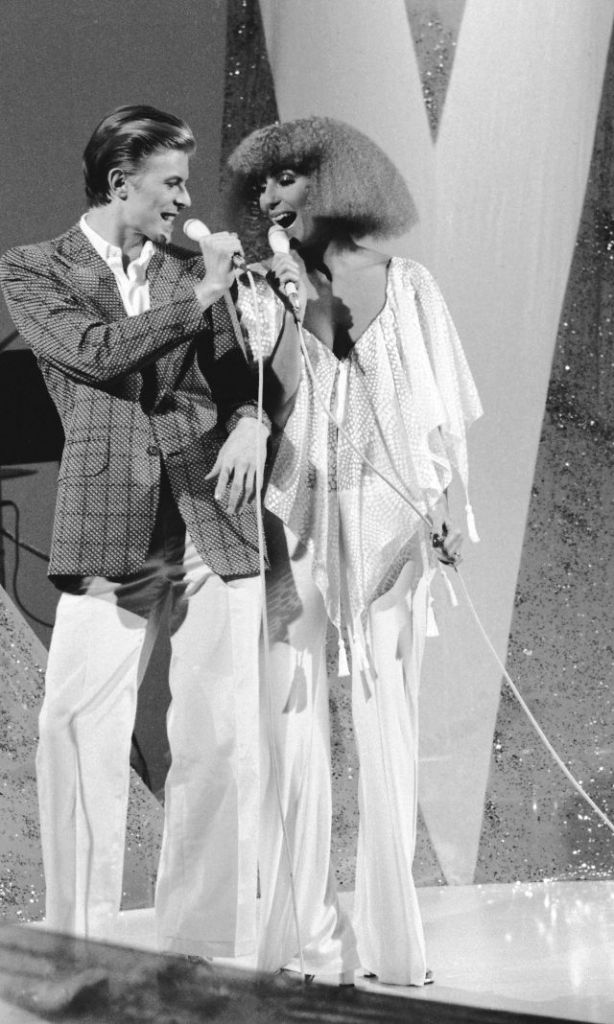
Cher is an American variety show that premiered on CBS in 1975, hosted by singer-actress Cher. The show had many famous musical guests. It followed a TV special featuring Elton John, Bette Midler, and Flip Wilson as guests.
Cher premiered on Sunday, February 16, 1975, and finished the season ranked 1st among variety shows and 22nd among all programs, with a 21.3 average household share.
The show featured Cher interviewing various celebrity guests ranging from musicians, actors, and pop culture figures. The series also featured sketches and comedic field reports. Cher would also perform her songs along with a live band.
Here below is a photo set that shows David Bowie performing with Cher on her variety show in November 1975, shortly after reaching number one in the US charts for the first time with “Fame.”
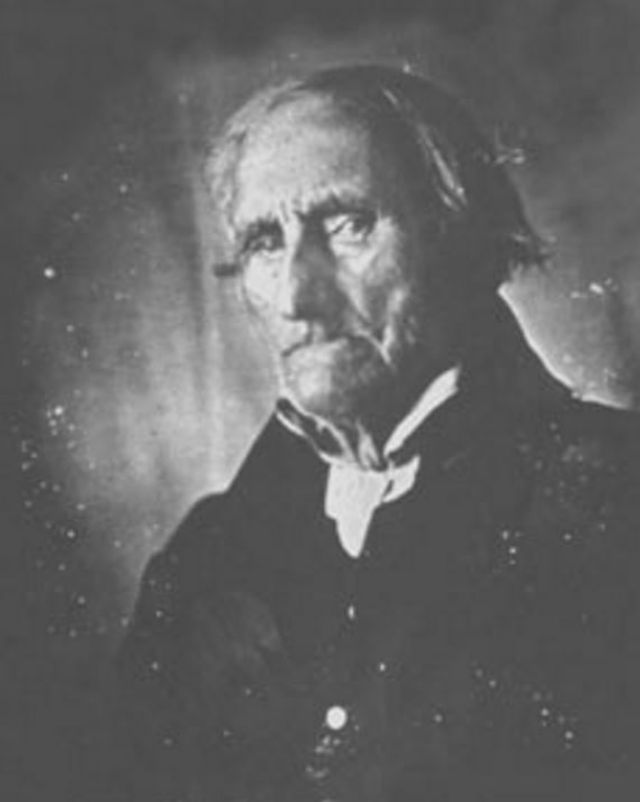
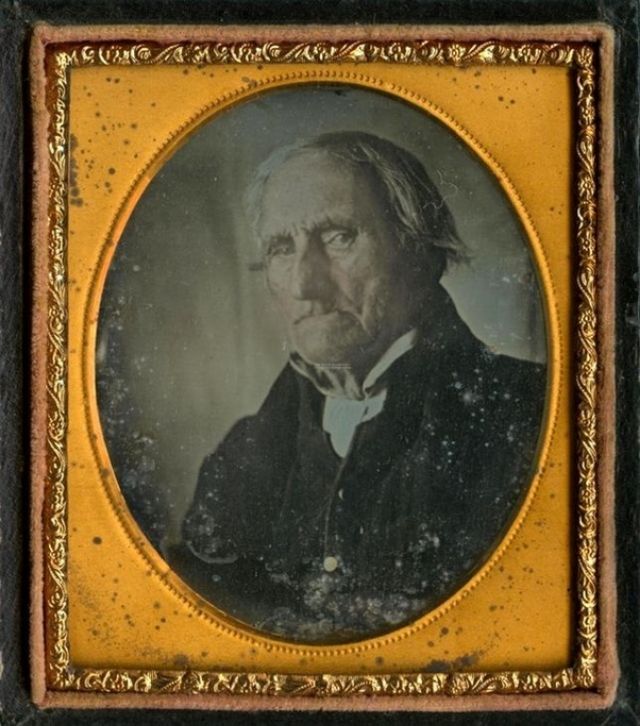
Born in 1749, New Englander Conrad Heyer was a veteran of the American Revolution. He was there in Trenton during the terrible winter of 1776 and crossed the Delaware River with General George Washington and his rag-tag Continental Army. In fact, the Maine Historical Society believes him to be the earliest born human ever photographed.
According to Imaging Resource, this photograph of Heyer is thought to have been taken in 1852. As such, it’s hardly the first American portrait photograph, but given the date of his birth he could well be the oldest human photographed. He’s also the only U.S. veteran to be photographed who crossed the Delaware River alongside George Washington in December 1776.
The photograph was taken using the daguerreotype technique. The invention of daguerreotype photography in the mid-1800s created, for the first time, a relatively easy way for observers to document the world as they saw it. The world portrayed in daguerreotype portraits and landscapes from the 1840s and on might seem dusty and old, but at the time, photography was a radical, modern innovation. The first photographers used it, too, to capture glimpses of the even more distant past, linking people and events that seem very old and very distant with the more modern realm.
And this is a magnificent portrait, both in its content and its composition. Heyer’s body faces to the left while the light coming from behind his right shoulder adds drama. His head, turned towards the camera, adds a sense of confrontation. And take a close look at that face. At 103, Heyer looks into the camera, steady, stern and still defiant.