In 1967, 100,000 hippies from across the country converged on San Francisco in a mass phenomenon dubbed the “Summer of Love.” Many were college kids on summer break and would leave come autumn—others stuck around to witness the Haight’s slow decline into a cultural wasteland.
Like a lot of young people, Jim Marshall was there. Drawn to the city’s Haight-Ashbury district by the surge of culture manifesting there—in music and fashion, in politics and mind-expanding drugs. Unlike the hordes of flower children washing up in the bohemian enclave that summer, Marshall was there to work. As a photographer employed by the biggest music labels in the business his job was to create a visual record of what Hunter S. Thompson would later lament as “the crest of a high and beautiful wave.”
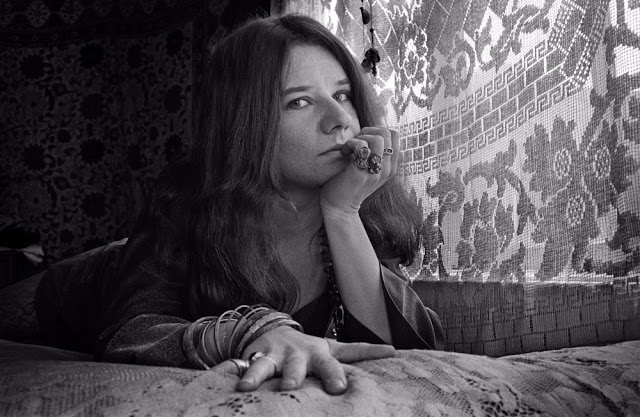
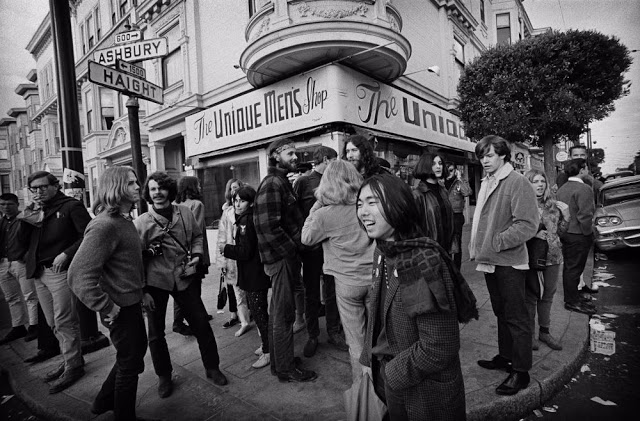
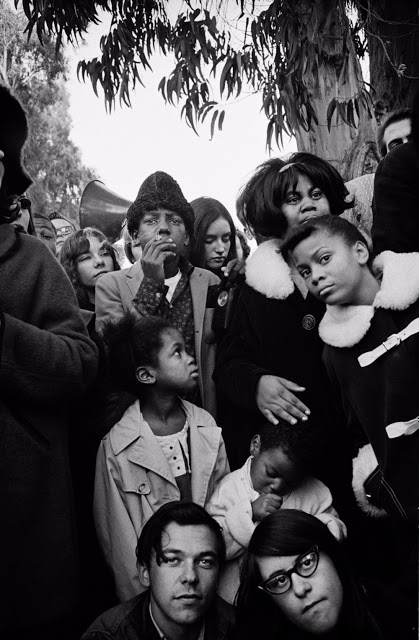
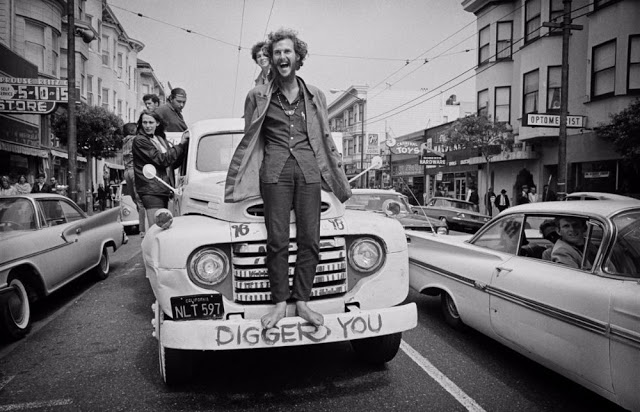
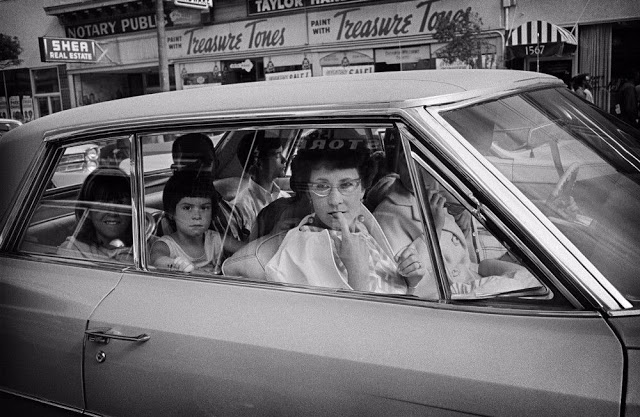
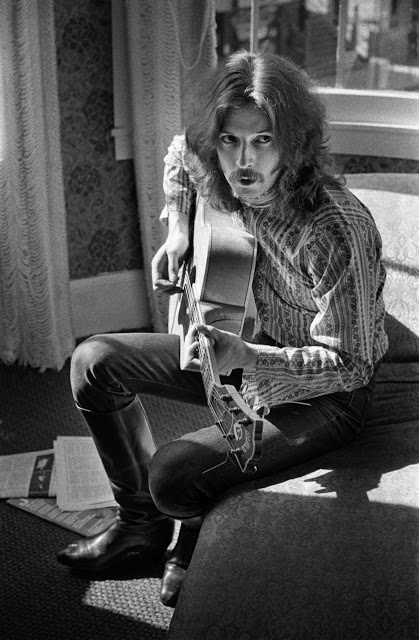
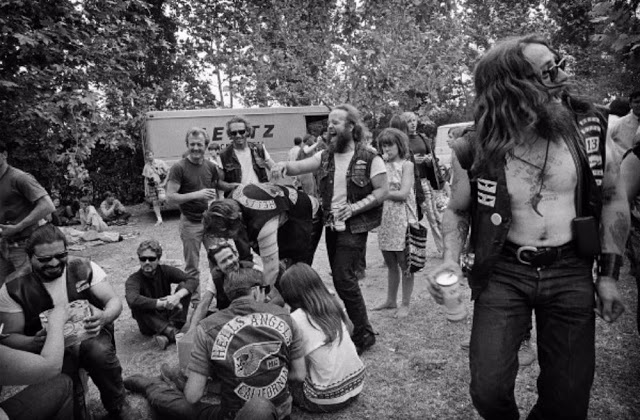
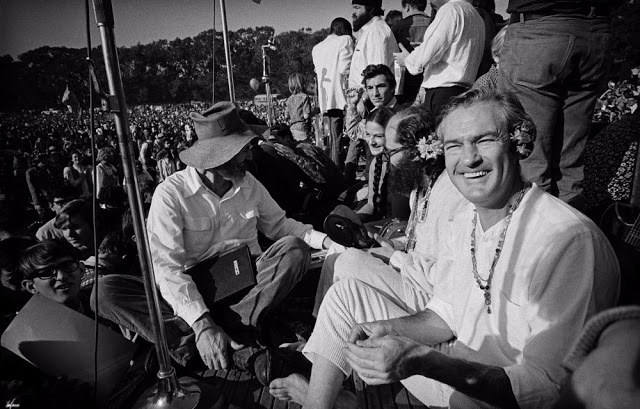
Dancing in the Panhandle, June 1967.Janis Joplin on her bed, taken in her apartment on Lyon Street, December 1967.The Who during their stop in San Francisco, where they played two concerts at The Fillmore, June 16 & 17, 1967.The famous corner of Haight-Ashbury streets, June 1967. The Unique Men’s Shop is now a Ben & Jerry’s ice cream shop.Panhandle crowd at Hells Angels’ Thanks for Diggers New Years Day Wail, January 1, 1967.Jimi Hendrix performing onstage at a free concert in the Panhandle, June 19, 1967.People dancing and enjoying the Human Be-In at Golden Gate Park Polo Fields, January 14, 1967Jerry Garcia and Carolyn “Mountain Girl” Garcia on the steps of the Grateful Dead house at 710 Ashbury Street, May 1967.The Straight Theater on Haight Street, September 1967.Krishna’s Kirtan, a sacred chant music group, on the Diggers truck during the Ratha-Yatra Festival on Haight Street, July 9, 1967.A family driving down Haight Street, looking at hippies, June 1967.Eric Clapton playing guitar in Jim Marshall’s apartment on Union Street, August 1967.Hells Angels Thanks for Diggers New Years Day Wail free concert in the Panhandle, January 1, 1967.Timothy Leary, Allen Ginsberg, and Gary Snyder onstage telling everyone to “Turn on, tune in, and drop out” at the Human Be-In at Golden Gate Park Polo Fields, January 14, 1967.Jorma Kaukonen, Spencer Dryden, and Grace Slick during a photo shoot in Golden Gate Park, May 1967.
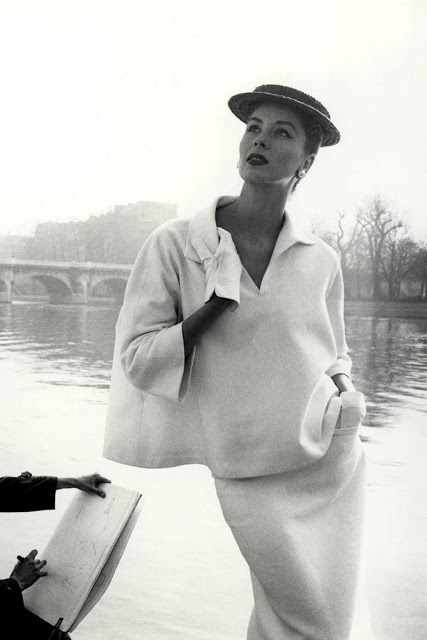
Fashion has always been about change, and the transition from 1940s fashion to fifties’ style was a pretty radical one.
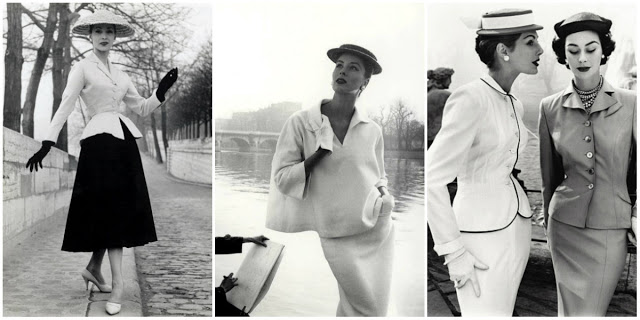
Post-war, 1950s fashion moved style from the salons to the streets, as inventions in easy care fabrics and speedier manufacturing systems meant that new silhouettes could be made for the masses. Having the latest trends was no longer a concept reserved exclusively for the rich, and while people hadn’t quite reached the street style heyday of the 1960s fashion scene, style was more accessible than ever before.
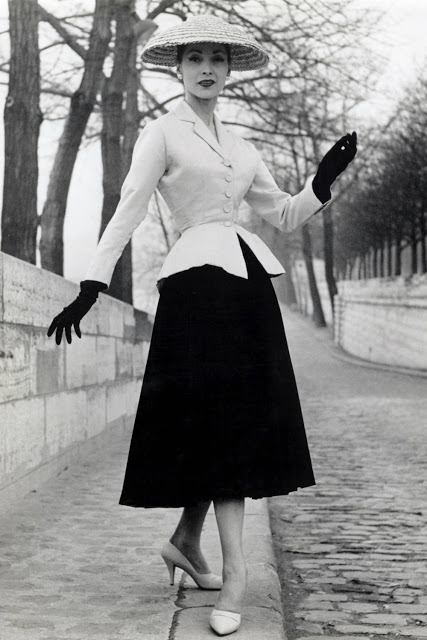
Christian Dior’s 1950s fashion
It was an era like no other for spotting future fashion and beauty icons, too, as newcomers Marilyn Monroe, Brigitte Bardot and Audrey Hepburn were the first to showcase new ideas – from the bikini to the IT bag and Christian Dior’s New Look. 1950s fashion was, without doubt, one of the industry’s favourite decades.
Actually unveiled in 1947, but without doubt the defining silhouette of the decade ahead, Dior’s New Look redefined women’s wardrobes in the 1950s. His nipped, hourglass shapes heralded a new era of womanliness and after years of fashion oppression and fabric rationing during the Second World War, the lady was back and looking better than ever.
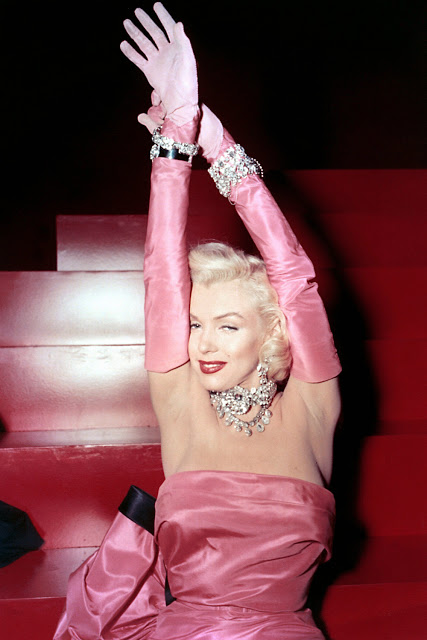
Marilyn Monroe’s 1950s fashion
Gentlemen Prefer Blondes launched Miss Marilyn’s career in 1953, and an international sex symbol and style sensation was born. One of the greatest and most recognizable fashion and beauty icons of all time, she defined glamour for a generation when she belted out Diamonds Are A Girl’s Best Friend. They really don’t make ’em like this any more.
Queen Elizabeth II’s 1950s fashion
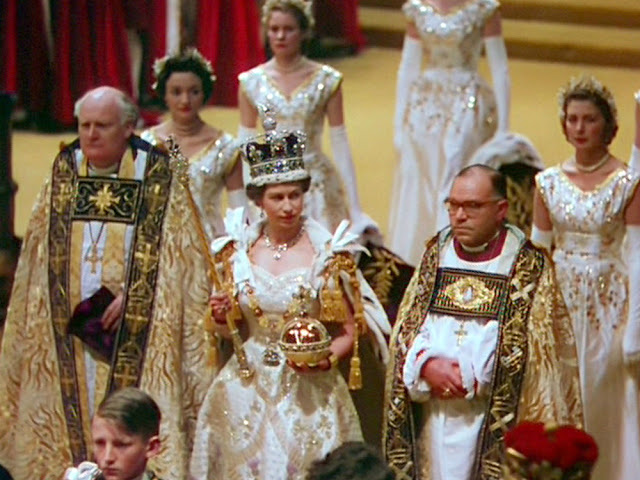
Recently recreated in The Crown, over 20 million loyal fashion subjects tuned in to watch the Queen’s Coronation back in 1953 and, perhaps more importantly, to see that Norman Hartnell dress. While her mother’s wedding dress was one of the biggest 1920s fashion moments, Queen Elizabeth’s Coronation was even more so in the fifties. Elizabeth didn’t disappoint on the bling factor either, working a gold tassel cape, rich embroidery and ‘more is more’ jewellery on her big day. All hail our new style Queen.
Grace Kelly’s 1950s fashion
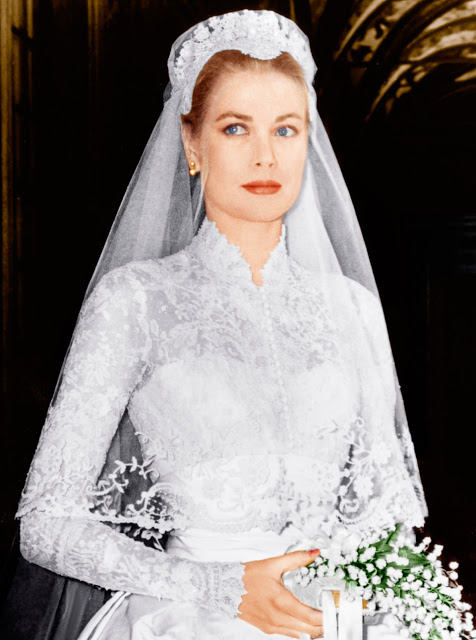
Both on and off screen actress Grace Kelly’s outfits were some of the most talked about (and copied) of the decade, but her wedding to Prince Rainer III of Monaco in 1956 called for a bigger and better dress than any she’d worn before. Still cited as one of the most memorable, elegant wedding dresses of all time, her Helen Rose gown even went on to inspire a future royal bride-to-be – Kate Middleton. Now that’s what you call timeless appeal.
Alfred Hitchcock and Edith Head’s 1950s fashion
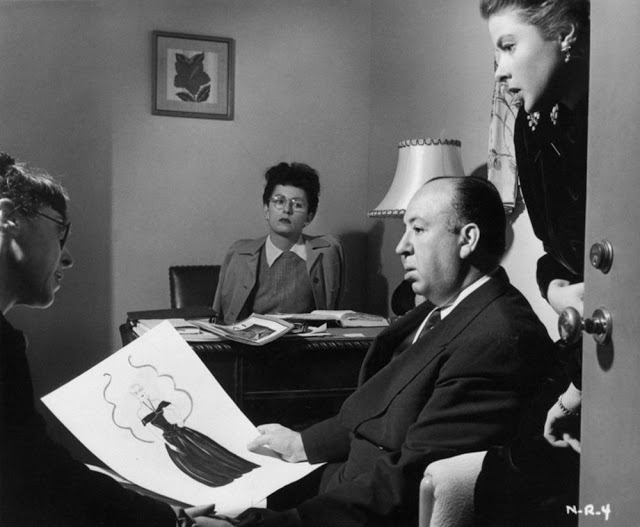
The legendary director and his go-to Hollywood costume designer were a formidable team, giving us some of the greatest on-screen fashion moments ever – sometimes completely by chance. A Hitchcock heroine was nothing without her accessories, as Grace Kelly proved over and over again in To Catch A Thief, even giving us the first ever IT bag. Hitchcock and Head increased the costume budget to allow Grace’s character Francie to carry an Hermès bag and a few years later, the style was renamed the Kelly in her honour.
Brigitte Bardot’s 1950s fashion
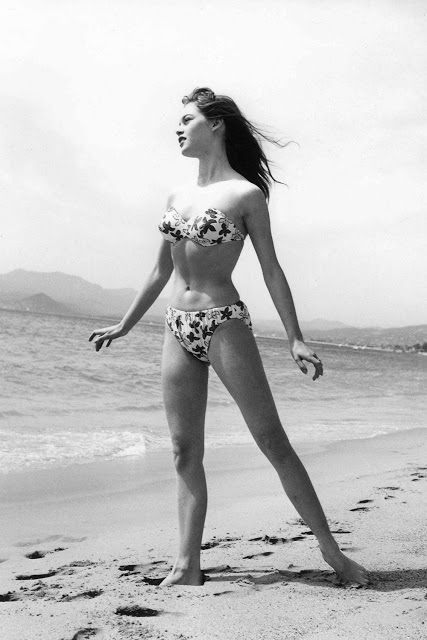
The scene is from the Cannes Film Festival, 1953. Newcomer Bardot is stealing the show, working a hot floral bandeau as only she can. The bikini was invented in 1946 and by the mid 50s, every movie star worth their bombshell status was grabbing headlines by parading the new risqué style on the beach. But it was Brigitte who worked it first, securing the bikini’s status as the must-have fashion item – and her own future career in the process.
Cristobal Balenciaga’s 1950s fashion
Like Dior, Balenciaga’s influence on the 1950s silhouette is now legendary. Between 1953 and 1957 he gave us the balloon jacket, the tunic dress, empire lines and baby dolls – all contributing to a fluid but feminine look.
Elvis Presley’s 1950s fashion
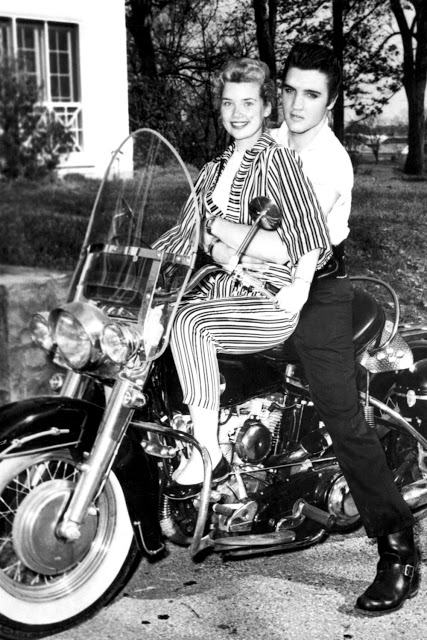
Swoon. The poster boy of 1950s fashion invented his own brand of preppy Rockabilly, giving us biker chic, guyliner and high waisted trousers way before Simon Cowell got his hands on them. With his first album release in 1956, Elvis made his mark on both men’s and women’s wardrobes in the late fifties, securing his place on the world’s pop culture radar forever.
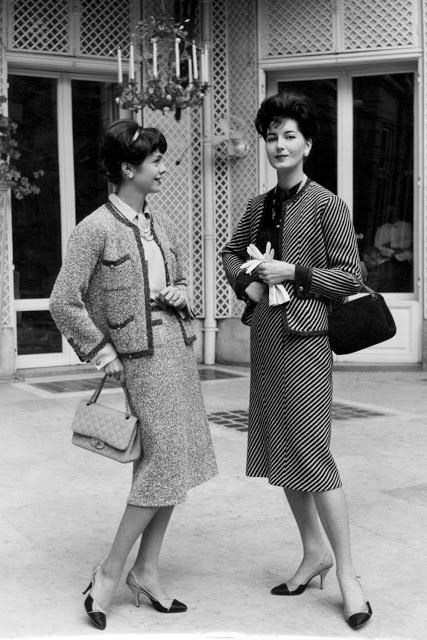
Chanel 1950s fashion
Coco Chanel was already making big waves in the 1920s and 1930s fashion industry before the war, but she had another major trick up her (stylish) sleeves when it came to the 1950s. Introducing ‘the Chanel suit’ as we still know it today; a slim tweed number with contrasting bound edges which aimed to offer an elegant but looser alternative to all those New Look nipped waists. Now a fashion icon in its own right, the Chanel suit was reinvented season after season by Coco Chanel’s successor, Karl Lagerfeld.
Sophia Loren’s 1950s fashion
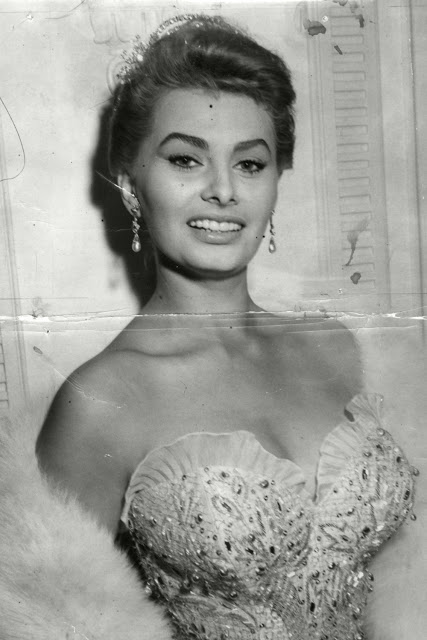
Another major fashion and beauty icon who first came into the spotlight in the 1950s? Yes, really; Italian pin-up Sophia Loren landed her first acting role in Aida in 1953 and became as renowned for her quick wit as much as her looks (that eyeliner, though). ‘Everything you see, I owe to spaghetti,’ she once quipped back to a reporter who commented on her natural hourglass figure. Now there’s an IT girl diet we can get on board with.
Audrey Hepburn and Givenchy 1950s fashion
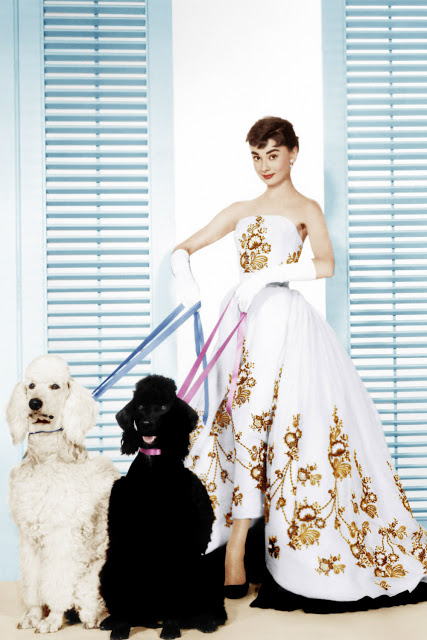
A lead role in Roman Holiday kicked off Audrey Hepburn’s career in 1953 and, as the parts came flooding in, the world’s new favourite on-screen beauty knew she’d need a better wardrobe. Cue Hubert de Givenchy, a then little-known Parisian designer ready to make his fashionable mark on the big screen. Givenchy’s first costume design was the gold embroidered gown below for Audrey’s character Sabrina in 1954. The results were so beautiful that the pair became firm friends and Givenchy went on to make many more of the star’s costumes, including THAT little black dress in Breakfast At Tiffany’s. There’s no doubt about it, Hepburn and Givenchy’s collaborations were genius, and their relationship helped shape 1950s fashion.
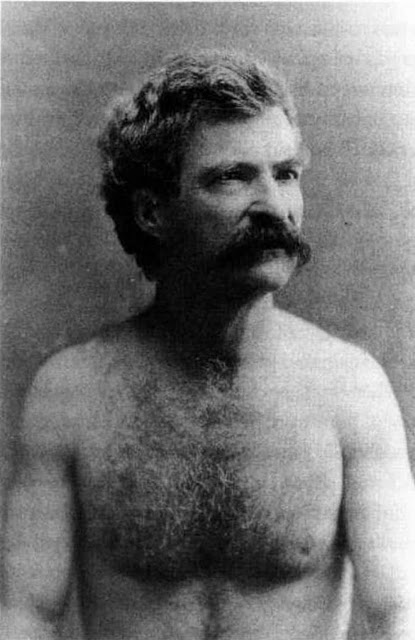
Mark Twain, possibly apocryphally, once said: “Clothes make the man. Naked people have little or no influence on society.” America’s favorite writer is of course much better known for dressing up in white suits. But Open Culture turned our attention to a photograph of Sam Clemens taken in 1883.
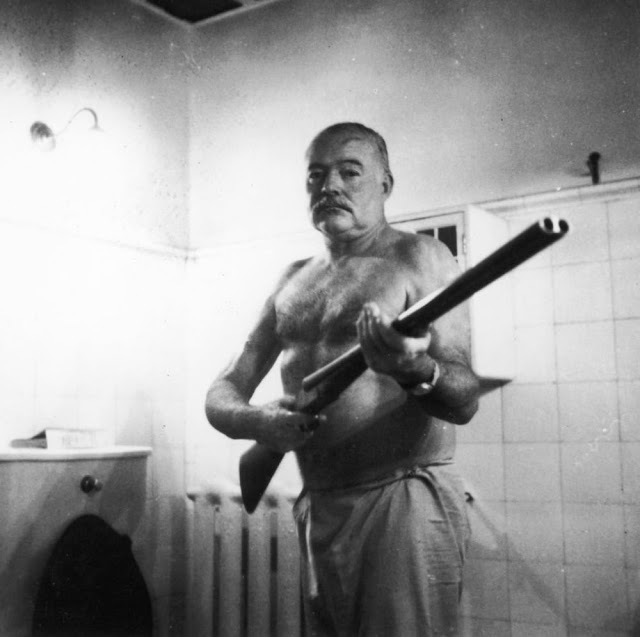
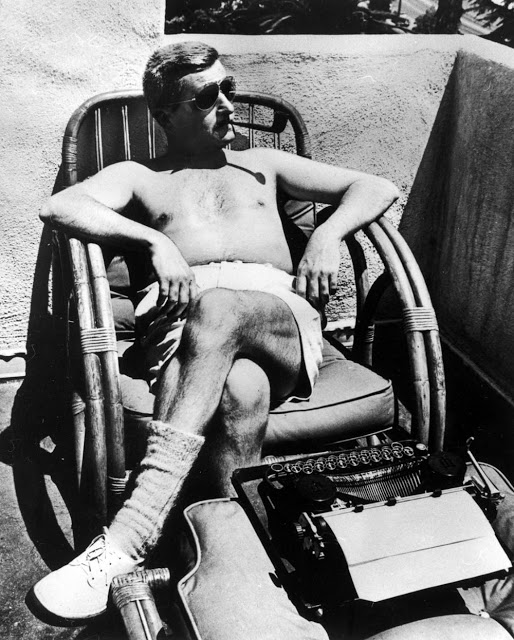
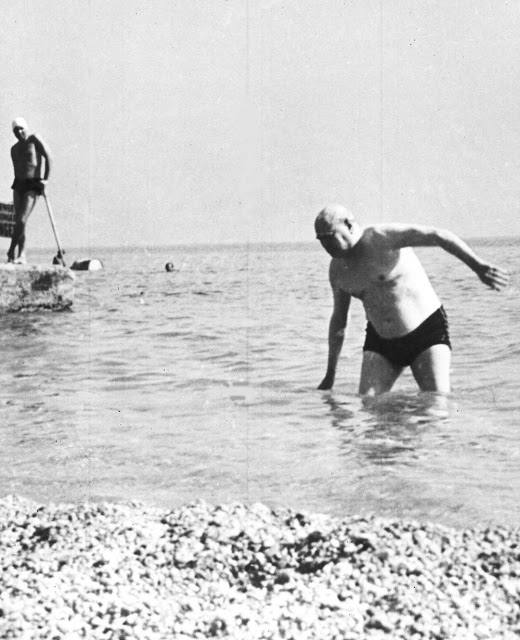
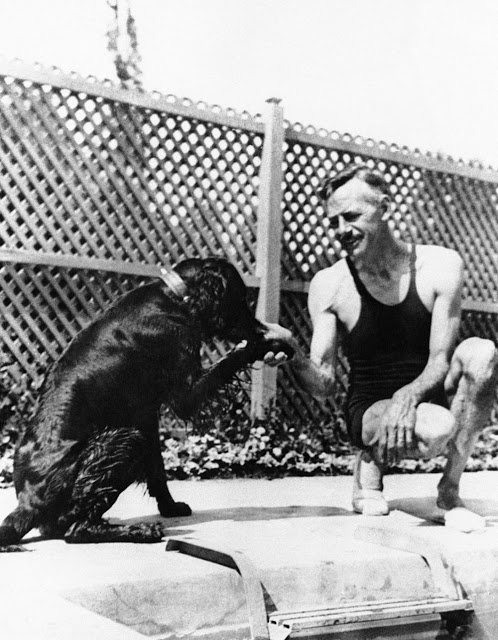
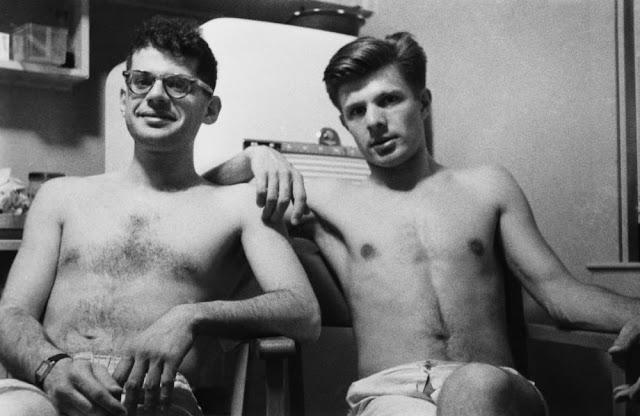
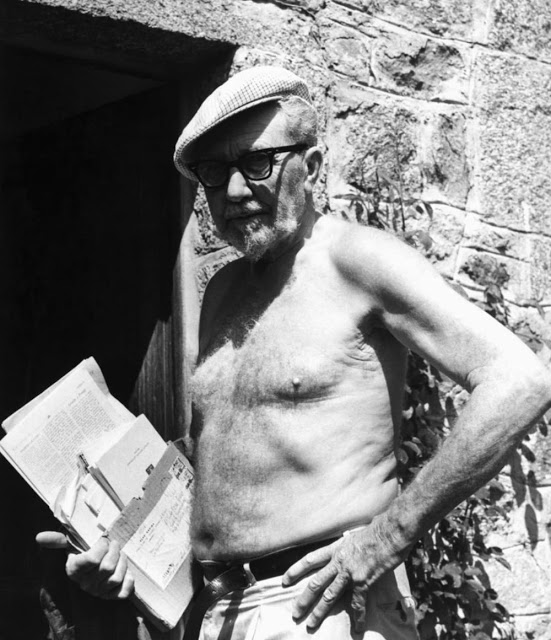
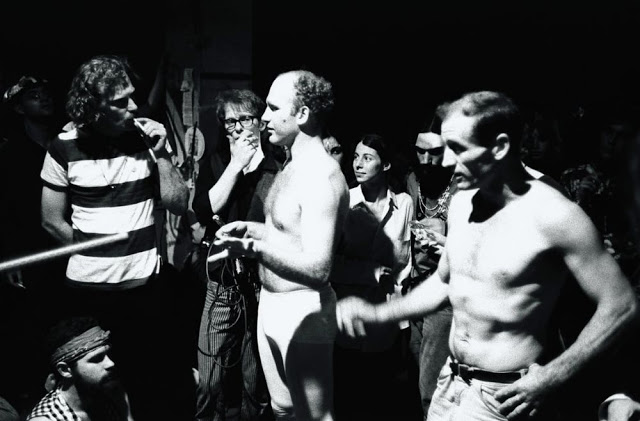
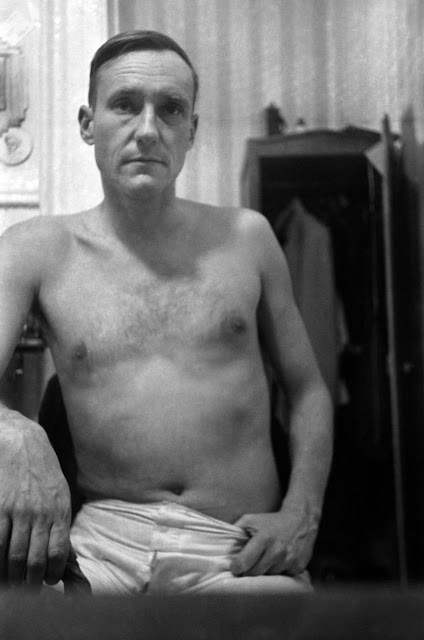
Turns out, Twain is by no means the only author who’s posed topless. From William Faulkner to Ernest Hemingway, here are other writers who’ve gone shirtless.
Mark TwainWilliam FaulknerErnest HemingwayTennessee Williams (center)Winston ChurchillEugene O’NeillAllen Ginsberg (left) and Peter OrlovskyEzra PoundKen Kesey and Neal CassadyWilliam S. Burroughs
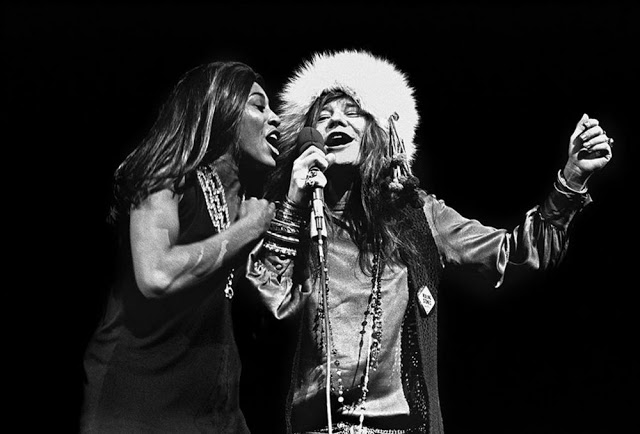
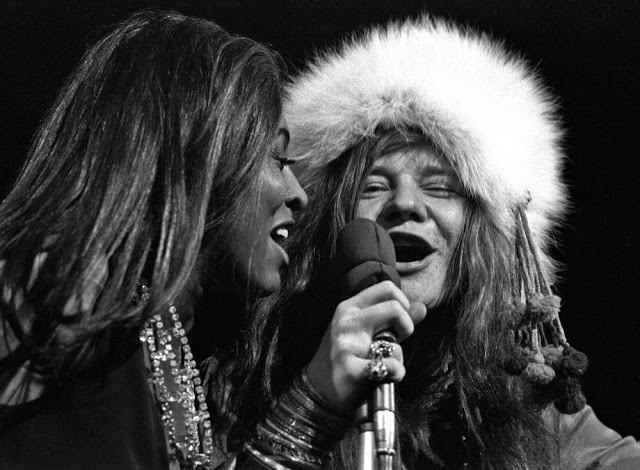
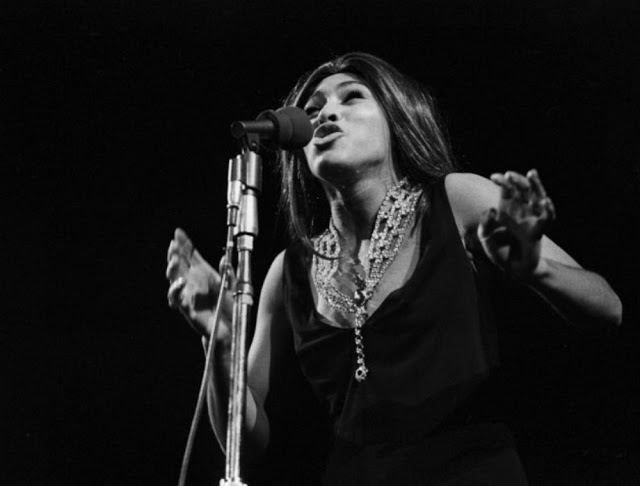
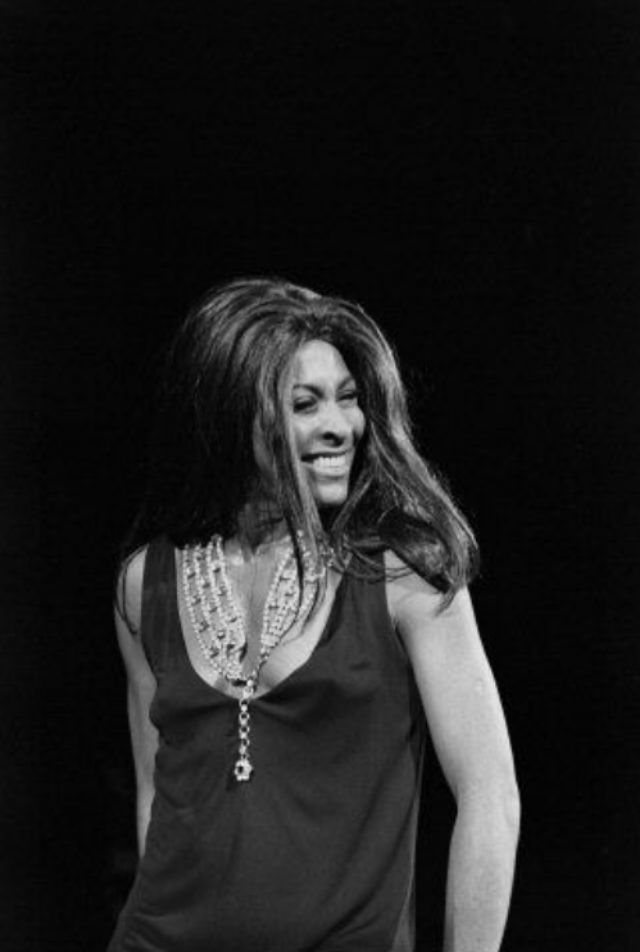
During a 1969 interview on the Dick Cavett Show, Janis Joplin was asked who she goes to see when she wants to see a good concert. Her answer was: “Tina Turner. Fantastic singer, fantastic dancer, fantastic show.” On November 27, 1969, she joined Tina on stage at Madison Square Garden for an impromptu duet (Ike & Tina were opening for the Rolling Stones). Less than a year later, on October 4, 1970, Janis passed away at the age of 27.
When Janis first entered the music scene in the mid-1960s, Tina had already been performing and recording for more than five years, although still very unknown in the United States. Still, Janis knew about Tina and was highly influenced by her power and singing style. Janis would often go to watch Ike & Tina’s shows. Music film director Michael Wadleigh mentions in an interview that he was there when Tina and Janis first met each other. “I was with Tina Turner when she first saw Janis Joplin, and she said to Janis, ‘Honey, you can’t continue to sing like that or you’ll have no voice […]” On July 18, 1969, Janis appeared on the Dick Cavett TV-show. Asked who she goes to see when she wants to see a really good concert, she answers: “Tina Turner – she’s the best chick ever!” Cavett replies that he doesn’t know who Tina is, another example to illustrate the obscurity of Ike & Tina at that time. They did finally appear on his show in 1972.
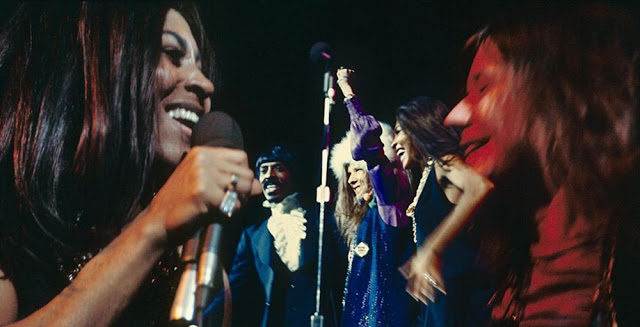
The moment that Janis had been waiting for finally came on November 27, 1969 (the day after Tina’s 30th birthday), when Janis joined Ike & Tina on stage at Madison Square Garden. Ike & Tina were one of the opening acts for the Rolling Stones, Janis was watching them from the wings. The duet apparently wasn’t planned – during Land of 1,000 Dances, Janis simply couldn’t contain herself anymore, and jumped on stage (maybe also influenced by the ‘treats’ that the Stones had for their guests backstage).
While many photos of that appearance exist, no recording has surfaced as of yet. This is very strange, since these shows were taped by the Stones. Some footage of the show appears for example in the 1970 Rolling Stones documentary ‘Gimme Shelter’. These shows were also released as the live album ‘Get Yer Ya-Ya’s Out’ in 1970. In 2009, this album was re-released with the opening sets of Ike & Tina and BB King, but the duet of Tina and Janis was not featured!
In a 2000 Canadian radio interview on channel CHUM FM, Tina however didn’t seem to recall their duet. When asked if she ever performed with Janis, she answered: “No, but Janis came and spent the last week with me before she passed.” In the interview, Tina mentions that Janis spent the last week of her life watching the revue’s shows at ‘The Hungry i’ in San Francisco.
Apparently, Janis would come to see the show several times during the week. We are not sure of the dates of Ike & Tina’s stand at ‘The Hungry i’, but on October 4, 1970, Janis passed away in Los Angeles, aged just 27.
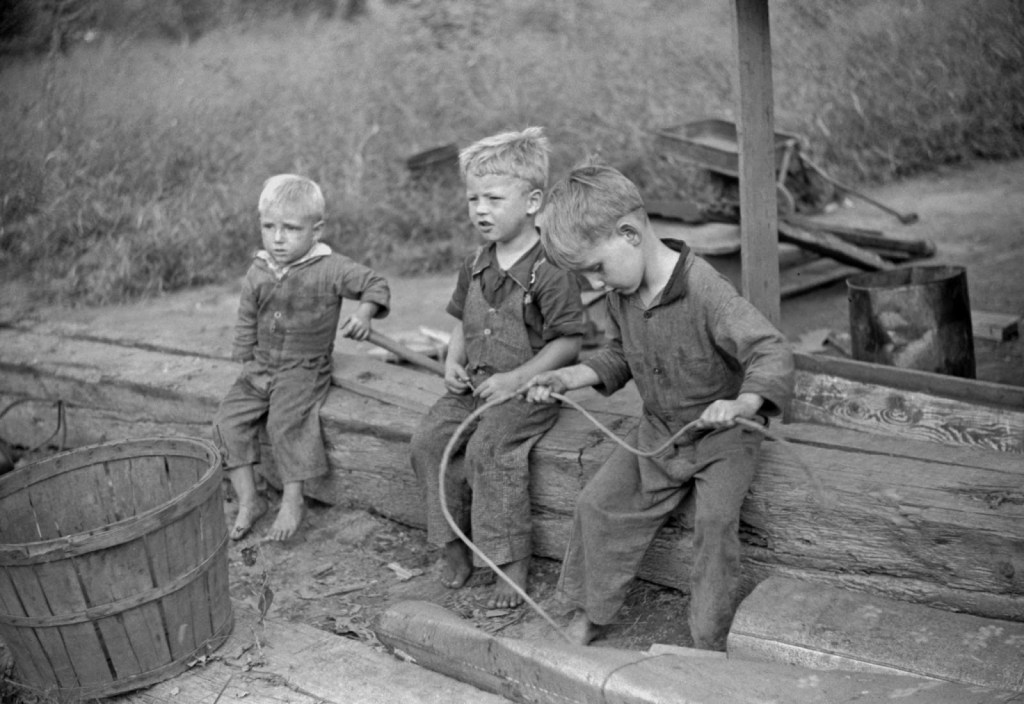
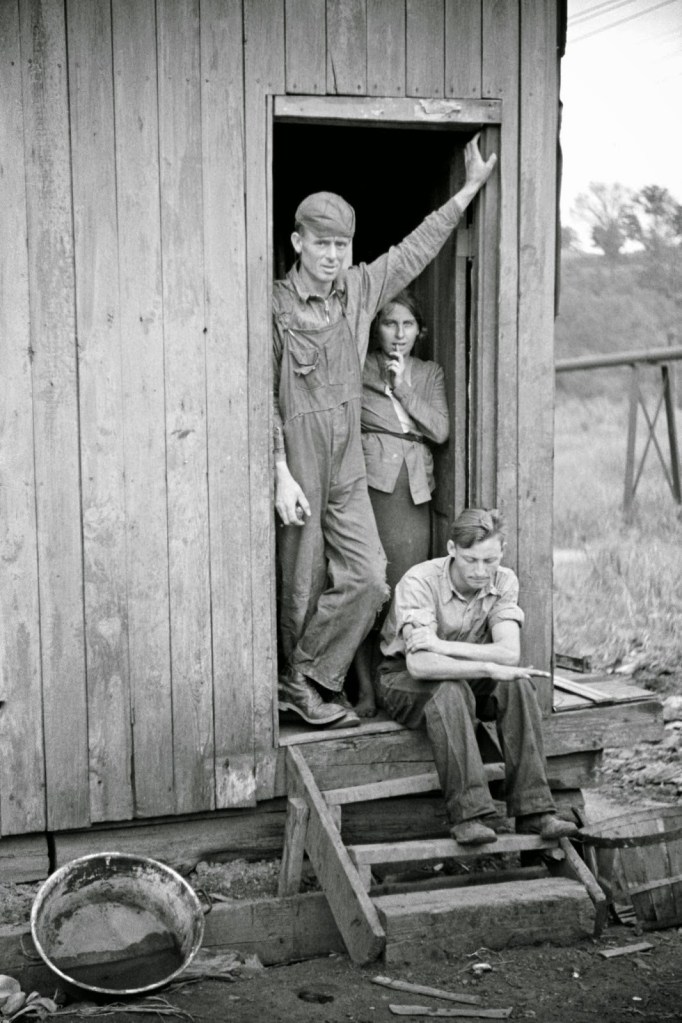
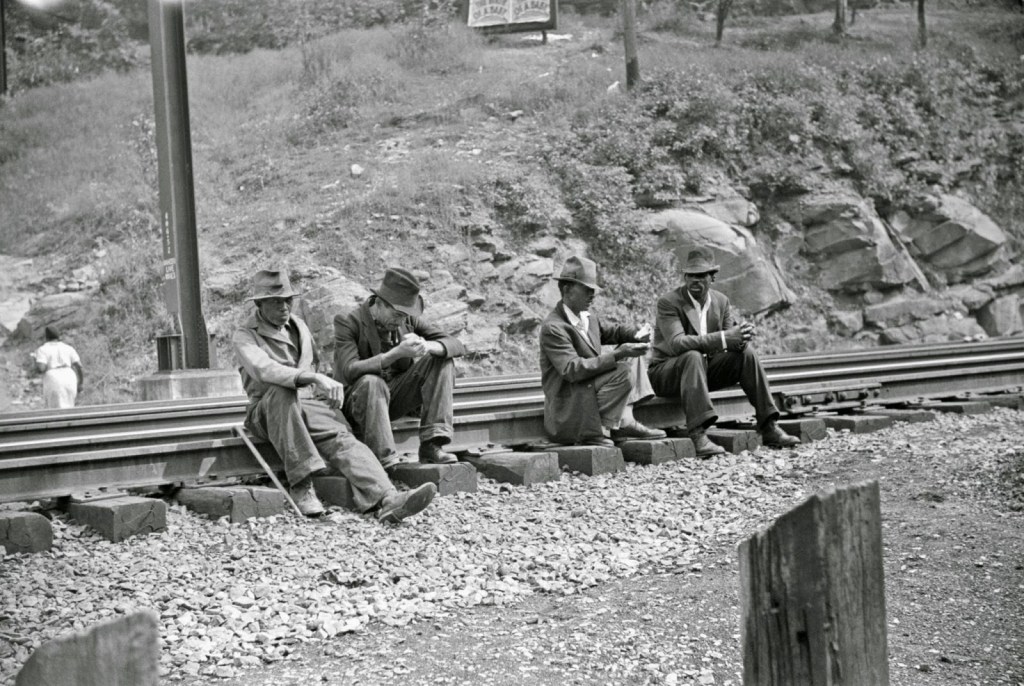
West Virginia coal mine life during the 1930s was tough. The Coal companies used the miners to dig the coal, then turned around and rented them company houses and sold goods at the company store. As these photos show, the miners and their families practically worked just to keep alive, while the mine owners made a killing.
Boiling juice of sugarcane into sorghum molassesCard gambling in center of townChildren of Pauline Clyburn, rehabilitation borrowerChildren of riverboat familyCoal miner waiting to go home in friend’s truckCoal miner’s shack and some of his familyFamily on front porch of houseboat on riverFormer coal miner, worked twelve years for Chaplin Coal Company as hand coal loaderMany families live on riverboatsSettin’ around
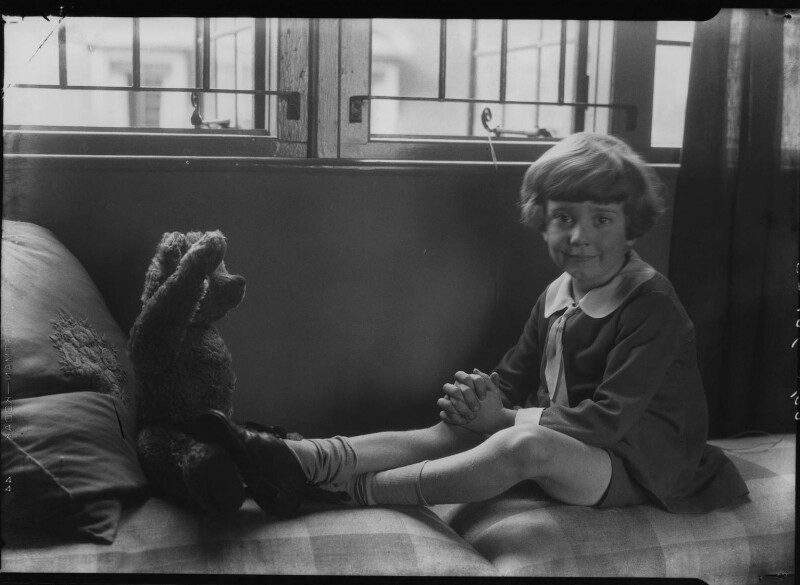
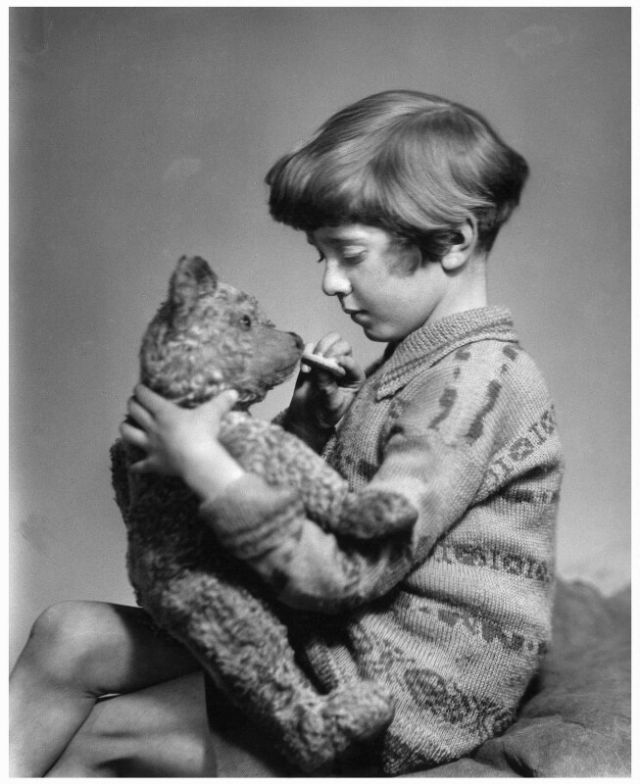
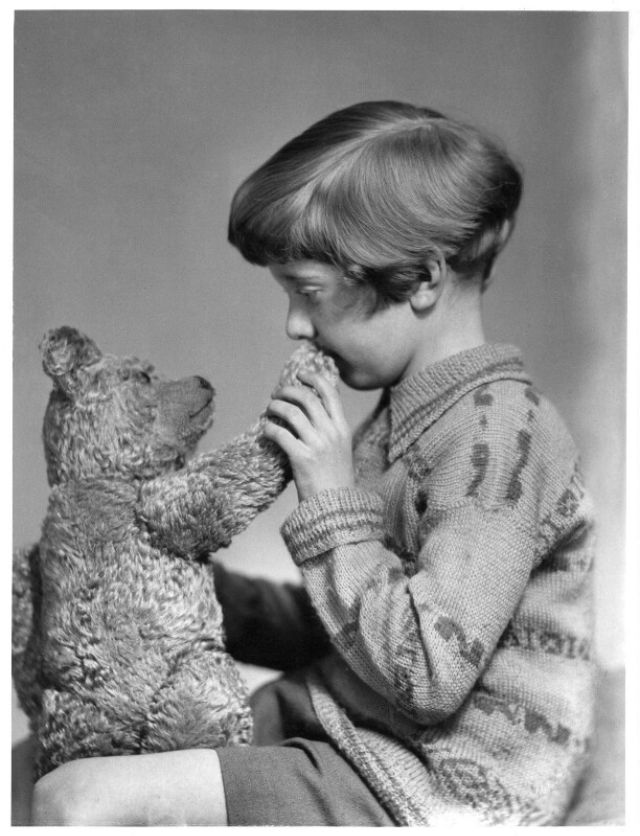
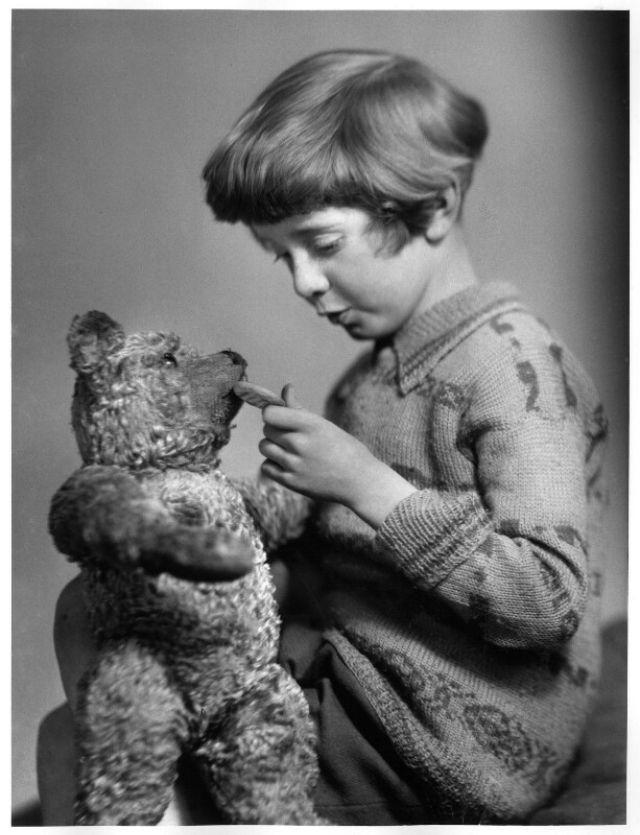
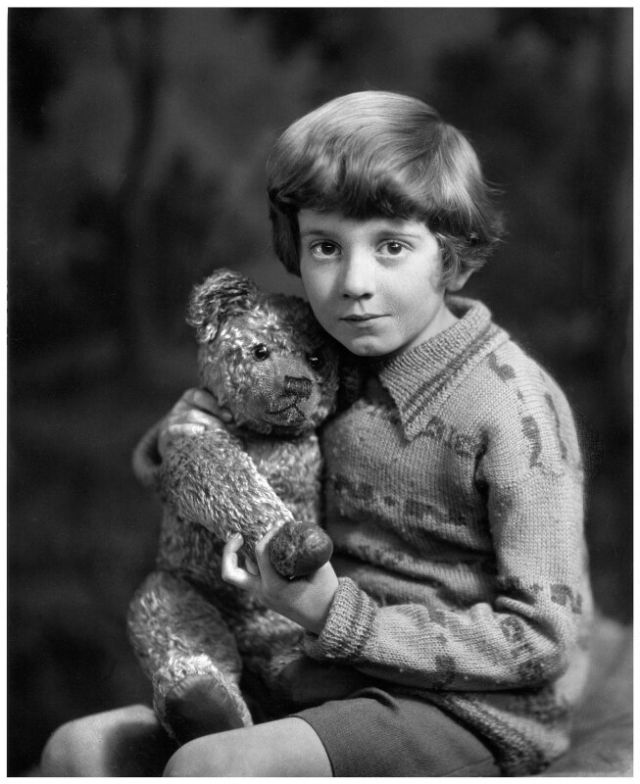
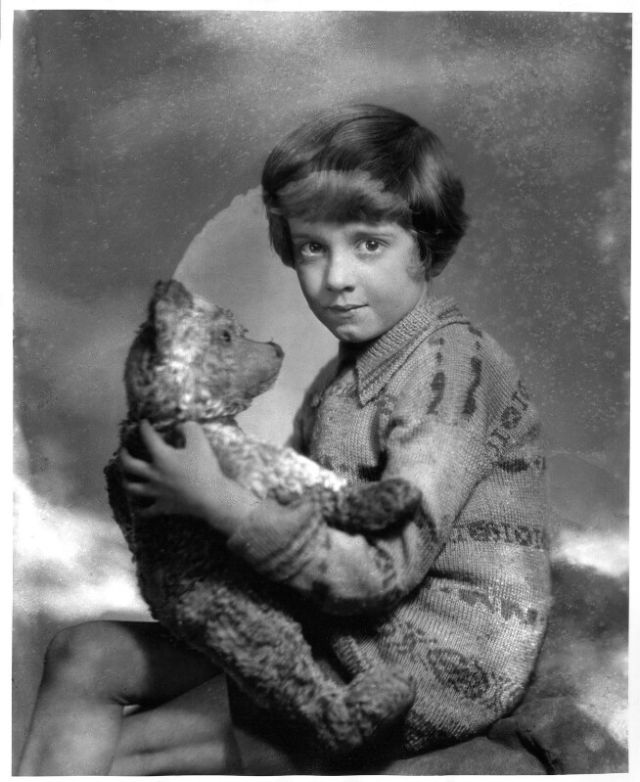
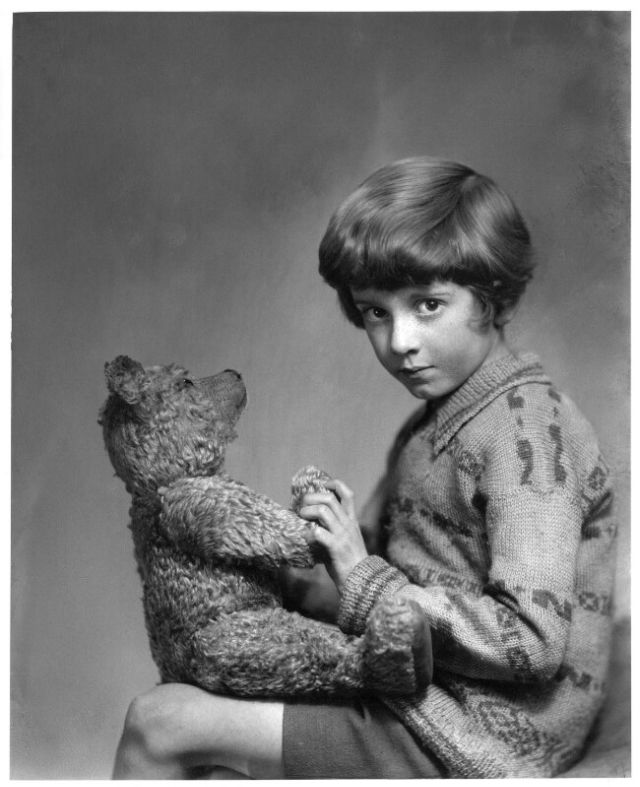
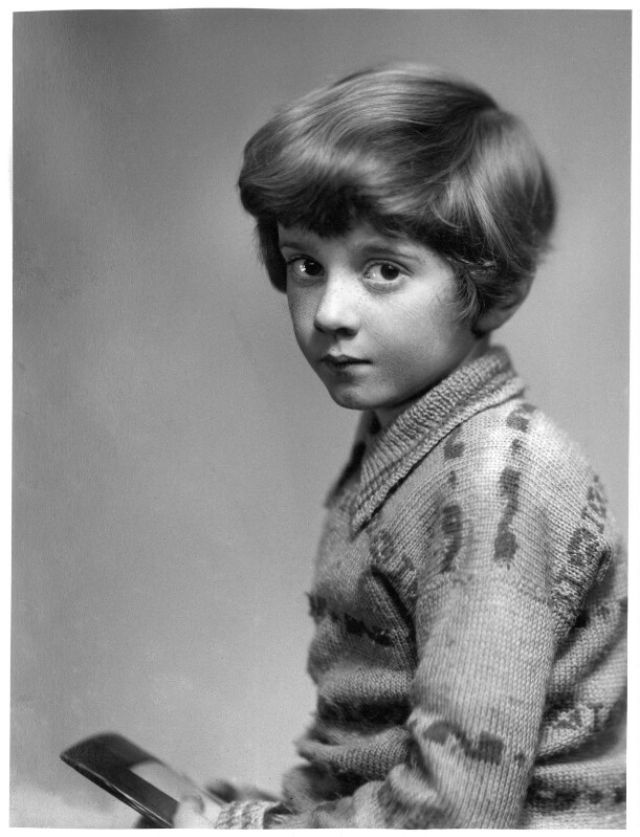
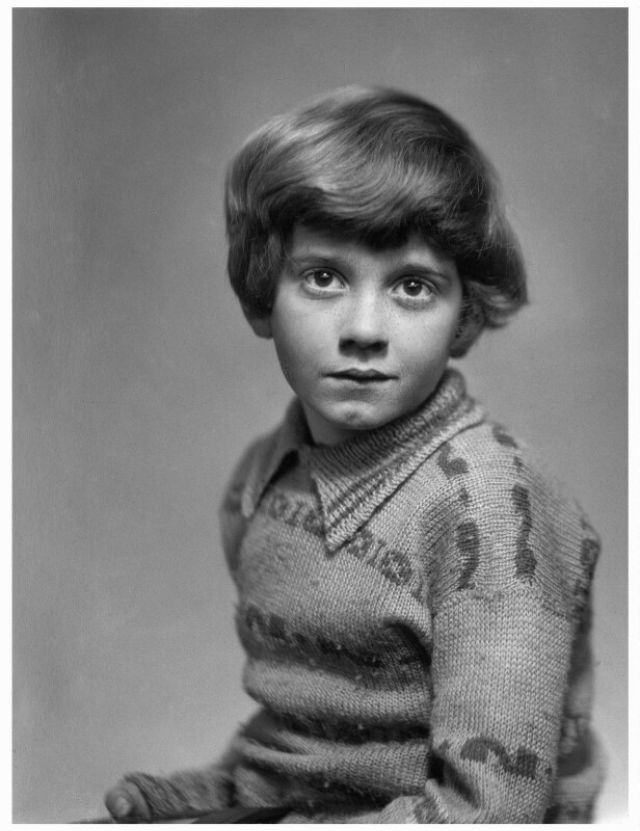
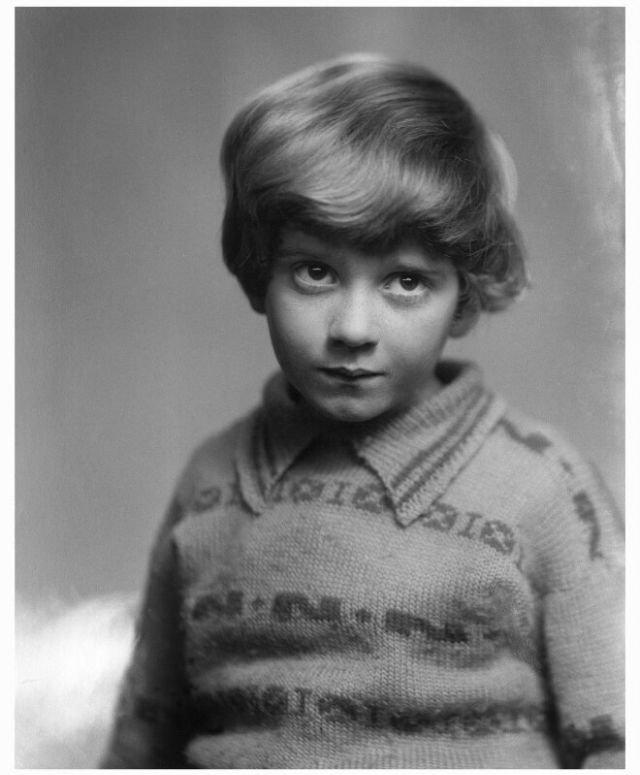
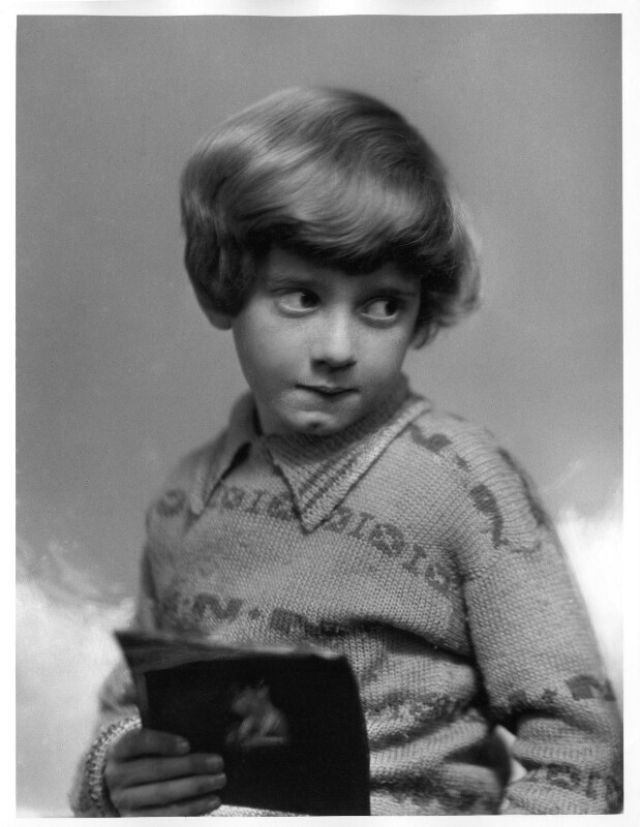
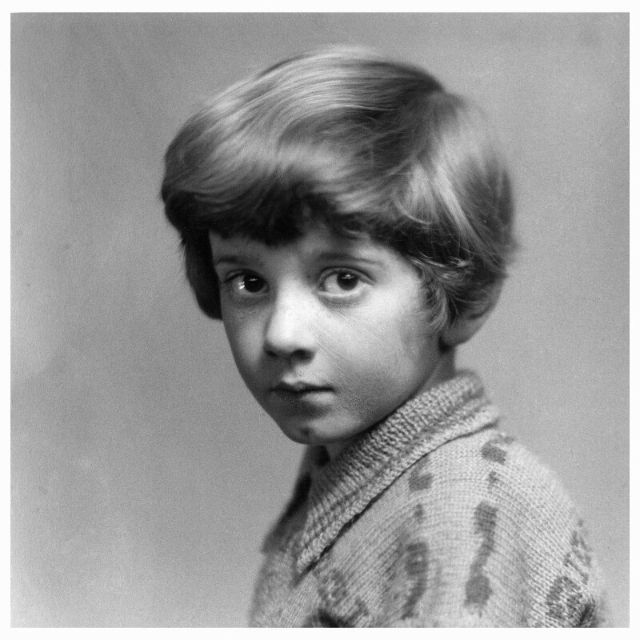
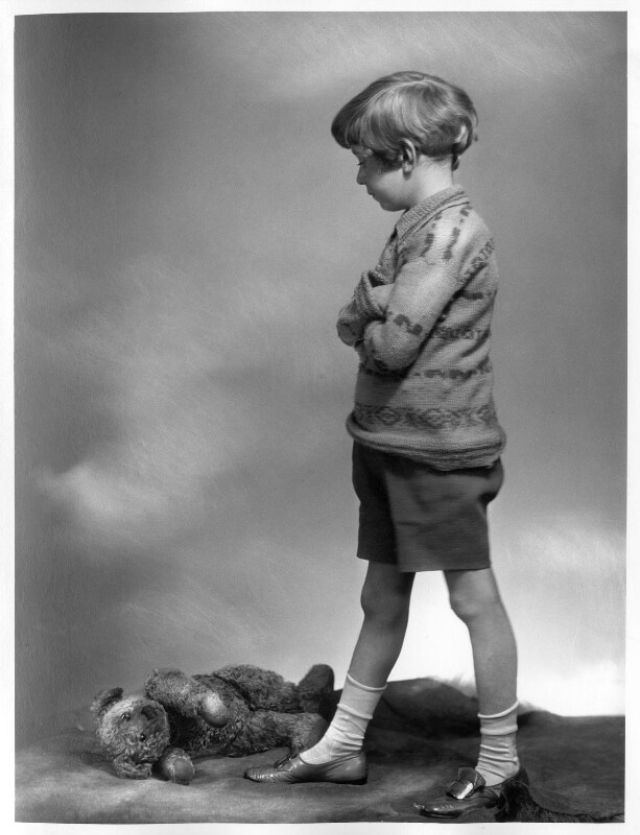
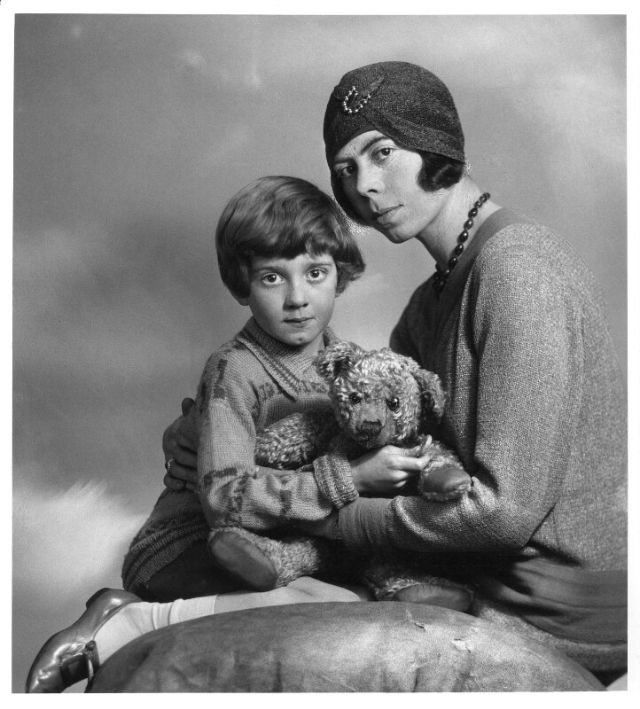
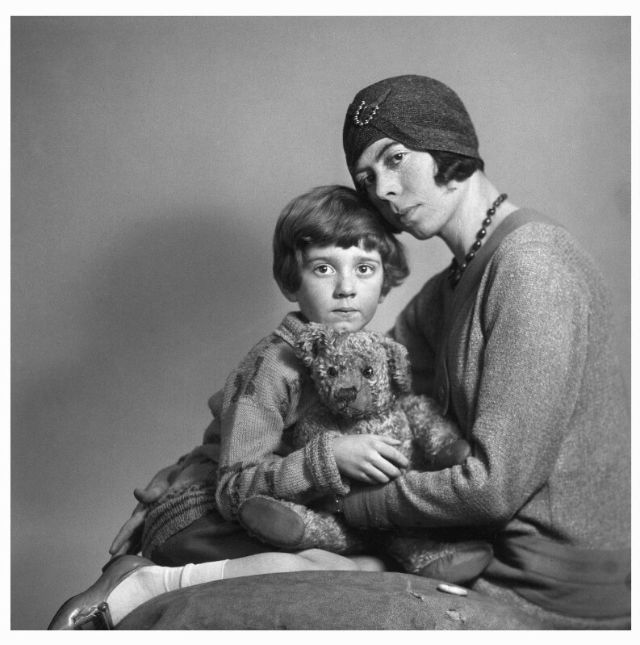
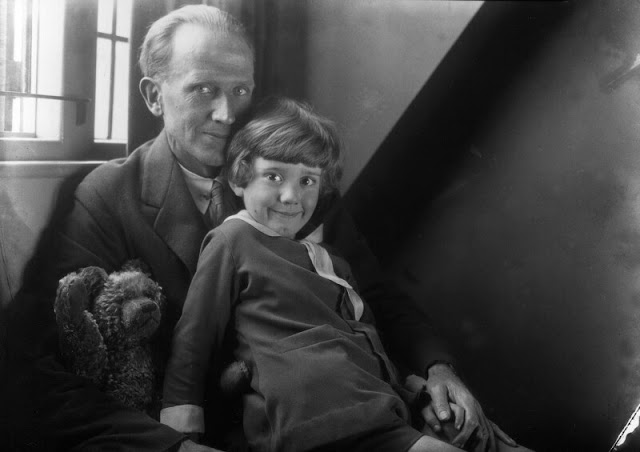
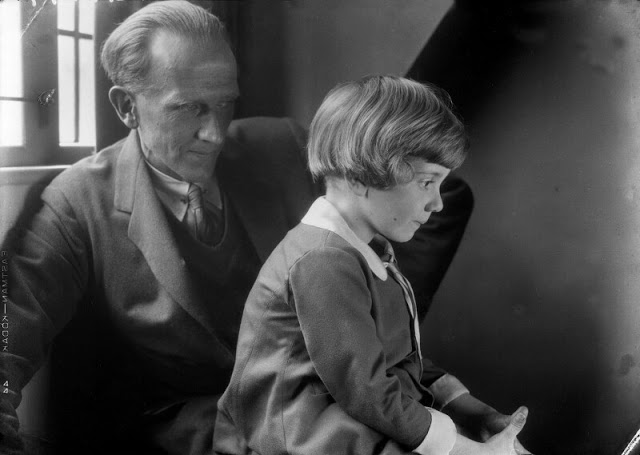
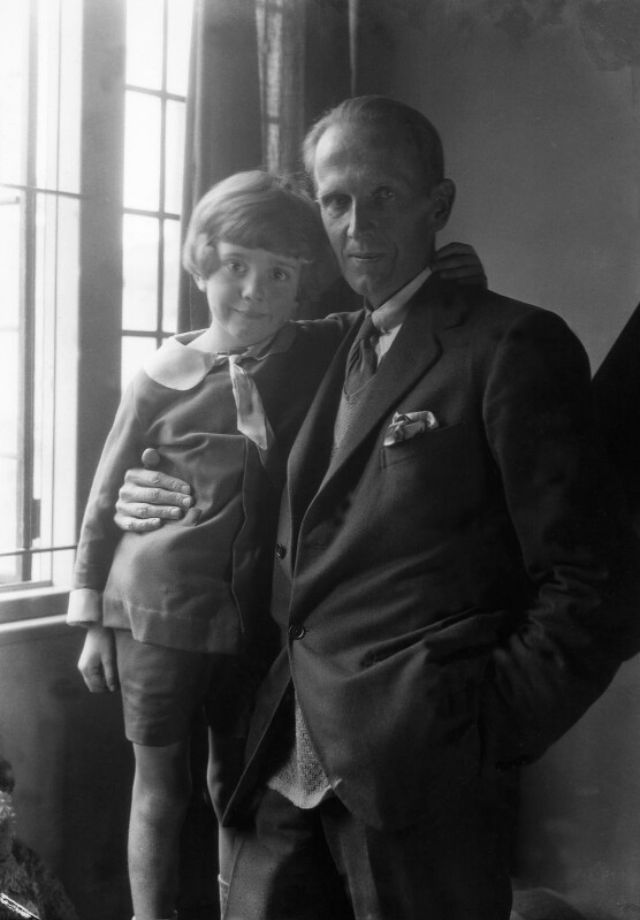
It’s probably been a while since you read a Winnie-the-Pooh story or watched an animated film featuring the humble bear, but here’s a series of vintage photos centering on author A. A. Milne’s famous character.
The images of Milne’s son Christopher Robin — the inspiration for Milne’s character of the same name who was Pooh’s best pal — were taken in 1926 and in 1928 (photos of Christopher Robin and his father.) Mini Milne and his stuffed bear — named Edward, a gift he received on his first birthday — sometimes come across semi-creepy, but in that charming, vintage-photo way.
There is a dark side to the young Milne’s life, however. Later in life, he grew to resent dear old dad for thrusting him into the public eye and essentially exploiting his childhood — or so he felt. He published a series of his own books describing the difficulties of growing up Pooh. He also became an atheist, which is kind of ironic considering the religious associations people often make with Pooh. Fans who cherished Milne’s childhood book series were disappointed by his reactions, but new generations have found much to love about the classic character.
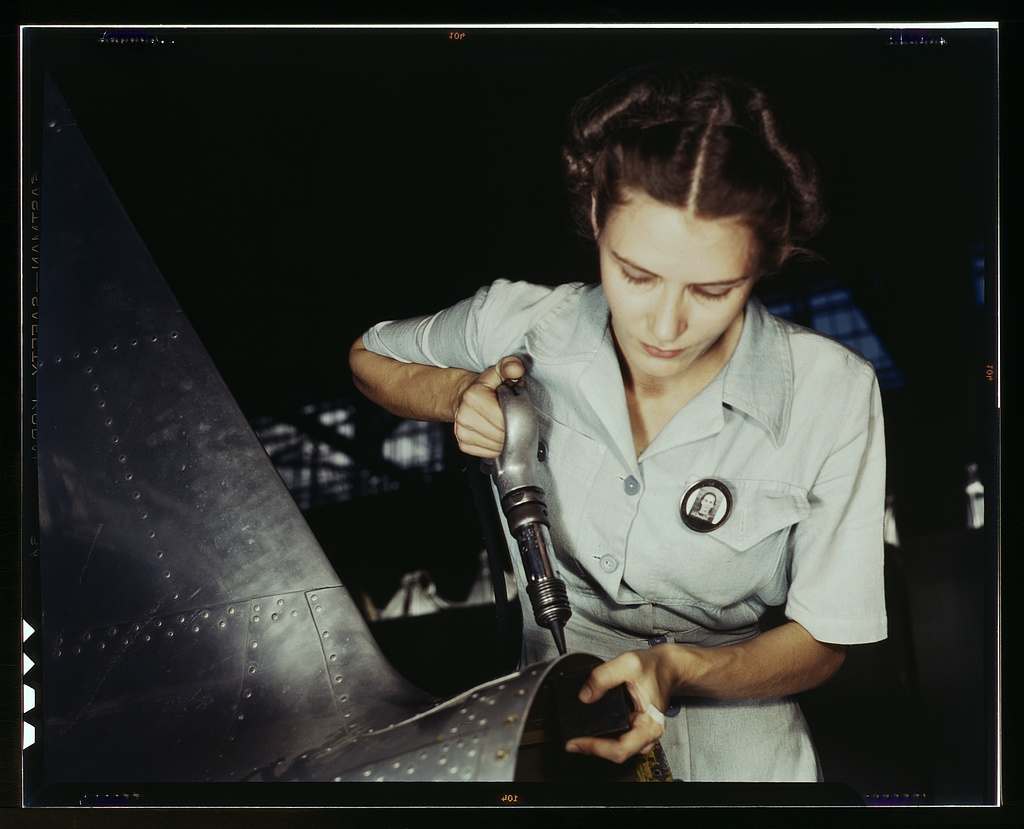
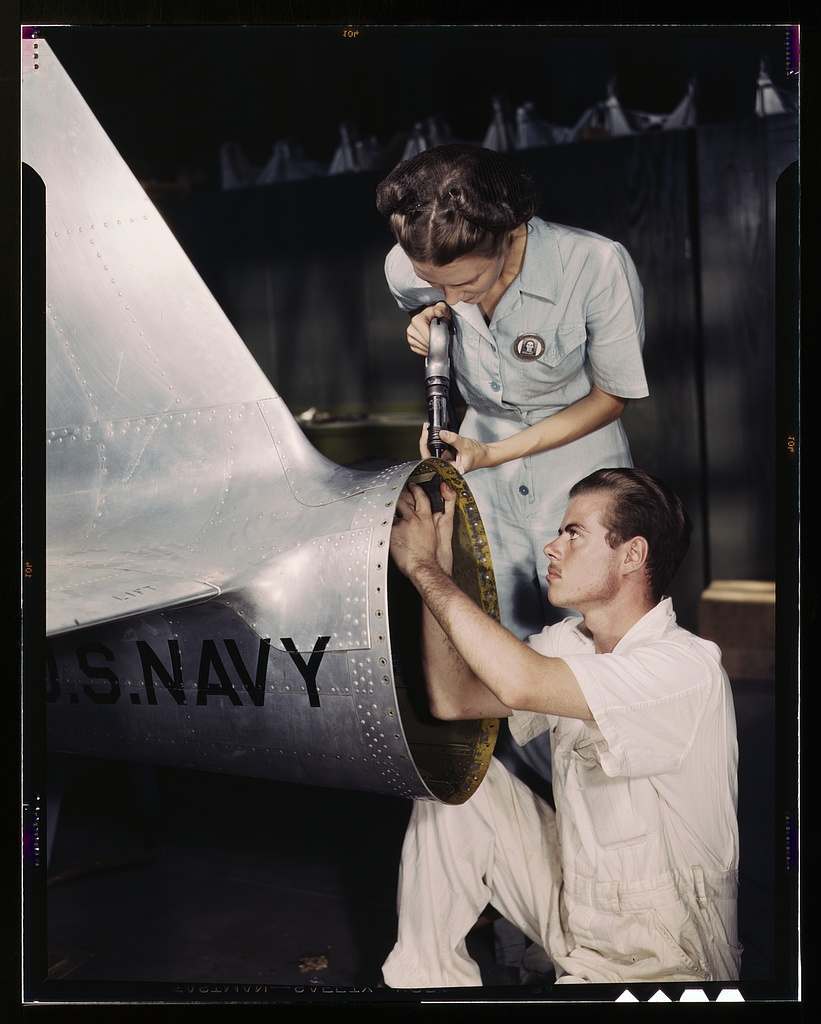
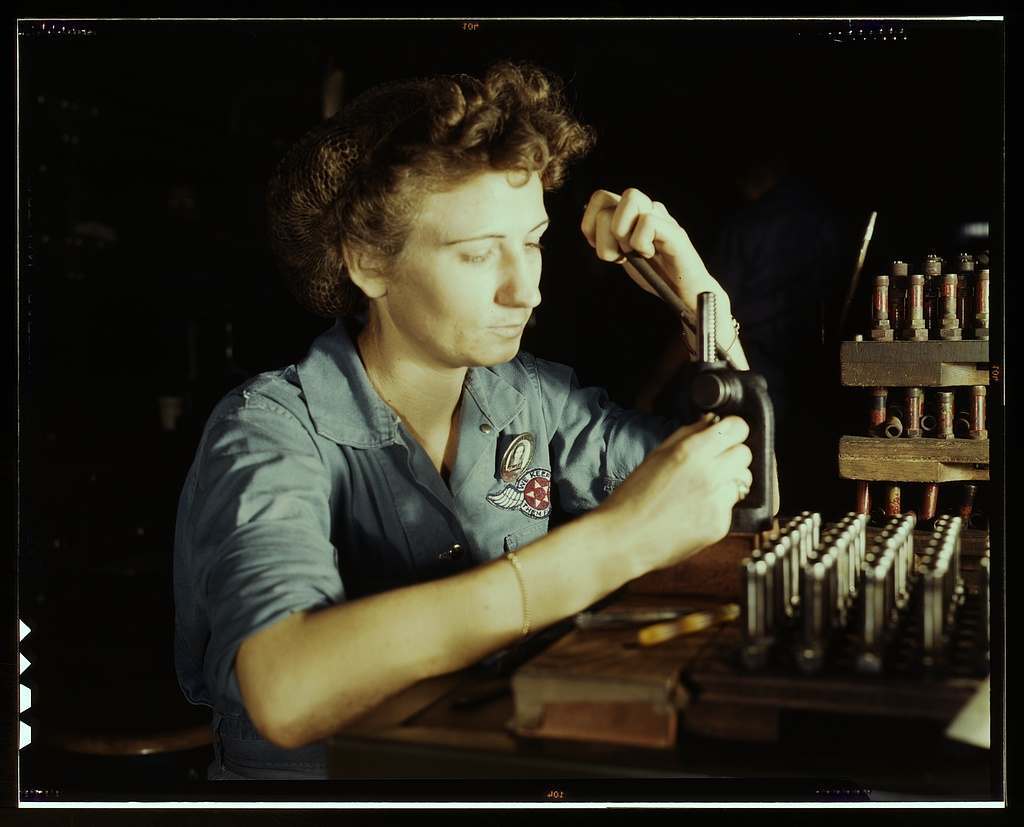
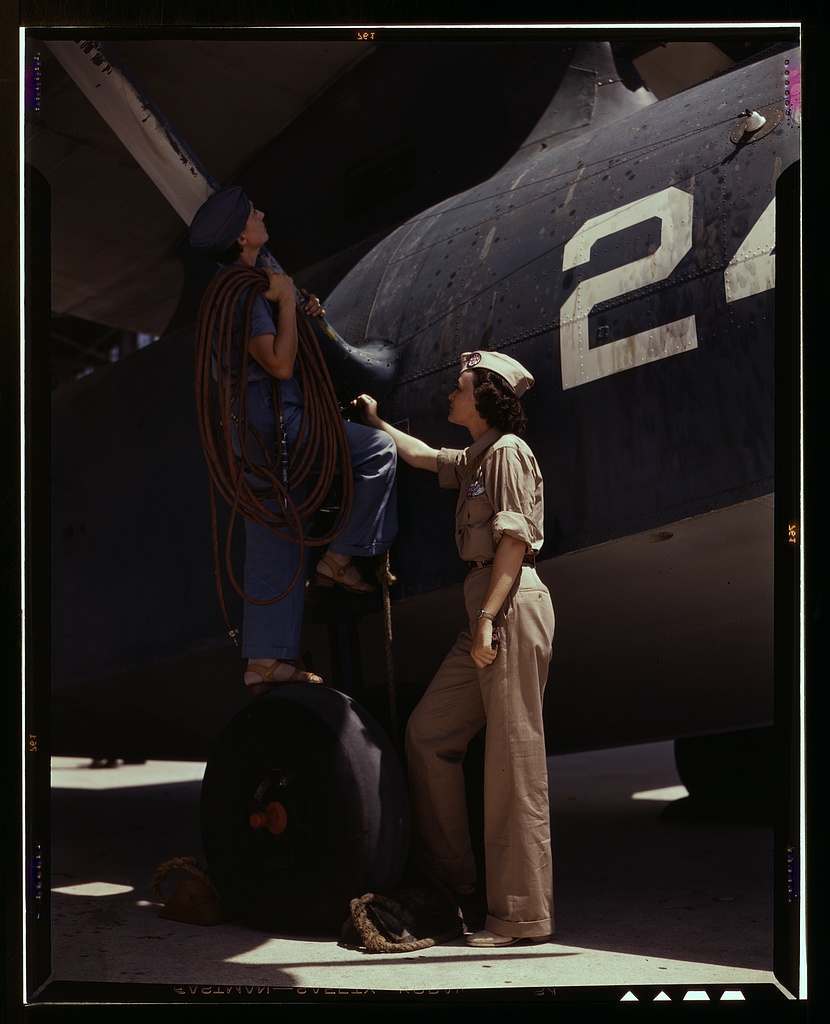
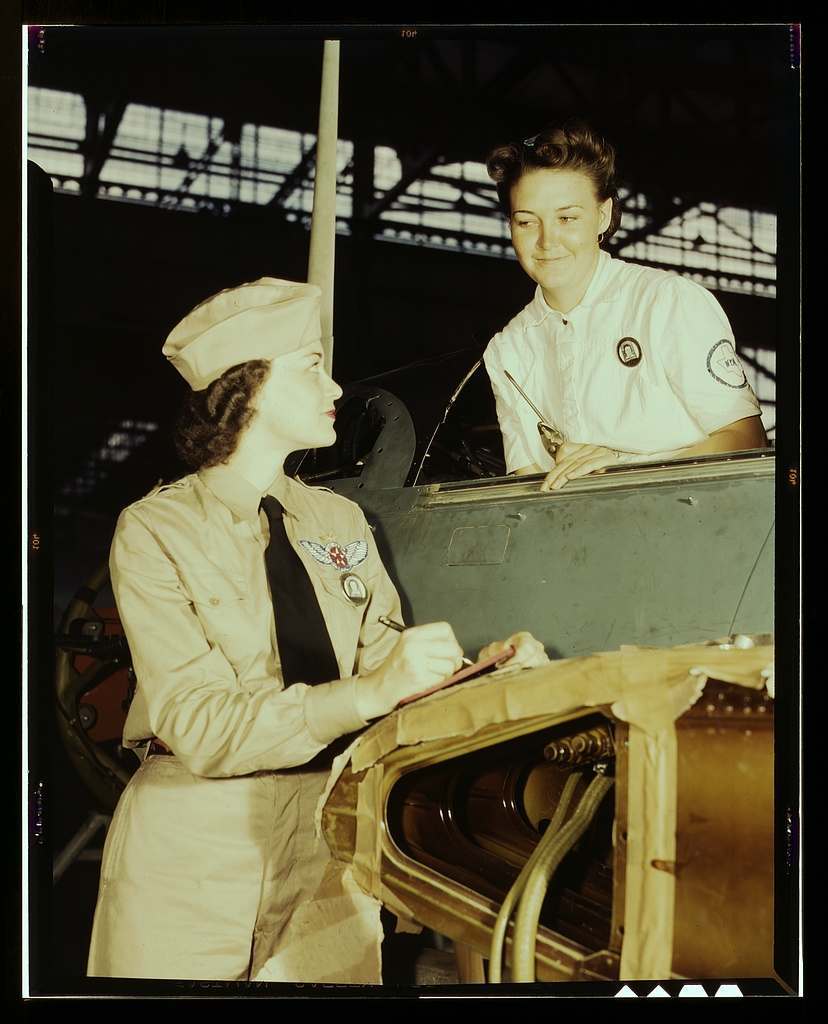
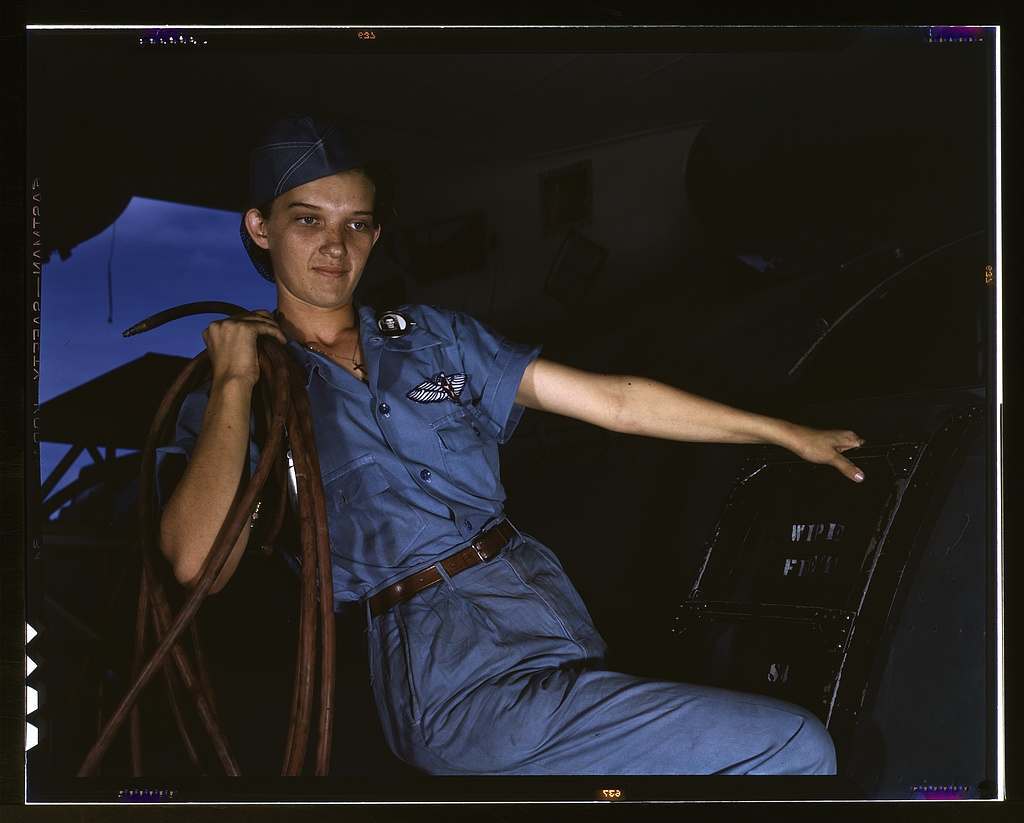
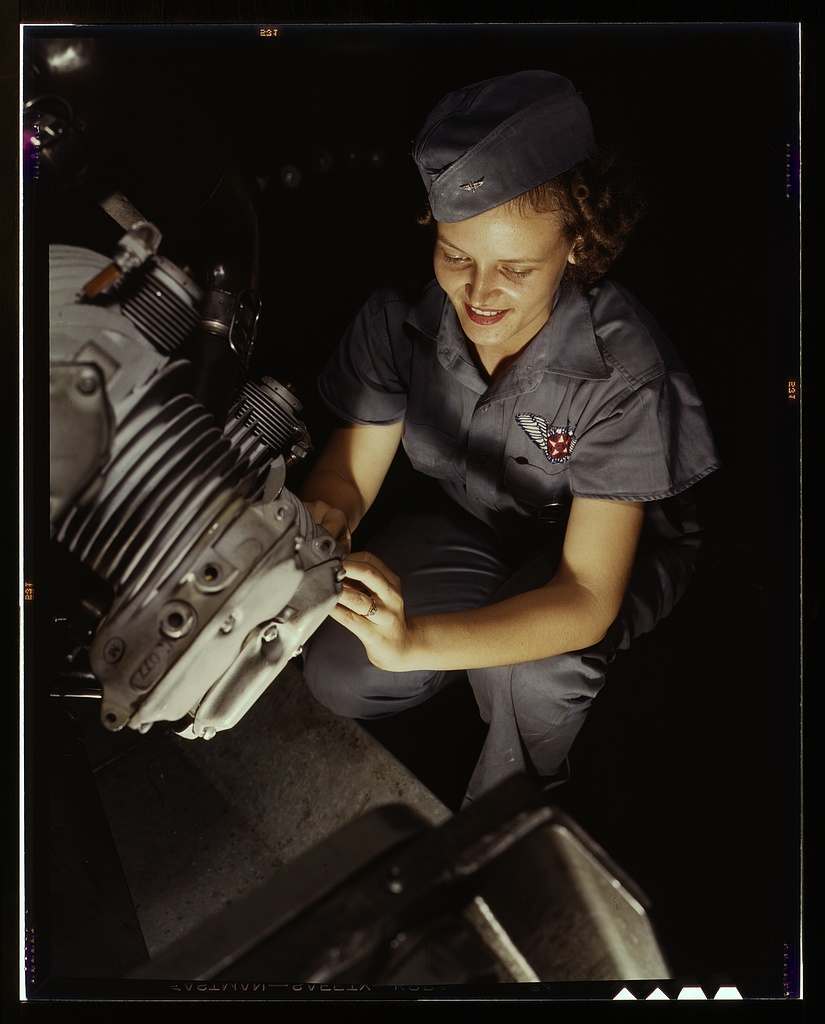
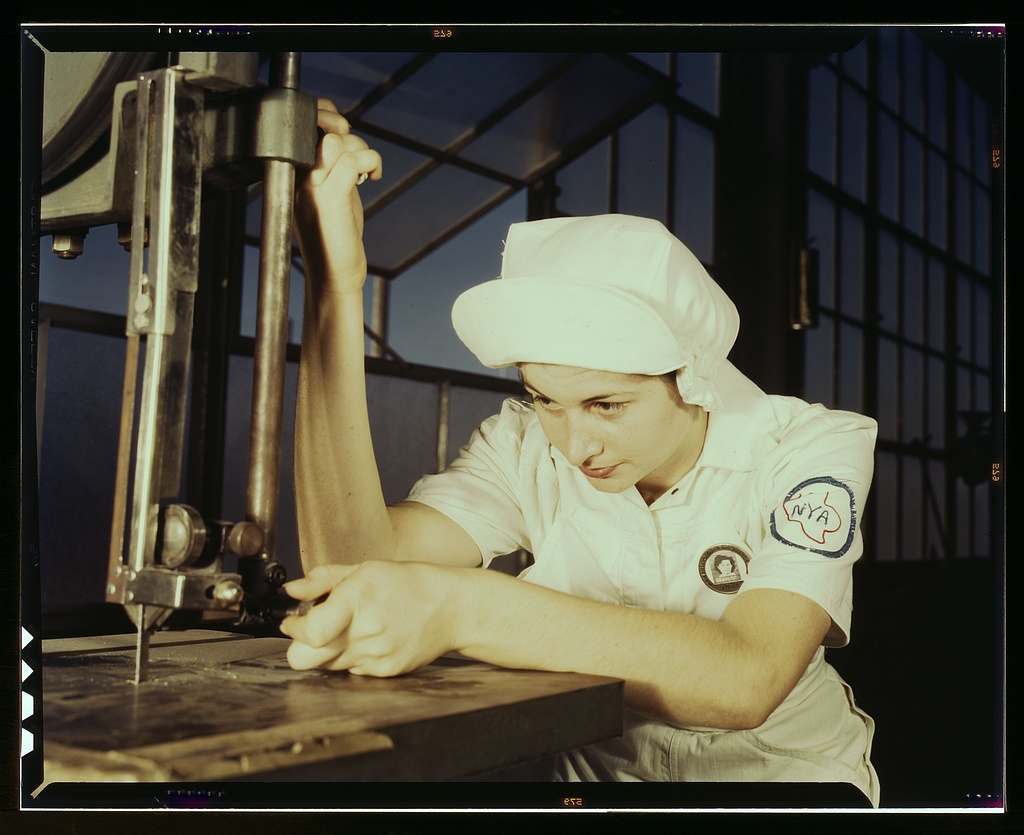
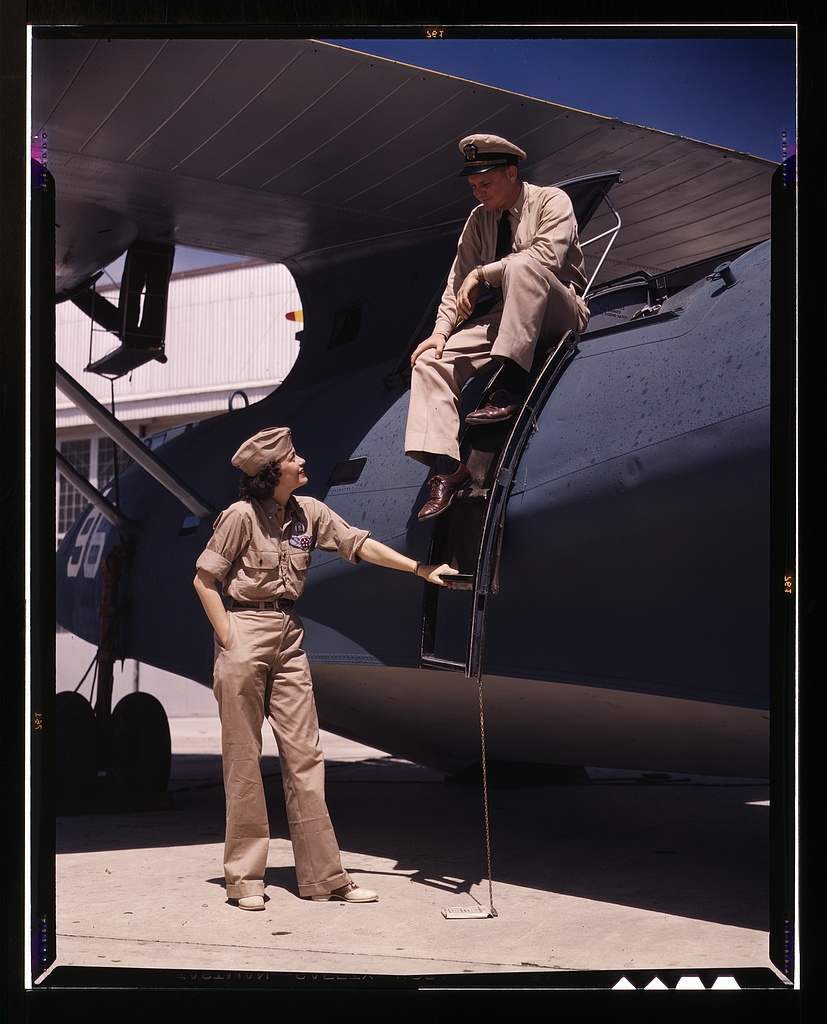
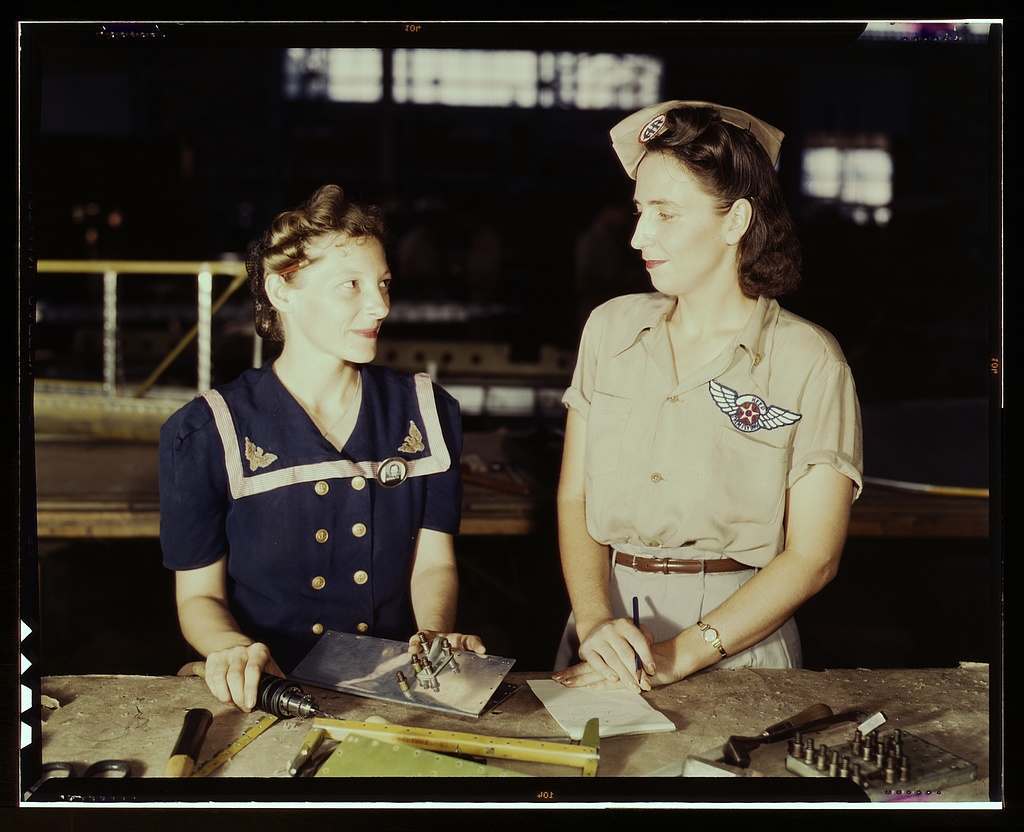
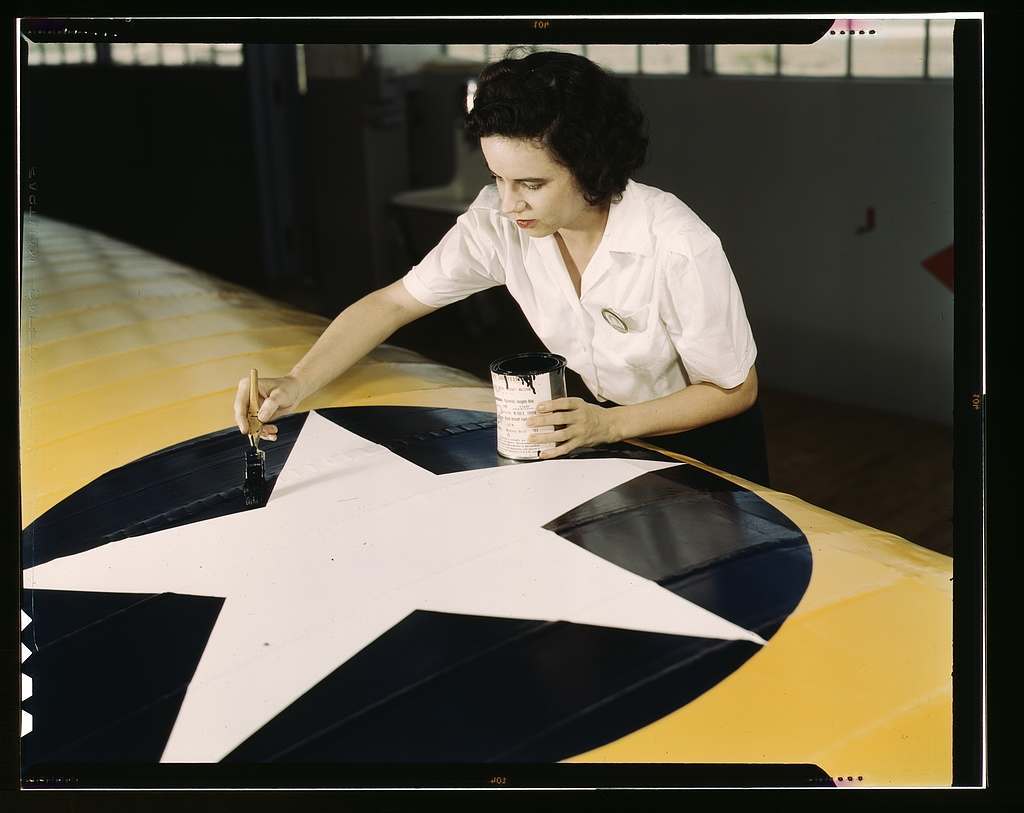
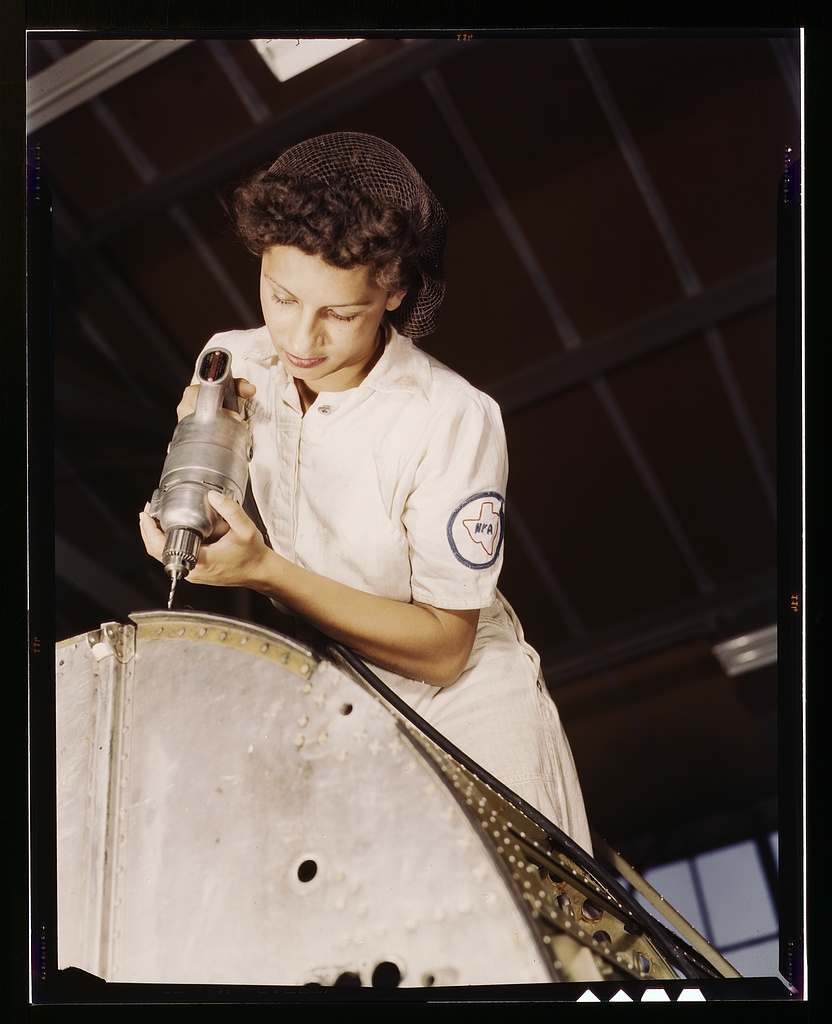
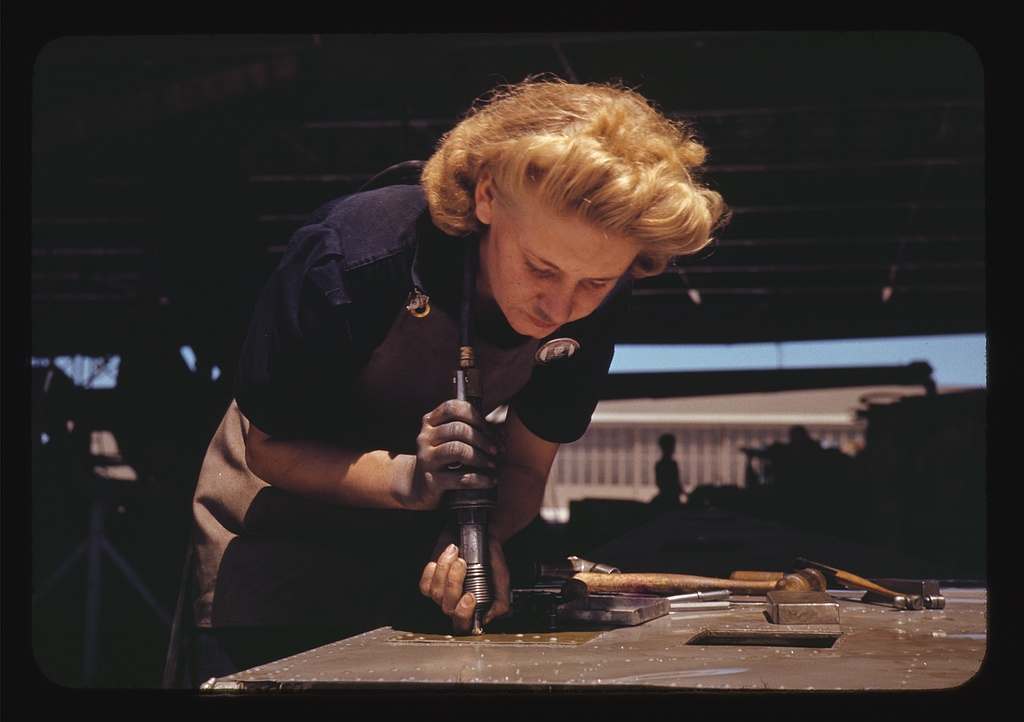
In August 1942, the US Farm Security Administration took these color photographs of women working in the Assembly and Repair Dept. of the Naval Air Base, Corpus Christi, Texas. The Farm Security Administration (FSA) was a New Deal agency created in 1937 to combat rural poverty during the Great Depression. In these stunning photographs it’s the turn of women to be in the limelight:
Answering the nation’s need for womanpower, Mrs. Virginia Davis made arrangement for the care of her two children during the day and joined her husband at work in the Naval Air Base, Corpus Christi, Texas. Both are employed under Civil Service in the Assembly and repair department. Mrs. Davis’ training will enable her to take the place of her husband should he be called by the armed serviceMrs. Doris Duke, who is 26 and a mother of one child, Corpus Christi, Texas. Mrs. Duke is a civil service worker in the A[ssembly] and R[epair] dept. at the Navy Air Base (shot – reconditioning spark plugs)Women are contributing their skills to the nation’s needs by keeping our country’s planes in top-notch fighting condition, Corpus Christi, Texas. Wife of a disabled World War I veteran, Mrs. Cora Ann Bowen (left) works as a cowler at the Naval Air Base. Mrs. Eloise J. Ellis is a senior supervisor in the Assembly and Repairs departmentFormerly a sociology major at the University of Southern California, Mrs. Eloise J. Ellis (right) now “keeps ’em flyin’” at the Naval Air Base, Corpus Christi, Texas. She is a supervisor under civil service in the Assembly and Repair Department. It is her job to maintain morale among the women by helping them solve housing and other personal problems. With her is Jo Ann Whittington, an NYA trainee at the plant.With a woman’s determination, Lorena Craig takes over a man-size job, Corpus Christi, Texas. Before she came to work at the Naval air base she was a department store girl. Now she is a cowler under civil service.Assembly and Repairs Dept. mechanic Mary Josephine Farley works on a Wright Whirlwind motor, Naval Air Base, Corpus Christi, Texas.“Women in white” doctor Navy planes (motors) at the Naval Air Base, Corpus Christi, Texas. Mildred Webb, an NYA trainee at the base, is learning to operate a cutting machine in the Assembly and Repair Department. After about eight weeks as an apprentice she will be eligible for a civil service job in the capacity for which she has been trained.Oyida Peaks riveting as part of her NYA training to become a mechanic at the Naval Air Base, in the Assembly and Repair Department, Corpus Christi, Texas.Mrs. Eloise J. Ellis, senior supervisor in the Assembly and Repairs Dept. of the Naval Air Base, talking with one of the men, Corpus Christi, Texas.Pearl Harbor widows have gone into war work to carry on the fight with a personal vengeance, Corpus Christi, Texas. Mrs. Virginia Young (right) whose husband was one of the first casualties of World War II, is a supervisor in the Assembly and Repairs Department of the Naval Air Base. Her job is to find convenient and comfortable living quarters for women workers from out of the state, like Ethel Mann, who operates an electric drill.Women from all fields have joined the production army, Corpus Christi, Texas. Miss Grace Weaver, a civil service worker at the Naval Air Base, and a school teacher before the war, is doing her part for victory along with her brother who is a flying instructor in the Army. Miss Weaver paints the American insignia on repaired Navy plane wings.A rivet is her fighting weapon. Oyida Peaks, daughter of a Navy lieutenant, one of many women taking NYA training to become mechanics at the Naval Air Base, Corpus Christi, Texas. After eight weeks apprenticeship she will be qualified as a civil service worker in the Assembly and Repair Department.Working in the Assembly and Repair Dept. of the Naval Air Base, Corpus Christi, Texas 1942.
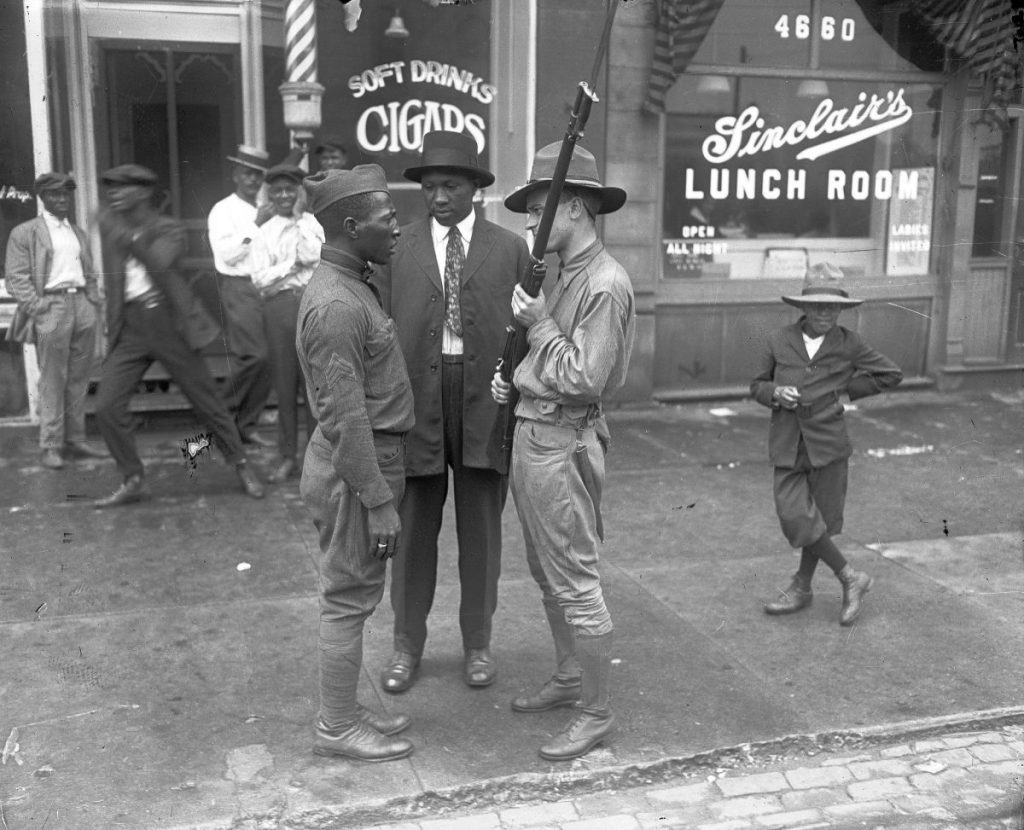
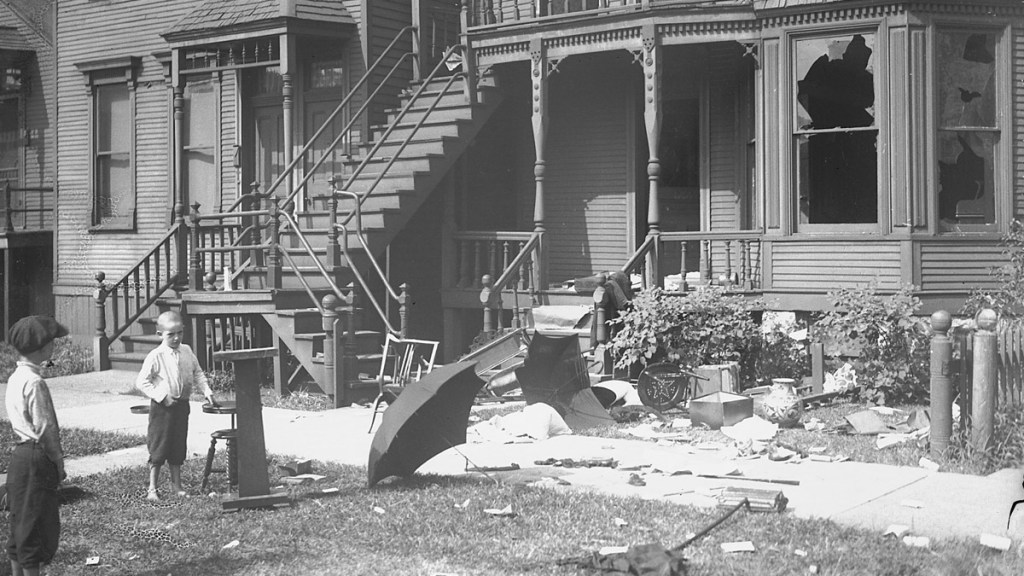
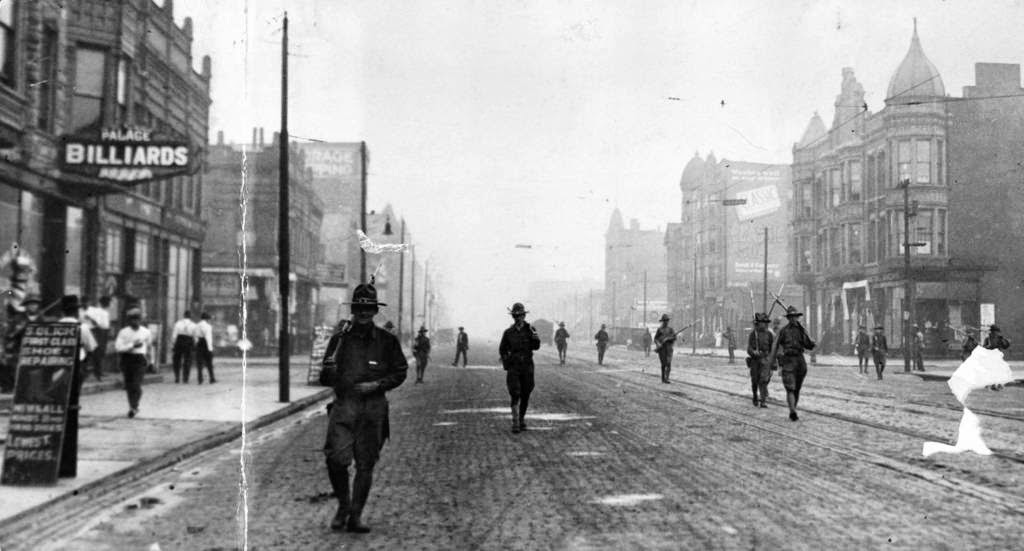
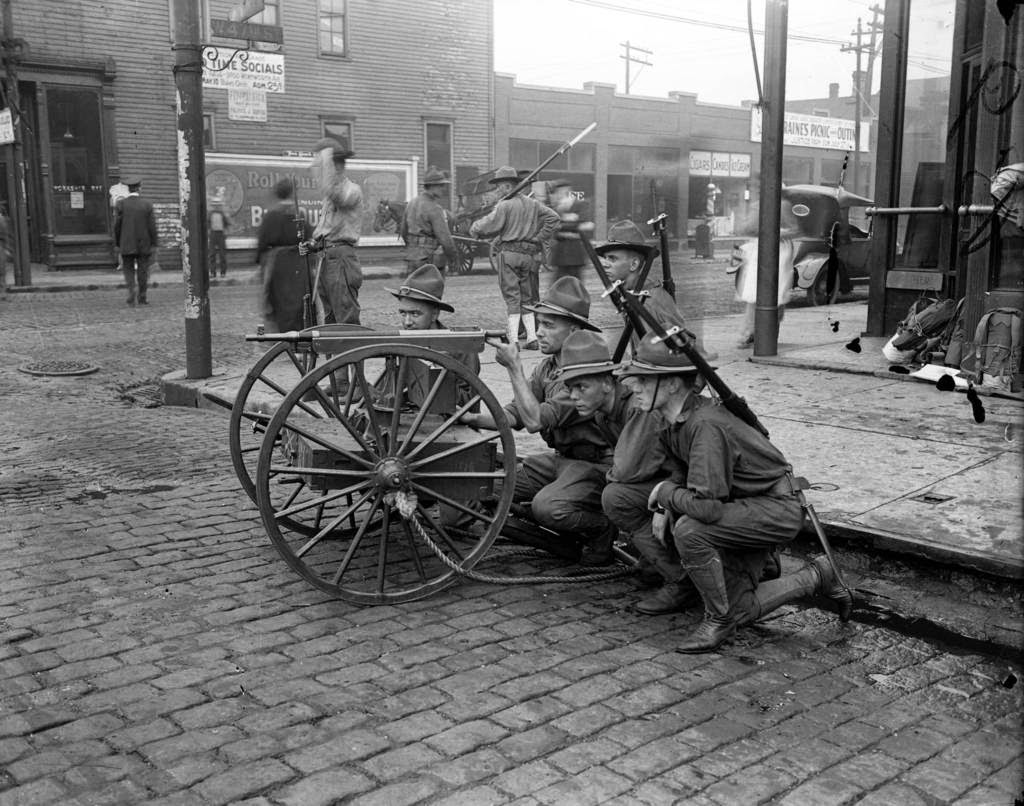
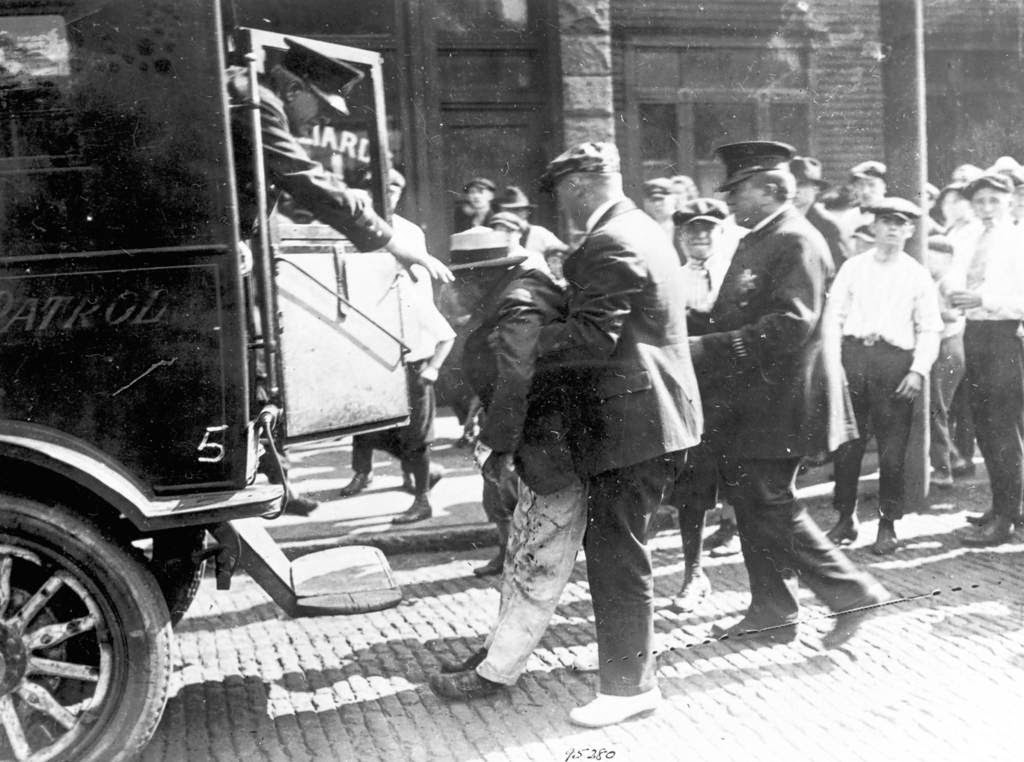
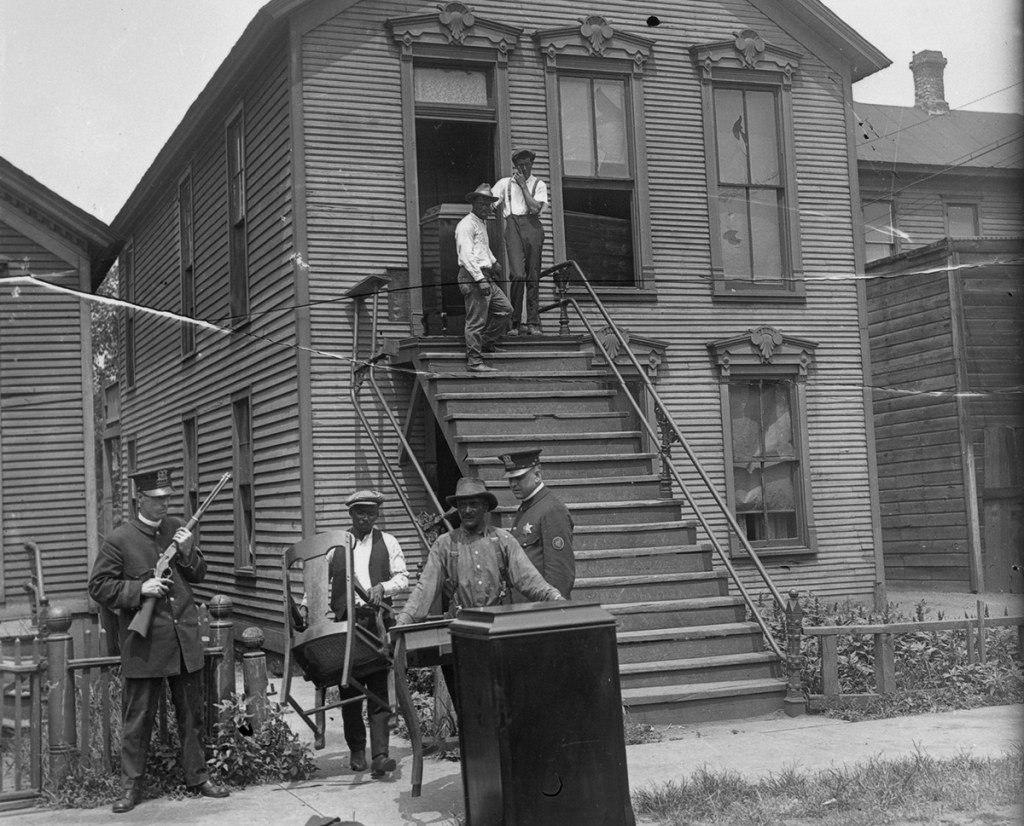
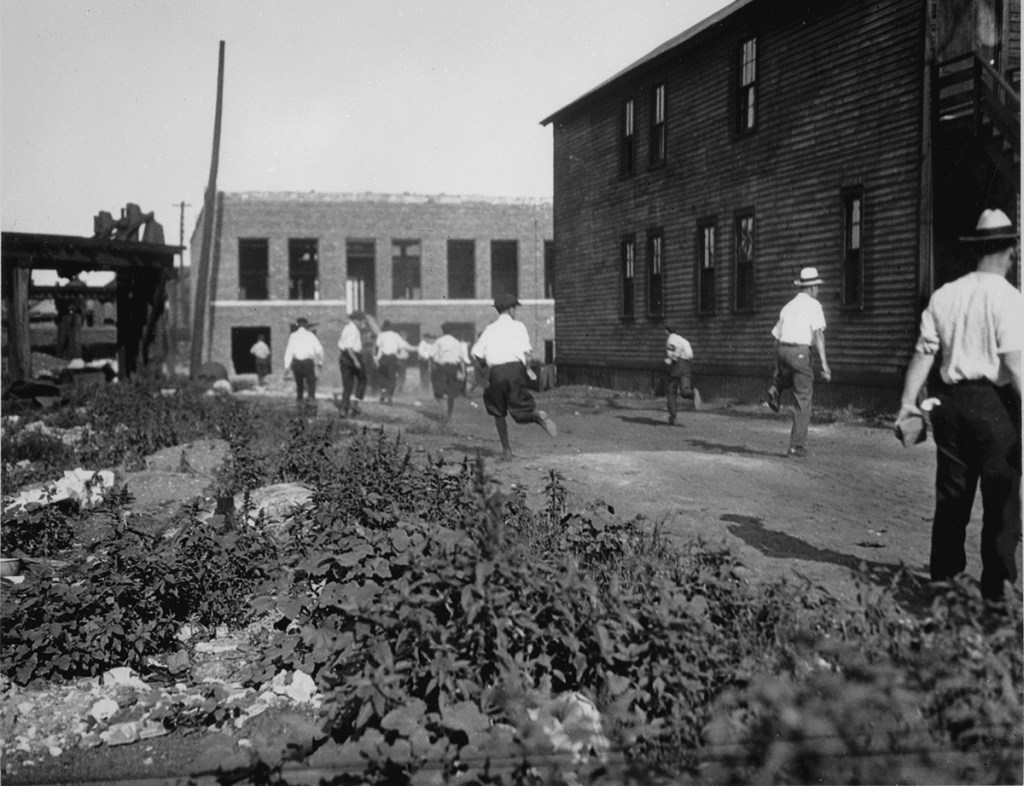
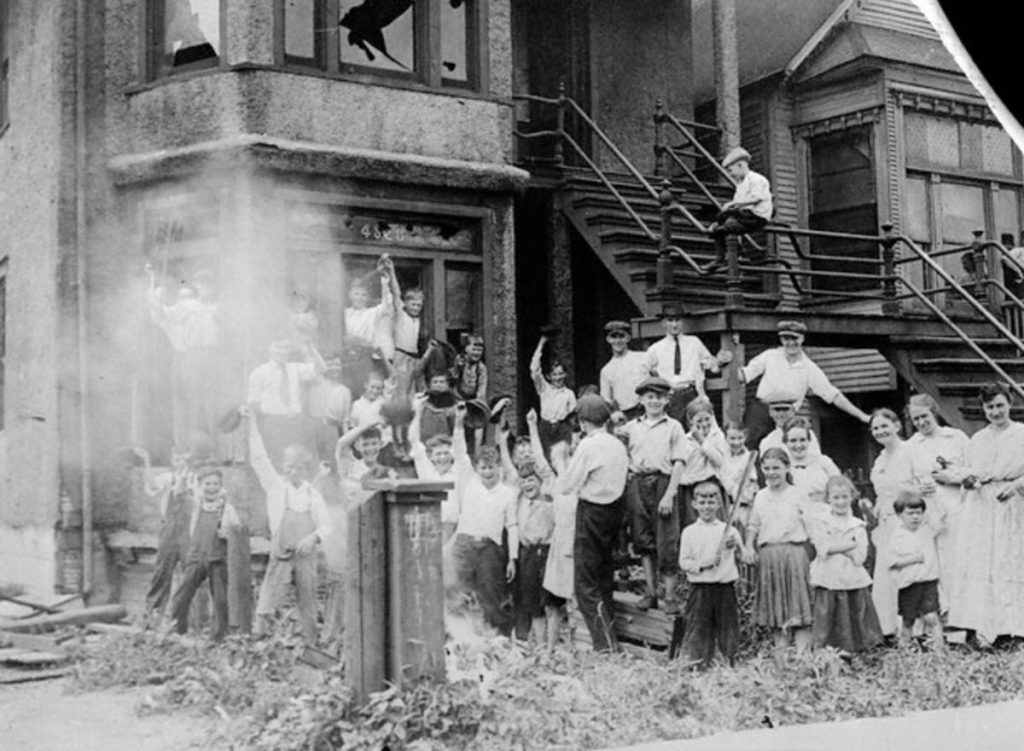
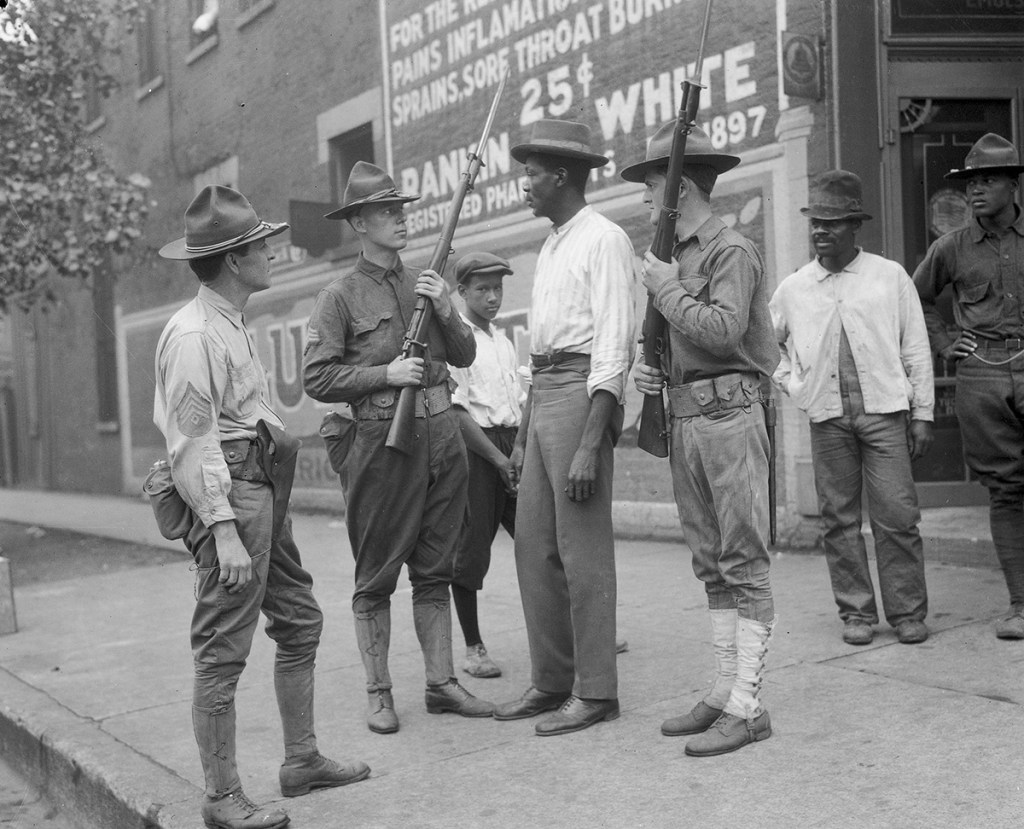
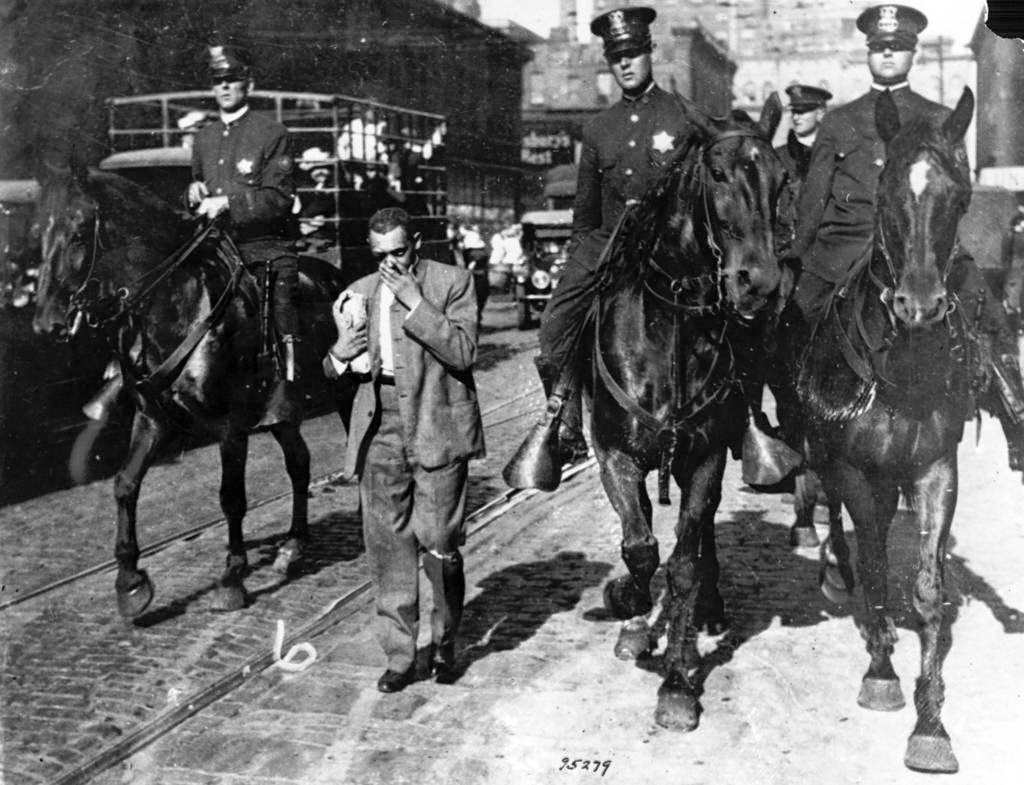
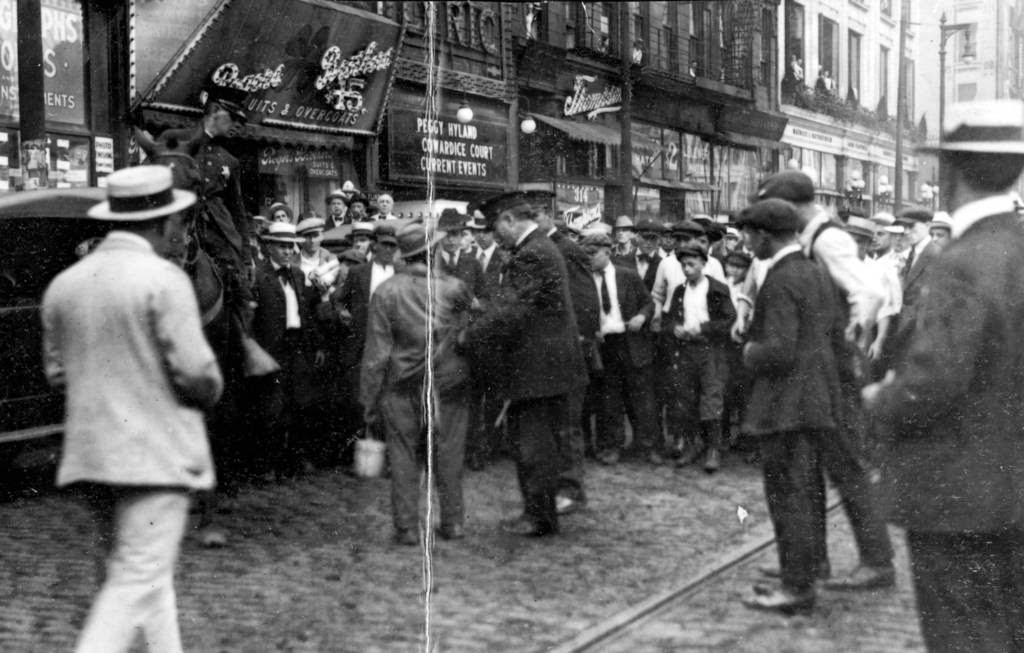
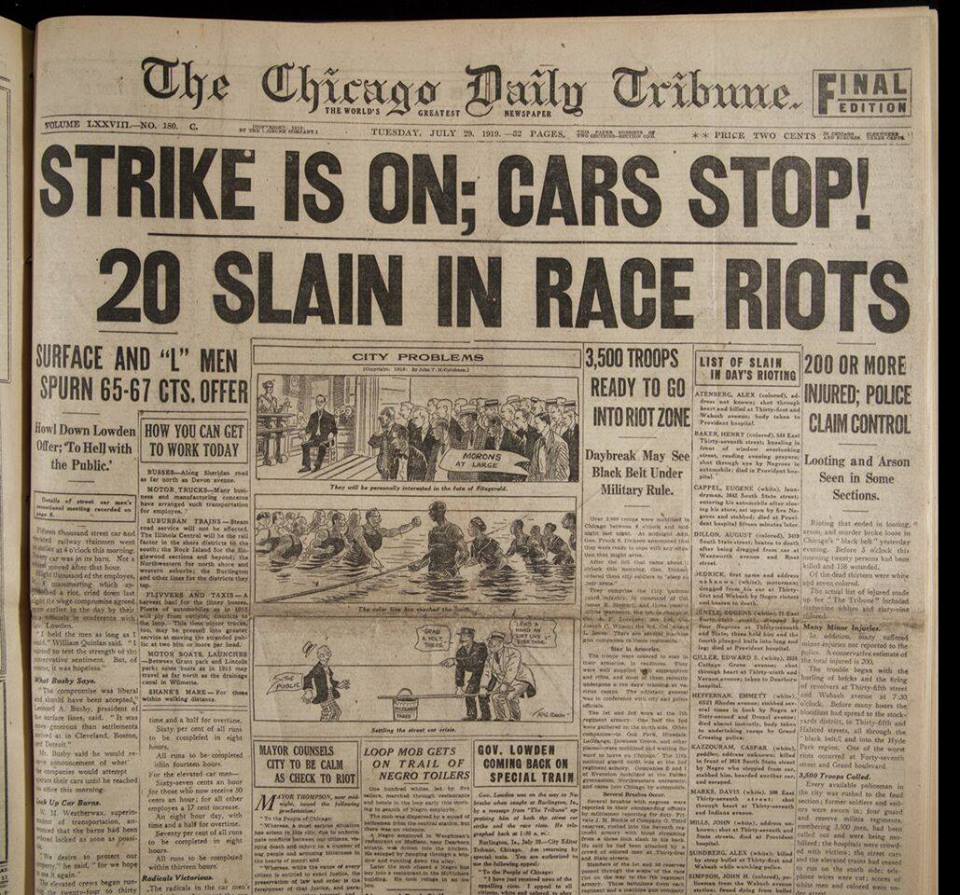
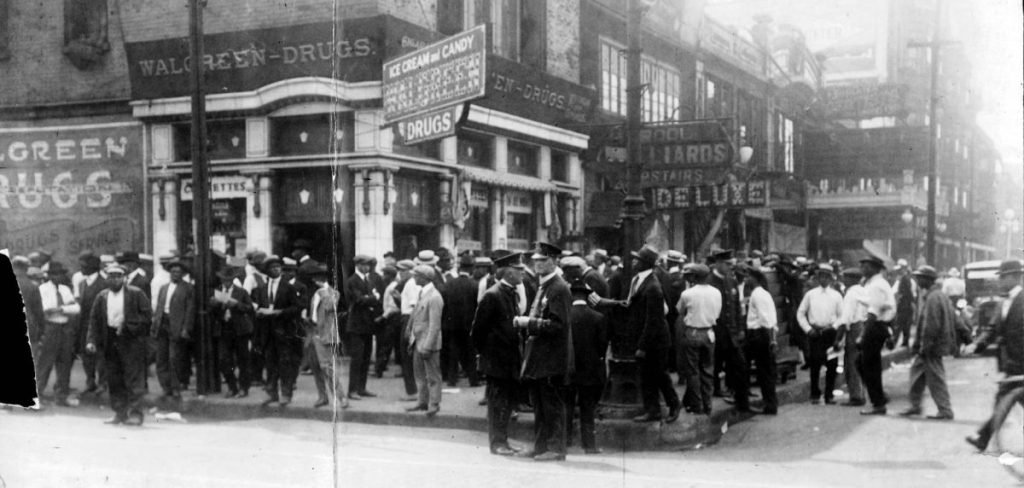
The Chicago Race Riot of 1919 began on a hot July day and thought to be the worst of around 25 riots during the so-called ‘Red Summer’. Some ninety years later the New York Times called it the worst race riot in the history of Illinois.
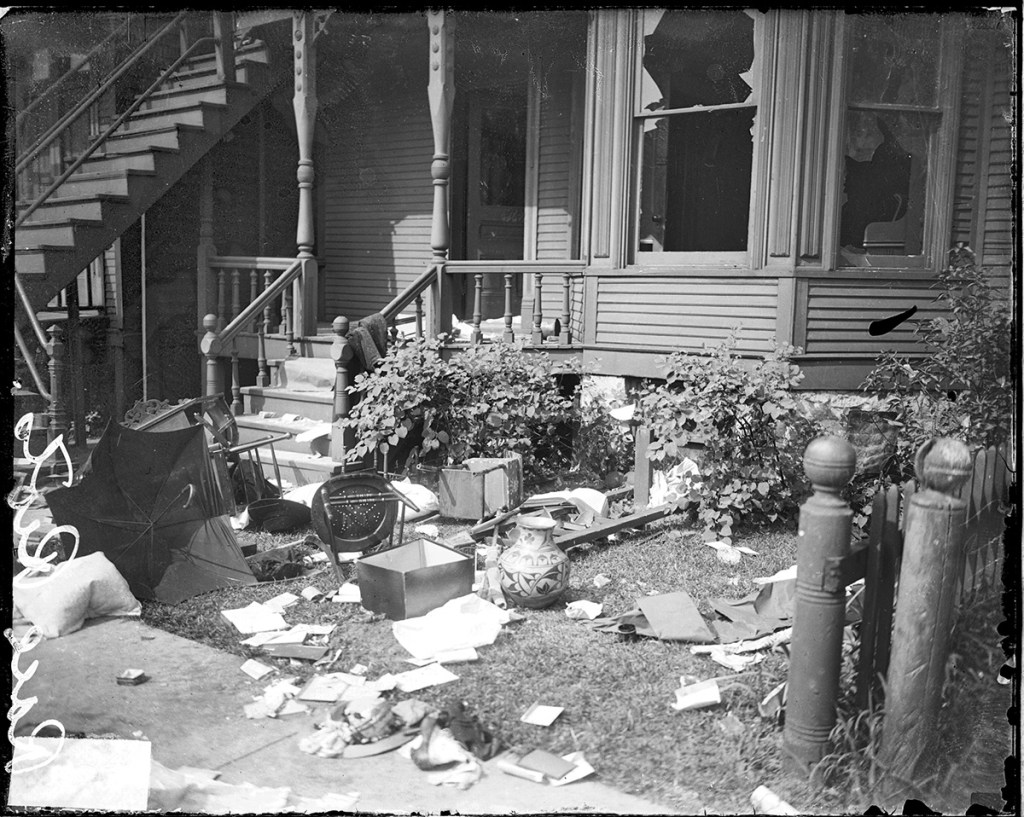
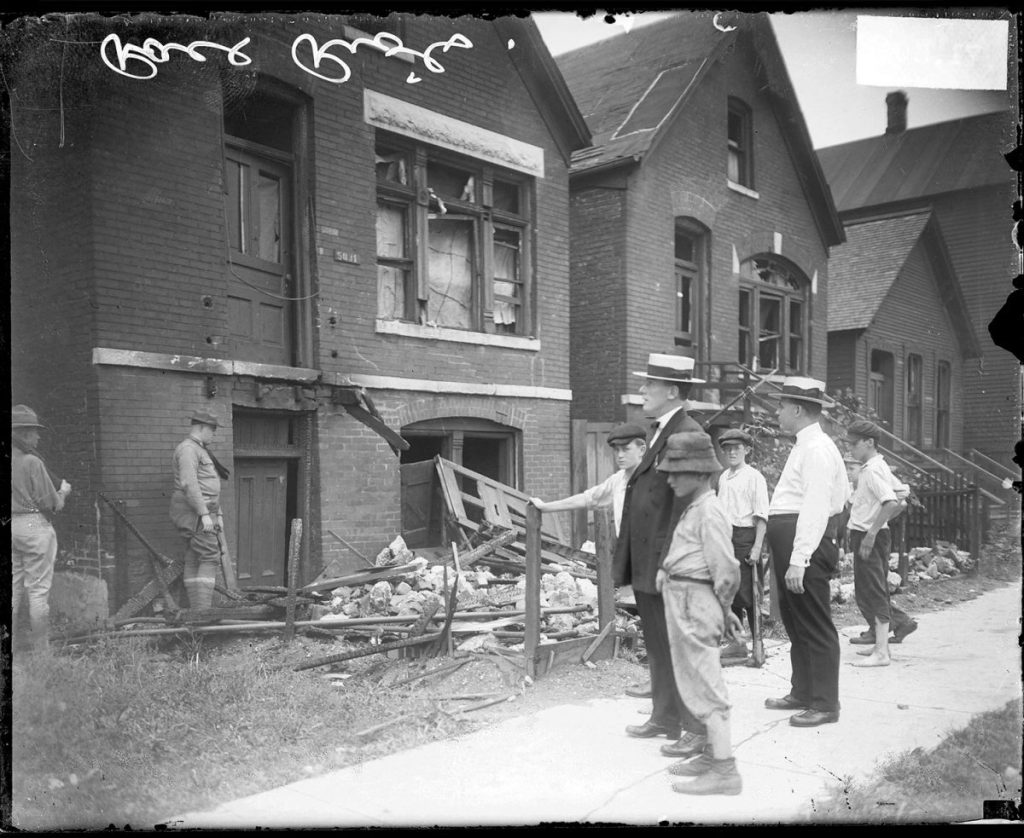
On July 27, 1919, an African-American teenager called Eugene Williams was swimming with friends in Lake Michigan when he crossed the unofficial race barrier between the ‘white’ and ‘black’ beaches. He was stoned to death by a group of white youths. The murder, and the subsequent refusal by the police to arrest the the person initially responsible began a week of rioting between black and white Chicago residents. When the riot ended on August 3, 23 African-Americans had died along with 15 whites and more than 500 injured. Over 1000 black families lost their homes after being set alight by the rioters.
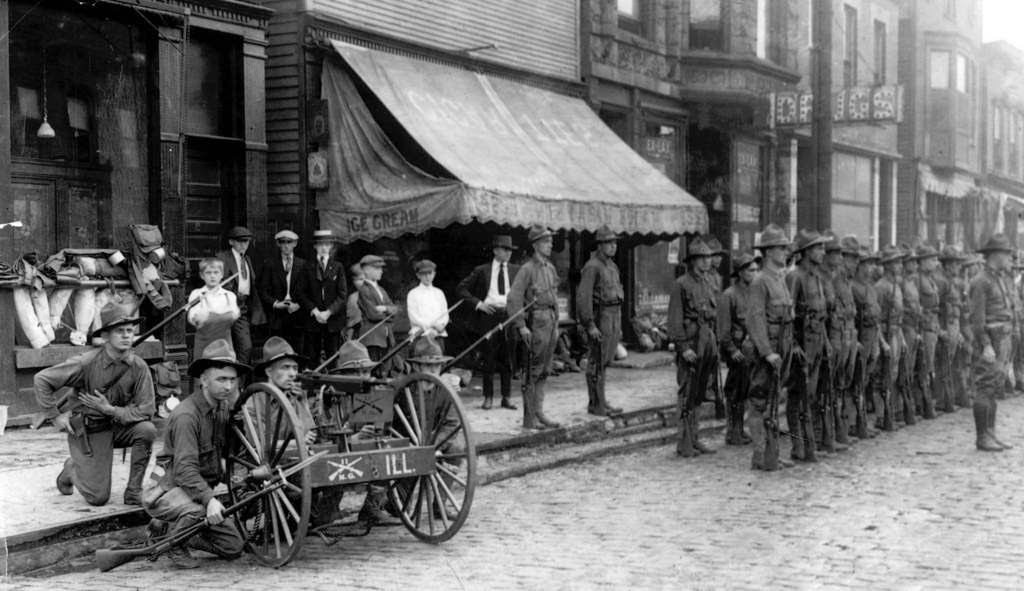
During World War One, essentially being fought on the other side of the Atlantic, there had begun a great migration of African Americas from the rural south to the cities of the North. When the war came to an end thousands of servicemen, back and white, found their jobs had been taken by Southern blacks and other immigrants. According to the History website the African-American population in Chicago alone had increased in ten years from 44,000 in 1909 to more than 100,000 in 1919. This only exacerbated the already simmering racial tensions related to policing, migration, and housing. Everything came to a head in 1919.
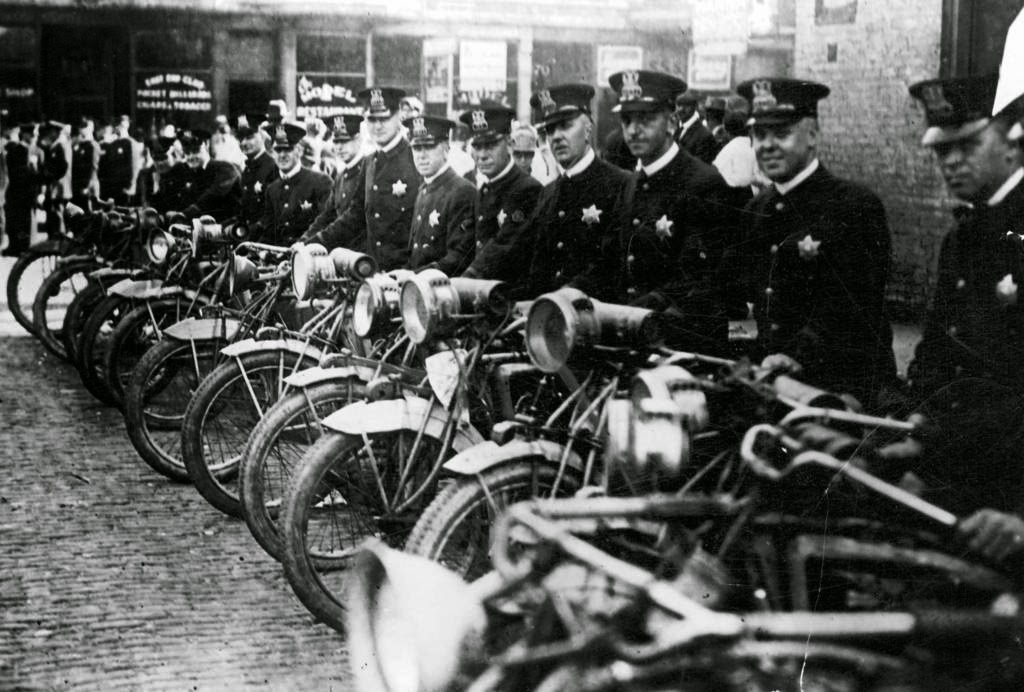
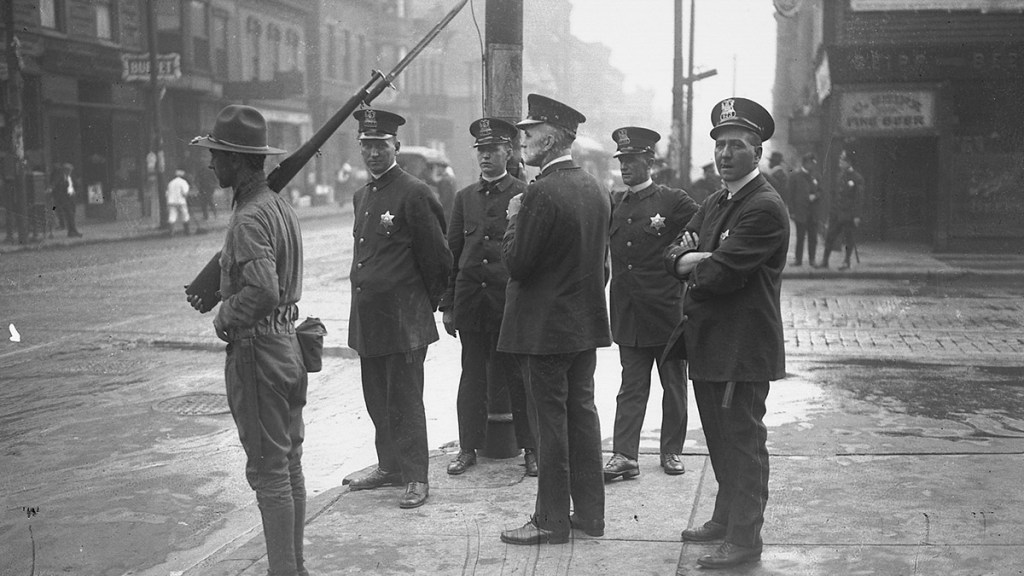
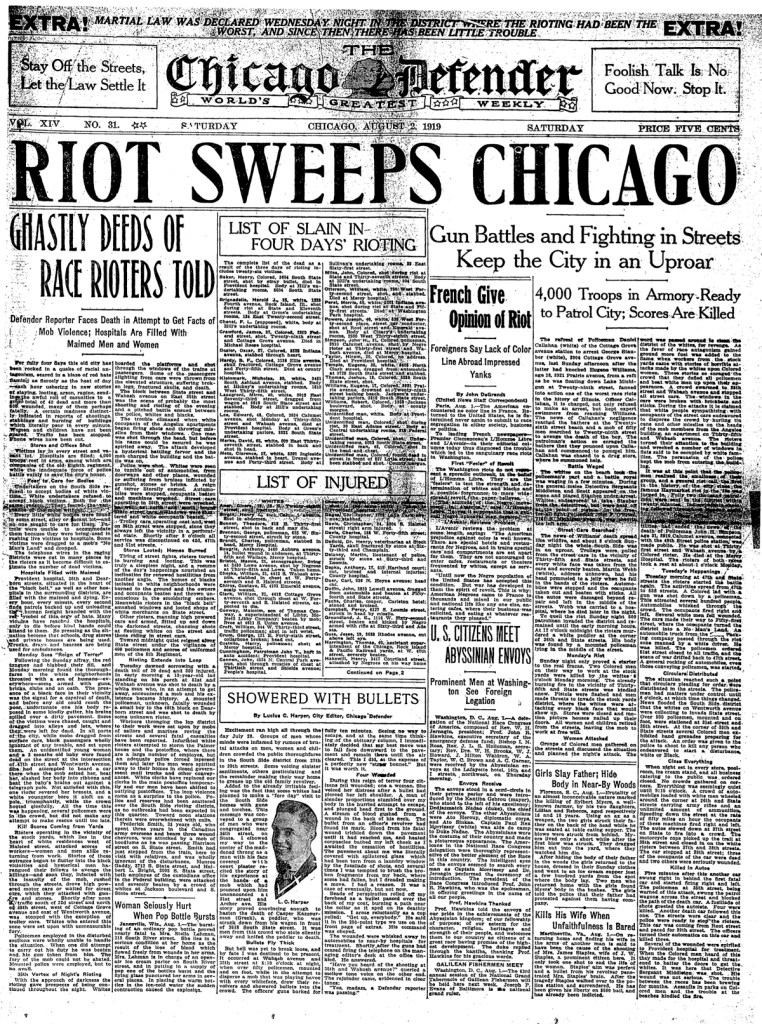
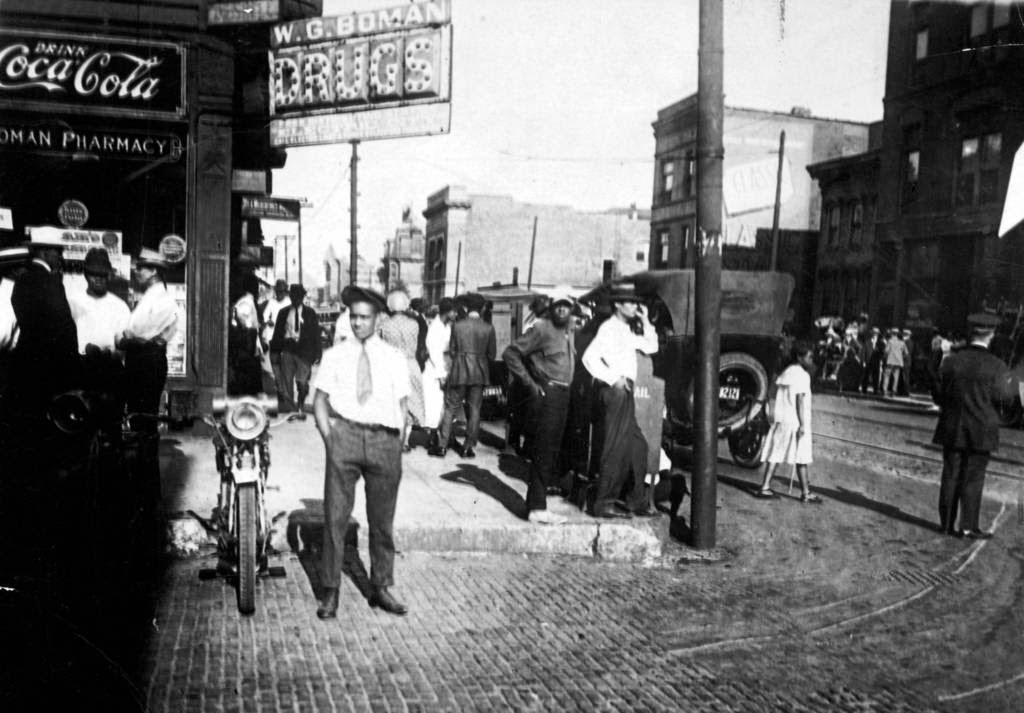
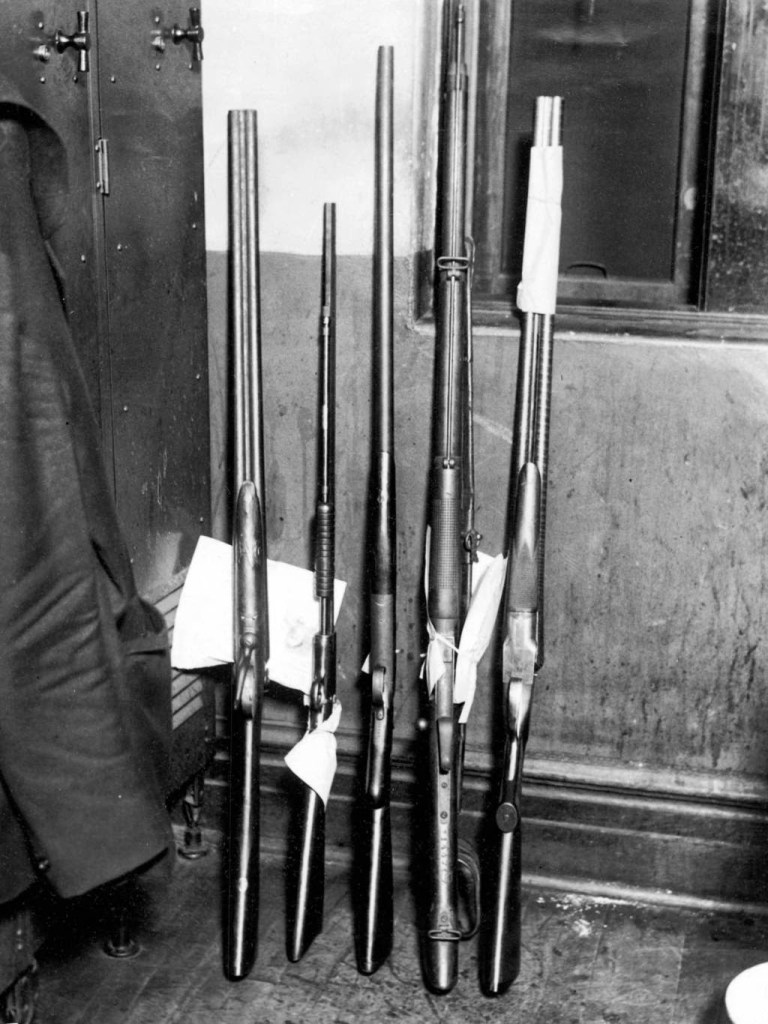
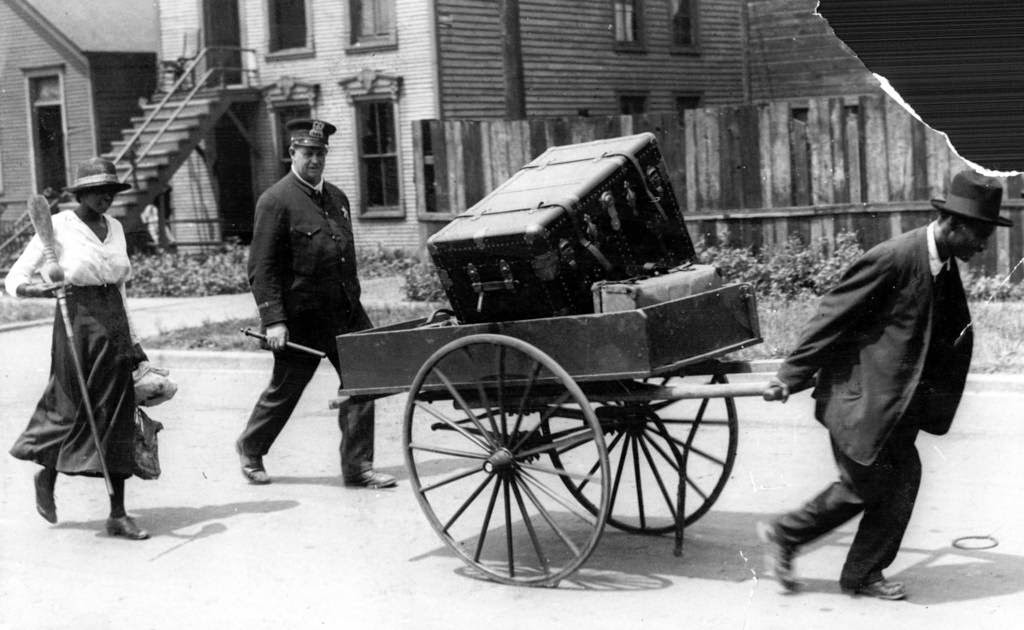
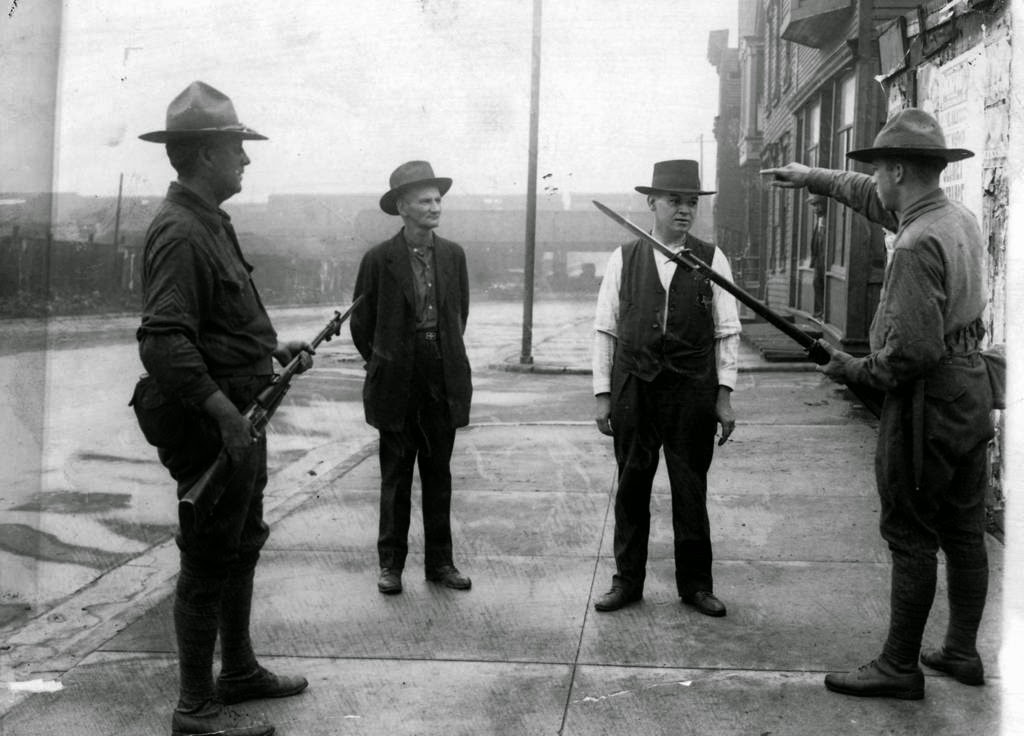
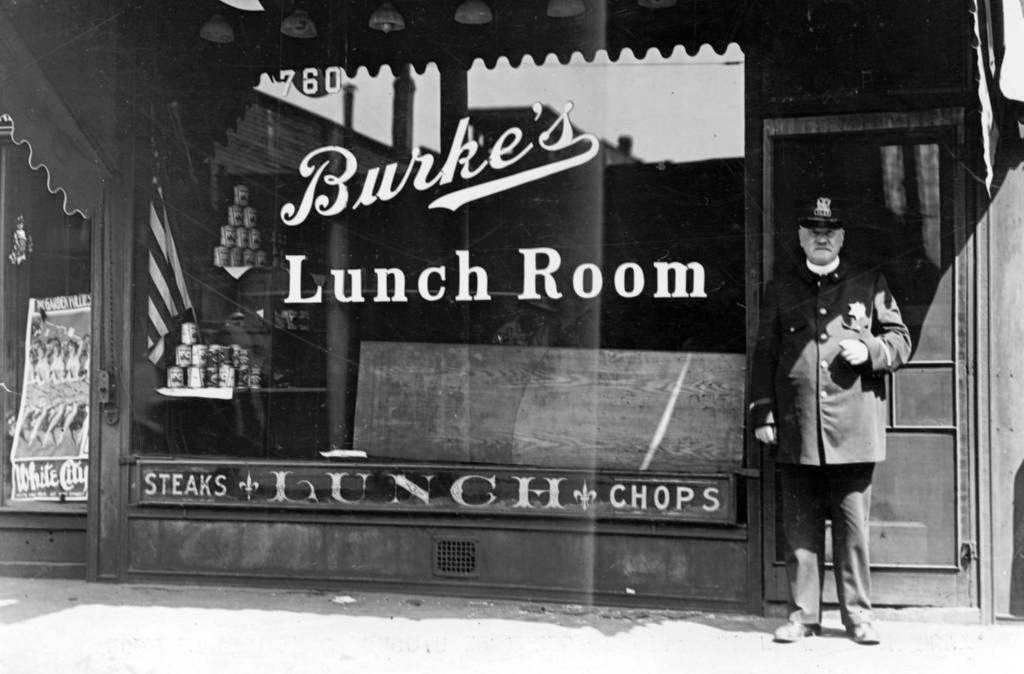
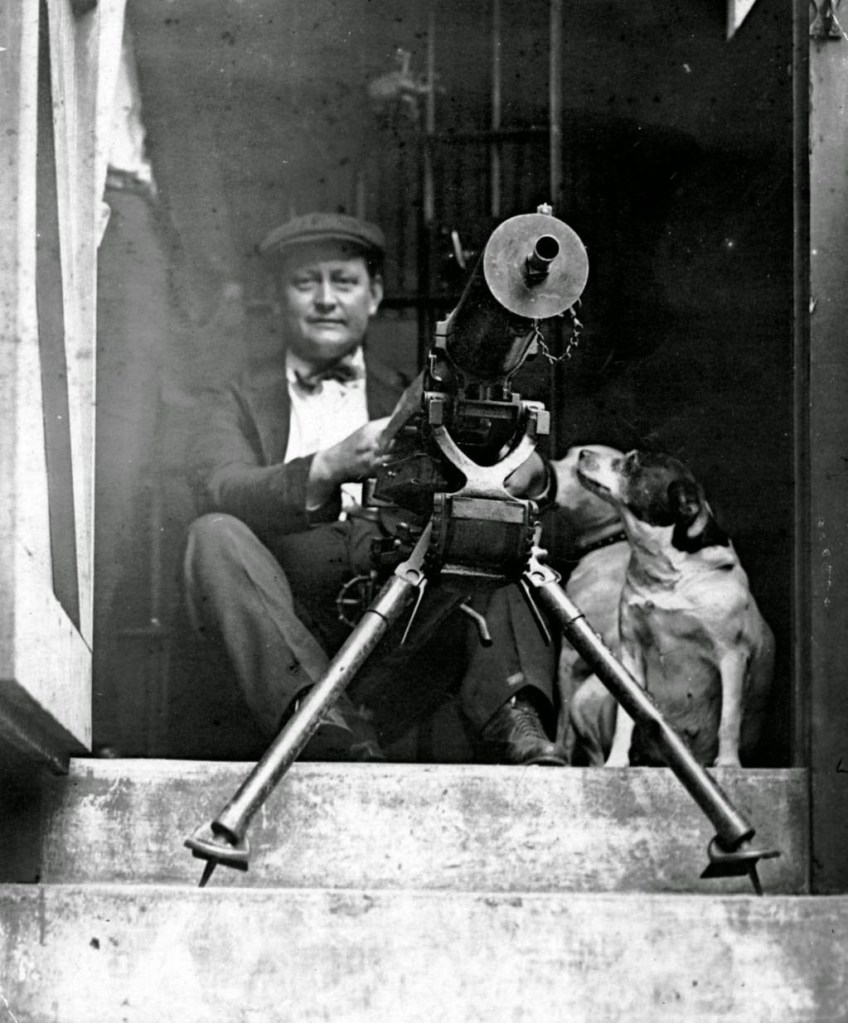
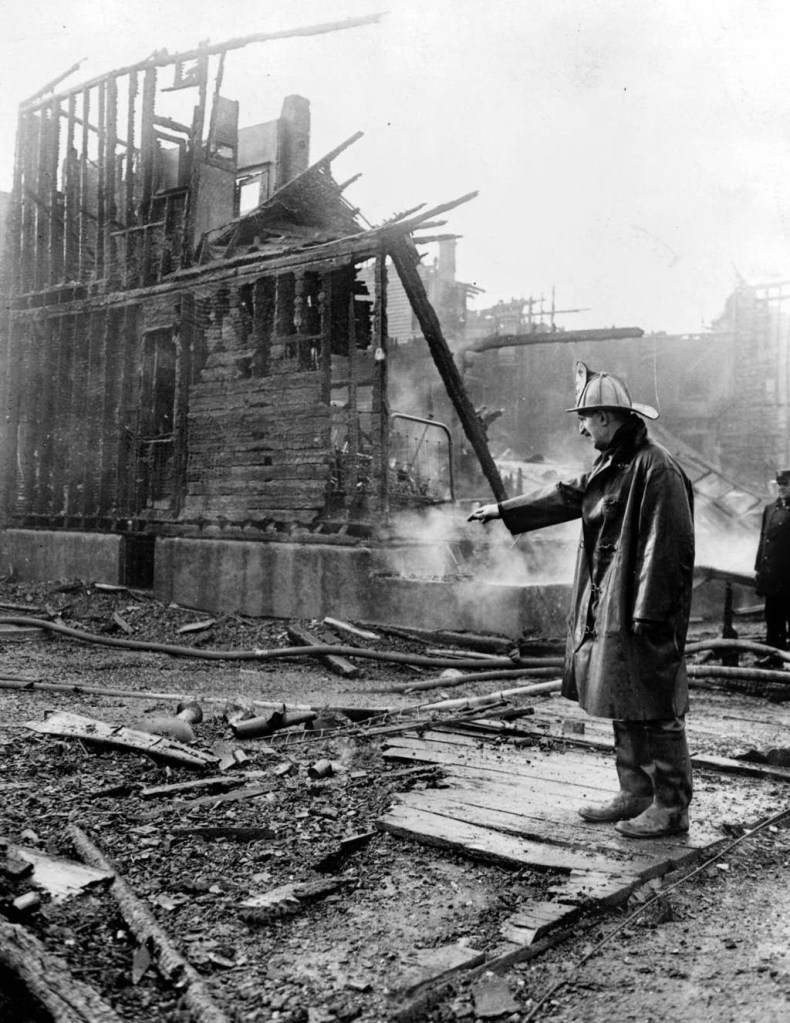
A member of the state militia faces off against an African-American veteran during the 1919 Chicago Race Riot. July 27, 1919.Vandalized first floor of houseTroops gather at 47th Street and Wentworth Avenue during the Chicago race riots in 1919The state run militia patrols the streets of Chicago during the race riot of 1919. Photo dated Aug. 1, 1919.1919 Race RiotPolice remove the body of a black man killed during the 1919 race riotsPeople moving from house, accompanied by policemen during race riotsMob chasing victim during race riotskids cheering a burning houseIllinois National Guard soldiers questioningHeavily armed motorcycle and foot policemen stood at the ready for instant transportation to quell the rioting on Chicago’s south side on July 30, 1919.Five policemen and one soldier with rifle standing on street corner in the Douglas Community area.Chicago DefenderChicago race riot of 1919.Chicago Daily TribuneBlack residents of the south side move their belongings with a hand-pulled truck to a safety zone under police protection during the Chicago race riots of 1919.A group of white men and boys examine the destroyed homes of black Chicago residents after the city’s 1919 riot.A soldier tells a man to back up during the race riots in Chicago in 1919. The soldiers were in place to keep white people in their own district.A police officer stands in front of Burke’s Lunch Room in the heart of Chicago’s business district July 30, 1919A man armed with a machine gun sits at the Cook County Jail during the 1919 Chicago race riots.A firefighter looks over a burned out building during the Chicago race riots of 1919.A black resident of the south side moves his belongings to a safety zone under police protection during the Chicago race riots of 1919
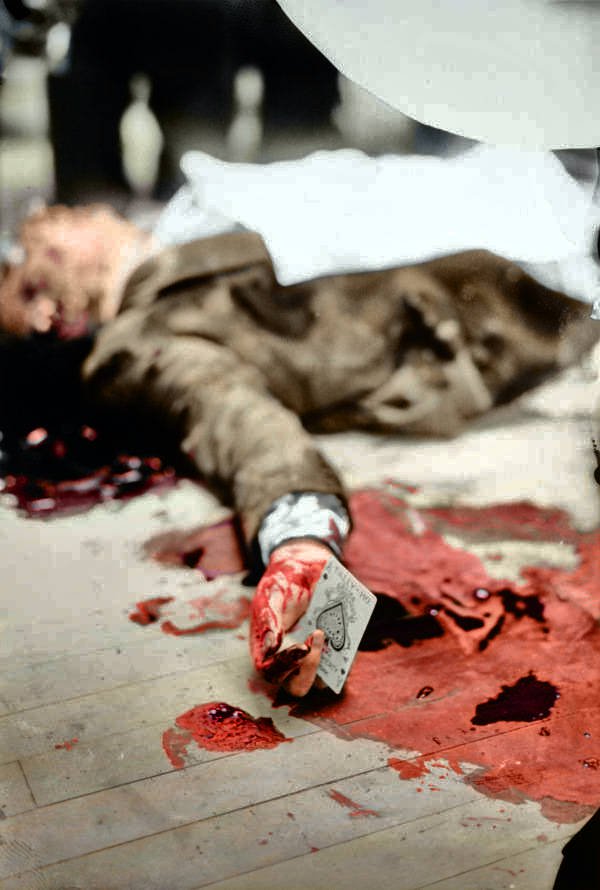
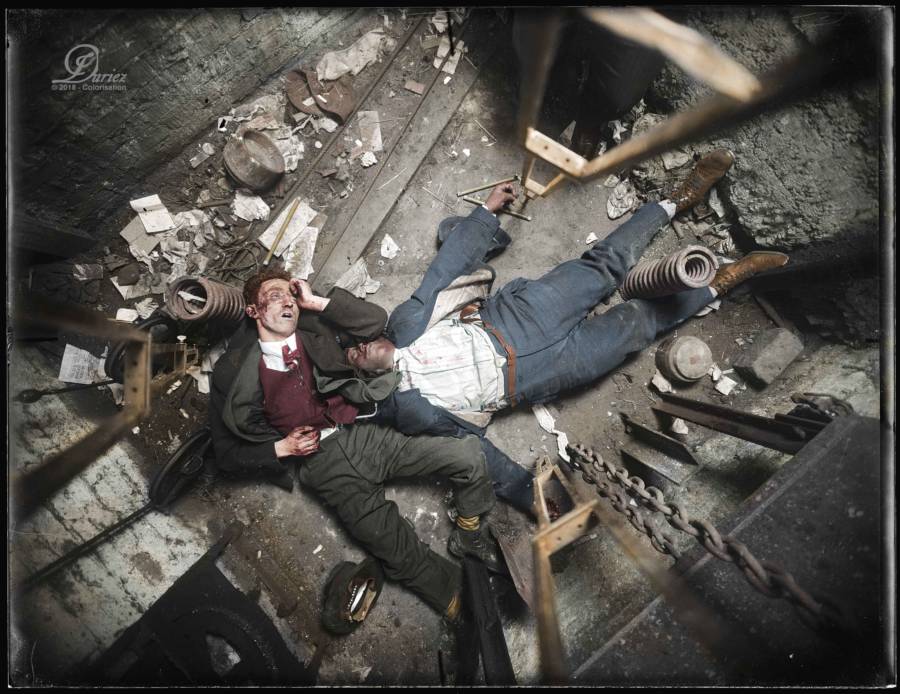
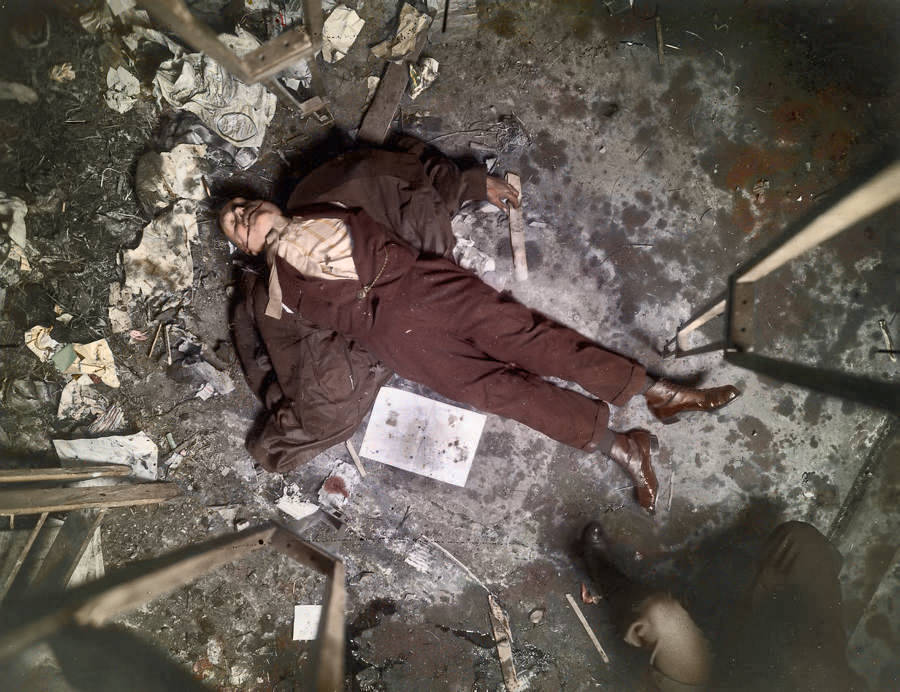
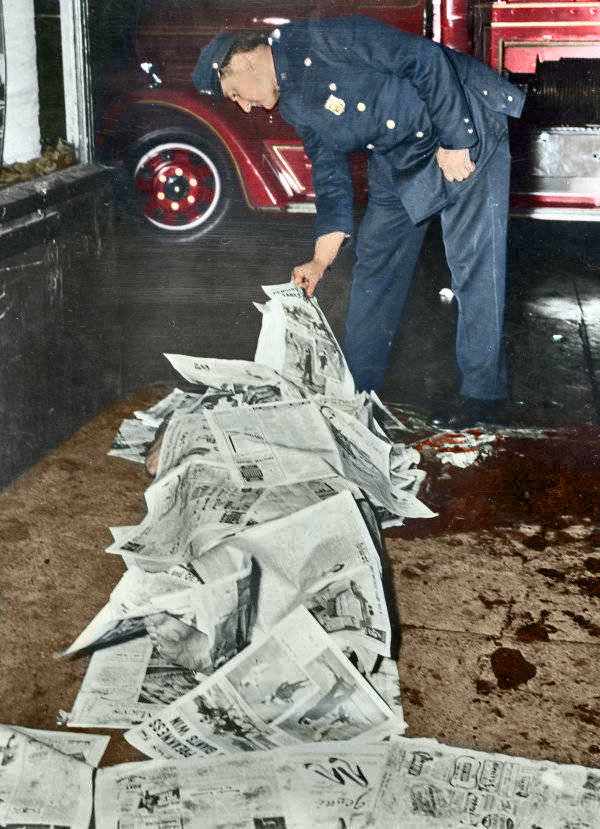
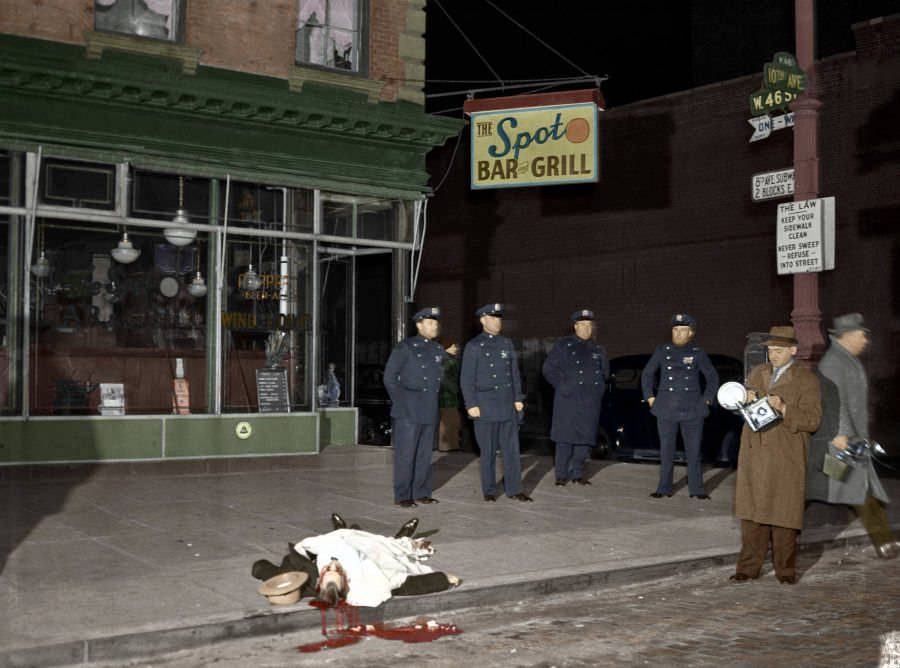
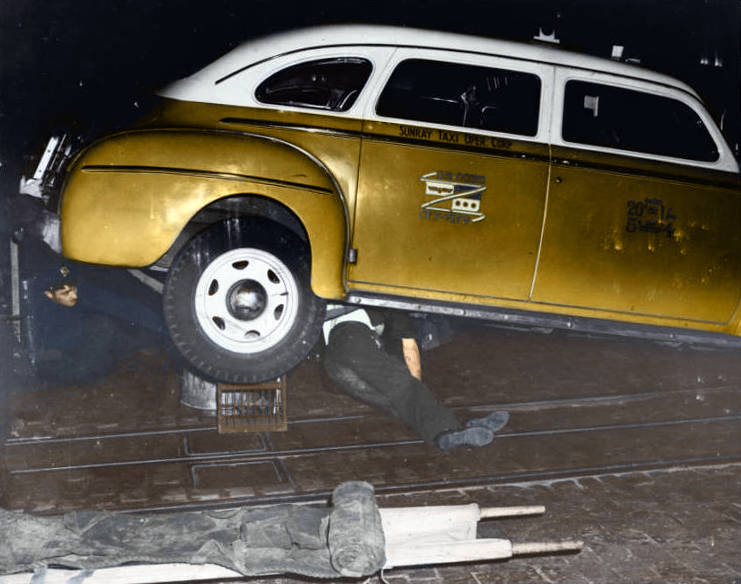
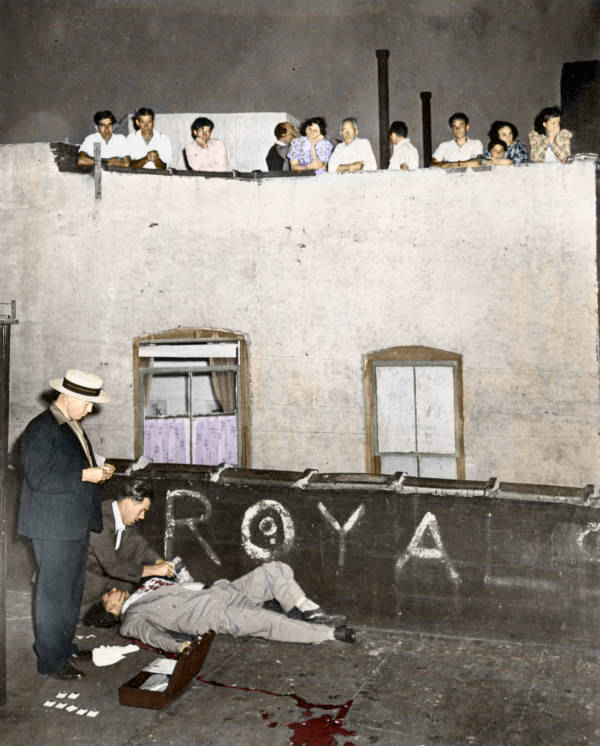
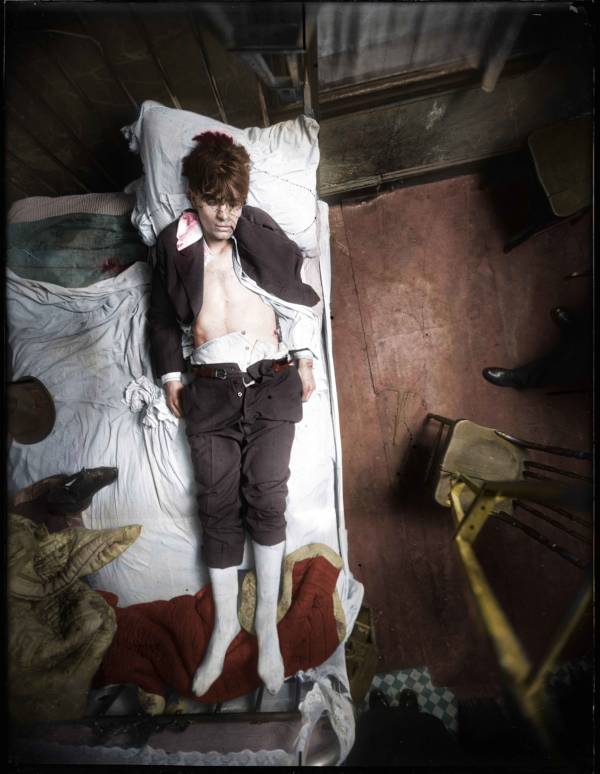
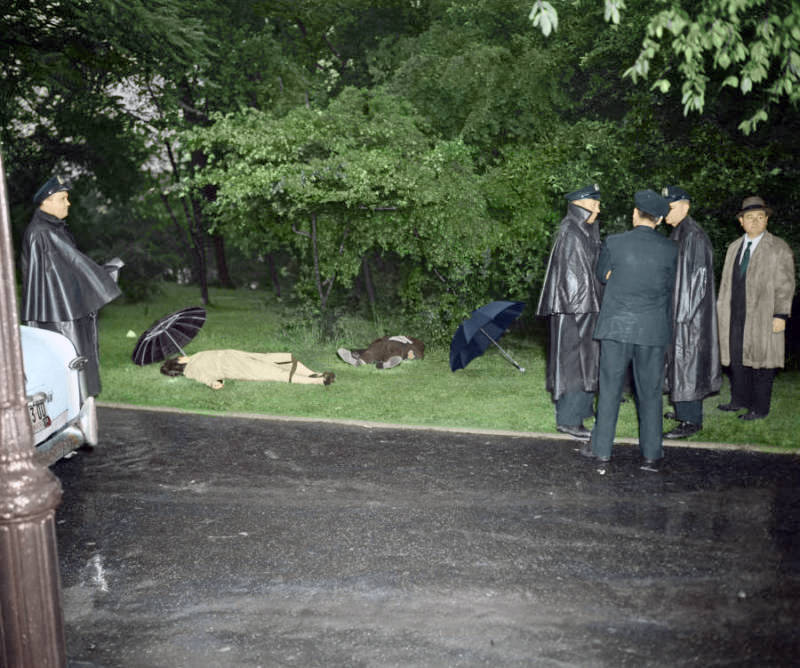
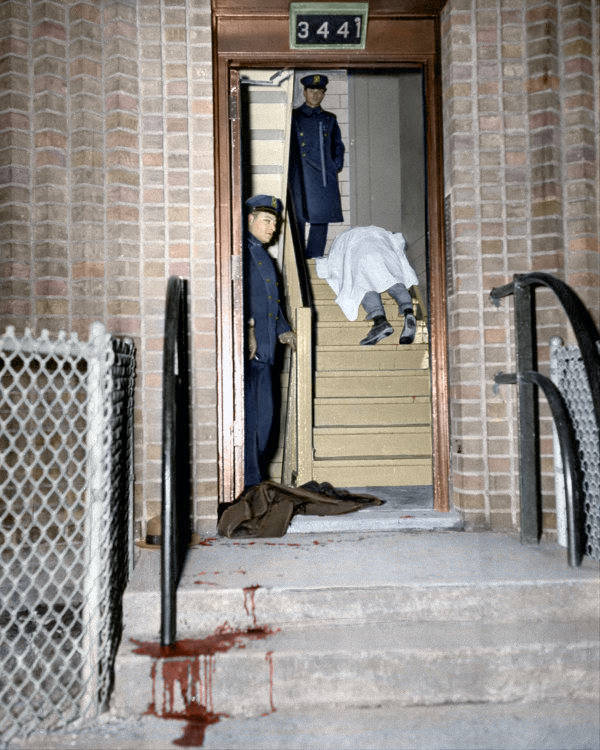
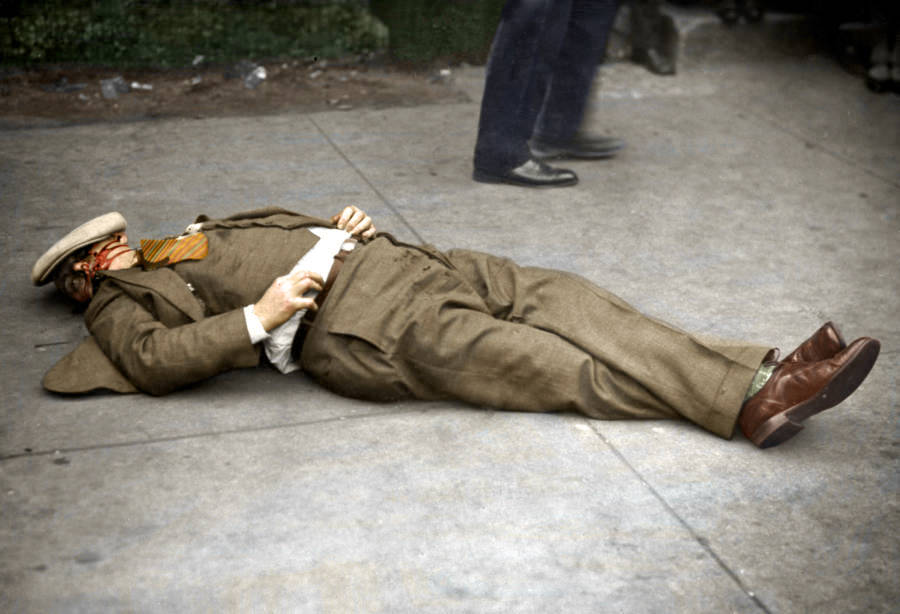
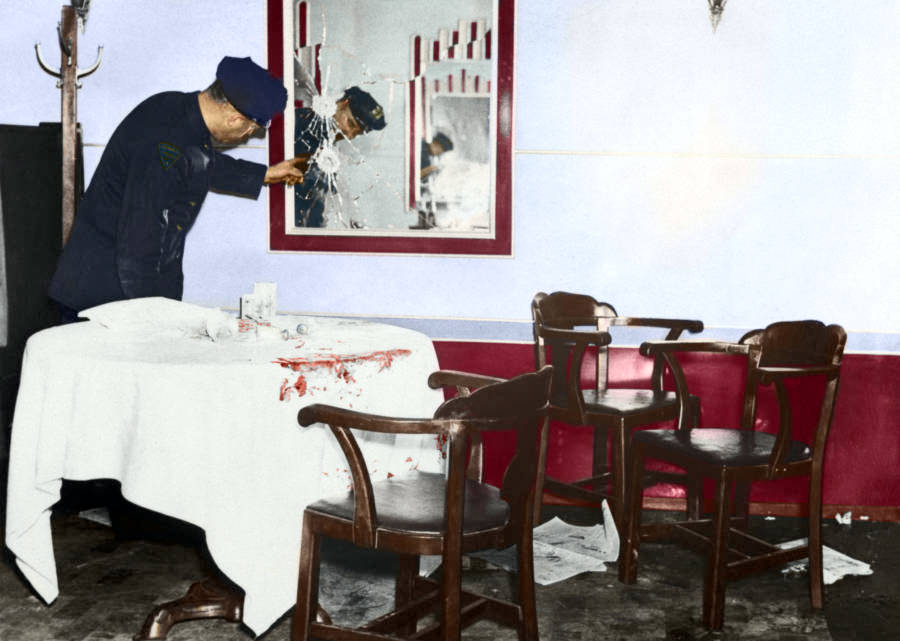
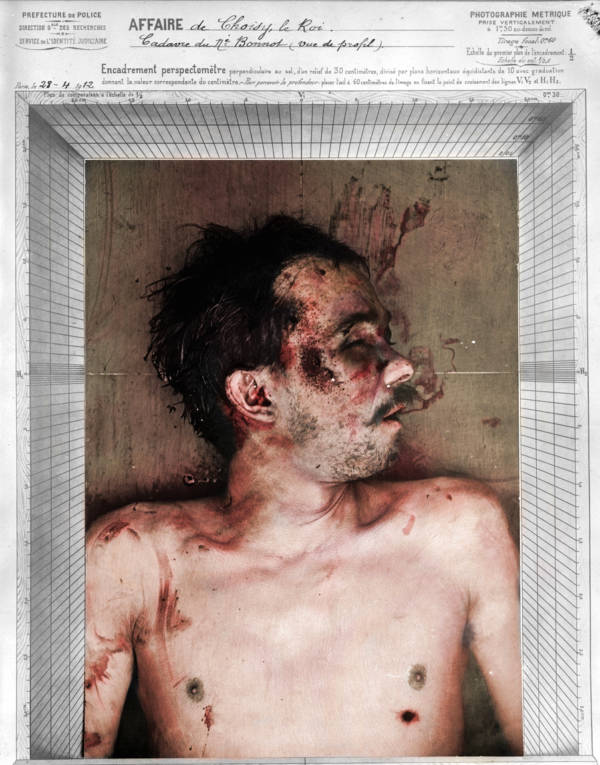
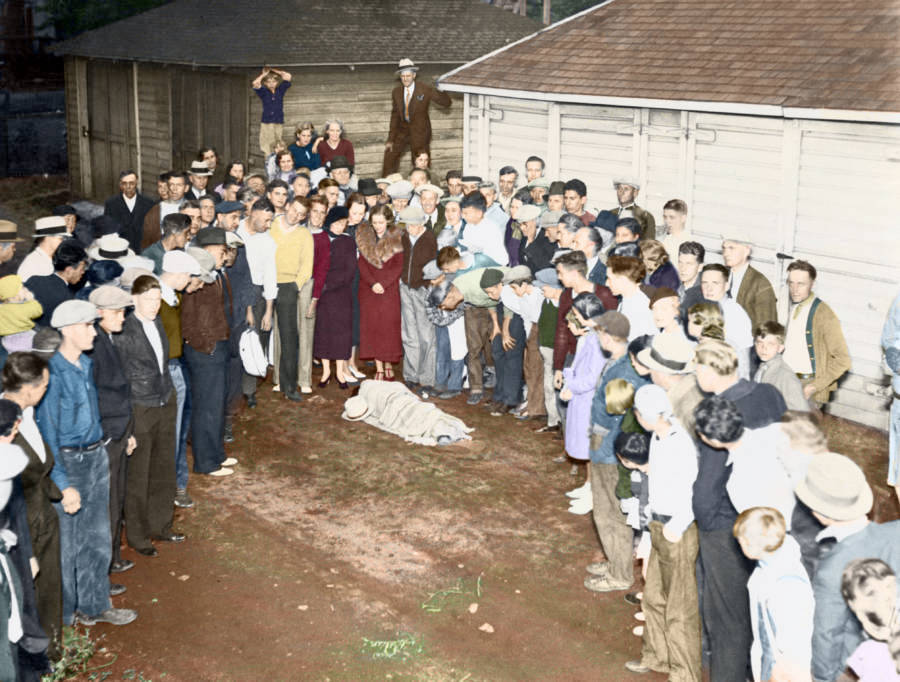
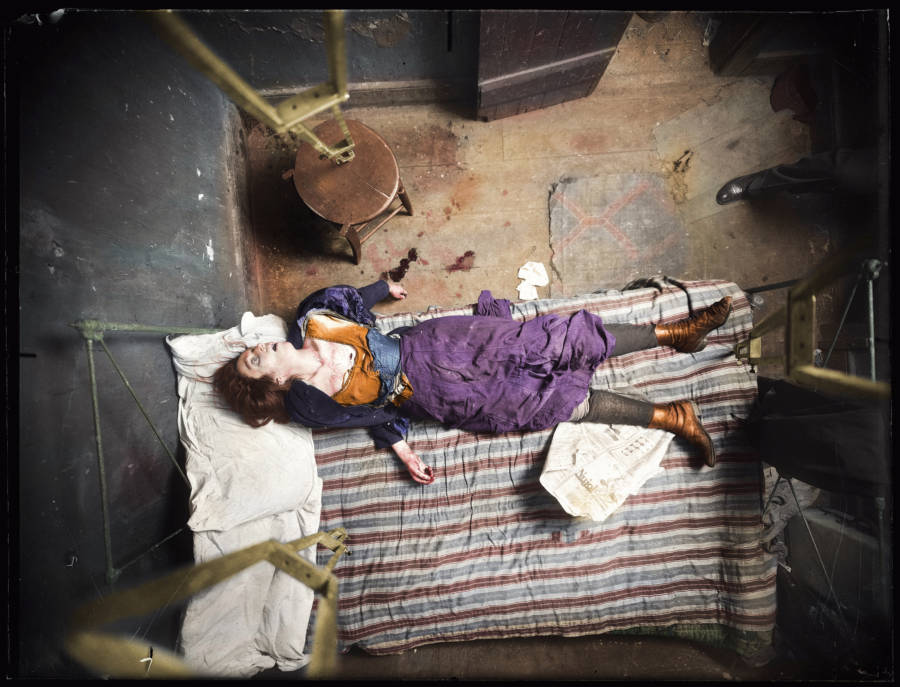
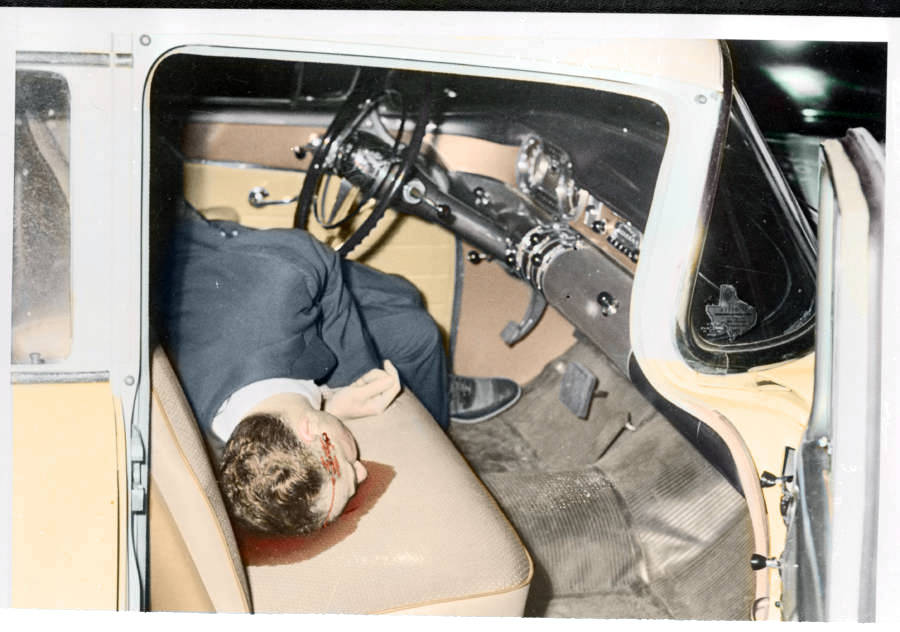
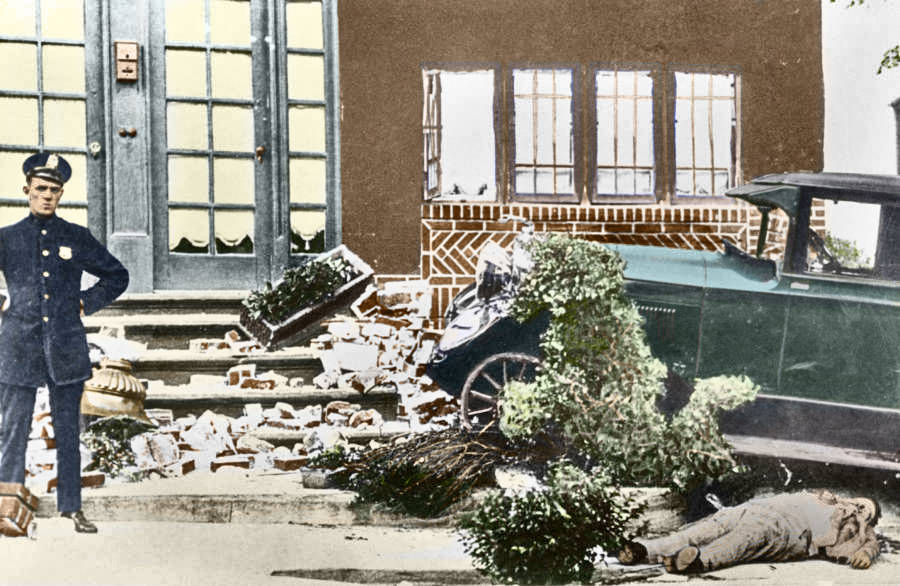
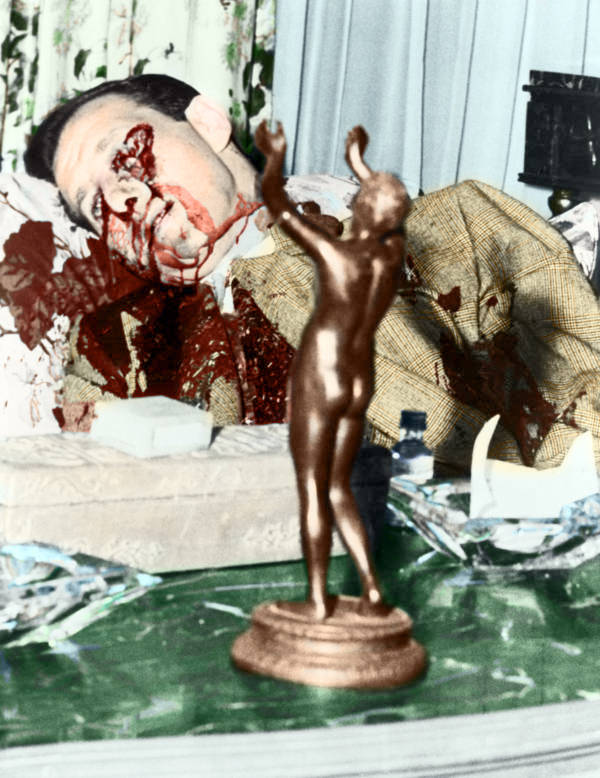
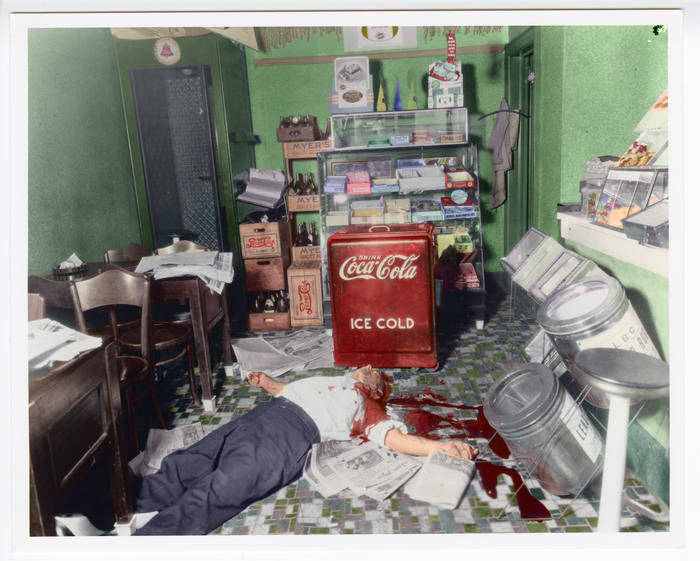
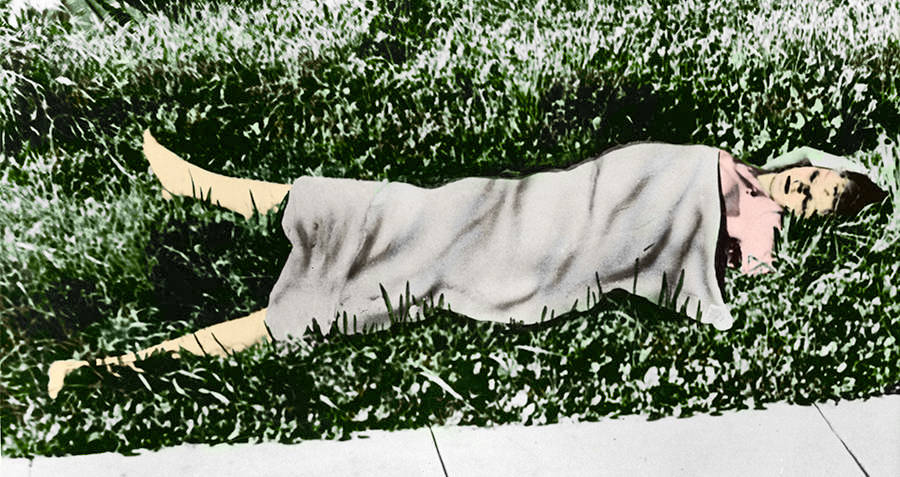
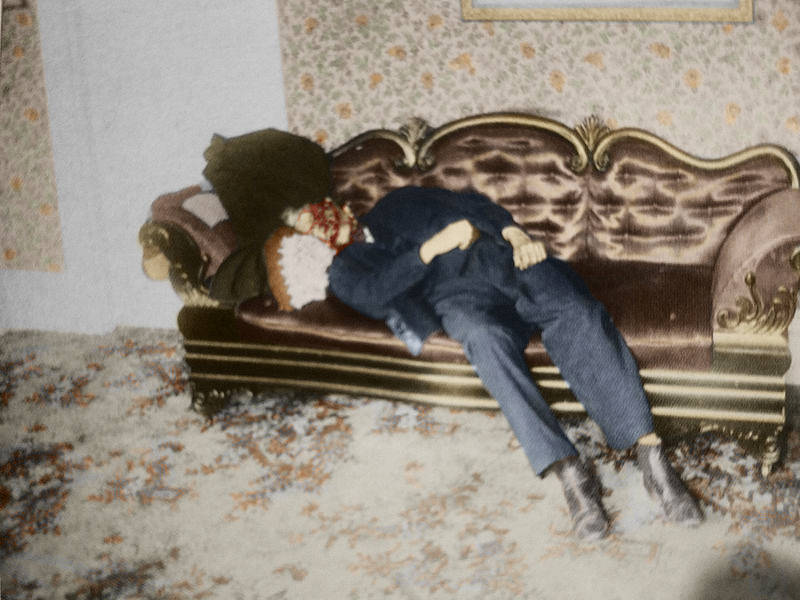
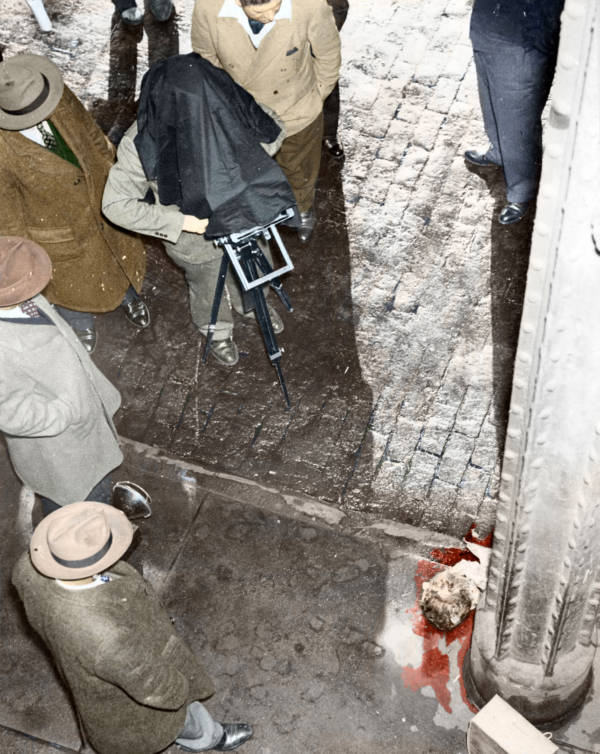
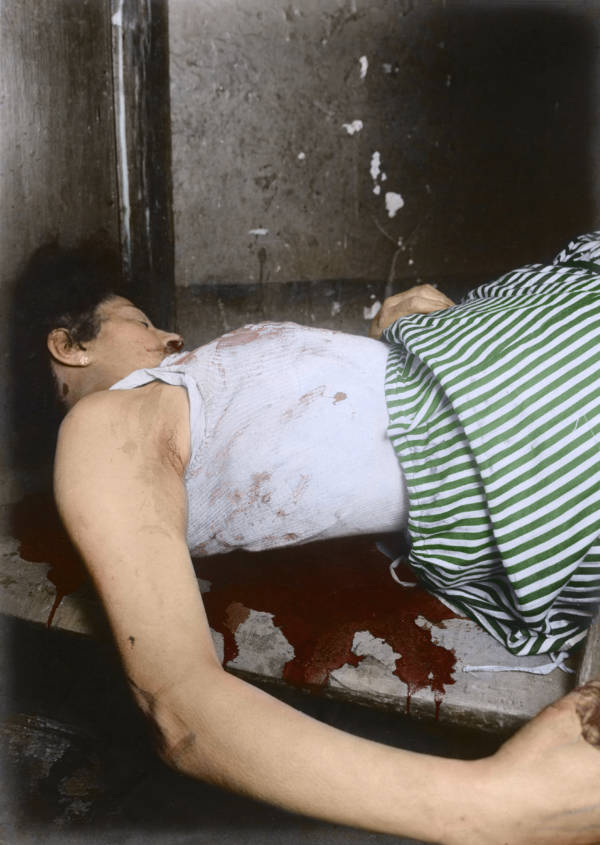
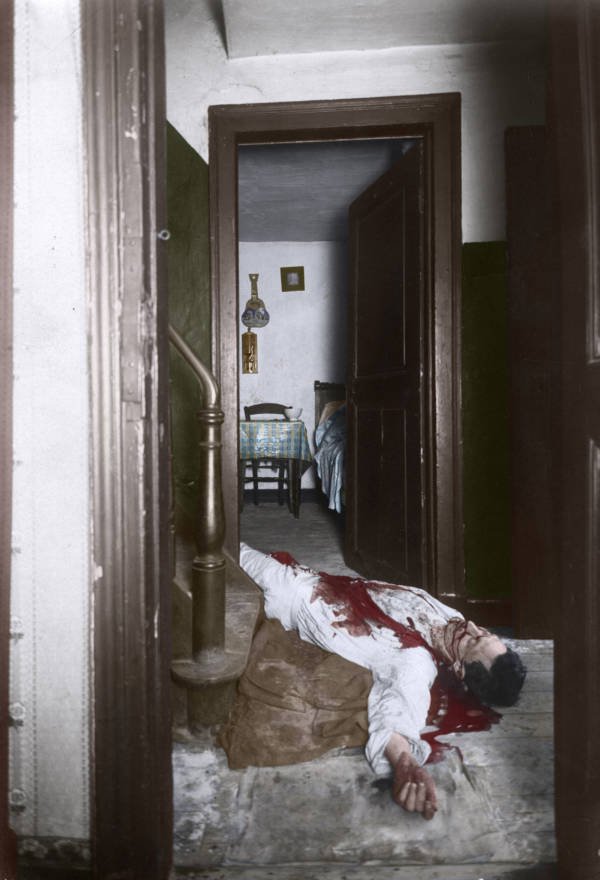
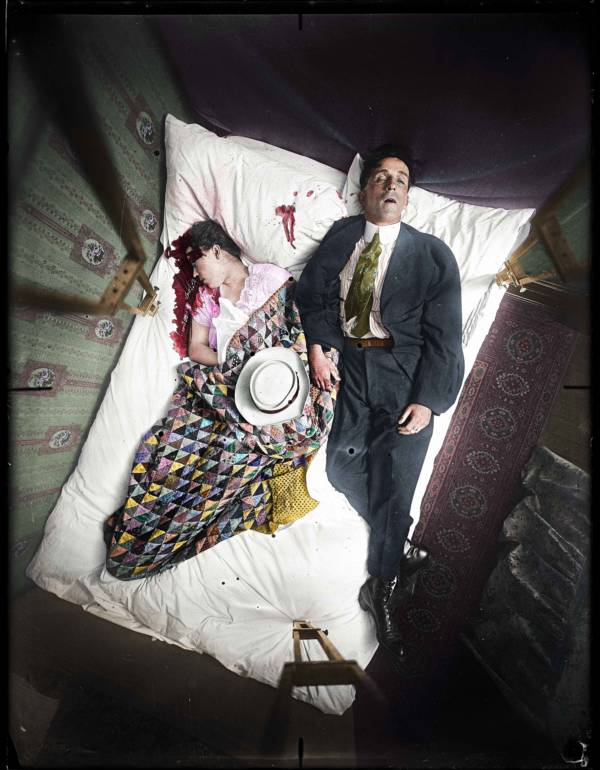
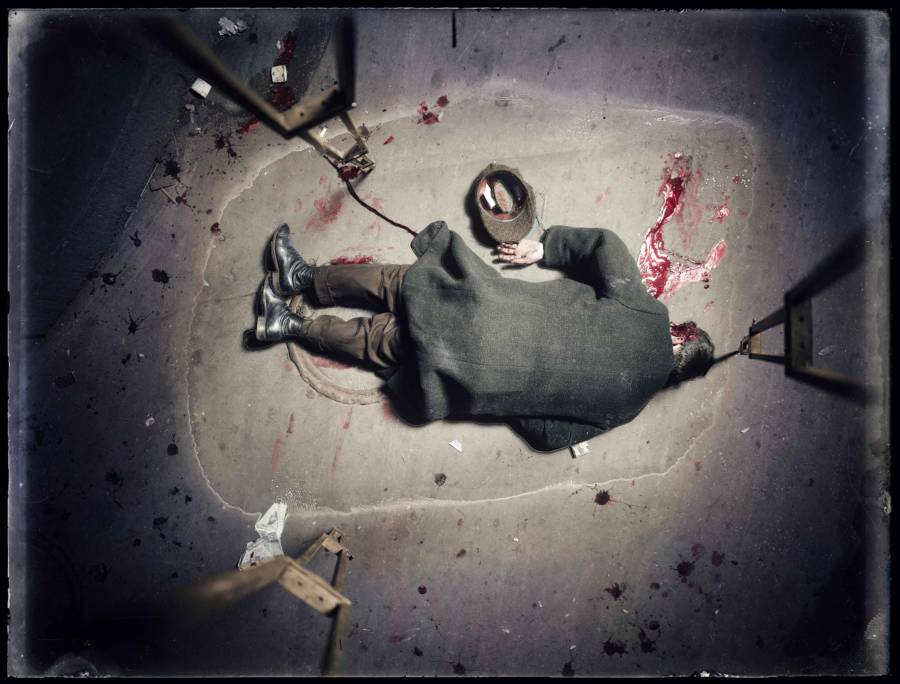
These colorized versions of vintage black-and-white crime scene photos reveal a unique perspective on the murders, mobsters, and mayhem of decades past.
Though we may not often think it, crime scene photography plays an important role in documenting history. These portraits are bloody, gruesome, even stomach-churning, but they also open a seldom-seen window into what life was like at the time.
Throughout a large portion of the 20th century in New York City, for example, organized crime ruled the streets of many of the city’s neighborhoods. And while the grisly stories of mob murders help reveal what those crime-ridden streets were like, the photos of those crime scenes truly bring the past to life.
Perhaps no crime scene photographer captured these horrors as well as Arthur Fellig, better known as Weegee. A Ukrainian immigrant who came to the United States at 10 and quit school at 14 to become a freelance photographer, Weegee soon made a name for himself as the go-to crime scene photographer in New York.
He seemed to have a sixth sense about when and where a crime was going to take place and always seemed to be the first on the scene. Of course, it turned out that Weegee didn’t actually possess any superhuman abilities, just a police scanner. Nevertheless, his photographs of New York City murders, suicides, fires, and so much more remain legendary to this day.
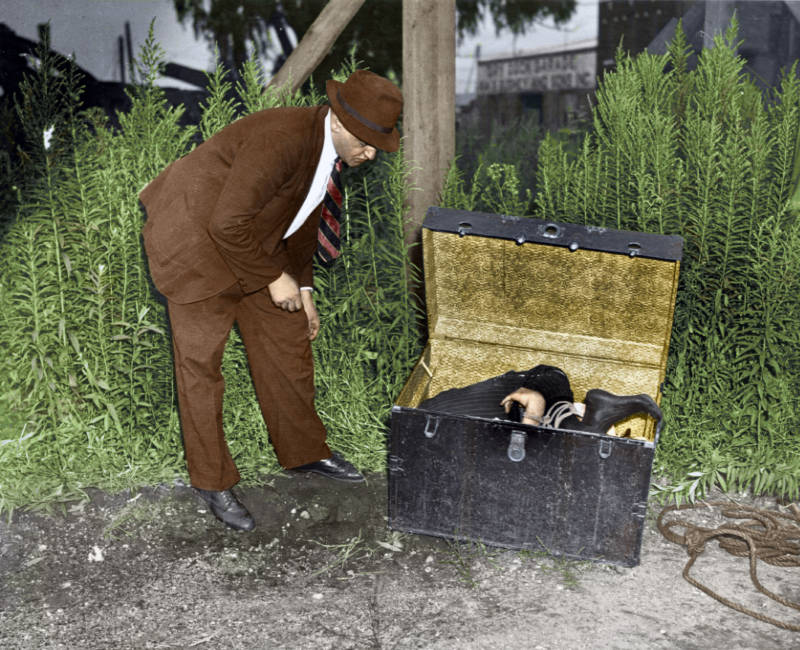
Through it all, Weegee’s twisted sense of humor also helped cement his iconic status. In 1936, he arrived at a crime scene to photograph a dead man whose body had been stuffed into a trunk. For obvious reasons, the photo was too graphic to be printed in a newspaper, so Weegee decided to employ a bit of dark humor for his shot: He snapped a shot of himself looking into the trunk, which took the focus of the photo off of the mutilated body and placed it on himself and made the audience feel as if they were behind the lens themselves.
Whether Weegee was involved or not, plenty of history’s most evocative crime scene photos come with macabre little stories just like these. And some of these photos come with macabre stories of a much larger scale.
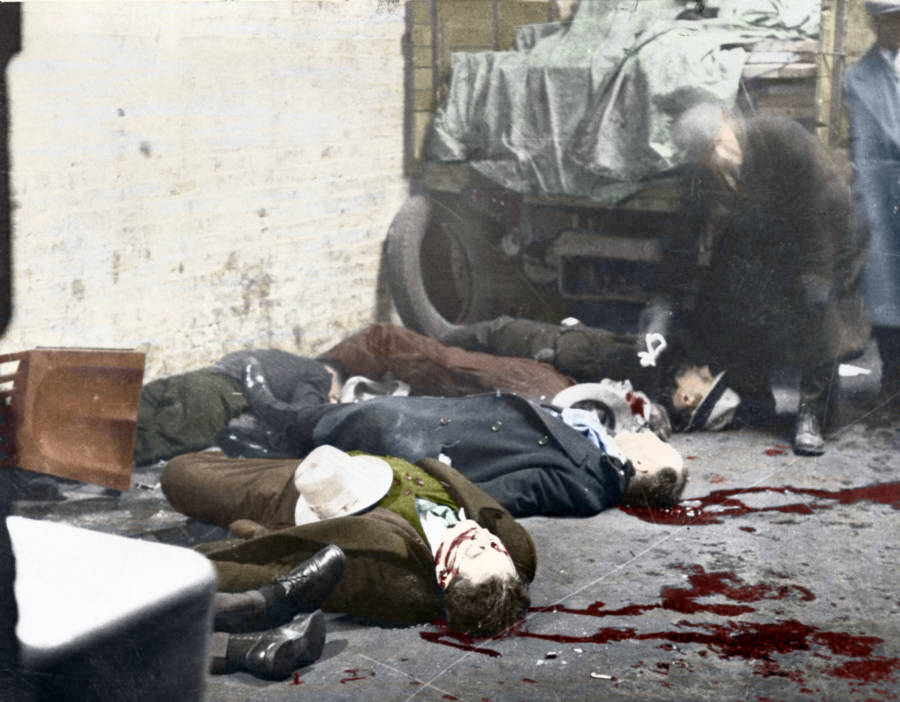
Take, for example, the infamous photos of an entire row of bodies lined up along a wall and riddled with bullets in a Chicago garage on Feb. 14, 1929. These photos are not only gruesomely striking in their own right, they are also a glimpse at the aftermath of perhaps the most notorious gangland slaying in American history. Known as the St. Valentine’s Day Massacre, the hit saw gunmen employed by Al Capone round up and slaughter seven members of the rival North Side Gang.
Then there’s the photo of Joseph Rosen, gunned down in his candy store on September 13, 1936, in Brooklyn. The photo itself is bloody — as is the bloody story associated with it. After police were able to link the brutal slaying to gangster Louis “Lepke” Buchalter, Rosen’s murder set off a chain of events that would cause the downfall of the most fearsome and lethal ring of hitmen in New York’s history: Lepke’s Murder Inc.
But whether such stories lurk behind these photos, vintage crime scene images remain a powerful window into the past. And especially when they’re brought to life in stunning color, they can transport us back to another time and show us what the city streets were once like in all their grisly glory.
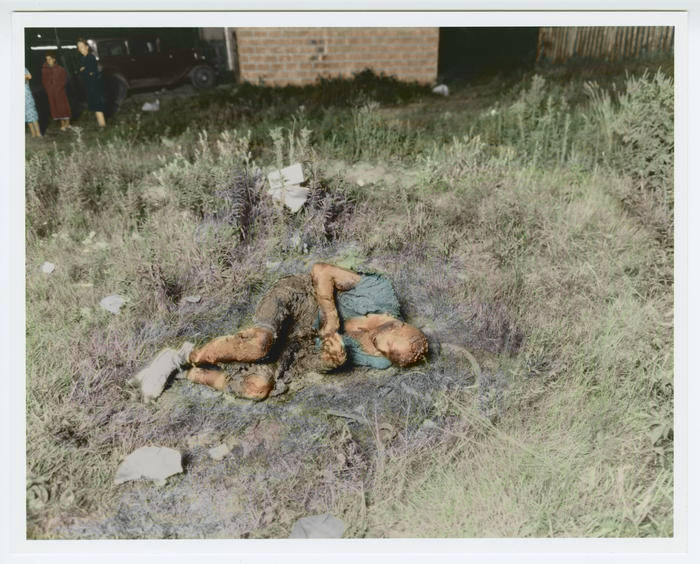
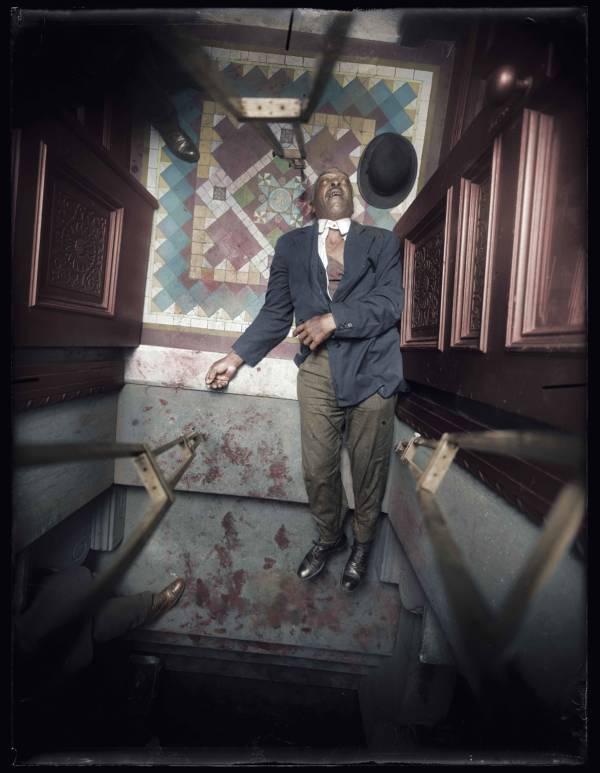
Mafia kingpin Joe Masseria holds the ace of spades, “the death card,” in his hand following his murder on the orders of infamous gangster Charles “Lucky” Luciano in a Coney Island restaurant. 1931.The bodies of two would-be thieves named Robert Green and Jacob Jagendorf after a failed robbery attempt that ended when they accidentally fell down the building’s elevator shaft. New York. 1915.Unspecified New York murder scene. 1916.A New York police officer takes a peek at a dead body covered with newspapers. 1943.Murdered gangster David Beadle, also known as “David the Beetle,” in front of The Spot Bar and Grill in Manhattan. 1939.A police officer crouches under the rear end of a taxi jacked up on a crate and garbage can as the dead body of a man who was hit by the cab lies underneath. 1943.Forensic detectives take the fingerprints of murdered store owner Joseph Gallichio, as he lies on the roof beside his cage of racing pigeons. New York. 1941.The body of a man named Antonio Pemear, who was found murdered in his bed in Brooklyn. 1915.Scene of a murder-suicide in New York’s Central Park. 1952.Two police officers with a dead body in a New York apartment stairwell. 1957.The Saint Valentine’s Day Massacre, in which seven members of the North Side Gang were trapped in a garage, lined up against the wall, and shot to death by members of Al Capone’s rival gang during a power struggle for control of Chicago. 1929.The body of Earl “Hymie” Weiss, leader of Chicago’s North Side Gang. He was killed when Al Capone’s men opened fire with a submachine gun on him and his associates while they were visiting a courthouse where an ally of his was on trial. 1926.The murder scene of Arthur “Dutch Schultz” Flegenheimer, a powerful New York gangster in the 1920s and ’30s who was ultimately killed in Newark, New jersey by an assassin hired by the Mafia Commission. The Commission had denied Schultz’s request to murder the prosecutor that was targeting him. When he disobeyed and attempted the murder anyway, the Commission had him killed. 1935.Close-up of a corpse’s battered and bloodied face. Angres, France. 1912.The dead body of Homer Van Meter, an associate of John Dillinger and a notorious bank robber, who was killed after fleeing police in St. Paul, Minn. 1934.A young woman dead in her bed. Circa 1930.The dead body of Al Capone associate Charles “Cherry Nose” Gioe, who was shot through the head by mafia hitmen hired by a Chicago mob boss whose plans Gioe had unknowingly interfered with. 1954.The body of Brooklyn mobster Frankie Yale. He was killed by unidentified rival gangsters following a car chase through the streets of New York. 1928.The body of mobster Benjamin “Bugsy” Siegel, who was killed by an unknown assailant who shot him through a window with an M1 Carbine while he was staying at an associate’s house in Beverly Hills. 1947.The burnt body of gangster Irving Feinstein, who was set on fire by Murder Inc. killers Harry Strauss and Martin Goldstein and left exposed in a lot in New York City. 1938.The dead body of Joseph Rosen, a candy shop owner who was killed by Murder Inc. leader Louis “Lepke” Buchalter in his own store in Brooklyn. 1936.The naked corpse of American aspiring actress and murder victim Elizabeth Short, known as the “Black Dahlia,” lying in a vacant lot in Los Angeles. 1947.The dead body of Andrew Borden, father of Lizzie Borden, in his house in Fall River, Mass. 1892.Newspaper photographer Arthur Fellig, better known as Weegee, examines a body stuffed into a trunk and deposited on a patch of waste ground in New York. Circa 1945.Weegee photographs a human head at the scene of a murder. Circa 1945.A French crime scene. Circa 1930.A dead man at the foot of a staircase in a French crime scene. 1912.A photo of a bloodied couple lying dead in bed in New York. 1915.An unidentified murder victim. Circa early 20th century.An unidentified dead man in New York City. Circa early 20th century.
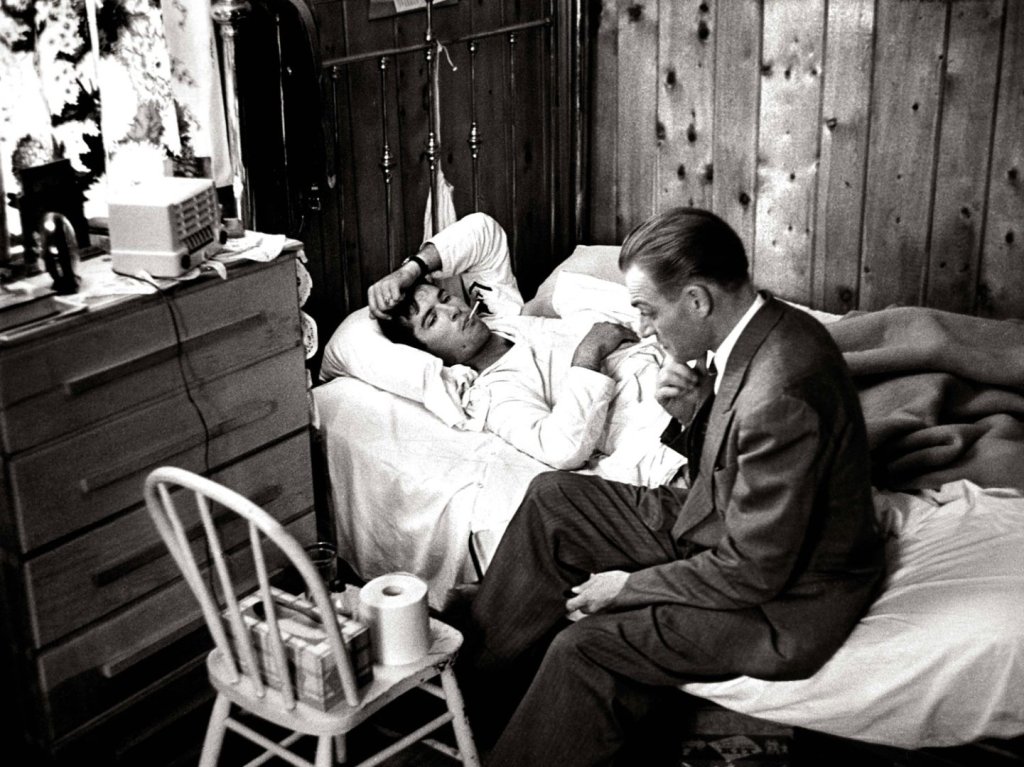
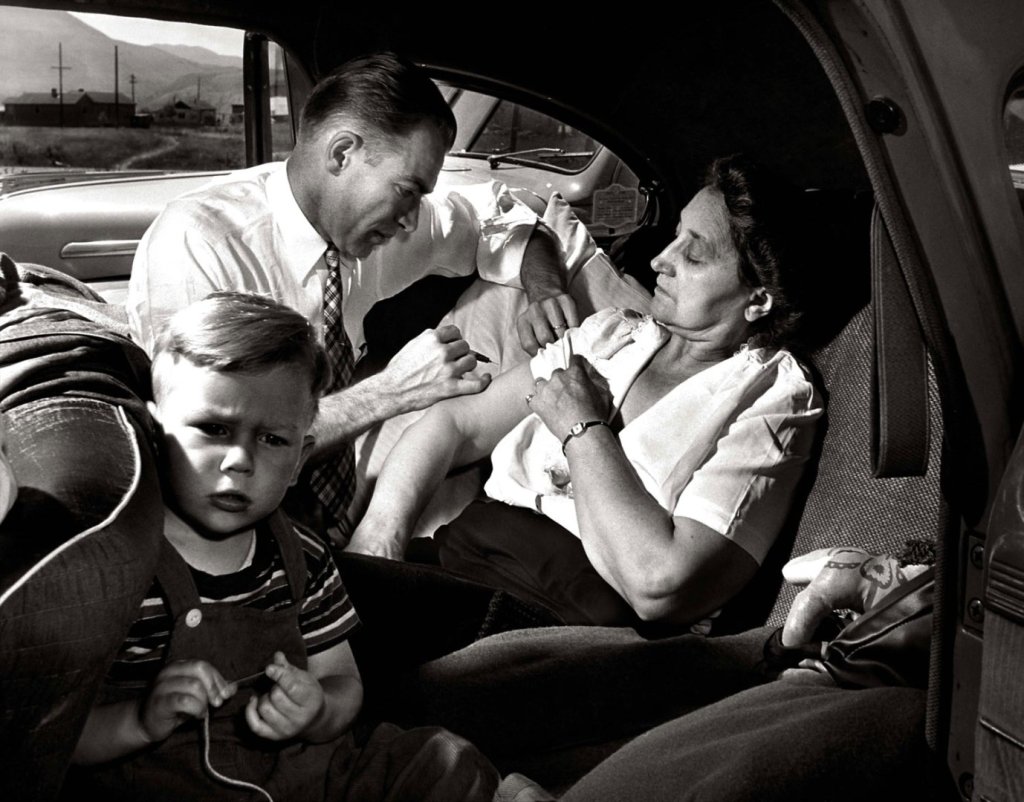
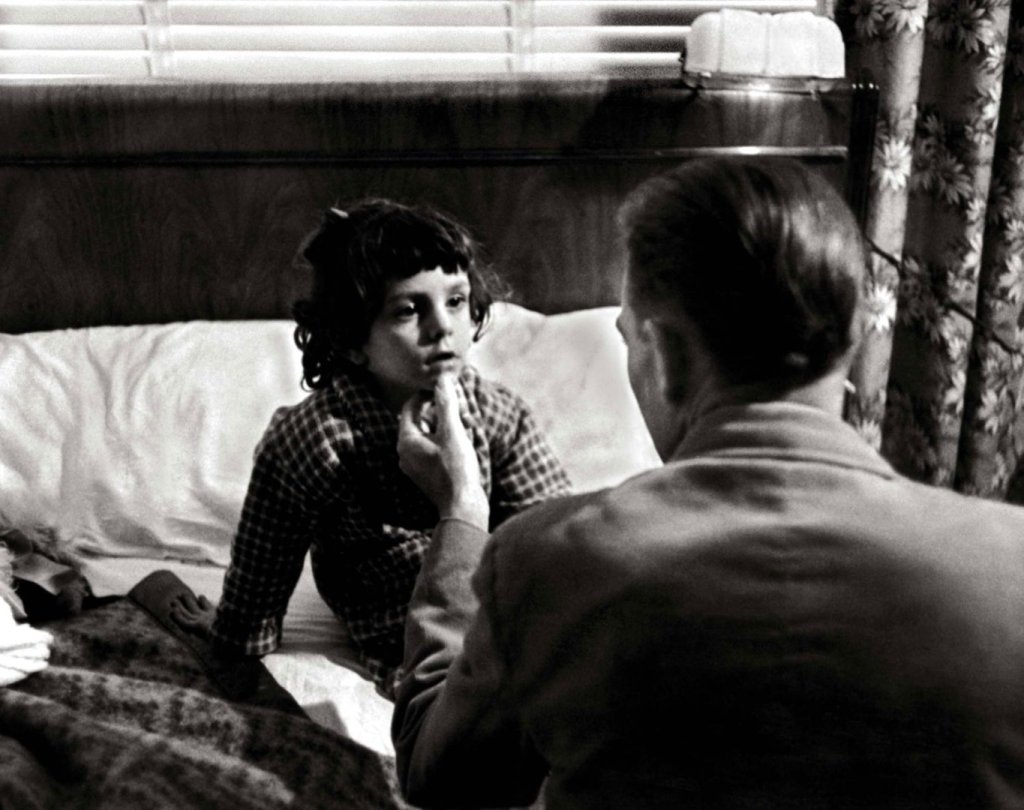
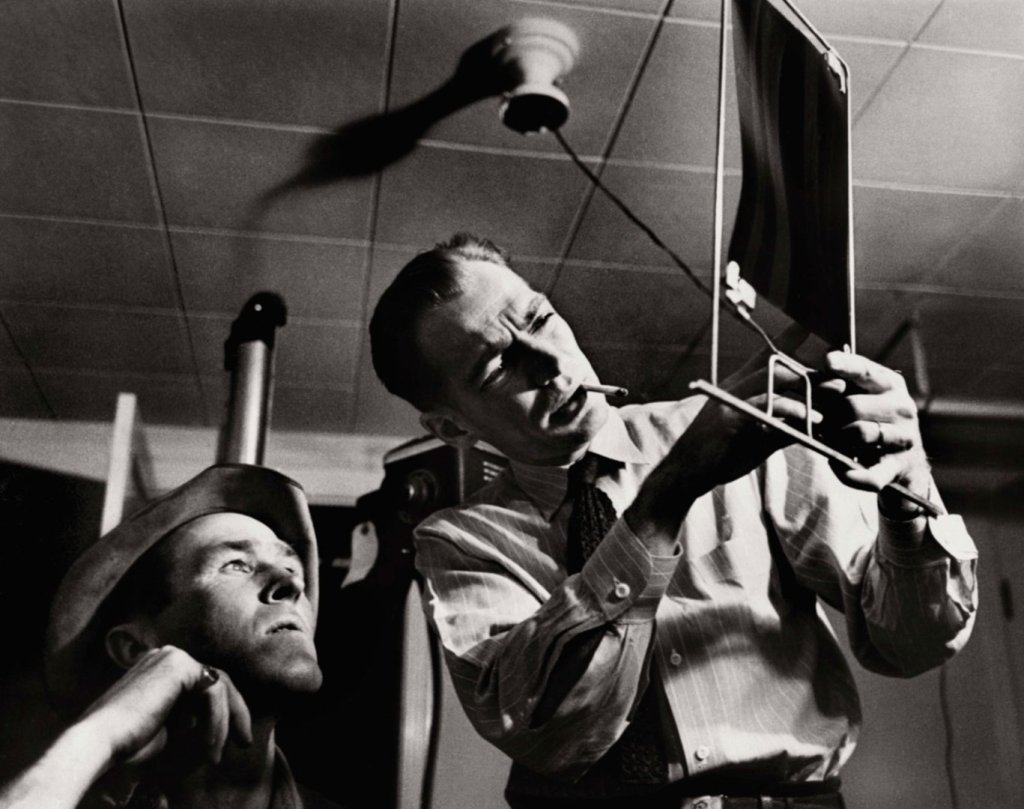
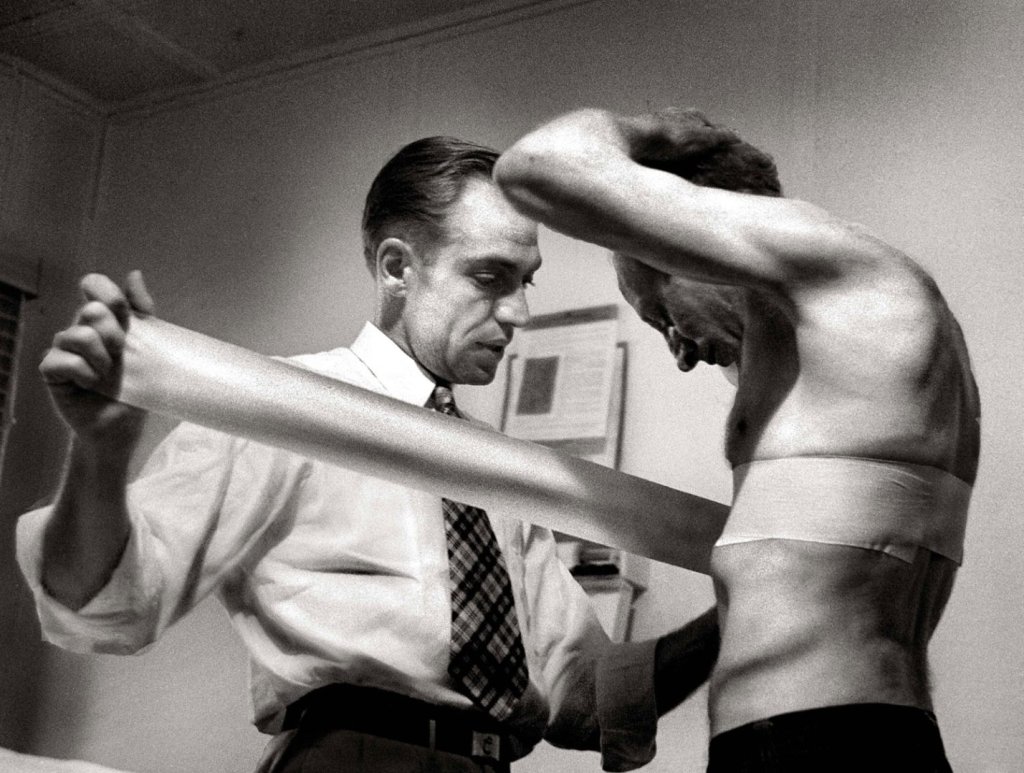
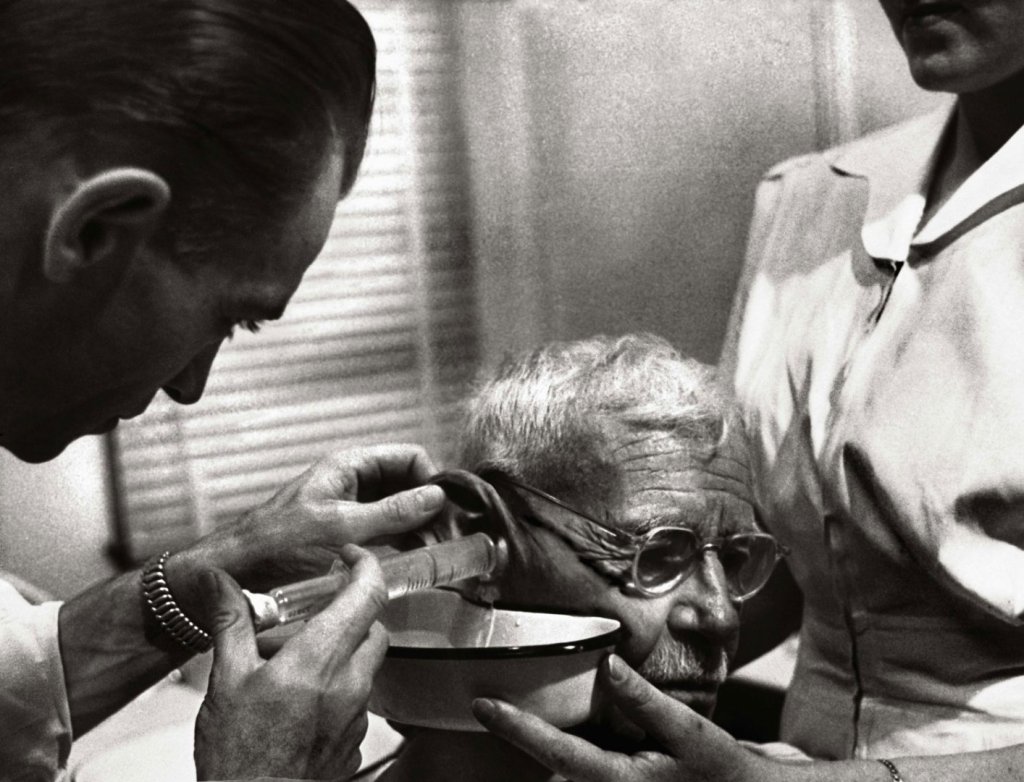
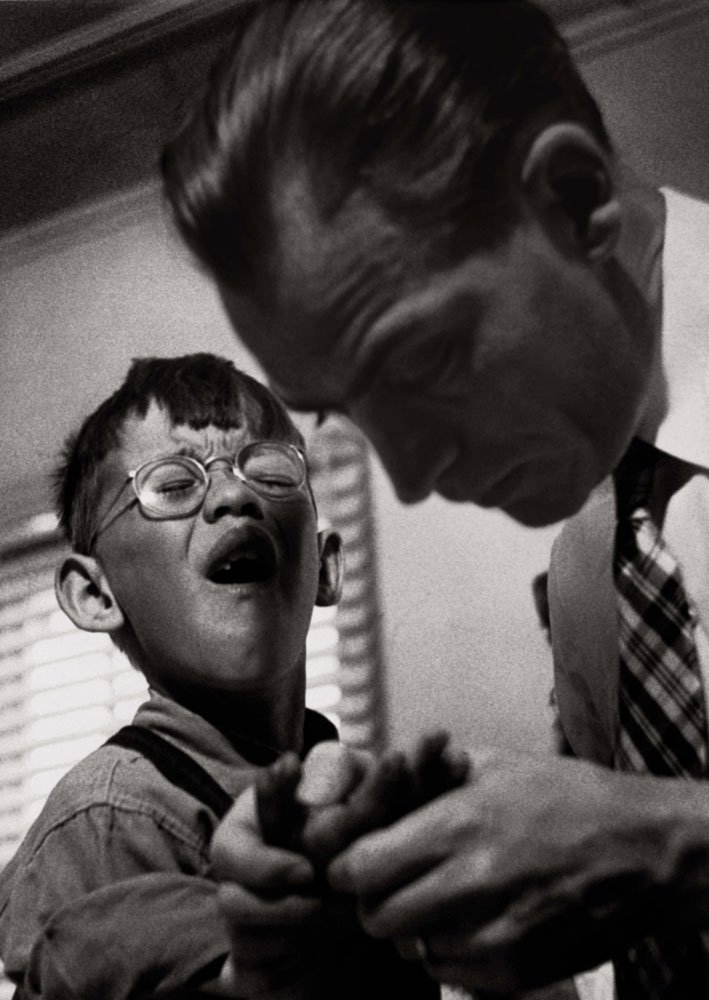
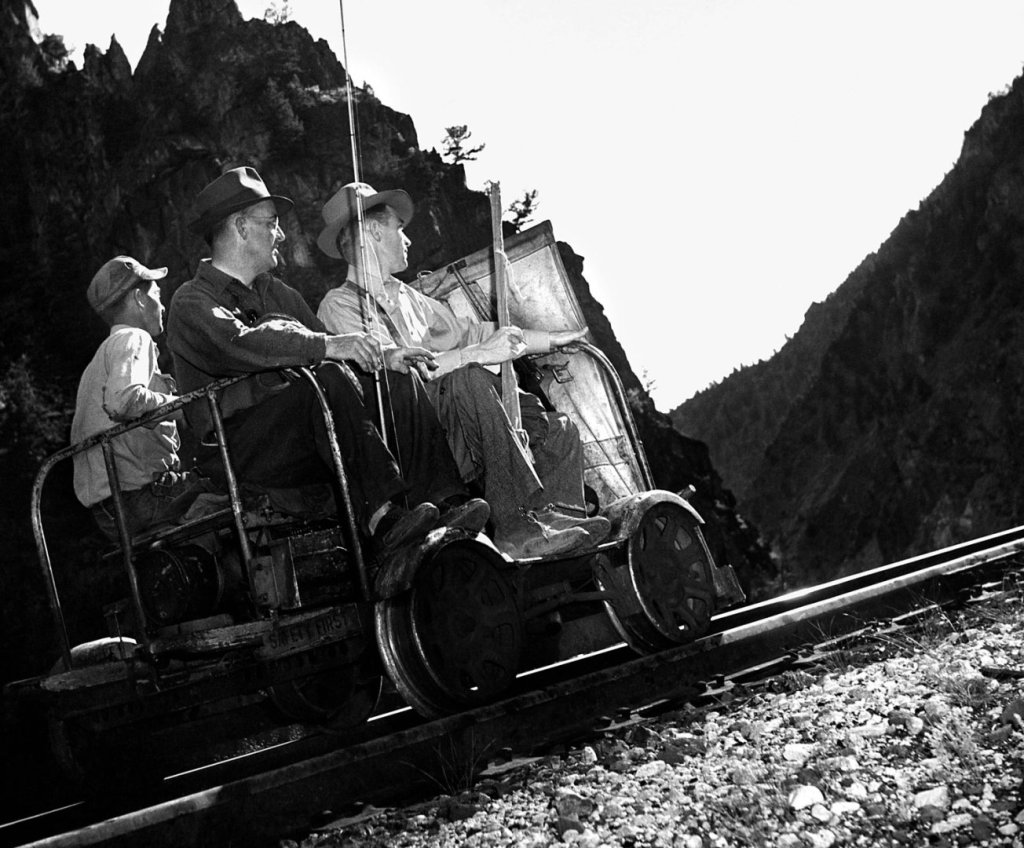
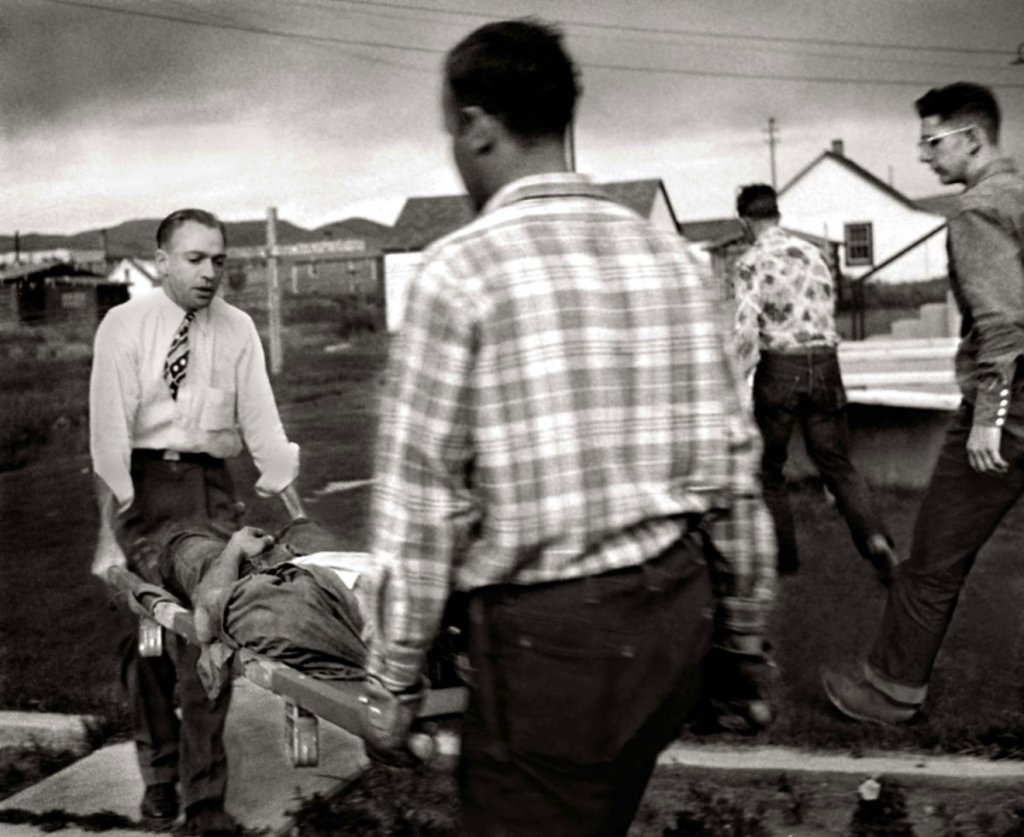
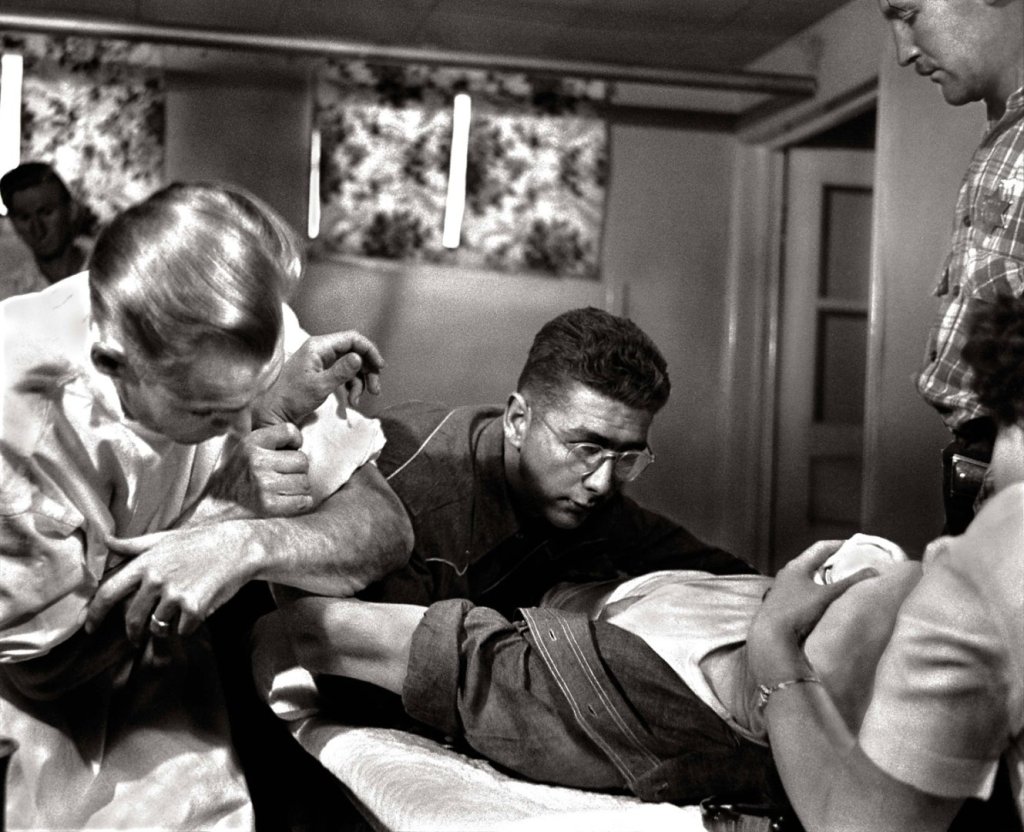
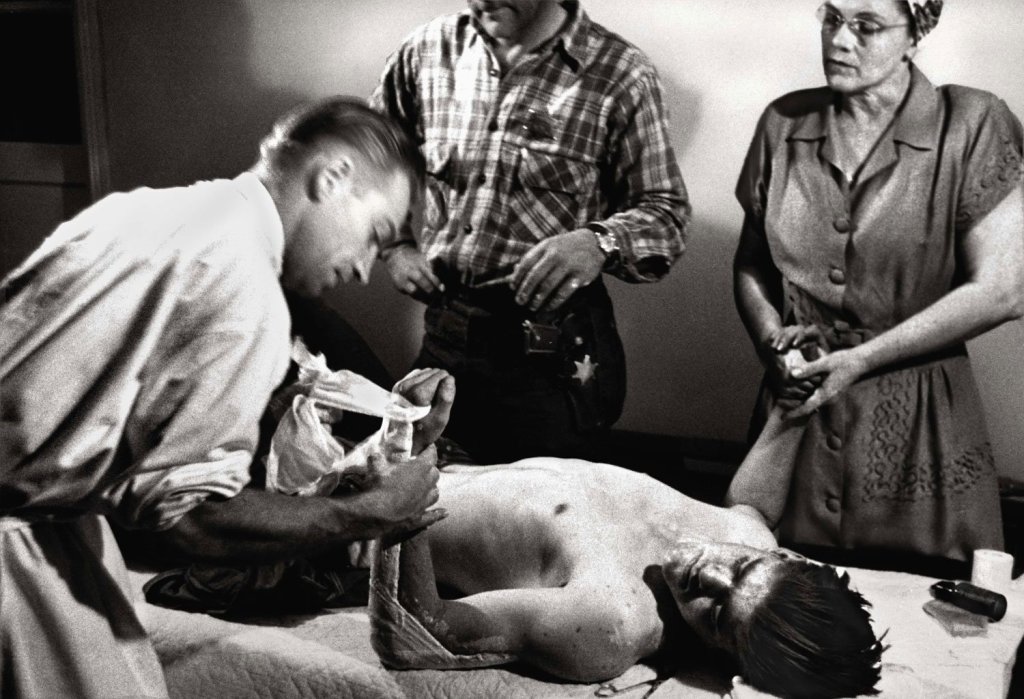
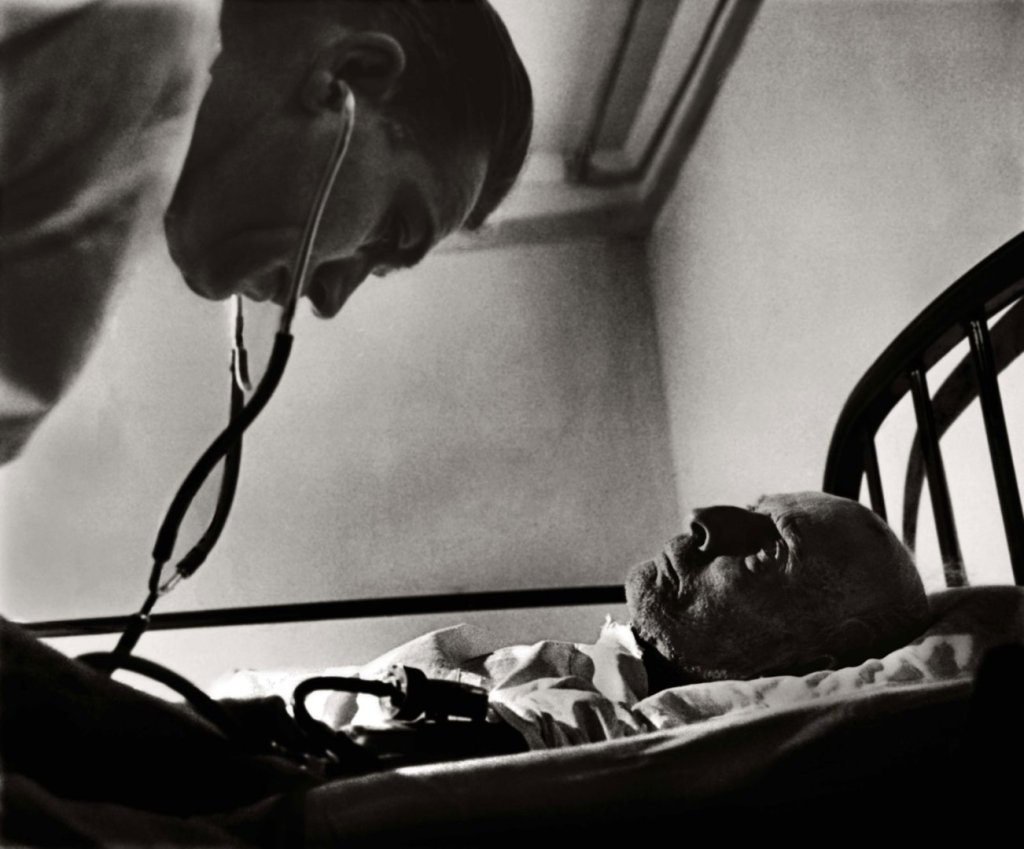
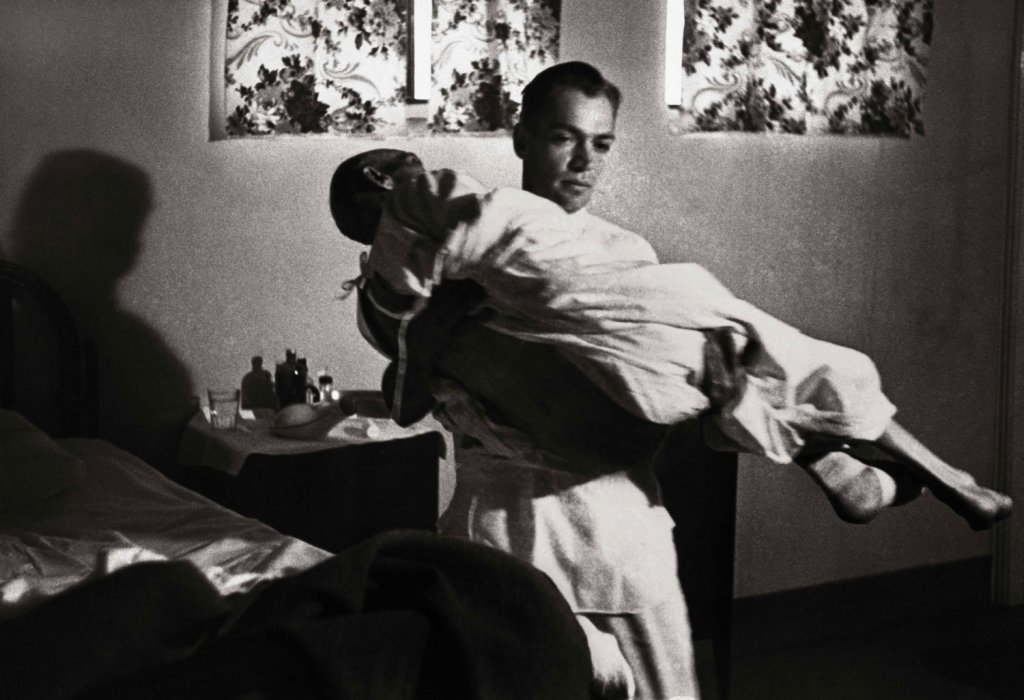
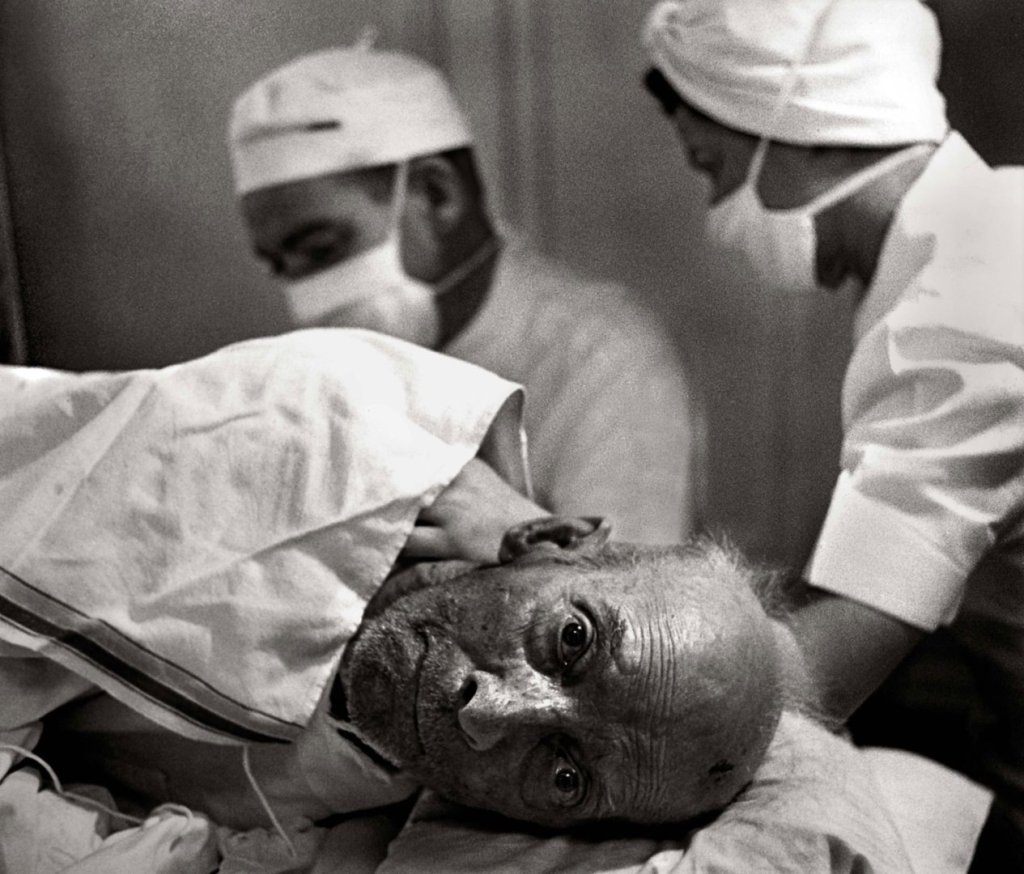
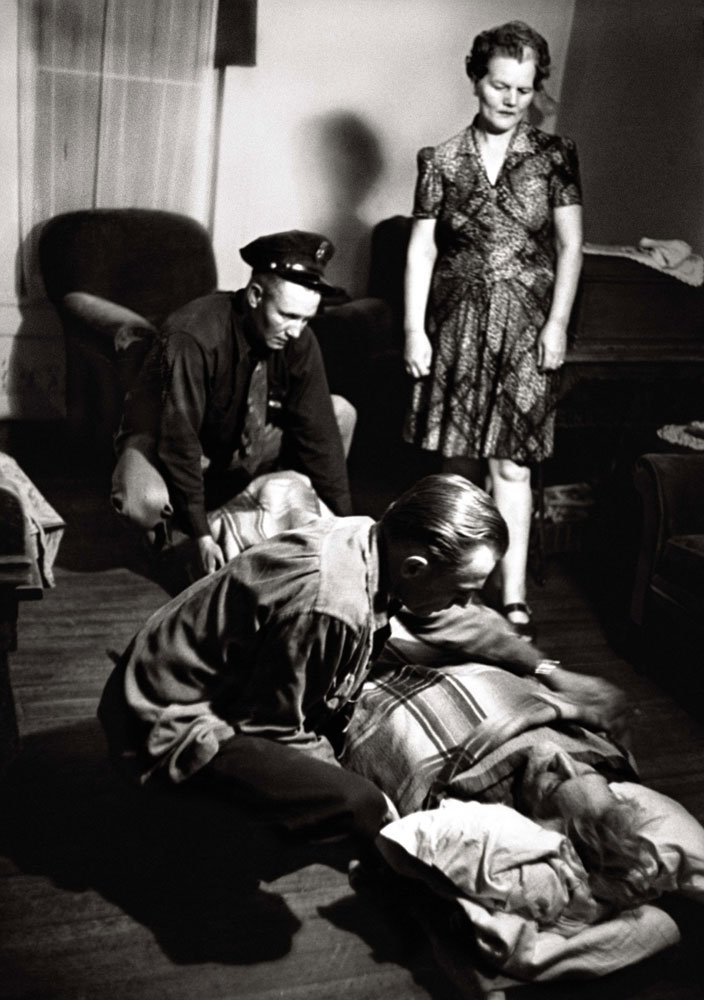
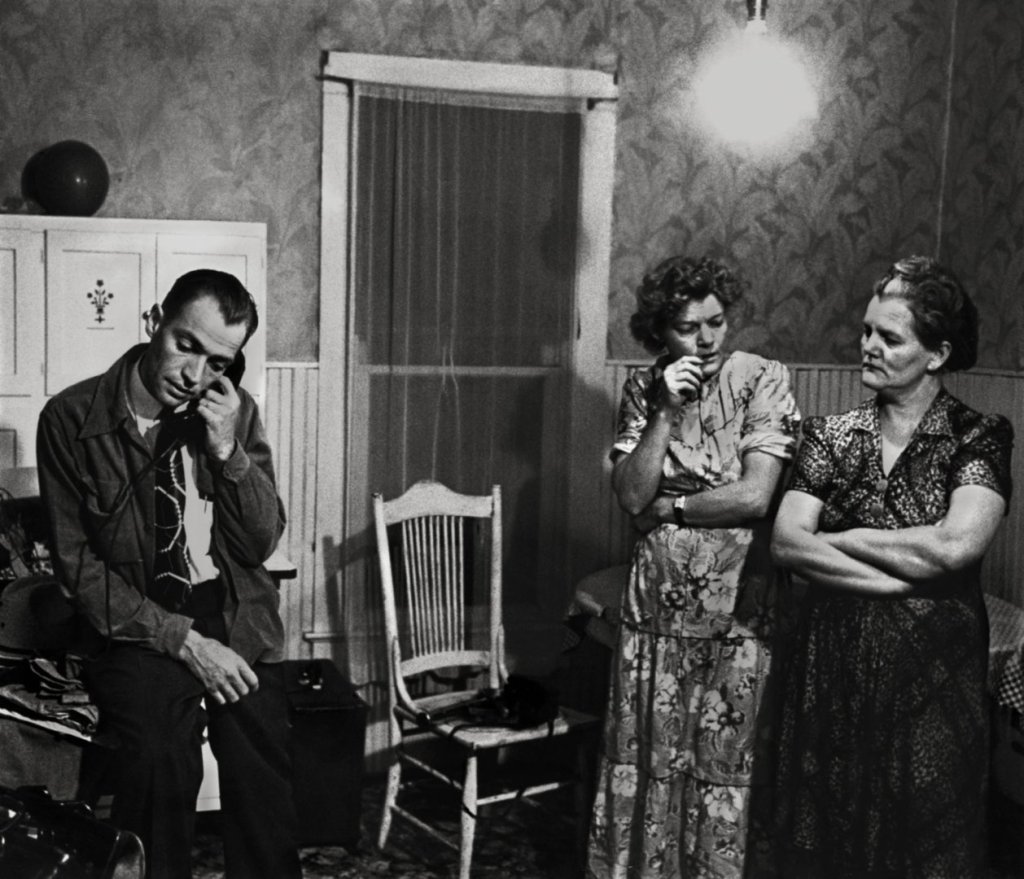
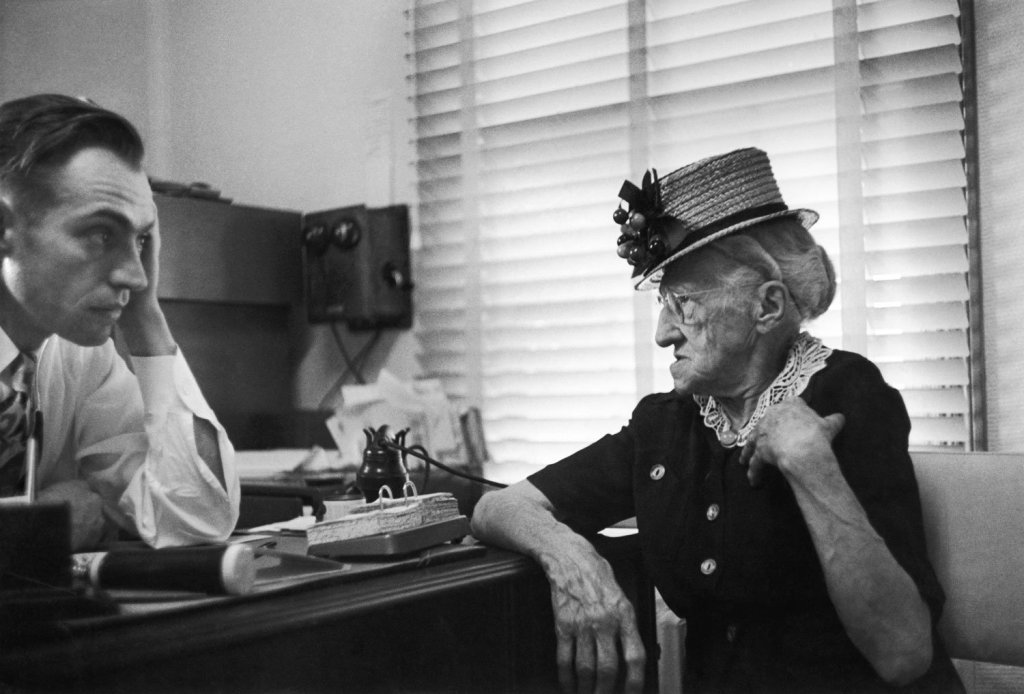
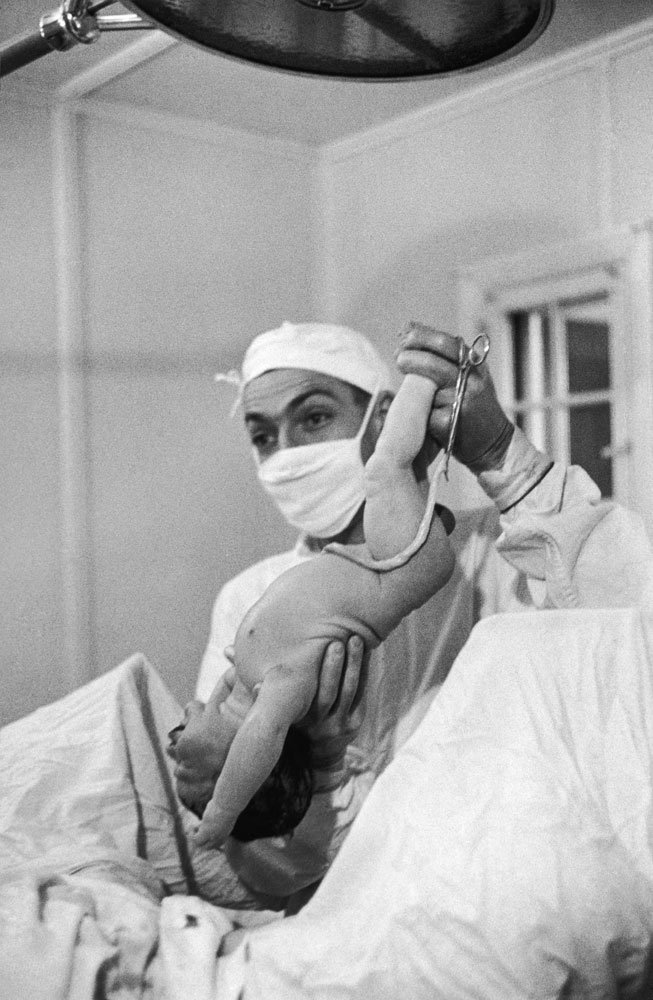
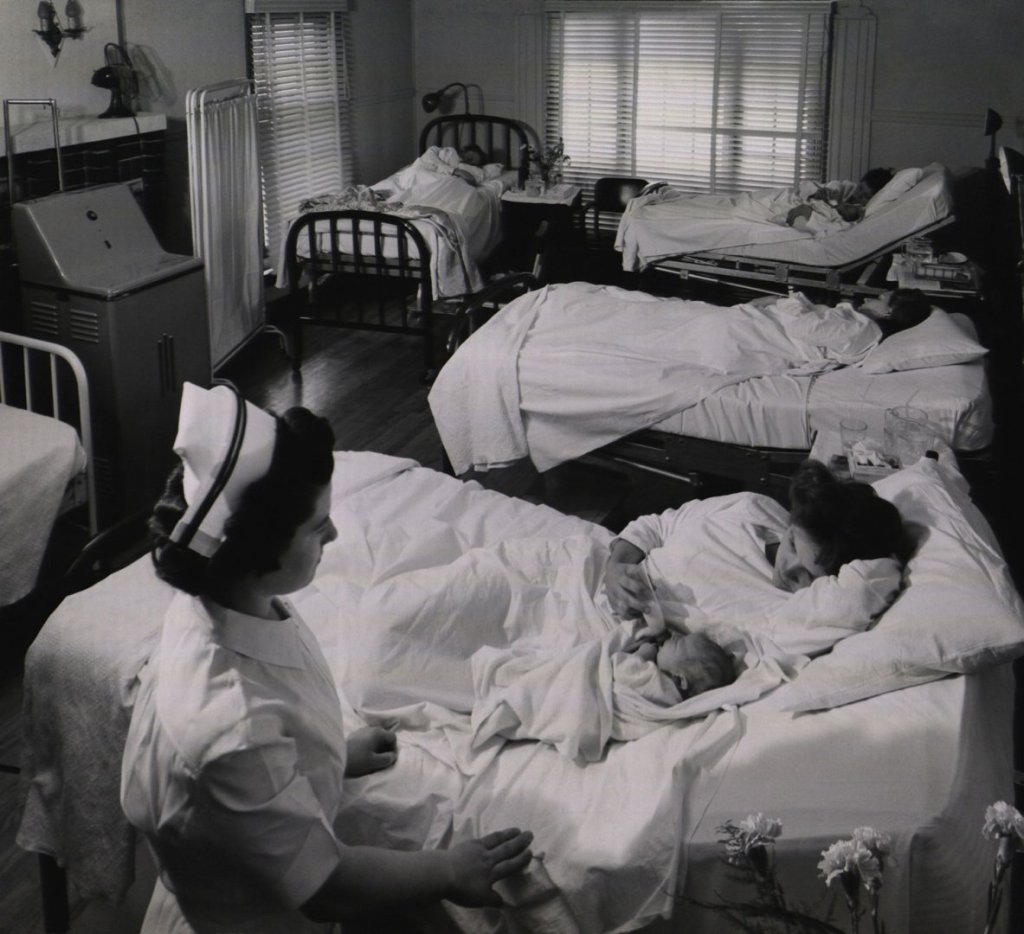
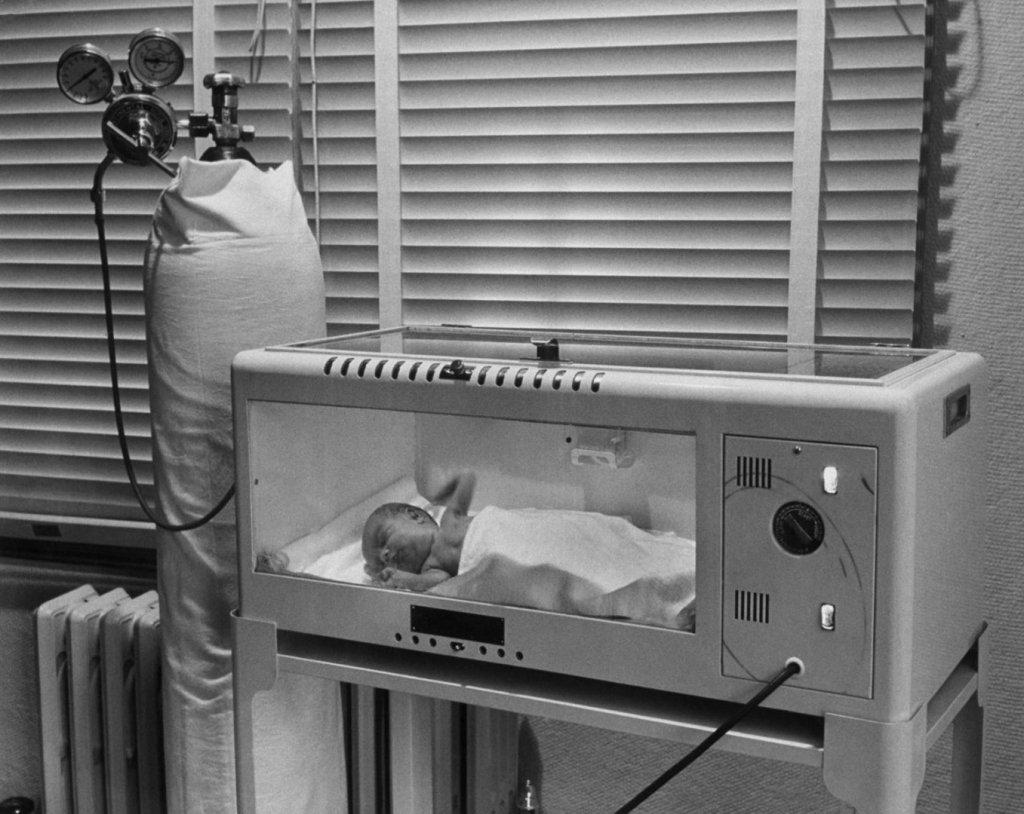
For his groundbreaking 1948 LIFE magazine photo essay, “Country Doctor” — seen here, in its entirety, followed by several unpublished photographs from the shoot — photographer W. Eugene Smith spent 23 days in Kremmling, Colo., chronicling the day-to-day challenges faced by an indefatigable general practitioner named Dr. Ernest Ceriani. Seven decades later, Smith’s images from those three weeks remain as fresh as they were the moment he took them, and as revelatory as they surely felt to millions of LIFE’s readers as they encountered Dr. Ceriani, his patients and his fellow tough, uncompromising Coloradans. Born on a sheep ranch in Wyoming, Dr. Ceriani attended Chicago’s Loyola School of Medicine but opted not to pursue a medical career in the big city. In 1946, after a stint in the Navy, he was recruited by the hospital in Kremmling, and he and wife Bernetha, who was born in Colorado, settled into the rural town. Dr. Ceriani was the sole physician for an area of about 400 square miles, inhabited by some 2,000 people. Eugene Smith’s at-times almost unsettlingly intimate pictures illustrate in poignant detail the challenges faced by a modest, tireless rural physician — and gradually reveal the inner workings and the outer trappings of what is clearly a uniquely rewarding life.”Country Doctor” was an instant classic when first published, establishing Smith as a master of the uniquely commanding young art form of the photo essay, and solidifying his stature as one of the most passionate and influential photojournalists of the 20th century. In 1979, the W. Eugene Smith Memorial Fund was founded to support those working in the profoundly humanistic style of photography to which Smith dedicated his life and his art.
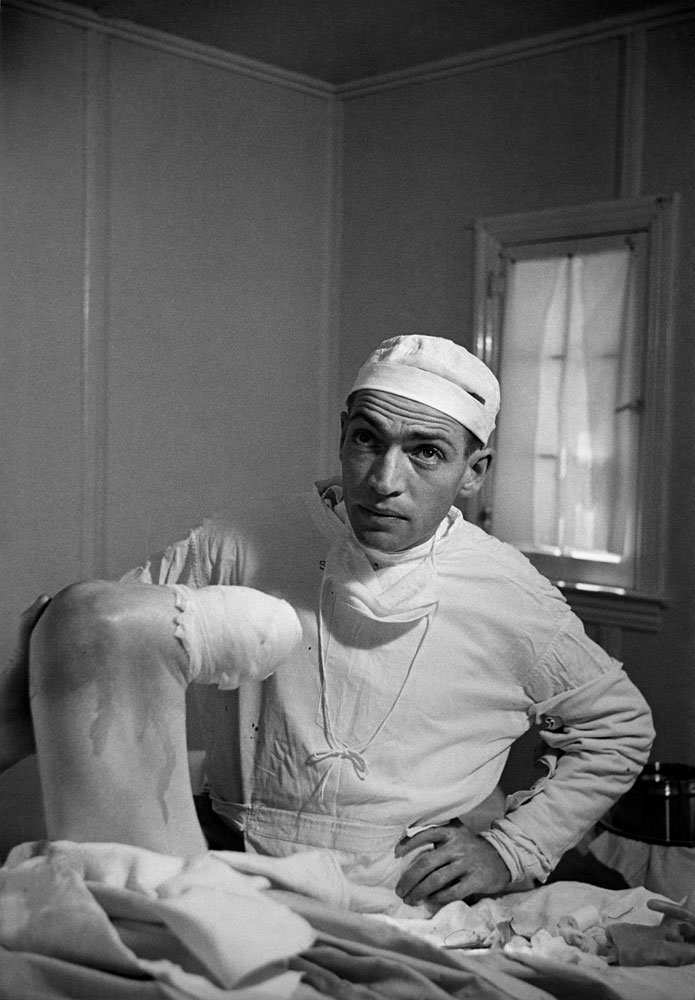
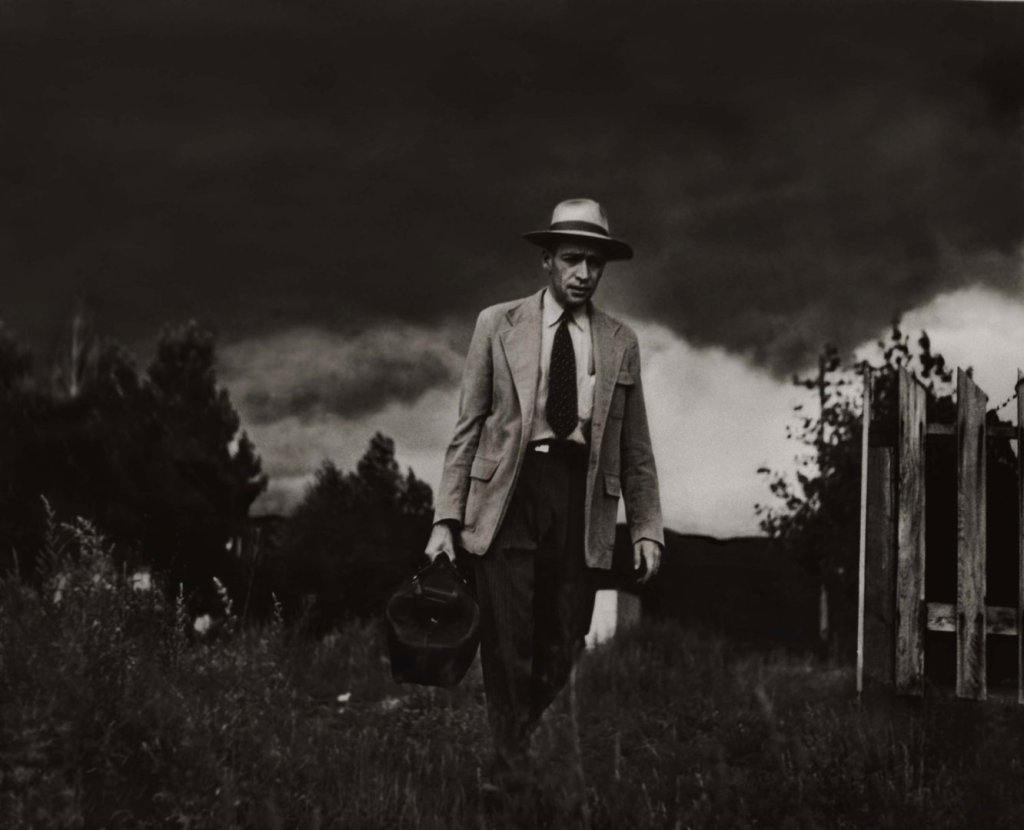
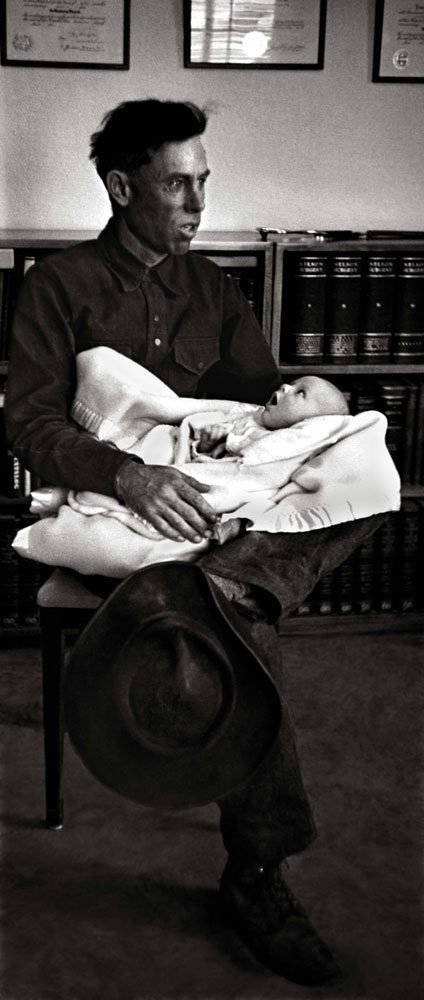
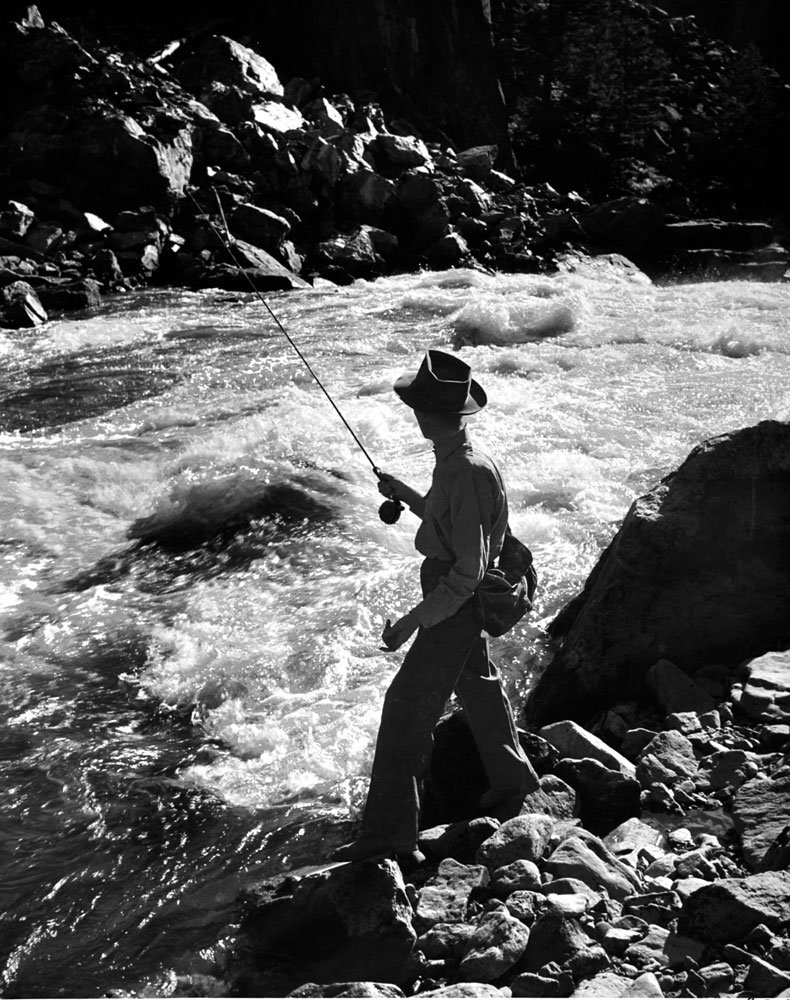
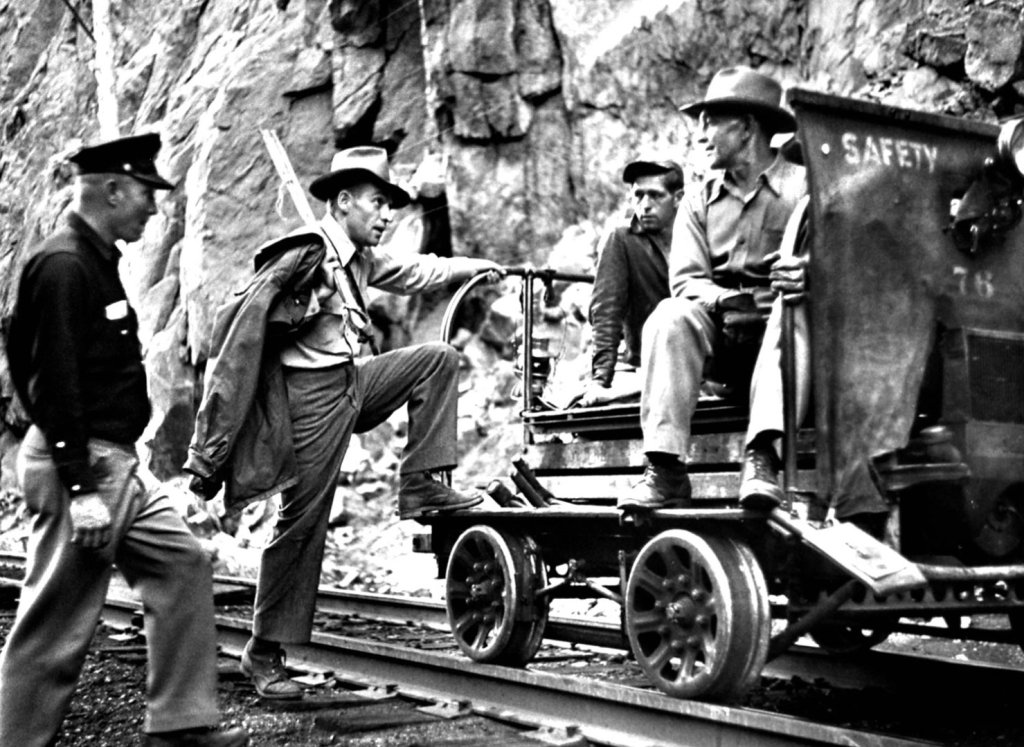
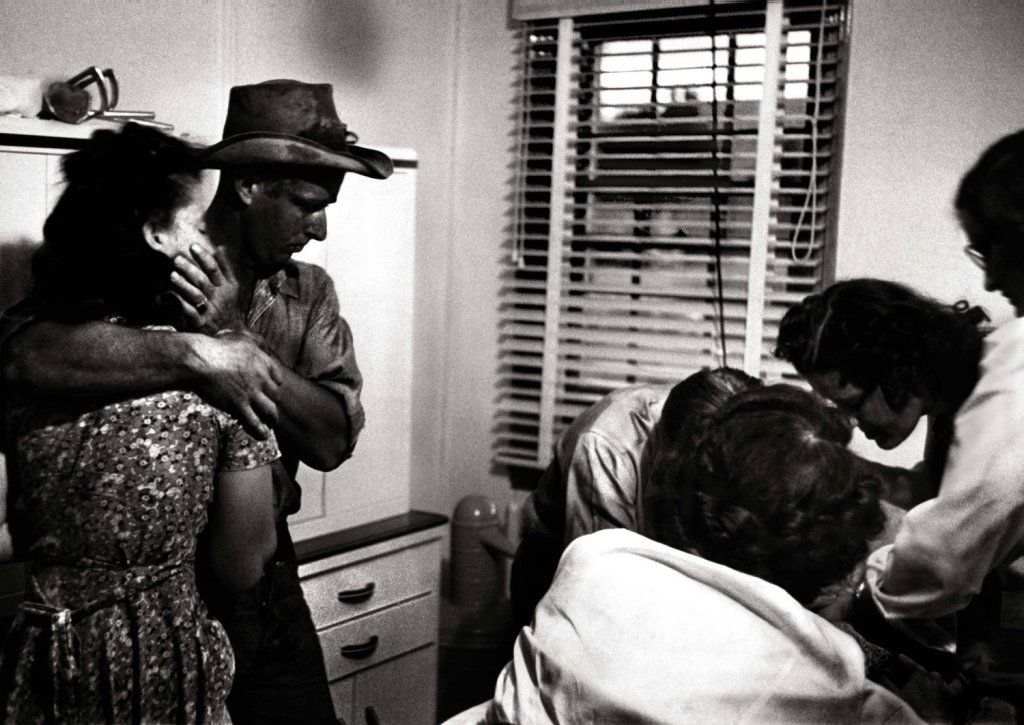
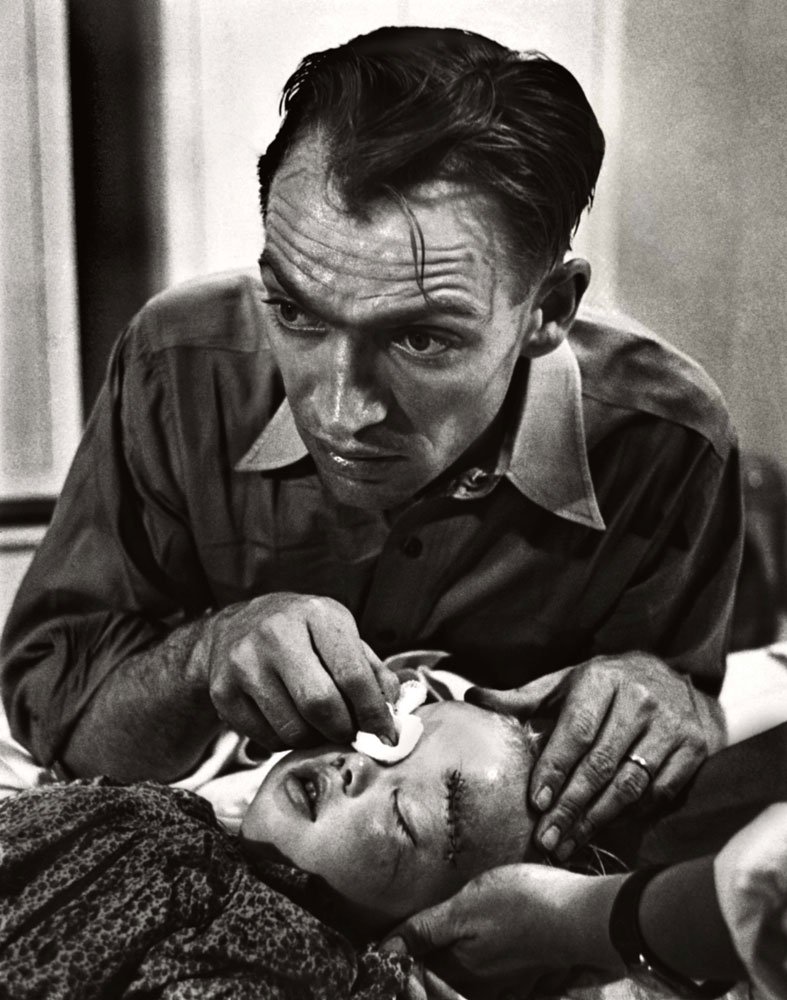
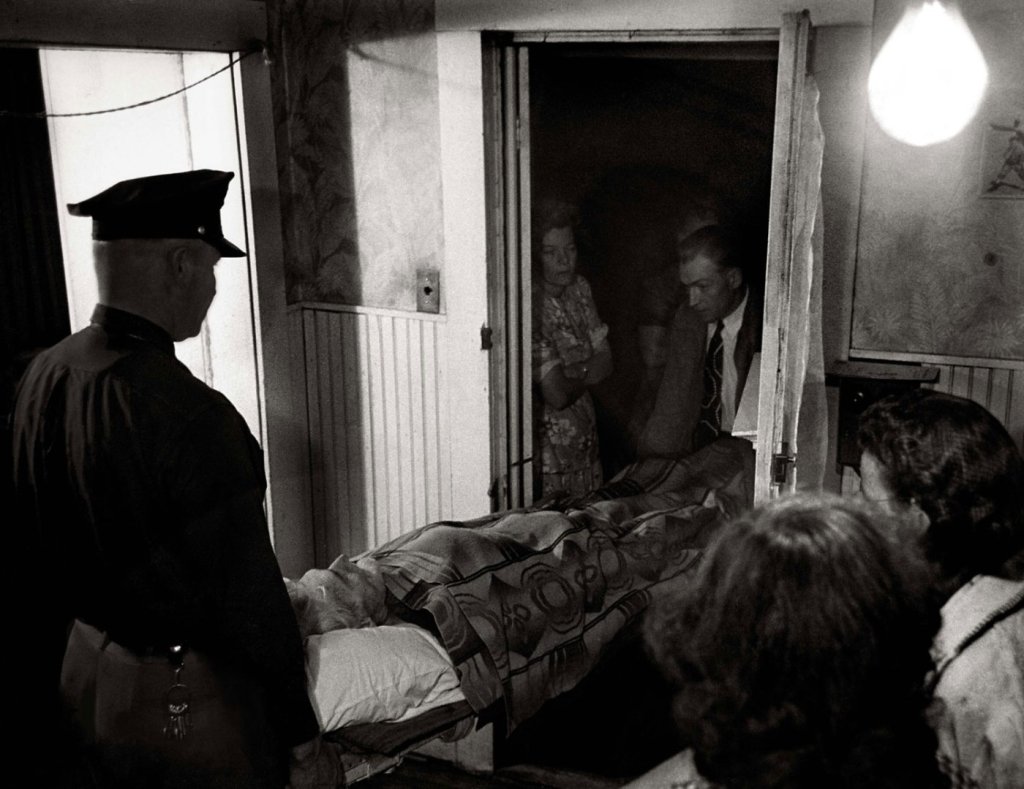
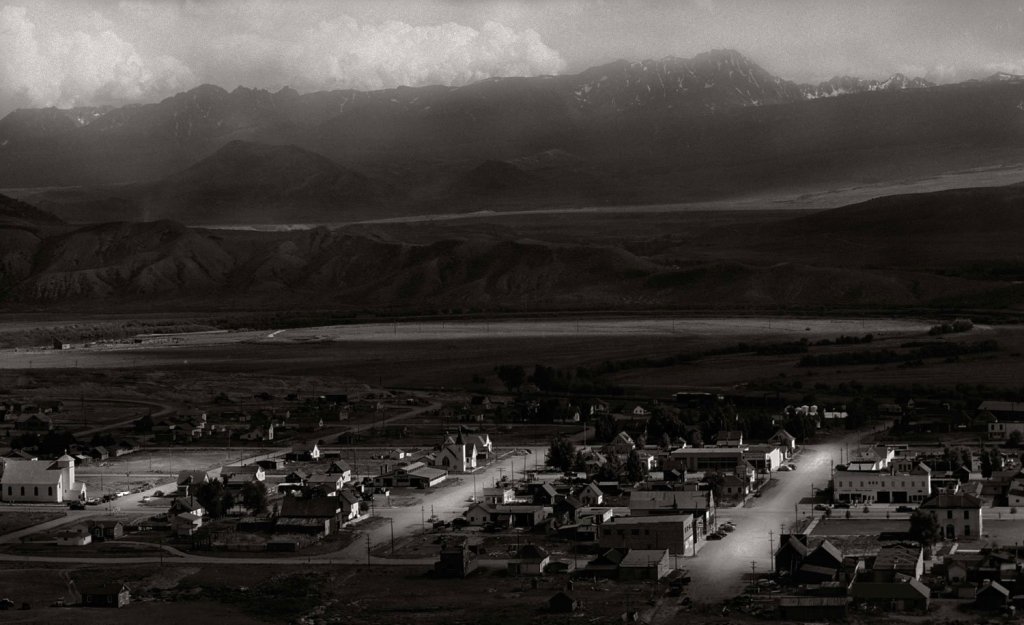
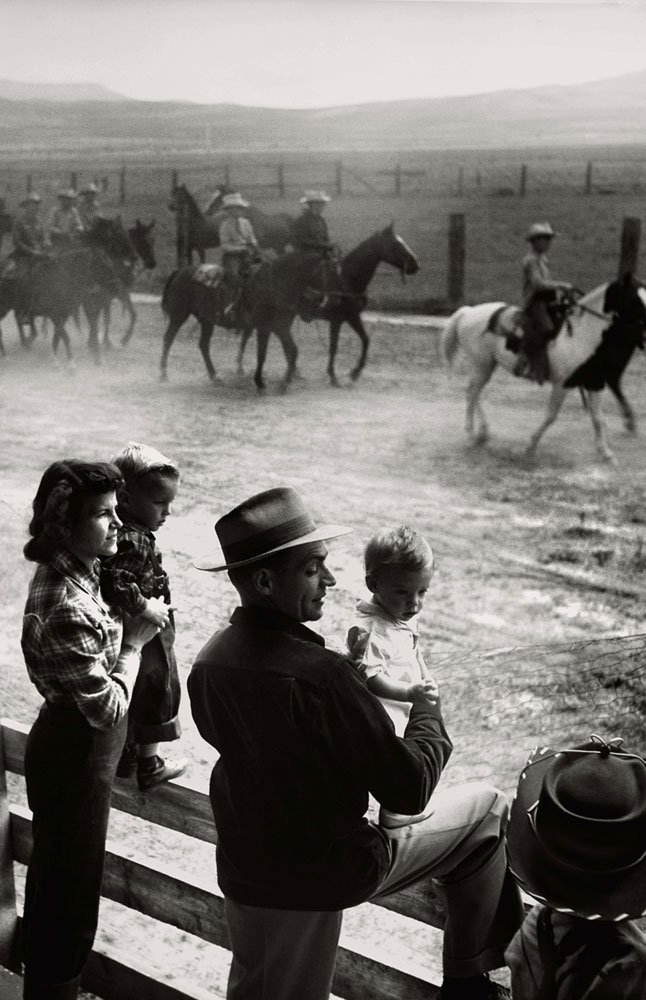
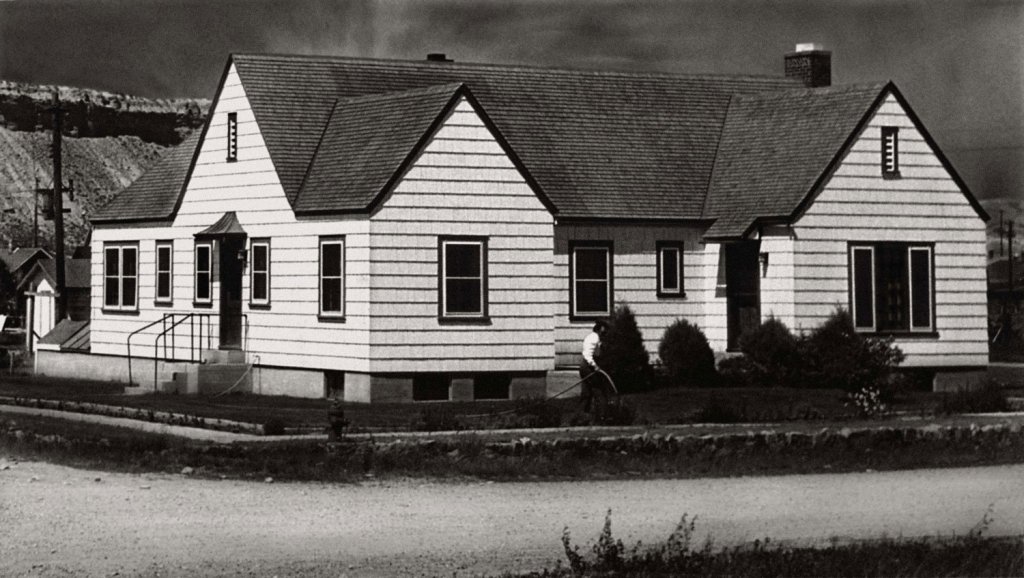
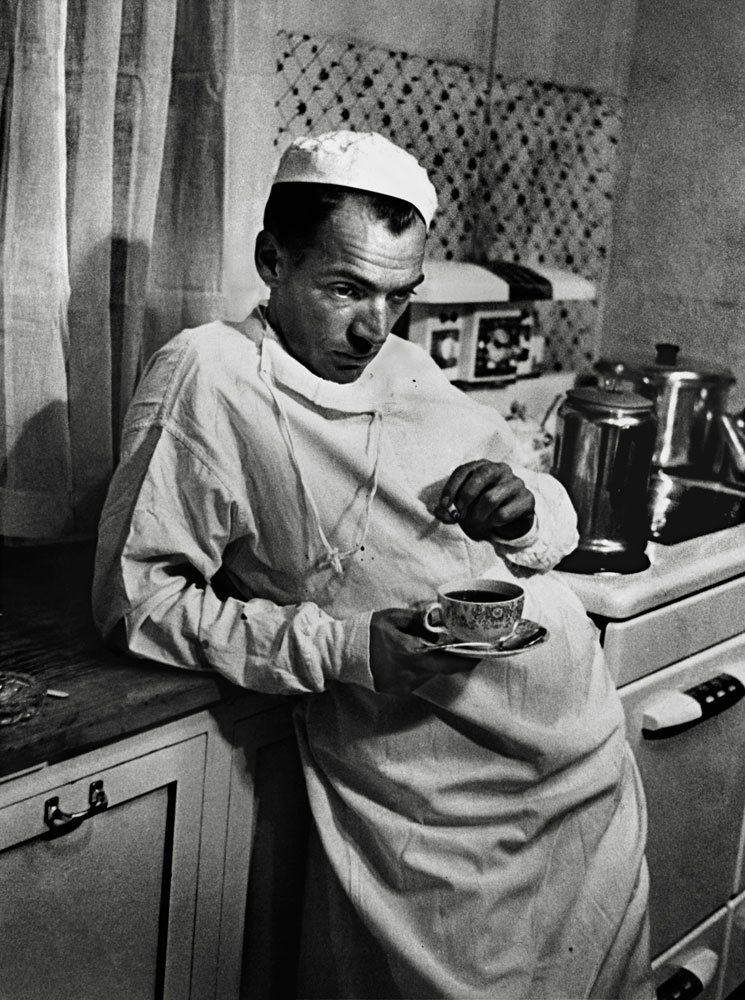
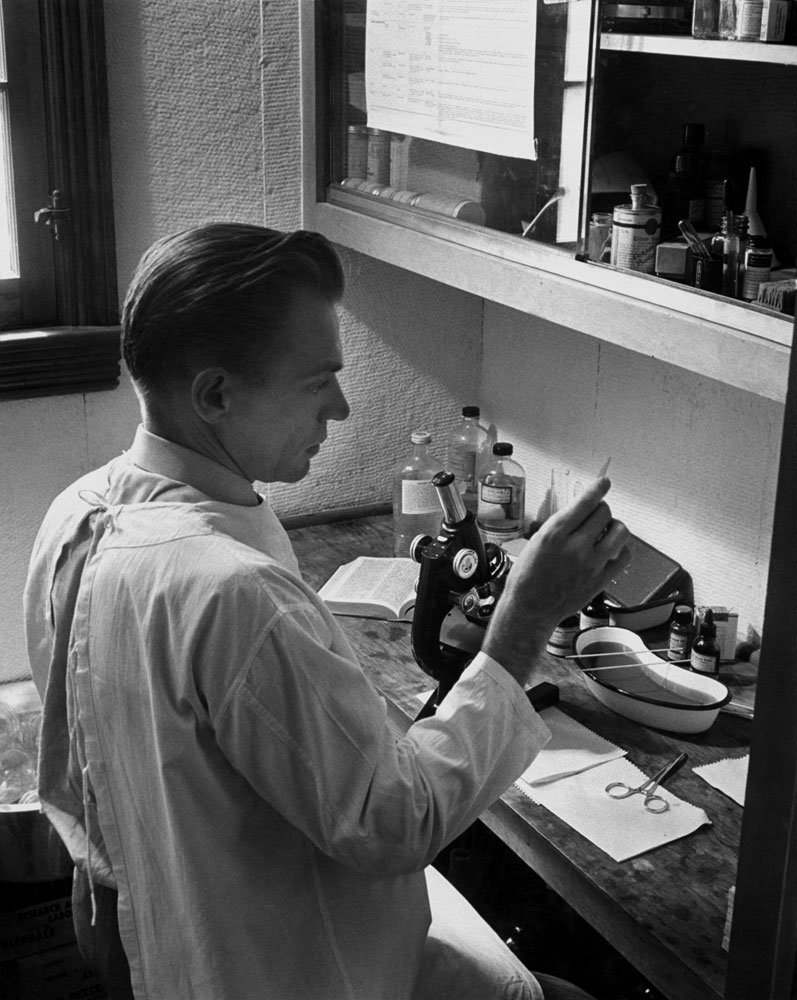
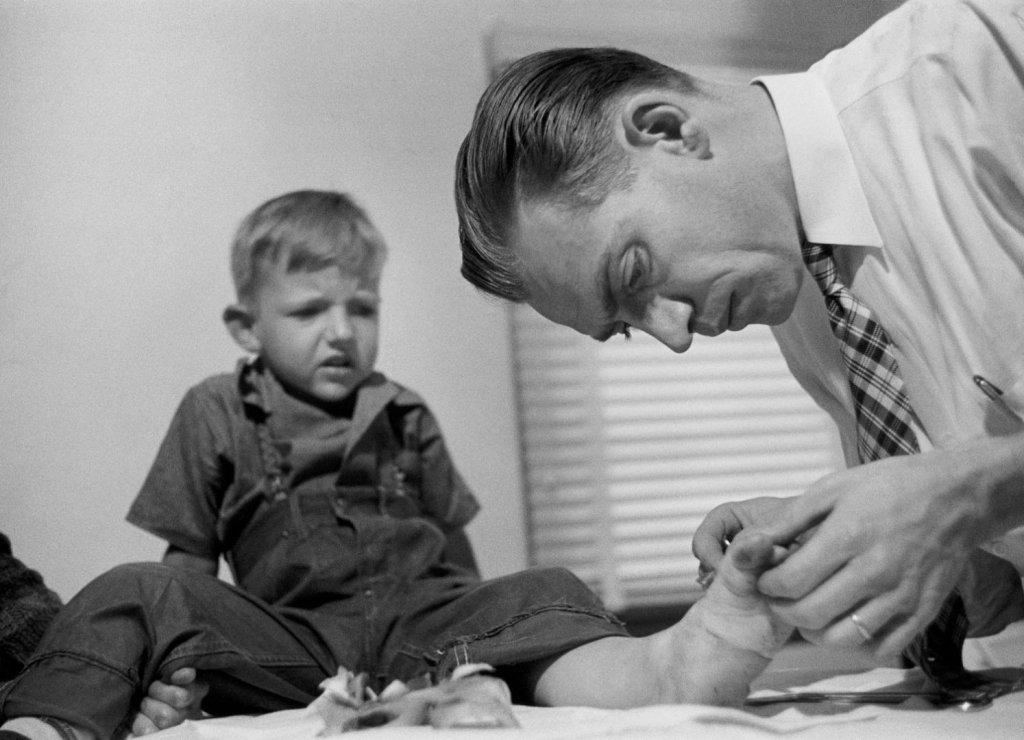
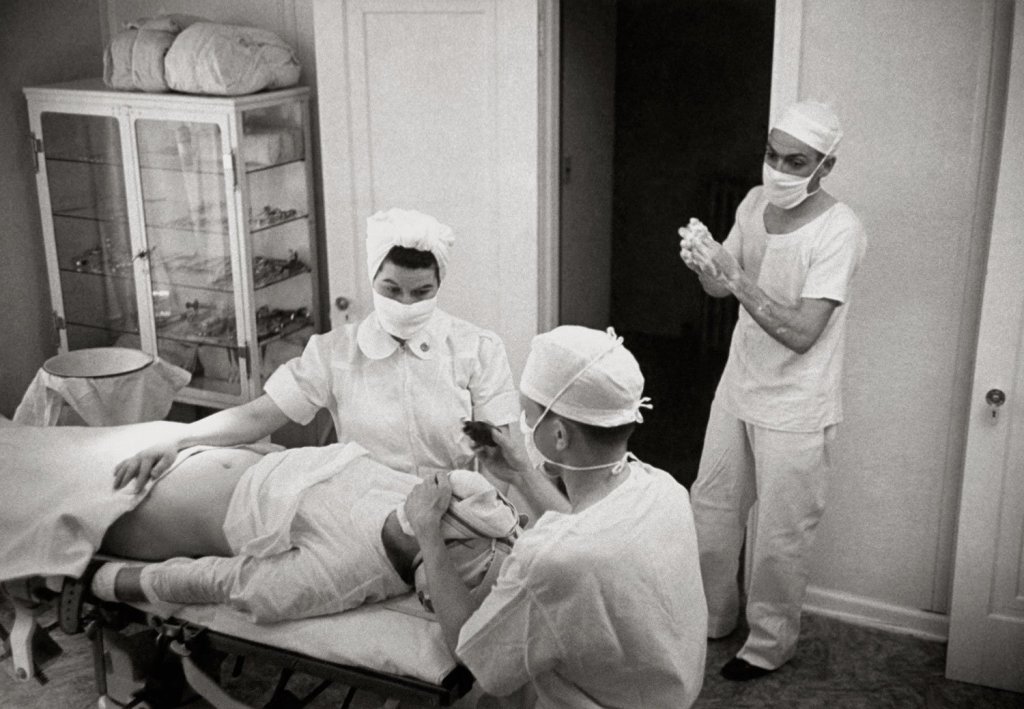
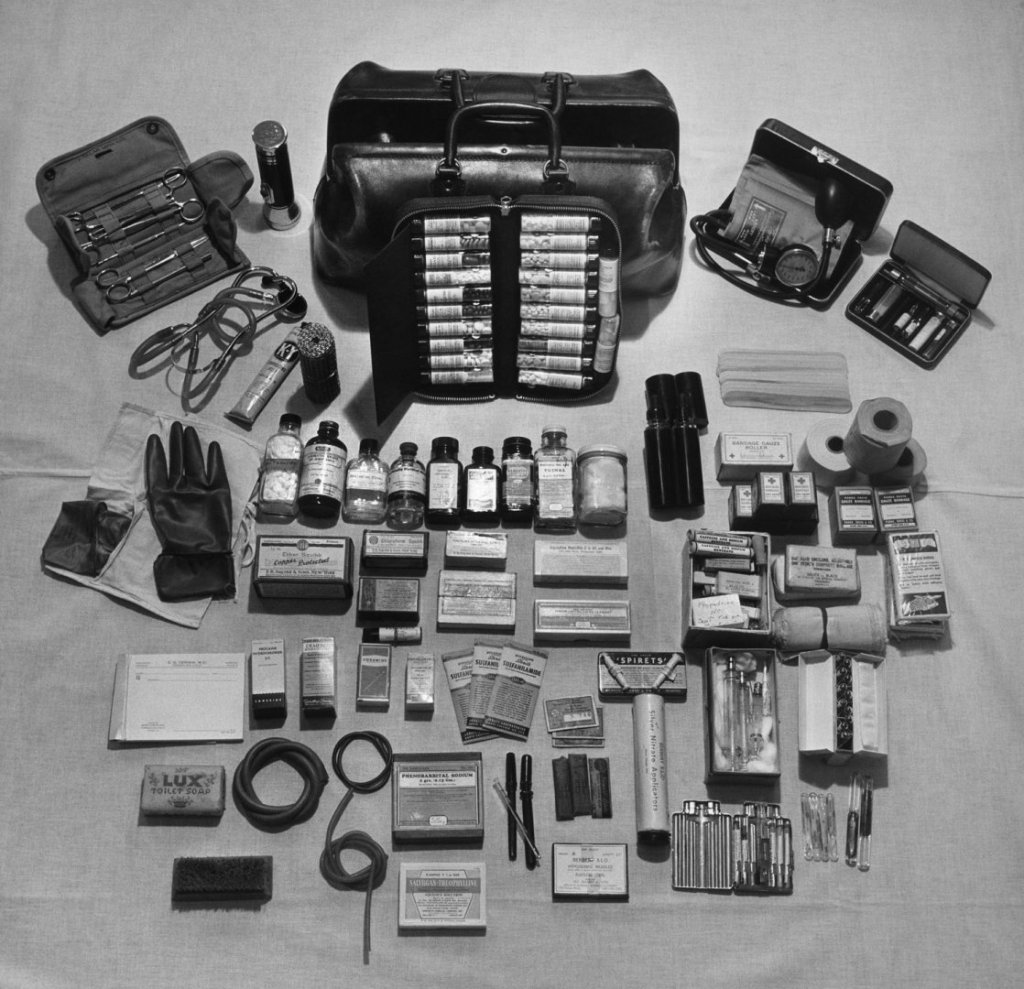
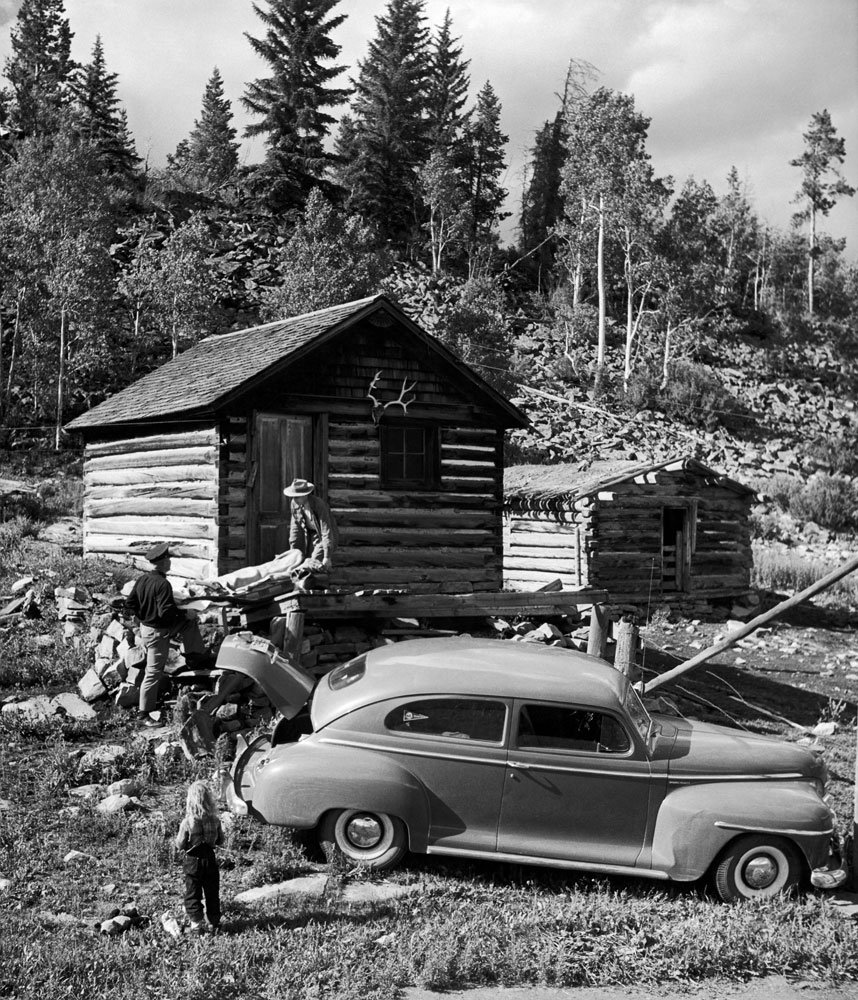
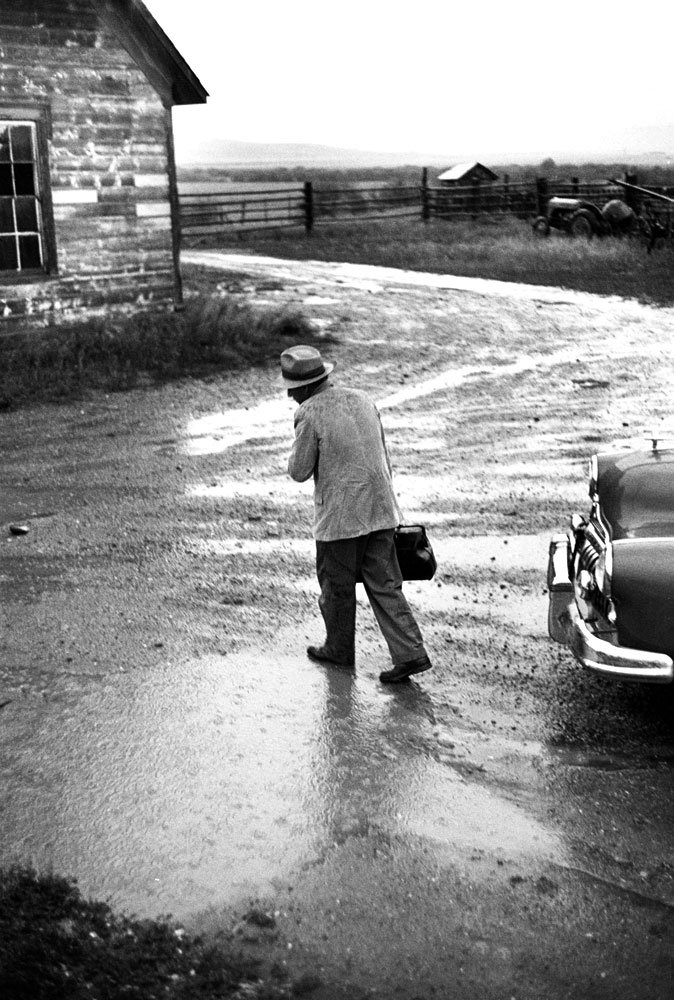
Dr. Ernest Ceriani makes a house call on foot, Kremmling, Colo., 1948.Ralph Pickering holds his 5-week-old baby while waiting to be Dr. Ceriani’s first patient of the day. Pickering, a horseback guide to tourists coming to see the majestic Rocky Mountains, traveled from an outlying ranch to reach the doctor’s office.Dr. Ceriani sits at bedside of a patient as he assesses flu symptoms during a house call. When Smith began “Country Doctor,” he shot for a period of time with no film in his camera, to help Ceriani get used to his presence without wasting precious film.In the backseat of a car, Dr. Ceriani administers a shot of morphine to a 60-year-old tourist from Chicago, seen here with her grandson, who was suffering from a mild heart disturbance.Dr. Ceriani examines a feverish 4-year-old girl suffering from tonsillitis. Although most of his patients were children, Ceriani was initially inexperienced in pediatrics when he started his practice, and studied up on it whenever he had the chance.Though he had no vacations and few days off, Dr. Ceriani did have use of a small hospital, which was equipped with an X-ray machine, an autoclave and an oxygen tent, among other medical necessities. Here, he explains an X-ray — he developed the film himself — to one of his rancher patients.The doctor tapes a patient who broke some ribs after a horse rolled over him. “His income for covering a dozen fields is less than a city doctor makes by specializing in just one,” LIFE’s editors noted, “but Ceriani is compensated by the affection of his patients and neighbors, by the high place he has earned in his community and by the fact that he is his own boss. For him, this is enough.”Dr. Ceriani uses a syringe to irrigate wax from an elderly man’s ear to improve his hearing.Dr. Ceriani examines the stitches in the lacerated hand of a young patient.Two friends transport Dr. Ceriani to Gore Canyon so he can enjoy a few hours of recreational fishing, a rare treat for the hard-working physician.Dr. Ceriani fly-fishes on the Colorado River.Thirty minutes into his fishing excursion, Dr. Ceriani is called to an emergency: A young girl has been kicked in the head by a horse and is badly injured.The child’s worried parents look on as Dr. Ceriani, surrounded by nurses, examines their 2-year-old daughter.Dr. Ceriani has stitched the girl’s wound to minimize scarring, but he must now find a way to tell the parents that her eye cannot be saved and they must take her a specialist in Denver to have it removed.The doctor helps a rancher carry his son into the hospital. The inebriated young man dislocated his elbow when he was thrown from a bronco at a rodeo.The injured elbow required a painful reset.“Don’t tell my mother,” said the young man. Still under the effects of ether, he didn’t realize she’d been holding his hand during the procedure.Dr. Ceriani checks the blood pressure of 85-year-old Thomas Mitchell, who came to the hospital with a gangrenous leg. Knowing that Mitchell might not be strong enough to endure the necessary amputation, Ceriani had been postponing surgery.When Mitchell finally rallied, the doctor gently carried him from the basement ward up to the operating room of the hospital, which had no elevator.Dr. Ceriani gives the 85-year-old man spinal anesthesia before amputating his gangrenous left leg.Dr. Ceriani responds to a late-night call when an 82-year-old man suffers a heart attack at a boarding house. Town marshal Chancy Van Pelt and one of the man’s fellow tenants stand by.Knowing the man who suffered the heart attack at the boarding house will not make it through the night, Dr. Ceriani calls for a priest from the kitchen.Dr. Ceriani helps the town marshal carry the heart attack victim to the ambulance. There, the country doctor will see that his patient is as comfortable as possible, knowing there’s nothing he can do to save him.The treeless ranching community of Kremmling, Colo., stands on a 7,000-ft. plateau beneath the towering Rocky Mountains.Dr. Ceriani holds 11-month-old son Gary as his wife, Bernetha, steadies 3-year-old Phillip on a fence while watching a parade. Though they’d been married for four years at the time Smith was profiling the doctor, Mrs. Ceriani still struggled with the unpredictability of her husband’s schedule.A fund-raising committee in Kremmling was able to raise $35,000 in 1947 to purchase the home of the town’s retiring physician and turn it into a 14-bed hospital. The funds were used to stock the tiny hospital with as much equipment — some of it war surplus — as could be afforded. Middle Park Hospital had only three wards that could accommodate 14 patients. With a new hospital in place, the town then put out a call for a new general practitioner — a call answered by Dr. Ceriani.After finishing a surgery that lasted until 2 AM, Dr. Ceriani stands exhausted in the hospital kitchen with a cup of coffee and a cigarette. “The nurses,” LIFE noted, “constantly admonish him to relax and rest, but because they are well aware that he cannot, they keep a potful of fresh coffee simmering for him at all hours.”Dr. Ernest Ceriani in the small Kremmling, Colo., hospital.Doctor Ceriani checks 4-year-old Jimmy Free’s foot, cut when the boy stepped on broken glass.Dr. Ceriani examines his handiwork after the partial amputation of a patient’s leg, Kremmling, Colorado, August 1948. The patient, Thomas Mitchell, was suffering from a gangrenous infection.An operating room in Kremmling, Colo.Dr. Ceriani with a patient.Dr. Ernest Ceriani delivers a baby.Maternity ward, Kremmling, Colo., 1948.An incubator in Kremmling, Colo., 1948.The contents of a country doctor’s bag, Kremmling, Colo., 1948.Doctor Ceriani and town marshal Chancey Van Pelt carry a patient from a cabin in the hills near Kremmling, Colorado, 1948.Dr. Ernest Ceriani on his way to a house call in foul weather, Kremmling, Colo., 1948.