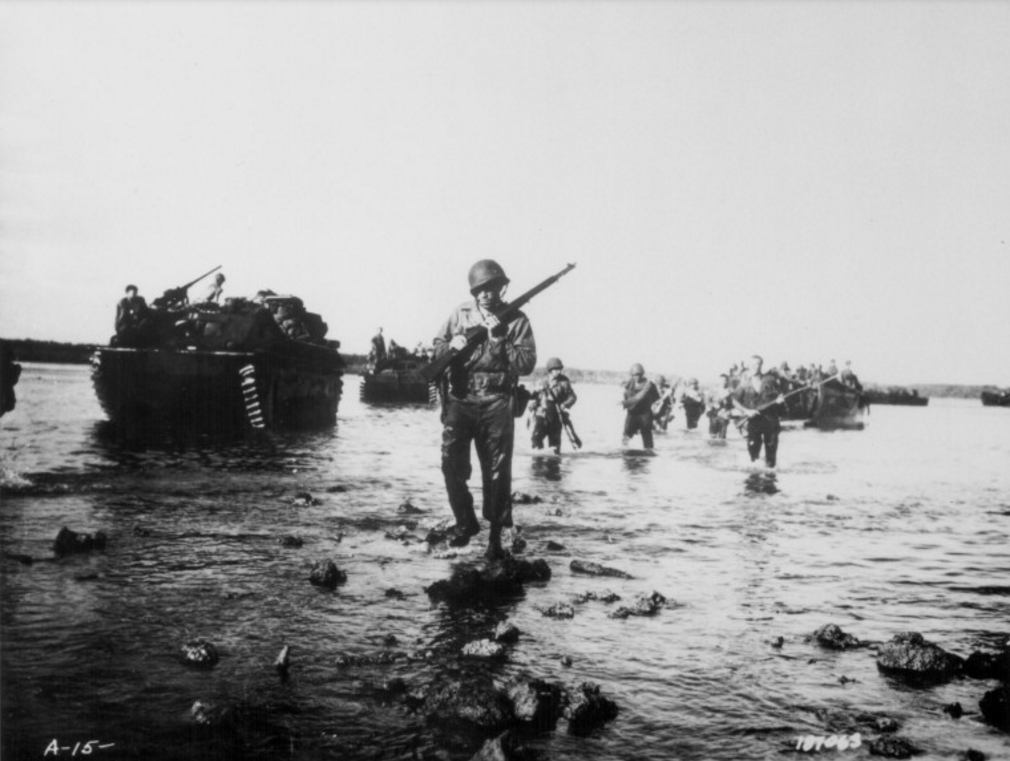
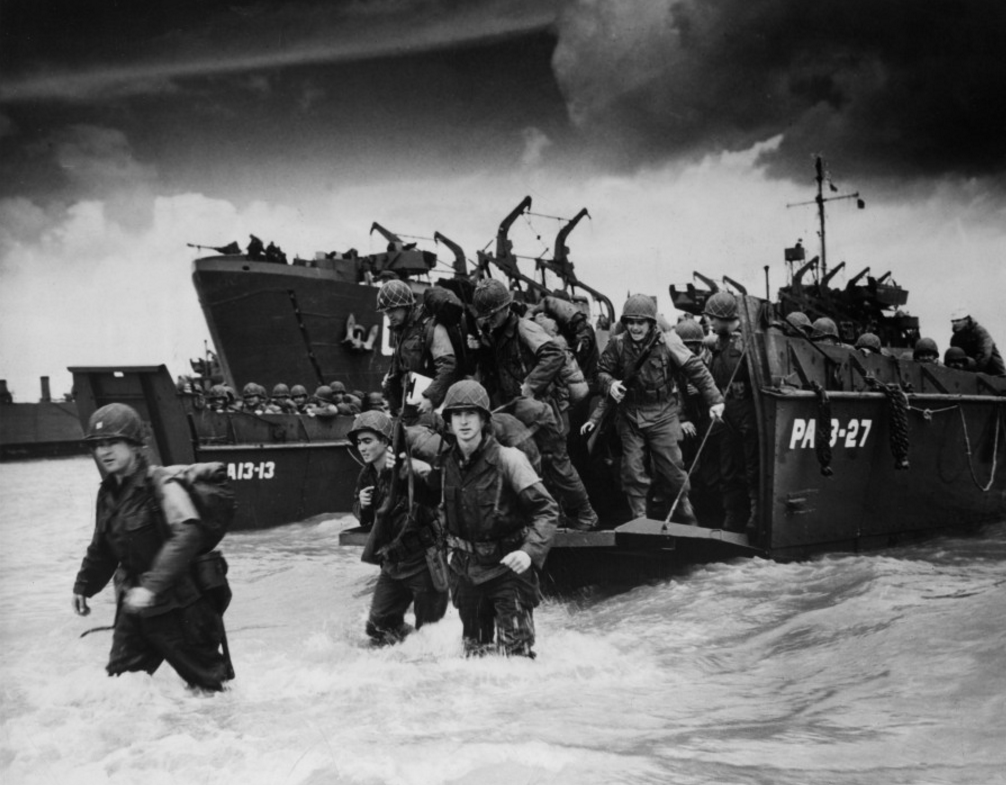
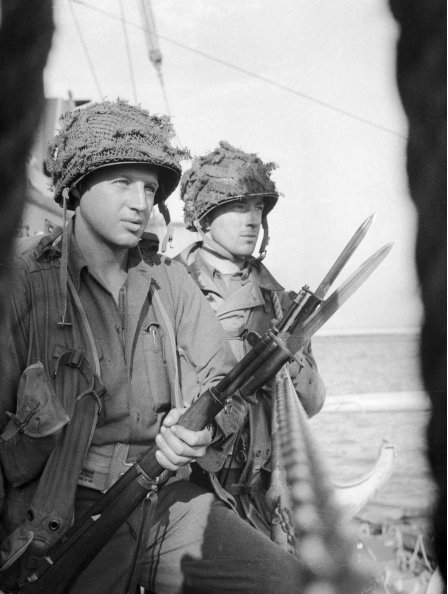
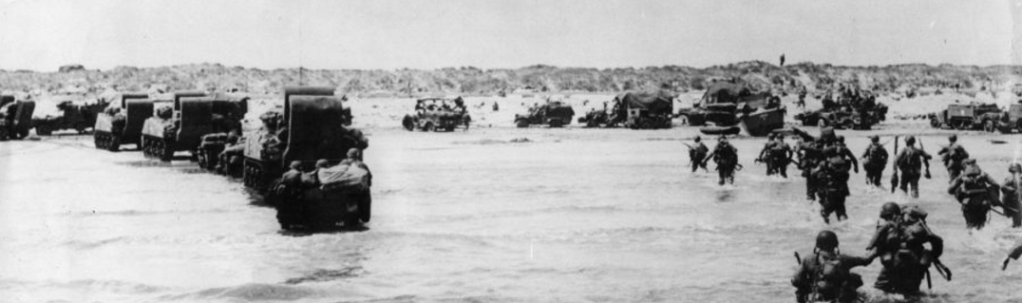
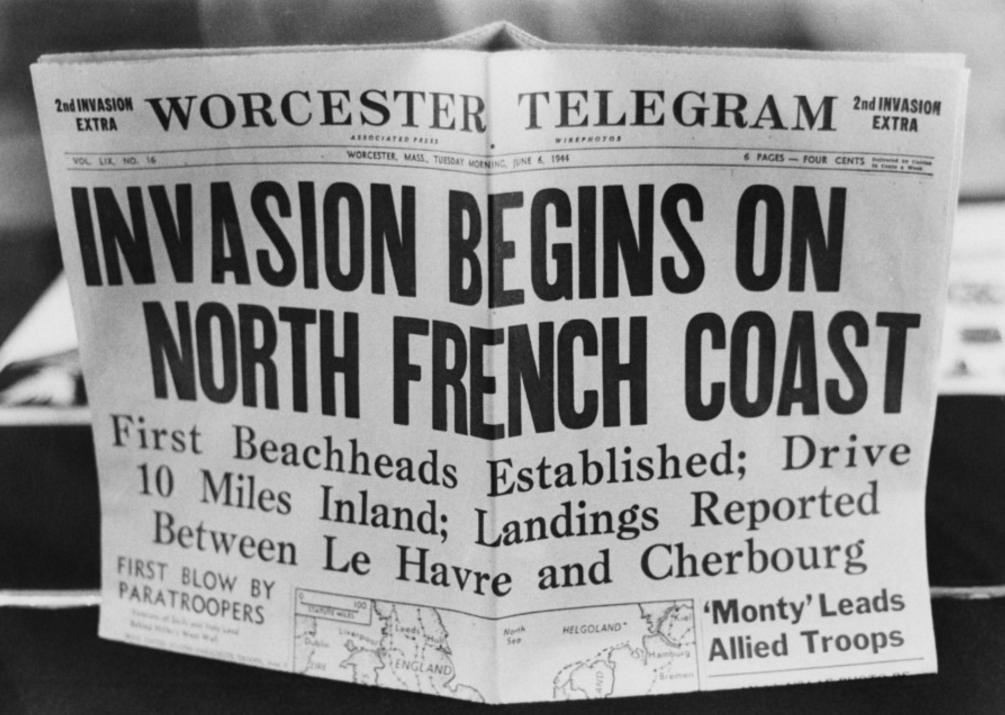
The Normandy landings were the landing operations and associated airborne operations on Tuesday, 6 June 1944 of the Allied invasion of Normandy in Operation Overlord during World War II. Codenamed Operation Neptune and often referred to as D-Day, it was the largest seaborne invasion in history. The operation began the liberation of France (and later western Europe) and laid the foundations of the Allied victory on the Western Front.
Planning for the operation began in 1943. In the months leading up to the invasion, the Allies conducted a substantial military deception, codenamed Operation Bodyguard, to mislead the Germans as to the date and location of the main Allied landings. The weather on D-Day was far from ideal, and the operation had to be delayed 24 hours; a further postponement would have meant a delay of at least two weeks, as the invasion planners had requirements for the phase of the moon, the tides, and the time of day that meant only a few days each month were deemed suitable. Adolf Hitler placed Field Marshal Erwin Rommel in command of German forces and of developing fortifications along the Atlantic Wall in anticipation of an Allied invasion. U.S. President Franklin D. Roosevelt placed Major General Dwight D. Eisenhower in command of Allied forces.
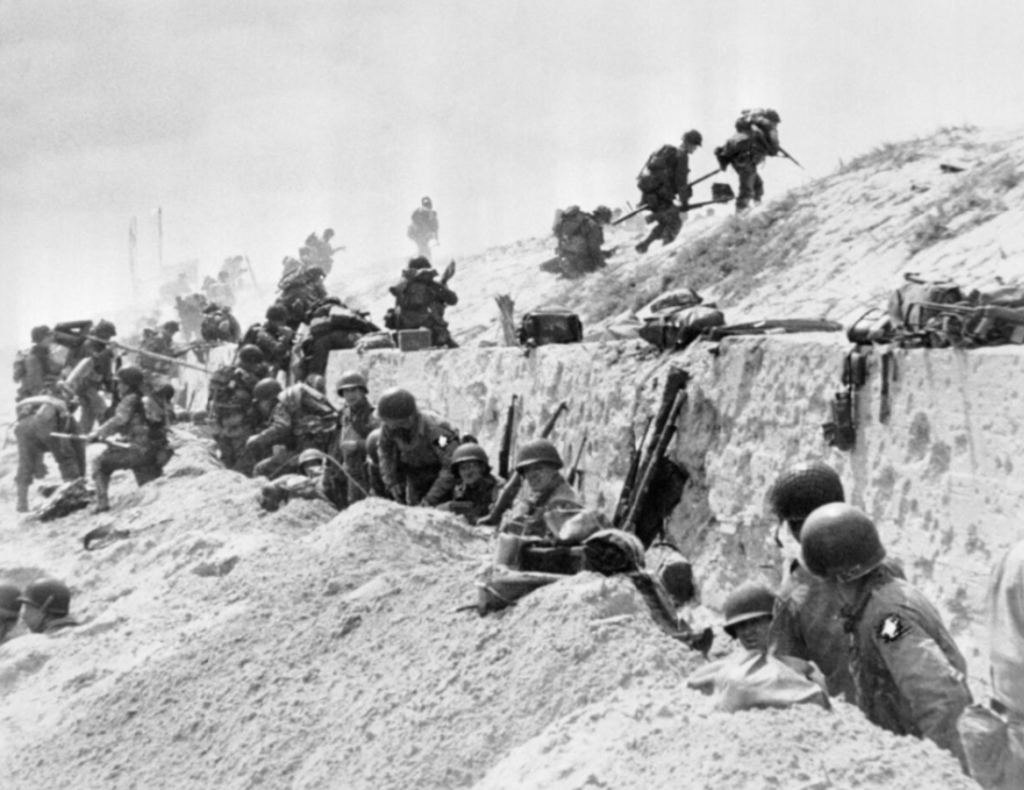
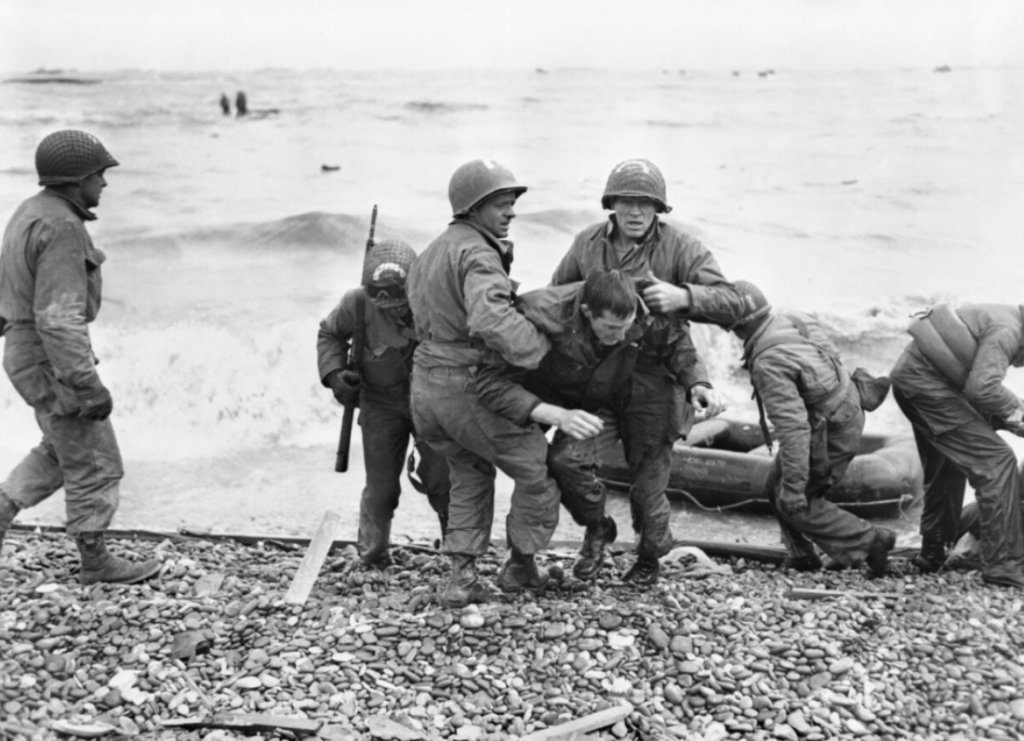
The amphibious landings were preceded by extensive aerial and naval bombardment and an airborne assault—the landing of 24,000 American, British, and Canadian airborne troops shortly after midnight. Allied infantry and armoured divisions began landing on the coast of France at 06:30. The target 50-mile (80 km) stretch of the Normandy coast was divided into five sectors: Utah, Omaha, Gold, Juno, and Sword. Strong winds blew the landing craft east of their intended positions, particularly at Utah and Omaha. The men landed under heavy fire from gun emplacements overlooking the beaches, and the shore was mined and covered with obstacles such as wooden stakes, metal tripods, and barbed wire, making the work of the beach-clearing teams difficult and dangerous. Casualties were heaviest at Omaha, with its high cliffs. At Gold, Juno, and Sword, several fortified towns were cleared in house-to-house fighting, and two major gun emplacements at Gold were disabled using specialised tanks.
The Allies failed to achieve any of their goals on the first day. Carentan, Saint-Lô, and Bayeux remained in German hands, and Caen, a major objective, was not captured until 21 July. Only two of the beaches (Juno and Gold) were linked on the first day, and all five beachheads were not connected until 12 June; however, the operation gained a foothold that the Allies gradually expanded over the coming months. German casualties on D-Day have been estimated at 4,000 to 9,000 men. Allied casualties were documented for at least 10,000, with 4,414 confirmed dead. Museums, memorials, and war cemeteries in the area now host many visitors each year. (Wikipedia)
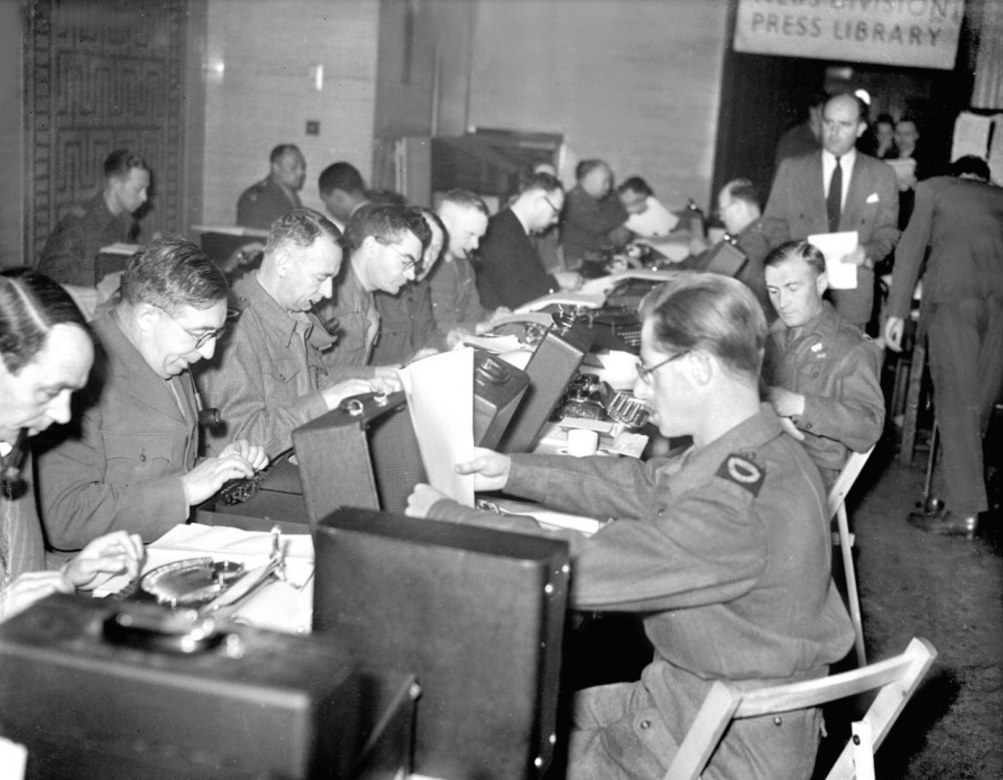
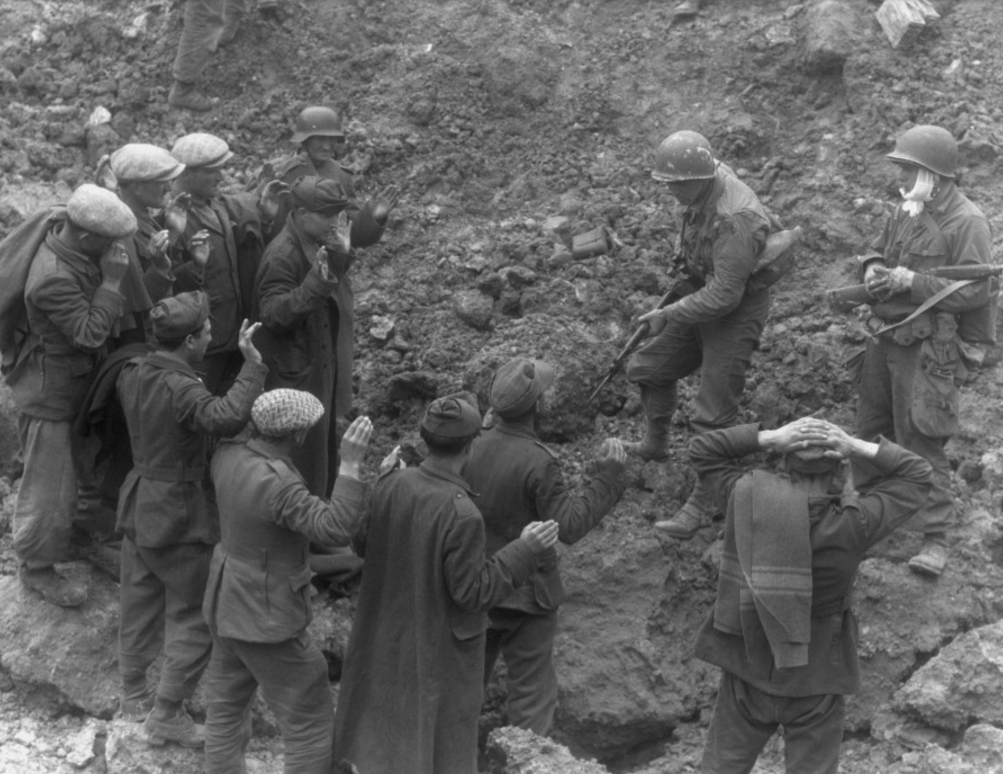
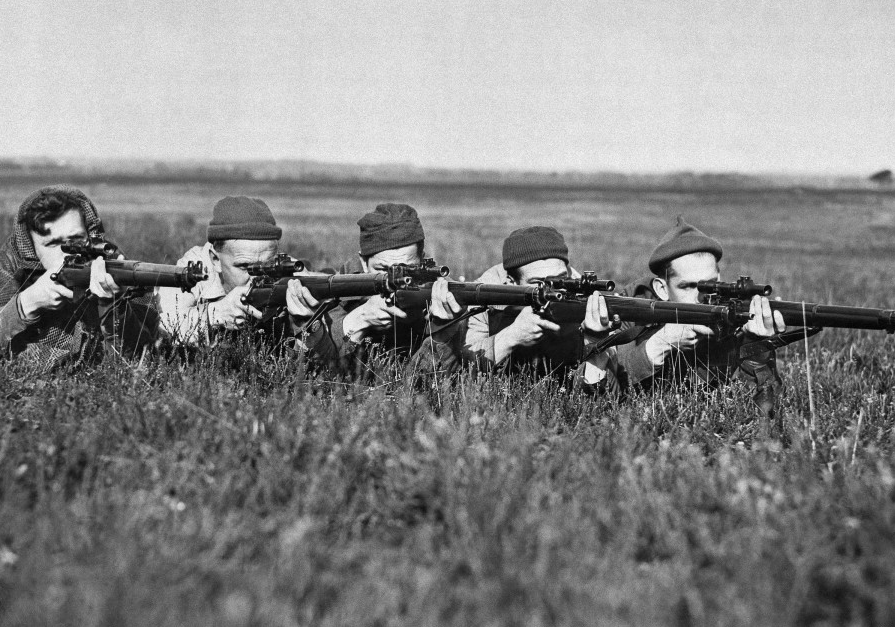
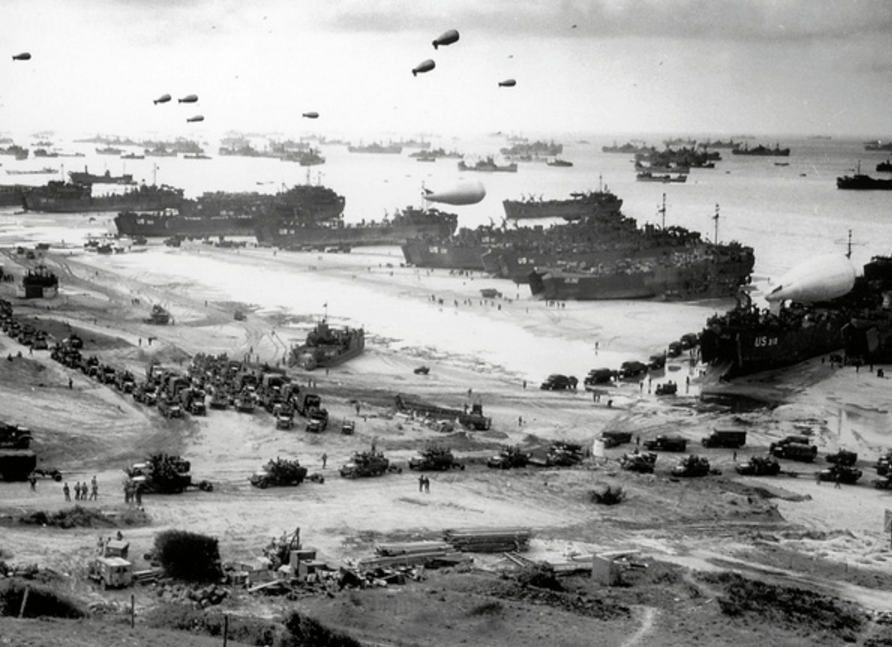
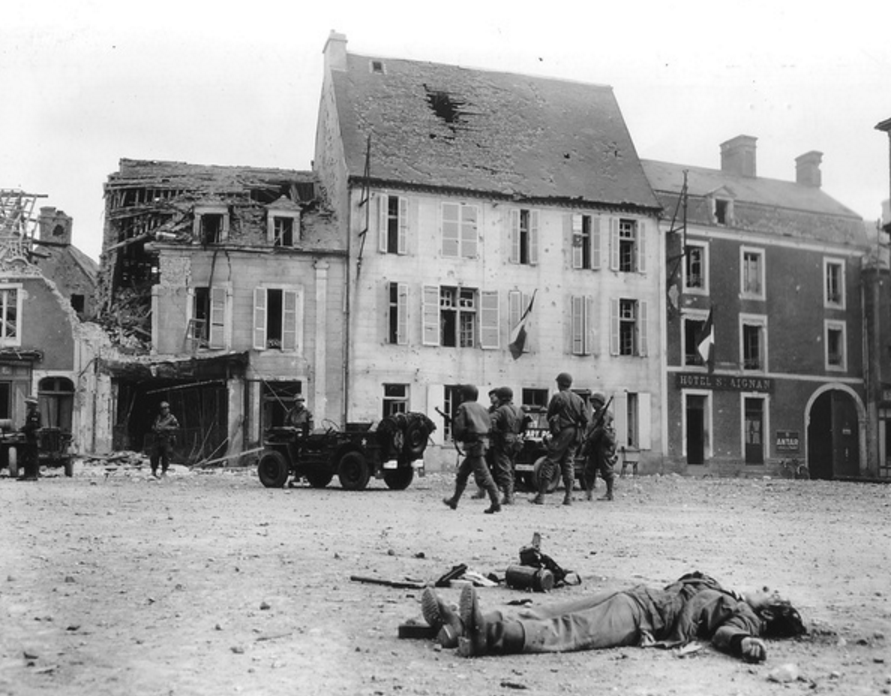
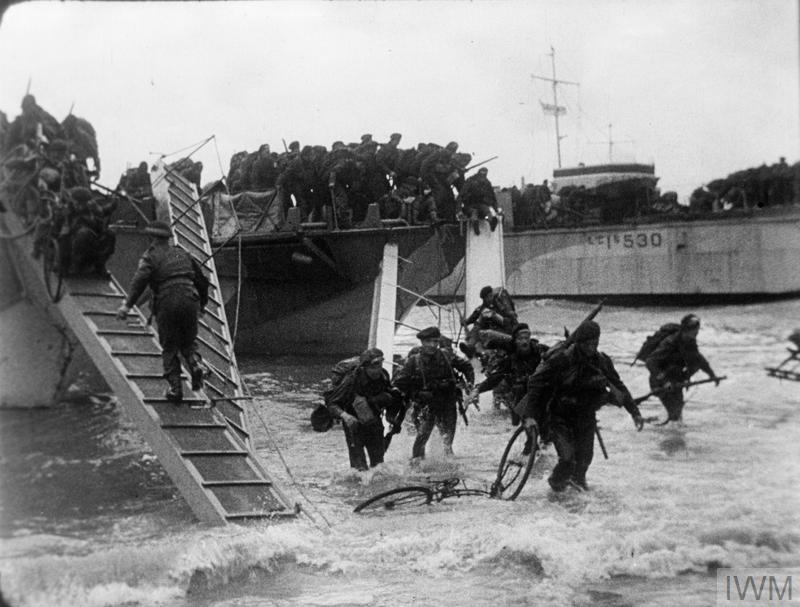
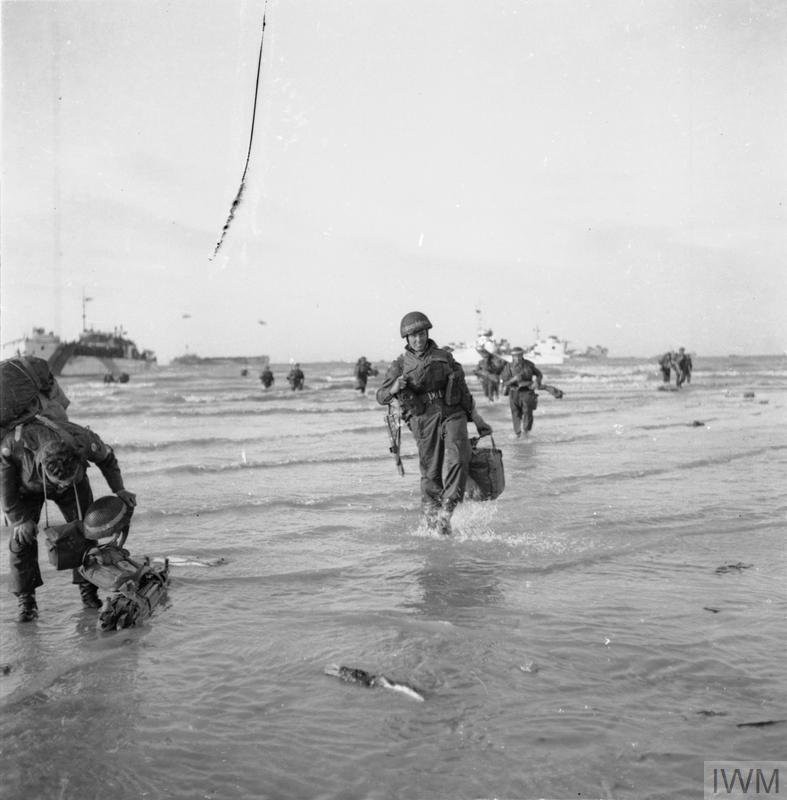
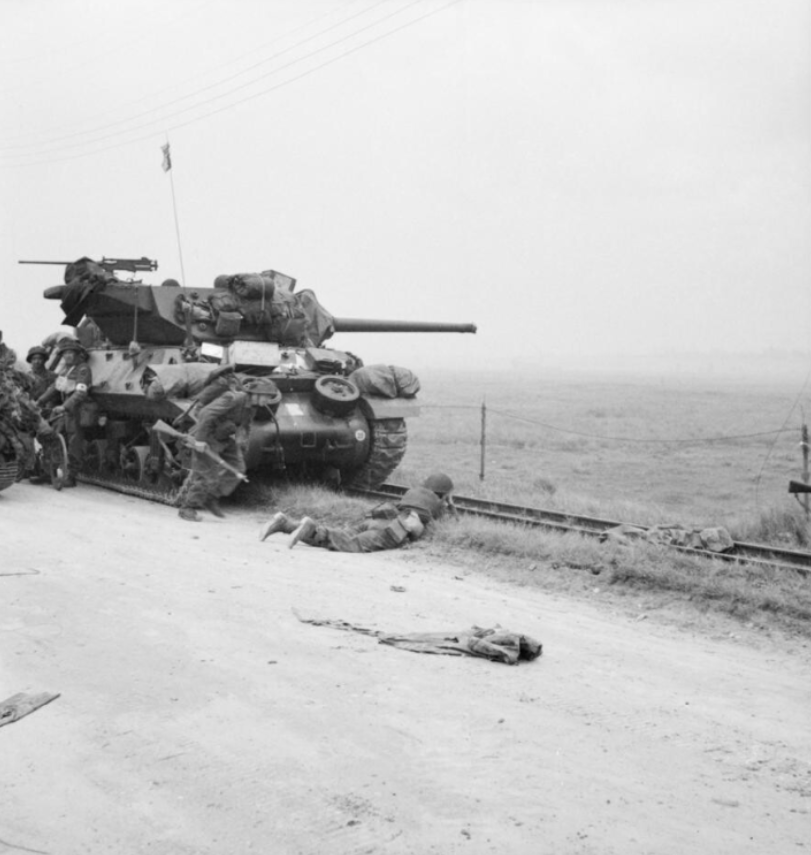
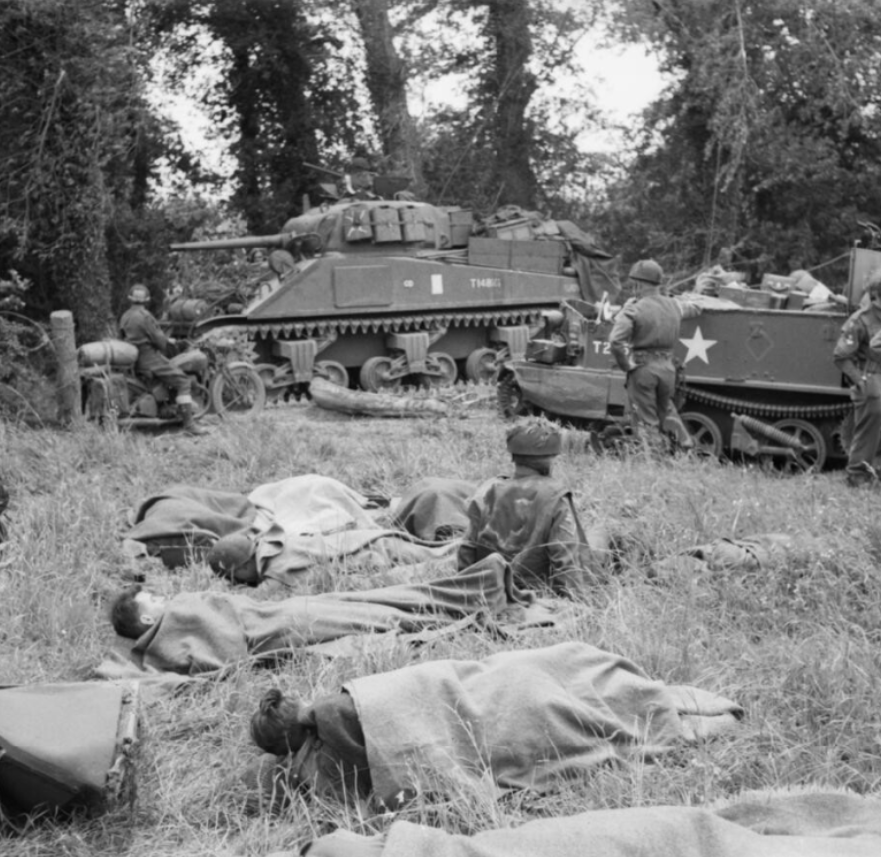
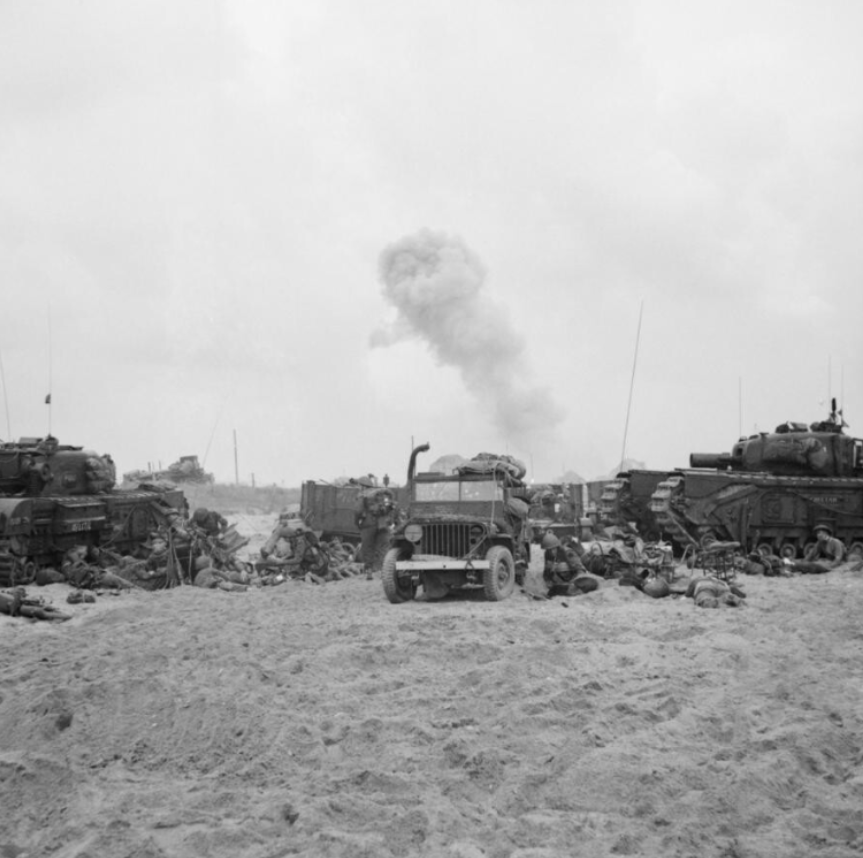
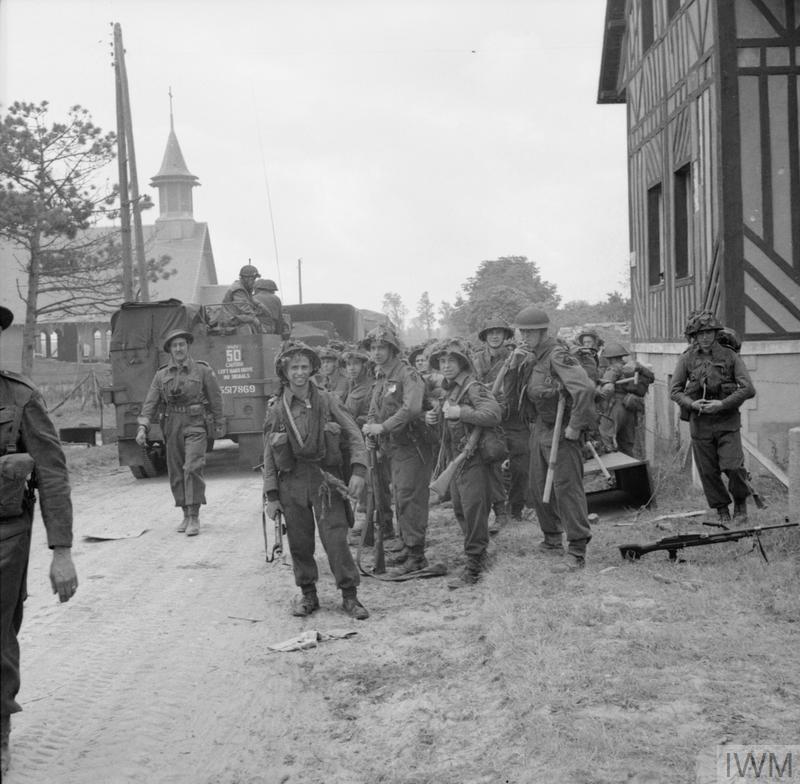
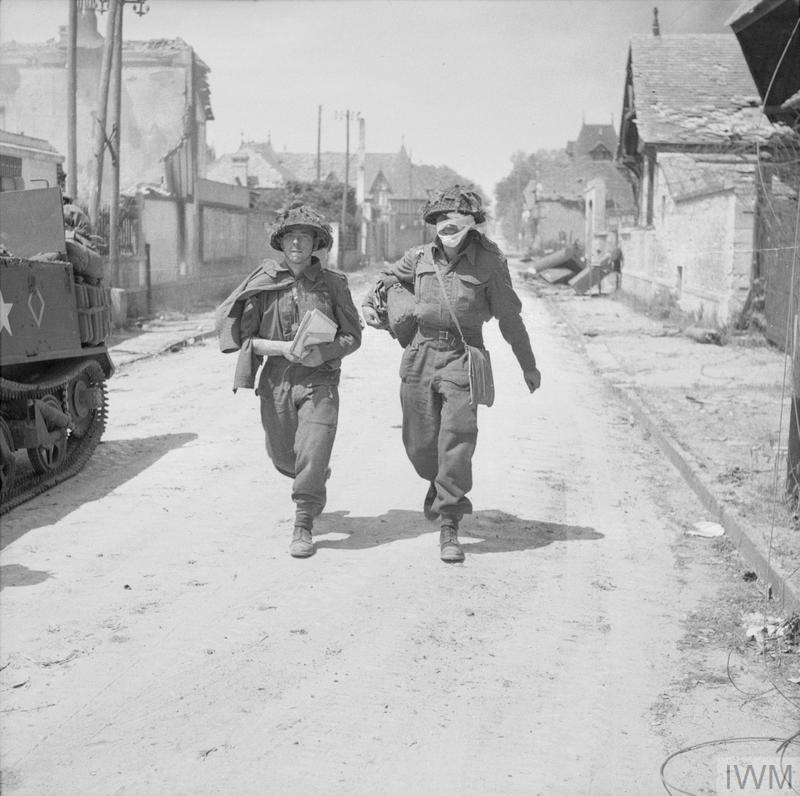
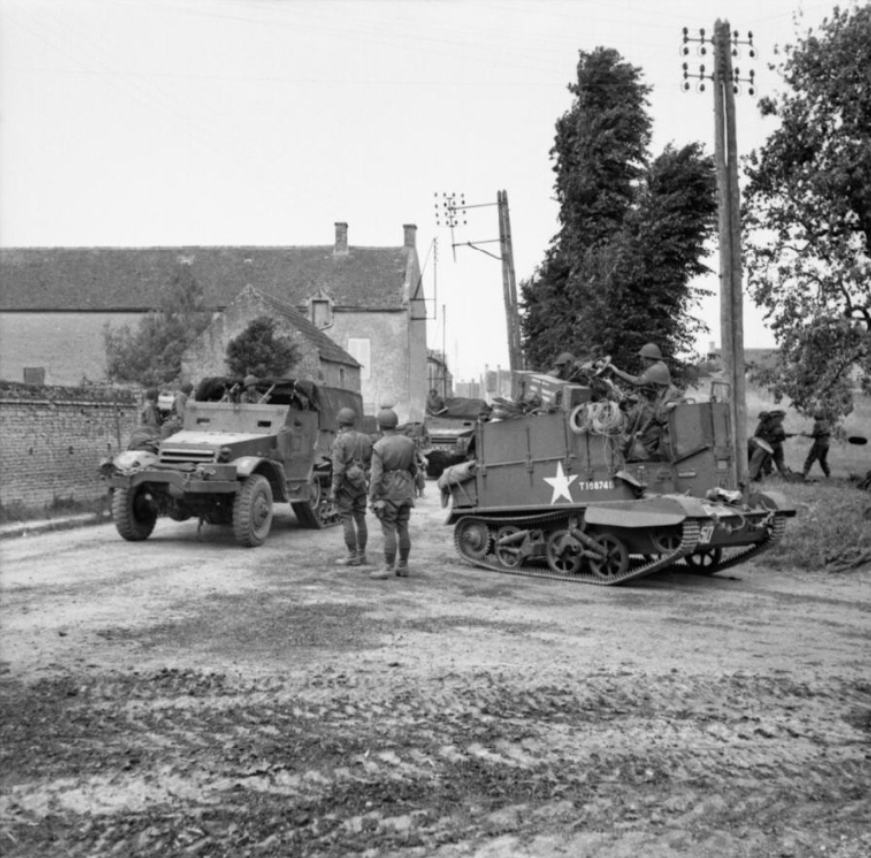
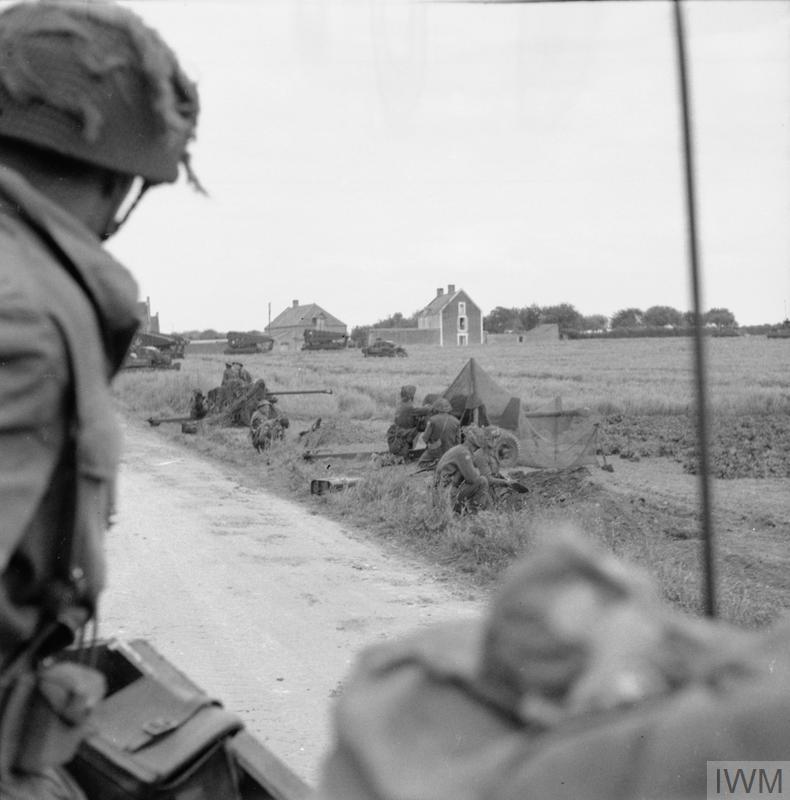
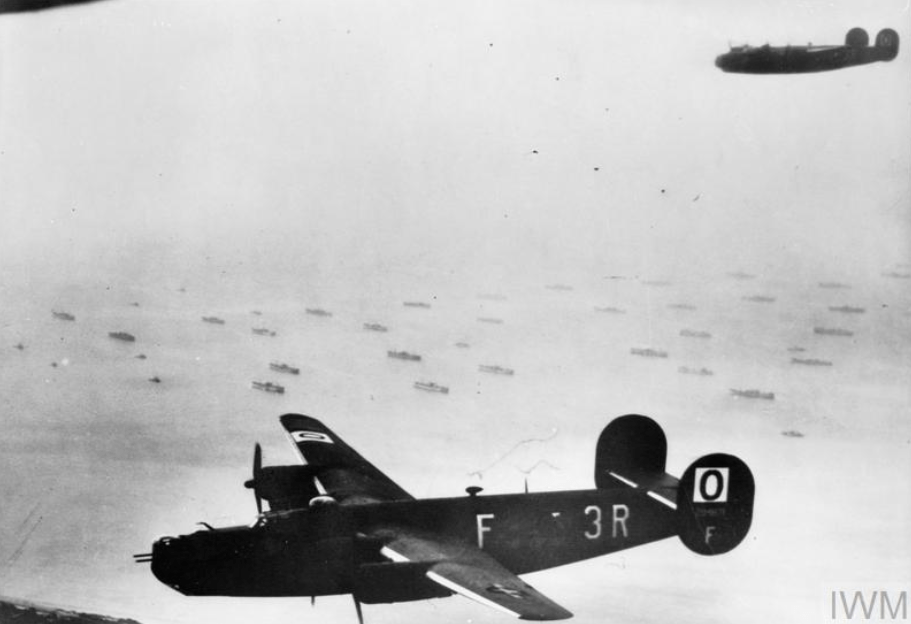
US soldiers advance towards land from the beaches at Normandy on D-Day, June 6, 1944.Reinforcements disembarking from a landing barge at Normandy during the Allied Invasion of France on D-Day.Allied soldiers, tanks and ships take part in the D-Day landings at Arromanches beach in Normandy, Northern France on June 6, 1944.US Marines landing at Normandy in amphibious landing craft on D-Day, June 6, 1944.General Dwight D. Eisenhower (1890-1969) smiles while speaking with the men of the US 101st Airborne Division, ‘The Screaming Eagles’, as they prepare for the D-Day invasion, England, World War II, June 6, 1944.Landing Craft Infantry on the way to Normandy during World War Two, France, June 6, 1944.US troops landing in Northern France on D-Day, June 6, 1944.Troops from the 48th Royal Marines at Saint-Aubin-sur-mer on Juno Beach, Normandy, France, during the D-Day landings, June 6, 1944.US troops of the First Army on Landing Craft Infantry during the allied assault on the beaches of Normandy, World War Two, France, June 6, 1944.American troops, part of the Allied Expeditionary Force, wading ashore beside their amphibious tanks during the initial landings in France on June 6, 1944.Troops of the Canadian 3rd Division, leaving their ship with their bicycles, at Juno beach along the coast of Normandy, France on D-Day, June 6, 1944.A ‘2nd Invasion Extra’ edition of the Worcester Telegram newspaper, published in Worcester, Massachusetts, reporting the Allied invasion of Normandy on D-Day, June 6, 1944.A line of American Paratroopers with full equipment filing along to their Douglas C 47 transports ready for the Invasion, June 6, 1944.American troops with their equipment boarding a landing craft ready for embarkation to France.Correspondents at the Ministry of Information, London, busy typing their first invasion stories on June 6, 1944.A US soldier holds a group of German troops and laborers at gunpoint in a ditch during World War II, Omaha Beach, Normandy, France, on June 6, 1944.A New York haberdasher fixing up a sign explaining that his shop will be closed while staff pray for Allied victory in the invasion of Normandy on D-Day, June, 6 1944.Canadian snipers get some last minute training in England, May 9, 1944 as all await D-day.German prisoners of war are detained behind barbed wire by American soldiers on Utah Beach.6 June 1944 during World War IIRobert CapaD-Day, the invasion of France, June 6, 1944. American craft of all styles at Omaha Beach, Normandy, during the first stages of the Allied invasion. Click to fade to a view of Omaha Beach on May 7, 2014, near Colleville sur Mer, France.The body of a dead German soldier lies in the main square of Place Du Marche after the town was taken by U.S. troops who landed at nearby Omaha Beach in Trevieres, France, June 15, 1944.Commandos of No. 4 Commando, 1st Special Service Brigade, aboard a LCI(S) landing craft on their approach to Queen Red beach, Sword area, 6 June 1944.Commandos of No. 4 Commando, 1st Special Service Brigade, coming ashore from LCI(S) landing craft on Queen Red beach, Sword area, 6 June 1944.Follow-up troops wade ashore from landing craft on Queen sector of Sword Beach, 7 June 1944.Beach Group troops wade ashore from landing craft on Queen beach, Sword area, on the evening of 6 June 1944.British troops from 3rd Division, some with bicycles, move inland from Sword Beach, Normandy, 6 June 1944.An M10 Wolverine 3-inch self-propelled gun of 20th Anti-Tank Regiment provides cover for infantry of 3rd Division as they advance inland from Queen beach, Sword area, 6 June 1944.A battery of M7 Priest 105mm self-propelled guns from 33rd Field Regiment, Royal Artillery, near Hermanville-sur-Mer, 6 June 1944.A Royal Artillery command post, probably from a 105mm SP M7 Priest Field Regiment, near Hermanville-sur-Mer, 6 June 1944. The Sherman OP (observation post) tank in the background has a small ‘GD’ tactical marking on the side of its hull, indicating the GPO (Gun Position Officer) of B Troop, 2nd Battery. Motorcycle despatch riders and a Universal Carrier can also be seen. Some troops are bedding down in the foreground.Churchill AVREs of 79th Assault Squadron, 5th Assault Regiment, Royal Engineers, and other vehicles on Queen Red beach, Sword Area, 6 June 1944.Universal Carriers of 2nd Middlesex Regiment (3rd Division’s MG battalion) pass a Churchill AVRE of 77th Assault Squadron, 5th Assault Regiment, in La Brèche d’Hermanville, 6 June 1944.A jeep and other vehicles and troops passing through La Breche as they move inland from Sword Beach, Normandy, 6 June 1944.Troops of 3rd Division pause in La Brèche d’Hermanville during their move inland, 6 June 1944. The infantry on the right have been identified as 2nd Royal Ulster Rifles from 9th Brigade. The half-track is from 246 Field Company Royal Engineers.Vehicles and infantry on bicycles of British 3rd Division in La Brèche d’Hermanville, as they move inland from Sword Beach, 6 June 1944. A Churchill AVRE can be seen on the right.A Universal Carrier fitted with deep wading screens and motorcyclists of British 3rd Division in La Brèche d’Hermanville, 6 June 1944.Two wounded British soldiers from 3rd Division making their way back through La Brèche d’Hermanville, 6 June 1944.A Universal Carrier with wading screens attached and half-tracks of 3rd Division passing through Hermanville-sur-Mer, 6 June 1944.British 3rd Division troops passing a First World War memorial in Hermanville-sur-Mer, 6 June 1944.A screen of 6-pdr anti-tank guns in position by the side of the Rue de la Croix Rose in Hermanville-sur-Mer, 6 June 1944. The Route de Caen can be seen going off to the rightCommandos of 48 (RM) Commando coming ashore from landing craft at St Aubin-sur-Mer on Juno Beach, 6 June 1944.Consolidated B-24H Liberators of 486th Bombardment Group, US Eighth Air Force, flying over part of the Allied invasion fleet gathered off the Normandy coast, 6 June 1944. They were part of a force of 380 aircraft of 3rd Bombardment Division despatched on the morning of D-Day to bomb villages through which access roads ran to the beachheads.Aerial photo of the numerous Allied naval craft off Dog and Easy beaches, Omaha assault area, 6 June 1944. The photo was taken from a Martin B-26 Marauder of the US Ninth Air Force while on a bombing mission to Avranches.Troops of US VII Corps move over the sea wall on Uncle Red beach, Utah area, 6 June 1944.A survivor from a sunk American landing craft is given first aid on the beach, Omaha assault area, 6 June 1944.A survivor from a sunk American landing craft being helped ashore, Omaha assault area, 6 June 1944.The scene on Omaha assault area after the initial landings on 6 June 1944, showing naval vessels massed offshore. In the foreground, LSTs (Landing Ship Tank), which have grounded on the beach, are unloading directly onto the shore.Commandos of No. 4 Commando, 1st Special Service Brigade, use an improvised stretcher to bring one of their casualties back as they advance into Ouistreham, Sword area, 6 June 1944.Sherman DD tanks of ‘B’ Squadron, 13th/18th Royal Hussars support men of No. 4 Army Commando on the Rue de Riva- Bella in Ouistreham, 6 June 1944.Sherman DD tanks of ‘B’ Squadron, 13th/18th Royal Hussars support commandos of No. 4 Commando, 1st Special Service Brigade, as they advance into Ouistreham, Sword area, 6 June 1944.Men of 4 Commando, 1st Special Service Brigade, being briefed by Lt Col R Dawson just before embarking for Normandy, June 1944.Troops of 51st Highland Division aboard a landing craft heading for Normandy, reading booklets on France which they were issued before embarkation, 7 June 1944.
Dame Agatha Mary Clarissa Christie, Lady Mallowan, DBE (née Miller; 15 September 1890 – 12 January 1976) was an English writer known for her 66 detective novels and 14 short story collections, particularly those revolving around fictional detectives Hercule Poirot and Miss Marple. She also wrote the world’s longest-running play, The Mousetrap, which was performed in the West End from 1952 to 2020, as well as six novels under the pseudonym Mary Westmacott. In 1971, she was made a Dame (DBE) for her contributions to literature. Guinness World Records lists Christie as the best-selling fiction writer of all time, her novels having sold more than two billion copies.
Christie was born into a wealthy upper-middle-class family in Torquay, Devon, and was largely home-schooled. She was initially an unsuccessful writer with six consecutive rejections, but this changed in 1920 when The Mysterious Affair at Styles, featuring detective Hercule Poirot, was published. Her first husband was Archibald Christie; they married in 1914 and had one child before divorcing in 1928. During both World Wars, she served in hospital dispensaries, acquiring a thorough knowledge of the poisons which featured in many of her novels, short stories, and plays. Following her marriage to archaeologist Max Mallowan in 1930, she spent several months each year on digs in the Middle East and used her first-hand knowledge of his profession in her fiction.
According to Index Translationum, she remains the most-translated individual author. Her novel And Then There Were None is one of the top-selling books of all time, with approximately 100 million copies sold. Christie’s stage play The Mousetrap holds the world record for the longest initial run. It opened at the Ambassadors Theatre in the West End of London on 25 November 1952, and by September 2018 there had been more than 27,500 performances. The play was closed down in March 2020 because of the coronavirus pandemic.
In 1955, Christie was the first recipient of the Mystery Writers of America’s Grand Master Award. Later that year, Witness for the Prosecution received an Edgar Award for best play. In 2013, she was voted the best crime writer and The Murder of Roger Ackroyd the best crime novel ever by 600 professional novelists of the Crime Writers’ Association. In September 2015, And Then There Were None was named the “World’s Favourite Christie” in a vote sponsored by the author’s estate. Most of Christie’s books and short stories have been adapted for television, radio, video games, and graphic novels. More than 30 feature films are based on her work. (Wikipedia)
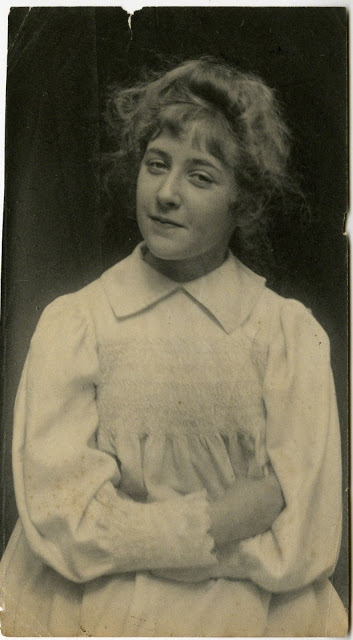
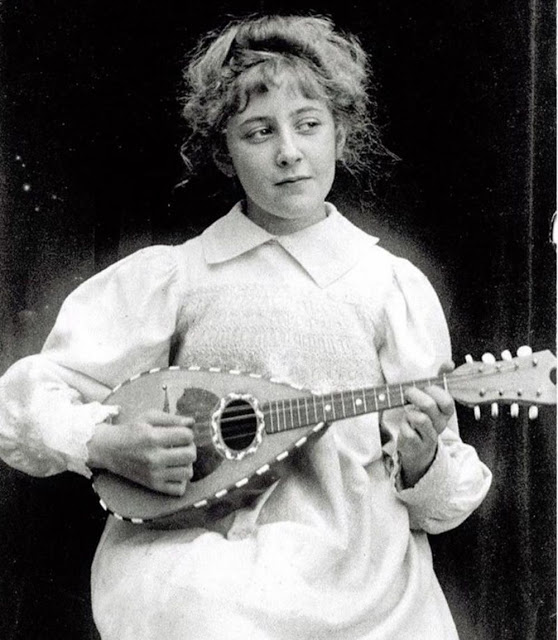
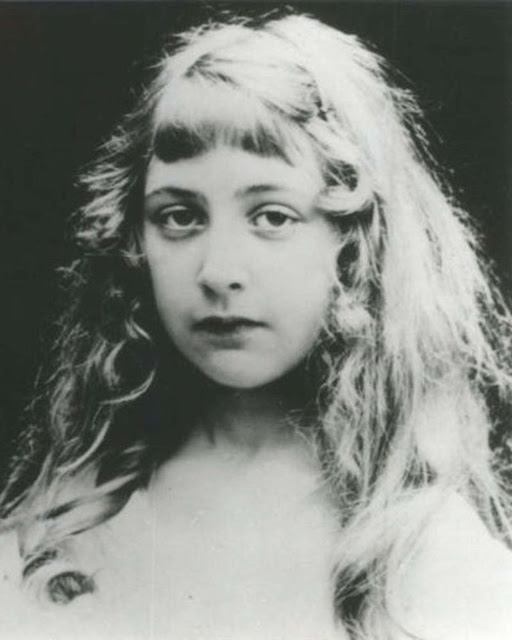
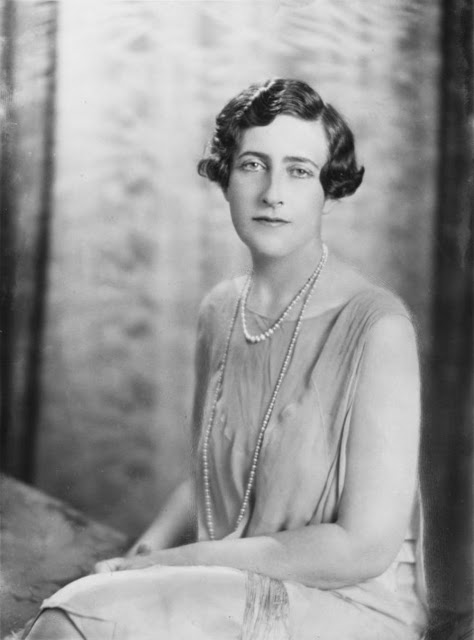
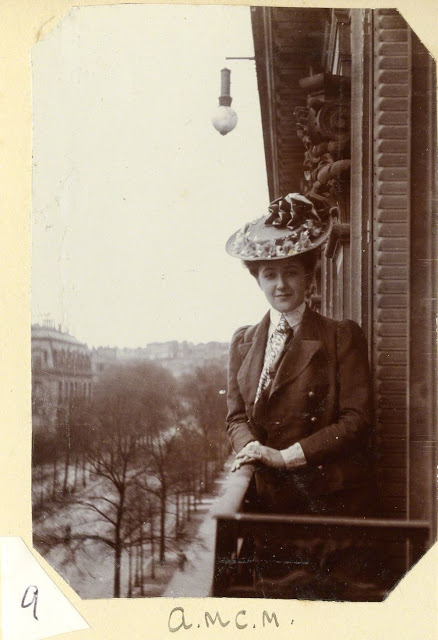
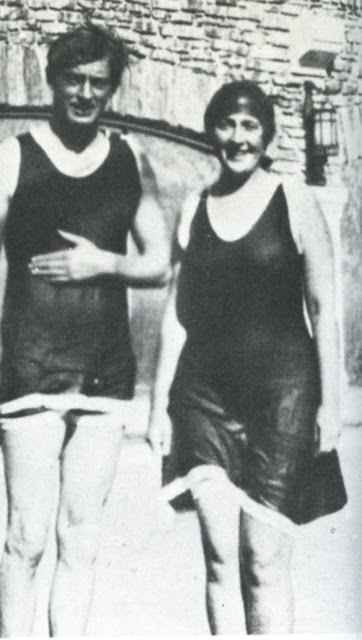
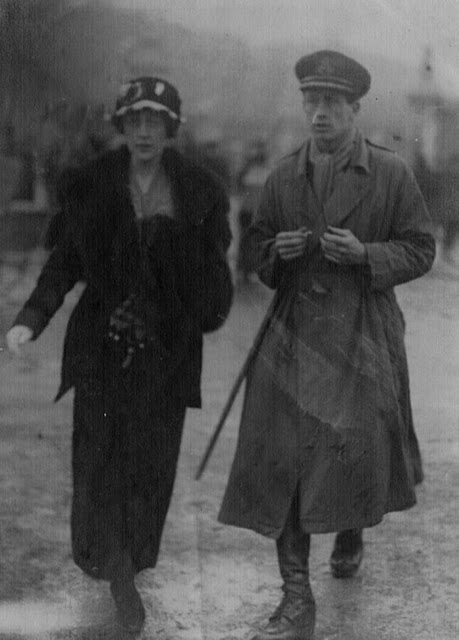
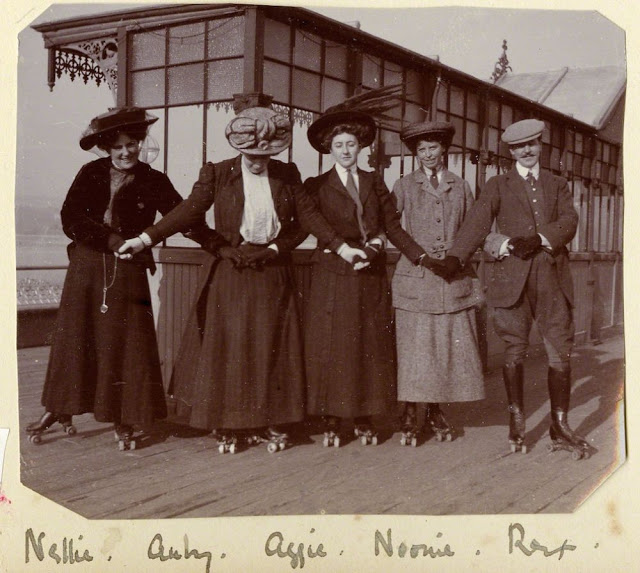
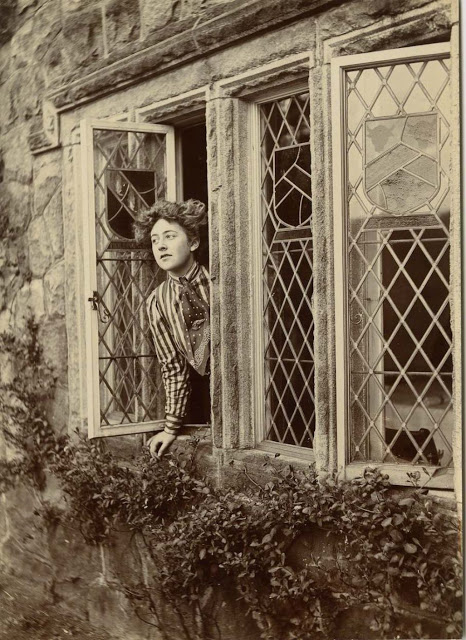
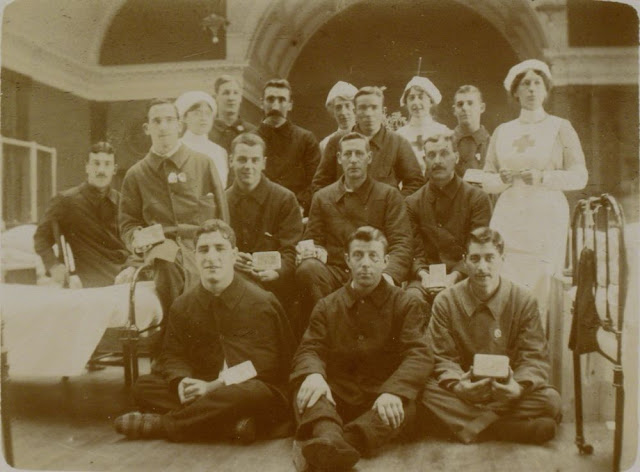
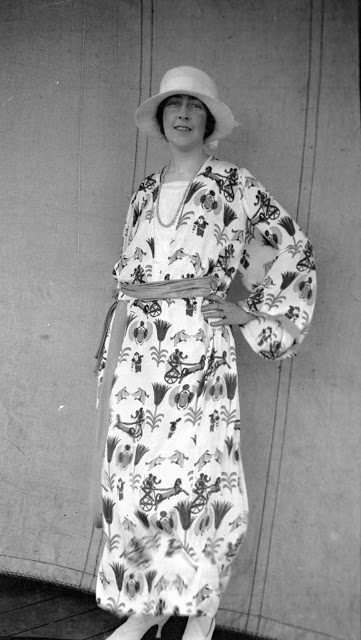
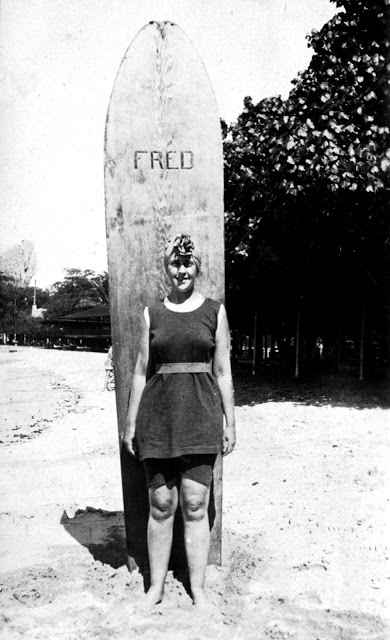
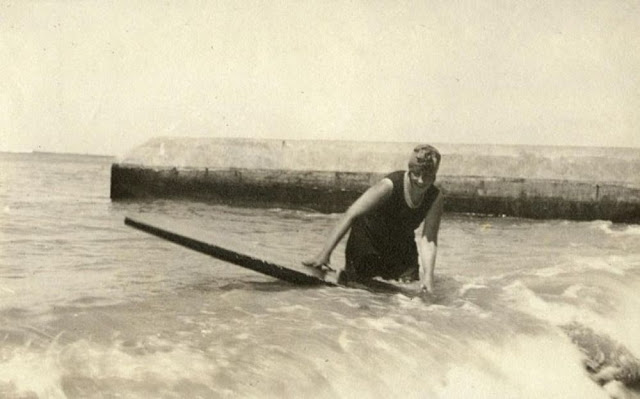
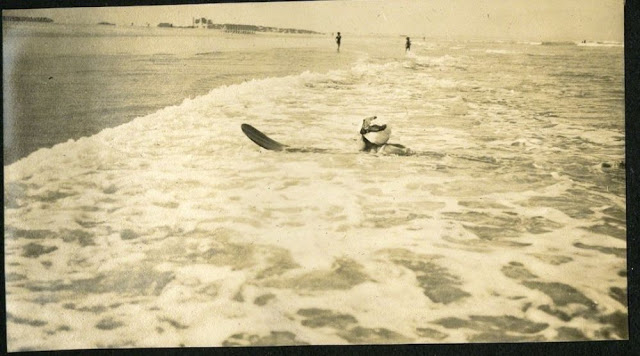
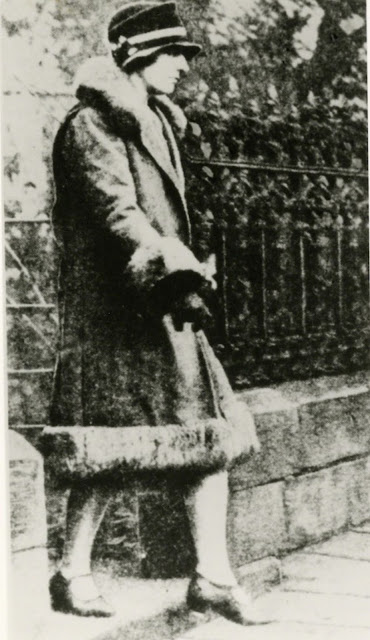
The young Agatha playing the mandolin, aged 8 in 1898.Agatha, pictured centre, at a dance class in Torquay in 1904.Paris. 1906.Agatha and Archie Christie.Agatha and Archie Christie.Agatha (in centre) Roller-skating on Torquay pier with the Lucy family, ca. 1911.Upper House, Hayfield, Derbyshire, 1913.Agatha — top row third from left. With soldiers holding Princess Mary’s Christmas gift, Torquay, 1914.Setting off on a world tour with Archie as part of a trade delegation for the Empire Exhibition, aboard RMS Kildonan Castle from Southampton. January 1922.Agatha Christie stands on Muizenberg Beach, South Africa, following surf bathing, 1922.Agatha Christie was one of the first women in Britain to surf standing up.Surfing in South Africa, in Muizenberg, a suburb of Cape Town, in February 1922.Agatha Christie, 192615 December 1926. First press sighting of Agatha leaving The Harrogate Hydro spa hotel after going missing for 11 days.
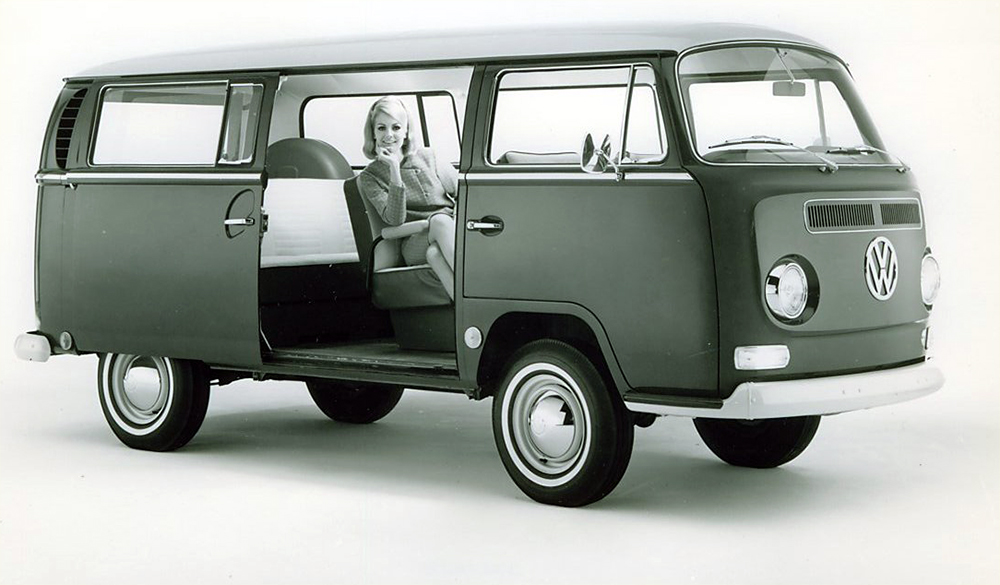
The Volkswagen Type 2, known officially (depending on body type) as the Transporter, Kombi or Microbus, or, informally, as the Bus (US), Camper (UK) or Bulli (Germany), is a forward control light commercial vehicle introduced in 1950 by the German automaker Volkswagen as its second car model. Following – and initially deriving from – Volkswagen’s first model, the Type 1 (Beetle), it was given the factory designation Type 2.
As one of the forerunners of the modern cargo and passenger vans, the Type 2 gave rise to forward control competitors in the United States in the 1960s, including the Ford Econoline, the Dodge A100, and the Chevrolet Corvair 95 Corvan, the latter adapting the rear-engine configuration of the Corvair car in the same manner in which the VW Type 2 adapted the Type 1 layout.
European competition included the 1947–1981 Citroën H Van, the 1959–1980 Renault Estafette (both FF layout), and the 1953–1965 FR layout Ford Transit.
Japanese manufacturers also introduced similar vehicles, such as the Nissan Caravan, Toyota LiteAce and Subaru Sambar.
Like the Beetle, the van has received numerous nicknames worldwide, including the “microbus”, “minibus”, and, because of its popularity during the counterculture movement of the 1960s, “Hippie van/bus”.
Brazil contained the last factory in the world that produced the T2 series of Type 2, which ceased production on 31 December 2013, due to the introduction of more stringent safety regulations in the country. This (after the 2002 termination of its T3 successor in South Africa) marked the end of the era of rear-engine Volkswagens, which originated in 1935 with their Type 1 prototypes. (Wikipedia)
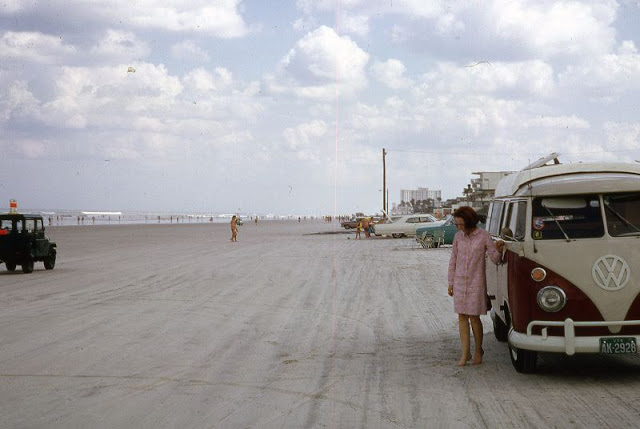
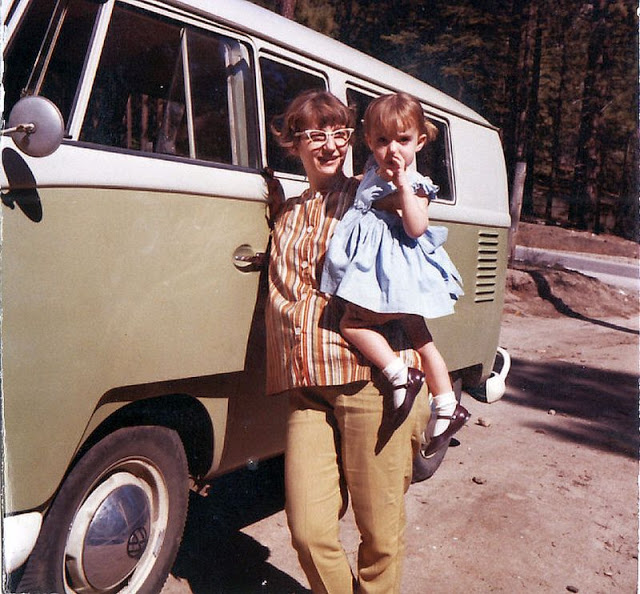
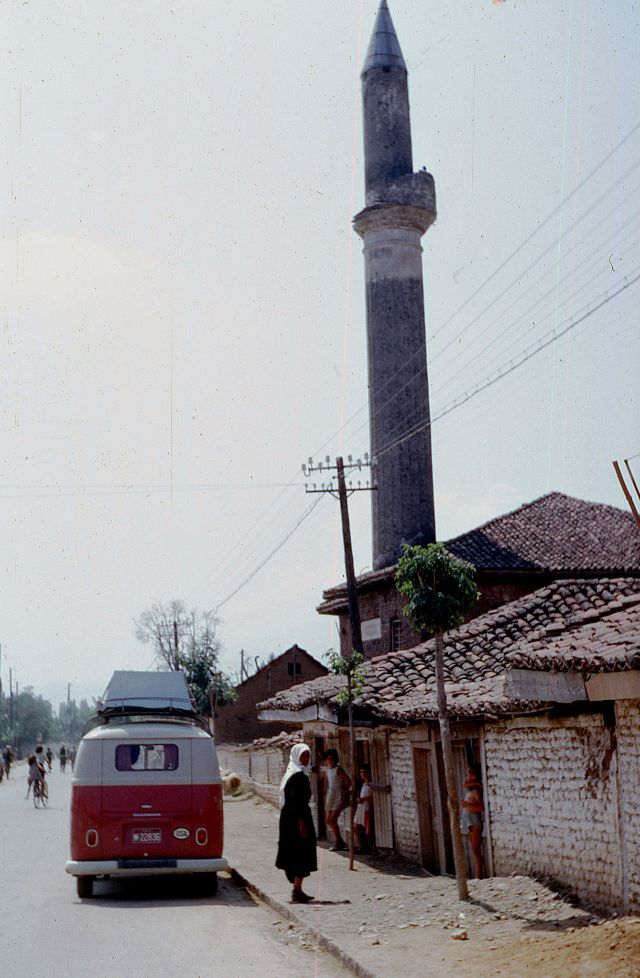
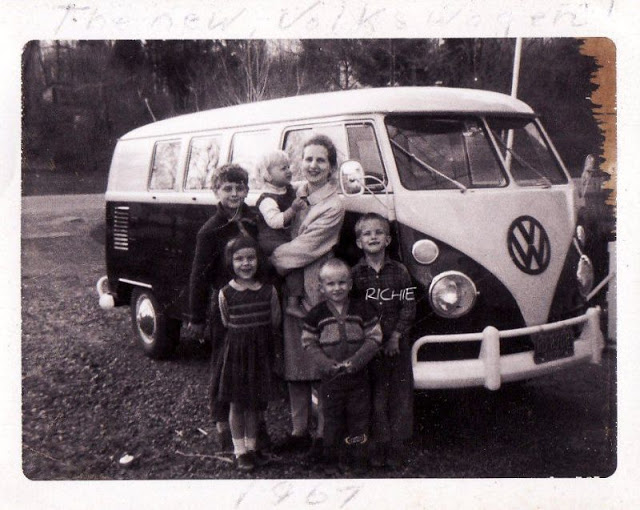
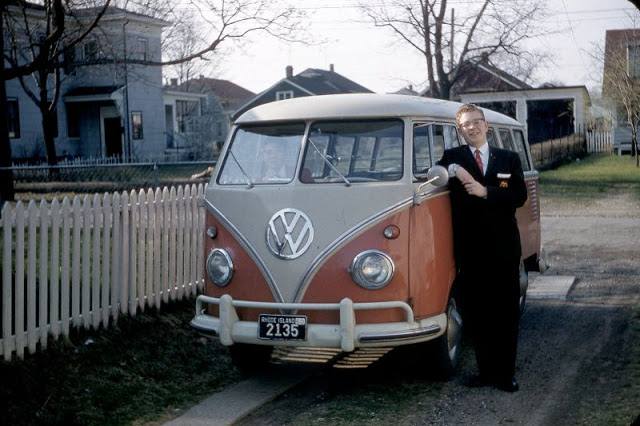
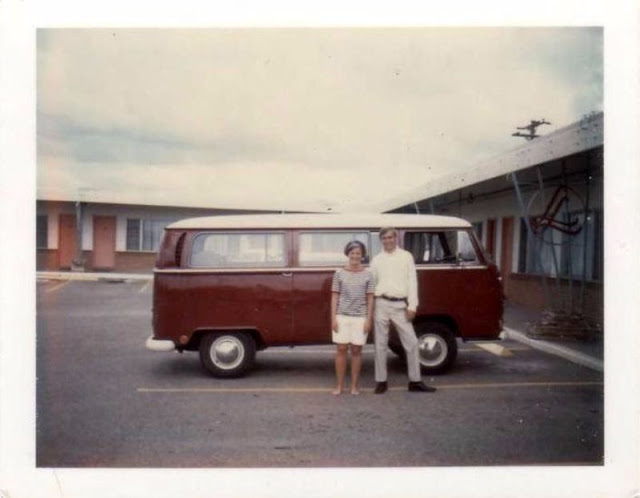
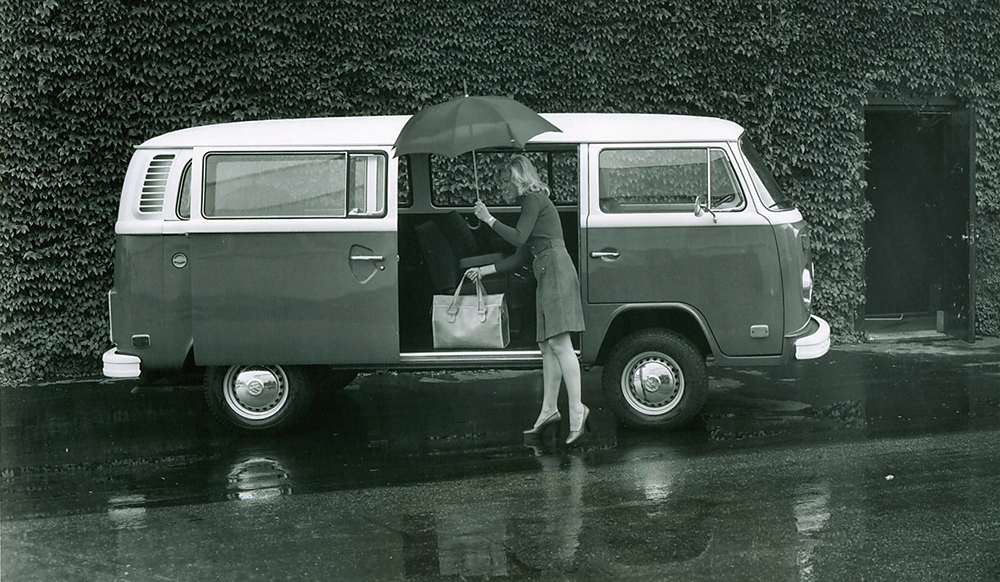
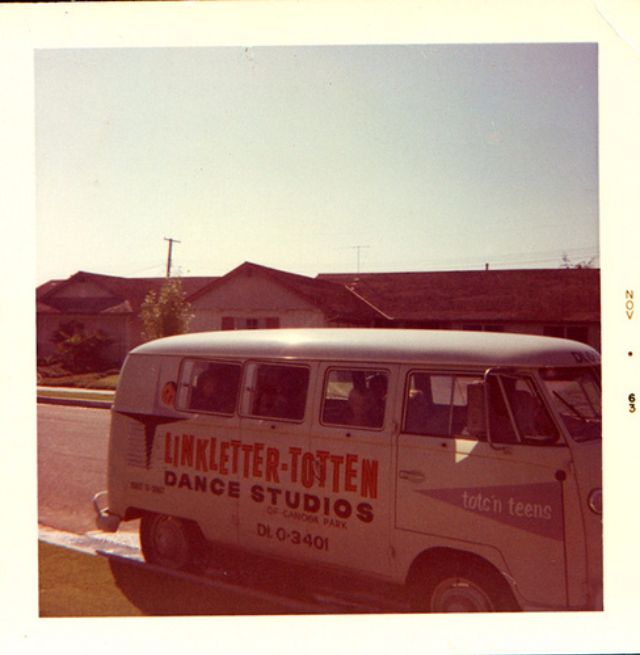
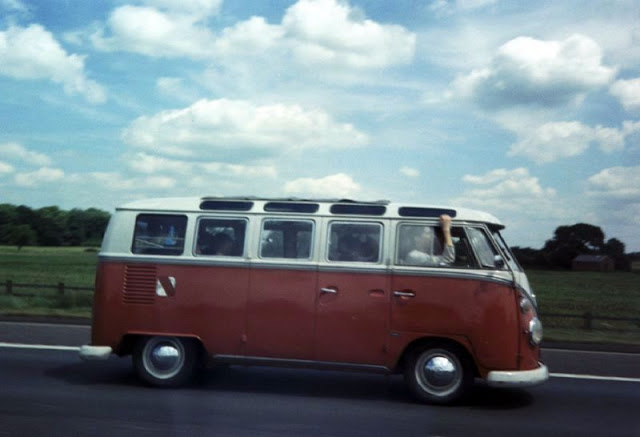
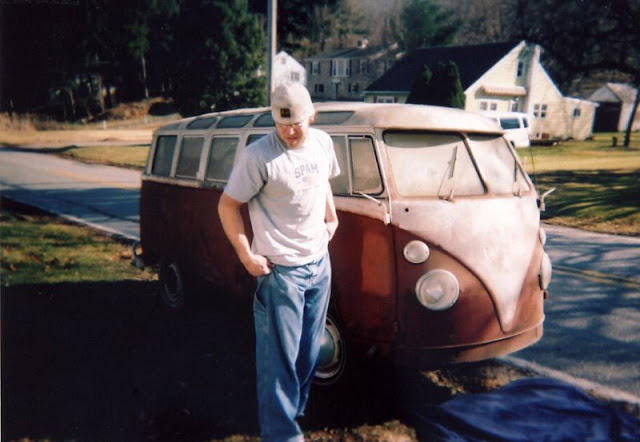
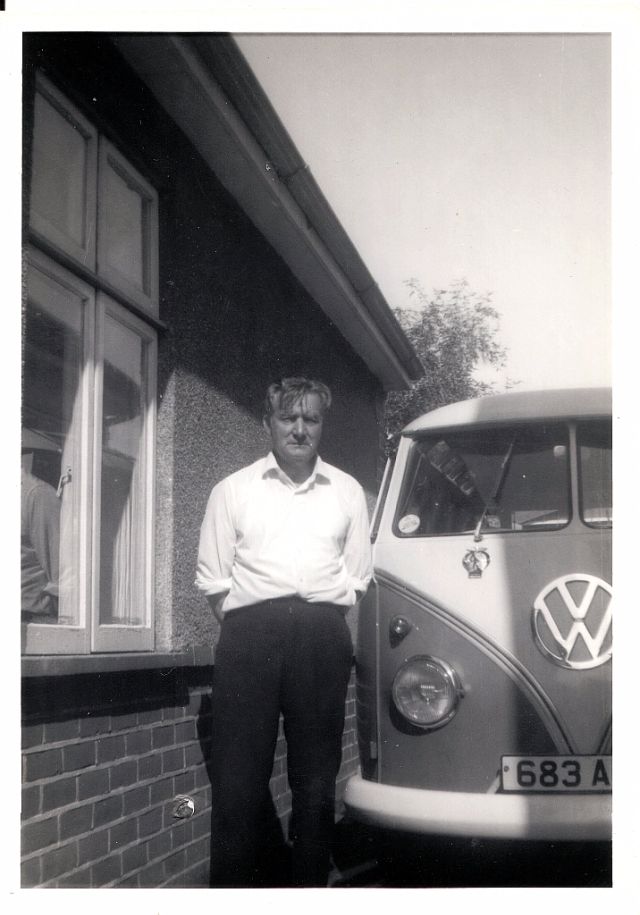
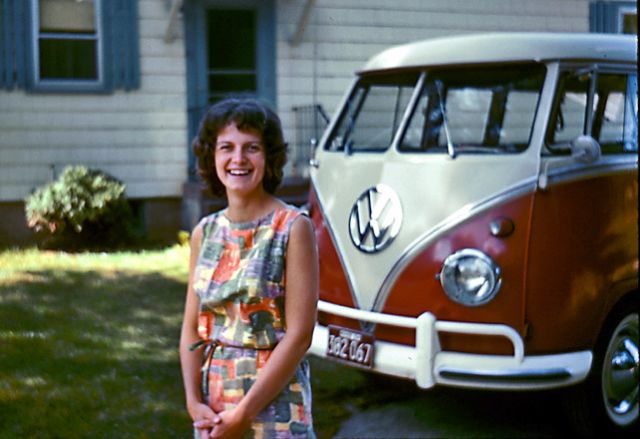
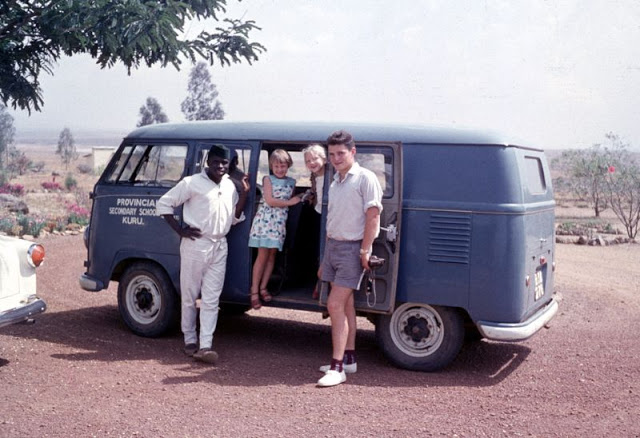
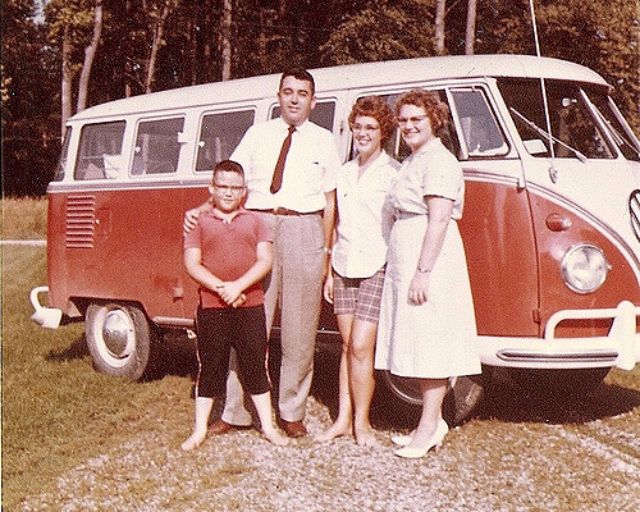
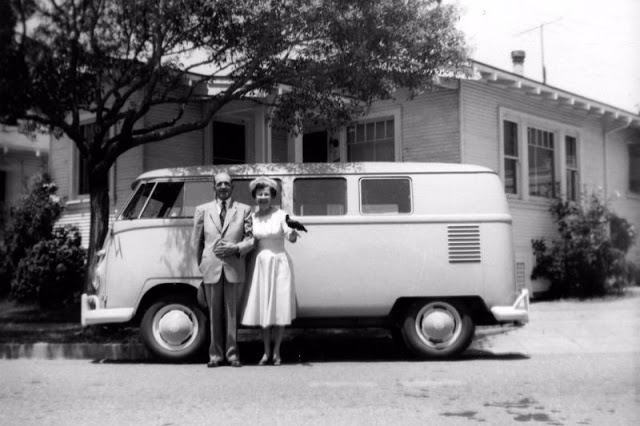
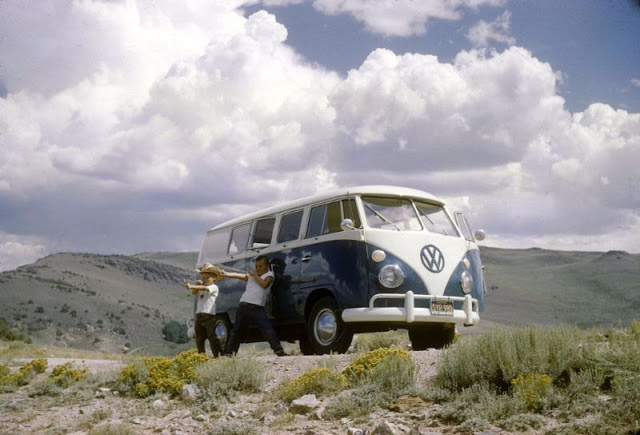
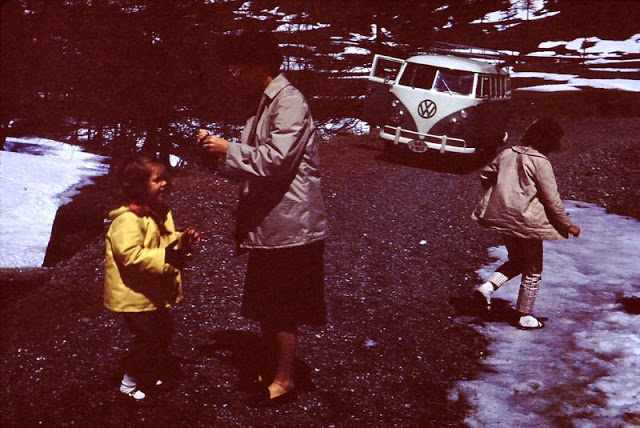
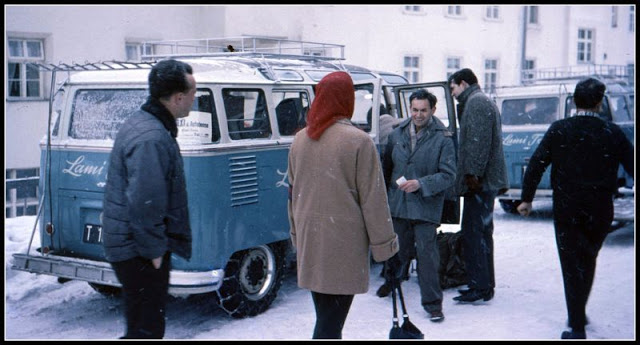
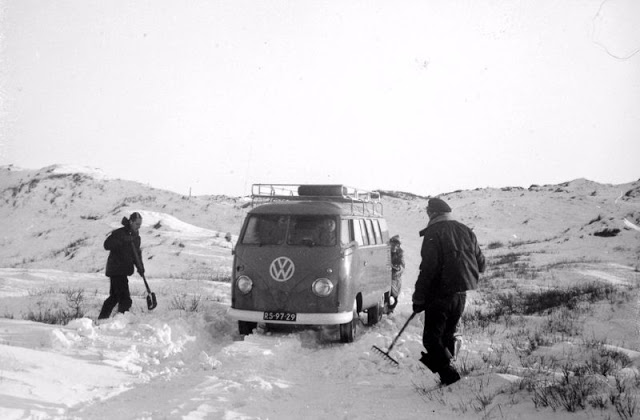
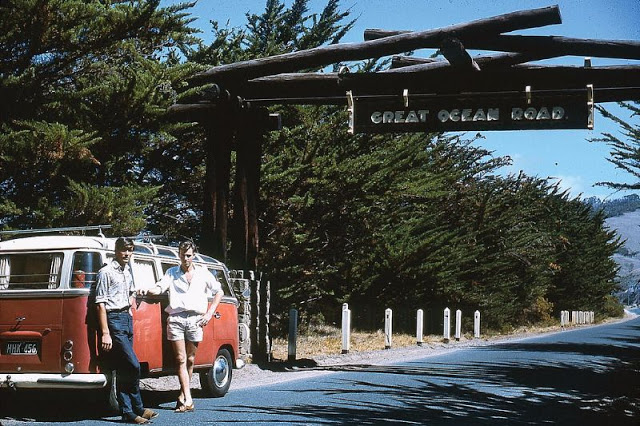
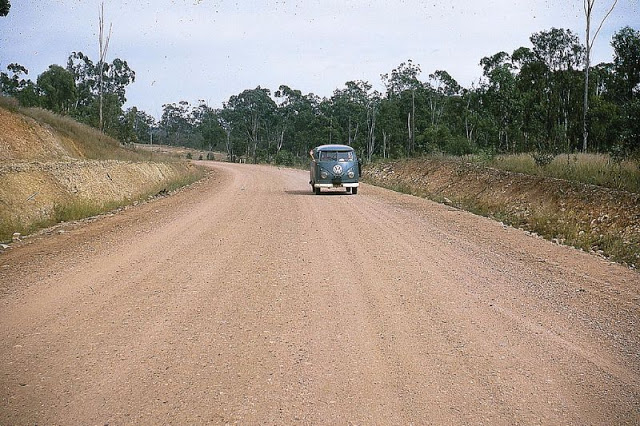
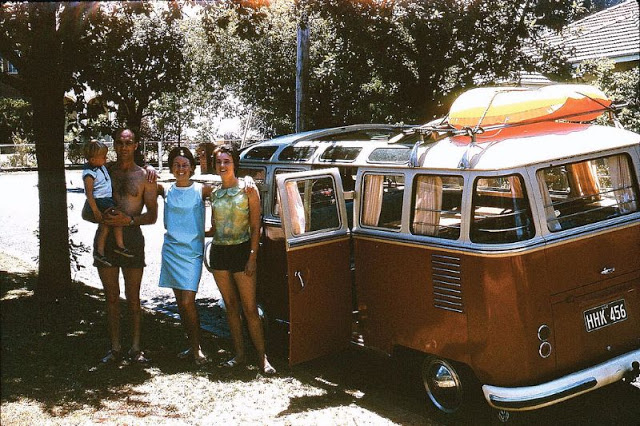
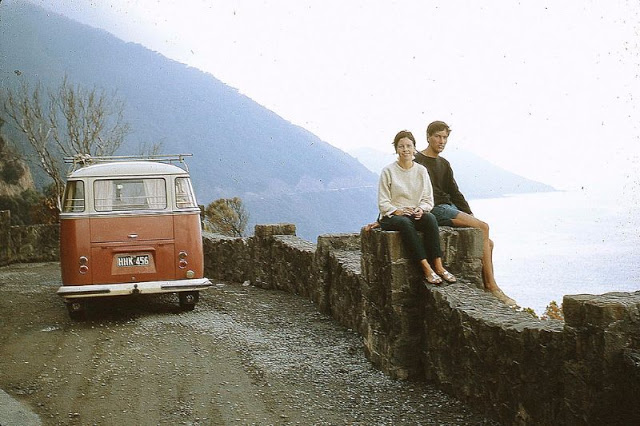
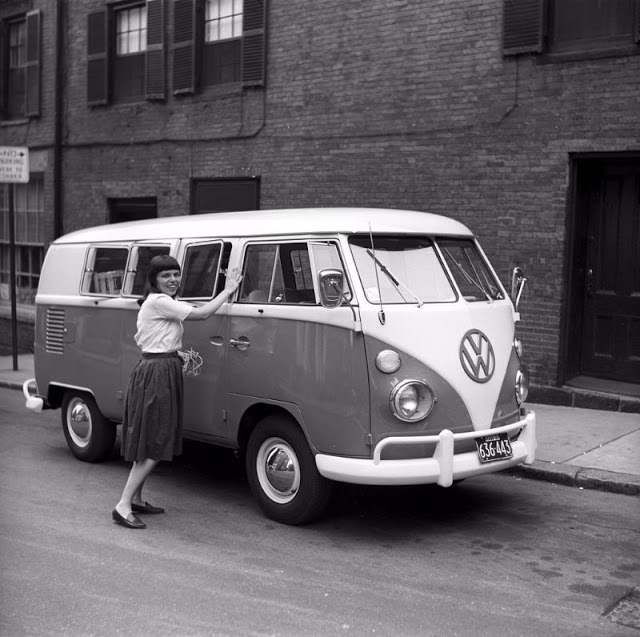
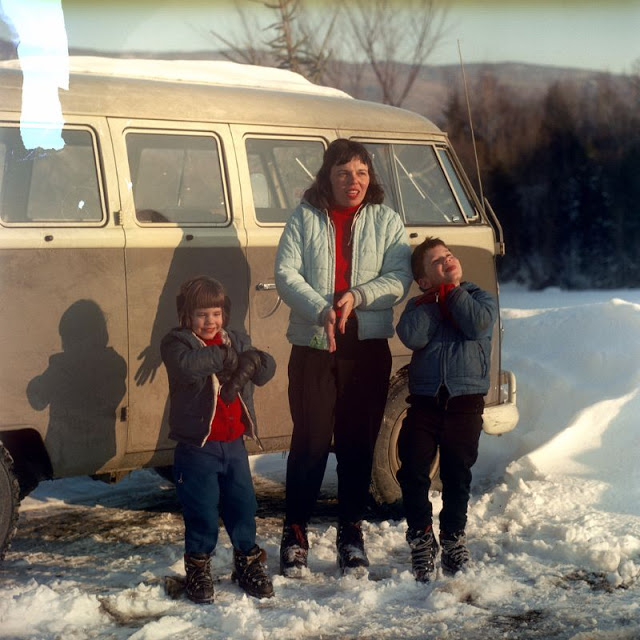
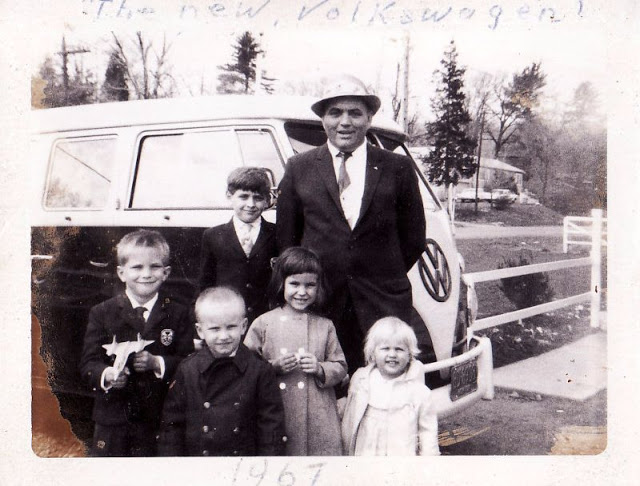
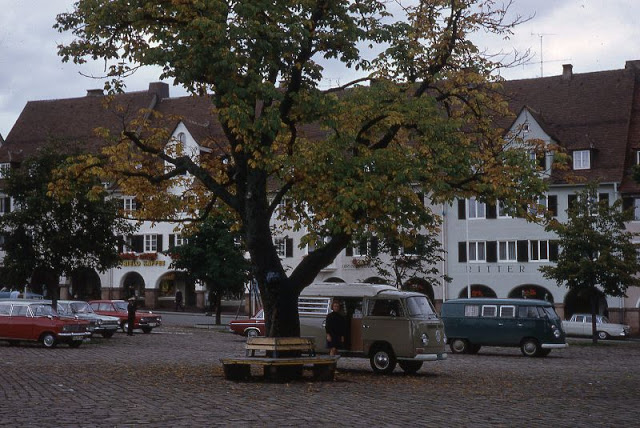
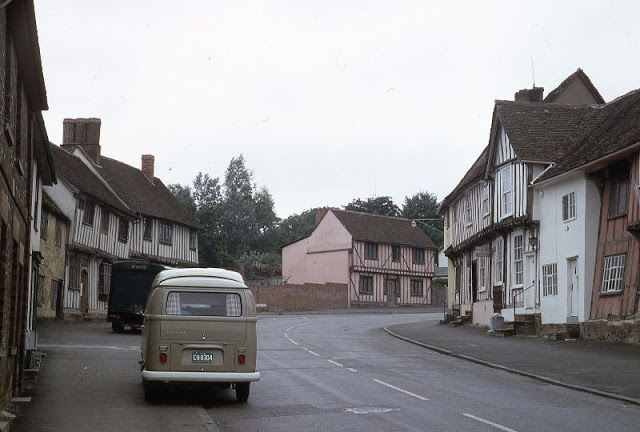
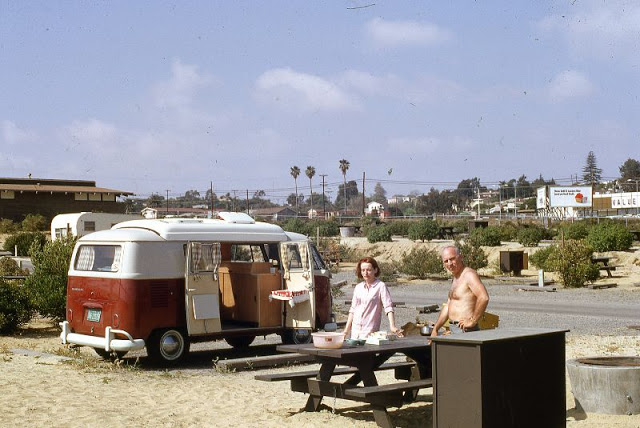
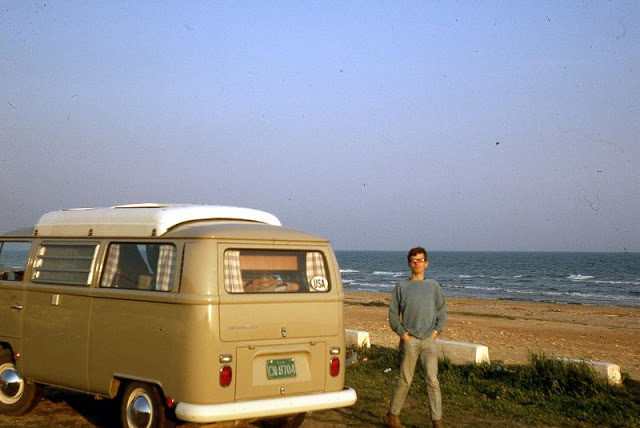
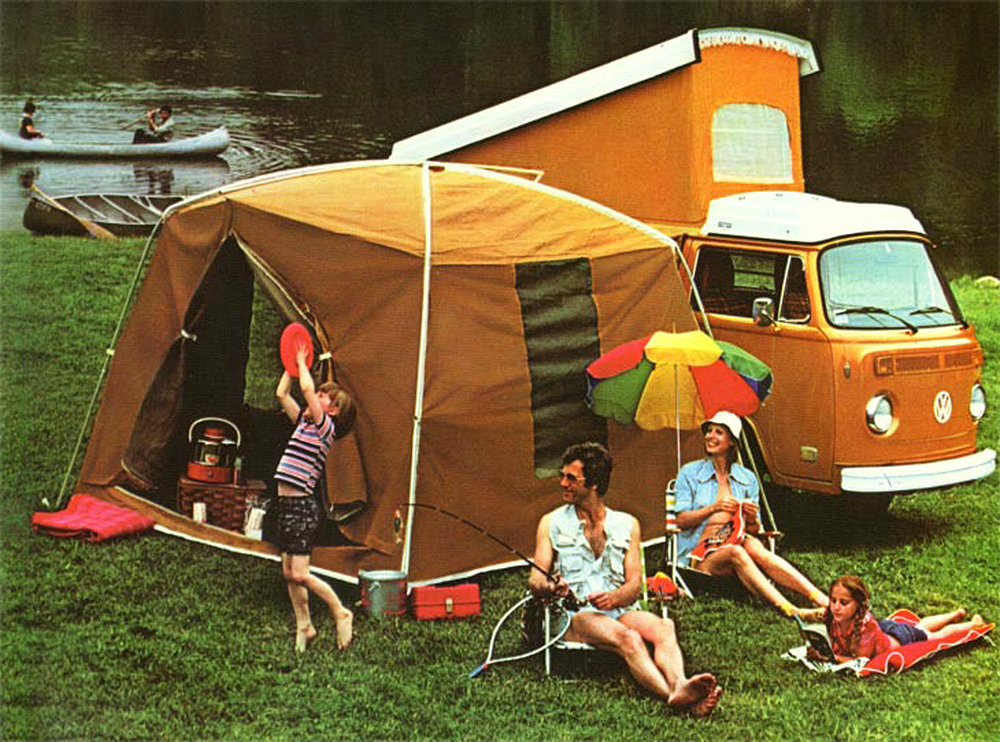
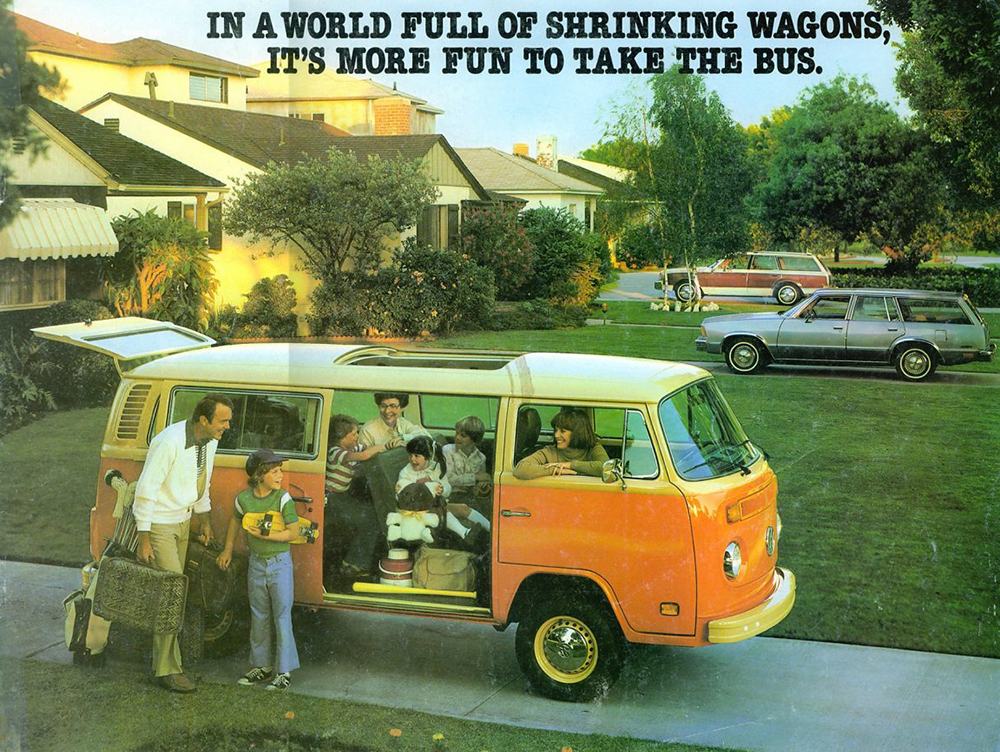
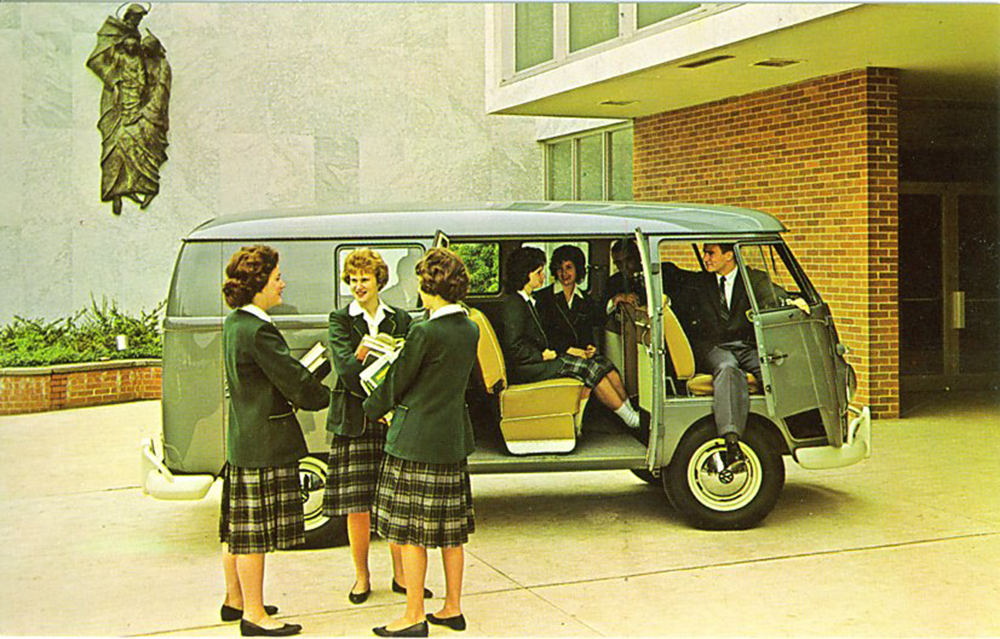
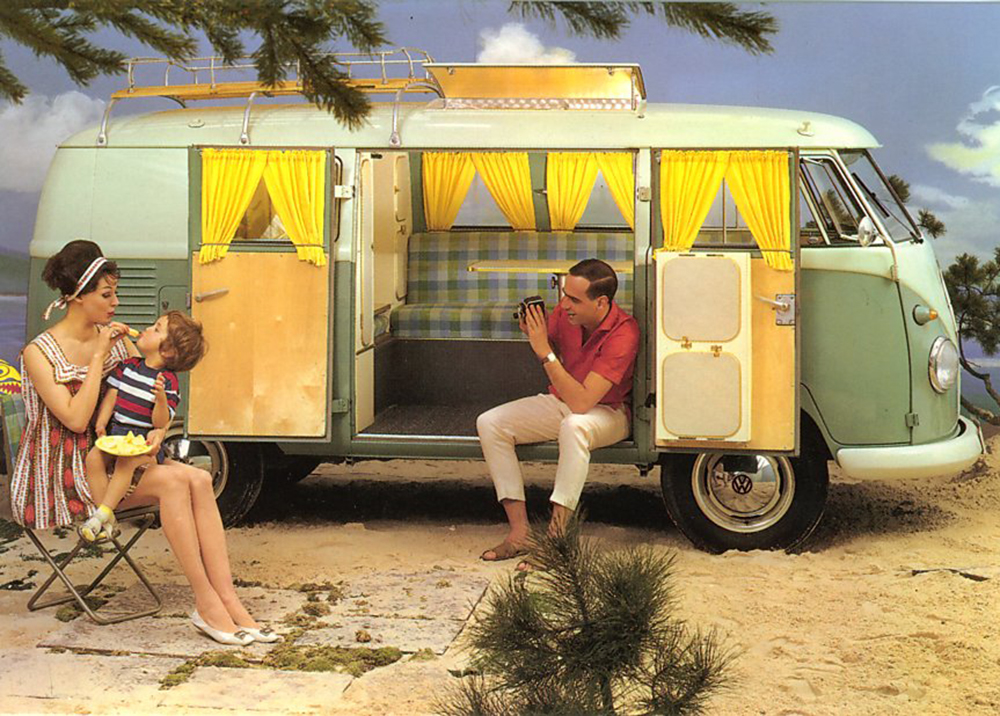
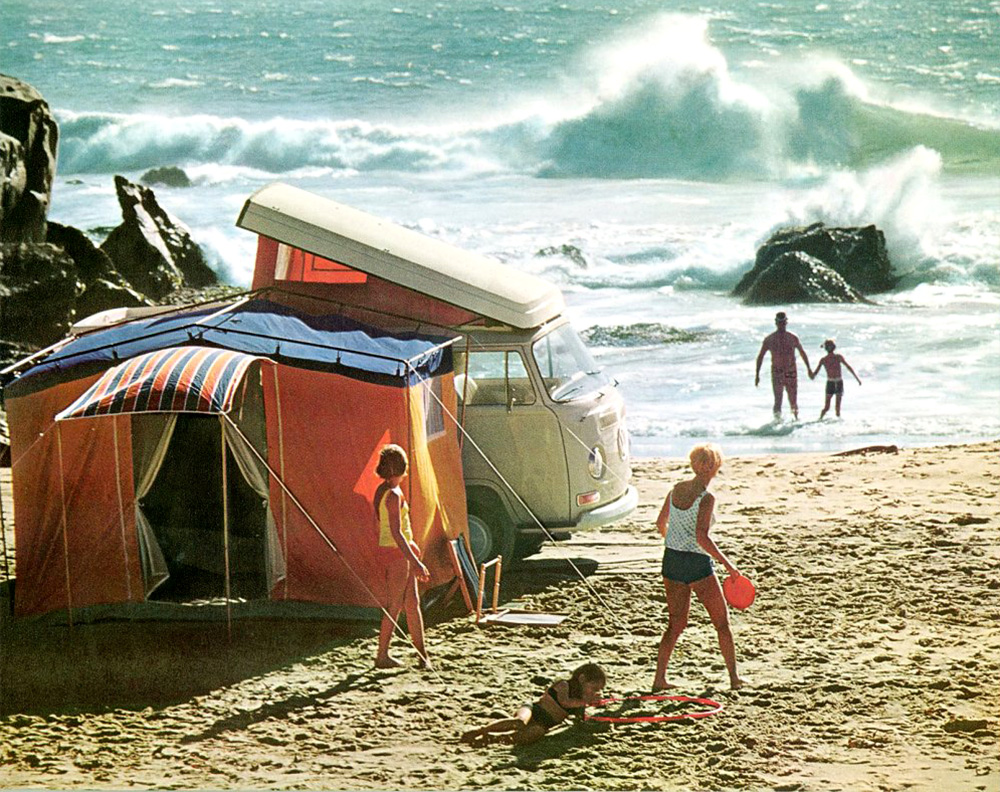
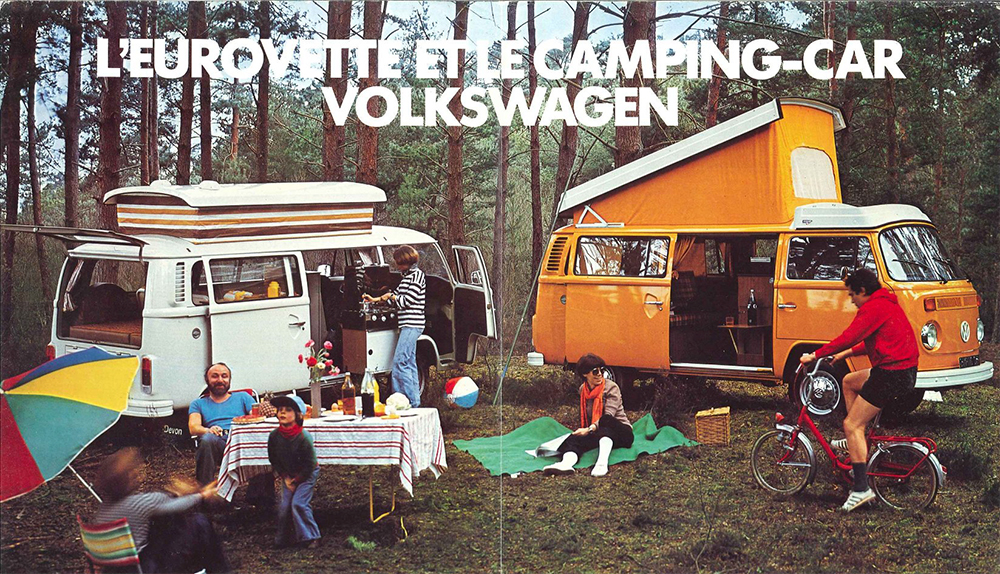
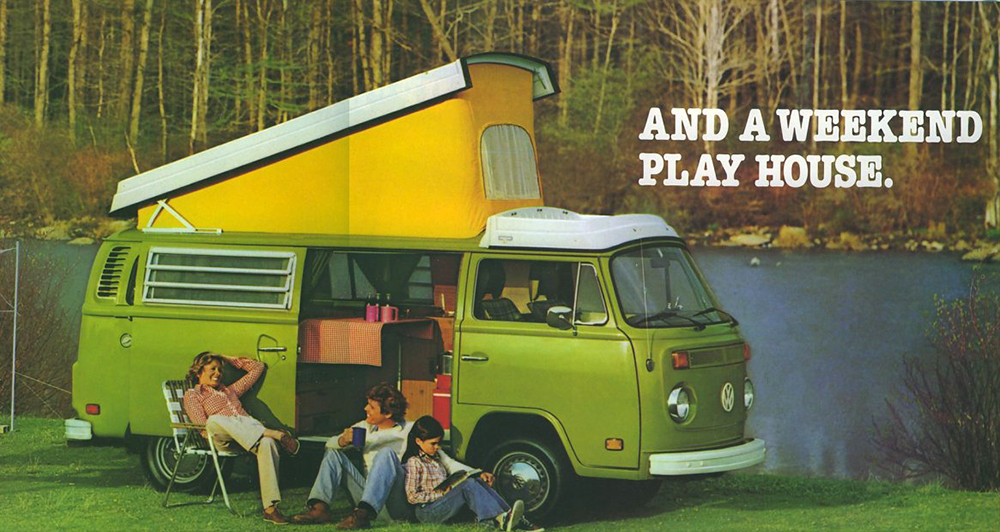
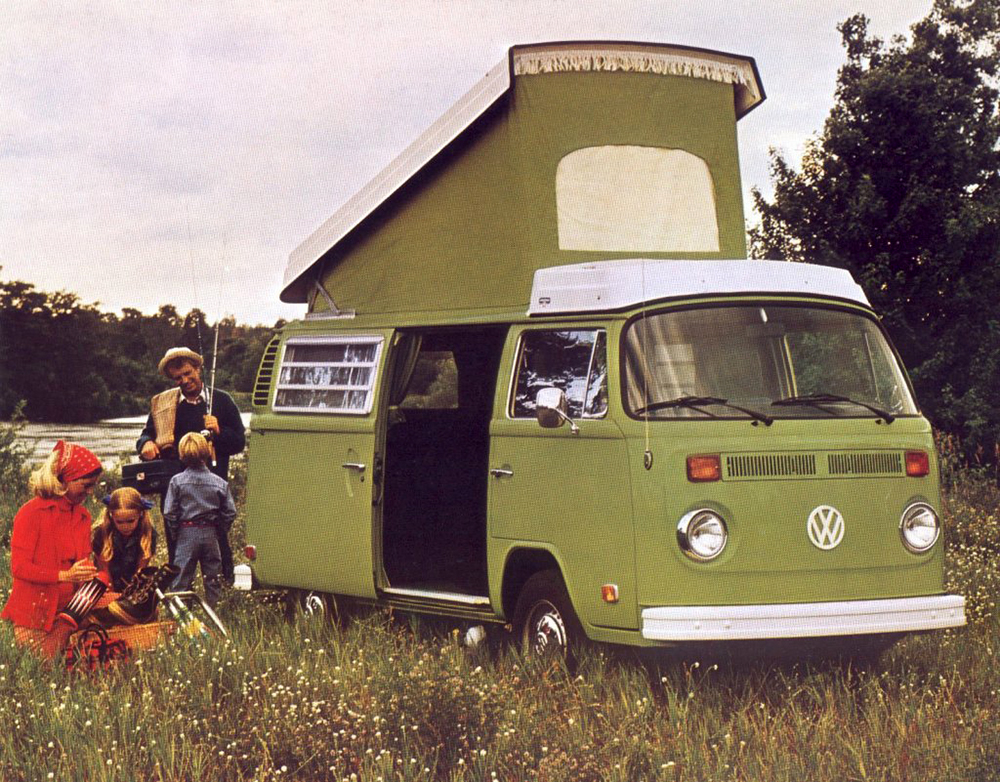
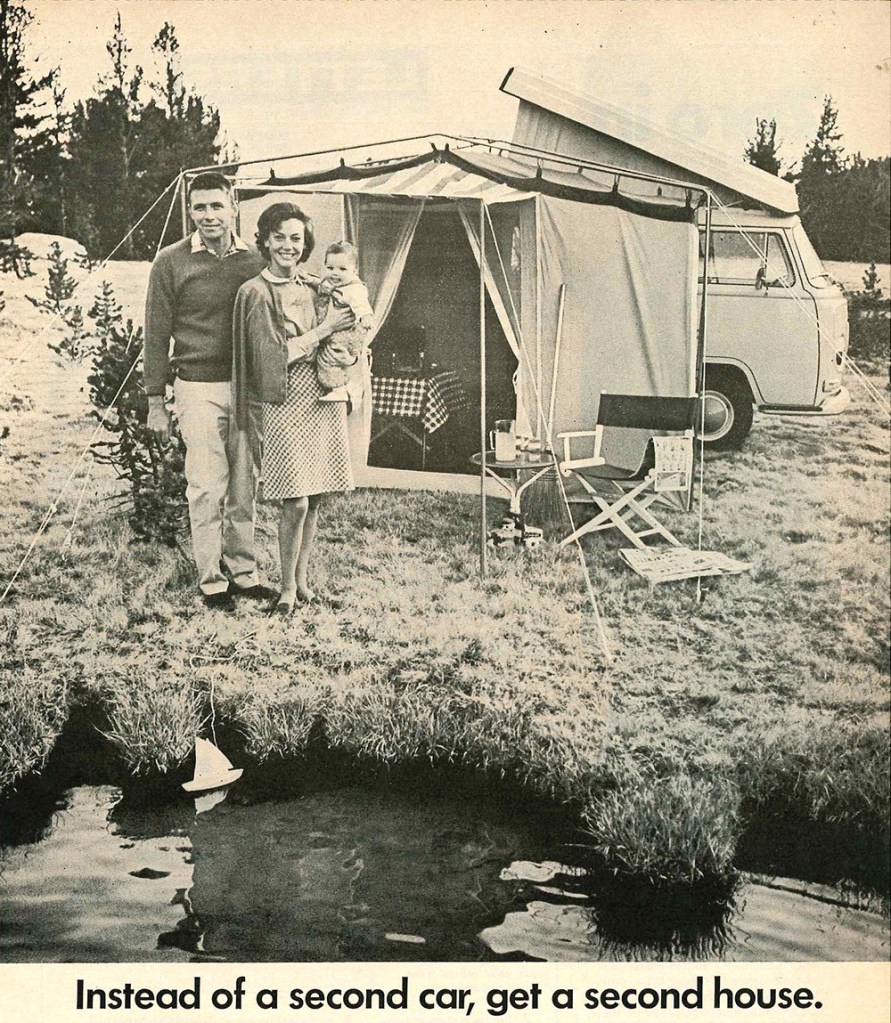
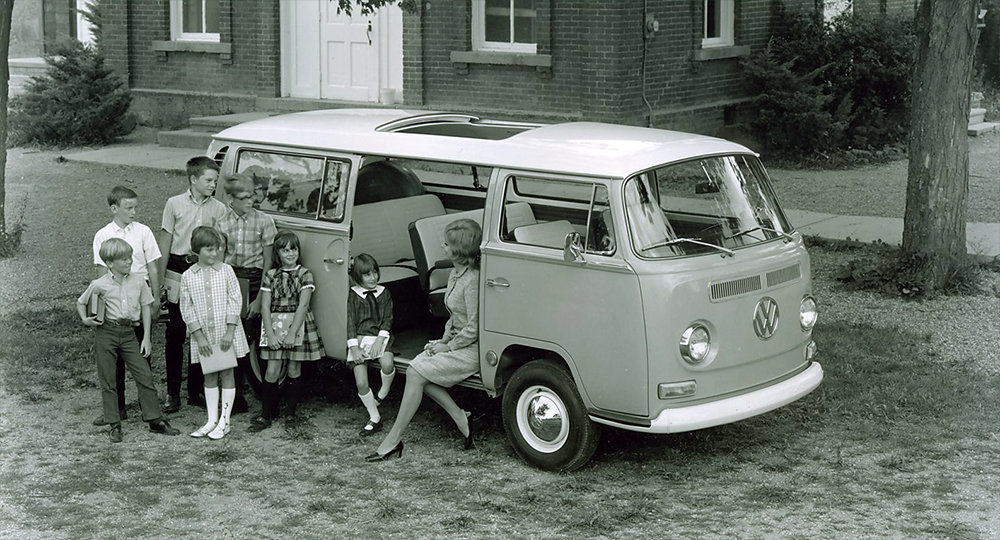
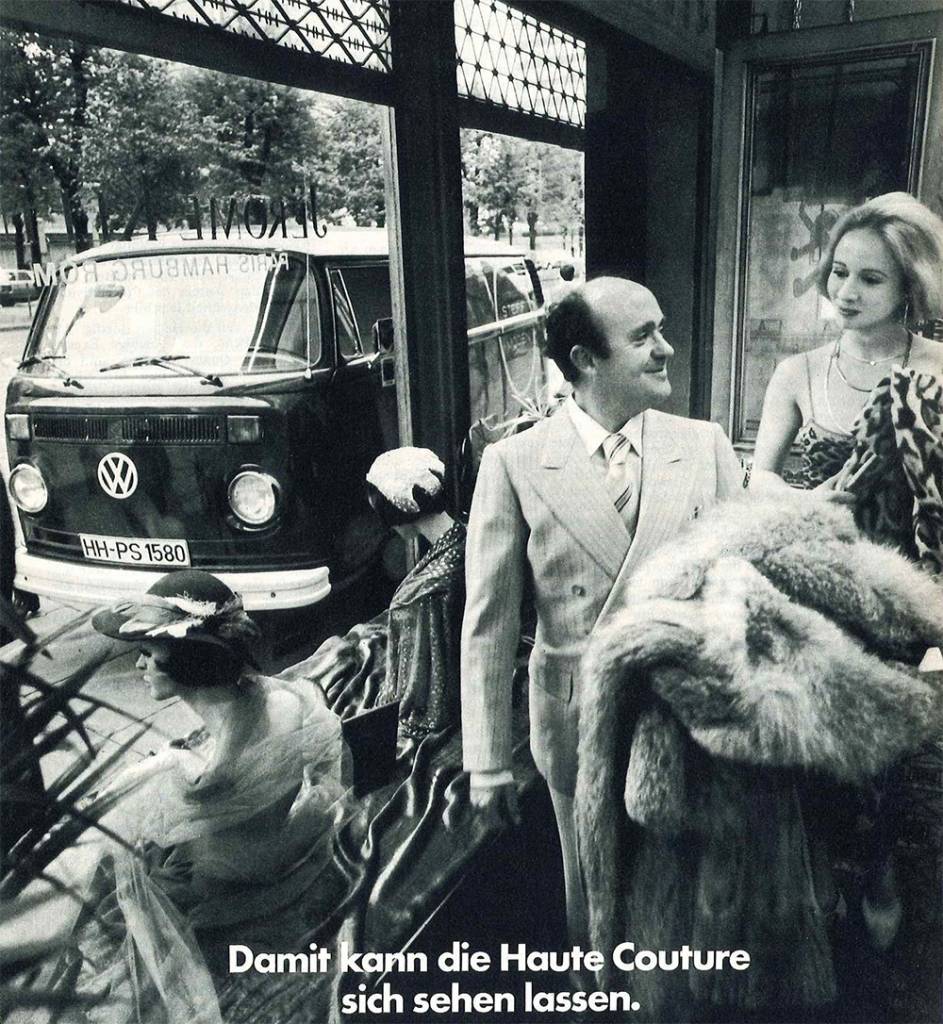
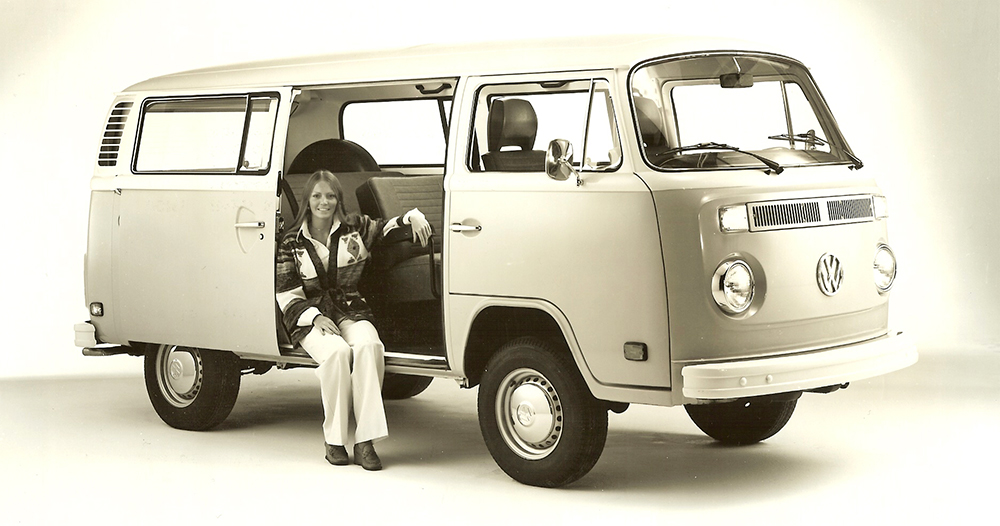
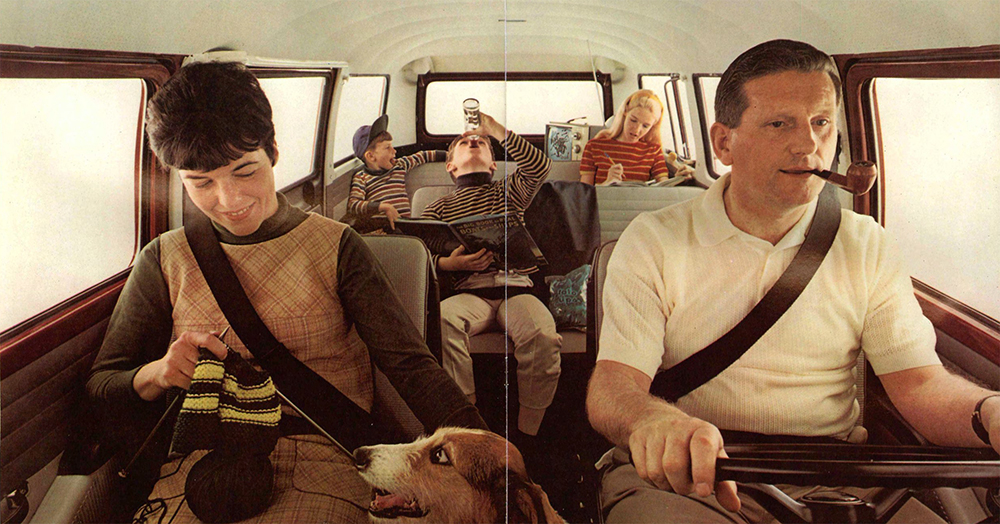
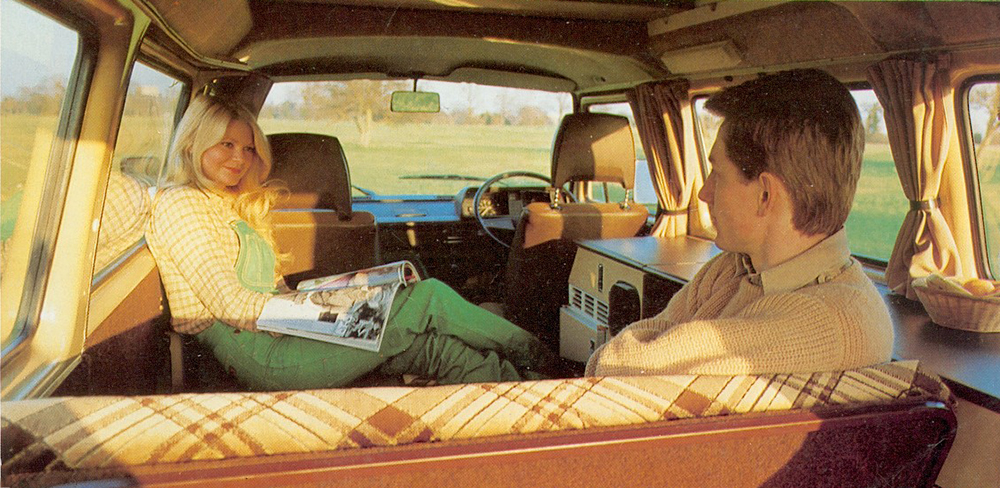
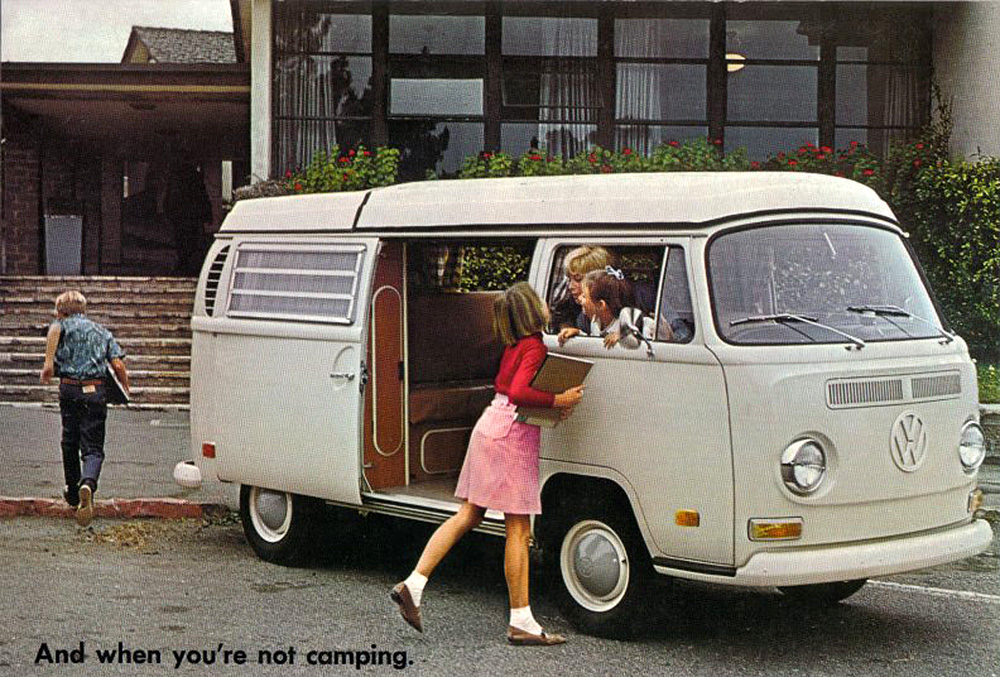
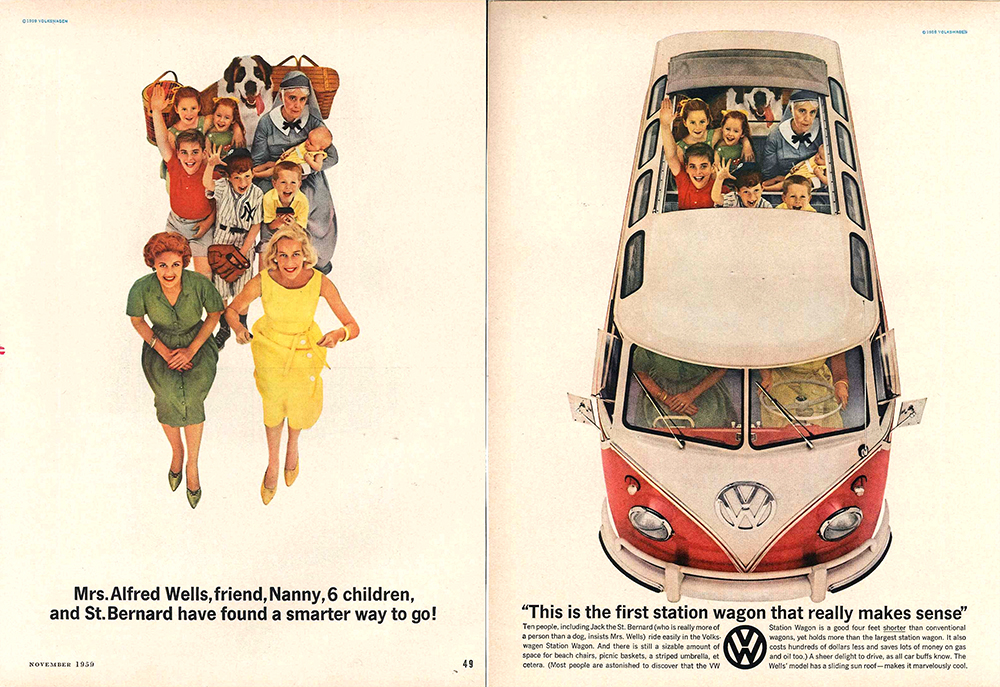
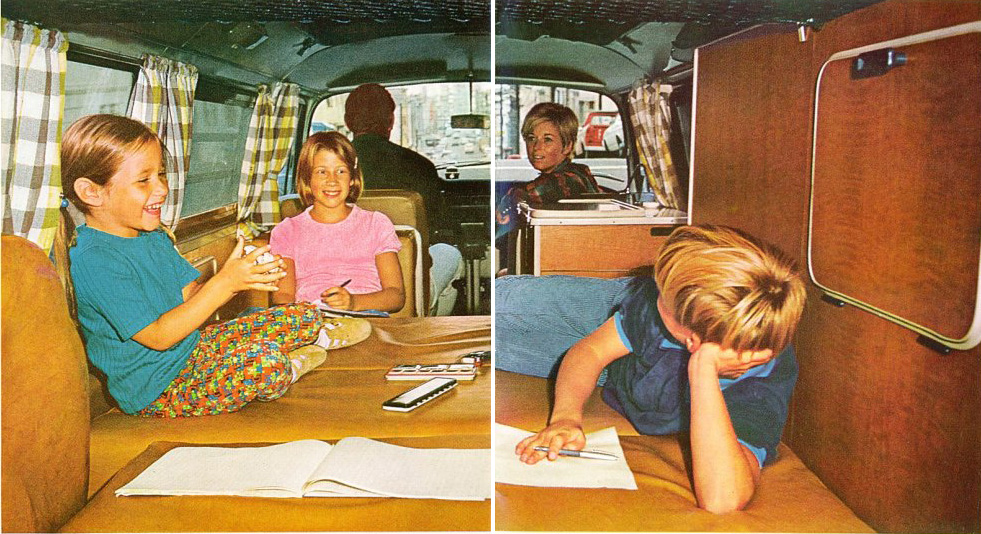
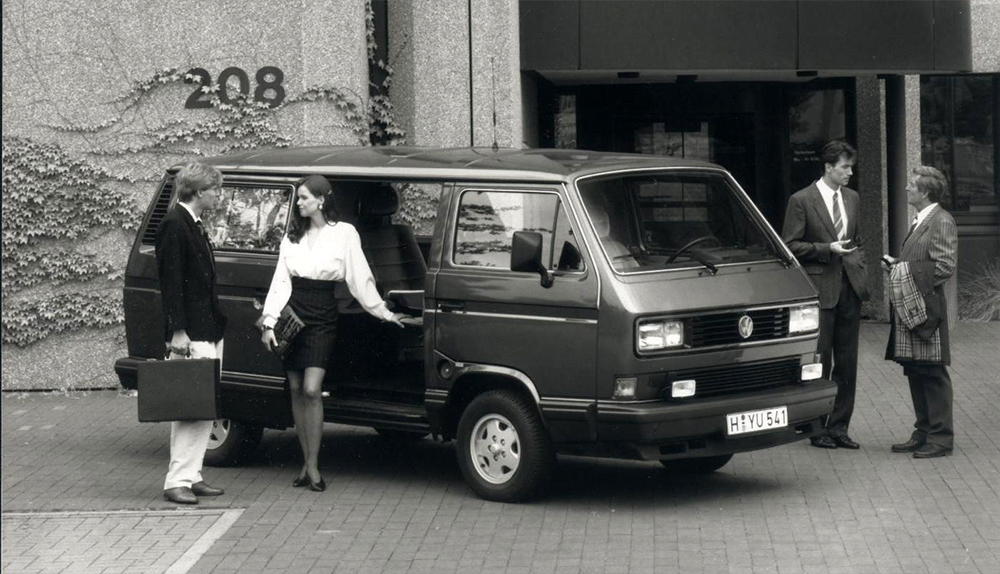
Check out these amazing photos to see people with their VW buses from the 1960s.
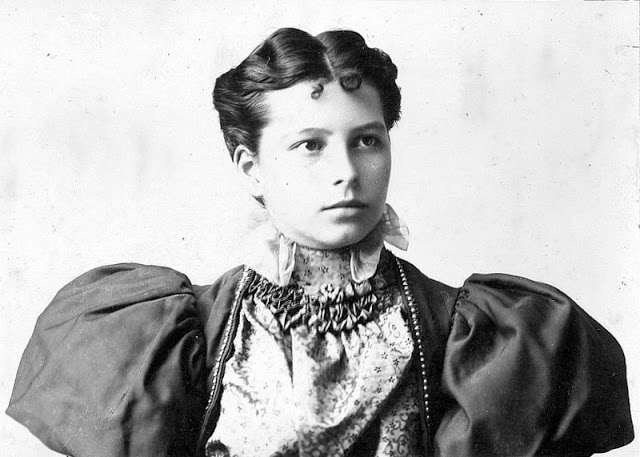
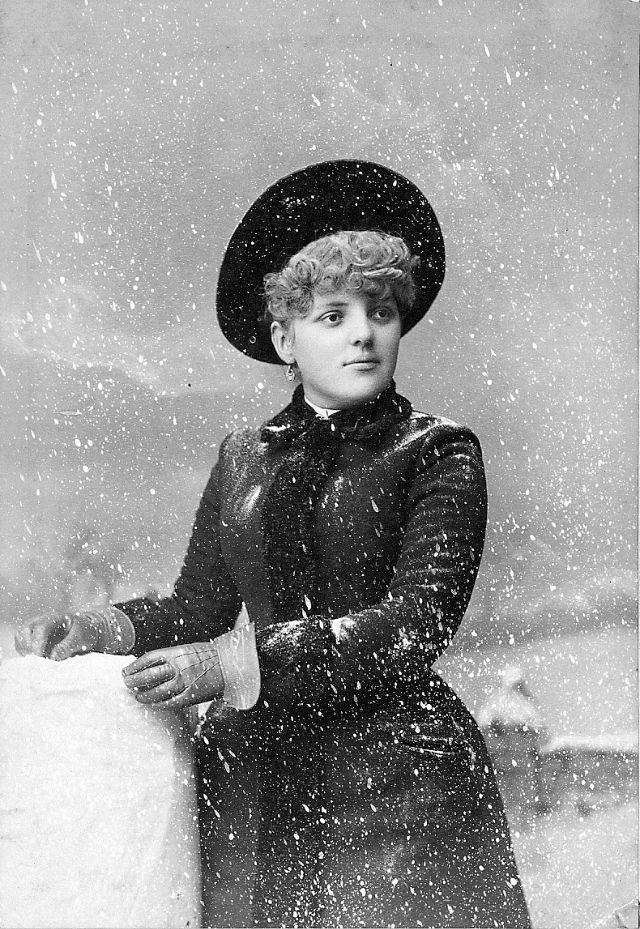
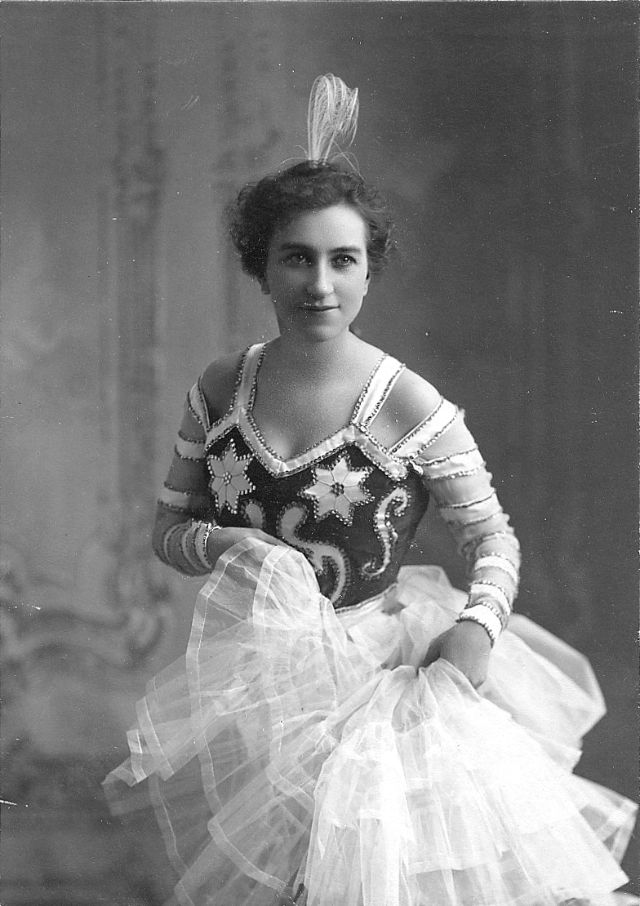
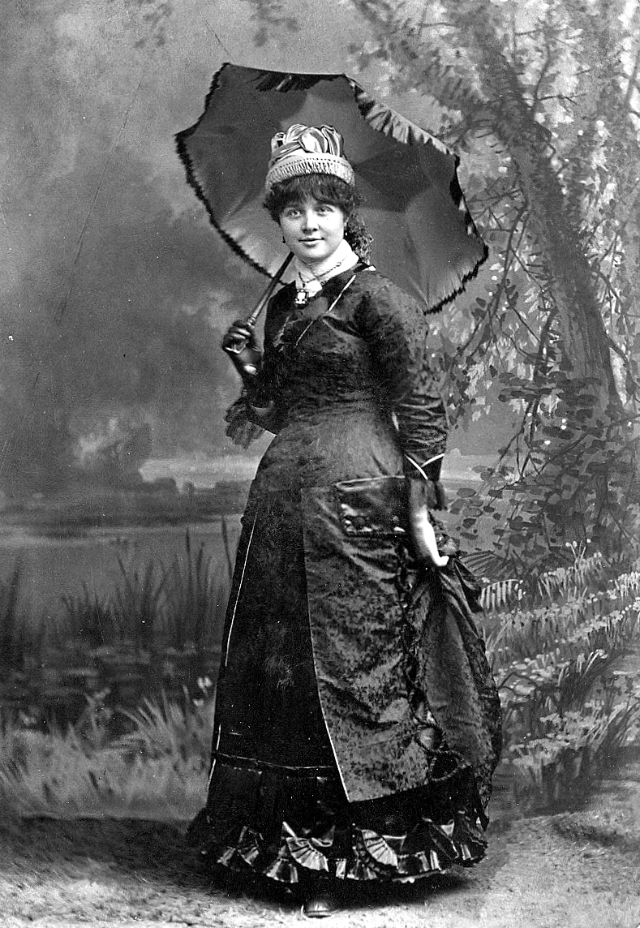
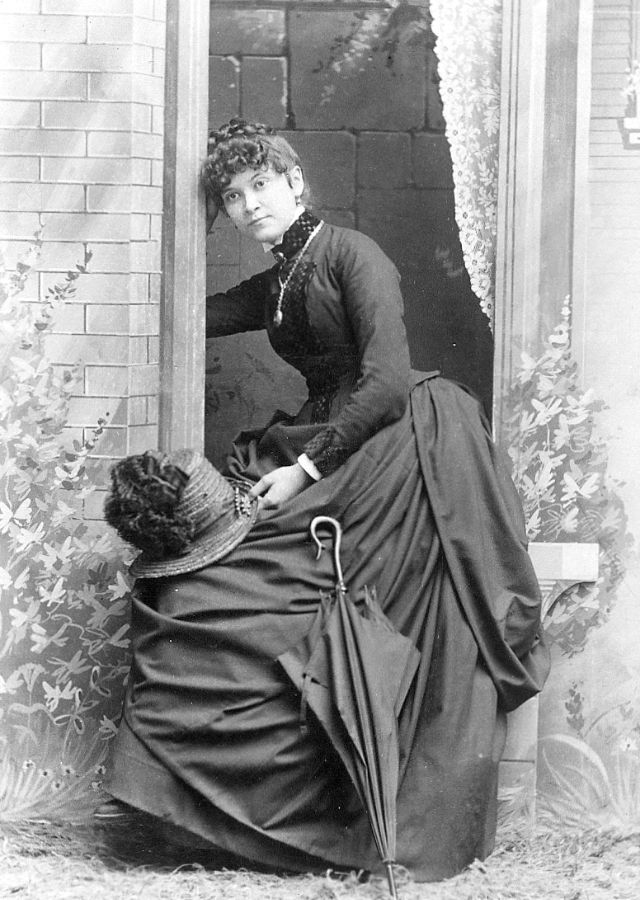
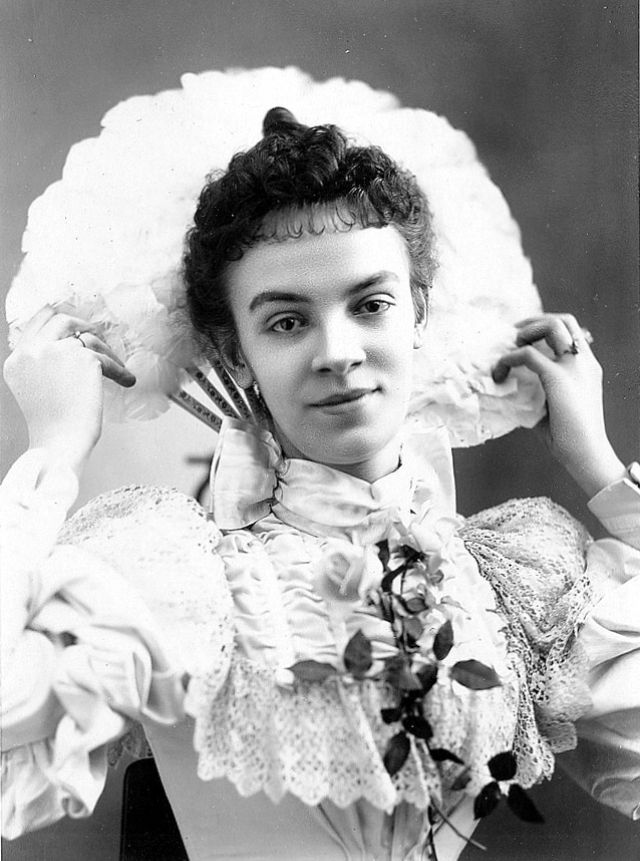
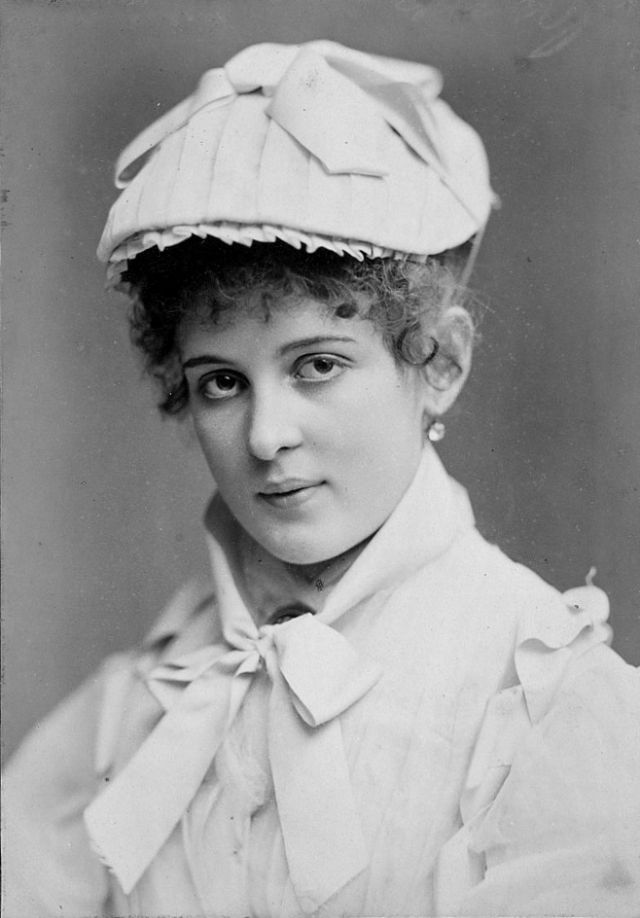
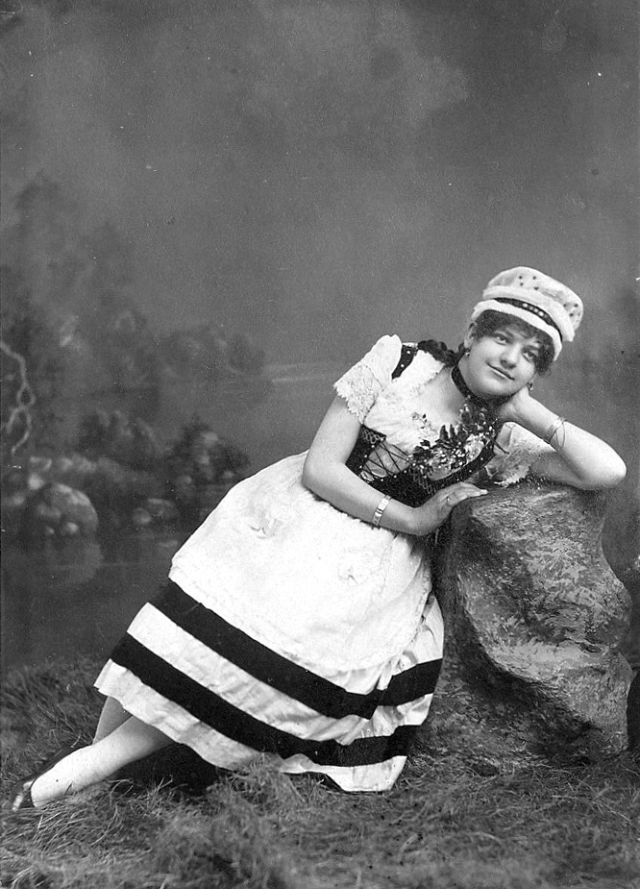
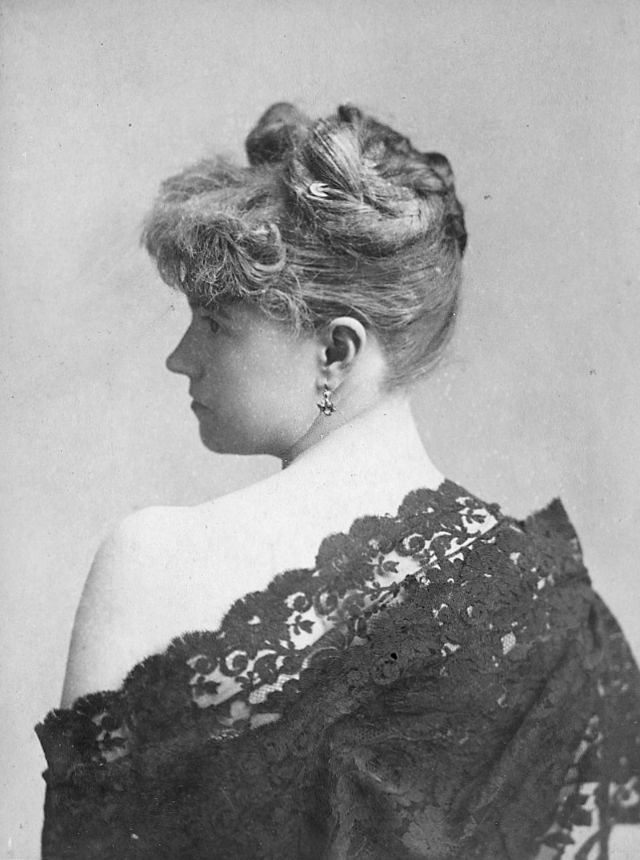
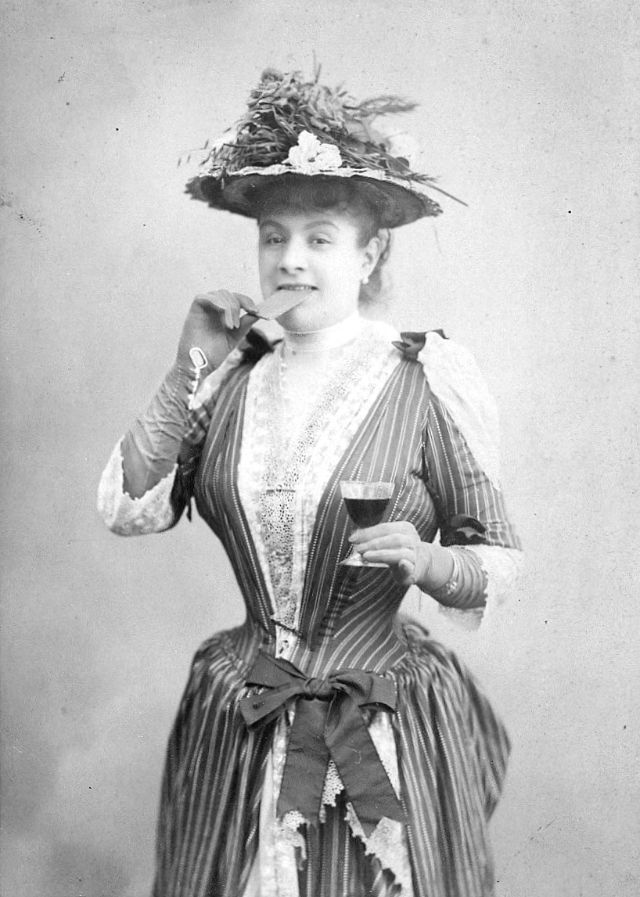
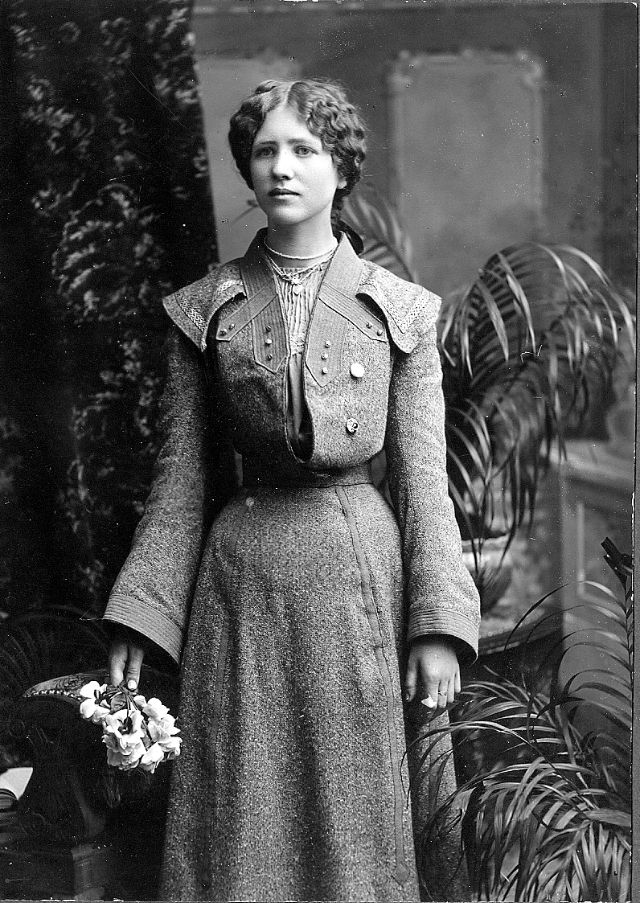
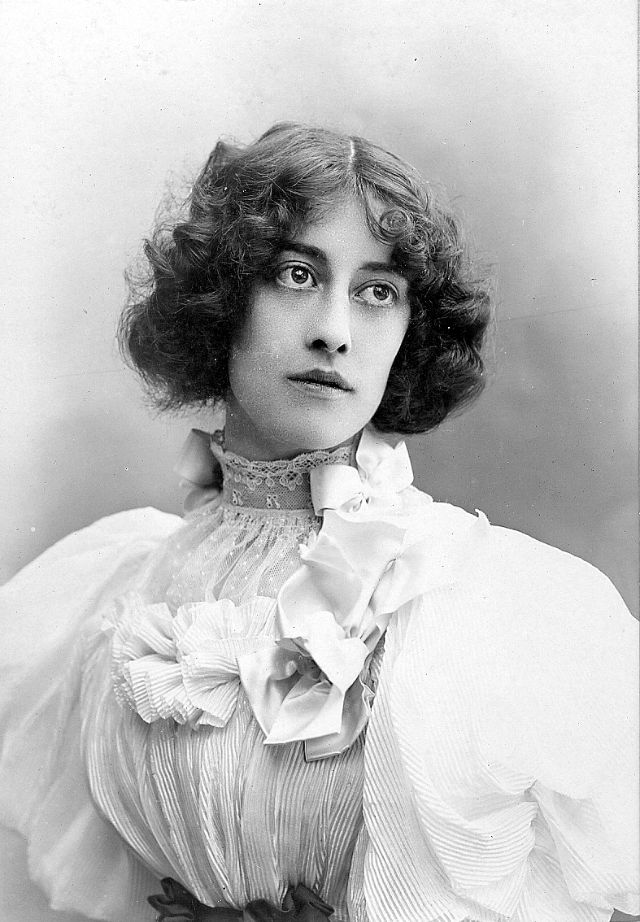
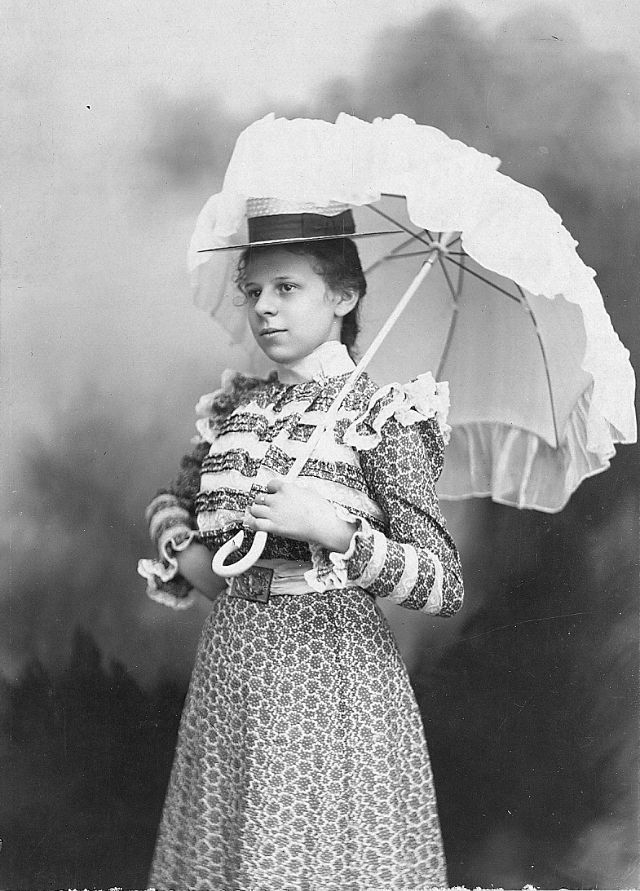
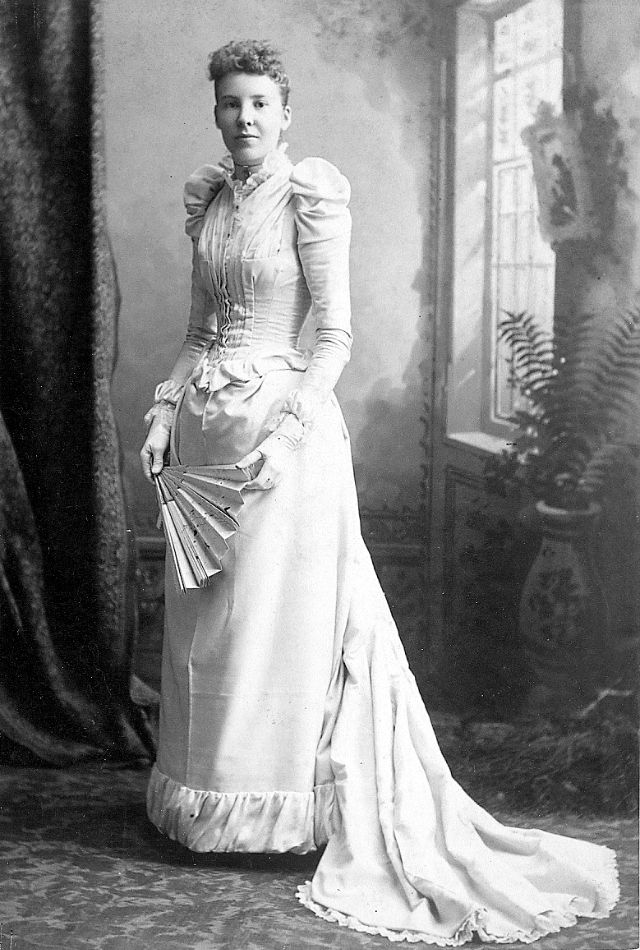
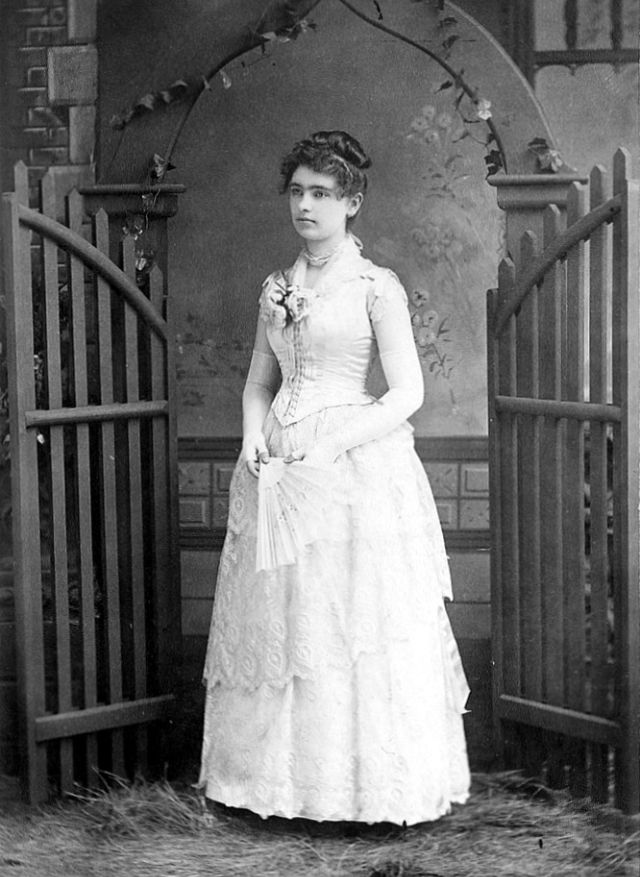
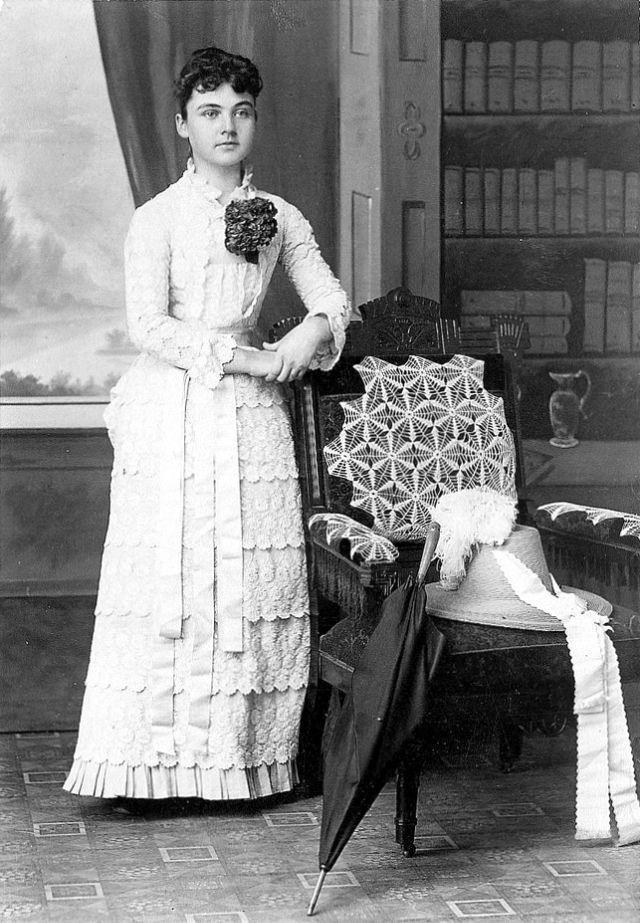
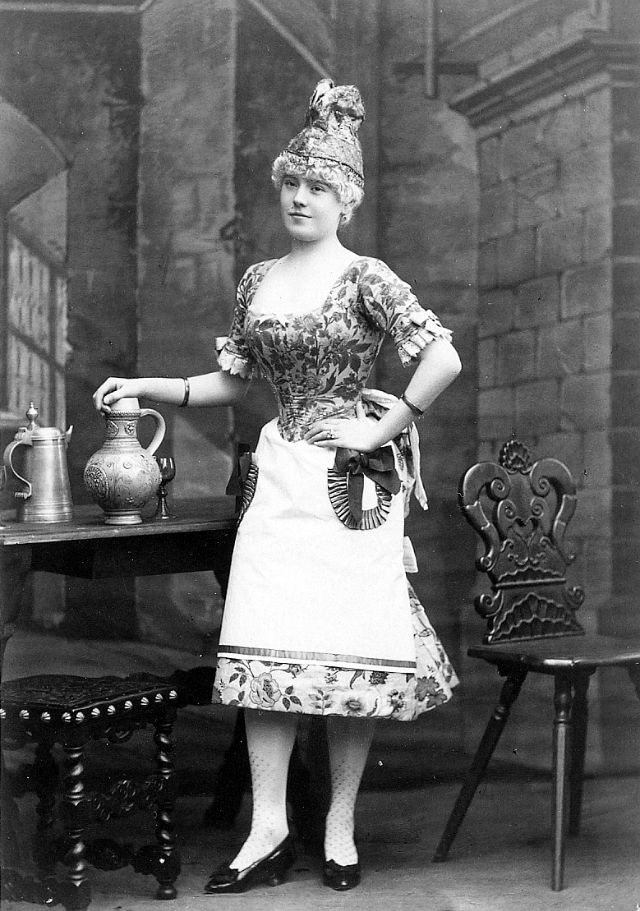
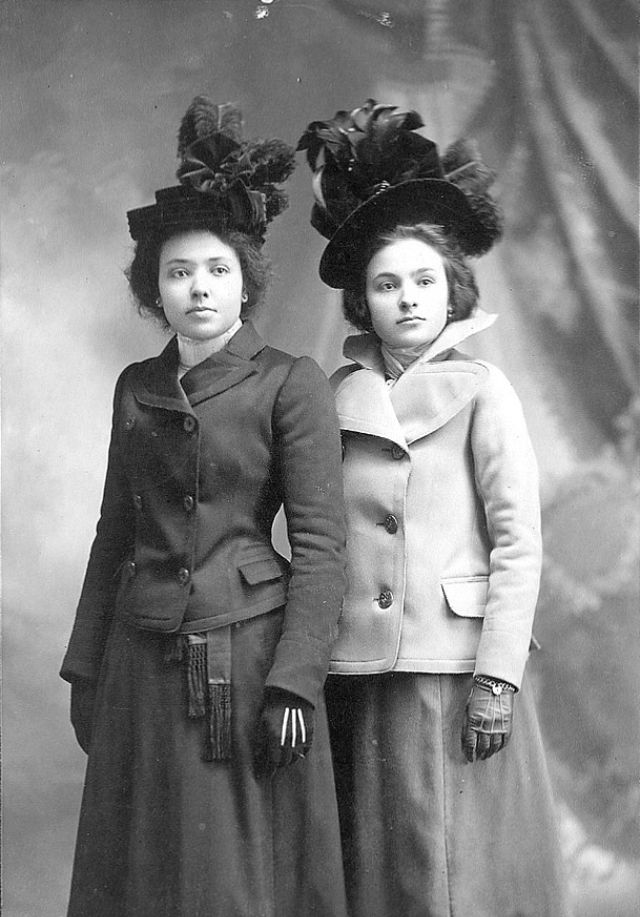
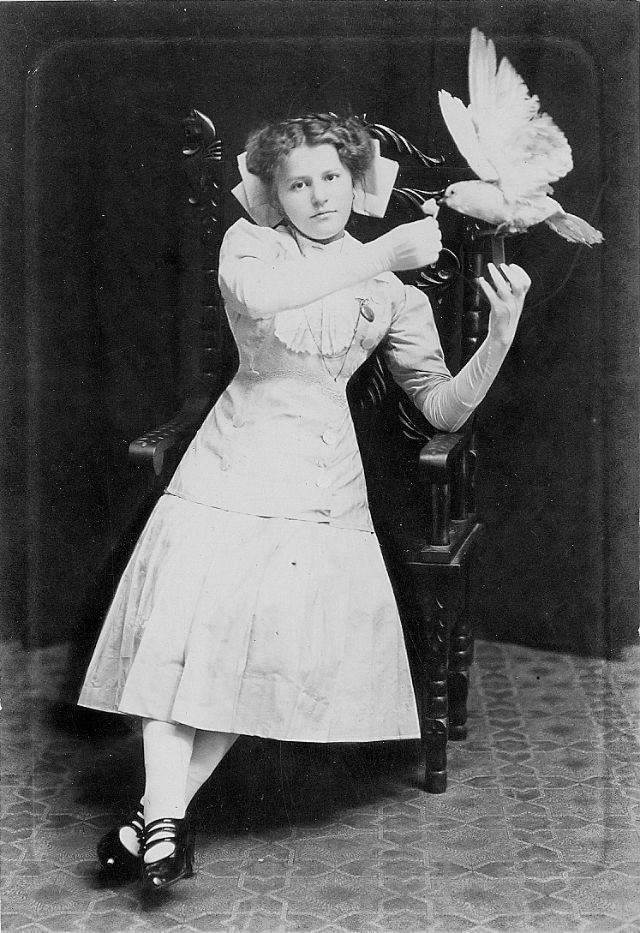
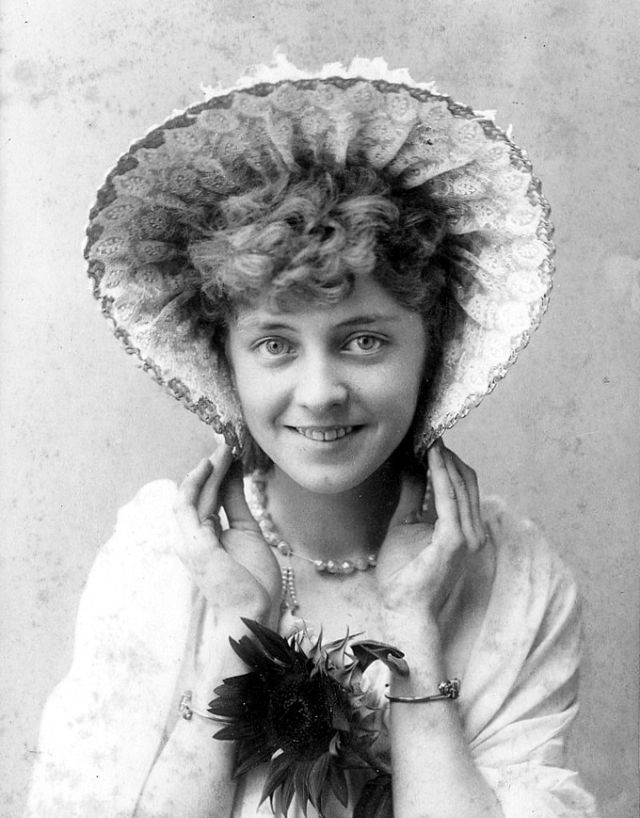
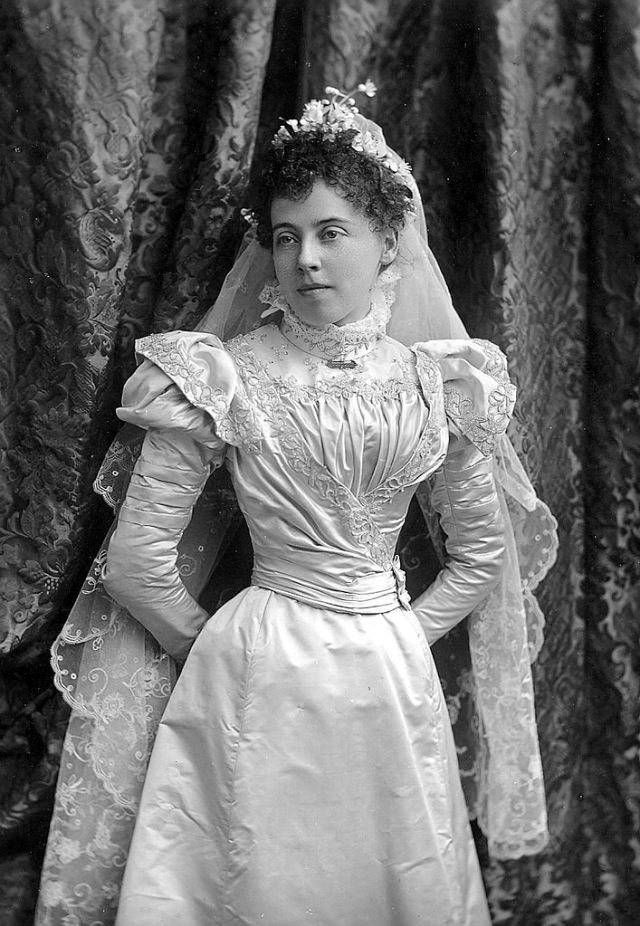
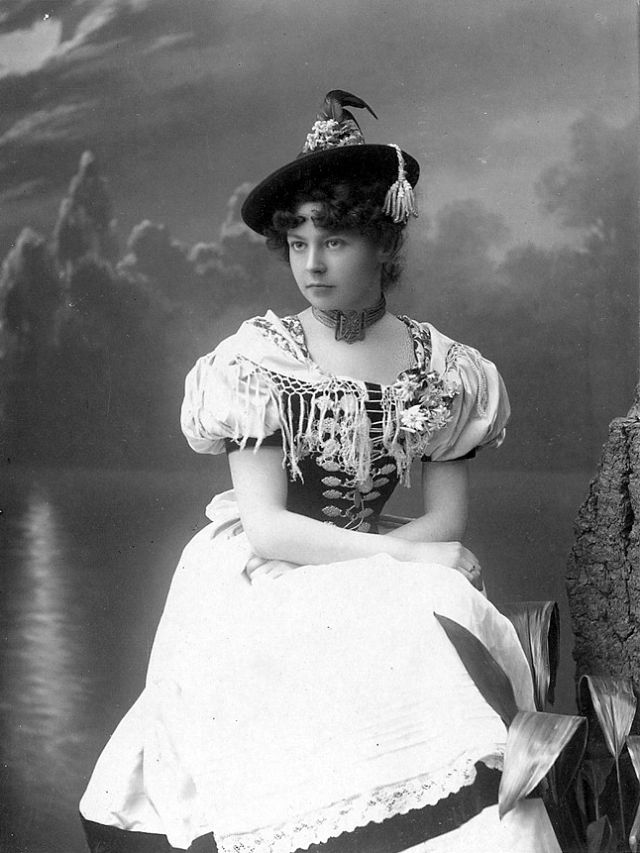
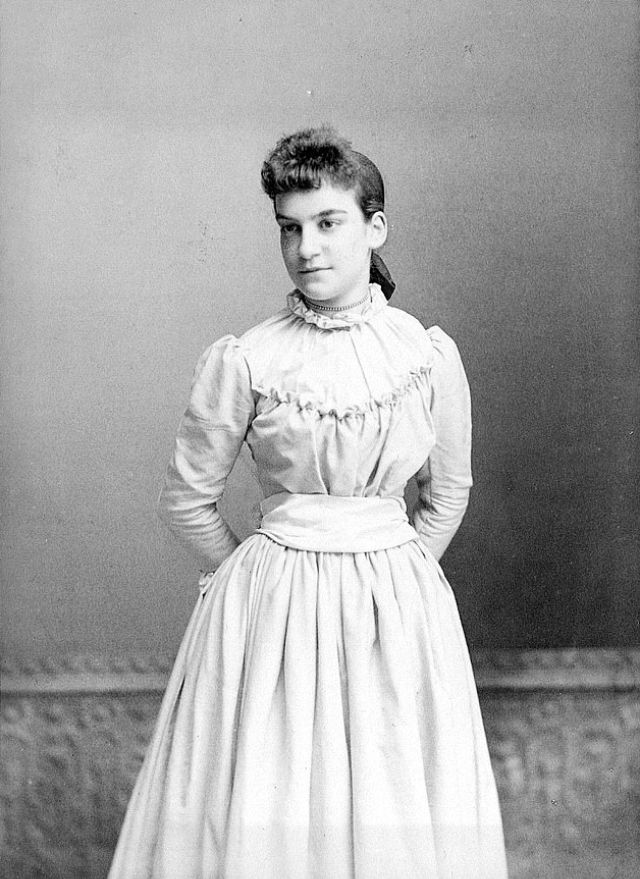
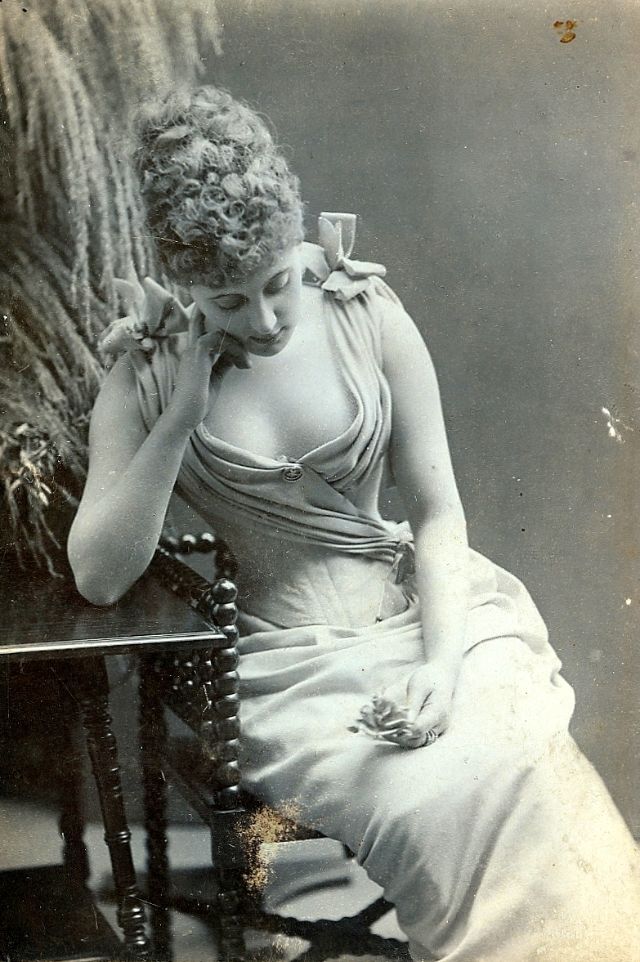
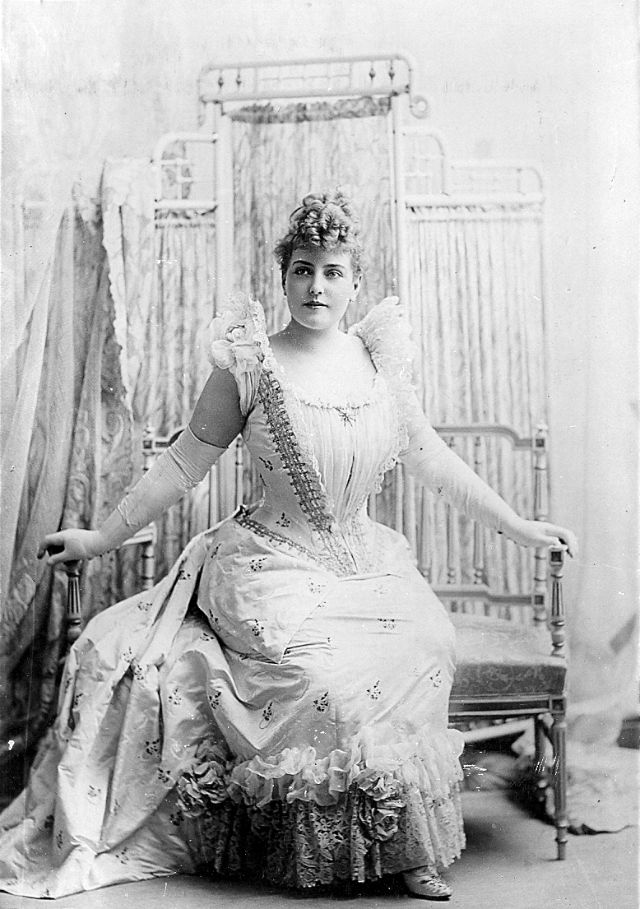
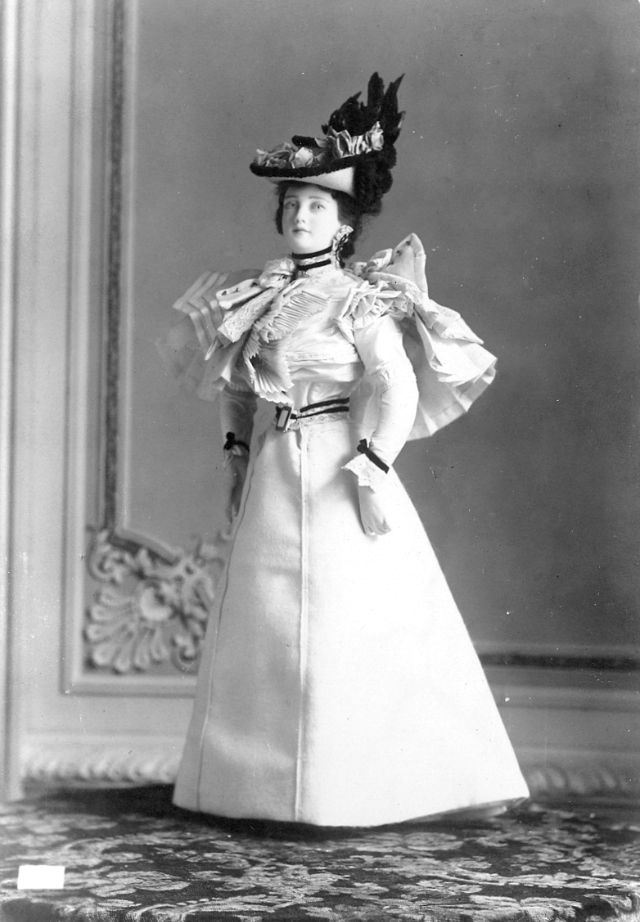
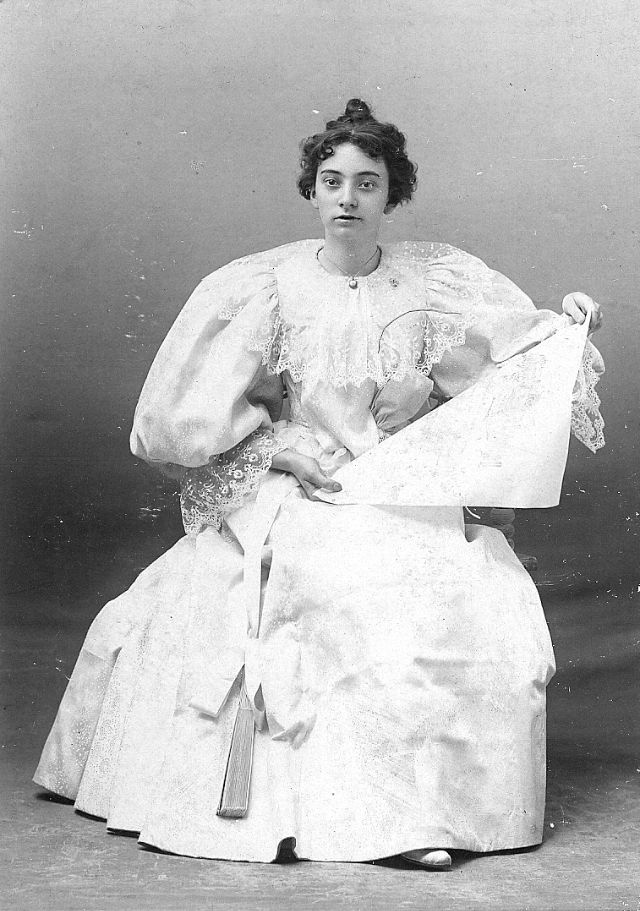
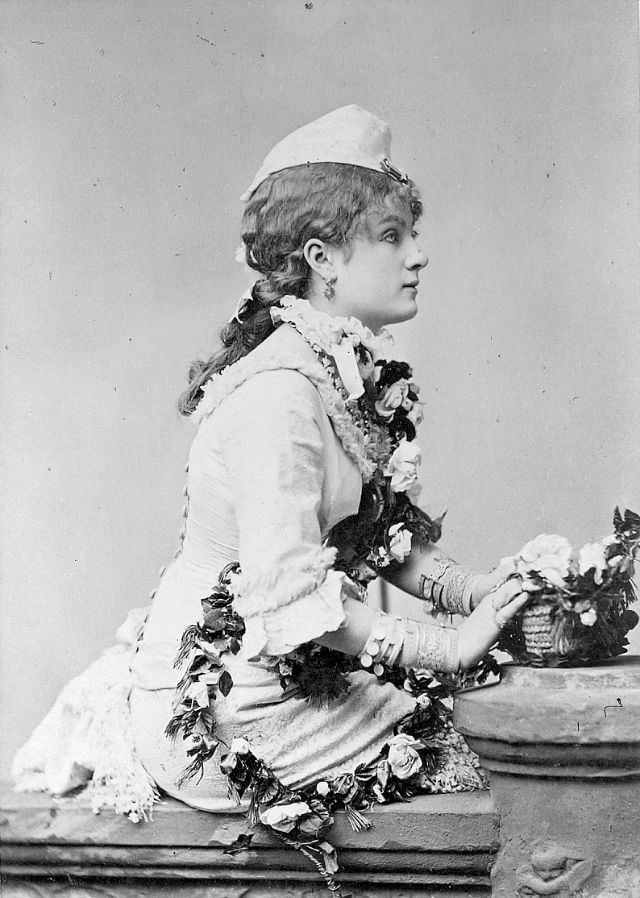
Women’s fashion of the 19th century is renowned for its corsets, bonnets, top hats, bustles and petticoats. It was largely dominated by full skirts, which gradually moved to the back of the silhouette.
However, towards the end of the period, there were significant changes in design to make these dresses became more compact, and more elegant.
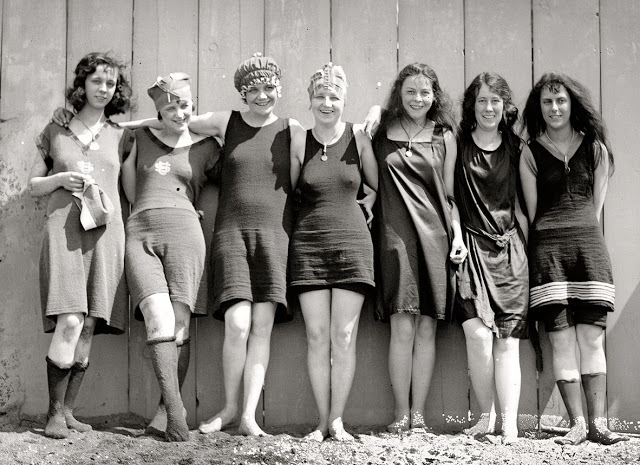
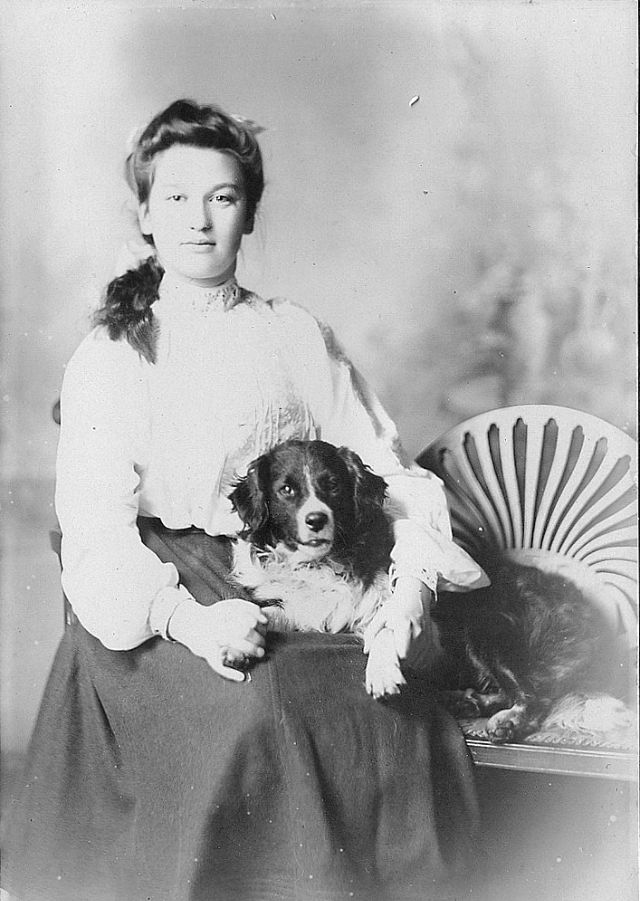
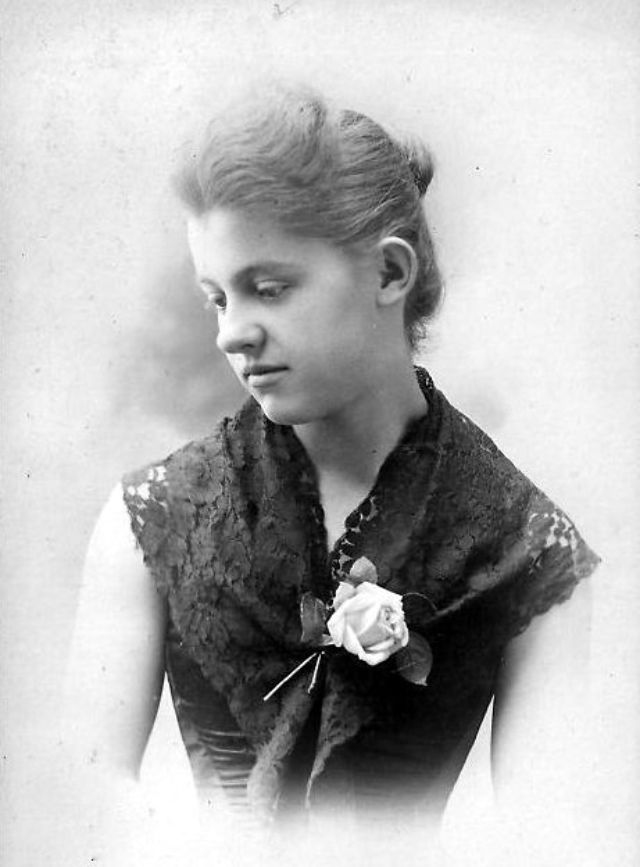
Here is a stunning photo collection of stylish girls from the late 19th century.
World War I, often abbreviated as WWI or WW1, also known as the First World War or the Great War, was a global war that began on 28 July 1914 and ended on 11 November 1918. It involved much of Europe, as well as Russia, the United States and Turkey, and was also fought in the Middle East, Africa and parts of Asia. One of the deadliest conflicts in history, an estimated 9 million were killed in combat, while over 5 million civilians died from occupation, bombardment, hunger or disease. The genocides perpetrated by the Ottomans and the 1918 Spanish flu pandemic spread by the movement of combatants during the war caused many millions of additional deaths worldwide.
In 1914, the Great Powers were divided into two opposing alliances, the Triple Entente, consisting of France, Russia, and Britain, and the Triple Alliance, made up of Germany, Austria-Hungary, and Italy. Tensions in the Balkans came to a head on 28 June 1914 following the assassination of Archduke Franz Ferdinand, the Austro-Hungarian heir, by Gavrilo Princip, a Bosnian Serb. Austria-Hungary blamed Serbia and the interlocking alliances involved the Powers in a series of diplomatic exchanges known as the July Crisis. On 28 July, Austria-Hungary declared war on Serbia; Russia came to Serbia’s defence and by 4 August, the conflict had expanded to include Germany, France and Britain, along with their respective colonial empires. In November, the Ottoman Empire, Germany and Austria formed the Central Powers, while in April 1915, Italy joined Britain, France, Russia and Serbia as the Allied Powers.
Facing a war on two fronts, German strategy in 1914 was to defeat France, then shift its forces to the East and knock out Russia, commonly known as the Schlieffen Plan. This failed when their advance into France was halted at the Marne; by the end of 1914, the two sides faced each other along the Western Front, a continuous series of trench lines stretching from the Channel to Switzerland that changed little until 1917. By contrast, the Eastern Front was far more fluid, with Austria-Hungary and Russia gaining, then losing large swathes of territory. Other significant theatres included the Middle East, the Alpine Front and the Balkans, bringing Bulgaria, Romania and Greece into the war.
Shortages caused by the Allied naval blockade led Germany to initiate unrestricted submarine warfare in early 1917, bringing the previously neutral United States into the war on 6 April 1917. In Russia, the Bolsheviks seized power in the 1917 October Revolution and made peace in the March 1918 Treaty of Brest-Litovsk, freeing up large numbers of German troops. By transferring these to the Western Front, the German General Staff hoped to win a decisive victory before American reinforcements could impact the war, and launched the March 1918 German spring offensive. Despite initial success, it was soon halted by heavy casualties and ferocious defence; in August, the Allies launched the Hundred Days Offensive and although the German army continued to fight hard, it could no longer halt their advance.
The Central Powers began to collapse; Bulgaria signed an Armistice on 29 September, followed by the Ottomans on 31 October, then Austria-Hungary on 3 November. Isolated, facing revolution at home and an army on the verge of mutiny, Kaiser Wilhelm abdicated on 9 November and the new German government signed the Armistice of 11 November 1918, bringing the fighting to a close. The 1919 Paris Peace Conference imposed various settlements on the defeated powers, the best known being the Treaty of Versailles. The dissolution of the Russian, German, Ottoman and Austro-Hungarian empires led to numerous uprisings and the creation of independent states, including Poland, Czechoslovakia and Yugoslavia. For reasons that are still debated, failure to manage the instability that resulted from this upheaval during the interwar period ended with the outbreak of World War II in 1939. (Wikipedia)
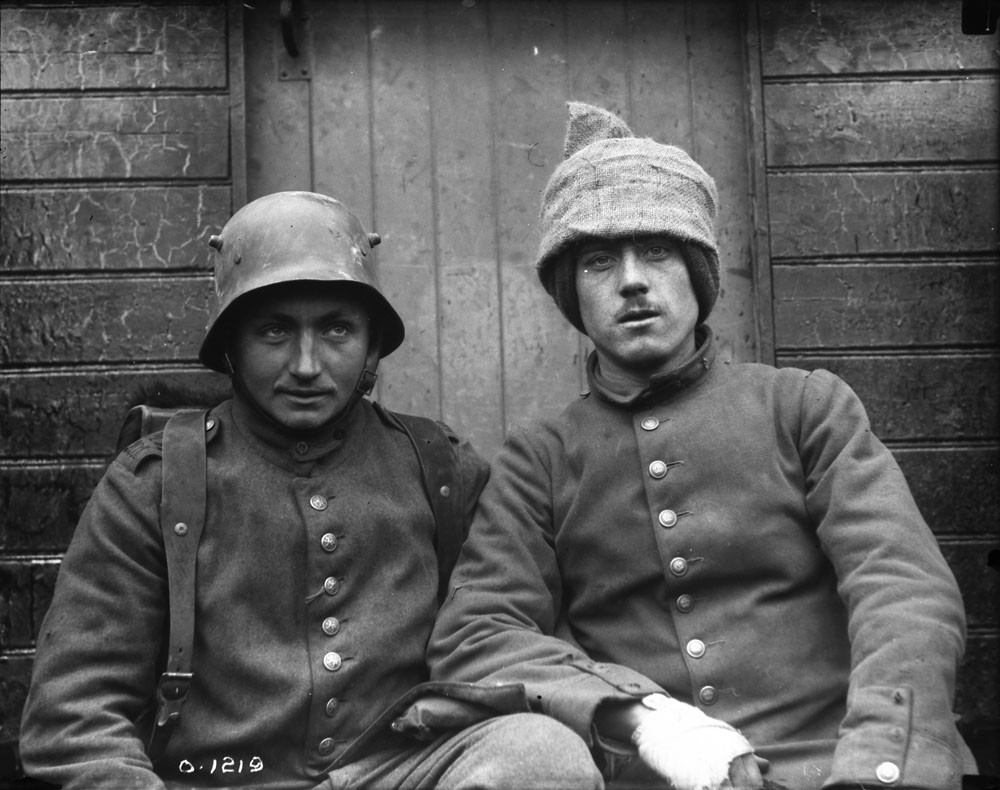
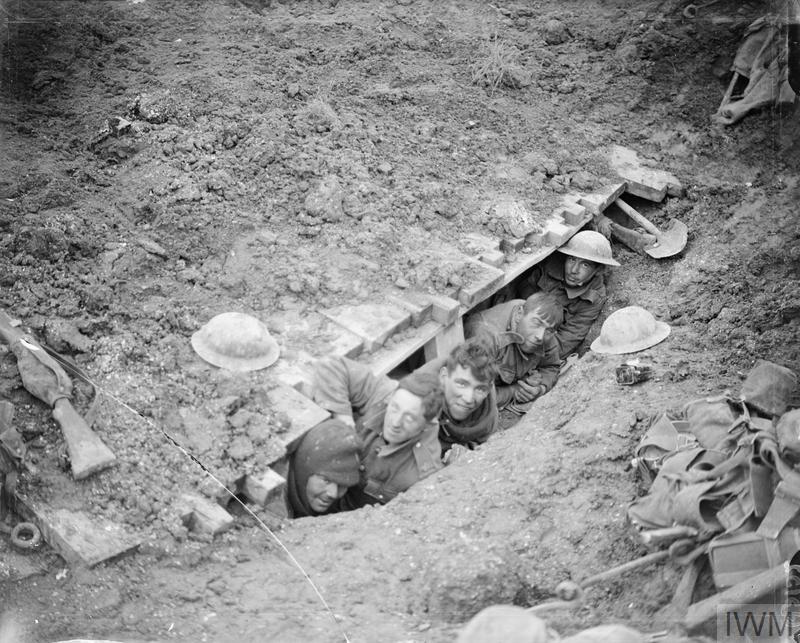
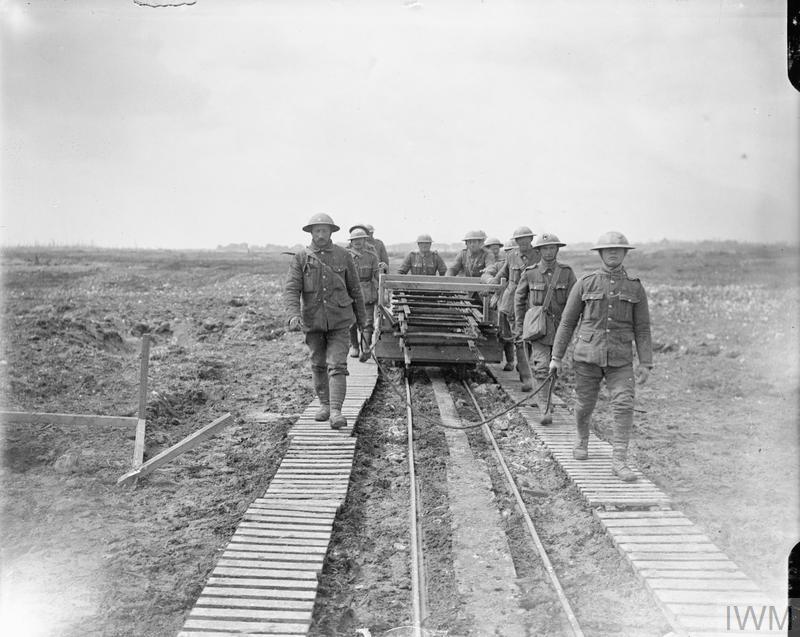
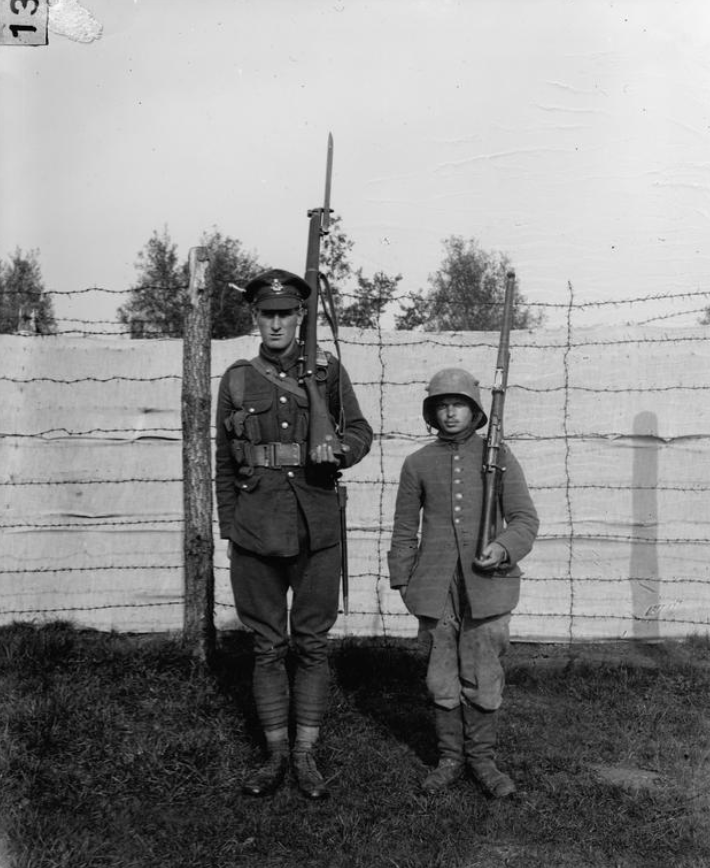
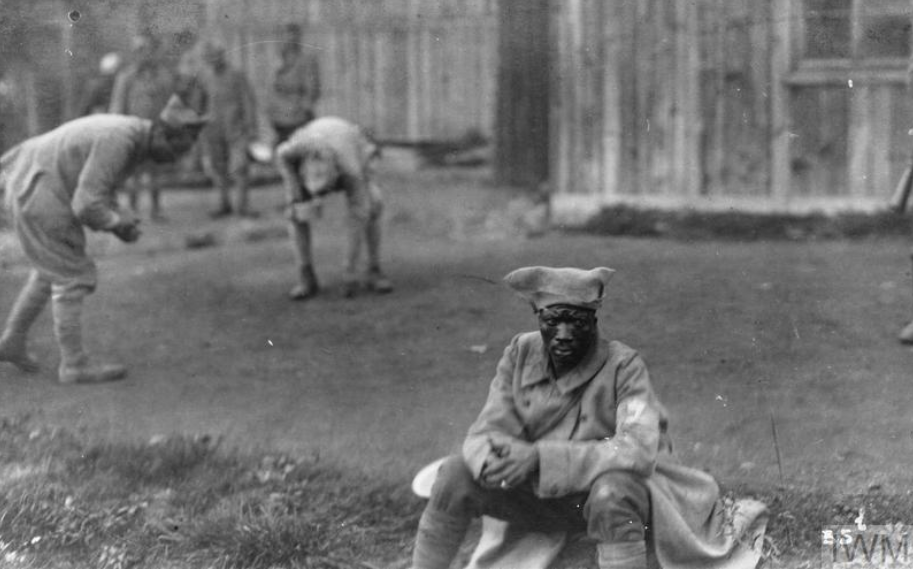
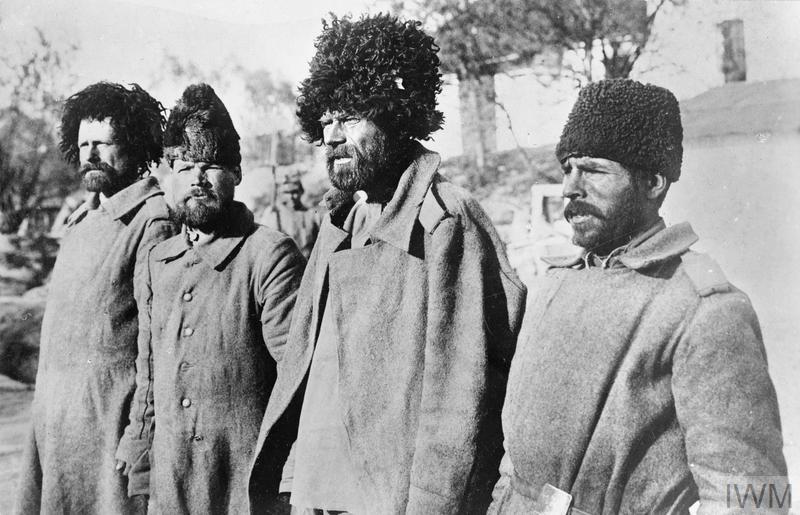
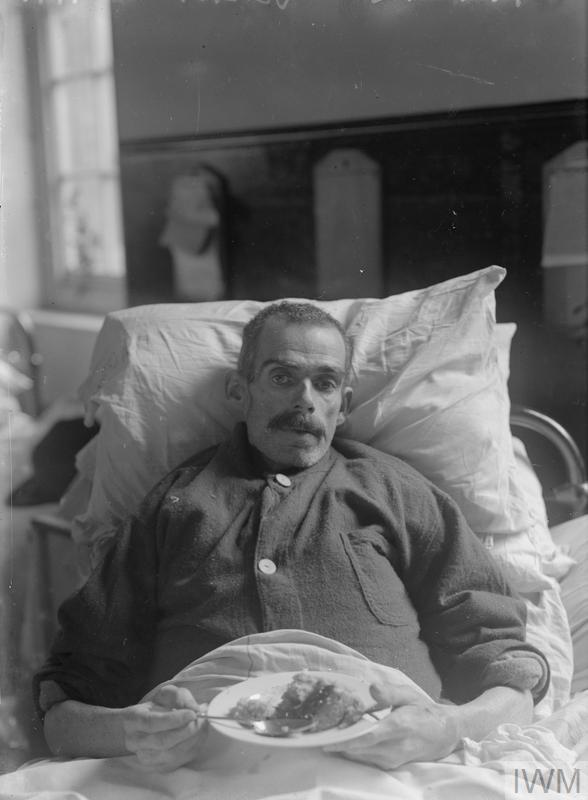
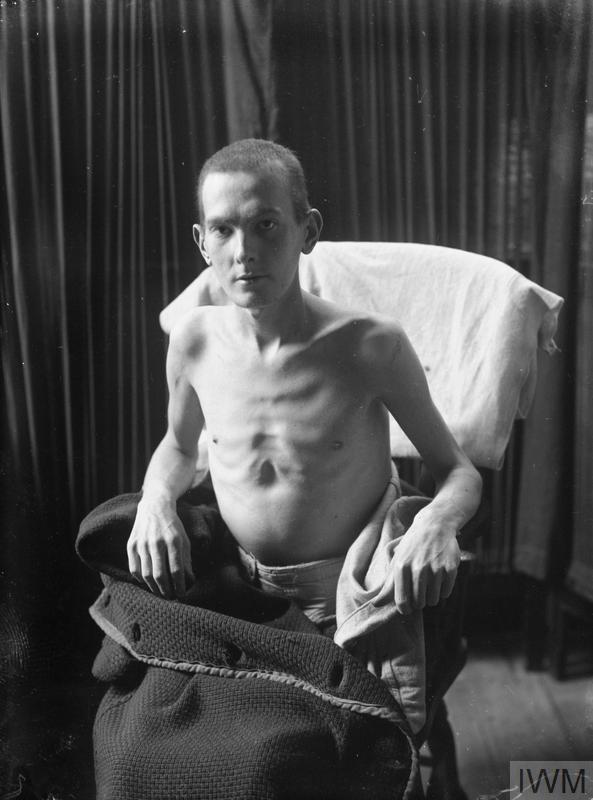
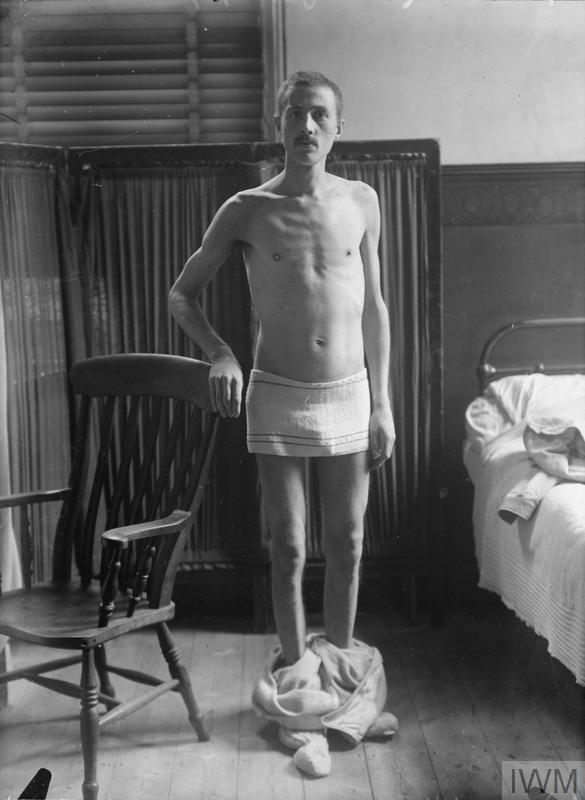
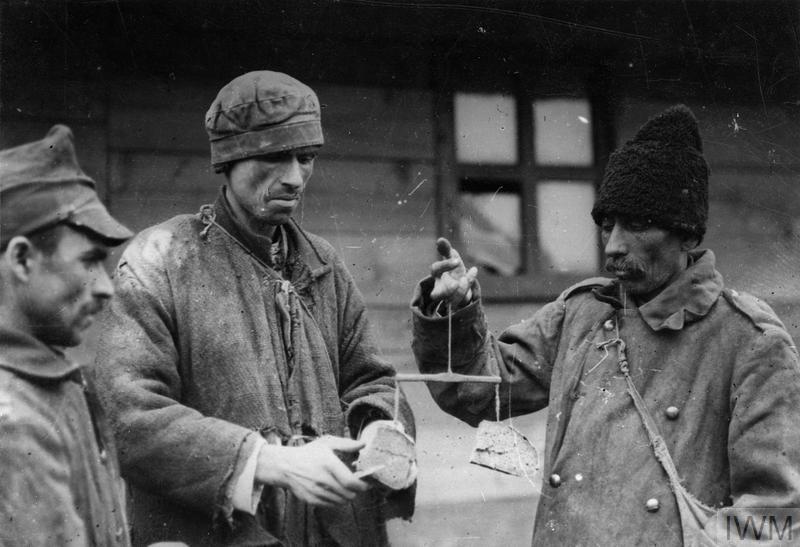
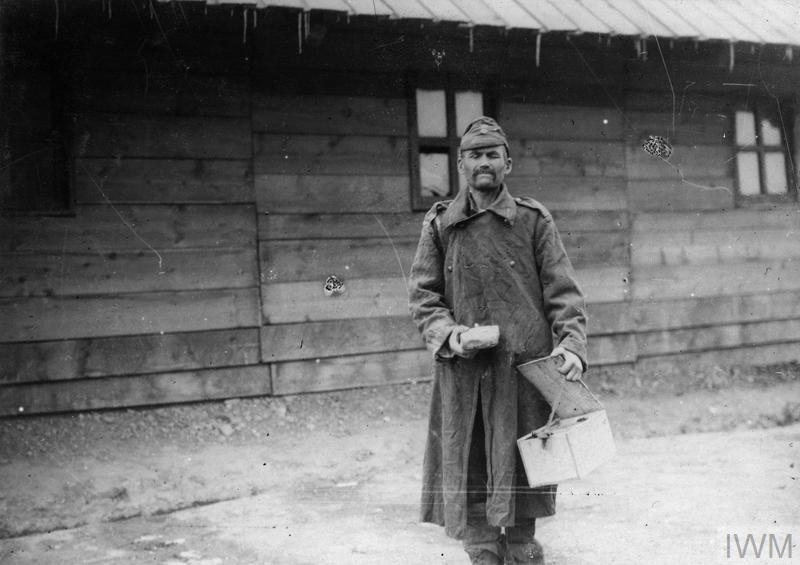
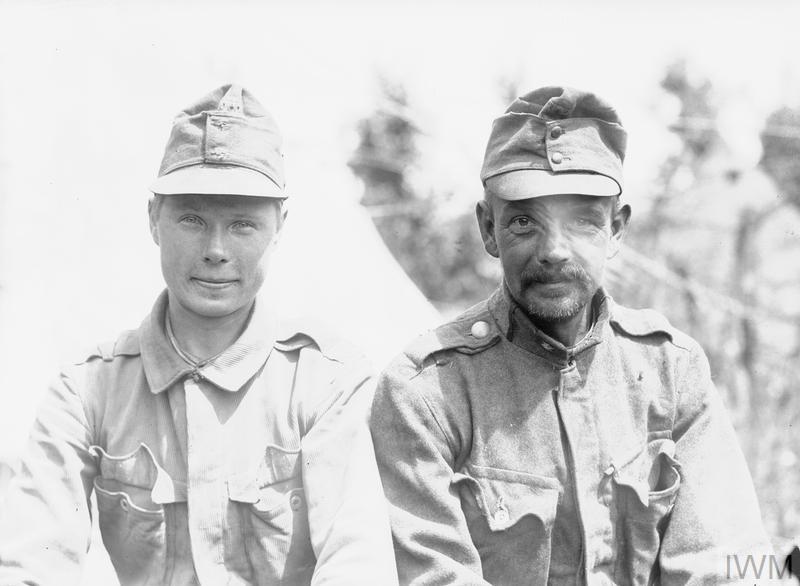
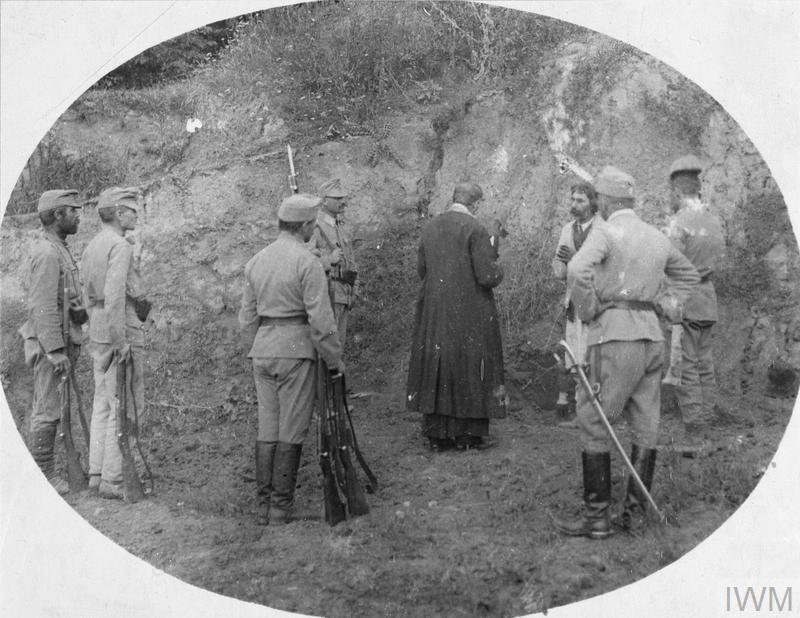
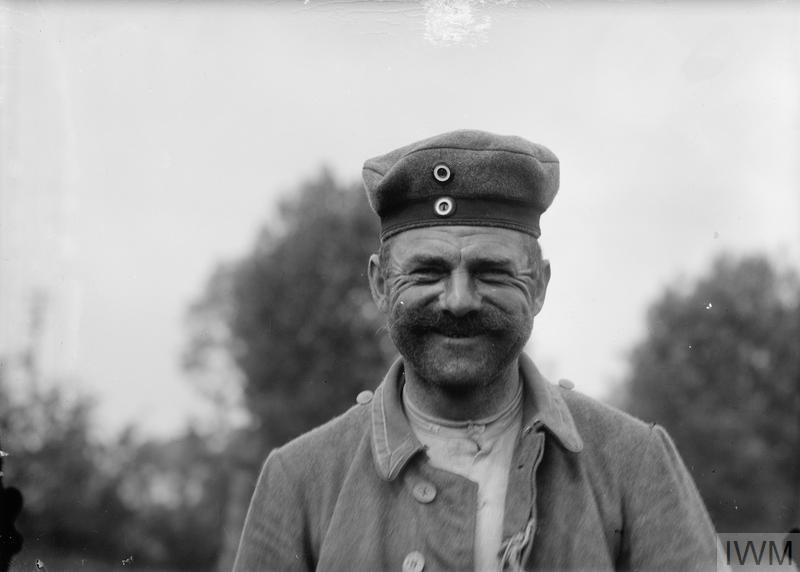
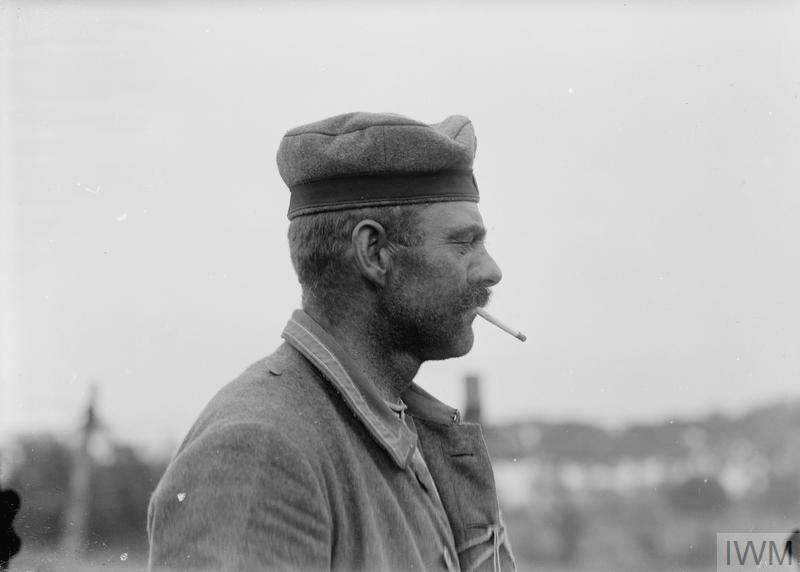
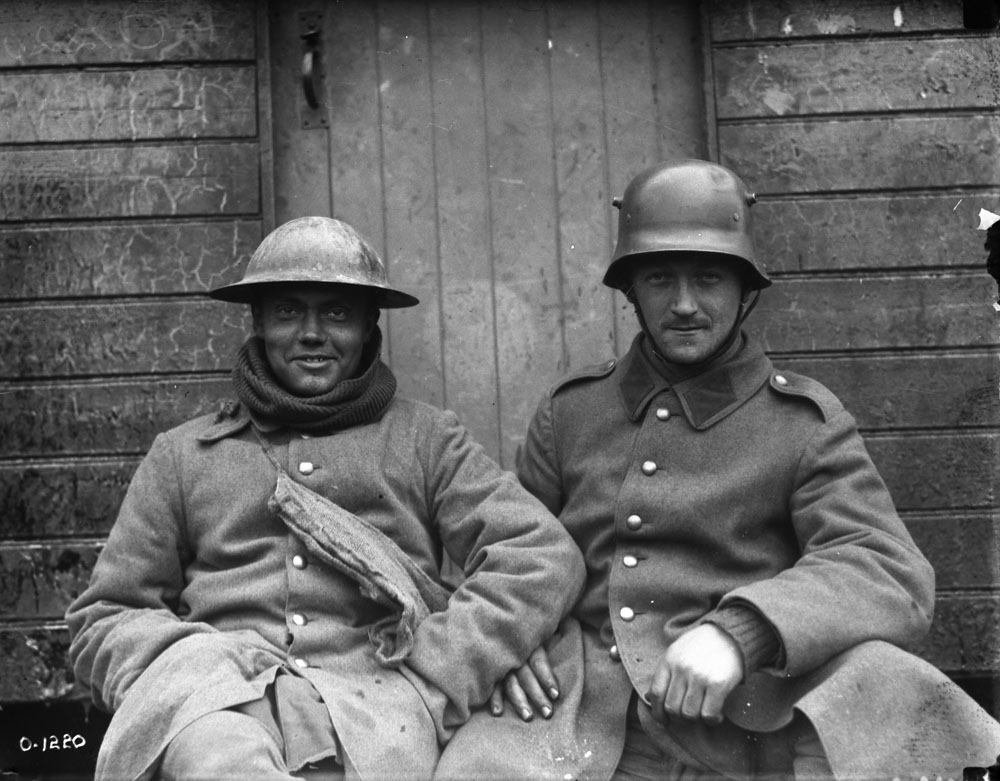
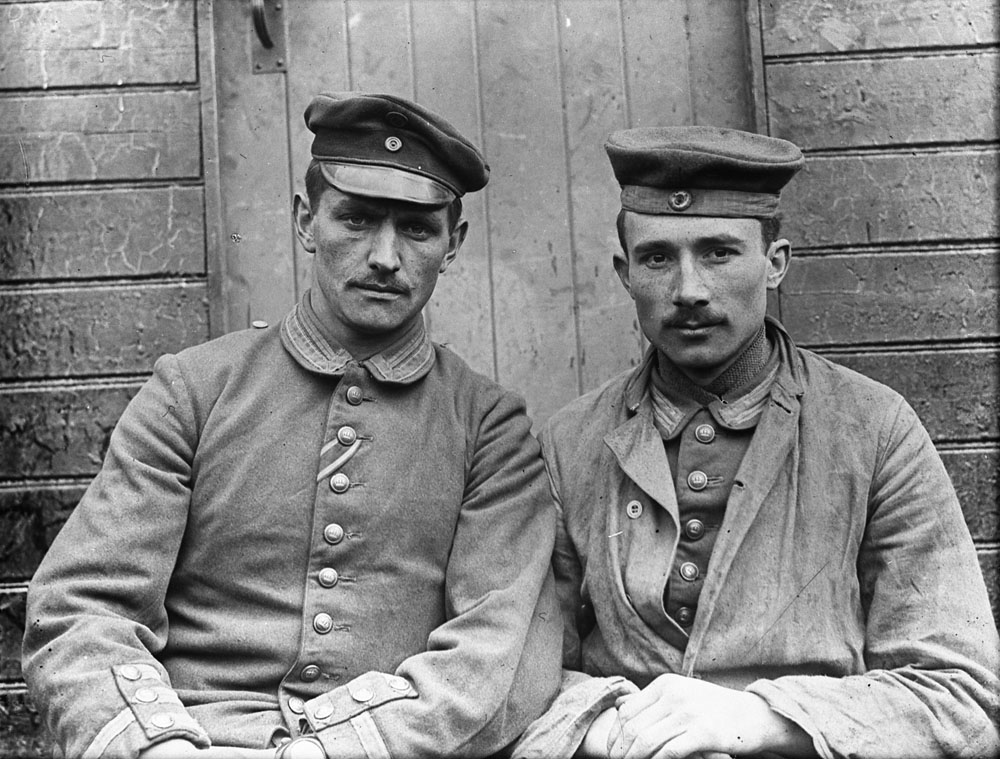
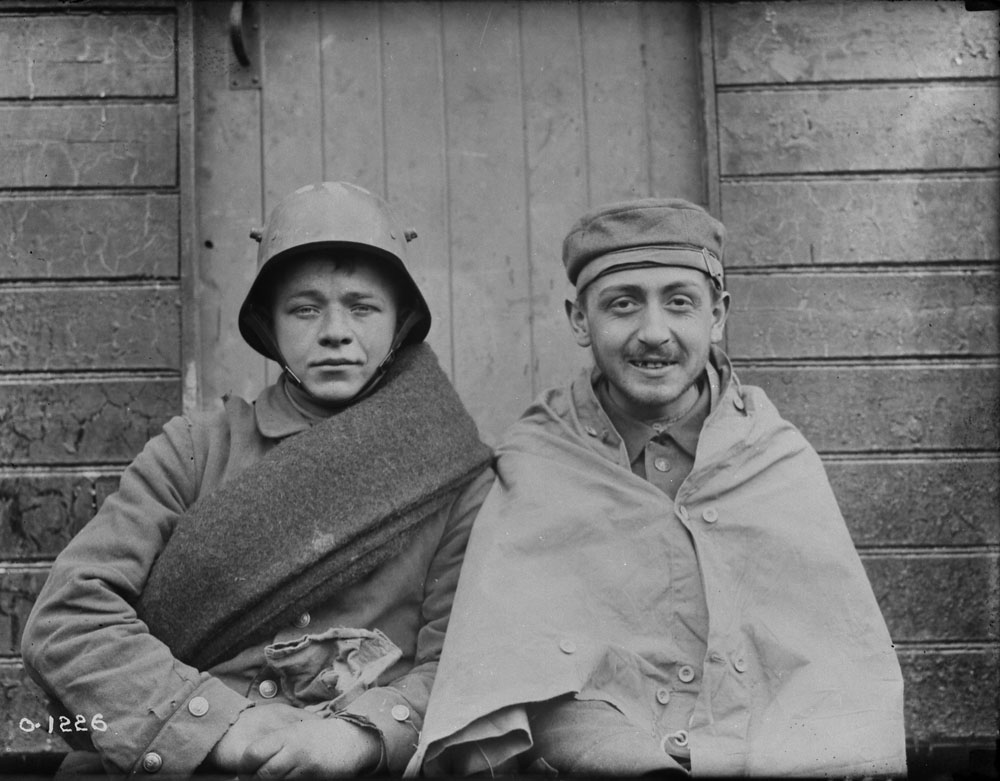
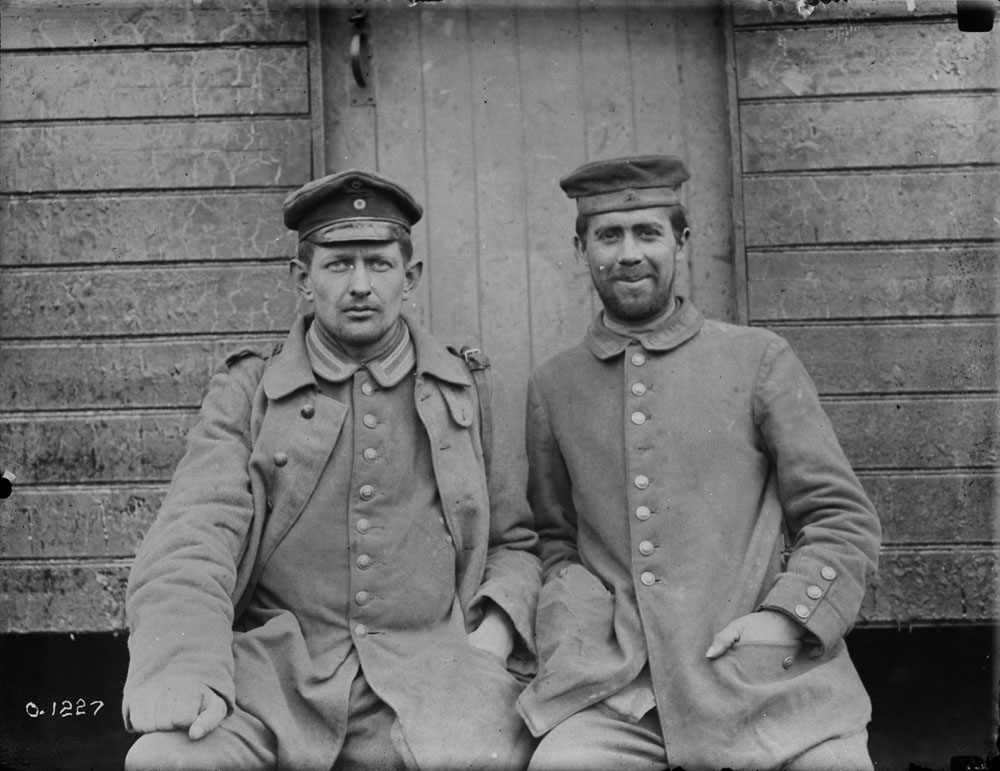
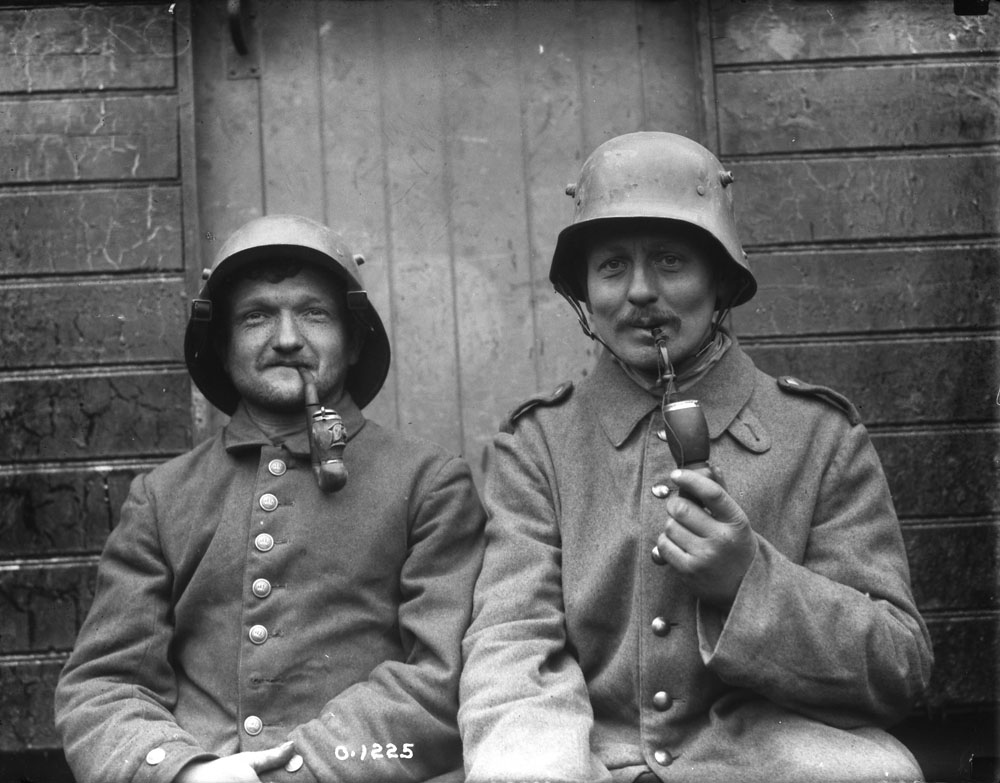
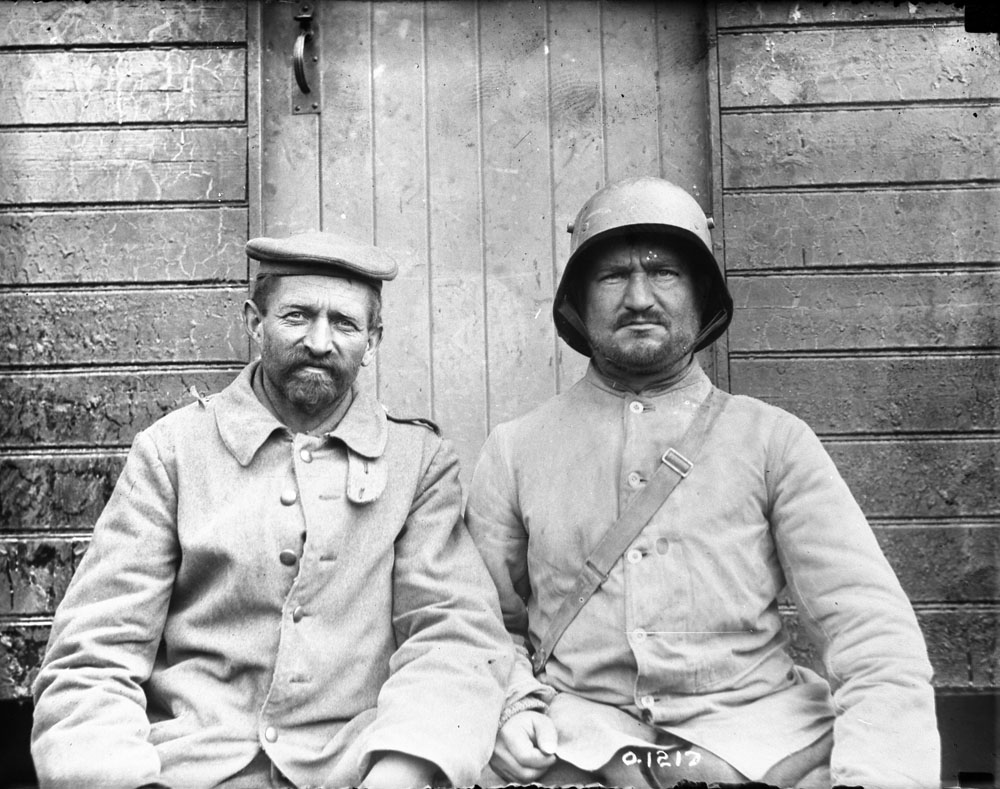
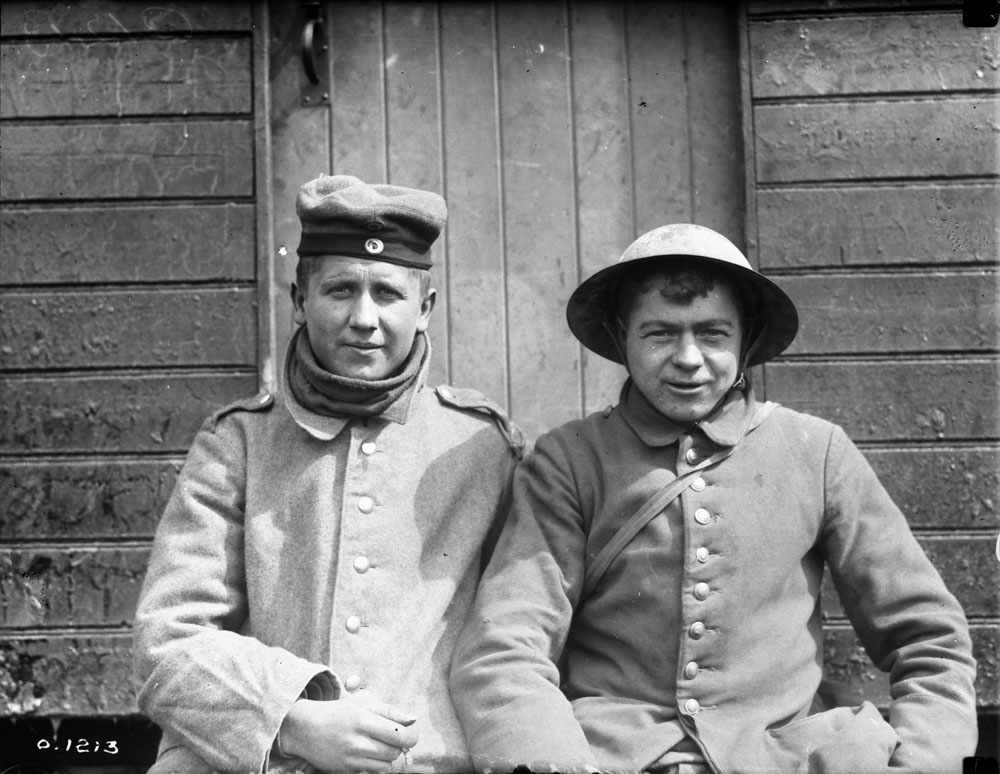
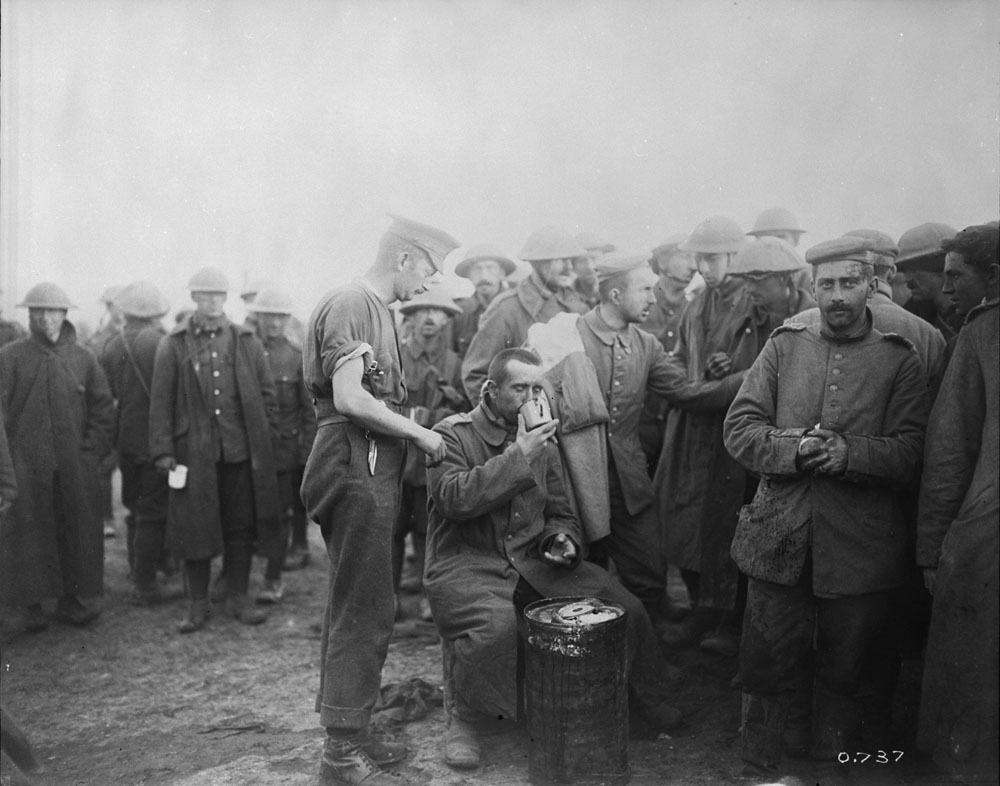
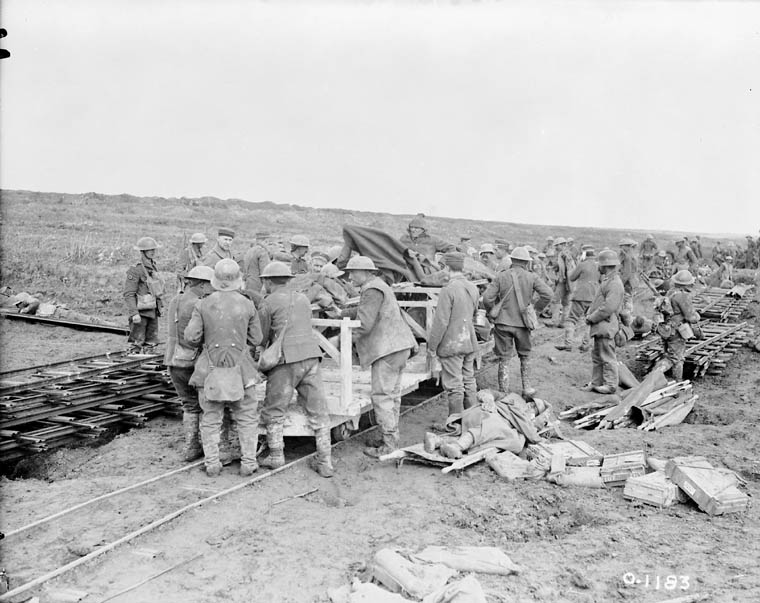
A Canadian Post in front of Mons meets a German wagon containing four escaped German soldiers, who are being taken to Mons, so that they can give information regarding the retreating enemy. November, 1918.Washing day on the bank of the Scarpe. Feuchy, 5 June 1917.Troops of the 10th Battalion, Royal Fusiliers in a captured dug-out at Feuchy cross roads. Feuchy was captured by the 9th Division, 9 April 1917.Royal Engineers laying a light railway over captured ground near Feuchy, April 1917.Major Jacob Epstein. 38th Battalion, Royal Fusiliers.Two Gurkha riflemen at Scheidemuhl prisoner of war camp near Posen.A German prisoner. September 1918.German Prisoners, September 1918A German Prisoner. September 1918.Cassel Prisoners of War Camp. A black French prisonerRussian prisoners captured during the siege of Przemysl before disinfection and cleaning, June 1915.Private D. W. Finch of the 9th Battalion, Loyal North Lancashire Regiment, a POW returned from Germany. The private was taken prisoner on the 27th May 1918, and then sent to work on railway buildings behind the German lines until rendered too sick to continue work. Sapper E. Higgins of the Royal Engineers, a POW returned from Germany. The private was taken prisoner on the 27th May 1918, and then sent to work on railway buildings behind the German lines until rendered too sick to continue work.Sapper J. G. Munro of the 50th Signal Company, Royal Engineers, a POW returned from Germany. The private was taken prisoner on the 27th May 1918, and then sent to work on railway buildings behind the German lines until rendered too sick to continue work.Private Thomas Conley of the 6th Battalion, Durham Light Infantry, a POW returned from Germany. The private was taken prisoner on the 27th May 1918, and then sent to work on railway buildings behind the German lines until rendered too sick to continue work.Private J. Rawson of the 4th Battalion, East Yorkshire Regiment, a POW returned from Germany. The private was taken prisoner on the 27th May 1918, and then sent to work on railway buildings behind the German lines until rendered too sick to continue work.Private J. Brett of the 1st Battalion, Wiltshire Regiment, a POW returned from Germany. The private was taken prisoner on the 27th May 1918, and then sent to work on railway buildings behind the German lines until rendered too sick to continue work.Group of Italian prisoners captured by the Germans during the Battle of Caporetto, November 1917.Group of Italian prisoners captured by the Germans during the Battle of Caporetto, November 1917.Romanian prisoners of war using scales to weigh out bread rations.Prisoner of war with a piece of bread.Three Romanian prisoners of war carrying soup bowls.An Austro-Hungarian prisoner taken by the British army on the Italian Front.Cheerful Austro-Hungarian prisoner, captured by the British, in a POW camp, July 1918.Austro-Hungarian prisoners, father and son, captured by the British in a POW camp, July 1918.Austro-Hungarian prisoners, captured by the British, in a POW camp, July 1918Austro-Hungarian prisoner, captured by the British, in a POW camp, July 1918.Austro-Hungarian prisoner, captured by the British, in a POW camp, July 1918.Austro-Hungarian prisoner, captured by the British, in a POW camp, July 1918.Austro-Hungarian prisoner, captured by the British, in a POW camp, July 1918.Austro-Hungarian prisoner, captured by the British, in a POW camp, July 1918.Priest speaking to a Romanian prisoner as a firing squad waits to execute him.Firing squad executing a prisoner.A smiling German prisoner captured in the Battle of Messines, 8th June 1917.German prisoners sleeping after being captured in the Battle of Messines, 8th June 1917.A German prisoner captured in the Battle of Messines, 8th June 1917.German prisoners sleeping after being captured in the Battle of Messines, 8th June 1917.Prisoners captured by Canadians at the Battle of Vimy Ridge, April 1917.Prisoners captured by Canadians at the Battle of Vimy Ridge, April 1917.Prisoners captured by Canadians at the Battle of Vimy Ridge, April 1917.Prisoners captured by Canadians at the Battle of Vimy Ridge, April 1917.Prisoners captured by Canadians at the Battle of Vimy Ridge, April 1917.Prisoners captured by Canadians at the Battle of Vimy Ridge, April 1917.Prisoners captured by Canadians at the Battle of Vimy Ridge, April 1917.Prisoners captured by Canadians at the Battle of Vimy Ridge, April 1917.Prisoners captured by Canadians at the Battle of Vimy Ridge, April 1917.Prisoners captured by Canadians at the Battle of Vimy Ridge, April 1917.Prisoners captured by Canadians at the Battle of Vimy Ridge, April 1917.Prisoners captured by Canadians at the Battle of Vimy Ridge, April 1917.Prisoners captured by Canadians at the Battle of Vimy Ridge, April 1917.Prisoners captured by Canadians at the Battle of Vimy Ridge, April 1917.Prisoners captured by Canadians at the Battle of Vimy Ridge, April 1917.Prisoners captured by Canadians at the Battle of Vimy Ridge, April 1917.Prisoners captured by Canadians at the Battle of Vimy Ridge, April 1917.Canadians tending to wants of nerve-stricken prisoners. September, 1916Prisoners captured by Canadians at the Battle of Vimy Ridge, April 1917.Prisoners captured by Canadians. Battle of Amiens. August, 1918.German prisoners and Canadian Red Cross men assist in the despatching of wounded on a light railway. Vimy Ridge. April, 1917German prisoners bringing in wounded. Advance East of Arras. October, 1918Prisoners captured by Canadians. Battle of Amiens. August, 1918
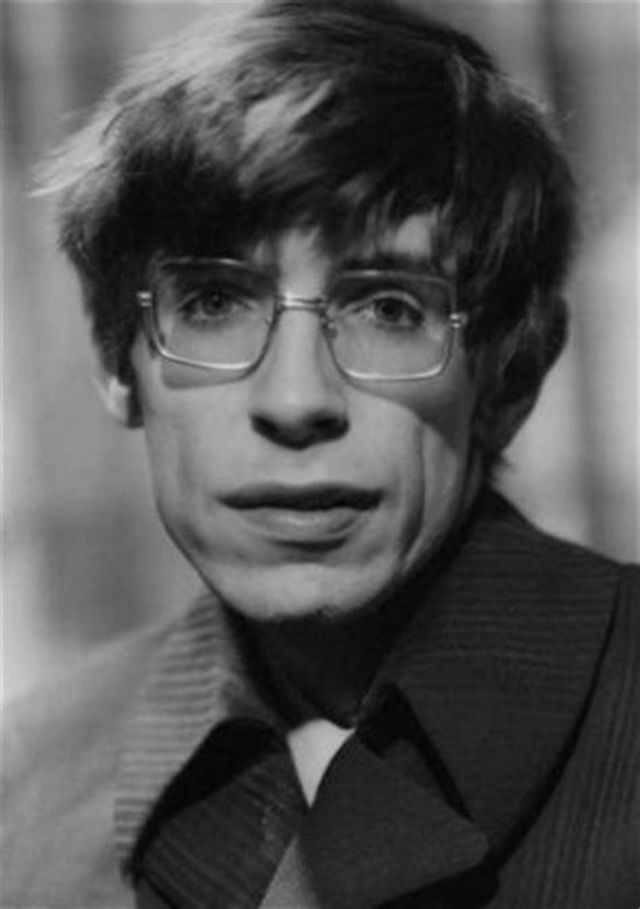
Many people know who Stephen Hawking is today, he was a theoretical physicist, a cosmologist, and an author. This British genius was responsible for a large number of theorems and even has a type of radiation named after him, the radiation emitted by a black hole.
What many people don’t know about Stephen Hawking though is his childhood. What led up to Stephen Hawking being the genius he became?
Stephen Hawking was born on the 8th of January 1942 to his parents, Frank and Isabel Hawking. Both of Hawking’s parents had college degrees which was rare back then and is still not too common today.
His parents believed in being educated and managed to just scrape enough money to get through university. In 1950 the Hawking family moved to St Albans, Hertfordshire, England for his father’s medical work and the family was known as being highly intelligent yet a tad eccentric. Many different geniuses throughout the years though have been known as eccentric of some kind.
With four kids, the family’s money was a little bit stretched and they traveled in a converted taxi. His father was often absent on trips around the world.
Hawking’s first primary school practiced progressive methods and he didn’t learn to read in school. For a while he was moved to a high school for girls that allowed younger boys in some of their classes.
Without the ability to make friends with boys this may have impacted him as a child but his family sent him to St Albans with a collection of kids that he became close friends with. These kids would do all of the regular childhood activities such as playing board games and building model airplanes and boats. They also built fireworks and discussed complex matters such as Christianity and extrasensory perception.
People at school referred to Hawking as Einstein because he was able to work with teachers to build things like computers from basic parts but his grades were not as high as they should have been with an intelligence level that high.
As time went on though he began to show more and more academic prowess towards matters of science. Despite these setbacks though he was committed to learning and when his father wanted him to go to University College, Oxford, where his dad learned he set out for a scholarship despite being told to wait. With his knowledge of science he was able to receive a scholarship and started school in March of 1959.
The story of Stephen Hawking’s early life is quite motivational and can be used to inspire kids and young adults around the world. Maybe even more inspiring is Hawking’s battle with Lou Gehrig’s disease that left him in a wheel chair.
When diagnosed in 1963 Hawking was only given two years to live. He lived many years later, lecturing, writing and being viewed as one of the most intelligent men that the world has ever seen, not a man with a disease. He died at the age of 76 at his home in Cambridge on March 14, 2018. His life was truly remarkable.
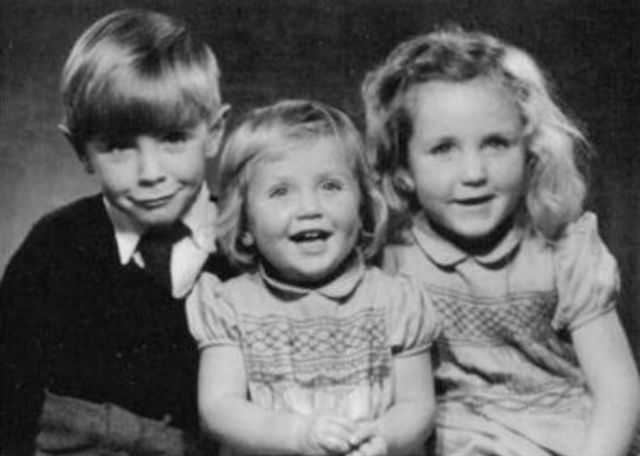
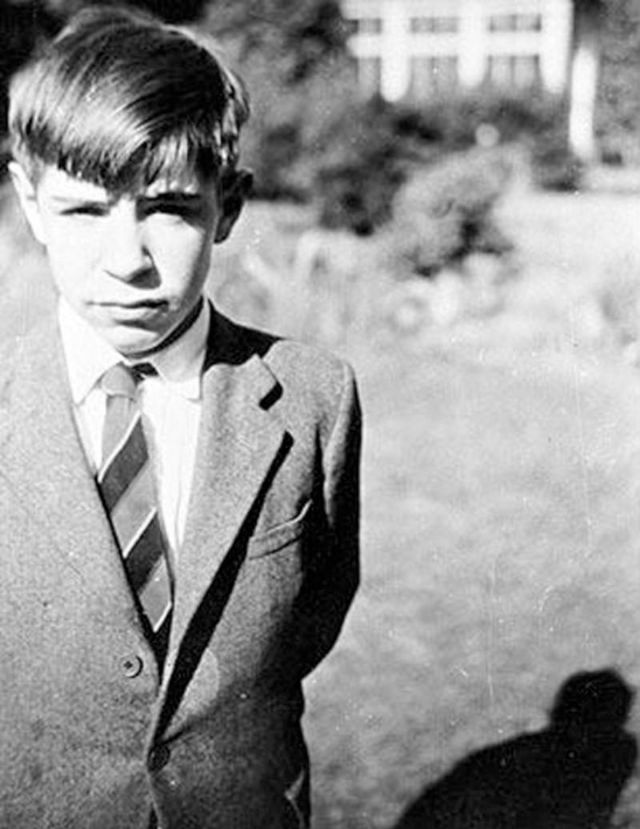
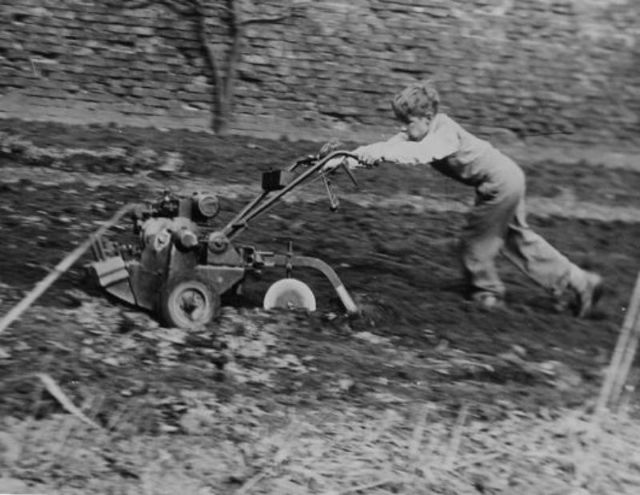
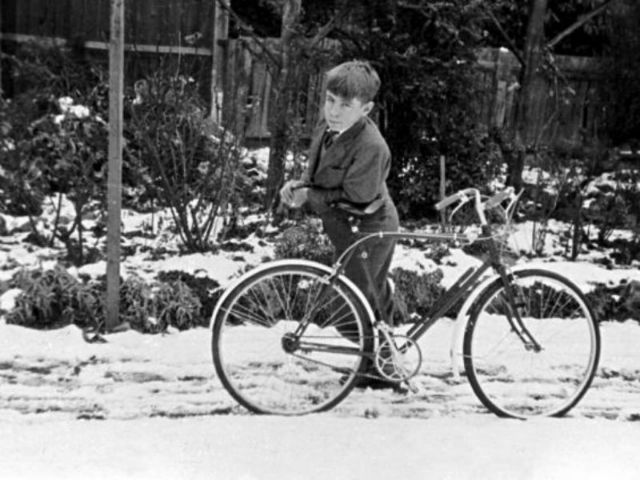
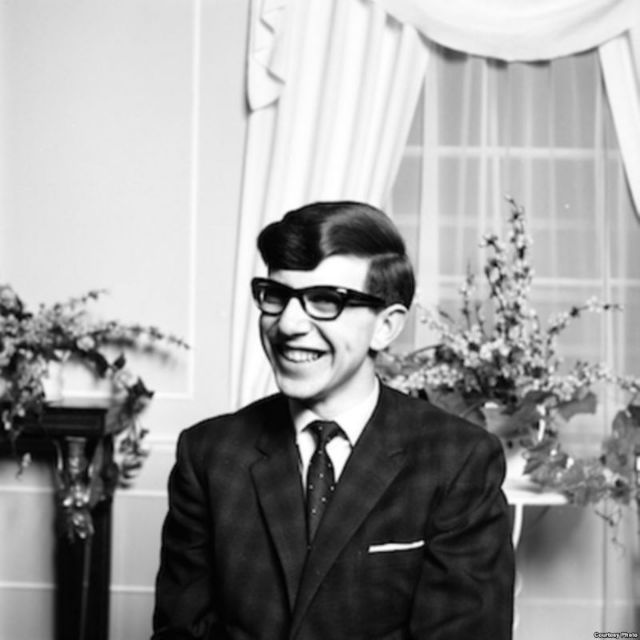
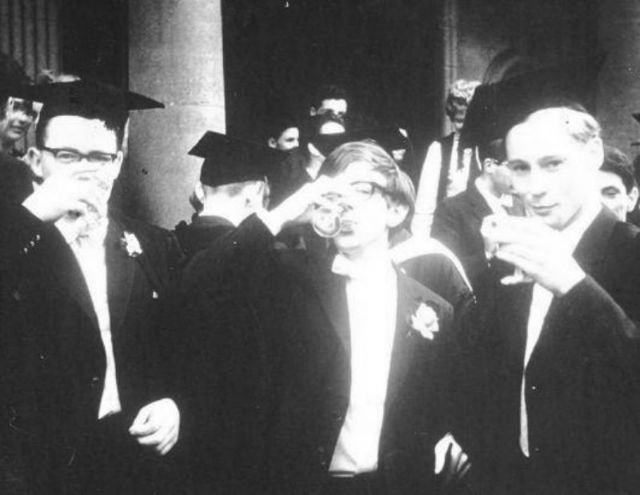
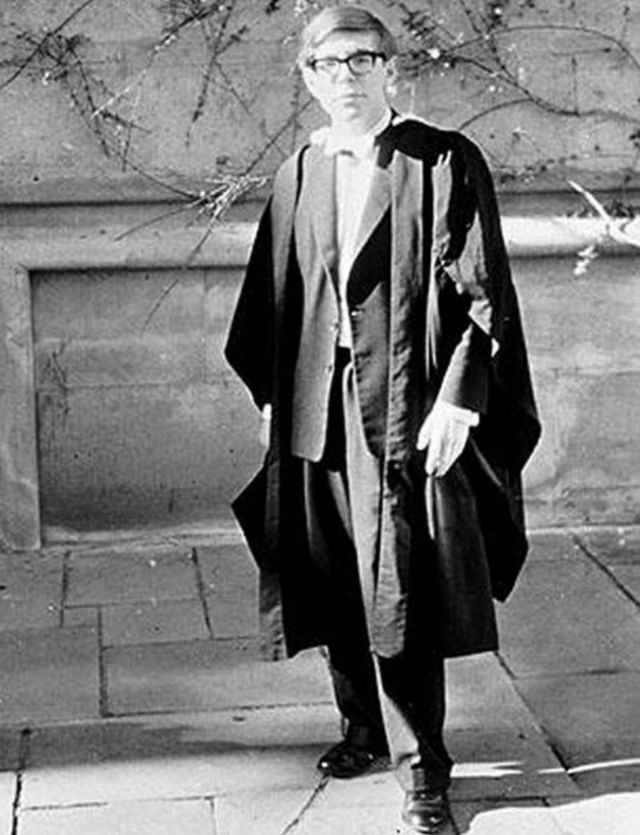
Stephen Hawking was born Jan. 8, 1942 to Frank and Isobel Hawking.Stephen Hawking (left) as a young child, with his sister Mary.Hawking and his two sisters, Philippa and Mary.Hawking and his two sisters, Philippa and Mary.Stephen Hawking (mouth open) is pictured to the right of the boy with glasses at St Albans School.Stephen Hawking (left) and William Graves in Cannelun, Robert Graves’ house in Deià, in 1951.A young Stephen Hawking fishing on a boat.Stephen Hawking aged 12 in the garden of his St Alban’s home.Hawking plows a field as a boy.Young Hawking on horseback.Stephen Hawking in his garden in St Albans aged 12 with his bicycle (Rex).Young Stephen Hawking at Oxford in 1963.Stephen Hawking attended the University of Oxford, where he studied physics and chemistry.Young Stephen Hawking (holding the handkerchief) with Oxford Boat Club, early 1960s.Stephen Hawking (right) coxing the University College Men’s 2nd VIII in 1964.Graduation party of Stephen Hawking.Stephen Hawking at his Oxford graduation in 1962.After gaining his Ph.D. from Cambridge, Hawking became first a research fellow and later a professorial fellow at Gonville and Caius College.