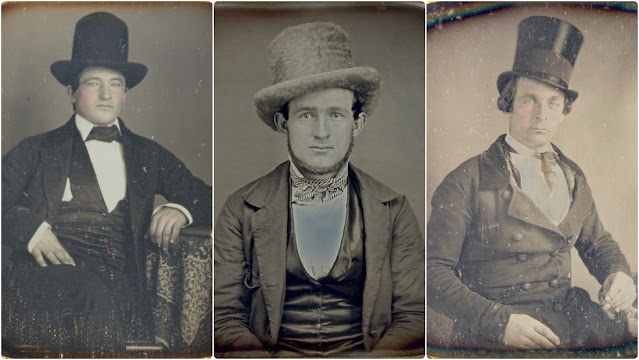
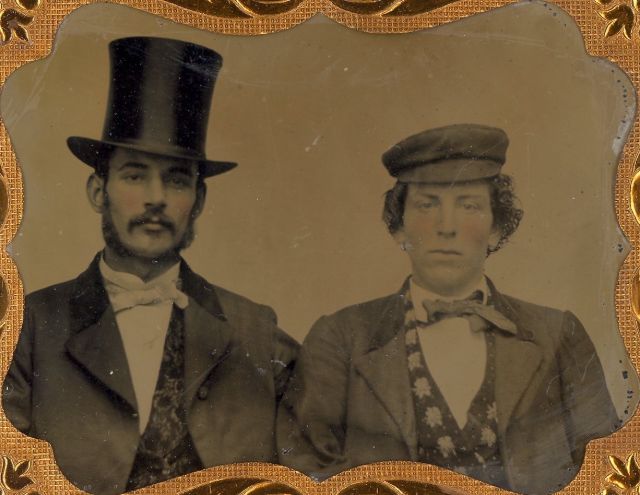
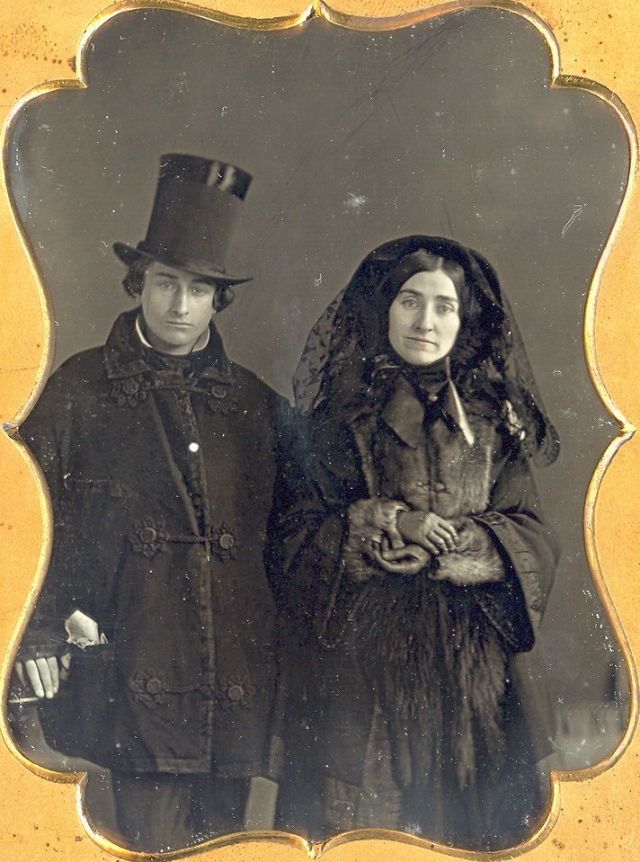
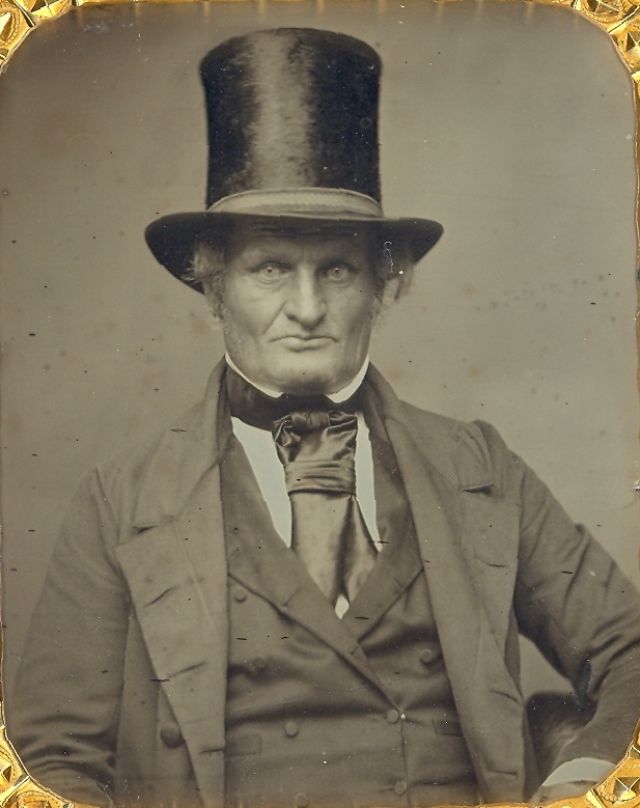
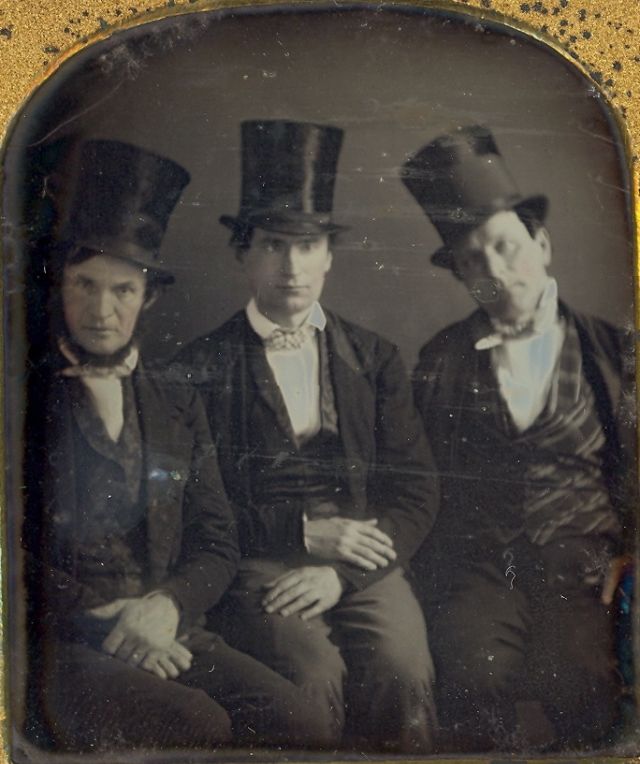
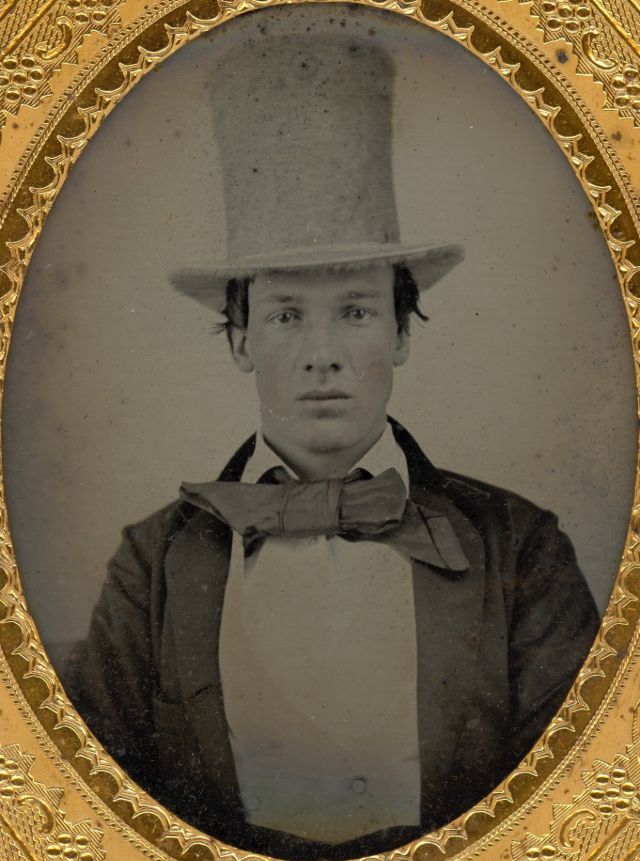
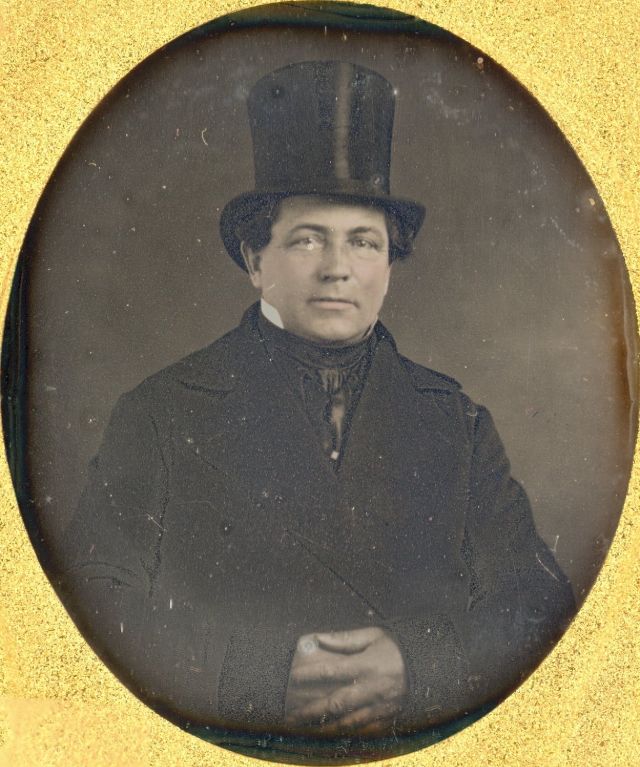
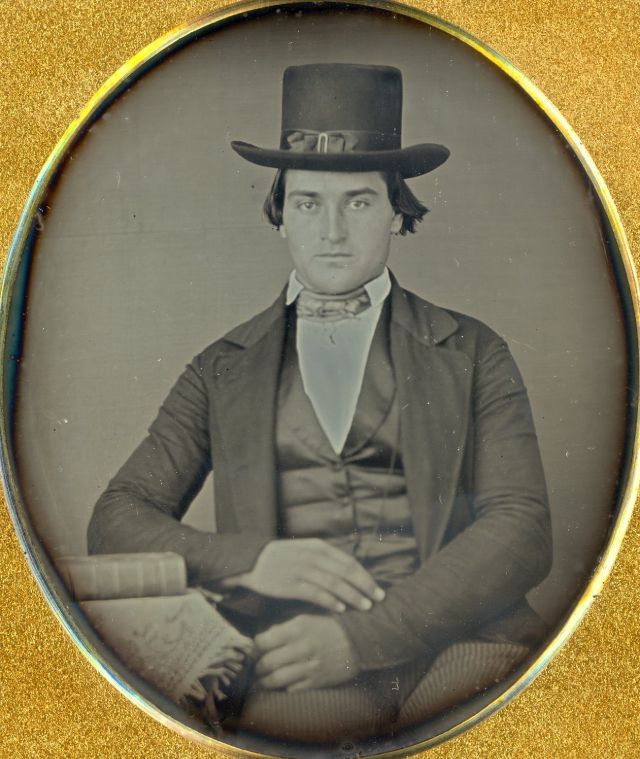
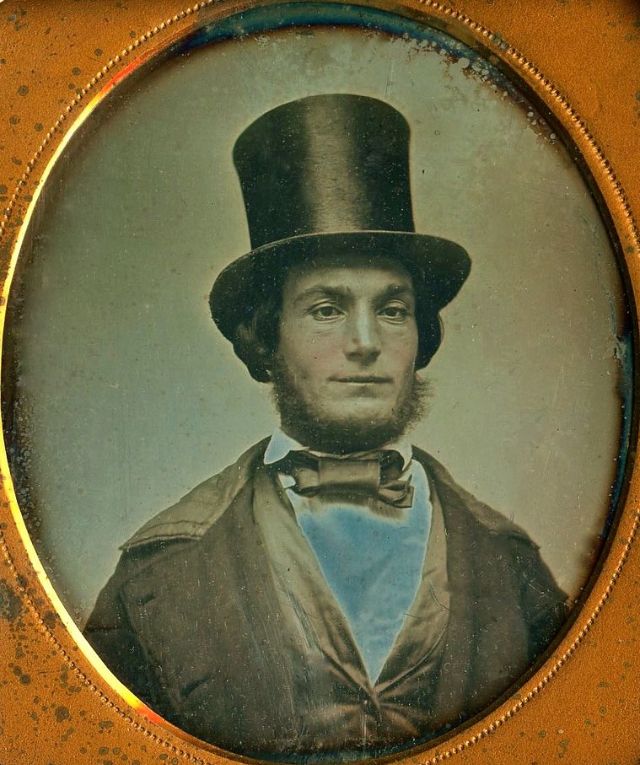
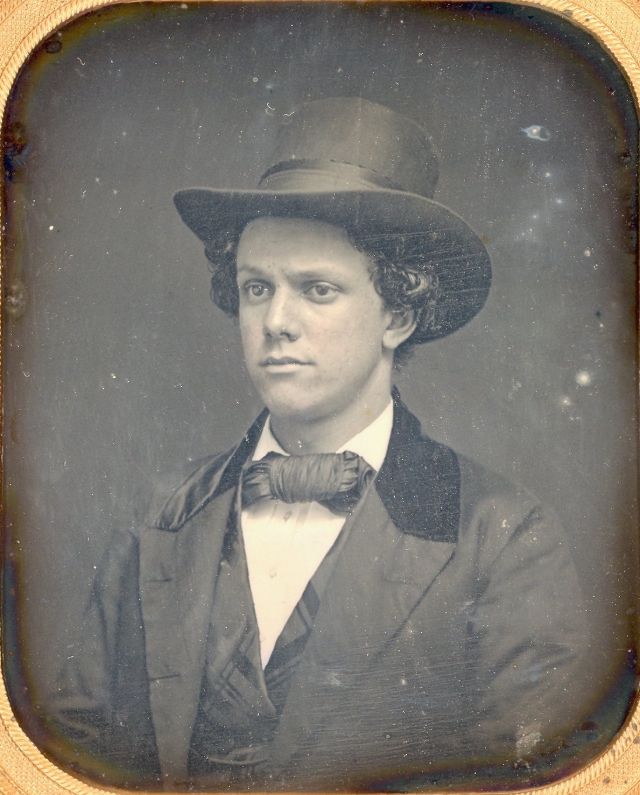
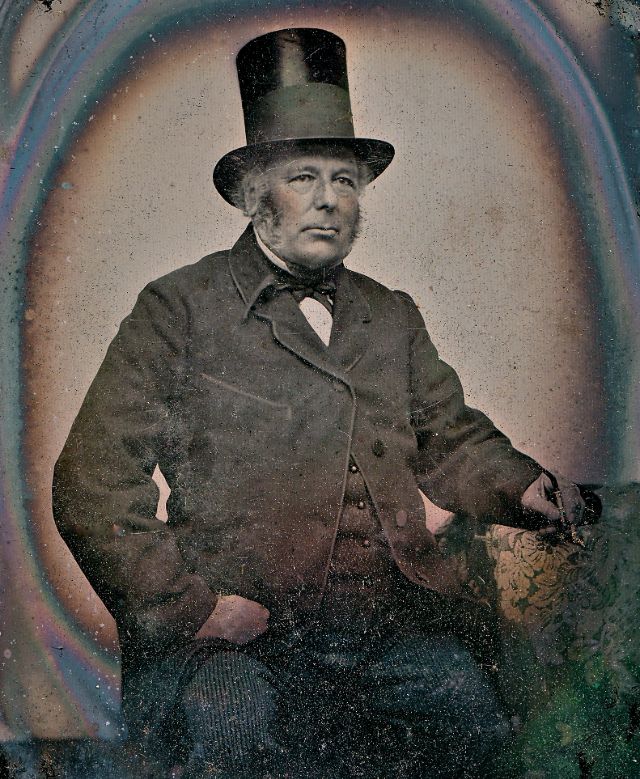
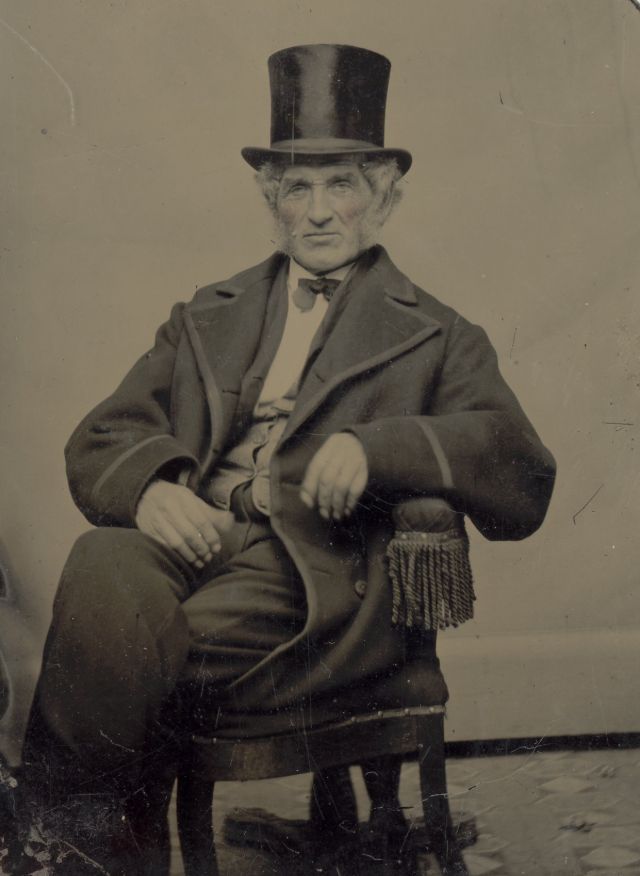
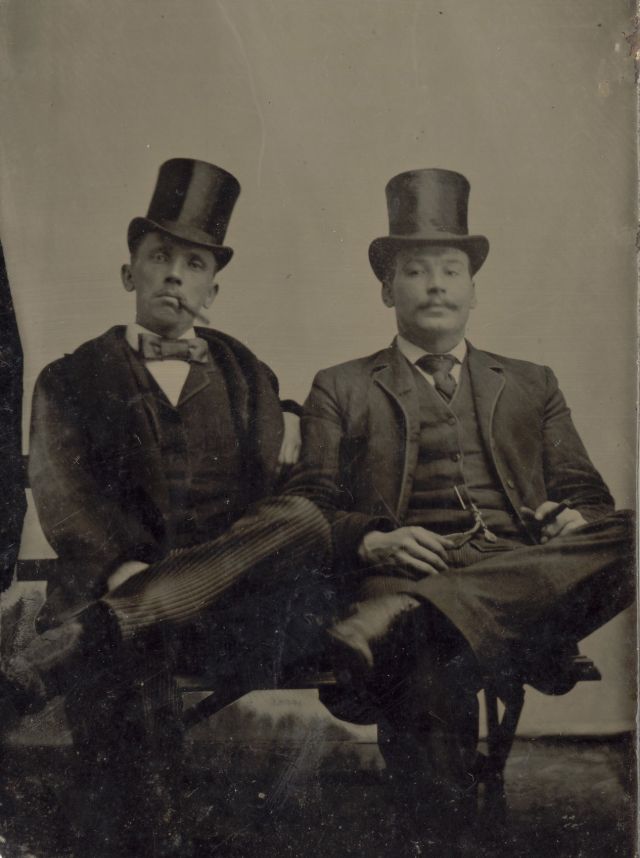
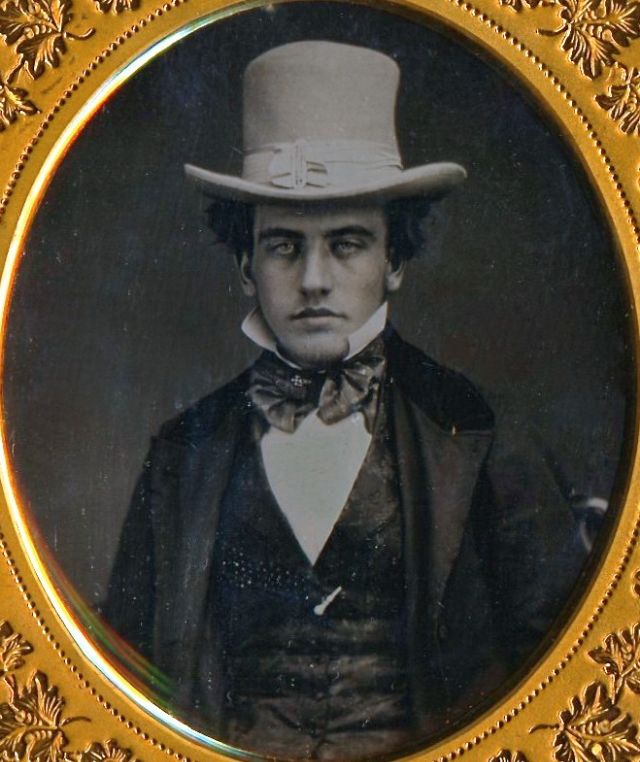
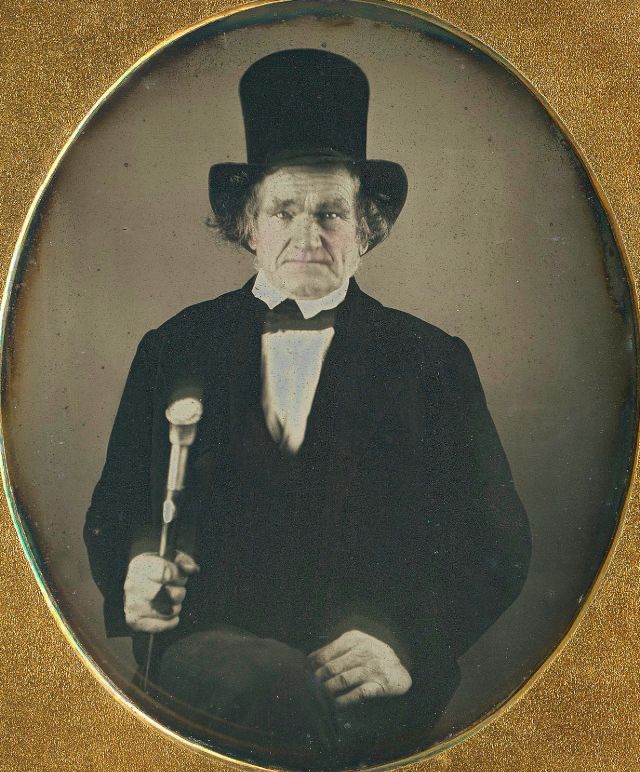
A top hat is a tall, flat-crowned hat for men traditionally associated with formal wear in Western dress codes, meaning white tie, morning dress, or frock coat. The top hat is also known as a beaver hat or silk hat, in reference to its material, as well as casually as chimney pot hat or stove pipe hat.
The 1840s and the 1850s saw it reach its most extreme form, with ever-higher crowns and narrow brims. The stovepipe hat was a variety with mostly straight sides, while one with slightly convex sides was called the “chimney pot”.
Towards the end of the 19th century, whereas the white tie with black dress coat remained fixed, frock coats were gradually replaced by morning dress, along with top hats.
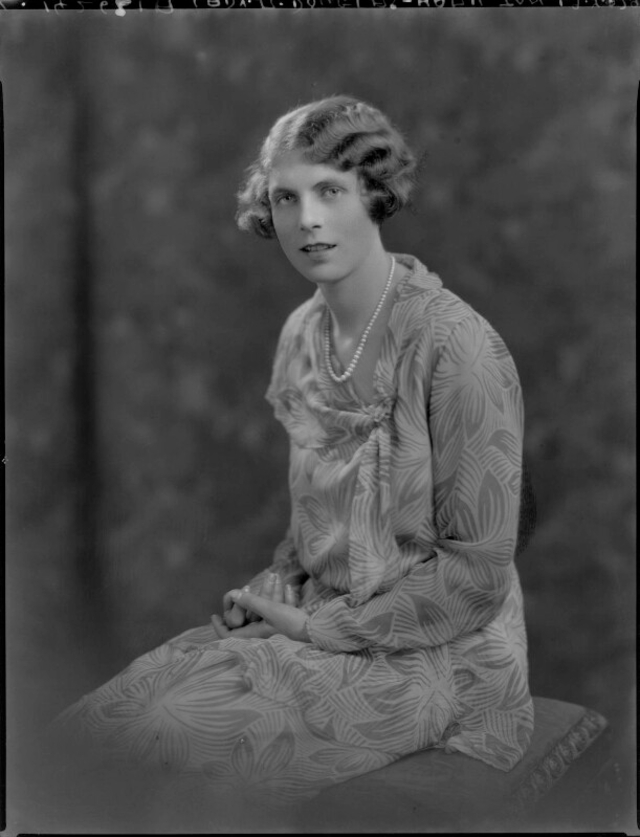
Here below is a set of vintage photos that shows portraits of Victorian men with their top hats from the mid-19th century.
Subscribe to Yesterday Today to receive daily updates:
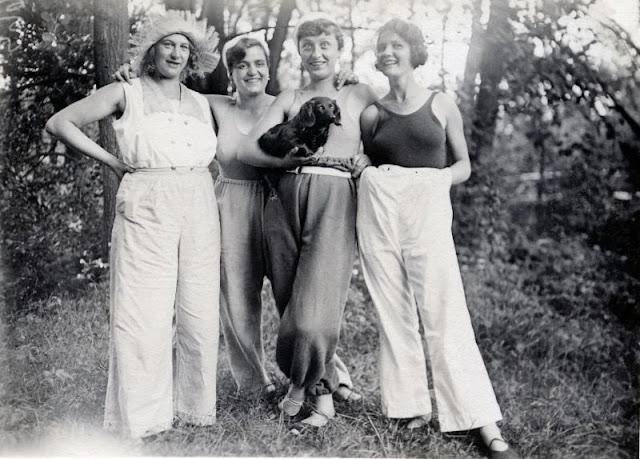
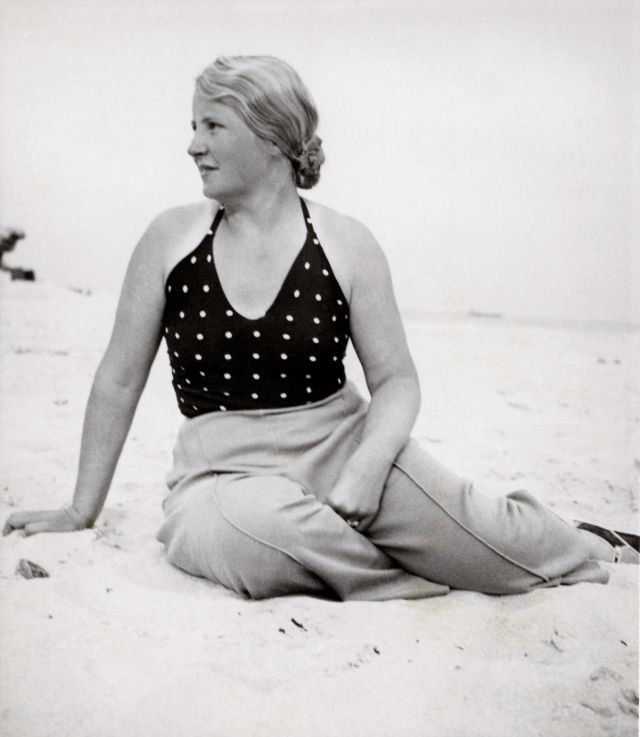
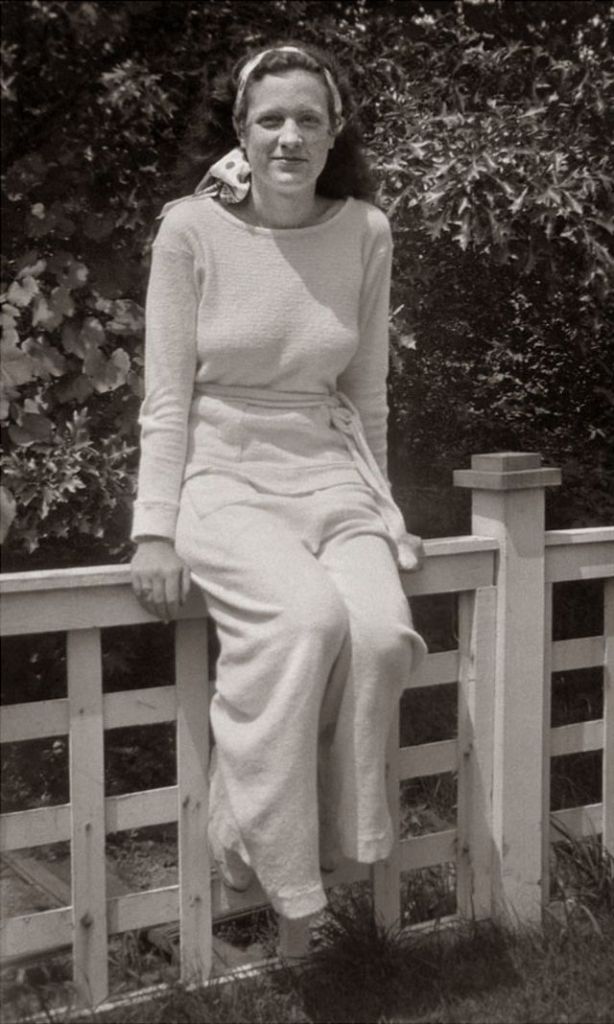
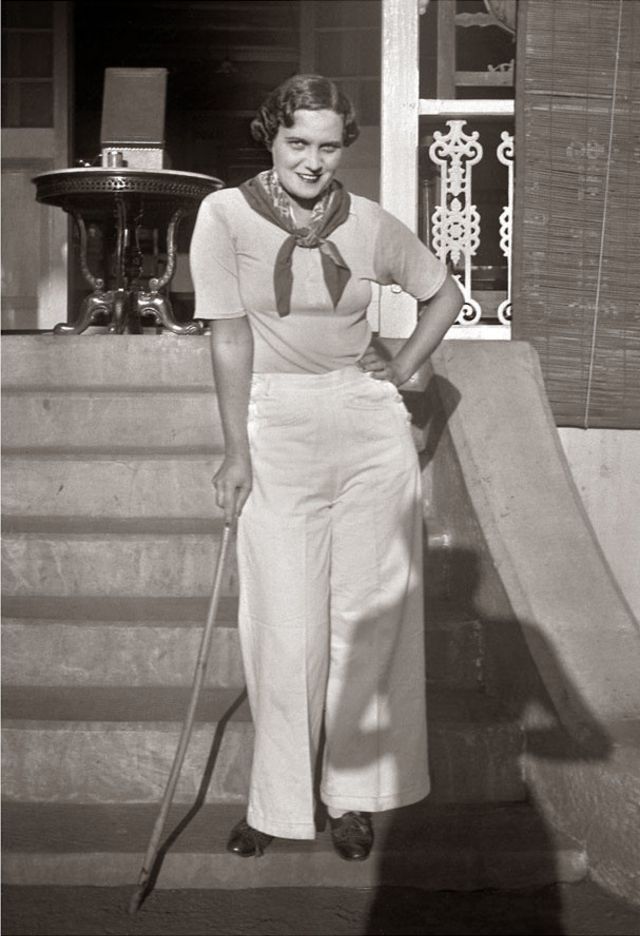
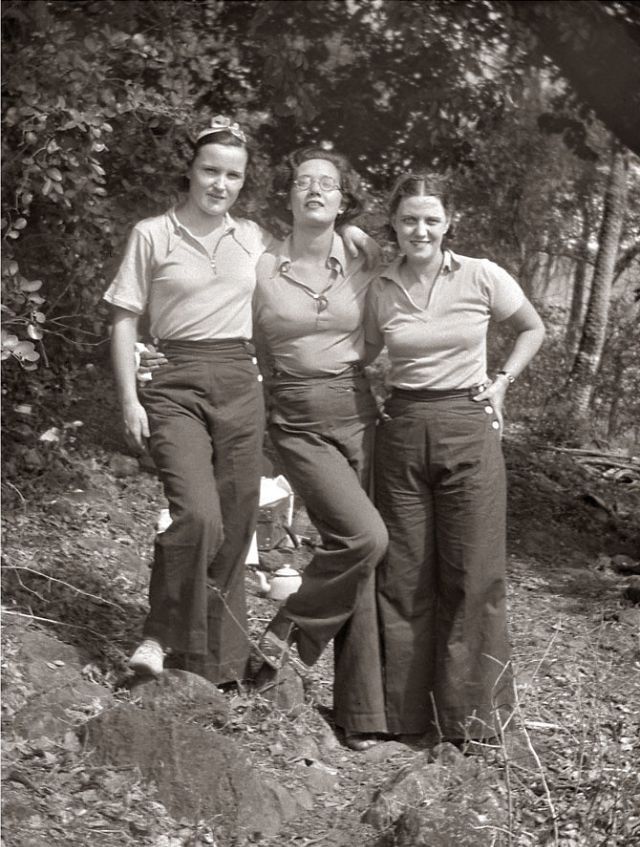
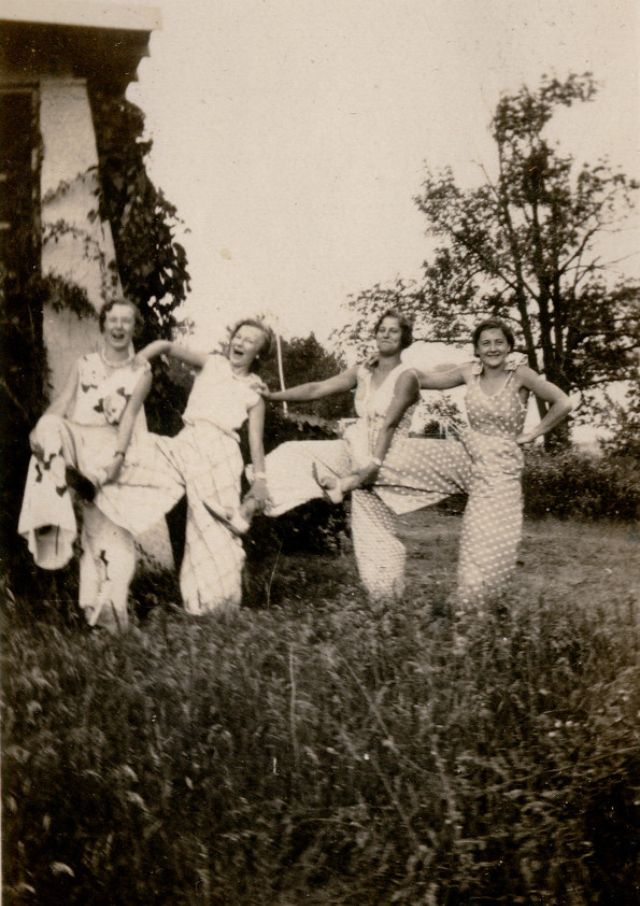
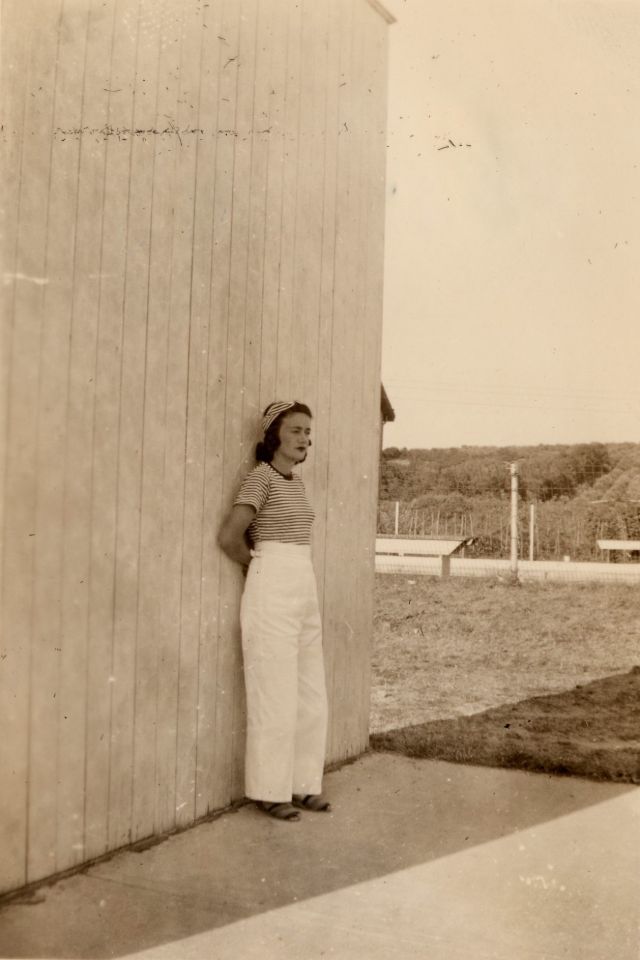
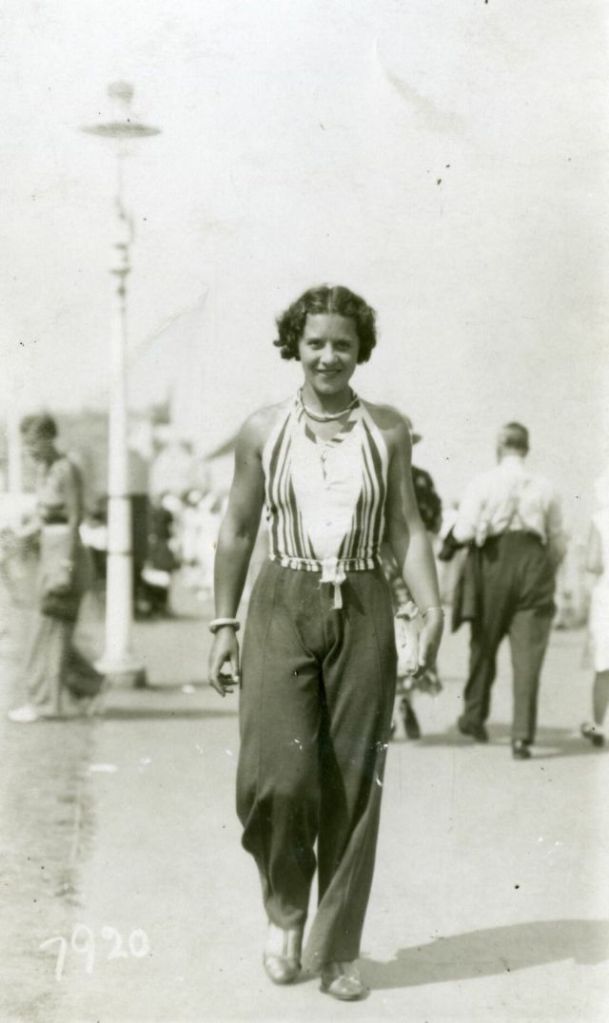
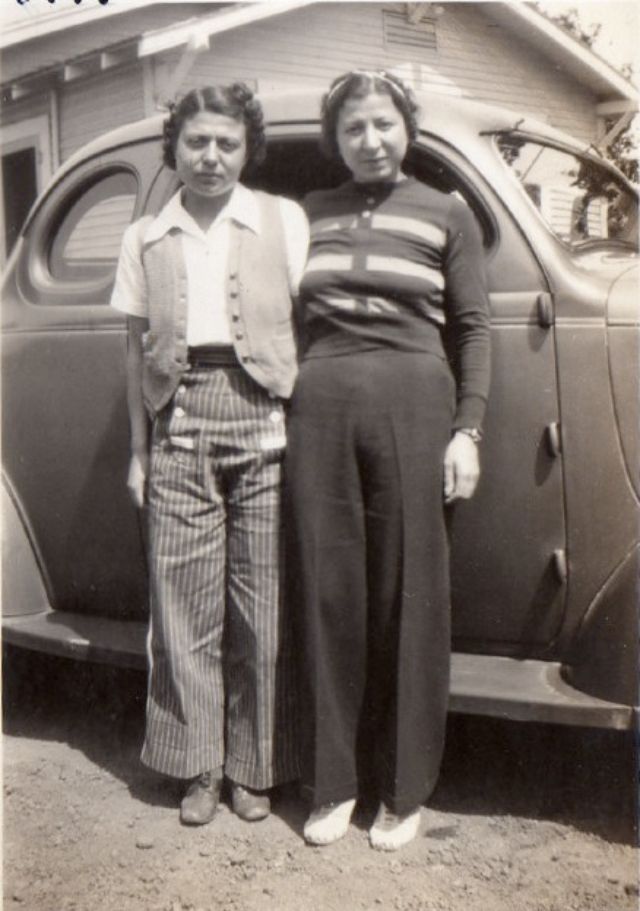
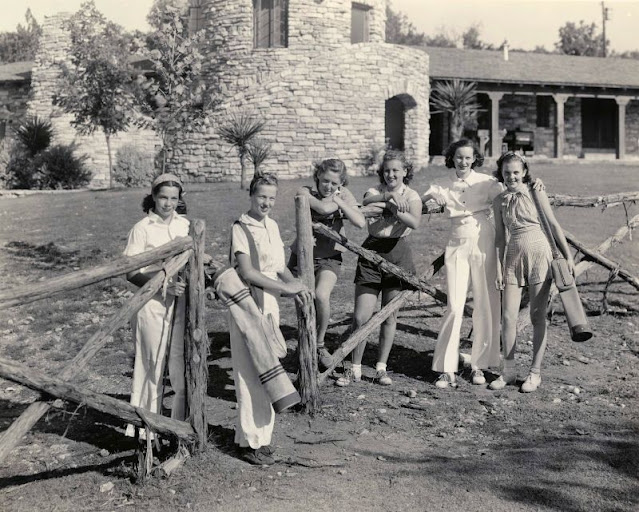
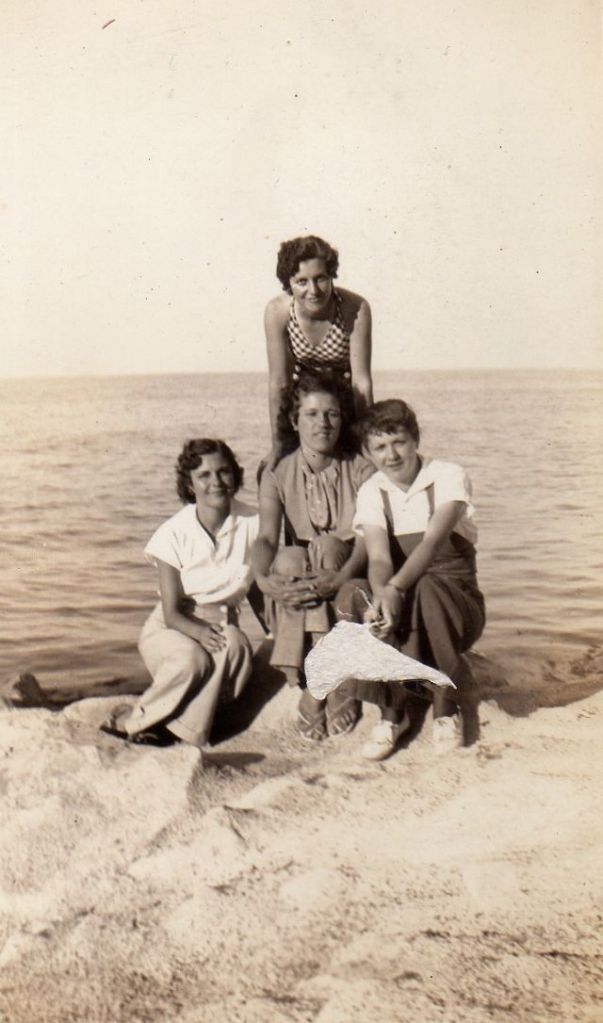
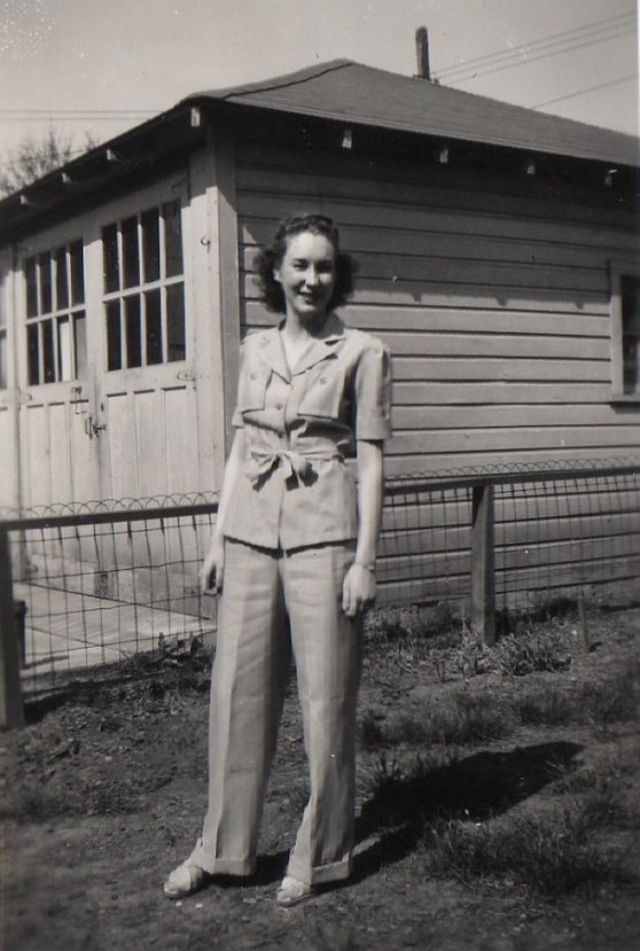
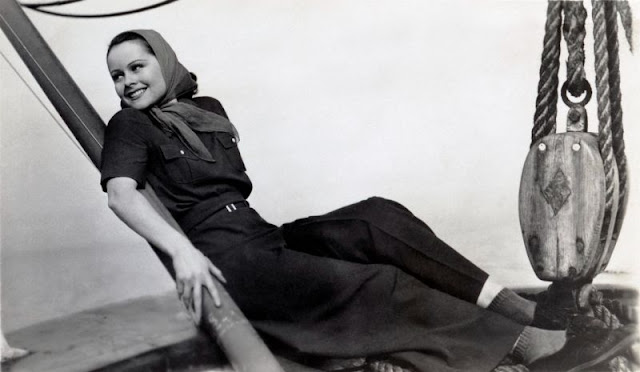
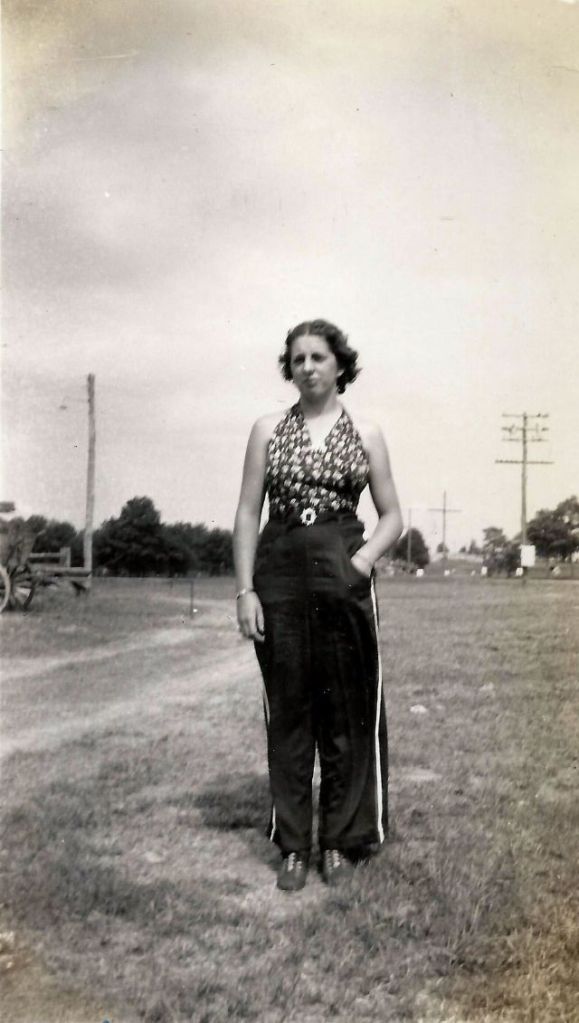
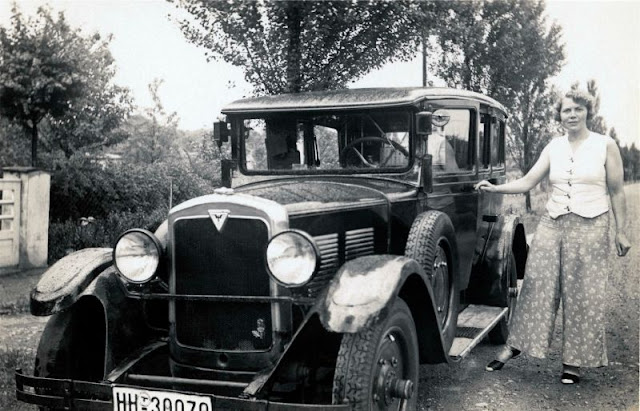
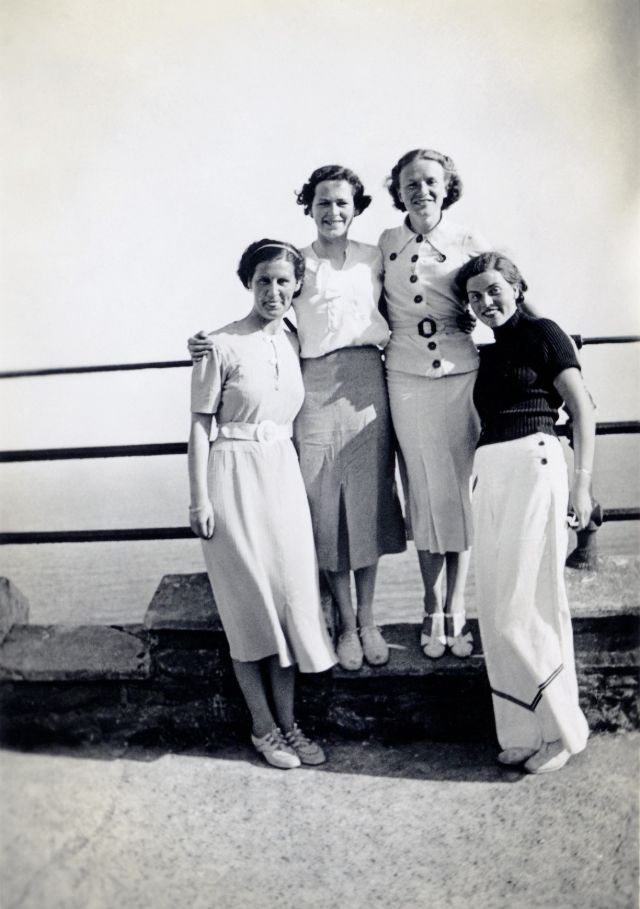
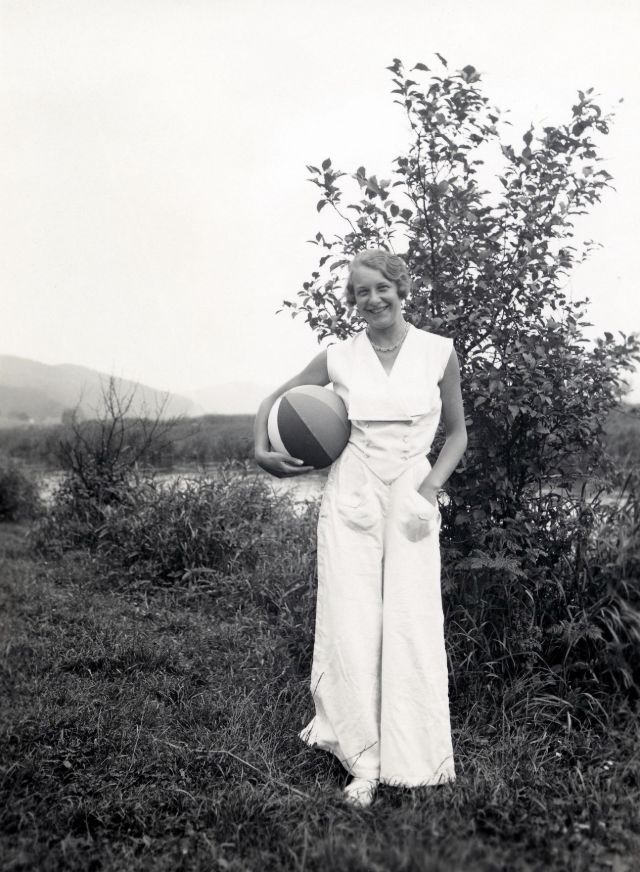
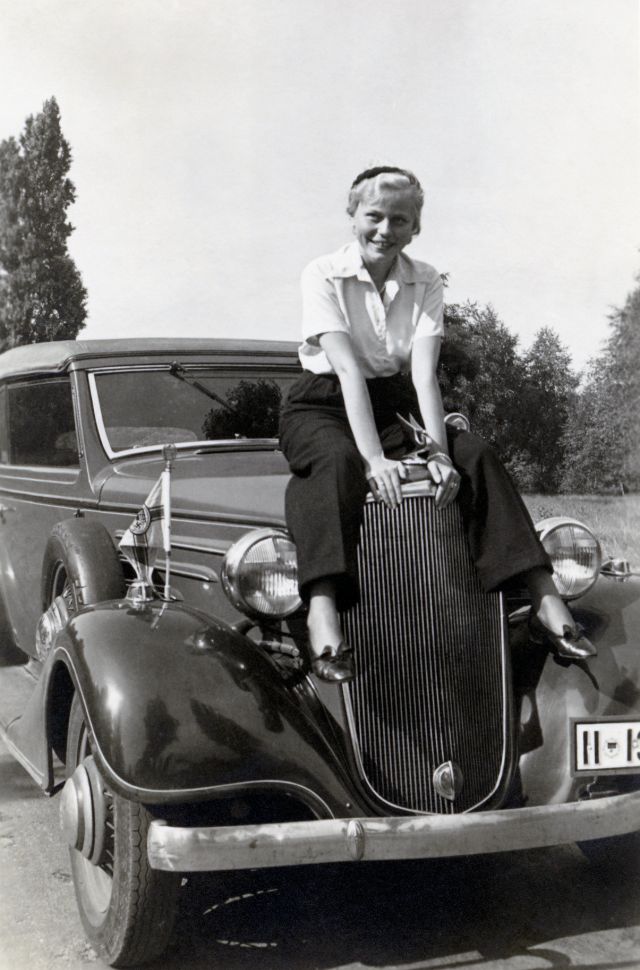
While rebellious women began wearing pants in earlier decades, in the 1930s there were several social situations that were acceptable for women to wear pants in public.
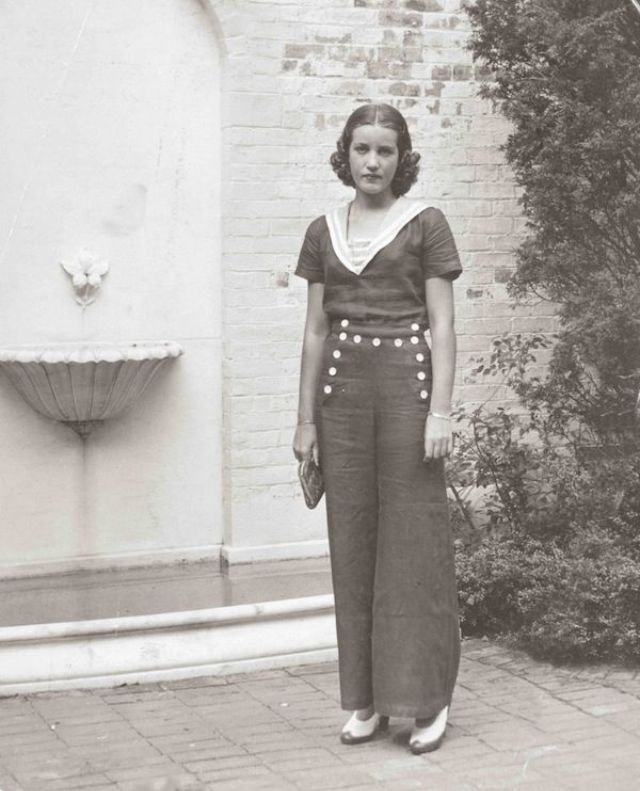
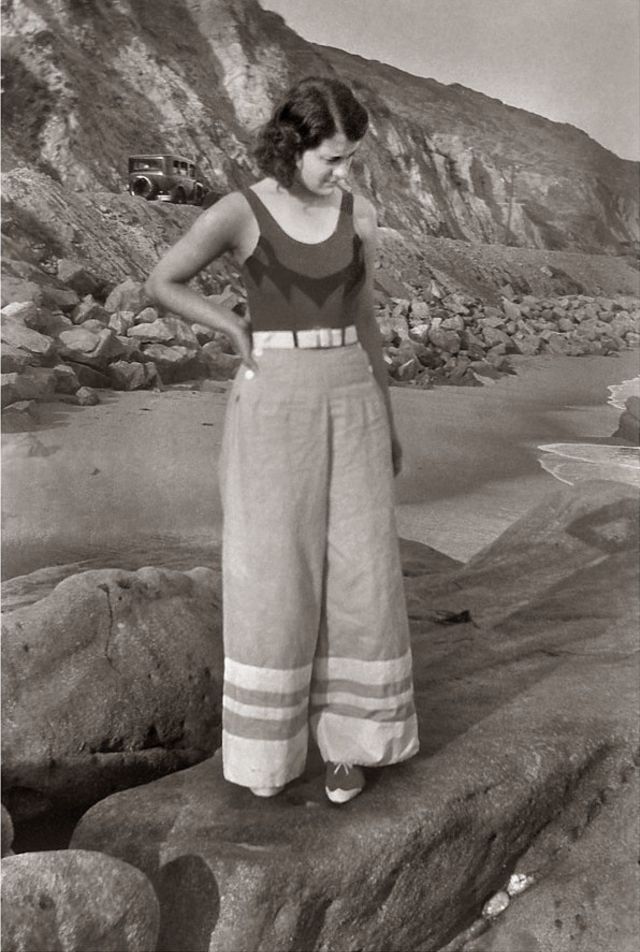
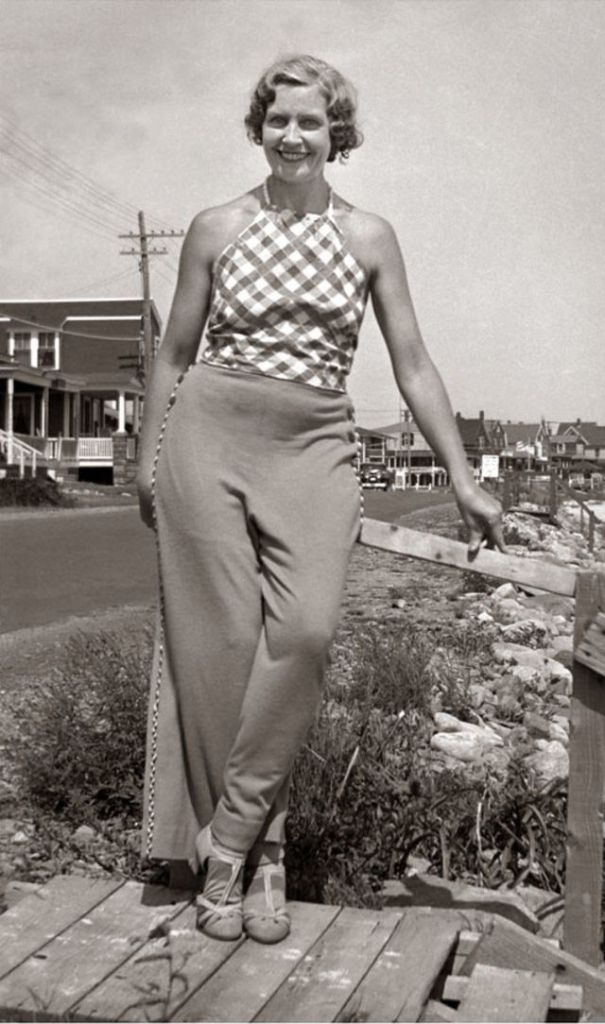
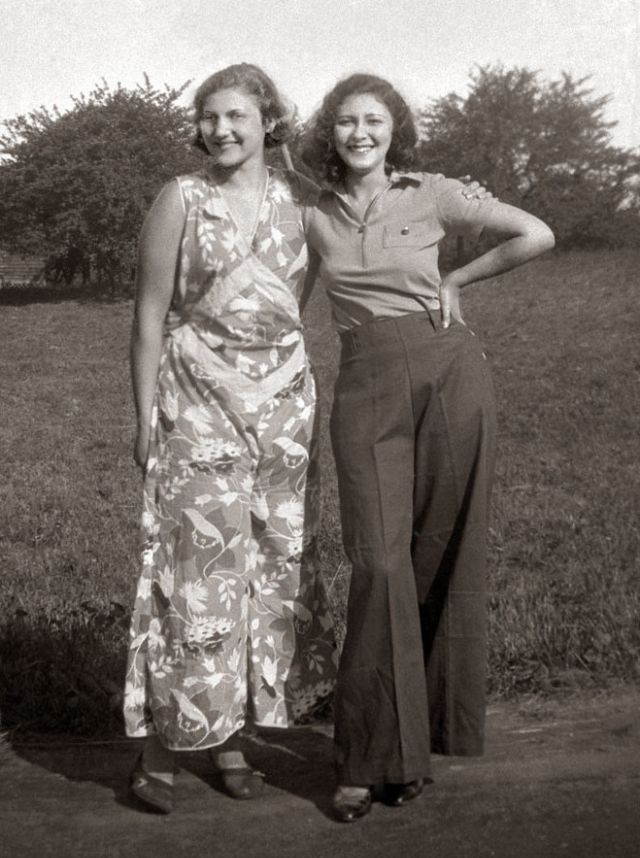
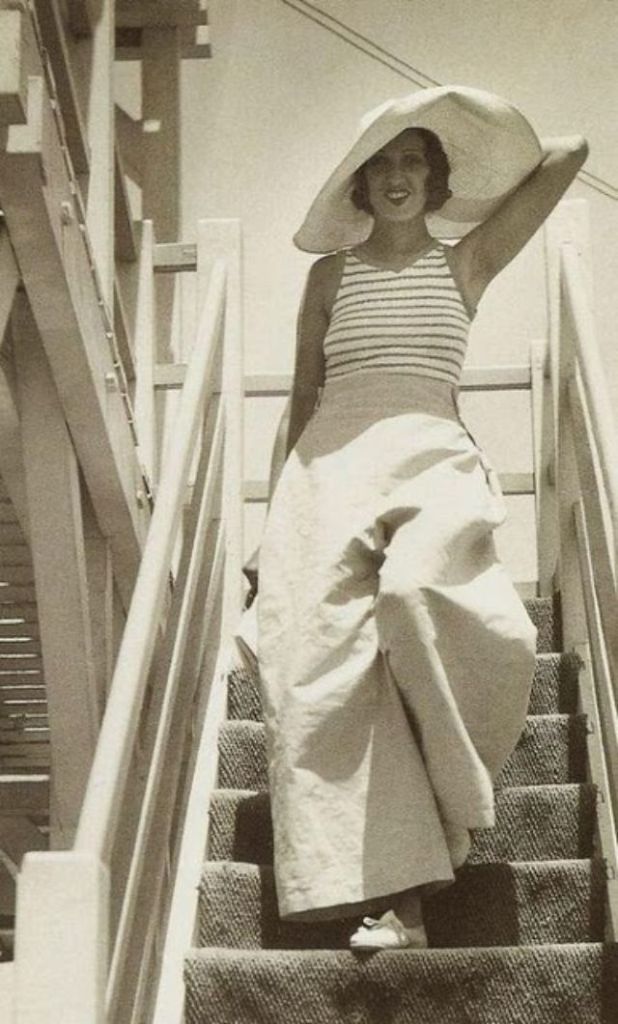
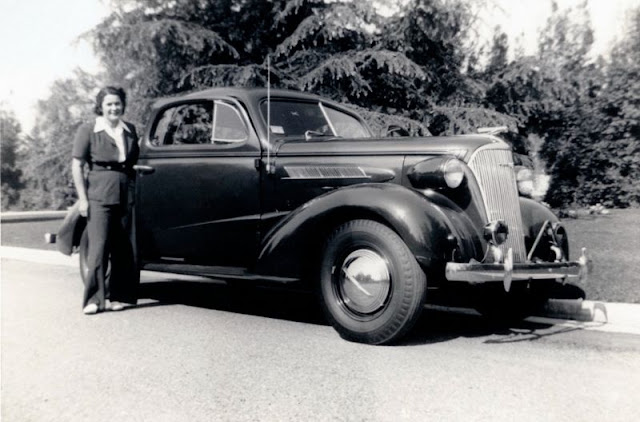
Pants generally were wide legged trousers with a front crease or very wide flowing culottes that looked like a skirt when not moving, with a high fitted waist. Calf length culottes pants were even wider legged.
The double button “sailor” front was common, as was a side zipper or button closure. They were usually made of a durable cotton fabric like twill or wool for winter.
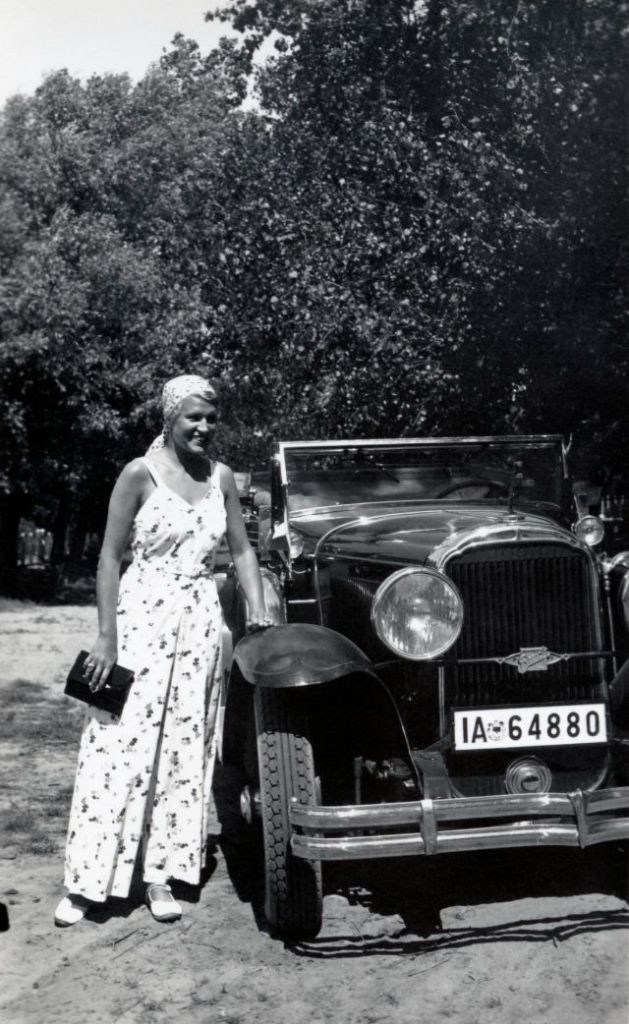
In summer, beach pajamas, which looked like palazzo pants with an attached sleeveless top, graced the beaches, seasides, and pools of 1930s Hollywood. They were made to comically extreme widths and in bold geometric patterns, but were (and still are) extremely comfortable to wear. Beach pajamas became popular for a day at the beach or a “restful day at home.” Beach pajamas were also house pajamas along with silky nightgowns, robes and slippers.
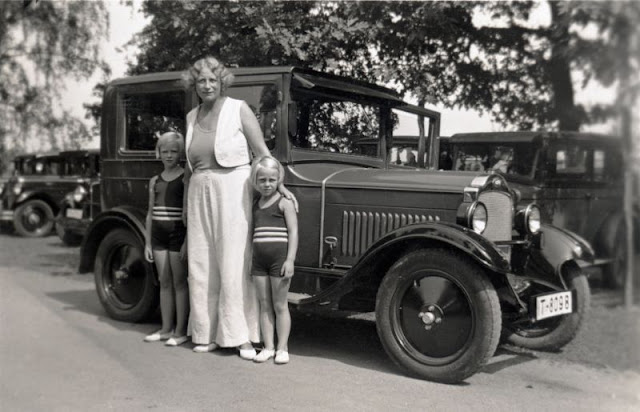
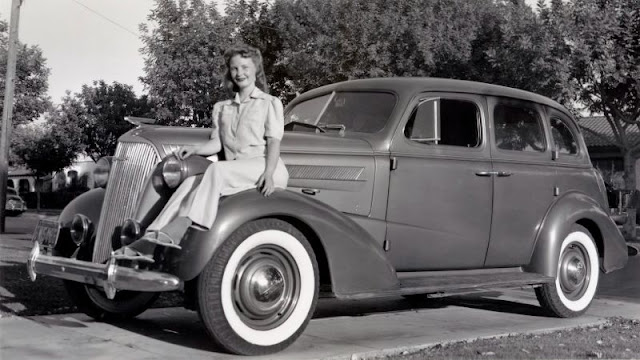
Here below is a set of cool pics that shows women wearing pants in the 1930s.
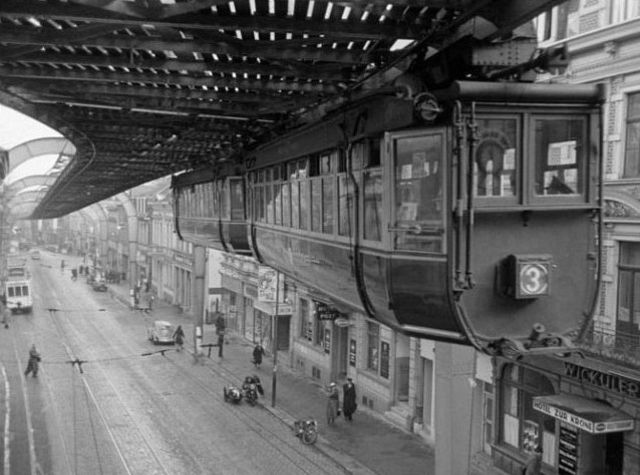
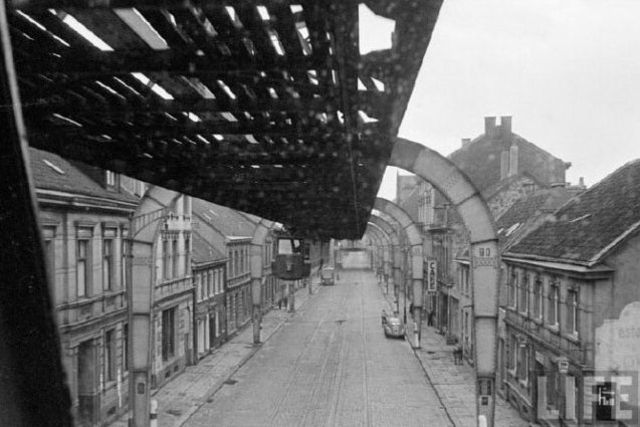
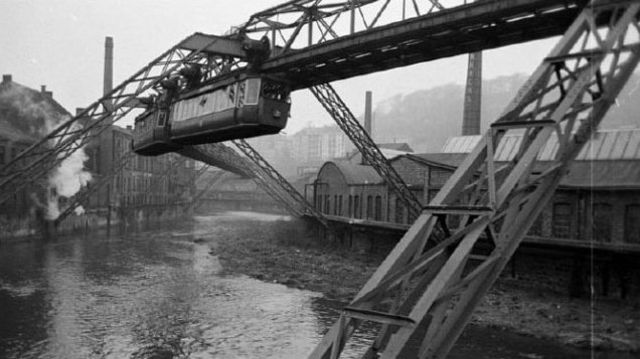
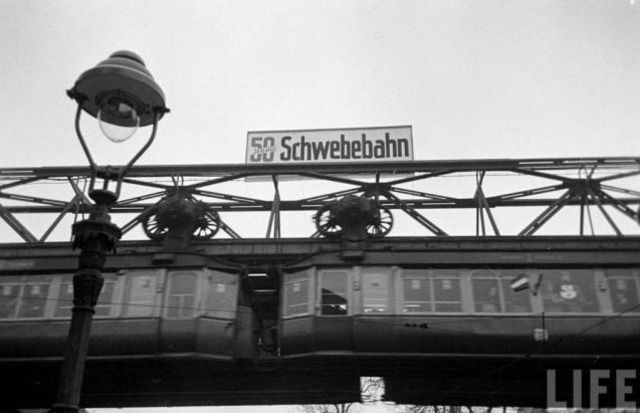
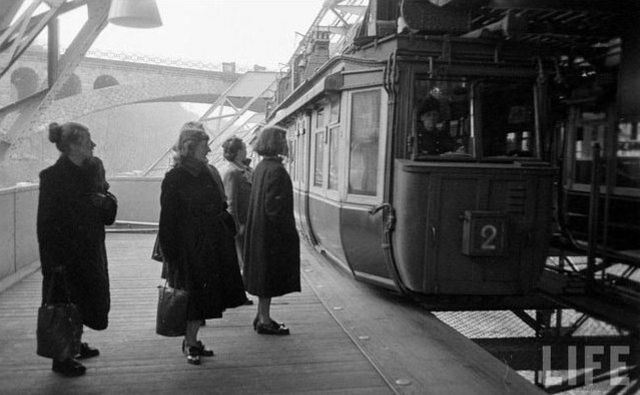
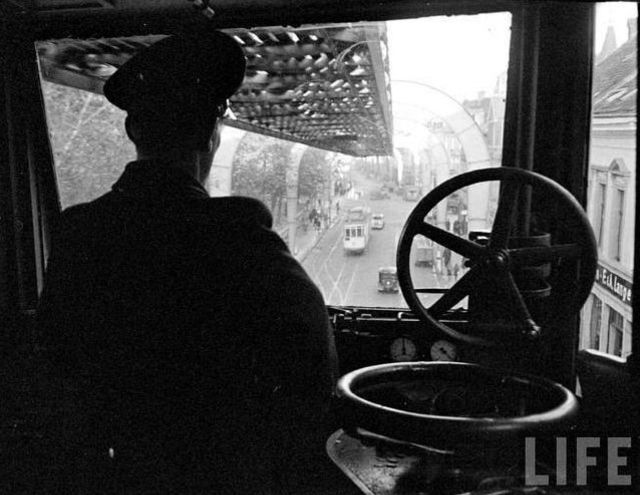
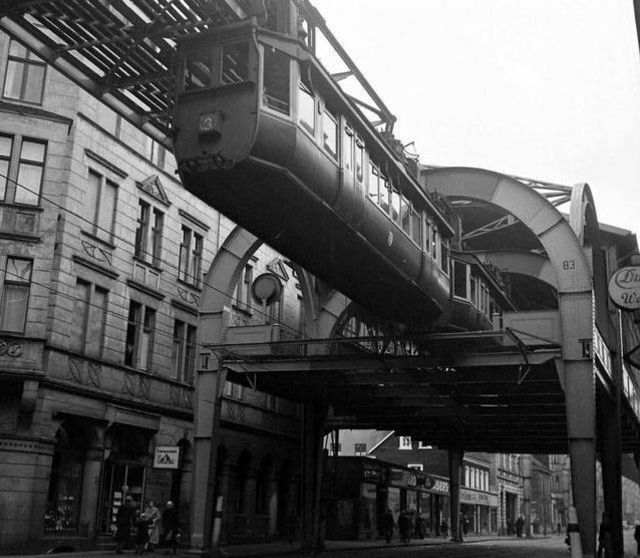
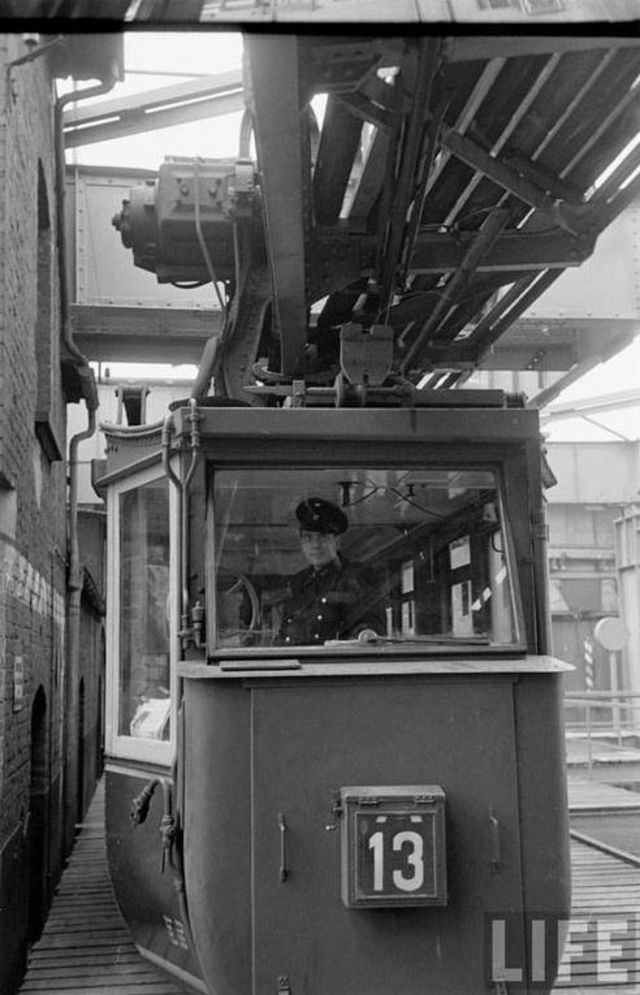
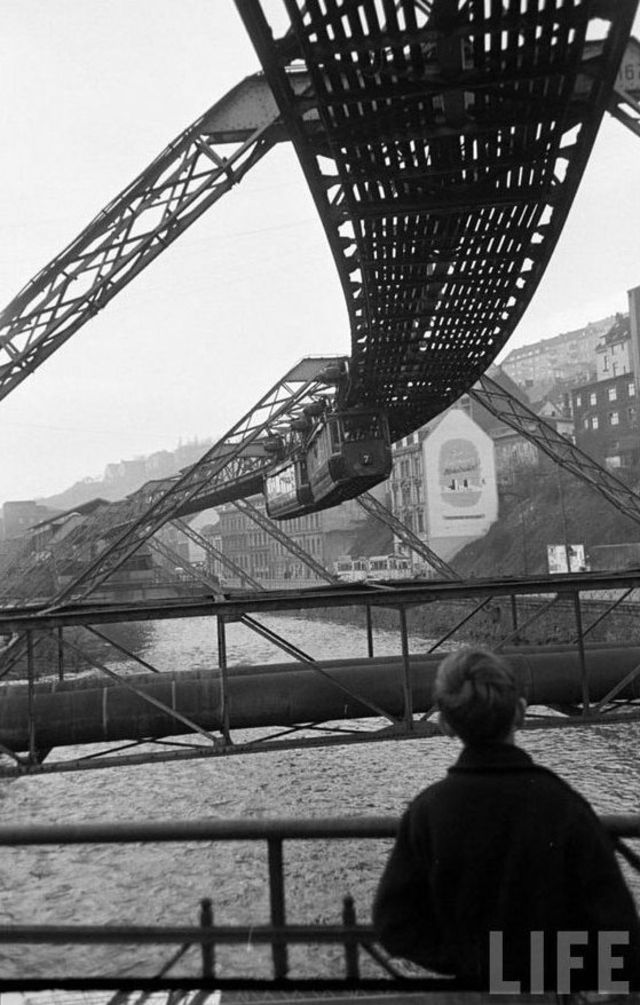
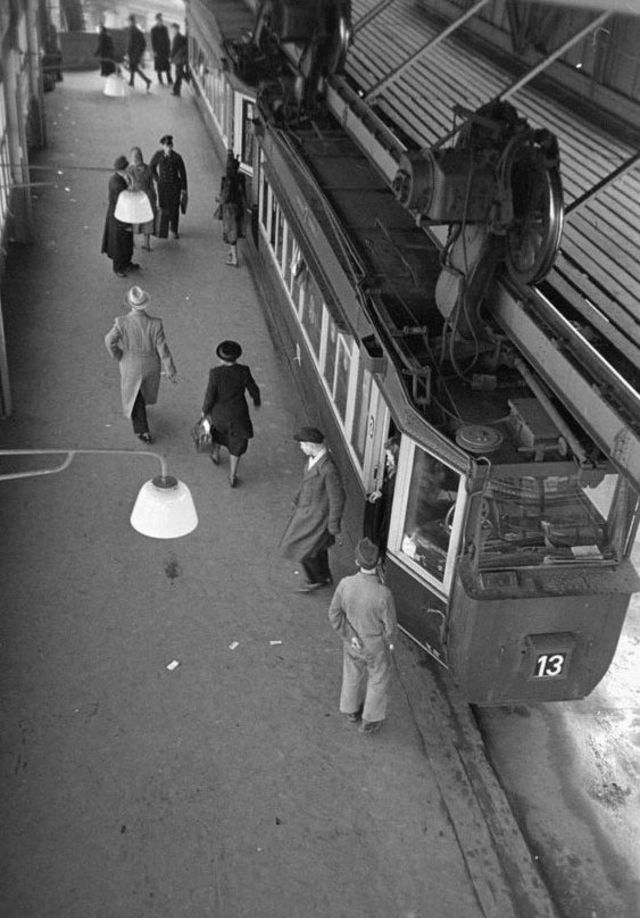
The Wuppertaler Schwebebahn (Wuppertal Suspension Railway) is a suspension railway in Wuppertal, Germany. Designed by Eugen Langen to sell to the city of Berlin, the installation with elevated stations was built in Barmen, Elberfeld and Vohwinkel between 1897 and 1903; the first track opened in 1901. It is the oldest electric elevated railway with hanging cars in the world and is a unique system. The Schwebebahn is still in use today as a normal means of local public transport, moving 25 million passengers annually (2008).
Construction on the actual Schwebebahn began in 1898, overseen by the government’s master builder, Wilhelm Feldmann. On 24 October 1900, Emperor Wilhelm II participated in a monorail trial run.
In 1901 the railway came into operation. It opened in sections: the line from Kluse to Zoo/Stadion opened on March 1, the line to the western terminus at Vohwinkel opened on May 24, while the line to the eastern terminus at Oberbarmen did not open until June 27, 1903. Around 19,200 tonnes (18,900 long tons; 21,200 short tons) of steel were used to produce the supporting frame and the stations. The construction cost 16 million gold marks. The railway was closed owing to severe damage during World War II, but reopened as early as 1946.
Due to an accident in November 2018, the Schwebebahn was closed down for nearly nine months. It re-opened on August 1, 2019.
During the years of 1898–1945, New York City consolidated. New York City became the capital of national communications, trade, and finance, and of popular culture and high culture. More than one-fourth of the 300 largest corporations in 1920 were headquartered there.
New transportation links, especially the New York City Subway, opened in 1904, bound together the new metropolis. Increased immigration of Catholic and Jewish workers from Southern and Eastern Europe expanded the labor force until the World War ended immigration in 1914. Labor shortages during the war attracted African Americans from the Southeast, who headed north as part of the Great Migration. They sponsored the Harlem Renaissance of literature and culture celebrating the black experience.
The Roaring Twenties were years of glamour and wealth, highlighted by a construction boom, with skyscrapers built higher and higher in the famous skyline. New York’s financial sector came to dominate the national and the world economies.
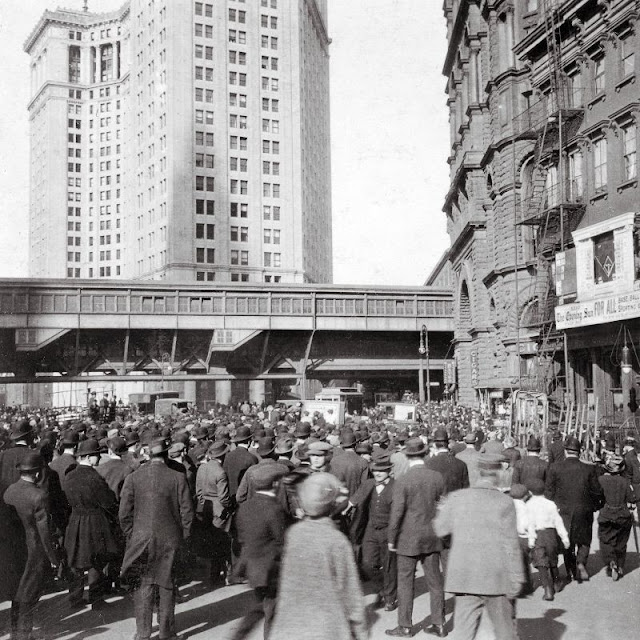
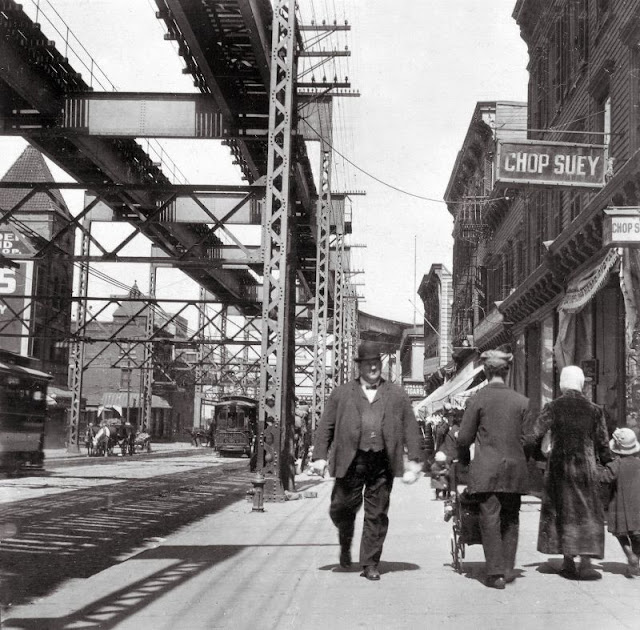
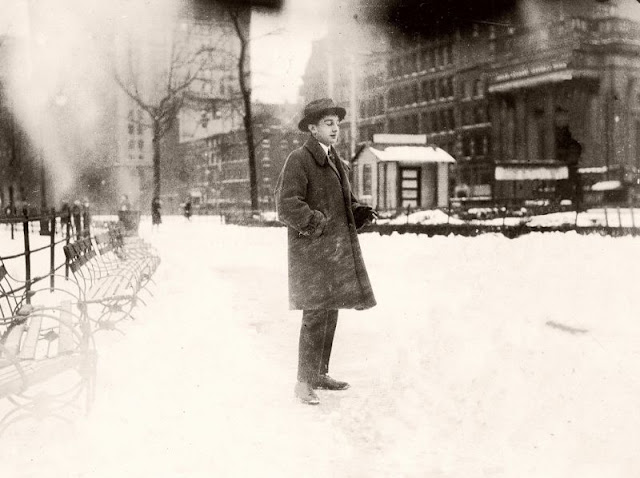
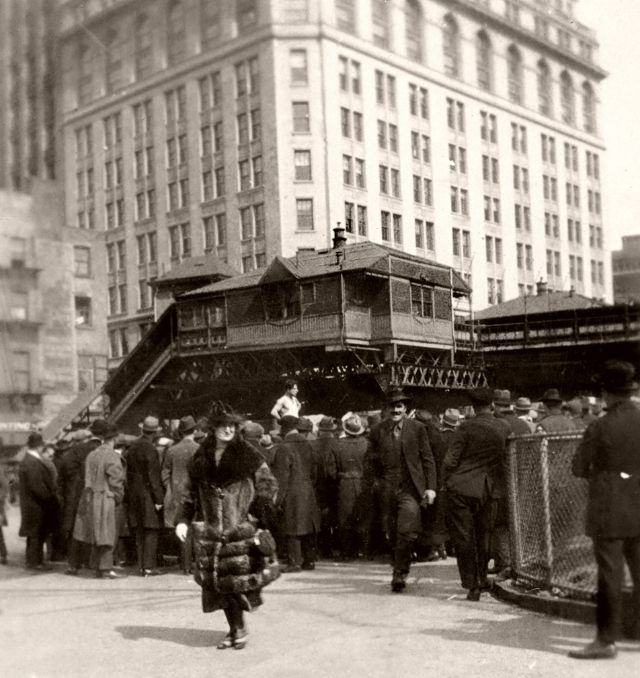
These fascinating photos capture street scenes of New York in the early 20th century.
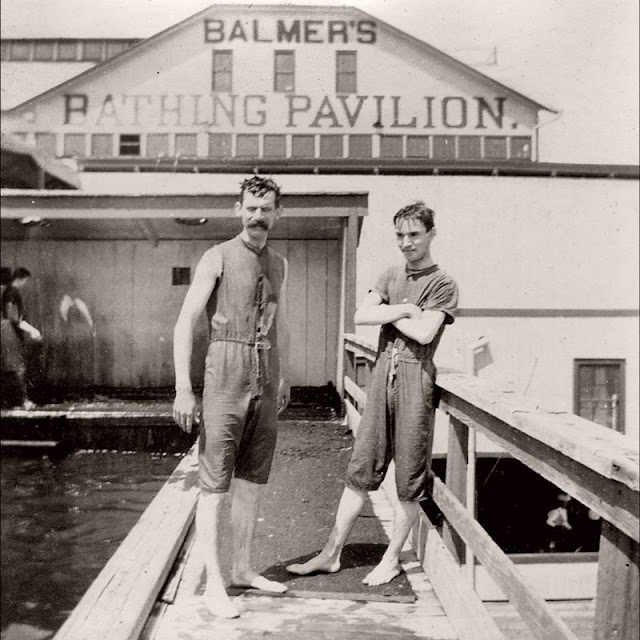
Balmer’s Bathing Pavilion on Coney Island, New York, circa 1900
Balmer’s Bathing Pavilion on Coney Island, New York, circa 1900
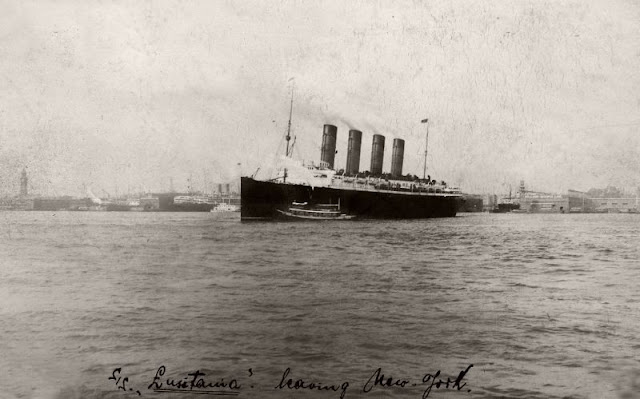
The Lusitania leaving New York, circa 1910
Chinatown, New York, 1914
Drinking trough (Probably in Central Park), New York, 1914
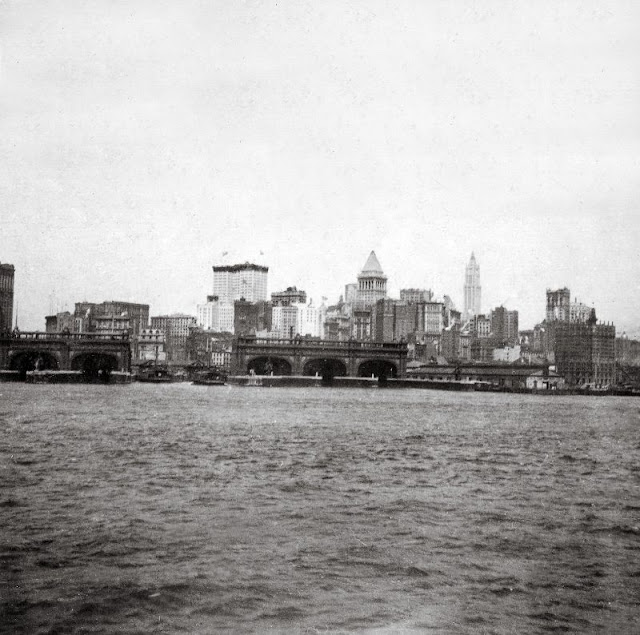
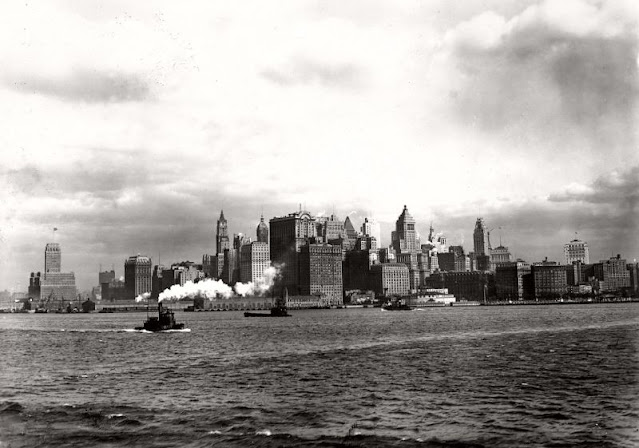
New York skyline, 1914
New York, 1914
Pell Street in Chinatown. The Chinese Delmonico is visible back right, New York, 1914
Skyscrapers, New York, 1914
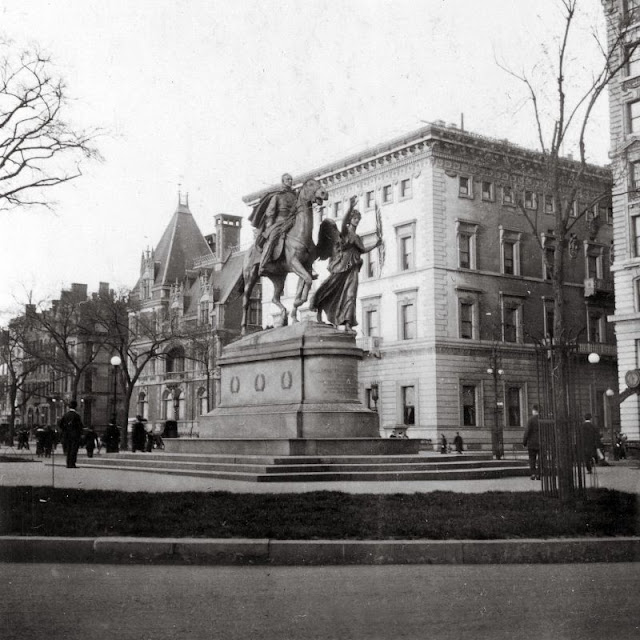
The General Sherman Monument in New York, 1914
The Hamburg American Building, New York, 1914
The High Line, New York, 1914
The High Line, New York, 1914
Lonely in New York, January 6, 1921
The Battery Place elevated station near One Broadway (Washington Building), circa 1921
Near Bowling Green and old Standard Oil Building, New York, 1924
New York skyline, 1927
Ladies in furs, New York, circa 1920s
Subscribe to Yesterday Today’s Blog and receive daily updates:
Memphis is a city along the Mississippi River in southwestern Shelby County, Tennessee, United States. It is Tennessee’s second-most populous city behind Nashville; fifth-most populous city in the Southeast, the nation’s 28th-largest; and the largest city proper of those situated along the Mississippi River. The city is the anchor of West Tennessee and the greater Mid-South region, which includes portions of neighboring Arkansas, Mississippi, and the Missouri Bootheel.
Memphis is the seat of Shelby County, Tennessee’s most populous county. One of the more historic and culturally significant cities of the southern United States, Memphis has a wide variety of landscapes and distinct neighborhoods.
Subscribe to continue reading
Become a paid subscriber to get access to the rest of this post and other exclusive content.
Mabel Love (16 October 1874 – 15 May 1953), was a British dancer and stage actress. She was considered to be one of the great stage beauties of her age, and her career spanned the late Victorian era and the Edwardian period. In 1894, Winston Churchill wrote to her asking for a signed photograph. Among her West End stage roles were Francoise in La Cigale and Pepita in Little Christopher Columbus. Later, she appeared in Man and Superman on Broadway.
Mabel Love was born Mabel Watson in Folkestone, England, the granddaughter of entertainer and ventriloquist William Edward Love, and the second of actress Kate Watson’s three daughters (another was Blanche Watson). Love made her stage debut at the age of twelve, at the Prince of Wales Theatre, playing The Rose, in the first stage adaptation of Lewis Carroll’s Alice in Wonderland.
In 1887, she played one of the triplet children in Masks and Faces at London’s Opera Comique, and the same year, she appeared in the Christmas pantomime at Covent Garden. Still only 14, she enjoyed widespread popularity in George Edwardes’s Burlesque Company at the Gaiety Theatre playing the dancing role of Totchen, the vivandière (camp follower) in Faust Up To Date (1888–89).
In March 1889, under the headline “Disappearance of a Burlesque Actress”, The Star newspaper reported that Love had disappeared. It was later reported that she had gone to the Thames Embankment, considering suicide. This publicity served merely to increase the public’s interest in her. When photographer Frank Foulsham had the idea of selling the images of actresses on postcards, Love proved to be a popular subject leading one writer to christen her “the pretty girl of the postcard”.
Over the following 30 years, she starred in a series of burlesques, pantomimes and musical comedies. Among her successes were Francoise in La Cigale and Pepita in Ivan Caryll’s Little Christopher Columbus. Later, she appeared at the Folies Bergère in Paris and as Violet Robinson in Man and Superman on Broadway (1912). Love retired from the stage in 1918, and, in 1926, she opened a school of dancing in London. Her only return to the stage was in 1938, as Mary Goss in Profit and Loss at the Embassy Theatre.
Love died at Weybridge, Surrey, England at the age of 78, leaving an illegitimate daughter, Mary Loraine (1913–1973), £2,600 in government bonds. Mary, an actress, worked as a British Special Operations Executive during the Second World War and married first Richard Emrys Thomas in 1935, the general manager of the Egyptian State Railways (they had a son, Richard (1936–2001)), and later BOAC pilot Anthony Loraine in 1948; she died in poverty in a fire at her flat, not knowing that her mother had left her the valuable bonds.
These beautiful photos captured portraits of Mabel Love in November 1910.
Subscribe to continue reading
Become a paid subscriber to get access to the rest of this post and other exclusive content.
Life in Nazi Germany, 1933-1939 Alongside control and suppression, the Nazis tried to influence every part of German life.
The economy Hitler claimed that he had dramatically reduced unemployment figures under the Nazis. Certainly, rearmament created jobs. But National Service meant young men were not counted as being unemployed any longer. Women and Jews were left out of the figures altogether. Therefore, we can’t be sure of how many people truly found jobs under the Nazis. However, living standards for working class Germans did not really improve and workers were expected to take part in Nazi Party schemes like Strength Through Joy, which gave them cheap holidays, in return for giving up their trade union rights.
The Nazis aspired to achieve autarky, or economic self-sufficiency, but in general the economy was geared towards preparing for a future war. As such, workers were expected to work long hours for modest pay and to toe the line.
Social policy The Nazis’ social policies affected two groups in society the most – women and young people:
Women were expected to embrace a life based around the ‘3 Ks’ of Kinder, Küche, Kirche (Children, Kitchen and Church). It was their duty to produce and raise children, in order to secure the future of the Reich. They were encouraged to give up work and received loans and awards for having lots of children. Young people were a particular target for the Nazis’ propaganda, as they represented the future. The school curriculum was altered to promote Nazi ideology and all young people were expected to join a Nazi youth organisation such as the Hitler Youth or the League of German Maidens. In addition, the Nazis sought to control or limit the influence of Christianity. They set up an official state church, called the Reich Church, which adapted protestant teachings to Nazi ideology. Also, despite signing a Concordat with the Pope in 1933 in which Hitler promised to leave the Catholic Church alone if it stayed out of politics, the Nazis attempted to interfere with it and placed restrictions on worship.
Persecution Nazi ideology centred on the belief that the Aryan of northern Europe was superior to all others and that some races were sub-human. Nazis also believed any weaknesses in the Aryan race, such as disabled people, should be weeded out to maintain racial purity. Therefore, many groups who the Nazis did not like were targeted and persecuted. This was done in many different ways; ‘euthanasia’, imprisonment in concentration camps and the loss of civil rights.
The group targeted most by this persecution were the Jews. Under the Nazis Jews in Germany had their rights gradually taken away, including their German citizenship. During World War Two, this deteriorated further and the Holocaust saw 6 million Jews from across Nazi-occupied Europe murdered.
Subscribe to continue reading
Become a paid subscriber to get access to the rest of this post and other exclusive content.
Vertigo is a 1958 American film noir psychological thriller film directed and produced by Alfred Hitchcock. The story was based on the 1954 novel D’entre les morts (From Among the Dead) by Boileau-Narcejac. The screenplay was written by Alec Coppel and Samuel A. Taylor.
The film stared James Stewart as former police detective John “Scottie” Ferguson. Scottie retired, rather than face desk-duty, because an incident in the line of duty, which caused him to develop acrophobia (an extreme fear of heights) and vertigo (a false sense of rotational movement). Scottie was hired by an acquaintance, Gavin Elster, as a private investigator to follow Gavin’s wife Madeleine (Kim Novak), who was behaving strangely.
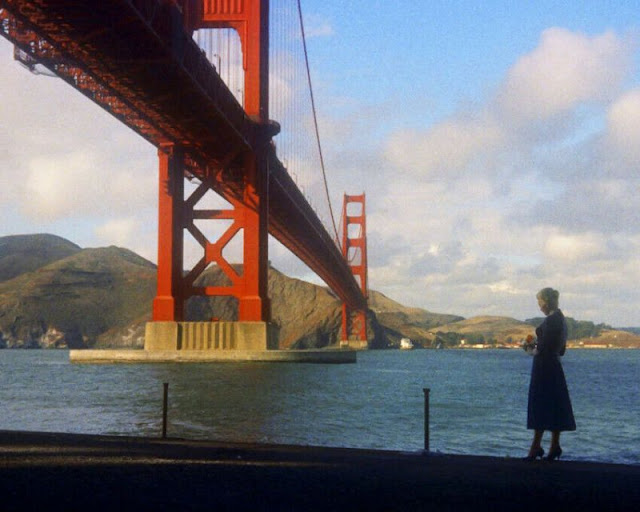
The film was shot on location in the city of San Francisco, California, as well as in Mission San Juan Bautista, Big Basin Redwoods State Park, Cypress Point on 17-Mile Drive, and Paramount Studios in Hollywood. It is the first film to use the dolly zoom, an in-camera effect that distorts perspective to create disorientation, to convey Scottie’s acrophobia. As a result of its use in this film, the effect is often referred to as “the Vertigo effect”.
Vertigo received mixed reviews upon initial release, but is now often cited as a classic Hitchcock film and one of the defining works of his career. Attracting significant scholarly criticism, it replaced Citizen Kane (1941) as the greatest film ever made in the 2012 British Film Institute’s Sight & Sound critics’ poll. The film is often considered one of the greatest films ever made. It has appeared repeatedly in polls of the best films by the American Film Institute, including a 2007 ranking as the ninth-greatest American movie of all time. In 1996, the film underwent a major restoration to create a new 70 mm print and DTS soundtrack.
In 1989, Vertigo was one of the first 25 films selected by the Library of Congress for preservation in the United States National Film Registry for being “culturally, historically, or aesthetically significant”.
Take a look at these vintage photos to see gorgeous portraits of Kim Novak during the filming of Vertigo in 1958.
Subscribe to continue reading
Become a paid subscriber to get access to the rest of this post and other exclusive content.
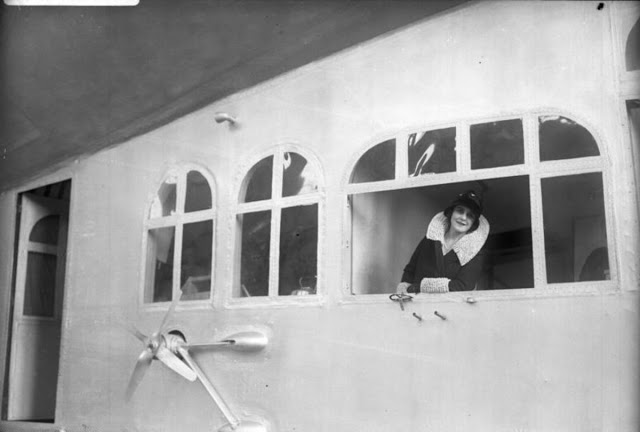
Lady Grace Drummond-Hay, an English journalist, was the only woman among sixty passengers and crew on the Graf Zeppelin when it flew around the world in 1929. Although she was not an aviator herself at first, she contributed to the glamour of aviation and general knowledge of it, by writing articles about her aerial adventures for US newspapers in the late 1920s and early 1930s.
Grace Drummond Hay in engine car of LZ-127.
Born Grace Marguerite Lethbridge on September 12, 1895 in Liverpool, UK, she was the widow of a British diplomat, Sir Robert Hay Drummond-Hay.
As a journalist for the Hearst press organization, Drummond-Hay made her first zeppelin flight in October, 1928, when she was chosen to accompany five other reporters, including her companion and Hearst colleague Karl von Wiegand, on the first transatlantic flight of the Graf Zeppelin from Germany to America. As the only woman on the flight, Drummond-Hay received a great deal of attention in the world’s press.
Lady Drummond-Hay on board the Graf Zeppelin.
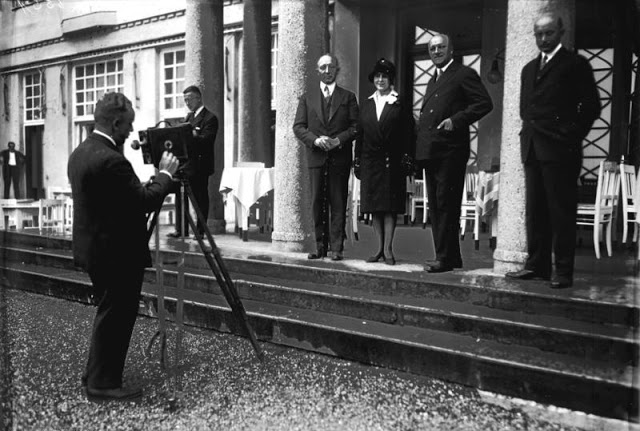
Journalists being photographed before a launch of the Graf Zeppelin, left to right: Karl von Wiegand, Lady Drummond-Hay, Rolf Brand, and Robert Hartmann.
In March of 1929, Lady Drummond Hay and von Wiegand were once again aboard Graf Zeppelin, for the ship’s “Orient Flight” to Palestine. Later in 1929 the Hearst organization co-sponsored Graf Zeppelin’s historic Round-the-World flight and their reporter Lady Drummond-Hay was once again a passenger. She was the only woman among the 60 male passengers and crew, which again included her companion von Wiegand. Drummond-Hay’s presence on the flight, and her reporting as the ship circled the globe, garnered tremendous attention in the press.
Lady Drummond Hay’s experience on the Graf Zeppelin’s Round-the-World flight, and her romance with fellow journalist Karl von Wiegand, is the subject of the film Farewell by Dutch filmmaker Ditteke Mensink.
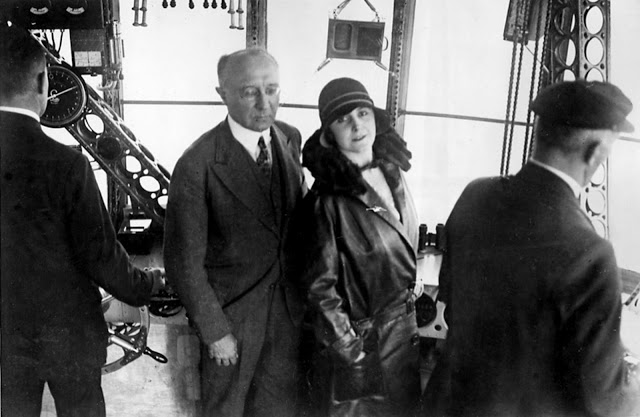
Lady Grace Drummond-Hay and Karl von Wiegand in control car of LZ-127 Graf Zeppelin.
Lady Grace Drummond-Hay and Karl von Wiegand aboard Dornier DO-X flying boat.
Lady Drummond-Hay was also onboard the Hindenburg’s maiden flight from Germany to the United States in May, 1936, along with aviation enthusiast Clara Adams. During the flight, Lady Drummond-Hay wrote and posted a letter to her friend Adams, looking forward to meeting again “as companions in adventure when the next Zeppelin is completed.” The letter is dated May 8, 1936; the age of the passenger zeppelin ended just a year later, with the Hindenburg disaster of May 6, 1937.
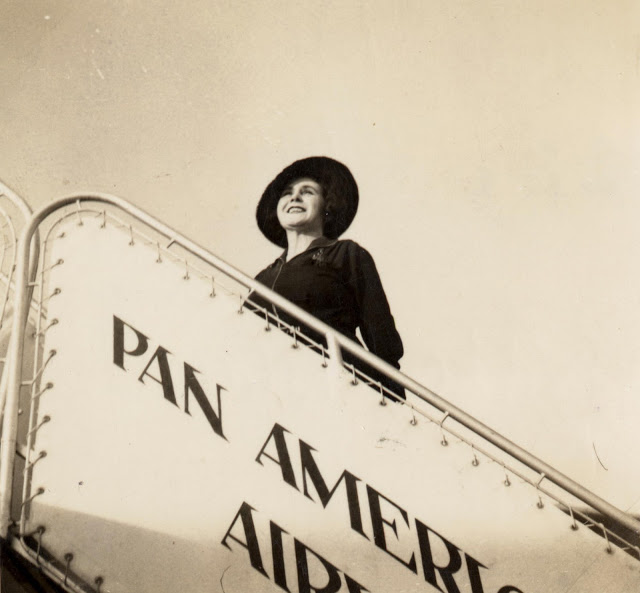
Pan American Airways, Lady Drummond-Hay, Wake Island, ca. 1936.
Pan American Airways, Lady Drummond-Hay, Wake Island, ca. 1936.
During World War II, Lady Drummond-Hay and von Wiegand were interned in a Japanese camp in the Philippines. When they were set free in 1943, she was ill and Karl suffered poor eyesight after a bomb blast. They returned to the United States on the Swedish rescue ship the SS Gripsholm in December 1943.
Lady Drummond-Hay died of coronary thrombosis in the Lexington Hotel on February 12, 1946. At her funeral service, many people paid their last respects, including William Randolph Hearst and Marion Davies. After she was cremated, her ashes were brought to the United Kingdom by von Wiegand.
Though well known in the late 1920s and early 1930s, Lady Hay Drummond-Hay has been largely forgotten. Her name is mentioned in a number of books on the history of zeppelin flights, but no major biography or other significant document has been written about her life.
Subscribe to Yesterday Today and receive daily updates on our most current posts:
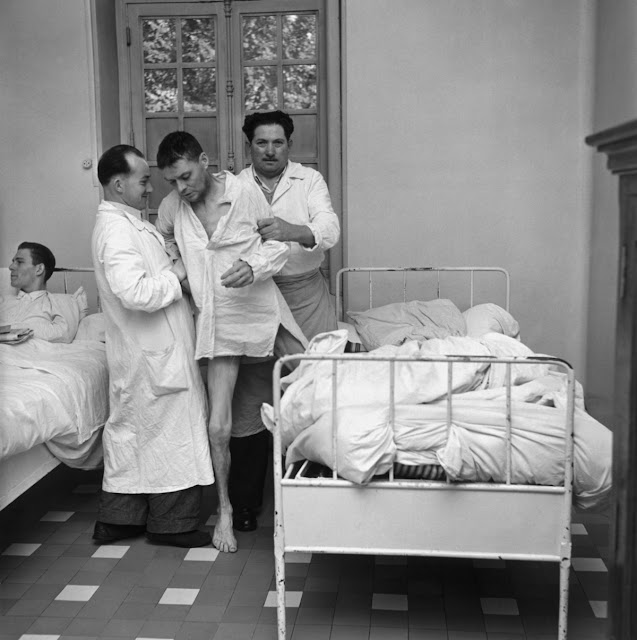
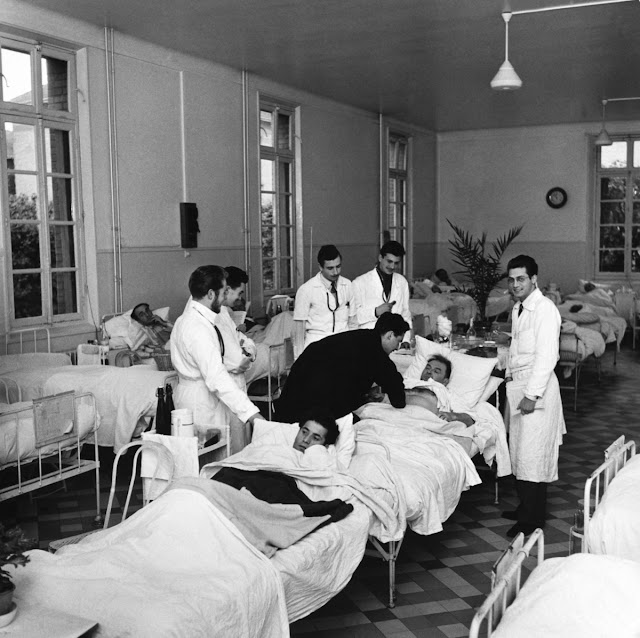
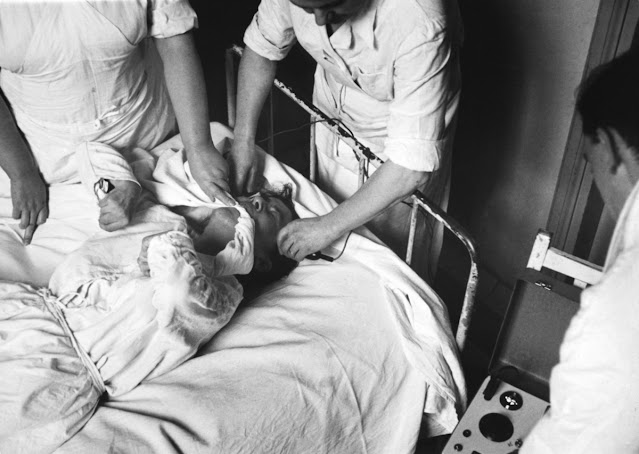
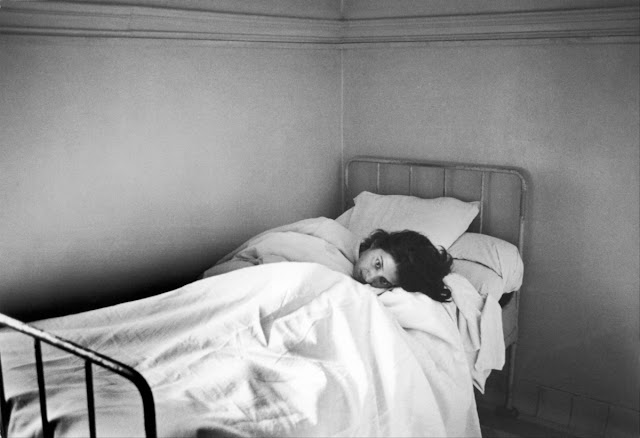
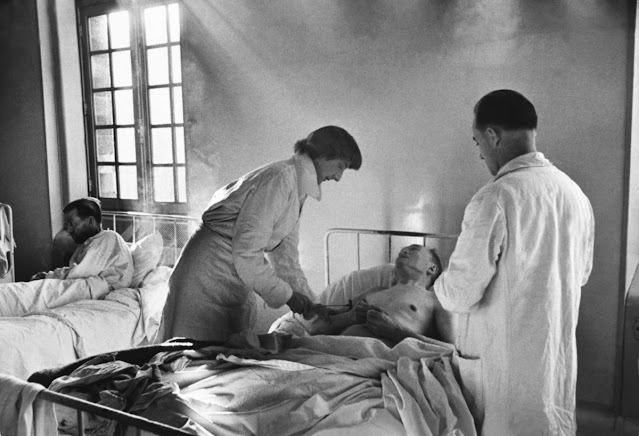
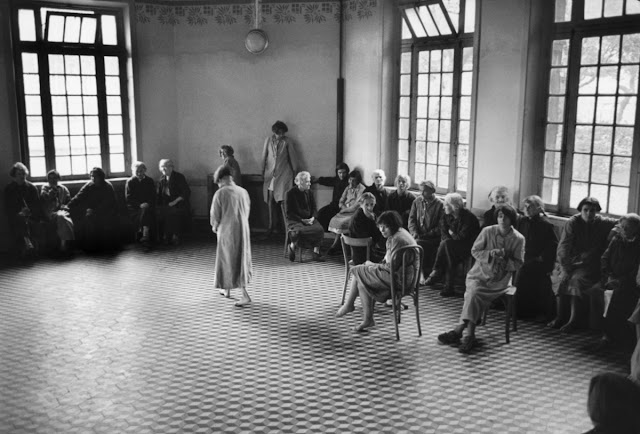
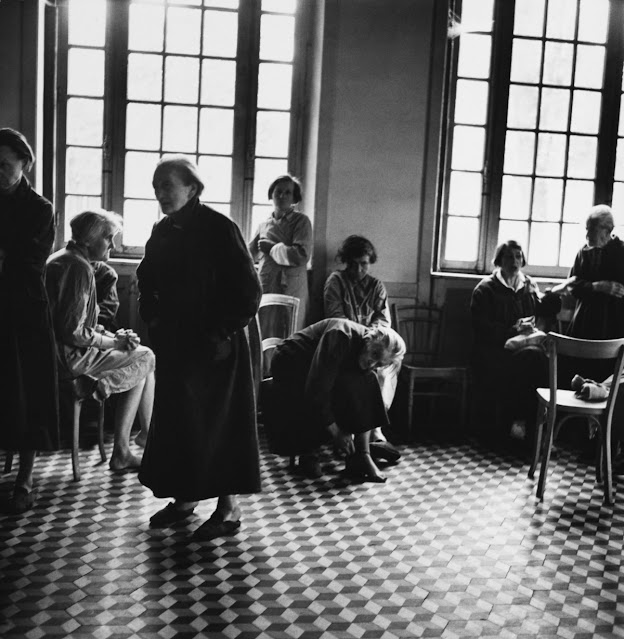
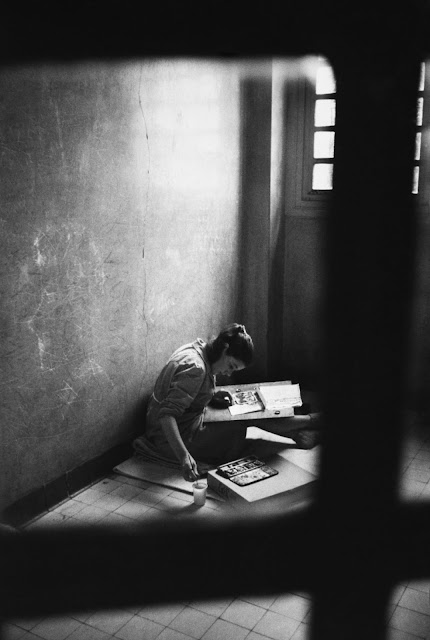
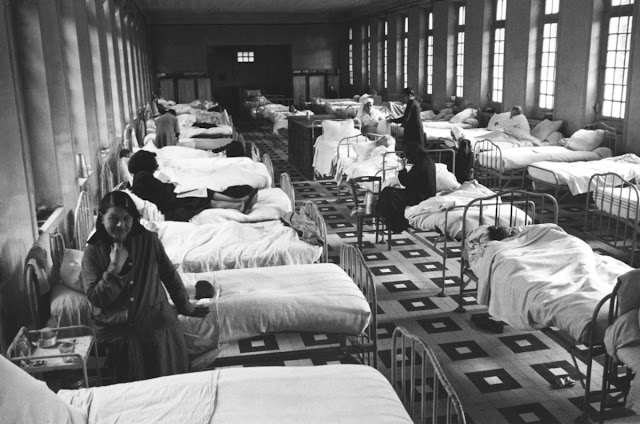
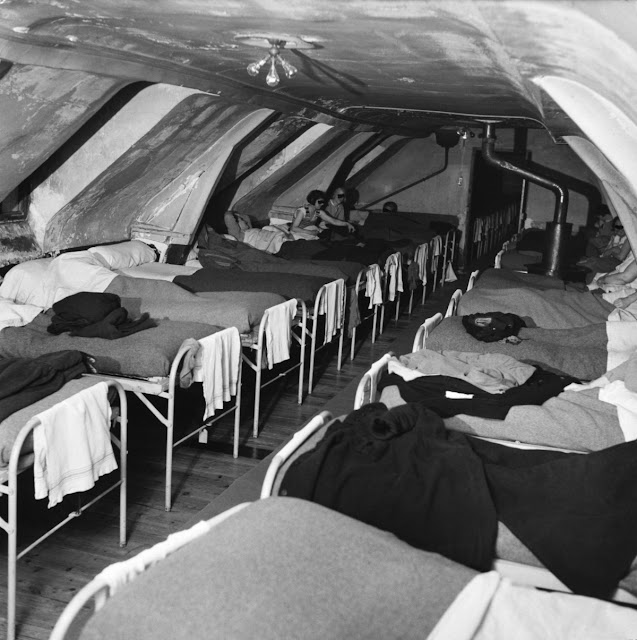
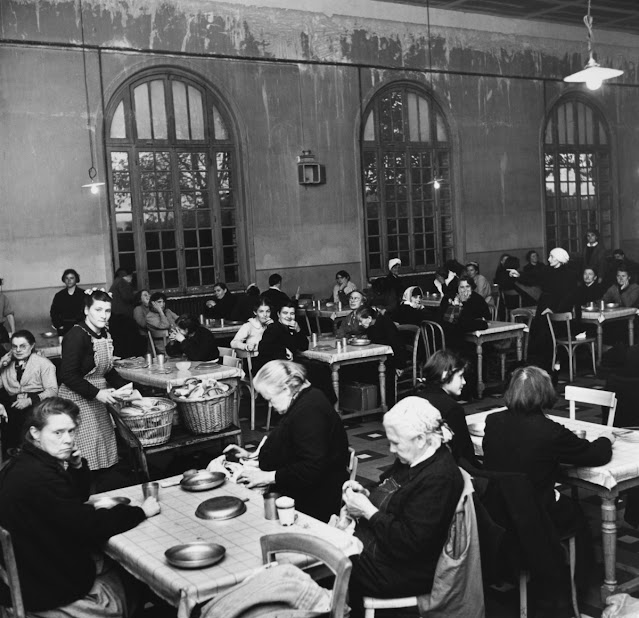
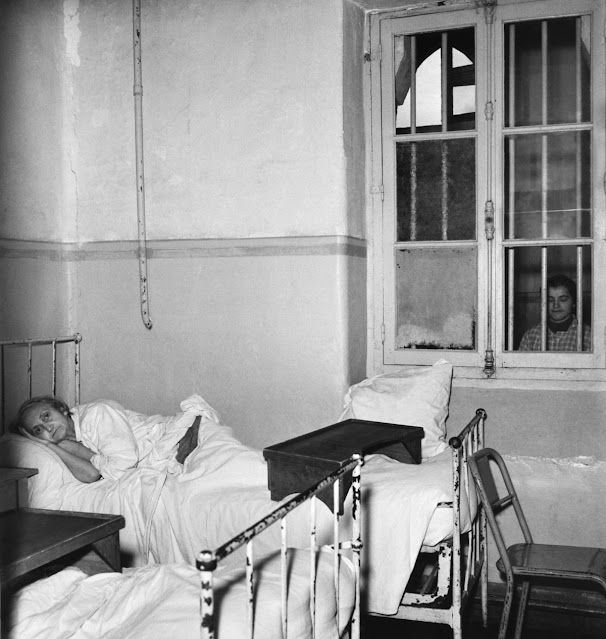
Jean-Philippe Charbonnier (August 28, 1921 – May 28, 2004) was a French photographer whose works typify the humanist impulse in that medium in his homeland of the period after World War II.
In 1954, Charbonnier documented French psychiatric hospitals, and some of the photographs were published in Réalités in January 1955, in which he employed an objective point of view exposed conditions in a mental hospital that are a valuable document today in gauging the progress of psychiatric treatment (a number of the most powerful images were not published due to the sensitivities of the 1950s).
“I stayed 6 weeks in mental hospitals. The agitator who breaks everything and lives naked in a cell in the soiled straw; the alcoholic on drug treatment, whose vomiting pierces the night and flows materially under his door; women in camisoles, prostrate, desexed and mustachioed who throw themselves to the doctors’ necks. What patience! Bottomless looks, words without follow-up…
“At the White House Psychiatric Hospital, I had seen, as on skid row, a foolish cohort of doddering women, twelve to seventy years old, who came to the bath: smelling terribly. The nurses undressed, bathed, rubbed, rinsed, gave them clean clothes out of the autoclave. After this salutary ceremony, the unfortunate women came back before me, dolled up, all fresh, smiling, heartbreaking: ‘Hello sir, Hello sir, Hello sir, etc …’ But the same smell persisted. It was in them. As if it was not enough for them to be crazy…”