The Story of Baba Anujka, the World’s Oldest Serial Killer

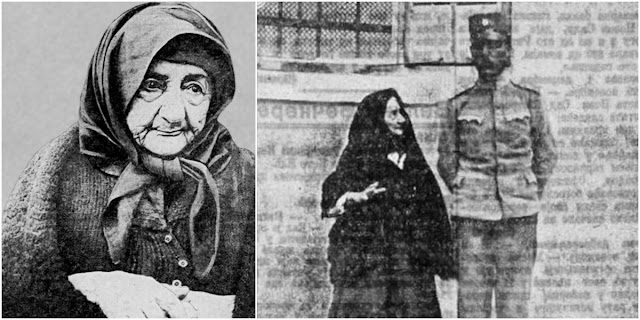
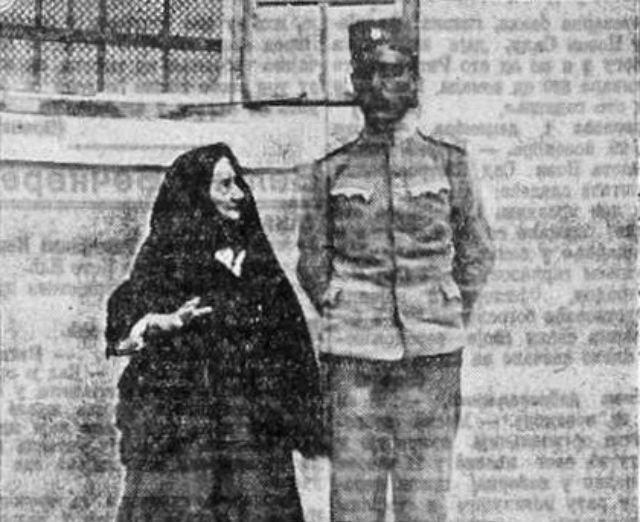
Known variously as the Banat Witch or the Witch of Vladimirovac, but best known as Baba Anujka, Ana di Pištonja was an accomplished amateur chemist and a convicted killer from the village of Vladimirovac, Yugoslavia (in Serbia). She poisoned at least 50 people and possibly as many as 150 in the late 19th and early 20th centuries. She was apprehended in 1928 at age 90 and sentenced to 15 years in prison in 1929 as an accomplice in two murders. She was released due to old age after spending eight years in prison.

Not a lot is really known about Anujka’s youth as records are incomplete or just missing as many are for that time period. According to some sources, she was born in 1838 in Romania to a rich cattleman and moved to Vladimirovac in the Banat Military Frontier province of the Austrian Empire around 1849. However, she claimed that she was born in 1836. She attended private school in Pančevo with children from rich families, and later lived in her father’s house.

Baba Anujka allegedly became a misanthropist at age 20 after being seduced by a young Austrian military officer; she contracted syphilis from him before he left her broken-hearted. After that, she sought seclusion and started to show interest in medicine and chemistry. She spoke five languages. She later married a landowner named Pistov or di Pištonja with whom she had 11 children, only one of whom survived to adulthood. Her husband was much older than she, and died after 20 years of marriage. She continued to pursue her chemistry studies after his death.

Anujka made a laboratory in one wing of her house after her husband died, and she earned a reputation as a healer and herbalist in the late 19th century. She was popular with wives of farmers who sought her help for health problems, and she earned a respectable income which enabled her to live comfortably. She produced medicines and mixtures which would make soldiers ill enough to escape military service, and she also sold poisonous mixtures which she branded “magic water” or “love potions”. She sold the so-called “magic water” mostly to women with abusive husbands; they would give the concoction to their husbands, who would usually die after about eight days.

Anujka’s “love potion” contained arsenic in small quantities and certain plant toxins that were difficult to detect. When told about a marriage problem, Anujka would ask her client, “How heavy is that problem?”, which meant, “What is the body mass of the victim?” She was then able to calculate the dose needed. Anujka’s victims were usually men, typically young and healthy. Her clients claimed at her trial that they did not know that her “magic water” contained poison, but that they believed that she had some kind of supernatural powers to kill people using magic. Anujka’s potions killed between 50 and 150 people.
In the 1920s, Anujka had her own “sales agent”, a woman named Ljubina Milankov, whose job was to find potential clients and take them to Anujka’s house. The price of Anujka’s “magic water” fluctuated between 2,000 and 10,000 Yugoslav dinars.
Her downfall came through one of her regular clients, a woman named Stana Momirov who had previously killed her husband with one of Anujka’s love potions, as well as frequently purchasing herbal remedies from her. When Momirov remarried and a rich relative of her new husband died in similar circumstances she was arrested and questioned, implicating Anujka in the two killings.

A second death occurred nearly a year later, after Anujka sold a woman a potion with which to murder her husband’s father. After the man’s 16-year-old granddaughter was duped into administering the poison, the man fell ill and died. Nearly 18 months later Anujka was arrested, along with six others involved in the two killings. Her co-defendants turned the blame on her, claiming that they never knew the potions were poison and that they believed the deaths had been caused by Anujka’s supernatural powers. In response, Anujka denied ever selling them potions of any kind, insisting the entire case was an attempt to shift the blame onto her.

Ultimately, Anujka was sentenced to 15 years in prison for her role in the two murders. She was released after serving eight years on compassionate grounds. She died in 1938 in her home in Vladimirovac at the age of 100.

Amazing Photos of Atlantic City in 1962

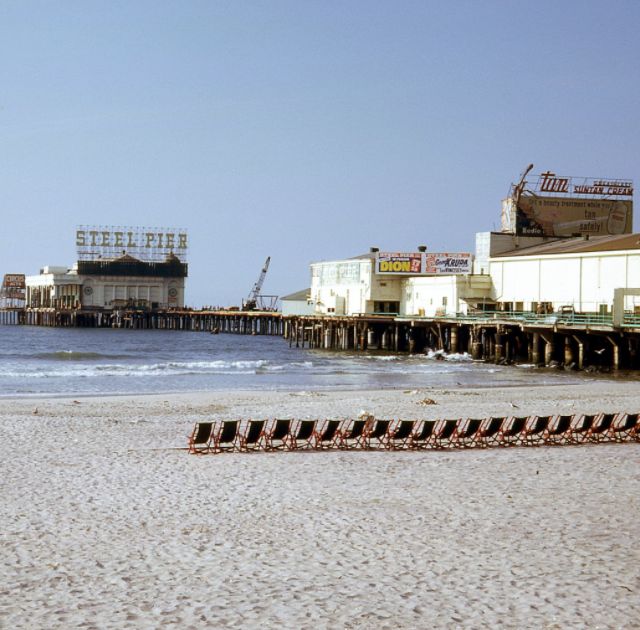
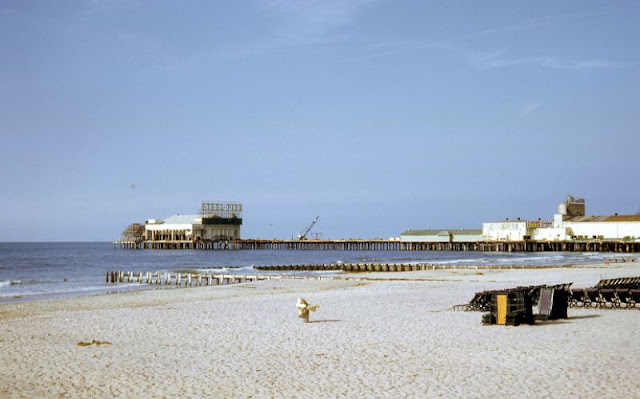
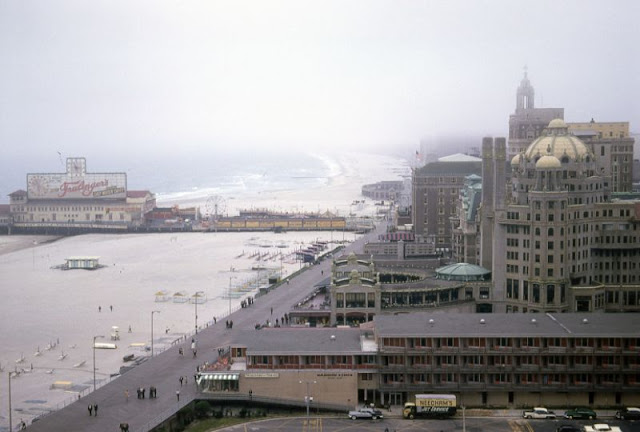
Like many older east coast cities after World War II, Atlantic City became plagued with poverty, crime, corruption, and general economic decline in the mid-to-late 20th century. The neighborhood known as the “Inlet” became particularly impoverished. By the late 1960s, many of the resort’s once great hotels were suffering from high vacancy rates. Most of them were either shut down, converted to cheap apartments, or converted to nursing home facilities by the end of the decade. Prior to and during the advent of legalized gambling, many of these hotels were demolished. Of the many pre-casino resorts that bordered the boardwalk, only the Claridge, the Dennis, the Ritz-Carlton, and the Haddon Hall survive to this day as parts of Bally’s Atlantic City, a condo complex, and Resorts Atlantic City.

The city hosted the 1964 Democratic National Convention which nominated Lyndon Johnson for president and Hubert Humphrey as vice president. The convention and the press coverage it generated, however, cast a harsh light on Atlantic City, which by then was in the midst of a long period of economic decline.

60 Vintage Photos of the Anglo-Egyptian Army in Sudan During the Battle of Omdurman on 2 September 1898

Subscribe to get access

Read more of this content when you subscribe today.

The Battle of Omdurman was fought during the Anglo-Egyptian conquest of Sudan between a British–Egyptian expeditionary force commanded by British Commander-in-Chief (sirdar) major general Horatio Herbert Kitchener and a Sudanese army of the Mahdist Islamic State, led by Abdullah al-Taashi, the successor to the self-proclaimed Mahdi, Muhammad Ahmad. The battle took place on 2 September 1898, at Kerreri, 11 kilometres (6.8 mi) north of Omdurman in the Sudan.

Following the establishment of the Mahdist Islamic State in Sudan, and the subsequent threat to the regional status quo and to British-occupied Egypt, the British government decided to send an expeditionary force with the task of overthrowing the Khalifa. The commander of the force, Sir Herbert Kitchener, was also seeking revenge for the death of General Gordon, killed when a Mahdist army had captured Khartoum thirteen years earlier. On the morning of 2 September, some 35,000–50,000 Sudanese tribesmen under Abdullah attacked the British lines in a disastrous series of charges; later that morning the 21st Lancers charged and defeated another force that appeared on the British right flank. Among those present was 23-year-old soldier and reporter Winston Churchill as well as a young Captain Douglas Haig.

The victory of the British–Egyptian force was a demonstration of the superiority of a highly disciplined army equipped with modern rifles, machine guns, and artillery over a force twice its size armed with older weapons, and marked the success of British efforts to re-conquer the Sudan. Following the Battle of Umm Diwaykarat a year later, the remaining Mahdist forces were defeated and the Anglo-Egyptian Sudan was established. (Wikipedia)

The photographs were taken by Francis Gregson, who compiled the album and was thought to have taken many of the photographs mounted in it, accompanied the Sudan Campaign as a war correspondent for the St James’s Gazette. He was not thought to have been commissioned to take these photographs, however, which were not made public at the time. He wrote to Sir Reginald Wingate, Director of Military Intelligence of the Egyptian Army, in November 1898 stating his intention to collate photographs he had taken during his time in Egypt and the Sudan in an album as a souvenir for Wingate. Gregson appears to have produced several copies of this album and the captions given to each photograph are his.

In the 21st century, these images, along with other historic records, including objects taken from Sudan to British museums, have been the subject of critical interpretation of the ethics of British military campaigns in the Sudan. With regard to the changing interpretation of the history of military campaigns, some contemporary historians have argued that war photographers have also contributed to the dehumanization of the victims.

Subscribe to continue reading

Become a paid subscriber to get access to the rest of this post and other exclusive content.

Amazing Vintage Photos of Amsterdam From the 1890s to the 1910s

George Hendrik Breitner (September 12, 1857 – June 5, 1923) was a Dutch painter and photographer. An important figure in Amsterdam Impressionism, he is noted especially for his paintings of street scenes and harbors in a realistic style: wooden foundation piles by the harbor, demolition work and construction sites in the old center, horse trams on the Dam, or canals in the rain. Breitner saw himself as “le peintre du peuple”, the people’s painter, and preferred to work with working-class models: laborers, servant girls and people from the lower class districts.

By 1890, cameras were affordable, and Breitner became very interested in this particular instrument that could help provide reference materials for his paintings. The discovery in 1996 of a large collection of photographic prints and negatives made it clear that Breitner was a talented photographer of street photography. He took various pictures of the same subject, from different perspectives or in different weather conditions. On other occasions, Breitner used photography for general reference, to capture an atmosphere, a light effect or the weather in the city at a particular moment.

Take a look at these 28 stunning vintage black and white photographs of the streets and people of Amsterdam from the 1890s to the 1910s taken by Breitner:

Amazing Vintage Photos of American Life in the 1930s

Subscribe to get access

Read more of this content when you subscribe today.

The United States of America (U.S.A. or USA), commonly known as the United States (U.S. or US) or America, is a country primarily located in North America. It consists of 50 states, a federal district, five major unincorporated territories, 326 Indian reservations, and nine minor outlying islands. It is the world’s third-largest country by both land and total area. The United States shares land borders with Canada to the north and with Mexico to the south as well as maritime borders with the Bahamas, Cuba, and Russia, among others. With more than 331 million people, it is the third most populous country in the world. The national capital is Washington, D.C., and the most populous city and financial center is New York City.

Paleo-Indians migrated from Siberia to the North American mainland at least 12,000 years ago, and European colonization began in the 16th century. The United States emerged from the Thirteen British Colonies established along the East Coast. Disputes with Great Britain over taxation and political representation led to the American Revolutionary War (1775–1783), which established the nation’s independence. In the late 18th century, the U.S. began expanding across North America, gradually obtaining new territories, sometimes through war, frequently displacing Native Americans, and admitting new states. This was strongly related to belief in manifest destiny, and by 1848, the United States spanned the continent from east to west. Slavery was legal in the southern United States until 1865, when the American Civil War led to its abolition. A century later, the civil rights movement led to legislation outlawing racial discrimination against African Americans. The Spanish–American War and World War I established the U.S. as a world power, and the aftermath of World War II left the United States and the Soviet Union as the world’s two superpowers. During the Cold War, both countries opposed each other in the Korean and Vietnam Wars but avoided direct military conflict. They also competed in the Space Race, which culminated in the 1969 American spaceflight that first landed humans on the Moon. The Soviet Union’s dissolution in 1991 ended the Cold War, leaving the United States as the world’s sole superpower.

The United States is a federal republic with three separate branches of government, including a bicameral legislature. It is a founding member of the United Nations, World Bank, International Monetary Fund, Organization of American States, NATO, and other international organizations. It is a permanent member of the United Nations Security Council. Considered a melting pot of cultures and ethnicities, its population has been profoundly shaped by centuries of immigration. The United States is a liberal democracy; it ranks high in international measures of economic freedom, quality of life, education, and human rights; and it has low levels of perceived corruption. It lacks universal health care, retains capital punishment, and has high levels of incarceration and inequality.

The United States is a highly developed country, and its economy accounts for approximately a quarter of global GDP and is the world’s largest by GDP at market exchange rates. By value, the United States is the world’s largest importer and second-largest exporter. Although its population is only about 4.2% of the world’s total, it holds over 30% of the total wealth in the world, the largest share held by any country. Making up more than a third of global military spending, it is the foremost military power in the world and a leading political, cultural, and scientific force.

The 1930s was defined by a global economic and political crisis that culminated in the Second World War. It saw the collapse of the international financial system, beginning with the Wall Street Crash of 1929, the largest stock market crash in American history. The subsequent economic downfall, called the Great Depression, had traumatic social effects worldwide, leading to widespread poverty and unemployment, especially in the economic superpower of the United States and in Germany, which was already struggling with the payment of reparations for the First World War. The Dust Bowl in the United States (which led to the nickname the “Dirty Thirties”) exacerbated the scarcity of wealth. U.S. President Franklin D. Roosevelt, elected in 1933, introduced a program of broad-scale social reforms and stimulus plans called the New Deal in response to the crisis.

In the wake of the Depression, the decade also saw the rapid retreat of liberal democracy as authoritarian regimes emerged in countries across Europe and South America, including Italy, Spain, and in particular Nazi Germany. With the rise of Adolf Hitler, Germany undertook a series of annexations and aggressions against neighboring territories in Central Europe, and imposed a series of laws which discriminated against Jews and other ethnic minorities. Weaker states such as Ethiopia, China, and Poland were invaded by expansionist world powers, with the last of these attacks leading to the outbreak of World War II on September 1, 1939, despite calls from the League of Nations for worldwide peace. World War II helped end the Great Depression when governments spent money for the war effort. The 1930s also saw many important developments in science and a proliferation of new technologies, especially in the fields of intercontinental aviation, radio, and film. (Wikipedia)

Subscribe to continue reading

Become a paid subscriber to get access to the rest of this post and other exclusive content.

40 Vintage Photos of Alexis Smith During the 1940s and 1950s

Born 1921 in Penticton, British Columbia, Canadian-American actress and singer Alexis Smith had her first credited role in Dive Bomber (1941), playing the female lead opposite Errol Flynn. It was a “decorative” part but the film was very successful. Warners decided to build her up as a star. She had a support role in The Smiling Ghost (1941) and appeared with her future husband Craig Stevens in Steel Against the Sky (1941), the first time she was top billed.

Smith appeared in several major Hollywood films in the 1940s and had a notable career on Broadway in the 1970s, winning a Tony Award in 1972 for the Stephen Sondheim-James Goldman musical Follies. Her last film role was in The Age of Innocence (1993).

Smith died of brain cancer in Los Angeles in 1993, the day after her 72nd birthday. Her final film, The Age of Innocence (1993), was released shortly after her death. Take a look at these vintage photos to see the beauty of young Alexis Smith in the 1940s and 1950s.

30 Amazing Retro Album Covers With Dogs on Them

Album covers were an important part of music retail sales back before downloads changed the dynamic, and this was especially true of oversized vinyl LP’s.

Plenty of artists have, and featured dogs on the covers of their albums. Here are 30 awesome vintage albums that feature dogs on their covers.

African American Children in the Civil War Through Amazing Photos

The Civil War touched the lives of children in both similar and vastly different ways. The Civil War molded children’s lives as adults and shaped their attitudes, opinions, and prejudices that would pass from generation to generation.

The children of the Civil War shared enthusiasm for the war, were burdened with greater responsibilities, and endured physical and emotional hardships. The end of the war for a Northern child meant victory, excitement, and success. The end of the war for a Southern child meant defeat, disappointment, and a transformed way of living.

For enslaved African American children, the end of the Civil War meant freedom and hope, which did not come without years of tremendous sacrifices, challenges, changes, and hardships.

Here below is a set of amazing photos from The Library of Congress that shows portraits of African American children during the Civil War from 1861 to 1865.

Nathan Jones, Camp Metcalf, Virginia, circa 1861
Two unidentified escaped slaves wearing ragged clothes, circa 1861
A Virginia slave child, 1863
Charley Taylor, formerly enslaved child from New Orleans, seated with book in front of painted backdrop showing seascape, 1863
Fannie Virginia Casseopia Lawrence, a redeemed slave child, 5 years of age. Redeemed in Virginia, by Catherine S. Lawrence, baptized in Brooklyn, at Plymouth Church, by Henry Ward Beecher, May 1863
Isaac and Rosa, slave children from New Orleans, 1863
Rebecca, a slave girl from New Orleans, 1863
Rebecca, Charley, and Rosa, slave children from New Orleans, 1863
Rebecca, the slave girl, circa 1863
White and black slaves from New Orleans, 1863
Charley, a slave boy from New Orleans, 1864
Our protection, 1864
Taylor, young drummer boy for 78th Colored Troops Infantry, in rags, circa 1864
Taylor, young drummer boy for 78th Colored Troops Infantry, in uniform with drum, circa 1864
Wilson, Charley, Rebecca & Rosa, slaves from New Orleans, circa 1864

Amazing Photos of 1970s Philadelphia Folk Festival

The Philadelphia Folk Festival is a folk music festival held annually at Old Pool Farm in Upper Salford, Pennsylvania, in the vicinity of Philadelphia. The four-day festival, which is produced and run almost entirely by volunteers and sponsored by the non-profit Philadelphia Folksong Society, is claimed to be the oldest continually-run outdoor music festival in North America.

The event hosts contemporary and traditional artists in genres under the umbrella of Folk, including World/Fusion, Celtic, Singer/Songwriter, Folk Rock, Country, Klezmer, and Dance.

Gene Shay and folklorist Kenneth S. Goldstein founded the festival, along with George Britton, Bob Seigel, David Baskin, Esther Halpern, and others. Shay has acted as Master of Ceremonies since its inception and Goldstein served as Program Director for the first 15 years.

Originally held on Wilson Farm in Paoli, Pennsylvania, each year the event hosts over 35,000 visitors and nearly 7,000 campers at the Old Pool Farm. The event presents over 75 hours of music with local, regional, and national talent on 8 stages.

These amazing photos from Nancy White that show people at the Philadelphia Folk Festival around 1973-74.

30 Vintage Photos Defined the 1940s Hairstyles For Women

Despite the war, women in the 1940s were still able to create jaw-dropping looks simply by styling their hair. They were encouraged to use their hair to ‘fix’ any flaws in their face.

If she had perfect, shiny hair with a good color, she should use it to frame her face. If she had a full face, she should use a 1940s hairstyle that piled hair on top of her head to distract from it. If a thin face was her problem, her hairstyle should be down and over her ears to make it look wider. All of these suggestions contributed to a variety to hairstyles in 1940s.

1940s hairstyles were largely inspired by actresses during an era of glamor that provided a sense of escapism from the war. While long locks were in at the beginning, the United States government encouraged actress Veronica Lake to cut her long locks to help influence women to cut their long locks that were hazardous while operating machinery.

Take a look at these vintage photos to see what women’s hairstyles looked like in the 1940s.

Yesterday Today

Bringing You the Wonder of Yesterday - Today

Skip to content ↓