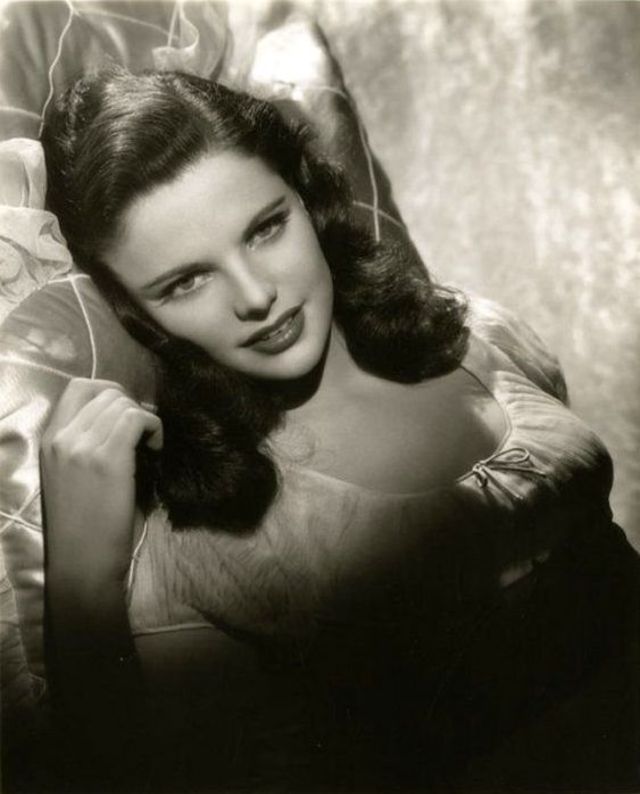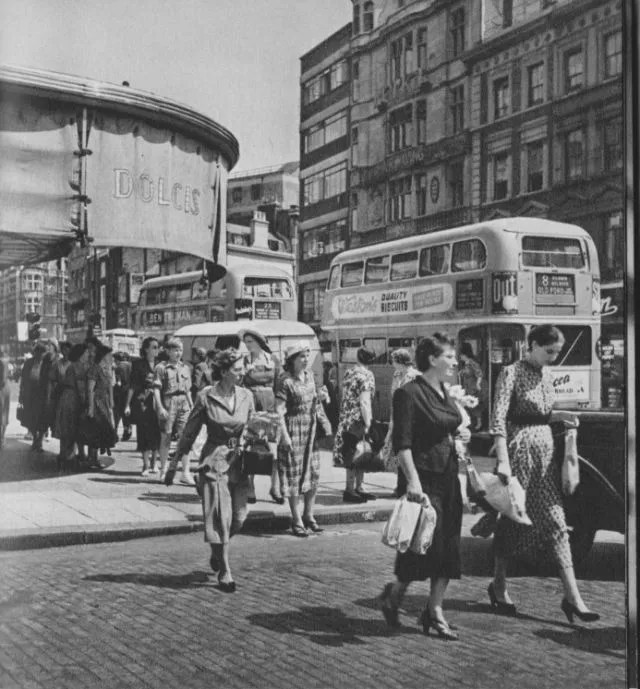
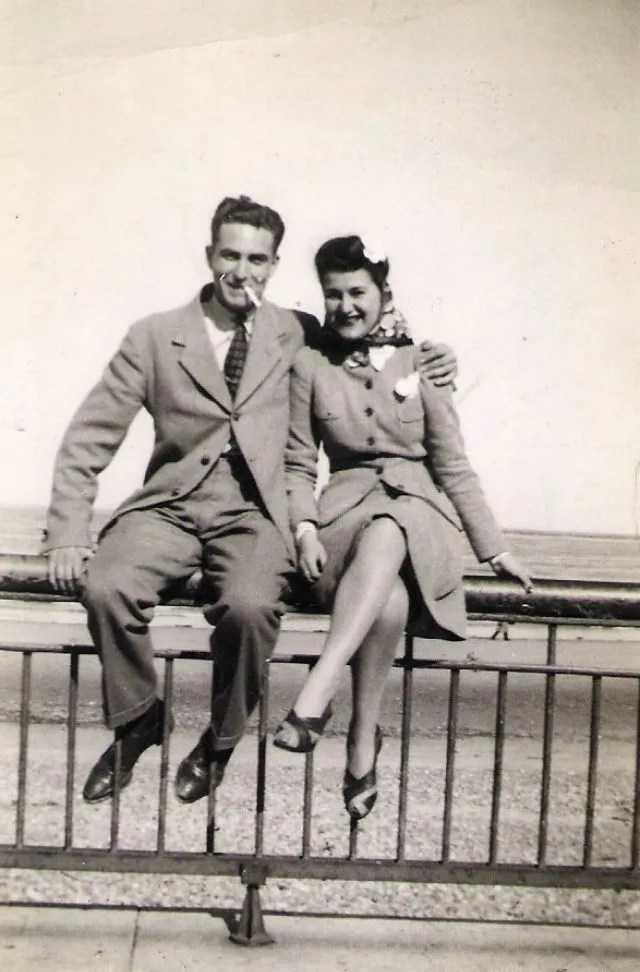
Vintage Photos Show What Young Couples Wore in the 1940s

Subscribe to get access

Read more of this content when you subscribe today.

World War II dominated the first half of the 1940s as well as fashions in the Western world. Materials such as silk, nylon, wool, leather, rubber, and zippers were needed in wartime production. Clothing was rationed in the United States and parts of Europe. 1940s fashion designers had to be efficient and innovative in how they made suits, dresses, and shoes.

The typical 1940s female dress silhouette was like a uniform: simple and fitted, with boxy shoulders, a slim-belted waistline, and a hemline below the knee. In cold weather, you might see women in long-sleeved dress suits of a similar shape.

Women in the 1940s typically wore their hair shoulder-length or longer, without bangs, styled with waves and rolls. The “victory roll” helped women manage long hairstyles during a hard day’s work; they could unroll it later into shapely waves.

During the 1940s, men not in uniform often wore suits in public. Many made do with older suits from the 1930s. Suit vests fell out of favor as an excess use of fabric. New suits were made with a wool-rayon blend instead of wool and often with patterned (especially striped) fabric.

Here is a vintage photo collection that shows what young couples looked like during the 1940s.

Subscribe to continue reading

Become a paid subscriber to get access to the rest of this post and other exclusive content.

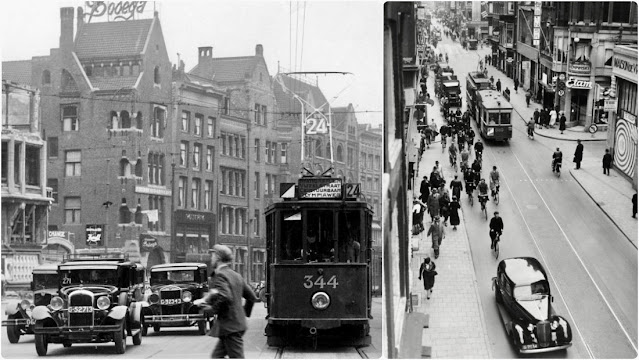
30 Amazing Photos Show Street Scenes of Amsterdam During the 1930s

Subscribe to get access

Read more of this content when you subscribe today.

Amsterdam is the capital and most populous city of the Netherlands. It is colloquially referred to as the “Venice of the North”, attributed by the large number of canals which form a UNESCO World Heritage Site.

Amsterdam is well known for its nightlife and festival activity; with several of its nightclubs (Melkweg, Paradiso) among the world’s most famous. Primarily known for its artistic heritage, elaborate canal system and narrow houses with gabled façades; well-preserved legacies of the city’s 17th-century Golden Age. Cycling is also key to the city’s character, and there are numerous bike paths.

The Port of Amsterdam is the fifth largest in Europe. The KLM hub and Amsterdam’s main airport, Schiphol, is the Netherlands’ busiest airport as well as the third busiest in Europe and 11th busiest airport in the world. The Dutch capital is considered one of the most multicultural cities in the world, with at least 177 nationalities represented.

These rare vintage photos show what street scenes of Amsterdam looked like in the 1930s.

Rapenburg, Amsterdam, 1930

Subscribe to continue reading

Become a paid subscriber to get access to the rest of this post and other exclusive content.
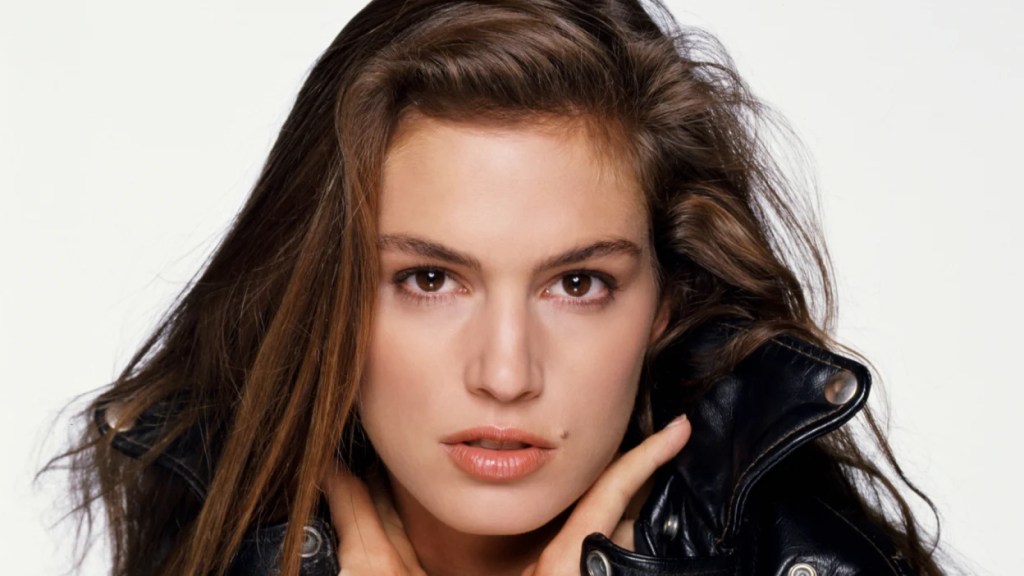
Beautiful Portraits of Eva Gabor in the 1940s and 1950s

Subscribe to get access

Read more of this content when you subscribe today.

Born 1919 in in Budapest, Hungarian-American actress and singer Eva Gabor had her first movie role in the U.S. in 1941’s Forced Landing at Paramount Pictures. During the 1950s, she appeared in several feature films, including The Last Time I Saw Paris, and Artists and Models. These roles were bit parts.

In 1953, Gabor was given her own television talk show, The Eva Gabor Show, which ran for one season (1953–54). Through the rest of the 1950s and early 1960s she appeared on television and in movies.

Gabor was widely known for her role on the 1965–71 television sitcom Green Acres as Lisa Douglas, the wife of Eddie Albert’s character Oliver Wendell Douglas. She was successful as an actress in film, on Broadway, and on television. She was also a successful businesswoman, marketing wigs, clothing, and beauty products. Her elder sisters, Zsa Zsa and Magda Gabor, were also actresses and socialites.

Gabor died in Los Angeles on Independence Day 1995 at the age of 76, from respiratory failure and pneumonia, following a fall in a bathtub in Mexico, where she had been on vacation.

Take a look at these vintage photos to see portrait of a young and beautiful Eva Gabor in the 1940s and 1950s.

Subscribe to continue reading

Become a paid subscriber to get access to the rest of this post and other exclusive content.
Yesterday Today: September 1, 2024

Subscribe to get access

Read more of this content when you subscribe today.

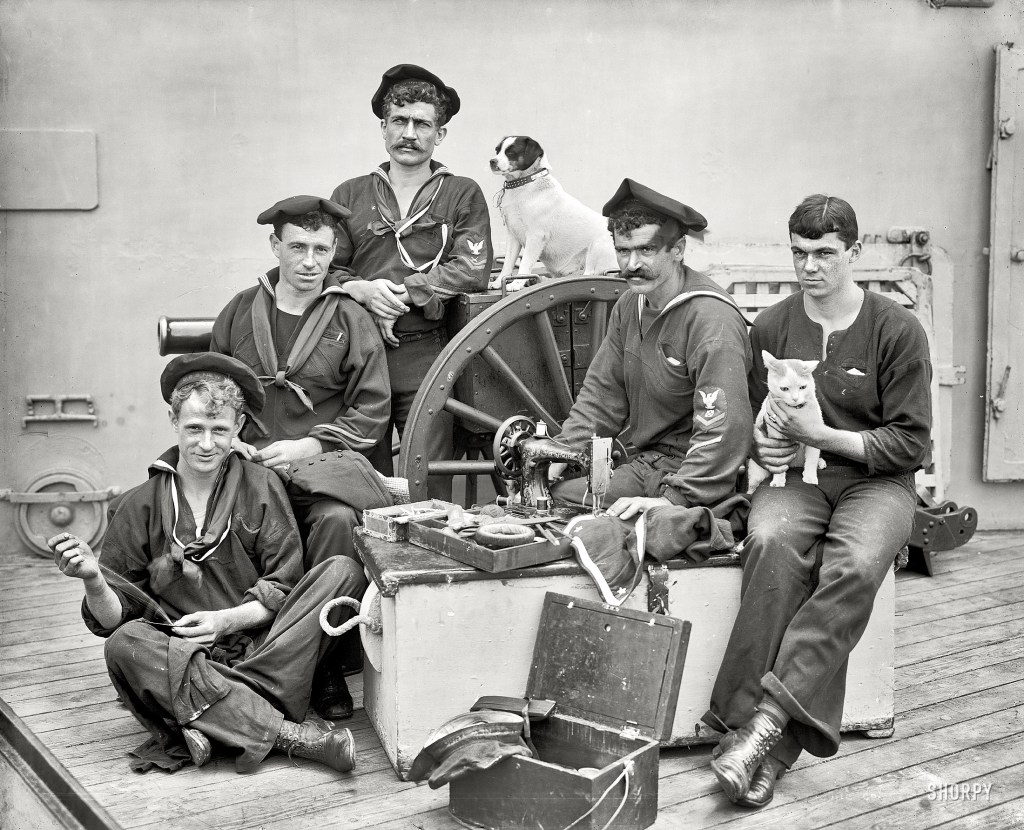
Aboard the U.S.S. New York, 1896. “Ship’s tailor.” The dog is Nick.

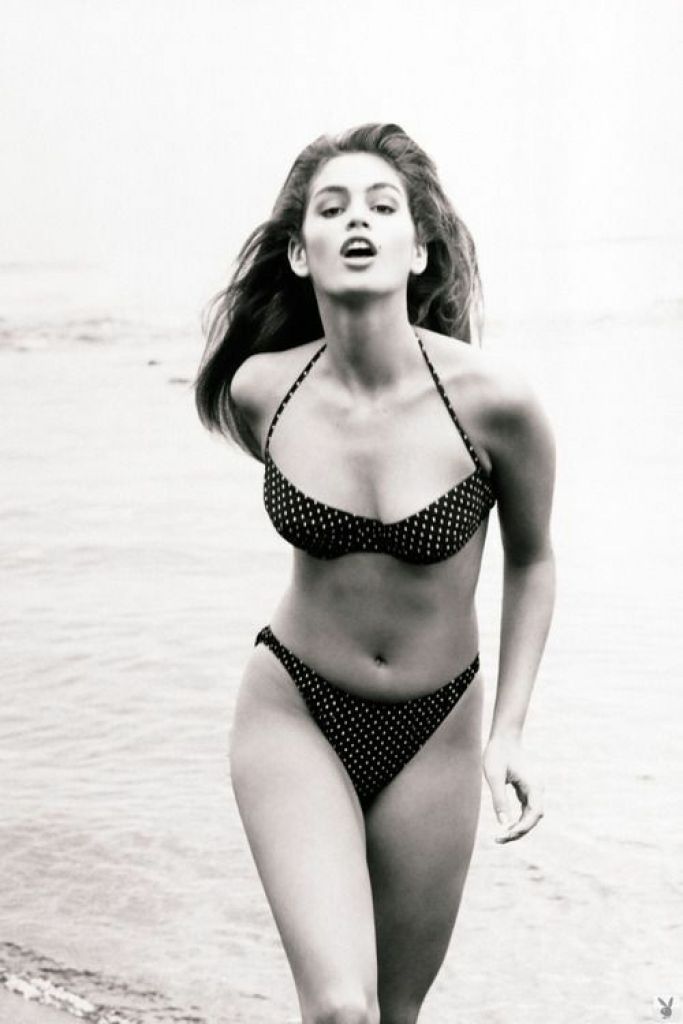
Bathing Beauties, ca. 1910s

Subscribe to continue reading

Become a paid subscriber to get access to the rest of this post and other exclusive content.
Fascinating Black and White Photos of Life in Britain in 1939

Subscribe to get access

Read more of this content when you subscribe today.

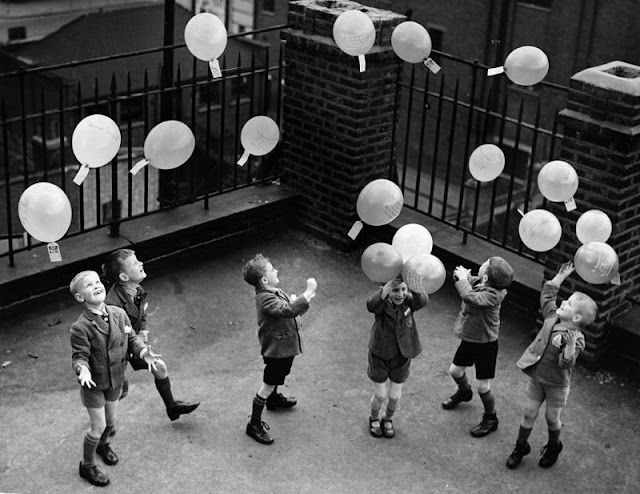
Boys release toy balloons bearing appeals for the Doctor Barnardo’s Home at Stepney, London, August 1939

After the German invasion of Poland, The King declared war in September 1939.

In preparation for war, Britain undertakes measures including calling up of troops, citizens returning home from abroad, children rehearsing safety drills. The government also thought of all the possible dangers and difficulties the Home Front would face and started to take precautions.

Boys release toy balloons bearing appeals for the Doctor Barnardo’s Home at Stepney, London, August 1939

Take a look at life in Britain in 1939 through these fascinating black and white photographs.

The ladies’ rifle team of Downe House School in Berkshire set out for a practice session with their guns, April 1939

Subscribe to continue reading

Become a paid subscriber to get access to the rest of this post and other exclusive content.

Life in America in the 1970s and 1980s

Subscribe to get access

Read more of this content when you subscribe today.

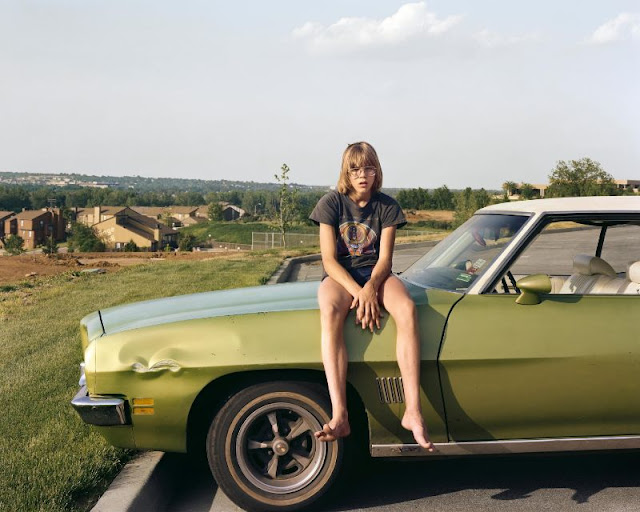
Kansas City, Kansas, May 1983

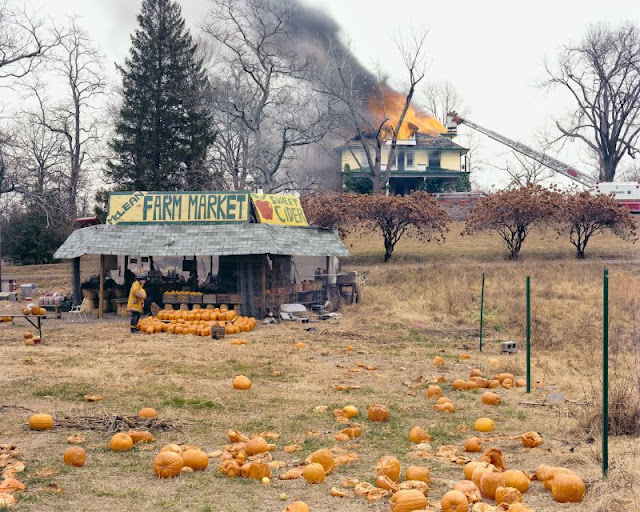
McLean, Virginia, December 1978

Subscribe to continue reading

Become a paid subscriber to get access to the rest of this post and other exclusive content.

Wild West Wednesdays, Part 2 (a day late) – The Death of Outlaw Johnny Ringo

Subscribe to continue reading

Become a paid subscriber to get access to the rest of this post and other exclusive content.
45 Beautiful Vintage Photos of Actress Barbara Britton During the 1950s and 1960s

Subscribe to get access

Read more of this content when you subscribe today.

Born 1919 in Long Beach, California, American actress Barbara Britton was soon signed to a Paramount Pictures contract when a photo of her while appearing in a Pasadena Tournament of Roses Parade was used on the front page of a local newspaper in 1941. Britton’s first major film appearance was in a small role in Reap the Wild Wind (1942).

During the 1940s, Britton starred in three films for which she is most recognized today. The first was the 1945 film Captain Kidd, followed by The Virginian in 1946, and the third was the 1947 film Gunfighters. In total, she starred or appeared in 26 films during that decade.

Britton starred in the 1950s television show Mr. and Mrs. North. She was probably best known for being the spokesperson for Revlon products in the 1950s and 1960s, appearing in advertisements and commercials that included live spots on The $64,000 Question. She also portrayed Laura Petrie in Carl Reiner’s Head of the Family, the 1959 pilot for the later Dick Van Dyke Show.

One of Britton’s last roles was on the daytime television soap opera One Life to Live in 1979. She died of pancreatic cancer at her Manhattan apartment in 1980, at the age of 60.

In 1948, Britton was given a key to the City of Long Beach, California. In 1960, she received a star for television on the Hollywood Walk of Fame; her star is located at 1719 Vine Street.

Take a look at these glamorous photos to see the beauty of Barbara Britton in the 1950s and 1960s.

Subscribe to continue reading

Become a paid subscriber to get access to the rest of this post and other exclusive content.

“Blown Away Guy”: The Most Iconic Music Image of All Time

Subscribe to get access

Read more of this content when you subscribe today.

Maxell cassette tape in 1980 created the all-time iconic music image that will last far into the future, the “Blown Away Guy.”

In the 1980s, Maxell became an icon of pop culture when it produced advertisements popularly known as “Blown Away Guy” for its line of audio cassettes. The campaign began as a two-page advertising spread in Rolling Stone magazine in 1980. The photo shows a man sitting low in a (Le Corbusier Grand Confort LC2) high armed chair in front of, and facing, a JBL L100 speaker. His hair and necktie, along with the lampshade to the man’s right and the martini glass on the low table to the man’s left, are being blown back by the tremendous sound from speakers in front of him — supposedly due to the audio accuracy of Maxell’s product. The man is shown desperately clinging to the armrests but defiantly looking ahead at the source of the music through sunglasses, though calmly catching his drink before it slides off the end table.

Subscribe to continue reading

Become a paid subscriber to get access to the rest of this post and other exclusive content.

30 Elegant Photos Show What Victorian Girls Wore in the 1860s

Subscribe to get access

Read more of this content when you subscribe today.

Victorian fashion consists of the various fashions and trends in British culture that emerged and developed in the United Kingdom and the British Empire throughout the Victorian era, roughly from the 1830s through the 1890s. The period saw many changes in fashion, including changes in styles, fashion technology and the methods of distribution. Various movement in architecture, literature, and the decorative and visual arts as well as a changing perception of gender roles also influenced fashion.

During the Victorian Era, clothes were seen as an expression of women’s place in society, hence were differentiated in terms of social class. Upper-class women, who did not need to work, often wore a tightly laced corset over a bodice or chemisette, and paired them with a skirt adorned with numerous embroideries and trims; over layers of petticoats.
Middle-class women exhibited similar dress styles; however, the decorations were not as extravagant. The layering of these garments make them very heavy. Corsets were also stiff and restricted movement. Although the clothes were not comfortable, the type of fabrics and the numerous layers were worn as a symbol of wealth.

Here below is a set of elegant photos that shows what Victorian girls looked like in the 1860s.

Subscribe to continue reading

Become a paid subscriber to get access to the rest of this post and other exclusive content.

Yesterday Today

Bringing You the Wonder of Yesterday - Today

Skip to content ↓