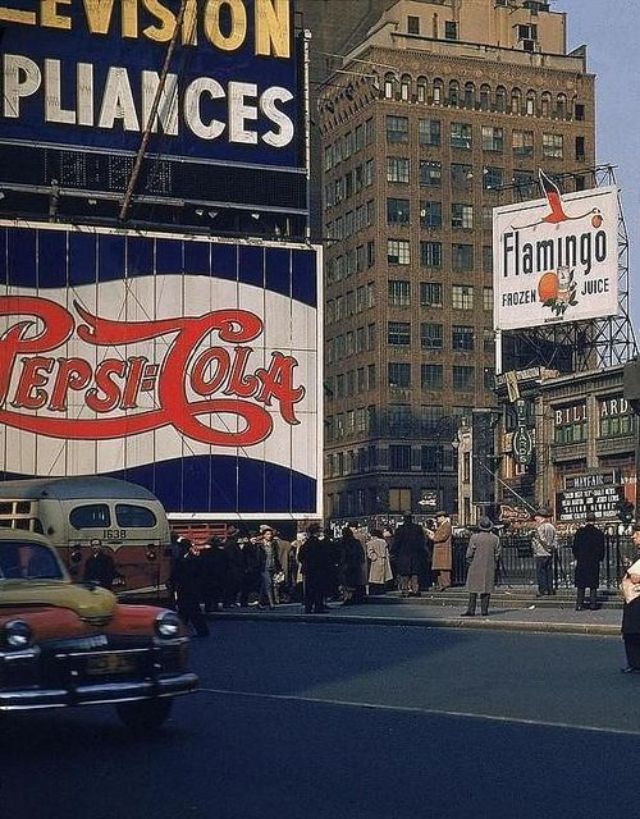
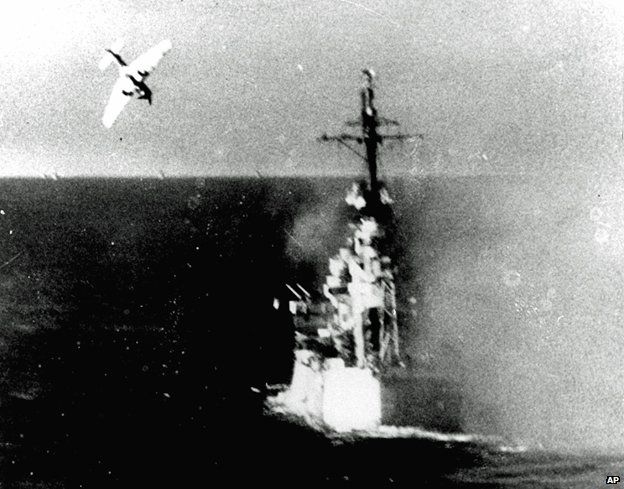
More than any other artist, Walker Evans invented the images of essential America that we have long since accepted as fact, and his work has influenced not only modern photography but also literature, film and visual arts in other mediums.
Walker Evans (1903-1975) took up photography upon his return to New York in 1927, following a year in Paris when his aspiration to become a writer withered in the shadow of Fitzgerald, Hemingway and Joyce. In 1935, Evans was commissioned by the Farm Security Administration to photograph the effects of the Great Depression in the Southeast. During this time he took many of the photographs that appeared in his collaboration with James Agee, Let Us Now Praise Famous Men (1941), a book which has become a defining document of that era. Evans joined the staff of Time magazine in 1945 and shortly thereafter became an editor at Fortune, where he stayed for the next two decades. In 1964, he became a professor at the Yale University School of Art, where he taught until his death in 1975.
Below is a collection of 20 impressive color photographs taken by Walker Evans in New York in the 1950s.
Subscribe to continue reading
Become a paid subscriber to get access to the rest of this post and other exclusive content.
In 1908 Lewis Hine picked up his camera and became the photographer for the National Child Labor Committee. It was a start of a long decade, as Lewis traveled across the country, documenting child labor, getting constant threats from factory owners as the immorality of child labor was supposed to be kept away from the public’s eye. However, Hine persisted, adopting many different disguises (such as a fire inspector or a bible salesman) to snap pictures and interview the children working at factories or in the streets.
Lewis Hine used his camera as a tool for social commentary and reform, focusing on the dangerous and appalling conditions that the children had to work in. Risking his own safety, Hine snapped thousands of photographs with one goal – to end child labor. And of course, spreading the photographs, in the form of pamphlets, newspapers, and magazines paid off as the federal government eventually had to put out stricter labor laws.
Accident To Young Mill Worker. Giles Edmund Newsom, 11 years old. While Working In Sanders Spinning Mille, A Piece Of The Machine Fell On To His Foot Mashing His Toe. This Caused Him To Fall On To A Spinning Machine And His Hand Went Into Unprotected Gearing, Crushing And Tearing Out Two Fingers. Bessemer City, North Carolina.
Subscribe to continue reading
Become a paid subscriber to get access to the rest of this post and other exclusive content.
Charles Lansiaux (1855–1939) became a photographer at the end of the 19th century. He established his own business in 1903, describing his company purpose as “Artistic and industrial photography, city works, emergency works, interior photography with artificial light, enlargements, amateur documentary photography.”
At the beginning of the war in 1914, he started documenting daily life in Paris, far from the frontline. The resulting series of over 1000 images, titled “Aspects of Paris during the war of 1914” was not initially intended for publication but to be preserved as a testimony of what had happened. The Paris Historical library purchased the images as they were taken.
Here’s a gallery of 86 astonishing photographs capture everyday life in Paris from 1914-1919:
A shop of the Maggi Swiss dairy company looted because suspected of selling poisoned milk, rue de la Tombe-Issoire.
Subscribe to continue reading
Become a paid subscriber to get access to the rest of this post and other exclusive content.
The Great Depression was a severe worldwide economic depression that took place mostly during the 1930s, beginning in the United States. The timing of the Great Depression varied around the world; in most countries, it started in 1929 and lasted until the late 1930s. It was the longest, deepest, and most widespread depression of the 20th century. The Great Depression is commonly used as an example of how intensely the global economy can decline.
The Great Depression started in the United States after a major fall in stock prices that began around September 4, 1929, and became worldwide news with the stock market crash of October 29, 1929, which was known as Black Tuesday. Between 1929 and 1932, worldwide gross domestic product (GDP) fell by an estimated 15%. By comparison, worldwide GDP fell by less than 1% from 2008 to 2009 during the Great Recession. Some economies started to recover by the mid-1930s. However, in many countries, the negative effects of the Great Depression lasted until the beginning of World War II.
The Great Depression had devastating effects in both rich and poor countries. Personal income, tax revenue, profits and prices dropped, while international trade fell by more than 50%. Unemployment in the U.S. rose to 23% and in some countries rose as high as 33%. Cities around the world were hit hard, especially those dependent on heavy industry. Construction was virtually halted in many countries. Farming communities and rural areas suffered as crop prices fell by about 60%. Facing plummeting demand with few alternative sources of jobs, areas dependent on primary sector industries such as mining and logging suffered the most.
Economic historians usually consider the catalyst of the Great Depression to be the sudden devastating collapse of U.S. stock market prices, starting on October 24, 1929. However, some dispute this conclusion and see the stock crash as a symptom, rather than a cause, of the Great Depression.
Even after the Wall Street Crash of 1929, where the Dow Jones Industrial Average dropped from 381 to 198 over the course of two months, optimism persisted for some time. The stock market turned upward in early 1930, with the Dow returning to 294 (pre-depression levels) in April 1930, before steadily declining for years, to a low of 41 in 1932.
At the beginning, governments and businesses spent more in the first half of 1930 than in the corresponding period of the previous year. On the other hand, consumers, many of whom suffered severe losses in the stock market the previous year, cut their expenditures by 10%. In addition, beginning in the mid-1930s, a severe drought ravaged the agricultural heartland of the U.S.
Interest rates dropped to low levels by mid-1930, but expected deflation and the continuing reluctance of people to borrow meant that consumer spending and investment remained low. By May 1930, automobile sales declined to below the levels of 1928. Prices, in general, began to decline, although wages held steady in 1930. Then a deflationary spiral started in 1931. Farmers faced a worse outlook; declining crop prices and a Great Plains drought crippled their economic outlook. At its peak, the Great Depression saw nearly 10% of all Great Plains farms change hands despite federal assistance.
The decline in the U.S. economy was the factor that pulled down most other countries at first; then, internal weaknesses or strengths in each country made conditions worse or better.[citation needed] Frantic attempts by individual countries to shore up their economies through protectionist policies – such as the 1930 U.S. Smoot–Hawley Tariff Act and retaliatory tariffs in other countries – exacerbated the collapse in global trade, contributing to the depression. By 1933, the economic decline pushed world trade to one third of its level compared to four years earlier. (Wikipedia)
Sharecropper in Little Rock, Arkansas, October 1935.
Subscribe to continue reading
Become a paid subscriber to get access to the rest of this post and other exclusive content.
Dame Maggie Smith CH, DBE (born Margaret Natalie Smith, 28 December 1934) is an English actress. She has had an extensive career on film, stage, and television, which began in the mid-1950s. Smith has appeared in more than 60 films and over 70 plays, and is one of Britain’s most recognisable actresses. She was made a Dame by Queen Elizabeth II in 1990 for contributions to the performing arts, and a Companion of Honour in 2014 for services to drama.
Smith began her career on stage as a student, performing at the Oxford Playhouse in 1952, and made her professional debut on Broadway in New Faces of ’56. For her work on the London stage, she has won a record six Best Actress Evening Standard Awards for The Private Ear and The Public Eye (both 1962), Hedda Gabler (1970), Virginia (1981), The Way of the World (1984), Three Tall Women (1994), and A German Life (2019). She received Tony Award nominations for Private Lives (1975) and Night and Day (1979), before winning the 1990 Tony Award for Best Actress in a Play for Lettice and Lovage. She appeared in Stratford Shakespeare Festival productions of Antony and Cleopatra (1976) and Macbeth (1978), and West End productions of A Delicate Balance (1997) and The Breath of Life (2002). She received the Society of London Theatre Special Award in 2010.
On screen, Smith first drew praise for the crime film Nowhere to Go (1958), for which she received her first nomination for a British Academy of Film and Television Arts (BAFTA) award. She has won two Academy Awards, winning Best Actress for The Prime of Miss Jean Brodie (1969) and Best Supporting Actress for California Suite (1978). She is one of only seven actresses to have won in both categories. She has won a record four BAFTA Awards for Best Actress, including for A Private Function (1984) and The Lonely Passion of Judith Hearne (1988), a BAFTA Best Supporting Actress for Tea with Mussolini (1999), and three Golden Globe Awards. She received four other Oscar nominations for Othello (1965), Travels with My Aunt (1972), A Room with a View (1985), and Gosford Park (2001).
Smith played Professor Minerva McGonagall in the Harry Potter film series (2001–2011). Her other films include Love and Pain and the Whole Damn Thing (1973), Murder By Death (1976), Death on the Nile (1978), Clash of the Titans (1981), Evil Under the Sun (1982), Hook (1991), Sister Act (1992), Sister Act 2: Back in the Habit (1993), The Secret Garden (1993), The Best Exotic Marigold Hotel (2012), and The Lady in the Van (2015). She won an Emmy Award in 2003 for My House in Umbria, to become one of the few actresses to have achieved the Triple Crown of Acting, and starred as Violet Crawley, Dowager Countess of Grantham, on Downton Abbey (2010–2015), for which she won three Emmys, her first non-ensemble Screen Actors Guild Award, and her third Golden Globe. Her honorary film awards include the BAFTA Special Award in 1993 and the BAFTA Fellowship in 1996. She received the Stratford Shakespeare Festival’s Legacy Award in 2012, and the Bodley Medal by the University of Oxford’s Bodleian Libraries in 2016.
Subscribe to continue reading
Become a paid subscriber to get access to the rest of this post and other exclusive content.
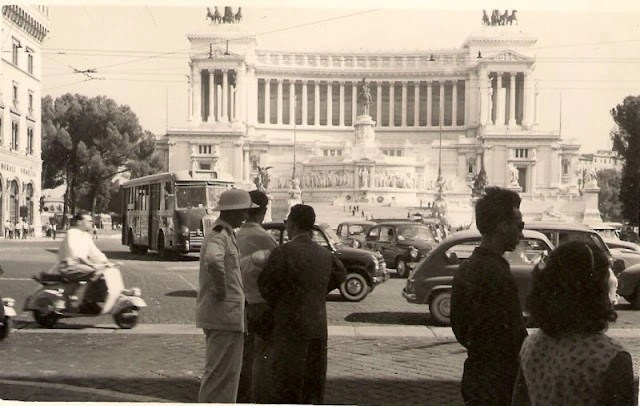
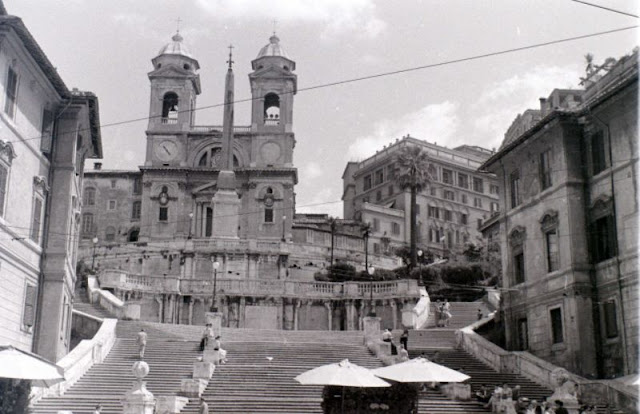
These amazing photos were captured by Allan Hailstone on a trip to Rome as a schoolboy with his father and a friend in August 1956. They had been inspired to go after seeing the 1954 movie Three Coins in the Fountain.
“Before the advent of cheap airfares and mass tourism, it was easy in 1956 to see all of the sights in Rome without any waiting time.” Hailstone told MailOnline Travel. “Things were much more leisurely than now when you will be among crowds of visitors.”
Take a look back at the Eternal City in 1956 through these 26 beautiful vintage black-and-white pictures.
Subscribe to continue reading
Become a paid subscriber to get access to the rest of this post and other exclusive content.
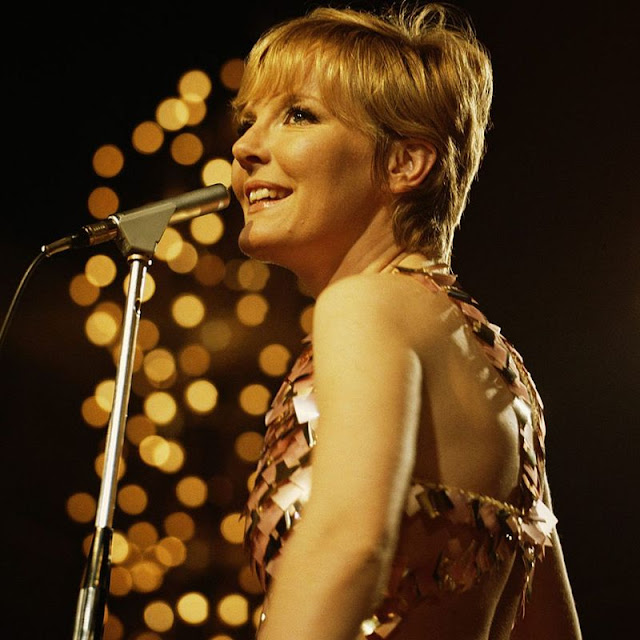
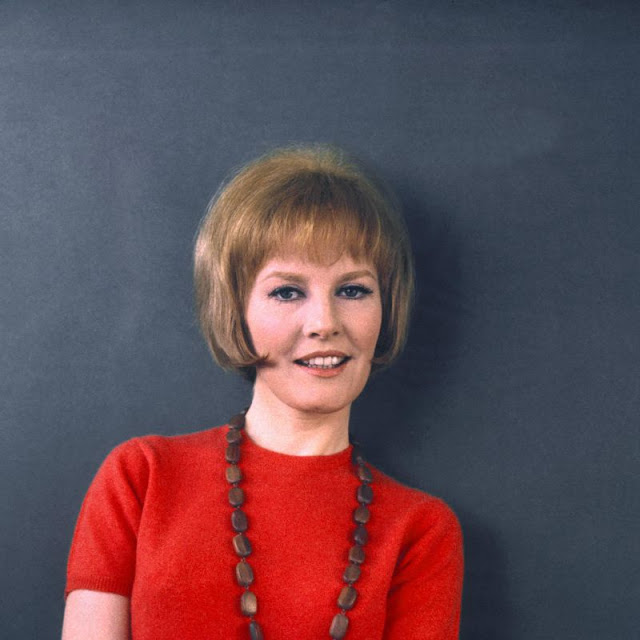
Born 1932 in Ewell, Surrey, British singer and actress Petula Clark began her professional career as a child entertainer on BBC Radio during the Second World War. In 1954, she charted with “The Little Shoemaker”, the first of her big UK hits, and within two years she began recording in French. Her international successes have included “Prends mon coeur”, “Sailor” (a UK number one), “Romeo”, and “Chariot”. Hits in German, Italian and Spanish followed.
In late 1964, Clark’s success extended to the United States with a four-year run of career-defining, often upbeat singles, many written or co-written by Tony Hatch and Jackie Trent. These songs include her signature song “Downtown”, “I Know a Place”, “My Love”, “A Sign of the Times”, “I Couldn’t Live Without Your Love”, “Who Am I”, “Colour My World”, “This Is My Song” (by Charles Chaplin), “Don’t Sleep in the Subway”, “The Other Man’s Grass Is Always Greener”, and “Kiss Me Goodbye”. In the United States, Clark was sometimes called “the First Lady of the British Invasion”.
Clark has had one of the longest serving careers of a British singer, spanning more then 7 decades. She has sold more than 68 million records. She has also enjoyed success in the musical film Finian’s Rainbow and in the stage musicals The Sound of Music, Blood Brothers, Sunset Boulevard and Mary Poppins.
Take a look at these vintage photos to see portraits of a young and beautiful Petula Clark.
Subscribe to continue reading
Become a paid subscriber to get access to the rest of this post and other exclusive content.
Born 1957 in Salt Lake City, Utah, American model, actor and dancer Sterling St. Jacques was the adopted son of actor Raymond St. Jacques. He had bit parts in films such as Eyes of Laura Mars (1978) with Faye Dunaway, Dinah East (1970) and the Italian movie Sistemo l’America e torno (1974).
Together, Sterling and model Pat Cleveland were regulars at Studio 54. Although they appeared in public as a couple, and were briefly engaged, Sterling was widely known to be gay.
In the 1980s, Sterling moved to Europe to try and become a nightclub DJ and advance his modeling career. Soon after, he claimed to the press he was broke and was thinking of opening a dance studio in Manhattan. This idea never came to fruition and instead he regularly appeared in both high-end and low-brow magazines and even performed Italo disco.
St. Jacques contracted AIDS and died in 1984 in New York City, not knowing who gave it to him.
Take a look at these vintage photos to see moments of Sterling St. Jacques and Bianca Jagger dancing at Studio 54 in New York City in 1978.
Subscribe to continue reading
Become a paid subscriber to get access to the rest of this post and other exclusive content.
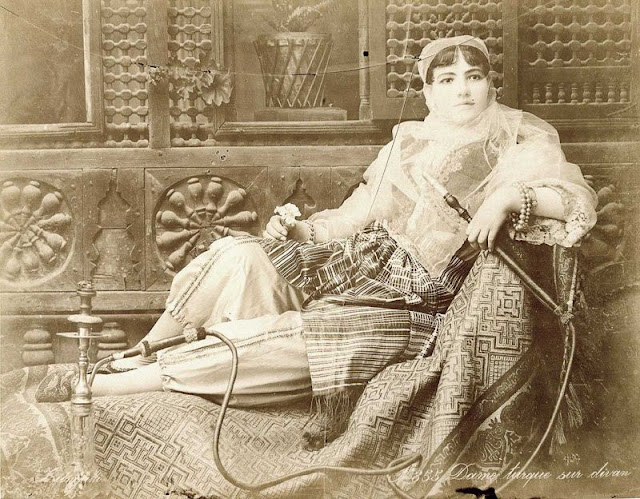
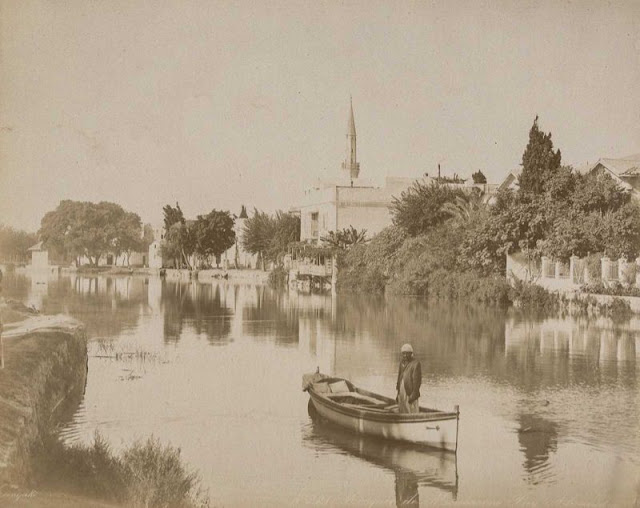
The Adelphoi Zangaki (Zangaki Brothers) were two brothers of Greek origin, active as photographers in Ottoman Egypt from the 1860s through to the 1890s. Little is known about them, except their initials, C. and G., and that they worked out of Port Said and Cairo from around the 1860s through to at least the 1890s. Many of the Zangaki photographs are signed with a brother’s initial and/or a place of business, e.g., “C. Zangaki” or “Zangaki, Cairo” or occasionally “A. Zangaki”.
The two brothers specialized in photographing ancient monuments and scenes of everyday life, producing photographic prints for the tourist trade, but it remains unclear how they came to learn photography. However, shortly after their arrival in Egypt they had become established photographers with studios in Cairo and Port Said.
The Zangaki brothers traveled along the Nile, accompanied by a horse-drawn darkroom wagon to document the Egyptian scenery, architecture and events. Their pictures included views of the pyramids at Giza or the Sphinx and cities, as well of Egyptians going about their daily lives. They occasionally worked with the French photographer Hippolyte Arnoux in Port Said, documenting the works on the Suez Canal. They were also among the first commercial photographers to produce large-scale images of late 19th- century Egypt.
Students in the Al-Azhar Mosque, Cairo
Subscribe to continue reading
Become a paid subscriber to get access to the rest of this post and other exclusive content.