Maxell cassette tape in 1980 created the all-time iconic music image that will last far into the future, the “Blown Away Guy.”
In the 1980s, Maxell became an icon of pop culture when it produced advertisements popularly known as “Blown Away Guy” for its line of audio cassettes. The campaign began as a two-page advertising spread in Rolling Stone magazine in 1980. The photo shows a man sitting low in a (Le Corbusier Grand Confort LC2) high armed chair in front of, and facing, a JBL L100 speaker. His hair and necktie, along with the lampshade to the man’s right and the martini glass on the low table to the man’s left, are being blown back by the tremendous sound from speakers in front of him — supposedly due to the audio accuracy of Maxell’s product. The man is shown desperately clinging to the armrests but defiantly looking ahead at the source of the music through sunglasses, though calmly catching his drink before it slides off the end table.
Subscribe to continue reading
Become a paid subscriber to get access to the rest of this post and other exclusive content.
Victorian fashion consists of the various fashions and trends in British culture that emerged and developed in the United Kingdom and the British Empire throughout the Victorian era, roughly from the 1830s through the 1890s. The period saw many changes in fashion, including changes in styles, fashion technology and the methods of distribution. Various movement in architecture, literature, and the decorative and visual arts as well as a changing perception of gender roles also influenced fashion.
During the Victorian Era, clothes were seen as an expression of women’s place in society, hence were differentiated in terms of social class. Upper-class women, who did not need to work, often wore a tightly laced corset over a bodice or chemisette, and paired them with a skirt adorned with numerous embroideries and trims; over layers of petticoats. Middle-class women exhibited similar dress styles; however, the decorations were not as extravagant. The layering of these garments make them very heavy. Corsets were also stiff and restricted movement. Although the clothes were not comfortable, the type of fabrics and the numerous layers were worn as a symbol of wealth.
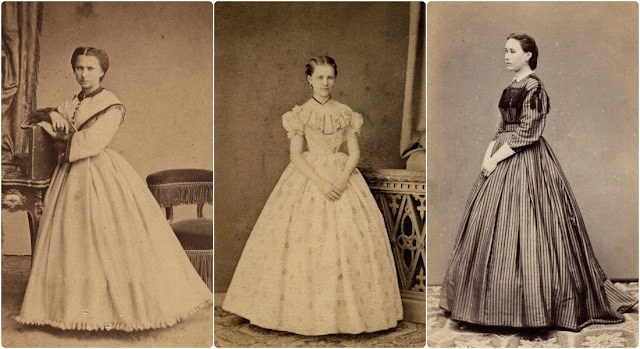
Here below is a set of elegant photos that shows what Victorian girls looked like in the 1860s.
Subscribe to continue reading
Become a paid subscriber to get access to the rest of this post and other exclusive content.
The journey through university is not all roses and pleasures, which is why there are many other social activities that could help students relax, get to know each other and enjoy life beyond the four walls of the classroom. One of the most popular ways is through partying.
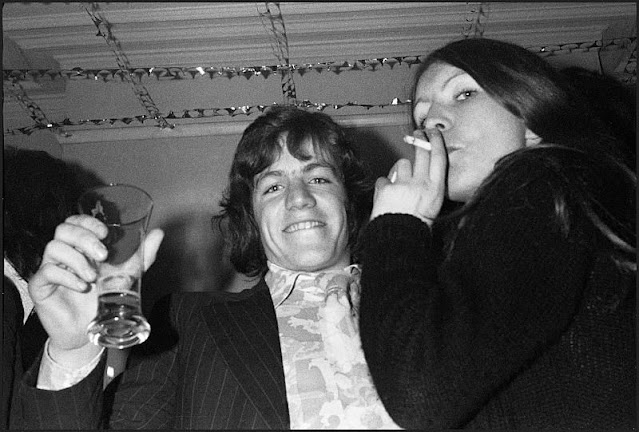
It’s Christmas time in 1970 and the students from Queen’s University in Belfast were living it up on Harp lager and tins of Guinness. The party was held on Wolseley Street, which would be called the University Quarter these days.
Subscribe to continue reading
Become a paid subscriber to get access to the rest of this post and other exclusive content.
Actor Sean Connery will forever be known to be the first ever James Bond, beginning with 007’s maiden film appearance with Dr. No in 1962. Connery went on to play Bond seven times, including the classic spy movies From Russia With Love, Goldfinger, Thunderball, and You Only Live Twice, all of which were released in the 1960s.
By the time the mid-1970s rolled around, Connery already had a vast filmography. He took a break after the release of Sidney Lumet’s 1973 crime drama The Offence, but when he returned in 1974 with John Boorman’s science fiction movie Zardoz, rather than ease himself back into work, Connery put the pedal to the metal and performed in several films in quick succession.
During an interview with EW, Connery expressed that, in reflection, he made something of a “stupid” decision to work so often so quickly, noting the time he made three films directly after one another. In hindsight, it sounds like Connery perhaps pushed himself a bit too far, especially after taking a break for a few years prior. “It’s a stupid scenario, doing three films one after another,” he said. “I did The Man Who Would Be King, The Wind and the Lion, and Robin and Marian all one after the other. It was like pushing a quart into a pint bottle. But when you find something you want to do, you do it.”
Sean Connery received numerous accolades including an Academy Award, a BAFTA Awards and three Golden Globes.
Connery died in his sleep on 31 October 2020, aged 90, at his home in the Lyford Cay community of Nassau in the Bahamas. His death was announced by his family and Eon Productions; although they did not disclose the cause of death, his son Jason said he had been unwell for some time. A day later, his widow revealed he had dementia in his final years. Connery’s death certificate was obtained by TMZ a month after his death, showing the cause of death was pneumonia and respiratory failure, and the time of death was listed as 1:30 am. His remains were cremated, and the ashes were scattered in Scotland at undisclosed locations in 2022.
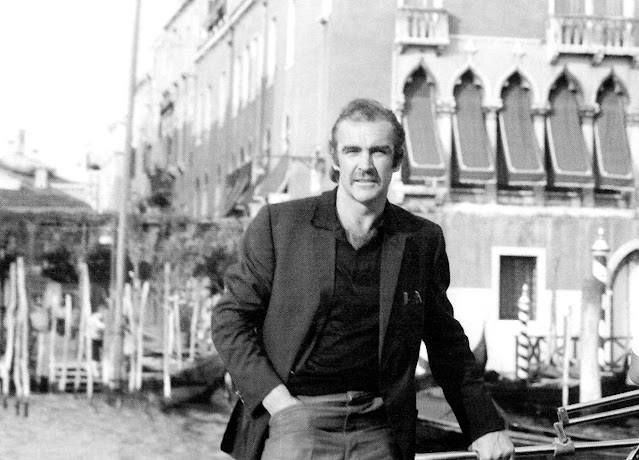
Here are some amazing vintage photographs of the actor from the 1970s:
Subscribe to continue reading
Become a paid subscriber to get access to the rest of this post and other exclusive content.
With German forces withdrawing in France, and Paris on the cusp of liberation, the Nazis continue their brutal treatment of the civilian population. On August 24, 1944, the village of Buchères (10800) near Troyes was to experience a day of horror.
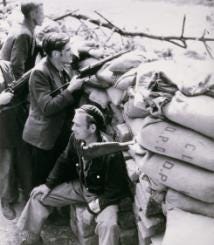
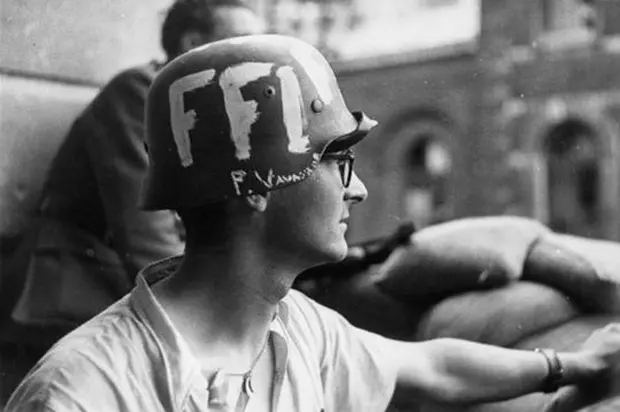
The previous evening, FFI fighters set up a barricade in the village to hinder German units retreating from US forces approaching Troyes. On the morning of the 24th, a small German convoy was fired upon and withdrew.
In nearby Troyes, the 3rd Coy of SS Panzergrenadier Brigade 51 was put on alert and sent south to Buchères. What followed was a massacre – the SS went from house to house and murdered indiscriminately before torching homes and buildings.
Subscribe to continue reading
Become a paid subscriber to get access to the rest of this post and other exclusive content.
Day 5 – Liberation of Paris, Wednesday, 23 August 1944.
Parisians listen with stupefaction as the BBC in London prematurely announces that the capital has been liberated by its own population. Heavy fighting is still taking place throughout the capital.
Subscribe to continue reading
Become a paid subscriber to get access to the rest of this post and other exclusive content.
Image: B-24 Classy Chassis II, pictured in March 1944 with its operational crew before being sent to Warton for refurbishment.
The Freckleton Air Disaster. August 23, 1944.
At 10:30 a.m., two newly refurbished B-24 Liberators took off for an air test from the USAAF Base Air Depot 2 at Warton, near Preston in Lancashire. A few minutes later, a violent thunderstorm approached, and the aircraft were ordered to land immediately. But by the time the B-24s returned, visibility was already extremely poor as the area was plunged into darkness. Gusty, unpredictable winds were accompanied by lightning, thunder, and heavy rain.
The pilot of one of the Liberators opted to fly out of the storm and wait until it had passed; he landed safely shortly afterwards. The other B-24, ‘Classy Chassis II’, was under the command of 1st Lt John Bloemendal. He aborted his landing, though it’s unclear precisely what happened to his aircraft next as he only issued two short radio transmissions, and the Liberator wasn’t visible from the airfield. Warton control tower now sent a heading to both aircraft to clear the weather, but it came too late.
The village of Freckleton lies immediately next to the airfield at Warton. Witnesses there reported seeing the B-24 flying extremely low, its wings near vertical. One wingtip took the top off a tree and clipped a building before ripping through a hedge. The remainder of the bomber then began to break up, ploughing through three houses, fuel tanks igniting as it did so. Debris hit the Sad Sack Snack Bar, a cafe set up by locals to welcome US servicemen. There were a number of people inside, sheltering from the storm; most were killed or injured.
Subscribe to continue reading
Become a paid subscriber to get access to the rest of this post and other exclusive content.
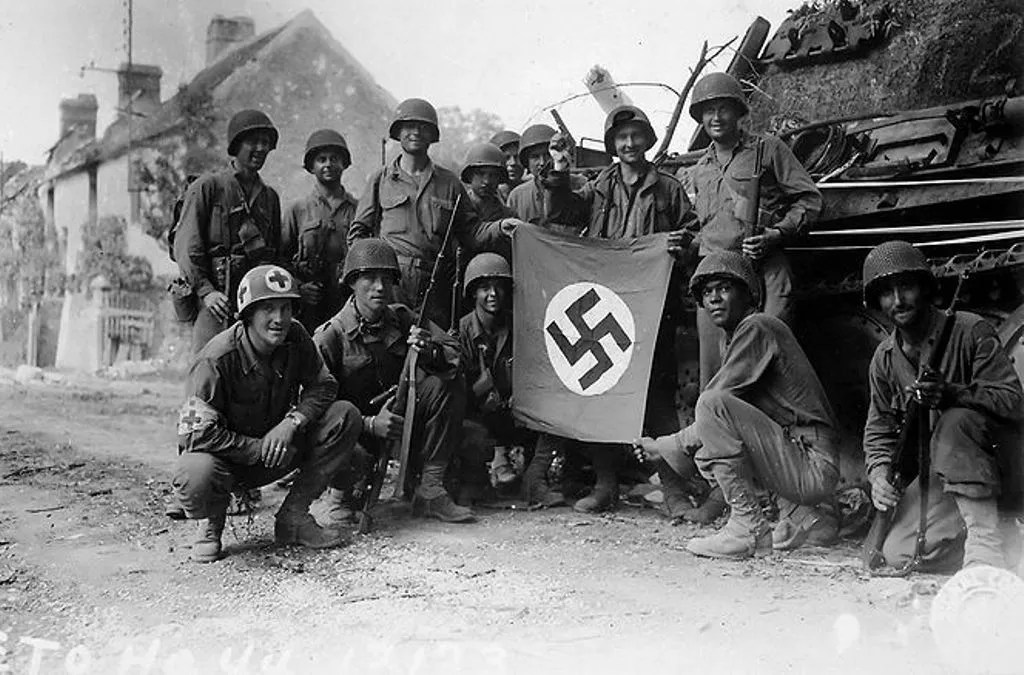
Image: American forces in Chambois, France, during the Battle of the Falaise Pocket. August 1944.
Photographs from the Battle of the Falaise Pocket – August 1944
The Falaise Pocket or Battle of the Falaise Pocket occurred from August 12-21, 1944. It was the decisive engagement during the Battle of Normandy, during which a “pocket” was formed around Falaise, in which Allied forces encircled German Army Group B. The resulting battle resulted in the destruction of most of Army Group B west of the Seine. Around 40,000-50,000 Germans were captured by the Allies. With the collapse of the German position in Normandy, Allied forces were able to race east and liberate Paris.
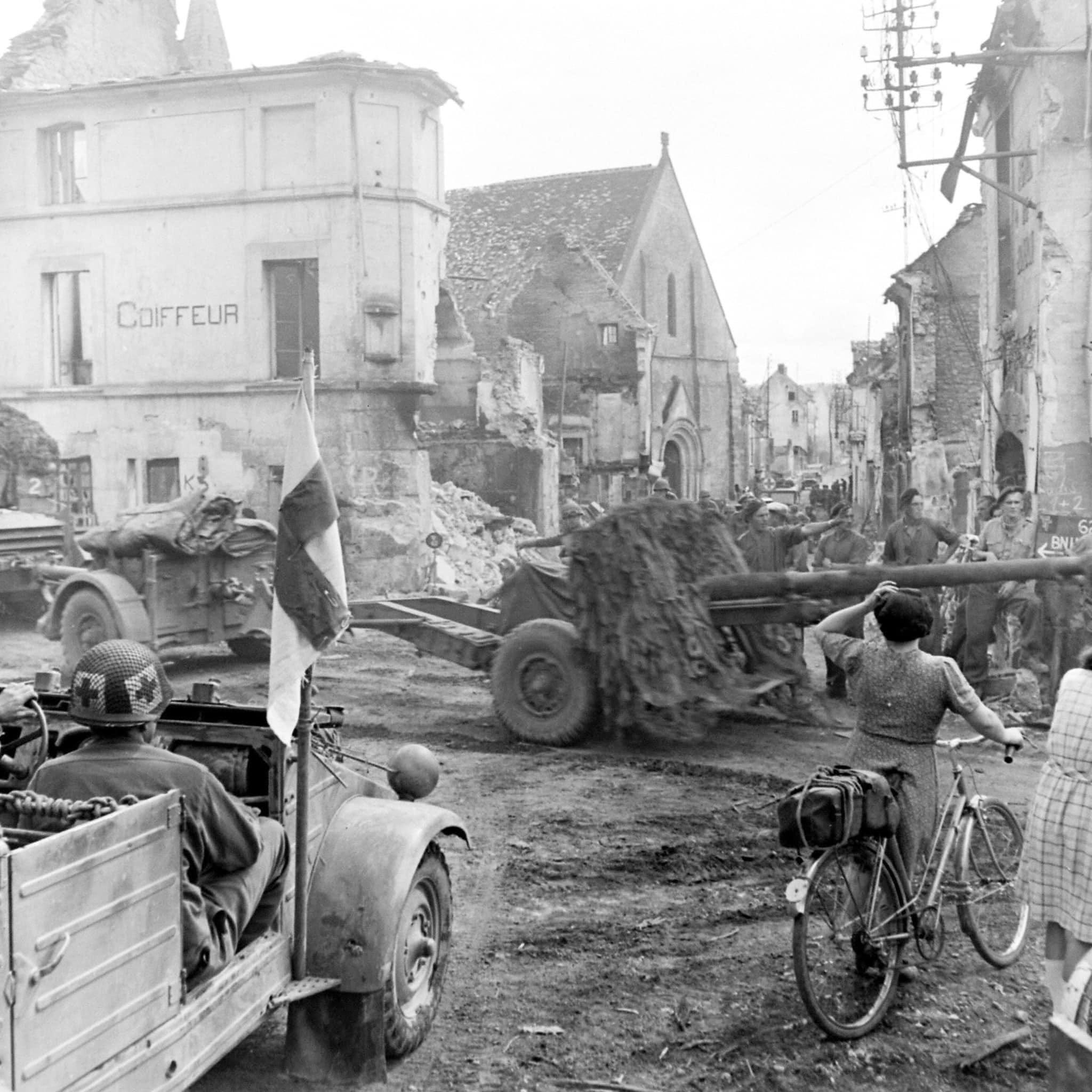
Image: This photograph was taken at the crossroads in the centre of Chambois, where the 1st Polish Armoured Division and the 90th US Infantry Division were liberated. Chambois is the main junction between the Allied forces in the Falaise Gap.
Subscribe to continue reading
Become a paid subscriber to get access to the rest of this post and other exclusive content.
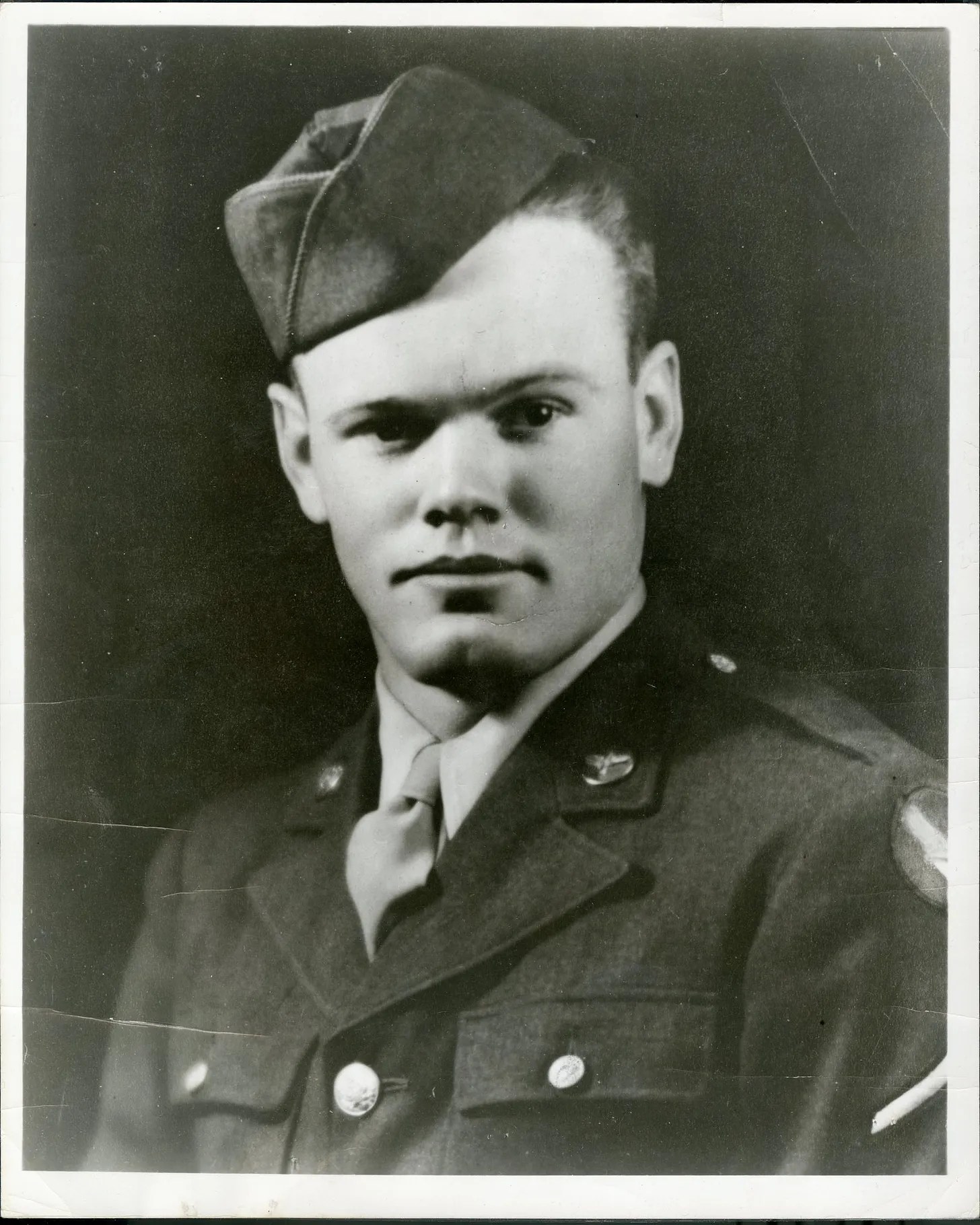
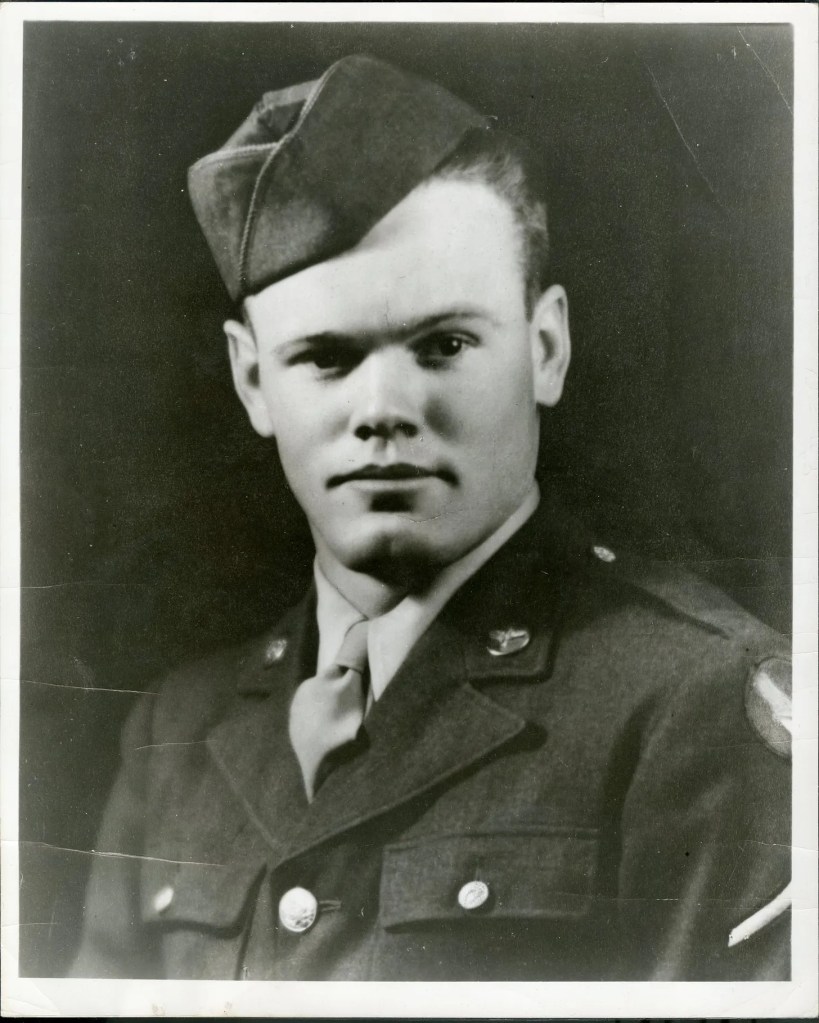
In the lead B-29 on a mission to Koriyama, north of Tokyo, he was tasked with releasing white phosphorus smoke bombs through a chute to assist with the assembly of 167 bombers from Guam and Tinian. There were initially no issues, but one phosphorous bomb exploded prematurely and ricocheted back into the aircraft, striking Erwin in the face as he knelt over the chute. His nose was crushed, and he was instantly blinded.
The aircraft’s forward cabin was instantly filled with choking, toxic smoke so thick that the pilot could no longer see his instruments, and he put the B-29 into a steep dive. Erwin was by now on fire and suffering from horrific burns, yet his first thought was to save the aircraft and crew. He felt around for the bomb, which was burning at a temperature of over 700 degrees centigrade, picked it up with his bare hands and began to make his way forward.
Reaching the navigator’s table, Erwin had to clutch the bomb to his body to unlatch it and move past, inflicting further severe injuries. He finally made it to the cockpit and was able to jettison the bomb through the copilot’s window before collapsing to the floor. As the smoke cleared and the pilot regained control at low altitude, the crew used fire extinguishers to put out Erwin’s burning body.
The pilot aborted the mission and made for Iwo Jima, while crewmen did what they could to help Erwin. They administered morphine, but the phosphorus continued to eat into his flesh and he was in terrible pain. Despite this, he remained conscious and was anxious to make sure that the rest of the crew were safe.
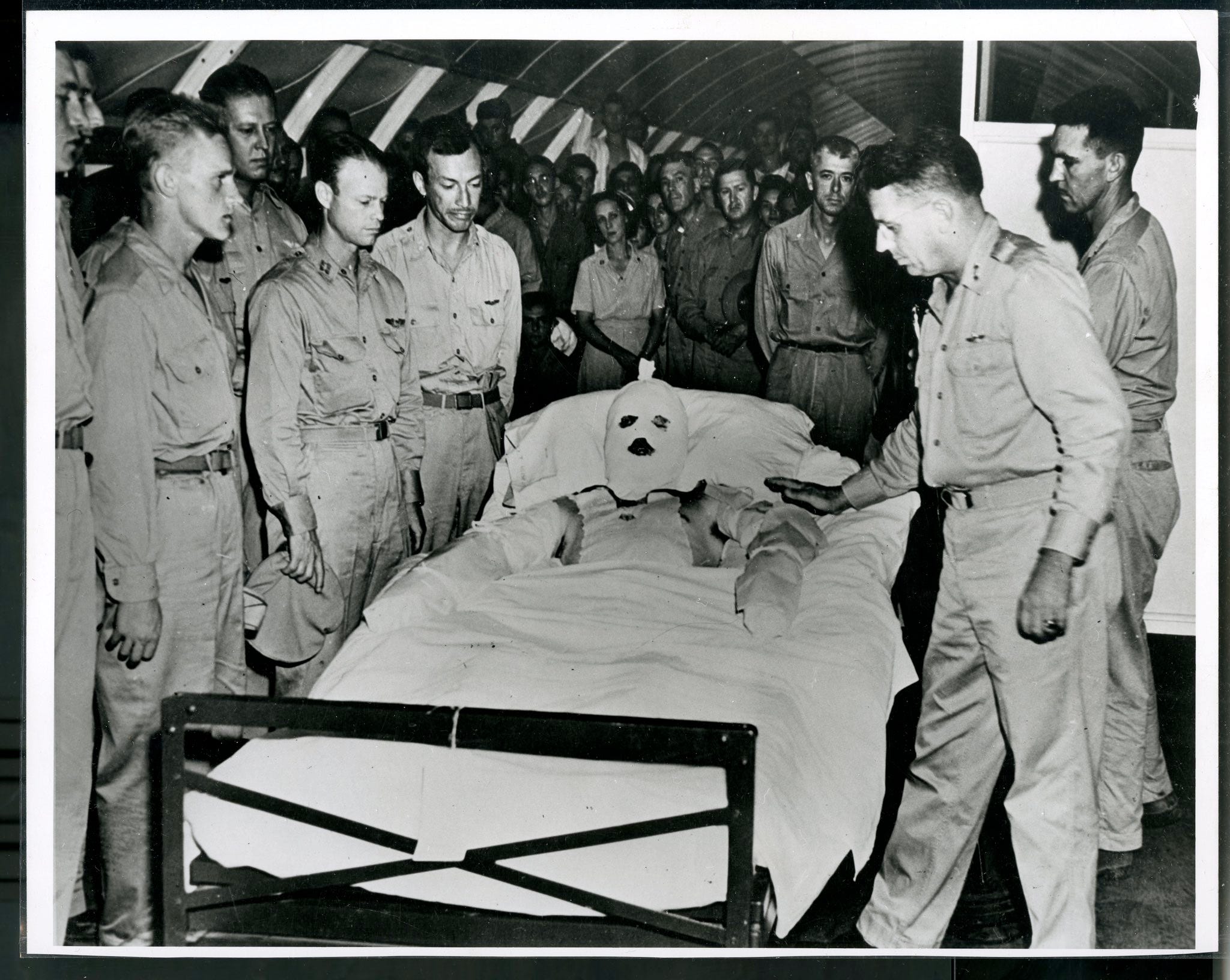
On arrival at Iwo Jima, doctors spent hours removing phosphorus fragments from Erwin’s body, each of which reignited as they were exposed to the air. There seemed to be little chance of his survival, but the officers of his Bomb Group were determined that his actions should be recognised before he died. They drafted a Medal of Honor citation, which was signed, approved and forwarded to Washington by Maj. Gen. Curtis LeMay the following morning.
Image: Erwin and his crew (left) on the day of his Medal of Honor presentation, April 19, 1945, by Major General Willis H Hale. He wasn’t expected to survive at this stage.
The only Medal of Honor available in the Pacific was located in a display case in Honolulu, and an aircraft was dispatched to Hawaii to retrieve it without delay. According to some sources, the airmen sent to retrieve the medal broke open its case when no key could be found and effectively stole it. Meanwhile, Erwin was transferred to Guam for further operations, blood transfusions and antibiotic treatment. The medal was presented to him on 19th April, and LeMay later pulled strings to allow his brother, a Marine also serving in the Pacific, to be at his bedside.
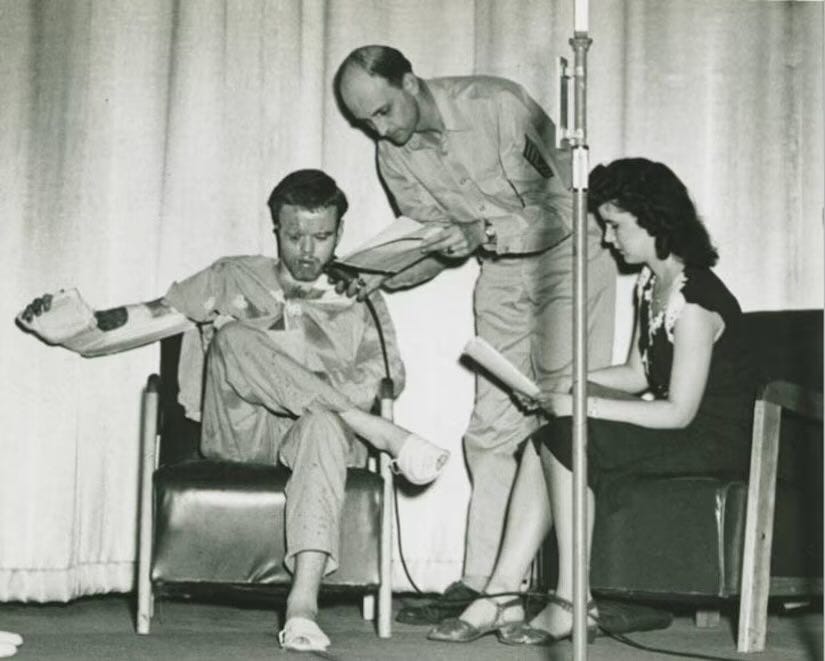
Image: Erwin taking part in a radio broadcast from an Alabama hospital during his recovery.
Despite all the odds, Erwin survived and, after a month, was transferred back to the United States. He remained in the hospital for 30 months, undergoing more than 40 operations, primarily to reconstruct his face. Erwin had lost one eye, an ear, his nose and several fingers but recovered partial sight in one eye and the use of his left arm.
Promoted to Master Sergeant and given an honourable discharge after his recovery, Erwin went on to work as a veterans’ benefits advisor. He and his wife Betty (who he had married shortly before deploying overseas) had four children together. He died in 2002, aged 80.
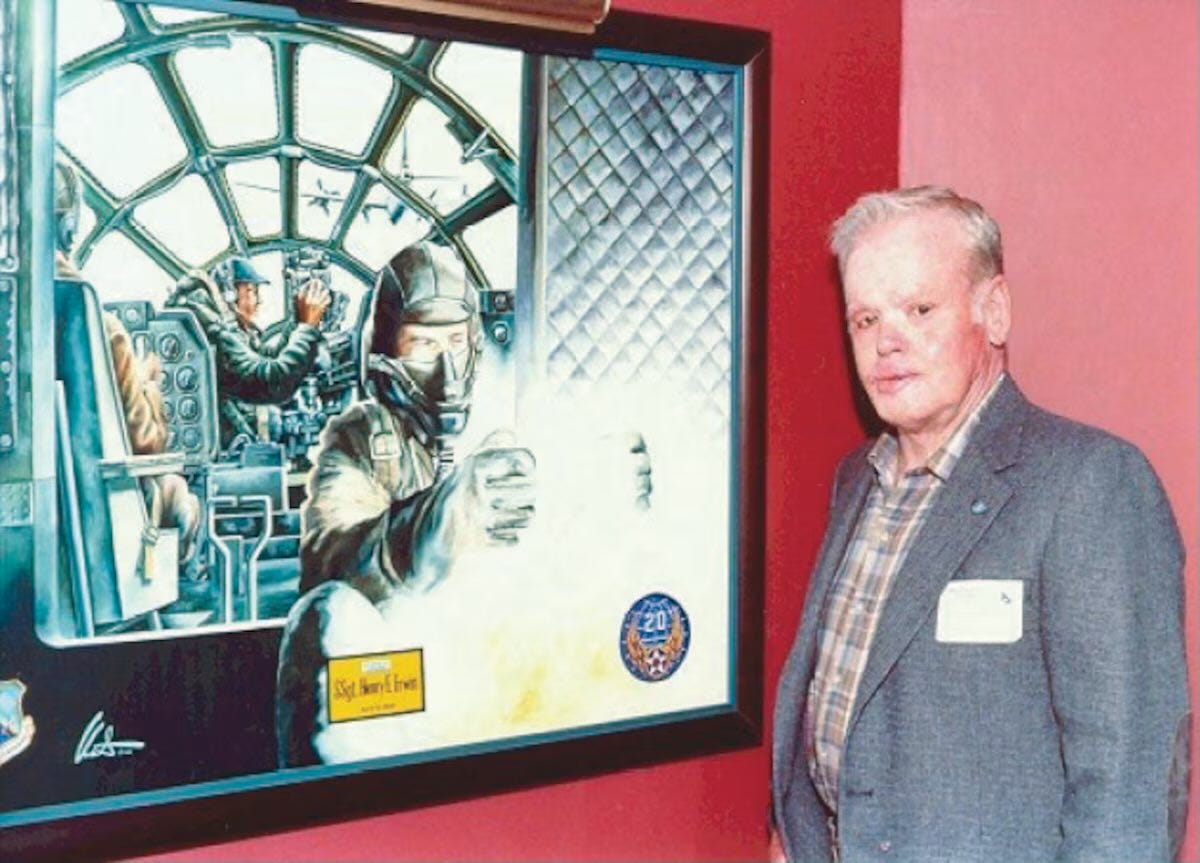
Image: Erwin in later life, standing with a painting depicting his actions of April 12, 1945.
Please Consider Supporting Our Ongoing Efforts to Bring You, Our Valued Viewers, Quality and Interesting Historical Content. Your Financial Support of $5 Per Month Goes A Long Way in Helping Us to Survive and Go Forward. Or If You Would Like You Can Make a One-Time Donation at https://www.buymeacoffee.com/YesterdayToday
Thank You For Considering to Support Us.
Michael
Yesterday Today
Subscribe to get access
Read more of this content when you subscribe today.