Bridal gowns have always been chosen with great care, embodying the wearer’s taste as well as social status. Wedding dresses usually define specific historical eras in their aesthetic, traditional, and even political aspects.
What unites them is brides, along with their families, have always wanted to look their best on the special day. Regardless of age, religion, and culture, the women want to complete their wedding with razzle-dazzle apparel, and that wish can never fade.
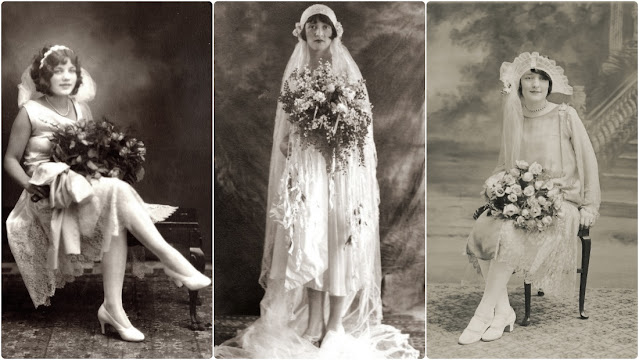
With the Jazz Age entered a new bridal aesthetic: Waist lines and necklines dropped, and a more streamlined silhouette took hold. Gowns featured ornate beading and embroidery, while bouquets were larger than life. Brides favored Juliet headdresses or cloche hats for their veils.
The dresses of the 1920s were typically short with a hem that was in different length in front than behind, usually accompanied by a wedding veil or hat in the cloche-style. Most of the dresses were white, though hues of eggshell, ecru, and ivory white were seen.
Take a look at these cool pics to see what brides looked like in the 1920s.
Subscribe to continue reading
Become a paid subscriber to get access to the rest of this post and other exclusive content.
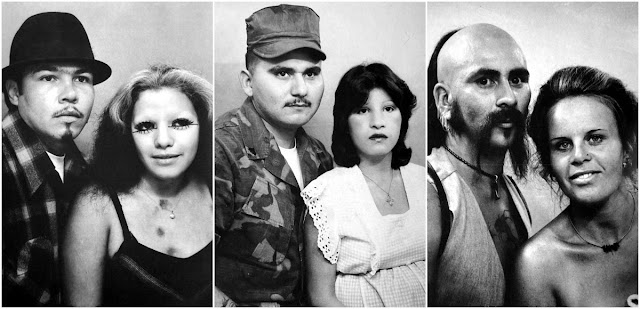
Back in the 1970s, a young man went to work for a carnival concessionaire who, each summer, took a portable photo studio on the road to county fairs across California and the west. For a few dollars, you could have a portrait-sized or larger photo of you and your loved-one to frame and put up on the wall, in only 15 minutes. Pre-digital, it was a good deal.
But what kind of people had their portraits taken at county fairs? People without a lot of money. People who lived on the fringes. People whose life stories were written on their faces. But they wanted a record of who they were, that they could specify and dictate themselves, and they got that at the county fair.
These portraits were made by the young man named Mikkel Aaland in a portable studio that was hauled from fair to fair between 1976 and 1980. The studio was complete with darkroom and a shooting stage and it took a crew of three to run it: a shooter, a front person to handle customers and a darkroom person to develop and print the 4×5 inch negative.
“Because our prices were so reasonable, we often had lines of customers that lasted from ten in the morning to midnight,” Aaland said. “To give you an idea of our volume: on a busy day in Pleasanton, I shot over 450 portraits, averaging three people per print, meaning 1,350 mostly smiling faces.”
Subscribe to continue reading
Become a paid subscriber to get access to the rest of this post and other exclusive content.
Vertigo is a 1958 American film noir psychological thriller film directed and produced by Alfred Hitchcock. The story was based on the 1954 novel D’entre les morts (From Among the Dead) by Boileau-Narcejac. The screenplay was written by Alec Coppel and Samuel A. Taylor.
The film stared James Stewart as former police detective John “Scottie” Ferguson. Scottie retired, rather than face desk-duty, because an incident in the line of duty, which caused him to develop acrophobia (an extreme fear of heights) and vertigo (a false sense of rotational movement). Scottie was hired by an acquaintance, Gavin Elster, as a private investigator to follow Gavin’s wife Madeleine (Kim Novak), who was behaving strangely.
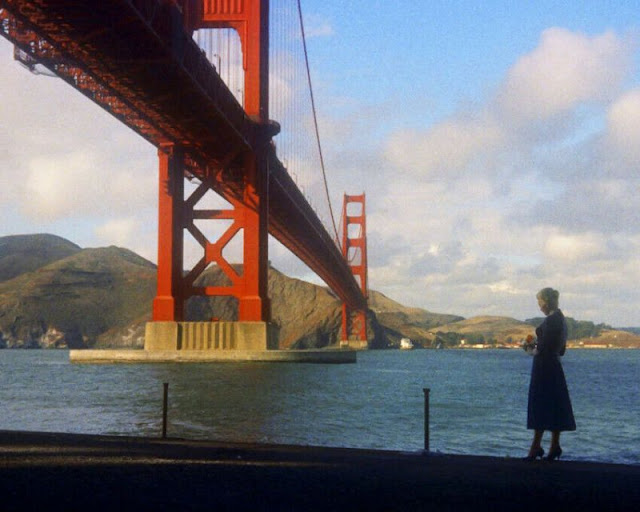
The film was shot on location in the city of San Francisco, California, as well as in Mission San Juan Bautista, Big Basin Redwoods State Park, Cypress Point on 17-Mile Drive, and Paramount Studios in Hollywood. It is the first film to use the dolly zoom, an in-camera effect that distorts perspective to create disorientation, to convey Scottie’s acrophobia. As a result of its use in this film, the effect is often referred to as “the Vertigo effect”.
Vertigo received mixed reviews upon initial release, but is now often cited as a classic Hitchcock film and one of the defining works of his career. Attracting significant scholarly criticism, it replaced Citizen Kane (1941) as the greatest film ever made in the 2012 British Film Institute’s Sight & Sound critics’ poll. The film is often considered one of the greatest films ever made. It has appeared repeatedly in polls of the best films by the American Film Institute, including a 2007 ranking as the ninth-greatest American movie of all time. In 1996, the film underwent a major restoration to create a new 70 mm print and DTS soundtrack.
In 1989, Vertigo was one of the first 25 films selected by the Library of Congress for preservation in the United States National Film Registry for being “culturally, historically, or aesthetically significant”.
Take a look at these vintage photos to see gorgeous portraits of Kim Novak during the filming of Vertigo in 1958.
Subscribe to continue reading
Become a paid subscriber to get access to the rest of this post and other exclusive content.
The Wounded Knee Massacre was one of the most notorious episodes of violence by the United States government against Native Americans.
American soldiers dump the Sioux dead into a mass grave after Wounded Knee.
While most peoples know about the horrors of the Wounded Knee Massacre in South Dakota, few know the backstory to the incident, which involves a Paiute prophet named Wovoka.
In 1889, Wovoka went into a deep trance. When he emerged, he told his tribesmen that he had foreseen the way to paradise. He claimed that if the Native Americans returned to their traditional ways and performed a sacred dance, the buffalo would come back to the plains, the whites would be driven out, and the dead would return to help in the fight. It was this last prophecy that gave the religious movement its name – the Ghost Dance.
The Plains Indians who had once roamed free across the American west had seen their centuries-old way of life disappear within a generation. Confined to small reservations on the lands that had once been theirs and dependent on American bureaucrats to meet even their most basic needs, some Native Americans turned to this new religion in a last hope that their old way of life could be restored.
The movement spread like wildfire amongst the Sioux, where it would set off the final chapter in the great war between whites and natives that had begun when the first European settlers arrived two centuries earlier.
Before the Wounded Knee Massacre, tensions were already high between the Sioux and the Americans by the time the Ghost Dance craze became popular. The government agents who worked on the reservations had no idea of the meaning behind it and became nervous that is was some kind of war dance. One bureaucrat finally became so frightened that he sent a telegram to the government requesting military backup, frantically claiming, “Indians are dancing in the snow and are wild and crazy… we need protection and we need it now.”
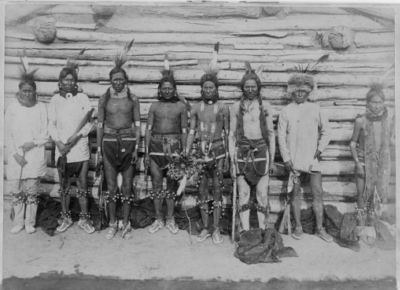
Sioux ceremonial dancers in the late 19th century.
Subscribe to continue reading
Become a paid subscriber to get access to the rest of this post and other exclusive content.
They pilfered banks and mom-and-pop stores, killed police officers — and captivated the nation. But Clyde Barrow and Bonnie Parker, reared in the West Dallas slums, may have been their biggest fans.
Sure, Depression-era America was enamored with the love-struck outlaws, but Hollywood hype, intense media interest and time have ways of distorting reality.
Their life on the run, for the most part, was far from glamorous, historians say.
They were clumsy criminals. They didn’t always rob banks, often resorting to stealing small sums of cash from gasoline stations and food stores, while living out of their stolen cars.
Barrow and Parker were killed on May 23, 1934, on a rural road in Bienville Parish, Louisiana. Hamer, who had begun tracking the gang on February 12, led the posse. He had studied the gang’s movements and found that they swung in a circle skirting the edges of five mid-western states, exploiting the “state line” rule which prevented officers from pursuing a fugitive into another jurisdiction. Barrow was consistent in his movements, so Hamer charted his path and predicted where he would go. The gang’s itinerary centered on family visits, and they were due to see Methvin’s family in Louisiana. In case they were separated, Barrow had designated Methvin’s parents’ residence as a rendezvous, and Methvin became separated from the rest of the gang in Shreveport. Hamer’s posse was composed of six men: Texas officers Hamer, Hinton, Alcorn, and B.M. “Maney” Gault, and Louisiana officers Henderson Jordan and Prentiss Morel Oakley.
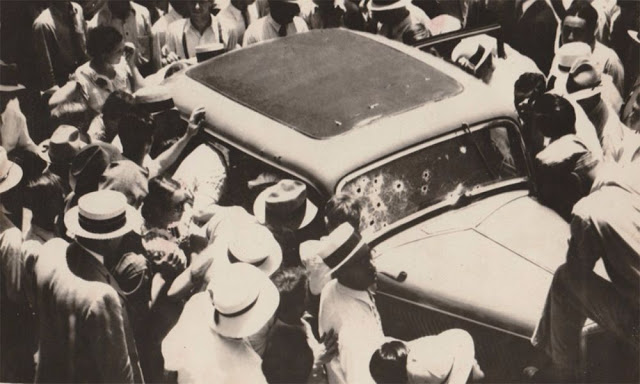
1934 Ford Deluxe V-8 after the ambush with the bodies of Barrow and Parker in the front seats On May 21, the four posse members from Texas were in Shreveport when they learned that Barrow and Parker were planning a visit to Bienville Parish that evening with Methvin. The full posse set up an ambush along Louisiana State Highway 154 south of Gibsland toward Sailes. Hinton recounted that their group was in place by 9 pm, and waited through the whole of the next day (May 22) with no sign of the perpetrators. Other accounts said that the officers set up on the evening of May 22.
The gunfire was so loud that the posse suffered temporary deafness all afternoon At approximately 9:15 am on May 23, the posse were still concealed in the bushes and almost ready to give up when they heard the Ford V8 Barrow was driving approaching at high speed. In their official report, they stated they had persuaded Ivy Methvin to position his truck along the shoulder of the road that morning. They hoped Barrow would stop to speak with him, putting his vehicle close to the posse’s position in the bushes. When Barrow fell into the trap, the lawmen opened fire while the vehicle was still moving. Oakley fired first, probably before any order to do so. Barrow was killed instantly by Oakley’s head shot, and Hinton reported hearing Parker scream. The officers fired about 130 rounds, emptying their weapons into the car. Many of Bonnie and Clyde’s wounds would have been fatal, yet the two had survived several bullet wounds over the years in their confrontations with the law.
The bullet-ridden Deluxe, originally owned by Ruth Warren of Topeka, Kansas, was later exhibited at carnivals and fairs then sold as a collector’s item; in 1988, the Primm Valley Resort and Casino in Las Vegas purchased it for some $250,000. Barrow’s enthusiasm for cars was evident in a letter he wrote earlier in the spring of 1934, addressed to Henry Ford himself: “While I still have got breath in my lungs I will tell you what a dandy car you make. I have drove Fords exclusively when I could get away with one. For sustained speed and freedom from trouble the Ford has got every other car skinned and even if my business hasn’t been strictly legal it don’t hurt anything to tell you what a fine car you got in the V-8.”
According to statements made by Hinton and Alcorn:
Each of us six officers had a shotgun and an automatic rifle and pistols. We opened fire with the automatic rifles. They were emptied before the car got even with us. Then we used shotguns. There was smoke coming from the car, and it looked like it was on fire. After shooting the shotguns, we emptied the pistols at the car, which had passed us and ran into a ditch about 50 yards on down the road. It almost turned over. We kept shooting at the car even after it stopped. We weren’t taking any chances.
Actual film footage taken by one of the deputies immediately after the ambush show 112 bullet holes in the vehicle, of which around one quarter struck the couple. The official coroner’s report by parish coroner Dr. J. L. Wade listed seventeen entrance wounds on Barrow’s body and twenty-six on that of Parker, including several headshots on each, and one that had severed Barrow’s spinal column. Undertaker C.F. “Boots” Bailey had difficulty embalming the bodies because of all the bullet holes.
The perpetrators had more than a dozen guns and several thousand rounds of ammunition in the Ford, including 100 20-round BAR magazines The deafened officers inspected the vehicle and discovered an arsenal of weapons, including stolen automatic rifles, sawed-off semi-automatic shotguns, assorted handguns, and several thousand rounds of ammunition, along with fifteen sets of license plates from various states. Hamer stated: “I hate to bust the cap on a woman, especially when she was sitting down, however if it wouldn’t have been her, it would have been us.” Word of the deaths quickly got around when Hamer, Jordan, Oakley, and Hinton drove into town to telephone their respective bosses. A crowd soon gathered at the spot. Gault and Alcorn were left to guard the bodies, but they lost control of the jostling, curious throng; one woman cut off bloody locks of Parker’s hair and pieces from her dress, which were subsequently sold as souvenirs. Hinton returned to find a man trying to cut off Barrow’s trigger finger, and was sickened by what was occurring. Arriving at the scene, the coroner reported:
Nearly everyone had begun collecting souvenirs such as shell casings, slivers of glass from the shattered car windows, and bloody pieces of clothing from the garments of Bonnie and Clyde. One eager man had opened his pocket knife, and was reaching into the car to cut off Clyde’s left ear.
Hinton enlisted Hamer’s help in controlling the “circus-like atmosphere” and they got people away from the car.
The posse towed the Ford, with the dead bodies still inside, to the Conger Furniture Store & Funeral Parlor in downtown Arcadia, Louisiana. Preliminary embalming was done by Bailey in a small preparation room in the back of the furniture store, as it was common for furniture stores and undertakers to share the same space. The population of the northwest Louisiana town reportedly swelled from 2,000 to 12,000 within hours. Curious throngs arrived by train, horseback, buggy, and plane. Beer normally sold for 15 cents a bottle but it jumped to 25 cents, and sandwiches quickly sold out. Barrow had been shot in the head by a .35 Remington Model 8. Henry Barrow identified his son’s body, then sat weeping in a rocking chair in the furniture section.
H.D. Darby was an undertaker at the McClure Funeral Parlor and Sophia Stone was a home demonstration agent, both from nearby Ruston. Both of them came to Arcadia to identify the bodies[108] because the Barrow gang had kidnapped them[110] in 1933. Parker reportedly had laughed when she discovered that Darby was an undertaker. She remarked that maybe someday he would be working on her;[108] Darby did assist Bailey in the embalming. (Wikipedia)
These rare photographs of the ambush aftermath feature the get away car, Texas Ranger Captain, Frank Hamer, and a post mortem of the couple. Also included is an earlier photograph, “Bonnie & Clyde, Kissing & Embracing.”
Barrow’s stolen Ford V8, 1934
Subscribe to continue reading
Become a paid subscriber to get access to the rest of this post and other exclusive content.
Dangerous Years is a 1947 American drama film produced by Sol M. Wurtzel, directed by Arthur Pierson. Marilyn Monroe makes her first on screen appearance as Evie, the waitress in the restaurant scene.
Actually, her voice previously appeared in the film The Shocking Miss Pilgrim, which was released months earlier, as an uncredited voice as a telephone operator.
These rare pictures captured Monroe in some scenes of Dangerous Years, and during her acting lessons with coach Helena Sorell to prepare for her role in this film.
Marilyn Monroe (born Norma Jeane Mortenson; June 1, 1926 – August 4, 1962) was an American actress, model and singer. Famous for playing comedic “blonde bombshell” characters, she became one of the most popular sex symbols of the 1950s and early 1960s and was emblematic of the era’s sexual revolution. She was a top-billed actress for a decade, and her films grossed $200 million (equivalent to $2 billion in 2020) by the time of her death in 1962. Long after her death, Monroe remains a major icon of pop culture. In 1999, the American Film Institute ranked her sixth on their list of the greatest female screen legends from the Golden Age of Hollywood.
Born and raised in Los Angeles, Monroe spent most of her childhood in foster homes and an orphanage; she married at age sixteen. She was working in a factory during World War II when she met a photographer from the First Motion Picture Unit and began a successful pin-up modeling career, which led to short-lived film contracts with 20th Century Fox and Columbia Pictures. After a series of minor film roles, she signed a new contract with Fox in late 1950. Over the next two years, she became a popular actress with roles in several comedies, including As Young as You Feel and Monkey Business, and in the dramas Clash by Night and Don’t Bother to Knock. She faced a scandal when it was revealed that she had posed for nude photographs prior to becoming a star, but the story did not damage her career and instead resulted in increased interest in her films.
By 1953, Monroe was one of the most marketable Hollywood stars; she had leading roles in the film noir Niagara, which overtly relied on her sex appeal, and the comedies Gentlemen Prefer Blondes and How to Marry a Millionaire, which established her star image as a “dumb blonde”. The same year, her nude images were used as the centerfold and on the cover of the first issue of Playboy. She played a significant role in the creation and management of her public image throughout her career, but she was disappointed when she was typecast and underpaid by the studio. She was briefly suspended in early 1954 for refusing a film project but returned to star in The Seven Year Itch (1955), one of the biggest box office successes of her career.
When the studio was still reluctant to change Monroe’s contract, she founded her own film production company in 1954. She dedicated 1955 to building the company and began studying method acting under Lee Strasberg at the Actors Studio. Later that year, Fox awarded her a new contract, which gave her more control and a larger salary. Her subsequent roles included a critically acclaimed performance in Bus Stop (1956) and her first independent production in The Prince and the Showgirl (1957). She won a Golden Globe for Best Actress for her role in Some Like It Hot (1959), a critical and commercial success. Her last completed film was the drama The Misfits (1961).
Monroe’s troubled private life received much attention. She struggled with addiction and mood disorders. Her marriages to retired baseball star Joe DiMaggio and to playwright Arthur Miller were highly publicized, and both ended in divorce. On August 4, 1962, she died at age 36 from an overdose of barbiturates at her Los Angeles home. Her death was ruled a probable suicide. (Wikipedia)
Subscribe to continue reading
Become a paid subscriber to get access to the rest of this post and other exclusive content.
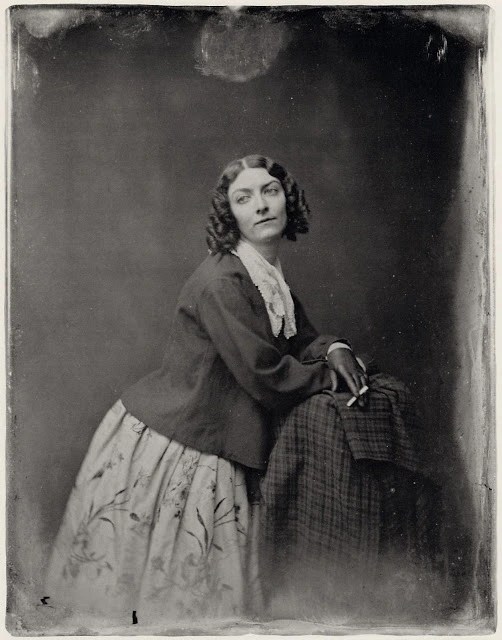
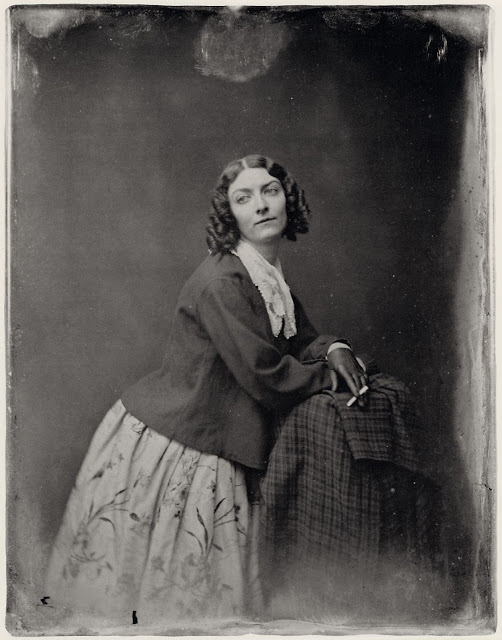
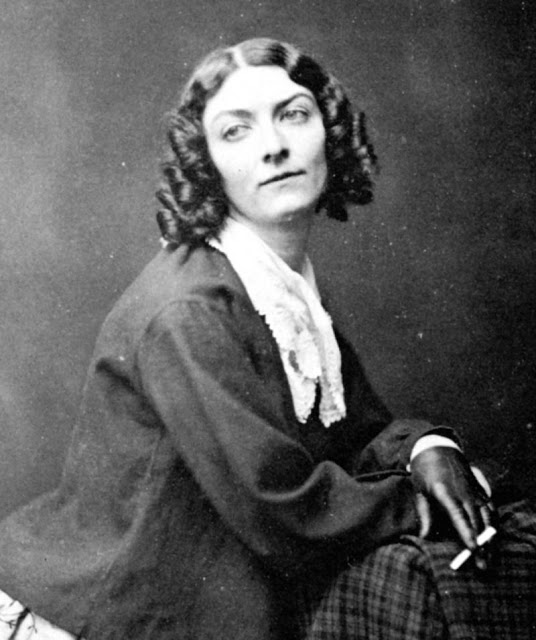
Considered to be the first photograph of a woman smoking, this is Lola Montez’s portrait by Southworth & Hawes.
A savvy self-promoter, Lola Montez is the first woman ever to be photographed smoking. She made sure the cigarette is the focus of the picture. (Metropolitan Museum of Art)
This is Lola’s third and most provocative and widely recognized daguerreotype, the image of her smoking. In Boston in 1852, she was welcomed to the daguerreotype studio of Southworth and Hawes. The pair captured daguerreotypes of key intellectual and artistic personalities, thus, Lola’s appointment in their studio was a clear signal of her status as a celebrity. The most well known of their daguerreotypes from this sitting shows Lola standing and resting her arms on a fabric covered table. Her wrists are crossed, a gesture of elegance, but she holds a cigarette between her gloved fingers, a particularly controversial detail given that it was not proper for women to smoke in public, let alone be photographed participating in such a gentlemanly activity.
Her facial expression in the portrait is one of indifference and hardness, her cocked head and her arched eyebrows creating a sense of intrigue. Her sharp facial features are softened slightly by her dark brown ringlets on either side of her face and her lace scarf. This intricate lace ornamental fabric around her collar contrasts starkly with her dark overcoat, and the lace and the cigarette are the two brightest whites in the image, drawing the eye to these contrasting symbols of femininity and hardness. The two patterned fabrics, the large floral decoration on her skirt and the plaid fabric on which she rests her hands serve also to represent soft femininity and stiffness, respectively. Her fashionable clothing and hairstyle give her the sense of being genteel and respectable, but this impression is countered by her brazen depiction of herself as an uninhibited smoker.
Subscribe to continue reading
Become a paid subscriber to get access to the rest of this post and other exclusive content.
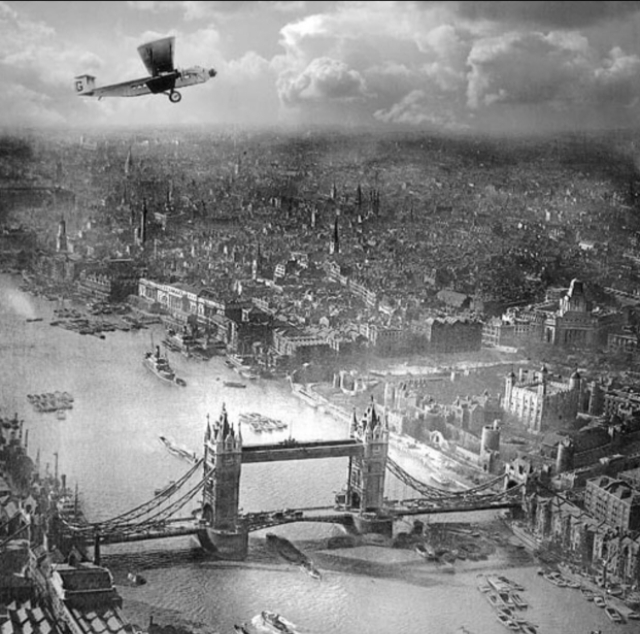
Creating spectacular images in the face of technical and physical adversity, Captain Alfred G Buckham (1879-1956) was the foremost aerial photographer of his day. Between 1908 to the early 1930s, Buckham created aerial portraits that are awe-inspiring, poetic and works of technical brilliance.
During the First World War he was Captain in the Royal Naval Air Service. However, by 1919 he was discharged as disabled, the result of nine crashes that left him breathing through a tube in his neck for the rest of his life – but that didn’t stop him risking loss of consciousness to capture spectacular images.
These extraordinary aerial shots of London were taken by Buckham in the 1920s with a heavy plate camera, leaning perilously out of the aeroplane, as he told, “I always stand up to make an exposure and, taking the precaution to tie my right leg to the seat, I am free to move about rapidly, and easily, in any desired direction; and loop the loop and indulge in other such delights, with perfect safety.”
Subscribe to continue reading
Become a paid subscriber to get access to the rest of this post and other exclusive content.
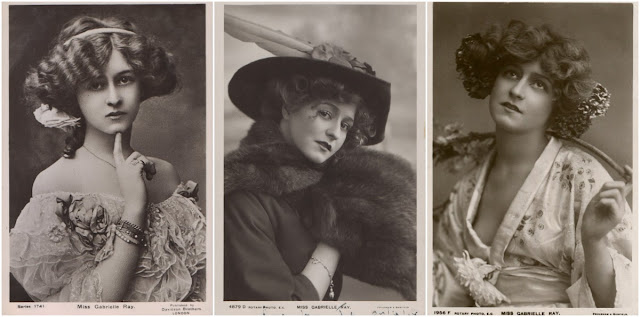
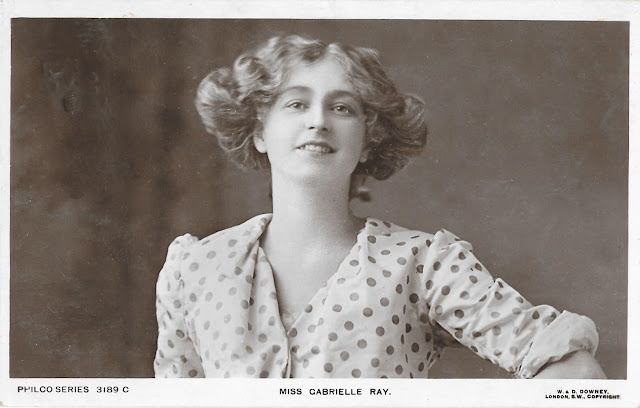
Gabrielle Ray was an English stage actress, dancer and singer, best known for her roles in Edwardian musical comedies. She was considered one of the most beautiful actresses on the London stage and became one of the most photographed women in the world.
Gabrielle Ray, real name Gabrielle Elizabeth Clifford Cook, was born in Stockport, Cheshire (UK) on April 28, 1883. Her stage career began at the delicate age of only ten years old, playing a succession of juvenile roles in the many theaters that then existed in London’s West End. Her debut appears to have been in the musical play Miami at the Royal Princess’s Theatre, Oxford Street, in October 1893.
The following year she appeared in A Celebrated Case at the Elephant and Castle, a particularly tough venue which catered exclusively for the working classes who were not slow to show their appreciation, or vent their disapproval of what they saw. Gabrielle played the daughter of the wronged heroine of the piece.
Her first big break came when she was spotted by touring company manager Ben Greet whilst performing in the pantomime Sinbad the Sailor at the Hammersmith Lyric Opera House in 1899. Impressed by her talent, Greet signed up the 16 year old to play Mamie Clancy in his touring companies production of The Belle of New York, a musical comedy. This was followed by a provincial tour in another Greet production, playing Dolly Twinkle in The Casino Girl before returning to the Lyric in 1902 play the lead in the pantomime Little Red Riding Hood.
By now, at age 19, the young girl had grown into a stunningly attractive young woman. A vision of loveliness with bright blue eyes and golden blonde hair who enchanted her audience from the moment she appeared on stage. Present at the opening night was the famous theatre manager George Edwardes, whose Gaiety Theatre was one of London’s top venues. Recognizing her as a star in the making Edwardes wasted no time in contracting her that very night to join his company on completion of her engagement at the Lyric.
Gabrielle’s first engagement for Edwardes was as understudy to Gertie Millar, only four years her senior but already a renowned musical/comedy performer, in ‘The Toreador’ at the Gaiety. When the Gaiety closed for refurbishment in the Autumn of 1903, Edwardes engaged Gabrielle to take over from Letty Lind to end the run of The Girl from Kays at the Apollo.
When the Gaiety reopened on October 26, 1903, with a royal premiere of The Orchid, attended by Their Majesties King Edward VI and Queen Alexandra, Gertie Millar again played the lead whilst Gabrielle returned not as understudy, but to play the major role of Thisbe which included a solo song-and-dance number that Gabrielle made one of the highlights of the show.
By now Gabrielle’s success was assured and she continued to perform for Edwardes in a string of successful productions, including his biggest hit, a reworking of Franz Lehar’s The Merry Widow which opened at Edwardes second theatre, Daly’s on June 8, 1907. Lily Elsie played the lead but Gabrielle’s major role as Frou Frou included a whirling dance routine with handstands and high kicks performed on a table held head-high by four men that she again made into a show-stopper.
In 1912 Gabrielle announced her retirement from the stage in order to marry Eric Loder. Thousands of spectators who turned up to see the spectacle at St Edwards Roman Catholic Church in Windsor on February 29, 1912 were disappointed when the bride failed to arrive and the wedding was cancelled. Gabrielle later explained that she could not go through with the wedding in front of the mass crowd of waiting newspaper reporters and socialites. The couple were married in a private ceremony the next day. It was not to be a match made in heaven, however, and she split from him after only two years.
Following the break-up of her marriage Gabrielle returned to the stage in 1915, but the Theatre was changing as cinema seduced its audiences away. The death that year of her mentor George Edwardes, and her own emotional scars from her broken marriage affected her deeply. Still, she appeared in two more major West End productions, Betty at Daly’s and Flying Colours at The Hippodrome before ending her career appearing spasmodically in provincial pantomimes and variety tours.
At the height of her fame Gabrielle had been a much admired and frequently photographed musical comedy star who was feted as being “the most beautiful woman in the United Kingdom.” Never a brilliant actress, which had limited her to mainly supporting roles, it was her beauty and her dancing which had brought her fame and fortune. She had a graceful fluidity coupled with an acrobatic prowess that made her dancing nothing less than sensational. She was also a shrewd businesswoman, when she and Lily Elsie each signed exclusive photo contracts with Foulsham and Banfield (who produced the Rotary Photographic postcards series) Gabrielle negotiated for herself four times the commission paid to Elsie, despite being the lesser star.
Tragically, as her career waned a damaging combination of depression and alcoholism brought about a total breakdown in health. She was helped by the financial support which she continued to receive as part of the marriage settlement from her ex-husband, Eric loder, but in 1936 she suffered a total nervous breakdown which led to her remaining institutionalized in a mental hospital for nearly forty years.
Gabrielle Ray died, childless and alone, at the age of 90 on May 21, 1973.
Subscribe to continue reading
Become a paid subscriber to get access to the rest of this post and other exclusive content.