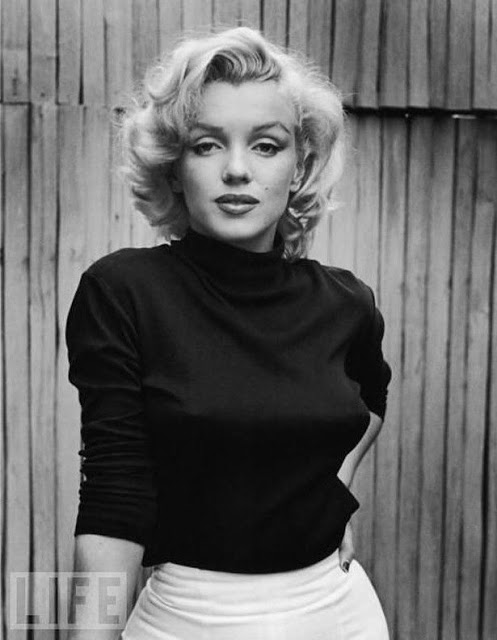
50 Classic LIFE Magazine Celebrity Photos

Subscribe to get access

Read more of this content when you subscribe today.

Life was an American magazine published weekly from 1883 to 1972, as an intermittent “special” until 1978, and as a monthly from 1978 until 2000. During its golden age from 1936 to 1972, Life was a wide-ranging weekly general-interest magazine known for the quality of its photography.

Life was independently published for its first 53 years until 1936 as a general-interest and light entertainment magazine, heavy on illustrations, jokes, and social commentary. It featured some of the most notable writers, editors, illustrators and cartoonists of its time: Charles Dana Gibson, Norman Rockwell and Jacob Hartman Jr. Gibson became the editor and owner of the magazine after John Ames Mitchell died in 1918. During its later years, the magazine offered brief capsule reviews (similar to those in The New Yorker) of plays and movies currently running in New York City, but with the innovative touch of a colored typographic bullet resembling a traffic light, appended to each review: green for a positive review, red for a negative one, and amber for mixed notices.

In 1936, Time publisher Henry Luce bought Life, only wanting its title: he greatly re-made the publication. Life became the first all-photographic American news magazine, and it dominated the market for several decades. The magazine sold more than 13.5 million copies a week at one point. Possibly the best-known photograph published in the magazine was Alfred Eisenstaedt’s photograph of a nurse in a sailor’s arms, taken on August 14, 1945, as they celebrated Victory over Japan Day in New York City. The magazine’s role in the history of photojournalism is considered its most important contribution to publishing. Life’s profile was such that the memoirs of President Harry S. Truman, Prime Minister Winston Churchill and General Douglas MacArthur were all serialized in its pages.

After 2000, Time Inc. continued to use the Life brand for special and commemorative issues. Life returned to regularly scheduled issues when it became a weekly newspaper supplement from 2004 to 2007. The website life.com, originally one of the channels on Time Inc.’s Pathfinder service, was for a time in the late 2000s managed as a joint venture with Getty Images under the name See Your World, LLC. On January 30, 2012, the Life.com URL became a photo channel on Time.com. (Wikipedia)

Subscribe to continue reading

Become a paid subscriber to get access to the rest of this post and other exclusive content.

35 Amazing Colorized Historical Photos

Fanny Brice 1915
Coventry, England during the Blitz, 1940.
Milkman, Fred Morley, 1940.
9-year-old Johnnie and the shucking-boss, in Dunbar, Louisiana, March 1911
Michael McNelis, age 8, a newsboy, 1910
Hyman Alpert, age 12, a newsboy, 1909, in New Haven, Connecticut
Suffragette Mabel Capper was arrested in Bow Street in 1912. She wears the colours of the WSPU, with a purple, white and green medal ribbon
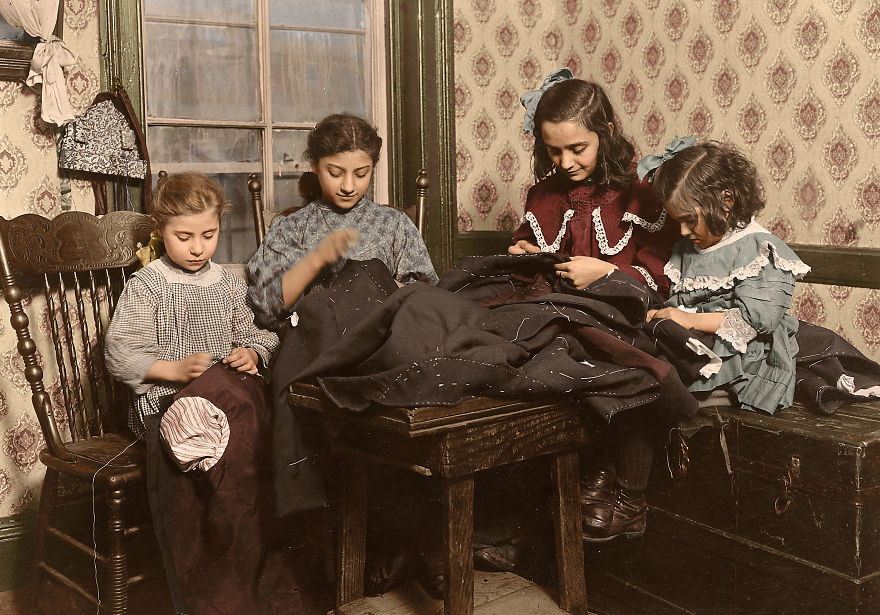
This photo show garment workers Katrina De Cato (6), Franco Brezoo (11) Maria Attreo (12) and her sister Mattie Attreo (5) at 4pm, 26th January 1910 in New York City
A female munitions worker in a British factory during World War One
One of the underprivileged, Hull House, Chicago 1910
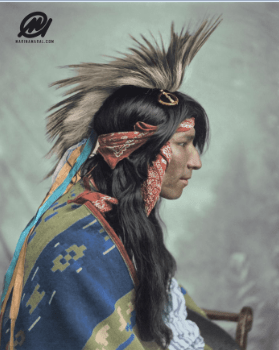
Cree Man, Maple Creek, Saskatchewan, Canada, 1903
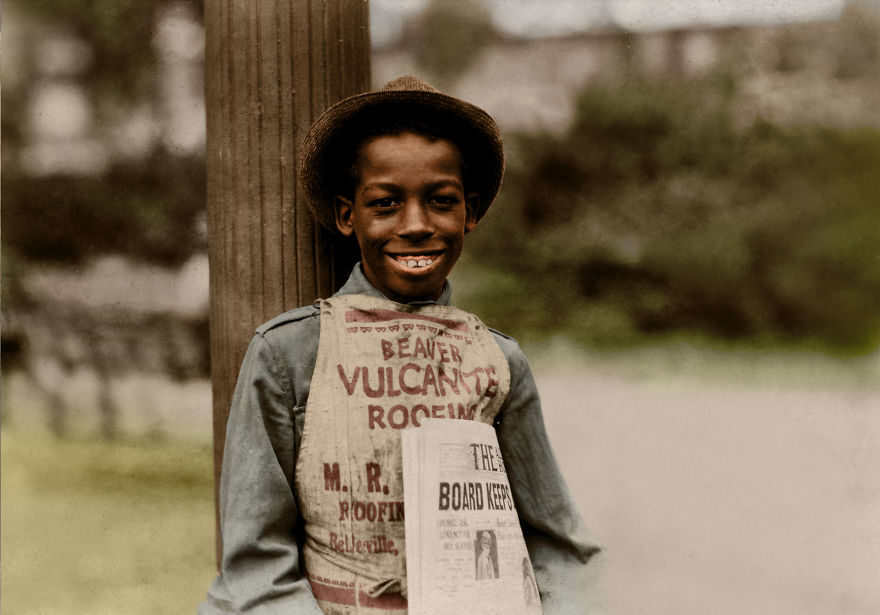
Roland, an 11 year old newsboy from Newark, New Jersey, 1910
Three newsie’s, St. Louis, Missouri US, 1910
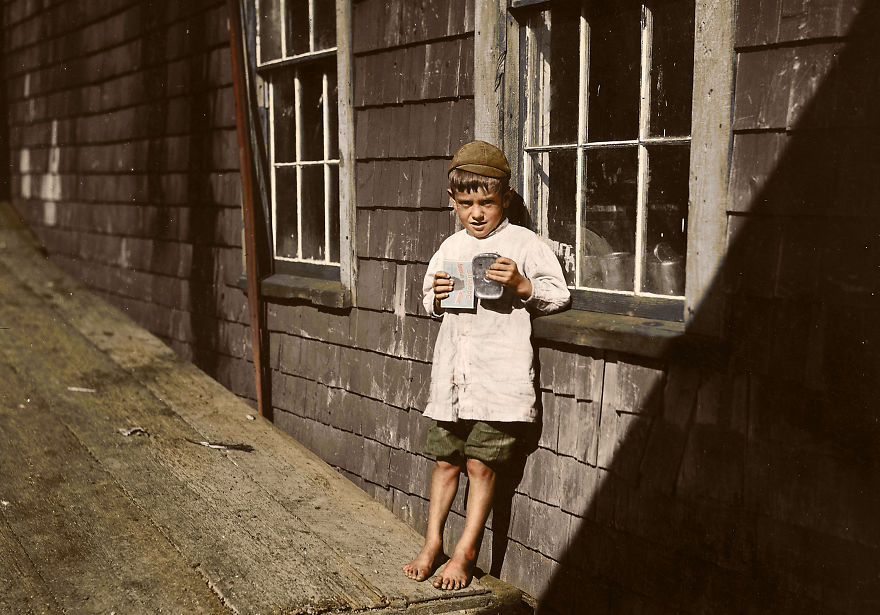
5 year old Preston, a young cartooner in Eastport, Maine, 17th August 1911
Lewis Powell. He Was A Conspirator With John Wilkes Booth, Who Assassinated President Abraham Lincoln
Marie Sklodowska Curie
Child labor, Finland 1943
A young driver in the Brown Mine, West Virginia, in September of 1908
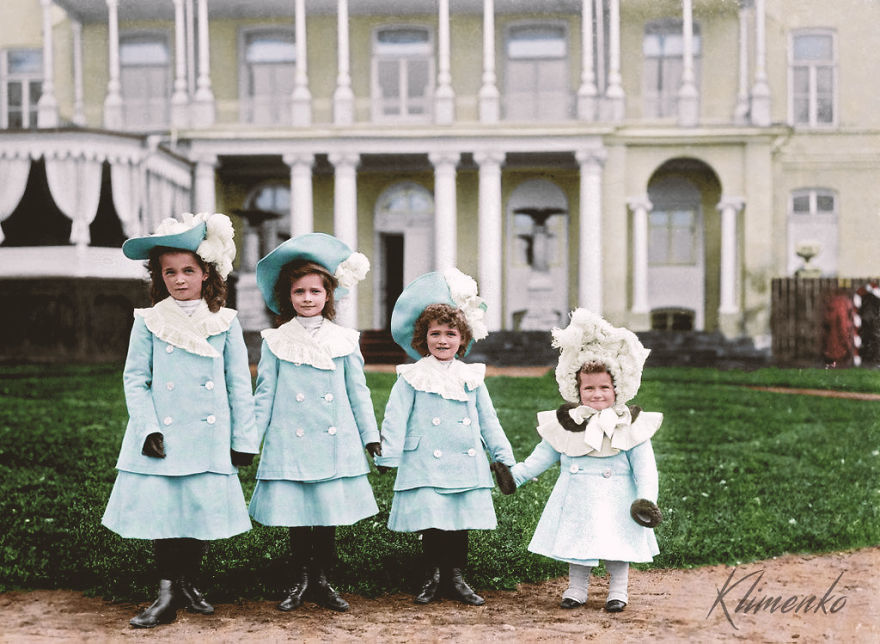
Grand Duchess’ Olga, Tatiana, Maria and Anastasia Nikolaevna Romanov of Russia in Darmstadt, Hesse, 1903
Russian sniper Lyudmila Pavlichenko, also known as Lady Death, reportedly killed over 300 Nazi soldiers in less than a year of combat
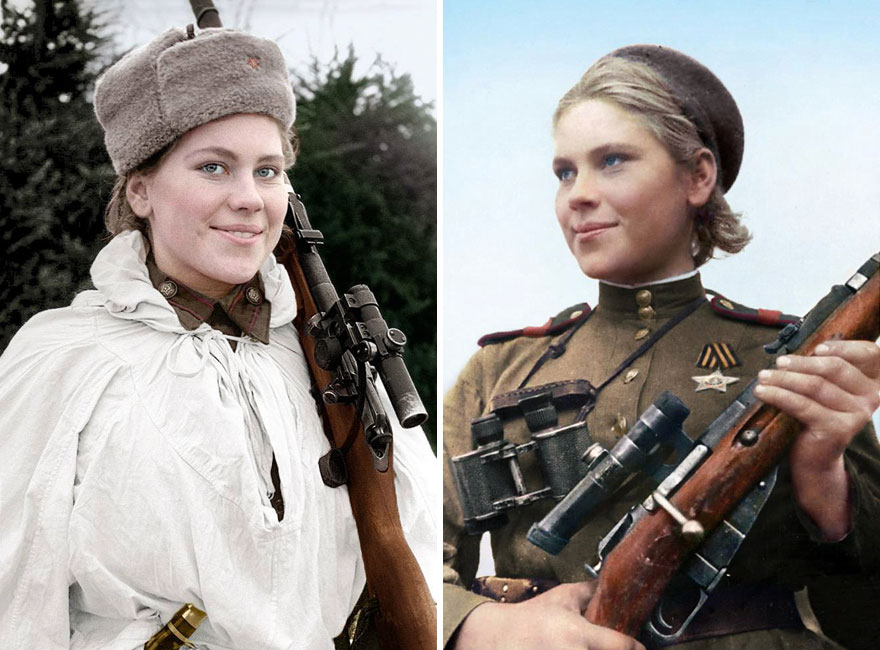
Roza Shanina, her comrade, killed a total of 59 Nazis at the tender age of 16, and was dubbed “the unseen terror of East Prussia”
Union soldiers from the color guard of the 7th Illinois Volunteer Infantry Regiment, posing with their flags and Henry repeating rifles. 1862
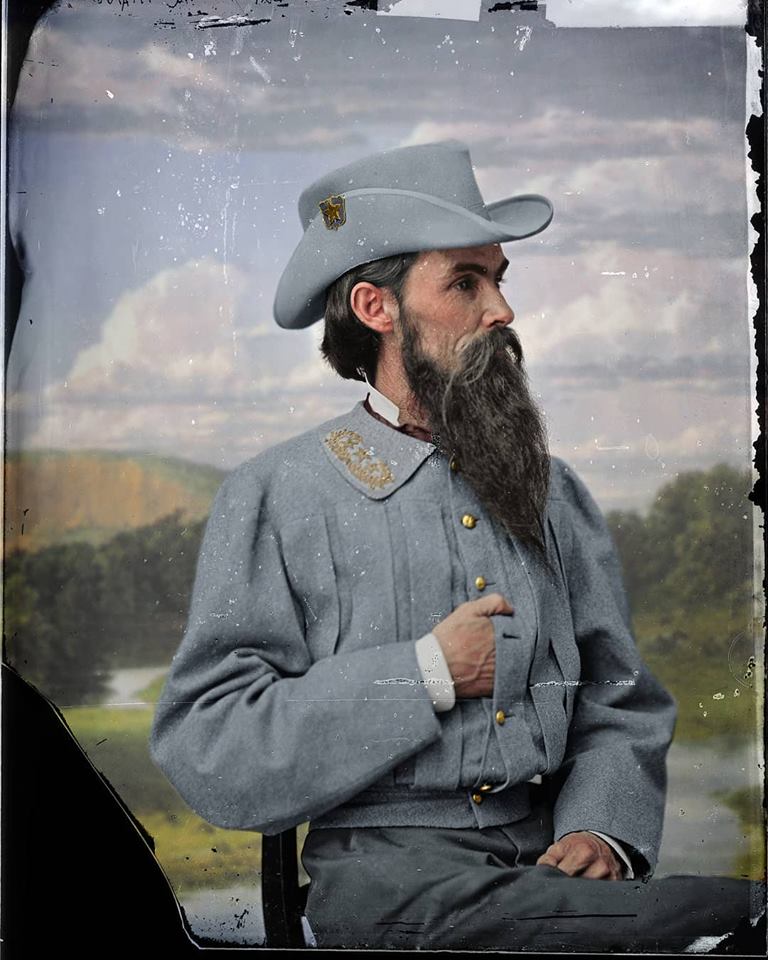
Major General William Mahone, 1863
Brevet Major General George Armstrong Custer, 1865
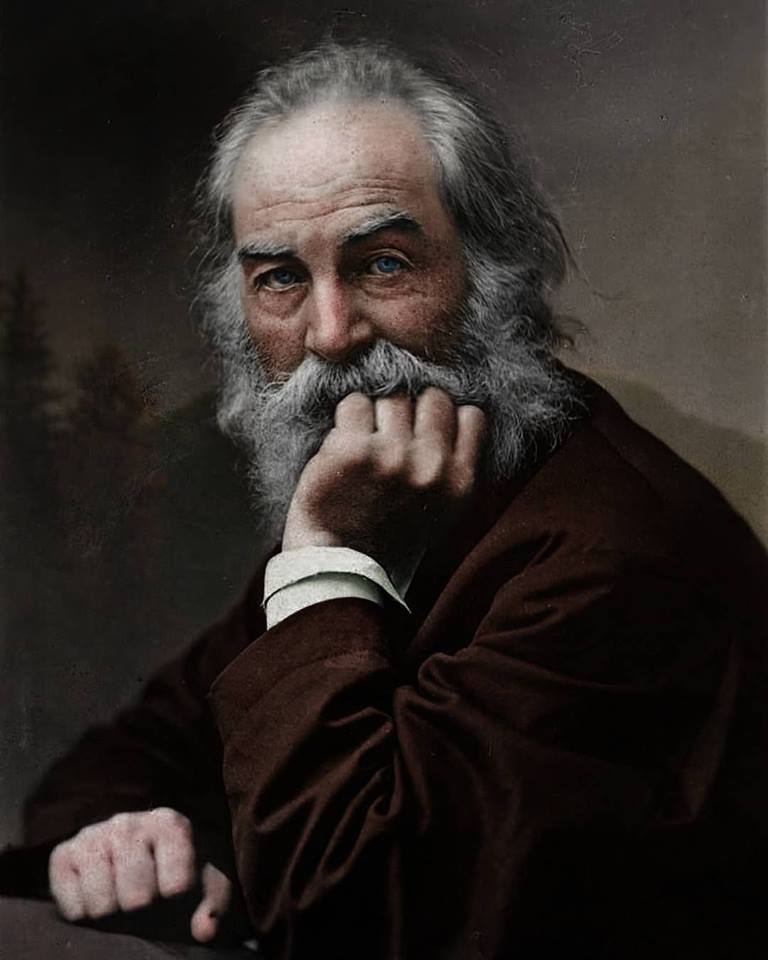
American poet, essayist, and journalist Walt Whitman in 1869.
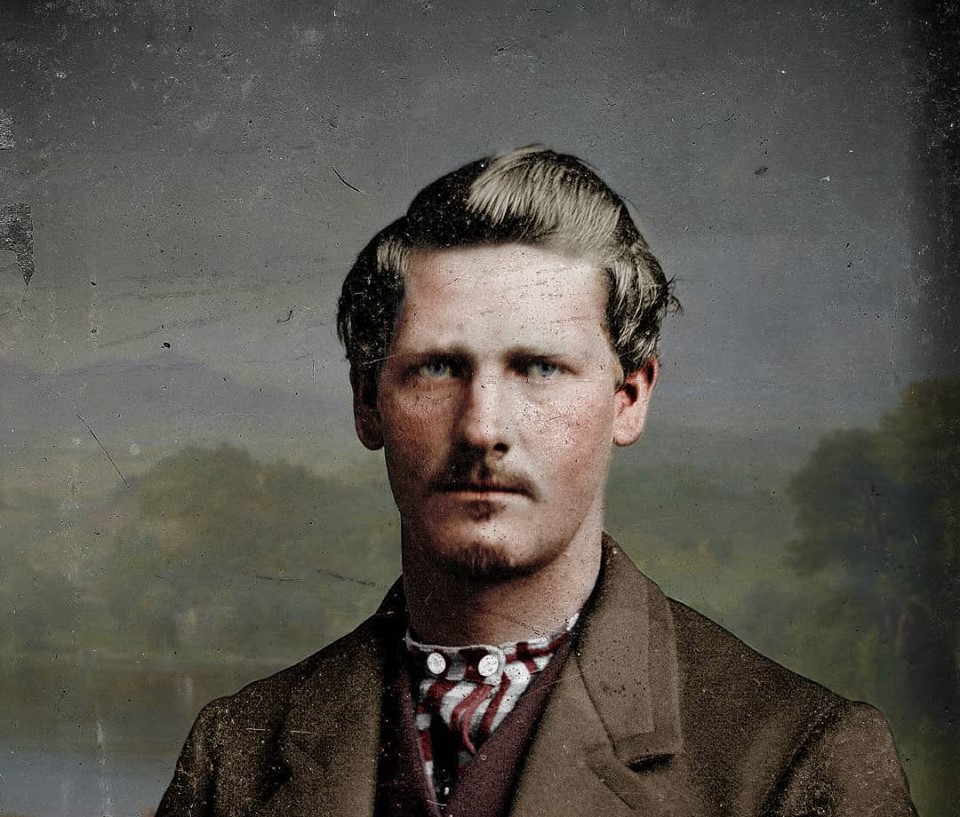
Wyatt Earp at age 21 in 1869
The infamous gangsters Ronnie and Reggie Kray, 1969
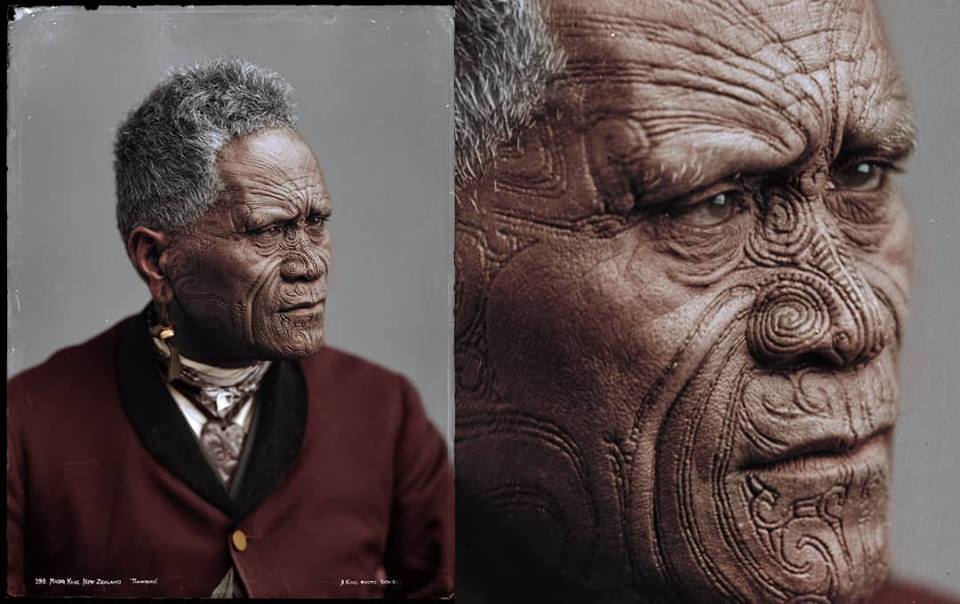
A leader and a visionary, the New Zealand Maori King Tawhiao photographed in 1884.
Silent film star Jacqueline Medura Logan in 1924.
Lauren Bacall
Dorothy Sebastian & Joan Crawford 1927.
Queen Victoria with Tsar Nicholas II of Russia. Seated on the left is Tsarina Alexandra holding her baby daughter Grand Duchess Olga. (Balmoral Castle, 1896).
A U.S. Marine reaches through the barbed wire of a civilian containment area to give a young Japanese boy candy during the Battle of Tinian. 1944
Photograph of Queen Victoria (1819-1901) seated with her two Indian servants Mustafa (fl. 1890) and Chidda (fl. 1890) standing behind her in full uniform with medals. 1897
Pte. T.W. Holmes, V.C. (centre), 4th Canadian Mounted Regiment, 21 Jan 1918

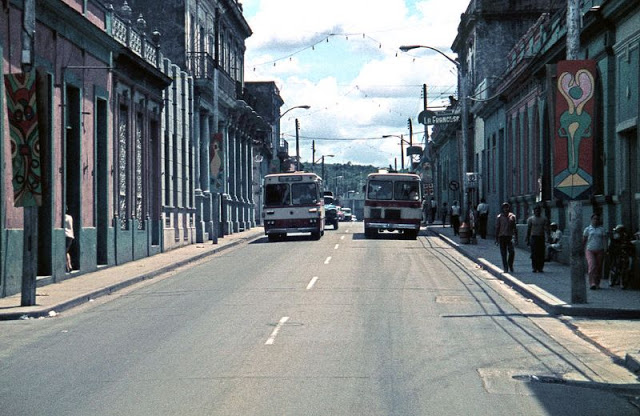
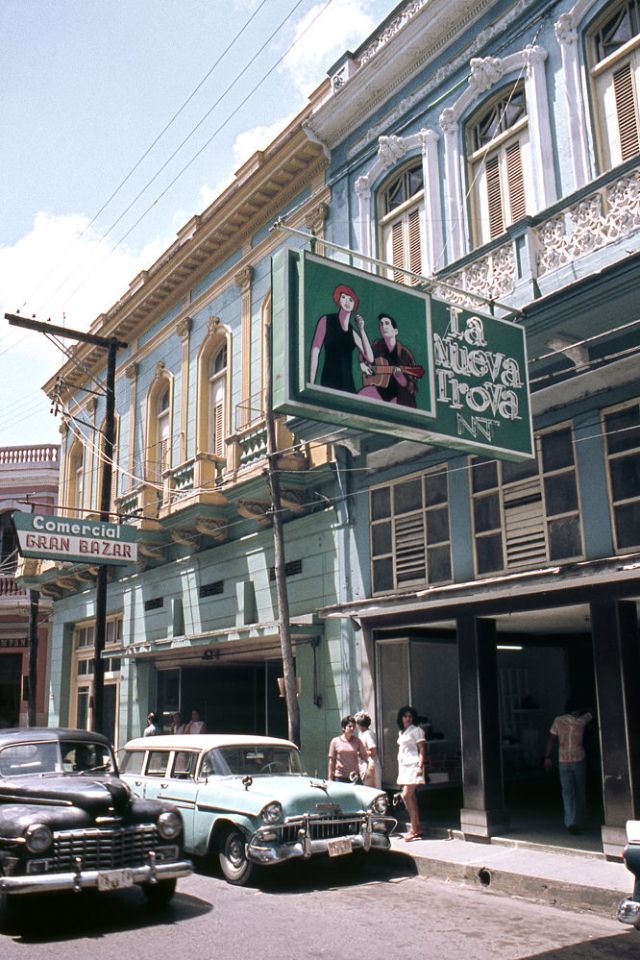
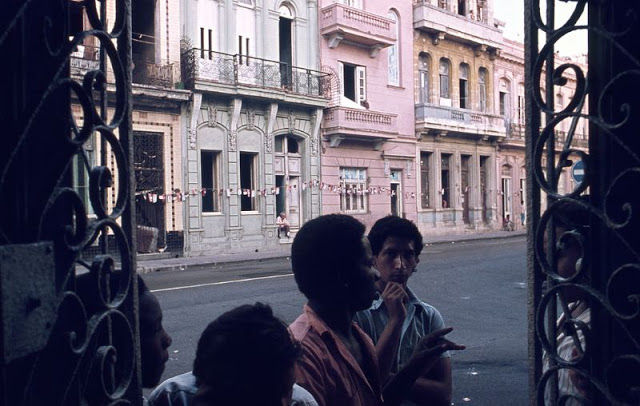
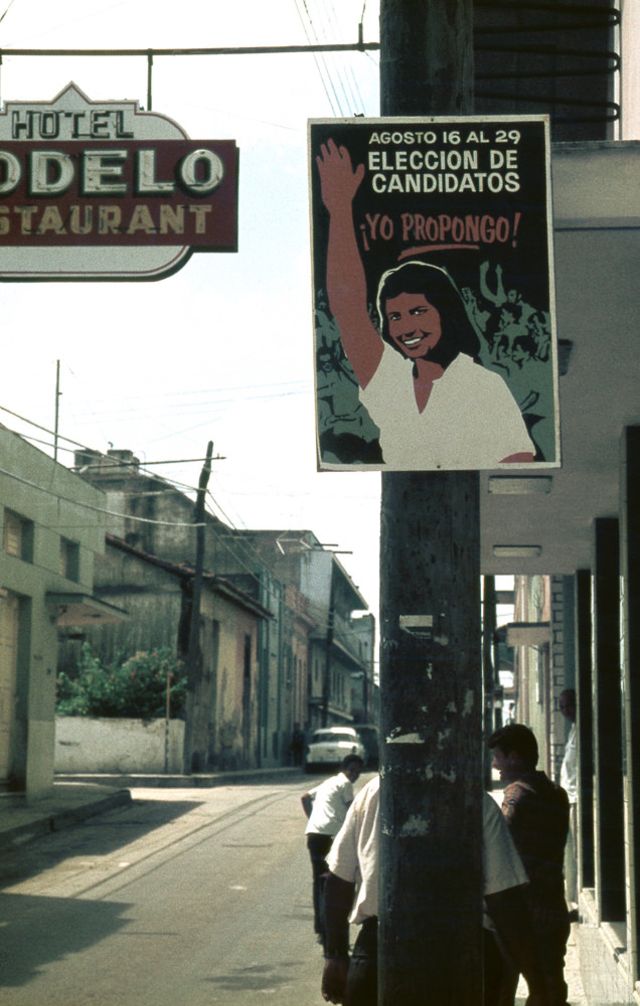
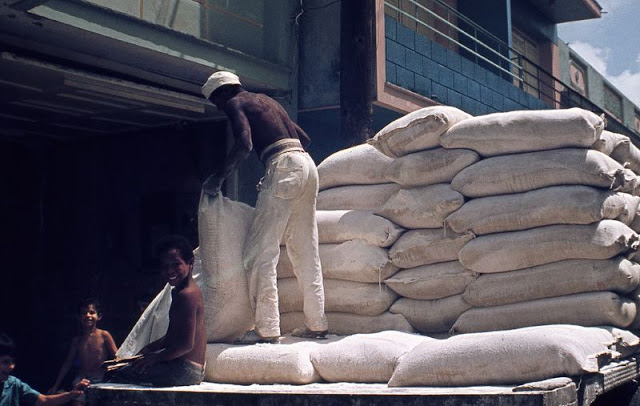
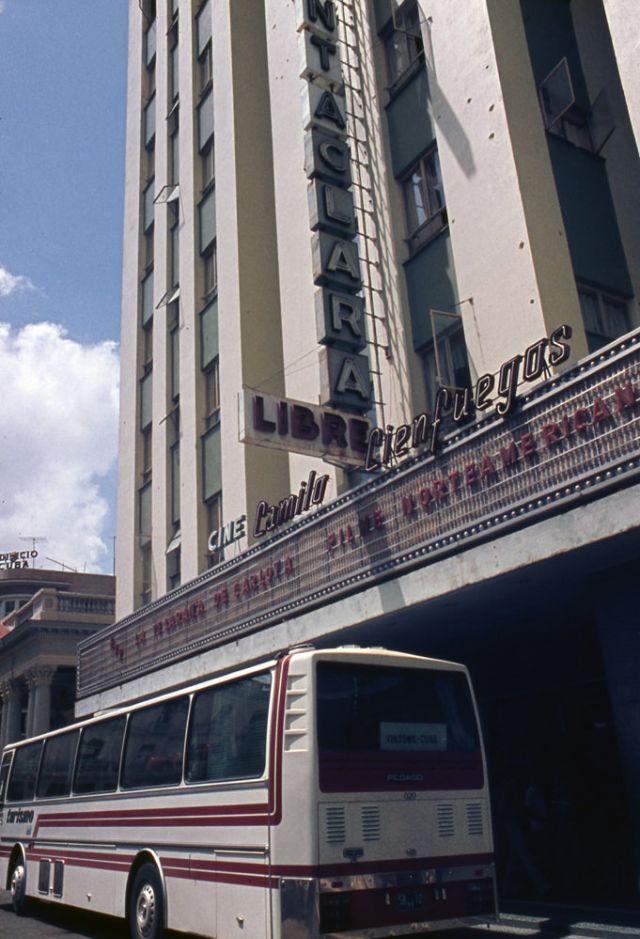
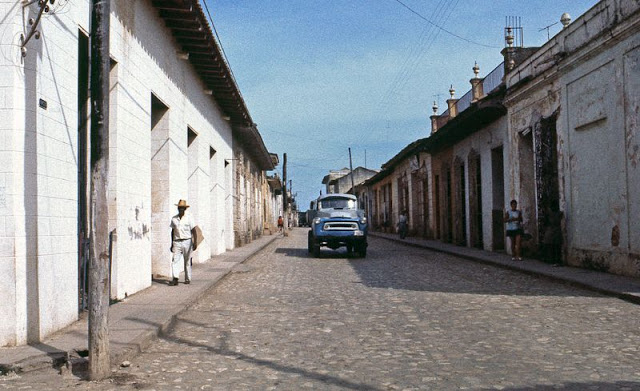
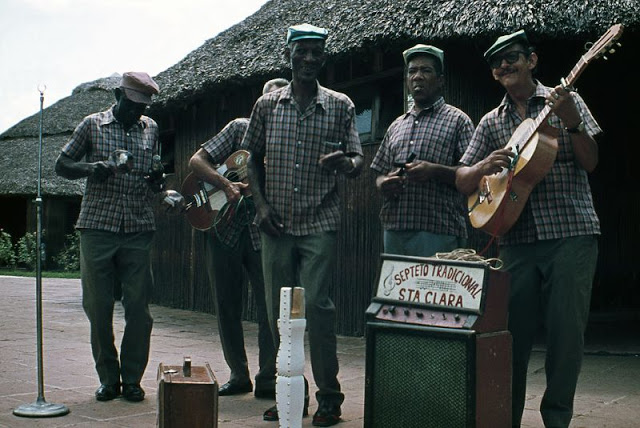
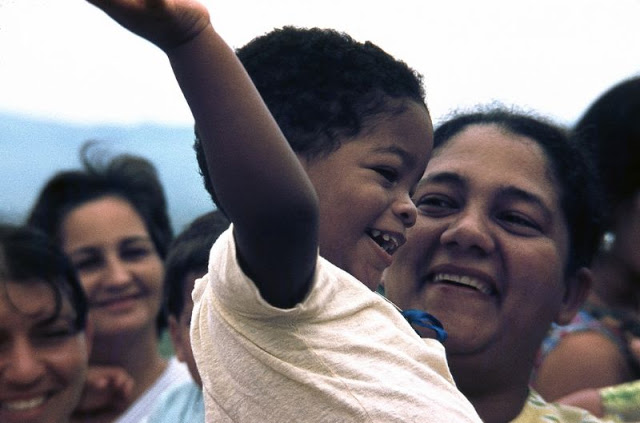
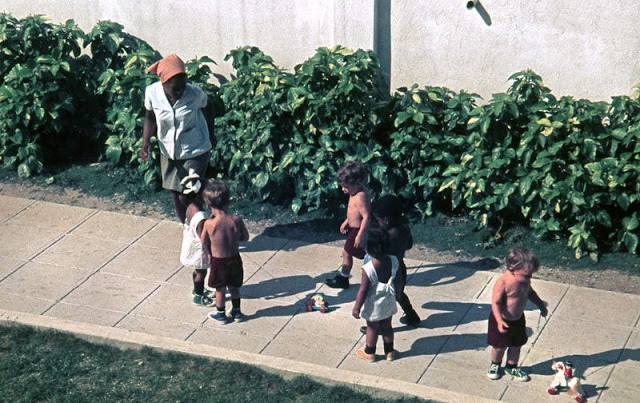
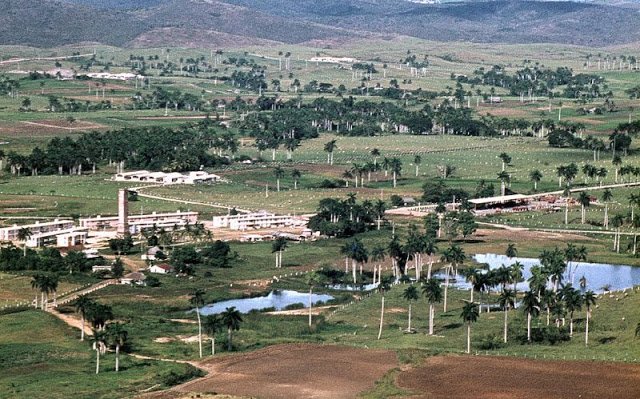
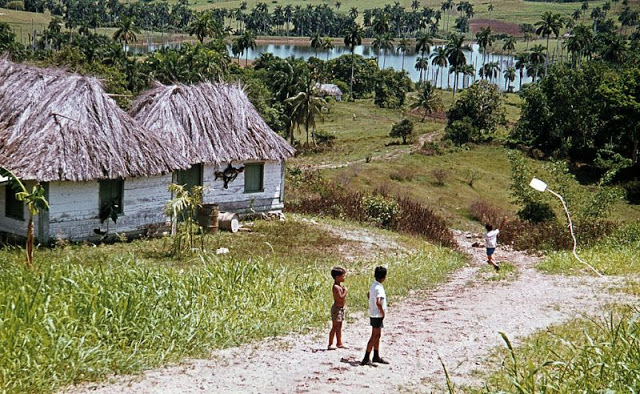
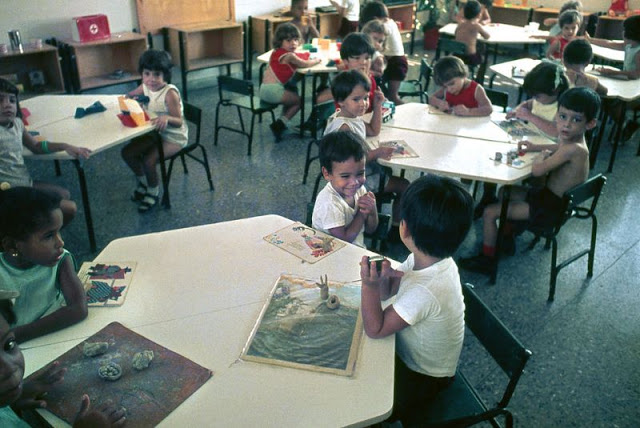
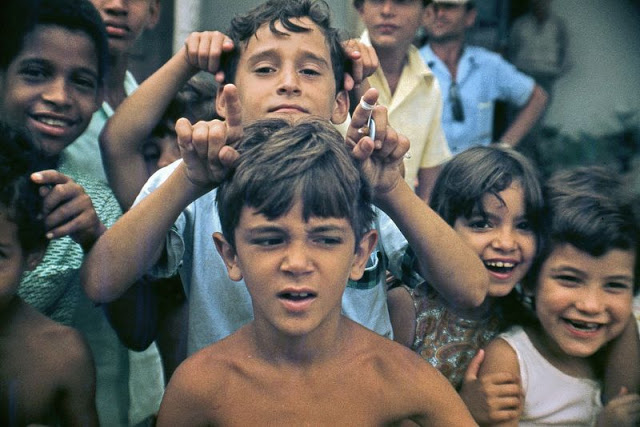
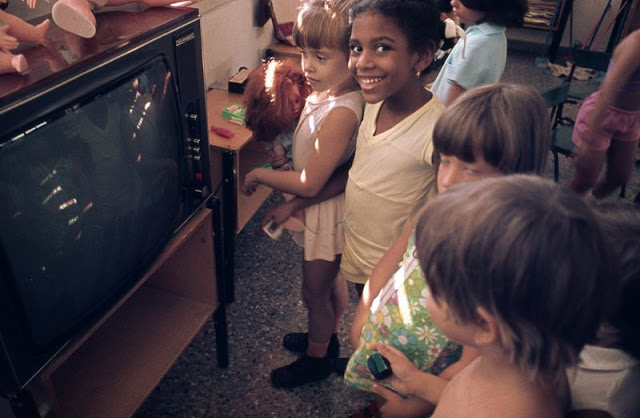
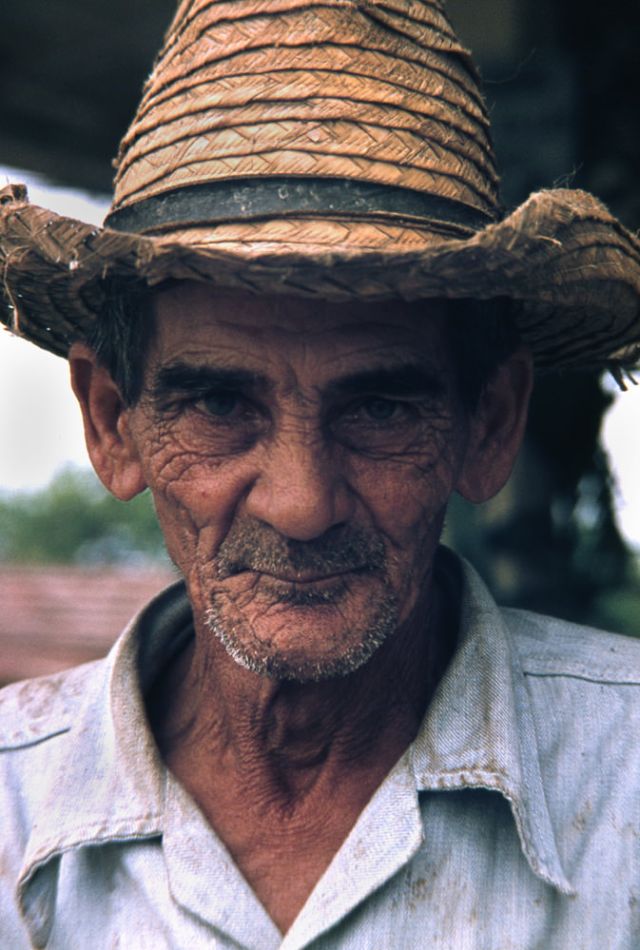
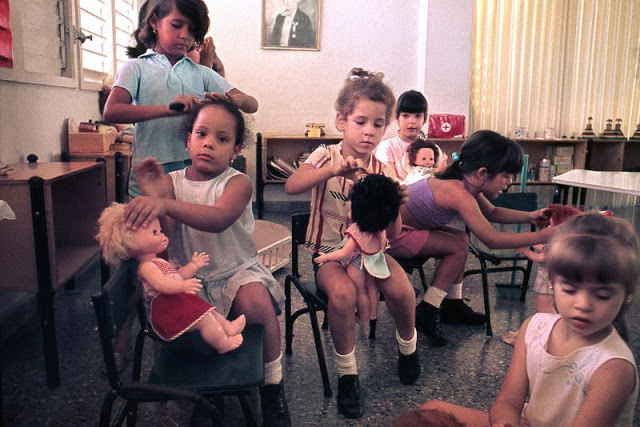
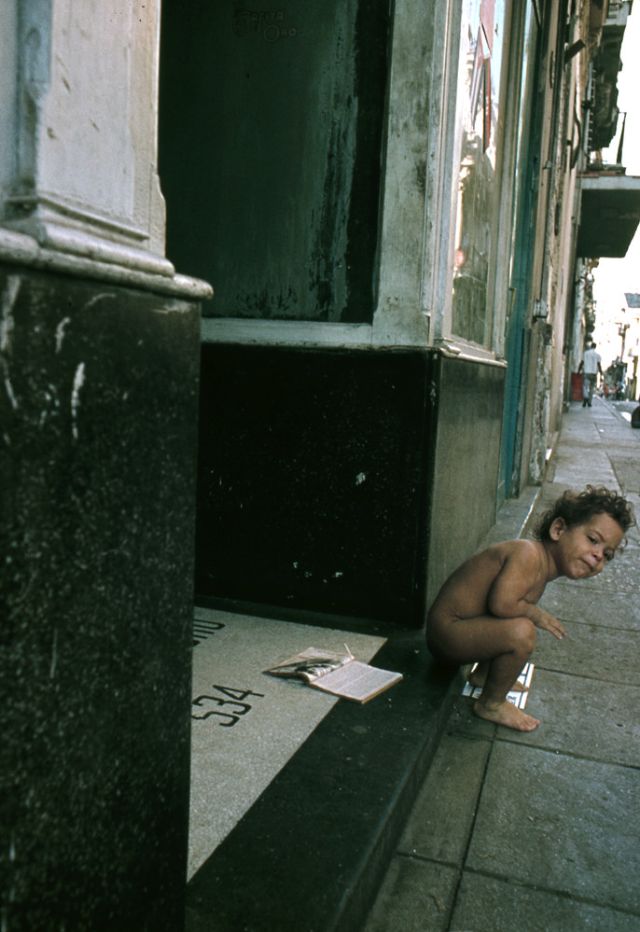
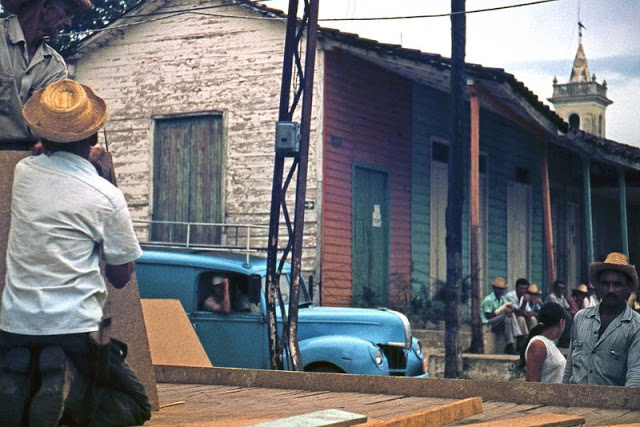
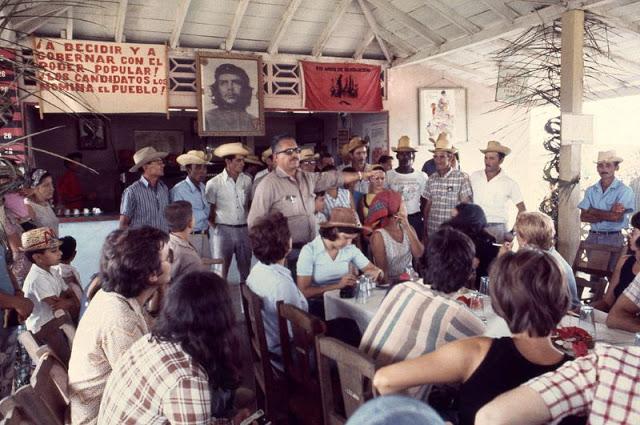
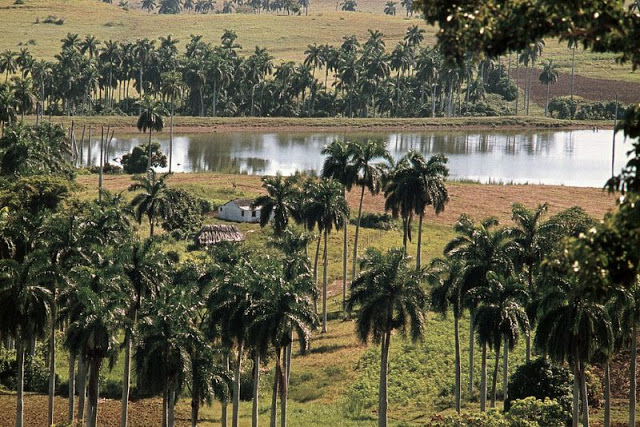
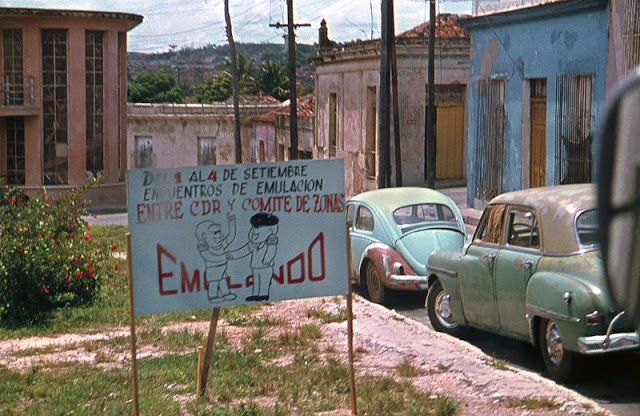
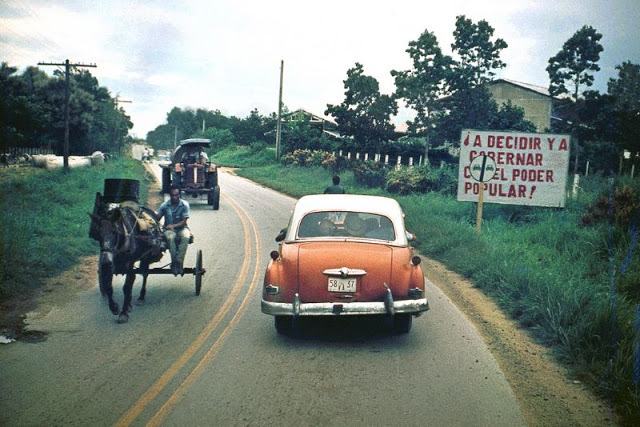
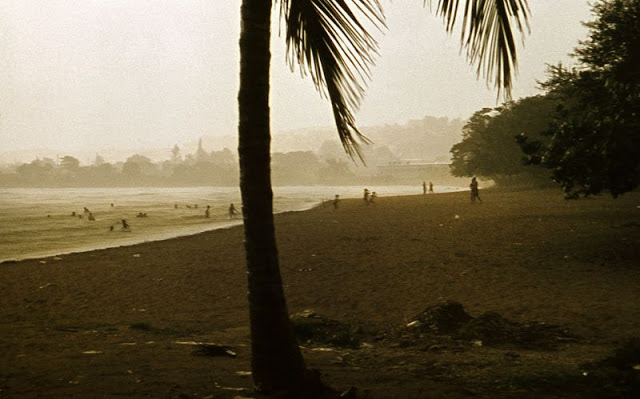
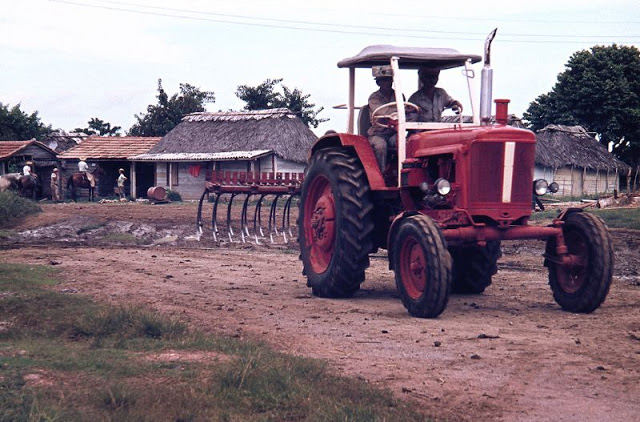
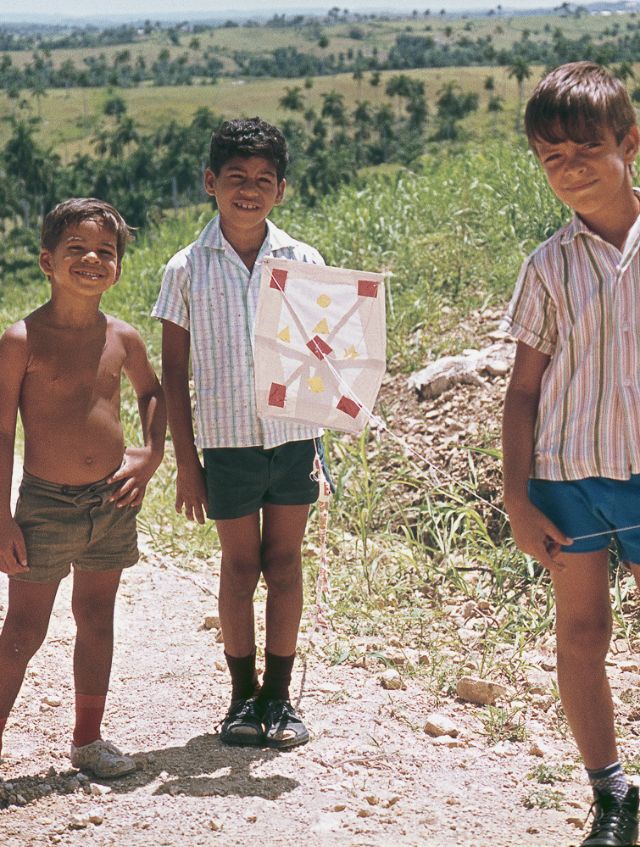
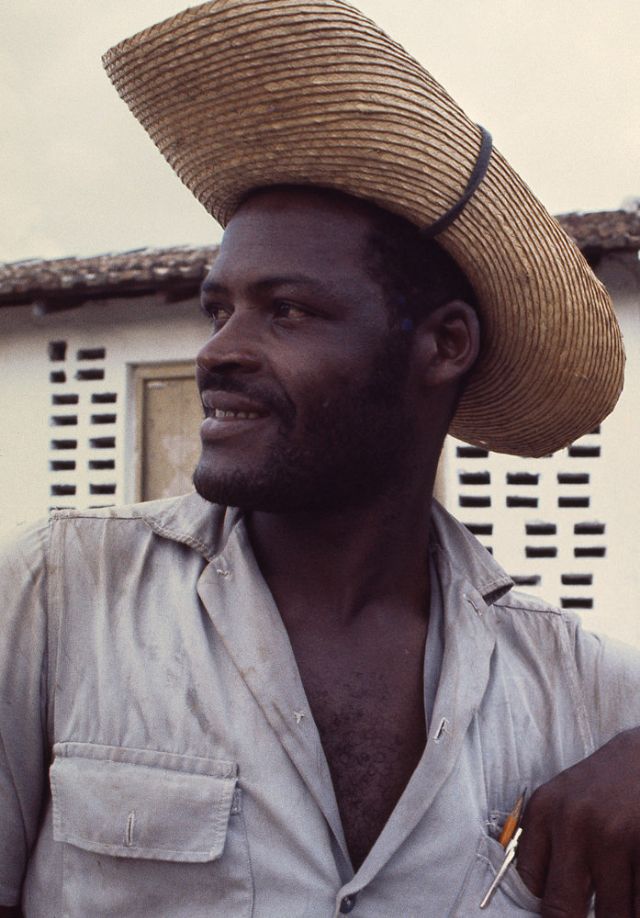
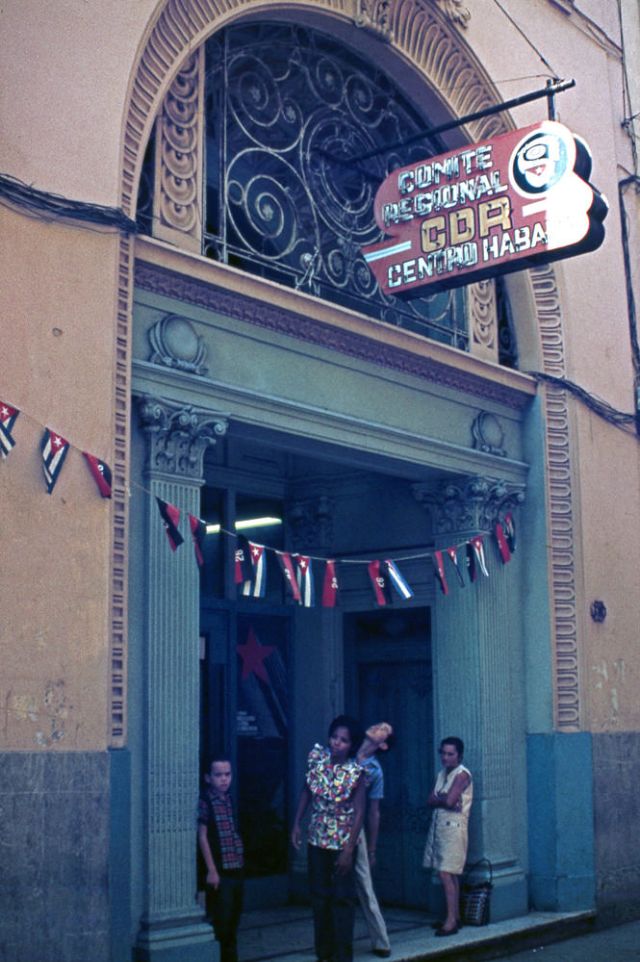
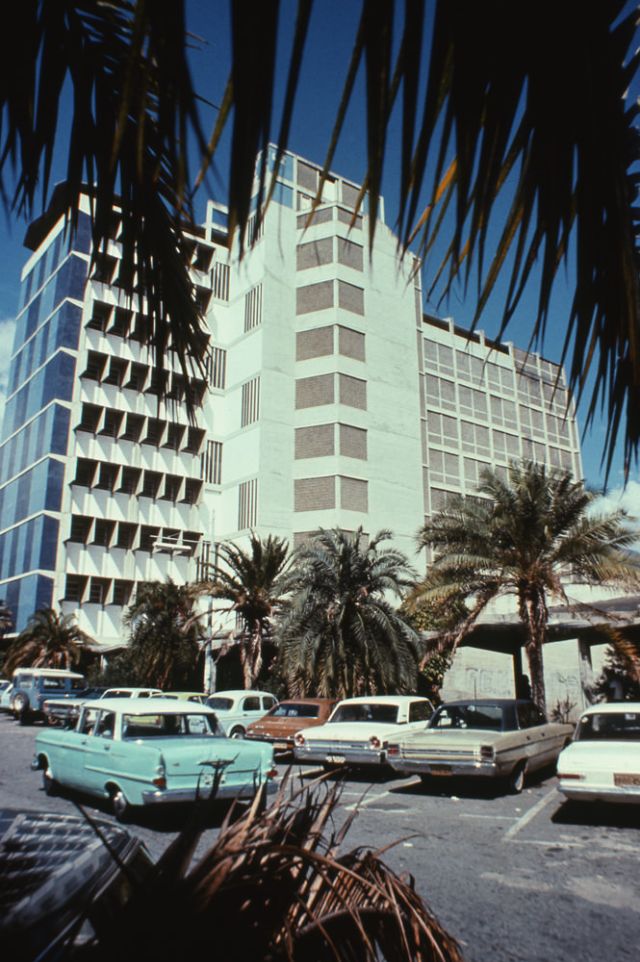
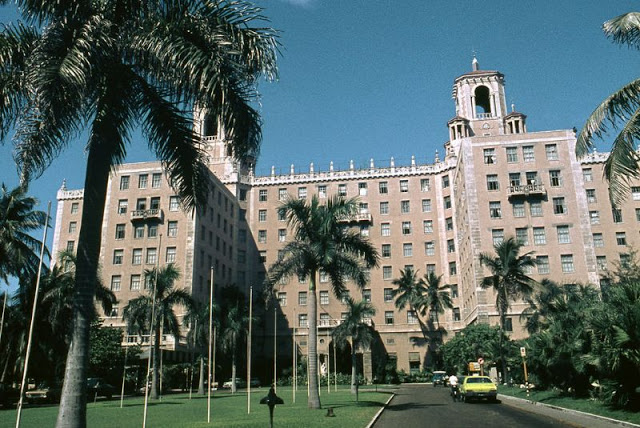
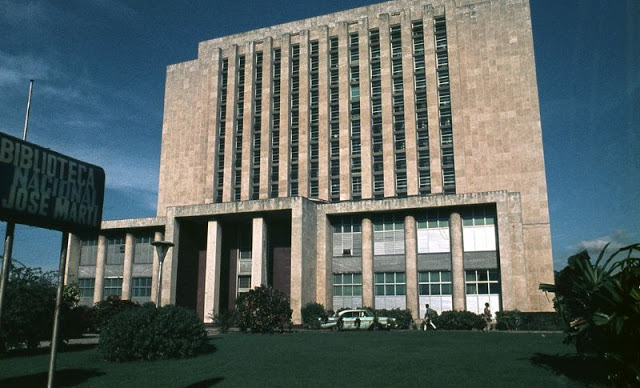
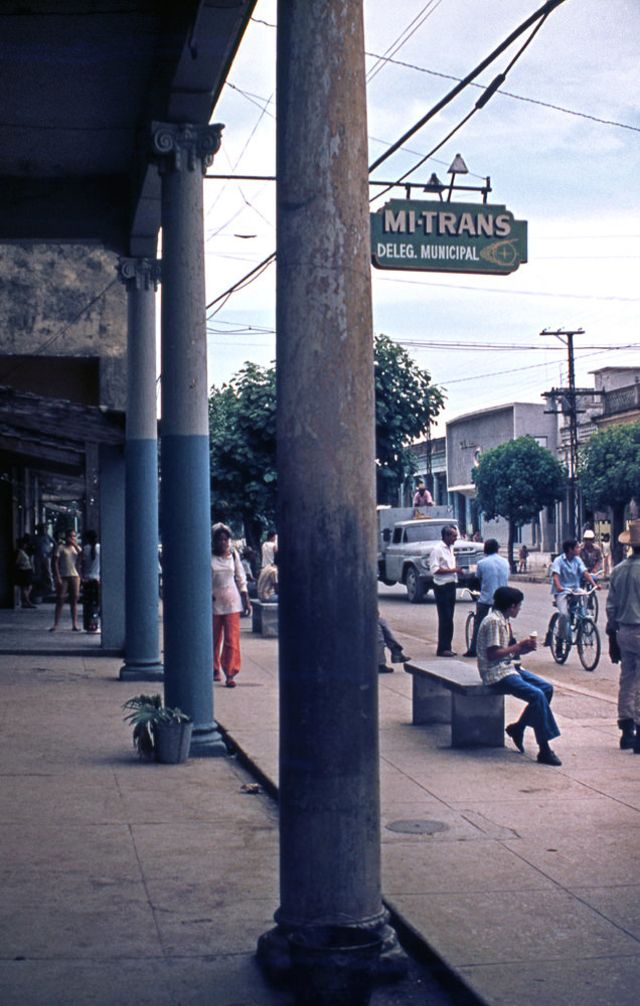
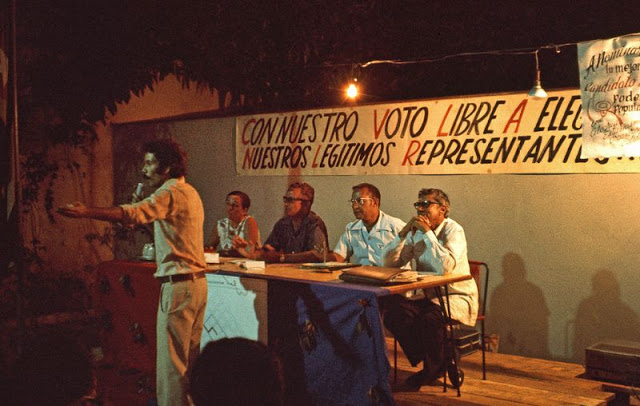
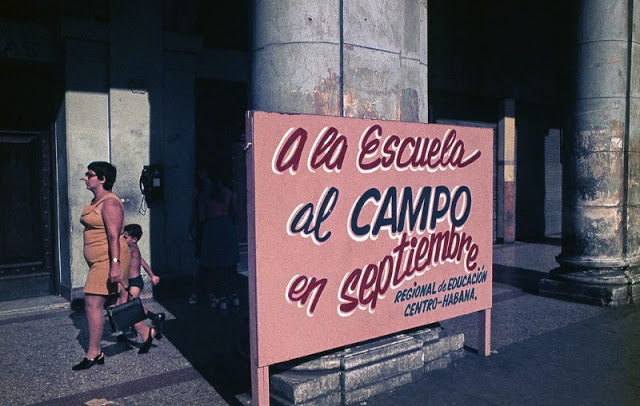
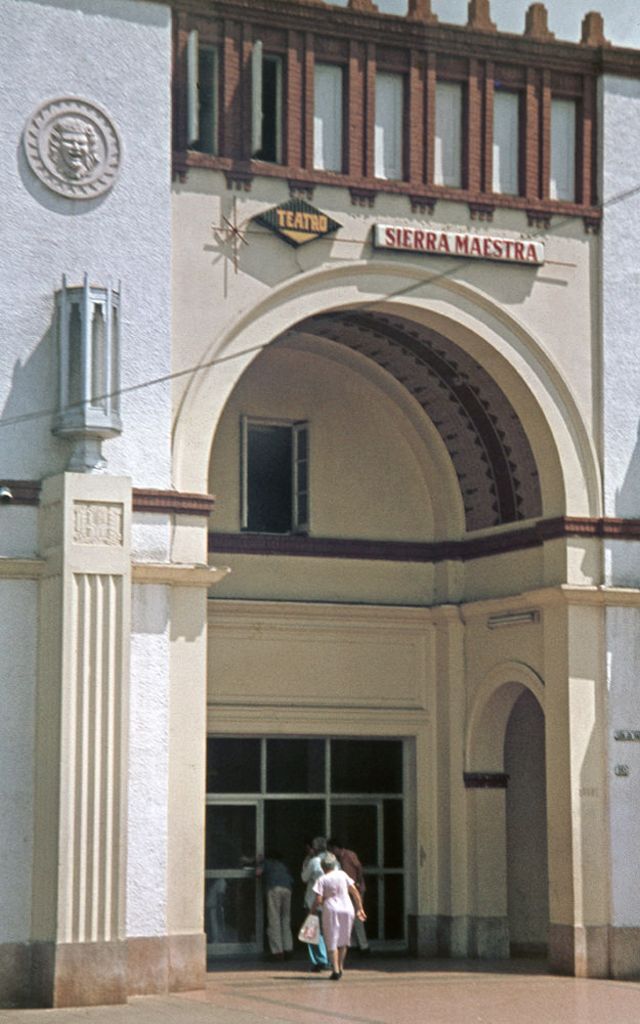
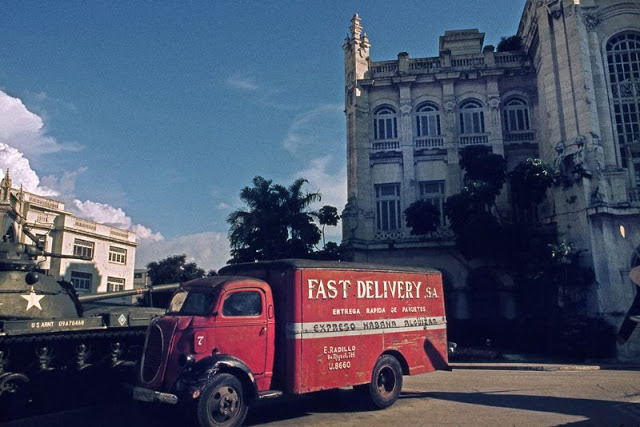
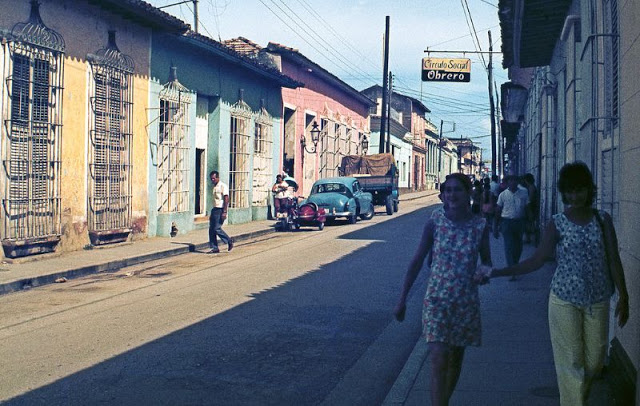
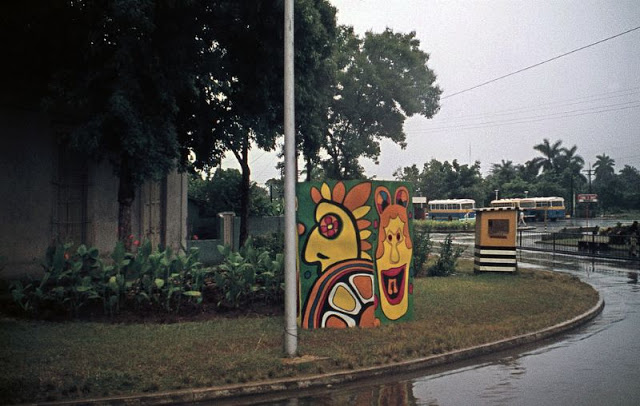
59 Interesting Photos Showing Life in Cuba in 1976

Cuba, officially the Republic of Cuba, is a country comprising the island of Cuba, as well as Isla de la Juventud and several minor archipelagos. Cuba is located where the northern Caribbean Sea, Gulf of Mexico, and Atlantic Ocean meet. Cuba is located at the east of the Yucatán Peninsula (Mexico), south of both the American state of Florida and the Bahamas, west of Hispaniola (Haiti/Dominican Republic), and north of both Jamaica and the Cayman Islands. Havana is the largest city and capital; other major cities include Santiago de Cuba and Camagüey. The official area of the Republic of Cuba is 109,884 km2 (42,426 sq mi) (without the territorial waters). The main island of Cuba is the largest island in Cuba and in the Caribbean, with an area of 104,556 km2 (40,369 sq mi). Cuba is the second-most populous country in the Caribbean after Haiti, with over 11 million inhabitants.

The territory that is now Cuba was inhabited by the Ciboney Taíno people from the 4th millennium BC until Spanish colonization in the 15th century. From the 15th century, it was a colony of Spain until the Spanish–American War of 1898, when Cuba was occupied by the United States and gained nominal independence as a de facto United States protectorate in 1902. As a fragile republic, in 1940 Cuba attempted to strengthen its democratic system, but mounting political radicalization and social strife culminated in a coup and subsequent dictatorship under Fulgencio Batista in 1952. Open corruption and oppression under Batista’s rule led to his ousting in January 1959 by the 26th of July Movement, which afterwards established communist rule under the leadership of Fidel Castro. Since 1965, the state has been governed by the Communist Party of Cuba. The country was a point of contention during the Cold War between the Soviet Union and the United States, and a nuclear war nearly broke out during the Cuban Missile Crisis of 1962. Cuba is one of a few extant Marxist–Leninist socialist states, where the role of the vanguard Communist Party is enshrined in the Constitution. Under Castro, Cuba was involved in a broad range of military and humanitarian activities throughout both Africa and Asia.

Culturally, Cuba is considered part of Latin America. It is a multiethnic country whose people, culture and customs derive from diverse origins, including the Taíno Ciboney peoples, the long period of Spanish colonialism, the introduction of enslaved Africans and a close relationship with the Soviet Union in the Cold War.

Cuba is a founding member of the United Nations, the G77, the Non-Aligned Movement, the Organisation of African, Caribbean and Pacific States, ALBA and the Organization of American States. It has currently one of the world’s only planned economies, and its economy is dominated by the tourism industry and the exports of skilled labor, sugar, tobacco, and coffee. Cuba has historically—both before and during Communist rule—performed better than other countries in the region on several socioeconomic indicators, such as literacy, infant mortality and life expectancy.

Cuba has a single-party authoritarian regime where political opposition is not permitted. There are elections in Cuba, but they are not considered democratic. Censorship of information (including limits to internet access) is extensive, and independent journalism is repressed in Cuba; Reporters Without Borders has characterized Cuba as one of the worst countries in the world for press freedom. (Wikipedia)

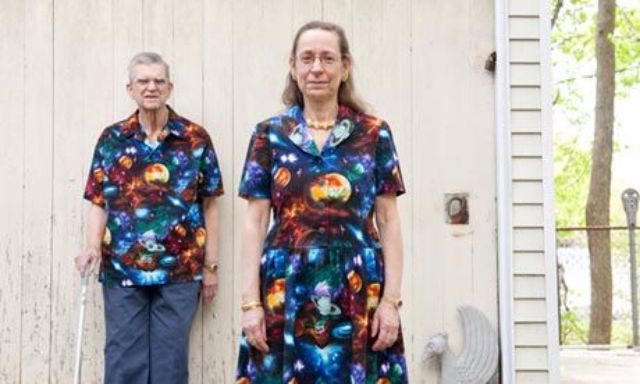
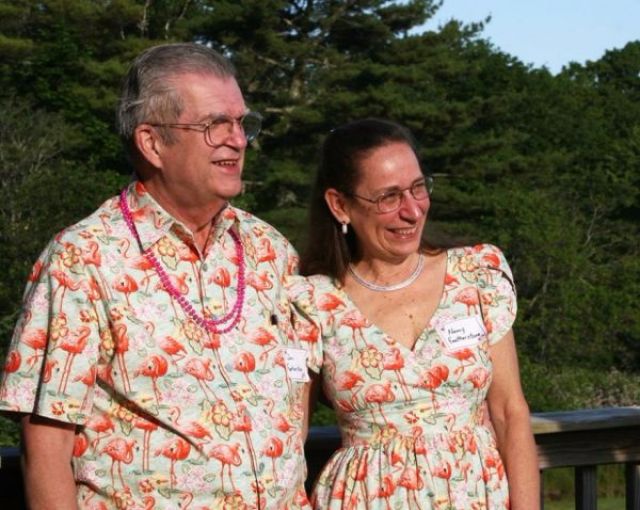
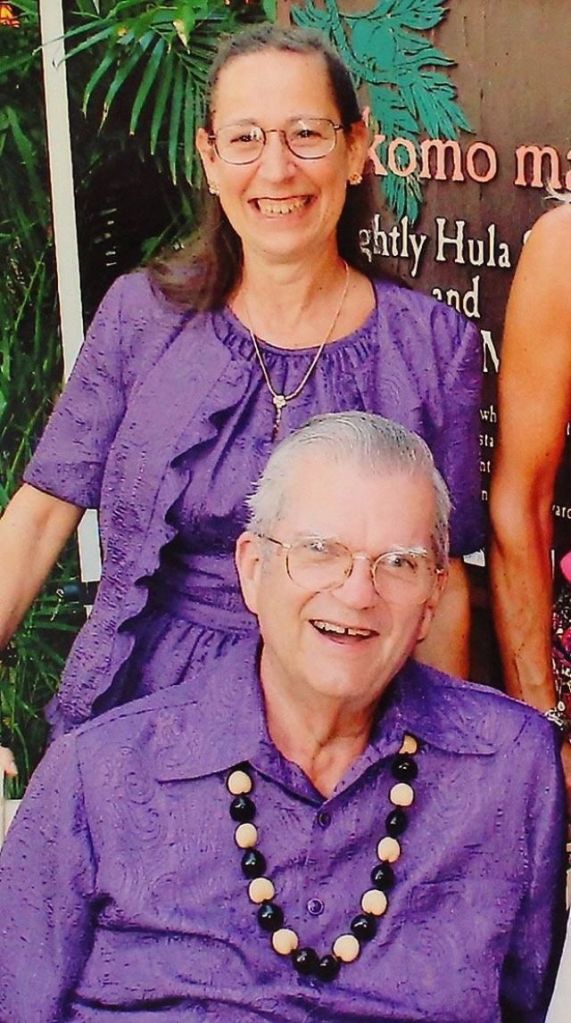
20 Lovely Photos of a Couple That Dressed in Matching Outfits Every Day for 35 Years

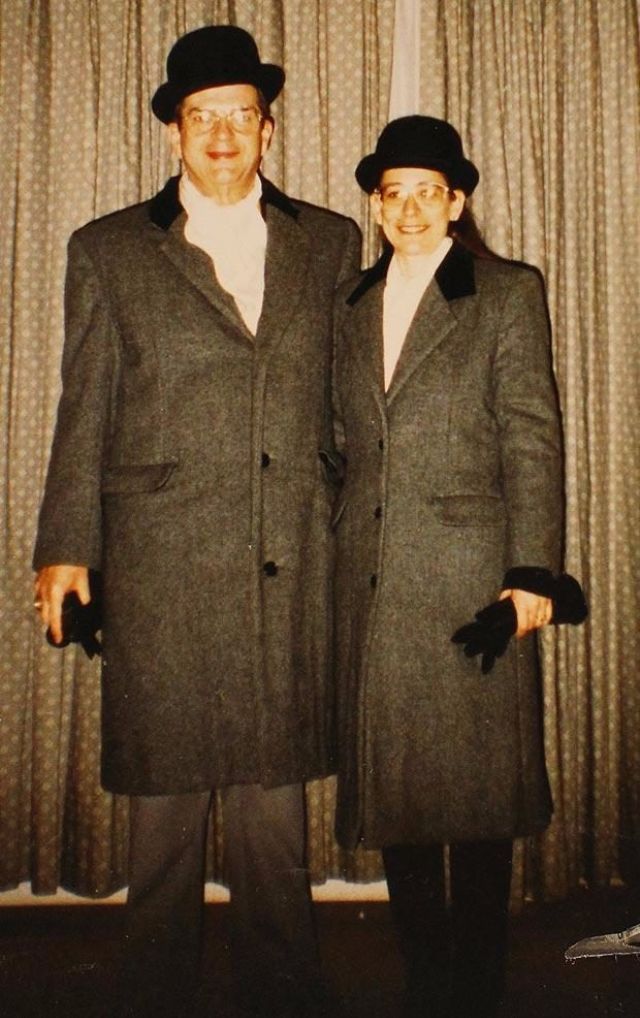
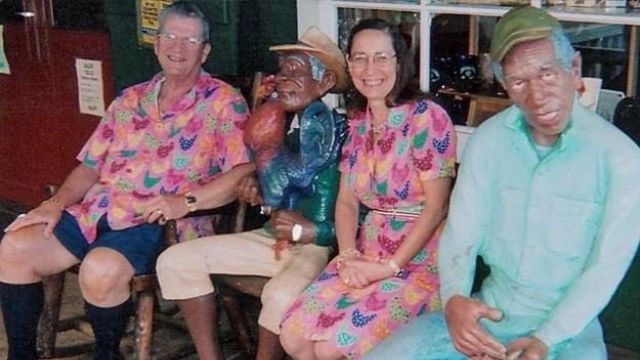
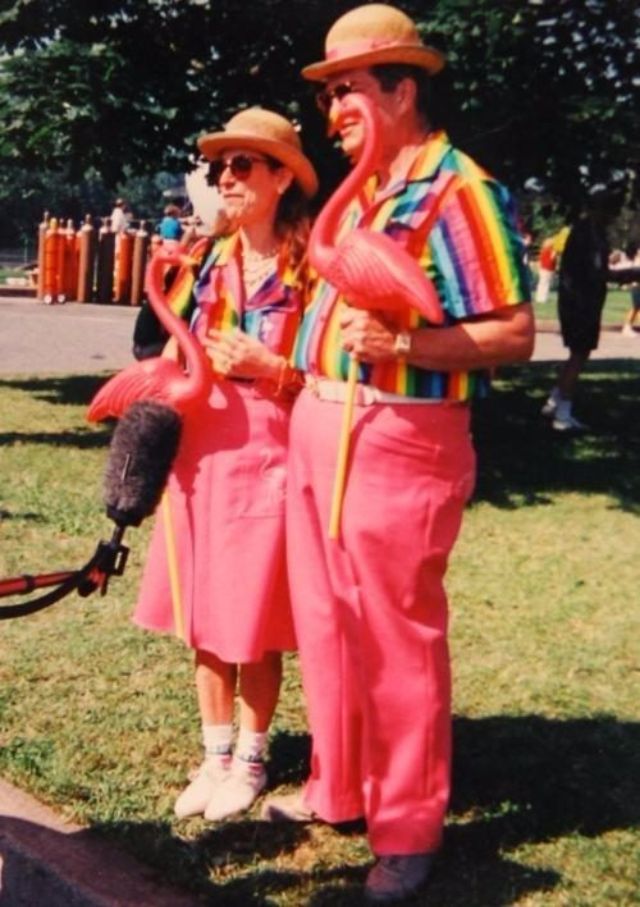
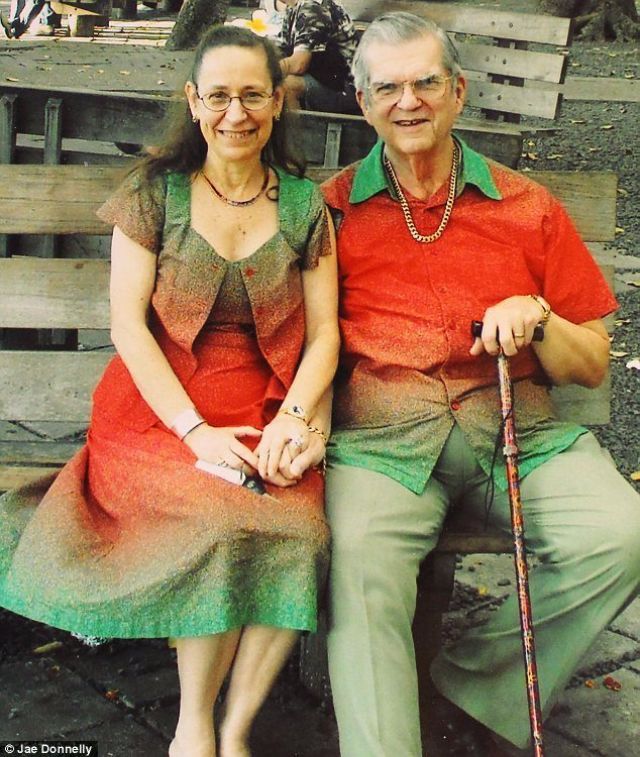
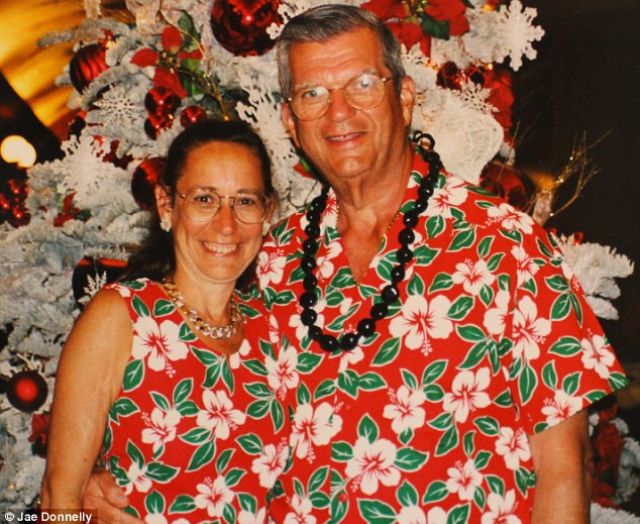
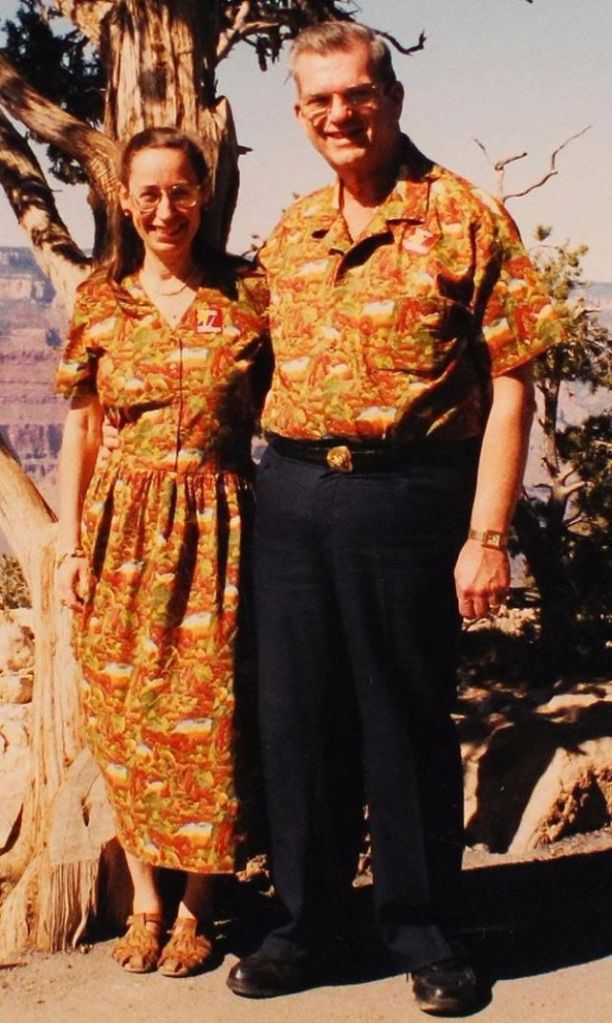
A married couple who have dressed alike every day for 35 years say it is the clearest way of showing that ‘we’re together.’

Donald Featherstone, who made a fortune from inventing the plastic pink flamingo lawn ornament in the late Fifties, and his wife Nancy, told The Sun that they even phone each other when they are not together to ensure that their style is in sync.

Luckily the large Victorian home that they share in Fitchburg, Massachusetts, has enough closet space to house their unique fashion collection which includes 600 custom-made outfits and dozens of identical his and hers accessories.

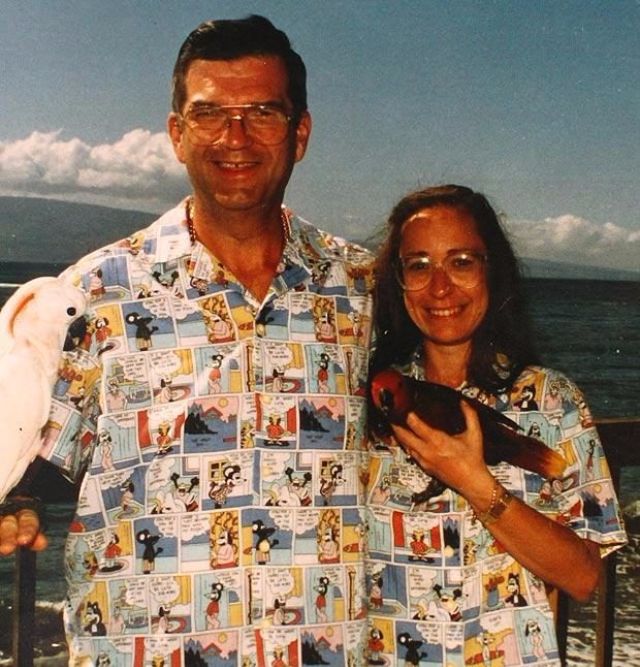
Recalling the first time they experimented with the look-alike concept, Mrs Featherstone told Daily Mail: ‘I made Don the same shirt I was wearing. We’ve dressed alike ever since. We love it.’

The couple’s love story started in August 1975 when they met at a hardware convention in Chicago. That day Mr Featherstone made up his mind that ‘someday’ he would marry Nancy – and a year later, on July 23, he did.

Mrs Featherstone said that when she met her husband he was ‘very prim and proper’ and would only wear long-sleeved shirts, a tie and a suit. But following her mother’s advice, she started jazzing up his style by making him more colorful outfits.

She first had the idea to make duplicate garments after she remembered a tradition at Jennings Junior High School in Missouri, where couples wore matching shirts to the end-of-year dance.

It was in 1977 that the Featherstones first slipped into the same looks – a pair of polyester ‘play shirts’. Then on Easter Sunday of the same year Mr Featherstone stepped out in slacks, a sport coat and pink silky shirt while his wife donned a pink, silky dress.

Their dressing-up habit soon became a full-blown obsession and in 1980 they went full-time.

In 1997, when the New York Times asked Nancy why her and Don dress like they do, she replied: ‘First and foremost, it’s fun! We like it! But it’s also the clearest sign we can give that we’re together. For Donald and me, that’s our deal.’

On June 22, 2015, Donald Featherstone died from Lewy body dementia at the age of 79.

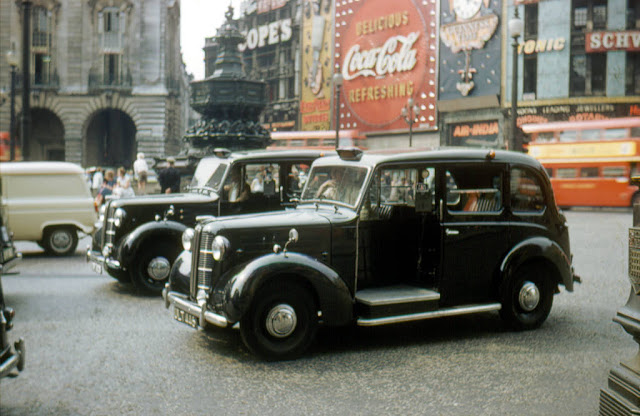
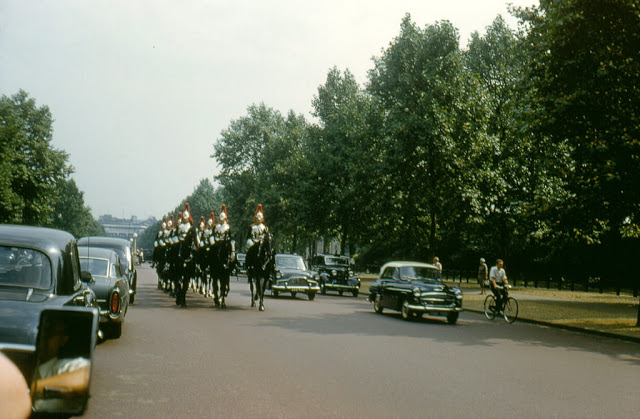
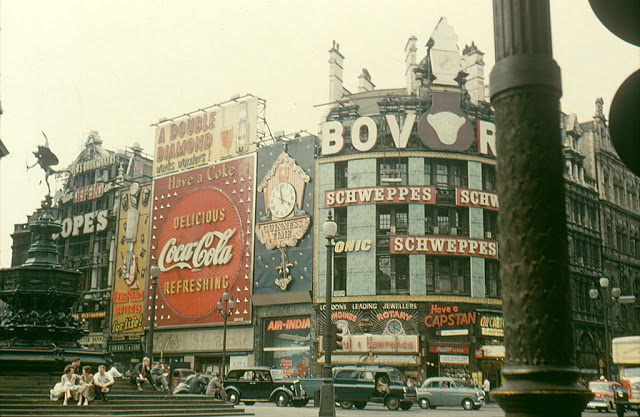
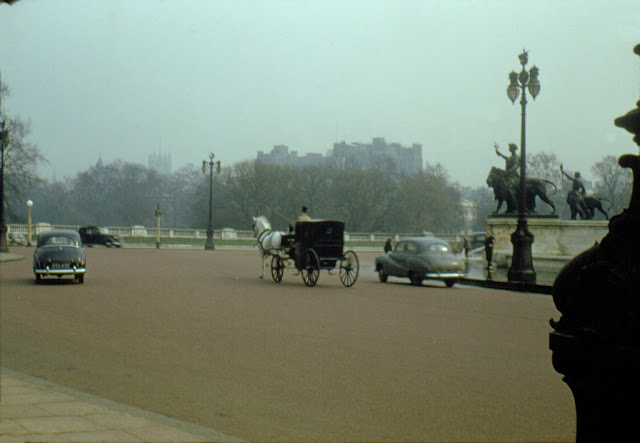
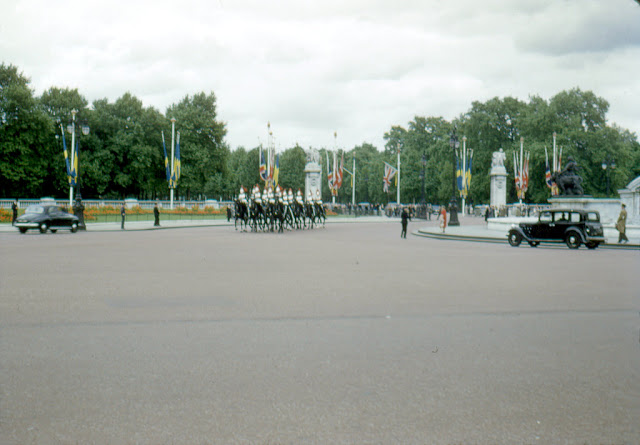
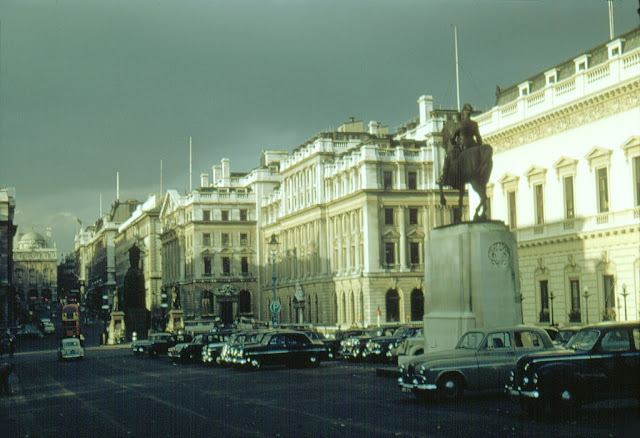
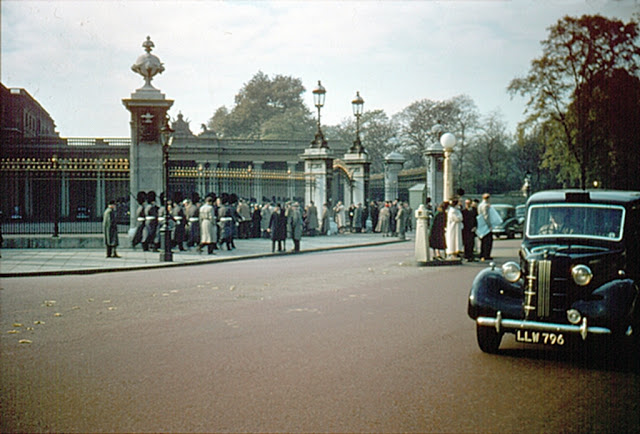
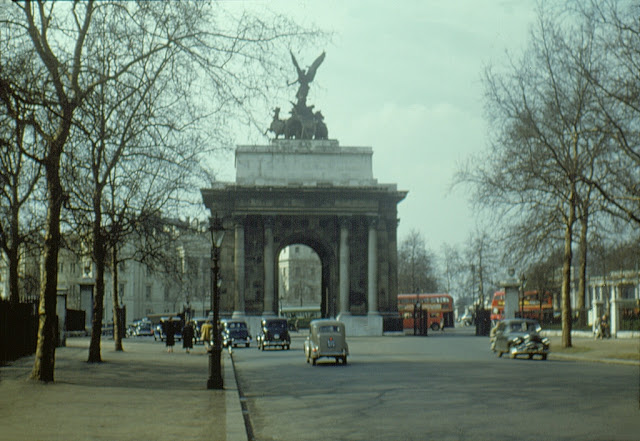
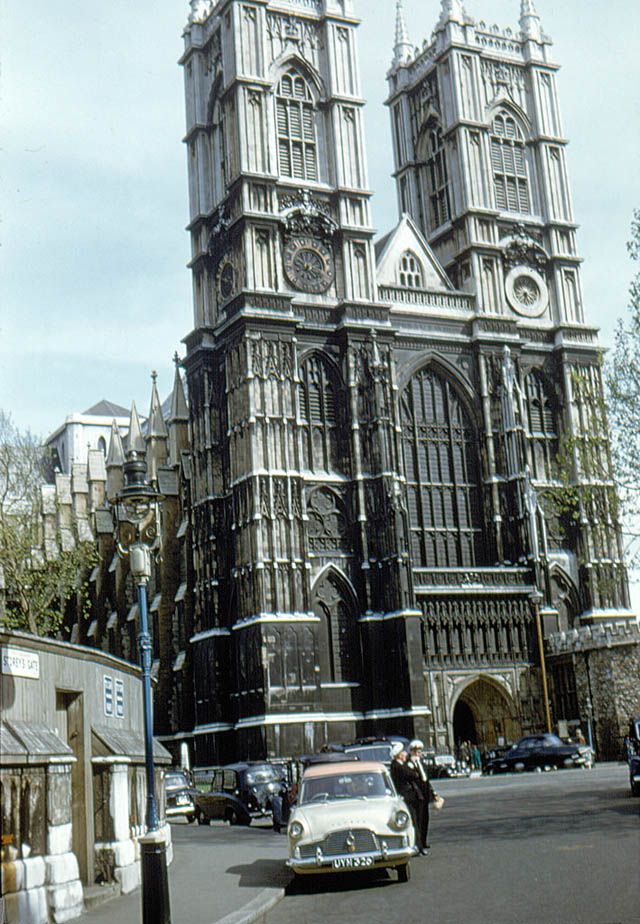
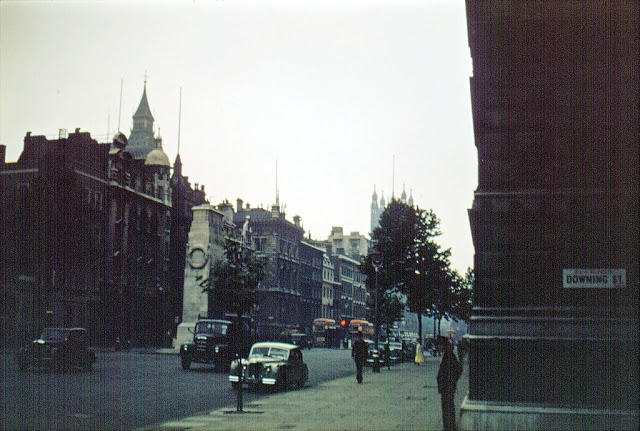
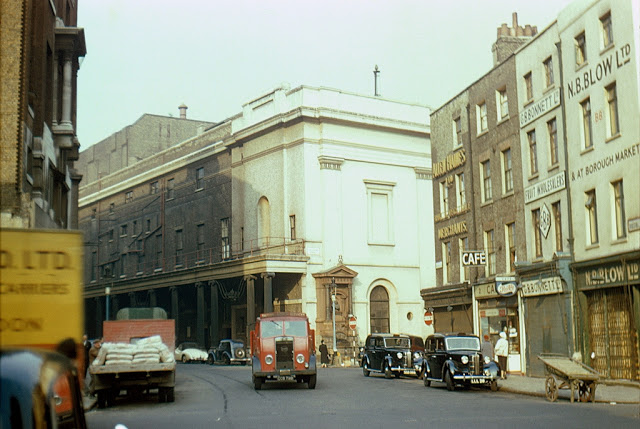
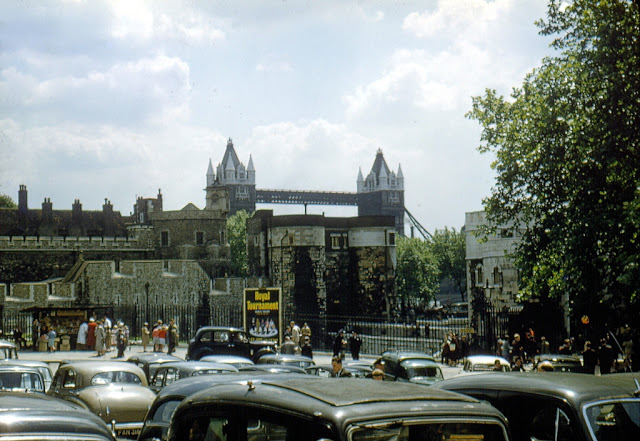
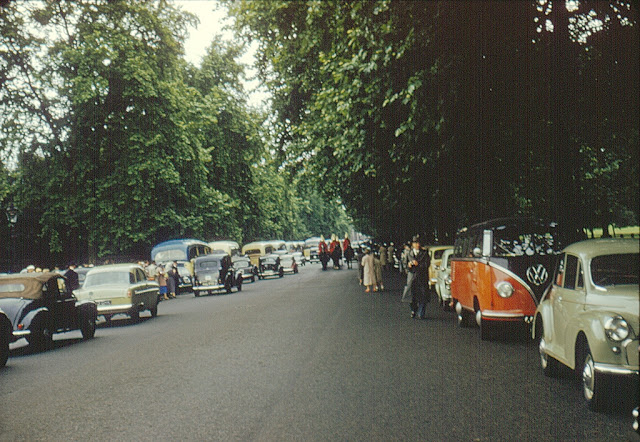
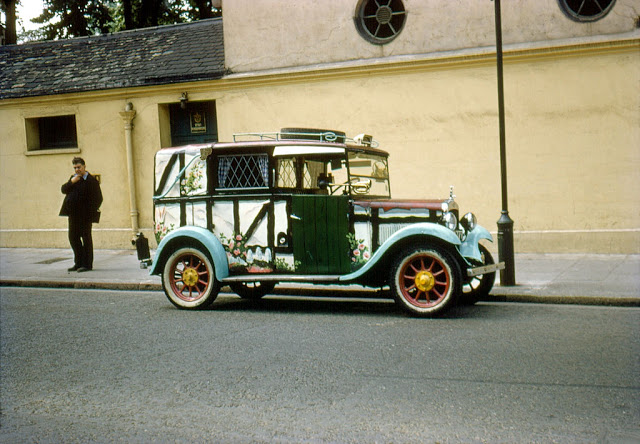
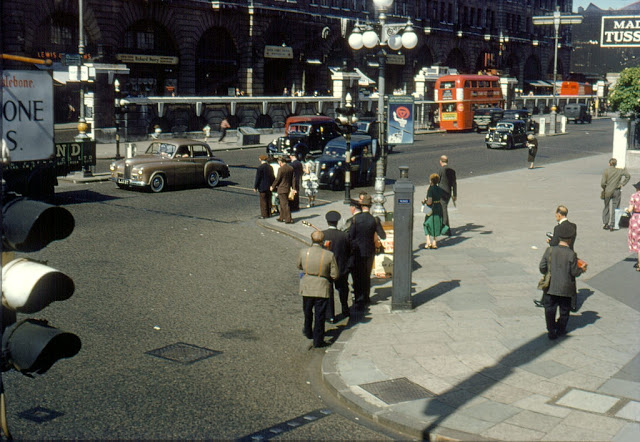
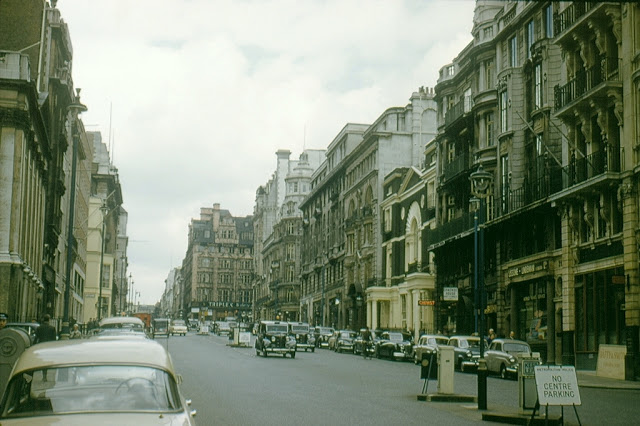
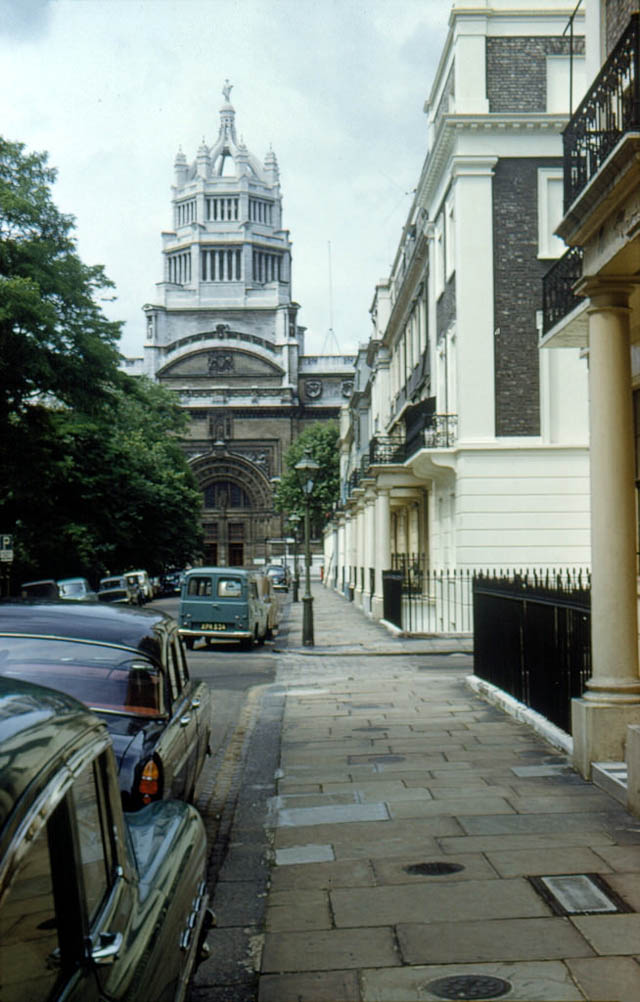
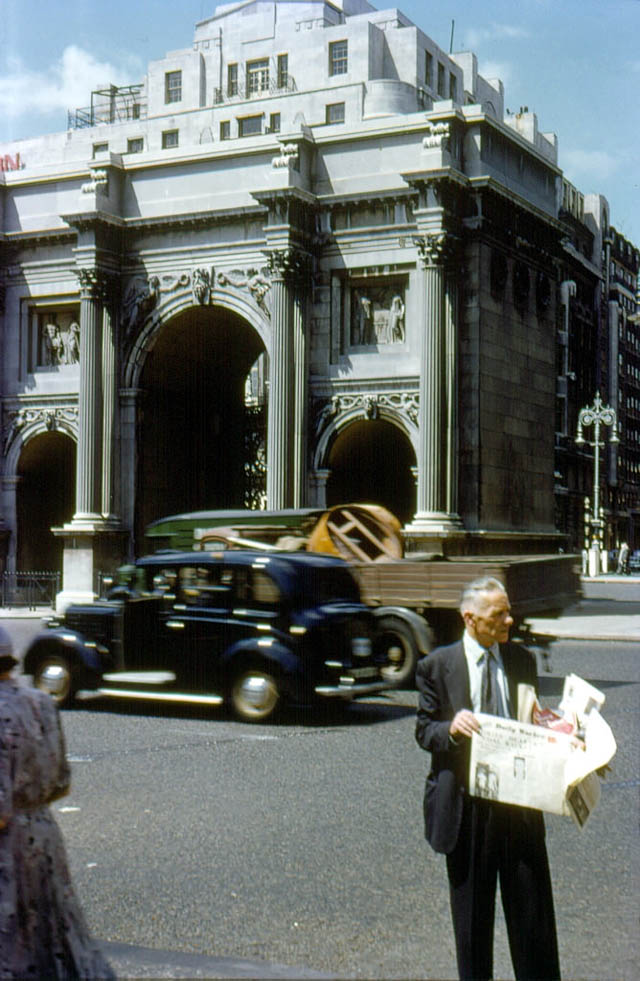
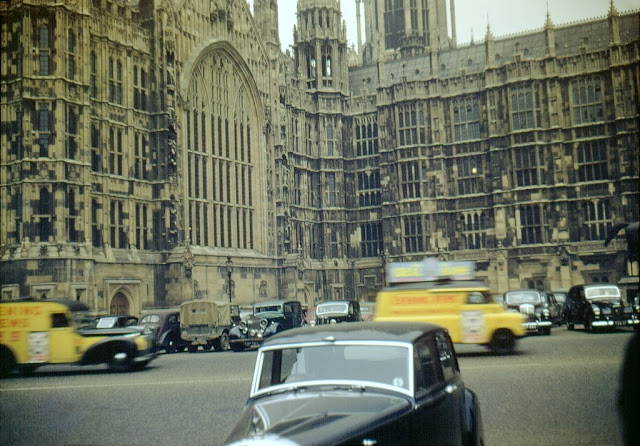
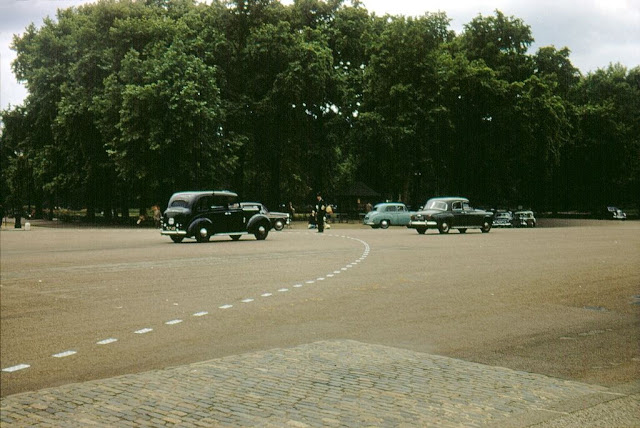
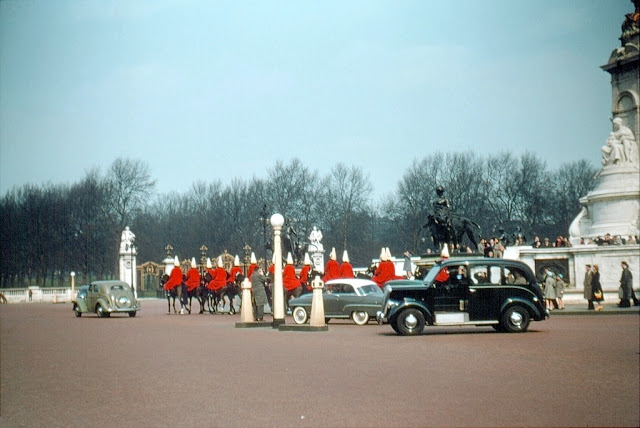
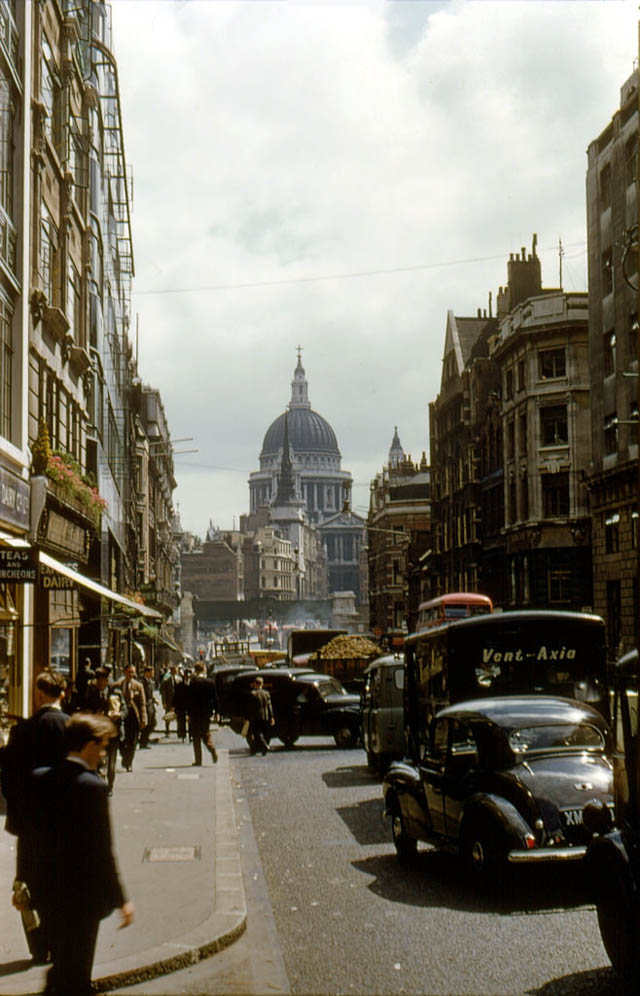
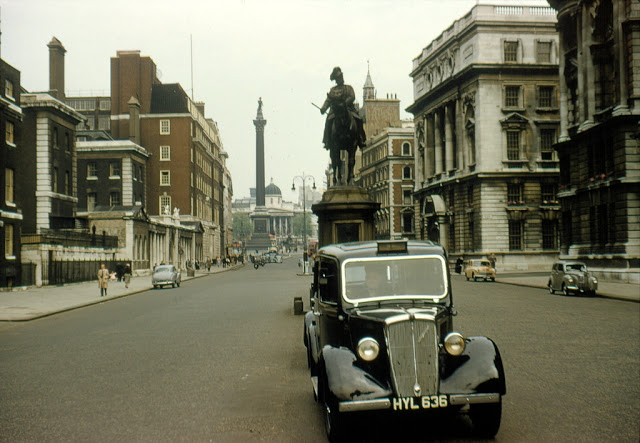
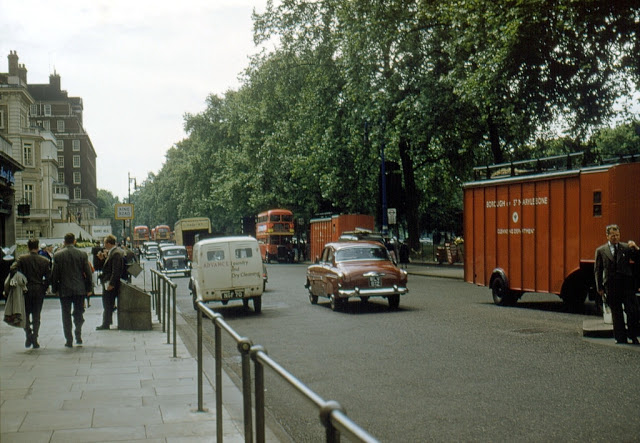
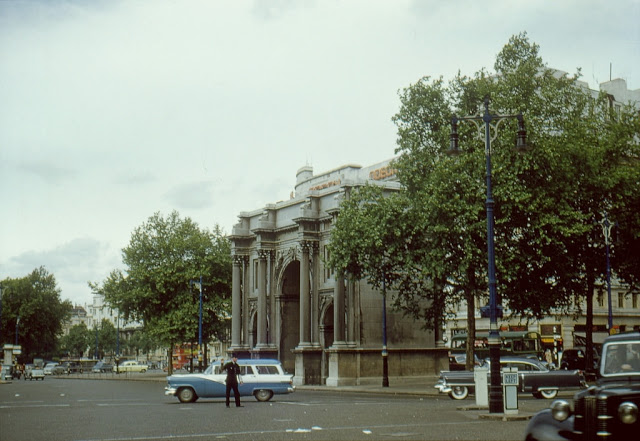
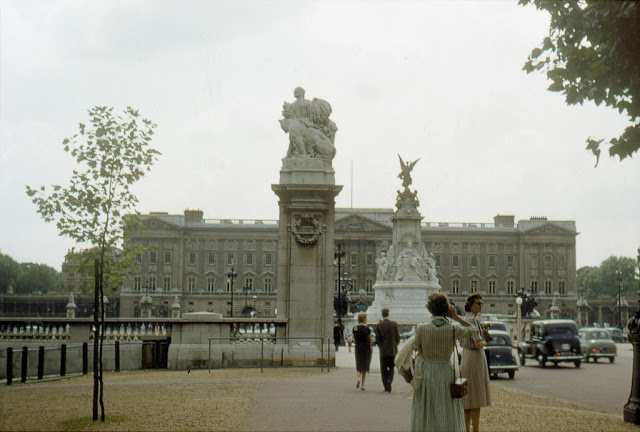
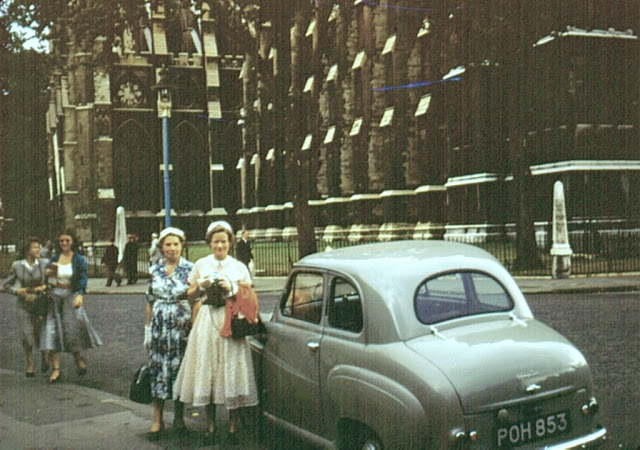
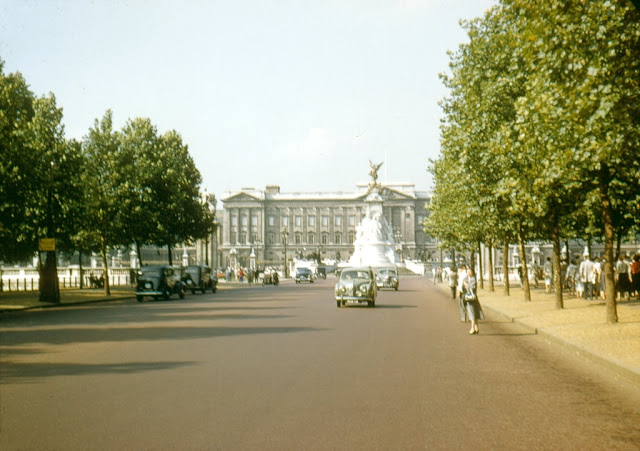
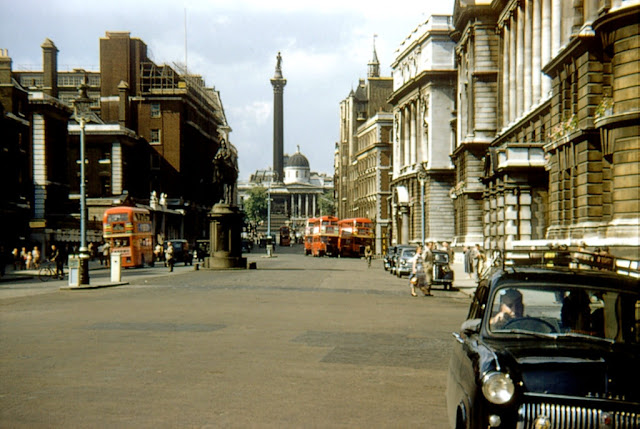
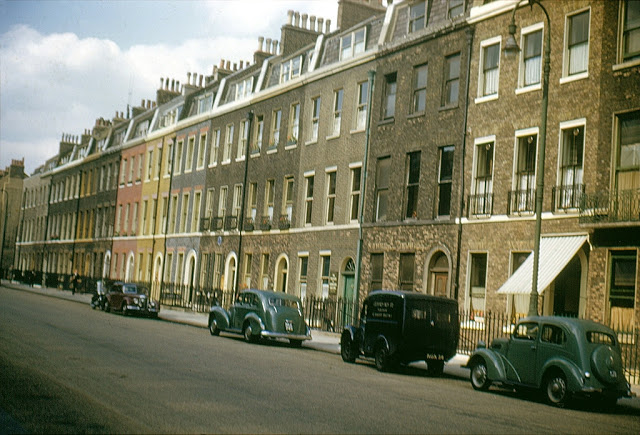
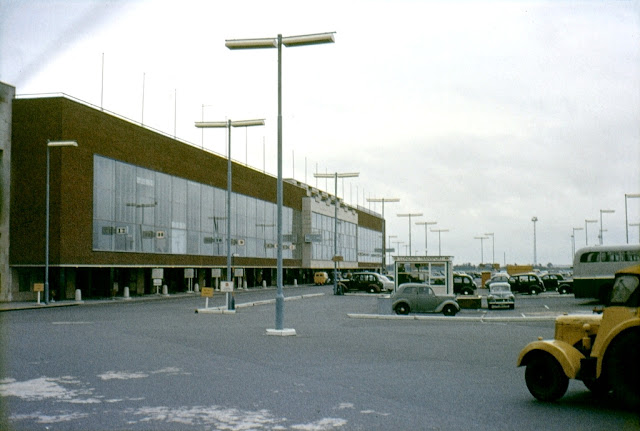
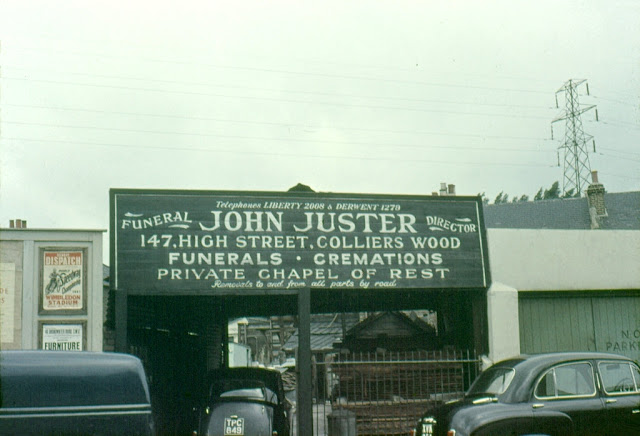
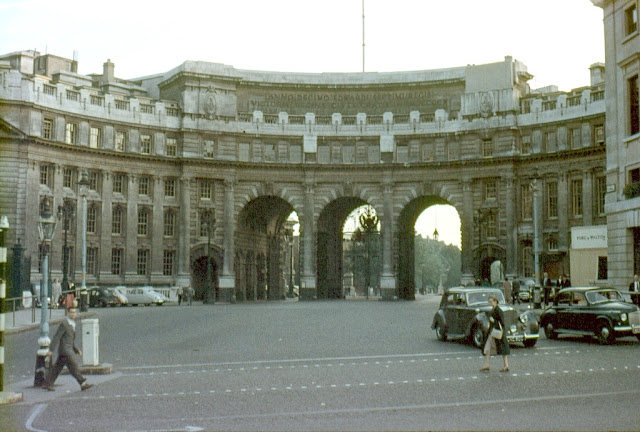
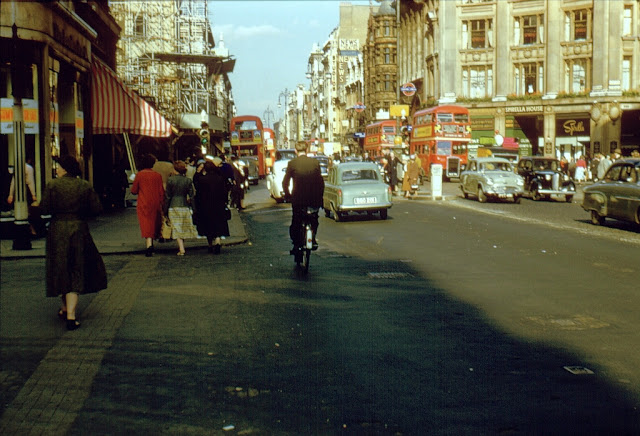
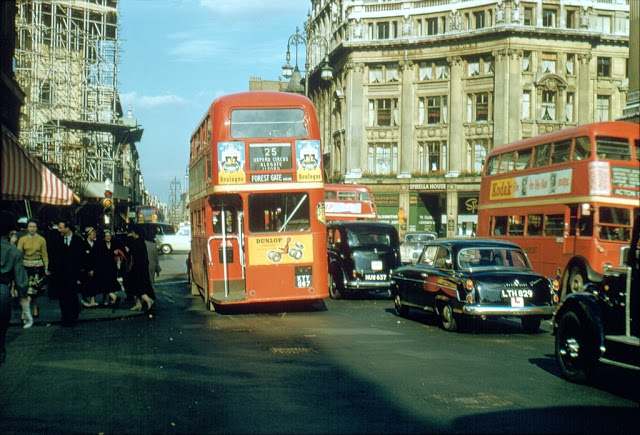
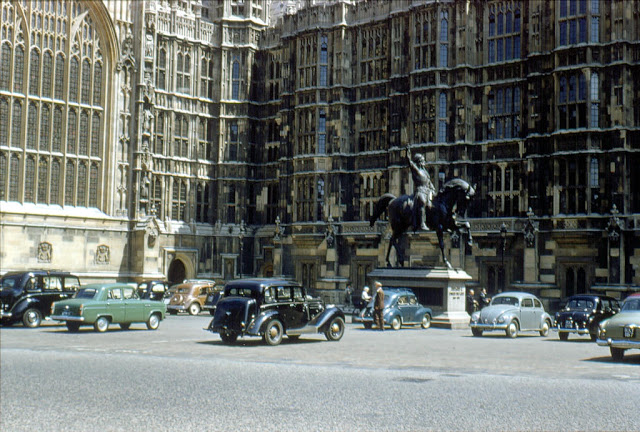
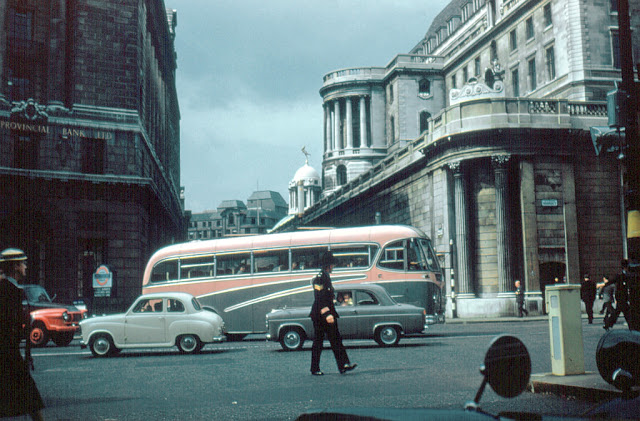
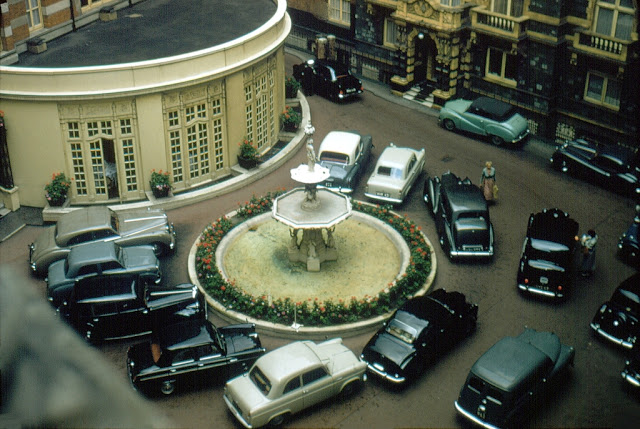
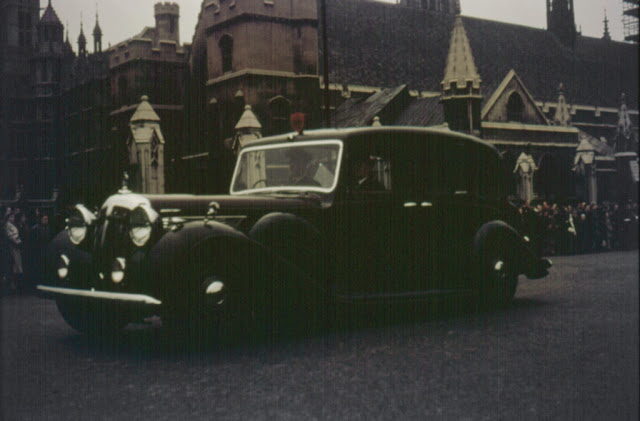
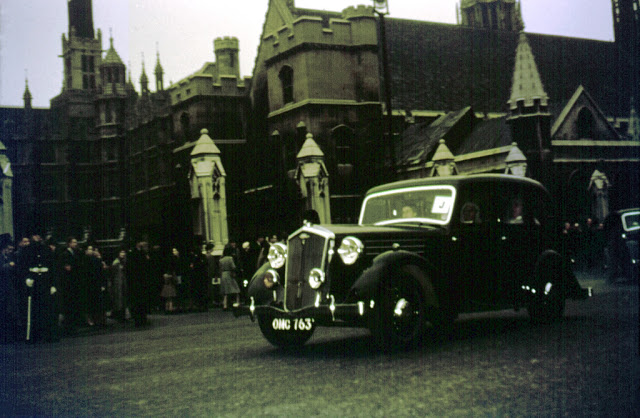
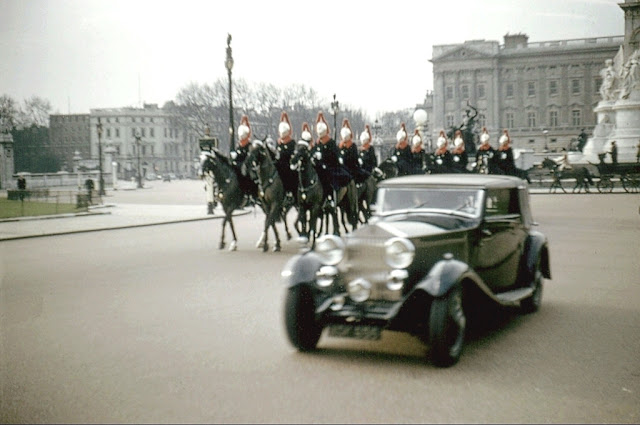
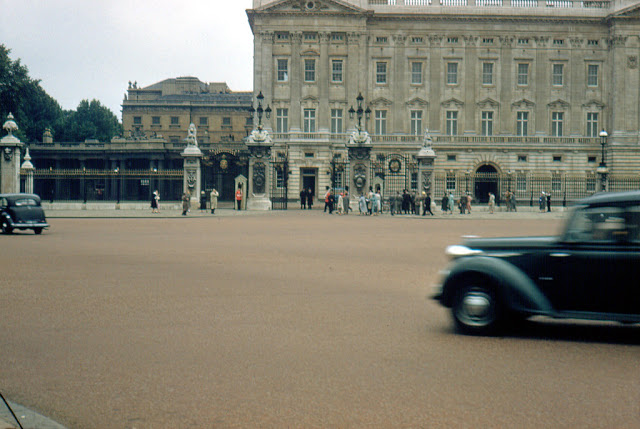
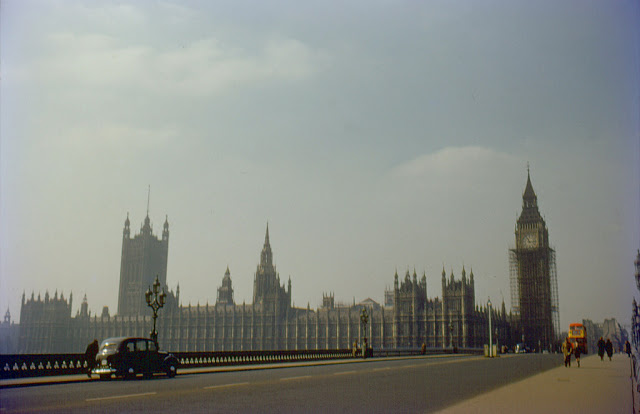
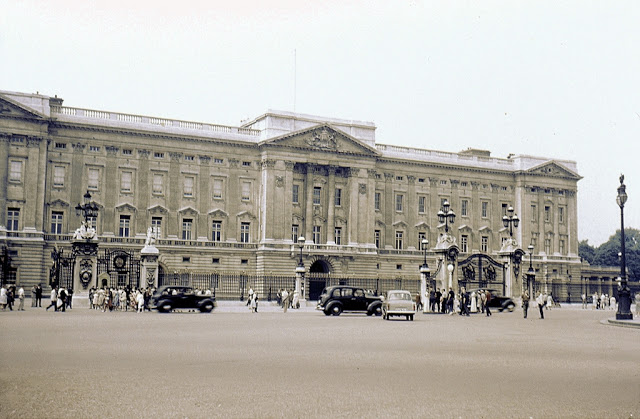
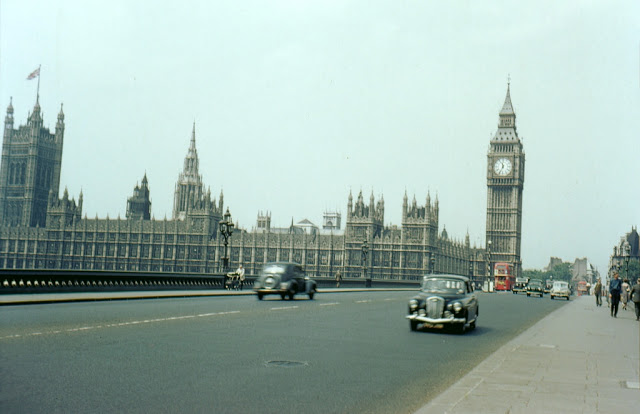
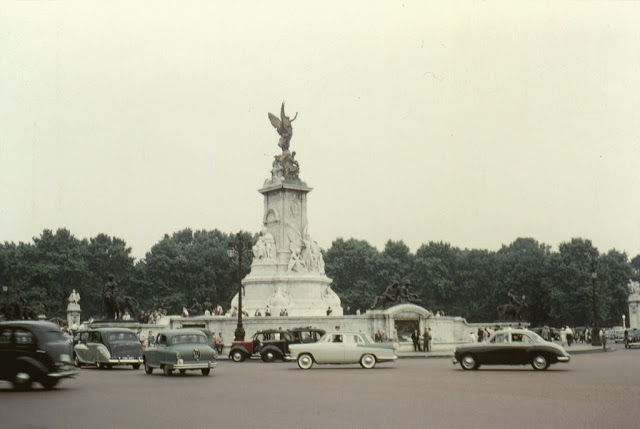
47 Color Photos Show Classic Cars on London Streets during the 1950s

London is the capital and largest city of England and the United Kingdom with a total population of 9,002,488. It stands on the River Thames in south-east England at the head of a 50-mile (80 km) estuary down to the North Sea, and has been a major settlement for two millennia. The City of London, its ancient core and financial centre, was founded by the Romans as Londinium and retains boundaries close to its medieval ones. Since the 19th century, “London” has also referred to the metropolis around this core, historically split between the counties of Middlesex, Essex, Surrey, Kent, and Hertfordshire, which largely comprises Greater London, governed by the Greater London Authority. The City of Westminster, to the west of the City of London, has for centuries held the national government and parliament.
As one of the world’s global cities, London exerts strong influence on its arts, commerce, education, entertainment, fashion, finance, health care, media, tourism, and communications, and has sometimes been called the capital of the world. Its GDP (€801.66 billion in 2017) makes it the biggest urban economy in Europe, and it is one of the major financial centres in the world. In 2019 it had the second-highest number of ultra high-net-worth individuals in Europe after Paris and the second-highest number of billionaires in Europe after Moscow. As of 2021, London has the most millionaires of any city. With Europe’s largest concentration of higher education institutions, it includes Imperial College London in natural and applied sciences, the London School of Economics in social sciences, and the comprehensive University College London. The city is home to the most 5-star hotels of any city in the world. In 2012, London became the first city to host three Summer Olympic Games.

London’s diverse cultures encompass over 300 languages. The mid-2018 population of Greater London of about 9 million made it Europe’s third-most populous city, accounting for 13.4% of the population of the United Kingdom. Greater London Built-up Area is the fourth-most populous in Europe, after Istanbul, Moscow and Paris, with about 9.8 million inhabitants at the 2011 census. The London metropolitan area is the third-most populous in Europe after Istanbul’s and Moscow’s, with about 14 million inhabitants in 2016, granting London the status of a megacity.

London has four World Heritage Sites: the Tower of London; Kew Gardens; the combined Palace of Westminster, Westminster Abbey, and St Margaret’s Church; and also the historic settlement in Greenwich, where the Royal Observatory, Greenwich defines the Prime Meridian (0° longitude) and Greenwich Mean Time. Other landmarks include Buckingham Palace, the London Eye, Piccadilly Circus, St Paul’s Cathedral, Tower Bridge and Trafalgar Square. It has numerous museums, galleries, libraries and sporting venues, including the British Museum, National Gallery, Natural History Museum, Tate Modern, British Library and West End theatres. The London Underground is the oldest rapid transit system in the world. (Wikipedia)

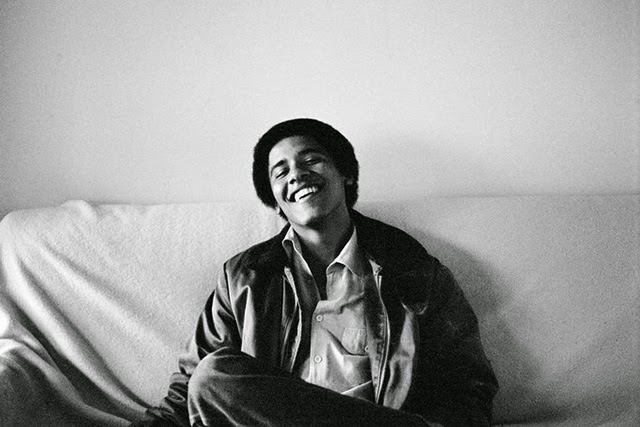
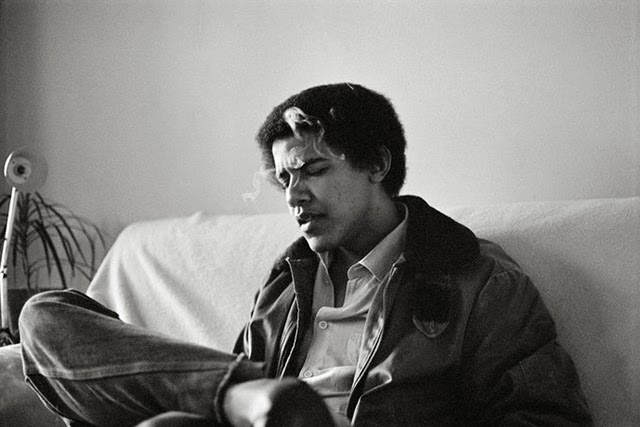
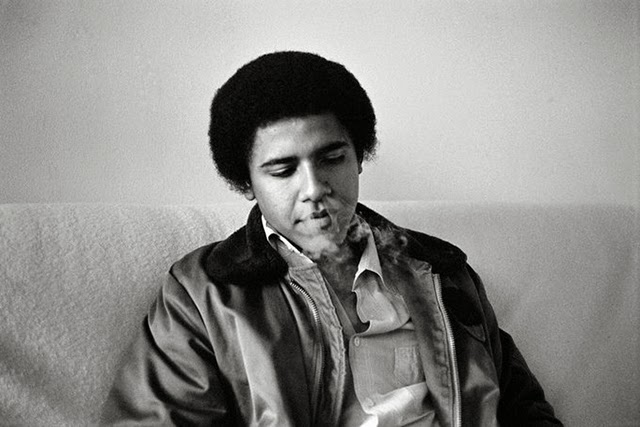
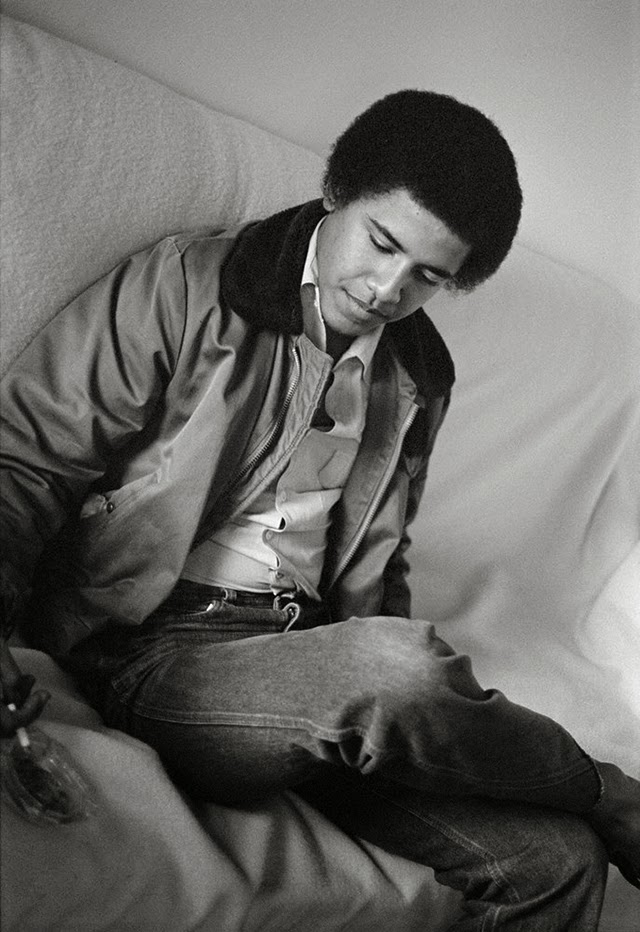
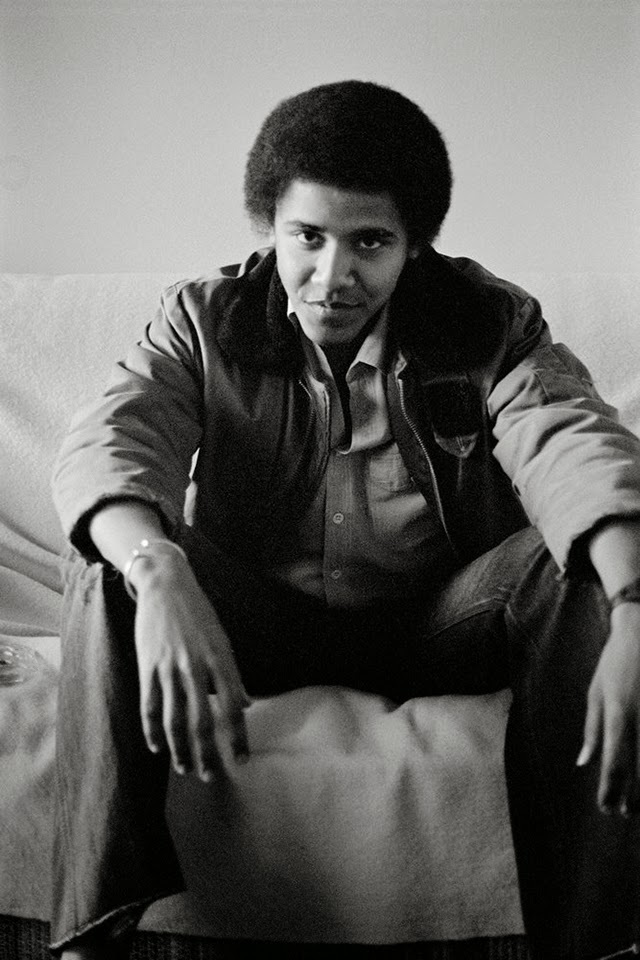
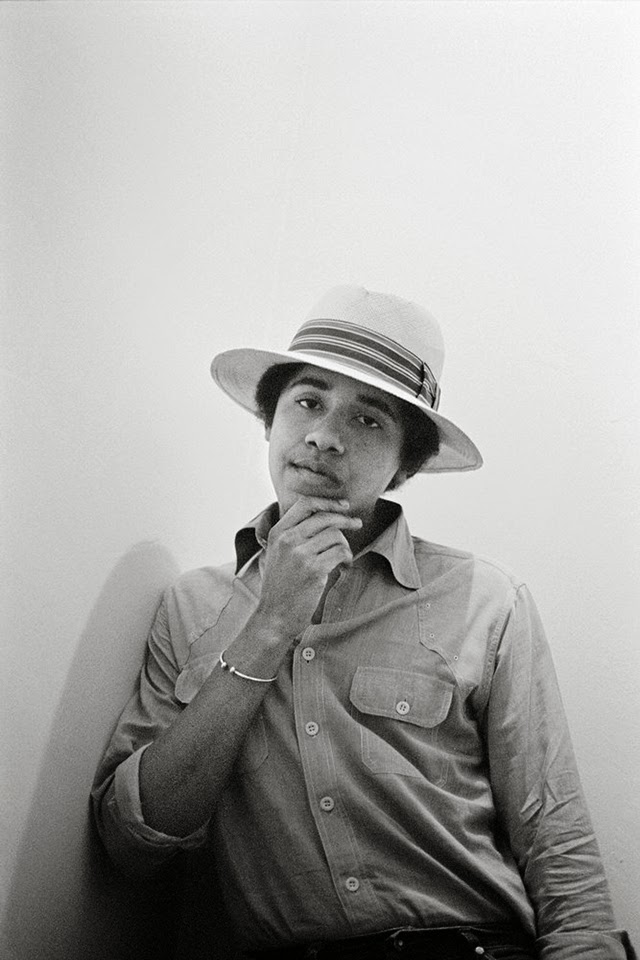
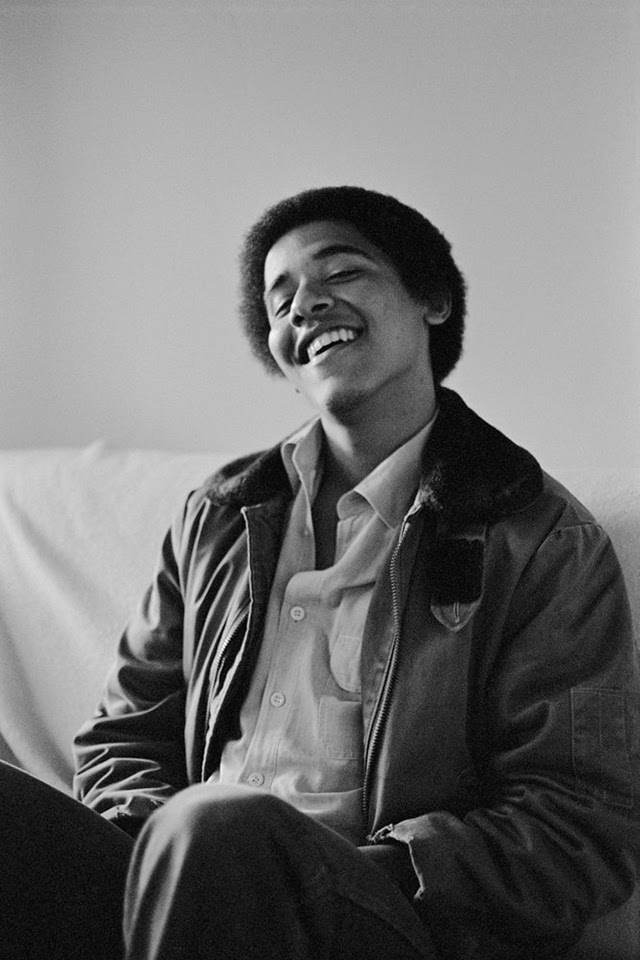
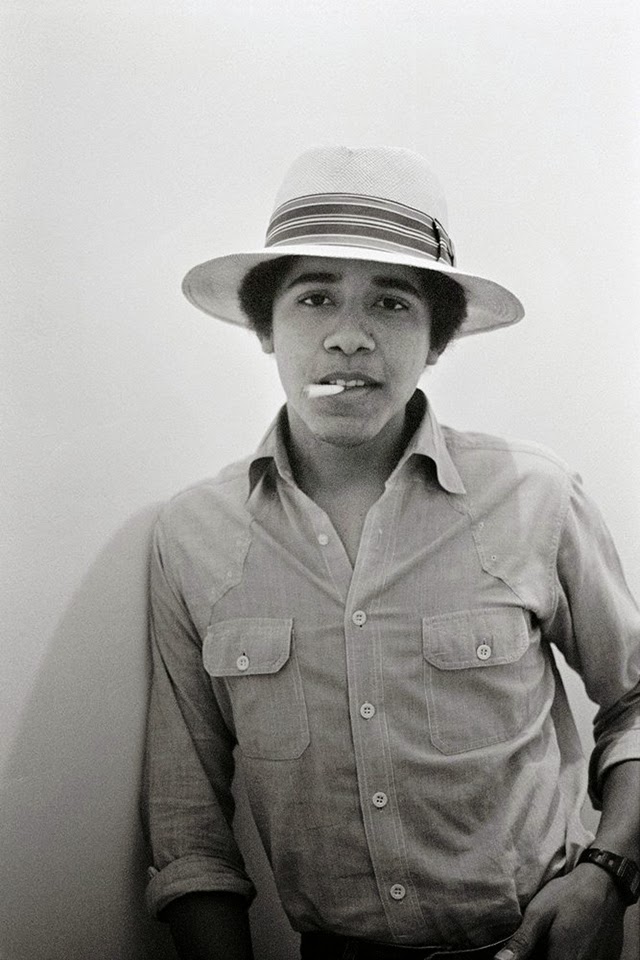
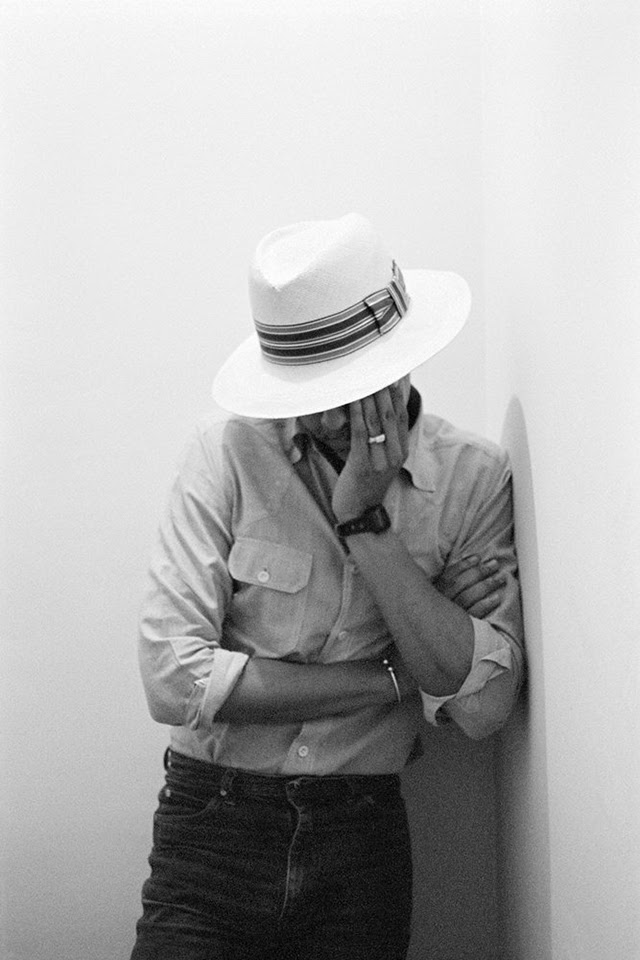
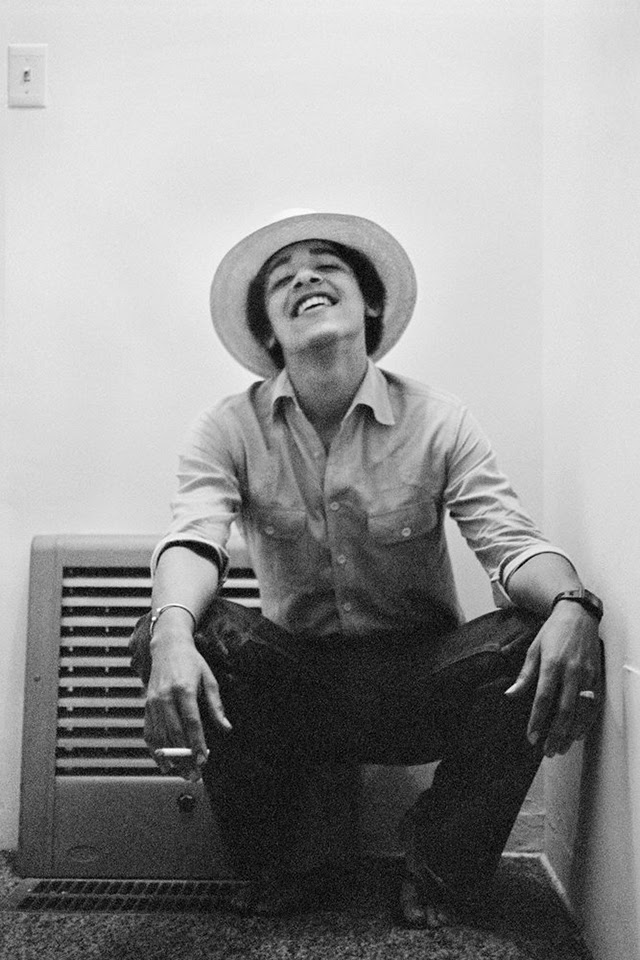
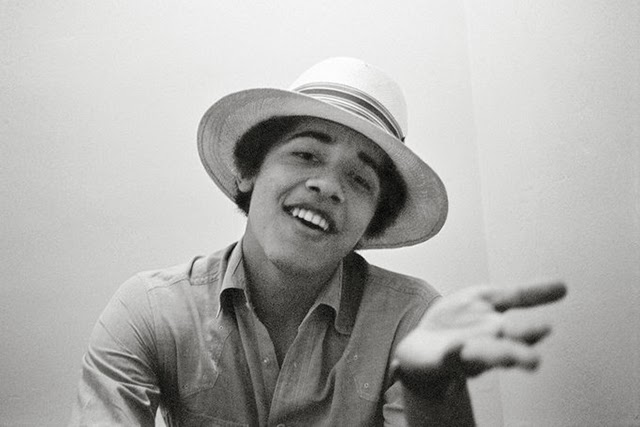
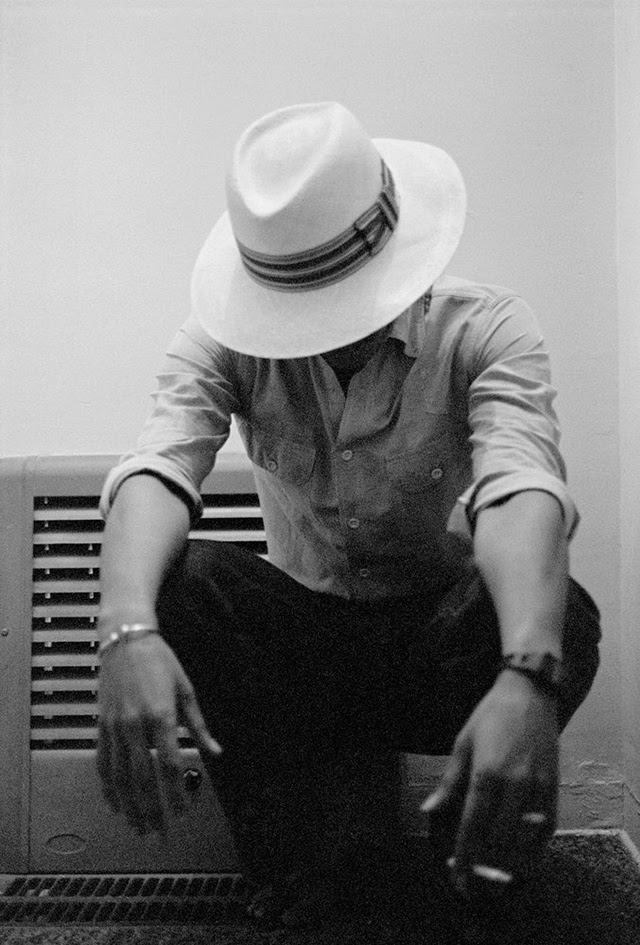
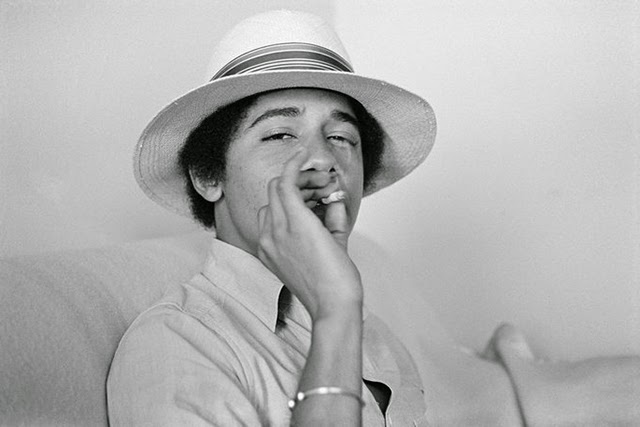
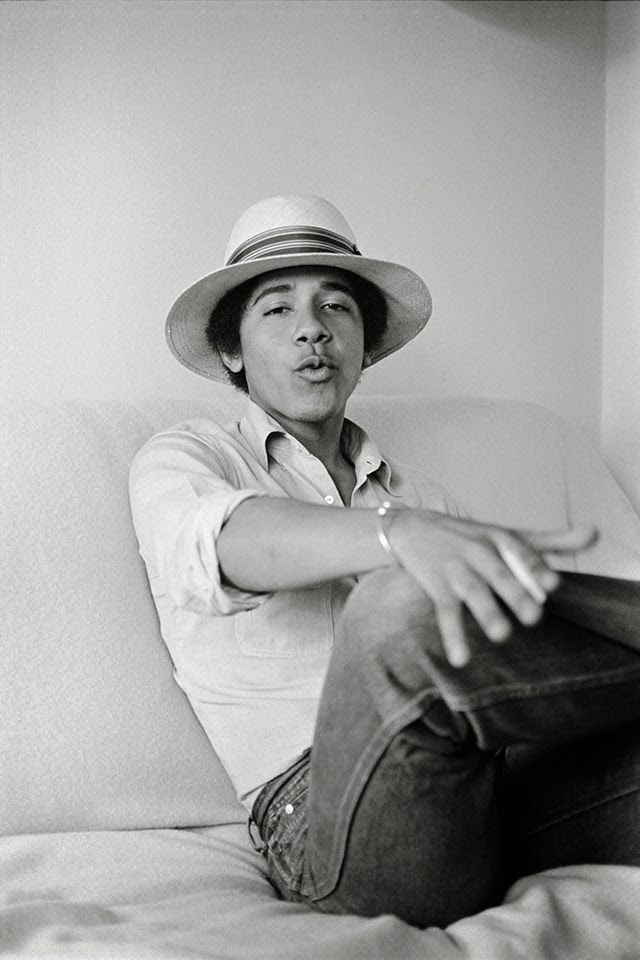
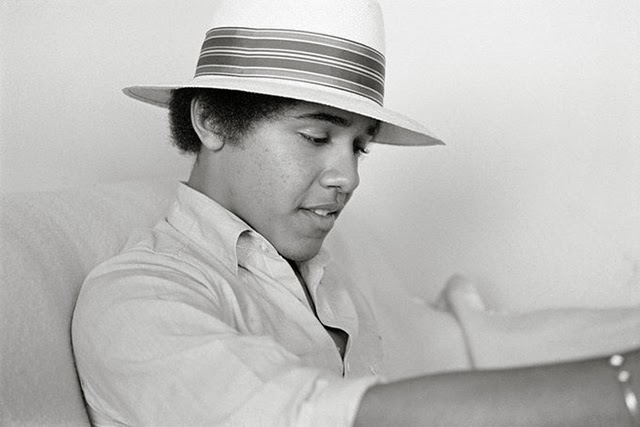
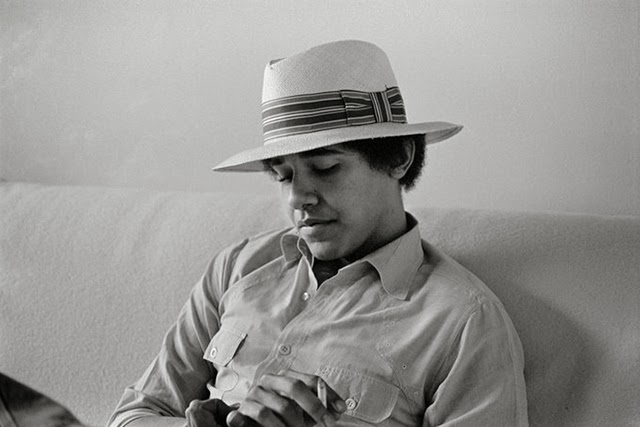
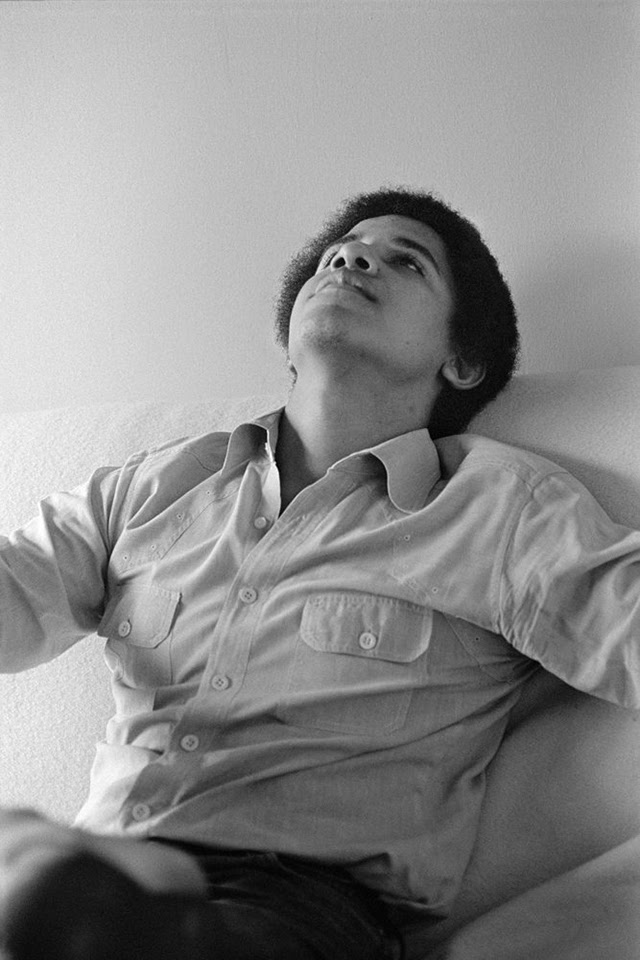
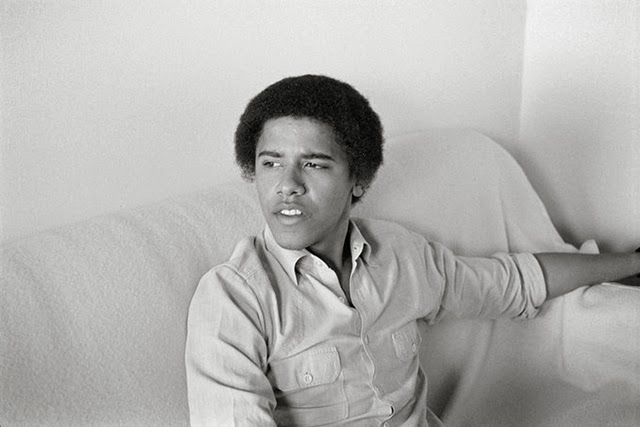
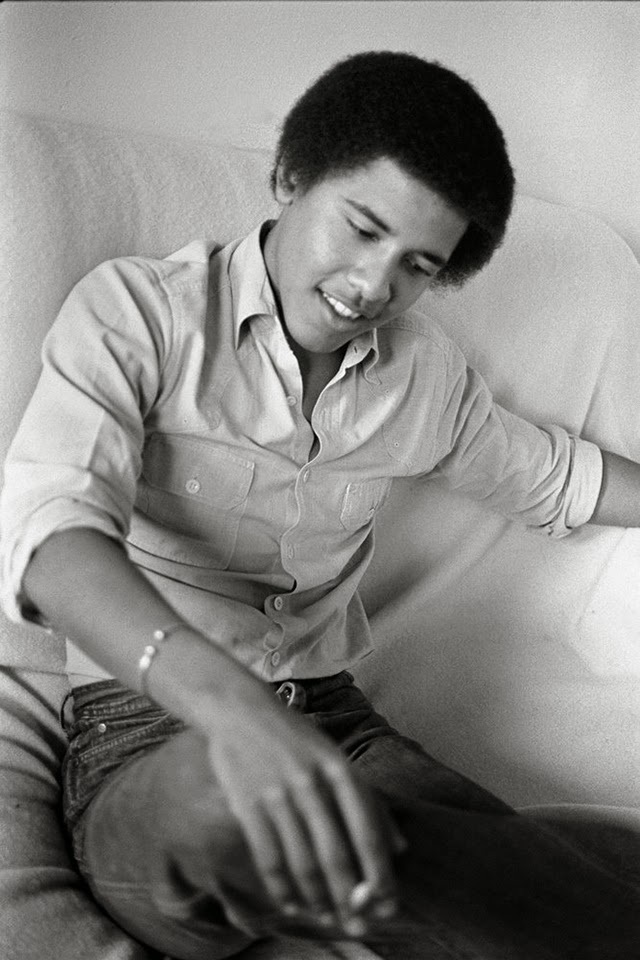
20 Wonderful Photographs of Barack Obama as a Freshman in 1980

Barack Hussein Obama II (born August 4, 1961) is an American politician who served as the 44th president of the United States from 2009 to 2017. A member of the Democratic Party, Obama was the first African-American president of the United States. He previously served as a U.S. senator from Illinois from 2005 to 2008 and as an Illinois state senator from 1997 to 2004.

Obama was born in Honolulu, Hawaii. After graduating from Columbia University in 1983, he worked as a community organizer in Chicago. In 1988, he enrolled in Harvard Law School, where he was the first black president of the Harvard Law Review. After graduating, he became a civil rights attorney and an academic, teaching constitutional law at the University of Chicago Law School from 1992 to 2004. Turning to elective politics, he represented the 13th district in the Illinois Senate from 1997 until 2004, when he ran for the U.S. Senate. Obama received national attention in 2004 with his March Senate primary win, his well-received July Democratic National Convention keynote address, and his landslide November election to the Senate. In 2008, a year after beginning his campaign, and after a close primary campaign against Hillary Clinton, he was nominated by the Democratic Party for president. Obama was elected over Republican nominee John McCain in the general election and was inaugurated alongside his running mate Joe Biden, on January 20, 2009. Nine months later, he was named the 2009 Nobel Peace Prize laureate, a decision that drew a mixture of praise and criticism.
Obama signed many landmark bills into law during his first two years in office. The main reforms include: the Affordable Care Act (ACA or “Obamacare”), although without a public health insurance option; the Dodd–Frank Wall Street Reform and Consumer Protection Act; and the Don’t Ask, Don’t Tell Repeal Act of 2010. The American Recovery and Reinvestment Act and Tax Relief, Unemployment Insurance Reauthorization, and Job Creation Act served as economic stimuli amidst the Great Recession. After a lengthy debate over the national debt limit, he signed the Budget Control and the American Taxpayer Relief Acts. In foreign policy, he increased U.S. troop levels in Afghanistan, reduced nuclear weapons with the United States–Russia New START treaty, and ended military involvement in the Iraq War. In 2011, Obama ordered the drone-strike killing of Anwar al-Awlaki, a US citizen and suspected al-Qaeda operative, leading to controversy. He ordered military involvement in Libya for the implementation of the UN Security Council Resolution 1973, contributing to the overthrow of Muammar Gaddafi. He also ordered the military operation that resulted in the death of Osama bin Laden.

After winning re-election by defeating Republican opponent Mitt Romney, Obama was sworn in for a second term on January 20, 2013. During this term, he promoted inclusion for LGBT Americans. His administration filed briefs that urged the Supreme Court to strike down same-sex marriage bans as unconstitutional (United States v. Windsor and Obergefell v. Hodges); same-sex marriage was legalized nationwide in 2015 after the Court ruled so in Obergefell. He advocated for gun control in response to the Sandy Hook Elementary School shooting, indicating support for a ban on assault weapons, and issued wide-ranging executive actions concerning global warming and immigration. In foreign policy, he ordered military interventions in Iraq and Syria in response to gains made by ISIL after the 2011 withdrawal from Iraq, promoted discussions that led to the 2015 Paris Agreement on global climate change, oversaw and ultimately apologized for the deadly Kunduz hospital airstrike, withdrew U.S. troops in Afghanistan in 2016, initiated sanctions against Russia following the Annexation of Crimea and again after interference in the 2016 U.S. elections, brokered the Joint Comprehensive Plan of Action nuclear deal with Iran, and normalized U.S. relations with Cuba. Obama nominated three justices to the Supreme Court: Sonia Sotomayor and Elena Kagan were confirmed as justices, while Merrick Garland was denied hearings or a vote from the Republican-majority Senate. Obama left office on January 20, 2017, and continues to reside in Washington, D.C.

During Obama’s terms as president, the United States’ reputation abroad, as well as the American economy, significantly improved. Scholars and historians rank him among the upper to mid tier of American presidents. Since leaving office, Obama has remained active in Democratic politics, including campaigning for candidates in the 2018 midterm elections, appearing at the 2020 Democratic National Convention and campaigning for Biden during the 2020 presidential election. Outside of politics, Obama has published three bestselling books: Dreams from My Father (1995), The Audacity of Hope (2006) and A Promised Land (2020). (Wikipedia)

23 Rare Photographs of Audrey Hepburn

Audrey Hepburn (born Audrey Kathleen Ruston; 4 May 1929 – 20 January 1993) was a British actress and humanitarian. Recognised as both a film and fashion icon, she was ranked by the American Film Institute as the third-greatest female screen legend from the Classical Hollywood cinema and was inducted into the International Best Dressed List Hall of Fame.

Born in Ixelles, Brussels to an aristocratic family, Hepburn spent parts of her childhood in Belgium, England, and the Netherlands. She studied ballet with Sonia Gaskell in Amsterdam beginning in 1945, and with Marie Rambert in London from 1948. She began performing as a chorus girl in West End musical theatre productions and then had minor appearances in several films. She rose to stardom in the romantic comedy Roman Holiday (1953) alongside Gregory Peck, for which she was the first actress to win an Oscar, a Golden Globe Award, and a BAFTA Award for a single performance. That year, she also won a Tony Award for Best Lead Actress in a Play for her performance in Ondine.

She went on to star in a number of successful films such as Sabrina (1954), in which Humphrey Bogart and William Holden compete for her affection; Funny Face (1957), a musical where she sang her own parts; the drama The Nun’s Story (1959); the romantic comedy Breakfast at Tiffany’s (1961); the thriller-romance Charade (1963), opposite Cary Grant; and the musical My Fair Lady (1964). In 1967 she starred in the thriller Wait Until Dark, receiving Academy Award, Golden Globe, and BAFTA nominations. After that, she only occasionally appeared in films, one being Robin and Marian (1976) with Sean Connery. Her last recorded performances were in the 1990 documentary television series Gardens of the World with Audrey Hepburn for which she won a Primetime Emmy Award for Outstanding Individual Achievement – Informational Programming.

Hepburn won three BAFTA Awards for Best British Actress in a Leading Role. In recognition of her film career, she received BAFTA’s Lifetime Achievement Award, the Golden Globe Cecil B. DeMille Award, the Screen Actors Guild Life Achievement Award, and the Special Tony Award. She remains one of only sixteen people who have won Academy, Emmy, Grammy, and Tony Awards. Later in life, Hepburn devoted much of her time to UNICEF, to which she had contributed since 1954. Between 1988 and 1992, she worked in some of the poorest communities of Africa, South America, and Asia. In December 1992, she received the Presidential Medal of Freedom in recognition of her work as a UNICEF Goodwill Ambassador. A month later, she died of appendiceal cancer at her home in Switzerland at the age of 63. (Wikipedia)

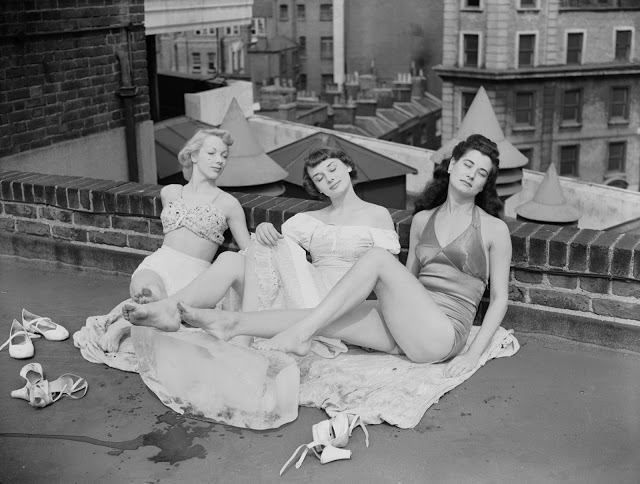
Chorus girls from the show ‘Sauce Tartare’ at the Cambridge Theatre in London, relax on the roof of the theatre, 28th June 1949. From left to right, they are Aud Johanssen of Norway, Audrey Hepburn (1929 – 1993) and Enid Smeedon. 1949
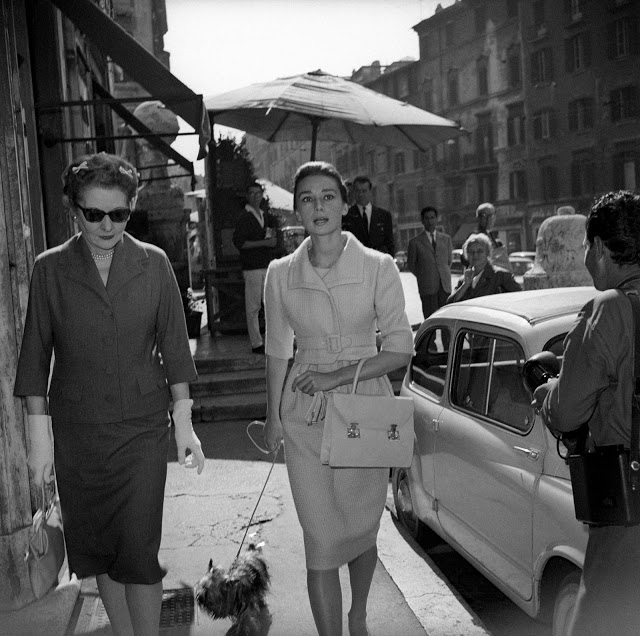
Ever wonder where Hepburn got her chic style? It was from her mother, Dutch Baroness Ella Van Heemstra. Here, the pair walk alongside one another in Rome. 1955
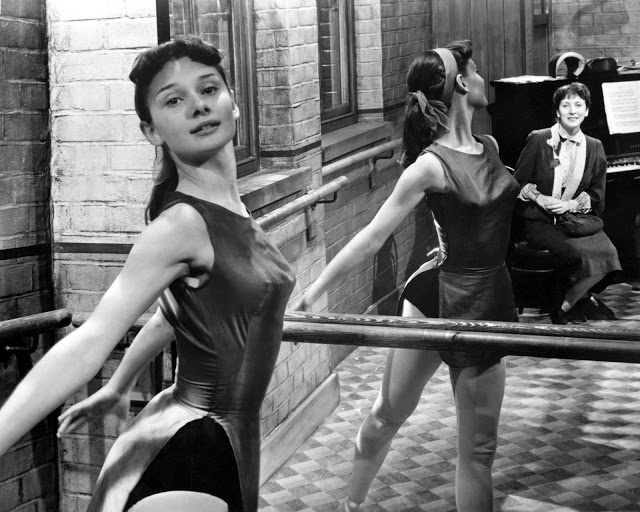
A trained ballerina, Hepburn was well-versed in the art of dance. Here, she practices at the barre. 1950
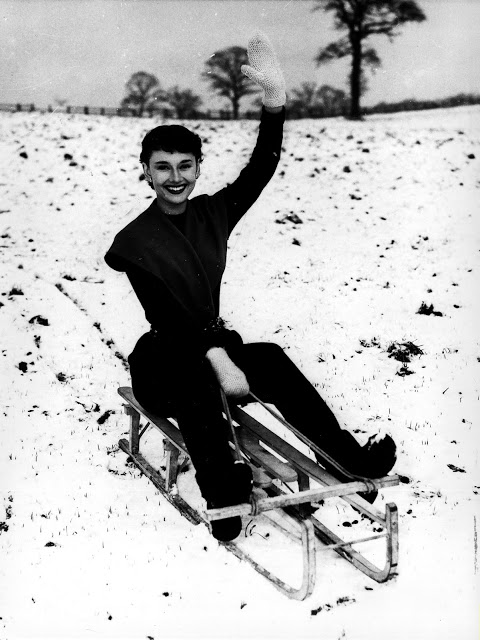
Leave it to this fun-loving lady to make even the coldest of days look like a grand ol’ time. 1950
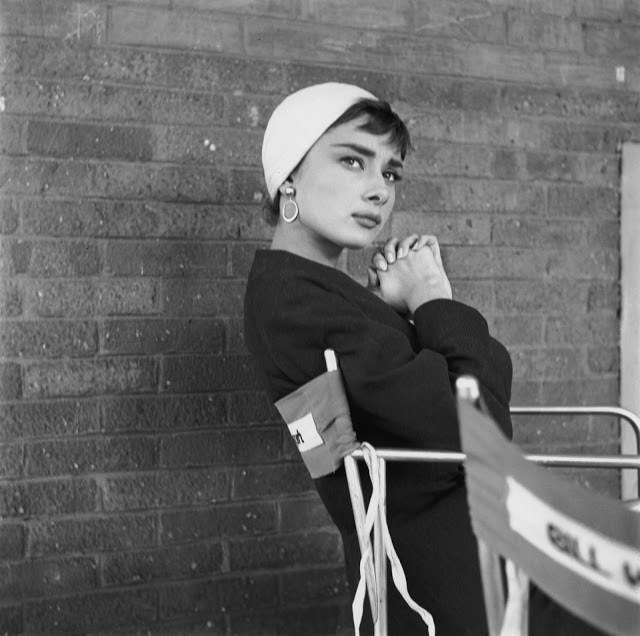
Belgian-born actress Audrey Hepburn (1929 – 1993) on the set of director Billy Wilder’s film, ‘Sabrina’ (aka ‘Sabrina Fair’), New York, October 1953. She is wearing a skirt suit and hat designed by Hubert de Givenchy. After filming Roman Holiday in New York City, Hepburn returned home to a big “welcome back” cake at the Claridge’s Hotel in London. 1953
Only Hepburn could look this stunning while getting ready. 1955
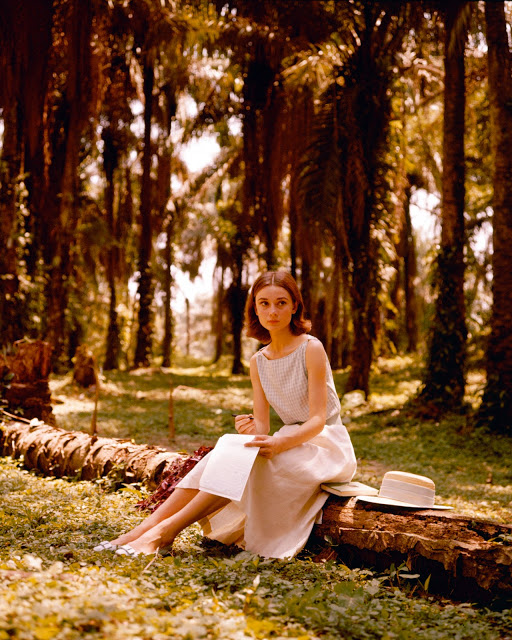
Looking ethereal and thoughtful in a stunning color photo, Hepburn writes a letter while sitting on a log. 1955
Naturally, Hepburn would be great with animals. Here, she poses holding a young deer. 1958
Mel Ferrer and Hepburn affectionately look at their son Sean Hepburn Ferrer, born in 1960.
Here, she poses with her dog while on a film set. 1960
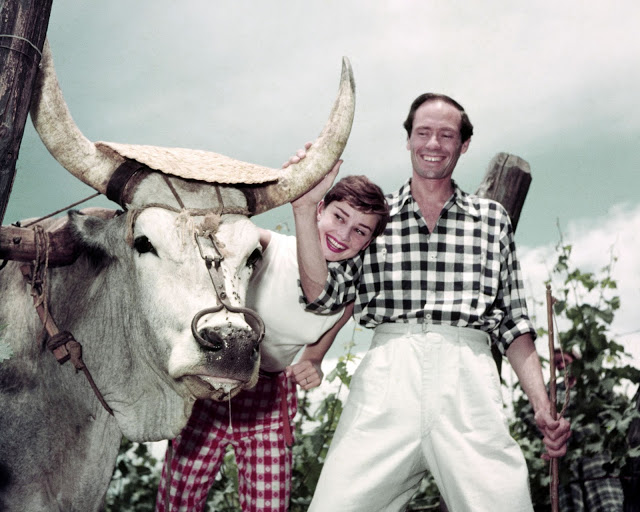
Audrey Hepburn (1929-1993), British actress, wearing red and white check trousers, and her husband, Mel Ferrer (1917-2008), US actor, wearing a black and white check shirt, smiling as they pose beside a bull, with Ferrer holding the bull by the horn, circa 1960.
That’s right, she even loved the fish! Well, this one’s not technically alive, but still, you can see the delight in her eyes. 1960
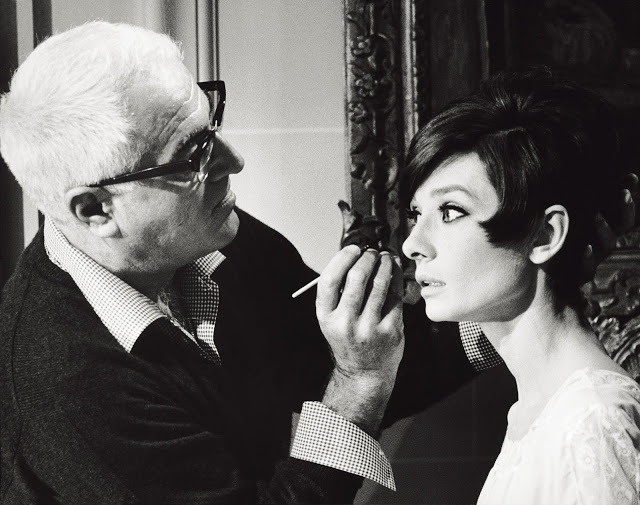
Everyone needs a touchup now and again, even Audrey Hepburn. Behind the scenes of How to Steal A Million, she sits in the makeup chair. 1965
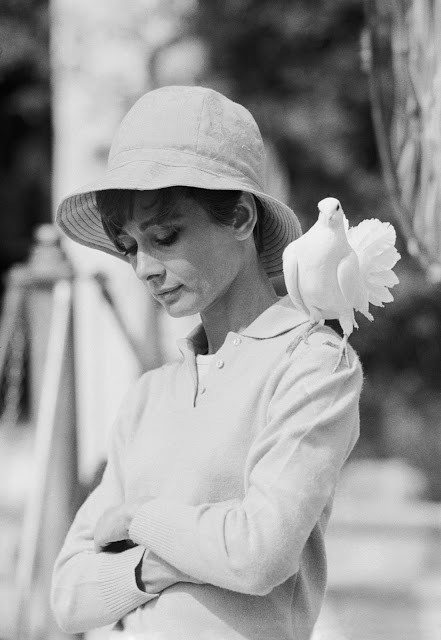
Hepburn barely looks bothered that this dove is perched right on her shoulder. 1965
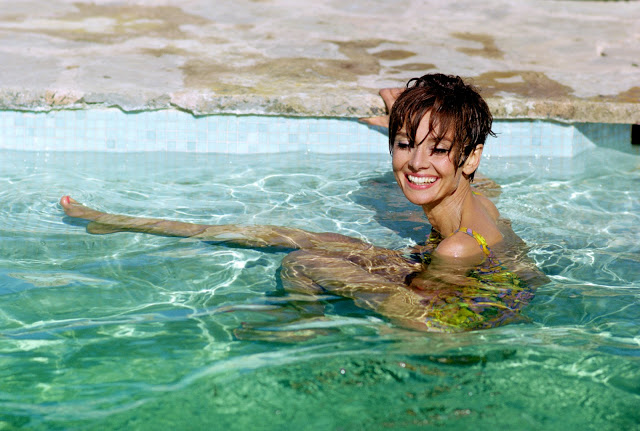
Of course Hepburn looks fantastic even when drenched, swimming in the South of France while filming Two for the Road. 1966
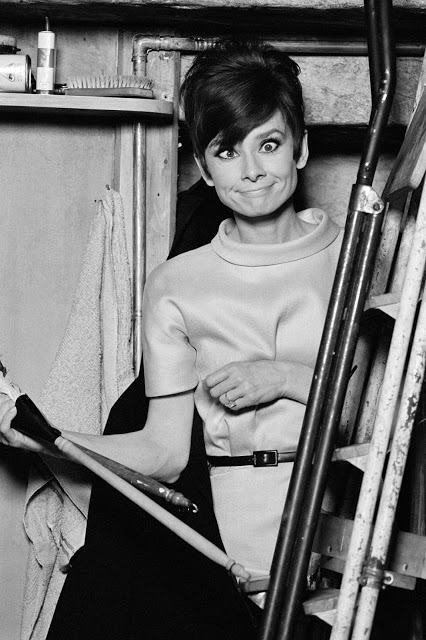
Before models made goofy facial expressions all over Instagram, Hepburn led the pack with her cute and funny faces, like this one on the set of How to Steal A Million in Paris. 1966
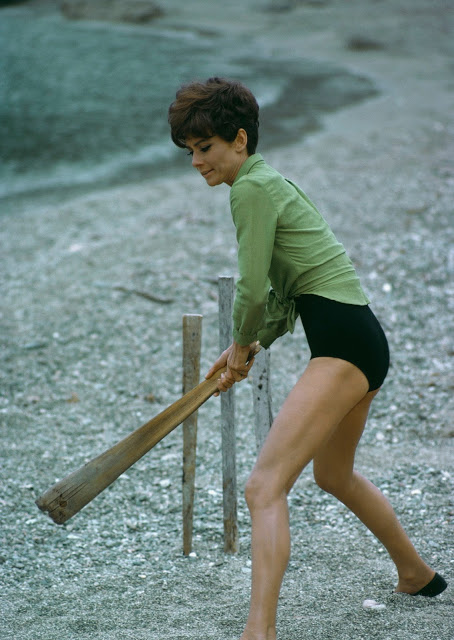
While shooting Two for the Road, Hepburn took a quick break for some cricket. 1966
Looking like an especially glamorous spy, Hepburn walks (holding an image of herself, no less) in New York wearing a camel-colored trench and cool shades. 1968
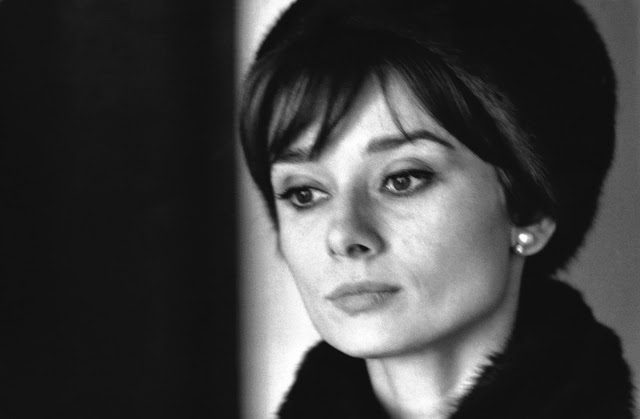
In this portrait, Hepburn has a moment to herself while wearing a chic hat and pretty pearl earrings. 1969
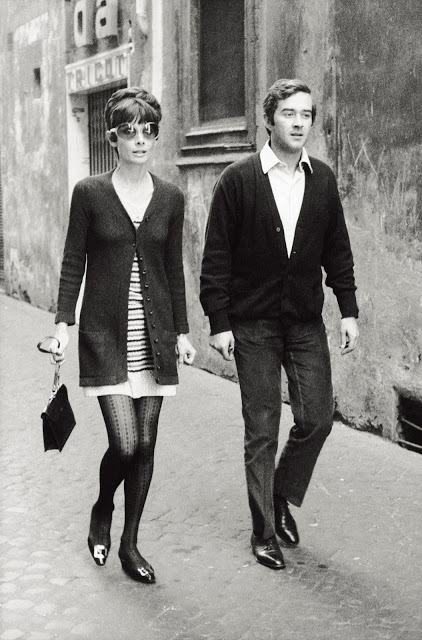
Looking every bit the cool couple, Hepburn walks alongside her husband, psychiatrist Andrea Dotti, in Rome. 1970
A big consistent in Hepburn’s career: The ability to dress perfectly for any occasion. She attended the 47th Academy Awards wearing a marvelous beaded and bow-tied design. 1975
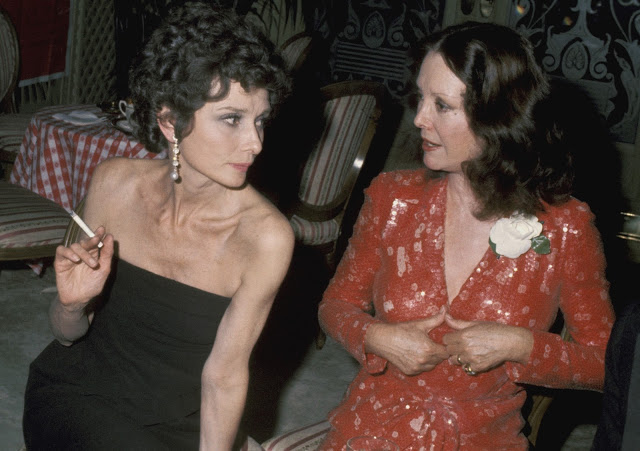
Hepburn attended plenty of soirees in her life, including Art Buchwald’s party at The Bistro in Los Angeles, a snapshot of which is seen here. 1975

22 Vintage Photos Showing Everyday Life of American Jews during the Early 20th Century

Jews have been present in what is today the United States of America since the mid-17th century. However, they were small in numbers and almost exclusively Sephardic Jewish immigrants of Spanish and Portuguese ancestry.

Jewish migration to the United States increased dramatically in the early 1880s, as a result of persecution and economic difficulties in parts of Eastern Europe. Most of these new immigrants were Yiddish-speaking Ashkenazi Jews, though most came from the poor rural populations of the Russian Empire and the Pale of Settlement, located in modern-day Poland, Lithuania, Belarus, Ukraine and Moldova.

At the beginning of the 20th century, these newly arrived Jews built support networks consisting of many small synagogues and Ashkenazi Jewish Landsmannschaften (German for “Countryman Associations”) for Jews from the same town or village. American Jewish writers of the time urged assimilation and integration into the wider American culture, and Jews quickly became part of American life.

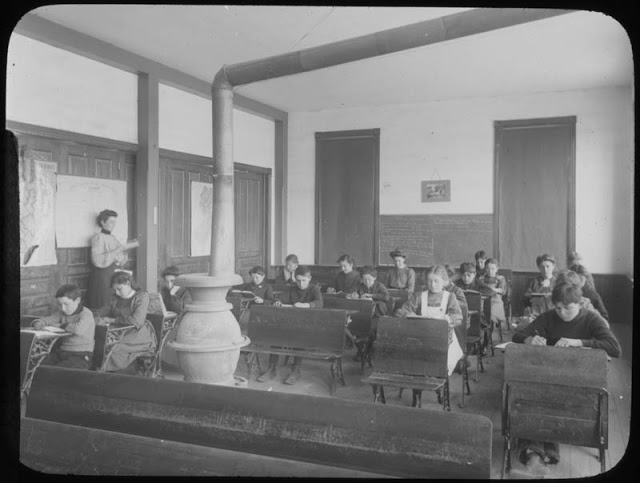
In the classroom, Woodbine School, NJ.
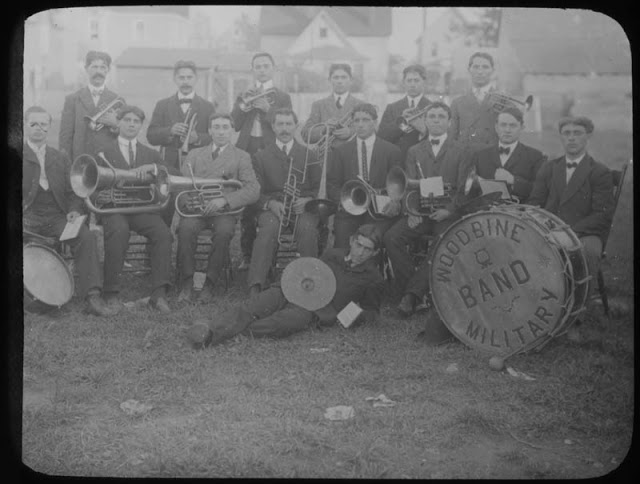
Military Band, Woodbine, New Jersey, ca. 1900.
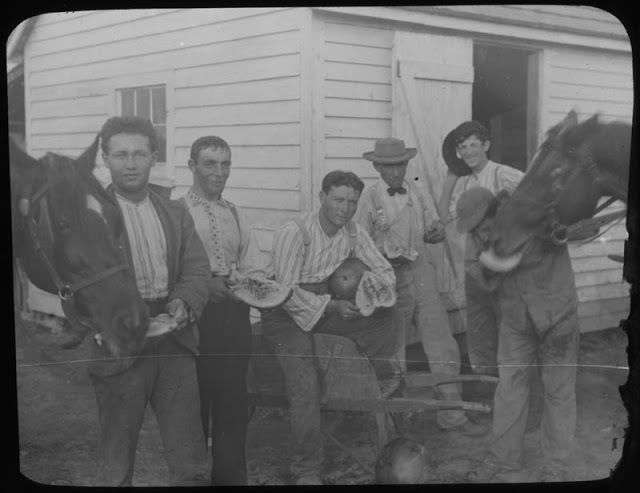
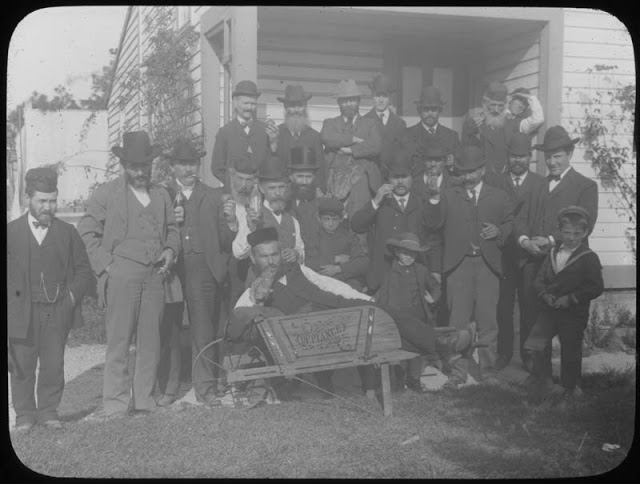
Watermelon party, Woodbine, New Jersey, ca. 1900.
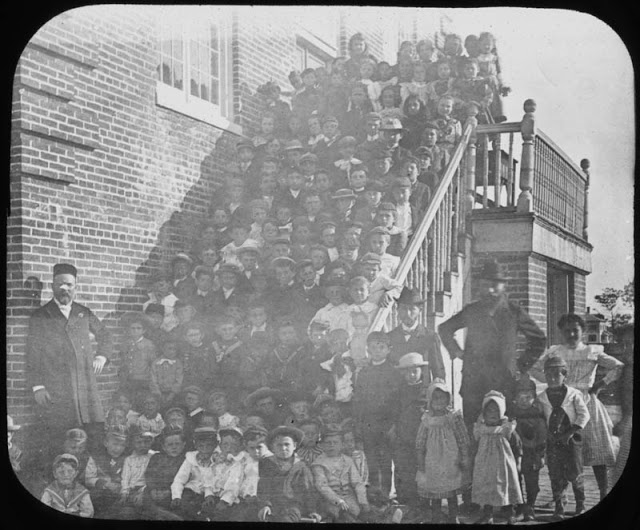
Group of young school students, Woodbine, New Jersey, ca. 1900.
Rejoicing in the Law – Simchas Torah, ca. 1900.
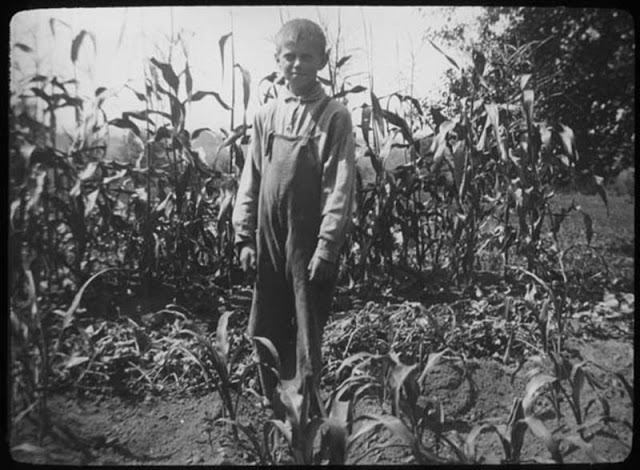
Boy in corn field, Woodbine, New Jersey, ca. 1900.
Women, children and houses, South Jersey Colonies.
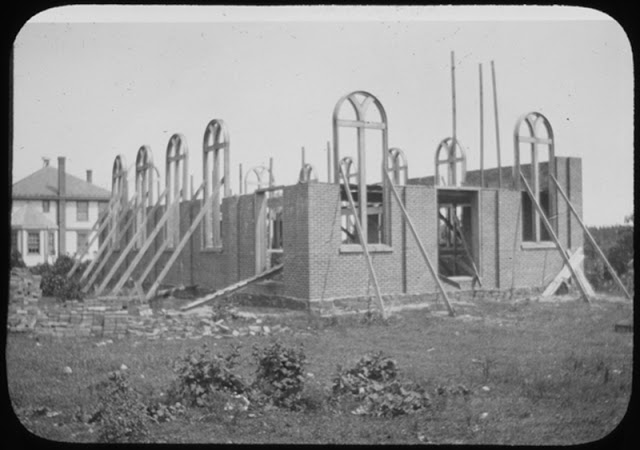
Synagogue construction, BDH Trade School, South Jersey Colonies, Carmel, New Jersey.
Workers coming from the N. Snellenburg & Company Manufactory of All Kinds of Tailor Made Clothing, South Jersey Colonies.
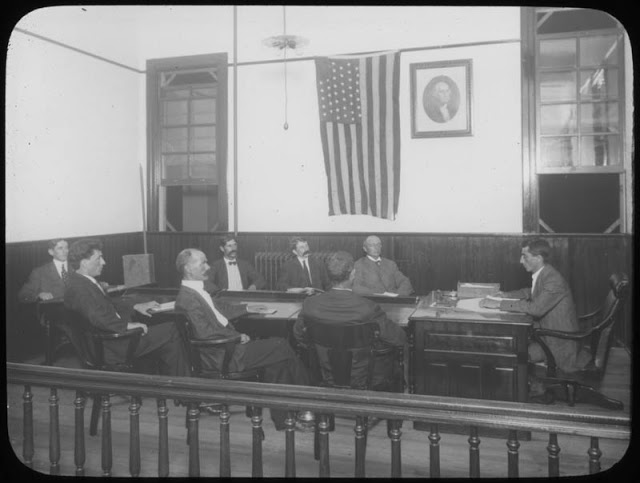
Men in meeting, Woodbine, New Jersey.
Students in the incubation room at the Woodbine Agricultural School, New Jersey, ca. 1900.
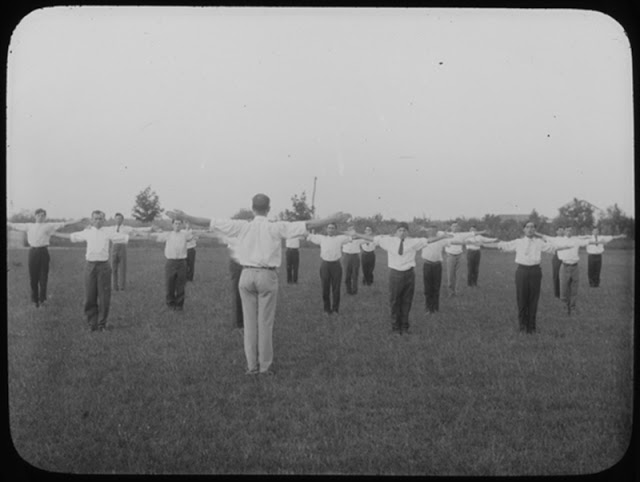
Pupils drilling (calisthenics) at the Woodbine Agricultural School, New Jersey, ca. 1900.
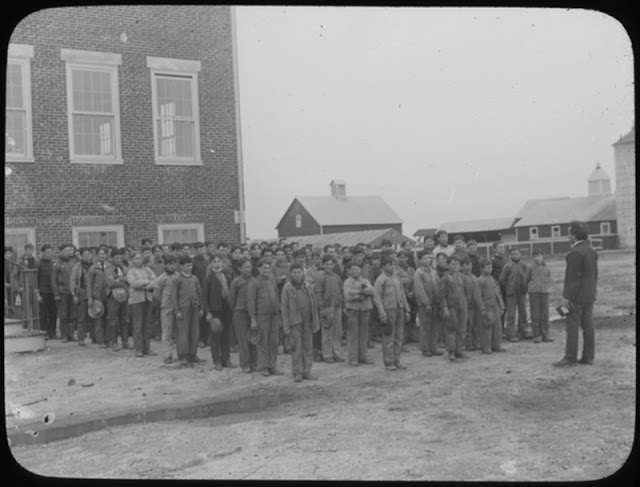
Group of Woodbine Agricultural School students, Woodbine, New Jersey, ca. 1900.
Coming from Synagogue in Brotmanville, New Jersey, ca. 1900.
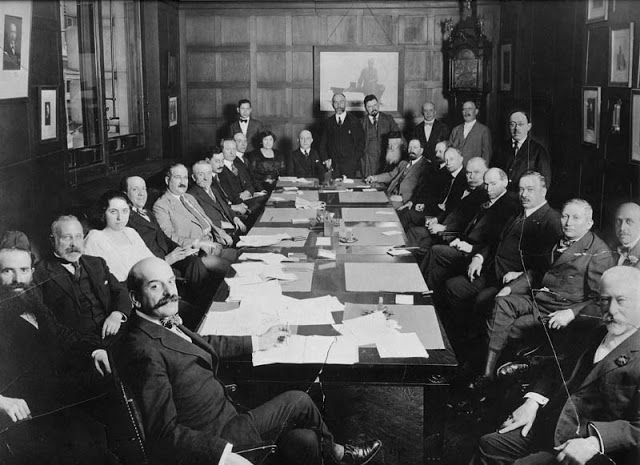
Jews of the U.S. who have distributed twelve million dollars of the relief moneys raised by American Jewry since the beginning of WWI. Jacob Schiff, philanthropist, international banker and one of the founders of the American Jewish Historical Society, appears in the lower right corner. August 16, 1918.
J.W.B. Dinner – Eighth Street Temple, Jan. 23, 1923, Washington, D.C.
Women and soldiers at an event at Camp Raritan, ca. 1920.
Trails to bungalows hidden in the hills at Ray Hill Camp, ca. 1920.
Children pledging the flag at Cedar Lake Camp, ca. 1930.
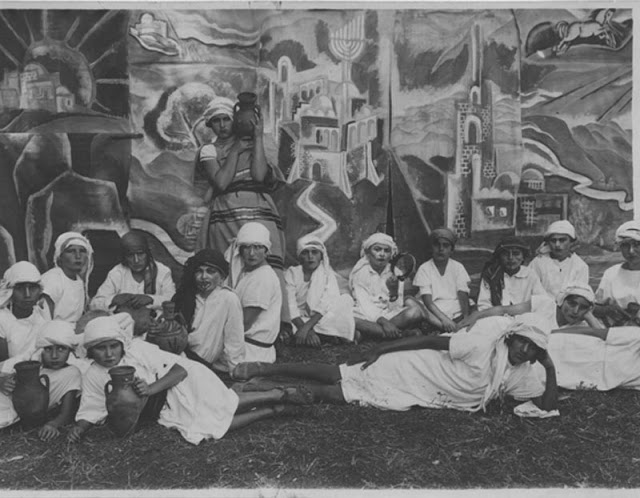
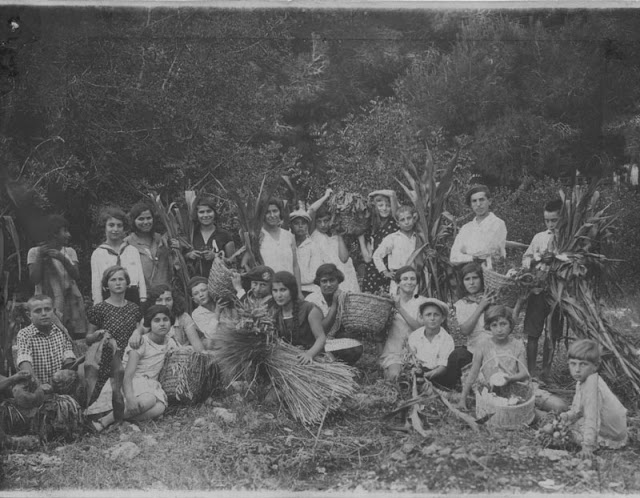
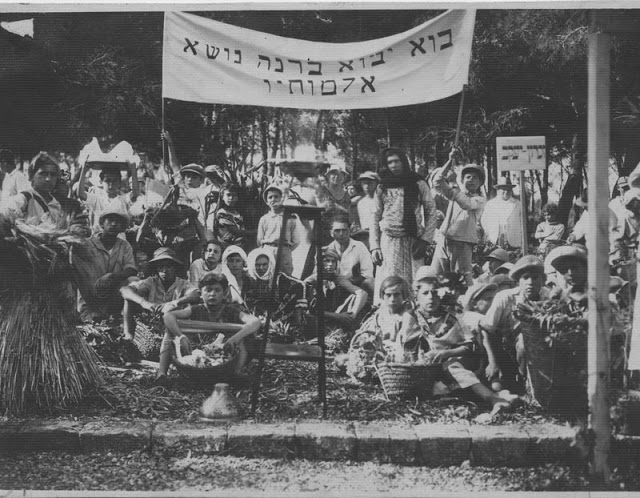
Bikurim celebration, 1930.

Yesterday Today

Bringing You the Wonder of Yesterday - Today

Skip to content ↓