30 Stunning Color Photographs of Paris in 1923

Subscribe to get access

Read more of this content when you subscribe today.

Jules Gervais-Courtellemont (1863–1931) was a French photographer who was famous for taking color autochromes during World War I. He was born near Fontainebleau in Avon, Seine-et-Marne, south of Paris. Courtellemont emigrated with his parents in 1874 to Algeria, and remained there for 20 years.

He became a globetrotter, always in search of something special and exotic. His photography drew him as far as the eastern Mediterranean, North Africa and on to Asia. He collected his works, the moment he had captured with his camera. A head full of dreams and two feet on the ground, is how a contemporary described the artist of light painting.

Courtellemont returned to his home province to record the war. His work reflects the photographic traditions of the autochrome. Landscapes are carefully composed, with due attention to lighting and placement within the picture frame. He used symbols such as the lonely cross and the charred tree for dramatic effect. Judging from the popularity of his lectures in Paris during the war, and the series of publications featuring the battles of Marne and Verdun, his autochromes had the ability to attract a great deal of public interest.

After the war, Courtellemont worked for an American publication. He eventually became a photographer for National Geographic. He was a lifelong friend of the novelist, Orientalist and photographer Pierre Loti. While over 5,500 Gervais-Courtellemont autochromes survive in various institutional collections, including the Musée Albert-Kahn in Boulogne-Billancourt and the Cinémathèque Robert-Lynen in central Paris, his work in private hands is quite rare and sought after.

Paris is the capital and most populous city of France, with an estimated population of 2,165,423 residents in 2019 in an area of more than 105 km² (41 sq mi), making it the 34th most densely populated city in the world in 2020. Since the 17th century, Paris has been one of the world’s major centres of finance, diplomacy, commerce, fashion, gastronomy, science, and arts, and has sometimes been referred to as the capital of the world or “the City of Light”.The City of Paris is the centre of the region and province of Île-de-France, or Paris Region, with an estimated population of 12,262,544 in 2019, or about 19% of the population of France. The Paris Region had a GDP of €739 billion ($743 billion) in 2019, which is the highest in Europe. According to the Economist Intelligence Unit Worldwide Cost of Living Survey, in 2021, Paris was the city with the second-highest cost of living in the world, tied with Singapore, and after Tel Aviv.

Paris is a major railway, highway, and air-transport hub served by two international airports: Paris–Charles de Gaulle (the second-busiest airport in Europe) and Paris–Orly. Opened in 1900, the city’s subway system, the Paris Métro, serves 5.23 million passengers daily; it is the second-busiest metro system in Europe after the Moscow Metro. Gare du Nord is the 24th-busiest railway station in the world and the busiest located outside Japan, with 262 million passengers in 2015. Paris is especially known for its museums and architectural landmarks: the Louvre received 2.8 million visitors in 2021, despite the long museum closings caused by the COVID-19 virus. The Musée d’Orsay, Musée Marmottan Monet and Musée de l’Orangerie are noted for their collections of French Impressionist art. The Pompidou Centre Musée National d’Art Moderne has the largest collection of modern and contemporary art in Europe. The Musée Rodin and Musée Picasso exhibit the works of two noted Parisians. The historical district along the Seine in the city centre has been classified as a UNESCO World Heritage Site since 1991; popular landmarks there include the Cathedral of Notre Dame de Paris on the Île de la Cité, now closed for renovation after the 15 April 2019 fire. Other popular tourist sites include the Gothic royal chapel of Sainte-Chapelle, also on the Île de la Cité; the Eiffel Tower, constructed for the Paris Universal Exposition of 1889; the Grand Palais and Petit Palais, built for the Paris Universal Exposition of 1900; the Arc de Triomphe on the Champs-Élysées, and the hill of Montmartre with its artistic history and its Basilica of Sacré-Coeur.

Paris hosts several United Nations organisations: the UNESCO, the Young Engineers / Future Leaders, the World Federation of Engineering Organizations, and other international organisations such as the OECD, the OECD Development Centre, the International Bureau of Weights and Measures, the International Energy Agency, the International Federation for Human Rights, the International Organisation of La Francophonie; along with European bodies such as the European Space Agency, the European Banking Authority or the European Securities and Markets Authority. Other international organisations were founded in Paris such as the CIMAC in 1951 (International Council on Combustion Engines | Conseil International des Machines à Combustion), or the modern Olympic Games in 1894 which was then moved to Lausanne, Switzerland.

The football club Paris Saint-Germain and the rugby union club Stade Français are based in Paris. The 80,000-seat Stade de France, built for the 1998 FIFA World Cup, is located just north of Paris in the neighbouring commune of Saint-Denis. Paris hosts the annual French Open Grand Slam tennis tournament on the red clay of Roland Garros. The city hosted the Olympic Games in 1900, 1924 and will host the 2024 Summer Olympics. The 1938 and 1998 FIFA World Cups, the 2007 Rugby World Cup, as well as the 1960, 1984 and 2016 UEFA European Championships were also held in the city. Every July, the Tour de France bicycle race finishes on the Avenue des Champs-Élysées in Paris. (Wikipedia)
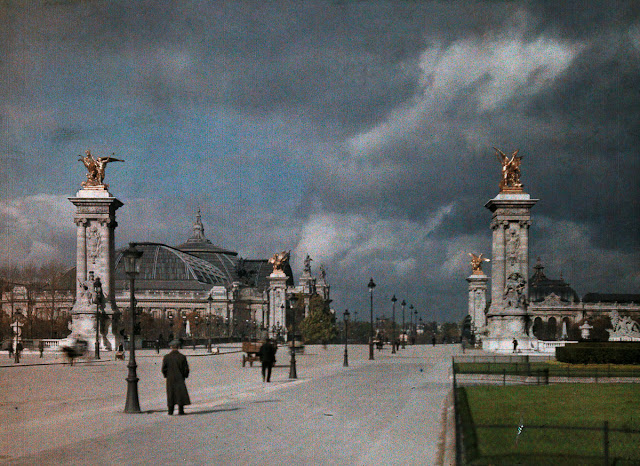
ca. January 1923, Paris, France

Subscribe to continue reading

Become a paid subscriber to get access to the rest of this post and other exclusive content.
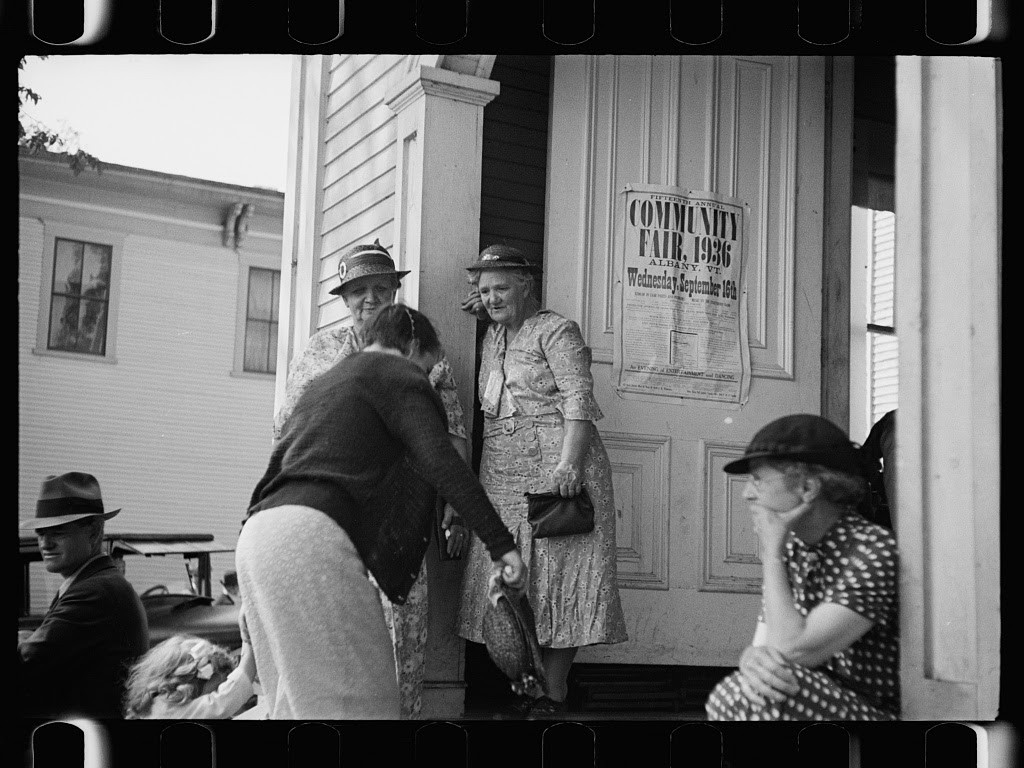
Amazing Vintage Photos of American Life in the 1930s

Subscribe to get access

Read more of this content when you subscribe today.

The United States of America (U.S.A. or USA), commonly known as the United States (U.S. or US) or America, is a country primarily located in North America. It consists of 50 states, a federal district, five major unincorporated territories, 326 Indian reservations, and nine minor outlying islands. It is the world’s third-largest country by both land and total area. The United States shares land borders with Canada to the north and with Mexico to the south as well as maritime borders with the Bahamas, Cuba, and Russia, among others. With more than 331 million people, it is the third most populous country in the world. The national capital is Washington, D.C., and the most populous city and financial center is New York City.

Paleo-Indians migrated from Siberia to the North American mainland at least 12,000 years ago, and European colonization began in the 16th century. The United States emerged from the Thirteen British Colonies established along the East Coast. Disputes with Great Britain over taxation and political representation led to the American Revolutionary War (1775–1783), which established the nation’s independence. In the late 18th century, the U.S. began expanding across North America, gradually obtaining new territories, sometimes through war, frequently displacing Native Americans, and admitting new states. This was strongly related to belief in manifest destiny, and by 1848, the United States spanned the continent from east to west. Slavery was legal in the southern United States until 1865, when the American Civil War led to its abolition. A century later, the civil rights movement led to legislation outlawing racial discrimination against African Americans. The Spanish–American War and World War I established the U.S. as a world power, and the aftermath of World War II left the United States and the Soviet Union as the world’s two superpowers. During the Cold War, both countries opposed each other in the Korean and Vietnam Wars but avoided direct military conflict. They also competed in the Space Race, which culminated in the 1969 American spaceflight that first landed humans on the Moon. The Soviet Union’s dissolution in 1991 ended the Cold War, leaving the United States as the world’s sole superpower.

The United States is a federal republic with three separate branches of government, including a bicameral legislature. It is a founding member of the United Nations, World Bank, International Monetary Fund, Organization of American States, NATO, and other international organizations. It is a permanent member of the United Nations Security Council. Considered a melting pot of cultures and ethnicities, its population has been profoundly shaped by centuries of immigration. The United States is a liberal democracy; it ranks high in international measures of economic freedom, quality of life, education, and human rights; and it has low levels of perceived corruption. It lacks universal health care, retains capital punishment, and has high levels of incarceration and inequality.

The United States is a highly developed country, and its economy accounts for approximately a quarter of global GDP and is the world’s largest by GDP at market exchange rates. By value, the United States is the world’s largest importer and second-largest exporter. Although its population is only about 4.2% of the world’s total, it holds over 30% of the total wealth in the world, the largest share held by any country. Making up more than a third of global military spending, it is the foremost military power in the world and a leading political, cultural, and scientific force.

The 1930s was defined by a global economic and political crisis that culminated in the Second World War. It saw the collapse of the international financial system, beginning with the Wall Street Crash of 1929, the largest stock market crash in American history. The subsequent economic downfall, called the Great Depression, had traumatic social effects worldwide, leading to widespread poverty and unemployment, especially in the economic superpower of the United States and in Germany, which was already struggling with the payment of reparations for the First World War. The Dust Bowl in the United States (which led to the nickname the “Dirty Thirties”) exacerbated the scarcity of wealth. U.S. President Franklin D. Roosevelt, elected in 1933, introduced a program of broad-scale social reforms and stimulus plans called the New Deal in response to the crisis.

In the wake of the Depression, the decade also saw the rapid retreat of liberal democracy as authoritarian regimes emerged in countries across Europe and South America, including Italy, Spain, and in particular Nazi Germany. With the rise of Adolf Hitler, Germany undertook a series of annexations and aggressions against neighboring territories in Central Europe, and imposed a series of laws which discriminated against Jews and other ethnic minorities. Weaker states such as Ethiopia, China, and Poland were invaded by expansionist world powers, with the last of these attacks leading to the outbreak of World War II on September 1, 1939, despite calls from the League of Nations for worldwide peace. World War II helped end the Great Depression when governments spent money for the war effort. The 1930s also saw many important developments in science and a proliferation of new technologies, especially in the fields of intercontinental aviation, radio, and film. (Wikipedia)

Subscribe to continue reading

Become a paid subscriber to get access to the rest of this post and other exclusive content.
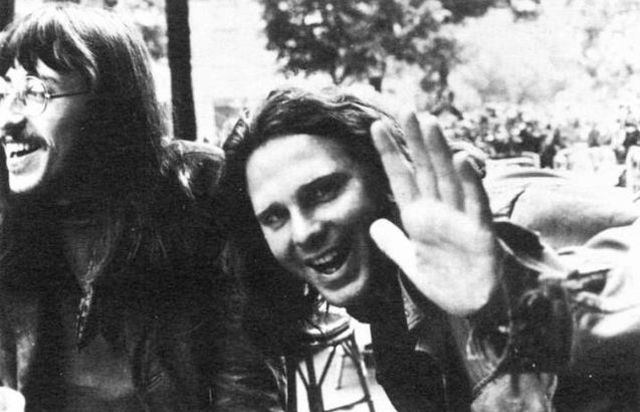
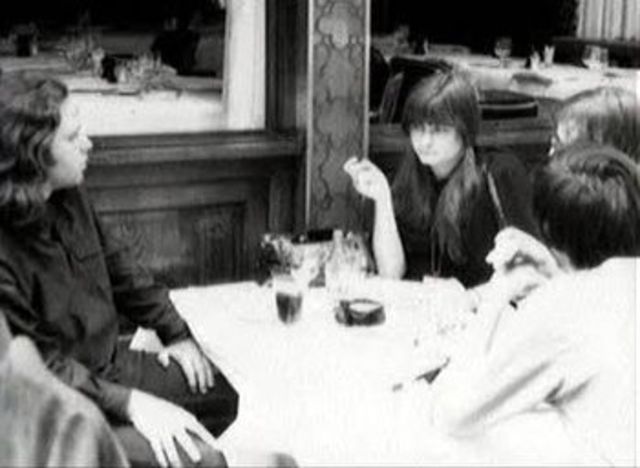
Candid Snaps of Jim Morrison Hanging Out With Friends in Paris, Just a Few Short Weeks Before He Died

Subscribe to get access

Read more of this content when you subscribe today.

James Douglas Morrison (December 8, 1943 – July 3, 1971) was an American singer, poet and songwriter who was the lead vocalist of the rock band the Doors. Due to his wild personality, poetic lyrics, distinctive voice, unpredictable and erratic performances, and the dramatic circumstances surrounding his life and early death, Morrison is regarded by music critics and fans as one of the most influential frontmen in rock history. Since his death, his fame has endured as one of popular culture’s top rebellious and oft-displayed icons, representing the generation gap and youth counterculture.

Together with pianist Ray Manzarek, Morrison founded the Doors in 1965 in Venice, California. The group spent two years in obscurity until shooting to prominence with their number-one single in the United States, “Light My Fire”, taken from their self-titled debut album. Morrison recorded a total of six studio albums with the Doors, all of which sold well and received critical acclaim. Morrison was well known for improvising spoken word poetry passages while the band played live. Manzarek said Morrison “embodied hippie counterculture rebellion”.

Morrison developed an alcohol dependency throughout the band’s career, which at times affected his performances on stage. In 1971, Morrison died unexpectedly in Paris at the age of 27, amid conflicting witness reports. His premature death is often linked with the 27 club. Since no autopsy was performed, the cause of Morrison’s death remains disputed.

Although the Doors recorded two more albums after Morrison died, his death severely affected the band’s fortunes, and they split up two years later. In 2011, a Rolling Stone readers’ pick placed Jim Morrison in fifth position on the magazine’s “Best Lead Singers of All Time”, and in another Rolling Stone list of “The 100 Greatest Singers of All Time”, he was ranked 47th. He was also ranked the 22nd greatest singer in rock by Classic Rock Magazine. In 1993, Morrison was inducted into the Rock and Roll Hall of Fame along with the other Doors members. (Wikipedia)

These photos were taken by Hervé Muller at the Bar “Alexander” in Paris in May 1971. In these candid snaps you can see how Jim is in a good mood, eating and drinking with friends in Paris, jokes and tells of his personal projects, he also makes faces at the camera. None of them could ever think that a little later, Jim would be died in his apartment in Paris on July 3, 1971.

Jim Morrison was reportedly found by his girl-friend Pamela Courson in the bathtub of the apartment. The official cause of death was listed as heart failure, although no autopsy was performed, as it was not required by French law. It has also been reported, by several individuals who say they were eyewitnesses, that his death was due to an accidental heroin overdose.

His death came two years to the day after the death of Rolling Stones guitarist Brian Jones and approximately nine months after the deaths of Jimi Hendrix and Janis Joplin — all of whom died at the age of 27. Three years after his death, Courson also died at the age of 27.

Subscribe to continue reading

Become a paid subscriber to get access to the rest of this post and other exclusive content.

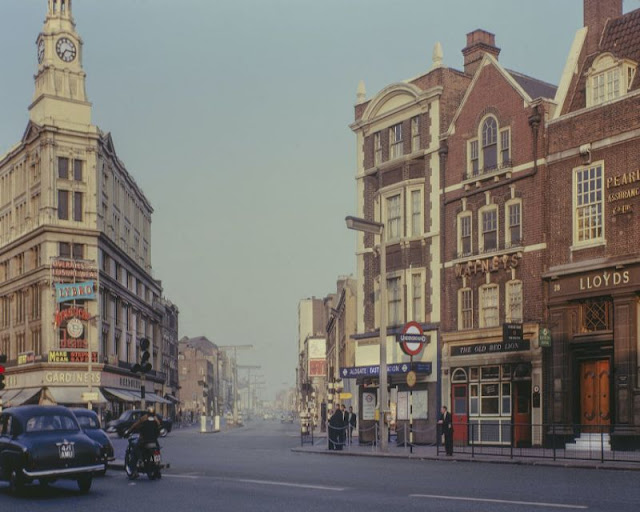
Stunning Vintage Photos of a Vanished London’s East End in Color

Subscribe to get access

Read more of this content when you subscribe today.

In 2017, photographer Chris Dorley-Brown stumbled across thousands of extraordinary color slides, which belonged to local, East End photographer David Granick, when he was invited to examine the Tower Hamlets Local History Library & Archives. Born in 1912, Granick lived in Stepney until his death in 1980. A brilliant photographer and member of the East London History Society, throughout his life he shot thousands of images of the area, which he also used to illustrate his lectures on various local history themes.

Taken between the late 1950s and 1980, these evocative photos captured a fading world, a time when the area was still bearing the scars of the war. “The collection has about 3,000 slides going back to the fifties,” explains Dorley-Brown, “but they have been well preserved. Many had been unseen for fifty years or more.”

The East End in Colour 1960-1980 by David Granick is published by Hoxton Mini Press.

Gardiners, circa 1977.

Subscribe to continue reading

Become a paid subscriber to get access to the rest of this post and other exclusive content.
Portraits of Wild Bill Hickok, the Most Famous of All Western Gunfighters

Subscribe to get access

Read more of this content when you subscribe today.

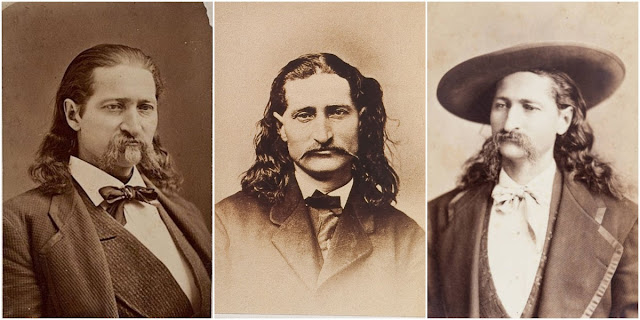
James Butler Hickok (May 27, 1837 – August 2, 1876), better known as “Wild Bill” Hickok, was a folk hero of the American Old West known for his life on the frontier as a soldier, scout, lawman, gambler, showman, and actor, and for his involvement in many famous gunfights. He earned a great deal of notoriety in his own time, much of it bolstered by the many outlandish and often fabricated tales he told about himself. Some contemporaneous reports of his exploits are known to be fictitious, but they remain the basis of much of his fame and reputation.

Hickok was born and raised on a farm in northern Illinois at a time when lawlessness and vigilante activity was rampant because of the influence of the “Banditti of the Prairie.” Drawn to this ruffian lifestyle, he headed west at age 18 as a fugitive from justice, working as a stagecoach driver and later as a lawman in the frontier territories of Kansas and Nebraska. He fought and spied for the Union Army during the American Civil War and gained publicity after the war as a scout, marksman, actor, and professional gambler. He was involved in several notable shootouts during the course of his life.

In 1876, Hickok was shot and killed while playing poker in a saloon in Deadwood, Dakota Territory (present-day South Dakota) by Jack McCall, an unsuccessful gambler. The hand of cards which he supposedly held at the time of his death has become known as the dead man’s hand: two pairs; black aces and eights.

Hickok remains a popular figure of frontier history. Many historic sites and monuments commemorate his life, and he has been depicted numerous times in literature, film, and television. He is chiefly portrayed as a protagonist, although historical accounts of his actions are often controversial, and much of his career is known to have been exaggerated both by himself and by contemporary mythmakers. While Hickok claimed to have killed numerous named and unnamed gunmen in his lifetime, his career as a gunfighter only lasted from 1861 to 1871. According to Joseph G. Rosa, Hickok’s biographer and the foremost authority on Wild Bill, Hickok killed only six or seven men in gunfights.

Portrait of a young James Butler Hickok, aka “Wild Bill” Hickok.

Subscribe to continue reading

Become a paid subscriber to get access to the rest of this post and other exclusive content.
50+ Amazing Vintage Photos From the 1970s Volume 1

Subscribe to get access

Read more of this content when you subscribe today.

Sharpshooters, Santa Monica Pier, 1970.

Subscribe to continue reading

Become a paid subscriber to get access to the rest of this post and other exclusive content.

Yesterday Today: July 21

Subscribe to get access

Read more of this content when you subscribe today.

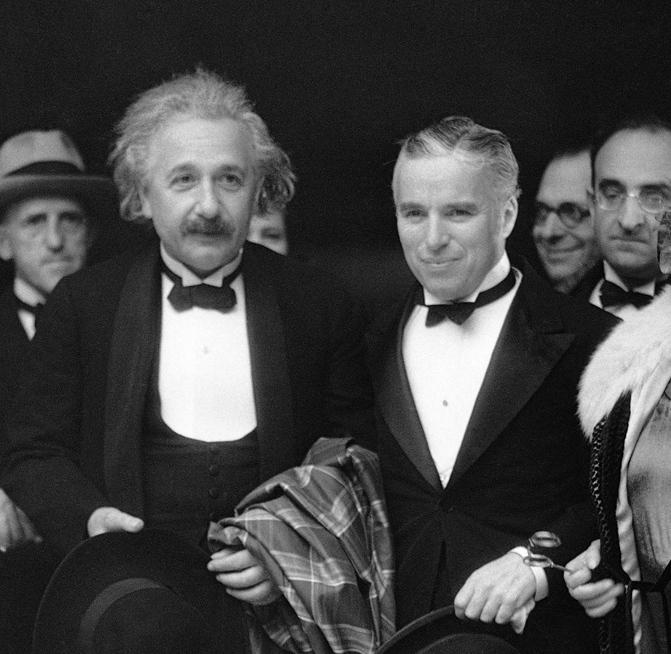
Albert Einstein and Charlie Chaplin, 1931

Subscribe to continue reading

Become a paid subscriber to get access to the rest of this post and other exclusive content.
30 Creepy Bad Album Covers

Subscribe to get access

Read more of this content when you subscribe today.

Subscribe to continue reading

Become a paid subscriber to get access to the rest of this post and other exclusive content.

Here’s the Earliest Known Image of Women’s Hockey, ca. 1890

Subscribe to get access

Read more of this content when you subscribe today.

This 1890 photograph is the oldest-known picture of women playing hockey, taken at Rideau Hall in Ottawa. Isobel Stanley, daughter of Lord Stanley, is seen wearing white.

Subscribe to continue reading

Become a paid subscriber to get access to the rest of this post and other exclusive content.
Yesterday Today

Bringing You the Wonder of Yesterday - Today

Skip to content ↓