Pets are part of many children’s lives. Parental involvement, open discussion, and planning are necessary to help make pet ownership a positive experience for everyone. A child who learns to care for an animal, and treat it kindly and patiently, may get invaluable training in learning to treat people the same way. Careless treatment of animals is unhealthy for both the pet and the child involved.
Children raised with pets show many benefits. Developing positive feelings about pets can contribute to a child’s self-esteem and self-confidence. Positive relationships with pets can aid in the development of trusting relationships with others. A good relationship with a pet can also help in developing non-verbal communication, compassion, and empathy.
These vintage photos capture lovely moments of children posing with their beloved animals.
Subscribe to continue reading
Become a paid subscriber to get access to the rest of this post and other exclusive content.
Pattie Boyd was the face of the ’60s. Her blonde hair, deep bangs, long legs, and perfect pout got her on magazine covers and snared her a bit part in the Beatles’ first film, A Hard Day’s Night. She met George Harrison on the very first day of filming, and he asked her out—thinking that she looked exactly like Brigitte Bardot.
She married the quiet Beatle, living a rarified life that few of us will ever experience. Boyd not only is famous for her iconic beauty, but for introducing the Fab Four to Maharishi Mahesh Yogi and also for leaving Harrison for his best friend Eric Clapton and inspiring some of rock’s most heart-torn classics like Harrison’s “Something,” “I Need You,” and Clapton’s “Layla” and “Wonderful Tonight.”
Subscribe to continue reading
Become a paid subscriber to get access to the rest of this post and other exclusive content.
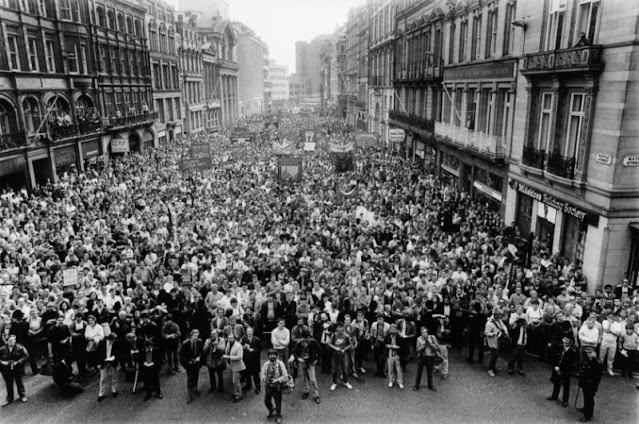
The 1980s were a time of turmoil and upheaval for Liverpool. Unemployment and economic instability led to widespread disquiet, culminating in public shows of resistance such as the 1981 Toxteth Riots. Liverpool also elected its first Labour council in 1983, who promised to stand up for what they saw as unjust cuts under the Thatcher government.
However, the people of Liverpool were strong in the face of this upheaval, and glimpses of light can be found in dark times. As the official photographer for the Militant, Sinclair’s stunning images show a city that refused to lie down in the face of adversity.
Dave Sinclair was born in 1959 in Walton, Liverpool. By 1980, he was studying Art at Liverpool Polytechnic, where he developed an interest in the Liverpool urban landscape. Surrounded by derelict factories and docks, Dave started documenting his surroundings, processing and printing in black and white in a darkroom he built himself. He soon realised that photography was what he wanted to do for a living. His photographs have been featured in several exhibitions, including ‘The Dockers’ which was exhibited in London Liverpool and extensively abroad, The ‘School Student Strike’ at the Bluecoat in Liverpool and ‘Thatcher, Liverpool and the 80s’ in Shoreditch.
Liverpool in the 1980s’ pays tribute to the constancy of the Liverpudlian spirit. From citywide protests to intimate portraits, this volume is a unique insight into the recent history of one of Britain’s most inspirational cities.
Subscribe to continue reading
Become a paid subscriber to get access to the rest of this post and other exclusive content.
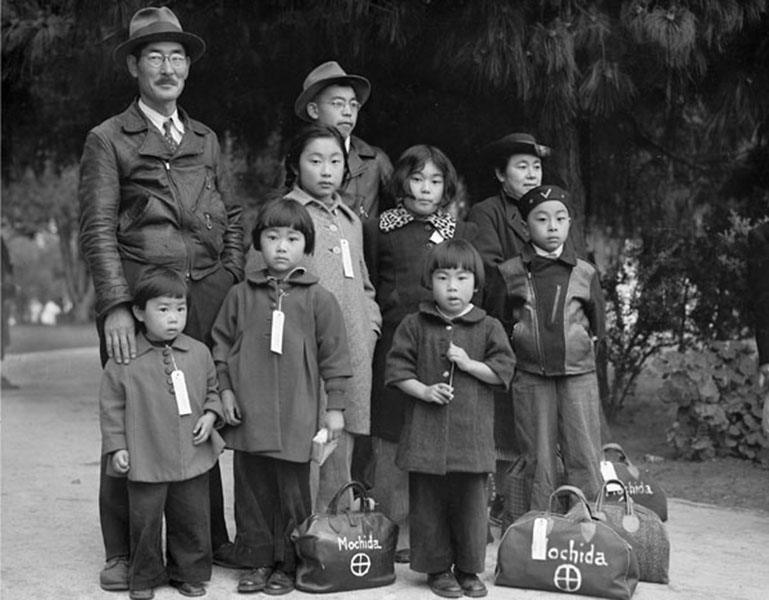
During World War II, the United States forcibly relocated and incarcerated at least 125,284 people of Japanese descent in 75 identified incarceration sites. Most lived on the Pacific Coast, in concentration camps in the western interior of the country. Approximately two-thirds of the inmates were United States citizens. These actions were initiated by President Franklin D. Roosevelt via Executive Order 9066 following Imperial Japan’s attack on Pearl Harbor.
Of the 127,000 Japanese Americans who were living in the continental United States at the time of the Pearl Harbor attack, 112,000 resided on the West Coast. About 80,000 were Nisei (literal translation: ‘second generation’; American-born Japanese with U.S. citizenship) and Sansei (‘third generation’, the children of Nisei). The rest were Issei (‘first generation’) immigrants born in Japan who were ineligible for U.S. citizenship under U.S. law.
Japanese Americans were placed in concentration camps based on local population concentrations and regional politics. More than 112,000 Japanese Americans who were living on the West Coast were incarcerated in camps which were located in its interior. In Hawaii (which was under martial law), where more than 150,000 Japanese Americans comprised over one-third of the territory’s population, only 1,200 to 1,800 were incarcerated. California defined anyone with 1⁄16th or more Japanese lineage as a person who should be incarcerated. Colonel Karl Bendetsen, the architect of the program, went so far as to say that anyone with “one drop of Japanese blood” qualified for incarceration.
These War Relocation Authority photos from The Library of Congress that depicted Japanese Americans before and during World War II and their incarceration in concentration camps.
Subscribe to continue reading
Become a paid subscriber to get access to the rest of this post and other exclusive content.
Sweden, officially the Kingdom of Sweden, is a Nordic country in Northern Europe. It borders Norway to the west and north, Finland to the east, and is connected to Denmark in the southwest by a bridge-tunnel across the Öresund. At 450,295 square kilometres (173,860 sq mi), Sweden is the largest country in Northern Europe, the third-largest country in the European Union, and the fifth largest country in Europe. The capital and largest city is Stockholm. Sweden has a total population of 10.4 million, the largest of the Nordic countries; and a low population density of 25.5 inhabitants per square kilometre (66/sq mi). 87% of Swedes live in urban areas, which cover 1.5% of the entire land area. The highest concentration is in the central and southern half of the country.
Sweden is part of the geographical area of Fennoscandia. The climate is in general mild for its northerly latitude due to significant maritime influence. In spite of the high latitude, Sweden often has warm continental summers, being located in between the North Atlantic, the Baltic Sea, and vast Russia. The general climate and environment vary significantly from the south and north due to the vast latitudinal difference, and much of Sweden has reliably cold and snowy winters. Southern Sweden is predominantly agricultural, while the north is heavily forested and includes a portion of the Scandinavian Mountains.
Germanic peoples have inhabited Sweden since prehistoric times, emerging into history as the Geats (Swedish: Götar) and Swedes (Svear) and constituting the sea peoples known as the Norsemen. An independent Swedish state emerged during the early 12th century. After the Black Death in the middle of the 14th century killed about a third of the Scandinavian population, the dominance of the Hanseatic League in Northern Europe threatened Scandinavia economically and politically. This led to the forming of the Scandinavian Kalmar Union in 1397, which Sweden left in 1523. When Sweden became involved in the Thirty Years’ War on the Protestant side, an expansion of its territories began and eventually the Swedish Empire was formed. This became one of the great powers of Europe until the early 18th century. Swedish territories outside the Scandinavian Peninsula were gradually lost during the 18th and 19th centuries, ending with the annexation of present-day Finland by Russia in 1809. The last war in which Sweden was directly involved was in 1814 when Norway was militarily forced into a personal union, which peacefully dissolved in 1905. Since then, Sweden has been at peace, maintaining an official policy of neutrality in foreign affairs. In 2014, Sweden celebrated 200 years of peace, breaking even Switzerland’s record for peace. Sweden was formally neutral through both world wars and the Cold War, although Sweden has since 2009 openly moved towards cooperation with NATO.
Sweden is a constitutional monarchy and a parliamentary democracy, with legislative power vested in the 349-member unicameral Riksdag. It is a unitary state, currently divided into 21 counties and 290 municipalities. Sweden maintains a Nordic social welfare system that provides universal health care and tertiary education for its citizens. It has the world’s eleventh-highest per capita income and ranks very highly in quality of life, health, education, protection of civil liberties, economic competitiveness, income equality, gender equality, prosperity and human development. Sweden joined the European Union on 1 January 1995, but has rejected NATO membership, as well as Eurozone membership following a referendum. It is also a member of the United Nations, the Nordic Council, the Council of Europe, the World Trade Organization and the Organisation for Economic Co-operation and Development (OECD).
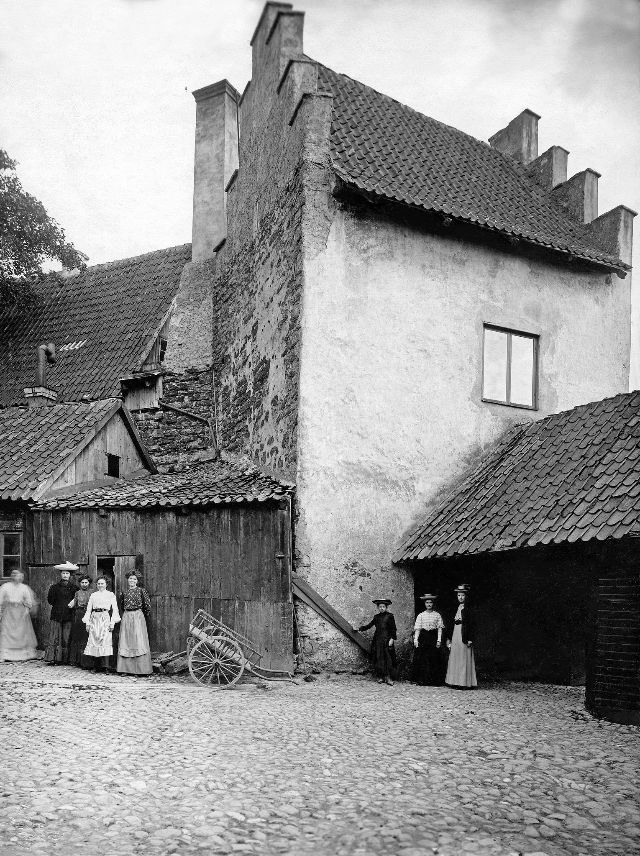
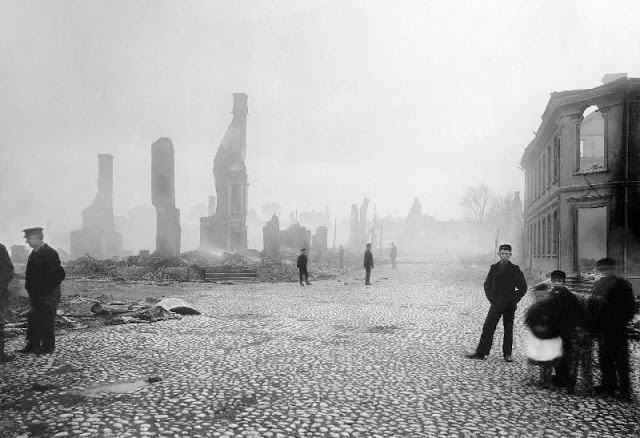
Åmål. The western part of Åmål, after the fire on the 9th of May, 1901. People and ruins
Subscribe to continue reading
Become a paid subscriber to get access to the rest of this post and other exclusive content.
Paris is the capital and most populous city of France, with an estimated population of 2,165,423 residents in 2019 in an area of more than 105 km² (41 sq mi), making it the 34th most densely populated city in the world in 2020. Since the 17th century, Paris has been one of the world’s major centres of finance, diplomacy, commerce, fashion, gastronomy, science, and arts, and has sometimes been referred to as the capital of the world. The City of Paris is the centre and seat of government of the region and province of Île-de-France, or Paris Region, with an estimated population of 12,997,058 in 2020, or about 18% of the population of France, making it the 14th largest in the world in 2015. The Paris Region had a GDP of €709 billion ($808 billion) in 2017. According to the Economist Intelligence Unit Worldwide Cost of Living Survey, in 2021 Paris was the city with the second-highest cost of living in the world, tied with Singapore, and after Tel Aviv.
Paris is a major railway, highway, and air-transport hub served by two international airports: Paris–Charles de Gaulle (the second-busiest airport in Europe) and Paris–Orly. Opened in 1900, the city’s subway system, the Paris Métro, serves 5.23 million passengers daily; it is the second-busiest metro system in Europe after the Moscow Metro. Gare du Nord is the 24th-busiest railway station in the world and the busiest located outside Japan, with 262 million passengers in 2015. Paris is especially known for its museums and architectural landmarks: the Louvre received 2.8 million visitors in 2021, despite the long museum closings caused by the COVID-19 virus. The Musée d’Orsay, Musée Marmottan Monet and Musée de l’Orangerie are noted for their collections of French Impressionist art. The Pompidou Centre Musée National d’Art Moderne has the largest collection of modern and contemporary art in Europe. The Musée Rodin and Musée Picasso exhibit the works of two noted Parisians. The historical district along the Seine in the city centre has been classified as a UNESCO World Heritage Site since 1991; popular landmarks there include the Cathedral of Notre Dame de Paris on the Île de la Cité, now closed for renovation after the 15 April 2019 fire. Other popular tourist sites include the Gothic royal chapel of Sainte-Chapelle, also on the Île de la Cité; the Eiffel Tower, constructed for the Paris Universal Exposition of 1889; the Grand Palais and Petit Palais, built for the Paris Universal Exposition of 1900; the Arc de Triomphe on the Champs-Élysées, and the hill of Montmartre with its artistic history and its Basilica of Sacré-Coeur.
Paris hosts several United Nations organisations: the UNESCO, the Young Engineers / Future Leaders, the World Federation of Engineering Organizations, and other international organisations such as the OECD, the OECD Development Centre, the International Bureau of Weights and Measures, the International Energy Agency, the International Federation for Human Rights, the International Organisation of La Francophonie; along with European bodies such as the European Space Agency, the European Banking Authority or the European Securities and Markets Authority. Other international organisations were founded in Paris such as the CIMAC in 1951 (International Council on Combustion Engines | Conseil International des Machines à Combustion), or the modern Olympic Games in 1894 which was then moved to Lausanne, Switzerland.
Tourism recovered in the Paris region in 2021, increasing to 22.6 million visitors, thirty percent more than in 2020, but still well below 2019 levels. The number of visitors from the United States increased by 237 percent over 2020. Museums re-opened in 2021, with limitations on the number of visitors at a time and a requirement that visitors wear masks.
The football club Paris Saint-Germain and the rugby union club Stade Français are based in Paris. The 80,000-seat Stade de France, built for the 1998 FIFA World Cup, is located just north of Paris in the neighbouring commune of Saint-Denis. Paris hosts the annual French Open Grand Slam tennis tournament on the red clay of Roland Garros. The city hosted the Olympic Games in 1900, 1924 and will host the 2024 Summer Olympics. The 1938 and 1998 FIFA World Cups, the 2007 Rugby World Cup, as well as the 1960, 1984 and 2016 UEFA European Championships were also held in the city. Every July, the Tour de France bicycle race finishes on the Avenue des Champs-Élysées in Paris. (Wikipedia)
Subscribe to continue reading
Become a paid subscriber to get access to the rest of this post and other exclusive content.
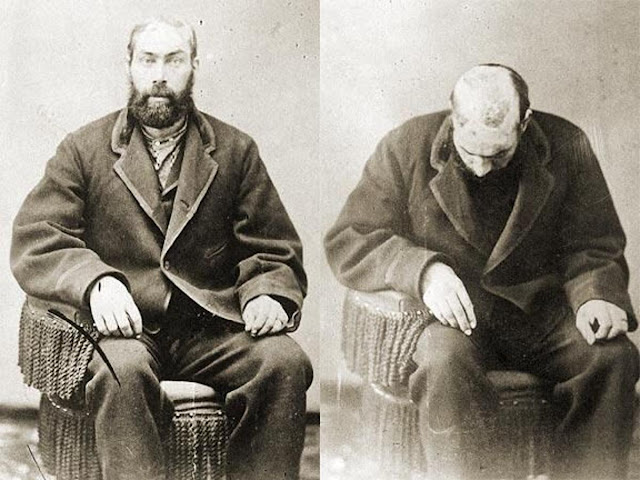
Scalping is often depicted in old-timey cowboy-and-Indian movies with lots of quavering music and dramatic pauses. But then you see the real scalp under a bell jar and it isn’t so melodramatic anymore.
William Thompson’s scalp, archived at the Main Library in Omaha, Nebraska, looks more like some sort of rodent than an impactful part of history. However, Thompson’s story—surviving a scalping, holding on to the coiffure in question—makes it all the more remarkable.
Subscribe to continue reading
Become a paid subscriber to get access to the rest of this post and other exclusive content.