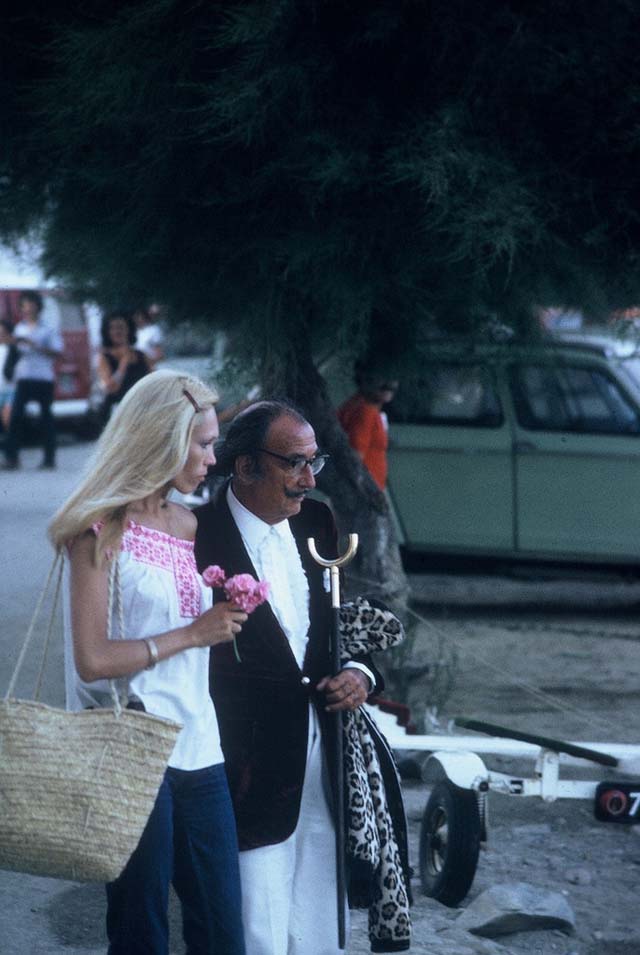
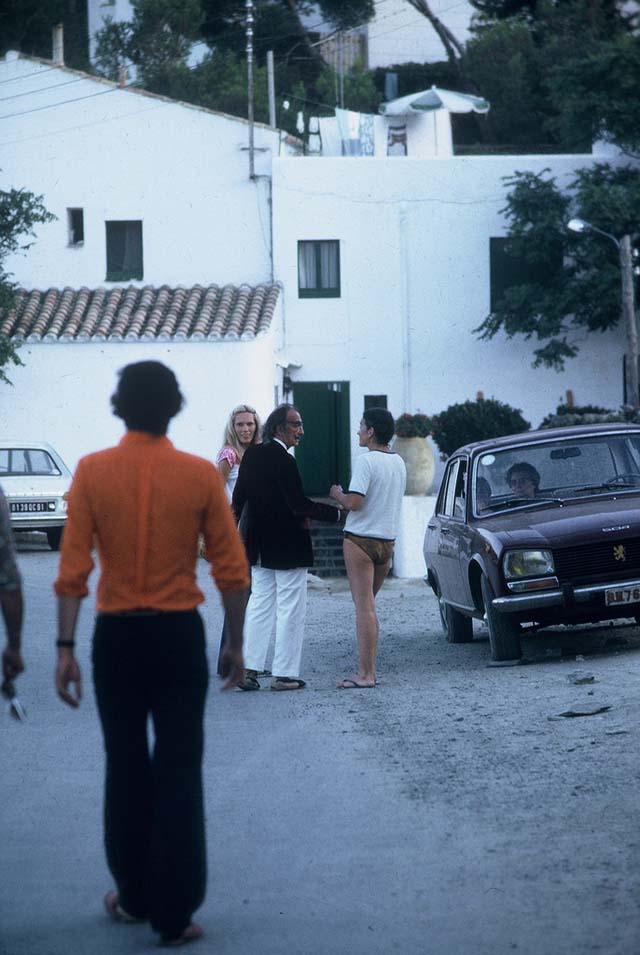
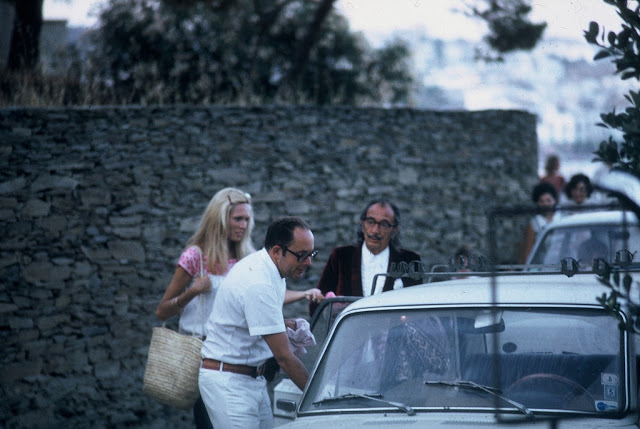
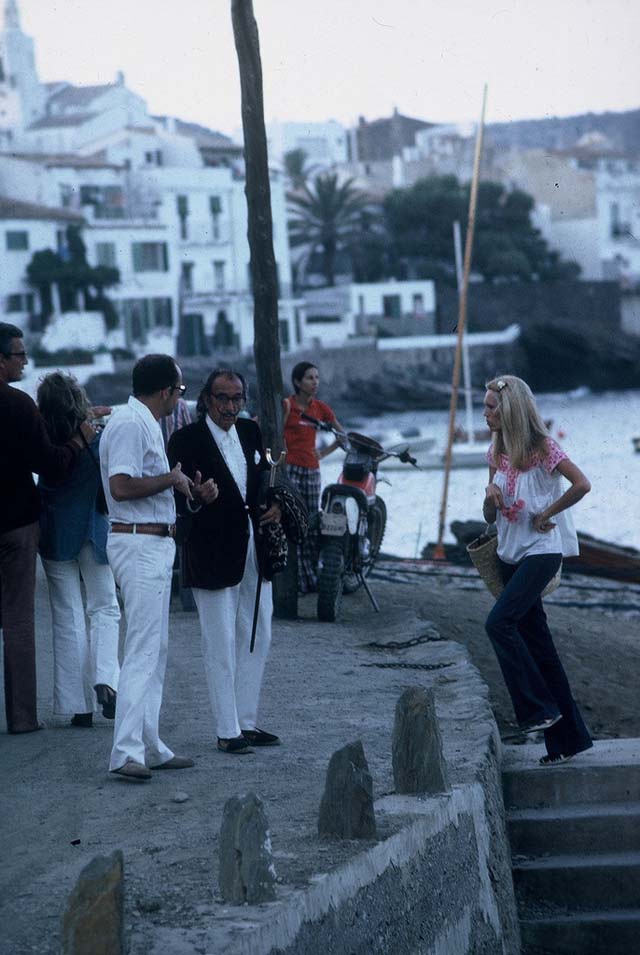
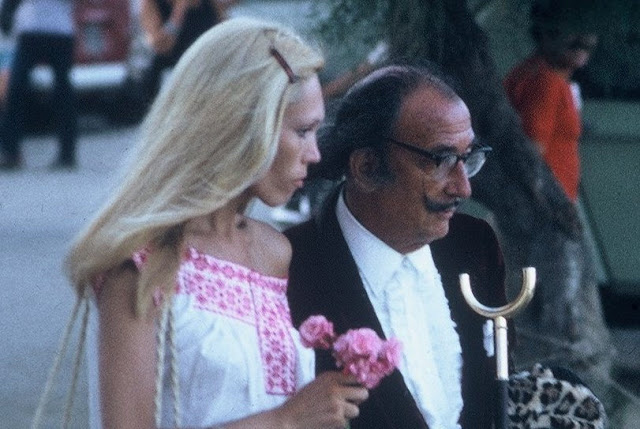
Amanda Lear’s first meeting with Salvador Dalí took place around autumn 1965 in Le Castel, a famous Parisian restaurant and nightclub, and gave the beginning to an over-15-year-long friendship. Lear has since been the painter’s muse and closest friend, although, as she herself repeatedly marked, their relationship never was intimate.
In “My Life with Dalí” – the title of French singer’s autobiography, first released in 1984, she also told about her relationship with this Spanish surrealist painter. The book, which had Dalí’s full approval, gave detailed insights into the lives of both the artist and his muse.
These rare photos of Salvador Dalí and Amanda Lear were taken by Stockholm-based amateur photographer Sten-Åke Stenberg when he met them in Cadaqués, Spain in August 1972.
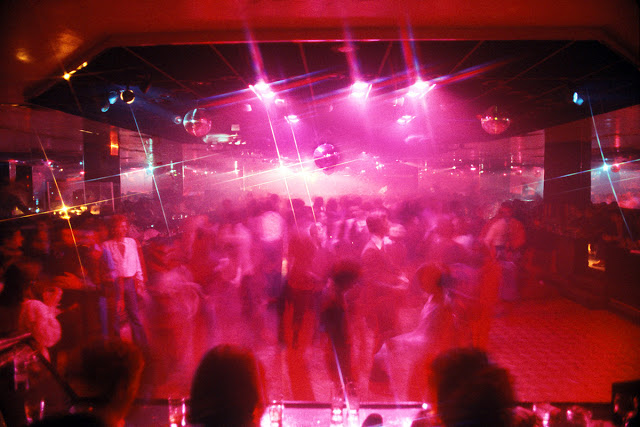
The heyday of disco fashion blossomed from the music played at gay underground New York clubs such as the Loft, Tenth Floor, and 12 West in the early 1970s. Other clubs such as Infinity, Flamingo, the Paradise Garage, Le Jardin, and the Saint launched a disco culture that brought with it an anything-goes attitude and all-night dancing.
Studio 54 became the place to be seen in disco clothing such as boob-tubes, platform shoes, flared trousers and body-conscious shapes dressed in lurex, glitter and crazy patterns or colours. Studio 54 played an essential role creating the nightclub scene that is still with us today – a place where people dress to be noticed and in the latest fashion.
The successful movie Saturday Night Fever (1977) ensured that disco hung around for a few years before becoming very unfashionable when Punk Rock and New Wave became the new anti-fashion fashion. Below are 30 vintage photographs that show just how crazy 1970s disco really was…
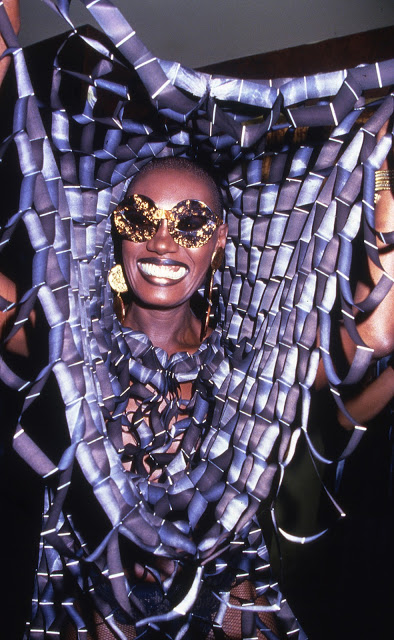
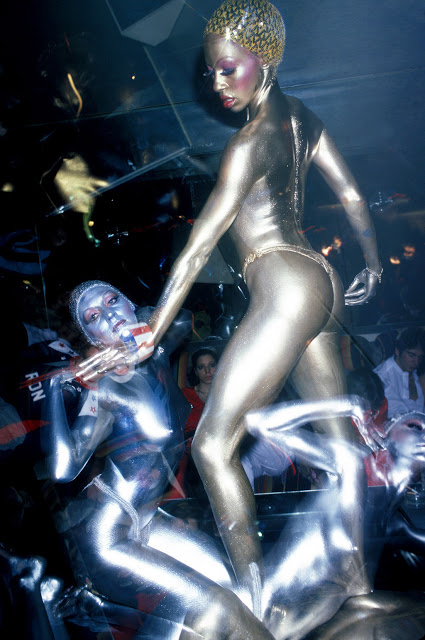
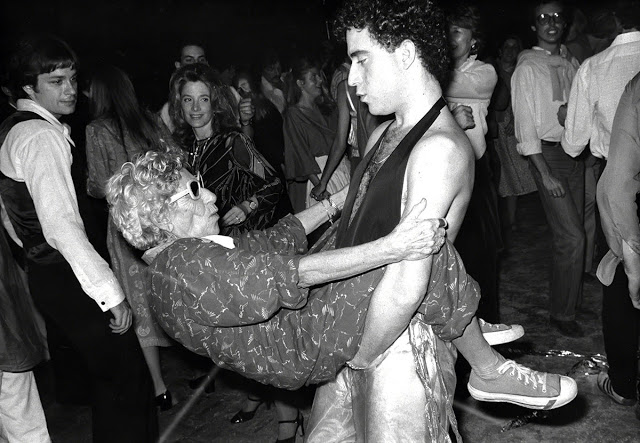
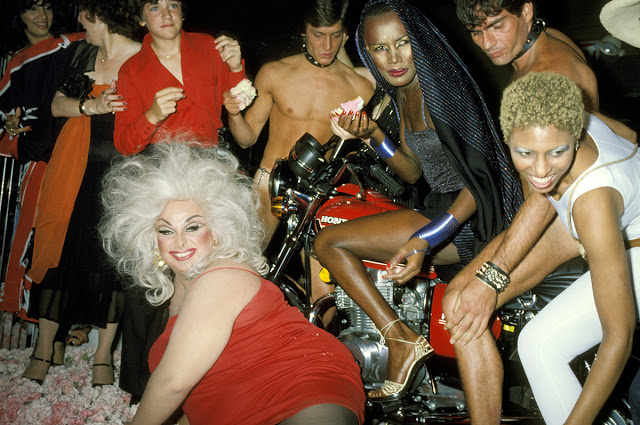
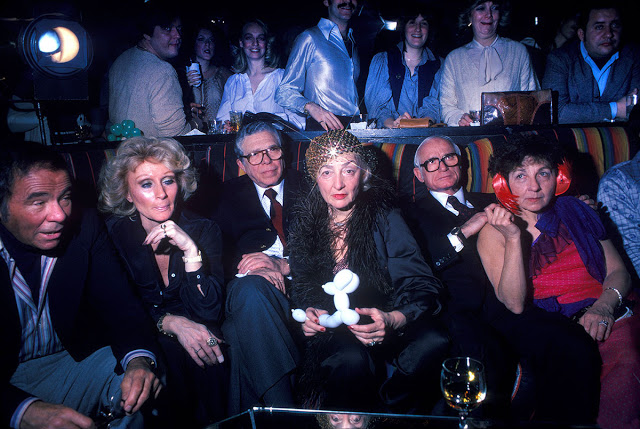
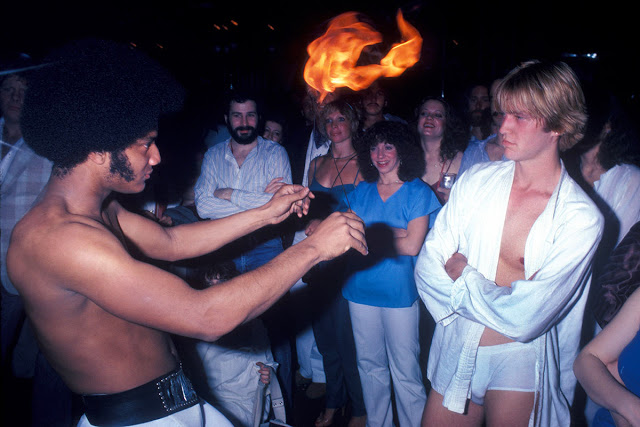
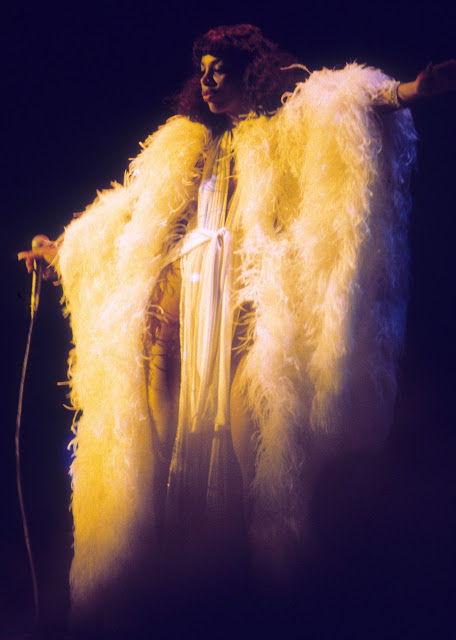
A group of people get down on a mirrored dance floor, 1978.Actor and singer Grace Jones gives a big smile to the camera while partying at Studio 54 in New York City, 1978.Metallic-painted dancers at a disco club perform on stage in New York City, 1978.A woman known as “Disco Granny” dances with a young man at Studio 54, circa 1978.A crowd of dancers at the disco club in New York City, 1978.A woman wipes the sweat from her face at Studio 54, 1977.A couple wearing matching high socks dance at the disco club Xenon in New York City, 1978.A couple bring their dancing to the floor of the disco club FunHouse in New York City, 1978.Divine, Grace Jones, and friends celebrate Jones’ birthday at Xenon, 1978A disco DJ smokes a cigarette while spinning a record at a club in New York City, 1979.A man in a leather thong and sparkling glitter dances at Electric Circus in New York City, 1979.A man and woman take center stage on the dance floor at the disco club 2001 Odyssey in Brooklyn, New York, in 1979.group of older men and women relax on the sidelines of a disco club in New York City in 1978.The Village People perform live as the audience dance the “YMCA” at the Shrine Auditorium in Los Angeles, California, circa 1970.A man blowing a whistle in a sparkling purple outfit dances at Studio 54, 1979.A woman dances amid other partygoers at Studio 54, 1977.A man performs with fire at the disco club Infinity in New York City, 1979.Bianca Jagger rides into Studio 54 on a white horse during her birthday celebrations in 1977.The Queen of Disco Donna Summer performs onstage in a feather costume, circa 1976.A woman dances in ecstasy at a disco in New York City, 1976.The Jacksons perform during a concert, circa 1975.David Bowie and Dutch actor and singer Romy Haag have a smoke at the Alcazar nightclub in Paris during 1976.A couple dance at Studio 54 in 1977.People dances on couches at Xenon, 1978.A group of DJs spin records at a disco club in New York City, 1979.A woman dances between two men at Studio 54, 1979.A woman enters the dance floor at Studio 54, 1977.A group of partygoers join in a synchronized dance number in an unidentified club, circa 1977.A dance club blends into a kaleidoscopic haze at a disco club in New York City, 1978.Grace Jones at the disco club Studio 54 in New York City in 1978.
In the early years of Adolf Hitler’s reign, guards within his concentration camps were primarily male. All that changed in 1942 when the first female guards were appointed to Auschwitz and Majdanek. Eventually, there were more than 3,500 female concentration camp guards – a small portion of the nearly 55,000 guards who served in the concentration camps in total.
The women who filled the role usually had no relevant work experience and were often former teachers, hairdressers or worked in other female jobs. At first, women signed up of their own accord, but as time passed, they were recruited from newspaper ads asking them to show their spirit for Hitler’s empire.
The SS was looking for single women who were between 21 and 45. Many people might believe that the women were more lenient with the prisoners, but that is not so. The female guards were just as corrupt as the men.
Recruits began their training at the Ravensbruck Camp outside Berlin. It lasted anywhere from one to six months and then the women were sent to one of the camps. During their training, the recruits learned how to punish prisoners, and how to maintain the work speed of the laborers. Recruits were taught in group classes by the head wardresses.
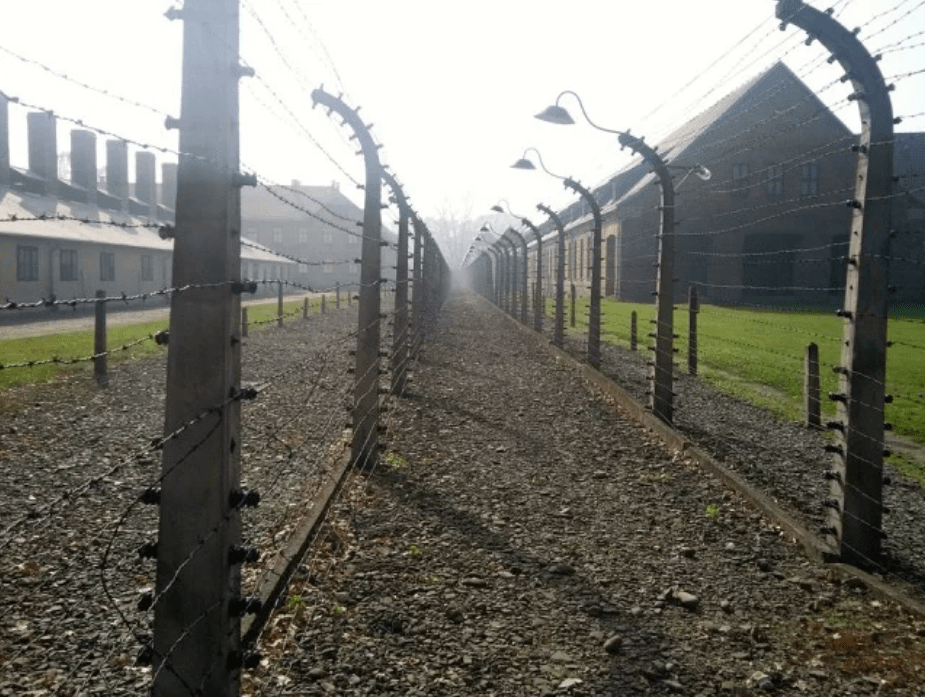
Auschwitz.
Women were limited to guarding only female prisoners. As such, they oversaw the women performing the forced labor, while ensuring everyone was following the camp’s strict rules. The guards were abusive, often attacking prisoners over minor issues.
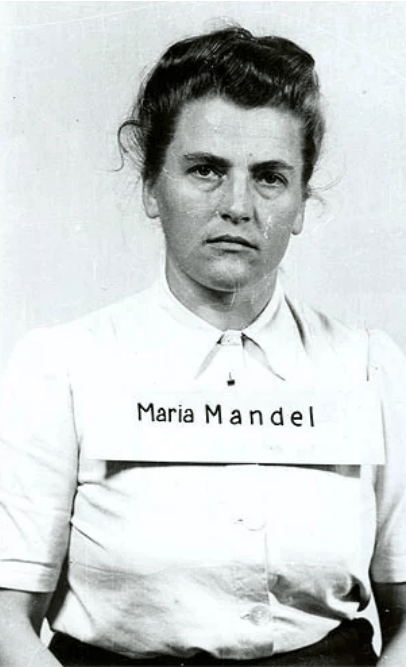
Maria Mandel
Perhaps the most evil of all the female guards was Maria Mandl, aka The Beast due to her actions. Mandl was responsible for over 500,000 deaths at Auschwitz and was a top-ranking official there.
She had a Jew serve as her pet, having them perform tedious tasks until she got tired of them. Then, she had them executed. When it was time for the prisoners to line up, she waited for one to look at her, and then she had them executed.
Maria Mandel at trial.
Mandel’s favorites for execution were children. She enjoyed the selection process for executions so much that she created an orchestra that played when prisoners came to the camp on their way to be executed. She believed it helped the prisoners deal with what was about to happen to them while making her job easier. In 1945, Mandl was arrested by the US Army and then she was hung in 1948 for her appalling actions.
Irma Grese and Josef Kramer in prison in Celle in August 1945.
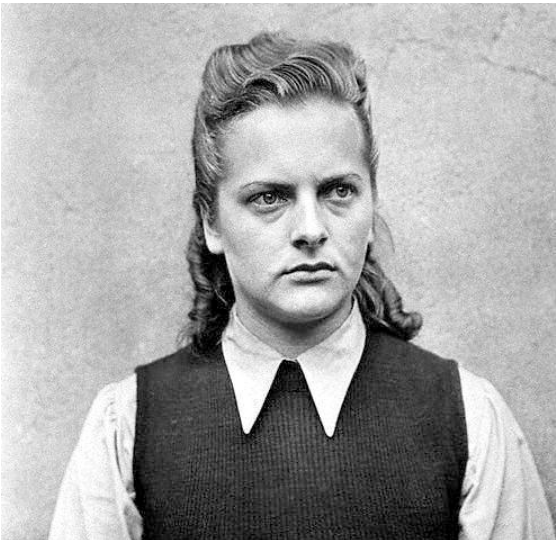
Other infamous female guards such as Irma Grese met the same fate. Irma Grese was known as The Beautiful Beast, as well as The Blonde Angel. Like Maria Mandl, she earned her name through her actions. Many prisoners though her to be attractive, but she was one of the most brutal of the female guards.
Grese had a specific look to her. She carried a pistol and whip, and always wore black leather boots. She was in control of around 30,000 women and was the second-most superior guard at her camp. When Grese was put on trial by the British, her war crimes were revealed by those she had abused.
They claimed Grese ordered beatings and random shootings of prisoners. Grese was said to have ordered inmates to gas chambers and to have her starved dogs attack prisoners. Those who were speaking against her while she was on trial stated that they felt she took pleasure in all of the evil she was doing.
Mugshot of Bergen-Belsen guard Irma Grese (1923-1945) at Celle awaiting trial, August 1945.
Several people claimed she had lampshades in her hut that had been made from prisoners’ skins, but that has since been disputed. Irma Grese was hung by the British in 1945 and was the youngest woman to die, aged 22, due to British law in the 1900s.
The brutality spared no one, and if it did, it was made sure that the guard being too lenient was handled. Klara Kunig, a guard at Ravensbruck, was told by the head wardress that she was not tough enough with the prisoners and she was relieved of her position.
Ravensbruck Death Camp. Female inmates in 1939.
After the War
Many of the guards were captured after the war ended. The US Army held between 500-1,000 females, but many were released as male guards were considered a priority. A few female guards did face punishment and were hung for their crimes. Additionally, when the Soviets liberated an area, many of the female guards that were captured were executed at that time.
Luise Danz in 1947.
There may still be female guards alive to this day. Luise Danz was a guard at several camps in Poland. She was initially sentenced to life in prison but received amnesty several years later. She was re-arrested on new charges in 1996, but the charges were dropped. It is not known for certain if she is still alive.
In 2006, a female guard, Elfriede Rinkel, was deported from the US back to Germany. Rinkel had gone to the United States in the late 1950s seeking a better life and omitted having worked in Ravensbruck camp on her application. Although sent back to Germany she did not face trial as only murder charges, committed during WWII, are still undertaken there.
There has not been a trial against a female concentration camp guard since 1996.
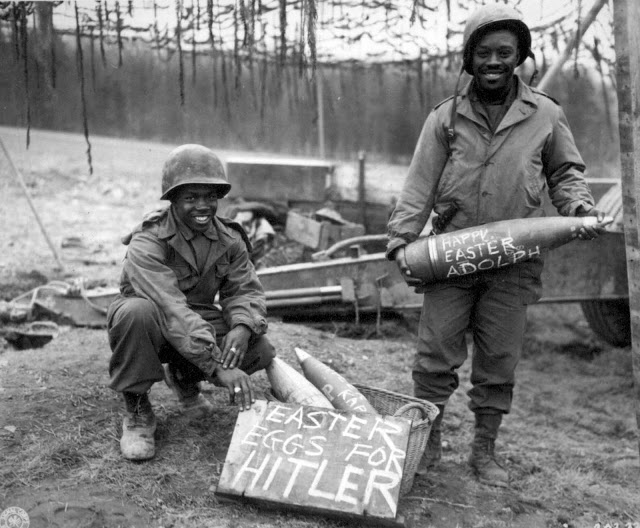
Pictured here are Sergeant William E. Thomas and Private First Class Joseph Jackson of the 969th Artillery Battalion. They were previously part of the 333rd Field Artillery Battalion, which had suffered huge casualties during the Battle of the Bulge in late 1944. Most of the survivors ended up in the 969th Artillery Battalion, providing support for the 101st Airborne Division during the siege of Bastogne.
Easter Sunday, 1945. Technical Sergeant William E. Thomas and Private First Class Joseph Jackson prepared a gift of special “Easter Eggs” for Adolph Hitler and the German Army. Scrawling such messages on artillery shells in World War II was one way in which artillery soldiers could humorously express their dislike of the enemy. (Photo: National Archives)
Many of the black soldiers found themselves being treated better in Germany than the United States. The locals interacted with the black soldiers because they were the ones who were supplying them with food and other desperately needed items. Many black soldiers dreaded the idea of going back home.
It should be noted that the U.S. army was segregated during this time and many black soldiers were tasked with non-combat roles such as driving trucks and delivering supplies. Of the 125,000 black Americans who served, only 708 were killed in combat. Nevertheless, many black units were highly decorated such as the Tuskegee Airmen and 761st Tank Battalion.
Truman ended military segregation in 1948 and the Korean War was when black and white men fought in the same units for the first time. Many historians claim that the experiences of black soldiers during World War 2 became the catalyst for the Civil Rights movement just a couple years later.
Élizabeth Teissier, née Germaine Élizabeth Hanselmann (born 6 January 1938) is a French astrologer and former model and actress. Between 1975 and 1976, she created a daily horoscope on French television channel Antenne 2, and in 1981, she launched the Astro Show television programme in Germany. Her personal clients included former President of France François Mitterrand, and she has published several books on astrology. A test that compared her predictions against common sense and chance failed to show any evidence of her having any special powers.
She has been involved in several controversies, including the award of a Doctorate in Sociology for her thesis which argued that astrology was being oppressed by science. Her work was contested by the scientific community; criticisms included the alleged failure to work within the field of sociology and also lacking the necessary scientific rigour for a doctoral thesis in any scientific field. The university and jury who awarded the degree were harshly criticised, though both they and Teissier had supporters and defenders.
In 2015, Teissier unsuccessfully sued the Wikimedia Foundation, claiming that the French Wikipedia article about her damaged her reputation. (Wikipedia)
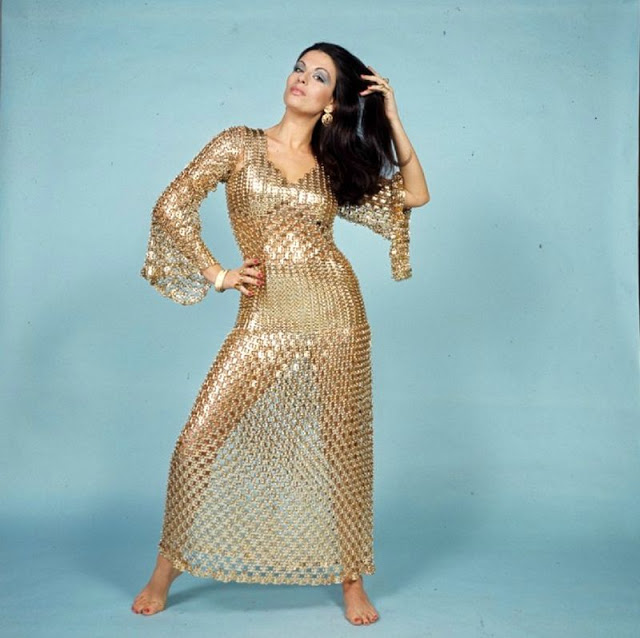
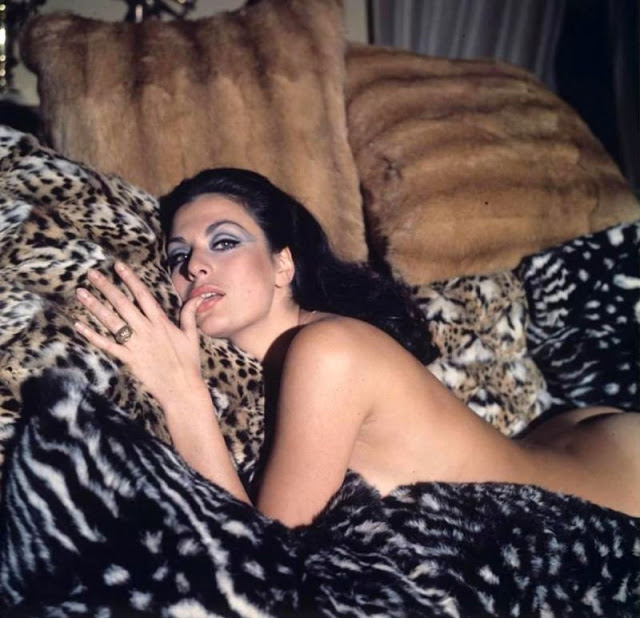
Take a look at these stunning photos to see glamorous beauty of Élizabeth Teissier when she was still a model and actress in the 1960s and 1970s.
Medford, being one of the oldest towns in the State, had many very large elms. This was also true of Malden. It was believed by some of the residents that it would be impossible to clear the moths from these trees except by the aid of a balloon. The largest tree in the infested region was selected for trial of the possibility of extermination. This tree is situated on the property of the Messrs. Dexter of Malden, and stands in front of the old Dexter mansion. The tree has been owned by this family for more than two hundred years. If not the largest tree in the State, it is one of the largest.
Early in 1891 an attempt was made to clear the moths from the tree, and a gang of four men, who had had some experience, went to work upon it to destroy the eggs of the moth. After working for several days upon the tree they reported it cleared. Another gang of men was put at work upon the tree, and six hundred additional egg clusters were discovered. Notwithstanding this, caterpillars appeared in the spring upon the tree. It was then sprayed thoroughly, an extension ladder sixty-five feet in length being used, together with several additional ladders placed in various parts of the tree. Later in the season all the holes in the limbs were covered or filled, and the few egg-clusters found were treated with creosote oil.
In 1892 the tree was banded with tarred paper, which was kept constantly moist with a mixture of tree ink, tar and oil. A few caterpillars were found, however, on the tree, having hatched probably from scattered eggs left in the crevices in the bark.
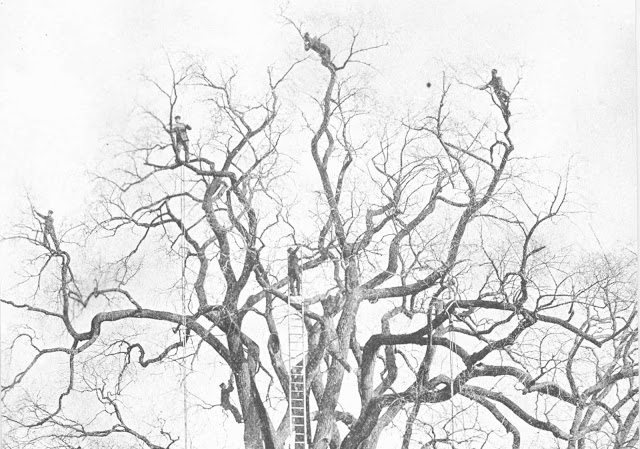
In 1893 no caterpillars appeared, and no form of the moth has been found since 1892 upon the tree. In the inspections of the tree every care has been taken to go over it thoroughly, from its highest branches to the base of the trunk. The dead limbs have been removed and holes have been covered, but no other work has been necessary at the regular inspections. Plate XXXVI shows men at work in the inspection of the tree.
The Dexter elm has the following dimensions: circumference at base, 29 feet; circumference six feet from the ground, 21 feet; height, 110 feet; spread from north-east to south-west, 104 feet. Some of the branches of the tree are 3 feet in diameter.
Ernest Miller Hemingway (July 21, 1899 – July 2, 1961) was an American novelist, short-story writer, journalist, and sportsman. His economical and understated style—which he termed the iceberg theory—had a strong influence on 20th-century fiction, while his adventurous lifestyle and his public image brought him admiration from later generations. Hemingway produced most of his work between the mid-1920s and the mid-1950s, and he was awarded the 1954 Nobel Prize in Literature. He published seven novels, six short-story collections, and two nonfiction works. Three of his novels, four short-story collections, and three nonfiction works were published posthumously. Many of his works are considered classics of American literature.
Hemingway was raised in Oak Park, Illinois. After high school, he was a reporter for a few months for The Kansas City Star before leaving for the Italian Front to enlist as an ambulance driver in World War I. In 1918, he was seriously wounded and returned home. His wartime experiences formed the basis for his novel A Farewell to Arms (1929).
In 1921, he married Hadley Richardson, the first of four wives. They moved to Paris where he worked as a foreign correspondent and fell under the influence of the modernist writers and artists of the 1920s’ “Lost Generation” expatriate community. Hemingway’s debut novel The Sun Also Rises was published in 1926. He divorced Richardson in 1927, and married Pauline Pfeiffer. They divorced after he returned from the Spanish Civil War (1936–1939), which he covered as a journalist and which was the basis for his novel For Whom the Bell Tolls (1940). Martha Gellhorn became his third wife in 1940. He and Gellhorn separated after he met Mary Welsh in London during World War II. Hemingway was present with Allied troops as a journalist at the Normandy landings and the liberation of Paris.
He maintained permanent residences in Key West, Florida (in the 1930s) and in Cuba (in the 1940s and 1950s). He almost died in 1954 after plane crashes on successive days, with injuries leaving him in pain and ill health for much of the rest of his life. In 1959, he bought a house in Ketchum, Idaho, where, in mid-1961, he committed suicide. (Wikipedia)
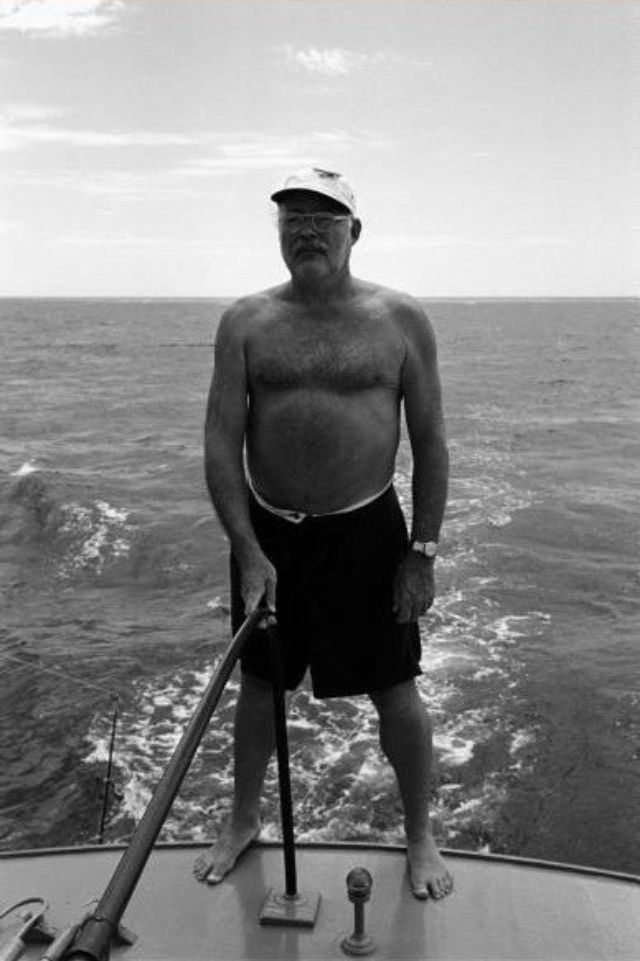
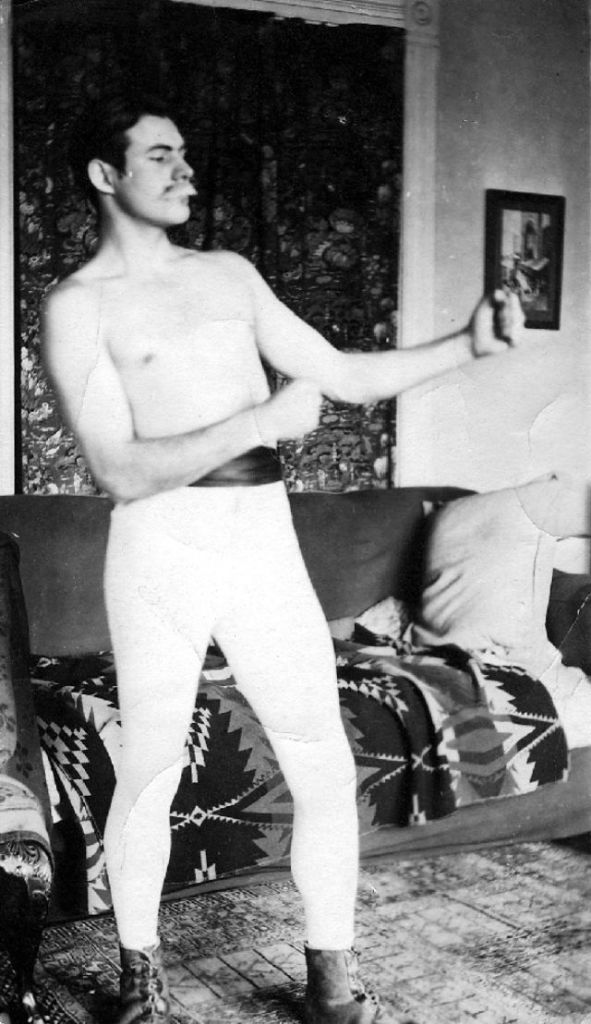
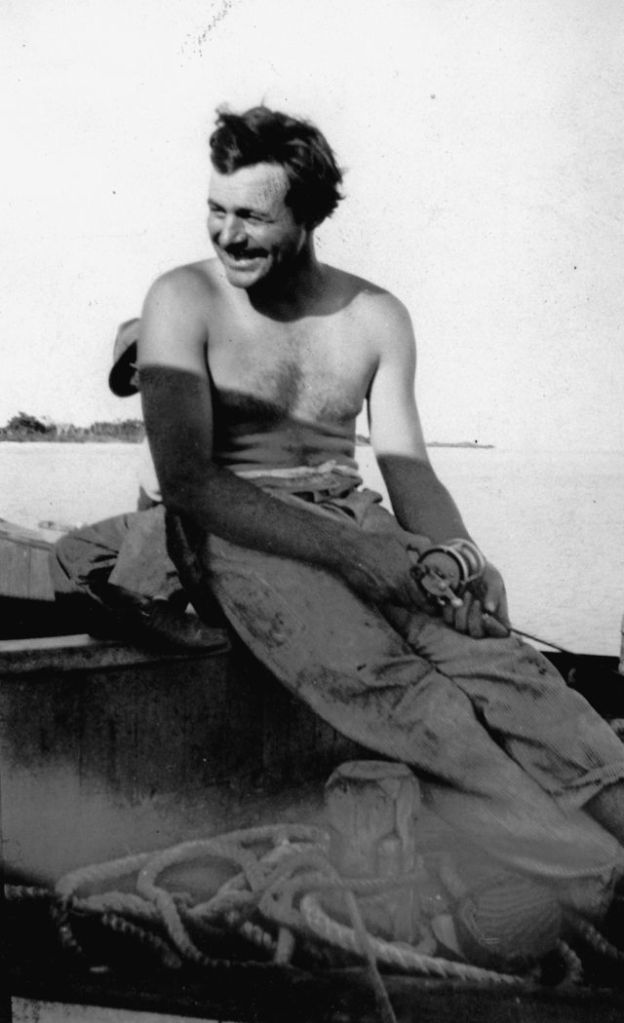
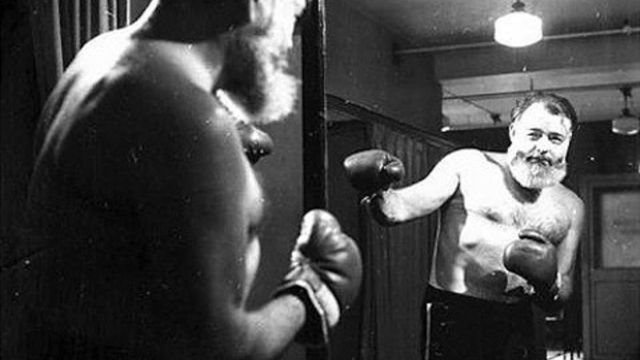
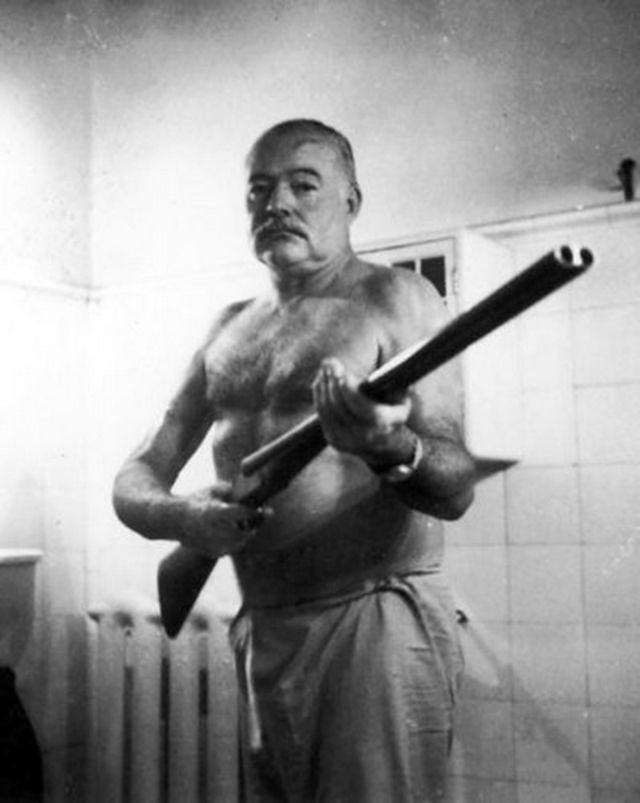
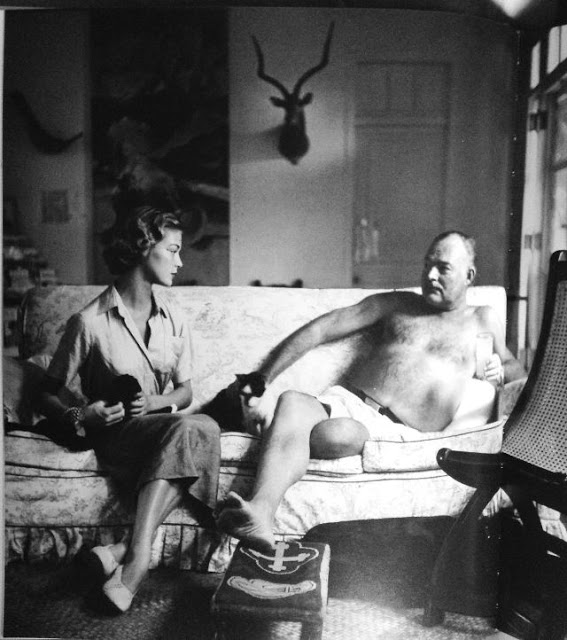
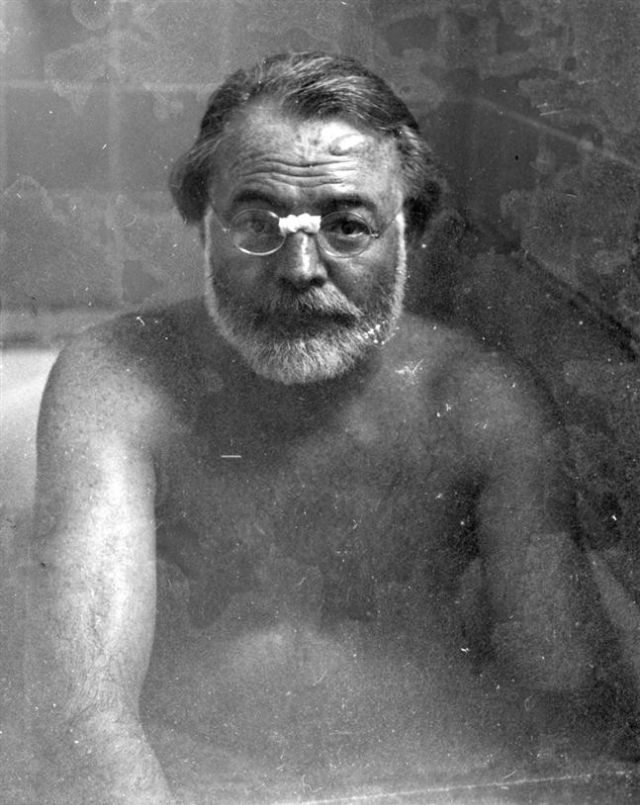
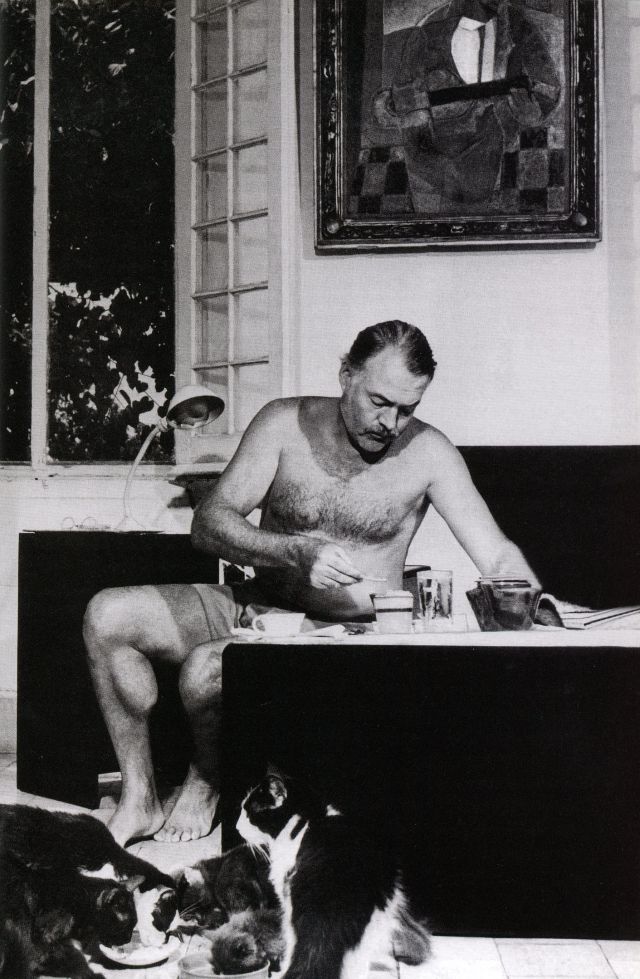
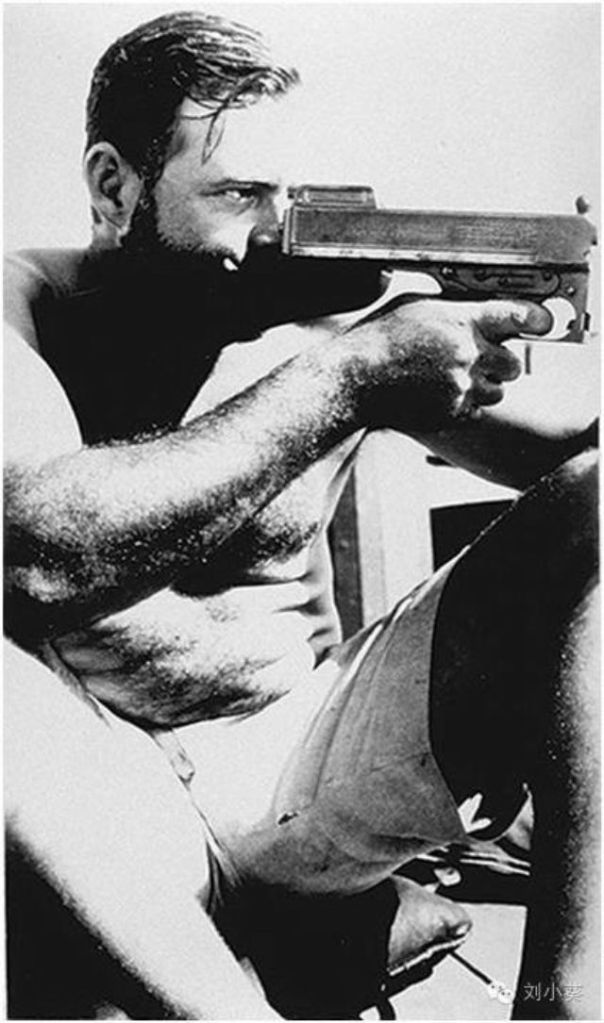
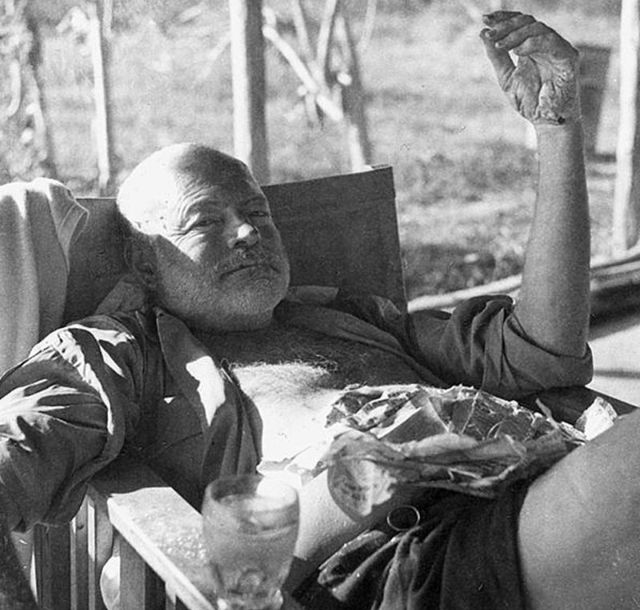
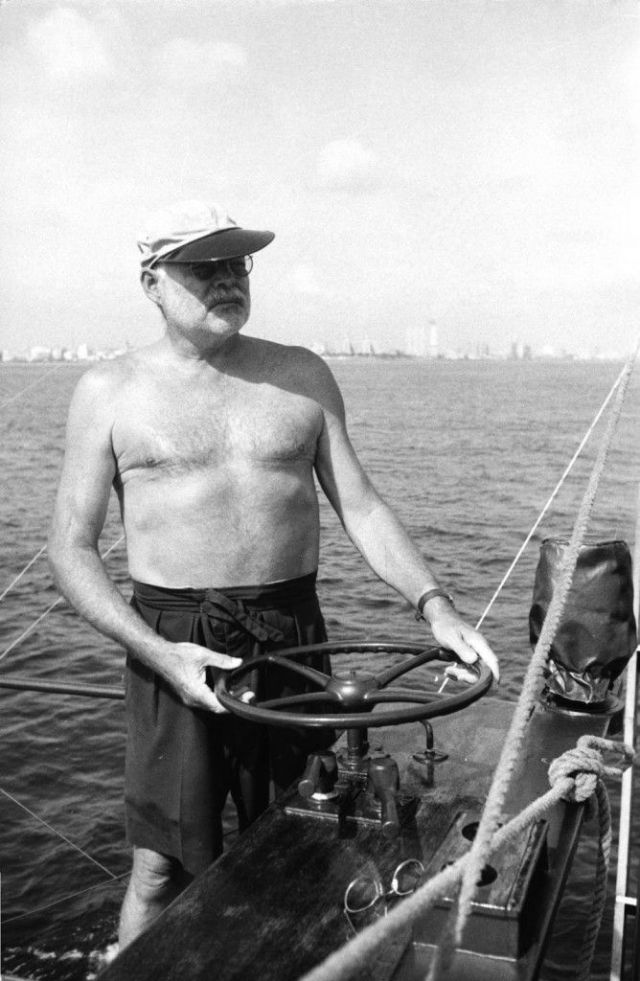
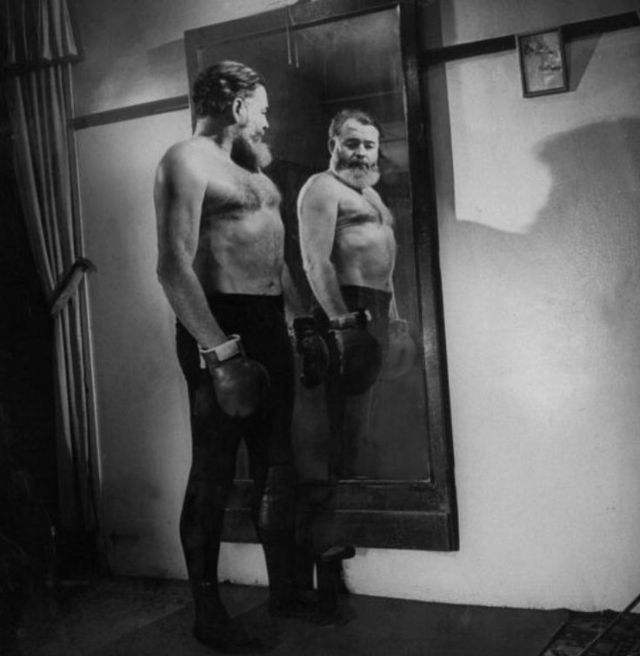
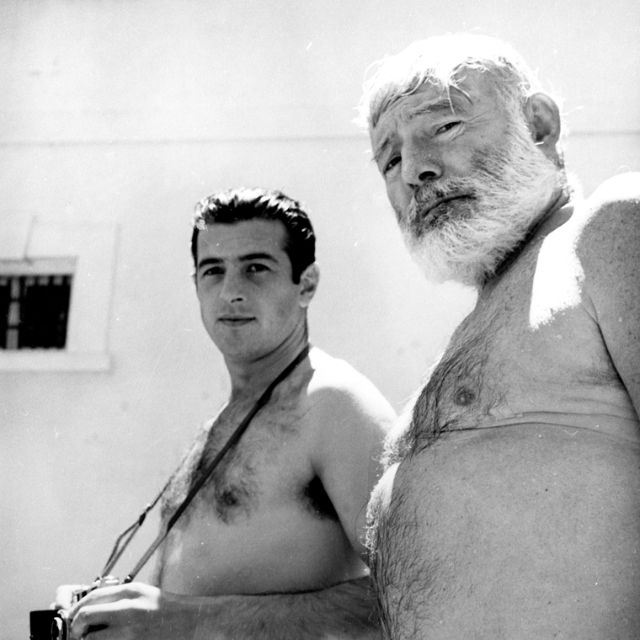
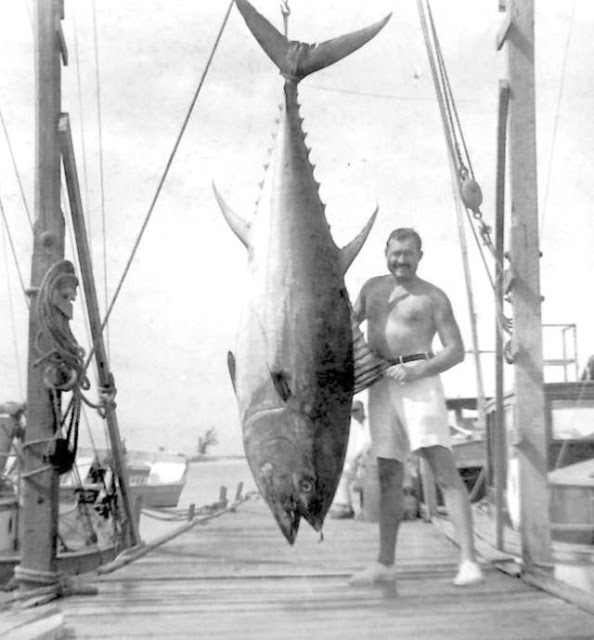
Below is a gallery of some of rare photographs that captured Ernest Hemingway posing shirtless. Big, burly and barrel-chested, Papa projects the masculine image that he carefully cultivated for himself and for the world to see.
Ernest Hemingway posing as a boxer while wearing a fake mustache, 1920.Ernest Hemingway fishing on a boat in Key West, Florida, 1928.Ernest Hemingway boxing in front of a mirror, 1944.Ernest Hemingway standing with shot-gun indoors at the Finca Vigia, Cuba, circa 1950.Ernest Hemingway and Jean Patchett by Cliff Coffin for Vogue, 1950.Ernest Hemingway in the bath, ca. 1950s.Ernest Hemmingway with sons and kittens in Cuba, ca. 1946.Ernest Hemingway with a machine gun while deep sea fishing.Ernest Hemingway on safari, Kenya, 1954.Ernest Hemingway deep-sea-fishing in waters off Havana, ca. 1950.Ernest Hemingway at the wheel of his boat, Pilar, with Havana in the background, Cuba, 1950.Ernest Hemingway admiring his mirror image, bare-chested and sporting boxing gloves, 1944.Antonio Ordonez and Ernest Hemingway by the pool at La Consula, Spain,1959.Ernest Hemingway in Bimini.
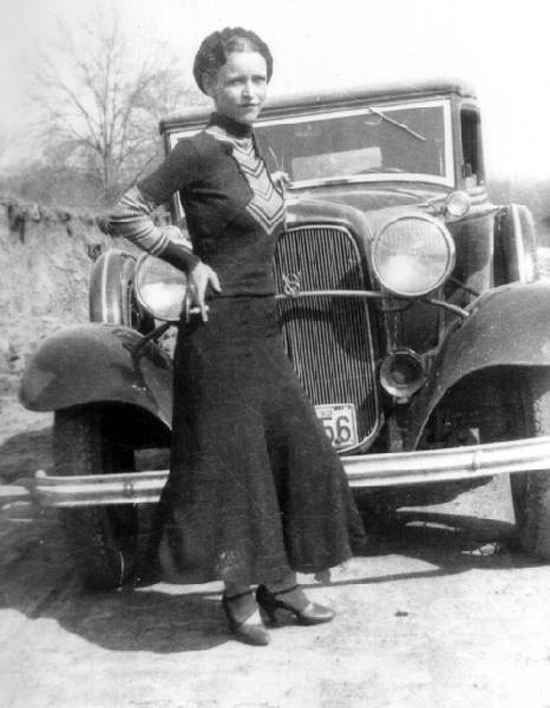
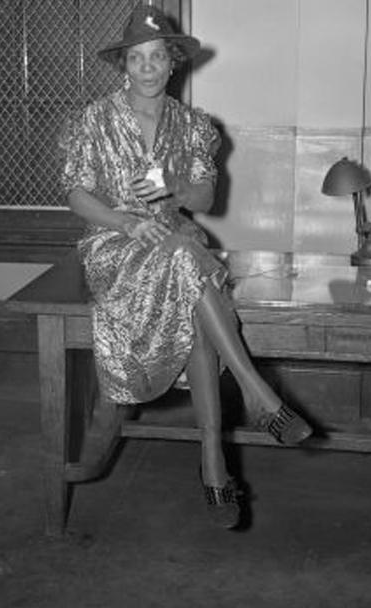
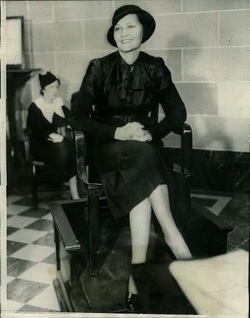
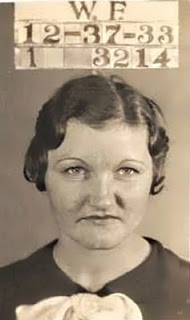
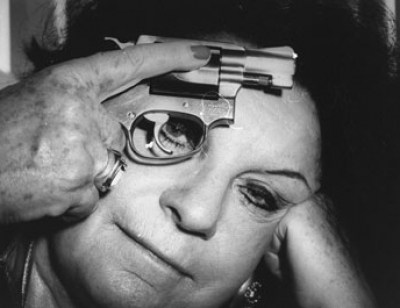
As half of the notorious crime duo Bonnie and Clyde, Bonnie Parker is perhaps the most well-known of all history’s female gangsters. Together with Clyde Barrow, Parker terrorized America in the early 1930s until fate struck them down in 1934 (with a little help from gunpowder).Stephanie Saint-Clair ran numerous criminal enterprises in Harlem, New York in the early part of the 20th century. Saint-Clair resisted the interests of the Mafia for several years after Prohibition ended; she continued to be an independent operator and never came under Mafia control. She ran a successful numbers game in Harlem and was an activist for the black community.Married to George “Machine Gun” Kelly, Kathryn Kelly was the brains behind the famous kidnapping of oil baron Charley Urschel, whom the couple held a for ransom of $200,000. Kathryn Kelly was more brutal than her husband, wanting to kill Urschel even after the ransom was paid. Some say she’s the one who pushed her husband into a life a crime to begin with.The Barrow Gang called Mary O’Dare “washerwoman” to mock her, but she was an enterprising gun moll. As the girlfriend of gang member Raymond Hamilton, O’Dare got caught up in narcotics trafficking. However, her best idea came when she tried to convince Bonnie Parker to drug Clyde Barrow and steal all the loot with her. Parker, decided against the idea.Arlyne Brickman worked as a drug dealer, loan shark, and numbers runner for a Sicilian crime syndicate in New York City. Unfortunately, Brickman found that her Jewish heritage slowed her ascent among the mafia. Brickman later turned informant when a loan shark threatened her daughter, and her testimony helped convict mobster Anthony Scarpati.Known as The Flamingo as well as “Queen of the Gangster Molls,” Virginia Hill became notorious as the girlfriend of Brooklyn mobster Bugsy Siegel. She came from a poor background, telling people she didn’t own a pair of shoes until age seventeen. Born in Alabama and raised in Georgia, she moved to Chicago to seek fame and fortune. She found a bit of both working as an accountant for Al Capone.Matriarch of the notorious Barker gang, Kate “Ma” Barker, along with her husband and four sons, terrorized Middle America’s highways throughout the 1920s and 1930s. Ultimately, she was killed alongside one of her sons in 1935 when the FBI raided their hideout. According to the FBI, when they found her body, she was still clutching a Tommy gun in her hands.Although she lost sight in her left eye after a deadly shootout that left multiple officers dead and the Barrow gang decimated, Blanche Barrow, unlike her compatriots Bonnie and Clyde, made it out of her twenties alive.Once married to the 1910s pop sensation Tell Taylor, Helen “Buda” Godman was most notoriously busted in 1916 for her part as the seductress in a badger game, which is when a wealthy businessman, caught in a compromising situation, is extorted. She jumped bail, however, and went on to become the protege of Charles A. Stoneham’s, notorious gambler and owner of the New York Giants baseball team.Evelyn “Billie” Frechette met infamous gangster John Dillinger after her first husband was jailed for robbing a post office. She and Dillinger proceeded to go on a cross-country crime spree together, managing to live through several gun battles and robberies. Frechette eventually served two years in prison for harboring a fugitive. When she was released, she went on a lecture tour called “Crime Does Not Pay.”Helen Wawrzyniak married infamous gangster Lester Gillis, better known as Baby Face Nelson, when she was 16. By the time she was 20, she had given birth to two children and was wanted by the police. She even took part in the “Battle of Barrington,” where Nelson was shot to death. Newspapers at the time described her as a “public enemy,” and J. Edgar Hoover told his FBI agents to “find the woman and give her no quarter.”Married to Al Capone, Mae Capone may not have been a true gangster — she once told their son “Don’t do as your father did, he broke my heart” — but she did help cover up her husband’s many crimesThe American public best knew Edna Murray as the “Kissing Bandit,” a nickname she earned from kissing her male robbery victims. However, she was also known as “Rabbit” in the criminal underworld, due to her talents in breaking out of prison. She joined up with Barker’s gang and eventually got busted for highway robbery in 1935 and paroled her way to freedom by 1940.Pearl Elliott ran a brothel in Kokomo, Indiana where gangsters would often hide out. She also served as John Dillinger’s treasurer, which earned her a spot on the federal shoot-to-kill list. Unfortunately for any trigger-happy police officers, cancer took her first in 1935.Alongside Pearl Elliott, Mary Kinder was one of the two women that the Chicago Police Department listed on their Public Enemies list in 1933. Part of the Dillinger gang, she is known for being gang member Harry Pierpont’s girlfriend. She even helped the gang escape from the Indiana State Prison (Dillinger smuggled in pistols) by driving the getaway car.With her heftiness earning her the nickname “Mack Truck,” Opal Long was involved with John Dillinger’s notorious Terror Gang, chiefly as the wife of gang member Russell Clark and as caretaker of the group’s hideout. Dillinger kicked her out of the group after her husband was arrested, which she soon was herself — although she never turned on her old gang.
Even before the Wright brothers made their first flight in 1903, people have widely imagined a future where flying cars — or aerocars — are a fact of life, whisking us about without the hassles of roads and traffic.
A flying car is a type of personal air vehicle or roadable aircraft that provides door-to-door transportation by both ground and air. The term “flying car” is also sometimes used to include hovercars.
Many prototypes have been built since the first years of the twentieth century using a variety of flight technologies and some have true VTOL performance, but no flying car has yet reached production status. Here are 12 amazing examples of flying cars from over the years.
A.H. Russell’s Machine (1924)
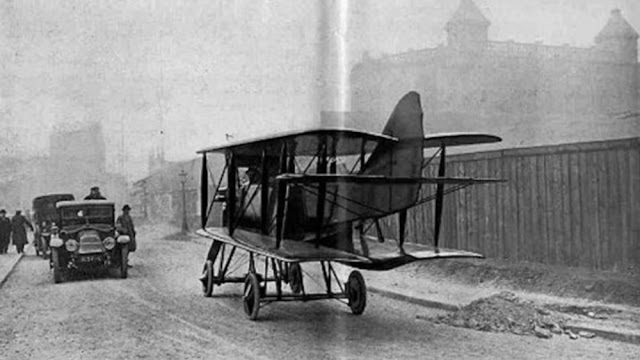
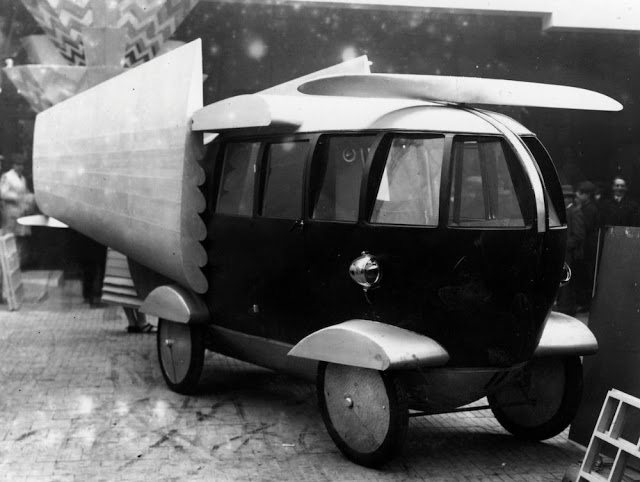
In 1921 René Tampier tackled the problem of designing an aircraft that was self-propelled and steerable on roads by including a second, low-powered engine driving the main landing wheels through a standard car-type transmission. The roadwheels were completed with a retractable pair nearer the tail. These were steerable, so on the road the Tampier Avion-Automobile, with its wings and tailplane folded, travelled tail first. Only two prototypes were built.
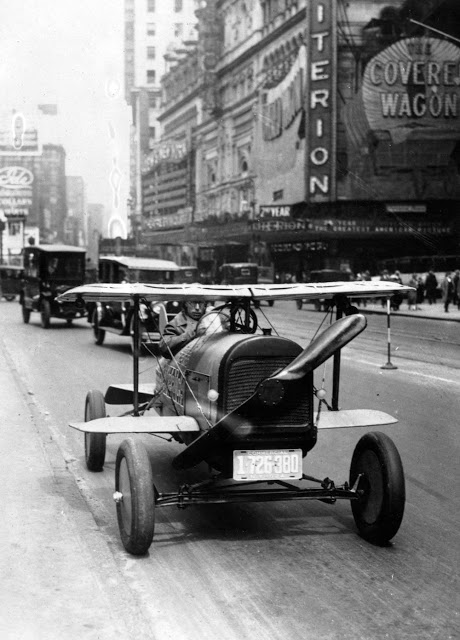
A car with wings and a propeller protruding from the radiator grille, invented by A. H. Russell in Nutley, New Jersey.
A Combined Car, Boat and Aeroplane (1928)
An aerocar, unconfirmed as being able to fly, which had a triple function: a combined car, airplane and boat.
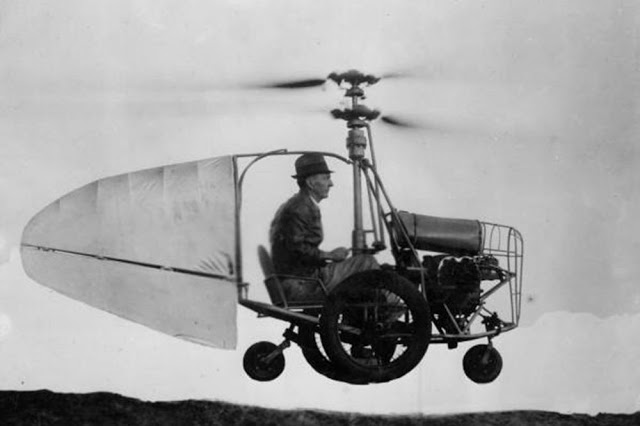
Jess Dixon’s Flying Auto (1940)
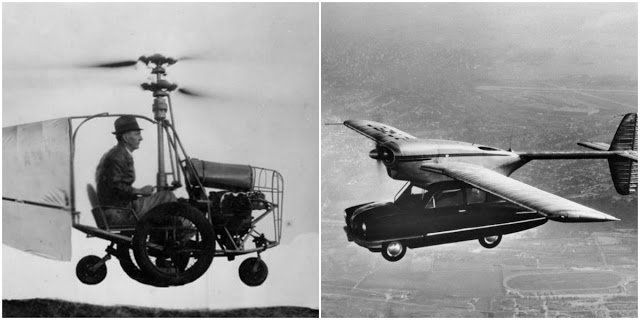
This flying car is almost a legend, and besides this photo and a brief mention of the vehicle in a newspaper clipping from Andalusia, Alabama, it might as well have not existed at all. According to the story, the photo above is of Jess Dixon; it was supposedly taken sometime around 1940. Although it’s considered a flying car by aviation history buffs, the machine is actually closer to a “roadable helicopter,” due to the two overhead blades spinning in opposite directions. In other words, it’s a gyrocopter that can also roll.
The Flying Auto was powered by a small forty-horsepower engine, and foot pedals controlled the tail vane on the back, allowing Mr. Dixon to turn in mid-air. It was also supposed to be able to reach speeds of up to one hundred miles per hour (160 kph), and was able to fly forwards, backwards, sideways, and hover. Not bad for a flying car that was never heard from again.
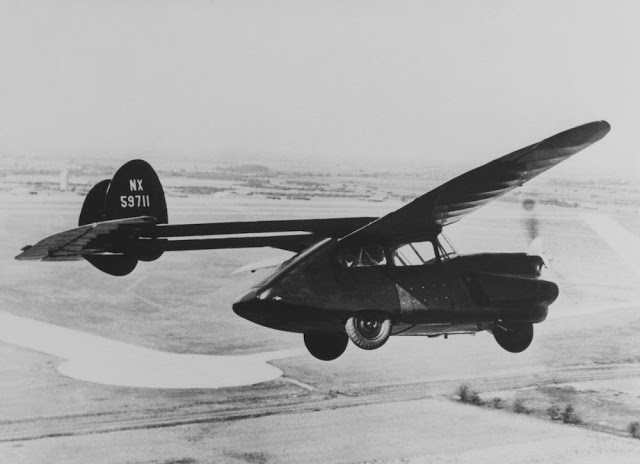
Ted Hall’s NX59711 (1946)
A flying automobile with a 130-hp. Franklin engine, it had a top road speed of 60mph and flight speed of 110mph. Those speeds were set by the first model of a design by Ted Hall, aviation engineer. Portable Products Corp., Garland, Tex., is considering the possibilities of producing it.
The “roadable” plane has detachable propeller, wing, booms, and tail. The forward end of the engine crankshaft turns the prop, while a shaft extends aft from the engine into a conventional automobile transmission and differential. Power goes both to propeller and rear wheels for the take-off.
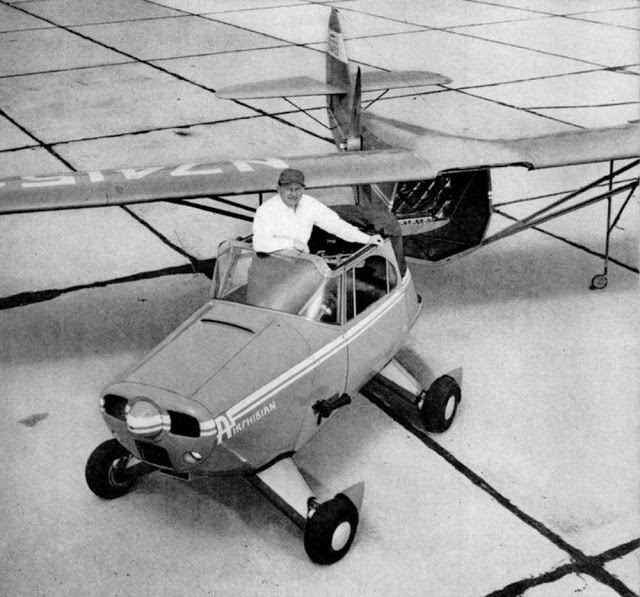
Fulton FA-2 Airphibian (1946)
The Fulton FA-2 Airphibian was an American roadable aircraft manufactured in 1946. Designed by Robert Edison Fulton Jr., it was an aluminum-bodied car, built with independent suspension, aircraft-sized wheels, and a six-cylinder 165 hp engine. The fabric wings were easily attached to the fuselage, converting the car into a plane. Four prototypes were built.
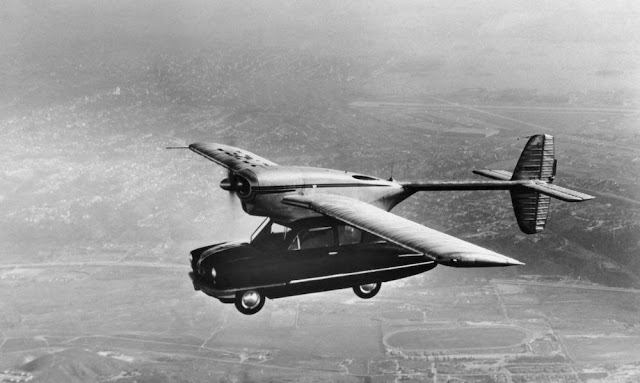
ConvAirCar Model 118 (1947)
The Convair Model 118 ConvAirCar (also known as the Hall Flying Automobile) was a prototype flying car of which two were built. Intended for mainstream consumers, two prototypes were built and flown. The first prototype was lost after a safe, but damaging, low fuel incident. Subsequently, the second prototype was rebuilt from the damaged aircraft and flown. By that time, little enthusiasm remained for the project and the program ended shortly thereafter.
The hybrid vehicle was designed by Theodore P. Hall for the Consolidated Vultee Aircraft Company of San Diego, California, but never went into production. A test pilot had to make a crash landing after the vehicle unexpectedly ran out of fuel — he’d been reading from the car’s fuel gauge, not the plane’s.
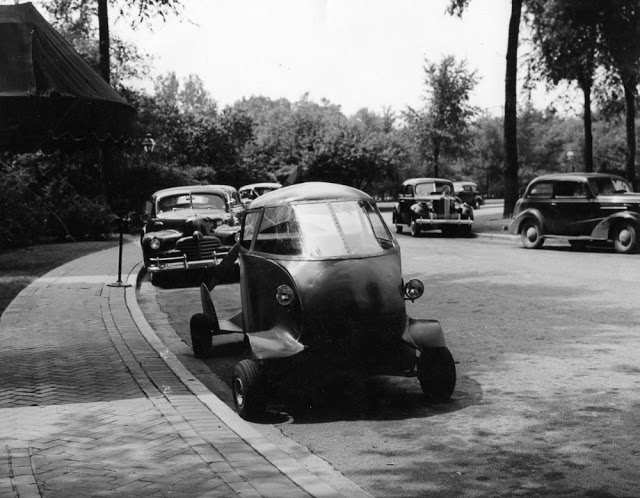
Stout Mockup (1950)
A closeup of the decal on the tail shows “Stout,” a firm which did make air cars, though this model is probably a mockup. Here, the Stout mockup, without wings, is parked at the side of a road.
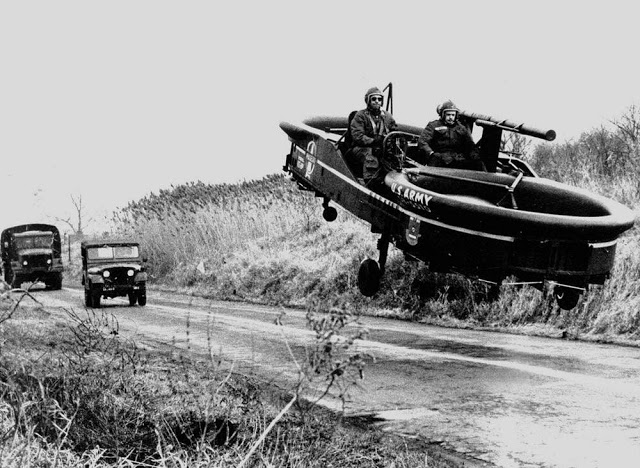
Piasecki AirGeep (1958)
With the VZ-7 grounded forever, the army turned to a very different prototype: the Piasecki VZ-8 AirGeep. Bear in mind that helicopters had already become popular by this point; but it turned out that the military was interested in something smaller than helicopters, which could be successfully flown with less training.
The AirGeep went through seven different versions before it was finally deemed “unfit for military use,” but they all kept the basic design: two large vertical propellers in the front and the back of the craft, with a seat in the middle for the pilot and either three or four wheels for ground use. While the first model was flat, later ones curved upwards at the front and back to form a flattened V-shape. The navy even tried to fit one model with floats, with the hope of using it at sea—but that idea was eventually abandoned, along with the rest of the program.
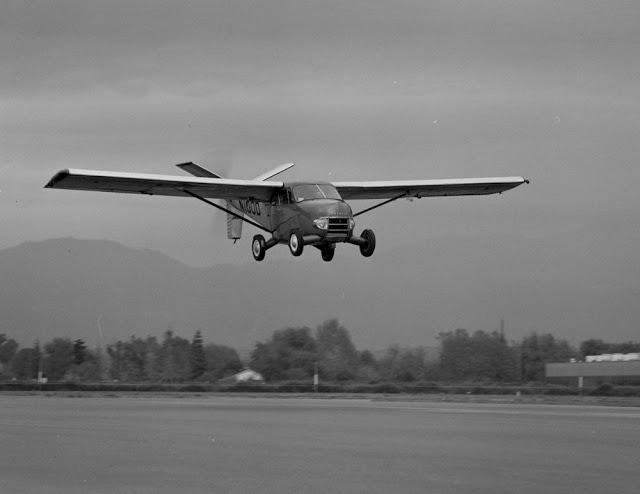
Moulton Taylor’s Aerocar II (1964)
The Aerocar II Aero-Plane was an unusual light aircraft flown in the United States in 1964. It was a development of designer Moulton Taylor’s famous Aerocar roadable aircraft, but was not roadable itself. Rather, it used the wings and tail unit designed for the Aerocar and mated them to a new fibreglass cabin. The weight saved by not including the parts needed to make the vehicle driveable on the ground meant that an additional two passengers could be carried. Only a single example was built.
AVE Mizar (1971)
In 1971, the Advanced Vehicle Engineers company in California decided to design a flying car that was reminiscent of the ConvAirCar of the 1940s. They took a Ford Pinto, welded a Cessna Skymaster to the top, and essentially called it a day. The bizarre hybrid monster that resulted was dubbed the Ave Mizar.
The car-half of the craft was fairly similar to any normal Ford Pinto on the street. The Pinto’s engine brought the plane up to speed for take off, at which point the plane’s propeller took over. Upon landing, the car’s brakes were responsible for slowing it down. Unfortunately, in 1973—just a year before the car was scheduled to begin mass production—the right wing of one prototype crumpled in mid-air. The car plummeted to the ground, taking any future it might have had with it.
AVE Mizar (1973)
The AVE Mizar (named after the star Mizar) was a roadable aircraft built between 1971 and 1973 by Advanced Vehicle Engineers (AVE) of Van Nuys, Los Angeles, California. The company was started by Henry Smolinski and Harold Blake, both graduates of Northrop Institute of Technology’s aeronautical engineering school.
The prototypes of the Mizar were made by mating the rear portion of a Cessna Skymaster to a Ford Pinto. The pod-and-twin-boom configuration of the Skymaster was a convenient starting point for a hybrid automobile/airplane. According to Peterson’s Complete Ford Book, by mid-1973, two prototypes had been built and three more were under construction. One prototype was slated for static display at a Van Nuys Ford dealership, owned by AVE partner Bert Boeckmann. The other prototype, fitted with a Teledyne Continental Motors 210 horsepower (160 kW) engine, was unveiled to the press on May 8, 1973.
The Mizar was intended to use both the aircraft engine and the car engine for takeoff. This would considerably shorten the takeoff roll. Once in the air, the car engine would be turned off. Upon landing, the four-wheel braking would stop the craft in 525 feet (160 m) or less. On the ground, telescoping wing supports would be extended and the airframe would be tied down like any other aircraft. The Pinto could be quickly unbolted from the airframe and driven away.
On September 11, 1973, during a test flight at Camarillo, the right wing strut detached from the Pinto. With Janisse not available for this test flight, Mizar creator Smolinski was at the controls. Although some reports say the Pinto separated from the airframe, an air traffic controller, watching through binoculars, said the right wing folded because the pilot tried to turn the aircraft when the wing strut support failed. Smolinski and the Vice President of AVE, Harold Blake, were killed in the resulting fiery crash.
World War I, often abbreviated as WWI or WW1, also known as the First World War or the Great War, was an international conflict that began on 28 July 1914 and ended on 11 November 1918. It involved much of Europe, as well as Russia, the United States and Turkey, and was also fought in the Middle East, Africa and parts of Asia. One of the deadliest conflicts in history, an estimated 9 million were killed in combat, while over 5 million civilians died from occupation, bombardment, hunger or disease. The genocides perpetrated by the Ottomans and the 1918 Spanish flu pandemic spread by the movement of combatants during the war caused many millions of additional deaths worldwide.
In 1914, the Great Powers were divided into two opposing alliances: the Triple Entente, consisting of France, Russia, and Britain, and the Triple Alliance, made up of Germany, Austria-Hungary, and Italy. Tensions in the Balkans came to a head on 28 June 1914 following the assassination of Archduke Franz Ferdinand, the Austro-Hungarian heir, by Gavrilo Princip, a Bosnian Serb. Austria-Hungary blamed Serbia and the interlocking alliances involved the Powers in a series of diplomatic exchanges known as the July Crisis. On 28 July, Austria-Hungary declared war on Serbia; Russia came to Serbia’s defence and by 4 August, the conflict had expanded to include Germany, France and Britain, along with their respective colonial empires. In November, the Ottoman Empire, Germany and Austria formed the Central Powers, while in April 1915, Italy joined Britain, France, Russia and Serbia as the Allied Powers.
Facing a war on two fronts, German strategy in 1914 was to defeat France, then shift its forces to the East and knock out Russia, commonly known as the Schlieffen Plan. This failed when their advance into France was halted at the Marne; by the end of 1914, the two sides faced each other along the Western Front, a continuous series of trench lines stretching from the Channel to Switzerland that changed little until 1917. By contrast, the Eastern Front was far more fluid, with Austria-Hungary and Russia gaining, then losing large swathes of territory. Other significant theatres included the Middle East, the Alpine Front and the Balkans, bringing Bulgaria, Romania and Greece into the war.
Shortages caused by the Allied naval blockade led Germany to initiate unrestricted submarine warfare in early 1917, bringing the previously neutral United States into the war on 6 April 1917. In Russia, the Bolsheviks seized power in the 1917 October Revolution and made peace in the March 1918 Treaty of Brest-Litovsk, freeing up large numbers of German troops. By transferring these to the Western Front, the German General Staff hoped to win a decisive victory before American reinforcements could impact the war, and launched the March 1918 German spring offensive. Despite initial success, it was soon halted by heavy casualties and ferocious defence; in August, the Allies launched the Hundred Days Offensive and although the German army continued to fight hard, it could no longer halt their advance.
Towards the end of 1918, the Central Powers began to collapse; Bulgaria signed an Armistice on 29 September, followed by the Ottomans on 31 October, then Austria-Hungary on 3 November. Isolated, facing revolution at home and an army on the verge of mutiny, Kaiser Wilhelm abdicated on 9 November and the new German government signed the Armistice of 11 November 1918, bringing the fighting to a close. The 1919 Paris Peace Conference imposed various settlements on the defeated powers, the best known being the Treaty of Versailles. The dissolution of the Russian, German, Ottoman and Austro-Hungarian empires led to numerous uprisings and the creation of independent states, including Poland, Czechoslovakia and Yugoslavia. For reasons that are still debated, failure to manage the instability that resulted from this upheaval during the interwar period ended with the outbreak of World War II in 1939. (Wikipedia)
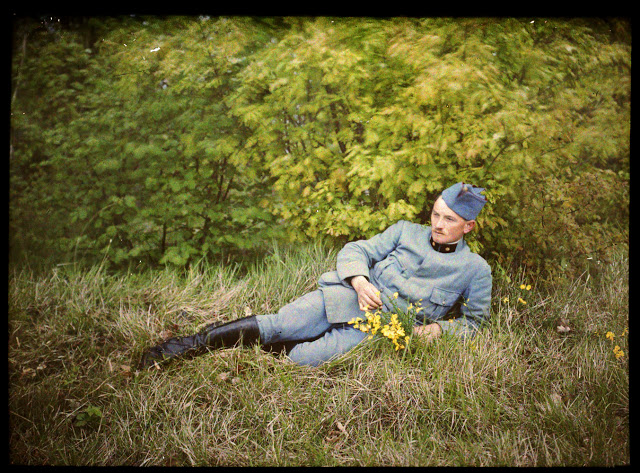
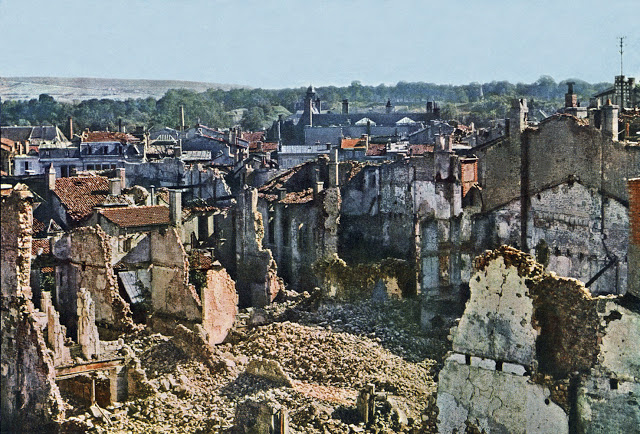
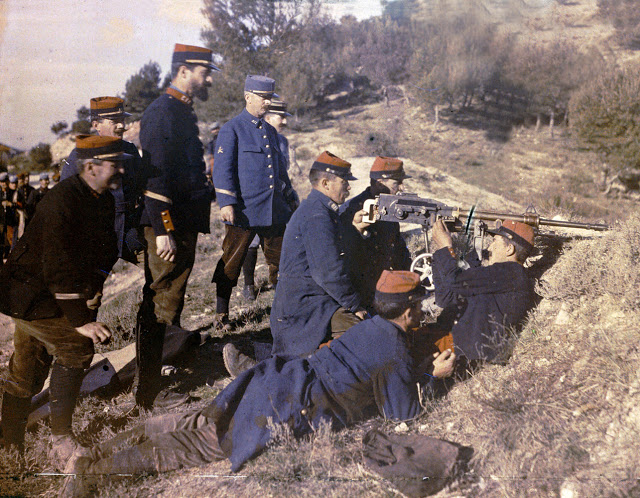
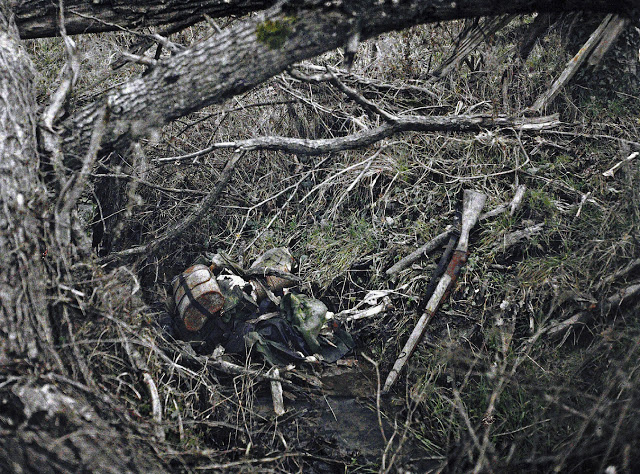
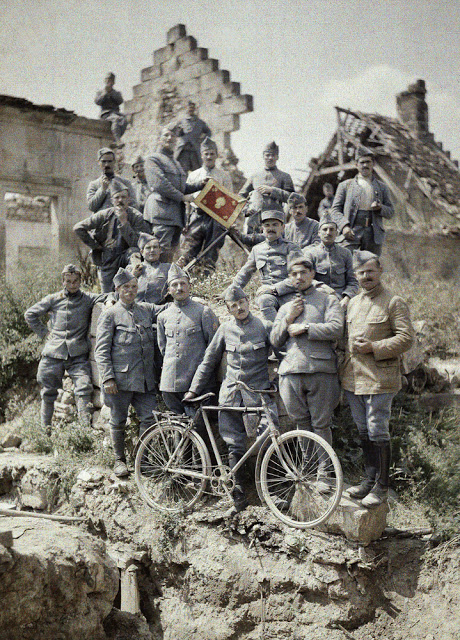
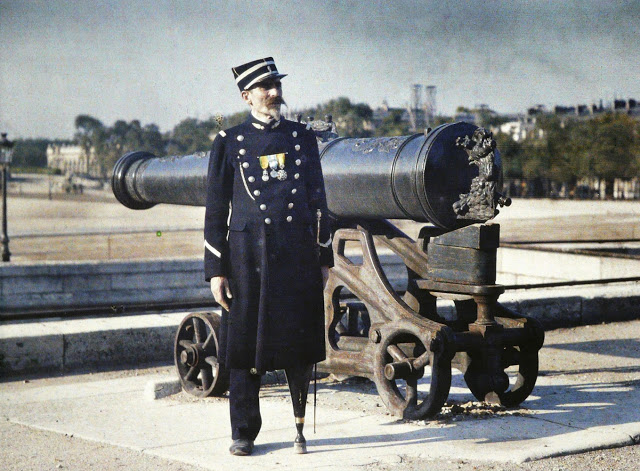
The autochrome, more formally known as the Autochrome Lumière, was attributed to two brothers, Auguste and Louis Lumière — French photographers also credited with the invention of early motion-picture equipment. Although other innovators had discovered ways to bring color to images through tint and screen processing, the autochrome, debuting in 1904, utilized a number of emulsion layers locking in natural color on a permanent glass negative.
We’re always jolted when we encounter vivid color photographs from the decades that we have collectively consigned to monochromatic grays. Sometimes these colors derive from a colorized restoration; at other times, we discover a world of color in the bowels of an old camera, locked in the emulsion of slide film in a machine lost, abandoned or forgotten decades earlier.
And sometimes, with luck, we stumble upon scenes from a “pre-color” era captured with experimental color processes. The vibrant photos from World War I posted in this gallery are examples of this surprisingly variegated, many-hued world.
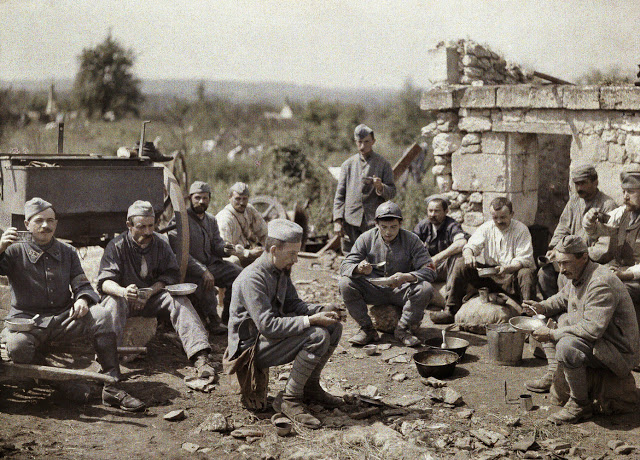
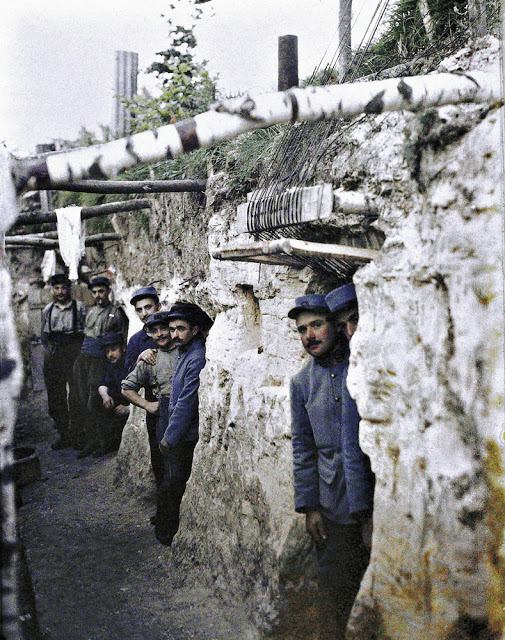
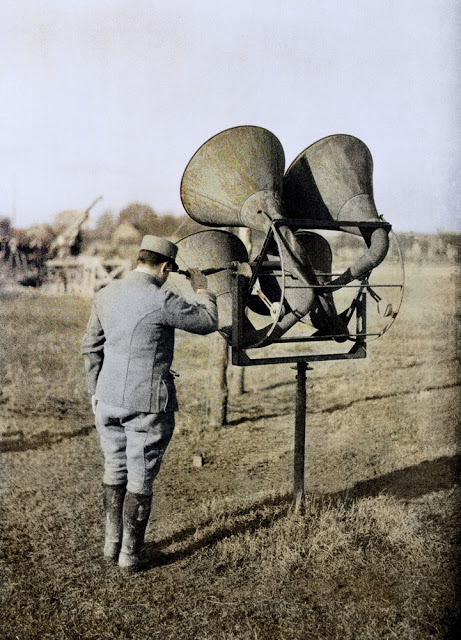
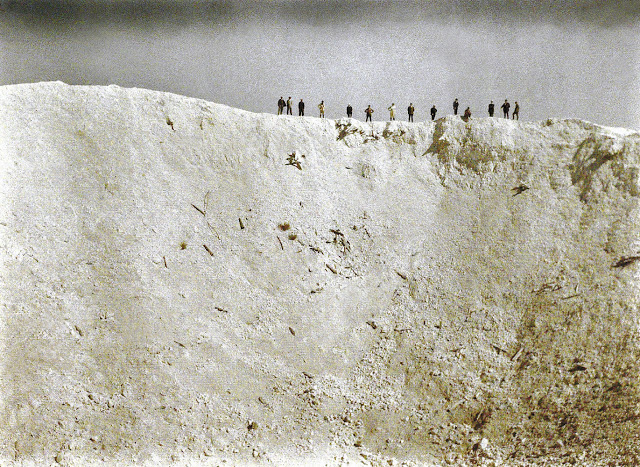
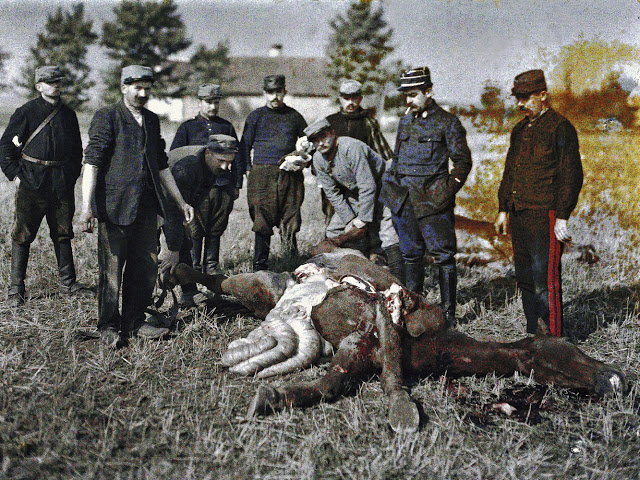
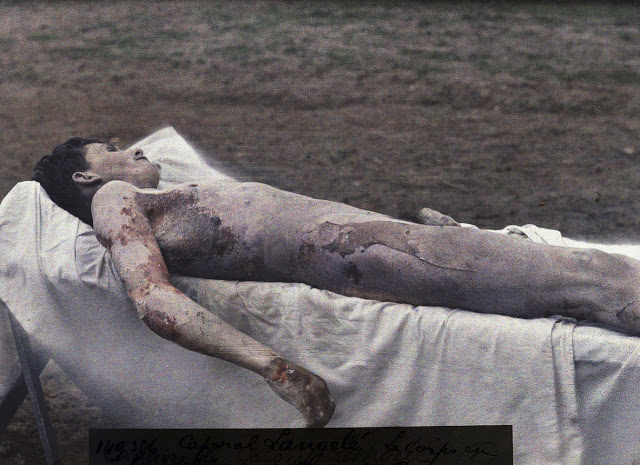
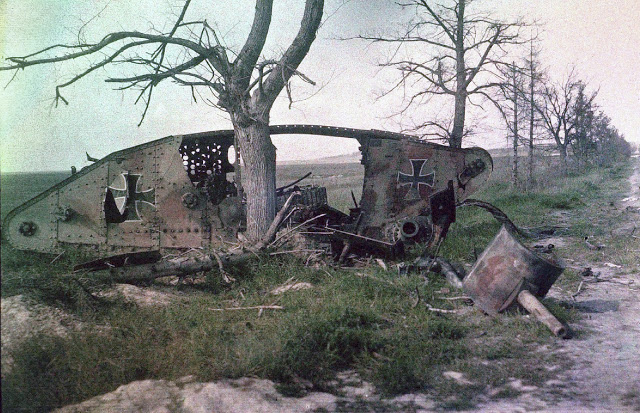
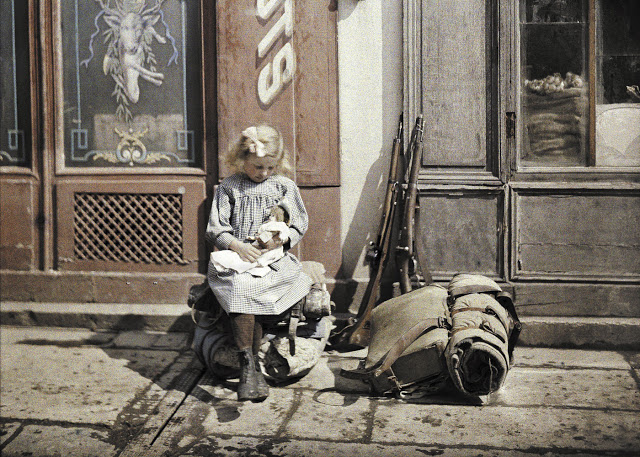
France: c1915. Autochrome. French Soldier. Photographer Unknown. It has been estimated that France lost approximately 1,397,800 soldiers with another 4,266,000 wounded during World War I. There is, of course, no way of knowing whether this particular soldier survived the fighting since his name has been lost to history. Perhaps this autochrome was taken while on leave to visit his family or photographed by a fellow soldier and sent home as a keepsake. France: September 1916. View of Verdun after 8 months of bombing. Battle of Verdun. Western Front. World War I. Autochrome Lumière. Photo: Jules Gervais-Courtellemont (1863 – 1931). France: 1916. World War One. French Gunners receiving instruction, 1916. France 1914-1918. The remains of a dead French soldier and his gun are lying under a tree on the Western front during World War I. Autochrome Lumière. Photo: Stéphane Passet (1875 – ?). Aisne, France: 1917. Battle of the Aisne. French soldiers of the 370th Infantry Regiment are eating soup during the battle of the Aisne, Western Front, World War I. Autochrome Lumière. Fernand Cuville (1887-1927). France 1914-1918. French Artillery soldiers are shown at the entrance of their shelter on the Western Front. 1. World War I. Autochrome Lumière. Photo: Stéphane Passet (1875 – ?). France 1914-1918. A French soldier with an acoustic listening device capable of tracking air planes in preparation of anti-aircraft guns on the Western Front. World War I. Autochrome Lumière. Bucy-le-Long, Aisne, France: 1917. Battle of the Aisne A French section of machine gunners has taken position in the ruins during the battle of the Aisne, Western Front, World War I. Autochrome Lumière. Fernand Cuville (1887-1927). Messines, Flanders, Belgium: 1917. Autochrome Lumière. A crater (diameter 116 m, depth 45 m) after the explosion of 19 mines placed underneath German positions near Messines in West Flanders by the British on June 7, 1917.A total of about 10,000 soldiers died, amongst them almost all of the 3rd Royal Bavarian Division. The mines consisted of 21 t of explosives (Ammonal). The blast was one of the biggest non-nuclear explosions of all times and was audible in Dublin and London. World War I, Western Front. Photo: Fernand Cuville (1887-1927). Nine French soldiers are investigating a fatally injured horse on the Western front during World War I. France (1914 – 1918). Autochrome Lumière Photo: Stéphane Passet (1875 – ?). France: April 1. 1918. The corpse of a French soldier of the 99th infantry regiment, who was poisoned during a German gas attack on March 23, 1918 and died eight days later of pneumonia. Western Front. World War I. Autochrome Lumière. Photo: Aubert. The wreck of a German tank, which was destroyed during a battle on the Western Front (1914 – 1918). World War I. Frankreich. Autochrome Lumière, Charles Adrien (1866-1930). Reims, Marne, France: 1917. A little girl is playing with her doll. Two guns and a knapsack are next to her on the ground. World War I, Western Front. Autochrome Lumière Photo: Fernand Cuville (1887-1927). Département Aisne, France: 1917. French officers of the 370th Infantry Regiment are posing in the ruins after the attack of German troops at the Chemin des Dames near Reims during World War I. They have a bicycle and the flag of the 370th Infantry Regiment. The region was one of the worst battle grounds on the Western Front during World War I. Autochrome Lumière. Photo: Fernand Cuville (1887-1927). France: 1918. A soldier in uniform with three medals is standing next to a cannon in Paris. His left leg has been replaced by an artificial limb. First World War. Autochrome Lumière. Photo: Jules Gervais-Courtellemont (1863 – 1931).