Subscribe to get access
Read more of this content when you subscribe today.


Subscribe to continue reading
Become a paid subscriber to get access to the rest of this post and other exclusive content.
Bringing You the Wonder of Yesterday – Today

Read more of this content when you subscribe today.
Become a paid subscriber to get access to the rest of this post and other exclusive content.

Read more of this content when you subscribe today.
These photos captured moments of Tina Turner at her mid-century home in View Park, California in 1972. The front door featured handles that were molds of her hands. The family room included a waterfall with a pond and a wet bar with a built-in fish tank.
Ike Turner purchased the home in 1963, shortly after they relocated from East St. Louis, and he sold it after their divorce in the late 1970s. The house was so well-preserved that it was used for the 1993 biopic What’s Love Got to Do With It.
Tina Turner (born Anna Mae Bullock; November 26, 1939) is an American-born Swiss singer and actress. Widely referred to as the “Queen of Rock ‘n’ Roll”, she rose to prominence as the lead singer of the Ike and Tina Turner Revue before launching a successful career as a solo performer.
Turner began her career with Ike Turner’s Kings of Rhythm in 1957. Under the name Little Ann, she appeared on her first record, “Boxtop”, in 1958. In 1960, she was introduced as Tina Turner with the hit duet single “A Fool in Love”. The duo Ike & Tina Turner became “one of the most formidable live acts in history”. They released hits such as “It’s Gonna Work Out Fine”, “River Deep – Mountain High”, “Proud Mary”, and “Nutbush City Limits” before disbanding in 1976.
In the 1980s, Turner launched “one of the greatest comebacks in music history”. Her 1984 multi-platinum album Private Dancer contained the hit song “What’s Love Got to Do with It”, which won the Grammy Award for Record of the Year and became her first and only No.1 on the Billboard Hot 100. At age 44, she was the oldest female solo artist to top the Hot 100. Her chart success continued with “Better Be Good to Me”, “Private Dancer”, “We Don’t Need Another Hero (Thunderdome)”, “Typical Male”, “The Best”, “I Don’t Wanna Fight”, and “GoldenEye”. During her Break Every Rule World Tour in 1988, she set a then-Guinness World Record for the largest paying audience (180,000) for a solo performer. Turner also acted in the films Tommy (1975), Mad Max Beyond Thunderdome (1985), and Last Action Hero (1993). In 1993, What’s Love Got to Do with It, a biopic adapted from her autobiography I, Tina: My Life Story, was released. In 2009, Turner retired after completing her Tina!: 50th Anniversary Tour, which is the 15th highest-grossing tour of the 2000s. In 2018, she became the subject of the jukebox musical Tina.
Having sold over 100 million records worldwide, Turner is one of the best-selling recording artists of all time. She has received 12 Grammy Awards, which include eight competitive awards, three Grammy Hall of Fame awards, and a Grammy Lifetime Achievement Award. She is the first black artist and first female to be on the cover of Rolling Stone. Rolling Stone ranked her among the 100 Greatest Artists of All Time and the 100 Greatest Singers of All Time. Turner has a star on the Hollywood Walk of Fame and the St. Louis Walk of Fame. She is a two-time inductee into the Rock and Roll Hall of Fame, with Ike Turner in 1991 and as a solo artist in 2021. She is also a 2005 recipient of the Kennedy Center Honors and Women of the Year award. (Wikipedia)

Become a paid subscriber to get access to the rest of this post and other exclusive content.
Read more of this content when you subscribe today.
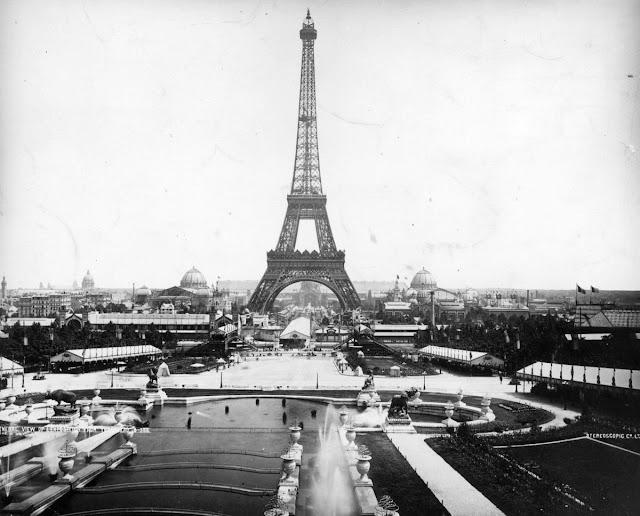
The Eiffel Tower was built to be the entrance to the 1889 World’s Fair in Paris. Construction was started by Gustave Eiffel’s company in January 1887 and completed in March 1889.
On March 31, 1889, the Eiffel Tower is dedicated in Paris in a ceremony presided over by Gustave Eiffel, the tower’s designer, and attended by French Prime Minister Pierre Tirard, a handful of other dignitaries, and 200 construction workers.
At the opening of the World’s Fair, the elevators were not completed, however, so Gustave Eiffel ascended the tower’s stairs with a few hardy companions and raised an enormous French tricolor on the structure’s flagpole. Fireworks were then set off from the second platform. Eiffel and his party descended, and the architect addressed the guests and about 200 workers. In early May, the Paris International Exposition opened, and the tower served as the entrance gateway to the giant fair.
The Eiffel Tower remained the world’s tallest man-made structure until the completion of the Chrysler Building in New York in 1930. Incredibly, the Eiffel Tower was almost demolished when the International Exposition’s 20-year lease on the land expired in 1909, but its value as an antenna for radio transmission saved it. It remains largely unchanged today and is one of the world’s premier tourist attractions.

Become a paid subscriber to get access to the rest of this post and other exclusive content.

Read more of this content when you subscribe today.
A summertime tea is a vintage themed event that you can enjoy recreating for all decades. The vintage tea gown’s heyday was centered in the Edwardian era (1900-1920), when white lace dresses posed beautifully against a luscious green garden. The enormous flower-covered picture hats were also perfectly suited for an outdoor tea.
Starting in 1870, women adopted a newer, lighter, free fitting form of house dress worn at the time of afternoon tea, roughly 3 to 6pm. It was a formal house dress gown suitable for entertaining guests in one’s home. It need not be as formal as a dinner gown, but was formal enough to be seen among one’s peers. It was often an expression of a woman’s artistic abilities where the dress coordinated with her parlor room decor.
By the Edwardian era, tea gowns were a regular part of a woman’s wardrobe outside of her home, too. Tea time became more flexible as well, as the location changed to outside porches and gardens. The sexual overtones vanished as these dresses became part of everyday summer fashions of the teens and early 1920s. Nearly all Edwardian tea gowns were white eyelet, embroidery, or lace inset sheer gowns. During fall and winter, darker color gowns were worn.
Become a paid subscriber to get access to the rest of this post and other exclusive content.
Read more of this content when you subscribe today.
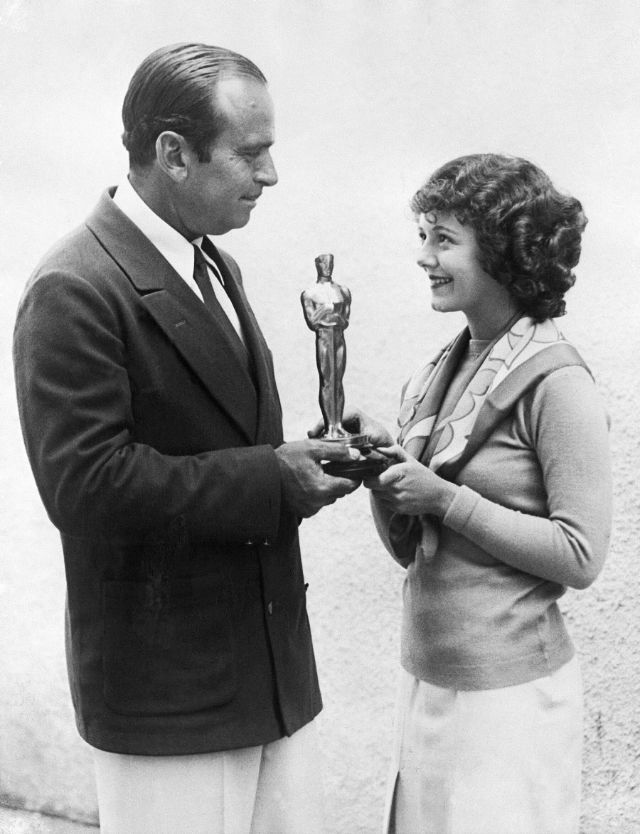
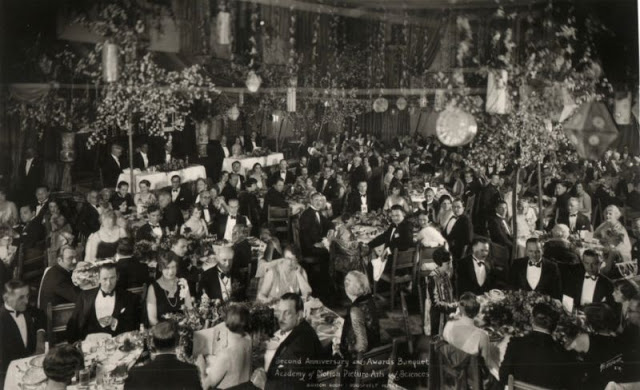
The 1st Academy Awards ceremony, presented by the Academy of Motion Picture Arts and Sciences (AMPAS), honored the best films of 1927 and 1928 and took place on May 16, 1929, at a private dinner held at the Hollywood Roosevelt Hotel in Los Angeles, California. AMPAS president Douglas Fairbanks hosted the show. Tickets cost $5 (which would be $74 in 2019, considering inflation), 270 people attended the event and the presentation ceremony lasted 15 minutes.
Awards were created by Louis B. Mayer, founder of Louis B. Mayer Pictures Corporation (at present merged into Metro-Goldwyn-Mayer). It is the only Academy Awards ceremony not to be broadcast either on radio or television. The radio broadcast was introduced during the 2nd Academy Awards.
During the ceremony, AMPAS presented Academy Awards – now colloquially known as the Oscars – in 12 categories. Winners were announced three months before the live event. Some nominations were announced without reference to a specific film.
These amazing photos captured wonderful moments of the 1st Academy Awards ceremony in 1929.
Become a paid subscriber to get access to the rest of this post and other exclusive content.
Read more of this content when you subscribe today.
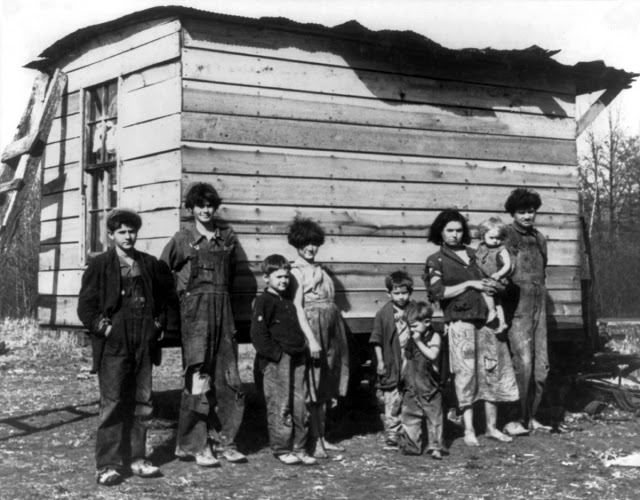
A native of Boston, Carl Mydans (1907–2004) was born into a family of second-generation Russian immigrants. He studied journalism at Boston University, where he first learned how to take and develop photographs. After he graduated in 1930, he found work as a reporter for American Banker, but eventually bought a 35-millimeter Contax camera. The Contax was small, and enabled its carrier to easily roam about and take photos with a minimum of advance preparation. He quickly mastered the camera, and began to sell his work to Time and other magazines.
In 1935, Mydans was hired as a photographer with a U.S. federal agency called the Resettlement Administration, which later became the Farm Security Administration. He traveled throughout New England and the South, documenting the failed end of a rural-based economy, and gained a reputation for his images of bedraggled Arkansas farmers and their families. It was the Great Depression, and the poorest of America’s poor were devastated by the economic downturn.
These pictures, of a Tennessee family of nine living in a hut built on an abandoned truck chassis, portray the misery of the times as starkly as any photographs by his more celebrated contemporaries in the FSA.

Become a paid subscriber to get access to the rest of this post and other exclusive content.

Read more of this content when you subscribe today.
The Battle of Omdurman was fought during the Anglo-Egyptian conquest of Sudan between a British–Egyptian expeditionary force commanded by British Commander-in-Chief (sirdar) major general Horatio Herbert Kitchener and a Sudanese army of the Mahdist Islamic State, led by Abdullah al-Taashi, the successor to the self-proclaimed Mahdi, Muhammad Ahmad. The battle took place on 2 September 1898, at Kerreri, 11 kilometres (6.8 mi) north of Omdurman in the Sudan.
Following the establishment of the Mahdist Islamic State in Sudan, and the subsequent threat to the regional status quo and to British-occupied Egypt, the British government decided to send an expeditionary force with the task of overthrowing the Khalifa. The commander of the force, Sir Herbert Kitchener, was also seeking revenge for the death of General Gordon, killed when a Mahdist army had captured Khartoum thirteen years earlier. On the morning of 2 September, some 35,000–50,000 Sudanese tribesmen under Abdullah attacked the British lines in a disastrous series of charges; later that morning the 21st Lancers charged and defeated another force that appeared on the British right flank. Among those present was 23-year-old soldier and reporter Winston Churchill as well as a young Captain Douglas Haig.
The victory of the British–Egyptian force was a demonstration of the superiority of a highly disciplined army equipped with modern rifles, machine guns, and artillery over a force twice its size armed with older weapons, and marked the success of British efforts to re-conquer the Sudan. Following the Battle of Umm Diwaykarat a year later, the remaining Mahdist forces were defeated and the Anglo-Egyptian Sudan was established. (Wikipedia)
The photographs were taken by Francis Gregson, who compiled the album and was thought to have taken many of the photographs mounted in it, accompanied the Sudan Campaign as a war correspondent for the St James’s Gazette. He was not thought to have been commissioned to take these photographs, however, which were not made public at the time. He wrote to Sir Reginald Wingate, Director of Military Intelligence of the Egyptian Army, in November 1898 stating his intention to collate photographs he had taken during his time in Egypt and the Sudan in an album as a souvenir for Wingate. Gregson appears to have produced several copies of this album and the captions given to each photograph are his.
In the 21st century, these images, along with other historic records, including objects taken from Sudan to British museums, have been the subject of critical interpretation of the ethics of British military campaigns in the Sudan. With regard to the changing interpretation of the history of military campaigns, some contemporary historians have argued that war photographers have also contributed to the dehumanization of the victims.

Become a paid subscriber to get access to the rest of this post and other exclusive content.
Please help us to continue our work bringing you the best in history on a daily basis. The cost of subscriptions to journals, archives and other media is expensive. We also have the added internet costs. You can help us by subscribing to this page for $5 per month or if you like you can make a one-time donation at https://www.buymeacoffee.com/YesterdayToday
Thank you for your consideration.
Yesterday Today
Read more of this content when you subscribe today.
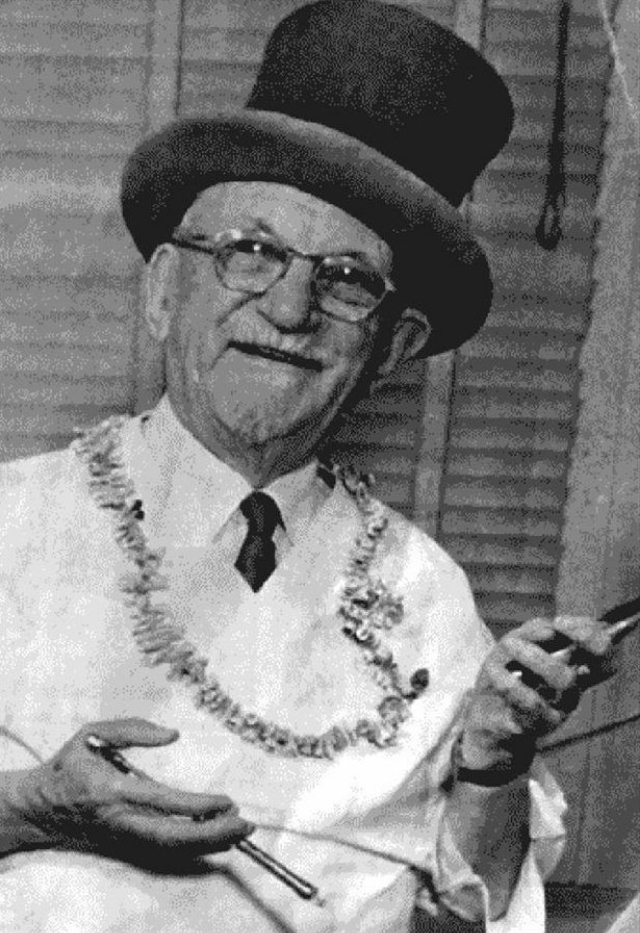
Before local anesthesia could manage the pain, one early 20th century dentist distracted his patients with showgirls and brass bands. Painless Parker found that a bit of the old razzle dazzle not only added enough commotion to keep a person from focusing too much on a tooth pulling, it drew an audience of prospective patients.
Become a paid subscriber to get access to the rest of this post and other exclusive content.
Please help us to continue our work bringing you the best in history on a daily basis. The cost of subscriptions to journals, archives and other media is expensive. We also have the added internet costs. You can help us by subscribing to this page for $5 per month or if you like you can make a one-time donation at https://www.buymeacoffee.com/YesterdayToday
Thank you for your consideration.
Yesterday Today
Read more of this content when you subscribe today.

Become a paid subscriber to get access to the rest of this post and other exclusive content.
Please help us to continue our work bringing you the best in history on a daily basis. The cost of subscriptions to journals, archives and other media is expensive. We also have the added internet costs. You can help us by subscribing to this page for $5 per month or if you like you can make a one-time donation at https://www.buymeacoffee.com/YesterdayToday
Thank you for your consideration.
Yesterday Today
Read more of this content when you subscribe today.
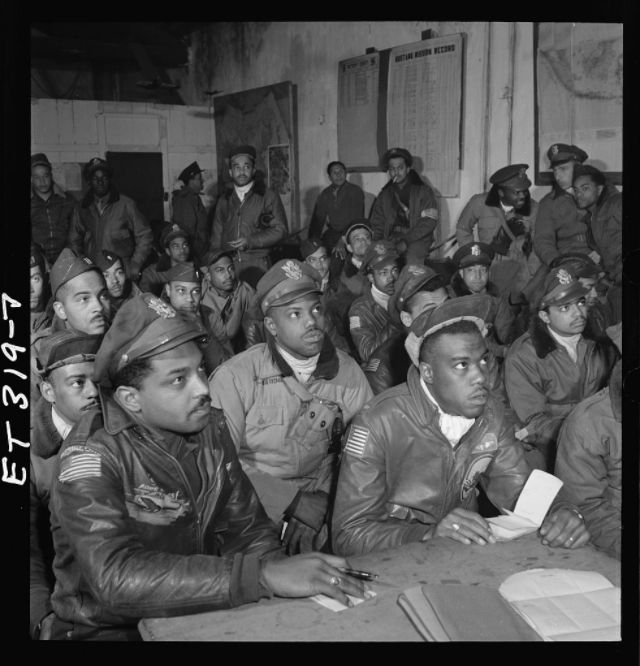
The Tuskegee Airmen were a group of primarily African American military pilots (fighter and bomber) and airmen who fought in World War II. They formed the 332d Fighter Group and the 477th Bombardment Group (Medium) of the United States Army Air Forces (USAAF). The name also applies to the navigators, bombardiers, mechanics, instructors, crew chiefs, nurses, cooks, and other support personnel. The Tuskegee airmen received praise for their excellent combat record earned while protecting American bombers from enemy fighters. The group was awarded three Distinguished Unit Citations.
All black military pilots who trained in the United States trained at Griel Field, Kennedy Field, Moton Field, Shorter Field, and the Tuskegee Army Air Fields. They were educated at the Tuskegee Institute (now Tuskegee University), located near Tuskegee, Alabama. Of the 922 pilots, five were Haitians from the Haitian Air Force and one pilot was from Trinidad. It also included a Hispanic or Latino airman born in the Dominican Republic.
The 99th Pursuit Squadron (later the 99th Fighter Squadron) was the first black flying squadron, and the first to deploy overseas (to North Africa in April 1943, and later to Sicily and other parts of Italy). The 332nd Fighter Group, which originally included the 100th, 301st and 302nd Fighter Squadrons, was the first black flying group. It deployed to Italy in early 1944. Although the 477th Bombardment Group trained with North American B-25 Mitchell bombers, they never served in combat. In June 1944, the 332nd Fighter Group began flying heavy bomber escort missions and, in July 1944, with the addition of the 99th Fighter Squadron, it had four fighter squadrons.
The 99th Fighter Squadron was initially equipped with Curtiss P-40 Warhawk fighter-bomber aircraft. The 332nd Fighter Group and its 100th, 301st and 302nd Fighter Squadrons were equipped for initial combat missions with Bell P-39 Airacobras (March 1944), later with Republic P-47 Thunderbolts (June–July 1944) and finally with the aircraft with which they became most commonly associated, the North American P-51 Mustang (July 1944). When the pilots of the 332nd Fighter Group painted the tails of their P-47s red, the nickname “Red Tails” was coined. The red markings that distinguished the Tuskegee Airmen included red bands on the noses of P-51s as well as a red rudder; the P-51B, C and D Mustangs flew with similar color schemes, with red propeller spinners, yellow wing bands and all-red tail surfaces.
The Tuskegee Airmen were the first African-American military aviators in the United States Armed Forces. During World War II, black Americans in many U.S. states were still subject to the Jim Crow laws and the American military was racially segregated, as was much of the federal government. The Tuskegee Airmen were subjected to discrimination, both within and outside of the army. (Wikipedia)
These intimate portraits were taken by Toni Frissell, a high-fashion photographer who volunteered her photographic services to the American Red Cross, Women’s Army Corps, and Eighth Army Air Force during WWII. On volunteering for the American Red Cross in 1941, Frissell said: “I became so frustrated with fashions that I wanted to prove to myself that I could do a real reporting job.” Take a look:
Become a paid subscriber to get access to the rest of this post and other exclusive content.
