The rollout of General Motors’ broad lineup of “X-Car” compact cars for 1980–which consisted of four separate vehicle lines spread across four brands–was a big event in the American automotive industry. Not surprisingly, GM backed up its ambitious new product initiative with a massive presence in TV and magazine advertising.
Though launched almost at the same time in 1979, the Buick Skylark, Chevrolet Citation, Oldsmobile Omega, and Pontiac Phoenix were all 1980 models, and the media blitz lasted throughout that calendar year. Here, a collection of 10 classic automotive print ads from 1980:
1980 Dodge Aspen
Subscribe to continue reading
Become a paid subscriber to get access to the rest of this post and other exclusive content.
Life in Nazi Germany, 1933-1939 Alongside control and suppression, the Nazis tried to influence every part of German life.
The economy Hitler claimed that he had dramatically reduced unemployment figures under the Nazis. Certainly, rearmament created jobs. But National Service meant young men were not counted as being unemployed any longer. Women and Jews were left out of the figures altogether. Therefore, we can’t be sure of how many people truly found jobs under the Nazis. However, living standards for working class Germans did not really improve and workers were expected to take part in Nazi Party schemes like Strength Through Joy, which gave them cheap holidays, in return for giving up their trade union rights.
The Nazis aspired to achieve autarky, or economic self-sufficiency, but in general the economy was geared towards preparing for a future war. As such, workers were expected to work long hours for modest pay and to toe the line.
Social policy The Nazis’ social policies affected two groups in society the most – women and young people:
Women were expected to embrace a life based around the ‘3 Ks’ of Kinder, Küche, Kirche (Children, Kitchen and Church). It was their duty to produce and raise children, in order to secure the future of the Reich. They were encouraged to give up work and received loans and awards for having lots of children. Young people were a particular target for the Nazis’ propaganda, as they represented the future. The school curriculum was altered to promote Nazi ideology and all young people were expected to join a Nazi youth organisation such as the Hitler Youth or the League of German Maidens. In addition, the Nazis sought to control or limit the influence of Christianity. They set up an official state church, called the Reich Church, which adapted protestant teachings to Nazi ideology. Also, despite signing a Concordat with the Pope in 1933 in which Hitler promised to leave the Catholic Church alone if it stayed out of politics, the Nazis attempted to interfere with it and placed restrictions on worship.
Persecution Nazi ideology centred on the belief that the Aryan of northern Europe was superior to all others and that some races were sub-human. Nazis also believed any weaknesses in the Aryan race, such as disabled people, should be weeded out to maintain racial purity. Therefore, many groups who the Nazis did not like were targeted and persecuted. This was done in many different ways; ‘euthanasia’, imprisonment in concentration camps and the loss of civil rights.
The group targeted most by this persecution were the Jews. Under the Nazis Jews in Germany had their rights gradually taken away, including their German citizenship. During World War Two, this deteriorated further and the Holocaust saw 6 million Jews from across Nazi-occupied Europe murdered.
Subscribe to continue reading
Become a paid subscriber to get access to the rest of this post and other exclusive content.
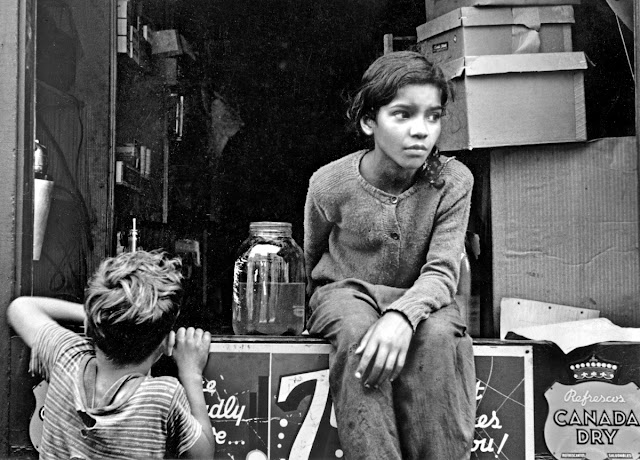
Street kids at play, Georgetown, Washington D.C., Summer 1935
The Great Depression was the worst economic downturn in the history of the industrialized world, lasting from 1929 to 1939. It began after the stock market crash of October 29, 1929, the “Black Tuesday”, which sent Wall Street into a panic and wiped out millions of investors.
Over the next several years, consumer spending and investment dropped, causing steep declines in industrial output and employment as failing companies laid off workers. By 1933, when the Great Depression reached its lowest point, some 15 million Americans were unemployed and nearly half the country’s banks had failed.
The end to the Great Depression came about in 1941 with America’s entry into World War II. America sided with Britain, France and the Soviet Union against Germany, Italy, and Japan. The loss of lives in this war was staggering.
The European part of the war ended with Germany’s surrender in May 1945. Japan surrendered in September 1945, after the U.S. dropped atomic bombs on Hiroshima and Nagasaki.
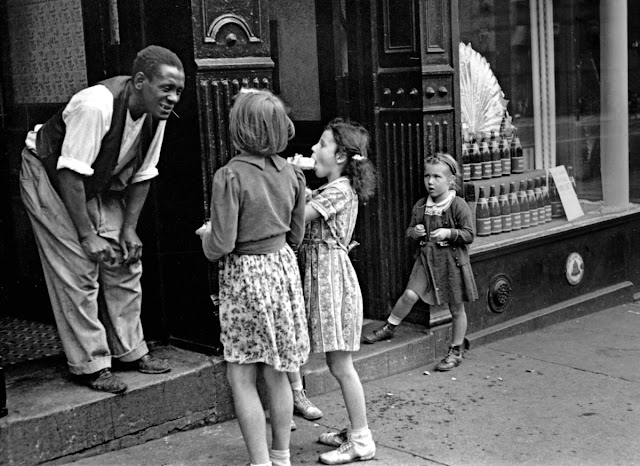
These incredible vintage photos were colorized by Lamont Cranston that revived life of the U.S. in the 1930s and 1940s.
Street smart, Washington, D.C., 1935
Subscribe to continue reading
Become a paid subscriber to get access to the rest of this post and other exclusive content.
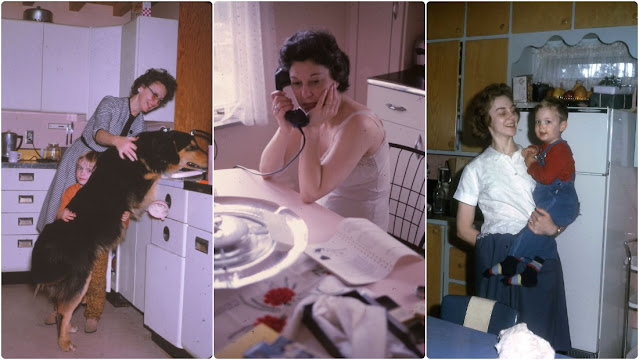
In the 1960s, it wasn’t just the fashion that was groovy and out there – interiors and architecture reflected trends of the time, too. One room that really received unique features during the 1960s were kitchens. Whether it was floor-to-ceiling woodwork or chartreuse laminate countertops, kitchens were far from boring during this era.
The biggest improvement of modern kitchen design in the 1960s is considered to be the work triangle layout, consisting of three connected work areas – the stove, sink and the refrigerator. This essential model is an example of a highly utilitarian and effective design that remains a key aspect in kitchen planning to this day.
Shag rugs, minimalist furniture, and kooky colors were all the rage of the kitchens in this period. These vintage photos captured people at their kitchens from the 1960s.
Subscribe to continue reading
Become a paid subscriber to get access to the rest of this post and other exclusive content.
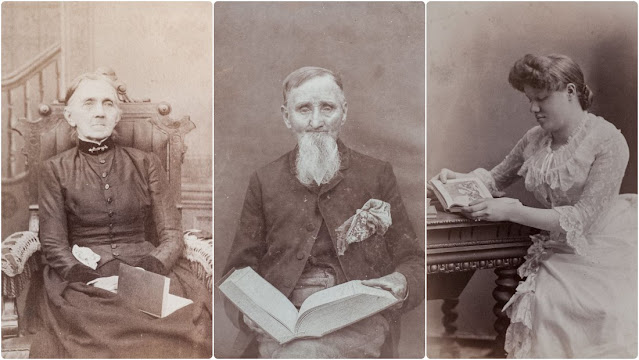
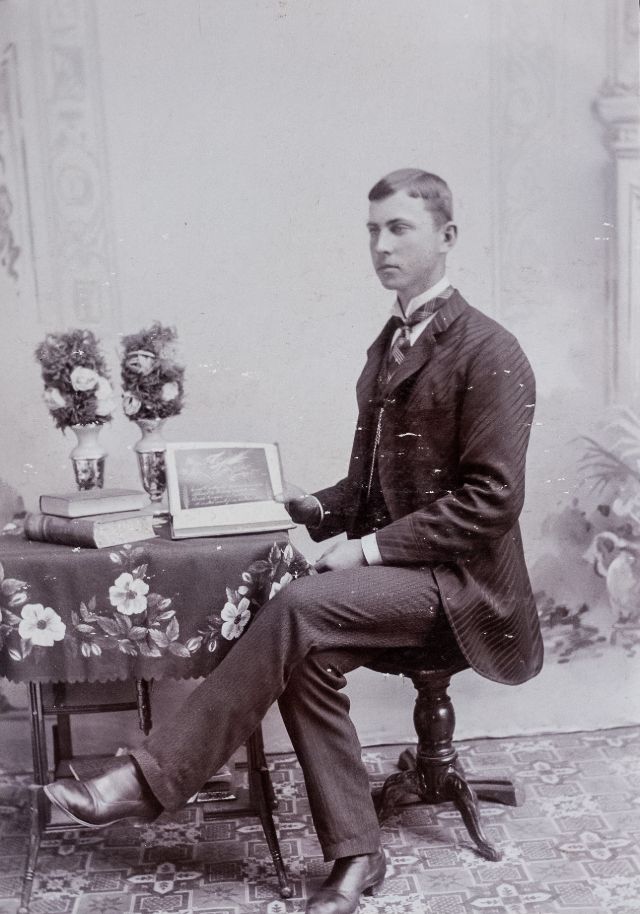
Victorians were great readers of the novel, and the number of novels available for them to read increased enormously during Victoria’s reign.
The activity of reading benefited hugely from wider schooling and increased literacy rates, from the cheapening costs of publication, from improved distribution that resulted from better transportation, and, towards the end of the century, from the arrival of gas and electric lighting in homes, which meant that reading after dark no longer had to take place by candlelight or oil lamp.
Here below is a set of amazing photos that show Victorian people posing with their books.
Subscribe to continue reading
Become a paid subscriber to get access to the rest of this post and other exclusive content.
Introduced in 1935 as the first modern color film, Kodachrome was used extensively after World War II by amateur photographers equipped with the new high-quality and low cost 35mm cameras. Americans in Kodachrome 1945-1965 is an unprecedented portrayal of the daily life of the people during these formative years of modern American culture. It is comprised of ninety-five exceptional color photographs made by over ninety unknown American photographers.
These photographs were chosen from many thousands of slides in hundreds of collections. Like folk art in other mediums, this work is characterized by its frankness, honesty, and vigor. Made as memoirs of family and friends, the photographs reveal a free-spirited, intuitive approach, and possess a clarity and unpretentiousness characteristic of this unheralded photographic folk art.
Cowboy Kid, St. Cloud, Minnesota, 1955
Subscribe to continue reading
Become a paid subscriber to get access to the rest of this post and other exclusive content.

ABBA are a Swedish pop group formed in Stockholm in 1972 by Agnetha Fältskog, Björn Ulvaeus, Benny Andersson, and Anni-Frid Lyngstad. The group’s name is an acronym of the first letters of their first names. Widely considered one of the greatest musical groups of all time, they became one of the most commercially successful acts in the history of popular music, topping the charts worldwide from 1974 to 1983. They have achieved 44 hit singles.
In 1974, ABBA were Sweden’s first winner of the Eurovision Song Contest with the song “Waterloo”, which in 2005 was chosen as the best song in the competition’s history as part of the 50th anniversary celebration of the contest. During the band’s main active years, it consisted of two married couples: Fältskog and Ulvaeus, and Lyngstad and Andersson. With the increase of their popularity, their personal lives suffered, which eventually resulted in the collapse of both marriages. The relationship changes were reflected in the group’s music, with latter compositions featuring darker and more introspective lyrics. After ABBA disbanded, Andersson and Ulvaeus continued their success writing music for the stage, while Fältskog and Lyngstad and pursued solo careers.
Ten years after the group disbanded, a compilation, ABBA Gold, was released, becoming a worldwide best-seller. In 1999, ABBA’s music was adapted into Mamma Mia!, a successful musical that toured worldwide. A film of the same name, released in 2008, became the highest-grossing film in the United Kingdom that year. A sequel, Mamma Mia! Here We Go Again, was released in 2018. That same year it was also announced that the band had reunited and recorded two new songs after 35 inactive years, which were released in September 2021 as the lead singles from Voyage, their first studio album in 40 years, to be released in November 2021. A concert residency featuring ABBA as virtual avatars – dubbed ‘ABBAtars’ to support the album will take place from May to September 2022.
They are one of the best-selling music artists of all time, with sales estimated at 150 million records worldwide. In 2012, ABBA was ranked eighth-best-selling singles artists in the United Kingdom, with 11.2 million singles sold. ABBA were the first group from a non-English-speaking country to achieve consistent success in the charts of English-speaking countries, including the United States, United Kingdom, Republic of Ireland, Canada, Australia, New Zealand, The Philippines and South Africa. They are the best-selling Swedish band of all time and one of the best-selling bands originating in continental Europe. ABBA had eight consecutive number-one albums in the UK. The group also enjoyed significant success in Latin America, and recorded a collection of their hit songs in Spanish. The group was inducted into the Rock and Roll Hall of Fame in 2010. In 2015, their song “Dancing Queen” was inducted into the Recording Academy’s Grammy Hall of Fame.
Subscribe to continue reading
Become a paid subscriber to get access to the rest of this post and other exclusive content.
Edith Norma Shearer (August 10, 1902 – June 12, 1983) was a Canadian actress who was active on film from 1919 through 1942. Shearer often played spunky, sexually liberated ingénues. She appeared in adaptations of Noël Coward, Eugene O’Neill, and William Shakespeare, and was the first five-time Academy Award acting nominee, winning Best Actress for The Divorcee (1930).
Reviewing Shearer’s work, Mick LaSalle called her “the exemplar of sophisticated 1930s womanhood … exploring love and sex with an honesty that would be considered frank by modern standards”. He described her as a feminist pioneer, “the first American film actress to make it chic and acceptable to be single and not a virgin on screen”.
She won a beauty contest at age fourteen. In 1920 her mother, Edith Shearer, took Norma and her sister Athole Shearer (Mrs. Howard Hawks) to New York. Ziegfeld rejected her for his “Follies,” but she got work as an extra in several movies. She spent much money on eye doctor’s services trying to correct her cross-eyed stare caused by a muscle weakness. Irving Thalberg had seen her early acting efforts and, when he joined Louis B. Mayer in 1923, gave her a five year contract. He thought she should retire after their marriage, but she wanted bigger parts. In 1927, she insisted on firing the director Viktor Tourjansky because he was unsure of her cross-eyed stare. Her first talkie was in The Trial of Mary Dugan (1929); four movies later, she won an Oscar in The Divorcee (1930). She intentionally cut down film exposure during the 1930s, relying on major roles in Thalberg’s prestige projects: The Barretts of Wimpole Street (1934) and Romeo and Juliet (1936) (her fifth Oscar nomination). Thalberg died of a second heart attack in September, 1936, at age 37. Norma wanted to retire, but MGM more-or-less forced her into a six-picture contract. David O. Selznick offered her the part of Scarlett O’Hara in Gone with the Wind (1939), but public objection to her cross-eyed stare killed the deal. She starred in The Women (1939), turned down the starring role in Mrs. Miniver (1942), and retired in 1942. Later that year she married Sun Valley ski instructor Martin Arrouge, eleven years younger than she (he waived community property rights). From then on, she shunned the limelight; she was in very poor health the last decade of her life.
Shearer’s fame declined after her retirement in 1942. She was rediscovered in the late 1950s, when her films were sold to television, and in the 1970s, when her films enjoyed theatrical revivals. By the time of her death in 1983, she was best known for her “noble” roles in Marie Antoinette and The Women.
A Shearer revival began in 1988, when Turner Network Television began broadcasting the entire Metro-Goldwyn-Mayer film library. In 1994, Turner Classic Movies began showcasing her films, most of which had not been seen since the reconstitution of the Production Code in 1934. Shearer’s work was seen anew, and the critical focus shifted from her “noble” roles to her pre-Code roles.
Even for a pampered star, her output in the sound era is strikingly meager. And yet this was part of her undeniable aura – that she did not make movies lightly and frivolously, but with great care, sincerity and conviction.
Shearer’s work gained more attention in the 1990s through the publication of a series of books. The first was a biography by Gavin Lambert. Next came Complicated Women: Sex and Power in Pre-Code Hollywood by Mick LaSalle, film critic at the San Francisco Chronicle. Mark A. Vieira published three books on subjects closely related to Shearer: a biography of her husband, producer Irving Thalberg; and two biographies of photographer George Hurrell. Shearer was noted not only for the control she exercised over her work, but also for her patronage of Hurrell and Adrian, and for discovering actress Janet Leigh and actor-producer Robert Evans.
For her contribution to the motion-picture industry, Shearer has a star on the Hollywood Walk of Fame, at 6636 Hollywood Boulevard. On June 30, 2008, Canada Post issued a postage stamp in its “Canadians in Hollywood” series to honour Norma Shearer, along with others for Raymond Burr, Marie Dressler, and Chief Dan George.
Shearer and Thalberg are reportedly the models for Stella and Miles, the hosts of the Hollywood party in the short story “Crazy Sunday” (1932) by F. Scott Fitzgerald.
Most of Shearer’s MGM films are broadcast on Turner Classic Movies, and many of them are also available on DVD from Warner Home Video. In 2008, she was inducted into Canada’s Walk of Fame. In 2015, a number of Shearer films became available in high-definition format, authored by Warner Home Video, in most cases, from the nitrate camera negatives: A Free Soul, Romeo and Juliet, Marie Antoinette, and The Women.
Subscribe to continue reading
Become a paid subscriber to get access to the rest of this post and other exclusive content.