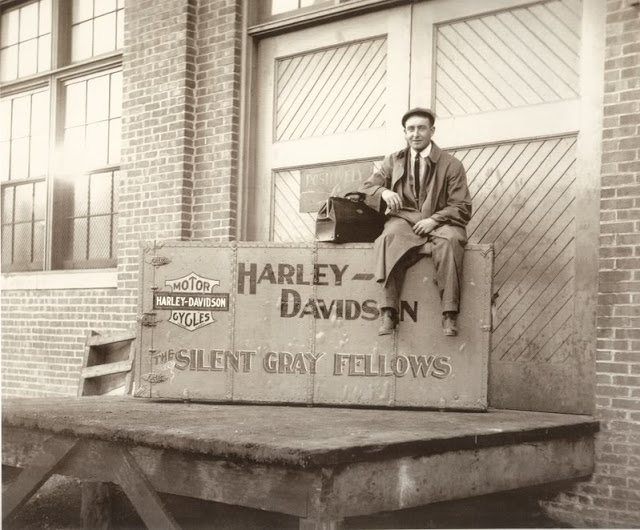
In 1901, 20-year-old William S. Harley drew up plans for a small engine with a displacement of 7.07 cubic inches (116 cc) and four-inch (102 mm) flywheels. The engine was designed for use in a regular pedal-bicycle frame. Over the next two years, Harley and his childhood friend Arthur Davidson worked on their motor-bicycle using the northside Milwaukee machine shop at the home of their friend, Henry Melk. It was finished in 1903 with the help of Arthur’s brother, Walter Davidson. Upon testing their power-cycle, Harley, and the Davidson brothers found it unable to climb the hills around Milwaukee without pedal assistance. They quickly wrote off their first motor-bicycle as a valuable learning experiment.
Work immediately began on a new and improved second-generation machine. This first “real” Harley-Davidson motorcycle had a bigger engine of 24.74 cubic inches (405 cc) with 9.75 inches (25 cm) flywheels weighing 28 lb (13 kg). The machine’s advanced loop-frame pattern was similar to the 1903 Milwaukee Merkel motorcycle (designed by Joseph Merkel, later of Flying Merkel fame). The bigger engine and loop-frame design took it out of the motorized bicycle category and marked the path to future motorcycle designs. The boys also received help with their bigger engine from outboard motor pioneer Ole Evinrude, who was then building gas engines of his own design for automotive use on Milwaukee’s Lake Street.
The prototype of the new loop-frame Harley-Davidson was assembled in a 10 ft × 15 ft (3.0 m × 4.6 m) shed in the Davidson family backyard. Most of the major parts, however, were made elsewhere, including some probably fabricated at the West Milwaukee railshops where oldest brother William A. Davidson was then toolroom foreman. This prototype machine was functional by September 8, 1904, when it competed in a Milwaukee motorcycle race held at State Fair Park. It was ridden by Edward Hildebrand and placed fourth. This is the first documented appearance of a Harley-Davidson motorcycle in the historical record.
In January 1905, small advertisements were placed in the Automobile and Cycle Trade Journal offering bare Harley-Davidson engines to the do-it-yourself trade. By April, complete motorcycles were in production on a very limited basis. That year, the first Harley-Davidson dealer, Carl H. Lang of Chicago, sold three bikes from the five built in the Davidson backyard shed. Years later the original shed was taken to the Juneau Avenue factory where it would stand for many decades as a tribute to the Motor Company’s humble origins until it was accidentally destroyed by contractors cleaning the factory yard in the early 1970s.
In 1906, Harley and the Davidson brothers built their first factory on Chestnut Street (later Juneau Avenue), at the current location of Harley-Davidson’s corporate headquarters. The first Juneau Avenue plant was a 40 ft × 60 ft (12 m × 18 m) single-story wooden structure. The company produced about 50 motorcycles that year.
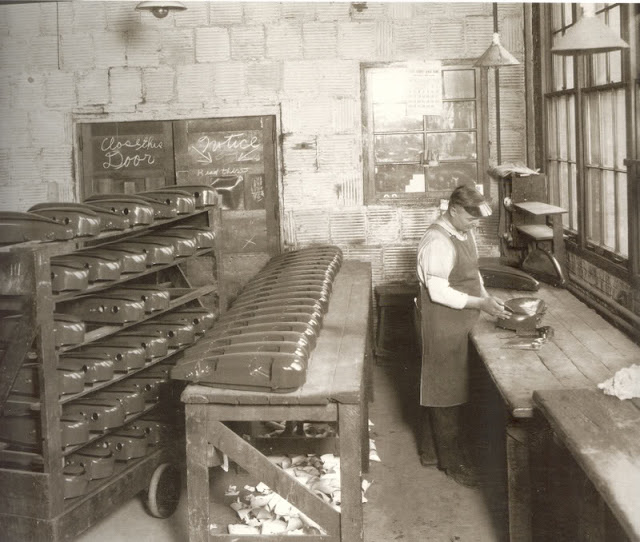
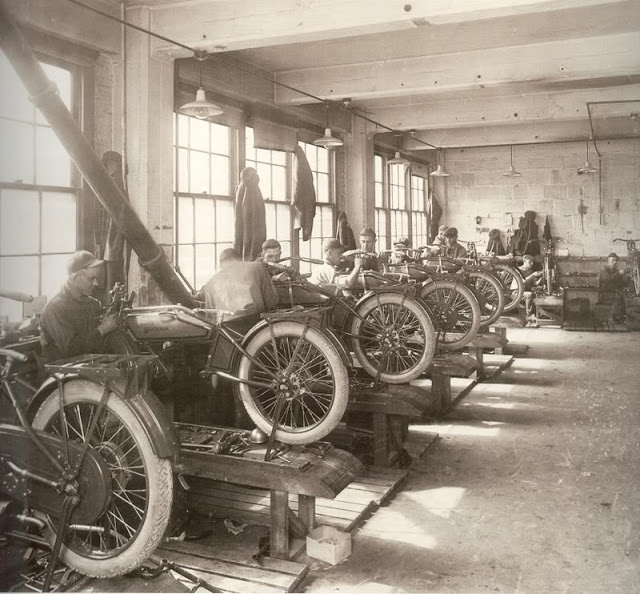
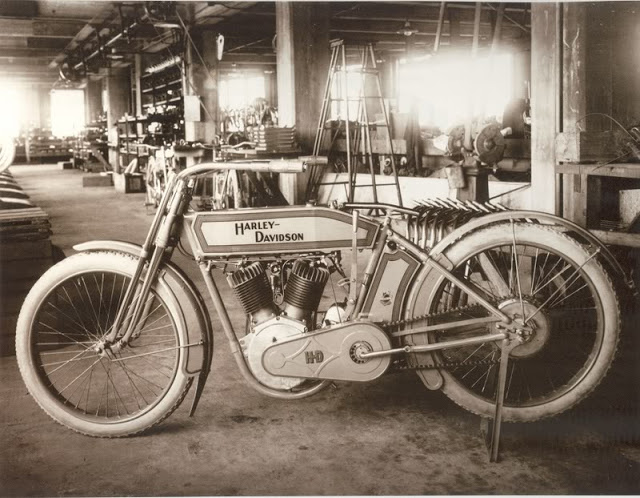
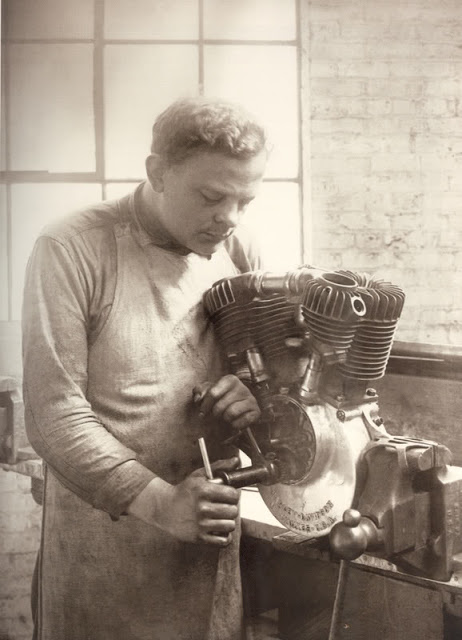
Here are some rare photographs from inside the Harley motorcycle factory from the 1910s and 1920s.
New York, often called New York City (NYC) to distinguish it from the state of New York, is the most populous city in the United States. With a 2020 population of 8,804,190 distributed over 300.46 square miles (778.2 km2), New York City is also the most densely populated major city in the United States. Located at the southern tip of the state of New York, the city is the center of the New York metropolitan area, the largest metropolitan area in the world by urban area. With over 20.1 million people in its metropolitan statistical area and 23.5 million in its combined statistical area as of 2020, New York is one of the world’s most populous megacities. New York City has been described as the cultural, financial, and media capital of the world, significantly influencing commerce, entertainment, research, technology, education, politics, tourism, dining, art, fashion, and sports, and is the most photographed city in the world. Home to the headquarters of the United Nations, New York is an important center for international diplomacy, and has sometimes been called the capital of the world.
Situated on one of the world’s largest natural harbors, New York City is composed of five boroughs, each of which is coextensive with a respective county of the state of New York. The five boroughs—Brooklyn (Kings County), Queens (Queens County), Manhattan (New York County), the Bronx (Bronx County), and Staten Island (Richmond County)—were created when local governments were consolidated into a single municipal entity in 1898. The city and its metropolitan area constitute the premier gateway for legal immigration to the United States. As many as 800 languages are spoken in New York, making it the most linguistically diverse city in the world. New York is home to more than 3.2 million residents born outside the United States, the largest foreign-born population of any city in the world as of 2016. As of 2018, the New York metropolitan area is estimated to produce a gross metropolitan product (GMP) of nearly $1.8 trillion, ranking it first in the United States. If the New York metropolitan area were a sovereign state, it would have the eighth-largest economy in the world. New York is home to the second highest number of billionaires of any city in the world.
New York City traces its origins to a trading post founded on the southern tip of Manhattan Island by Dutch colonists in approximately 1624. The settlement was named New Amsterdam (Dutch: Nieuw Amsterdam) in 1626 and was chartered as a city in 1653. The city came under English control in 1664 and was renamed New York after King Charles II of England granted the lands to his brother, the Duke of York. The city was regained by the Dutch in July 1673 and was renamed New Orange for one year and three months; the city has been continuously named New York since November 1674. New York City was the capital of the United States from 1785 until 1790, and has been the largest U.S. city since 1790. The Statue of Liberty greeted millions of immigrants as they came to the U.S. by ship in the late 19th and early 20th centuries, and is a symbol of the U.S. and its ideals of liberty and peace. In the 21st century, New York has emerged as a global node of creativity, entrepreneurship, and environmental sustainability, and as a symbol of freedom and cultural diversity. In 2019, New York was voted the greatest city in the world per a survey of over 30,000 people from 48 cities worldwide, citing its cultural diversity.
Many districts and monuments in New York City are major landmarks, including three of the world’s ten most visited tourist attractions in 2013. A record 66.6 million tourists visited New York City in 2019. Times Square is the brightly illuminated hub of the Broadway Theater District, one of the world’s busiest pedestrian intersections, and a major center of the world’s entertainment industry. Many of the city’s landmarks, skyscrapers, and parks are known around the world, as is the city’s fast pace, spawning the term New York minute. The Empire State Building has become the global standard of reference to describe the height and length of other structures. Manhattan’s real estate market is among the most expensive in the world. Providing continuous 24/7 service and contributing to the nickname The City That Never Sleeps, the New York City Subway is the largest single-operator rapid transit system worldwide, with 472 rail stations. The city has over 120 colleges and universities, including Columbia University, New York University, Rockefeller University, and the City University of New York system, which is the largest urban public university system in the United States. Anchored by Wall Street in the Financial District of Lower Manhattan, New York City has been called both the world’s leading financial center and the most financially powerful city in the world, and is home to the world’s two largest stock exchanges by total market capitalization, the New York Stock Exchange and Nasdaq. (Wikipedia)
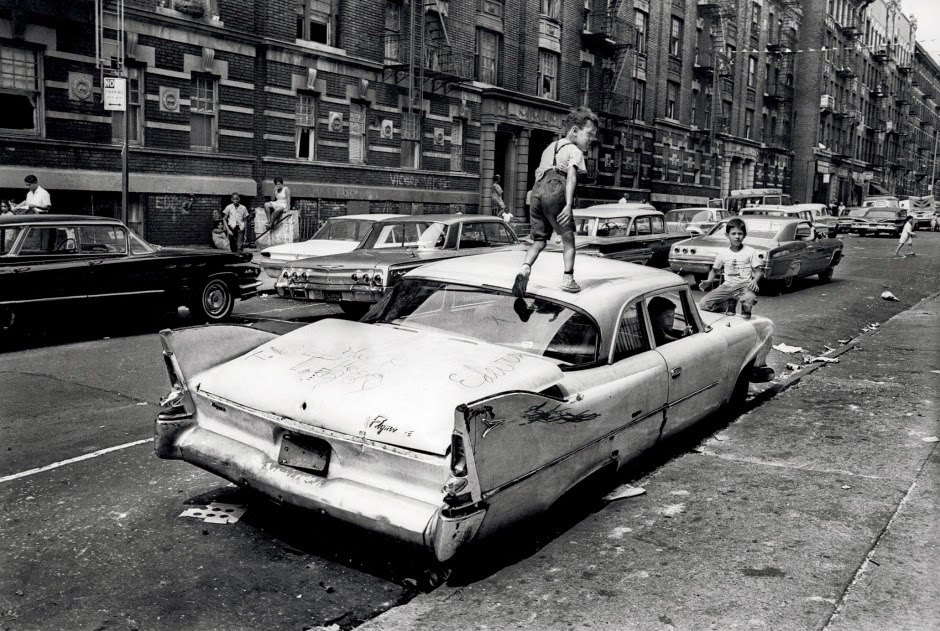
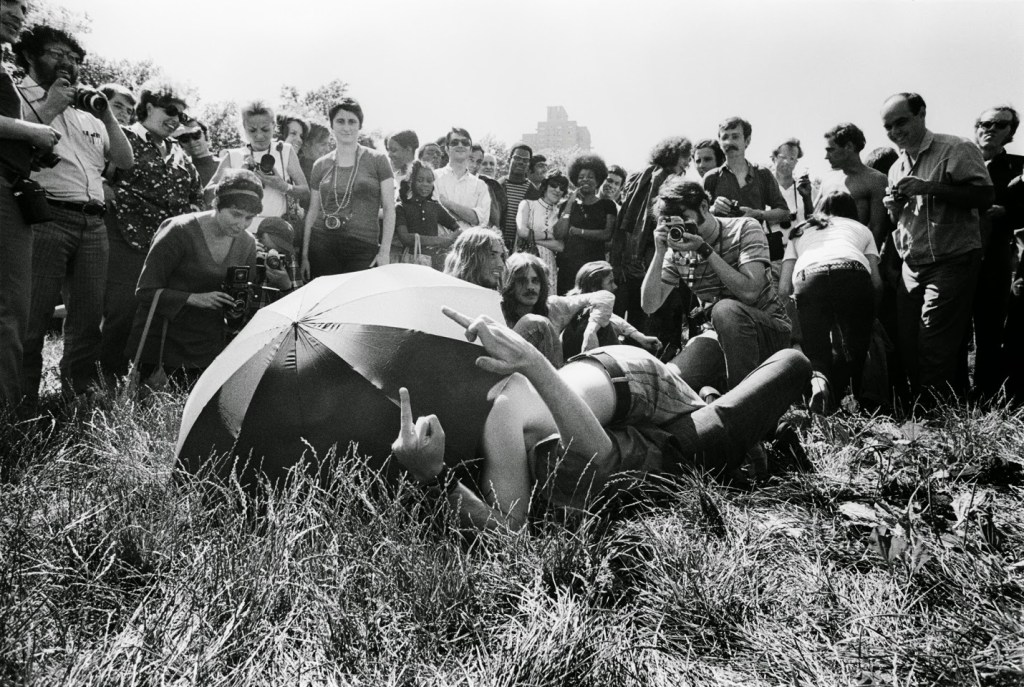
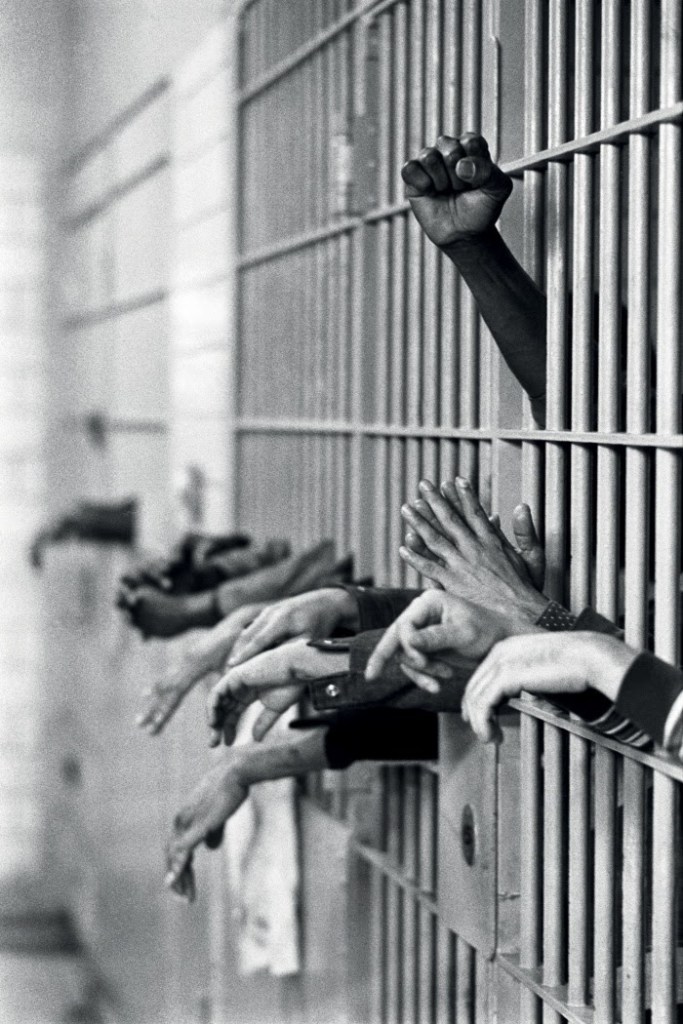
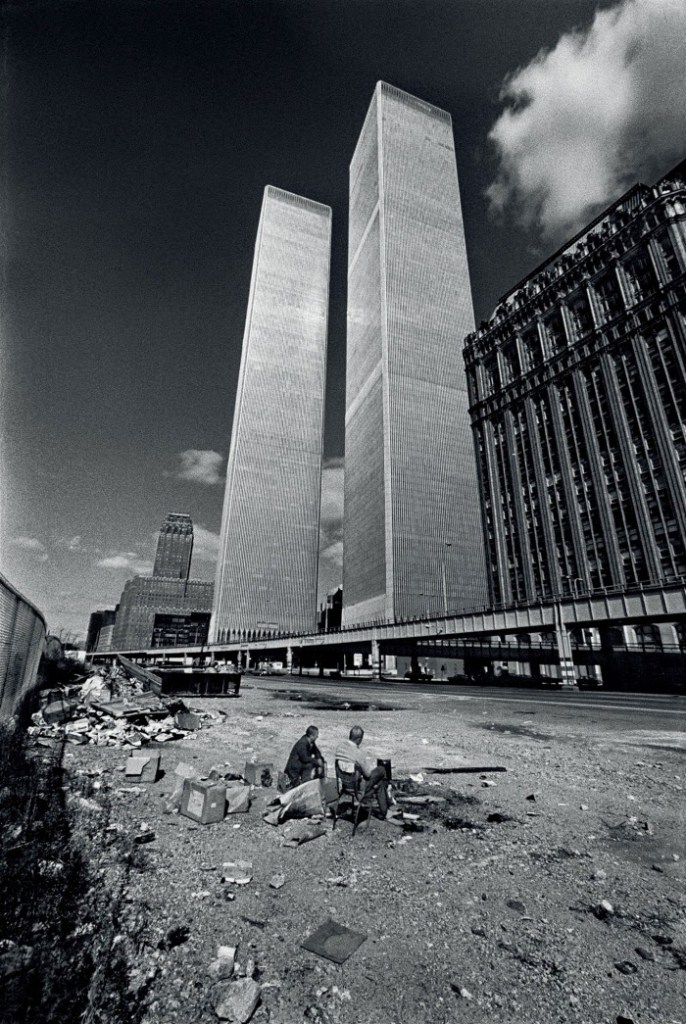
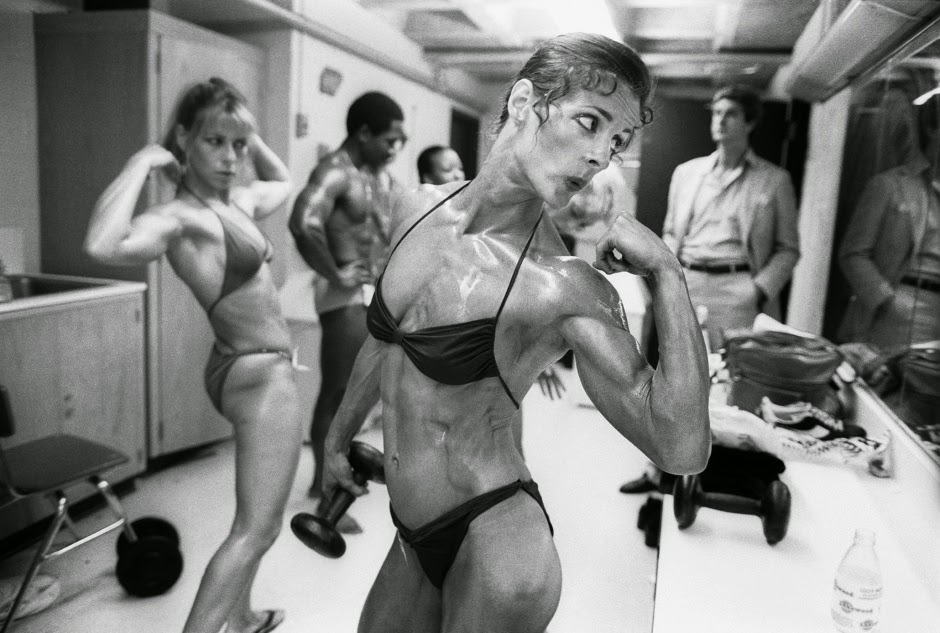
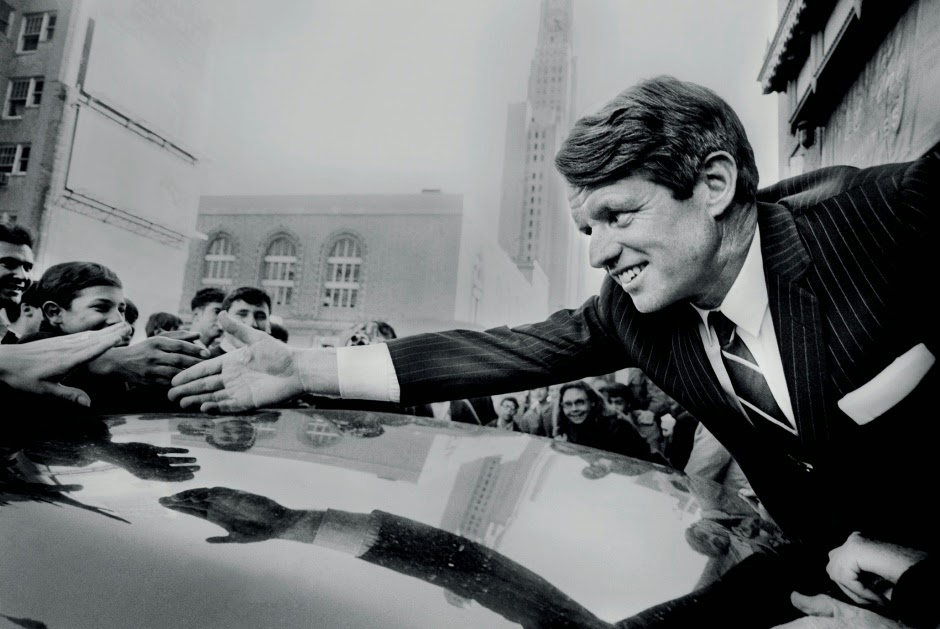
Legendary photojournalist Jean-Pierre Laffont captured the changing times of New York City, covering everything from free love to the grim and gritty ’70s. His photographs always seem to tell more than one story. From Ku Klux Klan rallies in LA, Muhammad Ali sounding off, and the kissing competition at the first Gay Pride in New York… Laffont captured it all. Here’s a selection of his staggering black and white photography that runs the gamut of 20th-century US history.
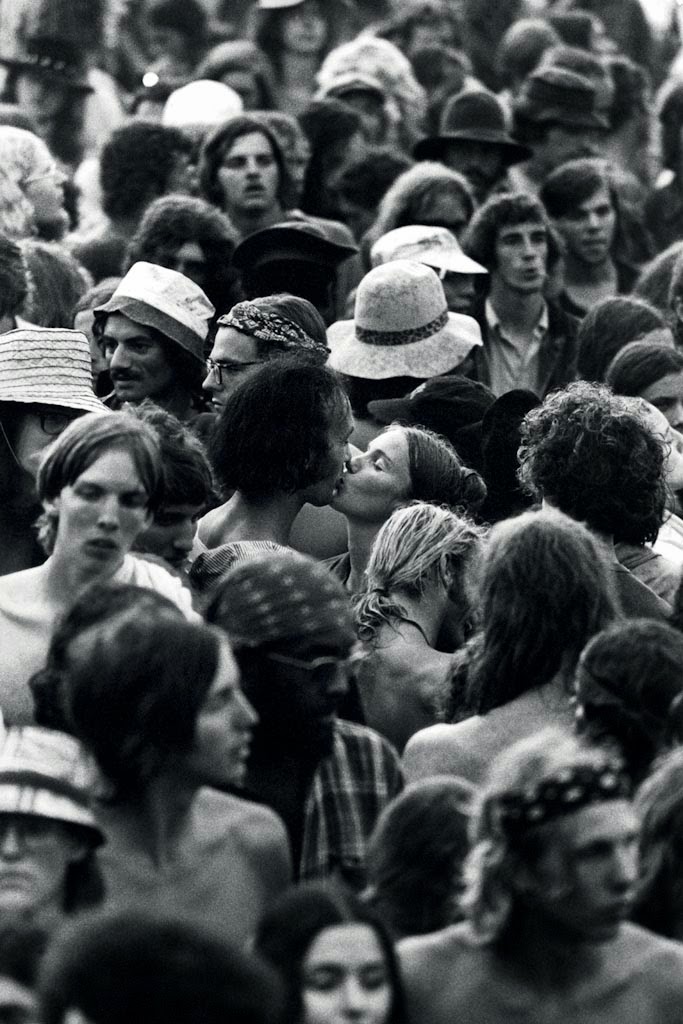
Two men ‘flip the bird’ at the Central Park crowd that’s formed as they compete in the kissing contest during New York’s inaugural Gay Pride celebration on 28 June 1970.A fist raised in protest from behind the bars at Toms Prison, Manhattan, on 28 September, 1972.Muhammad Ali finger-pointing during the weigh-in before his second boxing match with Joe Frazier on 23 January, 1974, in New York. Ali won the fight and regained the title.Two homeless men squat in the shadow of the recently completed World Trade Center in October, 1975. New York City was on the verge of bankruptcy and the World Trade Center sat largely vacant.Valerie Mayers shows off her biceps backstage before winning the Ms Empire State Competition in New York, 20 June 1981.On Fox Street in the Bronx, an abandoned Plymouth Savoy becomes a jungle gym for kids to play on in the summer of 1966.Presidential candidate and New York senator Robert Kennedy greets supporters on a campaign stop in Fort Greene, Brooklyn on 1 April, 1968.A young couple kisses as the chaos of the crowd whirs around them with an estimated 600,000 rock fans on July 28, 1973. The Summer Jam at Watkins Glen was a 1973 rock festival which once received the Guinness Book of World Records entry for “Largest audience at a pop festival.”A prostitute leans playfully on a cop car on 42nd Street Times Square, May, 1980. The police struggled to keep up with the onslaught of crime in the area, and at times seemed to be playing a friendly game of cat and mouse with the hookers.
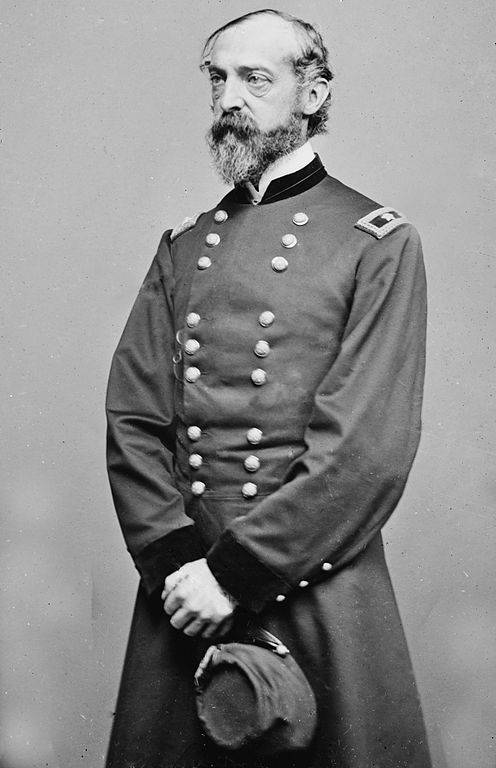
The Battle of Gettysburg was fought July 1–3, 1863, in and around the town of Gettysburg, Pennsylvania, by Union and Confederate forces during the American Civil War. In the battle, Union Maj. Gen. George Meade’s Army of the Potomac defeated attacks by Confederate Gen. Robert E. Lee’s Army of Northern Virginia, halting Lee’s invasion of the North. The battle involved the largest number of casualties of the entire war and is often described as the war’s turning point due to the Union’s decisive victory and concurrence with the Siege of Vicksburg.
After his success at Chancellorsville in Virginia in May 1863, Lee led his army through the Shenandoah Valley to begin his second invasion of the North—the Gettysburg Campaign. With his army in high spirits, Lee intended to shift the focus of the summer campaign from war-ravaged northern Virginia and hoped to influence Northern politicians to give up their prosecution of the war by penetrating as far as Harrisburg, Pennsylvania, or even Philadelphia. Prodded by President Abraham Lincoln, Maj. Gen. Joseph Hooker moved his army in pursuit, but was relieved of command just three days before the battle and replaced by Meade.
Elements of the two armies initially collided at Gettysburg on July 1, 1863, as Lee urgently concentrated his forces there, his objective being to engage the Union army and destroy it. Low ridges to the northwest of town were defended initially by a Union cavalry division under Brig. Gen. John Buford, and soon reinforced with two corps of Union infantry. However, two large Confederate corps assaulted them from the northwest and north, collapsing the hastily developed Union lines, sending the defenders retreating through the streets of the town to the hills just to the south. On the second day of battle, most of both armies had assembled. The Union line was laid out in a defensive formation resembling a fishhook. In the late afternoon of July 2, Lee launched a heavy assault on the Union left flank, and fierce fighting raged at Little Round Top, the Wheatfield, Devil’s Den, and the Peach Orchard. On the Union right, Confederate demonstrations escalated into full-scale assaults on Culp’s Hill and Cemetery Hill. All across the battlefield, despite significant losses, the Union defenders held their lines.
On the third day of battle, fighting resumed on Culp’s Hill, and cavalry battles raged to the east and south, but the main event was a dramatic infantry assault by 12,500 Confederates against the center of the Union line on Cemetery Ridge, known as Pickett’s Charge. The charge was repelled by Union rifle and artillery fire, at great loss to the Confederate army. Lee led his army on a torturous retreat back to Virginia. Between 46,000 and 51,000 soldiers from both armies were casualties in the three-day battle, the most costly in US history. On November 19, President Lincoln used the dedication ceremony for the Gettysburg National Cemetery to honor the fallen Union soldiers and redefine the purpose of the war in his historic Gettysburg Address. (Wikipedia)
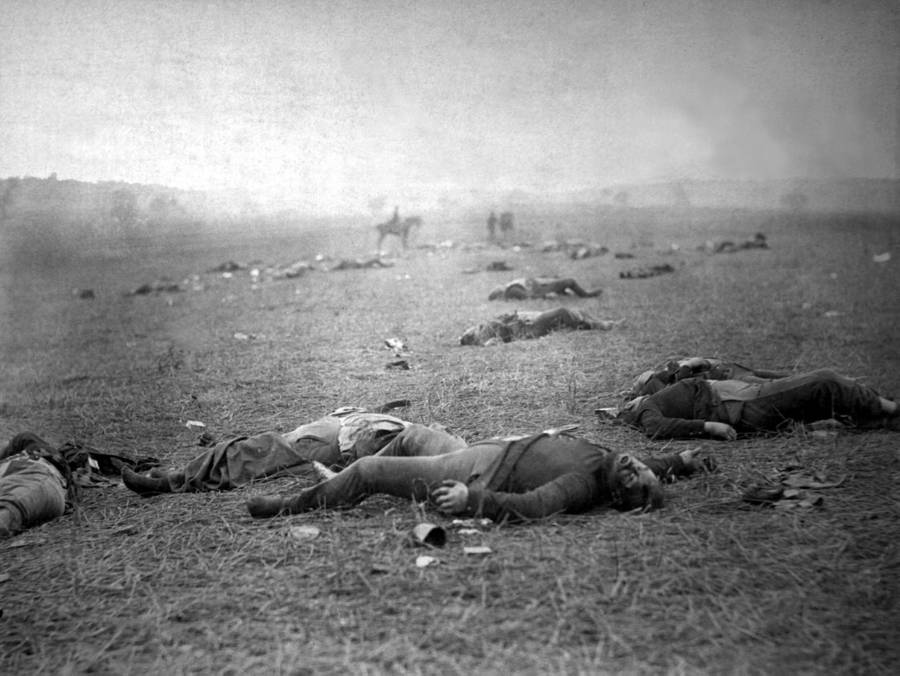
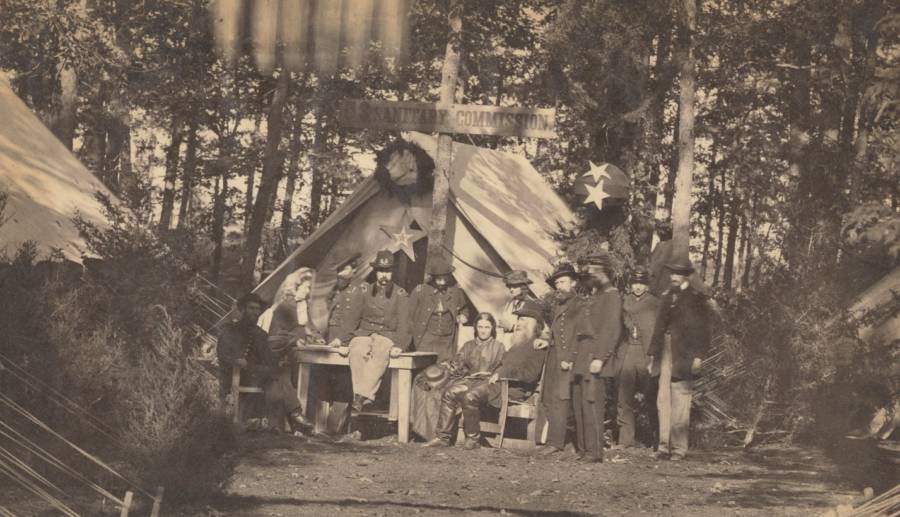
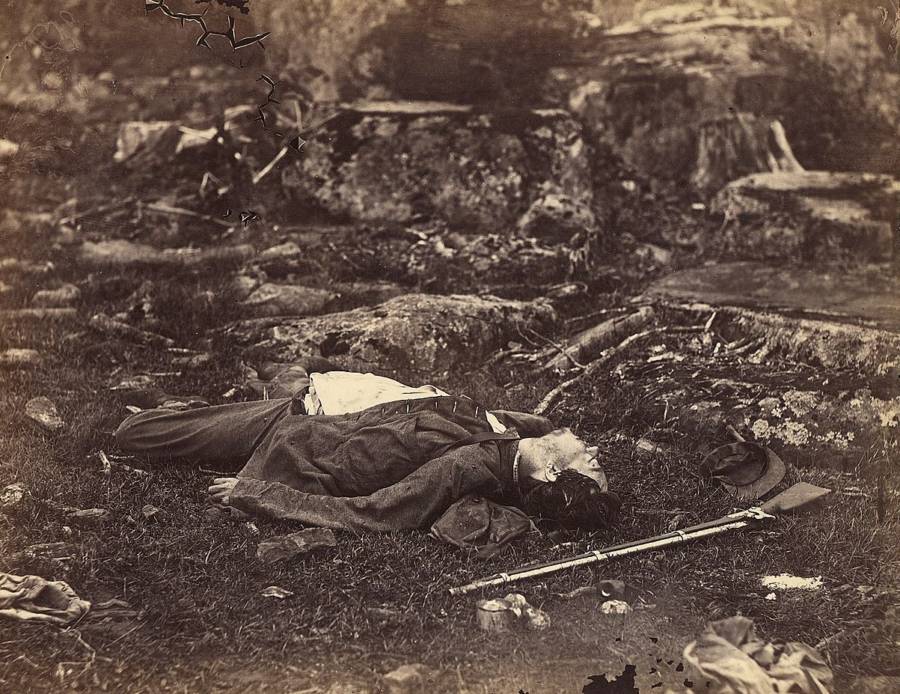
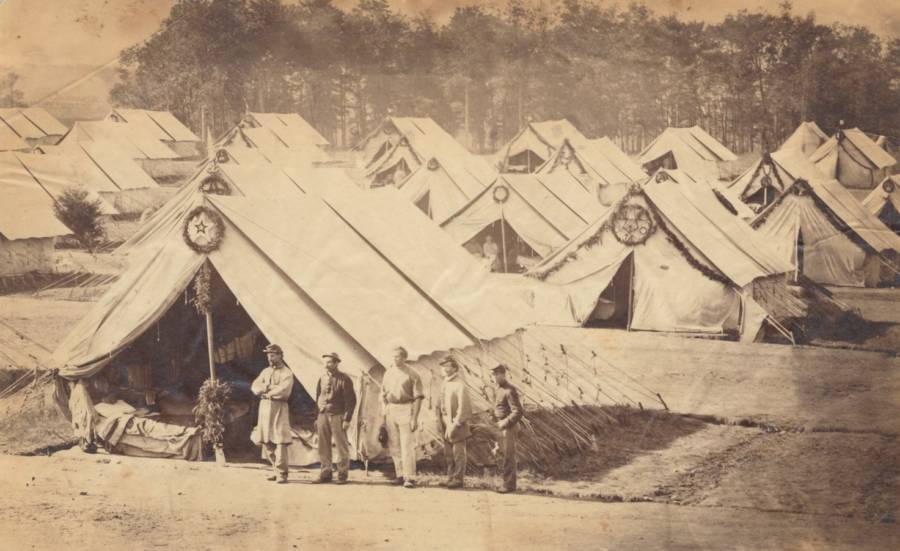
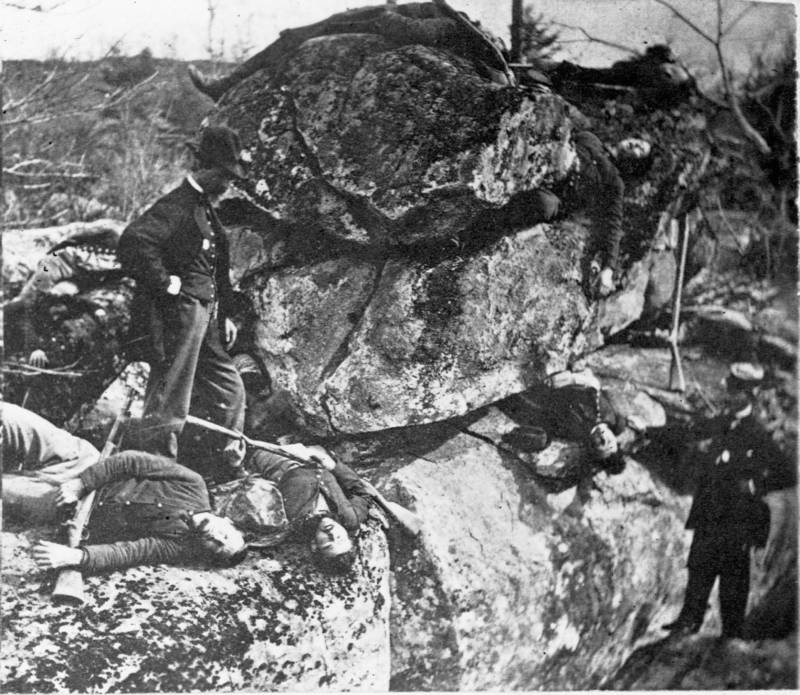
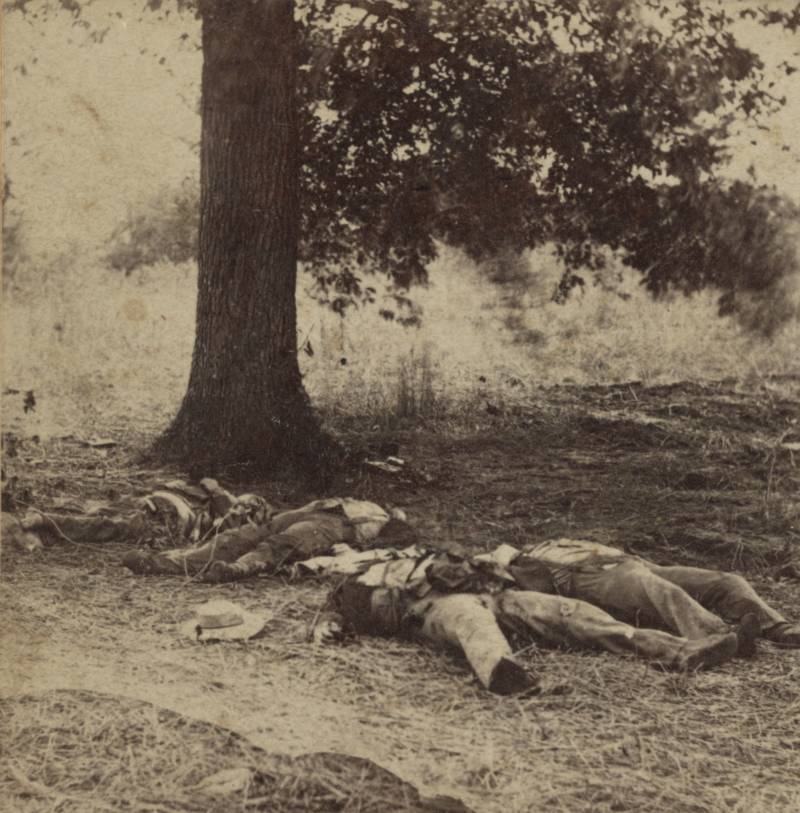
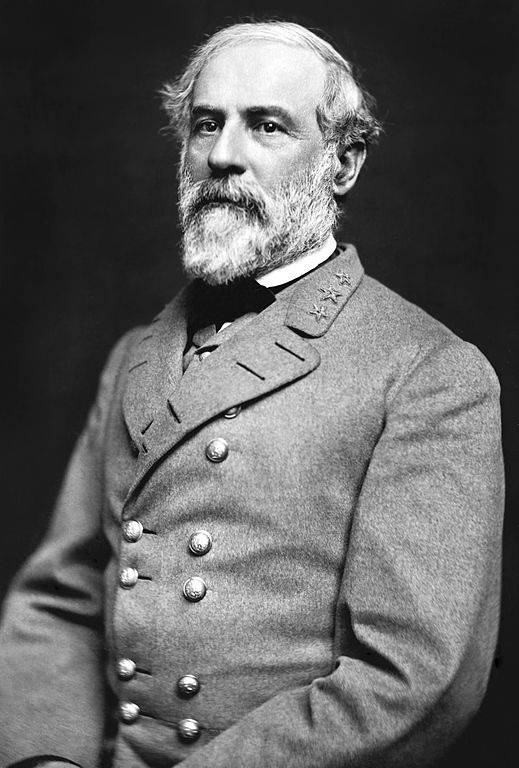
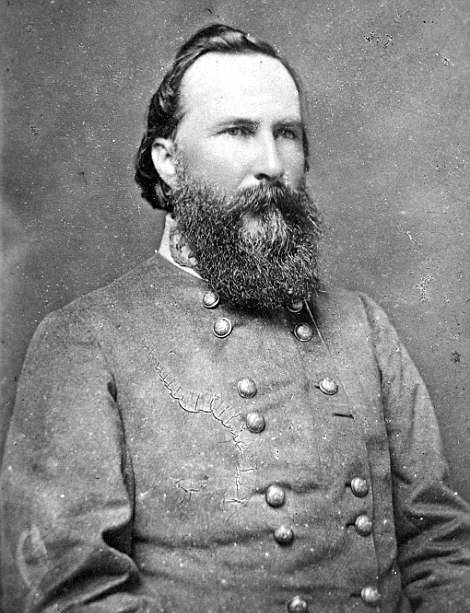
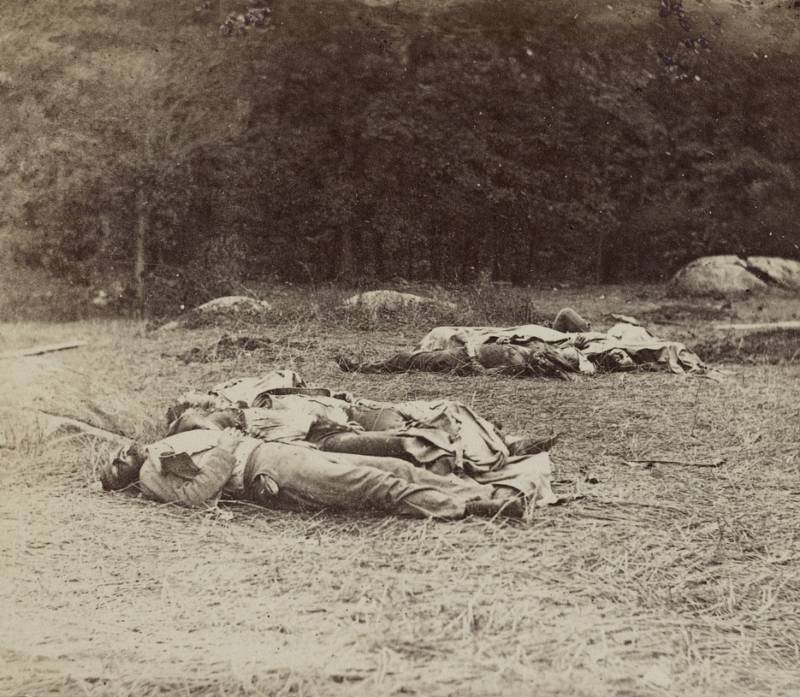
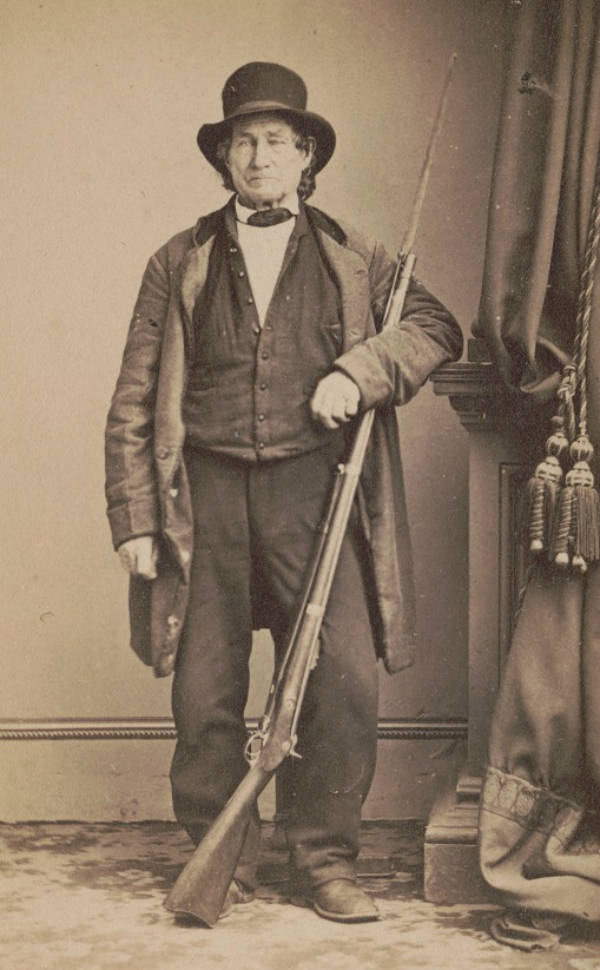
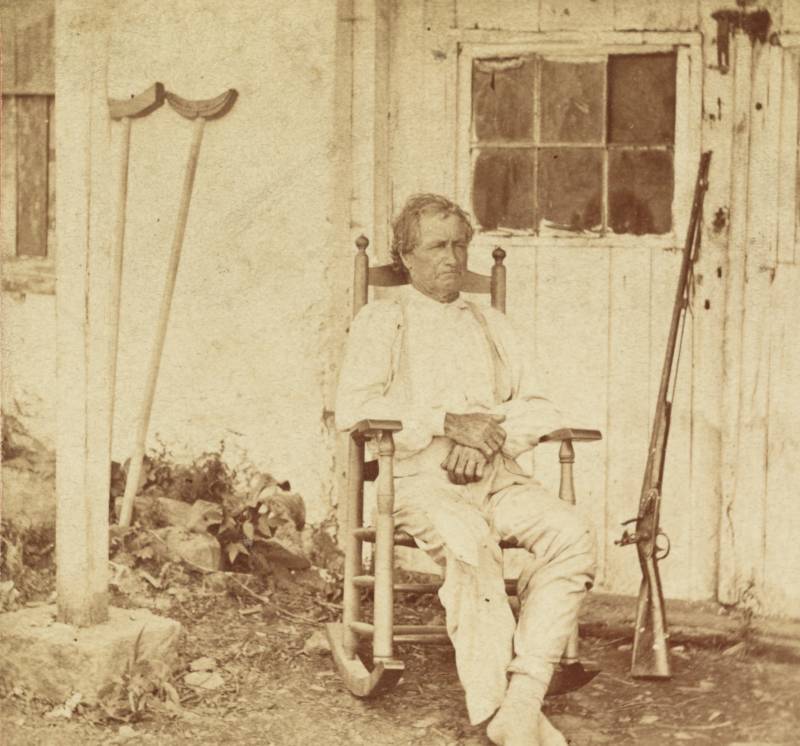
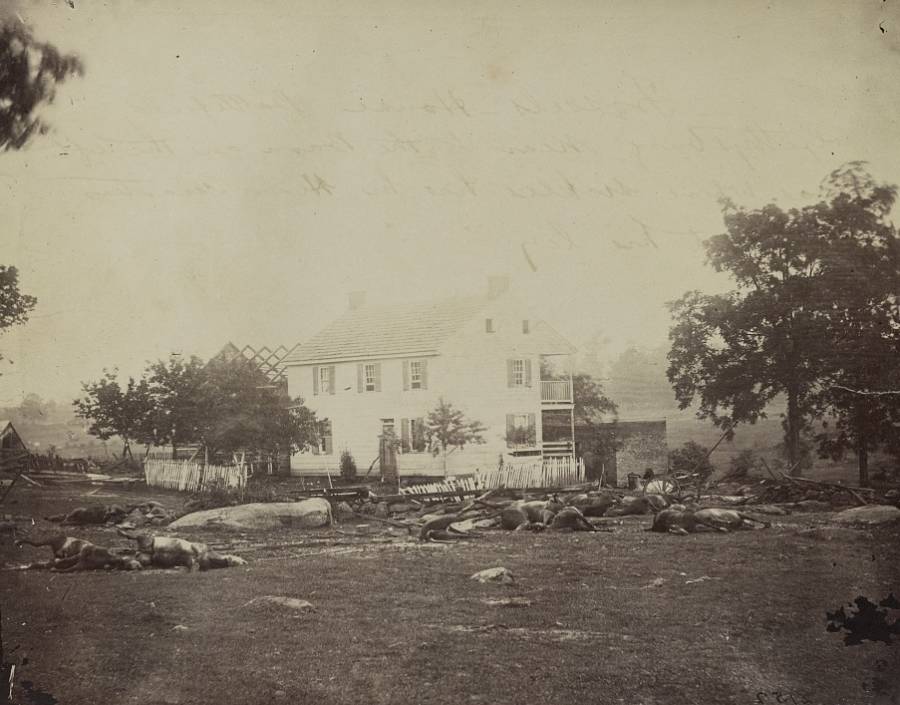
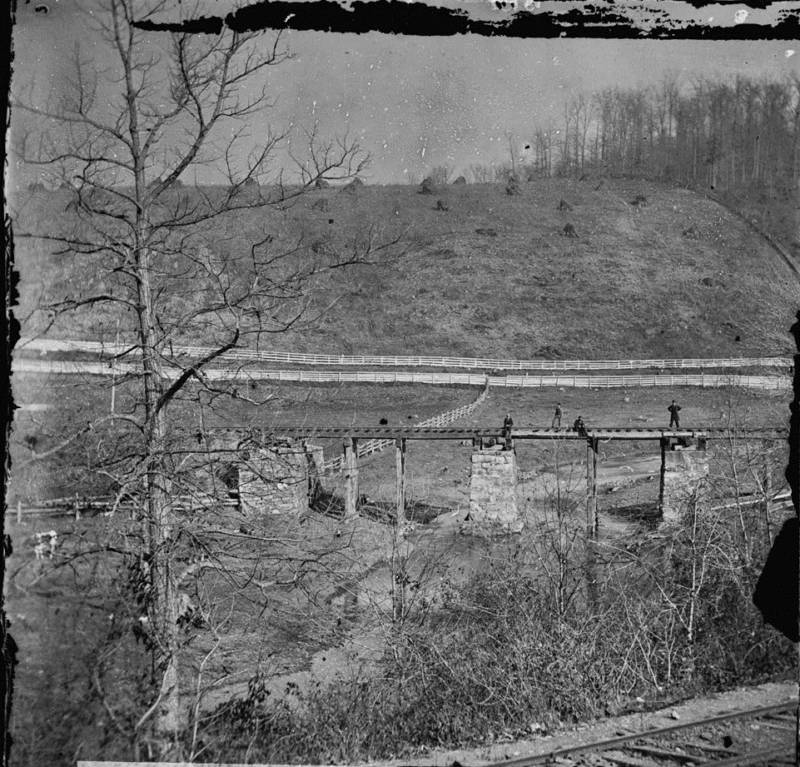
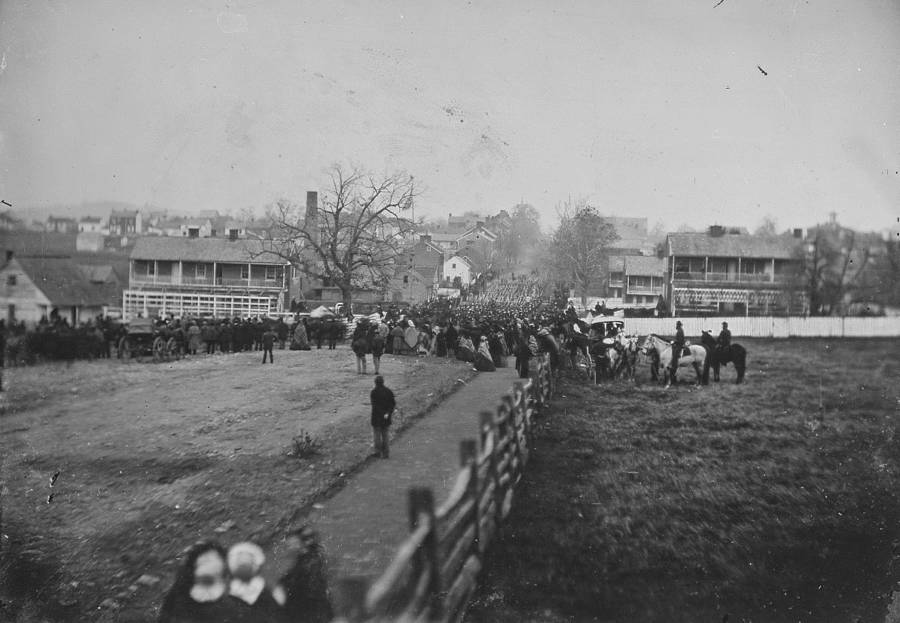
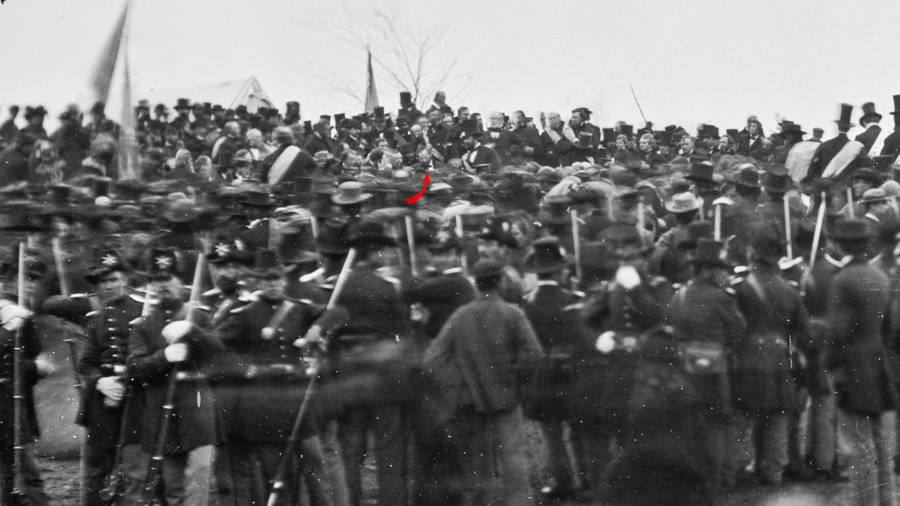
The bodies of several Union soldiers lie on the battlefield. This photo is known as “Harvest of Death.” All in all, the battle ended with some 50,000 casualties, making it the bloodiest in U.S. history.Three Confederate prisoners during the Battle of Gettysburg. About 8,000 Confederate prisoners were taken at the end of the battle.The Battle of Gettysburg headquarters of the U.S. Sanitary Commission, a private group that aided sick and wounded Union soldiers during the Civil War.The body of a sharpshooter, his rifle just out of reach, lies dead on the ground.A surgeon performs an amputation on a wounded man as others stand by to assist.A Union soldier who was torn apart by artillery lies dead on the ground.Several men stand near a battlefield hospitalConfederate bodies lie dead in the area known as the “devil’s den.” A hotspot for artillery and sharpshooters, “devil’s den” marked one of the battle’s bloodiest sites.The damaged surrounding forest in the immediate aftermath of the Battle of Gettysburg.Two Union soldiers rest behind defensive fortifications during the Battle of Gettysburg.Men examine the bodies of two dead sharpshooters.Cannons sit abandoned after the first day of Battle of Gettysburg. Cannons played a critical role in the battle, especially on the third day when Confederate forces mistakenly believed that Union cannons had been knocked out but were then devastated on their ensuing offensive.The bodies of a group of Confederate soldiers wait to be buried. Some 8,000 soldiers were killed outright on the battlefield.The headquarters of the Army of the Potomac during the Battle of Gettysburg.Confederate soldiers who were on the receiving end of a Union shelling.Gen. Robert E. Lee of the Confederacy. Lee was ultimately the senior commander of all Confederate military forces.Gen. George G. Meade of the Union. Meade was only given command of the Army of the Potomac three days before the Battle of Gettysburg and didn’t arrive at the battle until the end of the first day, after which time he was able to organize the Union’s victory over the next two days.Lt. Gen. James Longstreet of the Confederacy. Lee’s right-hand man throughout the war, Longstreet was one of the conflict’s most important commanders.Gen. George Pickett of the Confederacy. Pickett helped lead the infamous Pickett’s Charge that ended with Confederate defeat, turning the tide of the battle and the war against the South.A field is strewn with the bodies of Confederates.John L. Burns, a civilian who fought alongside the Union at the Battle of Gettysburg, poses for a photo with his musket. Burns became famous for fighting despite being 69 at the time.John L. Burns recovers from his wounds. July 1863.Dead Confederates lie in the area known as the “slaughter pen” near Little Round Top.Four soldiers lie dead in the woods near Gettysburg.People stand in front of the Battle of Gettysburg tents belonging to the U.S. Christian Commission, a group that provided supplies and services to Union troops.The bodies of several dead horses lie on the battlefield. Following the battle, some 3,000 horse carcasses were burned, reportedly causing the townsfolk to grow ill from the stench.The body of a Confederate sharpshooter is left lying where he was shot.A bridge at nearby Hanover Junction that was burned by the Confederates prior to the Battle of Gettysburg.The bodies of Confederate dead are gathered for burial.Union entrenchments on Little Round Top, a hill near the southern end of where the Battle of Gettysburg was fought.Several bodies lined up for burial.Crowds gather for the dedication of the Soldiers’ National Cemetery (when Abraham Lincoln delivered the Gettysburg Address) in Gettysburg on Nov. 19, 1863.Abraham Lincoln (identified by red arrow) stands among the crowd before delivering the Gettysburg Address.
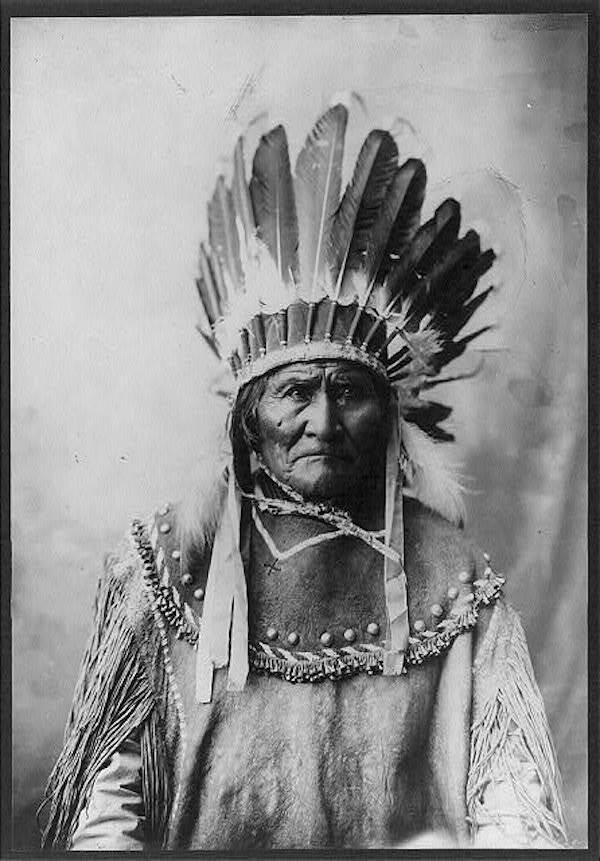
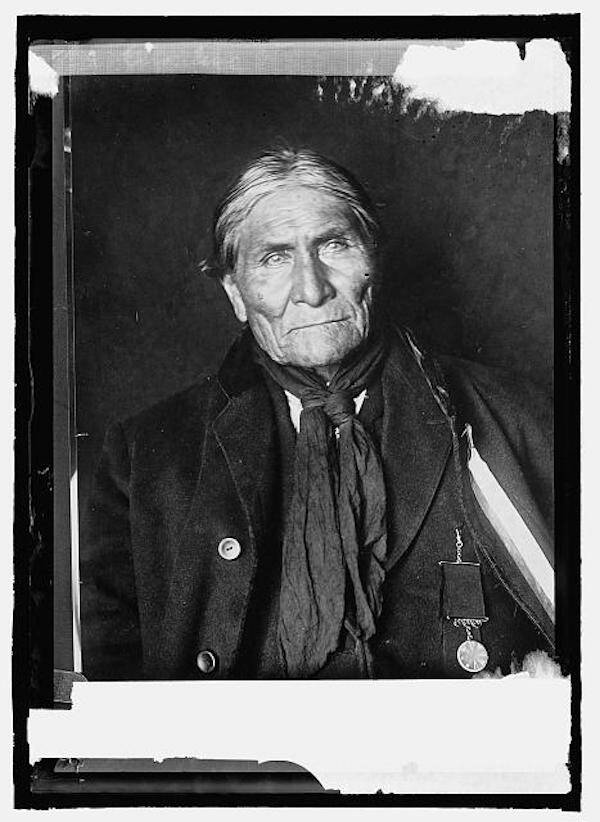
Fending off both the U.S. and Mexican armies on the American frontier, Geronimo led the Bedonkohe band of the Apache Native Americans before being captured and turned into a sideshow.
“Although I am old, I like to work and help my people as much as I am able.” Geronimo, the legendary Apache warrior, wrote these words after 75 years of doing just that: helping his people.
Geronimo hated the Mexicans, who massacred his family, and was constantly hunted by the Americans, who wanted him dead. Beset on both sides, the warrior and medicine man led the Apaches through a brutal transition from free-roaming southwestern tribespeople to prisoners of war.
Threatened by a takeover from one of the world’s leading powers, Geronimo helped stave off a complete surrender for years — until he couldn’t anymore.
This is a story of one man’s life that turned into a fight for freedom and dignity.
Who Was Geronimo The Apache?
Geronimo — whose given name was Goyaalé or Goyathlay, meaning “the one who yawns” — was born in No-Doyohn Canyon in June 1829. The canyon was then part of Mexico but is now near where Arizona and New Mexico meet.
Geronimo publicly said he no longer considered himself a Native American, and that white people were his brothers and sisters. How genuine this was remains unclear.
Before the Bedonkohe leader led the Apaches to defend their homeland against the encroaching United States, Geronimo was a mere child born into the harsh realities of the 19th century. The fourth of eight children, he helped his parents work their two acres of land, planting beans, corn, melons, and pumpkins.
Since the man himself has transcended the confinements of fact, his origin story bends toward myth. According to legend, after he hunted and killed his first animal, he swallowed its heart raw for good luck.
But his good fortune was spotty. His father died early on, and Geronimo’s mother chose to remain unmarried and live with her son.
In 1846, when he was 17, Geronimo became a warrior. “This would be glorious,” he later wrote in his autobiography. “I hoped soon to serve my people in battle. I had long desired to fight with our warriors.”
Another plus was that he was now able to marry Alope, his longtime lover. Immediately after he was granted warrior privileges, Geronimo went to Alope’s father and asked if she could be his wife. Her father granted the marriage, as long as Geronimo gave him “many” ponies.
Geronimo “made no reply, but in a few days appeared before his wigwam with the herd of ponies and took with me Alope. This was all the marriage ceremony necessary in our tribe.” They went on to have three children.
Geronimo was a naturally gifted hunter. It is said that he ate the heart of his first kill in a symbolic gesture to protect himself from those who might hunt him.
But threats to their survival constantly loomed.
The Bedonkohe, which were part of the Chiricahua band of the Apache, could rely on nobody but themselves, and frequently raided nearby indigenous and Mexican villages. The government, of course, was not amused by this group of marauders disturbing the peace; in the mid-1840s, the government of Chihuahua, Mexico put out an official bounty on Apache scalps. If you captured and killed an Apache warrior, you’d get $200 — equivalent to several thousands of today’s dollars.
Geronimo: Love, Loss, And Tragedy
In the summer of 1858, Geronimo changed. The mild-mannered, peaceful man turned into a warrior hellbent on revenge.
It all happened when his tribe journeyed to a Mexican town called Kaskiyeh. While the men would go into town during the day to trade with the locals, the women and children would stay at the camp while a few men stood guard.
But one day when the traders returned, everyone — including Geronimo’s wife, mother, and children — had been brutally murdered. Villagers told them that Mexican troops from a nearby town had done the killing.
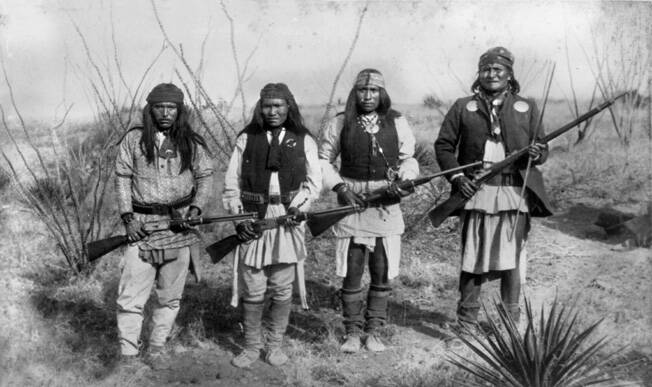
From left to right: Geronimo, Yanozha (his brother-in-law), Chappo (his son by his second wife), and Fun (Yanozha’s half brother). 1886.
Seeing his entire family slain in cold blood left Geronimo with a hatred of Mexicans that he never overcame.
“I was never again contented in our quiet home,” he wrote. “I had vowed vengeance upon the Mexican troopers who had wronged me, and whenever I…saw anything to remind me of former happy days my heart would ache for revenge upon Mexico.”
The death of his family and subsequent lust for retribution set Geronimo on a path of battle and bloodshed. And a visit by a disembodied voice fueled his fire.
Geronimo, The Fearless Warrior
The Apache leader was in deep mourning when he heard a voice assuaging his concerns about the dangers of retribution. By his own account, he was comforted and told the enemy’s weapons wouldn’t touch him — that he’d be safe, should he seek out revenge.
“No gun can ever kill you,” the voice told him. “I will take the bullets from the guns of the Mexicans, so they will have nothing but powder. And I will guide your arrows.”
Geronimo vowed to seek revenge on Mexicans after a group of soldiers killed his wife, mother, and children during a raid.
And sure enough, the Apache found himself virtually unharmed in his next skirmish with Mexican soldiers.
Accounts of him in battle lauded his bravery and fierce fighting style. He didn’t know how to fire a gun, and so he ran toward his enemy in a zig-zag pattern, avoiding their bullets, until he got close enough to stab them with his knife.
He frightened his Mexican enemies so much that they began yelling “Geronimo.” Some believe they were screaming the Spanish word for Jerome — and that they were pleading for help from St. Jerome to escape Geronimo’s fury.
The monicker stuck — as did the man’s renewed passion for warring without abandon. This combination of anger, fearlessness, and skill made Geronimo one of the most esteemed fighters of the Apache — one the Americans would soon come to know as well.
Apache War Against Mexican And American Troops The California Gold Rush brought an intense influx of Americans to the west. From the late 1840s to the 1860s, hundreds of thousands migrated to California and neighboring regions to try their luck mining gold, silver, and copper. Many settled in New Mexico — on Apache lands.
When war with the native population got out of hand, the U.S. Army imposed laws to protect the newly arrived. The federal government declared that all Native Americans living in Arizona and southwest New Mexico must be relocated to Arizona’s San Carlos Reservation in the 1870s. The reservation, known as “Hell’s 40 Acres,” was arid and treeless. It was an Apache prison.
Geronimo was a free man, even when the American government told him he was barely the latter. He didn’t follow their orders, nor did he respect their imposition on his autonomy. And so he and Juh, another Apache leader, took two-thirds of the Chiricahua with them to the Ojo Caliente Reservation in New Mexico instead of marching into San Carlos as instructed.
But again, Geronimo’s luck soon ran out. His Apache scouts betrayed him, telling him that a visit by John Clum, an American agent at San Carlos, was a mere peace meeting. Instead, Clum captured Geronimo and his people and took them to San Carlos, where they were put in shackles. Clum hoped the U.S. government would put them to death.
In a nearly unbearably dark parallel to Columbus’ conquest of America, many prisoners in San Carlos were exposed to diseases like smallpox. While they were certainly fed, inmates subsisted on starvation rations. Conditions were so bleak that it didn’t take long for Geronimo to orchestrate an escape.
In 1878, he and his friends fled into the mountains.
Brief Liberty And Imprisonment
Outraged at the wit and gall of Geronimo and his escape, U.S. Brig. Gen. Nelson A. Miles grabbed 5,000 soldiers — a quarter of the Army — and hunted the escapee and his 17 Apache brethren through the Rocky and Sierra Madre Mountains.
When inevitable surrender (or death) loomed, Geronimo displayed a sense of character that has long since defined his memory. After being chased for hundreds of miles, the military caught up with the Apache band, and Geronimo offered to turn himself in — if they allowed his men to stay together.
“I will quit the warpath and live at peace hereafter,” he said.
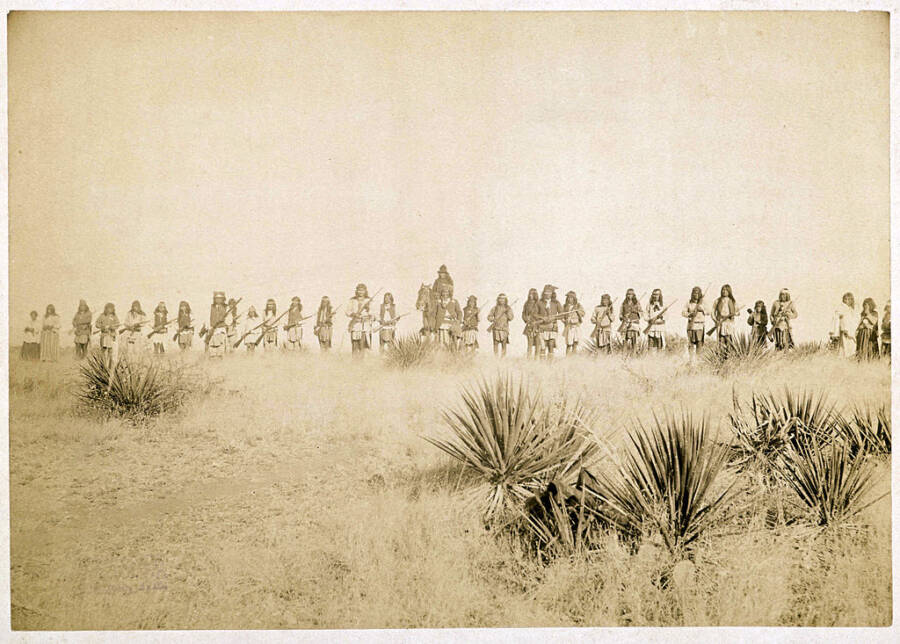
The last photograph of Geronimo and his Apache as free men. C.S. Fly took this photo right before they surrendered to Gen. Crook in the Sierra Madre Mountains. March 27, 1886.
He kept his word, as the rest of his life was comprised of non-violent captivity which produced no further bloodshed on his part — just shameless exploitation. Before that, unfortunately, more loss and tragedy had to befall his loved ones.
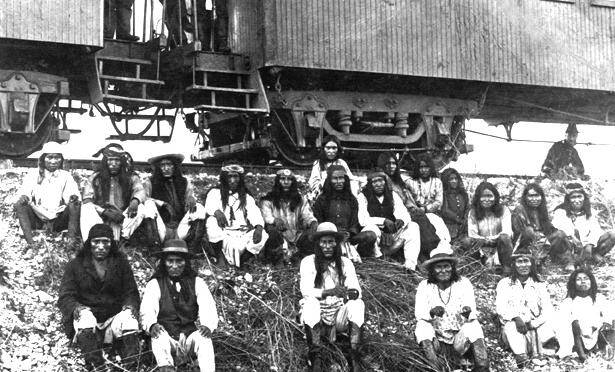
Twenty-seven Apaches were stuffed into train cars on Sept. 8, 1886, and taken to Pensacola, Florida. Geronimo was condemned to saw logs. Many of them died of tuberculosis on the way. The next year, the malnourished captives were transported to the Mount Vernon Barracks in Alabama.
It was here that Geronimo — unhealthy, underfed, spiritually challenged — made the inconceivably difficult decision of letting his new, pregnant wife Ih-tedda and their daughter Lenna leave for New Mexico. In Apache culture, this was the equivalent of getting a divorce. It was the last time he ever saw them.
In 1894, Geronimo and 341 other Chiricahua prisoners of war were transported to an American military base in Fort Sill, Oklahoma. He was eager to move; he envisioned his people would all have a “farm, cattle, and cool water” at their disposal there.
“I do not consider that I am an Indian anymore,” he told the American soldiers. “I am a white man and [would] like to go around and see different places. I consider that all white men are my brothers and that all white women are my sisters — that is what I want to say.”
But the government wouldn’t let them assimilate. Instead, the Apache remained political prisoners. The government gave them each cattle, hogs, chickens, and turkeys, but they didn’t know what to do with the hogs, so they didn’t keep them. When they sold their cattle and crops, the government would keep some of the money they earned and put it into an “Apache Fund,” from which the Apaches apparently didn’t reap any benefits.
“If there is an Apache Fund,” Geronimo wrote, “it should some day be turned over to the Indians, or at least they should have an account of it, for it is their earnings.”
Geronimo (third from the right) and his Apache, during a stop on the Southern Pacific Railway near Nueces River, Texas. 1886.
Journalists visited the permanently detained Apache, and, fascinated by his legend, frequently asked if they could see the blanket he had made from 100 scalps of his victims. He disappointed all of those who inquired, as that story was merely propaganda to skew the public discourse against Native Americans. All he wanted, and asked for, was to let his Apache brothers and sisters return to the Southwest.
“We are vanishing from the earth,” he said. “The Apaches and their homes each [were] created for the other by Usen [the Apache life-giver] himself. When they are taken away from these homes they sicken and die. How long will it be until it is said, there are no Apaches?”
American Exploitation Of The New World’s Indigenous People
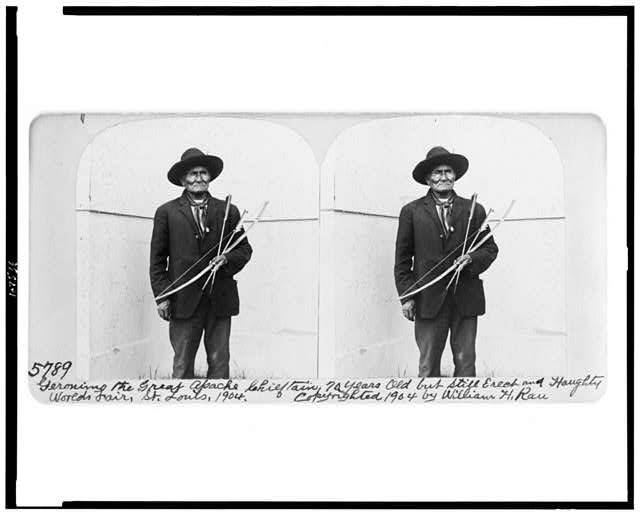
Geronimo quickly became a celebrity of the Apache Wars, as Anglo-Americans saw Natives like him as nothing more than a savage or a shackled ape — something to make money off of. His involuntary career as an item on display began in 1898 when he made an appearance at the Trans-Mississippi and International Exhibition in Omaha, Nebraska. In 1904, he appeared at the World’s Fair in St. Louis, Missouri.
He apparently had no qualms about securing a portion of that lucrative celebrity pie for himself — even if the fairs advertised him as “The Worst Indian That Ever Lived.” It was, after all, him that people were paying to see.
“I sold my photographs for twenty-five cents, and was allowed to keep ten cents of this for myself,” he wrote. “I also wrote my name for ten, fifteen, or twenty-five cents, as the case might be, and kept all of that money. I often made as much as two dollars a day, and when I returned I had plenty of money — more than I had ever owned before.”
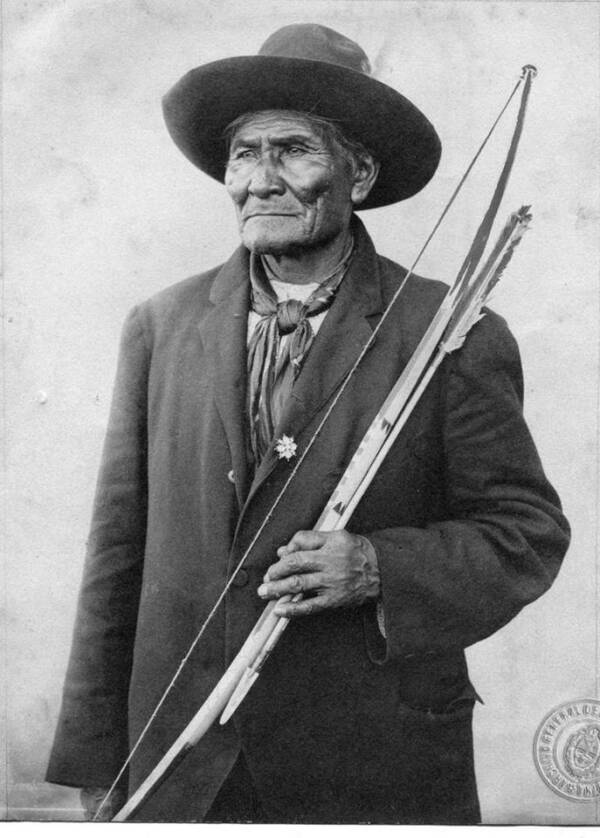
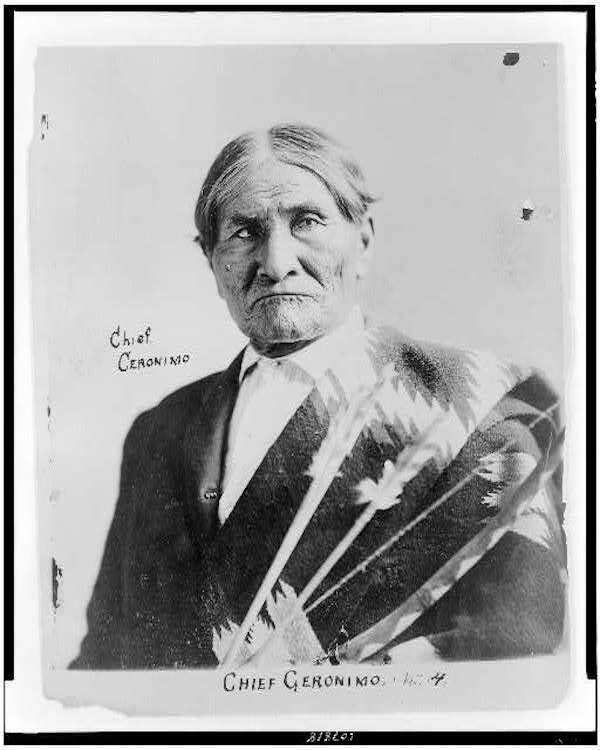
Geronimo made money by selling signed photographs like this. But despite what the photo says, he was never a chief.
Regardless of Geronimo’s new disposition — or perhaps, partly because of it — his business savvy was appreciated even after he died. Bruce Shakelford, who appraised Geronimo’s belongings when he passed, was stunned at Geronimo’s foresight in terms of branding and customer appeal.
“I’ve seen his signature on little drums, on signed cabinet card photographs of himself,” he said. “I mean, this guy was early marketing personified. This guy was a celebrity. And he was the main celebrity. He had killed white folks and staked them over ant beds. He was a bad guy….He sold artifacts, and they didn’t necessarily have anything to do with the Apache. People would bring him things he could sell, and they knew they could get more money for it with his signature, so they made a deal.”
The Last Days Of Geronimo Geronimo hoped to convince President Theodore Roosevelt to let him and the Apaches return home to the Southwest. He had even converted to the Dutch Reformed Church — Roosevelt’s church — in 1903 to get on his good side. And though he did attend the president’s second inauguration in 1905, and met with the president afterwards, he was denied the request.
Through an interpreter, Roosevelt told Geronimo that he had a “bad heart.” “You killed many of my people; you burned villages,” he said. “[You] were not good Indians.”
Geronimo pleaded with President Roosevelt to let the remaining Apache return home to the southwest. His request was denied.
Still, Geronimo dedicated his autobiography to Roosevelt, hoping he’d read it and come to understand the Apache side of the decades-long conflict.
“I want to go back to my old home before I die,” Geronimo told a reporter in 1908. “Tired of fight and want to rest. Want to go back to the mountains again. I asked the Great White Father [President Roosevelt] to allow me to go back, but he said no.”
By this point, Geronimo had yet another wife (the Apache were polygamous), Zi-yeh. Dissuaded by Roosevelt’s rejection of returning home, Geronimo spent the time gambling, partaking in shooting contests, and betting on horse races. Zi-yeh did of tuberculosis, leading Geronimo to take care of the household.
He washed dishes and swept the floor, cleaned the house and took care of his extended family. Geronimo was reportedly so visibly devoted to his daughter Eva, who was born in 1889, that one visitor remarked, “Nobody could be kinder to a child than he was to her.”
Geronimo died after drunkenly falling off his horse into a creek and developing pneumonia. He had just finished selling signed bows and arrows the day before.
It was around 1908 that Geronimo’s age began to notably affect his day to day life. He grew weaker and his mind began to wander. He started forgetting things. His road to to the great beyond began on Feb. 11, 1909, when he sold some bows and arrows in Lawton, Oklahoma.
Geronimo spent his earnings on whiskey. That night, he rode drunk and accidentally fell off his horse and landed in a creek. Only the following morning was he discovered. He was alive and well, except for the pneumonia that had already begun to set in.
His final wishes were that his children be sent to Fort Sill so they could be beside him when he transitioned. It’s unclear who exactly got these directions wrong, but that request was sent via letter, rather than a telegram. Geronimo died on Feb. 17, 1909, before his kids arrived. He was 79 years old.
What remains of the Apache warrior these days is an inspiring albeit tragic story of a man who stood up for himself. Geronimo protected his community whenever he could, and did everything for his family. Despite his best efforts, he was robbed of those he loved, and treated like an animal once everything was lost.
Yet he stood tall and used his position in America’s racist capitalistic game to put some money in his pocket — all the while firmly ingraining himself as a legend in American history. Even now, people visit his gravestone, adorned with a soaring eagle, and imagine the courage it must have taken to defy this new American empire as it was roaring into power.
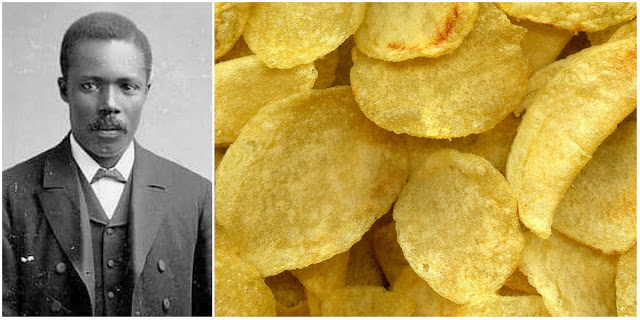
Every time a person crunches into a potato chip, he or she is enjoying the delicious taste of one of the world’s most famous snacks – a treat that might not exist without the contribution of black inventor George Crum.
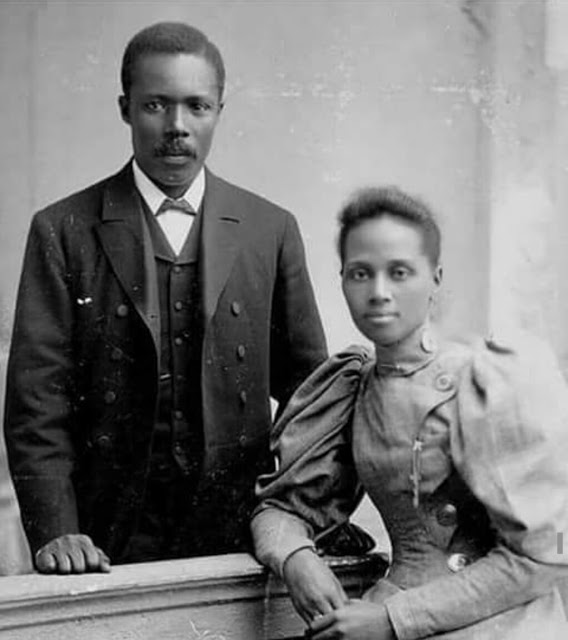
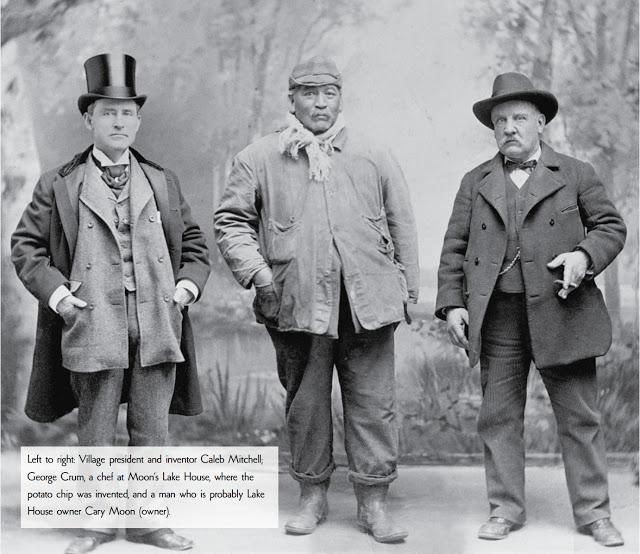
George Speck, also called George Crum was born on July 15, 1824 in Saratoga County in upstate New York. The son of an African-American father and a Native American mother, Crum was working as the chef in the summer of 1853 when he incidentally invented the chip.
In the summer of 1853, George Crum was employed as a chef at an elegant resort in Saratoga Springs, New York. On Moon Lake Lodge’s restaurant menu were French-fried potatoes, prepared by Crum in the standard, thick-cut French style that was popularized in 1700s France and enjoyed by Thomas Jefferson as ambassador to that country. Ever since Jefferson brought the recipe to America and served French fries to guests at Monticello, the dish was popular and serious dinner fare.
At Moon Lake Lodge, one dinner guest found chef Crum’s French fries too thick for his liking and rejected the order. Crum cut and fried a thinner batch, but these, too, met with disapproval. Exasperated, Crum decided to rile the guest by producing French fries too thin and crisp to skewer with a fork. The plan backfired. The guest was ecstatic over the browned, paper-thin potatoes, and other diners requested Crum’s potato chips, which began to appear on the menu as Saratoga Chips, a house specialty.
Portrait of a George Crum with his wife
In 1860 George opened his own restaurant in a building on Malta Avenue near Saratoga Lake, and within a few years was catering to wealthy clients including William Vanderbilt, Cornelius Vanderbilt, Jay Gould, and Henry Hilton. His restaurant closed around 1890 and he died in 1914 at the age of 92.
The idea of making them as a food item for sale in grocery stores came to many people at around the same time, but perhaps the first was William Tappendon of Cleveland, OH, in 1895. He began making chips in his kitchen and delivering to neighborhood stores but later converted a barn in the rear of his house into “one of the first potato chip factories” in the country.
At that time, potatoes were tediously peeled and sliced by hand. It was the invention of the mechanical potato peeler in the 1920s that paved the way for potato chips to soar from a small specialty item to a top-selling snack food. For several decades after their creation, potato chips were largely a Northern dinner dish.
George and his wife Kate.
In 1921, Bill and Sallie Utz started the Hanover Home Brand Potato Chips in Hanover, Pennsylvania. Salie Utz used her knowledge of good Pennsylvania Dutch cooking to make the chips in a small summer house behind their home. The hand-operated equipment Salie used made about fifty pounds of potato chips per hour. While Salie stayed home making chips, Bill delivered them to “mom and pop” grocery stores and farmer’s markets in the Hanover, PA and Baltimore, MD area.
Out in Monterey Park, California the Scudders company started making potato chips in 1926. Laura Scudder is credited with developing the wax paper bag for potato chips which made a wider distribution possible because of its preserving properties. Prior to this bag potato chips were dispensed in bulk from barrels or glass display cases.
In 1932, Herman Lay founded Lay’s in Nashville, Tenn., which distributed potato chips from a factory in Atlanta, Ga. Herman Lay, a traveling salesman in the South, helped popularize the food from Atlanta to Tennessee. Lay peddled potato chips to Southern grocers out of the trunk of his car, building a business and a name that would become synonymous with the thin, salty snack. Lay’s potato chips became the first successfully marketed national brand.
The industry that George Crum launched in 1853 continues to grow and prosper. Potato chips have become America’s favorite snack. U.S. retail sales of potato chip are over $6 billion a year. In 2003 the U.S. potato chip industry employed more than 65,000 people.
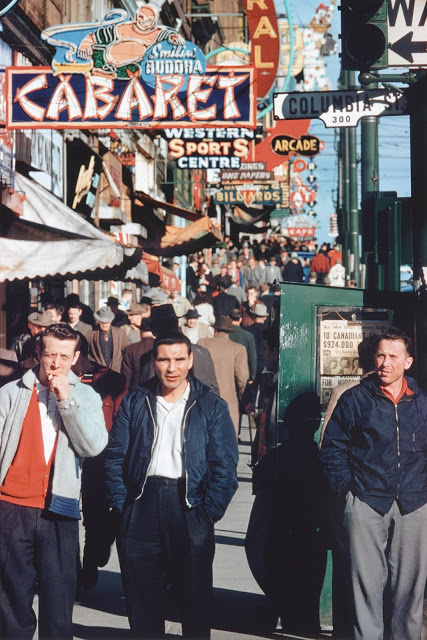
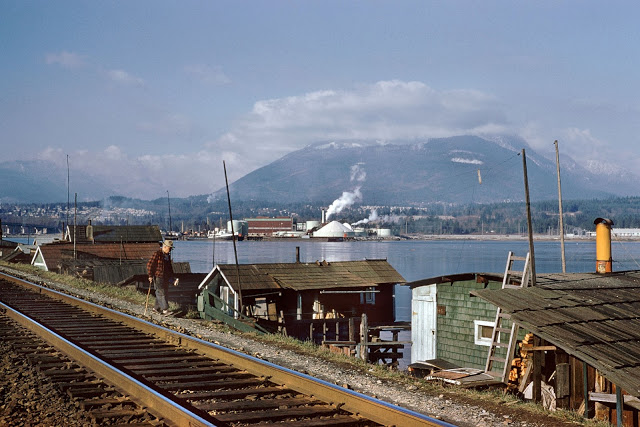
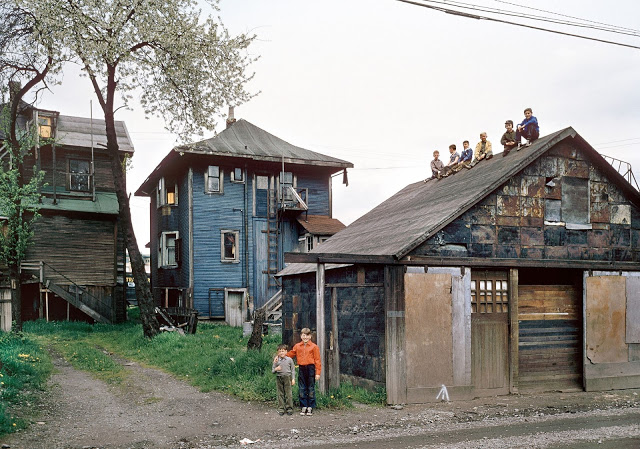
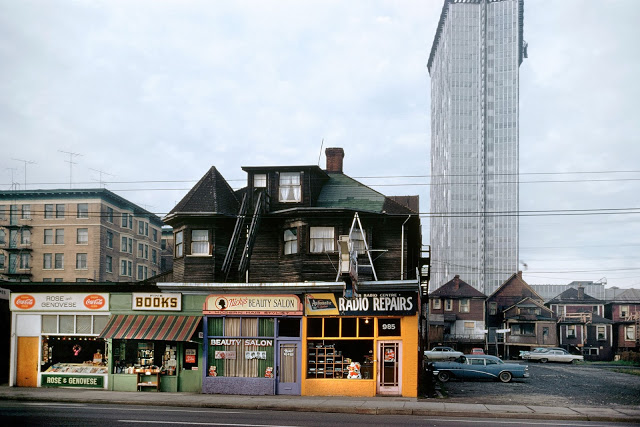
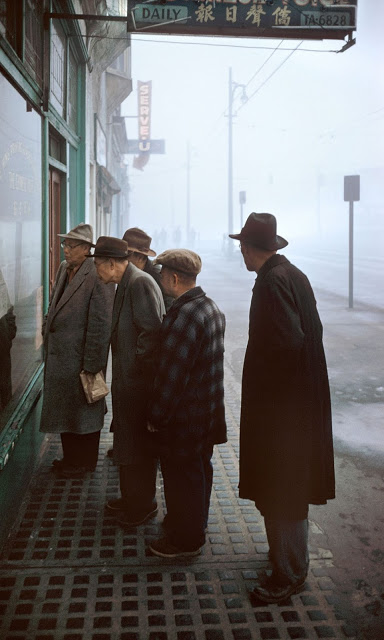
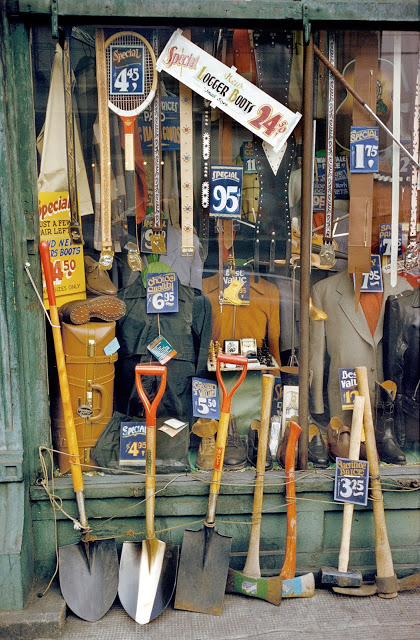
Fred Herzog (September 21, 1930 – September 9, 2019) devoted his artistic life to walking the streets of Vancouver as well as almost 40 countries with his Leica, photographing – mostly with colour slide film – his observations of the street life with all its complexities. Herzog ultimately became celebrated internationally for his pioneering street photography, his understanding of the medium combined with, as he put it, “how you see and how you think” created the right moment to take a picture.
Fred Herzog arrived in Vancouver in 1953. The young German immigrant was fascinated by all aspects of Canadian life, and set out to document it with his camera. He worked as a medical photographer by day, and on evenings and weekends he took his camera to the streets, documenting daily life.
A pioneer of color photography, Herzog largely worked with Kodachrome, a slide film that was tricky to use in a spontaneous fashion, and required expensive developing in specialist labs. He was never able to make satisfactory prints from his slides, but digital inkjets have enabled him to print and exhibit early work.
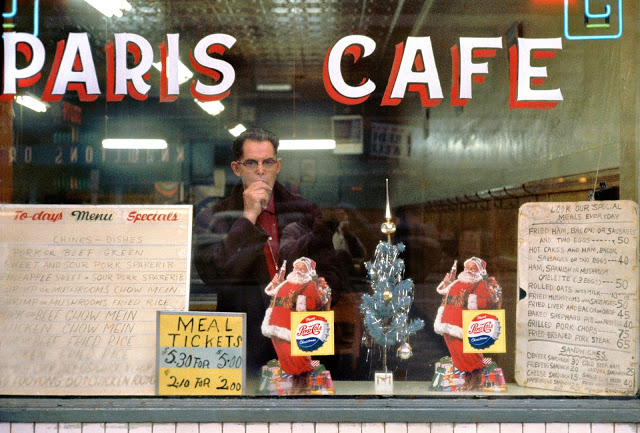
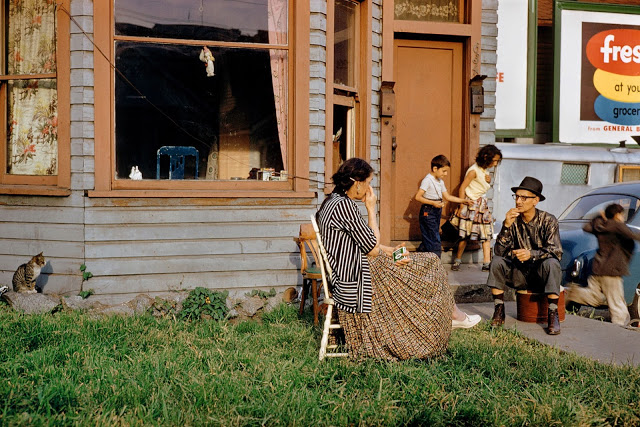
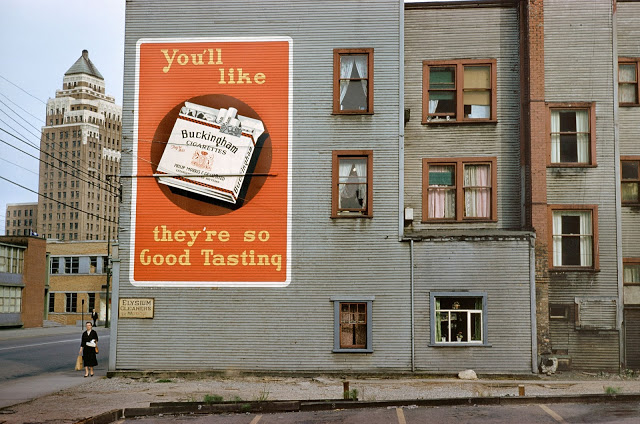
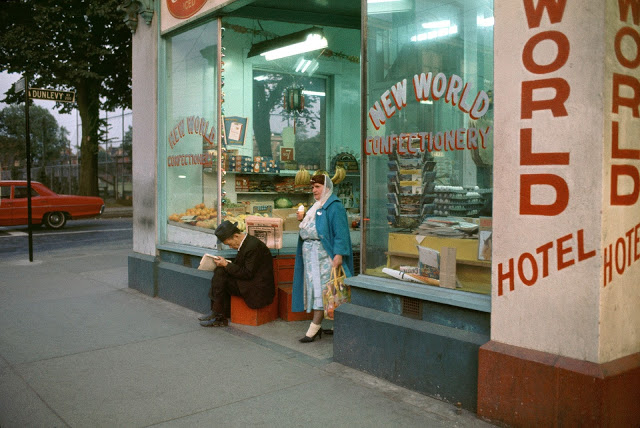
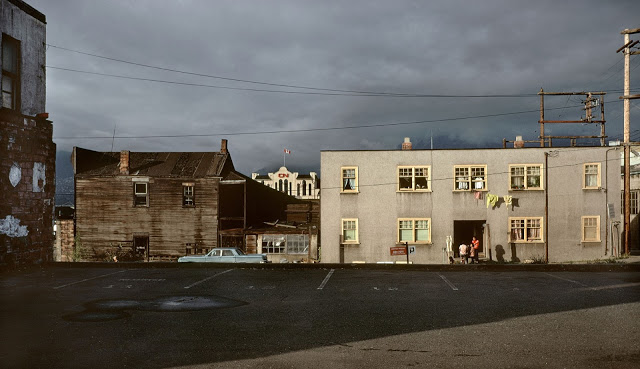
Family on Lawn, 1959Elysium Cleaners, 1958Hastings and Columbia Street, 1958Paris Cafe, 1959Squatter, Railroad Tracks, 1961Boys on Shed, 1962Howe and Nelson, 1960Newspaper Readers, 1961Second Hand Shop, Cordova, 1961New World Confectionery, 1965Rooming House, 1975
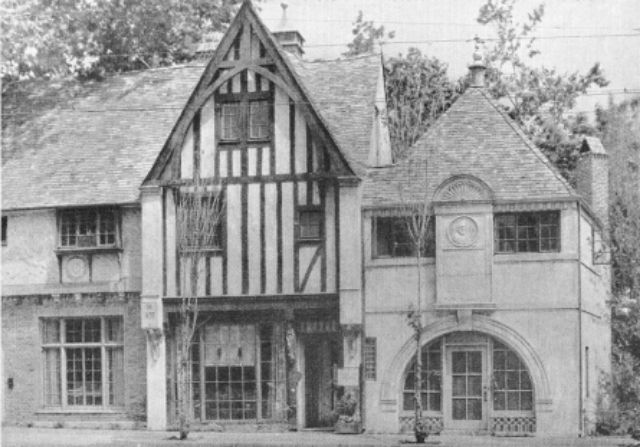
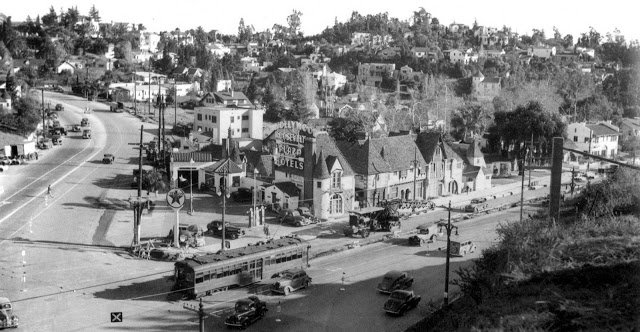
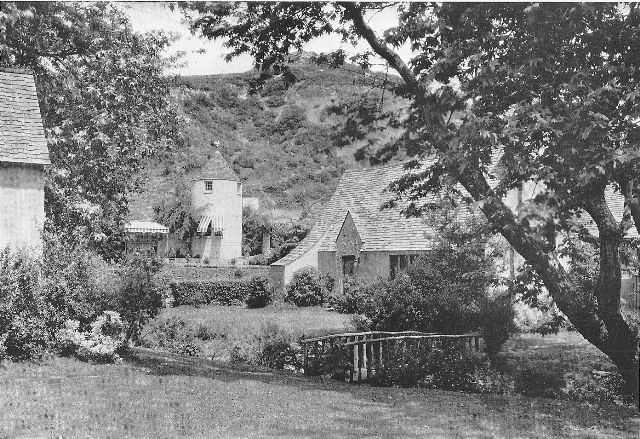
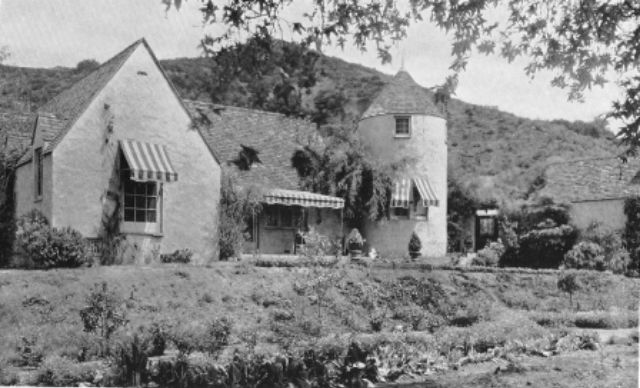
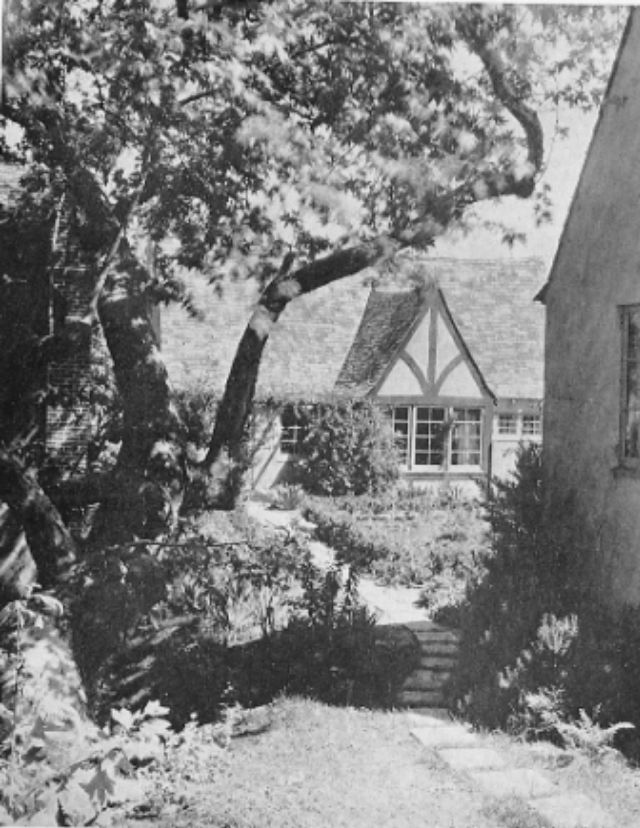
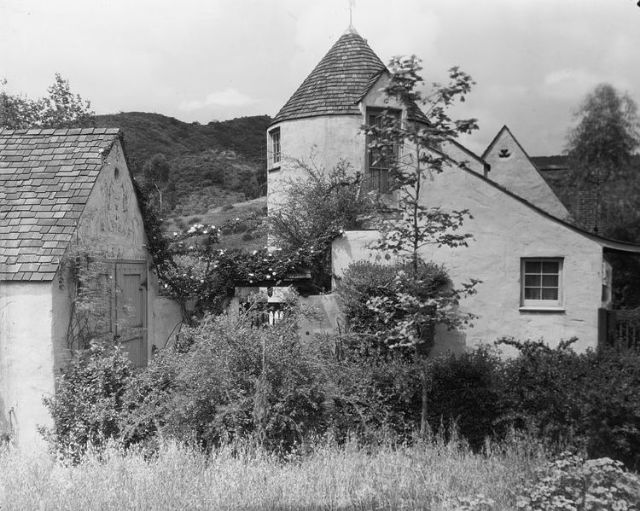
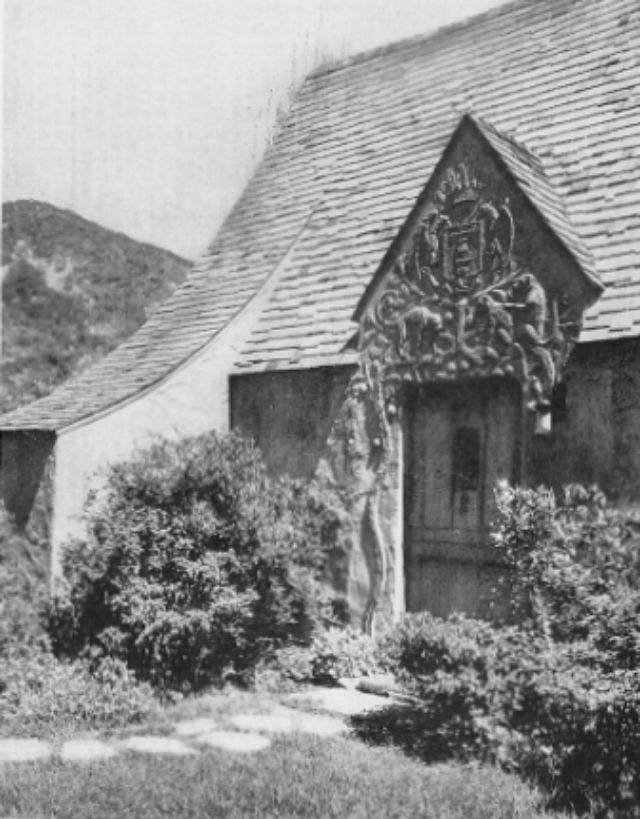
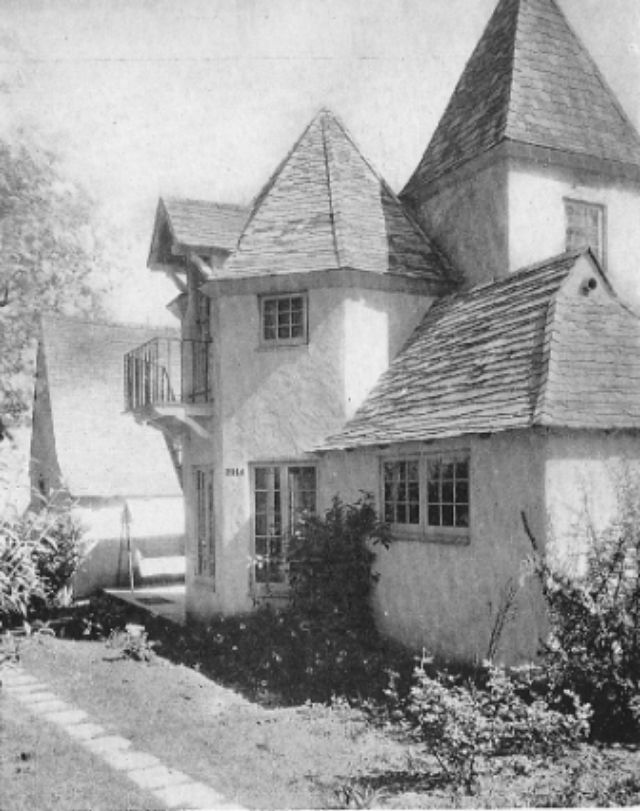
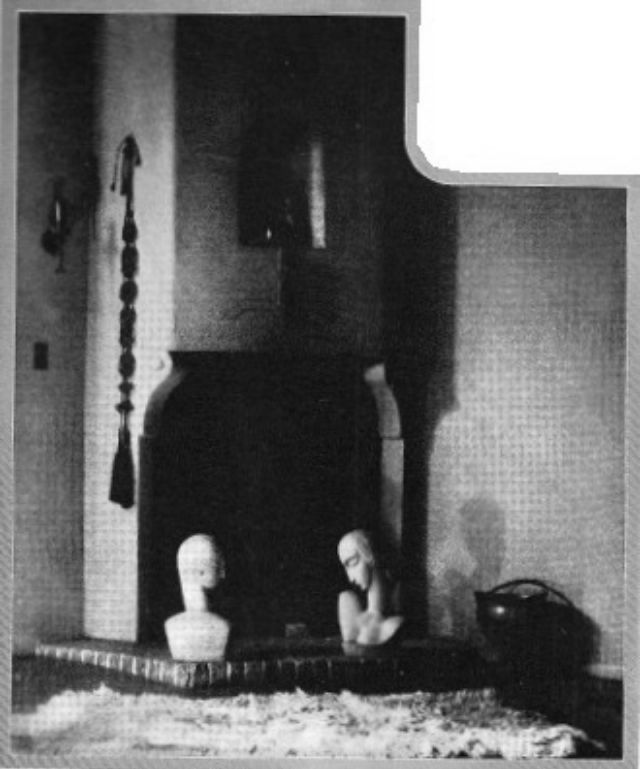
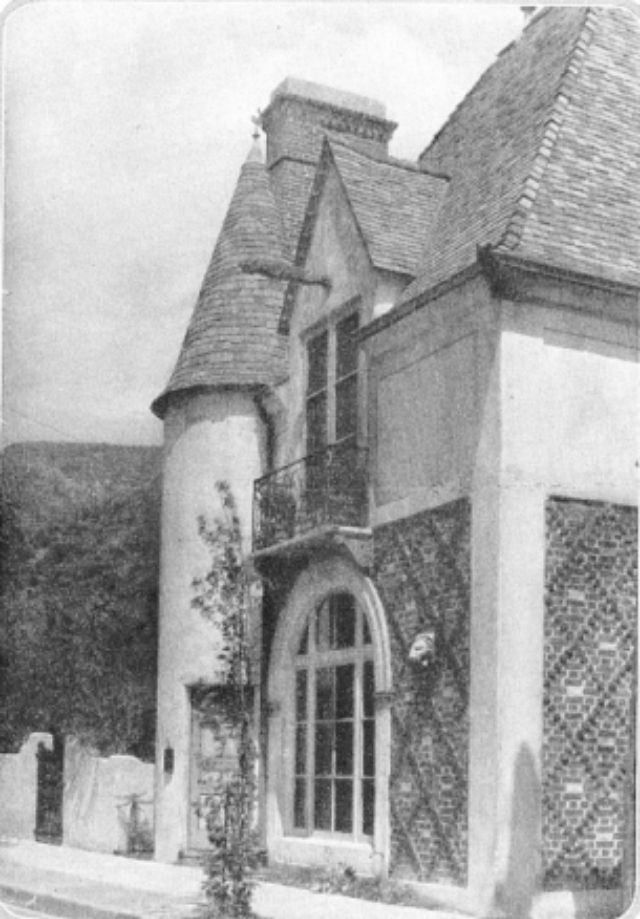
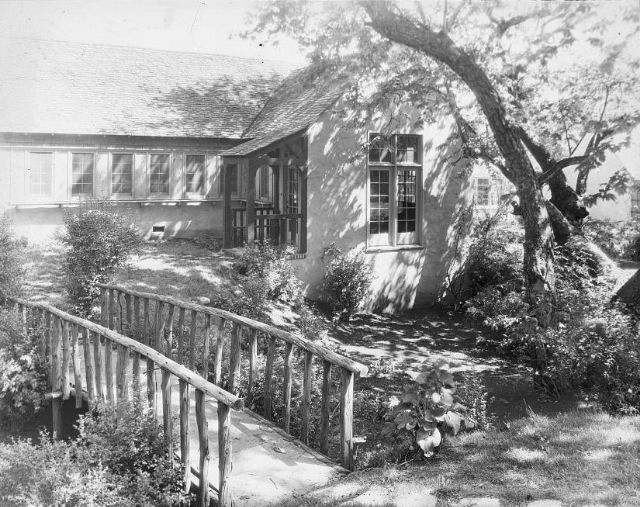
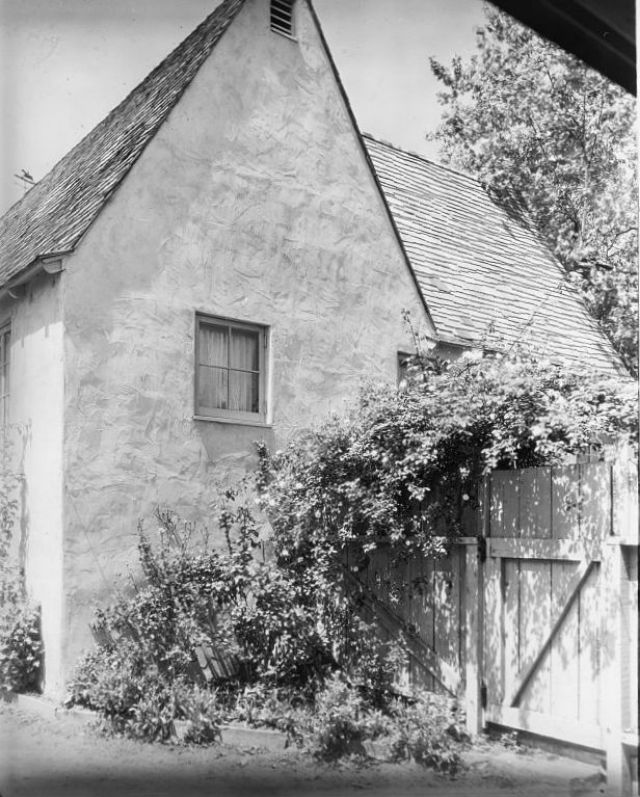
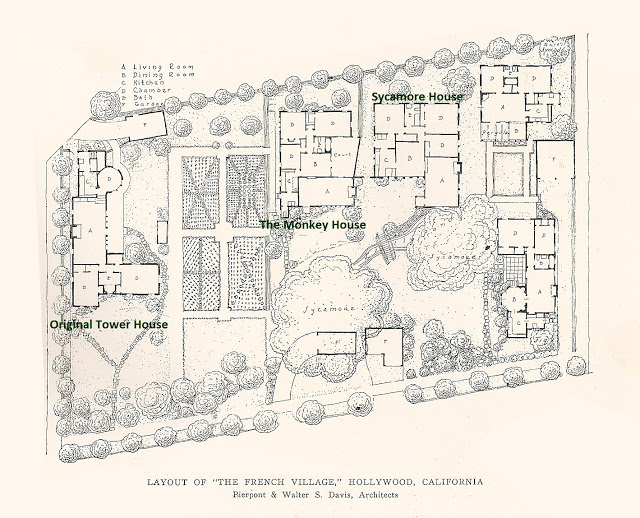
Once, long before the Hollywood Freeway obliterated everything in its concrete wake, there sat at the mouth of the Cahuenga Pass an enchanting little group of bungalows and artist’s studios known as the French Village.
The French Village was the work of the extremely talented Walter S. and F. Pierpont Davis, sibling architects who, during their all too brief partnership, designed some of Hollywood and Los Angeles’ most beautiful and romantic structures. Although their oeuvre included homes, commercial properties and even churches, the Davis brothers’ are perhaps best admired for a set of deluxe apartment courts they designed in the 1920s, most notably the Roman Gardens at 2000 North Highland Avenue (1926) and the Court of the Fountains (today known as Villa D’Este) at 1355 North Laurel Avenue in West Hollywood (1928).
Completed in 1920, the French Village was immediately hailed for its charm and uniqueness with the Brothers and Withey receiving a citation of achievement from the local chapter of the AIA. Unlike most earlier bungalow courts, the French Village was intended for the transitory well-to-do and its construction helped to usher in a vogue for ever more elaborate apartment courts in Hollywood that would last the remainder of the decade with the Davis brothers and Arthur & Nina Zwebell as their master designers.
Throughout the 1920s, 30s, and 40s, the French Village was home to a revolving community of actors, writers, costume designers, dance instructors and singing coaches. Wallace Beery lived there for a while, as did costume designer. Gilbert Adrian (known to us simply as “Adrian”). In the 1940s, Irene Lentz (known to us as simply “Irene”) had a salon there. Unfortunately, that all came to an end with the construction of the Hollywood Freeway in the 1950s which is a huge shame, because it was a delightful enclave filled with the sort of charm we rarely see in Los Angeles these days.
This little nestle of buildings was known as the French Village. It was set on a triangular plot of land at the point where Highland Avenue and Cahuenga Boulevard converged as they entered the Cahuenga Pass.South of France? No, Cahuenga and Highland!Original Tower House (1920-25)The surrounding gardens, which were later described as “the core of the little community,” were arranged with as much care as the cottages themselves.Tower HouseMinnie Muchmore’s Monkey HouseAs enchanting as the French Village was, its location sealed its doom from virtually the very outset.House of Jonah & the Whale, House of the Virgin Mary and the Henry IV studio.Gilbert Adrian’s Tower House studioFrench PavilionBridge to entranceGateThe French Village as completed 1920
Edsel was a brand of automobile that was marketed by the Ford Motor Company from the 1958 to the 1960 model years. Deriving its name from Edsel Ford, son of company founder Henry Ford, Edsels were developed in an effort to give Ford a fourth brand to gain additional market share from Chrysler and General Motors. Established as an expansion of the Lincoln-Mercury Division to three brands (re-christened the Mercury-Edsel-Lincoln Division), Edsel shared a price range with Mercury; the division shared its bodies with both Mercury and Ford.
Ford dubbed Sept. 4, 1957, the day the Edsel debuted, as “E-Day” and spent the year leading up to it pushing a teaser campaign for the new brand and the new car. At launch, Ford made 18 different versions of the Edsel available — an unheard-of move at a time when most car companies offered just a few models. Competing against Buick, Oldsmobile, Pontiac, Dodge, and DeSoto, Edsel was the first new brand introduced by an American automaker since the 1939 launch of Mercury. In the year leading to its release, Ford invested in an advertising campaign, marketing Edsels as the cars of the future. While 1958 Edsels would introduce multiple advanced features for its price segment, the launch of the model line would become symbolic of commercial failure.[1] Introduced in a recession that catastrophically affected sales of medium-priced cars, Edsels were considered overhyped, unattractive (distinguished by a vertical grille), and low quality.
Following a loss of over $250 million ($2.19 billion in 2020 dollars [2]) on development, manufacturing, and marketing on the model line, Ford quietly discontinued the Edsel brand before 1960.[3]
Here’s the vintage automobile advertisement for the 1958 Edsel models.
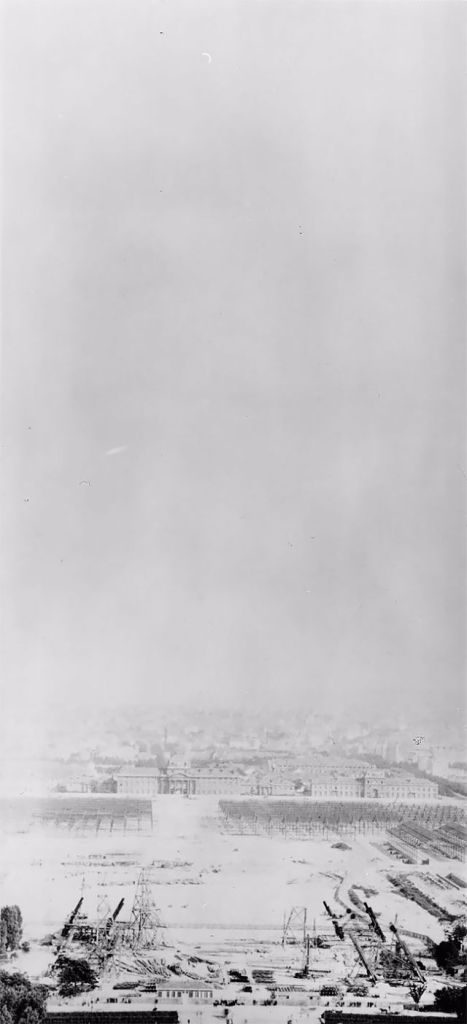
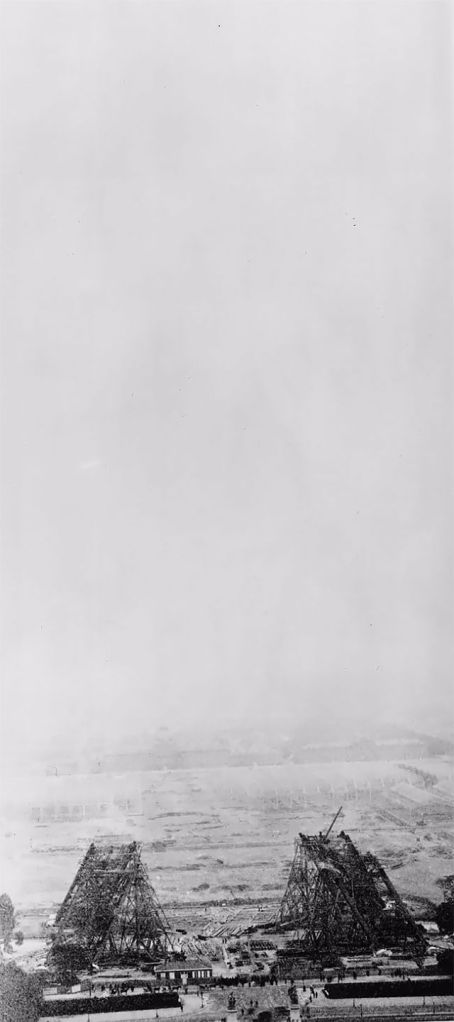
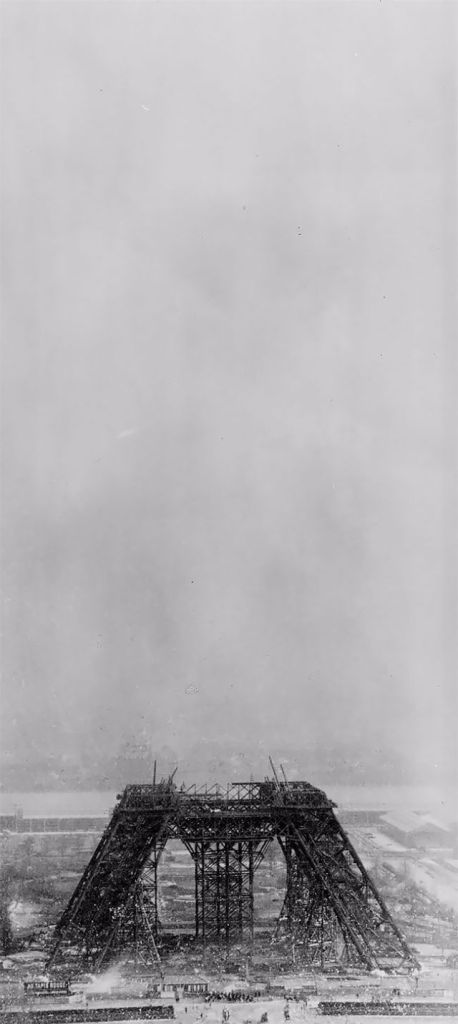
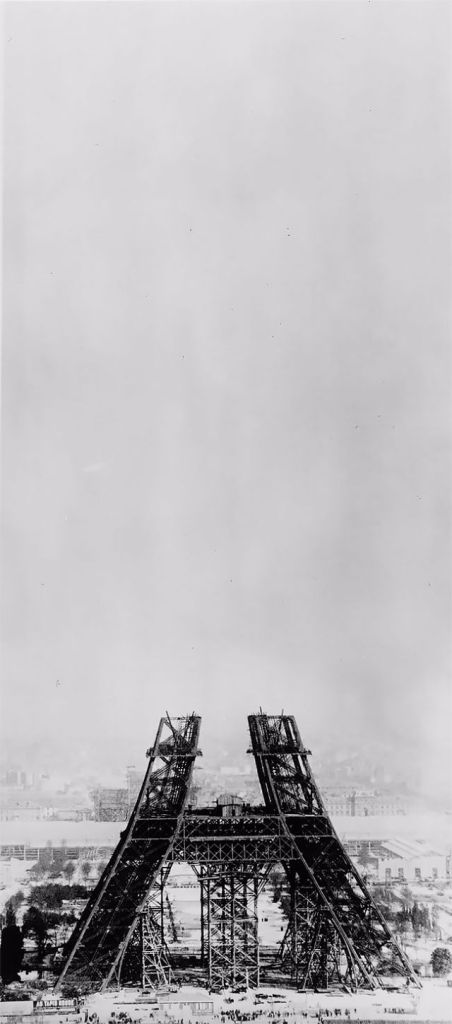
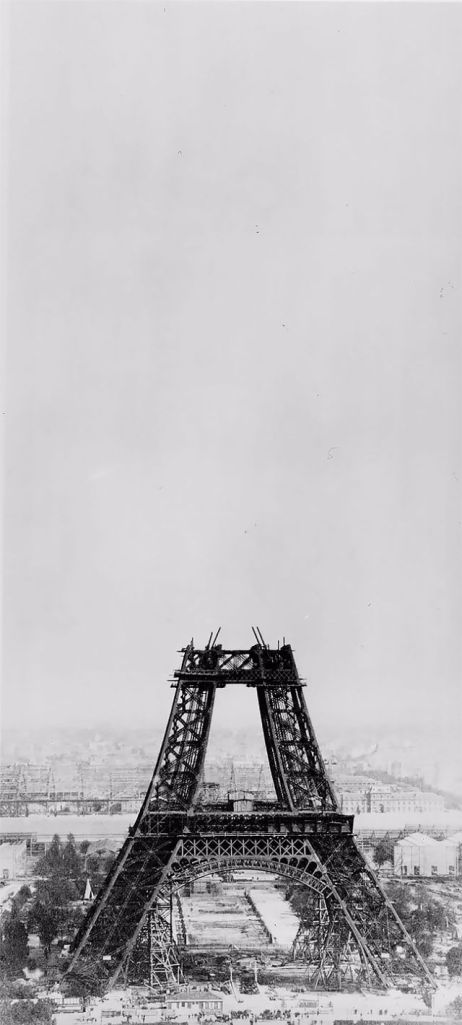
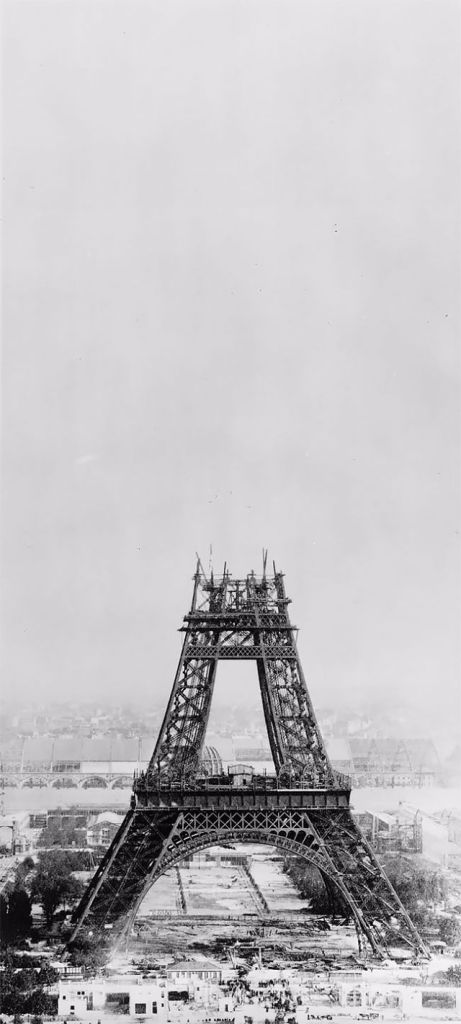
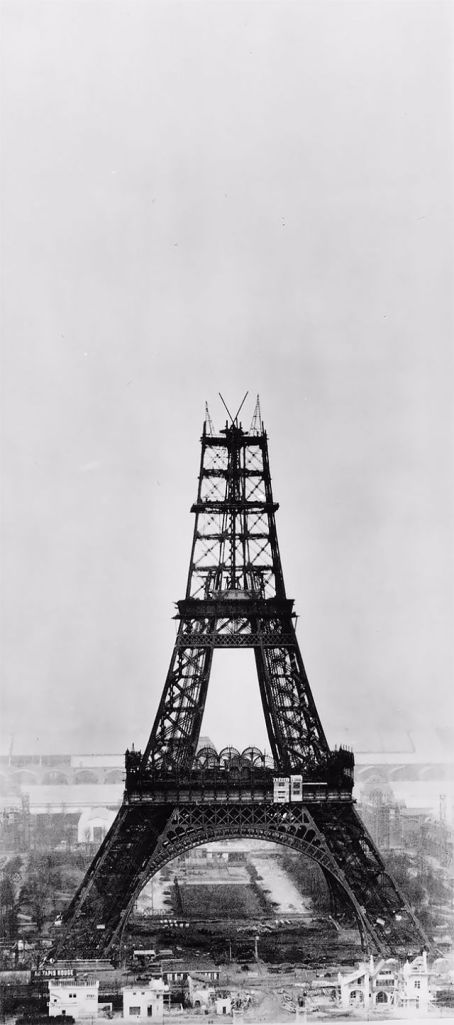
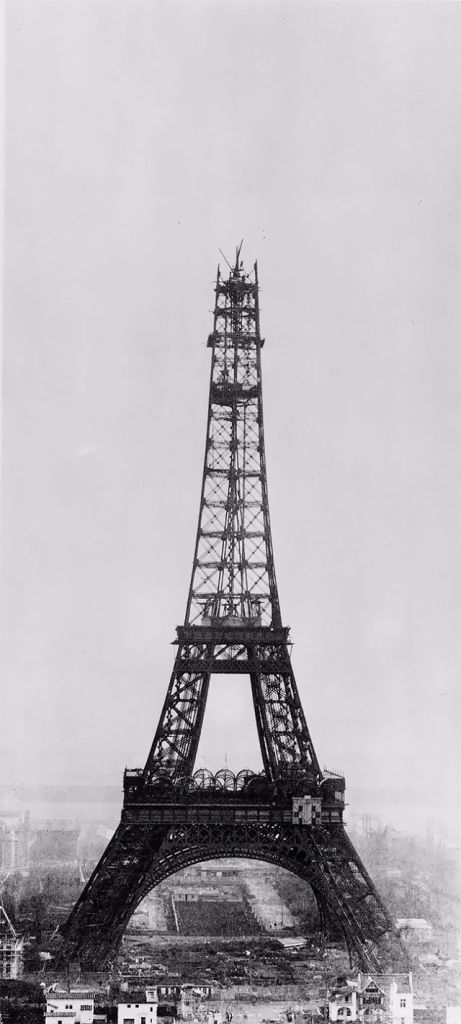
The Eiffel Tower is a wrought-iron lattice tower on the Champ de Mars in Paris, France. It is named after the engineer Gustave Eiffel, whose company designed and built the tower.
Locally nicknamed “La dame de fer” (French for “Iron Lady”), it was constructed from 1887 to 1889 as the centerpiece of the 1889 World’s Fair and was initially criticized by some of France’s leading artists and intellectuals for its design, but it has become a global cultural icon of France and one of the most recognizable structures in the world.[3] The Eiffel Tower is the most visited monument with an entrance fee in the world; 6.91 million people ascended it in 2015. The Tower was made a Monument historique in 1964 and named part of UNESCO World Heritage Site (“Paris, Banks of the Seins”) in 1991.
The tower is 324 metres (1,063 ft) tall, about the same height as an 81-storey building, and the tallest structure in Paris. Its base is square, measuring 125 metres (410 ft) on each side. During its construction, the Eiffel Tower surpassed the Washington Monument to become the tallest man-made structure in the world, a title it held for 41 years until the Chrysler Building in New York City was finished in 1930. It was the first structure in the world to surpass both the 200-metre and 300-metre mark in height. Due to the addition of a broadcasting aerial at the top of the tower in 1957, it is now taller than the Chrysler Building by 5.2 metres (17 ft). Excluding transmitters, the Eiffel Tower is the second tallest free-standing structure in France after the Millau Viaduct.
The tower has three levels for visitors, with restaurants on the first and second levels. The top level’s upper platform is 276 m (906 ft) above the ground – the highest observation deck accessible to the public in the European Union. Tickets can be purchased to ascend by stairs or lift to the first and second levels. The climb from ground level to the first level is over 300 steps, as is the climb from the first level to the second. Although there is a staircase to the top level, it is usually accessible only by lift. (Wikipedia)