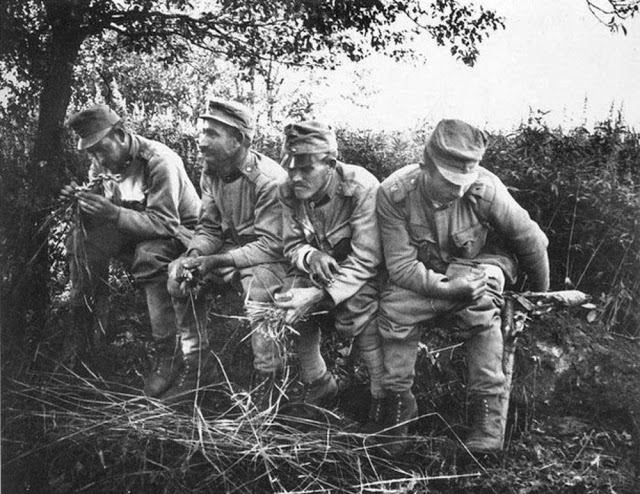
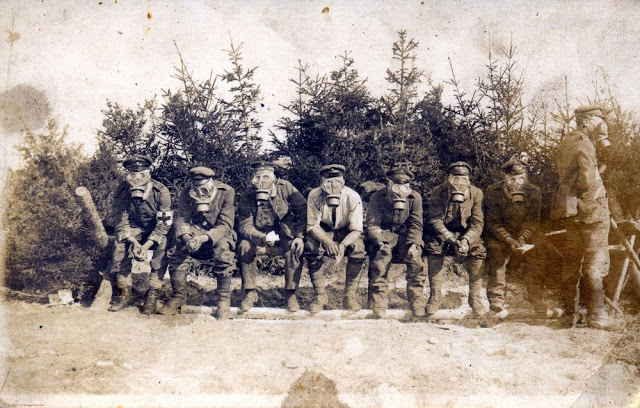
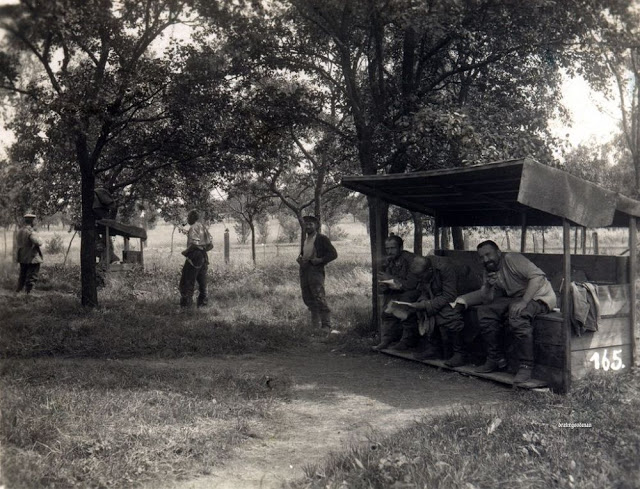
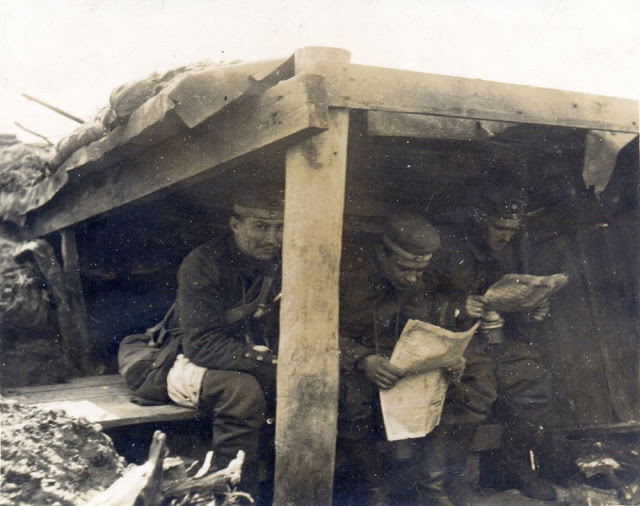
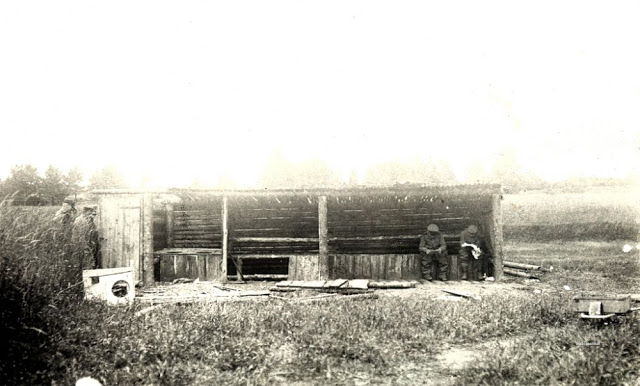
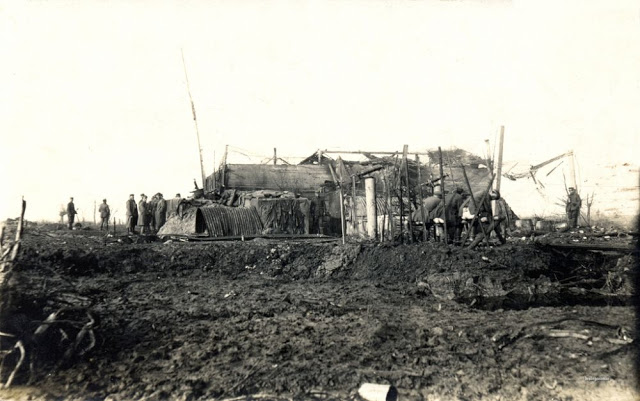
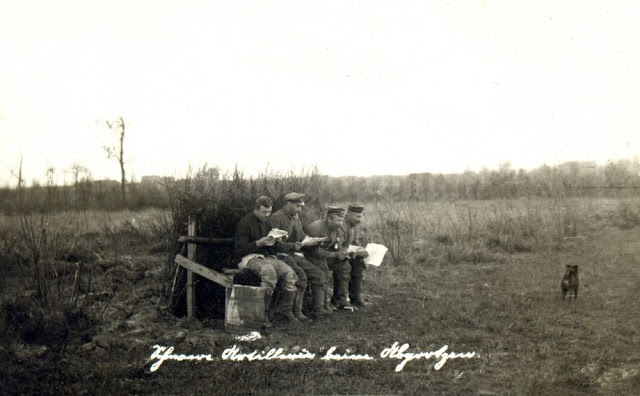
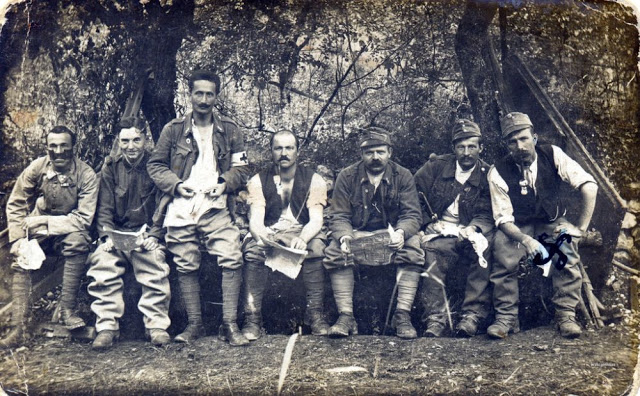
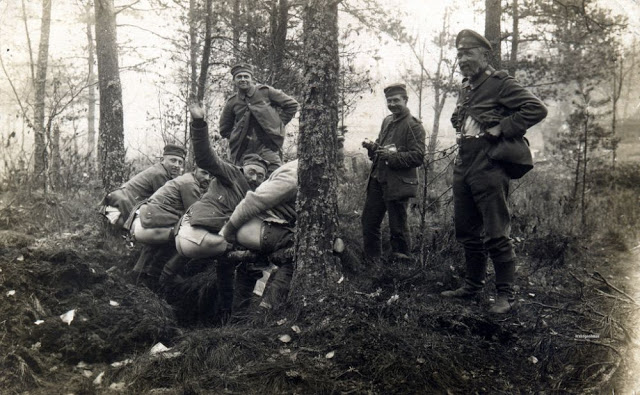
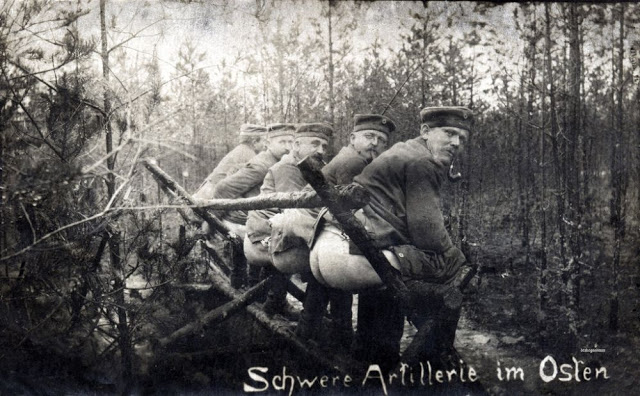
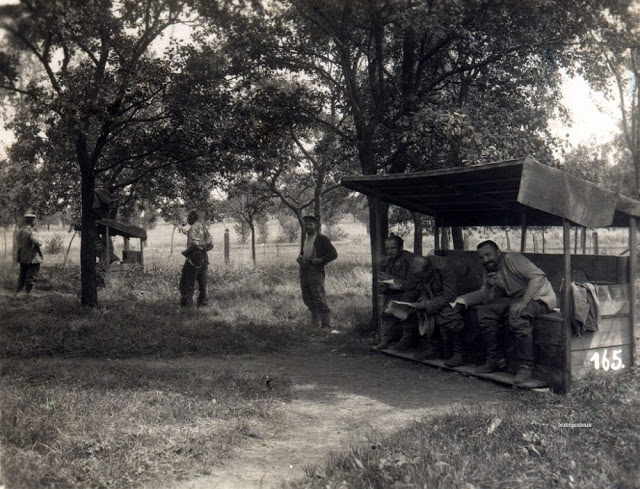
Soldiers lived in the trenches when fighting during World War I, it was muddy, noisy and pretty basic. They didn’t have toilets so it was probably a bit stinky too.
The latrines was the name given to trench toilets. They were usually pits, 4 ft. to 5 ft. deep, dug at the end of a short sap. Each company had two sanitary personnel whose job it was to keep the latrines in good condition. In many units, officers gave out sanitary duty as a punishment for breaking army regulations. Before a change-over in the trenches, the out-going unit was supposed to fill in its latrines and dig a new one for the new arrivals.
The best latrines came in the form of buckets which were emptied and disinfected regularly by designated orderlies. Some latrines were very basic pit or ‘cut and cover’ systems. There were strict rules prohibiting ‘indiscriminate urinating’, but at times soldiers did resort to urinating in a tin and throwing it out of the trench.
Flying across the Atlantic on the airship Hindenburg was the fastest and most luxurious way to travel between Europe and America in the 1930s.
The interior furnishings of the Hindenburg were designed by Fritz August Breuhaus, whose design experience included Pullman coaches, ocean liners, and warships of the German Navy.
The reform ideas as to art and society of radical modernism, as “Bauhaus” for example represented them, were as far away from Breuhaus as they were far away from his wealthy clients.
The furnishing of the “world’s first flying hotel”, the Zeppelin airship LZ 129 – better known as the “Hindenburg” – which had been in complete accordance with Breuhaus’ overall plans, was regarded as a spectacular thing. Nevertheless, its realization took place as late as the middle of the 1930s.
The Hindenburg’s Interior: Passenger Decks
The passenger accommodation aboard Hindenburg was contained within the hull of the airship (unlike Graf Zeppelin, whose passenger space was located in the ship’s gondola). The passenger space was spread over two decks, known as “A Deck” and “B Deck.”
“A” Deck on Hindenburg
Hindenburg’s “A Deck” contained the ship’s Dining Room, Lounge, Writing Room, Port and Starboard Promenades, and 25 double-berth inside cabins.
The passenger accommodations were decorated in the clean, modern design of principal architect Professor Fritz August Breuhaus, and in a major improvement over the unheated Graf Zeppelin, passenger areas on Hindenburg were heated, using forced-air warmed by water from the cooling systems of the forward engines.
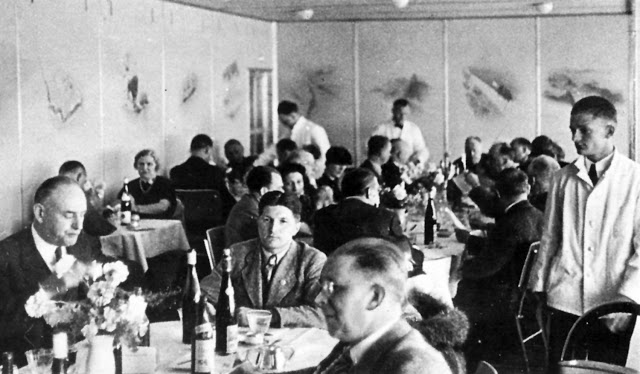
Dining Room
Hindenburg’s Dining Room occupied the entire length of the port side of A Deck. It measured approximately 47 feet in length by 13 feet in width, and was decorated with paintings on silk wallpaper by Professor Otto Arpke, depicting scenes from Graf Zeppelin’s flights to South America.
The tables and chairs were designed by Professor Fritz August Breuhaus using lightweight tubular aluminum, with the chairs upholstered in red.
Dining Room of Airship HindenburgDining Room of Airship HindenburgDining Room of Airship HindenburgDining Room of Hindenburg, with Port Promenade
Lounge
On the starboard side of A Deck were the Passenger Lounge and Writing Room.
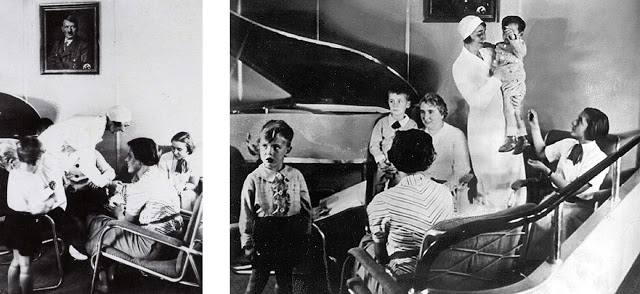
The Lounge was approximately 34 feet in length, and was decorated with a mural by Professor Arpke depicting the routes and ships of the explorers Ferdinand Magellan, Captain Cook, Vasco de Gama, and Christopher Columbus, the transatlantic crossing of LZ-126 (USS Los Angeles), the Round-the-World flight and South American crossings of LZ-127 Graf Zeppelin, and the North Atlantic tracks of the great German ocean liners Bremen and Europa. The furniture, like that in the dining room, was designed in lightweight aluminum by Professor Breuhaus, but the chairs were upholstered in brown. During the 1936 season the Lounge contained a 356-pound Bluthner baby grand piano, made of Duralumin and covered with yellow pigskin.
Passenger LoungeTwo views of the Lounge, showing portrait of Hitler and the ship’s duralumin piano. (The stewardess is Emilie Imhoff, who was killed at Lakehurst in 1937.)
The piano was removed before the 1937 season and was not aboard Hindenburg during it’s last flight.
Passenger LoungePassenger LoungePassenger Lounge on the Airship Hindenburg, showing promenade windows.
Writing Room
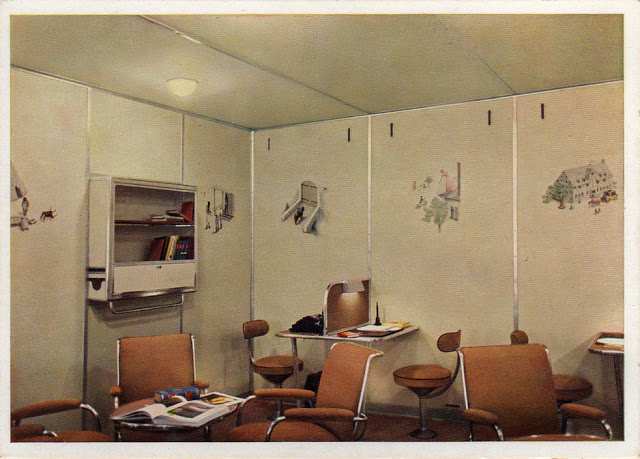
Next to the lounge was a small Writing Room.
Writing Room
The walls of the Writing Room were decorated with paintings by Otto Arpke depicting scenes from around the world:
Some of the Otto Arpke paintings aboard Hindenburg
Passenger Cabins on Hindenburg
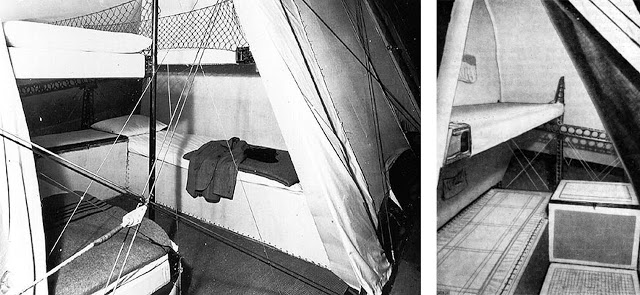
Hindenburg was originally built with 25 double-berthed cabins at the center of A Deck, accommodating 50 passengers. After the ship’s inaugural 1936 season, 9 more cabins were added to B Deck, accommodating an additional 20 passengers. The A Deck cabins were small, but were comparable to railroad sleeper compartments of the day. The cabins measured approximately 78? x 66?, and the walls and doors were made of a thin layer of lightweight foam covered by fabric. Cabins were decorated in one of three color schemes — either light blue, grey, or beige — and each A Deck cabin had one lower berth which was fixed in place, and one upper berth which could be folded against the wall during the day.
Passenger Cabin aboard Hindenburg
Each cabin had call buttons to summon a steward or stewardess, a small fold-down desk, a wash basin made of lightweight white plastic with taps for hot and cold running water, and a small closet covered with a curtain in which a limited number of suits or dresses could be hung; other clothes had to be kept in their suitcases, which could be stowed under the lower berth. None of the cabins had toilet facilities; male and female toilets were available on B Deck below, as was a single shower, which provided a weak stream of water “more like that from a seltzer bottle” than a shower, according to Charles Rosendahl. Because the A Deck cabins were located in the center of the ship they had no windows, which was a feature missed by passengers who had traveled on Graf Zeppelin and had enjoyed the view of the passing scenery from their berths.
Passenger Cabin aboard Hindenburg
Promenades On either side of A Deck were promenades, featuring seating areas and large windows which could be opened in flight.
Starboard Promenade aboard LZ-129 Hindenburg, next to the Lounge.
“B” Deck on Hindenburg
B Deck on Hindenburg, located directly below A Deck, contained the ship’s kitchen, passenger toilet and shower facilities, the crew and officers’ mess, and a cabin occupied by Chief Steward Heinrich Kubis (containing a door to the keel corridor, which was the only connection between passenger and crew spaces).
During the winter of 1936-1937, while the ship was laid up in Frankfurt, additional passenger cabins were also added in Bay 11, just aft of ring 173. The new cabins had windows offering an outside view, and were slightly larger than the cabins on A Deck. The additional weight of these new cabins was made possible by the unexpected (and unwelcome) need to operate the ship with hydrogen, which has greater lifting power than the helium for which Hindenburg had been designed.
The Smoking Room
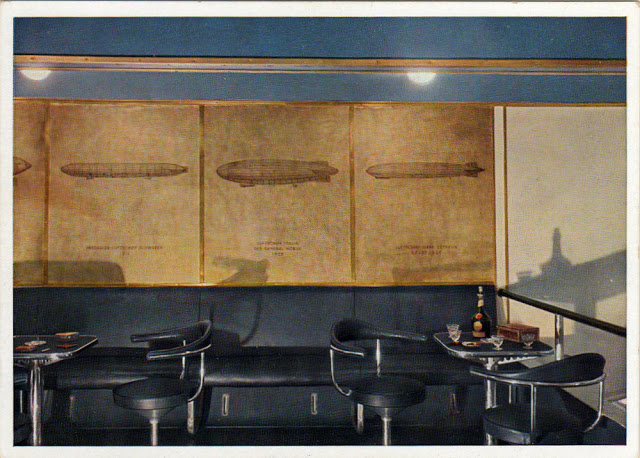
Perhaps most surprising, aboard a hydrogen airship, there was also a smoking room on the Hindenburg. The smoking room was kept at higher than ambient pressure, so that no leaking hydrogen could enter the room, and the smoking room and its associated bar were separated from the rest of the ship by a double-door airlock. One electric lighter was provided, as no open flames were allowed aboard the ship. The smoking room was painted blue, with dark blue-grey leather furniture, and the walls were decorated with yellow pigskin and illustrations by Otto Arpke depicting the history of lighter-than-air flight from the Montgolfiers’s balloon to the Graf Zeppelin. Along one side of the room was a railing above sealed windows, through which passengers could look down on the ocean or landscape passing below.
The smoking room was perhaps the most popular public room on the ship, which is not surprising in an era in which so many people smoked.
Pressurized Smoking Room aboard LZ-129 Hindenburg, showing door to the bar, with the air lock doors beyond.
The Bar
The Hindenburg’s bar was a small ante-room between the smoking room and the air-lock door leading to the corridor on B-Deck. This is where Hindenburg bartender Max Schulze served up LZ-129 Frosted Cocktails (gin and orange juice) and Maybach 12 cocktails (recipe lost to history), but more importantly, it is where Schulze monitored the air-lock to ensure that no-one left the smoking room with burning cigarattes, cigars, or pipes. Schulze had been a steward and bartender aboard the ocean liners of the Hamburg-Amerika Line and was well liked by Hindenburg passengers, even if he was surprisingly unfamiliar with basic American cocktails such as the Manhattan. The bar and smoking room were also the scene of a raucous party on the Hindenburg’s maiden voyage to America, where passenger Pauline Charteris improvised a kirschwasser cocktail after the ship ran out of gin for martinis.
Hindenburg BarCocktails aboard the Hindenburg
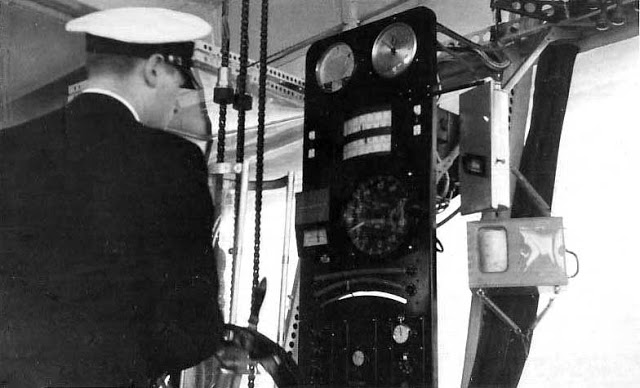
Control Car, Flight Instruments, and Flight Controls
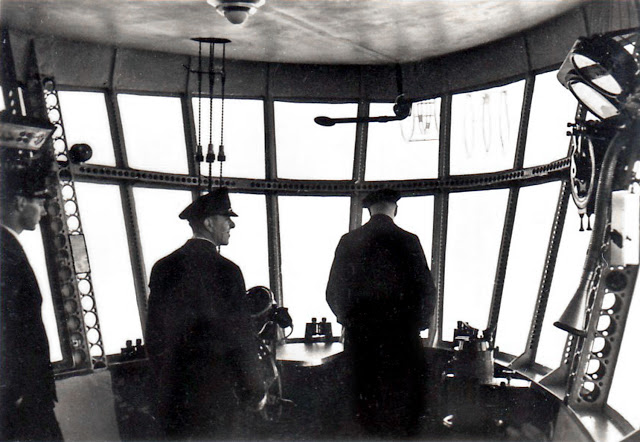
An overview of the Hindenburg’s flight instruments and flight controls.
Hindenburg Control Room (Ludwig Felber at helm, possibly Knut Eckener to his right). At far left is ballast board, then rudder station with gyro compass repeater, to right of tall figure is the eyepiece of a drift measuring telesope, and to the right is the engine telegraph, axial corridor speaking tube, altimeter, and engine instruments; to the far right is a variometer.HindenburgElevator Wheel, Elevator Panel, and Ballast BoardHindenburg’s Elevator PanelHindenburg’s Navigation RoomErnst Lehmann with Navigation RadiosHindenburg main telephone station
Crew Areas and Keel
Other than the control car, the crew and work areas aboard Hindenburg were primarily located along the keel, including officer and crew sleeping quarters, the radio room, post office, electrical room, work rooms, and rope handling areas for the mooring lines.
Fuel, fresh water, and ballast tanks were also located along the keel, as were cargo storage areas. The keel also offered access to the engine cars, and the auxiliary control and docking station in the tail, and ladders at Rings 62, 123.5, and 188 offered access to the axial catwalk at the center of the ship. A section of B Deck included Hindenburg’s kitchen and separate mess areas for the officers and crew.
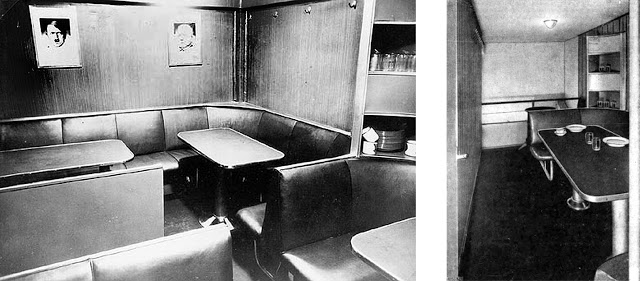
Hindenburg Radio RoomHindenburg Electrical RoomHindenburg crew bunks, along the keelCargo storage along Hindenburg’s keelHindenburg galley on B DeckHindenburg galley on B DeckB Deck: Crew mess, with photographs of Hitler and Hindenburg (left); Officers mess (right)
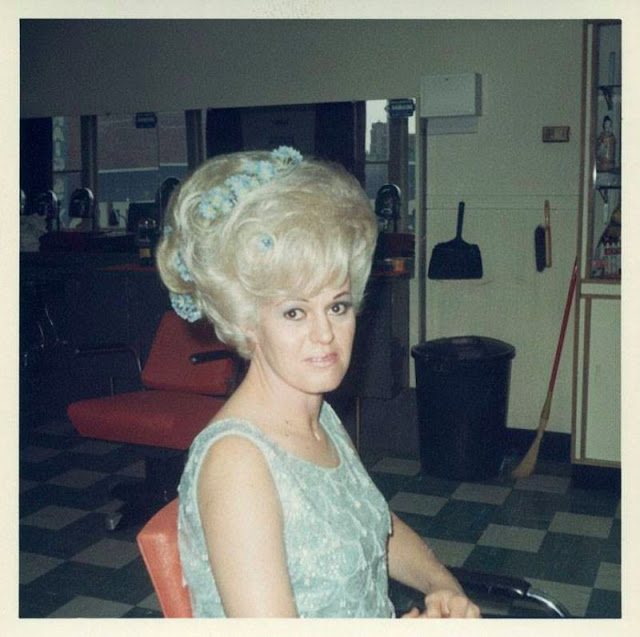
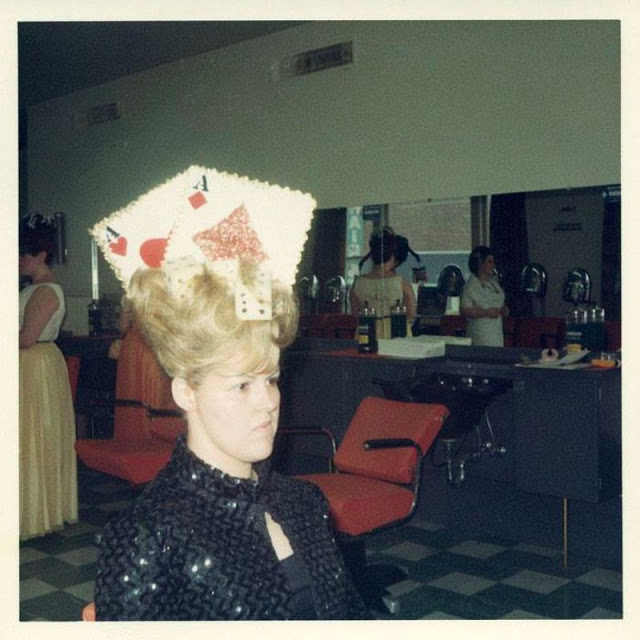
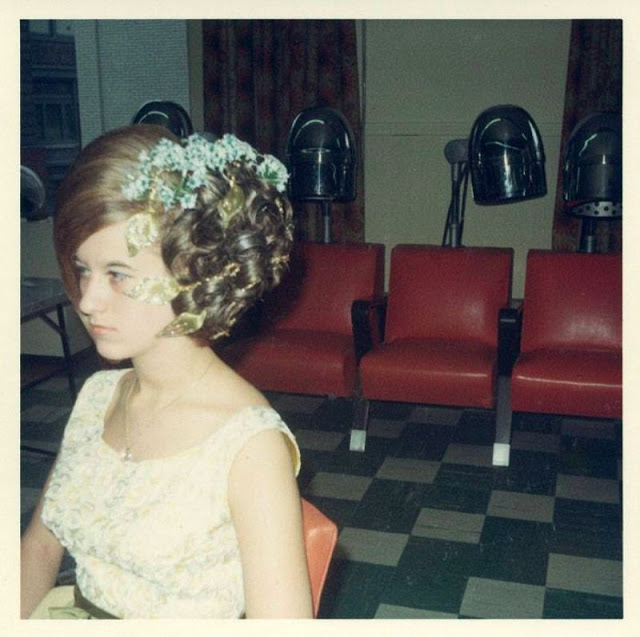
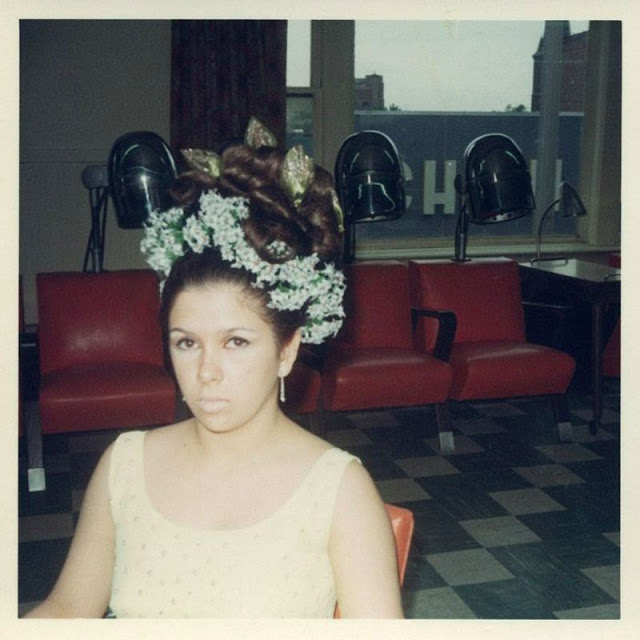
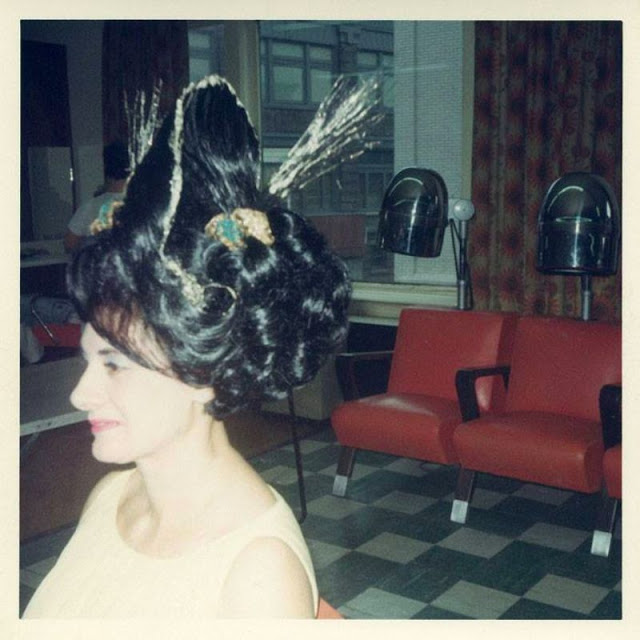
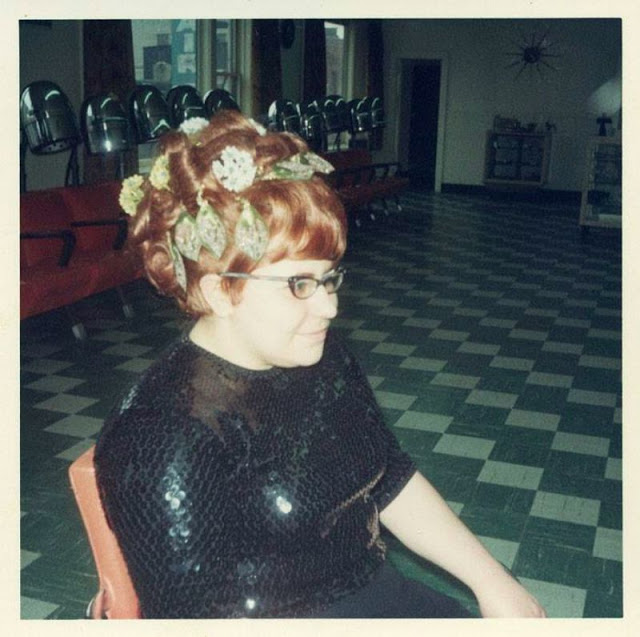
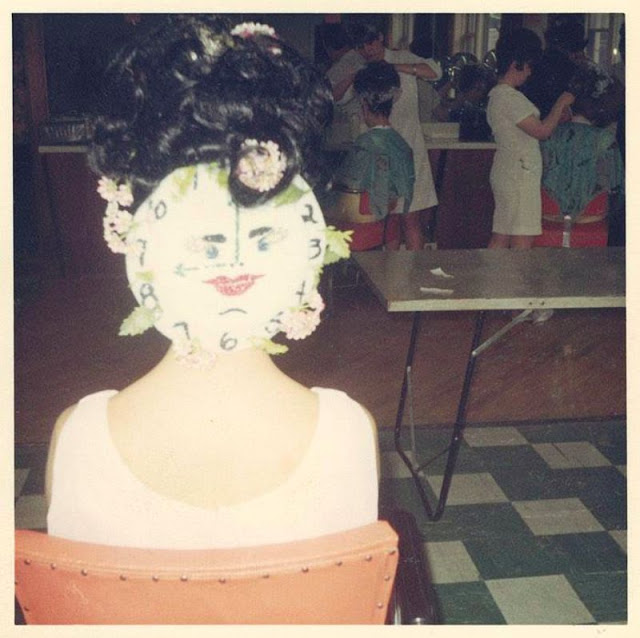
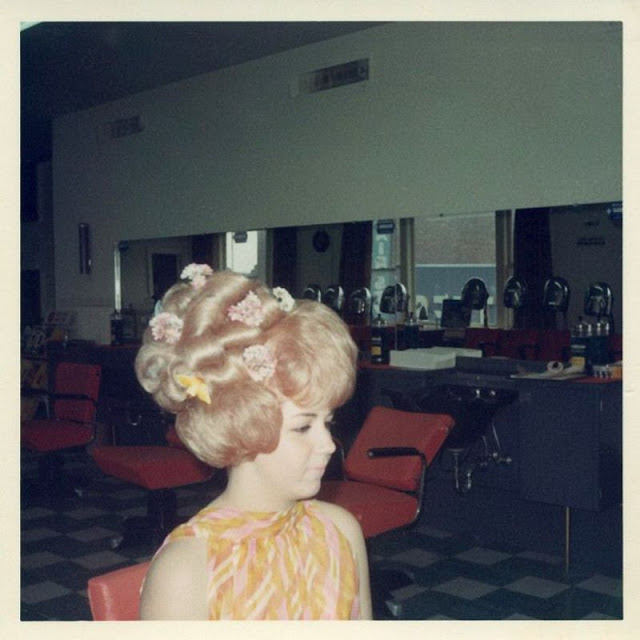
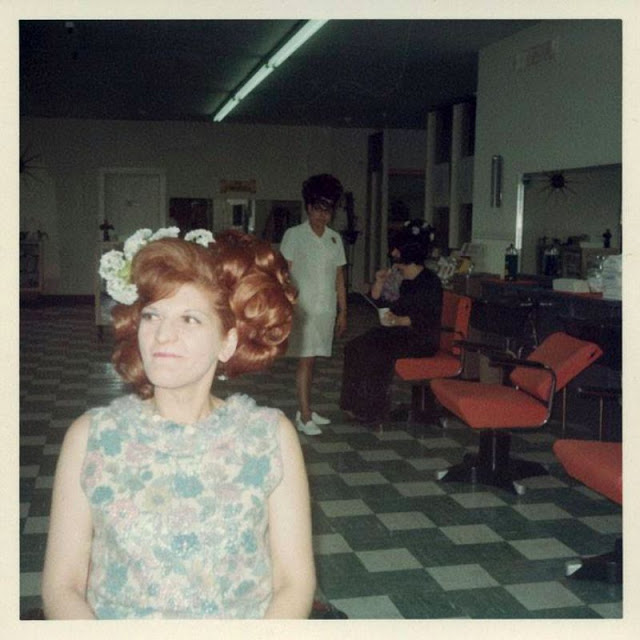
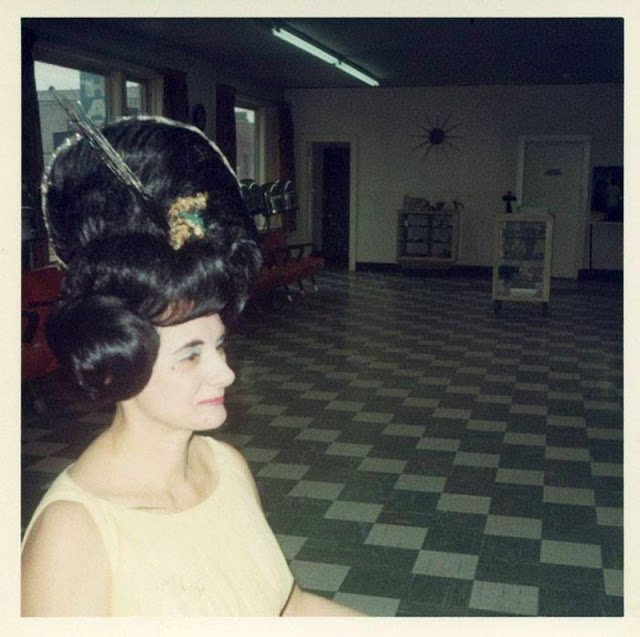
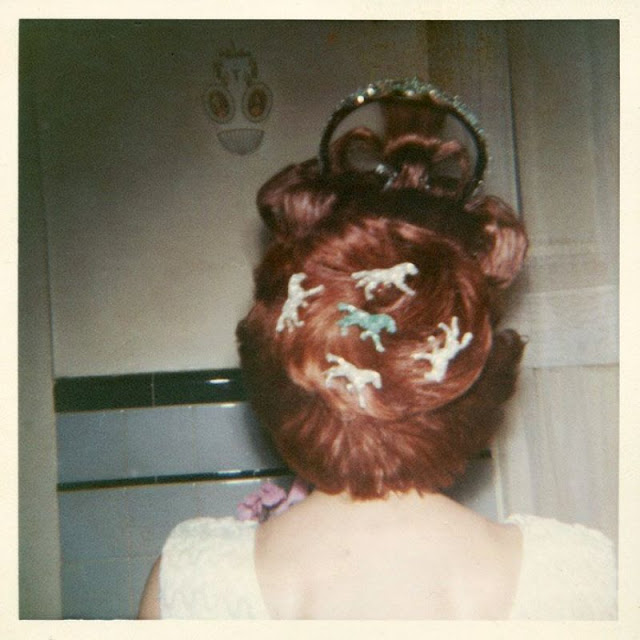
The 1960s began with the highly formal up-sweep big hair styles from the late 1950s, but as the women’s movement, protest groups and hippies got into full swing toward the end of that decade, hair styles reflected the changes and became more casual and easier to maintain.
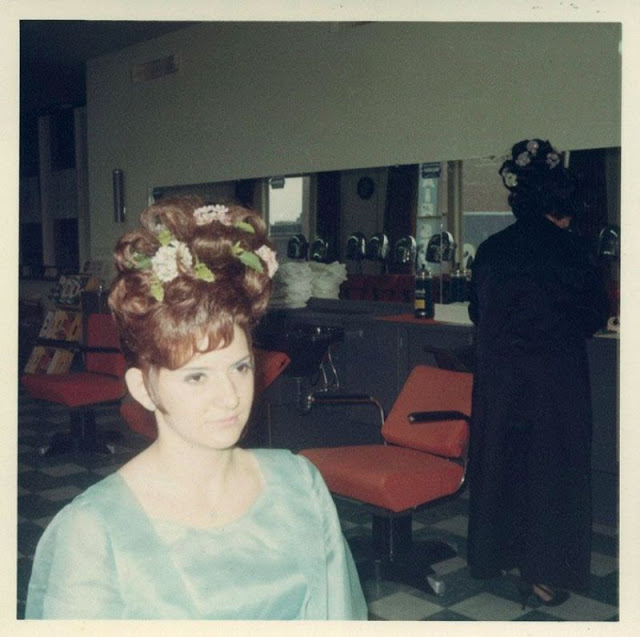
The bouffant, or bubble, a formal big-hair up-style popular in the 1960s, was basically just hair arranged high on the head with tendrils falling down the sides. This style created an illusion of a longer, smaller face.
The high-towering beehive, also known as the B-52 for its similarity to the shape of the nose on a B-52 Stratofortress bomber, lasted until the end of the ’60s. Here’s a series of candid shots inside a hair salon from the 1960s.
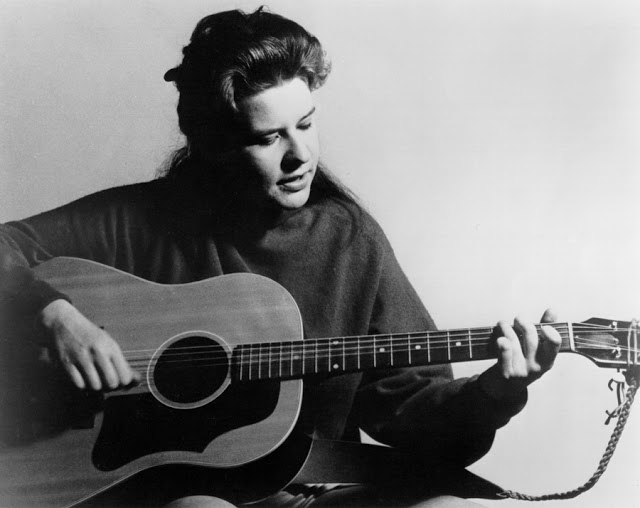
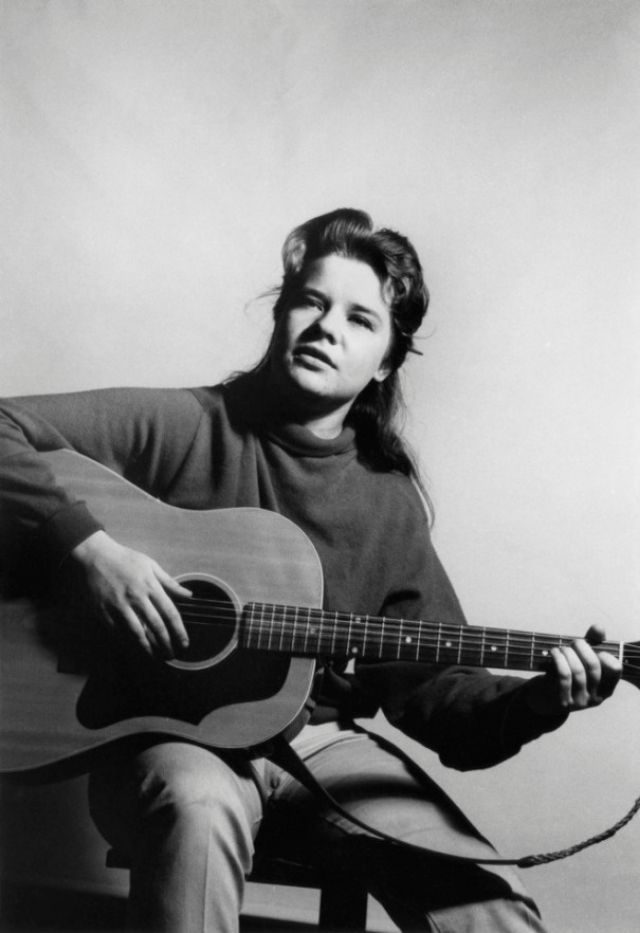
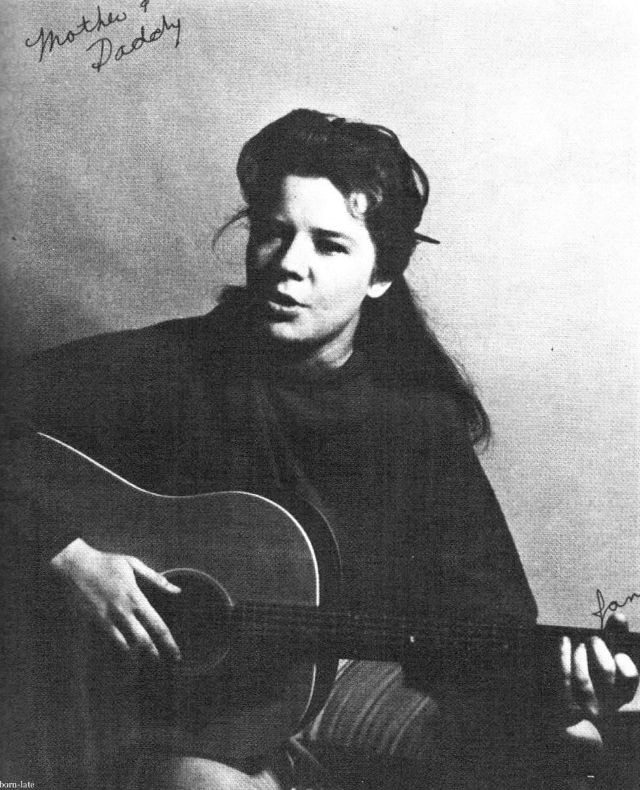
Janis Joplin (January 19, 1943 – October 4, 1970) was an American singer-songwriter who sang rock, soul, and blues music. One of the most successful and widely known rock stars of her era, she was noted for her powerful mezzo-soprano vocals and “electric” stage presence.
Joplin graduated from high school in 1960 and attended Lamar State College of Technology in Beaumont, Texas, during the summer and later the University of Texas at Austin (UT), though she did not complete her college studies. The campus newspaper, The Daily Texan, ran a profile of her in the issue dated July 27, 1962, headlined “She Dares to Be Different.” The article began, “She goes barefooted when she feels like it, wears Levis to class because they’re more comfortable, and carries her autoharp with her everywhere she goes so that in case she gets the urge to break into song, it will be handy. Her name is Janis Joplin.” While at UT she performed with a folk trio called the Waller Creek Boys and frequently socialized with the staff of the campus humor magazine The Texas Ranger.
Joplin cultivated a rebellious manner and styled herself partly after her female blues heroines and partly after the Beat poets. Her first song, “What Good Can Drinkin’ Do”, was recorded on tape in December 1962 at the home of a fellow University of Texas student.
In 1967, Joplin rose to fame following an appearance at Monterey Pop Festival, where she was the lead singer of the then little-known San Francisco psychedelic rock band Big Brother and the Holding Company. After releasing two albums with the band, she left Big Brother to continue as a solo artist with her own backing groups, first the Kozmic Blues Band and then the Full Tilt Boogie Band. She appeared at the Woodstock festival and on the Festival Express train tour. Five singles by Joplin reached the Billboard Hot 100, including a cover of the Kris Kristofferson song “Me and Bobby McGee”, which reached number one in March 1971. Her most popular songs include her cover versions of “Piece of My Heart”, “Cry Baby”, “Down on Me”, “Ball and Chain”, and “Summertime”; and her original song “Mercedes Benz”, her final recording.
Joplin died of a heroin overdose in 1970, at the age of 27, after releasing three albums (two with Big Brother and the Holding Company and one solo album). A second solo album, Pearl, was released in January 1971, just over three months after her death. It reached number one on the Billboard charts. She was posthumously inducted into the Rock and Roll Hall of Fame in 1995. Rolling Stone ranked Joplin number 46 on its 2004 list of the 100 Greatest Artists of All Time and number 28 on its 2008 list of 100 Greatest Singers of All Time. She remains one of the top-selling musicians in the United States, with Recording Industry Association of America certifications of 18.5 million albums sold.
When notorious outlaw John Dillinger was gunned down on Lincoln Avenue on a steamy July night in 1934, his death ended a months-long manhunt that captivated the press and the public.
John Herbert Dillinger (June 22, 1903 – July 22, 1934) was an American gangster of the Great Depression. He led a group known as the “Dillinger Gang”, which was accused of robbing 24 banks and four police stations. Dillinger was imprisoned several times but escaped twice. He was charged, but not convicted, of the murder of an East Chicago, Indiana, police officer who shot Dillinger in his bullet-proof vest during a shootout; it was the only time Dillinger was charged with homicide.
Dillinger courted publicity. The media ran exaggerated accounts of his bravado and colorful personality and cast him as a Robin Hood. In response, J. Edgar Hoover, then director of the Bureau of Investigation (BOI), used Dillinger and his gang as his campaign platform to evolve the BOI into the Federal Bureau of Investigation, developing more sophisticated investigative techniques as weapons against organized crime.
After evading police in four states for almost a year, Dillinger was wounded and went to his father’s home to mend. He returned to Chicago in July 1934 and sought refuge in a brothel owned by Ana Cumpănaș. She informed authorities of his whereabouts. On July 22, 1934, local and federal law enforcement closed in on the Biograph Theater. As BOI agents moved to arrest Dillinger as he exited the theater, he never drew a gun but attempted to flee. He was shot multiple times in the back and was killed; this was later ruled as justifiable homicide. (Wikipedia)
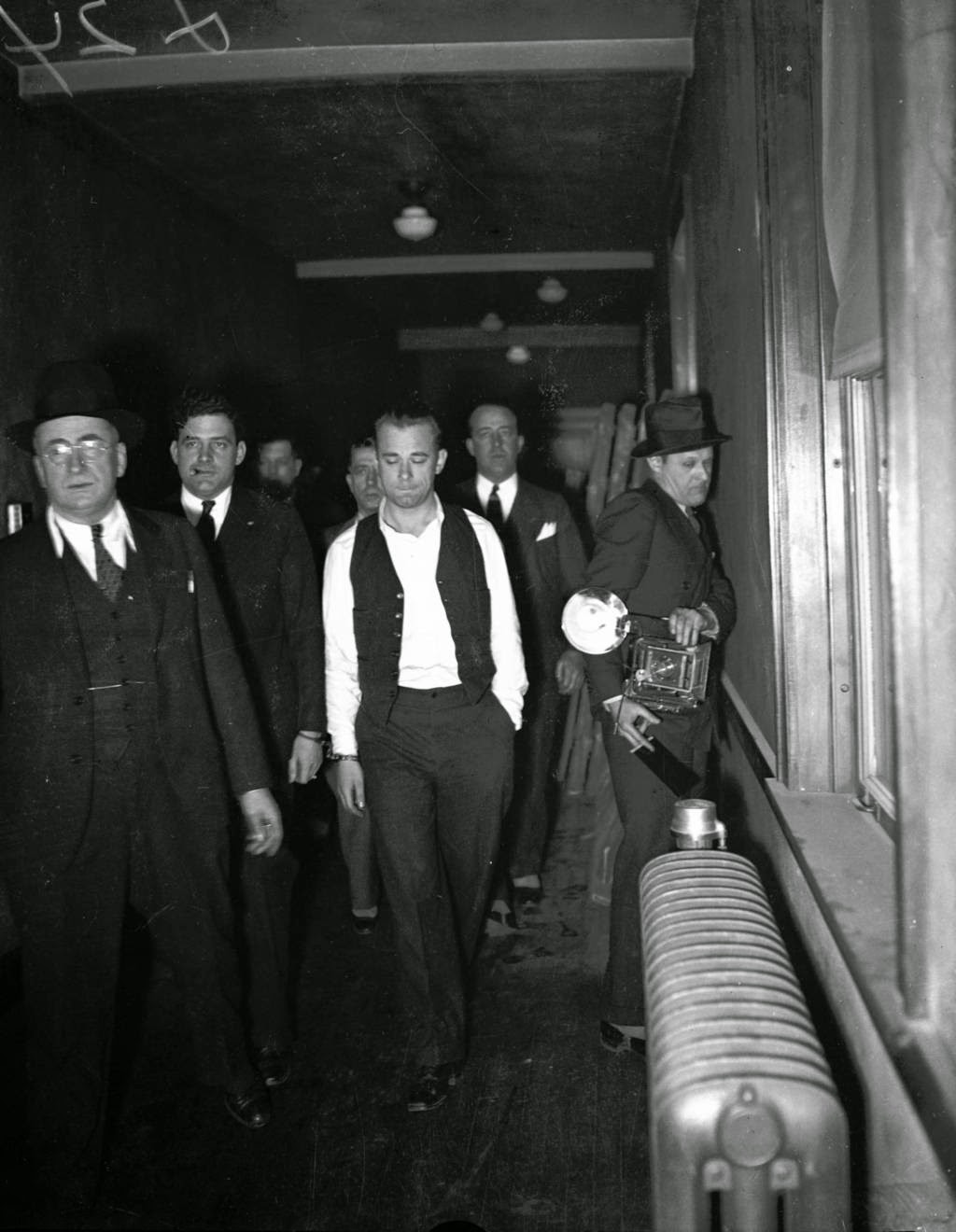
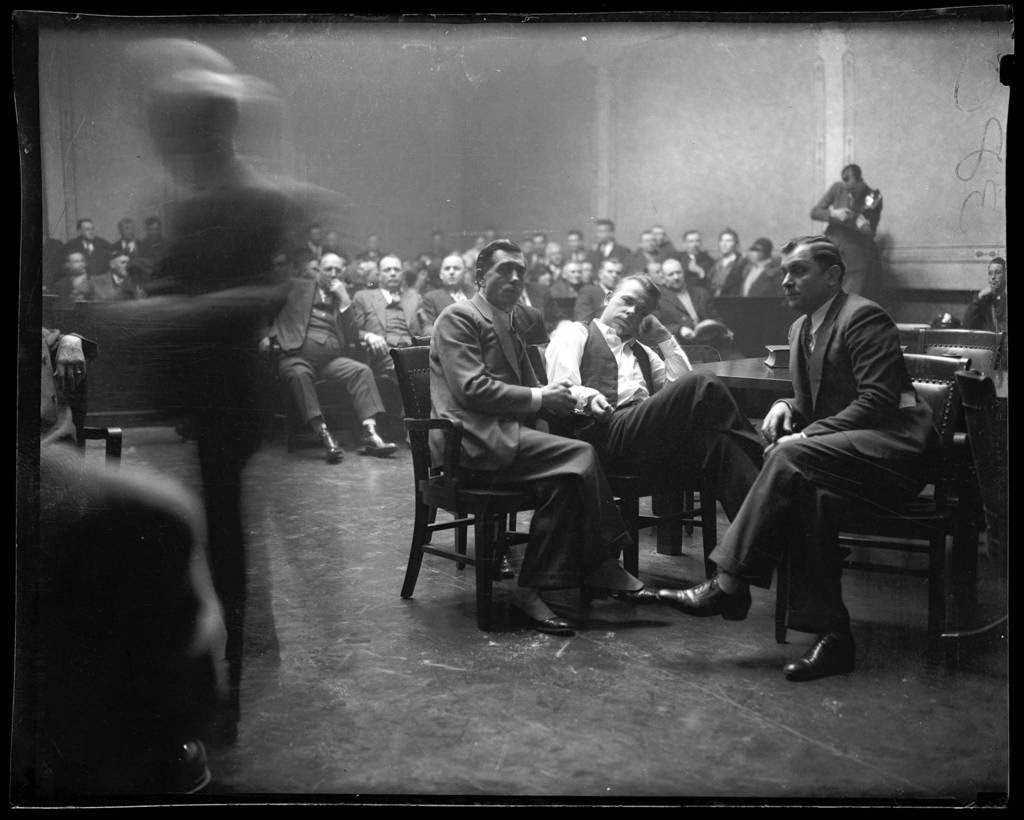
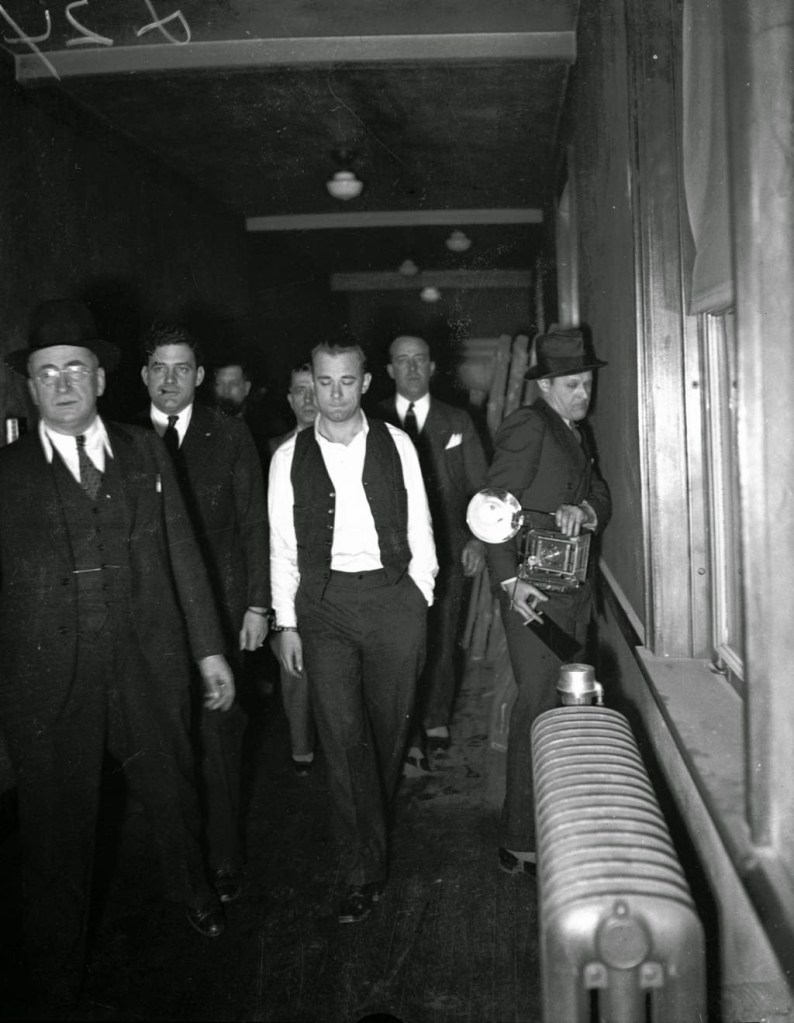
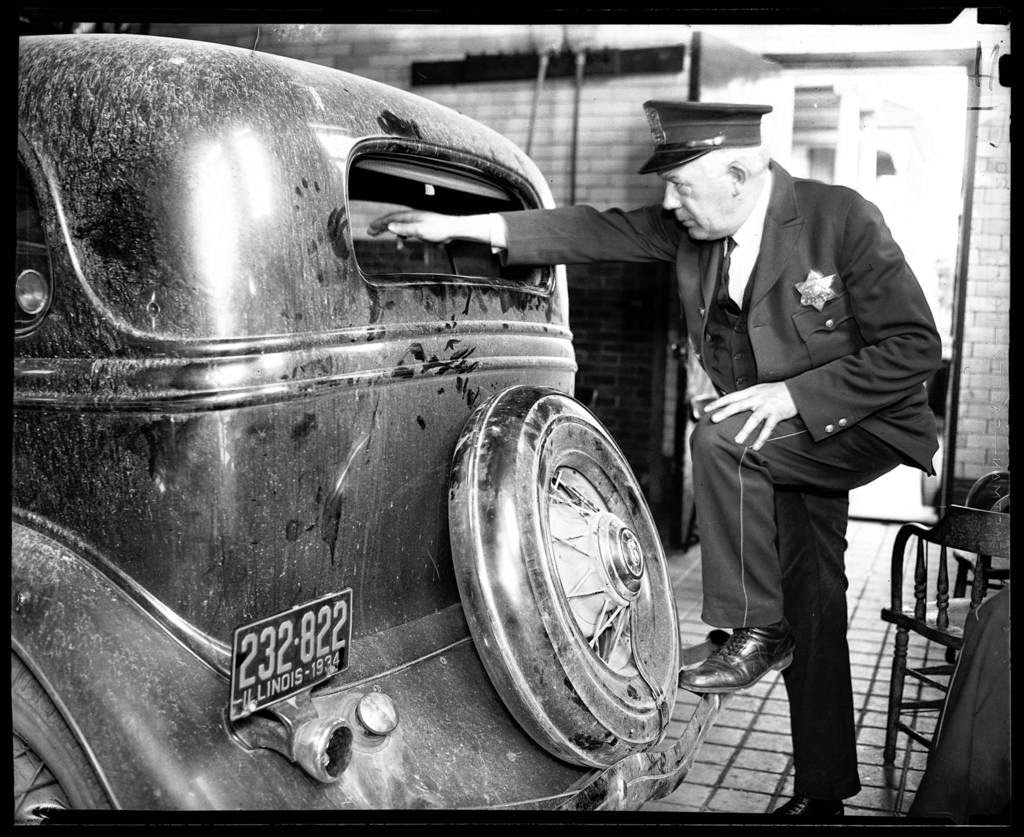
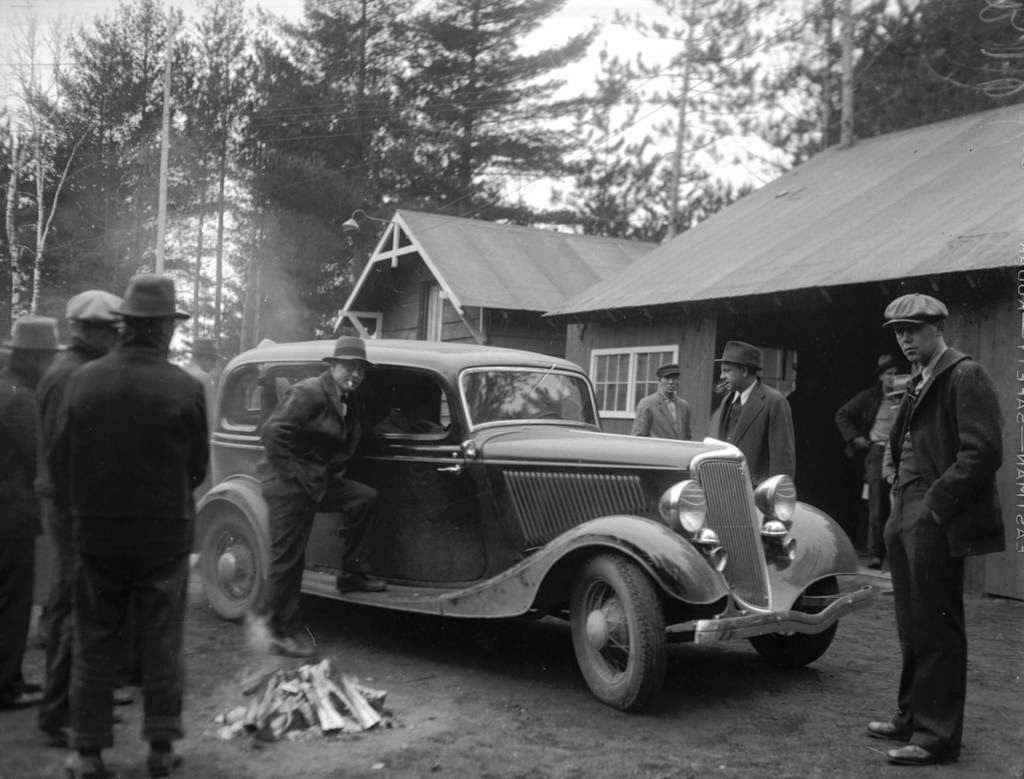
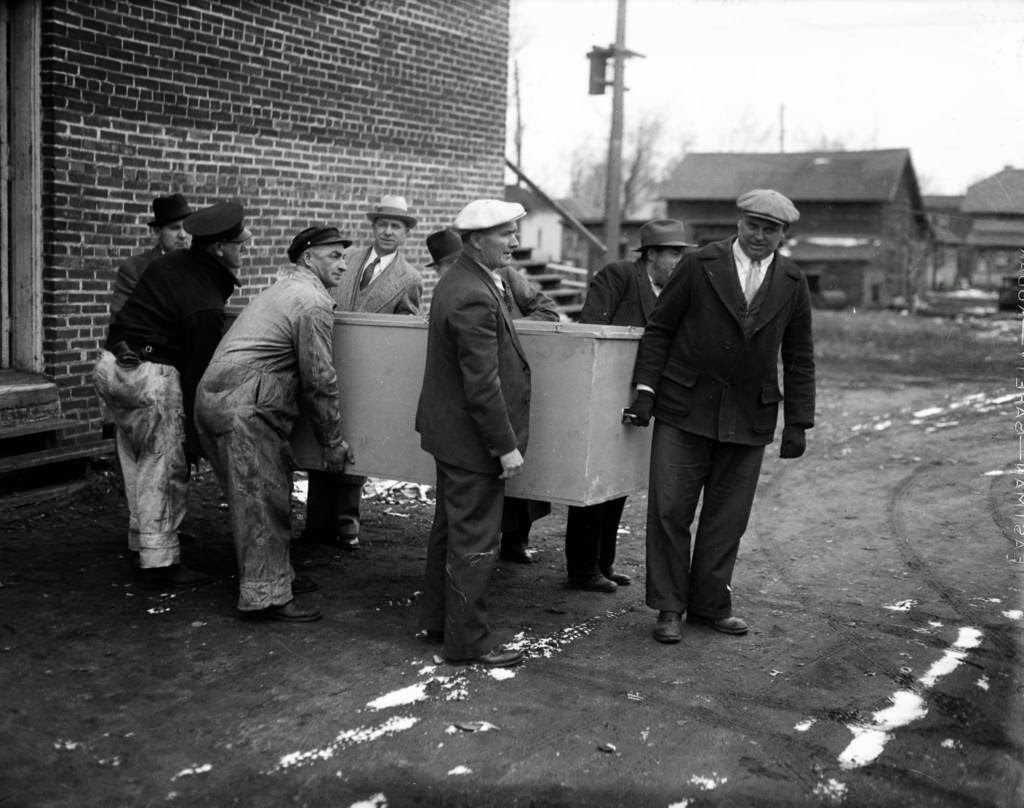
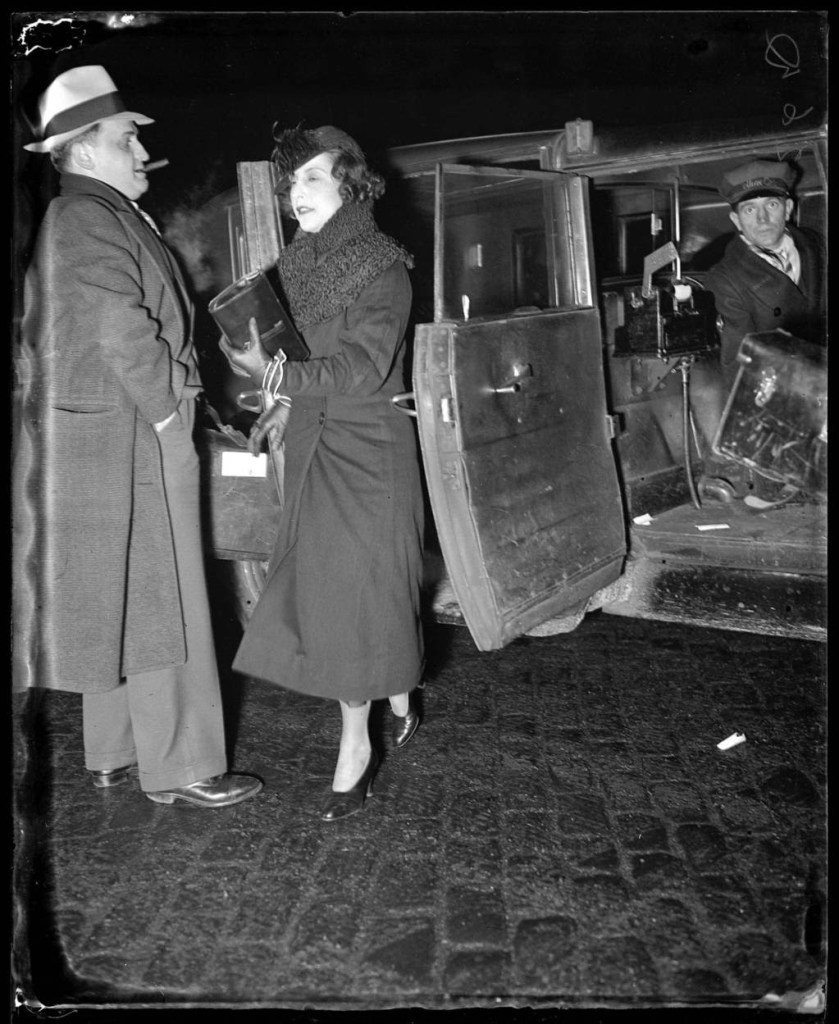
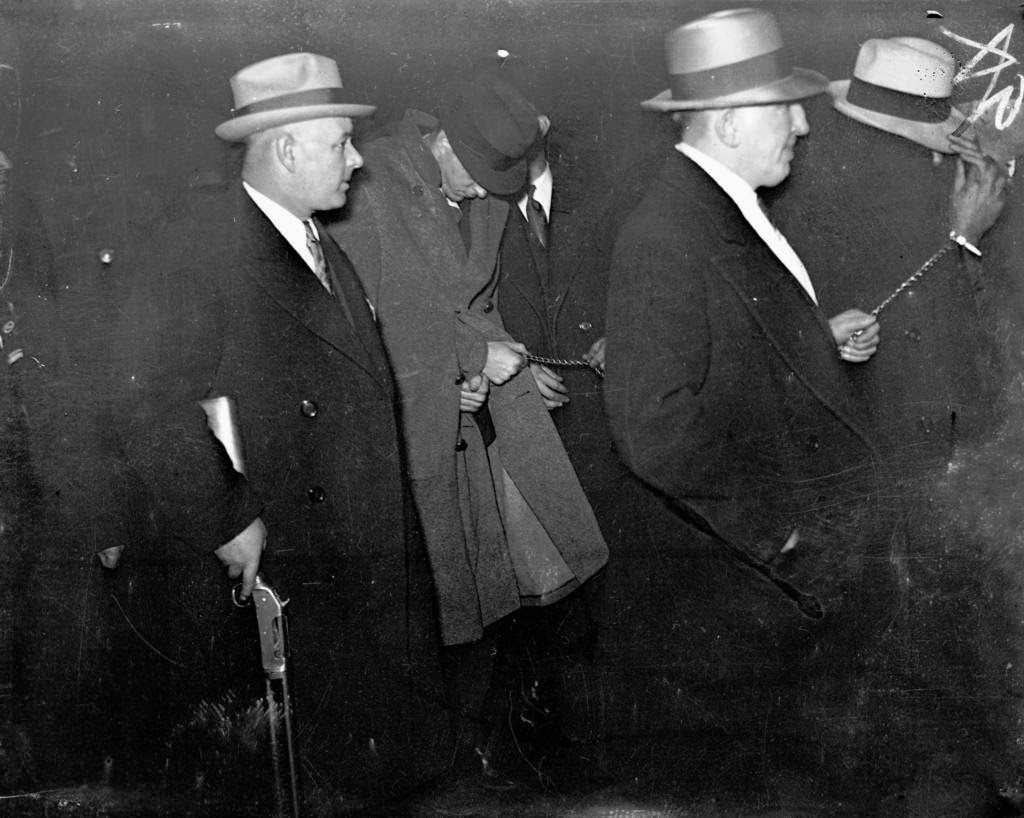
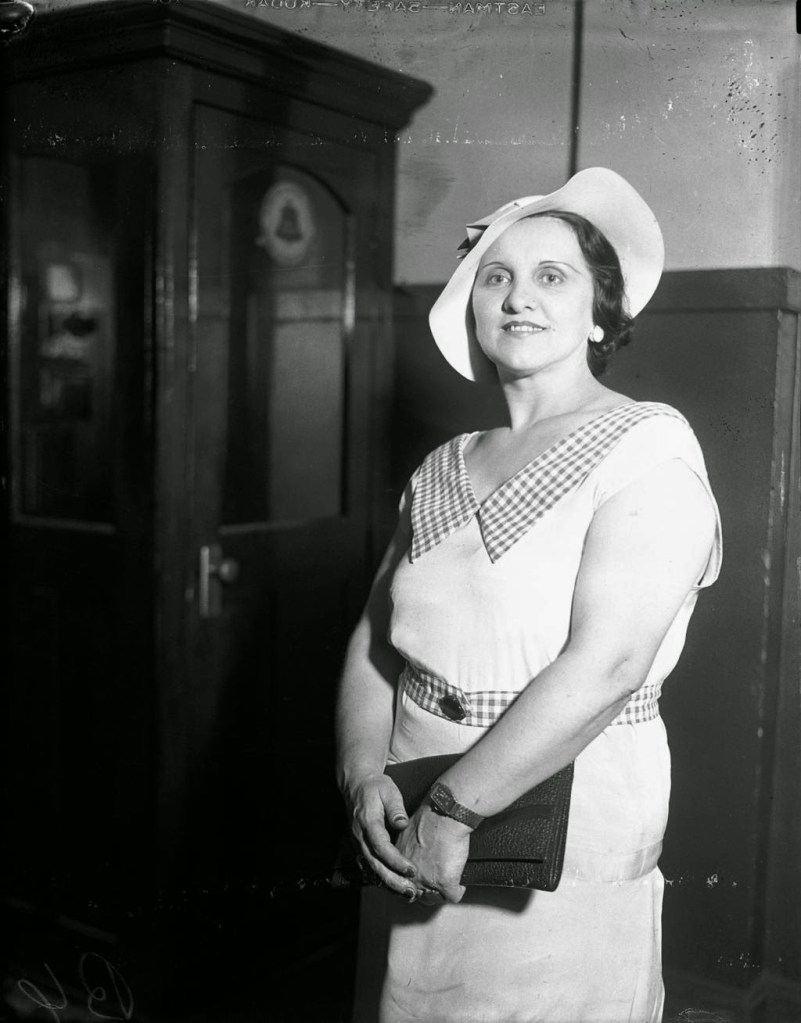
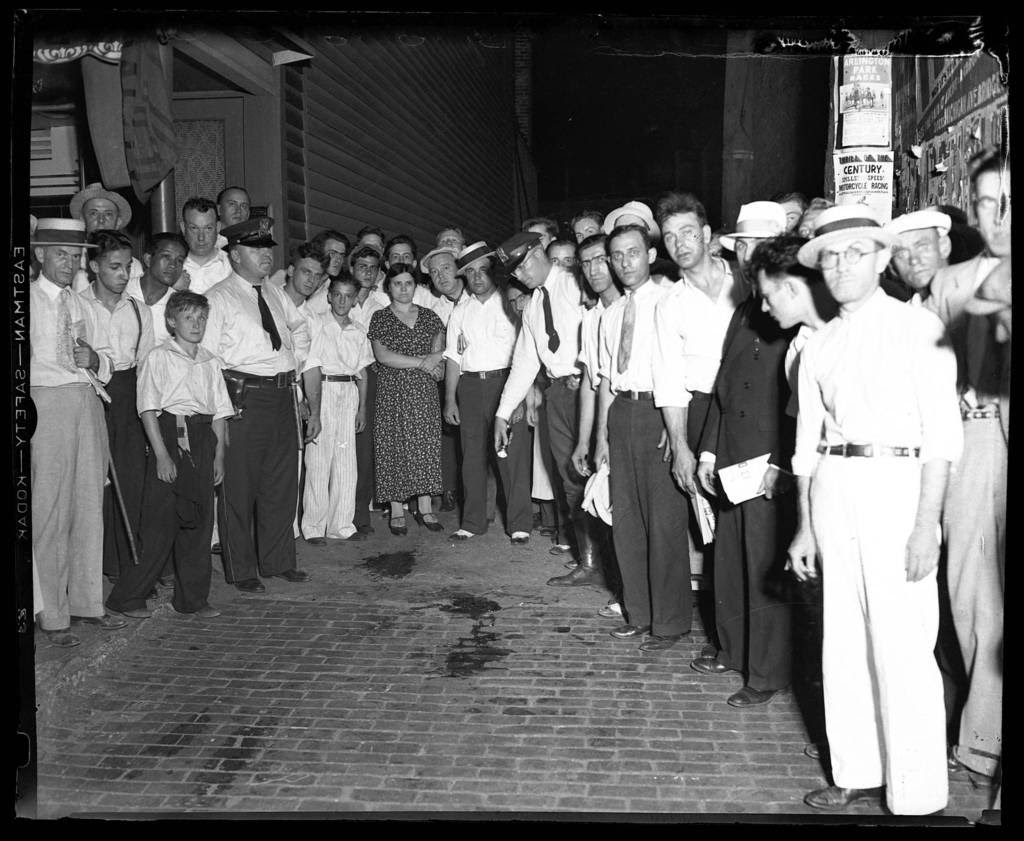
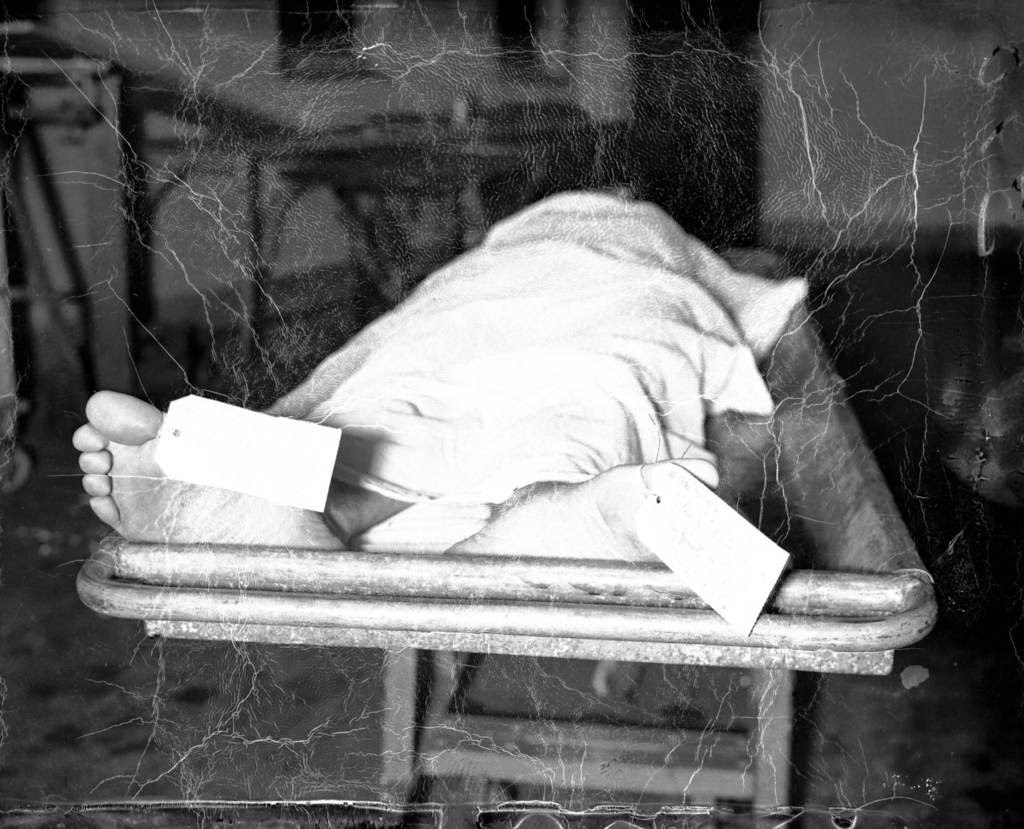
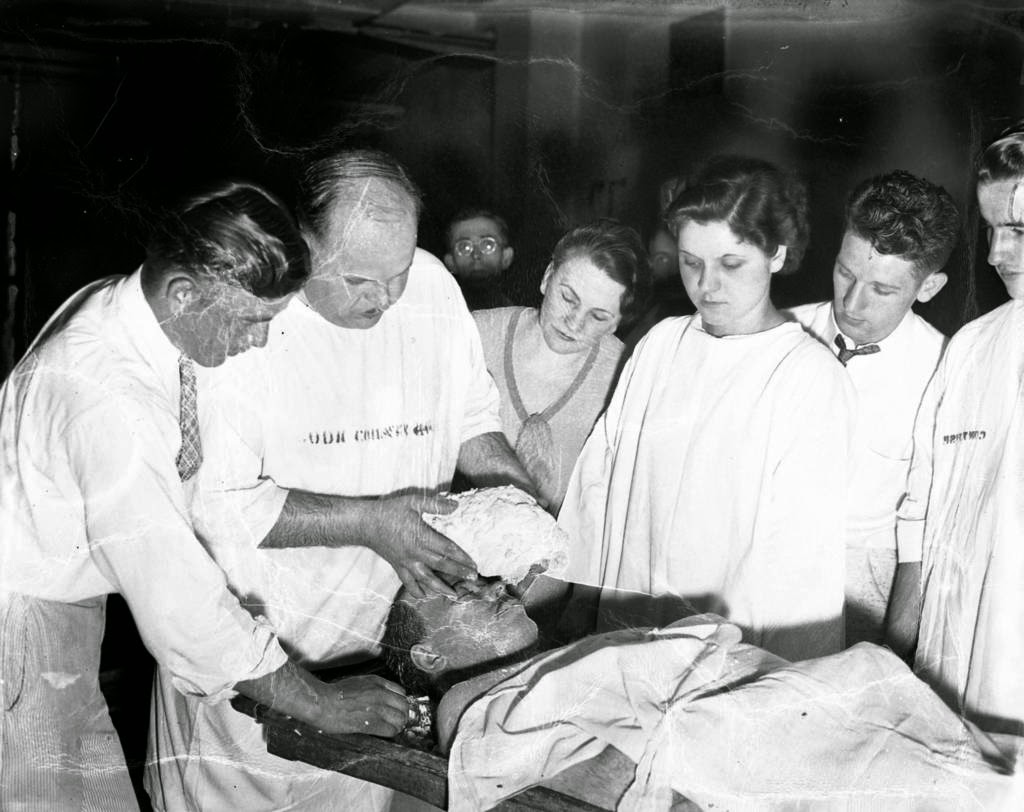
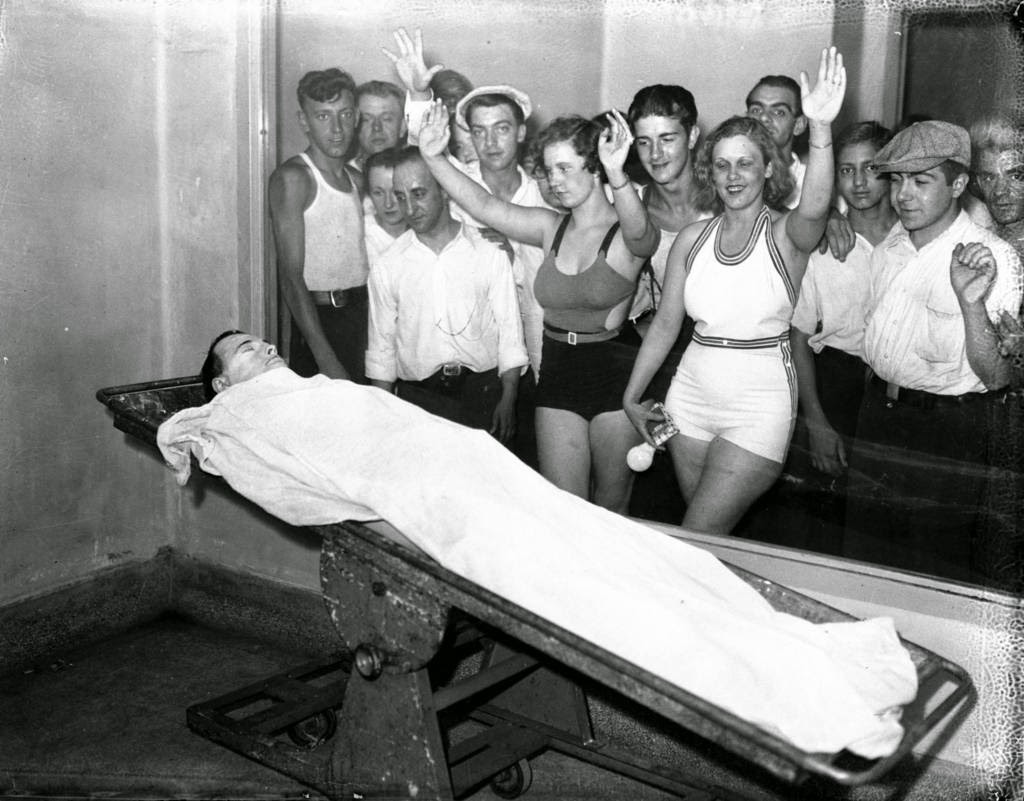
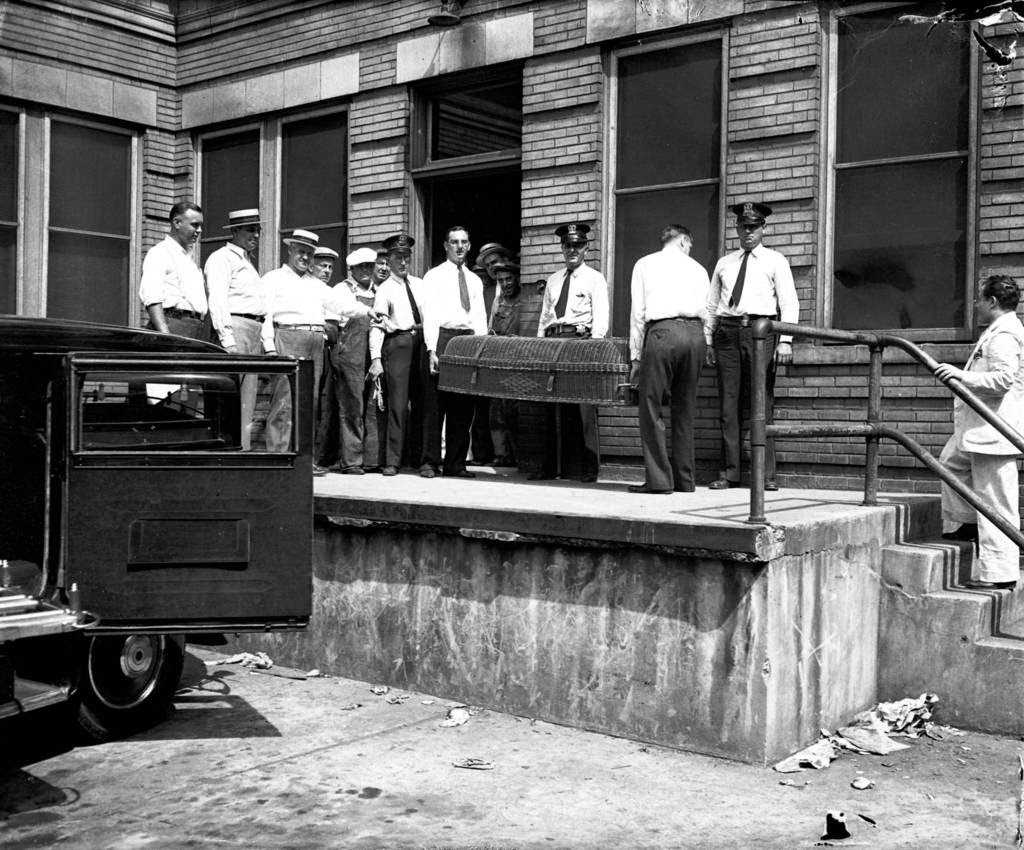
John Dillinger, center, is handcuffed to Deputy Sheriff R. M. Pierce, left, during Dillinger’s court hearing in Crown Point, Indiana during the first weeks of February 1934. Dillinger was charged with killing police officer William O’Malley, 43, during a bank robbery in East Chicago, Indiana on Jan. 15, 1934. His trail date was set for March 12, 1934. Dillinger would break out of the Crown Point, Indiana jail on March 3, 1934.Sgt. Edward A. Grim of the North Robey Street police station with a Dubuque, Iowa newspaper found in John Dillinger’s stolen and abandoned automobile on May 2, 1934. The bloodstained getaway car, found at 3338 N. Leavitt Street in Chicago, had a surgical kit, matches from the Little Bohemia Resort, and the newspaper dated April 23, 1934 with the headline “Dillinger On Rampage.”Indiana state police surround the house where two of the convicts were supposed to have been from the Michigan City prison break, circa Oct. 1933. On Sept. 26, 1933, ten convicts, lead by John ‘Red’ Hamilton, broke out of the Indiana State Prison in Michigan City, Indiana, using guns smuggled to them by John Dillinger. In the coming days after the prison break, the Chicago Tribune reported over “500 vigilantes, police and deputy sherriffs” searched the farming districts near Michigan City for the felons. Dillinger, who was in a jail cell in Lima, Ohio, engineered the escape of the ten convicts, who became known as Dillinger’s gang. Less than a month after they escaped from Michigan City, several of Dillinger’s gang broke him out of the jail in Lima, Ohio.John Dillinger, center, is led through the Crown Point, Indiana court building on Jan. 31, 1934 to be viewed by witnesses from the First National Bank robbery that occurred on Jan. 15, 1934 in East Chicago, Indiana. Dillinger had been caught in Arizona and flown back to Indiana to be tried for the murder of patrolman William O’Malley, 43.John Dillinger arrived back at the county jail at Crown Point, Indiana on Jan. 30, 1934 after being caught in Arizona five days earlier. Authorities were fearful that Dillinger’s gang would try to rescue their leader, so heavily armed guards surrounded the court house and jail. Dillinger was charged with killing police officer William O’Malley, 43, during a bank robbery in East Chicago, Indiana on Jan. 15, 1934.John Dillinger is handcuffed and guarded as he smokes during a court recess while Deputy Sheriff R. M. Pierce, left, looks on during Dillinger’s hearing at Crown Point, Indiana in the first weeks of February 1934. Dillinger was charged with killing police officer William O’Malley, 43, during a bank robbery in East Chicago, Indiana on Jan. 15, 1934. His trail date was set for March 12, 1934. Dillinger would break out of the Crown Point, Indiana jail on March 3, 1934.John Dillinger arrived at the county jail at Crown Point, Indiana, on Jan. 30, 1934 after being caught in Arizona five days earlier. Authorities were fearful that Dillinger’s gang would try to rescue their leader, so heavily armed guards surrounded the court house and jail.John Dillinger escaped from the county jail at Crown Point, Indiana, with only a toy gun on March 3, 1934. Dillinger threatened deputy sheriffs with a wooden gun and then locked up more than a dozen guards before fleeing in the sheriff’s own car. Dillinger was in jail awaiting trial for killing police officer William O’Malley, 43, during a bank robbery in East Chicago, Indiana on Jan. 15, 1934. His trail date had been set for March 12, 1934.The Crown Point, Indiana, Jail house, right, and County Courthouse, left, after John Dillinger escaped with only a toy gun on March 3, 1934. Dillinger threatened deputy sheriffs with a wooden gun and then locked up more than a dozen guards before fleeing in the sheriff’s own car.A police officer shows the busted out rear window of John Dillinger’s stolen and then abandoned automobile at the North Robey Street police station on May 2, 1934. The bloodstained Ford V-8 sedan, found at 3338 N. Leavitt Street in Chicago, had a surgical kit, matches from the Little Bohemia Resort, and a Dubuque, Iowa, newspaper dated April 23, 1934 with the headline “Dillinger On Rampage.”Government men at the Little Bohemia Resort in Manitowish Waters, Wisconsin, where a gun battle with John Dillinger and his gang took place on April 22, 1934. Leading the group of G-men were federal agents Melvin Purvis and Hugh Clegg. FBI agents had surrounded the lodge, but Dillinger and his gang were able to escape along the shore of the nearby lake.Max Organist looks at the guns left behind by John Dillinger and his gang on April 22, 1934 at the Little Bohemia Resort in Manitowish Waters, Wisconsin. FBI agents had surrounded the lodge were Dillinger and his gang were staying, but the outlaws were able to escape along the shore of the nearby lake.Government men stand by the Ford that was abandoned by John Dillinger during a gun battle between authorities and Dillinger’s gang at the Little Bohemia Resort on April 22, 1934 in Manitowish Waters, Wisconsin. FBI agents had surrounded the lodge, but Dillinger and his gang were able to escape along the shore of the nearby lake. Two people were killed during the raid, an FBI agent and a local man who was mistaken for one of Dillinger’s gang.Men carry the body of Chicago federal agent W. Carter Baum, a government man who was killed by “Baby Face” Nelson of John Dillinger’s gang, during a shoot-out at the Little Bohemia resort in Manitowish Waters, Wisconsin on April 22, 1934. Two people were killed during the raid, an FBI agent and a local man who was mistaken for one of Dillinger’s gang.Constable Carl C. Christensen with Mary Levendoski at the Twin City Hospital in Ironwood, Michigan after Christensen was shot by “Baby Face” Nelson of the John Dillinger gang during a gun fight at the Little Bohemia Resort in Manitowish Waters, Wisconsin on April 22, 1934. Christensen, a Spider Lake, Wisc. constable, was said to be gravely wounded but survived his wounds.Eveyln “Billie” Frechette was released from prison on Jan. 30, 1936. Frechette was arrested in Chicago while her boyfriend and fugitive, John Dillinger, watched helplessly nearby on April 9, 1934. Frechette, who had met Dillinger in 1933, was charged with harboring a fugitive in her St. Paul, Minnesota apartment. She spent two years in jail, getting out in 1936. Upon her release, Frechette toured in a theatrical production called “Crime Doesn’t Pay” with members of Dillinger’s family.John Dillinger and his gang arrive in Chicago on Jan. 30, 1934 after their arrest in Arizona five days earlier. Dillinger had been caught in Arizona and flown back to Indiana to be tried for the murder of patrolman William O’Malley, 43. O’Malley was shot down during the First National Bank robbery in East Chicago, Indiana. Dillinger’s trail date was set for March 12, 1934. Dillinger would break out of the Crown Point, Indiana jail on March 3, 1934.Copy photos of members of John Dillinger’s gang, circa Dec. 1933. From top left, are Harry Pierpont (11014), Charles Makley (12636), John Dillinger (13225), and Russell Clark (12261).Dillinger was shot and killed by FBI agents on July 22, 1934 at the Biograph Theater on Lincoln Avenue in Chicago after receiving a tip from Dillinger’s friend Anna Sage. Sage, known as the “Woman in Red,” told authorities that she, Dillinger, and Dillinger’s girlfriend Polly Hamilton Keele would be at the movies and to look for her dressed in red. Some reports say Sage was actually dressed in orange.Anna Sage, nicknamed the “Women in Red”, at the Sheffield Avenue police station in July 1934. Sage, who wore red or orange as a mark for the FBI, had been with John Dillinger when he was shot and killed by the FBI outside the Biograph Theater in Chicago on July 22, 1934. Sage said she made a deal with famous FBI agent Melvin Purvis. In exchange for information on Dillinger’s whereabouts, she would not be deported to her home country of Romania for running a brothel.People stand around the blood stain from John H. Dillinger, 32, in the alley behind the Biograph Theater in Chicago. Dillinger was shot and killed by FBI agents on July 22, 1934 after receiving a tip from Dillinger’s friend Anna Sage. Sage, known as the “Woman in Red,” told authorities that she, Dillinger, and Dillinger’s girlfriend Polly Hamilton Keele would be at the movies and to look for her dressed in red. Some reports say Sage was actually dressed in orange.John Dillinger’s body lies dead on a slab at the Cook County Morgue after he was shot and killed by FBI agents on July 22, 1934 at the Biograph Theater in Chicago. According to the Chicago Tribune, Dillinger was “partly covered with a sheet below which well manicured feet protrude, a tag labeled “Dillinger” on each big toe.”Prof. D. E. Ashworth lifts a plaster death mask off the face of John Dillinger while his students watch on July 23, 1934 at the Cook County Morgue in Chicago. Prof. Ashworth, of the Worsham College of Mortuary Science, had told employees at the morgue the he had permission to create the mask, but didn’t. Ashworth and his students were ousted from the morgue and the partially completed mask was confiscated by the police. Unbeknownst to the FBI, a complimentary copy of another death mask was sent to the bureau from the Reliance Dental Corporation, who also did not have permission. To this day, there is controversy over how many death masks were made of Dillinger’s face and the authenticity of the masks.Betty Nelson and Rosella Nelson view the body of John Dillinger, 32, while in bathing suits at the Cook County Morgue, located at Polk and Wood Streets, in Chicago. In the days after Dillinger was killed on July 22, 1934, massive crowds lined up outside the morgue to get a glimpse of the notorious public enemy.John Dillinger’s body leaves the Cook County Morgue at Polk and Wood Streets to be taken to McCready Funeral home at 4506 Sheridan Road on July 24, 1934. Dillinger’s father, John Dillinger Sr., 70, traveled from Mooresville, Ind. to claim his son’s body. Dillinger was embalmed and then taken back to Indiana for burial.John Dillinger Sr., seated (the father of notorious gangster John Dillinger), signs a contract to appear at the Walk-a-thon at Calumet City, Ill., while Frank Gladdin, general manager of the Metropolitan Vaudeville Agency, watches at the Woods Theater building on Aug. 28, 1934. With Dillinger Sr. are, from left, Frances Dillinger, 12, Doris Dillinger, 16 (both step-sisters of John Dillinger Jr.), Mrs. Audrey Hancock, (John Dillinger Jr.’s sister), and her husband Mr. Emmett Hancock. The Dillinger family, along with John Jr.’s girlfriend Evelyn “Billie” Frechette, toured with a theatrical production called “Crime Doesn’t Pay” after Dillinger’s death.
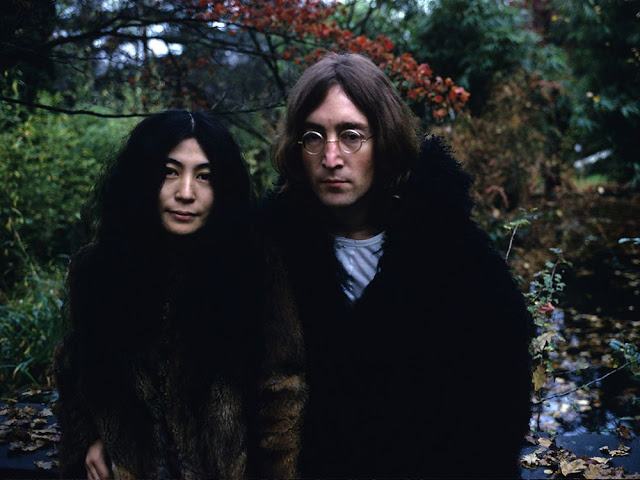
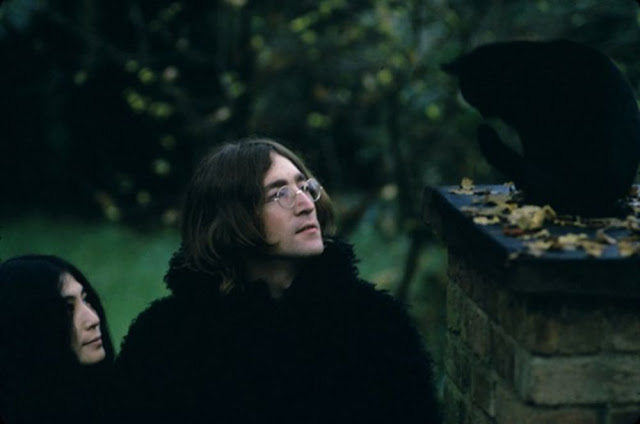
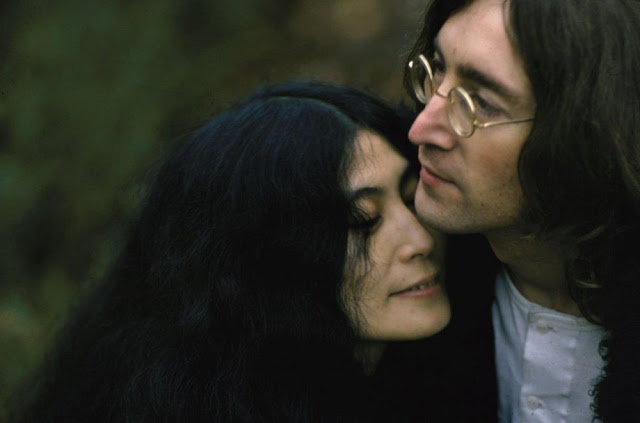
Susan Wood’s work represents a number of milestones in American photography over a period of more than 30 years. Although her most famous magazine cover is an epochal photograph of John Lennon and Yoko Ono for Look magazine, Susan is also noted for her movie stills. Wood has been represented by Getty Images since 2004 and her editorial work continues to be published around the world in titles such as The New York Times, Rolling Stone, The Wall Street Journal, Vanity Fair, Vogue, The London Times, and Newsweek.
Wood also excelled in developing relationships with other stars, knowing when to push and knowing when to pull back, which resulted in some of the most famous photographs of John Lennon and Yoko Ono.
“If they feel that you are pushing too hard, it’s not so good,” she said. “I can only give you the example of John Lennon and Yoko Ono. The story was a major magazine, and they wanted to kind of present themselves to the world, but yet when I first met them they seemed to be backing away. The writer was there from the United States. So I said, ‘John, I think you and Yoko may just find this too intense. And Betty is here from the U.S and I promised to take her shopping.’ I had been working for Vogue, so I knew all the shops on the King’s Road. ‘Why don’t we just break today and we’ll pick up again tomorrow. You and Yoko can relax.’ He said ‘just a second’, and then went over to Yoko and whispered to her, and then he came back and said, ‘Can we come too?’ So the ice was broken.”
John Winston Ono Lennon (born John Winston Lennon; 9 October 1940 – 8 December 1980) was an English singer, songwriter, musician and peace activist who achieved worldwide fame as the founder, co-songwriter, co-lead vocalist and rhythm guitarist of the Beatles. Lennon was characterised by the rebellious nature and acerbic wit in his music, writing and drawings, on film, and in interviews. His songwriting partnership with Paul McCartney remains the most successful in history.
Born in Liverpool, Lennon became involved in the skiffle craze as a teenager. In 1956, he formed the Quarrymen, which evolved into the Beatles in 1960. Sometimes called “the smart Beatle”, he was initially the group’s de facto leader, a role gradually ceded to McCartney. In the mid-1960s, Lennon authored In His Own Write and A Spaniard in the Works, two collections of nonsense writings and line drawings. Starting with “All You Need Is Love”, his songs were adopted as anthems by the anti-war movement and the larger counterculture. In 1969, he started the Plastic Ono Band with his second wife, the multimedia artist Yoko Ono, held the two-week-long anti-war demonstration Bed-Ins for Peace, and quit the Beatles to embark on a solo career.
Between 1968 and 1972, Lennon and Ono collaborated on many records, including a trilogy of avant-garde albums, his solo debut John Lennon/Plastic Ono Band, and the international top 10 singles “Give Peace a Chance”, “Instant Karma!”, “Imagine” and “Happy Xmas (War Is Over)”. Moving to New York City in 1971, his criticism of the Vietnam War resulted in a three-year attempt by the Richard Nixon administration to deport him. Lennon and Ono separated from 1973 to 1975, a period that included chart-topping collaborations with Elton John (“Whatever Gets You thru the Night”) and David Bowie (“Fame”). Following a five-year hiatus, Lennon returned to music in 1980 with the Ono collaboration Double Fantasy. He was shot and killed by a Beatles fan, Mark David Chapman, three weeks after the album’s release.
As a performer, writer or co-writer, Lennon had 25 number-one singles in the Billboard Hot 100 chart. Double Fantasy, his best-selling album, won the 1981 Grammy Award for Album of the Year. In 1982, Lennon won the Brit Award for Outstanding Contribution to Music. In 2002, Lennon was voted eighth in a BBC history poll of the 100 Greatest Britons. Rolling Stone ranked him the fifth-greatest singer and thirty-eighth greatest artist of all time. He was inducted into the Songwriters Hall of Fame (in 1997) and the Rock and Roll Hall of Fame (twice, as a member of the Beatles in 1988 and as a solo artist in 1994). (Wikipedia)
Yoko Ono (born February 18, 1933) is a Japanese multimedia artist, singer, songwriter and peace activist. Her work also encompasses performance art, which she performs in both English and Japanese, and filmmaking.
Ono grew up in Tokyo and moved to New York in 1953 with her family. She became involved in New York City’s downtown artists scene, which included the Fluxus group. She became well known in 1969 when she married English singer John Lennon of the Beatles, with the couple using their honeymoon as a stage for public protests against the Vietnam War. She and Lennon remained married until he was murdered in front of the couple’s apartment building in December 1980. Together they had one son, Sean, who later also became a musician.
Ono began a career in popular music in 1969, forming the Plastic Ono Band with Lennon and producing a number of avant-garde music albums in the 1970s. She achieved commercial and critical acclaim in 1980 with the chart-topping album Double Fantasy, a collaboration with Lennon that was released three weeks before his murder, winning the Grammy Award for Album of the Year. To date, she has had twelve number one singles on the US Dance charts, and in 2016 was named the 11th most successful dance club artist of all time by Billboard magazine. Many musicians have paid tribute to Ono as an artist in her own right and as a muse and icon, including Elvis Costello, the B-52’s, Sonic Youth and Meredith Monk.
As Lennon’s widow, Ono works to preserve his legacy. She funded the Strawberry Fields memorial in Manhattan’s Central Park, the Imagine Peace Tower in Iceland, and the John Lennon Museum in Saitama, Japan (which closed in 2010). She has made significant philanthropic contributions to the arts, peace, disaster relief in Japan and the Philippines, and other causes. In 2002, she inaugurated a biennial $50,000 LennonOno Grant for Peace. In 2012 she received the Dr. Rainer Hildebrandt Human Rights Award and co-founded the group Artists Against Fracking. (Wikipedia)
If there was one legacy, among many, of president Gamal Abdel Nasser that Egypt could have done without – it is the peculiar suspicion of foreigners, to the point of embarrassment, that rode the region’s pan-Arab nationalism wave in the 1950s and 1960s. A problem that still, in various manifestations, continues up until today through institutions, mass media and the public discourse.
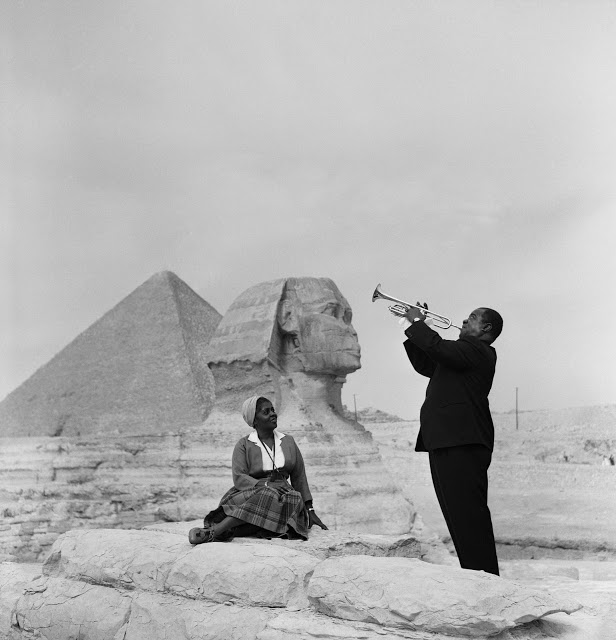
Behind the iconic image of legendary jazz musician Louis Armstrong playing his trumpet at the Pyramids – stood an artist that, you would think, had no relation to Egypt’s politics and the Middle East conflict, and infact once stated “I don’t know nothin’ about politics”, was dragged into a mind-boggling controversy.
Louis Armstrong playing for his wife Lucille Wilson at the Pyramids of Giza, 1961.
On his visit to Egypt in 1961, Armstrong was standing in a Cairo hotel lobby packed with over 20 news reporters who asked him if he supported Zionism. It must have been like asking Egyptian singer Abdel Halim Hafez visiting Russia as to what he thought of the imperialist forces in the emerging Vietnamese conflict.
An incredulous Armstrong replied “What is that Daddy?” The reporters were surprised that an artist, immersed in his own world, was ignorant of their regional issues, the reporters said: “You helped the Jews a lot.” Armstrong, replied “Yeah, I help them. I help anybody. I help you. You need help? I help anybody’. He continued “I’m going to tell you this. I got a trumpet, and I got a young wife, and I ain’t got time to fool with none of the stuff you guys talking about”
Armstrong just walked off and left them all in the lobby.
It was, however, the incessant suspicions of Armstrong in the lead-up to his visit that raised his ire. In 1959, Egyptian newspapers were circulating rumours that Armstrong was the leader of an Israeli spy network. Egypt’s Al-Ahram newspaper went as far as to report that Lebanese security authorities uncovered a spy ring that was reportedly working undercover with various artistic troupes. The report stated “Among the leading members of the gang was the famous American Nergro musician Louis Armstrong, who had recently visited Beirut.”
When this was brought to Armstrong’s attention, he responded “I’ve been called many things in my life but this is the first time I’ve ever been called a spy.” When asked to sum up his feelings about the report, he replied “bunk.”
For a while, Armstrong ignored the rumours, but he drew the line when Nasser himself added his weight to the senseless reports. In 1960, the Egyptian president went further and believed that one of Armstrong’s “Scat singing” record was used by the artist to pass secrets during his first 1959 tour of the Middle East. An outraged Armstrong, in Boston at the time, mailed Nasser a copy of the suspect record, with a note rebutting the accusations:
“It’s all Greek to me. They claimed all that junk because I played in Israel. I don’t have to be a spy to earn a living. I have enough money blowing the horn and I have a very happy life doing it. Why don’t you tell these people who are spreading all this stuff to come around. I’ll tell them a few good traveling salesman jokes.”
It is not known how Nasser reacted. However, he did not stop the musician’s visit to Egypt the following year.
The 1959 Middle East tour, that Nasser referred to, saw a prophetic Armstrong when, in Beirut, sitting around with colleagues and reporters, all smoking hashish, was asked “Say, how come you going playing for them damn Jews down in Israel?” Armstrong replied “Let me tell you something. When I go down there, the first thing they going to tell me, how come you play for them damn Arabs over there? Let me tell you something, man. That horn”, pointing to his prized instrument, “you see that horn? That horn ain’t prejudiced. A note’s a note in any language.”
True enough, when Armstrong landed in Israel, the first question he was asked as to why he plays in Arab countries, a furious Armstrong responded “I told them that you guys were going to say the same damn thing. So ain’t none of you no better than the other side. You’s as bad as they are, man”
“If I don’t practice for a day, I know it. If I don’t practice for two days, the critics know it. And if I don’t practice for three days, the public knows it” – Louis Armstrong.
Poor Armstrong, no wonder why he suffered a heart attack that same year in which his health would only deteriorate from this point onwards.
Of course, this is not to overlook the fact the US State Department sent artists like Armstrong on public and cultural diplomacy initiatives around the world to counter the influence of the Soviet Union in the developing world. Yet this is not the same deal as a “leader of an Israeli spy network.” It was atrocious enough that he suffered from the scourge of racism back home, even at the height of his fame, that he stated to an American reporter in 1957: “It’s getting almost so bad a colored man hasn’t got any country.” He also told Ebony magazine in a 1964 interview: “I don’t socialize with the top dogs of society after a dance or concert. These same society people may go around the corner and lynch a Negro.”
Yet, he was not even spared, at least ideologically, on the international platform.
The impoverished thinking that unfairly and irresponsibly attacked Armstrong – raised a generation that rules Egypt today, if not the Arab world, and sets the tone for a destructive conspiratorial language that tarnishes, if not sentences, the innocent, disembowels the political public sphere and foments political and social tensions. Armstrong visited an Israel that has since become an increasingly racist, brutal and a militarised state that would make Apartheid South Africa look like a lightweight. Not helped by the same government that sponsored Armstrong’s visit.
Armstrong’s encounter with the Middle East was a microcosmic reflection of the wider cancerous socio-political tumour of denial and scapegoating in the region that just keeps on festering with time. More so, the “What is that Daddy?” responses of Armstrong were refreshingly simple, altruistic and empathetic, in a complex, murky and relentless region where the indiscriminate use of words and charges are prone to lose all meaning.
So a posthumous note to Armstrong, nothing has changed since you left the Middle East, just more of the same, and worse. Someday, the meaning of ‘What a wonderful world’ will be understood and sung. Someday.
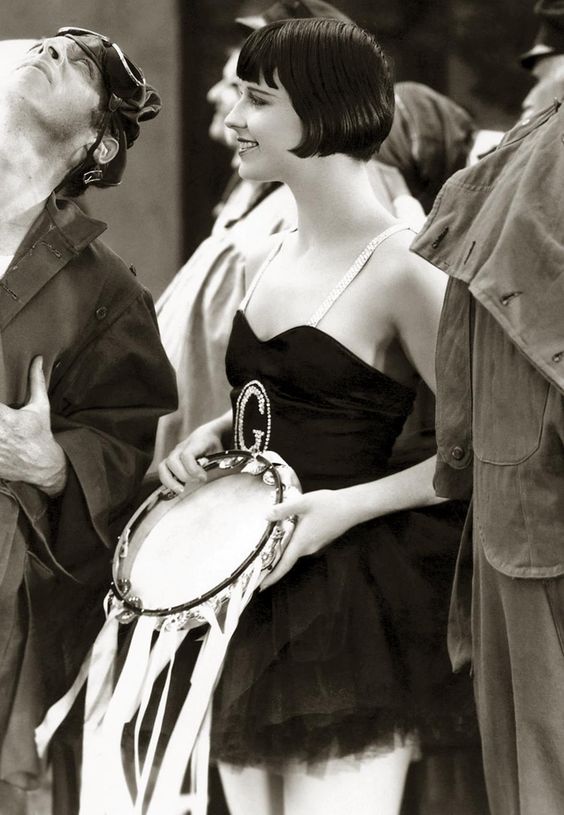
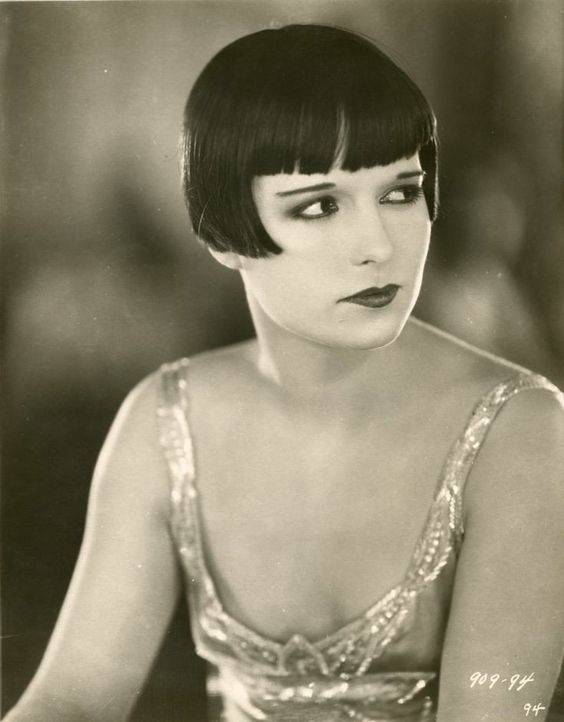
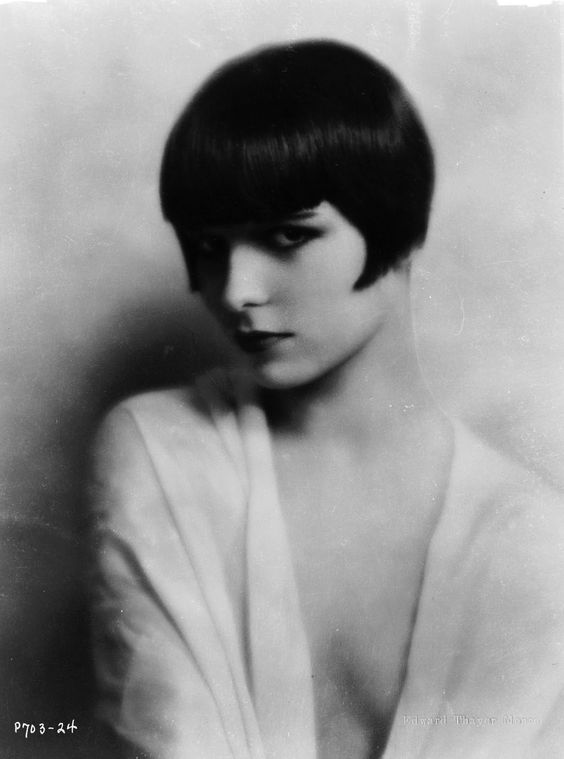
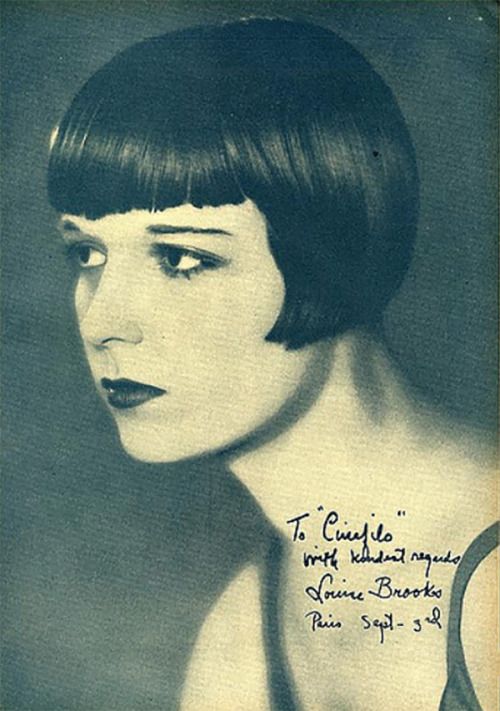
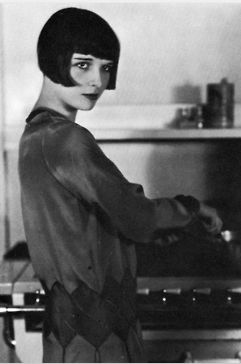
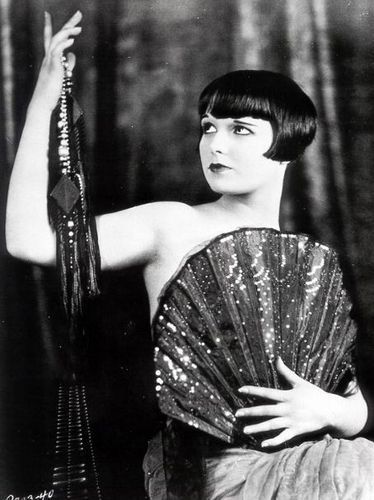
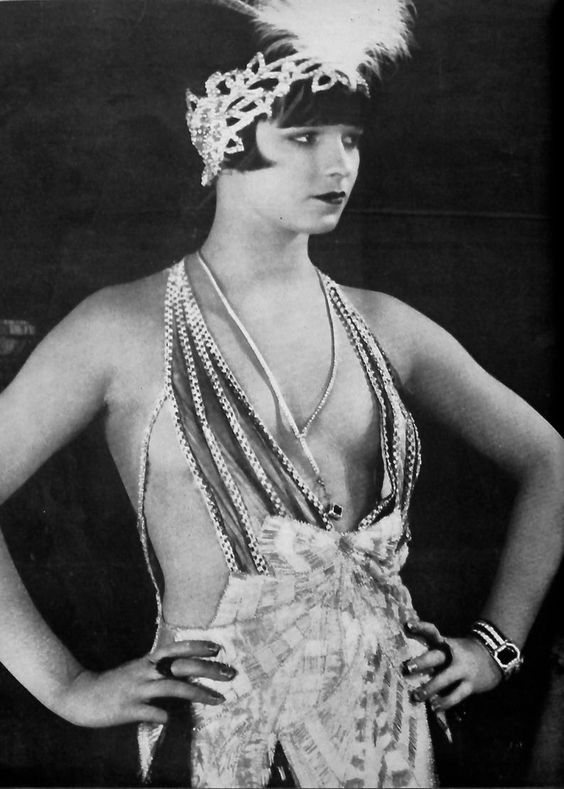
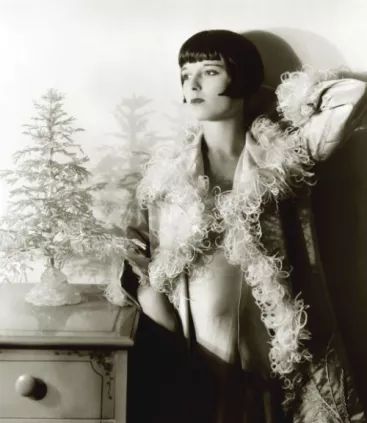
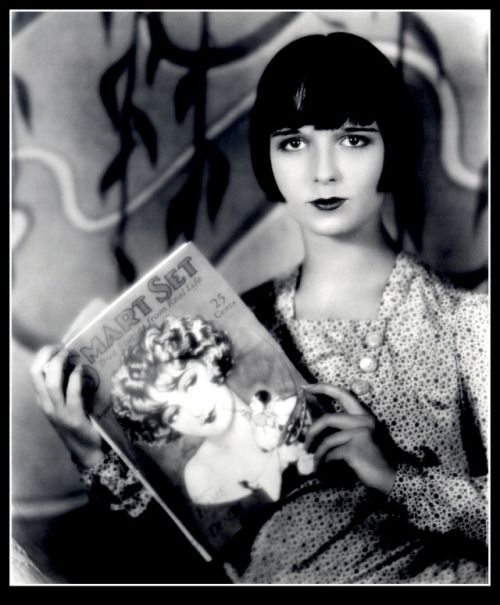
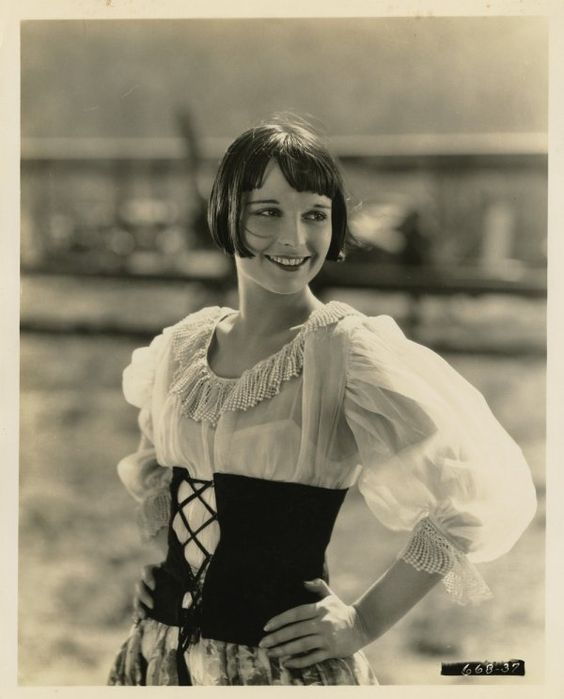
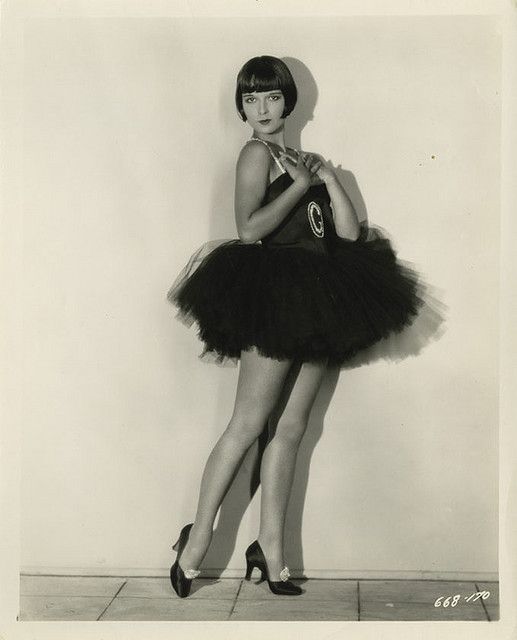
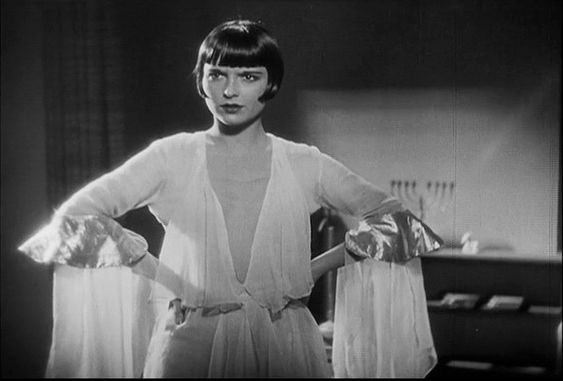
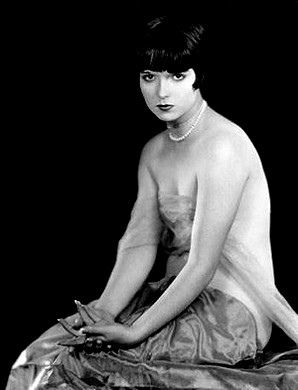
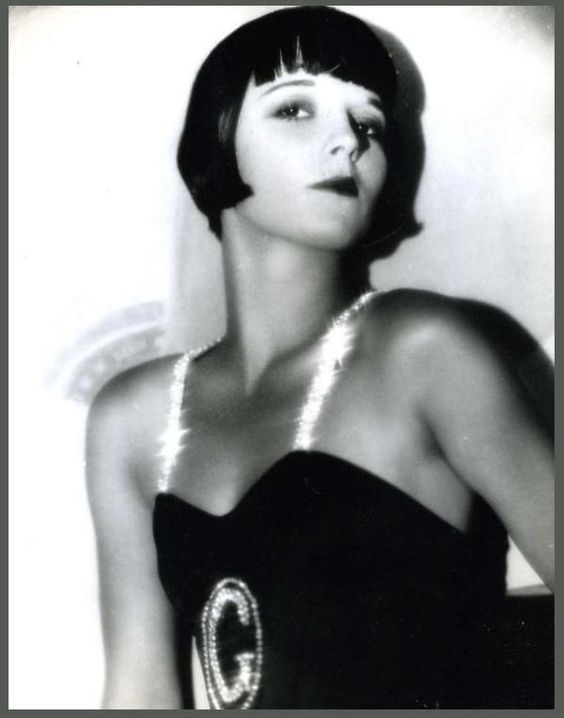
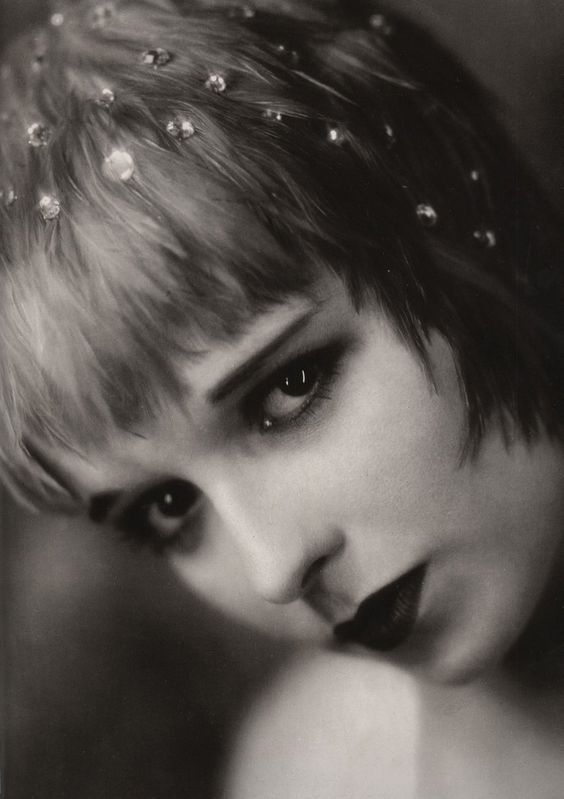
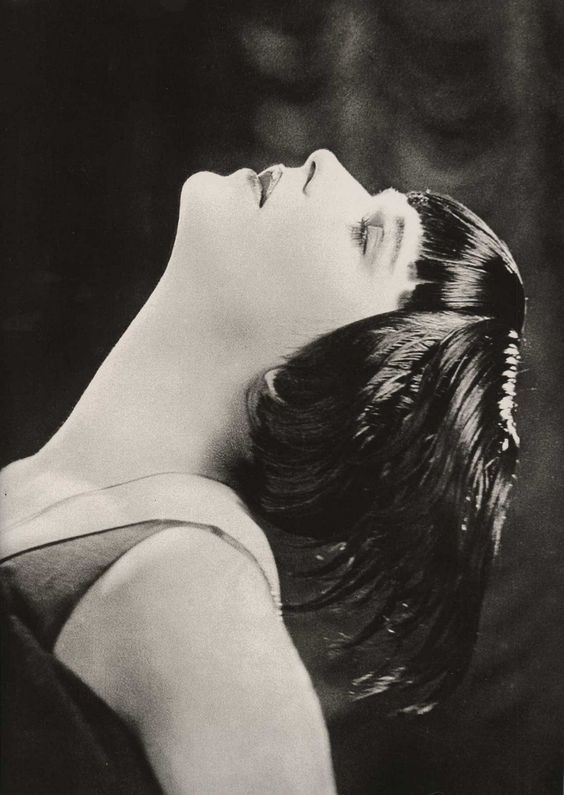
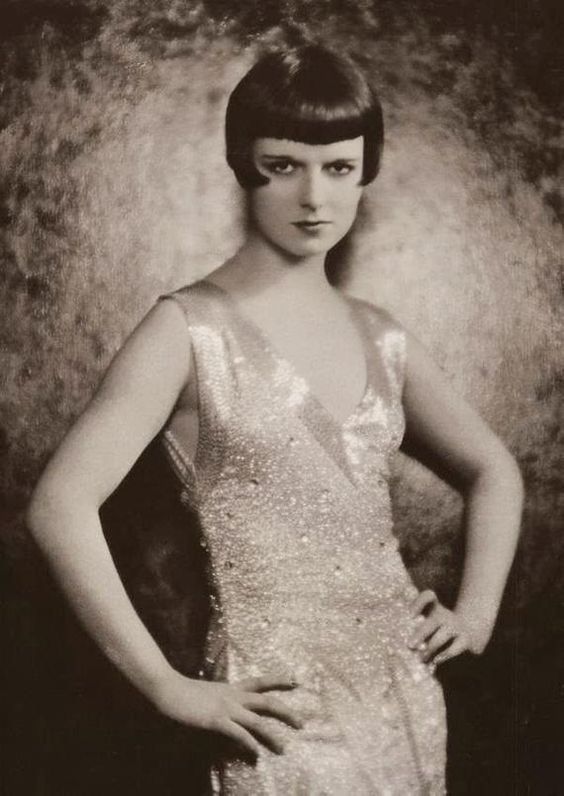
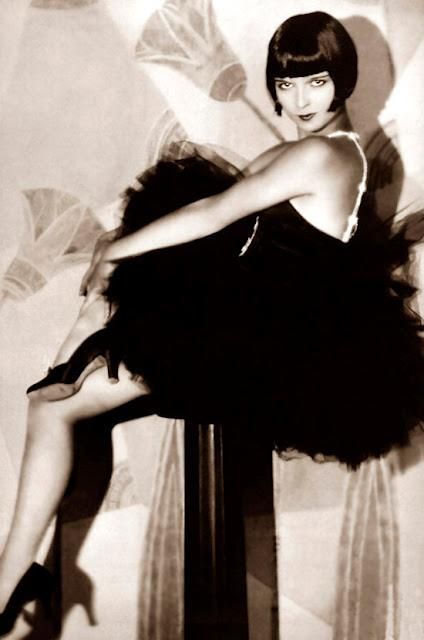
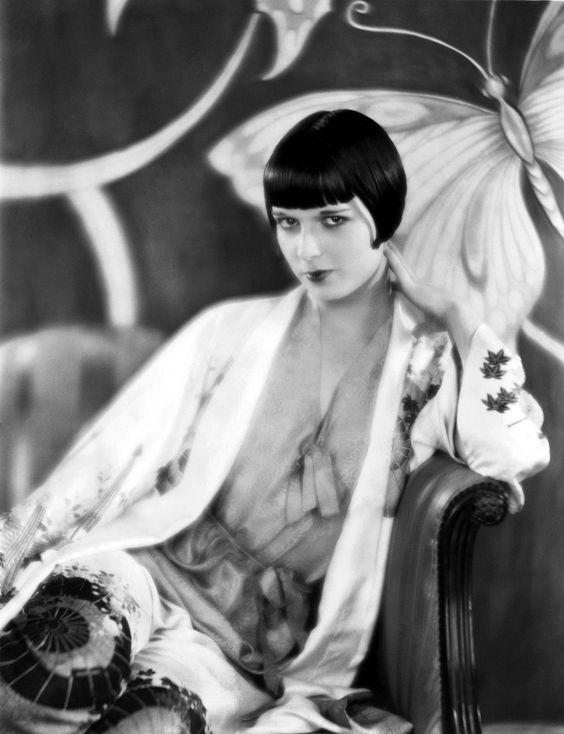
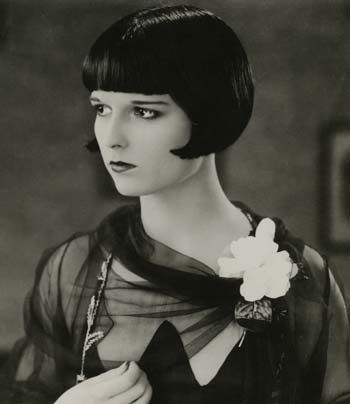
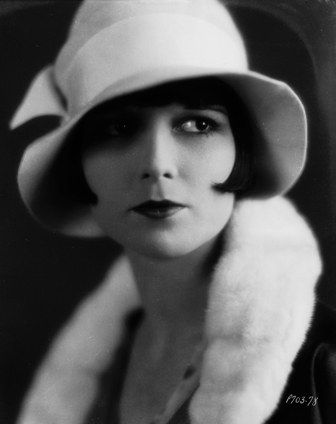
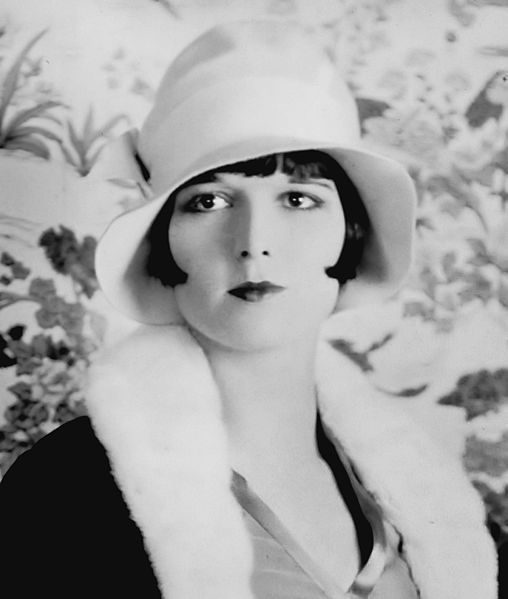
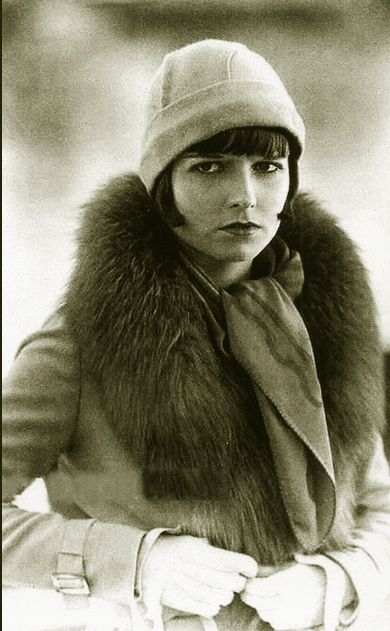
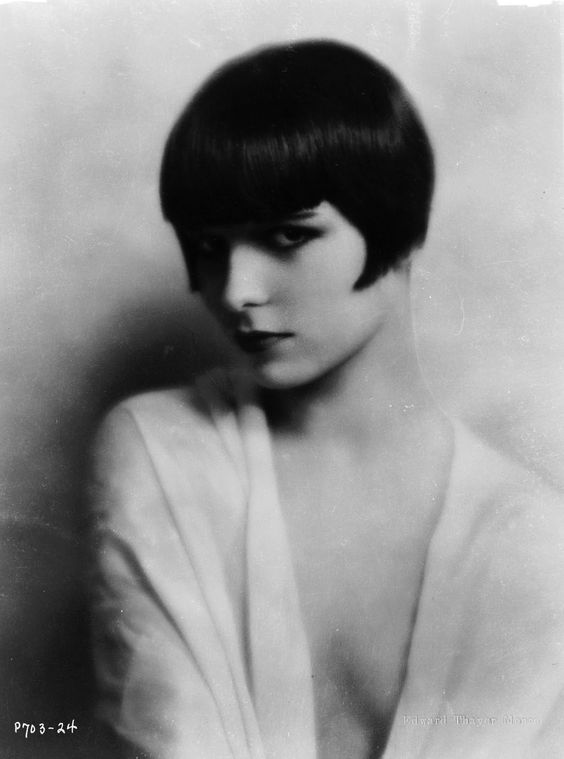
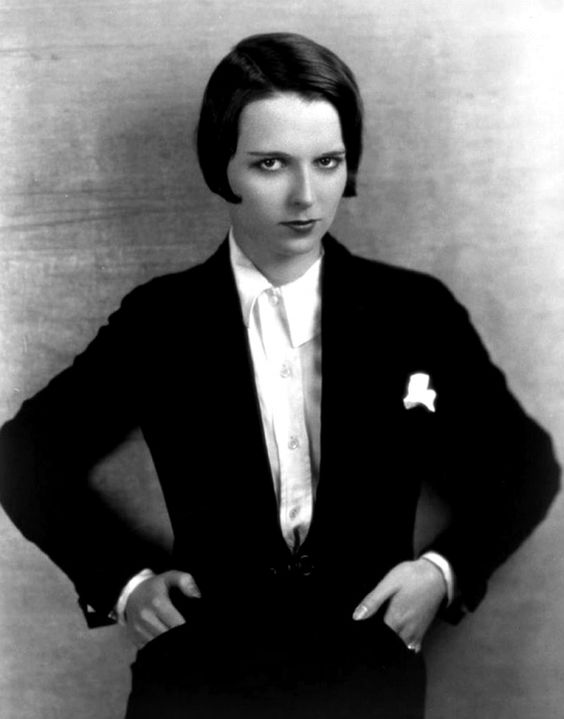
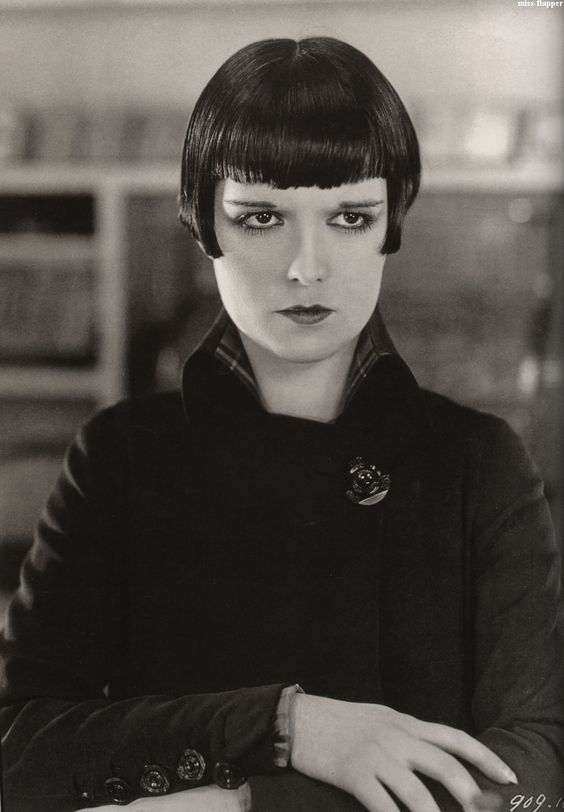
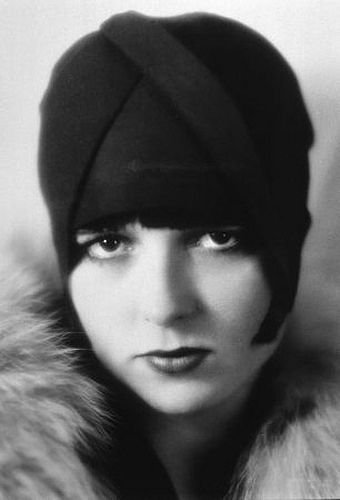
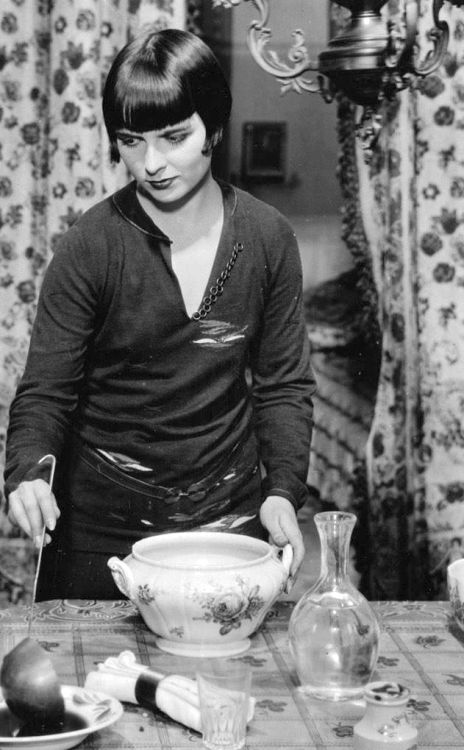
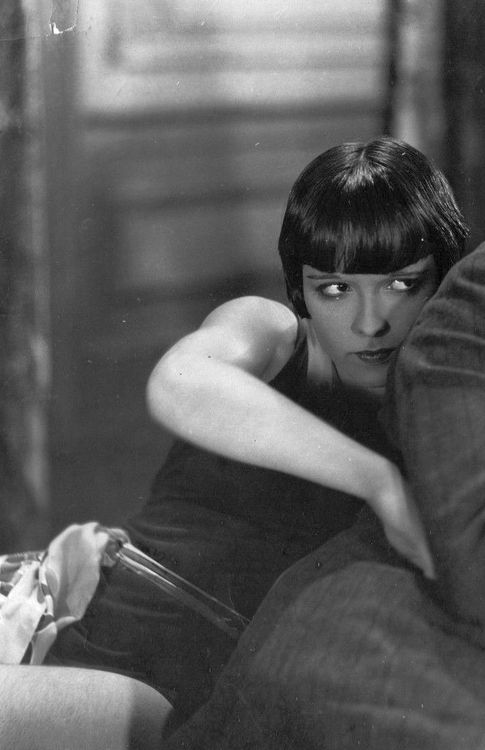
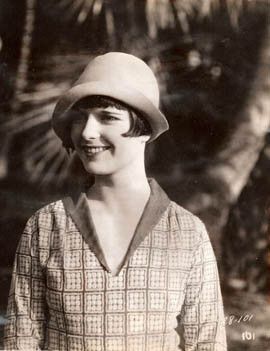
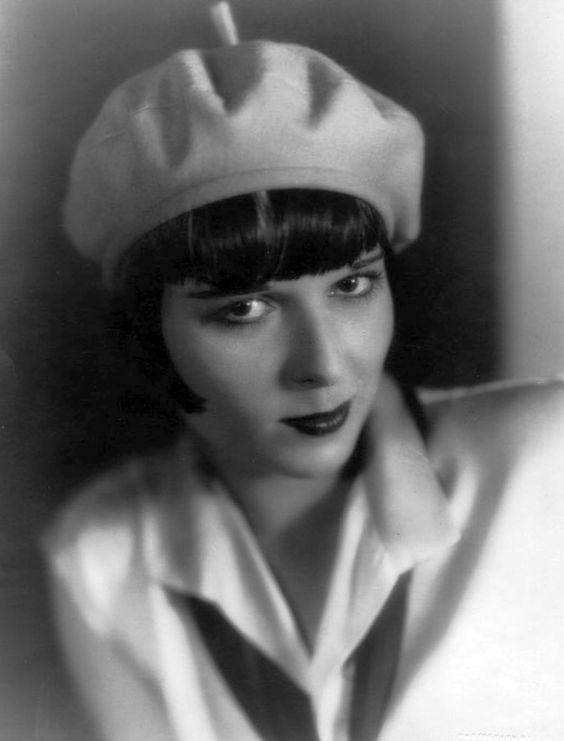
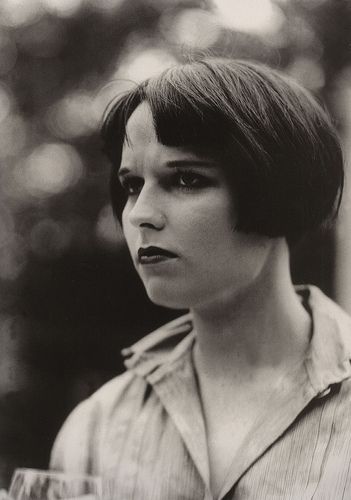
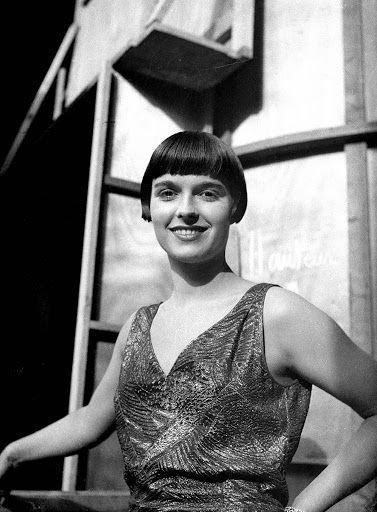
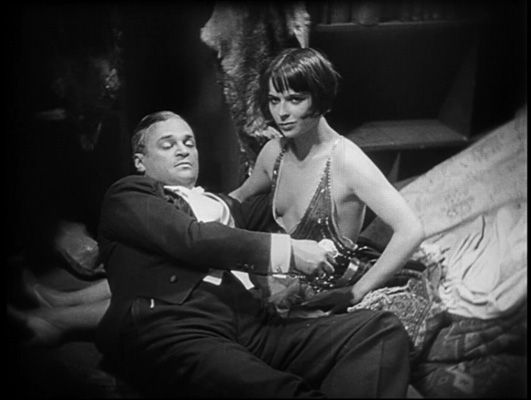
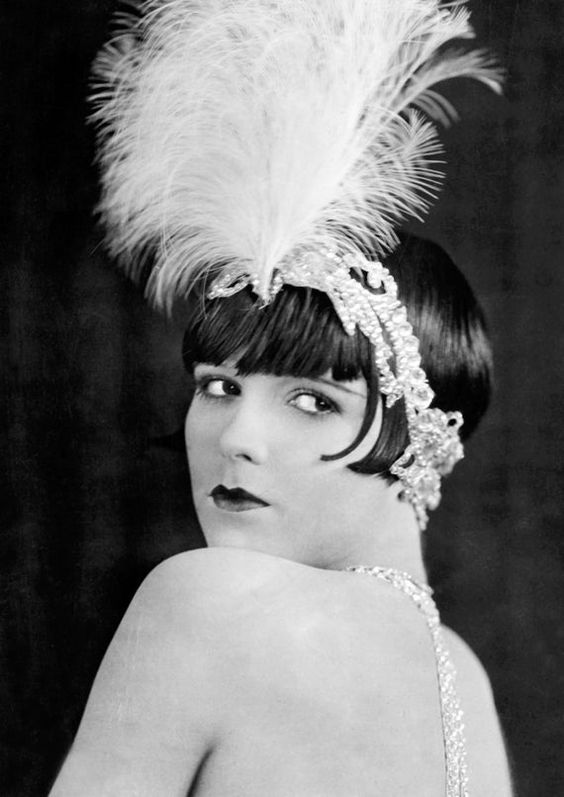
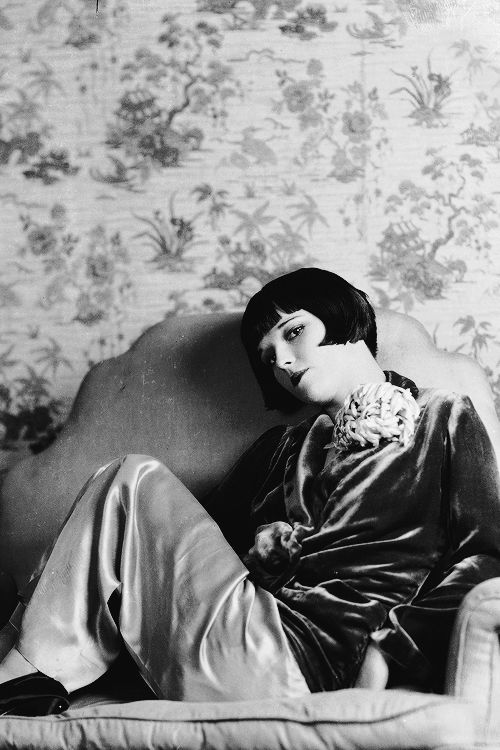
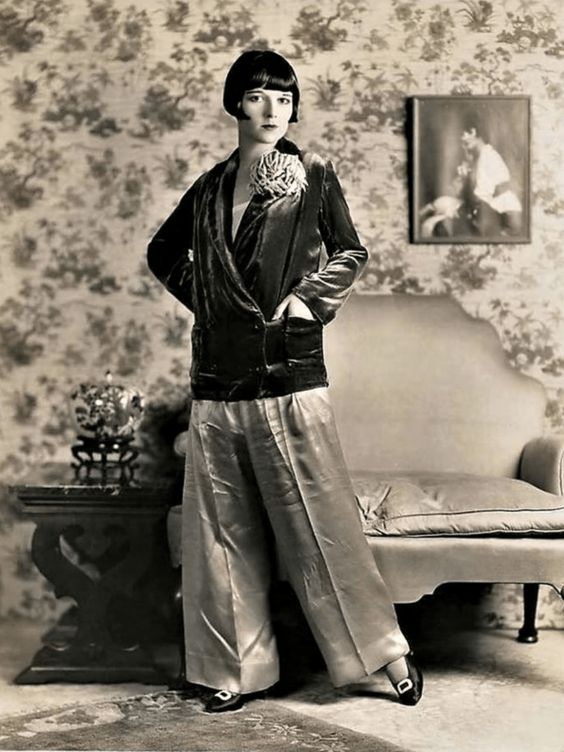
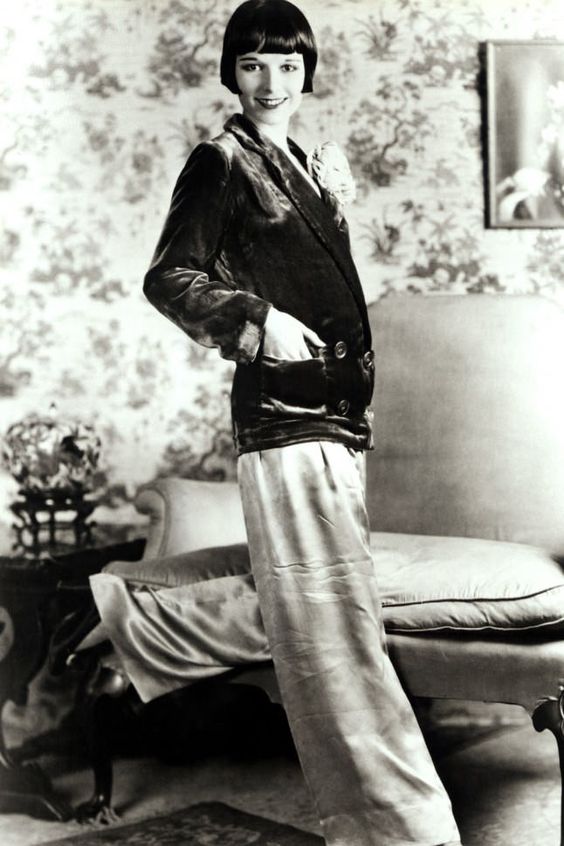
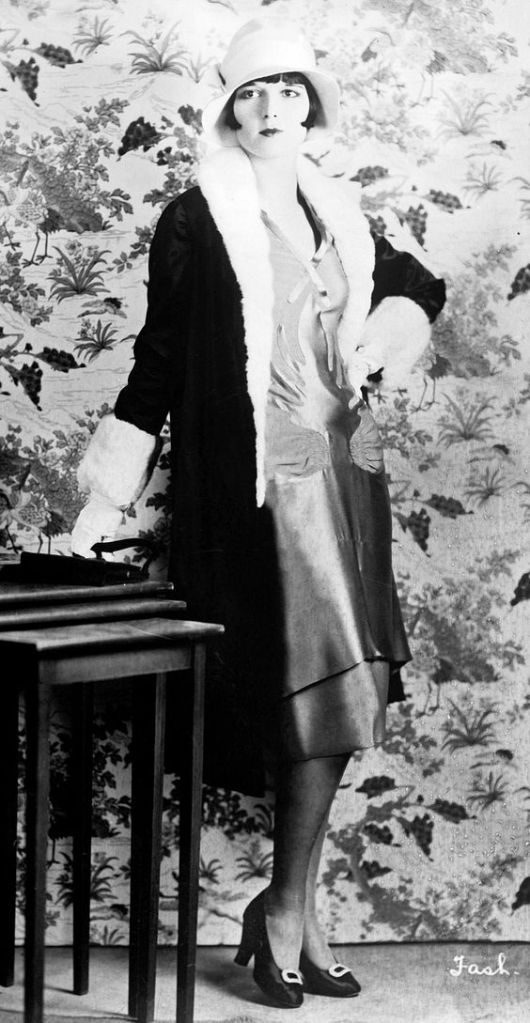
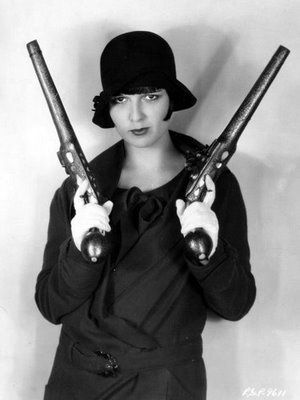
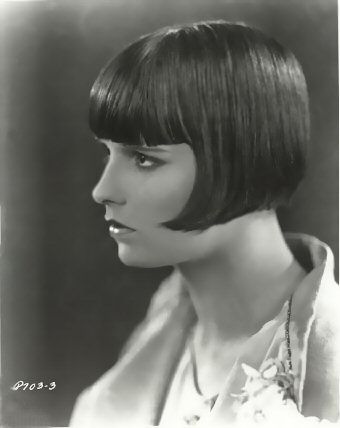
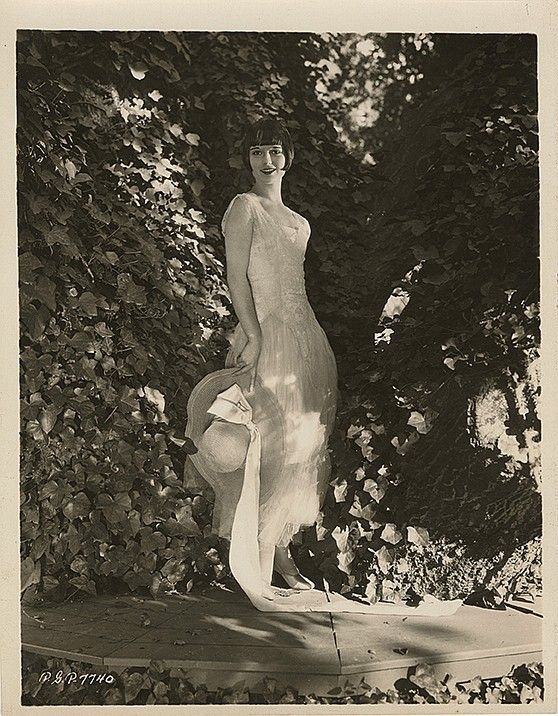
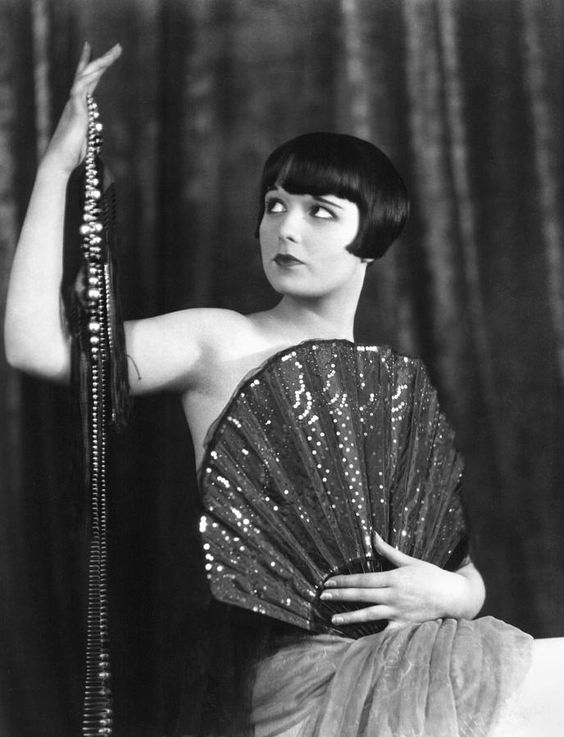
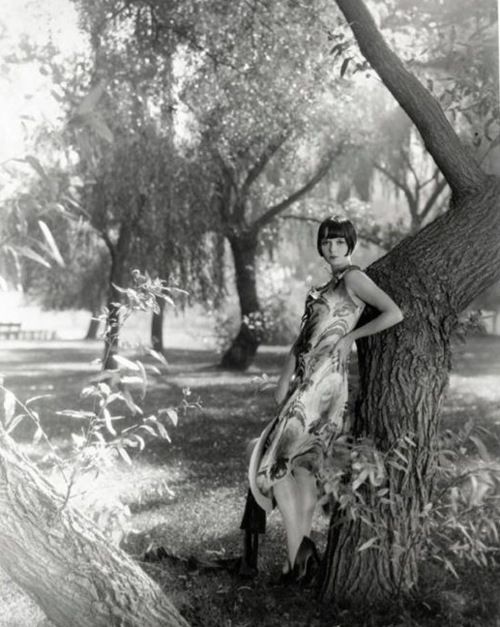
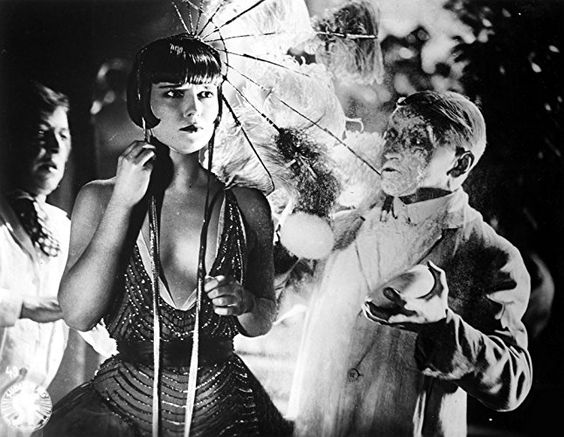
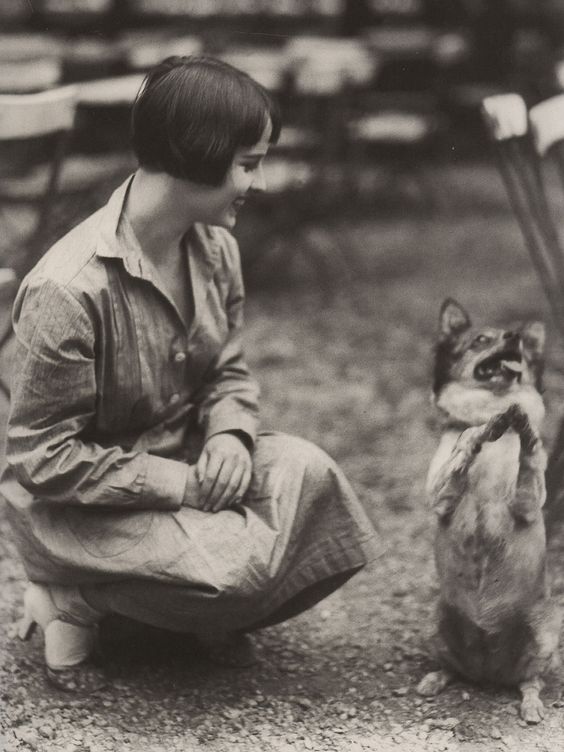
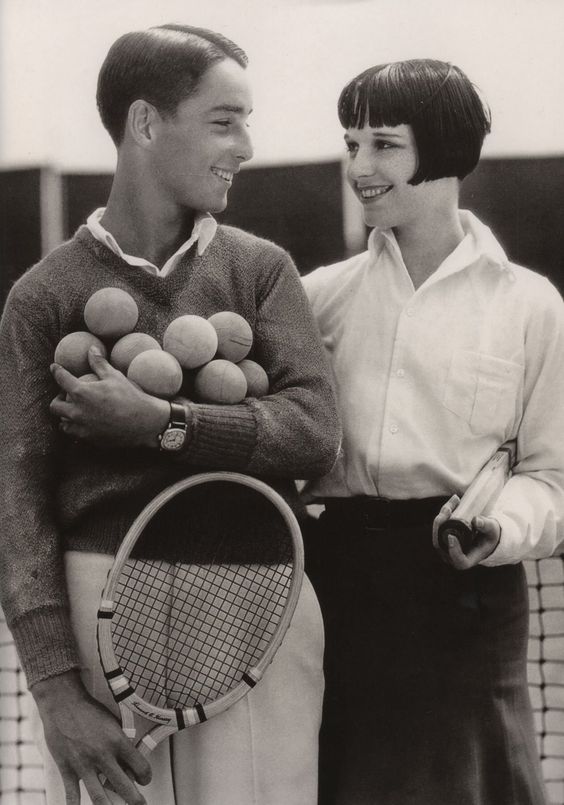
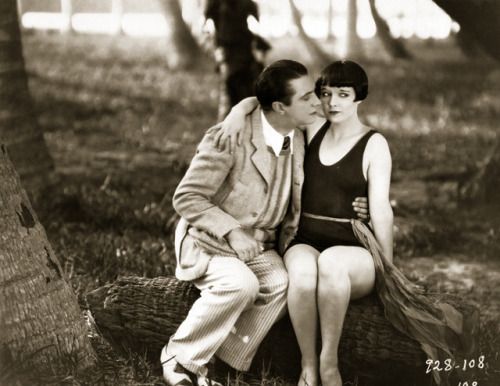
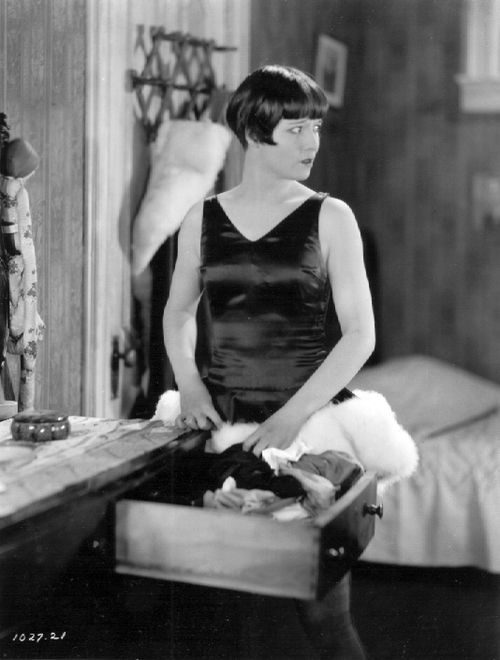
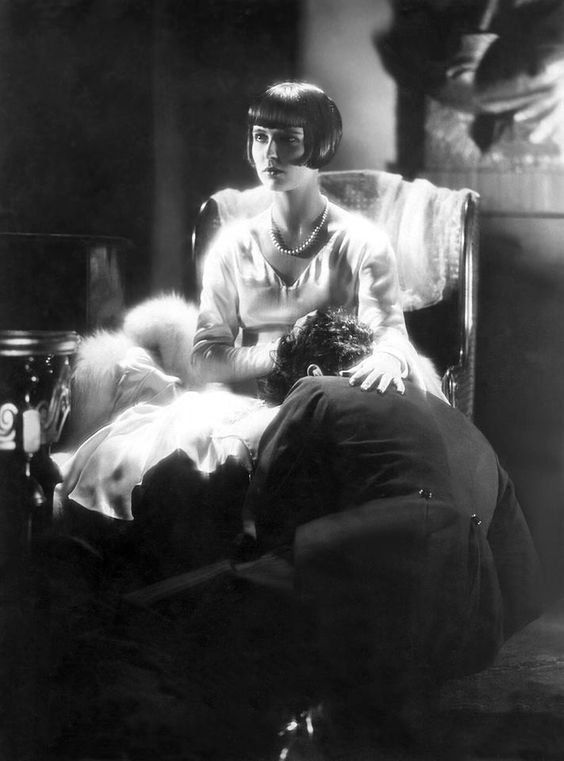
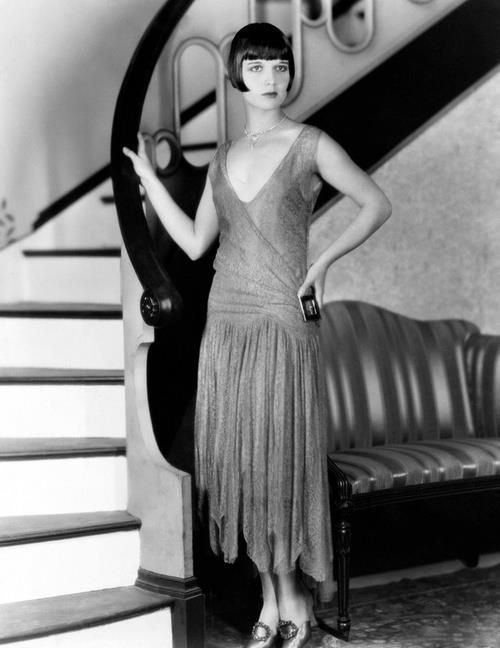
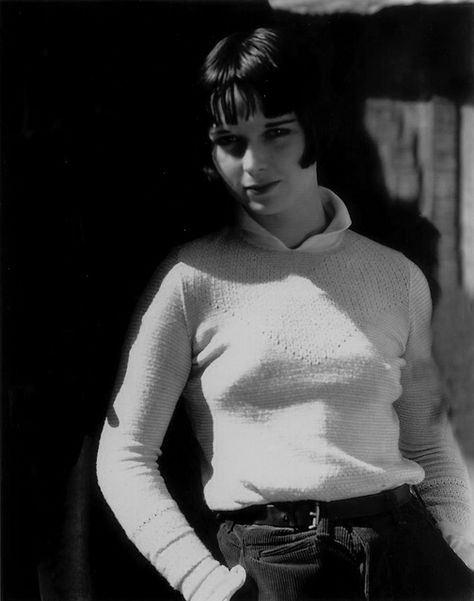
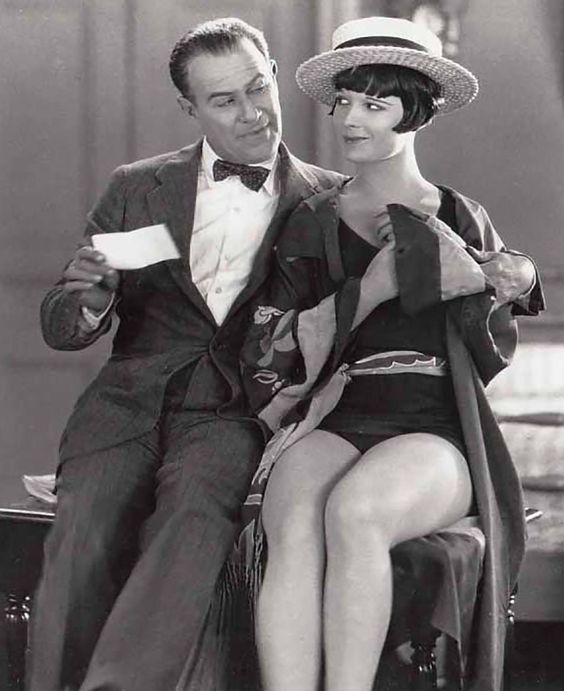
Mary Louise Brooks (November 14, 1906 – August 8, 1985) was an American film actress and dancer during the 1920s and 1930s. She is regarded today as a Jazz Age icon and as a flapper icon due to her bob hairstyle that she helped popularize during the prime of her career.
At the age of fifteen, Brooks began her career as a dancer and toured with the Denishawn School of Dancing and Related Arts where she performed opposite Ted Shawn. After being fired, she found employment as a chorus girl in George White’s Scandals and as a semi-nude dancer in the Ziegfeld Follies in New York City. While dancing in the Follies, Brooks came to the attention of Walter Wanger, a producer at Paramount Pictures, and was signed to a five-year contract with the studio. She appeared in supporting roles in various Paramount films before taking the heroine’s role in Beggars of Life (1928). During this time, she became an intimate friend of actress Marion Davies and joined the elite social circle of press baron William Randolph Hearst at Hearst Castle in San Simeon.
Dissatisfied with her mediocre roles in Hollywood films, Brooks went to Germany in 1929 and starred in three feature films which launched her to international stardom: Pandora’s Box (1929), Diary of a Lost Girl (1929), and Miss Europe (1930); the first two were directed by G. W. Pabst. By 1938, she had starred in seventeen silent films and eight sound films. After retiring from acting, she fell upon financial hardship and became a paid escort. For the next two decades, she struggled with alcoholism and suicidal tendencies. Following the rediscovery of her films by cinephiles in the 1950s, a reclusive Brooks began writing articles about her film career; her insightful essays drew considerable acclaim. She published her memoir, Lulu in Hollywood, in 1982. Three years later, she died of a heart attack at age 78. (Wikipedia)
It was June 22nd, 1941 when Hitler cut ties with Stalin and began the ill-fated Operation Barbarossa.
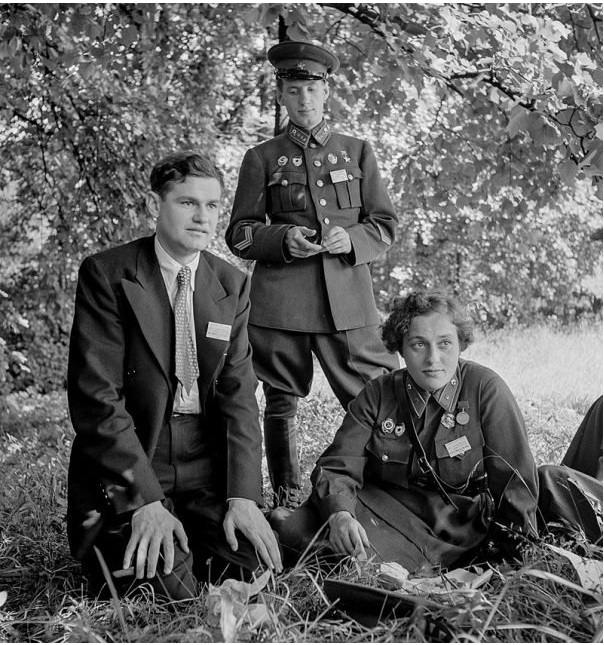
As the German Wehrmacht began pouring across the border, a rather fashionable young woman, Lyudmila Pavlichenko, was studying history at Kiev University, Ukraine. Pavlichenko was determined to put her enthusiasm for rifle shooting into play against the enemy.
Born in a small Ukrainian town in 1916, she later moved to Kiev with her family. In 1930, when she was fourteen, Pavlichenko was working in a munitions factory. She gained a reputation for being confident and outspoken. She didn’t like being told what to do.
Lyudmila Pavlichenko, Hero of the Soviet UnionLyudmila Pavlichenko
Pavlichenko had been an active member of the Soviet paramilitary youth group, OSOAVIAKhIM, which taught sports and etiquette. She was a natural tomboy and extremely competitive, so when a neighbor’s son boasted about his prowess with a rifle, she took up the challenge.
“I set out to show a girl could do as well. So I practiced a lot,” she was quoted as saying by the Smithsonian. “They wouldn’t take girls in the army so I had to resort to all kinds of tricks to get in.”
Lyudmila Pavlichenko, before she was awarded the title Hero of the Soviet Union in 1943.
Her marksman certificates and sharpshooter badges from OSOAVIAKhIM alone were not enough. It was only her persistence that finally enabled her to prove her worth to a Red Army Commander.
She was taken to the front and handed a rifle. She was told to try and hit two Romanians working downrange with the Germans. Pavlichenko took them both out with ease and was immediately accepted into the Red Army’s Chapayev Rifle Division.
The 75th anniversary of the Victory in the Great Patriotic War (an ongoing series of postal stationery envelopes). The 100th birth anniversary of Lyudmila Pavlichenko (1916—1974), a legendary Soviet sniper, a hero of the Defense of Odessa and of the Defense of Sevastopol.Second Soviet Union-issued postage stamp dedicated to Pavlichenko1943 postage stamp featuring Pavlichenko
She was sent out to the Moldovan and Greek fronts where she chalked up an incredible 187 confirmed German kills in her first 75 days in live combat. This kind of warfare saw snipers from both sides positioned between enemy lines and well away from supporting units. They had to remain still for hours at a time in order to avoid detection by other snipers.
Pavlichenko was moved on to Sebastopol where she dueled with highly trained enemy snipers, eventually tallying 36 kills of some of the deadliest and most highly decorated of Hitler’s men.
Pavlichenko gained promotion through the ranks due to her fearlessness and extraordinary kill rate. However, it also meant that she became a prime target in battles. The Wehrmacht made her a focus of their artillery and bombing strategies.
Eventually, after eight months and having been hit in the face with shrapnel from a close encounter with Nazi munitions, Pavlichenko was taken off the battlefield.
By then, she had become a key propaganda figure, evoking pride at home and fear abroad. The Nazis had even begun broadcasting personal appeals to her to defect to their side in exchange for comfort and candy.
Pavlichenko (center) with Justice Robert Jackson (left) and first lady Eleanor Roosevelt in Washington DC.
Instead, she became a sniper instructor for the Red Army. She was one of about 500 surviving female snipers, out of 2,400, who fought for the Red Army during World War Two. Her kill tally of 309 stands as one of the top five tallies. It is likely to have been even higher as confirmed kills had to be witnessed by a third party.
Washington, D.C. International youth assembly. The delegate from Russia, Lyudmila Pavlichenko, is addressing the conventionWashington, D.C. International youth assembly. Russian delegates. Lyudmila Pavlichenko, Soviet woman sniper – on the right
During the war, Pavlichenko visited the White House at the invitation of President Franklin Roosevelt. She was unimpressed by the American media’s apparent over-arching interest in her dress sense and whether she wore make-up when she went into battle.
“There is no rule against it, but who has time to think of her shiny nose when a battle is going on?”
After the war, she returned to her studies at Kiev University, achieving a Master’s degree in History.
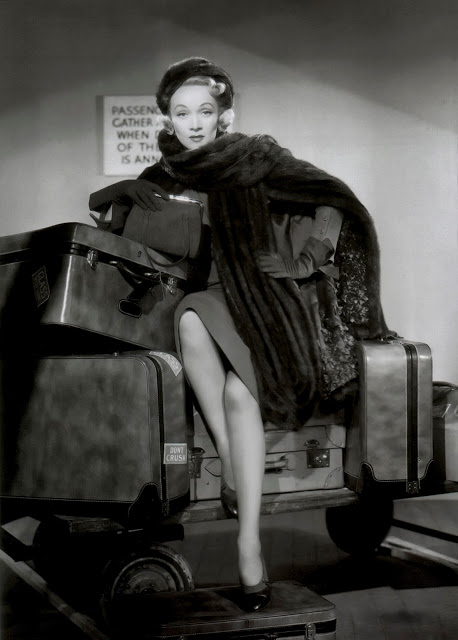
Photographer Cornel Lucas was a pioneer of film portraiture. He made his name shooting studio portraits of film stars of the 1940s and 1950s and was said to have done more for the images of many of those he photographed than their performances on celluloid.
His big break came in 1948 when he was asked to photograph Marlene Dietrich, who had come to England to make No Highway in the Sky, but had fallen out with the first photographer assigned to her over lighting. The session did not start off well. There was little that the star did not know about photographic printing, lighting and composition, and she wasted no time in small talk with the young photographer. “She came straight over to me and switched my radio off,” Lucas recalled. “ ‘That won’t be necessary, Mr Lucas,’ she said frostily. I thought it was a terrible start.”
Lucas lit her from several angles, picking out the sharp lines of her cheekbones and illuminating the flawless but icy perfection of her face. Her favorite lighting was from above, a difficult technique for photographers. “When I took her the rough proofs of her photographs to her dressing room the following day, she got a magnifying glass out of her handbag and started drawing on the pictures with eyebrow pencil,” Lucas recalled.
But she was pleased with the results, and Lucas went on to become one of the few portraitists she would work with. She introduced him to many more of his subjects and in subsequent years he photographed dozens of stars.
Marie Magdalene “Marlene” Dietrich (27 December 1901 – 6 May 1992)[2] was a German-born American actress and singer. Her career spanned from the 1910s to the 1980s.
In 1920s Berlin, Dietrich performed on the stage and in silent films. Her performance as Lola-Lola in Josef von Sternberg’s The Blue Angel (1930) brought her international acclaim and a contract with Paramount Pictures. Dietrich starred in many Hollywood films including six iconic roles directed by Sternberg —Morocco (1930) (her only Academy Award nomination), Dishonored (1931), Shanghai Express and Blonde Venus (both 1932), The Scarlet Empress (1934) and The Devil Is a Woman (1935)— plus Desire (1936) and Destry Rides Again (1939). She successfully traded on her glamorous persona and “exotic” looks, and became one of the highest-paid actresses of the era. Throughout World War II she was a high-profile entertainer in the United States. Although she delivered notable performances in several post-war films including Alfred Hitchcock’s Stage Fright (1950), Billy Wilder’s Witness for the Prosecution (1957), Orson Welles’s Touch of Evil (1958) and Stanley Kramer’s Judgment at Nuremberg (1961), Dietrich spent most of the 1950s to the 1970s touring the world as a marquee live-show performer.
Dietrich was known for her humanitarian efforts during World War II, housing German and French exiles, providing financial support and even advocating their American citizenship. For her work on improving morale on the front lines during the war, she received several honors from the United States, France, Belgium and Israel. In 1999 the American Film Institute named Dietrich the ninth greatest female screen legend of classic Hollywood cinema. (Wikipedia)