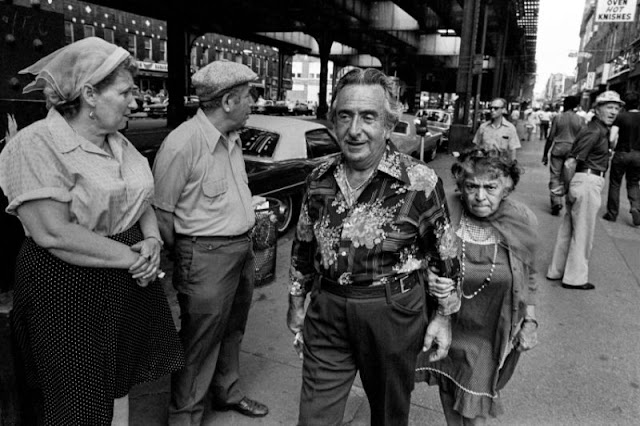
Amazing Photos of 1970s and 1980s New York City

Subscribe to get access

Read more of this content when you subscribe today.

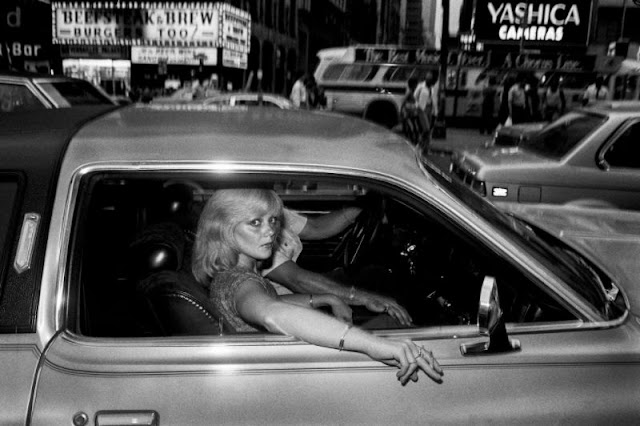
Bruce Gilden is an American street photographer. Known for his graphic and often confrontational close-ups made using flash, his images have a degree of intimacy and directness that have become a signature in his work.

Gilden was born in Brooklyn, New York in 1946. He studied sociology at Penn State University but didn’t complete the course. Although he briefly flirted with the idea of being an actor, Gilden decided to become a photographer in 1967, when he bought his first camera. He attended evening classes at the School of Visual Arts in New York, but largely considers himself to be self-taught.

After recently moving house, Gilden discovered hundreds of contact prints and negatives in his personal archives, from work undertaken in New York, his native city, between 1978 and 1984. From these thousands of images, most of which are new even to their author, Gilden has selected around a hundred for his book Lost and Found. Extending from the desire to revisit the work of his youth, this historic archive constitutes an inestimable treasure.

In Lost and Found, an extraordinary New York is portrayed, revealing an unknown facet of Gilden’s oeuvre. With all the energy of a young man in his thirties, Gilden launched an assault on New York in a visibly tense atmosphere. These pictures are almost all made without the use of flash which was – soon after – to become his trademark. Gilden reflects that he was “probably in a transition period at that time, wanting to use flash more and make more dramatic photos. Maybe that’s why I overlooked these images…”

In this extraordinary gallery of portraits, the compositions—mostly horizontal—simmer with energy, bursting with the most diverse characters, as though Gilden intended to include within the frame everything that caught his eye.

New York, often called New York City (NYC) to distinguish it from the State of New York, is the most populous city in the United States. With a 2020 population of 8,804,190 distributed over 300.46 square miles (778.2 km2), New York City is also the most densely populated major city in the United States. Located at the southern tip of the state of New York, the city is the center of the New York metropolitan area, the largest metropolitan area in the world by urban area. With over 20.1 million people in its metropolitan statistical area and 23.5 million in its combined statistical area as of 2020, New York is one of the world’s most populous megacities. New York City has been described as the cultural, financial, and media capital of the world, and is a significant influence on commerce, entertainment, research, technology, education, politics, tourism, dining, art, fashion, and sports. It is the most photographed city in the world. Home to the headquarters of the United Nations, New York is an important center for international diplomacy, an established safe haven for global investors, and is sometimes described as the capital of the world.

Situated on one of the world’s largest natural harbors, with water covering 36.4% of its surface area, New York City is composed of five boroughs, each of which is coextensive with a respective county of the state of New York. The five boroughs—Brooklyn (Kings County), Queens (Queens County), Manhattan (New York County), the Bronx (Bronx County), and Staten Island (Richmond County)—were created when local governments were consolidated into a single municipal entity in 1898. The city and its metropolitan area constitute the premier gateway for legal immigration to the United States. As many as 800 languages are spoken in New York, making it the most linguistically diverse city in the world. New York is home to more than 3.2 million residents born outside the United States, the largest foreign-born population of any city in the world as of 2016. As of 2018, the New York metropolitan area is estimated to produce a gross metropolitan product (GMP) of nearly $1.8 trillion, ranking it first in the United States. If the New York metropolitan area were a sovereign state, it would have the eighth-largest economy in the world. New York is home to the highest number of billionaires of any city in the world.

New York City traces its origins to a trading post founded on the southern tip of Manhattan Island by Dutch colonists in approximately 1624. The settlement was named New Amsterdam (Dutch: Nieuw Amsterdam) in 1626 and was chartered as a city in 1653. The city came under English control in 1664 and was renamed New York after King Charles II of England granted the lands to his brother, the Duke of York. The city was regained by the Dutch in July 1673 and was renamed New Orange for one year and three months; the city has been continuously named New York since November 1674. New York City was the capital of the United States from 1785 until 1790, and has been the largest U.S. city since 1790. The Statue of Liberty greeted millions of immigrants as they came to the U.S. by ship in the late 19th and early 20th centuries, and is a symbol of the U.S. and its ideals of liberty and peace. In the 21st century, New York has emerged as a global node of creativity, entrepreneurship, and environmental sustainability, and as a symbol of freedom and cultural diversity. In 2019, New York was voted the greatest city in the world per a survey of over 30,000 people from 48 cities worldwide, citing its cultural diversity.

Many districts and monuments in New York City are major landmarks, including three of the world’s ten most visited tourist attractions in 2013. A record 66.6 million tourists visited New York City in 2019. Times Square is the brightly illuminated hub of the Broadway Theater District, one of the world’s busiest pedestrian intersections, and a major center of the world’s entertainment industry. Many of the city’s landmarks, skyscrapers, and parks are known around the world, as is the city’s fast pace, spawning the term New York minute. The Empire State Building has become the global standard of reference to describe the height and length of other structures. Manhattan’s real estate market is among the most expensive in the world. Providing continuous 24/7 service and contributing to the nickname The City That Never Sleeps, the New York City Subway is the largest single-operator rapid transit system worldwide, with 472 passenger rail stations. The city has over 120 colleges and universities, including Columbia University, New York University, and the City University of New York system, which is the largest urban public university system in the United States. Anchored by Wall Street in the Financial District of Lower Manhattan, New York City has been called both the world’s leading financial center and the most powerful city in the world, and is home to the world’s two largest stock exchanges by total market capitalization, the New York Stock Exchange and Nasdaq. (Wikipedia)
Subscribe to continue reading

Become a paid subscriber to get access to the rest of this post and other exclusive content.

Yesterday Today: June 23

Subscribe to get access

Read more of this content when you subscribe today.

“I’ll have you back on the road in no time!”

Subscribe to continue reading

Become a paid subscriber to get access to the rest of this post and other exclusive content.

37 Beautiful Vintage Photos of Actress Coleen Gray During the 1940s and 1950s

Subscribe to get access

Read more of this content when you subscribe today.

Coleen Gray (born Doris Bernice Jensen; October 23, 1922 – August 3, 2015) was an American actress. She was best known for her roles in the films Nightmare Alley (1947), Red River (1948), and Stanley Kubrick’s The Killing (1956).

Gray was born in Staplehurst, Nebraska,[1] her family moved to Hutchinson, Minnesota when she was seven. She grew up on a farm. After graduating from Hutchinson high school in 1943 as Doris Jensen, she studied drama at Hamline University, and graduated cum laude with a Bachelor of Arts. She travelled to California, and worked as a waitress in a restaurant in La Jolla. After several weeks there, she moved to Los Angeles and enrolled at UCLA. She also worked in the school’s library and at a YWCA while a student.

She had leading roles in the Los Angeles stage productions Letters to Lucerne and Brief Music, which won her a 20th Century Fox contract in 1944.

After playing a bit part in State Fair (1945), she became pregnant and briefly stopped working, only to return a year later as the love interest of the character played by John Wayne in Red River (1948), which was shot in 1946 but held for release until 1948. Gray appeared in two 1947 films noir: In Kiss of Death as Victor Mature’s ex-con character’s wife and Richard Widmark’s character’s target; and in Nightmare Alley as Tyrone Power’s character’s carnival performer wife, “Electra.” In 1950, Gray used her musical abilities as she sang her part (rather than having her voice dubbed) opposite Bing Crosby in Riding High, directed by Frank Capra. Riding High was not a success and Fox ended her contract in 1950.

Gray worked steadily in the 1950s, but mostly in smaller movies. She played a crooked nurse in The Sleeping City (1950) and appeared in Kansas City Confidential (1952) and in the Stanley Kubrick film noir The Killing (1956), in which she plays the loyal girlfriend of criminal Sterling Hayden. In the 1953 Western The Vanquished, she played a woman who attacks Jan Sterling’s character with a pair of scissors in a crazed attempt to exonerate the man she loves (John Payne). Other films included Father Is a Bachelor (1950), The Leech Woman (1960), The Phantom Planet (1961), and P.J. (1968).

Gray appeared in The Late Liz (1971), and acted in the films Forgotten Lady (1977), and Mother (1978) with Patsy Ruth Miller. Mother had a premiere at the Museum of Modern Art in New York City. Both Mother and Forgotten Lady were written for Gray by Brian Pinette, who also served as director and producer. She appeared in the religious film Cry From the Mountain (1986, in the USA), directed by James F. Collier.

From the 1950s, Gray guest-starred in episodes of television series such as Four Star Playhouse, Maverick, Alfred Hitchcock Presents, Perry Mason, Mr. Ed, [Tales of Wells Fargo in 1960 in the episode “The Journey” as Sandra Morton, Rawhide in 1962 in the episode “The Devil and the Deep Blue” as Helen Wade, 77 Sunset Strip, Bonanza, The Deputy, Have Gun Will Travel, The Dakotas, Family Affair, Ironside, Lawman, The Name of the Game and Branded. On May 23, 1962, she was cast as Miss Wycliffe in the series finale, “A Job for Summer”, of the CBS comedy/drama series, Window on Main Street, starring Robert Young as a widowed author in his hometown. She made four guest appearances on Perry Mason, including the title role of defendant Lorraine Kendall in the 1960 episode, “The Case of the Wandering Widow.”

Gray was a regular on the daytime dramas Bright Promise and Days of Our Lives.

Gray married Rod Amateau, a screenwriter, on August 10, 1945; they divorced on February 11, 1949, and had one daughter, Susan. Gray’s second husband was William Clymer Bidlack, an aviation executive. They were married from July 14, 1953, until his death in 1978. The union produced a son, Bruce Robin Bidlack.

In 1979, Gray married widowed Biblical scholar Joseph Fritz Zeiser; they remained together until his death in March 2012. They worked together in Presbyterian causes and the non-profit organization, Prison Fellowship, founded in 1976 by Chuck Colson.

Gray was a Republican and supported Barry Goldwater in the 1964 United States presidential election. That same year, along with actors Victor Jory and Susan Seaforth, she testified before the United States Congress as part of “Project Prayer”, arguing in favor of a constitutional amendment allowing school prayer.

Gray, at age 92, died of natural causes in her Bel Air home in Los Angeles on August 3, 2015.

She was cremated at Pierce Brothers Westwood Village Memorial Park Cemetery and her ashes given to her stepson, Rick Zeiser. Her memorial service was held at the Bel Air Presbyterian Church where she, and her third husband, Joseph Fritz Ziesier, were active members.

Gray was a member of the board of directors at her alma mater, Hamline University. Gray was also active within the following organizations: WAIF, the child adoption organization as President, The March of Dimes, American Cancer Society, American Red Cross, American Mental Health Association, Los Angeles Epilepsy Society, Junior Blind, The Bel-Air Republican Women’s Group, and the Boy Scouts of America and the Girl Scouts of the United States of America. (Wikipedia)

Subscribe to continue reading

Become a paid subscriber to get access to the rest of this post and other exclusive content.

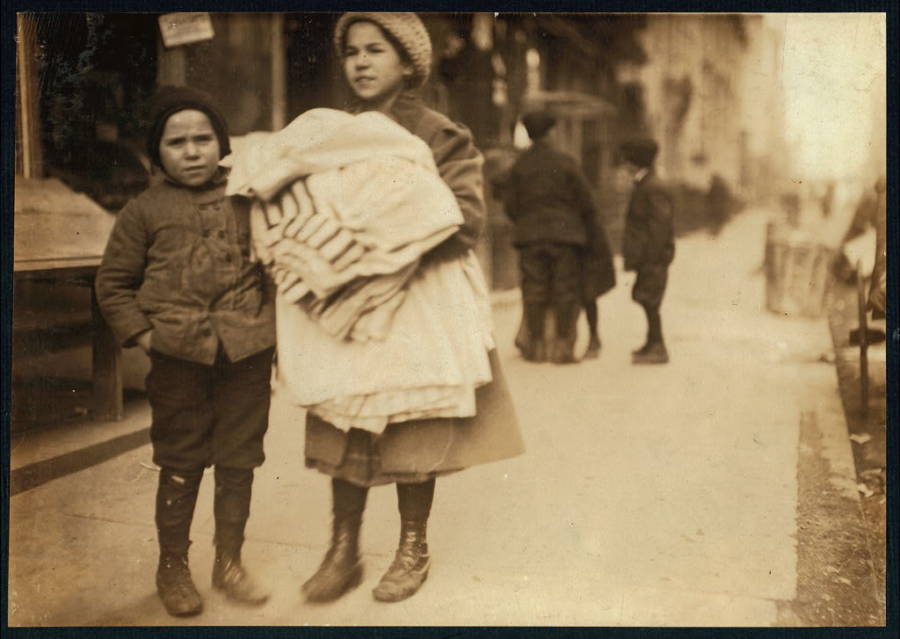
46 Amazing Vintage Photos Showing Turn-Of-The-Century New York’s Immigrant Slums

“Bandit’s Roost,” a notorious hangout for the criminal element at 59 Mulberry Street in Little Italy, 1888. At the time, the area was among the most impoverished and crime-ridden in the entire city.

Subscribe to get access

Read more of this content when you subscribe today.

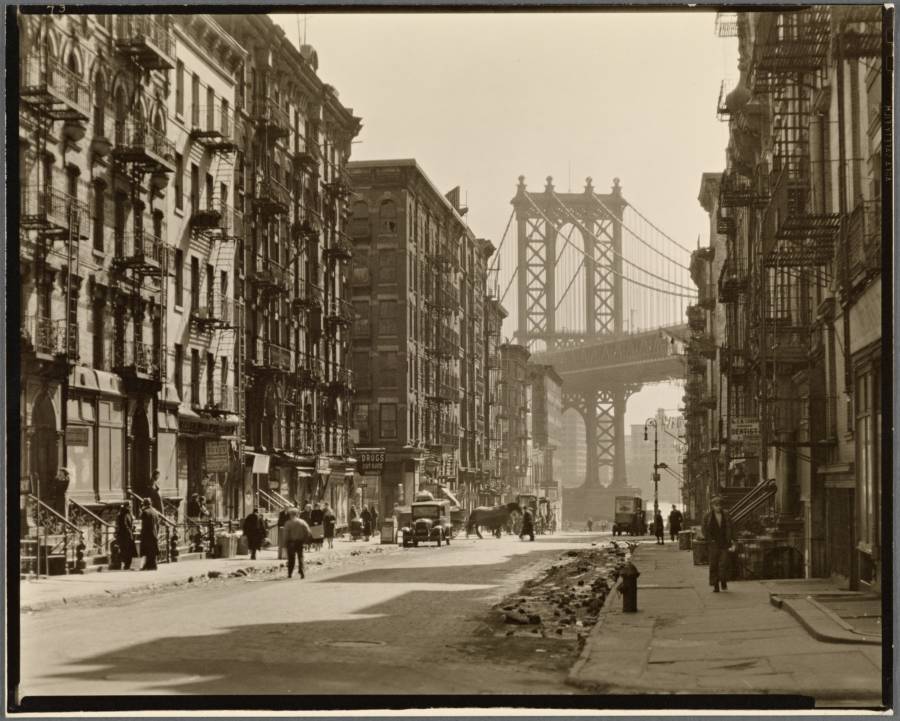
Pike and Henry Streets in the Lower East Side, with the Manhattan Bridge looming in the background, 1936.

Subscribe to continue reading

Become a paid subscriber to get access to the rest of this post and other exclusive content.
Vintage Historical Photos of the Wild West

The American frontier, also known as the Old West or the Wild West, includes the geography, history, folklore, and culture in the forward wave of American expansion in mainland North America that began with European colonial settlements in the early 17th century and ended with the admission of the last few western territories as states in 1912 (except Alaska, which was not admitted into the Union until 1959). This era of massive migration and settlement was particularly encouraged by President Thomas Jefferson following the Louisiana Purchase, giving rise to the expansionist attitude known as “Manifest Destiny” and the historians’ “Frontier Thesis”. The legends, historical events and folklore of the American frontier have embedded themselves into United States culture so much so that the Old West, and the Western genre of media specifically, has become one of the defining periods of American national identity.

The archetypical Old West period is generally accepted by historians to have occurred between the end of the American Civil War in 1865 until the closing of the Frontier by the Census Bureau in 1890.

By 1890, settlement in the American West had reached sufficient population density that the frontier line had disappeared; in 1890 the Census Bureau released a bulletin declaring the closing of the frontier, stating: “Up to and including 1880 the country had a frontier of settlement, but at present the unsettled area has been so broken into by isolated bodies of settlement that there can hardly be said to be a frontier line. In the discussion of its extent, its westward movement, etc., it can not, therefore, any longer have a place in the census reports.”

A frontier is a zone of contact at the edge of a line of settlement. Leading theorist Frederick Jackson Turner went deeper, arguing that the frontier was the scene of a defining process of American civilization: “The frontier,” he asserted, “promoted the formation of a composite nationality for the American people.” He theorized it was a process of development: “This perennial rebirth, this fluidity of American life, this expansion westward…furnish[es] the forces dominating American character.” Turner’s ideas since 1893 have inspired generations of historians (and critics) to explore multiple individual American frontiers, but the popular folk frontier concentrates on the conquest and settlement of Native American lands west of the Mississippi River, in what is now the Midwest, Texas, the Great Plains, the Rocky Mountains, the Southwest, and the West Coast.

Enormous popular attention was focused on the Western United States (especially the Southwest) in the second half of the 19th century and the early 20th century, from the 1850s to the 1910s. Such media typically exaggerated the romance, anarchy, and chaotic violence of the period for greater dramatic effect. This inspired the Western genre of film, along with television shows, novels, comic books, video games, children’s toys and costumes.

As defined by Hine and Faragher, “frontier history tells the story of the creation and defense of communities, the use of the land, the development of markets, and the formation of states.” They explain, “It is a tale of conquest, but also one of survival, persistence, and the merging of peoples and cultures that gave birth and continuing life to America.” Turner himself repeatedly emphasized how the availability of free land to start new farms attracted pioneering Americans: “The existence of an area of free land, its continuous recession, and the advance of American settlement westward, explain American development.” Through treaties with foreign nations and native tribes, political compromise, military conquest, the establishment of law and order, the building of farms, ranches, and towns, the marking of trails and digging of mines, and the pulling in of great migrations of foreigners, the United States expanded from coast to coast, fulfilling the ideology of Manifest destiny. In his “Frontier Thesis” (1893), Turner theorized that the frontier was a process that transformed Europeans into a new people, the Americans, whose values focused on equality, democracy, and optimism, as well as individualism, self-reliance, and even violence.

As the American frontier passed into history, the myths of the West in fiction and film took a firm hold in the imaginations of Americans and foreigners alike. In David Murdoch’s view, America is exceptional in choosing its iconic self-image: “No other nation has taken a time and place from its past and produced a construct of the imagination equal to America’s creation of the West.”

Subscribe to get access

Read more of this content when you subscribe today.

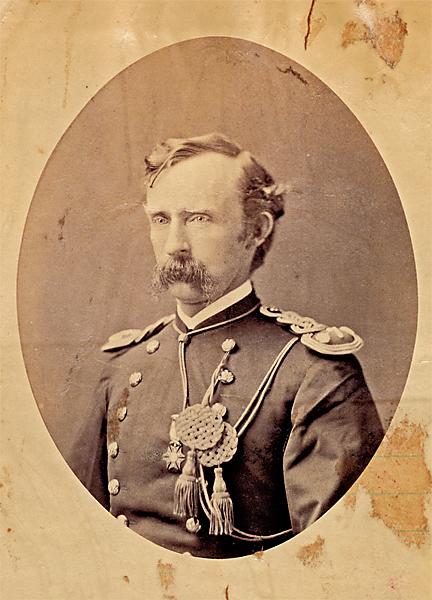
Custer’s Last Photograph
A vain man, George Armstrong Custer posed for more than 150 photographs in his lifetime, including this last photo, taken of him two months before the 1876 Battle of the Little Big Horn that would end his life.

Subscribe to continue reading

Become a paid subscriber to get access to the rest of this post and other exclusive content.

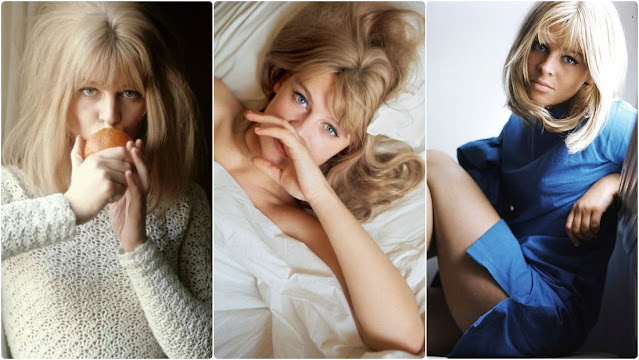
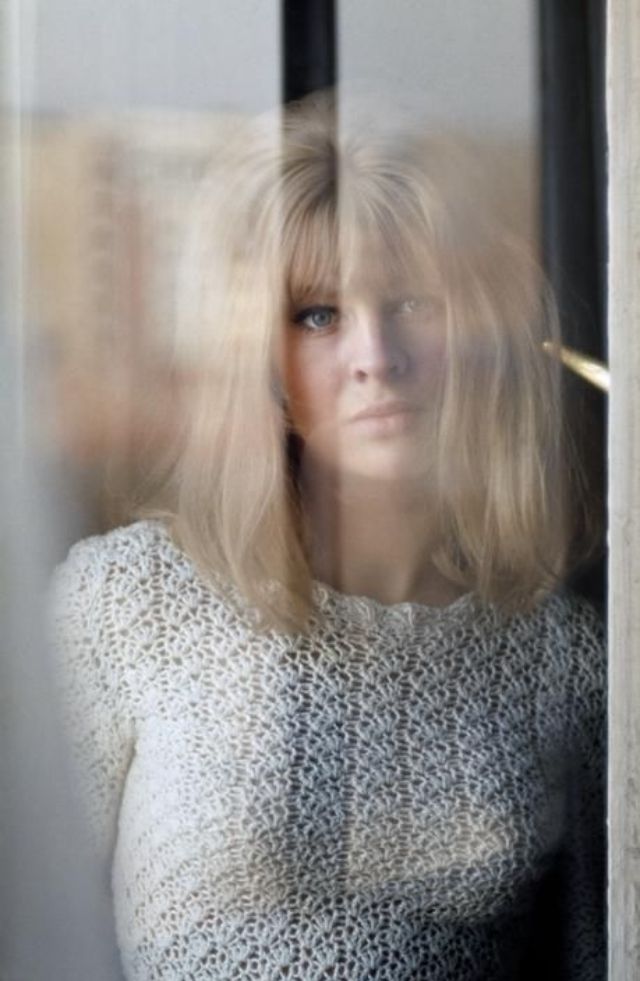
35 Beautiful Photos of Julie Christie in the 1960s

Born 1940 in Chabua, Assam, British India, British actress Julie Christie made her professional stage debut in 1957, and her first screen roles were on British television. She is the recipient of numerous accolades including an Oscar, a Golden Globe, a BAFTA Award, and a Screen Actors Guild Award. She has appeared in six films ranked in the British Film Institute’s BFI Top 100 British films of the 20th century, and in 1997, she received the BAFTA Fellowship.

Christie’s breakthrough film role was in Billy Liar (1963). She came to international attention for her performances in Darling (1965), for which she won the Academy Award for Best Actress, and Doctor Zhivago (also 1965), the eighth highest-grossing film of all time after adjustment for inflation.

In the following years, Christie starred in Fahrenheit 451 (1966), Far from the Madding Crowd (1967), Petulia (1968), The Go-Between (1971), McCabe & Mrs. Miller (1971), for which she received her second Oscar nomination, Don’t Look Now (1973), Shampoo (1975), and Heaven Can Wait (1978).

From the early 1980s, Christie’s appearances in mainstream films decreased. She has continued to receive significant critical recognition for her work, including Oscar nominations for the independent films Afterglow (1997) and Away from Her (2007).

Take a look at these gorgeous photos to see the beauty of young Julie Christie in the 1960s.

Subscribe to get access

Read more of this content when you subscribe today.

Subscribe to continue reading

Become a paid subscriber to get access to the rest of this post and other exclusive content.
50+ Amazing Vintage Photos From the 1940s Volume 1

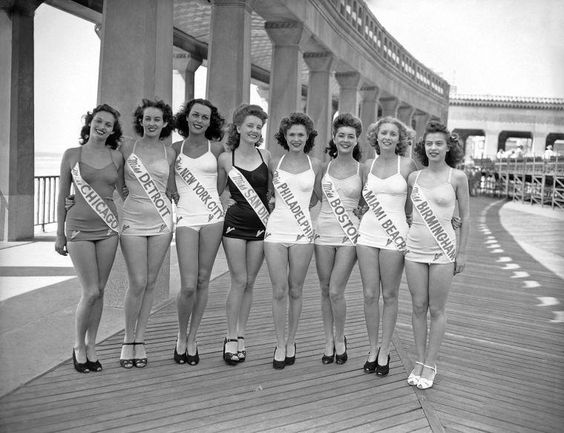
Miss America contestants in 1945.

Subscribe to get access

Read more of this content when you subscribe today.

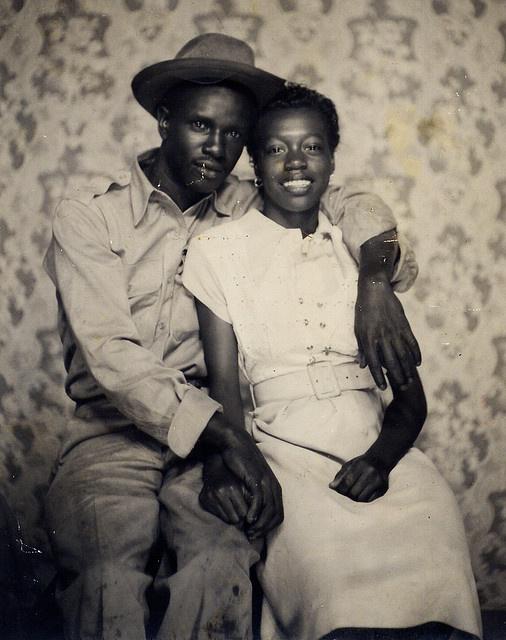
1940s sweethearts

Subscribe to continue reading

Become a paid subscriber to get access to the rest of this post and other exclusive content.

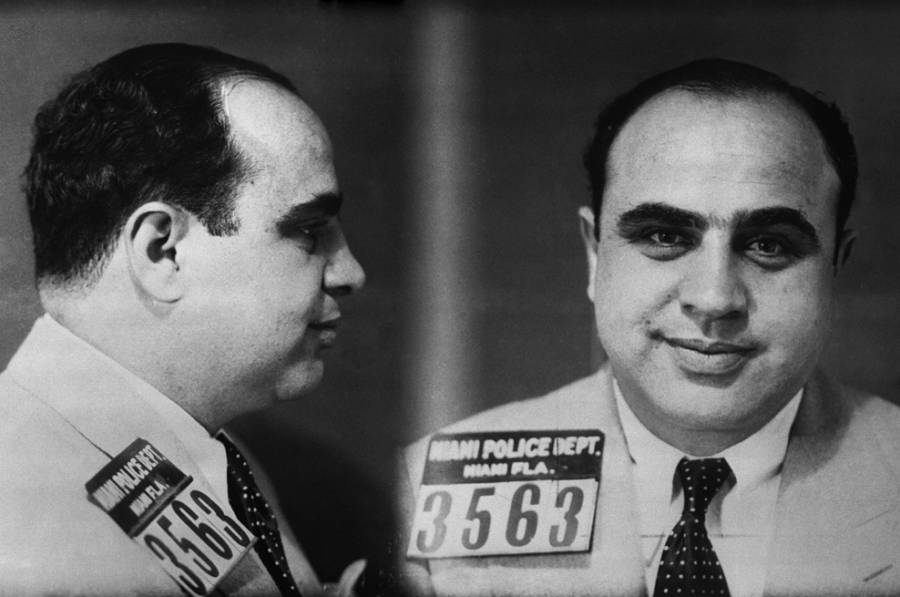
37 Incredible Mugshots Of Iconic Figures Throughout History

David Bowie, arrested after a performance in Rochester, New York along with three other people (including fellow musician Iggy Pop) for marijuana possession. March 25, 1976.
The charges soon disappeared, but Bowie never performed in Rochester again.

Subscribe to get access

Read more of this content when you subscribe today.

Pablo Escobar, Arrested in Medellín, Colombia in connection with drug crimes. 1977.

Subscribe to continue reading

Become a paid subscriber to get access to the rest of this post and other exclusive content.
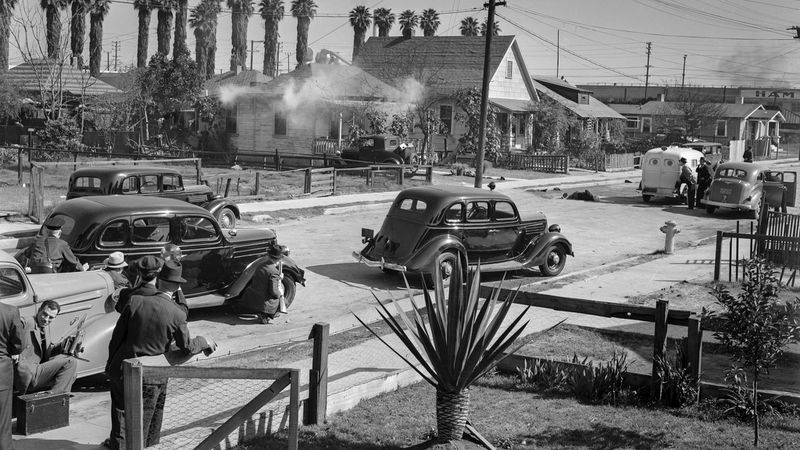
1938 Police Shootout in Los Angeles

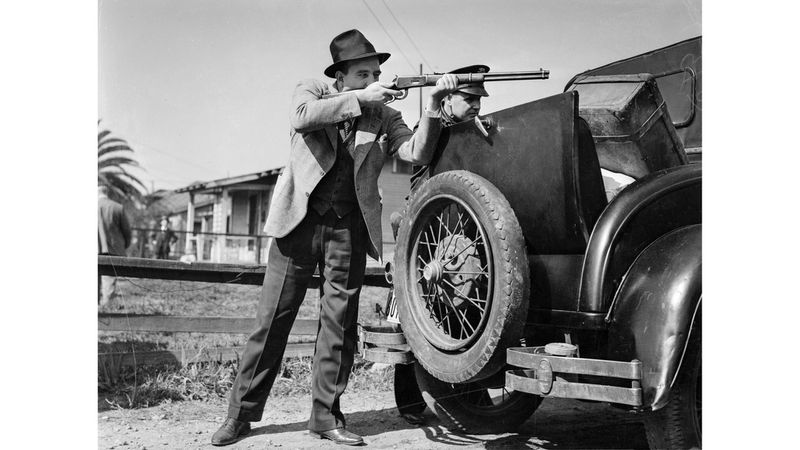
Feb. 17, 1938: Tear gas issues from a home in the 1700 block of East 22nd Street as police trade shots with barricaded suspect George Farley. (J.H. McCrory / Los Angeles Times Archive/UCLA)

Subscribe to get access

Read more of this content when you subscribe today.

The bodies of a deputy city marshal and his helper — shot and killed by George Farley as they tried to serve an eviction notice on him — lie in front of a barricaded home. They were Deputy Marshal T. Dwight Crittenden and Leon W. Romer, both 60.

Farley, 55, was wounded five times and captured after police stormed the house. He was later convicted of two counts of manslaughter and ordered to serve 10 to 20 years in San Quentin State Prison.

Subscribe to continue reading

Become a paid subscriber to get access to the rest of this post and other exclusive content.
70 Vintage Photos That Show People Had More Class In The Past

Subscribe to get access

Read more of this content when you subscribe today.

A Young Harrison Ford

Subscribe to continue reading

Become a paid subscriber to get access to the rest of this post and other exclusive content.
Yesterday Today

Bringing You the Wonder of Yesterday - Today

Skip to content ↓