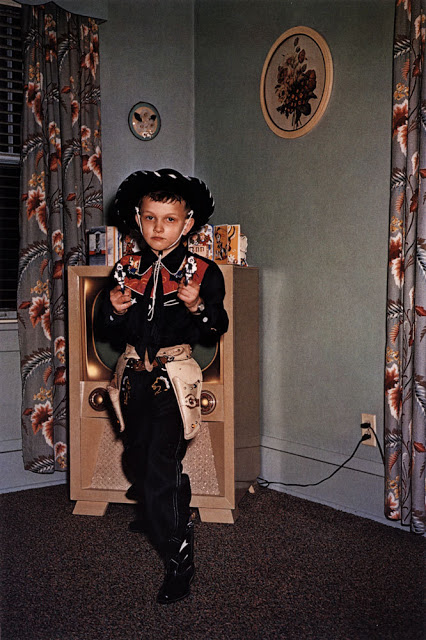
Introduced in 1935 as the first modern color film, Kodachrome was used extensively after World War II by amateur photographers equipped with the new high-quality and low cost 35mm cameras. Americans in Kodachrome 1945-1965 is an unprecedented portrayal of the daily life of the people during these formative years of modern American culture. It is comprised of ninety-five exceptional color photographs made by over ninety unknown American photographers.
These photographs were chosen from many thousands of slides in hundreds of collections. Like folk art in other mediums, this work is characterized by its frankness, honesty, and vigor. Made as memoirs of family and friends, the photographs reveal a free-spirited, intuitive approach, and possess a clarity and unpretentiousness characteristic of this unheralded photographic folk art.
Cowboy Kid, St. Cloud, Minnesota, 1955
Subscribe to continue reading
Become a paid subscriber to get access to the rest of this post and other exclusive content.
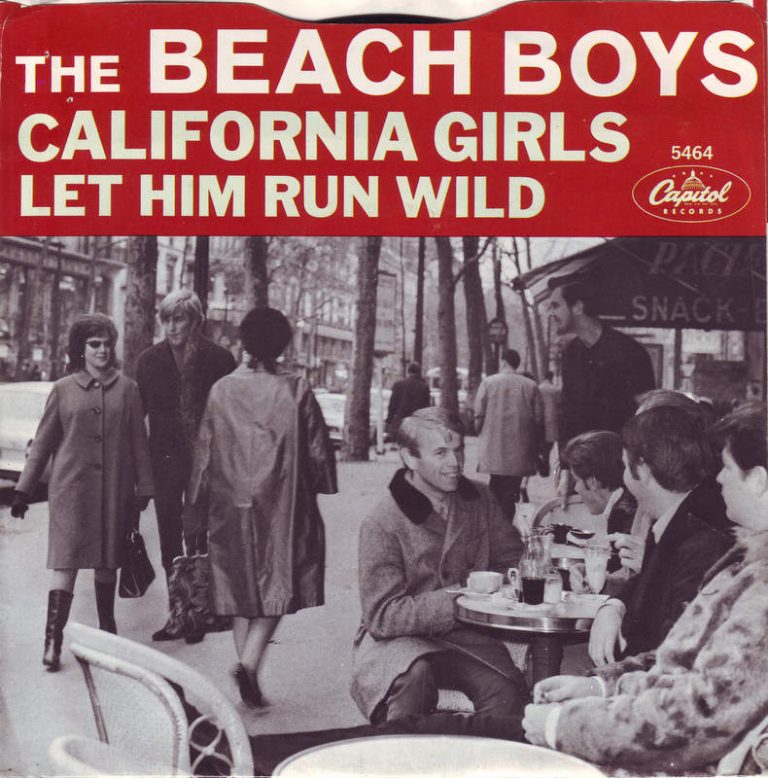
ABBA are a Swedish pop group formed in Stockholm in 1972 by Agnetha Fältskog, Björn Ulvaeus, Benny Andersson, and Anni-Frid Lyngstad. The group’s name is an acronym of the first letters of their first names. Widely considered one of the greatest musical groups of all time, they became one of the most commercially successful acts in the history of popular music, topping the charts worldwide from 1974 to 1983. They have achieved 44 hit singles.
In 1974, ABBA were Sweden’s first winner of the Eurovision Song Contest with the song “Waterloo”, which in 2005 was chosen as the best song in the competition’s history as part of the 50th anniversary celebration of the contest. During the band’s main active years, it consisted of two married couples: Fältskog and Ulvaeus, and Lyngstad and Andersson. With the increase of their popularity, their personal lives suffered, which eventually resulted in the collapse of both marriages. The relationship changes were reflected in the group’s music, with latter compositions featuring darker and more introspective lyrics. After ABBA disbanded, Andersson and Ulvaeus continued their success writing music for the stage, while Fältskog and Lyngstad and pursued solo careers.
Ten years after the group disbanded, a compilation, ABBA Gold, was released, becoming a worldwide best-seller. In 1999, ABBA’s music was adapted into Mamma Mia!, a successful musical that toured worldwide. A film of the same name, released in 2008, became the highest-grossing film in the United Kingdom that year. A sequel, Mamma Mia! Here We Go Again, was released in 2018. That same year it was also announced that the band had reunited and recorded two new songs after 35 inactive years, which were released in September 2021 as the lead singles from Voyage, their first studio album in 40 years, to be released in November 2021. A concert residency featuring ABBA as virtual avatars – dubbed ‘ABBAtars’ to support the album will take place from May to September 2022.
They are one of the best-selling music artists of all time, with sales estimated at 150 million records worldwide. In 2012, ABBA was ranked eighth-best-selling singles artists in the United Kingdom, with 11.2 million singles sold. ABBA were the first group from a non-English-speaking country to achieve consistent success in the charts of English-speaking countries, including the United States, United Kingdom, Republic of Ireland, Canada, Australia, New Zealand, The Philippines and South Africa. They are the best-selling Swedish band of all time and one of the best-selling bands originating in continental Europe. ABBA had eight consecutive number-one albums in the UK. The group also enjoyed significant success in Latin America, and recorded a collection of their hit songs in Spanish. The group was inducted into the Rock and Roll Hall of Fame in 2010. In 2015, their song “Dancing Queen” was inducted into the Recording Academy’s Grammy Hall of Fame.
Subscribe to continue reading
Become a paid subscriber to get access to the rest of this post and other exclusive content.
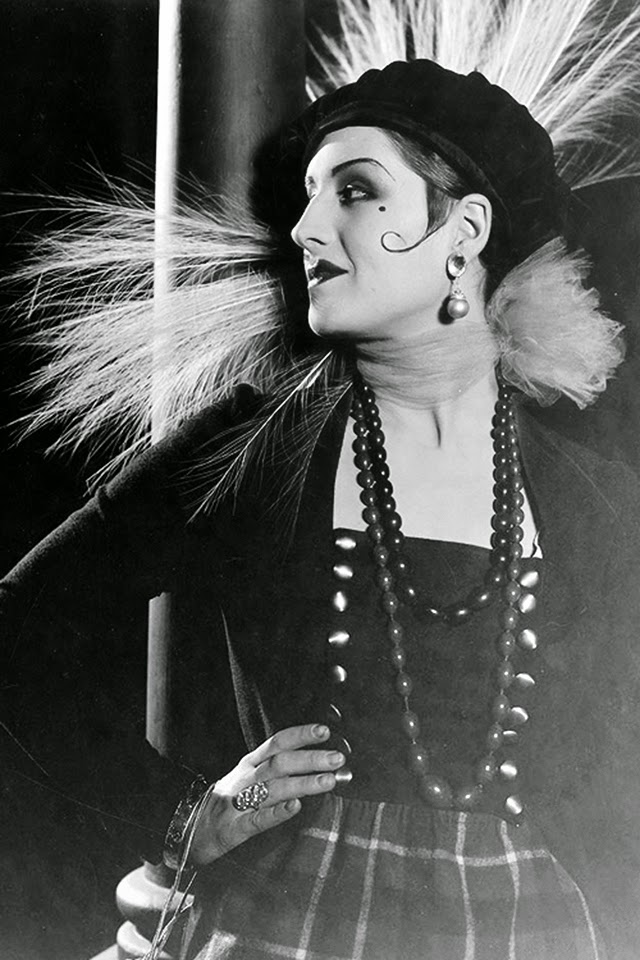
Edith Norma Shearer (August 10, 1902 – June 12, 1983) was a Canadian actress who was active on film from 1919 through 1942. Shearer often played spunky, sexually liberated ingénues. She appeared in adaptations of Noël Coward, Eugene O’Neill, and William Shakespeare, and was the first five-time Academy Award acting nominee, winning Best Actress for The Divorcee (1930).
Reviewing Shearer’s work, Mick LaSalle called her “the exemplar of sophisticated 1930s womanhood … exploring love and sex with an honesty that would be considered frank by modern standards”. He described her as a feminist pioneer, “the first American film actress to make it chic and acceptable to be single and not a virgin on screen”.
She won a beauty contest at age fourteen. In 1920 her mother, Edith Shearer, took Norma and her sister Athole Shearer (Mrs. Howard Hawks) to New York. Ziegfeld rejected her for his “Follies,” but she got work as an extra in several movies. She spent much money on eye doctor’s services trying to correct her cross-eyed stare caused by a muscle weakness. Irving Thalberg had seen her early acting efforts and, when he joined Louis B. Mayer in 1923, gave her a five year contract. He thought she should retire after their marriage, but she wanted bigger parts. In 1927, she insisted on firing the director Viktor Tourjansky because he was unsure of her cross-eyed stare. Her first talkie was in The Trial of Mary Dugan (1929); four movies later, she won an Oscar in The Divorcee (1930). She intentionally cut down film exposure during the 1930s, relying on major roles in Thalberg’s prestige projects: The Barretts of Wimpole Street (1934) and Romeo and Juliet (1936) (her fifth Oscar nomination). Thalberg died of a second heart attack in September, 1936, at age 37. Norma wanted to retire, but MGM more-or-less forced her into a six-picture contract. David O. Selznick offered her the part of Scarlett O’Hara in Gone with the Wind (1939), but public objection to her cross-eyed stare killed the deal. She starred in The Women (1939), turned down the starring role in Mrs. Miniver (1942), and retired in 1942. Later that year she married Sun Valley ski instructor Martin Arrouge, eleven years younger than she (he waived community property rights). From then on, she shunned the limelight; she was in very poor health the last decade of her life.
Shearer’s fame declined after her retirement in 1942. She was rediscovered in the late 1950s, when her films were sold to television, and in the 1970s, when her films enjoyed theatrical revivals. By the time of her death in 1983, she was best known for her “noble” roles in Marie Antoinette and The Women.
A Shearer revival began in 1988, when Turner Network Television began broadcasting the entire Metro-Goldwyn-Mayer film library. In 1994, Turner Classic Movies began showcasing her films, most of which had not been seen since the reconstitution of the Production Code in 1934. Shearer’s work was seen anew, and the critical focus shifted from her “noble” roles to her pre-Code roles.
Even for a pampered star, her output in the sound era is strikingly meager. And yet this was part of her undeniable aura – that she did not make movies lightly and frivolously, but with great care, sincerity and conviction.
Shearer’s work gained more attention in the 1990s through the publication of a series of books. The first was a biography by Gavin Lambert. Next came Complicated Women: Sex and Power in Pre-Code Hollywood by Mick LaSalle, film critic at the San Francisco Chronicle. Mark A. Vieira published three books on subjects closely related to Shearer: a biography of her husband, producer Irving Thalberg; and two biographies of photographer George Hurrell. Shearer was noted not only for the control she exercised over her work, but also for her patronage of Hurrell and Adrian, and for discovering actress Janet Leigh and actor-producer Robert Evans.
For her contribution to the motion-picture industry, Shearer has a star on the Hollywood Walk of Fame, at 6636 Hollywood Boulevard. On June 30, 2008, Canada Post issued a postage stamp in its “Canadians in Hollywood” series to honour Norma Shearer, along with others for Raymond Burr, Marie Dressler, and Chief Dan George.
Shearer and Thalberg are reportedly the models for Stella and Miles, the hosts of the Hollywood party in the short story “Crazy Sunday” (1932) by F. Scott Fitzgerald.
Most of Shearer’s MGM films are broadcast on Turner Classic Movies, and many of them are also available on DVD from Warner Home Video. In 2008, she was inducted into Canada’s Walk of Fame. In 2015, a number of Shearer films became available in high-definition format, authored by Warner Home Video, in most cases, from the nitrate camera negatives: A Free Soul, Romeo and Juliet, Marie Antoinette, and The Women.
Subscribe to continue reading
Become a paid subscriber to get access to the rest of this post and other exclusive content.
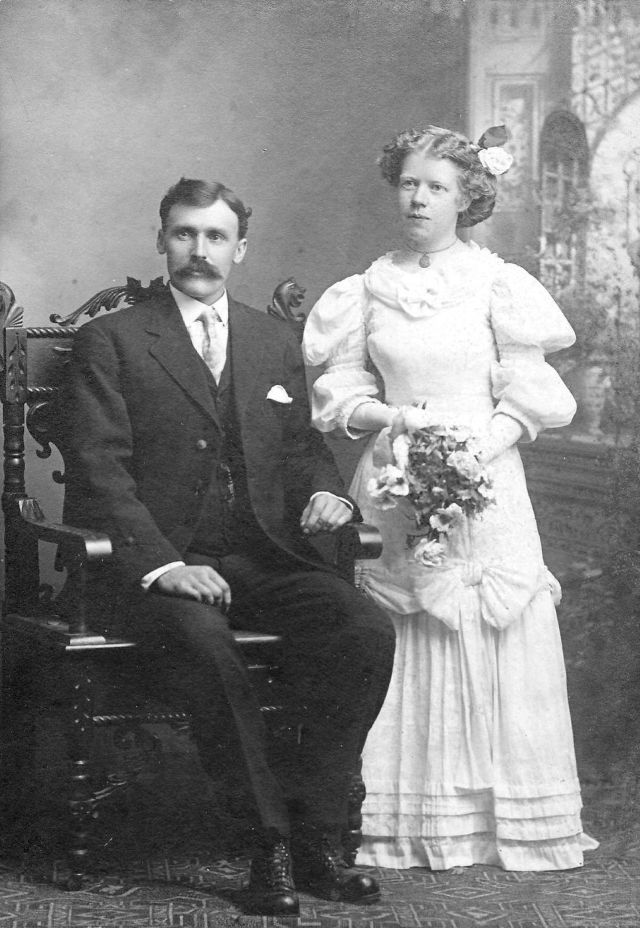
The wedding day was considered to be the most important day in the life of a Victorian girl. The girls were taught from the early age to marry and to take care of the family. The marriage of a girl was something very special for the mother, the soon to be bride and her family.
Victorian weddings were more or less similar to the wedding celebrations we have today. Many traditions of Victorian weddings are still being followed and one of them is the color and style of the wedding attire.
The wedding dress of the Victorian era had a fitted bodice with a small waist and long skirt. It was made of organdie, silk, linen, lace, gauze, tulle and cashmere.
The wedding was also very important for the grooms and they were also concerned with fashion. The Victorian groom often wore a frock coat made of blue color with best flower favor in his lapel.
Take a look at these beautiful photos to see what Victorian couples looked like on their wedding days.
Subscribe to continue reading
Become a paid subscriber to get access to the rest of this post and other exclusive content.
France is a transcontinental country spanning Western Europe and overseas regions and territories in South America and the Atlantic, Pacific and Indian Oceans. Including all of its territories, France has twelve time zones, the most of any country. Its metropolitan area extends from the Rhine to the Atlantic Ocean and from the Mediterranean Sea to the English Channel and the North Sea; overseas territories include French Guiana in South America, Saint Pierre and Miquelon in the North Atlantic, the French West Indies, and several islands in Oceania and the Indian Ocean. Due to its several coastal territories, France has the largest exclusive economic zone in the world. France borders Belgium, Luxembourg, Germany, Switzerland, Monaco, Italy, Andorra and Spain in Europe, as well as the Netherlands, Suriname and Brazil in the Americas. Its eighteen integral regions (five of which are overseas) span a combined area of 643,801 km2 (248,573 sq mi) and over 67 million people (as of May 2021). France is a unitary semi-presidential republic with its capital in Paris, the country’s largest city and main cultural and commercial centre; other major urban areas include Lyon, Marseille, Toulouse, Bordeaux, Lille and Nice.
Inhabited since the Palaeolithic era, the territory of Metropolitan France was settled by Celtic tribes known as Gauls during the Iron Age. Rome annexed the area in 51 BC, leading to a distinct Gallo-Roman culture that laid the foundation of the French language. The Germanic Franks arrived in 476 and formed the Kingdom of Francia, which became the heartland of the Carolingian Empire. The Treaty of Verdun of 843 partitioned the empire, with West Francia becoming the Kingdom of France in 987.
In the High Middle Ages, France was a powerful but highly decentralised feudal kingdom in which the king’s authority was barely felt. King Philip Augustus achieved remarkable success in the strengthening of royal power and the expansion of his realm, defeating his rivals and doubling its size. By the end of his reign, the kingdom had emerged as the most powerful state in Europe. From the mid-14th to the mid-15th century, France was plunged into a series of dynastic conflicts for the French throne, collectively known as the Hundred Years’ War, and a distinct French identity emerged as a result. The French Renaissance saw art and culture flourish, various wars with rival powers, and the establishment of a global colonial empire, which by the 20th century would become the second-largest in the world. The second half of the 16th century was dominated by religious civil wars between Catholics and Huguenots that severely weakened the country. But France once again emerged as Europe’s dominant cultural, political and military power in the 17th century under Louis XIV following the Thirty Years’ War. Inadequate economic policies, an inequitable taxation system as well as endless wars (notably a defeat in the Seven Years’ War and costly involvement in the American War of Independence), left the kingdom in a precarious economic situation by the end of the 18th century. This precipitated the French Revolution of 1789, which overthrew the absolute monarchy, replaced the Ancien Régime with one of history’s first modern republics and produced the Declaration of the Rights of Man and of the Citizen, which expresses the nation’s ideals to this day.
France reached its political and military zenith in the early 19th century under Napoleon Bonaparte, subjugating much of continental Europe and establishing the First French Empire. The French Revolutionary and Napoleonic Wars shaped the course of European and world history. The collapse of the empire initiated a period of relative decline, in which France endured a tumultuous succession of governments until the founding of the French Third Republic during the Franco-Prussian War in 1870. Subsequent decades saw a period of optimism, cultural and scientific flourishing, as well as economic prosperity known as the Belle Époque. France was one of the major participants of World War I, from which it emerged victorious at great human and economic cost. It was among the Allied powers of the World War II, but was soon occupied by the Axis in 1940. Following liberation in 1944, the short-lived Fourth Republic was established and later dissolved in the course of the Algerian War. The current Fifth Republic was formed in 1958 by Charles de Gaulle. Algeria and most French colonies became independent in the 1960s, with the majority retaining close economic and military ties with France.
France retains its centuries-long status as a global centre of art, science and philosophy. It hosts the fifth-largest number of UNESCO World Heritage Sites and is the world’s leading tourist destination, receiving over 89 million foreign visitors in 2018. France is a developed country with the world’s seventh-largest economy by nominal GDP and ninth-largest by PPP; in terms of aggregate household wealth, it ranks fourth in the world. France performs well in international rankings of education, health care, life expectancy and human development. It remains a great power in global affairs, being one of the five permanent members of the United Nations Security Council and an official nuclear-weapon state. France is a founding and leading member of the European Union and the Eurozone, as well as a key member of the Group of Seven, North Atlantic Treaty Organization (NATO), Organisation for Economic Co-operation and Development (OECD) and La Francophonie. (Wikipedia)
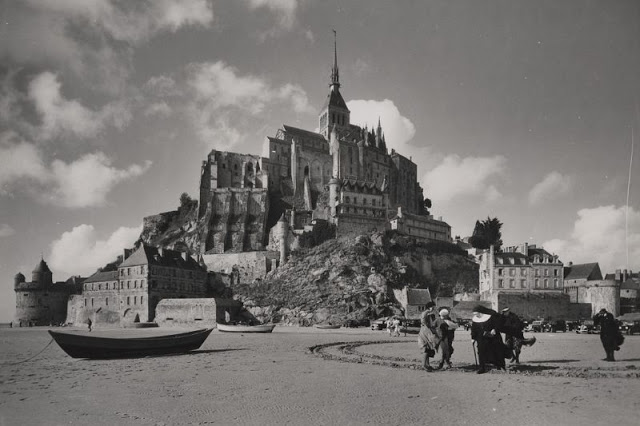
Normandy, France. Mont St. Michel, 1934
Subscribe to continue reading
Become a paid subscriber to get access to the rest of this post and other exclusive content.
Alex Ross (1851–1894) came to Calgary, Alberta in 1884 and set up a photographic studio at the corner of Atlantic Avenue and Osler Street. He had previously worked for a photographer in Winnipeg, but felt the time was right to strike out on his own and establish his own business.
He quickly became well-known for his photographs of the First Nations people in the Calgary area, especially the Tsuu T’ina (called Sarcee at that time) and the Blackfoot. Some of the photographs were taken outdoors, but many more were carefully-posed studio shots. By 1891 the studio seems to have closed, and three years later Ross died at the relatively young age of 43.
Blackfoot boys, 1886-94
Subscribe to continue reading
Become a paid subscriber to get access to the rest of this post and other exclusive content.
An untold number of children were touched by the atrocities of World War II. Throughout the war, the proportion of civilian deaths to military deaths is said to have been as high as three to one — and some countries were definitely affected much worse than others.
The country most affected during the war was Poland. More than 6 million people, equal to one-sixth of the country’s pre-war population, died during World War II. All of these victims were predominantly civilian, with a great many of them being children.
However, getting caught up in the maelstrom of war, whether it be a mass execution or a bombing raid were not the only tragic circumstances that Polish children had to worry about. Many of them faced the distinct possibility of being kidnapped by their German oppressors. Under “Generalplan Ost” — the Nazi plan for genocide and ethnic cleansing in Europe — tens of thousands of Polish children were kidnapped and taken to Germany to become “Germanized.”
It has been calculated that over 250,000 Polish children were kidnapped during World War II. It is estimated that nearly 75 percent of these children never made it back home to their families in Poland after the war.
Aside from Poland, a large number of other countries suffered immensely horrifying civilian casualties during World War II. Some of the countries include include the Soviet Union, China, Germany (where an estimated 76,000 children died as a direct result of Allied bombing raids), Japan, India, and the Philippines.
Let us not forget that more than 1 million Jewish children were killed by the Nazis and their allies or packed into ghettos across Eastern Europe. In these ghettos, children often died from starvation and other privations. Those that did not die in the ghettos were either consigned to the death camps to be gassed or were executed and placed in mass graves.
Only those adults and children who were considered productive and useful to the German war effort were spared and even then, their fate was effectively secured by the horrendous working conditions and the miniscule amount of food given to each needed for subsistence. What made these mass killings even worse was the fact that, during the war, most of the world thought that these stories of mass extermination and death camps were propaganda – tales not to be belived.
Many of the most touching photographs that depict children during World War 2 show Britain during the Blitz. A large number of British children were sent away to the countryside as part of the government’s evacuation scheme known as Operation Pied Piper. The evacuation scheme had been touted as a great success in the media but in actual fact, by early 1940, more than 60 percent of children had returned home, just in time to witness the Blitz. All told, at least 5,028 children died during the Blitz.
While historians have tended to focus on other more high profiles topics relating to the Second World War the facy remains that without a doubt, children are the forgotten victims of the war.
A little girl holds her doll in the rubble of her bomb-damaged home. England. 1940.
Subscribe to continue reading
Become a paid subscriber to get access to the rest of this post and other exclusive content.
Elvis appeared at the Florida Theatre in Jacksonville, FL. Juvenile Court Judge Marion Gooding warned Elvis in chambers after the first show that he must tone down his act. Elvis told reporters “I can’t figure out what I’m doing wrong”. Elvis modifies his show nonetheless, wiggling his little finger suggestively with a gesture that replaces some of his less restrained body movements and at the same time still drives the audience wild.
“One of the most memorable events in the theatre’s history occurred in 1956, when Elvis Presley came to the Florida Theatre for his first concert appearance on an indoor stage. Presley, the City of Jacksonville and the Florida Theatre found themselves subjects of a LIFE Magazine feature when Juvenile Court Judge Marion Gooding sat through the performance to ensure that Presley’s body movements would not become too suggestive”. Florida State Theater.
Crowds await entrance to see Elvis Presley performs at one of his two concerts at the Florida Theatre on August 10 & 11, 1956.
Subscribe to continue reading
Become a paid subscriber to get access to the rest of this post and other exclusive content.
Memphis is a city along the Mississippi River in southwestern Shelby County, Tennessee, United States. It is Tennessee’s second-most populous city behind Nashville; fifth-most populous city in the Southeast, the nation’s 28th-largest; and the largest city proper of those situated along the Mississippi River. The city is the anchor of West Tennessee and the greater Mid-South region, which includes portions of neighboring Arkansas, Mississippi, and the Missouri Bootheel.
Memphis is the seat of Shelby County, Tennessee’s most populous county. One of the more historic and culturally significant cities of the southern United States, Memphis has a wide variety of landscapes and distinct neighborhoods.
Subscribe to continue reading
Become a paid subscriber to get access to the rest of this post and other exclusive content.