Robert Montgomery (born Henry Montgomery Jr.; May 21, 1904 – September 27, 1981) was an American actor, director, and producer. He began his acting career on the stage, but was soon hired by MGM. Initially assigned roles in comedies, he soon proved he was able to handle dramatic ones, as well. He appeared in a wide variety of roles, such as the weak-willed prisoner Kent in The Big House (1930), the psychotic Danny in Night Must Fall (1937), and Joe, the boxer mistakenly sent to Heaven in Here Comes Mr. Jordan (1941). The last two earned him nominations for the Academy Award for Best Actor.
During World War II, he drove ambulances in France until the Dunkirk evacuation. When the United States entered the war on December 8, 1941, he enlisted in the Navy, and was present at the invasion at Normandy. After the war, he returned to Hollywood, where he worked in both films, and later, in television. He was also the father of actress Elizabeth Montgomery.
Subscribe to continue reading
Become a paid subscriber to get access to the rest of this post and other exclusive content.
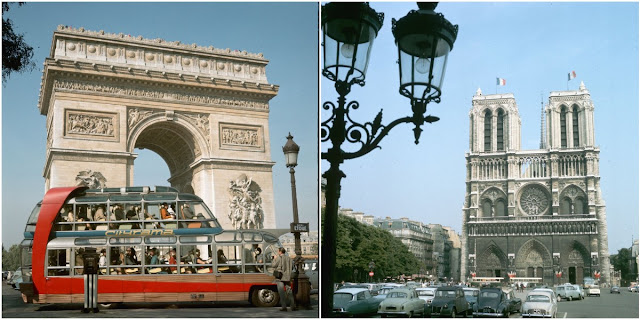
Post-war Paris brought a blossoming of culture and thought. The Nouvelle Vague transformed French cinema, young couturiers reinvigorated French fashion, existentialism flourished in literature and philosophy, and the city swung and swayed to a vibrant jazz and rock ’n’ roll scene.
In the middle of it all, was Paul Almasy. The well-traveled photojournalist, born in Hungary, had made Paris his hometown and spent his days and nights wandering its alleys, avenues, and after-hours bars. Through his photographs, we visit the embankment of the Seine and the old market halls, its music joints and glamorous cafes, but also the hidden backyards and artist’s studios.
Subscribe to continue reading
Become a paid subscriber to get access to the rest of this post and other exclusive content.
Born 1893 in Kings County, New York, American actress, singer, playwright, screenwriter, comedian, and sex symbol Mae West had her entertainment career spanned seven decades. She was known for her lighthearted, bawdy double entendres and breezy sexual independence.
West was active in vaudeville and on the stage in New York City before moving to Hollywood to become a comedian, actress, and writer in the motion picture industry, as well as appearing on radio and television. She often used a husky contralto voice and was one of the more controversial movie stars of her day; she encountered many problems, especially censorship. She once quipped, “I believe in censorship. I made a fortune out of it.” She bucked the system, making comedy out of conventional mores, and the Depression-era audience admired her for it.
Subscribe to continue reading
Become a paid subscriber to get access to the rest of this post and other exclusive content.
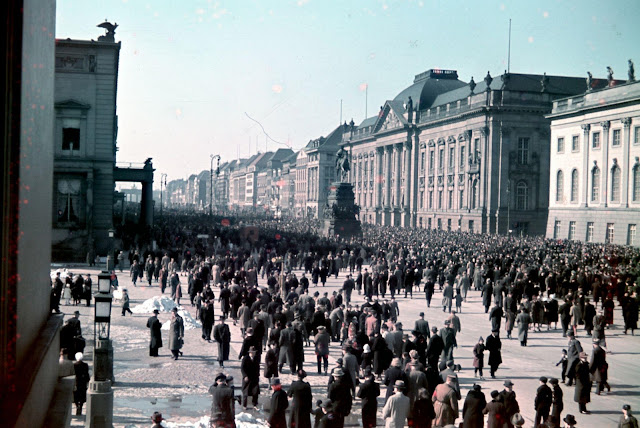
Before 1941, Berlin, at 950 kilometers (590 miles) from London, was at the extreme range attainable by the British bombers then available to the Allied forces. It could be bombed only at night in summer when the days were longer and skies clear—which increased the risk to Allied bombers.
The first RAF raid on Berlin took place on the night of August 25, 1940; 95 aircraft were dispatched to bomb Tempelhof Airport near the center of Berlin and Siemensstadt, of which 81 dropped their bombs in and around Berlin, and while the damage was slight, the psychological effect on Hitler was greater.
The bombing raids on Berlin prompted Hitler to order the shift of the Luftwaffe’s target from British airfields and air defenses to British cities, at a time during the Battle of Britain when the British air defenses were becoming exhausted and overstretched.
In the following two weeks there were a further five raids of a similar size, all nominally precision raids at specific targets, but with the difficulties of navigating at night the bombs that were dropped were widely dispersed.
During 1940 there were more raids on Berlin, all of which did little damage. The raids grew more frequent in 1941, but were ineffective in hitting important targets. The head of the Air Staff of the RAF, Sir Charles Portal, justified these raids by saying that to “get four million people out of bed and into the shelters” was worth the losses involved.
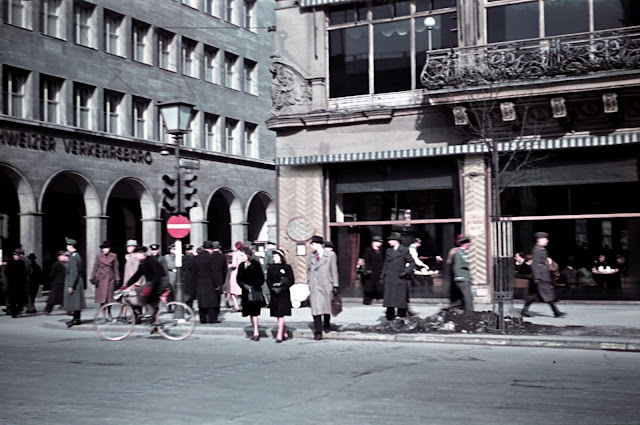
Below is a selection of 35 amazing color photographs that show what life was like in Berlin in 1940, just before the bombing raids.
Subscribe to continue reading
Become a paid subscriber to get access to the rest of this post and other exclusive content.
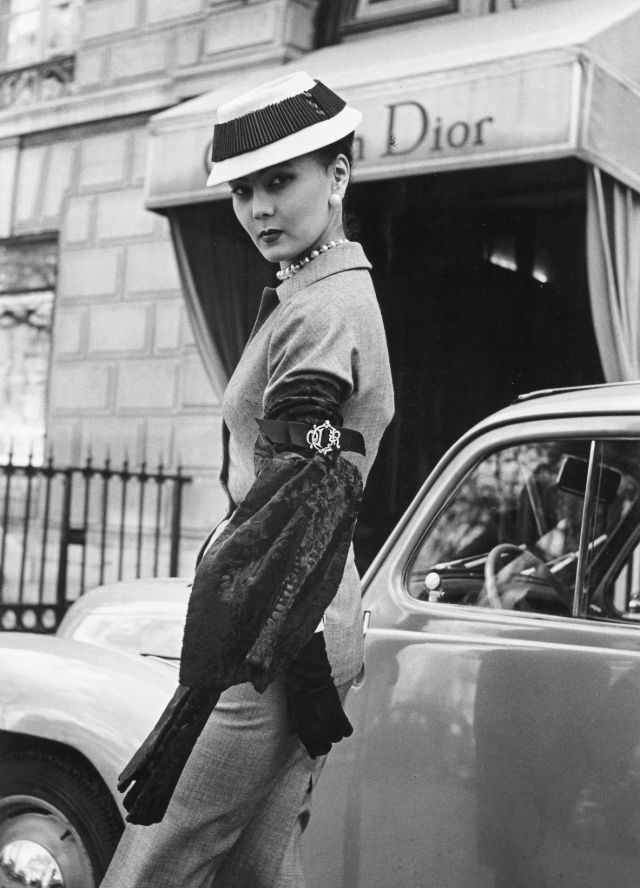
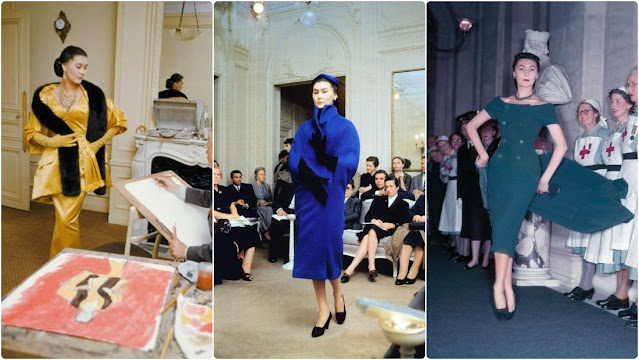
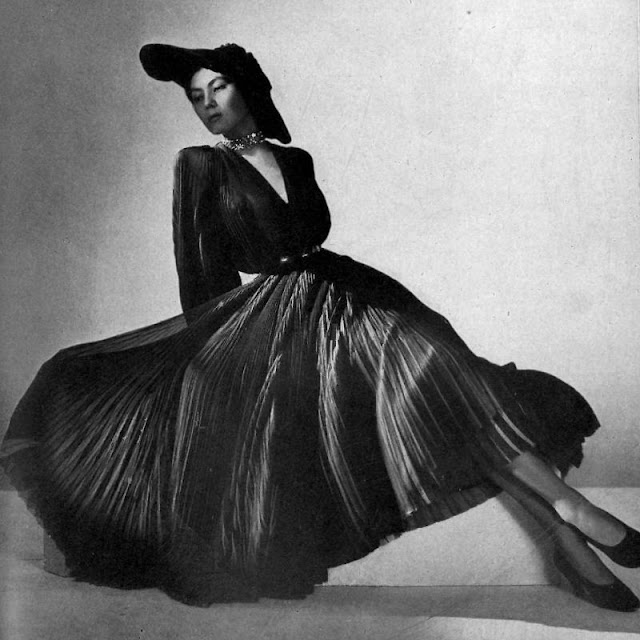
Alla Ilchun (1926 – March 8, 1989) was the first Euro-Asian model who has worked for twenty years at Dior. She was famous for her waist of 49 cm and eyeliner arrows.
Subscribe to get access
Read more of this content when you subscribe today.
Information about the family and the ancestors of Alla Ilchun is not very much preserved. Her father, Zhuanhal Ilchun, was allegedly a railway engineer. He was able to get a decent education thanks to his wealthy father, who lived in Kazakhstan. He participated in the construction of Turksib, and on the eve of the revolution was in Harbin. This city was founded as a station of the Chinese Eastern Railway; accordingly, many Russians lived in Harbin. Zhuanhal Ilchun met here the beautiful Tatyana, the opera singer. They started a family, soon their daughter Alla was born.
However, life in Harbin in the early of the twentieth century was very troubled. The Soviet, Chinese and Japanese governments tried to take the city under its influence. Harbin periodically passed from hand to hand, and the residents didn’t add peace of mind. The family decided to go in search of a better life. Russia, where the October revolution had already taken place, did not attract them, it was decided to go to France.
Tatiana arrived in Paris with her daughter. Zhuankhal Ilchun, according to Alla Ilchun’s son, was caught and sent to the GULAG. The capital of France was in no hurry to caress two foreign women who decided to find their happiness here. But they firmly decided to start life anew in Paris.
Growing up Alla began working as a dishwasher in a restaurant. She did not dream of a model career, and she was not accustomed to complaining about her fate. She just knew for sure that everything in her life would be fine.
And then the Second World War began. Alla Ilchun joined the ranks of the French resistance. She lost one of her friends, Ariadnu Scriabin, and she herself repeatedly risked her life. And only after the war, Alla finally pulled out her lucky lottery ticket.
Alla’s friend dreamed of becoming a model and was a regular participant in all sorts of castings. On that day, the girl felt unwell and asked Alla to replace her at the casting with Christian Dior, who at that time was just beginning his independent path in the fashion world. Coming to the casting, she found only a team of workers in the fashion house. The girl cheerfully chatted with them and left, deciding that her friend had clearly confused time or place.
A few days later, a phone call rang in Alla’s apartment, and the secretary of Mr. Dior informed Alla Ilchun about hiring a Christian Dior fashion house. To the girl’s remark about the failed participation in the casting, the secretary cheerfully noted: Mr. Dior was among the workers, and the oriental beauty and graceful figure of Alla conquered him at first sight.
A new and unfamiliar life has begun for Alla. Since that day she was waiting for daily fittings, numerous shows and shine spotlights. Christian Dior called Alla his personal talisman, because every show with her participation had an unprecedented success. The stars were ready to buy the dresses demonstrated by the beauty immediately after the model left behind the scene.
She was femininely fragile and possessed inimitable grace. High cheekbones and slanted eyes gave her a unique charm, women around the world began to imitate the model, trying to reproduce the long arrows that emphasize the eyes. The fashion for them remains today, just few people know that for the first time the world saw such an unusual make-up on Alla Ilchun’s face back in the 1950s. Working with a French fashion designer became happy for the model itself. At one of the many photo shoots Alla met Mike de Dülmen, Dior’s staff photographer. She subsequently married him and bore two sons.
10 years, until the death of the master, continued the cooperation of Alla and Christian Dior. However, after his departure she did not remain without work, for another decade she worked closely with Yves Saint Laurent.
Alla Ilchun decided to finish her modeling career when she began to notice signs of age on her face. She wanted to remain in the memory of the audience and fans as the young and beautiful. For twenty years of work in the fashion world, her waist has grown from 47 centimeters to only 49, but the stamp of maturity was already visible on her face and body. After retirement, she did not participate in photo shoots and led a closed lifestyle.
Here, a collection of 40 fabulous photos captured portrait of Alla Ilchun as a model in the late 1940s and 1950s:
Subscribe to continue reading
Become a paid subscriber to get access to the rest of this post and other exclusive content.
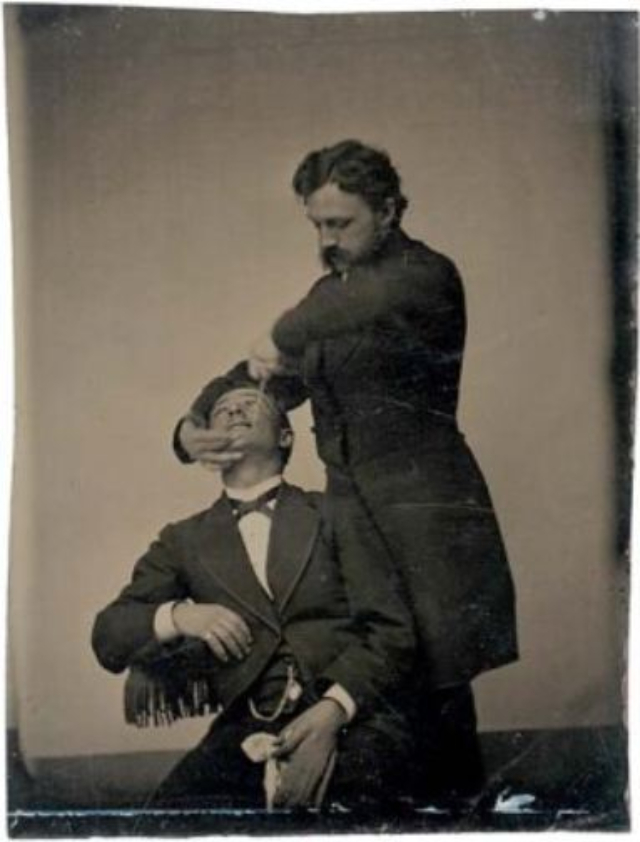
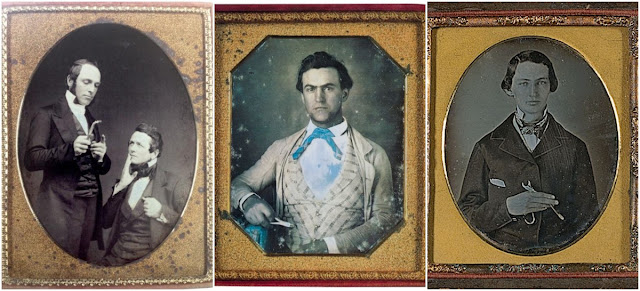
Dentistry has come a long way since the gory days of teeth extraction in the 19th century.
The 19th century saw the rise of dentistry as a distinct profession, with its own practitioners, techniques, and standards. The emphasis of dental care shifted from simply removing painful teeth to trying to avoid extractions by filling cavities. By the end of the century, preventive dentistry sought ways to keep the cavities from developing in the first place. 19th century dentists were the first professionals to use anesthetic drugs, a development that made modern surgery possible.
In the early nineteenth century, the euphoria-inducing properties of substances such as nitrous oxide, or “laughing gas” and ether, were known, but used only for entertainment at “ether frolics” and sideshows. Ether, being a more powerful agent with which deep unconsciousness could be induced, became the surgical anesthetic of choice for many years, while nitrous oxide became standard in dentistry.
At the very end of the century, the invention of radiography allowed dentists to see inside patients’ teeth and diagnose cavities before they caused major damage. New knowledge in microbiology also provided understanding of the bacteria that cause tooth decay. These bacteria digest the sugars and starches on the teeth, producing acids and causing the enamel to deteriorate. Once this happens, other bacteria can penetrate deeper into the tooth. Armed with this information, dentists began seeking to prevent the decay process by encouraging better dental hygiene practices and developing new tooth powders and pastes.
Subscribe to continue reading
Become a paid subscriber to get access to the rest of this post and other exclusive content.
The Munsters is an American sitcom depicting the home life of a family of benign monsters. The series starred Fred Gwynne as Frankenstein’s monster and head-of-the-household Herman Munster; Yvonne De Carlo as his wife Lily Munster; Al Lewis as Lily’s father, Grandpa, the somewhat over-the-hill vampire Count Dracula who longs for the “good old days” in Transylvania; Beverley Owen (later replaced by Pat Priest) as their teenage niece Marilyn Munster, who was attractive by conventional standards but the “ugly duckling” of the family; and Butch Patrick as their werewolfish son Eddie Munster.
The Munsters was extraordinarily hard for Fred to do. He was already 6-foot-5-and-a-half inches and they put him in buildup shoes to bring him up to about 7 feet, and Herman’s padded outfit weighed about 50 pounds.
And, of course, makeup that took hours to put on every day. Because of this, Gwynne’s costume was hot, heavy, and clumpy. They used to have to cool him down with a fan between takes just so that he didn’t faint!
Subscribe to continue reading
Become a paid subscriber to get access to the rest of this post and other exclusive content.
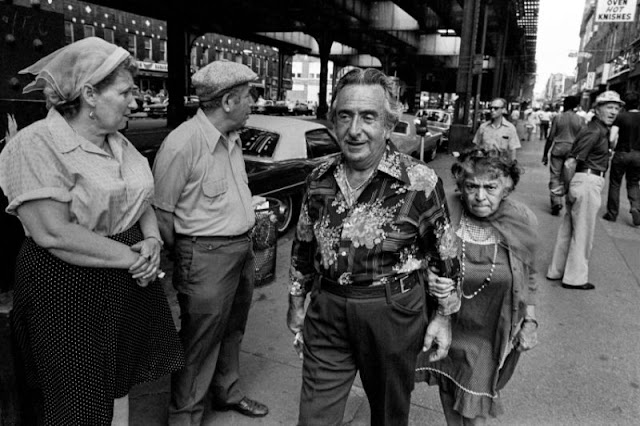
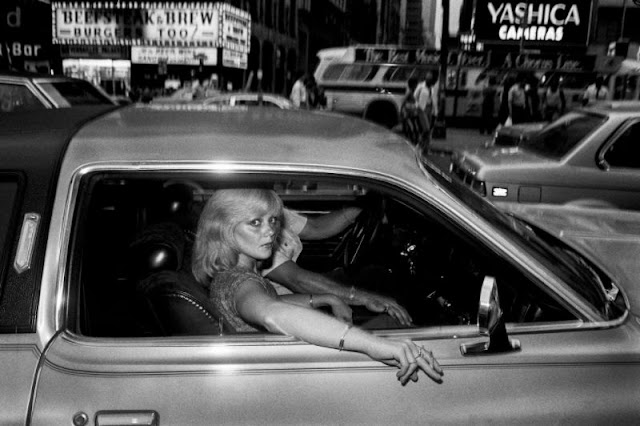
Bruce Gilden is an American street photographer. Known for his graphic and often confrontational close-ups made using flash, his images have a degree of intimacy and directness that have become a signature in his work.
Gilden was born in Brooklyn, New York in 1946. He studied sociology at Penn State University but didn’t complete the course. Although he briefly flirted with the idea of being an actor, Gilden decided to become a photographer in 1967, when he bought his first camera. He attended evening classes at the School of Visual Arts in New York, but largely considers himself to be self-taught.
After recently moving house, Gilden discovered hundreds of contact prints and negatives in his personal archives, from work undertaken in New York, his native city, between 1978 and 1984. From these thousands of images, most of which are new even to their author, Gilden has selected around a hundred for his book Lost and Found. Extending from the desire to revisit the work of his youth, this historic archive constitutes an inestimable treasure.
In Lost and Found, an extraordinary New York is portrayed, revealing an unknown facet of Gilden’s oeuvre. With all the energy of a young man in his thirties, Gilden launched an assault on New York in a visibly tense atmosphere. These pictures are almost all made without the use of flash which was – soon after – to become his trademark. Gilden reflects that he was “probably in a transition period at that time, wanting to use flash more and make more dramatic photos. Maybe that’s why I overlooked these images…”
In this extraordinary gallery of portraits, the compositions—mostly horizontal—simmer with energy, bursting with the most diverse characters, as though Gilden intended to include within the frame everything that caught his eye.
New York, often called New York City (NYC) to distinguish it from the State of New York, is the most populous city in the United States. With a 2020 population of 8,804,190 distributed over 300.46 square miles (778.2 km2), New York City is also the most densely populated major city in the United States. Located at the southern tip of the state of New York, the city is the center of the New York metropolitan area, the largest metropolitan area in the world by urban area. With over 20.1 million people in its metropolitan statistical area and 23.5 million in its combined statistical area as of 2020, New York is one of the world’s most populous megacities. New York City has been described as the cultural, financial, and media capital of the world, and is a significant influence on commerce, entertainment, research, technology, education, politics, tourism, dining, art, fashion, and sports. It is the most photographed city in the world. Home to the headquarters of the United Nations, New York is an important center for international diplomacy, an established safe haven for global investors, and is sometimes described as the capital of the world.
Situated on one of the world’s largest natural harbors, with water covering 36.4% of its surface area, New York City is composed of five boroughs, each of which is coextensive with a respective county of the state of New York. The five boroughs—Brooklyn (Kings County), Queens (Queens County), Manhattan (New York County), the Bronx (Bronx County), and Staten Island (Richmond County)—were created when local governments were consolidated into a single municipal entity in 1898. The city and its metropolitan area constitute the premier gateway for legal immigration to the United States. As many as 800 languages are spoken in New York, making it the most linguistically diverse city in the world. New York is home to more than 3.2 million residents born outside the United States, the largest foreign-born population of any city in the world as of 2016. As of 2018, the New York metropolitan area is estimated to produce a gross metropolitan product (GMP) of nearly $1.8 trillion, ranking it first in the United States. If the New York metropolitan area were a sovereign state, it would have the eighth-largest economy in the world. New York is home to the highest number of billionaires of any city in the world.
New York City traces its origins to a trading post founded on the southern tip of Manhattan Island by Dutch colonists in approximately 1624. The settlement was named New Amsterdam (Dutch: Nieuw Amsterdam) in 1626 and was chartered as a city in 1653. The city came under English control in 1664 and was renamed New York after King Charles II of England granted the lands to his brother, the Duke of York. The city was regained by the Dutch in July 1673 and was renamed New Orange for one year and three months; the city has been continuously named New York since November 1674. New York City was the capital of the United States from 1785 until 1790, and has been the largest U.S. city since 1790. The Statue of Liberty greeted millions of immigrants as they came to the U.S. by ship in the late 19th and early 20th centuries, and is a symbol of the U.S. and its ideals of liberty and peace. In the 21st century, New York has emerged as a global node of creativity, entrepreneurship, and environmental sustainability, and as a symbol of freedom and cultural diversity. In 2019, New York was voted the greatest city in the world per a survey of over 30,000 people from 48 cities worldwide, citing its cultural diversity.
Many districts and monuments in New York City are major landmarks, including three of the world’s ten most visited tourist attractions in 2013. A record 66.6 million tourists visited New York City in 2019. Times Square is the brightly illuminated hub of the Broadway Theater District, one of the world’s busiest pedestrian intersections, and a major center of the world’s entertainment industry. Many of the city’s landmarks, skyscrapers, and parks are known around the world, as is the city’s fast pace, spawning the term New York minute. The Empire State Building has become the global standard of reference to describe the height and length of other structures. Manhattan’s real estate market is among the most expensive in the world. Providing continuous 24/7 service and contributing to the nickname The City That Never Sleeps, the New York City Subway is the largest single-operator rapid transit system worldwide, with 472 passenger rail stations. The city has over 120 colleges and universities, including Columbia University, New York University, and the City University of New York system, which is the largest urban public university system in the United States. Anchored by Wall Street in the Financial District of Lower Manhattan, New York City has been called both the world’s leading financial center and the most powerful city in the world, and is home to the world’s two largest stock exchanges by total market capitalization, the New York Stock Exchange and Nasdaq. (Wikipedia)
Subscribe to continue reading
Become a paid subscriber to get access to the rest of this post and other exclusive content.