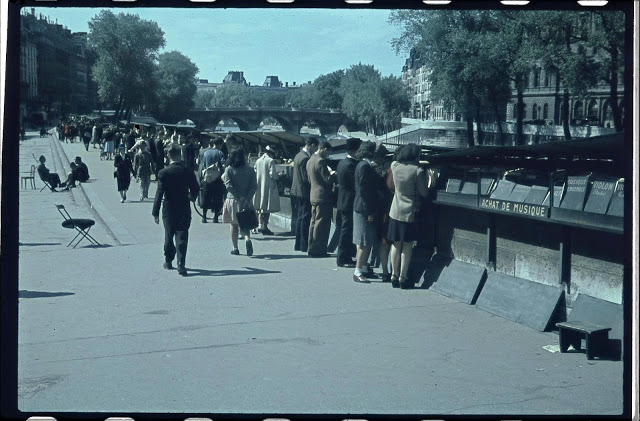
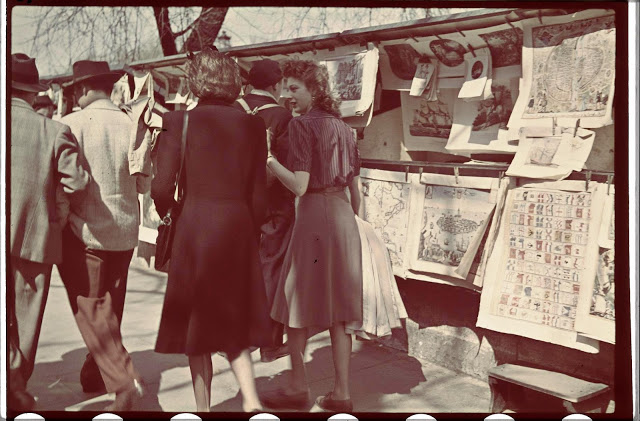
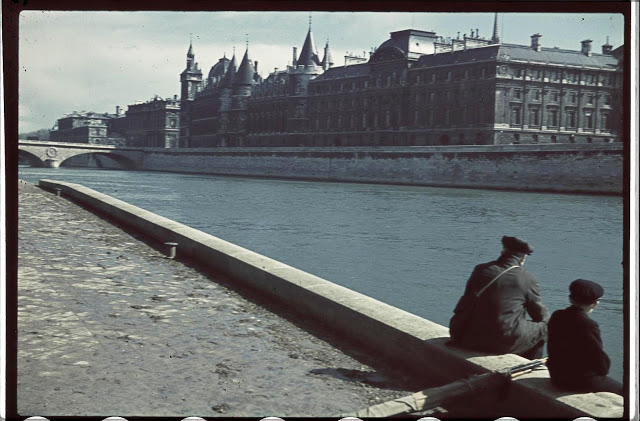
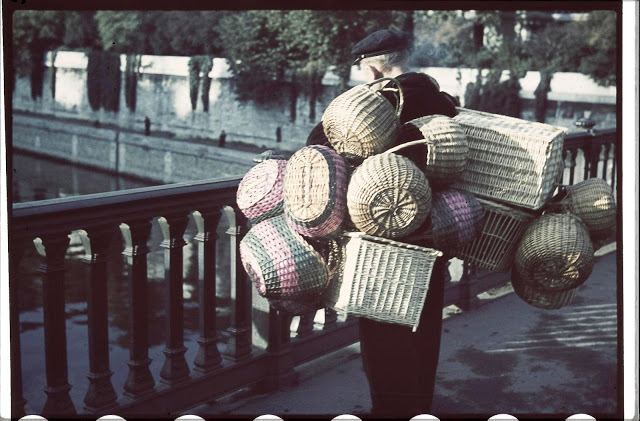
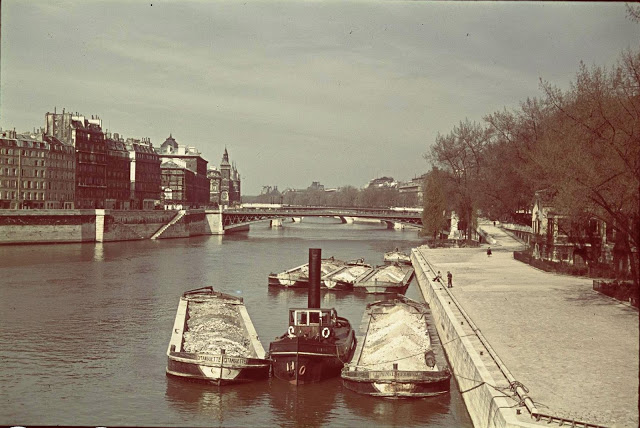
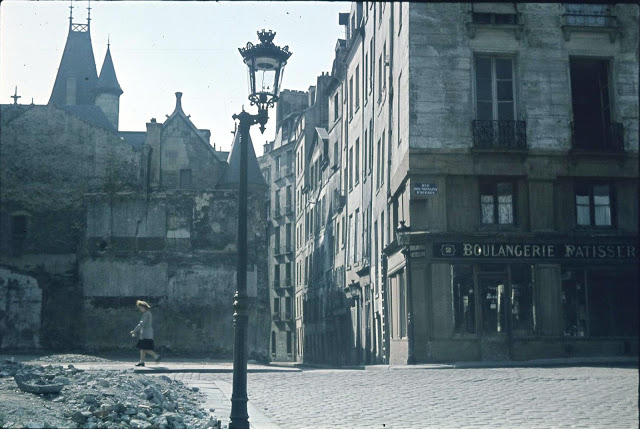
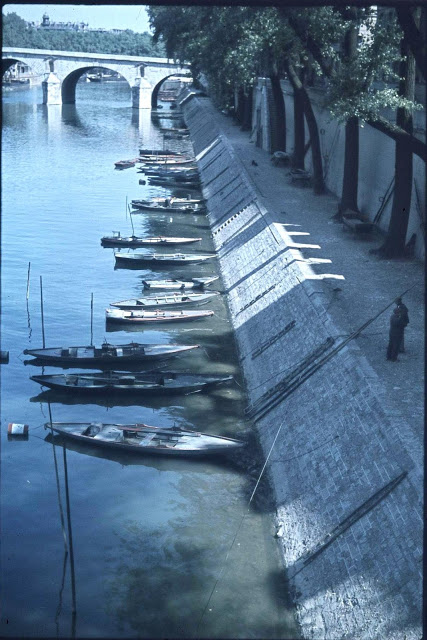
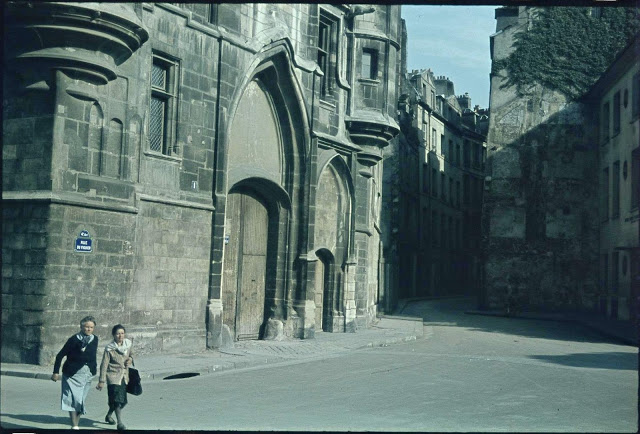
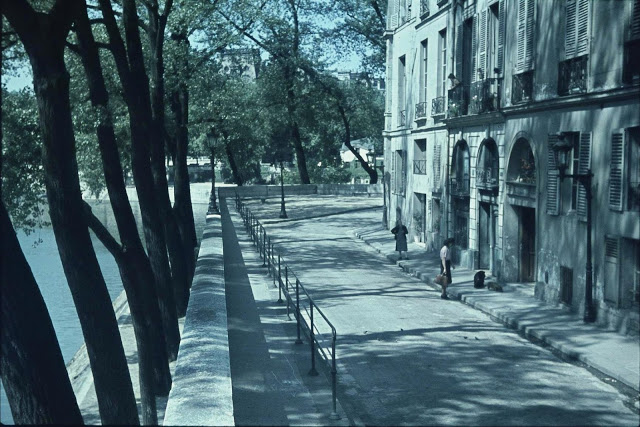
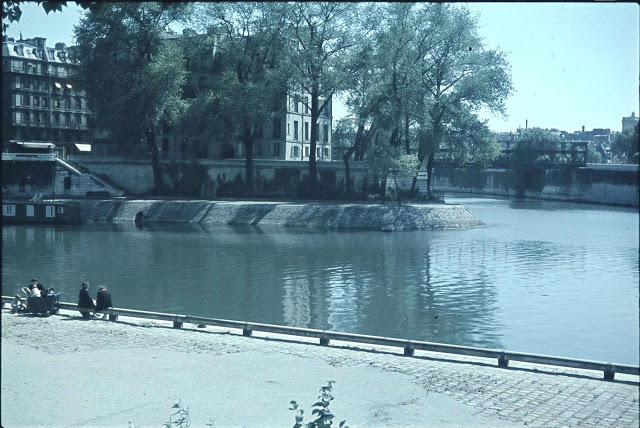
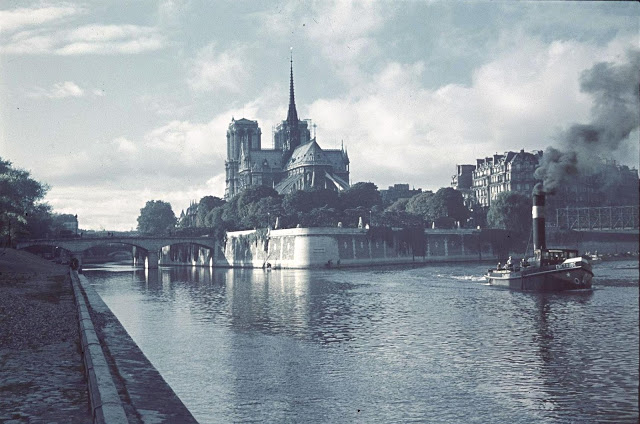
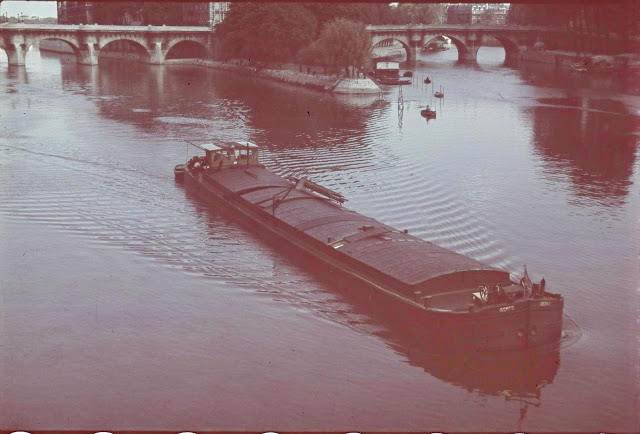
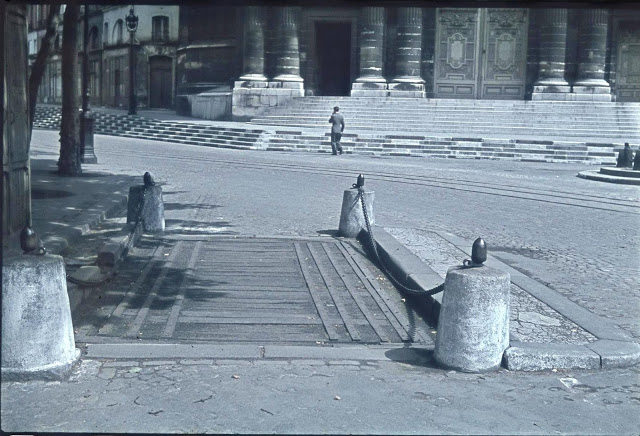
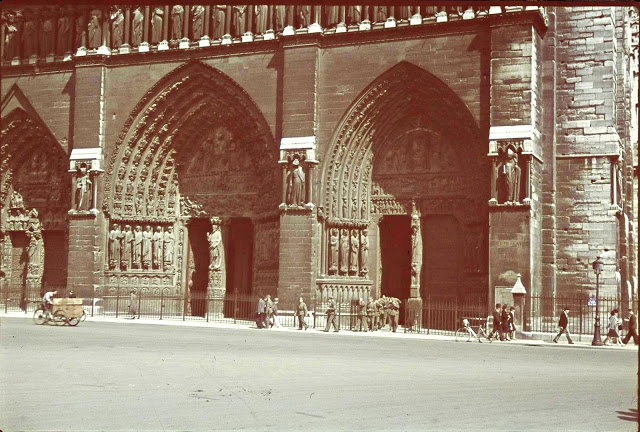
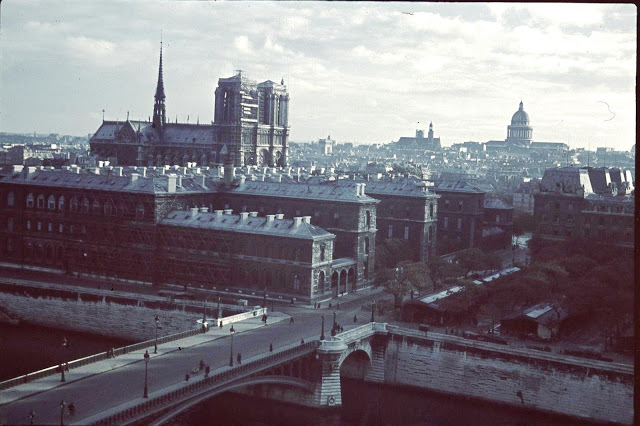
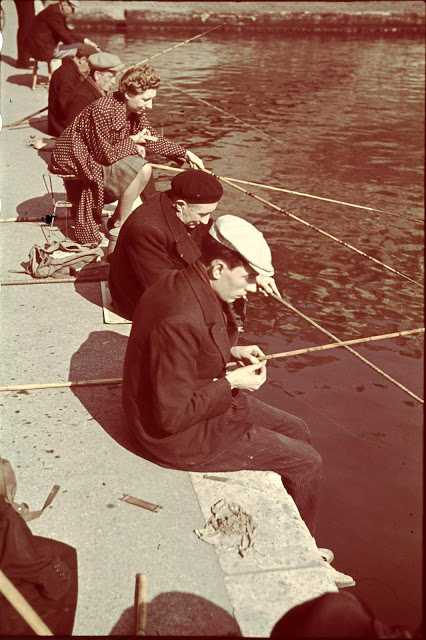
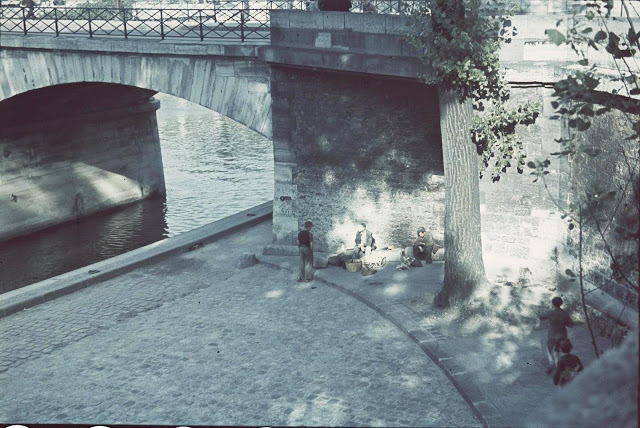
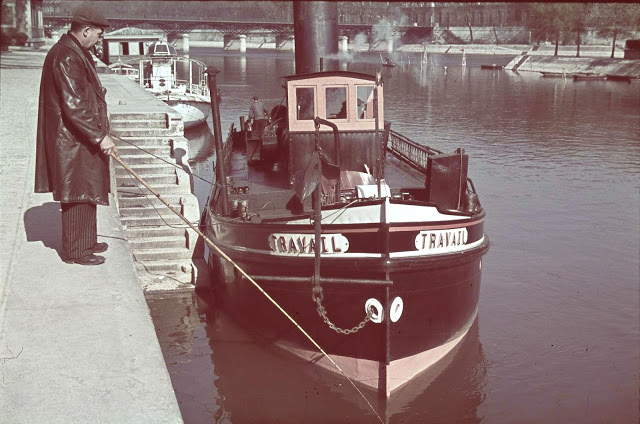
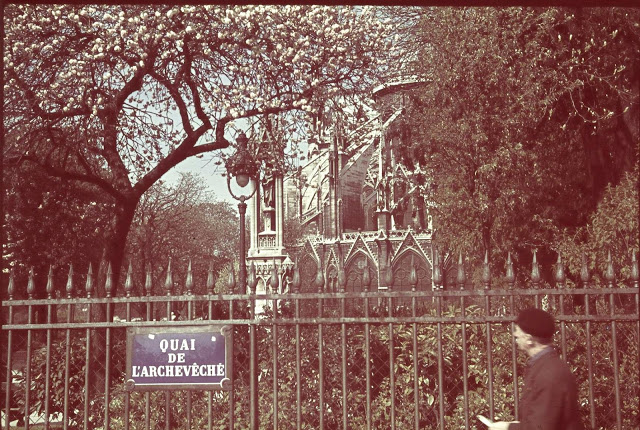
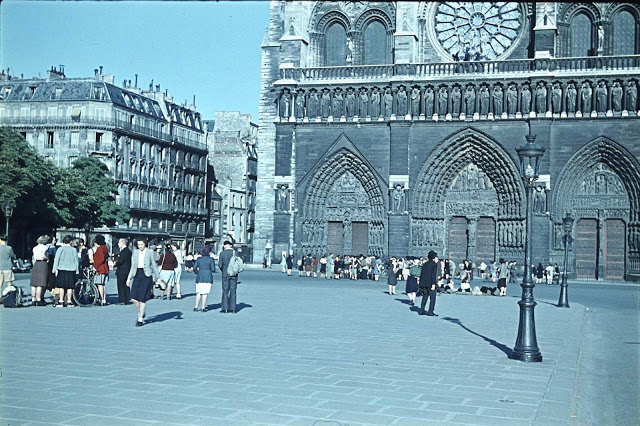
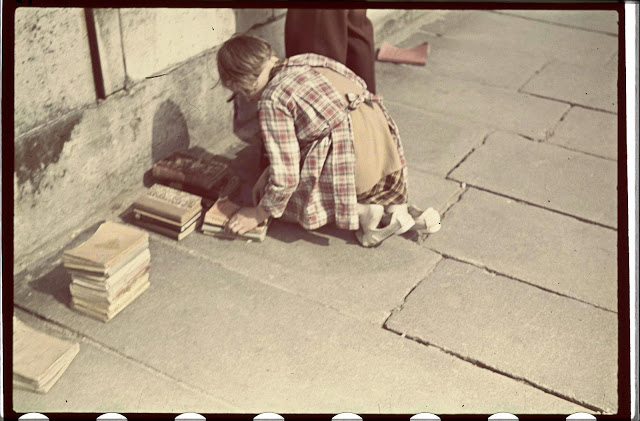
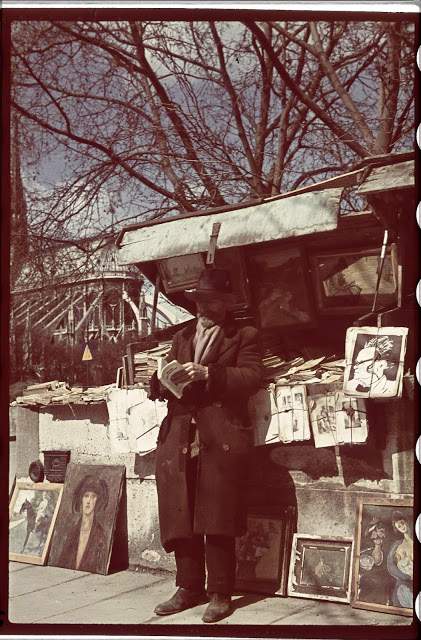
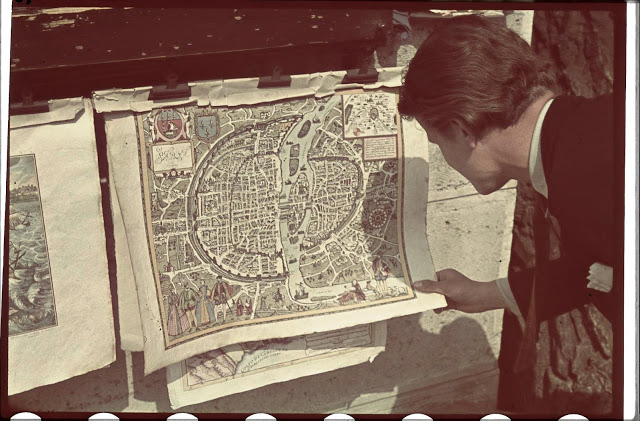
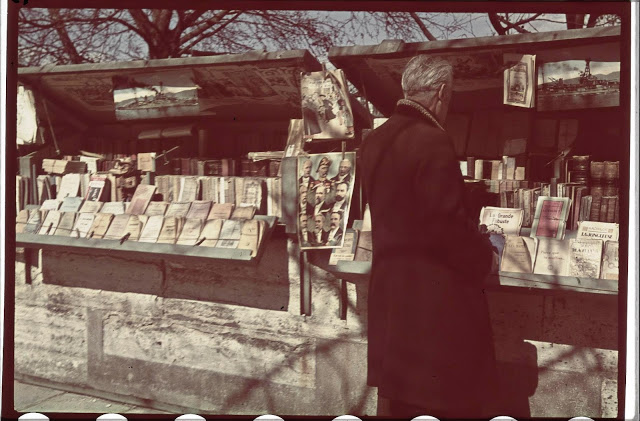
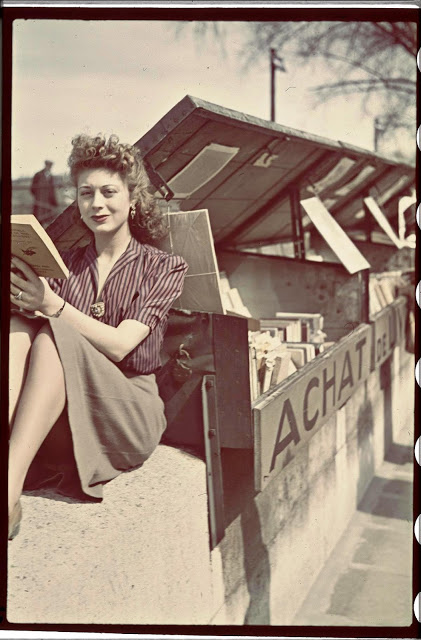
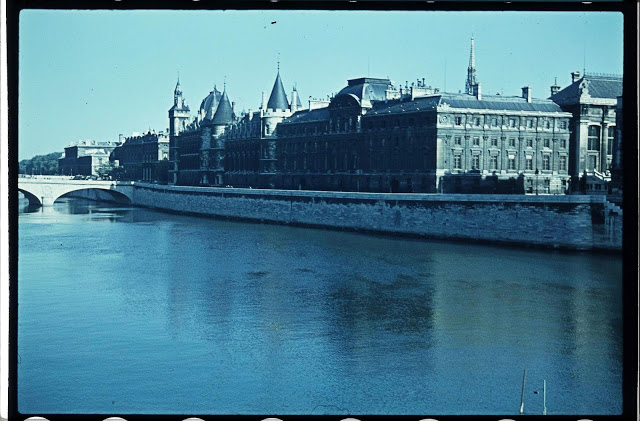
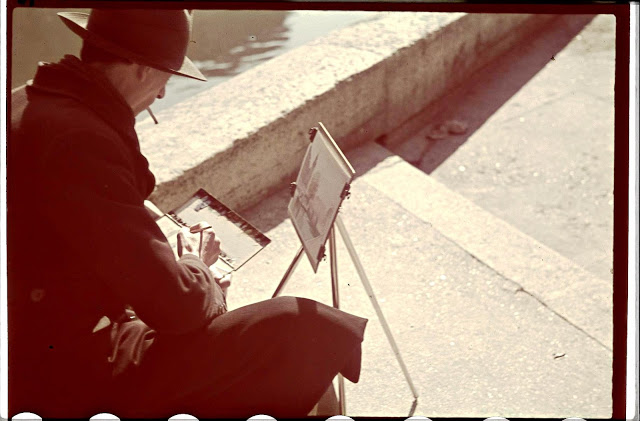
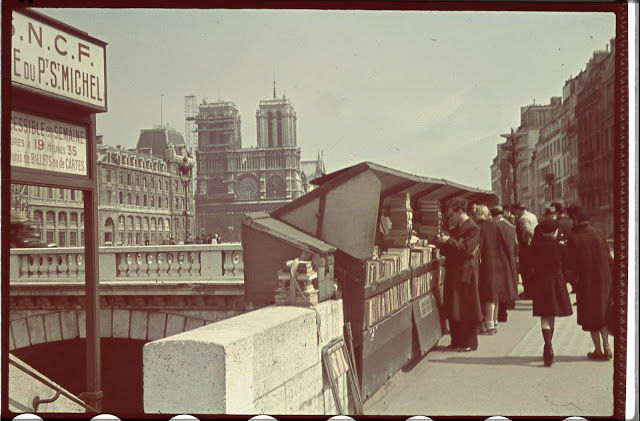
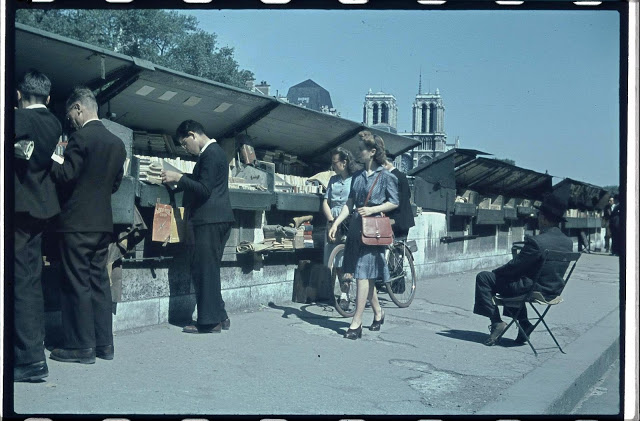
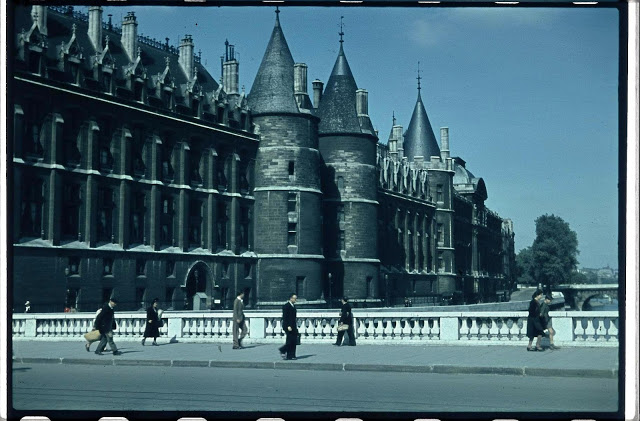
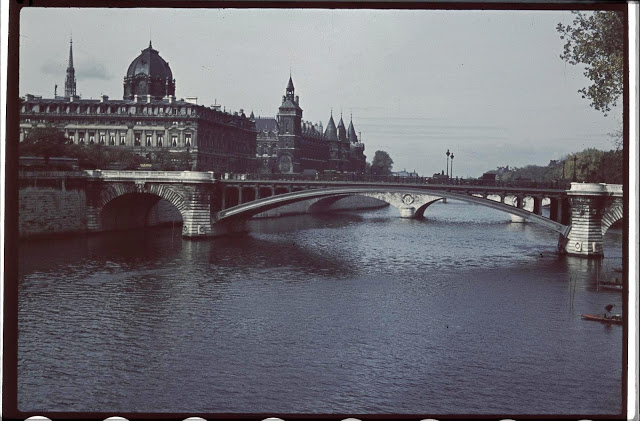
“For Parisians the Seine is a compass, a way to know where you are,” said art historian Marina Ferretti. France had a relatively easier time under German occupation during World War II. That is because Hitler did not consider West Europeans as ‘Untermenschen’. The infamous German brutality was reserved for the Russians.
These images were taken in Occupied Paris during World War II by André Zucca for Nazi German propaganda magazine Signal using rare Agfacolor film supplied by the Wehrmacht. Zucca was arrested after the 1944 liberation but never prosecuted. He worked until his death in 1976 under an assumed name.
When exhibited in Paris in 2008, Bertrand Delanoë, Mayor of Paris, ordered a notice to accompany the images stating that the pictures avoid the “reality of occupation and its tragic aspects.”
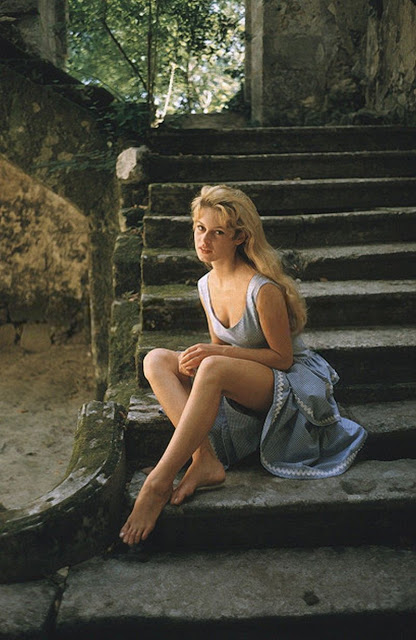
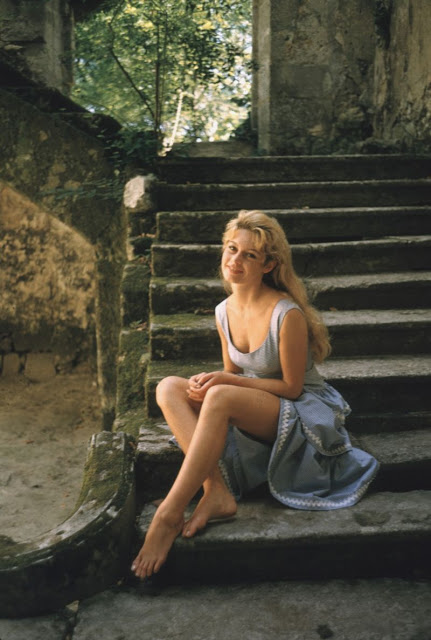
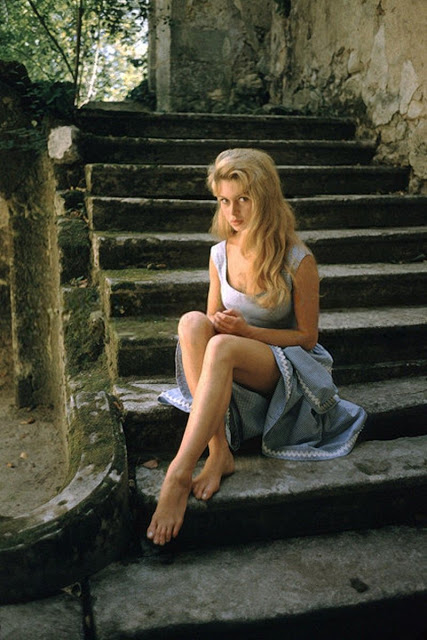
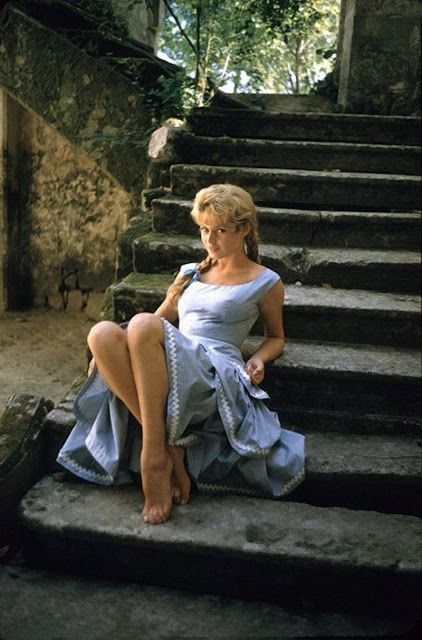
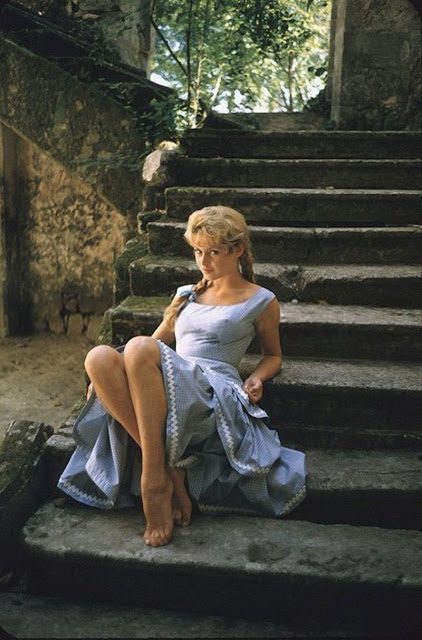
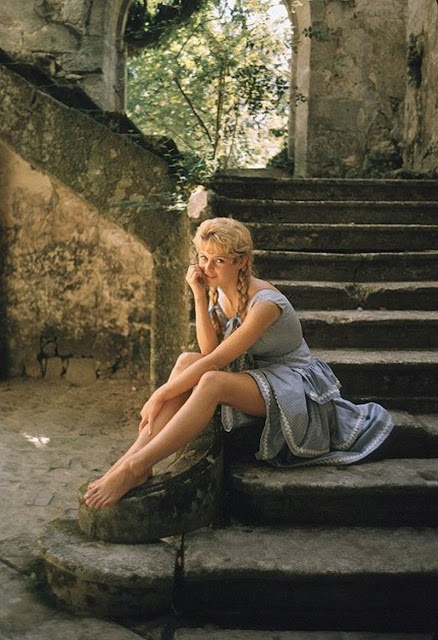
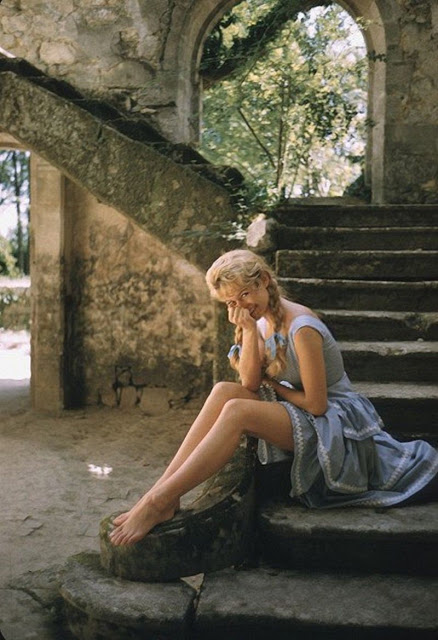
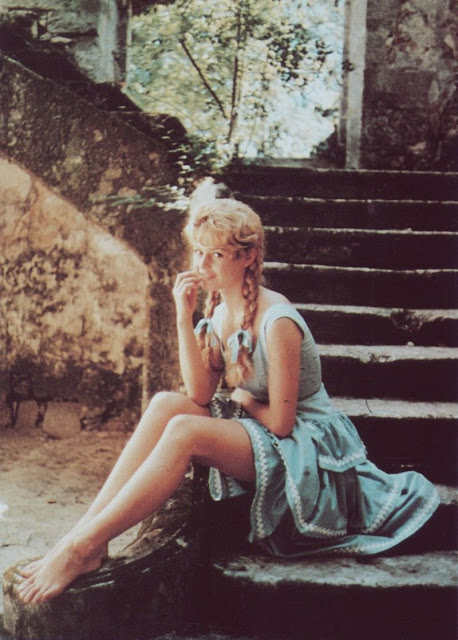
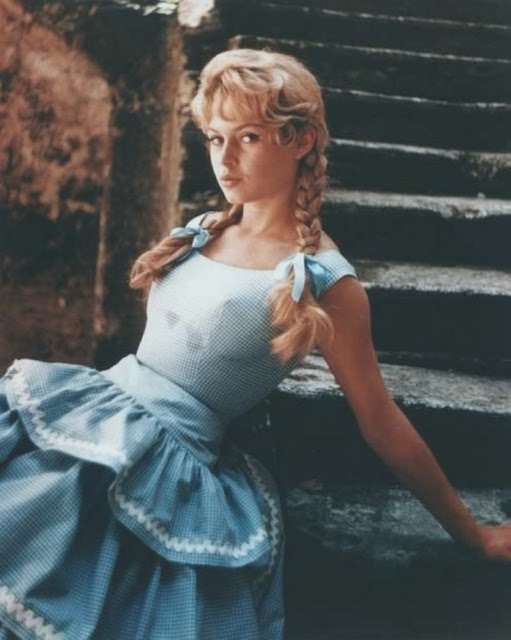
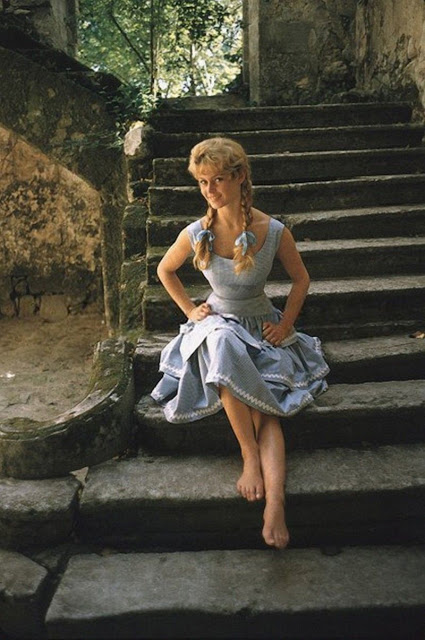
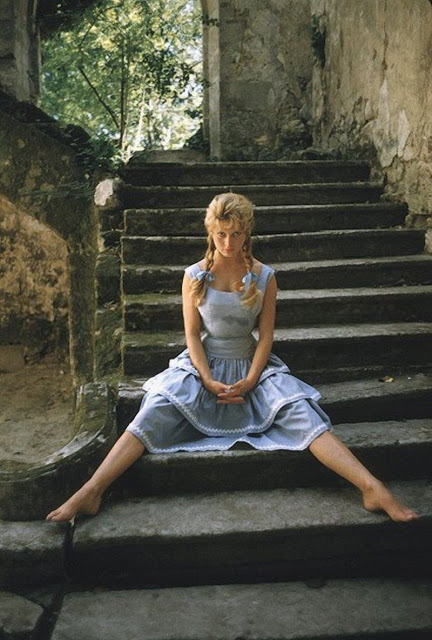
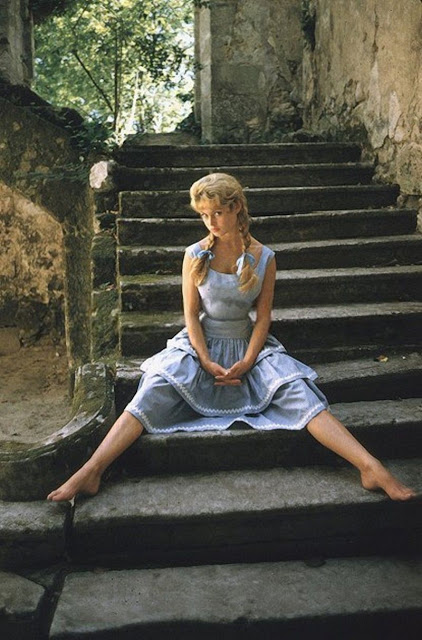
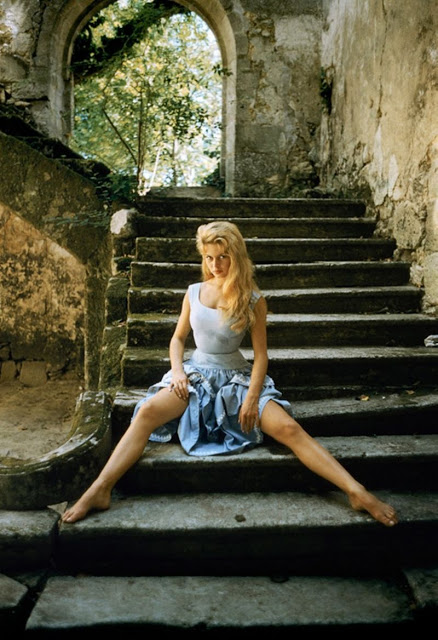
Brigitte Bardot was photographed by Mark Shaw in 1958. Mark, who often predicted who would become stars, thought one of these images of Bardot should have been used as a cover for LIFE, but LIFE, alas, did not have Mark’s vision. Another variation was instead used by the American Society of Magazine Photographers in 1959, as the cover of their industry magazine “Infinity.”
Brigitte Bardot was known as one of the ultimate sex symbols of the 1950s and 1960s. Bardot shot to fame when she was only a teenager. After making her film debut in 1952, the iconic blonde bombshell made international waves, quickly grabbing the attention of Hollywood bigwigs.
In her early life, Bardot was an aspiring ballet dancer. In 1947 Bardot was accepted to the Conservatoire de Paris, and for 3 years she attended the ballet classes of Russian choreographer Boris Knyazev.
She later modeled for a fashion magazines and began a career as an actress. Her early films were generally romantic dramas, some historical, in which she was cast as ingénue or siren, often in varying states of undress. The film And God Created Woman (1956) with Jean-Louis Trintignant, about an immoral teenager in a respectable small-town setting, was her first international success.
New York, often called New York City to distinguish it from New York State, or NYC for short, is the most populous city in the United States. With a 2020 population of 8,804,190 distributed over 300.46 square miles (778.2 km2), New York City is also the most densely populated major city in the United States. Located at the southern tip of the State of New York, the city is the center of the New York metropolitan area, the largest metropolitan area in the world by urban area. With over 20 million people in its metropolitan statistical area and 23,582,649 in its combined statistical area as of 2020, New York is one of the world’s most populous megacities. New York City has been described as the cultural, financial, and media capital of the world, significantly influencing commerce, entertainment, research, technology, education, politics, tourism, dining, art, fashion, and sports, and is the most photographed city in the world. Home to the headquarters of the United Nations, New York is an important center for international diplomacy, and has sometimes been called the capital of the world.
Situated on one of the world’s largest natural harbors, New York City is composed of five boroughs, each of which is coextensive with a respective county of the State of New York. The five boroughs—Brooklyn (Kings County), Queens (Queens County), Manhattan (New York County), the Bronx (Bronx County), and Staten Island (Richmond County)—were created when local governments were consolidated into a single municipal entity in 1898. The city and its metropolitan area constitute the premier gateway for legal immigration to the United States. As many as 800 languages are spoken in New York, making it the most linguistically diverse city in the world. New York is home to more than 3.2 million residents born outside the United States, the largest foreign-born population of any city in the world as of 2016. As of 2019, the New York metropolitan area is estimated to produce a gross metropolitan product (GMP) of $2.0 trillion. If the New York metropolitan area were a sovereign state, it would have the eighth-largest economy in the world. New York is home to the highest number of billionaires of any city in the world.
New York City traces its origins to a trading post founded on the southern tip of Manhattan Island by Dutch colonists in approximately 1624. The settlement was named New Amsterdam (Dutch: Nieuw Amsterdam) in 1626 and was chartered as a city in 1653. The city came under English control in 1664 and was renamed New York after King Charles II of England granted the lands to his brother, the Duke of York. The city was regained by the Dutch in July 1673 and was renamed New Orange for one year and three months; the city has been continuously named New York since November 1674. New York City was the capital of the United States from 1785 until 1790, and has been the largest U.S. city since 1790. The Statue of Liberty greeted millions of immigrants as they came to the U.S. by ship in the late 19th and early 20th centuries, and is a symbol of the U.S. and its ideals of liberty and peace. In the 21st century, New York has emerged as a global node of creativity, entrepreneurship, and environmental sustainability, and as a symbol of freedom and cultural diversity. In 2019, New York was voted the greatest city in the world per a survey of over 30,000 people from 48 cities worldwide, citing its cultural diversity.
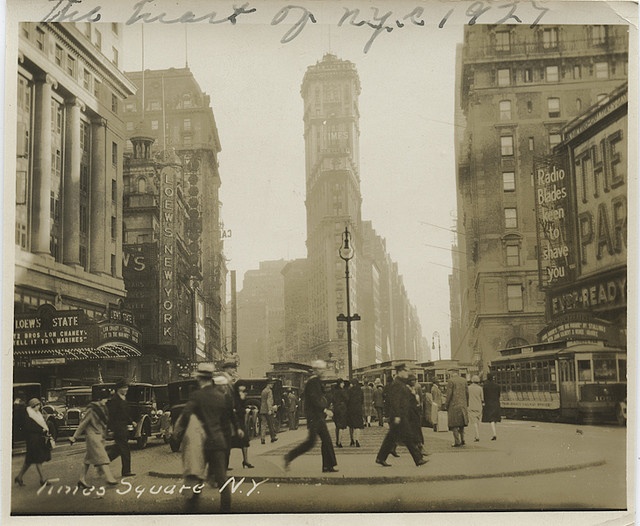
Many districts and monuments in New York City are major landmarks, including three of the world’s ten most visited tourist attractions in 2013. A record 66.6 million tourists visited New York City in 2019. Times Square is the brightly illuminated hub of the Broadway Theater District, one of the world’s busiest pedestrian intersections, and a major center of the world’s entertainment industry. Many of the city’s landmarks, skyscrapers, and parks are known around the world, as is the city’s fast pace, spawning the term New York minute. The Empire State Building has become the global standard of reference to describe the height and length of other structures. Manhattan’s real estate market is among the most expensive in the world. Providing continuous 24/7 service and contributing to the nickname The City That Never Sleeps, the New York City Subway is the largest single-operator rapid transit system worldwide, with 472 rail stations. The city has over 120 colleges and universities, including Columbia University, New York University, Rockefeller University, and the City University of New York system, which is the largest urban public university system in the United States. Anchored by Wall Street in the Financial District of Lower Manhattan, New York City has been called both the world’s leading financial center and the most financially powerful city in the world, and is home to the world’s two largest stock exchanges by total market capitalization, the New York Stock Exchange and NASDAQ. (Wikipedia)
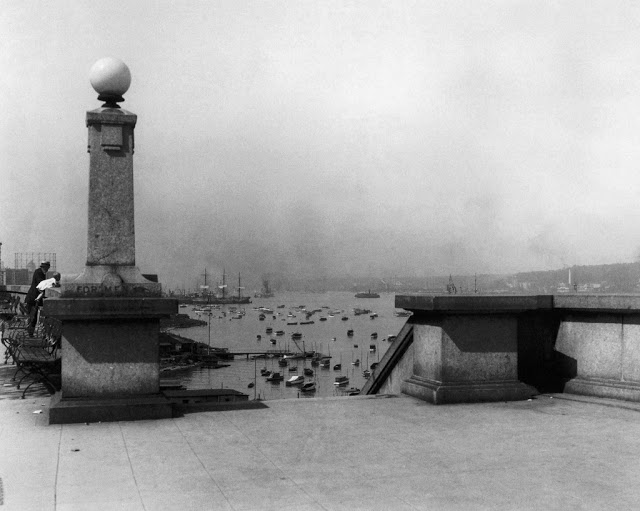
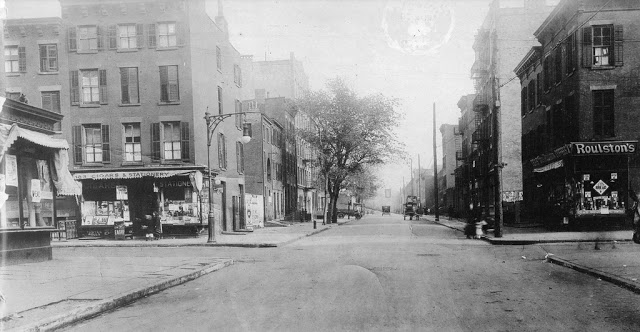
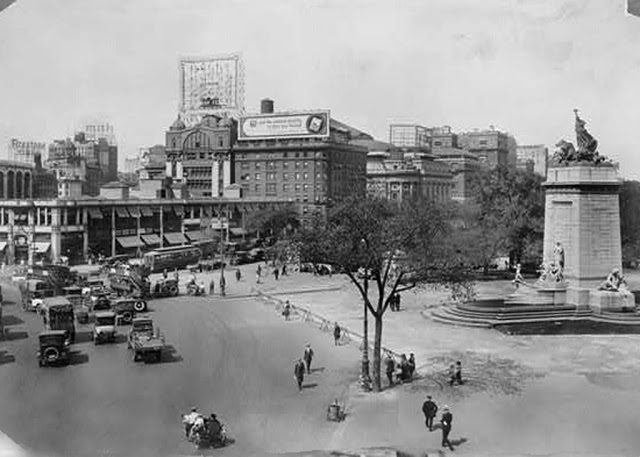
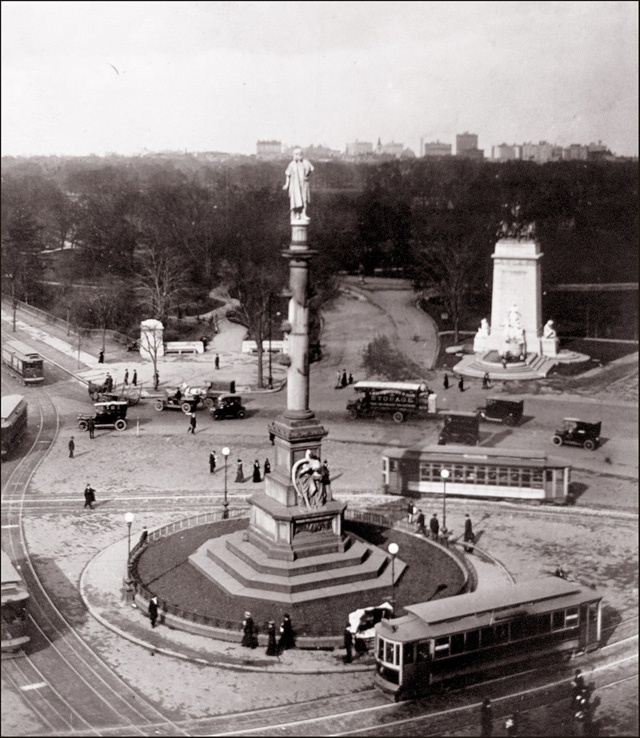
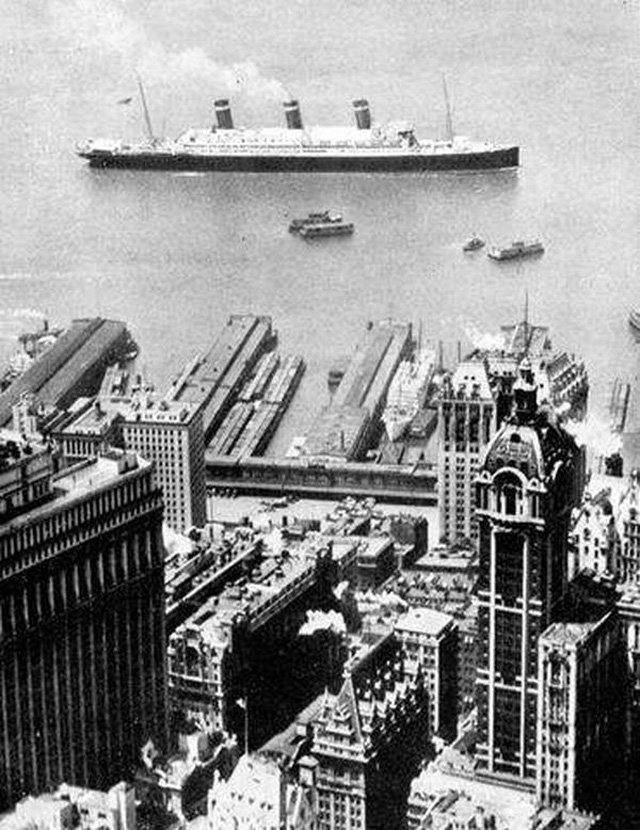
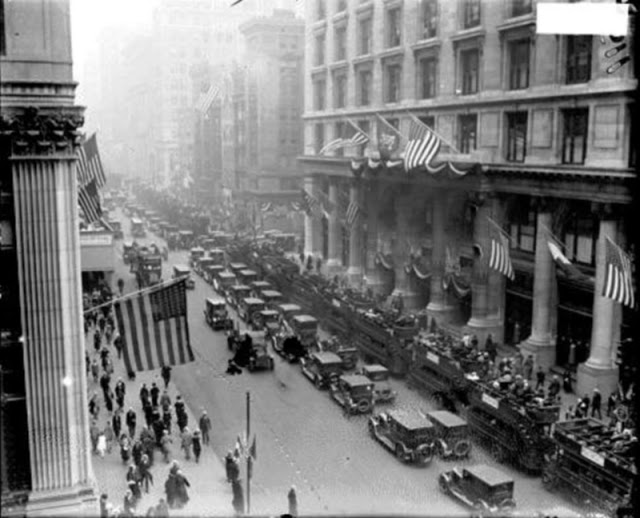
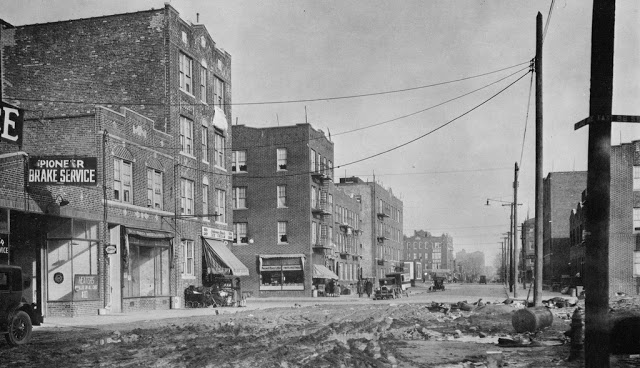
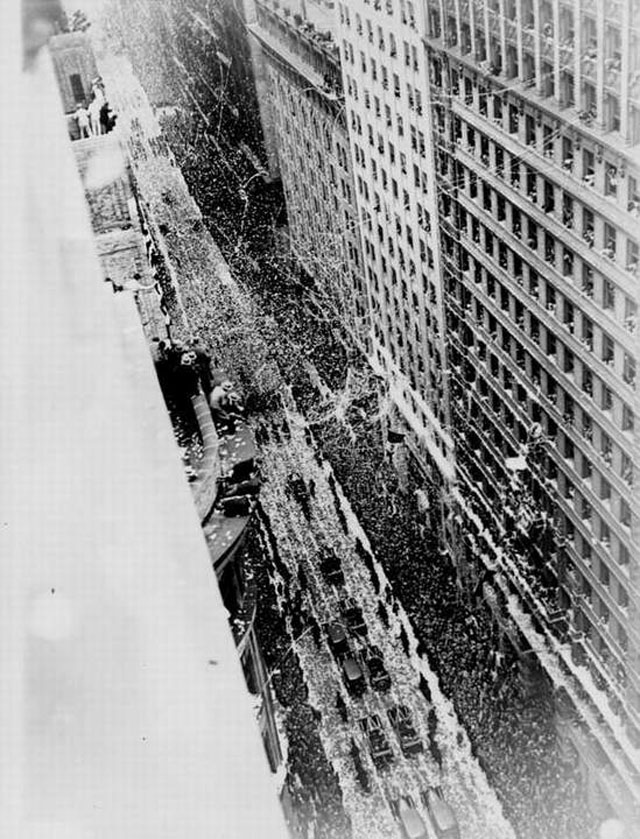
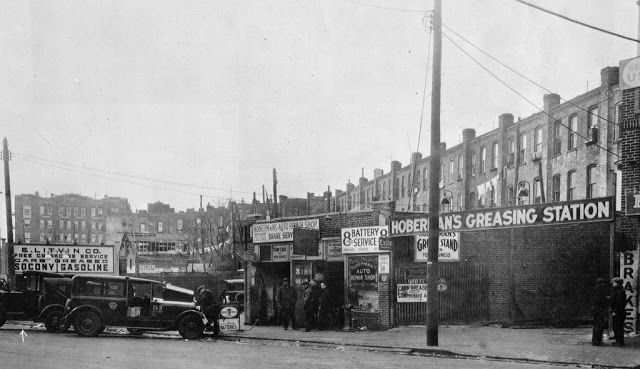
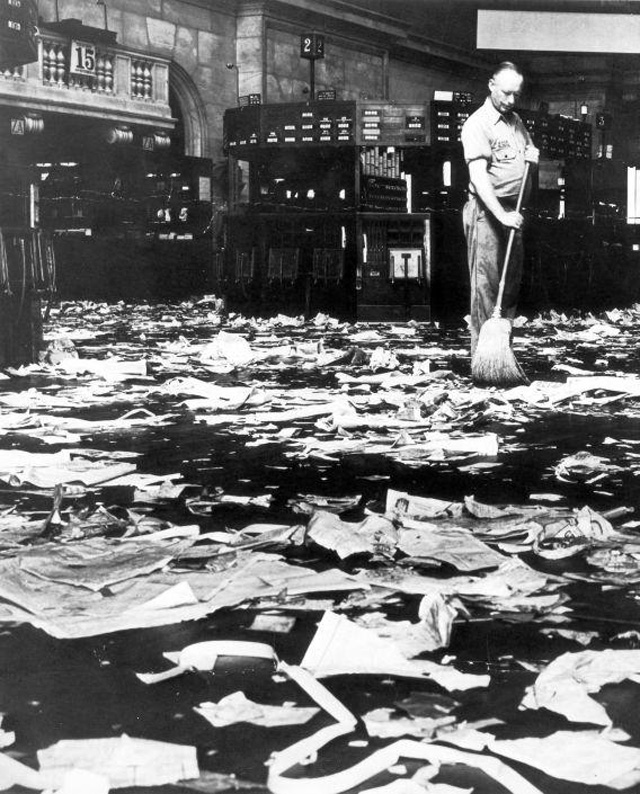
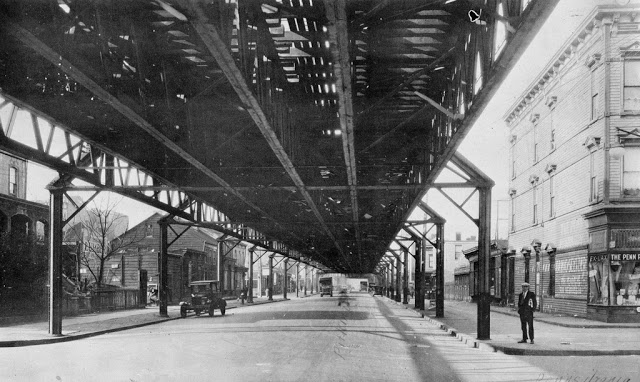
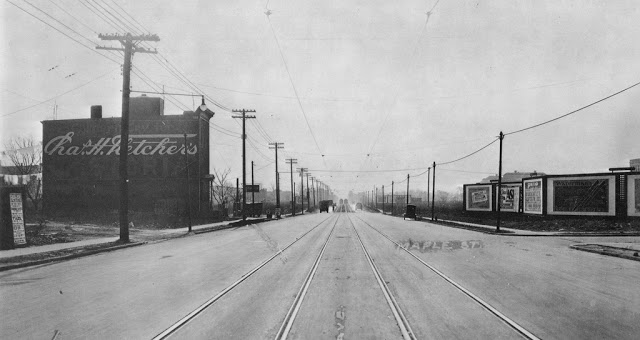
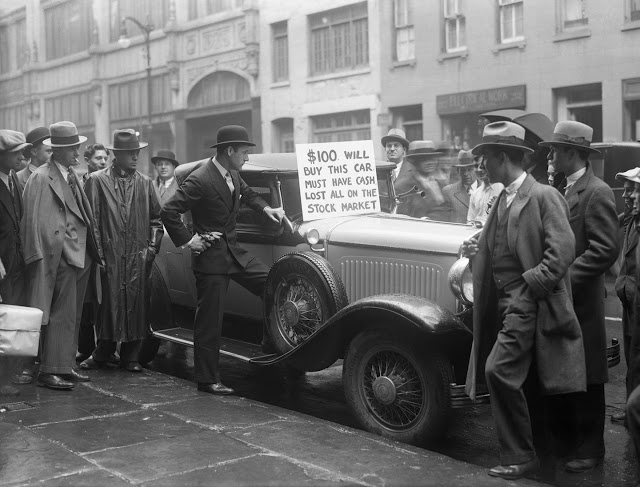
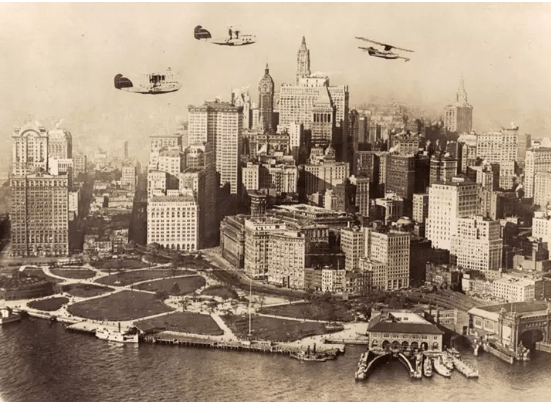
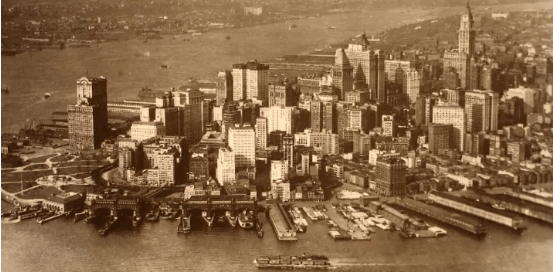
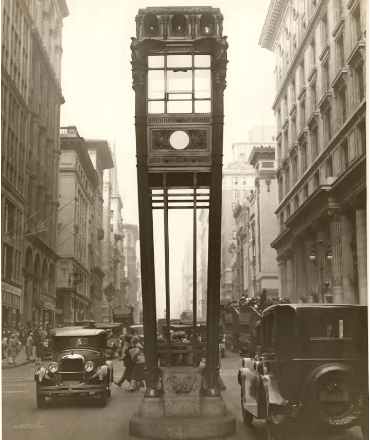
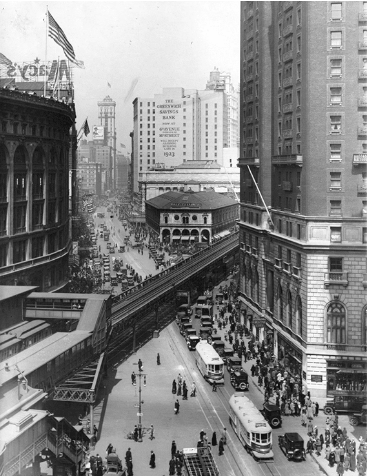
A street scene in Canarsie, Brooklyn, 1920Father and daughter take in the scene at the Riverside Park boat club in the Hudson River, 1920Fifth Avenue toward Washington Square, 1920Fish store at 57th and 10th Ave, 1920Horse carts and trucks near the Battery, 1920Wyckoff Street looking east at Nevins Street, Brooklyn, 1920A lone policeman guards the end of the trolley line on Roebling Street at the Williamsburg Bridge plaza, Brooklyn, 1921Columbus Circle in 1921Atlantic Ave looking west from the Sackman St bridge, Brooklyn, 1923Columbus Circle, New York, 1923Fifth Avenue, 120th Street to Mount Morris Park, Harlem, 1923The SS Leviathan of United States Lines and Singer Building, 1923Buses and taxis on Fifth Ave., 1924Lincoln Place toward Washington Ave in Prospect Heights, Brooklyn, 1924Luna Park on a busy weekend looking north along Jones Walk from entrance on Surf Ave, Coney Island, Brooklyn, 1925An endless stream of 1920s cars and buses line up to take a ride through the brand new Holland Tunnel on opening day, 1927Blake Ave. from east 98th St. toward Union St., Brooklyn, 1927The Barclay-Vesey building (NY Telephone, later called Verizon) from the Hudson River, 1927TImes Square in 1927West 77th Street, New York, 1927An aerial view of New York City, 1928Coney Island, 1928Lower Broadway ticker-tape parade, 1928Socony gas station specializing in Dodge and Studebaker, Brooklyn, 19285th Avenue and 57th Street, 192942nd Street, Manhattan, 1929Avenue M and Chestnut Avenue, looking east from East 13th St., Brooklyn, 1929Cleaner sweeping the floor after the Wall Street crash, 1929Pitkin Avenue looking west from Pennsylvania Avenue, Brooklyn, 1929Utica Ave. (with virtually nothing built on its sides) looking south to Maple St. from east New York Ave., Brooklyn, 1929Wall Street investor tries to sell an automobile, 1929Battery Park, 1922Lower Manhattan, 1920s34th Street & Fifth Avenue, 1922Times Square, 1922Times Square, 1923The Lowell Fountain at Bryant Park, 1920sColumbus Circle, 1924Union Square, 1921Herald Square, 1923
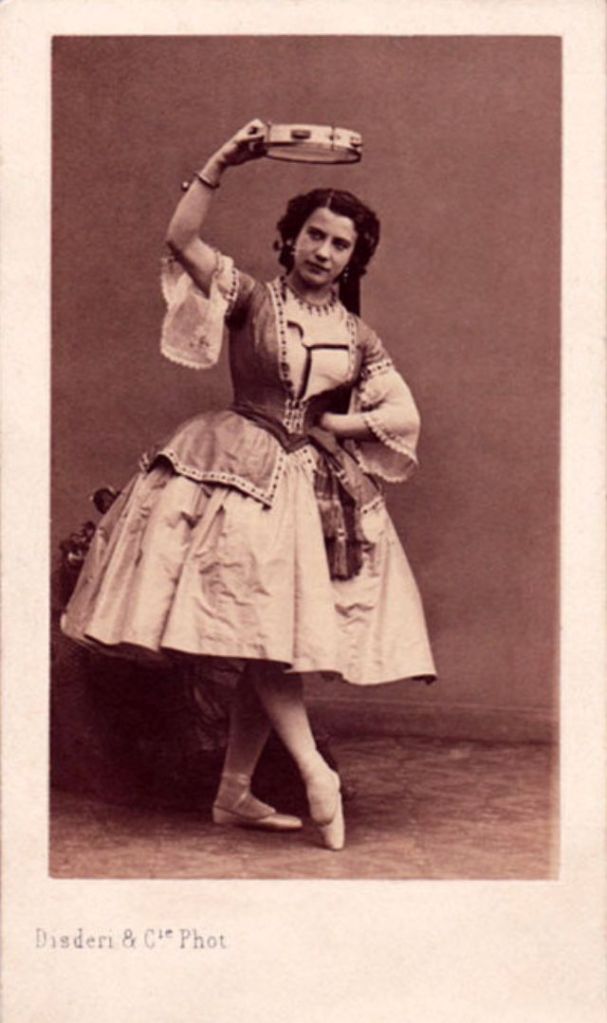
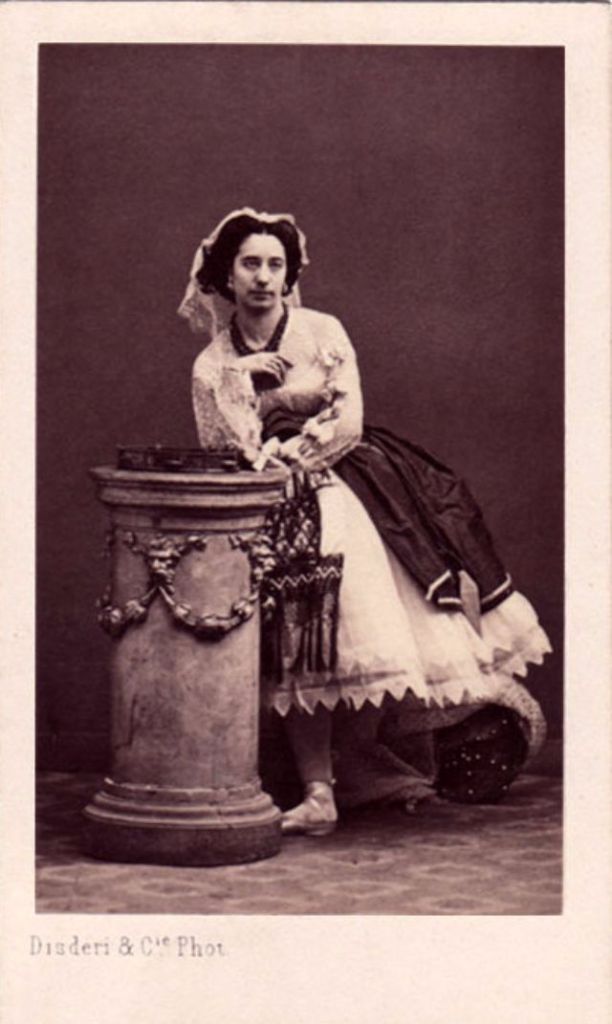
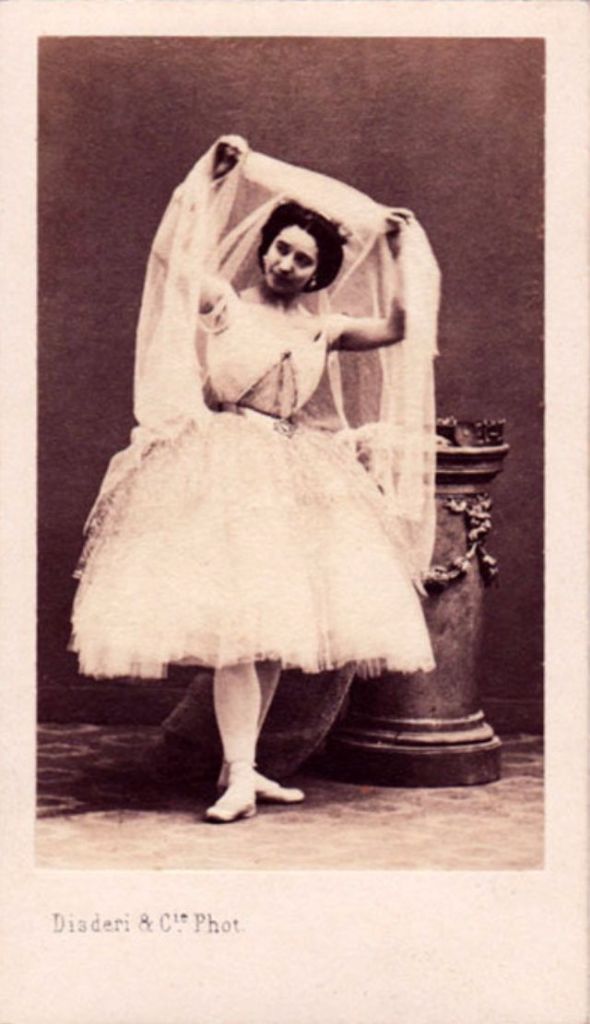
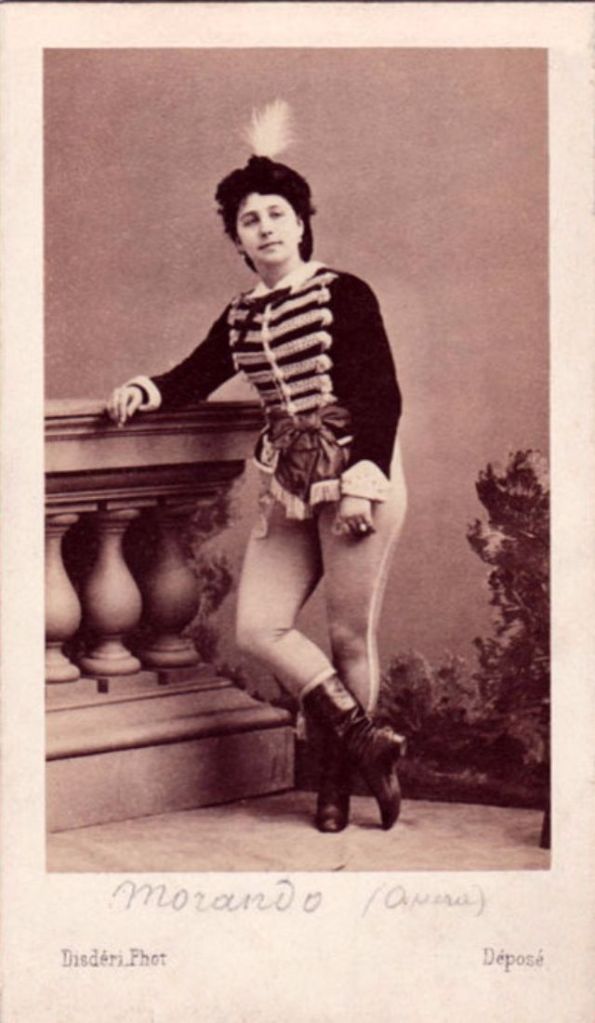
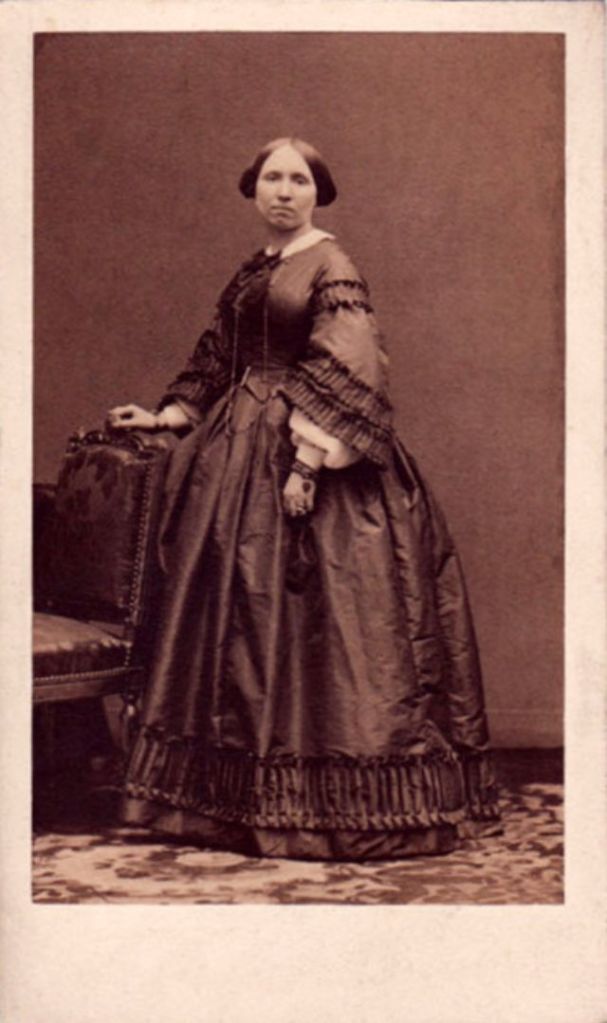
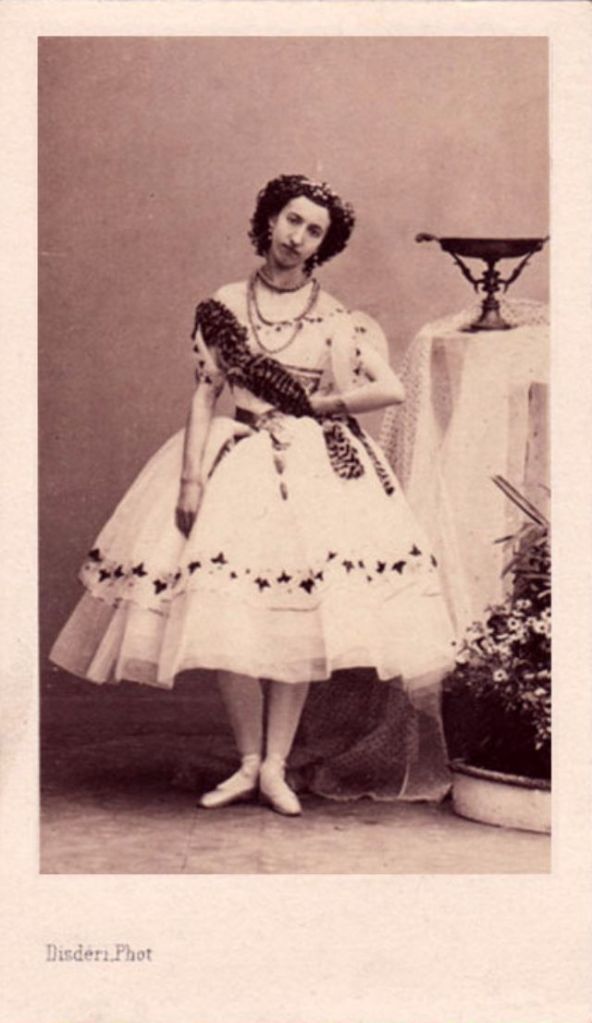
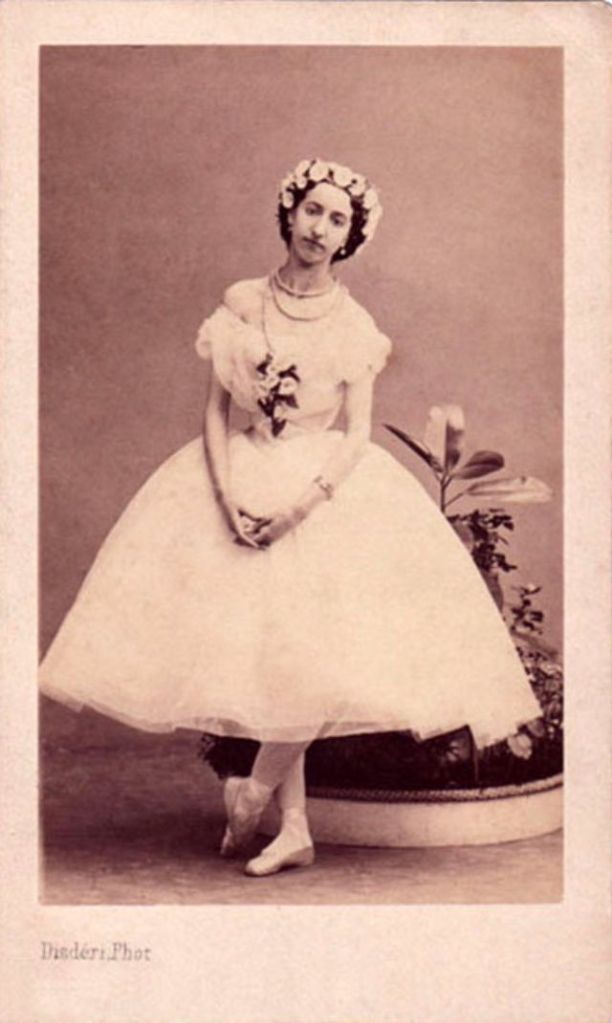
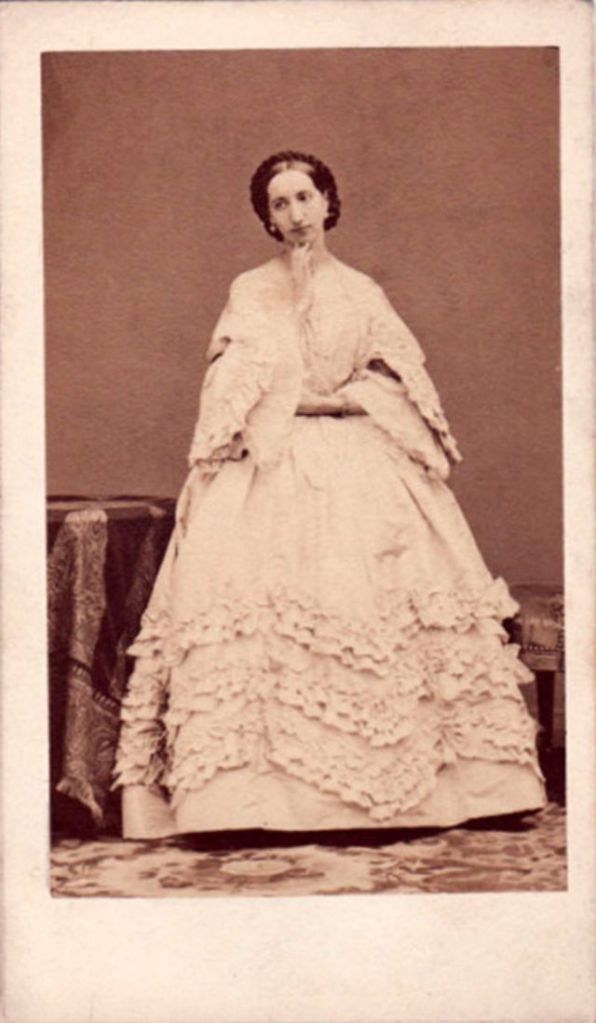
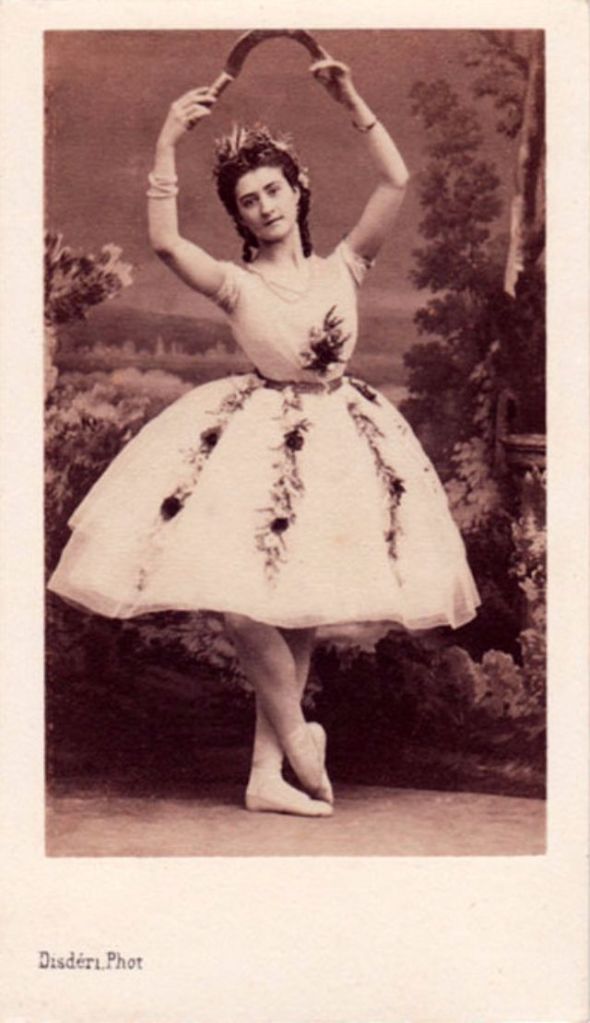
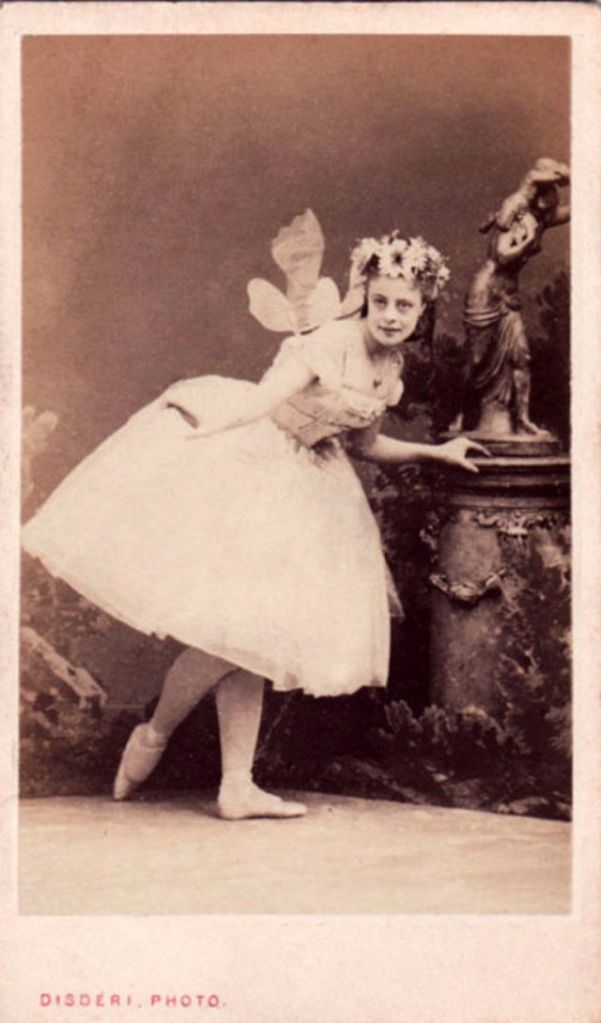
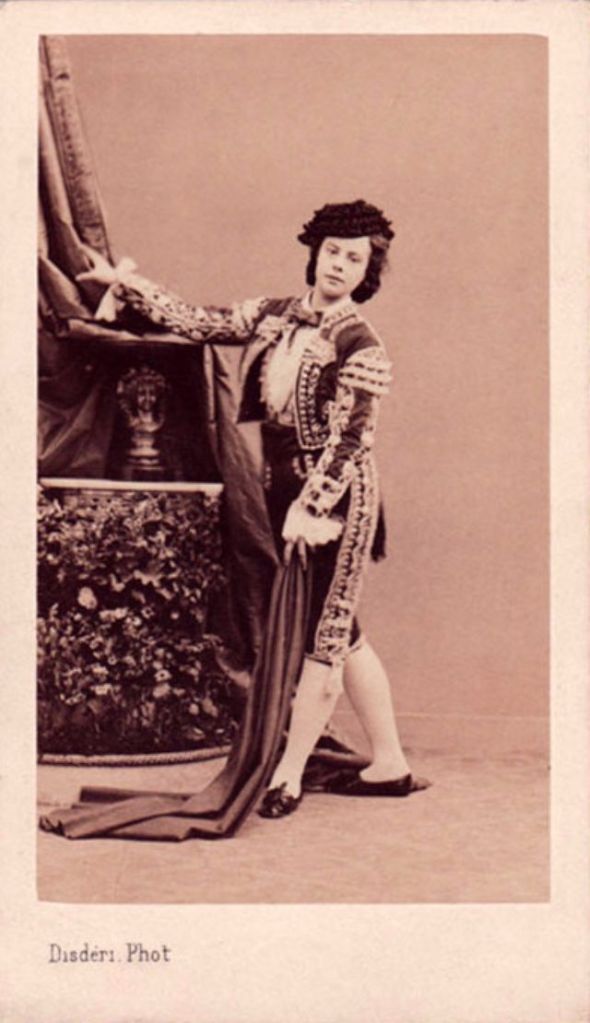
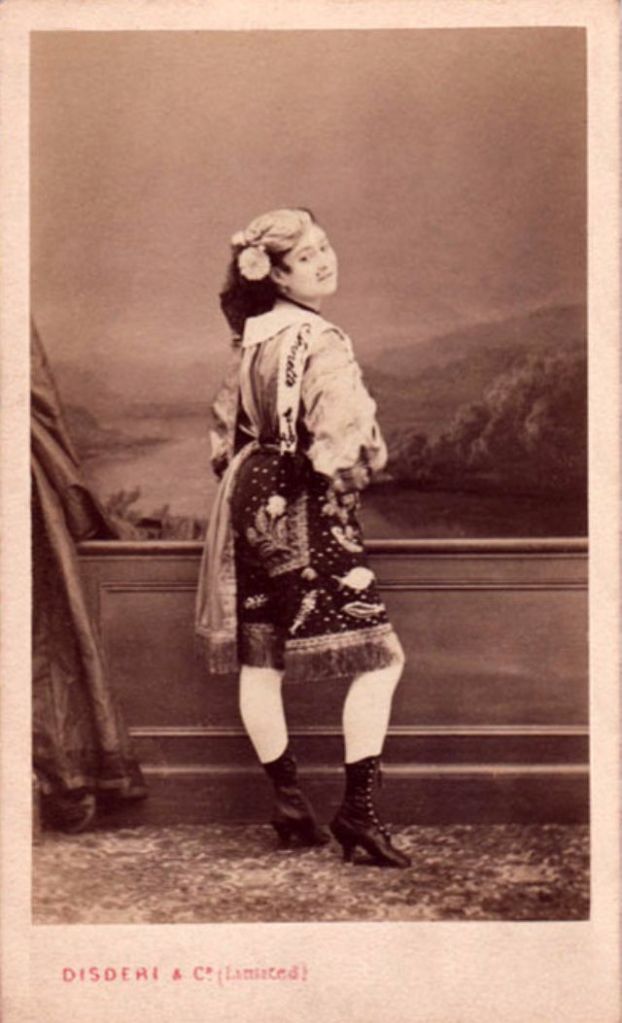
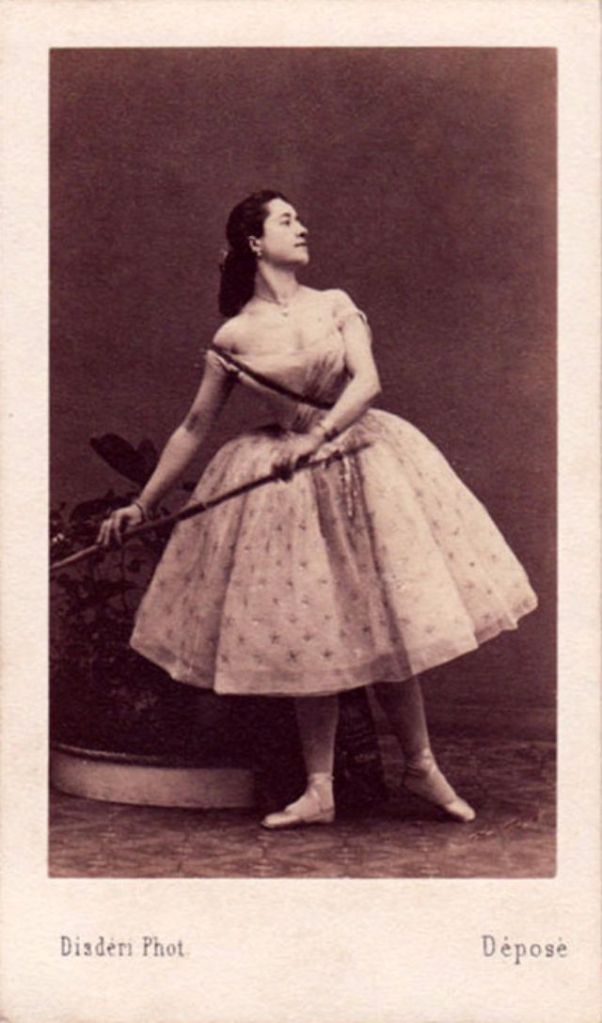
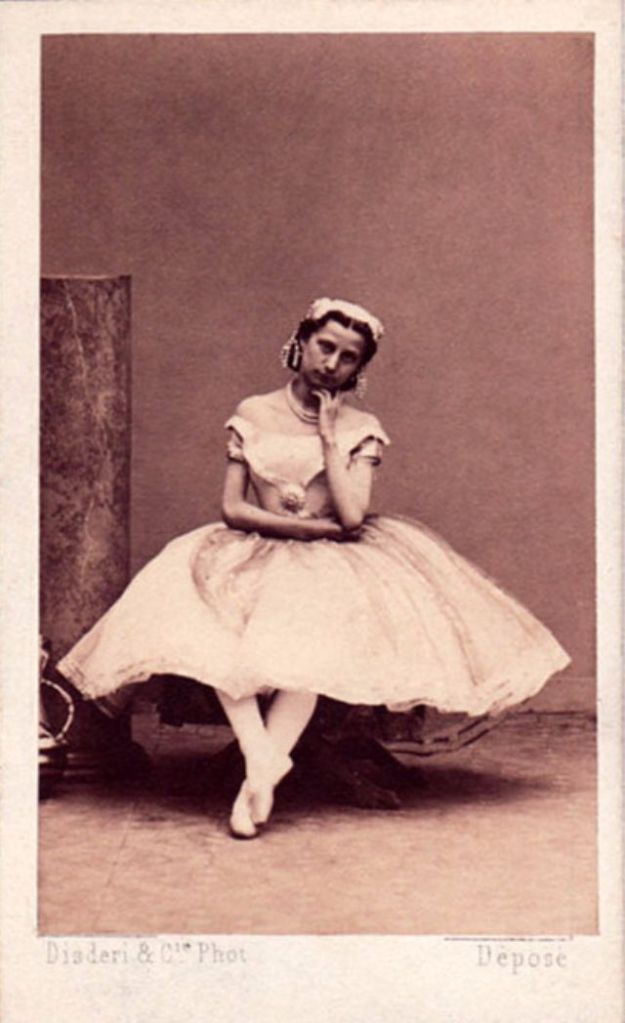
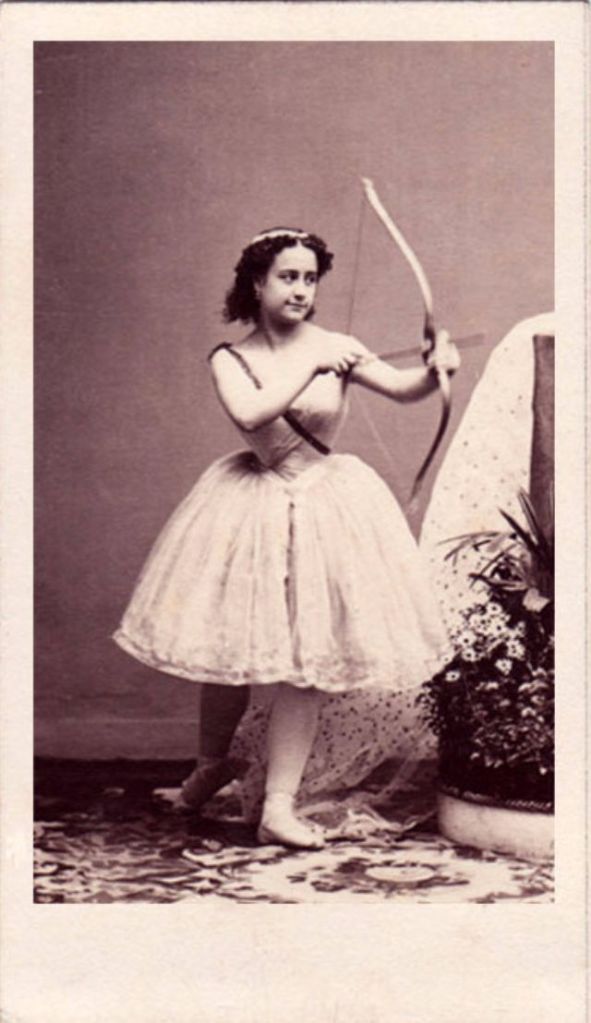
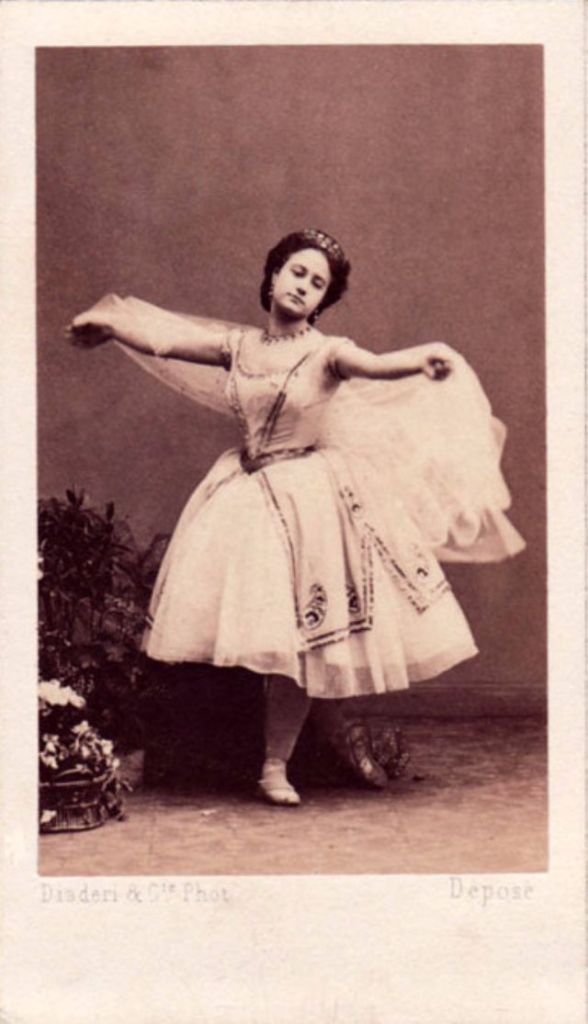
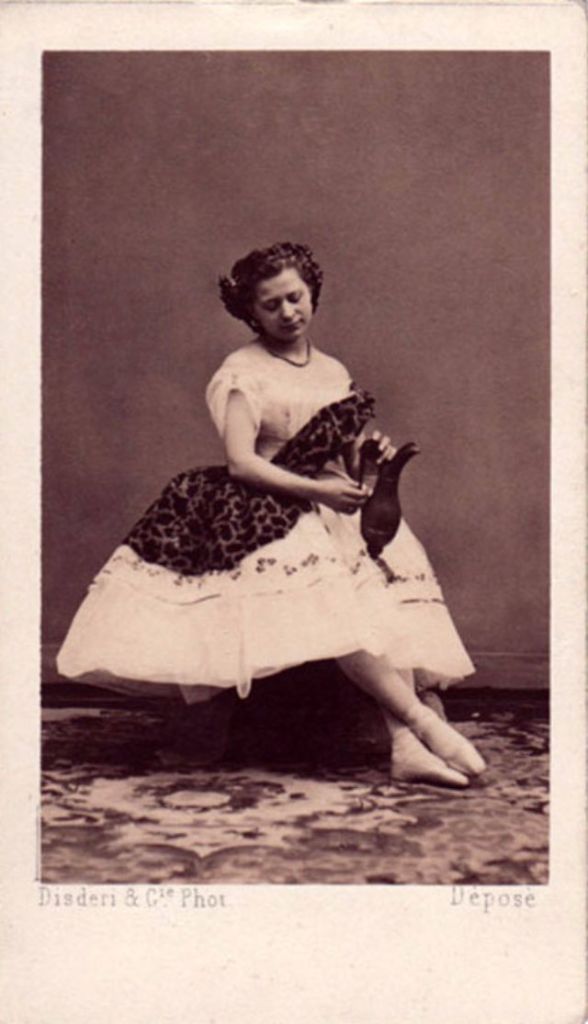
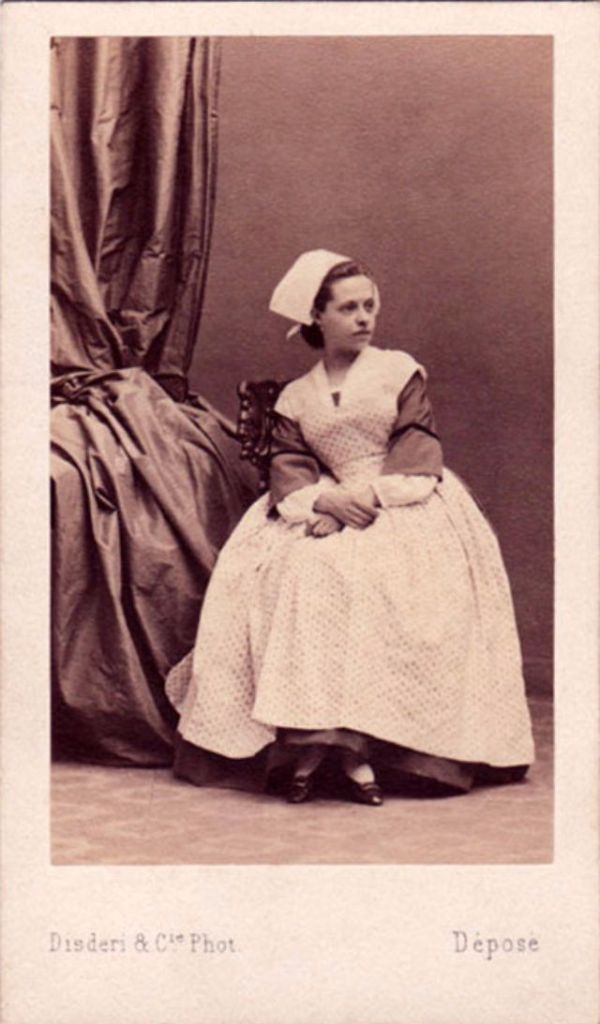
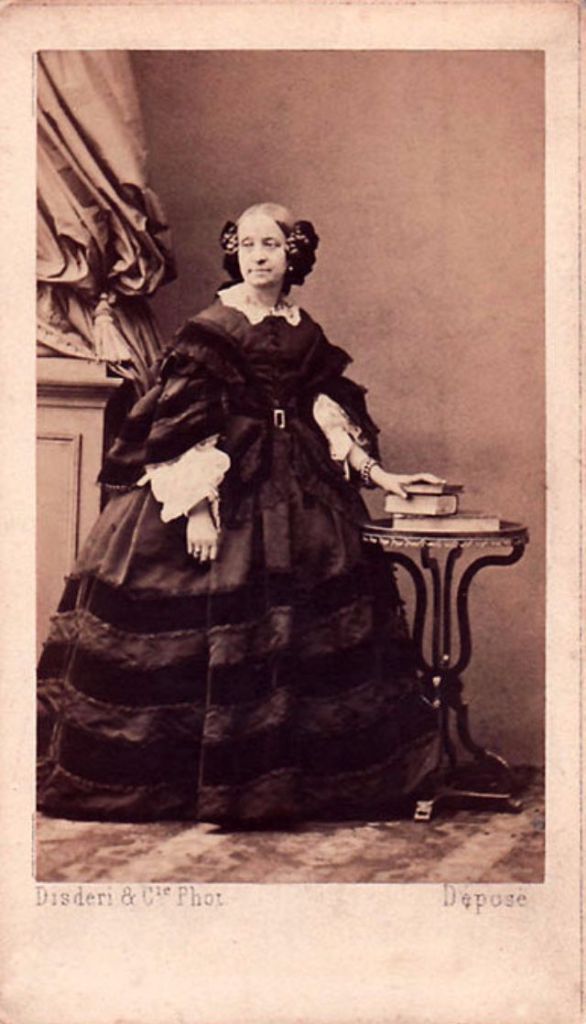
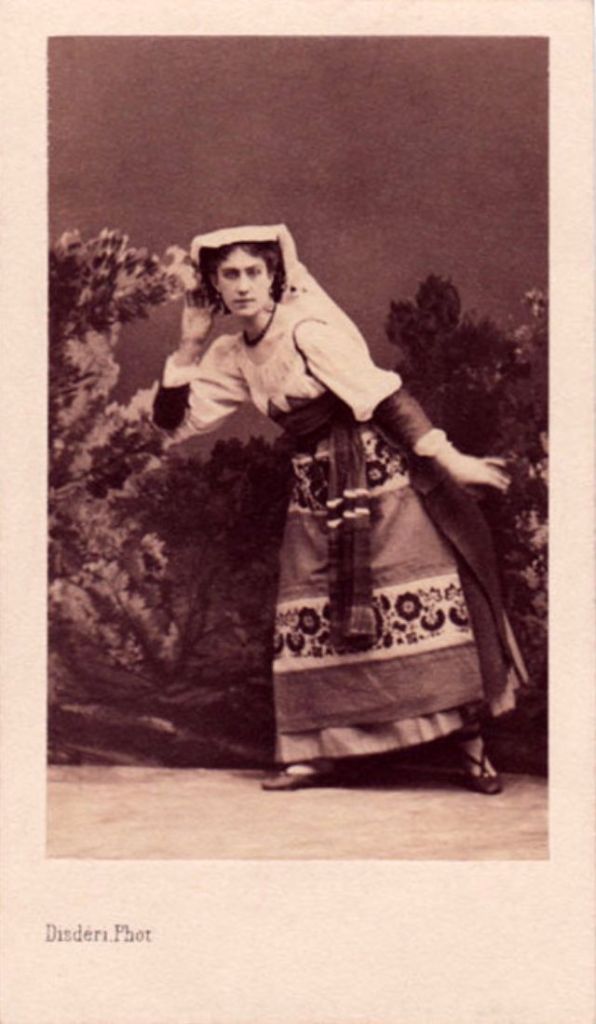
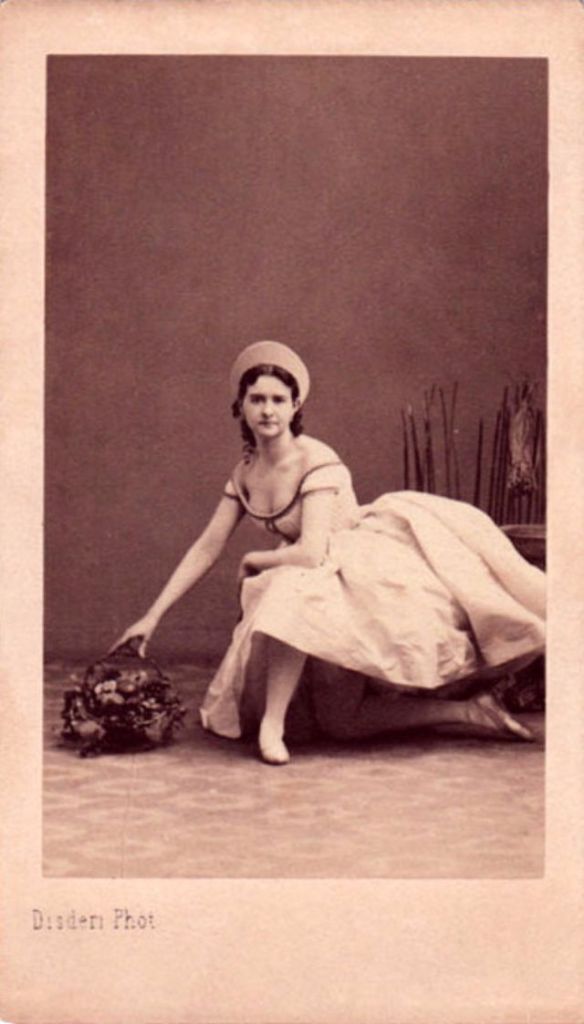
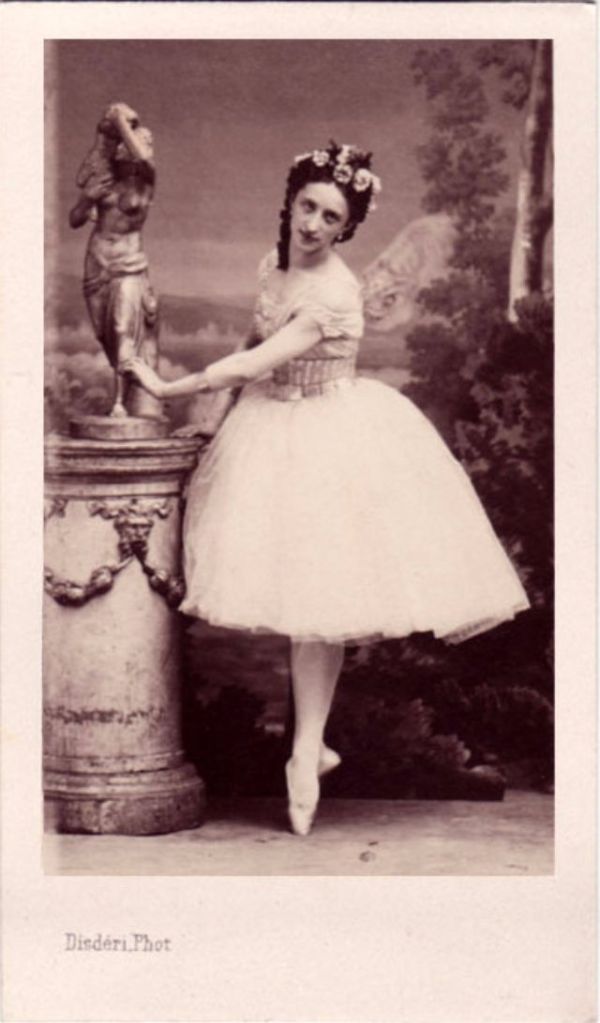
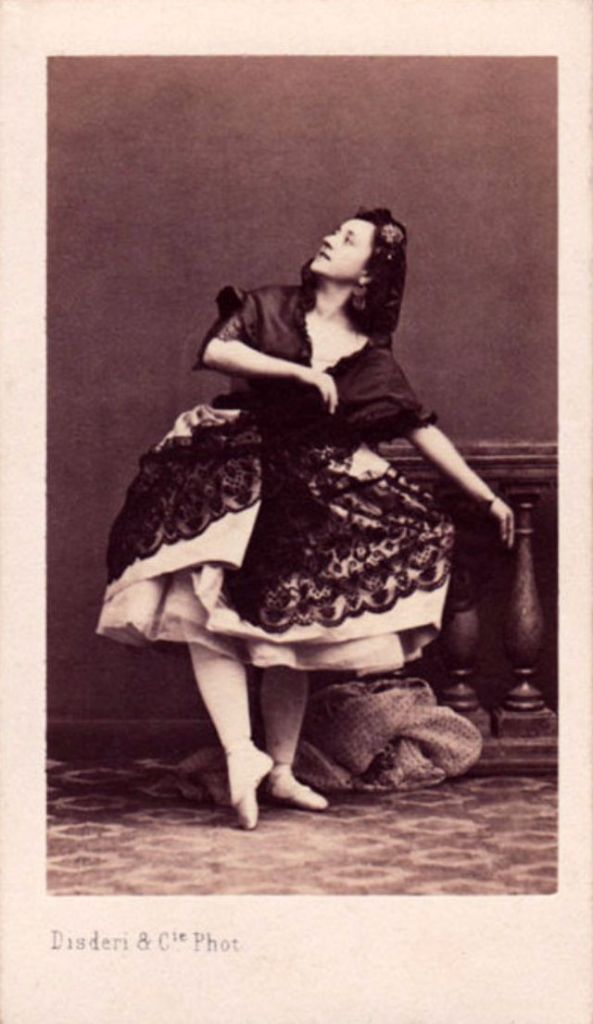
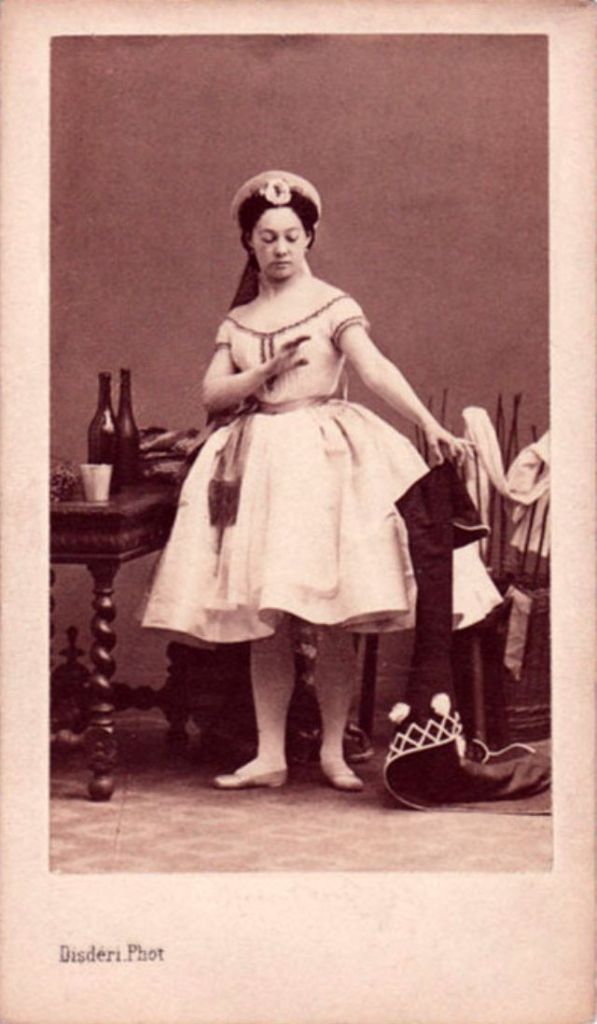
Most of the portraits in this set from The Library of Nineteenth-Century Photography that show ballet dancers of the Paris Opéra in the early 1860s. They were taken by French photographer, and inventor of the carte-de-visite André Adolphe Eugène Disdéri (1819-1889).
Aléxandrine Simon, a dancer with the Paris OpéraAmalia Ferraris (1830 – 1904)Amalia Ferraris (1830 – 1904)Amalia Ferraris (1830 – 1904)Amalia Ferraris and Louis MéranteAmelia Marguerite Badel, aka Rigolboche (1842 – 1920)Augustine MalotBlanche MontaubryCarlotta MorandoCarlotta MorandoCaroline and Louis MéranteCélestine Emarot (1824 – 1892)Clothilde LaurentElisa TroisvalletsElisa TroisvalletsEmma Livry (1842 – 1863)Emma Livry (1842 – 1863)Emma Livry (1842 – 1863)Ernestine UrbanEugène Coralli (1834 – 1870)Eugénie Fiocre (1845 – 1908)Eugénie Fiocre (1845 – 1908)Eugénie Fiocre (1845 – 1908)Eugénie Fiocre (1845 – 1908)Eugénie SchlosserIrène Jousse, a dancer with the Paris OpéraJosephine Durwend, aka Finette, a can-can dancerJosephine Durwend, aka Finette, a can-can dancerJulie StoïkoffLéontine Beaugrand (1842 – 1925)Louis Mérante (1828 – 1887)Louise Fiocre (1841-1871)Louise Fiocre (1841-1871)Louise Fiocre (1841-1871)Louise Fiocre (1841-1871)Maria Cretin, a dancer with the Paris OpéraMarie Delaporte (1838 – 1910)Marie Taglioni (1804 – 1884)Marie VernonMarie VernonMariia Surovshchikova-Petipa (1836 – 1882)Mariia Surovshchikova-Petipa (1836 – 1882)Mariia Surovshchikova-Petipa (1836 – 1882)Mariia Surovshchikova-Petipa (1836 – 1882)Martha MouravievaMercier, a dancer with the Paris OpéraThe dancers Eugénie Schlosser and Eugène CoralliThe French balletmaster and choreographer Louis Mérante and the Russian dancer Martha MouravievaThe Walter sisters, dancers with the Paris-OpéraZina Mérante (1832 – 1890)Zina Mérante (1832 – 1890)
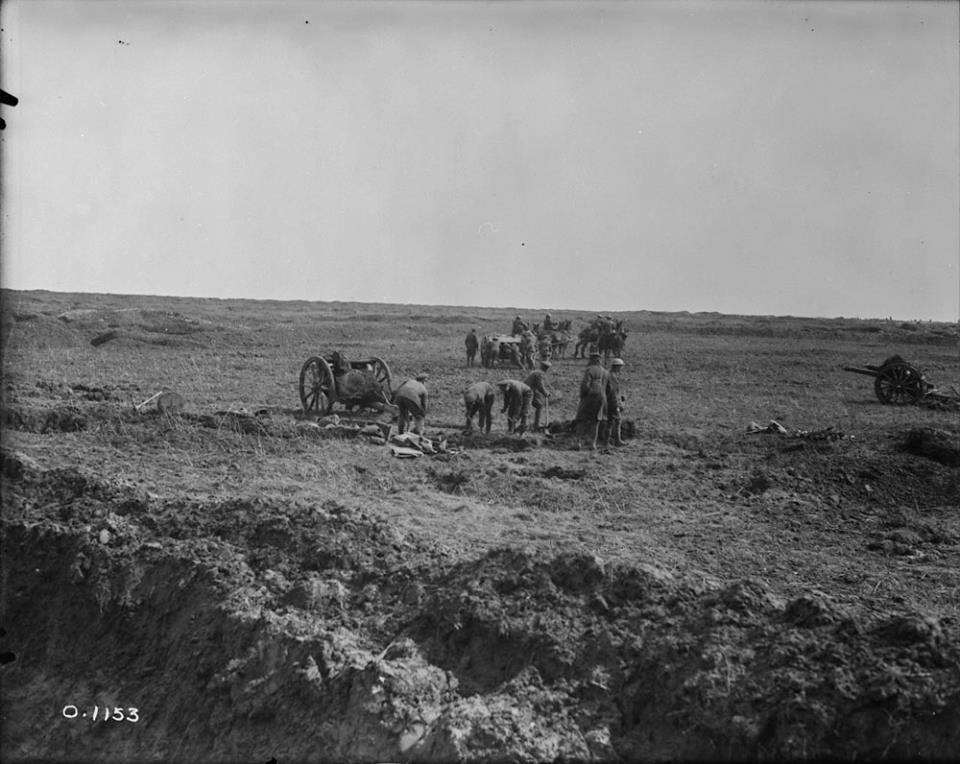
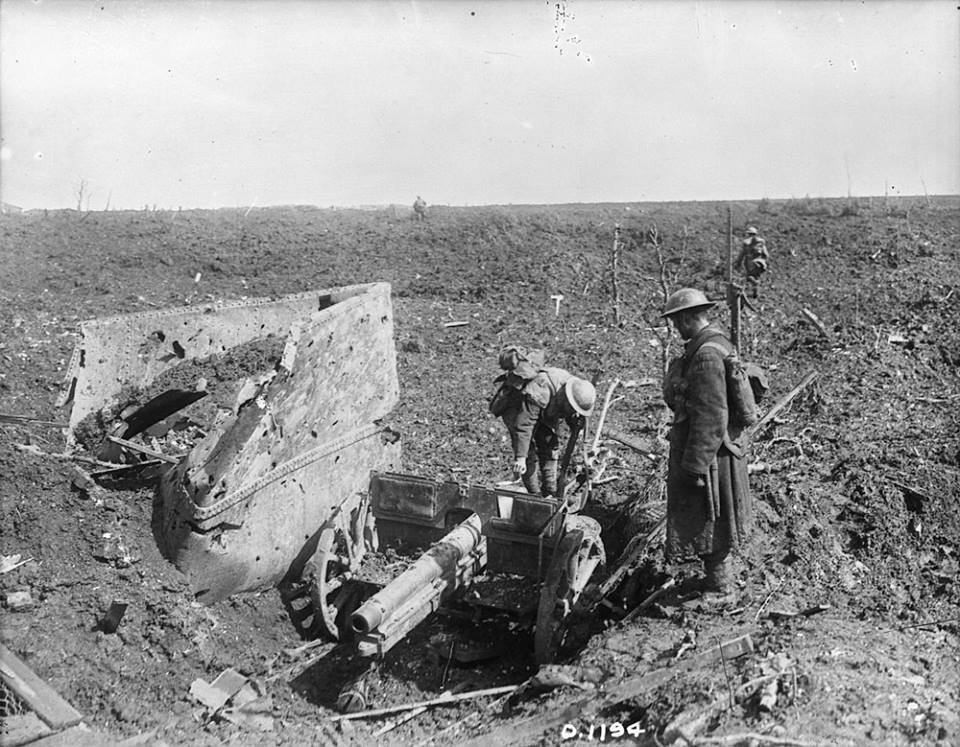
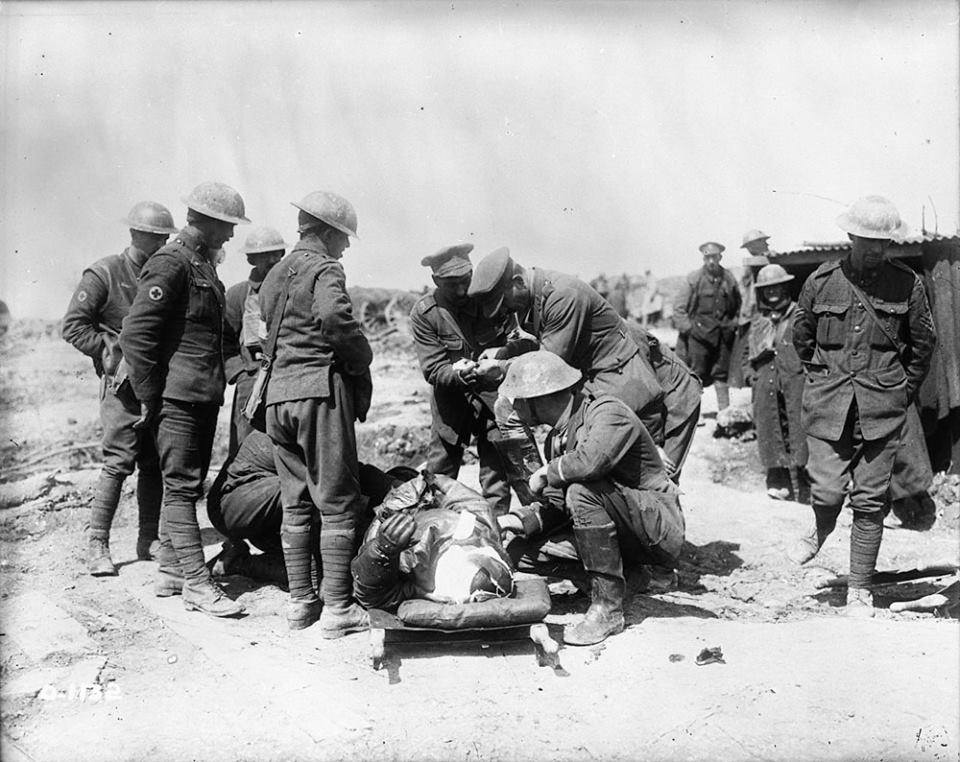
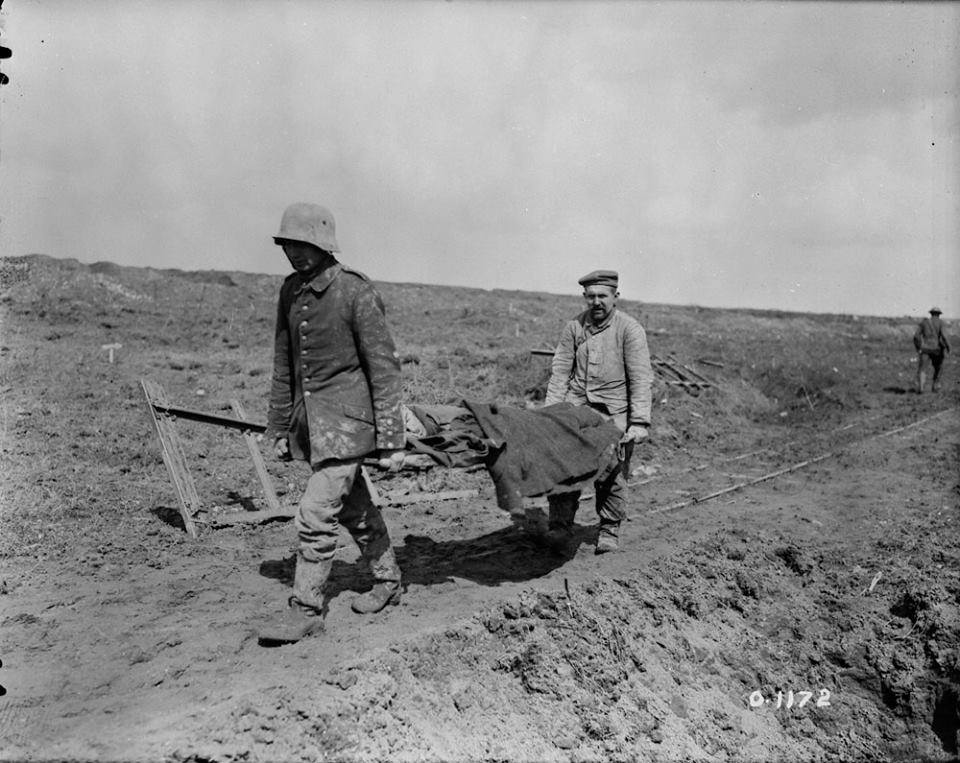
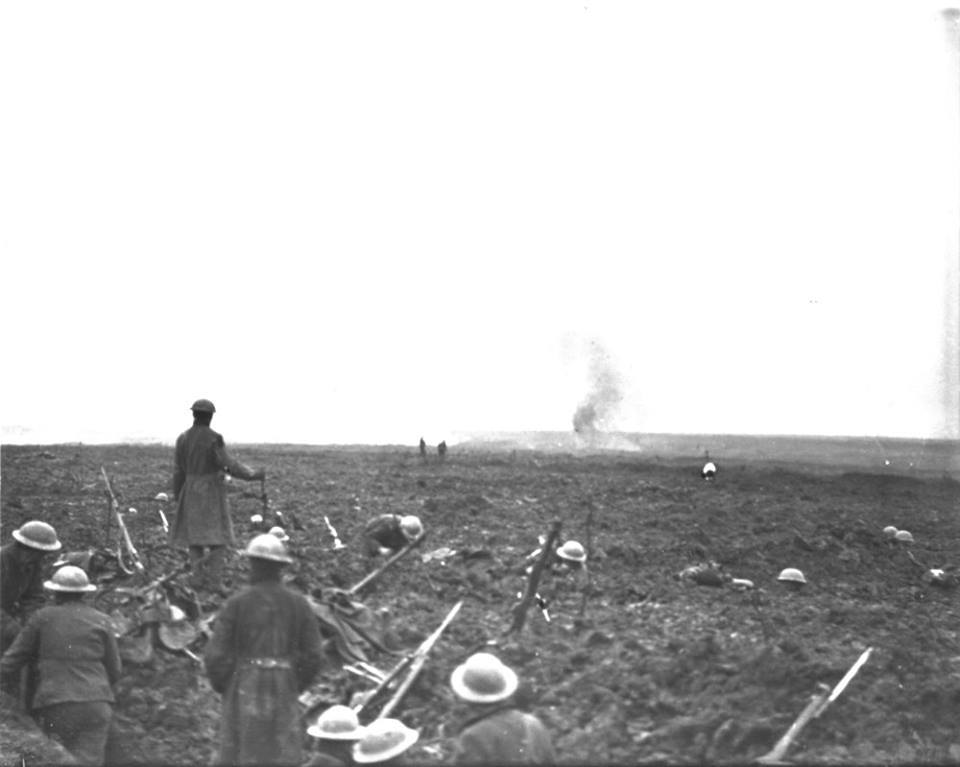
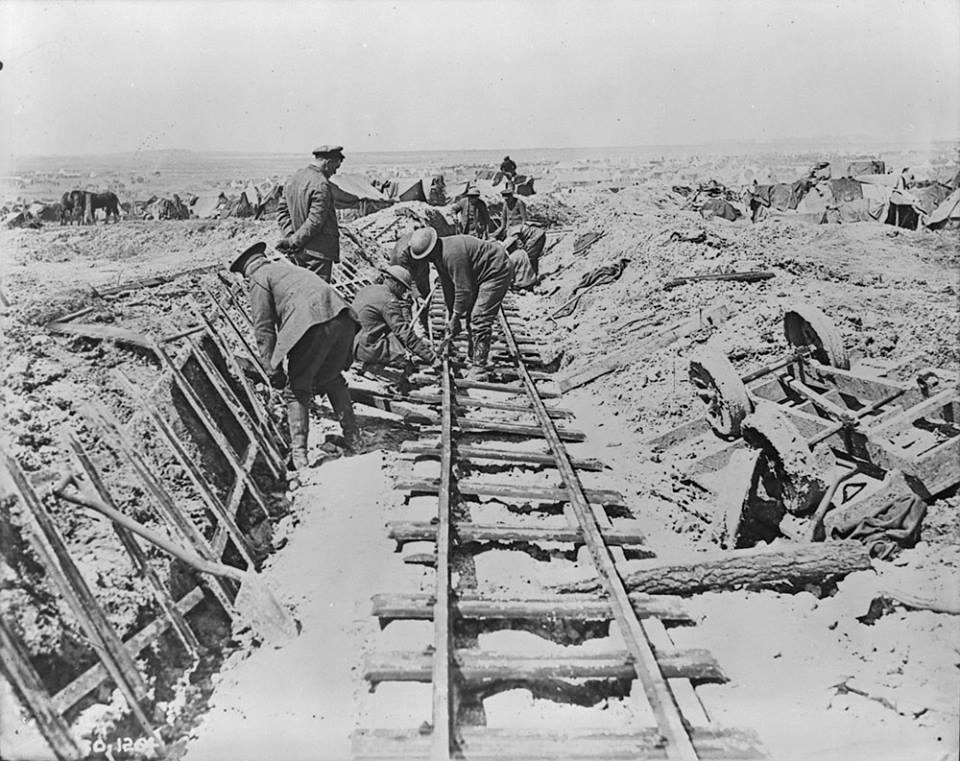
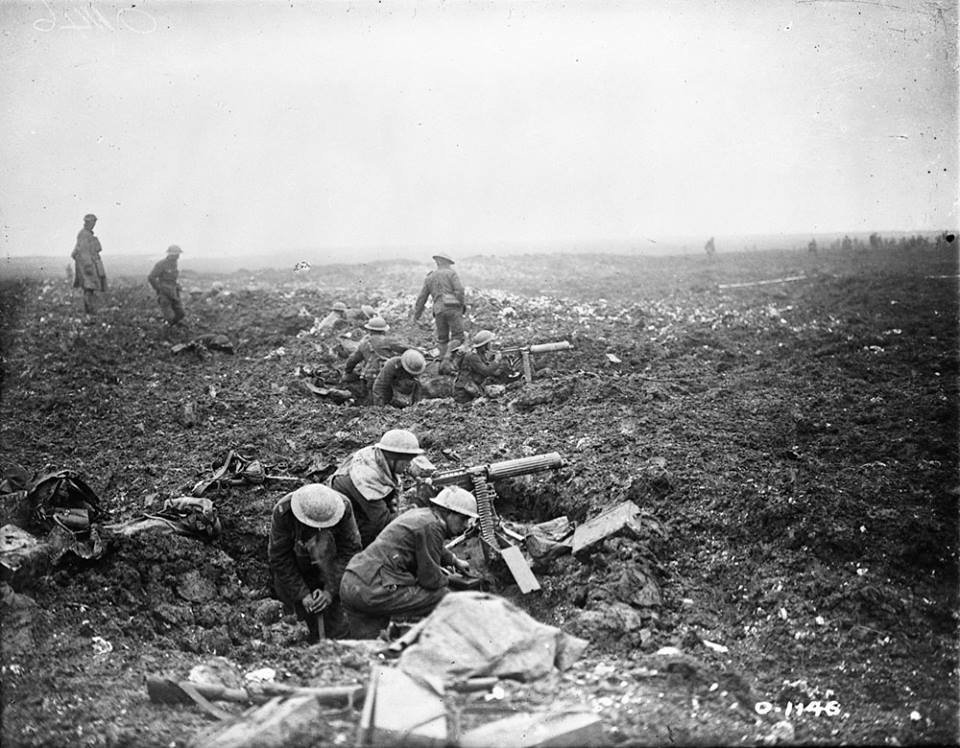
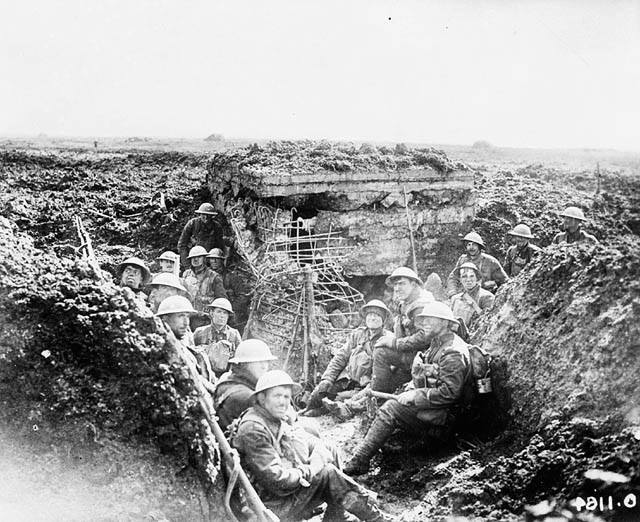
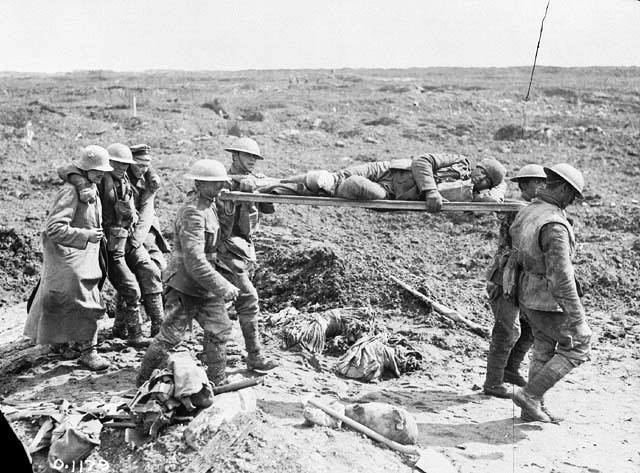
The Battle of Vimy Ridge was part of the Battle of Arras, in the Nord-Pas-de-Calais region of France, during the First World War. The main combatants were the four divisions of the Canadian Corps in the First Army, against three divisions of the German 6th Army. The battle took place from 9 to 12 April 1917 at the beginning of the Battle of Arras, the first attack of the Nivelle Offensive, which was intended to attract German reserves from the French, before the French attempt at a decisive offensive on the Aisne and the Chemin des Dames ridge further south, several days later.
The Canadian Corps were to capture the German-held high ground of Vimy Ridge, an escarpment on the northern flank of the Arras front. This would protect the First Army and the Third Army farther south from German enfilade fire. Supported by a creeping barrage, the Canadian Corps captured most of the ridge during the first day. The village of Thélus fell during the second day, as did the crest of the ridge, once the Canadian Corps overran a salient against considerable German resistance. The final objective, a fortified knoll outside the village of Givenchy-en-Gohelle, fell to the Canadians on 12 April. The 6th Army then retreated to the Oppy–Méricourt line.
Historians attribute the success of the Canadian Corps to technical and tactical innovation, meticulous planning, powerful artillery support and extensive training, as well as the inability of the 6th Army to properly apply the new German defensive doctrine. The battle was the first occasion when the four divisions of the Canadian Expeditionary Force fought together and it was made a symbol of Canadian national achievement and sacrifice. A 100 ha (250-acre) portion of the former battleground serves as a memorial park and site of the Canadian National Vimy Memorial. (Wikipedia)
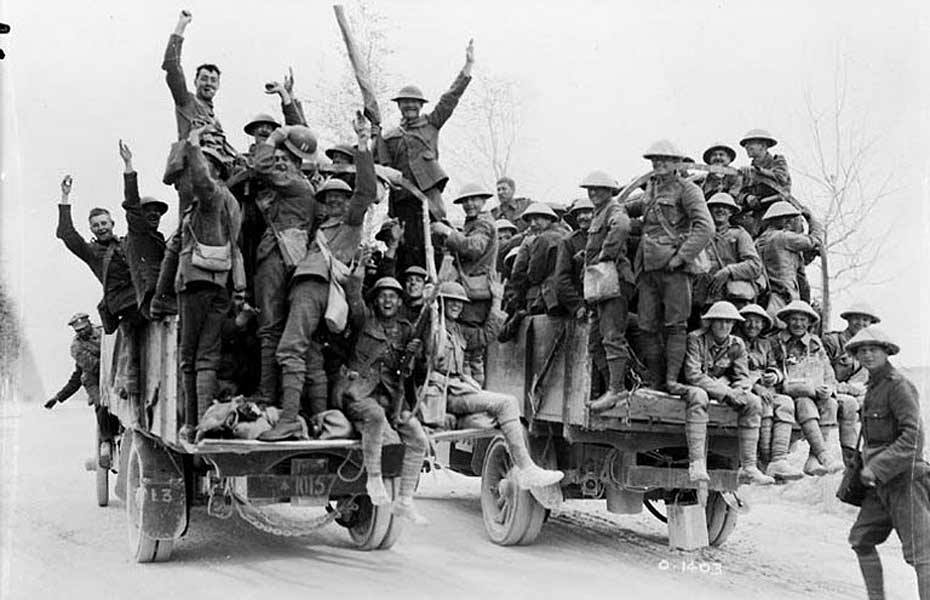
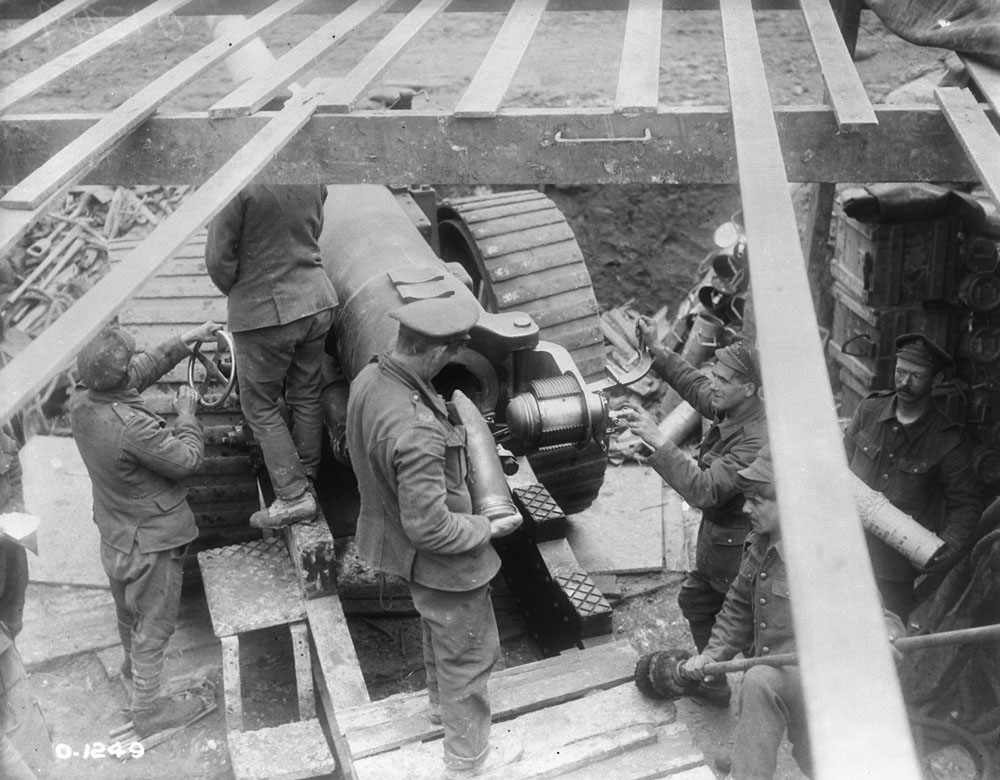
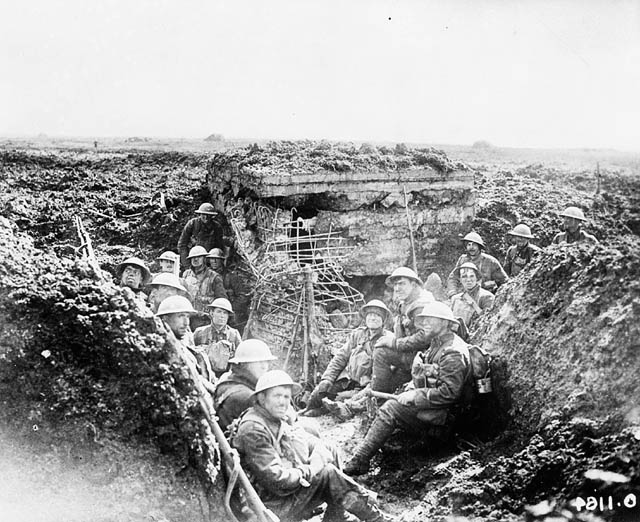
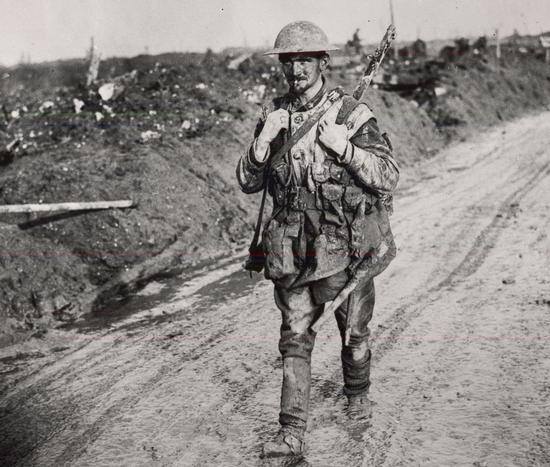
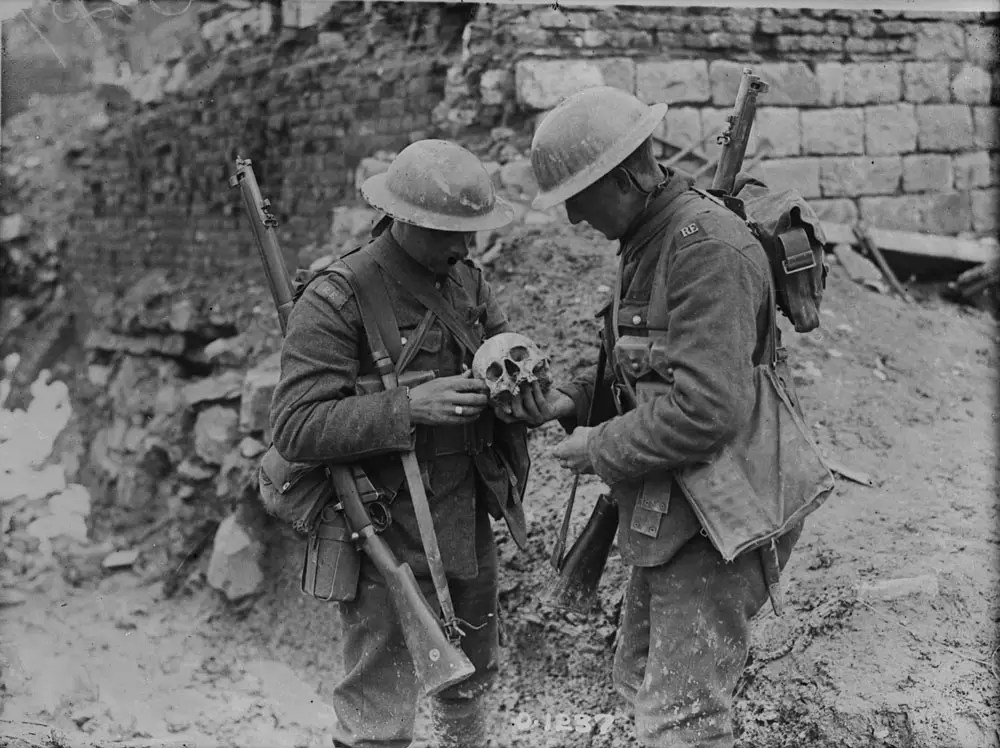
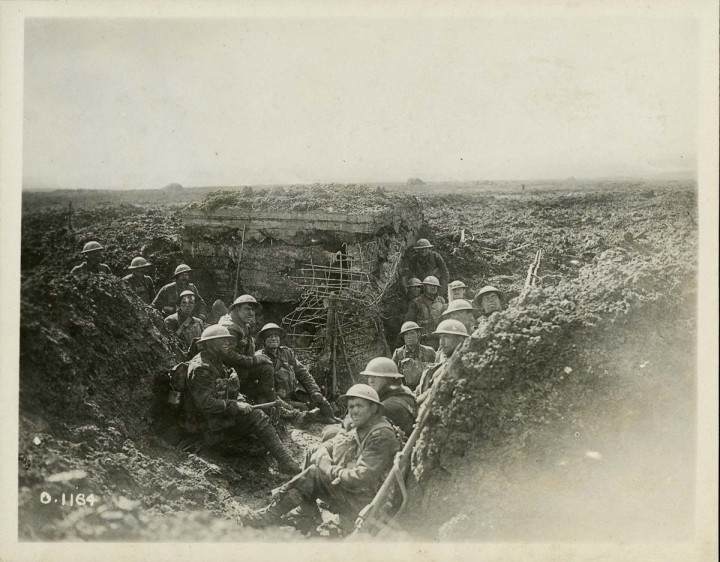
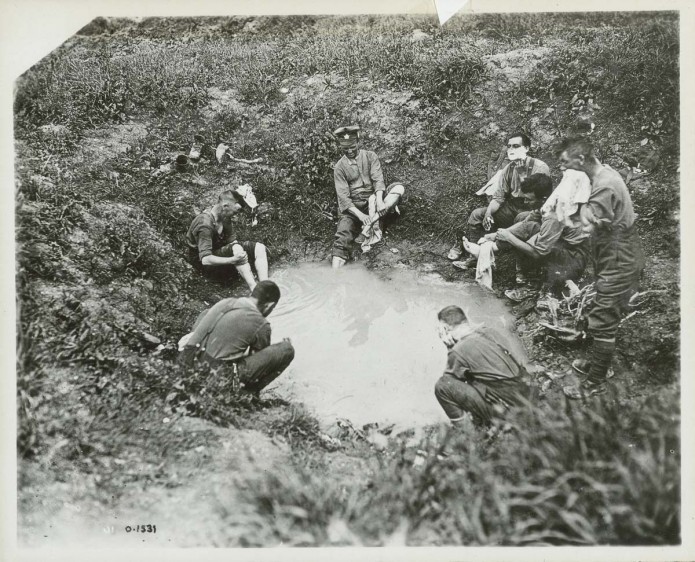
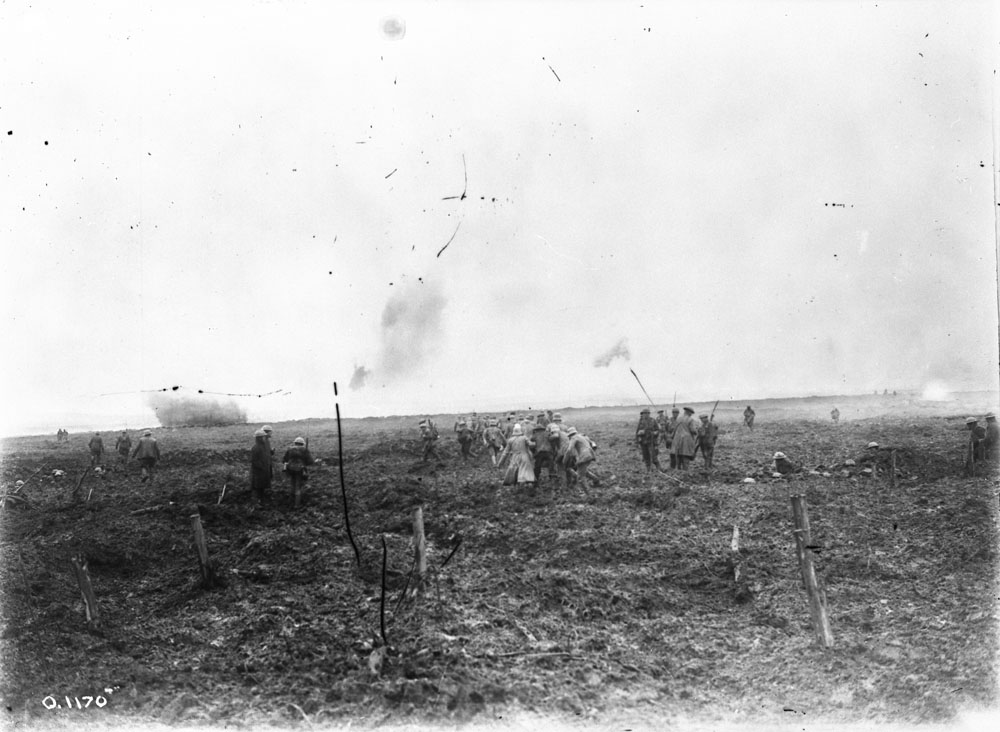
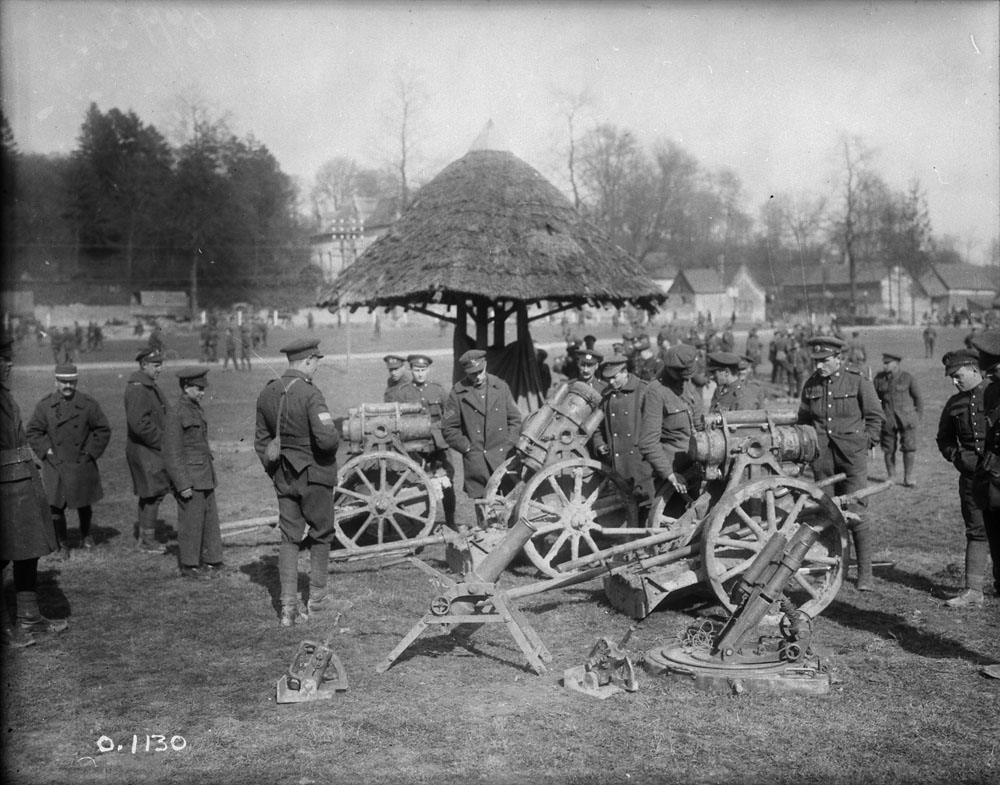
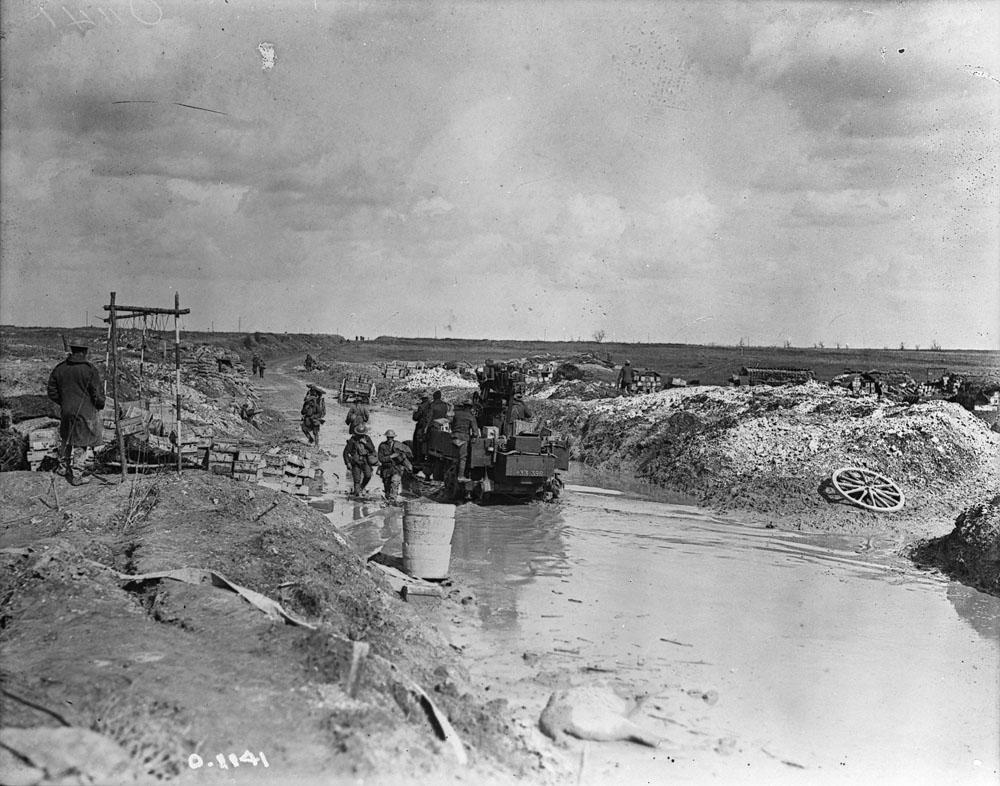
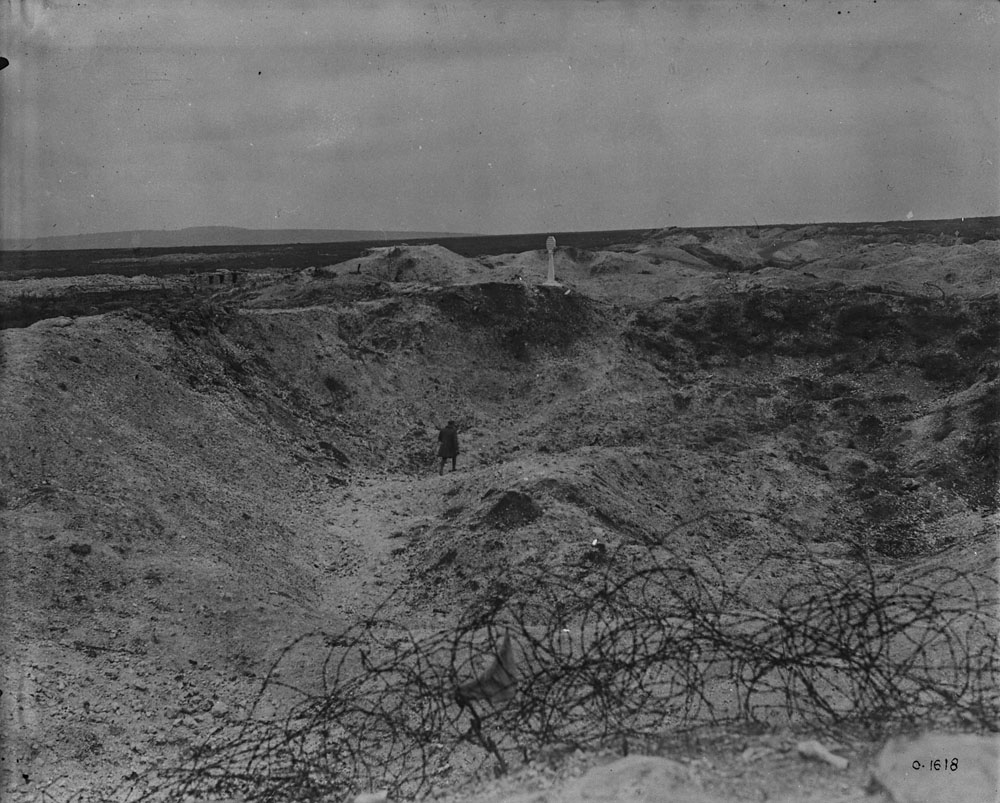
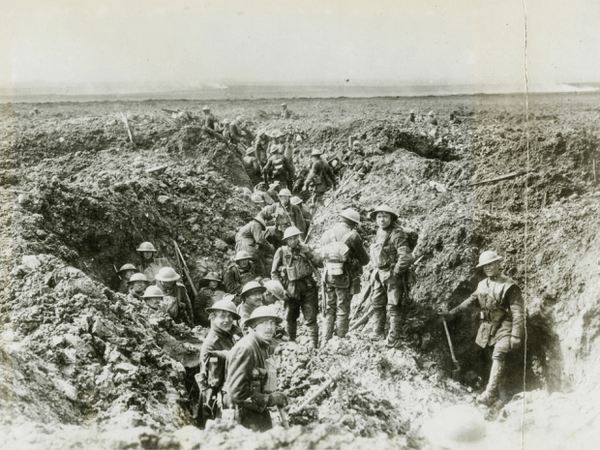
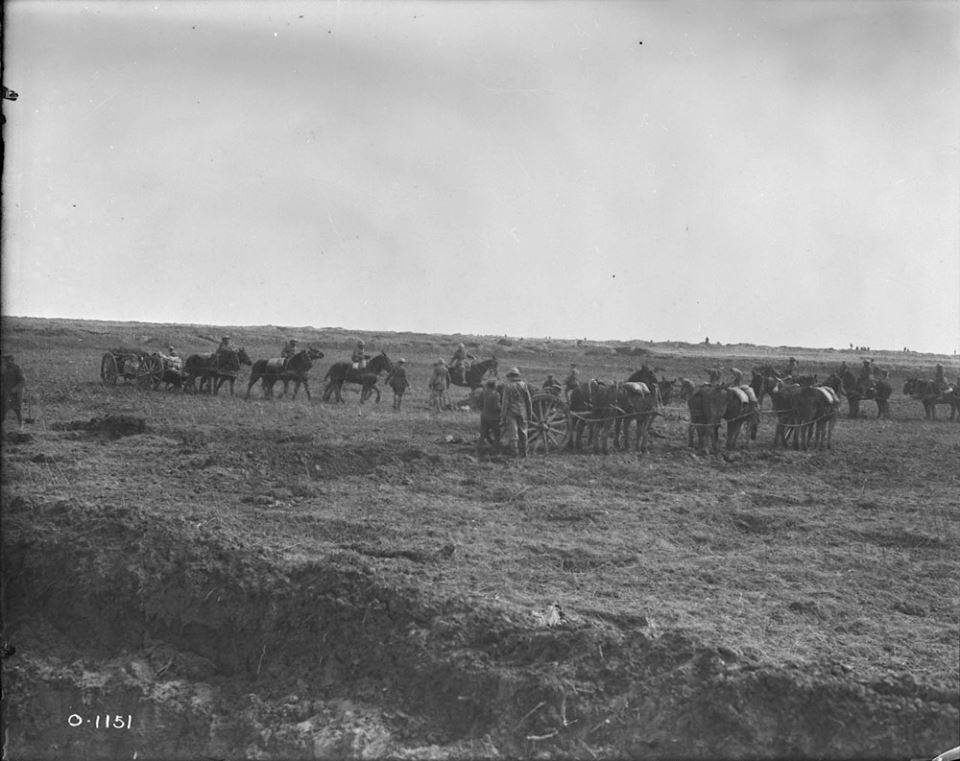
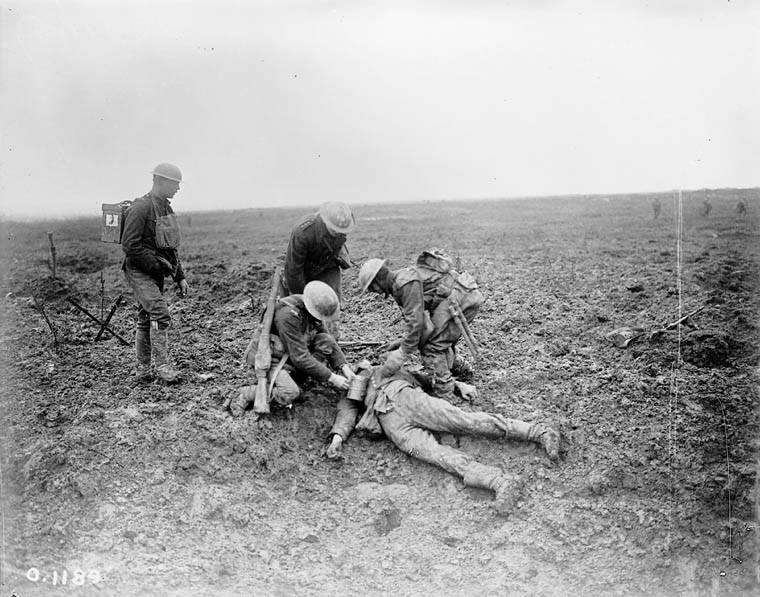
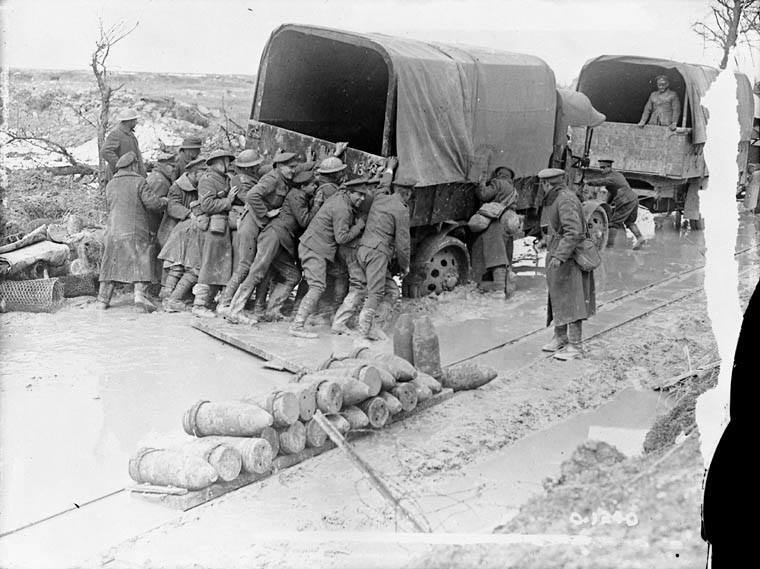
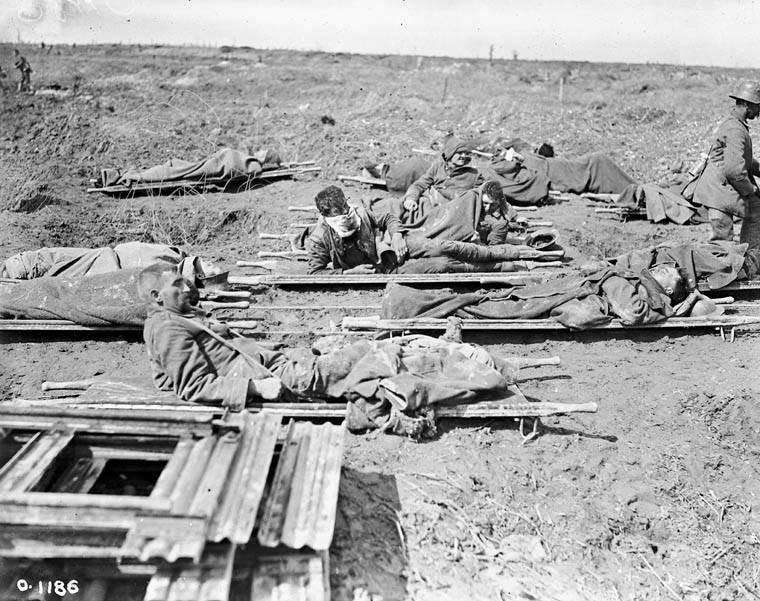
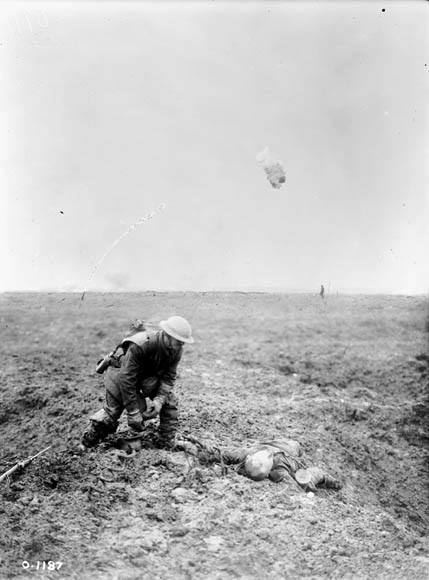
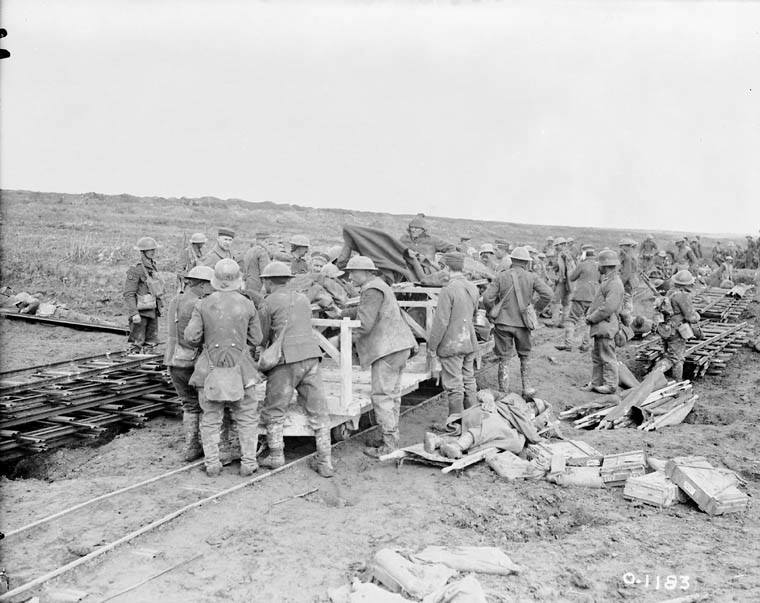
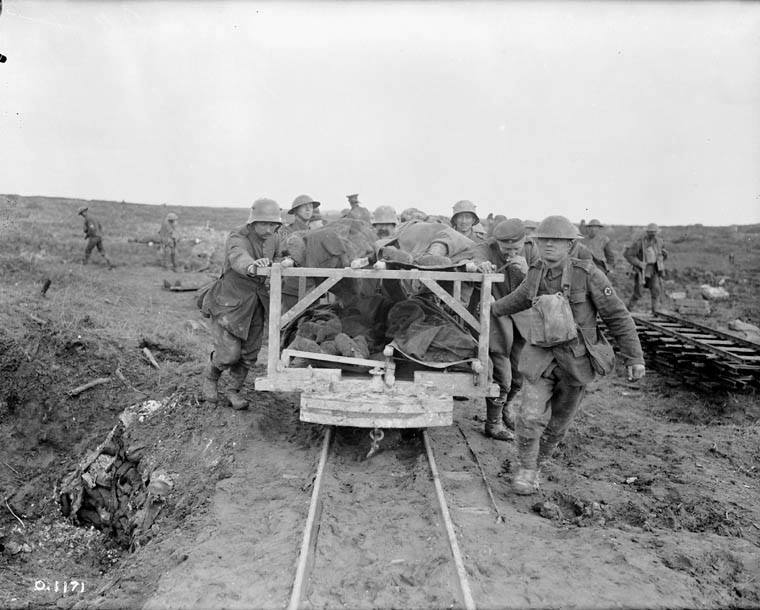
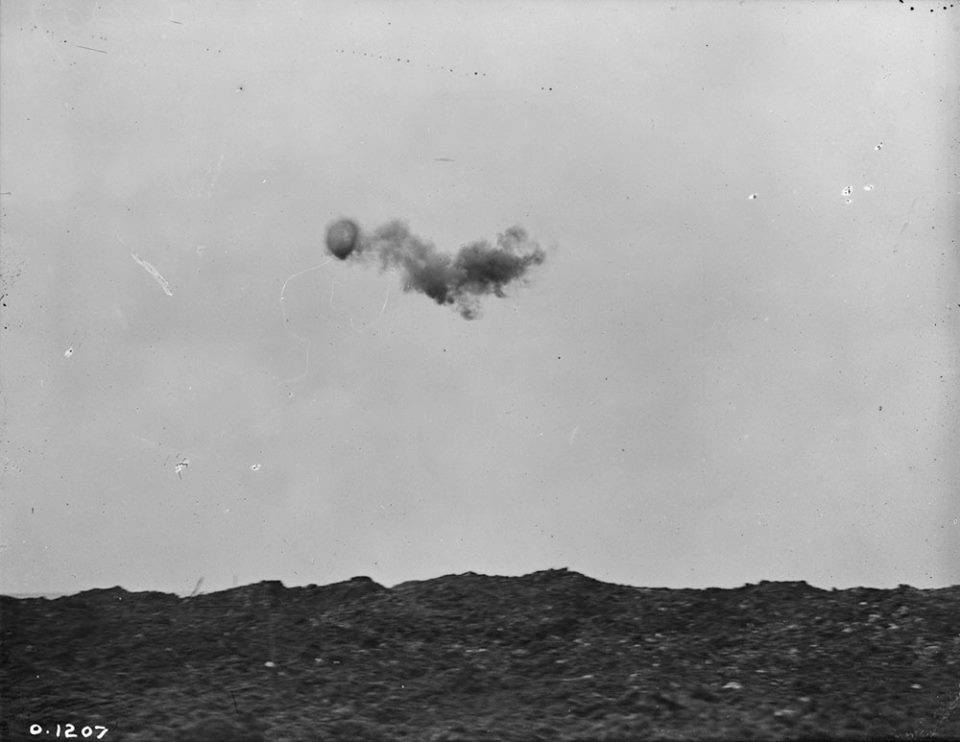
Loading a large naval gun on the Canadian front, taken during the Battle of Vimy Ridge. 9-12 April 1917.Canadians searching captured German trenches for hiding Germans at Vimy Ridge, during the Battle of Vimy Ridge. 9-12 April 1917.A machine gun emplacement on the crest of Vimy Ridge and the men who drove the Germans from it during the Battle of Vimy Ridge. 9-12 April 1917.Stretcher bearers and German prisoners bringing in wounded at Vimy Ridge, during the Battle of Vimy Ridge. 9-12 April 1917.German first line captured & Canadians on the crest of the Ridge advancing on Hun third line trench. Vimy Ridge. April,191728th Anniversary of the Battle of Vimy Ridge. Gen. Crerar, of the 1st Canadian Army, talking to veterans. 9 April 194529th Infantry Batallion advancing over “No Man’s Land” through the German barbed wire and heavy fire during the Battle of Vimy Ridge.April 1917First aid to an airman brought down on Vimy Ridge. April, 1917A Canadian covered with mud returning from front.A skull found on the battlefield of Vimy Ridge in April 191720th Battery, Canadian Field Artillery, taking ammunition to forward guns during the Battle of Vimy Ridge, April 1917.A heavy artillery piece firing during the Battle of Vimy Ridge, April 1917.Canadian soldiers in a captured German machine-gun emplacement, Battle of Vimy Ridge, April 1917.Canadian troops head to the rear after the Battle of Vimy Ridge, April 1917.Canadian troops washing in a shell hole, June 1917.Canadian nurses, May 1917.German prisoners making their way through the Hun Barrage. – Vimy Ridge. April, 1917Looted watches. April 1917.Bringing in German officers. – Vimy Ridge. April 1917Canadians captured several German Trench Mortars. April, 1917. Photograph shows captured trench mortars from the Vimy operations, including a granatenwerfer grenade thrower, and a variety of Minenwerfers.A big Naval gun firing on the Canadian front. April, 1917. This photograph shows a BL 6-inch Mk VII naval gun firing.King George V conferring the honour of Knighthood on General Arthur William Currie, Commander of the Canadian Corps. Albert, France, 12 July 1917.An Anti-aircraft gun advancing along a road under water during Battle of Vimy Ridge. April, 1917. This shows a motor lorry with a 13-pounder Anti-aircraft gun fording a sunken road near the Front.Examining a skull found on battlefield of Vimy Ridge. April, 1917Canadian infantry resting on the Arras battlefield between the villages of Blangy and Feuchy,south of Vimy Ridge. April 1917.Shells breaking over the German trenches. Vimy Ridge. April, 1917.General Sir Arthur Currie, Canadian Corps Commander unveiling the Memorial erected near Thelus by Canadian Artillery in memory of Artillerymen who fell during the taking of Vimy Ridge. February, 1918. Note the chain fencing with supports in the style of artillery shells.Grange Crater on Vimy Ridge blown by Canadians. July, 1917. Grange crater was the site of tunneling operations and mining in the lead up to the Attack on Vimy Ridge. This photo depicts the site of these operations. An early memorial can be seen at the lip of the crater. Official photographer William Rider-Rider’s assistant, Cpl. Percy Reeves, can be seen in the crater.Canadians consolidating their positions on Vimy Ridge. April 1917Canadian troops in the 2ndwave of attack on Vimy Ridge wait in a trench for signal to advance.Shrapnel from German shell bursts over reserve trench sheltering 2nd wave troops-Vimy Ridge,1917Naval gun firing over Vimy Ridge behind Canadian lines at night. May, 1917A mine exploding on Vimy Ridge. May, 1917.33rd Battery, Canadian Field Artillery, bringing up the guns. Vimy Ridge, April, 1917As the Canadians advanced, parties of Germans left their dug-outs only to glad to surrender. – Vimy Ridge. April 1917Canadian Byng Boys returning after beating the Germans at Vimy Ridge. May 1917German Whiz-bang captured by Canadians at Thelus. Vimy Ridge. April, 1917The Canadian Light Horse going into action. Vimy Ridge. April, 1917First aid to an airman brought down on Vimy Ridge. April, 1917German prisoners bringing in wounded Canadian soldiers. – Vimy Ridge. April, 1917Canadian Field Artillery bringing up the guns. Vimy Ridge, April, 1917Tending a wounded German on the battlefield. Vimy Ridge. April, 1917.Canadians giving a lorry a helping hand on a shell battered road on Vimy Ridge. April, 1917.Stretcher cases waiting to be loaded on light Railway. Vimy Ridge. April, 1917.German soldier beyond human aid. Vimy Ridge. April, 1917.German prisoners and Canadian Red Cross men assist in the despatching of wounded on a light railway. Vimy Ridge. April, 1917.Light Railroad truck with wounded on board.Note the German soldiers carrying wounded Canadian soldiers. Vimy Ridge. April, 1917.Bringing Canadian wounded to the Field Dresseing Station. Vimy Ridge. April, 1917.German shrapnel breaking. Vimy Ridge. April, 1917.German shells bursting behind our dug-in troops. Vimy Ridge. April, 1917The first train over the new railroad on Vimy Ridge. April, 1917.Canadian machine gunners dig themselves in, in shell holes on Vimy Ridge.April 1917Looking over crest of Vimy Ridge on Vimy Village. May 1917Canadians advancing through German wire entanglements – Vimy Ridge. April, 1917.A machine gun emplacement on the crest of Vimy Ridge and the men who drove the Germans from it during the Battle of Vimy Ridge.9-14 April 1917King George V traversing the Vimy Ridge, Centre figure, Gen. Currie, Commanding Cdns. Right, Gen. Horne.The Battle of Vimy Ridge, a painting by Richard JackHappy Canadians who captured Vimy Ridge returning to rest billets on motor lorries in 1917.Canadian machine gunners dug in shell holes in Vimy advance, April, 1917Stretcher Bearers Bringing in Wounded at the Battle of Vimy Ridge.
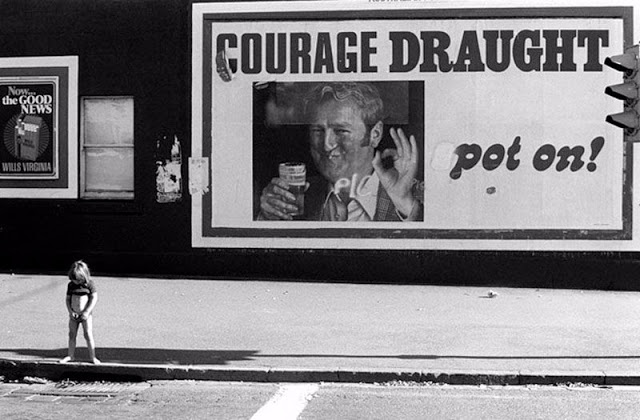
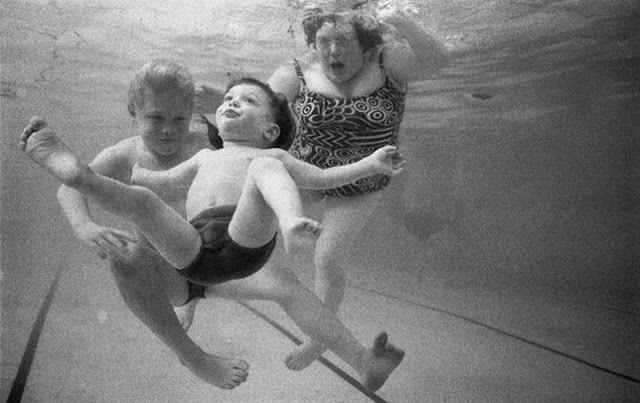
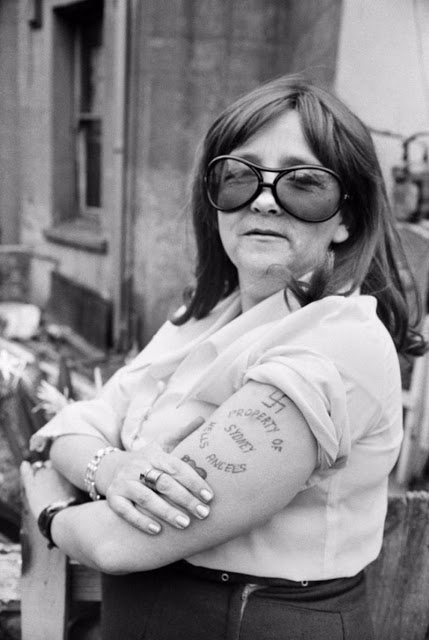
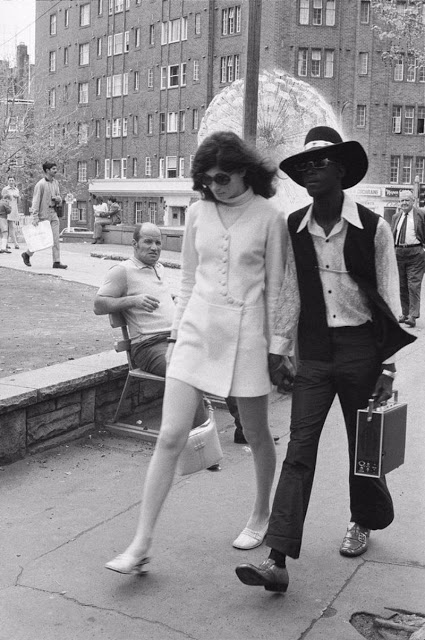
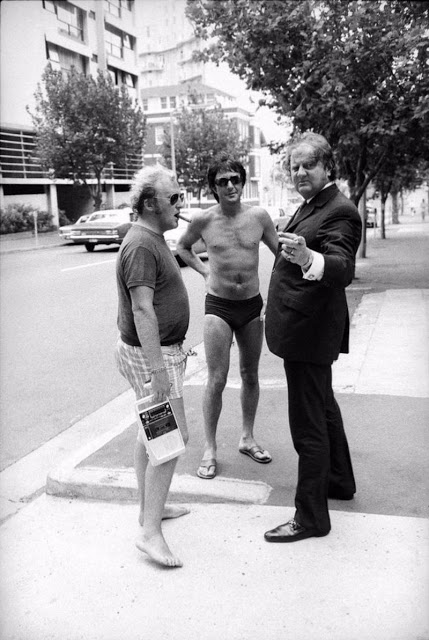
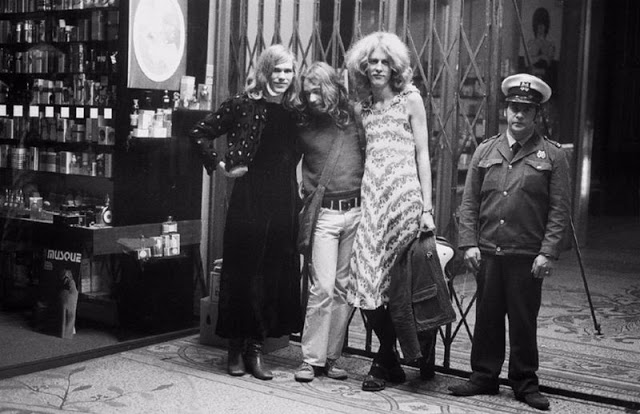
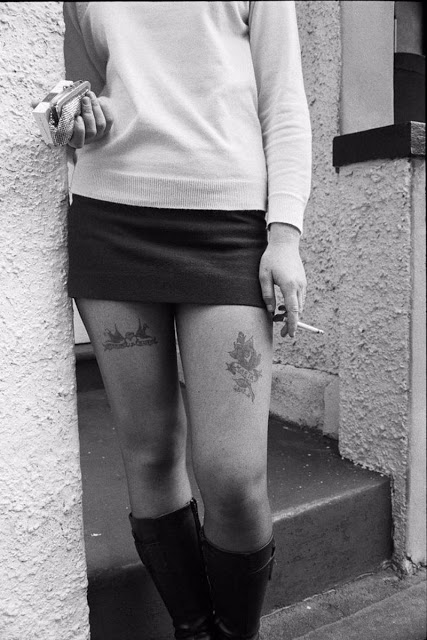
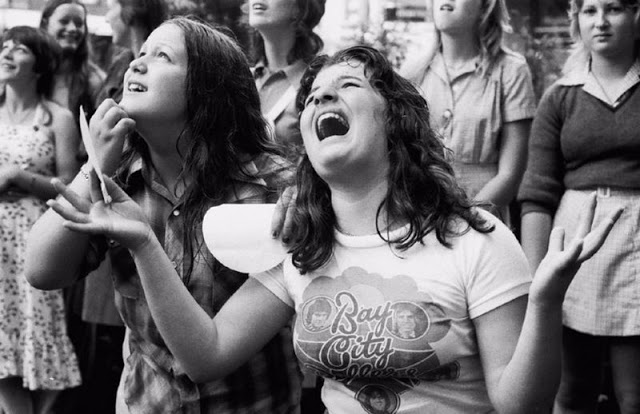
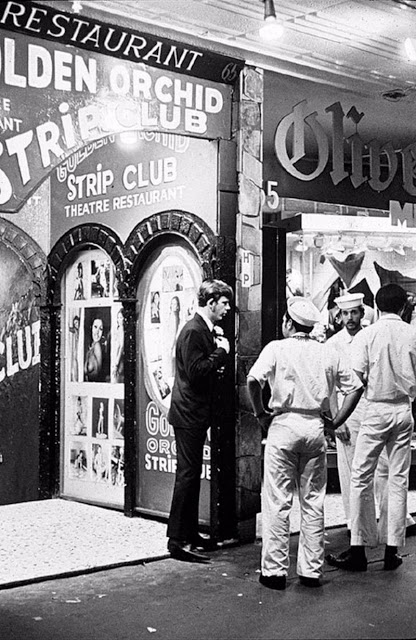
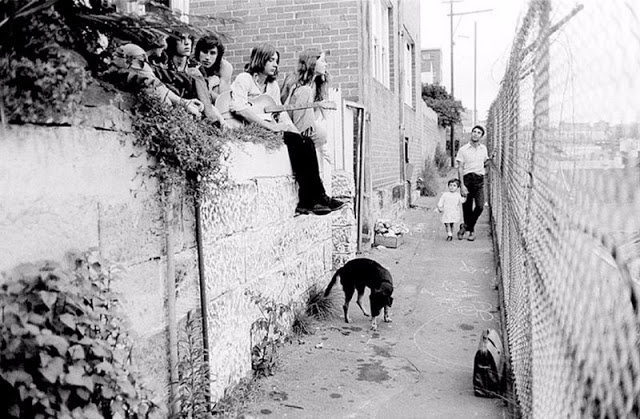
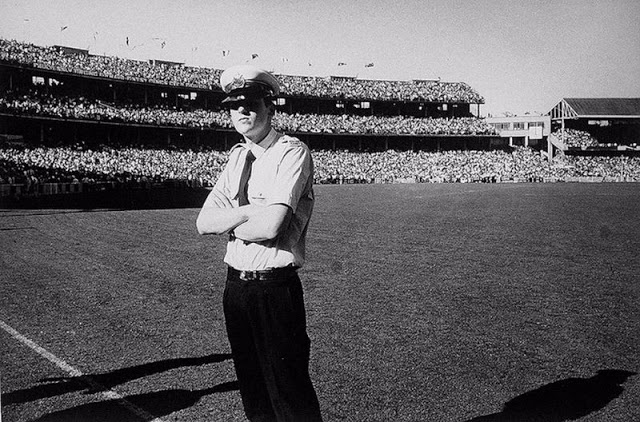
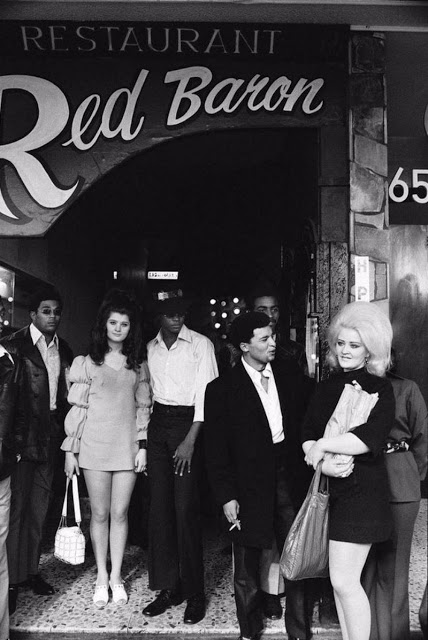
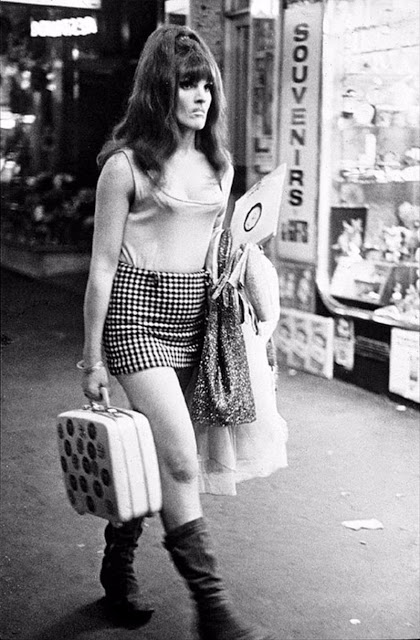
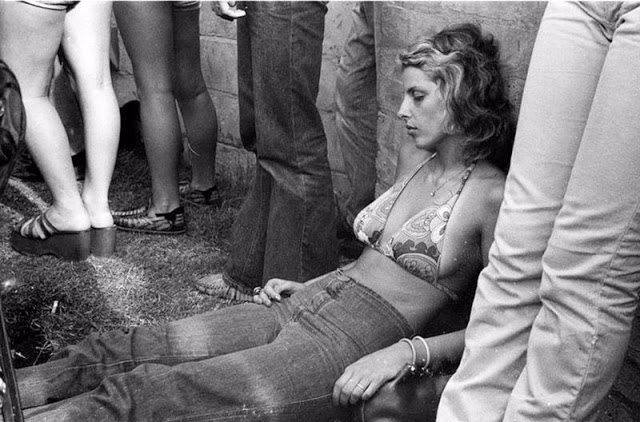
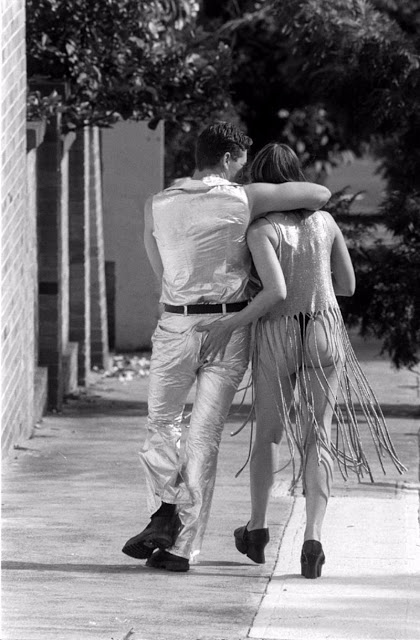
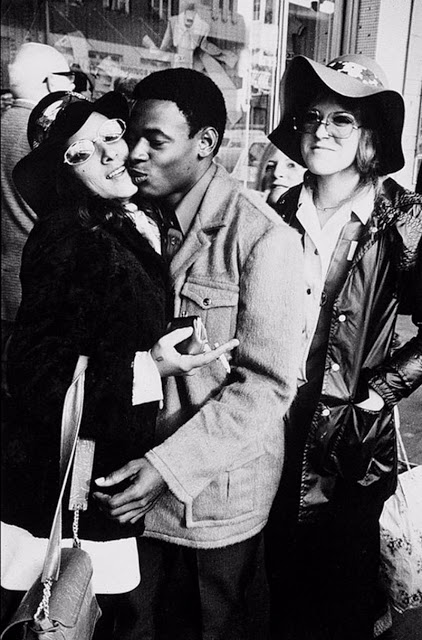
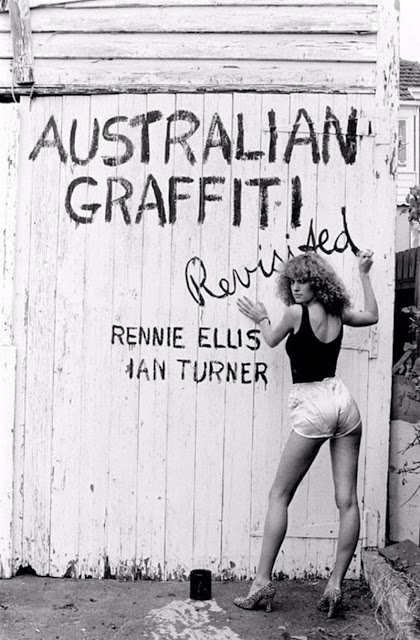
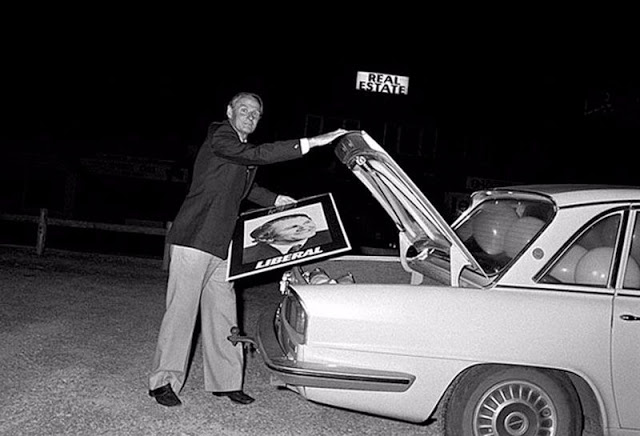
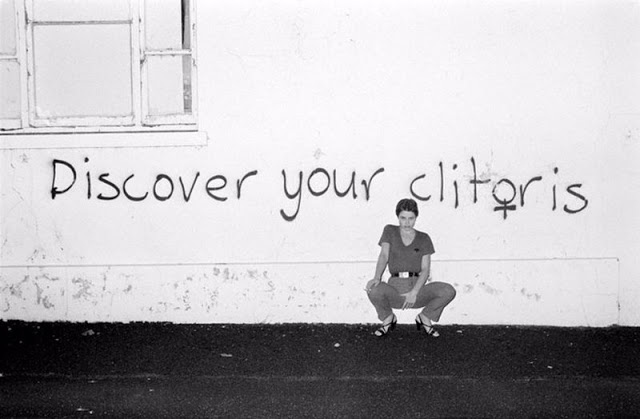
Reynolds Mark “Rennie” Ellis (1940-2003) was a social and social-documentary photographer who also worked as an advertising copywriter, seaman, lecturer and television presenter over the course of his life. However he is best remembered for his observations of Australian life. Indeed some of his photos have become icons of what we now call “Australiana”.
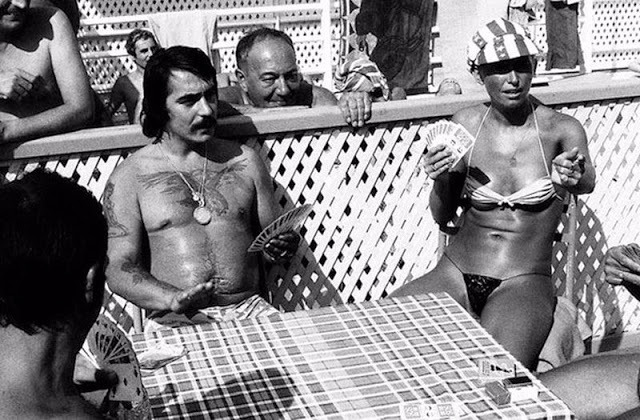
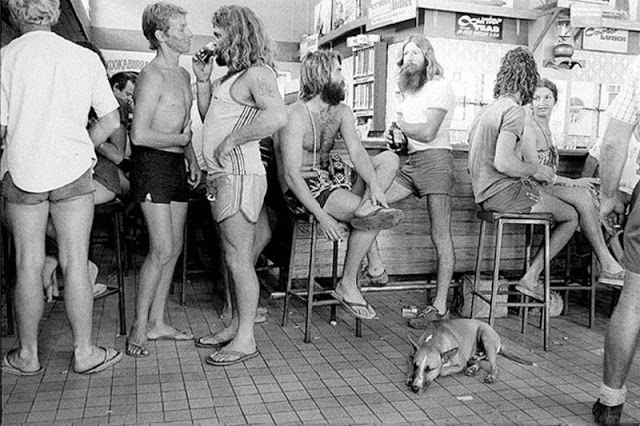
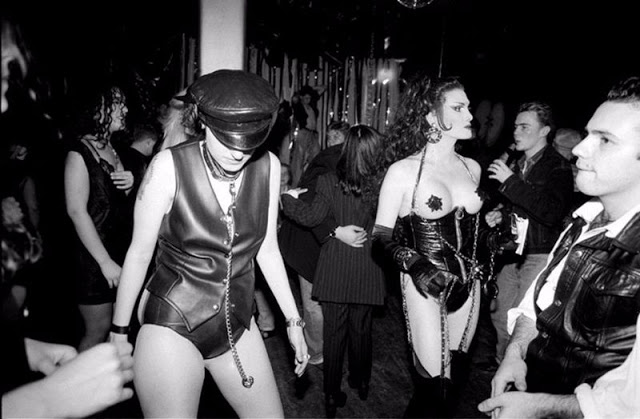
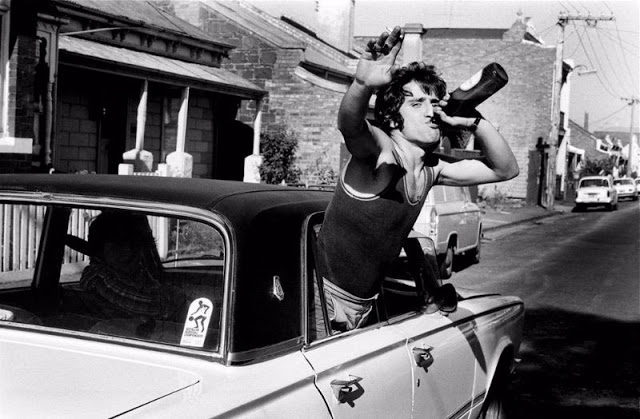
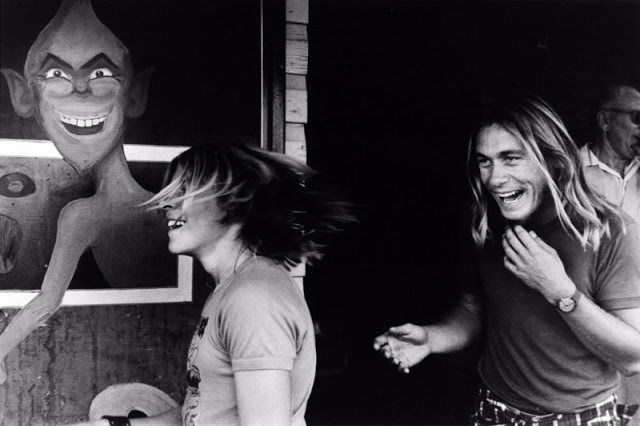
Ellis saw his photographic excursions as a series of encounters with people’s lives. His photos can be as straightforward and blatant as a head-butt or infused with enigmatic subtleties that draw on the nuance of gesture and the significance of ritual. The collection highlights some of the defining images of Australian life from the 1970s and 1980s.
Although invariably infused with his own personality and wit, the thousands of social documentary photographs taken by Ellis now form an important historical record.
The photographs explore the cultures and subcultures of the period, and provide a strong sense of a place that now seems a world away. A world free of risk, of affordable inner city housing, of social protest, of disco and pub rock.
A good studio for an artist is a very important place. Our creative studios might sometimes look like a pile of rubbish or a mixed-up room, but this is where great creations are born!
These photos are not glamorous and they show the artists in a very natural and raw state. This is the behind the scenes stuff. The photos give you an insight into how the artists work behind the scenes and what exactly goes into creating great artworks. It is not always pretty and organized. In fact, it seems to be usually quite the opposite!
Claude Monet
Subscribe to continue reading
Become a paid subscriber to get access to the rest of this post and other exclusive content.
By the late 19th and early 20th centuries, all kinds of people lived in the cities. Laborers and servants were the most numerous. Although some became better-off, many were still poor. They lived in cramped, decaying houses.
Whether rich or poor, it’s easy to see that people in these periods always enjoyed their lives and seemed to be happier than today.
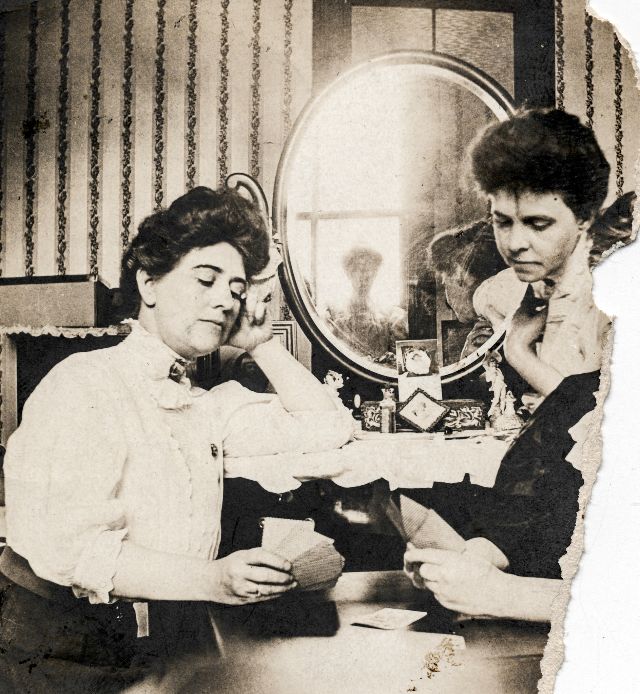
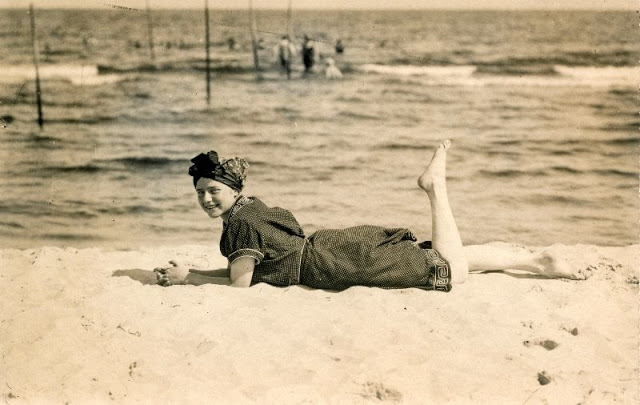
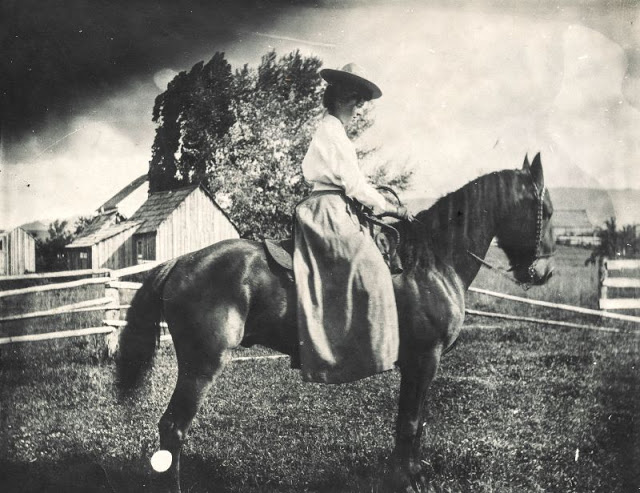
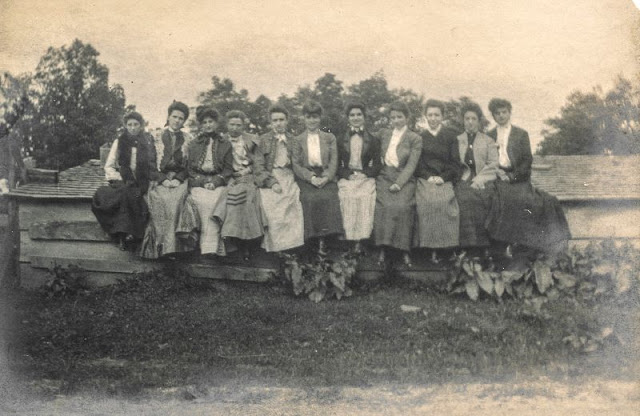
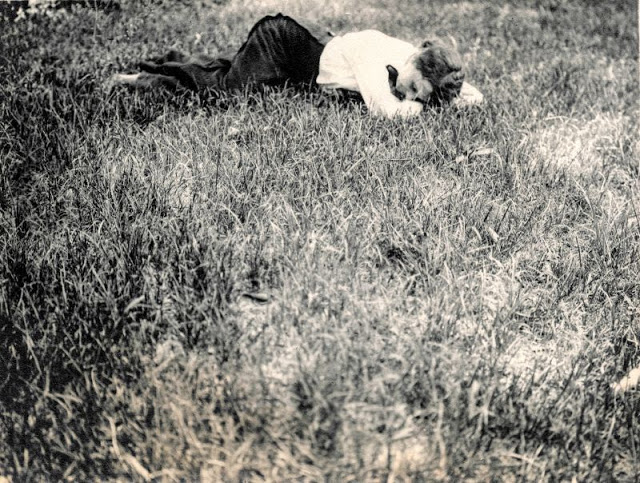
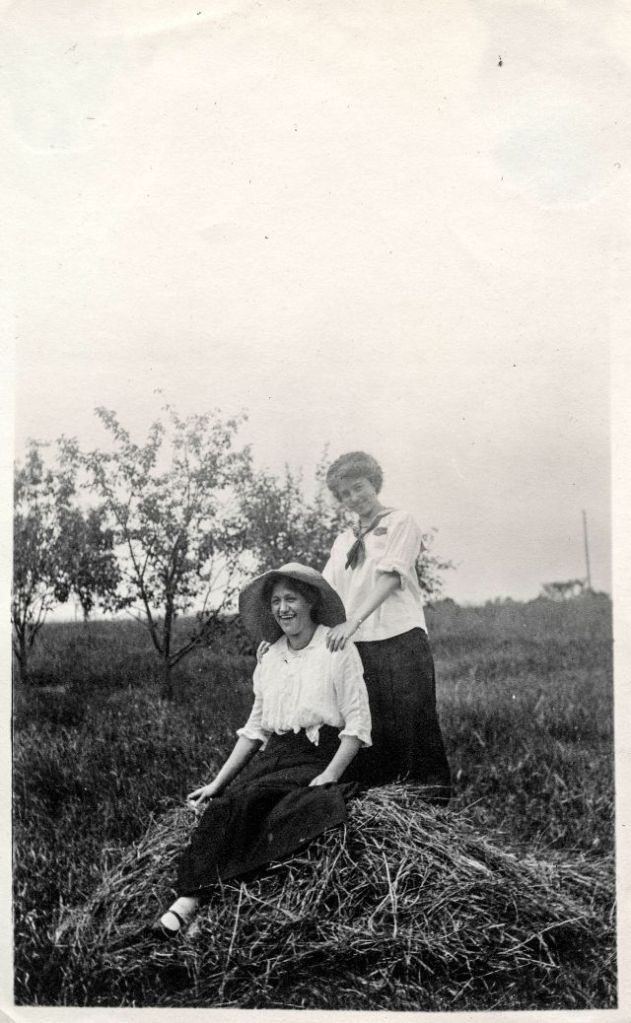
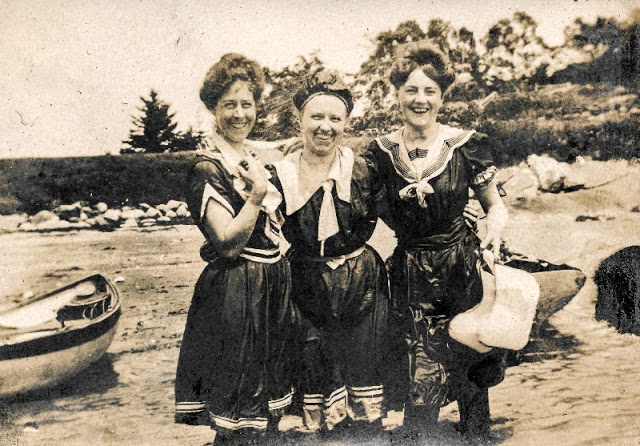
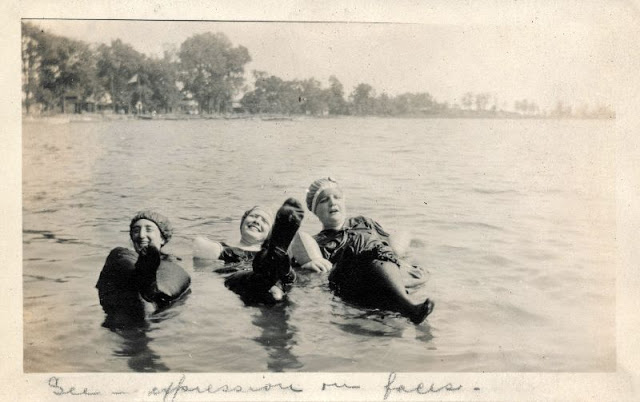
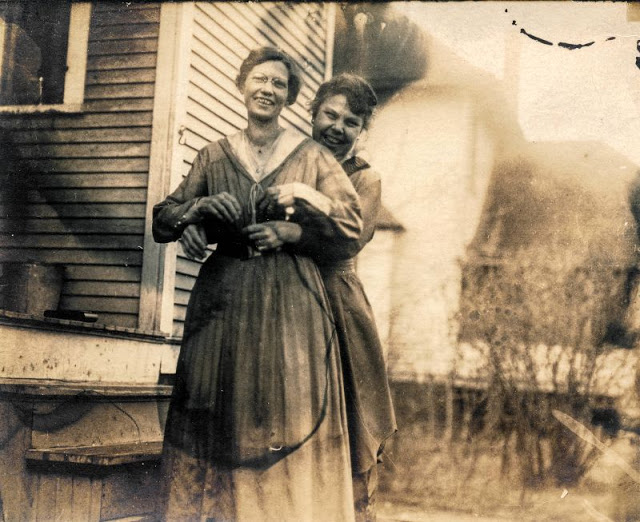
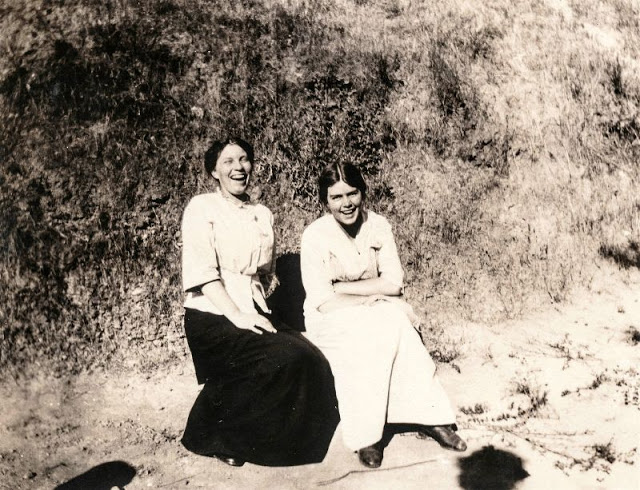
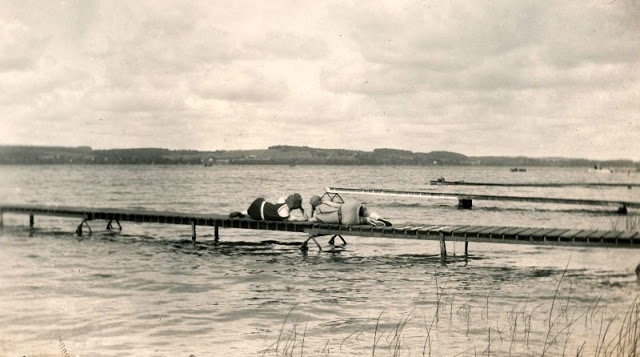
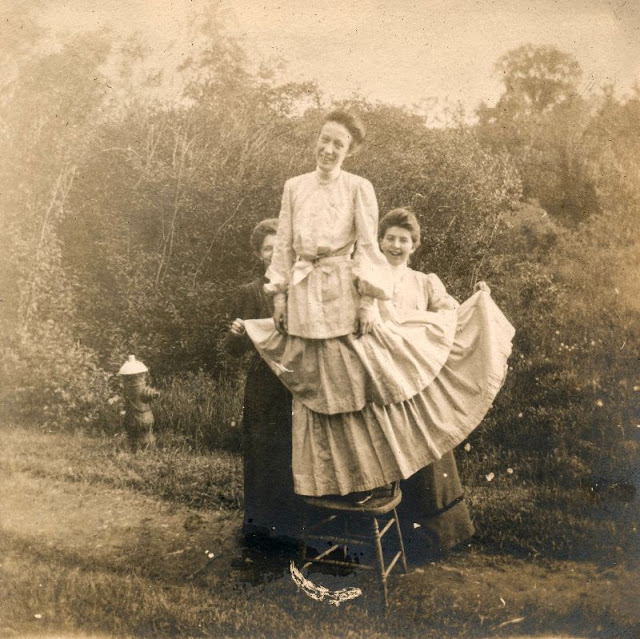
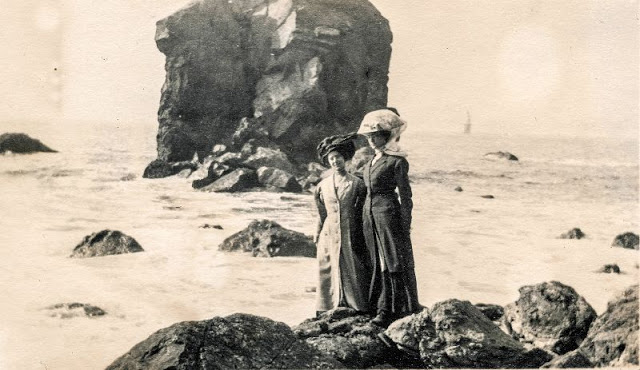
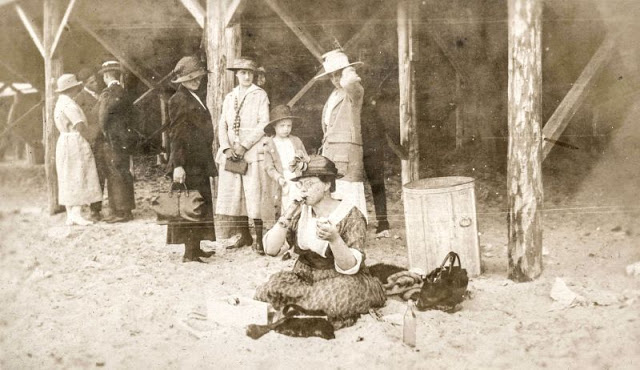
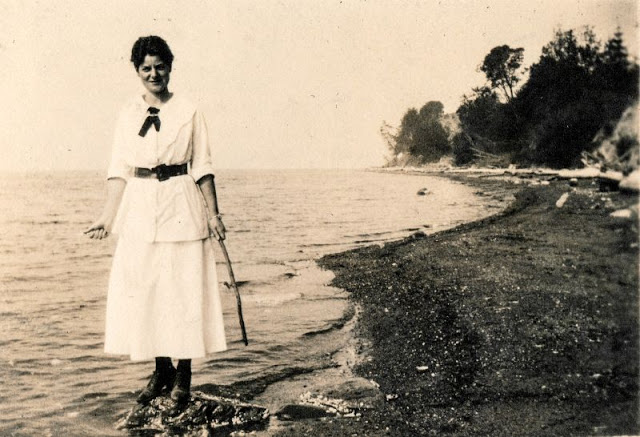
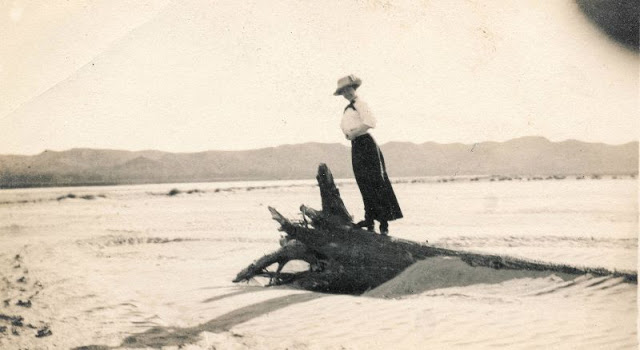
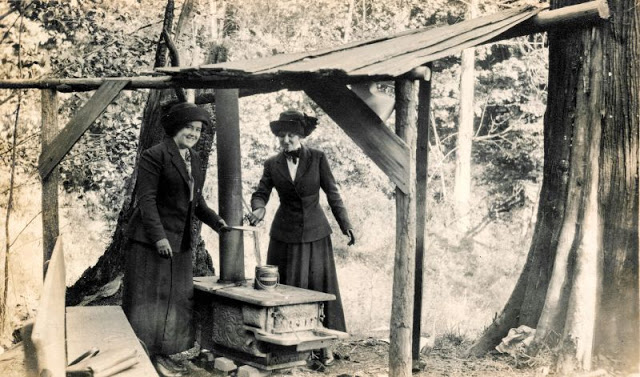
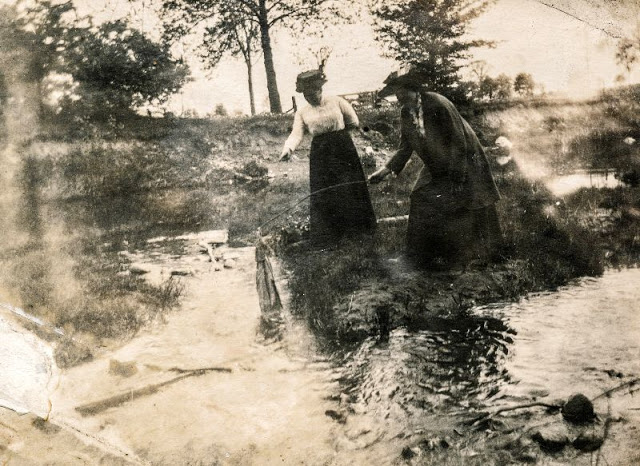
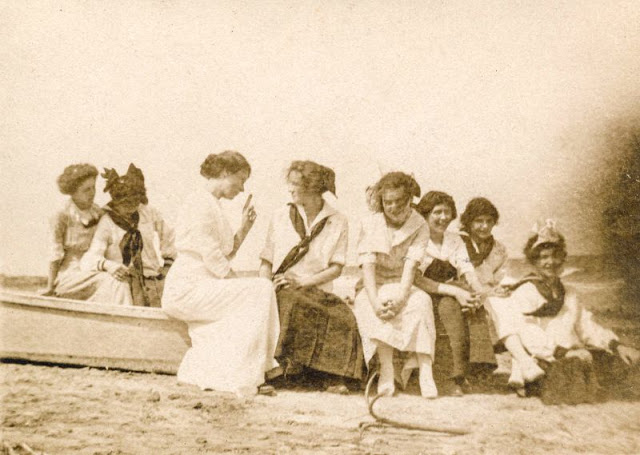
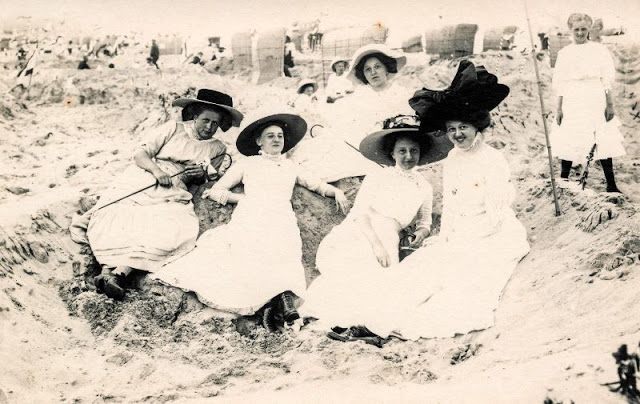
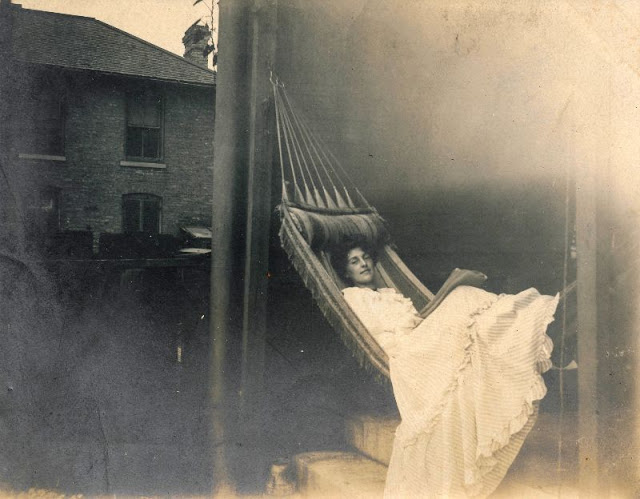
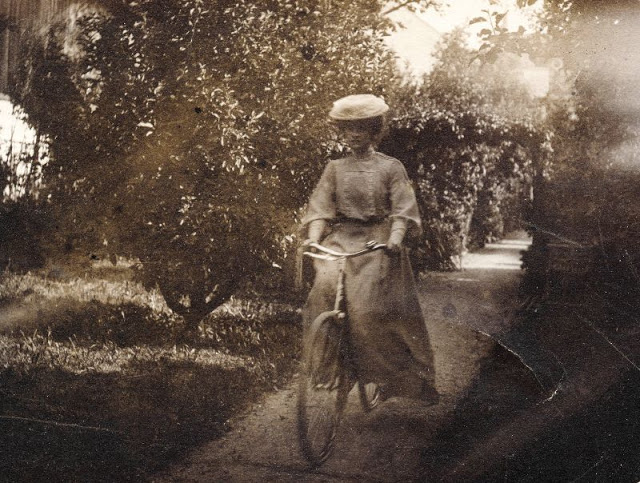
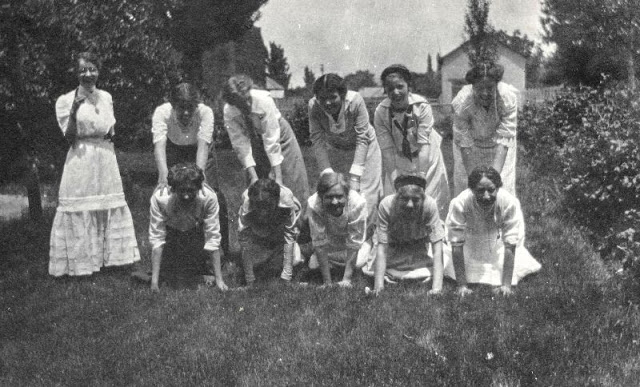
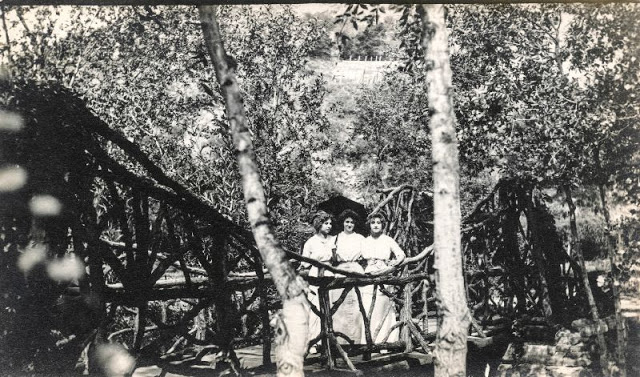
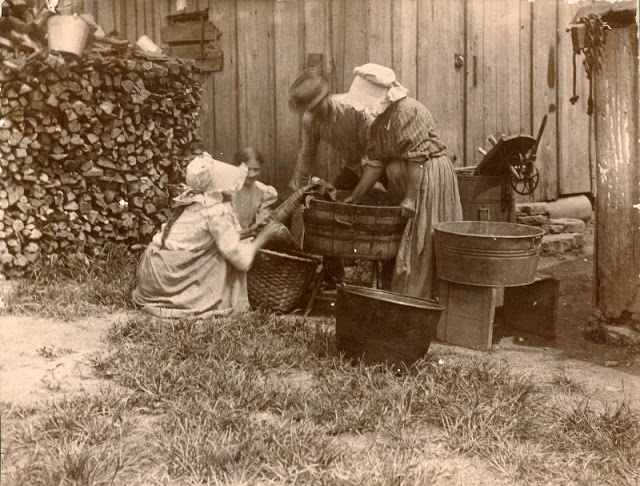
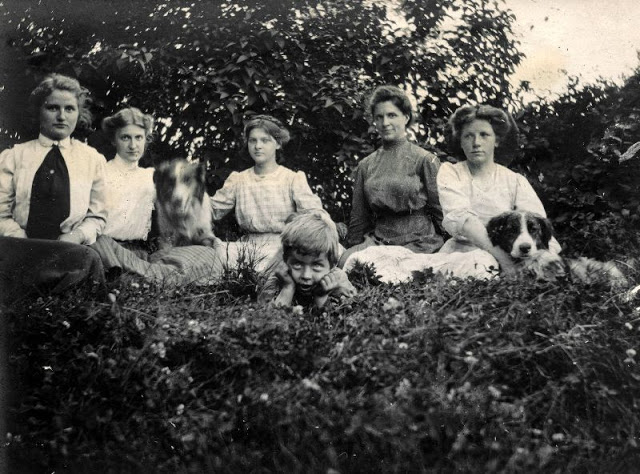
These found pictures show how Victorian and Edwardian women enjoyed their lives.
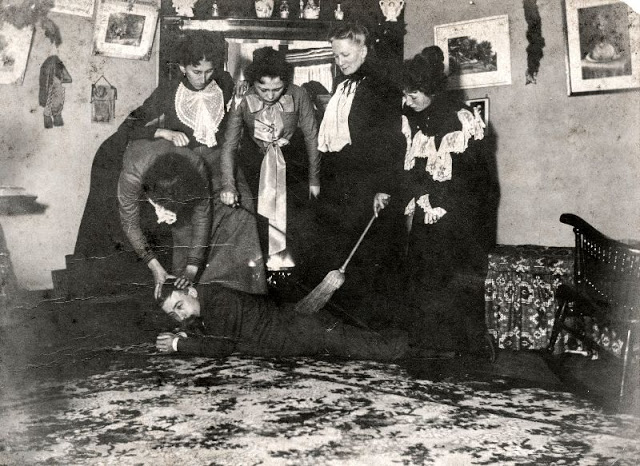
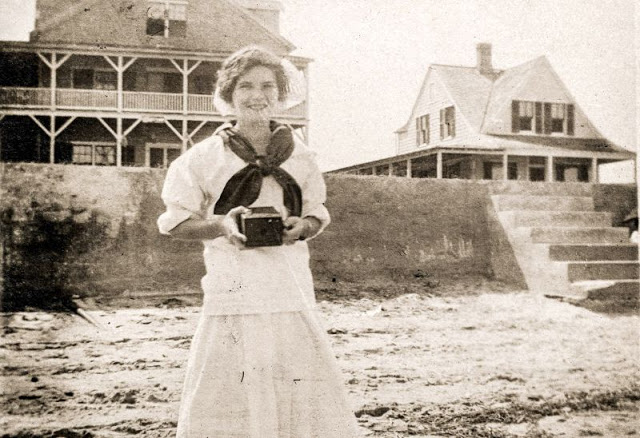
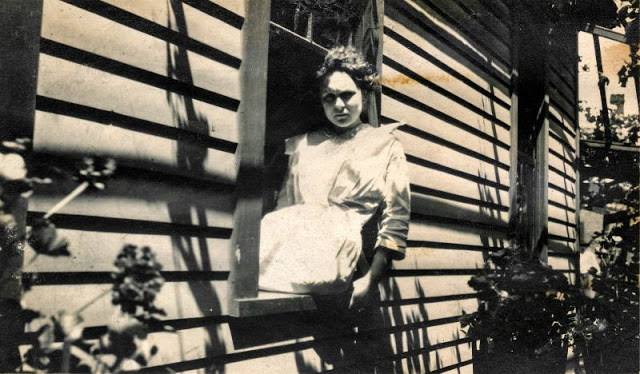
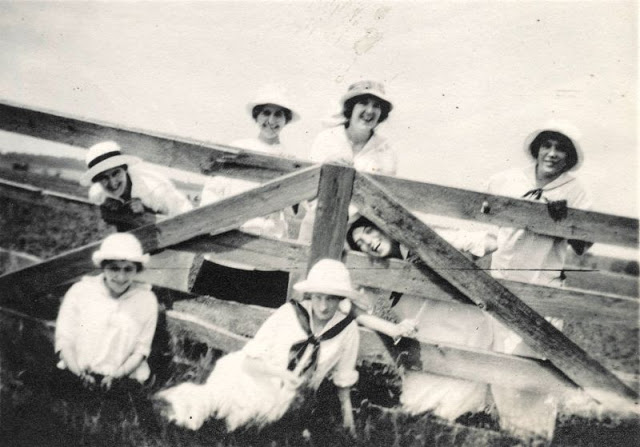
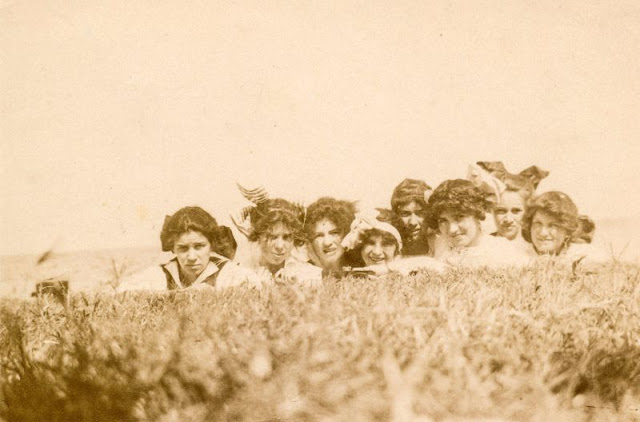
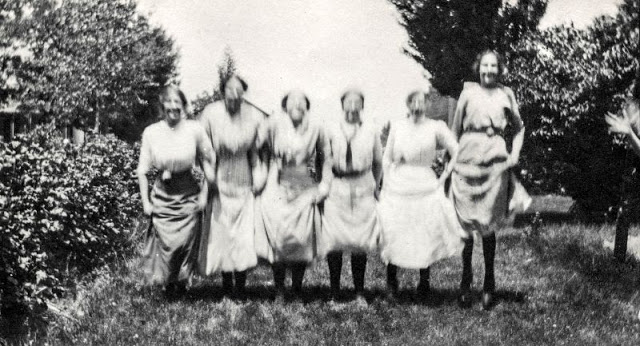
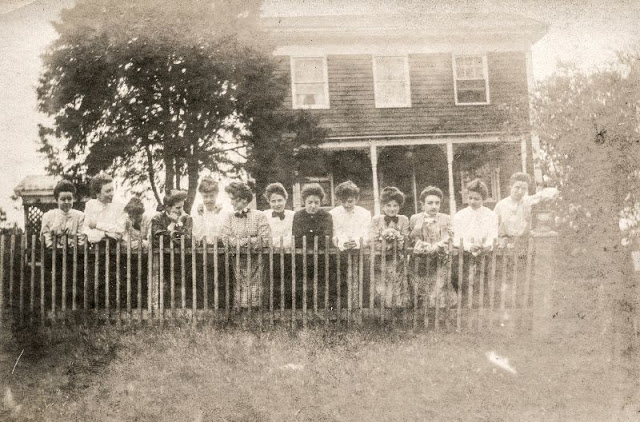
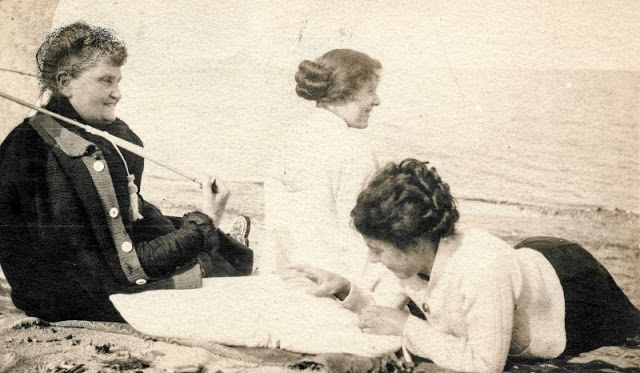
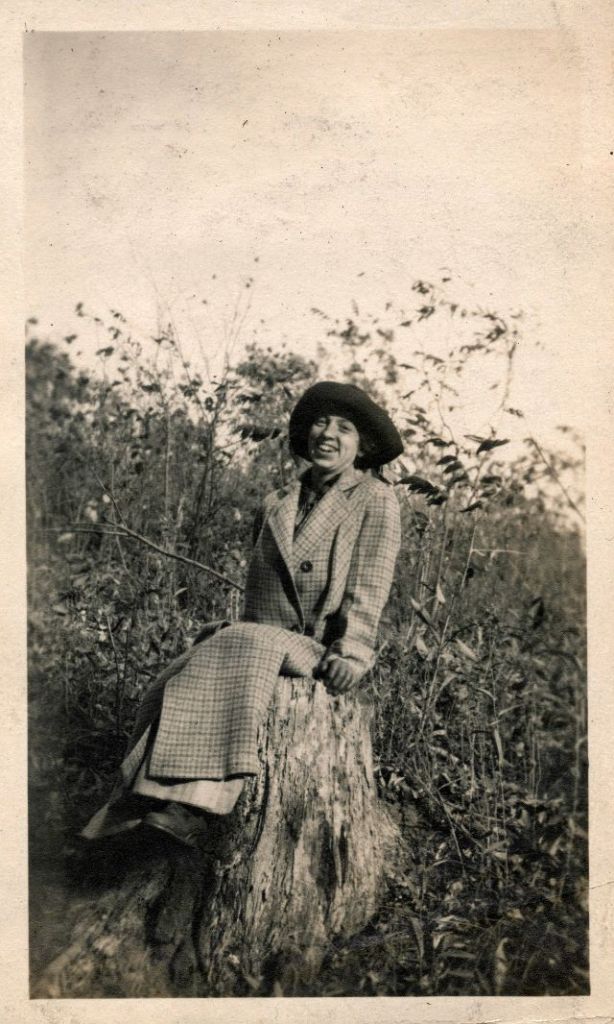
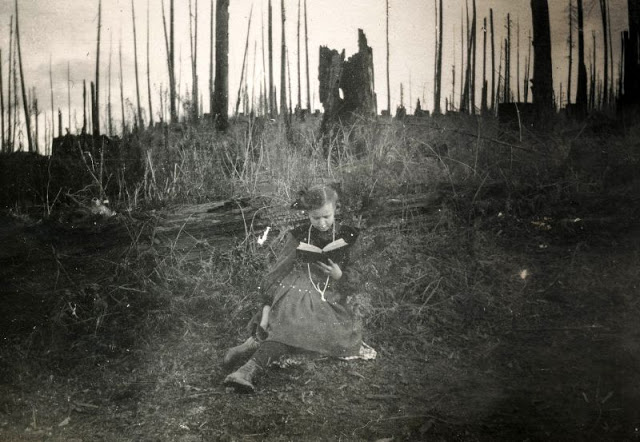
Pretty girl laying on the beachRiding on a horseGroup of women sitting together on a building roofSleeping in the grassSmiling women sitting in a fieldThree wet women standing in the waterWomen floating on their backsA smiling couple posing outdoorsTwo women laughing outsideTwo women lying on a pierTwo girls show off their friend’s dressTwo women stand along the shoreWoman drinking a soda on the beachWoman holding a stick on a beachWoman stands on a large piece of driftwood on the beachCooking on a camp stoveFishing an article of clothing out of a creekGroup of young women gossiping on a small boat on the sandWomen in fancy hats sitting on the beachYoung woman rests in a large hammockYoung woman rides a bicycle down a garden pathDoing a leap frog poseThree young women standing on a bridgeFamily doing laundry outdsideSitting in the grass with their dogsFive women attacking a man laying on the floorGirl holding a box cameraYoung woman sitting in a windowGirls posing around a fenceWomen hiding in the grassGroup of women jumping while holding their skirtsWomen leaning on a fenceHappy women resting on the beachwoman laughing while sitting on a stumpLittle girl reading a book in a burned-out forestPlaying cards in front of a mirror
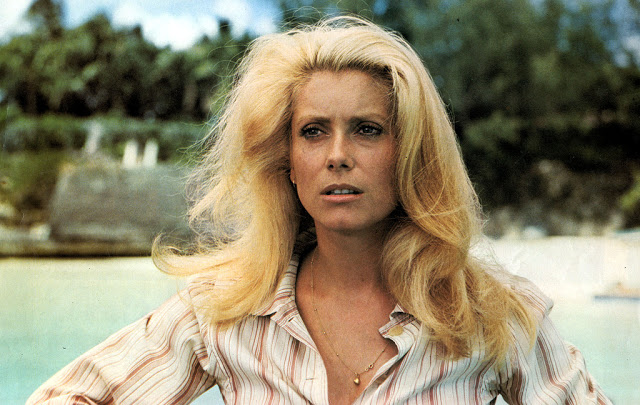
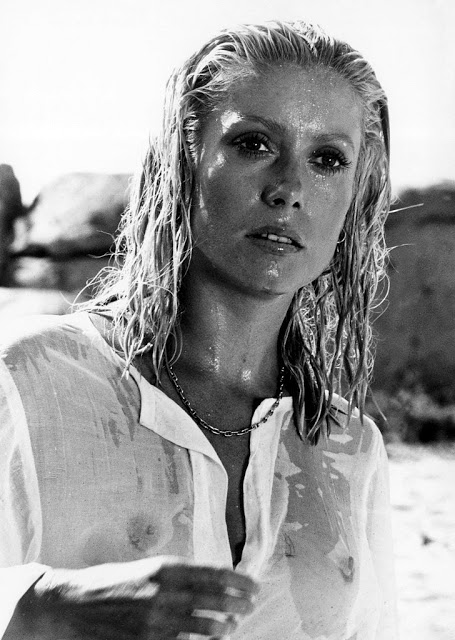
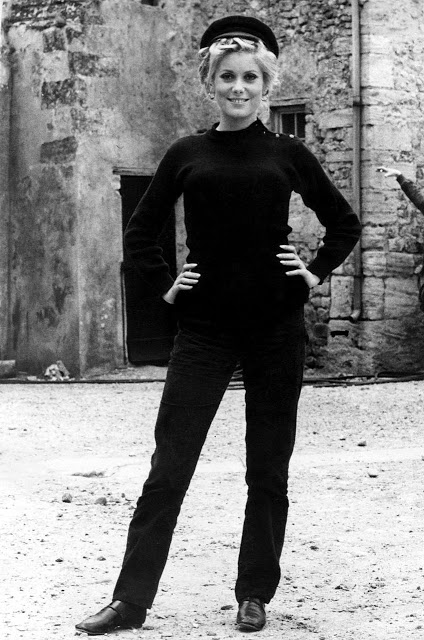
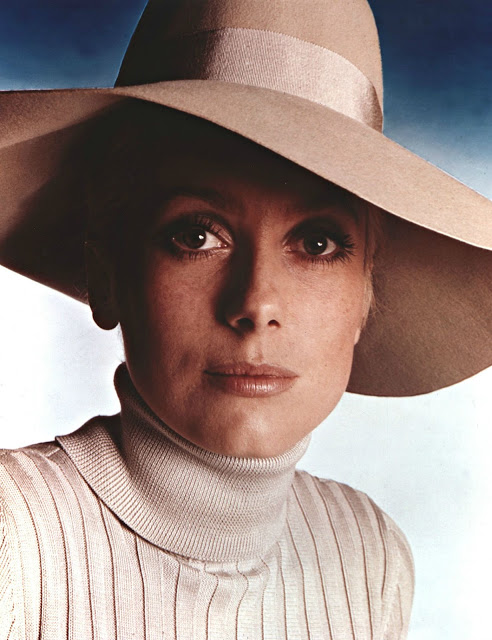
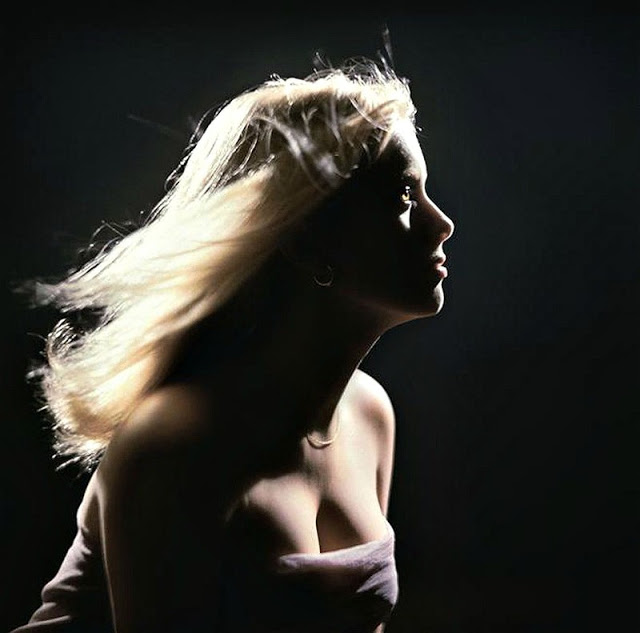
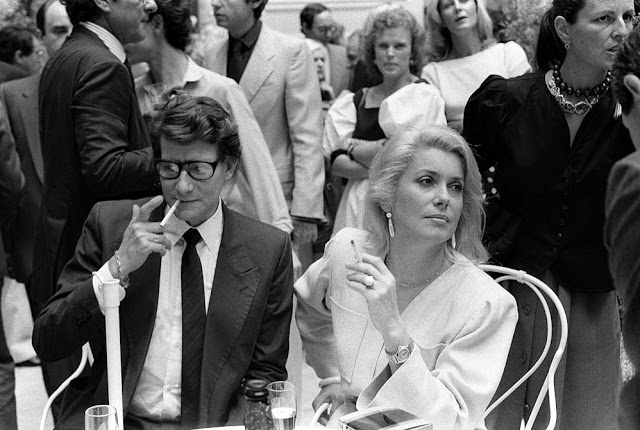
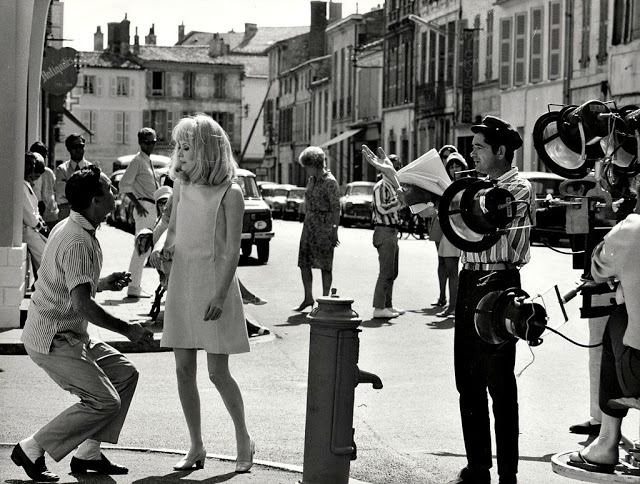
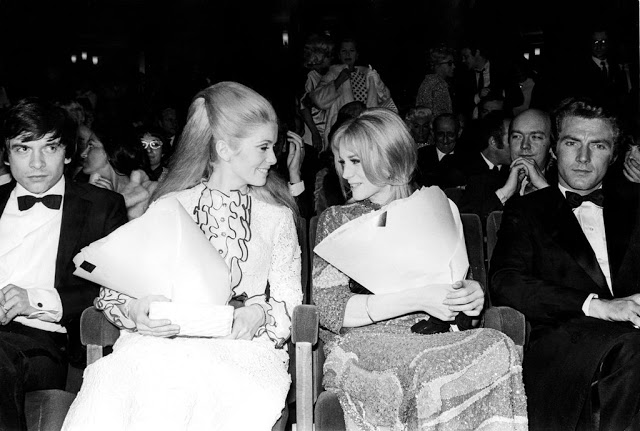
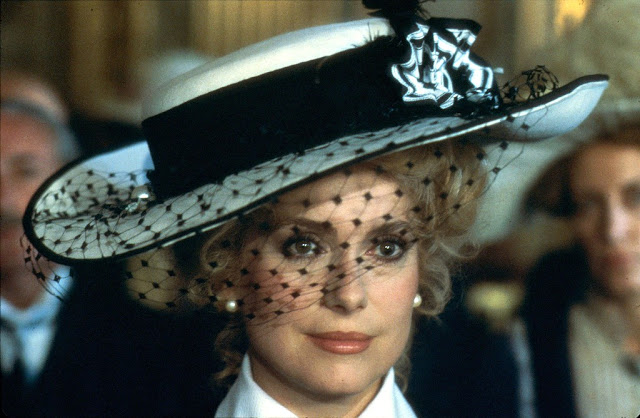
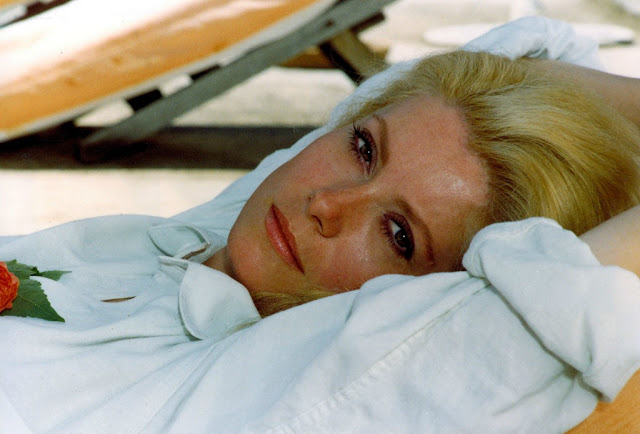
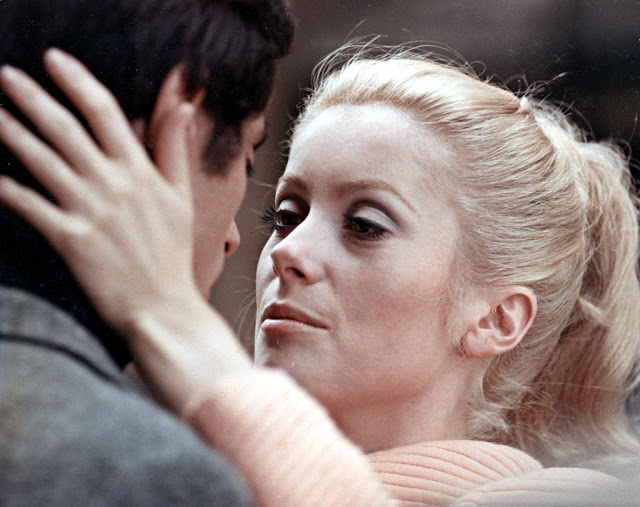
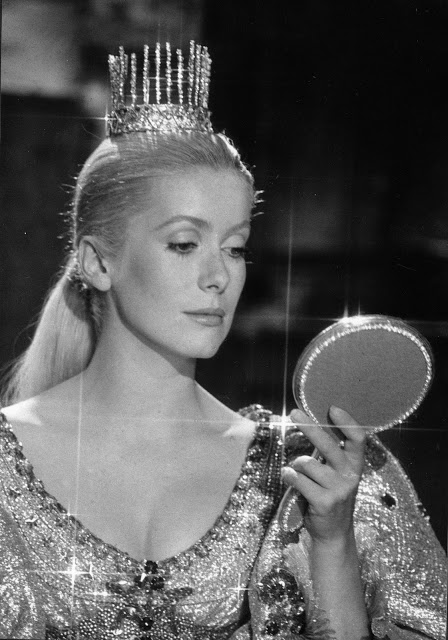
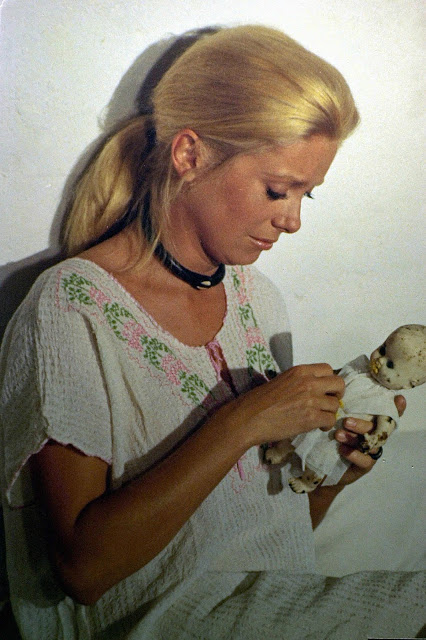
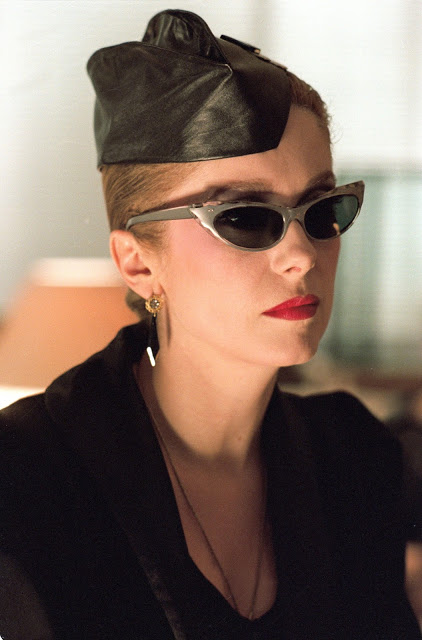
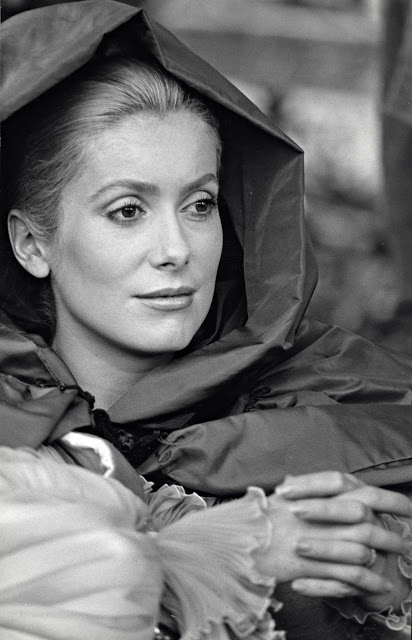
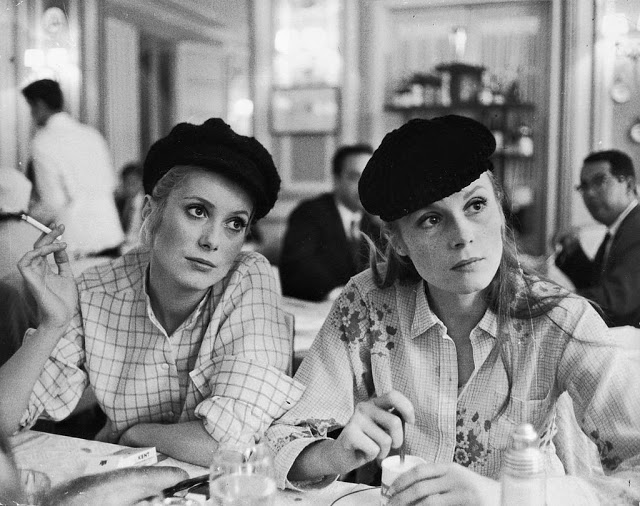
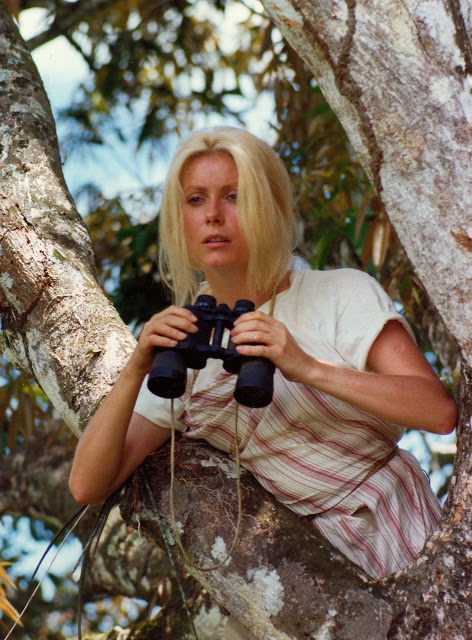
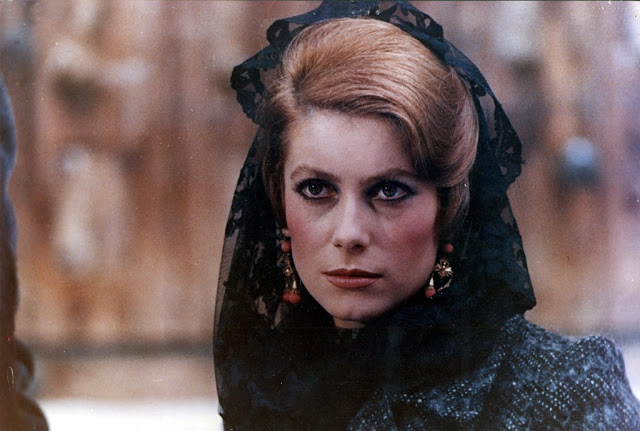
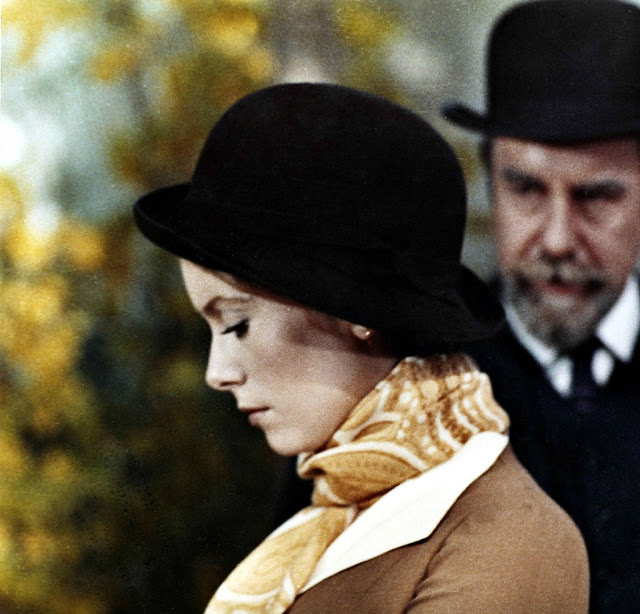
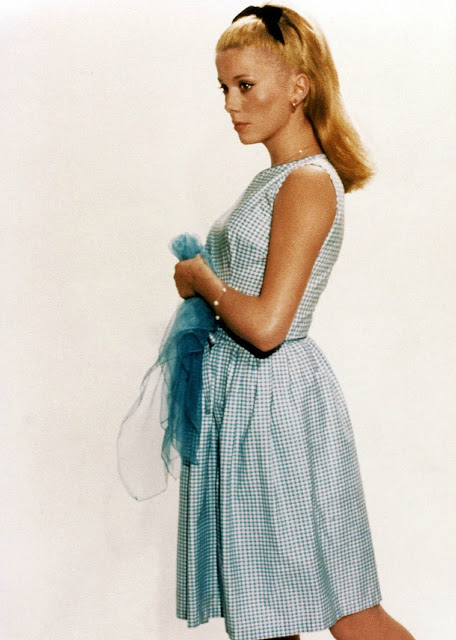
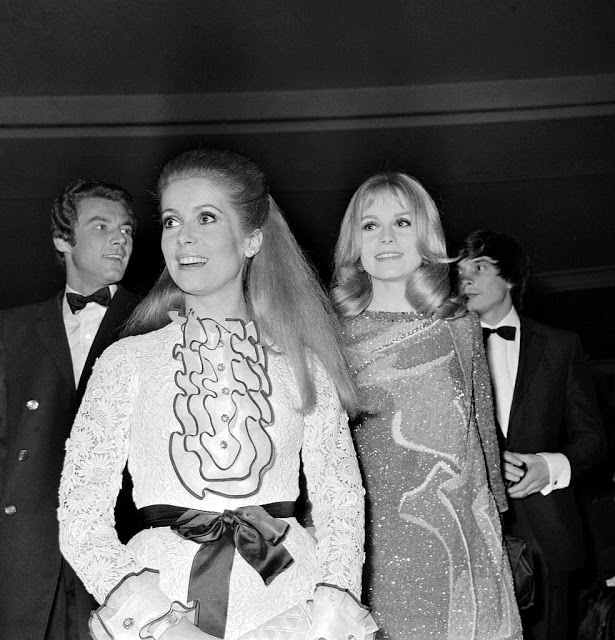
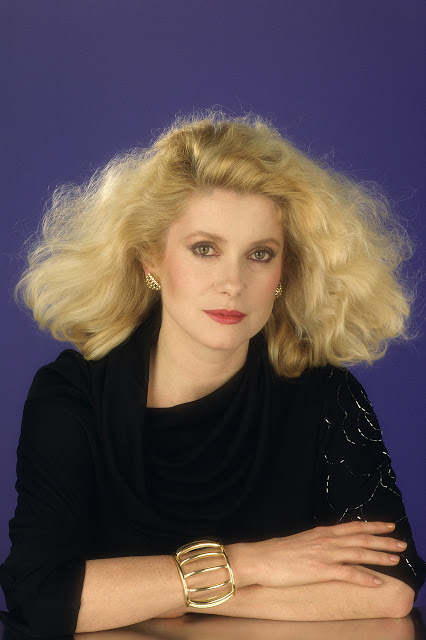
Catherine Fabienne Dorléac (born 22 October 1943), known professionally as Catherine Deneuve, is a French actress as well as an occasional singer, model, and producer, considered one of the greatest European actresses.[2] She gained recognition for her portrayal of icy, aloof, and mysterious beauties for various directors, including Luis Buñuel, François Truffaut, and Roman Polanski. In 1985, she succeeded Mireille Mathieu as the official face of Marianne, France’s national symbol of liberty. A 14-time César Award nominee, she won for her performances in Truffaut’s The Last Metro (1980), for which she also won the David di Donatello for Best Foreign Actress, and Régis Wargnier’s Indochine (1992).
Deneuve made her film debut in 1957 at the age of 13, in a film shot the year earlier when she was only 12. She first came to prominence in Jacques Demy’s 1964 musical The Umbrellas of Cherbourg. She went on to star for Polanski in Repulsion (1965), and for Buñuel in Belle de Jour (1967) and Tristana (1970). She was nominated for the BAFTA Award for Best Actress for Belle de Jour, and the Academy Award for Best Actress for Indochine. She also won the 1998 Volpi Cup for Best Actress at the Venice Film Festival for Place Vendôme. Her English-language films include The April Fools (1969), Hustle (1975), The Hunger (1983), Dancer in the Dark (2000), and The Musketeer (2001). Other notable films include Mississippi Mermaid (1969), Scene of the Crime (1986), My Favourite Season (1993), 8 Women (2002), Persepolis (2007), Potiche (2010), The Brand New Testament (2015), and Bonne Pomme (2017).
Deneuve speaks fluent French, Italian and English and has some knowledge of Spanish, though she does not speak the language fluently. Her hobbies and passions include gardening, drawing, photography, reading, music, cinema, fashion, antiques and decoration. According to a 1996 article published by The New York Times, Deneuve is a practising Roman Catholic.
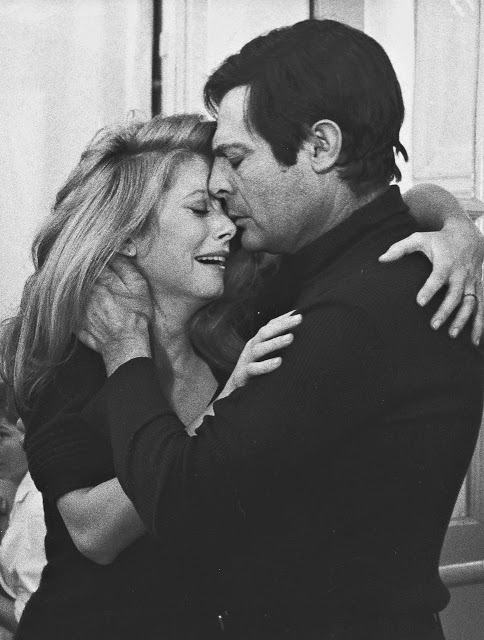
Deneuve has been married only once: to photographer David Bailey from 1965 to 1972, though they separated in 1967. She has lived with director Roger Vadim, actor Marcello Mastroianni, cinematographer Hugh Johnson, and Canal+ tycoon Pierre Lescure.
Deneuve has two children: actor Christian Vadim (born 18 June 1963), from her relationship with Roger Vadim, and actress Chiara Mastroianni (born 28 May 1972), from her relationship with Marcello Mastroianni. She has five grandchildren.
Deneuve has not had a public relationship since her breakup with Lescure in 1991. They remain friends, and Deneuve’s children consider him their stepfather. According to Gala, in late 2019 Deneuve relied on Lescure while she recuperated from a stroke.
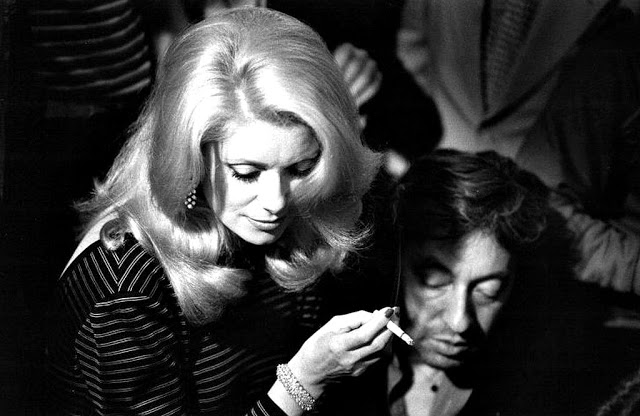
Throughout her 20s and 30s, Deneuve reportedly dated actors Sami Frey, Clint Eastwood, Franco Nero, Burt Reynolds, and John Travolta as well as directors Roman Polanski, Jerry Schatzberg and François Truffaut, talent agent Bertrand de Labbey, singer Serge Gainsbourg and TV host Carlos Lozano. While most of her confirmed liaisons have been with much older men, Lozano was 19 years her junior, and in his late teens when he and Deneuve were involved in the early 1980s. Travolta was also 11 years her junior.
In recent decades, Deneuve’s lack of a boyfriend of record – in combination with the fact that she’s kissed women in five films – has prompted speculation about her sexual orientation, which she acknowledged in a 2002 interview with Knack magazine: “Now that people know nothing about my private life, they start guessing: is there still a man in her life and who is he then? When they see me two or three times with a female friend they say: we’ve always known that. Well, they can enjoy it to their heart’s content.” Reports from 2000 claimed her beau was a 25-year-old technician she’d met on a recent film, but no writers could identify him. In 2006, Deneuve told The Daily Telegraph that she was in a relationship, but would not disclose the name of her partner.
Deneuve is close friends with the artist Nall and owns some of his works.
On 6 November 2019, BBC News reported that Deneuve suffered a mild stroke and was recuperating in a Paris hospital. Despite the health scare, there was no damage to her motor functions. Five weeks later, she was released from the hospital and spent the remainder of 2019 recuperating at her Paris home.
A 2020 biography of Johnny Hallyday by Gilles Lhote claims that the singer maintained a carefully hidden, 56-year affair with Deneuve that started when they were teenagers in 1961 and continued until Hallyday’s death in 2017.
Deneuve began smoking in 1960 at age 16, and was known to smoke up to three packs a day. She quit in 1985 with the aid of hypnotherapy, but started again in 1996. In 2020, French actress and recent co-star Juliette Binoche told Vanity Fair that Deneuve has stopped smoking since her stroke. (Wikipedia)
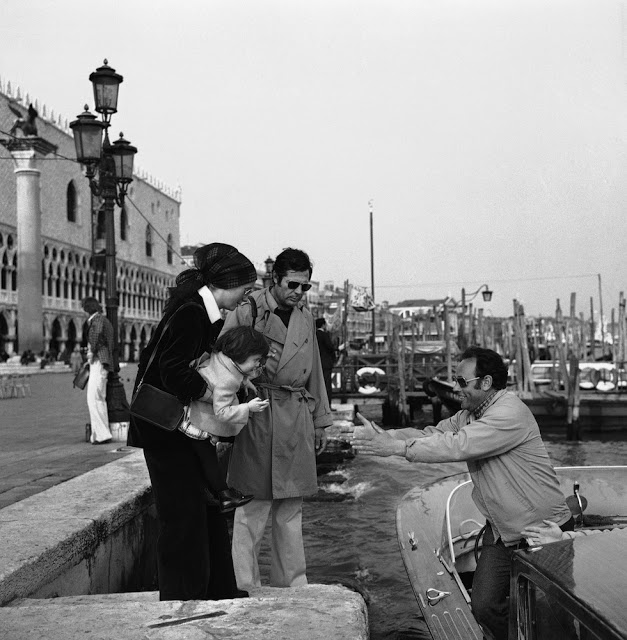
French movie star Catherine Deneuve is about to hand her baby daughter (Chiara Mastroianni) to a boatman as her steady companion, Italian movie star Marcello Mastroianni looks. Doges Palace is in background. They are in Venice for a short vacation May 8. 1974. (AP Photo)