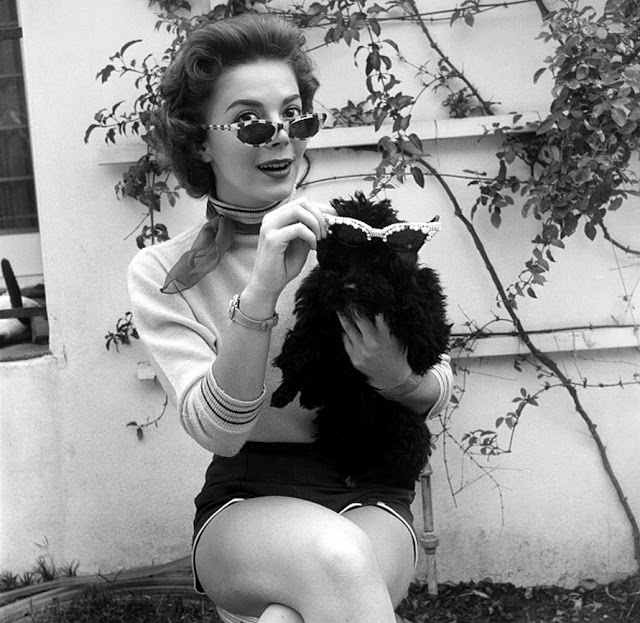
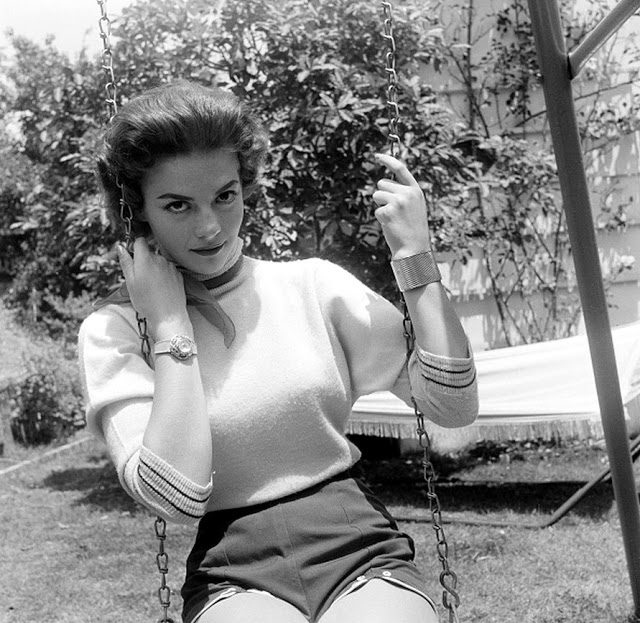
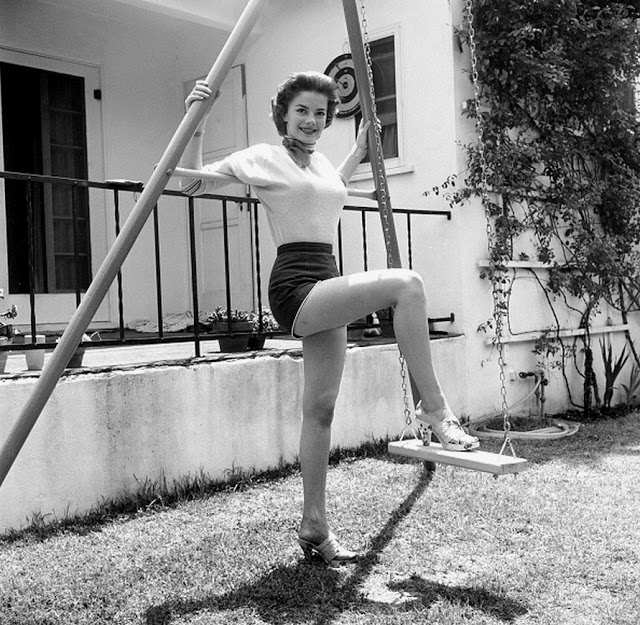
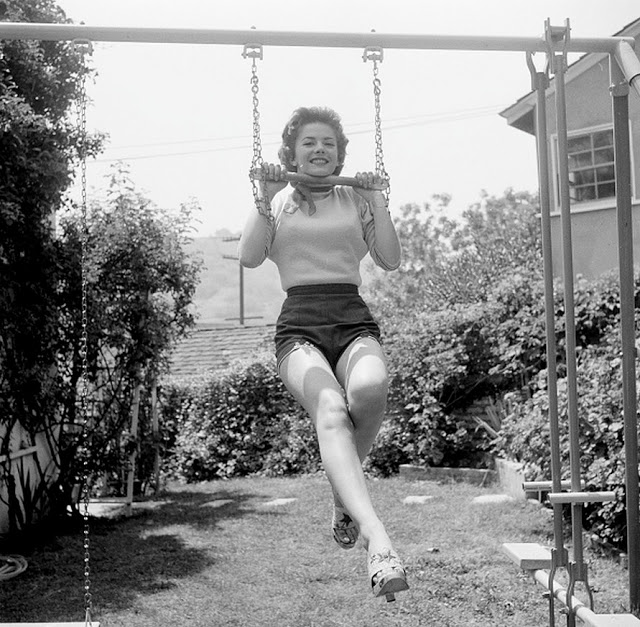
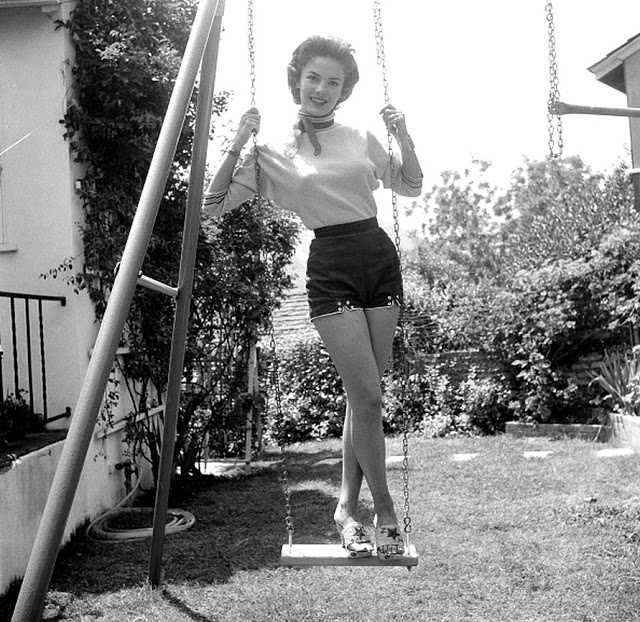
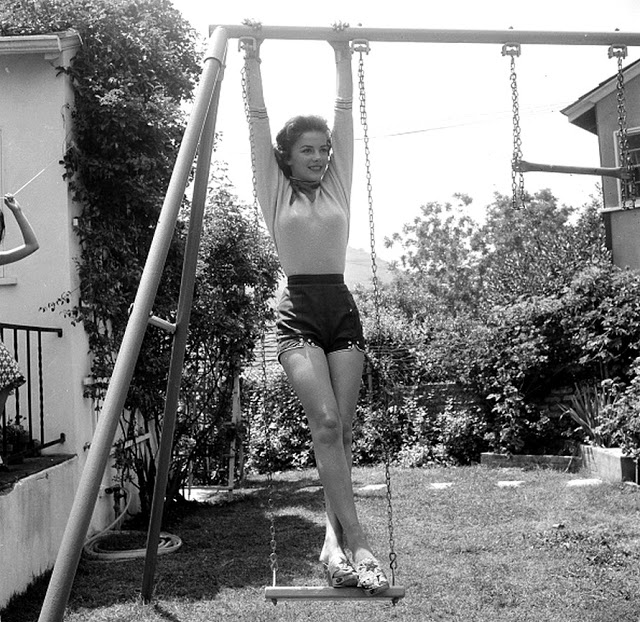
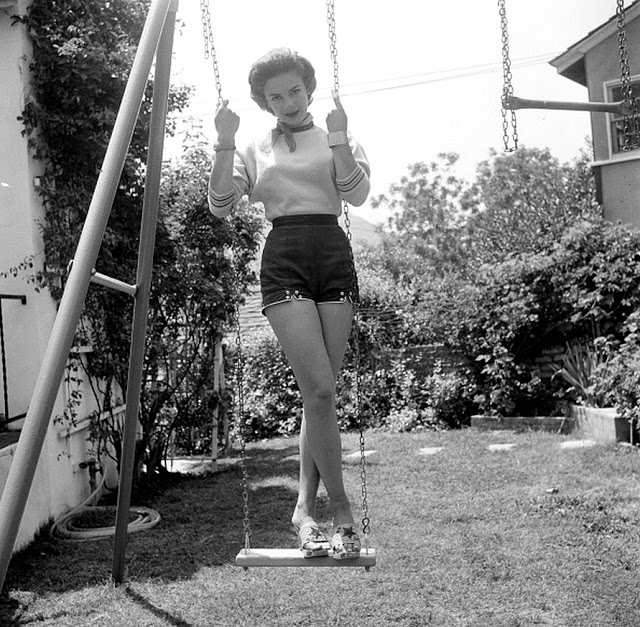
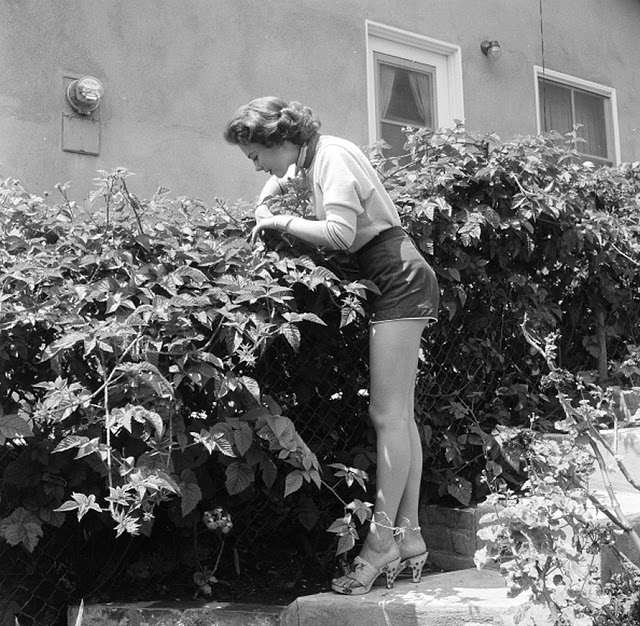
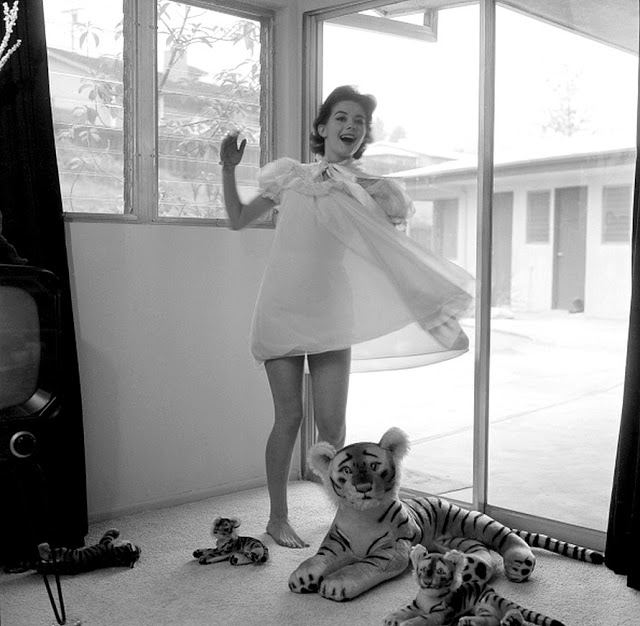
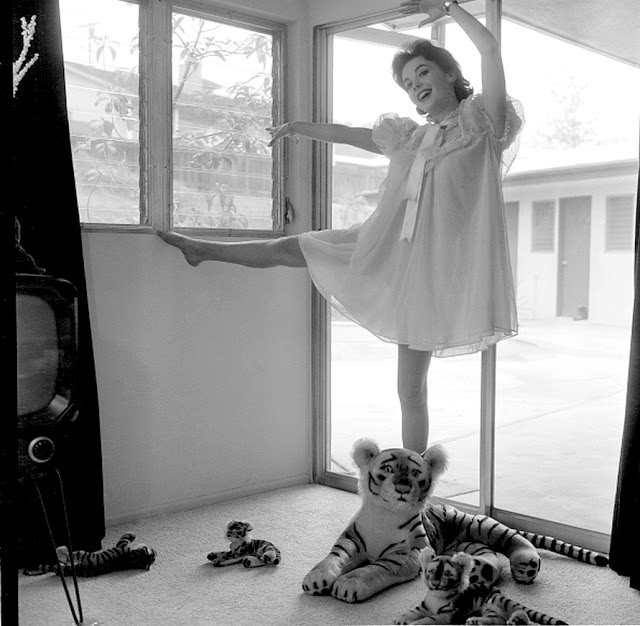
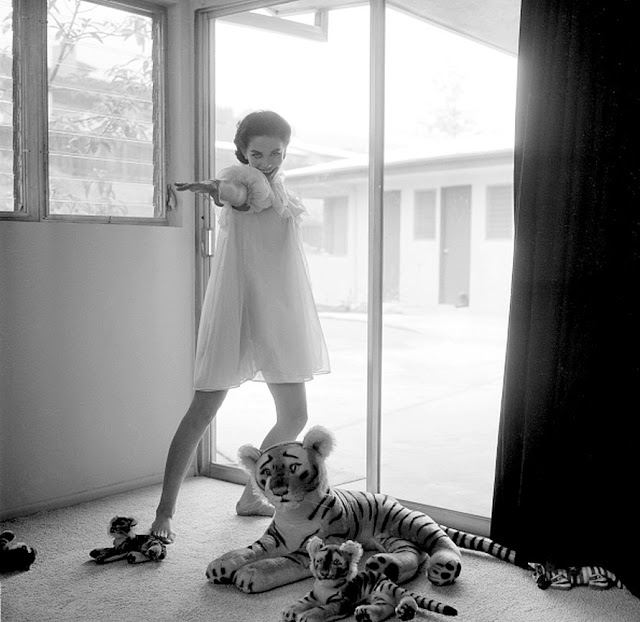
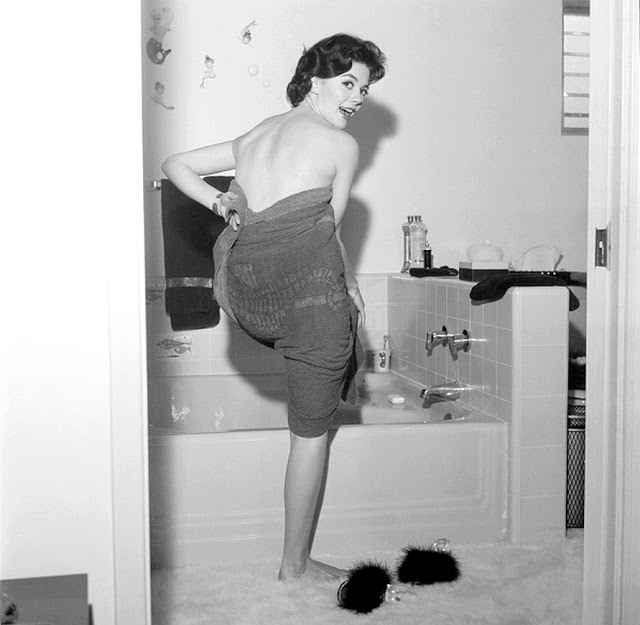
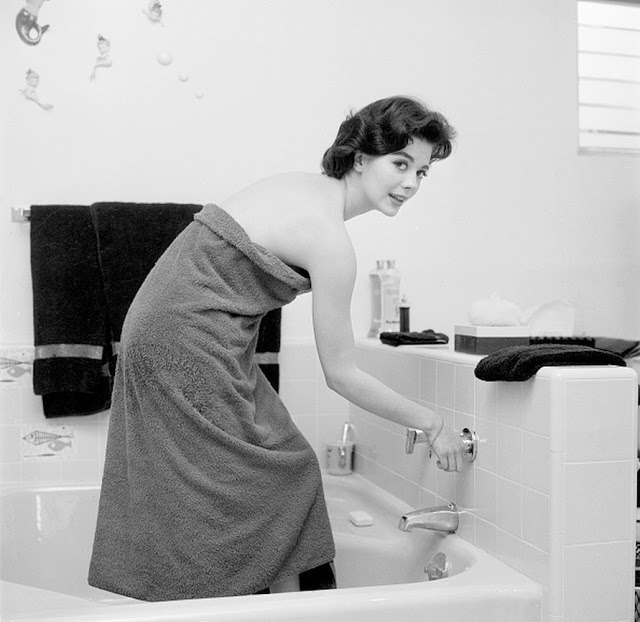
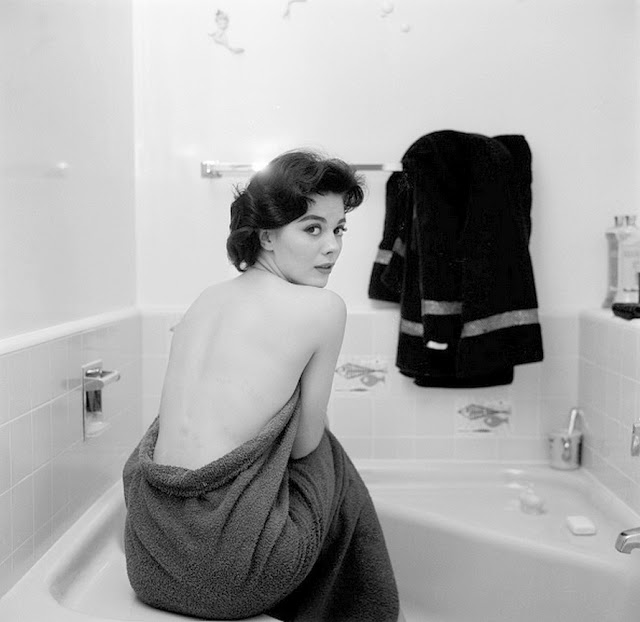
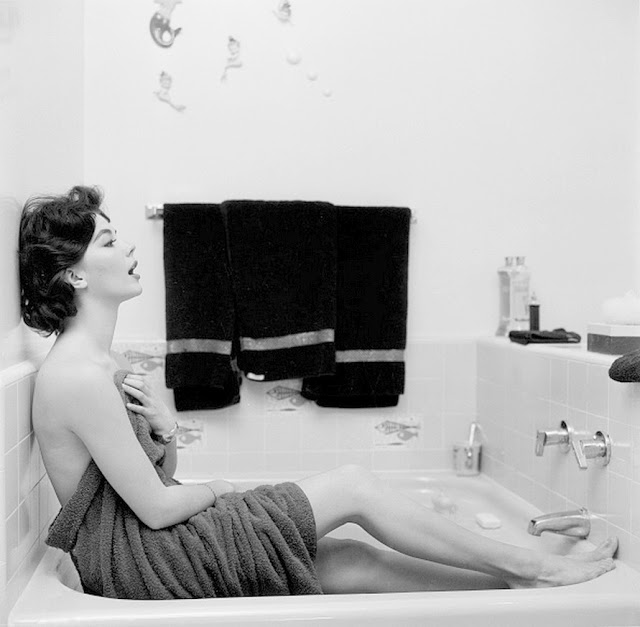
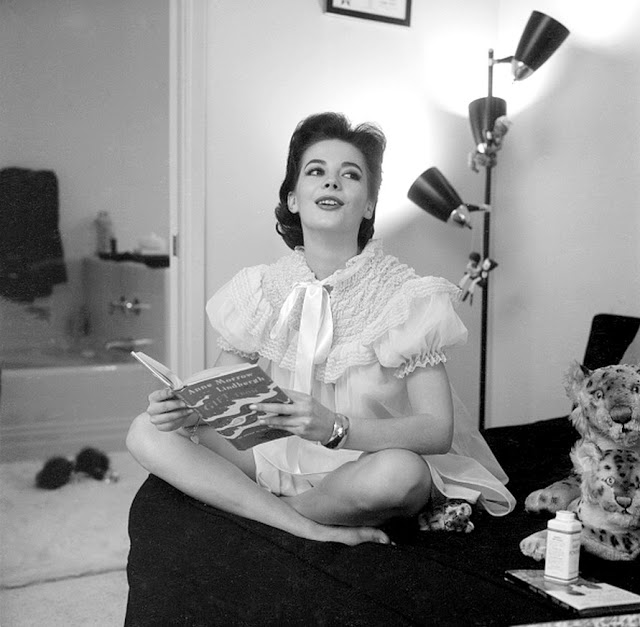
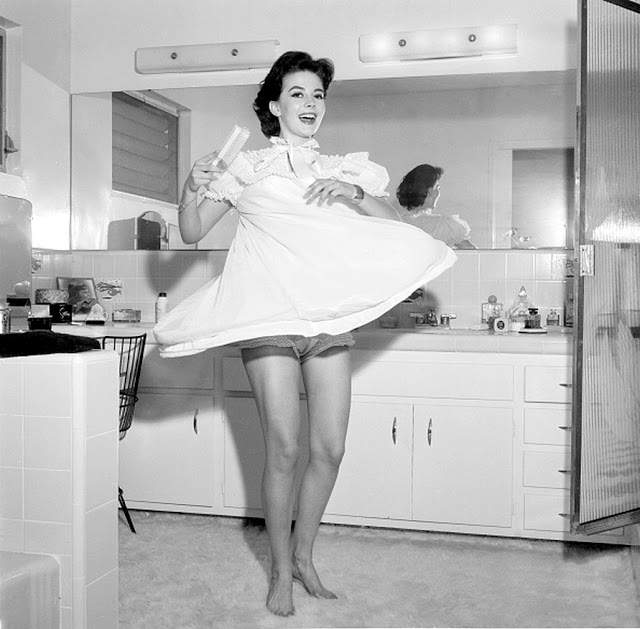
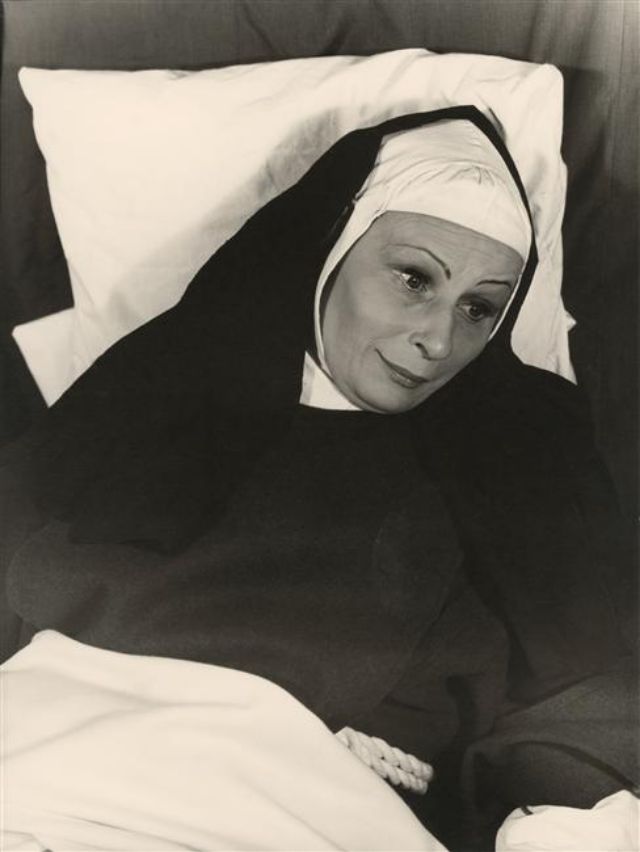
Natalie Wood (born Natalia Nikolaevna Zakharenko; July 20, 1938 – November 29, 1981) was an American actress who began her career in film as a child actor and successfully transitioned to young adult roles. She was the recipient of four Golden Globes, and three Academy Award nominations.
Born in San Francisco to Russian immigrant parents, Wood began her acting career at age 4 and was given a co-starring role at age 8 in Miracle on 34th Street (1947). As a teenager, she earned a nomination for the Academy Award for Best Supporting Actress for her performance in Rebel Without a Cause (1955), followed by a role in John Ford’s The Searchers (1956). Wood starred in the musical films West Side Story (1961) and Gypsy (1962), and she received nominations for the Academy Award for Best Actress for her performances in Splendor in the Grass (1961) and Love with the Proper Stranger (1963). Her career continued with films such as Sex and the Single Girl (1964), Inside Daisy Clover (1964), and Bob & Carol & Ted & Alice (1969).
During the 1970s, Wood began a hiatus from film and had a child with husband Robert Wagner, whom she had previously married and divorced. Wagner and Wood remarried after she divorced her second husband. She acted in only two feature films throughout the decade, but appeared slightly more often in television productions, including a remake of the film From Here to Eternity (1979) for which she received a Golden Globe Award. Wood’s films represented a “coming of age” for her and for Hollywood films in general. Critics have suggested that her cinematic career represents a portrait of modern American womanhood in transition, as she was one of the few to take both child roles and those of middle-aged characters.
Wood drowned off Santa Catalina Island on November 29, 1981, at age 43, during a holiday break from the production of Brainstorm (1983) with Christopher Walken. The events surrounding her death have been the subject of conflicting witness statements, prompting the Los Angeles County Sheriff’s Department, under the instruction of the coroner’s office, to list her cause of death as “drowning and other undetermined factors” in 2012. In 2018, Wagner was named as a person of interest in the ongoing investigation into Wood’s death.
“Bandit’s Roost,” a notorious hangout for the criminal element at 59 Mulberry Street in Little Italy, 1888. At the time, the area was among the most impoverished and crime-ridden in the entire city.
Subscribe to get access
Read more of this content when you subscribe today.
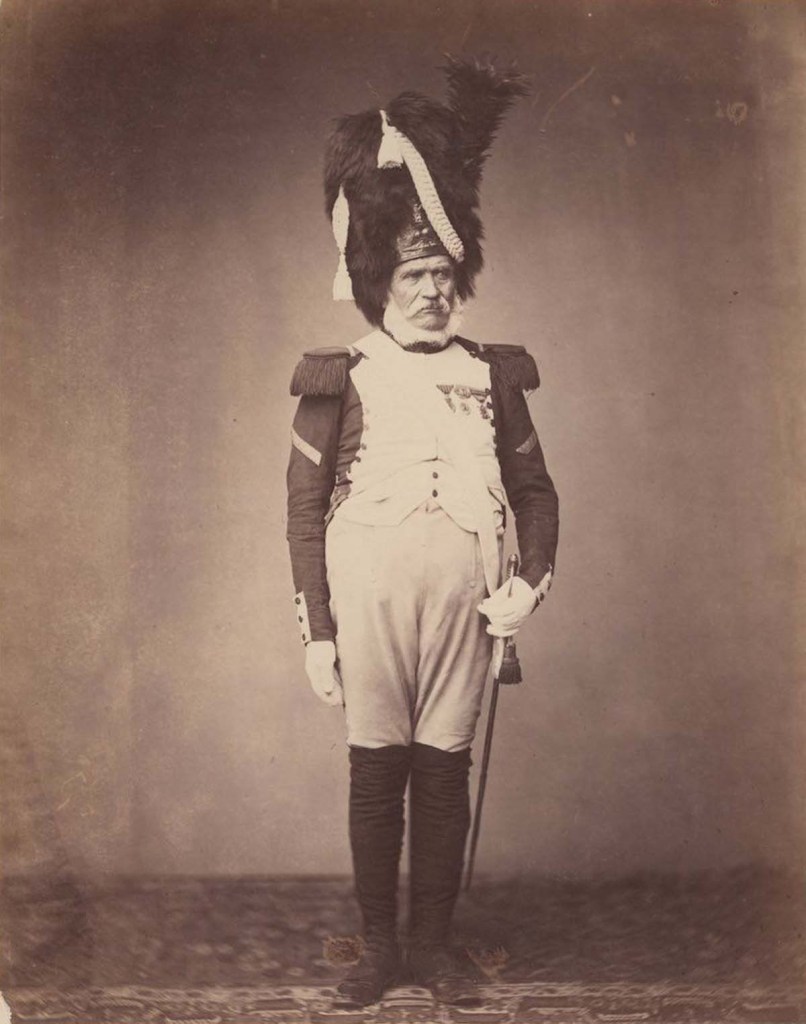
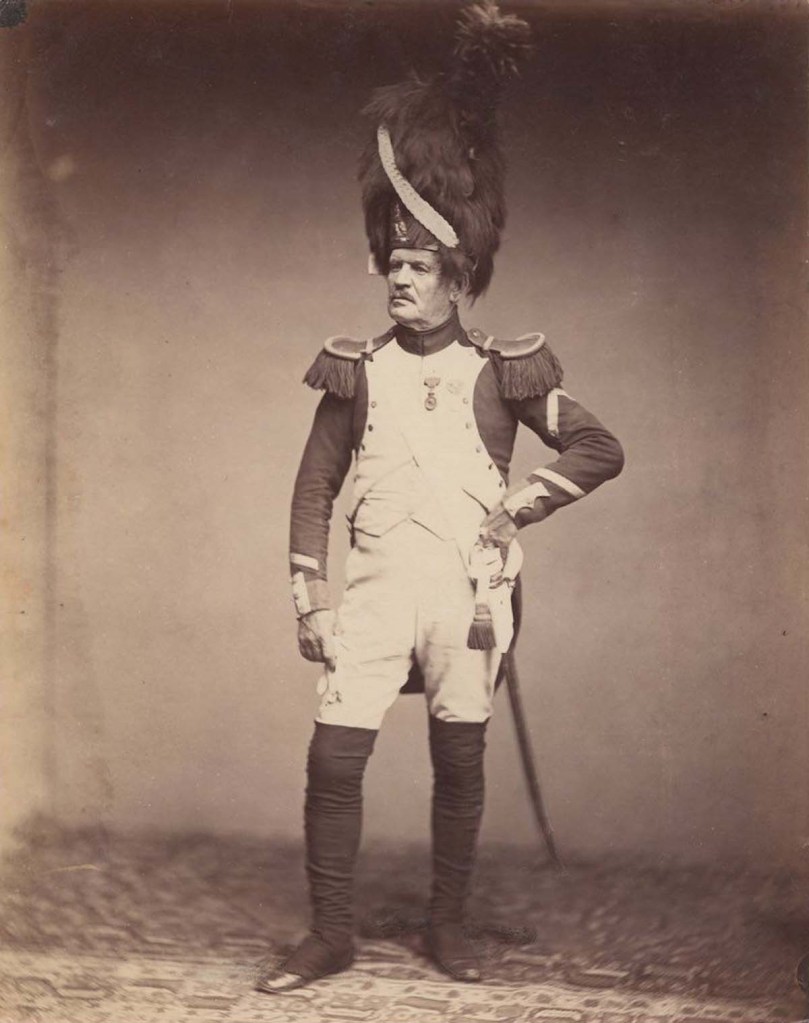
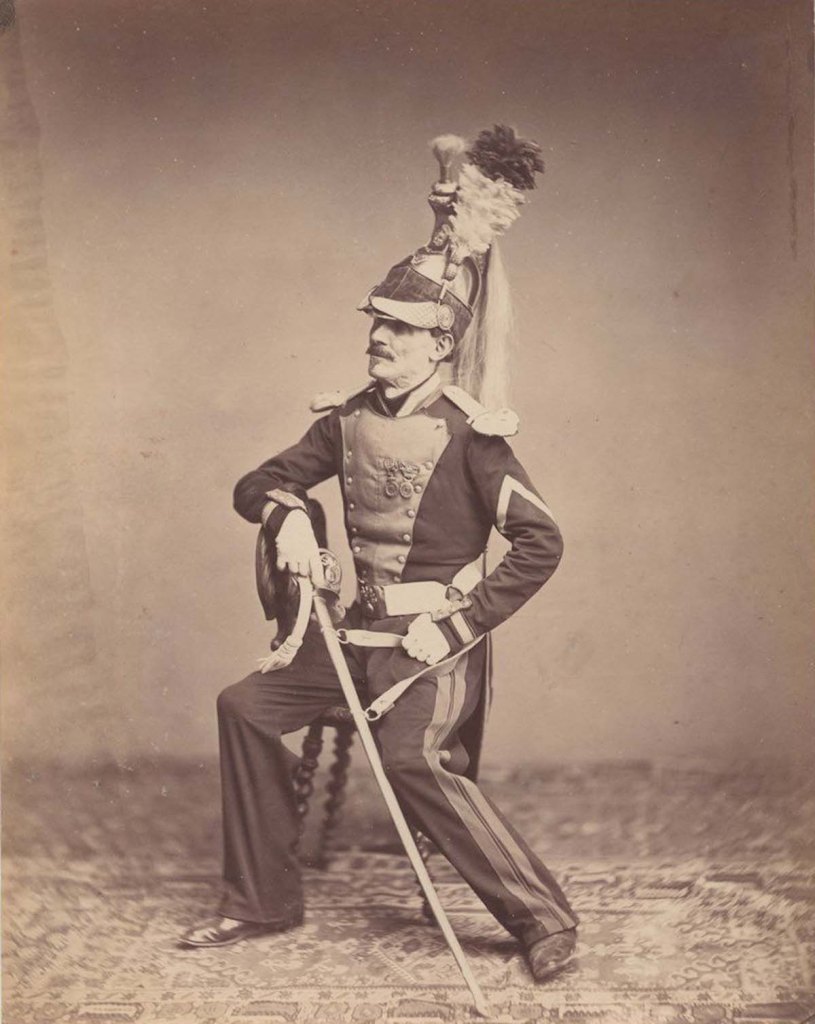
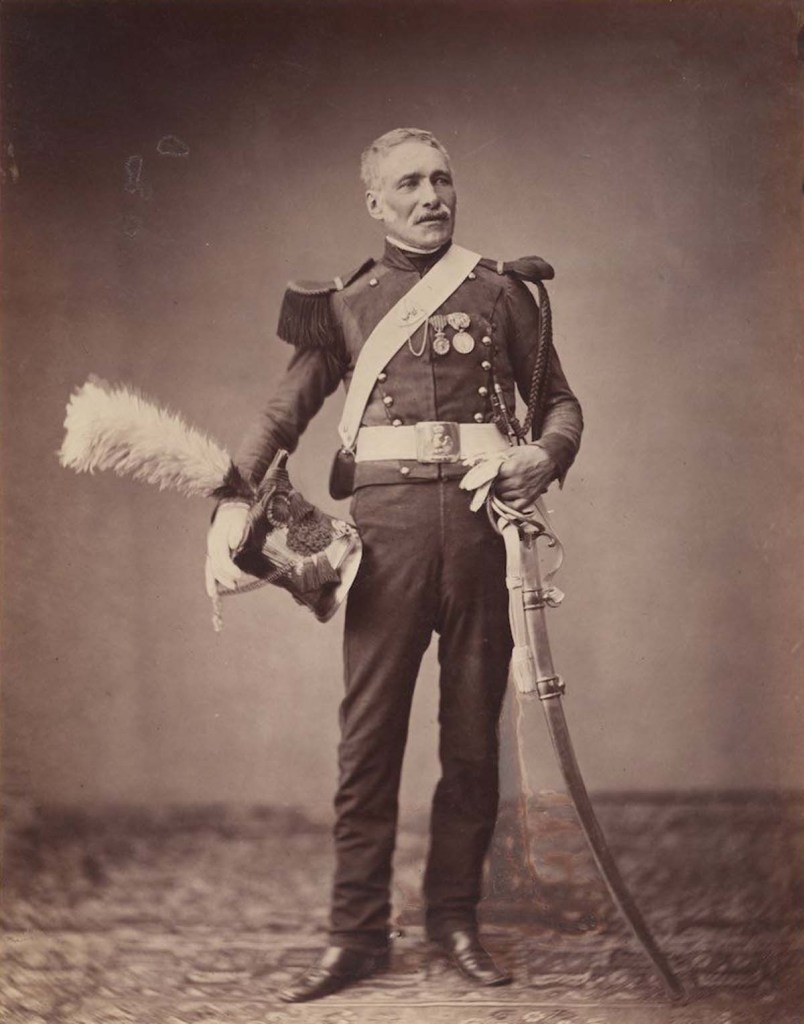
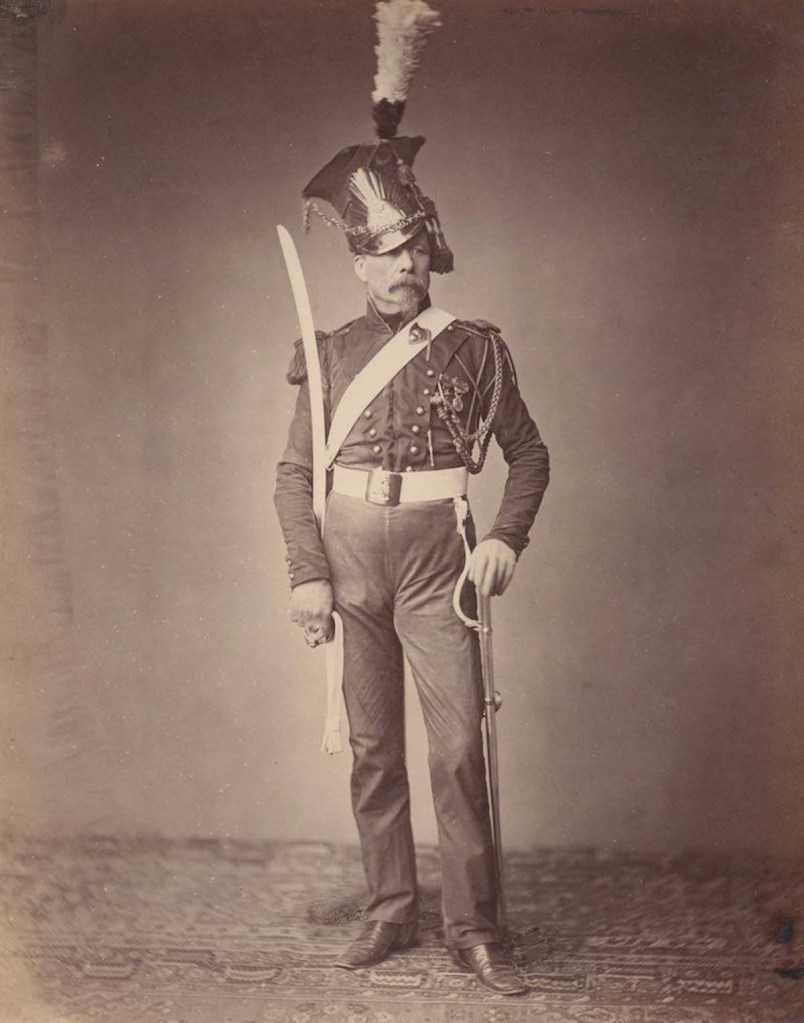
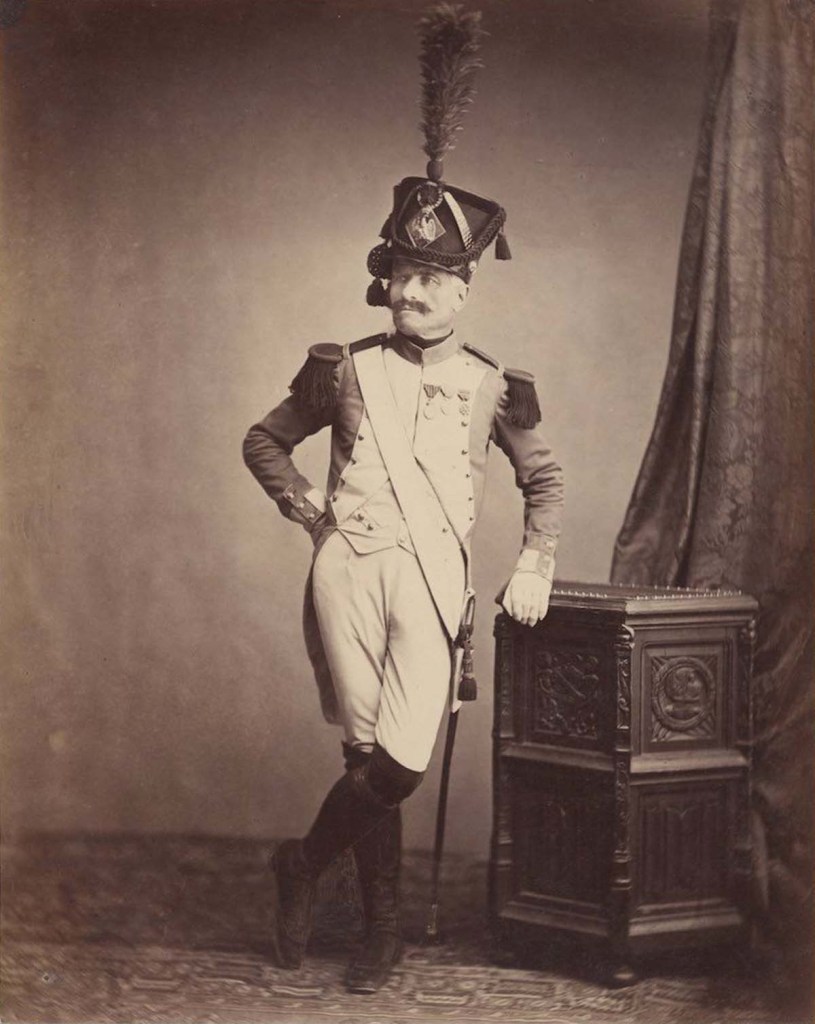
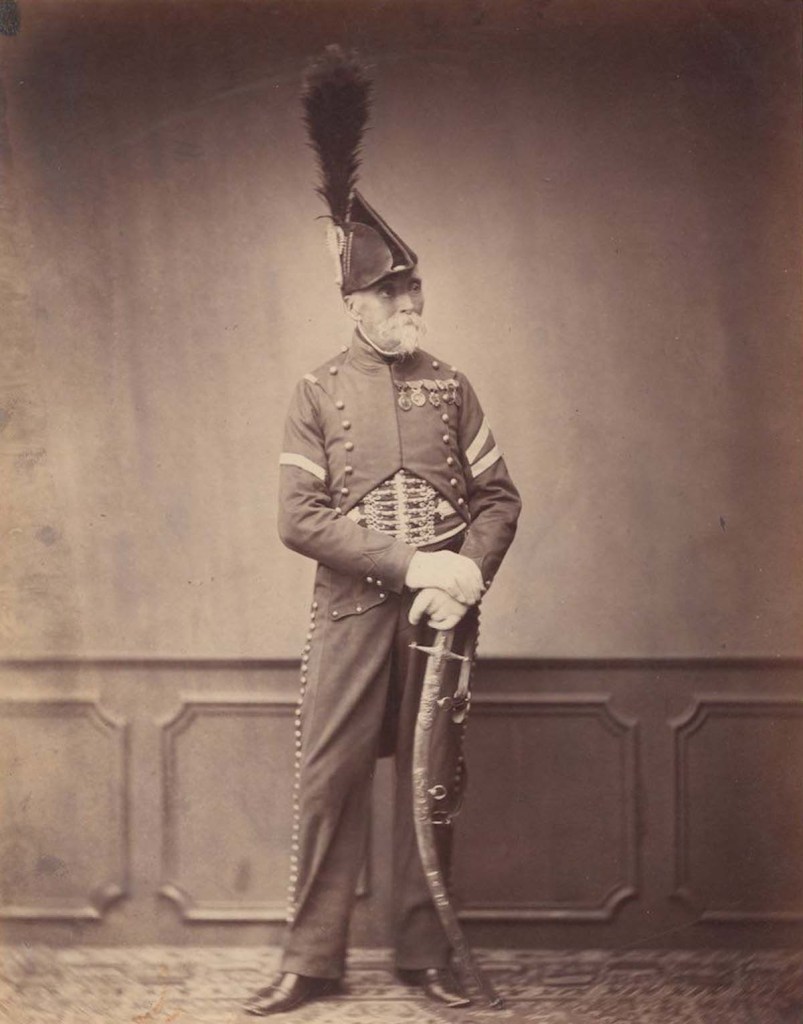
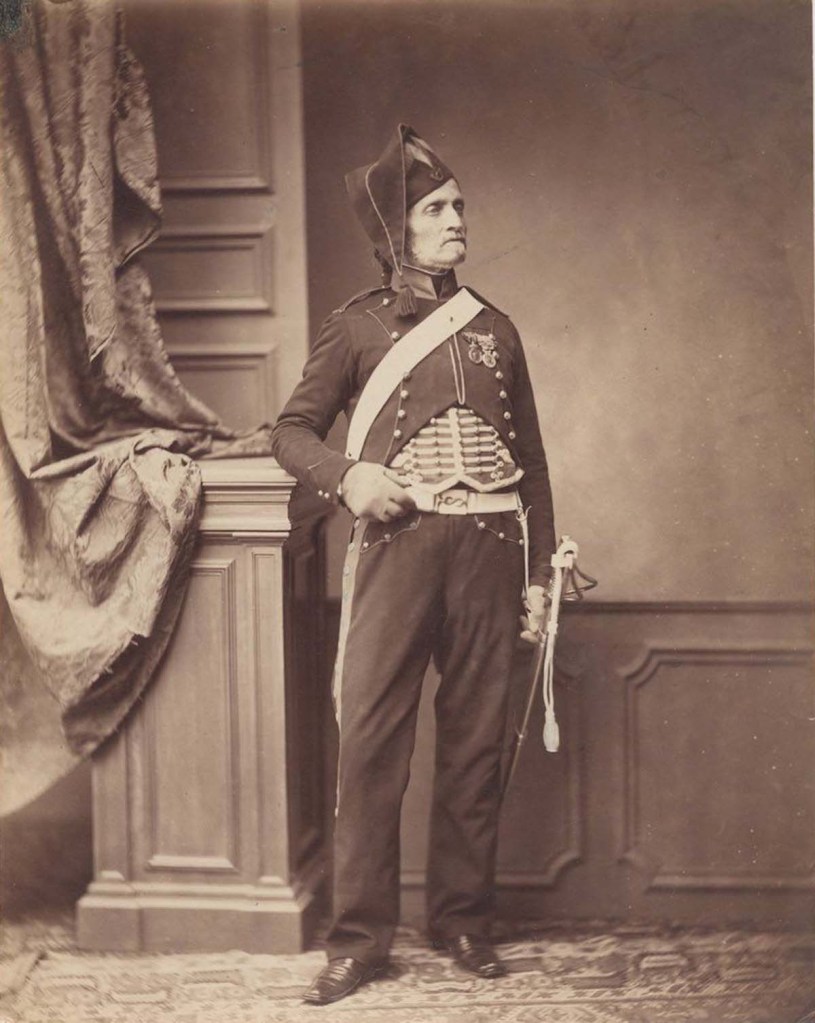
These remarkable photographs provide probably the only surviving images of veterans of the Grande Armée and the Guard actually wearing their original uniforms and insignia, although some of the uniforms have obviously been recut by tailors of the 1850’s. All the men — at this time in their 70s and 80s — are wearing the Saint Helena medals, issued in August 1857 to all veterans of the wars of the Revolution and the Empire.
The men were well into old age when the pictures were taken, and some were clearly struggling to stay still for the length of the camera’s exposure (hence the blurring on some of the pictures). But they all look impressive in their uniforms complete with epaulettes, medals, sashes and plumes.
The date of the event – May 5, 1858 – provides the reason why these men were in Paris for that was the anniversary of the death of Napoleon and every year on that date veterans gathered in the capital, as the Times of London in May 1855 noted: “The base and railings of the column of the Place Vendôme appear this day decked out with the annual offerings to the memory of the man whose statue adorns the summit. The display of garlands of immortelles, and other tributes of the kind, is greater than usual… the old soldiers of the Empire performed their usual homage yesterday at the same place”. On the same day, a funeral service was held in the chapel of the Invalides attended by Prince Jerome and other dignitaries. The entire personnel of the Invalides as well as soldiers of the First Empire were present.
Napoleon’s armies conquered much of Europe but French dominion collapsed rapidly after the disastrous invasion of Russia in 1812. The wars revolutionized European armies and played out on an unprecedented scale, mainly owing to the application of modern mass conscription. The Napoleonic wars resulted in the dissolution of the Holy Roman Empire and sowed the seeds of nationalism that led to the consolidations of Germany and Italy later in the century. The global Spanish Empire began to unravel as French occupation of Spain weakened Spain’s hold over its colonies, providing an opening for nationalist revolutions in Spanish America. As a result of the Napoleonic wars and the losses of the other great powers, the British Empire became the foremost world power for the next century.
Historians have debated for centuries how Napoleon Bonaparte managed to turn the same men who once overthrew a king in the name of liberté, égalité and fraternité into a formidable fighting force devoted to an emperor. But that’s precisely what he did. As he swept through Italy, Spain and Egypt, his army grew rapidly and not just with French troops. Polish, German, Dutch and Italian soldiers took up arms under Napoleon’s banner. In 1805, in a French village facing the English Channel, Napoleon christened his massive multinational army the Grande Armée.
Originally, the diminutive despot from Corsica planned to use the force to invade Britain but that ultimately never happened. Instead, he directed his force to take out some of his continental rivals. The Grande Armée destroyed the Holy Roman Empire at Austerlitz. After it forced the Austrians into submission following the Battle of Wagram in 1809, the Grande Armée set out for Napoleon’s disastrous campaign in Russia. As it marched towards Moscow in 1812, its ranks swelled to over a half million troops. As it retreated, it was reduced to less than 120,000.
Napoleon and the Grande Armée were finally defeated in 1815 during the Battle of Waterloo. And though Napoleon was ignominiously exiled to Elba, he, and his army, continued to be revered by the French. On the anniversary of his death, May 5th, veterans of the Napoleonic wars would pay homage to the Emperor by marching in full uniform through Paris’ Place Vendôme.
In 1858, someone took portraits of the veterans using that newfangled technology called photography. The men were well into old age when the pictures were taken, and some were clearly struggling to stay still for the length of the camera’s exposure. But they all look impressive in their uniforms complete with epaulettes, medals, sashes and plumes. You can see some of the images below.
Grenadier Burg of the 24th Regiment of the Guard of 1815.Monsieur Maire of the 7th Hussars circa 1809-1815.Monsieur Loria of the 24th Mounted Chasseur Regiment and a Chevalier of the Legion of Honour, who appears to have lost his right eye.Quartermaster Sergeant Delignon in the uniform of a Mounted Chasseur of the Guard.Sergeant Taria in the uniform of the Grenadiere de la Garde of 1809-1815.Monsieur Ducel, a Mameluke de la Garde.Monsieur Mauban of the 8th Dragoon Regiment of 1815.Monsieur Lefebre, a sergeant in the 2nd Regiment of Engineers in 1815.Pictured in his grand hussar uniform is Monsieur Moret of the 2nd Regiment, 1814-1815.Monsiuer Dreuse of the 2nd Light Horse Lancers of the Guard.Monsieur Verlinde of the 2nd Lancers.Monsieur Vitry of the Departmental Guard.Monsieur Dupont who was fourier for the 1st Hussar.Quartermaster Fabry of the 1st Hussars.Monsieur Schmit of the 2nd Mounted Chasseur Regiment.
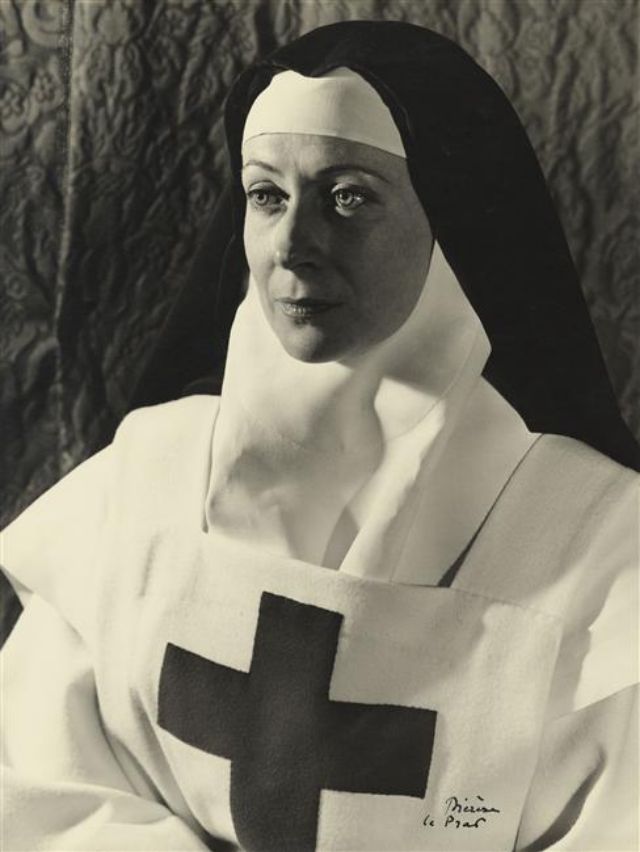
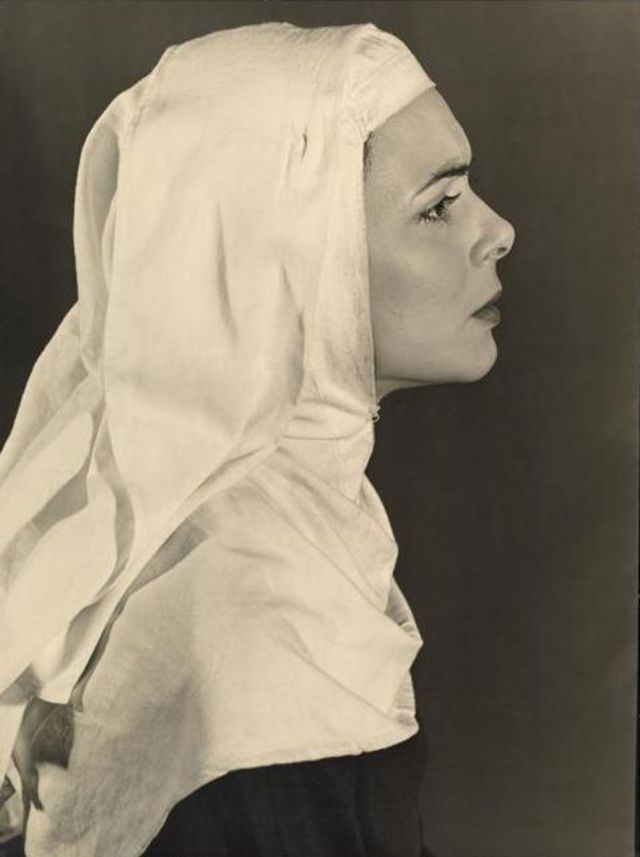
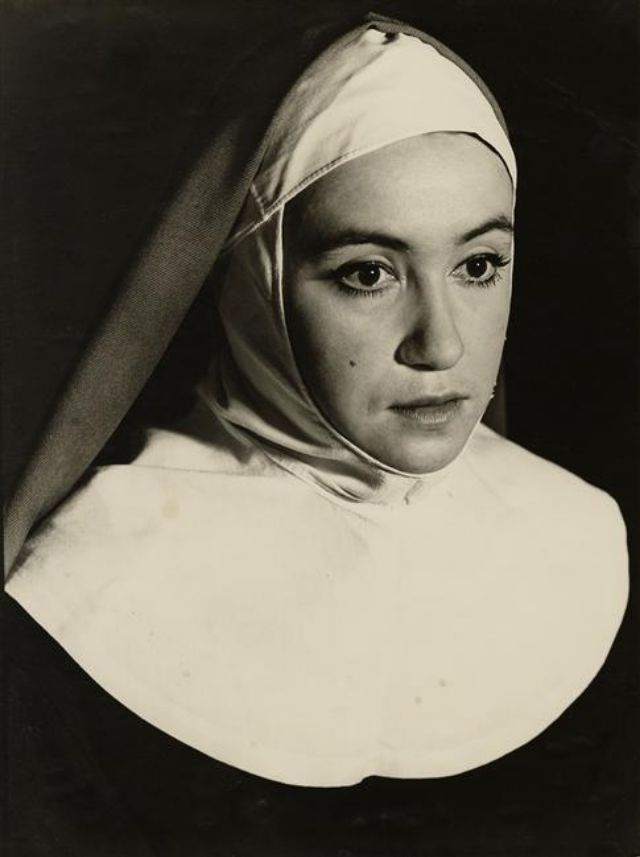
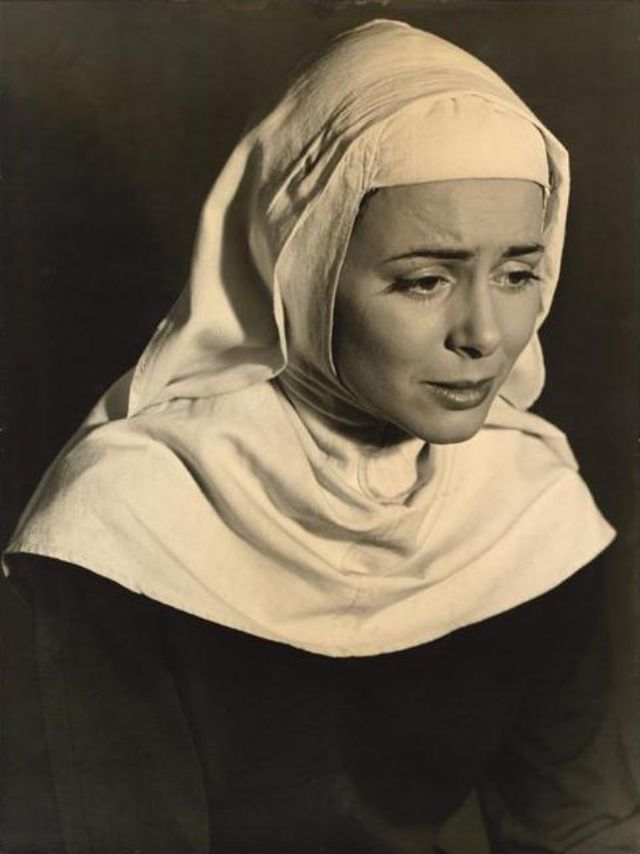
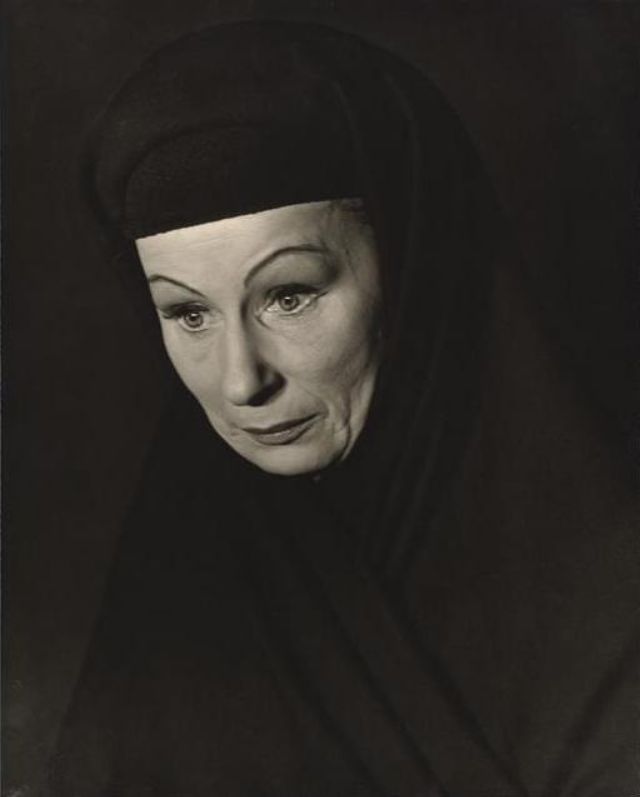
Though brought up in a family mostly interested in scientific studies, French photographer Thérèse Le Prat, born Thérèse Cahen in 1895 in Pantin, was taught literature and music.
When she divorced the publisher Guillaume Le Prat in the early 1930s, he offered her a really good camera, and she started photography. Thanks to her dawning talent and to her knowledge of several languages, she was employed by the Compagnie des Messageries maritimes as a reporter, mainly in Asia, Oceania and Africa.
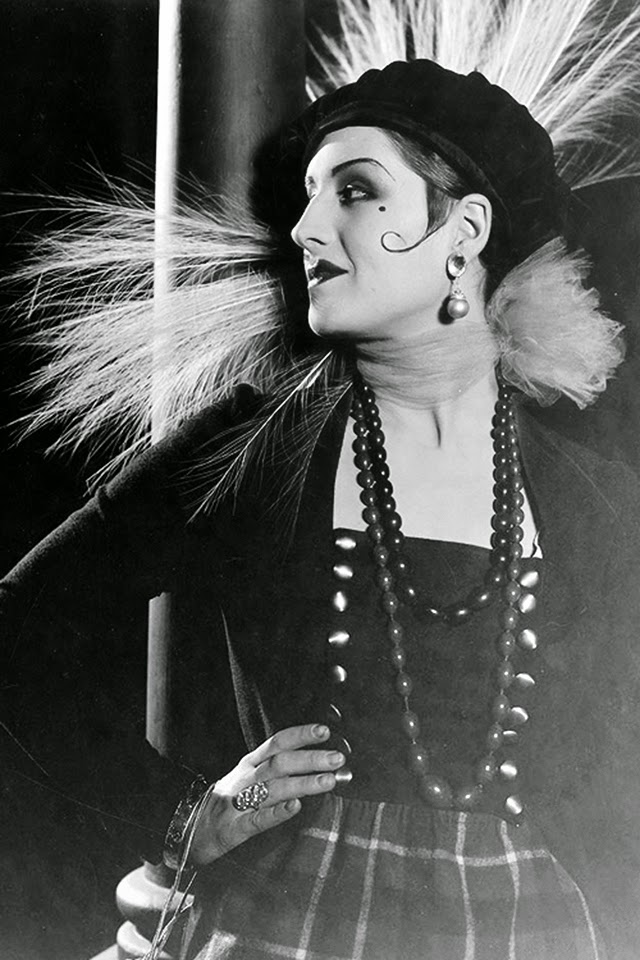
After experimenting with landscape and portrait photography, Thérèse Le Prat concentrated on photographing faces. At first, she was photographing stage actors. But then her work turned more abstract – she had actors perform for her camera, at first with masks, then with makeup alone. In exploring the face, Thérèse Le Prat looked to reveal extremes of human depth and emotion. And she added words to the mix: her later books include both prose and poetry to push the exploration further.
She continued her most expressionistic work with diverse faces until her death, after which the photographs were published in En Votre Gravité, Visages (1966).
In the seven decades since the Holocaust, thunderstruck scholars and laypeople alike have consistently asked themselves how it could have happened. What far too few realize, however, is that just two and half decades before, something like it already had.
The Lead Up To The Armenian Genocide
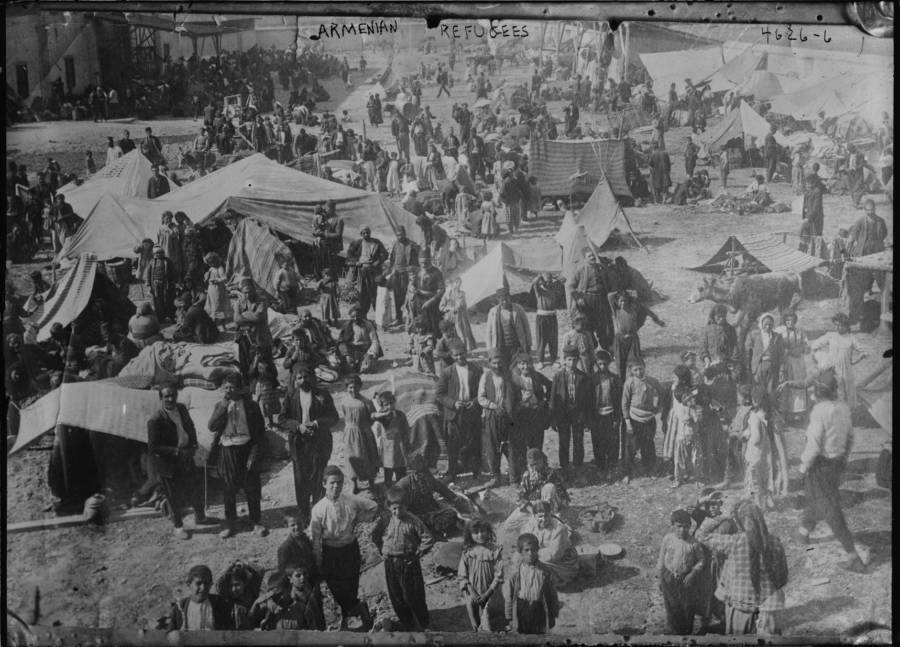
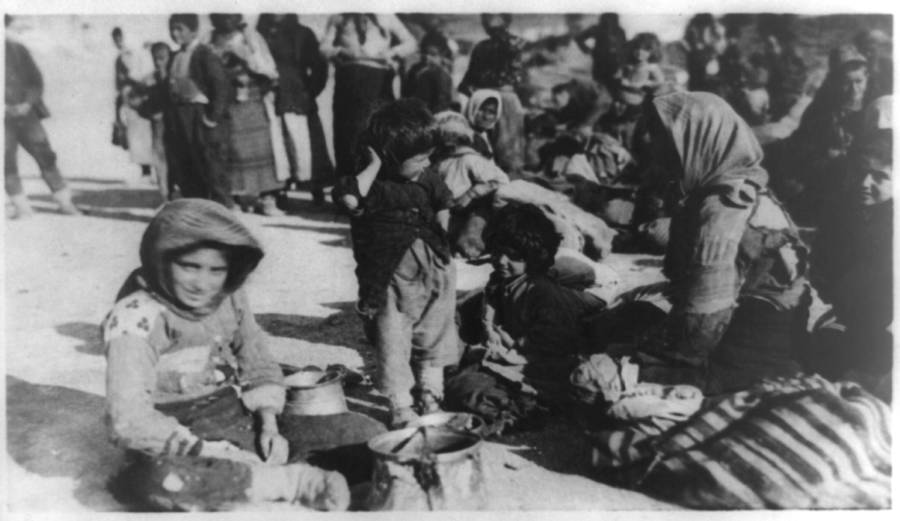
Between 1915 and 1923, the Ottoman and Turkish governments systematically exterminated approximately 1.5 million Armenians, leaving hundreds of thousands more homeless and stateless, and altogether virtually wiping out the more than 2 million Armenians present in the Ottoman Empire in 1915.
Things came to a head in that year but had been building for decades beforehand, with the majority Muslim government routinely marginalizing the Christian Armenians. By the turn of the 20th century, with the Ottoman Empire in economic and political decline, many of its impoverished Muslims began looking at the relatively well-off Armenians with even greater scorn.
On April 24, 1915, the trouble began when Ottoman authorities rounded up and ultimately killed about 250 Armenian intellectuals and community leaders living in present-day Turkey. A month later, the government passed the Temporary Law of Deportation (“Tehcir Law”), giving them the power to forcibly remove their Armenian population.
However, most weren’t merely removed.
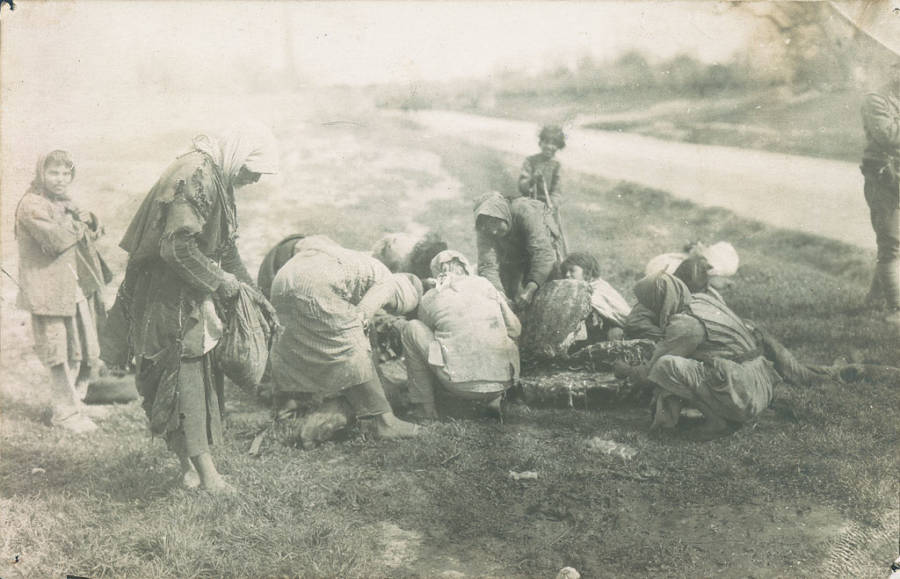
Many were stripped of their possessions then marched into the surrounding desert and left there to die without food, water, or shelter. Many others were slaughtered in mass burnings, drownings, and gassings right there in their villages. Others still were transported via railway to one of about two dozen concentration camps in the empire’s eastern region, where they were starved, poisoned, or otherwise dispatched en masse.
It was the first modern genocide in world history.
In fact, in 1943, in the midst of the Holocaust, Polish legal scholar Raphael Lemkin coined the very word genocide to describe what the Ottomans had done to the Armenians.
Three years later, in response to the Holocaust, the United Nations affirmed that genocide was a crime under international law.
A Lack Of International Recognition
However, in the six decades since, officially affirming the Armenian Genocide as a genocide has proven extraordinarily thorny. The UN did officially recognize the genocide in 1985, with other organizations like the European Parliament and the International Association of Genocide Scholars joining in not long after. Most countries, however, have not followed suit.
Today, just 28 of the world’s 195 independent states recognize the genocide, with the United States and the United Kingdom among those that do not.
Now, it’s not that the vast majority of the world’s countries dispute the factuality of the genocide, it’s that they don’t want to harm diplomatic relations with the one main country that does: Turkey.
The modern-day successor of the government that committed the genocide, Turkey remains completely unwilling to recognize it as such, insisting instead that the events remain justifiably non-genocidal given the passage of the Tehcir Law and considering the context of World War I.
Today, 101 years later, Turkey remains steadfast. Just this summer, for example, Turkey officially denounced Germany’s resolution to recognize the genocide as “null and void” and temporarily removed their ambassador from the country.
Of course, Germany claimed to have made their resolution largely to admit their own culpability in the genocide as a wartime ally of the Ottoman Empire. And it’s only fitting that Germany would take such a step, given that officially and fully taking responsibility for the Holocaust has become an essential part of Germany’s global geopolitics since the end of World War II.
But when it comes to accepting responsibility — and thus moving on — the Armenian Genocide remains an historical orphan.
And although Turkey won’t accept responsibility for it, many other countries won’t recognize it, and far more people aren’t even aware of it, the Armenian Genocide remains among the most indisputably tragic episodes in modern history. The heartrending photos above are ample proof of that.
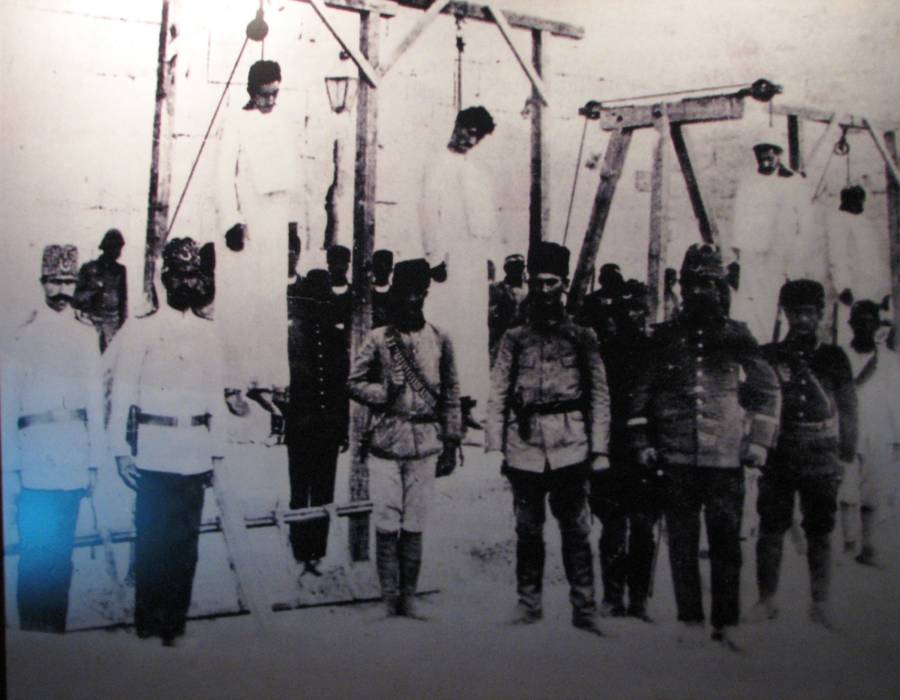
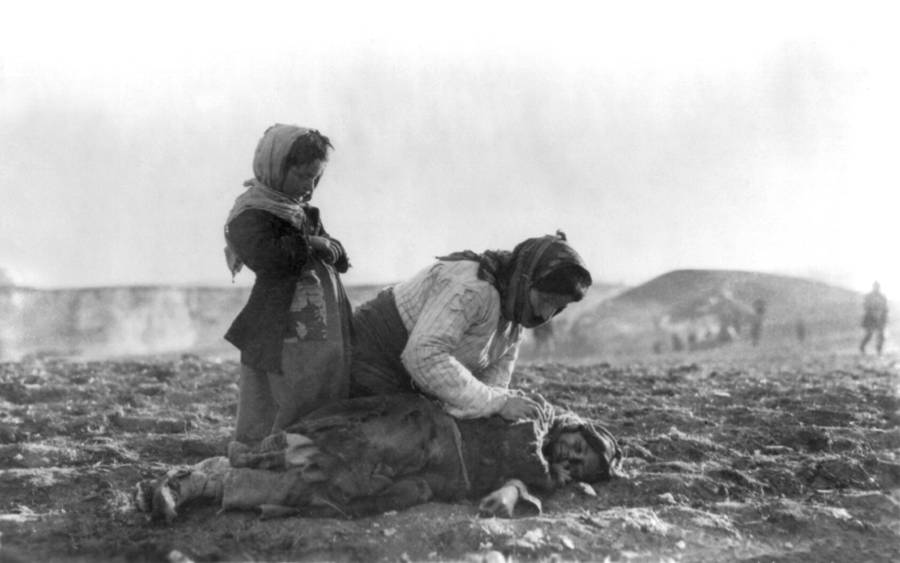
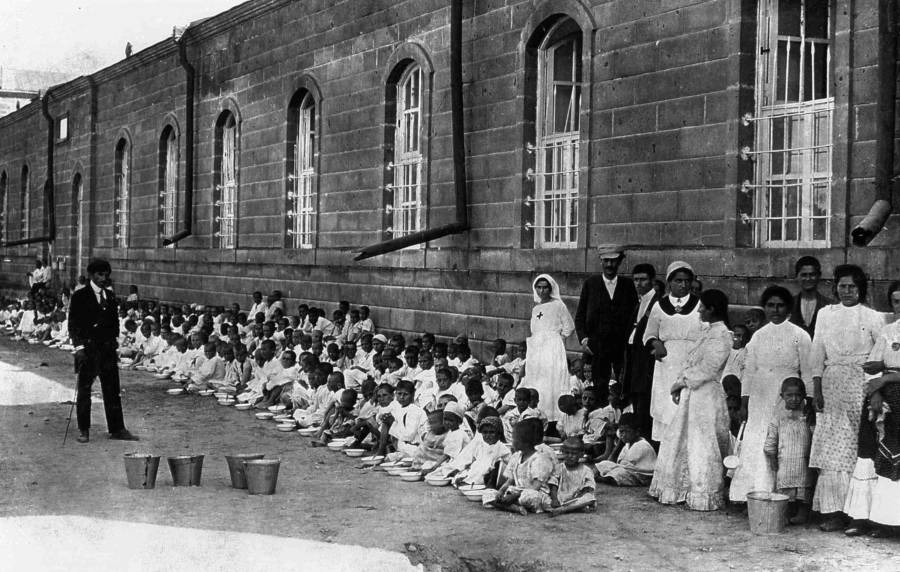
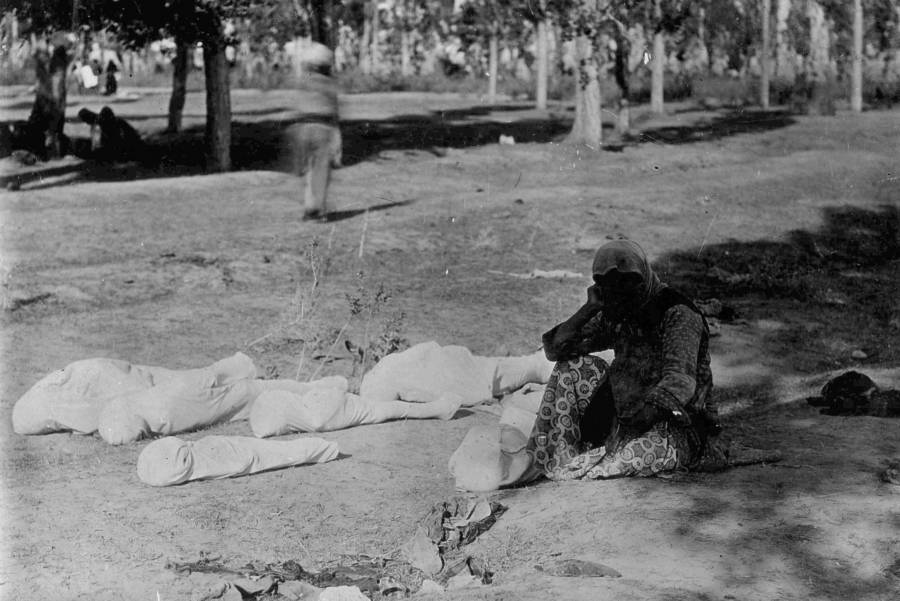
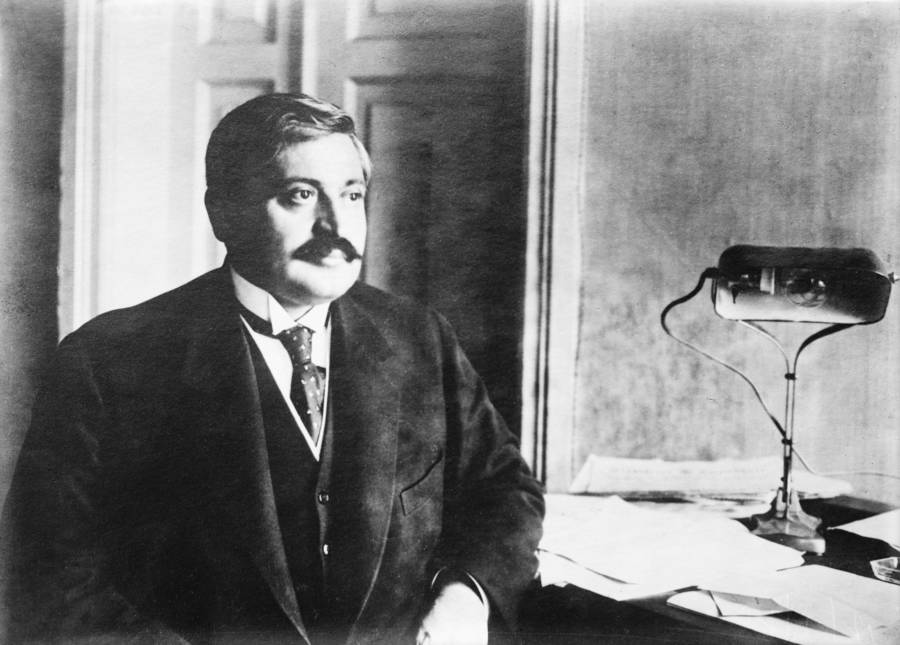
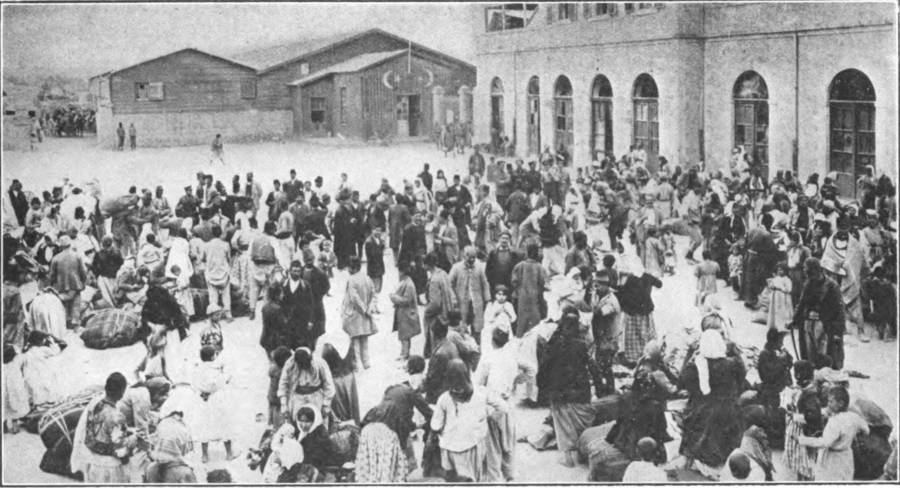
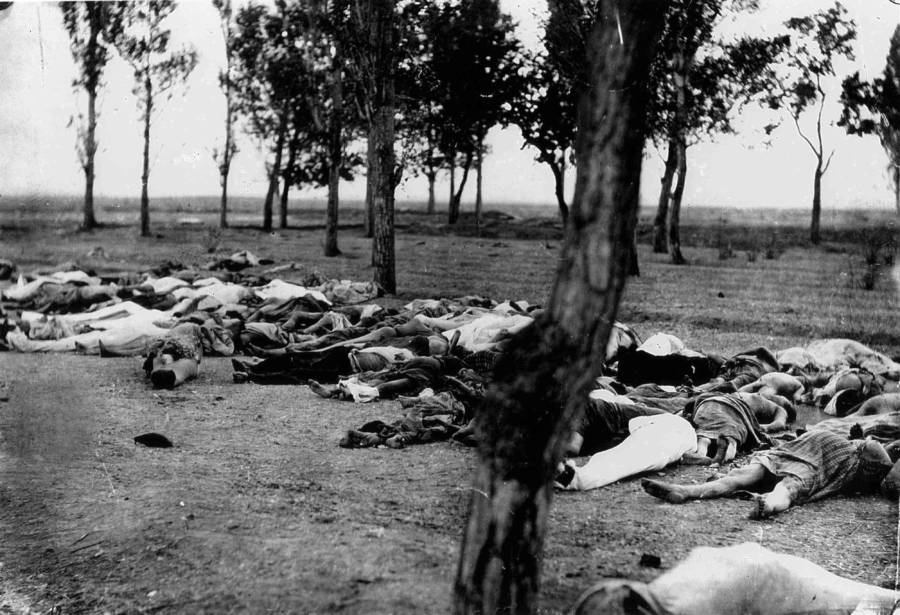
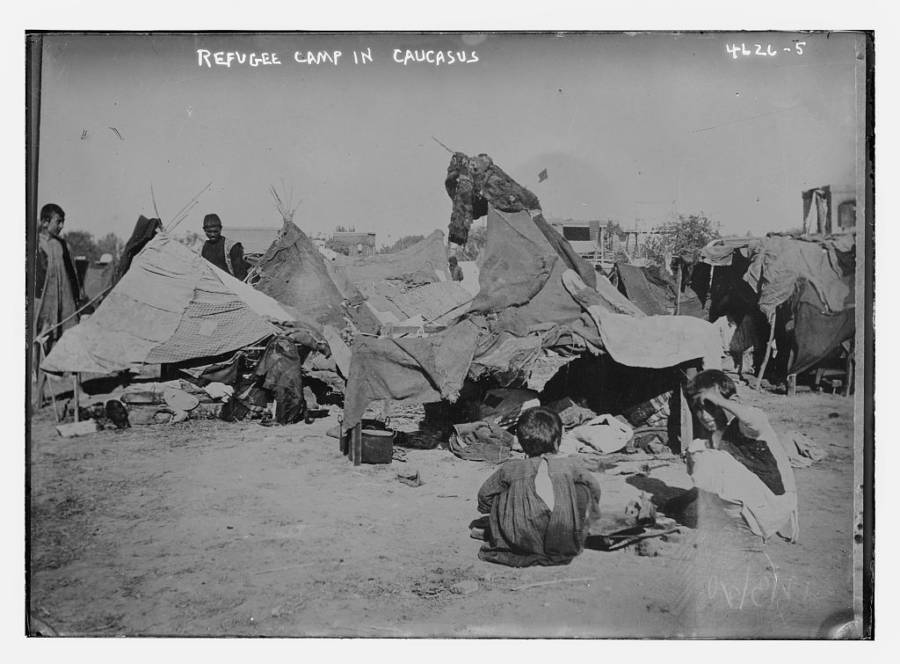
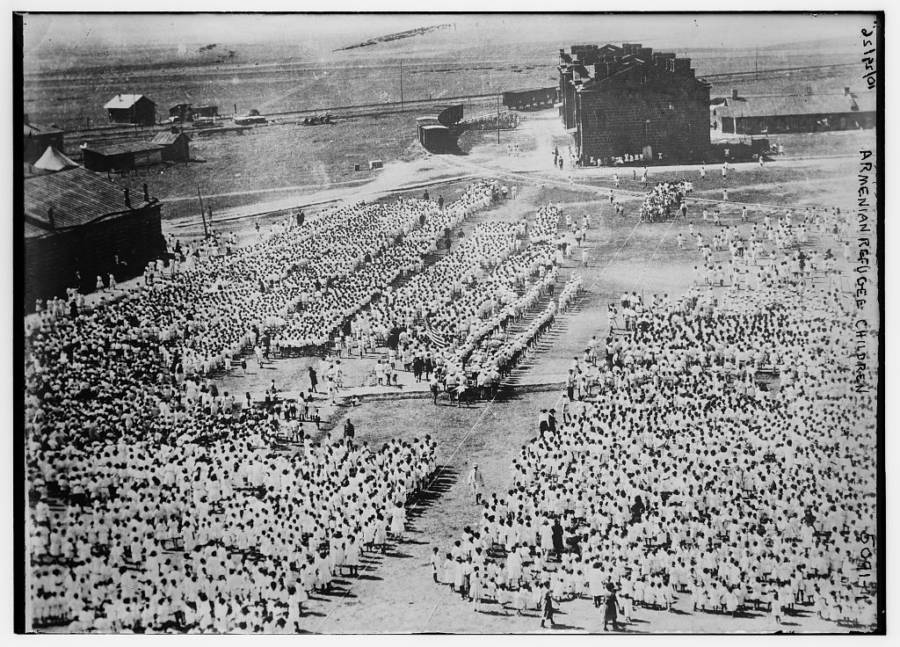
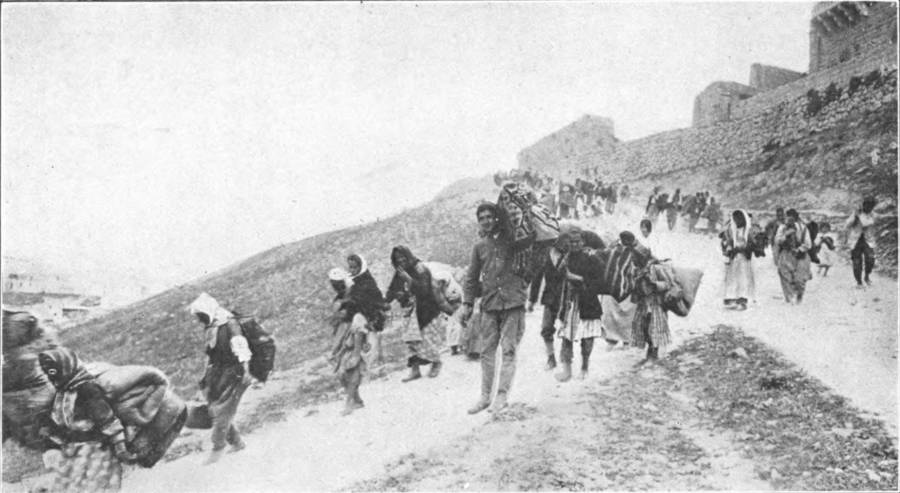
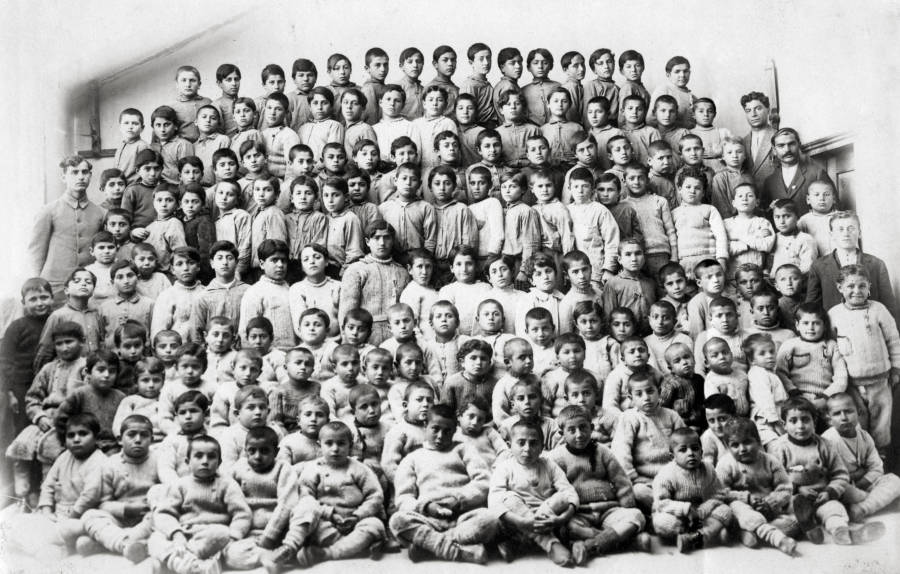
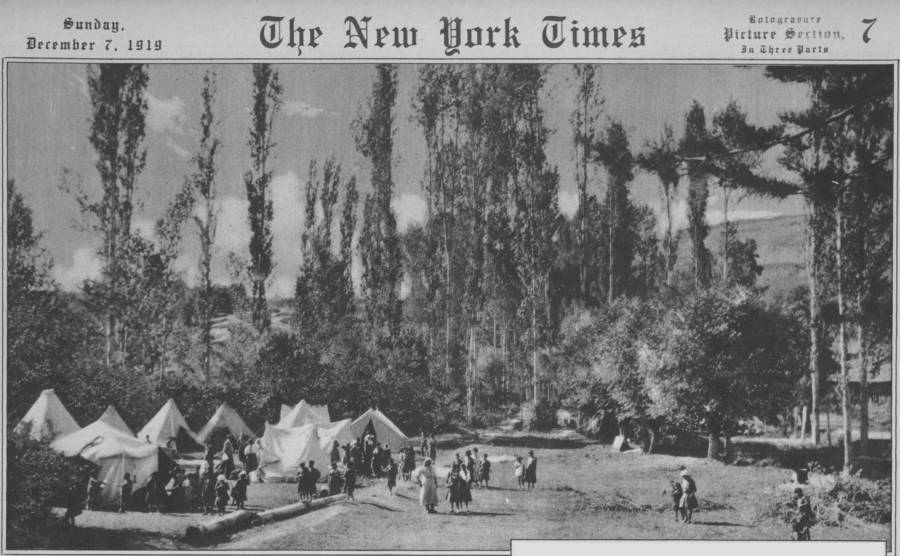
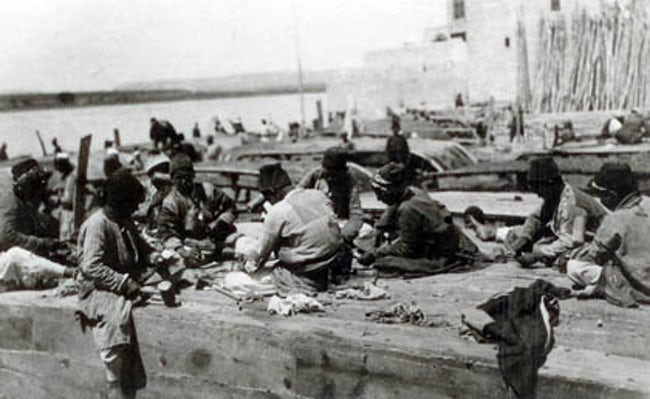
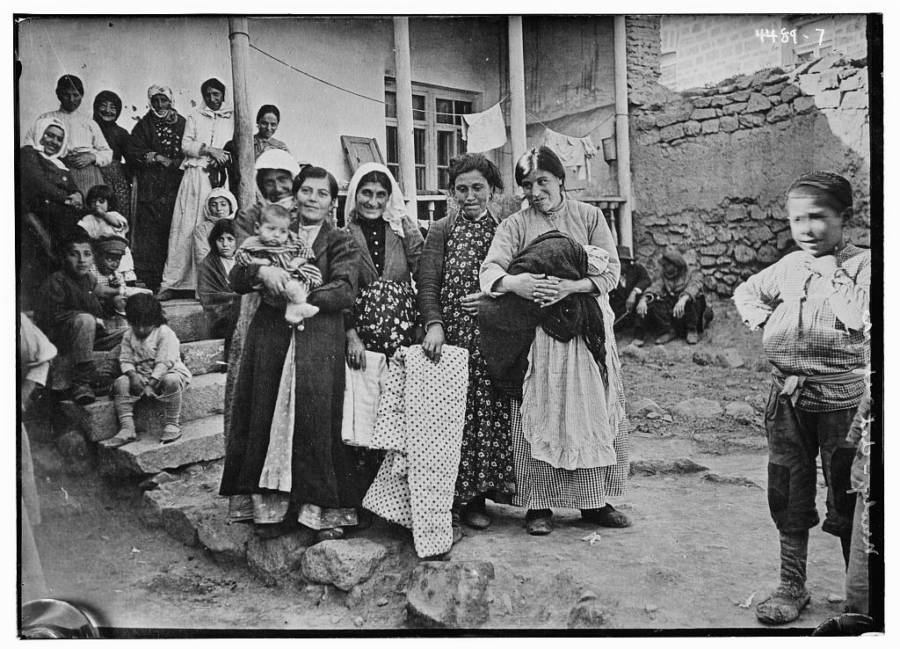
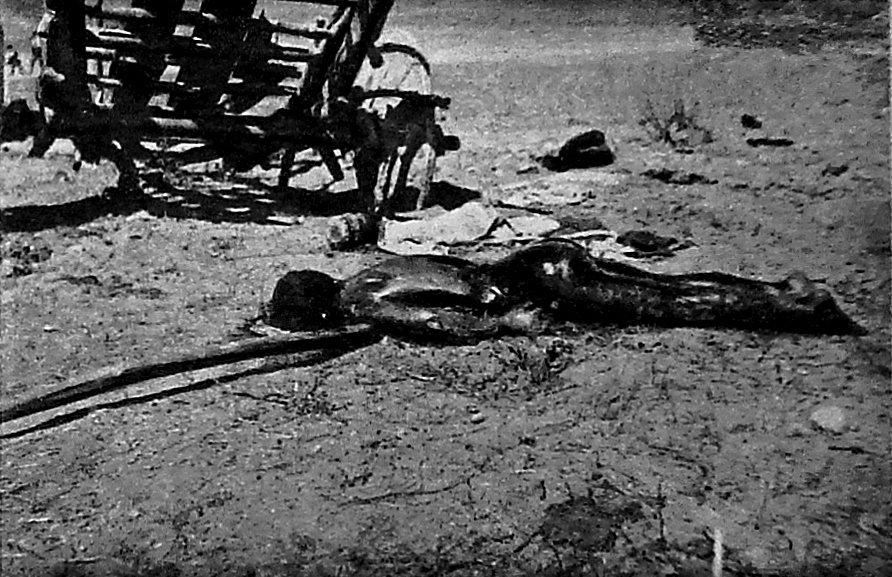
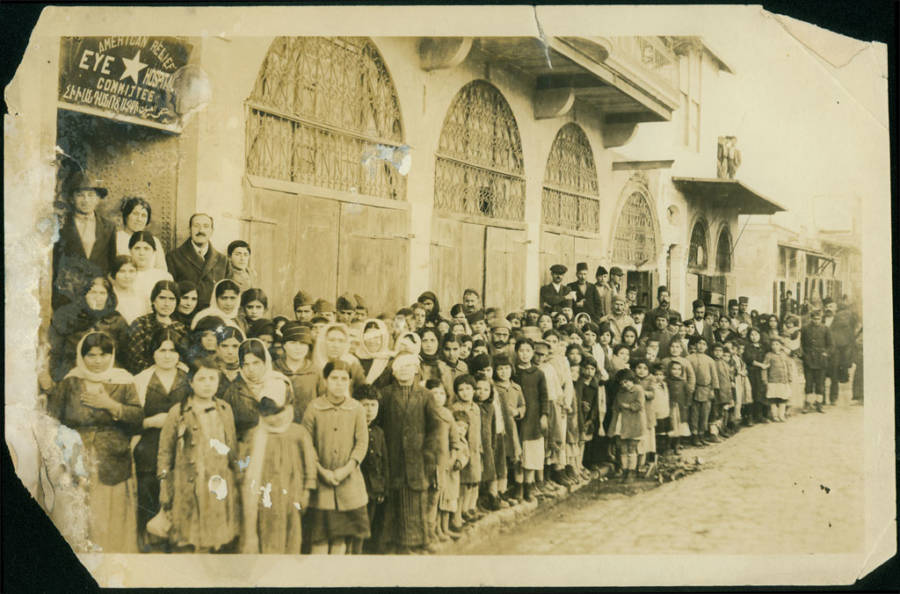
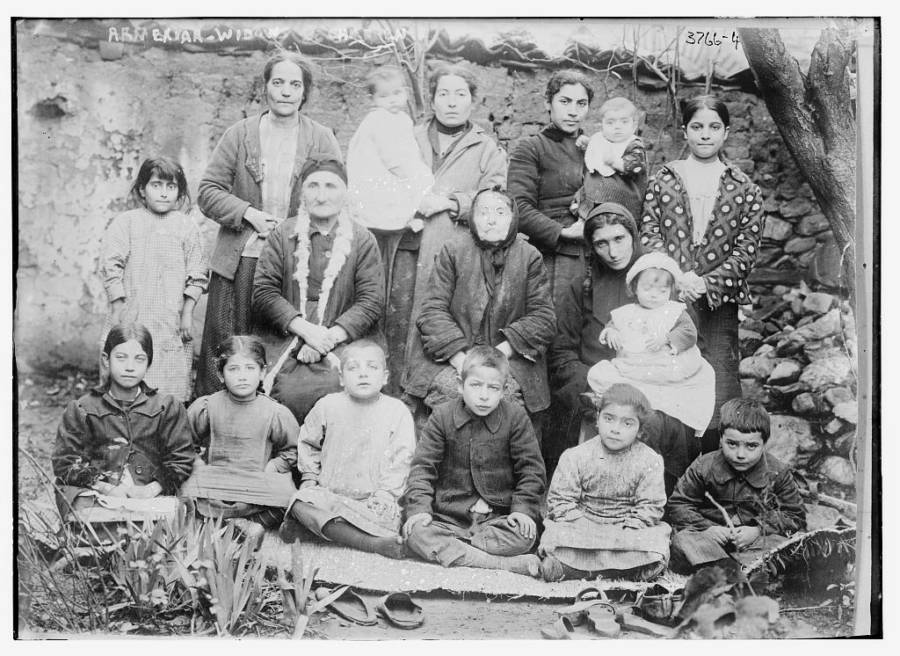
An Armenian woman kneels beside her dead child near Aleppo, Syria, circa 1915-1919.Armenians lined up in the streets of Malatia, circa 1918. Nearly all were soon taken into the desert and killed.An Armenian mother sits next to the wrapped corpses of her five children.While the genocide didn’t begin until 1915, trouble had been brewing between the ruling class of the Ottoman Empire and Armenian Christians for years. In fact, in April 1909, six years before the genocide began, Turkish Muslims in support of Islamic Sultan Abdul Hamid II killed between 20,000 and 30,000 Armenian Christians who largely opposed the Sultan in the Adana region in modern-day Turkey (aftermath pictured).The genocide started in earnest in 1915, largely under the orders of Mehmed Talaat Pasha, one of the three de facto leaders of the Ottoman Empire during World War I. He enacted the two measures widely credited with initiating Armenian Genocide: the mass arrest of Armenian intellectuals in Constantinople on April 24, 1915 and the Tehcir Law that called for mass deportations on May 30, 1915.Soon after those orders came down, Armenians would be ordered to gather in the square of their city, after which they were to be marched out of town and killed en masse.In 1915, several hundred Armenian villagers on Musa Mountain managed to resist 20,000 Turkish troops for several weeks. They were all eventually killed.The Ottoman Turks restricted photography and reporting during the genocide, but news of the atrocities spread due to the pictures taken by American and other international aid workers.The Armenian Genocide began with the murder of 300 Armenian leaders, writers, thinkers, and professionals in Constantinople. At that time, 5,000 of the poorest Armenians were also slaughtered in neighborhoods.Armenian deportees marched through Turkey.Victims’ bodies lie on the ground at an unspecified location in the Armenian provinces of the Ottoman Empire, circa mid-1915.Armenian orphans holding their daily allotment of bread at a refugee camp in Aleppo, Syria.Armenian doctors hanged in Aleppo Square, 1916.Armenian and Greek refugee children lay eyes upon the sea for the first time, near Marathon, Greece, following their departure from Turkey, circa 1915-1916.Refugee camp in the Caucasus region, December 1920.Across the Armenian region, the genocide left piles of corpses, skulls, bones, and even severed heads.Armenians display the flag they used to signal for help during their resistance effort at Musa Dagh, Turkey before being evacuated to Port Said, Egypt in September 1915.Armenian orphans on the playground of the “Orphan City” (population 30,000) in Alexandropol (now Gyumri), Armenia, circa 1919-1930.A Turkish police officer (front, center) holds rugs he’d stolen from the Armenians he’s marching into the desert.A Starving Armenian Child in Kharberd, 1915. Hungry orphaned Armenian children filled the streets during the conflict.Armenian children whose parents had been killed during the genocide pose at an orphanage in Merzifon, Tukey, 1918.Some of the West remained unaware of the genocide as it was happening. However, a number of key reports from The New York Times helped bring the tragedy to light.Armenian refugee children in Syria who have repurposed flour sacks as clothing, 1915.Those who survived the death marches, massacres, and starvation were sent to a network of 25 concentration camps. Situated along Turkey’s present-day borders with Iraq and Syria, were used as temporary transit points or for mass graves. Most who came through them did not last more than a few days.Armenian refugees manage to find some food in the Hauran area of Syria.Armenian refugees just after receiving clothing aid, circa 1915-1920.Survivors of the genocide who escaped to Jerusalem, 1918.The corpses of a tortured Armenian woman and child lie on the ground at an unspecified location, circa October 1915.Armenian refugees at the American relief hospital in Aleppo, Syria, January 1920.Group of Armenian Men, Just Before Being Burned and Massacred, 1915Turkish police lead Armenians through the desert of the Mamuret-ul-Aziz administrative division of the Ottoman Empire, circa 1918.An Armenian woman and child receive food relief, circa 1915-1916.An Armenian refugee camp in Syria, circa 1915-1916.In Athens, Greece, Armenian and Greek refugee children who’d been expelled from Turkey, 1923.Armenian refugee children in Syria, 1915.An Armenian refugee with her children in Syria, 1915.Deported Armenian orphans.Armenian Children Eating Boiled Rice Supplied by the American Committee, 1919Crowded conditions for Armenian refugees in Syria preparing to leave for Greece, 1915.Armenian women sew blankets in Yerevan, Armenia, circa 1915-1920.Armenian refugees in Syria, 1915Armenian widows and children, circa 1915-1920.Armenian orphans awaiting transport to Greece, 1918.Despite such atrocities, most of the world’s nations (including the genocide’s aggressor, Turkey) do not officially acknowledge the genocide. Pictured: The mere 28 nations whose governments have officially recognized the Armenian Genocide, with dark green indicating national government recognition and light green indicating regional government recognition (45 out of the 50 U.S. states recognize the genocide).Nevertheless, 100 years later, the genocide’s wounds are still very real in Armenia, where citizens pay tribute year in and year out. Pictured: Women attend a religious service at the cathedral in Etchmiadzin, outside Yerevan, on April 23, 2015, ahead of the canonization ceremony for the Martyrs of the Armenian Genocide.Armenians lay flowers at the Genocide Memorial in Yerevan, Armenia for the 101st anniversary on April 24, 2016 in Yerevan, Armenia.People participate in a torchlight procession through Yerevan, Armenia to commemorate the anniversary of the genocide on April 24, 2015.
Edith Norma Shearer (August 10, 1902 – June 12, 1983) was a Canadian actress who was active on film from 1919 through 1942. Shearer often played spunky, sexually liberated ingénues. She appeared in adaptations of Noël Coward, Eugene O’Neill, and William Shakespeare, and was the first five-time Academy Award acting nominee, winning Best Actress for The Divorcee (1930).
Reviewing Shearer’s work, Mick LaSalle called her “the exemplar of sophisticated 1930s womanhood … exploring love and sex with an honesty that would be considered frank by modern standards”. He described her as a feminist pioneer, “the first American film actress to make it chic and acceptable to be single and not a virgin on screen”.
She won a beauty contest at age fourteen. In 1920 her mother, Edith Shearer, took Norma and her sister Athole Shearer (Mrs. Howard Hawks) to New York. Ziegfeld rejected her for his “Follies,” but she got work as an extra in several movies. She spent much money on eye doctor’s services trying to correct her cross-eyed stare caused by a muscle weakness. Irving Thalberg had seen her early acting efforts and, when he joined Louis B. Mayer in 1923, gave her a five year contract. He thought she should retire after their marriage, but she wanted bigger parts. In 1927, she insisted on firing the director Viktor Tourjansky because he was unsure of her cross-eyed stare. Her first talkie was in The Trial of Mary Dugan (1929); four movies later, she won an Oscar in The Divorcee (1930). She intentionally cut down film exposure during the 1930s, relying on major roles in Thalberg’s prestige projects: The Barretts of Wimpole Street (1934) and Romeo and Juliet (1936) (her fifth Oscar nomination). Thalberg died of a second heart attack in September, 1936, at age 37. Norma wanted to retire, but MGM more-or-less forced her into a six-picture contract. David O. Selznick offered her the part of Scarlett O’Hara in Gone with the Wind (1939), but public objection to her cross-eyed stare killed the deal. She starred in The Women (1939), turned down the starring role in Mrs. Miniver (1942), and retired in 1942. Later that year she married Sun Valley ski instructor Martin Arrouge, eleven years younger than she (he waived community property rights). From then on, she shunned the limelight; she was in very poor health the last decade of her life.
Shearer’s fame declined after her retirement in 1942. She was rediscovered in the late 1950s, when her films were sold to television, and in the 1970s, when her films enjoyed theatrical revivals. By the time of her death in 1983, she was best known for her “noble” roles in Marie Antoinette and The Women.
A Shearer revival began in 1988, when Turner Network Television began broadcasting the entire Metro-Goldwyn-Mayer film library. In 1994, Turner Classic Movies began showcasing her films, most of which had not been seen since the reconstitution of the Production Code in 1934. Shearer’s work was seen anew, and the critical focus shifted from her “noble” roles to her pre-Code roles.
Even for a pampered star, her output in the sound era is strikingly meager. And yet this was part of her undeniable aura – that she did not make movies lightly and frivolously, but with great care, sincerity and conviction.
Shearer’s work gained more attention in the 1990s through the publication of a series of books. The first was a biography by Gavin Lambert. Next came Complicated Women: Sex and Power in Pre-Code Hollywood by Mick LaSalle, film critic at the San Francisco Chronicle. Mark A. Vieira published three books on subjects closely related to Shearer: a biography of her husband, producer Irving Thalberg; and two biographies of photographer George Hurrell. Shearer was noted not only for the control she exercised over her work, but also for her patronage of Hurrell and Adrian, and for discovering actress Janet Leigh and actor-producer Robert Evans.
For her contribution to the motion-picture industry, Shearer has a star on the Hollywood Walk of Fame, at 6636 Hollywood Boulevard. On June 30, 2008, Canada Post issued a postage stamp in its “Canadians in Hollywood” series to honour Norma Shearer, along with others for Raymond Burr, Marie Dressler, and Chief Dan George.
Shearer and Thalberg are reportedly the models for Stella and Miles, the hosts of the Hollywood party in the short story “Crazy Sunday” (1932) by F. Scott Fitzgerald.
Most of Shearer’s MGM films are broadcast on Turner Classic Movies, and many of them are also available on DVD from Warner Home Video. In 2008, she was inducted into Canada’s Walk of Fame. In 2015, a number of Shearer films became available in high-definition format, authored by Warner Home Video, in most cases, from the nitrate camera negatives: A Free Soul, Romeo and Juliet, Marie Antoinette, and The Women.
Subscribe to continue reading
Become a paid subscriber to get access to the rest of this post and other exclusive content.
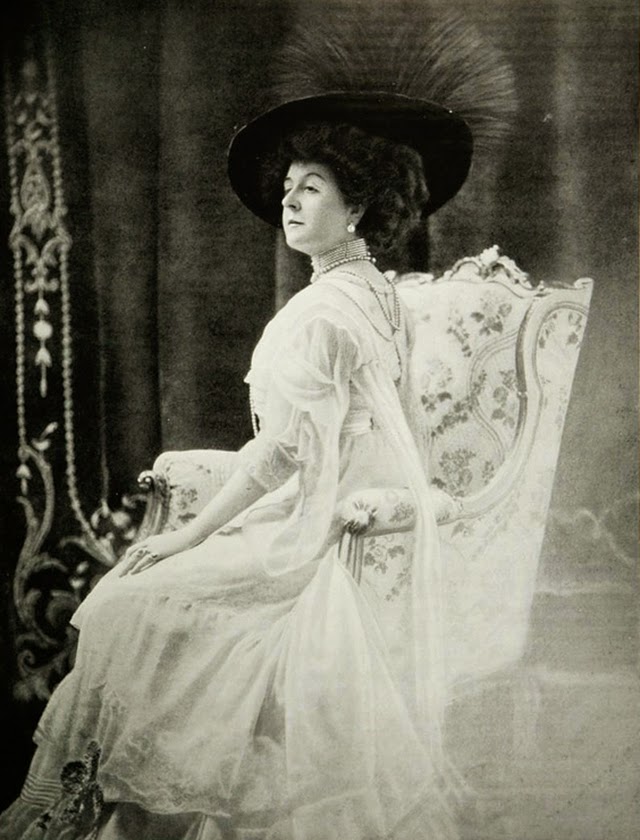
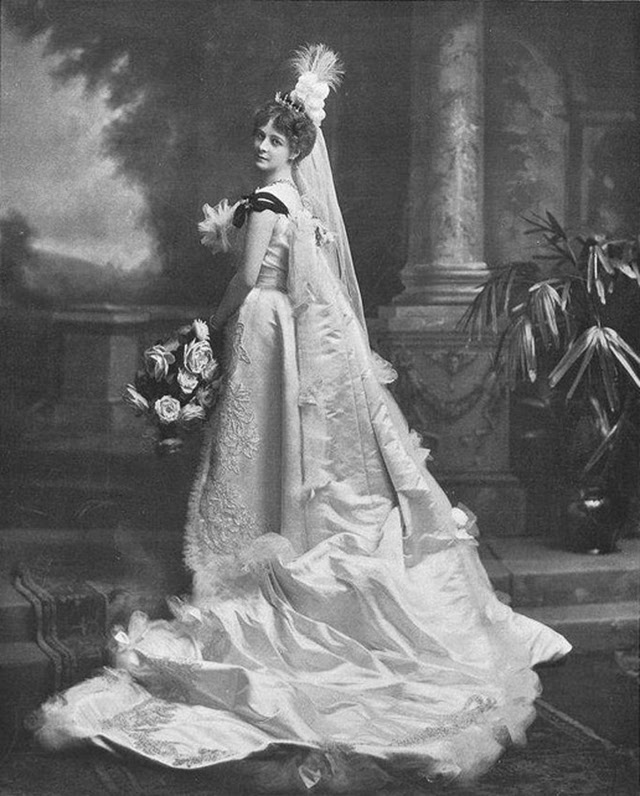
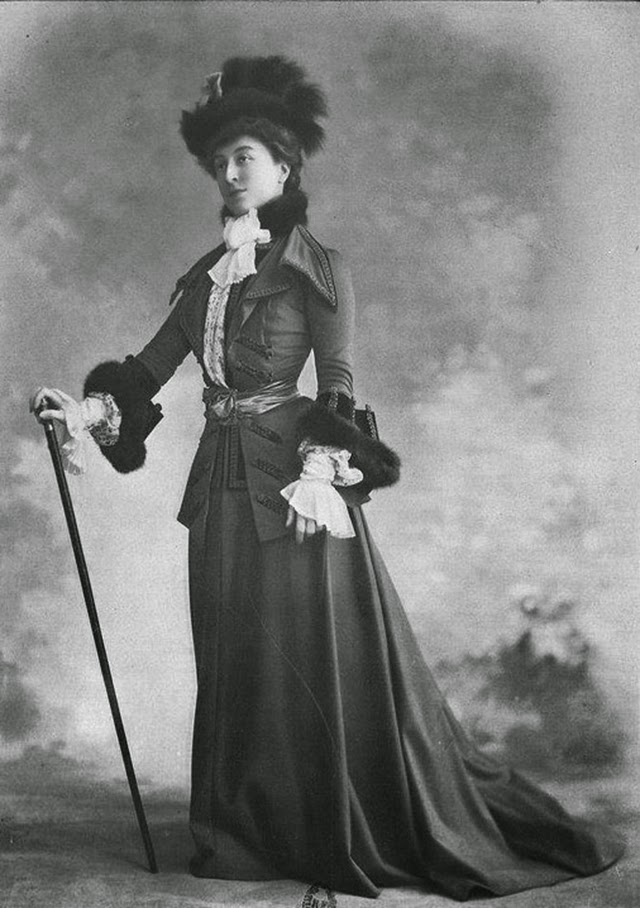
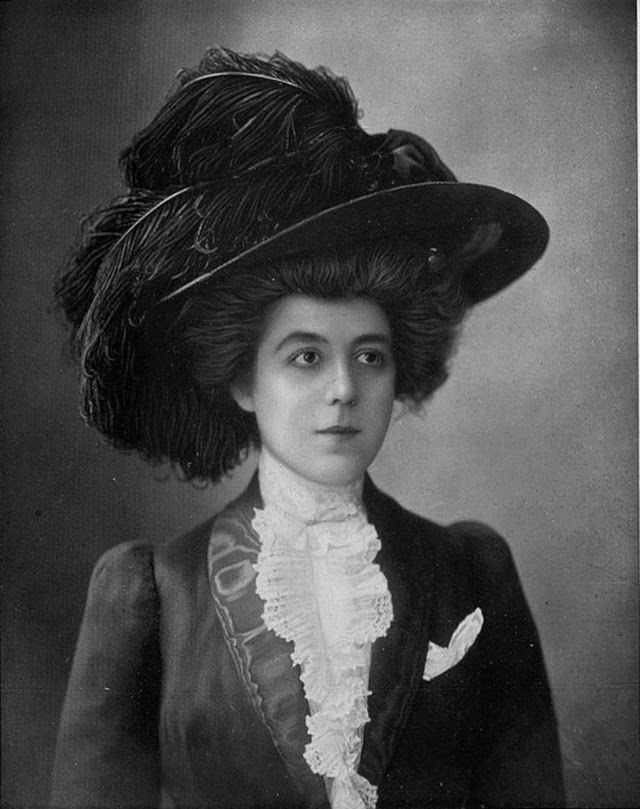
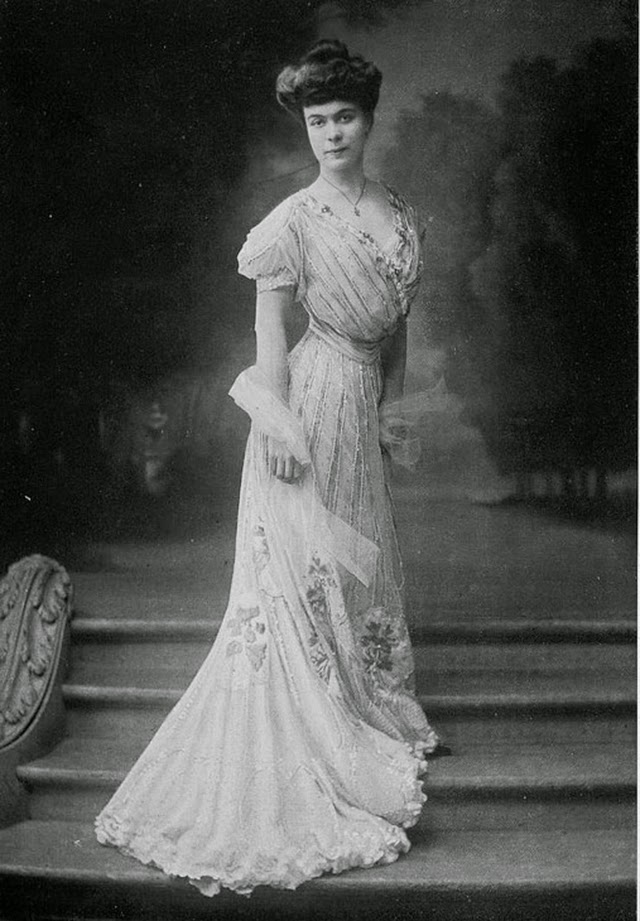
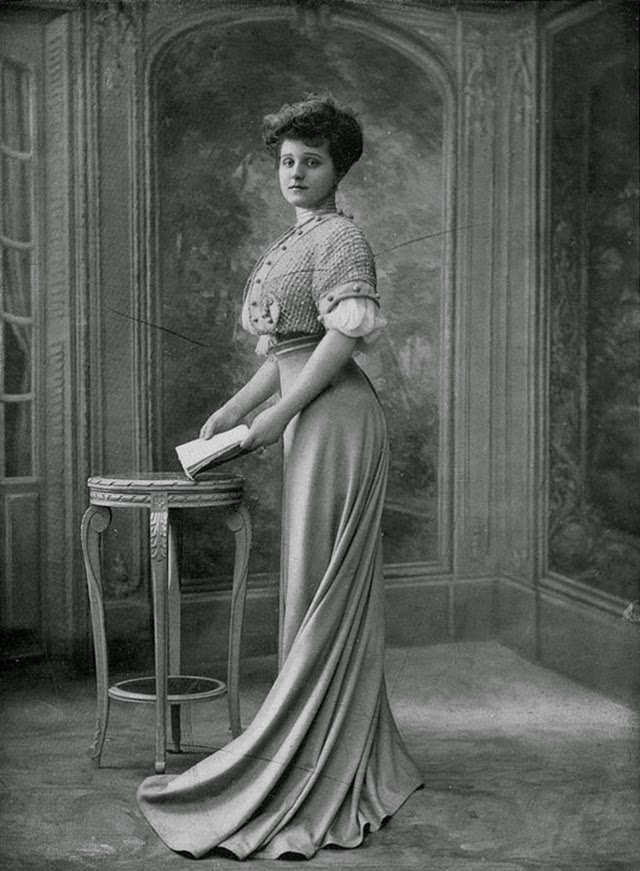
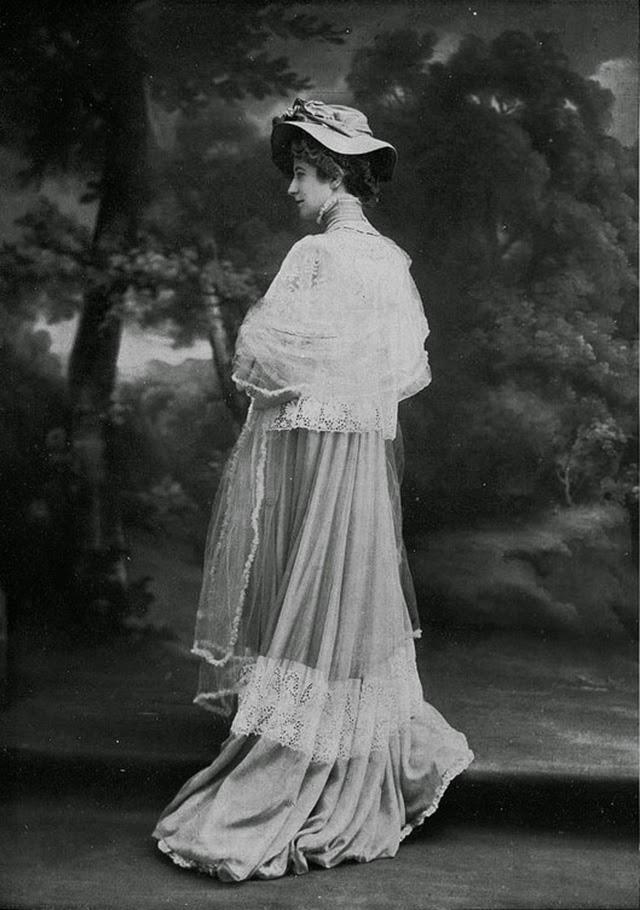
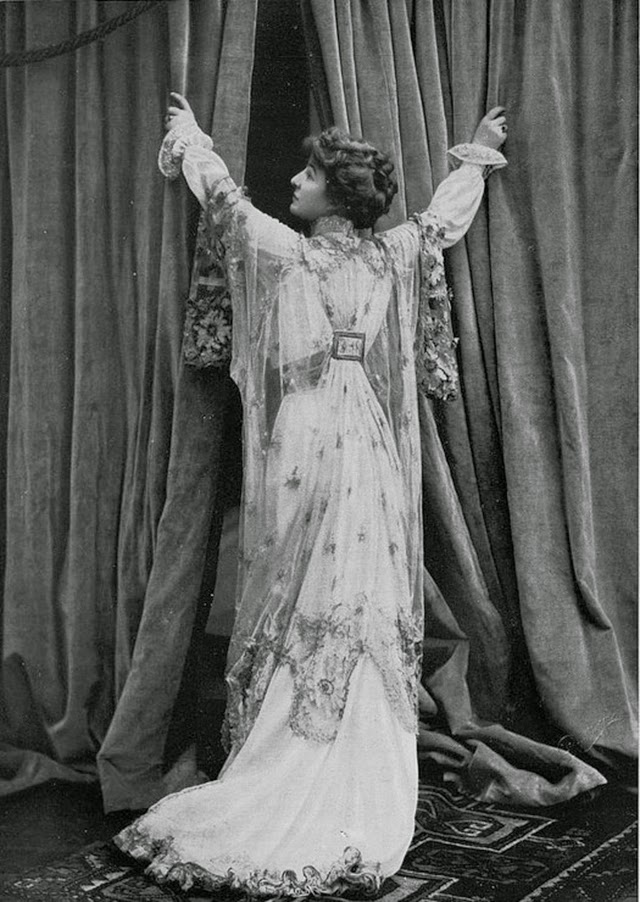
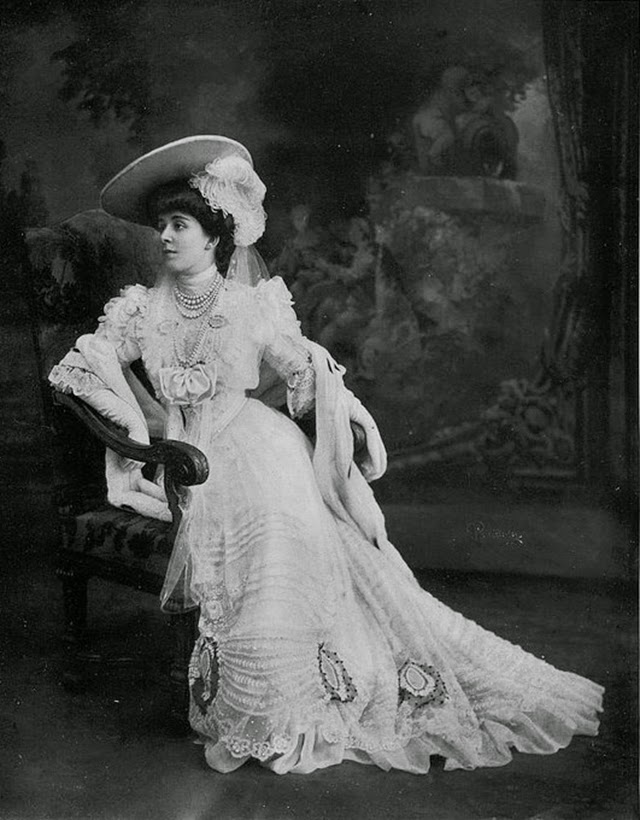
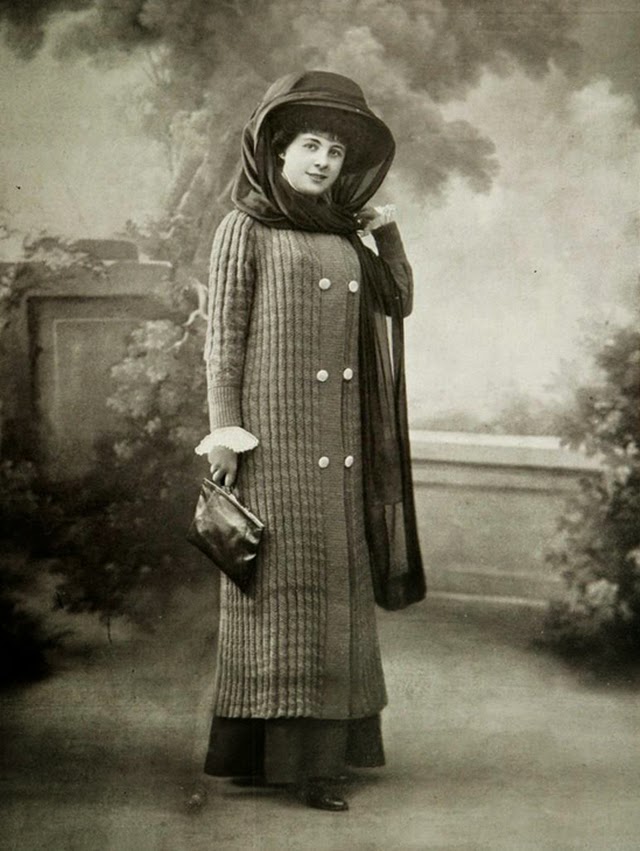
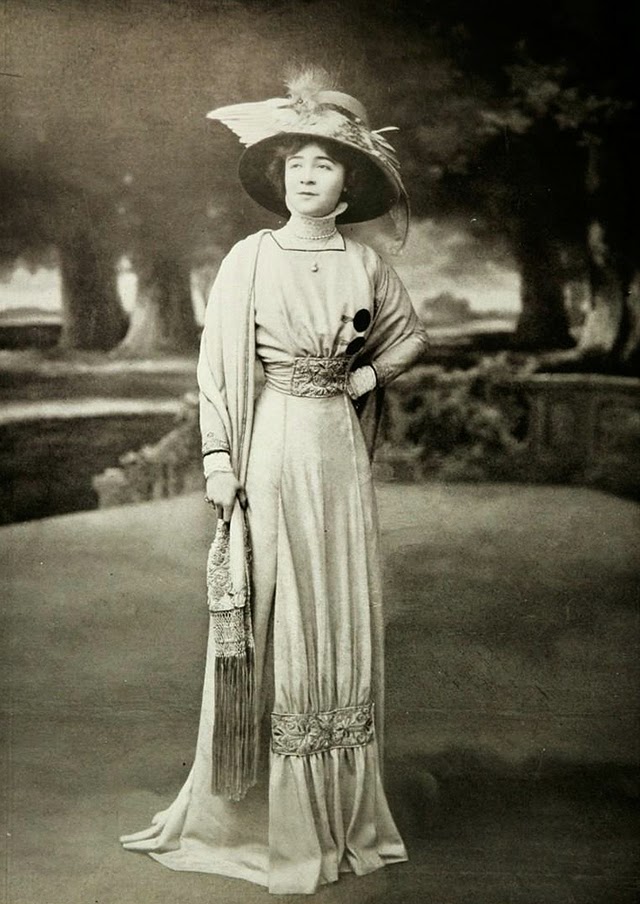
In 1900 skirts were still that long that they were brushing the floor (and with a train), including day dresses. The fashion houses in Paris presented a new silhouette with thicker waist, flatter bust and narrower hips. By the end of the decade, most fashionable skirts still brushed the floor, but approached the ankle.
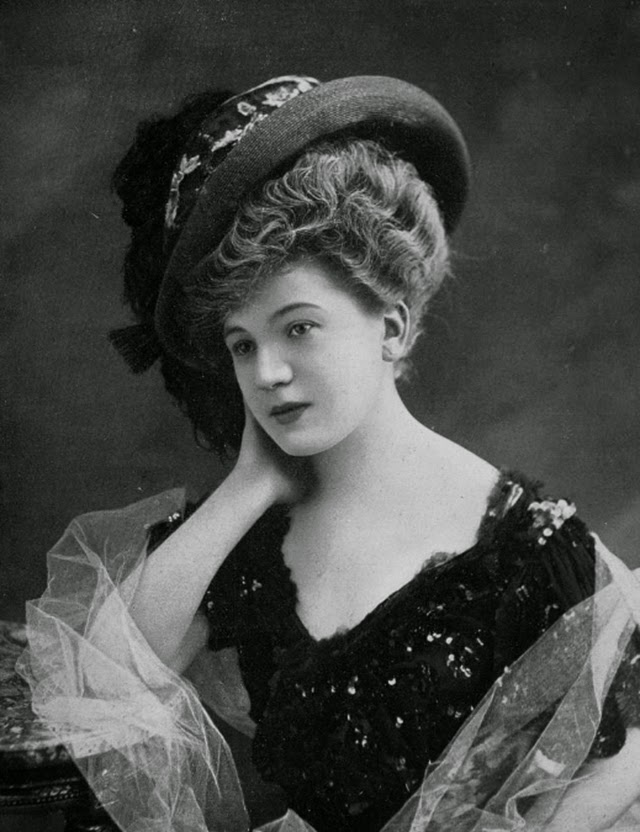
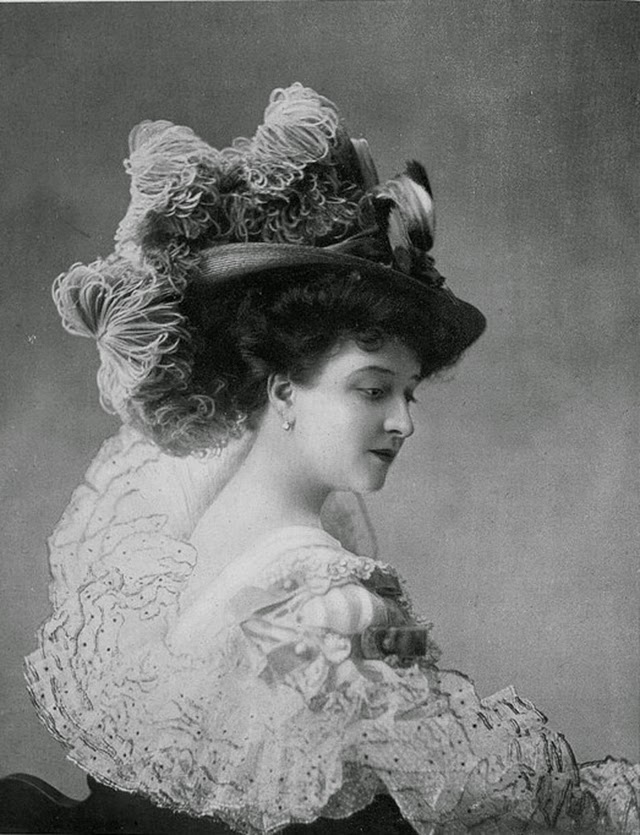
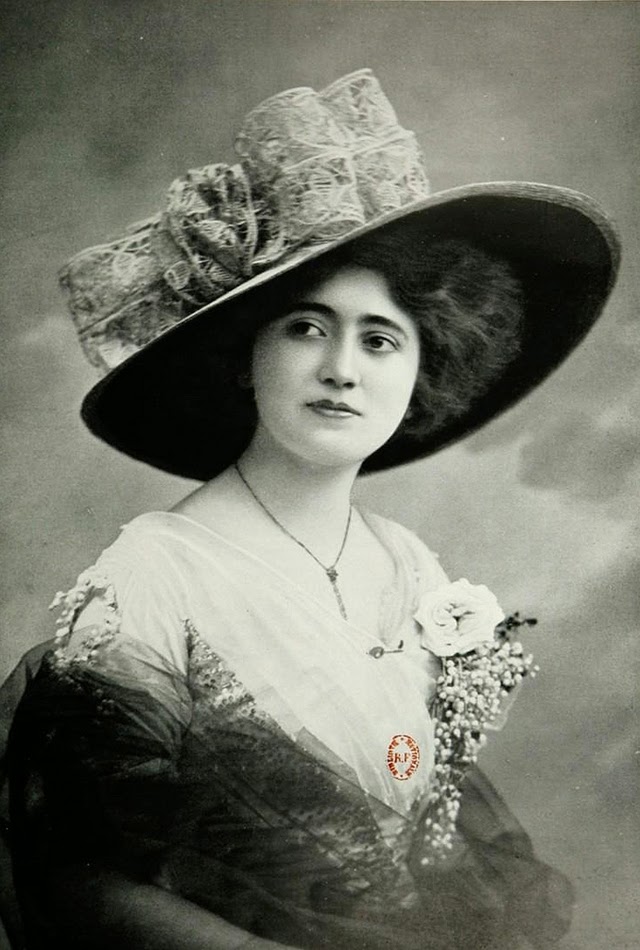
In the 1900s, La Belle Époque style was favored by the rich and privileged. Sumptuous fashions were made in luxurious fabrics. Women who were not part of the upper echelons of society, however, had to settle with less expensive clothing.
These fashion photos were published on Les Modes magazine from 1900 to 1907.
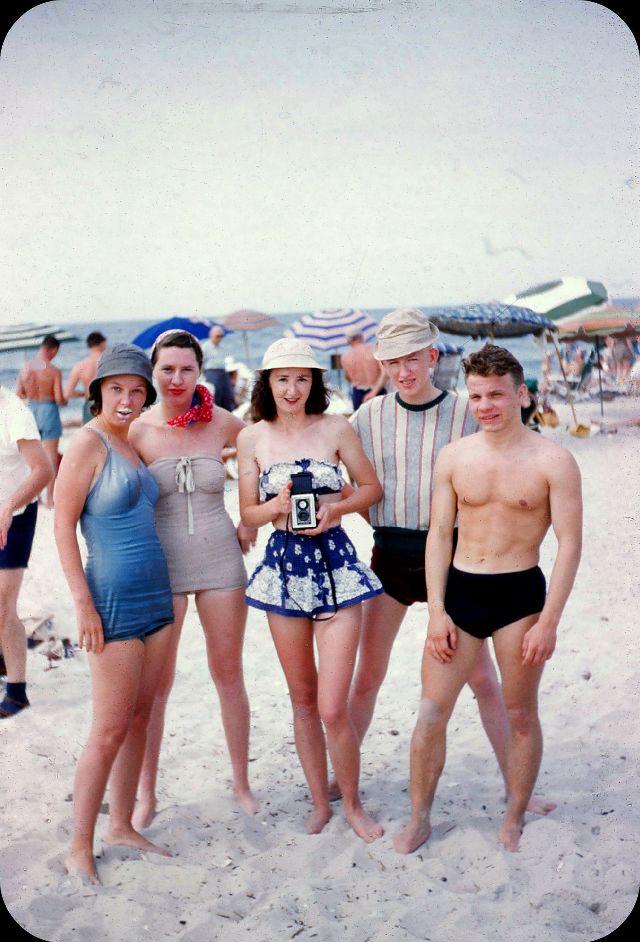
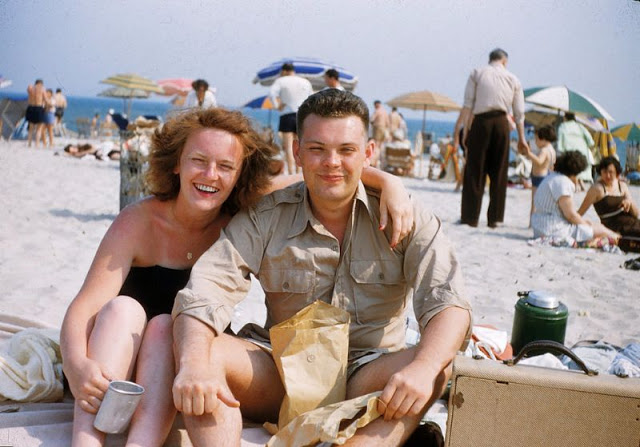
Rockaway Beach is a neighborhood on the Rockaway Peninsula in the New York City borough of Queens. The neighborhood is bounded by Arverne to the east and Rockaway Park to the west. It is named for Rockaway Beach, which is the largest urban beach in the United States, stretching for miles along the Rockaway Peninsula facing the Atlantic Ocean; the beach itself is run and operated by the New York City Department of Parks and Recreation.
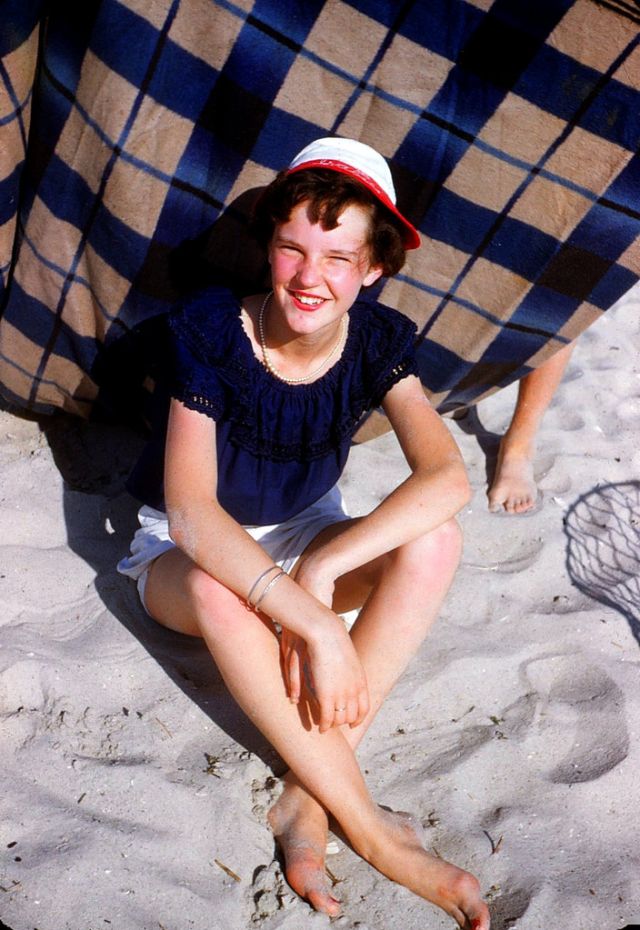
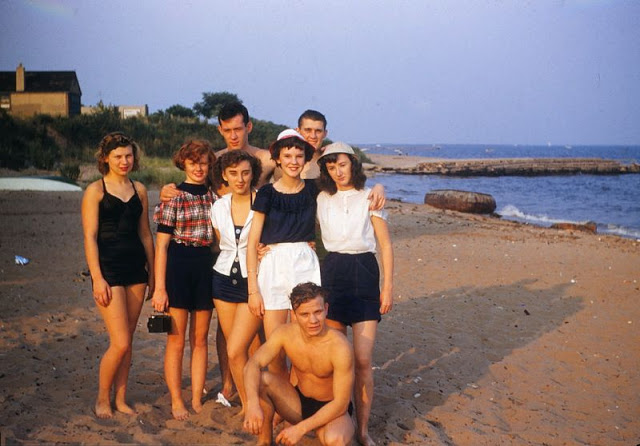
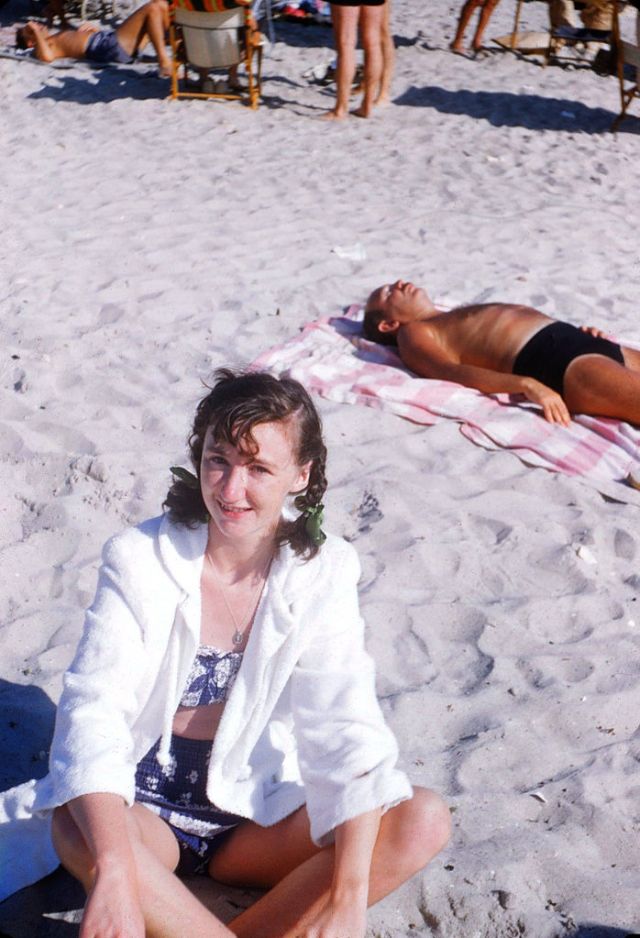
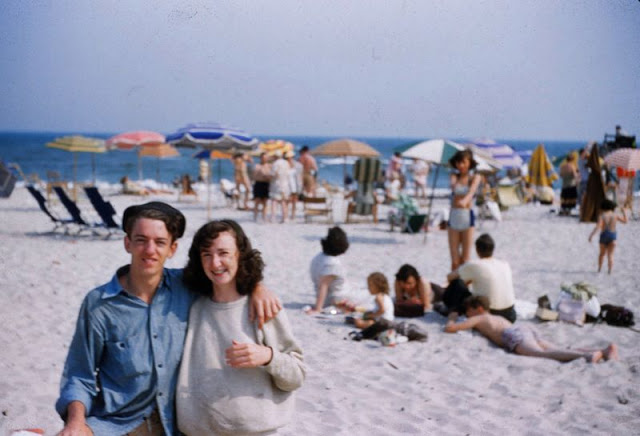
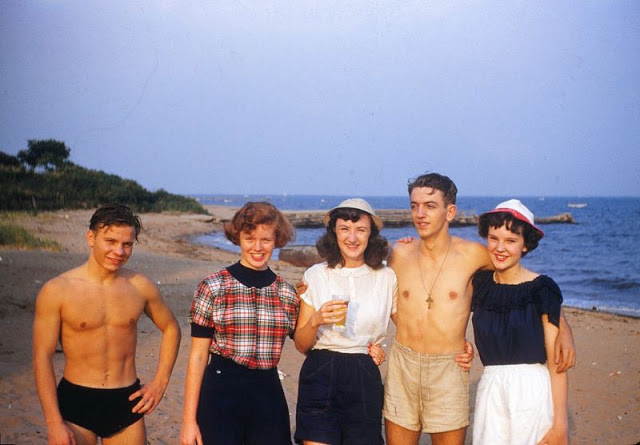
These fascinating snapshots from The Cardboard America Archive that captured people enjoying their summer days at Rockaway Beach, New York in 1950.