Born 1893 in Kings County, New York, American actress, singer, playwright, screenwriter, comedian, and sex symbol Mae West had her entertainment career spanned seven decades. She was known for her lighthearted, bawdy double entendres and breezy sexual independence.
West was active in vaudeville and on the stage in New York City before moving to Hollywood to become a comedian, actress, and writer in the motion picture industry, as well as appearing on radio and television. She often used a husky contralto voice and was one of the more controversial movie stars of her day; she encountered many problems, especially censorship. She once quipped, “I believe in censorship. I made a fortune out of it.” She bucked the system, making comedy out of conventional mores, and the Depression-era audience admired her for it.
Subscribe to continue reading
Become a paid subscriber to get access to the rest of this post and other exclusive content.
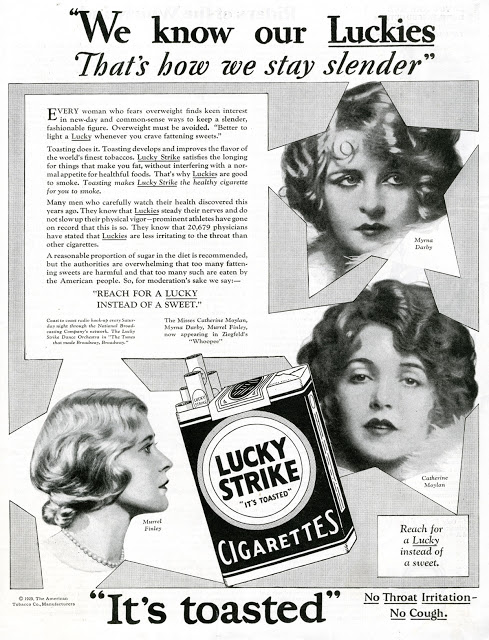
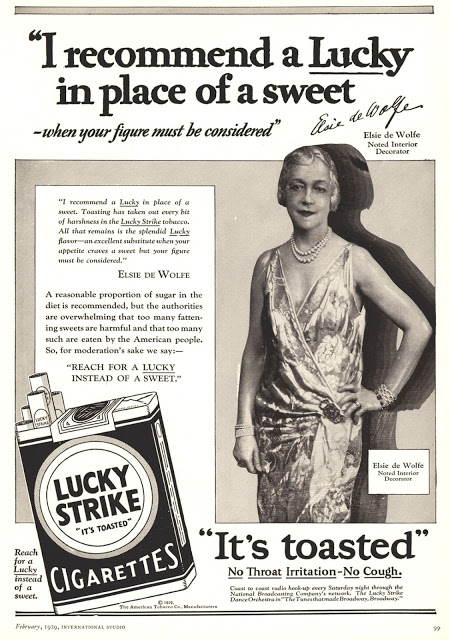
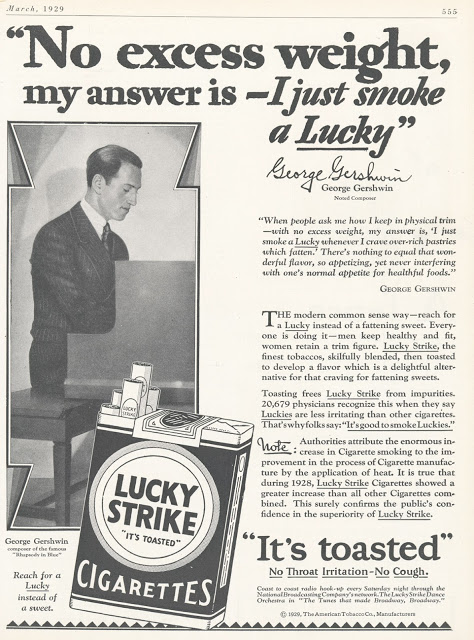
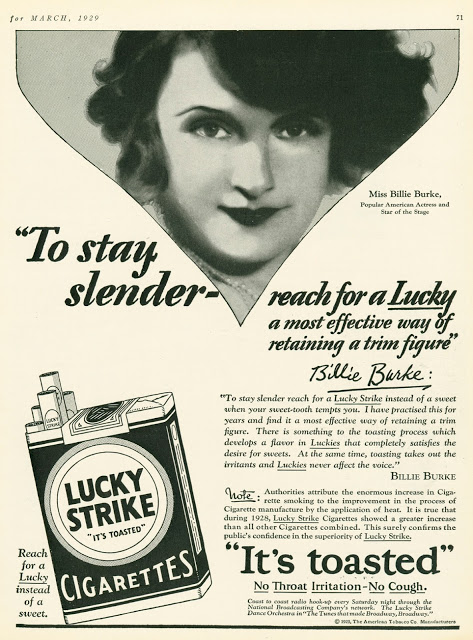
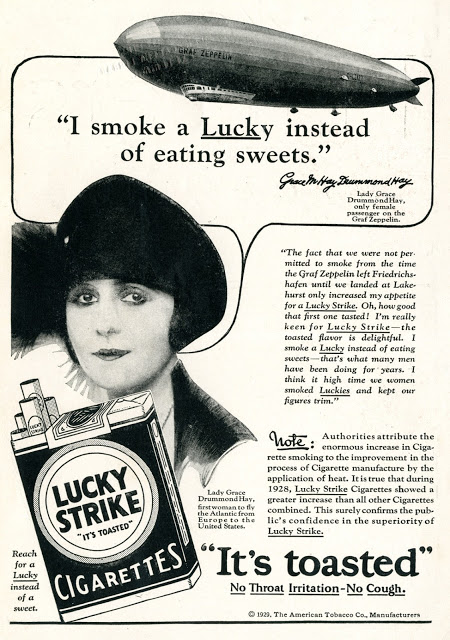
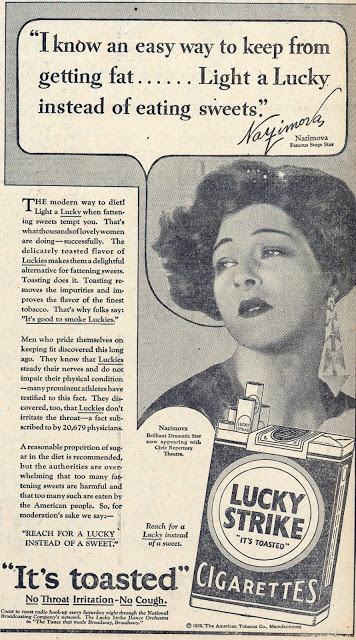
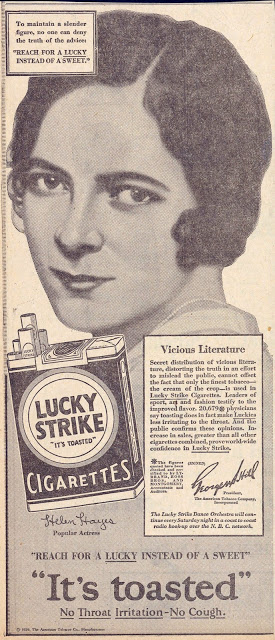
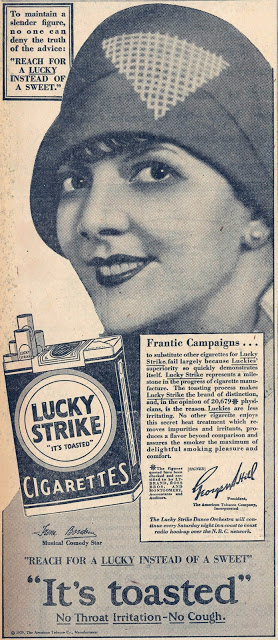
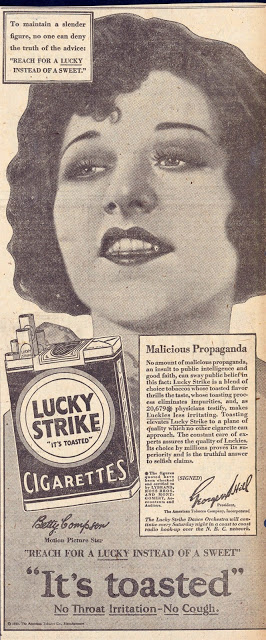
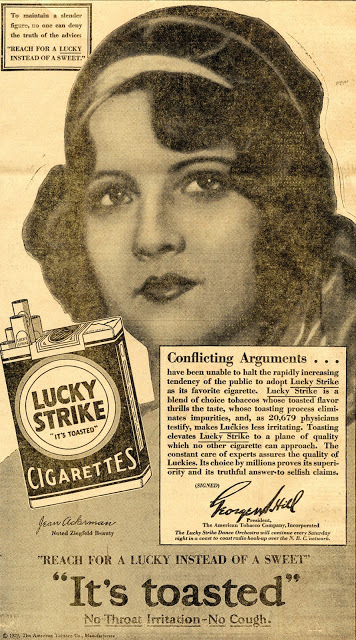
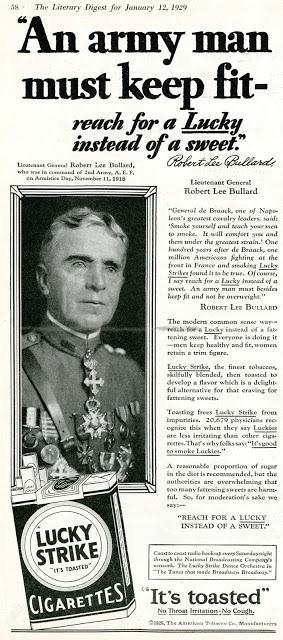
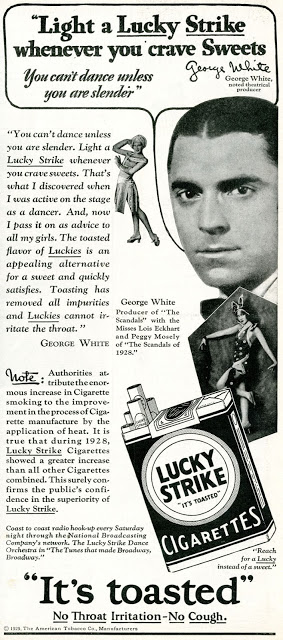
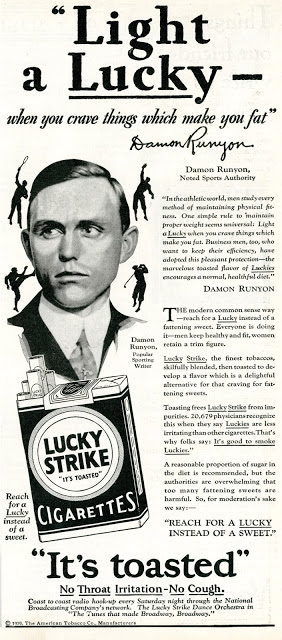
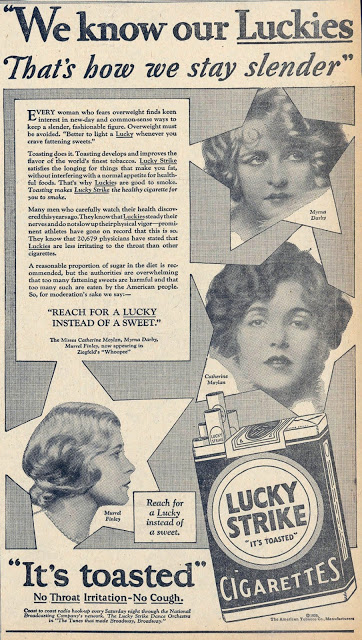
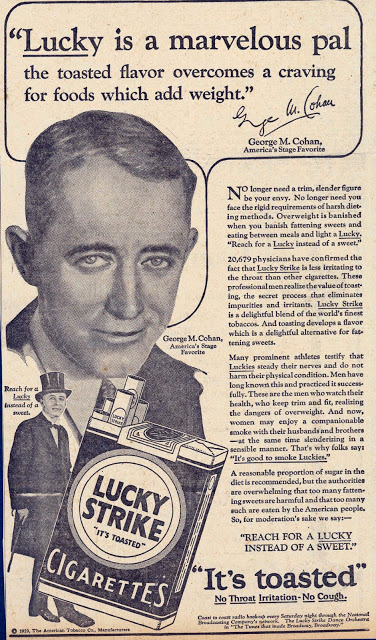
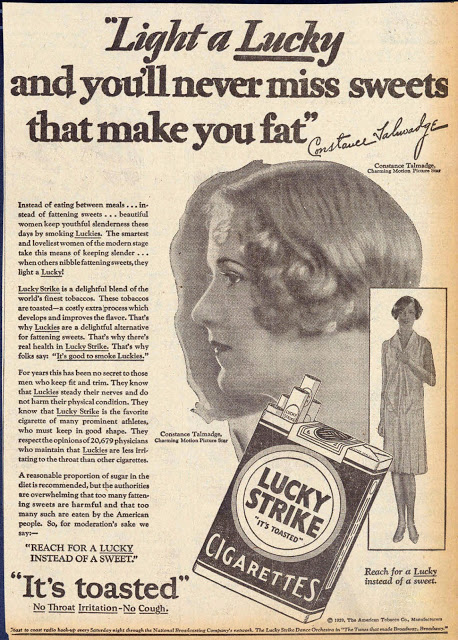
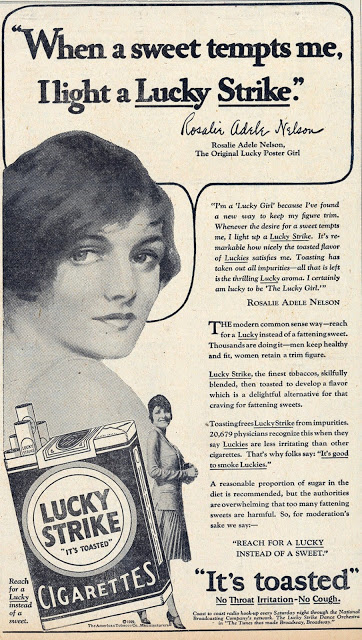
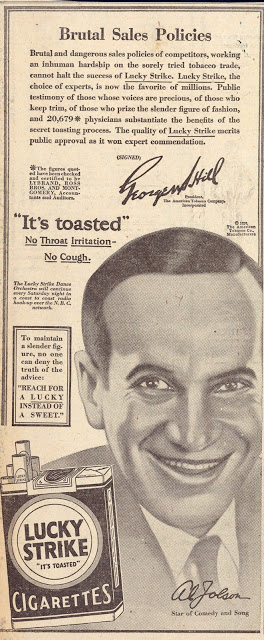
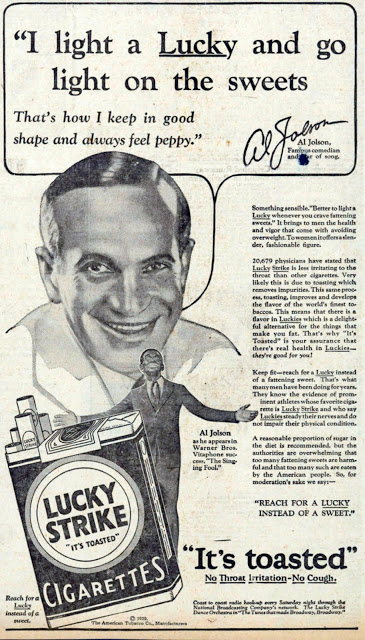
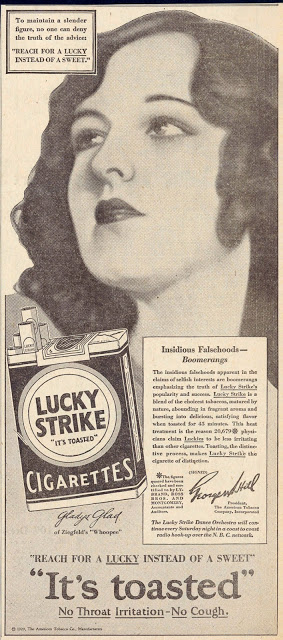
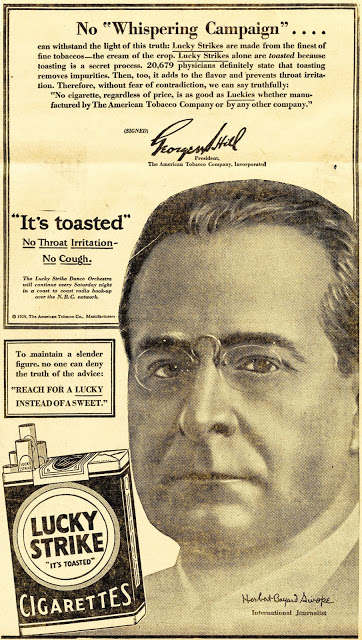
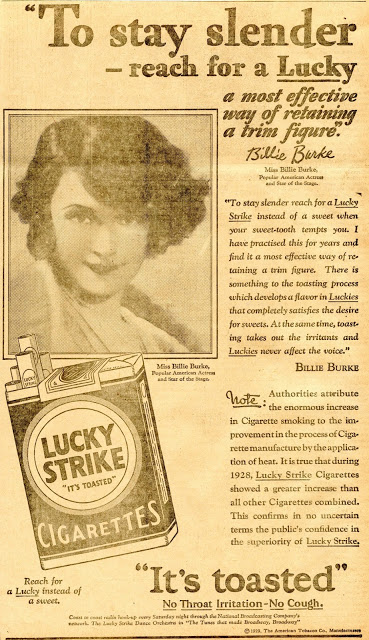
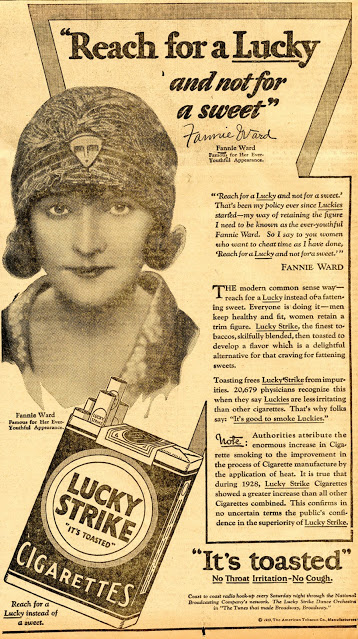
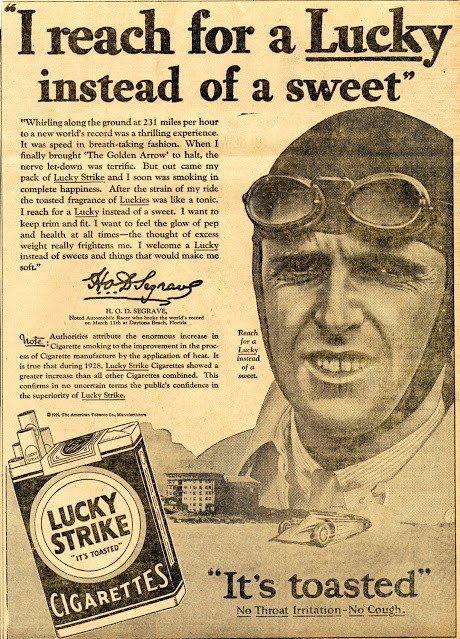
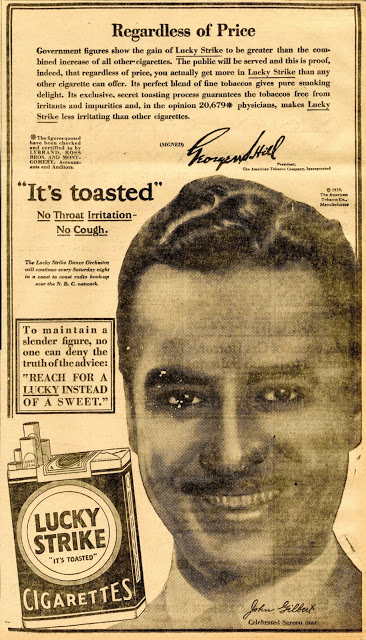
These vintage Lucky Strike cigarette ads tell both women and men that they can lose weight if they reach for a smoke instead of a sweet.
Launched in 1928, this highly successful campaign targeting women was eventually derailed by threats of litigation from the candy industry. The tobacco industry later promoted candy cigarettes. The firm which marketed Lydia Pinkham’s Vegetable Compound was a pioneer in marketing to women. They coined such unforgettable slogans as a baby in every bottle. The 1891 Pinkham slogan “Reach for a Vegetable Instead of a Sweet” has been cited as the inspiration for the Hill/Lasker 1928 slogan “Reach for a Lucky Instead of a Sweet.”
Subscribe to Yesterday Today to receive regular daily updates in your email.
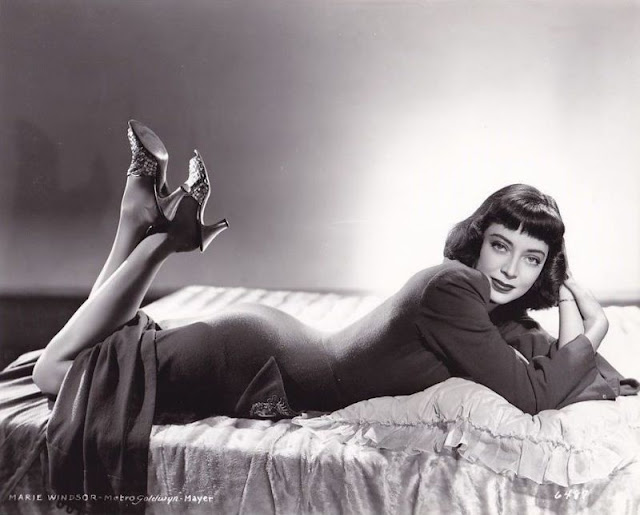
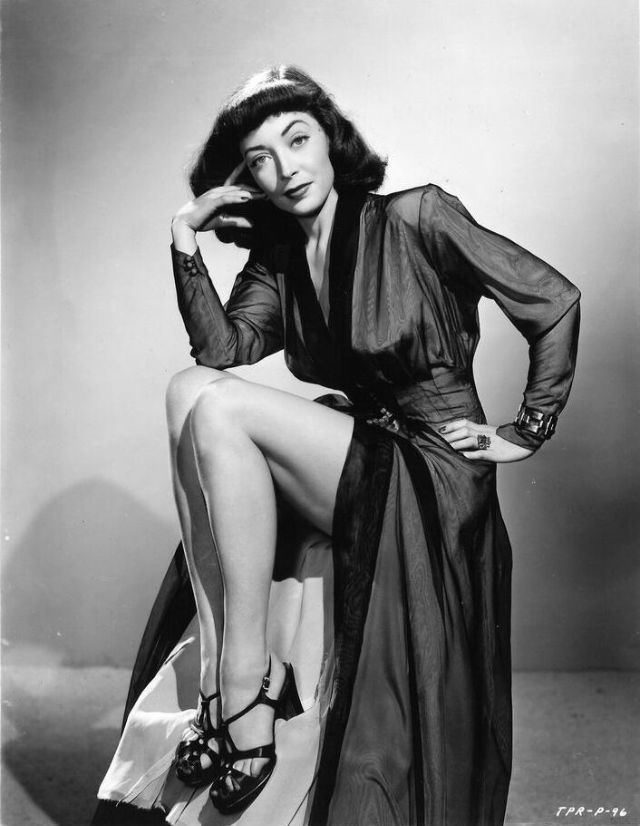
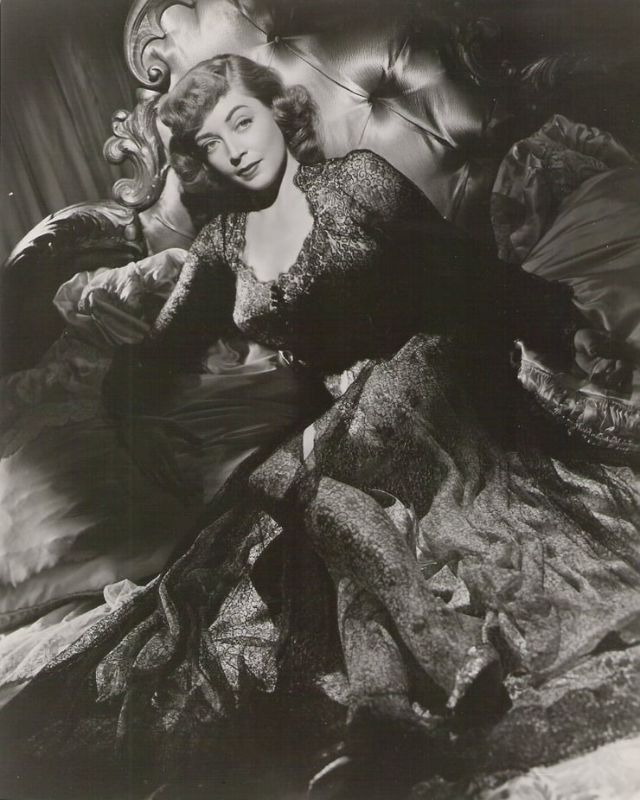
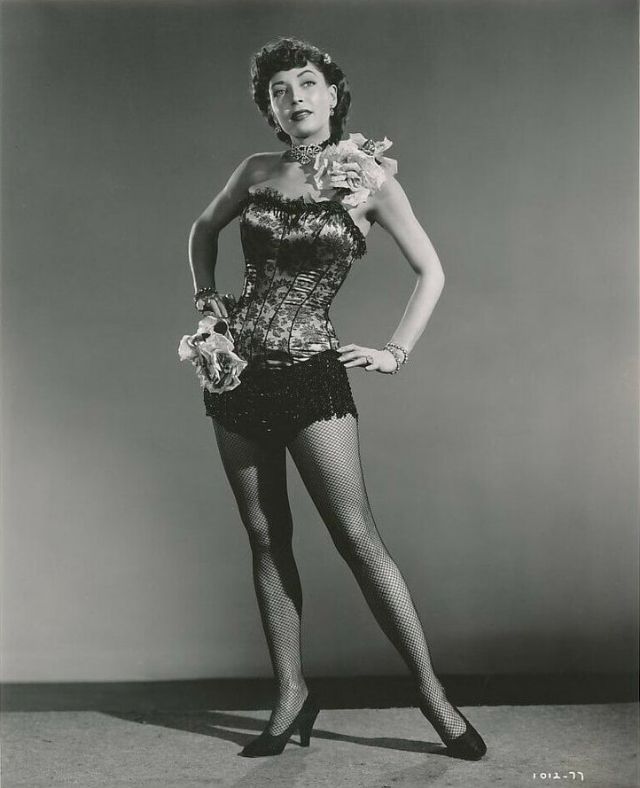
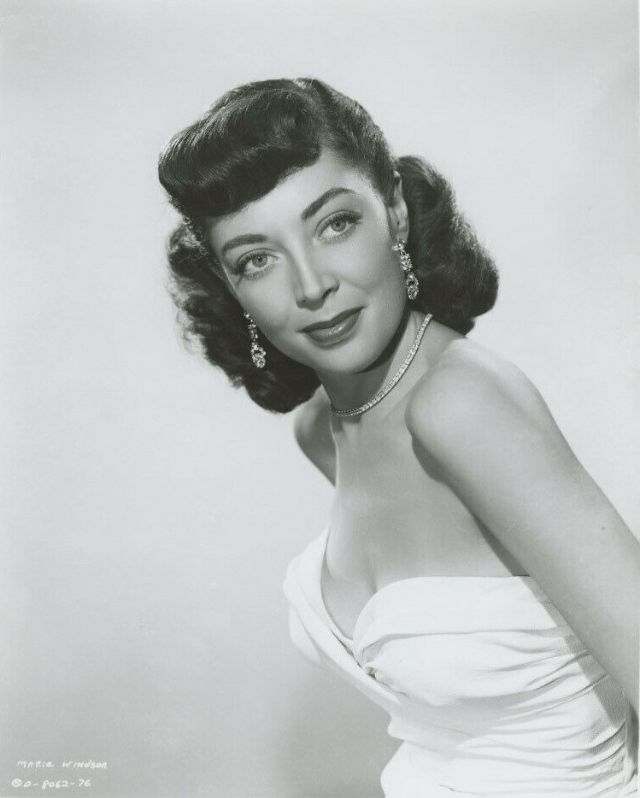
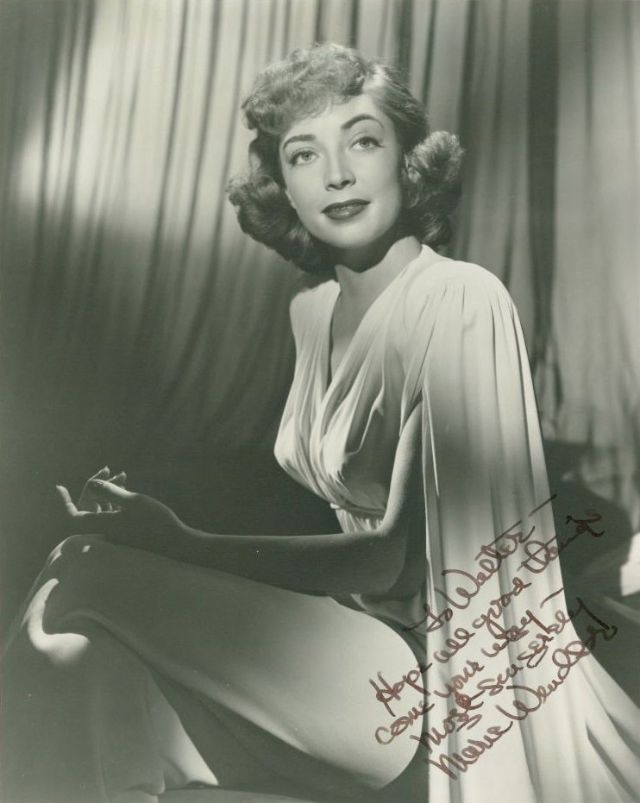
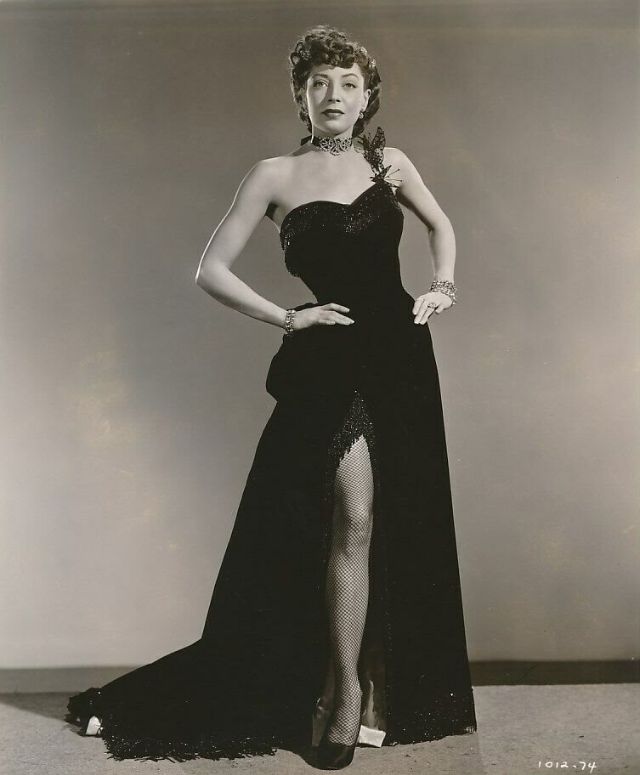
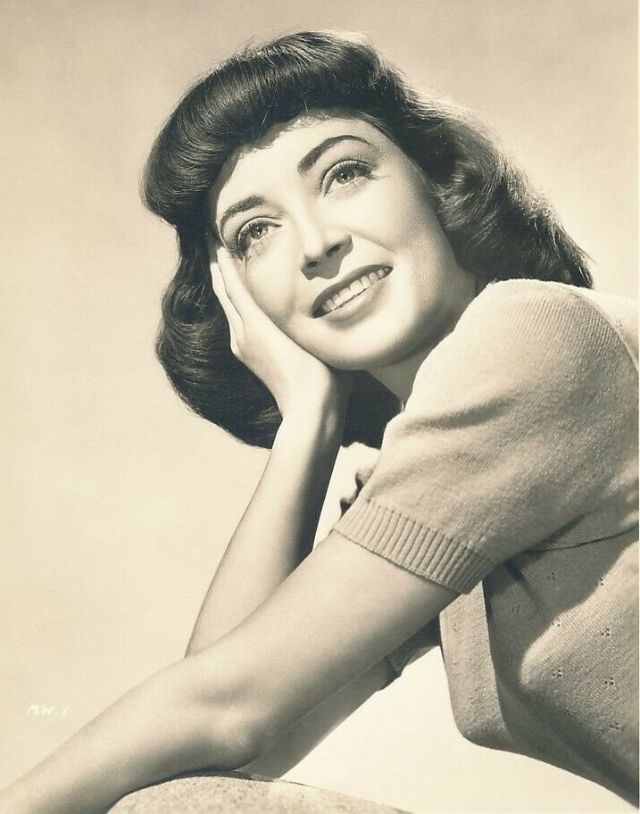
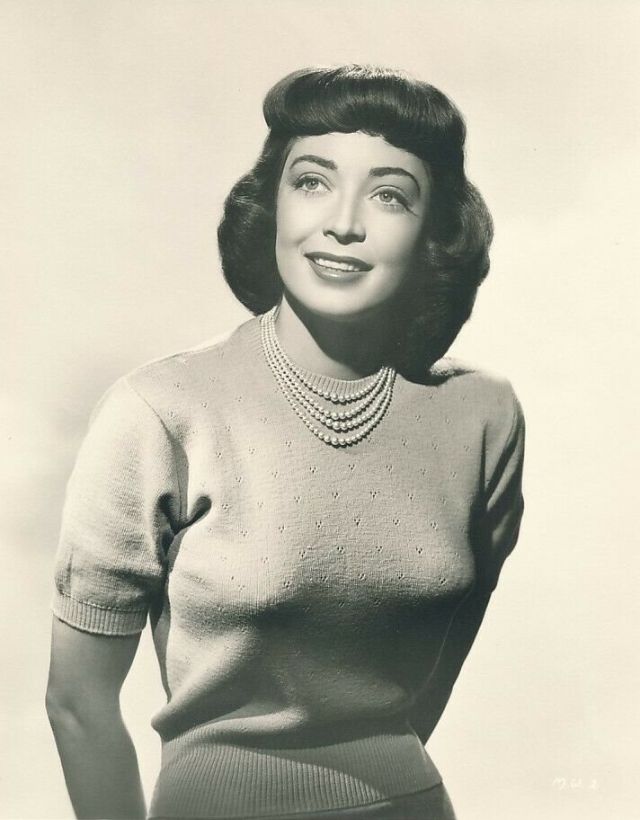
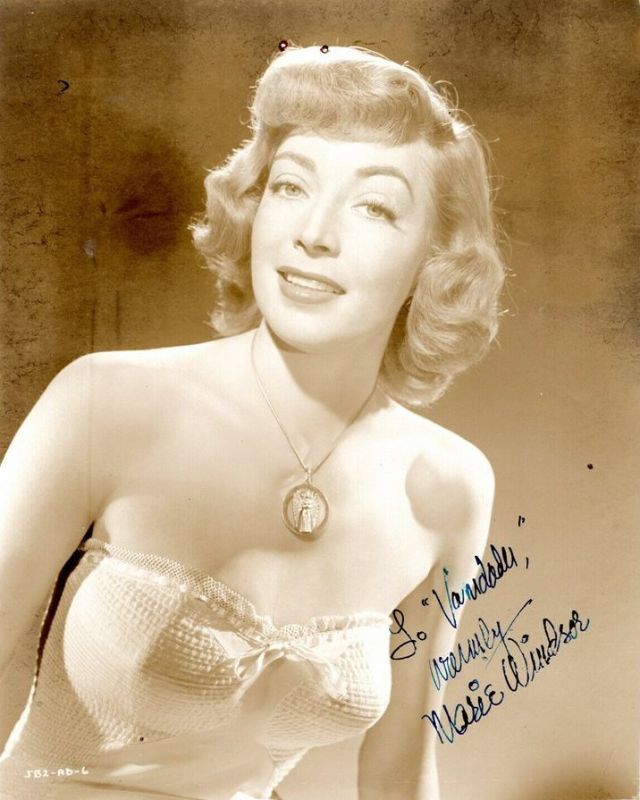
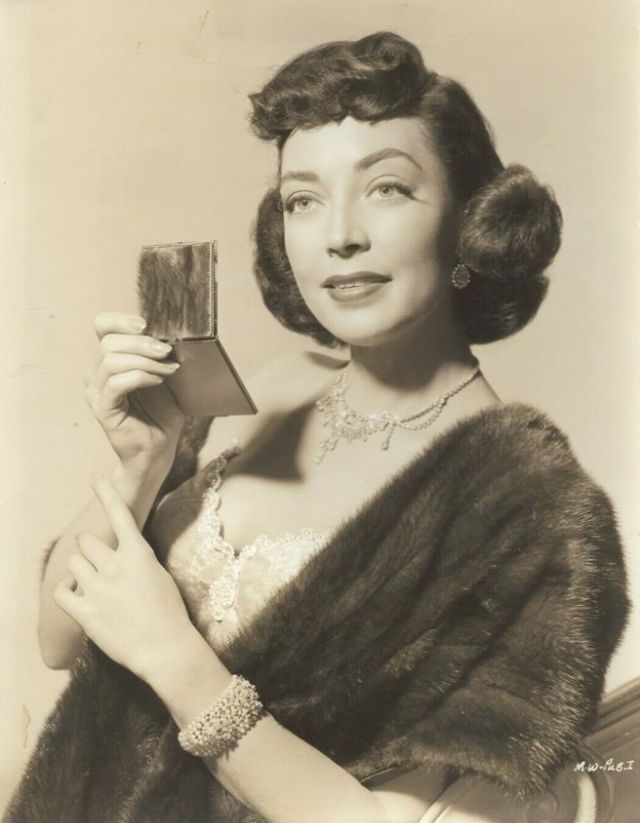
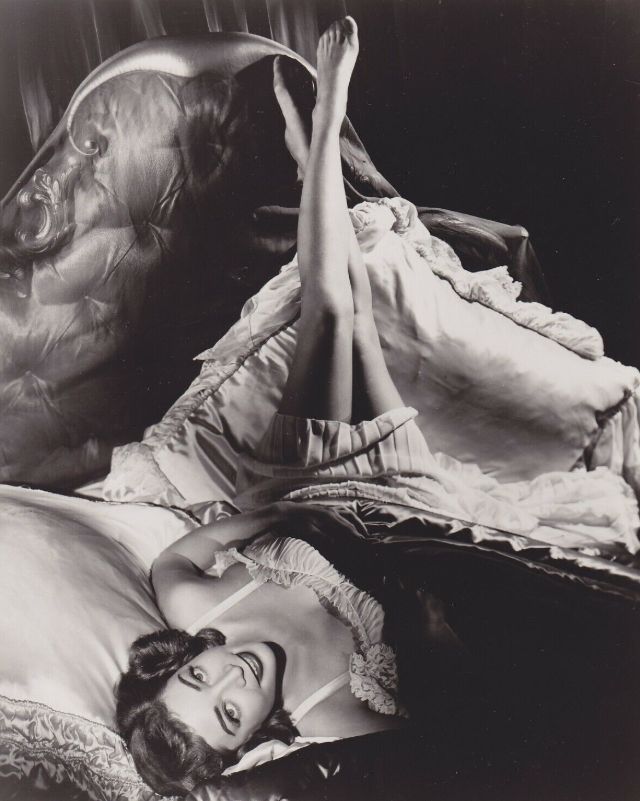
Marie Windsor (born Emily Marie Bertelsen; December 11, 1919 – December 10, 2000) was an American actress known for her femme fatale characters in the classic film noir features Force of Evil, The Narrow Margin and The Killing. Windsor’s height (5’9″, 175 cm) created problems for her in scenes with all but the tallest actors. She was the female lead in so many B movies that she became dubbed the “Queen” of the genre.
The daughter of Mr. and Mrs. Lane Bertelsen, Windsor was born in 1919 in Marysvale, Utah. She was graduated from Marysvale High School in 1934, doing a “musical reading” as part of the graduation exercises. She attended Brigham Young University, where she participated in dramatic productions. She was described in a 1939 newspaper article as “an accomplished athlete … expert as a dancer, swimmer, horsewoman, and plays golf, tennis and skis.”
In 1939, Windsor was chosen from a group of 81 contestants to be queen of Covered Wagon Days in Salt Lake City, Utah. She was unofficially appointed “Miss Utah of 1939” by her hometown Chamber of Commerce, and trained for the stage under famed Hollywood actress and coach Maria Ouspenskaya.
Voluptuous and leggy, but unusually tall (5’9″) for a starlet of her generation, Windsor felt that she was handicapped when playing opposite actors of average stature (claiming she had to progressively bend at the knees walking across the room in scene with John Garfield). As she later recalled, a production with Forrest Tucker as co-star made her happy with finally getting male lead who was her ‘own size’.
In later years, thanks to her early screen success, Windsor was able to pursue her studies more extensively, primarily with Stella Adler and also at the Lee Strasberg Theatre Institute.
Windsor worked in radio in Salt Lake City before moving to California. In California, she worked as a model for glamor photographer Paul Hesse.
In 1940, after her move to Hollywood and entering Ouspenskaya’s drama school, she appeared in the play Forty Thousand Smiths, her first use of the stage name “Marie Windsor”. The next year she appeared in Once in a Lifetime at the Pasadena Playhouse. She also played a villain in a New York production of Follow the Girls. Years later, in the 1980s, she returned to the stage.
After working for several years as a telephone operator, a stage and radio actress, and a bit part and extra player in films, Windsor began playing feature parts on the big screen in 1947.
Her first film contract, with Warner Bros. in 1942, resulted from her writing jokes and submitting them to Jack Benny. Windsor said she submitted the gags under the name M.E. Windsor “because I was afraid he might be prejudiced against a woman gag writer”. When Benny finally met Windsor, “he was stunned by her good looks” and had a producer sign her to a contract. After a tenure with Metro-Goldwyn-Mayer in which the studio “signed her, put her in two small roles and then promptly forgot her”, she signed a seven-year contract in 1948 with The Enterprise Studios.
The actress’ first memorable role in 1948 was with John Garfield in Force of Evil playing seductress Edna Tucker. She had roles in numerous 1950s film noirs, notably The Sniper, The Narrow Margin, City That Never Sleeps, and the Stanley Kubrick heist film, The Killing, in which she played Elisha Cook, Jr.’s, scheming wife. She also made her first foray into science fiction with the release of Cat-Women of the Moon (1953). Windsor co-starred with Randolph Scott in The Bounty Hunter (1954).
Later, Windsor moved to television. She appeared as “The Mutton Puncher” in season 3 of Cheyenne, in 1957. She appeared in 1954 as Belle Starr in the premiere episode of Stories of the Century. In 1962, she played Ann Jesse, a woman dying in childbirth, in the episode “The Wanted Man” of Lawman. Windsor appeared in the first season of Barnaby Jones; episode “Twenty Million Alibis” (May 5, 1973).
Windsor worked consistently through the 1960s, 1970s and 1980s. She appeared on programs such as Cheyenne, Bat Masterson, Tales of Wells Fargo, Yancy Derringer, 77 Sunset Strip, Maverick (in the 1957 episode titled “The Quick and the Dead” with James Garner and Gerald Mohr as Doc Holliday), The Red Skelton Hour, Hawaiian Eye, Perry Mason, Bourbon Street Beat, The F.B.I., The Incredible Hulk, Rawhide, Adam-12, Mannix, Charlie’s Angels, General Hospital, Salem’s Lot, and Murder, She Wrote. Windsor remained on screen once or so annually up to the 1990s, playing her final role and going into retirement in 1991 at the age of 72.
Windsor has a star in at 1549 N. Vine Street in the Motion Pictures section of the Hollywood Walk of Fame. It was dedicated January 19, 1983.
In 1987, Windsor received the Los Angeles Drama Critics Circle Award for best actress for her work in The Bar Off Melrose. She also received the Ralph Morgan Award from the Screen Actors Guild for her service on the organization’s board of directors.
Windsor was married briefly to bandleader Ted Steele. They were wed April 21, 1946, in Marysvale, Utah. They divorced that same year (an item in a 1953 newspaper column says that the marriage was ended by annulment, not divorce).
In July 1950, newspaper columnist Louella Parsons reported, “Marie Windsor has set her marriage to Alex Lunciman, a Beverly Hills stock broker, for October”.
She married realtor Jack Hupp, a member of the 1936 U.S. Olympic basketball team. Hupp had his own family connection with show business; he was the son of actor Earle Rodney. Hupp, with whom Windsor had a son, Richard Rodney, was inducted posthumously into the University of Southern California (USC) Athletic Hall of Fame in 2007. Hupp had a son, Chris, from a prior marriage.
Windsor was politically conservative, a member of the Screen Actors Guild, and supportive of the Motion Picture and Television Fund. A Republican, she supported Dwight Eisenhower’s campaign in the 1952 presidential election.
After her acting career ended, Windsor became a painter and sculptor. Windsor was also a lifelong Mormon.
Windsor died of congestive heart failure on December 10, 2000, the day before her 81st birthday. She is interred with Hupp in her native Marysvale, Utah, at Mountain View Cemetery.
Take a look at these vintage photos to see the beauty of young Marie Windsor in the 1940s.
Subscribe to Yesterday Today to receive daily updates on new content.
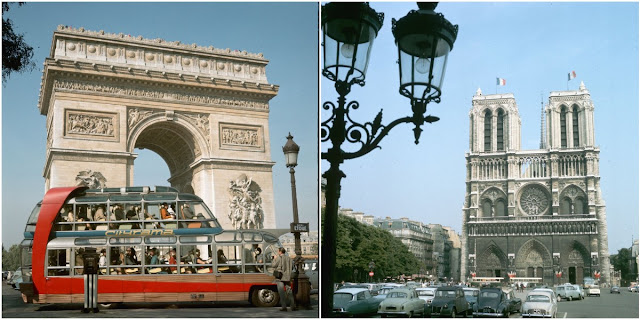
Post-war Paris brought a blossoming of culture and thought. The Nouvelle Vague transformed French cinema, young couturiers reinvigorated French fashion, existentialism flourished in literature and philosophy, and the city swung and swayed to a vibrant jazz and rock ’n’ roll scene.
In the middle of it all, was Paul Almasy. The well-traveled photojournalist, born in Hungary, had made Paris his hometown and spent his days and nights wandering its alleys, avenues, and after-hours bars. Through his photographs, we visit the embankment of the Seine and the old market halls, its music joints and glamorous cafes, but also the hidden backyards and artist’s studios.
Joining the ranks of Henri Cartier-Bresson and Robert Doisneau, Almasy is one of the great chroniclers of 1950s and 1960s Paris. This collection of his Paris photographs is a vivid and evocative portrait of the city in all its mid-century vibrancy and change.
Subscribe to continue reading
Become a paid subscriber to get access to the rest of this post and other exclusive content.
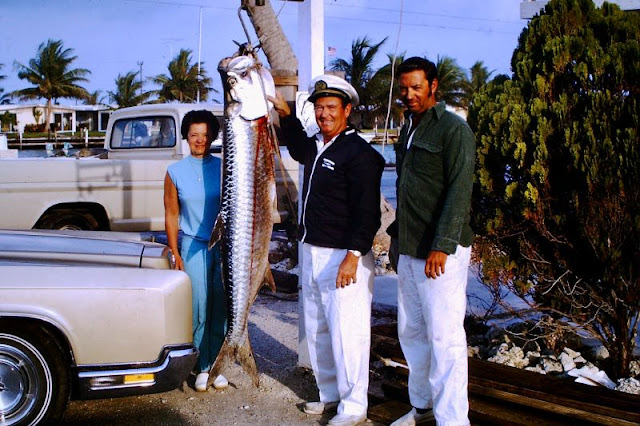
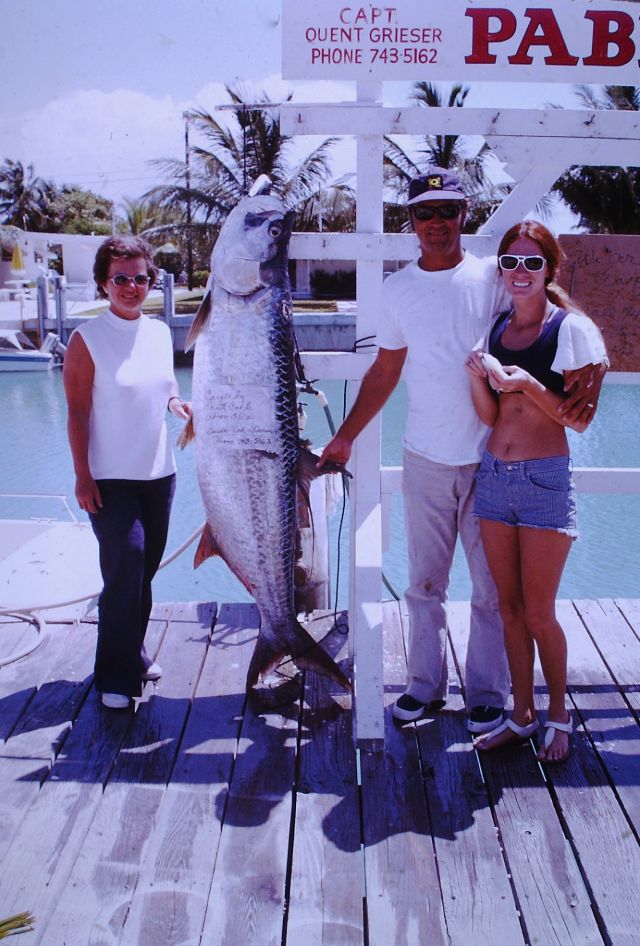
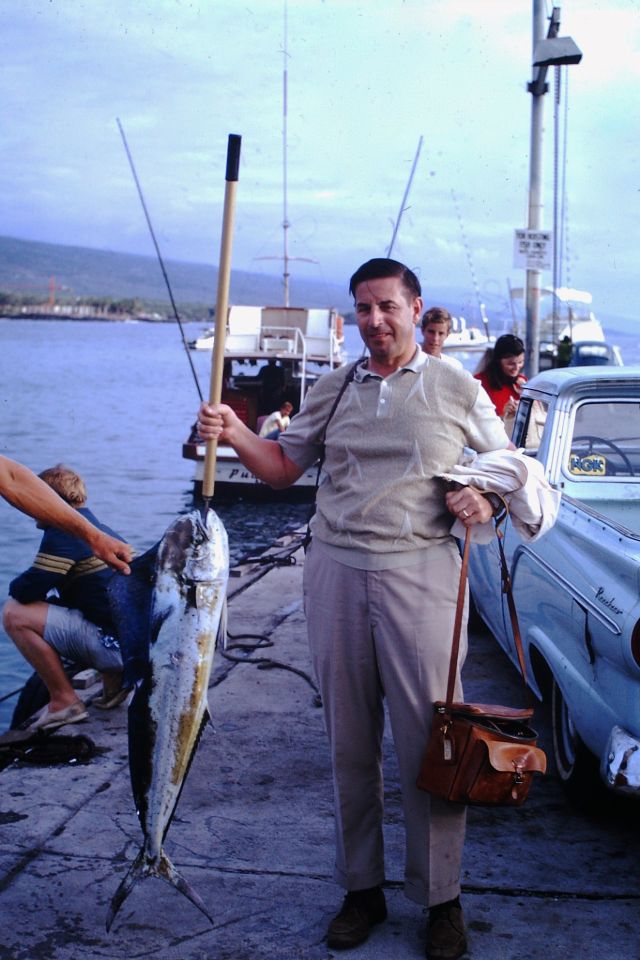
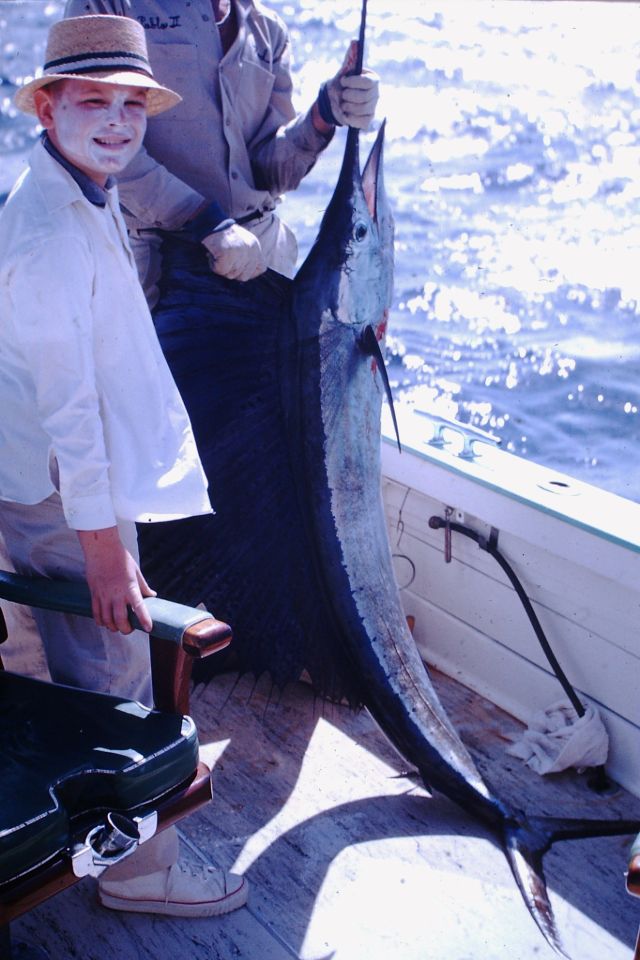
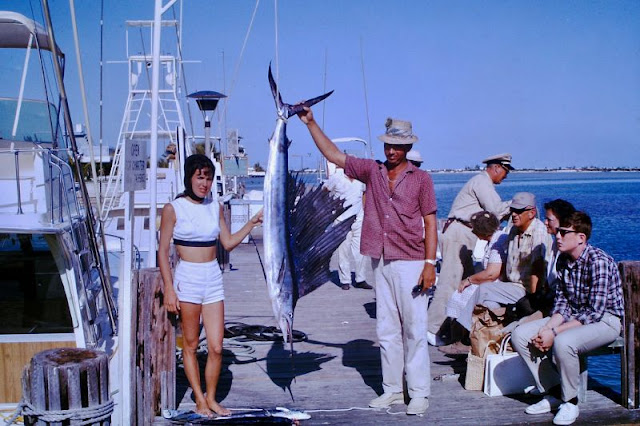
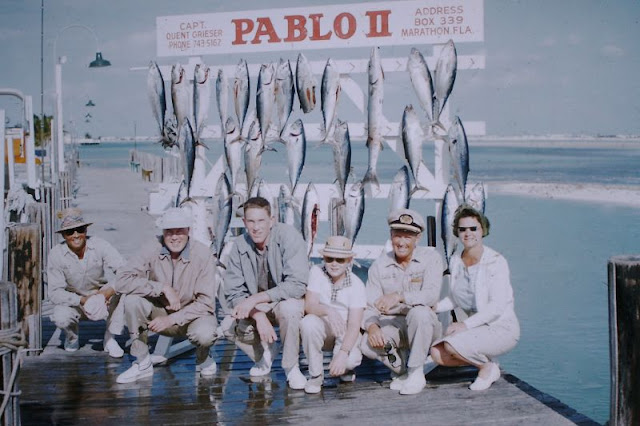
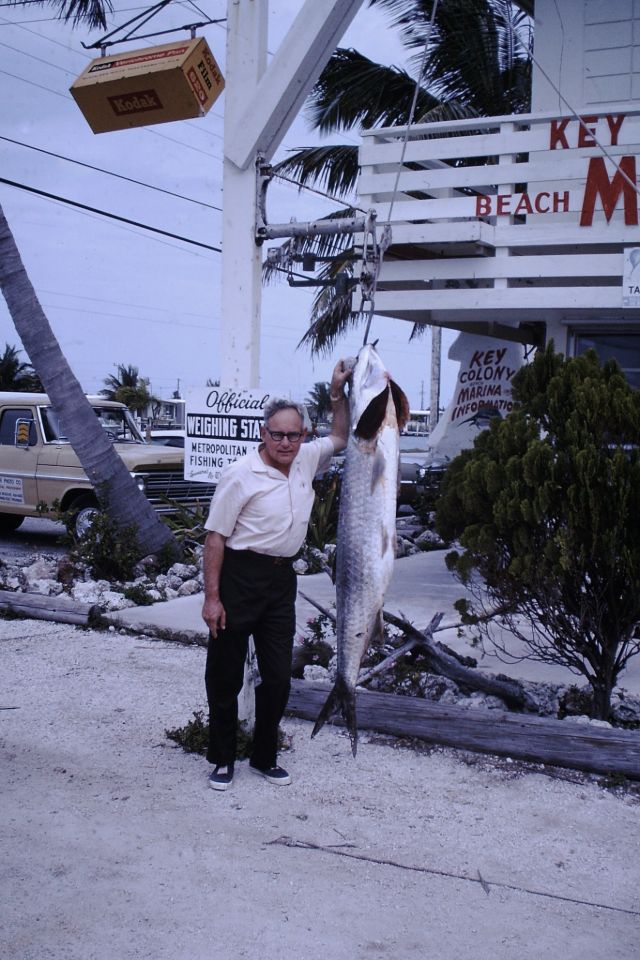
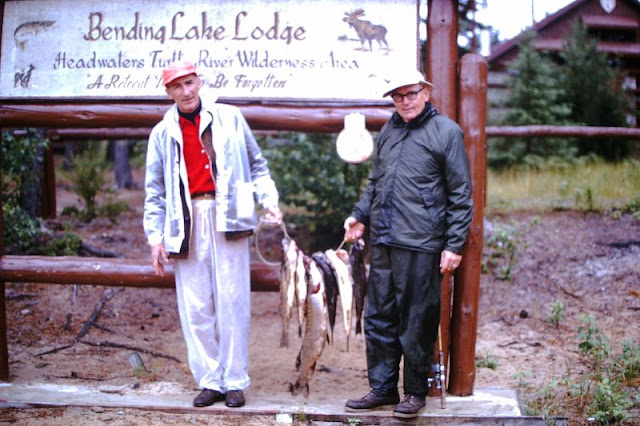
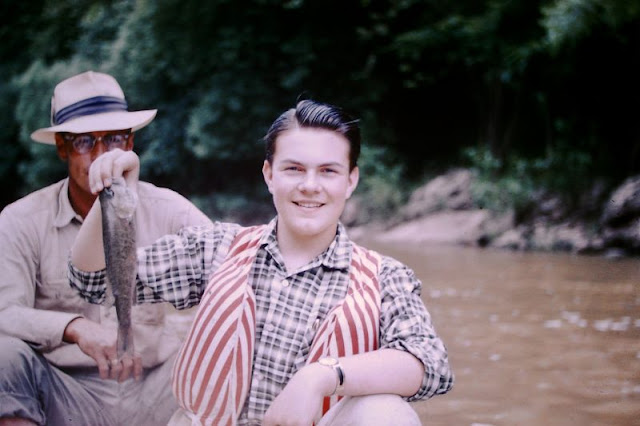
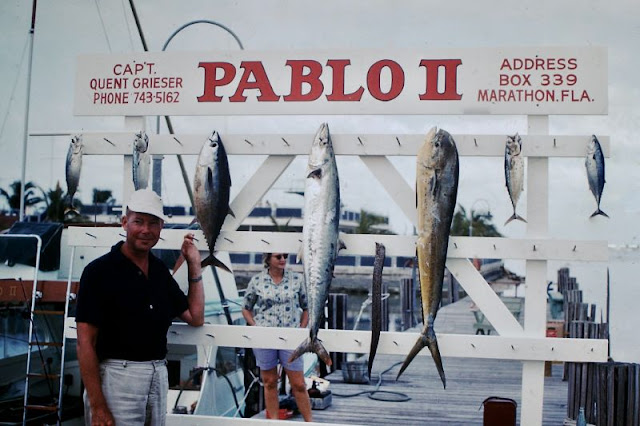
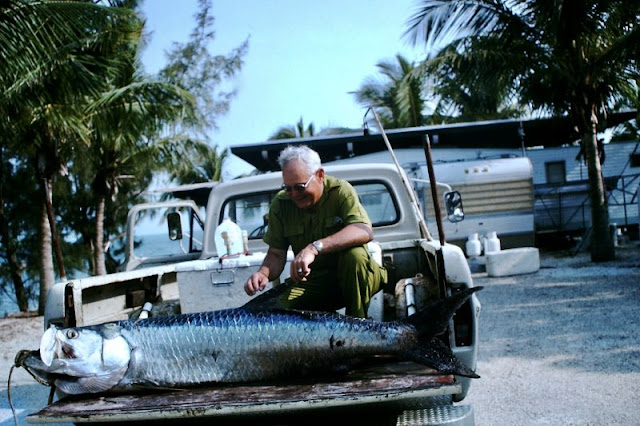
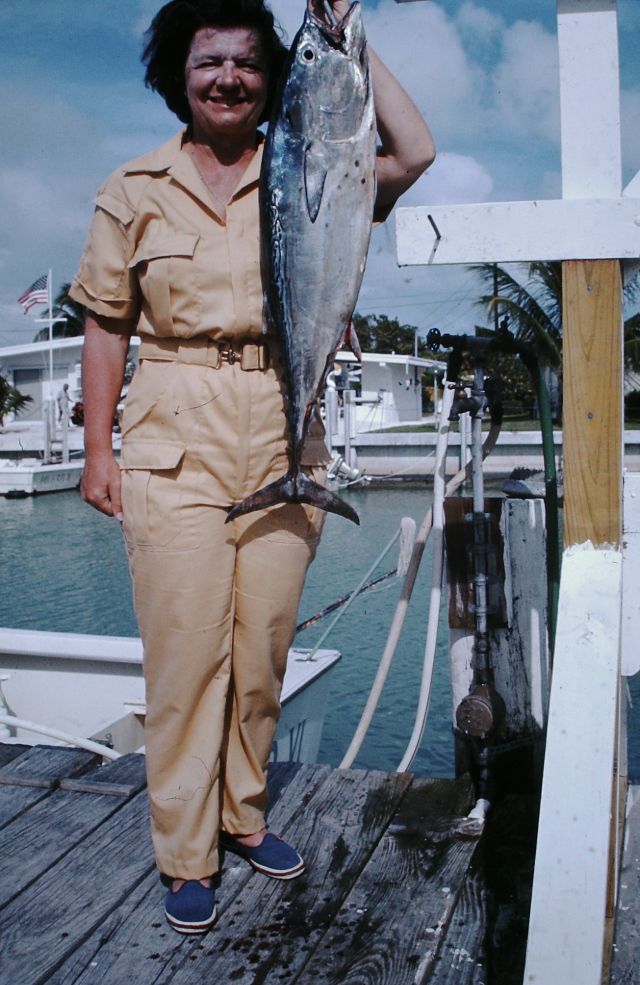
Fishing is an ancient practice that dates back to at least the beginning of the Upper Paleolithic period about 40,000 years ago, and became a popular recreational activity in the 19th century.
Since the 16th century, fishing vessels have been able to cross oceans in pursuit of fish, and since the 19th century it has been possible to use larger vessels and in some cases process the fish on board. Fish are normally caught in the wild. Techniques for catching fish include hand gathering, spearing, netting, angling and trapping.
The term fishing may be applied to catching other aquatic animals such as shellfish, cephalopods, crustaceans and echinoderms. The term is not usually applied to catching aquatic mammals, such as whales, where the term whaling is more appropriate, or to farmed fish.
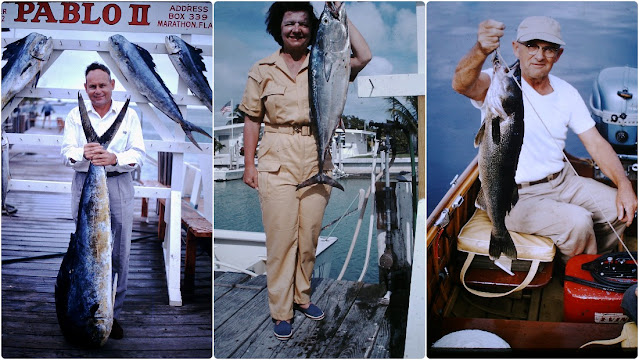
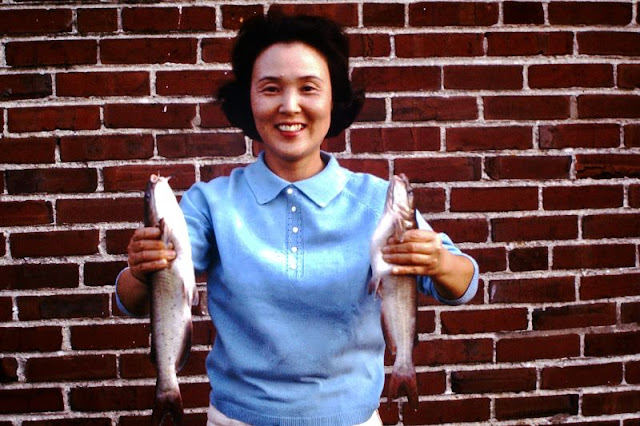
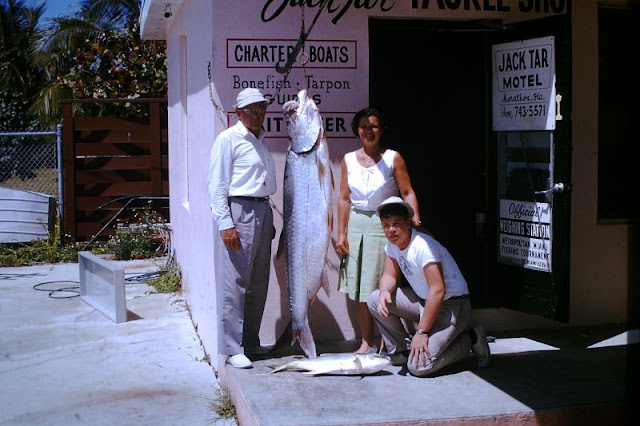
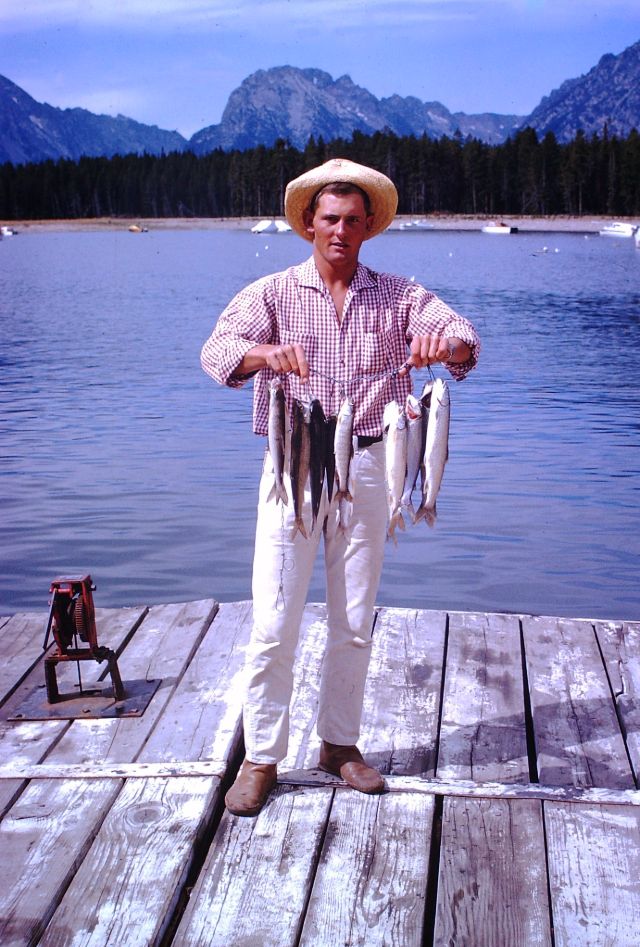
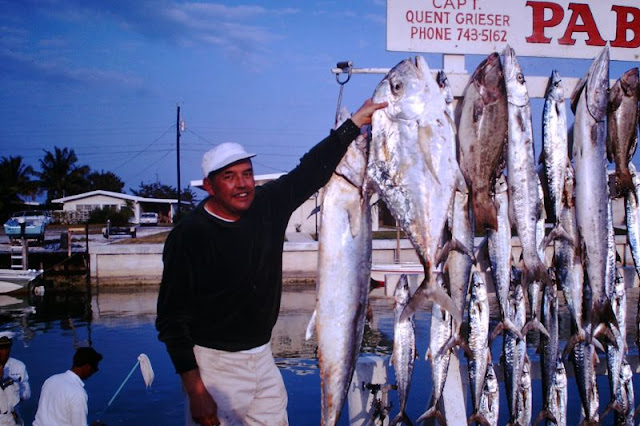
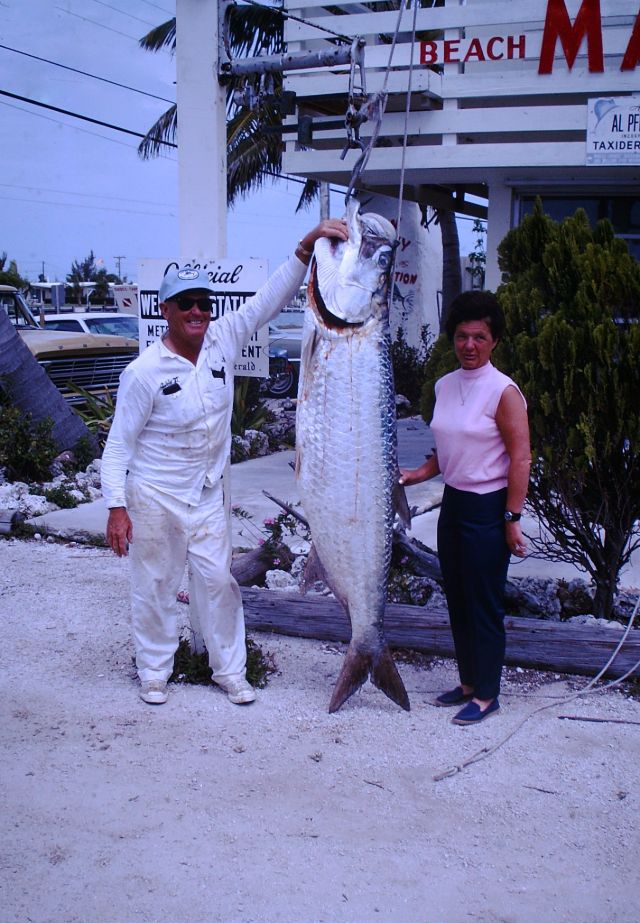
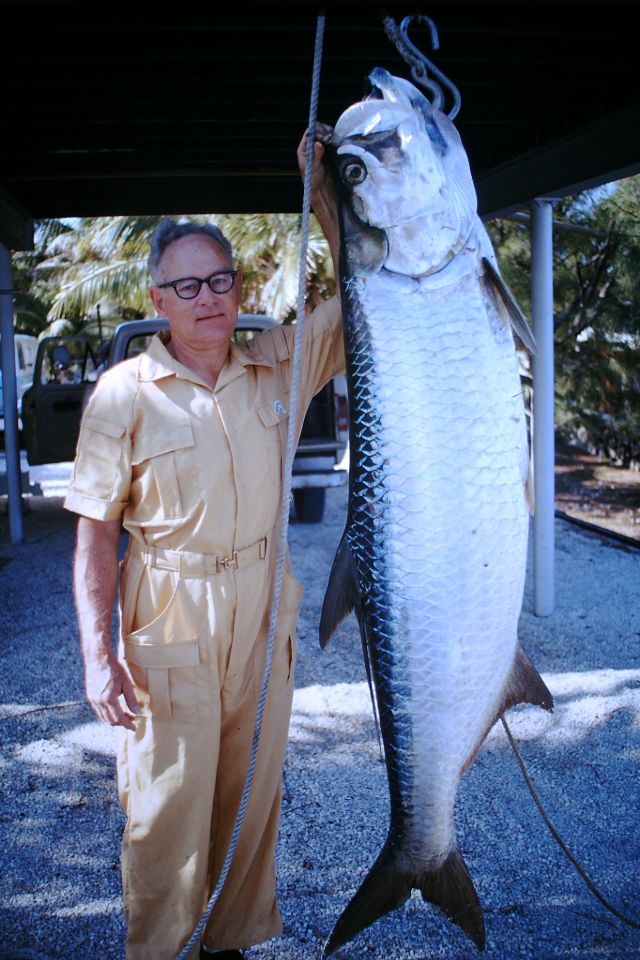
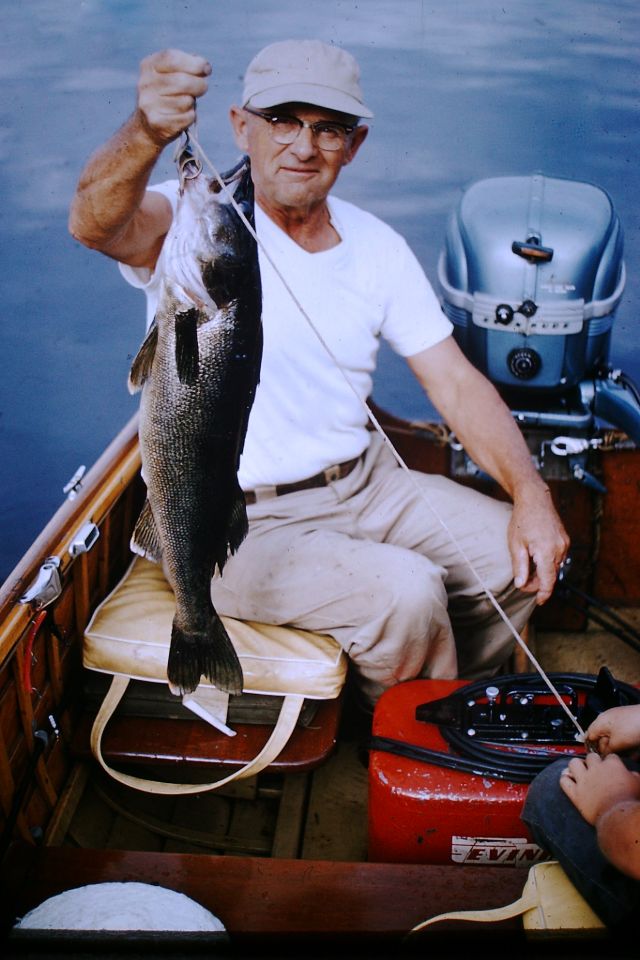
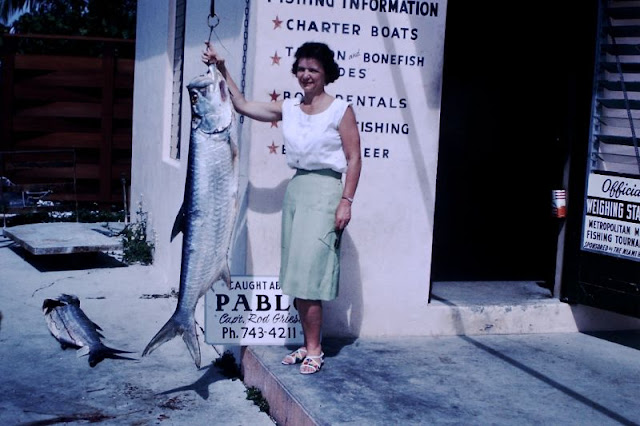
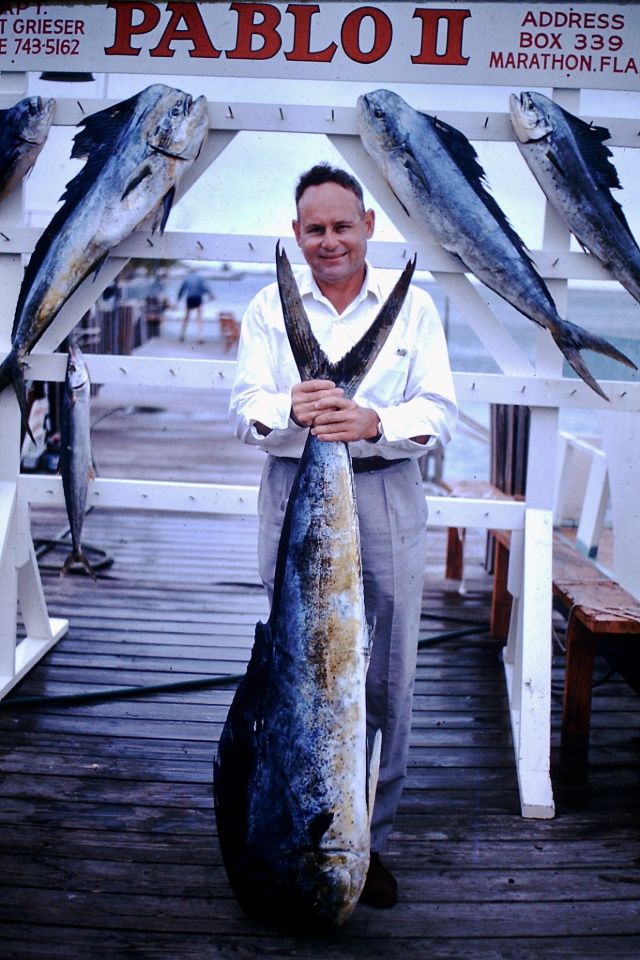
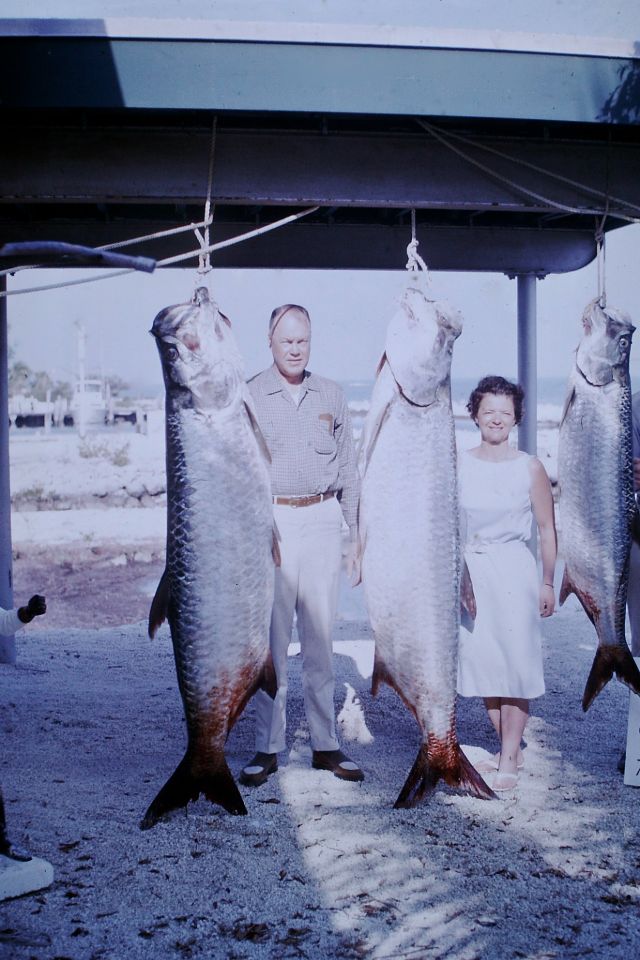
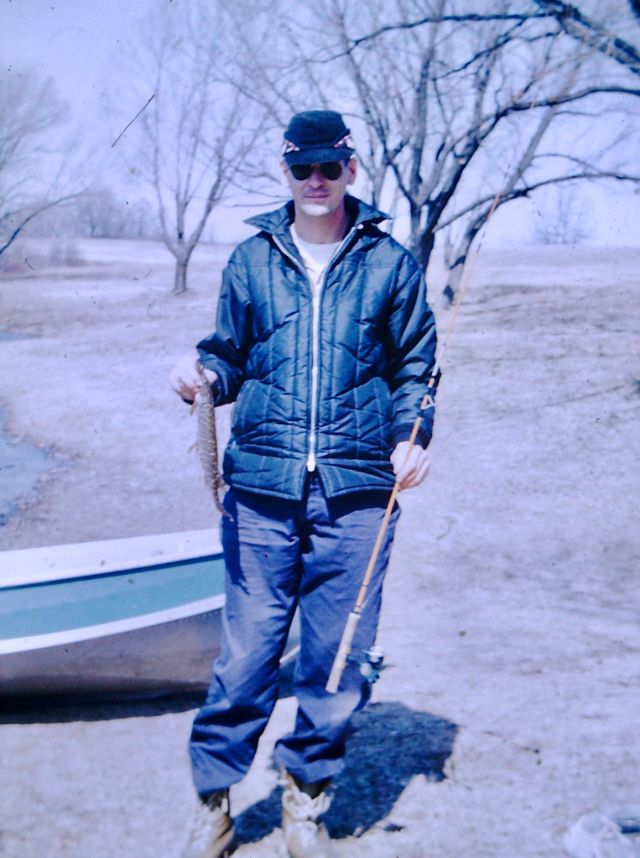
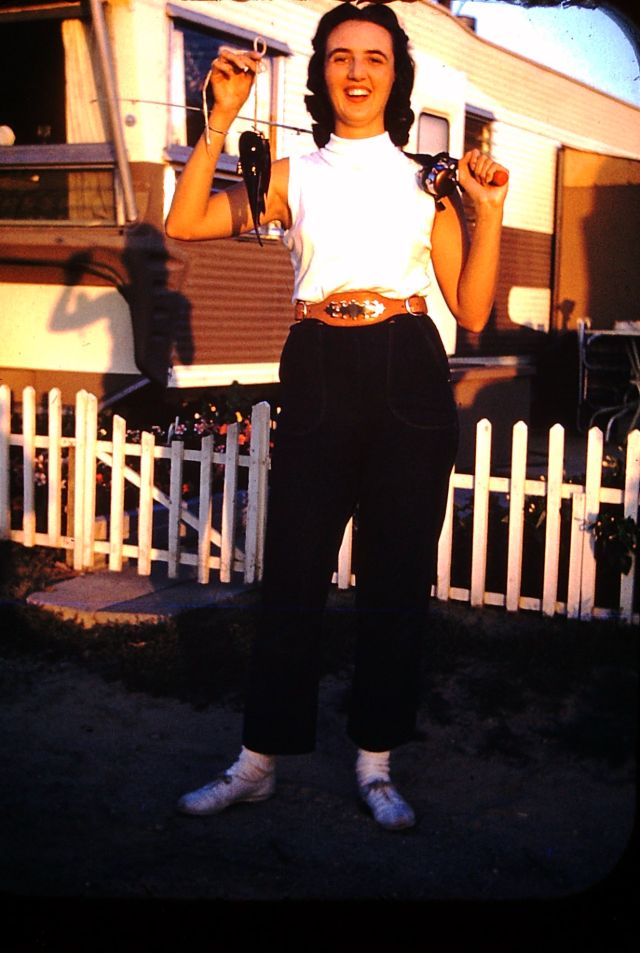
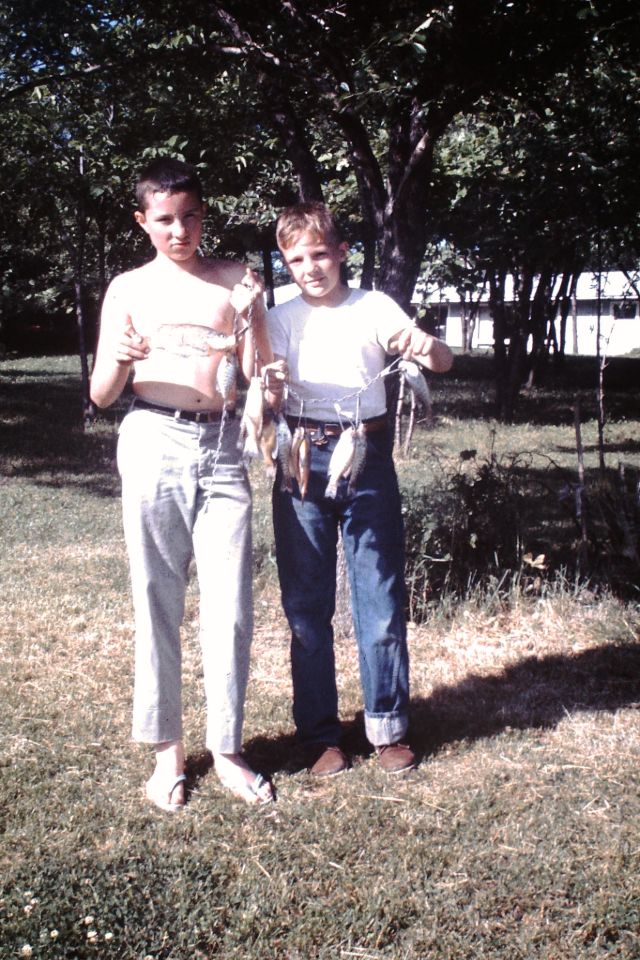
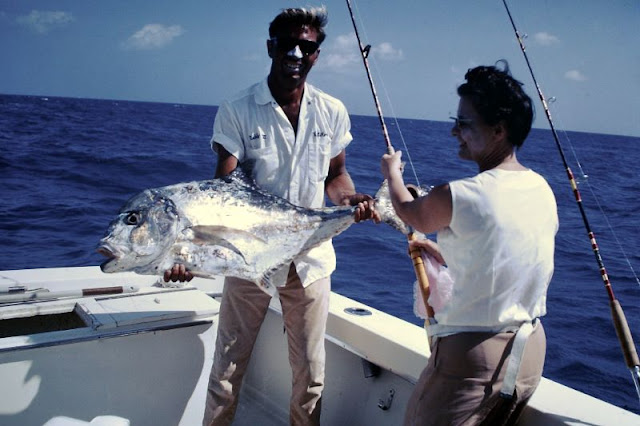
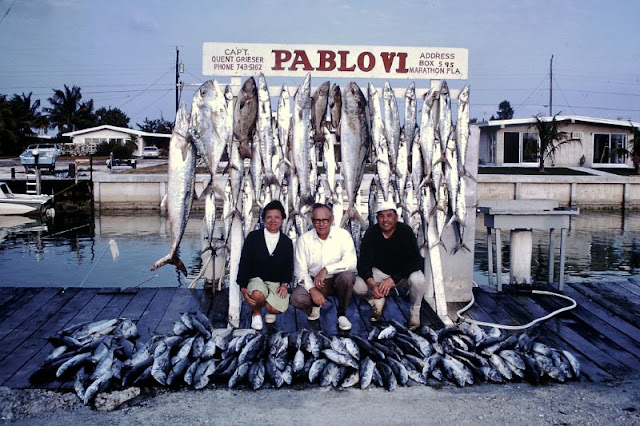
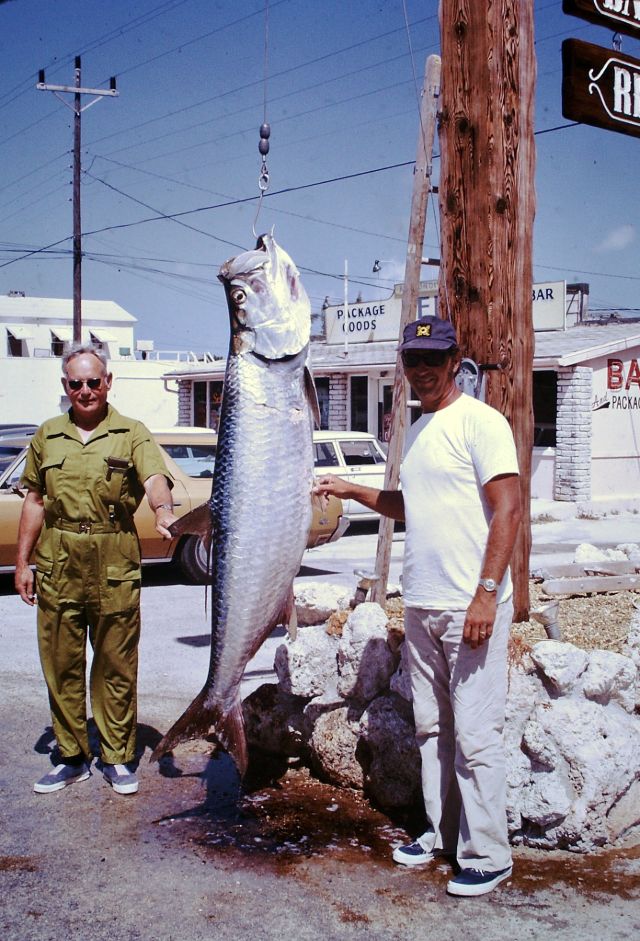
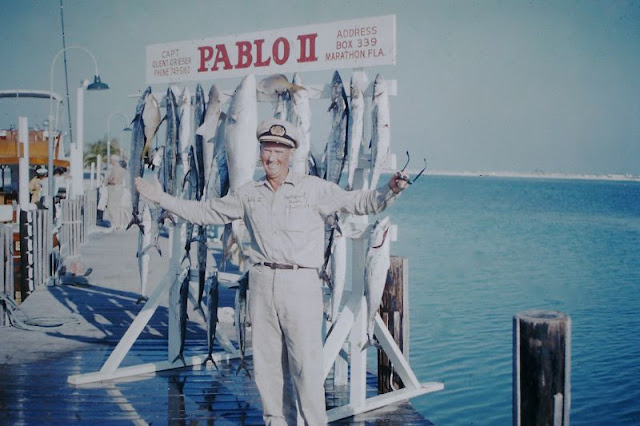
These vintage photos captured people proudly posing with fish in the 1960s.
Subscribe to Yesterday Today to receive daily updates in your email.
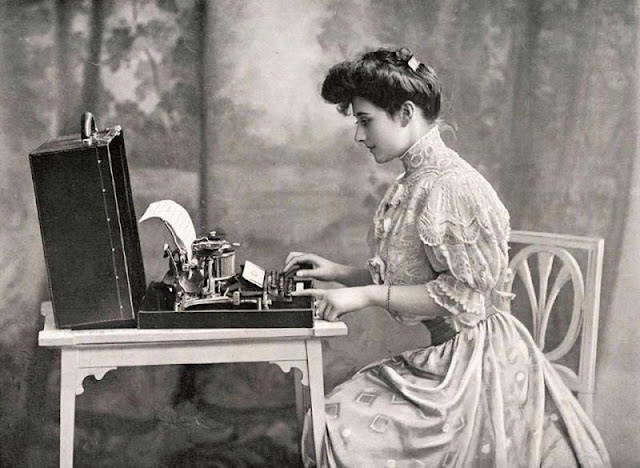
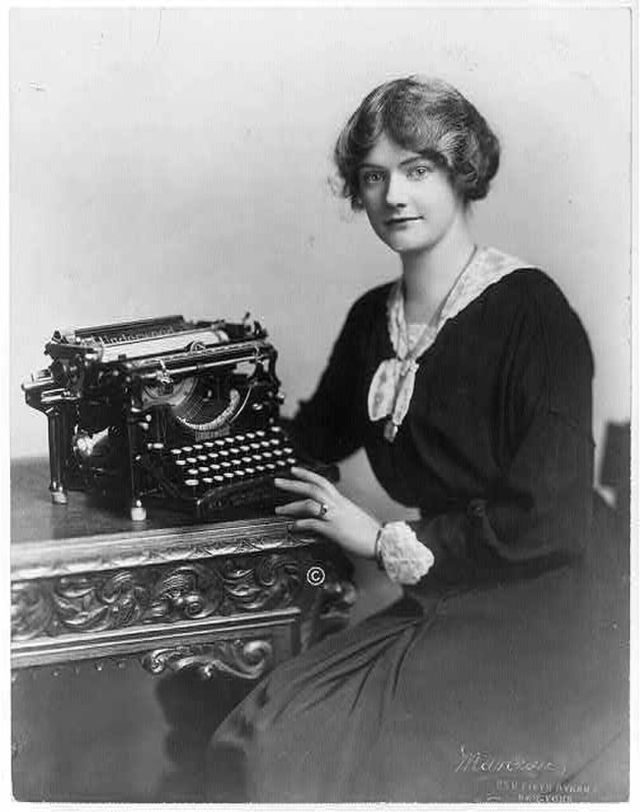
A typewriter is a mechanical or electromechanical machine for typing characters. Typically, a typewriter has an array of keys, and each one causes a different single character to be produced on paper by striking an inked ribbon selectively against the paper with a type element. At the end of the nineteenth century, the term ‘typewriter’ was also applied to a person who used such a device.
The first commercial typewriters were introduced in 1874, but did not become common in offices until after the mid-1880s. The typewriter quickly became an indispensable tool for practically all writing other than personal handwritten correspondence. It was widely used by professional writers, in offices, business correspondence in private homes, and by students preparing written assignments.
Typewriters were a standard fixture in most offices up to the 1980s. Thereafter, they began to be largely supplanted by personal computers running word processing software. Nevertheless, typewriters remain common in some parts of the world. The QWERTY keyboard layout, developed for typewriters in the 1870s, remains the standard for computer keyboards.
Before computer, here is a set of vintage photos that shows people from the past with their typewriters.
Subscribe to continue reading
Become a paid subscriber to get access to the rest of this post and other exclusive content.
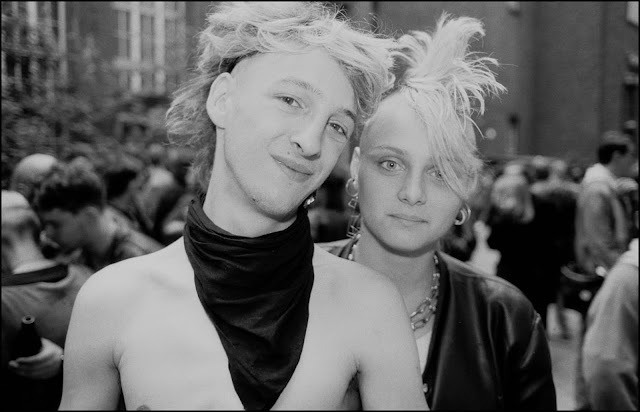
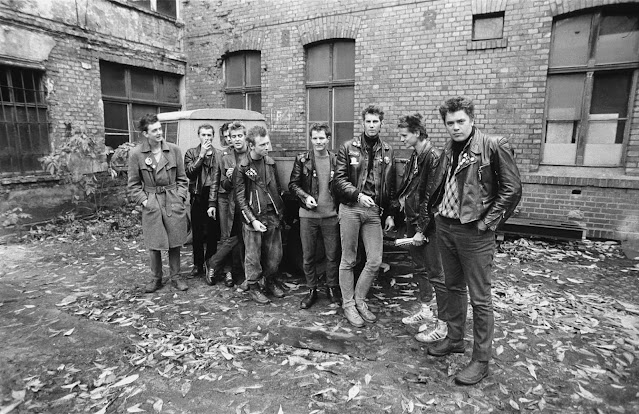
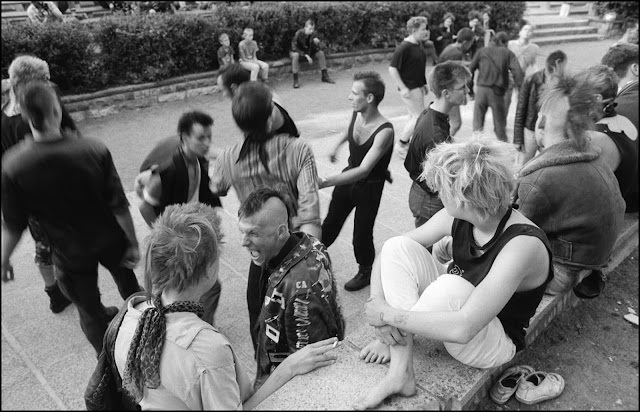
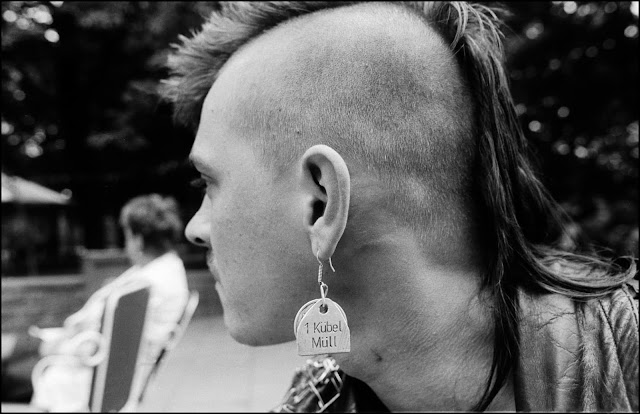
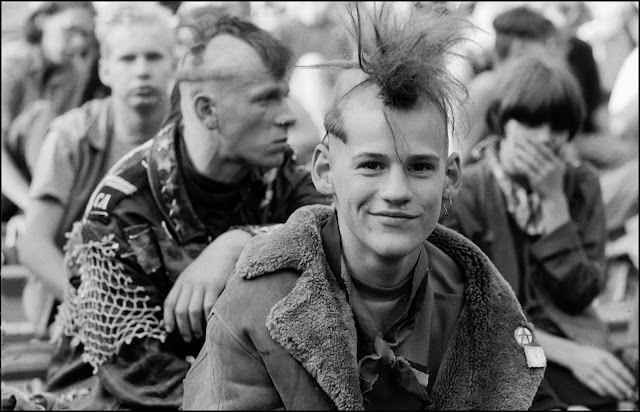
Beginning in the late 1970s and early 1980s there were new movements within the German punk scene, led by labels like ZickZack Records, from Hamburg. It was during this period that the term Neue Deutsche Welle (New German Wave) was first coined by Alfred Hilsberg, owner of ZickZack Records. Many of these bands played experimental post-punk, often using synthesizers and computers.
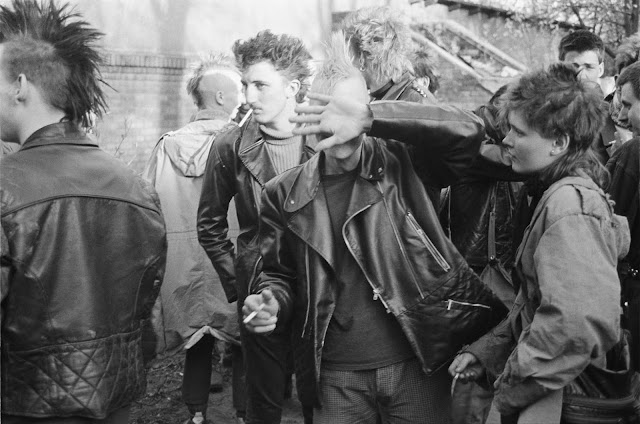
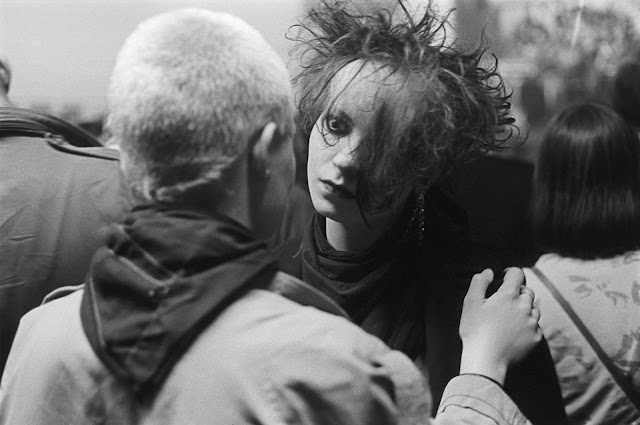
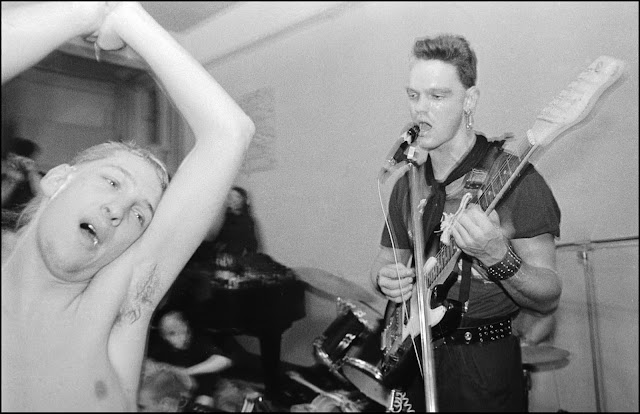
In the 1980s, many new punk bands became popular in the scene and developed the so-called “Deutschpunk” style, which is not a generic term for German punk rock, but an own style of punk music that included quite primitive songwriting, very fast rhythms and politically radical left-wing lyrics, mostly influenced by the Cold War.
Because of repressions by the state of East Germany, there was only a secret punk scene that could develop there. One of the most popular bands were probably Schleim-Keim, who also got popular in West Germany. Only in the last years of the German Democratic Republic (GDR) did the government allow some bands like Feeling B or Die Skeptiker from East Berlin, but those bands were criticized in the scene for cooperating with the government. Some of these bands applied for and received “amateur licenses” to allow them to perform in state-sanctioned venues, while still maintaining connections with the underground East German punk community.
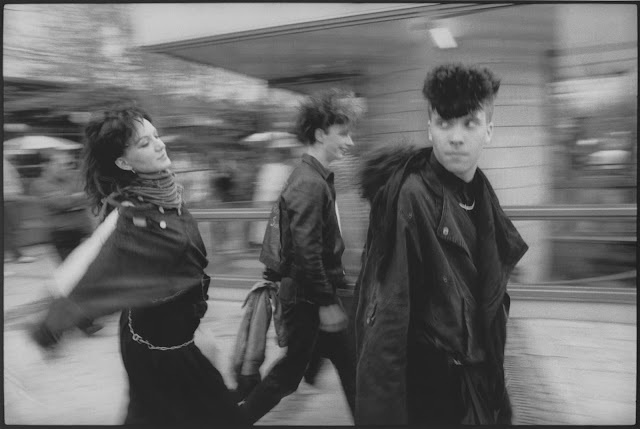
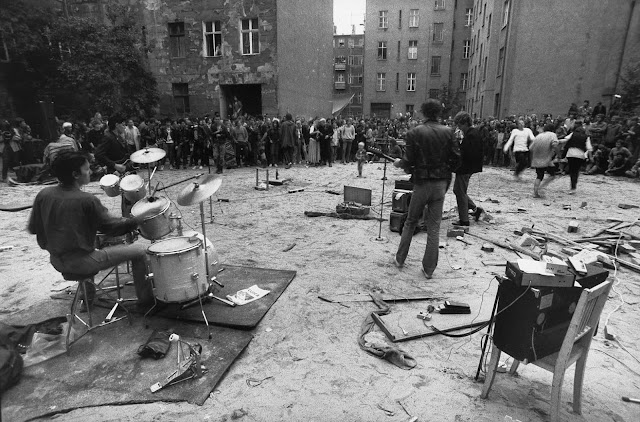
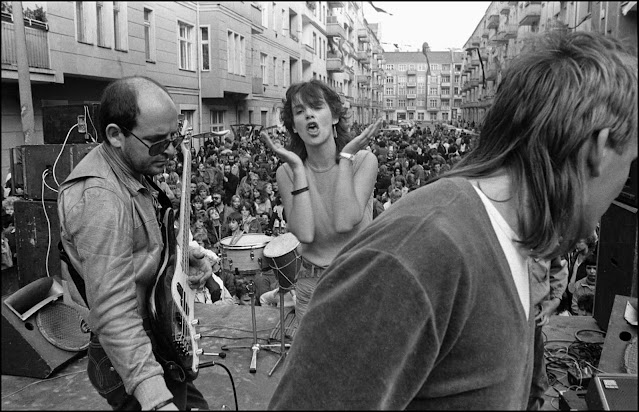
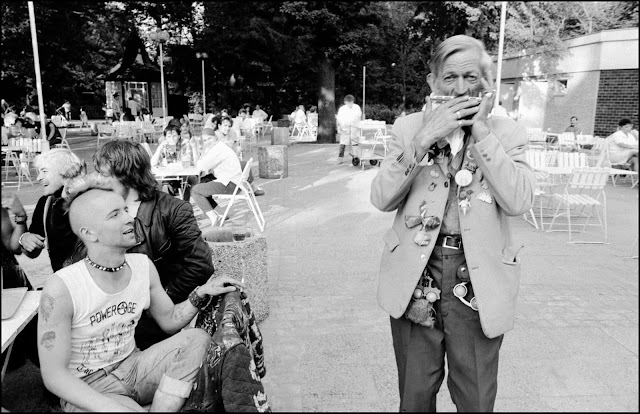
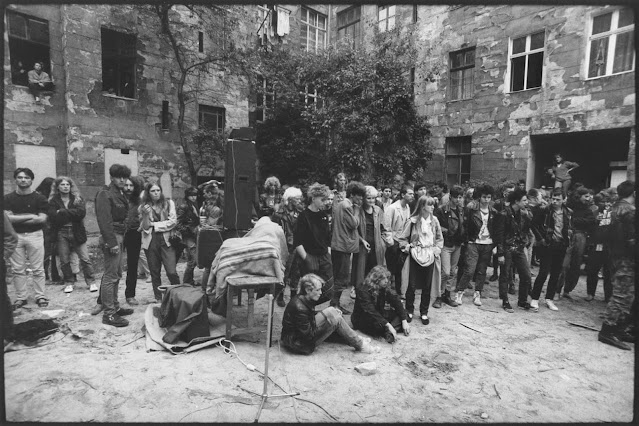
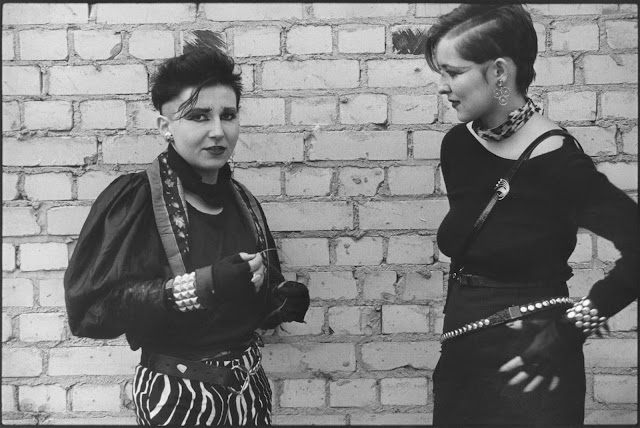
Harald Hauswald’s pictures show everyday life in the GDR in all its facets, between SED dictatorship and underground opposition. Hauswald, who was born in Radebeul, went to East Berlin himself after an apprenticeship as a photographer and became part of the scenes he documented there. With all clarity, his photographs, taken from the late 1970s to the mid-1990s, articulate the dignity of those portrayed, the transformation of East Berlin’s urban space, and the work of oppositional groups and youth cultures in an East German republic marked by decay.
Punks in East-Berlin, 1985
Alternative church congress (church from below), Berlin-Friedrichshain, 1987
Punkrock concert in a church hall of the protestant church, Karl-Marx-Stadt, Saxony, 1985
Alexanderplatz, Berlin-Mitte, 1988
Backyard concert in the Schliemannstrasse with the band Rosa Extra, Berlin, 1982
Early punks, Kastanienallee, Berlin, 1982
Rock concert at the open-air theatre, Berlin-Weissensee, 1990
Weinbergsweg in Berlin-Mitte, 1988
Rock concert at the open-air theater, Berlin-Weissensee, 1990
The band “itching”, street party in front of the youth club “impulse”, Berlin, 1981
Kurt Wanski, In the zoo, Berlin-Friedrichsfelde, 1988
Backyard concert in the Schliemannstrasse with the band “Rosa Extra”, Berlin, 1985
Robert Montgomery (born Henry Montgomery Jr.; May 21, 1904 – September 27, 1981) was an American actor, director, and producer. He began his acting career on the stage, but was soon hired by MGM. Initially assigned roles in comedies, he soon proved he was able to handle dramatic ones, as well. He appeared in a wide variety of roles, such as the weak-willed prisoner Kent in The Big House (1930), the psychotic Danny in Night Must Fall (1937), and Joe, the boxer mistakenly sent to Heaven in Here Comes Mr. Jordan (1941). The last two earned him nominations for the Academy Award for Best Actor.
During World War II, he drove ambulances in France until the Dunkirk evacuation. When the United States entered the war on December 8, 1941, he enlisted in the Navy, and was present at the invasion at Normandy. After the war, he returned to Hollywood, where he worked in both films, and later, in television. He was also the father of actress Elizabeth Montgomery.
Subscribe to continue reading
Become a paid subscriber to get access to the rest of this post and other exclusive content.
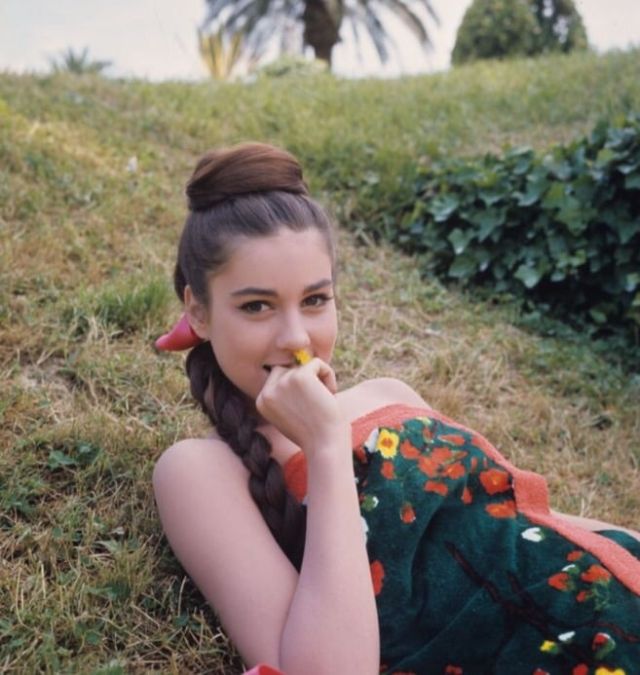
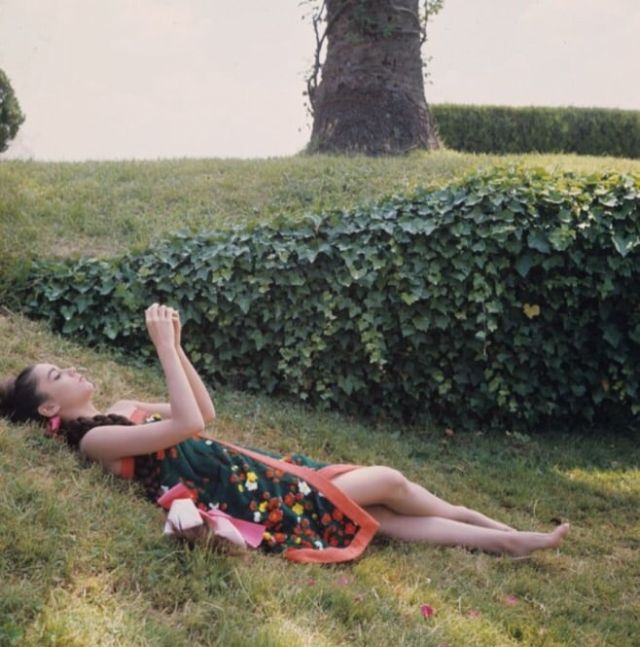
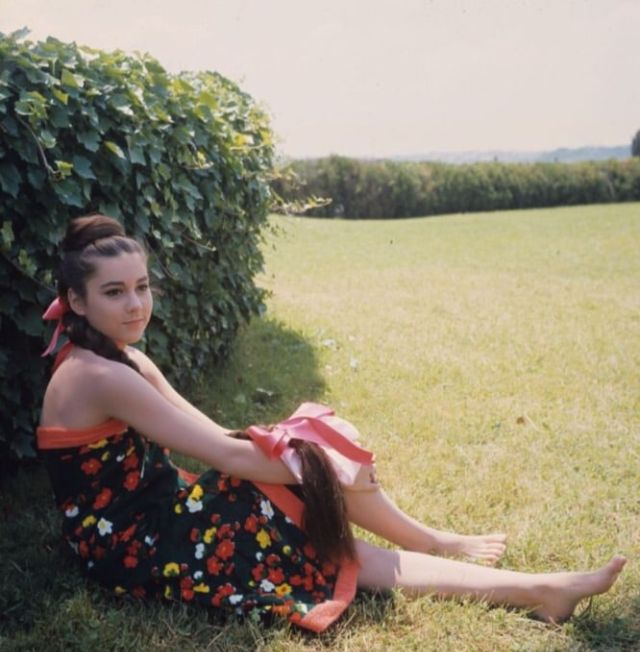
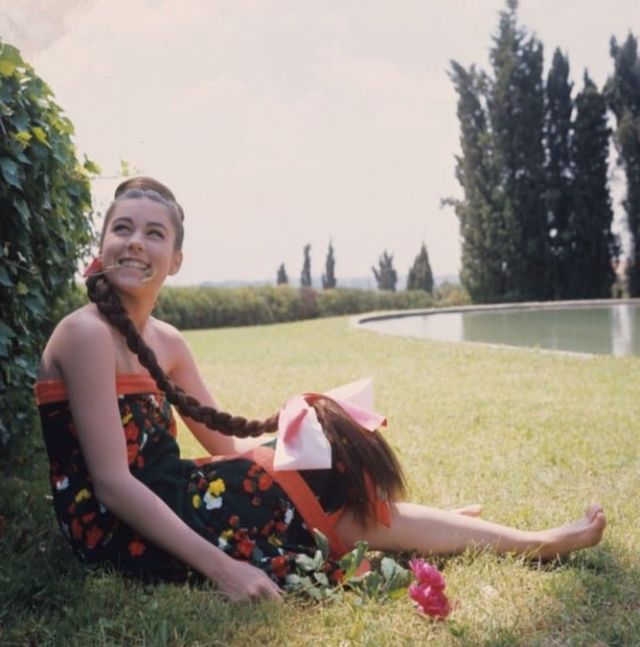
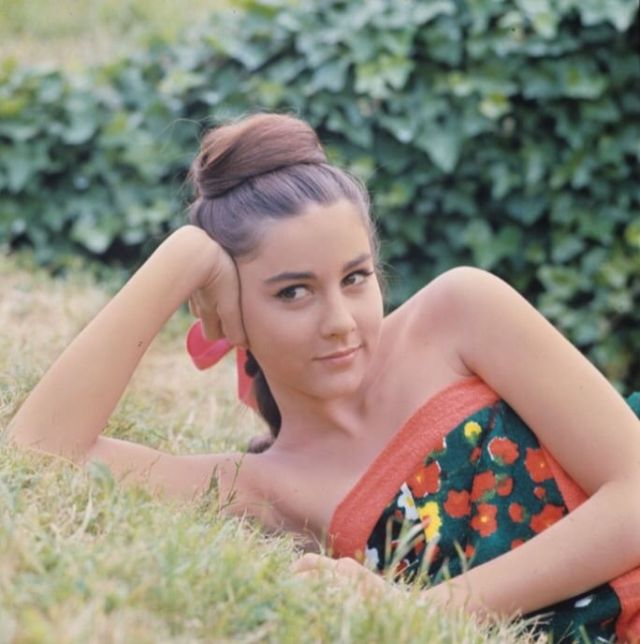
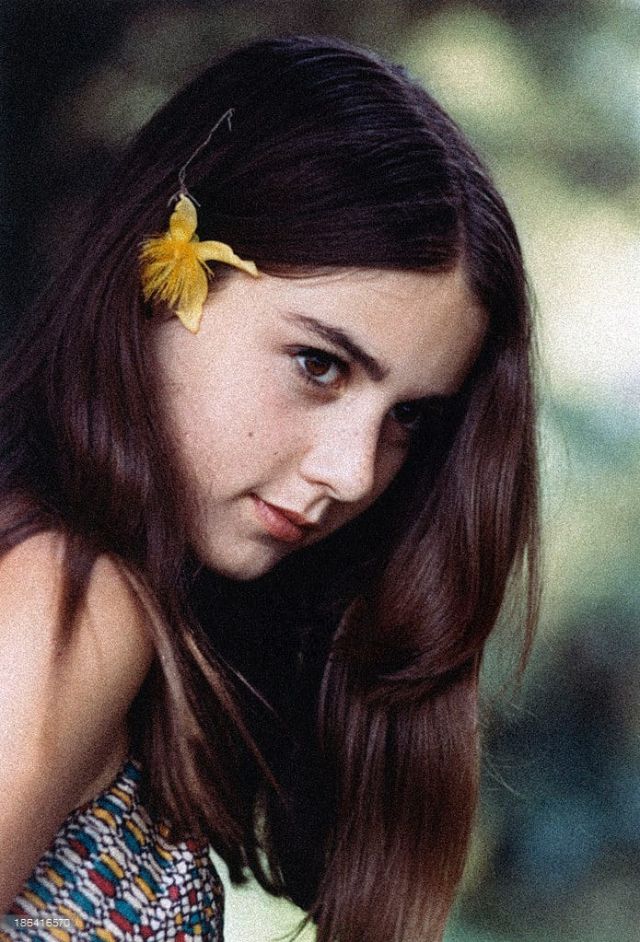
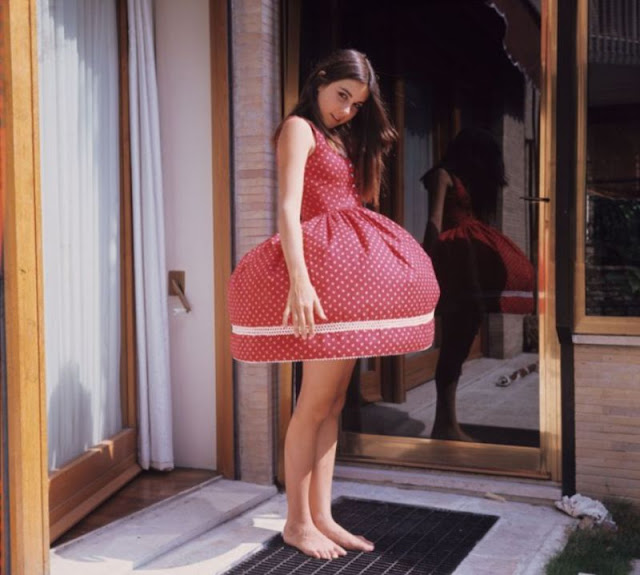
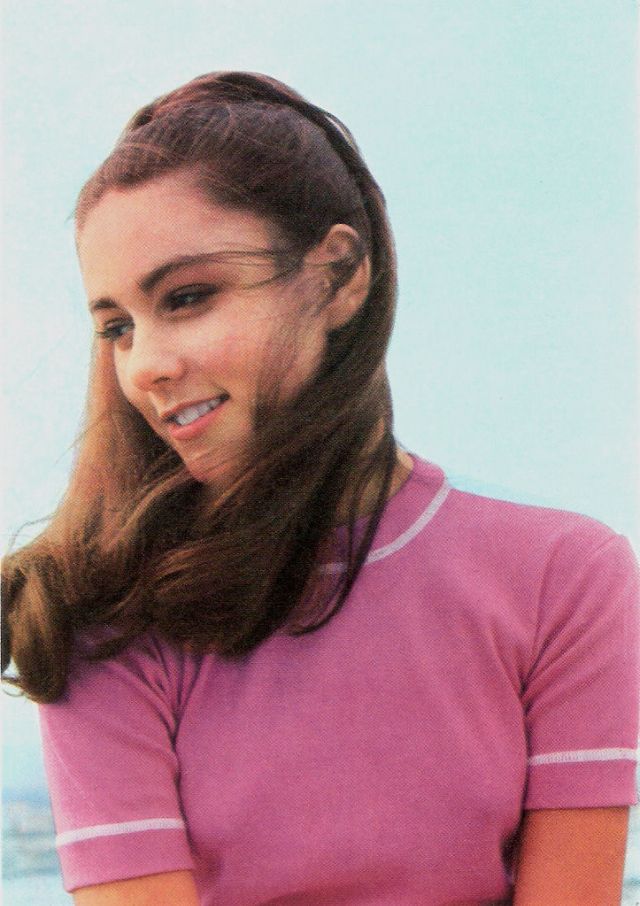
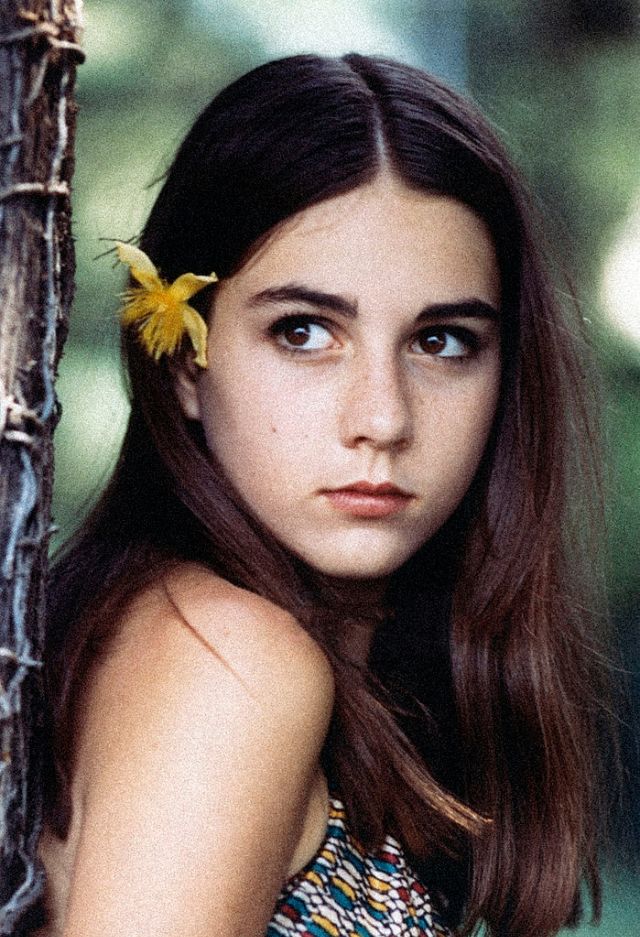
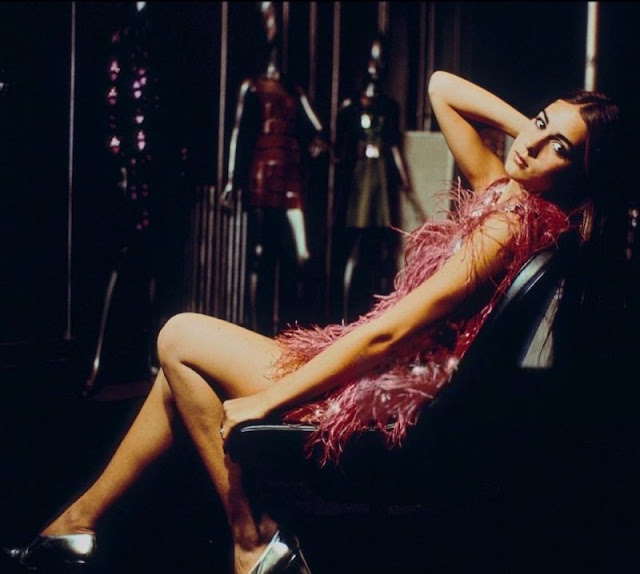
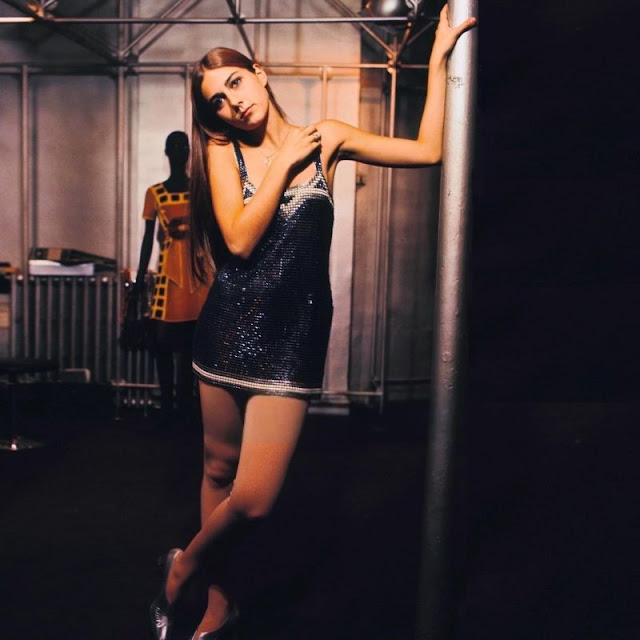
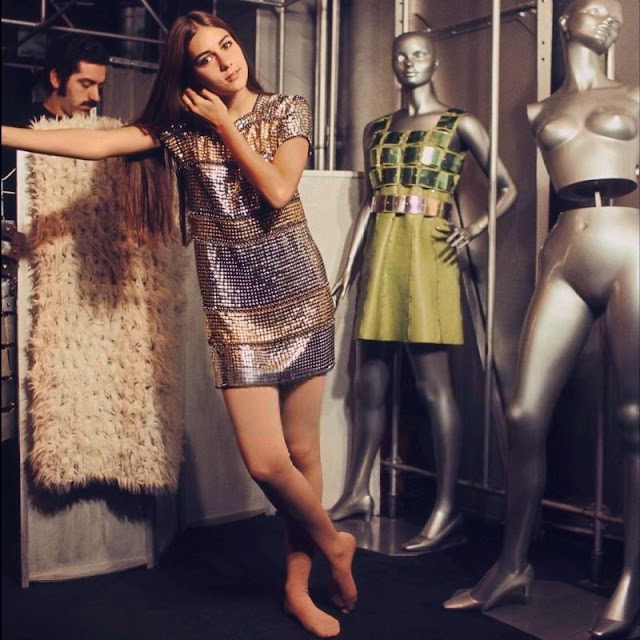
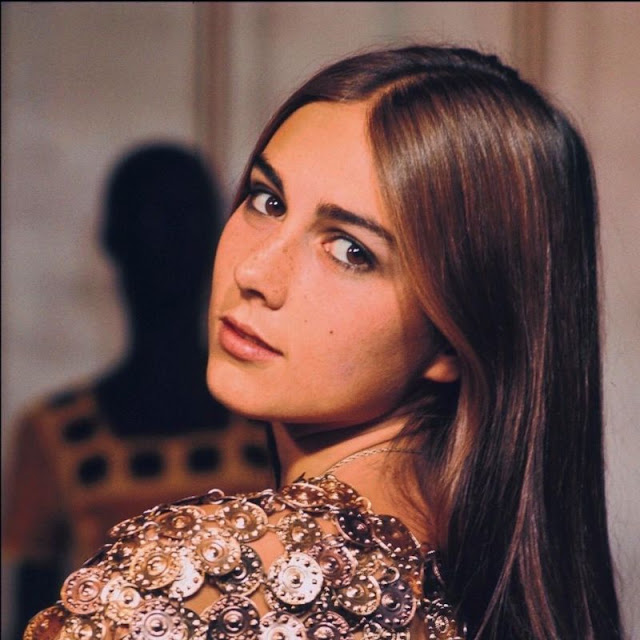
Born 1951 in Los Angeles, California, American actress and singer Romina Power achieved international success as one half of the music duo Al Bano and Romina Power, together with her then husband Albano Carrisi. She is the daughter of Tyrone Power and actress Linda Christian.
During the height of her career, Power’s beauty was the subject of wide, public appreciation. So much so that Sir Terry Wogan of BBC confessed to allocating points to Italy at Eurovision Song Contest 1985 before hearing their entry song due to Power’s appearance.
To date, Al Bano and Romina Power have sold over 165 million albums worldwide with Felicita remaining an iconic song in the history of music. Her most famous performances include singing at Maracanã Stadium for Pope John Paul 2 in 1997, two performances at the Eurovision Song Contest in 1976 and 1985 as well as numerous appearances at San Remo Festival.
In 1983, she declined the role of Deborah and starring along Robert De Niro in Once Upon a Time in America, which was a privately dedicated offer by the director Sergio Leone.
Power currently resides in Los Angeles, California. Despite her international success, Power never achieved as much notability in her home country, the United States.
Take a look at these vintage photos to see the beauty of a very young Romina Power in the 1960s.
Subscribe to Yesterday Today to receive daily updates as to new photos.
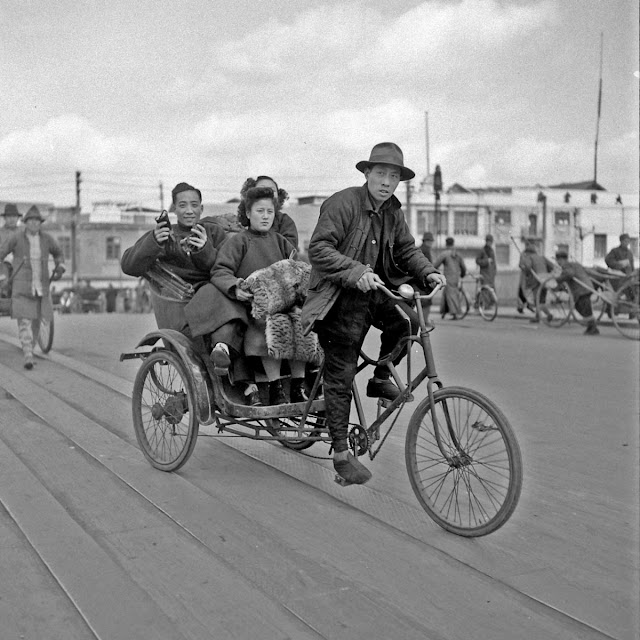
“A great, wicked and quite extraordinary city” was how, in 1947, LIFE described Shanghai. In 1947, four million people had made the City their residence (today, that number is 26 million). It seemed that at any one time, a very substantial proportion of the population was on the Shanghai streets.
“The traffic has become a monstrous, screaming blend of rickshaws, coolie-powered push carts, limousines, three-wheeled pedicabs, jeeps and six-ton trucks,” exclaimed LIFE.
These vintage photographs, taken by Mark Kauffman (1921-1994), depict some of the many and various human-powered vehicles to be found on the streets of Shanghai in 1947.
Kauffman was an award-winning photographer for LIFE magazine. At 17, he became the youngest photographer ever to shoot a cover for the magazine, when he did a photo portrait of Eleanor Roosevelt. He was a staff photographer for over 30 years, covering events in the United States, Europe and the Far East. He received the White House News Photographers’ Grand Award in 1953. He later served as director of photography for Playboy magazine for five years and was a professor of photography at California Polytechnic State University.
Subscribe to continue reading
Become a paid subscriber to get access to the rest of this post and other exclusive content.