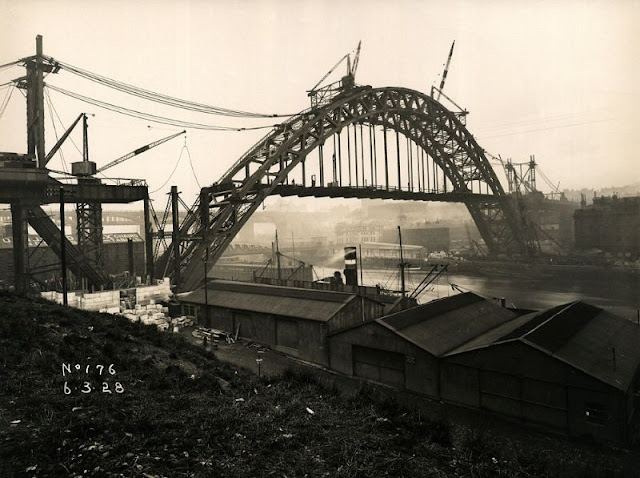
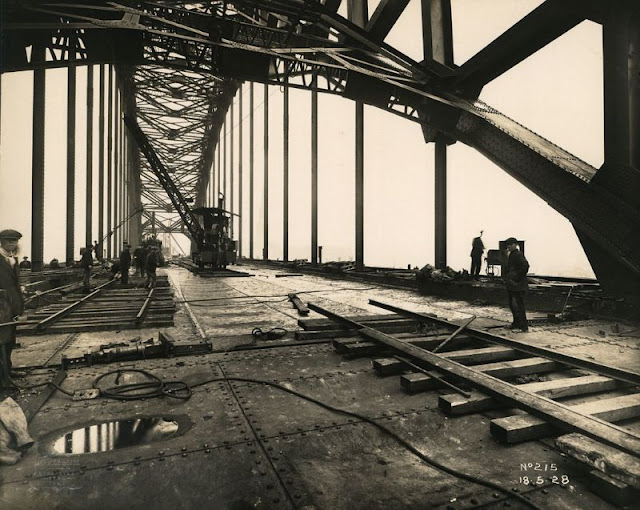
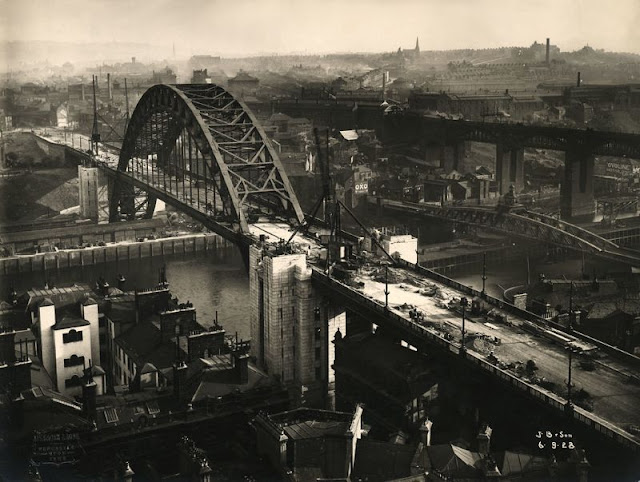
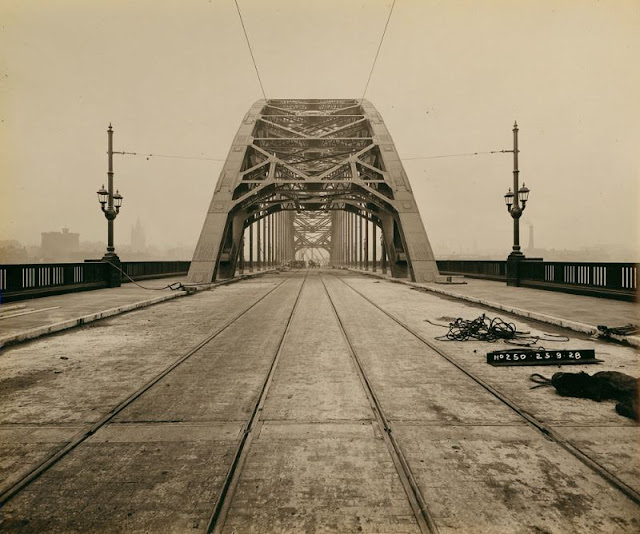
The Tyne Bridge is a through arch bridge over the River Tyne in North East England, linking Newcastle upon Tyne and Gateshead. The bridge was designed by the engineering firm Mott, Hay and Anderson, who later designed the Forth Road Bridge, and was built by Dorman Long and Co. of Middlesbrough.
The bridge was officially opened on 10 October 1928 by King George V and has since become a defining symbol of Tyneside. It is ranked as the tenth tallest structure in the city, and is one of the North East’s most iconic landmarks.
These photographs from Tyne & Wear Archives & Museums were taken by James Bacon & Sons of Newcastle and document its construction from March 1927 to October 1928. They belonged to James Geddie, who was Chief Assistant Engineer on the construction of the Bridge with Dorman, Long & Co. Ltd. of Middlesbrough.
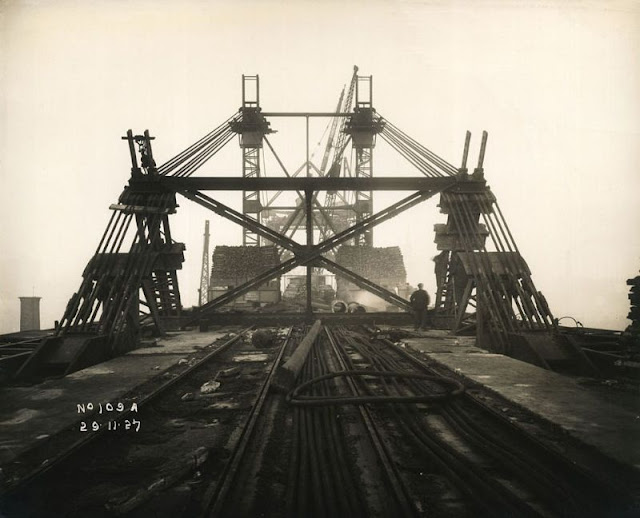
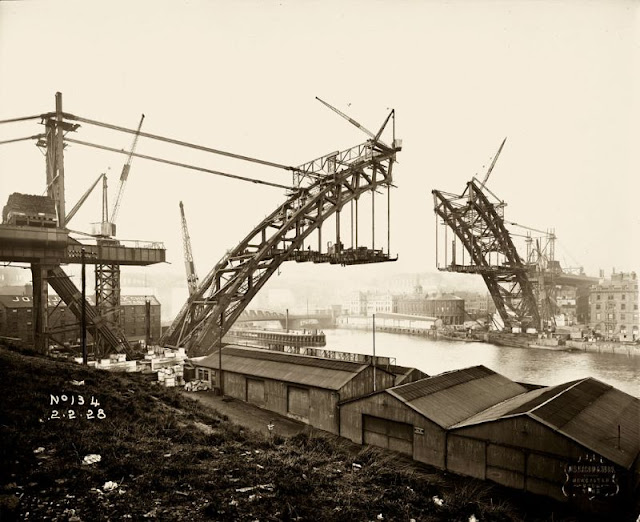
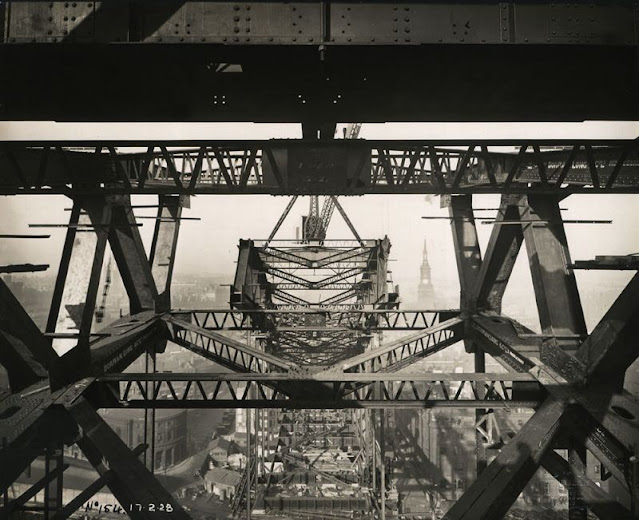
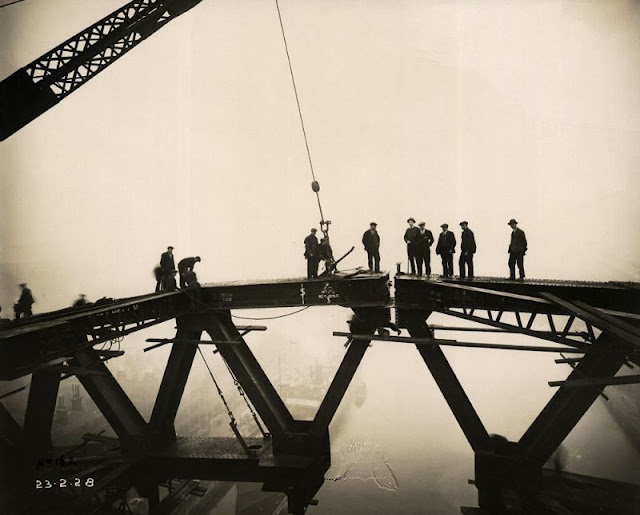
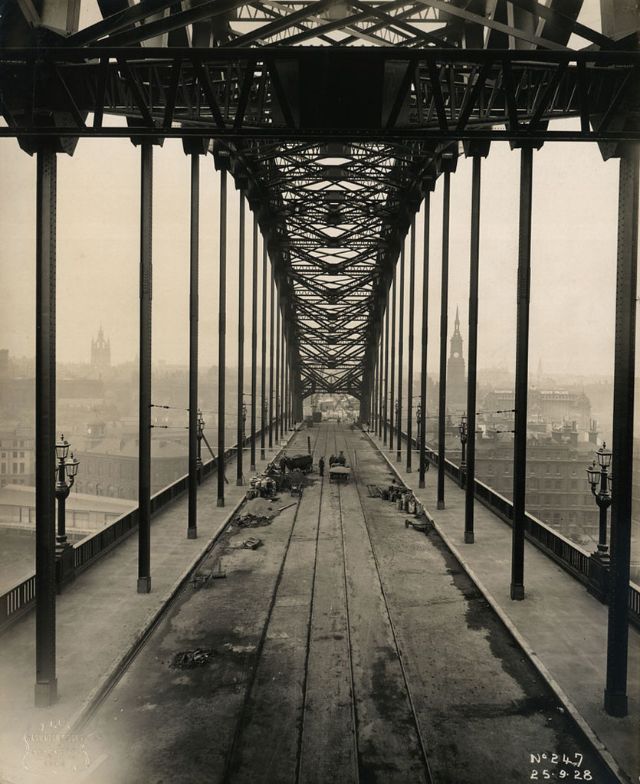
View of the Tyne Bridge in the very early stages of construction, looking from Newcastle upon Tyne over towards Gateshead, March 22, 1927Work on the Tyne Bridge arch underway. The first sections of steelwork rise over Hillgate Quay, Gateshead, August 10, 1927View of support mast and cables holding the Tyne Bridge in place as it is constructed, November 29, 1927View through the girders from the Gateshead side of the Tyne Bridge to the Newcastle side, January 27, 1928View of progress with the Tyne Bridge, February 2, 1928, showing the two halves getting closer togetherView of the Tyne Bridge from Gateshead, February 2, 1928, showing the two halves getting closer togetherView of the Newcastle side of the Tyne Bridge captured during its construction, February 2, 1928View of the Tyne Bridge captured from the Newcastle side during its construction, February 15, 1928Bracing between the Tyne Bridge arches, February 17, 1928The Tyne Bridge arch is nearly complete as a girder is lowered into place above the River Tyne, February 23, 1928An historic moment as the Newcastle and Gateshead sides of the Tyne Bridge meet, February 23, 1928Steel erectors, riveters and crane drivers perch on a 20-ton capacity crane to mark the completion of the Tyne Bridge arch, February 23, 1928Flags fly above the Tyne Bridge to celebrate the completion of its arch, February 27, 1928Construction staff of the Tyne bridge, employed by Dorman Long & Co. Ltd, March 2, 1928View along the Tyne Bridge looking towards Newcastle, as work on its construction continues, March 6, 1928View of the Tyne Bridge from Gateshead, as work on its construction continues, March 6, 1928View of the Tyne Bridge from the High Level Bridge, March 6, 1928View along the Tyne Bridge as work on its roadway continues, May 18, 1928View of the Tyne Bridge towers under construction, September 6, 1928View of the Tyne Bridge towers under construction, September 19, 1928View of the Tyne Bridge roadway nearing completion, September 25, 1928View along the Tyne Bridge as it nears completion,, September 25, 1928View of the Tyne Bridge, October 1, 1928
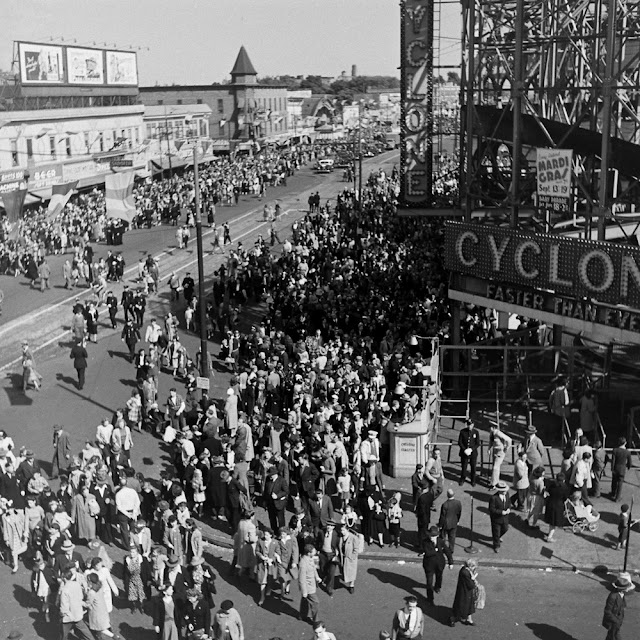
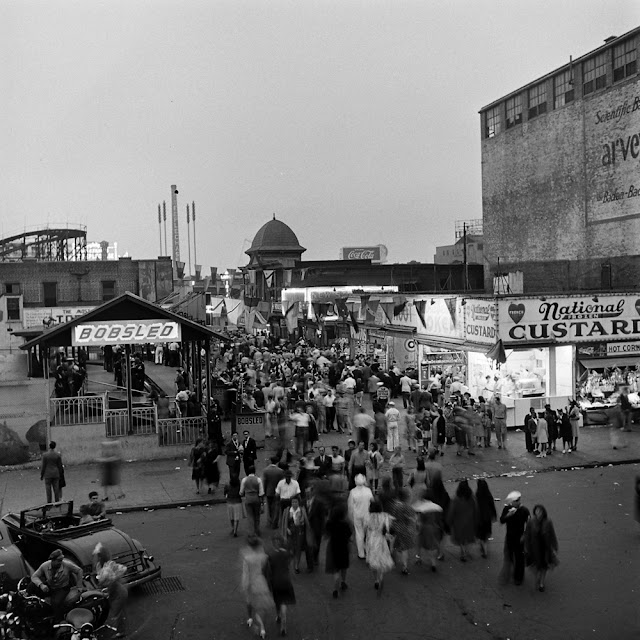
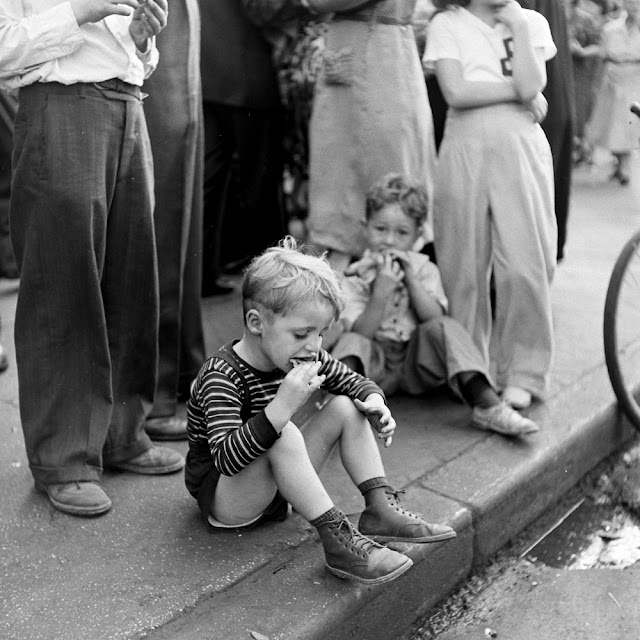
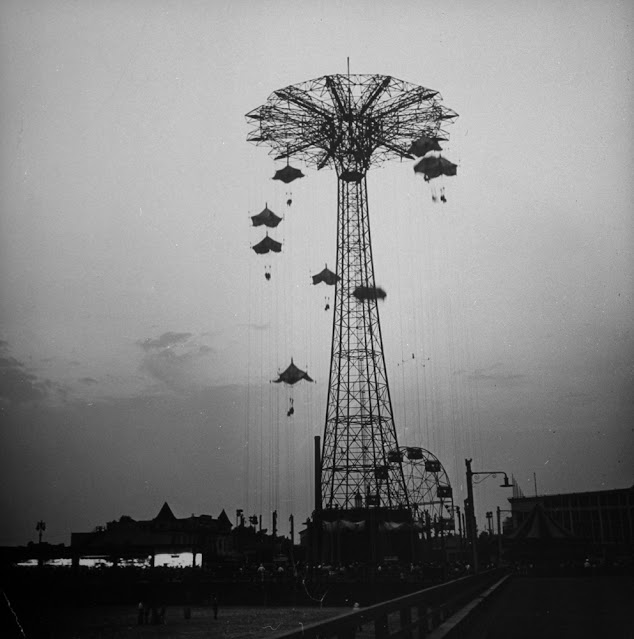
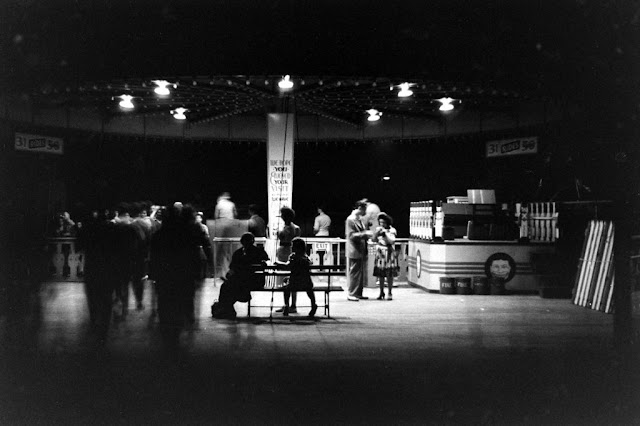
It was a troubling decade: America was a nation healing from the Great Depression, and had spent four years engaged in a war that would devastate millions worldwide. But on the beaches of Coney Island, New Yorkers young and old could forget their worries for the day as they splashed in the sea, relaxed with their sweetheart in the sand or chowed down on a hot dog from the original Nathan’s.
Coney Island is a peninsular neighborhood and entertainment area in the southwestern section of the New York City borough of Brooklyn. The neighborhood is bounded by Brighton Beach and Manhattan Beach to its east, Lower New York Bay to the south and west, and Gravesend to the north and includes the subsection of Sea Gate on its west. More broadly, Coney Island or sometimes for clarity the Coney Island peninsula consists of Coney Island proper, Brighton Beach, and Manhattan Beach. This was formerly the westernmost of the Outer Barrier islands on the southern shore of Long Island, but in the early 20th century it became a peninsula, connected to the rest of Long Island by land fill.
The origin of Coney Island’s name is disputed, but the area was originally part of the colonial town of Gravesend. By the mid-19th century it had become a seaside resort, and by the late 19th century, amusement parks had also been built at the location. The attractions reached a historical peak during the first half of the 20th century. However, they declined in popularity after World War II and, following years of neglect, several structures were torn down. Various redevelopment projects were proposed for Coney Island in the 1970s through the 2000s, though most of these were not carried out. The area was revitalized with the opening of MCU Park in 2001 and several amusement rides starting in the 2010s.
Coney Island had around 32,000 residents as of the 2010 United States Census. The neighborhood is ethnically diverse, and the neighborhood’s poverty rate of 27% is slightly higher than that of the city as a whole.
Coney Island is part of Brooklyn Community District 13, and its primary ZIP Code is 11224. It is patrolled by the 60th Precinct of the New York City Police Department. Fire services are provided by the New York City Fire Department’s Engine 245/Ladder 161/Battalion 43 and Engine 318/Ladder 166. Politically, Coney Island is represented by the New York City Council’s 47th District. The area is well served by the New York City Subway and local bus routes, and contains several public elementary and middle schools. (Wikipedia)
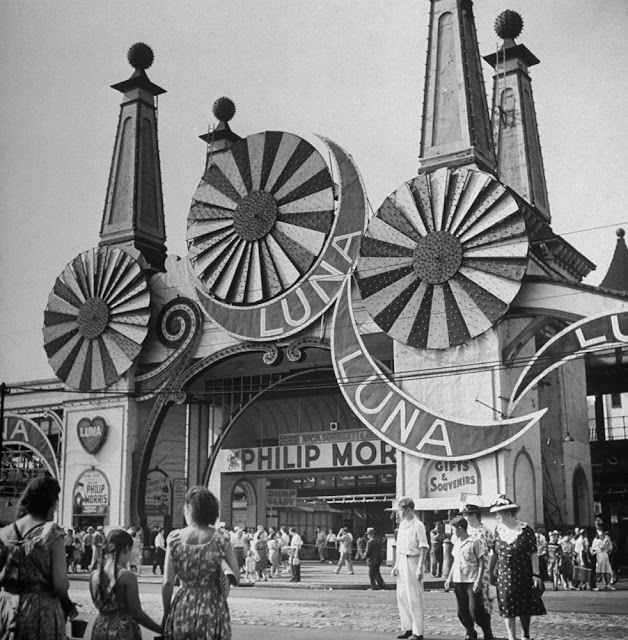
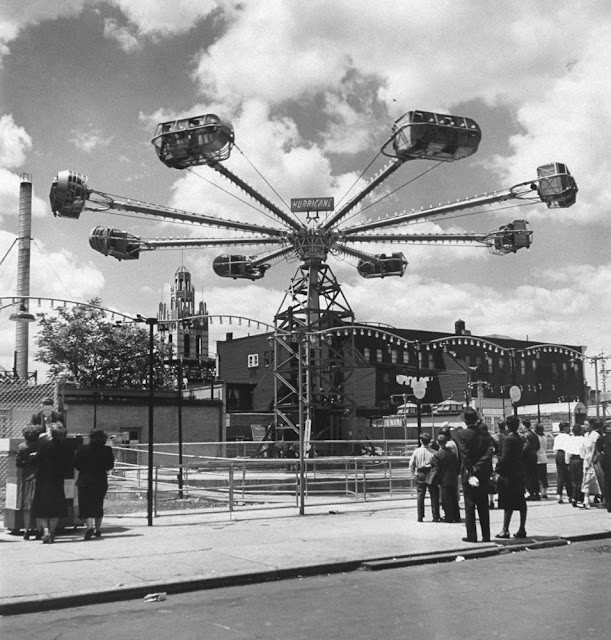
Vintage photographs from the 1940s – before, during and after America’s involvement in World War II – illustrate the carefree summers of years past. It is an atmosphere that can still be found any given day on the famed boardwalk.
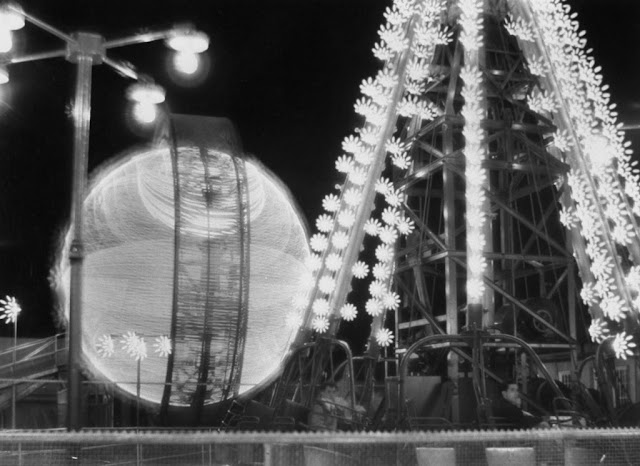
Coney IslandConey IslandConey IslandConey IslandConey IslandConey IslandConey IslandAmusement rides being ridden during 4th of July celebrations at Coney Island.Exterior of Luna Park during 4th of July celebrations at Coney Island.Entrance to the Luna amusement pavillion at Coney Island Amusement Park.Thrillseekers getting a hair-raising start off the top of the Cyclone roller coaster at Coney Island Amusment Park.Gryro Globe ride, a metal monster which simultaneously spins & tilts it victims at Coney Island Amusement Park.
Apparently, around 1652, an English merchant, Daniel Edwards, brought Pasqua (as he was probably known) from Smyrna (now Izmir) in Turkey to London as a servant to prepare the coffee to which Edwards had become accustomed on his travels abroad. Edwards himself is noted in The Little London Directory of 1677, a compilation of well-known merchants and bankers of the time. The Directory lists a “Dan. Edwards [of] Walbrook” as one of the “most eminent merchants of the period.” Every day in Edwards’ home Pasqua expertly prepared coffee for Edwards and his business associates, who ritually, and perhaps habitually, appeared early every morning. Edwards thought that sharing his coffee would foster goodwill and more business. Instead, with the daily intrusions, Edwards discovered that he could not escape his home early enough to conduct his business.
Thus, Edwards set up Pasqua in a shed in a churchyard in St. Michael’s Alley, Cornhill, where Pasqua could sell coffee. However, fearing competition, the nearby ale-sellers petitioned the mayor to remove Pasqua, who was not a freeman, from his shed. Pasqua’s business was saved by the intervention of Christofer Bowman, the free coachman of Daniel Edwards’ father-in-law, a Walbrook alderman named Hodge. Pasqua and Bowman became partners, but because of some unknown misdemeanor, Pasqua was forced to flee England at an unknown time, almost certainly before 1662. Parish records of 1662-1663 list a Christofer Bowman but no Pasqua Rosee (Lillywhite 1963, 438). Bowman moved the business from the shed, possibly to a tent, and ultimately to a building, which Bowman called “Pasqua Rosee’s Coffee House.”
The fate of Pasqua is unknown, although Robinson posits that he may have fled to Holland. However, his fortunes may have been profitable, at least if one can speculate on two 400 year old advertisements. The British Museum in London holds the “earliest known advertisement for making and selling coffee.” The advertisement originated between 1652 and 1666 and has been attributed to Pasqua. It reads in part: “The Vertue of the COFFEE Drink. First publiquely made and sold in England by Pasqua Rosee … Made and Sold in St. Michael’s Alley in Cornhill, by Pasqua Rosee at the Signe of his own Head.” Unfortunately, the buildings in St. Michael’s Alley, including the coffee house, perished in the Great Fire of London in 1666.
A 1652 handbill advertising coffee for sale in St. Michael’s Alley, London. It is held in the British Museum.
Pasqua Rosee’s Coffee House was followed, also in 1652, by the Grecian Coffee House, which remained open until 1843, when the age of the coffee house largely expired. With coffee being advertised as curing “dropsy, gout, and scurvy”, coffee houses exploded in the 1700s, at one point numbering 3000 in London alone. They continued to prosper through 1809-1810, when a growing alcohol sobriety and a reduction of coffee taxes made coffee rather than old porter or purl and gin the breakfast beverage choice. Business was so good that each coffee house even issued its own token, which could be used as currency at the issuing coffee house.
Coffee houses opened at 5 or 6 A.M. and closed at 10 P.M. or later. Customers might be charged a penny for admission and twopence for coffee or tea. The coffee house consisted of a large room that contained several tables for reading and writing. The room was similar in appearance to beer drinking rooms at some college student unions, or to “oak” or “cedar” rooms in bars that long for a wood motif. A customer might be charged half a crown (thirty pence) extra for the use of pen, ink, and paper for the season. Boys would rush about serving favorite dishes and chocolate, coffee, and tea, all of which were warmed on a large fire. The long bar near the fire held the pots that contained whatever bubbling brew had just been heated to a boil. History saw its first “barmaids” when coffee house owners hired the most attractive females available to take the particular brew from the bar to customers who were sitting throughout the coffee house.
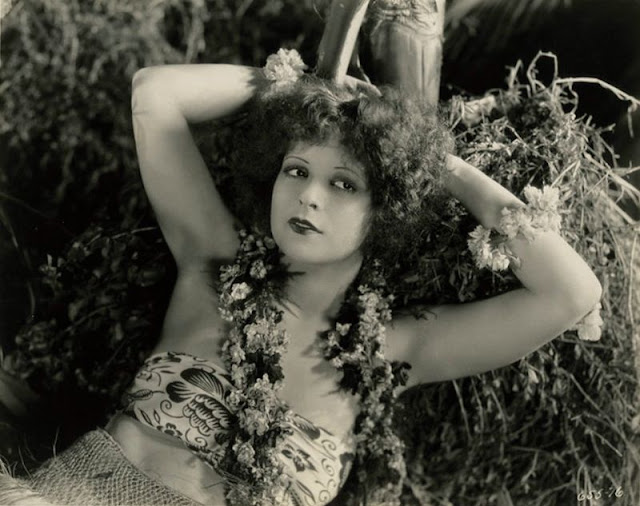
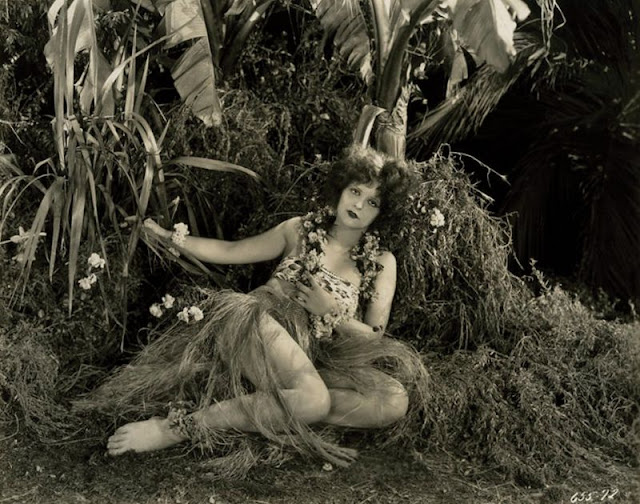
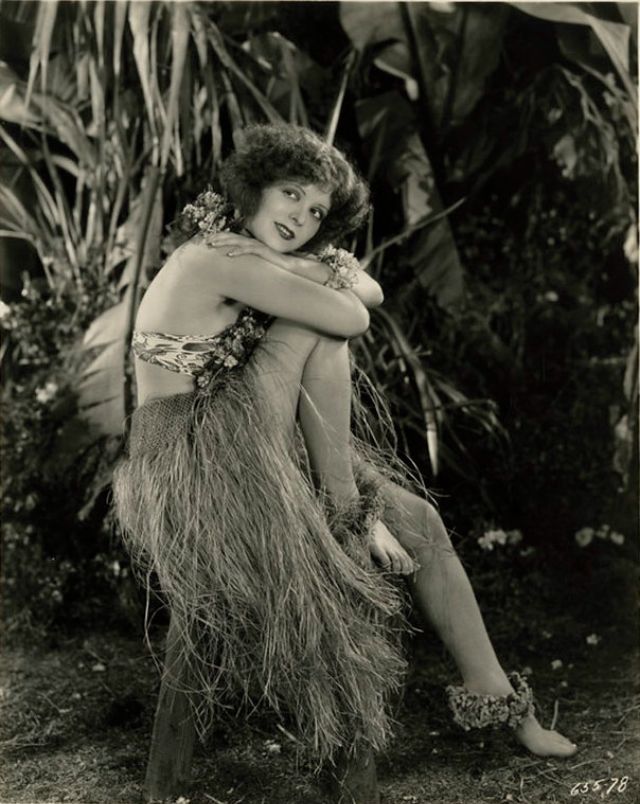
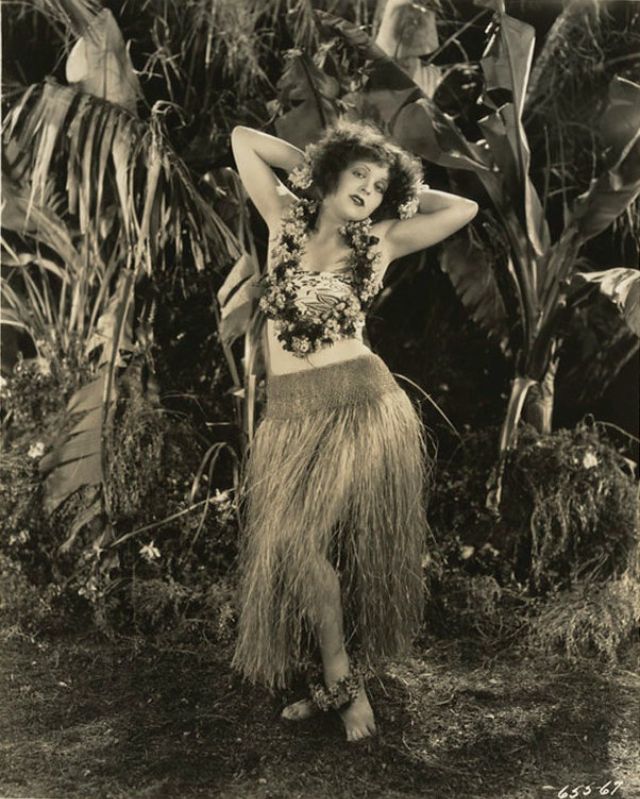
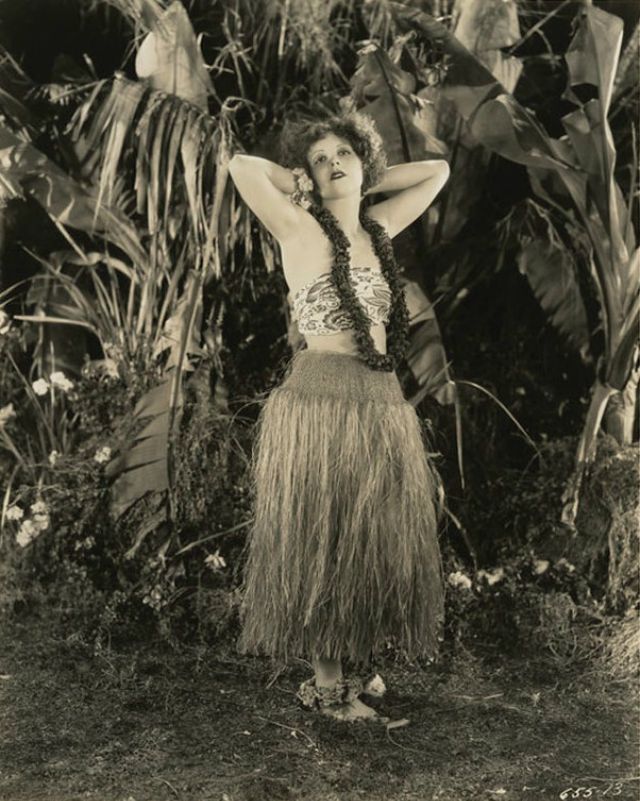
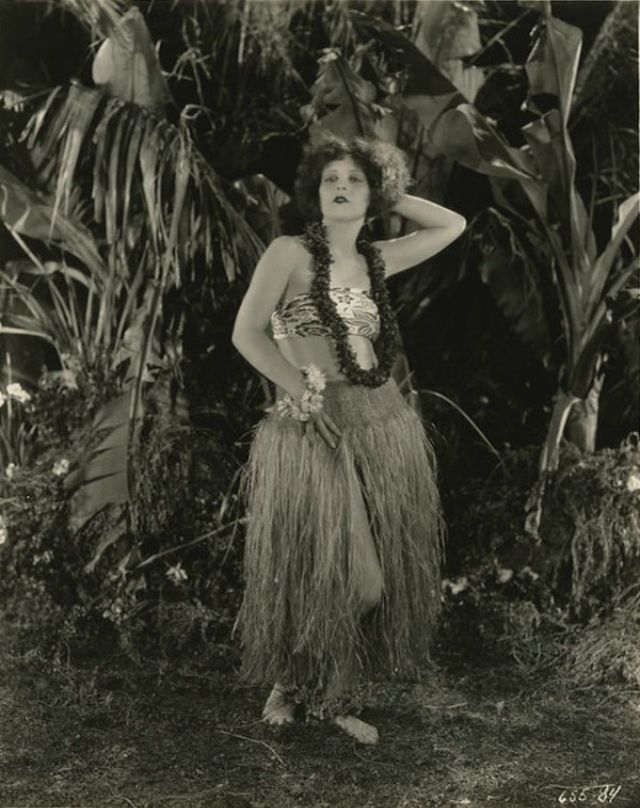
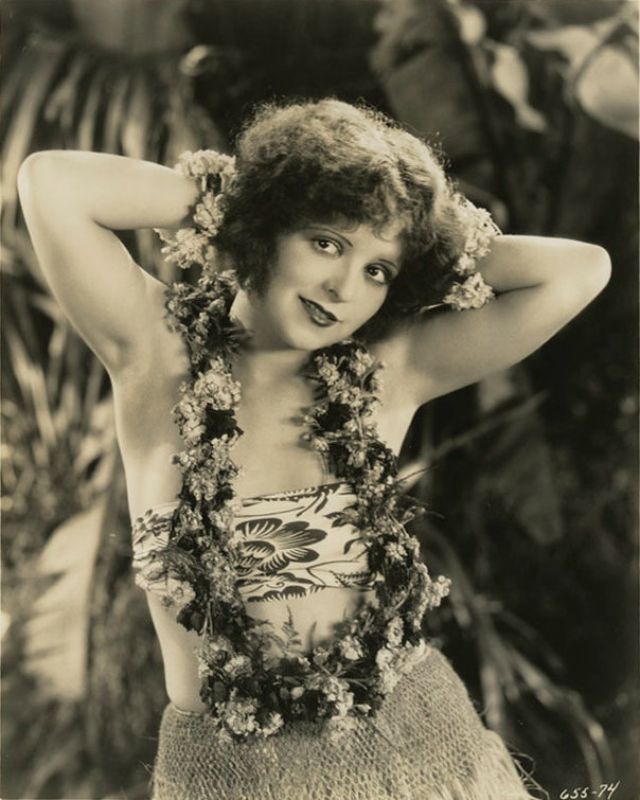
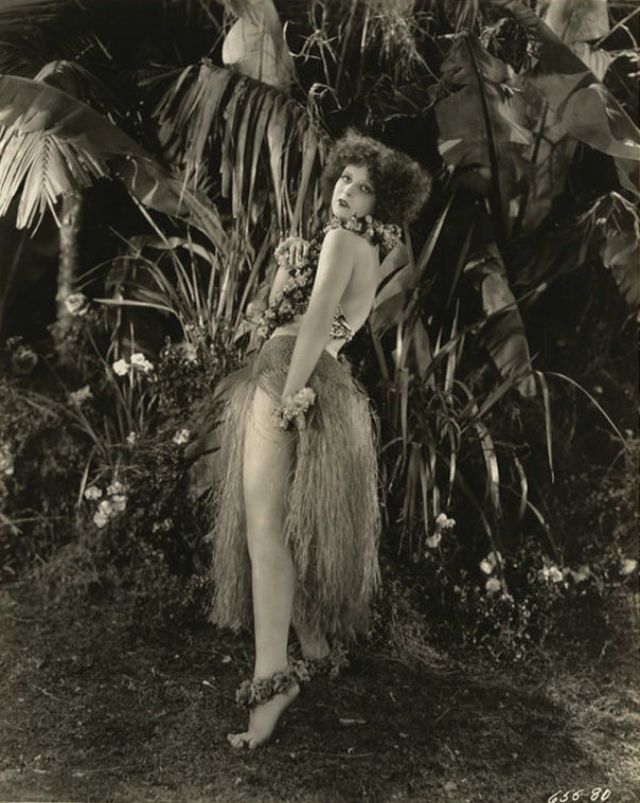
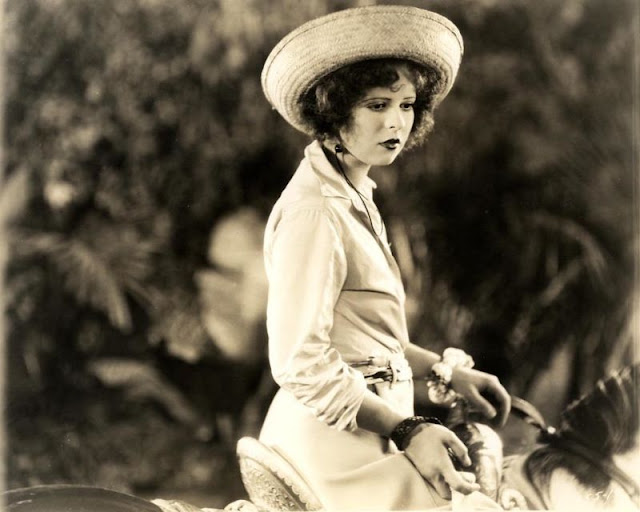
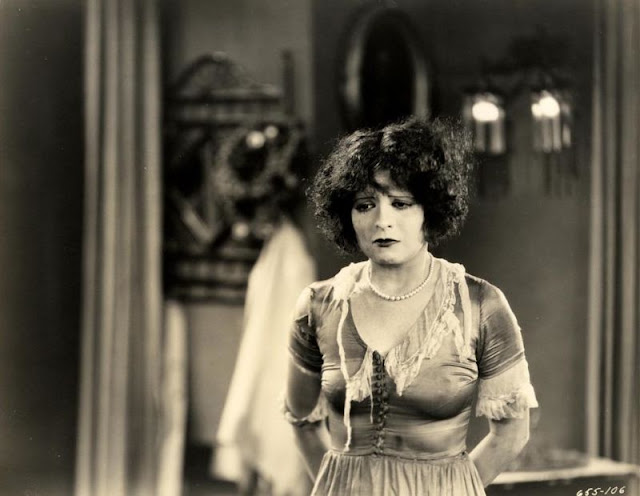
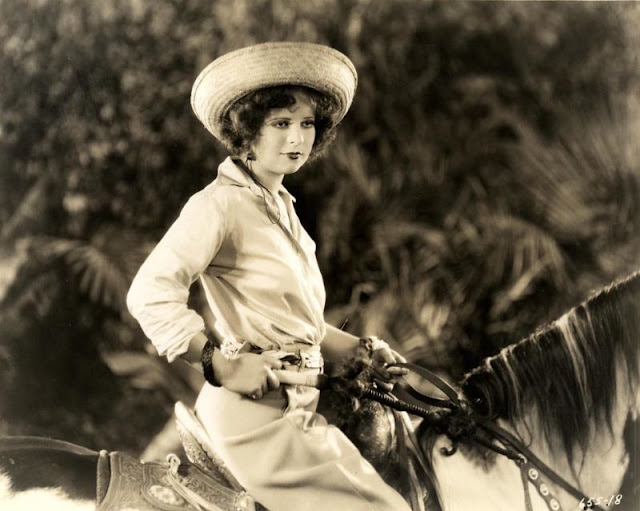
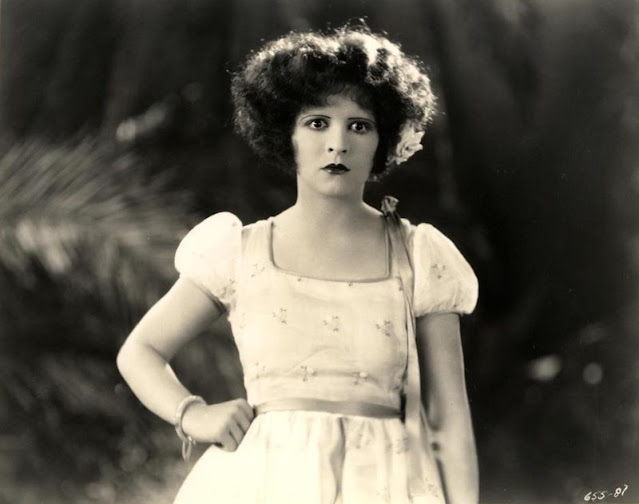
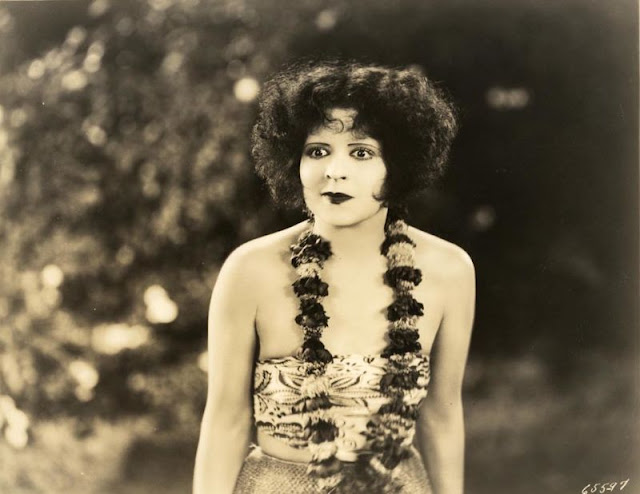
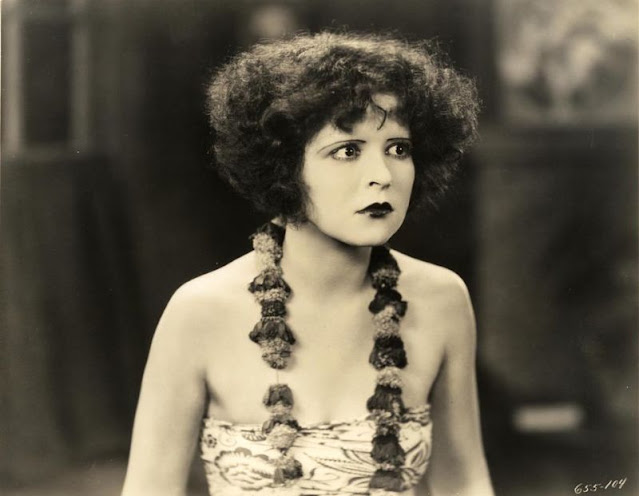
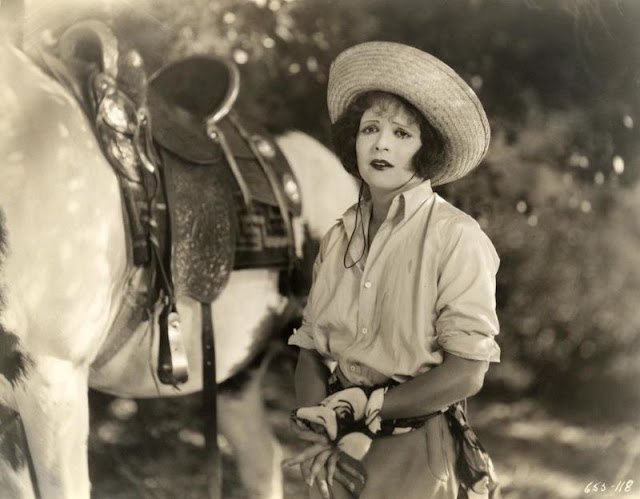
Hula is a 1927 American silent romantic comedy film directed by Victor Fleming, and based on the novel Hula, a Romance of Hawaii by Armine von Tempski. The film stars Clara Bow and was released by Paramount Pictures.
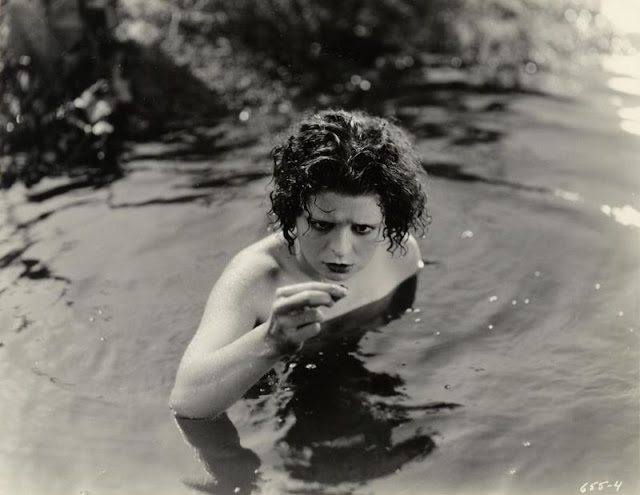
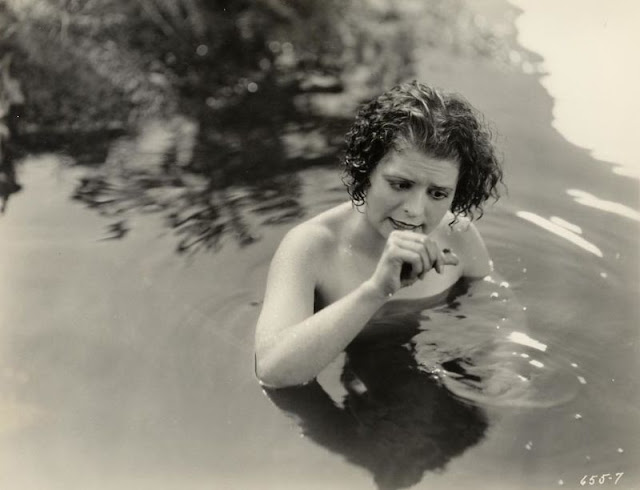
In the opening scene of the film, Hula is shown swimming nude in a stream, and later is wearing pants and articulates her sexual desires. Similar to Sadie Thompson (1928), the film depicts a modern woman who is located outside the bounds of American civilization and thus able to act in an “uncivilized” manner like natives who live on the islands.
Clara Gordon Bow (July 29, 1905 – September 27, 1965) was an American actress who rose to stardom during the silent film era of the 1920s and successfully made the transition to “talkies” in 1929. Her appearance as a plucky shopgirl in the film It brought her global fame and the nickname “The It Girl”. Bow came to personify the Roaring Twenties and is described as its leading sex symbol.
Bow appeared in 46 silent films and 11 talkies, including hits such as Mantrap (1926), It (1927), and Wings (1927). She was named first box-office draw in 1928 and 1929 and second box-office draw in 1927 and 1930. Her presence in a motion picture was said to have ensured investors, by odds of almost two-to-one, a “safe return”. At the apex of her stardom, she received more than 45,000 fan letters in a single month (January 1929).
Two years after marrying actor Rex Bell in 1931, Bow retired from acting and became a rancher in Nevada. Her final film, Hoop-La, was released in 1933. In September 1965, Bow died of a heart attack at the age of 60. (Wikipedia)
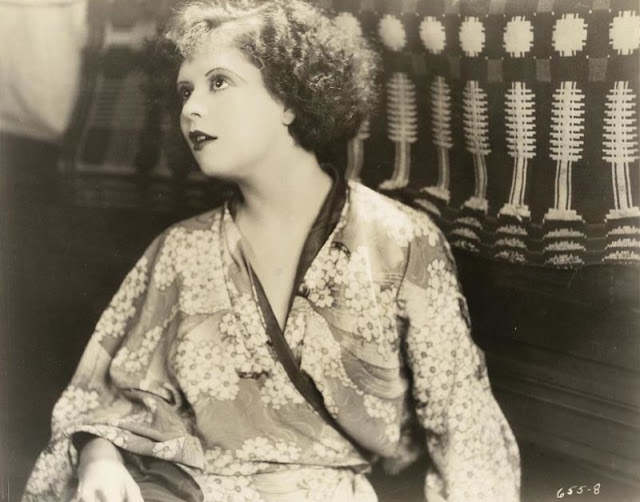
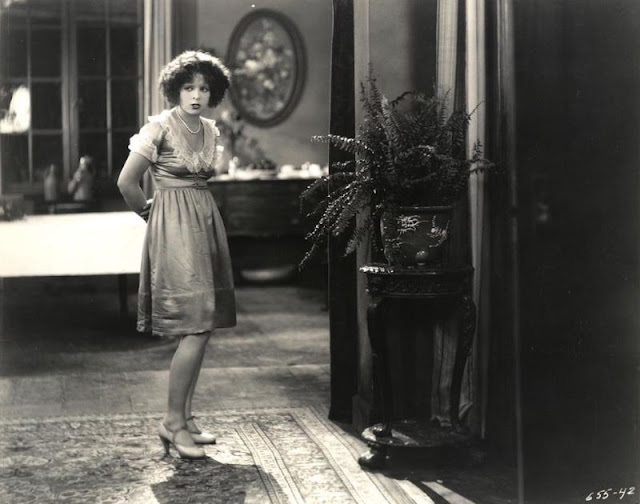
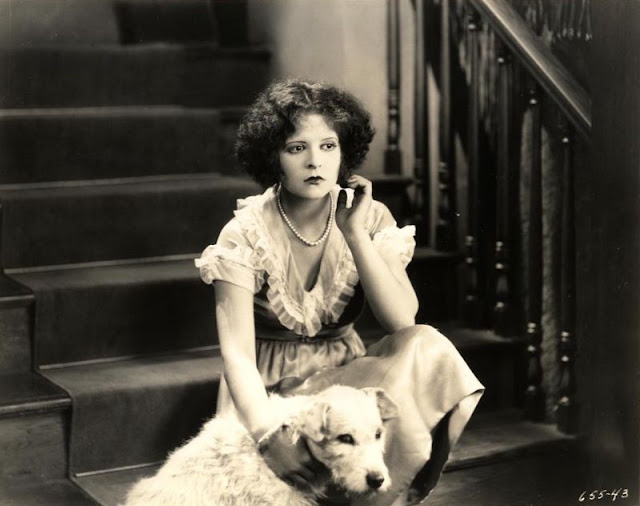
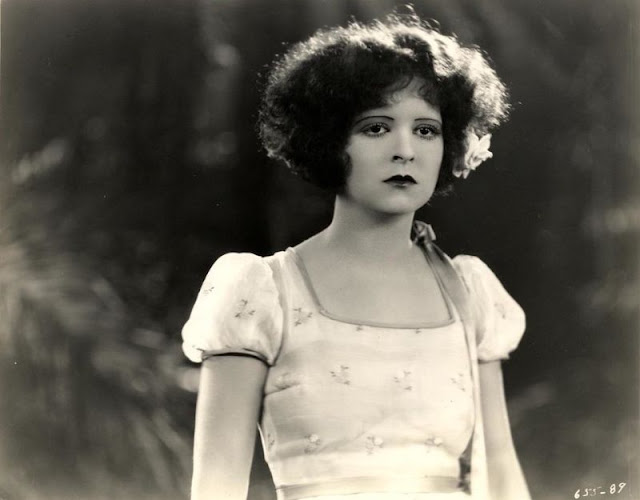
Here is a set of vintage photos that shows portraits of Clara Bow during the filming of Hula in 1927.
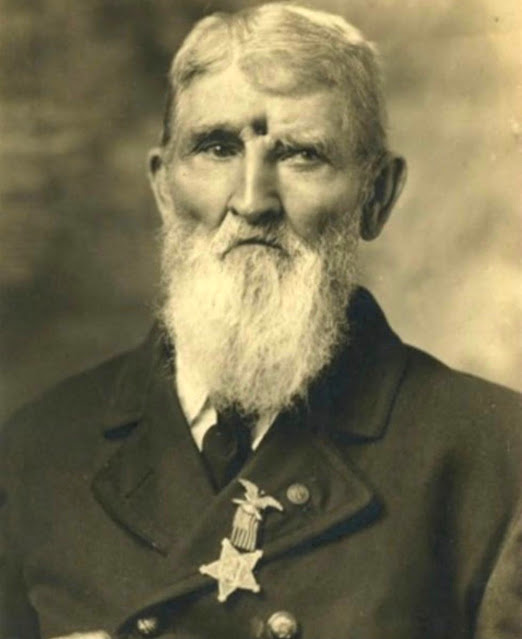
Jacob C. Miller (August 4, 1840 – January 13, 1917) was a private in company K, 9th Indiana Infantry Regiment, and was wounded in the head near the Brock Field at the Battle of Chickamauga on the morning of September 19, 1863. The ball impacted in Miller’s head during the Civil War, but luckily the buck didn’t penetrate his skull.
His firsthand account of the battle was published by The Joliet Daily News in 1911.
“When I came to my senses some time after I found I was in the rear of the confederate line. So not to become a prisoner I made up my mind to make an effort to get around their line and back on my own side. I got up with the help of my gun as a staff, then went back some distance, then started parallel with the line of battle. I suppose I was so covered with blood that those that I met, did not notice that I was a Yank, (at least our Major, my former captain did not recognize me when I met him after passing to our own side)…
“The wound never really healed, but it’s pretty safe to assume it saved his life. What happened next? I suffered for nine months then I got a furlough home to Logansport and got Drs. Fitch and Colman to operate on my wound. They took out the musket ball. After the operation a few days, I returned to the hospital at Madison and stayed there till the expiration of my enlistment, Sept. 17, 1864. Seventeen years after I was wounded a buck shot dropped out of my wound and thirty one years after two pieces of lead came out…
“Some ask how it is I can describe so minutely my getting wounded and getting off the battle field after so many years. My answer is I have an everyday reminder of it in my wound and constant pain in the head, never free of it while not asleep. The whole scene is imprinted on my brain as with a steel engraving. I haven’t written this to complain of any one being in fault for my misfortune and suffering all these years, the government is good to me and gives me $40.00 per month pension.”
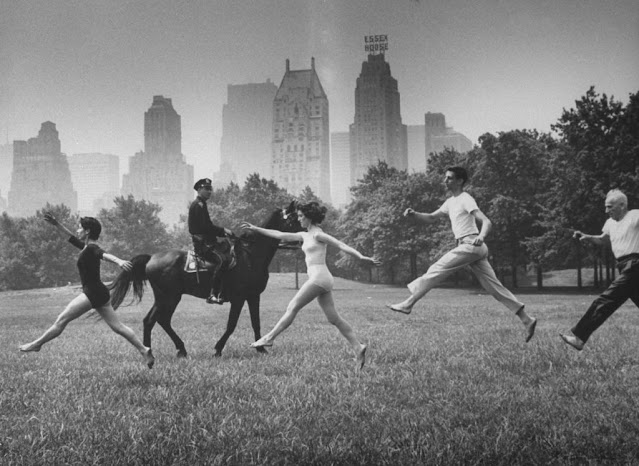
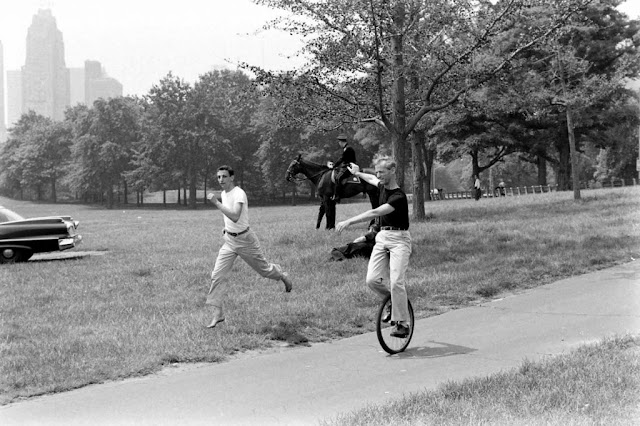
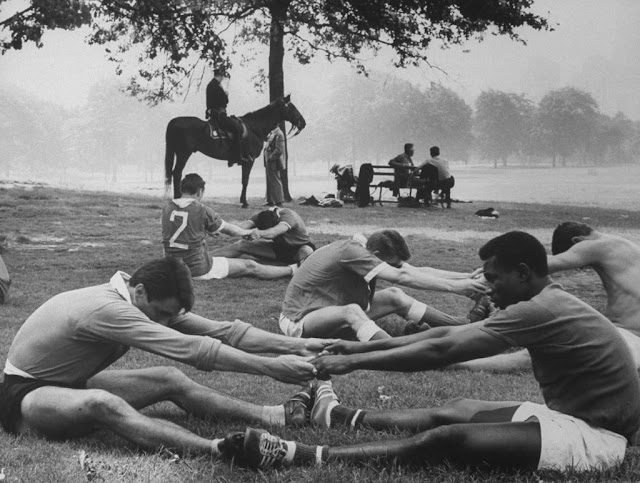
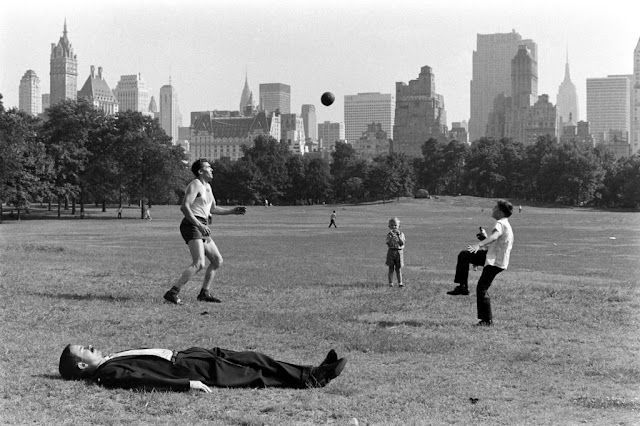
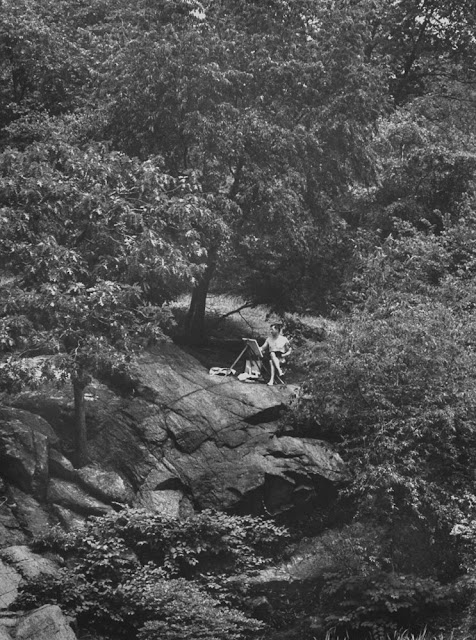
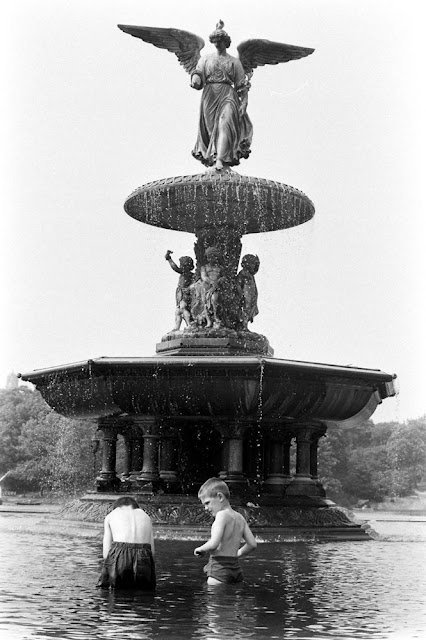
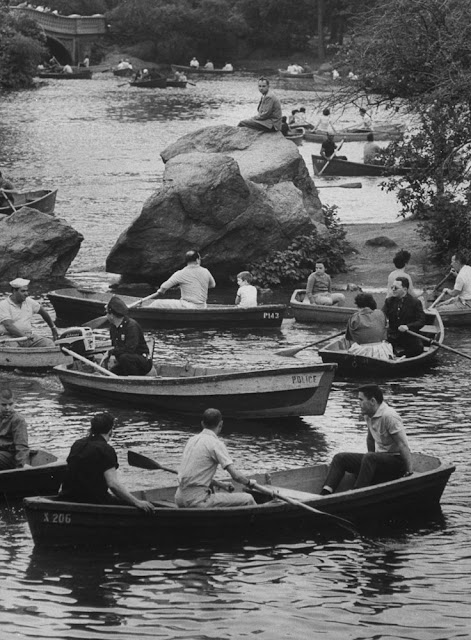
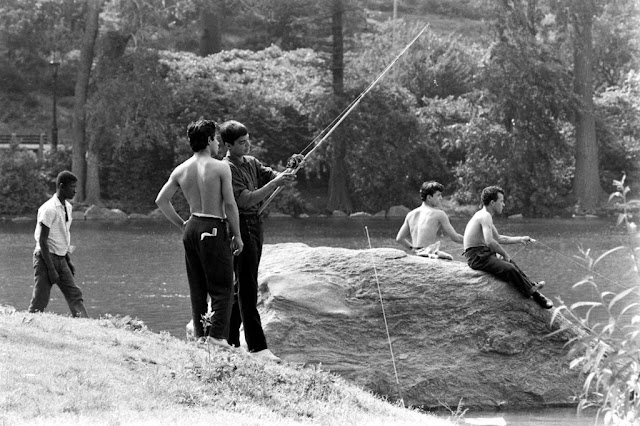
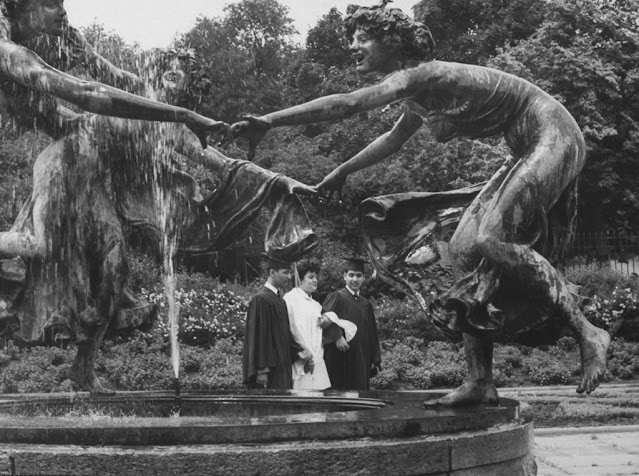
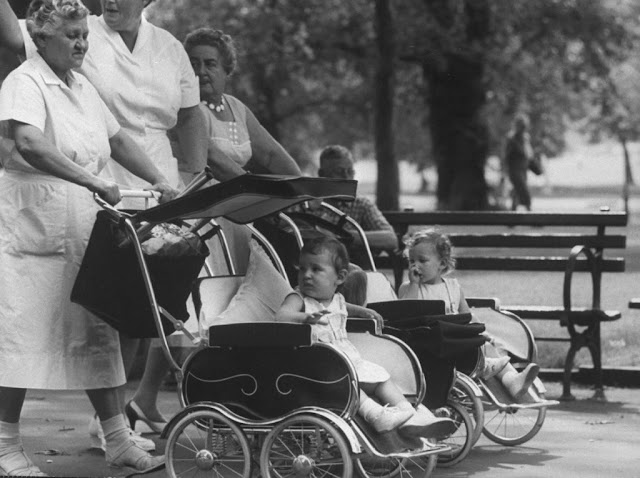
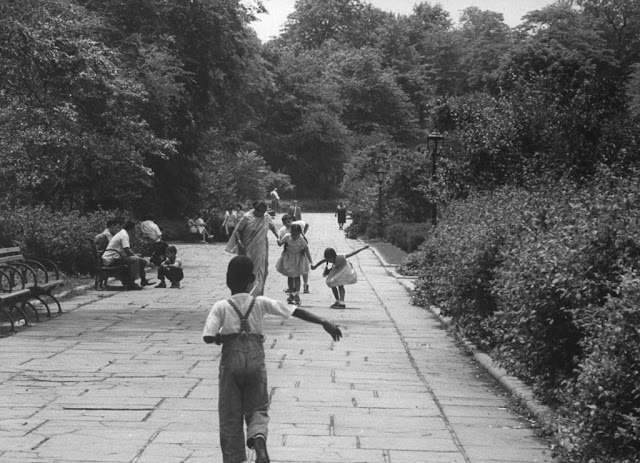
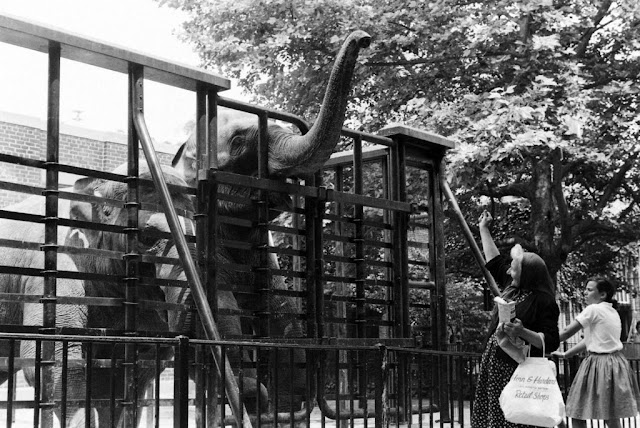
Central Park is an urban park in New York City located between the Upper West and Upper East Sides of Manhattan. It is the fifth-largest park in the city by area, covering 843 acres (341 ha). It is the most visited urban park in the United States, with an estimated 42 million visitors annually as of 2016, and is the most filmed location in the world.
The park’s first areas were opened to the public in late 1858. Additional land at the northern end of Central Park was purchased in 1859, and the park was completed in 1876. After a period of decline in the early 20th century, New York City parks commissioner Robert Moses started a program to clean up Central Park in the 1930s. The Central Park Conservancy, created in 1980 to combat further deterioration in the late 20th century, refurbished many parts of the park starting in the 1980s.
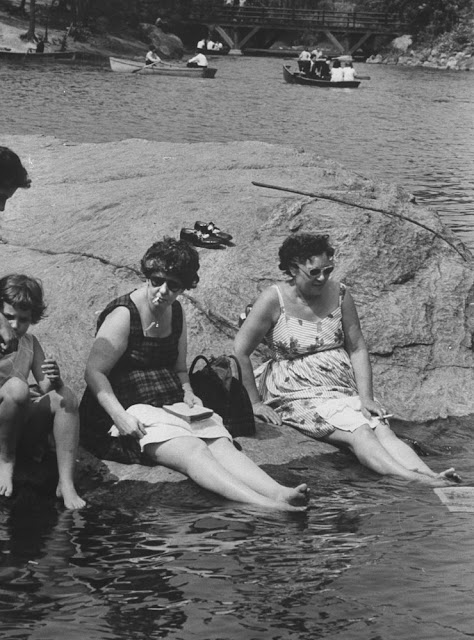
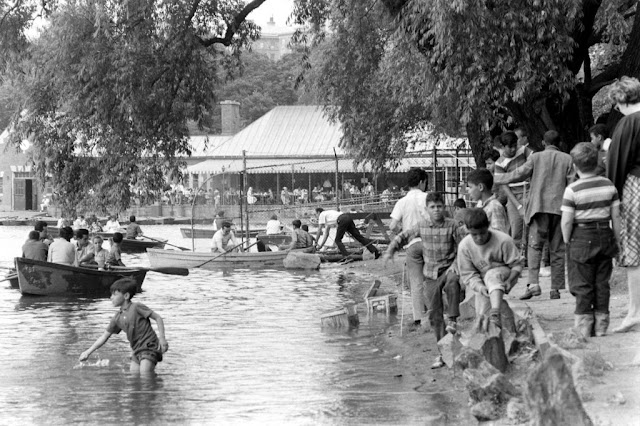
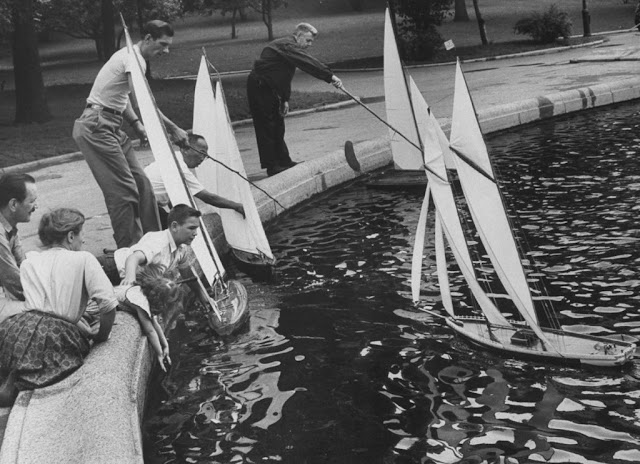
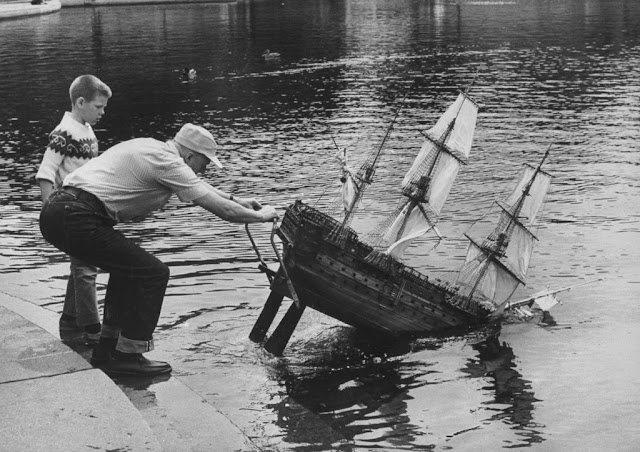
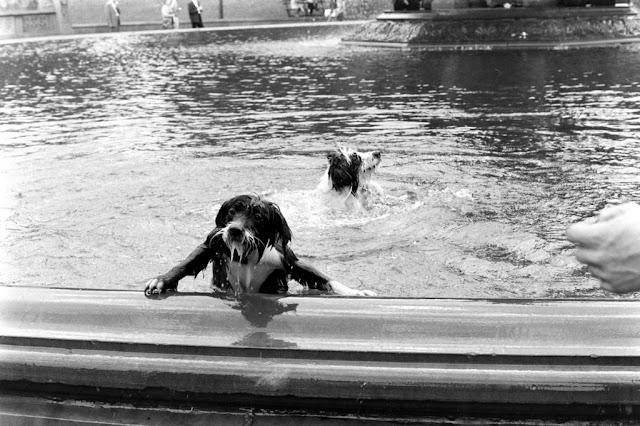
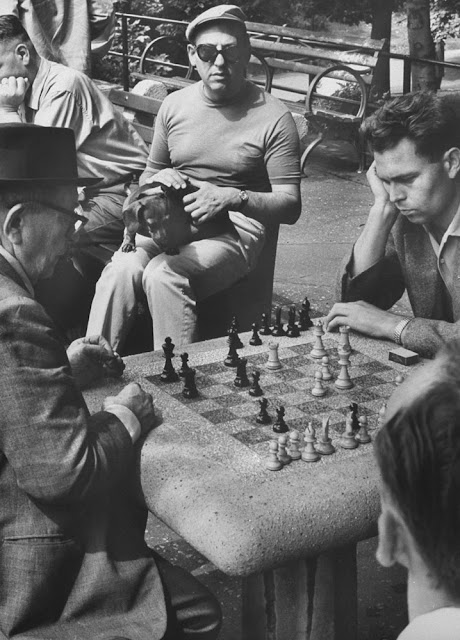
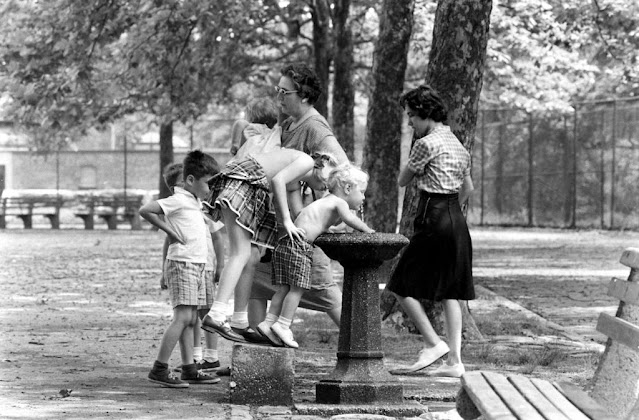
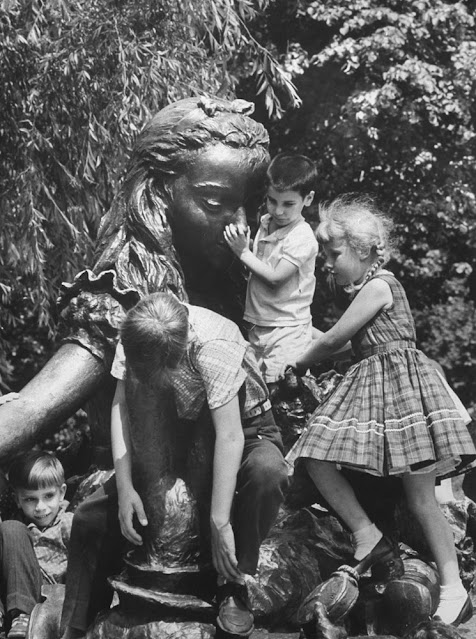
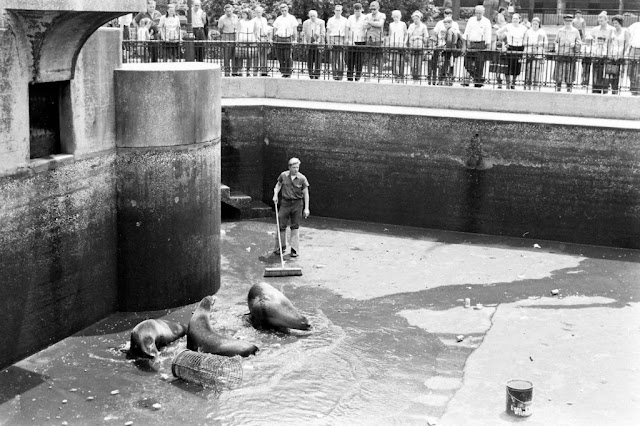
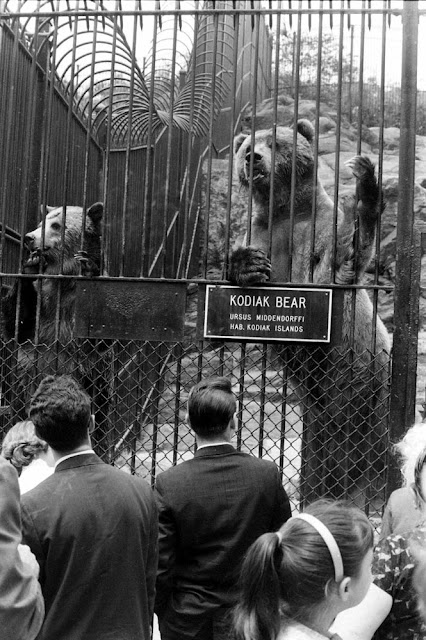
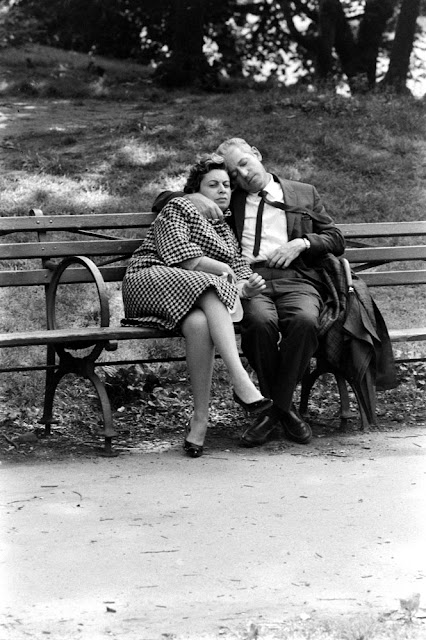
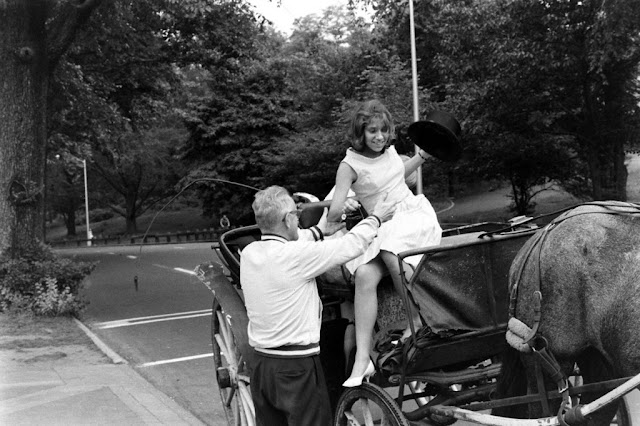
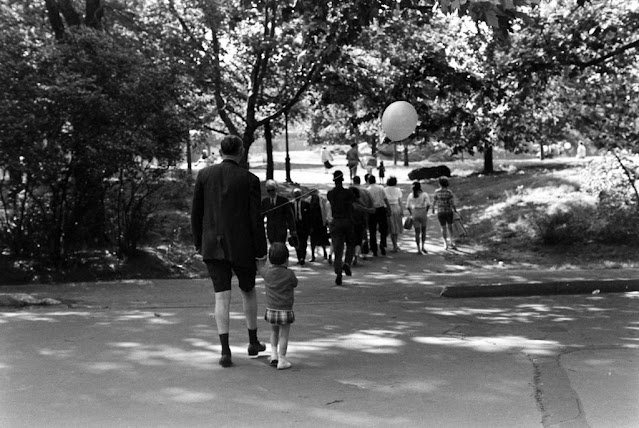
The 1960s marked the beginning of an “Events Era” in Central Park that reflected the widespread cultural and political trends of the period. In the summer of 1961, LIFE photographer Leonard McCombe documented New Yorkers enjoying pastimes and pleasures in the park, about a century old at the time.
(Photos by Leonard McCombe/The LIFE Picture Collection/Getty Images)
Before 1941, Berlin, at 950 kilometers (590 miles) from London, was at the extreme range attainable by the British bombers then available to the Allied forces. It could be bombed only at night in summer when the days were longer and skies clear—which increased the risk to Allied bombers.
The first RAF raid on Berlin took place on the night of August 25, 1940; 95 aircraft were dispatched to bomb Tempelhof Airport near the center of Berlin and Siemensstadt, of which 81 dropped their bombs in and around Berlin, and while the damage was slight, the psychological effect on Hitler was greater.
The bombing raids on Berlin prompted Hitler to order the shift of the Luftwaffe’s target from British airfields and air defenses to British cities, at a time during the Battle of Britain when the British air defenses were becoming exhausted and overstretched.
In the following two weeks there were a further five raids of a similar size, all nominally precision raids at specific targets, but with the difficulties of navigating at night the bombs that were dropped were widely dispersed.
During 1940 there were more raids on Berlin, all of which did little damage. The raids grew more frequent in 1941, but were ineffective in hitting important targets. The head of the Air Staff of the RAF, Sir Charles Portal, justified these raids by saying that to “get four million people out of bed and into the shelters” was worth the losses involved.
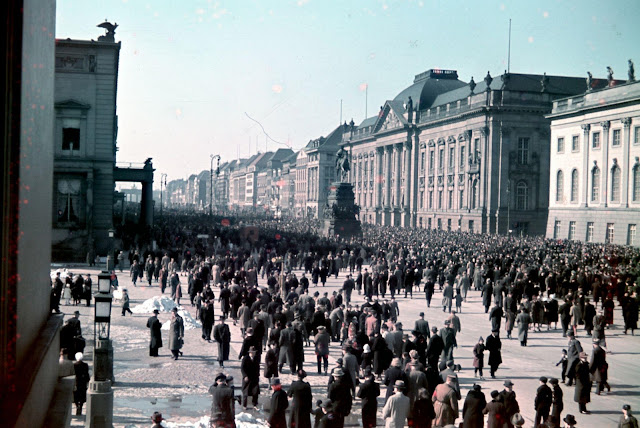
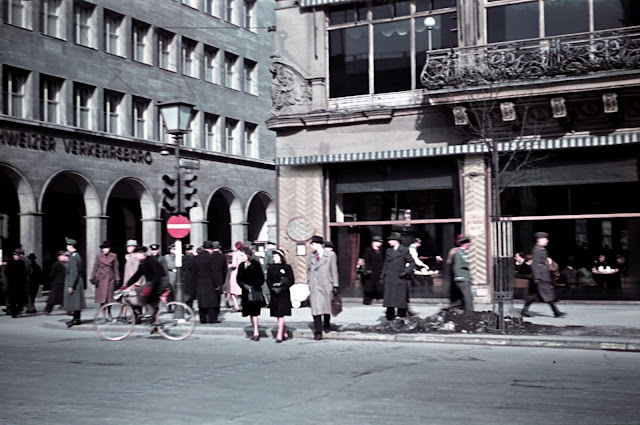
Below is a selection of 35 amazing color photographs that show what life was like in Berlin in 1940, just before the bombing raids.
Subscribe to continue reading
Become a paid subscriber to get access to the rest of this post and other exclusive content.
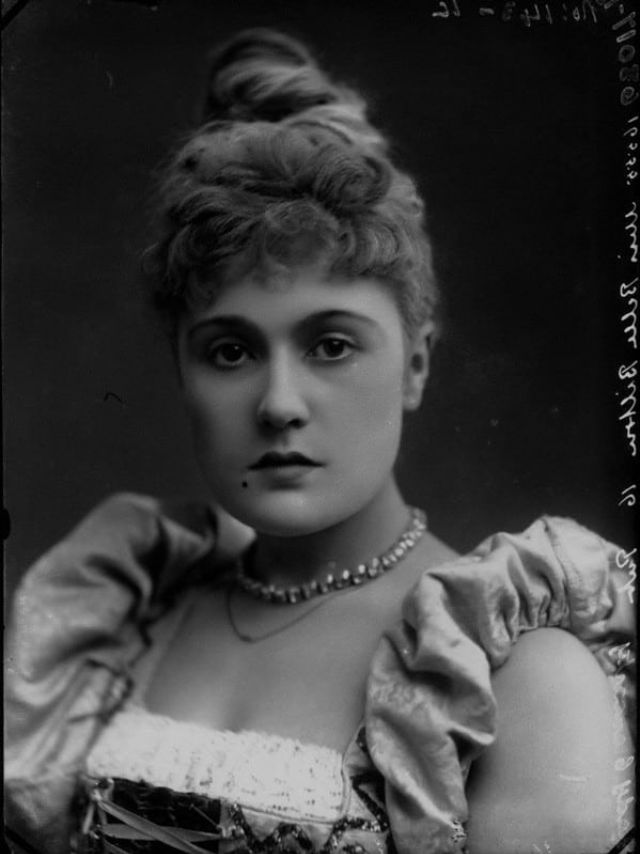
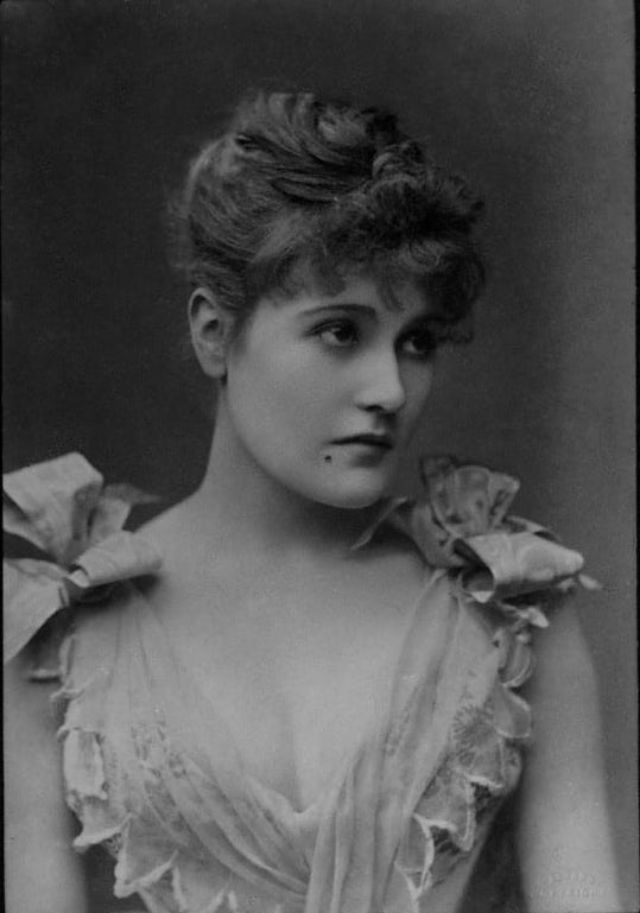
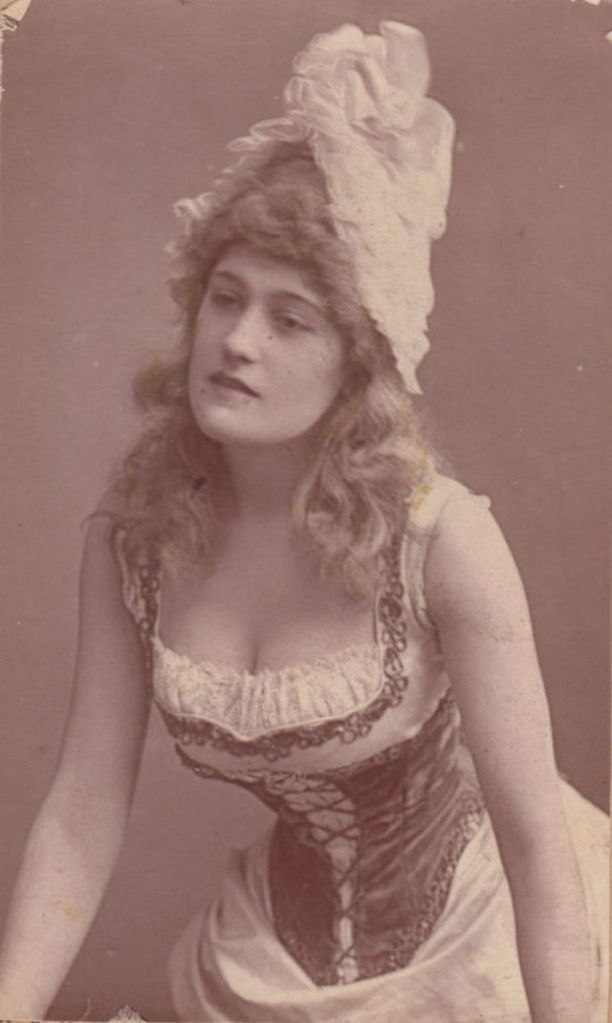
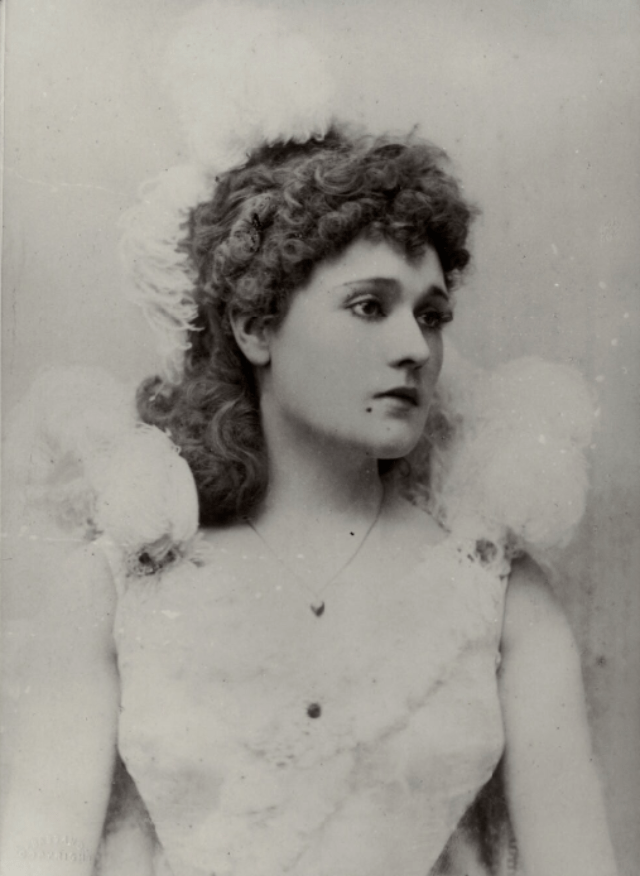
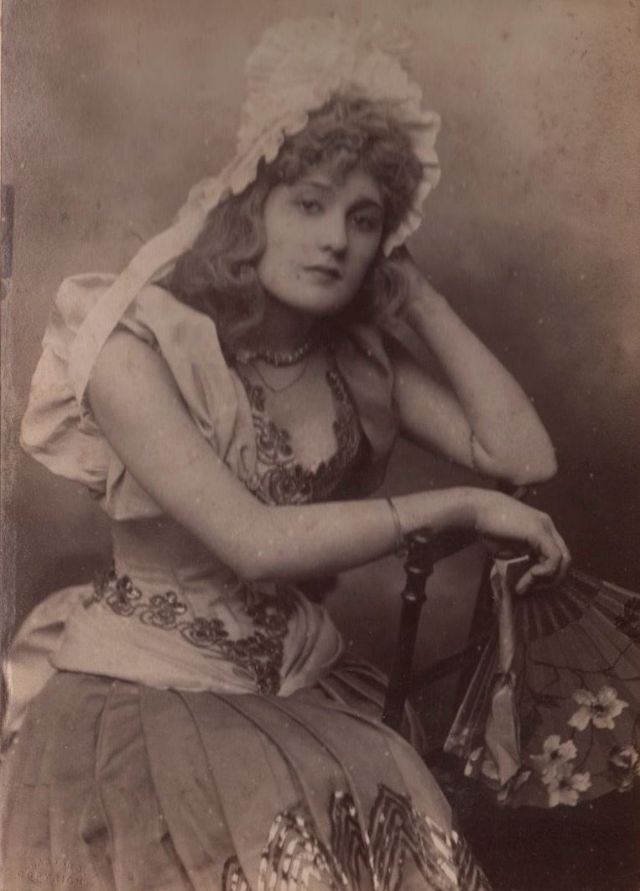
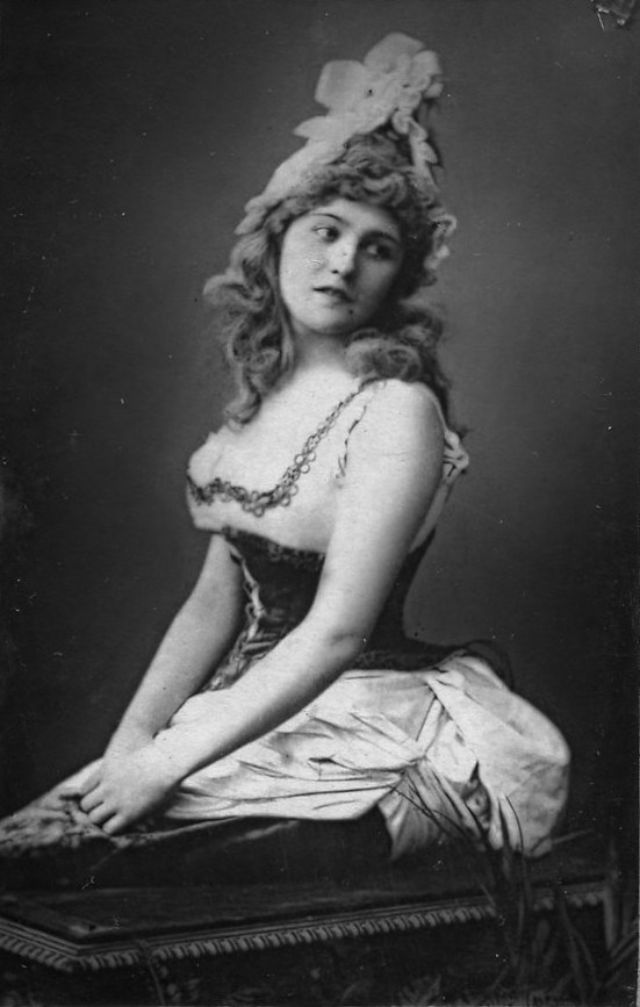
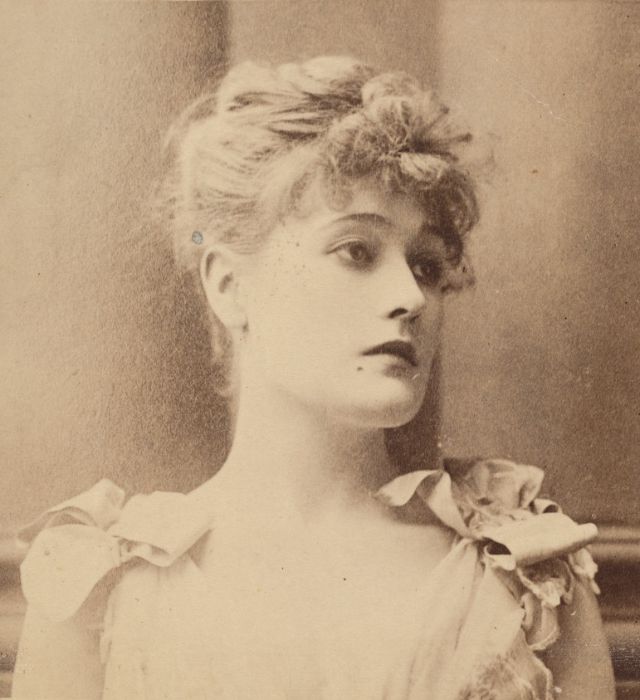
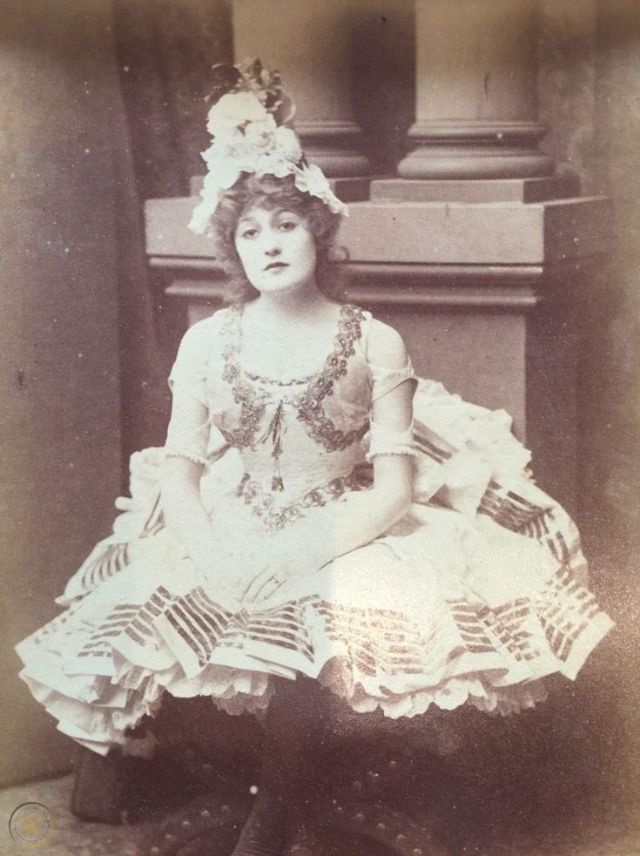
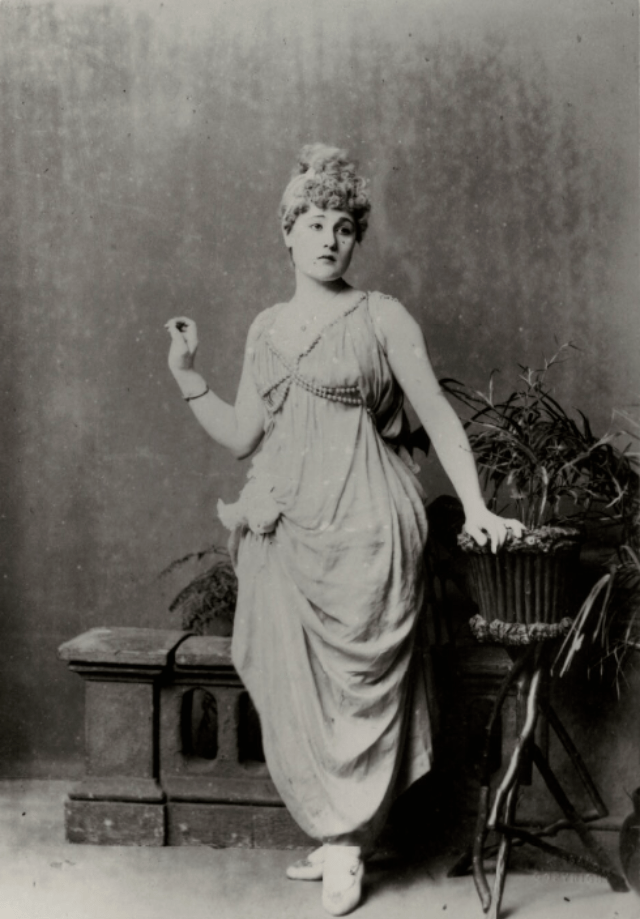
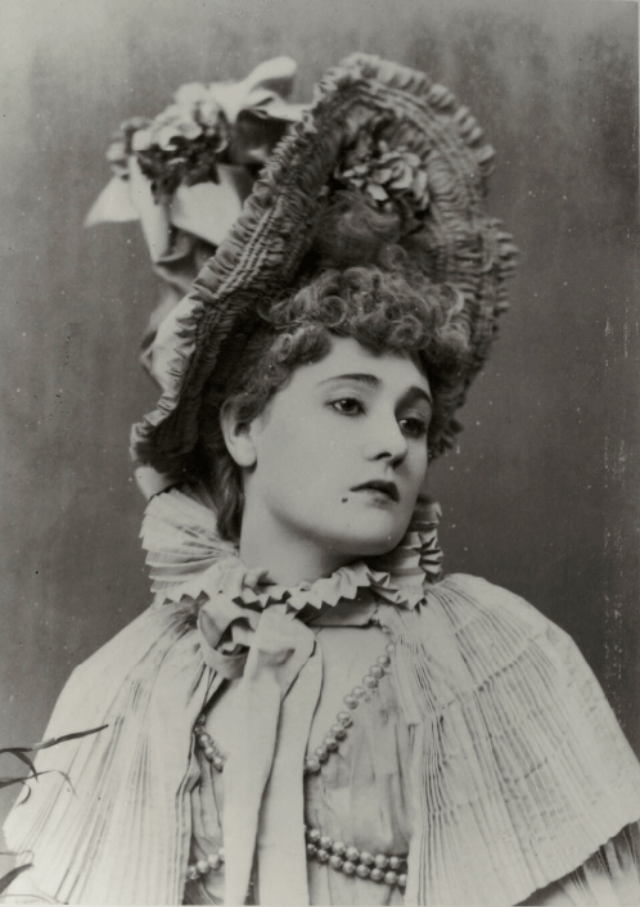
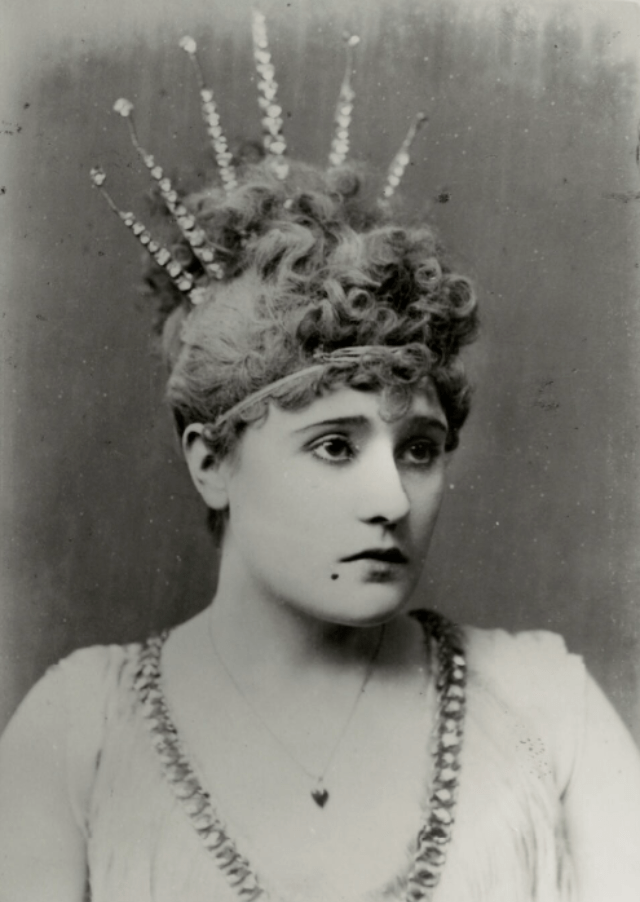
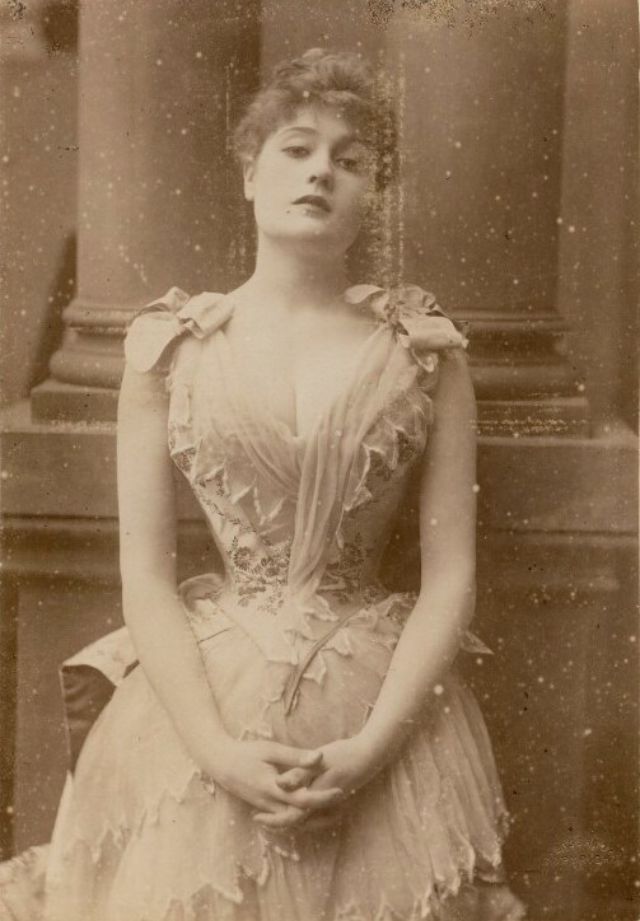
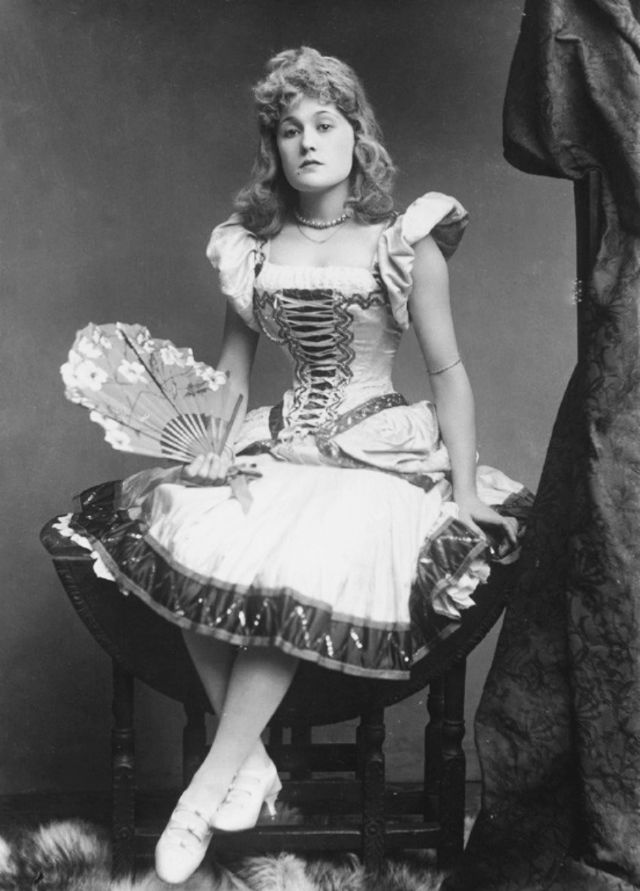
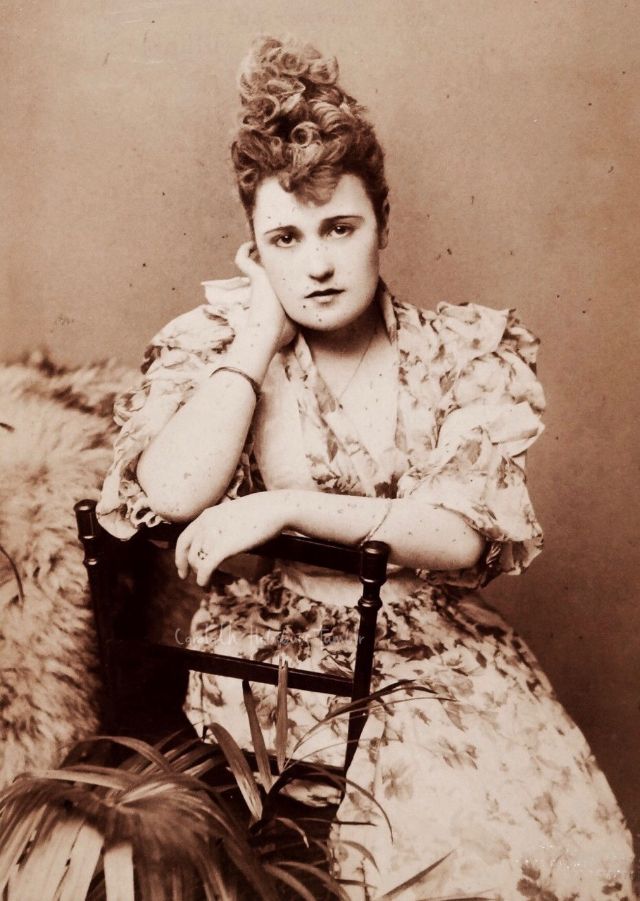
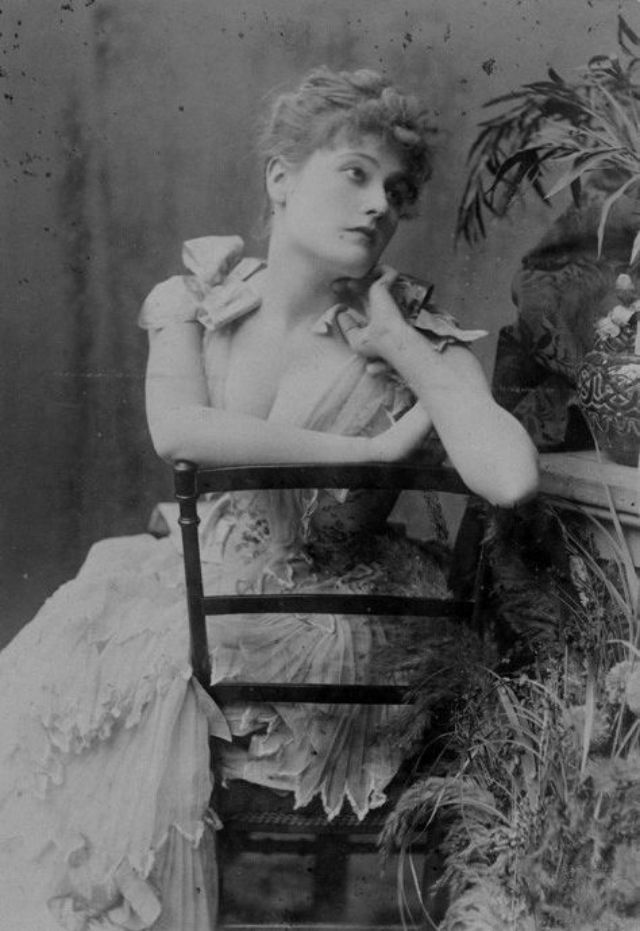
Born 1867 as Isabel Maud Penrice Bilton, the daughter of sergeant in the Royal Engineers, she graced the stage as an actress and vocalist under the professional name Belle Bilton.
On 10 July 1889, Bilton married Lord Dunlo at the Registrar’s Office in Hampstead. They were both aged twenty. The groom faced stiff opposition from his family. His angry father sent his newly-wed son to Australia a mere nine days after the ceremony, and forced him to petition for divorce. In court, he declared his belief in his wife’s innocence, and applause rang around the courtroom.
Two years later, her husband succeeded his father, becoming the 5th Earl of Clancarty. Bilton became the Countess of Clancarty. The couple had five children, including the 6th and 7th Earls of Clancarty. She died of cancer in 1906 at Garbaldy Park, Ballinasloe, County Galway, Ireland, aged 39.
Take a look at these fantastic portrait photos to see the beauty of Belle Bilton in the 1880s and 1890s.
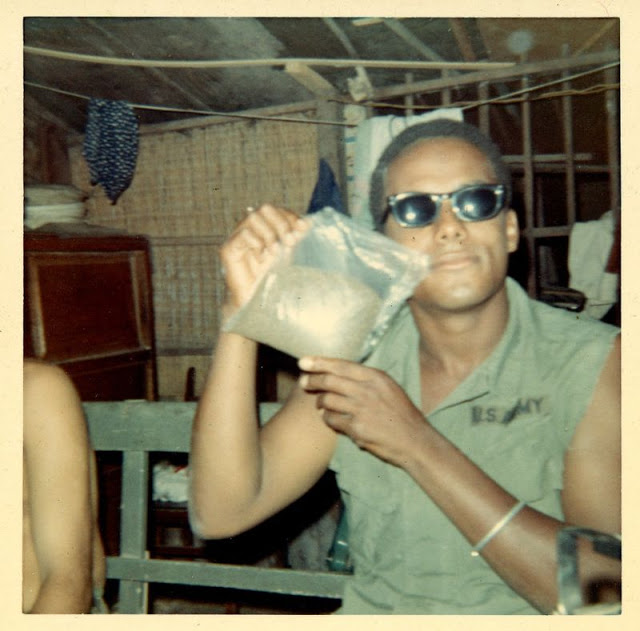
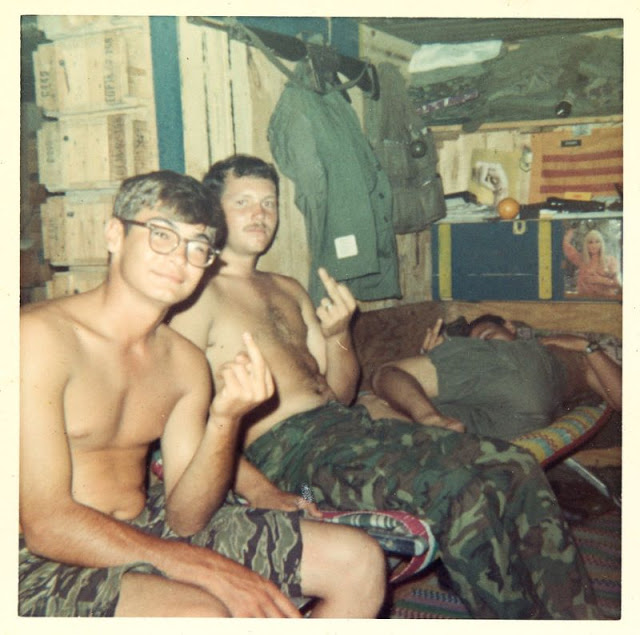
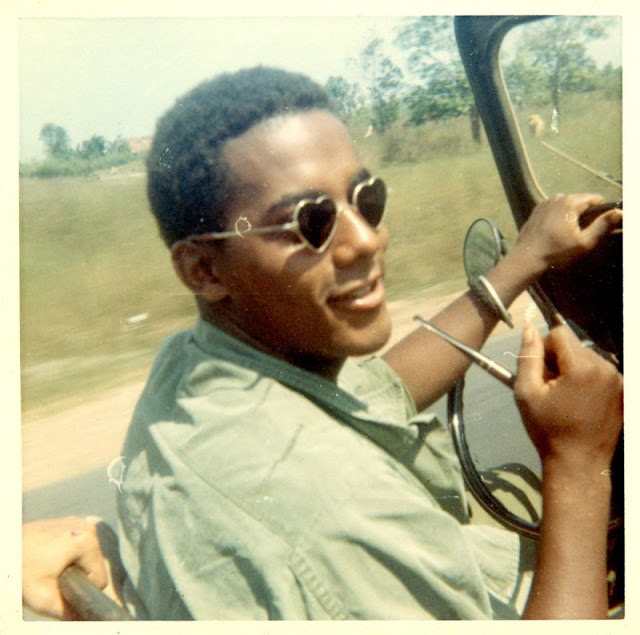
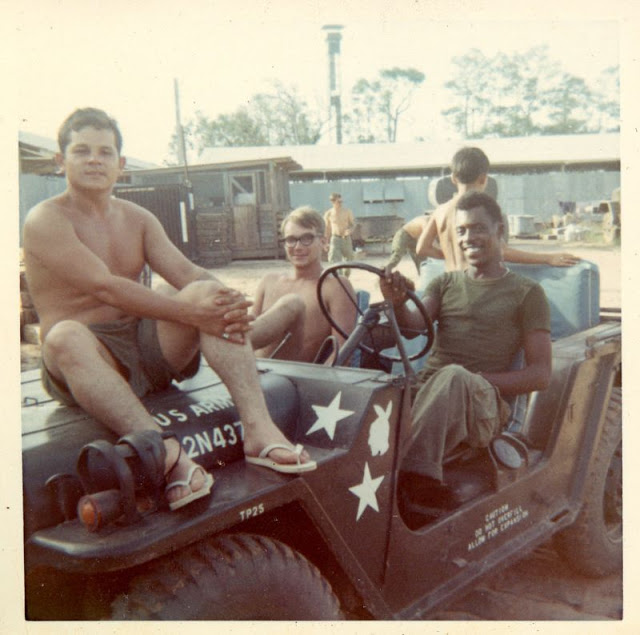
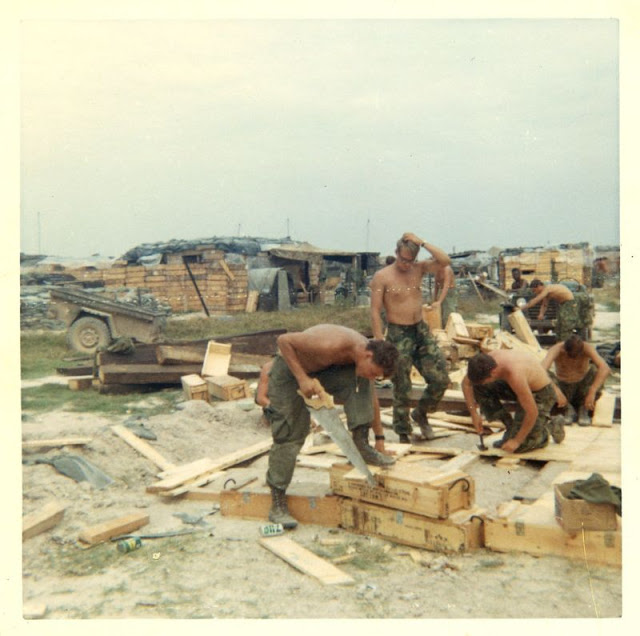
More than 2.5 million American men served in Vietnam during the war. Some of these men were career military officers. But many others were poor or working-class teenagers who enlisted or were drafted into the military right out of high school.
A large proportion of the U.S. troops consisted of African American men from the inner cities, the sons of immigrants from factory towns, and boys from rural farming communities.
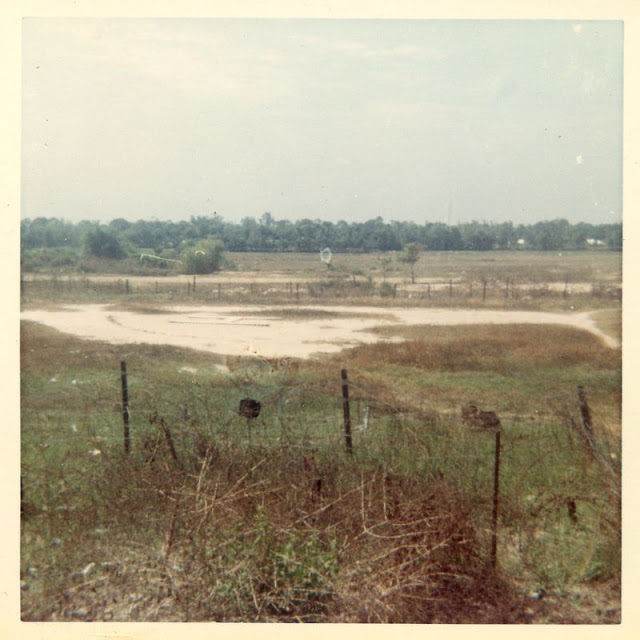
Upon arriving in Vietnam, American soldiers found themselves in a strange land of watery fields and dense jungles. This unfamiliar environment made their jobs more difficult and unpleasant. Their feelings of vulnerability were increased by strained relations with Vietnam’s rural communities.
In the early years of the war, some U.S. soldiers expected the South Vietnamese people to greet them as heroes. Instead, the local farmers and villagers usually viewed the Americans with distrust or even hostility.
The tense atmosphere and frustrating nature of the war eventually caused a significant decline in the motivation and performance of American forces in Vietnam. Some American soldiers reacted to their situation by lashing out violently against the Vietnamese, while others took out their anger on U.S. military leaders. Some used drugs or alcohol to help them cope with their experiences.
The Vietnam War (also known by other names) was a conflict in Vietnam, Laos, and Cambodia from 1 November 1955 to the fall of Saigon on 30 April 1975. It was the second of the Indochina Wars and was officially fought between North Vietnam and South Vietnam. North Vietnam was supported by the Soviet Union, China, and other communist allies; South Vietnam was supported by the United States and other anti-communist allies. The war is widely considered to be a Cold War-era proxy war. It lasted almost 20 years, with direct U.S. involvement ending in 1973. The conflict also spilled over into neighboring states, exacerbating the Laotian Civil War and the Cambodian Civil War, which ended with all three countries becoming communist states by 1975.
The conflict emerged from the First Indochina War between the French colonial government and a left-wing revolutionary movement, the Viet Minh. After the French military withdrawal from Indochina in 1954, the U.S. assumed financial and military support for the South Vietnamese state. The Viet Cong (VC), a South Vietnamese common front under the direction of North Vietnam, initiated a guerrilla war in the south. North Vietnam had also invaded Laos in 1958 in support of insurgents, establishing the Ho Chi Minh Trail to supply and reinforce the Viet Cong. By 1963, the North Vietnamese had sent 40,000 soldiers to fight in the south. U.S. involvement escalated under President John F. Kennedy, from just under a thousand military advisors in 1959 to 23,000 in 1964.
In the Gulf of Tonkin incident in August 1964, a U.S. destroyer clashed with North Vietnamese fast attack craft. In response, the U.S. Congress passed the Gulf of Tonkin Resolution and gave President Lyndon B. Johnson broad authority to increase the U.S. military presence in Vietnam, without a formal declaration of war. Johnson ordered the deployment of combat units for the first time and increased troop levels to 184,000. The People’s Army of Vietnam (PAVN), also known as the North Vietnamese Army (NVA) engaged in more conventional warfare with U.S. and South Vietnamese forces (Army of the Republic of Vietnam (ARVN)). Despite little progress, the U.S. continued a significant build-up of forces. U.S. and South Vietnam forces relied on air superiority and overwhelming firepower to conduct search and destroy operations, involving ground forces, artillery, and airstrikes. The U.S. also conducted a large-scale strategic bombing campaign against North Vietnam.
The communist Tet Offensive throughout 1968 caused U.S. domestic support for the war to fade. The VC sustained heavy losses during the Offensive and subsequent U.S.-ARVN operations, and by the end of the year, the VC insurgents held almost no territory in South Vietnam. In 1969, North Vietnam declared a Provisional Revolutionary Government (the PRG) in the south to give the reduced VC a more international stature, but from then on, they were sidelined as PAVN forces began more conventional combined arms warfare. Operations crossed national borders, and the U.S. bombed North Vietnamese supply routes in Laos and Cambodia beginning in 1964 and 1969, respectively. The deposing of the Cambodian monarch, Norodom Sihanouk, resulted in a PAVN invasion of the country at the request of the Khmer Rouge, escalating the Cambodian Civil War and resulting in a U.S.-ARVN counter-invasion.
In 1969, following the election of U.S. President Richard Nixon, a policy of “Vietnamization” began, which saw the conflict fought by an expanded ARVN, with U.S. forces sidelined and increasingly demoralized by domestic opposition and reduced recruitment. U.S. ground forces had largely withdrawn by early 1972 and their operations were limited to air support, artillery support, advisors, and materiel shipments. The ARVN, with U.S. support, stopped a large PAVN offensive during the Easter Offensive of 1972. The offensive failed to subdue South Vietnam, but the ARVN itself failed to recapture all lost territory, leaving its military situation difficult. The Paris Peace Accords of January 1973 saw all U.S. forces withdrawn; the Peace Accords were broken almost immediately, and fighting continued for two more years. Phnom Penh fell to the Khmer Rouge on 17 April 1975, while the 1975 Spring Offensive saw the Fall of Saigon to the PAVN on 30 April; this marked the end of the war, and North and South Vietnam were reunified the following year.
The war exacted an enormous human cost: estimates of the number of Vietnamese soldiers and civilians killed range from 966,000 to 3 million. Some 275,000–310,000 Cambodians, 20,000–62,000 Laotians, and 58,220 U.S. service members also died in the conflict, and a further 1,626 remain missing in action.
Following the end of the war, the Sino-Soviet split re-emerged and the Third Indochina War began. The end of the Vietnam War would precipitate the Vietnamese boat people and the larger Indochina refugee crisis, which saw millions of refugees leave Indochina, an estimated 250,000 of whom perished at sea. Conflict between the unified Vietnam and the Khmer Rouge began almost immediately with a series of border raids, eventually escalating into the Cambodian–Vietnamese War. Chinese forces directly invaded Vietnam in the 1979 Sino-Vietnamese War, with subsequent border conflicts lasting until 1991. Communist Vietnam fought insurgencies in Vietnam, Laos, and Cambodia. Within the U.S., the war gave rise to what was referred to as Vietnam Syndrome, a public aversion to American overseas military involvements, which together with the Watergate scandal contributed to the crisis of confidence that affected America throughout the 1970s. (Wikipedia)
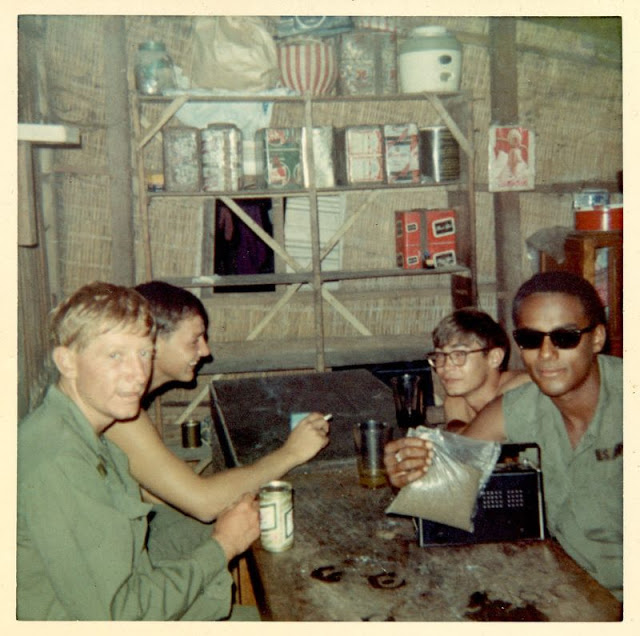
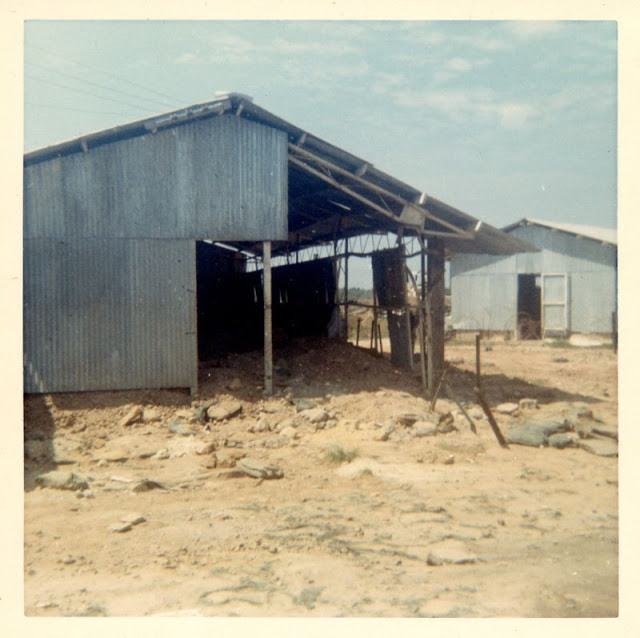
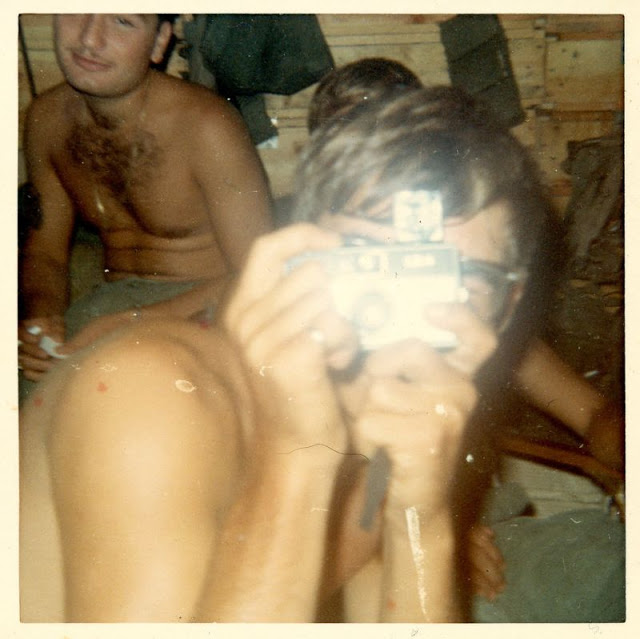
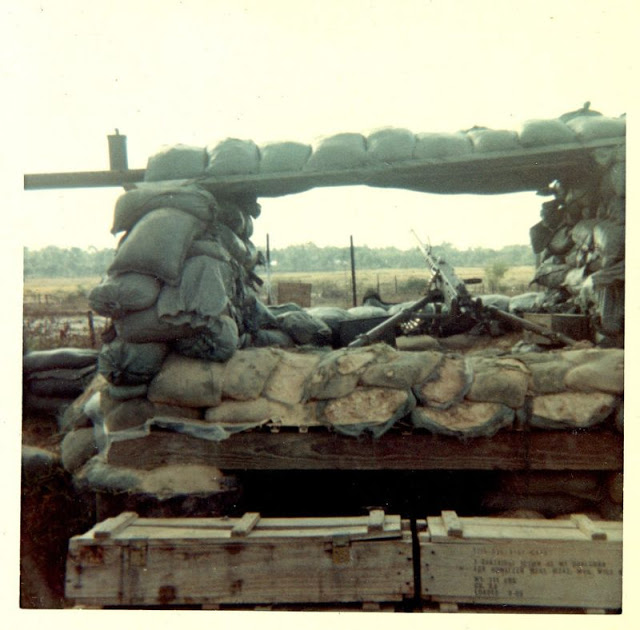
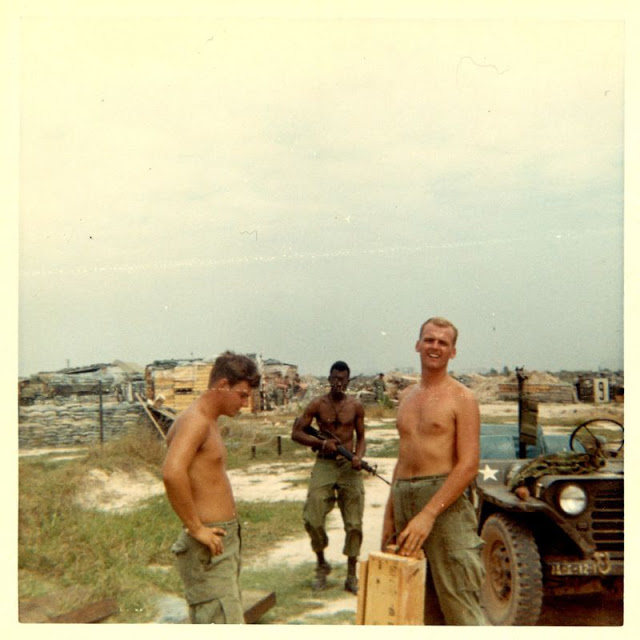
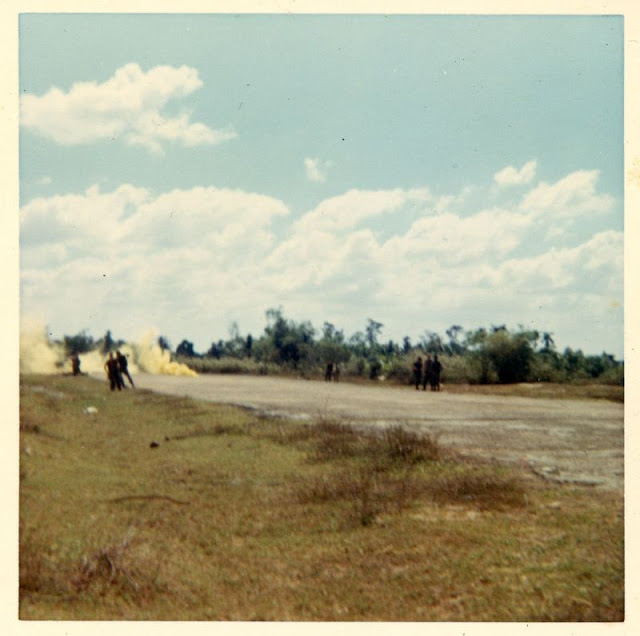
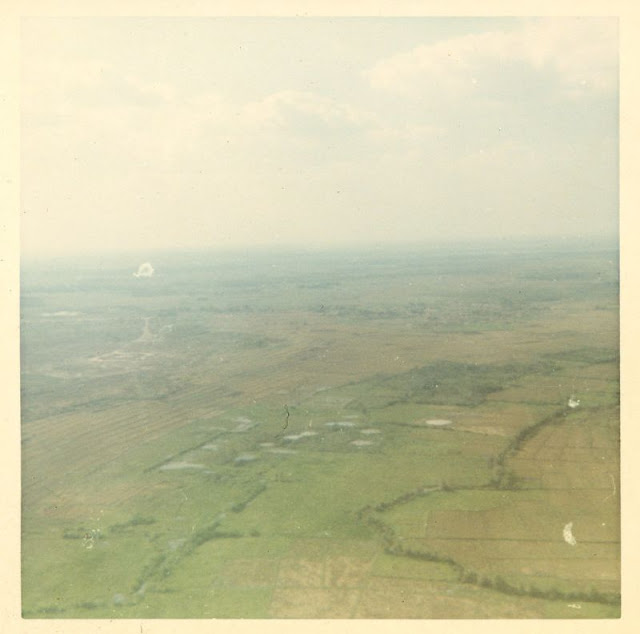
A set of amazing snapshots which shows everyday life of a group of American soldiers during Vietnam War.