Clarence Hailey Long, the Original Marlboro Man

Subscribe to get access

Read more of this content when you subscribe today.

If a picture is worth a thousand words, then Leonard McCombe’s image that inspired the Marlboro Man campaign is worth over $15 billion.

The photograph above shows Clarence Hailey Young, a foreman at the JA Ranch in Texas. McCombe had set out on assignment by Life magazine to document the real way of life of these cowboys, dispelling the glamorous image of most Hollywood movies at that time for the harsh and difficult work of ranching reality.

Something in that 1949 photo must have caught the eye of legendary advertising executive Leo Burnett who later used it as his template for the Marlboro Man. Young’s wrinkled and unshaven face framed by a large cowboy hat and bandana around his neck looked perfect to the ad executive. The fact that he had a lit cigarette on his lips probably convinced Mr. Burnett to choose the cowboy lifestyle for his advertising campaign.

The campaign for Marlboro was meant to include other macho professions, but the cowboy image emerged to be the clear winner. The choice obviously worked for Phillip Morris as the original filtered cigarettes which were first advertised for women as “Mild as May” became the winning ingredient when one tried to picture the place “Where the Flavor is.” Within two years, sales of the cigarette increased three-fold.

Darren Winfield was the first commercial Marlboro Man, with many other actors and real cowboys following in his footsteps. Similarly, many photographers, including Jim Krantz and Sam Abell were commissioned to make the iconic ads.

While most tobacco companies nowadays have shifted their advertising campaigns away from the cowboy image, the original idea has been considered to be one of the most successful ad campaigns of all time. And to think that McCombe’s Marlboro Man shot sparked the idea that would be worth millions of dollars from what was originally a ladies’ cigarette.

Subscribe to continue reading

Become a paid subscriber to get access to the rest of this post and other exclusive content.

Before Computer: Vintage Photos of People From the Past With Their Typewriters

Subscribe to get access

Read more of this content when you subscribe today.

A typewriter is a mechanical or electromechanical machine for typing characters. Typically, a typewriter has an array of keys, and each one causes a different single character to be produced on paper by striking an inked ribbon selectively against the paper with a type element. At the end of the nineteenth century, the term ‘typewriter’ was also applied to a person who used such a device.

The first commercial typewriters were introduced in 1874, but did not become common in offices until after the mid-1880s. The typewriter quickly became an indispensable tool for practically all writing other than personal handwritten correspondence. It was widely used by professional writers, in offices, business correspondence in private homes, and by students preparing written assignments.

Typewriters were a standard fixture in most offices up to the 1980s. Thereafter, they began to be largely supplanted by personal computers running word processing software. Nevertheless, typewriters remain common in some parts of the world. The QWERTY keyboard layout, developed for typewriters in the 1870s, remains the standard for computer keyboards.

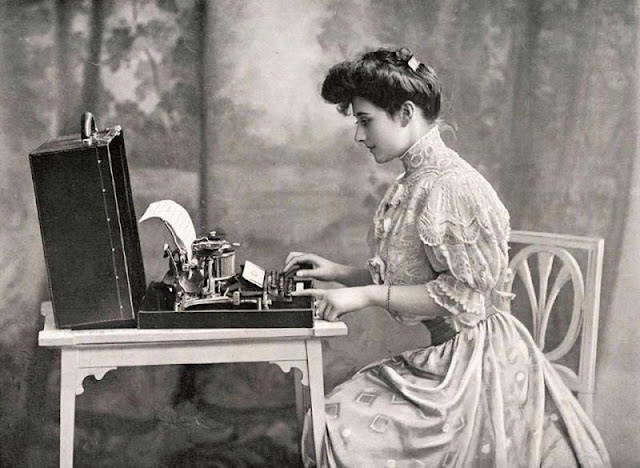
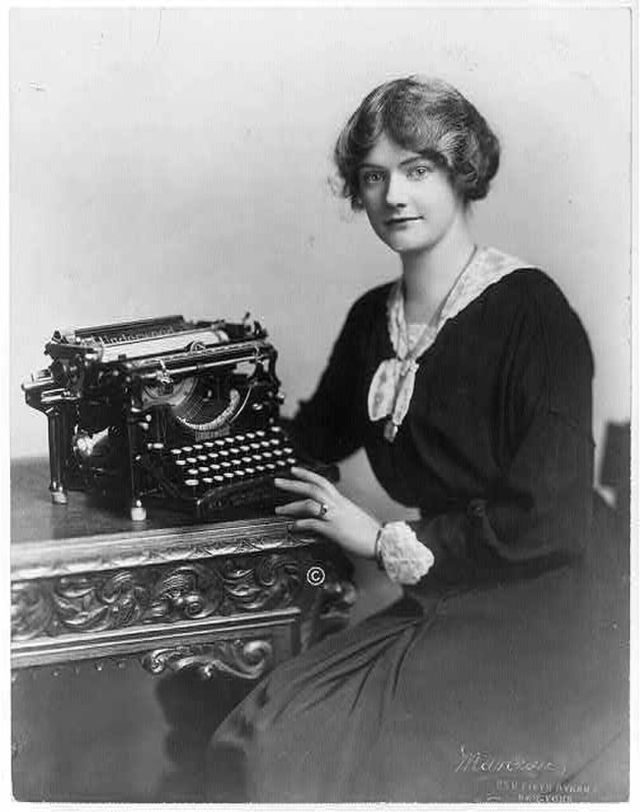
Before computer, here is a set of vintage photos that shows people from the past with their typewriters.

Subscribe to continue reading

Become a paid subscriber to get access to the rest of this post and other exclusive content.
Stunning Black and White Photos of Life in London in the 1950s

Subscribe to get access

Read more of this content when you subscribe today.

Casparus Bernardus Oorthuys (1 November 1908 – 22 July 1975), known as Cas Oorthuys, was a Dutch photographer and designer. Oorthuys first took up photography after he joined the free-thinking Dutch Association of Abstinent Students in the architecture department of the Haarlem MTS.

In 1936, Oorthuys became permanent photographer at De Arbeiderspers. He produced photography and graphics for communist and anti-fascist organizations; and in the tradition of “workers’ photography” he documented poverty, police violence, the unemployed, homeless people and evictions for magazines, book illustrations and book covers and exhibitions.

During the German Occupation, Oorthuys became involved in the Personal Identification Centre established in 1942 and made passport photos for fake ID cards. In May 1944, Oorthuys was arrested by the Germans and imprisoned in camp Amersfoort. Unexpectedly, he was released again in August. On release Oorthuys connected with De Ondergedoken Camera and documented the activities of the German occupiers, and also the awful Hongerwinter, the Dutch famine of 1944–45. During the postwar recovery he recorded the Nuremberg war crimes trials and the rebuilding of his homeland.

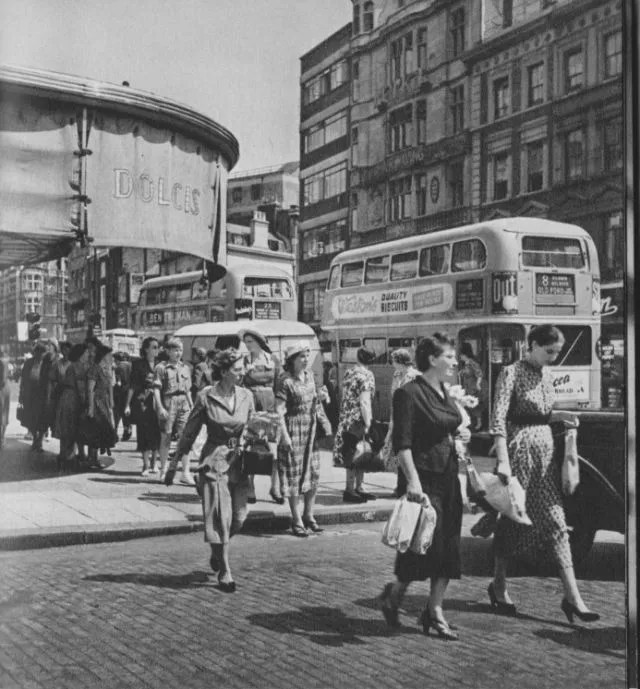
Take a look at London in the 1950s through these 23 stunning black and white photographs taken by Oorthuys:

Subscribe to continue reading

Become a paid subscriber to get access to the rest of this post and other exclusive content.
51 Amazingly Gorgeous Photos of Supermodel Cindy Crawford

Subscribe to get access

Read more of this content when you subscribe today.

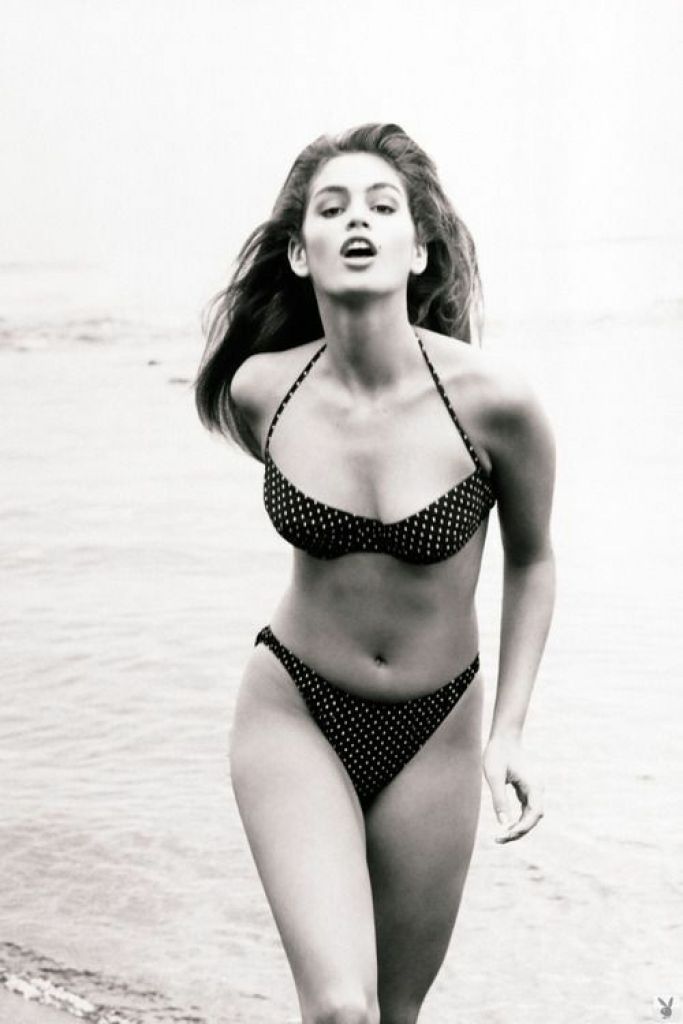
Cynthia Ann Crawford (born February 20, 1966) is an American model, actress and television personality. During the 1980s and 1990s, she was among the most popular supermodels and a ubiquitous presence on magazine covers and runways, as well as fashion campaigns. She subsequently expanded into acting and business ventures.

Crawford is an icon who’s had a lasting impact on the fashion world. Her All-American look highlighted by a beauty mark on her upper lip became an instant sensation when she hit the scene in 1986. The mother of two has since graced countless magazine covers for Vogue, Harper’s Bazaar Elle and stared in major designer campaigns for brands like Chanel, Versace and Calvin Klein.

Crawford helped pioneer ’90s All-American style with simple silhouettes, neutral palettes and comfortable, easy fabrics. Her inimitable and innate sense of style has had a lasting impact on both street style and high fashion. In honor of her milestone birthday, below are 50 of Crawford’s most iconic style moments.

Subscribe to continue reading

Become a paid subscriber to get access to the rest of this post and other exclusive content.
Vintage Photos Show What Young Couples Wore in the 1940s

Subscribe to get access

Read more of this content when you subscribe today.

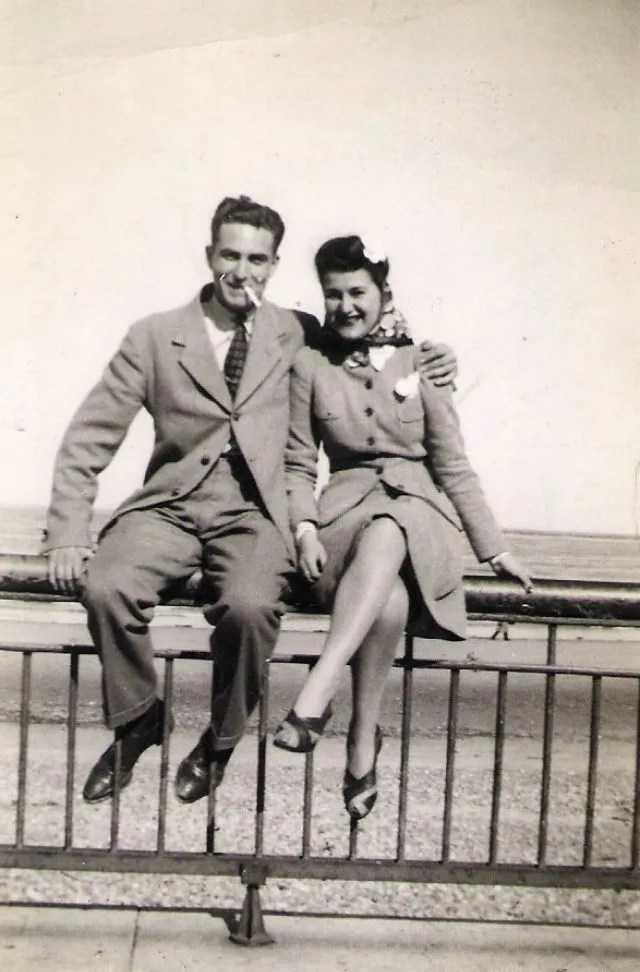
World War II dominated the first half of the 1940s as well as fashions in the Western world. Materials such as silk, nylon, wool, leather, rubber, and zippers were needed in wartime production. Clothing was rationed in the United States and parts of Europe. 1940s fashion designers had to be efficient and innovative in how they made suits, dresses, and shoes.

The typical 1940s female dress silhouette was like a uniform: simple and fitted, with boxy shoulders, a slim-belted waistline, and a hemline below the knee. In cold weather, you might see women in long-sleeved dress suits of a similar shape.

Women in the 1940s typically wore their hair shoulder-length or longer, without bangs, styled with waves and rolls. The “victory roll” helped women manage long hairstyles during a hard day’s work; they could unroll it later into shapely waves.

During the 1940s, men not in uniform often wore suits in public. Many made do with older suits from the 1930s. Suit vests fell out of favor as an excess use of fabric. New suits were made with a wool-rayon blend instead of wool and often with patterned (especially striped) fabric.

Here is a vintage photo collection that shows what young couples looked like during the 1940s.

Subscribe to continue reading

Become a paid subscriber to get access to the rest of this post and other exclusive content.

30 Amazing Photos Show Street Scenes of Amsterdam During the 1930s

Subscribe to get access

Read more of this content when you subscribe today.

Amsterdam is the capital and most populous city of the Netherlands. It is colloquially referred to as the “Venice of the North”, attributed by the large number of canals which form a UNESCO World Heritage Site.

Amsterdam is well known for its nightlife and festival activity; with several of its nightclubs (Melkweg, Paradiso) among the world’s most famous. Primarily known for its artistic heritage, elaborate canal system and narrow houses with gabled façades; well-preserved legacies of the city’s 17th-century Golden Age. Cycling is also key to the city’s character, and there are numerous bike paths.

The Port of Amsterdam is the fifth largest in Europe. The KLM hub and Amsterdam’s main airport, Schiphol, is the Netherlands’ busiest airport as well as the third busiest in Europe and 11th busiest airport in the world. The Dutch capital is considered one of the most multicultural cities in the world, with at least 177 nationalities represented.

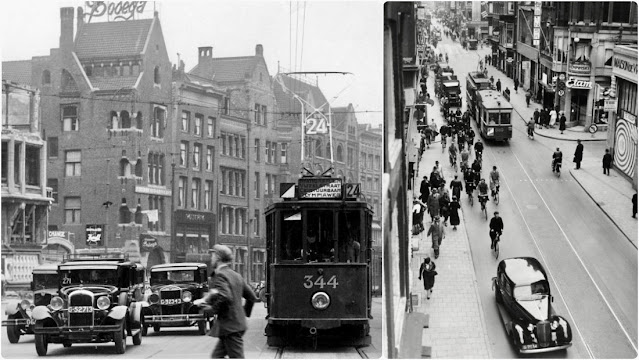
These rare vintage photos show what street scenes of Amsterdam looked like in the 1930s.

Rapenburg, Amsterdam, 1930

Subscribe to continue reading

Become a paid subscriber to get access to the rest of this post and other exclusive content.

Beautiful Portraits of Eva Gabor in the 1940s and 1950s

Subscribe to get access

Read more of this content when you subscribe today.

Born 1919 in in Budapest, Hungarian-American actress and singer Eva Gabor had her first movie role in the U.S. in 1941’s Forced Landing at Paramount Pictures. During the 1950s, she appeared in several feature films, including The Last Time I Saw Paris, and Artists and Models. These roles were bit parts.

In 1953, Gabor was given her own television talk show, The Eva Gabor Show, which ran for one season (1953–54). Through the rest of the 1950s and early 1960s she appeared on television and in movies.

Gabor was widely known for her role on the 1965–71 television sitcom Green Acres as Lisa Douglas, the wife of Eddie Albert’s character Oliver Wendell Douglas. She was successful as an actress in film, on Broadway, and on television. She was also a successful businesswoman, marketing wigs, clothing, and beauty products. Her elder sisters, Zsa Zsa and Magda Gabor, were also actresses and socialites.

Gabor died in Los Angeles on Independence Day 1995 at the age of 76, from respiratory failure and pneumonia, following a fall in a bathtub in Mexico, where she had been on vacation.

Take a look at these vintage photos to see portrait of a young and beautiful Eva Gabor in the 1940s and 1950s.

Subscribe to continue reading

Become a paid subscriber to get access to the rest of this post and other exclusive content.

Yesterday Today: September 1, 2024

Subscribe to get access

Read more of this content when you subscribe today.

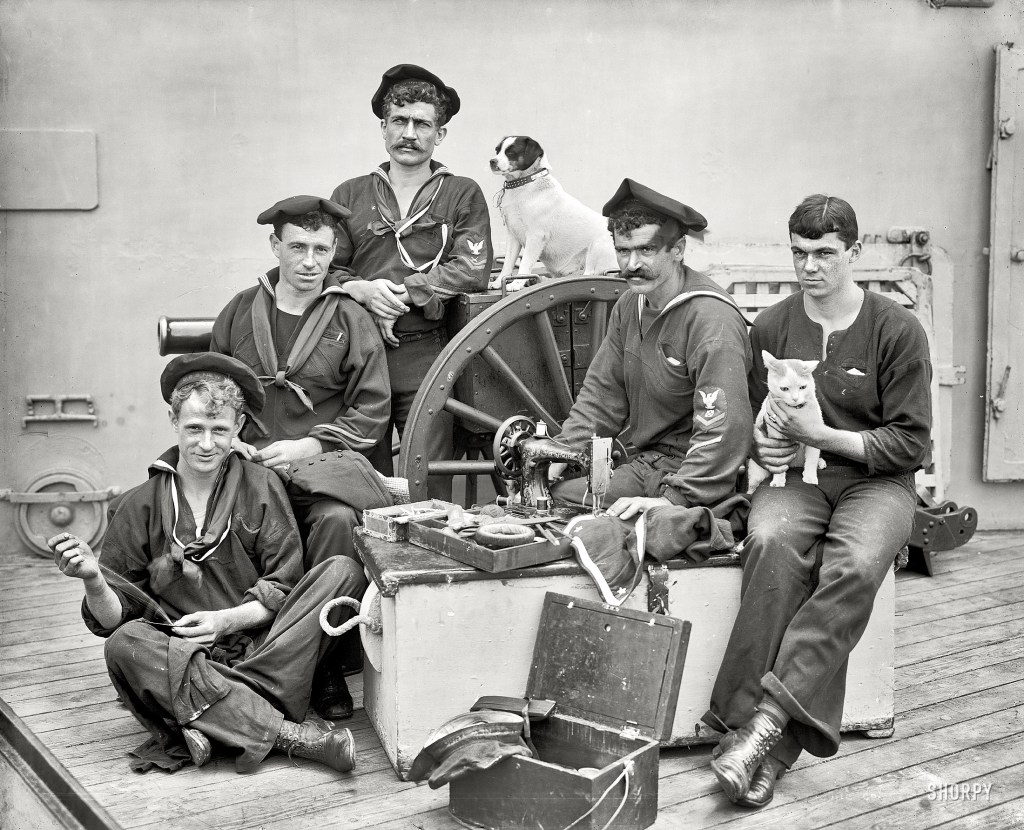
Aboard the U.S.S. New York, 1896. “Ship’s tailor.” The dog is Nick.

Bathing Beauties, ca. 1910s

Subscribe to continue reading

Become a paid subscriber to get access to the rest of this post and other exclusive content.

Fascinating Black and White Photos of Life in Britain in 1939

Subscribe to get access

Read more of this content when you subscribe today.

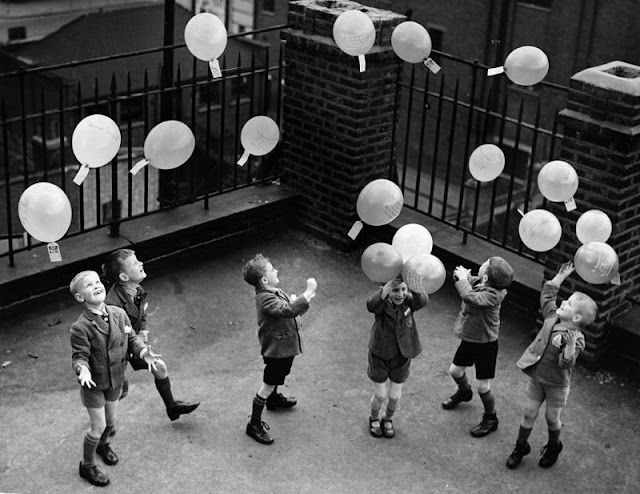
Boys release toy balloons bearing appeals for the Doctor Barnardo’s Home at Stepney, London, August 1939

After the German invasion of Poland, The King declared war in September 1939.

In preparation for war, Britain undertakes measures including calling up of troops, citizens returning home from abroad, children rehearsing safety drills. The government also thought of all the possible dangers and difficulties the Home Front would face and started to take precautions.

Boys release toy balloons bearing appeals for the Doctor Barnardo’s Home at Stepney, London, August 1939

Take a look at life in Britain in 1939 through these fascinating black and white photographs.

The ladies’ rifle team of Downe House School in Berkshire set out for a practice session with their guns, April 1939

Subscribe to continue reading

Become a paid subscriber to get access to the rest of this post and other exclusive content.
Life in America in the 1970s and 1980s

Subscribe to get access

Read more of this content when you subscribe today.

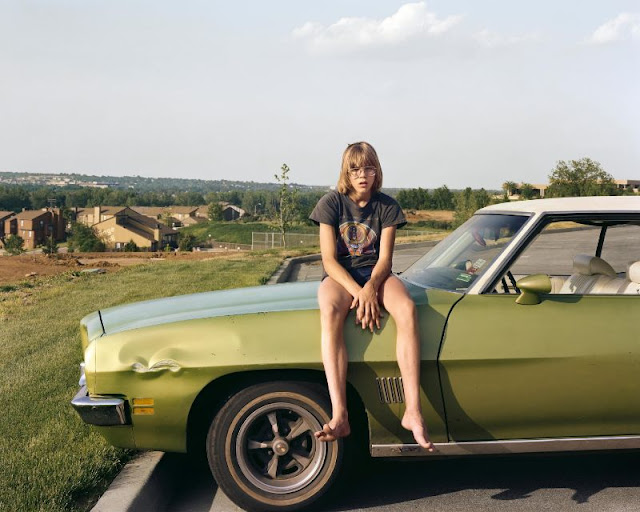
Kansas City, Kansas, May 1983

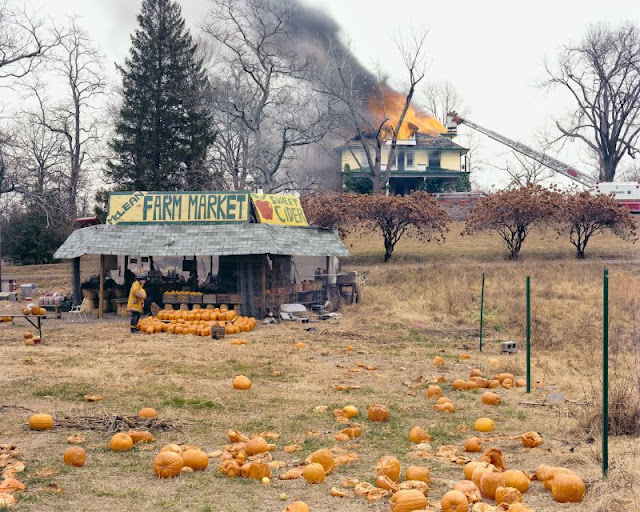
McLean, Virginia, December 1978

Subscribe to continue reading

Become a paid subscriber to get access to the rest of this post and other exclusive content.
Yesterday Today

Bringing You the Wonder of Yesterday - Today

Skip to content ↓