Subscribe to get access
Read more of this content when you subscribe today.

Subscribe to continue reading
Become a paid subscriber to get access to the rest of this post and other exclusive content.
Bringing You the Wonder of Yesterday – Today
Read more of this content when you subscribe today.

Become a paid subscriber to get access to the rest of this post and other exclusive content.
Read more of this content when you subscribe today.
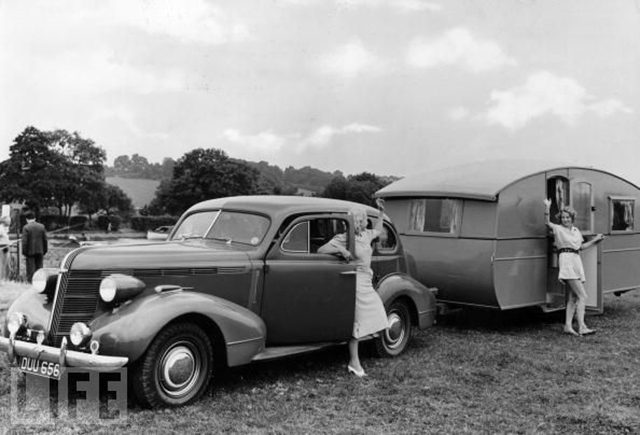
Travel trailers and caravans vary from basic models which may be little more than a tent on wheels to those containing several rooms with all the furniture and furnishings and equipment of a home.
In the United States, the history of travel trailers can be traced back to the early 1920s, when those who enjoyed their use were often referred to as ‘tin can tourists’. As time progressed, trailers became more liveable and earned a new name in the 1930s and 1940s, which was the house trailer.
In the 1950s and 1960s, the industry seemed to split, creating the two types that we see today, that of the recreational vehicle (RV) industry and mobile home industry.
Today travel trailers are classified as a type of RV along with motorhomes, fifth-wheel trailers, pop-up trailers, and truck campers.
Here’s a collection of 20 vintage photos that show the golden age of travel trailers during the 1940s and 1950s.

Become a paid subscriber to get access to the rest of this post and other exclusive content.
Read more of this content when you subscribe today.

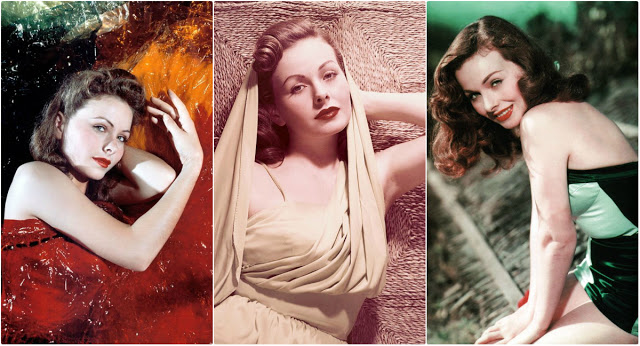
Born 1925 in Barstow, California, American actress Jeanne Crain had her first sizable role in Home in Indiana (1944). The film, shot in Technicolor, was popular at the box office and established Crain as a film name.
In 1949, Crain appeared in three films. A Letter to Three Wives (1949), in which Crain was one of several stars, quickly became established as a classic, winning Joseph L. Mankiewicz two Oscars and being a solid box office hit. The Fan, directed by Preminger and based on Lady Windemere’s Fan by Oscar Wilde, was received poorly. However Pinky earned Crain a nomination the Academy Award for Best Actress and was one of the more popular films of the year.
Crain continued to have success when appeared in some movies in the 1950s such as Cheaper by the Dozen (1950), starred in Take Care of My Little Girl (1951), People Will Talk (1951), starred in The Model and the Marriage Broker (1951), and showed her dancing skills in 1955’s Gentlemen Marry Brunettes.
At the height of her stardom, in the late 1940s and early 1950s, Crain was nicknamed “Hollywood’s Number One party girl”, and she was quoted as saying that she was invited to at least 200 parties a year.
Film roles became fewer in the 1960s as Crain went into semi-retirement. Her last films were Skyjacked (1972) and The Night God Screamed (1975).
Crain died in 2003, cause of a heart attack, at the age of 78.
Take a look at these glamorous photos to see the beauty of Jeanne Crain in the 1940s and 1950s.

Become a paid subscriber to get access to the rest of this post and other exclusive content.
Read more of this content when you subscribe today.

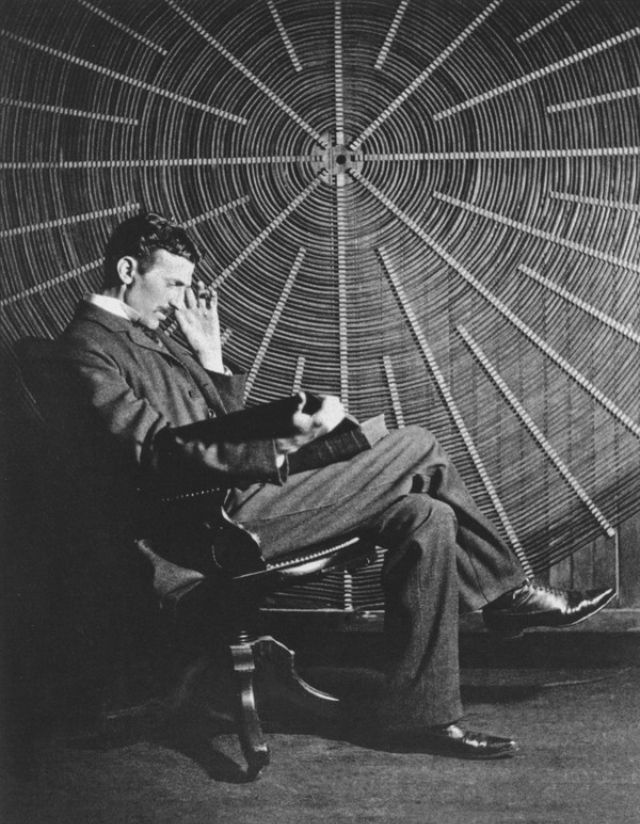
Nikola Tesla (10 July [O.S. 28 June] 1856 – 7 January 1943) was a Serbian-American inventor, electrical engineer, mechanical engineer, and futurist best known for his contributions to the design of the modern alternating current (AC) electricity supply system.
Born and raised in the Austrian Empire, Tesla studied engineering and physics in the 1870s without receiving a degree, gaining practical experience in the early 1880s working in telephony and at Continental Edison in the new electric power industry. In 1884 he emigrated to the United States, where he became a naturalized citizen. He worked for a short time at the Edison Machine Works in New York City before he struck out on his own. With the help of partners to finance and market his ideas, Tesla set up laboratories and companies in New York to develop a range of electrical and mechanical devices. His alternating current (AC) induction motor and related polyphase AC patents, licensed by Westinghouse Electric in 1888, earned him a considerable amount of money and became the cornerstone of the polyphase system which that company eventually marketed.
Attempting to develop inventions he could patent and market, Tesla conducted a range of experiments with mechanical oscillators/generators, electrical discharge tubes, and early X-ray imaging. He also built a wireless-controlled boat, one of the first-ever exhibited. Tesla became well known as an inventor and demonstrated his achievements to celebrities and wealthy patrons at his lab, and was noted for his showmanship at public lectures. Throughout the 1890s, Tesla pursued his ideas for wireless lighting and worldwide wireless electric power distribution in his high-voltage, high-frequency power experiments in New York and Colorado Springs. In 1893, he made pronouncements on the possibility of wireless communication with his devices. Tesla tried to put these ideas to practical use in his unfinished Wardenclyffe Tower project, an intercontinental wireless communication and power transmitter, but ran out of funding before he could complete it.
After Wardenclyffe, Tesla experimented with a series of inventions in the 1910s and 1920s with varying degrees of success. Having spent most of his money, Tesla lived in a series of New York hotels, leaving behind unpaid bills. He died in New York City in January 1943. Tesla’s work fell into relative obscurity following his death, until 1960, when the General Conference on Weights and Measures named the SI unit of magnetic flux density the tesla in his honor. There has been a resurgence in popular interest in Tesla since the 1990s. (Wikipedia)

Become a paid subscriber to get access to the rest of this post and other exclusive content.
Read more of this content when you subscribe today.


Become a paid subscriber to get access to the rest of this post and other exclusive content.
Read more of this content when you subscribe today.
More than any other artist, Walker Evans invented the images of essential America that we have long since accepted as fact, and his work has influenced not only modern photography but also literature, film and visual arts in other mediums.
Walker Evans (1903-1975) took up photography upon his return to New York in 1927, following a year in Paris when his aspiration to become a writer withered in the shadow of Fitzgerald, Hemingway and Joyce. In 1935, Evans was commissioned by the Farm Security Administration to photograph the effects of the Great Depression in the Southeast. During this time he took many of the photographs that appeared in his collaboration with James Agee, Let Us Now Praise Famous Men (1941), a book which has become a defining document of that era. Evans joined the staff of Time magazine in 1945 and shortly thereafter became an editor at Fortune, where he stayed for the next two decades. In 1964, he became a professor at the Yale University School of Art, where he taught until his death in 1975.
Below is a collection of 20 impressive color photographs taken by Walker Evans in New York in the 1950s.

Become a paid subscriber to get access to the rest of this post and other exclusive content.
Read more of this content when you subscribe today.
In 1908 Lewis Hine picked up his camera and became the photographer for the National Child Labor Committee. It was a start of a long decade, as Lewis traveled across the country, documenting child labor, getting constant threats from factory owners as the immorality of child labor was supposed to be kept away from the public’s eye. However, Hine persisted, adopting many different disguises (such as a fire inspector or a bible salesman) to snap pictures and interview the children working at factories or in the streets.
Lewis Hine used his camera as a tool for social commentary and reform, focusing on the dangerous and appalling conditions that the children had to work in. Risking his own safety, Hine snapped thousands of photographs with one goal – to end child labor. And of course, spreading the photographs, in the form of pamphlets, newspapers, and magazines paid off as the federal government eventually had to put out stricter labor laws.

Become a paid subscriber to get access to the rest of this post and other exclusive content.
Read more of this content when you subscribe today.
Charles Lansiaux (1855–1939) became a photographer at the end of the 19th century. He established his own business in 1903, describing his company purpose as “Artistic and industrial photography, city works, emergency works, interior photography with artificial light, enlargements, amateur documentary photography.”
At the beginning of the war in 1914, he started documenting daily life in Paris, far from the frontline. The resulting series of over 1000 images, titled “Aspects of Paris during the war of 1914” was not initially intended for publication but to be preserved as a testimony of what had happened. The Paris Historical library purchased the images as they were taken.
Here’s a gallery of 86 astonishing photographs capture everyday life in Paris from 1914-1919:

Become a paid subscriber to get access to the rest of this post and other exclusive content.