FREE ARTICLE – Medal of Honor Action of Radio Operator Staff Sergeant Henry ‘Red’ Erwin. April 19, 1945.

Subscribe to get access

Read more of this content when you subscribe today.
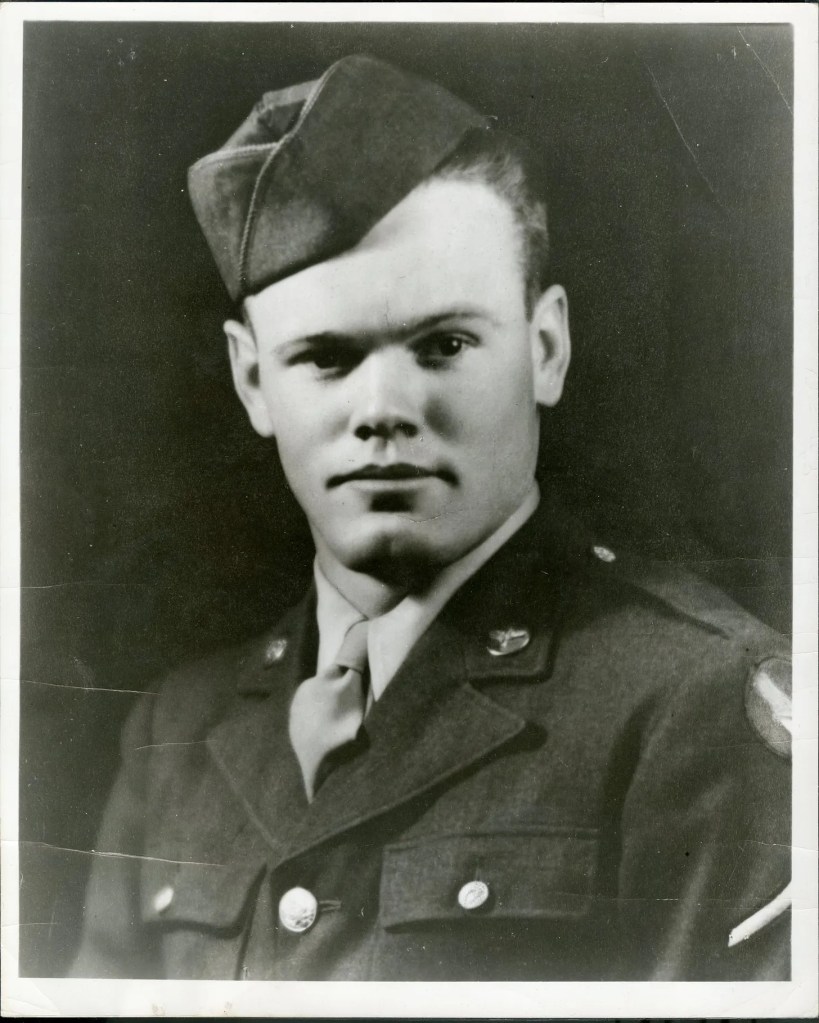
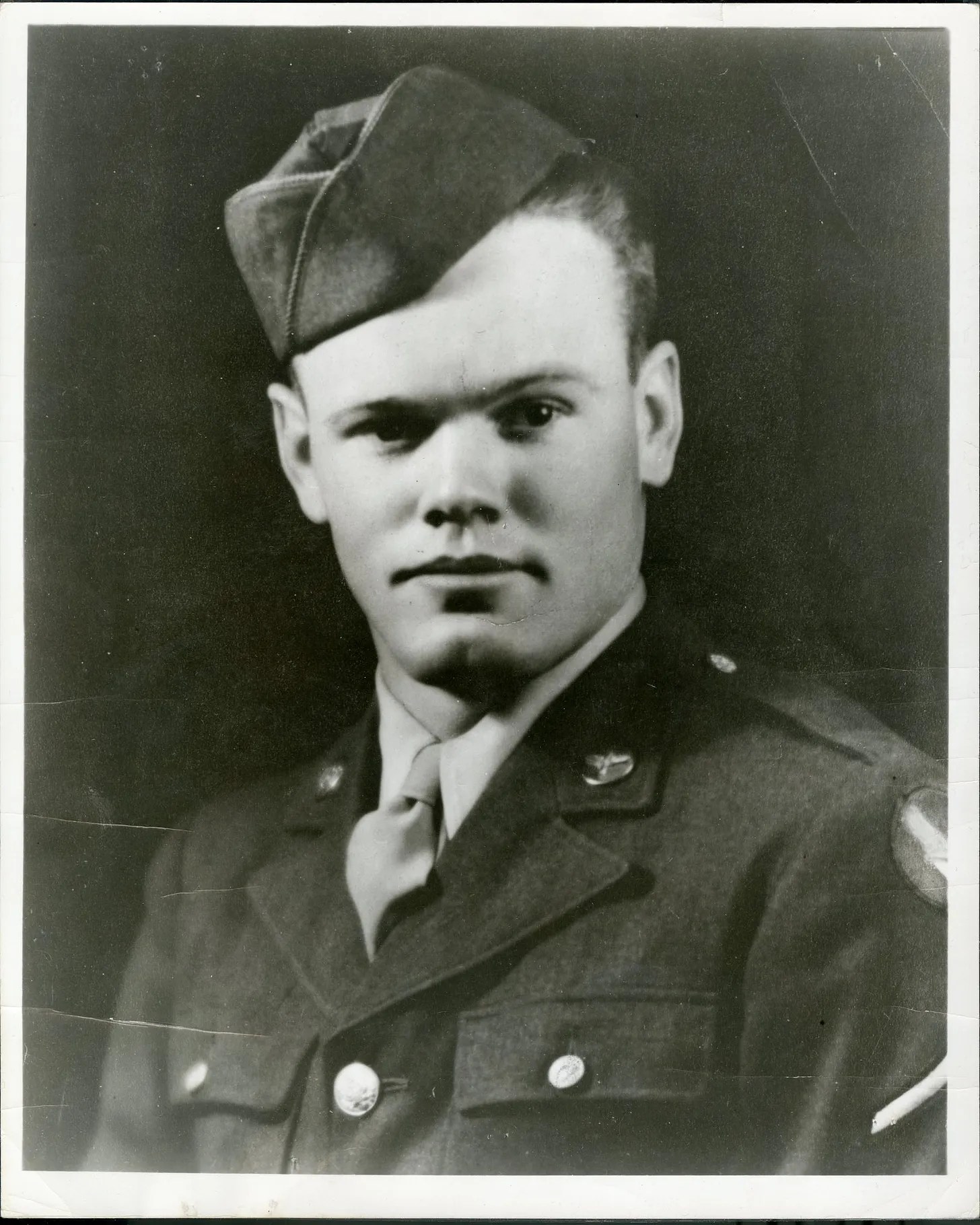
Image: Staff Sergeant Henry E. Erwin.


In the lead B-29 on a mission to Koriyama, north of Tokyo, he was tasked with releasing white phosphorus smoke bombs through a chute to assist with the assembly of 167 bombers from Guam and Tinian. There were initially no issues, but one phosphorous bomb exploded prematurely and ricocheted back into the aircraft, striking Erwin in the face as he knelt over the chute. His nose was crushed, and he was instantly blinded.

The aircraft’s forward cabin was instantly filled with choking, toxic smoke so thick that the pilot could no longer see his instruments, and he put the B-29 into a steep dive. Erwin was by now on fire and suffering from horrific burns, yet his first thought was to save the aircraft and crew. He felt around for the bomb, which was burning at a temperature of over 700 degrees centigrade, picked it up with his bare hands and began to make his way forward.

Reaching the navigator’s table, Erwin had to clutch the bomb to his body to unlatch it and move past, inflicting further severe injuries. He finally made it to the cockpit and was able to jettison the bomb through the copilot’s window before collapsing to the floor. As the smoke cleared and the pilot regained control at low altitude, the crew used fire extinguishers to put out Erwin’s burning body.

The pilot aborted the mission and made for Iwo Jima, while crewmen did what they could to help Erwin. They administered morphine, but the phosphorus continued to eat into his flesh and he was in terrible pain. Despite this, he remained conscious and was anxious to make sure that the rest of the crew were safe.

On arrival at Iwo Jima, doctors spent hours removing phosphorus fragments from Erwin’s body, each of which reignited as they were exposed to the air. There seemed to be little chance of his survival, but the officers of his Bomb Group were determined that his actions should be recognised before he died. They drafted a Medal of Honor citation, which was signed, approved and forwarded to Washington by Maj. Gen. Curtis LeMay the following morning.
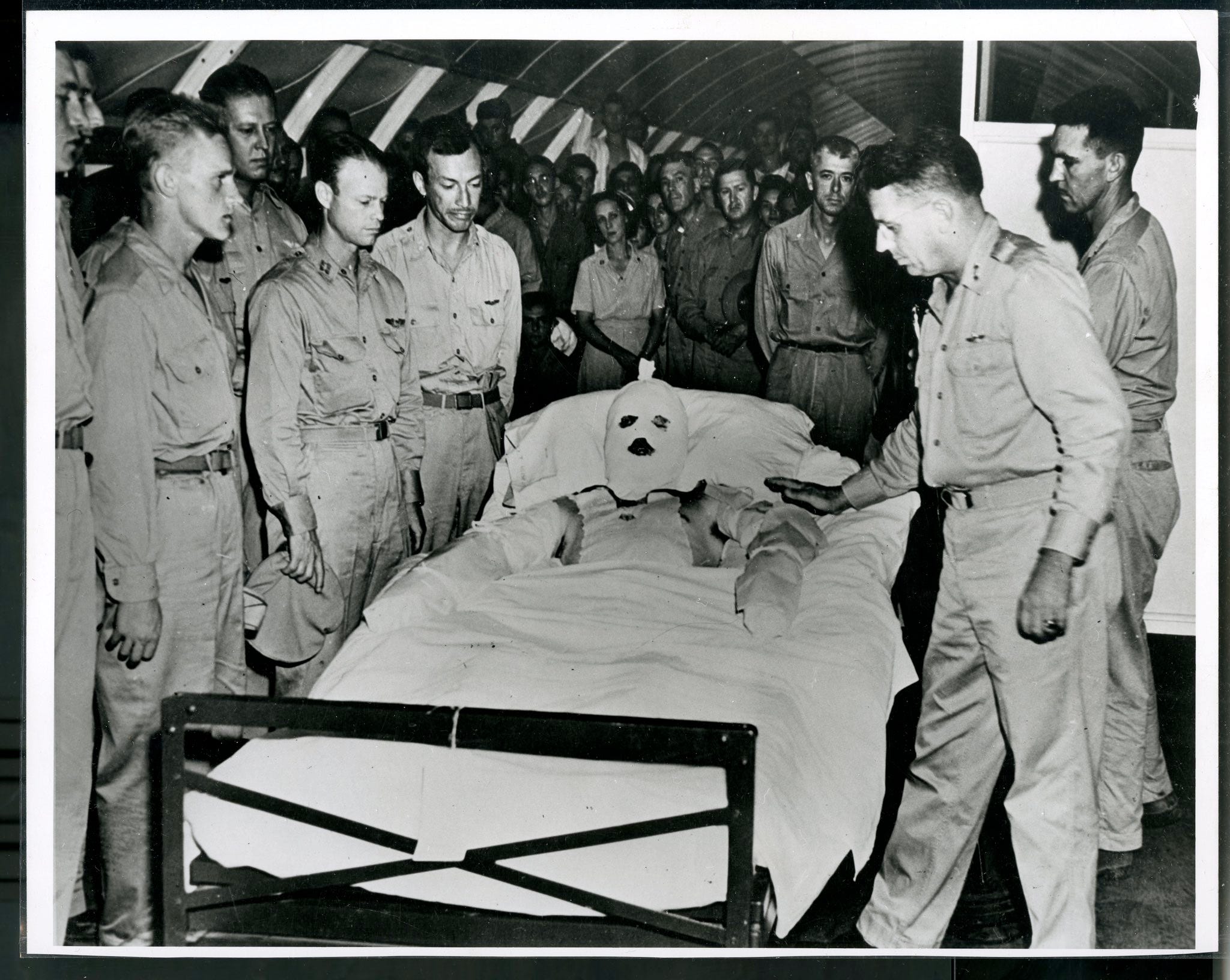
Image: Erwin and his crew (left) on the day of his Medal of Honor presentation, April 19, 1945, by Major General Willis H Hale. He wasn’t expected to survive at this stage.

The only Medal of Honor available in the Pacific was located in a display case in Honolulu, and an aircraft was dispatched to Hawaii to retrieve it without delay. According to some sources, the airmen sent to retrieve the medal broke open its case when no key could be found and effectively stole it. Meanwhile, Erwin was transferred to Guam for further operations, blood transfusions and antibiotic treatment. The medal was presented to him on 19th April, and LeMay later pulled strings to allow his brother, a Marine also serving in the Pacific, to be at his bedside.
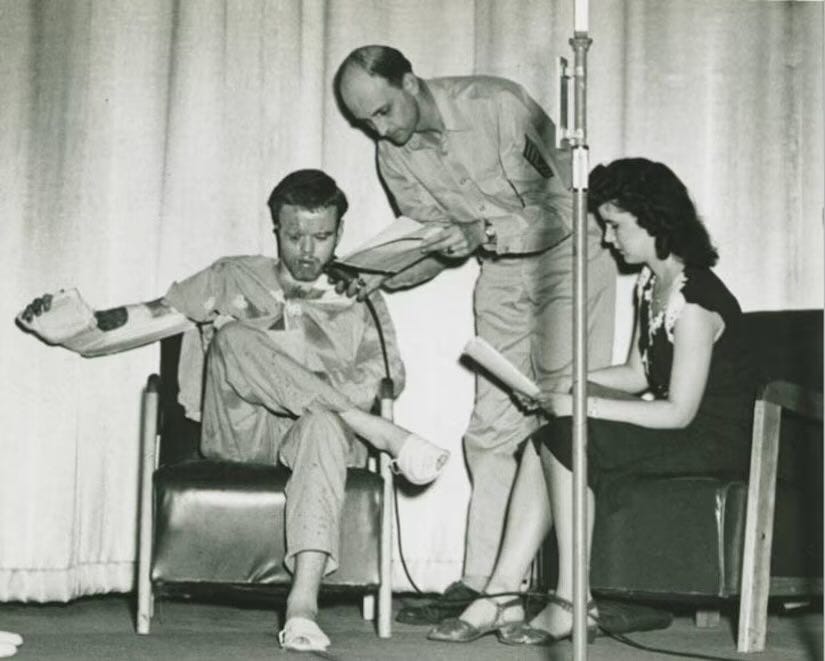
Image: Erwin taking part in a radio broadcast from an Alabama hospital during his recovery.

Despite all the odds, Erwin survived and, after a month, was transferred back to the United States. He remained in the hospital for 30 months, undergoing more than 40 operations, primarily to reconstruct his face. Erwin had lost one eye, an ear, his nose and several fingers but recovered partial sight in one eye and the use of his left arm.

Promoted to Master Sergeant and given an honourable discharge after his recovery, Erwin went on to work as a veterans’ benefits advisor. He and his wife Betty (who he had married shortly before deploying overseas) had four children together. He died in 2002, aged 80.
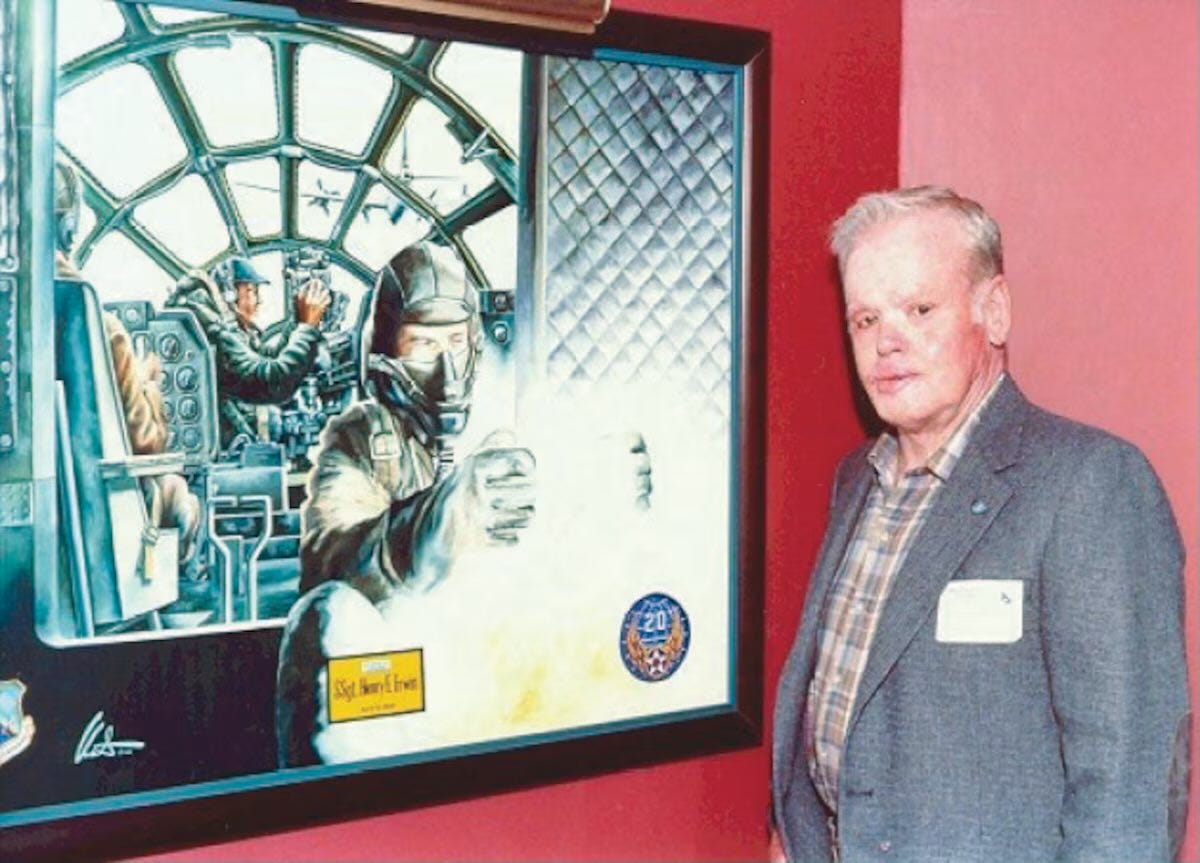
Image: Erwin in later life, standing with a painting depicting his actions of April 12, 1945.


#HenryRedErwin

https://amzn.to/3ACcgSr

Please Consider Supporting Our Ongoing Efforts to Bring You, Our Valued Viewers, Quality and Interesting Historical Content. Your Financial Support of $5 Per Month Goes A Long Way in Helping Us to Survive and Go Forward. Or If You Would Like You Can Make a One-Time Donation at https://www.buymeacoffee.com/YesterdayToday

Thank You For Considering to Support Us.

Michael

Yesterday Today

Subscribe to get access

Read more of this content when you subscribe today.
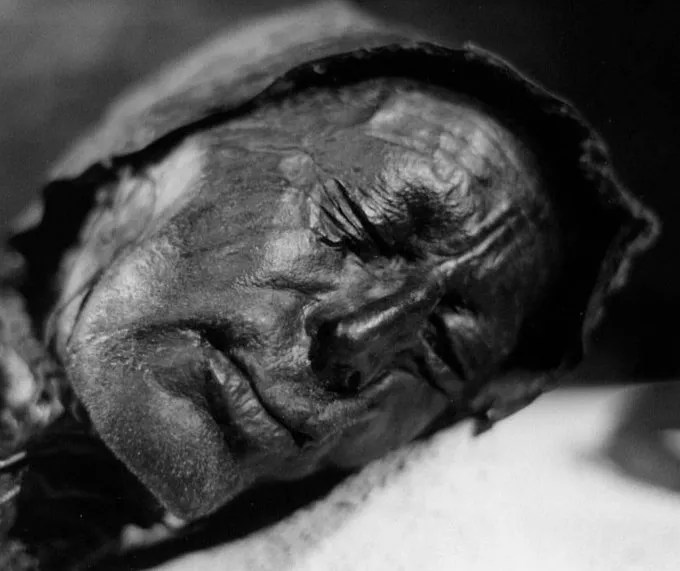
Tollund Man

Subscribe to continue reading

Become a paid subscriber to get access to the rest of this post and other exclusive content.

Wild West Wednesdays Part 1

Subscribe to get access

Read more of this content when you subscribe today.

Today we begin a new series, appearing every Wednesday, profiling one notorious outlaw who was roaming the American Wild West in the late-1800s. I hope that you will enjoy the series as much as I did writing it. Enjoy!.

Michael

Yesterday Today

John Wesley Hardin

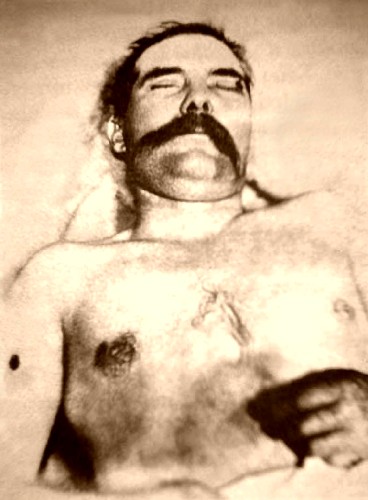
John Wesley Hardin was an Old West outlaw and gunfighter. Hardin was often in trouble with the law, even from an early age. He killed his first man at the age of 15, claiming it was done in self-defense.

Chased by lawmen for the more significant part of his life, in 1877, when he was only 23, he was sentenced to 25 years in prison for murder. Hardin maintained that he had killed 44 men at the time of sentencing, while historians attribute 27 deaths to him. While in prison, Hardin wrote an autobiography and studied law. He was known for exaggerating or fabricating stories about his life and claimed credit for numerous killings that cannot be documented.

Within a year of his release from prison in 1894, Hardin was murdered by John Selman Sr. in an El Paso saloon.

Image: John Wesley Hardin. 

Subscribe to continue reading

Become a paid subscriber to get access to the rest of this post and other exclusive content.

24 Incredible Photos That Show London During the 1930s

Subscribe to get access

Read more of this content when you subscribe today.

London in the 1930s tried to be cleaner, more modern and efficient. It was increasingly a city of electric lighting and motor vechicles, rather than gas lighting and horse-drawn vehicles. The Capital’s old problems were being tackled by new public bodies. The London Passenger Transport Board was created in 1933 as a way of bringing all the capital’s transport providers together. The General Post Office completed the automation of London’s telephone exchanges.

The decade was dominated by the growing threat of fascism in Europe. Bitter clashes between English supporters of fascism and their opponents took place in central London and the East End. German Jewish refugees fleeing Nazi persecution, began to arrive, many settling in Hampstead. War with Germany began to look inevitable and the decade ended with preparations to evacuate London’s children.

These fascinating images below from the 1930s show the ever-evolving city going through a period of exciting change and new beginnings.

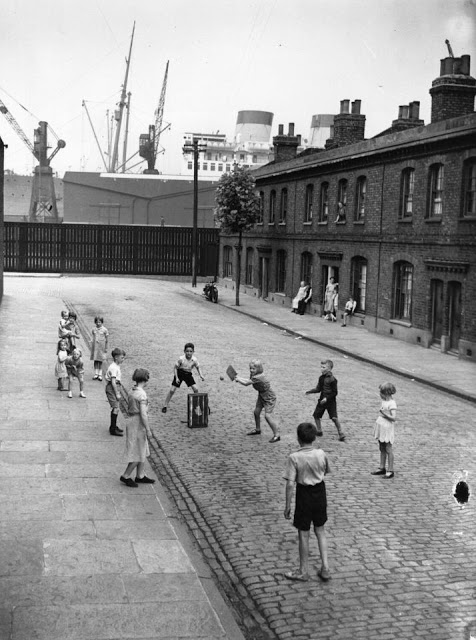
Children playing cricket in a street in Millwall, east London on August 15, 1938, with a large liner in the background.
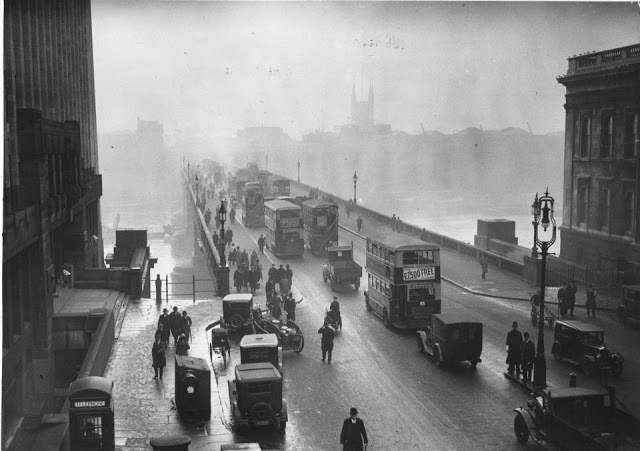
Early morning rush hour traffic crossing London Bridge in 1933.

Subscribe to continue reading

Become a paid subscriber to get access to the rest of this post and other exclusive content.

75 Vintage Photos of Life in Mexico during the 1950s

Subscribe to get access

Read more of this content when you subscribe today.

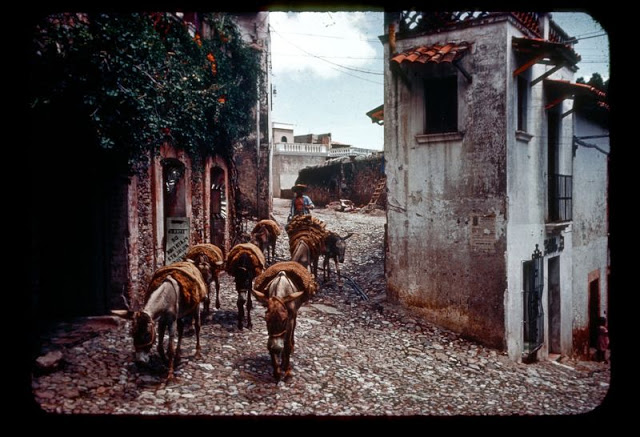
Mexico, officially the United Mexican States, is a country in the southern portion of North America. It is bordered to the north by the United States; to the south and west by the Pacific Ocean; to the southeast by Guatemala, Belize, and the Caribbean Sea; and to the east by the Gulf of Mexico. Mexico covers 1,972,550 square kilometers (761,610 sq mi), making it the world’s 13th-largest country by area; with approximately 126,014,024 inhabitants, it is the 10th-most-populous country and has the most Spanish-speakers. Mexico is organized as a federation comprising 31 states and Mexico City, its capital. The capital is not only a primate city, with a population of approximately 21 million, but also one of the world’s largest cities. Other major urban areas include Guadalajara, Monterrey, Puebla, Toluca, Tijuana, Ciudad Juárez, and León.

Pre-Columbian Mexico traces its origins to 8,000 BCE and is identified as one of the world’s six cradles of civilization. In particular, the Mesoamerican region was home to many interconnected civilizations; including the Olmec, Maya, Zapotec, Teotihuacan, and Purepecha. Last were the Aztecs, who dominated the region in the century before European contact. In 1521, the Spanish Empire and its indigenous allies conquered the Aztec Empire from its capital Tenochtitlan, now Mexico City, establishing the colony of New Spain. The image of Mexico’s prehispanic indigenous cultures has played a crucial role in the formation of a distinct Mexican identity from the colonial era onward, symbolized by the post-independence national flag with Aztec eagle. Over the three centuries after the conquest, the Spanish state and the Catholic Church, both of which were controlled by the Spanish crown, played important, intertwined institutional roles, expanding the colonial territory, enforcing Christianity, and spreading the Spanish language throughout. Spanish rule incorporated Native peoples of Mesoamerica into colonial order, initially maintaining the existing indigenous social and economic structures. Spanish rule recognized indigenous elites as nobles and they served as mediators between their communities and the Spanish ruling structures. Northern Mexico was outside of Mesoamerica; it was sparsely populated and the indigenous peoples were resistant to conquest. The huge and diverse indigenous populations, designated “Indians” (indios) under Spanish rule, were at the bottom of the legal system of racial hierarchy, with the small population of white, European Spaniards (españoles) at the top, and the small population of mixed-race castas in the middle. The discovery outside of the zone of settled indigenous populations of rich deposits of silver in Zacatecas and Guanajuato in the 1540s saw the expansion of the Spanish Empire northward, with population growth as wealth was extracted. Wealth coming from Asia and the New World flowed through the ports of Acapulco and Veracruz into Europe, which contributed to Spain’s status as a major world power for the next centuries, and brought about a price revolution in Western Europe. The colonial order came to an end in the early nineteenth century with the War of Independence against Spain, started in 1810 in the context of Napoleon’s invasion of Spain, and successfully concluded in 1821 with the alliance of mixed-race insurgents under Vicente Guerrero and previously royalist creole elites led by Agustín de Iturbide.

Mexico’s early history as an independent nation state was marked by political and socioeconomic upheaval. Liberal and conservative factions constantly changed the form of government, which transitioned many times between short-lived monarchies and republics. The country was invaded by two foreign powers during the 19th century: first, after the Texas Revolution by American settlers, which led to the Mexican–American War and huge territorial losses to the United States after defeat in 1848. Liberal reforms were enshrined in the Constitution of 1857, which sought to integrate indigenous communities and curtail the power of the military and the Catholic Church. Conservatives reacted with the war of Reform, who invited France to invade the country and install Maximilian Habsburg as emperor, against the Republican resistance led by liberal President Benito Juárez. With the end of the American Civil War and France’s withdrawal of its army for the war with Prussia, the US-backed republicans recovered the country and overthrew the emperor. The last decades of the 19th century were dominated by the dictatorship of war hero, Porfirio Díaz, who sought to modernize Mexico and restore order. The Porfiriato era (1876-1910) led to great social unrest and ended with the outbreak of the decade-long Mexican civil war (Mexican Revolution). This conflict had profound changes in Mexican society, including the proclamation of the 1917 Constitution, which remains in effect to this day.

The remaining Revolutionary generals ruled as a succession of presidents until the assassination of Alvaro Obregón in 1928, which led to the formation of the Institutional Revolutionary Party (PRI) the following year. The PRI governed Mexico for 70 years, first under a set of paternalistic developmental policies of considerable economic success, such as president Lázaro Cárdenas’ socially-oriented nationalization efforts. During World War II Mexico also played an important role for the U.S. war effort, contributing to economic growth. However, over decades the PRI rule devolved into a series of violent repressions (such as the Tlatelolco Massacre in the dawn of the 1968 Olimpic Games), electoral frauds (such as the 1988 election) and moved the country to a more US-aligned neoliberal economic policy during the late 20th century. This was cristalized with the signing of the North American Free Trade Agreement in 1994, which caused a major indigenous rebellion in the state of Chiapas. PRI lost the presidency for the first time in 2000, against the conservative party (PAN).

Mexico is a developing country, ranking 74th on the Human Development Index, but has the world’s 15th-largest economy by nominal GDP and the 11th-largest by PPP, with the United States being its largest economic partner. Its large economy and population, global cultural influence, and steady democratization make Mexico a regional and middle power; it is often identified as an emerging power but is considered a newly industrialized state by several analysts. However, the country continues to struggle with social inequality, poverty and extensive crime. It ranks poorly on the Global Peace Index, due in large part to ongoing conflict between the government and drug trafficking syndicates, which violently compete for the US drug market and trade routes. This “drug war” has led to over 120,000 deaths since 2006.

Mexico ranks first in the Americas and seventh in the world for the number of UNESCO World Heritage Sites. It is also one of the world’s 17 megadiverse countries, ranking fifth in natural biodiversity. Mexico’s rich cultural and biological heritage, as well as varied climate and geography, makes it a major tourist destination: as of 2018, it was the sixth most-visited country in the world, with 39 million international arrivals. Mexico is a member of United Nations, the G20, the Organisation for Economic Co-operation and Development (OECD), the World Trade Organization (WTO), the Asia-Pacific Economic Cooperation forum, the Organization of American States, Community of Latin American and Caribbean States, and the Organization of Ibero-American States. (Wikipedia)

Subscribe to continue reading

Become a paid subscriber to get access to the rest of this post and other exclusive content.

26 Stunning Black and White Fashion Photos From the 1950s and 1960s

Subscribe to get access

Read more of this content when you subscribe today.

Eugene ‘Gene’ Vernier (1920–2011) worked as a fashion photographer for British Vogue from 1954 to 1967, during one of the most exciting periods in fashion history. Shooting of-the-moment looks from the likes of Christian Dior and Emilio Pucci and top models including Celia Hammond, Jean Shrimpton, and current Vogue creative director Grace Coddington, Vernier worked with some of the biggest names in the industry. Yet he was relatively unconcerned with celebrity. Interested only in bringing out the very best in each frame, Vernier was a true craftsman in the fashion photography trade.

Featuring more than one hundred of Vernier’s own favorite photographs drawn from Vogue’s extensive photo archive, these images reveal remarkable innovation in the use of props, backdrops, and location. Whether he was photographing his subjects by the sea, with a canine companion, or perfectly positioned atop a pale pink convertible, Vernier’s careful composition enhanced the essence of his subject.

Vernier shot mostly in black-and-white, and his trademark “look” is one of classic femininity. He sought to capture models when they were relaxed, enjoying the clothing, and confident that their photographer would show both only at their best.

Subscribe to continue reading

Become a paid subscriber to get access to the rest of this post and other exclusive content.

FREE VIDEO – 52 Wonderful Vintage Photos Showing Life in America During the 1950s

Please Consider Supporting Our Ongoing Efforts to Bring You, Our Valued Viewers, Quality and Interesting Historical Content. Your Financial Support of $5 Per Month Goes A Long Way in Helping Us to Survive and Go Forward. Or If You Would Like You Can Make a One-Time Donation at https://www.buymeacoffee.com/YesterdayToday

Thank You For Considering to Support Us.

Michael

Yesterday Today

Subscribe to get access

Read more of this content when you subscribe today.

A WWI-Era German Submarine, U-118, Washed Ashore in Hastings, England, 1919.

Subscribe to continue reading

Become a paid subscriber to get access to the rest of this post and other exclusive content.

Photos of Attendees at the Monterey Jazz Festival in California in 1969

Subscribe to get access

Read more of this content when you subscribe today.
The Monterey Jazz Festival is an annual music festival that takes place in Monterey, California, United States. It was founded on October 3, 1958 by jazz disc jockey Jimmy Lyons.

The festival is held annually on the 20-acre (8 ha), oak-studded Monterey County Fairgrounds, located at 2004 Fairground Road in Monterey, on the third full weekend in September, beginning on Friday. Five hundred top jazz artists perform on nine stages spread throughout the grounds, with 50 concert performances.

In addition, the Monterey Jazz Festival features jazz conversations, panel discussions, workshops, exhibitions, clinics, and an international array of food, shopping, and festivities spread throughout the fairgrounds.

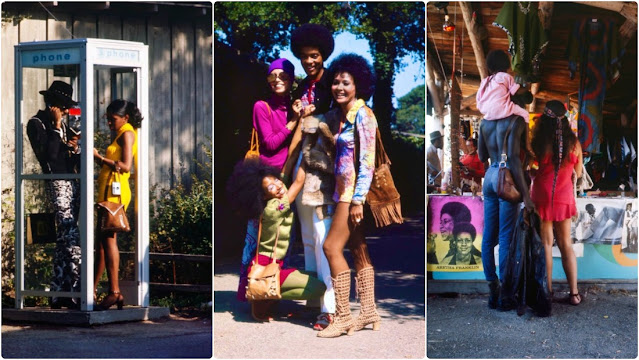
These vintage photos were taken by Baron Wolman that show attendees of the Monterey Jazz Festival in California in September 1969.

Subscribe to continue reading

Become a paid subscriber to get access to the rest of this post and other exclusive content.

A Norwegian University Student’s Secret Street Photography From 1890s Oslo

Subscribe to get access

Read more of this content when you subscribe today.

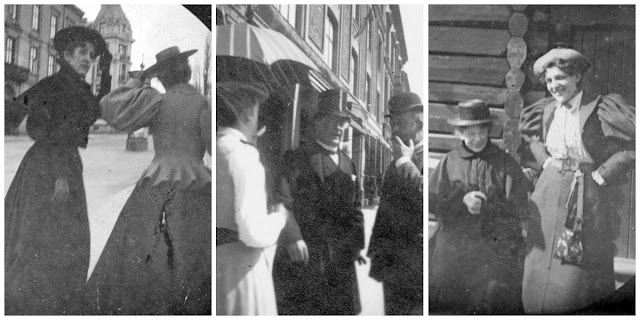
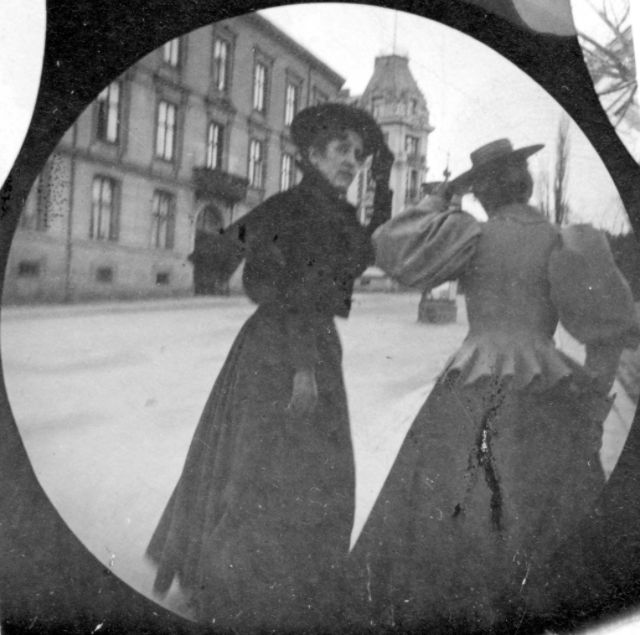
Known mostly as an accomplished mathematician and physicist from Norway, Carl Størmer (Fredrik Carl Mülertz Størmer) also enjoyed a very unusual side hobby at the time. With a bulky camera hidden in his clothes, Størmer walked around Oslo, Norway and secretly capture candid moments of passersby. As his subjects were always caught in their natural states, Størmer’s photography stands in striking contrast to portraiture of the era that largely consisted of serious and grave images against decorative settings.

Most of his photos were taken in the 1890s by using a C.P. Stirn Concealed Vest Spy Camera, which he got in 1893 when he was a 19-year-old student at the Royal Frederick University (now, University of Oslo). “It was a round flat canister hidden under the vest with the lens sticking out through a buttonhole,” he told the St. Hallvard Journal in 1942. “Under my clothes, I had a string down through a hole in my trouser pocket, and when I pulled the string the secret camera took a photo.”

Størmer tended to capture people exactly at the time they were greeting him on the street. “I strolled down Carl Johan, found me a victim, greeted, got a gentle smile, and pulled.” He described. “Six images at a time and then I went home to switch [the] plate.” In total, the Norway’s very first paparazzi took a total of about 500 of these black-and-white photos.

Subscribe to continue reading

Become a paid subscriber to get access to the rest of this post and other exclusive content.

Yesterday Today

Bringing You the Wonder of Yesterday - Today

Skip to content ↓