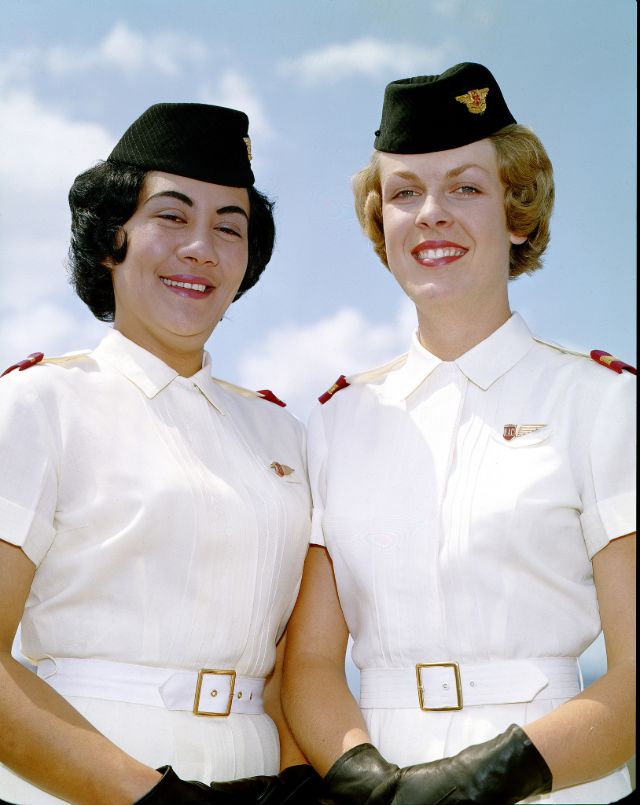
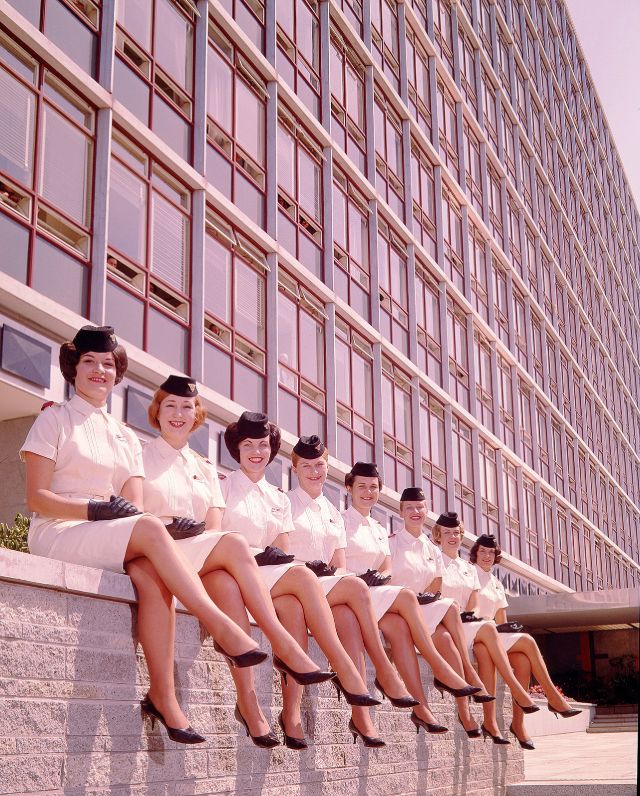
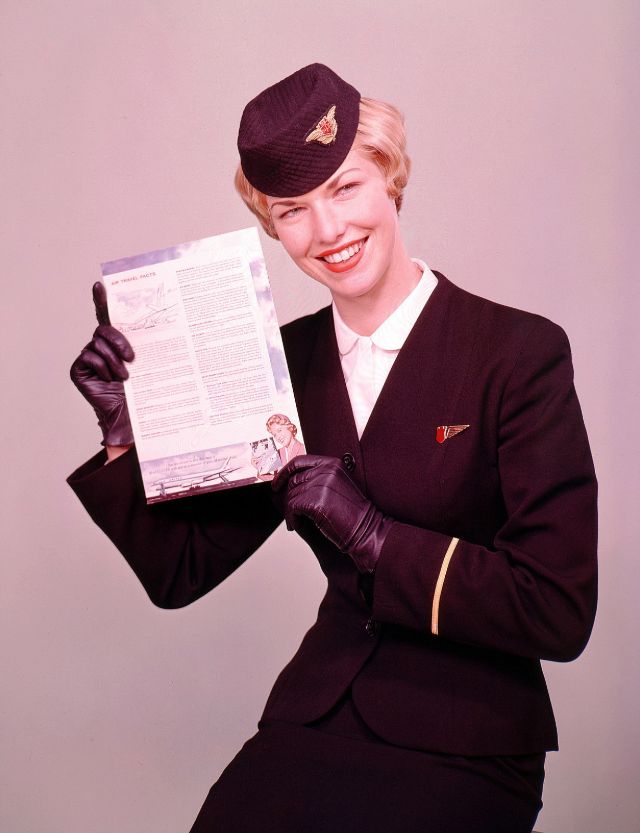
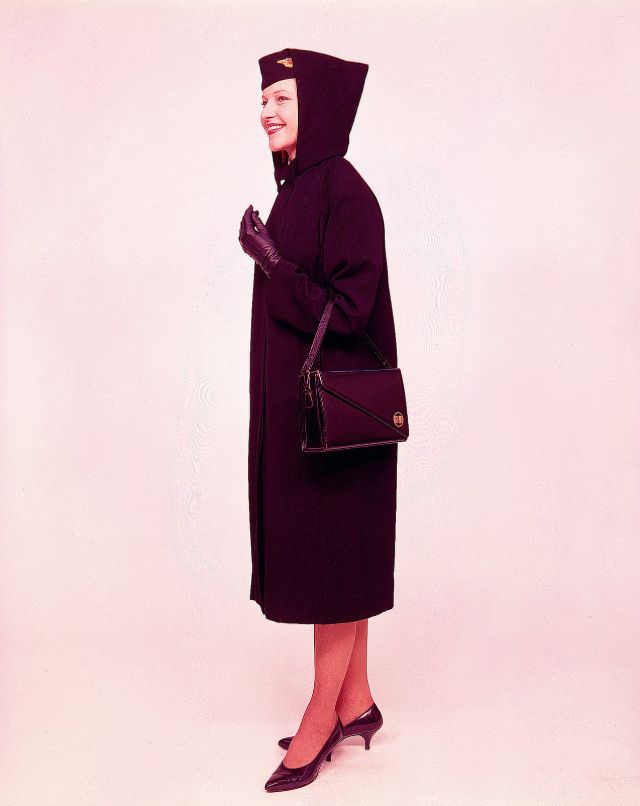
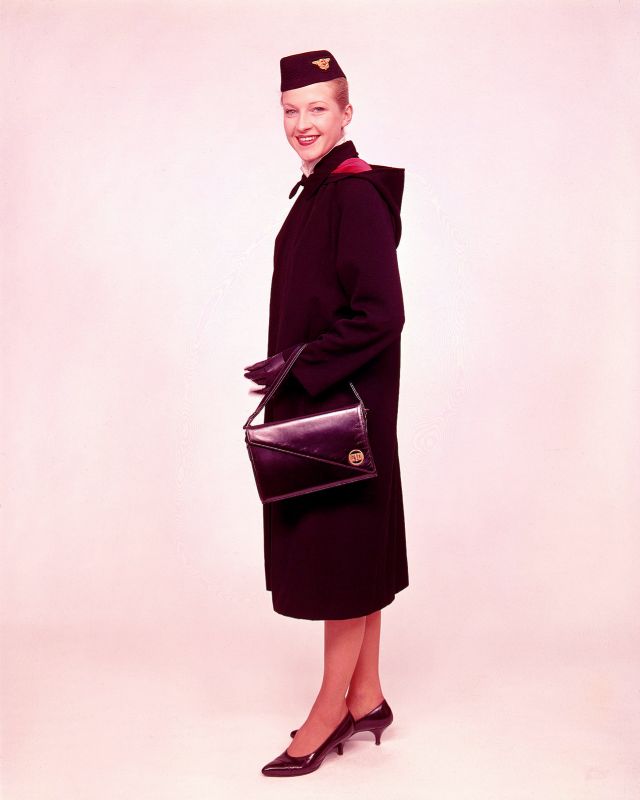
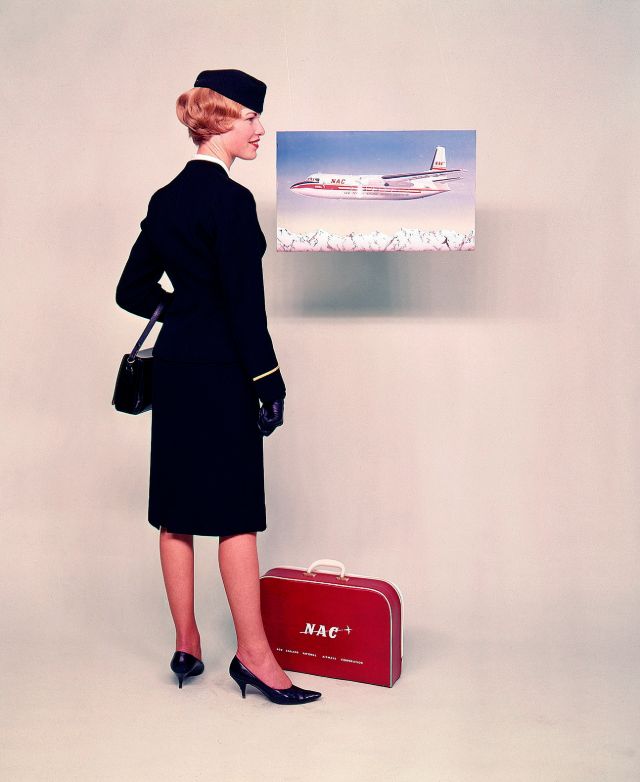
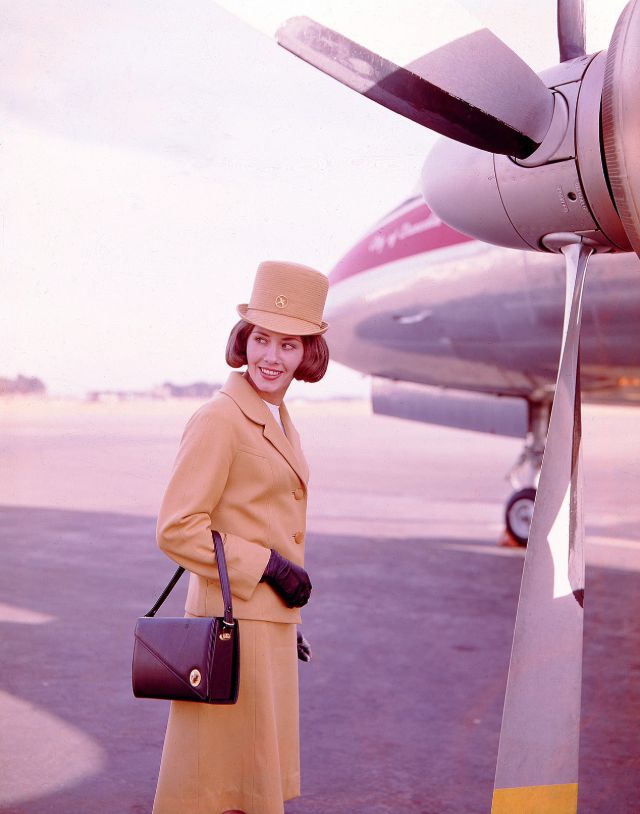
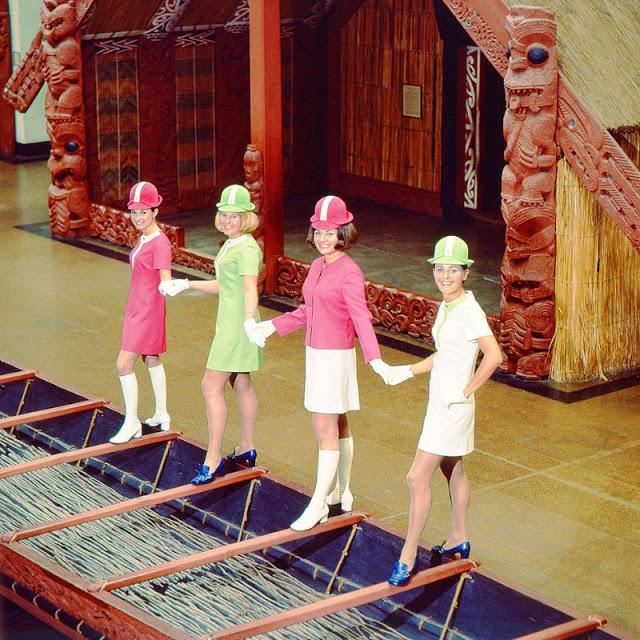
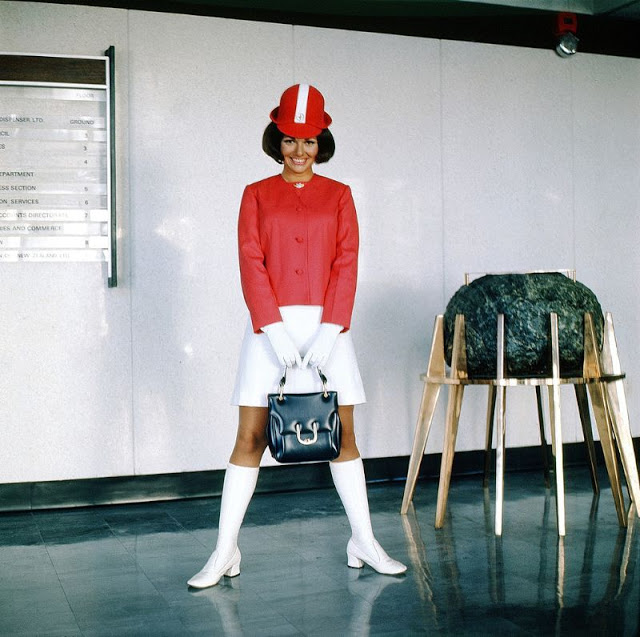
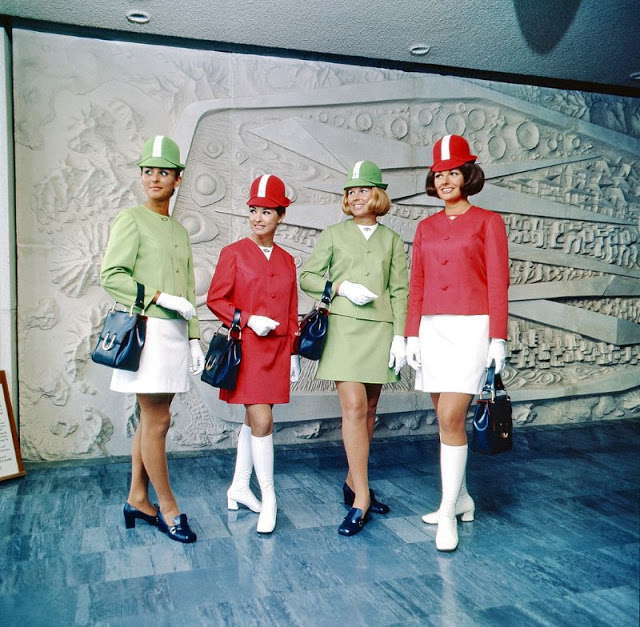
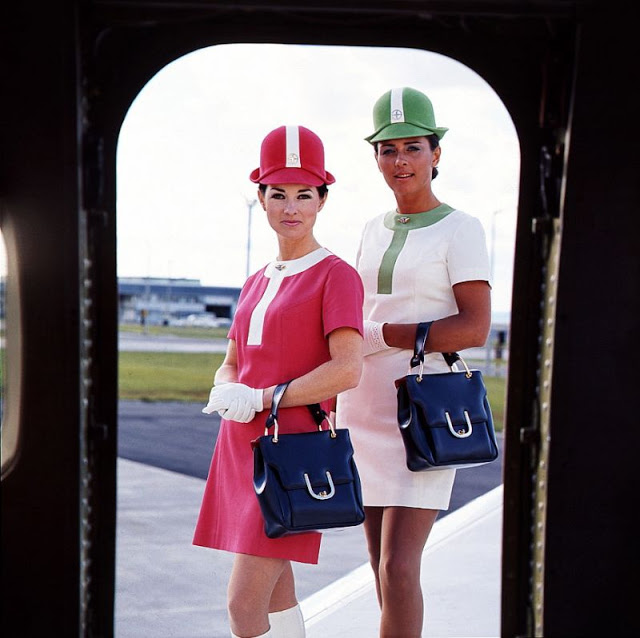
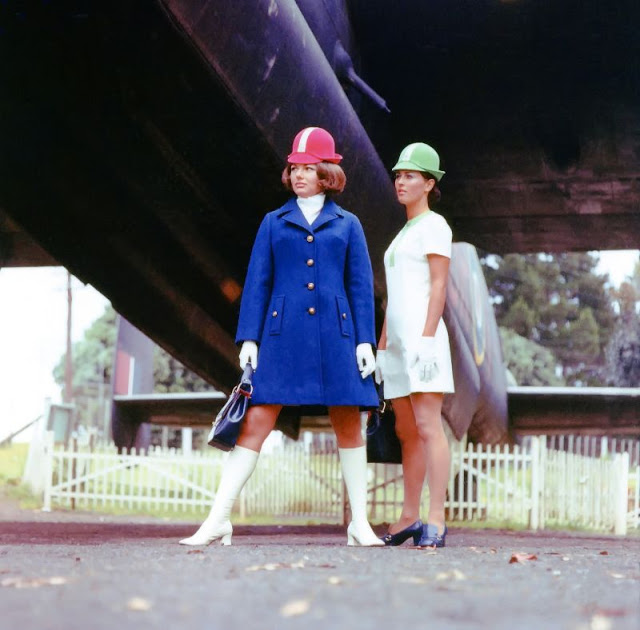
Founded 1947, New Zealand National Airways Corporation, popularly known as NAC, was the national domestic airline of New Zealand from 1947 until 1978 when it amalgamated with New Zealand’s international airline, Air New Zealand. The airline was headquartered in Wellington.
By the time of the merger with Air New Zealand, the fleet consisted of 25 aircraft comprising Boeing 737s and Fokker F27s. Engineering workshops were set up at Christchurch, Whenuapai (Auckland), Palmerston North, Gisborne and Nelson.
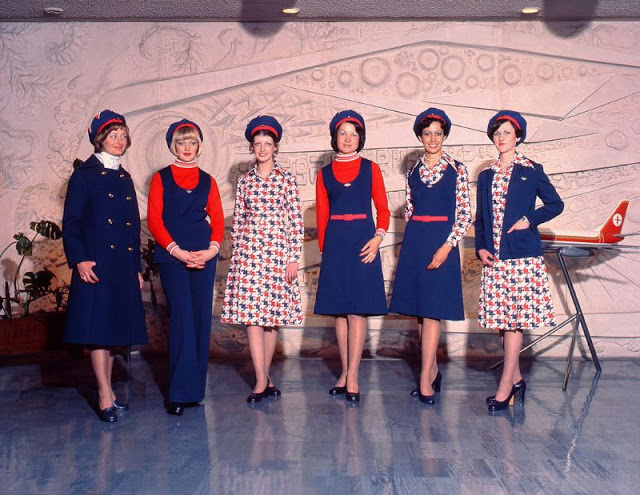
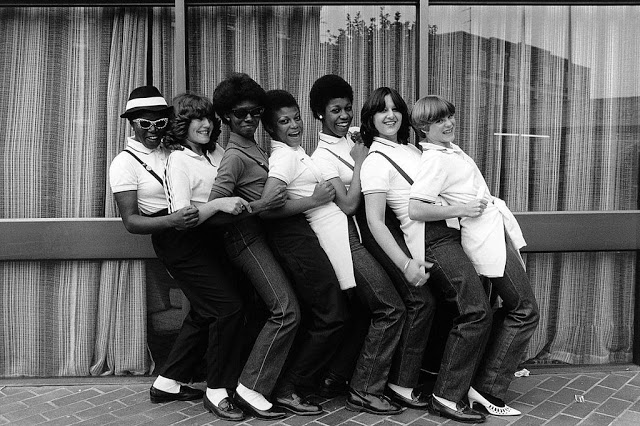
Before merging with Air New Zealand, these fabulous photos from Archives New Zealand of National Airways Corporation (NAC) air hostesses between 1959 and 1975 showing off their uniforms.
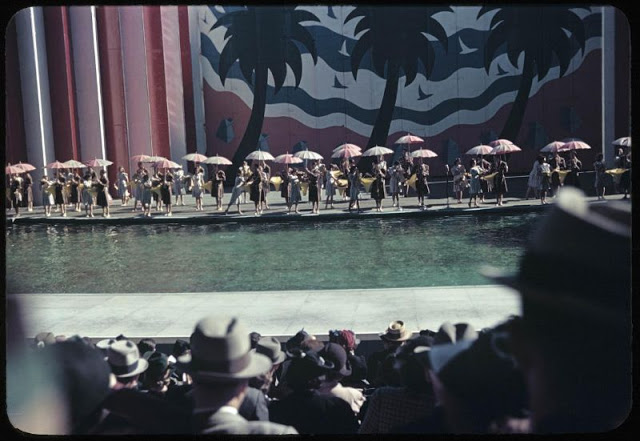
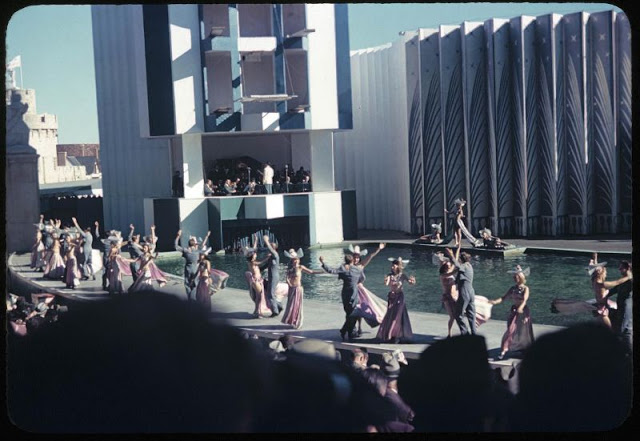
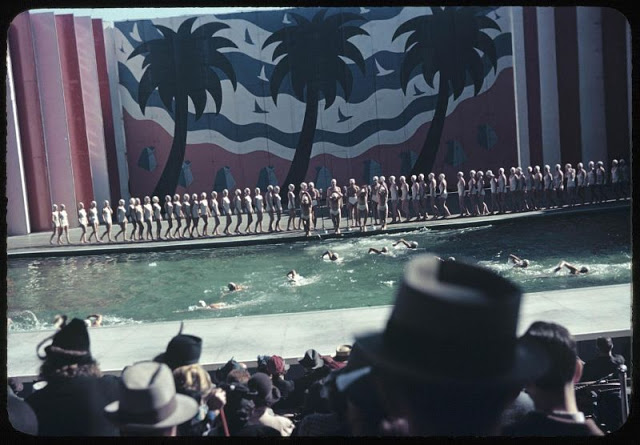
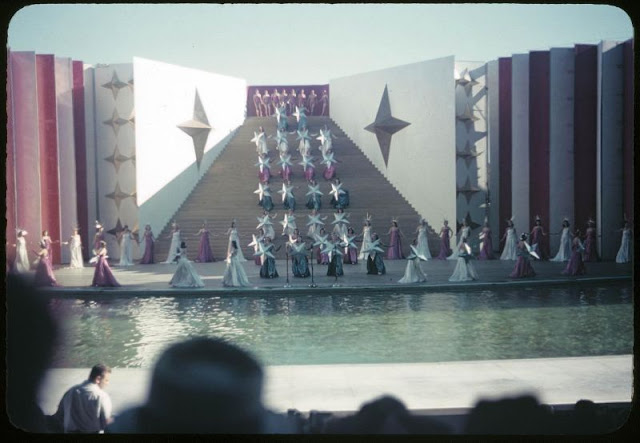
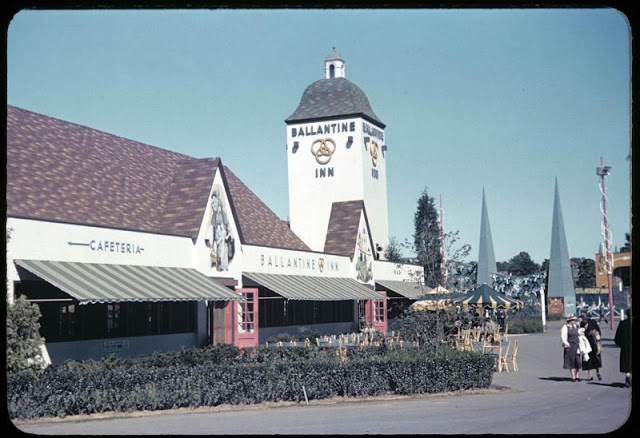
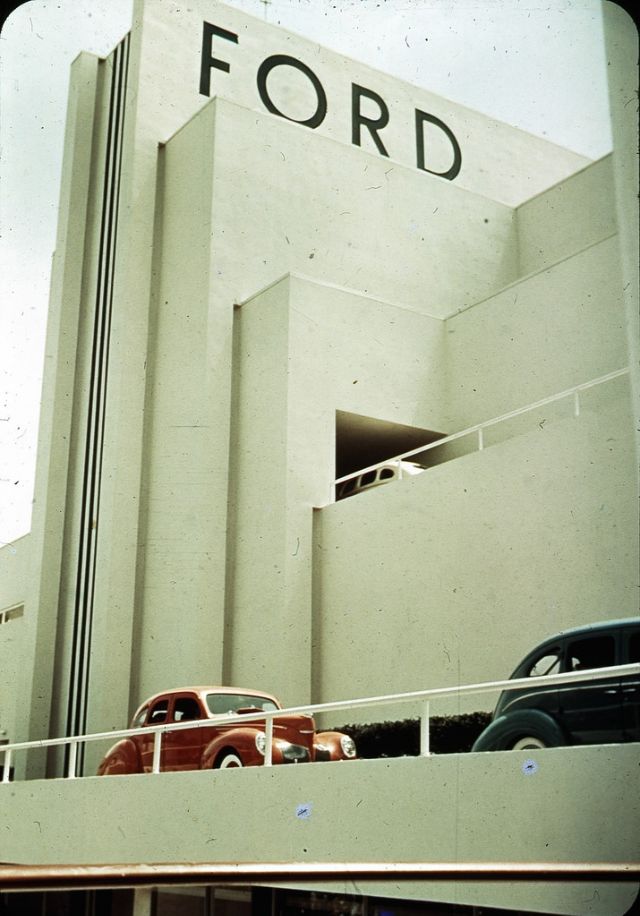
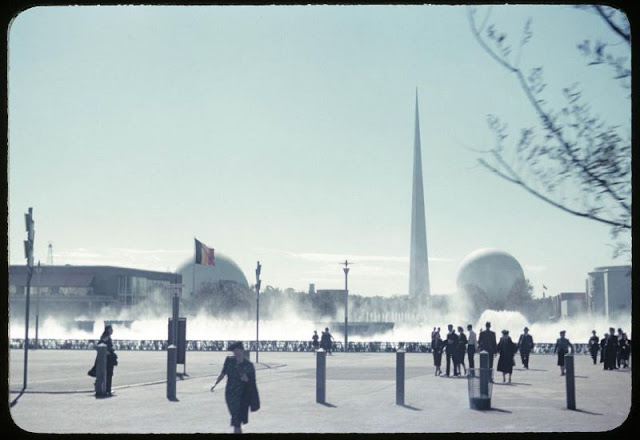
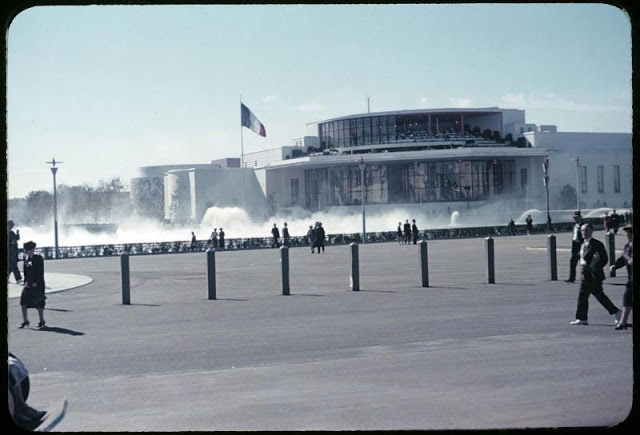
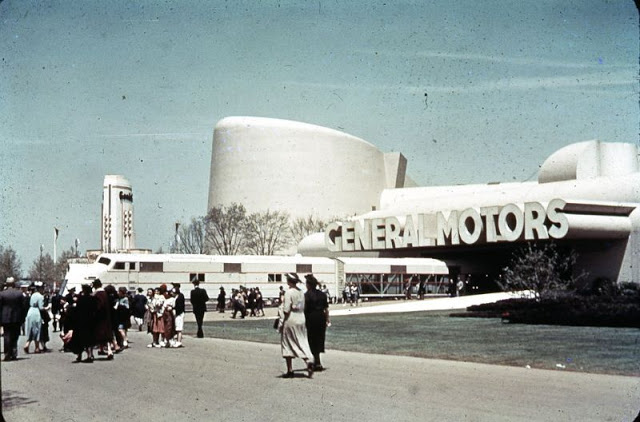
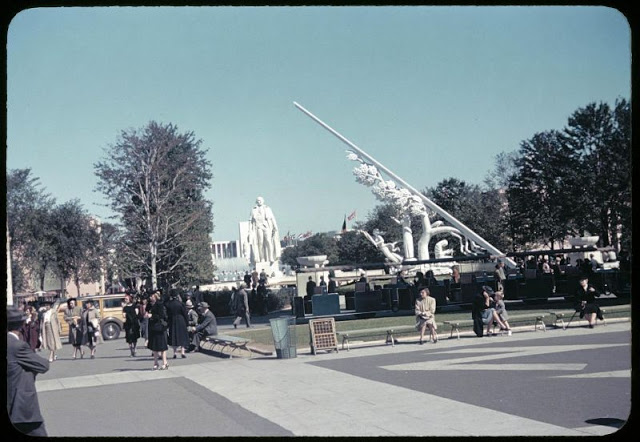
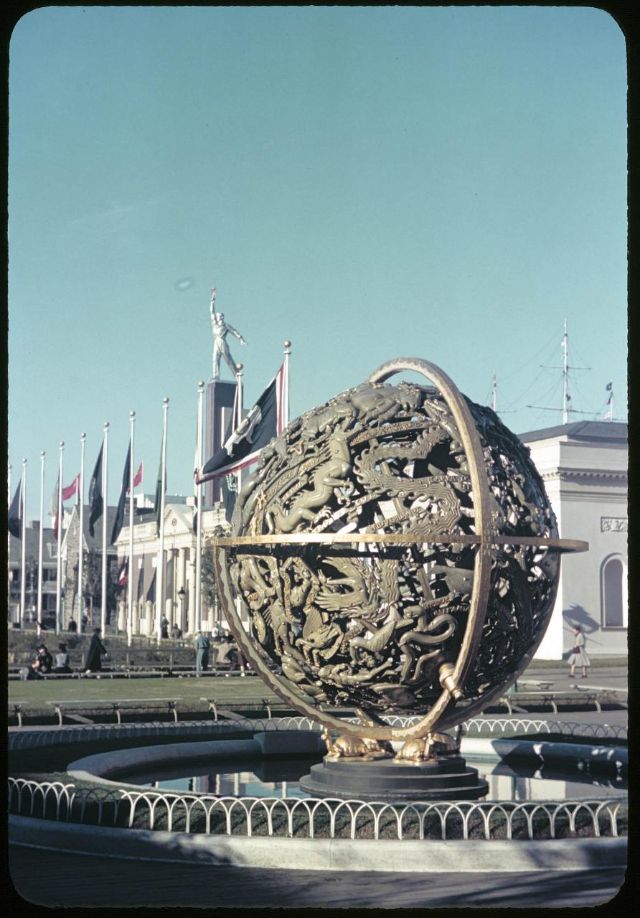
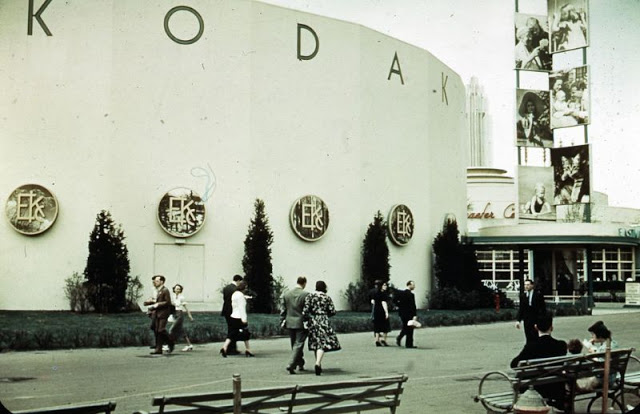
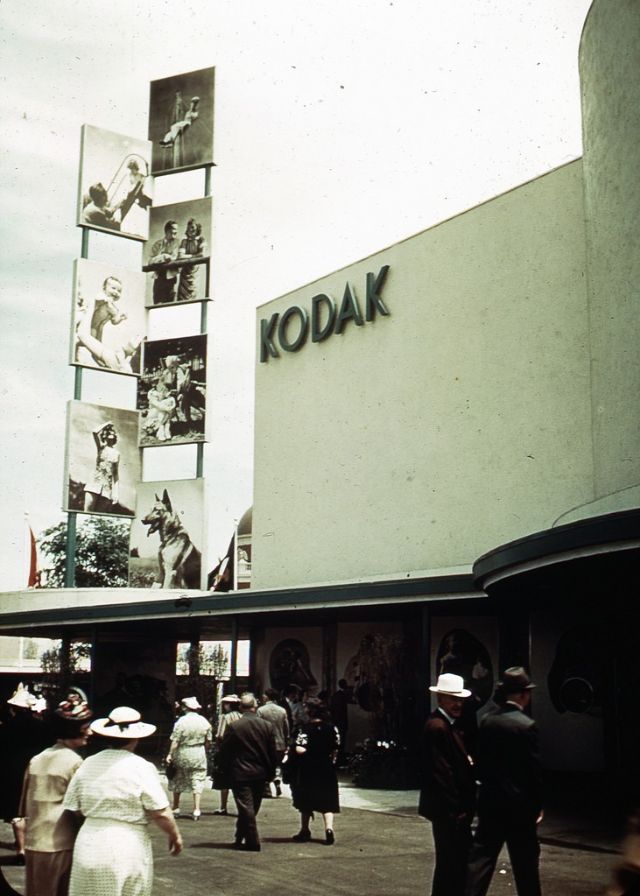
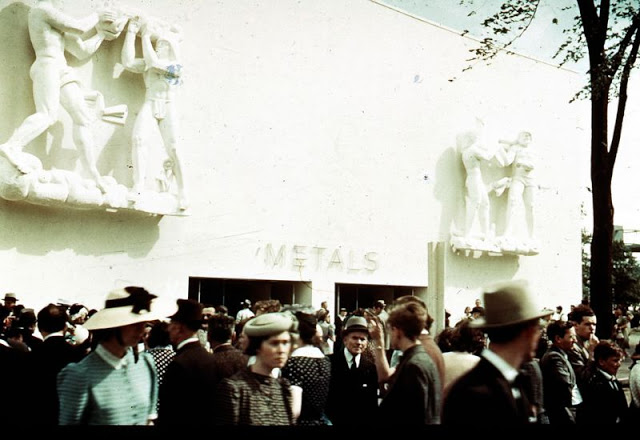
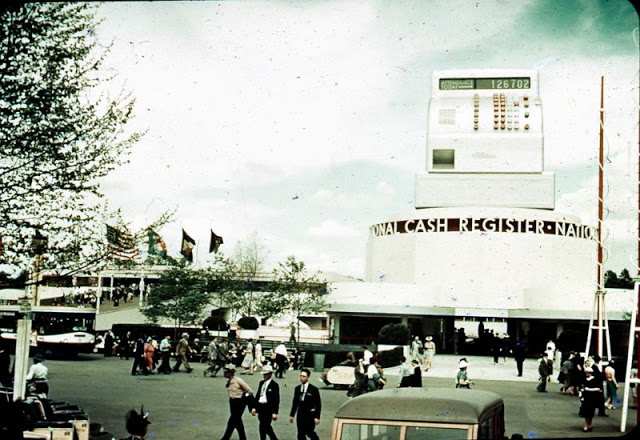
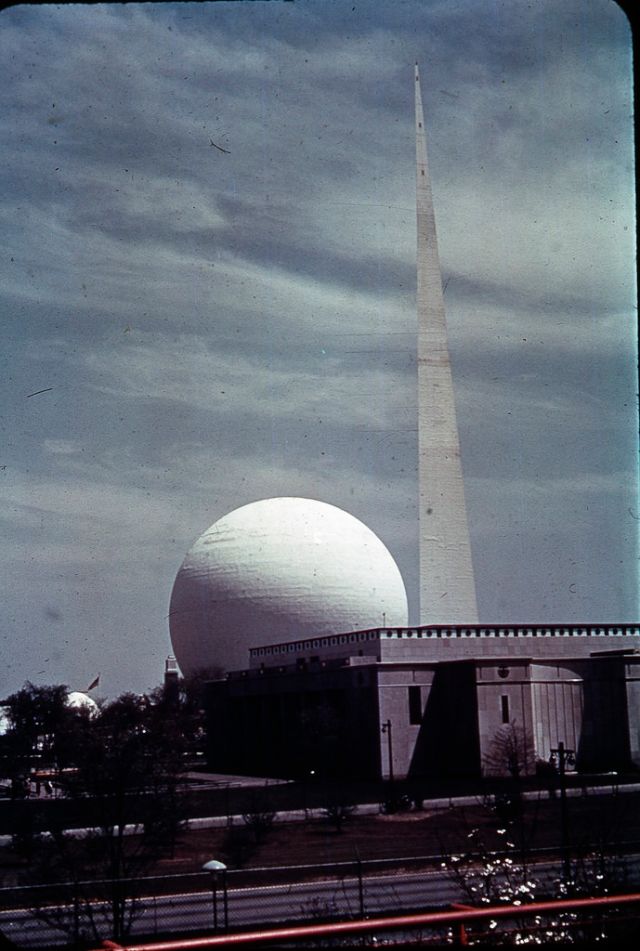
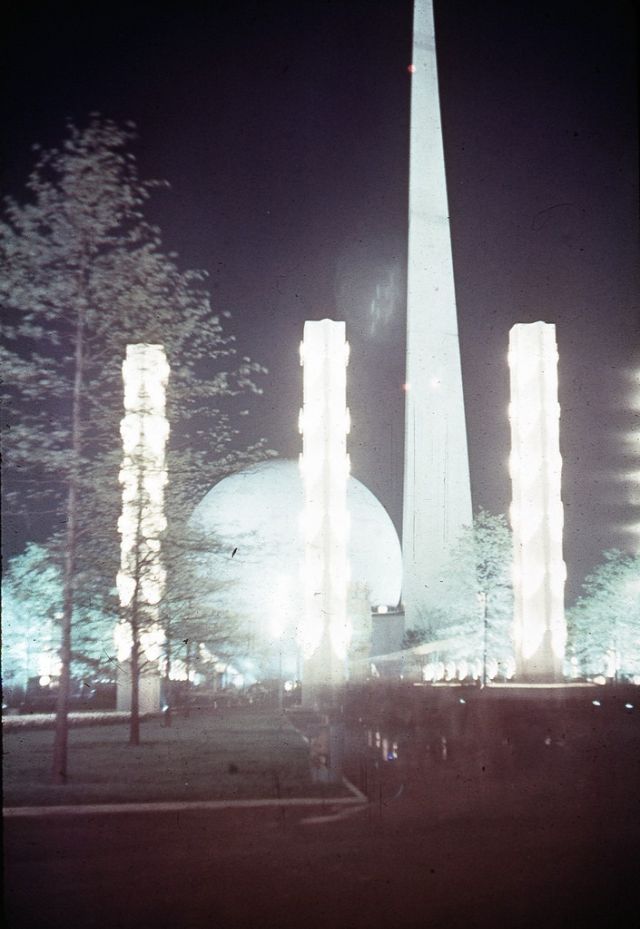
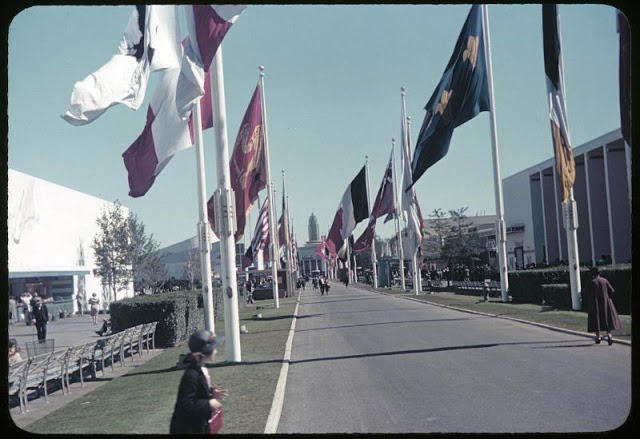
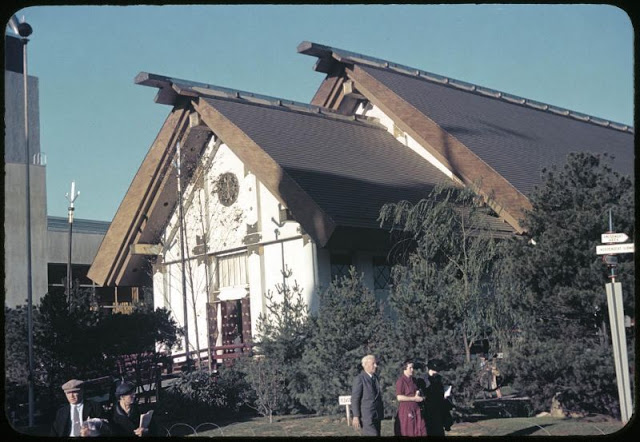
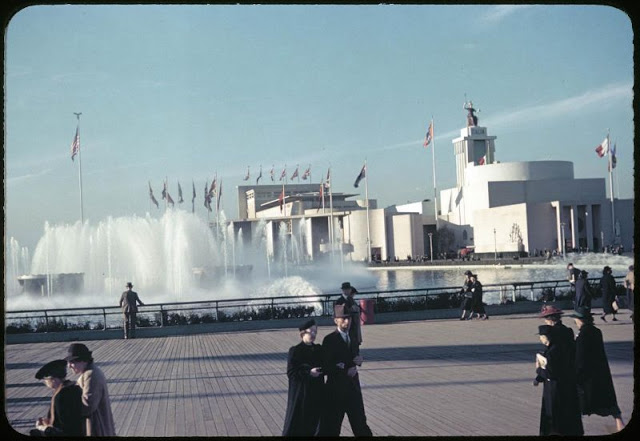
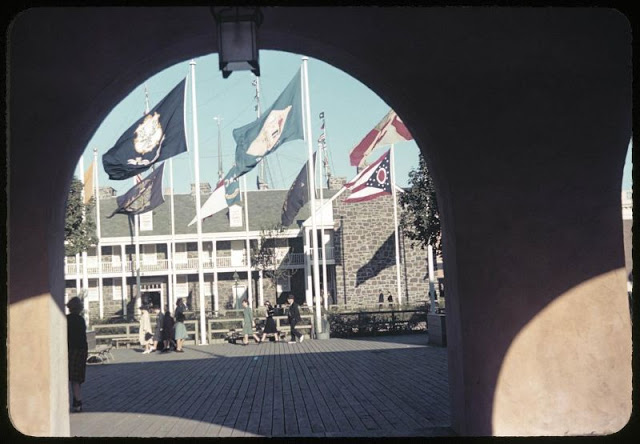
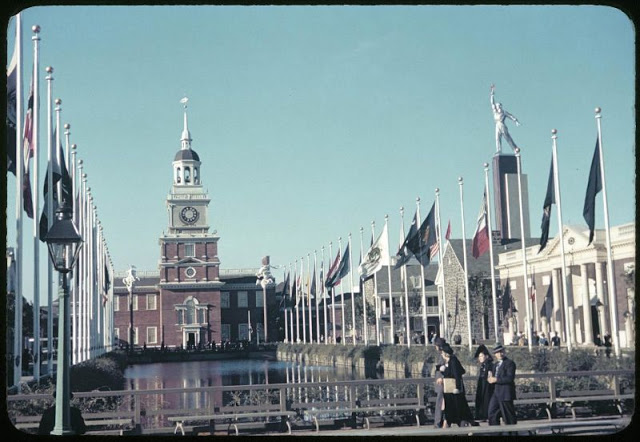
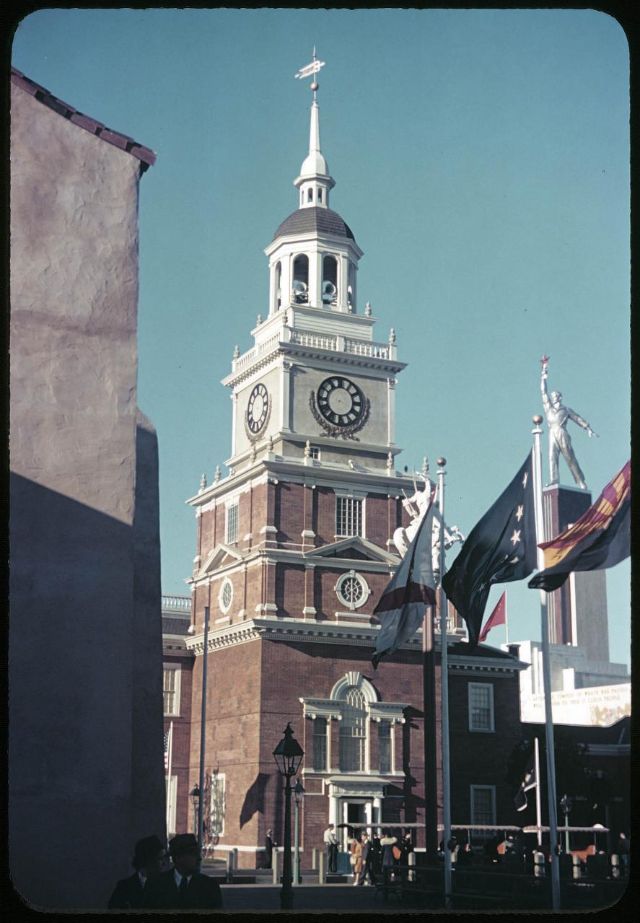
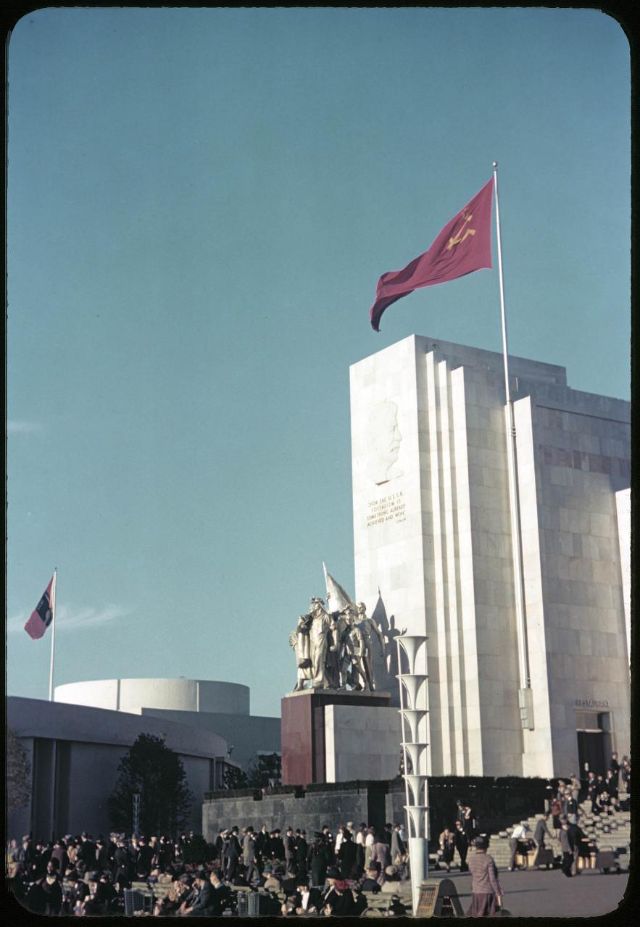
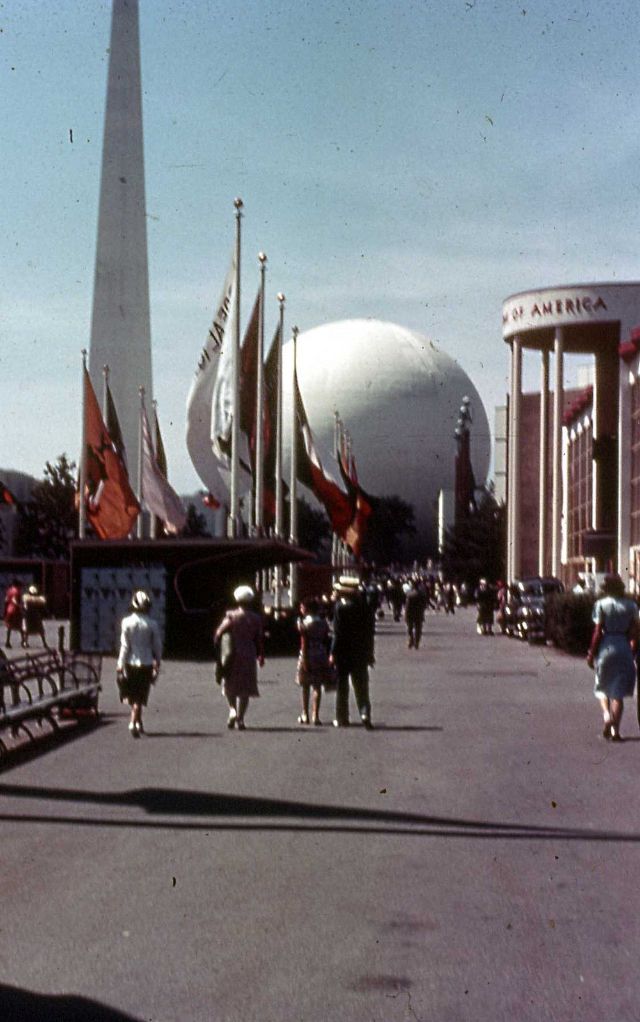
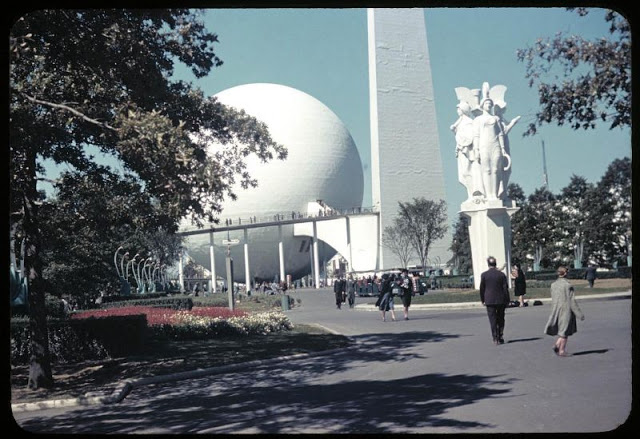
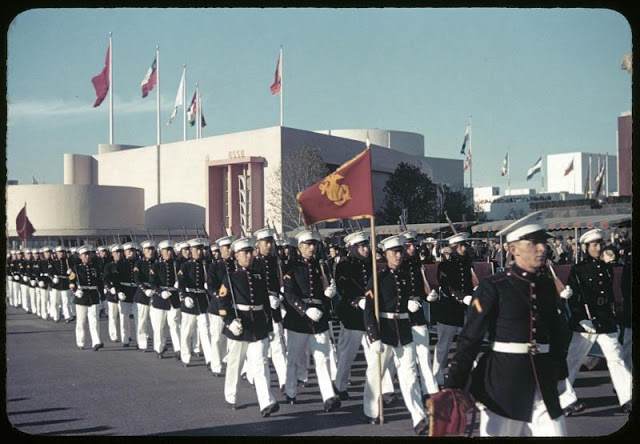
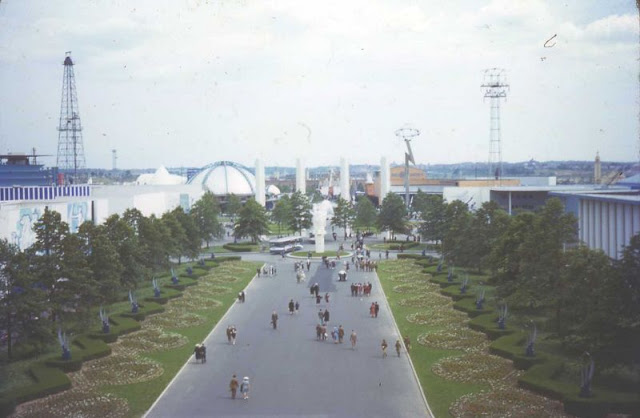
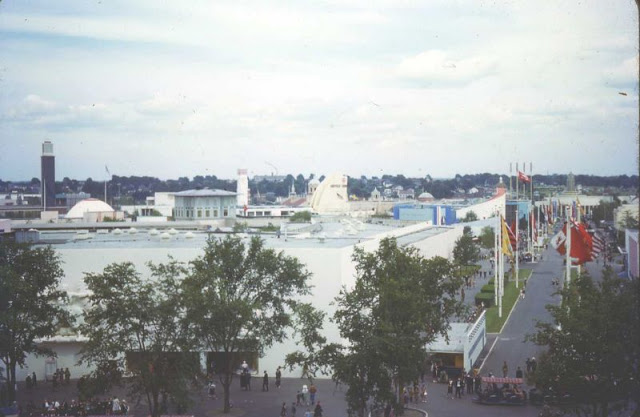
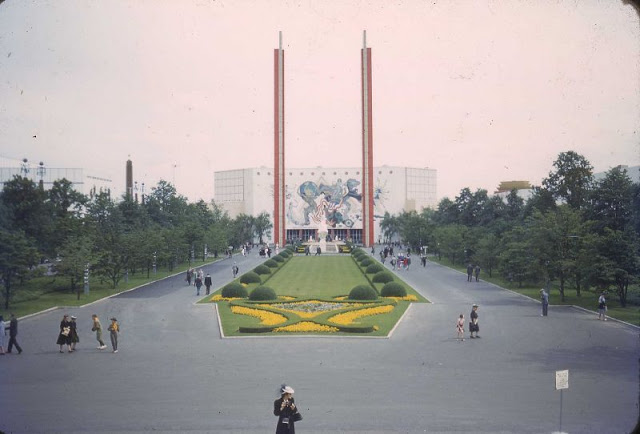
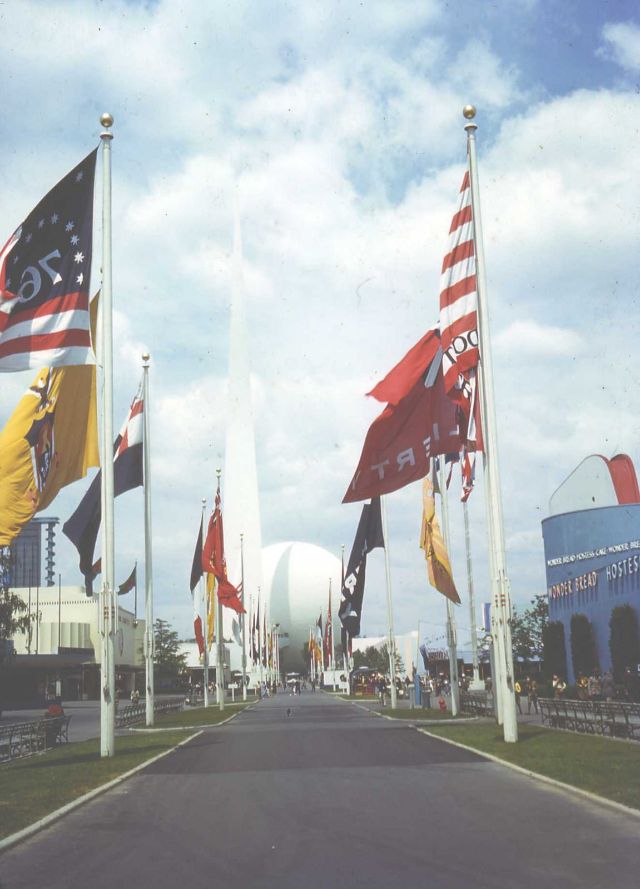
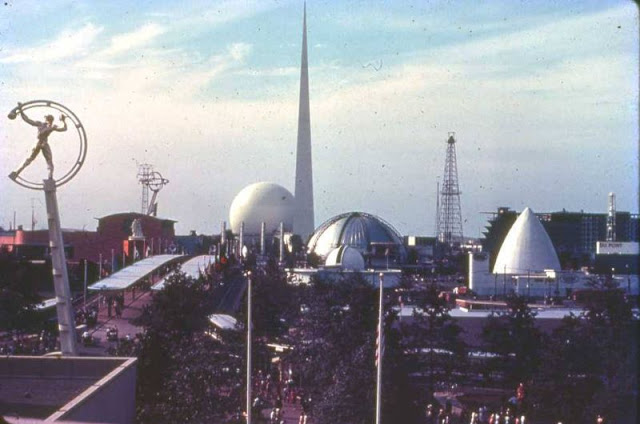
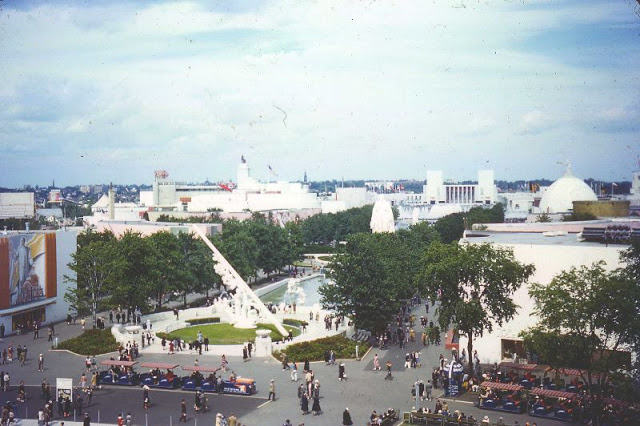
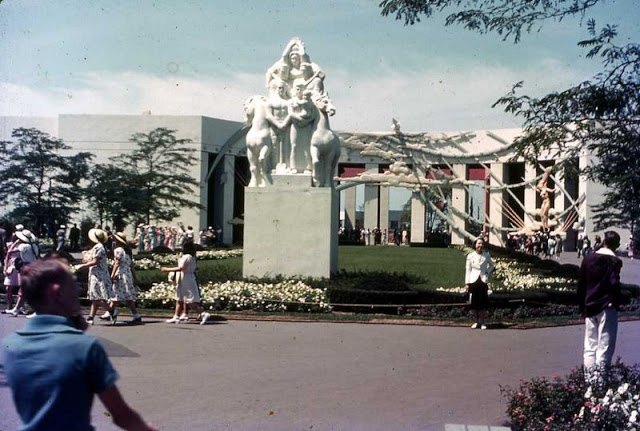
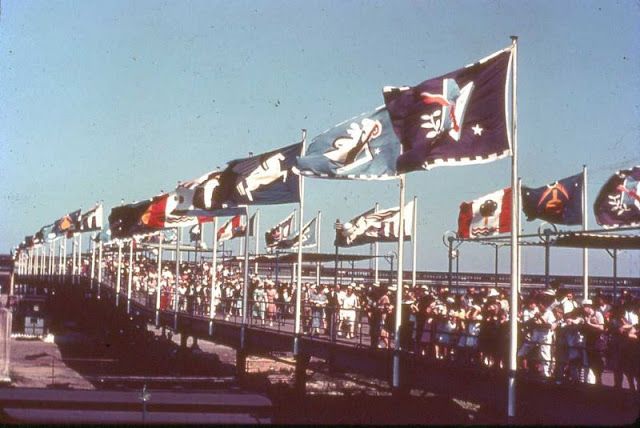
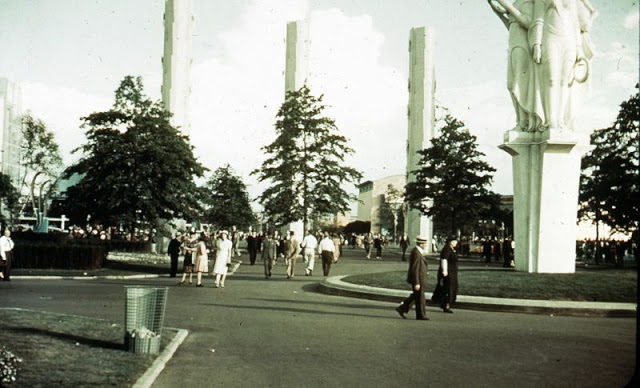
The 1939–40 New York World’s Fair was a world’s fair held at Flushing Meadows–Corona Park in Queens, New York, United States. It was the second-most expensive American world’s fair of all time, exceeded only by St. Louis’s Louisiana Purchase Exposition of 1904. Many countries around the world participated in it, and over 44 million people attended its exhibits in two seasons. It was the first exposition to be based on the future, with an opening slogan of “Dawn of a New Day”, and it allowed all visitors to take a look at “the world of tomorrow”.
When World War II began four months into the 1939 World’s Fair, many exhibits were affected, especially those on display in the pavilions of countries under Axis occupation. After the close of the fair in 1940, many exhibits were demolished or removed, though some buildings were retained for the 1964–1965 New York World’s Fair, held at the same site. (Wikipedia)
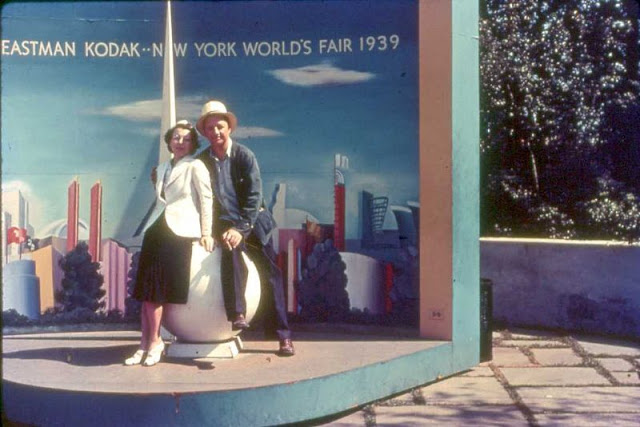
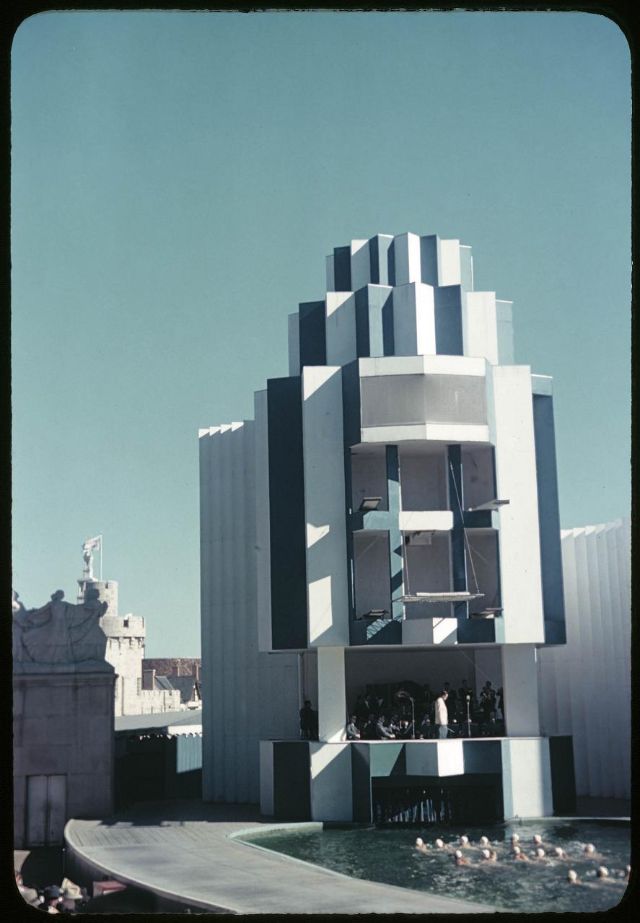
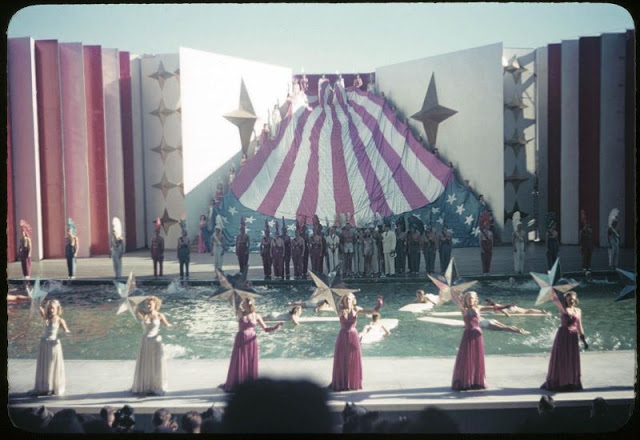
The back side of the Kodak Exhibition BuildingA couple poses for photographing at Eastman KodakAmphitheater and Billy Rose AquacadeAmphitheater and Billy Rose AquacadeAmphitheater and Billy Rose AquacadeAmphitheater and Billy Rose AquacadeAmphitheater and Billy Rose AquacadeAmphitheater and Billy Rose AquacadeBallantine InnFord BuildingFrench Pavilion on the Court of Peace with Trylon and PerisphereFrench Pavilion on the Court of PeaceGeneral Motors BuildingGeorge Washington statue behind “Time and Fates of Man,” sundial, with the United States Federal Building in the backgroundGlobe along the Court of States, in front of the West Virginia and Georgia buildings with tower of the USSR (Soviet) Pavilion aboveKodak BuildingKodak BuildingMetals BuildingNational Cash Register BuildingNew York City Building with Trylon and PerisphereNight view of Trylon and PerisphereThe Avenue of Pioneers, looking toward the Schaefer CenterThe back side of the Kodak Exhibition BuildingThe Japan Pavilion next to the USSR (Soviet) PavilionThe Lagoon of Nations with the Italian Pavilion in the rearThe New Jersey Building along the Court of StatesThe Pennsylvania Building along the Court of States with tower of the USSR (Soviet) Pavilion above.The USSR (Soviet) PavilionTrylon and PerisphereTrylon, Perisphere and HeliclineU.S. Marine Corps marching in front of the USSR (Soviet) Pavilion1939 New York World’s Fair1939 New York World’s Fair1939 New York World’s Fair1939 New York World’s Fair1939 New York World’s Fair1939 New York World’s Fair1939 New York World’s Fair1939 New York World’s Fair1939 New York World’s Fair
The Netherlands, informally Holland, is a country located in Northwestern Europe with overseas territories in the Caribbean. It is the largest of four constituent countries of the Kingdom of the Netherlands (the others being Aruba, Curaçao and Sint Maarten). In Europe, the Netherlands consists of twelve provinces, and borders Germany to the east, Belgium to the south, with a North Sea coast-line to the north and west. It also shares maritime borders with both countries and with the United Kingdom in the North Sea. The Caribbean overseas territories—Bonaire, Sint Eustatius and Saba—became special municipalities of the country of the Netherlands in 2010. The country’s official language is Dutch, with West Frisian as a secondary official language in the province of Friesland, and English and Papiamento as secondary official languages in the Caribbean Netherlands. Dutch Low Saxon and Limburgish are recognised regional languages (spoken in the east and southeast respectively), while Dutch Sign Language, Sinte Romani, and Yiddish are recognised non-territorial languages.
The four largest cities in the Netherlands are Amsterdam, Rotterdam, The Hague and Utrecht. Amsterdam is the country’s most populous city and nominal capital, while The Hague holds the seat of the States General, Cabinet and Supreme Court. The Port of Rotterdam is the busiest seaport in Europe. Amsterdam Airport Schiphol is the busiest airport in the Netherlands, and the third busiest in Europe. The country is a founding member of the European Union, Eurozone, G10, NATO, OECD, and WTO, as well as a part of the Schengen Area and the trilateral Benelux Union. It hosts several intergovernmental organisations and international courts, many of which are centred in The Hague, which is consequently dubbed ‘the world’s legal capital’.
Netherlands literally means “lower countries” in reference to its low elevation and flat topography, with only about 50% of its land exceeding 1 m (3.3 ft) above sea level, and nearly 26% falling below sea level. Most of the areas below sea level, known as polders, are the result of land reclamation that began in the 14th century. Colloquially or informally the Netherlands is occasionally referred to by the pars pro toto Holland. In the Republican period, which began in 1588, the Netherlands entered a unique era of political, economic, and cultural greatness, ranked among the most powerful and influential in Europe and the world; this period is known as the Dutch Golden Age. During this time, its trading companies, the Dutch East India Company and the Dutch West India Company, established colonies and trading posts all over the world.
With a population of 17.6 million people, all living within a total area of roughly 41,800 km2 (16,100 sq mi)—of which the land area is 33,500 km2 (12,900 sq mi)—the Netherlands is the 16th most densely populated country in the world and the second-most densely populated country in the European Union, with a density of 526 people per square kilometre (1,360 people/sq mi). Nevertheless, it is the world’s second-largest exporter of food and agricultural products by value, owing to its fertile soil, mild climate, intensive agriculture, and inventiveness.
The Netherlands has been a parliamentary constitutional monarchy with a unitary structure since 1848. The country has a tradition of pillarisation and a long record of social tolerance, having legalised abortion, prostitution and human euthanasia, along with maintaining a liberal drug policy. The Netherlands abolished the death penalty in Civil Law in 1870, though it was not completely removed until a new constitution was approved in 1983. The Netherlands allowed women’s suffrage in 1919, before becoming the world’s first country to legalise same-sex marriage in 2001. Its mixed-market advanced economy had the eleventh-highest per capita income globally. The Netherlands ranks among the highest in international indices of press freedom, economic freedom, human development and quality of life, as well as happiness. In 2020, it ranked eighth on the human development index and fifth on the 2021 World Happiness Index. (Wikipedia)
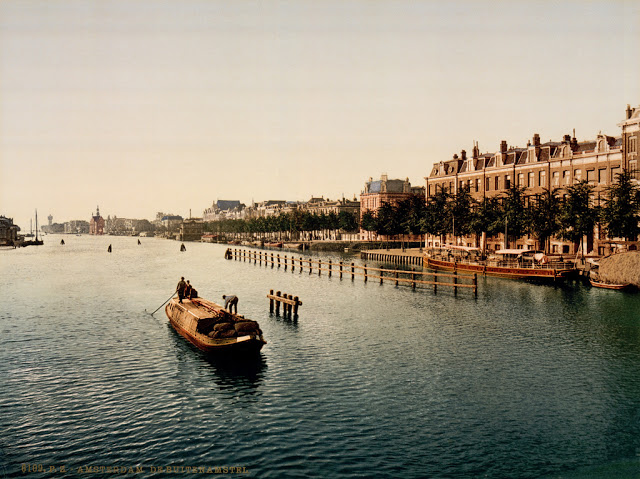
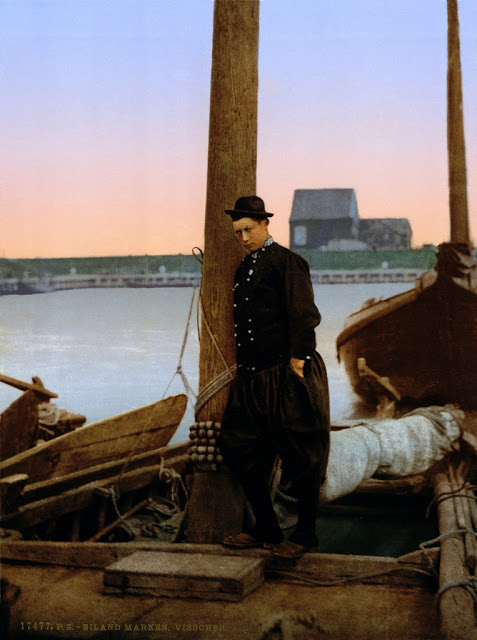
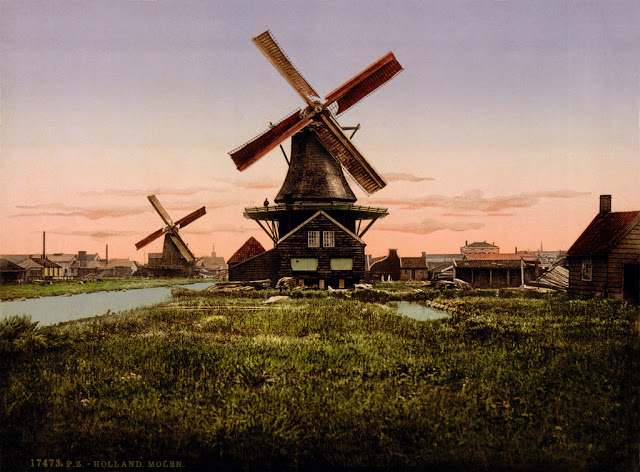
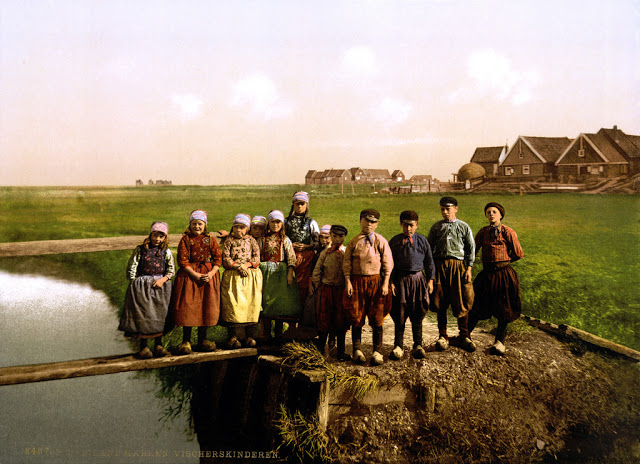
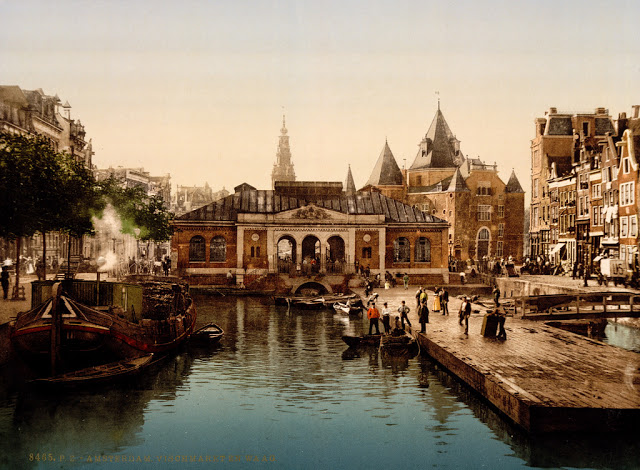
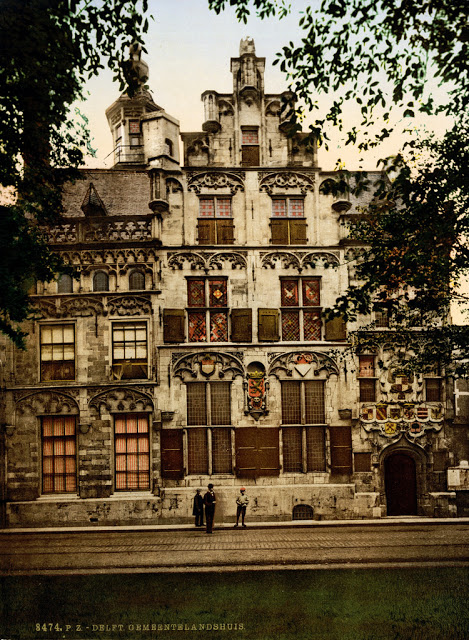
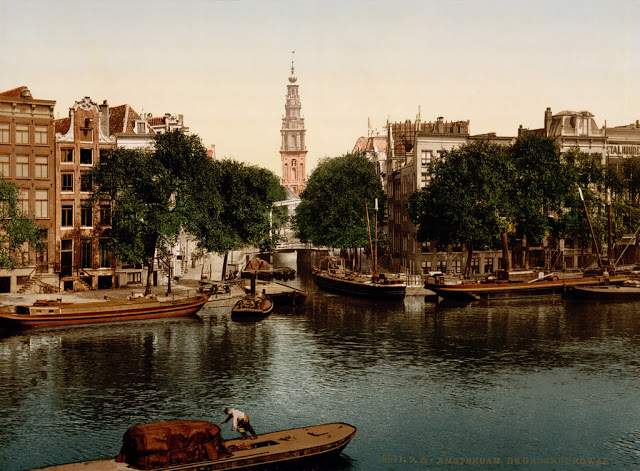
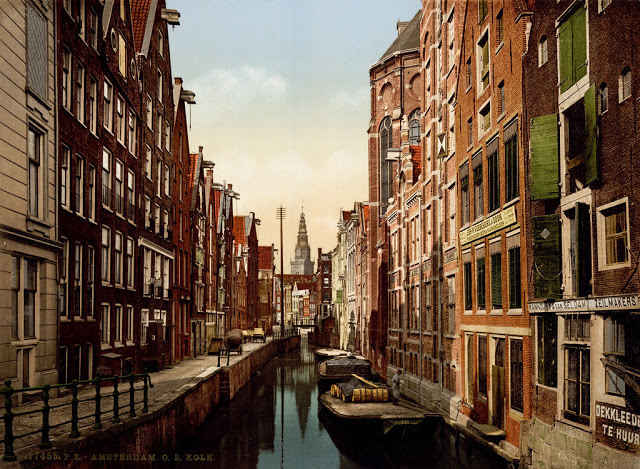
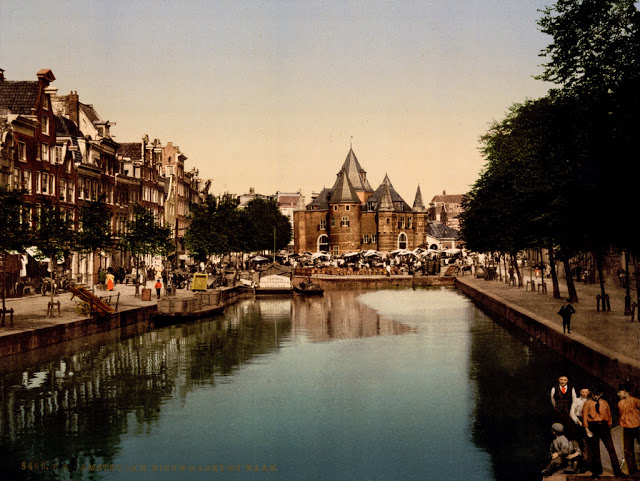
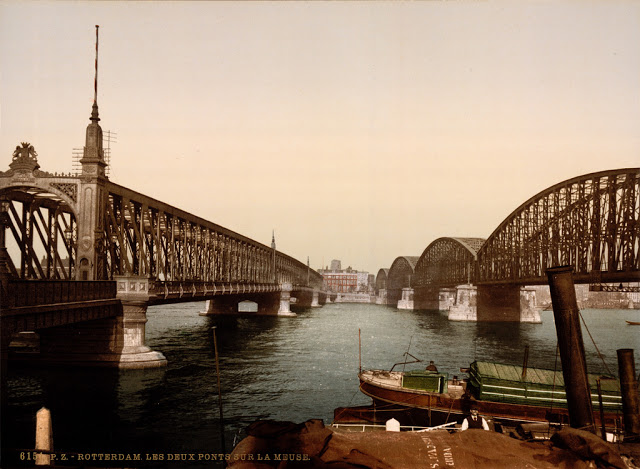
Here is a small collection of wonderful photochrom prints that show the Netherlands before 1900.
Buiten Amstel, Amsterdam, North Holland, the NetherlandsDam and Maashaven, Dordrecht, HollandDam square, Amsterdam, North Holland, the NetherlandsDe Passage, Rotterdam, South Holland, the NetherlandsDutch fisherman, Marken Island, North Holland, the NetherlandsDutch windmills, HollandEast gate, Delft, South Holland, the NetherlandsFisher children, Marken Island, North Holland, the NetherlandsFisher girls, Marken Island, North Holland, the NetherlandsFishmarket and bourse, Amsterdam, North Holland, the NetherlandsGemeenlandshuis, Delft, South Holland, the NetherlandsGroen Burgwal, Amsterdam, North Holland, the NetherlandsKlovenier Burgwal, Amsterdam, North Holland, the NetherlandsMeuse River (Maas), Rotterdam, South Holland, the NetherlandsOudezijds Kolk, Amsterdam, North Holland, the NetherlandsSint Nicolaaskerk, Amsterdam, North Holland, the NetherlandsThe new market and bourse, Amsterdam, North Holland, the NetherlandsThe two bridges on the Meuse, Rotterdam, South Holland, the NetherlandsTown hall, Delft, South Holland, the NetherlandsVoorstraatshaven, Dordrecht, HollandWitte Huis, Rotterdam, South Holland, the Netherlands
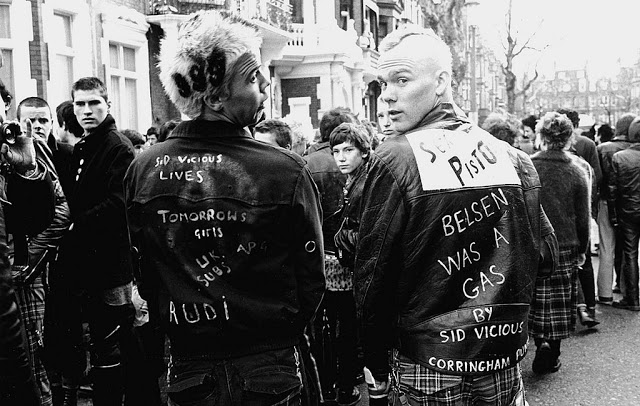
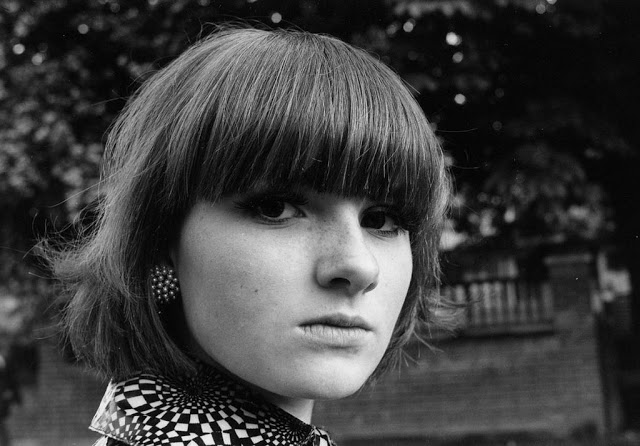
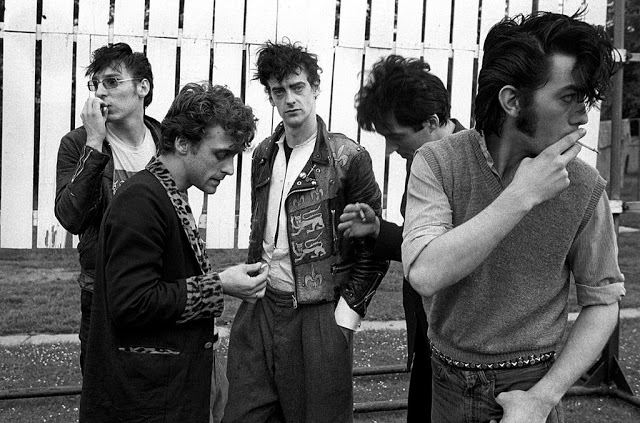
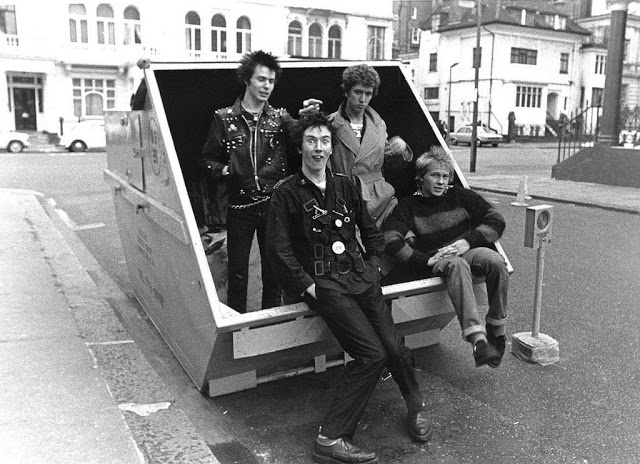
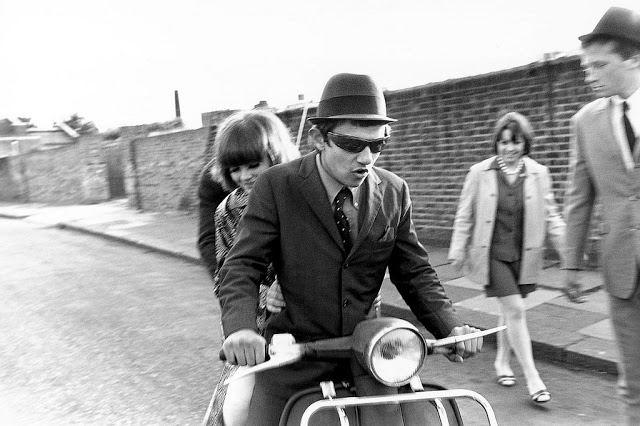
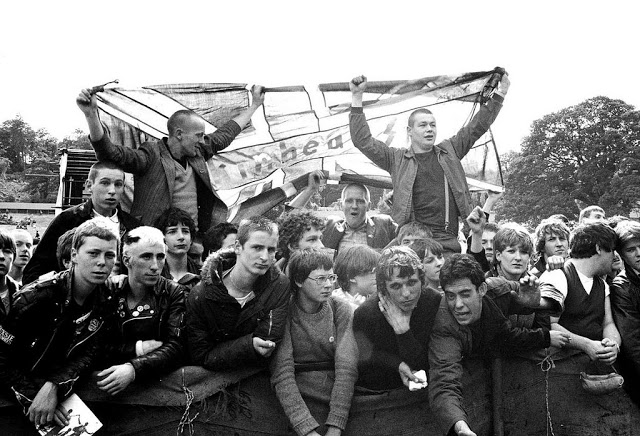
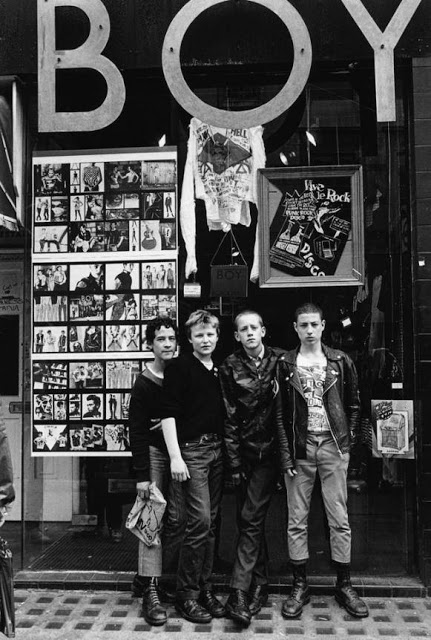
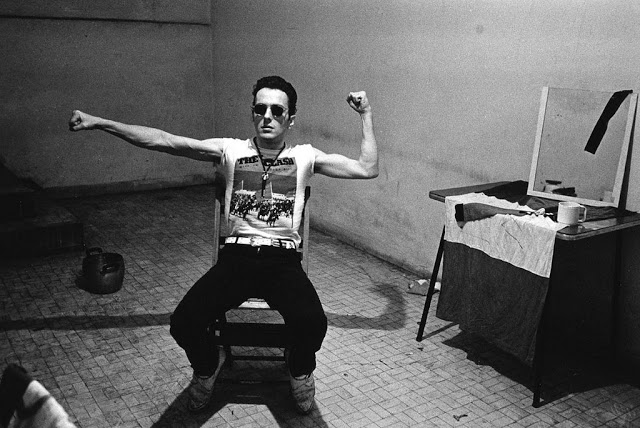
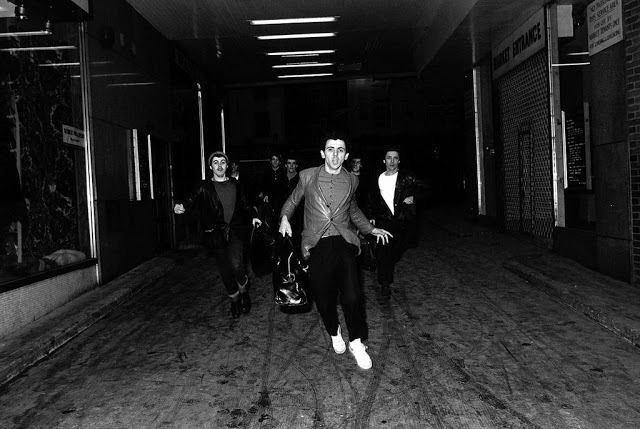
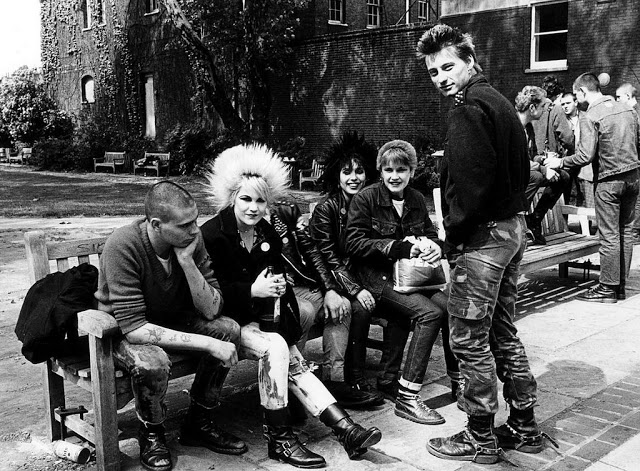
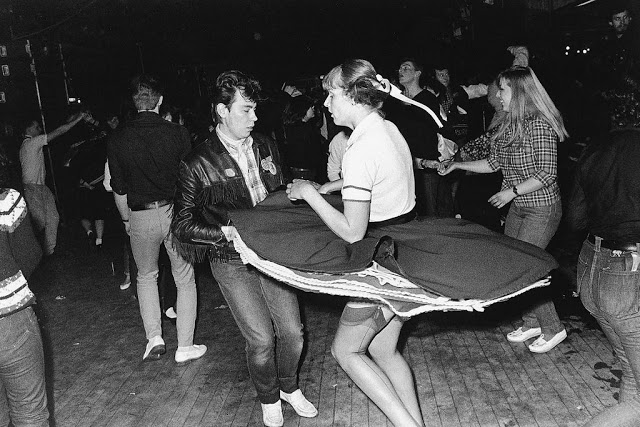
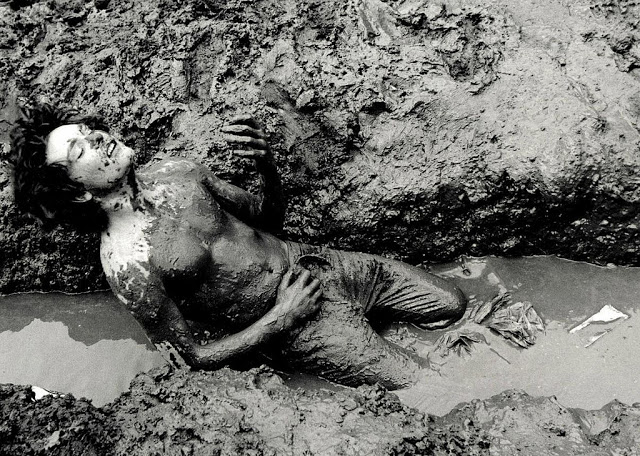
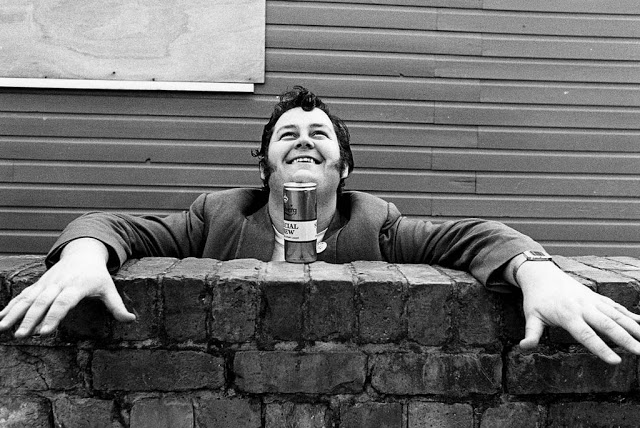
Londoner Janette Beckman began her career at the dawn of punk rock working for The Face and Melody Maker. She shot bands from The Clash to Boy George as well as 3 Police album covers.
Moving to New York in 1982, she was drawn to the underground Hip Hop scene. Her photographs of pioneers such as Run DMC, Slick Rick, Salt’n’Pepa, Grandmaster Flash, Big Daddy Kane are in the permanent collections of the Smithsonian Museum and the Museum of the City of New York.
Beckman describes herself as a documentary photographer. While she produces a lot of work on location (such as the cover of The Police album Zenyatta Mondatta, taken in the middle of a forest in the Netherlands), she is also a studio portrait photographer.
Her work has appeared on records for the major labels, and in magazines including Esquire, Rolling Stone, Glamour, Italian Vogue, The Times, Newsweek, Jalouse, Mojo and others.
In a 2015 interview with American Photo magazine, she recalled: “It is amazing, 30 years later, people going ‘oh you photographed legends.’ I guess I did, but they weren’t legends when I was taking pictures of them.”
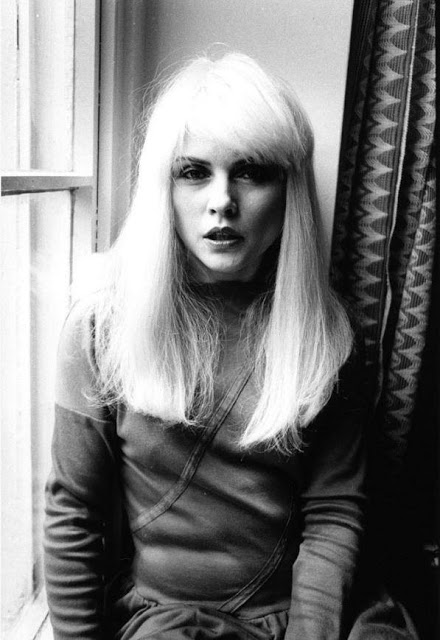
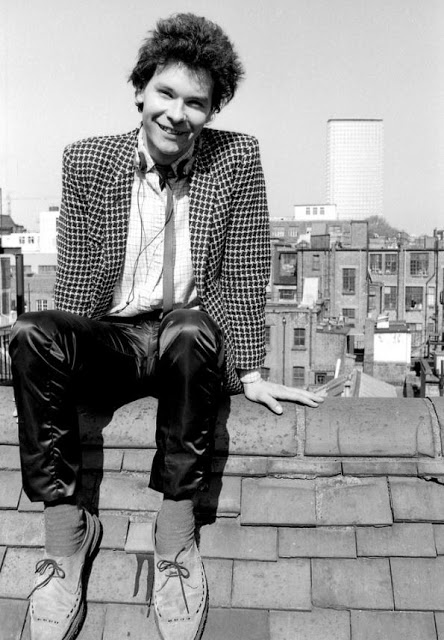
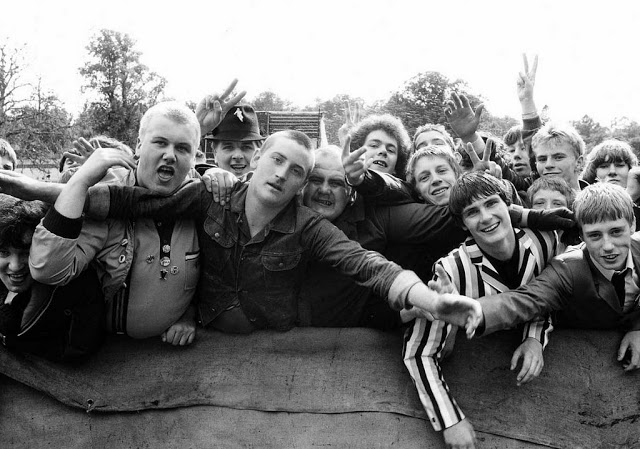
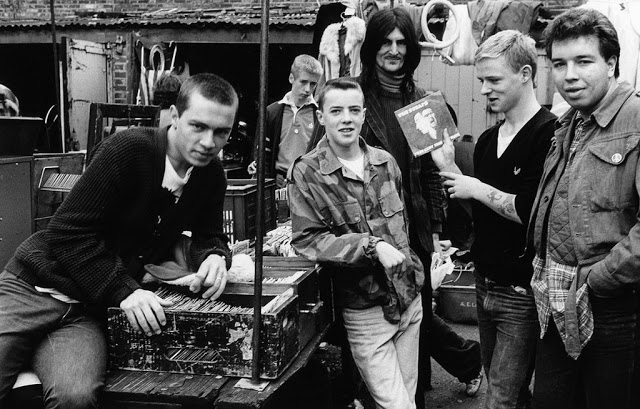
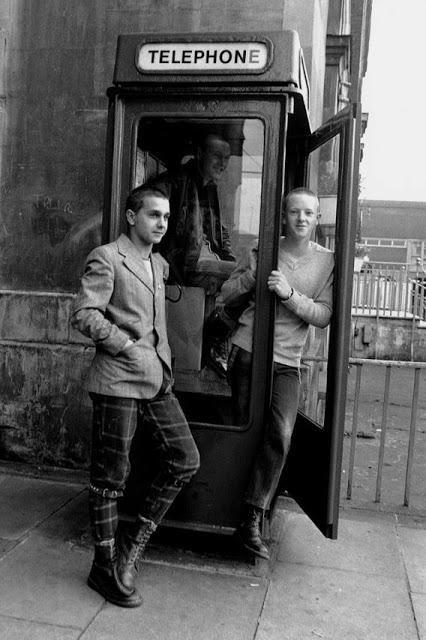
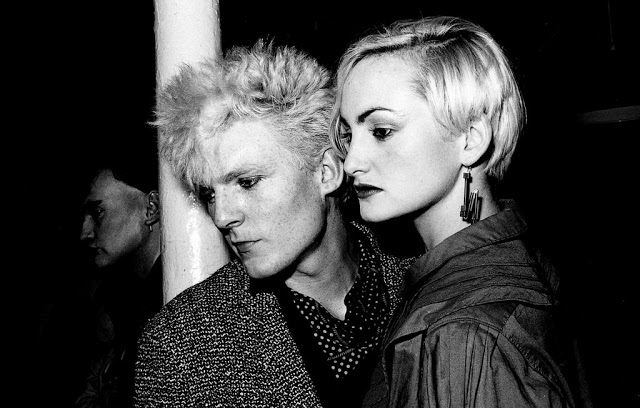
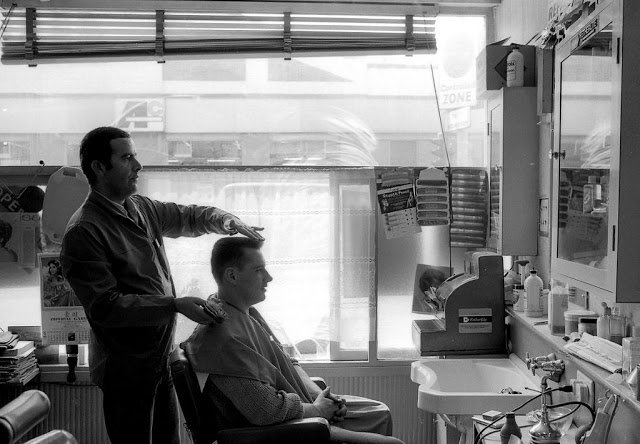
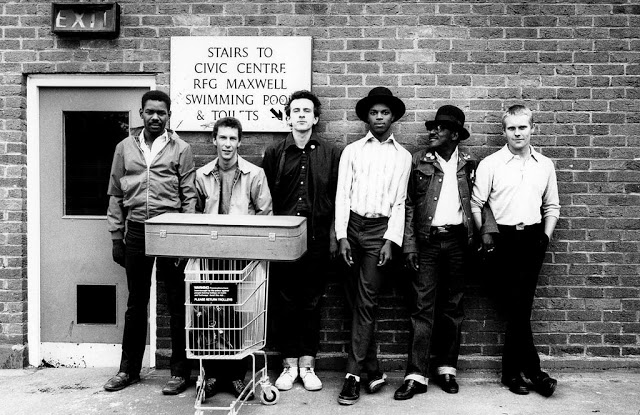
Punks at Sid Vicious memorial march, 1979Ska girls, 1980Mod girl, 1976John Cooper ClarkeTenpole TudorSex PistolsMods on scooter, 1976Skinheads with flag at Loch Lomond festival, 1980Mods, The Islington Twins, 1979Boy, Kings Road, London, 1979Joe StrummerDexys Midnight RunnersShane MacGowanPunks, 1978Teds, 1979Rock’n’Roll dancers, 1980Teddy boy, 1980Mod boy, 1981Phil Polecat and friends, 1980Fan plays air guitar in mud at Loch Lomond Festival, 1981Slim at Specials concert, 1980Debbie Harry, 1981Julien Temple, 1982Skinhead and mod fans at Loch Lomond Festival, 1981Ska fans at Loch Lomond Festival, 1981Record shoppers, 1981Ladbroke Grove sound system, 1979Punks, 1980New Romantics, 1980Rude boys, 1981Fans at The Jam’s farewell concert, 1982Andy’s Cut and Blow Dry, London, 1980The Beat, 1980
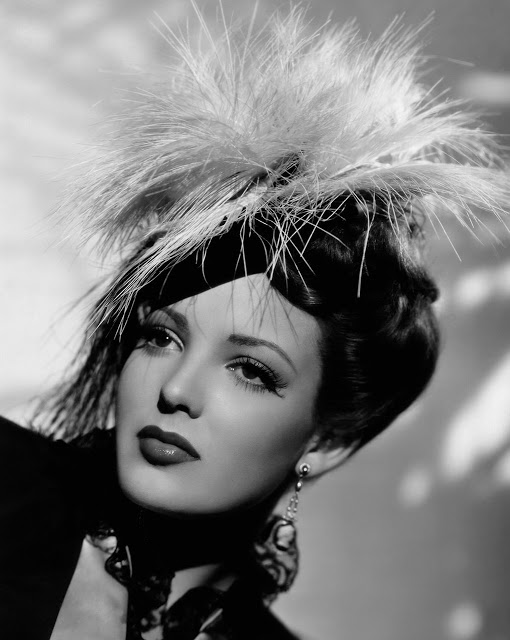
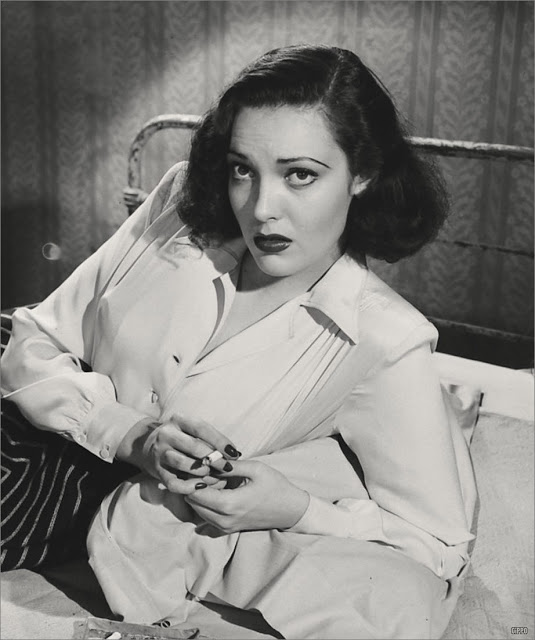
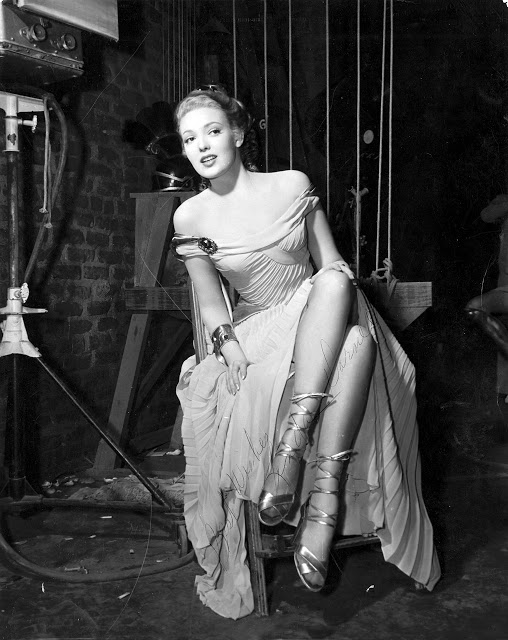
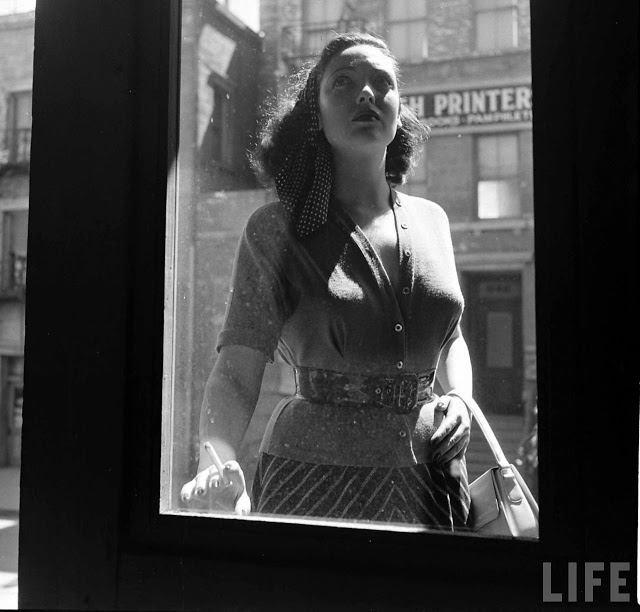
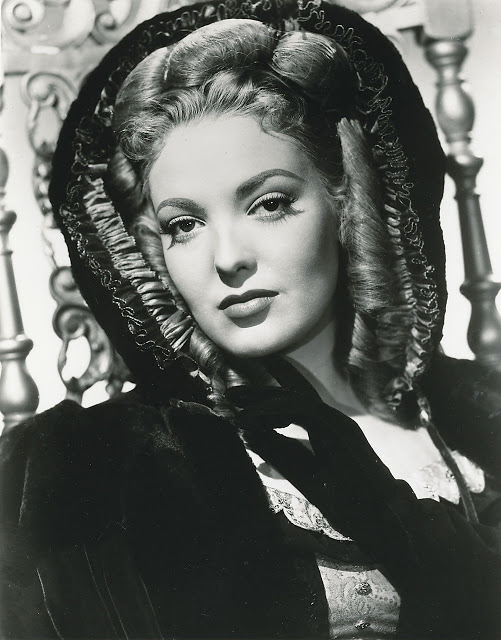
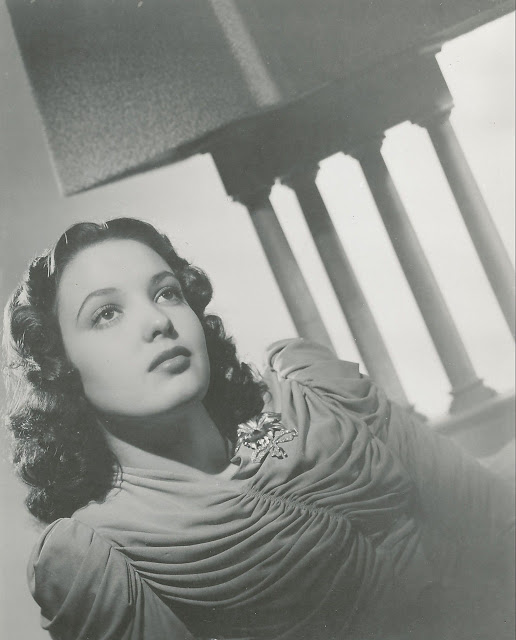
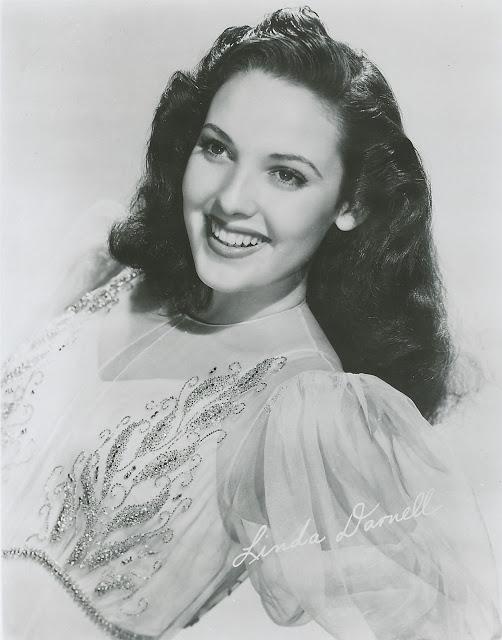
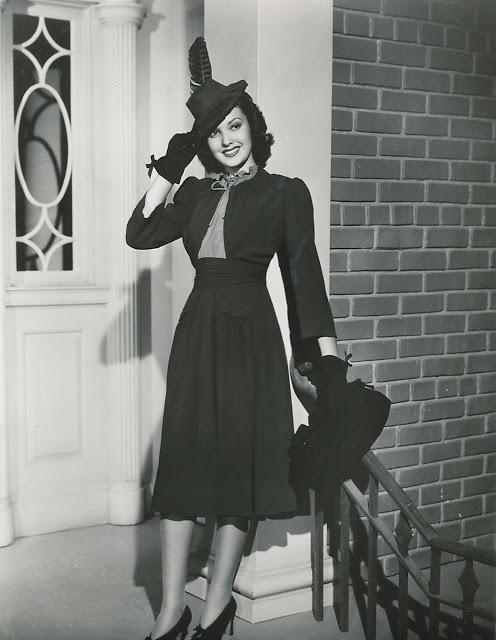
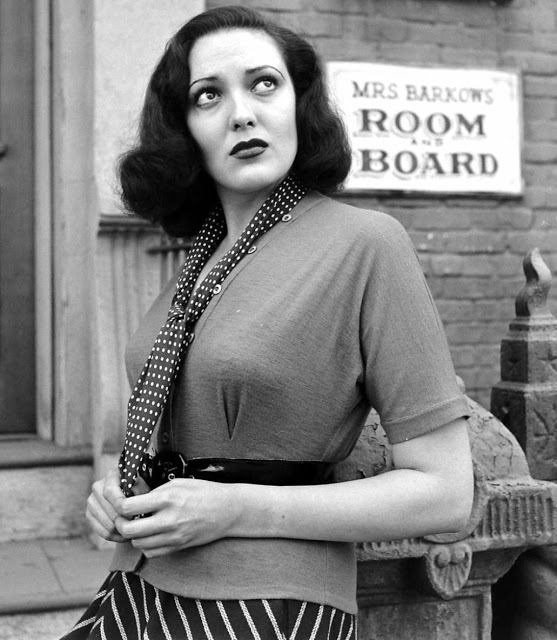
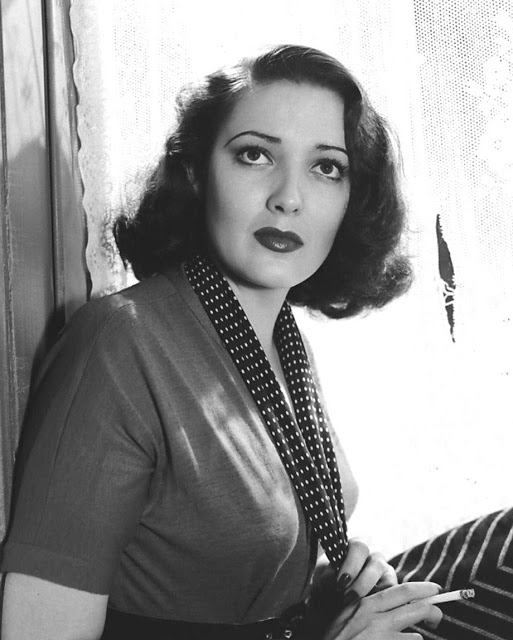
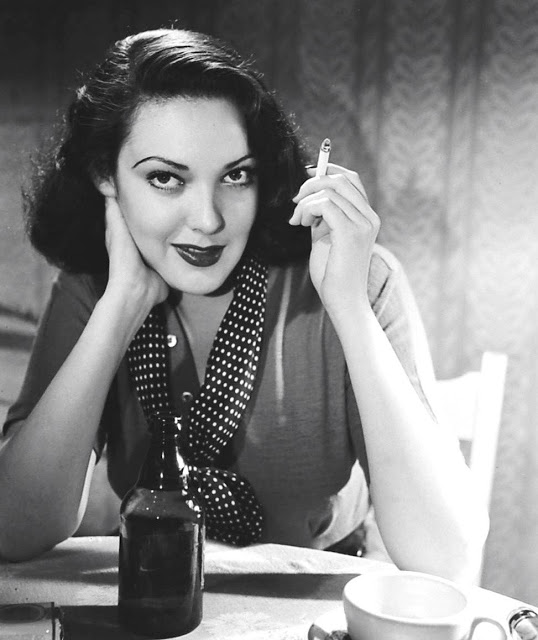
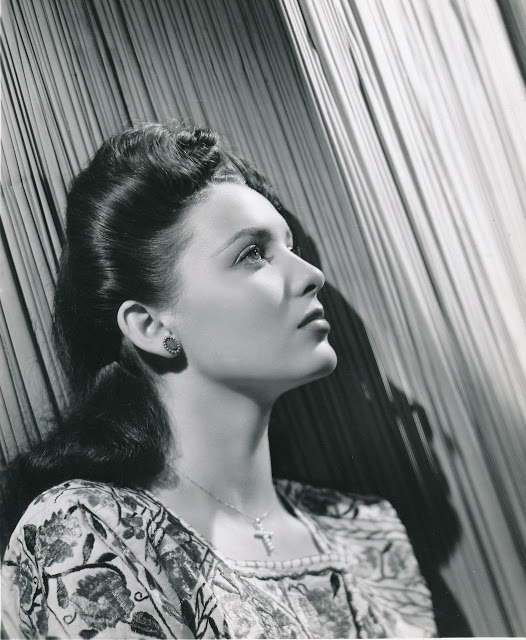
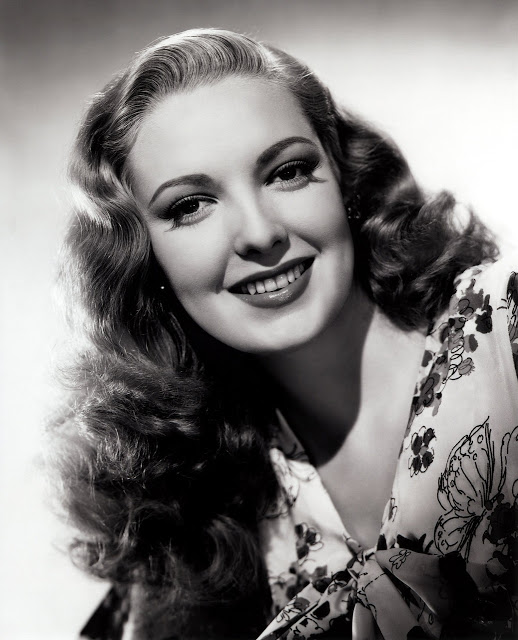
Only a real movie buff would remember her name today, but in the forties everyone knew Linda Darnell. Her beauty and talent made her one of the top female stars at Twentieth Century-Fox.
Daughter of a Texas postal clerk, actress Linda Darnell trained to be a dancer, and came to Hollywood’s attention as a photographer’s model. Though only 15, Darnell looked quite mature and seductive in her first motion picture, Hotel For Women (1937), and before she was twenty she found herself the leading lady of such 20th Century-Fox male heartthrobs as Tyrone Power and Henry Fonda.
Weary of thankless good-girl roles, Darnell scored a personal triumph when loaned out to United Artists for September Storm (1944), in which she played a “Scarlett O’Hara” type Russian vixen. Thereafter, 20th Century-Fox assigned the actress meatier, more substantial parts, culminating in the much-sought-after leading role in 1947’s Forever Amber.
Director Joseph L. Mankiewicz followed up this triumph by giving Darnell two of her best parts–Paul Douglas’ “wrong side of the tracks” wife in A Letter to Three Wives (1949) and Richard Widmark’s racist girlfriend in No Way Out (1950). When her Fox contract ended in 1952, Darnell found herself cast adrift in Hollywood, the good roles fewer and farther between; by the mid-1960s, she was appearing as a nightclub singer, touring in summer theatre, and accepting supporting roles on television.
On April 10, 1965, Darnell died from burns she received in a fire at the house of her former secretary. Ironically, she had been watching Star Dust (1940) on television, which was one of the films that set her career in motion, when the house caught fire. She was trapped on the second floor of the home by heat and smoke, as the fire had started in the living room.
The women urged the young girl to jump from the second-floor window. After her daughter had jumped, Darnell’s secretary stood on the window ledge, calling for help. She had lost track of Darnell and insisted the firefighters rescue her before she was taken from the window ledge. Darnell was found next to the burning living room sofa; she was transferred to the burn unit at Chicago’s Cook County Hospital with burns to 80% of her body.
After her death, a man who said he was Darnell’s fiancé identified her body. A coroner’s inquest into her death ruled that Darnell’s death was accidental and that the fire had begun in or near the living room sofa and was caused by careless smoking; both adult women were smokers.
Darnell’s body was cremated; she had wanted her ashes scattered over a ranch in New Mexico, but because of a dispute with the landowners that was not done. After being in storage for ten years her daughter asked they be interred at the Union Hill Cemetery, Chester County, Pennsylvania, in the family plot of her son-in-law.
She had appeared in a total of 46 films. Often described as the “girl with the perfect face,” Linda Darnell died at the age of 41. For her contribution to the motion picture industry, Linda Darnell has a star on the Hollywood Walk of Fame at 1631 Vine Street.
The United States of America (U.S.A. or USA), commonly known as the United States (U.S. or US) or America, is a country primarily located in North America. It consists of 50 states, a federal district, five major unincorporated territories, 326 Indian reservations, and nine minor outlying islands.[ At nearly 3.8 million square miles (9.8 million square kilometers), it is the world’s fourth-largest country by land area and third-largest by total area. The United States shares land borders with Canada to the north and Mexico to the south as well as maritime borders with the Bahamas, Cuba, and Russia, among others. With more than 331 million people, it is the third most populous country in the world. The national capital is Washington, D.C., and the most populous city and financial center is New York City.
Paleo-Indians migrated from Siberia to the North American mainland at least 12,000 years ago, and European colonization began in the 16th century. The United States emerged from the Thirteen British Colonies established along the East Coast. Disputes with Great Britain over taxation and political representation led to the American Revolutionary War (1775–1783), which established the nation’s independence. In the late 18th century, the U.S. began expanding across North America, gradually obtaining new territories, sometimes through war, frequently displacing Native Americans, and admitting new states. Slavery of African-Americans was legal in the southern United States until the second half of the 19th century, when the American Civil War led to its abolition. The Spanish–American War and World War I established the U.S. as a world power, and the aftermath of World War II left the United States and the Soviet Union as the world’s two superpowers. During the Cold War, both countries fought in the Korean and Vietnam War but avoided direct armed conflict. The two nations competed in the Space Race, culminating in the 1969 American spaceflight that first landed humans on the Moon. The Soviet Union’s dissolution in 1991 ended the Cold War, leaving the United States as the world’s sole superpower. In the post–Cold War era, the United States has engaged in several conflicts in the Middle East.
The United States is a federal presidential constitutional republic with three separate branches of government, including a bicameral legislature. It is a founding member of the United Nations, World Bank, International Monetary Fund, Organization of American States, and other international organizations. It is a permanent member of the United Nations Security Council. The United States is a member of multiple military alliances, including NATO, AUKUS, and unilateral alliances with Japan, South Korea, and the Philippines. Considered a melting pot of cultures and ethnicities, its population has been profoundly shaped by centuries of immigration. The United States is a liberal democracy; it ranks high in international measures of economic freedom, quality of life, education, and human rights; and it has low levels of perceived corruption. Unlike other western democracies, the United States lacks universal health care, retains capital punishment, and has high levels of incarceration and inequality.
The United States is a highly developed country, and its economy accounts for approximately a quarter of global GDP and is the world’s largest by GDP at market exchange rates. By value, the United States is the world’s largest importer and second-largest exporter of goods. Although its population is only 4.2% of the world’s total, it holds over 30% of the total wealth in the world, the largest share held by any country. Making up more than a third of global military spending, the United States is the foremost military power in the world and a leading political, cultural, and scientific force. (Wikipedia)
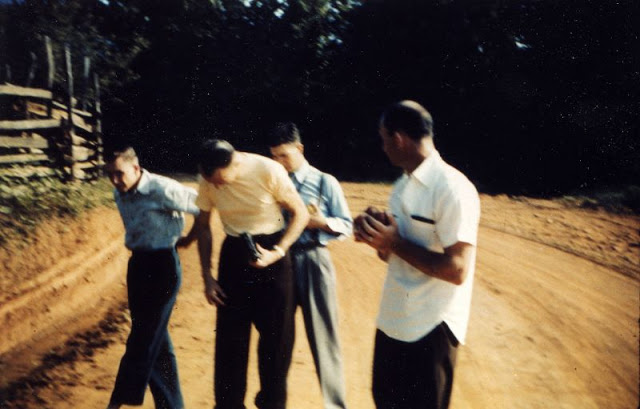
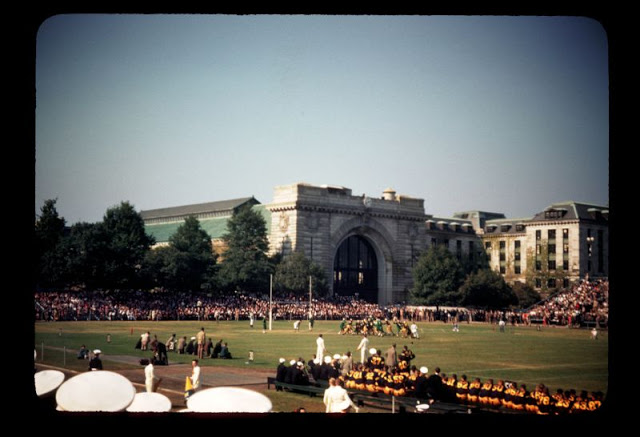
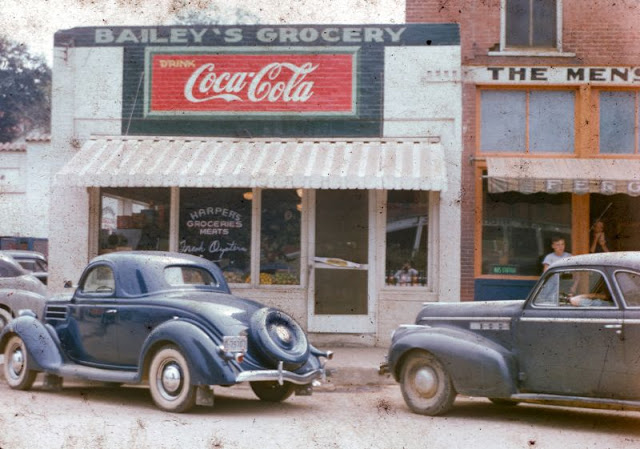
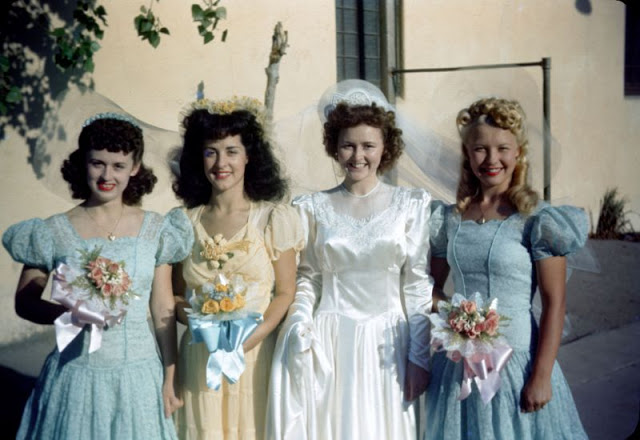
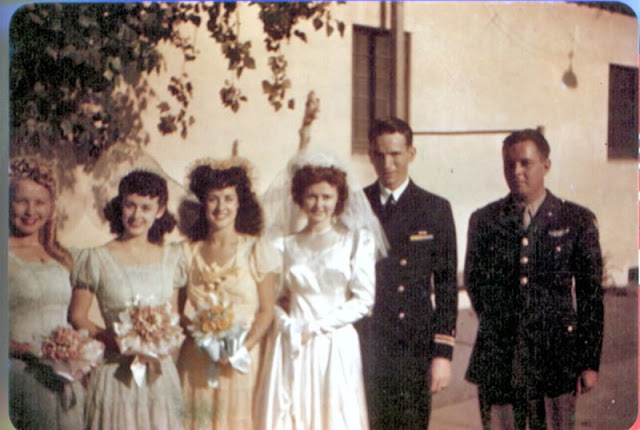
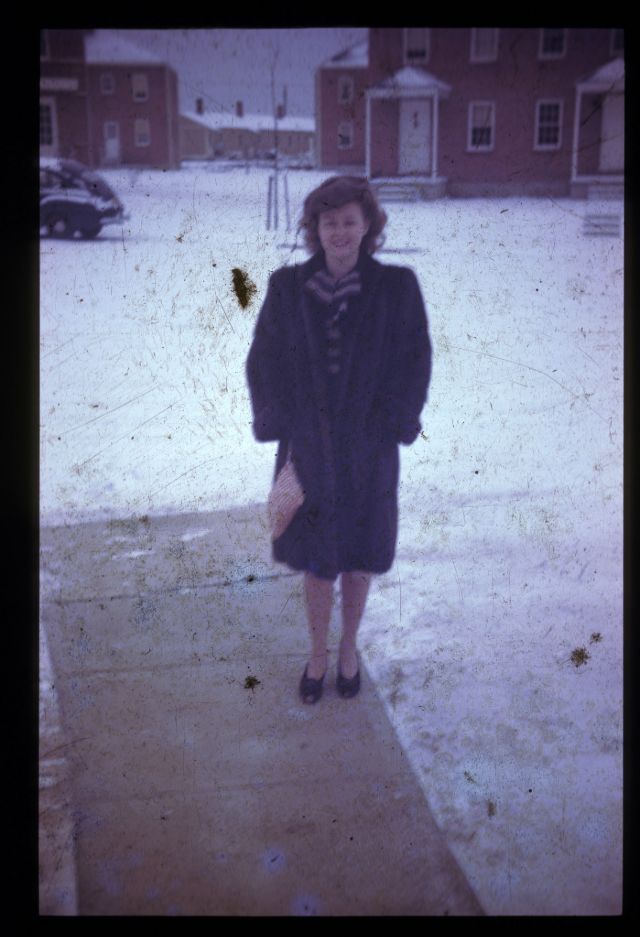
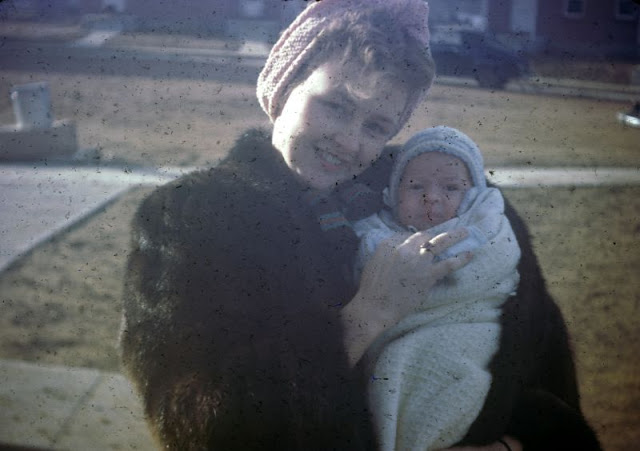
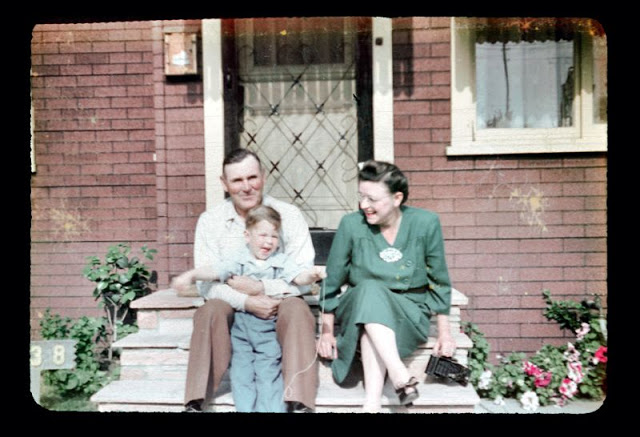
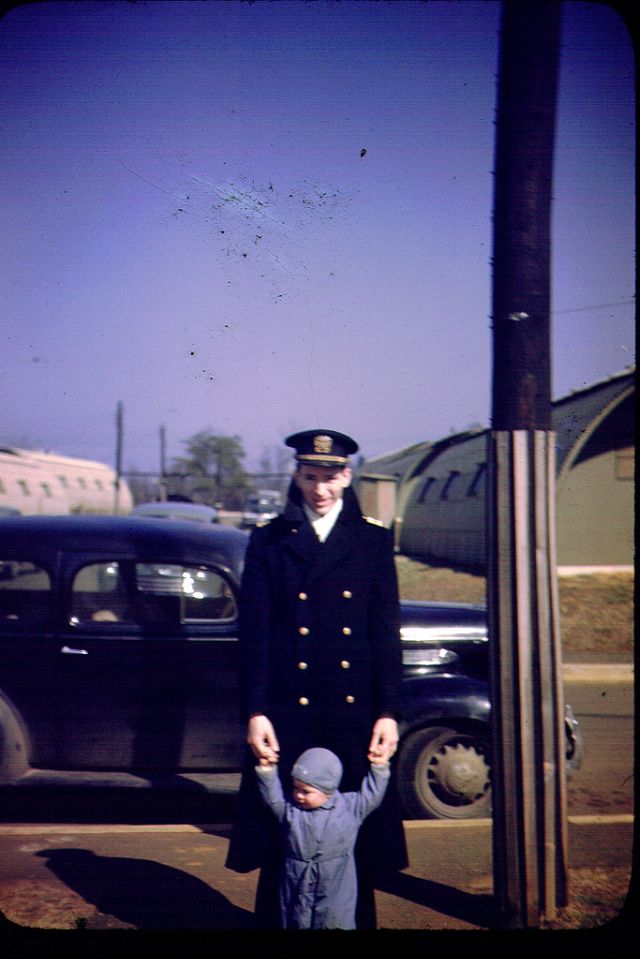
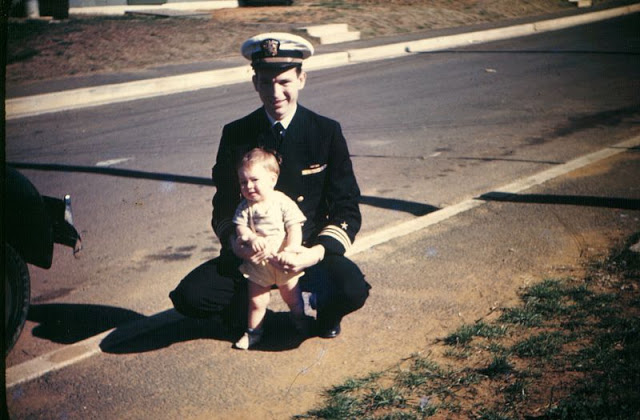
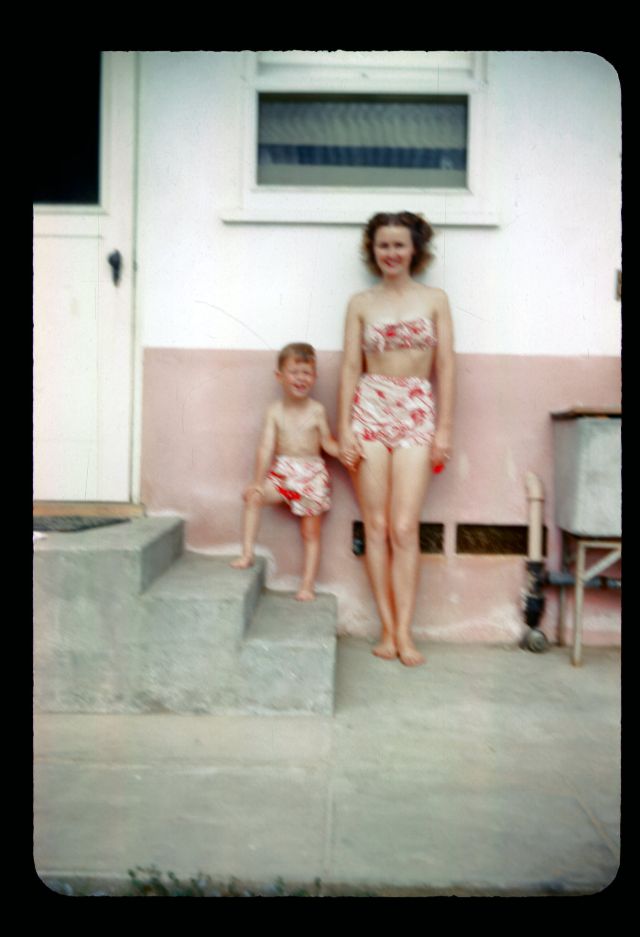
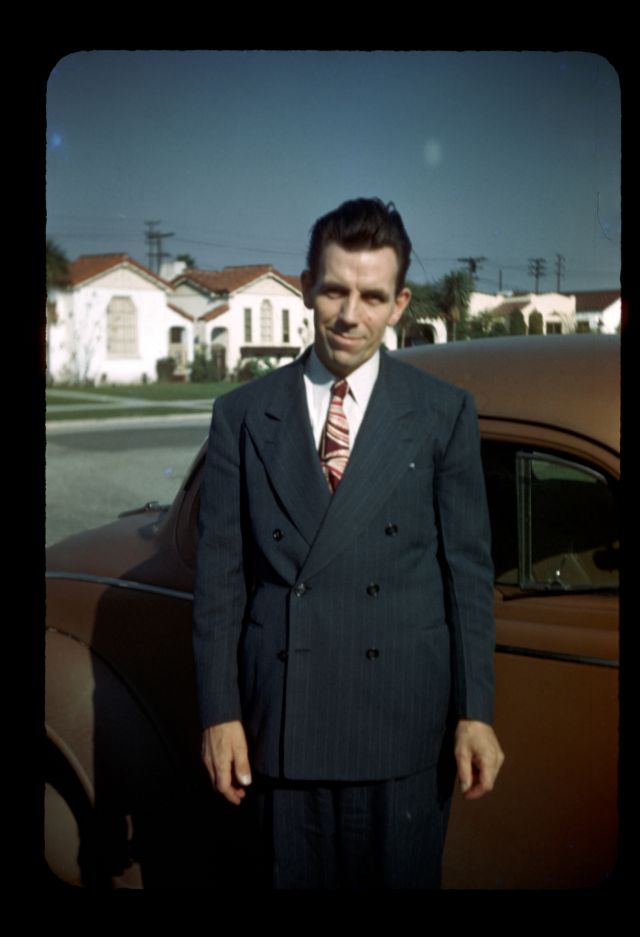
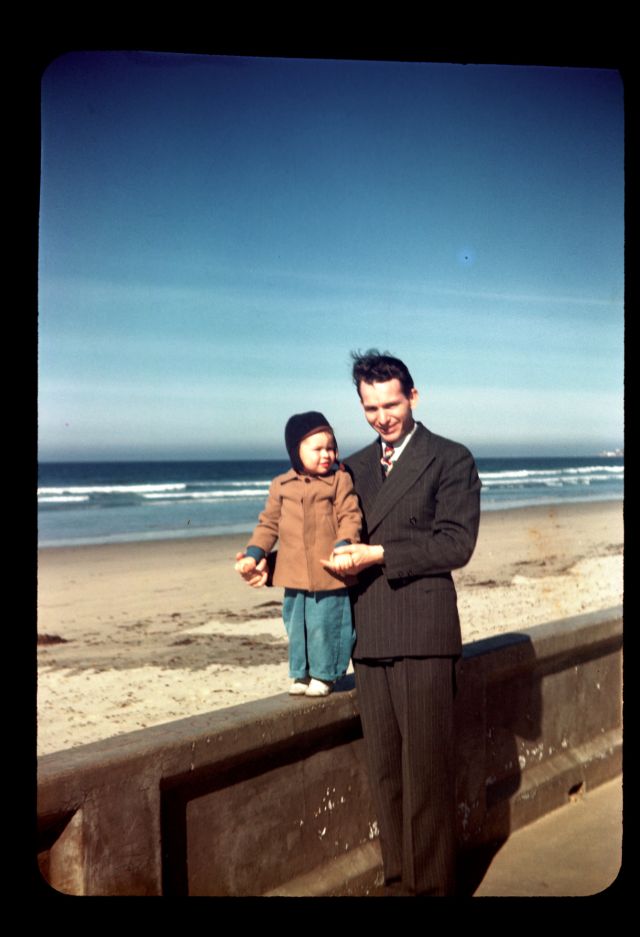
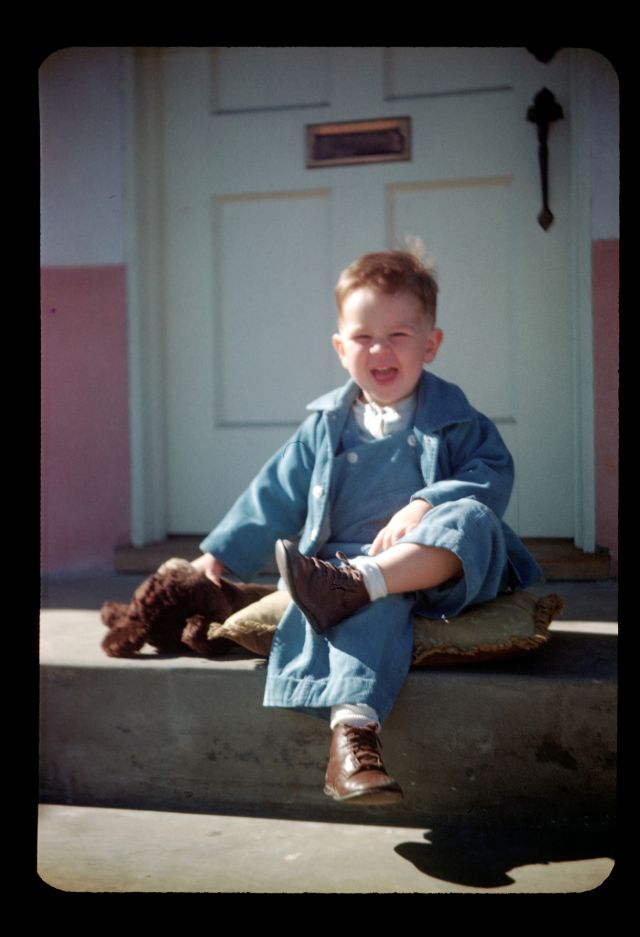
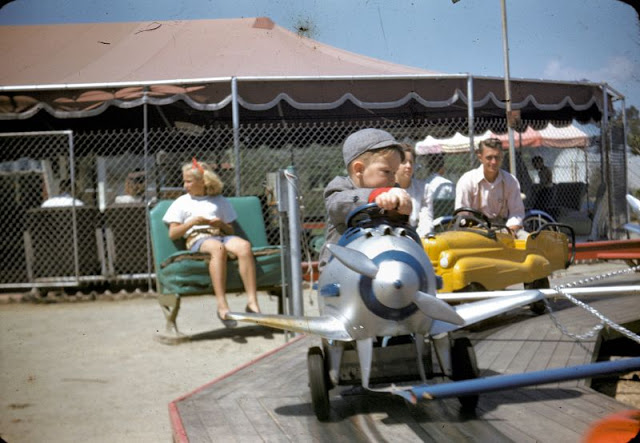
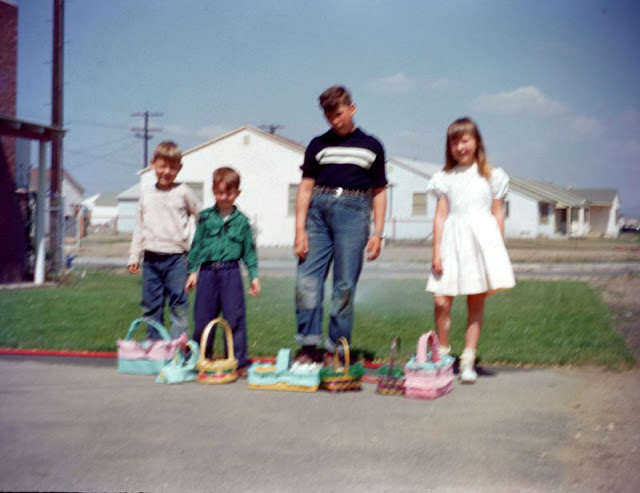
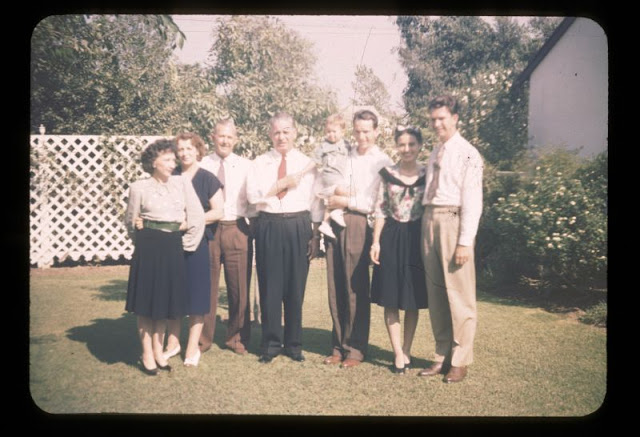
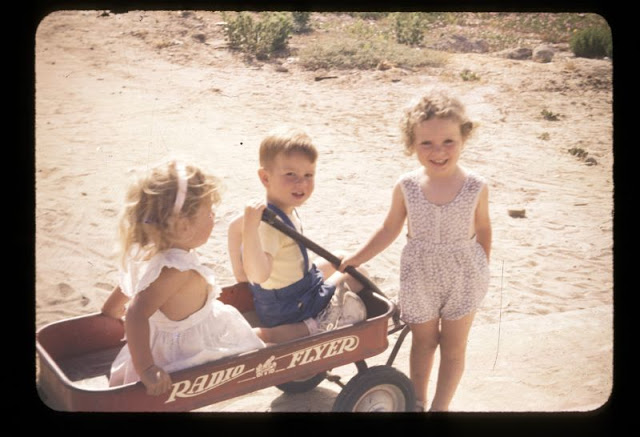
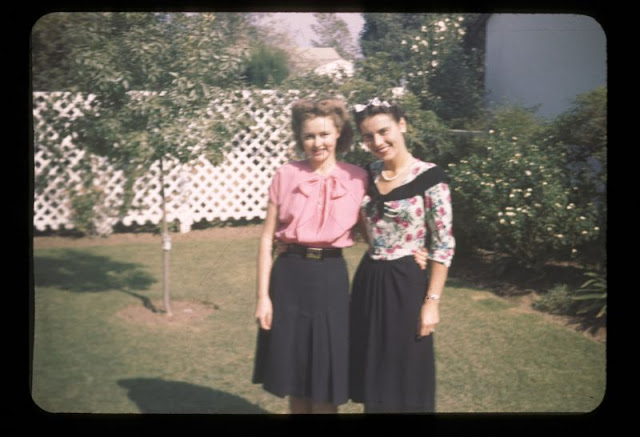
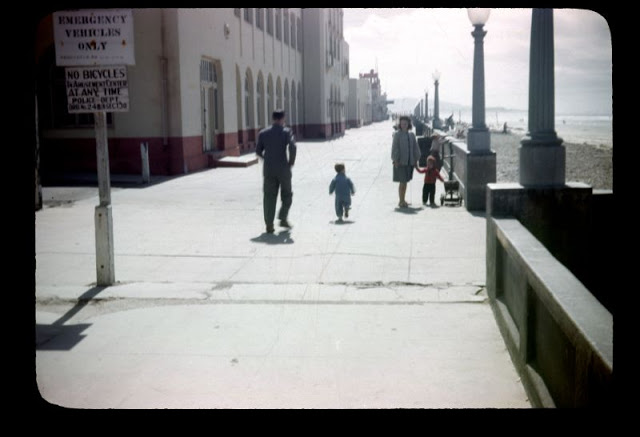
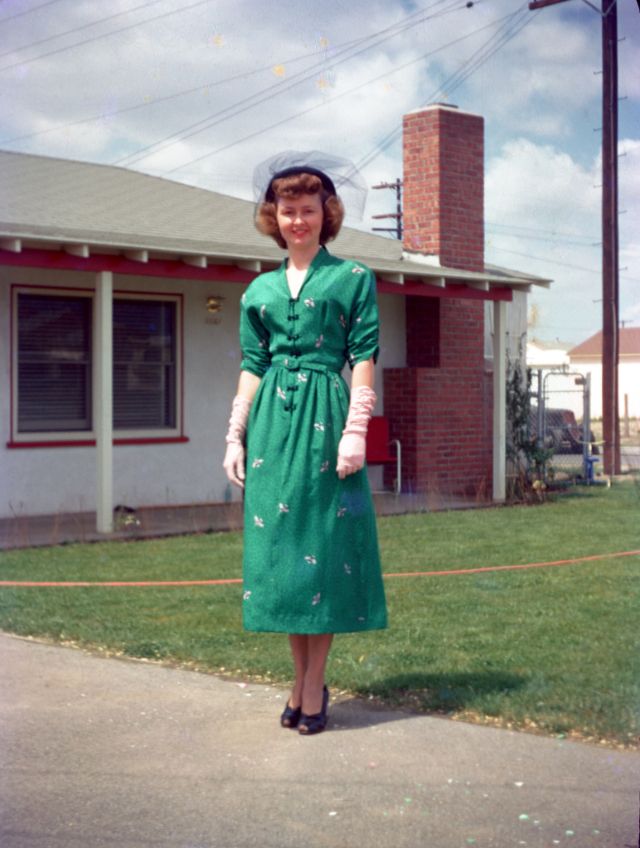
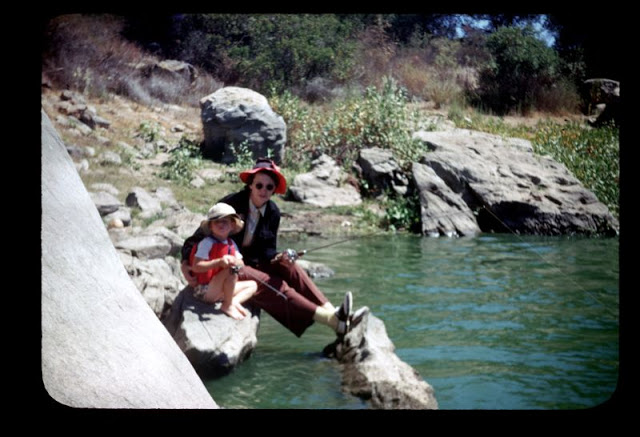
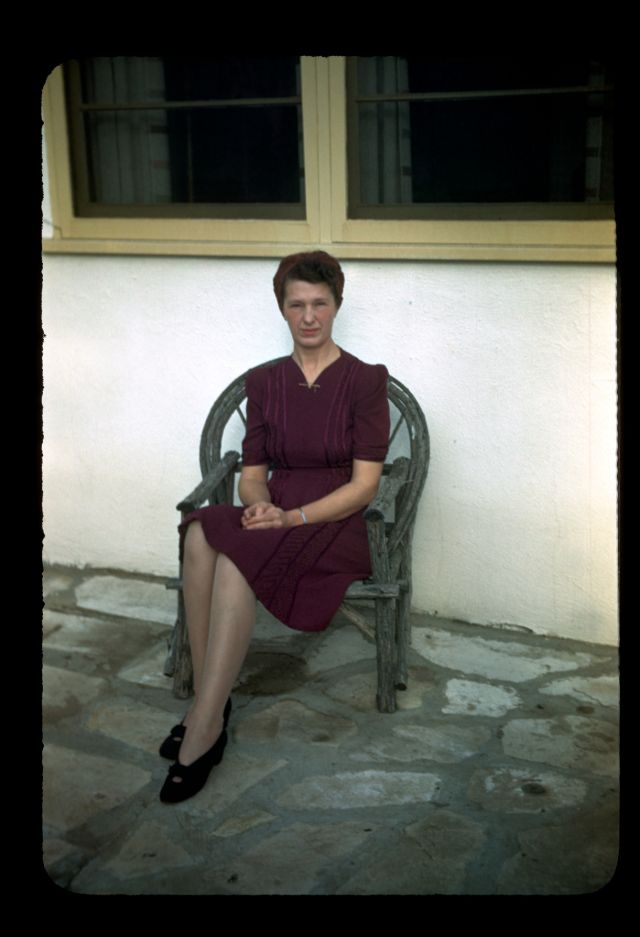
Man with the Radio Amateur’s Handbook is dated 1939 and hot off the press in late 1938, taken at the United States Naval Academy (USNA), Maryland, December 1938USNA Class of ’42 Midshipman and future war hero, on leave in 1940, does Corpsman dutyUSNA Midshipman, Class of ’42 on leave, June 23, 1940This football game between the USNA and William & Mary College is played at Farragut Field on the grounds of the USNA in the September 27, 1941USNA Navy vs William & Mary at Farragut Field, September 27, 19411943 Bremerton camera testingBailey’s Grocery, August 1943Four of the five friends who bonded their friendship in grammar school in 1928 or 1929, August 15, 1943Friend’s wedding, August 15, 1943On leave from the Pacific in WWII, September 1943On leave in 1943WWII USA, patriotic bicycle parade (no gasoline), August 1943WWII USA, using wisely what little gas we had under rationing, 1943A new baby and old war mark, Christmas 1944Christmas 1944November 1944 just off campus near the USNAThe young boy looks taller with the 5′ tall grandfather, February 1944An old black Chevy in the snow at the USNA, 1945At the USNA, 1945Eastport Apartments (1944), coal heated before we moved onto the campus (USNA) in steam heated housing, 1945From Washington Monument, April 1945Hamoja Village at the USNA, 1945January of 1945 on the USNA campus3306 Mission Blvd, Mission Beach, San Diego, CA, 1946Family portrait at Mission Beach, San Diego, CA, November 1946Mr. Helge Anderson was a big Swede who could still lift an automobile engine past 50 years old, Los Angeles, 1946The seawall in Mission Beach, San Diego, CA, November 1946These kids haven’t turned three yet, San Diego, CA, October 28, 19461947 trip past cave dweller ruins3306 Mission Blvd, San Diego, CA just after WWII, 19473306 Mission Blvd, San Diego, CA just after WWII, 1947“At least I have my bear!”, 1947Boy was having fun, San Diego, CA, March 1947Del Dios, CA, above Hernandez Hideaway, August 1947Easter 1947Easter 1947Easter 1947Family portrait, 1947Just after WWII in the Mission Beach area of San Diego, CA, 1947One of the little girls became Miss National City, circa 1947Portrait of two young women, 1947The boardwalk in Mission Beach, San Diego, CA, 1947These pony rides were off highway US 80 (now I-8) below the old William Templeton Johnson mansion, San Diego, California, 1947These pony rides were off highway US 80 (now I-8) below the old William Templeton Johnson mansion, San Diego, California, 1947Young woman in Easter fashion of 1947 at 9661 Lev Avenue, Los Angeles, CA, April 16, 1947Formerly part of Lake Hodges, I-15 is right here today just south of Escondido, CA, 1948After Easter egg hunt, Easter, April 17, 1949Lady sitting on the chair, January 1949The California Redwoods in 1949Youngest son at 6 months, March 1949
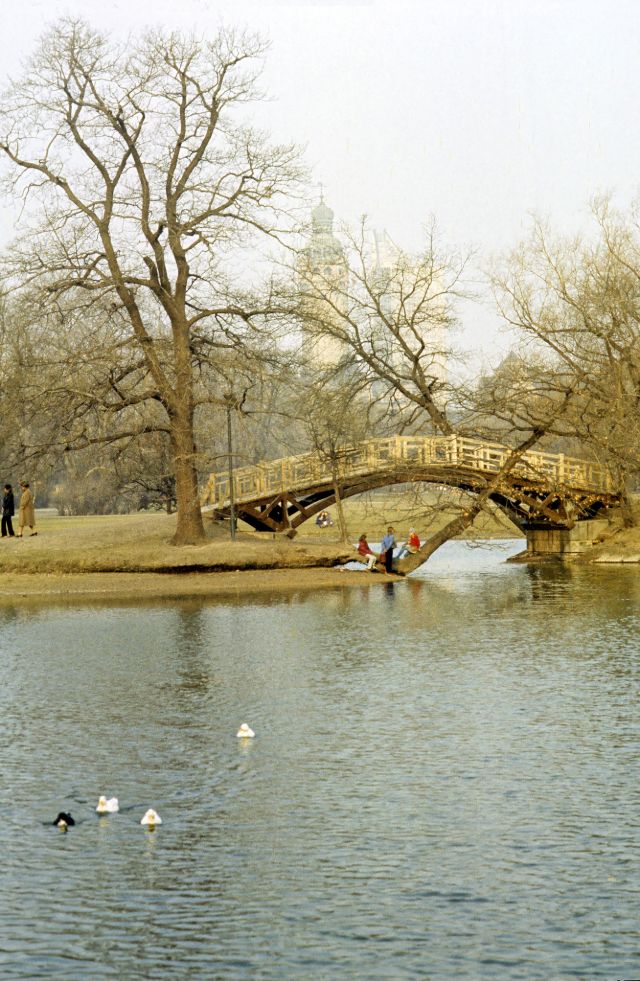
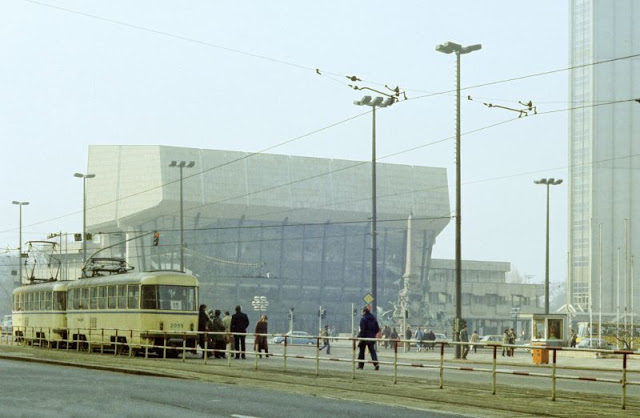
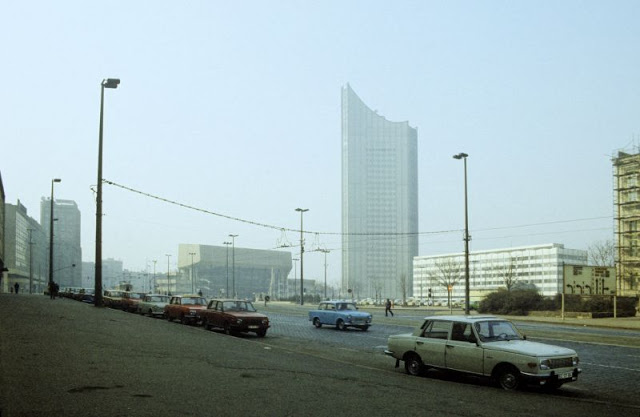
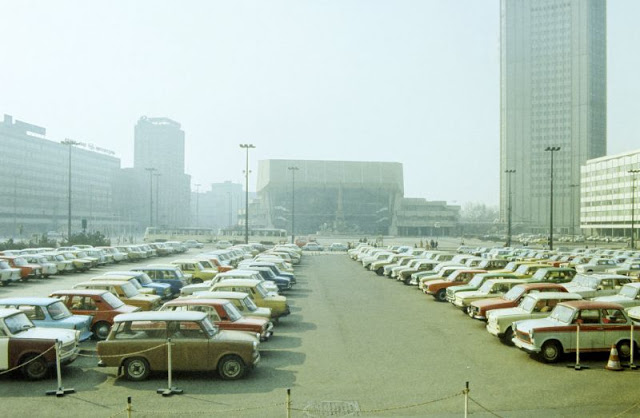
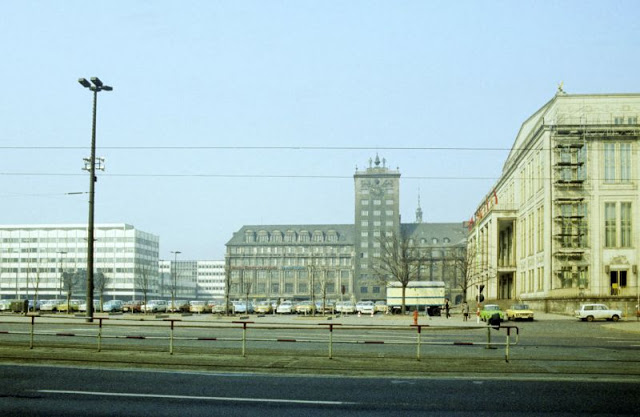
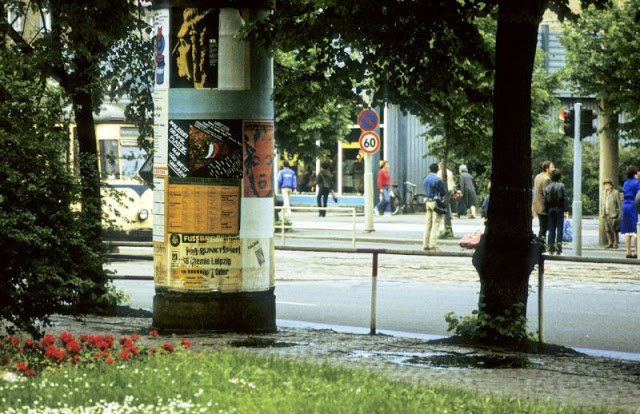
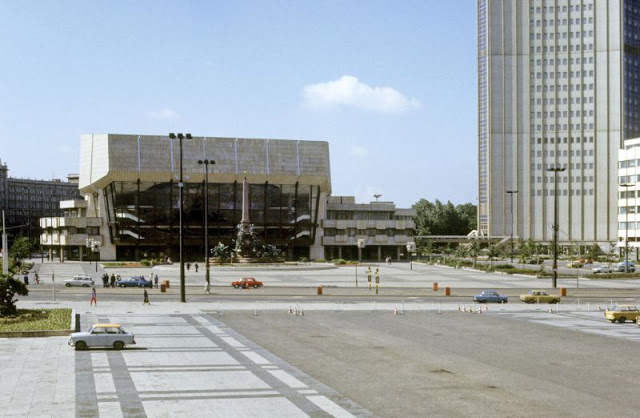
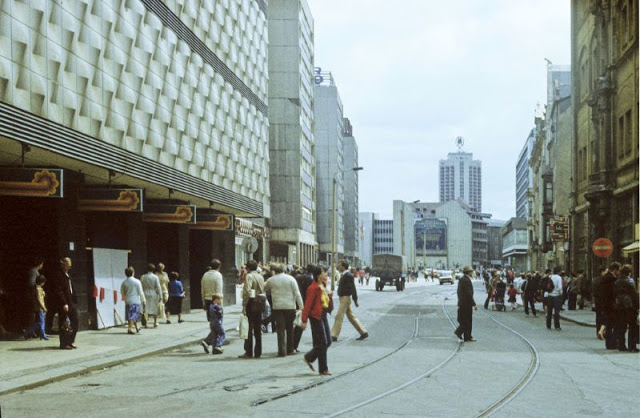
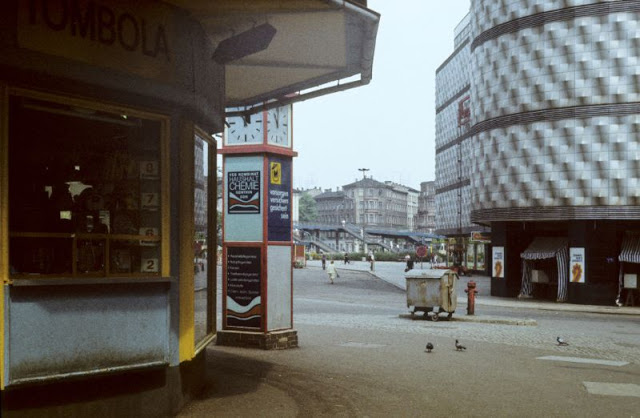
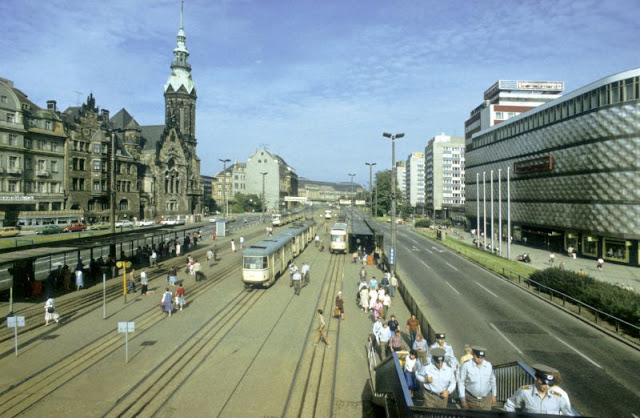
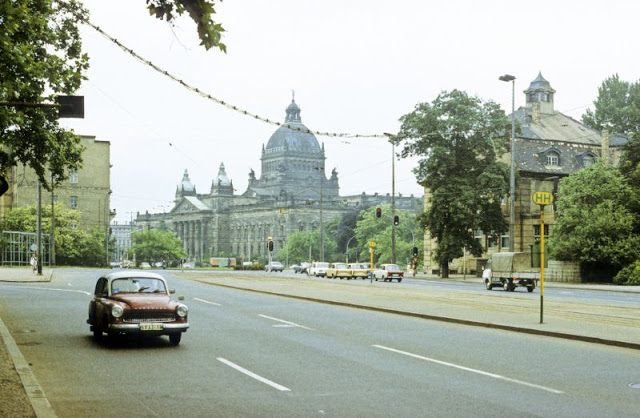
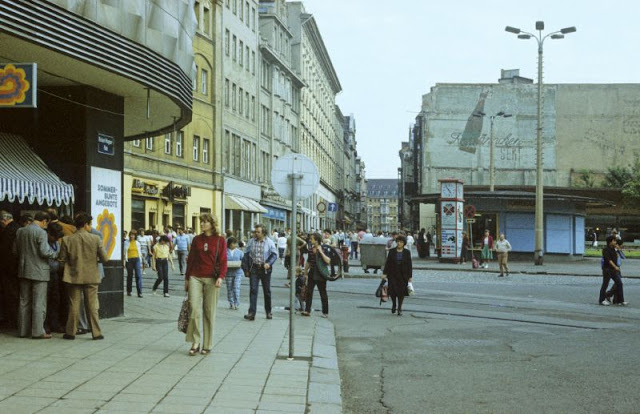
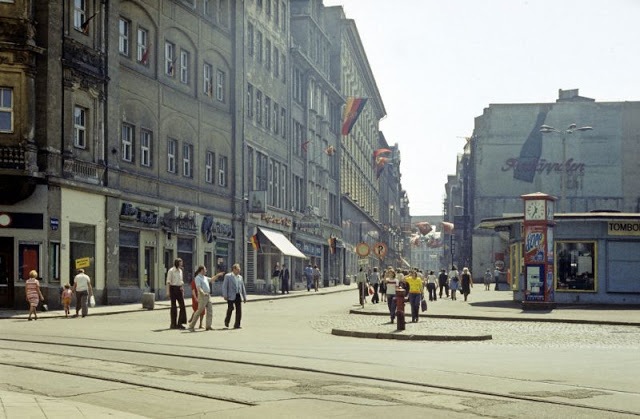
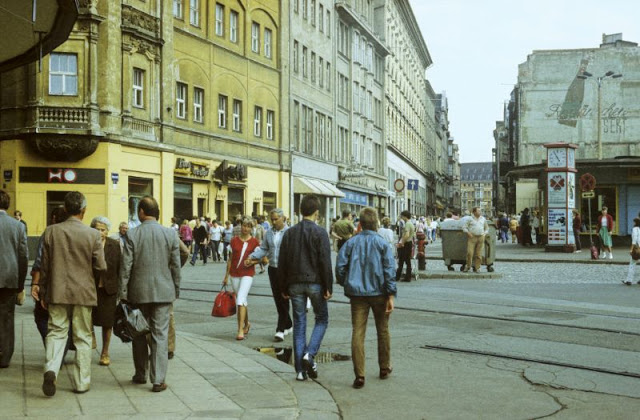
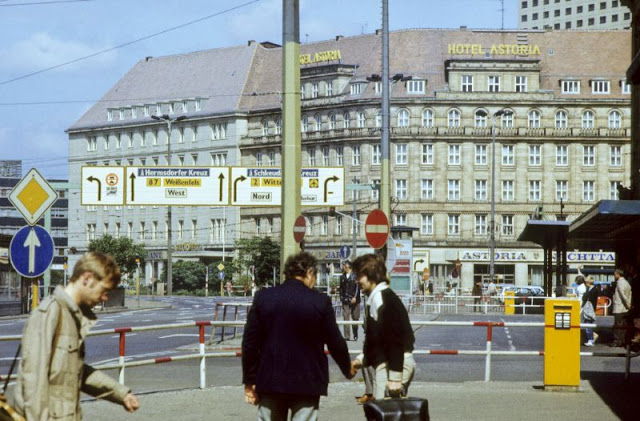
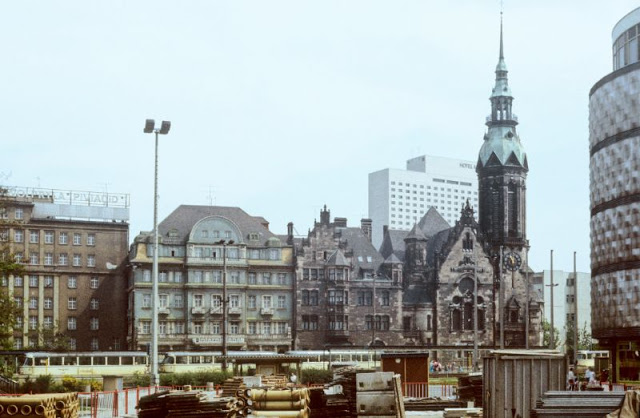
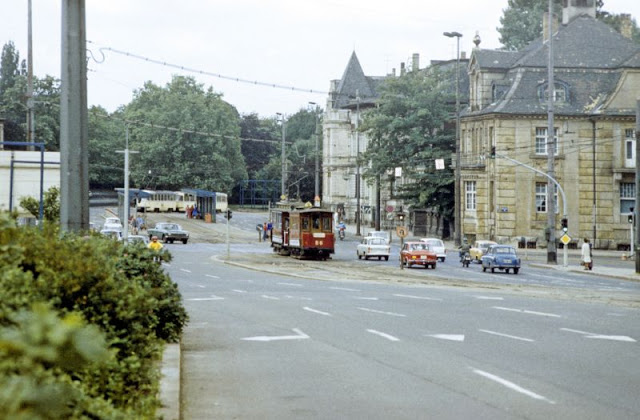
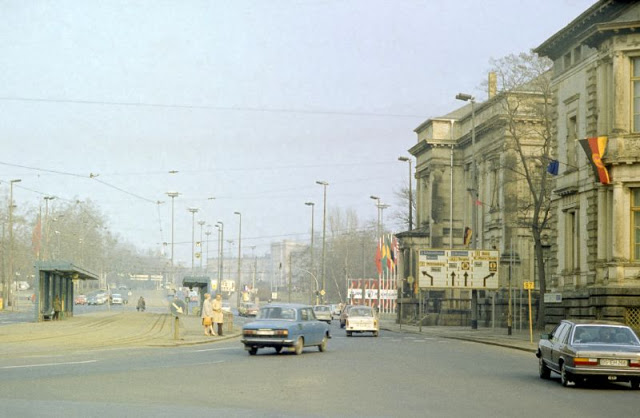
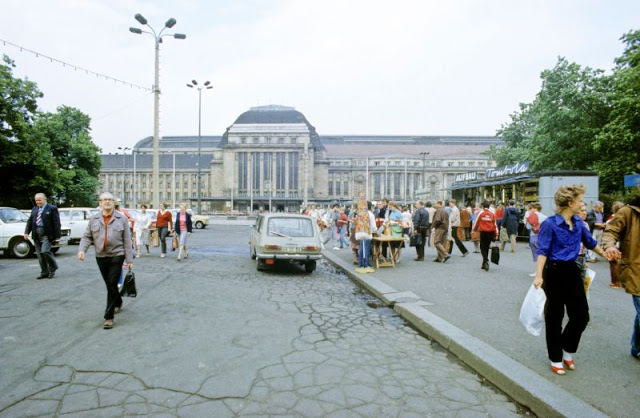
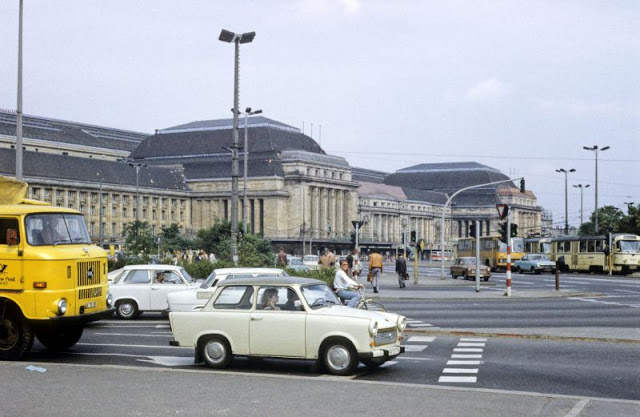
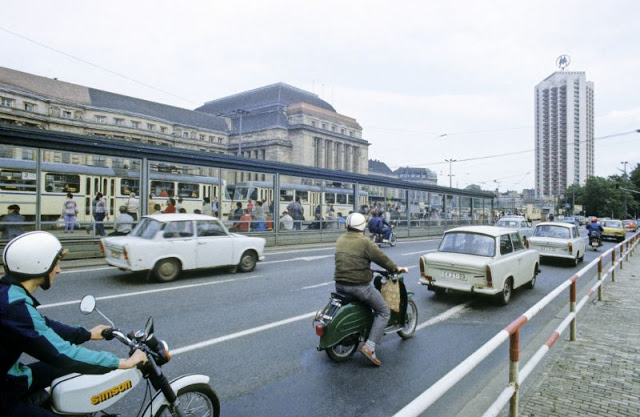
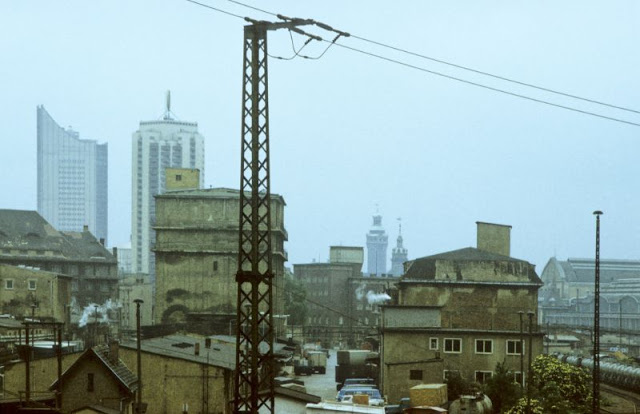
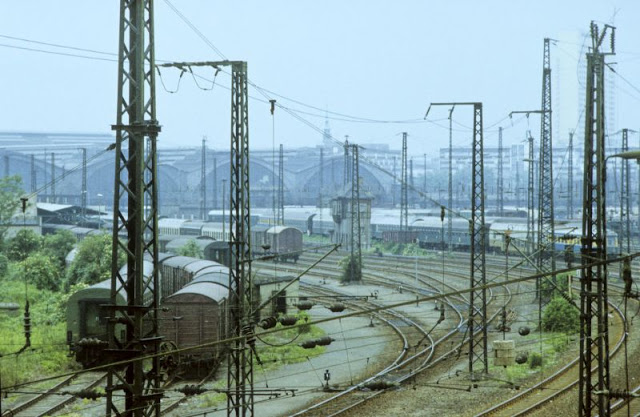
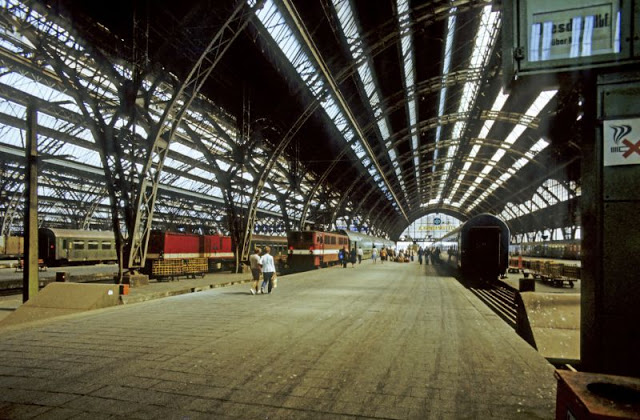
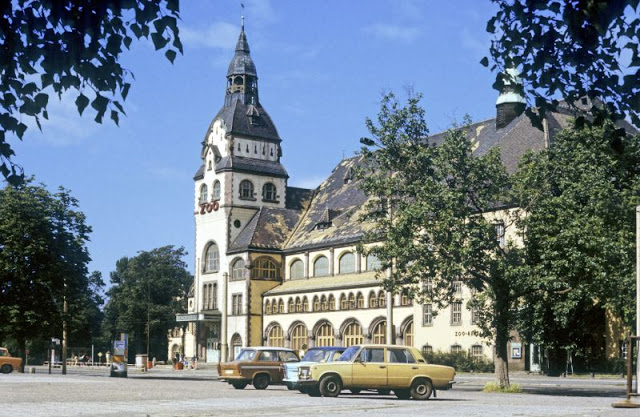
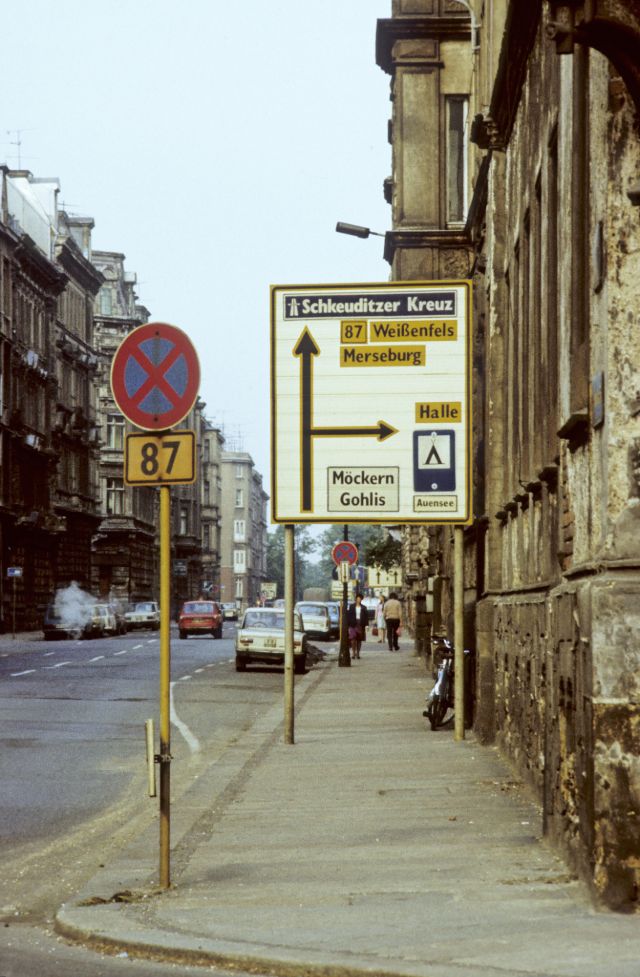
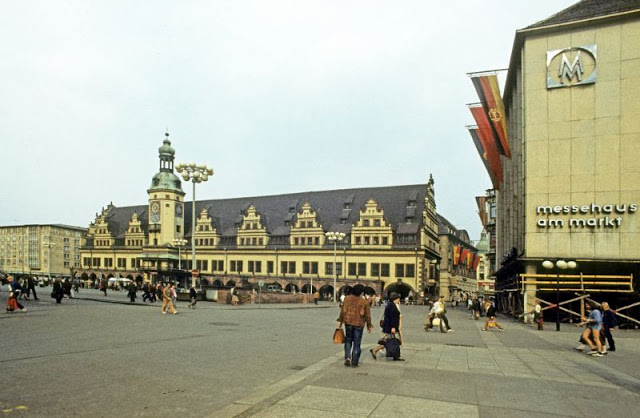
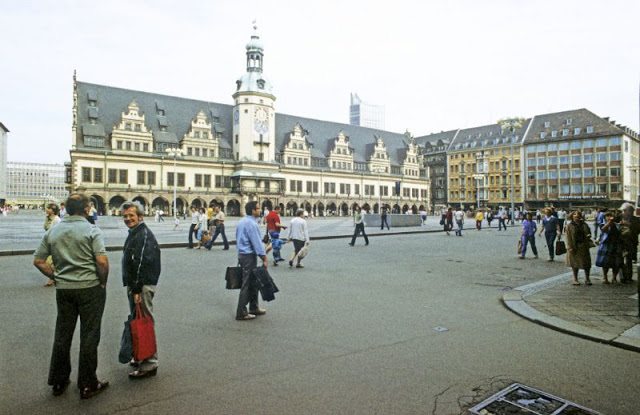
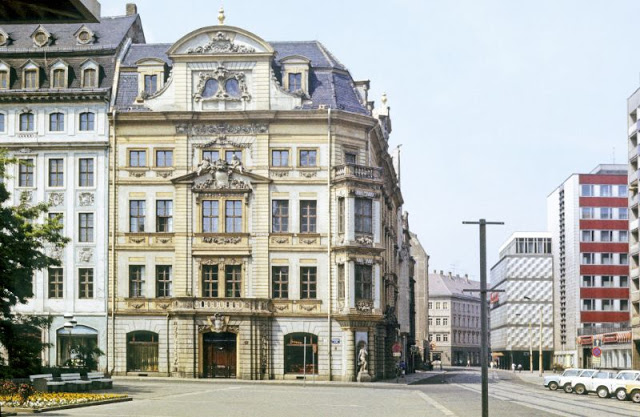
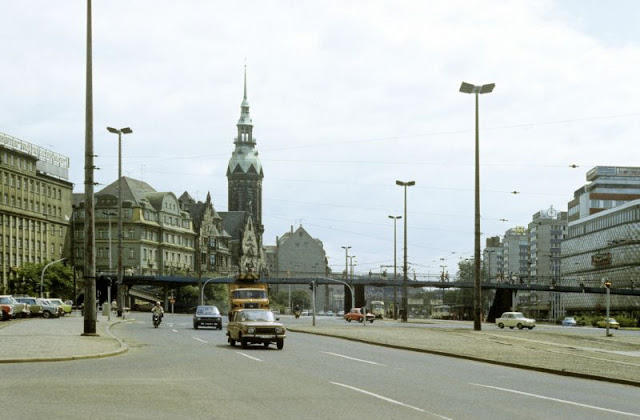
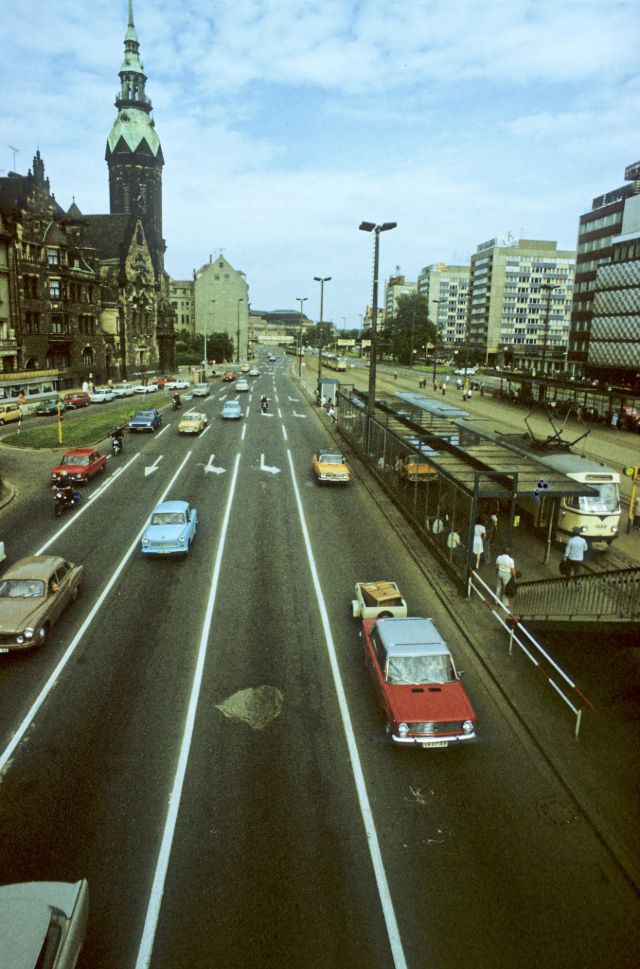
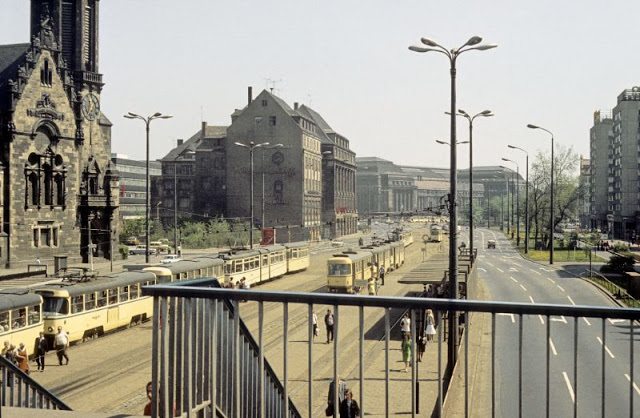
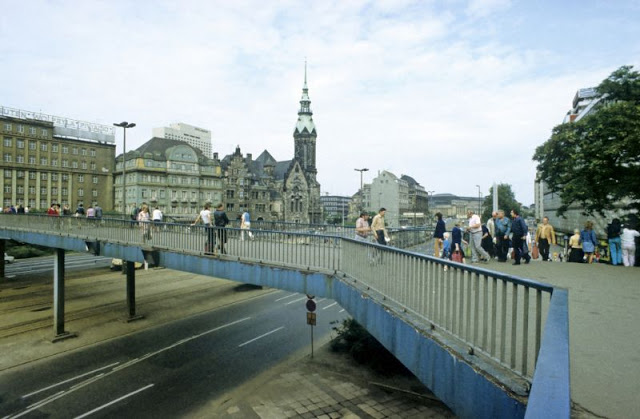
Leipzig is the most populous city in the German state of Saxony. With a population of 605,407 inhabitants as of 2021 (1.1 million residents in the larger urban zone), it surpasses the Saxon capital of Dresden, and is Germany’s eighth most populous city as well as the second most populous city in the area of former East Germany after (East) Berlin. Together with Halle (Saale), the largest city of the neighbouring state of Saxony-Anhalt, the city forms the polycentric Leipzig-Halle Conurbation. Between the two cities (in Schkeuditz) lies Leipzig/Halle Airport.
Leipzig is located about 160 km (100 mi) southwest of Berlin in the Leipzig Bay, which constitutes the southernmost part of the North German Plain, at the confluence of the White Elster River (progression: Saale? Elbe? North Sea) and two of its tributaries: the Pleiße and the Parthe. The name of the city as well as the names of many of its boroughs are of Slavic origin.
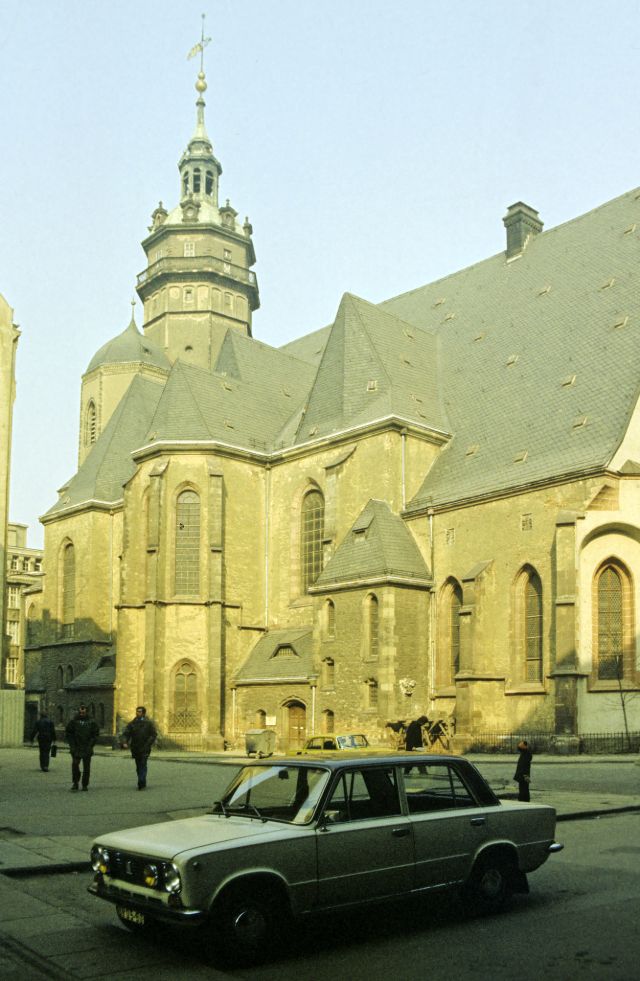
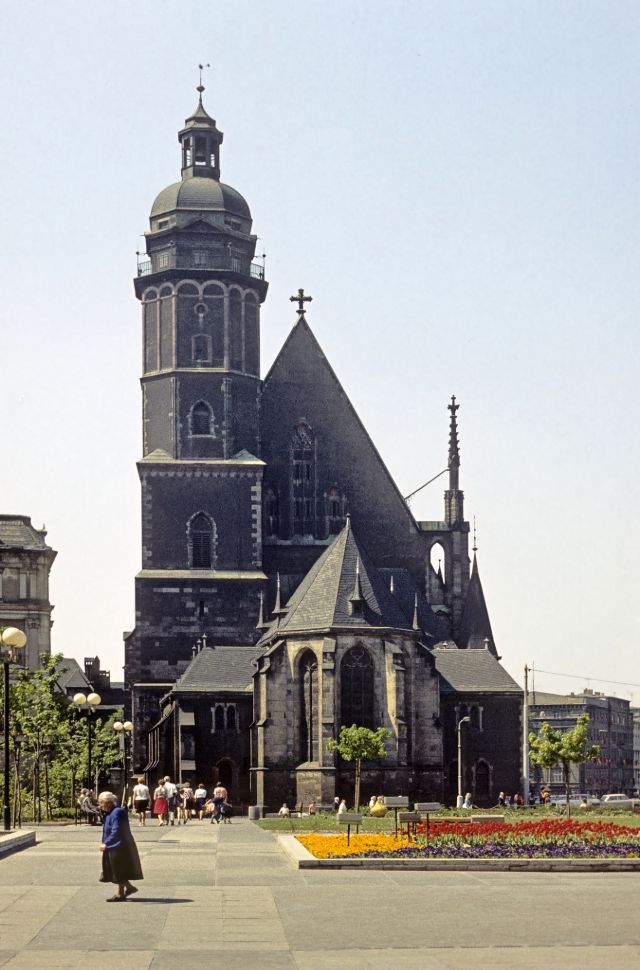
Leipzig has been a trade city since at least the time of the Holy Roman Empire. The city sits at the intersection of the Via Regia and the Via Imperii, two important medieval trade routes. Leipzig was once one of the major European centres of learning and culture in fields such as music and publishing.[13] After the Second World War and during the period of the German Democratic Republic (East Germany) Leipzig remained a major urban centre in East Germany, but its cultural and economic importance declined. Events in Leipzig in 1989 played a significant role in precipitating the fall of communism in Central and Eastern Europe, mainly through demonstrations starting from St. Nicholas Church. The immediate effects of the reunification of Germany included the collapse of the local economy (which had come to depend on highly polluting heavy industry), severe unemployment, and urban blight. Starting around 2000, however, the decline was first arrested and then reversed and, since then, Leipzig has seen significant changes with the restoration of major historical buildings, the demolition of derelict properties of little historical value, and the development of new industries and a modern transport infrastructure.
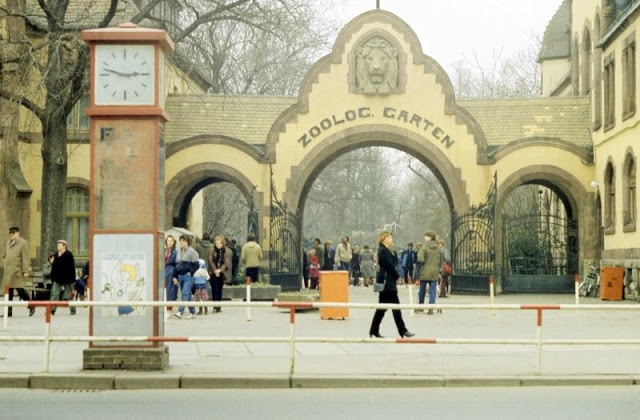
Leipzig today is an economic centre, is rated as the most livable city in Germany by the GfK marketing research institution, and has the second-best future prospects of all cities in Germany according to the Hamburg Institute of International Economics (HWWI) and Berenberg Bank. The city is one of two seats of the German National Library, as well as the seat of the German Federal Administrative Court. Leipzig Zoo is one of the most modern zoos in Europe and ranks first in Germany and second in Europe. Since the opening of the Leipzig City Tunnel in 2013, Leipzig forms the centrepiece of the S-Bahn Mitteldeutschland public transit system. Leipzig is currently listed as a “Sufficiency” level global city by the Globalization and World Cities Research Network, Germany’s “Boomtown” and was the 2019 European City of the Year.
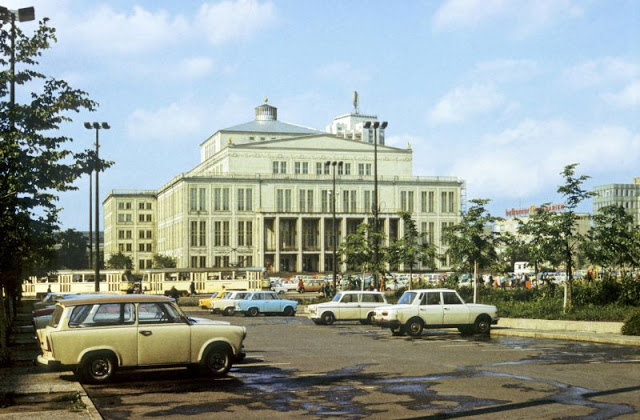
Leipzig has long been a major centre for music, both classical as well as modern “dark alternative music” or darkwave genres. The Oper Leipzig is one of the most prominent opera houses in Germany. Leipzig is also home to the University of Music and Theatre “Felix Mendelssohn Bartholdy”. The Leipzig Gewandhaus Orchestra, established in 1743, is one of the oldest symphony orchestras in the world. Johann Sebastian Bach is one among many major composers who lived and worked in Leipzig. During a stay in the city, Friedrich Schiller wrote his poem “Ode to Joy”. (Wikipedia)
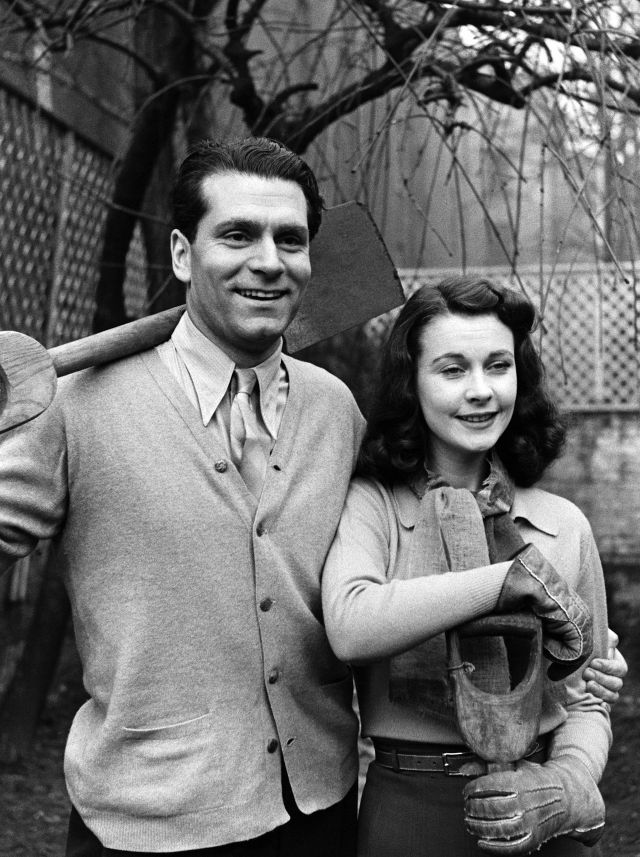
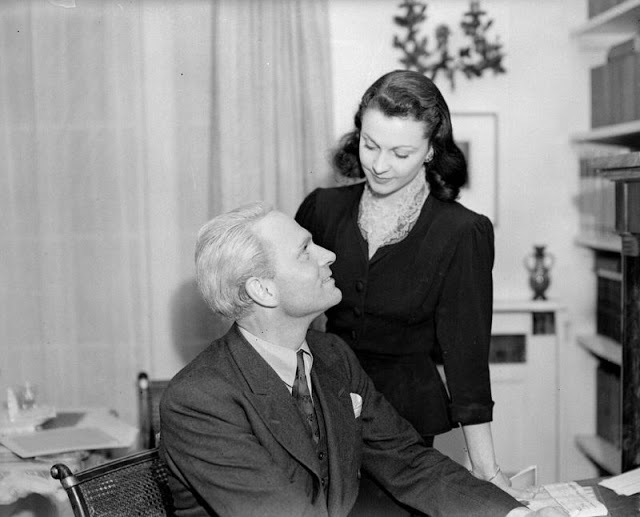
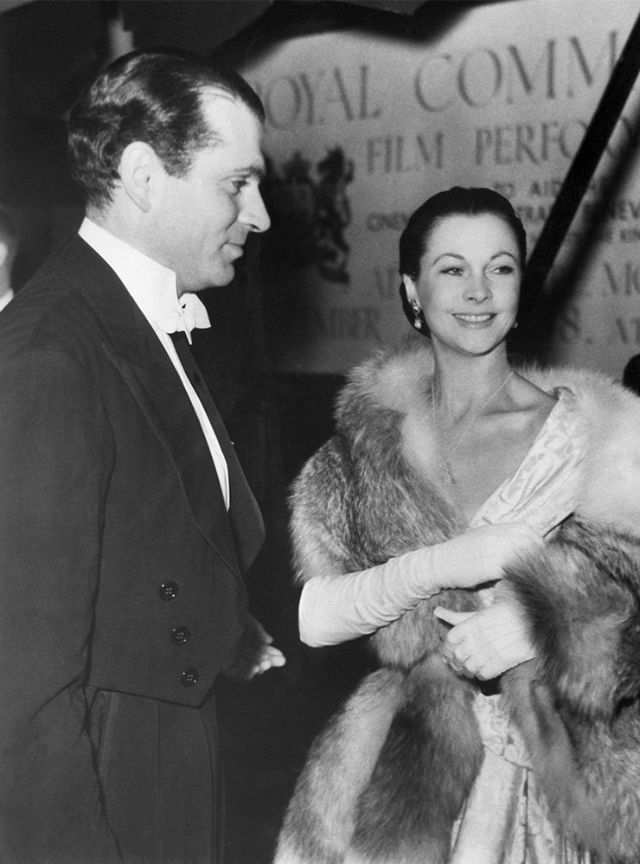
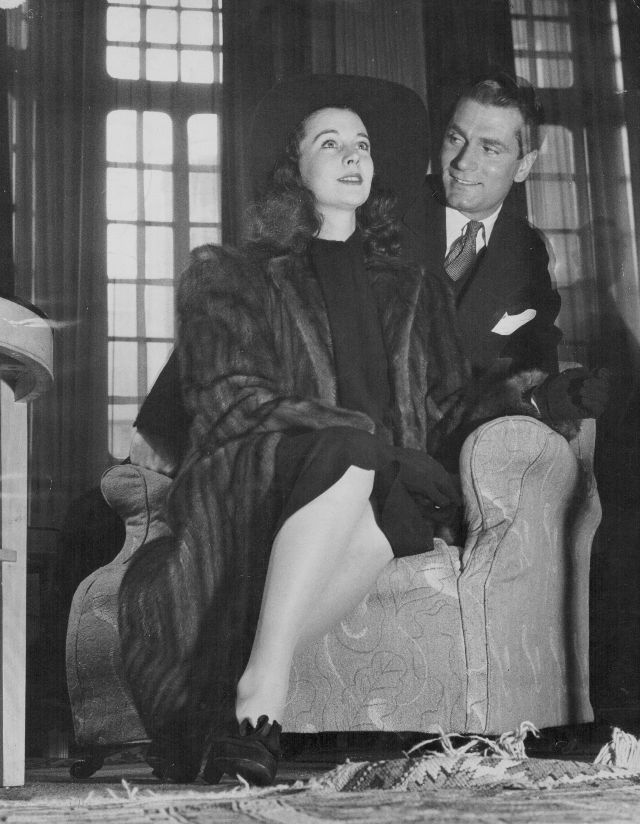
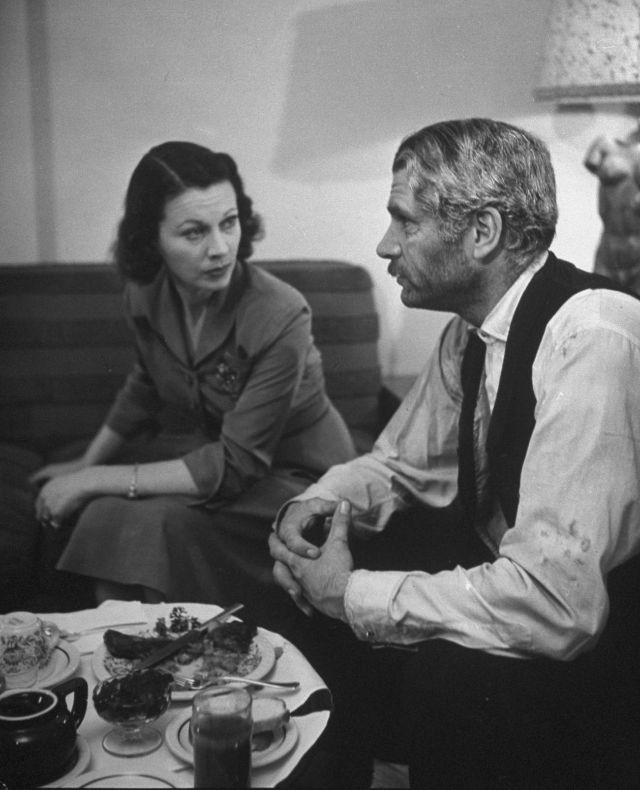
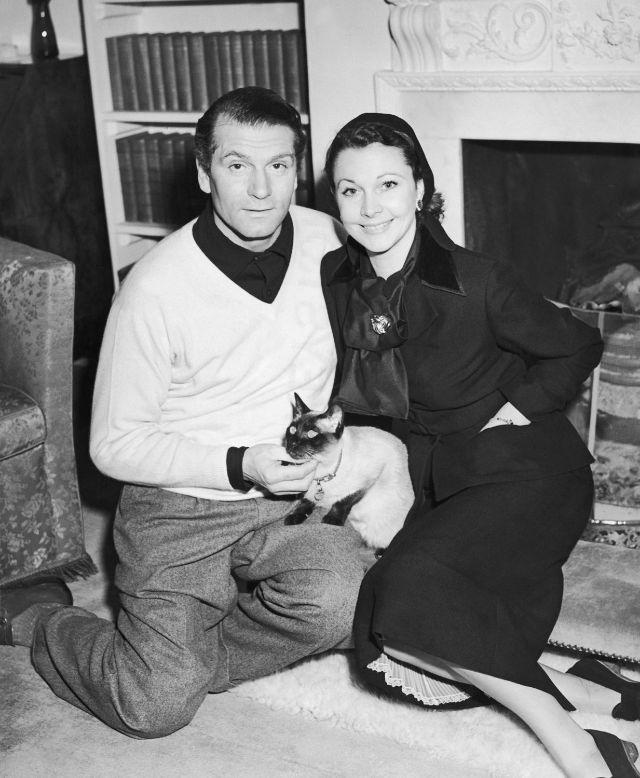
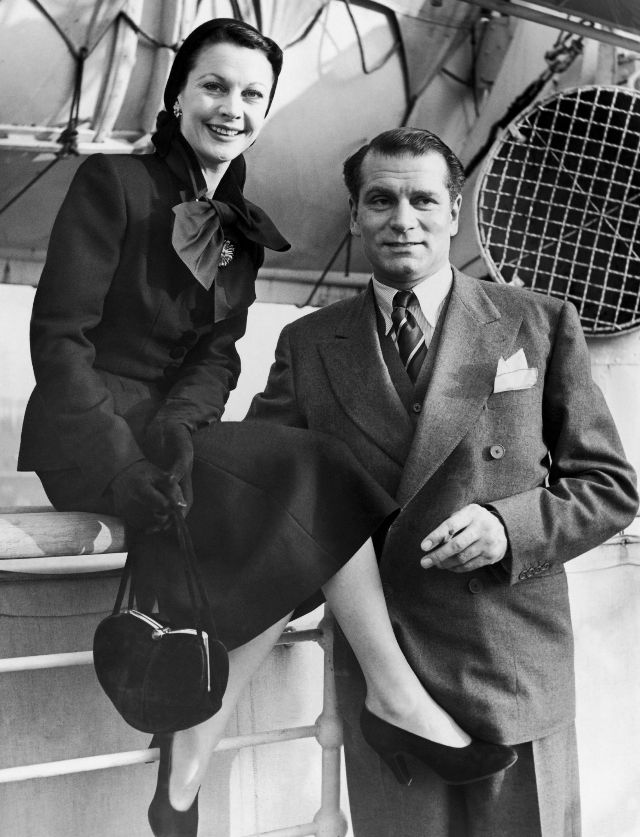
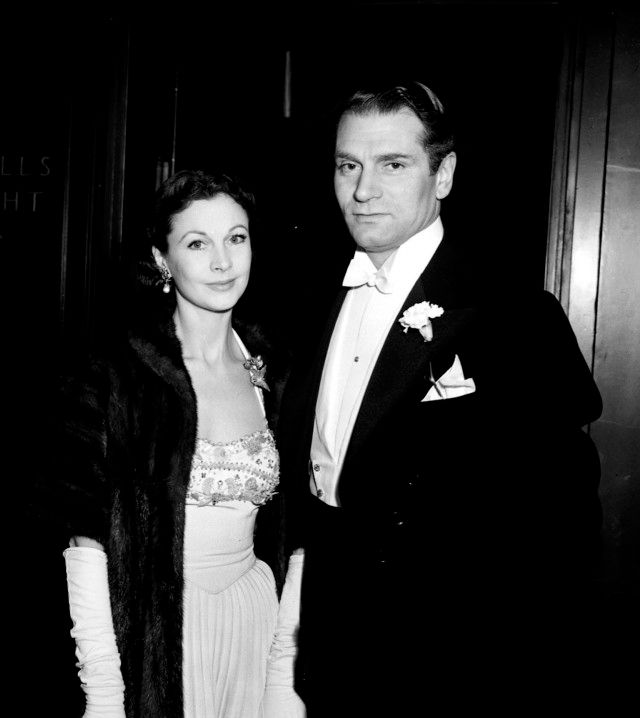
“O my darling little love I do long for you so, oh my hearts blood it is unbearable without you,” wrote Olivier to Leigh early in their affair, a very passionate one in the beginning but ending with a devastating downfall, which shocked a whole world that used to adoring “Larry and Viv.” An auction of Leigh’s archive by Sotheby’s in 2017, which consists of several scrapbooks, photographs, diary and love letters between Leigh and Olivier, shed new light upon the charismatic couple’s love story.
1936 was the year that Olivier and Leigh first met when the actor stopped by to congratulate on her stage performance in The Mask of Virtue in London. They took an instant liking to each other, even though both of them were married at the time. According to Michelangelo Capua in Vivien Leigh: A Biography, after the meeting, she confided to a friend, “That’s the man I’m going to marry!” Leigh’s friend then reminded her of their marital status, to which she replied, “It doesn’t matter. I’ll still marry him one day.”
Viven Leigh and Laurence Olivier in a still of the film That Hamilton Woman.
As stated by the 2003 biography, from then on, Leigh was completely drawn to Olivier’s “charm and magnetism,” while Olivier himself was deeply enamoured of her. “I couldn’t help myself with Vivien. No man could,” Olivier said in Lord Larry: A Personal Portrait of Laurence Olivier. “I hated myself for cheating on Jill, but then I had cheated before, but this was something different. This wasn’t just out of lust. This was love that I really didn’t ask for but was drawn into.” Life later imitated art, when both of them were cast in the 1936 film Fire Over England, which resulted in their being dramatic lovers on screen while having a sultry off-screen romance. At this time, their relationship had become an open secret in Hollywood.
In 1939, Olivier was offered the role of Heathcliff in the adaptation of Wuthering Heights. The part of Isabella, a secondary character, was also offered to Leigh, but she turned it down, disappointed for not receiving the lead role opposite her partner. It was at time of Olivier leaving England that Leigh began to show some first signs of her lifelong mental illness. According to The Guardian, the love letters exchanged between the couple during their time apart were extremely provocative, with one that Olivier wrote, “I woke up absolutely raging with desire for you my love … Oh dear God how I did want you. Perhaps you were stroking your darling self.” To which Leigh responded, “Oh dear sweet, I haven’t done anything … If we loved each other only with our bodies I suppose it would be alright. I love you with much more than that. I love you with, oh everything somehow, with a special kind of soul.”
Leigh’s career took a turning point when Olivier recommended her for the role of Scarlett O’Hara in Gone with the Wind. She successfully got the part after some consideration. During her filming in Los Angeles, Leigh often wrote to Olivier to discuss her difficulties. The actor advised her not to think poorly of herself. “You have got to be damn smart to make a success of your career in pictures which is ESSENTIAL for your self-respect,” Olivier wrote. “… I am afraid you may become just boring. Never to me… But to yourself and because of that to others.” Several good news came to the both of them in the next year, with Leigh becoming the first British woman to win an Academy Award for Best Actress. The divorces the couple had requested back in England were also granted. Their wedding was later held on August 31st, 1940 in Santa Barbara, California, in a ceremony attended only by Ronald and Benita Colman, Katharine Hepburn and Garson Kanin. According to The Guardian, Olivier gave his advice to Leigh in a letter. “We are a popular scandal, or rather a public one,” he wrote. “Therefore it is only reasonably good taste to be as unobtrusive as possible. Can you dance and be gay and carry on like the gay happy hypocrite days? No my love you cannot. Why because of your fame, tripled with our situation—quadrupled with the fame thereof [sic].”
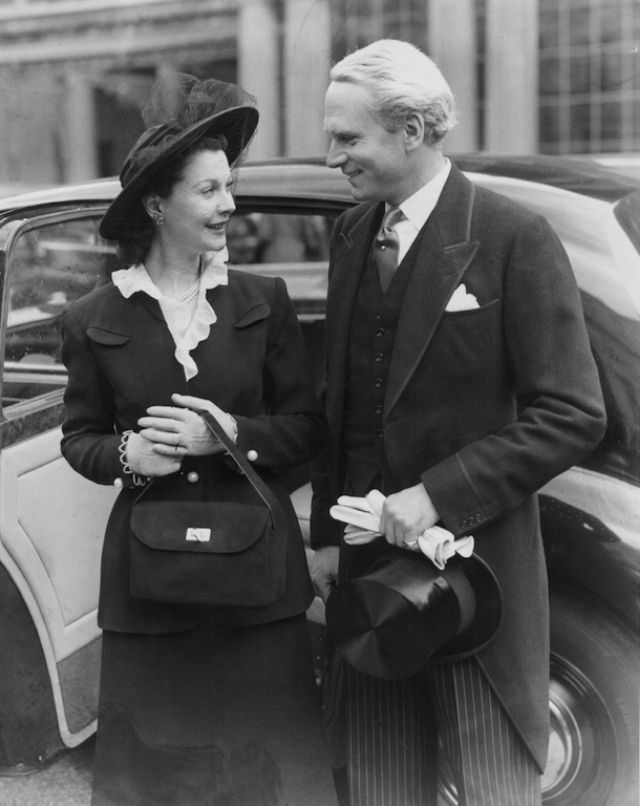
In 1945, Leigh suffered a miscarriage while filming Caesar and Cleopatra. This sent her into a severe depression and worsened her mental instability, which led to Leigh not being able to recall any of her yelling and enragement happening. She decided to take a break from filming after learning the symptoms. While Leigh’s career slowly slid downhill, Olivier’s occupation rapidly thrived, during this time, she only accompanied him to watch his performances. In the 1947 Birthday Honours at Buckingham Palace, Olivier was appointed Knight Bachelor for services to the stage and films, which granted Leigh the title of Lady Olivier.
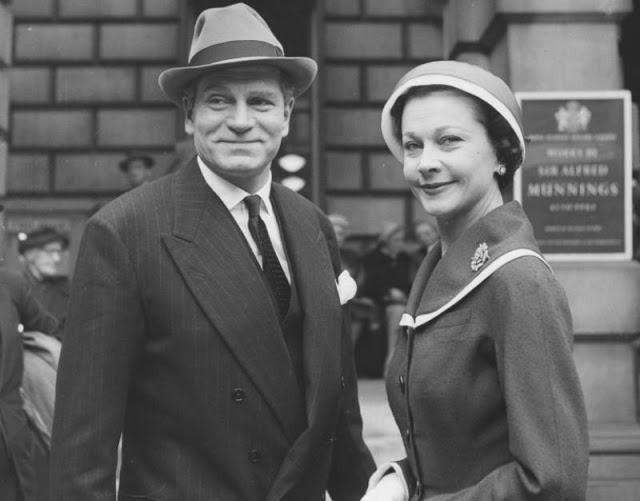
1940s. Laurence Olivier and Vivien Leigh after visiting a London theatre to see a revival of Dear Brutus.
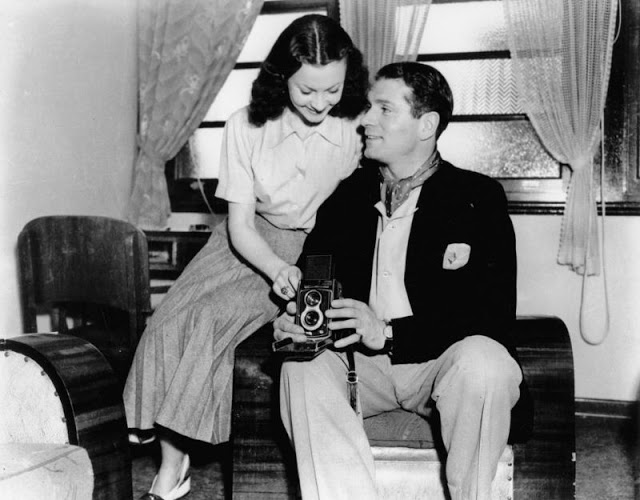
During the six-month tour of Australia and New Zealand in 1948, Leigh was subjected to critical insomnia. Nonetheless, she still tried her best to complete the work. But it was their relationship that could not keep up with the demands that were Leigh’s constant mood swings, which often provoked heated arguments between them. Their worst one happened backstage in Christchurch, New Zealand, when Leigh refused to perform because of her missing shoes. Distressed and irritated on both sides, Olivier and Leigh slapped each other in public. The actor later admitted that he “lost Vivien” in Australia.
The fire within their romance continued to die down, even more so after Leigh confessed her affair with actor Peter Finch, a co-worker in the film Elephant Walk, to Olivier in 1953, according to The Guardian, and another miscarriage after her final performance onstage in 1956. She decided her marriage to be over by 1958 and began seeing actor Jack Merivale. At the same time, Olivier started an affair with actress Joan Plowright. Their divorce was finalized in 1960 and Olivier moved on to wed the younger actress. It was in the same year that Leigh threatened to commit suicide, for her mental condition only turning worse due to constant pressure and instability. “Vivien is several thousand miles away, trembling on the edge of a cliff, even when she’s sitting quietly in her own drawing room,” Olivier once said.
In 1967, Leigh was rehearsing for the play A Delicate Balance when her tuberculosis reoccurred, which forced her to rest for several weeks. On the night of 7 July 1967, her partner Merivale left her at their flat to perform in a play as usual. When returning home just before midnight, he found her asleep. Half an hour later, he entered the room to discover her body on the floor. According to Vivien Leigh: A Biography by Anne Edwards, she had attempted to walk to the bathroom and, as her lungs filled with liquid, she collapsed and suffocated. At the time Olivier was receiving treatment for prostate cancer, but on receiving the sudden news, he immediately left the hospital and went to the flat. Seeing her lifeless body on the bed, he “stood and prayed for forgiveness for all the evils that had sprung up between us,” he expressed in his authorized biography. “It has always been impossible for me not to believe that I was somehow the cause of Vivien’s disturbances.” Olivier then helped Merivale make funeral arrangements and stayed with Leigh until her body was removed. For Leigh’s part, she once told an interviewer, “I would rather have lived a short life with Larry than a long one without him.”
According to The Guardian, in the last letter to Leigh, written only five weeks before her tragic death, Olivier signed, “Sincerest love darling, your Larry.” In 1986, three years before his passing, when a guest paid a visit to the baron at his Sussex home, they found him weeping over a Leigh film on television. “This was love,” he said. “This was the real thing.”
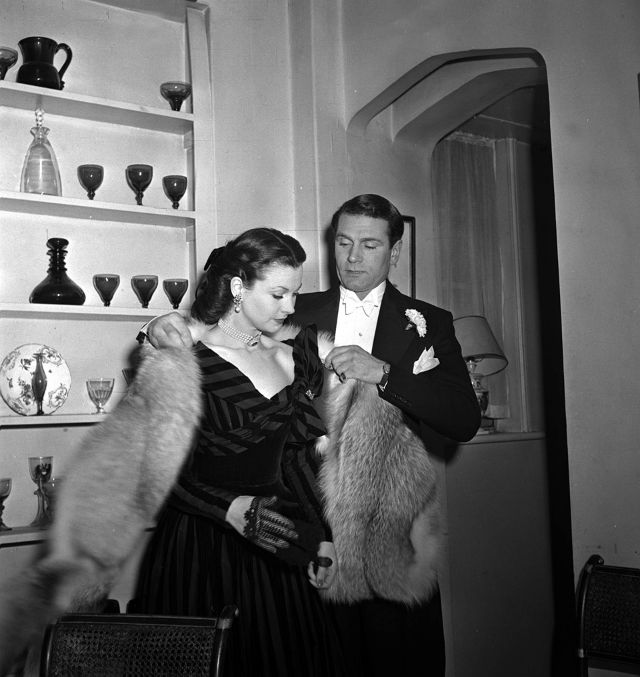
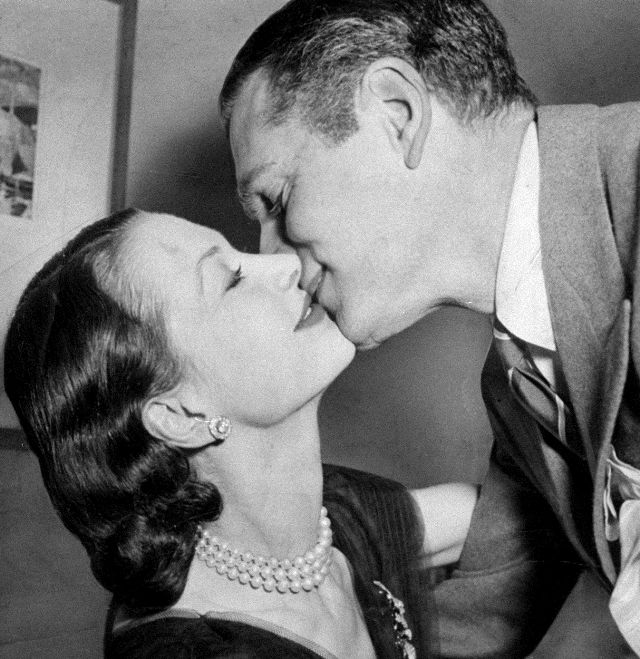
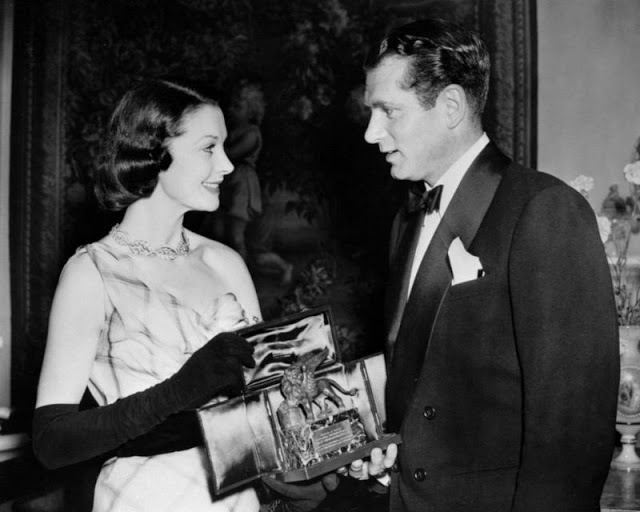
Below are the photos capturing the memorable love story of the couple:
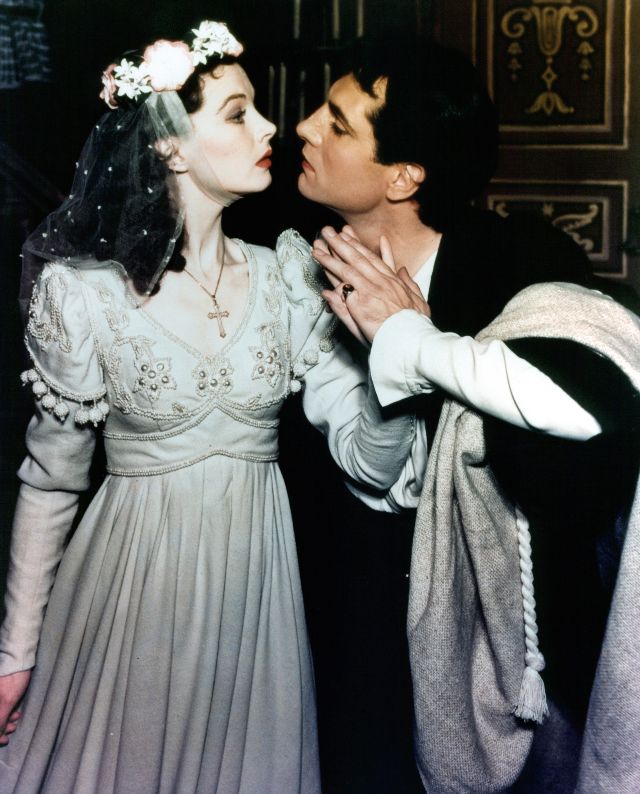
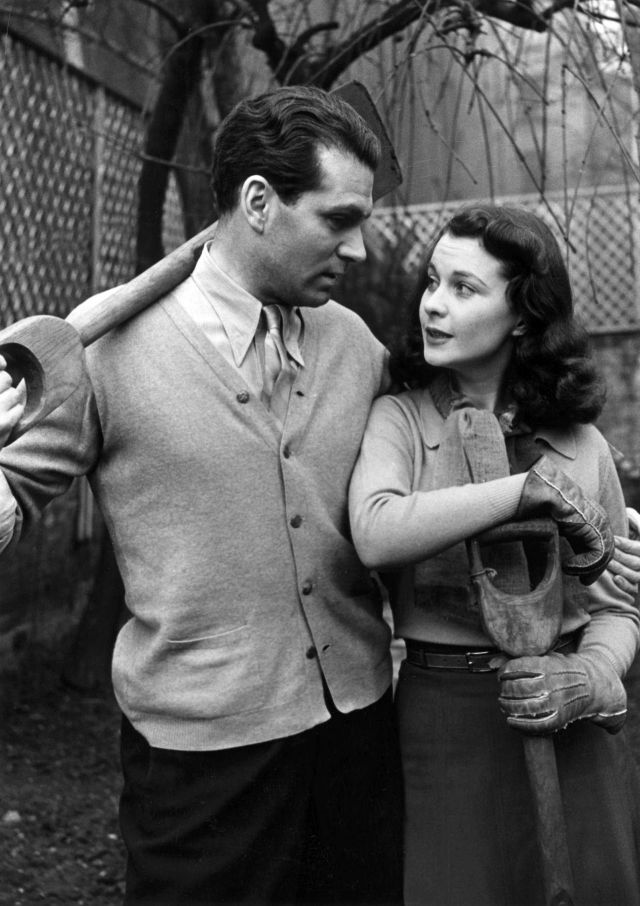
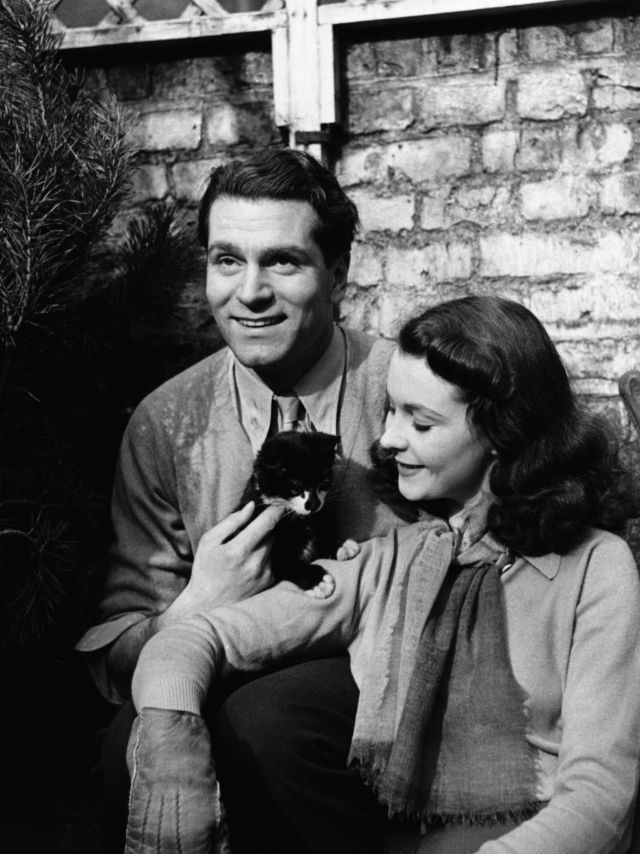
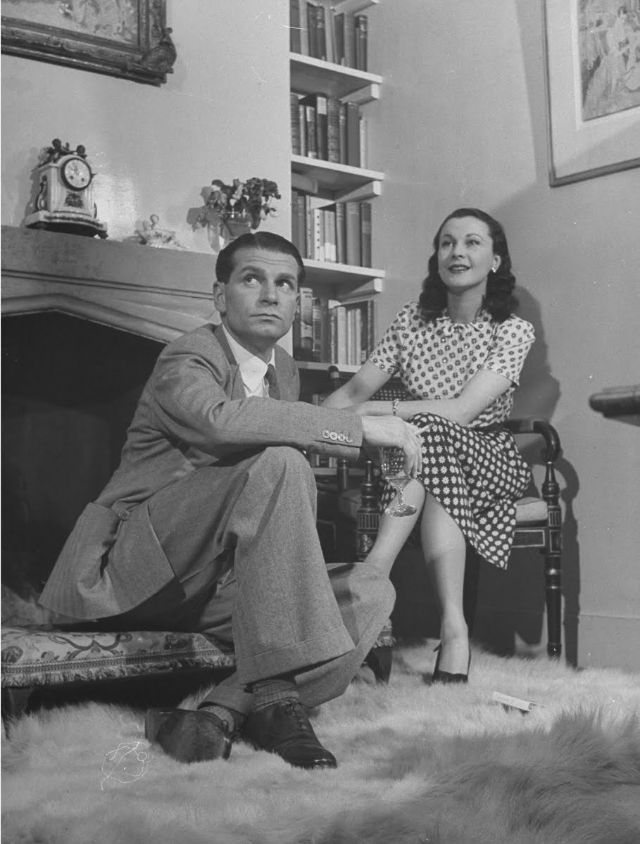
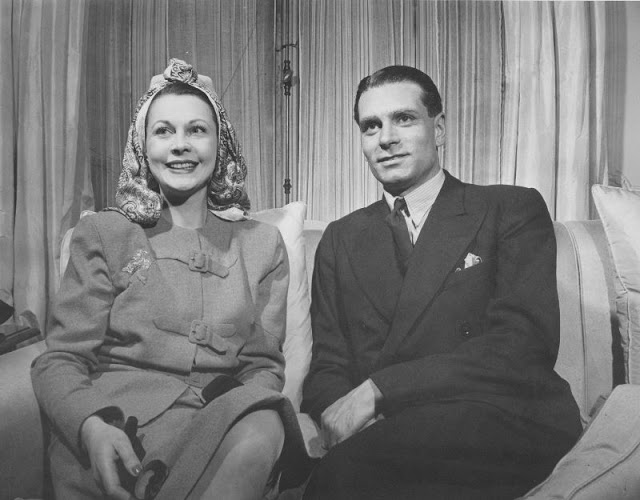
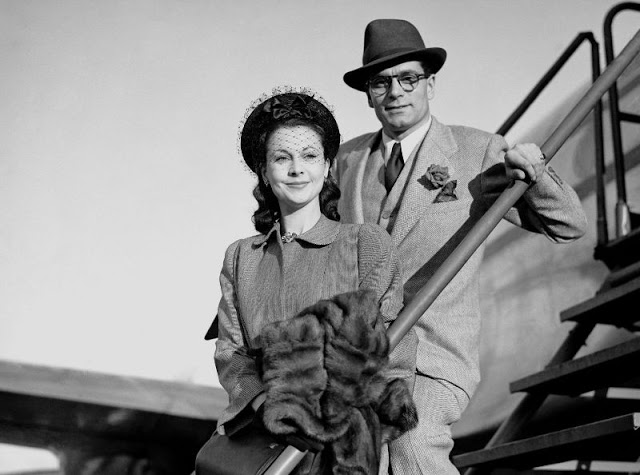
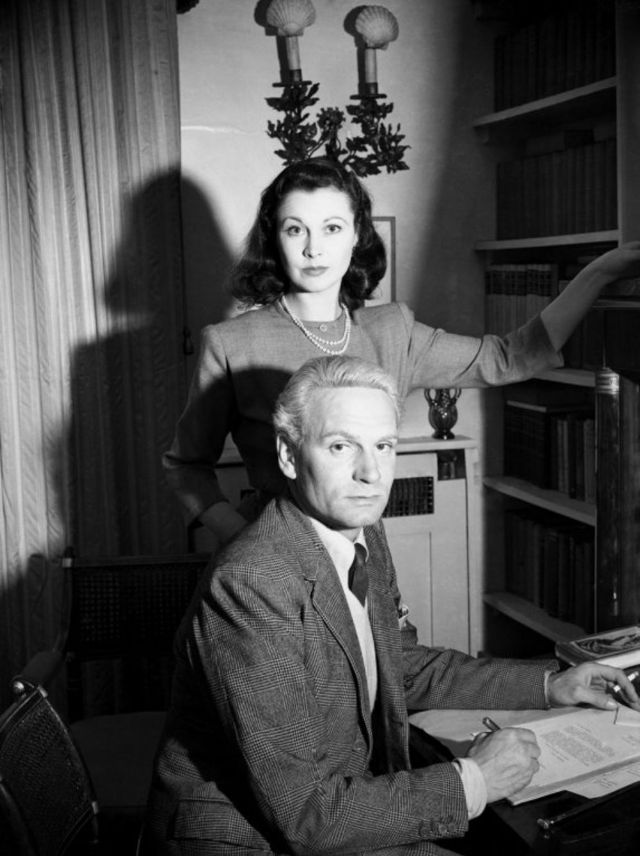
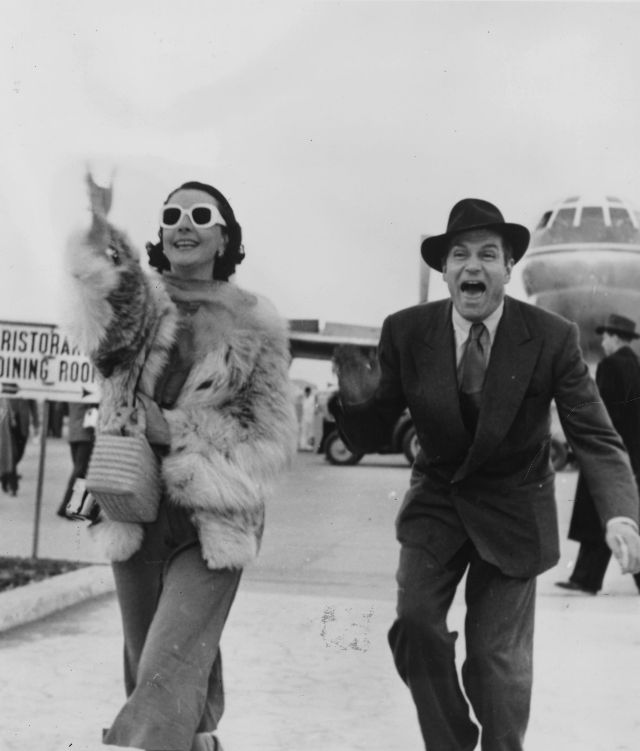
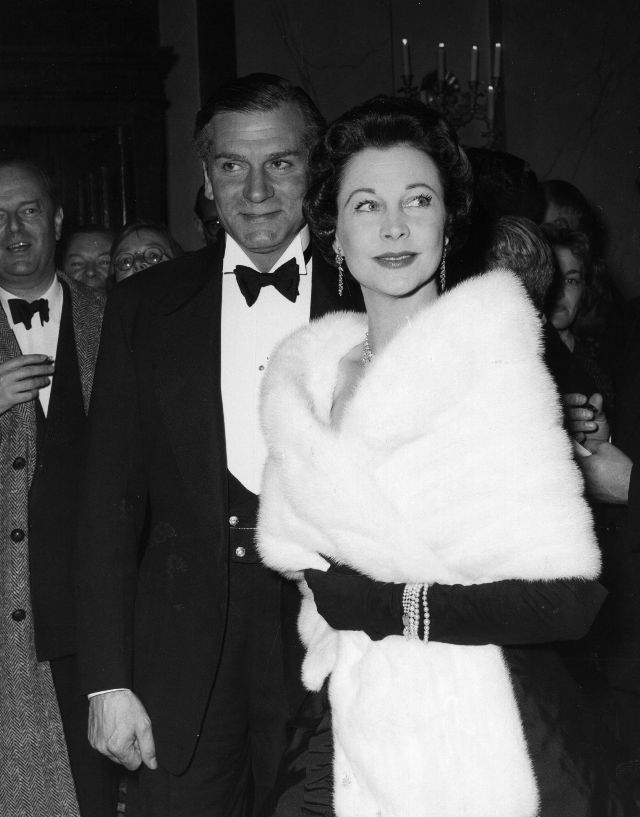
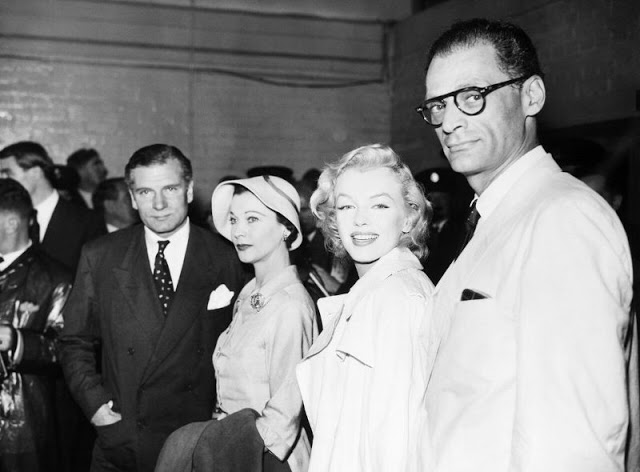
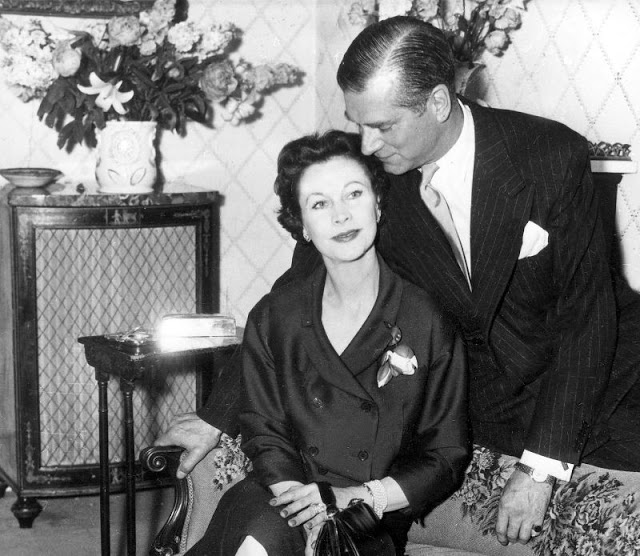
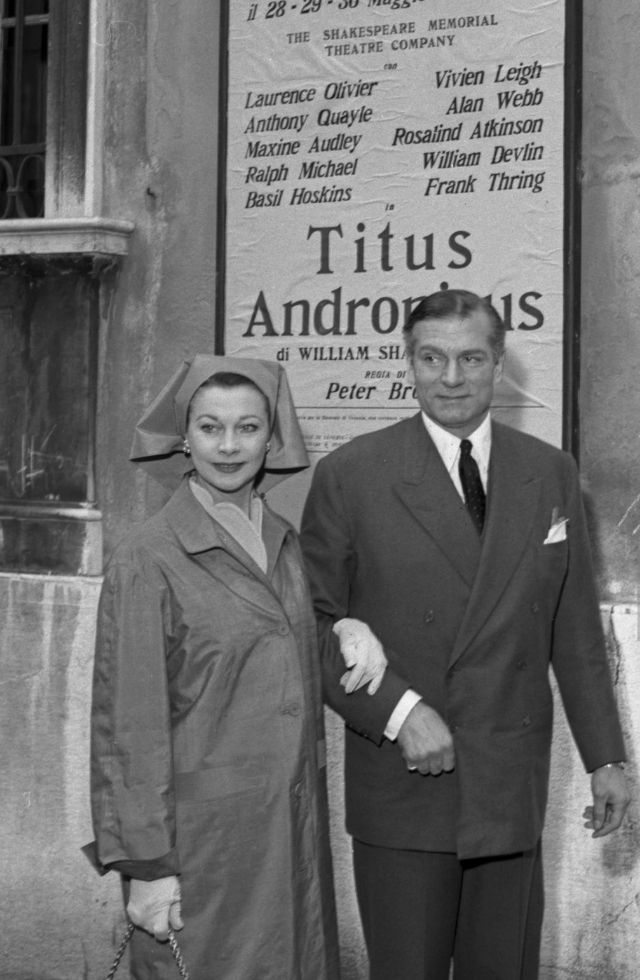
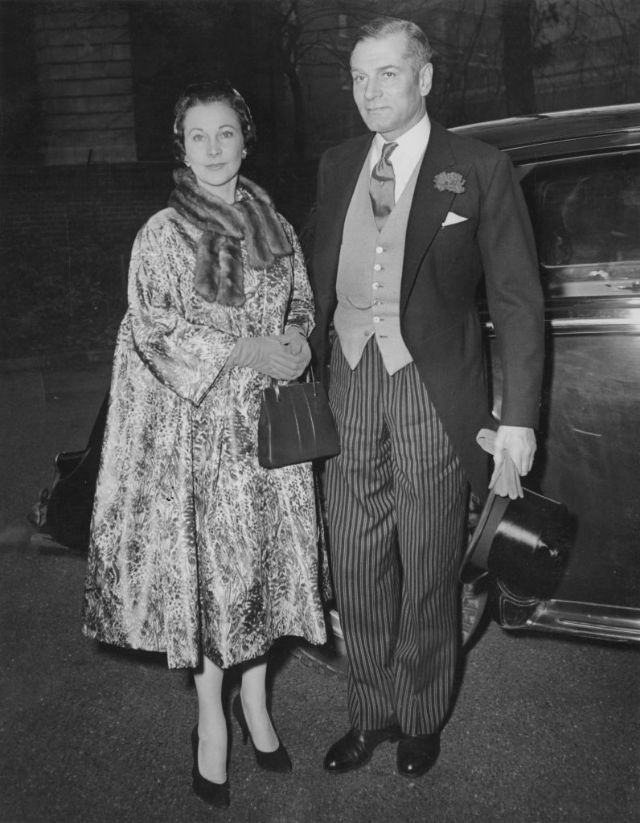
Vivien Leigh and Laurence Olivier on the set of Fire Over England, based on the novel by A.E.W. Mason and directed by William K. HowardSir Laurence Olivier alongside Vivien Leigh in the play Hamlet, Old Vic Theatre London.December 15, 1939. Vivien Leigh arriving with her partner Laurence Olivier for the premiere of Gone With the Wind at the Loew’s Grand Theater, Atlanta.Vivien Leigh chatting with Laurence Olivier at the premiere of Gone With the Wind in Atlanta.March 2, 1940. Laurence Olivier basks in the glory of his fiancee, Vivien Leigh at the 12th Annual Oscar dinner.Vivien Leigh prepares to kiss Laurence Olivier in a scene from a stage production of Romeo and Juliet.Laurence Olivier and Vivian Leigh stand happily in their English garden after a year of marriage.Laurence Olivier with wife Vivien Leigh. Laurence Olivier and Vivien Leigh with their Siamese cat.Laurence Olivier relaxing with wife Vivien Leigh in living room at home.Laurence Olivier relaxing with wife Vivien Leigh and their Siamese cat in living room at home.May 1946. Vivien Leigh and husband Laurence Olivier in their hotel room after arriving in the USA.Laurence Olivier and wife Vivien Leigh at Heathrow Airport.Laurence Olivier with wife Vivien Leigh in their London home.June 13, 1947. Laurence Olivier with wife Vivien Leigh.Actors and spouses Laurence Olivier and Vivien Leigh, arriving at Buckingham Palace, as Laurence receives his Knighthood, London.Sir Laurence Olivier places a fur coat on the shoulders of wife Vivien Leigh as they leave their Chelsea cottage for the Leicester Square theatre to attend the World premiere of AK.June 1948. Sir Laurence Olivier and Vivien Leigh in Queensland.December 2, 1948. Sir Laurence and Lady Olivier arrive at London’s Empire Theatre for the Royal Command film show Scott of the Antarctic, London.Laurence Oliver and Vivien Leigh appear as the characters Sir Peter and Lady Teazle from the play School for Scandal.Actors and spouses Vivien Leigh and Sir Laurence Olivier, sitting together on an armchair.Laurence Olivier and wife Vivien Leigh taking a break during his filming of Sister Carrie.December 19, 1950. Laurence Olivier and his wife Vivien Leigh in the living room of their house of Chelsea with their cat, London.Sir Laurence Olivier and wife Vivien Leigh arriving in New York abroad the liner RMS Mauretania.Sir Laurence and Lady Olivier leave their Chelsea, London home for Southampton en route to a 12 week season at the Ziegfeld Theatre, New York.Sir Laurence Olivier and wife Vivien Leigh attend the first night performance of the Gian-Carlo Menotti opera, The Consul, at the Cambridge Theatre, London.Sir Laurence Olivier plants a kiss on wife Vivien Leigh in her New York theater dressing room after learning she won an Oscar for Best Actress for her role in A Streetcar Named Desire.June 1952. Vivien Leigh and husband Laurence Olivier admire a trophy received at a reception held at the Italian Embassy in London.Sir Laurence Olivier and wife Vivien Leigh arriving at Rome airport.Sir Laurence Olivier with wife Vivien Leigh.July 14, 1956. Arthur Miller with Marilyn Monroe meeting Vivien Leigh and Sir Lawrence Olivier in London.Laurence Olivier with wife Vivien Leigh.May 1956. Sir Laurence Olivier with wife Vivien Leigh.Laurence Olivier with wife Vivien Leigh portray before a poster of the Titus Andronicus play, Venice.Vivien Leigh and Laurence Olivier in Venice.Vivien Leigh and Laurence Olivier in Venice, Italy.December 6, 1957. Vivien Leigh and husband Laurence Olivier arrive at Holy Trinity Church in London for the wedding of Lady Olivier’s daughter by a former marriage.
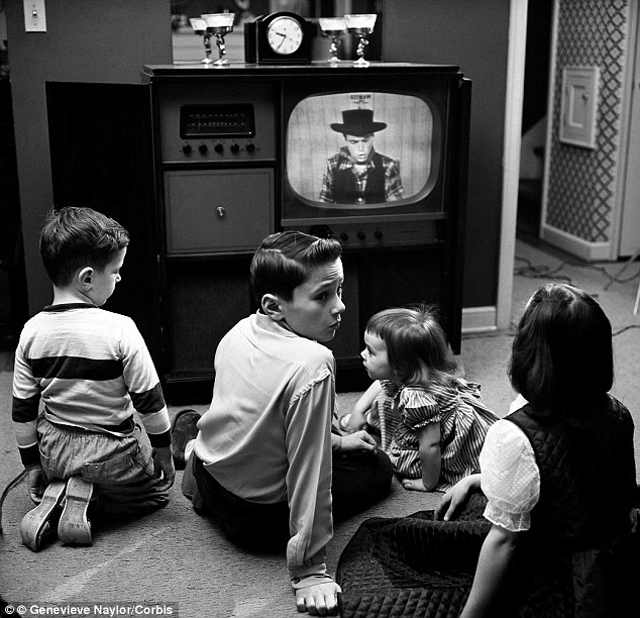
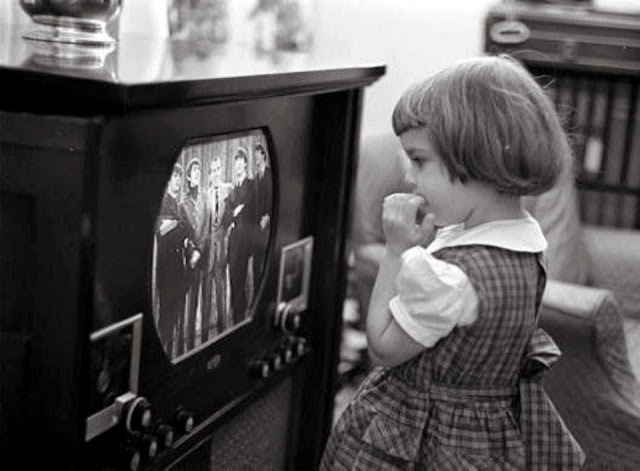
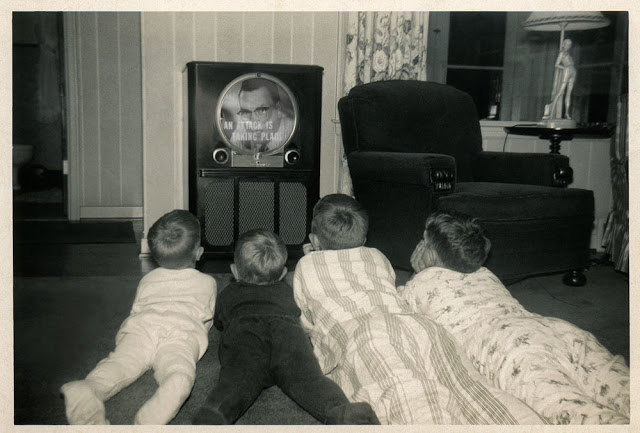
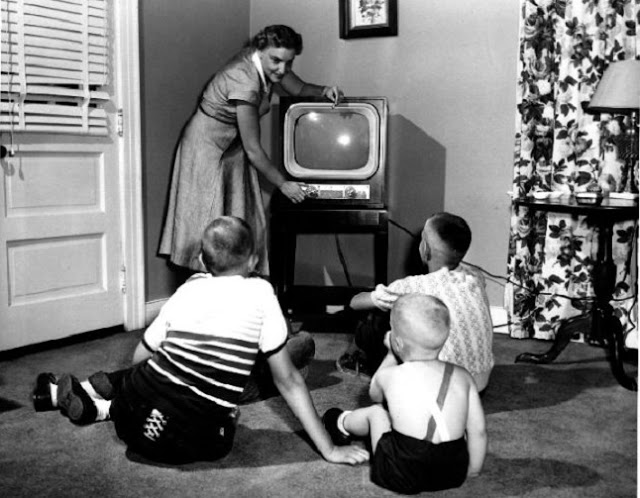
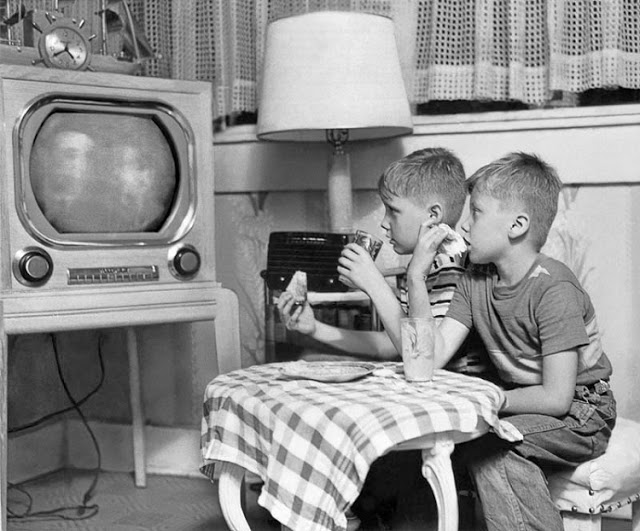
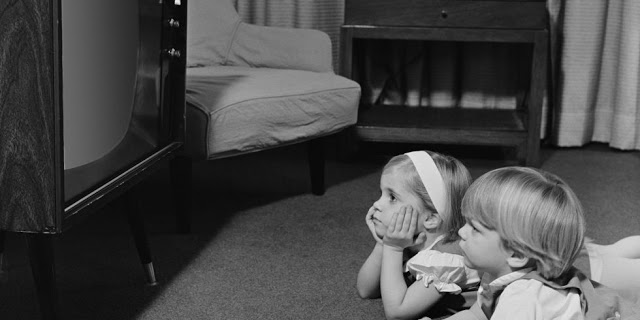
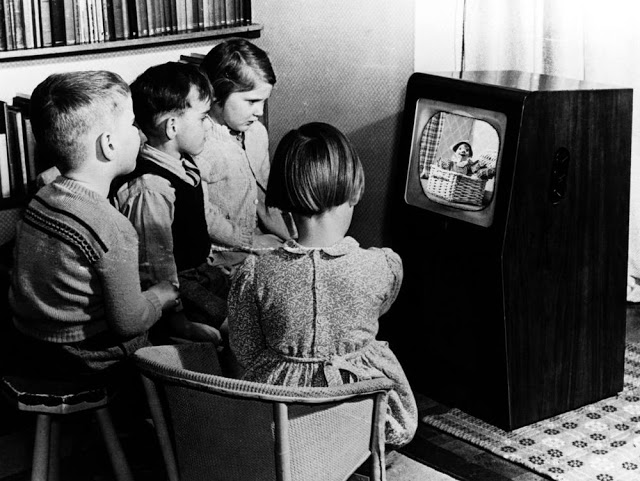
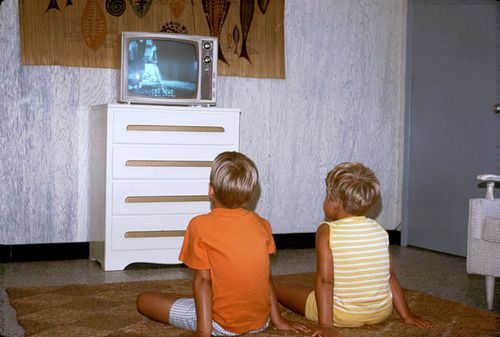
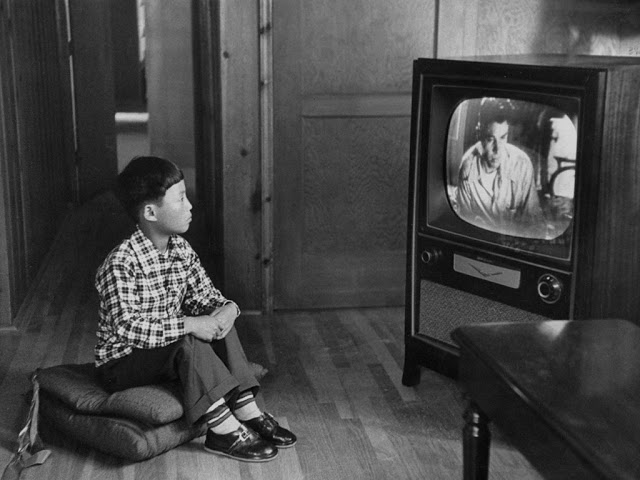
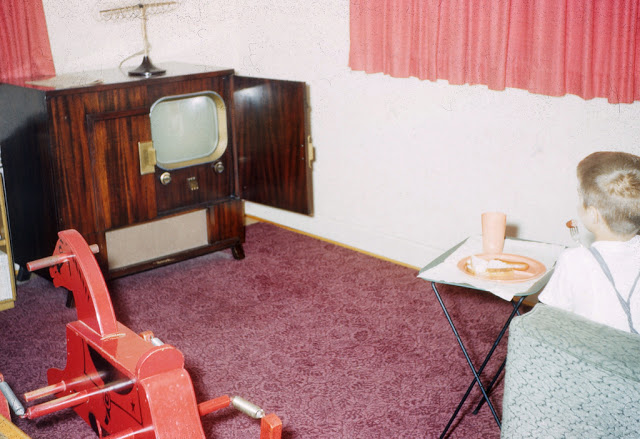
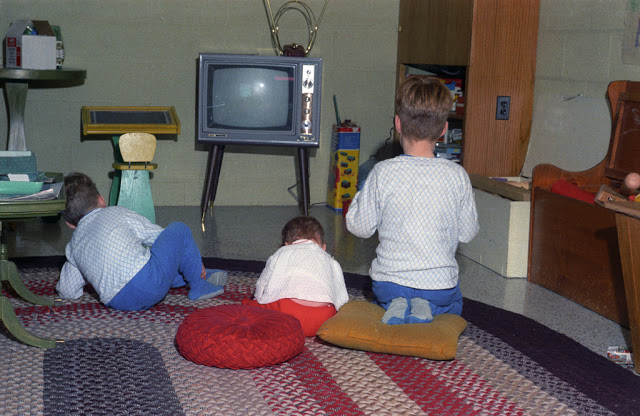
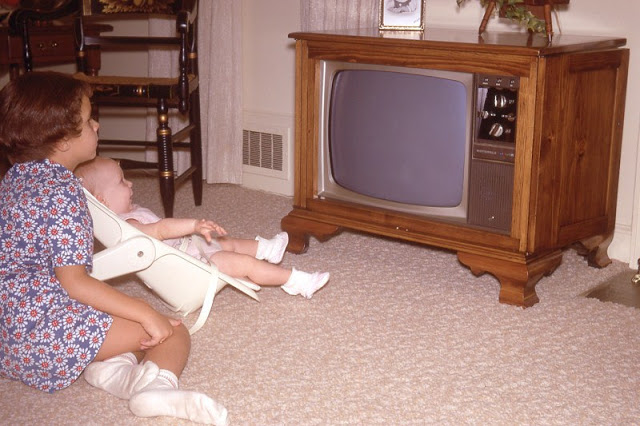
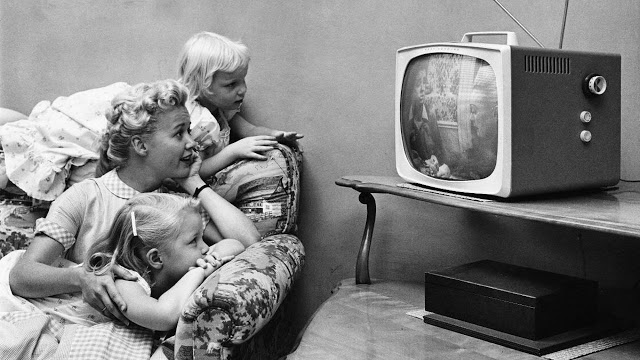
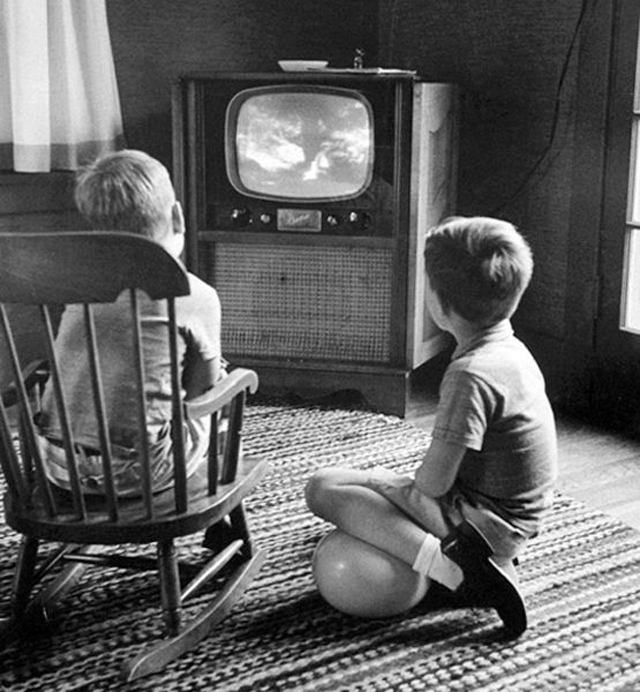
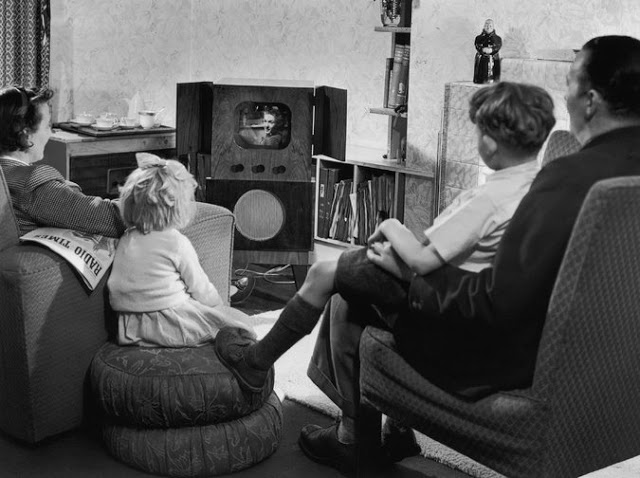
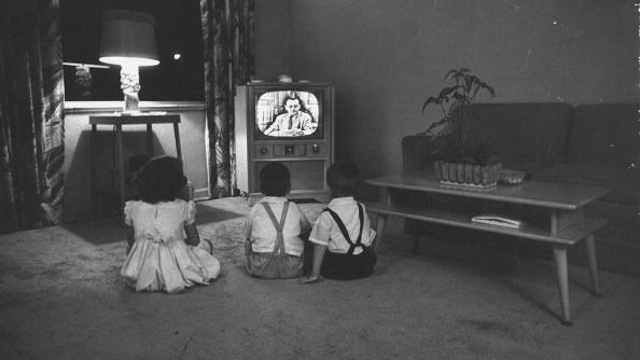
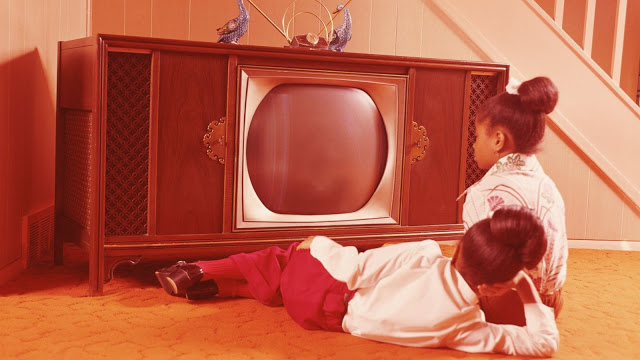
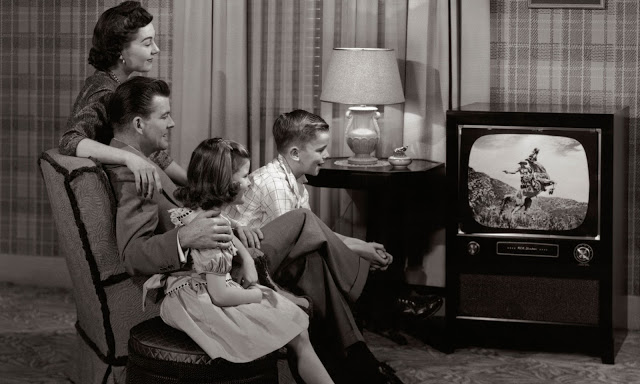
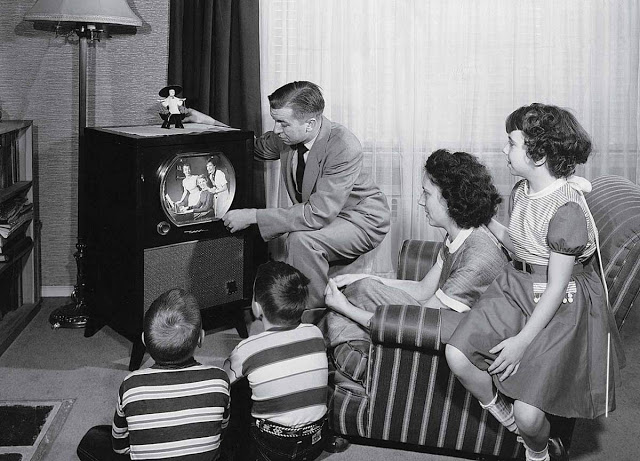
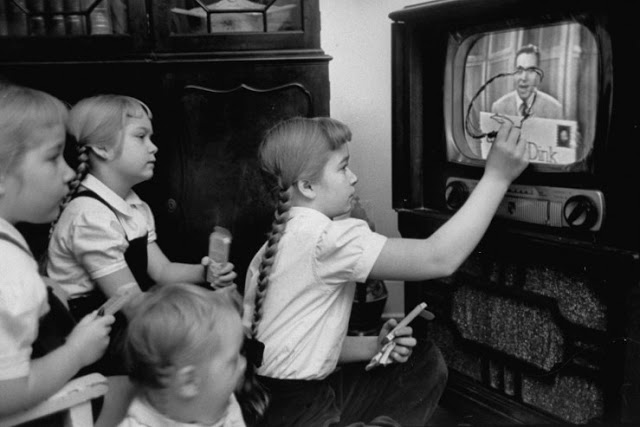
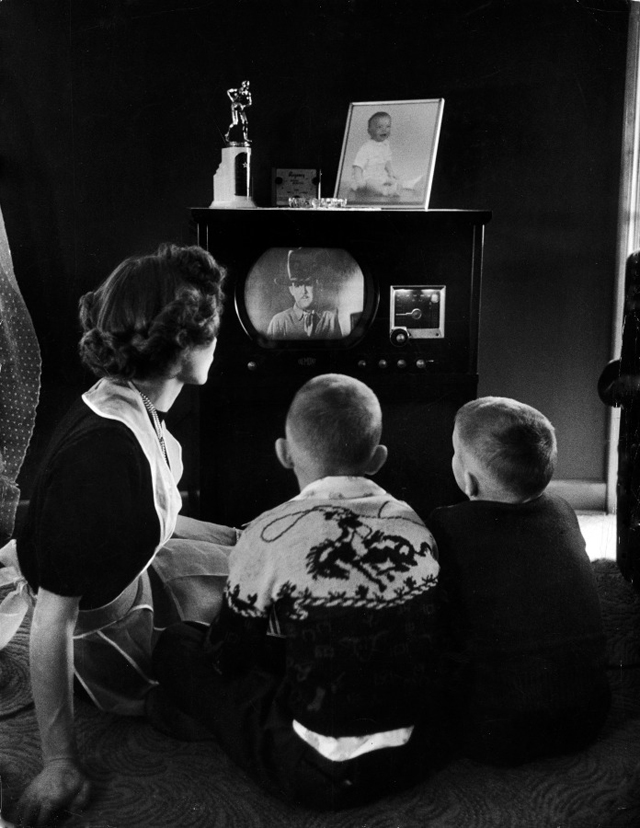
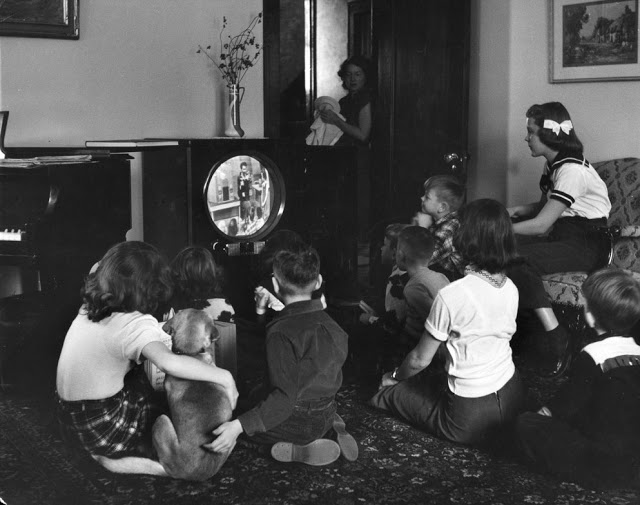
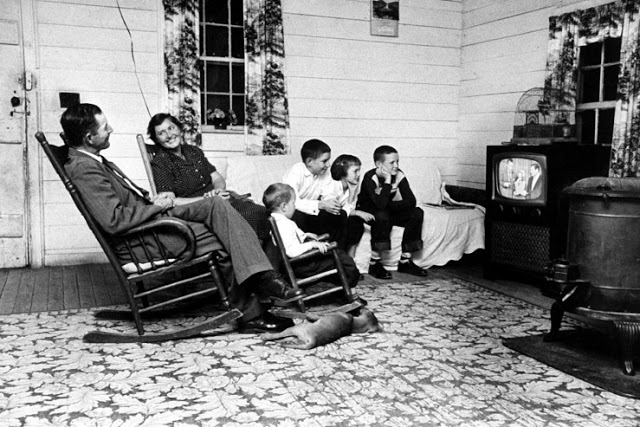
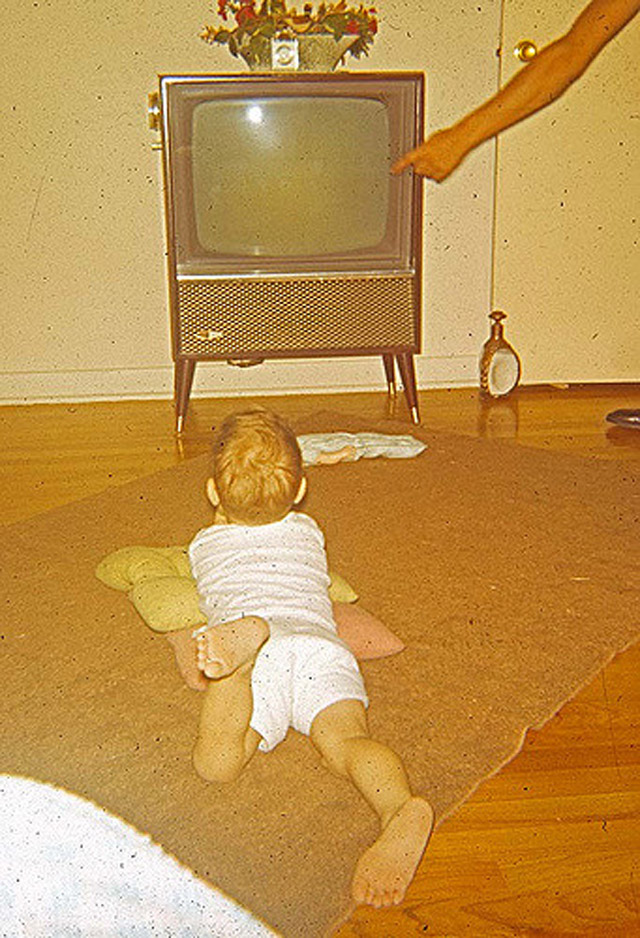
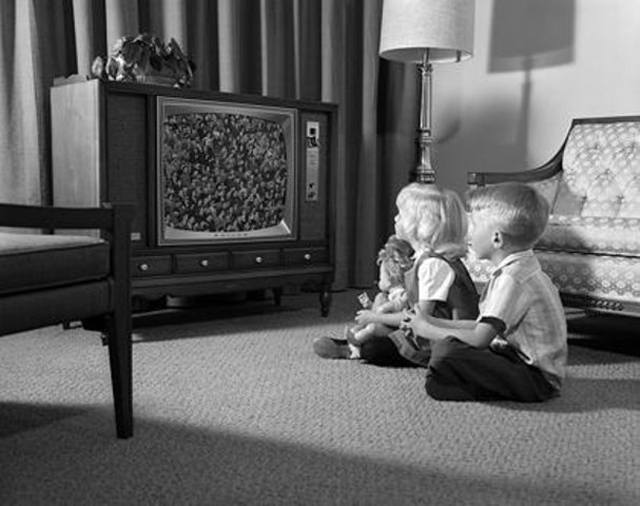
No smartphones, iPads, or any internet technology devices. The only thing of technology for entertainment this time was black and white TVs. Take a look at these lovely vintage photos to see children entertained by watching television in the past.
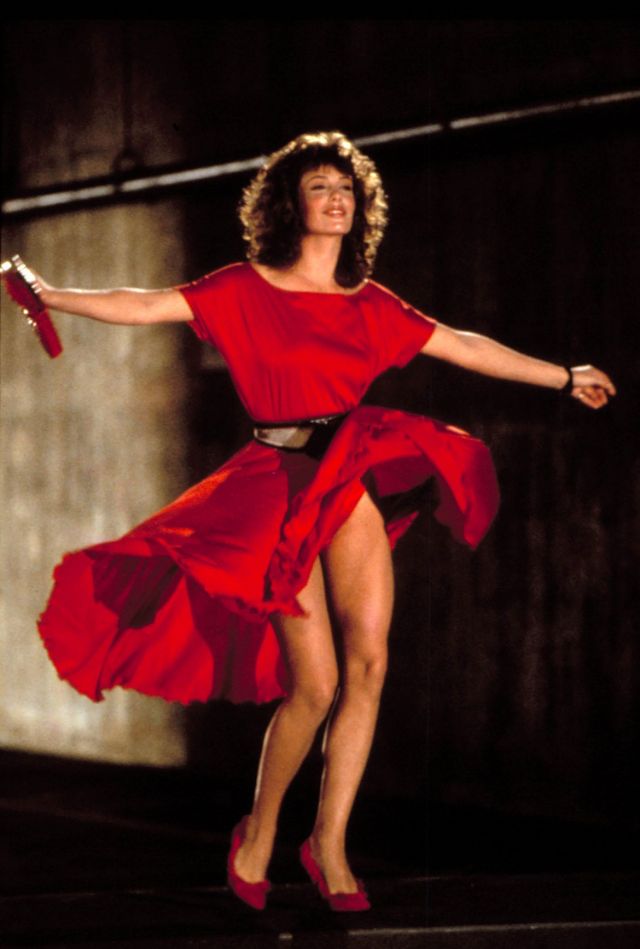
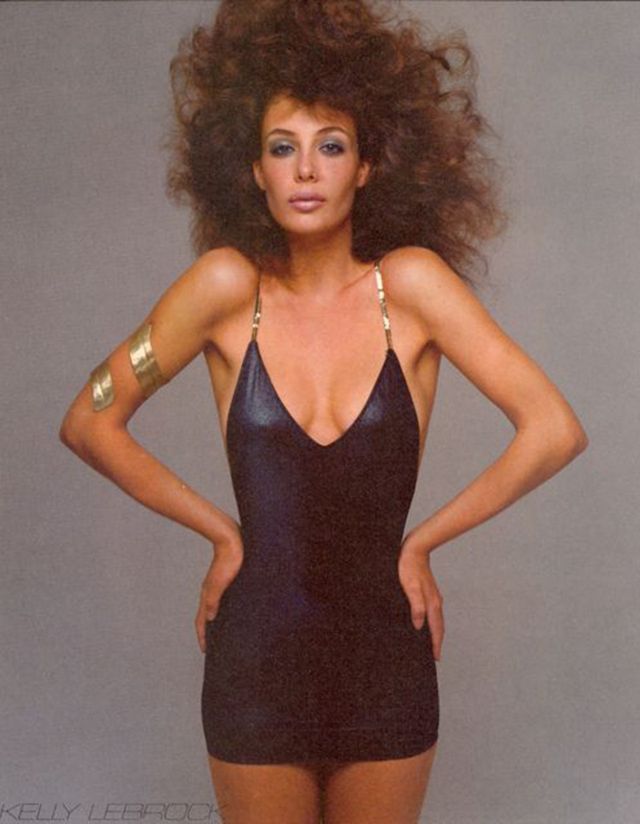
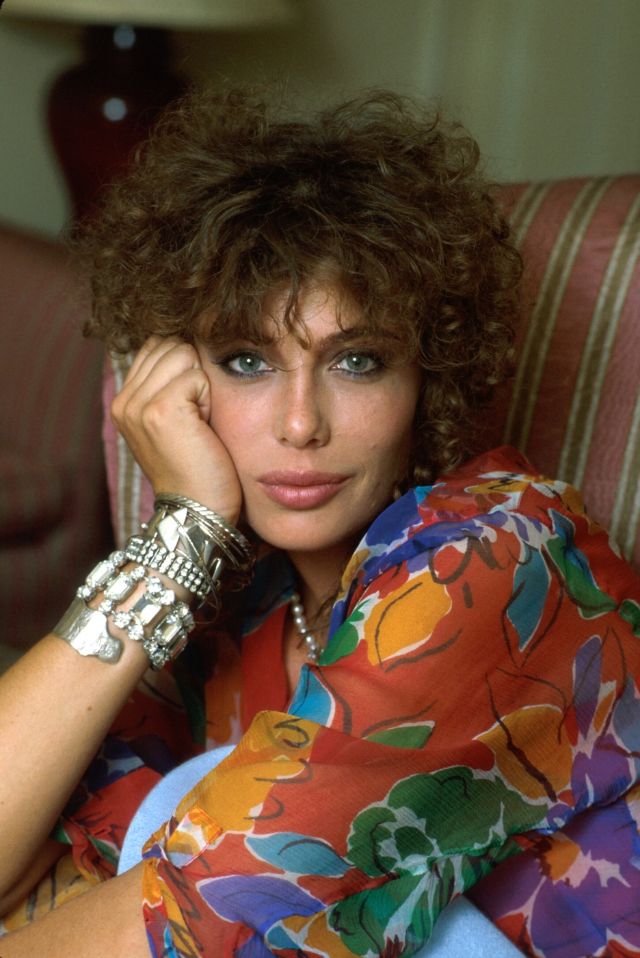
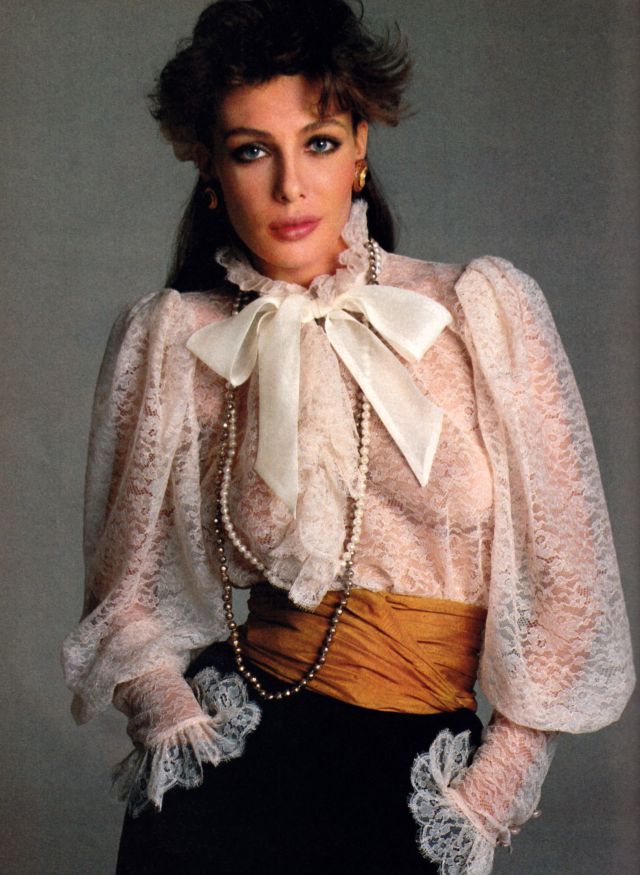
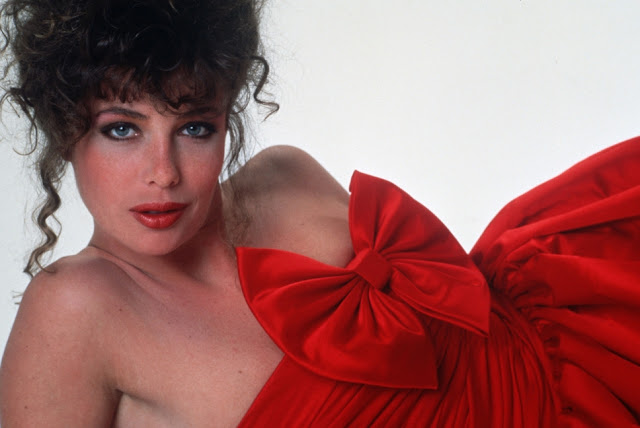
Born in New York City, model/actress Kelly LeBrock was raised in London, as evident in her British-accented ’80s mantra: “Don’t hate me because I’m beautiful.”
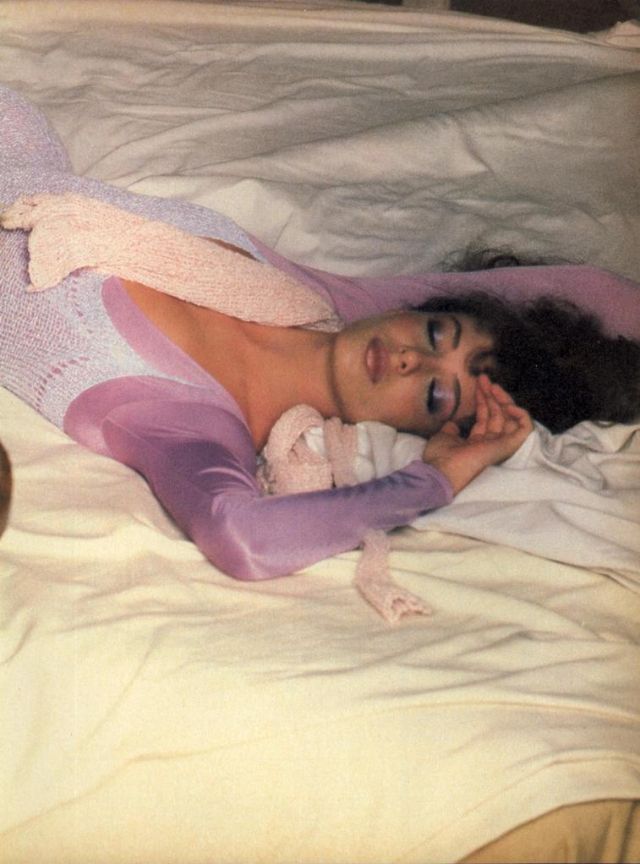
Kelly LeBrock got into modeling at the age of 16. She was scouted while attending a party in her native New York. Her first modeling gig was a British Airways ad. Following the success of the gig, LeBrock decided to make a career out of modeling. The New York native tasted success just a few years into her career. She graced the cover of several magazines including Harper’s Bazaar, Vogue and among others. She also featured in commercials for several companies such as Pantene and Christine Dior.
When the modeling lifestyle became too draining, LeBrock switched to acting and again was instantly successful at it thanks to the films The Woman in Red (1984) and Weird Science (1985). LeBrock’s personal troubles would force her to retract from the limelight in the ’90s. Since then she has made only occasional appearances in the media.